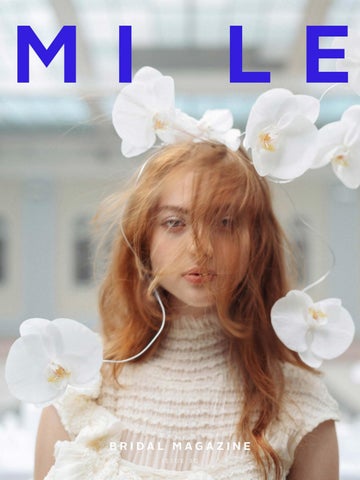
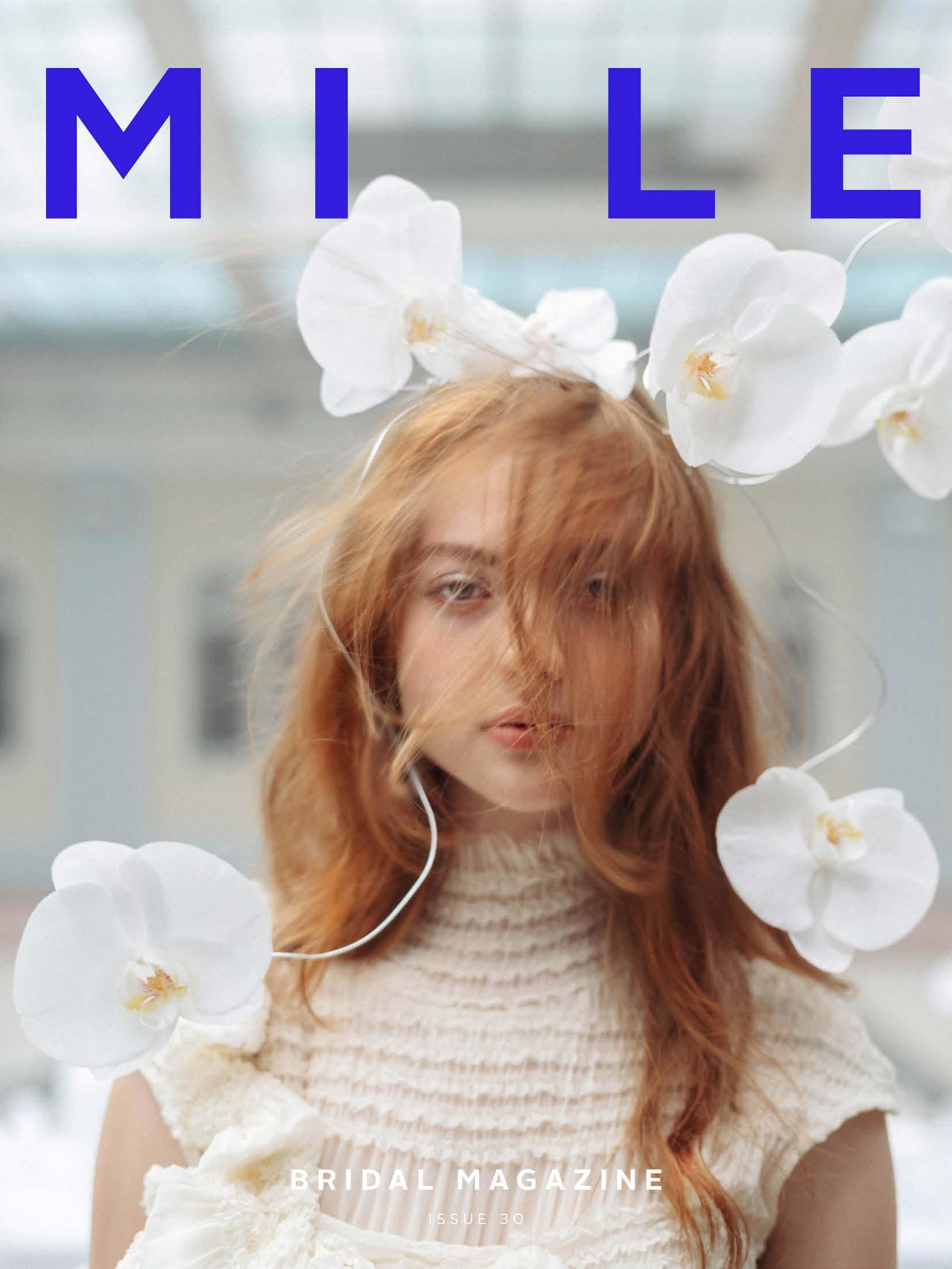
Mile is your guide to weddings and other important celebrations, unique moments in our lives we want to remember and look back fondly on. We tell you what’s hot in the worlds of fashion, design, jewelry, floristry and gastronomy. We look for the best places for ceremonies and honeymoons. Mile is published four times a year.
THIRTY LAYERS
If it holds true that the way we dress defines us, what exactly are we saying? Clothing is not merely a choice — it is the way we speak to ourselves and to the world around us. What image are we creating, and is it an honest one?
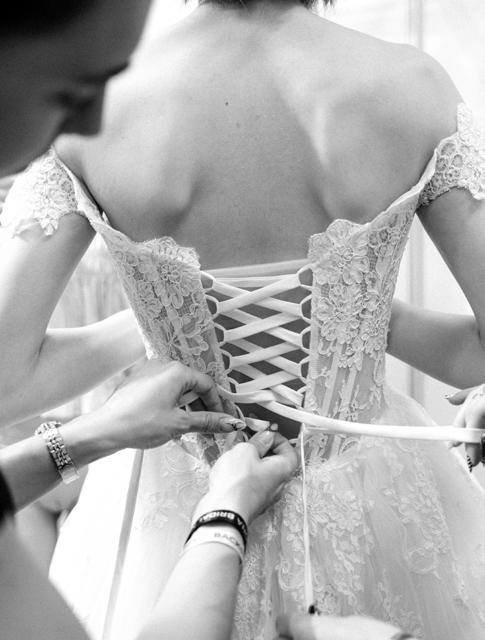
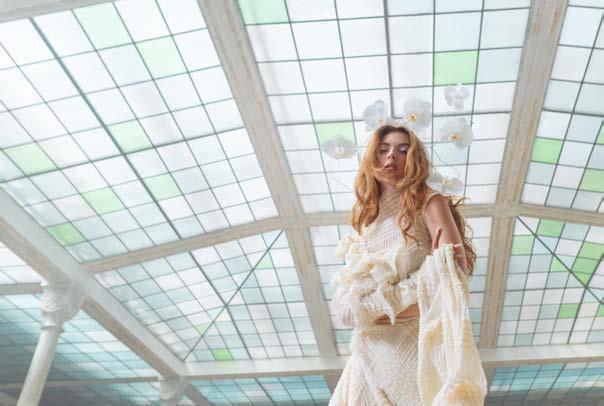
Wedding dresses carry their own message too. In this issue, we pay tribute to the four classical elements and explore fashion as an expression of attitude and conviction. Find out for yourself in our cover story, in a conversation with Ukrainian designer Daria Plaksyuk, and in a report from Barcelona Bridal Fashion Week by photographer Erol Serbest.
Thirty issues of Mile. Thirty layers of looking at the world — not only the world of weddings..
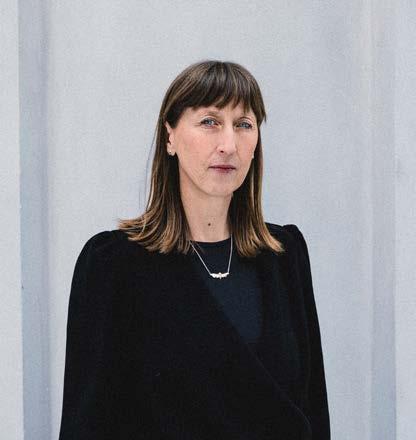
Ilona Karásková editor-in-chief
Heritage preserved in fashion. Designer Daria Plaksyuk on her brand PODYH.
Breaking with convention. Elements within the walls of a former monastery. 6
Different place, different vibe. Five fantastic weddings from around the world, from Italy to South Africa. 43
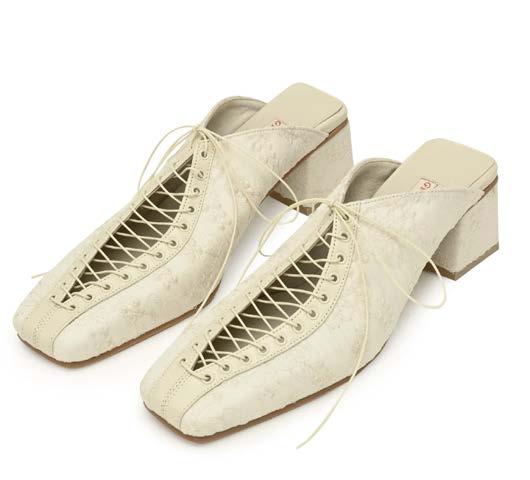
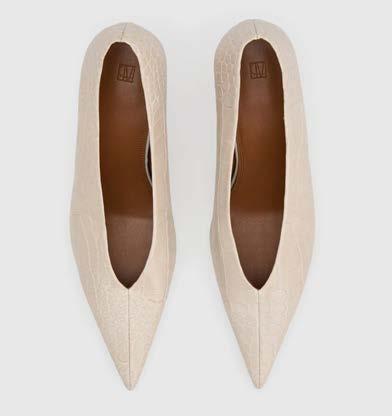
A guide to bridal footwear that proves shoes are never just an afterthought.
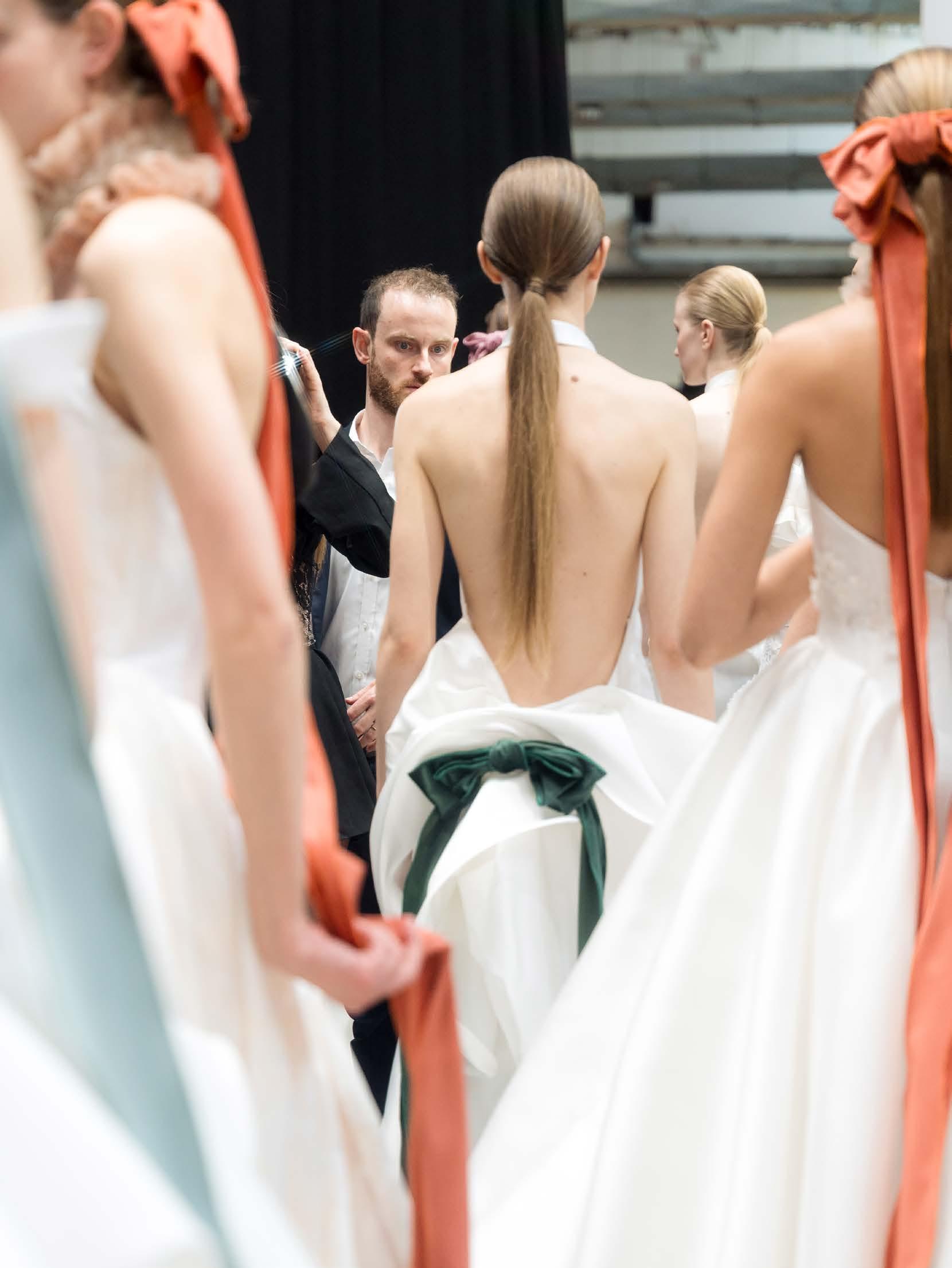
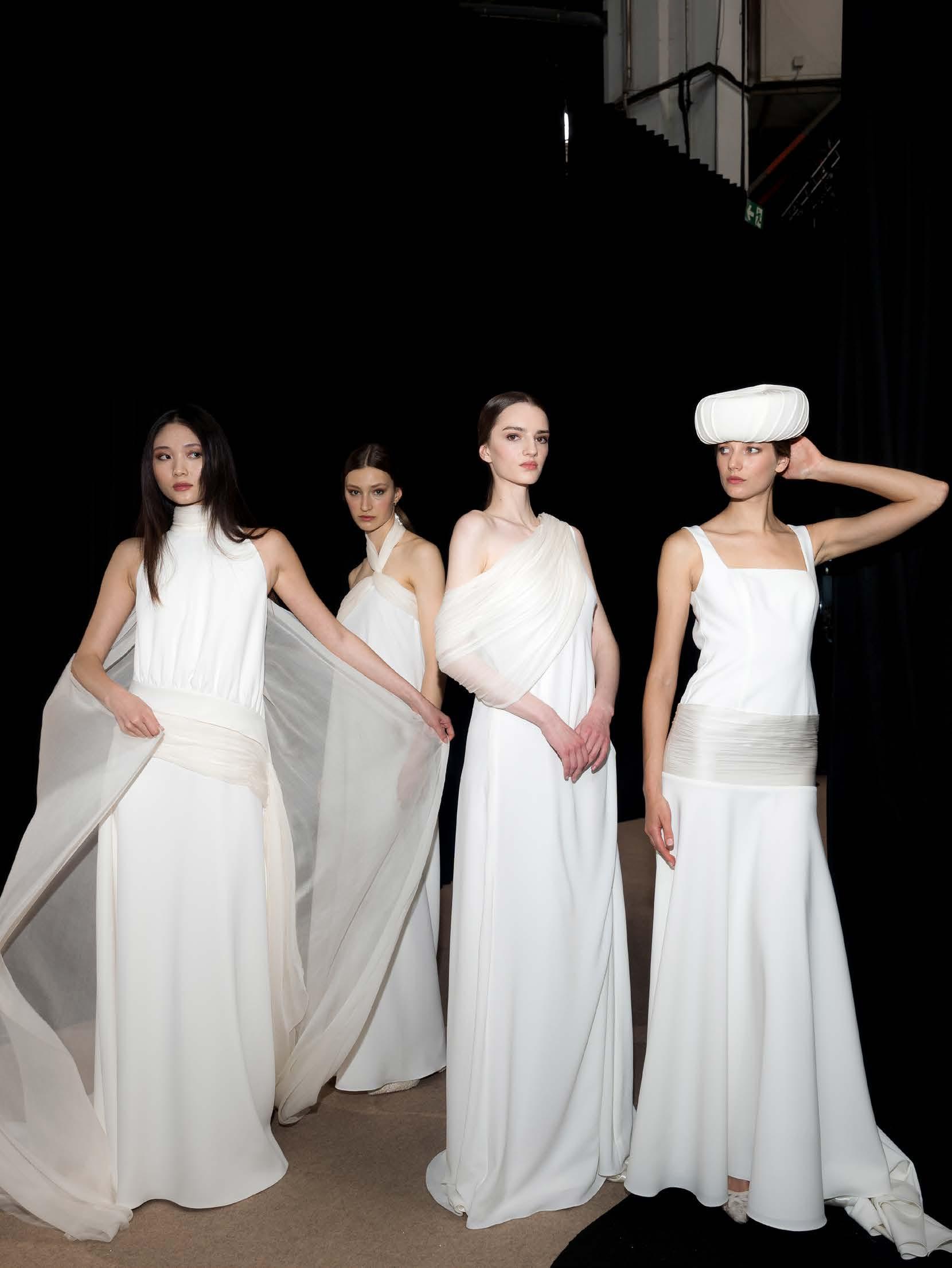
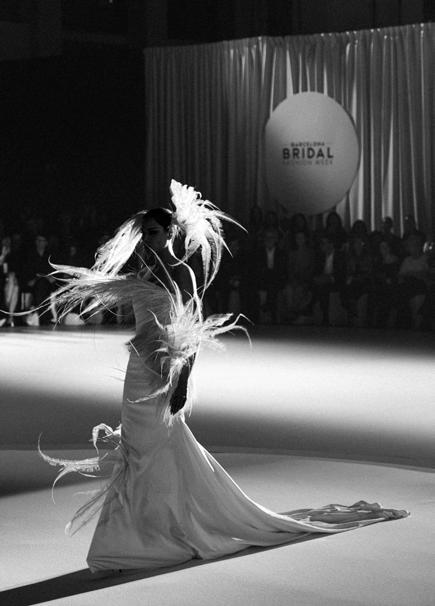
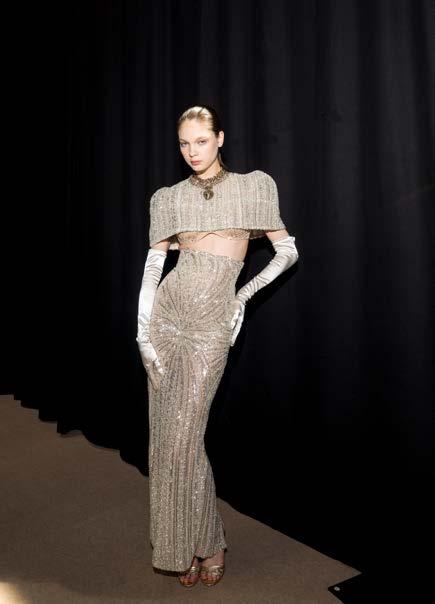
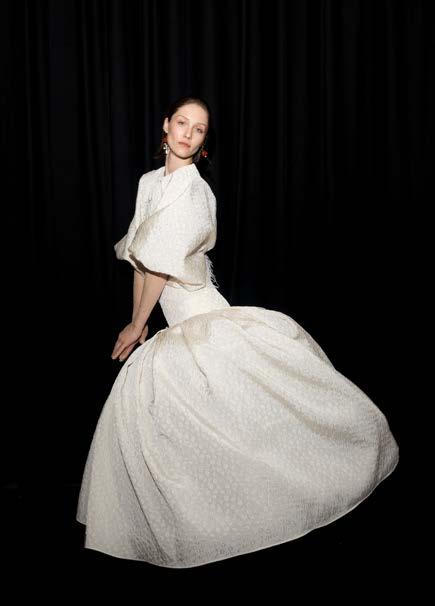
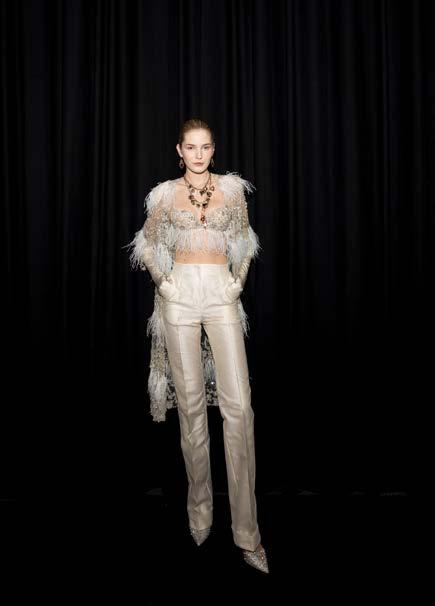
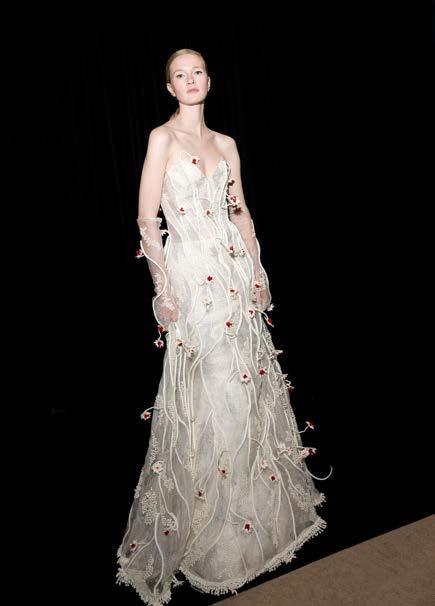
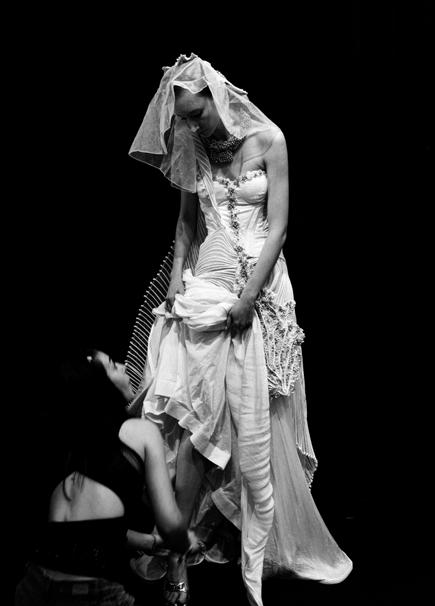
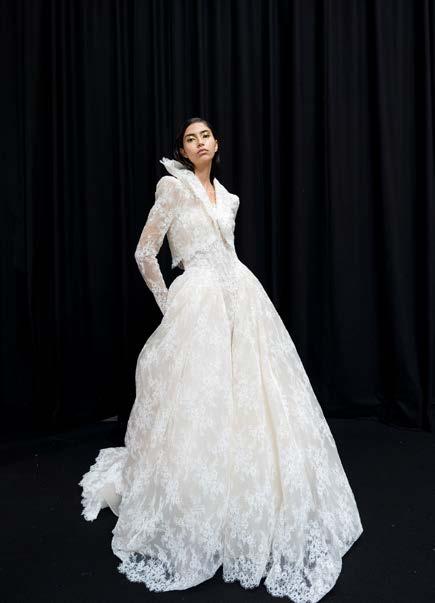
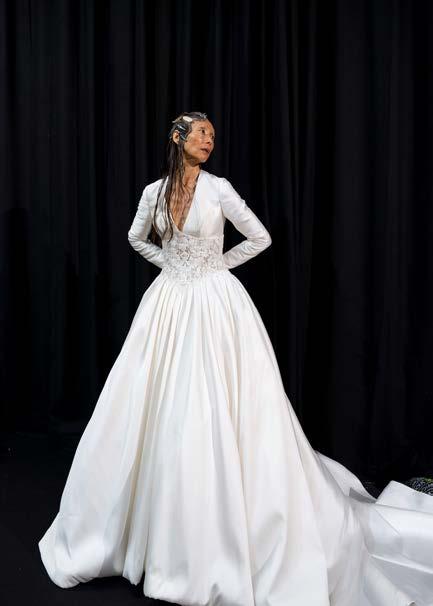
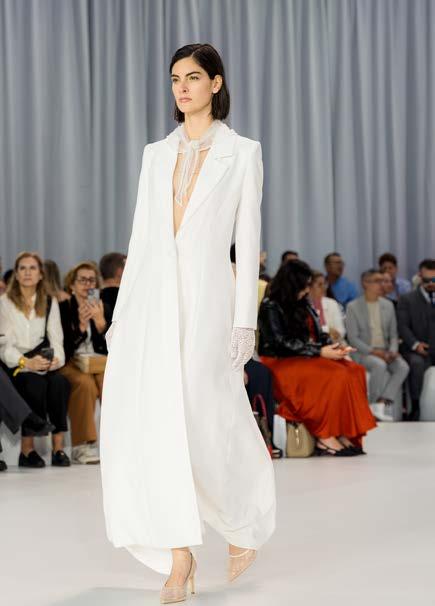
One step ahead. Catch the hottest new looks of the 2027 bridal season from Barcelona Bridal Fashion Week.
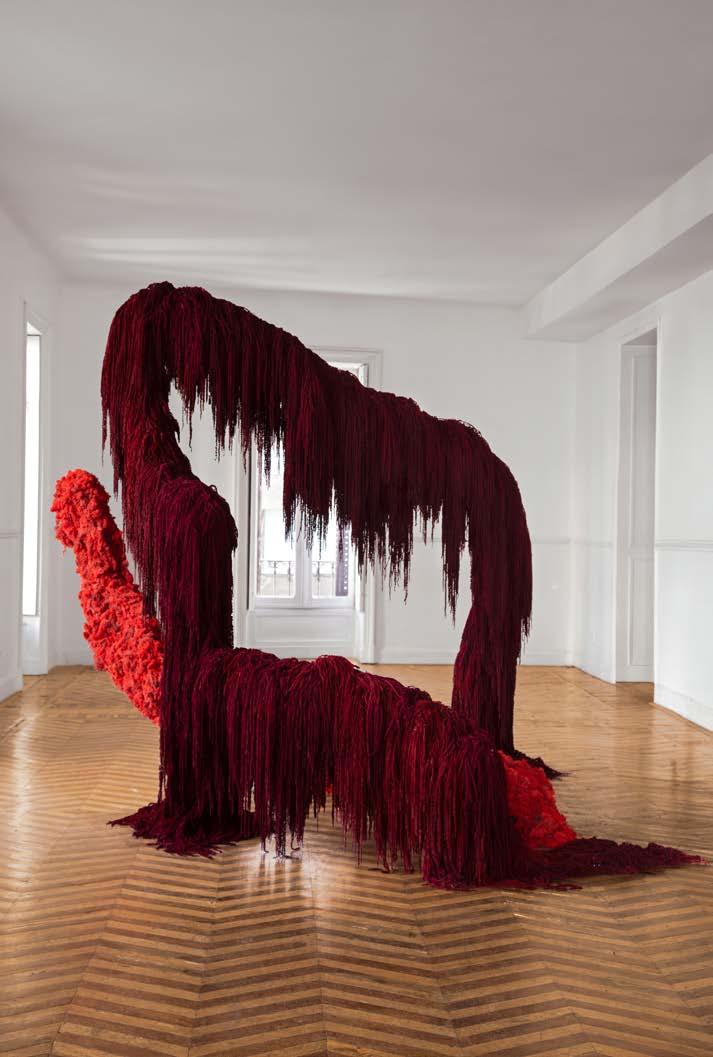
Sculptures that breathe and bloom. Madrid Blooms presents innovative work with flowers.
EARTH WIND WATER FIRE
A vision brought to life through the synergy of place and original craft.
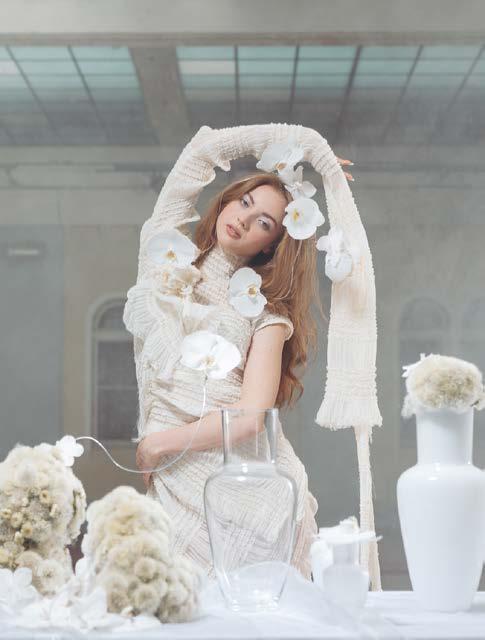
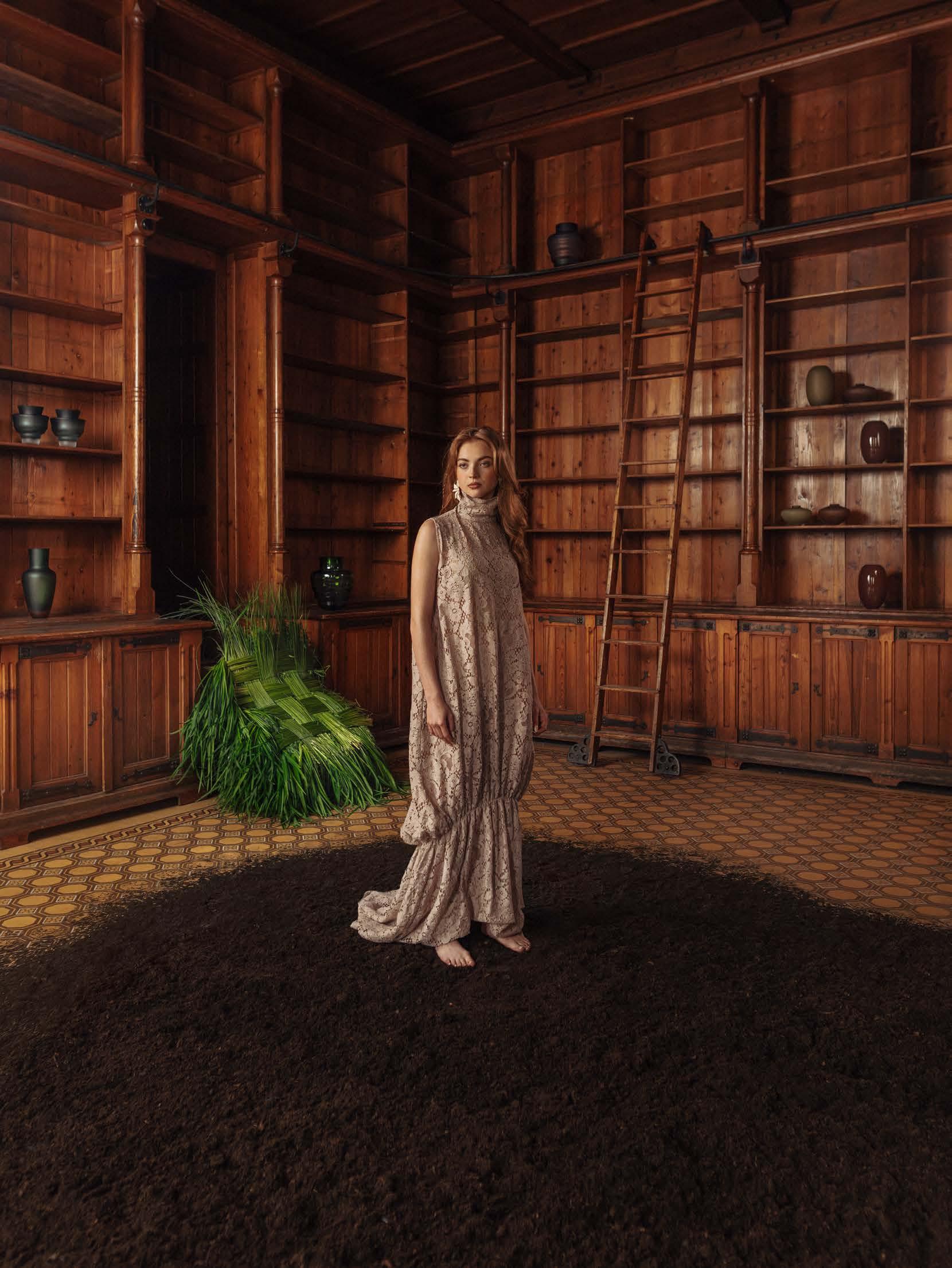
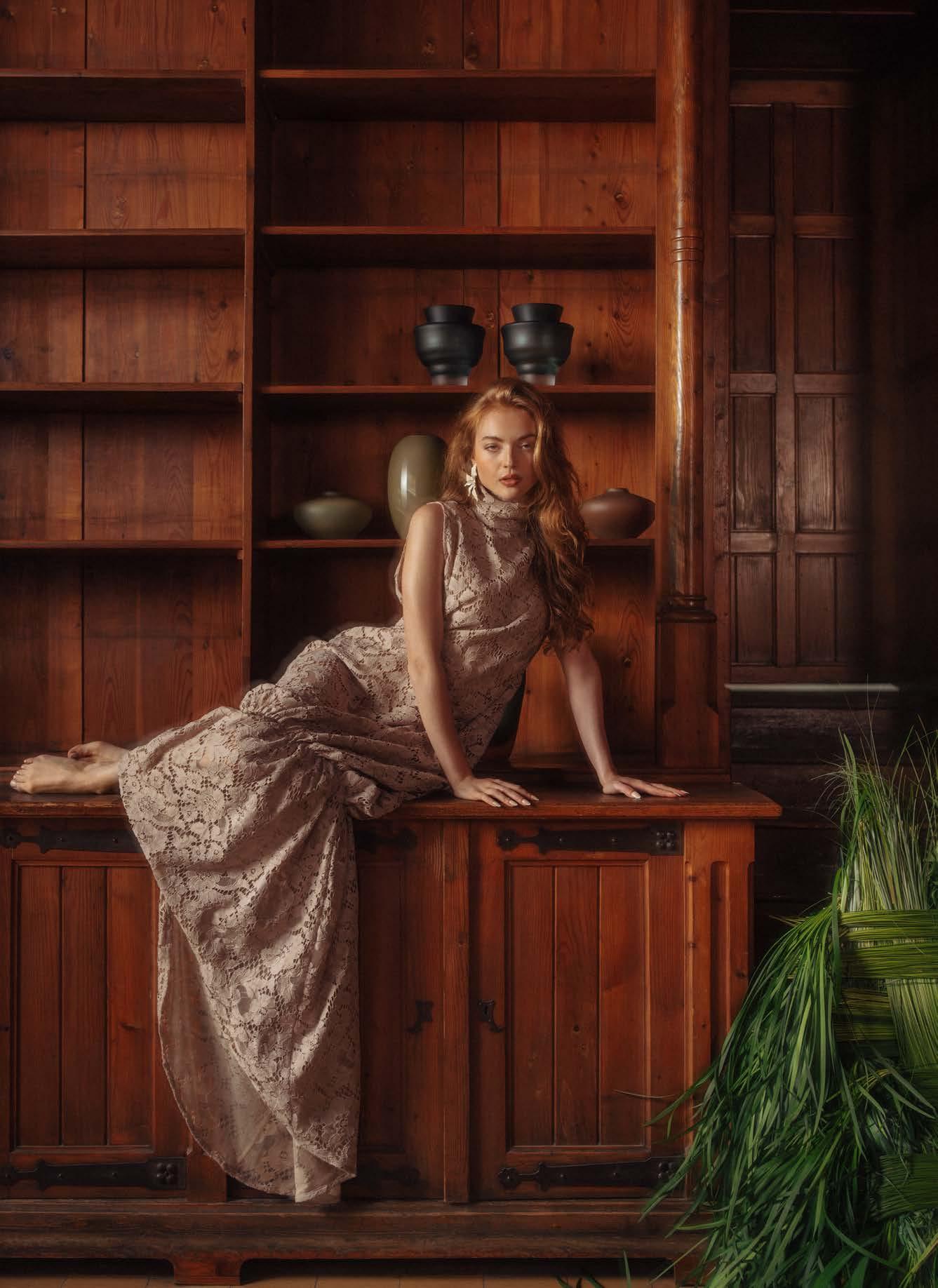
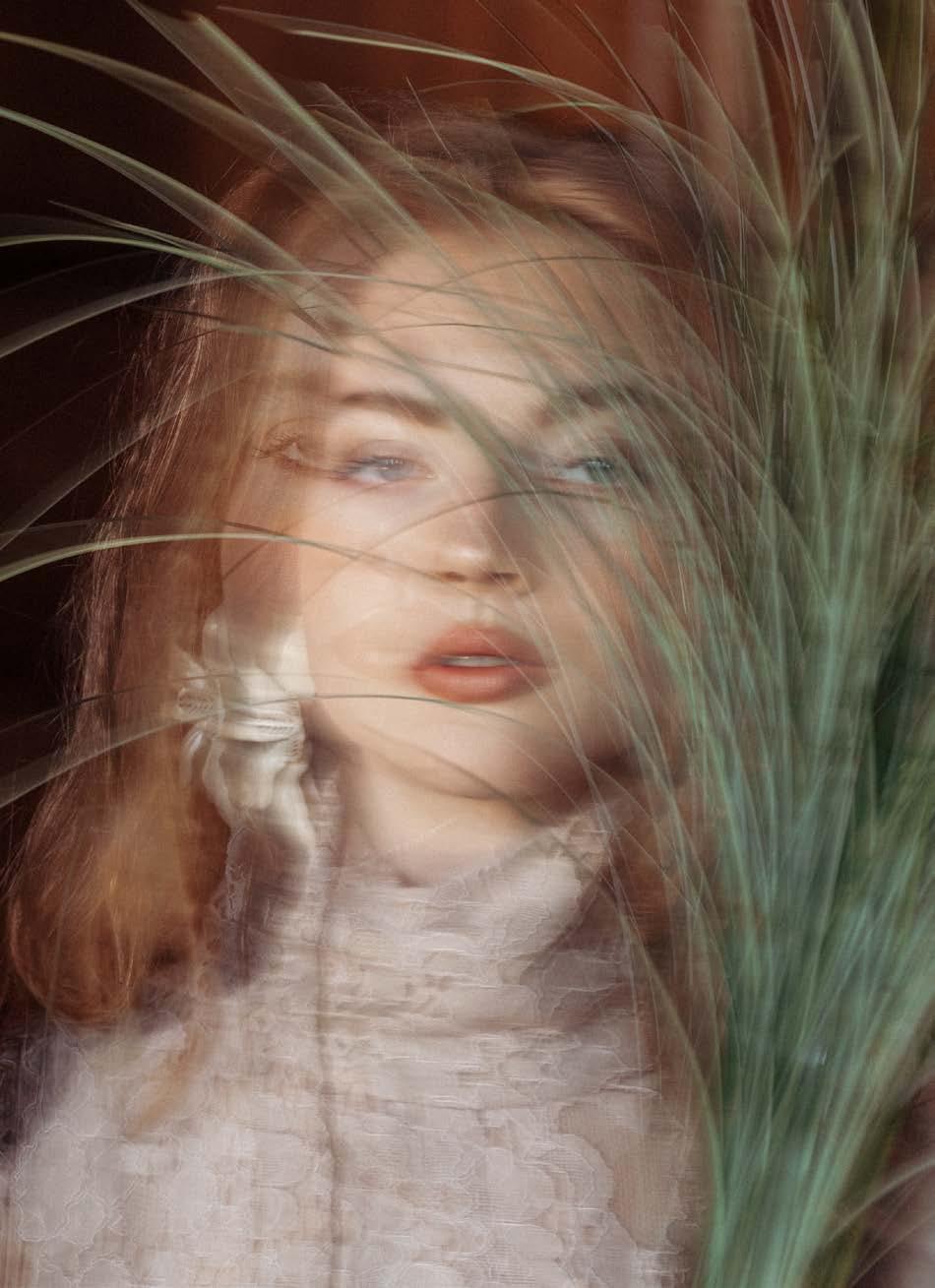
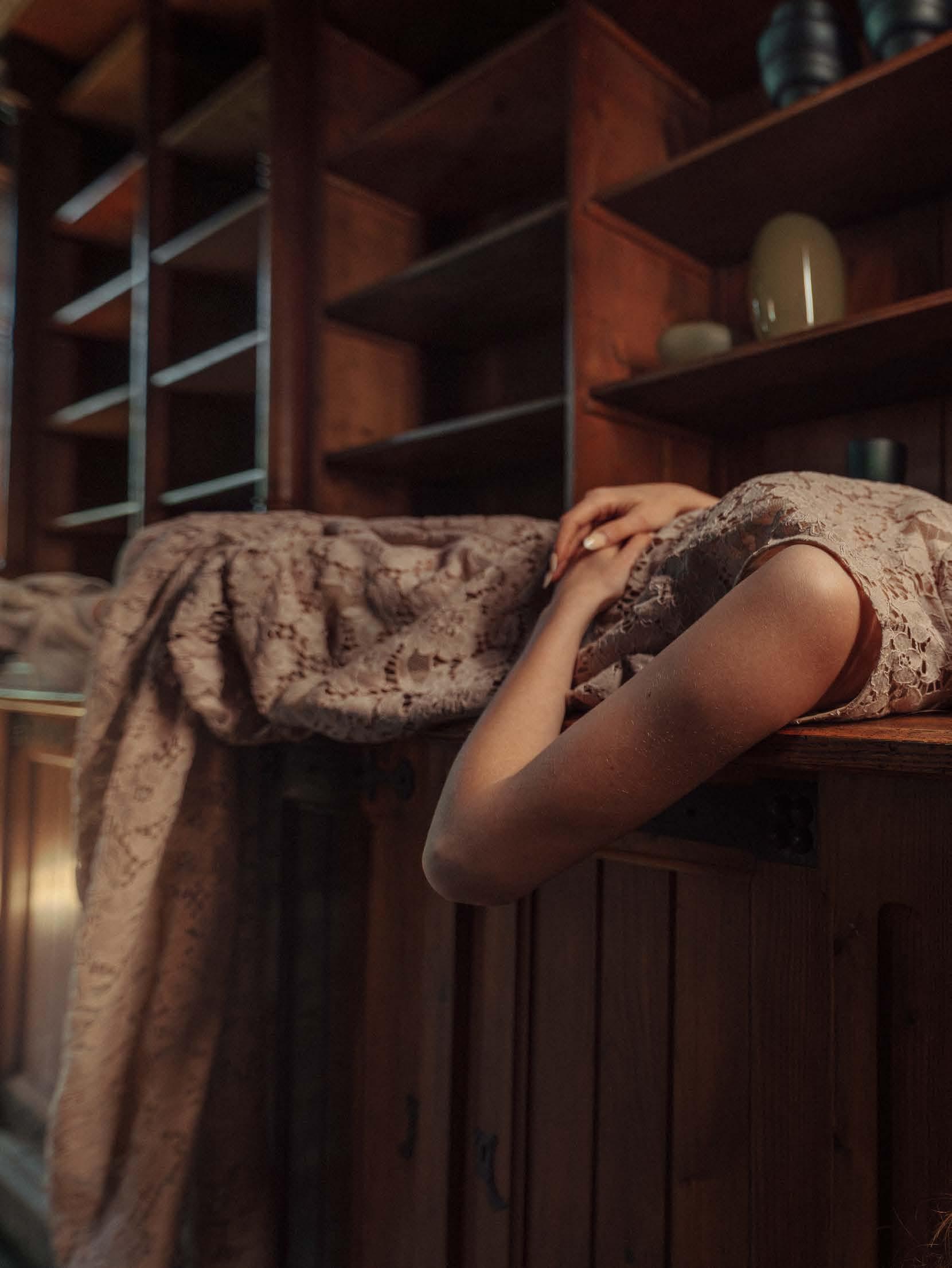
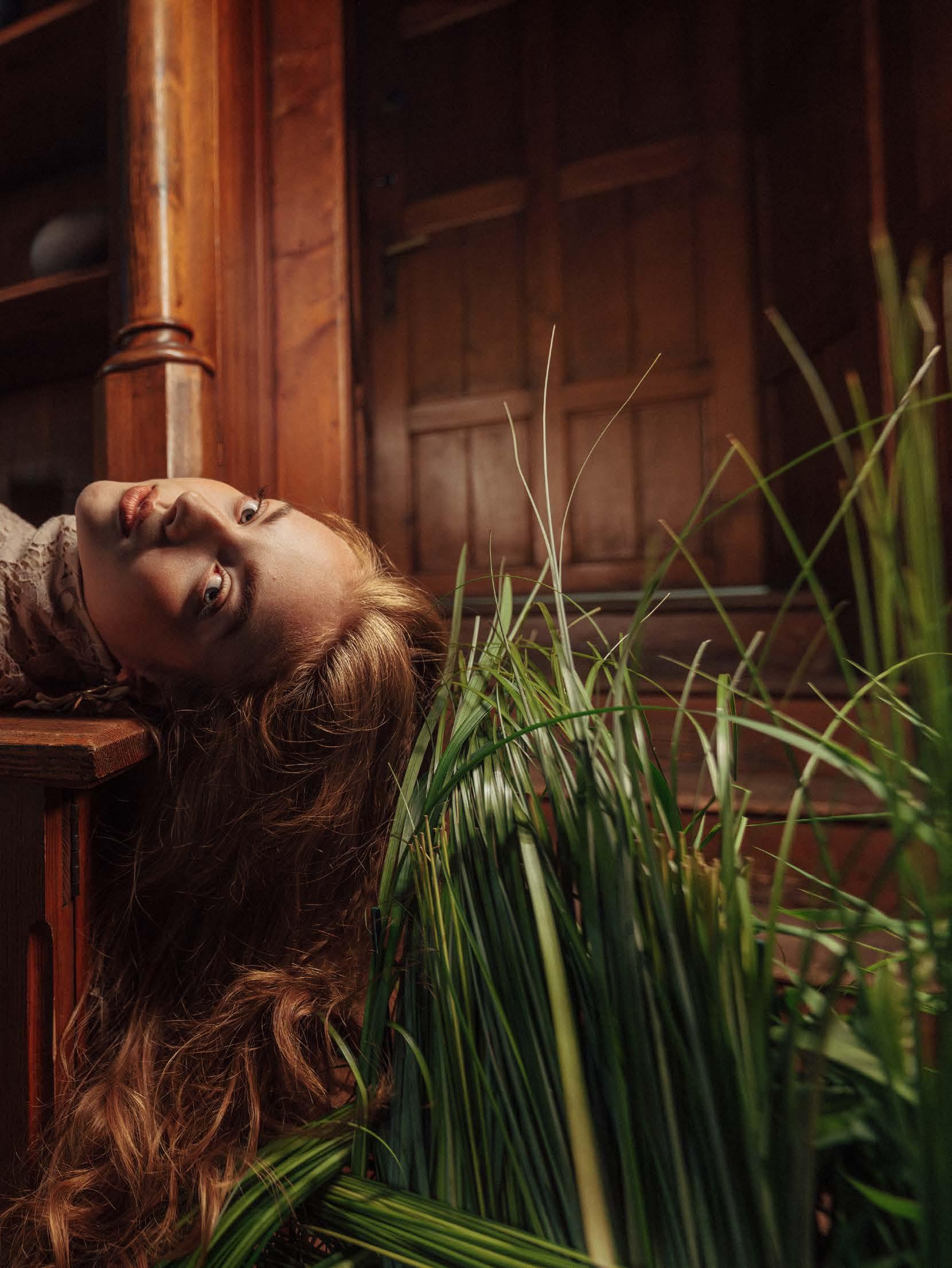
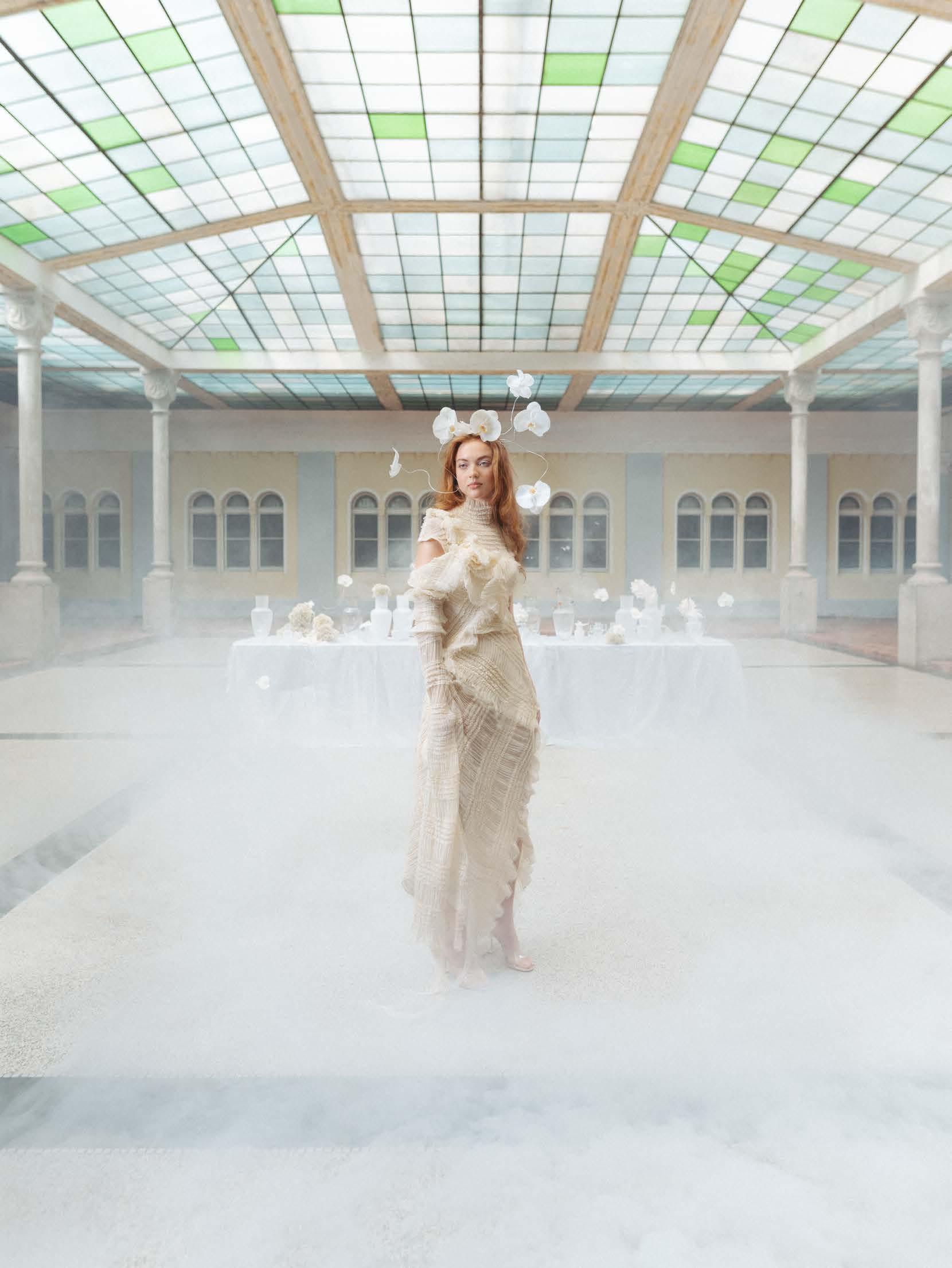
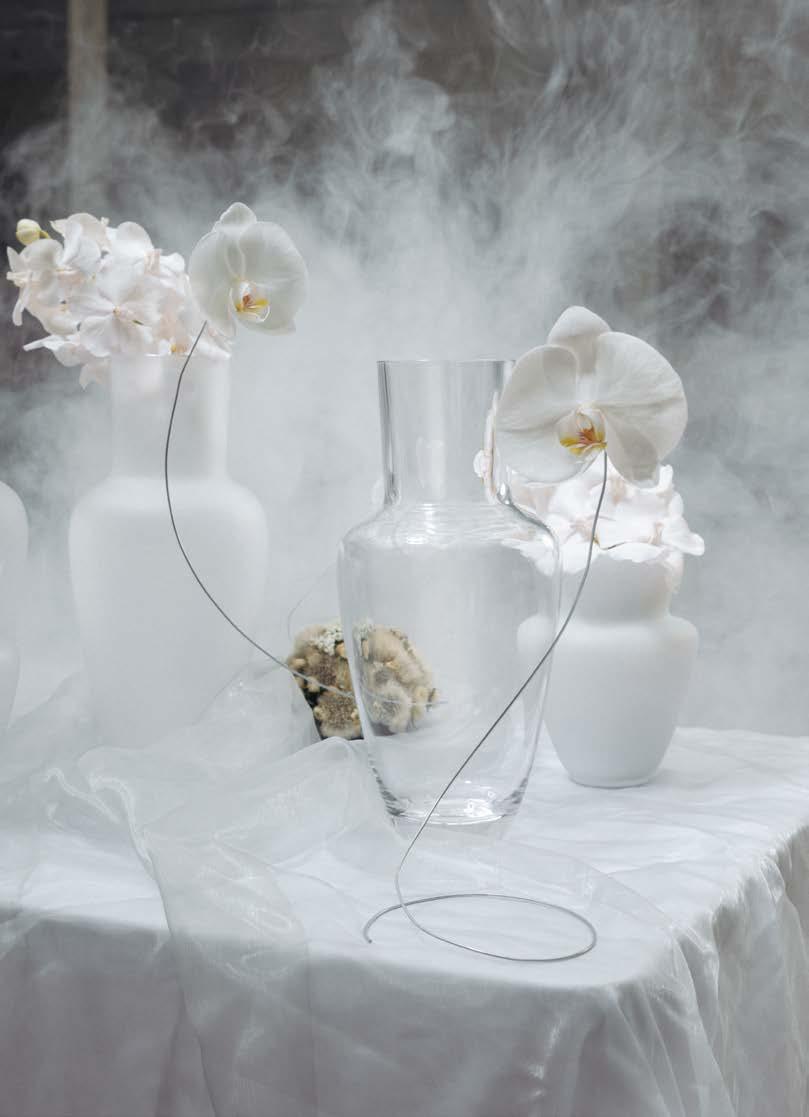
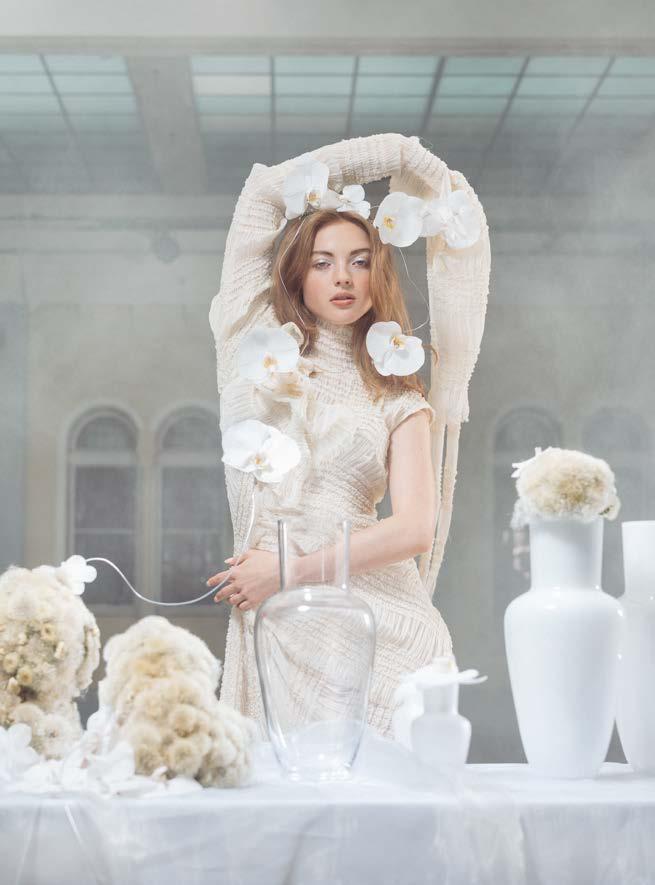
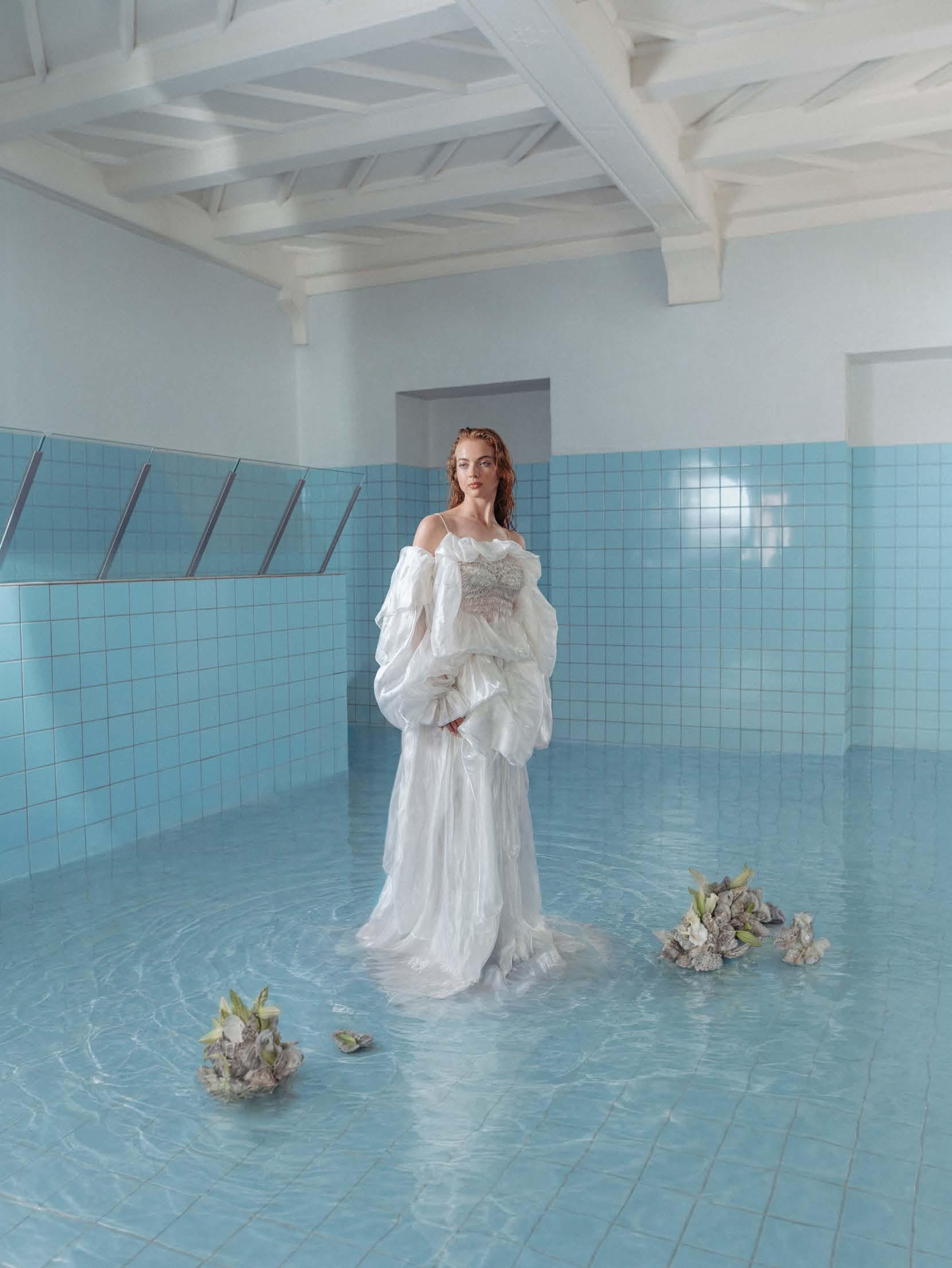
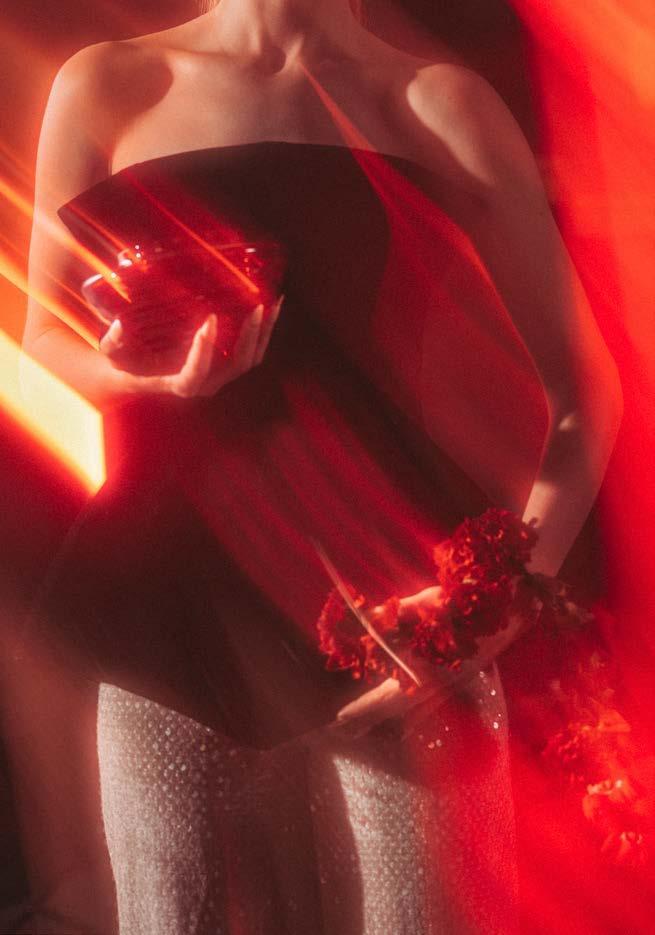
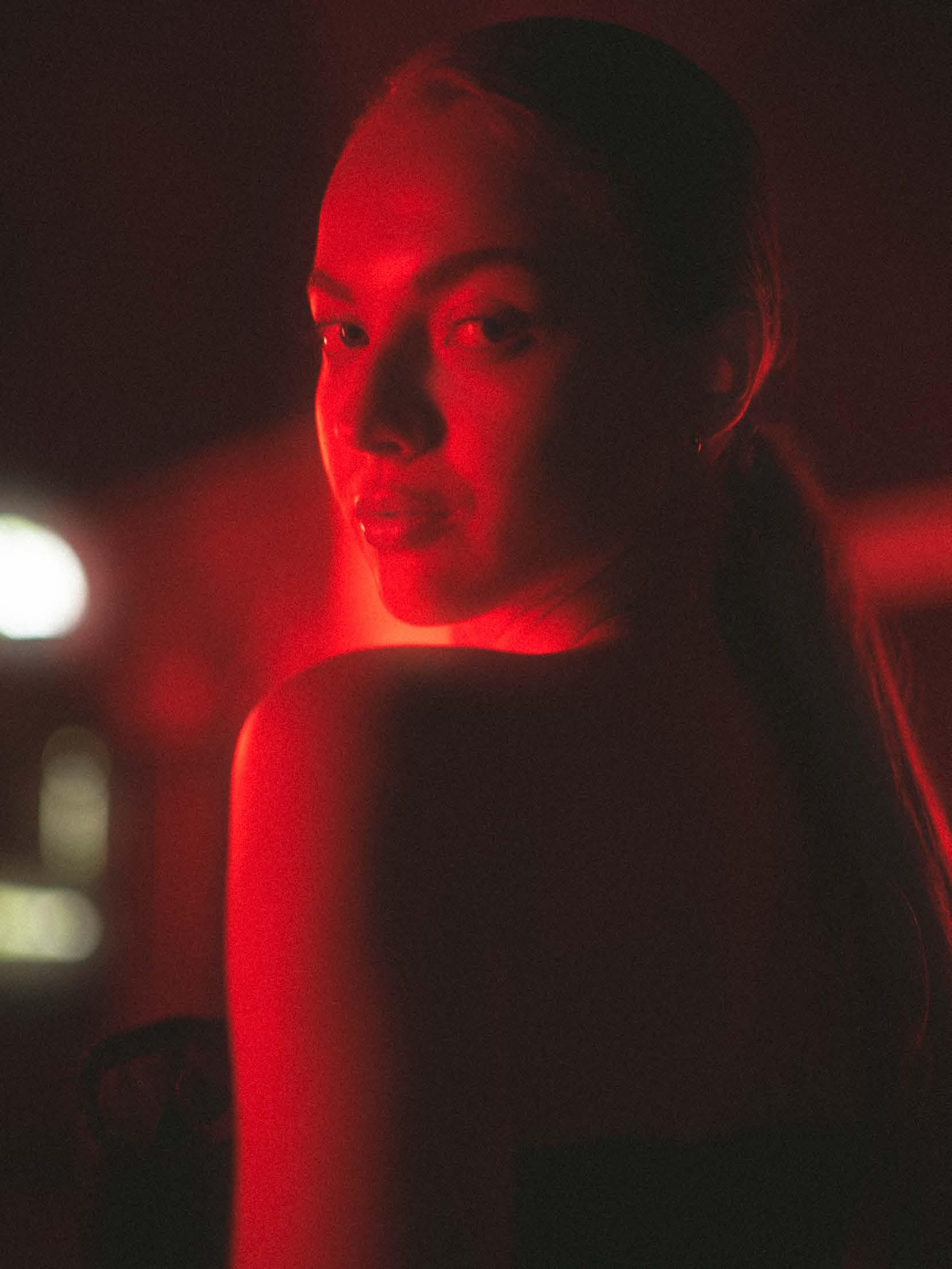
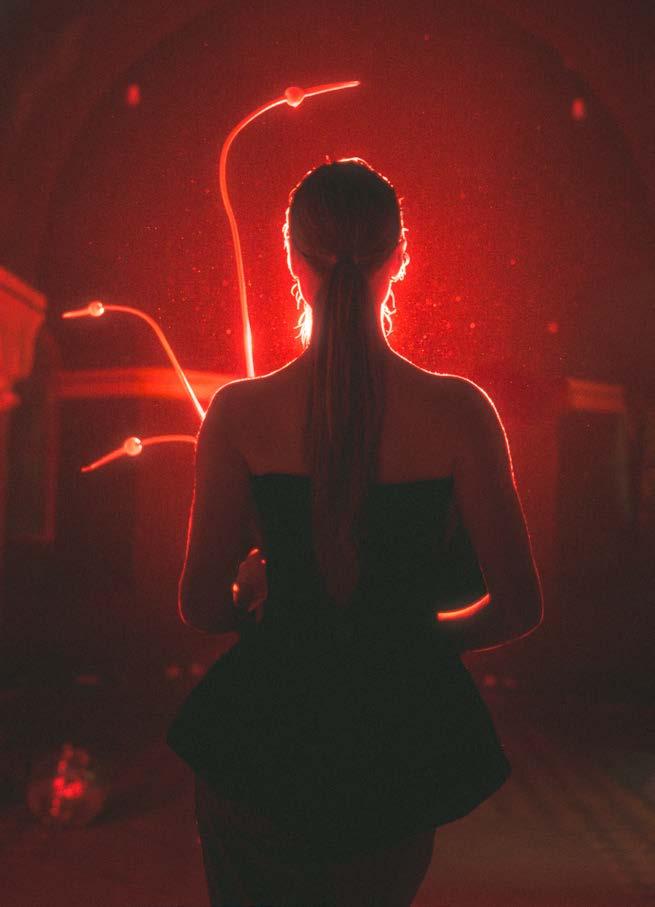
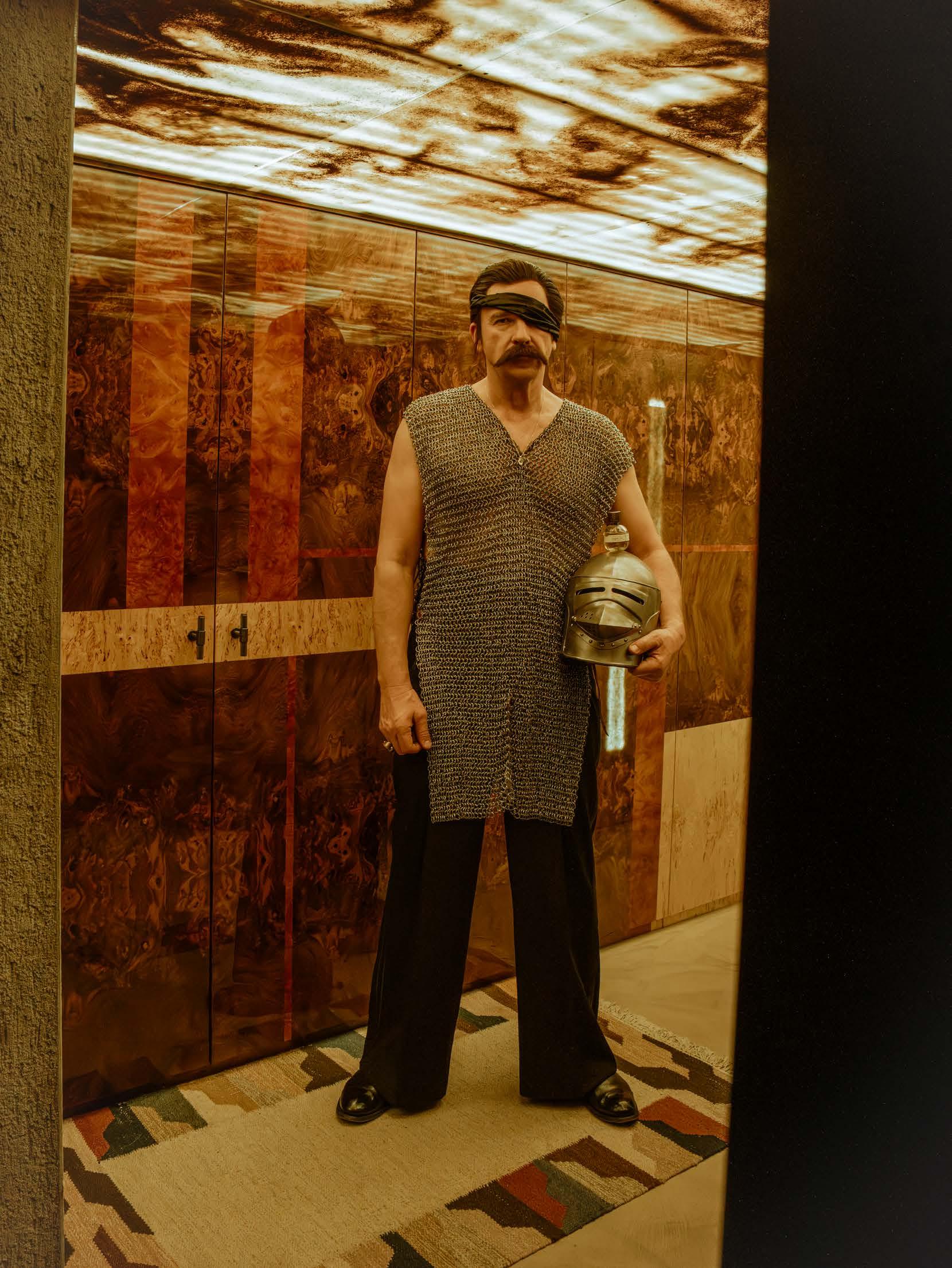
The historic estate of Gabriel Loci carries an arresting genius loci. Its traces sink beneath the skin in the cold tiles of the old autopsy room, breathe through the silence of a former monastery library, and linger among the colonnades. It was against this backdrop that the idea of the idea of the four classical elements was born.
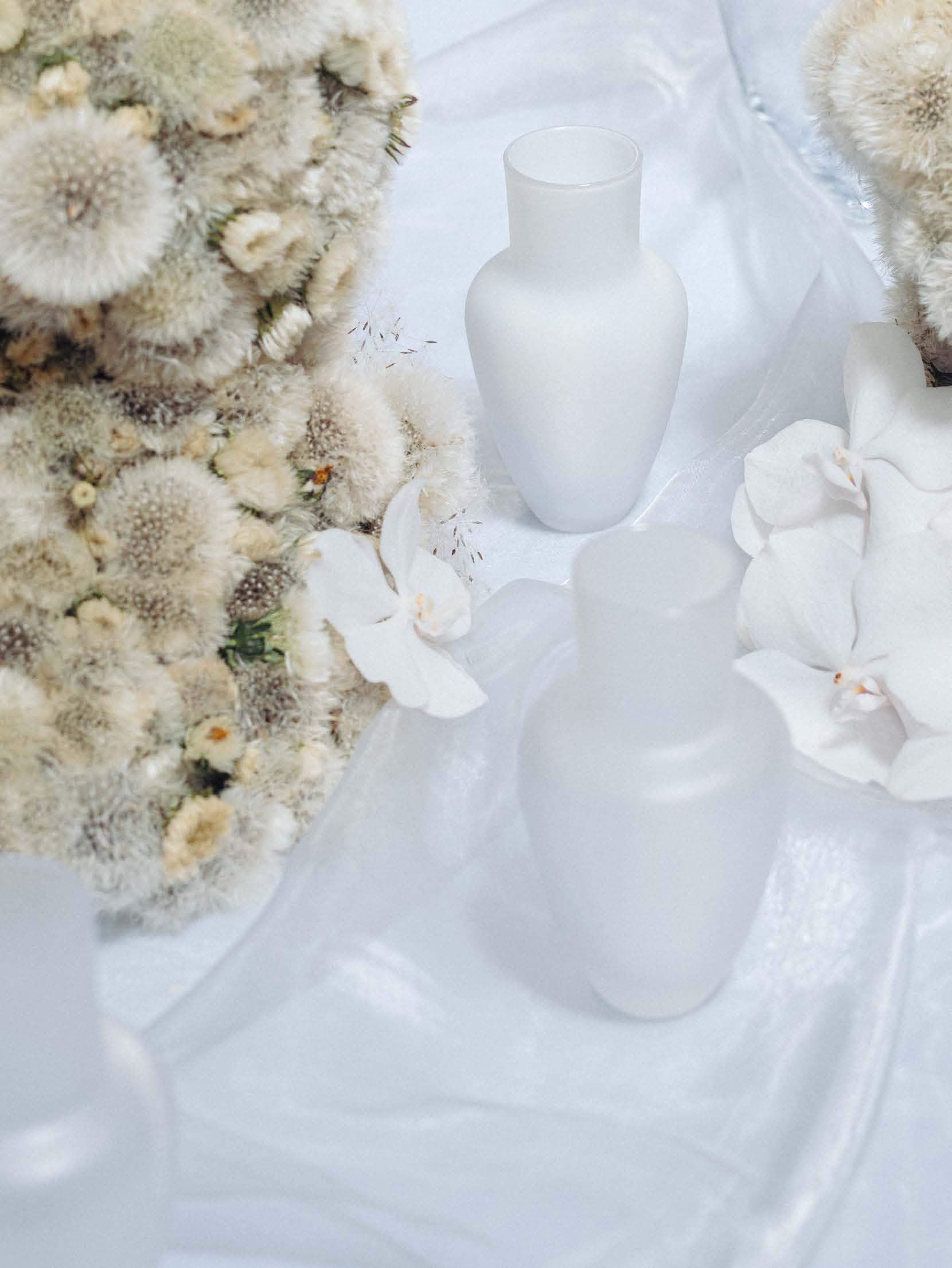
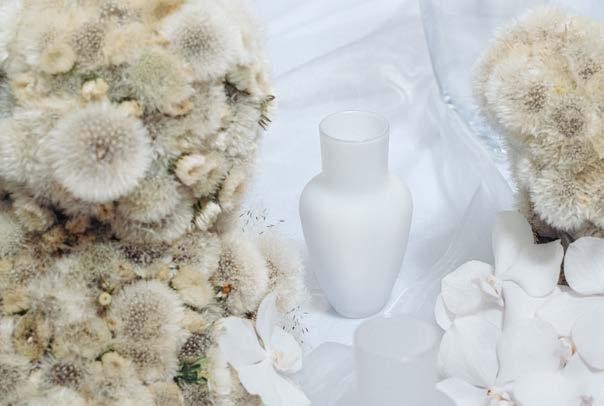
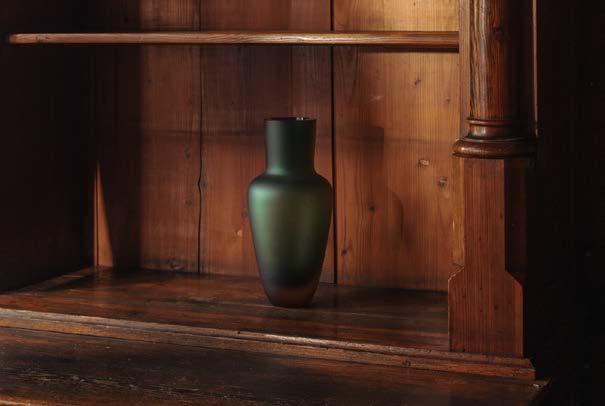
The glasswork of designer František Jungvirt has united the elements since its very beginning. The sand of the earth melts in the fire of the kiln, shaped by breath and cooled by water.
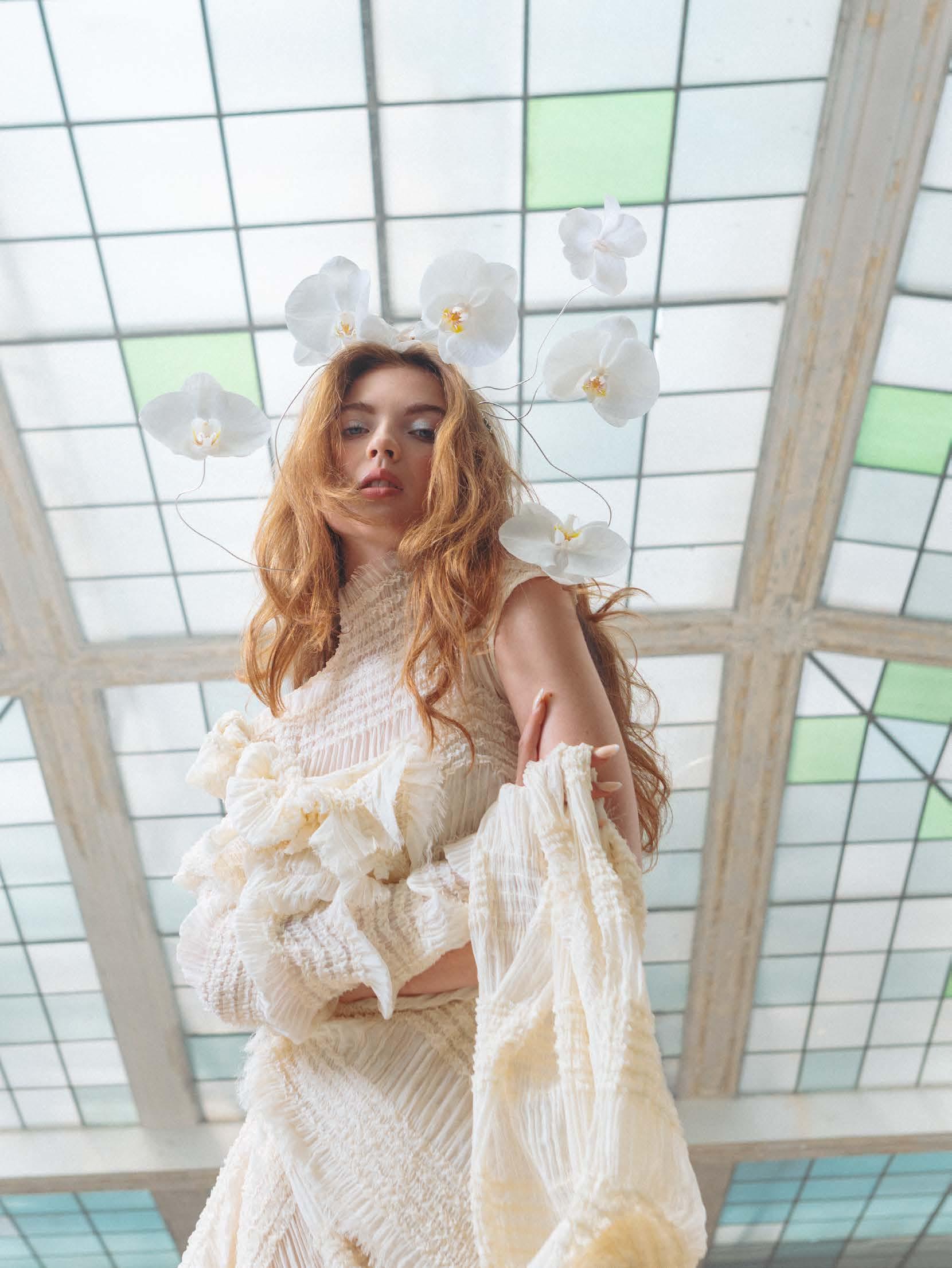
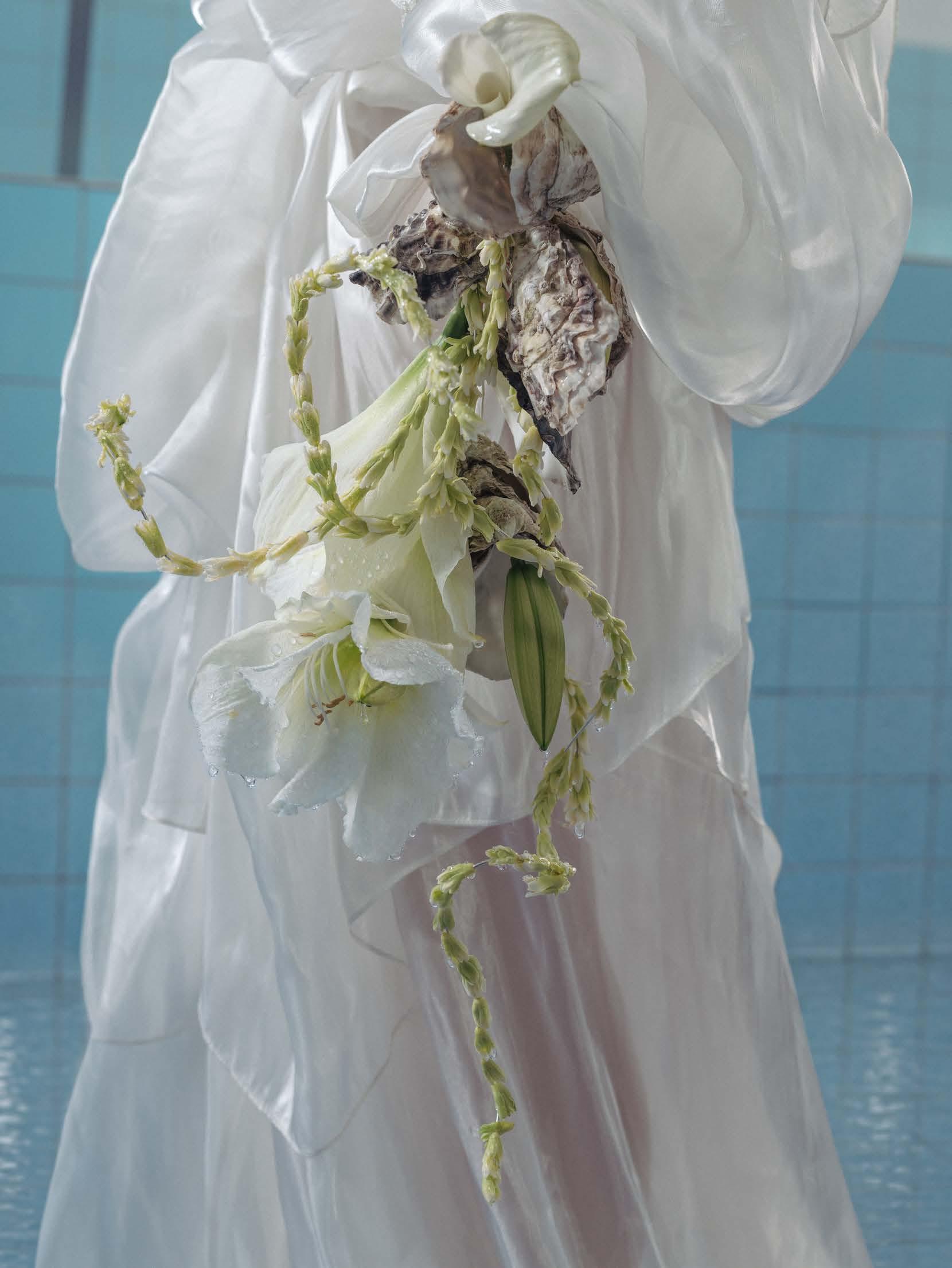
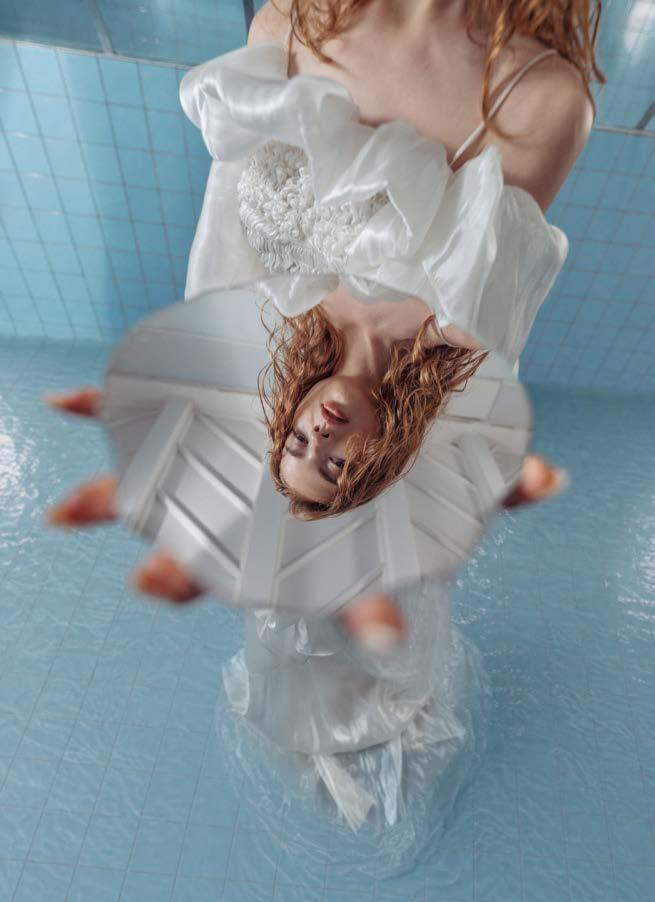
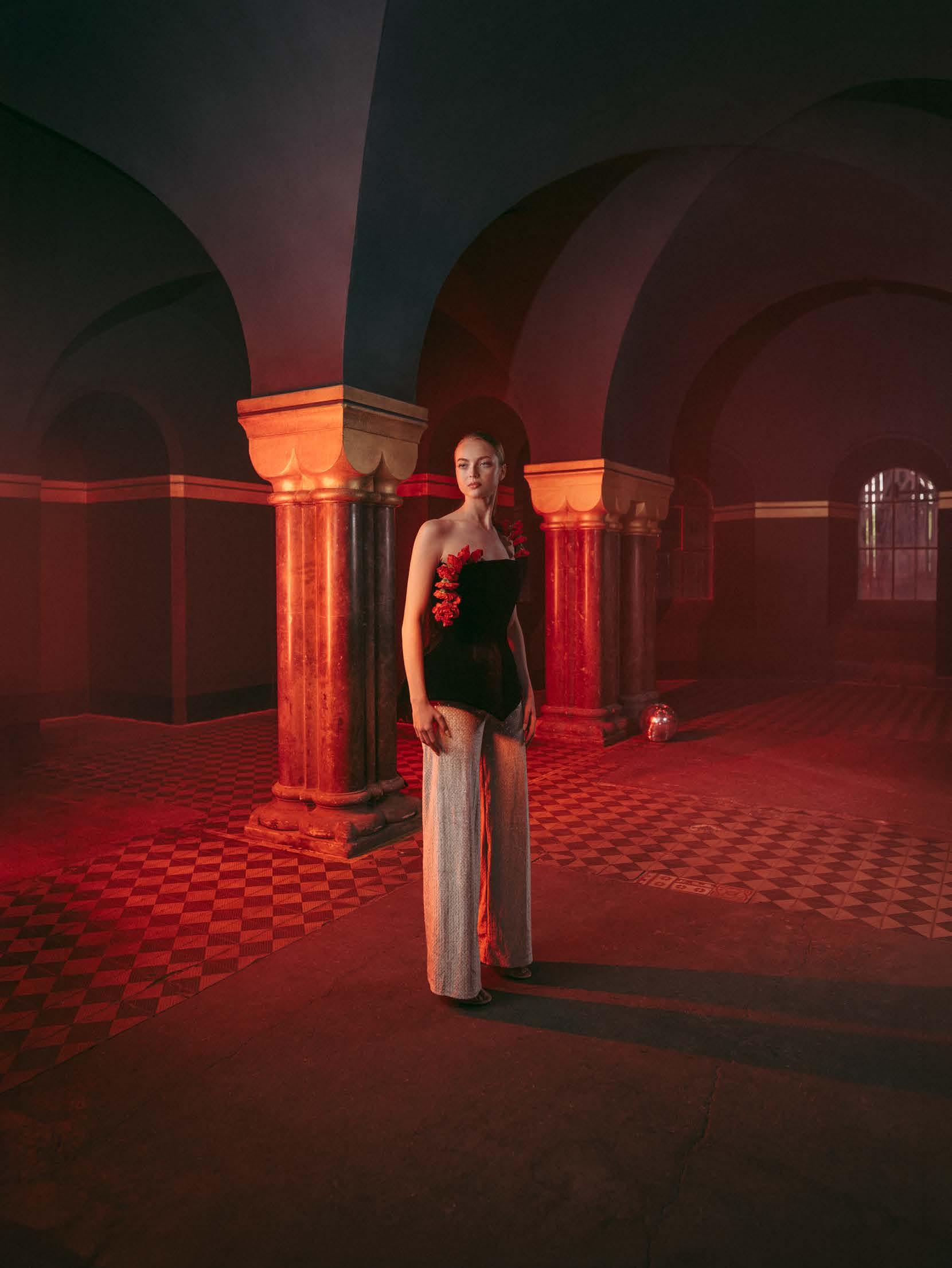
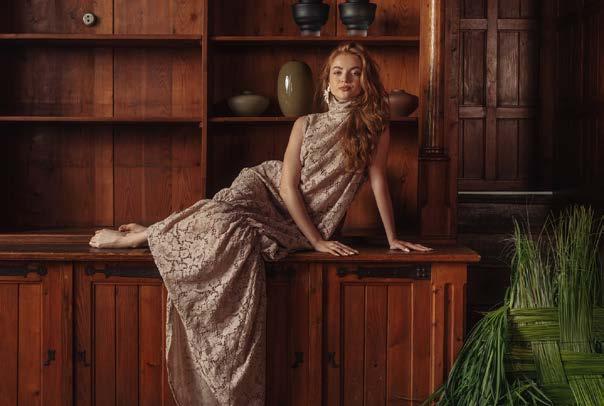
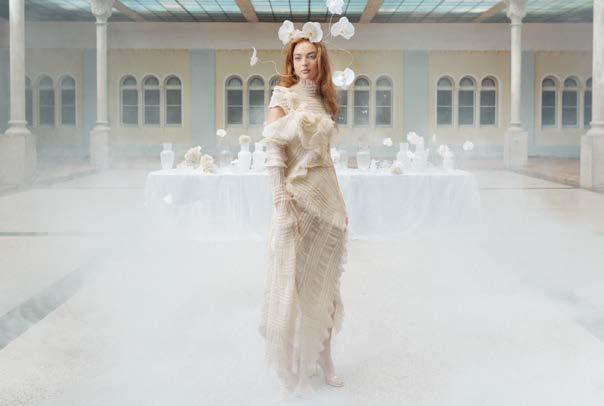
The power of earth and the wildness of fire are embodied in the dress and corset by Anamé, while the lightness of the bridal gowns from Anna Tran‘s atelier gives form to the idea of an elusive wind and the ever-shifting surface of water.
We carry the elements within us. Fire is desire, water is purification in the tide of emotion. Earth is solid ground beneath our feet, air is liberation.
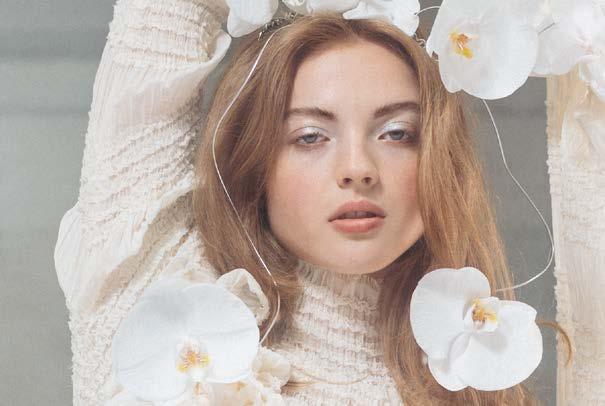
Text: Tereza Weikertová | Photo & Concept: Puf creatif – Jakub Cabalka, pufcreatif.com | Styling, Concept and Production: Ilona Karásková, Natálie Machová | Article Partner: František Jungvirt, frantisekjungvirt.com Asistentent of Photographer: Tereza Hanusková, Jan Šedivý | Venue: Gabriel Loci, gabrielloci.com | Dress: Anna Tran, annatran.online; Anamé, aname.cz | Vases: František Jungvirt,frantisekjungvirt.com | Florist: Vnímej, studiovnimej.cz | MUAH: Veronika Karmazínová, @tvorbou | Model: Tímea Drábiková, Stalker Agency
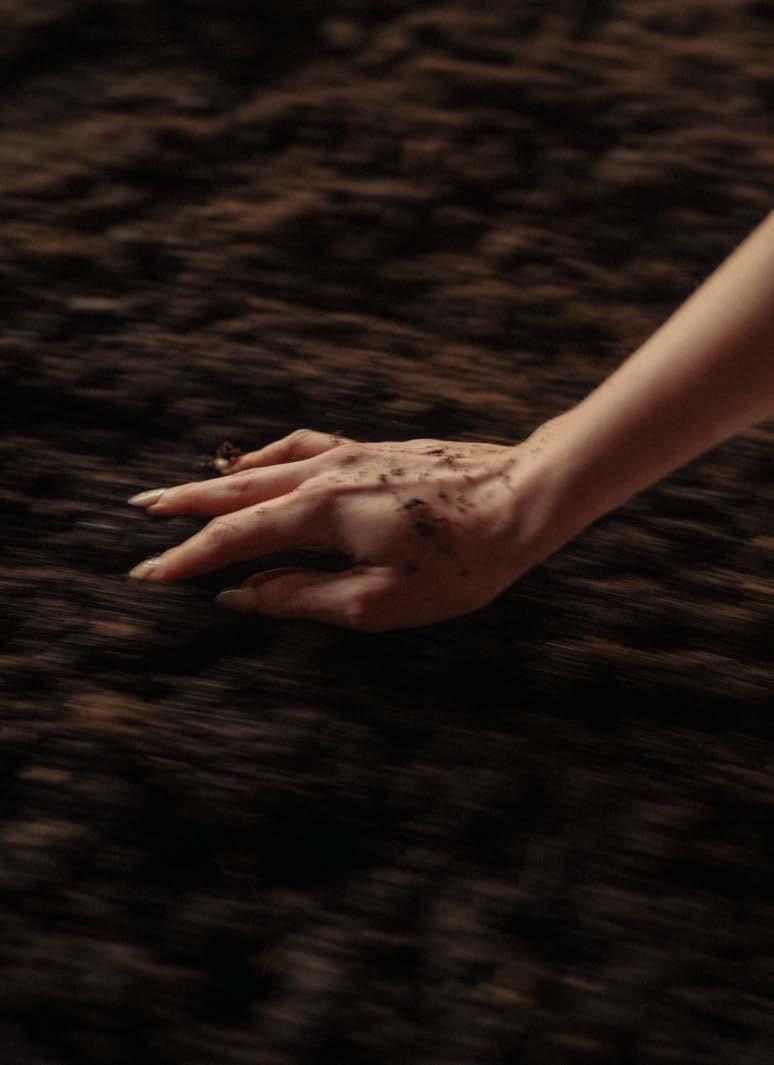
EARTH
“I loafe and invite my soul, I lean and loafe at my ease observing a spear of summer grass. My tongue, every atom of my blood, form’d from this soil (…)”
– Walt Whitman, Leaves of Grass
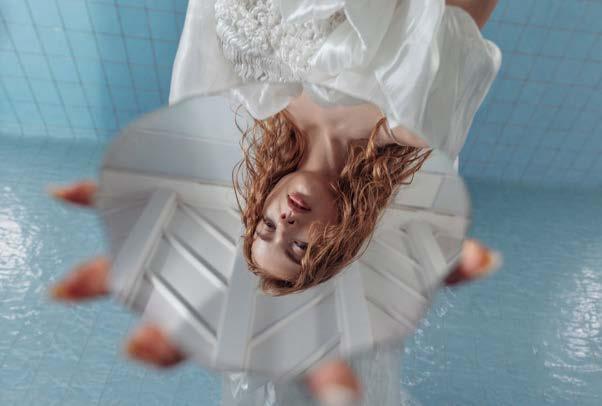
I feel the pull of the earth. Is it so wrong to stay grounded, I wonder. But whatever my next step may be, it will hold me. And so I stand firm, while the fabric of the dress falls to the ground.
WIND
“Eros shook my mind like a mountain wind falling on oak trees.”
– Sappho, Fragment 47
The air grew thick and for a moment stopped entirely, as though the whole world were holding its breath just before everything changes. It is that rare moment of absolute stillness — when nothing has happened yet, but change already hangs in the air, uncompromising. All it takes is a single breath.
WATER
“The soul of man is like to water; From Heaven it cometh, To Heaven it riseth, And then returneth to earth, For ever alternating.”
– J.
W.
Goethe, Song of the Spirit over the Waters
Let things flow freely. Trust the current that carries me, even when I cannot see beneath the surface. Or rise against it? To be the flow of one’s own emotions. To dive deeper, and yet to stay afloat.
FIRE
“For you must know what you are burning, if you are to find beauty in its light.”
– Antoine de Saint-Exupéry (The Wisdom of the Sands)
True strength lies not in the flame that blazes wildly and quickly dies, but in the heat that remains deep beneath the surface. A passion that does not destroy, but warms. An inner light.
DRESSED IN STONE AND LIGHT
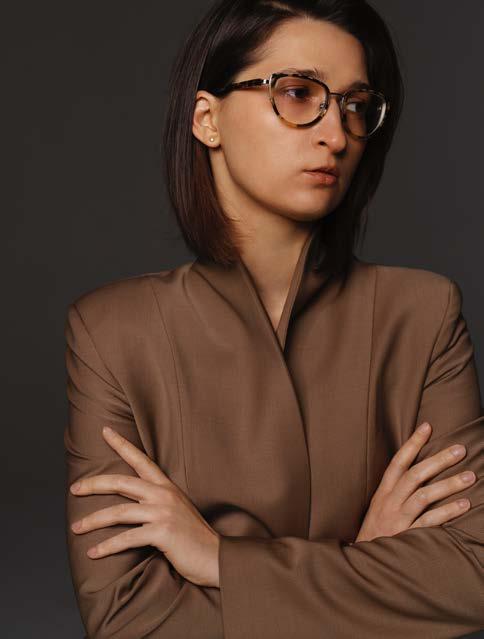
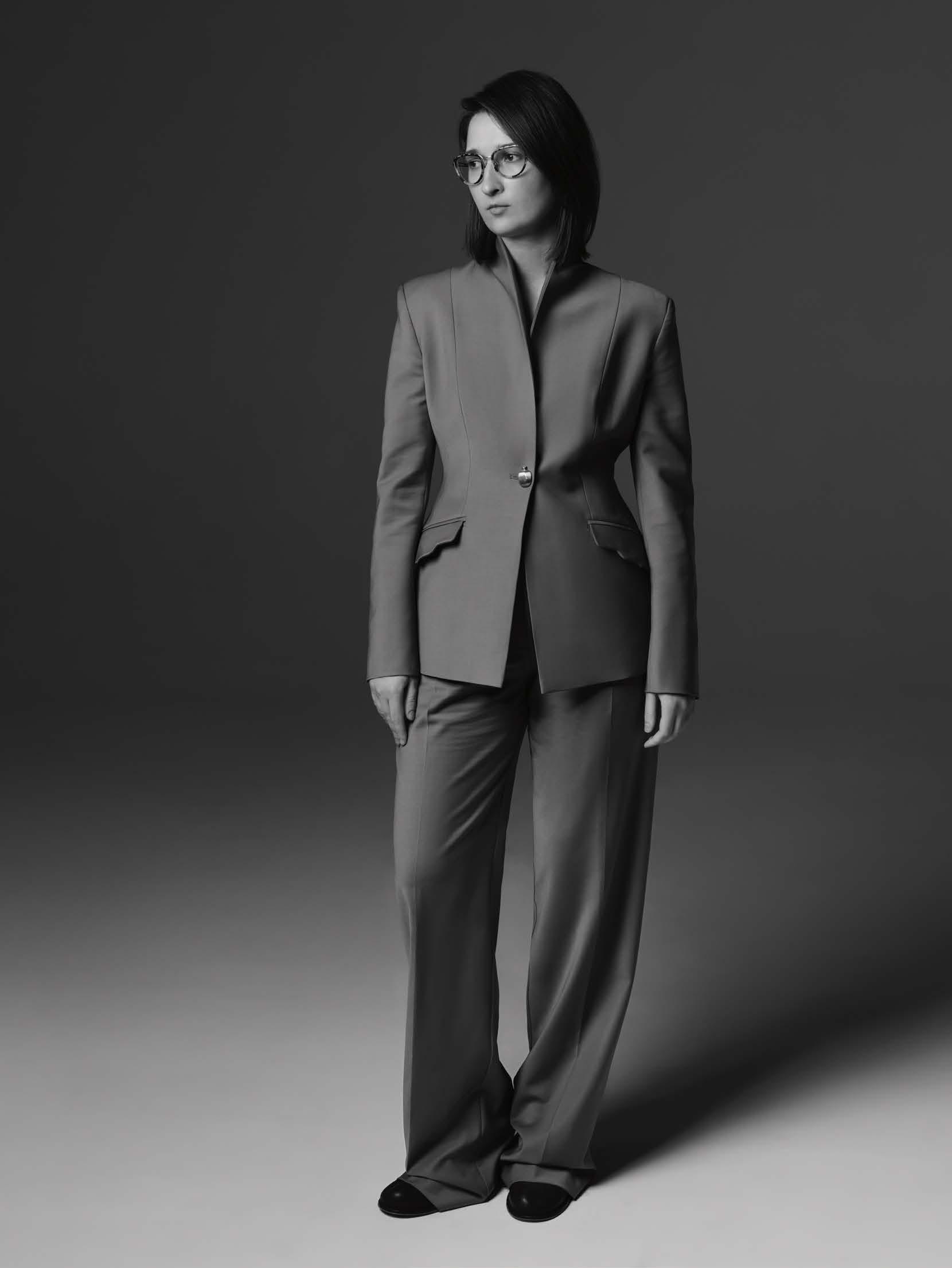
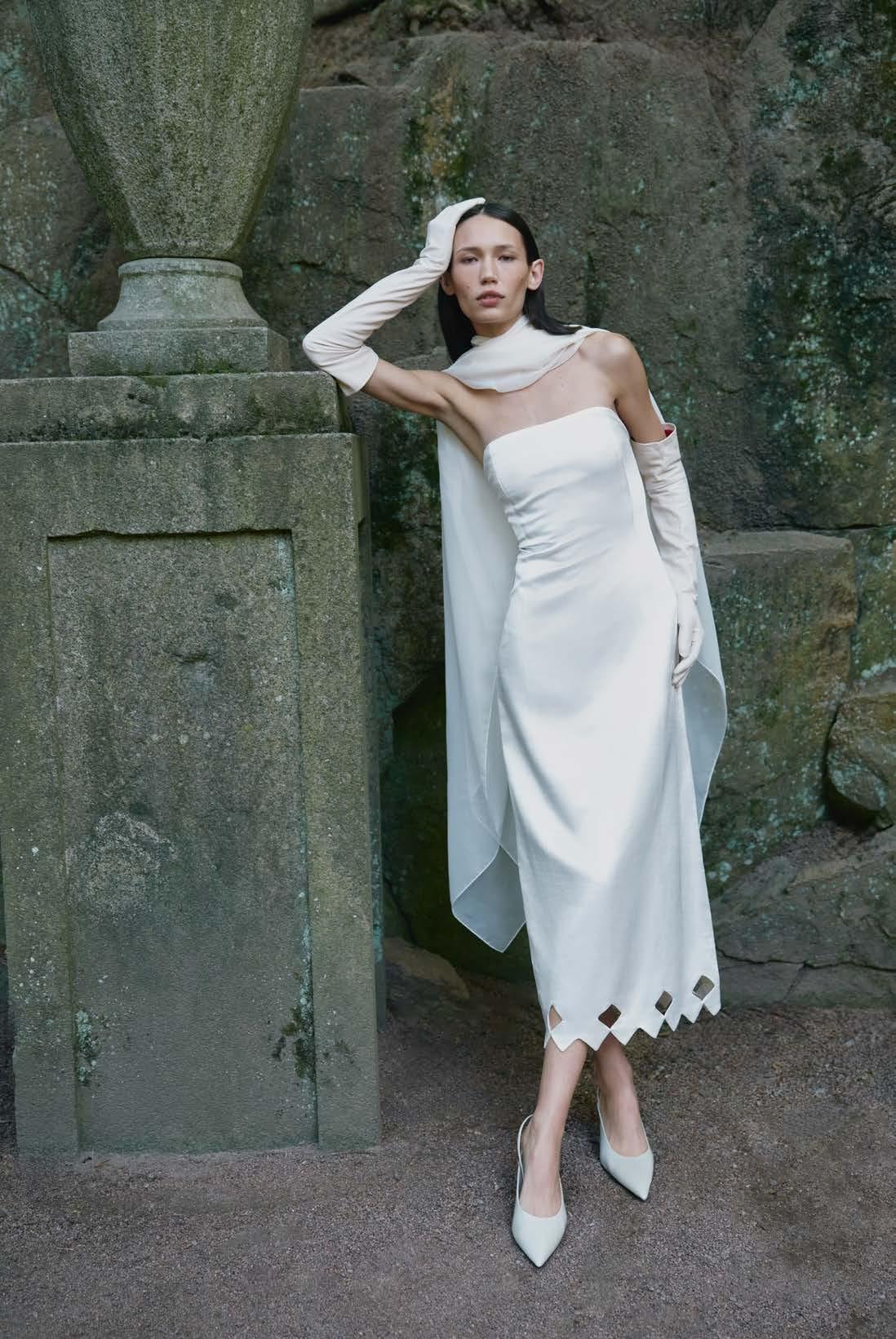
Fashion designer Daria Plaksyuk trained to become an architect, grew up among sewing machines and built a brand from the conviction that garments can carry the weight of a city. With PODYH, a Kyiv-based brand, she translates architectural heritage into clothing. Drawing on Ukrainian vernacular forms, modernism and Art Nouveau, her collections turn facades, cornices and disappearing buildings into pieces shaped by memory, war and cultural preservation…
Daria Plaksyuk (* 1995) is a Ukrainian fashion designer and the founder of PODYH. The architect by trade launched the brand in 2021 with a collection inspired by Kyiv’s modernist architecture. Her work sits at the intersection of architectural research and fashion design: each collection explores a specific style or era of architecture, translating its forms, materials and ornaments into clothing. Since Russia’s full-scale invasion of Ukraine in 2022, Daria has continued to work and create in Kyiv. She is married to an architect who teaches architectural design and is an integral part of the PODYH team.
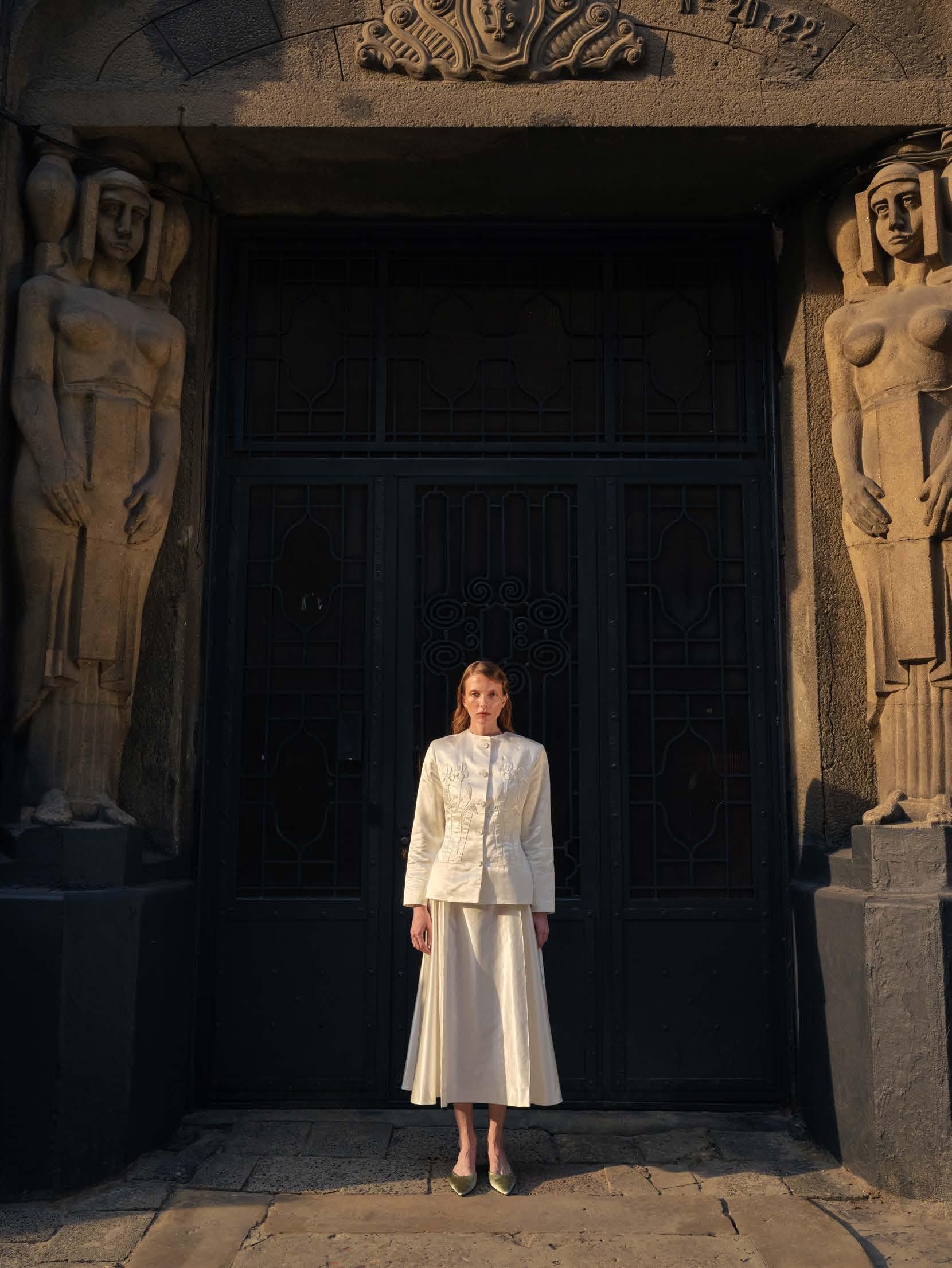
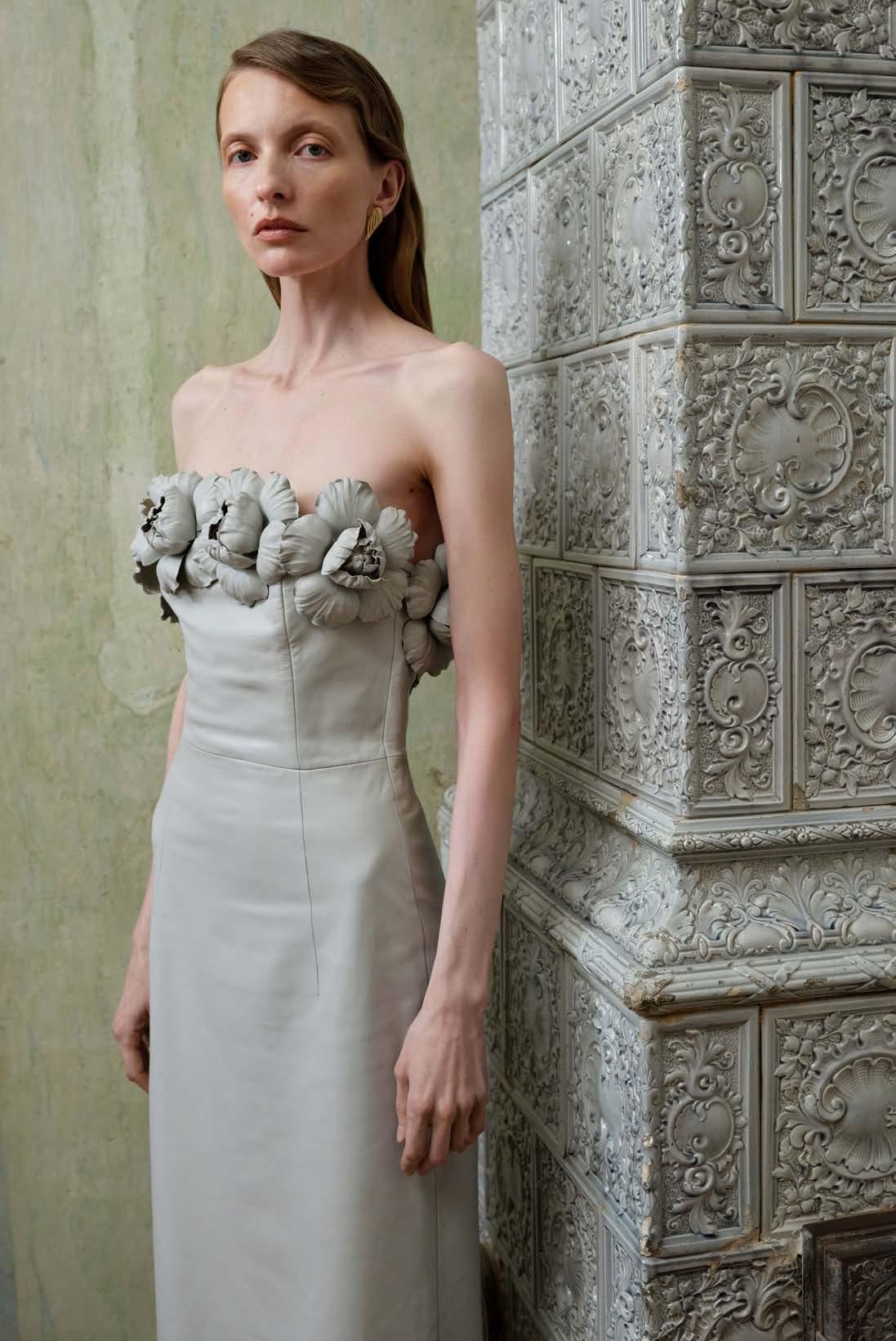
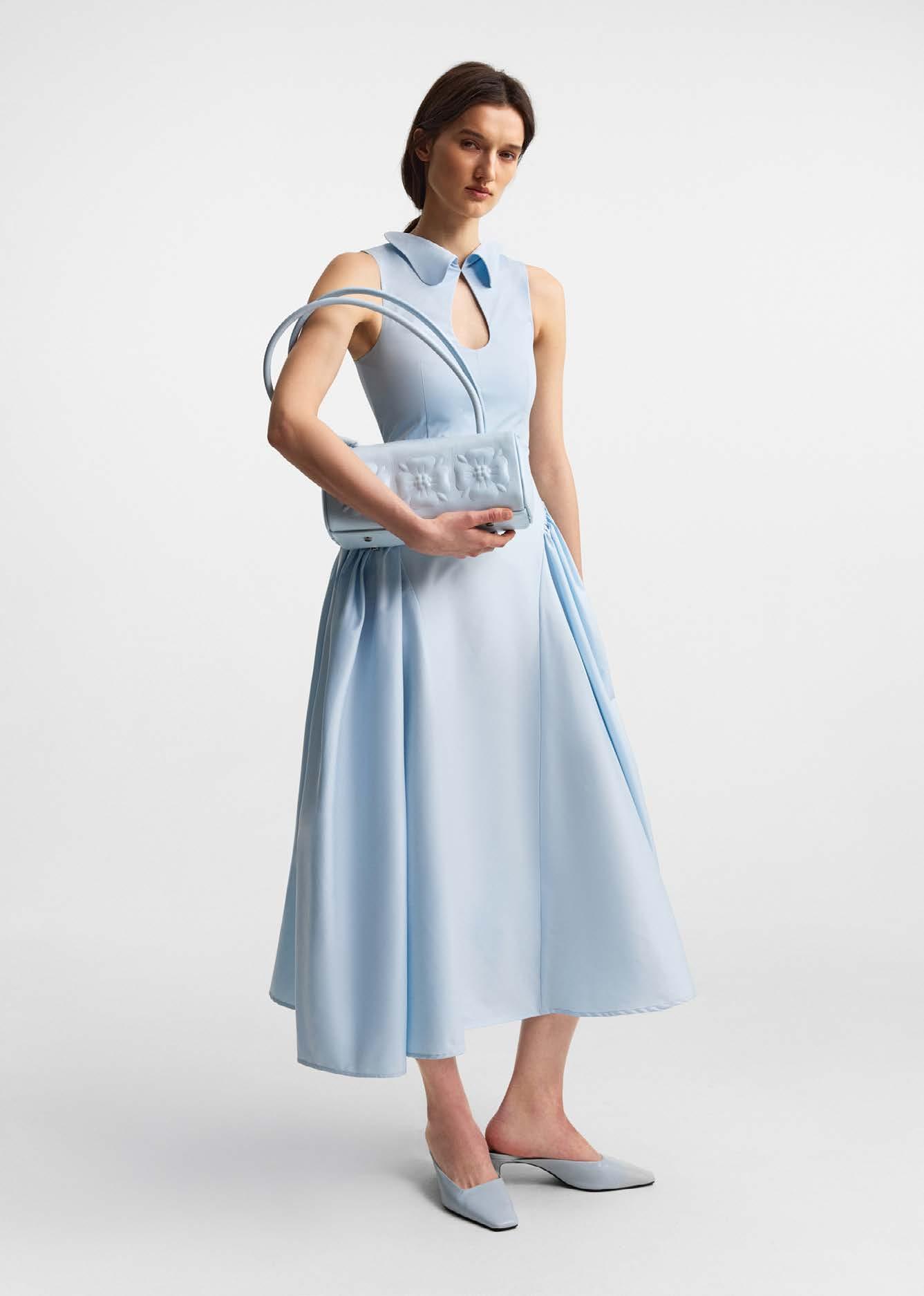
PODYH (Ukrainian for breath) is a Kyiv-based fashion brand. Each collection is rooted in architectural research, from Ukrainian folk vernacular and Kyiv modernism to Crimean Tatar heritage and, most recently, European Art Nouveau. The pieces are named after architectural elements in their native languages, and signature handmade details – leather flowers, bas-relief bags, hand-shaped brooches – connect the garment to the building that inspired it. The brand has been presented at London Fashion Week. podyh.com @podyh_ua
Text: Diana Rykrová | Photo: Christina Nikitina, Nadia Berska
You spent your childhood at a garment factory where your grandmother worked, then deliberately chose architecture school. What exactly led you to do that, and how do you view that decision in hindsight?
You name pieces after architectural elements – Gont, Tes, Lyshtva, Vitryak. Plus, those words are in Ukrainian. For wearers outside Ukraine, they are unfamiliar words. How do you work with the language, with (mis)understanding?
When I was choosing my path, fashion design in Ukraine was still finding its footing, so I turned toward a discipline I believed – wrongly, as I would later discover – could hold my creative ambitions. Architecture is unforgiving in its rigour: alongside painting, sculpture and design, we studied the resistance of materials, building physics, the weight of legislation. The kind of creating I longed for would have remained out of reach for me as an architect. And yet I don’t regret a single year of it. Architecture taught me how to see, how to think in structure, how to approach the act of making and it is precisely that gaze I now bring to clothing.
How has the Russian invasion affected your work?
For me, it’s important to convey the inspiration and to immerse the brand’s “viewer” in the architecture itself, so using terms native to Ukrainian architecture feels justified – the name is a continuation of the inspiration. We had a collection inspired by the architecture of Crimea where we used Crimean Tatar names for the same reason: to bring the viewer closer to that architectural world. The same applies to our latest Art Nouveau collection. That said, every product page carries a description of the inspiration along with images of the architecture or the specific detail, so the viewer can always understand the reference and where it comes from.
In truth, the war redrew the very direction of PODYH. The architecture-inspired PODYH began just before the invasion, in the autumn of 2021, with the KYIV MODERNISM collection. For spring 2022 I was already planning BAUHAUS – I wanted to step straight into Europe, into wider themes. The 24th of February changed everything. When I returned to work, I understood that I could not move outward yet, I had to turn inward, toward Ukraine, toward my home.
As paradoxical as it may sound, did the war, in a way, give you strength and a new impetus for your work?
The war truly changed me, as it changed every Ukrainian. It forced each of us to look inward and to find a new foundation in these difficult times – something to keep creating and living on. For me, that foundation first became Ukrainian folk architecture, and from there I decided to continue exploring our architectural heritage more broadly. Many other brands and designers began researching and reinterpreting other facets of Ukrainian identity – culture, poetry, crafts and so much more.
You‘ve spoken about how the war made you look inward, and how Ukrainian folk architecture became a source of strength for you personally during that time. Can you describe what that actually looked like in practice?
You are preserving and celebrating Ukrainian architectural heritage at the very moment some of it is being destroyed. Does that urgency change the emotional weight of what you create? Does a garment feel different when the building that inspired it no longer exists or may not?
When I begin researching a style or an era of Ukrainian architecture, I first try to understand the architects and craftsmen who shaped it – why they chose certain forms, materials or colours. From there, the mood of a collection begins to emerge: the spirit of the period, its buildings and defining details. I then imagine how those same craftsmen, given fabric instead of stone, might have worked in clothing – what silhouettes, compositions and palette they would have chosen. The collection becomes a quiet dialogue across time.
Your brand had to halt operations after Russia‘s full-scale invasion began in 2022, yet you continued creating collections in Kyiv. What made you decide to stay and work?
I feel an immense pain when I see Russia destroying architectural monuments, museums, churches, entire cities – wiped from the face of the earth along with their inhabitants. Every destroyed building is a unique story that reflected the local culture, the way of life, the spirit of a city. And now they are gone forever. As an architect, I understand that we will never be able to bring our pre-war cities back. We may, in some other form, rebuild cities, reopen theatres, cinemas, museums and concert halls. But we cannot bring back the people who lost their lives in this war. And we cannot bring back the time we have lost.
Fashion is increasingly used as soft power – Ukrainian designers have been very visible internationally since 2022. Is that a burden, an opportunity, or both? Do you ever feel pressure to be a spokesperson for something larger than the clothes?
We resumed work around the end of May 2022 – some three or four months after the invasion began. I don’t really know why I made that decision; it wasn’t a planned, rational choice based on facts and logic. Something inside me told me I wanted to keep developing the brand and showing the beauty of architecture through fashion. Leaving Ukraine was never something I even considered. I love Ukraine, it’s my home, my source of strength.
It is both at once – a burden and an opportunity, inseparable from each other. When the world’s attention turned so sharply toward Ukraine, each of us became, almost overnight, a voice for the country. That is a profound
Your newest collection moves into European Art Nouveau – Belgium, France, Spain – and places it in dialogue with Ukrainian references. Were there moments of tension, or did they feel like natural conversation partners?
responsibility. to speak about Ukraine, to carry its story across borders, to make sure the world hears not only of the war but out everything we are fighting to preserve.
Art Nouveau is known for its organic, floral forms. How do you translate something as fluid and natural as a flower into the architectural language that defines PODYH?
I don’t see or feel any contradiction in this. For me, this collection is a continuation of my research into architecture and an attempt to take PODYH beyond the boundaries of Ukrainian architecture alone. At the same time, it’s important for me to preserve the Ukrainian code within the collections and to show the shared movement of European and Ukrainian architects – which is why, for example, Kyiv’s ‘House with Irises’ is woven into this collection.
How does the Western European fashion world receive a Ukrainian brand that is explicitly about architectural heritage – is it seen as exotic, political, or purely aesthetic?
For me, Art Nouveau is a style that transforms cold form into something living and emotional. I was fascinated by exploring how the delicate lines of metal, the plasticity of concrete and the blooming bas-reliefs could be translated into refined clothing – how the fluidity of facades could become feminine silhouettes, and sculptural decor could become the foundation for floral accents. I wanted to preserve the architectural rigour of PODYH so that the minimalist form could become a canvas for the flower that completes the look.
The zigzag-edged panels on the silk blouses are a very striking detail, almost like a decorative border or a structural seam made visible. What was the inspiration behind this element?
I sense that we are received primarily as an aesthetic project, with a quiet note of the exotic. In our own way, I think we are genuinely unique – a brand that draws its inspiration from architecture and tells the story of its beauty through clothing.
That’s the Lyshtva blouse. It reinterprets a wooden cornice (lyshtva in Ukrainian) with a scalloped lower edge. This cornice form was traditionally considered a talisman for a good harvest: the small “teeth” beneath the cornice resembled water flowing down.
Several pieces feature small fabric flowers as brooches or embellishments. Are these handmade, and what role do they play within the collection‘s concept?
The collection works with a very restrained colour palette – deep teal, ivory, pale blue, stone. Was this a deliberate choice and how does colour function within your design process?
Yes, they are handmade by a craftswoman from Dnipro – a city about 100 km from the front line. The Iris brooch is inspired by the iris, a signature motif of Art Nouveau architecture; the flower appears frequently in both exterior and interior decoration, specifically in the decor of the “House with Irises” in Kyiv. The design captures the flower’s organic plasticity, transforming an architectural symbol into a sculptural leather accessory.
You mentioned that this collection was incredibly demanding to produce, with new structural solutions and decorative techniques. What was the biggest challenge you had to solve?
In every collection, silhouette, colour, materials and decor work together to recreate the spirit of an era or an architectural style. In this latest collection, the palette is an ode to the materiality of the period – an attempt to convey the materials most often used in the architecture of the time. It unfolds in the deep tones of patinated copper and oxidised metal, moves into the mineral shades of damp concrete and concludes in the warm spectrum of wood, from sandy beige to dark chocolate. Pure white, in this ensemble, becomes the embodiment of the air and light that flows through the space
PODYH‘s White Capsule collection is deliberately not just for brides, yet it has an obvious resonance with weddings…
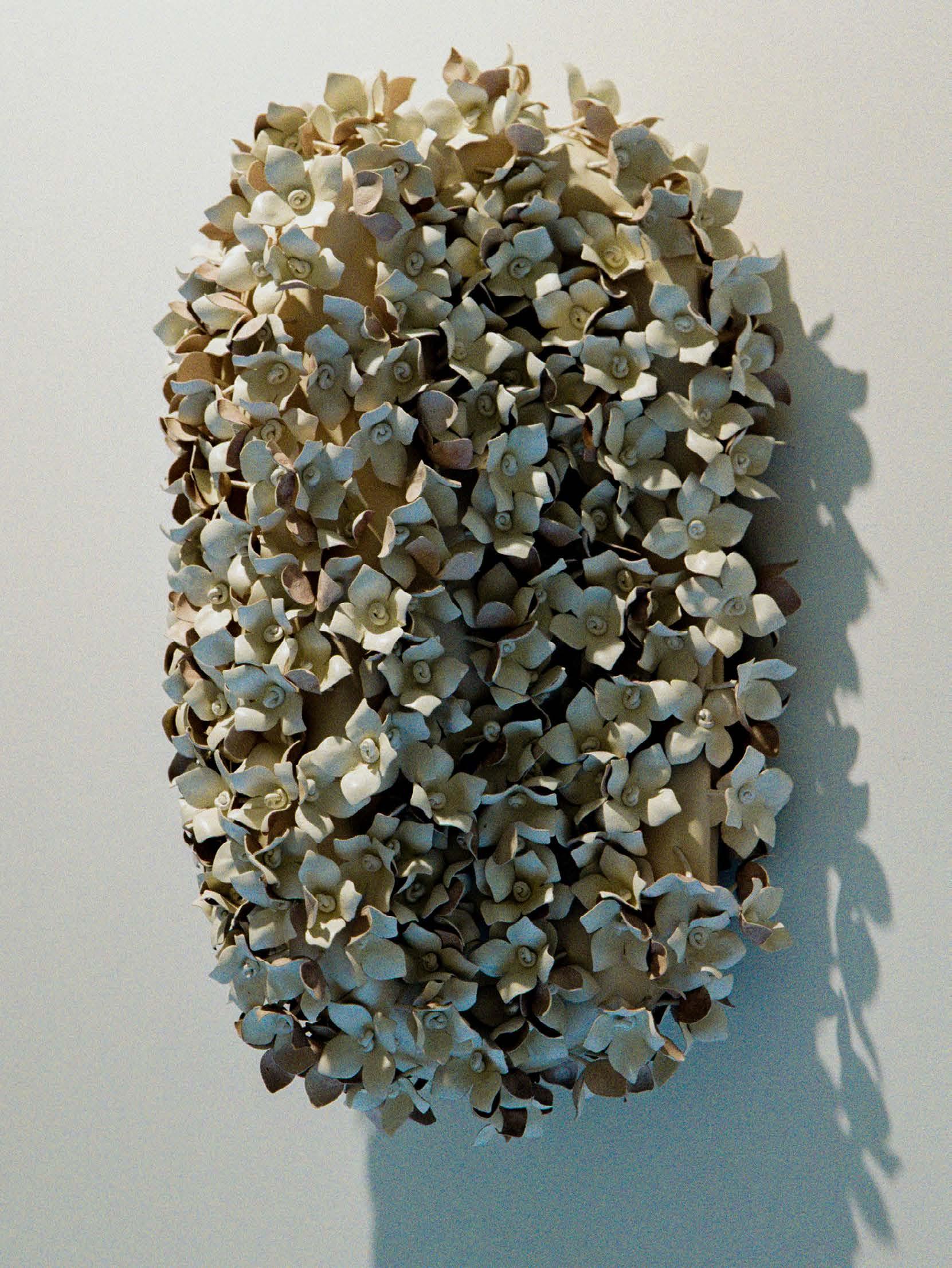
This collection challenged us on every level – not only in timing with London Fashion Week pressing against every deadline, but in silhouette and decoration as well. The most demanding pieces, by far, were two bags. For the bas-relief bag, we had to invent the technology almost from scratch: an internal three-dimensional frame capable of mimicking the relief of Barcelona’s stone facades, strong enough to carry leather across its surface, yet flexible enough to survive serial production without cracking. The hydrangea bag was a different kind of test – five hundred flowers, each shaped by hand, assembled into a single object d’art that embodies the very idea of “blooming architecture”. It required an almost unreasonable amount of handwork.
In this capsule I wanted to look at the brand’s signature pieces in a new register. It brought together items inspired by Ukrainian architecture across different eras and regions – from Kyivan Rus’ to the Khan’s Palace in Bakhchysarai. Each piece here is its own story, and those stories sound completely different in white. From client feedback I could see that some of our dresses and sets in soft, pastel tones were being chosen for weddings and contemporary ceremonies, so I wanted to address that need.
Was this collection originally intended for weddings, or did that idea emerge gradually or only after it was completed?
You trained for years to think like an architect, then taught yourself to think like a designer. Which way of thinking do you find harder to quiet down when you‘re working?
I knew from the very beginning that it would be for weddings. Even the location for the shoot was chosen accordingly: Sofiyivka, the historical park in Uman, where wedding photoshoots often take place.
Is there a building – anywhere in the world, any era – that you have not yet been able to translate into clothing, but you would like to?
I don’t think it’s possible – at least in my case – to separate the architect’s way of thinking from the designer’s. Like both, I work with form, colour, material and composition. Only the scale and the purpose differ: architecture shapes the identity of a city and our surroundings, while clothing shapes the identity of a person.
In ten years, what do you want someone to feel when they put on a PODYH piece?
There are countless such buildings, far more than a single lifetime can contain. I would still love to work much more deeply with the architecture of different Ukrainian cities, each with its own dialect of form. From the international styles, Art Deco, Baroque and Bauhaus all wait on my list –and I suspect that list will never truly close. Even a subject already studied and reinterpreted can always be approached again, from a different angle, in a different light.
Both now and ten years from now, I want a person wearing PODYH to feel part of something larger than clothing, to sense the meanings woven into it. That is what we are building: fashion as a cultural tool, a way of keeping architectural heritage present, meaningful, and alive in the most everyday format we have. And if even one person puts on a PODYH piece and becomes curious about the building behind it – that, for me, is enough.
FROM CANVAS TO FLOWERS
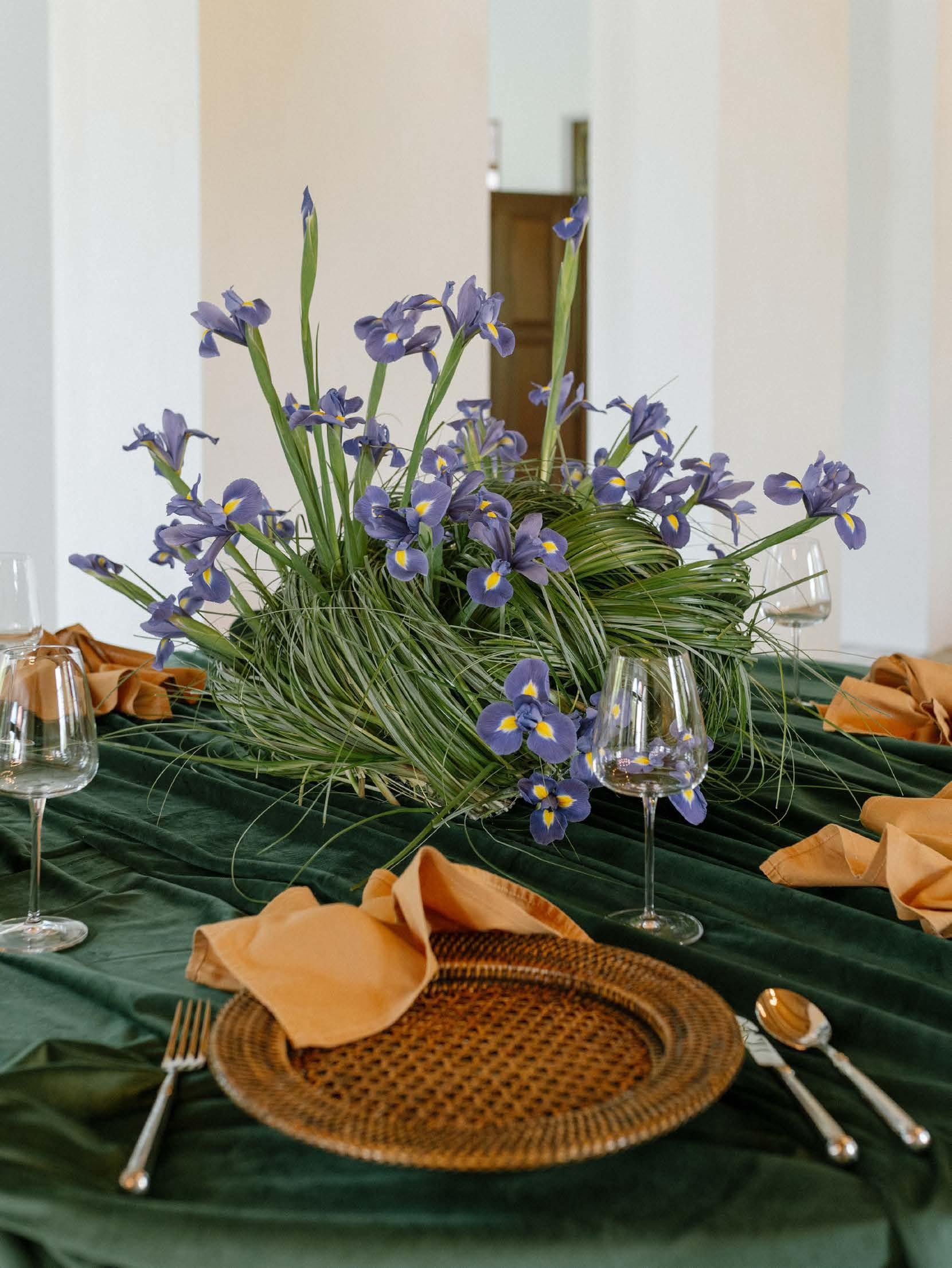
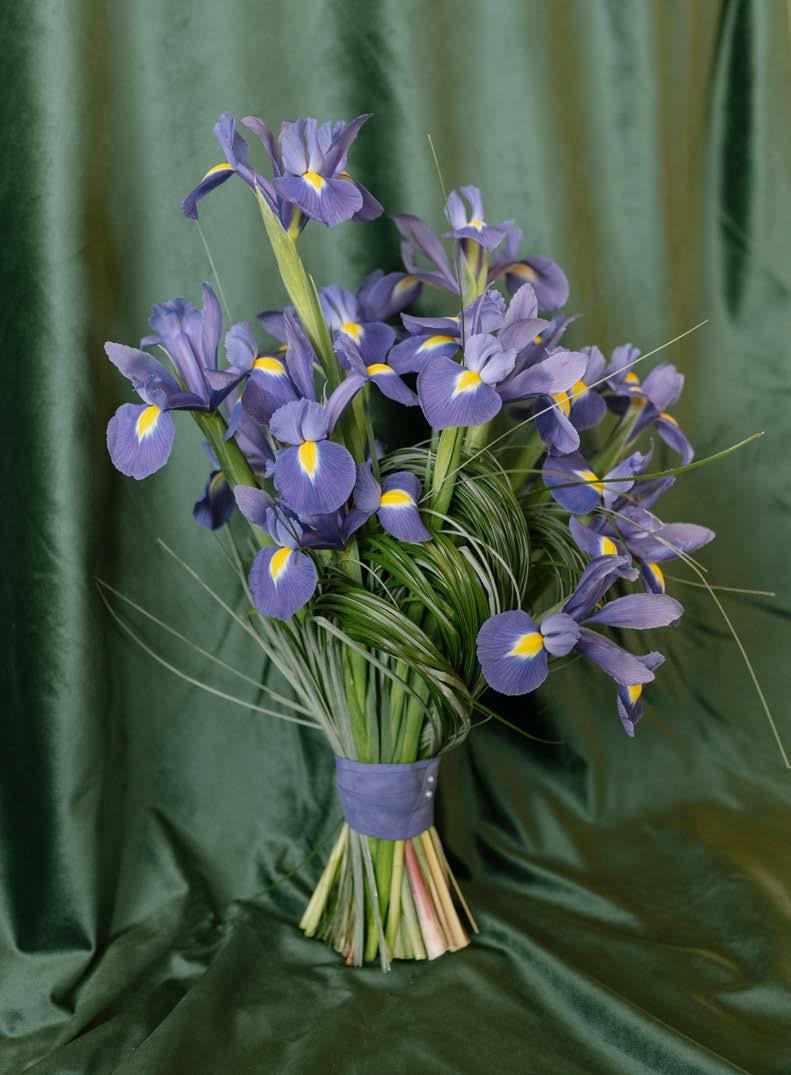
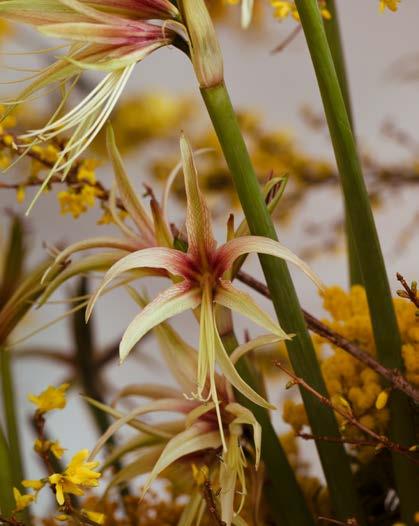
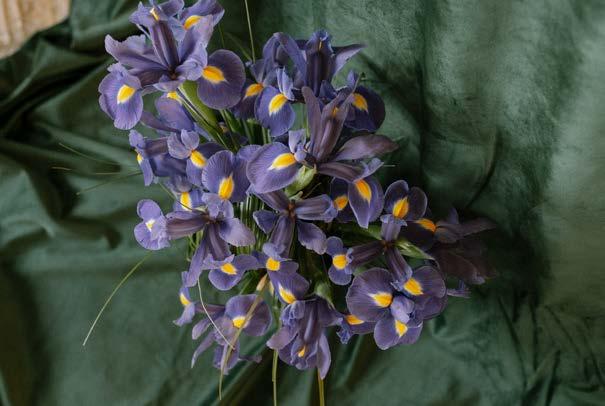
A work of a restless genius transformed into a floral meditation. A simplicity that conceals a many-layered story. A flower whose beauty lies in intricate detail. Take a closer look at the work of Adela Strimbeanu, designer and founder of the wedding agency Holubica.
In our floral series, Adela‘s inspiration stems from immortal works of art. This time, the choice fell on Vincent van Gogh‘s series of iris paintings. For the Dutch master, painting landscapes with irises was a form of therapy. Every one of them was created towards the end of his life, during his stay at the Saint-Rémy-de-Provence asylum. The final composition created by Adela soothes the soul; rippling green fabrics to suggest a meadow, accessories crafted from natural materials, and at the centre a single floral queen wrapped in delicate grass. Here, calm and harmony are at home.
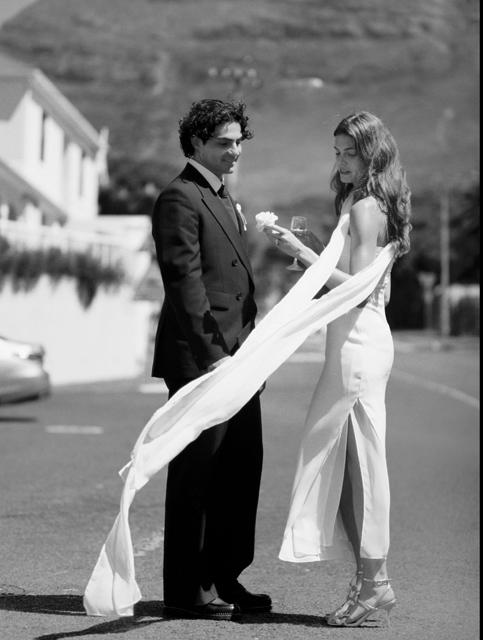
The five wedding stories we bring you are a recipe for the perfect atmosphere. Start with a base of family and friends and bind them together with the sharing of exceptional food — just as Samantha and Kosta did. Add a pinch of intimacy and a handful of refined elegance, following the example of Rachel and Connor. Fold in the small details and a generous measure of spontaneous energy, à la Olivia and David. And don’t forget to season it all with tradition and breathtaking décor — look to Emilia and Ariel for inspiration. Finally, finish with a perfect musical arrangement that gets everyone on their feet — exactly as Catherine and Robbie managed to do. The ratio of ingredients is entirely up to you. What matters is that the final flavour is just right for you.
SAMANTHA & KOSTA
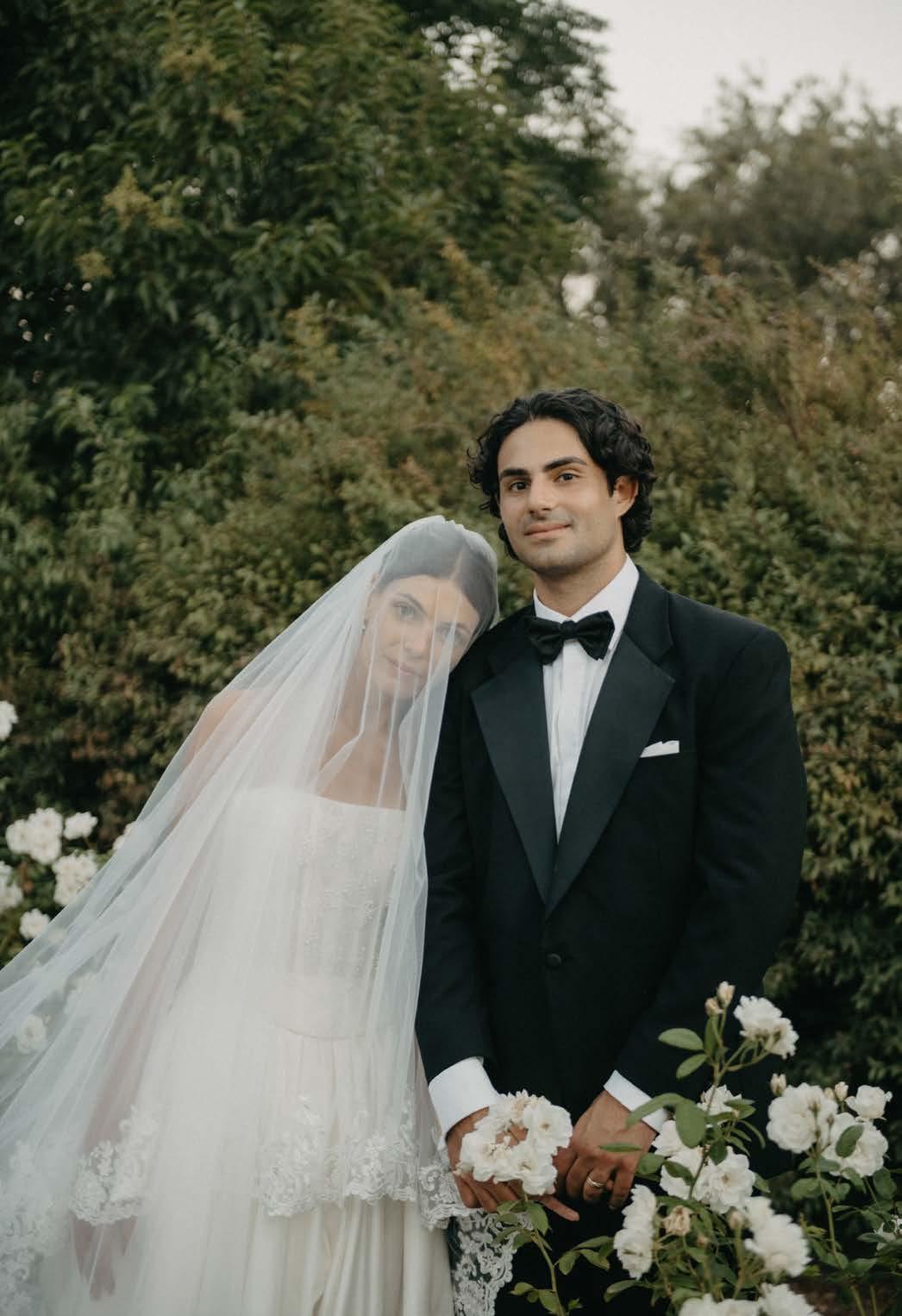
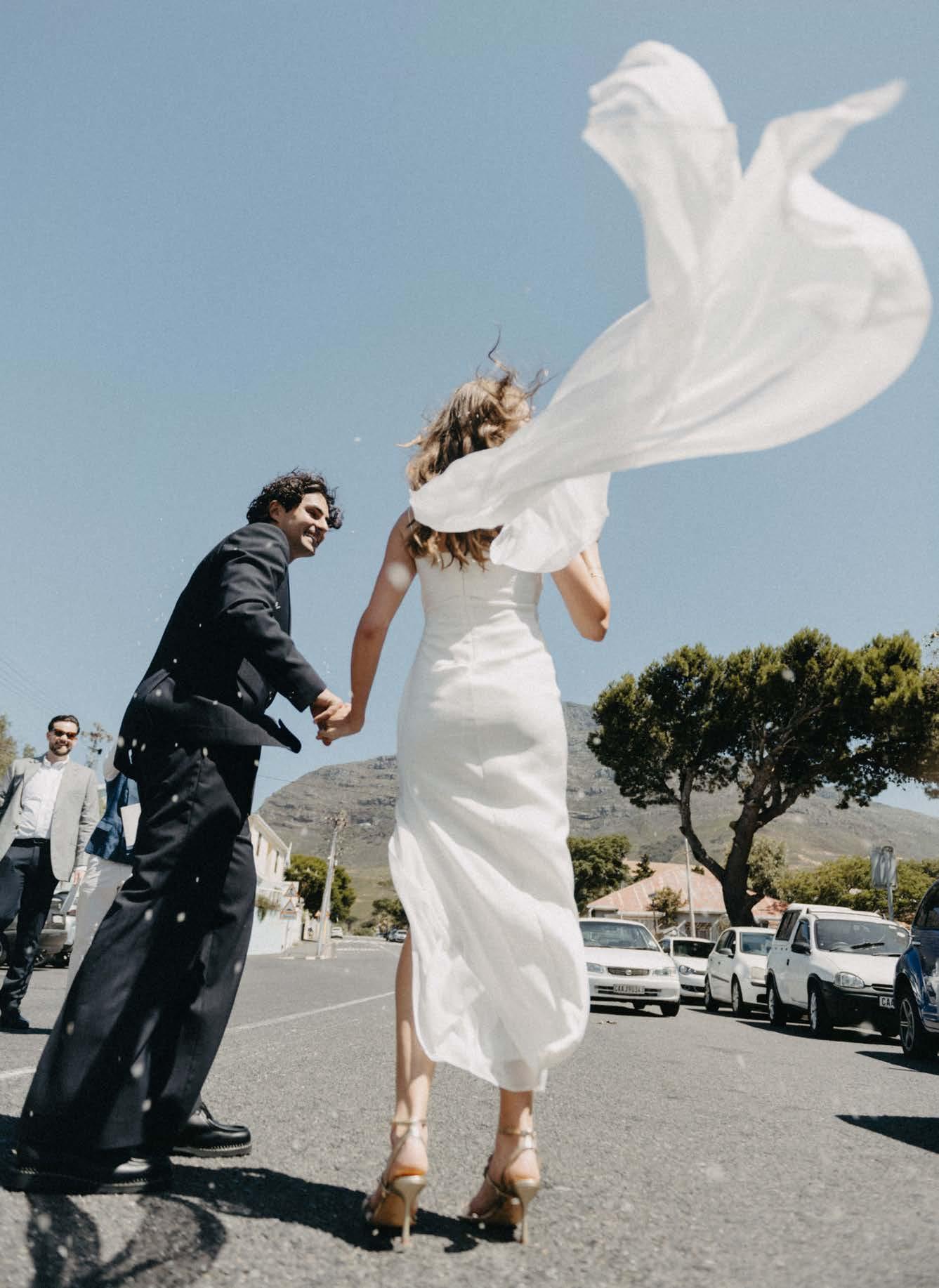
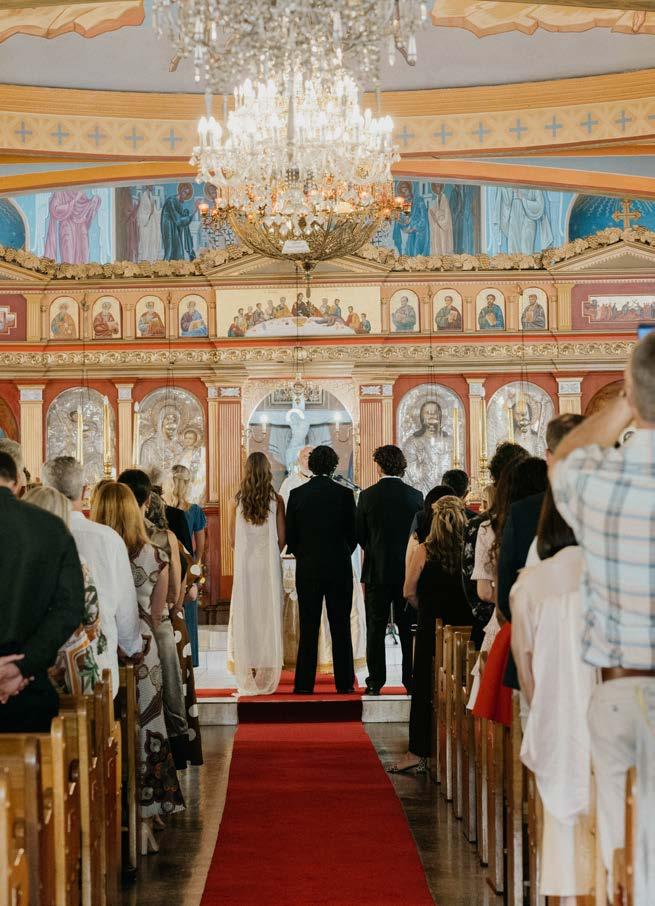
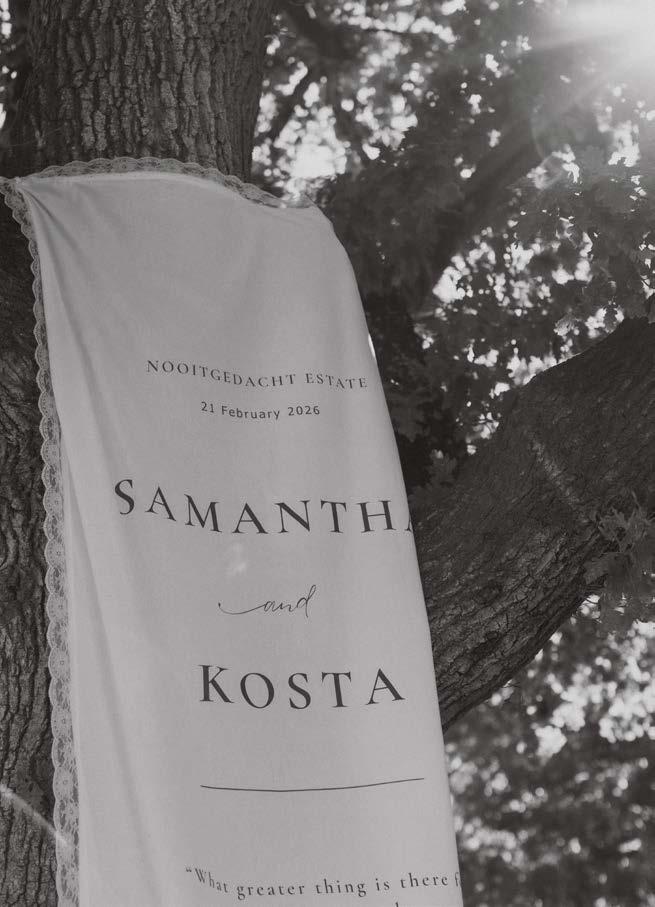
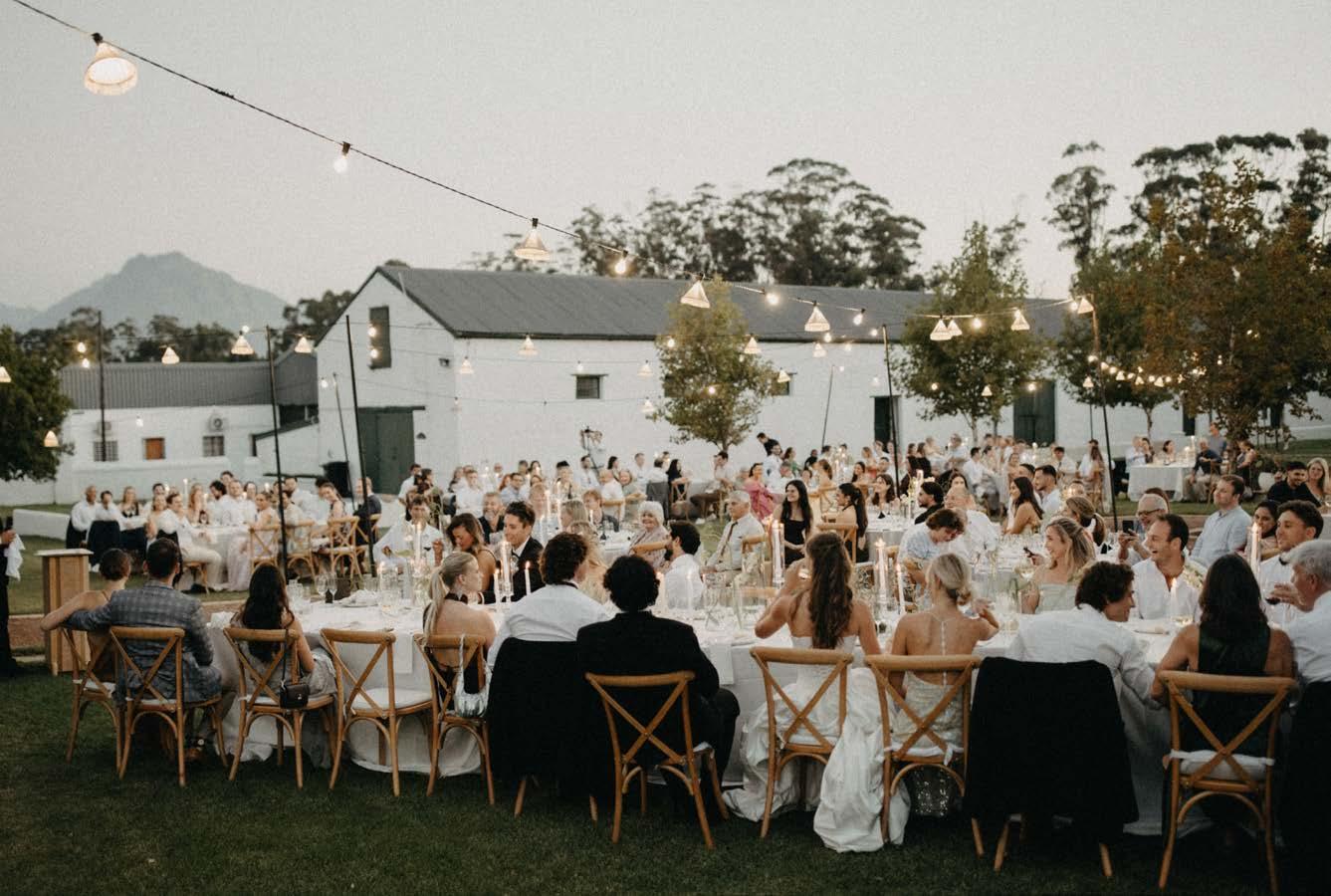
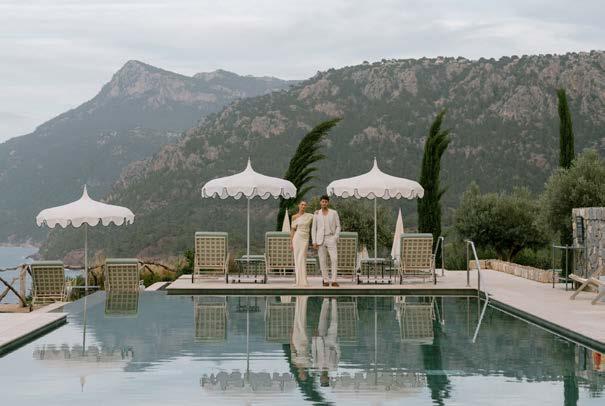
A couple from South Africa, now living in London, first met at a rugby tournament in Cape Town. Kosta was playing, Samantha had come to support friends. A chance encounter on the pitch led to coffee a week later, and from there grew a relationship that, exactly seven years on, concluded in marriage.
A small beach cottage belonging to Kosta’s family in Kiato, Greece gradually became an important part of their relationship — a place they have been returning to regularly for the past six years. Kosta still keeps up a tradition he inherited from his grandfather: rising at dawn and trying to capture the sunrise with an old analogue camera. Samantha joins him sometimes, and it was during one such morning — as she stood on the beach half-asleep in her nightgown — that Kosta asked her to marry him.
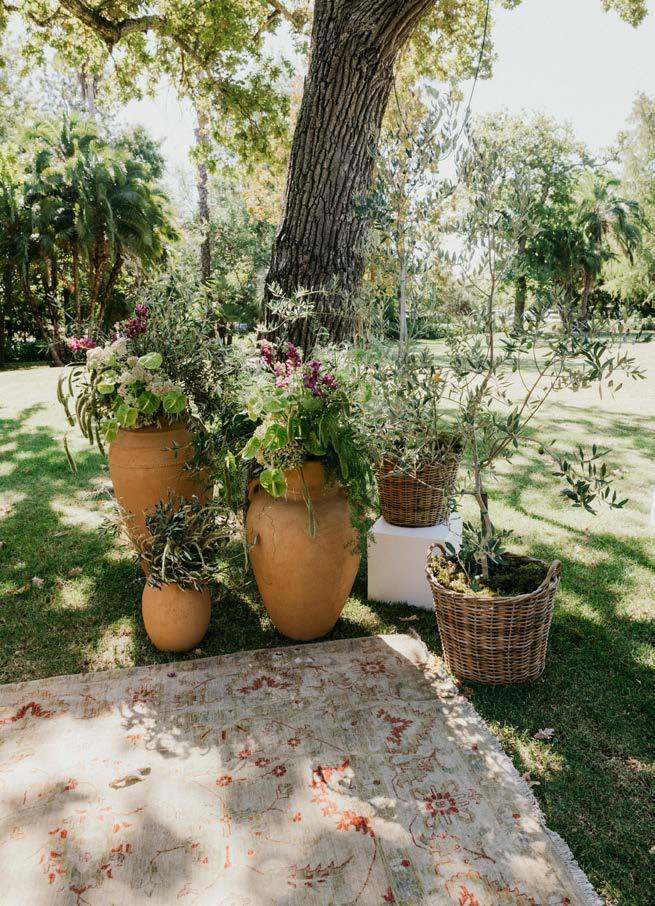
They approached their wedding as a grand Mediterranean gathering of family and friends from around the world. They called the concept “village chic” — a relaxed, open-air celebration meant to evoke long evenings in a village square, warm and unhurried. Family and friends had a hand in everything, from the organisation to the floral arrangements, which were made from locally sourced seasonal flowers, olive branches, and terracotta vessels.
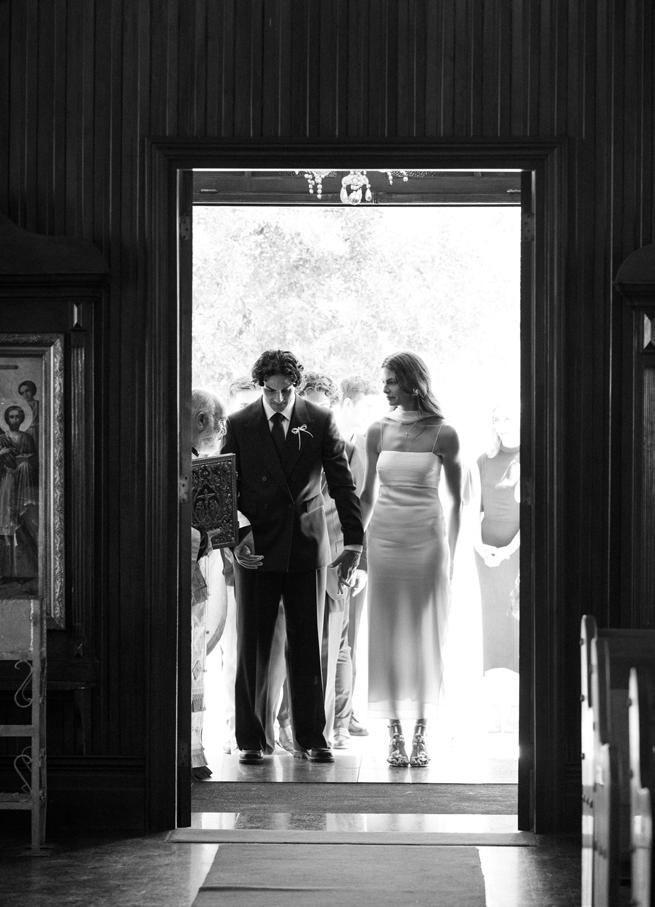
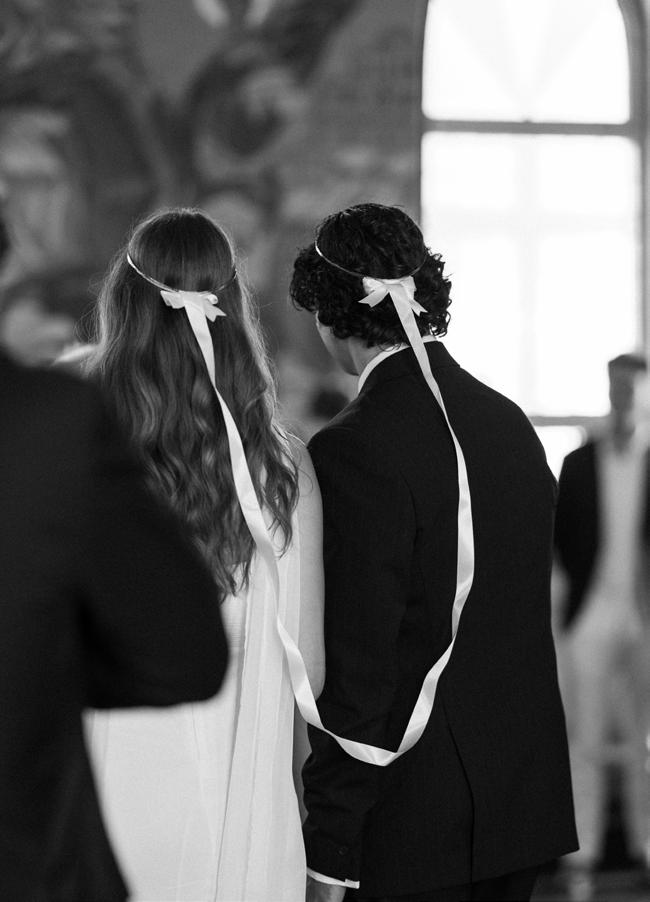
The day before the wedding, a Greek Orthodox marriage ceremony took place — rich in symbolism and deeply meaningful to both families. The wedding itself the following day began at half past three in the afternoon, when the Cape light is at its softest.
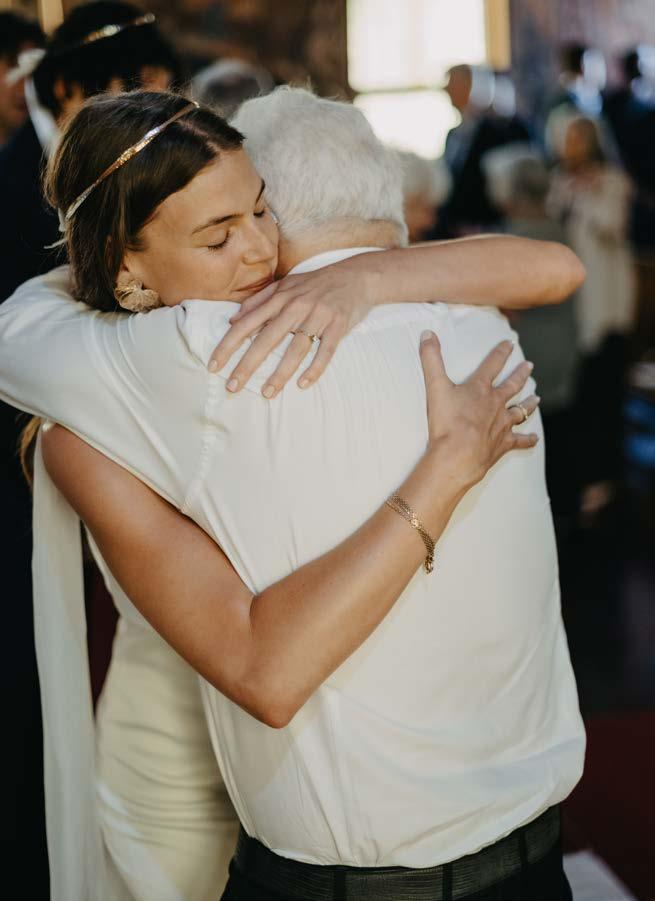
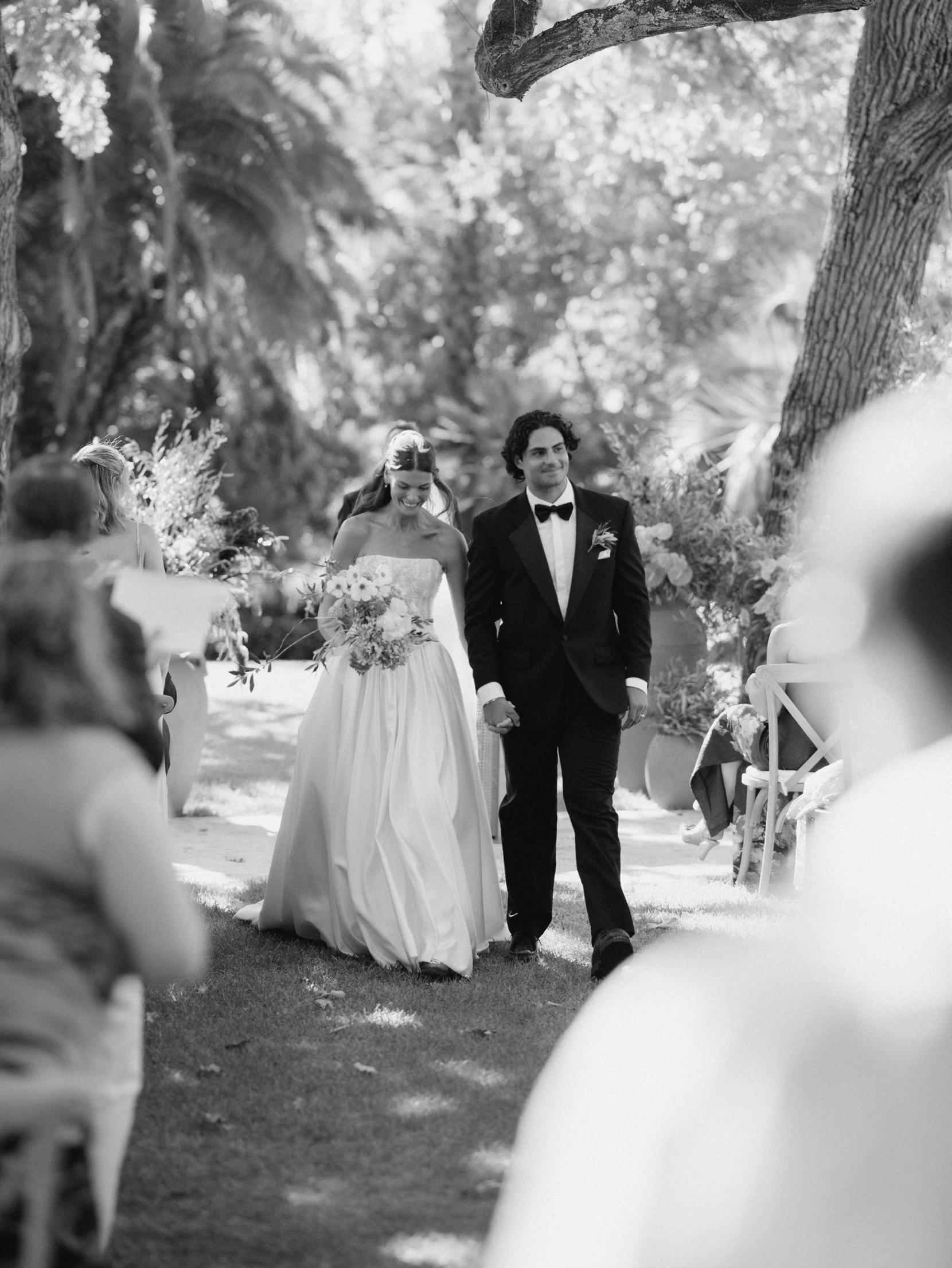
Samantha had prepared a small surprise for Kosta, a lifelong Arsenal FC supporter; he had the wedding procession walk down the aisle to his club’s anthem. She then made her own entrance with her father to the melancholic strains of a Damien Rice song.
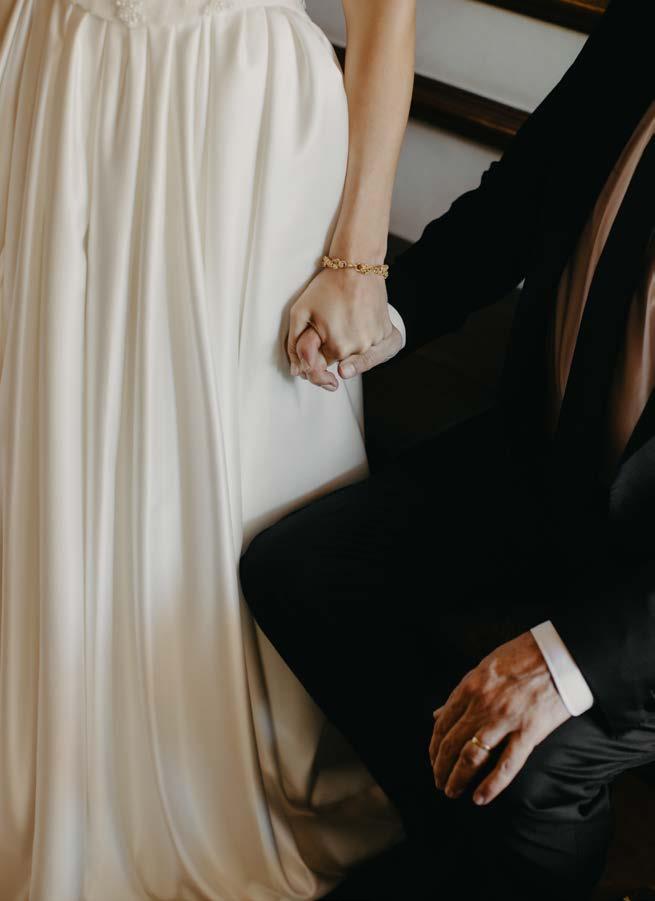
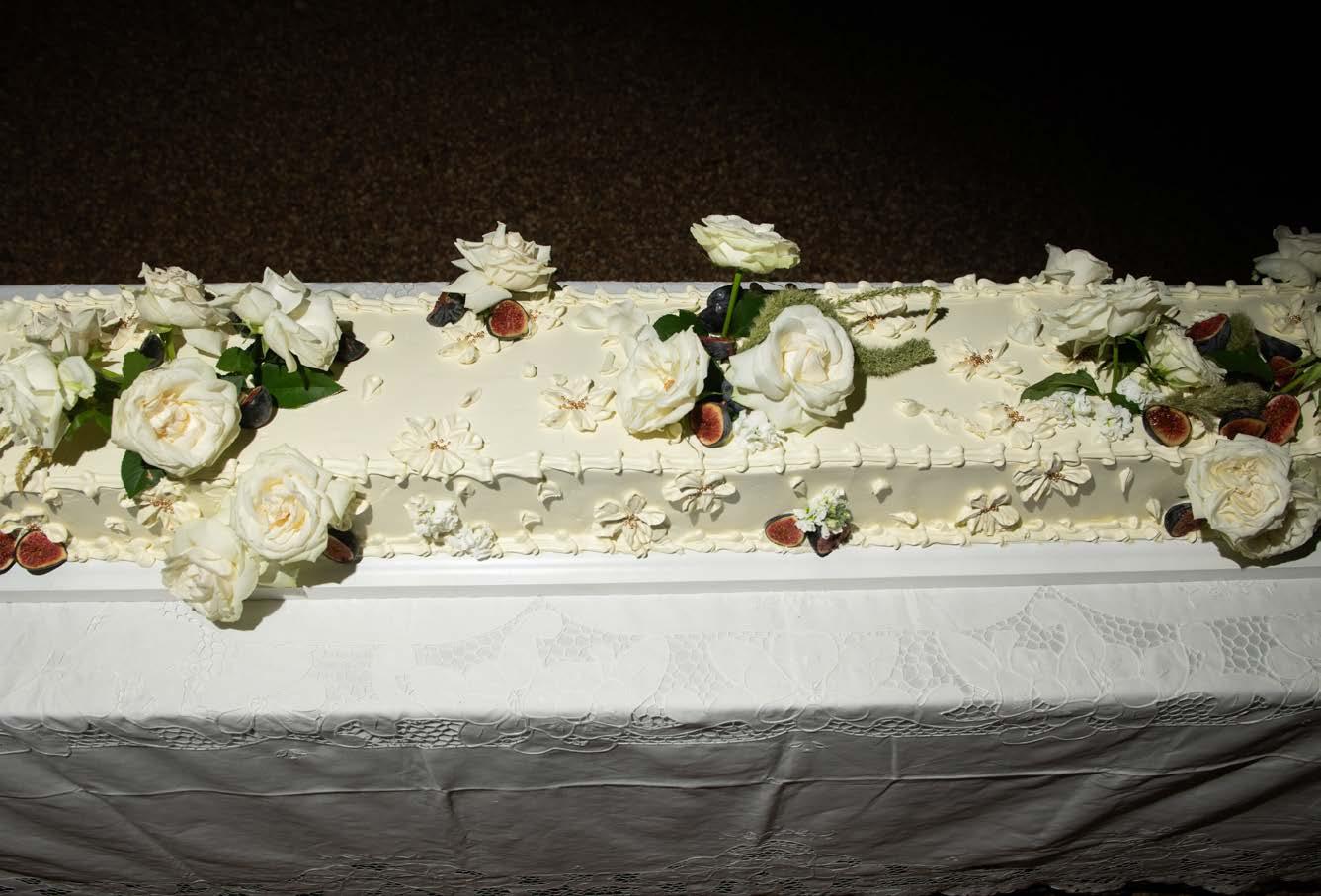
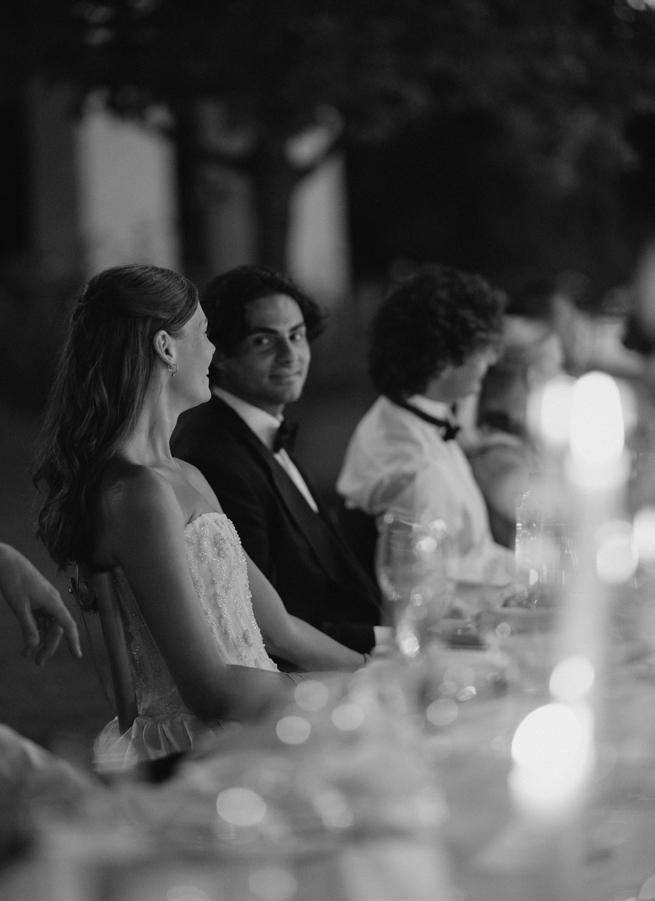
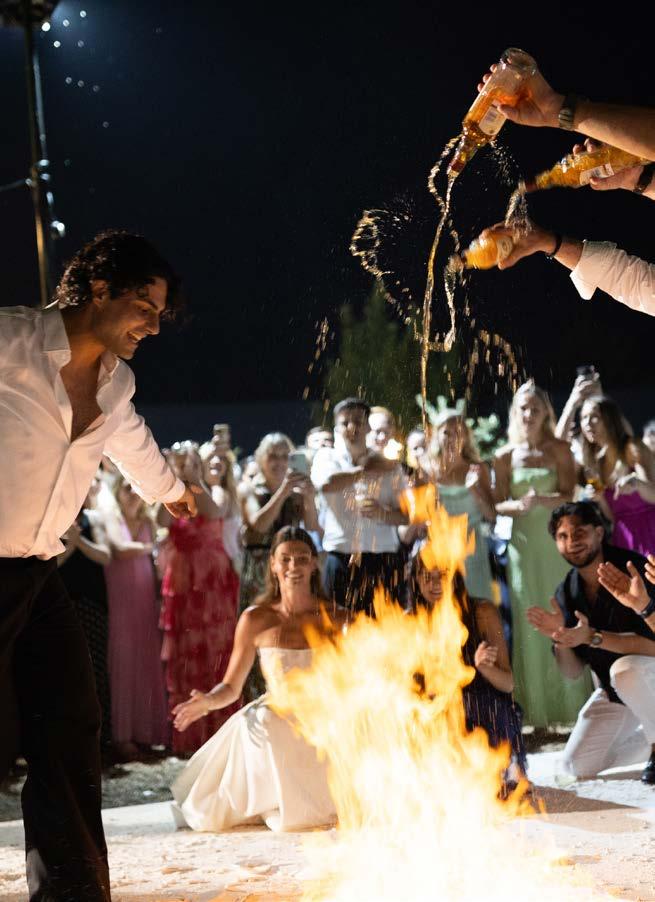
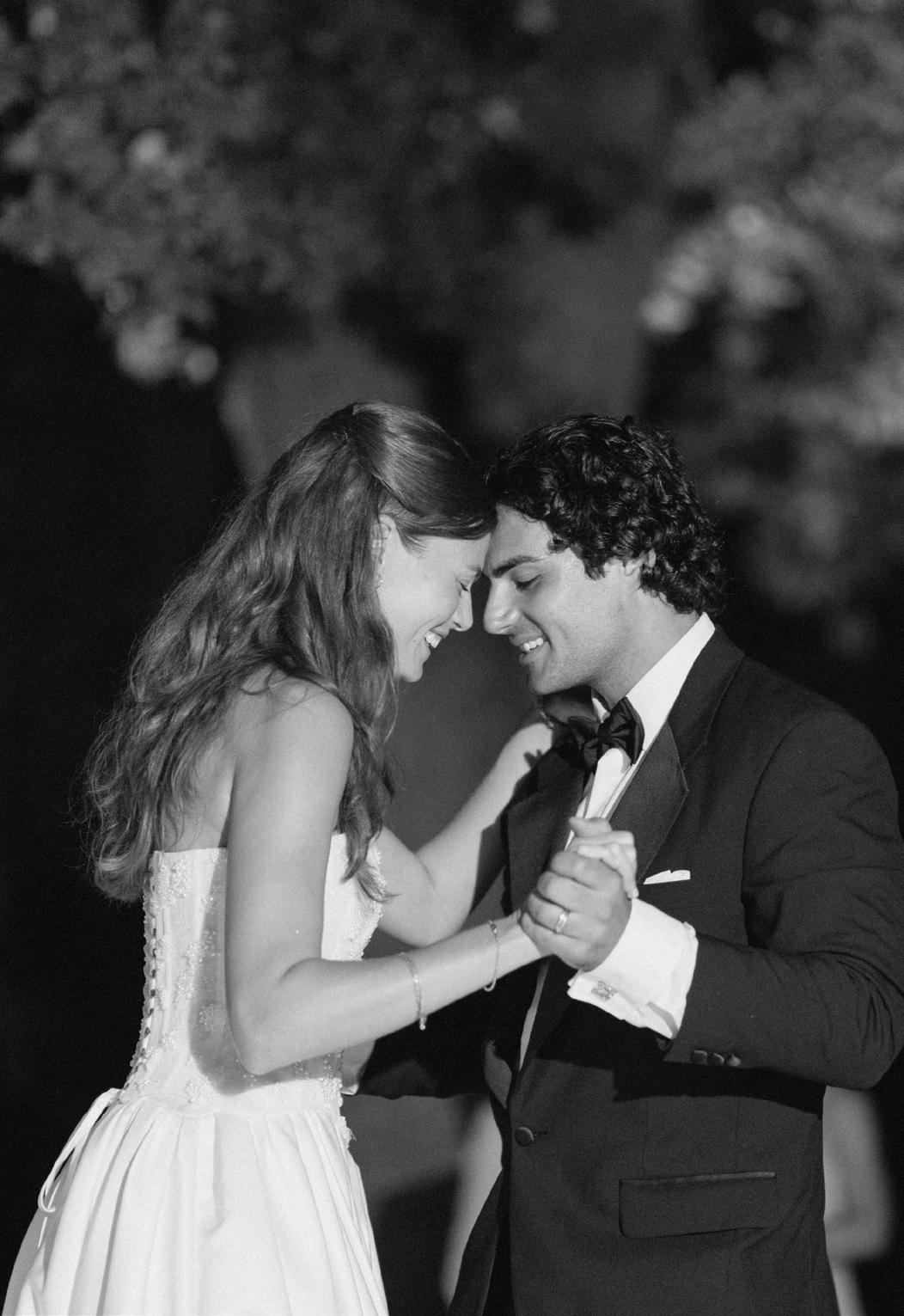
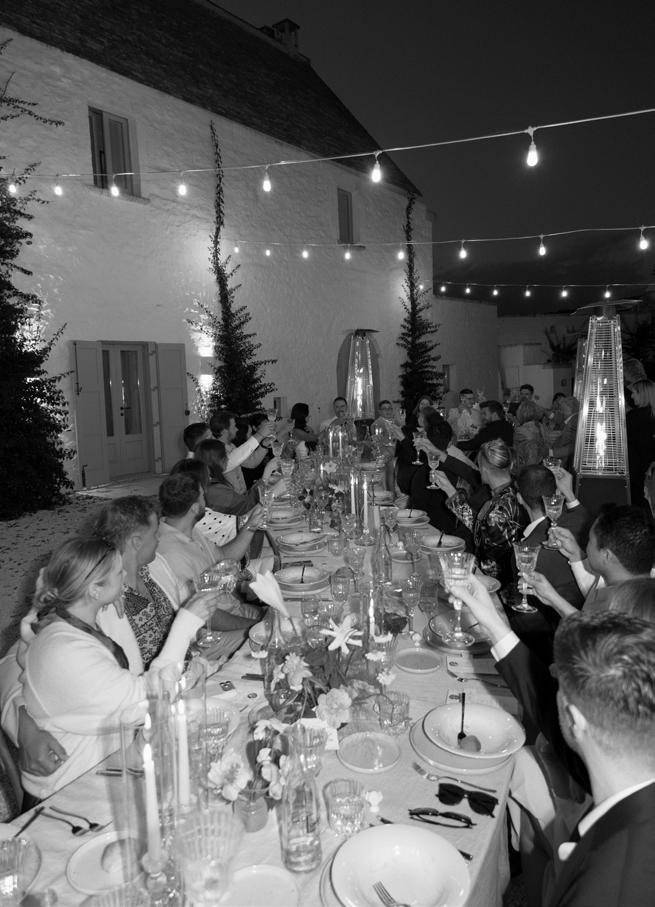
The evening flowed naturally into a long feast inspired by Greek dining. Shared platters placed at the centre of the tables and food meant to be passed around created exactly the kind of togetherness Samantha and Kosta had wanted to bring to their wedding. When the music and dancing quieted after midnight, the day didn’t end on the dance floor — it ended around a fire, in the company of those closest to them. London, Greece, and Cape Town briefly merged into one shared home. Text:
Nooitgedacht Estate, Stellenbosch, South Africa | Photo: Anita Erasmus – Barefoot Heart Photography | Video: Bach Films | Flowers: Inkwizitiv Studio | Stationery: bride’s own design | Bridal dress: Vagabond bridal | Shoes: Tory Burch | Groom‘s suit: vintage Burrbery | Make-up: Tasmin Howells | Hair: Anushka Kotze | Catering: Nooitgedacht Estate | Cake and sweet bar: BLOS Bakery
RACHEL & CONNOR
Some relationships begin with a grand gesture. Theirs began with a message on Hinge and carried on with a Dua Lipa concert. Music, in fact, became the map of their relationship from the very first moment. Within their first month of dating, they already had a shared calendar of concerts they wanted to attend together. Between evening outings in Portland, new restaurants, and spontaneous trips, they gradually discovered that their lives fit together as naturally as songs in a perfectly mixed playlist.
After two and a half years, Connor proposed to Rachel on a rainy afternoon in Florence’s Boboli Gardens. After days spent hiking the trails of Cinque Terre, the moment arrived — one that Rachel described as feeling almost unreal. Like a moment you’d want to freeze and let hang in time and space forever.
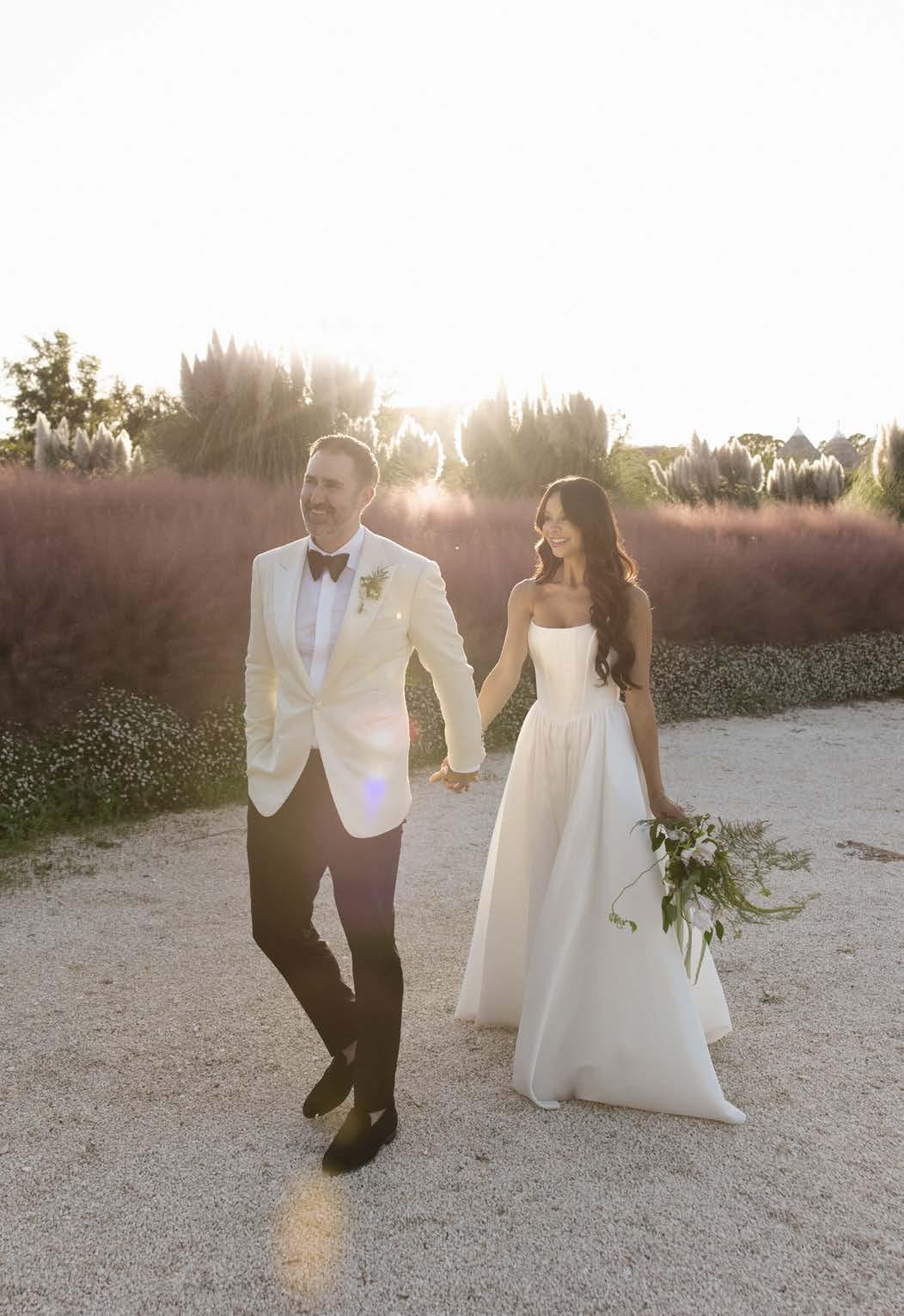
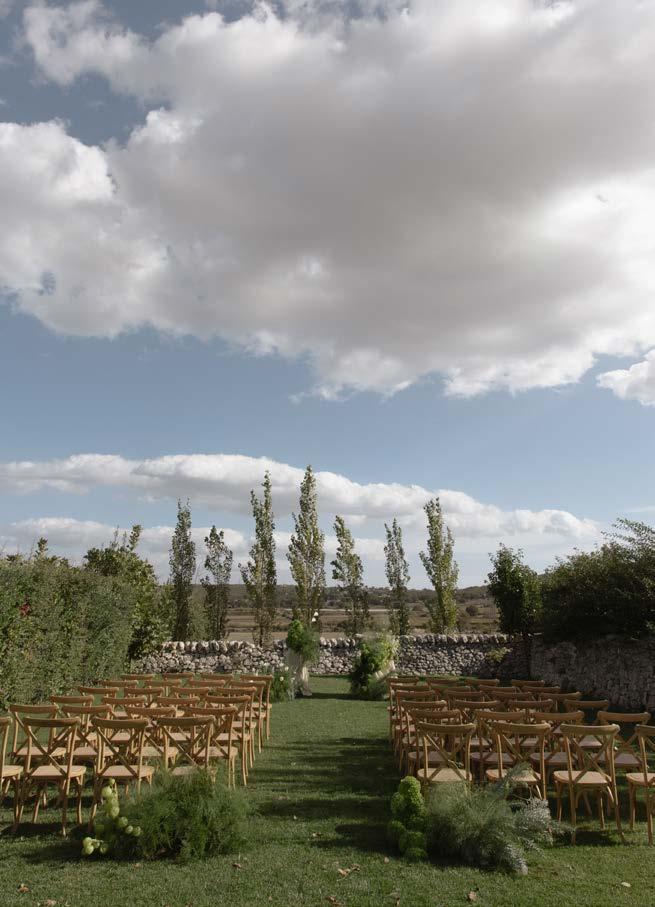
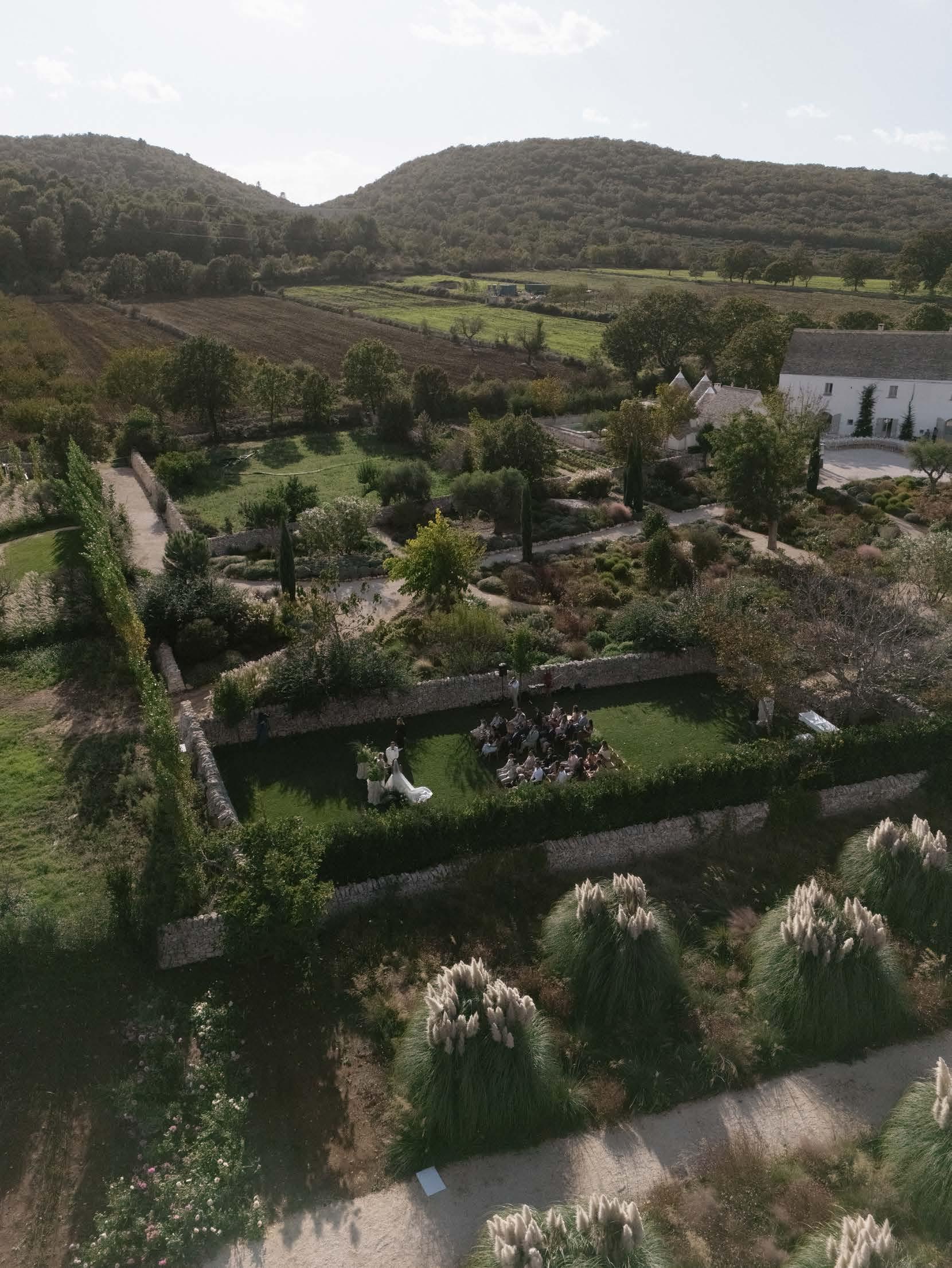
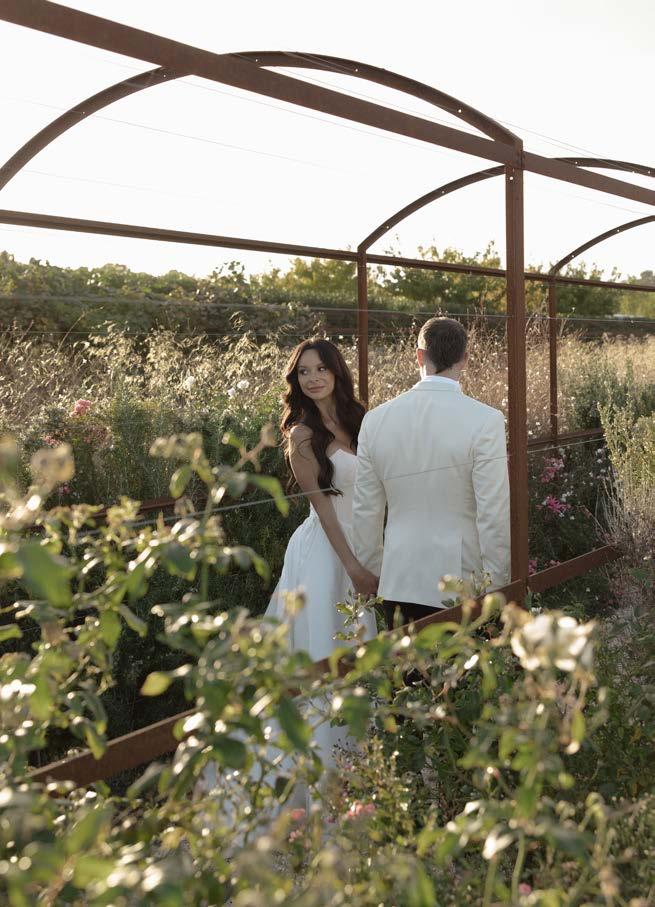
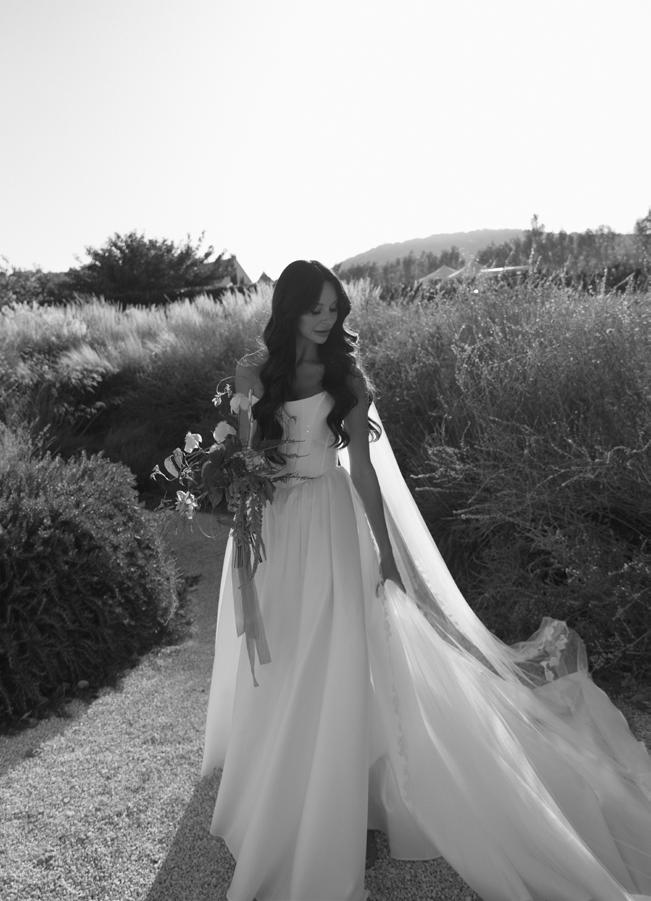
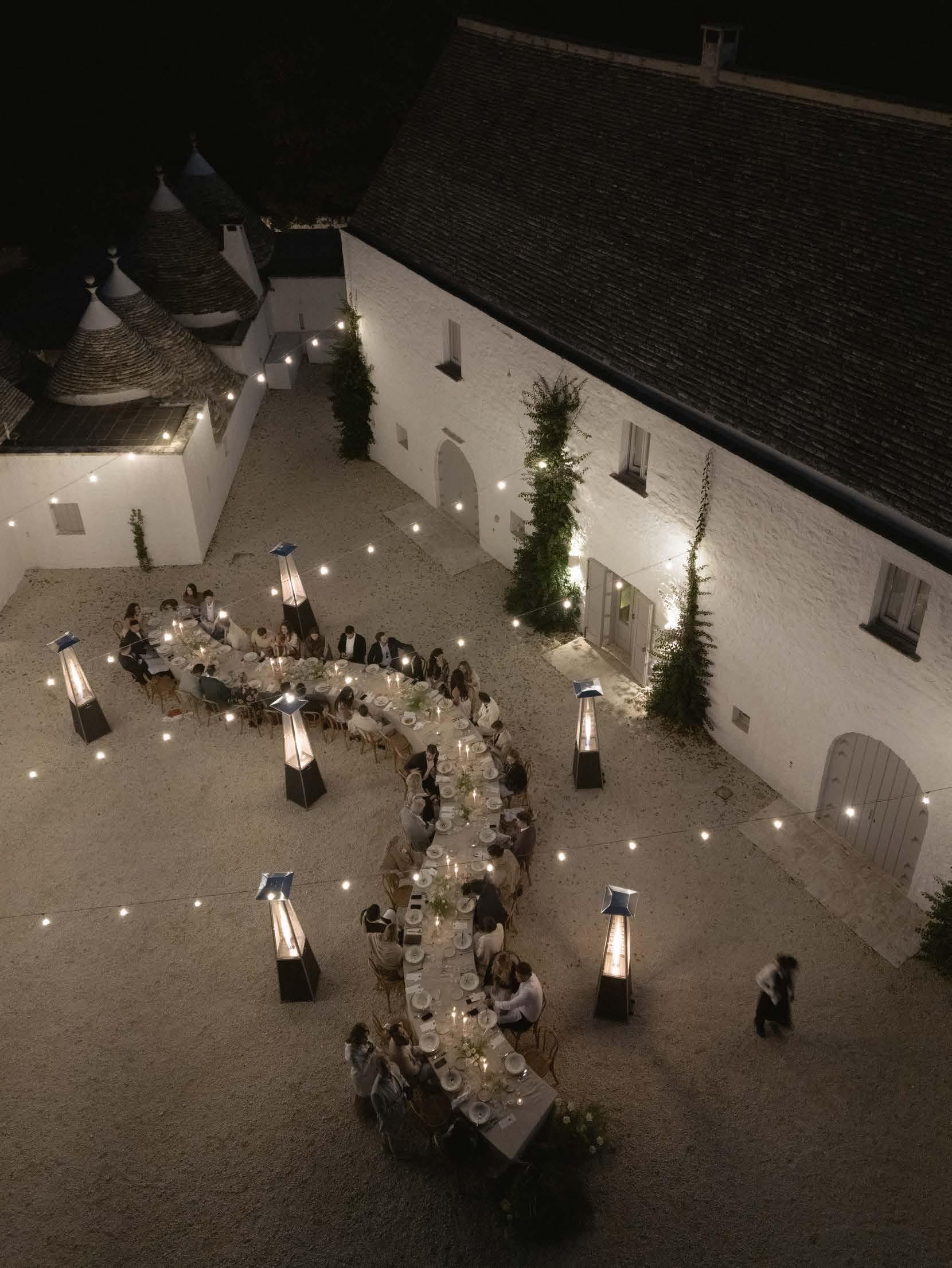
That same atmosphere carried through to their wedding at Masseria Pistola in Puglia. A place Connor had known from a family trip and had long insisted was where he would one day get married. Rachel quickly understood why. The October gardens were in full bloom, the air held the golden softness of a late afternoon, and the entire day felt unhurried, as if it had nowhere to rush.
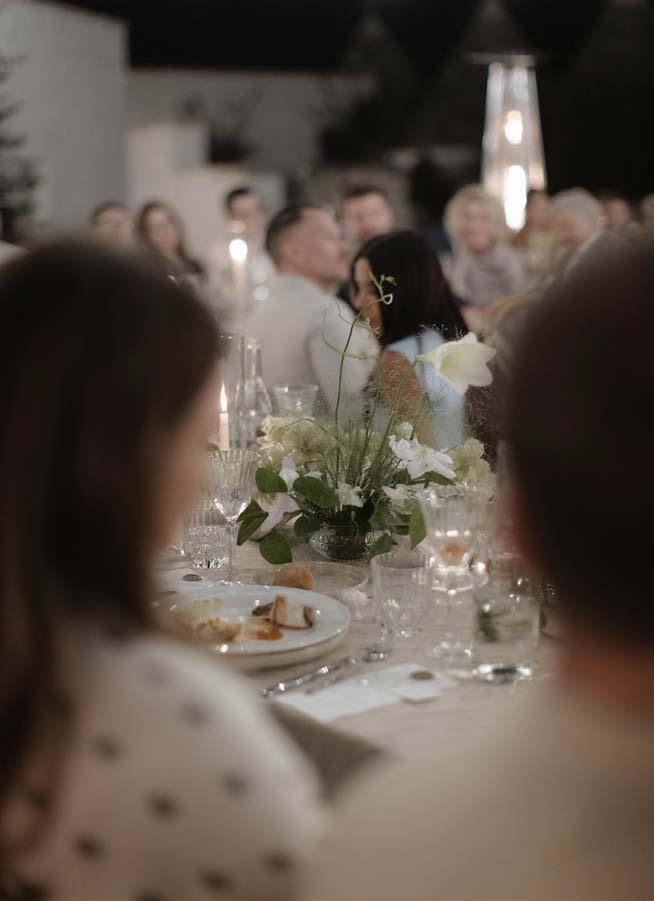
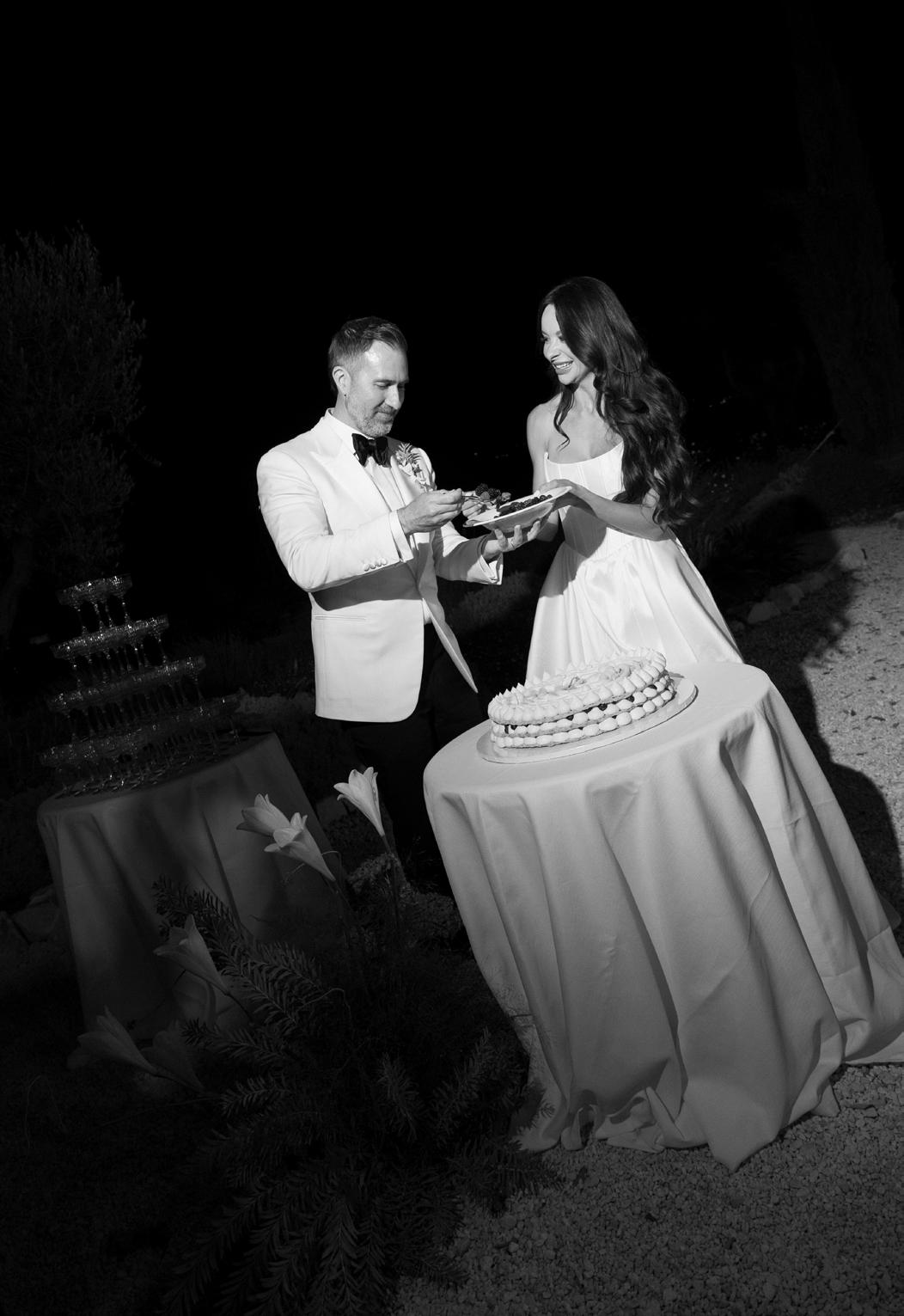
They didn’t set out to create a wedding as a grand spectacle, but rather as a very special experience for those closest to them. Fifty guests shared a multi-course Italian dinner, local wine, and a slow-paced evening under the open sky.
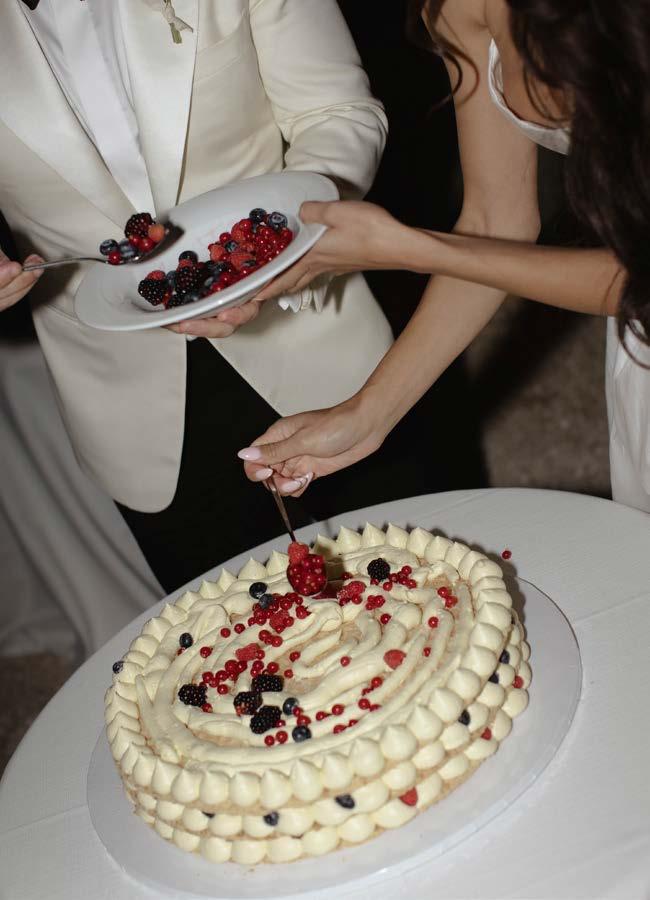
A traditional millefoglie wedding cake was assembled right in front of the guests, and instead of a formal cake cutting, it felt more like a spontaneous celebration of life.
The strings from the ceremony later gave way to a DJ, and the night turned into the dreamiest of parties.
The leading roles this time belonged not to fathers, but to the women who had stood by their sides their whole lives. Connor’s mother officiated the ceremony, and Rachel was walked down the aisle by her mother and sister together.
It wasn’t a gesture for effect or an attempt to break tradition — it was a natural way to honour the women who had shaped them most. And that is precisely what made this wedding so extraordinary — deeply personal and beautifully real.
Text: Diana Rykrová | Photo: Donatella Corriero
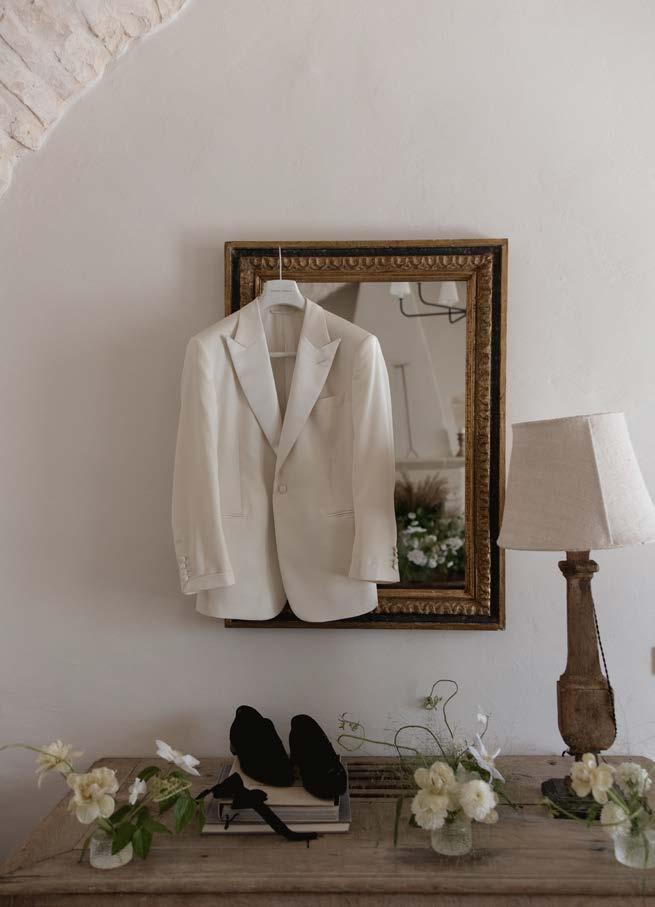
Venue: Masseria Pistola, Puglia, Italy | Photo: Donatella Corriero | | Flowers: Nunzia Guerino | Stationery: The Knot | Rings: family heirloom | Groom’s suit: Malibu Clothes | Dress: Truvelle Bridal | Shoes for her: Leonardo Shoes | Make-up: Elio Vittore | Hair: Nicolas Selvo | Music: Mars Marcello | Catering, Cake and Sweet bar: Rotondo Catering
OLIVIA & DAVID
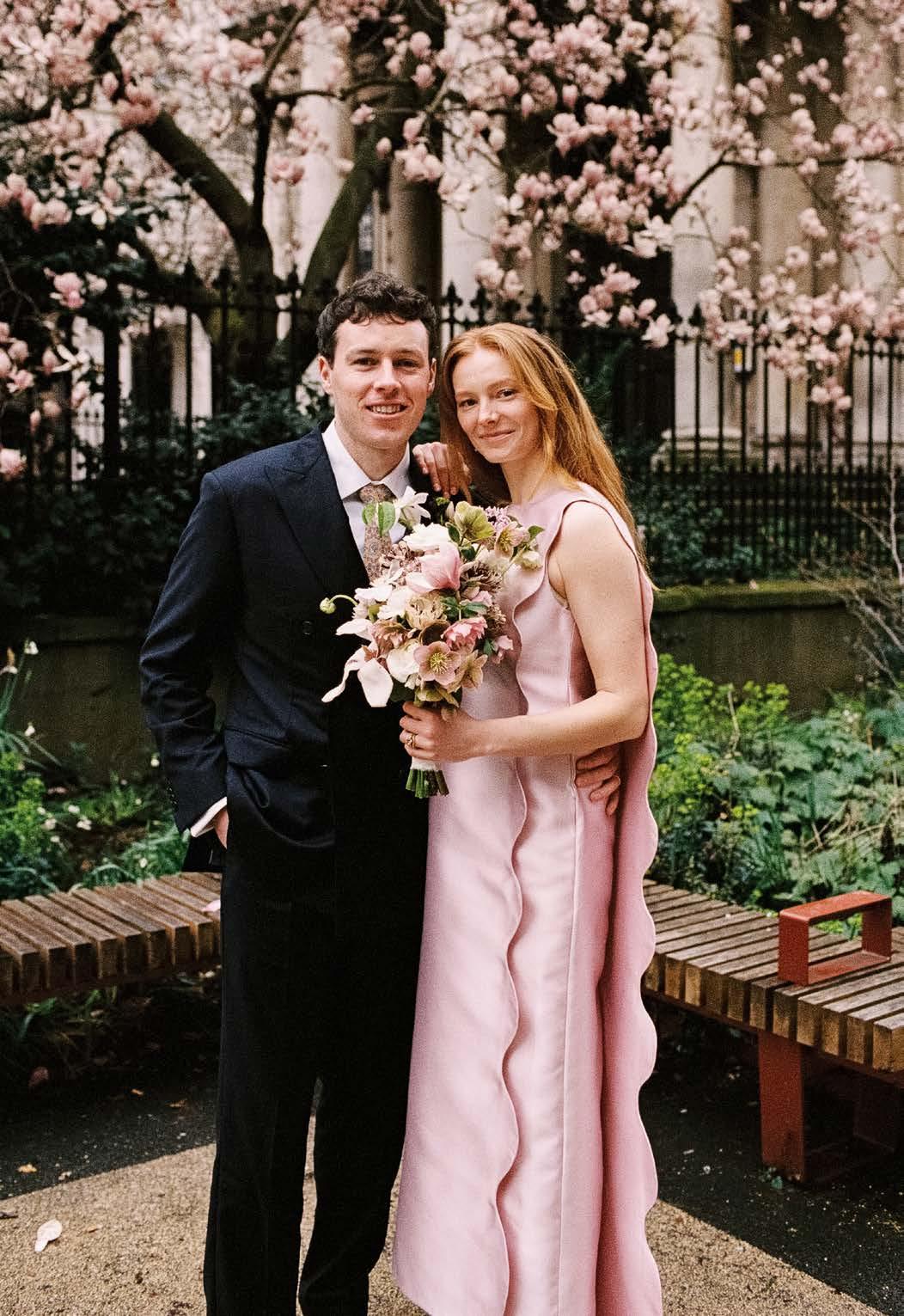
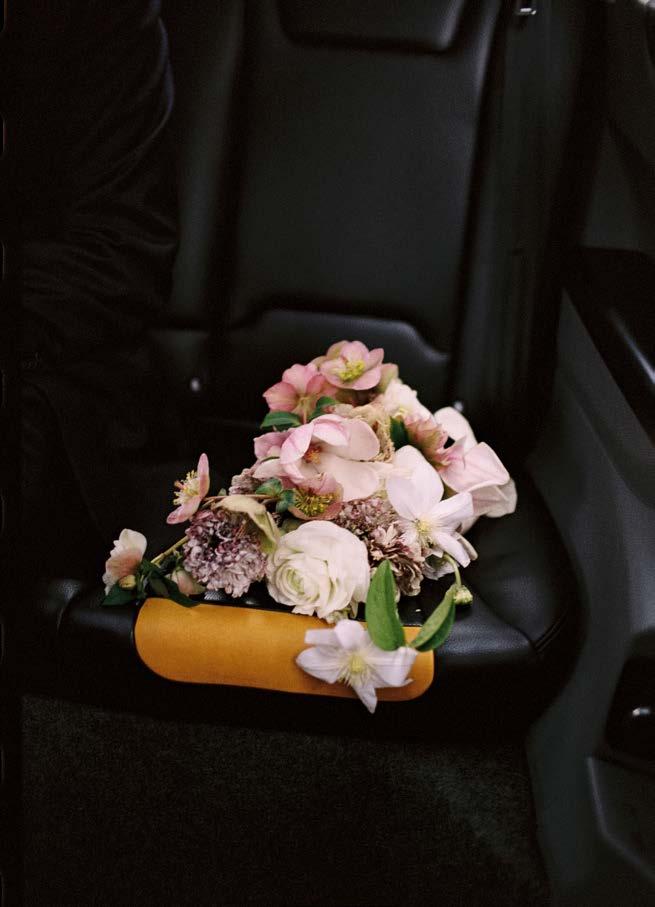
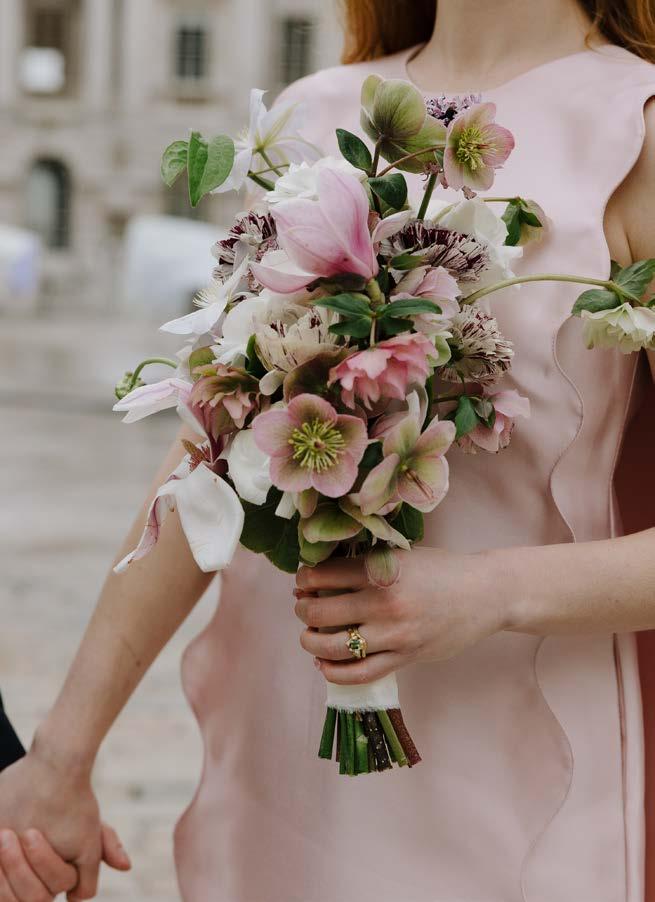
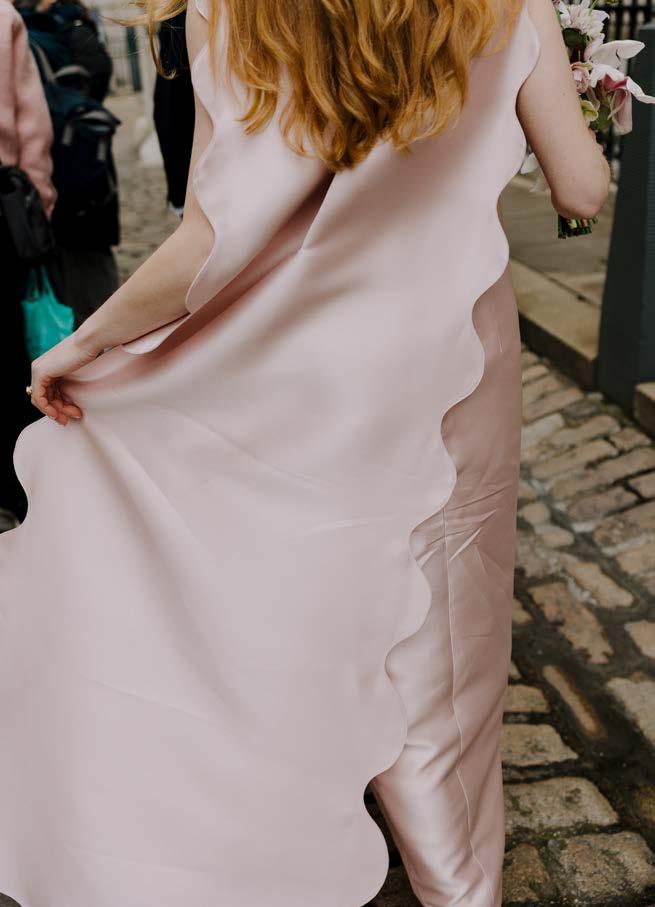
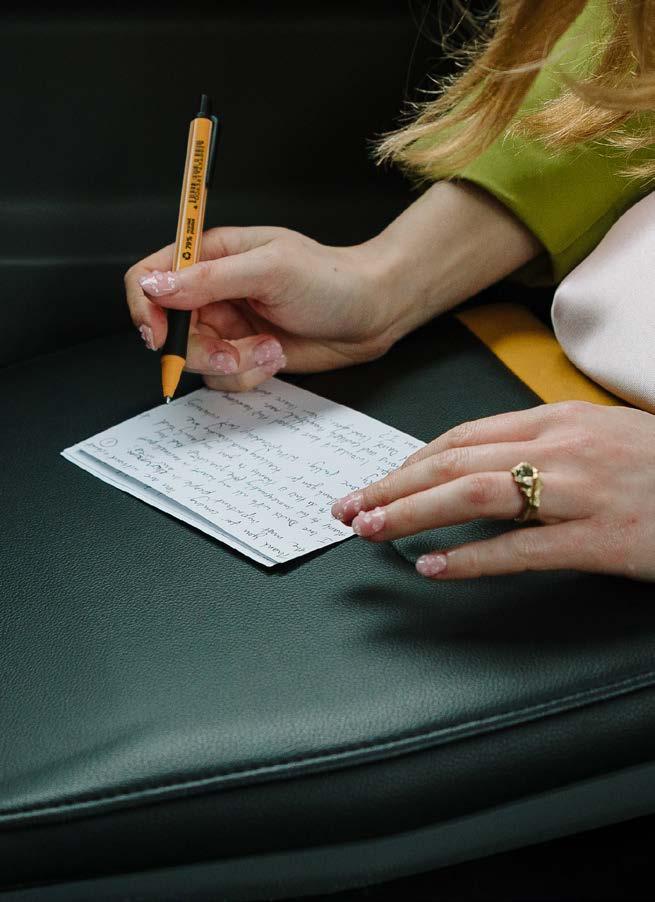
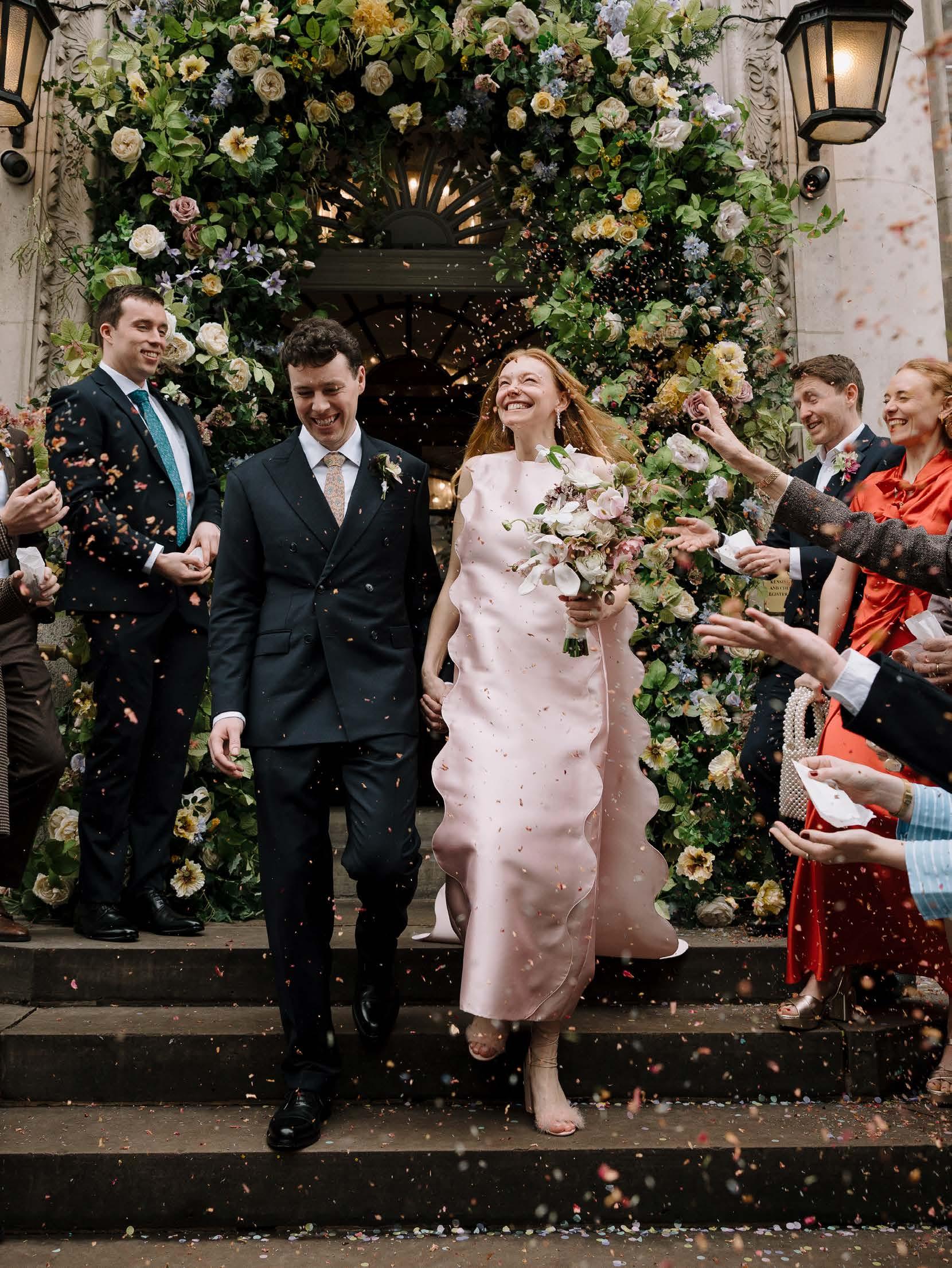
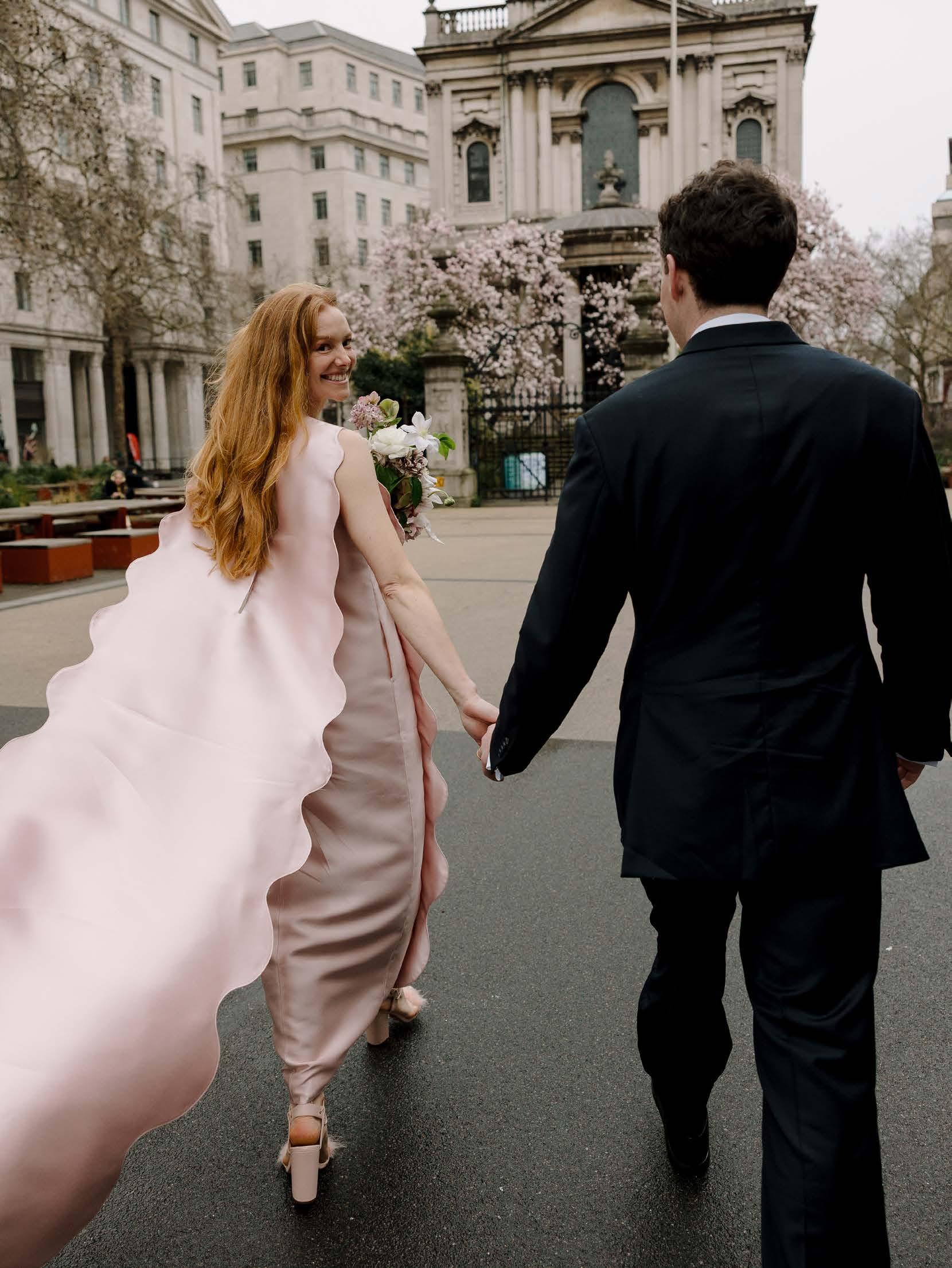
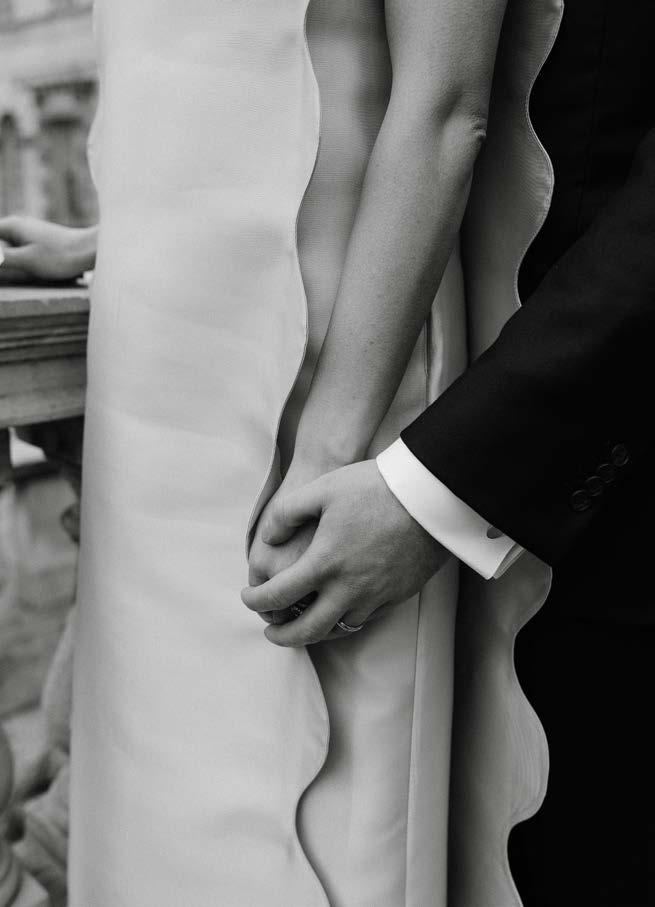
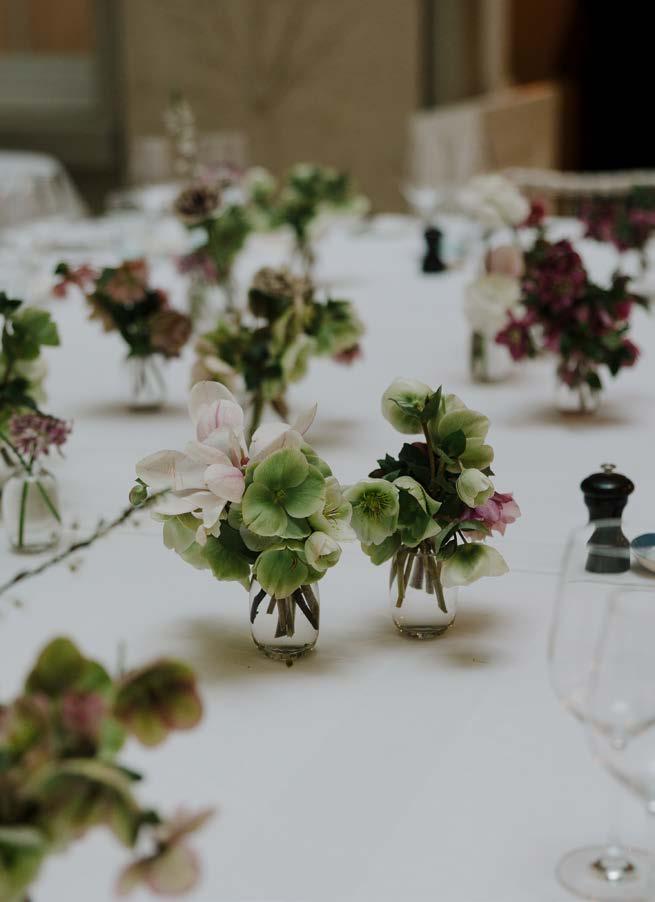
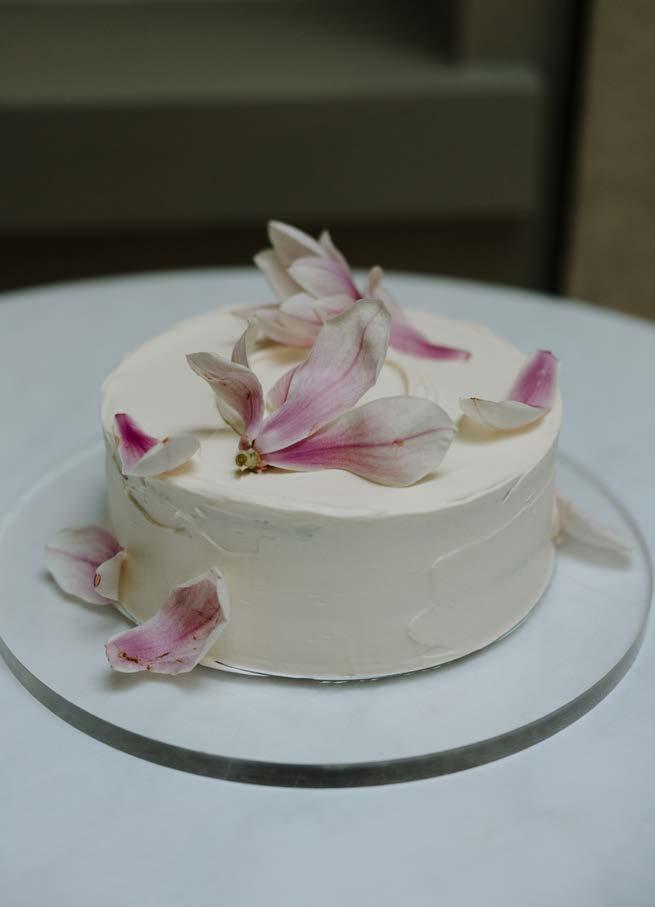
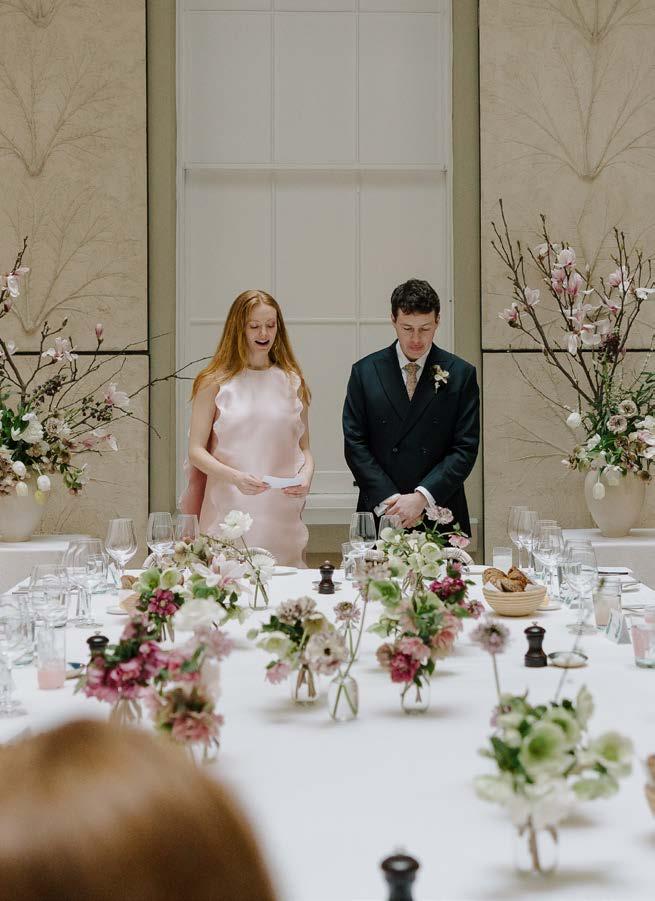
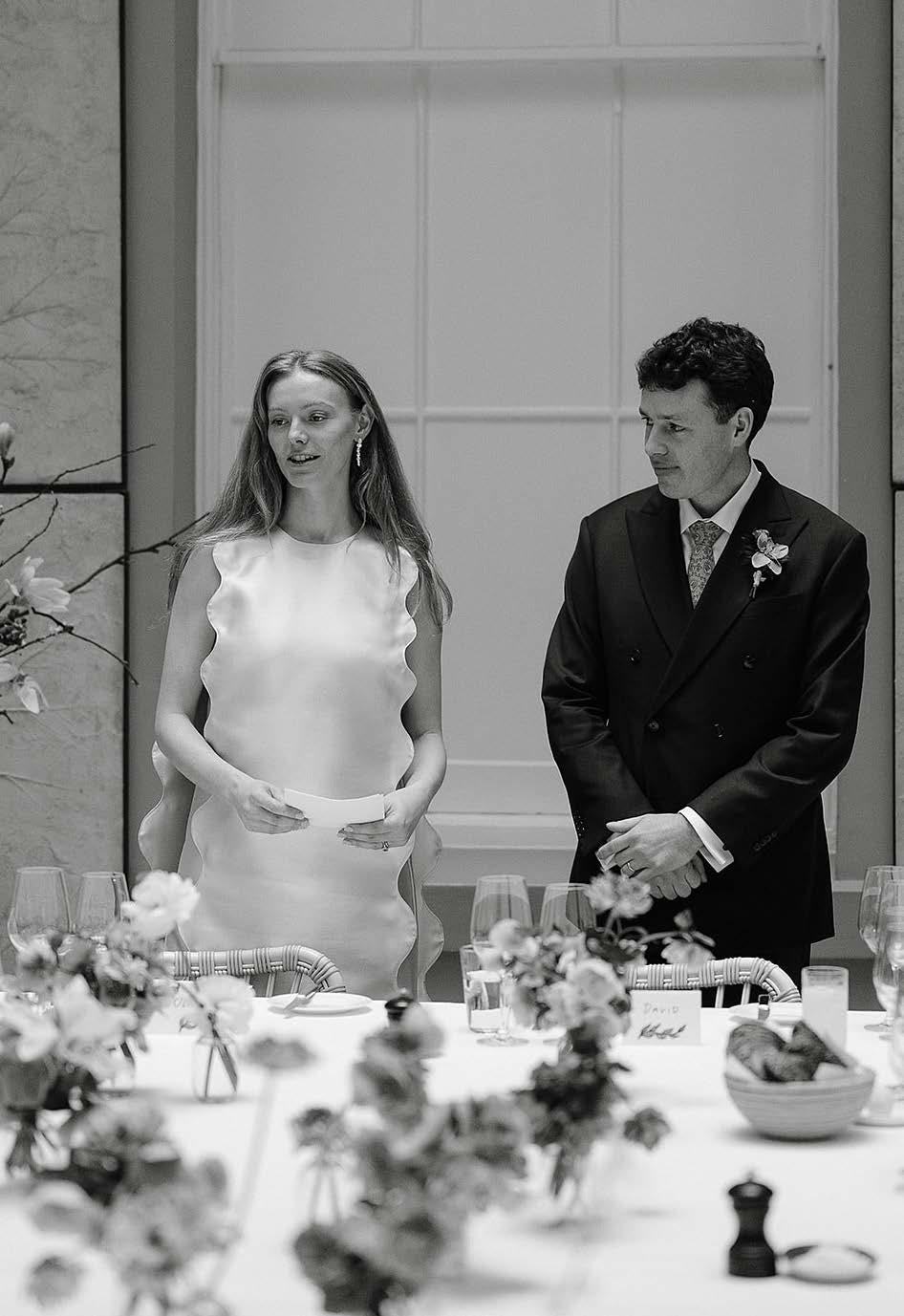
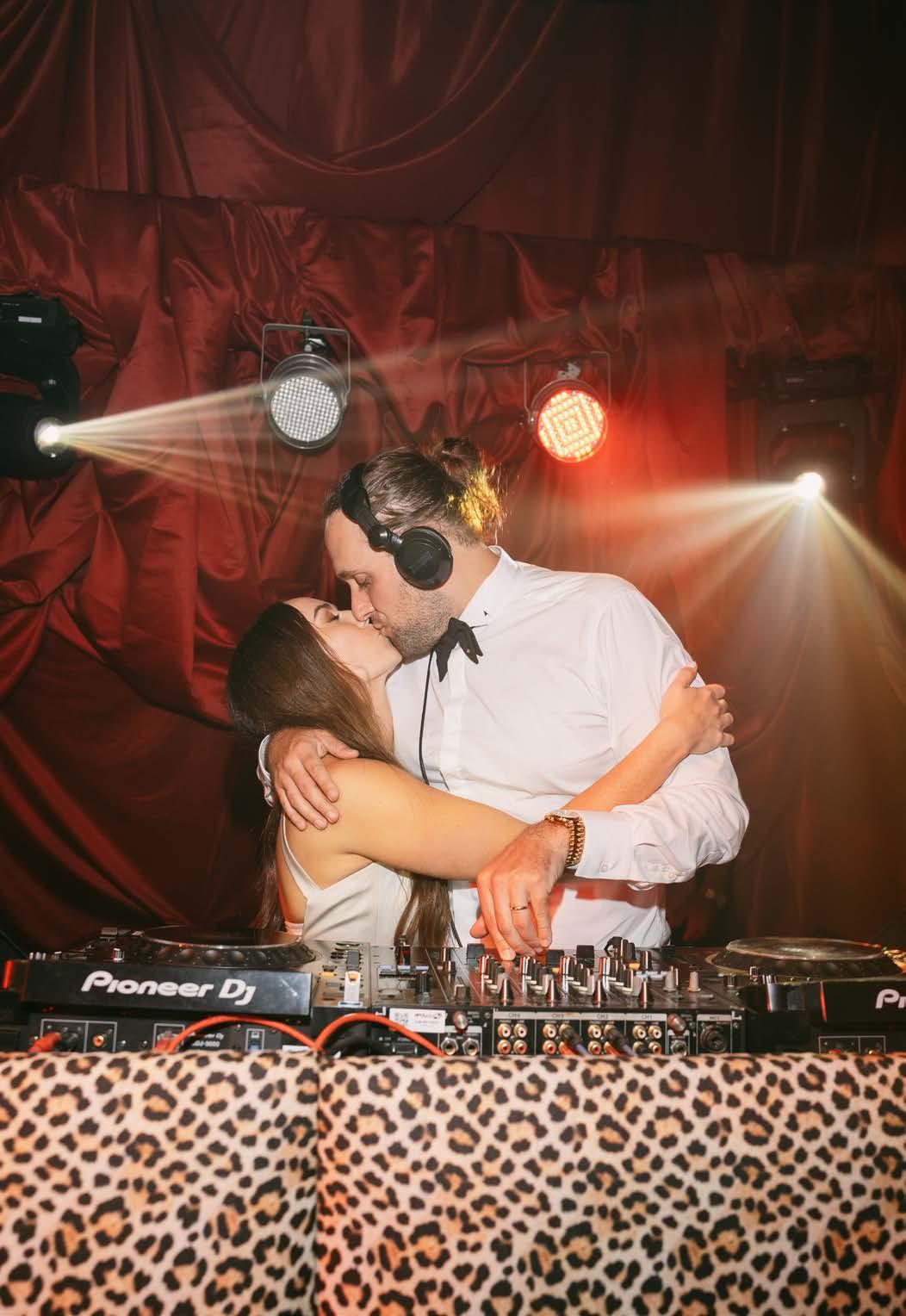
They met on Hinge, and their relationship is perhaps best captured by small moments that gradually became a shared life. Like their third date — swimming in the Hampstead Heath ponds, during which David prepared a picnic for Olivia and won her over for good. Or the first evening they spent together, when Olivia disarmed David by persuading the bartender to let her taste every beer on tap before she ordered. He had never met anyone so self-assured. They got engaged after six years, on a hike in southern Sweden, surrounded by bluebells and birdsong, where David proposed with a traditional Irish Claddagh ring. Although they are both very sociable, for their wedding they chose the opposite of a grand celebration — the ceremony took place in an intimate circle of close family and friends at Chelsea Old Town Hall in London. They wanted their families, scattered across different countries, to have a real chance to get to know one another, and they longed for a day free of pressure and expectation. London in March, meanwhile, was slowly shedding its winter coat and slipping into spring. Magnolias were in bloom, the light had softer edges, and the whole city felt quieter than during the frantic summer season they had deliberately chosen to avoid. Olivia was also expecting a baby, so her dress reflected what that year meant for them — the designer sewed in room for her growing bump, and Olivia had her and David’s initials sewn into the inner lining of the gown. The morning belonged to an intimate ceremony; the evening transformed into a proper London party. DJs played vinyl sets, cocktails made their rounds and pizza disappeared at the speed of light. Everything felt effortless, as though a hundred and twenty-five people had gathered completely spontaneously for the best party of the season. And perhaps that is exactly why David and Olivia’s wedding day turned out so well. It didn’t feel like a carefully choreographed wedding — it felt like a natural continuation of their relationship. Two people brought together by the right timing and one very lucky algorithm.
Text: Diana Rykrová | Photo: Alexander Stevens
Venue: Chelsea Old Town Hall (ceremony), Spring, Somerset House (reception), London, UK |
Photo: Alexander Stevens | Flowers: Lily Evangeline | Jewellery: ASOS | Rings: Jupp Fine
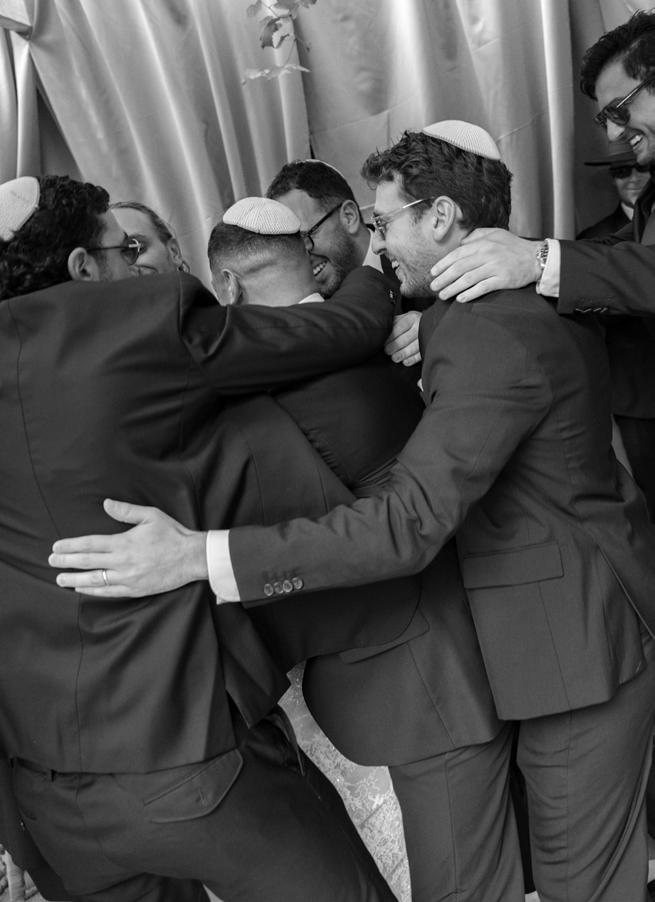
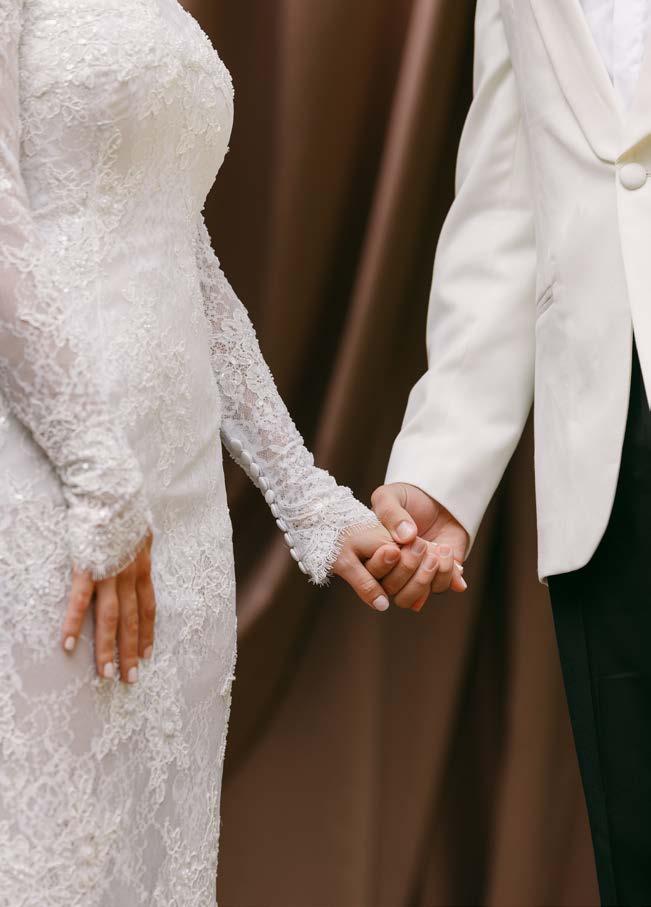
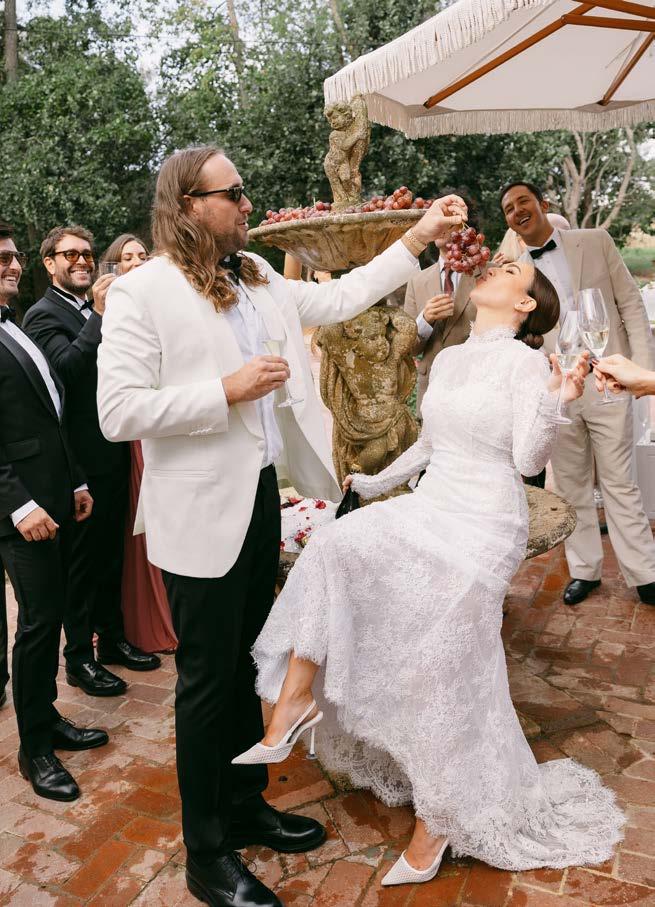
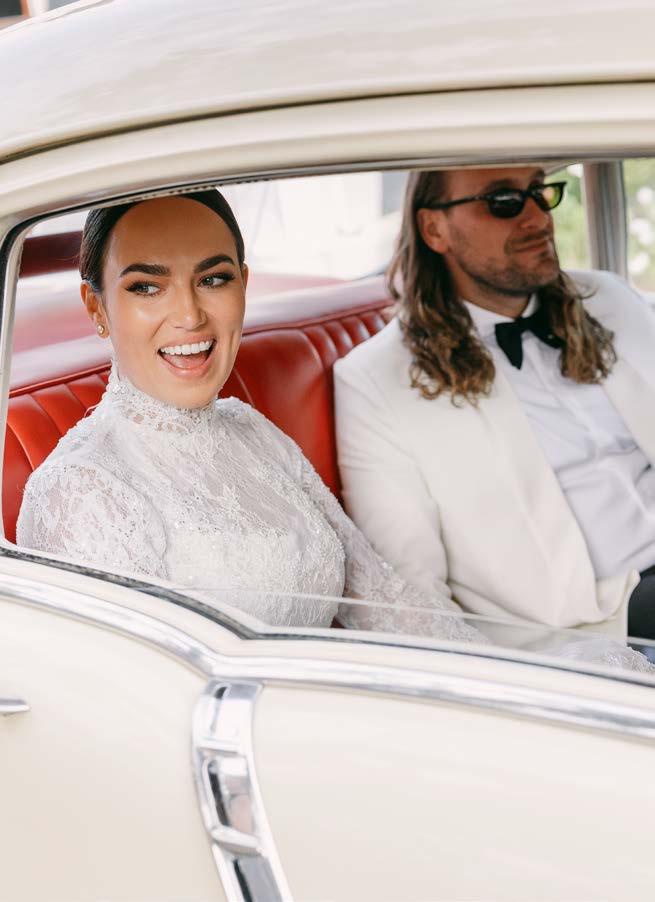
Their lives changed at Ariel’s 22nd birthday party, where his friends brought Emilia along. For the next 8 years, they were inseparable. Ariel grew into a successful restaurateur, while Emilia found her calling in fashion — she owns a boutique and is the co-founder of a handbag brand. Together they settled in Cape Town and expanded their family with two canine companions.
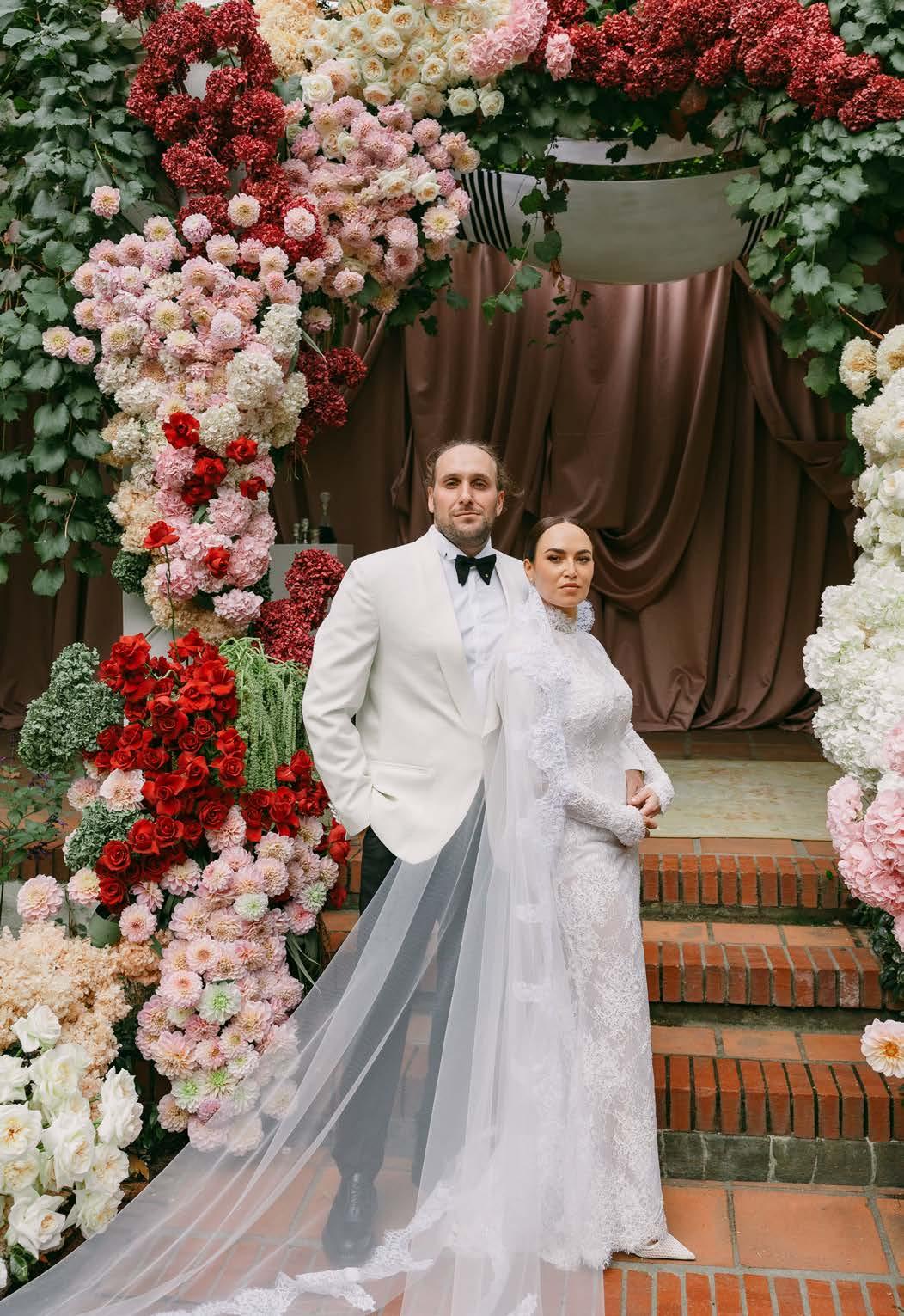
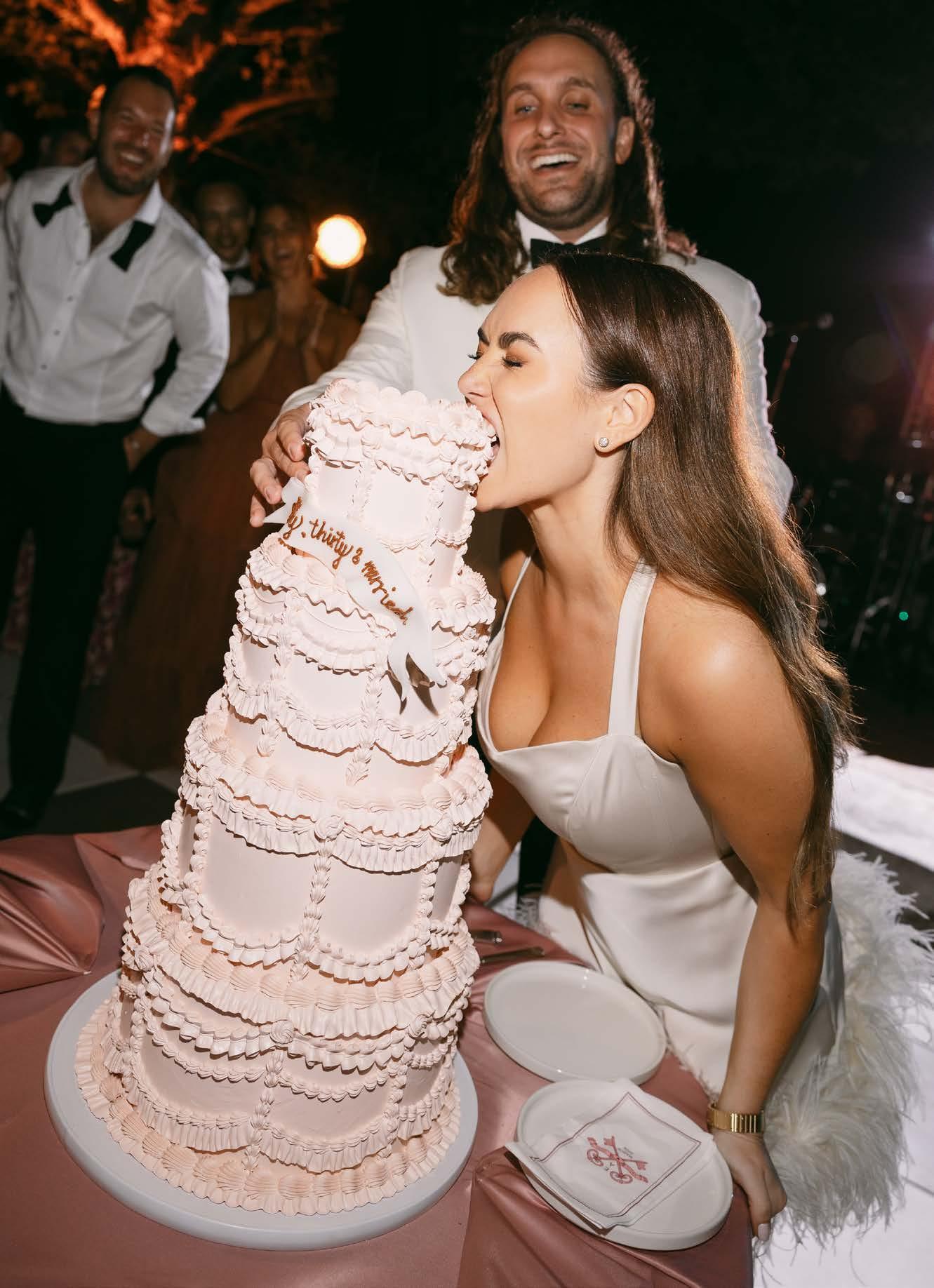
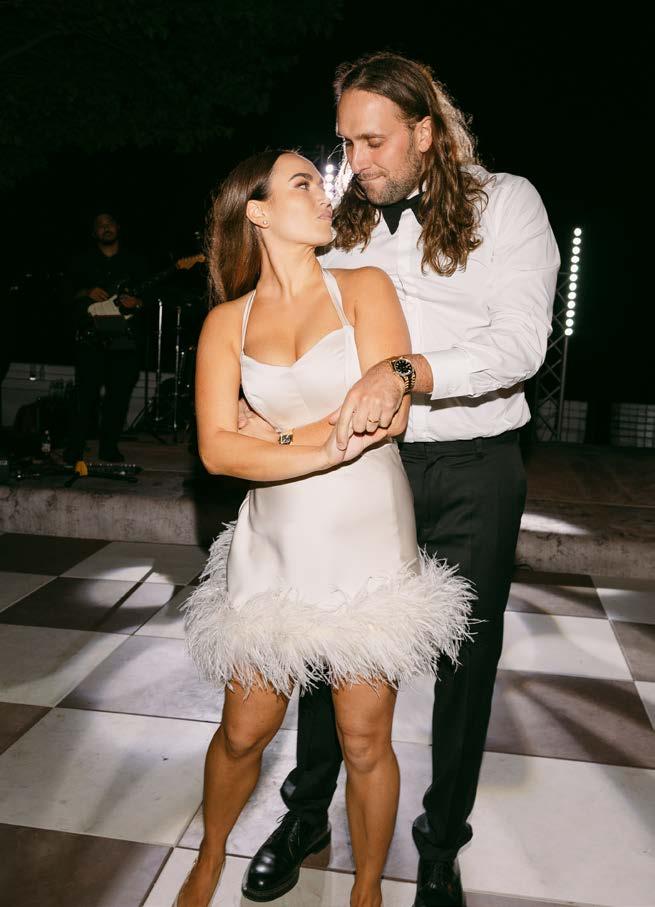
“When we only had one dog, I decided to propose to Emilia during a romantic walk. But the moment I got down on one knee, Vinnie wriggled out of his harness and ran off about 2 kilometres away. I had to leave Emilia standing there with the ring box in her hands and chase after him,” Ariel laughs. Everything worked out in the end, and the couple received a round of applause from dog walkers across the neighbourhood. Their personal and professional mission is to turn every day into an extraordinary experience. They wanted their wedding to be exactly that — a little crazy, emotional, and distinctive in every way. The entire day was built on contrasts of delicacy and extravagance, elegance and playfulness. Each part of the day unfolded in a different location with its own musical backdrop, all perfectly connected like a masterfully told story. They chose the date to coincide with Emilia’s thirtieth birthday — a double reason to celebrate.
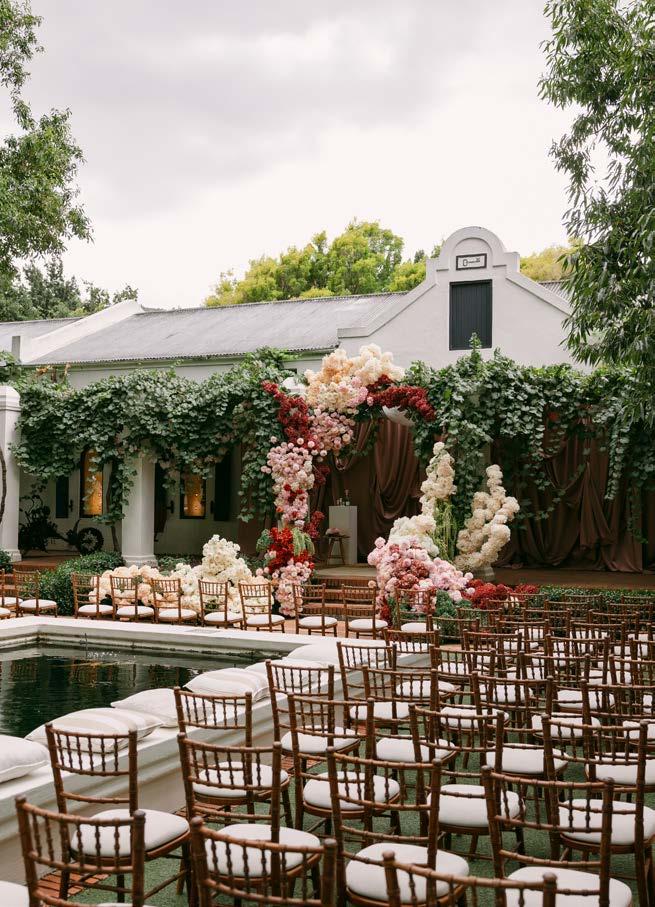
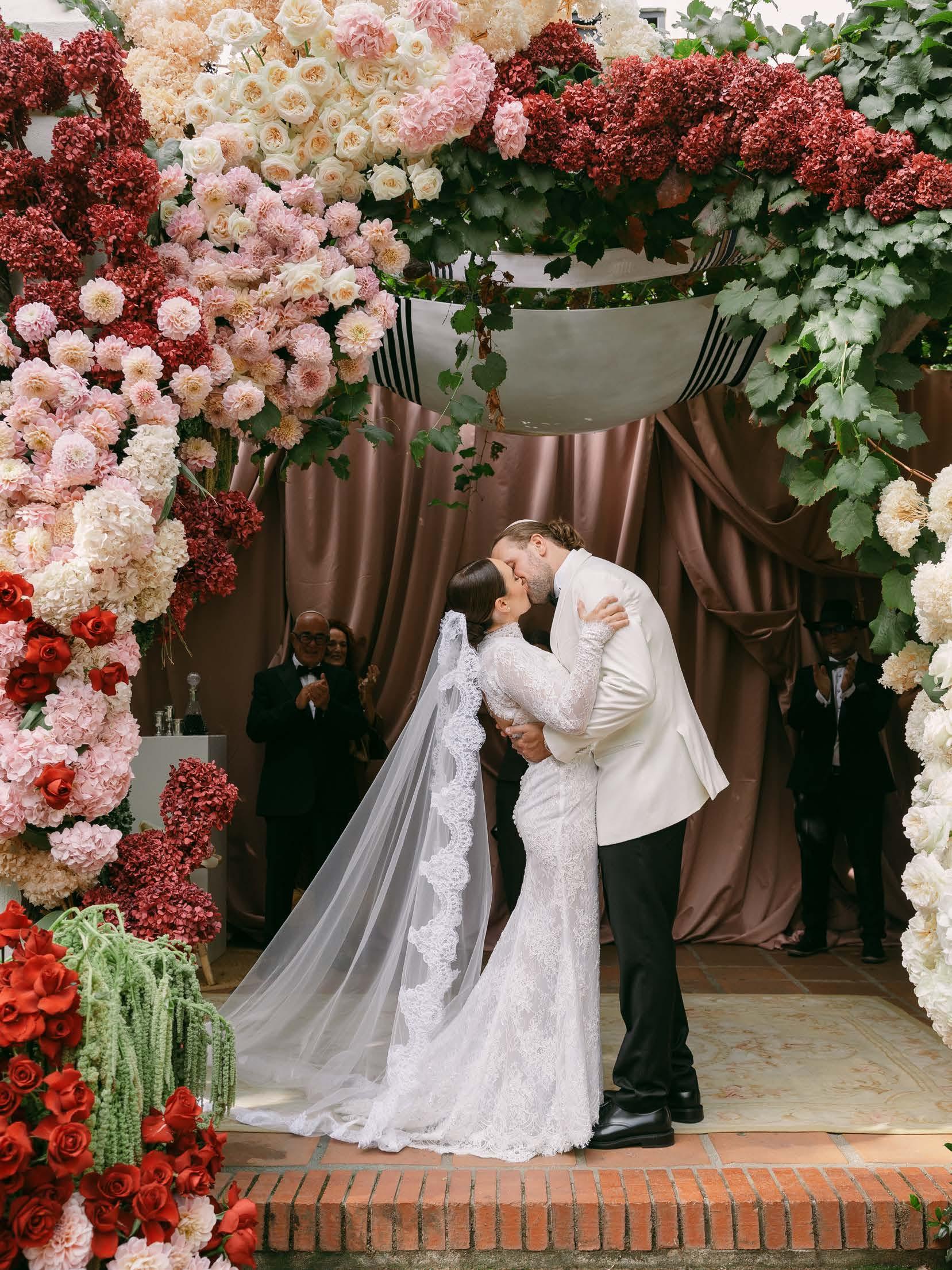
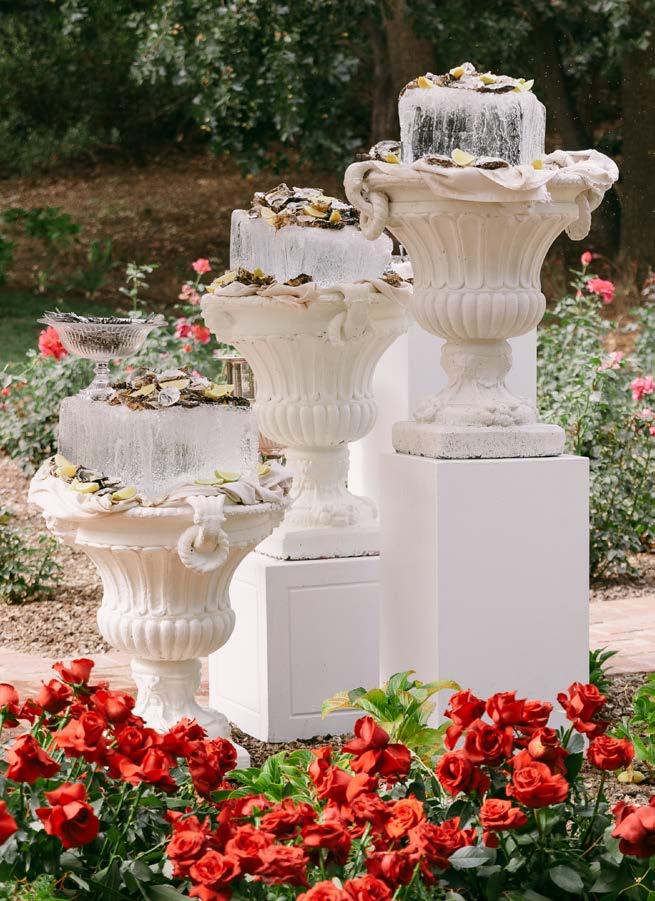
The ceremony, rooted in Jewish tradition, took place at an estate woven with memories belonging to Emilia’s family. A cocktail reception in a rose garden followed, leading to the highlight of the evening — a feast at a 17th-century farm. The spirited finale came in the form of an afterparty at a gallery transformed into a nightclub. They began with sophisticated tenderness and ended in absolute wildness.
What stood out most amid the flood of impressions? The small traditions. Prayer shawls of departed grandfathers woven into the décor.
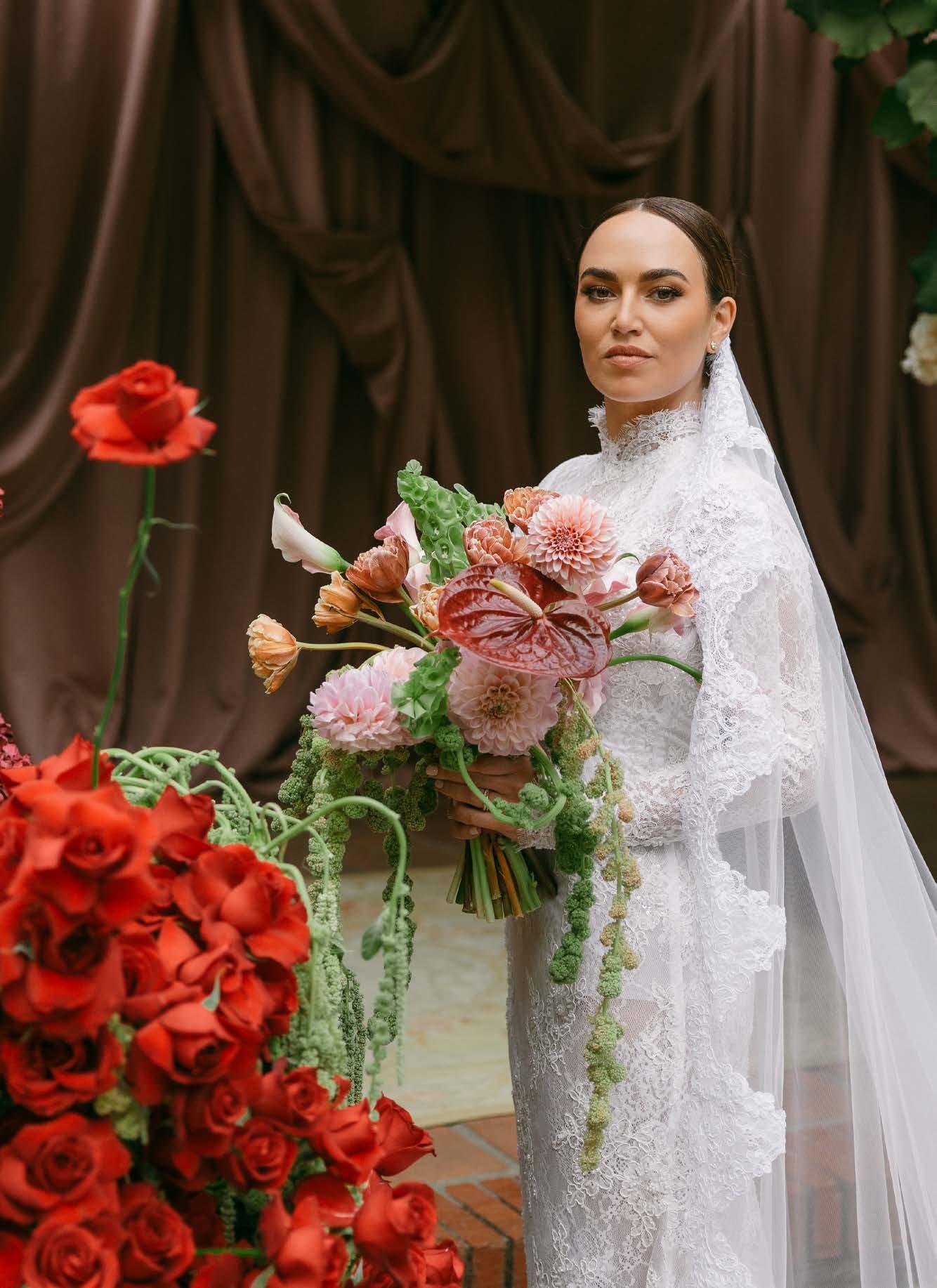
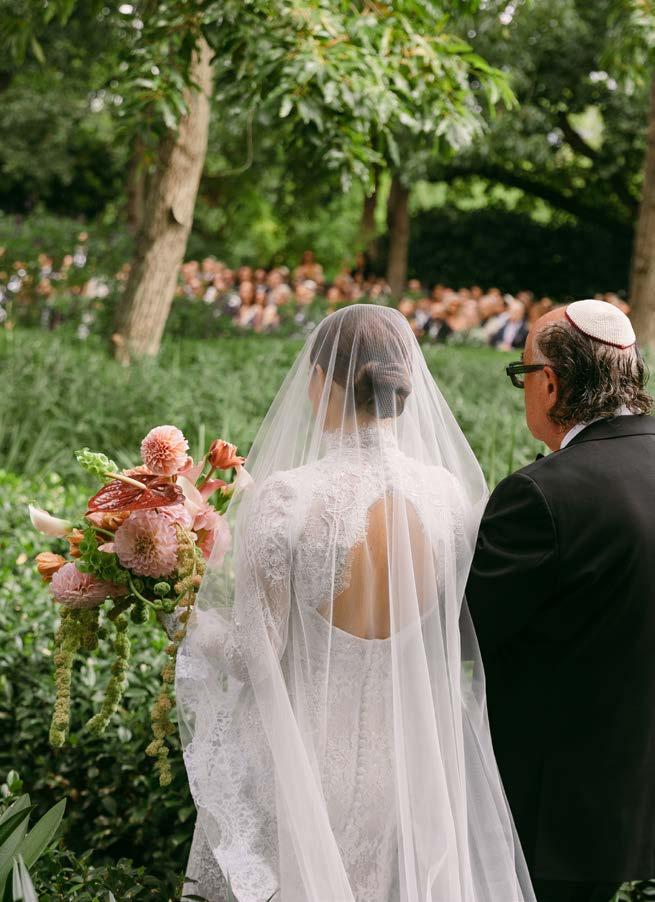
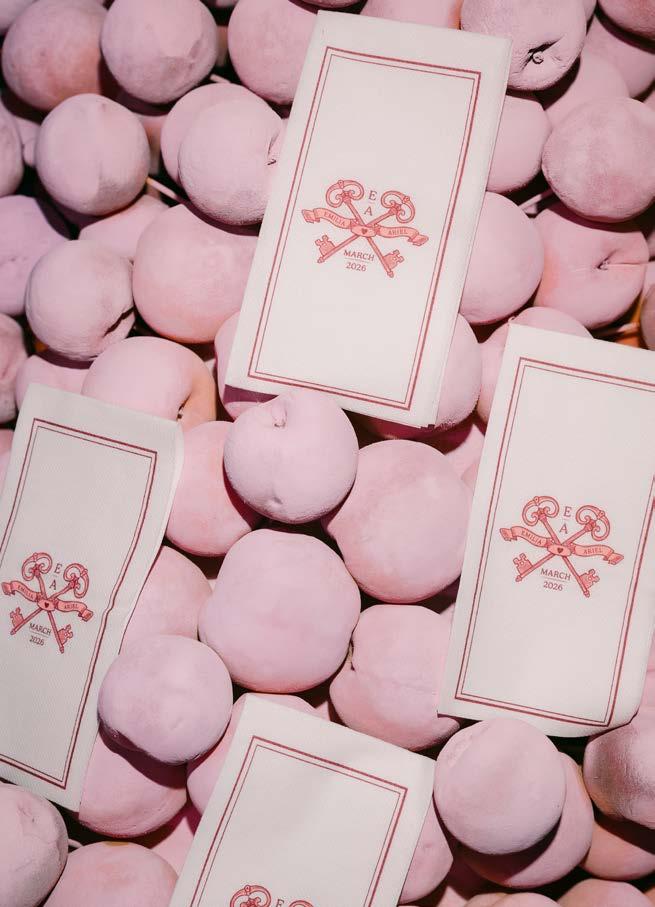
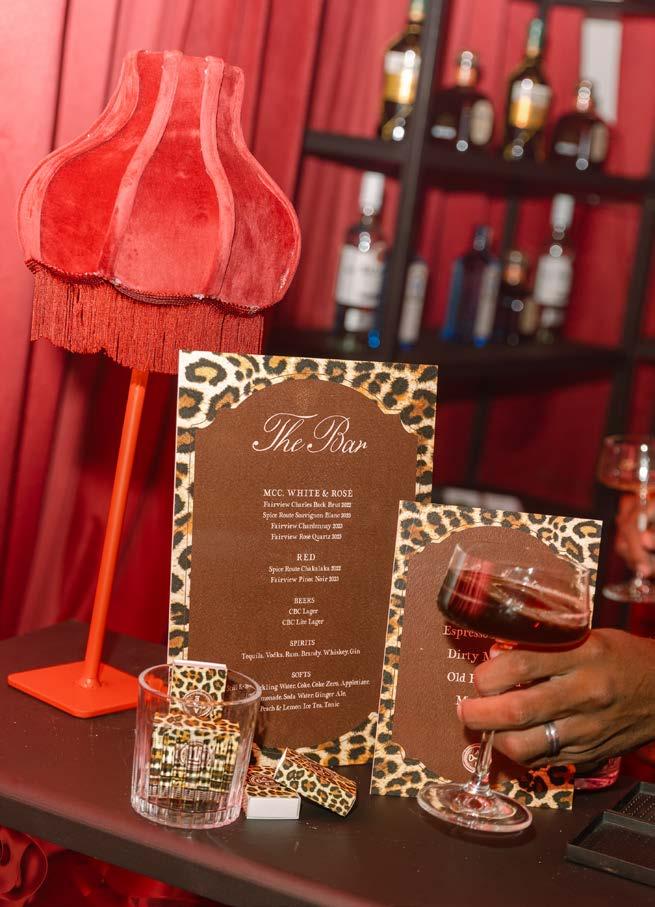
Quiet, emotional speeches where every word had its place. A perfectly matched couple, the bride’s dramatic veil — and above all, the divine floral arrangements. Every space overflowed with living cascades of flowers in varying textures, in perfect harmony with the remaining décor elements, whether bold statement chairs or elegant napkins monogrammed with the wedding logo.
“Our florist Heike was incredible. She did more for us than we had ever hoped. We gave her our complete trust and she projected us into the décor as individuals, not just as a couple getting married. The result completely blew us away,” Emilia beams. The presence of their loved ones was gift enough.
In lieu of presents, the couple asked guests to support an organisation that rescues pit bulls, or to contribute toward their adventure honeymoon — spent partly in Paris and partly in Mexico. May their life together be as vibrant and extraordinary as their wedding day.
Text: Kristýna Šestáková | Photo: Chris and San
Venue: Fairview Wine and Cheese (ceremony), Spice Route Destination (reception), Paarl, South Africa | Photo: Chris & Sun | Video: Brad Jackson Studio | Coordination: Bash Celebrations |Flowers: Heike Hayward — Fleur Le Cordeur | Rings: Almost Forgotten, Never Told | Bridal gown: Verona Dove | Shoes: GUCCI | Groom‘s suit: Spaghetti Mafia | Shoes & tie: GUCCI | MUAH: Chelsea Bendall | Music: The Starlight Band | Catering: John Joseph Food Anatomy | Cake & Sweet Bar: Blos Bakery
CATHERINE & ROBBIE
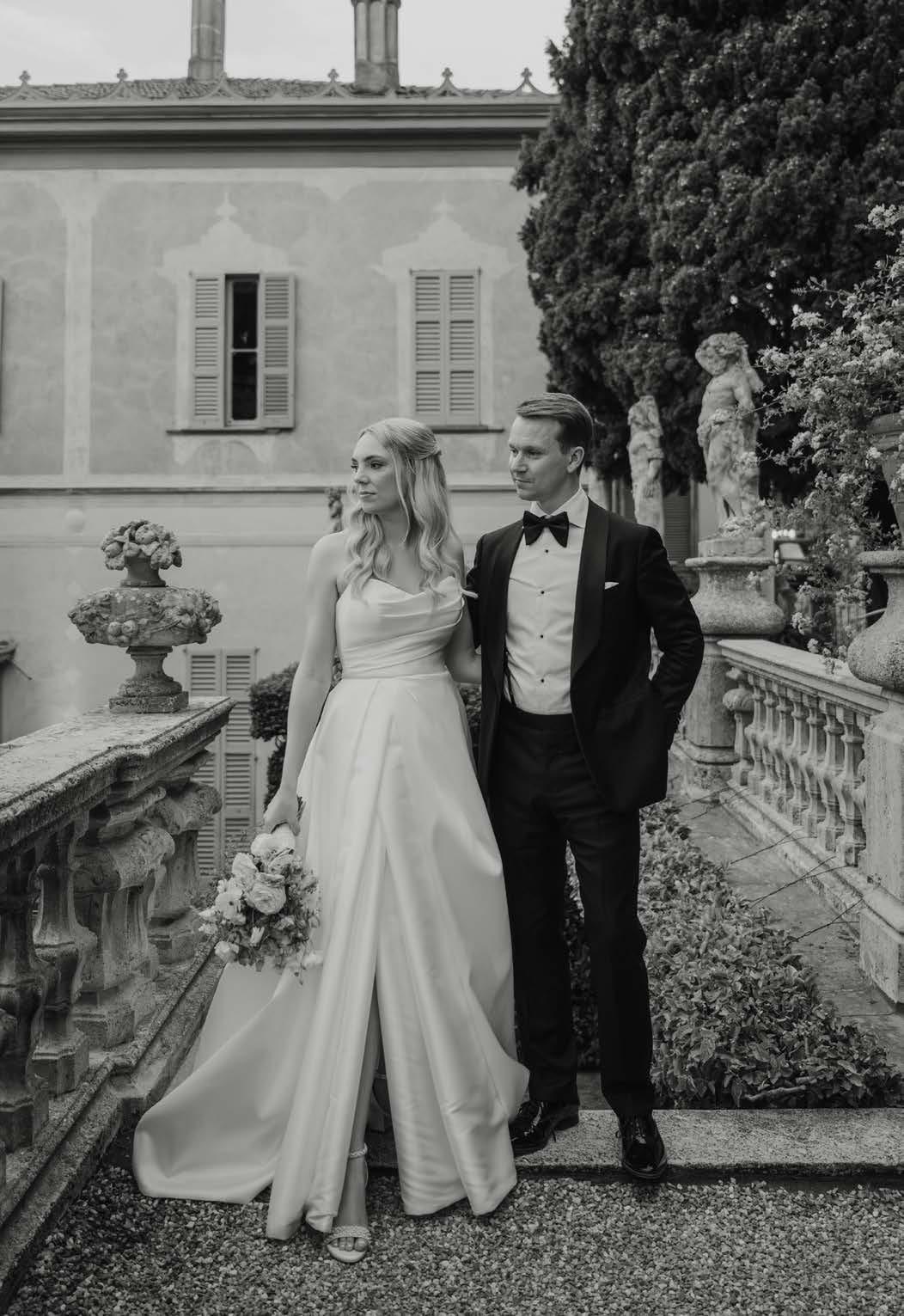
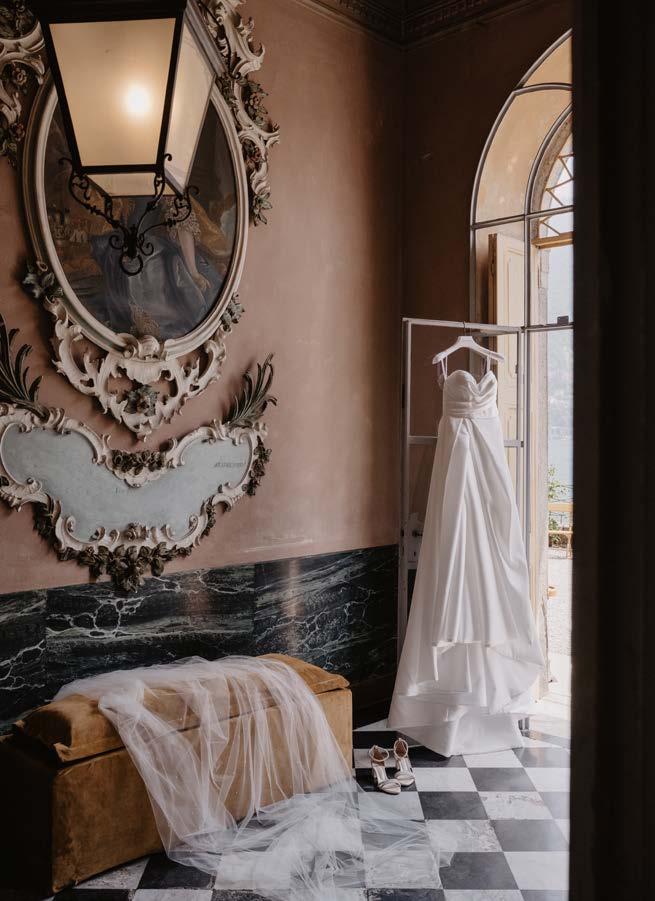
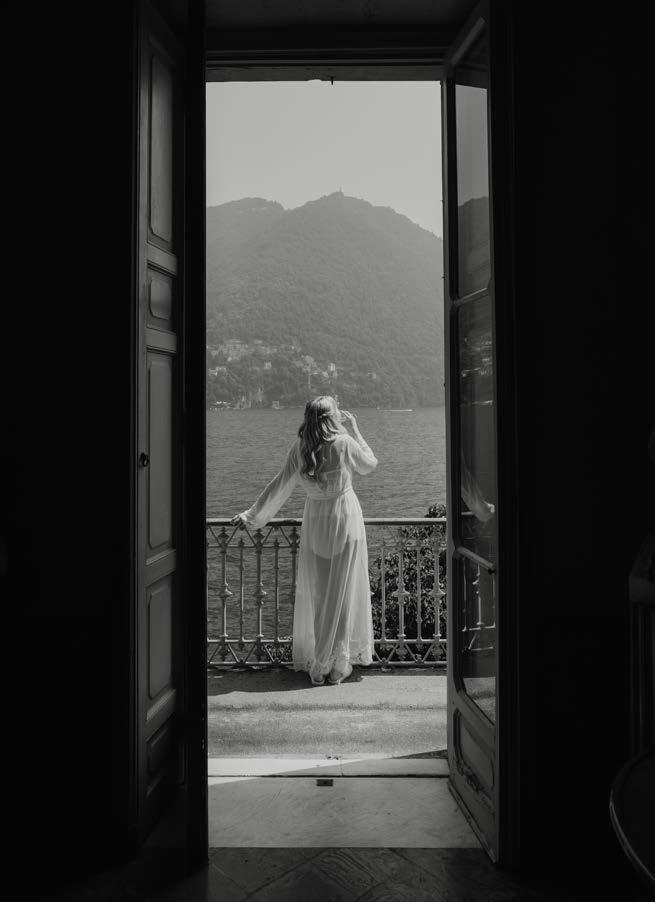
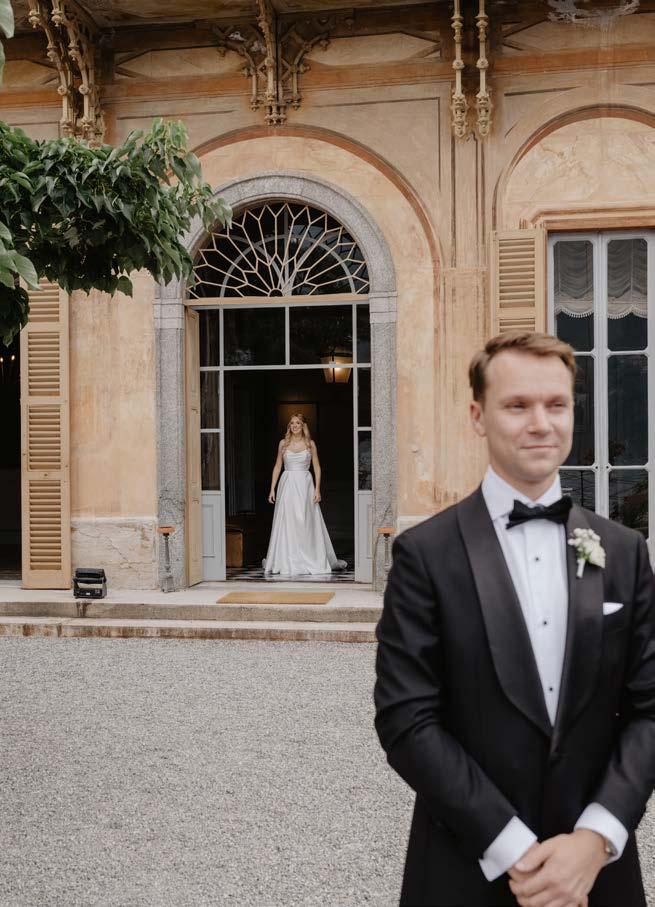
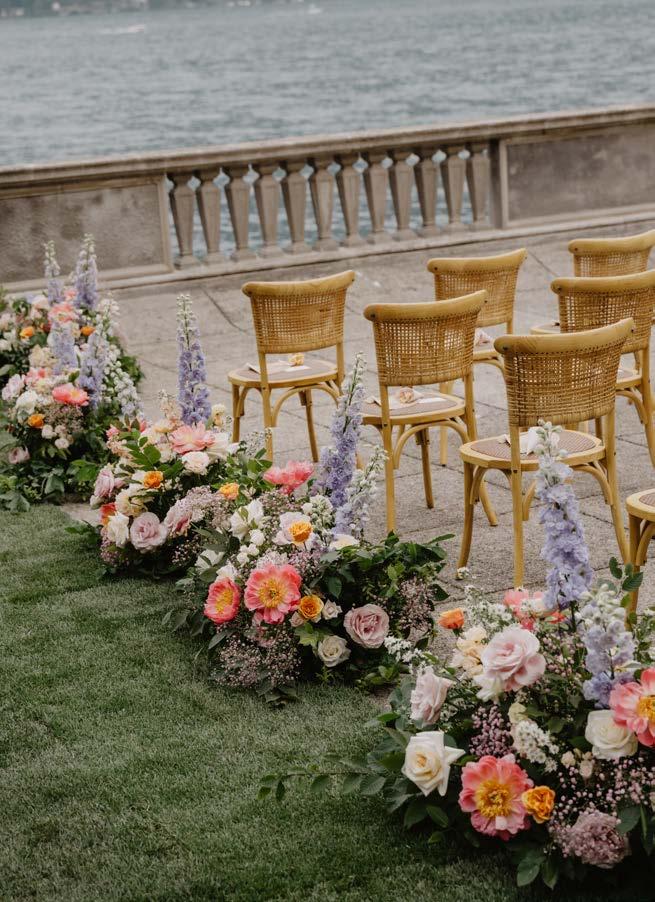
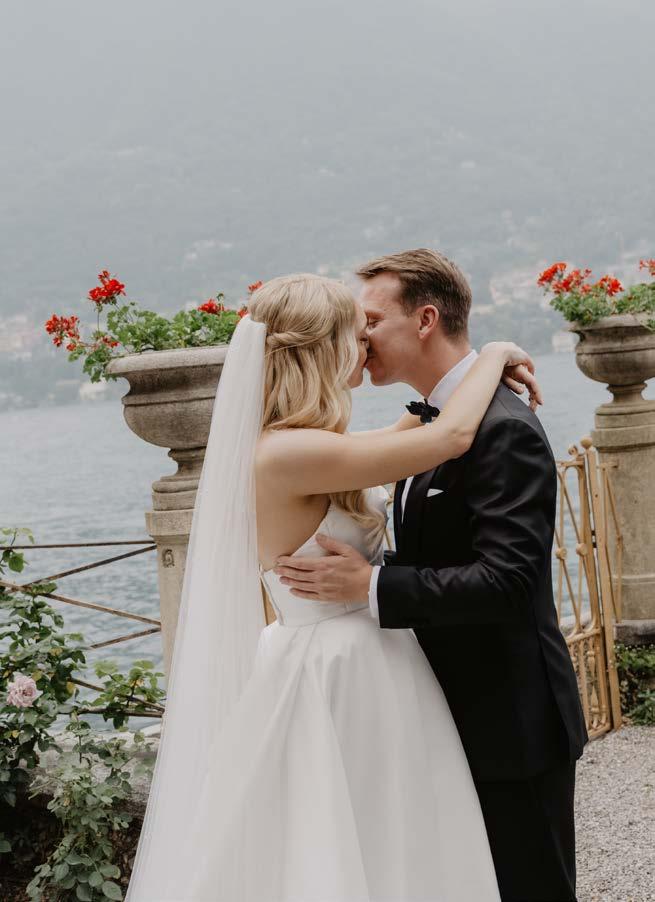
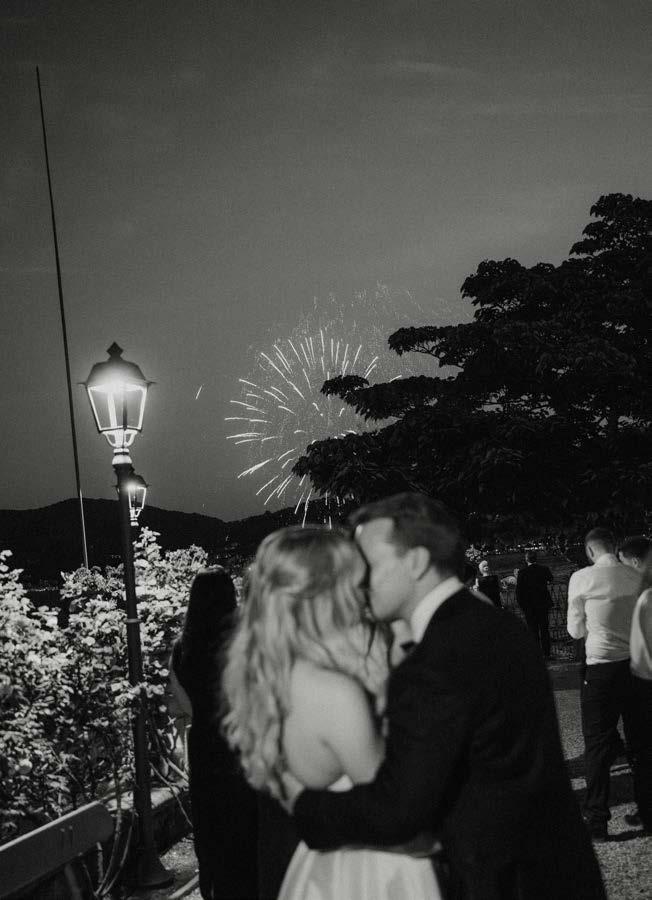
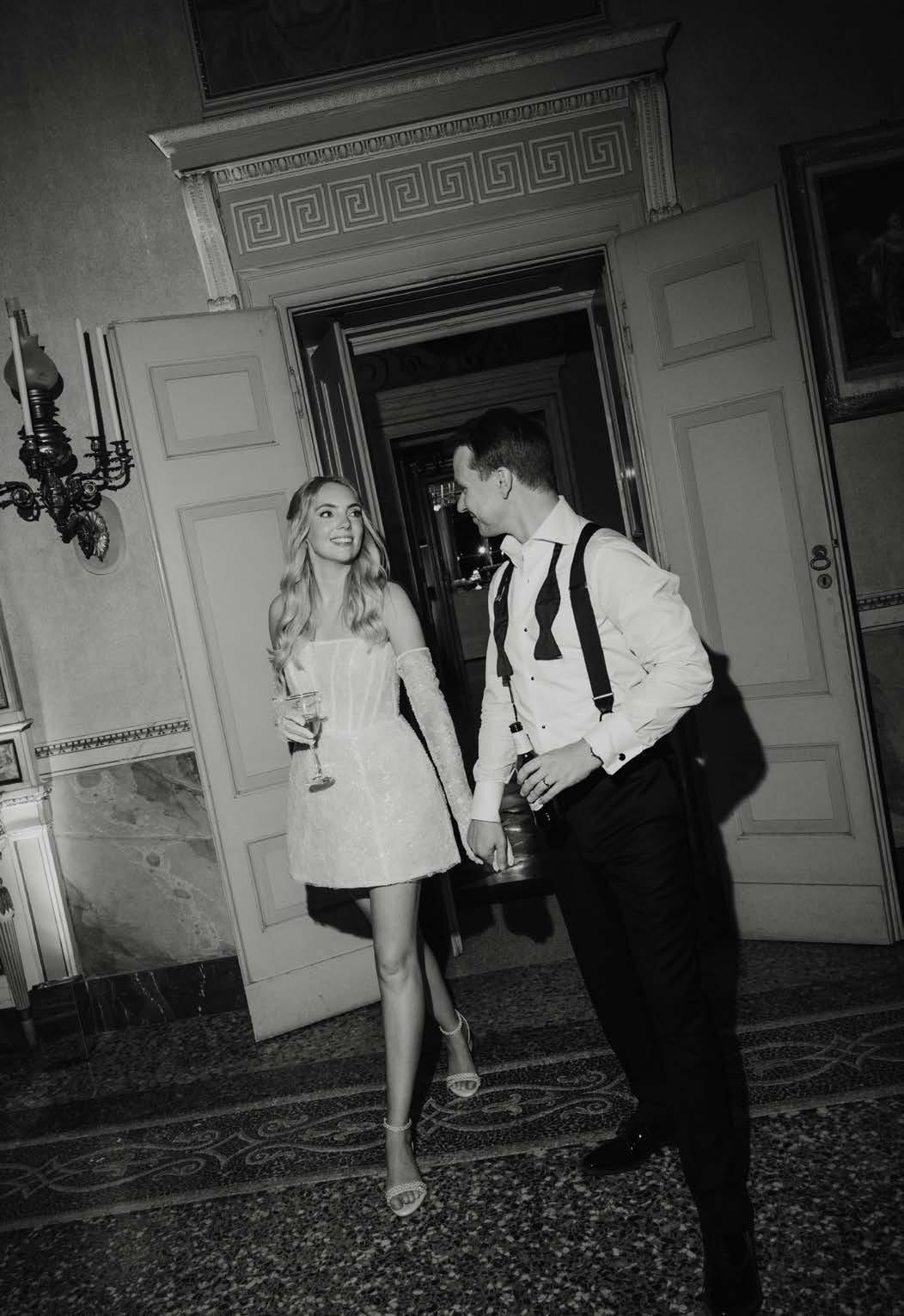
Some relationships defy all probability. Catherine and Robbie had mutual friends, moved in the same circles, and yet their paths never crossed — until a chance algorithm brought them together. As it quickly turned out, fate had a sense of irony. A first date at a bar in King’s Cross was the beginning of a relationship that lasted almost ten years before culminating in a wedding on Lake Como. The proposal came in Crete — and it was perfectly unexpected, exactly as Catherine had hoped. Robbie had planned a romantic dinner with flowers and balloons, but Catherine unwittingly kept making it difficult for him: feeling unwell, she opted for quiet evenings in rather than a formal dinner out. In the end, he surprised her anyway — with a video montage of shared memories, the final frame of which was a photograph of the ring box.
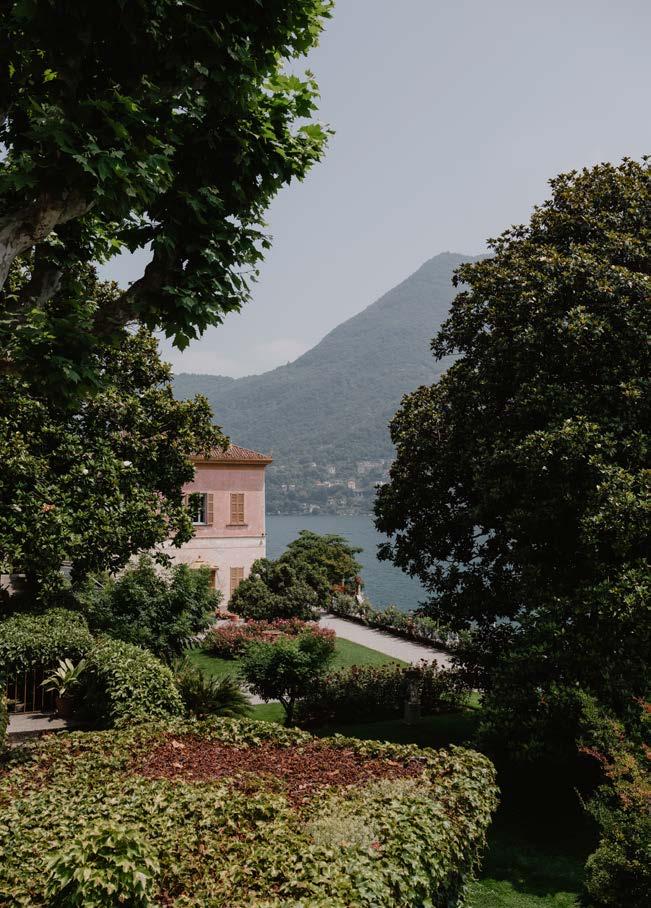
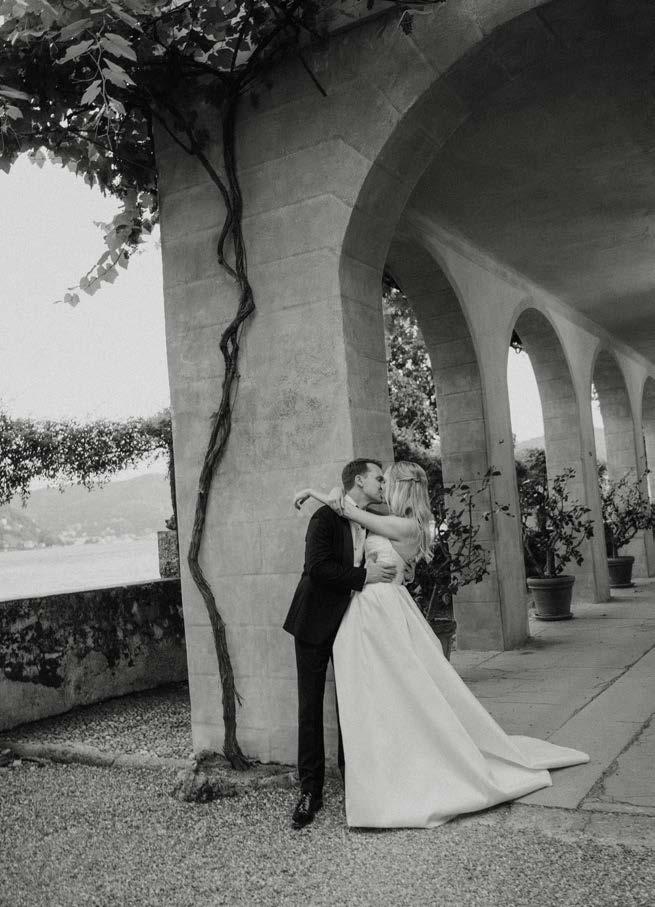
Catherine had spent her whole childhood visiting Lake Como with her family. Robbie had been joining them for the past ten years. It was clear, then, that if there was going to be a celebration, it would be here.
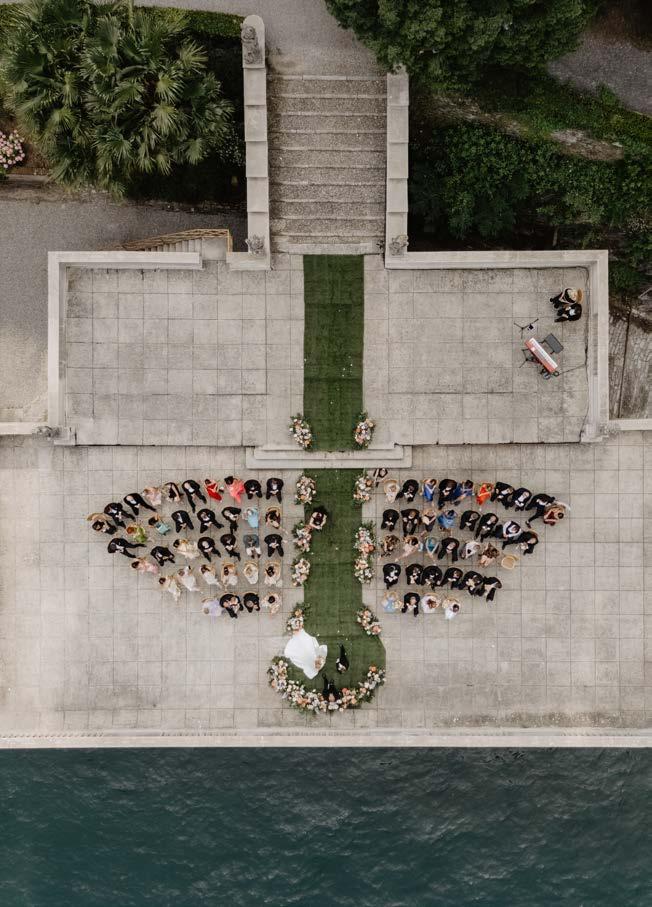
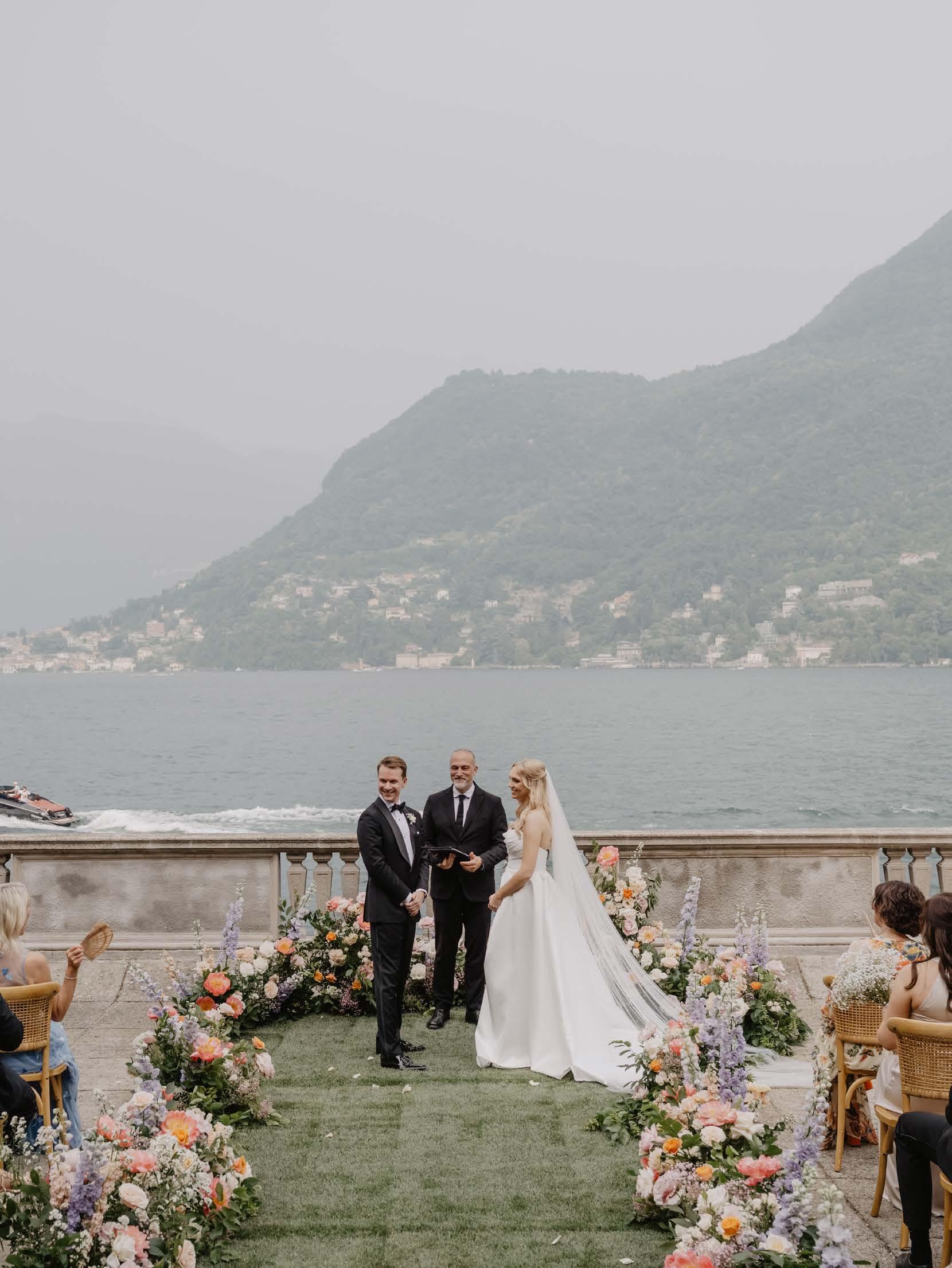
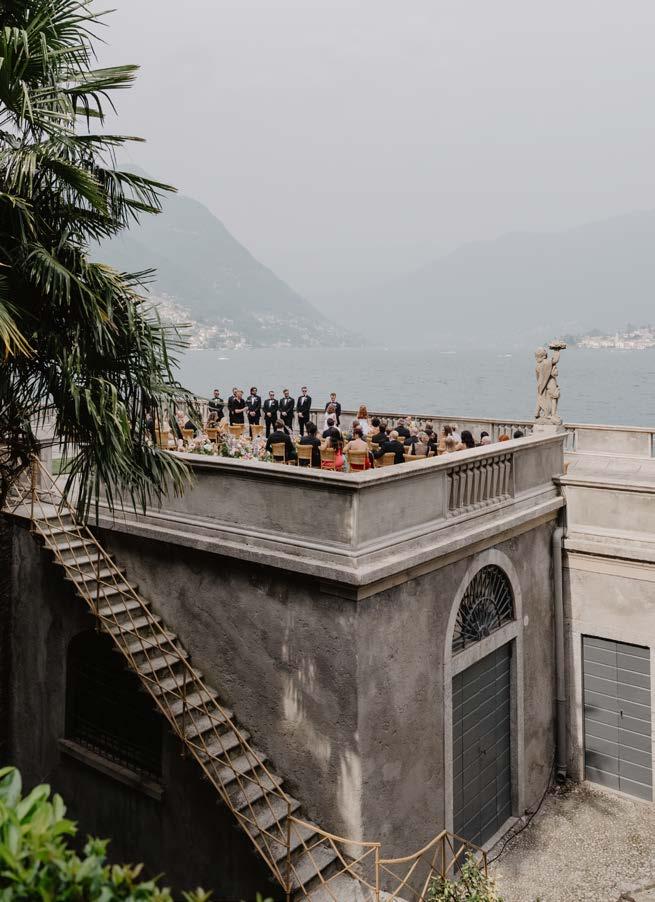
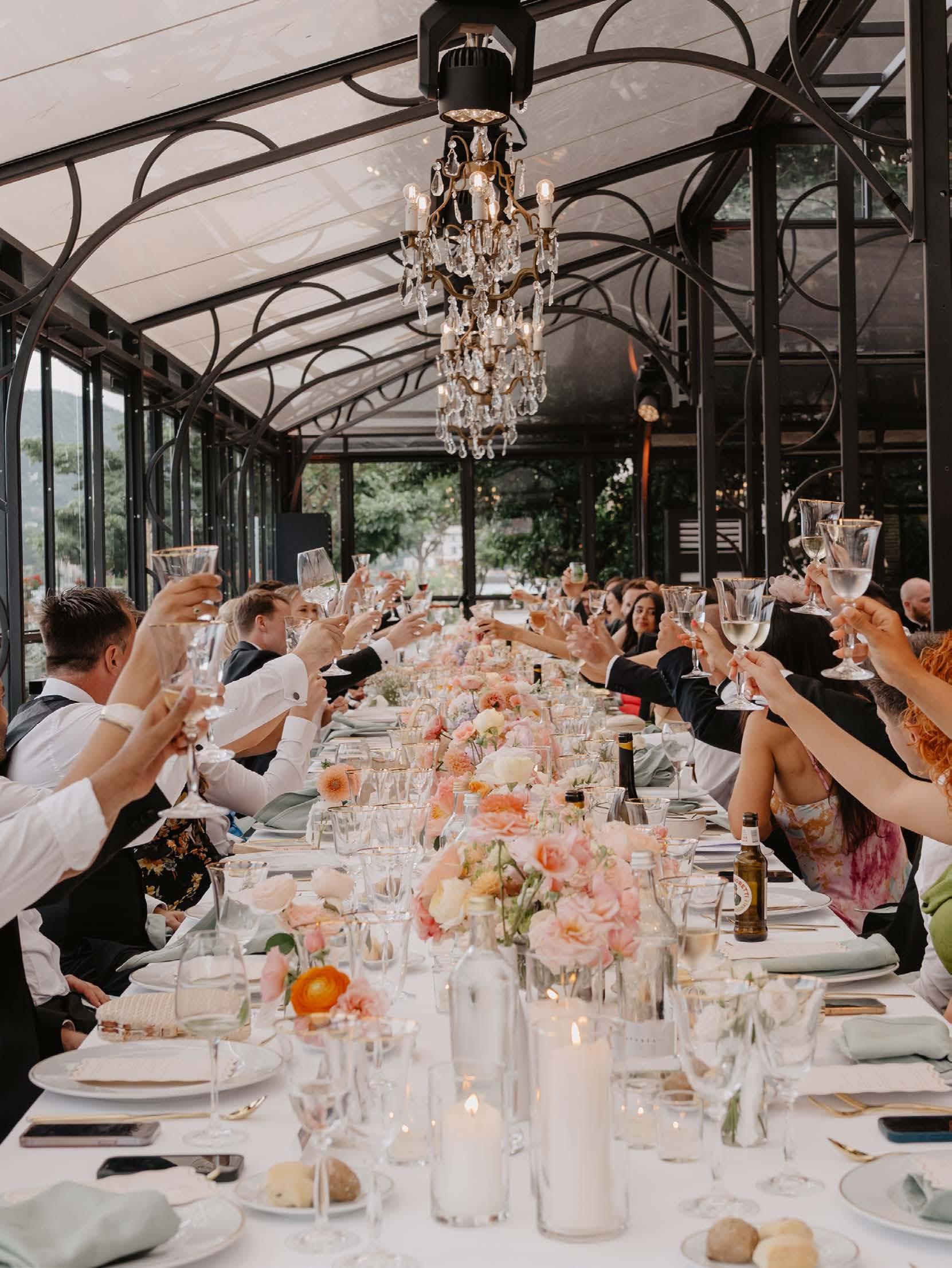
The ceremony took place at five in the afternoon on the rooftop of the historic boathouse, the Darsena, at Villa Pizzo — with the lake, the mountains, and passing boats as the backdrop. Catherine walked down the aisle with both of her parents to Home by Edward Sharpe & The Magnetic Zeros — a song she had listened to before she ever met Robbie, and one that had always meant the same thing to her: home is not a place, but a person.
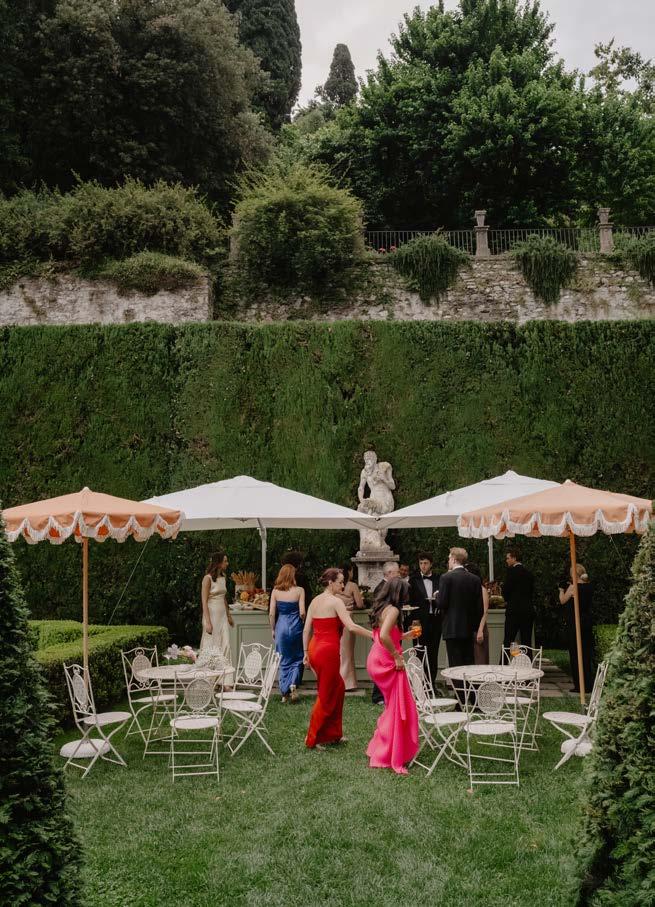
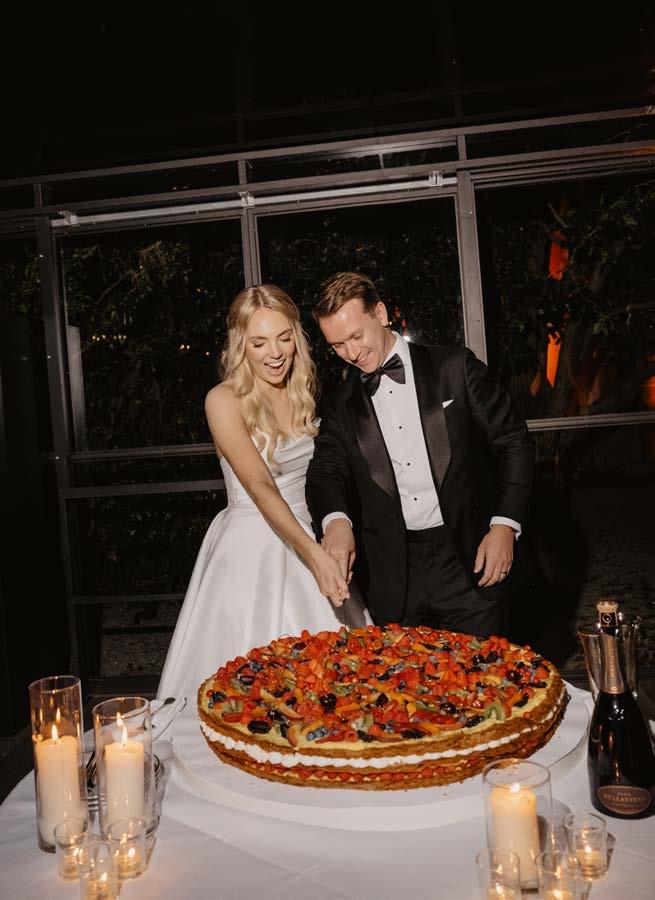
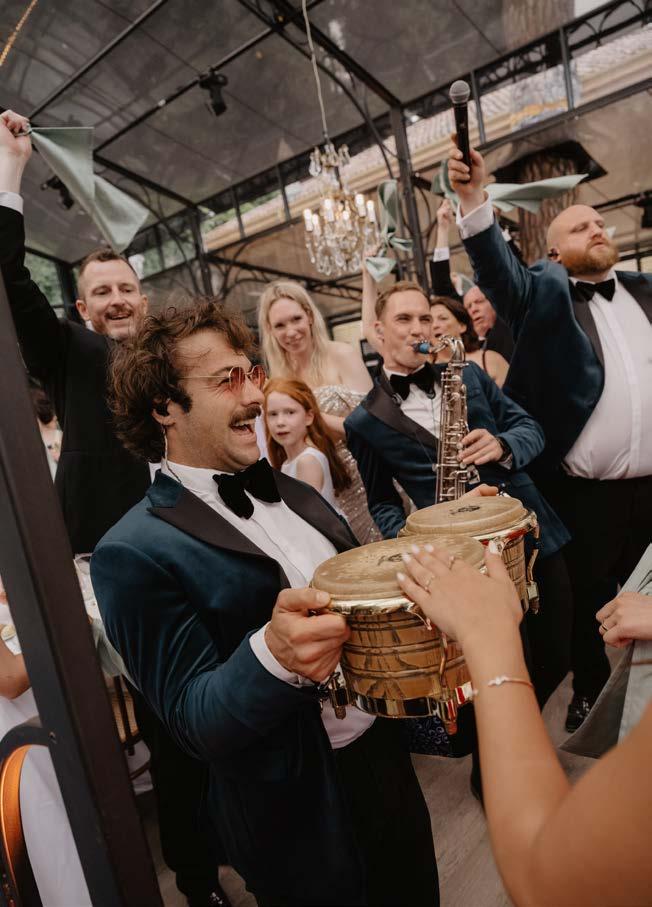
All three days carried the spirit of their shared taste — relaxed, romantic, and full of energy that never dipped. A live band accompanied guests from the ceremony through to the late evening: strings and piano gave way to a jazz quartet during cocktail hour, then the band roamed between tables with drums, saxophones, and percussion. No one sat still for long. Seventy guests shared a multi-course Italian dinner — from burrata mousse to ricotta ravioli to a traditional millefoglie — and the dance floor didn’t empty until morning. One of the most powerful moments of the day came as a complete surprise to Robbie. His grandfather had passed away six months before the wedding, and his grandmother was unable to travel due to her health.
Catherine had secretly arranged for Robbie’s mother to record a voice message from his grandmother, which was played aloud during the ceremony while the couple stood together at the altar. It was funny, heartfelt, and completely unexpected. Just like their wedding.
Text: Editorial team | Photo: Taylor Kezia
Venue: Villa Pizzo, Cernobbio – Lake Como, Italy | Concept and Coordination: Elena Pensini |
Photo: Taylor Kezia | Video: Santiago Boceta | Flowers: Marina Malguzzi | Stationery: Elena Pensini | Rings: Steven Stone | Jewelry: Lily and Roo | Dress for her: Mariana Hardwick, Rosie Etienne Bridal | Groom’s suit: Suit Supply | Shoes for her: Dimitra‘s Workshop | MUAH: Mila Make-up Artist, Kasia Perdion, Aga Collins | Music: The Rockets Collective | Catering, Cake and Sweet bar: AFM Banqueting Wedding
HORSE PARK
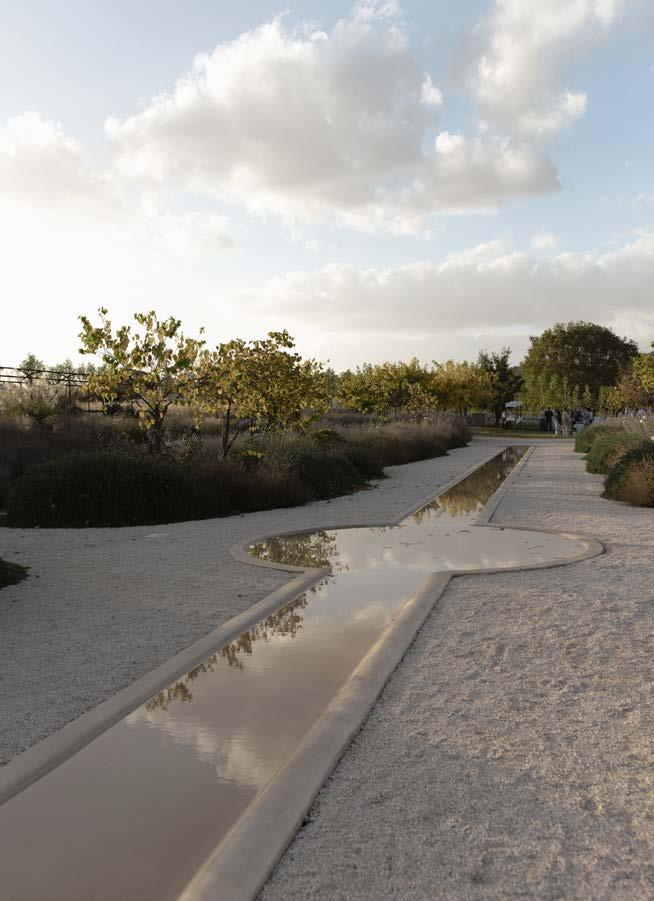
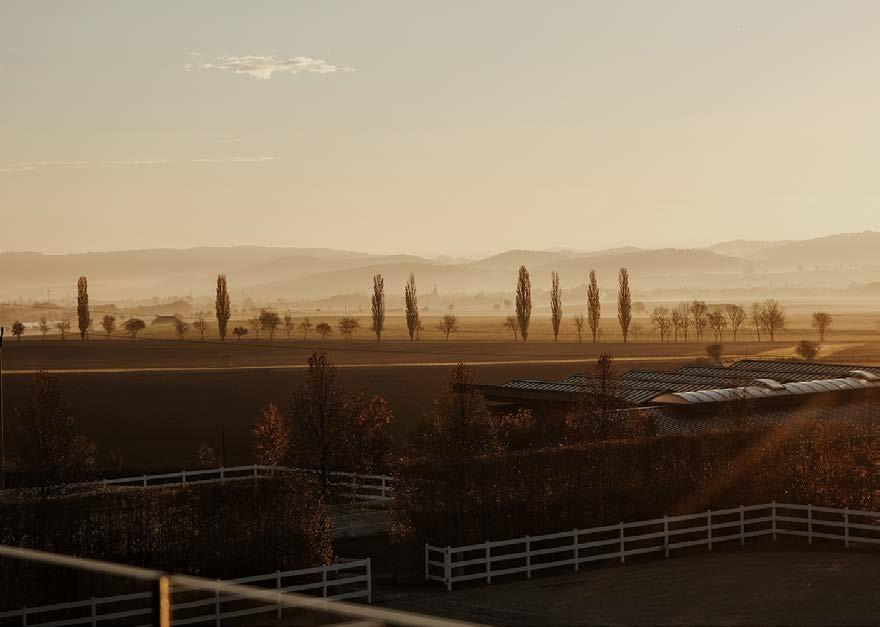
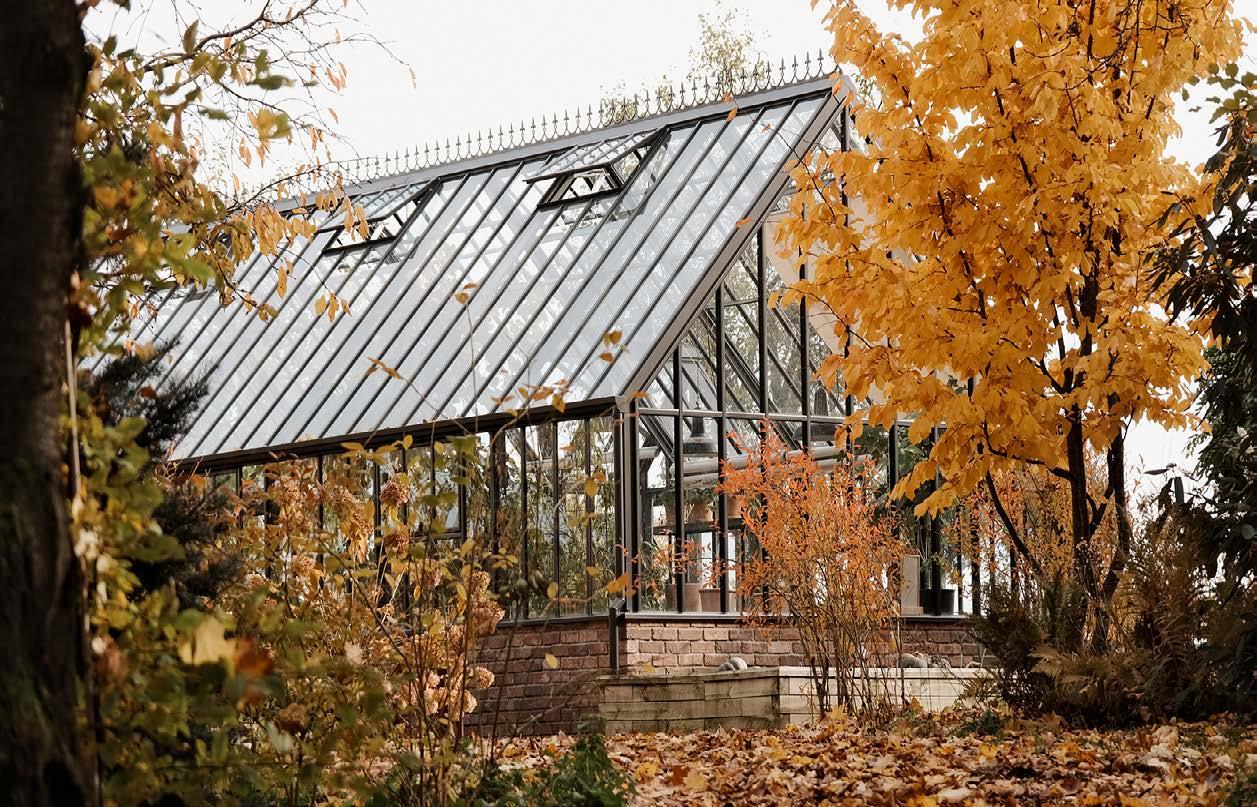
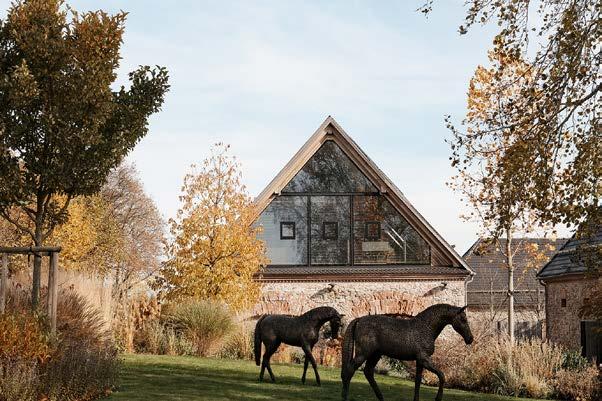
Experience your wedding day in a place where the landscape becomes part of the story. Horse Park stands alone in the middle of fields, meadows, and forests. Close enough to Prague to reach in under an hour, yet far enough from the everyday to make your wedding day truly your own.
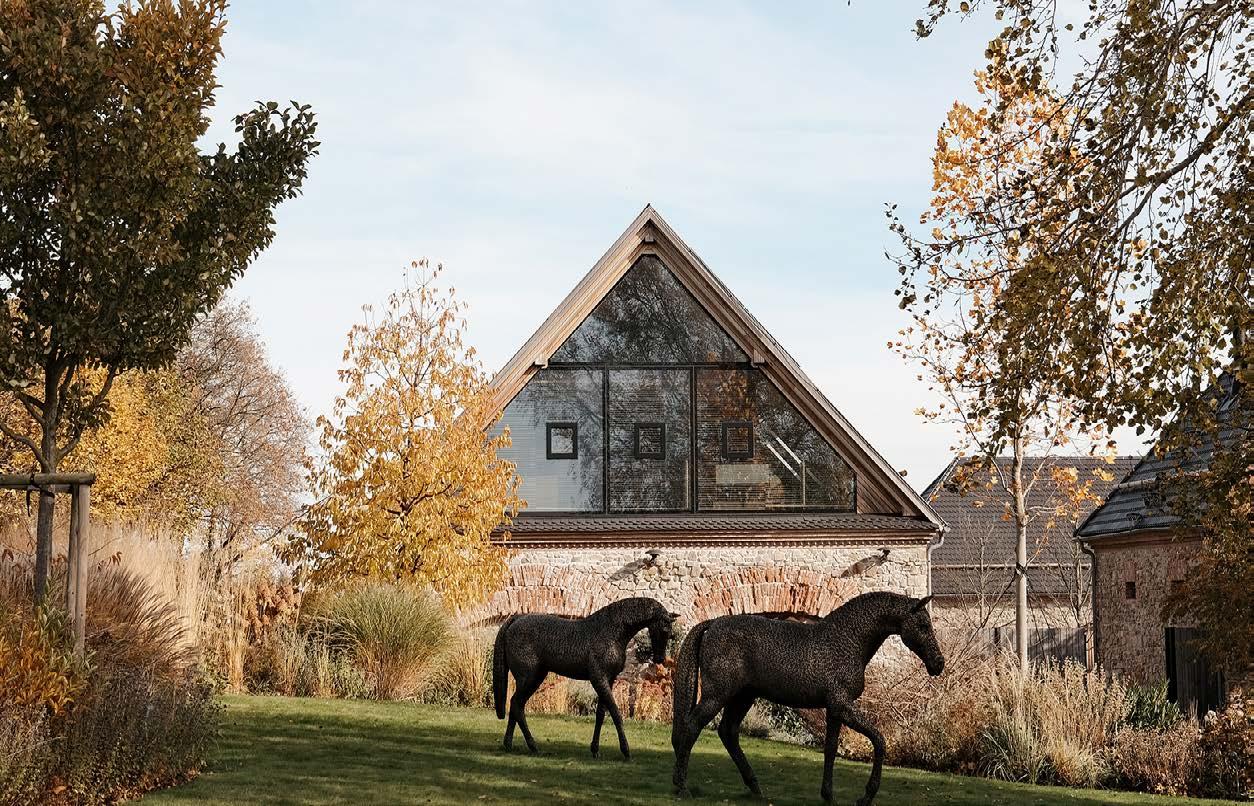
The estate, dating back to 1879, has preserved its original charm — brought sensitively back to life through a thoughtful renovation that has transformed it into an exceptional wedding venue with a character of its own. The atmosphere is natural, airy, and calm. Every detail of the grounds has been designed so that a visit to Horse Park is not merely an event, but an experience — from the greenery surrounding the entire estate, through the greenhouse nestled into the landscape, to the wedding meadow with its romantic secluded corner.
You can say your vows under the open sky, in the expansive courtyard, or within the riding hall, which lends the ceremony a truly distinctive setting. Horse Park offers a versatility that allows every wedding to have its own character. An intimate outdoor ceremony, a celebratory dinner in a decorated barn, a summer grill party beneath the open sky, or an evening of dancing and lights above the courtyard — everything here feels effortless, natural, and crafted with care.
The estate includes accommodation for up to 30 guests, while the wedding reception can host up to 200. The Horse Park team provides a full service in collaboration with trusted suppliers — from florists, photographers, and musicians to catering. The local cuisine is an experience in itself, rooted in seasonal ingredients, locally grown fruit and vegetables, and an honest approach to both flavour and presentation.
Whether your most beautiful memory turns out to be a walk through the meadows on the eve of the wedding, the first toast in the courtyard, a dinner at sunset, or a quiet morning moment on the apartment terrace — Horse Park is a place with a soul that will enchant you; private, romantic, and unlike anywhere else.
Text: Editorial Team | Photo: Aneta Mastná, Alexandra Hrašková | Article partner: Horse Park Kamenný Dvůr, horse-park.cz
MADRID BLOOMS
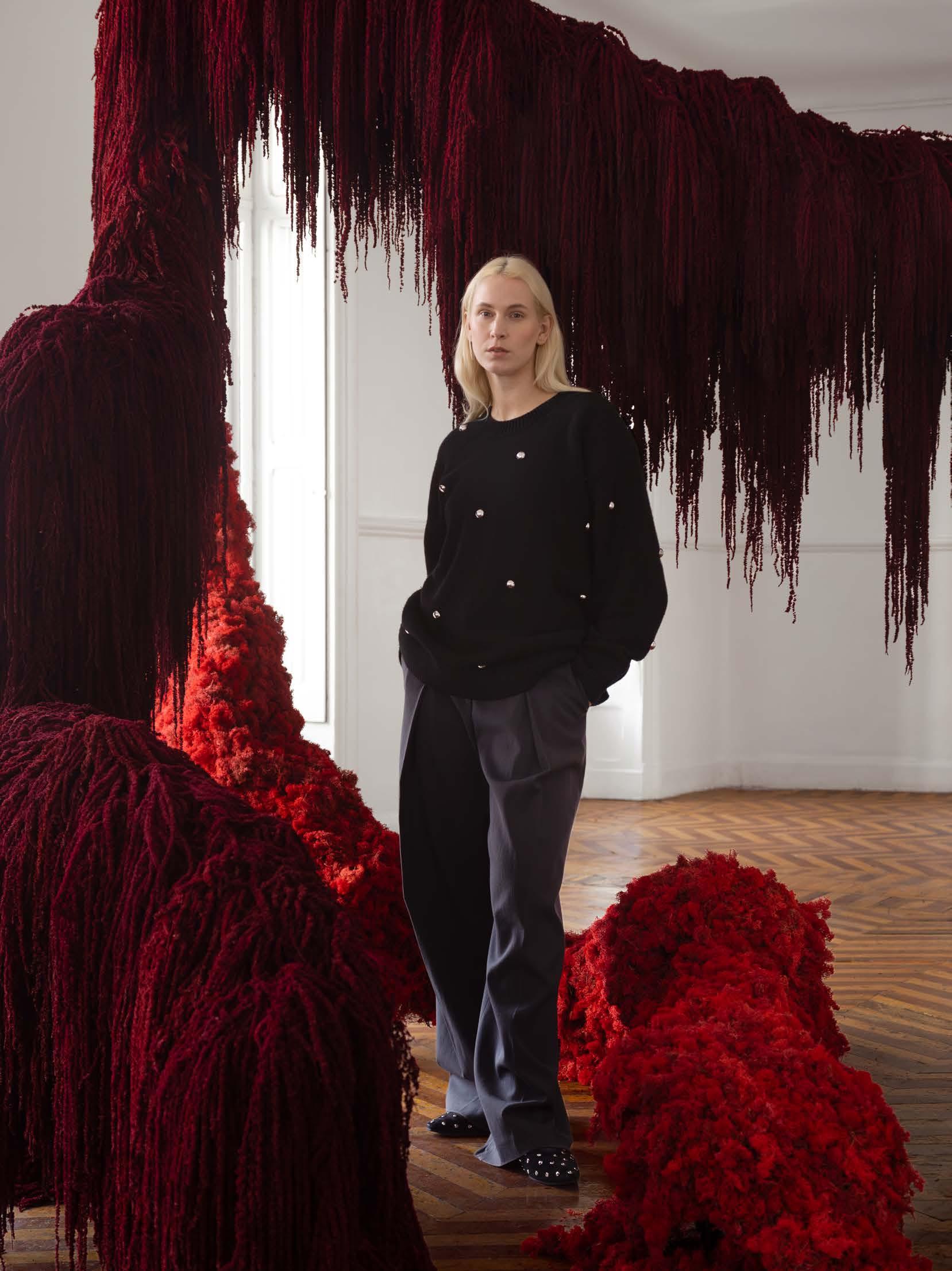
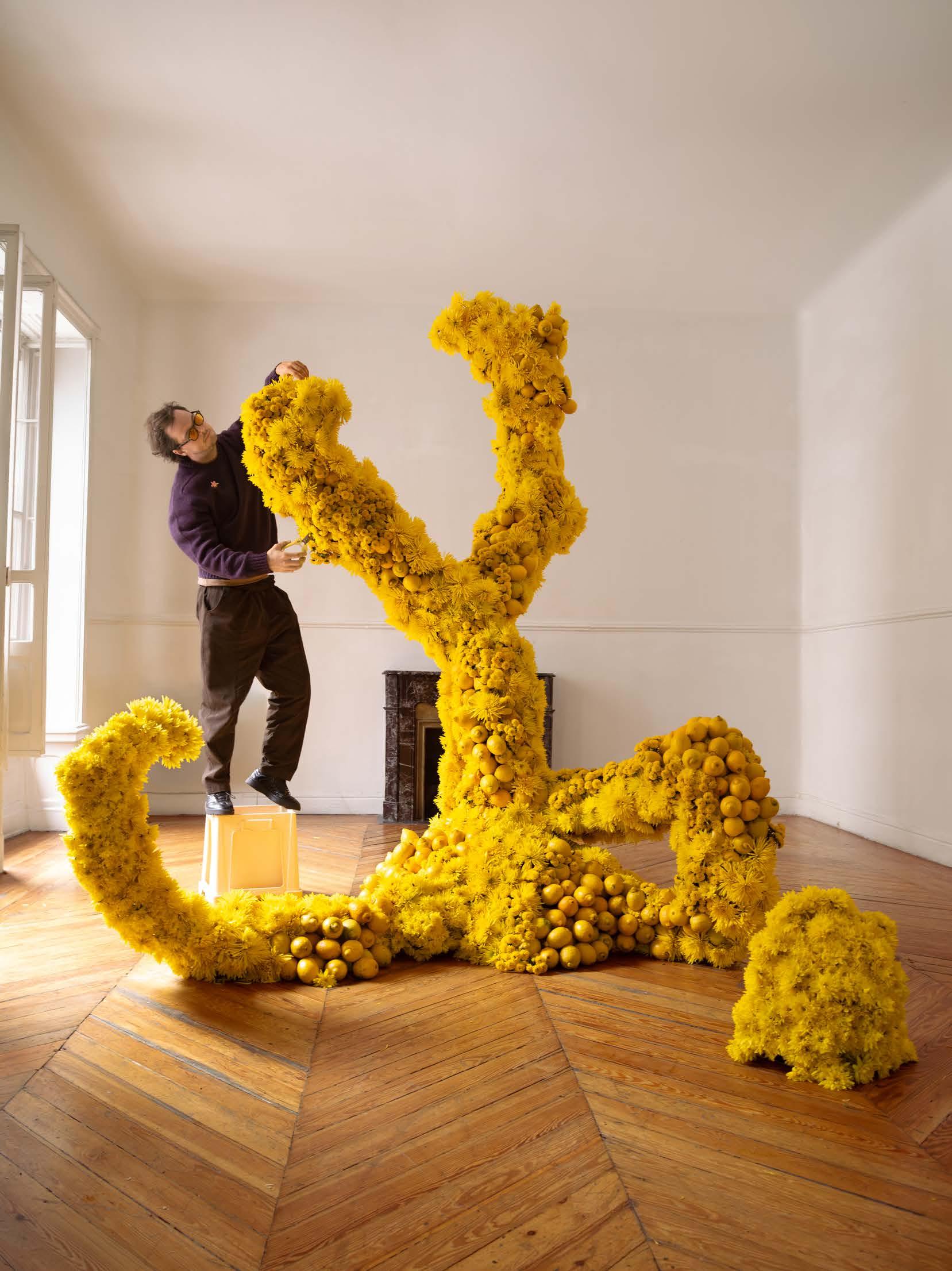
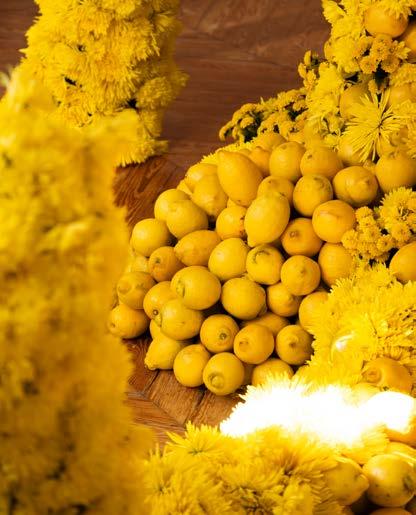
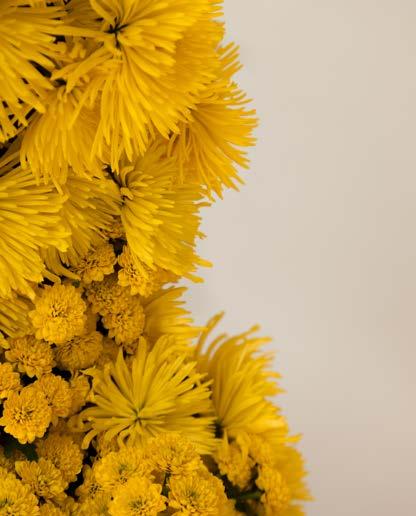
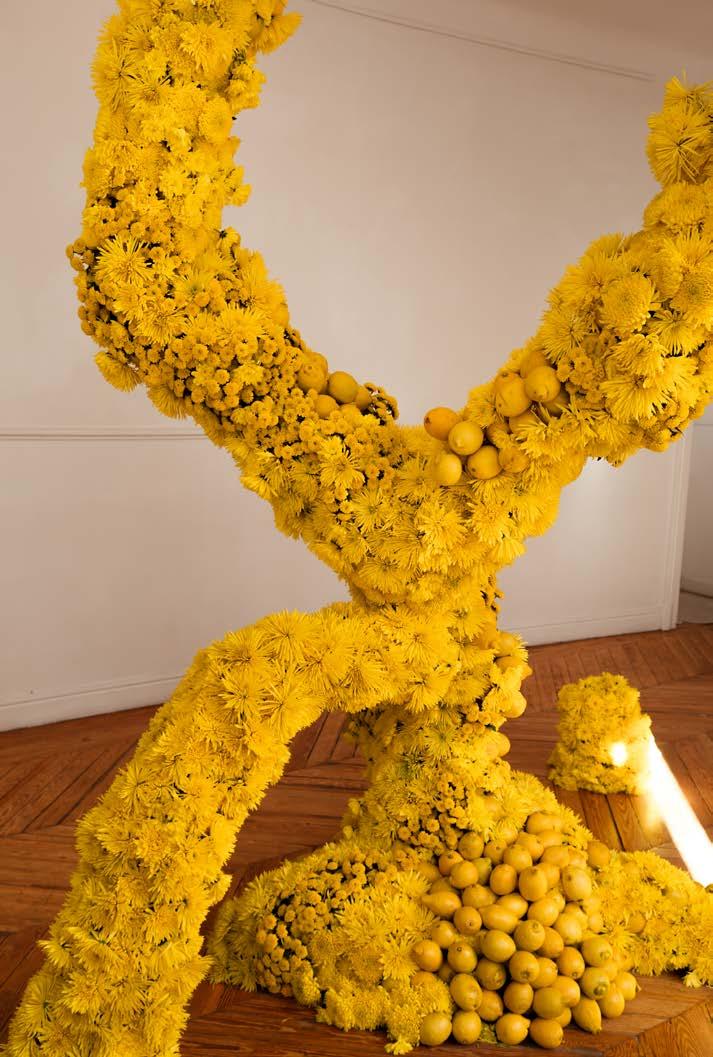
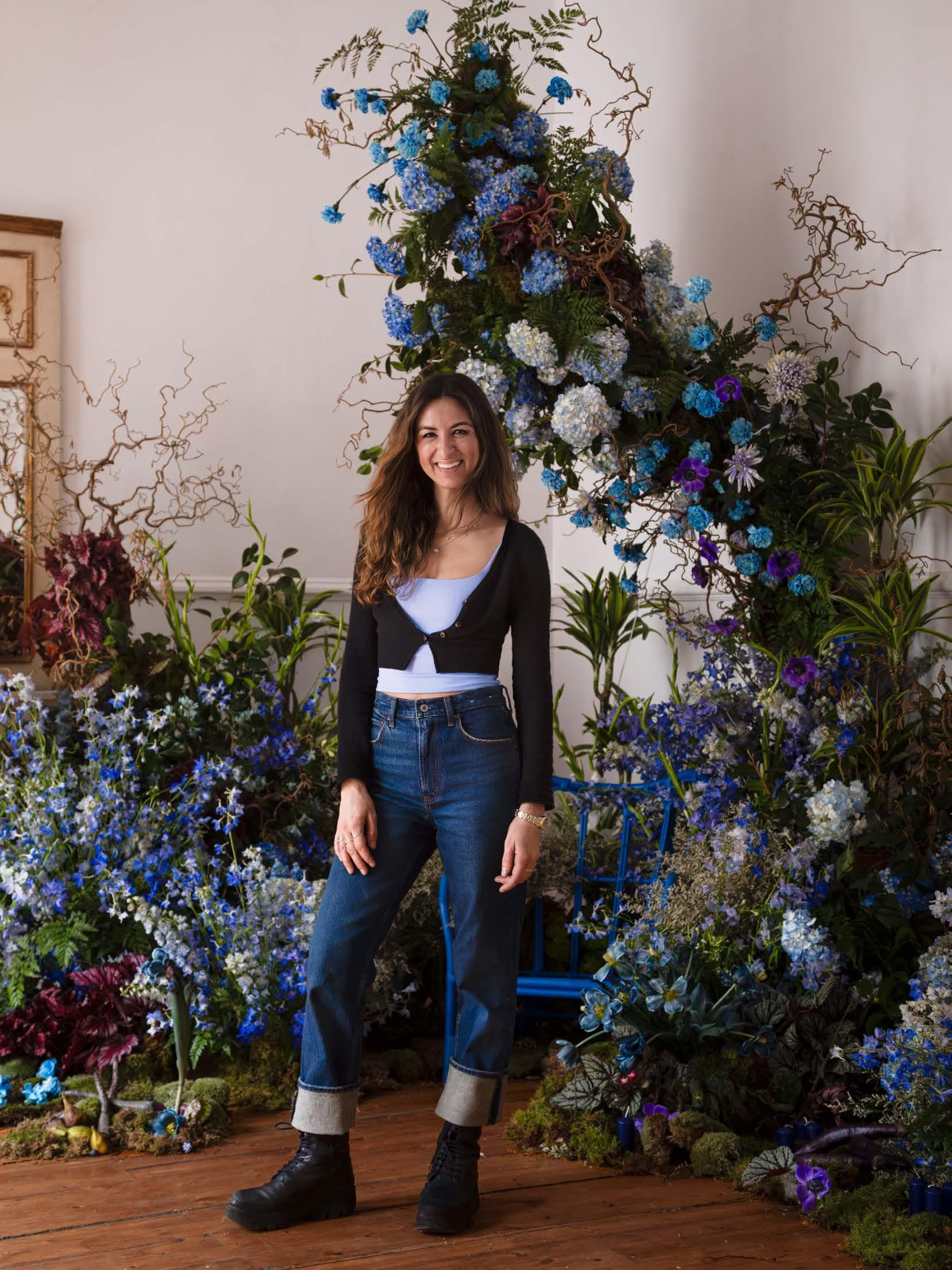
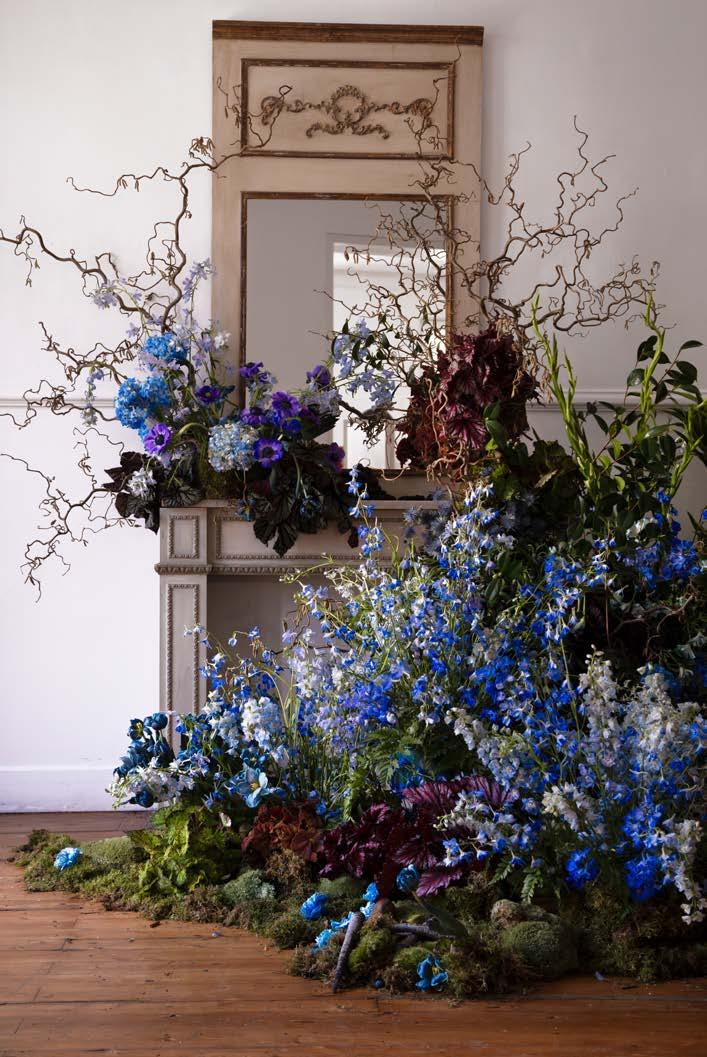
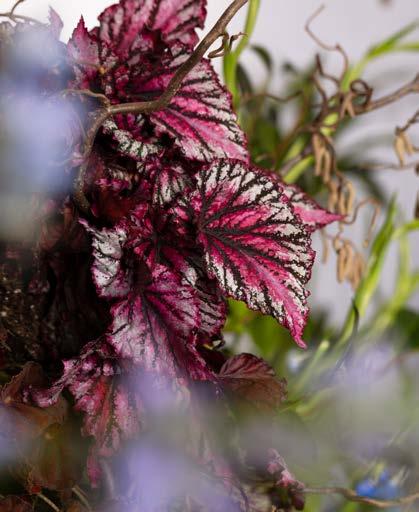
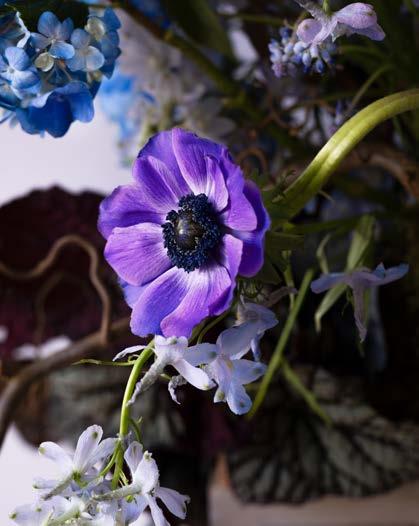
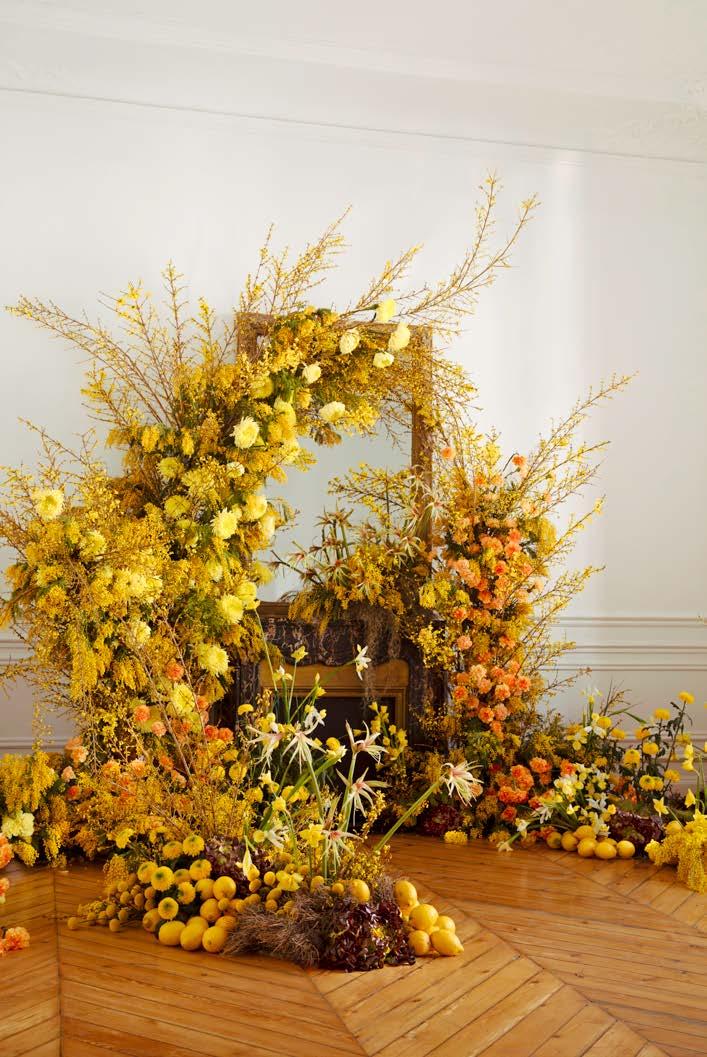
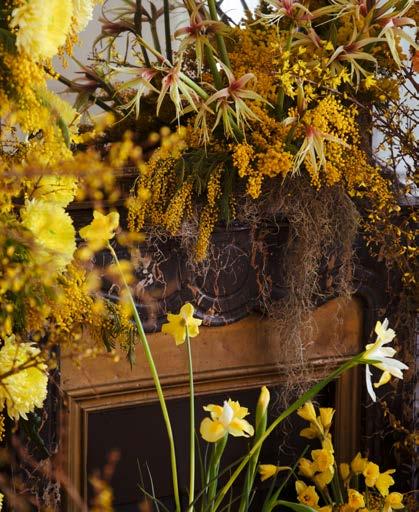
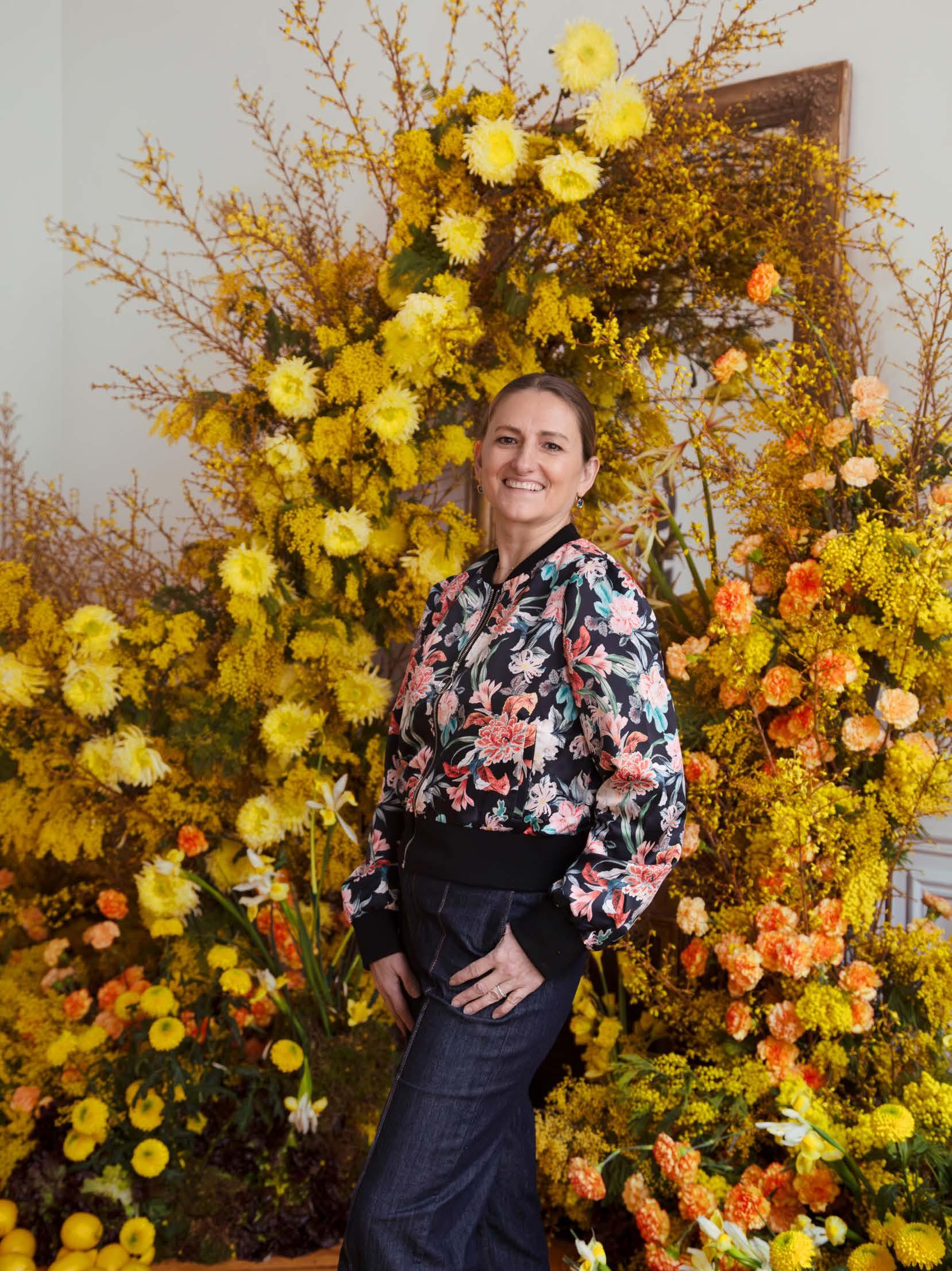
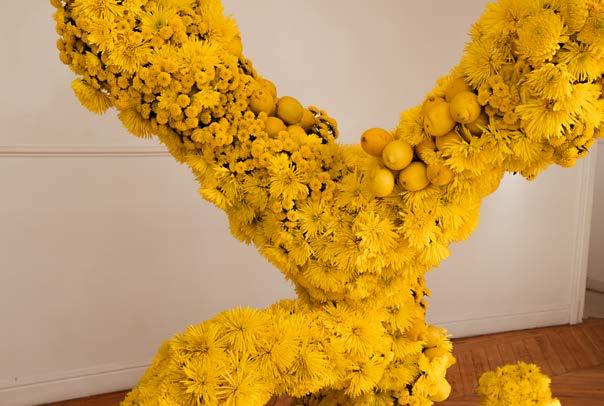
Where flowers tell stories, shape spaces, and push the boundaries of design. Floral design has long ceased to be merely an accompaniment to festive moments. It is becoming an independent creative discipline that bridges aesthetics, craftsmanship, emotion, and a sense of space. It is precisely this transformation that the international congress MADRID BLOOMS captures — an event that turns Madrid into the the world capital of floristry every year. At the Palacio de Santa Bárbara, it brings together leading florists, designers, students, and suppliers from around the world, opening the floor to new visual languages, sustainable approaches, and the sharing of expertise. We present four personalities who are shaping the face of contemporary floral design today.
Text: Julie Podlaha Zákostelecká | Photo: Loza Estudio | Art Direction: Manuel Godoy Pareja
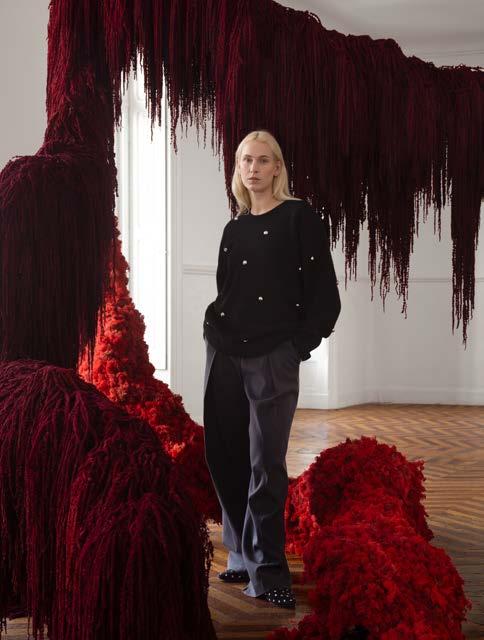
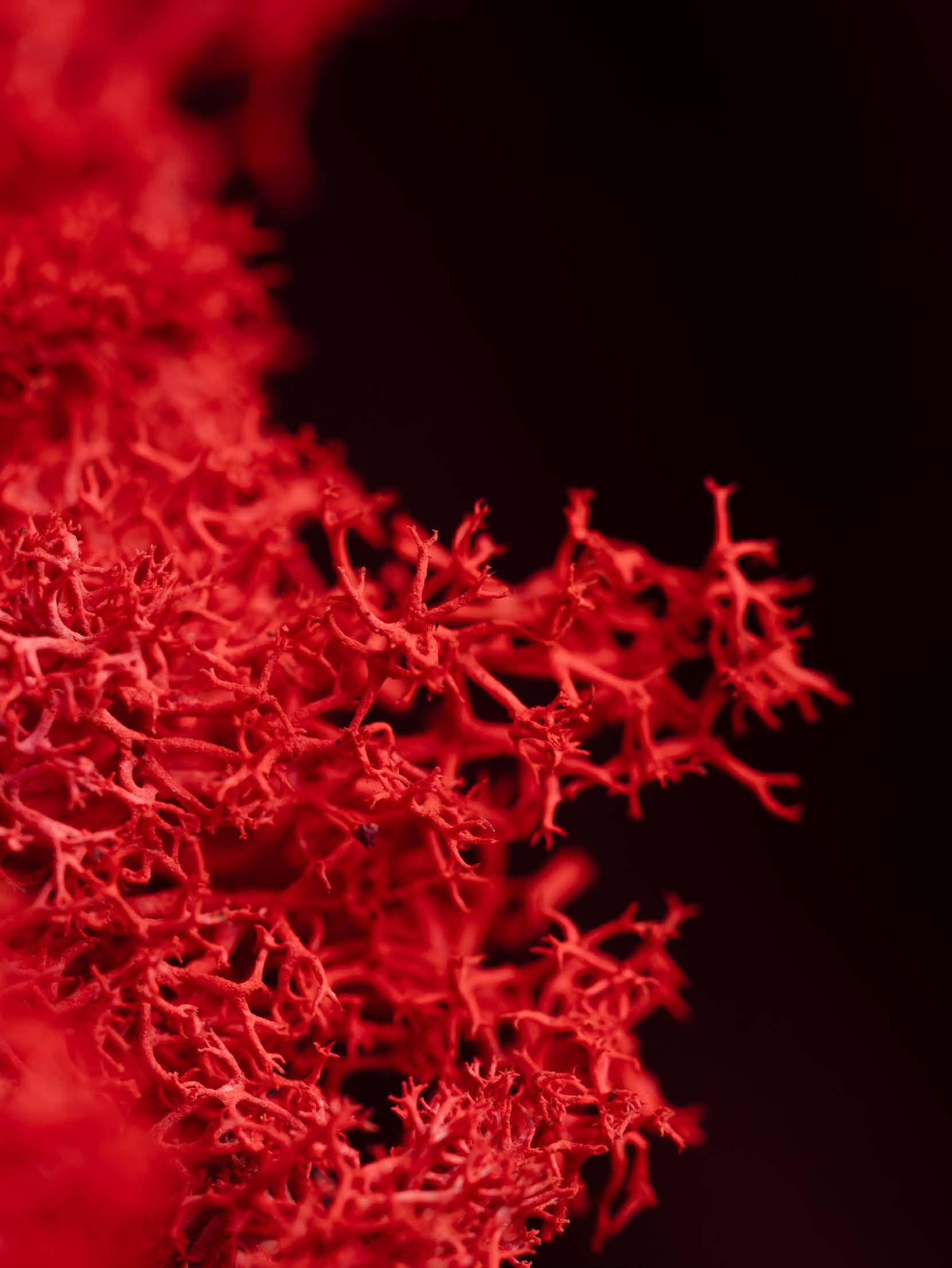
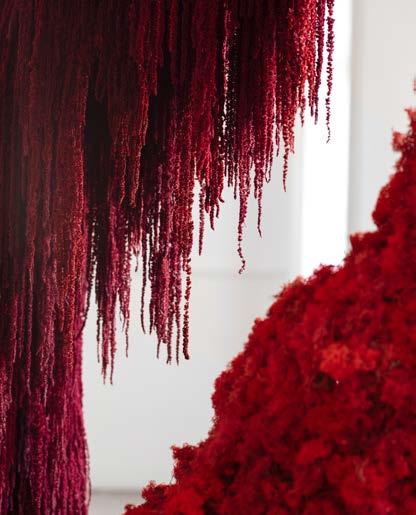
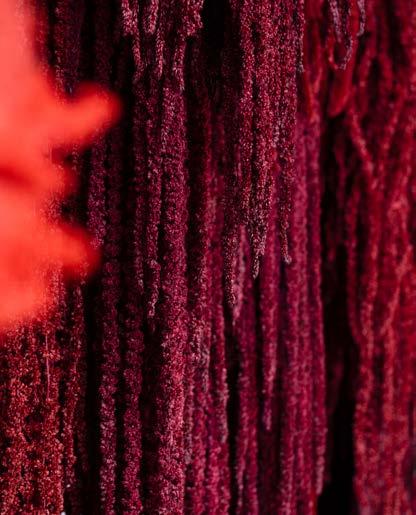
The work of Lilo Klinkenberg moves between floristry, sculpture, and architecture. She works with flowers, moss, and grasses same as a sculptor works with clay — modelling, layering, and building structures that often merge with the space they enter. Monochromatic compositions read as living objects: organic, yet precisely composed. Her signature rests on opulent minimalism. She finds inspiration where nature asserts itself unexpectedly within urban environments — on walls, façades, and within disrupted urban structures. Lilo deliberately subverts expectation, creating installations that invite you to seek their logic and surrender to a world where the rules of both nature and space are governed entirely by her own imagination.
Bryce Heyworth approaches floristry as an open field for contemporary visual practice. Flowers are his central point, around which he constructs a broader visual language connecting music, fashion, and contemporary art. In his compositions, he brings together flowers with natural forms, bold colour, and unexpected material contrasts that push his arrangements beyond the boundaries of classical floral decoration. His signature is built on the principle of refined maximalism — richness that never feels accidental, but precisely composed. September Studio creates installations that sit at the intersection of floristry, object-making, and decorative still life.
Flowers that refuse to stay grounded. The work of florist Paulina Nieliwocki feels as though it is growing before your eyes — freely, airily, without fixed edges. Her signature is built on movement, the layering of delicate blooms, and a relationship with space that makes her arrangements feel almost intangible. Empty space plays an equally important role in her work — room that allows individual elements to breathe while simultaneously building tension. She describes her own style as ethereal and grounds it in the principle of storytelling: every bouquet has its beginning, its middle, and its plot twist. In bridal floristry, she creates compositions that do not read as decoration, but as a living story held in the arms of the bride.
Victoria Clausen consciously resists the idea of a single recognisable signature. She conceives every wedding as an original whole, shaped by the stories of the bride and groom and the character of the venue. The ability to respond to the reality of a space — and to the unexpected — is something she considers one of the most essential parts of her work. She often seeks inspiration outside the flowers themselves — in the colour of a fabric, the movement of a material, or the proportions of a room. It is this sensitivity to detail that gives her work a particular naturalness: the decoration does not feel like an added layer, but like an organic part of the environment — threading through the space, appearing in unexpected places, and quietly, unmistakably, unifying the entire wedding day.
STEP BY STEP
There is one decision brides almost always make last. Not the venue. Not the flowers. The shoes. And yet — they are the ones doing most of the work. They carry you through the ceremony, the first dance, the long table dinner, and the moment someone pulls you back onto the dance floor at midnight. They are also, subtly, one of the most personal choices of the whole day.
In this issue, we look down. We explore brands that approach bridal footwear with genuine craft and a real point of view — Spanish ateliers working in velvet and suede, a British designer who turns the heel into a jewel, an American founder who built something beautiful out of a very bad year. Because your shoes are not an afterthought. They are part of the story.
SOMETHING BLUE
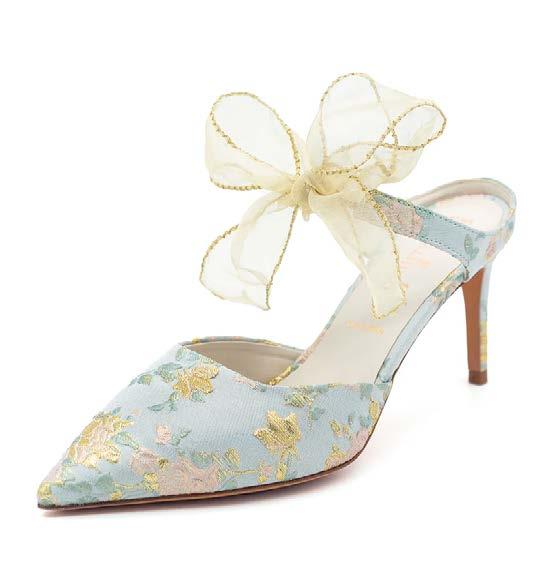
Who said bridal shoes have to be white? As something blue, I chose pale blue satin mules from Italian independent brand Poeve. Founded by father and son Gabriele and Sebastiano Conte in the Veneto region, the name is a quiet nod to their origins — an abbreviation of Poesie Veneziane, Venetian Poetry. Their production is distributed across Italy, where family-run workshops with generations of expertise bring together Italian design and true craftsmanship. Leathers are sourced from certified tanneries. Their collection spans both women’s and men’s footwear.
THESE BOOTS WERE MADE FOR SHOWING OFF
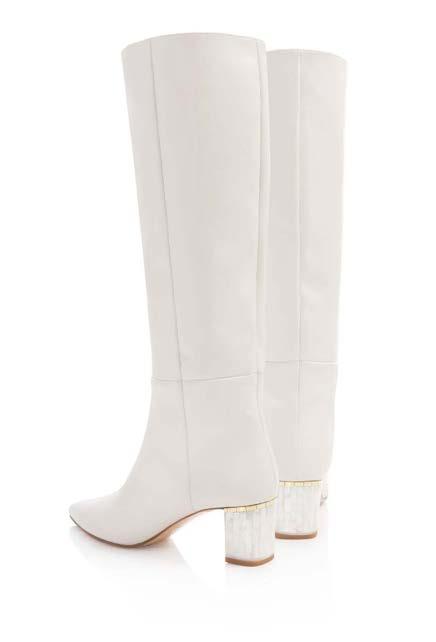
Freya Rose is a British brand defined by one signature detail — its heels. Hand-inlaid with fragments of mother-of-pearl using techniques borrowed from fine jewellery, they turn the most unexpected part of a shoe into a statement piece. Jewellery this beautiful deserves to be seen, which is why I would pair these boots with a short dress and let them speak for themselves.
fashion designer
Veronika Kostková
Veronika Kostková Wedding Atelier
Text: Veronika Kostková | Photo: brands archive
WALKING ON A BLOOMED MEADOW
RED VELVET
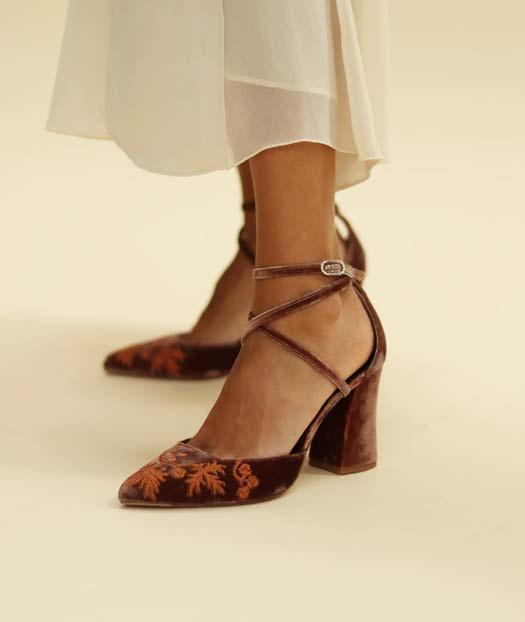
Autumn and winter weddings call for muted, earthy palettes — velvet, suede, warmth. Spanish brand Flor de Asoka provides exactly that. Each pair carries the heritage of traditional Spanish shoemaking, and with such a rich colour palette, these shoes become far more than a wedding-day accessory. They are a companion for everything that comes after. A significant plus: almost every style can be customised — heel height, heel type, finish — so the shoe you wear on your wedding day is truly yours.
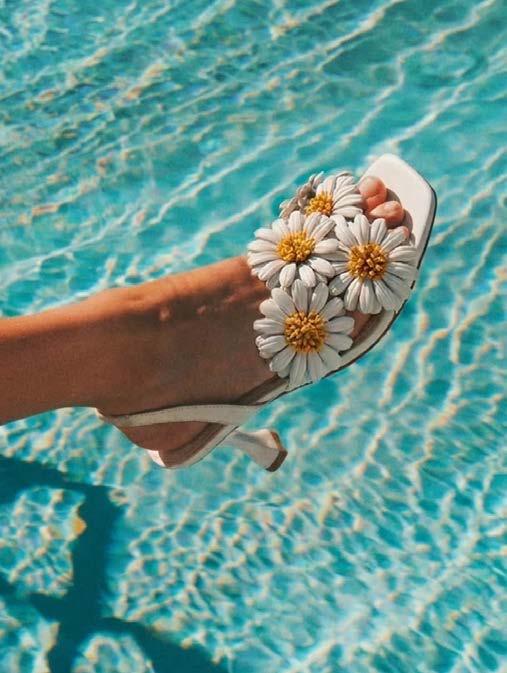
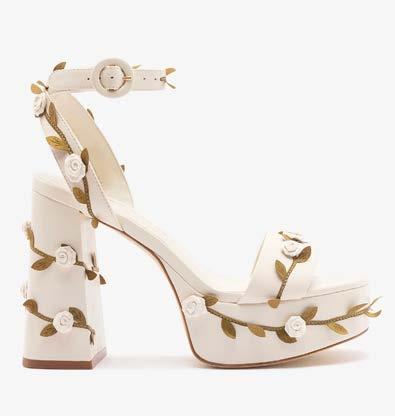
For the bride who wants something beyond the expected, American brand Larroudé offers both a distinctive 70s-inflected aesthetic and a story worth telling. Founder Marina Larroudé is a fashion industry veteran — years at Style.com, then Barneys New York — who, when the pandemic brought her career to a halt, turned the pause into a launch. Larroudé produces in Brazil and has collaborated with Oscar de la Renta, Altuzarra, and Tanner Fletcher. From the collection, I chose the daisy-embellished sandals with a mid heel — the kind you put on in the evening and forget to take off.
PIECE OF ART
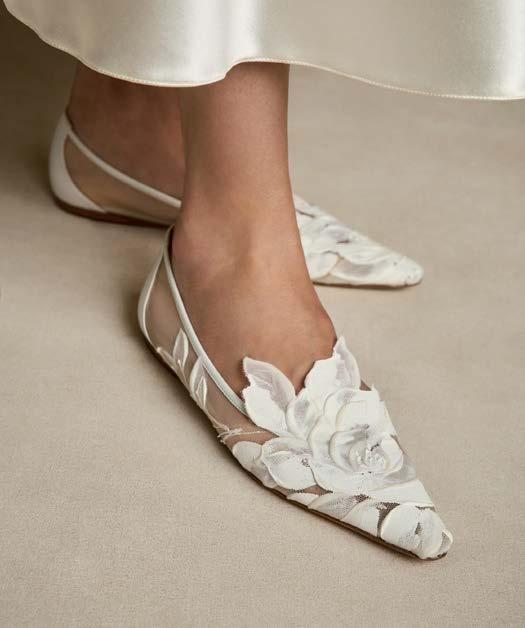
Danielle Frankel is already a name the bridal world knows by heart. The New York-based designer — known for weaving couture construction into bridal fashion — has gradually extended her vision to footwear. The shoes are conceived alongside her collections in the New York atelier and produced in Italian workshops. Her recent collaboration with Birkenstock divided opinion. The shoe styles she creates for her own gowns, however, leave little room for debate — they are, simply, works of art.
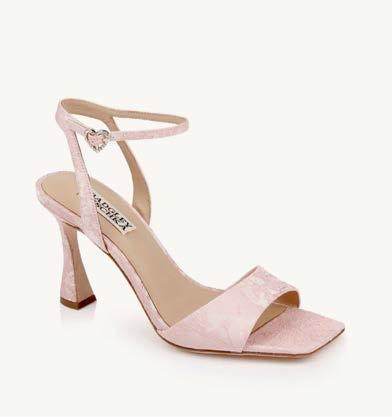
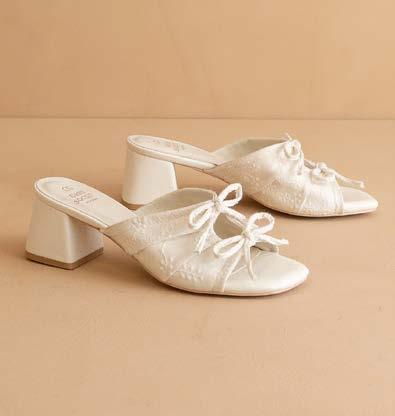
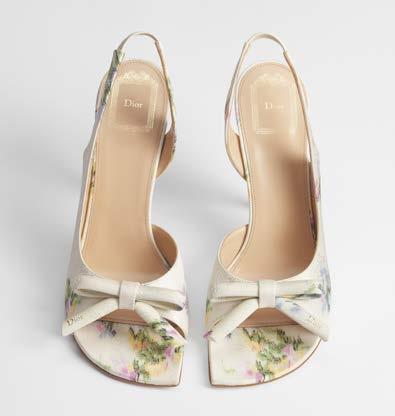
MODERN ROMANCE
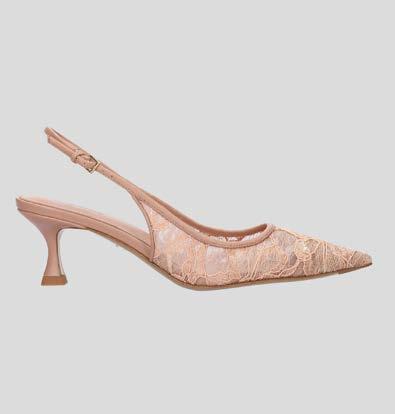
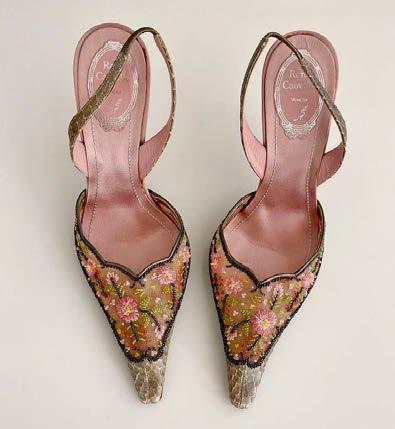
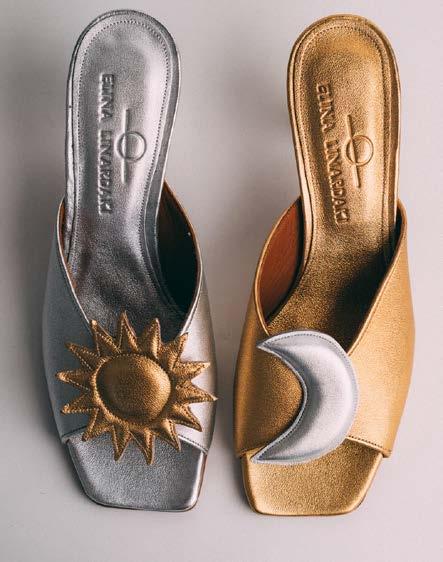
VINTAGE VIBES
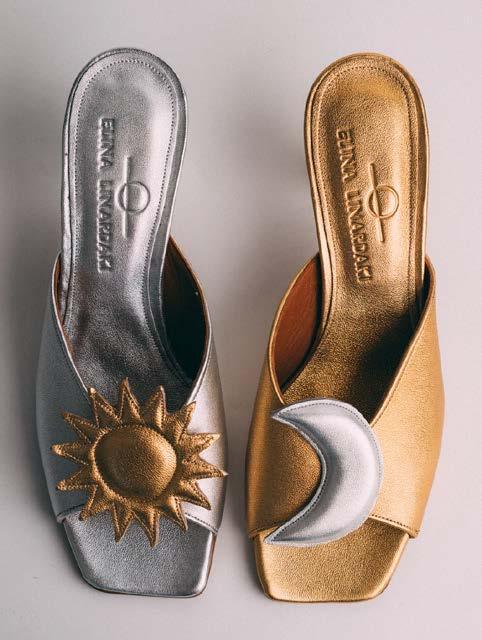
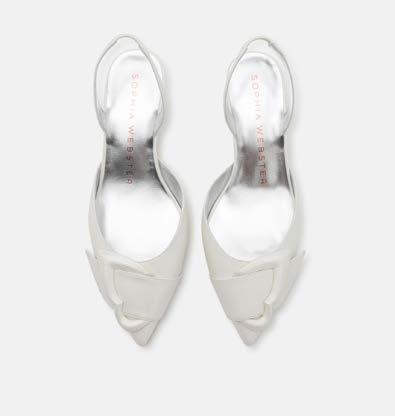
Modern romance: Badgley Mischka $235, Lola Cruz $245, Something Blue €193, Oasis Society $70, Dior €1050 Vintage vibes: Larroudé x Tanner Fletcher $450, René Caovilla, Vestiare €520, Elina Linardaki €295, Pons Quintana €280
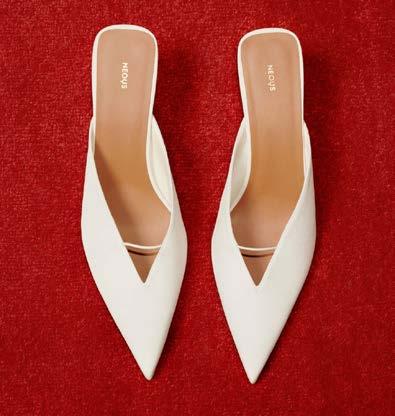
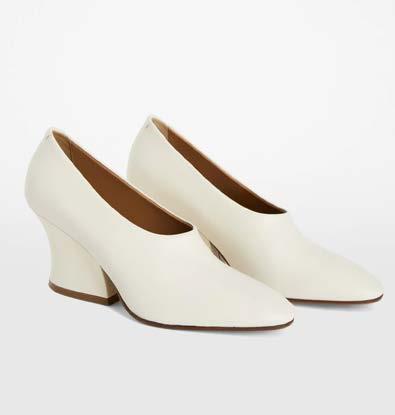
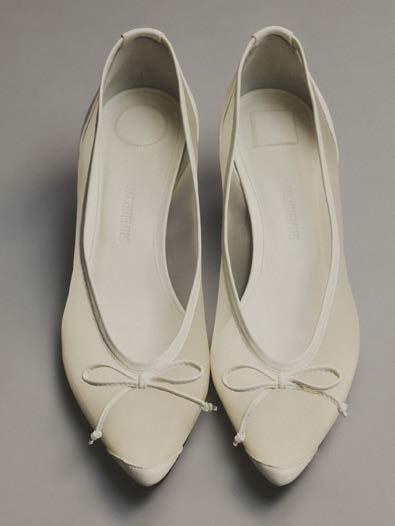
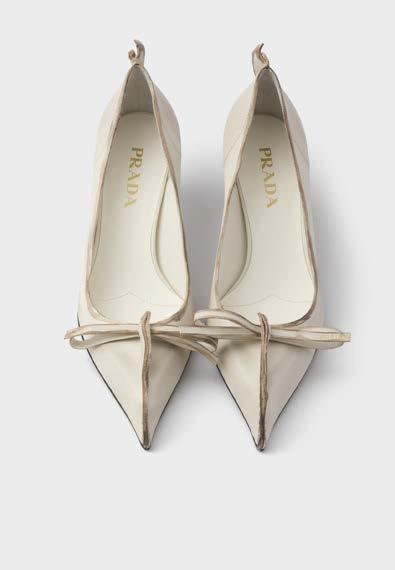
Contemporary Bride: Prada $1 590, Loewe €1 300 , Gyouree Kim €405, Camilla and Marc €790
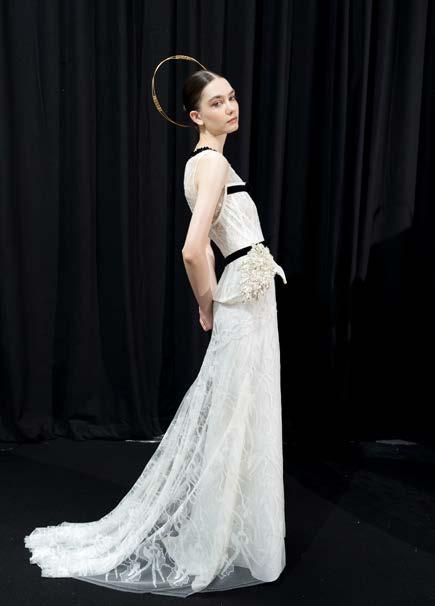
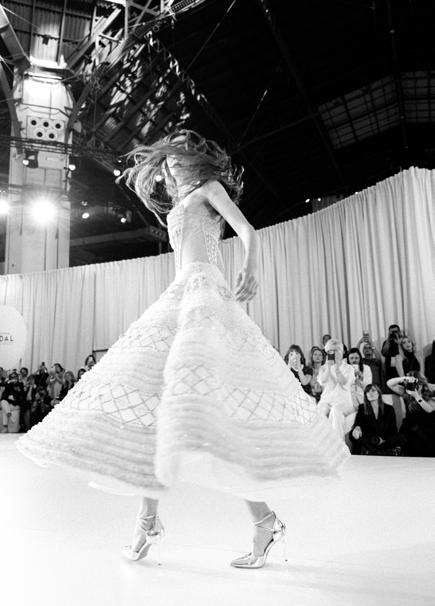
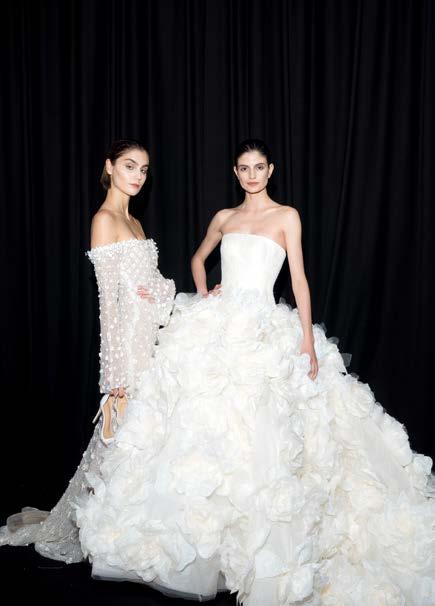
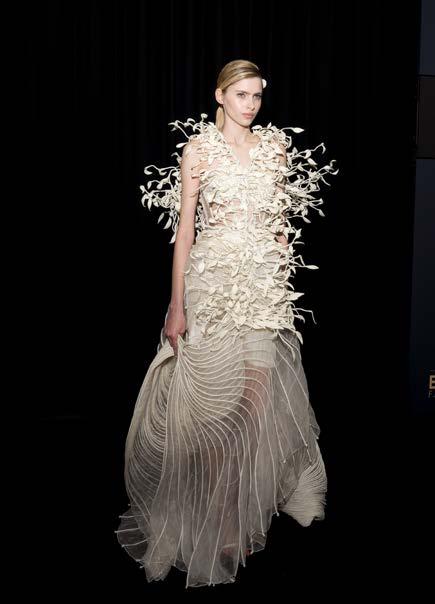
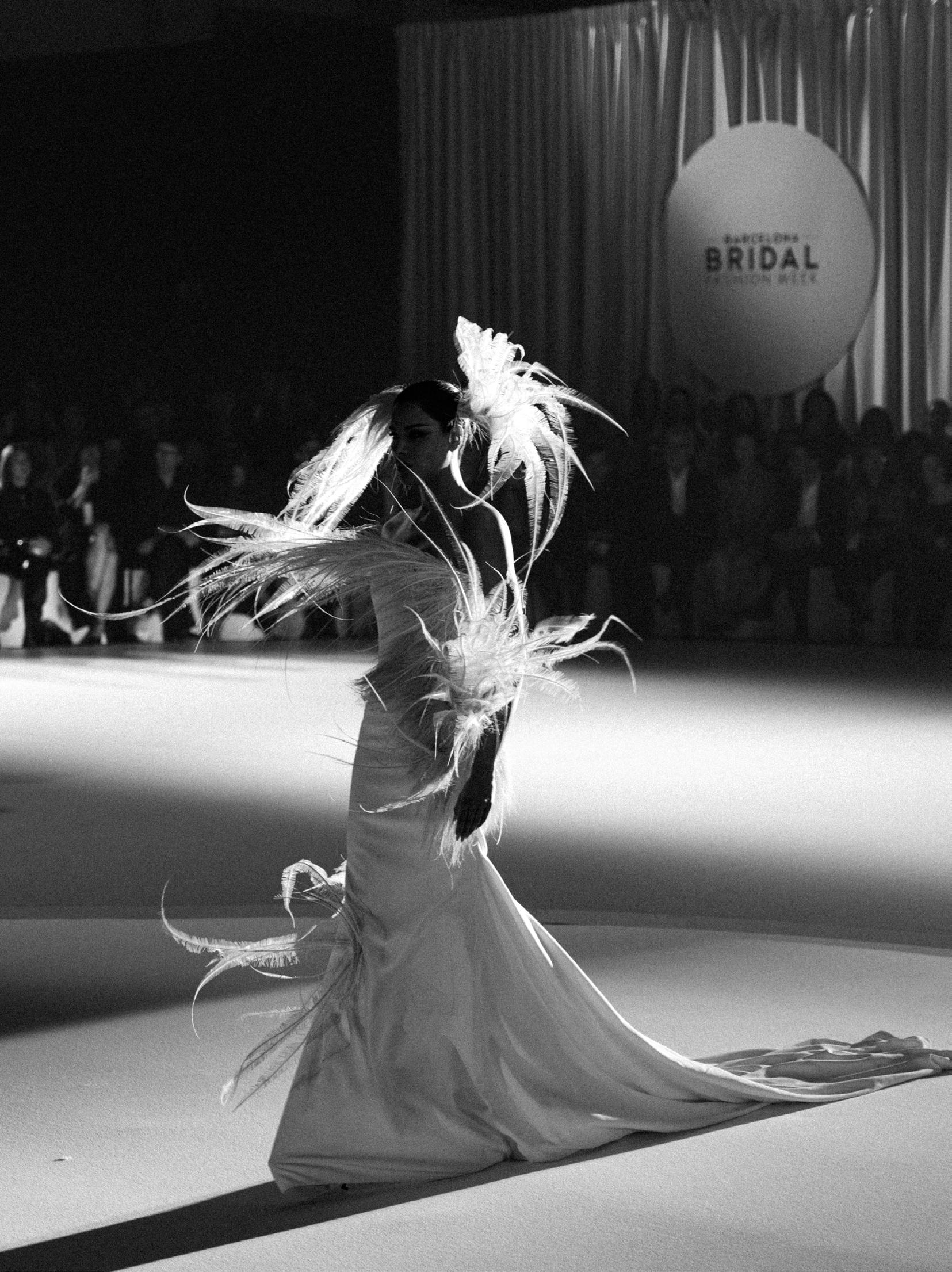
BARCELONA BRIDAL FASHION WEEK
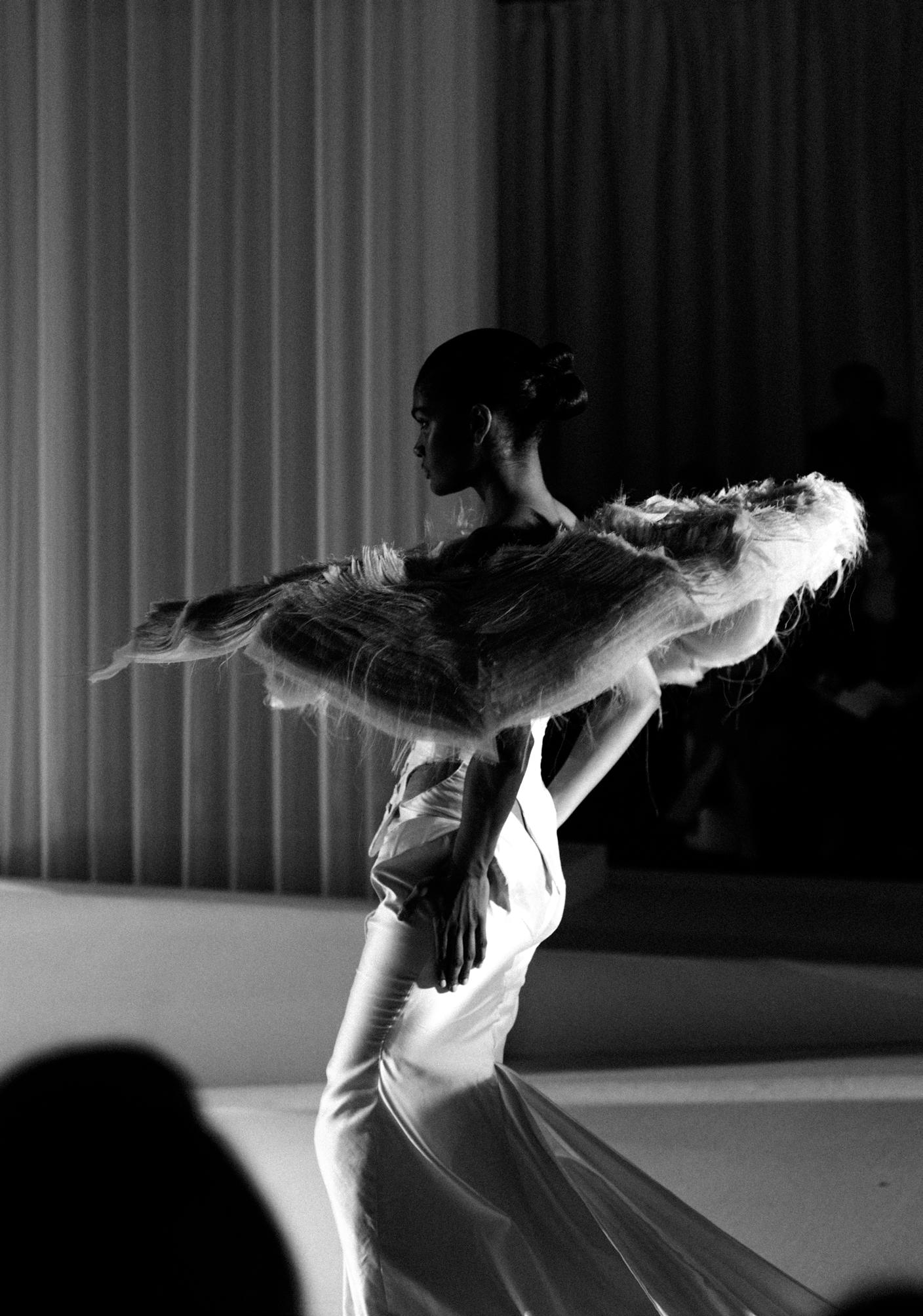
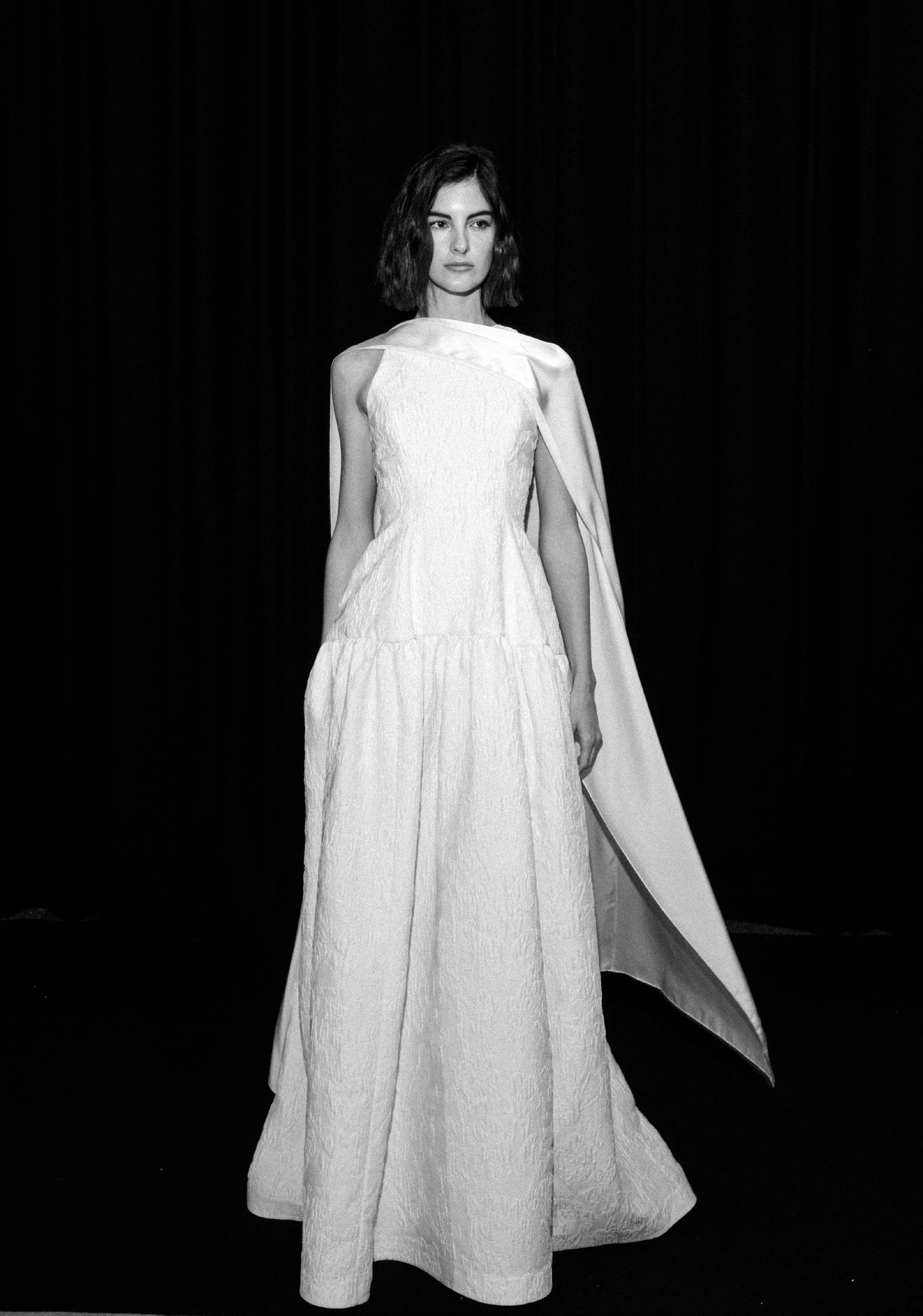
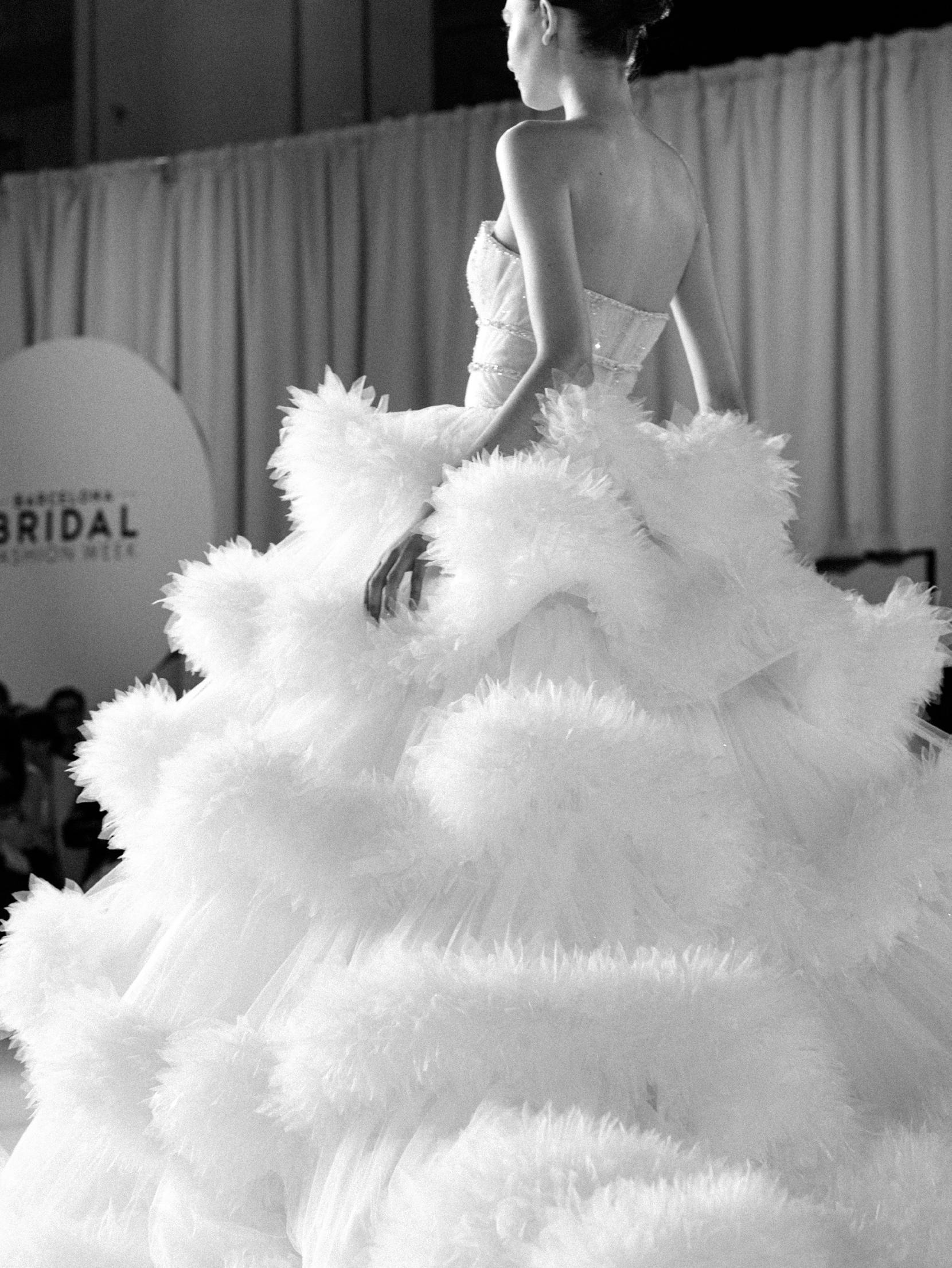
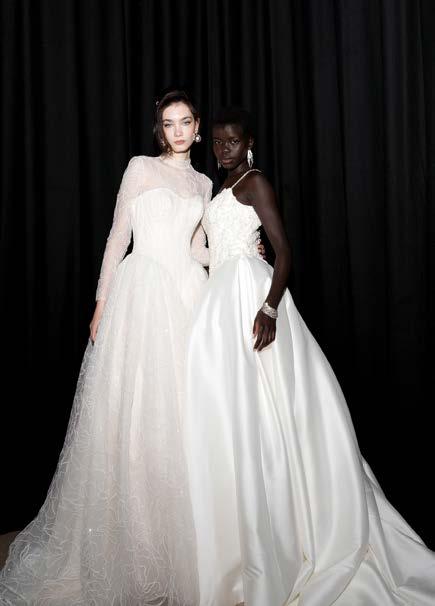
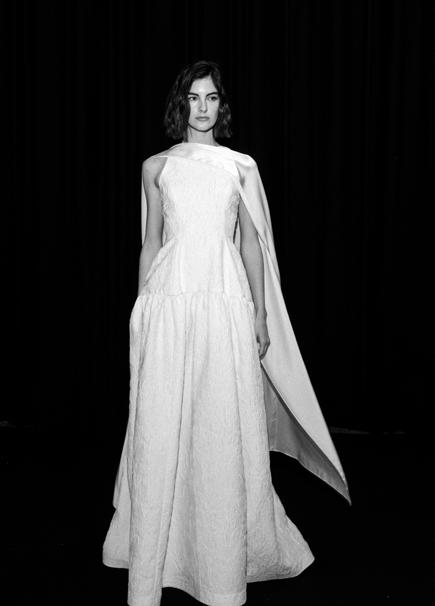
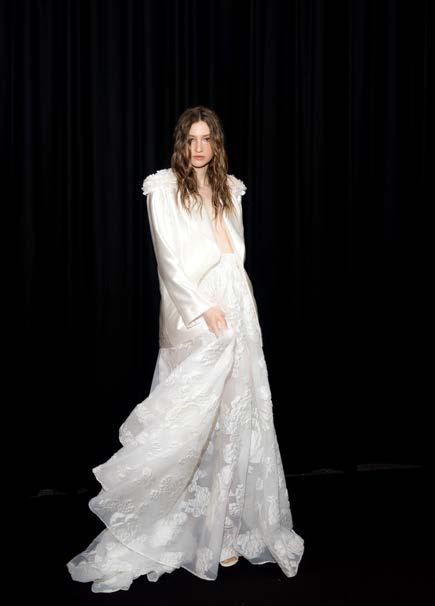
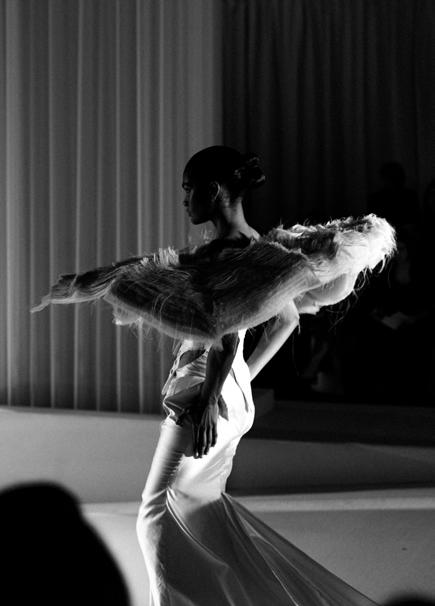
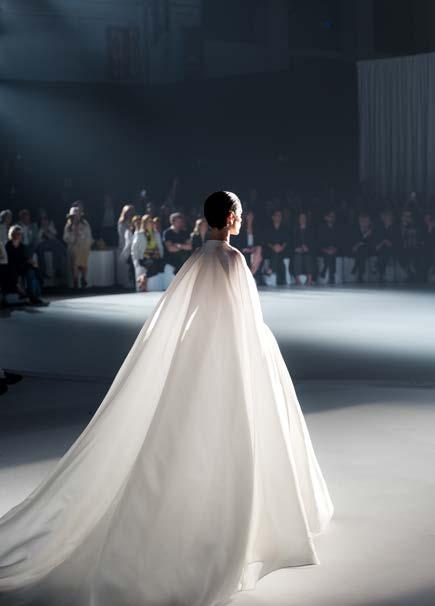
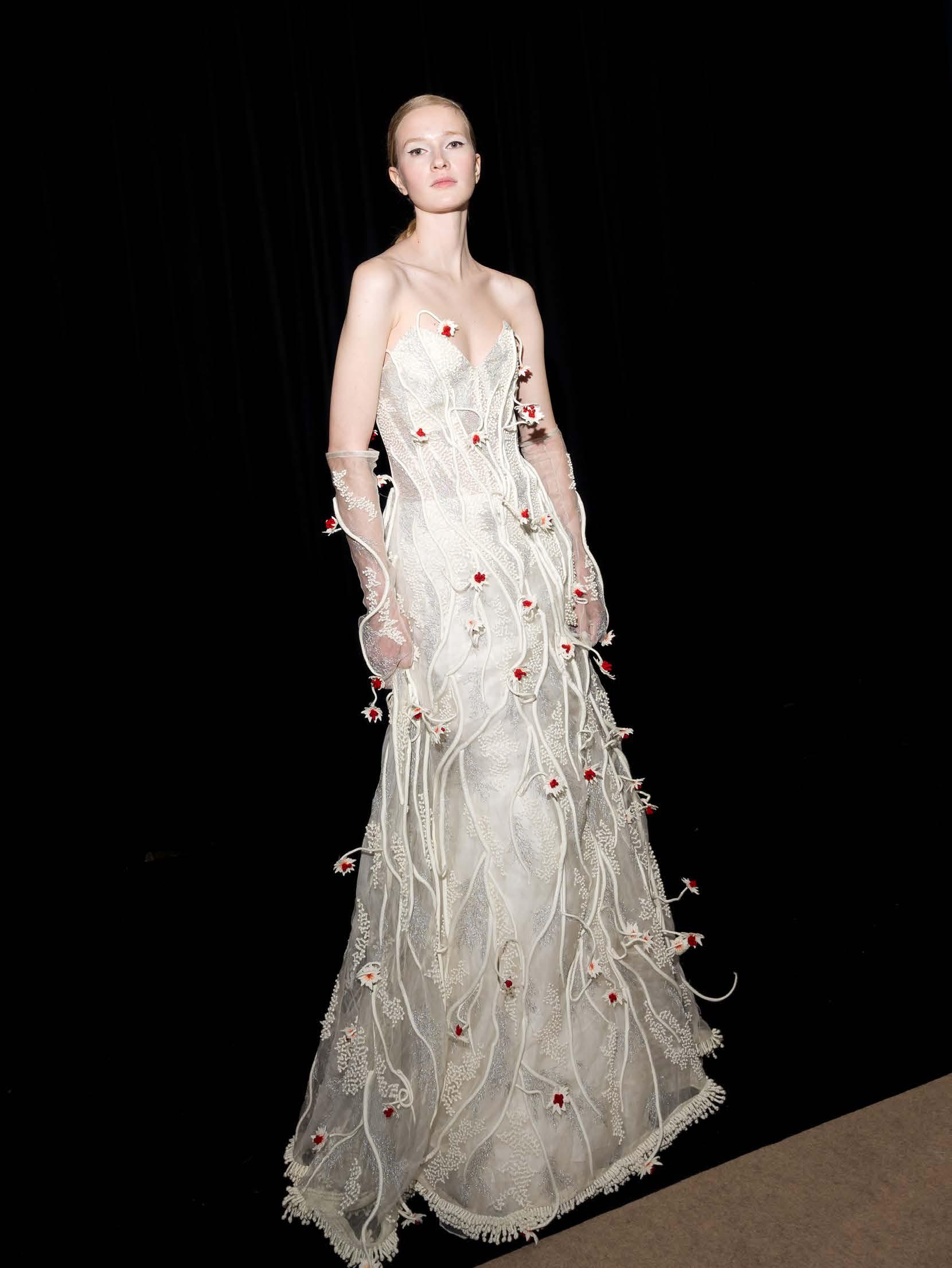
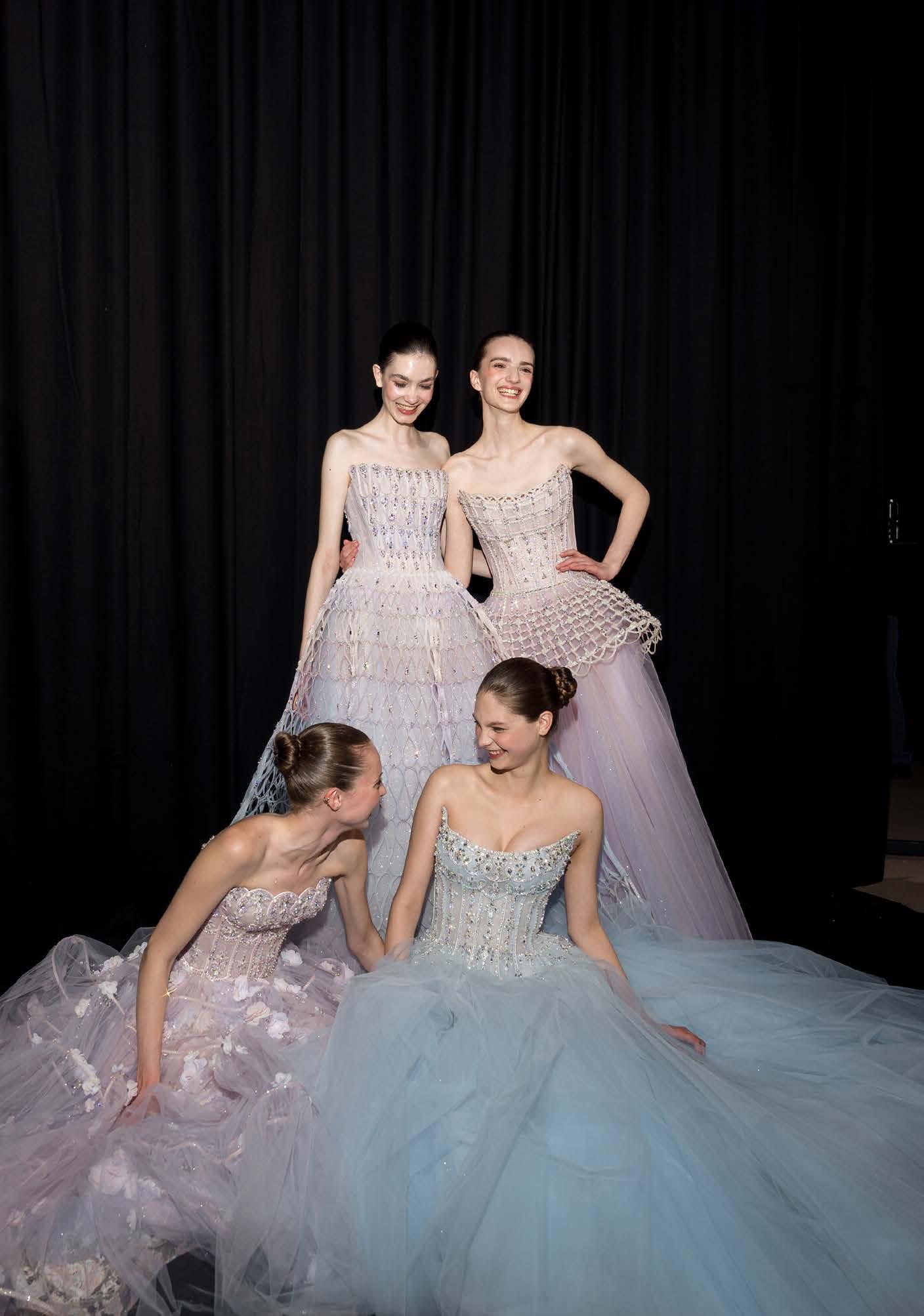
Where dreams take shape, collections define seasons, and the future of bridal design is written. Bridal fashion has long outgrown the role of a single dress for a single day. It has become a global creative conversation — one that merges couture craftsmanship, cultural identity, and a vision of what modern love looks like when it walks down a runway. Barcelona Bridal Fashion Week is where that conversation happens at its loudest. This April, the event welcomed nearly 23,500 visitors from 107 countries, making it the most international edition in its history — proof, if any were needed, that Barcelona remains the undisputed capital of the bridal industry. Among the photographers granted access to its runways was Erol Serbest, a destination wedding photographer whose work is defined by emotional depth, instinct, and the courage to find a frame no one else is looking for. We present his vision of the week that sets the tone for the 2027 bridal season.
ALLURE BRIDALS
ALL STÉPHANE ROLLAND
ALL HELENA BRIDE
CANDELAS Y FELIPA
CANDELAS Y FELIPA
MARCO & MARIA
THE ATELIER BY PROF
WANG FENG
Puf creatif
Love is like a fart. If you have to force it, it’s probably shit. pufcreatif.com
Anamé
Where your silhouette becomes the statement. aname.cz
Vnímej Feel nature. Feel beauty. studiovnimej.cz
Anna Tran
A dress like a flower caught in the wind. annatran.online
Veronika Karmazínová
Beauty begins where doubt ends. @tvorbou
Gabriel Loci
A unique complex where the past meets the present. gabrielloci.com
Jana Korcek
“I believe in creating images that remind you of the best moments in life.” janakorcek.com
Horse park
A magical place where rural tradition meets modern comfort. horse-park.cz
STALKER AGENCY
Movement that celebrates uniqueness. stalkeragency.com
František Jungvirt
Premium hand-blown glass. frantisekjungvirt.com
Holubica
Modern weddings and event design. holubica.sk
Madrid Blooms
A creative haven for innovation in floral design madridblooms.com
Publisher
MILE magazín cz s.r.o. Blatného 1808/10
616 00 Brno
ID no.: 079 12 200
Registration no.: Czech Ministry of Culture, E 23371
ISSN: 2571-1784
Published four times a year
This issue of Mile was published on June 15, 2026
Cover photo by Puf Creatif
Contact milemagazine.co info@milemag.co
Staff
Ilona Karásková | editor-in-chief
Petr Babák | art director
Natálie Machová | creative director and graphic design natalie@milemag.cz
Diana Rykrová| texts
Simona Vlčková | editing and texts
Antonín Mika | editing
Petra Horenská | advertising and partnership petra@milemag.cz
Collaborators
Jakub Cabalka | photo
Jana Korcek | photo
Julie Podlaha Zákostelecká | text
Printed in Czechia
H.R.G. spol. s. r. o.
International Distribution magazineheavendirect.com