Spring is finally here—a season of renewal, warmth, and fresh beginnings. As we welcome longer days and blooming landscapes, we are reminded of the beauty that each new season brings to our lives and our community.
In this issue of Simply Senior, we are proud to feature the Salvation Army on our cover, highlighting the incredible work they do to support individuals and families throughout our community. This special feature was made possible through the generous support of our local business community, whose commitment helps shine a light on organizations making a meaningful difference.
Additionally, we are excited to welcome Lynette Foor as our new financial column writer. Lynette will be sharing valuable insights and guidance to help you navigate your financial future with confidence.
As always, thank you for allowing us to be part of your lives. We hope this issue brings you inspiration, information, and a renewed appreciation for the people and organizations that make our community so special.
Until next time,
SENIORSS imply
Simply Seniors is published by and is the property of MCGRAW PUBLISHING
For information on how to submit story ideas, concerns, or information on how to advertise, please contact Marlanea McGraw
Without their continued commitment & support, this publication would not be possible.
AAA Insurance - 29
Becker & Scrivens Concrete Products - 27
Belson Asphalt - 29
Cambrian Senior Living & Memory Care - 37
Cottage Inn - 5
Dice Building Solutions LLc - 33
Drew's Place - 40
Eagle Funeral Homes - 25
El Cerrito Mexican Restaurant - 5
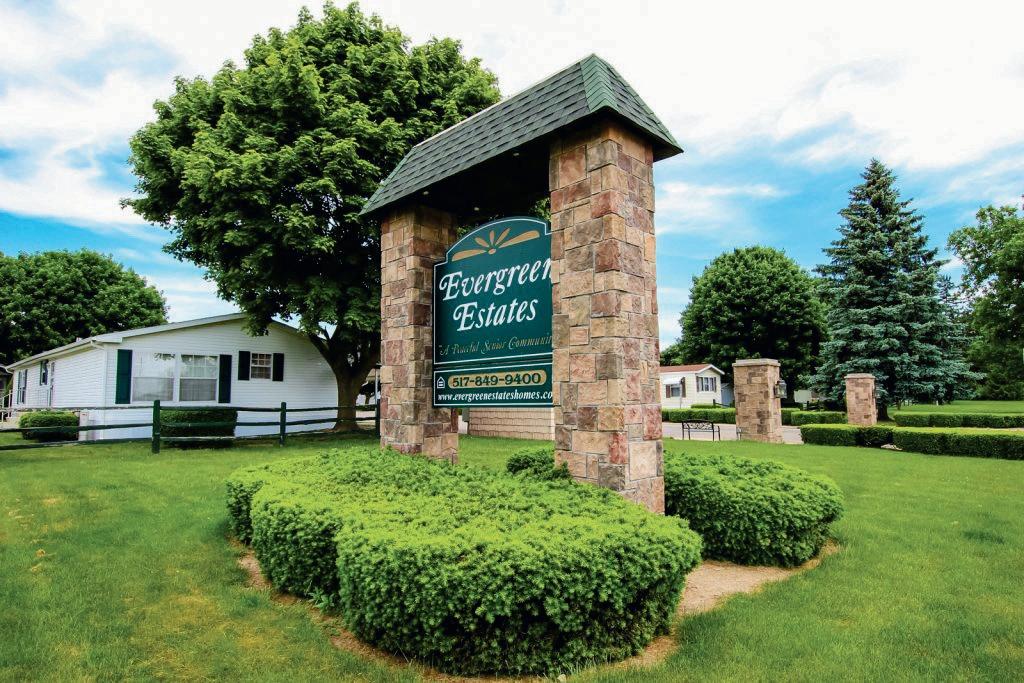
Evergreen Estates - 15
Fackler Monument - 20
Farm Bureau McGraw Agency - 35
Green Energy LP - 31
Griffiths Mechanical - 7
Handmade by Sherry - 27
Hospice of Hillsdale - 15
Hospice of Lenawee - 29
Kidz2Kidz - 25
Lenawee Medical Care Facility - 7
Lorrie Miller, Attorney at Law - 11
Martin’s Home Center -31
Perennial Park - 7
Professional Hearing Services - 39
Rickets Rickets & Assoc - 23
Ryan & Bradshaw - 29
Southern Marsh Real Estate - 31
State Farm Insurance, Jason Adcock - 5
Stillwell Ford Service - 2
The Sauk - 37
Top Notch Tree Service - 27
COVER FEATURE MAJOR LAURA LUNNAM Salvation Army
by Sarah Gray
Major Laura Lunnam grew up at the Salvation Army—literally. She tells the story of how when she was only a few weeks old her mother brought her and her two older sisters to the Salvation Army branch in her hometown when they had nowhere else to go.
“They gave her a hand up,” she says, smiling. “It was my safe place. I was ringing bells when I was five-years-old.”
The care and welcome they all received through the Salvation Army molded and shaped Laura and when she was 19, she decided this was where she wanted to be for the rest of her life.
For the past 16 years, Laura has worked for the and risen up through the ranks. She and her husband, Captain Curtis Lunnam, have run the Hillsdale and Lenawee County Salvation Army branches since 2022, her first time back in Michigan since she graduated seminary.
“I’m home now.” And Laura wants to continue to do for others what was given to her and her family. “I know that without the Salvation Army we would not have the things we had. They gave my mother wings to fly.”
Laura brings that mentality to the work she does while co-leading both locations of the Salvation Army. She wants to help others. And the services offered are many.
Most people know the Salvation Army by two things—thrift stores and bell ringers. While those two services are crucial to the financial stability of the organization, that is far from all the Salvation Army offers to all members of the community, or as Laura phrases it “beyond the bells.”
A large part of the assistance Salvation Army provides to the community is through its food programs.
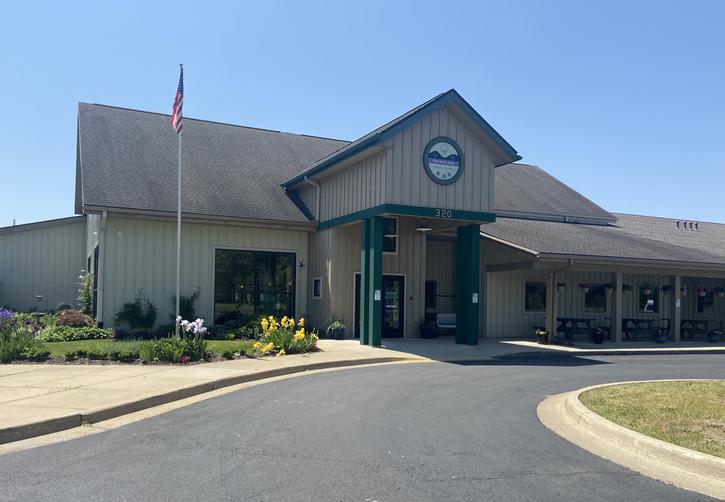
Tuesday through Friday from 11:30 a.m. to 1 p.m., the Salvation Army in Hillsdale offers lunches to anyone and everyone in the community, serving between 100-150 people a day. The meals are considered to-go meals but everyone is welcome to stay and enjoy their home-cooked meal at Hillsdale’s Life 360 Center, located at 160 E. Bacon Road.
A large part of the assistance Salvation Army provides to the community is through its food programs.
Hillsdale’s Salvation Army also has a food pantry, assisted by their oldest volunteer Leota, who recently turned 90. There is also a drive through food distribution the first Tuesday of the month beginning at 8:30 a.m. Fresh produce is also available.
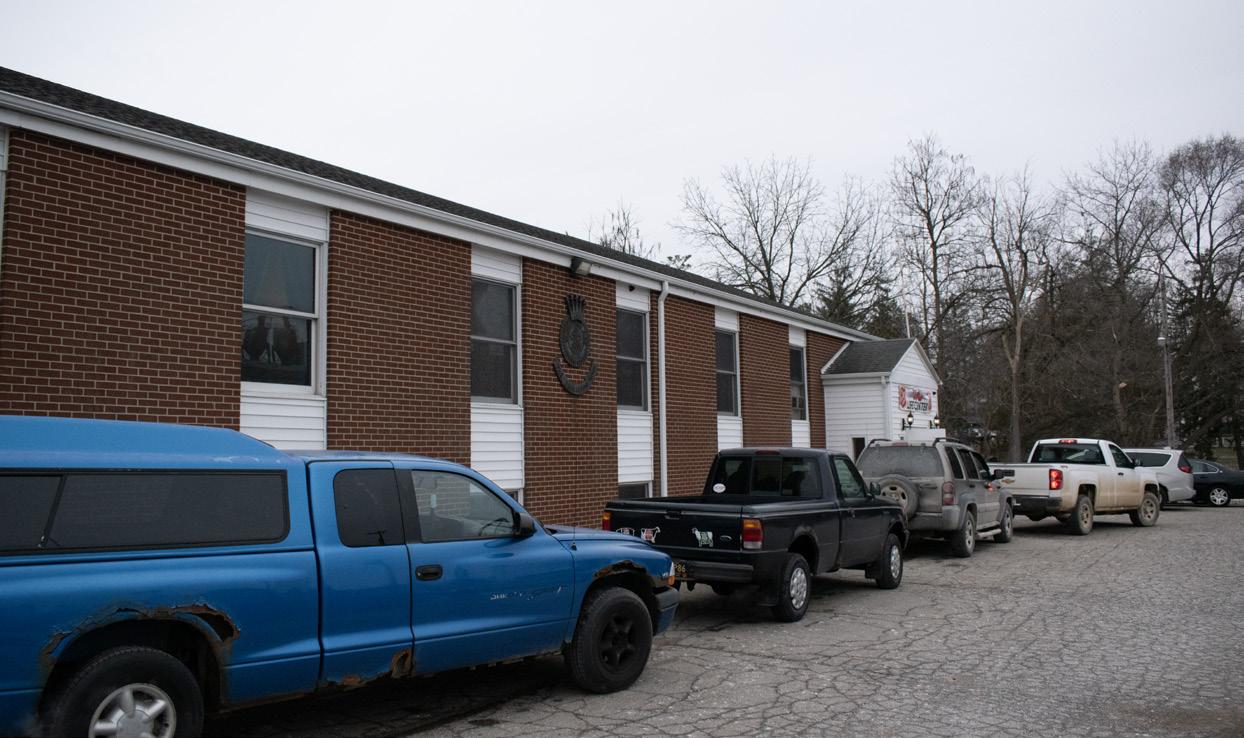
Lenawee County offers the same fresh food distribution as well as a regular food pantry at their branch, located at 217 W. Church St. in Adrian, twice a month.
One of the oldest Salvation Army’s in the region, Hillsdale’s branch is celebrating its 140th year of serving the community. Although Hillsdale no longer has church services, members of the Salvation Army Church are welcome to attend services at the Salvation Army in Adrian. Laura is an ordained minister in the Salvation Army both leads those services and offers pastoral care to all who come into either branch.
“Hope is my favorite word,” she says. “I committed my life to helping people feel safe and giving people a reason to look forward to the next day.”
Laura explains senior citizens are more and more in need of services from the Salvation Army because their resources aren’t stretching as far as they once did.
“People are on fixed incomes and in our current economy they are not able to afford everything they need,” she says.
Community members who are struggling with utility bills can call Hillsdale Salvation Army and speak to Pam Cobb, who works hard to give every client the assistance they need.
“My biggest goal is to help folks,” Pam says.
Anyone who lives in the county can reach out if they are in need of help. Laura says that some people think that because the branches are located in Hillsdale and Adrian, that only people who live in those towns can receive assistance. But the Salvation Army services are county-wide.
“If there is a need, call,” Laura says.
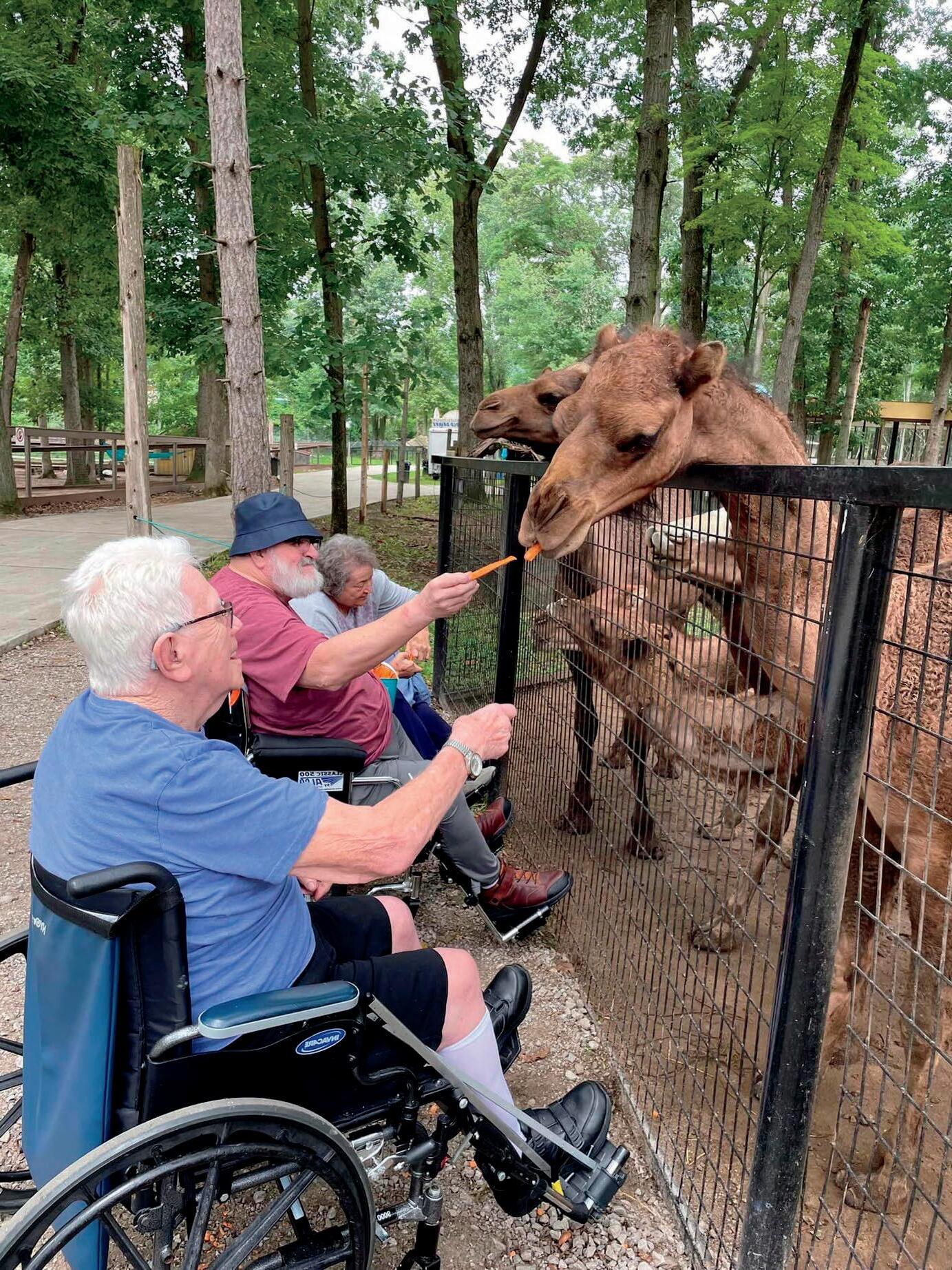
Salvation Army also has women’s groups in both Hillsdale and Lenawee counties that offer an opportunity for women to come together and socialize. They talk, make crafts, listen to speakers and go on trips—including Senior Camp, a week-long outdoor camp for senior citizens.
In Lenawee County, the group meets the second and fourth Tuesdays at 6 p.m. In Hillsdale they meet on Wednesday mornings at 11 a.m. Immediately following, is a Bible study led by Dorothy.
All Salvation Army branches are in need of donations and volunteers. Those interested in giving their time can call their local branch.
“We have volunteers that help out once a month or once a week,” Laura says.
The community can help the Salvation Army in many ways. Monetary donations are always welcome. They can be general, to help keep the lights on in the building, or specific to help those looking for utility assistance. Volunteers are needed at both locations and the thrift stores. Or community members can simply shop or donate to the thrift stores.
“All of the funding goes directly back to the Salvation Army,” Laura says.
Seniors are a huge percentage of the Salvation Army both as volunteers and as clients. Laura says she sees both sides of helping seniors in the community - giving purpose and giving dignity.
“By working together we can make a positive impact for the seniors in our community,” she adds.
Anyone who needs assistance in the surrounding counties can call their local Salvation Army. The phone number for Hillsdale County is (517) 437-4240, Lenawee County’s is (517) 265-2038, Jackson County’s is (517) 782-7185, and Branch County’s is (517) 279-0966.
THIS MESSAGE BROUGHT TO YOU BY THESE COMMUNITY MINDED BUSINESSES:
GOLD SPONSORS: Green Energy LP
SILVER SPONSORS:
Jason Adcock - State Farm Insurance
Becker & Scrivens Concrete Products
Christie Plemmons Realty
Eagle Funeral Homes
Professional Hearing
BRONZE SPONSORS:
El Cerrito Mexican Restaurant
CPS Supply
Hillsdale Terminal
Death and Taxes
Lorrie A.S. Miller Attorney at Law
Lorrie Miller Law, PLC
517.278.2505
lmiller@HillsdaleLaw.com
What’s the saying: “Two things you can’t avoid are death and taxes”?
Well, I know that the death part is true, as we are all part of the human race and not one of us is perfect—but praise God for Jesus and His sacrifice for us! And as for taxes, yes, those must be paid—but you can often reduce property and estate taxes in Michigan. Let me share how.
There are numerous kinds of real property taxes: the twice-a-year property tax in Michigan; a transfer tax at transfer; a capital gains tax upon sale; and potentially a federal estate tax that includes property value. Let’s discuss each:
1. Property Taxes (semi-annual)
The semi-annual real property tax is due twice a year—once for winter (February) and once for summer (September). The tax is based on the value of the property. The state determines the value of the property and taxes 50% of it. This value is called the State Equalized Value (SEV) and usually appears on the tax statement.
When you first purchase the property, the SEV is usually half of the purchase price and sets the basis for your property tax. Michigan limits how much your taxes can increase each year to the rate of inflation, not to exceed 5%.
So while your property tax can go up if the property value increases, it cannot rise more than 5% annually. Over time, the
taxable value of the property is usually less than the SEV because market increases often exceed 5%.
For example, if you purchased your property in 1990 for $50,000 and it is now worth $300,000, the value likely increased more than 5% annually—but your taxable value did not. You may now be paying taxes on only $100,000 of value. This results in a significantly lower tax bill compared to someone purchasing the property today at $300,000.
When the property is transferred at death, the new owner may be able to retain your taxable value (in this example, $100,000) rather than resetting to the full market value ($300,000).
Under Michigan law (MCL 211.27a), this can apply if the new owner is:
• Your trust (with you or a qualified person as beneficiary)
• Yourself (from your trust)
• Your spouse, parent, child, grandchild, sibling, stepchild, in-laws, or step-grandchild
Additionally, the property must remain residential (not commercial). Qualified agricultural land may also transfer without “uncapping” taxable value.
2. Transfer Tax
Michigan has both a state and county transfer tax. This tax is based on the sale price listed on the deed and is due at the time of transfer.
• There are several exemptions, including:
• Property value under $100
• Transfers between spouses
• Transfers to a child, stepchild, grandchild, or step-grandchild (state tax exemption only)
3. Capital Gains Tax
Capital gains tax is often unavoidable when selling real property but can sometimes be mitigated.
At its simplest, this tax applies to profit made on the sale of property (unless certain exemptions apply). For example, if a rental property is purchased for $100,000 and sold for $150,000, the $50,000 profit is subject to capital gains tax (with possible deductions).
However, inheritance can significantly reduce or eliminate this tax.
When someone inherits property, they receive it at its value on the date of death. This is often higher than the original purchase price, which reduces taxable gain.
Example:
• Mom buys property in 2000 for $50,000
• At her death in 2026, it is worth $200,000
• Her son Joe inherits it at $200,000
If Joe sells it immediately for $200,000, there is no capital gain—and no capital gains tax.
By contrast, if Mom had sold it just before her death for $200,000, her estate would owe tax on the $150,000 gain.
4. Federal Estate Tax
The federal estate tax applies if a person’s total assets exceed a certain threshold at death. As of now, that amount is $15 million per person—meaning most individuals will not owe this tax.
However, this threshold can change, so planning is
One way to reduce estate tax exposure is through lifetime gifting. In 2026:
• You (and your spouse) can gift $19,000 per recipient annually without filing a gift tax return.
• Gifts can be made to any individual.
• Payments made directly to educational institutions (tuition) or medical providers do not count toward this limit
If a gift exceeds $19,000, it must be reported and will count toward your total estate value.
By making annual gifts within the allowed limit, you can gradually reduce your estate’s total value and potential tax liability. These gifts can include cash, real estate, business interests, or personal property.
Taxes may be inevitable—but as you can see, they can often be mitigated, and money can be saved. That said, these rules can be complex and overwhelming.
I highly recommend meeting with an estate planning attorney who understands these laws and can guide you in minimizing taxes for your specific situation.
And as for the inevitability of death—I highly recommend Jesus. He offers life after death.
Spinning across the floor in her ‘70s
By: Sarah Gray
Georgia Saemann is proof that there is never a time in life to stop trying new things. And her smile is evidence that there is no age limit for pure joy.
At 72, she decided to start taking piano lessons. It is something she enjoys and continues today but just two and half years ago, she discovered something else that truly makes her happy—ballroom dancing.
“It is my favorite thing in my whole life,” she says. “It is the thing I look forward to more than anything.”
Now 77, Georgia travels twice a week to Ann Arbor to take lessons from her instructor and dancing partner Robert Kubis at his studio Come Dancing.
What began as a 45-minute lesson has now grown into two, two-hour sessions a week. She even got herself a car to help her through the many phases of Michigan weather so she’ll never miss a class.
“I go to lessons come hell or high water,” she says.
Georgia has been athletic for many
years. Although she was told she was uncoordinated as a child, her late husband taught her to water ski and downhill ski and they spent hours on the slopes and on the water. After he passed, Georgia says she didn’t enjoy downhill skiing as much because she would always follow her husband on the slopes. Her son, Eric, suggested she try ballroom dancing and she soon learned her ease at following worked to her advantage.
“Now, I’m so hooked,” she says. “It’s the most romantic experience of my life.”
While she has taken group lessons and enjoyed them, Georgia concentrates her time with private dance lessons with Robert, who is a professional ballroom dancer and instructor. She started with the waltz, the fox trot and the tango—the most traditional ballroom dance styles.
“The first time I danced with him was the first time I really felt like I was dancing.”
Not long after she started lessons she was encouraged to participate in the Senior Olympics ballroom dancing or dancesport as it is also called.
“[I was told] if you want to get better you should compete.” And so she did.
Georgia said she was so nervous even though there were several couples on the floor at a time during the competition. Her seasoned partner knew how to help calm her nerves as they approached the dance floor.
“He said ‘take a breath,’” she says, “I look at Robert, [during competitions] I don’t look at anything else.”
The pair competed in Pro-Am in the tango, foxtrot and bachata and did very well, winning several golds. She has competed in the Senior Olympics three times, in Chicago and, most recently, she went to Las Vegas where she and Robert received first place in the Viennese Waltz.
This style of waltz has quickly become Georgia’s favorite style of dance.
“I just love it. It is the most fun in the world.”
Outside of her lessons, Georgia can and does practice some of her dancing at home. She knows she’s not
perfect, she knows she makes mistakes, but that does not deter her.
“I am stubborn and keep trying,” she says.
She offers that advice and more to anyone who is wanting to try something new later in life. “Don’t be afraid. You don’t have to be good at it. Don’t worry.”
It is clear that when it comes to dancing Georgia has found her joy in life—along with her dog Denali. She credits this new found love to not being afraid and always wanting to learn and experience more.
“I love learning. Learning is everything,” she says. “Life is so much more interesting when you’re learning.”
A Tale of Two Traitors
By Laura Loveberry Elementary School Assembly
Author/Speaker, Inspirational
Speaker
Women’s Retreats/ Conferences, Caricature Artist
We love genuine friendships, but sometimes relationships involve plowing through hard issues—like betrayal. Ouch. If a friend betrays, it’s a gut punch. “Friend hurt” or “church hurt” hits hard. Nobody’s perfect.
“We all have sinned and fall short of the glory of God,” Romans 3:23 says. We’re all capable of letting others down. When pressure hits, we can slip into making hurtful statements against a friend. Our mouths can spew words that raise eyebrows and shatter friendships.
Here’s the key. When caught in our sin, do we turn back to our victim with a repentant heart for restoration or do we grit our teeth, stubbornly walking away? It’s pride versus humility. Choose wisely.
Both Judas and Peter betrayed Jesus.
At the time of the Last Supper, grave injustice brewed against Jesus. When Christ spoke with the disciples, Judas chose not to confess his devious plans to double-cross Jesus. Judas doubled down on defiance instead of repentance. He dashed away. Later, Judas betrayed Jesus with a kiss on his cheek—a fake friendship kiss! Yikes!
Did Judas dare to look into Jesus’ eyes as he greeted HIm with a bogus expression of loyalty? The Bible doesn’t say whether their
eyes met when Judas betrayed innocent Jesus. Judas did not turn back for restoration.
The traitor Judas suffered grave consequences—eternal separation.
In contrast, when Peter denied Christ for the third time, the Lord turned and looked straight at Peter. Can you imagine the sweat-dripping intensity of their eyes locking? The traitor Peter wept bitterly. Later, Peter’s humbled heart repented as the risen Jesus reminded Peter three times that true love matters. Peter did not lose his ministry mission.
Peter suffered persecution after restoring his relationship with Jesus, but turning back to Jesus blessed Peter with godly purpose and an eternal peace with Jesus—no spiritual separation.
Here’s a true tale of two traitors. What’s the moral of the story? Be humble. Admitting our sin, repenting, and restoring relationships matters. Jesus forgives people who choose repentant faith. It restores. Let’s look to Jesus intentionally and follow His lead.
Forgive like Jesus. Turn back like Peter. Don’t be like Judas.
Why Pilates?
Pilates is all about controlled movement, core strength, and mindful breathing. Whether you're building strength or improving flexibility, mastering a few foundational positions can transform your routine.
1. The Hundred
Focus: Core endurance & breathing
Lie on your back, legs lifted at a 45° angle, arms extended by your sides. Pump your arms up and down while breathing in for 5 counts and out for 5 counts.
Try this: Keep your lower back pressed into the mat.
2. Plank Position
Focus: Full-body strength
Hold your body in a straight line from head to heels, supported on your hands or forearms.
Pilates Movements
Tip: Engage your glutes and core—don’t let your hips sag.
1. Single Leg Stretch
Focus: Core stability & coordination
Lift your head and shoulders, pull one knee toward your chest while extending the other leg. Alternate legs in a smooth, controlled motion..
Try this: Keep your core tight to avoid arching your back.
1. Side Kick Series
Focus: Hip strength & stability
Lie on your side and perform controlled kicks forward and back with your top leg.
Tip: Keep your torso steady—no rocking!
Always move slowly and breathe through each movement
You Should Know
Focus: Back extension & posture
Lie on your stomach, hands under shoulders. Gently press up, lifting your chest while keeping hips grounded.
Tip: Think “length” instead of height to protect your lower back.
Quick Routine Idea
Fitness after 60 is about consistency, enjoyment, and adaptability. The most effective exercise routine is one that feels rewarding — physically, mentally, and socially. By exploring unique and creative ways to stay active, senior citizens can enhance their health, confidence, and zest for life.
As the saying goes: “Move your body, and your spirit will follow.”
The Hundred (1 min) Roll-Up (8 reps)
Single Leg Stretch (10 each side) Plank (30–60 sec)
Swan Pose (6 reps)
Pro Tip
Consistency beats intensity. Practicing these positions just 3–4 times per week can noticeably improve your strength, posture, and flexibility.
Breathe. Align. Strengthen.
Pilates isn’t just exercise—it’s a practice in control and awareness that carries into everyday life.
1. Swan Pose
LOCAL SERVICES FOR VETERANS
Call the Office of Veterans Affairs (517) 437-3630 to speak with someone concerning the services that are available to you as a veteran. We can assist veterans in filing for all Federal, State and County Veterans benefits. Each VA benefit has its own eligibility requirements.
Transportation- Hillsdale County offers transportation to Ann Arbor Monday through Thursday by appointment only and for VA Clinic or hospital only. Call (517) 437-3630 for availability.
OTHER VETERANS SERVICES MAY INCLUDE:
Disability Compensation - You may be compensated if you are at least 10% disabled as a result of your military service.
Disability Pension – You may be paid a pension if you are a wartime veteran with limited income and are no longer able to work or are age 65 or older.
Educational & Training Benefits - The VA pays benefits to eligible veterans, dependents, reservists and service members while they are in approved training programs.
VETERANS TREATMENT COURT:
Home Loans - The VA offers a number of home loan services to eligible veterans, some military personnel and certain spouses. We can assist you in obtaining a Certificate of Eligibility.
Burial Benefits - The VA offers certain benefits and services to honor our Nation's deceased veterans.
Dependents' & Survivors' Benefits - Dependency and Indemnity Compensation (DIC) is payable to survivors of services members who died on active duty, veterans who died from service-related disabilities, and certain veterans who were being paid 100% VA disability compensation at the time of death.
Health Care - VA Civilian Health and Medical Program (CHAMPAVA) shares the cost of medical services for eligible dependents and survivors of certain veterans.
Wills vs. Trusts: Understanding the Difference
When building an estate plan, two of the most common tools are wills and trusts. While they serve similar purposes, they function very differently.
A will is a legal document that outlines your assets and how you want them handled after you pass away. However, a will does not avoid probate— the court-supervised process of validating a will and distributing assets. Even so, a will remains a foundational part of a solid estate plan because it ensures your surviving spouse and loved ones understand your final wishes and how your assets should be distributed.
Wills typically specify how you would like your money, personal possessions, real estate, and other assets divided upon your death. They name beneficiaries and appoint an executor to manage the estate. The executor is responsible for administrative tasks such as closing accounts, paying debts, filing final tax returns, and distributing property to beneficiaries.
The most common type of will is a simple will. A simple will outlines asset distribution, names an executor, and can designate a guardian for minor children—a critical function that a trust alone does not provide. For individuals with straightforward estates, a simple will may be sufficient.
Another type is a pour-over will, which works alongside a revocable living trust. Rather than distributing assets individually, it directs that any assets not already titled in the trust at death be “poured over” into the trust. This acts as a
saftey net, ensuring remaining assets are consolidated and distributed according to the trust’s terms. However, those assets may still pass through probate before being transferred into the trust.
Unlike a will, a revocable living trust can help avoid probate for assets properly titled in the trust. A trust allows you to transfer ownership of assets into the trust during your lifetime. You typically serve as trustee while alive and name a successor trustee to manage and distribute assets upon your death or incapacity. Because the trust owns the assets, they generally bypass probate, allowing for more privacy and often a quicker distribution process.
Trusts also provide greater control over how and when beneficiaries receive assets. For example, you may structure distributions over time rather than in a lump sum, or include provisions designed to protect younger beneficiaries.
Ultimately, wills and trusts are not competing documents—they often work together. The right strategy depends on the size of your estate, your family dynamics, privacy preferences, and desire to simplify the transfer of assets. Consulting with an estate planning attorney can help determine which tools are most appropriate for your situation.
Working with experienced legal and financial professionals can help ensure your estate plan reflects your wishes and protects the legacy you’ve worked hard to build.
Lynette Foor, LPL Financial Advisor, CPFA Ricketts, Ricketts & Associates 1325 N Adrian Hwy, Suite F Adrian, MI 49221
517-265-3540
Lynette.foor@lpl.com
Working with experienced legal and financial professionals can help ensure your estate plan reflects your wishes and protects the legacy you’ve worked hard to build.
Business is a family affair for K.A. Hodge Construction. The Hillsdale-based company has served the community for more than two decades, and today its small crew is made up entirely of family members—a dynamic that helps the team maintain a personal approach to every project.
Founded in 2000 by Kennith Hodge, the company has steadily built homes, completed renovations, and handled commercial projects across the Hillsdale area. Now, Kennith’s son Forrest is helping guide the company into its next chapter.
“I first started working for the family construction company when I was 16,” Forrest says. “I spent some years in the military, but I’ve been working here and a partial owner for about five years now.”
K.A. Hodge Construction has built a reputation for their expert handling of residential and commercial construction projects throughout the region. The team takes on new home construction as well as remodeling projects, helping homeowners bring new ideas to life or transform the spaces they already have.
“We do new construction—pretty much everything from excavation to roofing and siding,” Forrest says. “We also do remodels like bathrooms and kitchens.”
Although residential work makes up much of the company’s schedule today, the business has also completed a number of commercial projects over the years, including the construction of the new Gelzer's Hardware building.
For Forrest, one of the most rewarding parts of the job is watching a project evolve from an idea into a finished home.
“My favorite part is seeing a plan become an actual reality,” he says. “Seeing a blueprint, and then a few months later you have a home.”
That process begins when new clients approach the company about building a house. Most homeowners arrive with a basic idea of what they want, often starting with a blueprint or floor plan they’ve found. From there, the team works with the homeowners to adjust and personalize the design.
“If they want some tweaks to the design—like making their bedroom a little bigger—we can change the blueprint around and customize it a little further,” he says. “Instead of just a cookie-cutter blueprint, we try to make it fit their needs better.”
One part of the building process that homeowners often find especially helpful comes early in the project.
“A lot of times we’ll snap out chalk lines and allow them to walk through the house before any walls are actually built,” Forrest says. “That way, if they have other changes they want to make, we can make them beforehand.”
The company’s guiding principles remain simple and consistent.
“We always prioritize quality craftsmanship, loyalty to our customers, and integrity,” Forrest says.
For more information or questions, stop by the K.A. Hodge Construction office at 52 Willow St. Hillsdale, MI 49242, call (517) 437-2119, or email kahodgeconst@sbcglobal.net
I’M A SENIORS REAL ESTATE SPECIALIST®
Aging in Place: MAKING
HOMES SAFE AND ACCESSIBLE
by Sarah Gray
For many seniors, the home they live in is the home they have been in for decades. They have experienced many seasons of their lives there, and it is often mortgage-free. And they have no intention of going anywhere.
But time can have other plans. As we age, it can get harder and harder for seniors to stay in their own homes, the top reason being mobility issues. The home that may have been easy for them to navigate in their 30s and 40s now poses major difficulties in their 70s and 80s. For those who will not (or financially cannot) move to an assisted living facility, there are solutions to help them stay safe in their homes.
Staying home while growing older is often referred to as “aging in place.” It emphasizes quality of life and personal autonomy. Ultimately, the decision to stay home should be made in collaboration with healthcare professionals and family members. It requires planning and preparation, but when done properly, it allows seniors to live their lives in the comfort of their own homes.
Modifications to the home can be small and fairly simple—like railings—or more complex projects like renovating a kitchen or bathroom. It is a good idea to get a professional to help make sure the job runs smoothly.
“Eventually everyone has to have some kind of modification to their home,” says Curt Sarles, CEO of Dice Building Solutions. He adds that their company has some of the finest craftsmen in the area, and they have a unique policy that sets them apart from other contractors.
“When we are on a job, we’re on it until it is done,” he says.
Specializing in kitchens and bathrooms, Dice targets two of the most popular renovations for homeowners who are aging in place. In the kitchen, modifications can be made to the cabinets that require less reaching and lifting of heavy dishes from wall cabinets. Curt says the latest trend in kitchens is large drawers for plates and bowls that come with reinforced posts to keep dishes from sliding around.
The bathroom is often one of the first areas where seniors can have difficulty in their homes. Stepping over tubs to bathe can cause falls resulting in broken bones or worse. A walk-in tub or shower with grab bars, bench seating, and detachable shower heads ensures peace of mind in the bathroom.
Homes, especially ones that have been lived in for decades, accumulate quite a bit of stuff. Some may call it memories, others junk, but whatever the name, items can clutter up rooms and pose a hazard. Walkways and stairs need to be free of objects that could be potential trip hazards—such as loose throw rugs and electrical cords. Consider taping down cords with electrical tape and using colorful markings on the last step of staircases to alert the eye to a change in elevation. In addition, walkways should be at least 36 inches wide.
Railings both inside and outside of the home allow access to multiple floors. However, consider moving the primary bedroom to the first floor of the home, if possible, to remove unnecessary daily climbing. Relocating the laundry to the main level of the home also eliminates overuse of stairs— especially when carrying a laundry basket.
Those using walkers or wheelchairs in the home may need to have their doorways widened to accommodate their devices. Having smooth transitions from room to room also removes the potential for tripping.
When considering whether to age in place, seniors should go through their home room by room and evaluate what changes need to be made. Talk with family and consult with medical professionals to make sure staying at home is the right fit.
For consultation on renovations from ramps to remodels, contact Dice Building Solutions at (517) 297-7100.