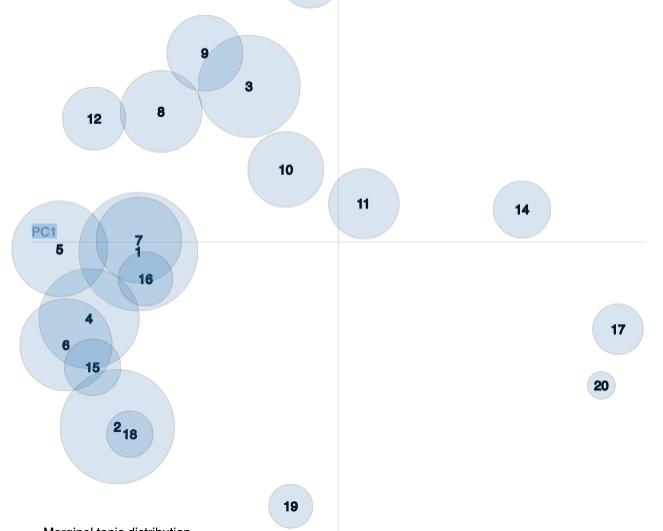
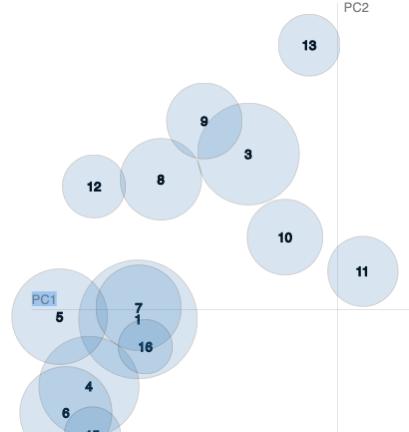
6. Knowledge leakage in the automotive and manufacturing industries in Sweden
7. Workshop
BASICS OF OPEN INNOVATION
Logic of open innovation
Good ideas are widely distributed today.
No one has a monopoly on useful knowledge anymore.
Industrial innovation processes must play poker, as well as chess
We must manage IP in order to manage research:
need to access external IP to fuel our business model
need to profit from our own IP in others’ business model
Not all of the smart people in the world work for us.
Why should I care about open innovation and/or collaborating with other companies?
WHERE AND HOW TO SEARCH IN OPEN INNOVATION?
Search space: where to search?
Local search involves looking for knowledge already in use or in the vicinity of already identified solutions
Distant search occurs when problems cannot be solved using current routines and require knowledge recombination
Boundary spanning helps identifying new ways to solve problems as it helps to understand the underlying search space
Search
strategies: how to search?
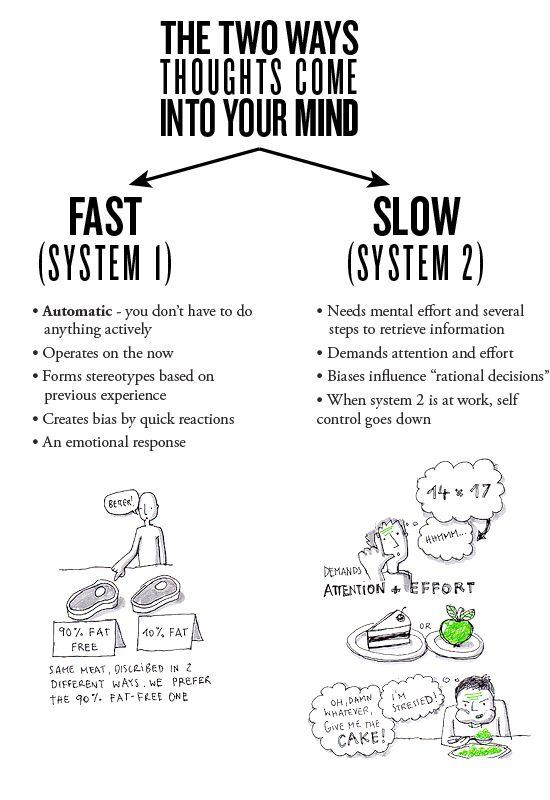
Pragmatic (Experiential) search involves the “on-line” evaluation of alternatives without reflecting on their causes
Hypothetical (Cognitive) search involves the use representations and abstractions in the search for solutions. For example, learning-before-doing and feed-forward of information into existing or nascent representations
Problem framing helps interpreting the assumptions and expectations related to a specific problem and provides guidance to identify solutions
WHERE AND HOW TO SEARCH IN OPEN INNOVATION?
Analogical
PLAYING CHESS VS. PLAYING POKER
Poker: Type II errors (false negative)
ØPay to play
ØPay for new information
ØYou discover what you’ve got, what other players have
Poker
ØInvestments in new uncertain innov projects
ØCollaborate in research consortiums, ecosystems, platforms (coalitions)
ØValue is co-created with other partners
Chess: Type I errors (false positive)
vPlan several moves ahead
vNo new information needed
vYou know what you’ve got, what opponent has
Chess
vOrganizations only rely on existing routines, process, and same employees
vRisk is measured before an innov. project is initiated (not during the project)
vCollaborations are formalized through contracts.
PLAYING CHESS OR PLAYING POKER?
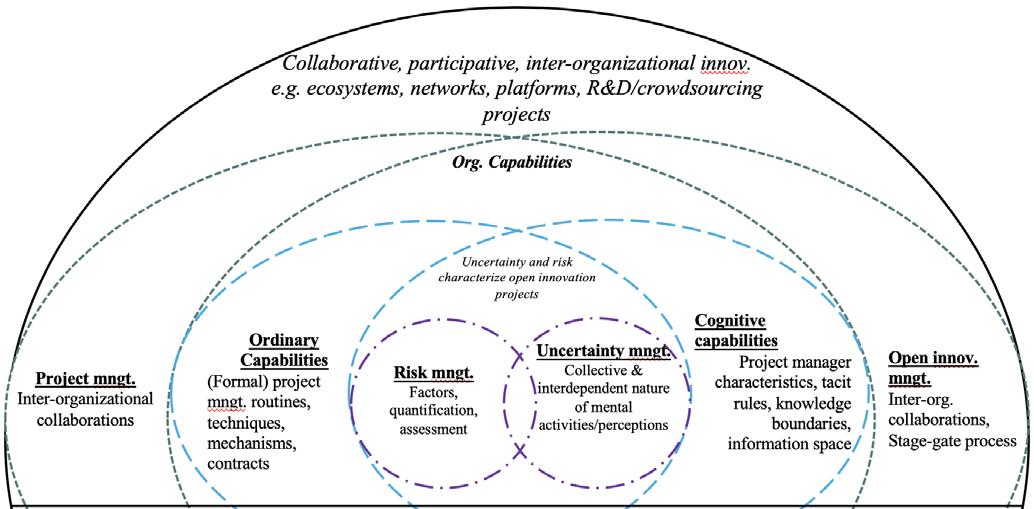
ASSESSMENT OF UNCERTAINTY PROPAGATION
The implementation of open innovation is a long-term process that is aligned to firms’ innovation strategy
The shift from Closed to Open Innovation entails changes in formal and informal practices Innovation capabilities and organizational boundaries
OPEN STRATEGY
Building innovation capabilities depends not only on the search of distinct knowledge sources but also on the formulation of innovation strategies
Open strategy refers to the involvement of external as well as internal actors to identify and respond to organizational, societal, and technological developments
This strategy relies on a higher level of
Inclusion
Transparency
OPEN STRATEGY: WHEN, HOW AND WHO DO YOU INVOLVE IN THE STRATEGY FORMULATION PROCESS?
Lopez-Vega and Lakemond (forthcoming), Global Strategy Journal
“Every new era offers new possibilities for action and development. Development never stands still. Innovations in one field inevitably lead to innovations in others. One must remain alert at all times, always ready to make the very best use of what emerges”
Dąbrowska, J., Lopez-Vega, H. and Ritala, P. R&D Management (2019)
WHAT IS ORGANIZATIONAL RIGIDITY
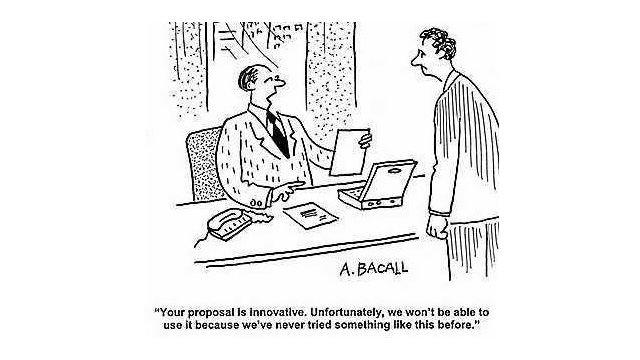
Organizational rigidity is the outcome of decades of tinkering, development, and trial-and-error activity by dominant companies
STRUCTURAL RIGIDITY
q The main reasons for structural rigidity are market success and firm longevity.
As the years pass, successful companies tend to grow in size and complexity (e.g. reporting relationships, team members, management hierarchy).
q Structural rigidity refers to how a company:
Coordinates its innovation activities using specialized R&D teams, well-honed innovation processes, and programmes to manage external alliances and partnerships
Protects its hierarchy and administrative issues (organizational form).
Sets its organizational boundaries to innovation activities –that is, which groups of actors are playing an active part in the innovation.
CAPABILITY RIGIDITY
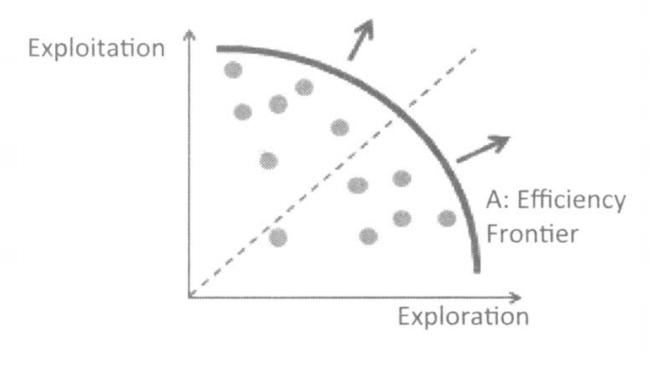
Capability rigidity refers to how exploitation and exploration activities are conducted.
Capability rigidity also tends to lead to an exploitative orientation given the feedback on successful performance in perfecting and iterating current operations.
There is major and accumulated evidence that capability rigidity can be overcome via the pursuit of organizational ambidexterity
Structural ambidexterity (exploitation and exploration conducted in different units),
Temporal/sequential ambidexterity (exploitation and exploration sequential in time)
Contextual ambidexterity (exploitation and exploration conducted in the same place and at the same time)
Open innovation and organizational ambidexterity provide feasible lenses through which to examine how companies can overcome the organizational ‘rigidity trap’ embedded in longstanding success.
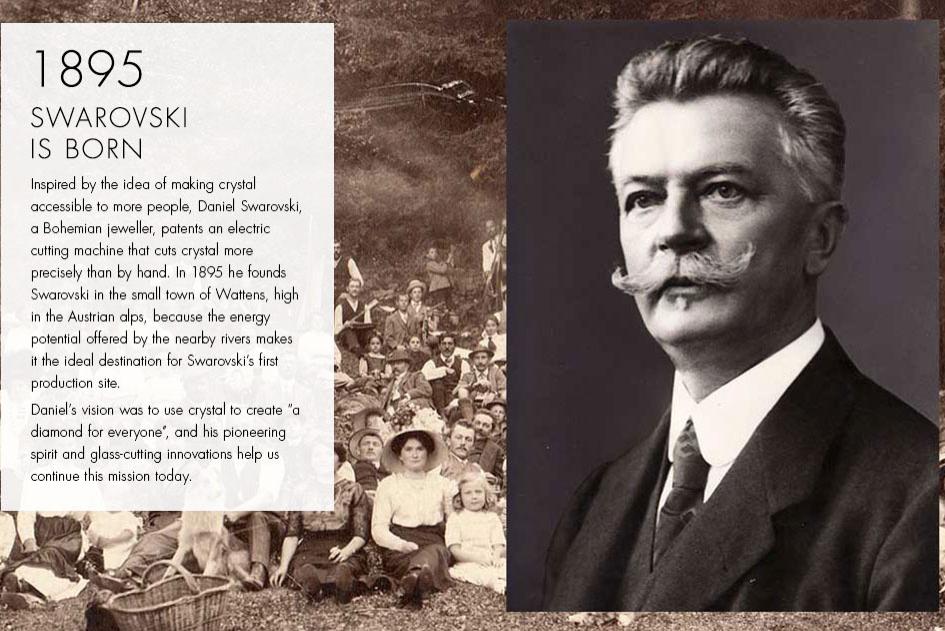
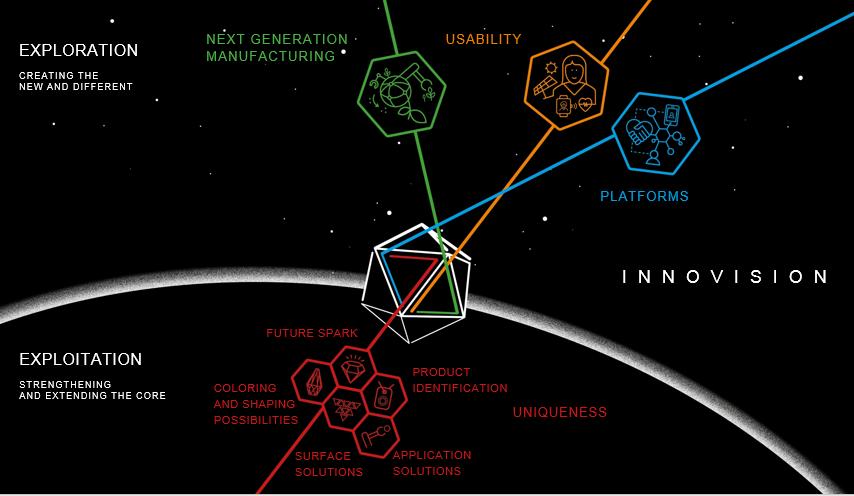
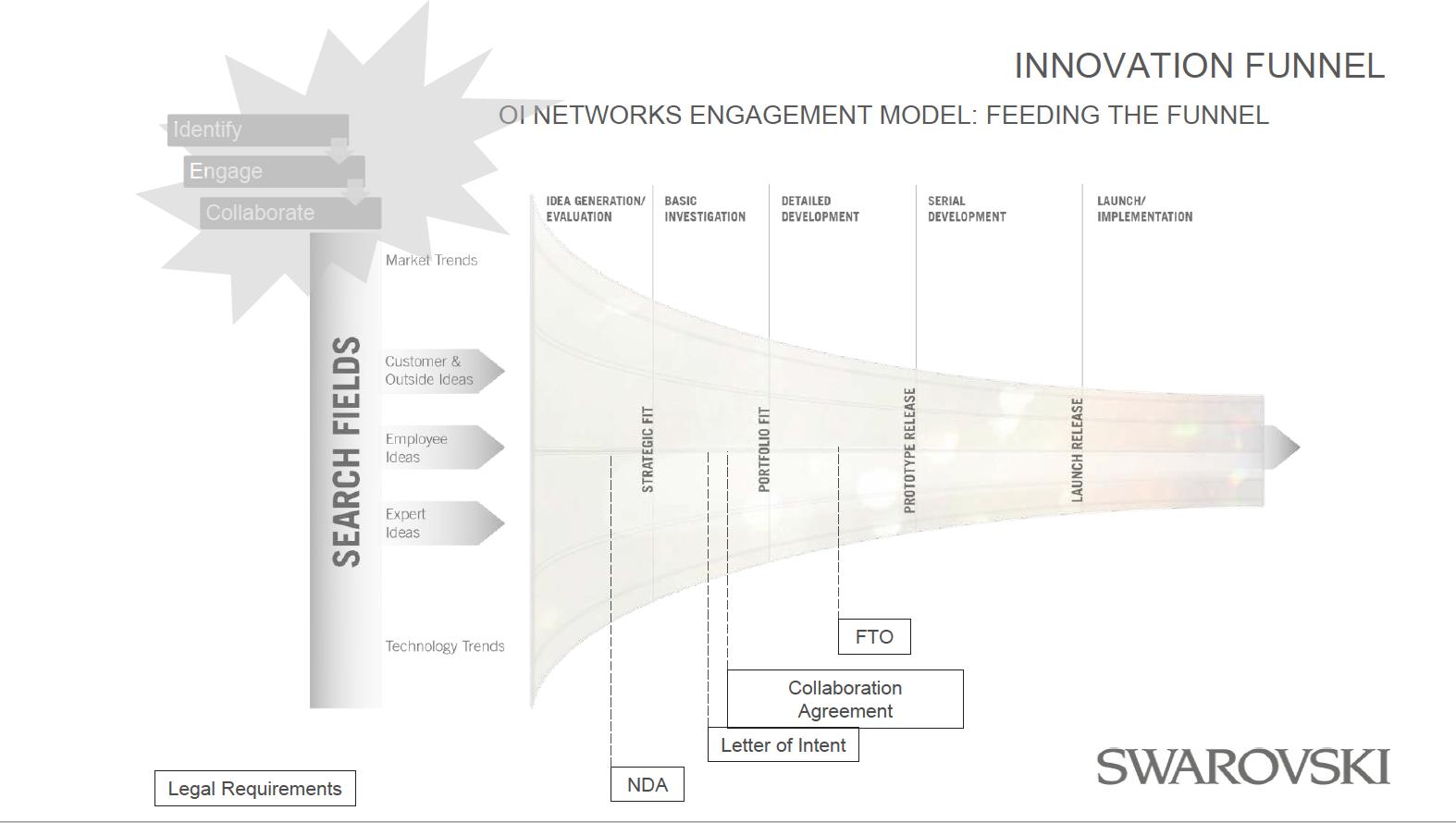
Swarovski’s open innovation journey
Renewing crown jewels OPEN INNOVATION
Boundary spanning Dedicated unit to increase knowledge inflows and outflows within defined search fields for structural spanning
Structural ambidexterity
Protecting crown jewels CLOSED INNOVATION
Boundary preserving Proprietary core technologies kept secure within organizational boundaries
Static ambidexterity
Perfecting exploitation mechanisms by focusing on excellence, quality, and refinement; well-planned explorative initiatives among limited set of actors
Exploring and exploiting activities pursued in structurally separated units
Tilting the playfield ECOSYSTEM ENGAGEMENT
Boundary expanding Focus areas units to purposive knowledge inflows and outflows through permeable boundaries
Dynamic ambidexterity
Exploring and exploiting across organizational levels, and with external stakeholders
Informal, empowered OI professionals
Directions of knowledge flow Between exploitative and explorative technology domains
* Sleeping Beauties
Have a long history of success, relatively little disruption, and competitive advantage based on core technologies and unique innovation capabilities and branding
Eventually receive a wake-up call in the form of new entrants, new customer demands, or changes to the institutional environment
* Organizational rigidity
Renders firms slow or hesitant to react to change, makes their organizational culture unresponsive to outside ideas, and directs management to focus on exploitative refinement rather than explorative search.
* Closed innovation may then be shown to be dysfunctional
* We argue that the principles of open innovation and organizational ambidexterity will appear useful to achieve the necessary renewal.
DISCUSSION
Structural rigidity
Was unravelled by a change from in-house development to an open structure
Ownership of innovation being spread across specialized functions and the organizational boundaries being made permeable to allow open innovation and external ecosystem engagement
Capability rigidity
The company’s exploitation orientation and specialized R&D function for exploration were subjected to structured change programmes and, ultimately, dynamic ambidexterity involving various parts of the company.
Transformation phases
Closed innovation, open innovation and ecosystem engagement
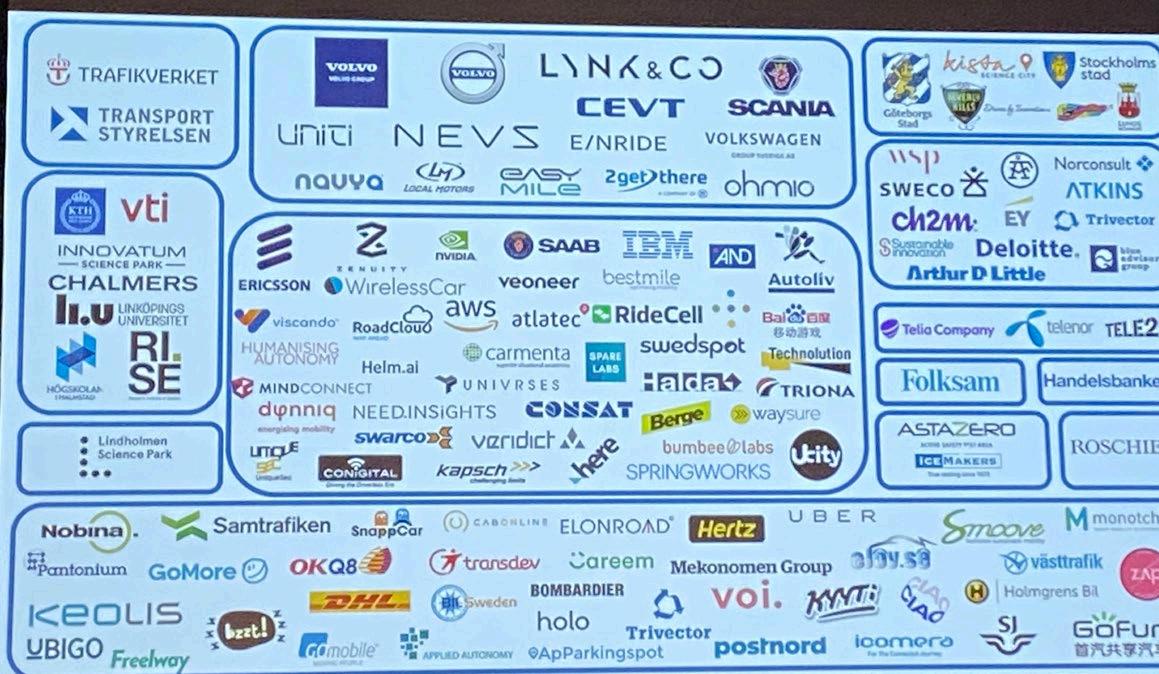
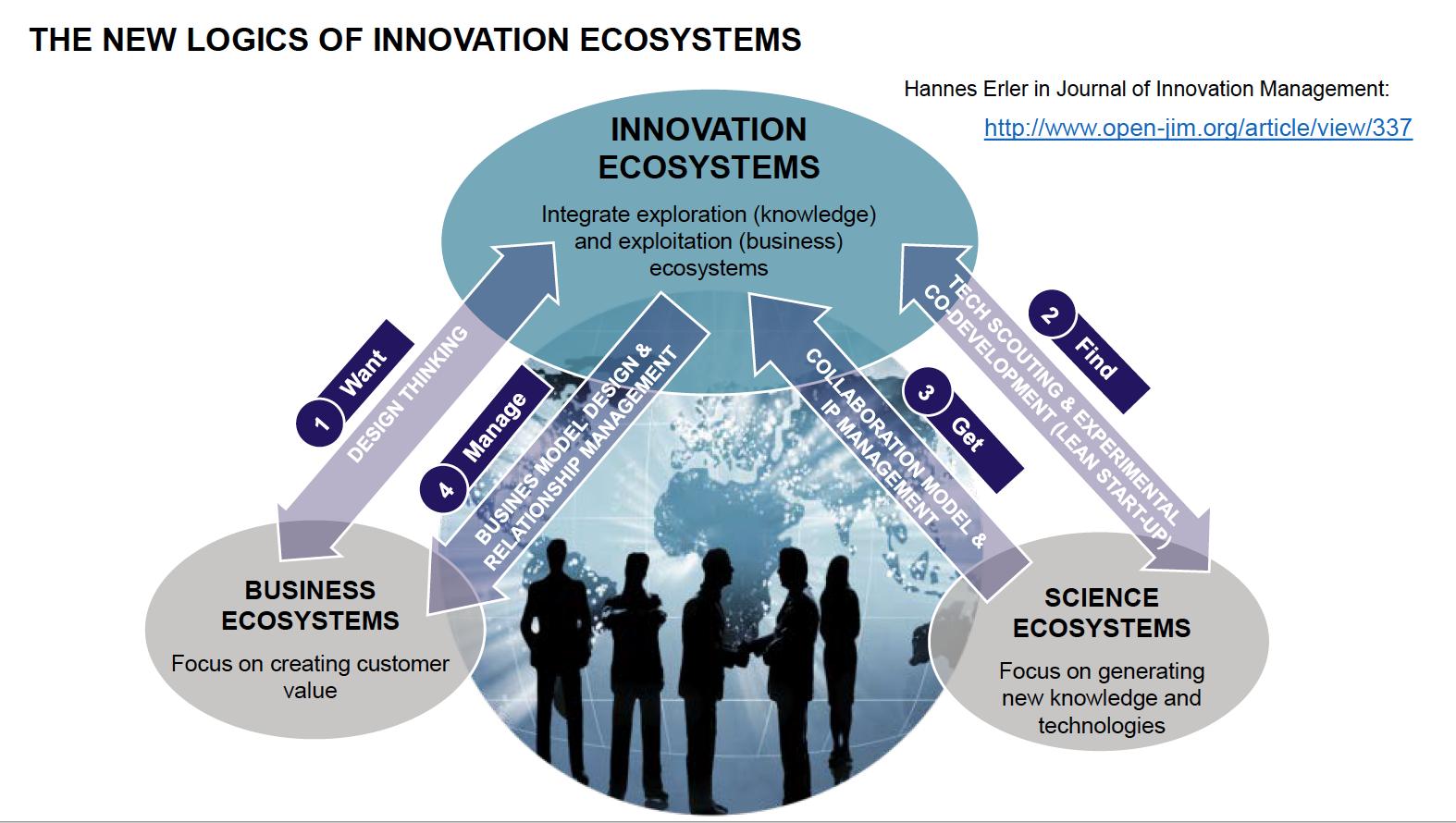
• Industrial R&D is today a distributed system
• Many new challenges arise in this system
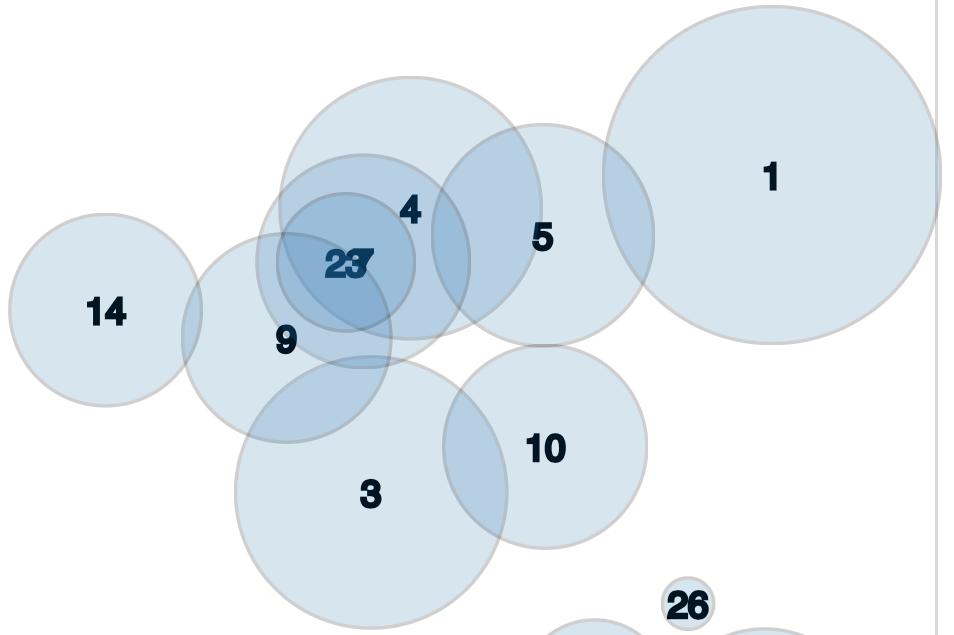
• Knowledge Leakage (Collaboration and Contamination)
• Intellectual Property
• Integration is now a critical skill
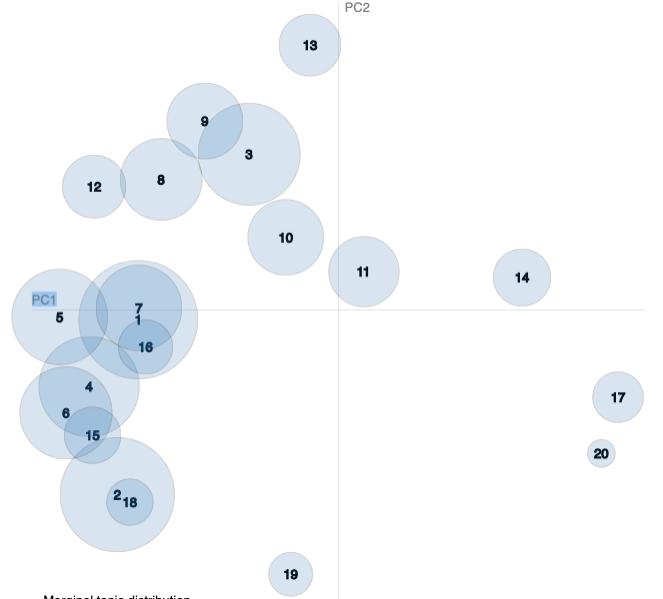
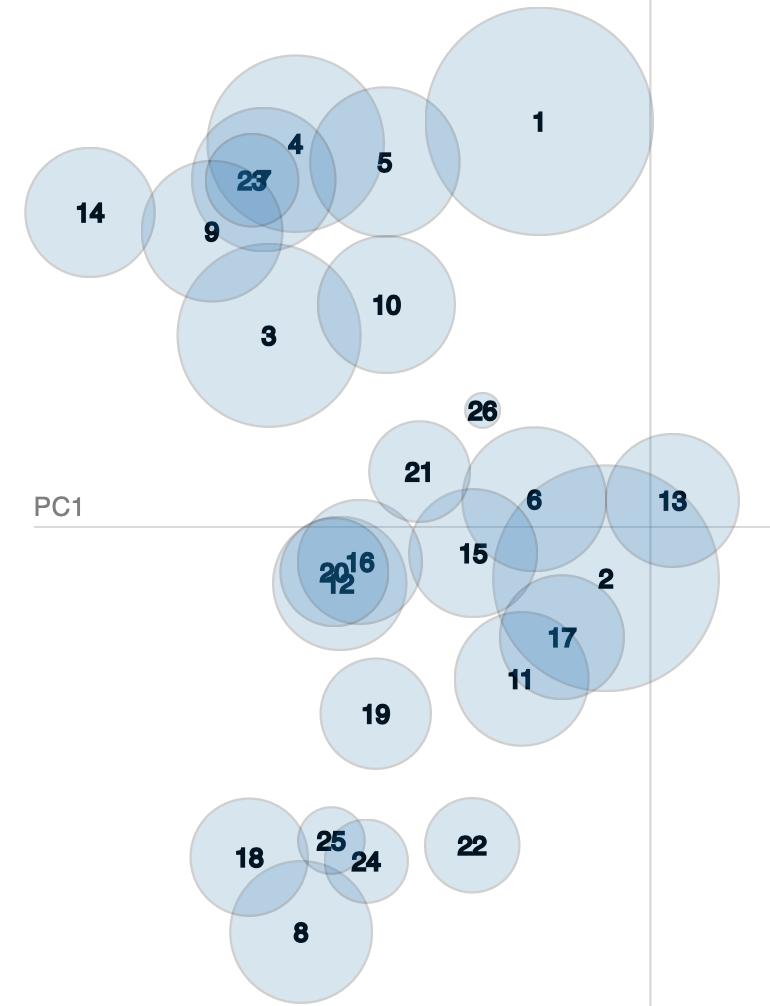
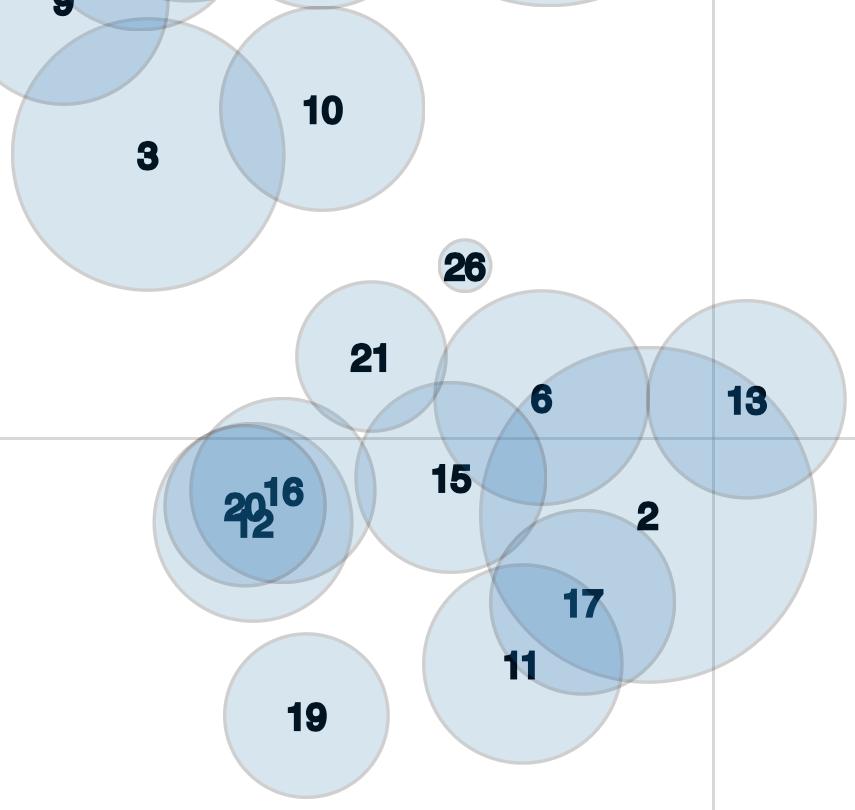
NAMING
Image surveying technology
Control device technology
Antenna radiation technology
Electrical bolt technology
Valve technology
Pneumatic structure probe (voltage)
Light weight cellulose processing technology
Microfiber filter technology
Automatic reinforcement technology
GNSS technology
Detection sensor technology
Automatic fuelling / paying technology
Location / Movement profile tracker
electrode system
Sensing technology for glueing
Material composition technology
Barcode technology Key technology device
Server for user systems
Tool for engaging/ disengaging inter-terminal connection
Camera sensor assistant for classifying environment
Fuel/energy consumption monitoring system
Connected system to transfer data about fleet mobility
Range prediction route assistant
Environmental sensor technology
Failure detection system
Communication module for platooning (of aircrafts)
CLUSTER 3: DATA, CONNECTIVITY AND INCAR - TECHNOLOGY
Device connecting function for communication
Display and control system for the positioning of the seat
Device to recognise light sources
Wireless entertainment and communication system in the vehicle (radio, music)
Optical track detection device
TO CONCLUDE: OPEN INNOVATION AS A SYSTEM
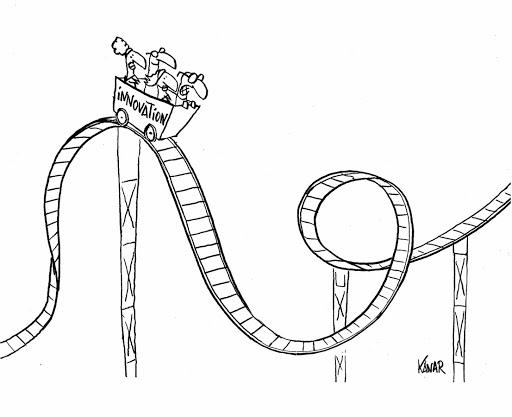
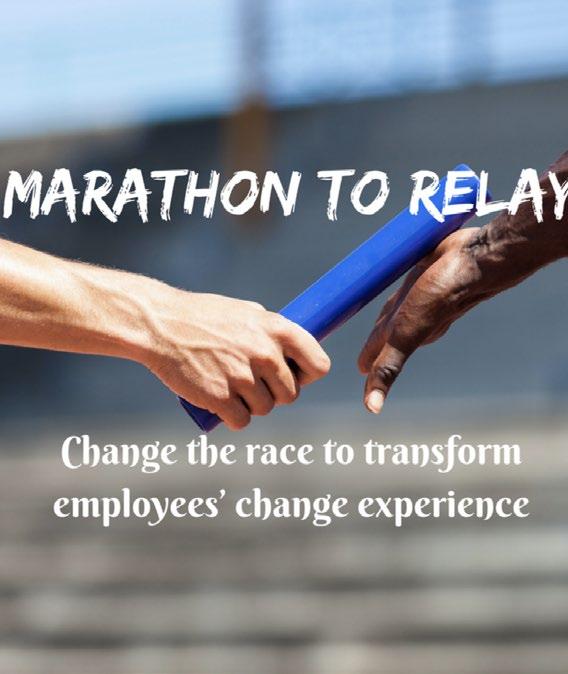
Innovation is now a relay race, instead of a marathon
Redefine the role of research and researchers:
knowledge discovery
connection
integration
Industrial Research Partners complement university technology development
HENRY LOPEZ - VEGA, PH.D. ASSISTANT PROFESSOR
DISCUSSION QUESTIONS (10 MINUTES)
What is my role in the innovation system?
Do we collaborate with external and internal actors to innovative?
Do we have processes to collaborate for new innovation opportunities (playing poker) vs. established/rigid routines (playing chess)
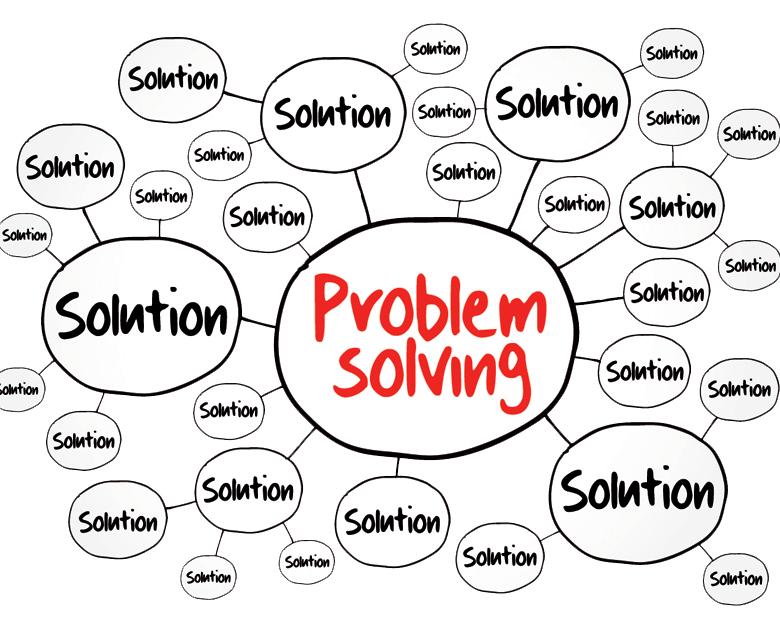
«If I had an hour to solve a problem, I'd spend 55 minutes thinking about the problem and five minutes thinking about solutions.»
Round 1 (15 min):
What is my company innovation challenge/problem and why does it need an answer?
Round 2 (15 min):
What are new ideas that may help solve the problem?
What can we do ourselves and what could other actors help us with?
1) WHAT ARE NEW IDEAS THAT MAY HELP SOLVE THE PROBLEM?
2) WHAT CAN THEY DO THEMSELVES AND WHAT COULD OTHER ACTORS HELP THEM WITH?
email: jerker.moodysson@ju.se and henry.lopez@ju.se
Jerker Moodysson and Henry Lopez Jönköping international Business School Jönköping University
SCHUMPETER BELIEVED IT NECESSARY TO DISTINGUISH BETWEEN AN A PHA SE AND B PHASE IN ALL INNOVATION. WHENEVER AN ECONOMY OR A SECTOR OF AN ECONOMY ADAPTS ITSELF TO A CHANGE IN A WAY THAT TRADITIONAL THEORY DESCRIBES, WE MAY SPEAK OF THE DEVELOPMENT AS ADAPTIVE RESPONSE. AND WHENEV ER THE ECONOMY OR AN INDUSTRY OR SOME FIRMS IN AN INDUSTRY DO SOMETHING ELSE, SOMETHING THAT IS OUTSIDE THE RANGE OF EXISTING PRACTICE, WE MAY SPEAK OF CREATIVE RESPONSE” J.A. SCHUMPETER IN JOURNAL OF ECONOMIC HISTORY, (1947 ).
The A phase is the bringing into being of the initial major discontinuity with the past, the jump in some positive form, so that the new thing can be seen for the first time in some substantially complete way
The B phase is the process, generally long drawn out, of exacting all the implications of the A phase
2. LITERATURE REVIEW (CONT.)
Situated search paths: Emphasize the development of routines through local trial-and-error refinements (Cyert and March, 1963; Nelson and Winter, 1982); operates on the basis of experimentation in the vicinity of previous solutions that lead to feedback on current actions
Analogical search paths: Drawing upon experiential knowledge from distant domains to inform current actions. Applying the characteristics of solution that spans domains can provide new insights to solve current problems. Such search is enabled through the use of analogical reasoning (Gentner, 2002) that involves structural comparison between a base and a target domain (often with unrelated content.
Sophisticated search paths: Deductive reasoning generates predictions and hypotheses that evolve from general premises to specific applications of a more general set of scientific knowledge (Gavetti and Rivkin, 2007).
Scientific search paths: allow the discovery of theories and models which give rise to predictions that then feed forward into representations. These representations in turn make general claims regarding potential futures. Knowledge acquisition through exploratory or innovative search has been described as searching in science (March, 1991; Levinthal and March, 1981).
WHERE AND HOW TO SEARCH IN OPEN INNOVATION?
Scientific paths
Objective: Search for long -term breakthrough solutions in unrelated scientific fields to problems that require either the recombination of knowledge or the discovery of a distant scientific network
or technologies to improve existing specifications
Characteristics: Operational innovation
Path selection criteria: Market creation, timescale of one year, implementation in multiple products, involvement of multiple business units
Examples: Processes for delaying the drying of water -based emulsions (Sherwin Williams); innovative packaging to minimize the melting of chocolate bars in warm climates (Kraft Foods); redefinition of a bed mattress (Sealy); Alternative and more -efficient uses of copper, e.g., in healthcare (International Copper Association); packaging products from the military and oil industries (Ferrero Rocher); problems with optics and photonics (Carl Zeiss); innovative methodology (BP)
Situated paths
Objective: Search for quickly implementable solutions to problems in familiar technological fields
Expected type of innovation: Add -on technologies or information
Path selection criteria: Application in existing technology problems and markets, timescale of months, implementation in a single product
Examples: a natural-based sunscreen and aluminum -free deodorants (Natura Cosmetics), new membrane technologies for a tire and rubber company (Goodyear), technology efficiency improvements to cope with government regulations (Rheem Manufacturing), newly proven technologies for a healthcare manufacturer (Kimberley-Clark)
Expected type of innovation: Disruptive technologies, new business models
Path selection criteria: Application in new markets, timescale in years, implementation over multiple business units
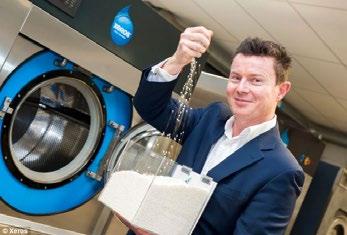
Examples: A washing machine that does not require water (Arçelik A.Ş.), alternative sources of sodium for potato chips (PepsiCo), substitutes for formaldehyde in hair products (L’Oreal)
Sophisticated paths
Objective: Search for short-to -medium -term insights into visible market and industry trends
Expected type of innovation: Additional added -value technologies for existing products
Characteristics: Solutions for a market-entry opportunity, proof of concept, pre -launch, consumer involvement Path selection criteria: Application in existing markets; timescale one year; implementation in multiple products
Examples: A foam component for electric shaving machines (Philips), alternative use of roofing granulates in asphalt shingles (3M); alternative chemistry methods to increase the sustainability and reduce the toxicity of paints (Akzo Nobel), new technology to augment physical greeting cards with digital experiences (Hallmark Cards)
Lopez-Vega, Tell, and Vanhaverbeke, 2016. https://doi.org/10.1016/j.respol.2015.08.003
TABLE 1. HOW KNOWLEDGE SEARCH MECHANISMS INFLUENCE SEARCH PATHS
EXAMPLE FROM A LARGE COSMETICS COMPANY
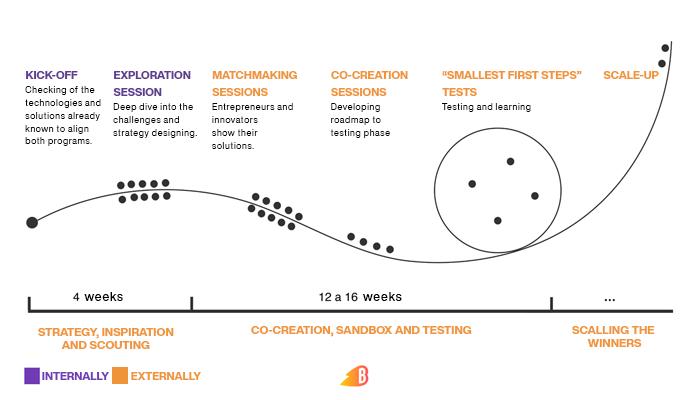
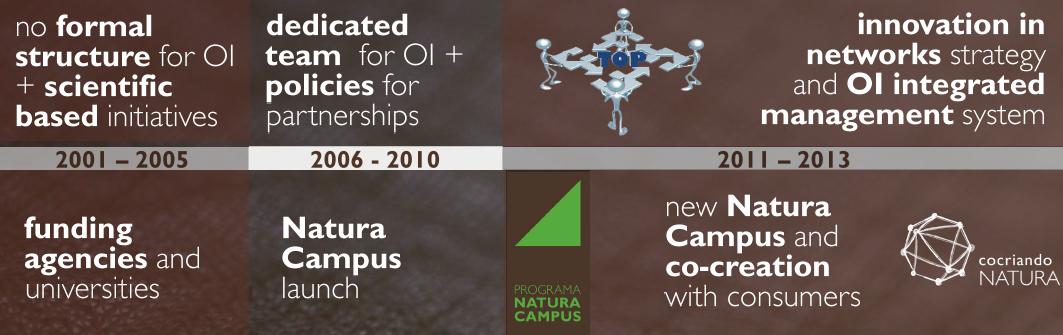
Natura’s open innovation journey
The formation phase (2001 – 2009); The establishment phase (2011 –2013); The consolidation phase (2014 – 2016)
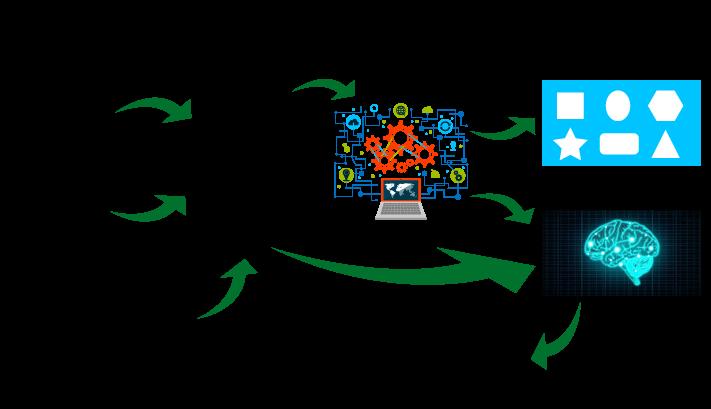
Natura’s open innovation capability building process
Monitor technology and customer needs
Problem formulation and identification (Baer et al., 2013; Von Hippel and Von Krogh, 2015; Sieg et al., 2010)
Search development tool
Boundary spanning: OI tools and knowledge sources (Fleming and Waguespack, 2007; Lopez-Vega et al., 2016)
Managing integration
Project management and Knowledge matching (Lakemond et al., 2016)
Natura’s Technology outcomes
Intermediate tech., advanced tech. and World leading tech.