


We are currently in the midst of one of the greatest transitions of our time. AI is changing not only the way we work, but also how we spend our time, where we focus our attention, and how we shape the future together. In Sweden, AI is already shaping the evolution of our societal functions, how companies build their businesses, and how we as individuals can create both more time and value.
This is a time of great opportunity, and the question is no longer whether AI will affect us, but rather how we choose to use the technology to best address the challenges we face at both a societal and an individual level.
We are already seeing tangible effects on how society is changing. Microsoft’s latest Work Trend Index, which was published in May 2026, shows that more than half (58%) of those who use AI today state they can achieve results they were unable to manage just a year ago.
But this evolution isn’t happening on its own. As AI development accelerates, we are seeing a growing gap between those who are able to harness AI’s potential and those who lack the right tools. We cannot afford to let this gap grow. Sweden is fundamentally a strong democracy, built on inclusion and on creating equal opportunities for everyone. Education has long played a crucial role in building a more equitable society – and that remains true today.
As part of this work, Microsoft launched the AI Boost two years ago, an educational initiative aimed at making AI knowledge accessible to more people. To date, more than 400,000 people have already embarked on an educational journey as part of the initiative, and this work is continuing. In collaboration with an advisory board comprising experts from the business community, the public sector, academia, and labor unions, training needs are being reviewed to ensure that the AI Boost is addressing the areas where the need is greatest.
Learning to understand today’s AI and its transformative potential will be crucial for the future. And the learning doesn’t stop there – it has to be an ongoing process in line with the evolving technology. It is here that curiosity, access to education, and the eagerness to learn new things play a crucial role.


SOPHIA WIKANDER CEO of Microsoft
With insightful leadership and the correct use of AI and new technological solutions, we will be able to continue strengthening Sweden’s competitiveness and welfare. We are looking forward to continuing this journey together. ■ “I

“Right now, we are in the midst of an AI revolution, which is transforming large parts of both our working lives and our daily routines. This transformation is full of new opportunities, and Sweden’s future is being shaped here and now by the decisions we make together.
As a result, being a leader today is a huge responsibility. At the same time, over the past year I have repeatedly seen how organizations that play a vital role in society have moved from planning to action and taken important steps in their AI transition. The development of AI in Sweden’s public sector has accelerated, and it is both inspirational and gratifying to follow these developments and contribute to them.
I’ve been working at Microsoft for six years, and this time has been filled with both learning and change. One thing that has become increasingly clear is that collaboration is absolutely essential for success in today’s rapidly changing technological landscape. When public sector organizations join forces with the business community and academia, we see real progress taking shape.

You can read the full report here!
In this supplement, you, the reader, will learn about some of these initiatives. You willl meet the Swedish Tax Agency, which has taken a major step forward in its AI transformation by developing modern tools for its employees. You will also meet representatives from Linköping University, which has created an AI hub for professional development. And you will learn about the Swedish Childhood Cancer Foundation’s Brainchild project, in which AI is being trained to analyze medical data and give doctors better tools to understand and treat childhood cancer.
By working together, we can unlock the full potential of the technology and make the most of the AI solutions that are constantly being developed.
My challenge is therefore clear: continue to collaborate across organizational boundaries. Continue to build Sweden’s future together. Share your experiences and knowledge with one another and build on each other’s solutions. In this way, we will lay the foundations for the Sweden of the future – and build a society that we can proudly pass on to the next generation." ■

In the public sector, AI is not just about efficiency – it is about enhancing decision-making capabilities and creating real value for citizens. I use Microsoft Copilot to quickly bring together and understand information from meetings, documents, and conversations. Using Copilot Cowork, I can then turn the overall picture into concrete action – automating tasks, scheduling the next steps, and driving the work forward. I spend less time searching for and compiling data, and more time on analysis, decision-making, and creating social value.
How exactly is AI affecting our jobs and the labor market? And are workplaces around the world ready for the future?
Microsoft’s annual Work Trend Index report for 2026 is based on global surveys, analyses, and expert interviews regarding trends in working life.
The findings show that AI is not only changing the way we work, but also the skills that are needed and the new ways organizations are having to think.
Here are some of the most interesting insights from the report:
Advanced work is being made available to more people
Thanks to AI, more employees can take on tasks that previously required specialized knowledge. AI serves as a support tool and guides the user through complex processes.
This is sometimes referred to as the
“democratization of expertise” and is based on Microsoft’s analysis of how AI is used in various industries and roles.
Different AI journeys across different sectors
The impact of AI in the workplace varies from sector to sector. Some companies are committed to using AI broadly across a wide range of tasks, while others are focusing on expanding their use of AI in specific areas. Microsoft’s report shows that a sector’s needs and maturity determine how AI is integrated into workflows.
New roles emerging in the wake of AI
As AI becomes an integral part of working life, the skills that are in demand will also change.
The ability to work with AI and provide clear instructions – known as prompt engineering – is becoming increasingly important.
This is a trend that Microsoft has identified by monitoring developments in the global labor market. ■

The BrainChild research project is making it possible to collect and share health data in order to identify more effective treatments for children with cancer. However, Ola Mattsson, Secretary General of the Swedish Childhood Cancer Fund, believes that legislative changes are needed in order for the platform to be fully utilized.
BrainChild is a collaborative project in which the Swedish Childhood Cancer Fund, together with Genomic Medicine Sweden (GMS), is bringing together stakeholders from healthcare, research, industry, academia, and politics – as well as technology companies such as Microsoft. The project is combining AI and machine learning with the rapid advances in biomedical research to better understand childhood cancer. AI is being used, for example, to quickly analyze and identify patterns in large volumes of genetic and clinical data.

“If we can bring these two processes together, we may also find the answers to the mysteries surrounding childhood cancer. In the long run, we believe that this type of solution could be used for other rare diseases,” says Ola Mattsson.
BrainChild is continuing to build on the research infrastructure that the Swedish Childhood Cancer Fund has been financing for many years. This includes data from the Swedish Childhood Cancer Registry, the Swedish Childhood Tumor Biobank, and genomic data from whole genome sequencing – a genetic analysis in which the entire genome is analyzed to identify changes that may be relevant to the disease.
“We have a fantastic population-based database, which means it includes virtually all children with cancer in Sweden,” says Ola Mattsson.
The challenge of data sharing
Whole genome sequencing is already being used in healthcare to make more accurate diagnoses. However, making this information available on a larger scale, for research and more wide-ranging analysis, is more difficult.
“Achieving health data sharing of this type is not a

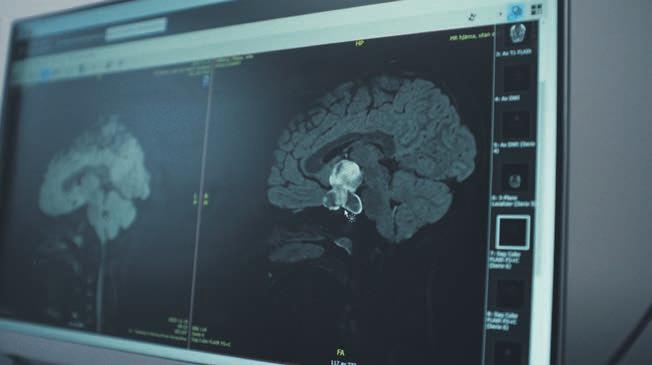
Filippa, 9, is living with a slow-growing brain tumor. According to Ola Mattsson, she is a great example of how whole genome sequencing and precision medicine can already make a difference for children with cancer.
“Thanks to genetic mapping, the medical team was able to select a treatment that spared her from a much tougher and more invasive treatment. Instead, she can go to school, dance, and lead a more normal life during her illness”.

Every day, we’re getting closer to our vision of every child being able to survive cancer
technical challenge today, but rather a political and legal one,” says Ola Mattsson.
“The bottom line is that this is classified and regarded as sensitive personal information. This makes it difficult to share data across regions or to quickly bring in more experts to look at a patient’s case in the way we would need to,” says Kim Ramme, Director of Research at the Swedish Childhood Cancer Fund.
patient cases and learn lessons from previous treatment outcomes.

But doesn’t increased data sharing also entail risks?
“You could also turn this question around and ask whether there are any risks involved in not doing so. And the answer there is also yes,” says Ola Mattsson, adding:
“Of course, this has to be done using robust security solutions and privacy protection. It’s a hygiene factor.” If the regulations were to change, this would enable researchers to gain faster access to relevant information and be able to analyze large amounts of data in one and the same system. BrainChild can also provide support in everyday clinical practice, making it easier for doctors to compare similar
“You can identify a patient with the same type of genetic abnormalities. If someone in the same situation has been treated in a certain way and it has been successful, then we can test whether it would work for this patient as well,” says Kim Ramme.
“We believe that more personalized treatments can not only save more lives, but also reduce the risk of long-term complications – something that affects seven out of ten survivors of childhood cancer,” adds Ola Mattsson.
In order to find the right treatments for more children, a larger data set is also needed. When it comes to childhood cancer, the international exchange of knowledge is therefore particularly important, given that the patient population is so small.
“BrainChild’s original goal is for sharing to take place at a global level. However, we first need to figure out how to share data effectively in Sweden, then within the EU, and finally on a global scale,” says Ola Mattsson.
He is convinced that the legislation will be amended – the real question is when.
“There’s no doubt that changes will be made. Every technological revolution has transformed society and led to changes,” he says, adding:
“However, we’re frustrated that things are moving fairly slowly.”
100
The goal of the Swedish Childhood Cancer Fund’s work is to achieve a 100 percent survival rate for childhood cancer. At present, 88 percent of children survive at least five years after diagnosis. When the Swedish Childhood Cancer Fund was founded, in the early 1980s, this figure stood at around 50 percent.
“Every day, we’re getting closer to our vision of every child being able to survive cancer,” he says. ■
Read the full story Turning Genomic Data into Clinical Impact
In this way, we are able to save thousands of working hours

AI SERVICE SHOWS THE WAY
Using an AI service developed inhouse, Uddevalla Municipality in western Sweden has taken a major step toward improving the efficiency of its social services.
The AI service records and transcribes calls, summarizes meetings, and then generates documentation for record-keeping.
“In this way, we are able to save thousands of working hours, at the same time as creating a much better working environment,” says IT Manager Roger Granat.
The reason Uddevalla Municipality decided to develop its own AI service is that social workers often have to spend considerable time taking notes during client meetings.
With more than 3,000 reports of concern and 1,000 investigations every year, the 30 staff members in the Children and Youth Unit in the social services department spend a great deal of time on writing meeting notes and subsequent administrative tasks.
“We noticed that social workers were spending a lot of time taking notes during meetings, which took their focus away from the conversation and increased their stress,” says Roger Granat, Deputy Municipal Chief Executive and Head of IT.

Roger
In order to streamline operations and improve the working environment for social workers, the Municipality decided to invest in developing its own solution. The result was an AI service that automatically records calls, transcribes them, and summarizes the notes.
“The tool saves an average of 30 minutes per recorded call. Another benefit is that the quality of the calls is also improved, as the social worker is able to focus on guiding the discussion rather than taking notes.”
Before the AI generated summary is entered in the record, however, the case manager has the final say and may add to or adjust it as needed.
The AI tool was launched in October last year and is currently being used in seven different social services units in Uddevalla Municipality, although more units are set to be added. A new record was set in April, with more than 1,200 recorded calls in which AI helped generate documentation. This figure is
expected to have doubled by the end of the year.
For clients, being recorded is always voluntary.
“No one has declined so far, but of course people can choose not to be recorded if they wish. In that case, we use pen and paper just like before,” says Roger Granat.
The new AI support has also been positively received among employees.
“One employee who has recently switched employers – moving to another municipality – got in touch to say that it felt like going back 20 years in time.”
The AI solution used by the Uddevalla Municipality is based on Microsoft’s platform. This has enabled the Municipality to take advantage of advanced technology. At the same time, Uddevalla has opted to store all data locally to ensure that sensitive client information never leaves the Municipality’s own systems.
“We have taken great care to ensure that all storage and processing of personal data is carried out securely within the Municipality.”
With the new technology in place, Roger Granat sees great opportunities going forward:
“We’re only at the beginning of what the technology can do for us, and it’s already the solution that has freed up the most time in our operations. For us, this is a win-win situation – both for the working environment and for the quality of our interactions with residents,” says Roger Granat. ■
DEVELOPMENTS ARE CHANGING
Advances in AI are happening at lightning speed, but at Linköping University, they aren’t just to keeping up. Instead, the goal here is to lead developments.
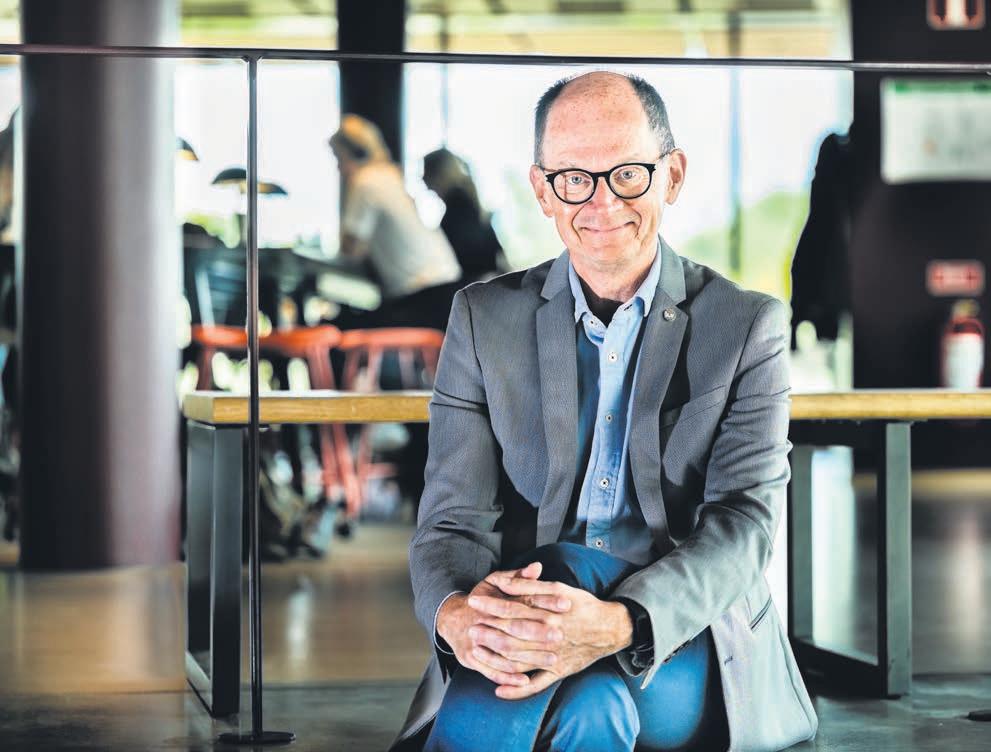
“Our aim is to become the leading AI university. We need to be willing to spend on this, because it’s a necessary investment, both from a societal perspective and as we strive to develop as an institution for both our students and staff,” says Vice-Chancellor Jan-Ingvar Jönsson.
The core of the university’s initiative is both simple and ambitious: all students must have acquired AI skills through their programs by 2028 at the latest. And this relates to more than just technical understanding – regardless of their field of study, the students must develop the skills, critical thinking, and practical ability to use AI in their future careers.
“In this way, AI is becoming an integral part of education, research, and social development,” says Jan-Ingvar Jönsson.
AI only came to the attention of the broader public a few years ago, but Linköping University has long been a pioneer in the field of artificial intelligence. The country’s first AI professorship was established here as early as the 1980s, and the university now holds a strong position when it comes to both research and application. Here, AI is not only used in traditional fields such as engineering and computer science, but also within medicine, education, the social sciences, and industry.
“We have the advantage of being a broad university with multiple faculties and many scientific disciplines, which gives us the opportunity to take a holistic approach to AI and its applications,” says Jan-Ingvar Jönsson.
The investment in AI is also closely linked to the business community. The memorandum of understanding with Microsoft is a key part of the univer-
sity’s efforts to create a robust and future-proof digital infrastructure. The decision to work with Microsoft is as much about trust, long-term commitment, and collaborative development as it is about technical platforms.
“The more in-depth our collaboration, the more influence we can exert and the better we can develop joint solutions and new innovations,” says Jan-Ingvar Jönsson.
The fact that both students and staff are now able to use AI tools such as Copilot shows that AI has become a natural part of everyday life at the university.
However, these rapid developments are also bringing new challenges. One of the biggest is that the students are often more familiar with AI than many of their teachers. To address this, the university has launched internal training initiatives, for example, as well as appointing special AI ambassadors to support these efforts.
Another change brought about by AI is the way knowledge and learning are viewed.
“With AI that is capable of providing answers in seconds, the most important thing is to understand, analyze, and think critically,” says Jan-Ingvar Jönsson. “This is placing entirely new demands on how we teach and assess knowledge.”
Linköping University is also looking at its role in a broader context. Sweden is currently well advanced
in the field of AI, but has the potential to truly lead developments. Achieving this position requires collaboration among different educational institutions, rather than competition.
“We can’t afford to compete with each other regarding AI talent. Cooperation will enable us to lead the way and strengthen Sweden’s position on the international stage,” says Jan-Ingvar Jönsson.
By combining education, research, and collaboration, Linköping University aims to remain a driving force in Sweden’s AI journey.
“We consider it a natural part of our mission to help shape how AI is used in Sweden,” says Jan-Ingvar Jönsson. ■
“I use Copilot as a tool to help me in my day-to-day work, especially when preparing for meetings with external parties. It helps me to organize and summarize source material and reports, and is a useful tool when I’m drafting speeches, articles, and other texts.
Copilot also provides me with a quick overview of complex issues and serves as a sounding board when I want to try out new ideas.
However, I evaluate everything I do critically and always take personal responsibility for the content.”
by:

The war in Ukraine and a rapidly changing security situation have redrawn the landscape for the entire defense industry. It has become clear to Saab that the defense systems of the future require constant development – and this realization is now driving the company’s digital transformation.
“We tend to say that we’ve gone from serving customers who have little money but plenty of time to serving customers who have plenty of money but are in a huge hurry. This is placing entirely new demands on us,” says Mikael Adelsberg, Chief Digital Officer at Saab.
For Saab, the transition involves increasingly building its solutions around software, data, and reusable modules.
“The biggest challenge isn’t the technology, but rather changing the way we work, manage, and collaborate in a business that is both complex and security-critical,” he says.
To get the organization on board, Saab has involved its employees in the process at an early stage. Before the company decided on the objective for its digital journey, more than 5,000 people had been involved in the process and been given the opportunity to provide feedback.
“We need to shift from viewing a product as being completed on delivery, to seeing it as something that evolves and improves continually over time”.
“It’s no longer just a matter of how fast or at what altitude an airplane flies or how quiet a submarine can be, but also about how easy it is to adapt the systems when new needs arise.”
A good example is the Gripen E fighter jet, which is unique in that new functions can be programmed in the morning and the aircraft can then fly over civilian airspace in full compliance with all regulations that same afternoon.
“The flight-critical systems are isolated from the tactical systems. This allows us to modify and update features much more quickly than with many other solutions, without compromising flight safety or requiring extensive recertification.”
Getting the organization on board
However, modernizing advanced systems is only part of the job. “For the transition to succeed, major internal changes are also required,” explains Mikael Adelsberg.
“At the same time, we’ve tried to create better conditions for those parts of the business that are leading the way in the change process. There shouldn’t be any additional risks for those who dare to try something new.”
The importance of skilled partners
As Saab undergoes its digital transformation, external partners, such as Microsoft, are playing a key role. This is particularly true in the fields of AI
and cloud technology, where there is significant potential to accelerate the company’s development and innovation.
“In order to fully leverage AI, we need the support of the companies that are at the forefront of the technology. Our partners also provide scalability, security, and expertise regarding how to work safely in the defense industry with different nations,” says Mikael Adelsberg, adding:
“Our credibility and our potential to succeed in our mission are founded on having strong partnerships.”
Impact on defense capabilities
According to Mikael Adelsberg, however, the transformation is ultimately about much more than just technology.
“It has an impact not only on us and our customers, but also on Europe’s ability to defend itself. This entire journey is rooted in our mission: to keep people and communities safe.” ■
1. A CLEAR, SHARED DIRECTION
In order to reduce uncertainties regarding the company’s future direction, the transformation has been fully embraced at every level, from the Board and management down to the front line.
2. QUICK RESULTS THAT BUILD CREDIBILITY
Instead of long-term change initiatives, Saab has focused on quickly delivering tangible results that can be built upon.
3. MAKING THE LESSONS LEARNED SCALABLE
When something works in one part of the Group, Saab tries to package the approach so that other business units can use it.
4. CLEAR LINES OF RESPONSIBILITY THROUGHOUT THE ORGANIZATION
Each business unit is responsible not only for its day-to-day operations, but also for driving forward its own transformation journey with support from the central organization.

With increasing cyber threats and technology becoming an increasingly important geopolitical issue, there is a growing need for secure and trusted digital systems. This is why some of the world’s largest technology companies are now joining forces in the Trusted Tech Alliance.
“No single entity or nation can build a secure digital infrastructure on its own,” says Rene Summer, Senior Policy Advisor at Ericsson.
The Trusted Tech Alliance was launched at the security conference in Munich in February this year. The initiative is backed by 16 technology companies from 11 countries, who are working together to create more robust digital ecosystems with a clear focus on five shared governance principles.
“It’s not every day that leading technology companies from four continents come together to take joint responsibility for trust and security within digital technology,” says Rene Summer, adding:
results in market fragmentation and, consequently, reduced efficiency. This, in turn, leads to reduced economies of scale, which hinders research, development, and, ultimately, competitiveness.”

“We have agreed on a number of principles regarding corporate governance, ethics, and technological development. It’s also a matter of taking responsibility for solutions throughout their entire lifecycle, as well as setting clear standards for security, transparency, and quality among suppliers.”
“The interdependence between countries and companies is growing”
He argues that it is no longer possible to separate digital technology from issues such as national security, economic competitiveness, and democratic resilience.
“In fields such as AI, cloud services, cybersecurity, and advanced connectivity, the interdependence between countries and companies is growing. At the same time, the level of complexity is increasing for technology companies that operate across national borders. When regulations and political interests pull in different directions, this also affects the ability to build secure systems that work across different markets.”
In the long run, this risks undermining both the pace of innovation and global competitiveness.
“If services, platforms, and networks are less compatible with one another, this leads to more lock-in effects and unnecessary duplicate investments. This
How Europe can strengthen its position
According to Rene Summer, Europe therefore needs to continue strengthening its position within strategically important technology sectors. Otherwise, we risk becoming dependent on external, authoritarian systems that impact both our economic and security policy decisions.
“However, I don’t think it’s realistic to expect Europe to be at the forefront of the entire digital technology stack. Nevertheless, we can lead the way in areas such as advanced connectivity, applied AI, and certain segments of the semiconductor industry. Our partnerships with other democratic nations play an important role here. Interdependencies become strengths when we can work together to offer a world-leading – and, moreover, secure and trusted – digital technology stack.”
In this context, collaborations between companies such as Ericsson and Microsoft serve as a tangible example of how European and transatlantic technological expertise can be strengthened through longterm partnerships. Sweden and the United States recently entered into a new, bilateral technology cooperation agreement, known as the Technology Prosperity Deal, focusing on areas such as AI, reliable 5G supply chains, advanced manufacturing, and defense innovation.
“In the past, countries that share common values have been able to achieve things that no single country could have accomplished on its own. Politicians and policymakers should not view digital development as a zero-sum game. We need to prioritize dialogue and long-term cooperation ahead
of escalation and short-term interests,” he adds.
Rene Summer also emphasizes that the industry needs to continue investing in security and responsible innovation.
“It’s about working together, even when it may be difficult for governments to do the same. The goal is for both businesses and consumers to be able to trust that digital services will continue to operate securely and reliably in the future.” ■
TRUSTED TECH ALLIANCE – FIVE SHARED PRINCIPLES
The companies in the Trusted Tech Alliance have agreed on five principles for how technology should be developed, used, and managed in a secure and responsible manner:
1. Transparent corporate governance and ethical responsibility.
2. Operational transparency, secure development, and independent reviews.
3. Robust control and security management in the supply chain.
4. Open, collaborative, and resilient digital ecosystems.
5. Respect for the principles of the rule of law and data protection.
The companies behind the Trusted Tech Alliance
The Trusted Tech Alliance comprises 16 technology companies from Europe, North America, Asia, and Africa: Anthropic, AWS, Cassava Technologies, Cohere, Ericsson, Google Cloud, Hanwha, Jio Platforms, Microsoft, Nokia, Nscale, NTT, Rapidus, SAP, and Saab.
Read about Trusted Tech Alliance here:

How do
and a high level of
in relation to citizens? Here, IT Director Peder Sjölander discusses how the Agency is working with AI – and what issues will be in focus moving forward.
AI is nothing new to the Swedish Tax Agency. The Agency has long been using machine learning in its auditing activities to categorize data and identify areas where the risk of er rors and fraud is higher. When genera tive AI started to become more widely available a few years ago, they were quick to scale up their efforts. They de veloped guidelines early on for how the technology should be used, including by creating an AI policy and an ethics committee.
“We wanted to avoid making this process too top-down, so we’ve given our employees the freedom to try out different solutions and bring their ideas to the table. We try to view AI as a means of business regeneration rather than purely an IT project,” says Peder Sjölander.
“AI is just a tool”
One of the areas in which the Swedish Tax Agency is currently testing AI is the handling of emails from citizens. The goal is to reduce response times by providing case officers with AI-generated response suggestions.
“We receive around 600,000 emails every year. If we can use the knowledge we’ve already amassed from previous questions and answers to help our employees respond more quickly, our service will also improve,” says Peder Sjölander, adding:
“However, it’s important to emphasize that AI only serves as a support tool. The email will always be sent by a person. The case officer decides whether to use the suggestion, edit it, or reject it entirely.”
The Swedish Tax Agency is also testing smaller AI agents designed to support employees in their day-to-day work, for example through automated monitoring of the outside world and the use of plain language in text.
“When we send out information, we want people to actually understand what is being said and not be faced with unnecessarily bureaucratic language.”
The Agency is also working on several other AI pilot projects in its own on-premises environment. In criminal investigations, real-time transcription and analysis of interrogations are being tested. Another area is the population register, where AI is being used as a decision-making tool.
“At present, our case officers may need to search through multiple systems and piece together the full picture on their own. The idea is that AI will be able to highlight relevant information in the population register so that they can get an overview more quickly and assess the case more easily,” says Peder Sjölander.
Familiar surroundings
When the Swedish Tax Agency modernized its digital tools, it conducted a comprehensive review of the market before selecting Microsoft’s solutions and the AI tool Copilot. According to Peder Sjölander, the choice was made on the basis of both security and the need to make it easy for users to get started.
“Our employees didn’t have to relearn everything from scratch. They were able to continue working in familiar surroundings and focus instead on the new features.”
How do we build future-ready skills?
As AI tools become an increasingly integral part of the day-to-day work, broader questions are also emerging regarding the provision of skills and learning within the organization, explains Peder Sjölander.
“We still need highly skilled employees, both on the development side and within operations. But if AI removes the more basic tasks, how do we help new employees gain experience?”
He believes that AI also places higher demands on the employees’ ability to evaluate information and use the technology responsibly.
“How can we ensure that everyone is able to factcheck and assess whether the answers provided by AI are truly of high quality? We’re focusing a great deal on these issues right now.”
A national mission
The work on AI does not stop at the Swedish Tax Agency. Working alongside the Swedish Social Insurance Agency, the Tax Agency has been entrusted with a major national assignment through what is known as the AI Workshop. The aim is to build a shared AI infrastructure and development environments for the public sector.
“Since we have to chart our own course when it comes to AI, we might as well share our knowledge and scale it up for others. Local authorities shouldn’t all have to reinvent the wheel,” says Peder Sjölander.■

Human interaction is at the heart of Huddinge Municipality outside Sotckholm. But smart, well-trained AI agents have become a natural part of the work and are now considered full-fledged colleagues of the Municipality’s employees.
When new technology meets human expertise, new opportunities are created.
“For us, the technology is a tool that helps us free up time and create an even better service,” says Andi Kravljaca, Head of Innovation and Process Development at Huddinge Municipality.
In recent years, the Municipality has therefore focused on developing and introducing AI assistants – digital agents that help to automate and improve workflows. The partnership with Microsoft has played a key role in this work, both in terms of technical developments and in ensuring that the solutions are secure and sustainable.
The partnership with Microsoft has not only facilitated the development of the technical platform, but also aided efforts to ensure a high level of information security and access to the latest AI expertise. Through this collaboration, the municipality has been able to benefit from Microsoft’s expertise and support in its development efforts.
The goal has been both to create space for innovation and to make everyday life easier for employees.
“We’re far from alone in facing these challenges, but we want to explore solutions together with others,” says Andi Kravljaca.
AI in a number of areas
Huddinge Municipality now uses AI agents in a number of different areas. One example that Andi highlights is how, with the support of Microsoft’s technology and platforms, they have linked an OpenAI service to their open data sources, such as schools, housing, median income, and education level.
“Here, we can ask AI to analyze the data and identify patterns or trends that we can then examine further. This is a clear example of insights that would

otherwise have been difficult to detect. This makes it possible to automate in a more agile fashion. We can challenge old working methods and find new connections in our data.”
Governance and transparency
One key question is how the Municipality ensures that AI assistants provide accurate and relevant answers. To achieve this, Huddinge Municipality uses specialized databases and clear instructions for the AI.
“We conduct special annotation sessions where we train AI, although we never use real or sensitive data during these sessions. We decide for ourselves which data sources AI is allowed to use, and we can program instructions regarding how it should reason and respond. It’s a matter of designing the assistants in such a way that allows us to trust the answers and ensures that ethical considerations are always included in of the process,” says Andi Kravljaca.
For example, social services use the AI assistant Kassi, which serves as a knowledge database, containing laws, court rulings, and guidelines. The AI is only used for internal purposes, however – any contacts with citizens are still handled by people.
“We believe that face-to-face interaction is crucial, especially at a time when it is becoming increasingly rare. AI isn’t meant to replace people, but rather to free up time and create value,” he says.
Challenges and opportunities
Andi Kravljaca sees clear benefits in using AI assistants in municipal operations – in addition
to increased efficiency, he also considers there is greater consistency in service delivery. With AI assistants, everyone has equal access to information and support, regardless of whom they encounter at the Municipality.
“This allows us to offer a fairer and more consistent service to residents,” says Andi, emphasizing that AI is opening up new ways of working.
“We mustn’t forget that the technology is just a tool – if the working methods are inefficient to begin with, they won’t automatically be improved by using AI. For Huddinge Municipality, AI is a way of improving operations and creating value, building a better municipality for everyone.” ■
AI assistant in social services. Kassi serves as a knowledge database, containing laws, court rulings, municipal ordinances, and internal guidelines. It is used by employees to quickly find the right information.
An AI service that is known internally as the “Document classifier”. It helps classify and tag incoming documents in building permit cases, and is able to interpret both drawings and text in order to streamline processing. In this context, building permits are a pilot program – the plan is for the document classifier eventually to be able to be used for many more types of documents.
HUDVIG
Digital service assistant at the Municipality’s service center. Hudvig is used internally to support employees by answering questions and providing guidance on various matters.


In a short space of time, generative AI has gone from being a topic for the future to a practical tool in many sectors of the business world. However, now that this technology is being used on a larger scale, it is becoming increasingly clear what is required: the right expertise, reliable data and the ability to implement solutions on a broad scale.
AI is already being used in everything from healthcare and education to restaurant management, software development, and engineering-intensive operations.
But despite major investments and high expectations, the same message keeps coming from various quarters: In order for AI to create real value, it requires expertise, reliable data, and the ability to implement solutions on a large scale.
According to Fredrik Sand, economic policy expert at the industry and employer organization TechSverige, AI is no longer a matter limited to tech companies. On the contrary, it is something that is affecting an increasing number of sectors in the business community.
“AI expertise is now spilling over into many other industries and is becoming a key competitive factor.”
He also points out that, according to statistics from the EU, Sweden ranks among the very top countries in terms of corporate use of AI.
However, high usage alone is not enough. Ylva Berg, CIO at the engineering firm AFRY, emphasizes that the fundamental digital conditions are crucial in order for the technology to create real value.
“Without structured, quality-assured data, standardized processes, and effective digital workflows, there is a risk of automating inefficiencies rather than creating value.”
It is only when the fundamental digital conditions are in place that can AI begin to make a real difference in business.
AI is also an important tool in the restaurant sector. Martin Fennrup, CIO at MAX, describes how the technology is being used in everything from work tools like Microsoft Copilot and internal development processes to energy optimization, sales, and training.
“We view AI as a core capability in our industry. In a labor-intensive sector that is characterized by high volumes and low margins, where the guest experience is paramount, AI will be key to achieving a more efficient and data-driven operation.”
According to Martin Fennrup, the benefits are already being seen, for example in the form of more free time and increased creativity.
However, as AI becomes an increasingly important aspect of working life, there is also a growing need for wider-ranging skills. The education system is playing an important role here.
Schools, vocational training, and higher education are extremely important, both in strengthening basic AI literacy in society and in ensuring the cutting-edge expertise that the business community demands.
“Sweden needs both extensive digital skills and cutting-edge expertise as regards AI, starting in school and continuing throughout the entire education system,” says Fredrik Sand. ■
MUST
AI is often described as something new and revolutionary. But according to Patrik Fältström, internet pioneer and security expert at Netnod, this technology needs to be managed with the same sense of responsibility, oversight, and security mindset as other digital systems. Otherwise, there is a risk of it giving rise to new security issues.
What risks associated with AI do you consider are currently underestimated?
“Many people view AI as something special, when in reality it’s just a tool that’s layered on top of existing processes to help people work more efficiently. The risk is that organizations will believe they are no longer responsible for their decisions, simply because they are using an approved AI system.”

What is needed to ensure that AI can be used safely?
“You have to treat AI like any other IT system and perform the same types of security and vulnerability assessments. Its use must be consistent with the established information security policy and classification. This applies both when training models and when using pre-trained systems. In addition, the systems naturally have to be accessible so as not to disrupt operations.”
How important will digital resilience be in the future?
“Very important. Society is so digitalized these days, that when computer systems or communications fail, it can have major consequences for critical societal functions, such as electricity and water supplies. We have focused a great deal on confidentiality, but now we need to do much more work on accessibility and robustness.” ■

AI is often described as a threat to both the climate and the world’s energy systems. But what’s the real story? Here, Johanna Häägg, Sustainability Manager for IT at Vattenfall, answers some of the most frequently asked questions about AI and energy.

“IS
AI requires large amounts of energy, especially when new models are being trained up. However, energy consumption is not the same as climate impact, according to Johanna Häägg.
“It’s possible to run AI technology entirely without fossil fuels. The location of the data centers where AI is being run and developed – and the type of energy used – therefore matter a great deal,” she says.
According to the International Energy Agency, data centers currently account for approximately 1.5 percent of global electricity consumption and around 0.5 percent of global carbon dioxide emissions. In Sweden, for example, which has fossil-free electricity generation, the climate impact of AI could be significantly lower than in countries that still rely heavily on coal and gas.
“Data centers of the same type can produce vastly differing emissions depending on the electricity mix.”


“HOW IMPORTANT IS IT TO CONSIDER THE OVERALL SYSTEM WHEN IT COMES TO AI AND ENERGY?”
There has recently been a lot of talk about how every question submitted to an AI service consumes an enormous amount of energy. But exactly how much impact a question to AI actually has is hard to calculate.
“It’s still difficult to determine how much energy the large AI models actually consume. In my opinion, however, it’s more important to consider the system perspective rather than to focus solely on the energy cost of individual questions. In other words, where the data centers are located and how the electricity is generated.”
“ARE
More data centers mean greater demand for electricity, which has led many to worry about whether there will be enough energy to go around. At the same time, they can also become an asset in the energy system.
“Some data centers can adjust their electricity consumption based on the current load on the power grid, for example, and also recover waste heat for use in district heating networks. This is already being done in several places across the Nordic region,” says Johanna Häägg, adding:
“In addition, AI is already being used to streamline processes and optimize energy use in buildings, transportation, and the power grid, for example, including through improved forecasting and governance.”
At Vattenfall, AI is used in areas such as the analysis of power grids and in environmental work related to hydropower and wind power. Working in collaboration with Microsoft, for example, Vattenfall has developed a solution at Stornorrfors hydroelectric power station near Umeå to identify and analyze fish passing through the plant’s fish ladders.
• Microsoft has been operating data centers in Gävle, Sandviken, and Staffanstorp for about six years, working in close collaboration with local authorities and communities. The operations are conducted with great respect and consideration for the local environment.
• Microsoft’s data centers in Sweden are powered by 100 percent carbon-free energy, with hourly matching of energy consumption, 24 hours a day, 7 days a week. Water consumption is minimized, and operational needs are met using
“WILL AI MAKE ELECTRICITY MORE EXPENSIVE FOR HOUSEHOLDS?”
This is an issue that has become increasingly relevant due to the growing number of data centers.
“Electricity prices are influenced by a number of factors, such as electricity supply, grid capacity, and the pace at which new power generation capacity is being expanded. AI is just one element contributing to the growing demand for electricity,” says Johanna Häägg.
She also believes it is important to look at the bigger picture.
“Otherwise, the alternative is that the development of AI will shift to countries with higher emissions and less efficient energy systems.”
Among other things, the AI model is able to determine the size of the fish, distinguish between wild and farmed salmon, and detect signs of fungal infection. In the long term, Vattenfall also hopes to be able to use the technology to detect invasive species and prevent them from spreading in Swedish waterways.
collected rainwater. The Swedish data center region is among the most advanced globally from a sustainability perspective.
• To date, Microsoft has invested in nearly 1,000 MW of renewable energy generation in Sweden, most of which is already operational.
• Every year, Microsoft supports local initiatives in Gävle, Sandviken, and Staffanstorp that promote inclusion, digital expertise, innovation, and sustainability. Over the past year, 24 community projects across Sweden
have received support, including organizations such as Save the Children and Clean Sweden.
• To strengthen skills development for adults, Microsoft’s data center region is collaborating with the ReDI School of Digital Integration and the Sandviken Data Center Academy. For children and young people, support is provided to bodies including the University of Gävle, the Museum of Technology, Kodcentrum, and Läxhjälpen.
The Riksdag has decided that Sweden should be the world leader when it comes to harnessing the opportunities offered by digitalization. Studies have been carried out (such as this one) which show that Sweden is falling behind in respect of digitalization. How can your policies help prevent this?

1. Digitalization is a key tool for boosting competitiveness, improving welfare, and advancing the climate transition. AI can contribute to greater well-being, in part by freeing up more time for face-to-face interactions in the public sector. Our aim is to strengthen Sweden’s ability to develop and use AI in a sustainable, climate-smart, secure, and competitive manner. At the same time, society has to get better at understanding and managing the risks.
2. Sweden needs to invest in robust digital infrastructure right across the country, as well as collaborate within the EU on computing power and secure storage. There is also a need for a broad-based knowledge initiative regarding AI.
Universities, businesses, and the public sector need to work together, and the Government has to create the right platforms for this. The productivity gains from AI should benefit society as a whole.

1. Swedish industry, engineering, and innovation have built our prosperity, and modern tech companies are now an important part of this work. The public sector has to provide the right conditions for Sweden to maintain its leadership when it comes to technological development. That’s why we want to draw up a growth plan for Sweden. A partnership with the business community to invest in the strategic industries of the future, which are creating more jobs and attracting investment across the country. We also need investment in education and the provision of skills.
2. AI and digitalization can strengthen Sweden’s competitiveness, boost prosperity, and improve everyday life. However, it also requires a secure energy supply, legislation that protects privacy and security, as well as measures to ensure that people are not left behind as the labor market changes.

1. Sweden is aiming to lead the way in the practical application of new technology. Breakthroughs in fields such as AI can help us solve many of the major problems of our time. While in government, the Liberals have promoted a STEM strategy and increased resources in order to strengthen scientific and technical expertise, including in AI-related fields. We also want to implement a knowledge initiative in respect of AI so that more people can use AI in their daily lives and at work.
2. Sweden needs clear rules, more expertise, and the faster adoption of new technology. AI should be helping teachers, healthcare workers, and business owners – not getting bogged down in pilot projects. In government, the Liberals have contributed to the AI Commission, Sweden’s AI strategy, and mandates issued to Digg and PTS regarding supporting implementation.

1. Sweden needs to regain the initiative in respect of digitalization. We want to see more explicit national guidelines, a better digital infrastructure across the country, and simpler regulations so that businesses and the public sector can adopt new technologies more quickly. The goal is to strengthen cybersecurity, improve digital skills, and better coordinate public systems so that the technology delivers tangible benefits to citizens rather than getting bogged down in bureaucracy.
2. AI can boost Sweden’s competitiveness, welfare, and security, but this requires political leadership. We want to see a national AI strategy, investments in research, infrastructure, and skills, as well as clear lines of responsibility, transparency, and the rule of law. The regulatory framework should address risks without stifling innovation.
At a time when AI represents a new technological leap forward in our society, what policy measures are needed to boost Sweden’s competitiveness, create new jobs, and ensure that AI contributes to improved welfare and a safe and secure Sweden?

1. The Centre Party wants Sweden to regain its leading role when it comes to digitalization. Schools must equip students with digital literacy and critical thinking skills by integrating AI into their teaching, while also providing professional development for teachers. Government agencies should make greater use of AI to streamline their services and operations. In order to meet the needs of the labor market, we want to expand Higher Vocational Education and adult education by offering additional, relevant AI training programs in collaboration with the business community.
2. Reports show that AI is primarily transforming jobs rather than replacing them. Education and retraining are therefore essential. The Centre Party wants to see a nationwide initiative to boost knowledge about AI, effective financial aid for students transitioning to new fields of study, investments in AI research, and better conditions for innovation. AI can also improve efficiency in the public sector and enhance welfare.

1. Digitalization can make public services more accessible, simplify dayto-day work, and reduce the administrative burden on staff. However, the national government, local authorities, and regions must take greater responsibility for ensuring that the systems actually simplify and streamline processes, rather than making them more complicated. Staff in these operations should also be given a say regarding the design of key functions.
2. Above all, there is a need for a broad-based knowledge initiative regarding AI. In the public sector, AI can free up time by taking over routine tasks, giving employees more time to focus on people. At the same time, the rule of law, transparency, and personal privacy must be safeguarded. We want to see more training, greater support for the public sector, and an algorithm ombudsman.

1. The Christian Democrats believe that the focus should be on what digitalization can actually achieve for people and businesses, not on slogans about being the best in the world.
Digitalization should improve welfare, strengthen competitiveness, enhance security, and reduce unnecessary bureaucracy. To ensure that Sweden does not fall behind, businesses need to face fewer obstacles, government agencies need to collaborate more effectively, and the public sector needs to use digital tools in areas where they make a real difference.
2. AI should be used where it improves people’s daily lives. Within healthcare and social services, it can reduce administrative work and free up more time for patients. Companies must be given better opportunities to develop and use AI in Sweden. At the same time, developments must be carried out responsibly, with a focus on cybersecurity, privacy, and robust systems.

1. The Moderate Party will continue to push for better conditions for Swedish industry, a growing economy, and enhanced competitiveness. This includes a better climate for business and innovation, skills provision, digital infrastructure, and a faster pace of digitalization in the public sector.
2. Digital developments are accelerating, and policymakers have to be techno-optimists, forward-looking, and reform-oriented in order to drive a transformation for the whole of society. We want to build bridges between the public and private sectors, as well as to maintain close dialogue with industry. We are prioritizing competitiveness through lower taxes, reduced regulatory burdens, faster permit application processes, clearer rules, a stronger capital market, and better provision of skills.
INSPIRATION AND NEW KNOWLEDGE NEAR YOU DISCOVER THE OPPORTUNITIES OF
Scan the QR code to access Microsoft’s seminars, workshops, and webinars