WEB AND MEDIA ADVERTISING BEATRICE GUIDI DIREZIONE MARKETING BEATRICEGUIDI_MKT@WEBANDMAGAZINE.MEDIA ADVERTISING@WEBANDMAGAZINE.COM MKT@WEBANDMAGAZINE.MEDIA
WEB AND SOCIAL MEDIA EDITOR MONICA ZANI MKT@WEBANDMAGAZINE.MEDIA
RIVISTA TRIMESTRALE: POSTE ITALIANE SPA SPED. ABB. POST.D.L. 353/2003 (CONVERTITO IN LEGGE 27/02/2004 N.46), ART. 1, COMMA 1 - LO/MI
REGISTRO DEGLI OPERATORI DI COMUNICAZIONE - ROC 23567 REGISTRO MONDIALE DELLE PUBBLICAZIONI ISSN 2283-8651
RIVISTA TRIMESTRALE QUARTERLY MAGAZINE UNA COPIA ONE COPY EURO 10,00 ABBONAMENTO ANNUO ITALIA EURO 40,00 A YEAR’S SUBSCRIPTION ABROAD EURO 80,00
MODALITÀ
DI PAGAMENTO
ABBONAMENTO
TRAMITE BONIFICO BANCARIO CON TUTTI I VOSTRI DATI E CAUSALE UTILIZZANDO IL SEGUENTE IBAN: CRÉDIT AGRICOLE: IT19K0623001619000040434367 – B.I.C. CRPPIT2P166
I NOMI, LE DITTE E I PRODOTTI CITATI REDAZIONALMENTE SONO PUBBLICATI SENZA RESPONSABILITÀ DELL’EDITORE; TESTI E FOTOGRAFIE, ANCHE SE NON PUBBLICATI, NON VENGONO RESTITUITI NAMES, FIRMS AND PRODUCTS WICH ARE QUOTED EDITORIALLY ARE PUBLISHED WITHOUT PUBLISHER’S RESPONSABILITY; TEXTS AND PHOTOS, ALTOUGH UNPUBLISHED, ARE NOT RETURNED
INFORMATIVA EX D. LGS.196/03 – WEBANDMAGAZINE S.R.L., TITOLARE DEL TRATTAMENTO TRATTA I DATI PERSONALI LIBERAMENTE CONFERITI PER FORNIRE I SERVIZI INDICATI. PER I DIRITTI DI CUI ALL'ART. 7 DEL D. LGS N. 196/03 E PER L'ELENCO DI TUTTI I RESPONSABILI DEL TRATTAMENTO RIVOLGERSI AL RESPONSABILE DEL TRATTAMENTO, INFO@WEBANDMAGAZINE.COM. I DATI POTRANNO ESSERE TRATTATI DA INCARICATI PREPOSTI AGLI ABBONAMENTI, AL MARKETING, ALL'AMMINISTRAZIONE E POTRANNO ESSERE COMUNICATI A SOCIETÀ ESTERNE PER LA SPEDIZIONE DEL PERIODICO E PER L'INVIO DI MATERIALE PROMOZIONALE.
IL RESPONSABILE DEL TRATTAMENTO DEI DATI RACCOLTI IN BANCHE DATI A USO REDAZIONALE È IL DIRETTORE RESPONSABILE A CUI CI SI PUÒ RIVOLGERE, PER I DIRITTI PREVISTI DAL D. LGS. 196/03, PRESSO: EDITRICE WEBANDMAGAZINE S.R.L., VIA VALLA, 16 - MILANO.
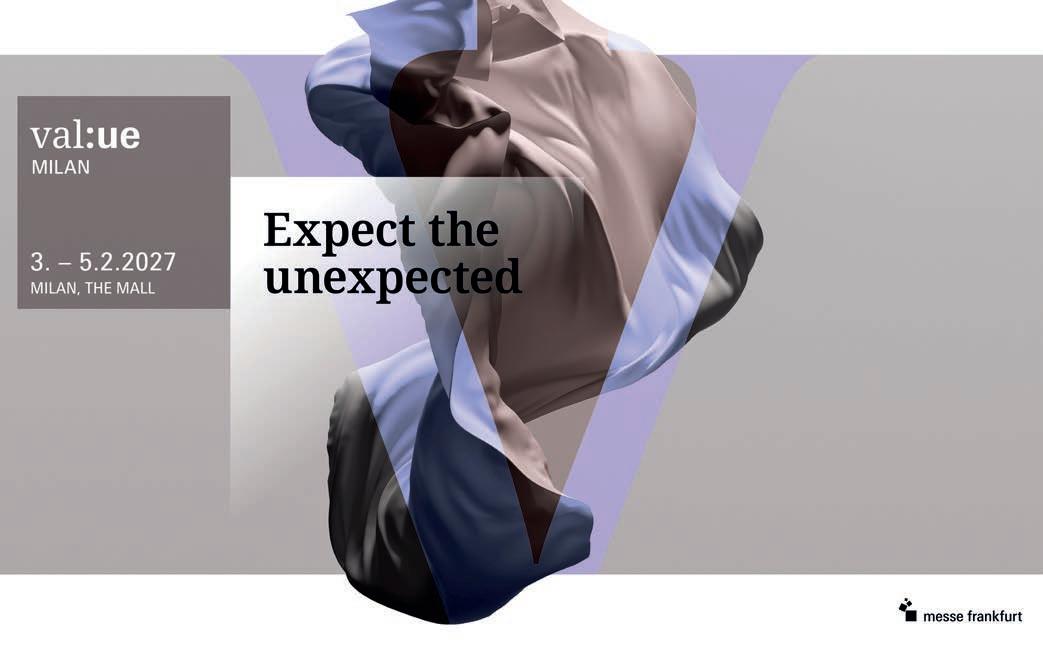
3. – 5.2.2027
MILAN, THE MALL
di Beatrice Guidi
IDENTITÀ È MATERIA IDENTITY IS MATERIAL www.webandmagazine.media
COVER STORY
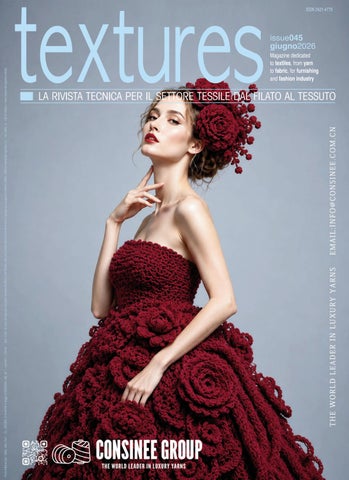
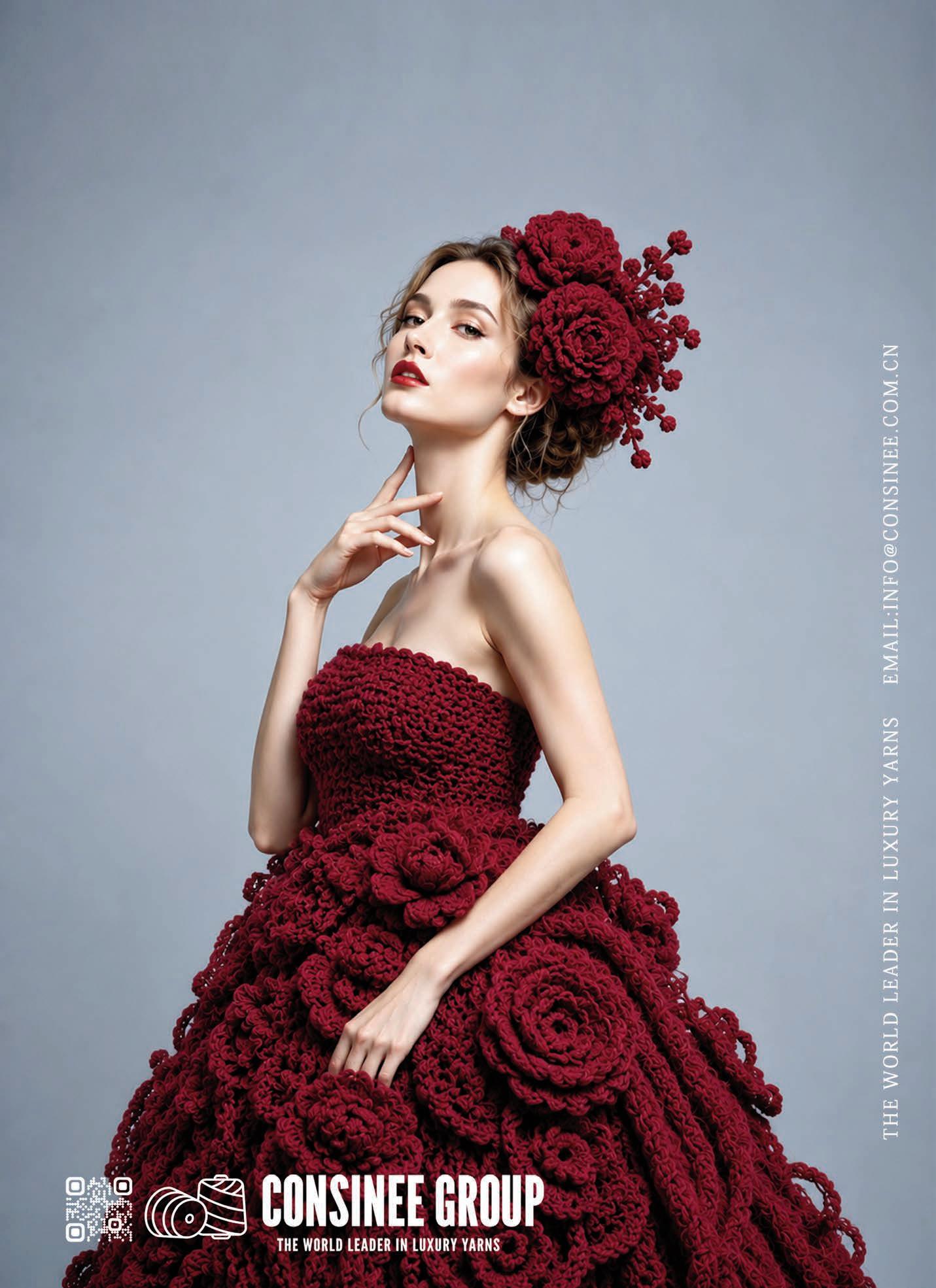
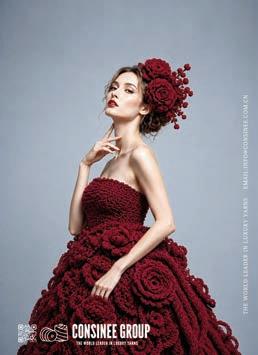
di Iacopo Lena CONSINEE GROUP
DEFINIRE UNA NUOVA ARTE TESSILE OLTRE I CONFINI
DEFINING NEW TEXTILE ART BEYOND BOUNDARIES www.consineecashmere.com/index
TOLLEGNO 1900
I MILLE VOLTI DELLA LANA THE MANY FACES OF WOOL www.tollegno1900.it
PERCORSI TESSILI
di Michelle Marzoli FILMAR ON COTTON ABOUT COTTON REGARDING COTTON FILMAR PRESENTS ITS EDITORIAL AND PHOTOGRAPHIC PROJECT AT PITTI FILATI 99 www.filmar.it
PERCORSI TESSILI
di Iacopo Lena ZEGNA BARUFFA LANE BORGOSESIA
TRACCIABILITÀ E NUOVI MATERIALI PER IL LUSSO TESSILE TRACEABILITY AND NEW MATERIALS FOR TEXTILE LUXURY www.baruffa.com
AREAGREEN
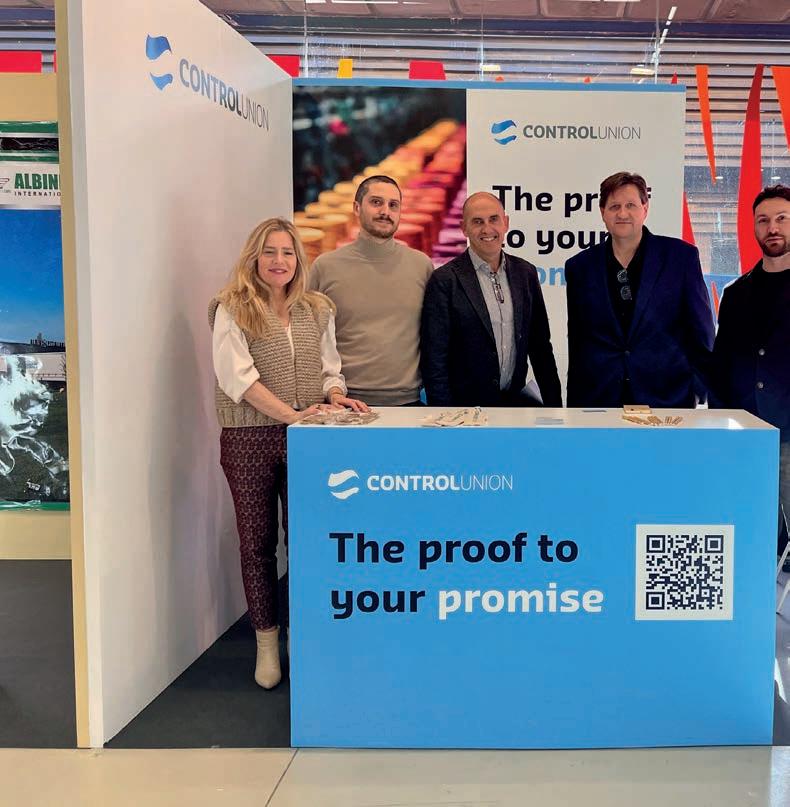
di Pietro Ferrari CONTROL UNION ORIZZONTI MONDIALI A GLOBAL DIMENSION FOR CONTROL UNION www.controlunionitalia.com
AREA DENIM
di Pietro Ferrari WOOLMARK FRANCESCO MAGRI FUORI DALL'OVVIETÀ
WOOL'S SECRET RESOURCES IN THE DEVELOPMENT OF DENIM www.woolmark.com
AREA DENIM
a cura della Redazione THE DURABILITY LAB: WHERE SCIENCE MEETS STYLE TO CREATE TOMORROW’S VINTAGE IL "VINTAGE DI DOMANI" NASCE DALLA RESILIENZA
WOOL'S SECRET RESOURCES IN THE DEVELOPMENT OF DENIM https://denim.premierevision.com
42 ART AND TEXTILE
di Paola Govoni
DALL’ARTE AL TESSUTO. DIALOGO TRA ARTE, MODA E INTERIOR DESIGN
DALL’ARTE AL TESSUTO. A DIALOGUE AMONG ART, FASHION, AND INTERIOR DESIGN
46 SCENARI
di Camilla Carrara FHCM
UN FRAMEWORK DI ARMONIZZAZIONE ESG
FHCM AND CNMI ANNOUNCED A SHARED ESG
HARMONIZATION FRAMEWORK TO SUPPORT THE FASHION SUPPLY CHAIN https://zerobarracento.com
48 AREA DENIM
di Pietro Ferrari SAMAB 2026
IL RUOLO STRATEGICO DELLE TECNOLOGIE DIGITALI THE STRATEGIC ROLE OF DIGITAL TECHNOLOGIES www.samab.it
54 EVENTI
di Beatrice Guidi
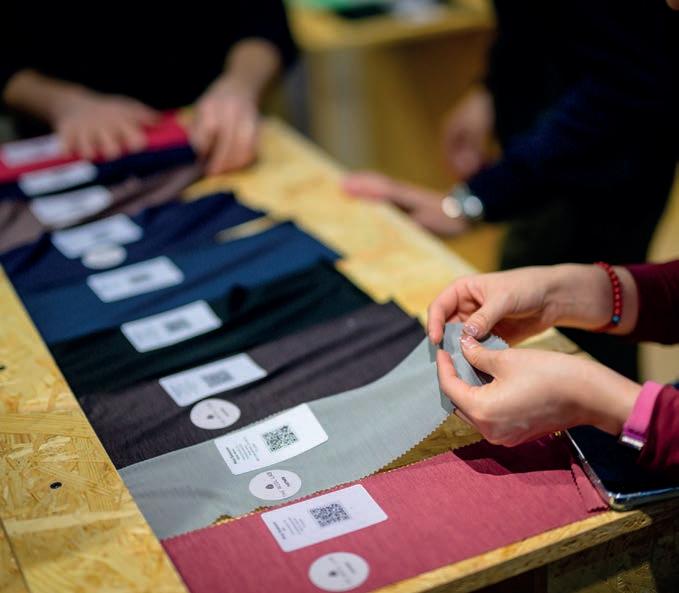
VAL:UE MILAN
NASCE VAL:UE MILAN
BORN VAL:UE MILAN
https://valuemilan.it.messefrankfurt.com
56 EVENTI
di Beatrice Guidi
PERFORMANCE DAYS
UN APPUNTAMENTO DA NON PERDERE THE FUTURE OF TEXTILE INNOVATION TAKES CENTER STAGE AT PERFORMANCE DAYS www.performancedays.com
58 AREA TECNOLOGIE
di Pietro Ferrari GRUPPO ACM NEXTPRINTING
PHILIPPE MIGNOT GIOCO DI SQUADRA PER LA QUALITÀ
MORE THAN JUST PRINTING, NEXTPRINTING OFFERS ITS CUSTOMERS A RANGE OF CREATIVE SOLUTIONS www.acmdettaglidimoda.it https://nextprinting.it
64 COLOURS
di Stefano Panconesi
IL GIOCO DELLE PARTI
THE FUTURE OF TEXTILE INNOVATION TAKES CENTER STAGE AT PERFORMANCE DAYS www.pancolori.eu
The
Securing the health of the land
Driving sustainability into textiles
writer Beatrice Guidi
IDENTITÀ È MATERIA
C’è un paradosso che attraversa le fiere di questa stagione: per parlare di futuro, torniamo alle origini. Non come gesto nostalgico, ma come strategia.
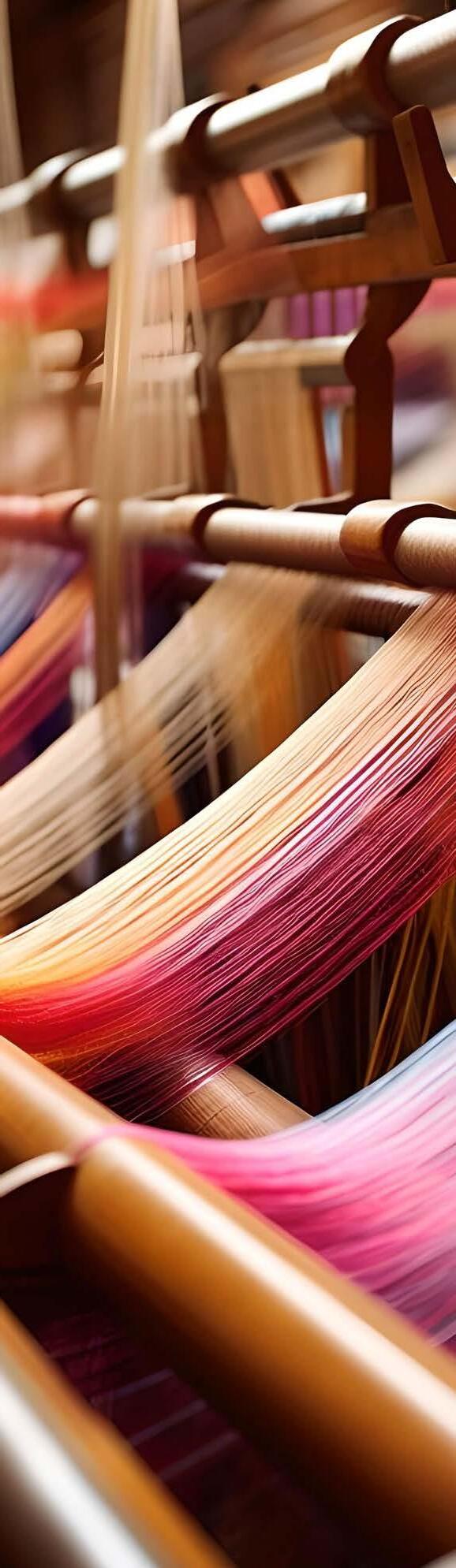
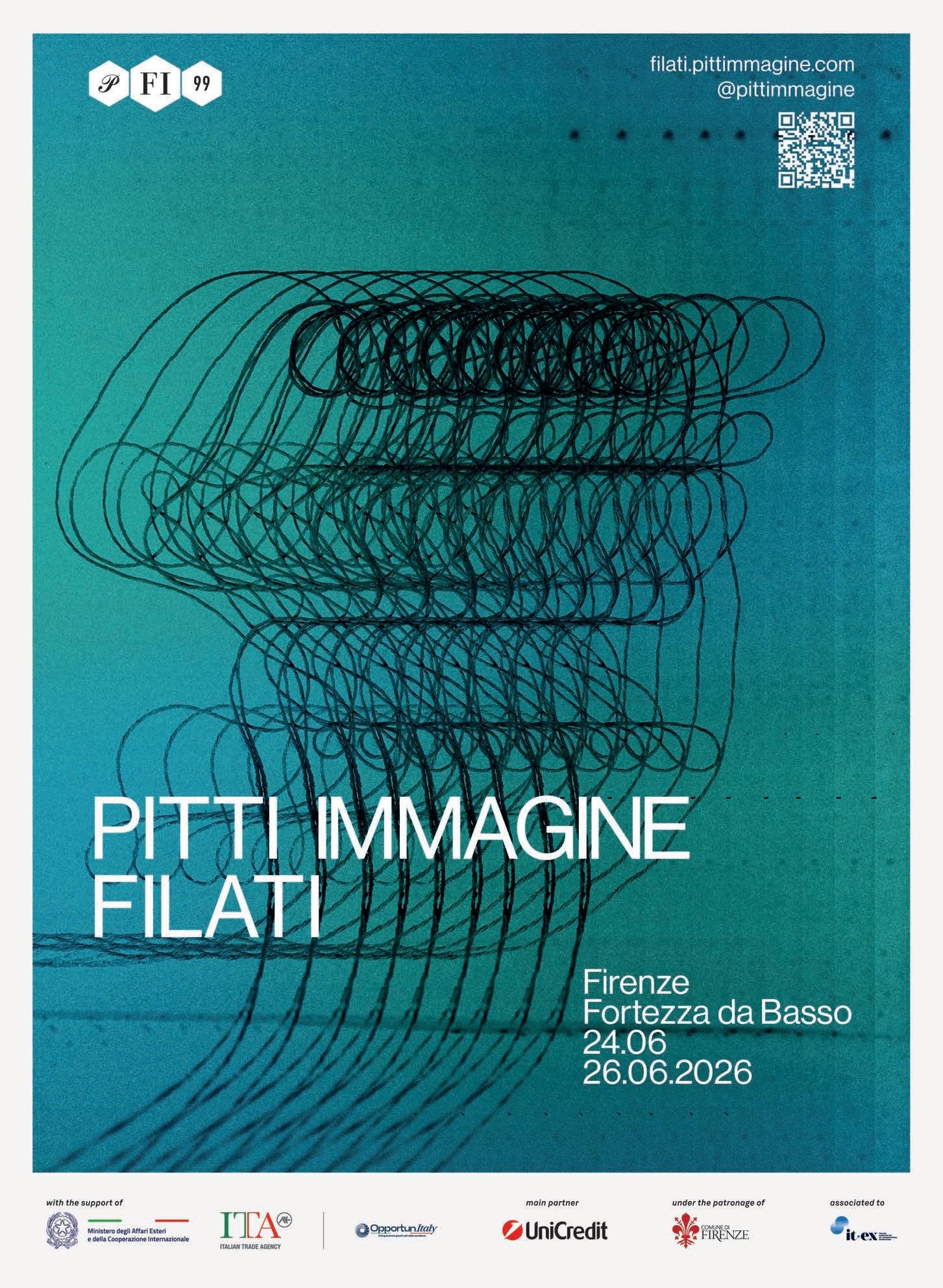
Lo racconta bene THE PITTI LOOM, il visual della 99ª edizione di Pitti Immagine Filati. Chris Vidal Tenomaa e Tuomas Laitinen scelgono il telaio come simbolo. Meccanico e poetico insieme. Un ingranaggio che è anche intreccio di linee, ci ricorda che l’innovazione vera non sostituisce il gesto, lo potenzia. E che la bellezza nasce quando la macchina serve la mano, non il contrario.
In un panorama sempre più dominato dalla standardizzazione, dove i codici del lusso vengono replicati fino a perdere significato, il gesto davvero rivoluzionario è creare qualcosa che non possa essere copiato. Realizzare un manufatto unico significa unire sapere artigianale, cultura del fare e tecnologie avanzate, dando vita a prodotti che conservano l'impronta dell'intelligenza e della sensibilità umana.
Da questa riflessione nasce il tema scelto da MILANO
IDENTITY IS MATERIAL
There is a paradox running through all this season’s trade fairs: to talk about the future, we return to our roots. Not as a nostalgic gesture, but as a strategy.
THE PITTI LOOM, the visual identity for the 99th edition of Pitti Immagine Filati, captures this well. Chris Vidal Tenomaa and Tuomas Laitinen have chosen the loom as their symbol. Both mechanical and poetic. A mechanism that is also an interweaving of lines, reminding us that true innovation does not replace the human touch, but enhances it. And that beauty arises when the machine serves the hand, not the other way round.
In a landscape increasingly dominated by standardisation, where the codes of luxury are replicated to the point of losing their meaning, the truly revolutionary act is to create something that cannot be copied. Creating a unique artefact means combining artisanal know-how, a culture of craftsmanship and advanced technologies, giving life to products that retain the imprint of human intelligence and sensitivity. From this reflection springs the theme chosen by MILANO UNICA for the
UNICA per le Collezioni Autunno-Inverno 2027/28: MU IS PUNK! HANDCRAFT IS PUNK! Il nuovo PUNK riscopre il valore della materia, del gesto manuale e dell'identità produttiva.
Oggi l'unica vera alternativa all'omologazione è coltivare la differenza. Come in natura, il valore risiede nella varietà, nelle imperfezioni, nelle identità irripetibili.
Da questa premessa nasce BOTANICA, il Concept Filo 66: il futuro non nasce dalla standardizzazione, ma dalla capacità di valorizzare conoscenze, competenze e identità produttive. Come una pianta cresce sviluppando caratteristiche uniche e irripetibili, così il manufatto contemporaneo acquisisce valore attraverso la qualità della materia, la cultura del fare e la sensibilità progettuale.
Con questo numero di TEXTURES saremo presenti a Pitti Immagine, Milano Unica e a FILO, per raccontare questo dialogo tra ricerca, manifattura e innovazione, là dove prendono forma le idee destinate a influenzare le collezioni future.
Autumn-Winter 2027/28 Collections: MU IS PUNK! HANDCRAFT IS PUNK! The new PUNK rediscovers the value of materials, manual craftsmanship and the identity of production.
Today, the only true alternative to standardization is to cultivate difference. As in nature, value lies in variety, in imperfections, and in unique identities.
It is from this premise that BOTANICA, the Filo 66 Concept, was born: the future does not stem from standardization, but from the ability to enhance knowledge, skills and manufacturing identities. Just as a plant grows by developing unique and unrepeatable characteristics, so too does the contemporary artefact acquire value through the quality of its materials, the culture of craftsmanship and design sensibility.
With this issue of TEXTURES, we will be present at Pitti Immagine, Milano Unica and FILO to explore this dialogue between research, craftsmanship and innovation – where ideas destined to influence future collections take shape.
writer Iacopo Lena www.consineecashmere.com/index
DEFINIRE UNA NUOVA ARTE TESSILE OLTRE I CONFINI
CONSINEE ANCORA UNA VOLTA CON SARA SOZZANI MAINO E GALIB GASSANOFF, UNA COLLABORAZIONE CHE SI RINNOVA IN OCCASIONE DI PITTI UOMO 110.
Dal 16 al 19 giugno 2026 a Firenze va in scena Pitti Uomo 110, uno dei più importanti eventi legati all’abbigliamento maschile. Consinee Group è tra i protagonisti internazionali della manifestazione, con un’installazione allestita in una nuova area in Fortezza – il Cavedio del Padiglione Centrale – in una rinnovata collaborazione con Sara Sozzani Maino e Galib Gassanoff. Si tratta di “Suspended Grounds: Textile becomes
surface. Surface becomes language”, un progetto che lavora sul confine tra fashion, tessuti e arte.
UNA RICERCA OLTRE IL CASHMERE
Il punto di partenza sono i tappeti, riletti come paesaggi tattili e culturali: la collezione si pone l’obiettivo di trasformare il materiale in sculture tridimensionali indossabili. Un progetto reso possibile grazie a tecniche innovative, da macchinari in grado di lavorare a maglia
in 3D fino a vere ricostruzioni manuali, che hanno garantito la creazione di circa quindici pezzi unici nel loro genere. «Questa stagione abbiamo scelto di spostare il progetto nel nuovo spazio Cavedio, al centro della Fortezza, perché volevamo presentare l’evoluzione della creatività e la visione globale di Consinee in una posizione più aperta e centrale» spiega Boris Xue, Chairman di Consinee. «Per noi, questa non è semplice-
mente una mostra, ma un passo importante all’interno della strategia a lungo termine della piattaforma creativa di Consinee. Attraverso questo progetto, speriamo di mostrare la forza dell’artigianalità tessile cinese, dell’innovazione e dello sviluppo dei materiali, aprendo al tempo stesso nuove possibilità per il futuro della creatività nel tessile e nella moda». Un’evoluzione che passa sia
dalla scelta dei materiali –oltre il classico cashmere con l’integrazione di lana, seta e altri blending – sia dalla scelta delle colorazioni, pensate per creare una palette essenziale ma visivamente incisiva.
La direzione artistica di Sara Sozzani Maino – Creative Director della Fondazione Sozzani – si affida nuovamente a Galib Gassanoff: costruire una nuova composizione visiva, in cui ogni pezzo viene concepito come una tela più che come un capo d’abbigliamento.
«Ogni pezzo è pensato per essere vissuto sia attraverso l’atto di indossarlo» racconta il designer «che attraverso l’osservazione, come un oggetto plasmato dal processo, dalla tensione e dalla memoria del materiale. Ho immaginato creazioni che conservassero tracce visibili della propria realizzazione, dove texture, struttura e irregolarità diventano parte del linguaggio visivo.
In questo modo, i capi esistono per essere osservati ed esperiti». Superfici più tradizionali e funzionali vengono trasformate e ricontestualizzate e attraverso il lavoro a
maglia si traducono in forme indossabili: i filati sostituiscono il pigmento, le tecniche si fanno pennellate. Una ricerca che si estende fino all’installazione, dove strutture in legno ispirate ai telai sospendono le opere nello spazio, permettendo a materia, struttura e artigianalità di diventare parte integrante dell’esposizione.
IL CLASSICO È ETERNO
Dal 24 al 26 giugno a Pitti Filati 99 Consinee lancia ufficialmente la nuova collezione Autunno/Inverno per la stagione 2027/28. Il concept è riassumibile in “il classico è eterno”: una collezione focalizzata sull’eleganza oldmoney e su texture vintage, con particolare attenzione al cashmere puro al 100%, al cashmere ecologico e al cashmere pettinato extrafine. Caratterizzato da trame distintive, tra cui i modelli in stile Donegal e una delicata luminosità ed effetti mélange sfumato, il marchio propone tessuti a maglia di alta qualità con caratteristiche quali resistenza alle pieghe, elasticità, lavabilità in lavatrice e proprietà termiche, interpretando il concetto contemporaneo di
“quiet luxury” attraverso materiali naturali e qualità raffinata.
UN GRUPPO
IN ESPANSIONE
Fondato a Ningbo nel 1999, il Gruppo Consinee è diventato un punto di riferimento mondiale nel settore del cashmere di lusso, rappresentando il 25–30% della produzione mondiale di filati
in puro cashmere, ed è da tempo uno dei principali fornitori di materie prime per i più prestigiosi marchi internazionali del lusso. Il gruppo registra risultati costanti, con una crescita del 30% su base annua nel 2025. Dal 2026, gli ordini globali sono più rapidi e con maggiori volumi di merci, determinando una crescita significativa nella prima
metà dell'anno. Impegnato nella sostenibilità, il gruppo adotta tinture ecocompatibili, processi a risparmio idrico, cashmere riciclato e materie prime tracciabili, con oltre il 30% della sua energia elettrica che proviene da impianti solari fotovoltaici.
In qualità di rappresentante della Cina in occasione di Pitti Uomo e Pitti Filati, Consinee dialoga con il mondo della moda attraverso l'artigianato, l'innovazione e la sostenibilità. Questa presentazione vuole da un lato dimostrare la forza creativa del marchio, dall’altro costruire un ponte tra l'estetica orientale e occidentale attraverso la cooperazione industriale.
DEFINING NEW TEXTILE ART BEYOND BOUNDARIES
Consinee once again with Sara Sozzani Maino and Galib Gassanoff , renewing a collaboration on the occasion of Pitti Uomo 110.
From June 16 to 19, 2026, Florence host Pitti Uomo 110, one of the leading events dedicated to menswear.
Consinee Group is among the international protagonists of the fair, with an installation set up in a new area of the Fortezza – the Cavedio of the Central Pavilion – as part of a renewed collaboration with Sara Sozzani Maino and Galib Gassanoff . The project, titled Suspended Grounds: Textile becomes surface. Surface becomes language, explores the boundary between fashion, textiles and art.
A RESEARCH PATH BEYOND CASHMERE
The starting point is the carpet, reinterpreted as a tactile and cultural landscape: the collection aims to transform material into wearable three-dimensional sculptures. The project was made possible through innovative techniques, ranging from 3D knitting machinery to manual reconstruction processes, resulting in around fifteen unique pieces.
«This season, we chose to move the project to the new Cavedio space, at the center of the Fortezza, because we wanted to present the evolution of Consinee’s creativity and global vision in a more open and central position» explains Boris Xue, Chairman of Consinee. «For us, this is not simply an exhibition, but an important step within the long-term strategy of Consinee’s creative platform. Through this project, we hope to showcase the strength of Chinese textile craftsmanship, innovation, and material development, while also opening up new possibilities for the future of creativity in textiles and fashion». This evolution is expressed both through the choice of materials – going beyond classic cashmere with the integration of wool, silk and other blends – and through the use of color, conceived to create an essential yet visually striking palette.
The artistic direction of Sara Sozzani Maino – Creative Director of Fondazione Sozzani – once again relies on Galib Gassanoff to
build a new visual composition, in which each piece is conceived more as a canvas than as a garment. «Each piece is meant to be experienced both through the act of wearing it» the designer says «and through observation, as an object shaped by process, tension, and the memory of the material. I imagined creations that would retain visible traces of their making, where texture, structure, and irregularity become part of the visual language. In this way, the garments exist to be observed and experienced». More traditional and functional surfaces are transformed and recontextualized, and through knitwear they become wearable forms: yarn replaces pigment, and techniques turn into brushstrokes. This research extends all the way to the installation itself, where wooden structures inspired by looms suspend the works in space, allowing material, structure and craftsmanship to become an integral part of the exhibition.
THE CLASSIC IS ETERNAL
From June 24 to 26, at Pitti Filati 99, Consinee officially launches its new Autumn/Winter 2027/28 collection. The concept can be summed up as “the classic is eternal”: a collection focused on old-money elegance and vintage textures, with particular attention to 100% pure cashmere, eco-friendly cashmere and superfine combed cashmere.
Characterized by distinctive textures, including Donegal-inspired styles, delicate luminosity and hazy mélange effects, the brand presents high-quality knitted fabrics with features such as wrinkle resistance, elasticity, machine washability and thermal properties, interpreting the contemporary concept of quiet luxury through natural materials and refined quality.
AN EXPANDING GROUP
Founded in Ningbo in 1999, Consinee Group has become a global point of reference in the luxury cashmere sector, accounting for 25–30% of the world’s pure cashmere yarn production and serving for years as one of the main raw material suppliers to the most prestigious international luxury brands. The group continues to achieve steady results, with 30% year-on-year growth in 2025. Since 2026, global orders have been arriving faster and in greater volumes, driving significant growth in the first half of the year. Committed to sustainability, the group adopts eco-friendly dyeing, water-saving processes, recycled cashmere and traceable raw materials, with more than 30% of its electricity coming from solar photovoltaic systems. As a representative of China at Pitti Uomo and Pitti Filati, Consinee engages with the fashion world through craftsmanship, innovation and sustainability. This presentation aims, on the one hand, to demonstrate the brand’s creative strength and, on the other, to build a bridge between Eastern and Western aesthetics through industrial cooperation.
I MILLE VOLTI DELLA LANA
WOOL JOURNEY 2027: I "VOLTI" DELLA COLLEZIONE TOLLEGNO 1900.
La storia di un’azienda si legge non solo nei suoi prodotti, ma anche nei volti delle persone che, quotidianamente, con il loro lavoro, contribuiscono alla sua crescita, rappresentandone l’anima e traducendone l’essenza più autentica.
Tollegno 1900 non è fatta solo dei filati che produce, ma di racconti personali, di momenti di condivisione e di spazi di confronto tra chi in fabbrica è spesso cresciuto.
Partendo da questo assoluto, Tollegno 1900 afferma la propria identità, sviluppando per il 2027/28 una collezione che è espressione dei suoi valori più puri e delle sue abilità produttive, della sua attenzione alla sostenibilità e della sua vocazione alla ricerca continua. Innovazione, creatività, sperimentazione si confermano così i pilastri di un wool journey in costante divenire, che della valorizzazione delle persone e
BALANCE.
CHROMA 3500.
FEELING HARMONY.
del rispetto della natura fa il suo centro (“In Harmony with nature” rimane il pay off del brand) e della cultura del benessere personale il suo obiettivo.
UN VIAGGIO
CHE VA “OLTRE” IL PRODOTTO
Se la lana è il “volto” principe di un viaggio di scoperta continuo, le persone sono quello di una storia più grande, fatta di mani e sguardi che si intrecciano nel tempo e costruiscono qualcosa che va oltre il prodotto.
A raccontarlo è lo stand presentato a Pitti Immagine Filati #99, in cui l’azienda prende voce attraverso le sue persone e dove ogni storia dà vita ad una narrativa senza tempo. Fatica, impegno, passione ed emozione si stemperano in frammenti di interviste, scritte ed interattive, proiettate in un uno spazio essenziale, dove ogni elemento restituisce l’anima di Tollegno 1900. Un viaggio immersivo in cui i “volti” delle persone sposano il paesaggio circostante, per-
mettendo al visitatore di cogliere la profonda connessione tra territorio-persone-prodotto in modo spontaneo e naturale. Non solo immagini, ma tracce di umanità che rendono visibile ciò che spesso resta invisibile.
UN PRODOTTO
IN COSTANTE EVOLUZIONE
Il wool journey di Tollegno 1900 non conosce così sosta, ma si proietta verso nuove mete rappresentate da filati capaci di interpretare i nuovi
bisogni dell’uomo contemporaneo e di leggere i cambiamenti del mondo.
Naturalità, rigenerazione, attenzione all’impatto ambientale sono i “volti” di una collezione che non manca di innovazione, affidata a nuove sperimentazioni, sia nei prodotti che nei colori. Il loro studio si delinea così come un processo creativo che va oltre l’individuazione delle singole cromie, divenendo ispirazionale.
Ne dà conferma il neonato “Chrome”, mulinè con ritorcitura appaiata capace di generare un effetto di maggiore omogeneità, fluidità e uniformità nella commistione delle nuance. Etereità e impalpabilità sono, invece, i tratti distintivi del neonato “Whisper” certificato RWS (100% Ultrafine Merino Wool), quint’essenza per leggerezza complice il suo micronaggio super light (15,5 micron). Naturalmente tecnica è invece la new entry “Balance” (45% Extrafine Merino Wool RWS Certified, 35% Cotton Organico e 20% poliammide riciclata), dal-
PURO VELLO.
EXPLORER.
l’aspetto compatto e piacevole al tatto. Sensazione quest’ultima che connota tutti i filati della linea “THE NT’S”, “volto” di una maglieria tattile ed emotivamente coinvolgente, in cui ogni superficie racconta
THE MANY FACES OF WOOL
una storia di calore, autenticità e sofisticazione contemporanea.
Spazio dunque a nuove versioni di filati storicamente parte del Collection Book“Free NT” e “Harmony NT” –
A company's history is revealed not only in its products, but also in the faces of the people who, every day, contribute to its growth through their work, representing its soul and translating its most authentic essence. Tollegno 1900 is not just about the yarns it produces, but also about personal stories, moments of sharing, and spaces for discussion among those who often grew up in the factory.
Starting from this absolute, Tollegno 1900 affirms its identity, developing a collection for 2027/28 that expresses its purest values and its production skills, its focus on sustainability, and its vocation for continuous research.
Innovation, creativity, and experimentation thus remain the pillars of an ever-evolving wool journey, centered on the valorization of people and respect for nature ("In Harmony with Nature" remains the brand’s pay-off), and the culture of personal well-being its goal.
A JOURNEY THAT GOES "BEYOND" THE PRODUCT
If wool is the main "face" of a continuous journey of discovery, people are part of a larger story, made of hands and gazes that intertwine over time and build something that goes beyond the product. This is told at the stand presented at Pitti Immagine Filati #99, where the company takes on a voice through its people and where each story gives life to a timeless narrative. Effort, commitment, passion, and emotion unite in fragments of inter-
e per nuove proposte, come “Sublime NT” e “Puro Vello NT” che, grazie alle loro caratteristiche, trovano la loro migliore espressione nell’infeltrimento.
I “volti” del Collection Book Tollegno 1900 raccontano però anche di tutti quei filati che, stagione dopo stagione, hanno saputo divenire iconici – “Harmony”, “New Royal”, “Feeling”, “Agreable”, “Sultano” – di quelli che si sono rinnovati in ottica green grazie all’uso di poliammide riciclata – “Nuage”, “Cosy” e “Marly” – e di quelli che, per vocazione, rappresentano l’attitudine sostenibile dell’azienda: “Biolino”, “Woolcot bio”, “Royalcot Bio” e “Flaxy”.
views, both written and interactive, projected into a simple space, where every element conveys the soul of Tollegno 1900. An immersive journey in which the "faces" of people blend with the surrounding landscape, allowing the visitor to grasp the profound connection between territory, people, and product in a spontaneous and natural way. Not just images, but traces of humanity that make visible what often remains invisible.
A CONSTANTLY EVOLVING PRODUCT
Tollegno 1900's wool journey thus knows no rest, but is projected toward new destinations represented by yarns capable of interpreting the new needs of contemporary man and interpreting the changes in the world.
Naturalness, regeneration, and attention to environmental impact are the "faces" of a collection that is not lacking in innovation, entrusted to new experiments, both in products and colors. Their study thus emerges as a creative process that goes beyond the identification of individual shades, becoming inspirational. This is confirmed by the newly created “Chrome,” a paired-twisted muline yarn that creates a more homogeneous, fluid, and uniform blend of shades. Etherealness and impalpability are the hallmarks of the newly created RWS-certified “ Whisper” (100% Ultrafine Merino Wool), the epitome of lightness thanks to its super-light micron (15.5 microns). Naturally technical, the new entry “Balance” (45% RWS-certified Extrafine Merino Wool, 35% organic cotton, and 20% recycled polyamide) has a compact appearance and a pleasant feel.
SLUB.
This sensation characterizes all the yarns in the “THE NT’S” line, the “face” of tactile and emotionally engaging knitwear, where every surface tells a story of warmth, authenticity, and contemporary sophistication. Thus, space is given to new versions of yarns historically part of the Collection Book – "Free NT" and "Harmony NT" – and to new offerings, such as "Sublime NT" and "Puro Vello NT," which, thanks to their characteristics, find their best expression in felting.
The "faces" of the Tollegno 1900 Collection Book also tell the story of all those yarns that, season after season, have become iconic – "Harmony," "New Royal," "Feeling," "Agreable," "Sultano " – of those that have been revamped with a green focus thanks to the use of recycled polyamide – "Nuage," "Cosy," and "Marly" – and of those that, by vocation, represent the company's sustainable approach: "Biolino," "Woolcot bio, "Royalcot Bio," and "Flaxy."
L'ESTATE DI LANA GATTO
A Pitti Filati #99 a presentare la sua proposta è anche Lana Gatto
Il brand che fa capo a Filatura di Tollegno 1900 presenta la nuova linea “ Lana Gatto Riviera ”, declinata sia in filati senza tempo che hanno con-
quistato le knit-addicted, sia nella collezione “Atelier Riviera”, per chi è alla ricerca di prodotti natural – chic per vestire il guardaroba della primavera/estate 2027. Collezione fresca, piena di colore, attenta alla naturalità ma sempre sensibile ai diktat della moda, che si tratti di filati ever-
green o di new entries, la collezione per l’estate è dedicata sia alle affezionate al tricot più classico, grazie a prodotti continuativi come “Nuovo Jaipur”, “Cablè 5”, “Silky” (100% seta), “ Cotton Soft”, “Cashcot ” (cashmere e cotone) e “Sugar ” (100% canna da zucchero), sia alle knit-addicted, attente alla
COLLEZIONE RIVIERA DI LANA GATTO.
TOLLEGNO 1900
www.tollegno1900.it
moda e, contemporaneamente, alla naturalità dei filati. A loro il brand del Gatto dedica proprio la linea “Lana Gatto Atelier Riviera”, celebrazione, per la prossima stagione calda, dei colori del mare, del profumo della salsedine, del bien vivre della Costa Azzurra anni ’60.
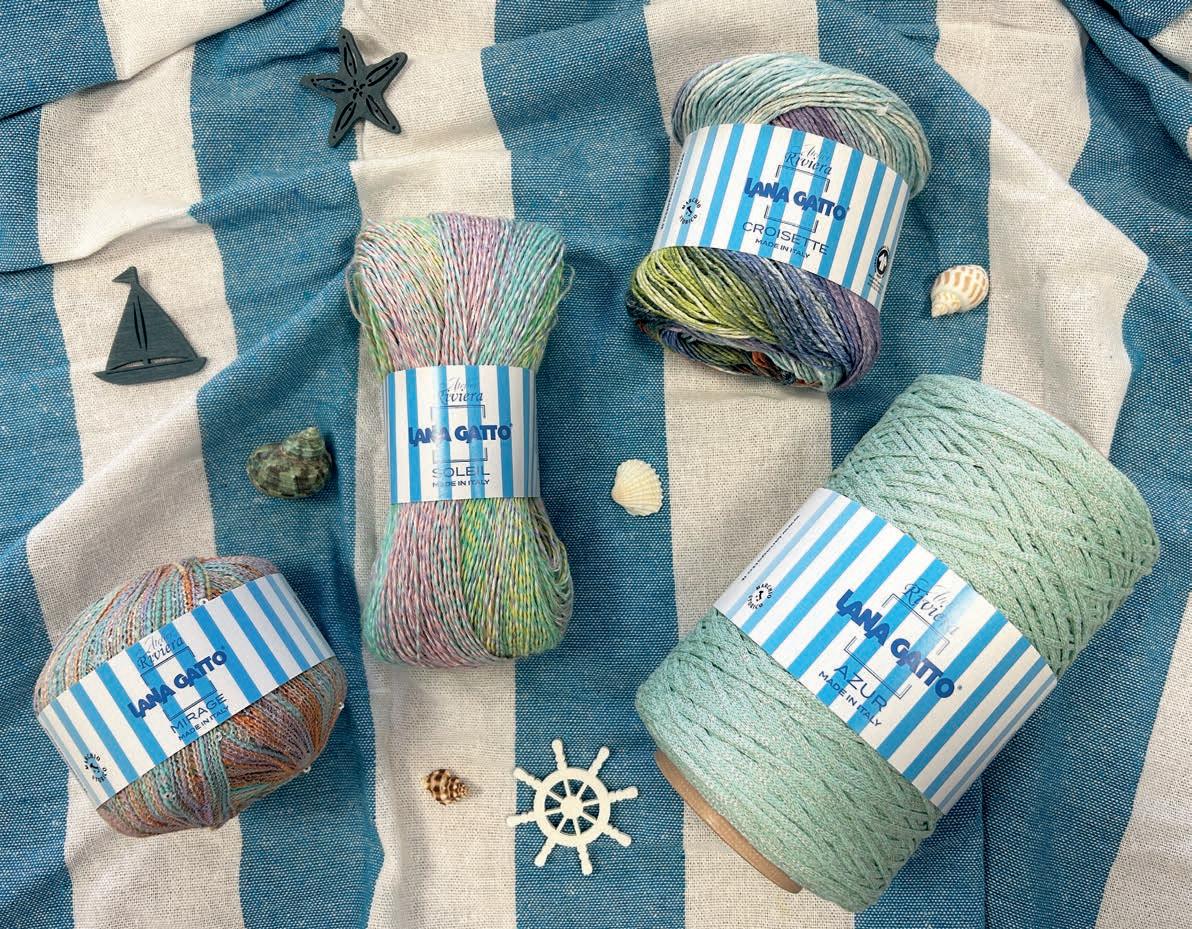
Per vestire la vita da spiaggia o le serate tra Saint Tropez, Nizza e Cannes, spazio dunque a sette nuovi filati capaci di abbinare la vocazione ”nature” alla verve “fashion ” come “Azur ”, perfetto per realizzare borse da sera grazie alla sua combo poliestere e cotone, “Mirage ”
che, grazie al mix tra cotone e poliammide con l’inserimento di paillettes argentate illumina i costumi o l’abbigliamento da spiaggia, e “ Plage ”, fettuccia in poliestere ideale per dare vita a borse super resistenti da sfoggiare sul bagnasciuga.
Promettono di dare scacco all’afa estiva, grazie ai loro filati naturali che non scendono a compromessi con lo stile, le proposte “Croisette” – filato dall’effetto rigato che elegge bambù, canapa e cotone biologico a interpreti dell’abbigliamento della bella stagione“ Promenade ”, la cui commistione di cotone, bambù e lino
si presta a realizzare kaftani, camicie oversize e capi da indossare nelle giornate al lido, e “Soleil”. Il binomio lino&cotone di questo filato dall’effetto moulinè a più colori ne fa il protagonista per accessori e abiti da sfoggiare non solo sul lungomare, ma sulla sabbia.
Sabbia a cui Lana Gatto dedica anche l’omonima proposta “ Sable ”, catenella multicolor cotone&viscosa che, complice la lucidità propria della viscosa, si presta a capi e accessori chic. Come sempre, tutti gli articoli sono 100% Made in Italy.
LANA GATTO'S SUMMER
Lana Gatto is also presenting its collection at Pitti Filati #99.
The brand, which is part of Filatura di Tollegno 1900, presents its new "Lana Gatto Riviera" line, featuring both timeless yarns that have won over knitters, and the "Atelier Riviera" collection, for those seeking naturalchic products to complement their Spring/Summer 2027 wardrobe.
A fresh, colorful collection, attentive to naturalness yet always sensitive to fashion trends. Whether evergreen yarns or new additions, the "Lana Gatto Riviera" collection is dedicated to both classic tricot enthusiasts, thanks to ongoing products like " Nuovo Jaipur ," " Cablè 5 ," "Silky" (100% silk), " Cotton Soft," " Cashcot " (cashmere and cotton), and " Sugar " (100% sugar cane), as
well as knitters who are attentive to fashion and, at the same time, to the naturalness of yarns.
To them, the Gatto brand dedicates the "Lana Gatto Atelier Riviera" line, a celebration, for the coming warm season, of the colors of the sea, the scent of salt, and the good life of the 1960s French Riviera.
To dress up beach life or evenings in Saint Tropez, Nice, and Cannes, make way for seven new yarns that combine a "natural" vocation with a "fashion" verve, such as " Azur ," perfect for making evening bags thanks to its polyester and cotton blend.
"Mirage," a blend of cotton and polyamide with silver sequins, brightens up swimsuits and beachwear, and "Plage," a polyester ribbon ideal for creating super-durable bags to show off on the shore.
" Croisette," a striped yarn that uses bamboo, hemp, and organic cotton to create warmweather apparel, "Promenade," a blend of cotton, bamboo, and linen perfect for creating kaftans, oversized shirts, and beachwear, and "Soleil ," promise to put a stop to the summer heat with their natural yarns that don't compromise on style.
The linen and cotton combination of this yarn, with its multi-colored mouliné effect, makes it the star of accessories and clothing to show off not only on the seafront, but on the sand. Lana Gatto also dedicates " Sable ," a multicolored cotton and viscose chain, to the theme of sand. which, thanks to the inherent sheen of viscose, lends itself to chic garments and accessories. As always, all items are 100% Made in Italy.
writer Michelle Marzoli www.filmar.it
ON COTTON ABOUT COTTON REGARDING COTTON
FILMAR PRESENTA A PITTI FILATI 99 IL PROGETTO EDITORIALE E FOTOGRAFICO.
Può una balla di cotone raccontare una storia che attraversa territori, persone, paesaggi e culture?
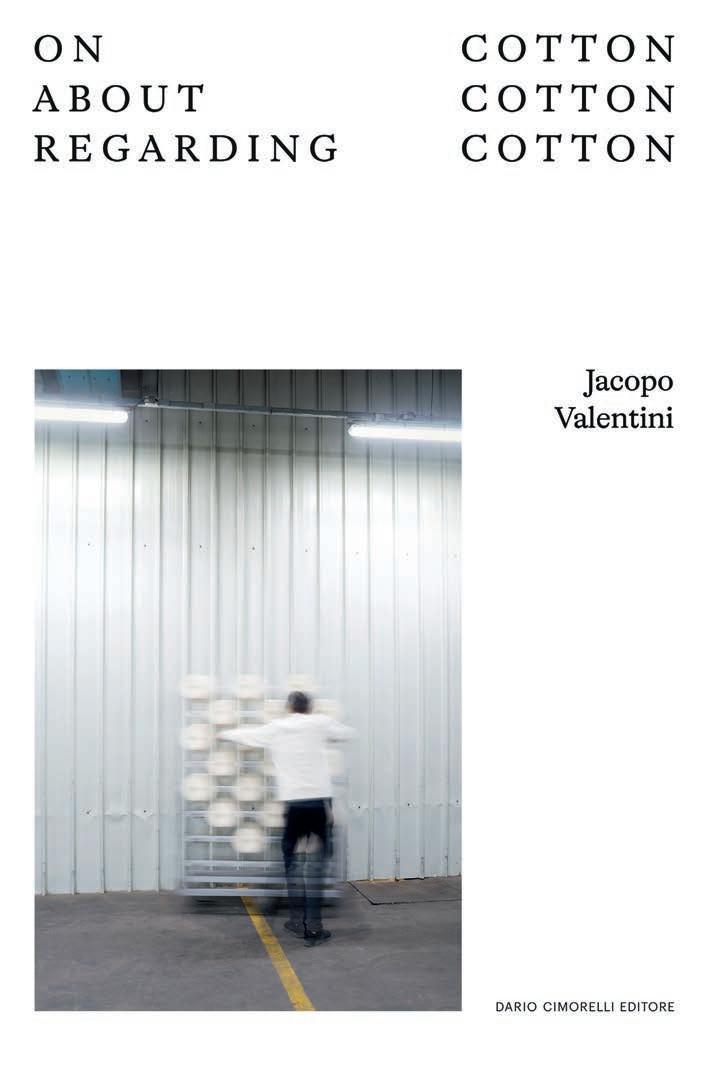
È da questa domanda che nasce On Cotton About Cotton Regarding Cotton, il progetto editoriale e fotografico
promosso da Filmar e realizzato con l’artista Jacopo Valentini
In occasione della 99ª edi-
zione di Pitti Immagine Filati, Filmar presenta il progetto attraverso una mostra fotografica allestita all’ingresso del proprio stand, visitabile per tutta la durata della manifestazione. L’esposizione raccoglie una selezione di immagini tratte dall’omonimo volume, pubblicato da Dario Cimorelli Editore e disponibile in libreria.
Per una filatura che da oltre sessant’anni lavora il cotone e ne conosce ogni sfumatura, il ricorso al linguaggio dell’arte contemporanea rappresenta una scelta coerente con il pro-
prio percorso. Da tempo Filmar affianca infatti alla ricerca sui filati un dialogo con arte, fotografia e cultura, considerati strumenti capaci di ampliare lo sguardo sulla materia e sulle relazioni che la rendono viva.
Alla base del progetto vi è la volontà di Enrico Marzoli, Vicepresidente di Filmar e Presidente di Filmar Nile Textile, di affidare il racconto dell’universo Filmar a uno sguardo esterno, libero dai codici della comunicazione industriale. «Abbiamo voluto raccontare il cotone attraverso uno sguardo
diverso da quello industriale. Il cotone è il cuore del nostro lavoro, ma è anche territorio, cultura, persone e relazioni.
Affidare questo racconto a un artista ci è sembrato il modo più efficace per restituirne la complessità».
Il progetto prende forma nel 2025, quando Jacopo Valentini, durante una residenza presso l’Istituto Italiano di Cultura del Cairo, entra in contatto con Filmar Nile Textile, sister company egiziana con sede a Borg El Arab, nei pressi di Alessandria. Da questo incontro nasce una
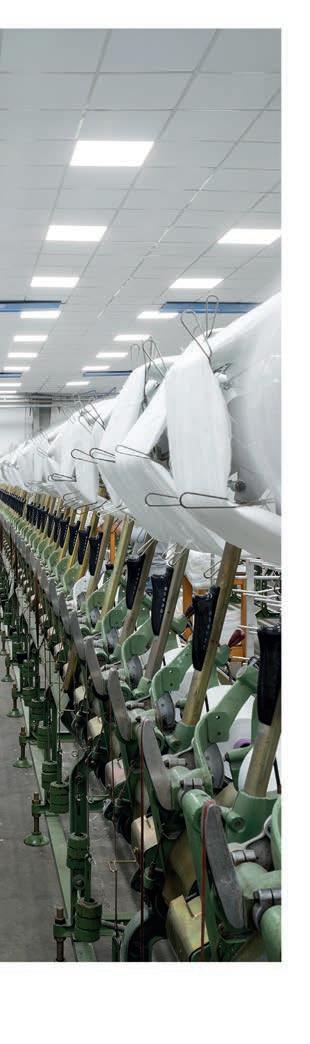
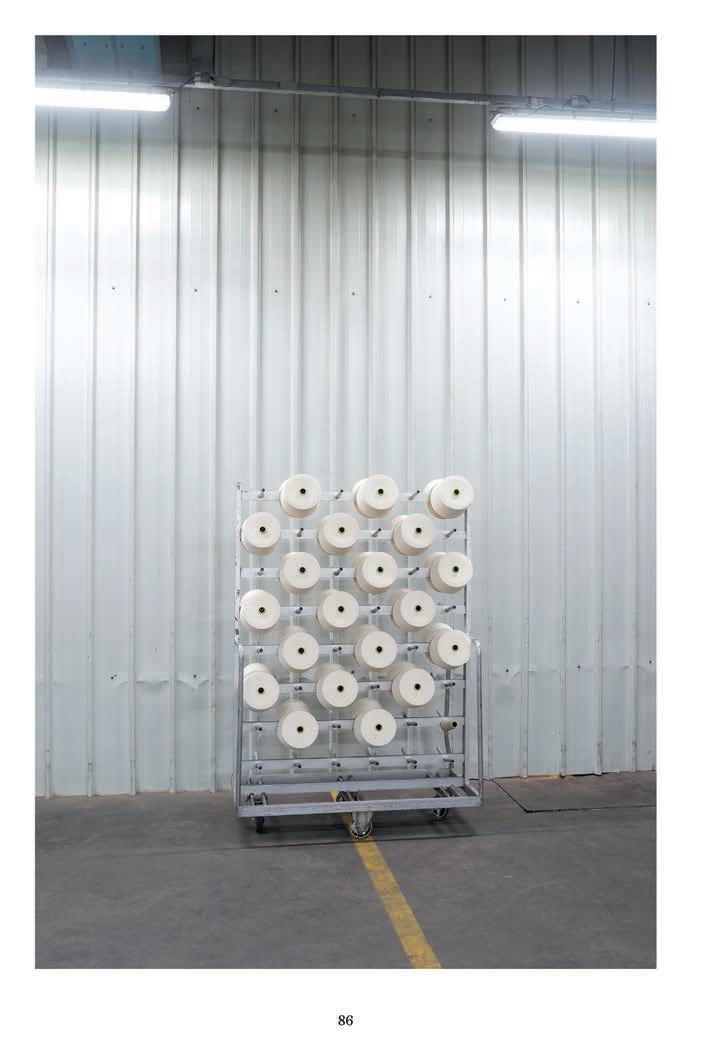
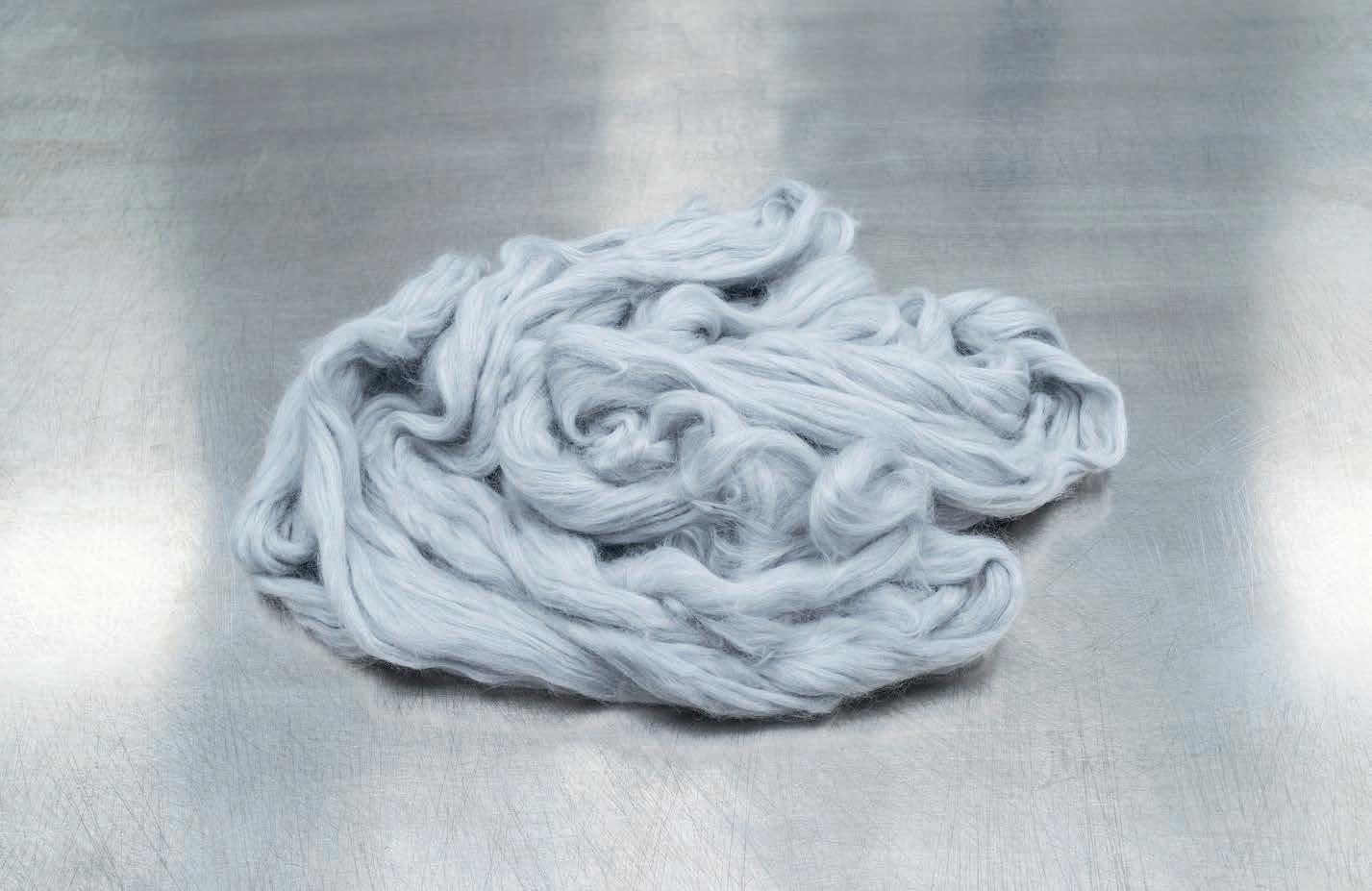
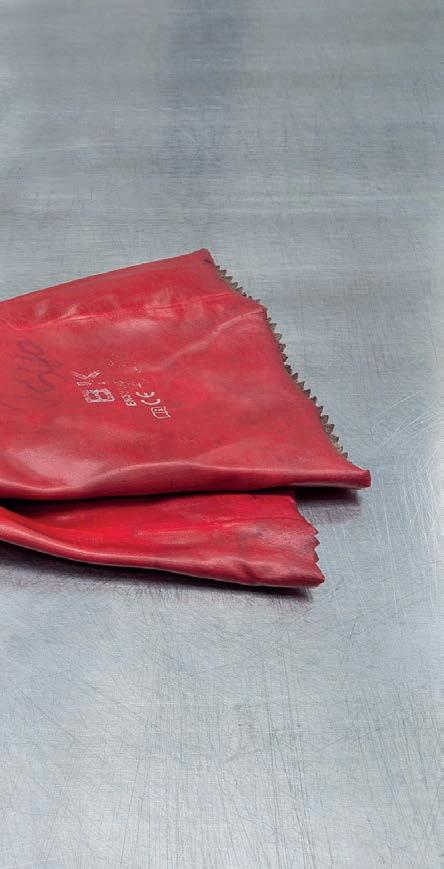
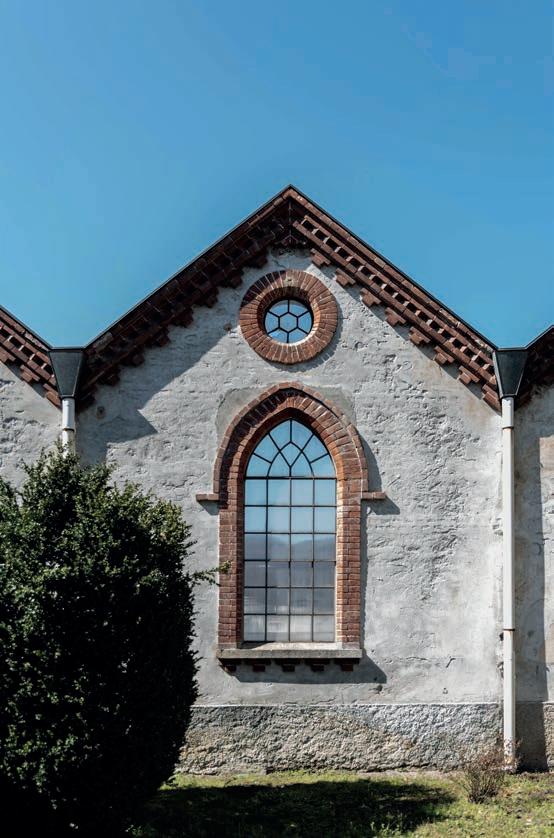
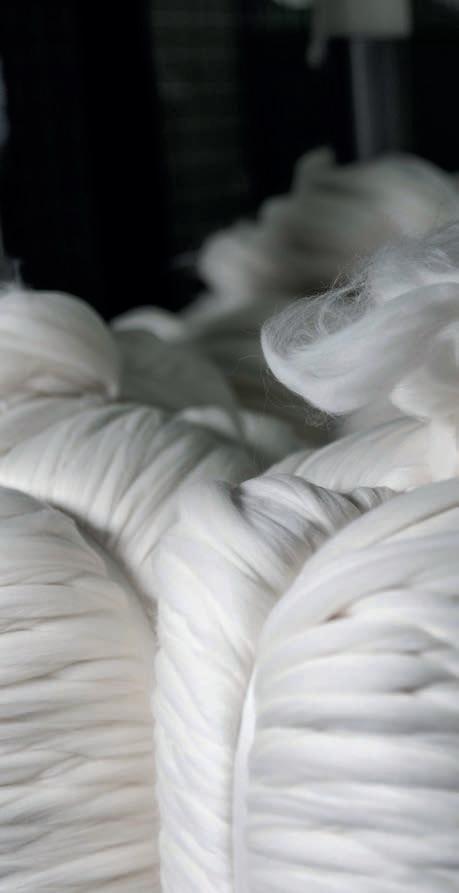
DA SINISTRA A DESTRA: COPERTINA DEL LIBRO - ON COTTON ABOUT COTTON REGARDING COTTON 2026 - DI IACOPO VALENTINI, PROMOSSO DA FILMAR - CIMORELLI EDITORE
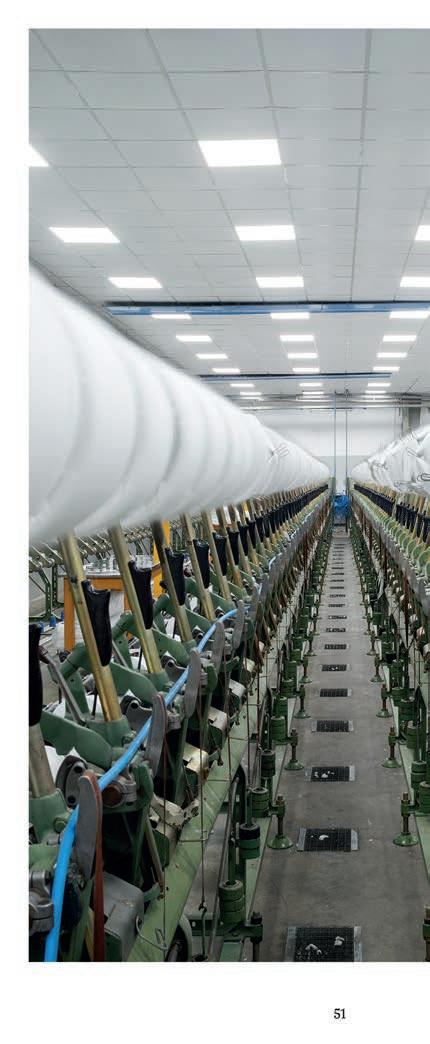
WINDING, 2026 FROM THE BOOK: ON COTTON ABOUT COTTON REGARDING COTTON – CIMORELLI EDITORE.
CREEL, 2026 FROM THE BOOK: ON COTTON ABOUT COTTON REGARDING COTTON – CIMORELLI EDITORE.
PH CREDIT JACOPO VALENTINI.
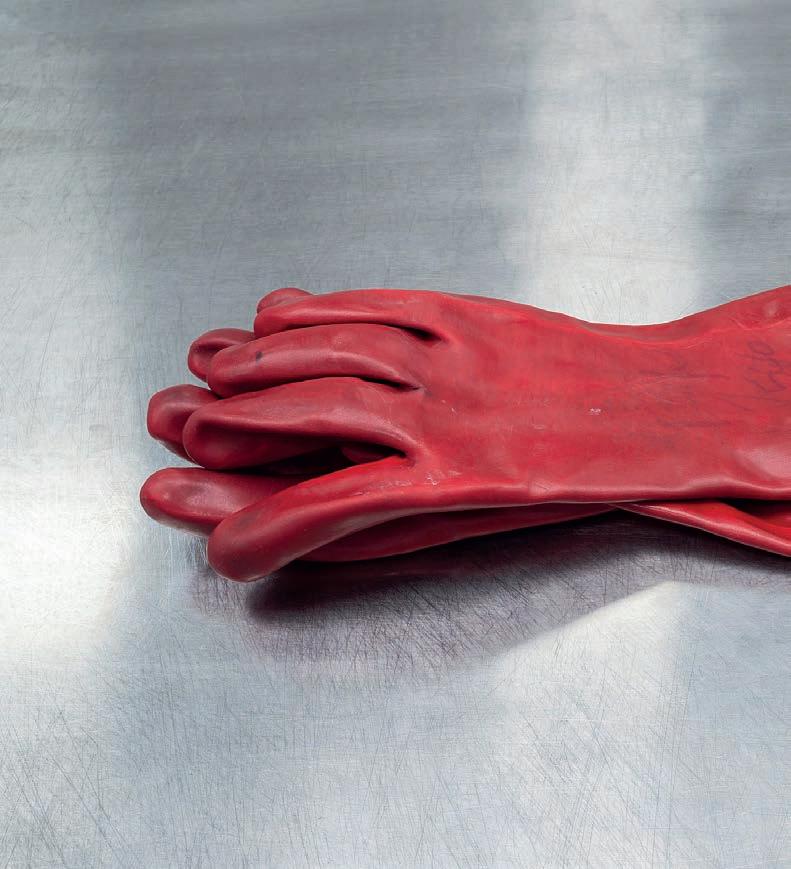
A DESTRA: GLOVES, 2026 FROM THE BOOK: ON COTTON ABOUT COTTON REGARDING COTTON – CI-
ricerca fotografica che attraversa spazi produttivi, paesaggi e architetture, soffermandosi anche su dettagli apparentemente marginali: frammenti che, nel loro insieme, restituiscono una lettura complessa del rapporto tra industria, territorio e identità. Il cotone diventa così non solo materia, ma strumento di narrazione. Un filo che unisce luoghi e persone, e che rende visibile il dialogo continuo tra Italia ed Egitto: una relazione fatta di manifattura, competenze, cultura e scambi che si rinnovano nel tempo.
Le immagini raccolte nel volume si collocano lontano dalla tradizionale fotografia industriale. Il lavoro di Valentini non documenta semplicemente un sito produttivo, ma ne interpreta il contesto umano e culturale, restituendo una dimensione più ampia e stratificata dell’industria tessile contemporanea.
IN ALTO: COTTON 2026 FROM THE BOOK: ON COTTON ABOUT COTTON REGARDING COTTON – CIMORELLI EDITORE.
MORELLI EDITORE.
PH CREDIT JACOPO VALENTINI.
Il volume è accompagnato da una conversazione tra Jacopo Valentini e il critico d’arte Carlo Sala, oltre che da un contributo di Francesca Marani, giornalista e autrice specializzata in moda e cultura contemporanea.
Note biografiche
Durante i giorni della manifestazione, i visitatori potranno inoltre ricevere un omaggio ispirato alle immagini del progetto.
Con On Cotton About Cotton Regarding Cotton, Filmar porta a Pitti Filati una rifles-
Jacopo Valentini (Modena, 1990) è un artista e fotografo italiano la cui ricerca indaga il rapporto tra paesaggio, memoria e identità. Attraverso fotografia, archivio e installazione sviluppa progetti che mettono in relazione luoghi, storia e immaginario contemporaneo.
Le sue opere sono state presentate in musei e istituzioni in Italia e all’estero.
Partner
Il progetto è realizzato con il supporto di:
Istituto Italiano di Cultura del Cairo, AlexBank – Gruppo Intesa Sanpaolo, UNIDO ITPO Italy, Egyptian Cotton Association, AICS – Agenzia Italiana per la Cooperazione allo Sviluppo.
sione sul valore culturale del cotone e sul sistema di relazioni che, attraverso una materia prima come il cotone egiziano, continuano a connettere le due sponde del Mediterraneo.
Carlo Sala è storico e critico d’arte contemporanea, curatore indipendente e docente. La sua attività di ricerca si concentra sulla fotografia contemporanea e sulle pratiche artistiche legate al paesaggio, alla memoria e all’immagine.
Francesca Marani è giornalista e autrice specializzata in moda, cultura e creatività contemporanea. Da anni si occupa del rapporto tra manifattura, territorio e innovazione.
Il progetto nasce dal dialogo tra industria, cultura e cooperazione internazionale, con l'obiettivo di valorizzare il patrimonio rappresentato dal cotone egiziano e le relazioni che uniscono Italia ed Egitto attraverso la filiera tessile, la creatività e lo sviluppo sostenibile.
FILMAR PRESENTS ITS EDITORIAL AND PHOTOGRAPHIC PROJECT AT PITTI FILATI 99
Can a bale of cotton tell a story that spans territories, people, landscapes and cultures?
It is from this question that ‘On Cotton About Cotton Regarding Cotton’ was born, the editorial and photographic project promoted by Filmar and created in collaboration with the artist Jacopo Valentini.
To mark the 99th edition of Pitti Immagine Filati, Filmar is presenting the project through a photographic exhibition set up at the entrance to its stand, which can be visited throughout the event.
The exhibition brings together a selection of images taken from the book of the same name, published by Dario Cimorelli Editore and available in bookshops.
For a spinning mill that has been working with cotton for over sixty years and knows every nuance of the material, the use of the language of contemporary art represents a choice consistent with its own journey. For some time now, Filmar has in fact complemented its research into yarns with a dialogue with art, photography and culture, considered tools capable of broadening the perspective on the material and the relationships that bring it to life.
At the heart of the project lies the vision of Enrico Marzoli, Vice-President of Filmar and President of Filmar Nile Textile, to entrust the story of the Filmar universe to an outside perspective, free from the conventions of corporate communication. ‘We wanted to tell the story of cotton through a perspective different from the industrial one. Cotton is at the heart of our work, but it is also about the local area, culture, people and relationships. Entrusting this story to an artist seemed to us the most effective way to convey its complexity.”
The project took shape in 2025, when Jacopo Valentini, during a residency at the Italian Cultural Institute in Cairo, came into contact with Filmar Nile Textile, an Egyptian sister company based in Borg El Arab, near Alexandria.
This encounter gave rise to a photographic exploration that traverses production spaces, landscapes and architecture, whilst also focusing on seemingly marginal details: fragments which, taken together, offer a complex interpretation of the relationship between industry, territory and identity.
Cotton therefore becomes not merely a material, but a narrative tool. A thread that connects places and people, and brings to light the ongoing dialogue between Italy and Egypt: a relationship built on manufacturing, expertise, culture and exchanges that are constantly renewed over time.
Biographical notes
Jacopo Valentini (Modena, 1990) is an Italian artist and photographer whose work explores the relationship between landscape, memory and identity. Through photography, archiving and installation, he develops projects that connect places, history and the contemporary imagination. His works have been exhibited in museums and institutions in Italy and abroad.
Carlo Sala is a historian and critic of contemporary art, an independent curator and a lecturer. His research focuses on contemporary photography and artistic practices linked to landscape, memory and the image.
Francesca Marani is a journalist and author specialising in fashion, culture and contemporary creativity. For many years she has been exploring the relationship between manufacturing, territory and innovation.
Scheda progetto
Titolo: On Cotton About Cotton Regarding Cotton; Artista: Jacopo Valentini; Editore: Dario Cimorelli Editore; Contributi: Carlo Sala, Francesca Marani; Presentazione: Pitti Immagine Filati 99; Date: 24–26 giugno 2026; Luogo: Stand Filmar G2-G4 – Fortezza da Basso, Firenze; Accesso: libero durante la manifestazione.
The images collected in this volume are a far cry from traditional industrial photography.
Valentini’s work does not simply document a production site, but interprets its human and cultural context, revealing a broader and more layered dimension of the contemporary textile industry.
The book is accompanied by a conversation between Jacopo Valentini and art critic Carlo Sala, as well as a contribution by Francesca Marani, a journalist and author specialising in fashion and contemporary culture. During the event, visitors will also be able to receive a free gift inspired by the project’s images.
With On Cotton About Cotton Regarding Cotton, Filmar brings to Pitti Filati a reflection on the cultural value of cotton and on the network of relationships that, through a raw material such as Egyptian cotton, continue to connect the two shores of the Mediterranean.
Partners
The project is carried out with the support of: Italian Cultural Institute in Cairo; AlexBank – Intesa Sanpaolo Group; UNIDO ITPO Italy; Egyptian Cotton Association; AICS – Italian Agency for Development Cooperation
The project stems from a dialogue between industry, culture and international cooperation, with the aim of promoting the heritage represented by Egyptian cotton and the ties that bind Italy and Egypt through the textile supply chain, creativity and sustainable development.
writer Iacopo Lena www.baruffa.com
TRACCIABILITÀ E NUOVI MATERIALI PER IL LUSSO TESSILE
Zegna Baruffa Lane Borgosesia accelera sul fronte della sostenibilità con un percorso che intreccia efficienza industriale, controllo della filiera e ricerca su nuovi materiali.
L’azienda tessile biellese lavora su un modello produttivo che punta a ridurre l’impatto ambientale senza mettere in discussione qualità, prestazioni
e identità di prodotto, mantenendo al centro filati iconici come CASHWOOL® e affiancandovi nuove sperimentazioni come PAPER WOOL, senza mai perdere d’occhio il legame con il proprio territorio.
RISULTATI MISURABILI DI UN PERCORSO TRASPARENTE
I numeri raccontano un avanzamento concreto: -9% di consumo di energia elettrica per unità di prodotto, -18% di prelievo idrico e -14% di rifiuti totali per unità di prodotto e rispetto al 2024, con il 90% di questi ultimi destinato a riciclo, riuso o recupero.
A questi risultati si affiancano gli interventi sul sito produttivo di Borgosesia, tra cui il primo impianto fotovoltaico, il relamping LED e un più ampio progetto di decarbonizzazione ed efficientamento energetico.
Parallelamente l’azienda ha avviato il calcolo della Organisation Environmental Footprint e della Product
Environmental Footprint su Cashwool®, ossia un percorso di misurazione dell’impatto ambientale sia a livello aziendale sia sul singolo prodotto, per valutare in modo
più preciso gli effetti delle proprie attività lungo tutta la catena del valore.
Accanto al lavoro sui processi produttivi, ZBLB sta rafforzando anche il controllo sulla filiera e sulla gestione delle sostanze chimiche utilizzate. L’azienda ha confermato il li-
vello “Excellence” nel protocollo CHEM 4Sustainability®, che valuta il modo in cui vengono selezionati, monitorati e gestiti i prodotti chimici lungo il processo produttivo. Inoltre, circa il 90% delle sostanze chimiche impiegate è registrato al Livello 3 sul Gateway ZDHC, il grado più alto di conformità previsto da questo sistema internazionale. Sul fronte della tracciabilità, Zegna Baruffa Lane Borgosesia ha ottenuto il livello “Excellence” anche della certificazione 4sustainability Chain, rafforzando così la possibilità di verificare provenienza, percorso e trasparenza delle materie prime lungo la catena di fornitura. Questa impostazione si riflette
TRAGUARDI RAGGIUNTI NEL 2025
anche nelle scelte di acquisto: il 98% delle materie prime utilizzate è composto da materiali naturali e rinnovabili , mentre il 42% dell’ordinato riguarda prodotti realizzati con fibre certificate secondo standard come RWS, Nativa Precious Fiber, Engraw – Land to Market e SFA cashmere, legati a temi come benessere animale, gestione responsabile dei pascoli, tutela degli ecosistemi e trasparenza verso il mercato.
COLLABORAZIONI INTERNAZIONALI E DIMENSIONE TERRITORIALE
Itoitex – realtà giapponese specializzata in ricerca tessile – e ZBLB hanno avviato una partnership da cui nasce PAPER WOOL, filato che combina lana merino e washi, una fibra di carta ottenuta dagli scarti della polpa delle conifere provenienti da foreste certificate FSC. Leggero, antibatterico e capace di regolare l’umidità, il materiale racconta di come la ricerca possa aprire nuove strade al tessile. «Per una realtà con 175 anni di storia, innovare non significa interrompere la tradizione ma anzi renderla contemporanea, e dunque usare
accumulato nel tempo per rispondere a nuove esigenze di mercato, nuove sensibilità ambientali e nuovi modelli di produzione» spiega Pietro Botto Poala, Sustainability Manager di Zegna Baruffa Lane Borgosesia
Gli occhi puntati non solo lontano, ma anche al proprio territorio, in una dimensione di socialità che l’azienda continua a legare alla propria sto-
ria. Il legame con le aree di Biella va oltre il mero rapporto geografico e si spinge in ambito sociale. Un esempio concreto è la partnership con Cascina Oremo, organizzazione attiva nel sostegno delle persone fragili nel biellese, che valorizza l’attenzione alla crescita della comunità locale. Altrettanto virtuoso il sostegno al progetto I Bambini delle Fate, realtà impegnata in iniziative
di inclusione sociale di bambini e adolescenti con difficolta cognitive. Il risultato è il profilo di un gruppo che prova a tenere insieme manifattura, innovazione di prodotto e responsabilità ambientale e sociale, in una fase in cui il tessile di fascia alta è chiamato a misurarsi sempre più apertamente con tracciabilità, materiali e impatto.
TRACEABILITY AND NEW MATERIALS FOR TEXTILE LUXURY
Zegna Baruffa Lane Borgosesia is accelerating its sustainability path through a strategy that combines industrial efficiency, supply-chain control and research into new materials. The Biella-based textile company is working on a production model aimed at reducing environmental impact without compromising quality, performance or product identity, keeping iconic yarns such as CASHWOOL® at its core while introducing new experiments like PAPER WOOL, without ever losing sight of its connection to its home territory.
MEASURABLE RESULTS FROM A TRANSPARENT PATH
The numbers show clear progress: a 9% reduction in electricity consumption per unit of product, an 18% reduction in water withdrawal and a 14% of total waste per unit of product compared with 2024, with 90% of that waste being directed to recycling, reuse or recovery. These results are accompanied by interventions at the Borgosesia production site, including the first photovoltaic system, LED relamping and a broader decarbonization and energy-efficiency project. At the same time, the company has started calculating the Organisation Environmental Footprint and the Product Environmental Footprint for Cashwool® — in other words, a structured process to measure environmental impact both at company level and on a single product, in order to assess more precisely the effects of its activities across the entire value chain.
Alongside its work on production processes, ZBLB is also strengthening control over the supply chain and the management of the chemicals used. The company has confirmed the “Excellence” level in the CHEM 4Sustainability® protocol, which assesses how chemi cal products are selected, monitored and managed throughout the production process. In addition, around 90% of the chemical sub stances used are registered at Level 3 on the ZDHC Gateway, the highest level of compliance under this international system. In terms of traceability, Zegna Baruffa Lane Borgosesia has also obtained the “Excellence” level in the 4sustainability Chain certi fication, strengthening its ability to verify the origin, path and tran sparency of raw materials along the supply chain. This approach is also reflected in purchasing choices: 98% of the raw materials used consist of natural and renewable materials, while 42% of orders involve products made with fibers certified according to standards such as RWS, Nativa Precious Fiber, Engraw – Land to
Market and SFA cashmere, all linked to issues such as animal welfare, responsible pasture management, ecosystem protection and transparency toward the market.
INTERNATIONAL COLLABORATIONS AND A TERRITORIAL DIMENSION
Itoitex – a Japanese company specialized in textile research –and ZBLB have launched a partnership that gave rise to PAPER WOOL, a yarn that combines merino wool and washi, a paper fiber obtained from waste pulp from conifer trees grown in FSCcertified forests. Lightweight, antibacterial and capable of regulating humidity, the material shows how research can open up new directions for textiles. “For a company with 175 years of history, innovating does not mean interrupting tradition, but rather making it contemporary, and therefore using the technical heritage accumulated over time to respond to new market demands, new environmental sensitivities and new production models,” explains Pietro Botto Poala, Sustainability Manager of Zegna Baruffa Lane Borgosesia. The company’s attention is not directed only outward, but also toward its own territory, in a social dimension that remains closely linked to its history. Its relationship with the Biella area goes beyond a simple geographical connection and extends into the social sphere. One concrete example is the partnership with Cascina Oremo, an organization active in supporting vulnerable people in the Biella area, which highlights attention to the growth of the local community. Equally significant is the support given to the project I Bambini delle Fate, an initiative engaged in the social inclusion of children and adolescents with cognitive difficulties. The result is the profile of a group trying to hold together manufacturing, product innovation, and environmental and social responsibility, at a time when the high-end textile sector is increasingly being called on to engage more openly with traceability, materials and impact.
writer Pietro Ferrari
ORIZZONTI MONDIALI
UNA DIMENSIONE GLOBALE PER CONTROL UNION.
Fondata in Olanda nel 1920 come società di ispezione a gestione familiare attiva prevalentemente nel settore delle granaglie, Control Union è cresciuta fino a diventare lo specialista locale e globale nelle ispezioni, certificazioni, gestione dei rischi e delle soluzioni logistiche. La rete di uffici dislocati in più di settanta Paesi in tutto il mondo rappresenta una delle maggiori risorse di Control Union.
Control Union Italia nasce allo scopo di servire il marcato italiano ed è configurata per rispondere alle sue esigenze specifiche. Abbiamo incontrato
Dott. Antonio Giuliano (General Manager Control Union Italia) insieme a Marco Pini (Responsabile Italia delle certificazioni dei prodotti tessili sostenibili) che cortesemente hanno risposto ad alcune domande per raccontare al settore tessile le potenzialità di questa grande e articolata organizzazione.
Pietro Ferrari - Control Union è organizzazione internazionale specializzata in servizi di ispezione, certificazione, test di laboratorio e gestione del rischio lungo l'intera catena di fornitura globale.
Come avete iniziato la vostra attività nel settore tessile?
Nel 2014 è subentrato un nuovo Direttore della Control Union Italia che ha lanciato i servizi di certificazione della Control Union in Italia. Presto l’area delle certificazioni del Tessile Sostenibile si è rivelata avere un grande potenziale in questo Paese considerata la posizione dominante della Control Union in questo settore a livello globale. Abbiamo quindi creato un team in grado di soddisfare una richiesta sempre crescente con una risposta celere e di qualità alle richieste di certificazione.
Pietro Ferrari - Quale importanza particolare riveste nel settore tessile la certificazione?
Il settore è storicamente affetto da importanti problemi di carattere sociale ed ambientale. Il consumatore è in modo crescente attento a queste tematiche, ed i brand del settore hanno necessità di dimostrare concretamente un percorso di due diligence. La certificazione è lo strumento per eccellenza per fornire garanzia tanto al brand quanto al consumatore. Inoltre la direttiva europea recentemente proposta a protezione del consumatore segnala la certificazione di ente terzo indipendente come strumento a garanzia di qualunque dichiarazione relativa alla sostenibilità del prodotto.
Pietro Ferrari - Quale posto riveste Control Union nelle procedure di certificazione?
Ci sono in questo processo 2 due attori principali:
• l’organismo proprietario dello schema di certificazione che studia e detta le regole per poter dichiarare un prodotto
“sostenibile”. Tali organismi accreditano gli enti di certificazione al rilascio del certificato. Richiedono inoltre che l’ente di certificazione ottenga l’accreditamento UNI/EN/ISO 17065 da parte degli enti di accreditamento nazionali che monitorano la corretta esecuzione del processo di certificazione, nonché l’indipendenza ed imparzialità dell’ente di certificazione;
• l’ente di certificazione, responsabile del processo di audit e di emissione del certificato.
La Control Union è un ente di certificazione indipendente accreditato UNI/EN/ISO 17065 per la grande maggioranza degli schemi di certificazione di sostenibilità del tessile. E ‘inoltre a livello globale l’organismo di certificazione che emette la maggioranza dei certificati nel settore con un’esperienza pluridecennale. Le unità facenti parte della filiera richiedono la certificazione.
La Control Union interviene con l’organizzazione della visita di audit, la finalizzazione del certificato e, quando l’unità inizia a commercializzare materiale certificato, con l’emissione dei Certificati di Transazione che garantiscono il controllo lungo tutta la filiera delle quantità di prodotto certificato che passano da un’unità all’altra per evitare il rischio di doppio conteggio dei volumi.
Pietro Ferrari - Non siamo in presenza di un eccesso e di una ridondanza di schemi certificativi nel settore tessile? Il settore è caratterizzato da una notevole complessità in termini di materie prime che ha comportato la creazione di
una molteplicità di schemi (es. lana con schemi di benessere animale vs cotone con schemi di agricoltura sostenibile o biologica vs fibre sintetiche con schemi relativi al riciclo delle plastiche, etc.). Ci sono tuttavia degli elementi comuni a tutti gli schemi che i proprietari degli schemi stanno cercando di armonizzare per diminuire la complessità. Certamente per chi opera con più materie prime il compito è più gravoso.
Pietro Ferrari - Come si affronta la procedura di certificazione in modo corretto e utile all'azienda interessata? È assolutamente necessario uno studio approfondito dello schema di certificazione, la preparazione di un manuale di procedure che soddisfi correttamente tutti i requisiti nonché l’implementazione delle procedure stesse. È molto importante che l’azienda nomini una persona con adeguate competenze come responsabile del processo di certificazione.
Pietro Ferrari - Come è strutturata in Italia Control Union? Nel nostro ufficio centrale di Roma si concentrano tutte le attività amministrative e di supporto. Per ottimizzare tempi e costi e la nostra capacità di rispondere prontamente ed in modo flessibile alle richieste, gli auditors sono residenti nelle aree geografiche vocate per questo settore (pratese, biellese, etc.).
Pietro Ferrari - Qual è il futuro della certificazione?
Riteniamo che essa assumerà un’importanza sempre più rilevante in questo settore per un corretto controllo della Due Diligence in tutte le fasi della filiera.
A GLOBAL DIMENSION FOR CONTROL UNION
Founded in the Netherlands in 1920 as a family-run inspection company primarily active in the grains sector, Control Union has grown to become a local and global specialist in inspections, certifications, risk management and logistics solutions. Its network of offices in over seventy countries worldwide represents one of Control Union's greatest assets. Control Union Italia was established to serve the Italian market and is configured to meet its specific needs. We met Dr Antonio Giuliano (General Manager of Control Union Italia) together with Marco Pini (Head of Sustainable Textile Certification for Italy) who kindly answered a few questions to explain the potential of this large and diverse organization to the textile industry.
Pietro Ferrari - Control Union is an international organization specializing in inspection, certification, laboratory testing, and risk management services across the entire global supply chain. How did you get started in the textile industry?
In 2014, a new Director of Control Union Italia took over, launching Control Union's certification services in Italy. Sustainable Textile certification quickly emerged as having great potential in this country, given Control Union's global leadership in this sector.
We therefore created a team capable of meeting the evergrowing demand with a rapid and high-quality response to certification requests.
Pietro Ferrari - What is the particular importance of certification in the textile sector?
The sector has historically been affected by significant social and environmental issues. Consumers are increasingly attentive to these issues, and brands in the sector need to concretely demonstrate a due diligence process. Certification is the ultimate tool for providing assurance to both brands and consumers. Furthermore, the recently proposed European consumer protection directive highlights certification by an independent thirdparty body as a means of guaranteeing any claims regarding product sustainability.
Pietro Ferrari - What role does Control Union play in certification procedures?
There are two main players in this process:
• the body that owns the certification scheme, which studies and establishes the rules for declaring a product "sustainable." These bodies accredit the certification bodies to issue the certificate. They also require the certification body to obtain UNI/EN/ISO 17065 accreditation from national accreditation bodies that monitor a proper execution of the certification process and the impartiality and independence
of the certification body.
• the certification body responsible for the auditing process and certificate issue.
Control Union is an independent certification body accredited to UNI/EN/ISO 17065 for the vast majority of textile sustainability certification schemes. Furthermore, it is the certification body that issues the majority of certificates in the sector globally, with decades of experience. Units in the supply chain require certification. Control Union intervenes by organizing the audit visit, finalizing the certificate, and, once the unit begins selling certified material, issuing Transaction Certificates. These certificates ensure control throughout the supply chain of certified product quantities passing from one unit to another, thus avoiding the risk of double counting.
Pietro Ferrari - Aren't we seeing an excess and redundancy of certification schemes in the textile sector?
The sector is characterized by considerable complexity in terms of raw materials, which has led to the creation of a multitude of schemes (e.g., wool with animal welfare schemes vs. cotton with sustainable or organic farming schemes vs. synthetic fibers with plastic recycling schemes, etc.). However, there are elements common to all schemes that the scheme owners are trying to harmonize to reduce complexity. Certainly, for those who work with multiple raw materials, the task is more onerous.
Pietro Ferrari - How can the certification process be approached correctly and effectively for the company involved?
A thorough study of the certification scheme, the preparation of a procedures manual that properly meets all requirements, and the implementation of the procedures themselves are essential. It is very important that the company appoints a person with appropriate skills to manage the certification process.
Pietro Ferrari - How is Control Union structured in Italy?
All administrative and support activities are concentrated in our central office in Rome. To optimize time and costs and our ability to respond promptly and flexibly to requests, auditors are based in the geographic areas most dedicated best suited to this sector (Prato, Biella, etc.).
Pietro Ferrari - What is the future of certification? We believe it will become increasingly important in this sector for proper due diligence at all stages of the supply chain. We believe it will become increasingly important in this sector for proper monitoring of due diligence practices at all stages of the supply chain.
Therefore, a global dimension and a network of professionals are needed to address the certification challenges of the future.
z e r o b a r r a c e n t o . c o m
ZERO-WASTE OUTERWEAR OUTSIDE OF GENDER, AGE & TIME
Ph Giulia Napoli
writer Pietro Ferrari www.
FUORI DALL'OVVIETÀ
LE RISORSE SEGRETE DELLA LANA NELLO SVILUPPO DEL DENIM.
Incontriamo a Milano nei giorni di Denim PV a maggio Francesco Magri, Regional Manager, Central & Eastern Europe di Woolmark. Parliamo con lui di un'evoluzione che oggi vede la lana utilizzata con successo nel confezionamento dei jeans.
Textures - Come è nata l'iniziativa di proporre la lana come supporto tessile per i denim?
Francesco Magri - Il denim nasce storicamente come tessuto in cotone, principalmente per ragioni funzionali e produttive. Non dobbiamo dimenticare che le sue origini sono legate al mondo del workwear: un prodotto progettato per essere resistente, durevole e adatto all’utilizzo quotidiano. Dalla metà degli anni ’90, soprattutto grazie al contributo di aziende italiane come Diesel e Replay, il denim ha iniziato però una profonda evoluzione. Non è stato più interpretato soltanto come capo da lavoro, ma come un vero prodotto lifestyle, capace di entrare nel mondo della moda e dell’espressione personale. Pensiamo ai trattamenti iconici introdotti da Diesel o all’interpretazione più femminile e sensuale proposta da marchi come Miss Sixty La prima grande rivoluzione del denim è arrivata attraverso le forme, i volumi e i fit: da simbolo del workwear , basti pen-
sare agli iconici Levi’s 501, il denim è diventato un linguaggio dello streetwear e della moda contemporanea. Il passo successivo è stato quello della ricerca sui blend di fibre, per introdurre nuove performance, nuove sensazioni tattili e una diversa estetica del capo. I primi sviluppi hanno coinvolto materiali come lino e canapa; negli ultimi dieci anni, però, grazie all’evoluzione tecnologica delle filature e alla crescente consapevolezza dei consumatori rispetto ai benefici della lana, come termoregolazione, traspirabilità, comfort e qualità del drappeggio, la lana è diventata una delle fibre più interes-
santi da integrare nel mondo del denim. Oggi la lana permette di combinare il carattere autentico del denim con un’estetica più sofisticata e una performance elevata. Ed è proprio questa combinazione che il consumatore contemporaneo ricerca sempre di più nell’abbigliamento urbano: prodotti versatili, premium e capaci di accompagnare diversi momenti della giornata. Per questo motivo Woolmark investe da oltre dieci anni nella ricerca e nello sviluppo del denim in lana e misto lana, collaborando con alcuni dei principali attori della filiera tessile globale per promuovere soluzioni innovative.
Nel tempo sono stati sviluppati progetti con brand internazionali, da Levi’s a Max Mara, con l’obiettivo di dimostrare come la lana possa aprire nuove possibilità all’interno di una delle categorie più iconiche dell’abbigliamento.
Oggi, anche grazie alla crescente richiesta del mercato, Woolmark ha rafforzato il proprio impegno sull’innovazione nel denim in lana, lavorando con partner internazionali per accelerare lo sviluppo di nuove costruzioni tessili e nuove applicazioni per il futuro del denim.
Textures - Quali sono i punti di forza che rendono preferibile la lana per il denim e in quali casi?
Francesco Magri - La lana, rispetto ad altre fibre, possiede caratteristiche performanti intrinseche e naturali, come la traspirabilità e la capacità di termoregolazione. Sono proprietà che lavorano in modo dinamico insieme al corpo e che contribuiscono a migliorare il comfort durante l’utilizzo del capo.
Nell’immaginario collettivo il denim in lana viene spesso associato automaticamente a un utilizzo invernale. In realtà, è proprio nelle situazioni opposte che la lana può esprimere uno dei suoi maggiori vantaggi. Inserita in blend con il cotone, la lana può contribuire a rendere il tessuto più fresco, più traspirante e più confortevole, soprattutto nelle stagioni più calde e nei contesti di utilizzo urbano quotidiano. Quando invece si parla di costruzioni denim sviluppate interamente in lana, emerge una dimensione ancora diversa.
Un esempio è il lavoro sviluppato insieme a Max Mara: un tessuto che mantiene il linguaggio estetico e l’identità visiva del denim, ma introduce una mano, un drappeggio e una morbidezza completamente nuovi. Il risultato è un capo che conserva il carattere del denim tradizionale ma con
un livello di comfort e di eleganza decisamente superiore.
Se dovessi riassumere in una parola il principale contributo della lana nel denim, direi sicuramente comfort: un comfort che si traduce sia in una migliore gestione della temperatura sia in una sensazione di morbidezza e benessere durante tutto il ciclo di utilizzo del capo.
Textures - Come si inserisce la certificazione Woolmark nel prodotto denim?
Francesco Magri - La certificazione Woolmark è strettamente legata alla qualità sia della fibra sia del prodotto finito. Oltre a verificare la composizione e il contenuto effettivo di lana presenti nel capo, il sistema di certificazione Woolmark valuta una serie di requisiti prestazionali e qualitativi per garantire che il prodotto mantenga standard elevati nel tempo.
AREA DENIM WOOLMARK
Tra gli aspetti oggetto di verifica rientrano, ad esempio, la resistenza del tessuto, la stabilità dimensionale e il comportamento al restringimento, oltre alle performance del colore rispetto all’esposizione alla luce e ai lavaggi.
Le certificazioni Woolmark si applicano a prodotti che rispettano specifici requisiti di contenuto di lana e standard tecnici definiti per le diverse categorie di prodotto. Parallelamente, osservando il cre-
WOOL'S SECRET RESOURCES IN THE DEVELOPMENT OF DENIM
scente interesse del mercato verso il denim in lana e misto lana, stiamo lavorando con i partner della filiera per valutare approcci e protocolli sempre più mirati a supportare lo sviluppo e la valorizzazione di questa categoria emergente Da un punto di vista ambientale c'è un vantaggio nell'utilizzo della lana?
Textures - Quando si parla di sostenibilità è importante evitare semplificazioni: non esi-
We met Francesco Magri, Regional Manager, Central & Eastern Europe at Woolmark, in Milan during Denim PV in May. We spoke with him about an evolution that sees wool successfully used in jeans today.
Textures - How did the initiative to offer wool as a textile support for denim come about?
Francesco Magri - Denim historically originated as a cotton fabric, primarily for functional and production reasons. We must not forget
ste una fibra “perfetta” e ogni valutazione dovrebbe sempre essere fatta con un approccio scientifico, considerando il ciclo di vita completo del prodotto.
Francesco Magri - Detto questo, la lana presenta alcune caratteristiche che la rendono particolarmente interessante da un punto di vista ambientale. Innanzitutto è una fibra naturale e rinnovabile, che ricresce ogni anno come parte del ciclo biologico dell’animale. È una fibra totalmente biodegradabile e riciclabile.
C’è poi un tema che oggi consideriamo sempre più rilevante: la durata del prodotto. La lana può contribuire alla realizzazione di capi pensati per essere utilizzati più a lungo nel tempo, un aspetto sempre più centrale quando si parla di consumo responsabile.
Infine, grazie alle sue proprietà naturali di gestione dell’umidità, del comfort e degli odori, in alcuni contesti di utilizzo la lana può anche contribuire a ridurre la frequenza dei lavaggi, con un potenziale beneficio nella fase d’uso del capo.
that its origins are tied to the world of workwear: a product designed to be resistant, durable, and suitable for everyday use. Since the mid-1990s, thanks in large part to the contribution of Italian companies like Diesel and Replay, denim has undergone a profound evolution. It is no longer seen solely as a workwear garment, but as a true lifestyle product, capable of entering the world of fashion and personal expression. Think of the iconic treatments introduced by Diesel or the more feminine and sensual interpretation offered by brands like Miss Sixty. The first major revolution in denim came through its shapes, volumes, and fits: from a symbol of workwear – just think of the iconic Levi's 501 – denim has become a language of streetwear and contemporary fashion.
The next step was research into fiber blends, introducing new performances, new tactile sensations, and a different aesthetic for the garment. Initial developments involved materials such as linen and hemp; over the past decade, however, thanks to technological advances in spinning and growing consumer awareness of the benefits of wool, such as thermoregulation, breathability, comfort, and drape, wool has become one of the most exciting fibers to integrate into the world of denim. Today, wool allows you to combine the authentic character of denim with a more sophisticated aesthetic and high performance. And it is precisely this combination that contemporary consumers increasingly seek in urban clothing: versatile, premium products capable of accompanying different moments of the day.
For this reason, Woolmark has been investing in the research and development of wool and wool-blend denim for over a decade, collaborating with some of the leading players in the global textile supply chain to promote innovative solutions. Over time, projects have been developed with international brands, from Levi's to Max Mara, with the aim of demonstrating how wool can open up new possibilities within one of the most iconic clothing categories. Today, thanks in part to growing market demand, Woolmark has strengthened its commitment to innovation in wool denim, working with international partners to accelerate the development of new textile constructions and new applications for the future of denim.
Textures - What are the strength points that make wool preferable for denim, and in which cases?
Francesco Magri - Wool, compared to other fibers, possesses intrinsic and natural performance characteristics, such as breathability and thermoregulation. These properties work dynamically with the body and contribute to improved comfort during wear. In the collective imagination, wool denim is often automatically associated with winter use. In fact, it's precisely in these opposite situations that wool can unleash one of its greatest advantages. Blended with cotton, wool can help make the fabric cooler, more breathable, and more comfortable, especially in warmer seasons and in everyday urban environments. When it comes to denim constructions developed entirely in wool, a completely different dimension emerges. One example is the work developed with Max Mara: a fabric that maintains the aesthetic language and visual identity of denim, but introduces a completely new feel, drape, and softness. The result is a garment that retains the character of traditional denim but with a decidedly superior level of comfort and elegance. If I had to summarize wool's main contribution to denim in one word, I would definitely say comfort: a comfort that translates into both improved temperature management and a feeling of softness and well-being throughout the garment's life cycle.
Textures - How does Woolmark certification fit into denim products?
Francesco Magri - Woolmark certification is closely linked to the quality of both the fiber and the finished product. In addition to verifying
the composition and actual wool content of the garment, the Woolmark certification system evaluates a series of performance and quality requirements to ensure the product maintains high standards over time. Aspects verified include, for example, fabric strength, dimensional stability, and shrinkage behavior, as well as color performance with respect to light exposure and washing. Woolmark certifications apply to products that meet specific wool content requirements and technical standards defined for the various product categories. At the same time, observing the growing market interest in wool and wool-blend denim, we are working with supply chain partners to evaluate increasingly targeted approaches and protocols to support the development and valorization of this emerging category.
Textures - From an environmental perspective, is there an advantage to using wool?
Francesco Magri - When discussing sustainability, it is important to avoid simplifications: there is no "perfect" fiber, and any assessment should always be made with a scientific approach, considering the complete life cycle of the product.
That said, wool has some characteristics that make it particularly interesting from an environmental perspective. First of all, it is a natural and renewable fiber, which regrows every year as part of the animal's biological cycle. It is a completely biodegradable and recyclable fiber. Then there's a topic we consider increasingly relevant today: product durability. Wool can contribute to the creation of garments designed to be used longer, an increasingly central aspect when it comes to responsible consumption. Finally, thanks to its natural moisture management, comfort, and odor management properties, in some contexts, wool can also help reduce the frequency of washing, potentially benefiting the garment's use phase.
IL "VINTAGE DI DOMANI" NASCE DALLA RESILIENZA
IL
RACCONTO DEL DURABILITY LAB A DENIM PV
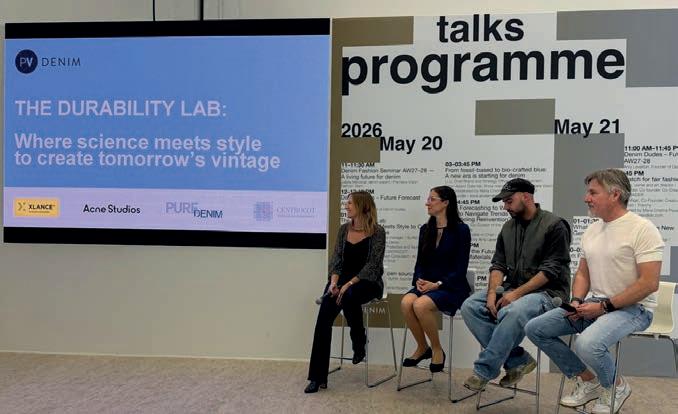
Il fascino di un jeans non sta nella sua perfezione da vetrina, ma nella storia che sa raccontare nel tempo. Oggi la vera sfida del settore è proprio questa: permettere al denim di invecchiare fino a diventare il “vintage di domani”. Una sfida non solo estetica, ma soprattutto tecnica. Il 20 maggio, durante il DENIM PV MILANO, la tavola rotonda “The Durability Lab: Where Science Meets Style to Create Tomorrow’s Vintage ” ha affrontato un interrogativo ormai imprescindibile: la vera sostenibilità coincide con la durabilità? Acquistare un capo capace di resistere al tempo rappresenta, infatti, il primo e più potente atto di responsabilità del consumatore. Oggi il mondo del denim vive
un paradosso: pretendiamo che un jeans sia bellissimo, ma non ci importa che duri. Costa così poco che siamo già mentalmente proiettati al prossimo acquisto, pronti a scartare quello vecchio. È un ciclo continuo che alimenta montagne di rifiuti incontrollati. Ma come si spezza questa catena? Ovviamente nessuno possiede una bacchetta magica per cambiare da un giorno all'altro le abitudini di acquisto delle persone. Durante l'incontro si è cercato però di capire come sia possibile creare un capo capace di sfidare il tempo: un denim progettato per durare, in grado di resistere anche ai processi industriali e ai lavaggi più stressanti, passando in rassegna tutti gli step della filiera produttiva.
L'INIZIO DI TUTTO:
UNA MOLECOLA
CHE SFIDA IL FUTURO
Per capire come nasce un tessuto indistruttibile si è partiti dall'origine, dalla fibra.
Melissa D’Innella, Responsabile Commerciale di XLANCE® ha spiegato come la loro fibra elastica stia letteralmente riscrivendo le regole del gioco. Non si parla del solito elastomero: XLANCE® è nata per resistere al calore e alla chimica senza perdere la memoria della sua forma originale. Ma la vera rivoluzione presentata sul palco riguarda lo sviluppo bio-circolare del brand. In XLANCE® sono riusciti a trasformare l'olio vegetale esausto, recuperato dalla ristorazione professionale, in un polimero hi-tech.
A differenza dei biocarburanti, che bruciano lo scarto esaurendone il valore, questa tecnologia nobilita la materia prima attraverso una sintesi molecolare che azzera la dipendenza dalle fonti fossili, senza rubare terreno all'agricoltura. La mano del tessuto resta naturale, la resilienza è la stessa del polimero vergine, ma l'impronta ambientale si abbatte drasticamente ottenendo così l’ingrediente base: una fibra praticamente indistruttibile.
DALLA FIBRA
AL TESSUTO: L'ARTE
DELLA TRASFORMAZIONE
Questa molecola d'avanguardia va poi saputa lavorare. Ed è qui che entra in gioco la produzione tessile, in questo caso specifico curata da PureDenim. Presente al tavolo del dibattito, Luigi Caccia, titolare dell’azienda, ha portato la sua esperienza. Tradurre una fibra così tecnica in un denim premium è un gioco di perfetto equilibrio.
Luigi Caccia ha confermato come i loro test interni abbiano evidenziato una stabilità delle performance straordinaria sul lungo periodo: anche dopo lavorazioni industriali invasive, utilizzi prolungati e infiniti lavaggi domestici, la tela conserva l'elasticità e la struttura iniziale. La tecnologia XLANCE® permette al denim di mantenere intatta la propria identità e funzionalità nel tempo, superando di netto i limiti strutturali dello stretch tradizionale, che spesso cede dopo pochi mesi di utilizzo. Caccia ha inoltre affermato che un tessuto prodotto con la fibra XLANCE® si termofissa a basse temperature, garantendo un risparmio energetico e una riduzione importante di emissioni in fase produttiva.
IL DESIGN SENZA LIMITI
E IL "VINTAGE DI DOMANI"
Spesso i look straordinari e vissuti ideati dagli uffici stile si scontrano con la dura realtà dei lavaggi industriali. Se il tessuto di partenza contiene fibre elastiche fragili, queste si degradano e si "snervano" sotto lo stress dei trattamenti, costringendo i designer a compromessi che finiscono per appiattire l'originalità dell'idea
iniziale. D'altro canto, la tecnologia da sola rischia di rimanere fredda se priva di visione artistica. Su questo delicato equilibrio è intervenuto Jacopo Antonello, Denim Wash Consultant per Acne Studios, portando il punto di vista dei brand e la sua profonda conoscenza dei processi di finissaggio. Sapere di poter contare su una fibra capace di resistere intatta alle alte temperature e ai trattamenti più spinti elimina un enorme limite progettuale. Cancellare questo vincolo tecnico significa liberare davvero la creatività degli uffici stile, permettendo loro di esprimersi al cento per cento. Il risultato è un cerchio che si chiude perfettamente: il designer non deve più frenarsi e il cliente finale riceve un capo strutturalmente indistruttibile, fatto per durare nel tempo e capace di trasformarsi, un domani, in un pezzo di autentico vintage.
LA PROVA DEI FATTI: LA PAROLA ALLA SCIENZA
Nel percorso tracciato non potevano bastare le sole dichiarazioni d'intenti: servivano i dati. Elena Conti di Centrocot, centro indipendente di test, certificazione e ricerca applicata nel settore tessile, ha portato sul palco i risultati di uno studio comparativo rigoroso. Il protocollo ha messo sotto torchio un denim realizzato con XLANCE® e uno con spandex
tradizionale, sottoponendoli a 30 cicli intensivi di lavaggio domestico e asciugatura in tumbler, seguiti da stress meccanici di flessione e trazione per valutarne la memoria elastica. I grafici hanno parlato chiaro: dove lo spandex comune cede e mostra deformazioni permanenti, XLANCE® mantiene una stabilità dimensionale e un recupero della forma ottimi. Fornire dati scientifici e misurabili è l’unico modo per dare a brand e produttori gli strumenti per fare scelte consapevoli, e per garantire al consumatore finale una trasparenza reale sulla qualità di ciò che acquista.
LA VERA SOSTENIBILITÀ È UN CAPO CHE DURA
Alla fine della tavola rotonda, la sensazione condivisa è emersa forte e chiara: la durabilità non è negoziabile, è la forma più pura di sostenibilità. Un capo che non si deforma, non si rompe e mantiene intatta la sua estetica è un prodotto che non finirà in discarica e diventerà parte della nostra storia. Quando la scienza tessile incontra lo stile e la visione etica, il cerchio si chiude perfettamente. È così che il denim torna a fare quello che gli riesce meglio: resistere al tempo e trasformarsi in un pezzo unico che cambia, matura e vive insieme a noi.
THE "VINTAGE OF TOMORROW" IS BORN OF RESILIENCE: THE DURABILITY LAB'S STORY AT DENIM PV
On May 20th, during DENIM PV MILANO, the roundtable discussion "The Durability Lab: Where Science Meets Style to Create Tomorrow's Vintage" addressed a now essential question: does true sustainability coincide with durability? Buying a garment capable of standing the test of time represents, in fact, the first and most powerful act of consumer responsibility. Today, the world of denim is experiencing a paradox: we expect jeans to be beautiful, but we don't care if they last. They cost so little that we're already mentally focused on the next purchase, ready to throw away the old one. It's a continuous cycle that fuels mountains of uncontrolled waste. But how do we break this chain? Of course, no one has a magic wand that can change people's purchasing habits overnight. During the meeting, however, we sought to understand how it's possible to create a garment capable of defying time: denim designed to last, capable of withstanding even the most demanding industrial processes and washes, reviewing every step of the production chain.
THE BEGINNING OF IT ALL: A MOLECULE THAT CHALLENGES THE FUTURE
To understand how an indestructible fabric is born, we started at the origin, the fiber.
Melissa D'Innella, Sales Manager for XLANCE®, explained how their elastic fiber is literally rewriting the rules of the game. We're not talking about the usual elastomer: XLANCE® was created to resist heat and chemicals without losing the memory of its original shape. But the real revolution presented on stage concerns the brand's bio-circular development. At XLANCE®, they've succeeded in transforming used vegetable oil, recovered from professional catering, into a high-tech polymer. Unlike biofuels, which burn waste, depleting its value, this technology ennobles the raw material through a molecular synthesis that eliminates dependence on fossil fuels, without taking land away from agriculture. The fabric's feel remains natural, its resilience is the same as that of virgin polymer, but the environmental footprint is drastically reduced, resulting in the basic ingredient: a virtually indestructible fiber.
FROM FIBER TO FABRIC: THE ART OF TRANSFORMATION
This cutting-edge molecule must then be processed. And this is where textile production comes in, in this specific case handled by PureDenim. Luigi Caccia, owner of the company, was present at the discussion table and shared his experience. Translating such a technical fiber into premium denim is a game of perfect balance.
Luigi Caccia confirmed that their internal tests have shown extraordinary long-term performance stability: even after invasive industrial processing, prolonged use, and countless home washes, the canvas retains its elasticity and initial structure. XLANCE® technology allows denim to maintain its identity and functionality over time, significantly overcoming the structural limitations of traditional stretch, which often fails after just a few months of use. Caccia also stated that a fabric produced with XLANCE® fiber heat-sets at low temperatures, ensuring energy savings and a significant reduction in emissions during production.
LIMITLESS DESIGN AND THE "VINTAGE OF TOMORROW"
The extraordinary, lived-in looks conceived by style studios often clash with the harsh reality of industrial washing. If the starting fabric contains fragile elastic fibers, these degrade and become "unnerved" under the stress of the treatments, forcing designers to make compromises that ultimately diminish the originality of the initial idea. On the other hand, technology alone risks remaining cold without artistic vision.
Jacopo Antonello, Denim Wash Consultant for Acne Studios, addressed this delicate balance, bringing the brands' perspective and his in-depth knowledge of finishing processes.
Knowing you can count on a fiber capable of withstanding high temperatures and the most demanding treatments intact eliminates a huge design limitation. Removing this technical constraint truly frees the creativity of design studios, allowing them to express themselves fully. The result is a perfectly closed circle: the designer no longer has to hold back, and the end customer receives a structurally indestructible garment, made to last over time and capable of transforming, one day, into an authentic vintage piece.
THE PROOF OF THE FACTS: LET SCIENCE SPEAK
In the path we've mapped out, declarations of intent alone aren't enough: we need data. Elena Conti of Centrocot, an independent testing, certification, and applied research center in the textile sector, presented the results of a rigorous comparative study.
The protocol put denim made with XLANCE® and denim made with traditional spandex to the test, subjecting them to 30 intensive home washing and tumble drying cycles, followed by mechanical bending and tensile stress tests to assess their elastic memory.
The graphs spoke clearly: where traditional spandex sags and exhibits permanent deformation, XLANCE® maintains excellent dimensional stability and shape recovery. Providing scientific and measurable data is the only way to give brands and manufacturers the tools to make informed choices, and to guarantee end consumers true transparency about the quality of their purchases.
MATTRESSES & UPHOLSTERED FURNITURE
A trusted source for sector analysis covering the largest world markets and providing a wide range of information to meet diverse research needs.
• Scenario
• Country outlooks
• Competition
• Distribution systems
• Market trends
• Forecasts
writer Paola Govoni
DALL’ARTE AL TESSUTO. DIALOGO TRA ARTE, MODA E INTERIOR DESIGN
L’esposizione “Dall’Arte al Tessuto” ospitata presso la sede della Accademia del Lusso in via Montenapoleone a Milano dal 20 al 23 aprile 2026 in occasione della Milano Design Week, ha proposto un inedito percorso tra le creazioni degli studenti dell’Accademia ispi-
rate all’universo visivo di Niki de Saint Phalle UN INCONTRO FRA LINGUAGGI DIFFERENTI
Il progetto “Dall’Arte al Tessuto” ideato e sviluppato dagli studenti della Accademia del
Lusso è stato presentato nell’ambito della Milano Design Week 2026 in un contesto ricco di spunti creativi e di suggestioni, dove il dialogo fra arte, moda e interior design consente di trovare originali percorsi e ispirazioni. Dal 20 al 23 aprile 2026 gli spazi dell’Accademia del Lusso di Milano si sono trasformati in un ambiente immersivo, che ha visto il mondo dell’arte, del fashion e dell’interior design intrecciare le proprie strade per generare nuove esperienze culturali, grazie all’incontro fra linguaggi creativi differenti che hanno dialogato tra loro in uno spirito orientato alla sperimentazione, alla contaminazione e alla ricerca, com’è quello della Milano Design Week, che si muove da sempre su questo terreno.
L
’
ARTE COME FONTE DI ISPIRAZIONE
La professoressa Renata Pompas, docente del Corso Design del Tessuto presso l’Accademia del Lusso, ci ha accompagnato attraverso questa esposizione, dove abiti, superfici e design si sono intrecciati in modo armonico e scenografico.
La docente ha sottolineato come l’idea guida del progetto sia stata non tanto quella di
creare Moda ispirandosi alla Moda, ma piuttosto quella di guardare all’Arte come una fonte inesauribile di ispirazione in grado di generare sempre nuovi spunti di creatività.
Per realizzare le loro creazioni, gli studenti del corso Design del Tessuto sono partiti da una approfondita ricerca effettuata sui codici espressivi della scultrice e pittrice franco-americana Niki de Saint Phalle e hanno esplorato l’uso del colore, il simbolismo delle forme e la dimensione decorativa, traducendo questi elementi di forte ispirazione in una collezione di stampe tessili che raccontano storie ed emozioni. Gli elementi grafici ispirati al mondo vibrante di questa artista nota soprattutto per il fantasmagorico Giardino dei Tarocchi di Capalbio, un mondo onirico caratterizzato da simboli arcani e da un immaginario visivo ricco di colore e di energia, sono stati realizzati su tessuto grazie a NEL COLORE di Nello Marelli e Katalin Winter, sponsor per la stampa dei tessuti e per il supporto tecnico, che opera nel mondo del tessile e del design attraverso il “Management della Creatività”, occupandosi del colore, dei trend e dell’innovazione dei materiali.
IL TEAM DEL PROGETTO
Il percorso della mostra “Dall’Arte al Tessuto” ha presentato otto abiti interamente progettati e confezionati dagli studenti dell’Accademia, affiancati da una selezione di fotoquadri che avevano lo scopo di valorizzare le stampe tessili, generando un racconto coerente e coinvolgente.
MOMENTI DEL PROGETTO ESPOSITIVO “DALL’ARTE AL TESSUTO” PRESENTATO NELLA SEDE DELLA ACCADEMIA DEL LUSSO DURANTE LA MILANO DESIGN WEEK 2026.
Hanno partecipato al progetto sotto la guida della professoressa Renata Pompas: Chiara De Bonis, Carola Gassirà, Aurora Longo, Caterina Montinaro e Elisabetta Sanfilippo. Il progetto si è sviluppato in chiave interdisciplinare nel momento in cui sono stati coinvolti gli studenti del corso di Architettura d’Interni e Design dell’Accademia di Belle Arti di Sanremo, che hanno organizzato gli spazi espositivi in modo da generare una vera e propria scenografia narrativa e hanno realizzato una serie di minisculture tridimensionali, reinterpretando le grafiche tessili in chiave materica e spaziale e trasformando i pattern in forme volumetriche.
Accanto al già citato partner
NEL COLORE, l’evento ha visto la presenza di altri due sponsor: Edyscambi Italia s.r.l., azienda specializzata nella la manifattura di guanti
industriali e dispositivi di protezione individuale fondata nel 1948 a Milano e con sede a Maniago di Pordenone e la storica impresa E. Boselli & C. fondata nel 1898 in Olgiate
DALL’ARTE AL TESSUTO. A DIALOGUE AMONG ART, FASHION, AND INTERIOR DESIGN
The exhibition "From Art to Fabric," hosted at the Accademia del Lusso at Via Montenapoleone in Milan from April 20 to 23, 2026, during the Milan Design Week, offered a unique journey through the creations of the Academy's students, inspired by the visual universe of Niki de Saint Phalle.
A MEETING OF DIFFERENT LANGUAGES
The "Dall’Arte al Tessuto” (From Art to Fabric) project, conceived and developed by the students of the Accademia del Lusso, was presented during the Milan Design Week 2026 in a context rich in creative ideas and inspiration, where the dialogue between art, fashion, and interior design allows for original paths and inspirations.
From April 20 to 23, 2026, the spaces of the Accademia del Lusso in Milan were transformed into an immersive environment, where the worlds of art, fashion, and interior design intertwine and generate new cultural experiences. This was achieved through the convergence of different creative languages, which interacted in a spirit of experimentation, cross-fertilization, and research, a spirit exemplified by the Milan Design Week, which has always embraced this approach.
ART AS A SOURCE OF INSPIRATION
Prof. Renata Pompas, teacher of the Tex tile Design course at the Accademia del Lusso, guided us through this exhibition, where garments, surfaces, and design in tertwined harmoniously. She emphasized how the guiding idea behind the project was not so much to create Fashion inspi red by Fashion, but rather to look to Art as an inexhaustible source of inspiration that constantly generates new creative sparks.
To create their creations, the Textile De sign students began with an in-depth re search into the expressive codes of the French-American sculptor and painter Niki de Saint Phalle. They explored the use of color, the symbolism of shapes,
Comasco, una azienda verticalizzata che controlla l’intero processo di produzione, dal filato al tessuto alla nobilitazione e che realizza prodotti per diverse destinazioni d’uso.
and the decorative dimension, translating these powerfully inspiring elements into a collection of textile prints that tell stories and emotions. The graphic elements, inspired by the vibrant world of this artist, best known for the phantasmagorical Giardino dei Tarocchi (Tarot Garden) of Capalbio – a dreamlike world characterized by arcane symbols and a visual imagery rich in color and energy - were created on fabric thanks to NEL COLORE by Nello Marelli and Katalin Winter, sponsor for textile print and technical support, operating in the world of textiles and design through "Creativity Management," and focusing on colors, trends and material innovation.
THE PROJECT TEAM
The exhibition presented eight dresses entirely designed and made by the Academy's students, accompanied by a selection of photo paintings that showcased the textile prints, creating a coherent and engaging narrative.
The following participated in the project, under the guidance of Prof. Renata Pompas: Chiara De Bonis, Carola Gassirà, Aurora Longo, Caterina Montinaro, and Elisabetta Sanfilippo.
The project developed an interdisciplinary approach when students from the Interior Architecture and Design program at the Academy of Fine Arts of Sanremo were involved, organizing the exhibition spaces to give life to a true narrative scenography and to create a series of three-dimensional mini-sculptures, reinterpreting textile graphics in a material and spatial way and transforming the patterns into volumetric forms.
Alongside the aforementioned partner NEL COLORE , the event featured two other sponsors: Edyscambi Italia s.r.l., a company specializing in the manufacturing of industrial gloves and personal protective equipment founded in 1948 in Milan and headquartered in Maniago di Pordenone, and the historic company E. Boselli & C., founded in 1898 in Olgiate Comasco.
This verticalized company controls the entire production process, from yarn to fabric to finishing, and creates products for a broad variety of uses.
english text
writer Camilla Carrara https://zerobarracento.com
UN FRAMEWORK DI ARMONIZZAZIONE ESG
FHCM E CNMI HANNO ANNUNCIATO UN FRAMEWORK DI ARMONIZZAZIONE ESG CONGIUNTO A SUPPORTO DELLA SUPPLY CHAIN NEL SETTORE MODA.
Lo scorso 13 maggio 2026, La Fédération de la Haute Couture et de la Mode (FHCM) e Camera Nazionale della Moda Italiana (CNMI) hanno annunciato la pubblicazione di un framework volontario di armonizzazione ESG, basato su principi di condotta aziendale in ambito ambientale, sociale e di governance, accompagnato da iniziative formative per favorirne l’adozione lungo la catena del valore.
Finalizzato nell’aprile 2026, il framework ESG (Environmental, Social and Governance) rappresenta il primo risultato concreto dell’iniziativa franco-italiana avviata nel 2024. L’iniziativa nasce da un’esigenza concreta: la frammentazione degli approcci ESG comporta un carico amministrativo sempre più oneroso per i fornitori, in
particolare per i piccoli laboratori, esercitando una pressione sproporzionata sulle realtà più vulnerabili del settore.
In questo contesto, le due organizzazioni intendono contribuire ad alleggerire la
pressione sulla supply chain attraverso la definizione di un linguaggio comune e di un quadro condiviso di riferimento sui principi di condotta aziendale, accompagnato da una documentazione coerente con le priorità ESG del settore.
Su questa base, ciascun operatore sarà responsabile della definizione autonoma del proprio approccio alla due diligence ESG nell’ambito della supply chain.
Il framework raccoglie principi di condotta aziendale che riflettono le principali normative, gli standard e le buone pratiche nazionali e internazionali, con l’obiettivo di supportare i fornitori nella corretta gestione delle seguenti aree:
• Governance;
• Salute e sicurezza;
• Diritti umani e condizioni di lavoro;
• Conformità ambientale.
Il framework è inoltre accompagnato da un elenco di documenti suggeriti che i fornitori possono valutare di predisporre o rendere disponibili, ove applicabile. Attraverso un linguaggio condiviso e una base minima comune di principi
guida per le imprese, il framework offre un riferimento metodologico solido sul quale ciascun operatore può sviluppare autonomamente il proprio approccio alla responsabilità ambientale e sociale all’interno della supply chain, nella consapevolezza che quanto più ampia sarà la diffusione di pratiche sostenibili nel settore, tanto maggiore sarà la loro efficacia complessiva. In ogni caso, l’adozione del framework non esonera i fornitori dal rispetto delle normative e delle disposizioni applicabili. Il framework è disponibile online su www.cameramoda.it. Le due istituzioni continueranno a collaborare per promuovere la diffusione e l’attuazione del framework presso i diversi stakeholder del settore. Inoltre, costituiranno
un consorzio di università e istituti scolastici per sostenere lo sviluppo di competenze e
FHCM AND CNMI ANNOUNCED A SHARED ESG HARMONIZATION FRAMEWORK TO SUPPORT THE FASHION
SUPPLY CHAIN
On May 13rd, 2026 The Fédération de la Haute Couture et de la Mode (FHCM) and the Camera Nazionale della Moda Italiana (CNMI) announced the realization and publication of a voluntary framework structured around environmental, social and governance business conduct principles and training initiatives to support the implementation along the value chain. Finalised in April 2026, this ESG Harmonization framework marks the first step a Franco-Italian initiative launched in 2024. The initiative responds to a concrete reality: the fragmentation of differing approaches creates an increasing administrative burden for suppliers, in particular small workshops, placing disproportionate pressure on the sector’s most vulnerable structures. In this context, the two institutions aim to ease the burden on suppliers by establishing a common language and a shared Harmonization framework of business conduct principles and supporting documents aligned with the ESG priorities of the sector. On this basis, each operator is then entrusted with the freedom and responsibility to independently shape its due diligence approach to ESG topics across its supply chain. The framework covers business conduct principles that reflect main national and international laws, regulations,
standards, and good practices that should guide suppliers in managing correctly in the field of the following areas:
• Governance;
• Health and Safety;
• Human rights and labour conditions;
• Environmental compliance. The framework is anyway accompanied by a list of suggested documents that suppliers may consider having in place or available where applicable. By providing a common language, and a minimum common set of business guiding principles, the reference framework offers a sound methodological basis on which each operator may, autonomously, develop its own approach to environmental and social responsibility within its supply chain –recognising that the wider the diffusion of sound sustainability practices across the sector, the greater their overall effectiveness. In any case the adoption of this framework does not relieve supplier to comply with applicable laws and regulations. The framework is available online on www.cameramoda.it . The two institutions will continue working to bring the framework to life among different kind of stakeholders. They will constitute a consortium of universities and schools so as to support the development of ESG best practices and skills throughout the whole supply chain.
migliori pratiche in materia di ESG lungo l’intera supply chain.
ph credit: Niccolò Biddau.
english text
writer Pietro Ferrari www.samab.it
IL RUOLO STRATEGICO DELLE TECNOLOGIE DIGITALI
HA AVUTO LUOGO IL 28 MAGGIO IL CONGRESSO INTERNAZIONALE SAMAB 2026: UN PONTE TRA ARTIGIANALITÀ E TECNOLOGIA PER IL FUTURO DEL MADE IN ITALY: ISTITUZIONI, INDUSTRIA E INNOVAZIONE A CONFRONTO.
DA SINISTRA A DESTRA: L’INIZIO DEI LAVORI.
MARC SONDERMANN CON ALFONSO DOLCE
LA TABELLA A DESTRA: IL QUADRO DEL SETTORE.
Il protagonista del Congresso è il sistema fashion italiano, uno dei principali hub europei del settore e pilastro della manifattura nazionale.
La filiera dell’abbigliamento conferma il proprio peso strategico attraverso un tessuto produttivo diffuso e altamente specializzato.
Dal confronto tra istituzioni, industria e innovazione emerge il ruolo strategico delle tecnologie digitali per rafforzare competitività, processi produttivi e internazionalizzazione
del fashion manufacturing.
SAMAB guarda alla prossima edizione fieristica, in programma dal 25 al 27 maggio 2027 a Fiera Milano Rho. Ha avuto luogo il 28 maggio il Congresso Internazionale “SAMAB 2026 – L’eccellenza produttiva della filiera moda italiana”.
Secondo i dati divulgati in occasione del Congresso Internazionale SAMAB 2026, nel 2025 il comparto moda ha registrato un fatturato di €87,4 miliardi1 .
Il solo settore dell’abbigliamento vale €40 miliardi, con un export pari a €27,3 miliardi, confermandosi uno dei pilastri della manifattura nazionale.
Sul fronte delle imprese, nel primo trimestre 2026 la sola industria manifatturiera relativa alla fabbricazione di articoli di abbigliamento conta in Italia quasi 37.100 imprese attive, impiegando più di 196.700 addetti2. La Toscana si conferma la prima regione per numero di aziende, con
7.645 imprese attive, pari al 20,6% del totale nazionale del settore seguita dalla Lombardia (5.608 imprese), Campania (4.300), Veneto (3.804), Emilia-Romagna (3.342) e Puglia (2.293).
Per un settore che conferma il proprio peso strategico per il Made in Italy, guardare al futuro attraverso l’innovazione è una strada obbligata. Automazione, digitalizzazione dei processi, intelligenza artifi-
ciale, Big Data, IoT, digital twin e sistemi di monitoraggio in tempo reale stanno infatti trasformando il modo in cui le imprese della moda rispondono alle richieste del mercato.Una direzione strategica, quella tecnologica, emersa oggi a Milano durante il Congresso Internazionale SAMAB 2026, confermandosi un momento di confronto tra istituzioni, industria e innovazione sul futuro della filiera moda e una tappa di avvicinamento alla prossima edizione di
SAMAB – Fashion Technologies Event, in programma dal 25 al 27 maggio 2027 a Fiera Milano Rho.
Organizzato da Senaf, in collaborazione con il Gruppo Tecniche Nuove e con la media partnership della rivista Technofashion, il Congresso vanta il patrocinio di ANTIA –Associazione Nazionale Tecnici Professionisti Sistema Moda, Confindustria Moda –Federazione Tessile e Moda, IACDE – International Association of Clothing Designers and Executives e la collaborazione di PwC Italia.
Dall’incontro è emerso un messaggio molto chiaro: per gli imprenditori del fashion, investire in innovazione non è più un’opzione. Non si tratta di sostituire il saper fare artigia-
nale che caratterizza il Made in Italy, ma di ampliarne le possibilità, rendendo i processi più efficienti, tracciabili, flessibili e sostenibili. Quali sono i reali vantaggi dell’innovazione? Secondo quanto emerso dall’analisi di scenario curata da PwC Italia, la tecnologia è oggi uno dei fattori chiave per sostenere la competitività della filiera. Le aziende più snelle, efficienti e tecnologicamente attrezzate potranno infatti rispondere con maggiore rapidità alle trasforma-
1. FONTE: UFFICIO STUDI ECONOMICI E STATISTICI CONFINDUSTRIA MODA E CONFINDUSTRIA ACCESSORI MODA.
2. FONTE: ELABORAZIONE SU DATI REGISTRO IMPRESE DELLE CAMERE DI COMMERCIO RELATIVI AL I TRIMESTRE 2026, CONSIDERANDO COME CODICE ATECO C14 (ATTIVITÀ MANIFATTURIERE - FABBRICAZIONE DI ARTICOLI DI ABBIGLIAMENTO).
zioni in corso, migliorando la qualità delle decisioni, ottimizzando la pianificazione, riducendo gli sprechi, comprimendo il time-to-market e rafforzando il controllo lungo tutta la catena del valore.
In questa direzione si inserisce anche la crescita delle tecnologie connesse all’Internet of Things: il mercato italiano dell’IoT ha raggiunto i 10,9 miliardi di euro nel 2025, secondo l’Osservatorio del Politecnico di Milano, confermando la crescente diffusione delle soluzioni digitali nei processi industriali.
Accanto alle opportunità, restano però sfide decisive. Per molte imprese, soprattutto PMI, l’adozione di nuove tecnologie è ancora frenata dai costi iniziali, dalla carenza di competenze, dalla difficoltà di integrazione con sistemi già esistenti e, non da ultimo, da una barriera culturale che porta spesso a percepire la tecnologia come un costo e non come un investimento strategico. A queste criticità si aggiungono le nuove richieste del mercato e della regolazione europea in tema di sostenibilità, tracciabilità, trasparenza della filiera e riduzione dell’impatto ambientale.
In questo scenario, SAMAB si propone come luogo di confronto concreto per accompagnare l’evoluzione del fashion manufacturing. Attraverso il dialogo tra industria, istituzioni e innovazione, l’evento valorizza il ruolo delle tecnologie applicate alla produzione moda e contribuisce a rafforzare la competitività delle imprese italiane ed europee sui mercati internazionali. «Con il Congresso Internazio-
nale SAMAB 2026 abbiamo voluto creare un momento di confronto concreto per una filiera che sta vivendo una trasformazione profonda, in cui tecnologia, competenze e cultura produttiva sono sempre più interconnesse», dichiara Ivo Alfonso Nardella, Presidente del Gruppo Tecniche Nuove e di Senaf. «Il sistema moda italiano ha una forza straordinaria, che nasce dal saper fare, dalla qualità manifatturiera e dalla capacità delle imprese di interpretare i cambiamenti del mercato. Oggi, però, per continuare a competere a livello internazionale è necessario affiancare a questo patrimonio strumenti capaci di rendere i processi più efficienti, aiutando le aziende a innovare, ridurre gli sprechi, migliorare la qualità e rispondere con maggiore rapidità alle esigenze dei mercati. SAMAB nasce proprio per questo: essere una piattaforma di dialogo tra industria, istituzioni e innovazione per supportare gli imprenditori nel loro percorso di crescita».
«In un momento di forte ripensamento dei mercati, vincono i modelli di business che puntano su una profonda integrazione verticale dei flussi aziendali, dal cliente finale alla materia prima», afferma Marc Sondermann, Chairman di CEO Circle e moderatore del convegno. «Chi sa valorizzare gli asset manifatturieri del made in Italy in un’ottica di accesso diretto al mercato, comunicandone i pregi direttamente al consumatore e convertendo l’interesse in vendite, ha una marcia in più quando si tratta di progettare le collezioni, di programmare la produzione e
di allocarla ai canali distributivi. Evitare una cattiva allocazione delle capacità produttive e degli stock è da sempre il fattore di successo più importante nei conti economici delle nostre eccellenze».
CRONACA
DI UN CONGRESSO MOLTO OPPORTUNO
L’appuntamento si è aperto con l’apertura dei lavori a cura di Ivo A. Nardella, Presidente del Gruppo Tecniche Nuove e di Senaf.
A introdurre i contenuti della mattinata è stata la presentazione dell’analisi di scenario a cura di Omar Cadamuro, Fashion Leader – Partner PwC Italy, dedicata ai principali trend della filiera e ai potenziali impatti sul settore. Il programma è poi proseguito con l’intervento di Alfonso Dolce, Presidente Dolce&Gabbana, prima della tavola rotonda istituzionale dedicata alle politiche di internazionalizzazione e alla valorizzazione della produzione Made in Italy. Al confronto hanno preso parte Luca Sburlati, Presidente Confindustria Moda, Roberto Luongo, Consigliere del Ministro per l’Internazionalizzazione e la valorizzazione del Made in Italy, e Carlo Capasa, Presidente Camera Nazionale della Moda
La mattinata è continuata con la tavola rotonda industriale, dedicata alle prospettive della filiera e alle strategie delle imprese, con gli interventi di David Franzini, Brand Director Apparel & Leather Accessories di Zegna Group, e Marco Angeloni, CEO & Chairman di Raffaele Caruso s.p.a.
Ampio spazio è stato infine de-
dicato all’innovazione tecnologica con la tavola rotonda dedicata alle nuove tecnologie e alle applicazioni concrete dell’intelligenza artificiale nei processi produttivi. Dopo l’intervento “Un viaggio nell’AI” di Fabio Ferrari, Fondatore di NUDE Cultural Hub, sono intervenuti Francesco Meoni, Chief Technical Officer di BIREX Competence Center Big Data e Tecnologie 4.0, e
Mauro Sampellegrini, Direttore dell’Area Ricerca ed Innovazione di Confindustria Moda
La sessione si è conclusa con un momento di Q&A, seguito dal networking lunch. In un momento in cui il fashion manufacturing è chiamato a integrare competenze tecniche, visione industriale e capacità di innovare, SAMAB si conferma un luogo di confronto
concreto per accompagnare l’evoluzione della filiera. Il Congresso ha infatti messo in evidenza come il futuro del Made in Italy passi dalla capacità di unire creatività, cultura produttiva e tecnologie avanzate, rafforzando il posizionamento delle imprese italiane sui mercati internazionali e favorendo modelli produttivi sempre più efficienti, sostenibili e competitivi.
THE STRATEGIC ROLE OF DIGITAL TECHNOLOGIES
The SAMAB 2026 international conference took place on 28 may: bridging craftsmanship and technology for the future of Made in Italy: a dialogue between institutions, industry and innovation.
The focus of the Congress is the Italian fashion industry, one of Europe’s leading hubs in the sector and a cornerstone of national manufacturing.
The clothing supply chain reaffirms its strategic importance through a widespread and highly specialized production network. Discussions between institutions, industry and the innovation sector highlight the strategic role of digital technologies in strengthening competitiveness, production processes and the internationalization of fashion manufacturing.
SAMAB is looking ahead to the next trade fair, scheduled for 25 to 27 May 2027 at Fiera Milano Rho. The International Congress ‘SAMAB 2026 – Manufacturing Excellence in the Italian Fashion Supply Chain’ took place on 28 May.
According to figures released at the SAMAB 2026 International Congress, in 2025 the fashion sector recorded a turnover of €87.4 billion¹
The clothing sector alone is worth €40 billion, with exports totaling €27.3 billion, confirming its status as one of the pillars of national manufacturing.
In terms of businesses, in the first quarter of 2026, the clothing manufacturing industry alone in Italy comprised almost 37,100 active companies, employing more than 196,700 people². Tuscany remains the leading region in terms of the number of companies, with 7,645 active firms, accounting for 20.6 per cent of the national total for the sector, followed by Lombardy (5,608 firms), Campania (4,300), Veneto (3,804), Emilia-Romagna (3,342) and Puglia (2,293).
For a sector that confirms its strategic importance for Made in Italy, looking to the future through innovation is a must. Automation, process digitalization, artificial intelligence, big data, IoT, digital twins, and real-time monitoring systems are transforming the way fashion companies respond to market demands.
A strategic direction – technological – emerged today in Milan during the SAMAB 2026 International Congress, confirming its role as a forum for institutions, industry, and innovation to discuss the future of the fashion supply chain.
It also represents a stepping stone to the next edition of SAMAB –Fashion Technologies Event, scheduled for May 25–27, 2027, at Fiera Milano Rho.
Organized by Senaf, in collaboration with the Tecniche Nuove Group and with the media partnership of Technofashion magazine, the Congress is sponsored by ANTIA – National Association of Fashion System Professional Technicians, Confindustria Moda – Textile and Fashion Federation, IACDE – International Association of Clothing Designers and Executives, and in collaboration with PwC Italia.
A very clear message emerged from the meeting: for fashion entrepreneurs, investing in innovation is no longer an option. It's not about replacing the artisanal know-how that characterizes Made in Italy, but about expanding its possibilities, making processes more efficient, traceable, flexible, and sustainable. What are the real benefits of innovation? According to the scenario analysis conducted by PwC Italia, technology is now one of the key factors supporting the competitiveness of the supply chain. Leaner, more efficient, and technologically equipped companies will be able to respond more quickly to ongoing transformations, improving the quality of decisions, optimizing planning, reducing waste, shortening time to market, and strengthening control along the entire value chain.
The growth of technologies connected to the Internet of Things also fits into this trend: the Italian IoT market is expected to reach
english text
€10.9 billion in 2025, according to the Politecnico di Milano Observatory, confirming the growing diffusion of digital solutions in industrial processes.
Alongside these opportunities, however, crucial challenges remain. For many companies, especially SMEs, the adoption of new technologies is still hampered by initial costs, a lack of skills, the difficulty of integrating with existing systems, and, last but not least, a cultural barrier that often leads to technology being perceived as a cost rather than a strategic investment. Added to these challenges are new market and European regulatory demands regarding sustainability, traceability, supply chain transparency, and reduced environmental impact.
In this context, SAMAB presents itself as a forum for concrete dialogue to support the evolution of fashion manufacturing. Through dialogue between industry, institutions, and innovation, the event highlights the role of technologies applied to fashion production and contributes to strengthening the competitiveness of Italian and European companies on international markets.
"With the SAMAB 2026 International Congress, we wanted to create a moment of concrete discussion for a supply chain undergoing profound transformation, in which technology, skills, and production culture are increasingly interconnected," says Ivo Alfonso Nardella , President of the Tecniche Nuove Group and Senaf.
The Italian fashion system has extraordinary strength, born of its know-how, manufacturing quality, and the ability of companies to interpret market changes. Today, however, to continue competing internationally, it is necessary to combine this heritage with tools that make processes more efficient, helping companies innovate, reduce waste, improve quality, and respond more quickly to market demands. SAMAB was created precisely for this purpose: to be a platform for dialogue between industry, institutions, and innovation, supporting entrepreneurs on their growth journey.
"In a time of significant market rethinking, business models that focus on deep vertical integration of business flows, from the end customer to the raw material, are winning," says Marc Sondermann, Chairman of CEO Circle and moderator of the conference.
"Those who know how to leverage Made in Italy manufacturing assets with a view to direct market access, communicating their strengths directly to the consumer and converting interest into sales, are ahead of the game when it comes to designing collections, planning production, and allocating it to distribution channels.
Avoiding a misallocation of production capacity and inventory has always been the most important success factor in the financial statements of our leading companies."
REPORT OF A VERY TIMELY CONFERENCE
The event opened with an opening address by Ivo A. Nardella, President of the Tecniche Nuove Group and Senaf.
The morning's content was introduced by a presentation of a scenario analysis by Omar Cadamuro, Fashion Leader – Partner PwC Italy, focusing on the main supply chain trends and their potential impacts on the sector.
The program then continued with a speech by Alfonso Dolce, President of Dolce&Gabbana, before the institutional roundtable discussion on internationalization policies and the promotion of Made in Italy production. The discussion included Luca Sburlati, President of Confindustria Moda, Roberto Luongo, Advisor to the Minister for the Internationalization and Promotion of Made in Italy, and Carlo Capasa, President of the National Chamber of Fashion.
The morning continued with an industrial roundtable discussion on supply chain prospects and business strategies, with presentations by David Franzini , Brand Director Apparel & Leather Accessories at Zegna Group, and Marco Angeloni, CEO & Chairman of Raffaele Caruso Spa.
Finally, considerable attention was given to technological innovation, with a roundtable discussion on new technologies and the concrete applications of artificial intelligence in production processes. Following the presentation "A Journey into AI" by Fabio Ferrari, Founder of NUDE Cultural Hub, Francesco Meoni , Chief Technical Officer of BI-REX Competence Center Big Data and Technologies 4.0, and Mauro Sampellegrini, Director of Research and Innovation at Confindustria Moda, spoke.
The session concluded with a Q&A, followed by a networking lunch.
At a time when fashion manufacturing is called upon to integrate technical skills, industrial vision, and the ability to innovate, SAMAB confirms its position as a place for concrete dialogue to support the evolution of the supply chain.
The Congress highlighted how the future of Made in Italy lies in the ability to combine creativity, production culture, and advanced technologies, strengthening the positioning of Italian companies on international markets and promoting increasingly efficient, sustainable, and competitive production models.
writer Beatrice Guidi
https://valuemilan.it.messefrankfurt.com
NASCE VAL:UE MILAN
DAL 3 AL 5 FEBBRAIO 2027, A THE MALL IN PORTANUOVA, MILANO OSPITERÀ IL NUOVO BUSINESS HUB DI MESSE FRANKFURT DEDICATO AI TESSUTI E AGLI
ACCESSORI
DI ALTA GAMMA PER L’ABBIGLIAMENTO.
Con Val:ue Milan, Messe
Frankfurt lancia a Milano un nuovo appuntamento dedicato al tessile premium per l’abbigliamento. Il debutto è fissato dal 3 al 5 febbraio 2027 a The Mall, nel distretto di Portanuova, con un format che punta a distinguersi dal modello fieristico tradizionale attraverso una selezione mirata di espositori, un ambiente curato e un’impostazione fortemente orientata agli incontri di business, con un format boutique pensato per networking e sourcing qualificato.
UN FORMAT SELETTIVO
Val:ue Milan nasce come hub dedicato al tessile di alta gamma per l’abbigliamento, con una formula selettiva che punta su tessuti, accessori e soluzioni tessili avanzate.
A Milano si incontreranno produttori internazionali di fascia alta, buyer qualificati, designer e product manager, in un contesto costruito per favorire relazioni mirate e occasioni di business.
Più che sulla dimensione espositiva, il format punta sulla qualità degli incontri e su un’offerta pensata per un pub-
blico professionale altamente specializzato.
«Milano è il crocevia dove l’eccellenza della moda incontra l’expertise industriale e i grandi brand internazionali» afferma Donald Wich, Amministratore Delegato di Messe Frankfurt Italia. «Con Val:ue Milan diamo vita a un progetto che unisce questi punti di forza aprendoli a una dimensione internazionale: una piattaforma pensata per connettere fornitori selezionati provenienti dai principali bacini di produzione mondiale con il mercato europeo.
L’obiettivo è stabilire a Milano un hub distintivo per l’approvvigionamento di alta gamma, capace di dialogare con gli attori già presenti nel settore attraverso un’identità chiara e un profilo d’eccellenza».
IL NOME E LA RETE
DI MESSE FRANKFURT
Il nome Val:ue richiama un’idea precisa di posizionamento: qualità riconoscibile, sostanza e relazioni professionali costruite nel tempo, lontane da logiche più standardizzate. Su questa base, Milano diventa il punto di incontro di un ecosistema
composto da produttori di fibre nobili, filiere trasparenti, ricerca estetica e manifattura specializzata, con l’obiettivo di dare forma a un hub dedicato al sourcing tessile di fascia alta. Il lancio di Val:ue Milan si inserisce nella strategia più ampia di Texpertise, il network tessile globale di Messe Frankfurt, che riunisce oltre 60 fiere in 14 Paesi e una community di più di 500.000 professionisti. «Con il lancio di Val:ue Milan, espandiamo strategicamente la portata del nostro network globale Texpertise» dichiara Detlef Braun, Membro del-
l’Executive Board di Messe Frankfurt. «Milano offre un palcoscenico senza eguali, dove la profonda cultura del design incontra il prestigio internazionale, rendendola il contesto naturale per questo nuovo format. Questo business hub in stile boutique definisce un nuovo standard all’interno del nostro portfolio, riflettendo la nostra visione a lungo termine: rafforzare la presenza nelle principali capitali della moda attraverso un approccio altamente differenziato, offrendo soluzioni sofisticate e strategiche lungo l’intera filiera tessile».
BORN VAL:UE MILAN
From February 3 to 5, 2027, The Mall in Portanuova, Milan, will host Messe Frankfurt’s new business hub dedicated to high-end fabrics and accessories for apparel..
With Val:ue Milan, Messe Frankfurt is launching in Milan a new event dedicated to premium textiles for apparel. The debut is scheduled for February 3 to 5, 2027, at The Mall, in the Portanuova district, with a format designed to stand apart from the traditional trade fair model through a targeted selection of exhibitors, a carefully curated setting and a strong focus on business meetings, with a boutique-style concept aimed at networking and qualified sourcing.
A SELECTIVE FORMAT
Val:ue Milan is conceived as a hub dedicated to high-end textiles for apparel, with a selective formula focused on fabrics, accessories and advanced textile solutions. In Milan, top-tier international manufacturers, qualified buyers, designers and product managers will meet in a context designed to encourage targeted relationships and business opportunities. Rather than focusing on exhibition size, the format is built around the quality of the encounters and an offering designed for a highly specialized professional audience.
«Milan is the crossroads where fashion excellence meets industrial expertise and major international brands» says Donald Wich, Managing Director of Messe Frankfurt Italia «With Val:ue Milan, we are bringing to life a project that combines
these strengths while opening them up to an international dimension: a platform designed to connect selected suppliers from the world’s leading production hubs with the European market. The goal is to establish in Milan a distinctive hub for high-end sourcing, capable of engaging with the players already active in the sector through a clear identity and a profile of excellence».
THE NAME AND THE MESSE FRANKFURT NETWORK
The name Val:ue conveys a precise positioning: recognizable quality, substance and professional relationships built over time, far removed from more standardized logics. On this basis, Milan becomes the meeting point of an ecosystem made up of noblefiber producers, transparent supply chains, aesthetic research and specialized manufacturing, with the goal of shaping a hub dedicated to high-end textile sourcing.
The launch of Val:ue Milan also fits into the broader strategy of Texpertise, Messe Frankfurt’s global textile network, which brings together more than 60 trade fairs in 14 countries and a community of more than 500,000 professionals
«With the launch of Val:ue Milan, we are strategically expanding the reach of our global Texpertise network» says Detlef Braun, Member of the Executive Board of Messe Frankfurt. «Milan offers an unparalleled stage, where a deep design culture meets international prestige, making it the natural setting for this new format. This boutique-style business hub sets a new standard within our portfolio, reflecting our long-term vision: to strengthen our presence in the major fashion capitals through a highly differentiated approach, offering sophisticated and strategic solutions across the entire textile value chain».
writer Beatrice Guidi
UN APPUNTAMENTO DA NON PERDERE
IL FUTURO DELL'INNOVAZIONE TESSILE AL CENTRO DI PERFORMANCE DAYS
A PERFORMANCE DAYS, i Trend Forum sono tra i principali hub di innovazione della
fiera, offrendo a professionisti degli acquisti, designer e sviluppatori di prodotto una pa-
noramica curata sugli ultimi sviluppi in materia di materiali e tecnologie che stanno plasmando il futuro dei tessuti funzionali.
Oltre al Trend Forum principale dedicato ad Accessori e Finiture, PERFORMANCE DAYS continua ad ampliare le sue aree tematiche specifiche. Il Wool Forum mette in evidenza soluzioni performanti naturali e innovazioni avanzate nel settore della lana, mentre il Bodywear Forum si concentra sulle tecnologie a contatto con la pelle. Il Footwear Forum presenta soluzioni funzionali per il segmento calzaturiero in crescita e l'Innovation Forum mette in mostra tecnologie tessili all'avanguardia e concetti innovativi provenienti da tutta la filiera produttiva. Per l'edizione di ottobre 2026, debutteranno due nuove aree tematiche: il Cellulose Forum e il Garment Tech Forum, a testimonianza della crescente domanda di soluzioni scalabili, responsabili e orientate alle applicazioni.
L'ASCESA DELL'INNOVAZIONE NELLA CELLULOSA
Mentre il settore accelera la ricerca di alternative rinnovabili, le fibre a base
stanno guadagnando terreno. Il nuovo Cellulose Forum riunisce innovazioni a base vegetale e rigenerate, che spaziano dalla canapa, al lino e all'ortica, fino al Lyocell, al Modal e agli sviluppi di cellulosa di nuova generazione derivati da flussi di scarti agricoli. «I materiali a base di cellulosa stanno diventando un fattore chiave di innovazione per il futuro dei tessuti funzionali», spiega Regina Goller, responsabile della strategia dei materiali e delle tendenze future. Tra le aziende partecipanti c'è Raddis Cotton, che presenta approcci al cotone rigenerativo e concetti di materiali circolari.
english text
«Con PERFORMANCE DAYS, disponiamo di una piattaforma preziosa per contribuire al dialogo sui materiali naturali e circolari e condividere la nostra esperienza nello sviluppo del cotone rigenerativo», afferma Niccy Kol di Raddis Cotton.
DAI MATERIALI
ALLE PRESTAZIONI
DEL PRODOTTO FINITO
Il nuovo Garment Tech Forum sposta l'attenzione oltre i tessuti e mette in evidenza come l'innovazione si trasforma in prodotti funzionali. Il forum esplora metodi di costruzione, tecnologie di incollaggio, finiture e soluzioni
indossabili che trasformano i materiali in applicazioni ad alte prestazioni.
Evolvendo continuamente il suo concetto di Trend Forum, PERFORMANCE DAYS rafforza ulteriormente il suo ruolo di piattaforma leader per l'innovazione e l'approvvigionamento per l'industria tessile funzionale.
SAVE THE DATE : 13-14 ottobre 2026, Messe München, Padiglione A4-A6
THE FUTURE OF TEXTILE INNOVATION TAKES CENTER STAGE AT PERFORMANCE DAYS
Alongside the main Trend Forum featuring Accessories & Trims, PERFORMANCE DAYS continues to expand its dedicated focus areas. The Wool Forum highlights natural performance solutions and advanced wool innovations, while the Bodywear Forum focuses on next-to-skin technologies. The Footwear Forum presents functional solutions for the growing footwear segment, and the Innovation Forum showcases pioneering textile technologies and forward-looking concepts from across the supply chain. For the October 2026 edition, two new focus areas will debut: the Cellulose Forum and the Garment Tech Forum, reflecting the increasing demand for scalable, responsible and application-driven solutions.
The Rise of Cellulose Innovation - As the industry accelerates its search for renewable alternatives, cellulose-based fibers are gaining strong momentum. The new Cellulose Forum brings together plant-based and regenerated innovations ranging from hemp, linen and nettle to Lyocell, Modal and next-generation cellulose
developments derived from agricultural waste streams. “Cellulosebased materials are becoming a key innovation driver for the future of functional textiles,” explains Regina Goller, Head of Material Strategy & Future Trends. Among the participating companies is Raddis Cotton, presenting regenerative cotton approaches and circular material concepts. “With PERFORMANCE DAYS, we have a valuable platform to contribute to the dialogue around natural and circular materials and share our experience in regenerative cotton development,” says Niccy Kol, Raddis Cotton.
From Materials to Finished Performance - The new Garment Tech Forum shifts the focus beyond fabrics and highlights how innovation is transformed into functional products. The forum explores construction methods, bonding technologies, trims and wearable solutions that turn materials into performance-driven applications. By continuously evolving its Trend Forum concept, PERFORMANCE DAYS further strengthens its role as a leading innovation and sourcing platform for the functional textile industry. Save The Date: PERFORMANCE DAYS: October 13–14, 2026 Messe München Hall A4–A6.
writer Pietro Ferrari
GIOCO DI SQUADRA PER LA QUALITÀ
NON SOLO STAMPA, NEXTPRINTING OFFRE AI SUOI CLIENTI UN VENTAGLIO DI PROPOSTE ALL’INSEGNA DELLA CREATIVITÀ.
Raggiungiamo tra le animate corsie di Denim PV lo stand ACM e NextPrinting dove incontriamo Philippe Mignot,
Project Manager e mente creativa della divisione di stampa digitale del Gruppo ACM. È l’occasione di scambiare
qualche parola sui recenti sviluppi di NextPrinting nel contesto del settore. Inutile domandare se ci sono novità, perché l’innovazione è nel DNA dell’azienda: «Ci stiamo concentrando – ci dice Philippe – come linea guida principale, sulla doppia stampa, perché ci permette di rendere ancora più vero l’effetto del trompe l’oeil: con questa soluzione sono stati realizzati tessuti estremamente suggestivi e incisivi.
Abbiamo eseguito le nostre stampe su alcuni tessuti tecnici, proprio perché il tema di questa fiera era il tech-denim e questo tema l’abbiamo interpretato in primo luogo usando come base un tessuto tecnico ispirato dal mondo dello sci, trasferendovi a livello visuale il look del denim».
Pietro Ferrari - È possibile, in questo esempio, realizzare un completo di stile denim sulla base di una tuta da sci con tutte le caratteristiche di performance garantite dal tessuto tecnico?
Philippe Mignot - Questo capo è stato realizzato per MilanoCortina ed è corredato dai dati tecnici del tessuto e del fornitore, noi su questo tessuto tecnico abbiamo realizzato la stampa. Ma abbiamo realizzato anche altre soluzioni: un capo che sembra una felpa
ma, in realtà, è un tessuto tecnico il cui look appartiene sempre al mondo del denim. L’utilizzo della doppia stampa rende la superficie assolutamente simile a quella di un denim, si tratta invece di un tessuto molto leggero. Questa è la nostra novità più eclatante per Denim PV di primavera 2026. Ma abbiamo anche utilizzato delle presse con due membrane: sono stati utilizzati due tessuti stampati da noi con delle membrane tecniche che sono traspiranti e anche idrorepellenti, in questo modo si possono anche realizzare prodotti per il mondo tecnico che possono arrivare alla giacca per i vigili del fuoco o per la protezione civile, conferendo però al capo uno stile più “modaiolo”.
Noi rimaniamo sempre in un contesto che cerca di portare un po’ di fashion in un mondo tecnico.
Il nostro discorso denim vero, trasferito anche sulla pelle riciclata e stampata, è un altro campo di ricerca, qui possiamo fare delle operazioni come l’agugliatura, che oggi è molto di moda. Questo effetto permette di dare, oltre alla
stampa, più corpo, più tridimensionalità. In sintesi questo è il lavoro che abbiamo svolto per questa stagione. Senza dimenticare che come ultima lavorazione abbiamo proposto il plissettato: non è niente di nuovo, però anche in questo caso abbiamo portato avanti lavorazioni oltre la stampa. Stiamo anche entrando nel mondo dell’arredamento con dei tessuti per gli abat-jour, cose un po’ particolari, noi alla fine dobbiamo stampare, questo è il nostro lavoro.
FARE RETE
Pietro Ferrari - Svolgete questi lavori internamente o avete una rete di fornitori?
Philippe Mignot - Questo è un tema molto importante ed è qualcosa a cui io credo molto: oggi, crisi o non crisi, bisogna trovare il modo di lavorare insieme, i produttori italiani devono lavorare insieme, perché altrimenti è impossibile andare avanti. Io lavoro con un artigiano che mi realizza la plissettatura e con un altro che mi
realizza l’agugliatura.
Pietro Ferrari - Dove sono posizionate queste aziende?
Philippe Mignot - Nella zona tra Bergamo e Varese. Siamo in zona: perché? Per praticità, per muoversi, movimentare la merce. Ho trovato delle persone specializzate nelle diverse operazioni e alla fine io mi collego con loro e, insieme, stiamo cercando di fare il nostro lavoro, quello che oggi facevano i brand, io sono in grado di fornire un prodotto, facendo da capocommessa con terzisti non sempre facili da trovare e complessi da gestire, proprio per la particolarità della loro specializzazione.
Pietro Ferrari - Queste sono già delle risposte a una certa esigenza…
Philippe Mignot - Non stiamo inventando niente ma, oggi, quando vado dai brand vedo che apprezzano questo ulteriore servizio. Mi muovo sull’universo degli artigiani dedicando a questa attività un giorno alla settimana. Oltre alle lavorazioni di agugliatura e plissettature ho già contatti relativi a quattro-cinque lavorazioni che sono ancora da presentare ma non passeranno inosservate. Queste sono delle partnership che coinvolgono sempre i migliori nel relativo campo di attività e questo porta, a sua volta, al fatto che non si parla di prezzo ma solo di qualità. Le operazioni, unite assieme sotto una regia portano creatività e applicazioni innovative nei settori più diversi: non solo nel fashion ma anche nell’arredamento, nel contract, nel packaging e altri settori.
MORE THAN JUST PRINTING, NEXTPRINTING OFFERS ITS CUSTOMERS A RANGE OF CREATIVE SOLUTIONS
Amid the bustling aisles of Denim PV, we reach the ACM and NextPrinting stand, where we meet Philippe Bruno Mignot, Project Manager and creative mind of the ACM Group's digital printing division. It's an opportunity to chat about NextPrinting's recent developments in the industry. It's pointless to ask if there's anything new, because innovation is in the company's DNA: "We're focusing," Philippe tells us, "on double printing as a primary guideline, because it allows us to make the trompe l'oeil effect even more realistic. This solution has created extremely striking and striking fabrics. We printed our prints on several technical fabrics, precisely because the theme of this fair was tech denim, and we interpreted this theme primarily by using a technical fabric inspired by the world of skiing as a base, visually transferring the look of denim.
Pietro Ferrari - Is it possible, in this example, to create a denimstyle outfit based on a ski suit with all the performance features guaranteed by the technical fabric?
Philippe Mignot - This garment was created for Milan-Cortina and is accompanied by the technical data for the fabric and the supplier. We printed it on this technical fabric. But we've also created other solutions: a garment that looks like a sweatshirt but is actually a technical fabric whose look always belongs to the denim world. The use of double printing makes the surface look just like denim, yet it's a very lightweight fabric. This is our most striking innovation for the Spring 2026 Denim PV collection. But we also used presses with two membranes: two fabrics printed by us with technical membranes that are both breathable and water-repellent.
This allows us to create products for the technical world, from firefighter jackets to civil defense jackets, while still giving the garment a more "fashionable" style. We always remain within a context that seeks to bring a touch of fashion into a technical world.
Our approach to true denim, also applied to recycled and printed leather, is another area of research. Here, we can perform processes such as needle punching, which is very trendy today. This effect allows us to add, in addition to the print, more body, more three-dimensionality. In short, this is the work we've done for this season. Without forgetting that as the final process, we introduced pleating: it's nothing new, but also In this case, we've continued to work beyond printing.
We're also entering the world of furnishings with fabrics for lampshades, some rather unusual things. Ultimately, we have to print; that's our job.
NETWORKING
Pietro Ferrari - Do you do these jobs in-house or do you have a network of suppliers?
Philippe Mignot - This is a very important topic and something I strongly believe in: today, crisis or no crisis, we need to find a way to work together; Italian manufacturers must work together, otherwise it's impossible to move forward. I work with a craftsman who does the pleating for me and another who does the needle punching.
Pietro Ferrari - Where are these companies located?
Philippe Mignot - In the area between Bergamo and Varese. We're in the area: why? For convenience, for getting around, for moving the goods. I've found people specialized in the various operations, and in the end, I connect with them and, together, we're trying to do our job, what brands used to do. I'm able to supply a product, acting as a prime contractor with subcontractors who aren't always easy to find and complex to manage, precisely because of their specific specialization.
Pietro Ferrari - These are already answers to a certain need… Philippe Mignot - We're not inventing anything, but today, when I go to brands, I see they appreciate this additional service. I work with artisans, dedicating one day a week to this activity. In addition to needle punching and pleating, I already have contacts for four or five processes that are yet to be presented but will certainly not go unnoticed.
These are partnerships that always involve the best in their respective fields, and this, in turn, means that it's not about price, but only about quality. These operations, brought together under a single management, bring creativity and innovative applications to a wide variety of sectors: not just fashion, but also furniture, contract, packaging, and other sectors.
MILANO UNICA
7, 8, 9 luglio 2026 Fiera Milano (Rho)
Collezioni tessili e accessori per abbigliamento
2027-28
writer Stefano Panconesi
IL GIOCO DELLE PARTI
L’INSOSTENIBILE FASCINO DEI COLORI NATURALI.
Alcuni anni fa, nel numero 26 di questa stessa rivista, in “La nuova era dei coloranti naturali dopo i 150 anni dalla scoperta del primo colorante chimico”, dicevo che l’approccio dell’indu-
stria tessile verso i colori naturali era molto cambiato anche se la quantita di produzione non era ancora così elevata.
Ora siamo arrivati ad una sorta di paradosso in cui si cerca di
imitare gli effetti tipici dell’uso di questi coloranti che venivano ritenuti negativi, o comunque nonidonei – come la disunitezza del colore sul filato che da come risultato un tessuto o una maglia mal-tinta o invecchiata – ma con procedimenti meccanici e colori sintetici.
La tintura naturale è per sua caratteristica sensibile a molti fattori: l’acqua del bagno di tintura, la temperatura dei bagni, i mordenti o sali utilizzati per fissare il colore al materiale, l’affinità della
fibra – cellulosica o proteica –con la pianta colorante.
Questi fattori fanno si che l’effetto finale sia più difficile da controllare soprattutto nella ripetizione dei diversi bagni di tintura. Ma è anche la sua innegabile bellezza.
La TINTURA NATURALE è un processo non solo chimico ma anche fisico così al cambiare della fibra lo stesso colore appare differente.
Se ritorciamo insieme un filo di fibra proteica con uno di fibra cellulosica, come seta e lino o come lana e cotone, avremo come risultato uno splendido melange tono su tono in quanto le fibre vegetali prendono meno il colore di quelle animali perché hanno meno affinità.
Se tingeremo un tessuto con disegni trama/ordito di differenti fibre metteremo in evidenza il disegno anche tingendo con un solo colore.
Questa caratteristica dei coloranti naturali, moltiplicate per le diverse ricette e metodiche (mor-
denti come sali di allume, ferro, titanio; temperature ecc.) moltiplicheranno gli effetti in un semplice bagno di tintura.
In questi ultimi anni la ricerca nei laboratori si è concentrata sul-
ranno mai come i colori estratti direttamente dalle piante tintorie. Tanto più che oramai ci sono aziende, in Europa, che da più di venti anni studiano e producono colori naturali in estratto in polvere, proveniente da coltivazioni biologiche e lavorato con tecniche certificate, spesso valorizzando le speci del territorio circostante. Le polveri ottenute sono infine vendute con il numero di lotto per facilitare la riproducibilità ricomprando la stessa partita o una equivalente come capacità colorante.
Il tentativo di imitare la straordinaria capacità della natura di produrre tonalità e disegni differenti con stratagemmi tecnici e colori chimici ci porta verso una realtà inutilmente meno interessante oltre che meno ecologica. Potremmo fare, per capirci, l’esempio delle piastrelle in cerawww.pancolori.eu
l’uso di microorganismi, batteri ecc. per ottenere bio-pigmenti, biodegradabili e non tossici, che sicuramente possono sostituire i coloranti chimici molto più nocivi e inquinanti, ma che non sa-
mica che fingono le sfumature della pietra, del marmo o del legno. Esiste una sola persona che può trovarle più belle o altrettanto belle dei materiali naturali che tentano di imitare?
Certamente un pavimento di ceramica sarà meno costoso, più facilmente igienizzabile, meno delicato ma di contro non arriverà mai a produrre la stessa armonia e senso estetico del materiale naturale.
Inoltre, quelli che credono nella possibilità di successo di pubblico dei manufatti tessili tinti con colori naturali, sta tentando un’altro passaggio, molto valido, ovvero quello di codificare i colori naturali e la loro nonconformità non attraverso il numero Pantone o Color Index n. ma con il nome della pianta da cui è estratto il colore: radice di robbia, legno di campeggio, buccia di melograno, affinché si ritorni ad una nomenclatura meno astratta e più condivisa.
www.
THE COLOUR OF DYEING PLANTS FOR TEXTILES
A few years ago, in issue 26 of this very magazine, in the article ‘The new era of natural dyes, 150 years after the discovery of the first chemical dye’, I noted that the textile industry’s approach to natural colours had changed significantly, even though production volumes were not yet particularly high.
We have now reached a sort of paradox in which we are attempting to imitate the typical effects of using these dyes – effects that were once considered negative, or at any rate unsuitable, such as the unevenness of colour on the yarn, resulting in a fabric or knit that appears unevenly dyed or aged – but using mechanical processes and synthetic dyes.
Natural dyeing is, by its very nature, sensitive to many factors: the water in the dye bath, the temperature of the baths, the mor-
dants or salts used to fix the colour to the material, and the affinity of the fibre – whether cellulose-based or protein-based – with the dye plant.
These factors mean that the final result is more difficult to control, particularly when repeating the various dye baths. But this is also part of its undeniable beauty.
NATURAL DYEING is not only a chemical process but also a physical one, so as the fibre changes, the colour itself appears different.
If we twist together a thread of protein fibre with one of cellulose fibre – such as silk and linen, or wool and cotton – the result will be a splendid tone-on-tone mélange, as plant fibres absorb less colour than animal fibres because they have less affinity for it. If we dye a fabric with weft and warp patterns made from different
fibres, we will bring out the pattern even when dyeing with a single colour.
This characteristic of natural dyes, combined with the various recipes and methods (mordants such as alum salts, iron and titanium; temperatures, etc.), will multiply the effects in a single dye bath.
In recent years, laboratory research has focused on the use of microorganisms, bacteria and the like to produce biodegradable and nontoxic bio-pigments, which can certainly replace the far more harmful and polluting chemical dyes, but which will never be quite the same as colours extracted directly from dye plants.
All the more so as there are now companies in Europe that have been studying and producing natural colours in powdered extract form for more than twenty years, sourced from organic crops and processed using certified techniques, often making the most of species found in the surrounding area. The resulting powders are sold with a batch number to facilitate reproducibility by repurchasing the same batch or an equivalent one in terms of colouring power.
The attempt to imitate nature’s extraordinary ability to produce different shades and patterns using technical tricks and synthetic colours leads us towards a reality that is needlessly less interesting, as well as less environmentally friendly. To illustrate this, we might take the example of ceramic tiles that mimic the hues of stone, marble or wood. Is there a single person who finds them more beautiful, or even as beautiful, as the natural materials they are trying to imitate? Certainly, a ceramic floor will be less expensive, easier to sanitise and less delicate; but, on the other hand, it will never manage to produce the same harmony and aesthetic appeal as natural material. Furthermore, those who believe in the potential for textile products dyed with natural colours to be a commercial success are attempting another, very worthwhile step: that of classifying natural colours and their variations not by Pantone numbers or Colour Index numbers, but by the name of the plant from which the colour is extracted – madder root, camphor wood, pomegranate peel, so as to return to a nomenclature that is less abstract and more widely recognized.