











THIS SPRING 13 stallions covered over 200 mares, seven of whom come under the Flat banner, and all of whom are based in Ireland.
This was a drop from the 20 and 19 stallions, who reached such figures in 2023 and 2022.
Coolmore led the way with Order Of St George’s 311, Calyx at 273 and Santiago at 251 Tally-Ho Stud’s Good Guess at 250 was the stallion standing outside of Fethard to see the highest number of mares.
The busiest stallion in the UK in 2024 was Frankel, who was visited by 192 mares.
In terms of quality, 19 stallions in Britain and Ireland covered 50 or more black-type mares in 2024 and just two of those reached triple figures with Frankel heading the list on 145 (down from 153 in 2023) and Wootton Bassett adding 18
more to his 2023 total of 100.
Too Darn Hot, on the strength of his exciting 2023 results on the racecourse, comfortably had the biggest percentage increase of black-type mares in 2024 which rose 88 per cent from 44 covered last year to 83 in 2024.
Not only did Frankel and Wootton Bassett cover the most amount of black-type mares, but they also filled the same position on number of Group-winning mares – the former saw 88 and Wootton Bassett covered 53.
Dubawi, for so long prominent at the head of covering statistics, saw his number of black-type mares dip beneath 100 and he was down number-wise from 104 in 2023 to 83 this spring.
Amongst the big movers was
the Irish National Stud’s young sire Phoenix Of Spain whose book more than doubled both in terms of the number of mares covered year-on-year from 90 in 2023 to 217 in 2024, while the quality improved with the number of black-type mares also increasing from 15 last year to 32 this spring.
Of the first-season sires of 2024, Chaldean saw 173 mares and the Juddmonte sire is top of the list by the number of black-type mares covered (63), the only first-season sire to see over 50 in that category. He also saw 16 Group-winning mares.
Shane Horan, nominations
manager at Juddmonte reports:
“There was an excess of 320 applications for Chaldean with the final book consisting of 173 mares made up many notable performers, producers, and very well related mares.
“In fact, by the close of the season, his book featured an impressive 99 black-type performers and producers
“In addition to that, there were 15 daughters of Group 1 winners and another 38 sisters to Group 1 winners.”
Numerically, Tally-Ho’s Good Guess was streets ahead of all new sires with a bumper total of 250 mares covered.
Shaquille, the July Cup winner of 2023, is the first debut 2024 stallion away from the large
established farms of Coolmore, Darley and Tally-Ho to have seen a three-figure book, the Dullingham Stud-based sire was visited by over 150 mares.
Stud manager Ollie Fowlston said: “We were delighted with Shaquille’s first book of mares. He covered 158 mares and got 90 per cent in foal, which is exceptional.
“His first book included the dams of Dramatised, 20 stakeswinning mares including the Norfolk Stakes-winning Shang Shang Shang, 57 dams of black-type horses and 117 sisters to stakes winners.
“We are excited about seeing his first crop and are confident breeders will not be disappointed.”
It is fair to say that Whitsbury Manor Stud has done well in establishing stallions over the last few years and Dragon Symbol, who was first past the post in the Commonwealth Cup but was disqualified but still collected four Group 1 placings, stood his first season for the Hampshire farm in 2024.
He has been given every chance of following in the footsteps of Havana Grey and
Sergei Prokofiev covering 140 mares in his first season.
Joe Callan, the farm’s head of bloodstock and sales, said: “We were delighted with Dragon Symbol’s first book of mares – he covered an exciting full book which included 25 stakes-winning or producing mares such as Killermont Street, the dam of Cold Case, Harryana To, the dam of Diligent Harry and Harry Three, and Favourite Girl, who is the dam of Adaay In Devon.”
The Weatherbys Return of Mares 2024 shows a decrease across-the-board of the number of registered foals, broodmares and stallions compared to published figures of 2023.
The live foals totalled 12,578 (13,438 in 2023), and of these, 4,074 are registered in Britain (4,356 in 2023) and 8,504 (9,082 in 2023) in Ireland.
This is a decrease of 860 foals compared to an increase of 163 foals from 2022 to 2023.
The number of stallions
by 10 in
from 113 to 103 and in Ireland by 19, from 184 to 165 in 2024.
Muhaarar is heading into his second season standing at PetitTellier in Normandy, the son of Oasis Dream has had some big-money results around the world this year
CUP meeting saw eight European-based sires with winners or placed horses, including the late Shamardal and shuttle stallion Zoustar, whose Starlust, the winner of the Breeders’ Cup Turf Sprint, was bred on the sire’s 2020 sojourn to Tweenhills Stud in Gloucestershire
Second to the Ralph Beckett-trained filly in that 5f race was the six-year-old gelding Motorious, now with trainer Philip D’Amato having originally been trained in Newmarket by Stuart Williams. He was bred in Britain by Kirtlington Stud and Mary Taylor out of their excellent mare Squash and is by Muhaarar.
Likehisson,the12-year-oldformer Shadwellstallion isnolonger residentin Britain, andafteraninitial hopacrossthe EnglishChanneltoFrance foratwo-season stintatHaras desFaunesinthesouth-west, thesonofOasisDreamisnowresident at PetitTellierandhasonecovering season underhisbeltattheNormandy-based farm.

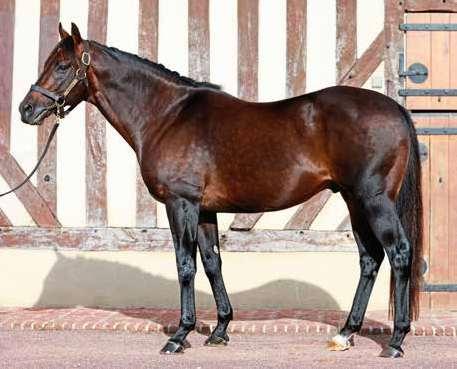
Muhaarar: the PetitTellier-based

It was a great thrill to watch the Breeders’ Cup and those sorts of performances can quickly change the profile of a stallion
The four-time Group 1 sprint winner is under the watchful eye of stud manager Patrick Chedeville and stands alongside The Grey Gatsby (Mastercraftsman) and Recoletos (Whipper).
“Muhaarar is a delight to have around and is a professional in the covering shed,” says Chedeville
The stallion covered 110 mares last spring, and has 69 foals on the ground from his last season at Faunes.
“I have five mares in-foal to him, and many other clients gave him some support,” adds Chedeville. “We were delighted with the support he got.”
The stallion’s big money earner on the track this year was the Saudi Turf Sprint winner Annaf, who picked up £900,000 in that race alone, while at the same meeting the Ian Williams-trained Enemy collected nearly £400,000 in the Red Sea Handicap (G3) beaten justaheadbyTowerOfLondon, thesecondyear insuccessionthehorsehas finishedrunner-up intherace.
InEurope,thefive-year-oldgeldingIsrar, the2023winner ofthePrincess ofWales’s Stakes(G2),wastheeasywinner oftheListed Wolferton Stakes at Royal Ascot, while the Jessica Harrington-trained Trevaunance, also a five-year-old and a Group 2 winner in 2022, took fourth place in the Group 1 1m4f Preis Von Europa for owner Moyglare Stud, having finished second in the race in 2023.
On the same card in Cologne, the four-year-old filly Armira won the Group 3 Kolner Sprint Trophy over 7f for trainer Peter Schiergen and owner-breeder Gestut Brummerhof.
As can be seen many of the sire’s best runners improve with age and longevity and the European racing scene might be a more suitable environment for the sire away from Britain with its strong focus on juvenile performances.
“It was a great thrill to watch the Breeders’ Cup and those sorts of performances can quickly change the profile of a stallion,” says Chedeville.
“I think it will suit him being here in Normandy and closer to perhaps some of the better mares in France.
“He is a still a young stallion and so we are very hopeful of the future for him ”
Muharaar’s fee for 2025 is €14,000, unchanged from 2024.
Of Muhaarar’s stud mate The Grey Gatsby, Chedville updates: “His fee is unchanged,
too. He covered around 70 mares last year down a little on the 115 he saw in 2023.
“I think he is a great value stallion and, like his own sire Mastercraftsman, he seems to be a good producer of fillies.
“He has Atomic Blonde in the US, she was also a good filly in Germany with Henk Grewe and is and is now running well with Christophe Clement, and Mylady who has won a Grade 3 in the US with Chad Brown.
“He is getting some quality jumping winners now, too, and again fillies are leading the way – Isis D’Inor has won two Listed hurdles at Auteuil this autumn, and By Exeter has been placed in a four-year-old Listed hurdle.
“Of course, we would like a good colt to come long, but The Grey Gatsby is doing very well so far ”
Petit Tellier, which is near Sévigny in the Argentan region of Normandy, will, as usual, be open on the 2025 Route D’Etalons, January 17-18, and everyone is welcome.
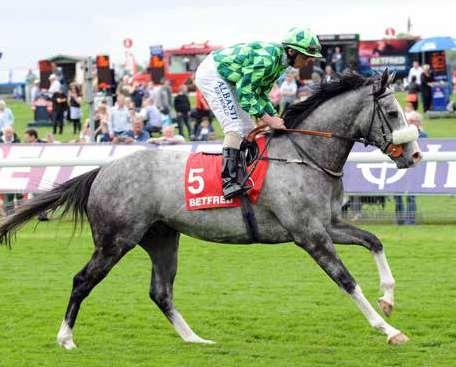
The Grey Gatsby: the 13-year-old stallion has stood all of his career at PetitTellier and, like his own sire Mastercraftsman, is a good producer of fillies
DESPITE SOME
HUGE returns at the Tattersalls
October Sale resulting from the
unexpected surge in trade at the top which filtered into the middle market, there is still a lot of uncertainty surrounding the yearling market; the early-season sales certainly saw trade curtailed at the top, while the lower levels struggled all year – correspondingly the
stallion farms have resisted the temptation to increase fees on a whole-scale basis.
For the past two years there have been eight British and Irish stallions standing at six-figure fees, for 2025 there will now be nine with Darley’s Blue Point thrusting himself into this elite group on the strength of his Classic-winning son Rosallion and Kind Of Blue’s Group 1 Champion Sprint success.
The top two of recent years, Dubawi and Frankel, remain
unchanged and both will stand at £350,000 again next year. However, that could soon change.
Should Wootton Bassett build upon the exploits of his first Irish-bred crop, which contained the record-breaking four individual Group 1-winning two-year-olds, then their position at the top could well be under threat as Coolmore’s son of Iffraaj earned himself a €100,000 increase to €300,000 for 2025.
Amo Racing will be hoping the sire has at least one Group 1-winning two-year-old of 2025, especially the son of Park Bloom, who cost the owner 4,300,000gns at Tattersalls and the highest-priced yearling colt sold at public auction in Europe
Next highest-priced horse is Sea The Stars, who himself has a 25 per cent increase to €250,000 for next season with exciting unbeaten two-year-old The Lion In Winter looking a true Classic prospect for next year.
Other group winners in 2024 include Sea The Fire, Sweet William, Ottoman Fleet, Al Aasy, Bellum Justum, Hanalia and Legend Of Time.
Lope De Vega had yet again had another outstanding year with a clutch of Group 1 performers, namely the Prix du Jockey-Club winner Look De Vega, the Caulfield Cup winner Duke De Sessa, the dual Grade 1 victor Carl Spackler, Godolphin’s crack two-year-old Shadow Of Light, successful in both the Dewhurst and Middle Park Stakes (G1), the Churchill Downs’ Turf Classic hero Naval Power, and the Aga Khan’s Pouliches scorer Rouhiya. His fee will rise from €125,000 to €175,000.
Juddmonte’s Kingman holds steady at £125,000 and he had a successful year with notable winners Sparkling Plenty (Prix de Diane (G1)), the Prix de l’Opera winner on Arc weekend Friendly Soul, and Roger Varian’s 1,000 Guineas queen Elmalka the headlines.
He’s joined on a €125,000
fee (reduced from €150,000) by Coolmore’s No Nay Never whose chesnut colt out of Lady Aquitaine Lake Forest picked up the not inconsiderable sum of £2,807,486.63 when winning Rosehill’s Golden Eagle Stakes and Prix Morny (G1) two-yearold winner Whistlejacket.
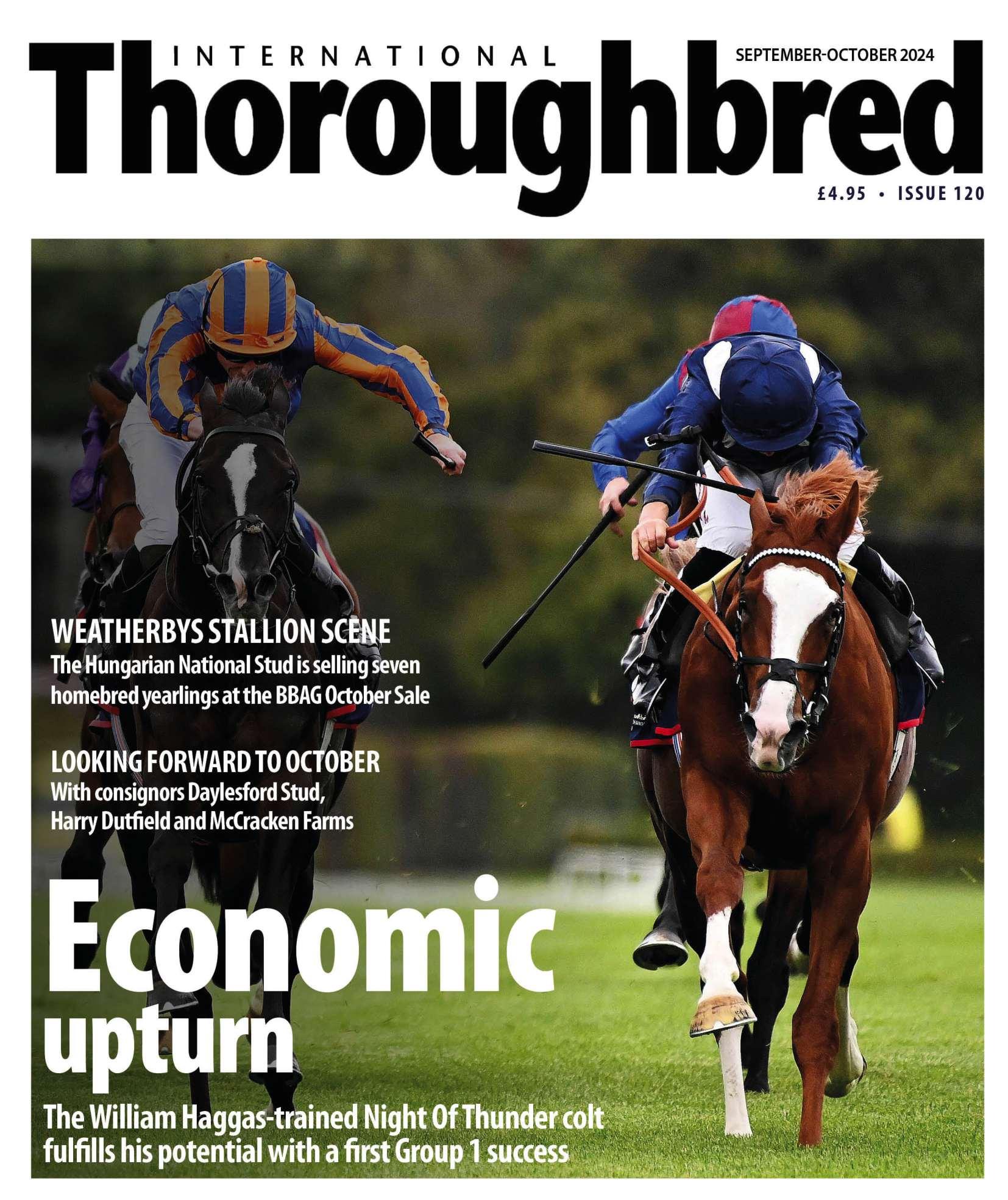
Darley’s Night Of Thunder has an increase of €50,000 to €150,000. His notable horses in 2024 include Economics, who improved all season to Group 1 Irish Champion Stakes glory, and Godolphin’s unbeaten Desert Flower.
Study Of Man has had the biggest percentage increase on his fee of 2024 – Lanwades Stud’s son of Deep Impact going from £12,500 to £25,000, a 100 per cent increase.
Kirsten Rausing said: “Study Of Man was already showing great promise with his first-crop two-year-old’s in 2023, which numbered nine individual winners, including the Group 2 Beresford Stakes winner Deepone.
“His progress has strongly continued, he now has five stakes winners from his first crop, including the Group 2 winner Birthe and the exciting Juddmonte homebred Group 1 winner Kalpana, already favourite for the 2025 Prix de l’Arc de Triomphe.
“His second crop, two-yearolds of 2024, include the 2025 Classic hopes Almeric and Alla Stella amongst nine individual winners so far.
“He is now the leading second-crop sire of the northernhemisphere by percentage of Group horses to runners.
“He is now, of course, attracting larger books of higher quality mares, and we
look forward to his future with confidence and excitement.”
Some farms wait a lifetime to stand a Derby winner yet Coolmore is retiring two at the same time – City Of Troy (€75,000) and last year’s Epsom Derby winner Auguste Rodin (€30,000) head the list of new sires for 2025.
They’ll be joined at Fethard by Dubawi’s Henry Longfellow (€15,000), unbeaten at two including the National Stakes (G1) and, although without a win at three, he only ran in Group 1 company placing three times.
Unusually, Darley is not
adding to its roster but other notable new sires for 2025 include the Tally-Ho trio of King Of Steel (€20,000), Big Evs (€17,500) and Bucanero Fuerte (€12,500).
The Irish National Stud will be hoping Shouldvebeenaring (Havana Grey, €6,000) could fill some of the void left by the recently retired Invincible Spirit.
The National Stud (Bradsell £10,000), Cheveley Park Stud (Vandeek, £15,000) and Yeomanstown (Mill Stream, €12,500) all introduce crack sprinters and Newsells Park Stud will be standing unbeaten two-year-old and Greenham winner Isaac Shelby (Night Of Thunder) at £7,000.
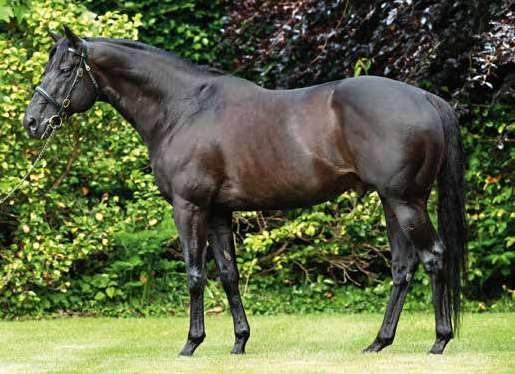
Study Of Man: has had the largest fee increase for 2025 in percentage terms


Stakes-winning broodmare sires, famous females, and overachieving equine matches
WEATHERBYS STALLION SCENE featuringJapan’s BigRedFarm
JAPAN is such a dominant force in the international racing field with success enjoyed by the nation’s runners on the world’s biggest racing days and in its biggest races on both Turf and Dirt.
The country boasts generation-defining names on both its previous and current stallion roster such as Sunday Silence, Deep Impact, Lord Kanaloa, King Kamehameha, stallions who have been resident at the biggest Japanese farms of the Yoshida family, Shadai and Northern Farms.
enlarged and added to the property.
“I took over the farm when my father died,” says Okada, during his visit to Newmarket for the Tattersalls October Yearling Sale.
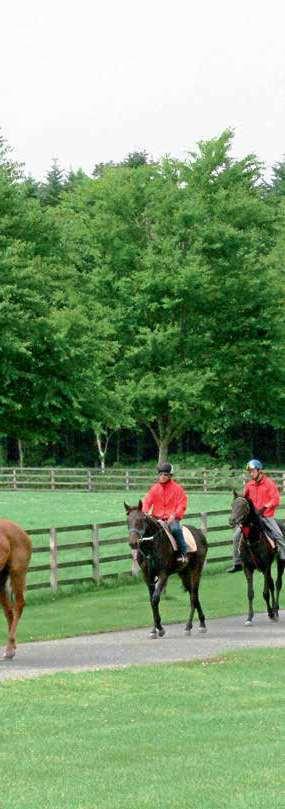
“We have around 550 hectares in total, with the main Big Red Farm, a number of smaller breeding establishments, as well as four training centres each with an uphill gallop. The first training centre was developed in 1988 and Hokota Training Centre was added in 2007.
Exciting times at Japan’s Big Red Farm with Benbatl nearing the end of his first shuttle season in Australia and his first Japanese-bred yearlings going into training
However, despite the dominance of those monoliths, the Japanese stallion roster numbers over 250 sires and many more farms than just the two pendulums of that axis, farms with equally long histories and keen to explore and develop opportunities.
Big Red Farm, now run by Hirokazu Okada, has been in the Okada family for 50 years. Okada’s great grandfather became involved in breeding racehorses, and it was his grandson, Hirokazu’s father Shigeyuki, who started the farm in 1974. In 1976, the name Big Red was adopted, Okada Snr taking the nickname given to the US superstar racehorse Man O’War.
Through the 1980s and onward into this century Shigeyuki, who passed away three years ago, further developed and greatly
“There are 130 mares on the farm and their associated youngstock, as well as six stallions.”
Okada is responsible for deciding on the stallions to introduce to the farm. Each stallion is syndicated to 50 to 70 shares, with Big Red Farm generally retaining about a third. The remaining are taken by Cosmo View Farm, which is run by Okada’s brother Yoshihiro Okada, Okada Stud, run by their uncle Makio Okada, as well as 20 other shareholders, including other large stud farm interests in Japan.
That current sextet of stallions are a mix of home-produced stock – horses who ran solely in Japan, fairly typical representatives of Japanese racing having reached the top of their game at three and four and generally revealed their best form over 1m2f –
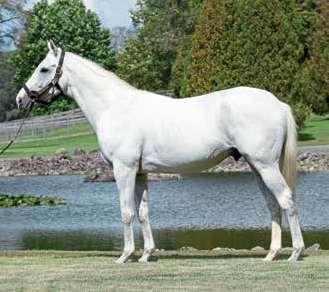
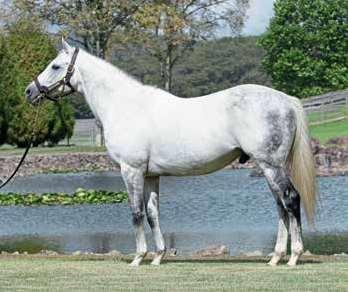
as well as the global runner and international performer and headline act Benbatl, who has first yearlings this year, and the older USbred, Dubai World Cup winner Roses In May.
Benbatl is a son of the champion Dubawi and he has been unlocking opportunities for Big Red; the 10-year-old, who won races as wide-ranging as the Group 1 Dubai Turf, the Group 1 Grosser Dallmayr Preis, the Group 1 Ladbrokes Stakes in Australia, as well as the Group 2 Joel Stakes in Newmarket, is currently coming to the end of a first stint of shuttle duties from Big Red to Woodside Park Stud in Victoria, Australia.
“He is the first horse I have shuttled and, yes, it was a big decision to make,” admits Okada. “We had tried to shuttle our new stallion Danon The Kid, but interest was low as he was more of a middle-distance performer, while Benbatl was a miler with form in the country – he has been well received in the Australian market.”
He adds: “Sons of Dubawi are very popular in the southern hemisphere, headlined by Too Darn Hot who has done so very well there, and that encouraged Woodside to want to get involved.”
As was announced in July by Darley, Too Darn Hot, who has the Group 1 winner Broadsiding in Australia and was the leading first-season sire for the 2023-24 season, did
Benbatl was a fantastic racehorse, sound and consistent, and a globe trotter who performed at the highest level
not undertake the shuttle journey this year.
It meant that through this covering season the sire sons in Australia by Darley’s patriarch have been limited to the young Darley sire Ghaiyyath, Akeed Mofeed, Wilful Default and Benbatl
Of Big Red’s son of Dubawi, Okada enthuses: “Benbatl was a fantastic racehorse, sound and consistent, a globe trotter who performed at the highest level
“We have his first yearlings, we have started to break them in and I am very happy with how things are going at present, he looks to be stamping his stock.”
The stallion stood at a fee of ¥2.5 million (around €15,300) this spring, and Okada says: “He offers something a little different for the Japanese breeders, and is an outcross for the many Sunday Silence mares. Darley Japan has some breeding rights and sent him some mares, and, in total, Benbatl covered around 100 mares in year one, around the same for this season.
“Each year we have sent him around 35 of our own mares, and we will have around 28
yearlings going in to training this year.”
Okada adds: “I don’t think his progeny will be early juvenile sorts, but that fits well for the Japanese racing programme as we are not so focused on two-year-old racing.”
Danon The Kid, who was bred by Northern Farm, was a two-year-old champion, winner of the 1m2f Group 1 Hopeful Stakes as a juvenile and the 1m1f Tokyo Sports Hai (G3). He also picked up four top level placings, including in the Hong Kong Cup. He retired to Big Red for this spring and stood at ¥500,000.
“He is by Just A Way, who was one of the best racehorses in the world and the first Japanese horse to reach the world rankings,” says Okada, adding: “Danon The Kid is out of the French Group 3 winner Epic Love – she is by Dansili, who is such a good broodmare sire. She is also dam of Miki Brillant, who also a top juvenile in Japan and the pair’s great grand-dam Alcando was a winner of the Beverly D Stakes (G1).
“Danon The Kid was well received by Japanese breeders and is a taller horse
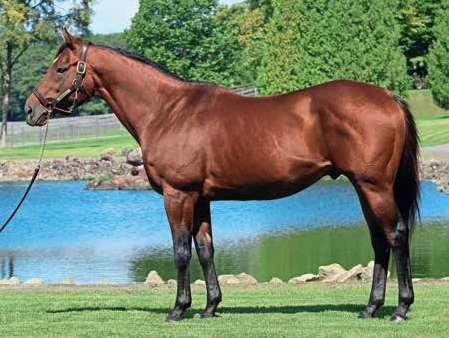
than Benbatl at 168cm. He has a good temperament, and he took very well to his new job this spring.”
Win Bright (Stay Gold) retired to Big Red as the winner of the Hong Kong Cup (G1), the Queen Elizabeth Cup (G1) as well as four Grade 2 and Grade 3 races mainly over 1m2f.
He was a Japanese champion older horse and his first runners have hit the track this season. As we write, 39 of his two-yearolds have already made it to the on the racecourse from an initial crop of 66 and with a handful successful. He stood at a fee of ¥1.2 million this spring.
“He has already had three winners from his first crop and we are delighted with how well he is coming along,” reports Okada.
The 15-year-old Gold Ship, also a son of Stay Gold and who retired to Big Red for the 2016 season, won six times in Japan at Grade 1 level.He boasts an excellent 95 per cent runners to foals, 59 per cent winners to runners and eight black-type winners.
They are headed up by the homebred Uberleben, who won the Yushin Himba [Japanese Oaks] in 2021 to give the farm its first Classic winner.
She continued to run at the highest level until 2023 and achieved earnings of around £1,600,000.
Of Gold Ship,who stands at ¥2.5 million Okada says, “He is doing very well, he gets lots of winners. Uberleben has certainly increased his profile and he attracted mares on the back of those performances.”
The roster is rounded off by some older residents – the 16-year-old Danon Ballade, a son of Deep Impact from the family of Singspiel, the 2000-born, and the US-bred Dubai World Cup and Whitney Handicap (G1) winner Roses In May, who achieves an impressive 72 per cent winners-to-foals and whose progeny are headed up by the Grade 1-placed, Big Red Farm homebred Dream Valentino.
The cheapest stallion on the Big Red roster is the 18-year-old Joe Cappuccino. The son of Manhattan Café, and grandson of Sunday Silence, stands at the affordable price of ¥300,000.
With the strong prize-money in Japan and such a healthy industry at all levels, so well supported by the JRA, Okada recognises that there are plenty
“If you like Dubawi, then you will love Benbatl”
MARK DODEMAIDE OF WOODSIDE PARK STUD
can not hide his admiration for the son of Dubawi, who is just completing his first shuttle season at the Australian farm.
“A horse who was rated 125 and inside the global top ten horses worldwide, there is no doubt that he is a serious individual,”he says.
“I know Hiro at Big Red Farm could not get Benbatl’s Dubai Turf Group1 win out of his mind when the horse beat up on the good Japanese horses such as Vivlos, Deirdre and Real Steel in that race
“Benbatl was a real globe trotter and from just the two starts he had in Australia he won the Group 1 Caulfield Stakes in less than half a second outside the track record, and ran second to Winx in the Cox Plate, which was certainly no disgrace.
“He also led all the way to win his Group 1 in Munich, and was dominant in his two Joel Stakes (G2) over a mile. First up beating King Of Comedy and Zaaki easily, and then in the second he put in the second-fastest mile recorded at Newmarket.
“He was a high-class miler who had the determination to stretch to 2000m.
“On seeing Benbatl it just hit me between the eyes, and I just thought,‘If you like Dubawi you will love Benbatl’.
“He is a touch taller and more than a touch longer than his sire, he has a similar head, a wide joule, deep girth, nice short cannons, and good healthy feet He definitely is his father’s son.
“It was only the other day I heard jockey Oisin Murphy report that he felt Benbatl‘was the bestbalanced horse he has ever ridden’.
“When going through the list of stallions in Australia there are only two stallions who are multiple Group 1 winners, by a multiple Group 1 winner, out of a multiple Group 1winner – Benbatl and Too Darn Hot, and the latter was not here this year.
“In fact it has been a bit of a homecoming for his pedigree with his fourth dam being the champion New Zealand mare La Mer.
“From the moment he stepped foot at Woodside he has been such a professional and has taken everything in his stride.”
of opportunities for stallions at all the levels; the “cheaper” sires can more than hold their own on the Big Red roster.
But don’t expect to see too many offspring by Big Red stallions listed in the annual JRHA Select Sale catalogue; instead of offering on the open market, Okada prefers to retain the stock and syndicate them for racing.
“We syndicate about 50 yearlings each year and run them ourselves,and that way we keep in control of the stock,” he explains. “There are a lot of Japanese people who want to be involved in horseracing now – we run the Ruffian Turfman Club with around 100 shares available in each horse and over 130 horses for the syndicate.”
It is big business and, while Okada admits that running the syndicates is an intensive operation, the farm is more than up to the task – a glance at the Ruffian Turfman Club website (with the use of google translate) shows the depth of information and level of communication given for every horse,
ranging from daily training updates to vet reports, as well as regular photos.
Every detail regarding running plans, alongside the latest news, as well as new horses available for investors, are listed.
Okada’s own young family follow the anime game Una Musume (asfeaturedin ourFebruary 2024edition), and Okada appreciates the need to ensure that racing continues to be an integral part of popular culture so retaining its appeal to the younger generation, who will be the owners and syndicate members of the future.
“In the late 20th century we had video games and racing comics, and those people, who read and watched, are now racehorse owners,” he says aware that the farm’s own business model requires a continual flow of keen racing fans with a desire to step up to syndicate ownership.
Okada, one of the panellists at the recent Asian Racing Conference, embraces the exchange of ideas, the furthering of international knowledge and understanding.
He is an enthusiastic stallion manager and is keen to see the farm’s stallions progress to
the international stage embraced the shuttle stallion market, as well as the lucrative Japanese syndication business.
Big Red and its associated divisions is a sizeable entity, but within the supersize world of Japanese breeding it is perhaps more high-street department store with a growing international department than mega franchise.
Big Red’s outward view is perhaps epitomised with the entry for the Corazon Beat, a homebred owned by the Ruffian Turfman Club and a Grade 2 juvenile winner, in Australia’s Golden Eagle Stakes, alongside that debut venture in to the world of shuttle stallions for Benbatl –such a relevant approach for a sire who made his name as a racehorse right across the globe.
The latest generation of the Okada family to take the reins at Big Red is making the most of the opportunity; the farm is more than holding its own within bloodstock commerce in Japan and has every chance of creating a legacy, much like its namesake, on the global industry.


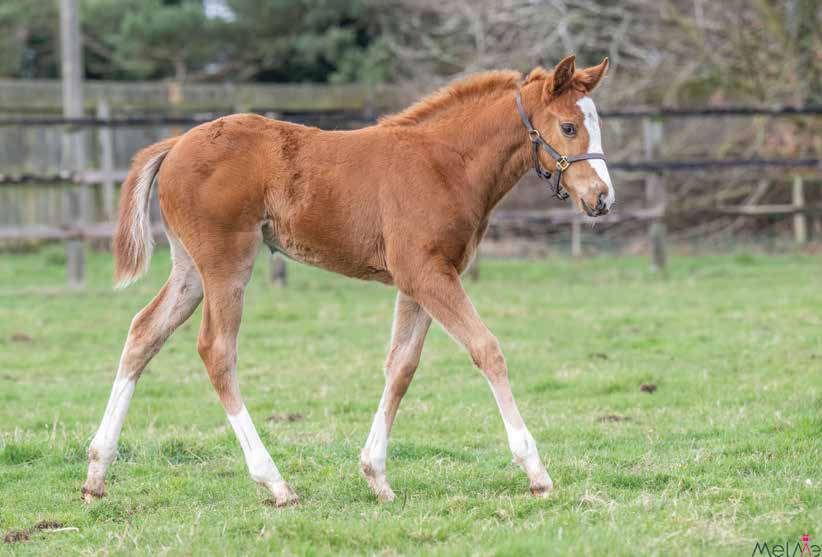
“I really can’t fault her at this early stage. She has been incredibly active from day one, with a big personalityto match her great stride.”
EMMA
BERRY Breeder (TDN)
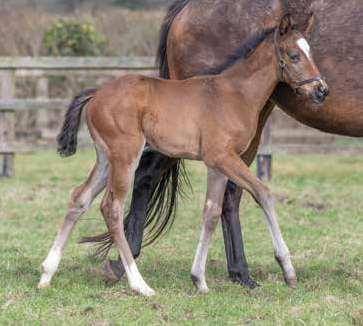
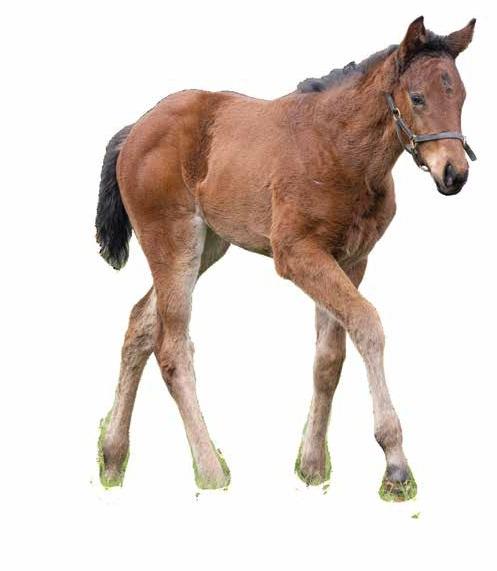
Our Stradivarius filly is very ocious looking and full of She has a great walk to her are very excited by her.”
— GREG PARSONS Upperwood Farm Stud
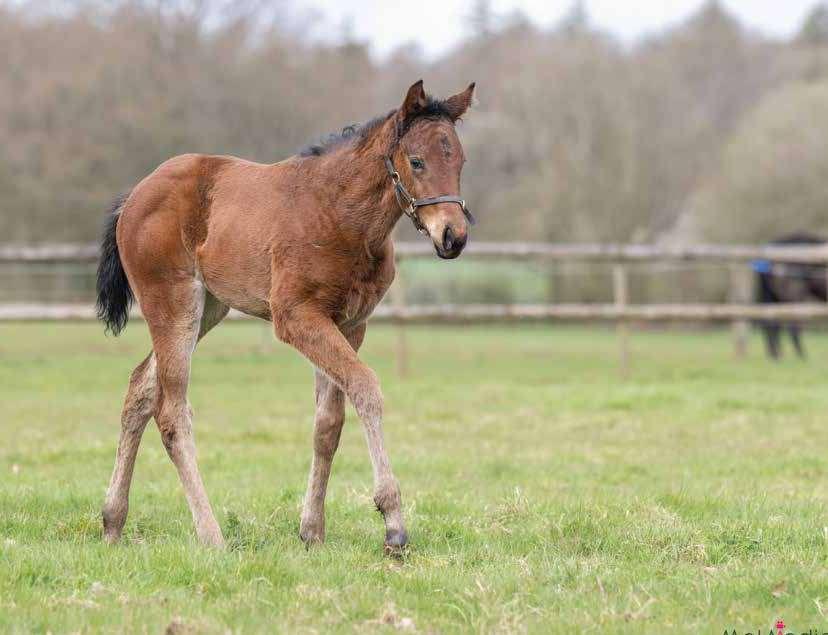
“My Stradivarius colt is one of the nicest foals I have bred. He has size, bone and a gorgeous action coupled with a lovely attitude.”
KIM BARTLETT Millfields
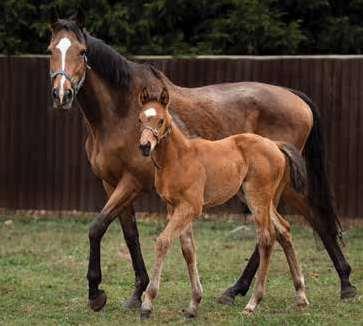
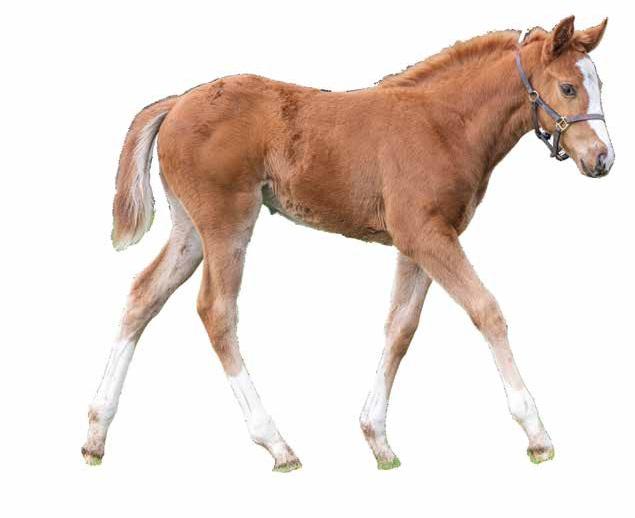
delighted with our filly us. She has a striking her sire, possessing and athleticism at stage. She is the nicest has produced.”
SMITH ham Stud
ShadwellStud’ssonofCapeCrosshasbeenenjoying aresurgenceinthecoveringshedafterGroup1and Grade1successesin2023,andhisprogenyhave maintainedtheirtop-qualityformontheracetrack thissummer,headlinedwithtwotopdaysinAugust.
KildaraghStudisofferingtheonlylotbyAwtaad inTattersallsOctoberBook1,PeterKavanaghtellsus whyhehasalwaysbeenastrongsupporterofthesire
NOT MANY YEARLINGS, produced off a £5,000 covering fee get a place in the Tattersalls October Book 1 catalogue, but that is just what Kildaragh Stud has achieved with its bay colt by Awtaad (Lot 430) out of Sovana (Desert King).
The Kavanagh family farm did not breed the yearling – that achievement is down to Ringfort Stud, the colt having been pinhooked by RC Bloodstock at the Goffs November Foal Sale for €18,000 – but Kildaragh has been involved with the wider pedigree for some years through the late Gerry Oldham’s Citadel Bloodstock.
The Kavanaghs bred the Listed winner and the Group 1 Falmouth Stakes fourth-placed Primo Bacio out of a Suvenna, an Arcano half-sister to this year’s Book 1 yearling.
Primo Bacio is also by Awtaad and was sold by Kildaragh for
100,000gns as a Book 1 yearling in 2019, a member of the stallion’s first crop, produced off a nomination fee of €15,000.
Her valuation was upgraded to 1,100,000gns at the end of her racing career when she joined the Hillwood Stud broodmare band.
Awtaad enjoyed two days of days this August, progeny performances backing up a respectable body of work that he has been putting together over the last 12 months.
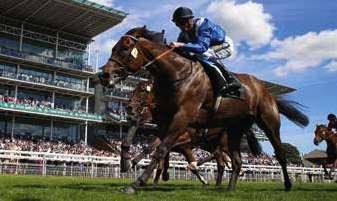
At Haydock on August 10, the sire’s 2023 Group 1-winning Prix d’Ispahan son Anmaat returned to victorious action in the Rose
Of Lancaster Stakes (G3). He now has Group 1 entries firmly printed on his agenda.
There was also a Listed third place for the four-year-old filly Naomi Lapaglia in the mile Irish Stallion Farms EBF Dick Hern Stakes. She also has top level targets ahead.
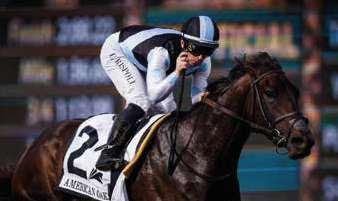
The following day Awtaad’s three-time Grade 1 winner Anisette, winner of last August’s Del Mar Oaks (G1) on just her second Stateside start after leaving the Newmarket-based trainer Kevin Philippart de Foy, maintained her winning run in the Grade 2 Yellow Ribbon Handicap. The filly has now won
five races in the US, and finished second twice and third once from eight stakes race starts.
Awtaad has endured some time away from the fashionable ranks, and consequentially his fee has dropped to €5,000, but his two top-level winners in 2023 have put him now firmly back in vogue – this spring he saw his biggest book of recent years at 128, breeders realising just what an opportunity the Derrinstown Stud stallion offers.
It is something that the Kavanaghs have long recognised, and right from producing Primo Bacio the family has kept the faith in the son of Cape Cross.
“He is such a good influence for looks, temperament, for durability, soundness, there’s so many things in the equation that he meets,” admires Peter Kavanagh.
“Until this spring, he was just a bit of a sleeper – for whatever reason the pinhookers turned their back on him a bit, it can
then be difficult for a stallion to get the traction he deserves.
“But each spring we have sent him two or three mares – after all you don’t want these ‘flash Harries’ who just appear for a year or two. Before you know it you are trying to find out where have they gone. ”
With his usual wise counsel, Kavanagh adds: “If you want to take a view of a proper business and breeding operation, you need to use stallions who are sound and durable, who have a bit of a shelf life, whether you’re trying to do a favour to your mare, or trying to produce a horse for whom there is a market out there for, the international market.
“The short-running sprinter can be very limited – that stallion can have a short shelf life.”
Kavanagh recalls his decision to send Suvenna to the newly retired Awtaad in 2017.
“We’d had some luck before with Cape Cross, and we think he’s a very good influence,” outlines the breeder.
“And then Shamardal, he’s great top or bottom in a pedigree. His horses tend to be very durable, they want to win
and he’s had a major impact with his broodmares.
“You just must try and find potential and Awtaad was a Classic winner, trainer Kevin Prendergast always rated him highly, he is a well-bred horse, a good-looking horse and with good motion.
“And, finally, affordability is always one of the foremost things in our minds – we can’t put it all into the hands of the stallion man every year. If you do that, you’ll have a short life yourself!”
Kavanagh dons his sale’s hat when he talks about the farm’s yearling heading to Newmarket.
“He is a very athletic horse, he is bay brown, like most of them – Awtaad does stamp his stock – and he just has this remarkable motion, too,” he enthuses. “He is out of a proven mare, but you can disregard any worries about broodmare age.
“Secretariat was out of a 17-year-old mare and if a mare has done it once, then there is a fair chance she can do it again, as long as the progeny’s physical doesn’t resemble an old mare’s produce.
“Andthepedigreealsogoes backtoaCitadelfamilythatwe lookedafterforanumberof years,sowe’vegotaverysoftspot forthatfamily.
“Weknowalotoftheir attributes,qualitiesandwhich stallionswillsuit.Allthosemares werekeptforspecificreasons –theyweregenuine,tried,had racingabilityandsurvivedyears ofselection.There’snottoo
selection.There’snottoomany nottoomany badonesinthepedigree–ifthey onesinthe –didn’ttouchtherequiredbars, the theywouldnotgetretained.” wouldnotget
And of the decision to offer to the cheaply bred and relatively bred and cheaply pinhooked colt in ply colt in the premier yearling sale at sale Tattersalls?
“I like to put them like t somewhere to get plenty e to get of viewing with something with so that’s a little bit novel, a bit I like to have a bit of a uniqueness to the uniqueness to product.”
Awtaad also has just one lot due to go through the Tattersalls October Book 3 catalogue –a colt out of the Listed winner and Oaks Stakes (G1) fourthplaced Vow to be consigned by breeder Lodge Park Stud.
Theonethingincommonwith theBook1colt?
Despite the stallion having been shunned by some of the “commercial” market for time,
“commercial” market for a time, a these top level breeders and top level breeders and producers Ringfort Stud, Lodge Park Stud and Kildaragh Stud d have continued their continued their support, these these bloodstock “influencers” well aware what the stallion can offer er.
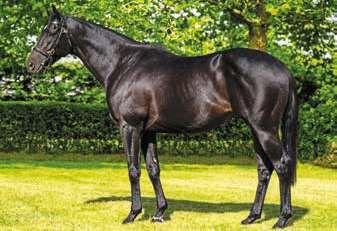
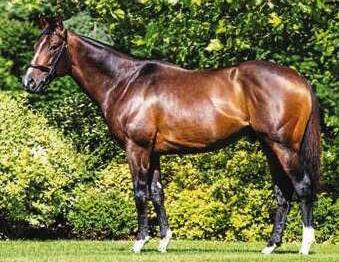
Mohaather,
Advertise,
Soldier’s
Call and Tasleet, who now stands in India in a deal brokered by Ajay Anne, have all enjoyed a summer of racing success
IT HAS BEEN A FINE LATE
SUMMER STINT for sons of Showcasing with the four named above all achieving stakes race results.
On the juvenile front the quartet is headed up by Shadwell Stud’s Mohaather and Manton Park Stud’s Advertise – both can boast of colts in Timeform’s current list of top two-yearolds for 2024 – the Molecomb Stakes (G3) winner Big Mojo and Cool Hoof Luke, winner of the Gimcrack Stakes (G2).
August was also the start of a run for new sire Mohaather who, as we write, is in fourth place in the leading European first-season sires’ table by both number of winners and progeny earnings.
Advertise’s Cool Hoof Luke, trained by Andrew Balding, has been a consistent Group class colt this summer having finished fourth in Royal Ascot’s Group 2 6f Coventry Stakes, third in the 7f Vintage Stakes (G2) at
Goodwood before finding his way to the front at York.
Two days after the Gimcrack, the stallion’s good form continued with Al Shabab Storm’s victory in the Goldene Peitsche (G3) at Baden-Baden.
Fellow second-season sire
Soldier’s Call, who this year got his first Royal Ascot winner with Mickley’s victory in the Britannia, was represented by a clutch of stakes performers in late August and early September.
The Karl Burke-trained two-year-old filly Kaadi ran
second in the Prix d’Arenberg (G3) at ParisLongchamp, Soldier’s Gold was runner-up in the Listed Prix Millkom at La Teste and Kuwaitya was placed third in the Listed St Hugh’s Stakes at Newbury.
This season’s late-summer Group 1 sprints have also had Showcasing’s mark all over them, courtesy of the four-year-old colt Bradsell with his impressive victories in the Nunthorpe Stakes and the Flying Five Stakes.
His sire Tasleet is another stallion by the Whitsbury Manor Stud’s patriarch to have enjoyed a fine time of it in August –his daughter American Sonja finished second in the Prix Jean Romanet (G1) to Msqe de Sevigne having won and placed in Group 3s earlier in this season.
Tasleet also got the top lot at the Goffs UK Premier Sale when the three-quarters brother to the Gimcrack winner was sold by Moyfinn Stud for £350,000.
stallion Tasleet is now resident in India at Star Born Stud, the 11-year-old sire having moved continents for this year’s covering season in a deal brokered by agent Ajay Anne of New Approach Bloodstock.
“I was trying to source a stallion for the farm,” recounts Anne of the decision to purchase Tasleet, “as the team is investing, wanting and aiming to produce some better quality horses.
“Owner Anhad Sidhu was looking for another sire – I had bought him Well Done Fox from King Power last year.
“Tasleet had been a very smart two-year-old, he did not get to run much as a three-year-old, but he came back as a four-yearold and ran again at five.
“He had the ability to carry on his talent and he finished second in three Group 1s, so he was a consistent top class racehorse.”
He adds: “Tasleet is probably slightly on the small side, but so is Showcasing and that doesn’t bother me. I’ve bought a few small horses in the past for breeding purposes and they’ve done well, especially as you don’t want a big, heavy horses for the fast ground in India. When I look for stallions for the continent, I am also generally looking for horses who get progeny who want 5f or 6f.”
Of Showcasing as an influence, he agrees: “Yes, over the last couple of months Showcasing has put his name forward as a sire of sires, though I’m not a big fan of that statement.
“I believe in the individual, I believe in the stallion, I believe in performance and I believe in the dam side of things.



few legitimate enquiries Tasleet could be back for sale, but it would only be for the right money! ere are a few enq on t table – back for it would be for t mone mone
“I’ve done a lot of work on this kind of thing and I’m never inclined towards just leaning towards that phrase.”
He explains: “Showcasing comes from a good Juddmonte family and Whitsbury Manor does a fantastic job with its stallions. He’s progressed, and has started to produce better and better, and more, horses. He has the gene pool to pass it on.”
Anne further explains how he came to focus on Tasleet for his Sidhu’s order.
“Tasleet had already done that job,” he says, “as he had produced the Group 1 winner Bradsell to win the King’s Stand, and when we were negotiating last year American Sonia was starting to show some talent.
“He’s got a lot of horses who are BHA-rated around 85 and people forget that for a racehorse to reach that mark is not easy.
“A stallion who can produce that quality of horse is a safe bet.
“However, the commercial market in Europe is very harsh, and these stallions can get lost in the run of things as breeders are always after the new names.
– in 2022 he bought Prince Of Lir, the following year the sire’s gelding Live In The Dream won the Group 1 sprint.
But, is there any chance that Tasleet could return to Europe now that he is back on the radar? That option is not completely out of the question, says Anne.
the for comes into the budget. comes into the budge
“With Sidhu, when I like the when I like doesn’t debate, debat apart from a discussion a discussion on so that helps so that he my situation quite a lot. quite a was priced was for us, and we got us, and we got done.”
In future it might it prove wise for those for those to find the Nunthorpe Nu to take note of any to note of any stallions purchased by Anne Anne
“I look into this quality of stallion to see which one fits the bill for the demands for India, and who “With horse he apart from on price, my situation The horse right for the deal In future prove wise trying to winner stallions
Ajay Anne of New Approach Bloodstock: saw that Tasleet was producing plenty of 85+ rated horses
“Over the last couple of weeks my phone’s been ringing!” he laughs, adding: “The logistics of transporting out of India are a little bit complicated, but, there are a few legitimate enquiries on the table – Tasleet could be
on –back for sale, but it would only back for but would be for the right money!”


The Hungarian National Stud is looking forward to an international future with four exciting stallions on its roster –Mokarris, Cirfandli, Pigeon Catcher and Ecrivain.
The farm is consigning a draft of seven homebreds at this year’s BBAG October Sale, determined to continue the late Zsolt Hegedus’legacy and vision with horses bearing the HUN-suffix

Photos courtesy of the Hungarian National Stud
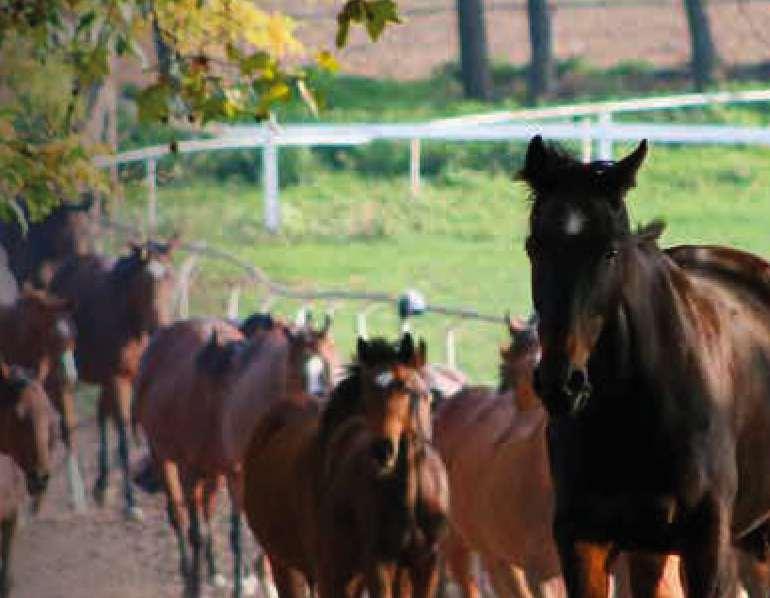

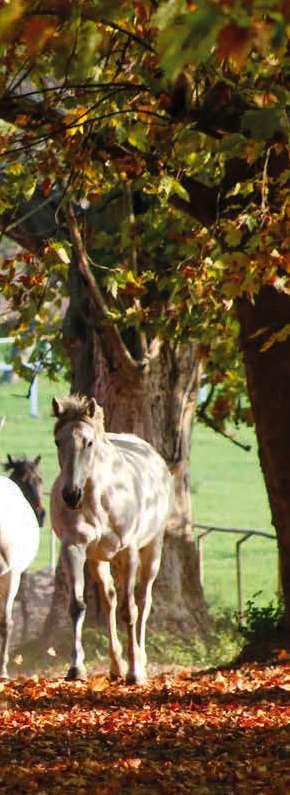
IT HAS BEEN A TUMULTUOUS TIME for the Hungarian National Stud after the sudden death last August of the farm’s enlightened and progressive stud manager Zsolt Hegedus, but the team has been determined to push forward with the plans he initiated and to maintain his legacy.
Before his death Hegedus entered a draft of Hungarian-bred yearlings by Britishbased sires in the BBAG Premier Sale, the in-foal mares previously bought at Tattersalls with the aid of agent Oliver St Lawrence.
Despite that summer’s tragic loss, the stud bravely continued with the plan offering the four horses proudly carrying the HUN suffix in the major yearling sale at Baden-Baden. The four were all sold, and although those transactions did not turn the bloodstock world on its axis, the footings were put in place the stud successfully taking commercial stock over the Hungarian border to an international, select yearling sale.
For the country’s bloodstock industry this outward view is possibly now quite vital with the domestically produced foal crop numbers falling to just around 100 with the industry undergoing a worrying contraction.
There are, though, enthusiastic new people at the helm keen to ensure that


enthusiastic people en to ensure that Hungarian bloodstock and horseracing is not consigned to the history books ere are enthusiastic een ensure Hungarian bloodstock bloodst k
Hungarian bloodstock and horseracing is not consigned to the history books, that new avenues continue to be explored, international boundaries are crossed and Hegedus’ work is continued.
Bence Földes has stepped into the breach, running the stud in the interim since Hegedus’ death, the young man taking the role with his wife Luca.
Földes left college with a finance and accounting degree, but he had ridden all of his life and worked with horses through his studies. After graduating and meeting Luca, the pair left the homeland and took jobs with UK trainer Paul Nicholls as work riders.
Földes subsequently applied, and was accepted, to study veterinary science at the University of Hungary, while Luca, who already had an agriculture engineering degree, signed up for a Masters in Animal Husbandry; the pair went back home in 2019.
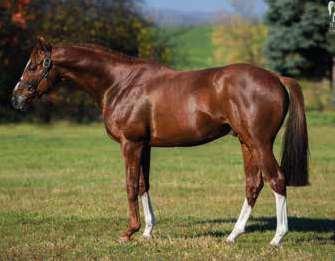
the stallion is a son of the famous Hungarian-bred sprinter Budapest
Prince, it is the extended family of the multiple 1m2f Group 1 winner Storming Home.
As a racehorse Pigeon Catcher was owned by Hegedus, trained in France by Pia Brandt and achieved wins and placings in competitive mile handicaps in France.
The sire’s leading performer is the gelding Esti Feny, now based in the southern hemisphere. After two Listed-placed efforts in Germany over 1m2f and 1m3f for owner Stall Diospuszta, the colt was purchased by Australian connections.


w Zsolt started to open the e had experience having owned he
direction, Zsolt started to open the farm up to had huge experience having owned horses in France
Both are still completing studies, the couple due to graduate early next spring, and have successfully combined the new roles at the stud with their education.
“We got this opportunity after Zsolt’s death and, yes, this year was has been busy, but we are close to finishing our studies now,” smiles Földes.
Földes is just 28 and has been working in a role that had been fashioned so well by Hegedus, who has himself spent much time in France working on the PMU.
Földes is not shy to admit his admiration of Hegedus’s enlightened strategy of importing in-foal mares carrying to good Eourpean sires with the aim of selling yearlings with an HUN suffix.
“Zsolt’s purchased mares were carrying to the commercial stallions Too Darn Hot, Kameko and Study Of Man, and the four fetched a total of €100,000 at the BadenBaden sale,” he reports. “It was a big step forward for the farm; it was so sad that Zsolt did not get to see the results.”
Földes continues: “What Zsolt started to do, and how he did it, was brilliant. It was
a new direction, Zsolt started to open the farm up to the West because he had a huge experience having owned horses in France, trained in France and he had massive connections all around the western Europe.”
Hegedus’ work and vision has not stopped with his loss.
The international outlook that he quietly opened has been continued and the farm is returning to Germany for the BBAG October Sale with seven homebreds by the stud’s three established sires.
Currently, there are four stallions on the National Stud’s roster, a happy mix of Hungarian homebreds and imported sires.
The oldest of the quartet is the Irish-bred Pigeon Catcher, a son of Dutch Art bred by Castlemartin and Skymarc Farm, yet another legacy of the outstanding late owner-breeder Lady Chyrss O’Reilly.
The 15-year-old is a half-brother to the Group-placed Jakarta Jade, while his dam is a half-sister to the Group 3 winner Dubai
He won the Listed Mornington Cup in April and has been placed in middle-distance Group races for trainer Matthew Smith. Esti Feny has already ensured that his sire has an international legacy and that Pigeon Catcher has become that ground-breaking international stallion that Hegedus so desired for the industry.
The farm has entered three by the stallion in the German October sale, two fillies and a colt.
The fillies are out of Ainippe (Captain Rio), and so a half-sister to a Kameko colt sold in Germany last year and now in training with David Simcock in Newmarket, and the Shamardal mare Morning Chimes
The colt is out of Spice of Life (Sea The Stars) from the Kirsten Rausing-developed family of Songerie.
sire Mokarris making an impressive early mark
Also with three entries in October is the second-season sire Mokarris. He has been doing great things in Hungary and is already the sire of nine winners from just 16 runners, achieving a strike-rate of 56 per cent. By More Than Ready, Mokarris was bred in the US by St Elias Stables, bought by Shadwell at the Craven Sale for 220,000gns in 2016 from Mocklershill.
He is a first foal out of the French Listed winner Limonar (Street Cry), a half-sister to the US Grade 1 winner Talco and out of a half-sister to the Irish 2,000 Guineas winner Bachelor Duke.
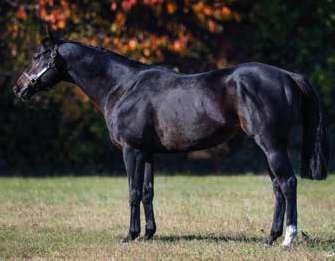
A Listed-winning two-year-old, he also finished second in the Gimcrack Stakes (G2) and sixth in the Middle Park Stakes (G1), but unfortunately did not run after his juvenile year.
Since his own racing days, his two half-brothers have been doing their thing on the track – Spanish Mission, a son of Noble Misson, won the Yorkshire Cup (G2), placed third in the Ascot Gold Cup (G1) in 2021 and went on to finish third in the same year’s Melbourne Cup (G1) for Andrew Balding.
The entire has remained in Australia picking up further Group 1 placings.
The stallion’s younger half-brother Dude N Colorado (Uncle Mo) has won at Listed level in the US and placed third in the Kitten’s Joy Stakes (G3).
On retiring from the track Mokarris was purchased and has always stood in Hungary.
“He has lots of speed and his progeny suits the racing here especially as we often have firm ground,” says Földes, adding: “The mares that we have here descending from the older Hungarian broodmare lines are staying types and he can give them a bit of speed.
Trainers like his horses, they have good minds, they are trainable, and are early sorts.”
The farm is selling two of his colts in Germany – both are out of Nayef mares, the Bishop Walton Stud-bred Hala Madrid and Ejtihaad, the dam of Esti Feny.
The son of the Budapest Bullet a farm favourite
The homebred stallion Cirfandli is a son of the “Budapest Bullet”, the legendary Hungarian superstar sprinter Overdose, who won the Group 2 Goldene Peitsche, finished fourth in the King’s Stand Stakes (G1) and won the voided Prix de l’Abbaye (G1).
Cirfandli, himself, was the winner of top
races in Hungary and went on to become a multiple Listed-placed performer in Italy.
He has first yearlings this year and the farm is sending a colt out of Miss Brooch (Aerion) to Germany. She is dam of two winners from two runners in Hungary, including the four-time winner Mr Penny (Penny’s Picnic).

Take a good look at our draft which includes some rare jewels...
LOT 38
Kingman colt, half-brother to Gr.3 winner Royal Dress
LOT 137
Blue Point colt out of Deveron, placed in Gr.1 Prix Marcel Boussac
LOT 334
Too Darn Hot colt out of LR winning Night Of Thunder mare, family of multiple Gr.1 winner Proviso
BOOK 1
38 C Kingman / Wadaa
137 CBlue Point / Deveron
305 F Ghaiyyath / Motivate Me
334 CToo Darn Hot / Parton
374 C Too Darn Hot / Rhythm Excel
BOOK 2
612 C Sea The Stars
622 C Wootton Bassett / Carleen
817 F Palace Pier / Hoyamy
1137 F Farhh / Sailing
BOOK 3
1313 C Phoenix of Spain / Comnena
1348 F Dream Ahead / Enliven
1425 C Ardad / Martini Magic
1430 C Calyx / Medoras Childe
1437 C Ghaiyyath / Militate
1464 F Cracksman / Operettist
1503 F Too Darn Hot / Royal Event
BOOK 3 (contd.)
1524 F Kameko / Sterling Sound
1545 F Cracksman / Tuolumne Meadows
1559 C Masar / Yaa Mous
1582 C Tasleet / Beyond Fashion
1588 C Tasleet / Bradley Hall
1596 F Cracksman / Carlanda
1599 F Land Force / Clieves Hills
1609 C Tasleet / Delta Diva
1619 C Masar / Dubawi Meeznah
1658 F Dream Ahead / Itsinthestars
1683 C Mayson / Madeleine Bond
1739 F Cracksman / Quemonda
1762 C A’Ali / Seamisst
1773 C Iffraaj / Sinaadi
1776 F Ardad / Song of The Isles
1777 C Ardad / Sooraah
BOOK 4
1810 F Land Force / Byroness
1831 F Advertise / Gold At Midnight
Houghton Bloodstock UK Ltd
Fox Farm, Barnardiston Road
Hundon, Sudbury
Suffolk, C010
“For me, Cirfandli is a special horse as I was his work rider when he was in training –I always loved him,” explains Földes.
“His yearlings look fantastic, they are well built and I hope he can prove himself as a stallion.
“He was an outstanding racehorse in our region, he won every big race in Hungary between 6f and a mile, and was beaten in Italy in a 7f Listed race by just a nose.
“We trust him and we have given him as many mares as we can. He will not be a ‘fancy’ stallion at the German sale, but we have entered one yearling by him in the hope that we can get the sire’s name out there a bit.”
The stud has added a new stallion to its roster this year, the Wertheimer & Frerebred Ecrivain, a son of Lope De Vega out of a Danehill Dancer Group-placed Sapphire Pendant.
He is from the family of the Fillies’ Mile (G1) runner-up Maryinsky, the dam of the outstanding four-time Group 1 winner Peeping Fawn.
“Ecrivain was a Group 3 winner and Group 1-placed as a two-year-old so he’s an exciting stallion for the farm as he had lots of speed. He has a good mind and he’s so laid back. He is very friendly, intelligent horse.”
The farm is keen that Hungary is viewed as a country that can produce good runners able to compete on the global stage.
“It has been proved that we can breed high quality horses here,” says Földes. “Esti Feny been a great advertisement, but we need to do lots more to move forward still.”
The stud is on 300 hectares with around 70 hectares down to pasture, and it produces its own oats and hay.
There are 95 horses on site, including 45 mares, 10 privately owned and boarding at the farm. This year the farm produced a foal crop of around 30.
Sadly, the Hungarian industry has had to weather the storm of political turmoil and disruption.
“The stud was established in 1912, and then there was a big training centre and
racetrack with more than 500 horses in training,” explains Földes. “It really was the ‘Newmarket’ of Hungary.
“But it was devastated by the world wars and all that is left now is a museum. During the privatisation after the communism era lots of the best mares were sold, or taken away further East.”
He adds: “Now the racetrack at Kincsem Park and the Hungarian National Stud are owned by the government, run by the Ministry of Defence and the Department of Agriculture. We get good support and they are keen to develop, but, like the world over there is never enough money for the horseracing!”
The stud’s international outlook is mirrored by Budapest’s racecourse Kincsem Park, the executive headed by manager
Ecrivain: was bred by the Wertheimer brothers. The stallion is by Lope De Vega, and is from the top-class family of Peeping Fawn. He stood at stud for a first season this year
Szotyori Nagy Ádá, who is keen for its best races to be fully recognised by the Pattern.
Last year, the track joined in on the Frankie Dettori farewell tour attracting the big-name jockey to ride at the premier meeting in September.
With his usual flourish the Italian jockey rode two Fitri Hay-owned horses to success.
With the Hungarian racing and bloodstock industries now able to be working in tandem under the protective wing of the government, and determined and ambitious people pushing things forward, the country’s bloodstock certainly deserves to prosper and maintain that vision initiated by Hegedus.
So, if you are in Germany for the BBAG sale and buying yearlings, the seven bearing the HUN suffix are well worth having on a long list.
Hungarian National Stud BBAG October Sale entries
Horse Sire
Dam
b., c. Mokarris (USA)Hala Madrid (GB)
ch., f. Pigeon Catcher (IRE) Ainippe (IRE)
b., c. Mokarris (USA)Ejtihaad (IRE)
ch., c. Cirfandli (HUN)
Miss Brooch
b., c. Mokarris (USA)Pray From Heaven (IRE)
b., c. Pigeon Catcher (IRE)
ch., f. Pigeon Catcher
The stud’s three established sires are all due to be represented at the sale in Germany, the farm keen for the stock to be offered on the international market
Spice of Life (GB)
Morning Chimes

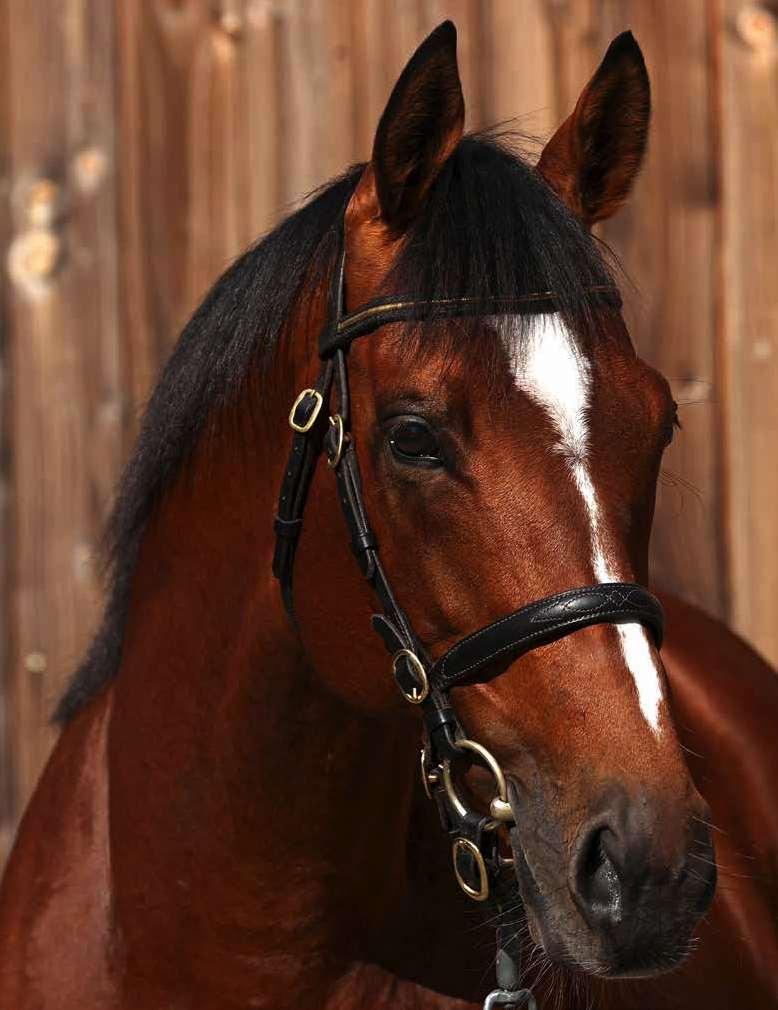
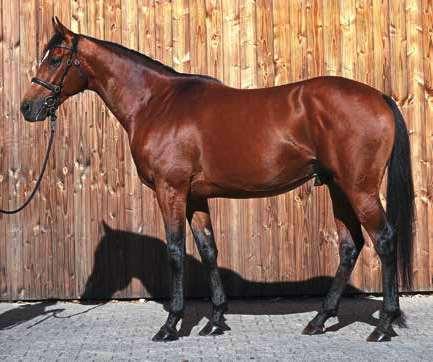
Hopes are high in Germany that the son of Galileo will fill the vacuum at the top of the country's stallion roster.
Adrien Cugnasse speaks with Etzean’s stud director Ralf Kredel


EVERY NEWCOMER to the stallion ranks is special but in Germany there are particularly high expectations of Japan, who is regarded as the best new stallion to retire to stud in the country in a very long time. It is perhaps not an overstatement to say that something of the future of the country’s industry rests on his shoulders.
As ever is thus the first six months of this year’s Flat season has seen a number of good horses produced from German dam lines.
In France there has been likes of the Prix de Diane (G1) winner Sparking Plenty and the Prix Vicomtesse Vigier (G2) victor Sevenna’s Knight, who is targeting the Melbourne Cup.
In Britain and Ireland, the Group 2 Coventry Stakes winner Rashabah is from a Gestüt Schlenderhan family, as is Truly Enchanting, winner of the Airlie Stud Stakes (G2) and Los Angeles, winner of the Irish Derby (G1).
As we go to press, the most recent impressive example has been the King George VI and Queen Elizabeth Stakes (G1) winner Goliath.
All have been produced by German breeders – the small, but quality, German broodmare band such an asset.
However, there is something of a crisis underfoot and although the saying goes in Germany that “you need two generations of three-year-olds to really judge a young stallion” and taking time, if you can afford it, is a rewarding strategy wherever you are racing and breeding horses, the German industry is currently in something of a hurry.
There is an urgent need for new top quality sires – sadly, the country’s previous leading sires Soldier Hollow, Adlerflug and Lord Of England are no longer with us, while many small-scale breeders have not survived due to falls in prize-money; just the larger farms are still in existence.
And those breeders still lucky enough to be able to produce horses are on a quest for excellence – if they don’t produce Group horses on a regular basis they will probably be out of the game sooner rather than later.



TheWorld’s#1 StallionPromotion Package








I don’t believe we have had an athlete of such a calibre, with such a pedigree, coming directly from the racetrack to the breeding shed in Germany
It is the reason many have been unable to give massive support to local young sires and instead tend to use proven stallions standing in Ireland and England.
In this year’s Deutsches Derby only nine of the 18 runners were conceived by a German-based stallion. It’s not many, but it’s still an improvement on the previous year when only six of the 20 Derby starters were by sires from Germany
The sense of urgency is real among German breeders and over the last few years many have tried their best to secure stallions with desirable profiles, hoping one will go on to become a high achiever.
The obsession for speed and precocity in Britain and Ireland has, to a certain extent, “helped” studs from continental Europe “catch” middle-distance prospects, horses whom they simply could not have afforded 10 or 20 years’ ago.
Japan, who stands at Gestut Etzean, is a very good example of the current situation. A Group winner as a juvenile, he won two Group 1 races at three with success in the Grand Prix de Paris and the International Stakes. He was still competitive at Group level as a five-year-old.
Bred by Newsells Park Stud, as a yearling he was bought at Tattersalls for 1.3 million guineas by the Coolmore team, a price which speaks volumes not only
about his conformation and movement, but also his pedigree – he is by Galileo and out of the famed mare Shastye, the black-type performer and dam of five Group horses.
His second dam Saganeca was responsible for Sagamix, winner of the Prix de l’Arc de Triomphe (G1) and Sagacity, who finished third in the same race three years later.
Etzean’s stud director Ralf Kredel has much experience producing stallions and the farm used to stand Lord Of England, Dashing Blade, as well as the undervalued Jukebox Jury, Sholokhov and Areion.
“Japan is a horse I have really liked since the beginning,” says Kredel. “It was a hard battle to secure him, but we finally managed to do so and I do believe it’s a massive chance for the German industry.
“I don’t believe we have had an athlete of such a calibre, with such a pedigree, coming directly from the racetrack to the breeding shed in Germany for some time. We have had high-class horses in the past coming from abroad to stand in Germany, but they had been tried elsewhere.
“We have big hopes with Japan. Success for him as a sire would be extremely important for us as the stud is completely reliant on selling nominations and yearlings.”
Between 50 and 70 mares are based at Etzean with around half of those boarding for clients. The farm has to be self-financing as there is no wealthy owner-breeder to fund the operation.
Nearly 60 Group winners have been raised on the Etzean acres and many yearling buyers would not hesitate to nominate Etzean as one of the best studs in Germany. It is an unofficial accolade, of course, but the farm is a true high achiever, especially if considering the farm’s budget is far from unlimited.
Under the Kredels’ guidance, Ralf having taken over the position from his father Gerhard, who is now stud manager, a long list of very good horses have been raised since the late 1960s when the former cattle farm was converted into a thoroughbred nursery.
Those good horses include a Deutsches Derby winner (Isfahan), four winners of the Preis der Diana (G1) and several international stars, such as the champion Manduro, who was produced on behalf of Rolf Brunner.
The latest example is Tamfana (Soldier Hollow), who finished an eye-catching fourth in the 1,000 Guineas before going on to finish third in the Prix de Diane (G1).
Her ambitious, British-based trainer David Menuisier is sure that the filly has a “big race in her ”.
The horses are raised at Etzean “the hard way”. The local climate is testing – on the other side of the valley is a skiing resort, and the horses spend their winters from foals to yearlings on the snow.
Just like his father before him, Kredel is a director of the stud, but he manages it with the same care as if it was his own property.
There are no “spreadsheet stud directors” in Germany

everybody is really hands on, so hands in fact that, just before this interview, Kredel was sat on his tractor and cutting hay.
Describing the support Etzean has provided to Japan, Kredel explains: “We sent him our best mares to give him the best possible chance and the farm has had between eight and ten foals by him each year.
“He also received good support from other leading German breeders. Last year he covered 70 mares and this year it was 60. That is a very high figure by local standards for an unproven sire and, in the German context, he has been given a very good chance to succeed.
“There should be between 20 to 25 yearlings by Japan at the BBAG Premier Yearling Sale, and we will see how the market reacts.
to win the Derby and do accept they need to give time to their young horses in order to try to achieve this goal.
“However, Japan was far from being a late individual – he raced three times in the autumn of his two-yearold season, but he was clearly not a very precocious horse either.
“Even just a few years ago we could not have secured such a good prospect, but, as there are so many Galileos standing in Ireland, it has provided us a massive chance.
Japan has been well supported by the leading breeders in Germany and has seen good numbers for all his books so far
“His first two crops of foals are stock of good size, athletic individuals, not too heavy.
“But, really, he is a Classic-distance staying horse and that’s what German breeders are looking for. They want
“In Japan’s pedigree, you can find two prominent Schlenderhan families with Allegretta and Schönbrunn, the Sadler’s Wells line did very well in Germany and I was also very keen on breeding to his dam sire Danehill. The Galileo on Danehill mating has provided some exceptional sires, such a Frankel, and also consistent stallions such as Intello and Galiway.”
In the Etzean’s broodmare band, there are obviously the 1m2f and 1m4f mares you expect to find in Germany and Japan’s books have included the Preis der Diana (G1)


-
ok at Japan’s pedigree, this is not 100 per cent stamina and m line there are a significant number of horses who achieved Group performances as two-year-olds
winner Palmas, Stex, who landed the Premio Federico Tesio (G2), as well as the dam of Preis der Diana victor Miss Yoda.
But there are also daughters and granddaughters of speed influences such as Dashing Blade and his son Areion, who have provided valuable diversity to the young sire’s roster.
They include Lancade, winner of the German 1,000 Guineas (G2), and other mile Group winners such as No Limit Credit or Whispering Angel, as well as the dam of Claymore, winner of the Hampton Court Stakes (G2) and runner-up in the Craven Stakes (G3).
Kredel says: “Obviously, we are not talking of speed in the ‘English’ way, there are no very early mares here in Germany!
“But, if you take a close look at Japan’s pedigree, it is not 100 per cent stamina and in his dam line there are a significant number of horses who achieved
Group performances as two-year-olds.”
In today’s German bloodstock industry a sire can’t be launched without the support of a syndicate.
One of Japan’s major shareholders is the Gestüt Fährhof’s Andreas Jacobs, breeder of the stallion under his former ownership of Newsells Park Stud. This year Jacobs, via Gestüt Fahrhof, has enjoyed success as breeder of the 2024 Deutsches Derby winner Palladium and Path Wind, the dam of Palladium, had a foal by Japan this spring.
Also amongst Japan shareholders is the a long-lasting Etzean client Bernhard Matusche, and although the stud has the biggest share of the young stallion, Coolmore has retained a 25 per cent share.
With these big hitters on board the sire has every chance to get to the top of the German stallion ranks, and the son of Galileo could take the country’s industry along with him.
The Irish National Stud is launching two stallions on to the yearling market this autumn – Lucky Vega and Nando Parrado.
James Thomas chats to the farm’s Conor Hyland to hear about the two new boys
ANEW STALLION’s first yearlings reaching the market is a big moment for any stud. It may not be quite make or break, but events in the sales ring are often a good indicator of what will happen on the racecourse – and in the covering shed –in future.
This year the Irish National Stud sees not one but two of its residents represented by their first crop of yearlings, namely Lucky Vega and Nando Parrado.
Lucky Vega has proved particularly popular since he retired from racing, and with good reason. He remains the only 6f Group 1-winning two-year-old by the increasingly influential Lope De Vega having landed the 2020 Phoenix Stakes for Jessica Harrington in the colours of Zhang Yuesheng’s Yulong Investments.
The win was no flash in the pan either, the colt also finished half a length second to Supremacy in the Middle Park Stakes (G1), was beaten under a length into third by Poetic Flare in the 2,000 Guineas (G1) and was runner-up to that same rival on his swansong in the St James’s Palace Stakes (G1).
There is pedigree as well as performance, as he is out of Queen Of Carthage, a daughter of Cape Cross and the Prix de l’Opera (G1) heroine Satwa Queen. His family has also improved significantly since he retired to stud as Queen Of Carthage is a sibling to the Listed-winning Important Time, now the dam of Godolphin’s three-time Group/Grade 1 scorer Nations Pride, and to the dam of three-time Australian Group 1 winner Militarize.
Lucky Vega’s debut book, covered at a fee of €15,000, duly contained quality as well as quantity.
“In his first season he covered 150 mares, and on the last count 40 of those were black-type producers,” says Conor Hyland, nominations and sales assistant at the Irish National Stud. “So that first book was of a higher quality than you’d expect for a first-season sire at that price range.”
Below: ZhangYuesheng. HisYulong Investments owned and raced LuckyVega and has strongly supported the stallion in his second career

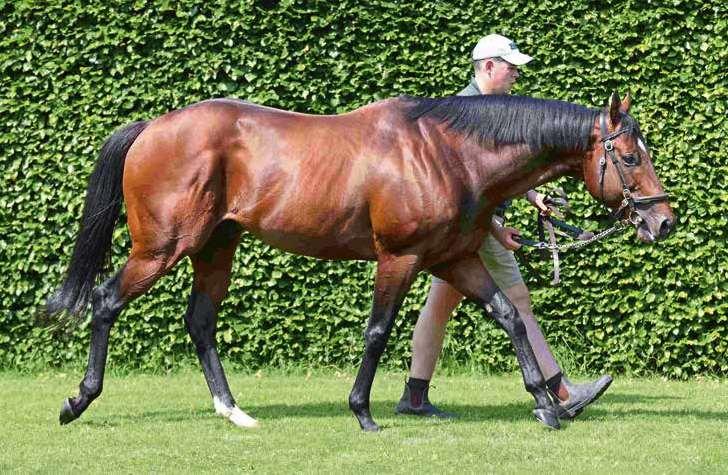
LuckyVega: saw 150 mares in his first book, 40 of whom were black-type performers
Among the eye-catching names from that first book are the dams of significant winners such as Alcohol Free, Blue Point, Celestial Path, Donnerschlag and Izzy Bizu, Eytarna, Eziyra, Fanaar, Fort Del Oro, Four White Socks, Gold Phoenix, One For Bobby, Real Appeal and Watch My Tracer.
“The most important thing then was that he rolled into the foal sales and that his foals sold well, and they did exactly that,” continues Hyland. “He averaged €45,000 at the British and Irish foal sales, which is three times his initial stud fee and is usually a good barometer of how well received a first-season sire has been. That was great to see, and plenty of shrewd pinhookers were buying them up, so you’d be very hopeful heading into the yearling season.”
Among the notable names who signed for Lucky Vega’s first foals were Tally-Ho Stud, John Foley of GHS Bloodstock, Mark Dwyer of Oaks Farm Stables and Peter Nolan. Also standing foursquare behind Lucky Vega at the sales was his owner, as he has done since he purchased the horse as a yearling through BBA Ireland for €175,000.
The name Lucky Vega appeared on the docket of five of the stallion’s foals, including the two most expensive sold in Europe – the 82,000gns half-sister to the Group 1-placed Gold Vibe and the €75,000 colt out of Lilli Milena from Moyglare Stud Farm. Those purchases were not the first time Yulong has thrown its support behind Lucky Vega, as the operation also sent the horse 50 mares in each of his first two seasons at stud, and another 40 in year three.
“When you have a horse like him who isn’t syndicated,
the worry is always will you get enough numbers into him,” says Hyland. “Thankfully Yulong’s support has almost replaced the foundation you get from a syndicate because they sent him 50 mares in the first year and 50 mares in the second year and 40 in his third season as well.
“They’re going to race a large portion of those they’ve bred so we’re going to see a lot of them in the right yards next year. Jessica Harrington will probably have ten to 15, Karl Burke will be similar, then there’ll be Archie Watson, John and Thady Gosden and William Haggas. Those are the homes you’d expect these animals to go into.
“Hopefully, they’ll buy a couple more of the nicer yearlings by the horse as well. It’s great to have Yulong on board – with the quality of mares they’ve sent and with them going into the right homes, it’s all up to him now.”
One name missing from the Lucky Vega buyers’ sheet was the Irish National Stud, although that was not for lack of trying. Nonetheless, Hyland says the team have been pleased by the quality Lucky Vega is passing on to his offspring.
“We followed in quite a few at the foal sales but they were hard to buy and the nice ones were making too much for our budgets,” he says. “We’ve quite a few on the farm and some nice ones, too.
“We’ve a nice colt out of Aimhirgin Lass, a stakesproducing Pivotal mare. He’s going to the Goffs Orby Sale and would be the pick of the bunch so far.
“They’re very athletic animals. They mightn’t be the biggest, but, like him, they all seem to have this great hip and hind quarter. That’s the trait he seems to be passing on the most. He’s not the biggest horse himself, he’s

























































important thing when Nando Parrado went to stud was that dicated him well, and he was a very easy horse to syndicate
quite refined and isn’t your typical Lope De Vega.
“As he is the only son of Lope De Vega to win a 6f Group 1 at two, he was sharper than most of the sire’s offspring, and that’s how his stock look, too. They look like they’ll be early to middle season two-year-olds.”
Lucky Vega is in the somewhat unusual position of having been bred and raced in Europe but beginning his stud career in Australia – he shuttled to Yulong Stud in Victoria shortly after his St James’s Palace Stakes effort. His first-crop of Australian yearlings were bought by the likes of Bjorn Baker and Annabel Neasham, while Thoroughbred Union and Baystone Farm gave A$160,000 apiece for his joint most expensive offerings at public auction in the southern-hemisphere.
“For a horse who probably wasn’t overly well known in Australia his yearlings sold particularly well,” says Hyland. “The early reports from the breakers, and the information I’ve been told it all looks positive for him.”
Also getting off on a positive footing is Nando Parrado, winner of the 2020 Coventry Stakes (G2). The son of Kodiac was also runner-up to Campanelle in the Prix
Morny (G1) and filled the same position behind Sealiway in the Prix Jean-Luc Lagardere (G1).
Nando Parrado was pinhooked by renowned horseman Paul McCartan of Ballyphilip Stud, breeder of Battaash, Harry Angel and Tiggy Wiggy, to name but a few of the stars who have passed through the family’s County Limerick farm. When McCartan failed to sell Nando Parrado as a yearling, he sent the colt into training with Clive Cox to run under the name of his wife, Marie, and in the colours of his late brother, Philip.
“The most important thing when Nando Parrado went to stud was that we syndicated him well, and he was a very easy horse to syndicate,” says Hyland. “Paul McCartan was a huge factor in people wanting to get involved in the horse, and the stallion is a very goodlooking individual himself. He was a 165,000gns foal, which is the most expensive foal Paul has ever bought. That tells you all you need to know about his physical.”
The syndicate behind Nando Parrado includes shrewd operators such as Aughamore Stud, Ronan Burns, Patrick Burns, Luke Lillingston and Jack Cantillon.
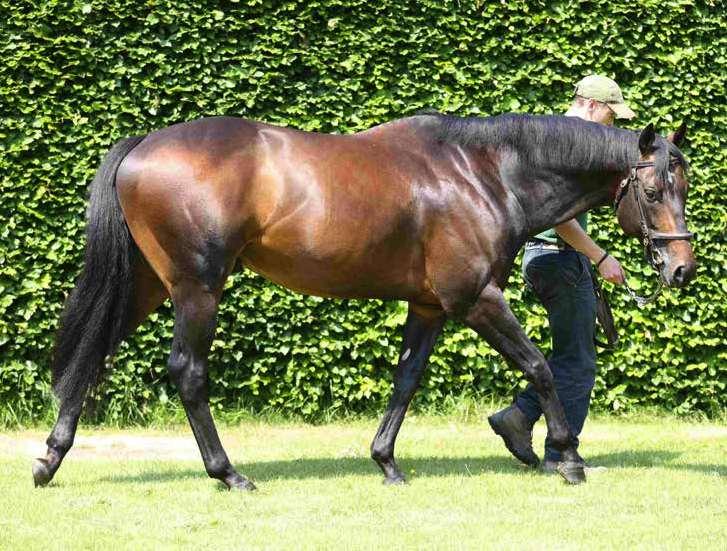
“We were very keen to get a son of Kodiac on the roster,” Hyland continues. “We’ve seen horses such as Ardad, Kodi Bear, Coulsty, they’ve all done well and it looks like a sire line that will be prominent in the years to come. He covered 135 mares in his first season. There are good, commercial breeders in the syndicate and they sent him some good, commercial mares.
“His foal sale average was nearly €20,000, which is over three times his initial stud fee, and foals were bought by people such as WH Bloodstock, Paddy Twomey and Paul McCartan. We also bought three nice foals by him between Goffs and Newmarket.”
The Irish National Stud will consign six members of Nando Parrado’s debut crop at the upcoming yearling sales, including a colt out of a three-parts sister to Grade 1 winner Hunt, who was pinhooked for €38,000.
“He’s a cracking physical and is going to Book 1 of the Tattersalls Ireland September Sale,” says Hyland. “We also have a half-brother to Jack Darcy going to the Orby, he’d stack up well against the yearlings we have on the farm.”
Expanding on the traits he is seeing in Nando Parrado’s youngstock, Hyland says, “They’re nice animals and it’s easy to tell they’re his when you step out into the field They’ve got enough size, good substance and strength.
“He’s got a head with a lot of quality and he’s passing that on to his progeny as well. It’s a sire line that’s known
for producing horses that are tough and hardy and take racing well.
“These animals seem to have very good attitudes so far as they’re relaxed and have been very easy to deal with. We’ll be learning a lot more about them in the coming weeks when we start pulling them in for prep.”
The burgeoning stud careers of Lucky Vega and Nando Parrado are not the only things keeping the team at the Irish National busy this year. Fellow stallion Phoenix Of Spain continues to impress, not least through the exploits of his leading light Haatem.
The three-year-old won last year’s Group 2 Vintage Stakes and has added to his CV this term by winning the Craven Stakes (G2), reaching the podium in both the 2,000 Guineas (G1) and the Irish equivalent, and winning an especially deep renewal of the Jersey Stakes (G3) at Royal Ascot. With those results on his record, Hyland reports that Phoenix Of Spain has been particularly popular during his fifth season on covering duty.
“It’s been great to see the start he’s made,” says Hyland. “His winners-to-runners ratio is up around the 40 per cent mark, which is more than okay. On my last look, his top six or seven performers have the highest official ratings out of their dam so he seems to be upgrading his mares, which is an important barometer on which to judge a stallion. Hopefully, he can get a couple more black-type winners over the coming months
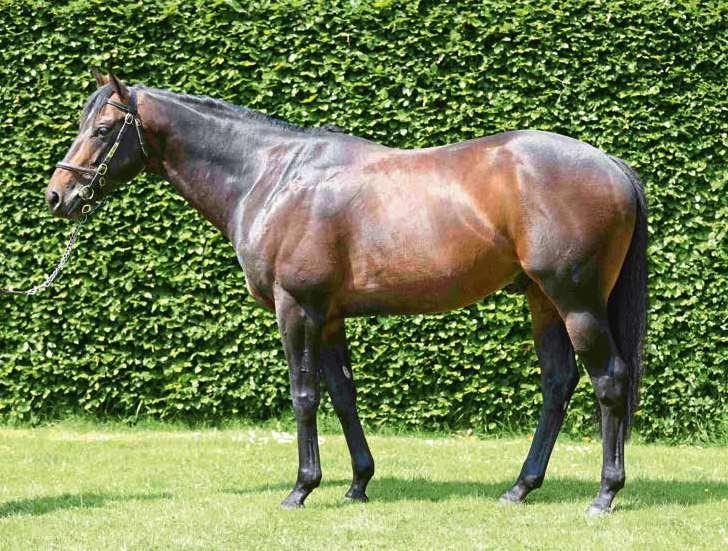
and it’ll be interesting to see how his yearlings and foals sell this year. That’ll give us a guide as to where the market is with him.”
Despite the bright start made by Phoenix Of Spain’s first two-year-olds, the Irish National took the decision to clip his fee into €10,000 for 2024. The combination of a value fee and a progressive profile saw breeders flocking to his stable door in their droves.
“He has 170 mares in foal this year,” reports Hyland. “When we were deciding his fee at the end of last year we were debating leaving him at €12,500, but in the end we dropped him down to €10,000. I think that worked in our favour because people obviously felt he was good value. Then when Haatem came out and won the Craven I’d say he picked up another 50 or 60 mares towards the backend of the covering season.
“This is the first year he’s probably had those better mares. He covered the dam of One Voice, the dam of Blue Point and the dam of Haatem was covered again by him this year. He wouldn’t have got half the mares that Lucky Vega got in his first season, so it’s interesting to see that people are sending him that nicer type of mare now.”
If the likes of Lucky Vega, Nando Parrado and Phoenix Of Spain need any inspiration as to what a successful stallion career looks like, they need look no further than the Irish National’s own roster. Stud stalwart Invincible Spirit, the source of 22 Group/Grade 1 winners and 276 stakes performers and counting, has just completed a remarkable 22nd season on covering duty.
“He’s still covering away,” says Hyland. “He saw about
70 mares and has around 50 in foal. He’s evergreen in the covering shed!
“ The young guys could learn a thing or two off him as he’s so professional. He looks a picture of health and still has some smart performers on the track so, hopefully, we’ll have him around for a few more years yet. His own sire [Green Desert] covered until he was 28 so there’s longevity in the sire line!”
Although well into the autumn of his stallion career, Invincible Spirit has appeared in the pedigrees of some of the season’s most notable performers. He is, of course, the sire of Kingman, whose daughters Elmalka and Sparkling Plenty won the 1,000 Guineas (G1) and Prix de Diane (G1) respectively, while he has also appeared as the dam sire of 2,000 Guineas hero Notable Speech, Norfolk Stakes (G2) scorer Shareholder and other black-type winners such as Mgheera, Sajir, Starlust and Une Perle.
“He’s already a breed-shaper and he’s had a fantastic year as a broodmare sire, which is something people were probably knocking him on in recent years,” says Hyland. “He’s popped up with a Guineas winner and a Norfolk Stakes winner as well, so he seems to be having a growing influence on that side of things as well.
“He’s very easy to deal with,” Hyland adds. “He’s an absolute pleasure to have around the place and we’re very lucky to have had him for as long as we have This was his 22nd consecutive covering seasons and not many stallions can say they’ve done that. The fact he’s still in good health and still covering is a testament to the team here.”
Below, mares and foals at the Irish National Stud. Hyland reports that the farm’s flagship stallion Invincible Spirit, sire of 22 top level winners, has just finished his 22nd covering season, and has“around 50 mares in-foal”
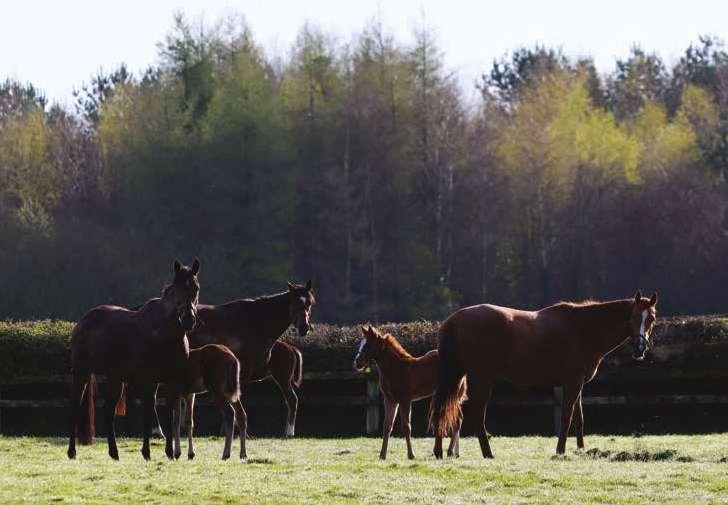

Tony Fry reports on the first-season sire and the farm’s young stallion roster
GOLDEN HORDE, the first stallion acquisition for Nurlan Bizakov under his stallion banner Sumbe and standing at the owner’s Normandy farm Haras de Montfort & Préaux, has got off the mark as a sire.
Moorea, trained by Louis Baudron, won on her second career start at Aix-les-Bains over 6f, the filly out of the non-winning Poet’s Voice mare Sampaquita.
Golden Horde, a son of Lethal Force and winner of the 2020 running of the Group 1 Commonwealth Cup at Royal Ascot, joined the Sumbe team at the conclusion of his racing career after placed efforts in that year’s July Cup (G1) and the Sprint Cup (G1). Winner of the Richmond Stakes (G2) as a juvenile he also twice collected Group 1 form at two with a third placing in the Prix Morny and a second in the Middle Park Stakes.
Tony Fry, stud manager for Sumbe, said: “He has had five runners so far, he has got a winner and all have run well.
“The horses who have run to date wouldn’t have been the strongest pedigrees he saw, and though we are certainly not going to take any credit, there is a lot of him in the stock, while it is also nice to see him with a winner at this point in the season.”
He continued: “He saw a book of around 70 in his first season, with around 15 of the stud’s own mares. The best mares he saw were our own and for us no mare was off limits for him – there was no talk that a mare might be too good or that she might be too valuable to go to Golden Horde.”
Most of the stock is in training in
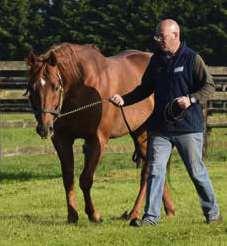
Golden
Some people, whose judgement I respect, and who certainly don’t have to blow smoke up my backside, have been very complimentary about him and his stock
France, but the farm has sent a homebred filly to England and Roger Varian’s yard.
“She is a lovely filly and out of the blacktype Frankel mare Qazyna, who is out of First, one of the original mares Nurlan bought when he purchased Hermonds,” reports Fry.
Of Golden Horde’s stock in general he says, “They all seem to have great minds, like he does. I think they will be a pleasure for
the trainers to have and I think they will take their racing well physically.
“He was a sprinter, but he’s got a lovely walk about him and he doesn’t walk like a sprinter, he’s very Pivotal. His stock also walk well, they have a great hip and strength, and they are very balanced horses.”
He adds with a laugh: “Certain people, whose judgement I respect and who certainly don’t have to blow smoke up my backside, have been very complimentary about him and his stock.”
And now with that first winner written in the stud book, what are Fry’s hopes for Golden Horde’s year?
“It will be ideal if he can produce a steady run of winners with hopefully one of two black-type performers in the mix to keep his name in the papers,” he smiles. “It will, though, be next year that really counts for him.”
Of some of the younger horses on the ground by the chesnut seven-year-old, Fry reports: “Raushan, the dam of the Group 3 winner Ramadan, had a lovely foal by him this spring, as does Ligira, who is a Showcasing mare from the family of Lazzatt.
“Lastochka, the dam of Lazzat, has an outstanding yearling filly – all the sales companies saw her and we could have gone to whatever sale we wanted, but she is going to be retained.
“She is the mare’s second foal after Lazzat and is the sort of horse we want to breed.
“Lastochka is a lovely young mare who has produced a cracking yearling – there would be a certain value that this filly could make in the ring, but we have to put an amount of trust in the stallions and see what happens.”
Fry also gave a good end-of-spring report on the rest of the Sumbe roster – the Group 1 winners Angel Bleu and Belbek, both new to the farm, both who raced for Bizakov, the latter also a homebred, as well as the Prince Faisal-owned four-time Group 1 winner Mishriff
The son of Make Believe missed his
anticipated first year in 2023 after an injury in January that kept him from the covering shed, he commenced activities this spring.
To get three new stallions off the ground in the same year must have been something of a challenge, but Fry reports that he was pleased with the books, albeit in a competitive year.
“It was a different year in France – in 2023 when Mishriff was due to start there were just a handful of new sires in the country, this year there were a number of them – and we were standing three!
“So it was a very altered market place, but Mishriff and Angel Bleu both saw around 120
mares, and Belbek had a book of 90 so I am pleased with those figures.
“And again we supported them all well. For instance, Mirakova, who is from the Wertheimers’ Goldikova family and whom we bought last December, was covered by Belbeck.”
Fry also updated with the latest plans on the Bizakov-owned and Varian-trained Group 1 Queen Anne Stakes winner Charyn.
“We hope to run in the Prix Jacques les Marois, and options are open for next year.
“We might keep him in training, he’s that sort of horse and we could have some fun travelling around the world with him.”
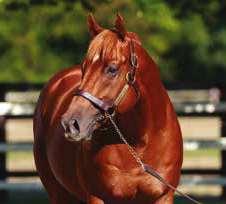
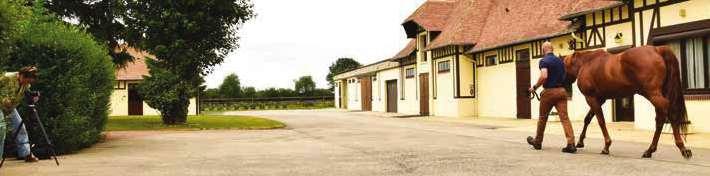
CITY LIGHT, the Haras d’Etreham-based son of Siyouni, concluded 2023 as the leading European first-season sire by winners-to-runners percentage, his 15 winners from 30 runners producing an impressive strike-rate of 50 per cent.
As we enter the busiest point of the 2024 Flat season, the secondseason sire looks to be repeating his consistent feat in year two –his 30 winners from 69 runners so far producing a healthy 43 per cent strike-rate.
He once again heads up that statistical marker for his generation of stallions, who have
had double digit runners (page 36), while he is third-leading second-season sire by prize-money and winners.
Perhaps, even more notably, he is also in second place by winners-to-runners on the top 50 leading European sires’ table behind Night Of Thunder.
And, as we went to press in July, the 10-year-old got his first Listed winner on the board – the two-year-old filly La Guapisima successful in the Listed Prix des Jouvenceaux et Jouvencelles.
She was a €50,000 Arqana V2 yearling, is part-owned by Tony Parker’s Infinity 9 Horses and is trained by Christopher Head.
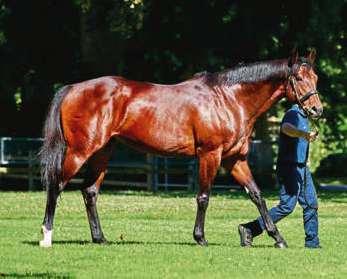
The filly is fairly typical of her sire’s stock – she has now run five times, won her last three races and finished second on her first two starts.
Etreham is obviously delighted with the sustained progress the stallion is making with his early crops.
“Being the European leading first-season sire on ratio of winners-to-runners last year was a very promising result,” reports Alice Lemal from Etreham’s nominations division.
“The challenge then lies in his ability to sire good three-yearolds as well and he is doing very well so far.
“His second generation on track this year is already showing good quality. We couldn’t hope for a better start at stud for him;
we believe that the future looks bright, and we are not the only ones to think so!”
The consistency City Light is achieving has been duly recognised by breeders – the dual Group 3-winning sprinter saw a book of 140 mares this spring building on the 112 in 2023 and returning to his first book of 137.
“He was full this year and we had to refuse a lot of requests
for him as all our stallions are limited,” says Lemal, adding: “He has also covered good mares this spring and saw 77 sisters to 121 stakes performers, including a granddaughter of the four-time Group 1 winner Ventura.”
This spring City Light stood at €7,000 and consistency has been key again – the fee has been Etreham’s go-to price for the stallion since he retired to stud.
Of City Light as an individual, Lemal enthuses: “He is a nice horse who is naturally athletic. He has good size and is elegant. Mentally, his trainer’s description was correct: he is a warrior, and his progeny seem to be as well.”
City Light has eight yearlings entered in the V2 section of the Arqana August Sale, including a full-brother to his debut stakes winner (Lot 493).
PROFITABLE has lived up to his name so far through this European Flat season with 52 winners on the board and dual Group 2 success courtesy of the Weatherbys Ireland Greenlands Stakes winner Mitbaahy, who is now the sire’s leading earner with career prize-money of $282,804, and the Temple Stakes winner Kerdos.
The stallion is no longer resident in Ireland, the son of Invincible Spirit having moved from Kildangan Stud to be domiciled in Turkey having been purchased for stud duties by the Jockey Club of Turkey.
He stands alongside the former Shadwell stallion and 2024 first-season sire Elarqam, who made the move eastwards for the 2023 season from Haras de Saint Arnoult in France.
And the first-season son of Frankel has a first winner under his belt (from just three runners in the UK) thanks to the Mick and David Easterby-trained two-time winner
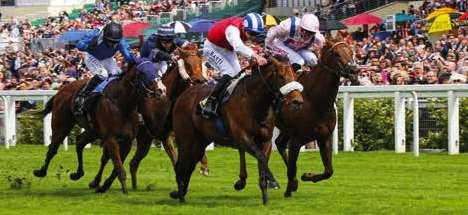
Profitable (red silks): gets fast horses, and the Jockey Club ofTurkey thinks they will suit the country’s racing
Scatter Penny, successful at Nottingham and at Pontefract, her two starts to date.
There are around 250 thoroughbred stallions in Turkey with 15 stallions standing for the Jockey Club of Turkey and Kutay Yusufoglu, breeding manager for the Jockey
Club, explained why the two stallions were pinpointed for duties in the country.
“In Turkey 60 per cent of the races are on Dirt and over the last decade we have invested strongly in stallions from the US for those Dirt races, so we need to focus now on Turf sires in
order to fill a bit of a gap in that division,” he reported.
“Two years ago we lost Powerscourt, the three-quarters brother to Frankel, and we wanted to replace him with a son of Frankel.
“Profitable was a fast horse and gets fast runners on Turf. The largest proportion of our races are over shorter trips, while we have 24 Group 1 races, 15 of them are on Turf.”
The Jockey Club of Turkey is able to stand its sires at fees attractive to breeders, the aim being to improve the quality of stallions that breeders can patronise.
Yusufoglu explains: “We subsidise the breeding sector in the country and Profitable and Elarqam both stood this spring at TL100,000, which is equal to €3,000.
“Victory Gallop is our most expensive sire at TL250,000, around €7,000.”
The Jockey Club owns seven farms, four of which are focused stallion stations, with Profitable and Elarqam standing at Izmit Farm.
“The main breeding region is in the Marmara region around Istanbul, Izmit and Bursa, and we have six farms there and close to breeders – we want them to spend money on horses not on transport!” reasons Yusufoglu.
The Jockey Club’s investment in both stallions has been well received by private breeders – Profitable covered 113 mares this spring with 82 already reported to be in-foal.
Of the younger sire Yusufoglu adds: “Elarqam saw 118 mares and in 2023 was the busiest stallion in Turkey. Many of the owners are very happy with the yearlings they have by Elarqam – generally they look well put together, look sharp, have bone and are strong.
“We have a saying in Turkey that ‘praise comes one by one, but criticism comes 100 times!’

Elarqam saw 118 mares this year, while in 2023 he was the busiest stallion in Turkey
“We are happy to see good comments from the breeders with the stock that they have.”
The long-term goals for the Jockey Club are two-fold – to increase the number of Turkish-bred horses possessing the ability to compete on the international stage, and to improve the quality of homebred fillies who will form the country’s future breeding stock.
Stallions able to be imported to the country have to meet certain criteria before they can
take up duties in Turkey, and either must have run to a certain stakes race level or have produced progeny of that standard.
Of course, the Turkish Jockey Club has not just acquired stallions, it has sold too, and notably in the last eight months Authorized, who had four covering seasons in Turkey, has found a new home in Ireland at Capital Stud.
“It was a tough decision, we had lots of interest in him for some time,” reports Yusufoglu. “He saw around 80 mares each year and did a good job for us. However, as he is perhaps more successful with his older progeny, we decided that maybe it was a good time for him to move back to Ireland.
“We are happy to see him be successful, and he opened up a new budget for new investment, which has been helpful – for both sides it was a win-win!”
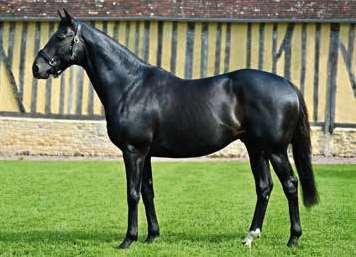


Elarqam is a son of Frankel and the Jockey Club of Turkey was keen to tap into the champion sire’s bloodlines







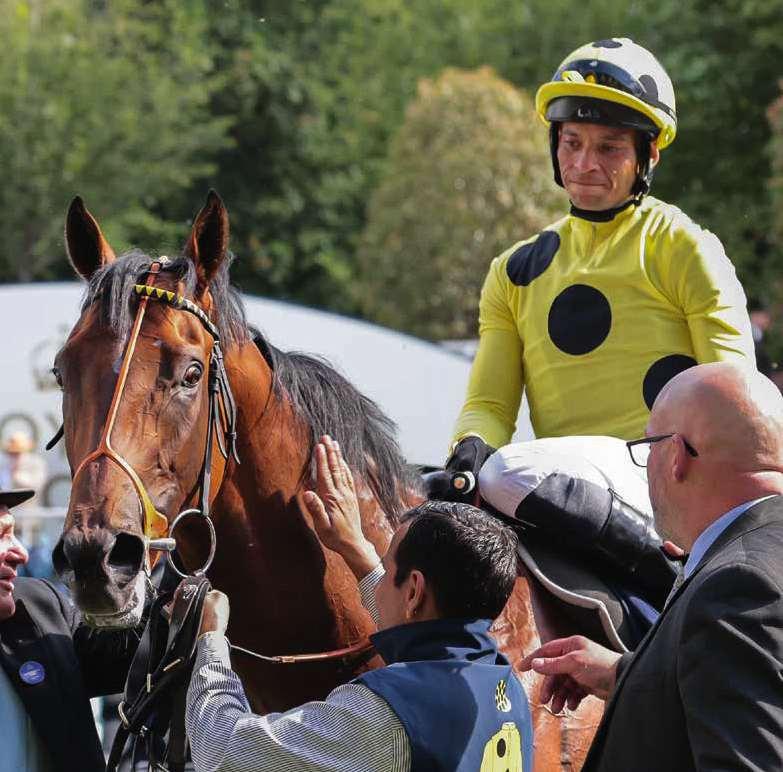

THIS JUNE has been an exciting month for the Turnbull family’s Elwick Stud courtesy of its broodmare Stream Song and its own stallion, the former globetrotting Grade 1 winner Mondialiste.
The double-header enjoyed at the beginning of the month by the farm’s broodmare Stream Song (Mastercraftsman) courtesy of handicap success at Haydock for her son Iron King and a Listed victory at Goodwood for her daughter Lava Stream in the Weatherbys/British EBF Agnes Keyser Stakes, the filly subsequently putting in a brilliant run when second in the Ribblesdale Stakes (G2) at Royal Ascot, was a highlight, but the farm has also enjoyed lesser-heralded but equally important performances by the Elwick-bred, French-trained Mondo Man.
The three-year-old Mondialiste colt is in the care of the Chantilly-based trainer Pia Brandt and he gave connections a Classic shout when an excellent and eye-catching fifth in the Prix du Jockey-Club (G1). The chesnut went on to prove that run was no fluke when a fine fourth in the 1m4f Group 2 King Edward Stakes VII at Royal Ascot.
Brandt purchased Mondo Man privately at the Arqana May Breeze Up Sale in 2023 after he was led out unsold for €30,000.
“He impressed me at the sales with his big stride and good balance, even though he still had some growing to do,” reported Brandt, adding: “I liked his head and his eyes – calm and confident.
“He has a lovely temperament and is confident in himself – he is relaxed in training but reacts well when asked to accelerate.”
Of his Royal Ascot run, she added: “I am pleased with that as he has not been tried over the trip before and these are top class horses. William [Buick] said he thought the

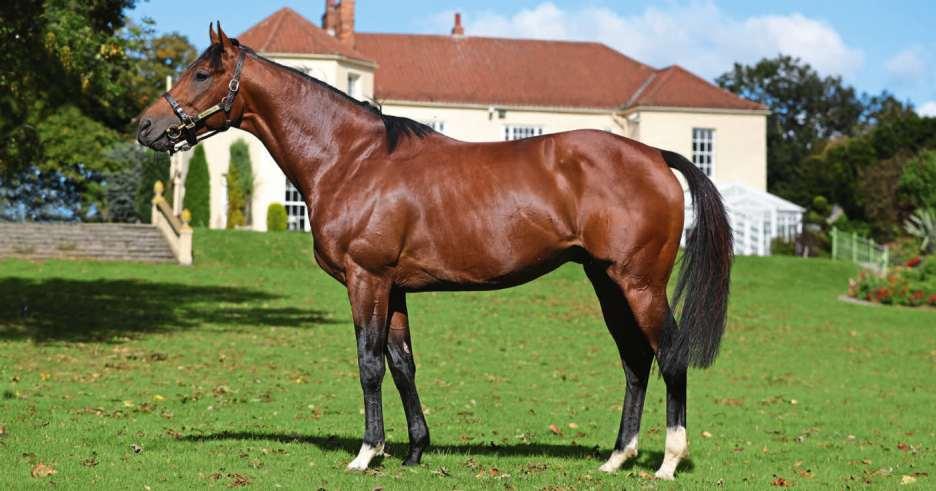
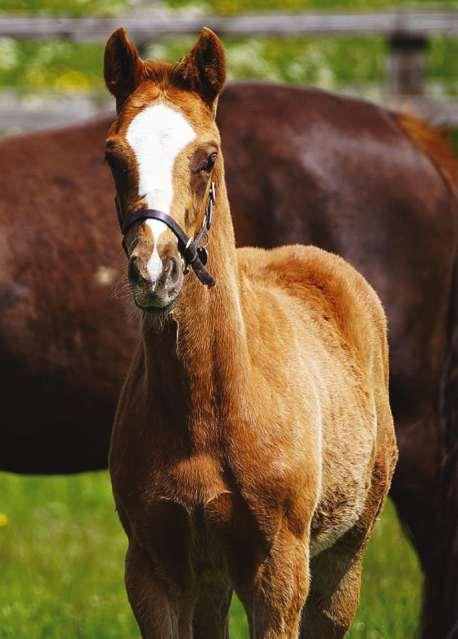
ground was a bit quick for him.
The best so far by Mondialiste, Mondo Man is joint-owned by the trainer alongside two partners, including Ecurie Serge Stempniak, which last year enjoyed a wonderful season with Ace Impact.
Mondo Man has made rapid progress this spring emerging from winter quarters to win his maiden in February over 1m1f at Deauville, going on to win a Chantilly Listed race over 1m1f and then finished a Group 3 second on his fourth career start.
Brandt has an ambitious plan for her talented colt and the Group 1 Prix de l’Arc de Triomphe (G1) is currently the autumn target.
Mondialiste, who was the love of the late Geoff Turnbull’s life, retired to Elwick in 2018 and stood at the County Durham farm for three years.
In 2021 the stallion transferred to France, where the commercial opportunities are perhaps more numerous for a stallion with his profile, initially based at Haras d’Annebault

before moving for the 2023 season to his current home at Ralphael Detouillon’s Haras de Longechaux in the east of France.
“Mondo Man is an exciting horse and has been so progressive this season,” reported Gary Moore, stud manager at Elwick, adding: “Mondialiste has seen 40 mares this spring, and we have seven permanent boarders at the farm and they have visited him.”
Of the reasons for the stallion’s move to Longechaux, he added: “We think the sire suits the German broodmare band and the farm, which is near the Alps, is just that bit closer to the border.”
And of Mondo Man’s dam Moghrama, he updated: “She has an Almanzor colt foal at foot, and she is in-foal to Chaldean.” n
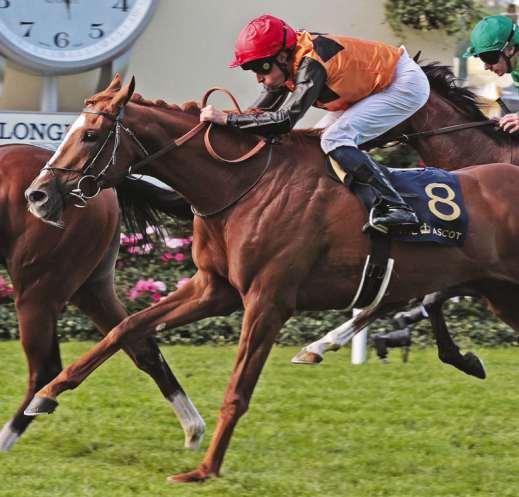
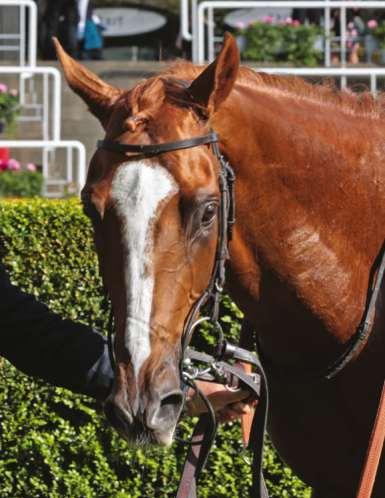
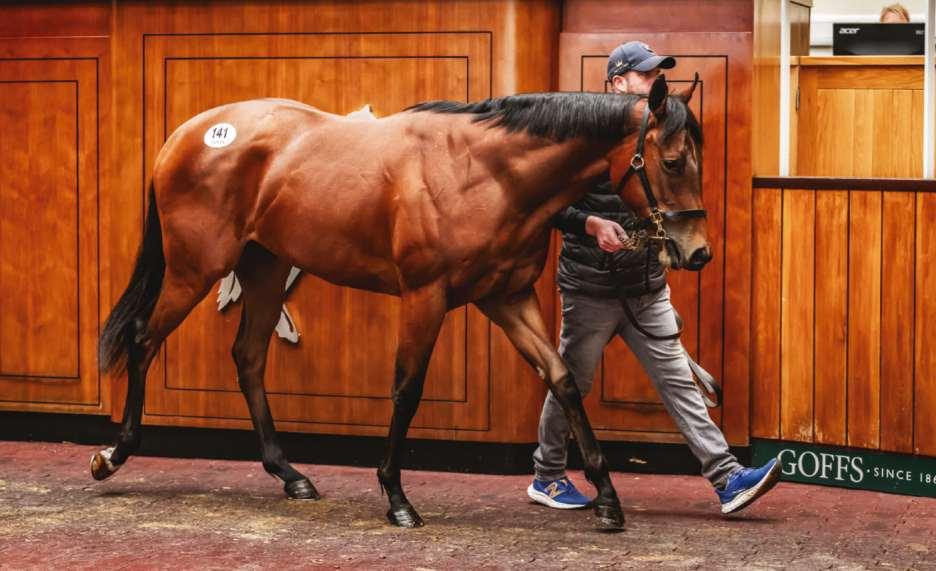
THE STALLION SUCCESS STORY at this spring’s breeze-up sales was Starfield Stud’s first-season sire King Of Change.
Six lots by the son of Farhh were sold at the two-year-old horses in training sales for an average price of 113,063gns and a top price of £280,000, which was given by Alex Elliott and Amo Racing at the Goffs UK 2yo Breeze Up Sale for the filly and first foal out of the two-year-old-winning Dawn Approach mare Evie Speed. Now called Too Sweet, she is in training with David Loughnane.
This year’s results show superb sales ring progression for the sire – his first crop foal average was 17,814gns, a figure which increased marginally to 18,544gns when the crop sold as yearlings.
This spring there has been a massive upturn with the sire’s average for his twoyear-olds growing sixfold to a six-figure sum.
The improvement is even more marked if looking at King Of Change’s fillies alone – the five sold at the breeze-up sales achieved an average price of 130,476gns.
At the time of writing, the Group 1 Queen Elizabeth Stakes-winning and 2,000 Guineas runner-up has had two winners from three runners, all fillies.
Lady With The Lamp was successful at Bath for trainer Joseph O’Brien on her second career start, and Transcending won her maiden for Ger Lyons at Leopardstown on June 13 having previously finished a good fourth in a particularly hot maiden.
Lady Roxby put in a taking debut when fourth at Ripon on June 19 for trainer Bryan Smart, who paid 180,000gns for the filly at the Tattersalls Guineas Sale.
“His runners so far are looking very promising, all progressive fillies,” said Micheal Orlandi of Starfield Stud, adding: “His breeze-up horses sold exceptionally well and the results definitely brought in some late mares as breeders revisited his profile – those who came to see
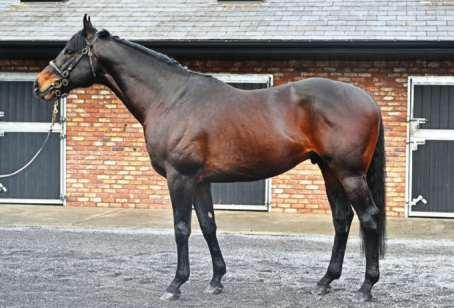
Shim were impressed as he is an eye-catching individual with plenty of length, strength and substance.
“He is a very good-walking, well-balanced
TEFANO LUCIANI’S FARM
Azienda Agricola Luciani, which is found in the beautiful Lazio region of Italy, some 35km west of Rome, stands two stallions and is currently enjoying a fine time of it – its young sire Mount Everest making possibly an unexpected but impressive early mark on the European first-season sires’ table.
The son of Galileo currently sits in third place with four early-season winners, a tally achieved from just seven runners.
And at Milan on June 14 he sired a onetwo – his colt and previous winner El Buitre coming home ahead of Zenorione, already with two previous successes to his name.
It is an admirable performance for the stallion, but even more commendable when looking at his own racing profile.
Trained by Aidan O’Brien for Flaxman Stables and the Coolmore partners, Mount Everest made his juvenile debut over 7f, but that was the only time he ran over a distance less than a mile – his best two-yearold performance achieved when second in the mile Beresford Stakes (G2). His career highlights came at three with Listed victory in the Trigo Stakes over 1m2f and a sixth-place finish in the 1m4f Breeders’ Cup Turf (G1).
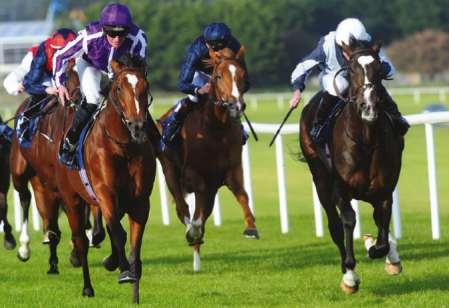
Luciani argues that it is his stallion’s topclass pedigree and outstanding physique that is giving his progeny this extra impetus for these early spring season successes over the sprint trips of 5f and 6f.
“Mount Everest is a lovely horse and just exudes class – he has a lot of quality and is a good-bodied horse,” says Luciani on the Weatherbys section of the Nick Luck Podcast.
“We bought him from Flaxman Stables and Coolmore, and he is bred in the purple being out of the brilliant mare Six Perfections – she won the Prix Marcel Boussac as a twoyear-old, was a champion three-year-old and a Breeders’ Cup winner. He is a full-brother to two black-type winners and from Miesque’s
stallion and all his stock have great action, too.”
The eight-year-old sire began his stud career at Derrinstown at €7,000, a price that was reduced to €6,000 for year two. He has stood for the past two years at Starfield starting out at a fee of €6,000, reduced this spring to €5,000.
Orlandi continued: “This year’s book will be around 120, his biggest so far and up from a previous best of 70.
“He is working off a small crop this year, but it is all relative and if he can get a good winners-to-runners ratio and some stakes horses that will be ideal. The future looks promising as his stock should really come forwards at the back end of the year, as threeyear-olds, and over a mile and further.” n
Use this QR code to listen to Stefano Luciani on Nick Luck’s podcast

family of Karakontie, Kingmambo and Miesque’s Son, a real stallion’s family.
“He should not really be getting winners over 5f, but I think it is just down to the quality that he is passing on – I think he will really come into his own as his progeny age and start to run over further.”
The 15-year-old Dragon Pulse stands alongside the young sire, the son of Kyllachy into his second year in Italy having moved from his long-term domain at the Irish National Stud where he had been a standing dish since his retirement in 2013.
Winner of the mile Prix de Fontainebleu (G3), The Curragh’s EBF Futurity Stakes (G2) and a runner-up in the National Stakes (G1), Dragon Pulse boasts a solid and highly respectable 53 per cent career winners-torunners record with 26 winners so far in 2024.
“I am happy to have Dragon Pulse on the farm, and he is a well-mannered horse,” says Luciani. “He is a solid winner-producing sire.”
His leading earner is the Irish-bred fiveyear-old Happy Together, who has collected over £3 million from 23 starts.
He is trained in Hong Kong by Frankie Lor with his most recent performance being his best when fourth behind Romantic Warrior in April’s QEII Cup (G1). n