VENTURE CAPITAL X CONTENT

AND COMMUNITY
Why and how firms are leveraging content & community to grow fame, build reputation and increase deal flow


Why and how firms are leveraging content & community to grow fame, build reputation and increase deal flow
This report on the VC sector’s use of content marketing and community strategy is based on market intelligence and analysis that VOLUME undertakes regularly to provide our clients with insights on best practice, market gaps and opportunities. Over the course of 2023 we will publish a series of papers like this focusing on individual B2B market sectors focusing on the brands that are innovating, setting new standards, and winning.
The term ‘thought leadership’ is certainly over-used, and often misplaced, but most of the activity we have analysed in the VC market passes the test and it’s clear how the content might be valuable to the two audiences critical to growth in this sector: businesses seeking funding from the right partners to power their growth, and investors or Limited Partners (LPs) looking for the right investment opportunities.
By sharing this analysis, it’s our intention to inspire content teams and community builders in the VC and private equity sector but we hope that the findings will provide relevant insights to everyone working across the entire B2B marketing and comms sector too.

It’s extremely rare to find a business in any B2B sector that doesn’t now regularly publish content on their own channels and on platforms such as Linkedin, Twitter, YouTube and Medium. The problem however is that there’s probably too much, and increasingly it’s not delivering value for the time that it asks of the intended audience - customers, clients and prospects.
Our analysis concludes that many VC firms are the most sophisticated and innovative users of content marketing in B2B as a whole. This can perhaps be explained by the fact that around a decade ago a handful of firms saw the opportunity and began to harness and professionalise the personal blogging that many of their principals and partners were doing by building in-house content teams, partnering with agency and journalistic talent and developing wellresourced owned media platforms.
More recently, driven by the trends we outlined in our 2022 report The Business of Community, we have seen VCs leading the way in the growing ‘Community Economy’ - investing in platforms, talent, resources and technology to build and nurture communities of portfolio companies, partners, mentors, advisers and investors to build their brand, for dealflow, to support the founders in their portfolio & accelerate their growth, and to attract & retain the best talent.

VCs' content marketing and community building typically has two goals: to attract investments and investors who buy into the value the VC can add & its investment thesis, and to help build strong, meaningful relationships with portfolio companies and LPs over time.
Thetypeofcontent,andthedistributionchannels theyusearetypicalforB2Bmarketing:
Corporatewebsites:Brochureware for the firm, a hub for corporate comms, a home and destination for all content, and to enable first-party data capture for lead-gen
Blogs: Published on own channels and distributed via blogging platforms e.g. Medium to publish thought leadership based on experience and to build fame & reputation of the General Partners who make up a large part of the firm’s brand equity
Sub-branded/co-brandededitorialwebplatforms: Acting like a publisher by creating and distributing content on a regular / fixed frequency to reach new audiences and build loyalty. This strategy makes it easier for the firm to attract specialist editorial talent and contributors
SEOcontentandlandingpages:To make content discoverable and ensure prospects are directed to the most relevant content
Video:Hosted on owned channels and distributed on social platforms / YouTube to improve discoverability, appeal to younger audiences, favoured by social algorithms
CoreB2Bsocialchannels(Linkedin,Twitter):To connect with core audiences where they spend their time and attention, to be part of industry conversations and groups, to meet investors / entrepreneurs where they are, to establish a brand presence alongside competitors
Non-coreB2Bsocialchannels(Instagram,TikTok): To experiment and innovate, be part of a wider conversation, add discoverability for new audiences, build brand presence
Audio/Podcasts:Hosted on owned channels and distributed on social platforms and audio aggregators (Apple Podcasts, Spotify, Google, Acast) to go deep on subjects that matter to the firm, founders and funding partners and to grow reach

Hero/value-addcontentandcustomer experienceassets:From research reports and detailed trend analyses to webinars, IRL events and branded infographics these higher value / higher engagement content and community initiatives enable the firm to go further for VIP audiences and create a long tail of evergreen content to distribute on social media
Emailnewsletters:Regular targeted emails that act as a database builder, a content aggregator, a traffic driver, and a reputation builder amongst an opted-in audience resulting in open, read & engagement rates far superior to social
Guestblogging/Op-eds:Publishing original content on third party channels and platforms to align the business with influential thought leaders and widen reach
Likeanybusiness,VCstodayhave5broadand simpleobjectivesfortheirinvestmentincontent marketingandcommunity:
Visibility:To become better known by being notable, present, consistent, memorable and relevant to the needs of their clients and prospects - supporting investor relations, attracting the best startups and reducing recruitment costs
Fame:To build reputation by demonstrating knowledge, capability and achievements - boosting the personal profile of partners / associates, building authority, influence and thought leadership credentials for the business and brand as a whole
Distinctiveness:To demonstrate what makes their firm different, promoting knowledge sharing and management within the organisation and marketing / profile building for portfolio companies
Impact:To grow the business by promoting the firm’s achievements and the impact it has made for investments and investors alike and leveraging this credibility & authority to negotiate best deal terms
Relationship:Using content to develop an audience they can engage regularly and cost effectively in order to convert when the time is right, and using
community to build strong bonds with portfolio companies, investors and potential partners, adding value for all by enabling them to build connections and support each other autonomously.
It wasn’t always this way; VCs historically were, like their Private Equity colleagues, rather private compared to the rest of the finance and corporate world. Back in 2013, Forbes described VCs as being late to the content marketing party. But as is often the case in this sector, innovation in Silicon Valley that began a decade ago has now defined the rules of engagement for VCs worldwide. Big names like Andreessen Horowitz / A16Z and First Round Capital kicked things off by investing in journalistic talent and owned media platforms to become more transparent, showing potential investors and investments alike what they are all about, demonstrating their point of view - and their point of difference. Forbes notes that a big factor in VCs investing in their own content marketing was in fact the growing VC money piling into content marketing tech and SaaS businesses.
Fast forward 10 years and in 2023 VCs across the board are amongst the most prolific and professional users of content and community to build their brands, the personal brand of their people (see Stop Press panel on the right) - and grow their business.
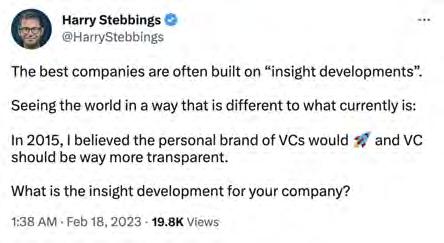
Stop Press: As we were about to publish this report Harry Stebbings of 20VC and prolific personal brand-builder tweeted:
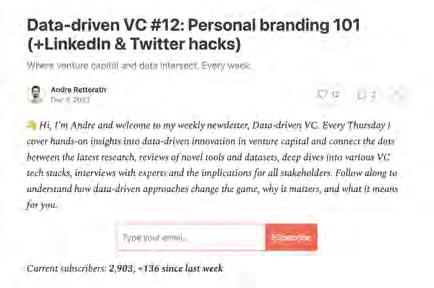
Which prompted Andre Retterath of Data Driven VC to reshare his newsletter from December that explored in detail the interrelation between firm brand and personal brand (and how to grow yours).
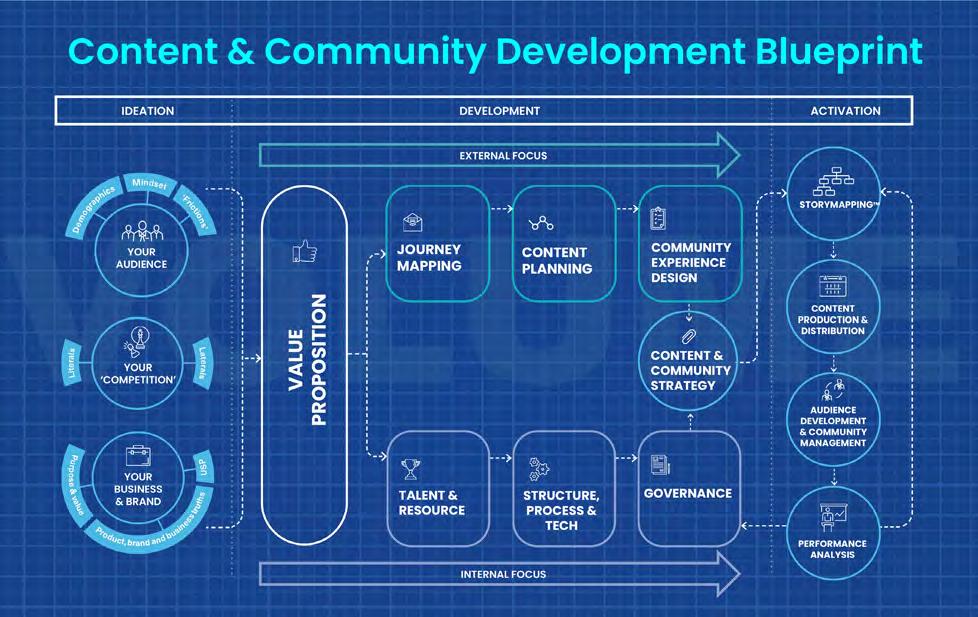
The team at VOLUME have worked with B2B brands on content strategy & implementation and community development & management for decades. Based on this experience we have defined and reverse-engineered the key stages, actions and critical enablers of audience impact and commercial success. These are summarised in our blueprint process:
So in this analysis of VCs' use of content and community we have used the key elements in our blueprint as a lens to give consistency and a degree of objectivity to our conclusions, by exploring:
• Whichfirmsareusingtheircontent mosteffectivelytobuildtheirbrand?
•WhichVCsdemonstrateaclear understandingoftheneedsand motivationsoftheiraudience?
•HowwellalignedareVCs'value propositionswiththeexperience deliveredbytheircontentand communityactivities?
•Whichbrandsareabletoleaninto cultureinthemostrelevantway?
• WhichVCsaremakingbestuseof talent&resource,content distribution,audiencedevelopment andcommunitymanagement?
As a result we are able to share with you what we believe are the best examples across 10 common use cases of content and community activity in the VC sector.
Going beyond the basics and further than the fundamentals to tell the story of the firm in a compelling way for every audience; why it exists and who it’s there for. Done well, this content enables a VC to stand out, making it clear what you stand for, who you are, what it’s like to work with you, and what you’ve achieved, in order to attract the right kind of investors and investments.
Most firms have a publicly stated purpose, defining their role in, and contribution to, society. Some are better than others at living up to it, and as well as being good corporate citizens, those businesses benefit because they’ve got a great brand story to tell, and it’s relatively easy to tell it.
Take UK-based True Capital. Their clearly stated purpose is to “Reimagine Business” saying they “aspire to the kind of success in which everyone becomes a winner: the consumer, the company, the people and the planet. This is the future of business and we’ll all profit from it.” And their portfolio (including Zwift, Hush, Frugli and Warpaint for Men) reflects this.

They claim to have a unique business model, connecting early-stage businesses, partners, investors and tech leaders across 3 funds. But it’s the focus on the power of those connections and the potential of community that comes across so clearly and consistently in all their content.

For example, their True Stories content comprises web and social video content, podcasts, events, case studies and interviews across their community of investors, startups and partners, giving potential investors and portfolio companies transparent and valuable insight into the True experience, building fame and understanding of the True brand.

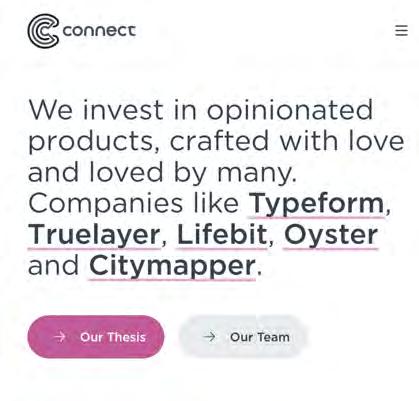
Connect Ventures tells its story by putting the founders it invests in front and centre. Most, if not all, VCs spotlight the businesses they invest in, typically seen under ‘our portfolio’ in the nav bar, but Connect goes further with founder portraits dominating the landing page.

But what really stands out is the way in which they deconstruct and explain in detail their investment thesis - We invest in opinionated products, crafted with love and loved by many - giving their key audiences a clear understanding of potential fit. This breakdown of the investment thesis is published on Medium, but it is interesting to note that Connect has a very low profile
otherwise on social media. Instead, the partners and leadership team tell Connect’s brand story in social media with a regular flow of content published via their personal profiles, offering greater reach and engagement than content posted via the brand itself.
Finally, Connect’s founder platform merits a mention following a pivot in 2022 from being a generalist platform (with much in common with other VC platformsto a product specialist platform, which better reflects the needs of Connect’s audience, and is a strong fit with the promise made in its investment thesis.

First Minute Capital is the investment arm of venture studio and accelerator, Founders Factory. As such it is part of an organisation with one of the highest profiles and most famous brands in the early-stage VC sector. And yet First Minute tells a very clear and strong brand story of its own with content that is totally aligned with the value proposition.
Self-styled as “The Home of Magnetic Ambition” First Minute defines itself as a “seed fund backed by over 120 unicorn founders and a world-class community. We’re not just a fund. We’re a community supporting the next generation of maverick entrepreneurs.”
And the story stands up. Led by ‘double unicorn’ Brent Hoberman, First Minute talks of having 120 unicorn backers

and the support of some of the world’s top CEOs, claiming “community is our superpower.’
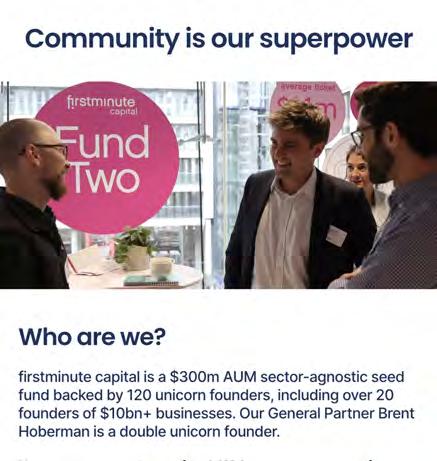
It’s a great story, and they tell it in a number of ways. For instance through the annual First Minute Forum, as well as Founders Forum events, which attract significant coverage in the business media. Or in podcast formats, including the My First Minute and Crazy until it’s not series.
Through both the forum and the podcasts, First Minute gives those with untapped ‘magnetic ambition’ the chance to hear the stories of those who’ve made it. And the story is distributed furtherviaeffectiveuse ofsocialmediawith the podcasts promoted using short edits of the content, optimised for Twitter and Linkedin.
Sometimes referred to as ‘service content’ or ‘how-tos’ this delivers essential advice and information and can be effective at building an audience through SEO via keyword ranking and link building. Typical examples include pitch deck advice and examples, introductions to angel investing etc.
Looking across all of the VC businesses we analysed on our longlist approximately half have a section of their website devoted to practical or how-to content, or a resources section where lots of this kind of content sits, acting as a destination or traffic driver. These evergreen content assets are usually relatively easy to update and can be used over and over again in outbound social and lead-gen activity.
Forward Partners practical content is organised in a Growth Playbooks destination that promises “Pragmatic advice, insights and frameworks for founders to help solve the most common early-stage challenges."

The growth playbooks are in fact a series of mid-length and longer-read editorial articles organised under 5 topics: Product market fit; VC investment; Marketing & sales; Finance; People & culture.
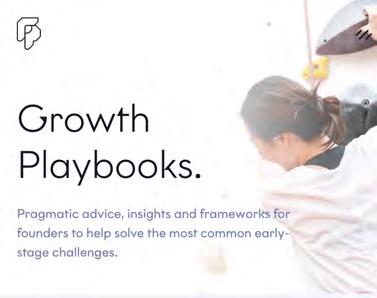

The writers are predominantly Forward Partners’ own people, showcasing the talentandexpertise in the firm. As well as first-hand experience and advice the authors curate useful external resources and frameworks etc. delivering added value for the audience. Also over on Instagram, Forward Partners include short-form versions of founder Q&As linking to the full version on their blog.
Octopus Ventures have an entire “Insights” section on their website which includes very practicalhow-toguidesalongwithmore detailedsectorandtrendreports (see usecase 3 - Market Intelligence below).

More detailed and templated in structure compared to Forward Partners’ content, the how-tos from Octopus are also more wide ranging in topics, from entry-level how-tos through to CEO advice, building teams, scaling and US expansion. They also tag the practical content by sector / market, including health, fintech, climate etc.
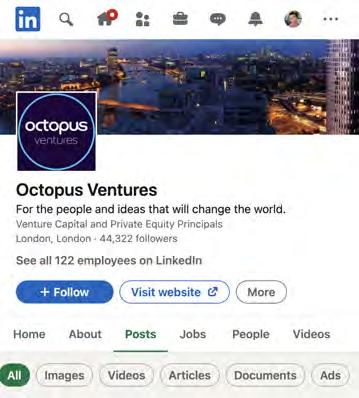
Over on Linkedin, in common with most VCs the majority of the content being posted is news relating to new investments, portfolio company success milestones or exits,
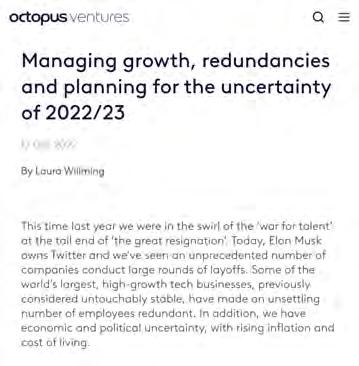
but Octopus and its partners and people also post practical content that is timely or reactive to external events, including a recent post on Managing growth, redundancies and planning for the uncertainty of 2022/23.
These posts link and drive traffic to the blog section of the Octopus website, where the audience can access the topline info, or explore the topic in great detail via a series of curated links, access a number of practical templates (e.g. for managing redundancy) and at the end, they can sign up for future content by subscribing to the Octopus email newsletter. This is a good example of planning content for the different need-states across the customer journey.
Educational content that explores markets, current and future trends in detail to inspire founders and investors and enable them to spot and exploit opportunities.
Index Ventures publishes very detailed market intel and insight reports on the ‘resources’ tab of its website. The insights are packagedandpublishedindifferent formatstomaximisetheirusefulnesstoas wideanaudienceaspossible.

One example is the ‘Destination USA’ topic aimed at European entrepreneurs. This content can be accessed as a very detailed eBook, as a summary PDF deck, as an app and as an
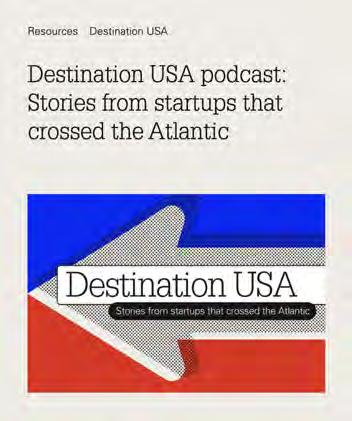
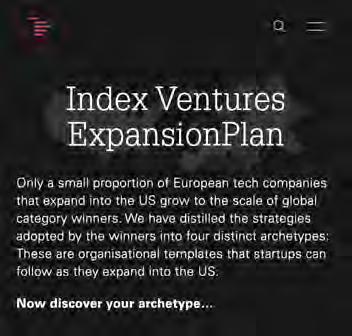
8-episode podcast, featuring interviews with high profile founders including Daniel Ek of Spotify and Jose Neves of Farfetch.
Index, and the partners in a personal / professional capacity, also promote the firm’s market and future trend analysis on social media, including this recent and timely series on The AI Platform Shift.
Octopus Ventures, profiled above in usecase 2 for its practical content, also publishes more detailed reports as insights including “Measuring for Happiness,” a report written in partnership with Unpitchd encouraging founders to take a view of their performance metrics and put business model thinking at the heart of their early stage planning and action.
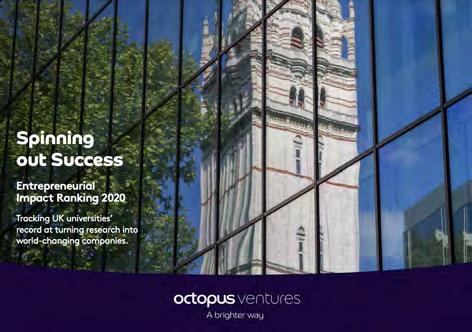

“Question the Questions: applying some Socrates to your US expansion plans” includes input from founders who’ve done it, and the 'Entrepreneurial Impact Ranking” explores the relative performance of UK universities at turning research into world changing companies.
On the negative side, these reports are relatively hard to find, not being part of the main site navigation, and as they are published as PDFs the content will not be indexed by Google for search.
However, on the (potential) plus side, people have to provide their details in order to download the content, providing Octopus with self-qualified leads which they can re-contact directly.
In contrast, another of their reports - the Future of Fertility - is open-source to encourage more diverse and impactful investment in the sector, and to get people talking.
Antler’s content is among the most consistently well produced and effectively distributed.
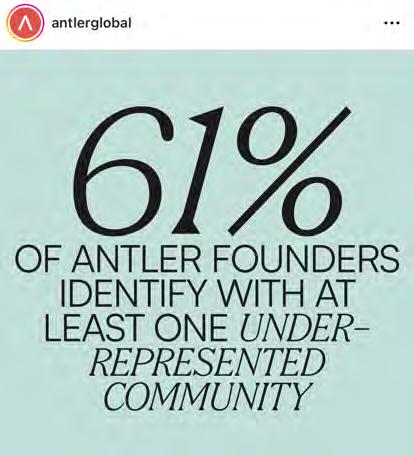
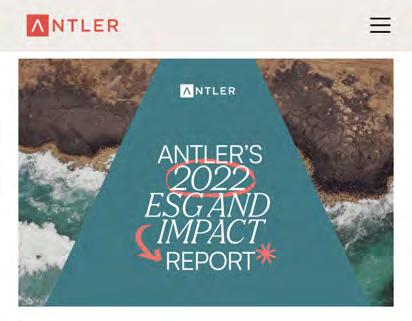
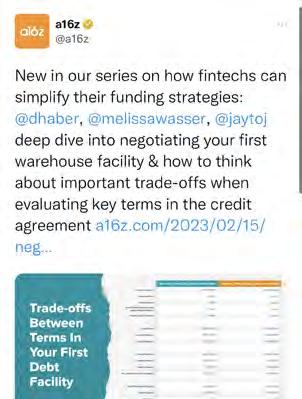
At the time of writing in early 2023 their second annual ESG and Impact report has just been published exploring how venture capital can act as an “engine of positive transformation.” The report was launched with coordinated activityacrosssocialchannelsincluding postswithkeyquotesfromtheresearchand motiongraphics-andcustomisablepost formatsweremadeavailabletomakeiteasy foranyoftheiraudiencemembersacrossthe sectortoshare the content and spread the word.
The firm’s 2022 analysis of the ‘$100bn Creator Economy’ is another good example of audience-focused / community-building content.
2021 and 22 saw a raft of reports, blogs and surveys published on the creator economy; from the platforms that power the sectors growth (and take a share of creators’ earnings
in return) and from the VCs funding the platforms.
Antler published its first take in May ‘21 and the second edition in the summer of 2022. Both curate and aggregate some of the key insights published to date, adding new value to the audience through:
• Comprehensive / long-form blog posts, optimised for search and acting as a primer on the sector
• A 1-hour YouTube webinar to present and analyse the key findings
• High-impact and highly shareable visual assets including market-mapping landscapes and revenue model illustrations
As a result the reports’ author - Antler’s global head of community, Ollie Forsyth - was one of the contributors to Sifted’s October 2022 feature on VC's views on the Creator Economy Startups to watch, taking his personal brand and the firm’s brand to a wider audience.
L&D resources - Content, assets and events that go beyond ‘information’ to deliver a user experience more akin to ‘education.’ The rise of creator economy platforms (many of which have been funded by the VC sector) has made it easy foranyoneto develop knowledge products and courses. Many of these offerings come from ‘fake gurus’ with little or no claim to genuine experience or expertise. In contrast, VCs productising their expertise or creating a platform to share the knowledge of their portfolio companies and partners has enormous potential value for founders and investors alike.
Notion Capital goes hard on the ‘education’ angle with its offering - the Notion Librarysaying “We wanted our library to be a place where we could encapsulate our collective learnings.” The ambition was to collect “all the good stuff, the articles, podcasts, videos and thought pieces all in one place, like a reference library of excellence (so that users can) browse, discover and learn.” Overall it's a strong proposition that delivers clear value to the audience.
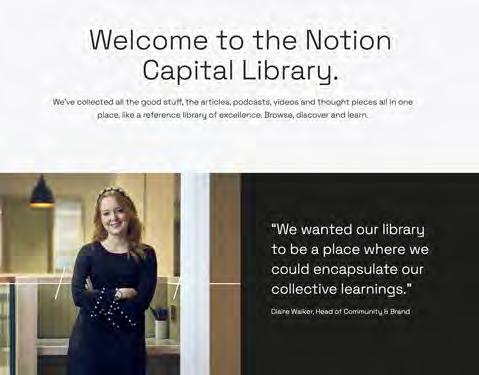
TheUXissimpleandclearwith the content including articles, founder stories, events,
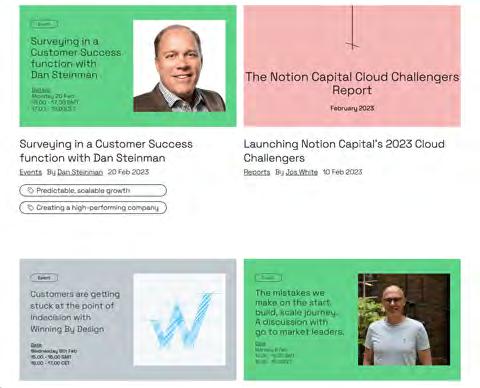
webinars, podcasts and reports. All content is colour-coded and tagged appropriately, enabling users to filter and search by topic. Multi-part seminar series require users to register, enabling data capture for lead gen, deal flow and community building.
And although it’s a ‘library’ the content is relevant with 3 new articles in the first two weeks of the year alone - one focused on the potential for Chat-GPT to align sales and marketing functions, plus promotion of one webinar and an in-person event.
The Red Team is an L&D offering from Blenheim Chalcot, the firm that describes itself as a digital venture builder, not a Venture Capitalist. They explain this means theydon’tjustinvestfunds,sayingthey “investourknowledgeandexperience,our ideasandinfrastructure. "
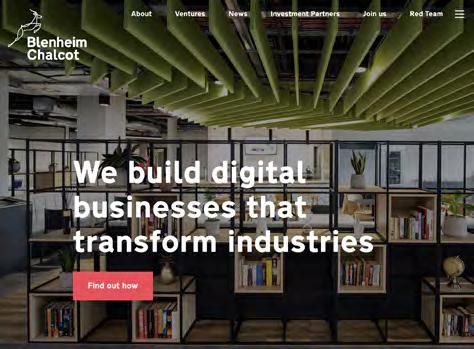
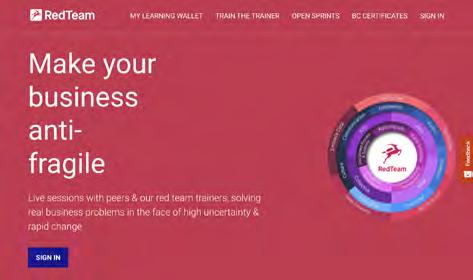

Inpractice,thisincludesTheRedTeam whichistotallyon-brand, offering a range of L&D experienceand programmes with a mission to create exceptional performance and adaptive, anti-fragile organisations.
The Red Team invites applications from business leaders who want to develop their “hard & soft skills” by learning from people with hands-on experience of building and scaling businesses. Products include a 2day Train the Trainer programme, to accelerate your in-house development capability, a 5-session management fundamentals programme and a 15-18 month development plan for high potential employees via its exclusive Red Team Certificate program at a cost of £1,500 to £2,500, depending on the level.
"TheRedTeamis totallyon-brand, offeringarangeof L&Dexperiences& programmes"
Build with Balderton is a more traditional, free to access L&D resource for founders but it is notable for a few things.
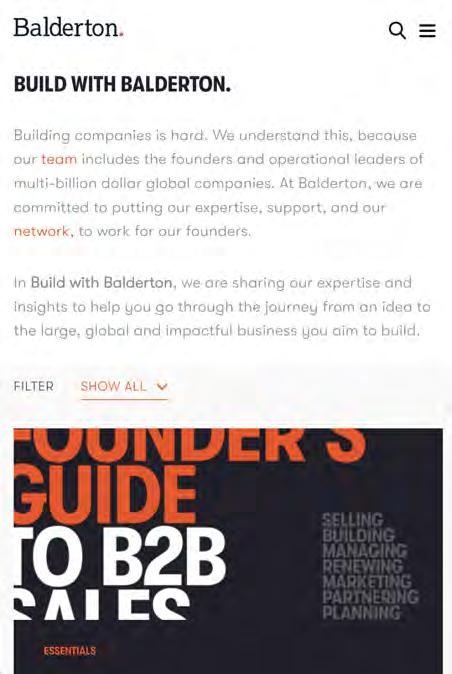

It’s clearly designed to meettheneeds offoundersatdifferentstagesontheir journey from seed to IPO, with sections on fundraising, scaling, marketing and talent.
It includes the kind of bread & butter content that early stage entrepreneurs will value (How do VCs make money anyway? and The Founders Guide to B2B sales).
Much of it comes from the expertise of the General Partners, promotingtheknowledge andexpertisewithinthefirm to build their personal brand, and the Balderton brand as a result.
Content is organised and tagged for user benefit - e.g. Fundraising, Marketing, Scaling, Talent, alongside a comprehensive library of founder video interviews to inspire.
And the monthly Balderton email newsletter includes a regular section summarising Build with Balderton content to drive audience engagement.
"Itincludesthe kindofbread& buttercontent thatearlystage entrepreneurs willvalue"
Developing high profile and highly shareable ‘trademark’ content assets to give the firm a regular pulse of content that gets noticed and recognised in social feeds, and gets promoted by trade and business media - from infographics and annual presentations to periodical white papers.
In releasing ‘the first comprehensive Generative AI Market Map available to everyone’, Antler have tapped into ‘one of the hottest topics trending on social media platforms in 2022’ and given back to their community by truly addressing the needs and motivations of their audience.

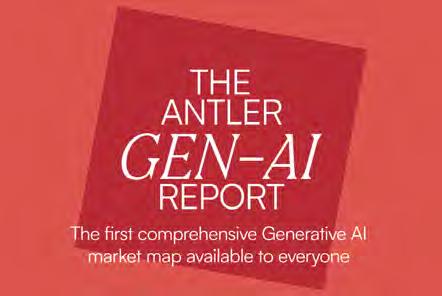
In doing so, Antler are indeed ‘founders first’, providing timely and incredibly indepth information that early stage founders can use to ‘launch and scale startups that address meaningful opportunities and challenges’.
Created as hero content to sit on the website and to be distributed via social channels, Antler’s industry mapping is a strategic content strand providing real tangible value for its community, which could be leveraged further with more widespread distribution and promotion across multiple owned channels and public platforms.
UK-based Frog Capital could have featured in many of the sections above and to an outside observer it looks like they are nailing it with their content strategy.
Website visitors can filter all web content by their role and interests, and the variety of formats fullyreflectandsupportthetwokey elementsoftheFrogbrandpropositionScaling with Purpose and Backing European Software Scale-Ups that make a positive difference.
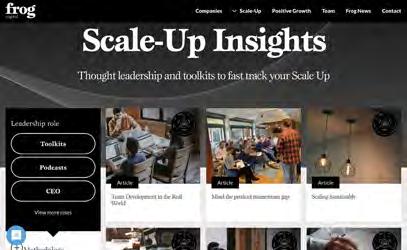
Like all good VCs, Frog gives their General Partners a platform for their knowledge and expertise through the content they publish on their Frog News strand, but they also invite contributions from third party collaborators, contributors and “friends.”

However, there are two specific elements of Frog’s strategy we have chosen to highlight.
The first is a range of frameworks they use to outline how they implement the principles of Positive Growth Equity - a key element of Frog’s DNA. These ‘Scaleup Methodology’ frameworks give a transparentand practicalinsightintohowFrogworksand achieves(positive)portfoliogrowth for founders and investors.
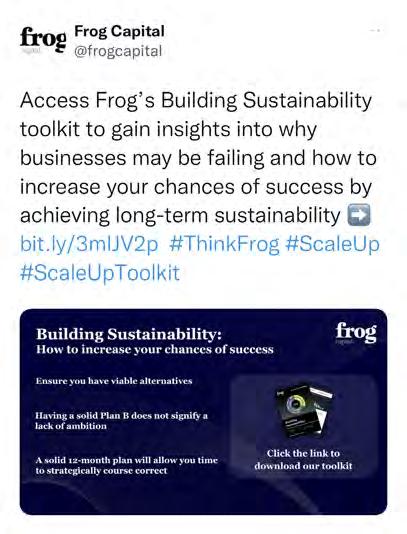
The second is a collection of toolkits shared regularly via the firm’s social channels providing accessible and practical insights for founders on a diverse range of subjects from CTO board reporting and technical due diligence through to building sales machines and sustainable unit economics.
Where a firm effectively become a publisher, investing in a co-branded, sub-branded or semi-independent platform that they own and creating and distributing content on a regular / fixed frequency. Initially this is about building a loyal audience through content and if done right it can foster community by delivering a premium experience for existing and potential partners, founders and investors.
US-based First Round Capital say they’re called ‘first’ for a reason; First round, first hires, first product, first customers, helping companies like Notion, Roblox, Uber and 300 others tackle their firsts. And since their content platform First Round Review was launched a decade ago it’s fair to say they were one of the first in the VC sector to do this too.
Sitting as a prominent tab on the main nav of firstround.com, First Round Review stands up as an editorial product,comparabletoanything frommedia,newsandpublishing companies, with the added advantage that the news and analysis on offer come from people that invest and grow ventures for a living, rather than simply writing about it. (NB As Forbes reported back in 2013, the initial wave of interest in content marketing from VCs saw
them go out and hire WSJ editorial talent, and while the case for thisand the appeal of working on brand owned media - has grown over time, it is the input, visibility and contribution from the firms’ own people in their own content and channels that creates real value for the audiences and distinctiveness for the firm.)
First Round Review has a simple anddistinctiveeditorialvalue proposition, distinct from but consistent with the parent brand, and neatly summed up in a three-line manifesto.
The umbilical cord between First Round’s content platform brand and the parent company brand is strong with a single set of social profiles for the firmkeepingeverythingconnected andon-message.
The UX is clear and accessible with a prominent invitation for new readers to access the most read content since launch in 2013 to get a flavour of what First Round Review is all about, alongside calls to action to sign up for the newsletter to drive regular reading.
As you’d expect from any publisher there is a mix of fresh and evergreen content, with the latter packaged up into ‘collections’ that sit alongside a ‘resource center’ of practical startup advice - available on applicationand podcasts. Finally, as per most B2B publishing brands, First Round Review offers products for sale
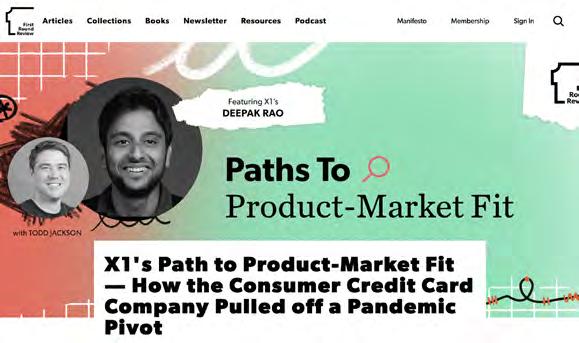
on the site including a series of books, First Round Essentials, that can also be downloaded for free in return for data capture.
And it’s working. In a recent analysis Hackernoon highlights the significant impactthatFirstRoundReviewhashad onorganictraffic,searchanddomain authority for First Round Capital.
One of the most famous and successful Silicon Valley VCs, Andressen Horowitz / A16Z, describes itself as a venture capital firm that backs bold entrepreneurs building the future through technology. Benedict Evans (ex-A16Z himself) describes it as a “media company that monetizes through venture capital.” With good reason. The firm has a long track record of innovating and investing in content to build its brand, audience and community. Marc Andressen has spoken about the value and importance of ‘going direct’ and not relying on established, mainstream media channels to reach your audience of partners, inventors, talent and startups. His WSJ op-ed “Software is eating the world’ published over 10 years ago, was a key moment in the VC sector and a key influence on the dominant VC investment thesis ever since.
A16Z has continually been at the forefront of innovation in content and community strategy, setting the tone and wider cultural agendawithin the sector, and how it is perceived externally.
So there was a strong strategic rationale when it launched Future.com in 2021 as a standalone media venture, from and funded by the firm and with an editorial focus aligned to the firm’s current and future areas of investment, but otherwise, effectively
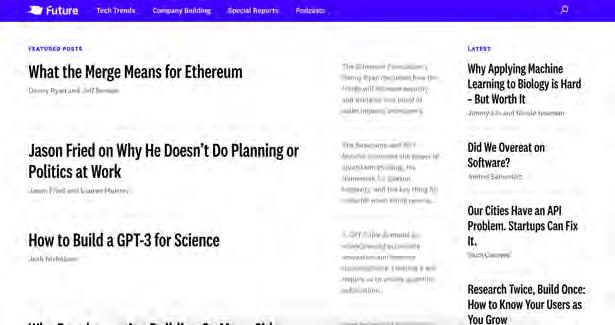
independent (exhibit A: a totally separateand no doubt expensive - URL, not an A16Z subdomain.) and with a remit to go further and explore wider perspectives. Reading the coverage and quotes at launch confirms the original ambition to explore the potential for Future as a standalone media venture.
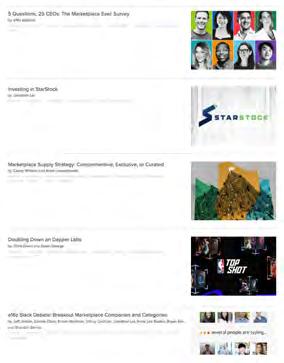
And yet by the end of 2022 there were reports that Future was being wound down. Inevitably there has been a lot of comment, opinion and analysis of this with the macro view being that brand publishing is hard in general and for most businesses the economics of continually investing in audience development don’t make sense unless you are monetising that audience directly (e.g. subscription revenue) and indirectly (e.g. via advertising) in a variety of ways.
The micro view is that A16Z simply doesn’t have to do this because they have successfully built an audience by ‘going direct’ through their core owned and social channels and built a reputation and authority via the content they publish there. So publishing to a new platform, driving audience to a totally separate URL and social profiles is unnecessary in terms of resource, expense, effort and ROI.
Where firms go deep on subjects that matter to their general partners, founders and funding partners, and can react quickly to emerging trends. Podcasts are easy and relatively inexpensive to produce to a good standard but it is getting harder to reach and grow your audience.
Successful startup founders and entrepreneurs have always been heavy consumers of business media from books, to blogs to thought leadership content and social media. And now, podcasts can be added to the list, especially from successful (or failed) founders who have raised, built and sold ventures. Given the demand, there appears to be less audio content from venture firms out there than you would expect, especially in the UK.
There may be a number of reasons for this. For instance, confidentiality; VCs want to keep the performance of their investments out of the wider market. Or confidence - something we see regularly is the reluctance of founders and/ or partners of a business to present, or be interviewed on, a podcast. But among the long tail of audio content aimed at SMEs there are a few gems.
A16Z (profiled above) has innovated and invested in content and community

building for a long time, sharing insights which benefit its ecosystem of startups & scaleups but also positioningthebusiness anditspartnersastheexpertsinthemarket.
Thea16zPodcast is the go-to place for discussions about innovation as technology changes the way we all work, live, and play. The show aims to help make sense of it all: for builders, for the tech curious

BioEatsWorldfor the latest Scientific advances and trends exploring how biology is today where the computer revolution was 50 years ago.

Their podcasts leverage the knowledge and access their partners have to the most influential talent, thinkers and operators in emerging markets. And they manage their audio content in the same way as a traditional digital media owner would, ordering them into a series of easily identifiable and subscribable channels.
16MinutesontheNews is a short form podcast where they analyse top headlines and/or buzzy events in the tech industry and beyond, covering why they matter; teasing apart what’s hype and what’s real.
"Giventhedemand, thereappearsto belessaudiocontent fromVCsoutthere thanyouwouldexpect"
ConsistentlylistedastheNo1VentureCapital podcast,TheTwentyMinuteVCtakesyou insidetheworldofVentureCapital,Startup FundingandThePitch.HostHarryStebbings exploreswhatthemostprominentinvestors arelookingforinstartups,providingeasily actionabletipsandtricksthatcanbeputin placetoincreaseastartupfounder’schances ofgettingfunded.

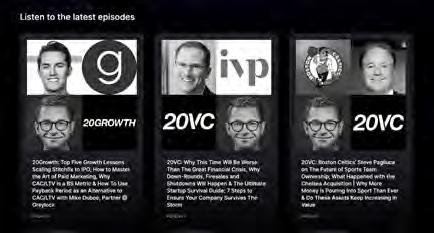
Harryisa‘VCrock star’inhisownrighthaving setuphisfirstpodcastwaybackin2015 hustlinganinterviewwithGuyKawasaki.Harry usedhistalentsimmersinghimselfintheVC industrytobecomeaverysuccessfulpartner andfounder.Hiscurrentfund20VCsitsatthe intersectionofventurecapitalandmedia,so verysimilartoA16Zinthatthey leveragetheir owncontentchannelstobuildcommunity andattractthebestdealsandthebest entrepreneurs.

"Theyleverage theirowncontent channelstobuild community& attractthebest deals&thebest entrepreneurs"
Opted-in / subscriber email newsletters combining market news, emerging trends and updates from the VC for key audiences. The purpose and UX ranges from quick fire, regular utility-based updates to more editorial / SubStack-style content.
Cuppa is a quick-fire newsletter from Charlie Oscar targeted at internet-first brand builders. Filled with analysis on the art, science and culture of building breakout brands in a digital age, it’s a stand out, highly engaging format and short enough to read over a cup of tea.

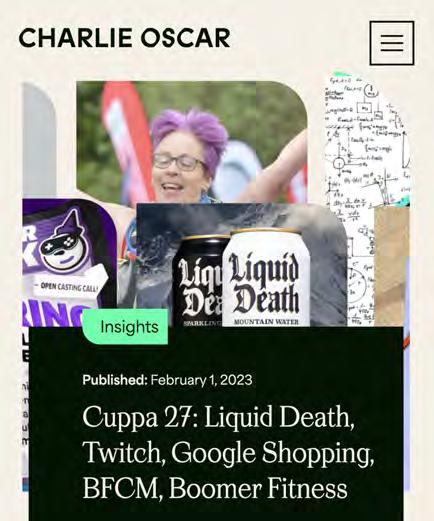

A great example of contentmarketing asautility - the Charlie Oscar team do a great job of curating all the latest news
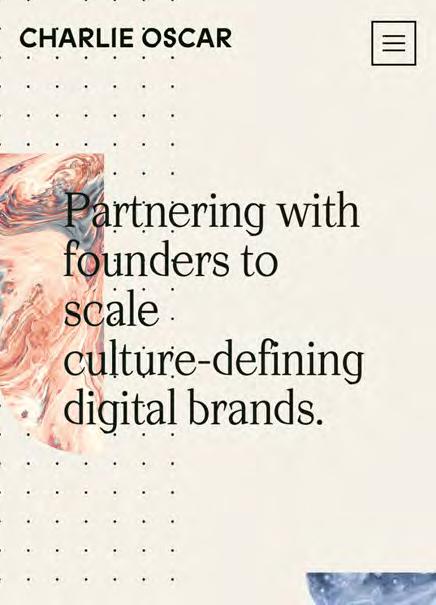
and insights you need to know if you are building a startup brand. The format also enables the business to include Charlie Oscar news, team profiles and insights from their cohort of partner ventures. And in terms of tone, content and design Cuppa is totallyonbrandfor a business positioned as “Partnering with founders to scale culturedefining digital brands.”
"It'sastandout, highlyengaging formatandshort enoughtoread overacupoftea"
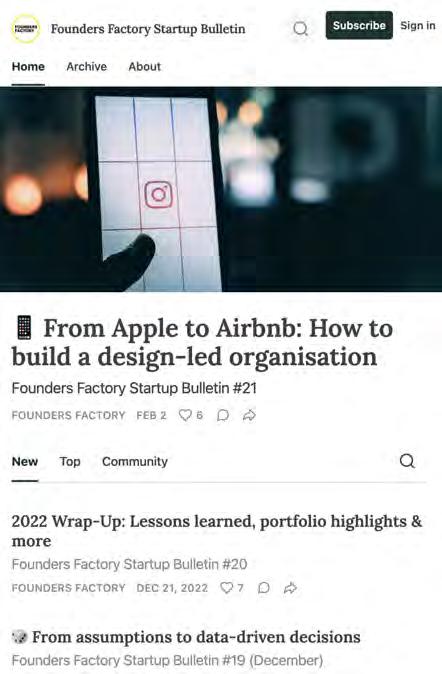
The scale and diversity of the Founders Factory empire is reflected in its portfolio of email newsletters. First we feature the firm's Startup Bulletin, published on SubStack “Created by founders, for founders…”

At the time of writing, a recent edition is the 2022 end of year review which leads with a call to subscribe for new readers, saying that over 3,000 people signed up in the last year making the total audience over 16,000. The content is a practicalsummary of the key learnings from 2022 across the entire group, from the softer side of leadership to the harder commercial realities of unit economics and network effects in venture building.
Continuing the theme of usefulness for founders the newsletter ends with a curated list of the best of the best 2022 summaries and 2023 predictions - saving the busy founder time and effort via ‘curation as a service.’
And at group level, Founders Forum publishes a regular email newsletter with a more corporate look and tone. The review of the year in this instance is more inward looking, focusing on the key events in their year and highlighting the speakers at their various events; Evan Spiegel (Snap Inc.) Eric Schmidt (Google) and Tim Davie (BBC) feature alongside President Zelenksy, leaving theaudienceinnodoubtaboutthe companythey’llkeep through Founders Forum.
The newsletter also links to the new Founders Insights content platform, promising “Insider Insights from the Biggest Names in Tech.”
This highlights the only issue with the various Founders emails - and content in generalwhich is that there’s simply so much of it!
Another great example is UK-based QVentures’ monthly newsletter. It’s clear in execution and comprehensive in terms of content, containing:
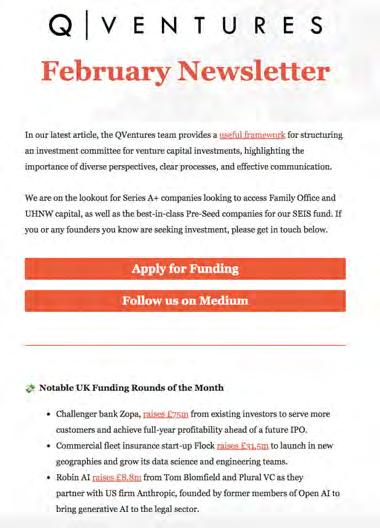
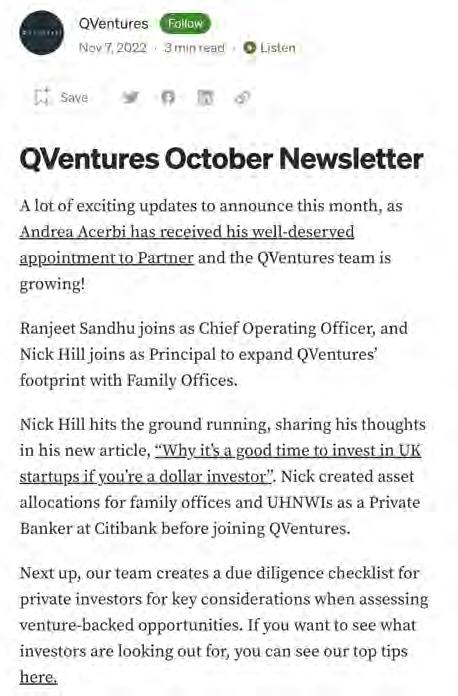
• A curated round up of news in the VC investment landscape
• Advice for founders and calls to action to sign up for more
• Focus on news across their portfolio
A simple model which delivers consistent value and one of the few we read without fail.
"Asimplemodel whichdelivers consistentvalue"
Enabling connection and sharing of content with key audiences via a wide variety of channels, from TikTok, Twitter and Instagram to Linkedin. Here, VCs can take the first steps in building a sense of community amongst their network, produce reactive and commentary posts to further thought leadership, and share more ‘personality-driven’ content to show the people behind the brand. NB it is getting harder to cut through the noise and ‘beat the algorithm’ to reach and build an audience.
TikTok exploded in 2018, becoming one of the most downloaded apps of the year and changing the landscape of social media with its focus on video sharing. Particularly popular with the younger demographic and Gen Z, TikTok effectively drove the rise of video content and directly influenced the future focus of its competitors, eventually leading Meta to announce that ‘Instagram is no longer a photo sharing app’.
Particularly effective as a very ‘personal’ form of media, Millennial and Gen Z VC partners in the US are using the channel to promote themselves and their firms, often posting from their own personal accounts and capitalising on their influence to garner wider distribution for the brands they represent.

20VC is one of the few VC firms running a branded channel on TikTok, utilising the influence of founder Harry Stebbings to present interviews with the world’s leading VCs and startups, including high profile guests from the Silicon Valley ‘rock stars’ of business, to celebrities and Prime Ministers.
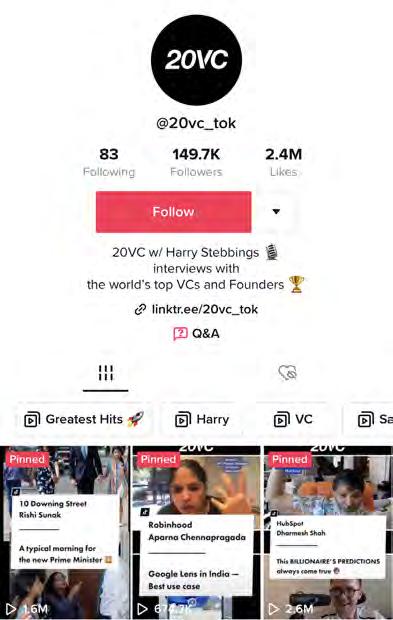
In choosing to distribute via this channel, the brand is makingtheir contentaccessibleandrelatabletoanew, youngerdemographic, with the potential to significantly widen their audience. The video content they share here is brilliantly tailored to this audience, and with 2.3 million ‘likes’ the decision to embrace this channel as a brand entity appears to be paying off in terms of awareness and distribution.
Over on Instagram, Backed.vc showcases an impressive grid of imagery and design that a premium DTC brand would be proud of. Their event imagery portrays the team as a ‘happy family’, taking followers behind the scenes on everyday life within the firm and helpingto buildthebrandpersona.

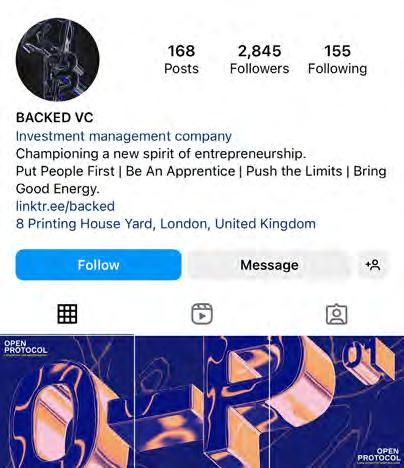
Amodernanddiversecommunityisclearly evidentfromthephotostheyshare,helpingto avoidtheoldstereotypesassociatedwith traditionalVCs, and positioning their offering as more of a lifestyle than a career.

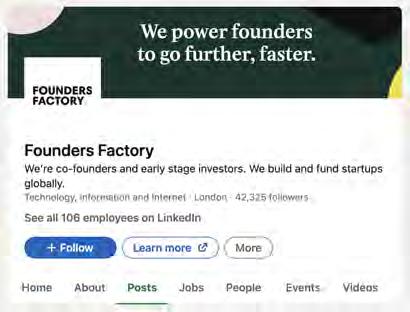
Alongside Twitter, Linkedin is where most VCs focus their social media content distribution and community acquisition. Founders Factory is a typical example, embracing and leveraging all aspects of Linkedin to build their brand, develop relationships, distribute community news and recruit. A successful venture firm is all about talent and they utilise brand storytelling in their newsfeed to highlight their investments, success, diverse teams, wins and recruitment opportunities within their startup studio and their portfolio businesses. This smart strategy hasthepotentialto significantlylowertheirrecruitmentcosts.
Strong imagery and copywriting stands out on the channel, which is also effectively used in distributing their own reports. The recent ‘2023 Trends Report’ is made up of crowdsourced insights from their portfolio founders, enabling posts to be tagged with multiple authors and brands who often go on to share themselves, boosting visibility, reach and engagement. A clever use of the channel and playing the algorithm.
Investing in the resources, talent and tech to connect and communicate regularly with the people across a VC’s portfolio and investors, providing support for growth that goes beyond the financial, encouraging and enabling autonomous and peer to peer interactions.
According to an article published by Mckinsey in September 2022, community is a better way to build a brand. This DNA is built into some of the next generation VC firms with ‘social savvy’ millennials and Gen Z founders and partners at the helm to whom this is just a natural way of doing business. These founders may have cut their teeth networking at Silicon Roundabout events and the SXSW party circuit and have built a network of peers on multiple social channels.
Backed.vc is a venture capital firm guided by three human centric principles - they back founders over markets, people are a company’s most important asset and they don’t operate a portfolio, they are part of a community.

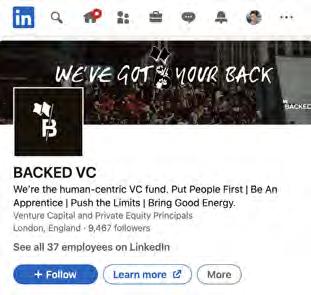

Leadingwithanethosthat‘AVCisforlife, sochoosewisely’isalmostcertainlygoing toattractthenextgenerationofmillennial
&GenZinnovatorswhowillnotjustbe lookingforaninvestorbutapartnerthey cantrustandacommunitytheycanbelong toandlearnfrom.
BACKED has worked hard to build an intra-portfolio community at the centre of the business. Their companies build relationships with one another through L&D workshops, like Pitch:In People, the BACKED Buddy Programme, and they host informal family style dinners where they gather people in similar roles across the portfolio, be they CEOs, CTOs or People Leads. These experiences build the foundations for true networked thinking within the portfolio.
They consistently capture content at these events which is reflected in the human element of their social and video channels.
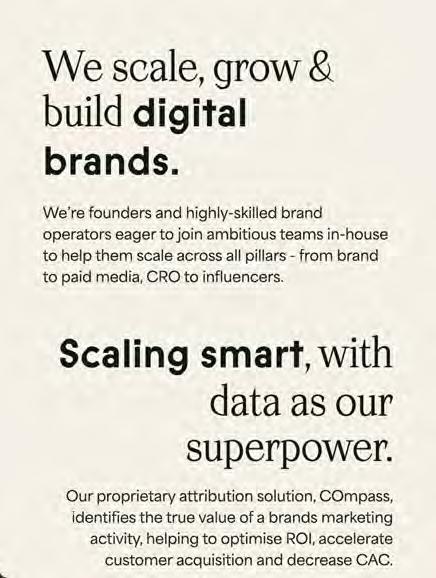
We have already highlighted the email newsletter from Charlie Oscar above. This is another new breed / Next Generation VC building on foundations of community and partnership. They are a hybrid of investor, growth partner and consultancy partnering with founders to scale culture defining digital brands.
Their ambition is to build a tight knit community of like-minded founders running the same race, sharing ideas, collaborating on projects and providing a support system to each other.
Thereisaclearbusinessrationaleherecommunitycreatesanetworkeffect,so yougettoscalefaster,benefitingeveryone inthecommunity.Sharedknowledgeand experiencesallowyoutode-riskwhichis whateveryinvestorandstartupwants.
The perception that Venture Capital and Private Equity is an exciting and innovative corner of the world of business and finance is reflected in the variety, quality and experimentation that we have identified in this analysis.
● Creating platforms to build the corporate brand and showcase the talent of partners and the founders in their portfolio
● Being early adopters of new channels and formats and best-practice users of established social channels
● Showcasing personal expertise and opinions and providing serious, expert analysis of trends
● Doing the basics well with instructional, pragmatic and educational content
In short, the VC sector offers valuable insight and inspiration for anyone responsible for comms and relationship building in B2B.
Our next report, due in April/May will focus on Professional Services and will look at the content and community activity of a range of businesses across the legal, consultancy, finance, and innovation sectors. If there are great examples in these sectors that you think we should shine a light on, or if you’re involved in that sector and want to get in touch in advance, then please email us.
This analysis is an overview of just one sector based on the experience and professional opinion across our network of talent at VOLUME. If you’d like us to review your content and community strategy or analyse performance, explore what community based marketing can add to your existing mix, or simply sign up to receive future reports and analyses then please get in touch.

We have a collaborative approach to working with inhouse teams and their agency partners.
So If you’re a business looking to:
● Review your content marketing strategy
● Build fame and credibility
● Leverage your content to nurture valuable relationships
● Grow community
Or your in-house teams need support creating market-leading award-winning:
● Thought leadership
● Reports
● Video
● Podcasts


● Social content Contact mark.maddox@wearevolume.io or kevin.sutherland@wearevolume.io.