OUTLOOK

San Joaquin County is full STEAM ahead. The second annual State of Education and special edition of the Outlook highlights the work happening in Science, Technology, Engineering, Arts, and Math.
SCHOOL DISTRICTS
Collaborative efforts between the San Joaquin County Office of Education and San Joaquin County’s 14 school districts ensure all students have access to a high-quality education.
Exploring the power of science, technology, engineering, and mathematics in action. This section highlights innovative programs, hands-on learning, and the critical-thinking skills preparing students for the future.
ARTS
Celebrating creativity, expression, and the human experience. From visual arts to performance, this section showcases how the arts inspire connection, amplify student voice, and enrich education.
STEAM
Bringing learning to life through creativity and design. This section explores how the arts open new pathways into STEM, helping students engage, problem-solve, and think beyond traditional boundaries.
Events, trainings, & more!
Learn more about upcoming events, meetings, trainings, and workshops for students, families, and educators on the San Joaquin County Office of Education calendar at www.sjcoe.org.

TROY A. BROWN, Ed.D. San Joaquin County Superintendent of Schools
TERRELL MARTINEZ
Deputy Superintendent Business Services
JANINE KAESLIN
Deputy Superintendent Student Programs and Services
JANE CHAMBERLAIN
Deputy Superintendent Professional Learning and Support
ANNIE CUNIAL
Assistant Superintendent Educational Services
CONNOR SLOAN, Ed.D.
Assistant Superintendent County Operated Schools and Programs
PETER FOGGIATO
Assistant Superintendent Business Services
ANTHONY CHAPMAN Chief Human Resources Officer
The San Joaquin County Office of Education is a regional agency that provides educational leadership, resources, and customized services to assist school districts. The SJCOE promotes student achievement and accountability, serves San Joaquin County’s most vulnerable students, and strives to create an environment in which every student, regardless of circumstances, has an opportunity for a quality education.
Education forms the foundation of our county, which is maintained and grows stronger every day in our schools.
It is hard work, but it is driven by the passion and dedication to service found across the schools and districts in San Joaquin County. From teachers in the classroom to support staff to leadership teams to superintendents – educators are building the programs, lessons, and relationships needed to teach more than 155,000 students to fortify that foundation.
Each and every one of these students is important to the future of our communities. It is a responsibility that is understood across the 14 districts and more than 250 schools in our county and the San Joaquin County Office of Education (SJCOE). In everything that we do, we focus on finding the right path for each individual pupil.
That is why we kept the “Education for All” title for the second annual San Joaquin County State of Education. In the April 29 event and in this special edition of the Outlook magazine, we are celebrating the innovation, passion, and dedication on display in schools.
Our theme this year is “Full STEAM Ahead.” So, get ready to learn about some of the amazing things happening in San Joaquin County schools in science, technology, engineering, art, and math (STEAM) education.
Arts education develops confidence, self-expression, and creativity. Through teaching the arts, local schools are also focusing on the “whole student,” supporting the development of social skills and providing an outlet that fosters well-being. Along the way, students are playing sweet music, sculpting works of art, wowing audiences in theatrical performances, and much more.
When students learn STEM (science, technology, engineering, and math), they are learning about their world. They become explorers, learning how to analyze it, understand it, and describe what they discovered. It is this connection to the real world that makes STEM education so exciting. Innovative schools create engaging ways to equip their student-explorers for careers and all the adventures that await them in life.
STEAM (science, technology, engineering, art, and math) education is the synergy of creativity and critical thinking. Students use both, whether they are engineering a robot or planning a science project.
Adding art builds an entry point for some students, too, expanding opportunities and making STEM education more inclusive.
We have much to celebrate in this State of Education, but we barely scratch the surface of all the amazing things happening in San Joaquin County education.
Schools are building a stronger foundation for our county in everything they do. That includes a countywide focus on early literacy, which involves collaboration, training, and more. Learning to read is essential for students as they progress through their education, in STEAM or any other subject. The stronger the foundation we build, the higher our county will climb.
These stories of our districts, schools, SJCOE programs, and students are truly inspiring to me. I hope you enjoy them.
Troy A. Brown, Ed.D. San Joaquin County Superintendent of Schools
14 SCHOOL DISTRICTS WE SERVE
San Joaquin County is home to 14 public school districts with 255 schools, including charter schools, and a total of 155,659 students. Each independent school district is governed by an elected board of trustees. The San Joaquin County Office of Education (SJCOE) provides a variety of services to support students and educators. Collaborative efforts between the SJCOE and school districts ensure ALL STUDENTS have access to a high-quality education.
SCHOOL FINDER
LEARN MORE ABOUT EACH SCHOOL DISTRICT AT: WWW.SJCOE.ORG/SCHOOL-FINDER
155,659
STUDENTS ENROLLED IN SAN JOAQUIN COUNTY K-12 PUBLIC SCHOOLS
255 PUBLIC SCHOOLS & PUBLIC CHARTER SCHOOLS
Tracy
Jefferson
Banta
New Jerusalem
Lodi
Stockton
Manteca
Linden
OakView
New Hope
Lincoln
Escalon
Ripon
Lammersville
STEM
What is STEM education? Of course it includes the teaching of science, technology, engineering, and mathematics.
But it is much more than that.
STEM education gives students a chance to explore the world, wonder why things happen, discover the cutting edge, build, and much more. What they learn in STEM classes before they graduate high school can lead to high-demand jobs in STEM-related fields. But the skills they learn along the way help them become the critical thinkers and problem solvers who can thrive in any workplace.
In San Joaquin County, schools and districts find innovative ways to bring STEM education to their students. Whether they are competing in robotics competitions, using high-tech equipment, or learning the science underpinning the agricultural world that surrounds them, students in the county are learning how STEM education can launch them into the world after high school.
OUTLOOK | STEM
3D DESIGNING, CODING, AND BUILDING EXCITES
MIDDLE SCHOOL STEM STUDENTS IN JEFFERSON
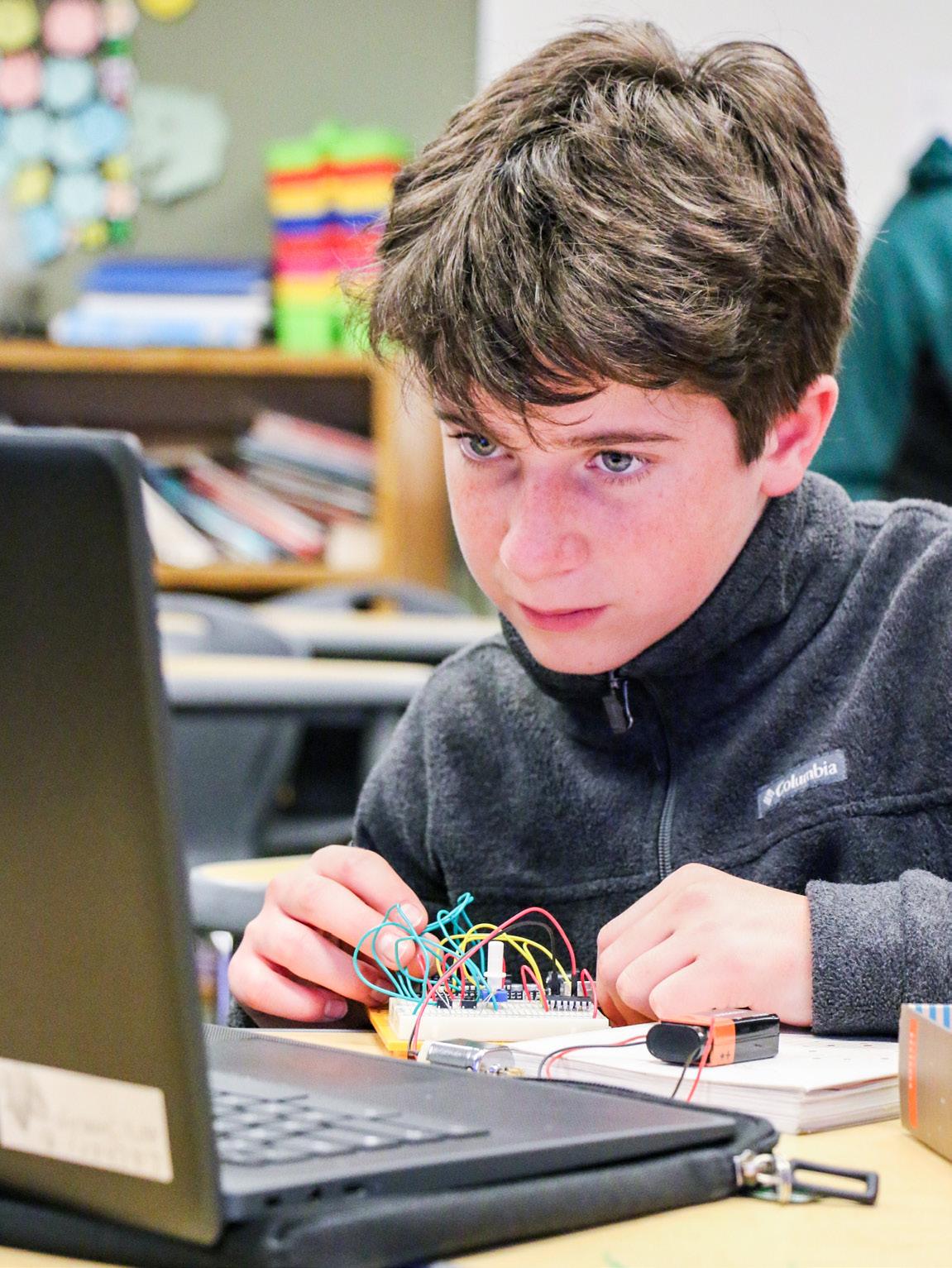
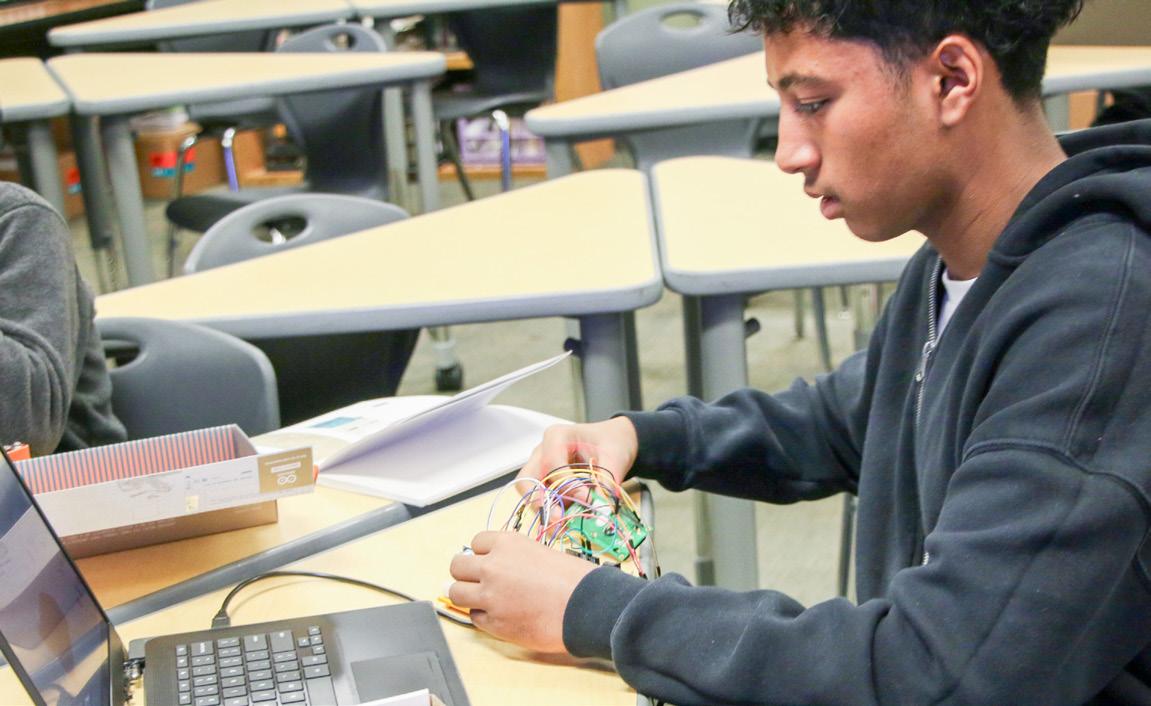
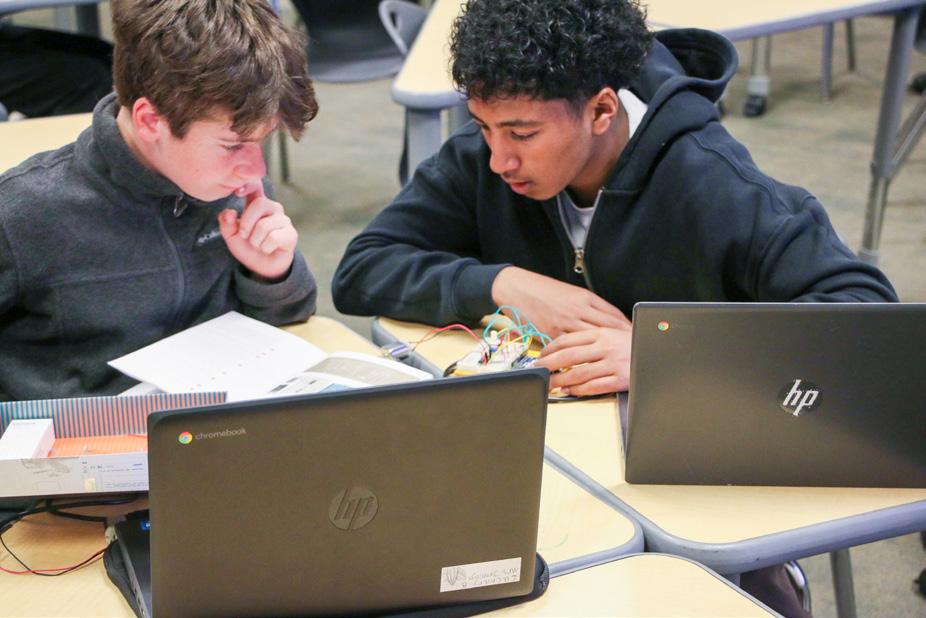
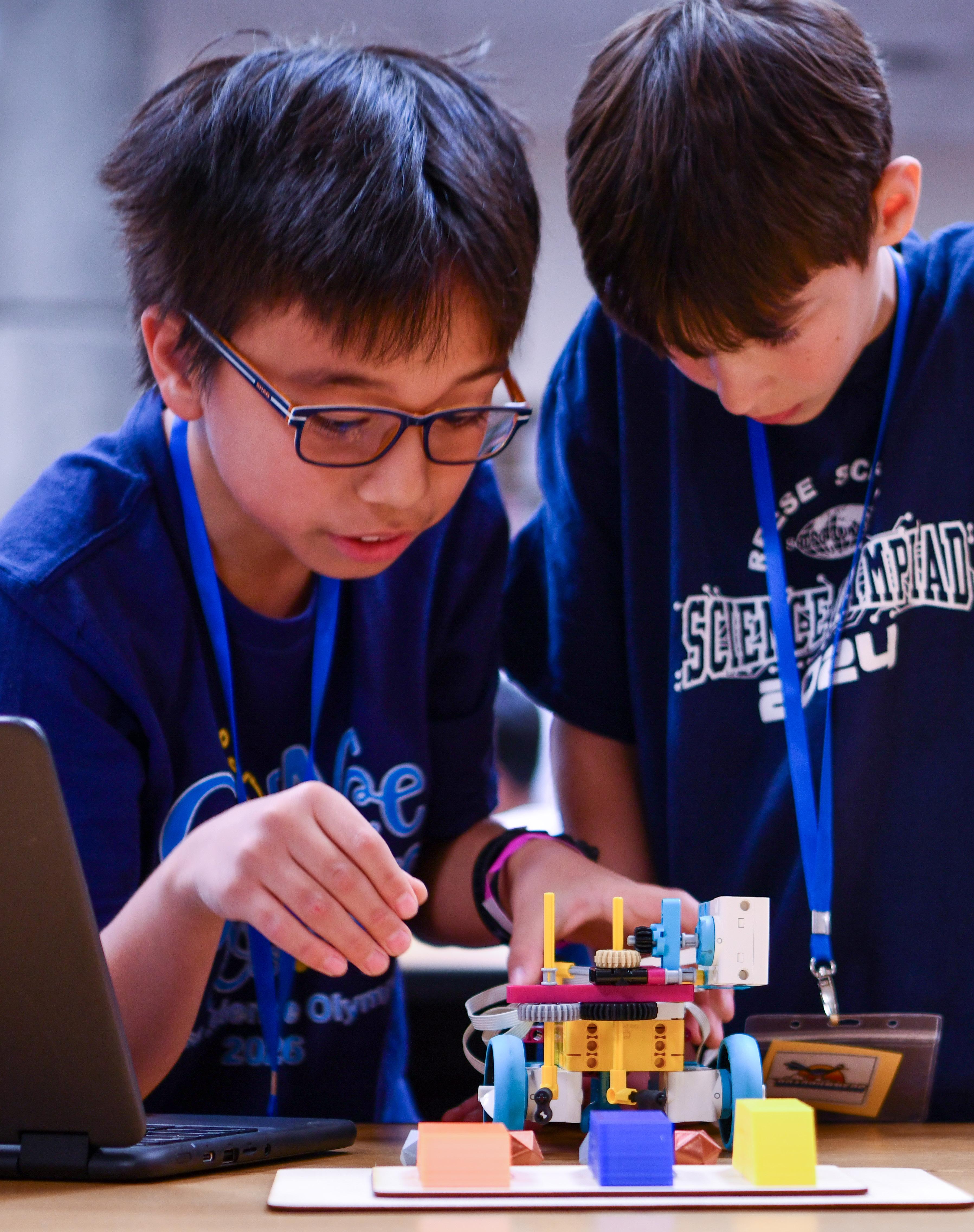
As a pair of eighth graders at Jefferson School (Jefferson Elementary School District) worked to attach wires to motors and write code they hoped would propel miniature cars they were designing, they hit a snag. A motor wasn’t responding.
Teacher Gary Pease – who was moving through the classroom checking in on students working on laptops on different projects using 3D-manufacturing design software – helped them analyze the issue.
“You think it’s code. You don’t think it’s wiring?” He told them to keep troubleshooting.
Solving challenges like this is one of the reasons eighth grader Aarav loves taking the STEAM class. “When you finally figure it out, it’s fun to see the result.”
The STEAM course at the school is fun, engaging, student-driven, and brings together a wide range of topics, from 3D design to coding to art and engineering.
Early projects in the class include designing and 3D-printing balloonpropelled cars that they will race against each other. As design and coding skills progress, so does the complexity of the projects. By year’s end, students can program and fly a fleet of drones the school collected through grants and donations.
Students have a say in what they do and can choose challenging projects, like mounting sensors and Arduino computers in cars that can sense obstacles and automatically avoid hitting them.
The teacher creates an environment where students can challenge themselves and “fail forward,” Principal Jason Strickland said.
“So what do we learn from that failure, that experience?” Strickland said. “And then (Pease) really builds them up to where they’re designing these really amazing, different cars and vehicles as if it’s like Formula One racing.”
Each new project can be a little intimidating, at first, said Grace, a seventh grader. ”At the beginning, it’s very challenging. But as I learn from my peers and my teacher, it’s fun. Because at the end, I’m like: Oh, I made that!” she said.
“It makes me feel like I’m capable,” she said. “I’m able to do all these things that I had no idea I could do. It makes me feel good about it because all it takes is a couple of buttons and switches and clicks and I can make a whole new thing. And that is, like, really cool.”
PROJECT-BASED LEARNING LEADS THE WAY AT STEM-FOCUSED SCHOOL
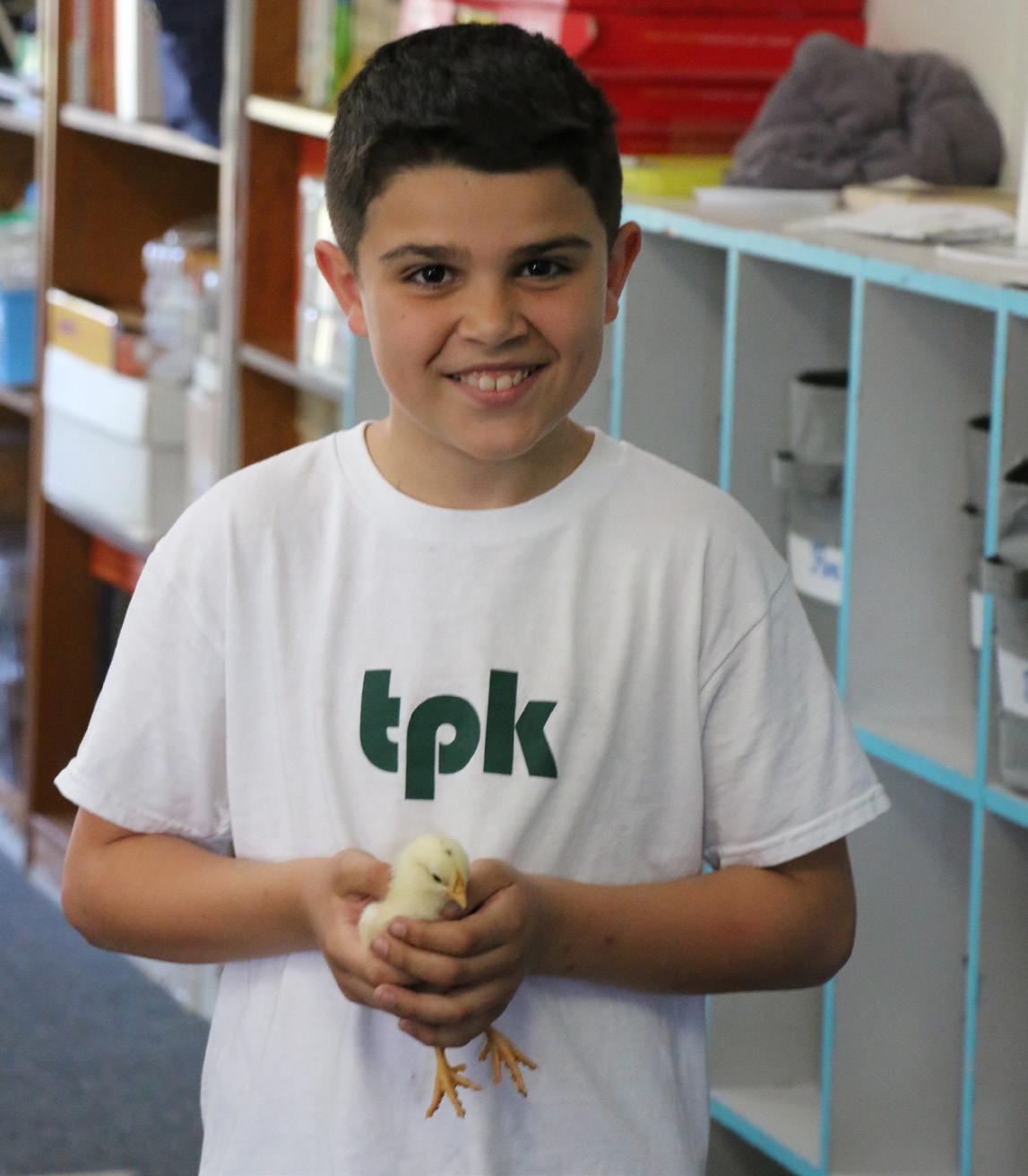
Why did the chicken cross the road?
To get to John McCandless Charter School (Lincoln Unified School District) to teach third graders about life cycles.
Actually, there were several chickens at the school, and they all hatched in a classroom incubator.
On a recent morning, students in two third-grade classes mapped out a model chicken coop on graph paper based on what they had
OUTLOOK | STEM
been learning about the animals in class. They practiced the math to calculate the area and perimeter of their models, then got to work assembling their creations using popsicle sticks, pipe cleaners, and other materials.
“That’s project-based learning,” said Kourtney Marriott, a teacher for one of the third grade classes. “It’s hands-on, student-led, studentdriven, cross-curricular. And when you do get to an engineering process like this, the kids are doing it all by themselves.”
Project-based learning in all grade levels at the STEM-focused school is part of its foundation and deeply rooted in the culture of the school.
The chickens are only part of this particular project, which also included hatching salmon eggs, studying plants, and writing a compare-and-contrast assignment.
The project in its entirety doesn’t only teach students state standards of engineering, science, and math. It also covers writing and reading standards.
Project-based learning also teaches critical thinking, problem solving, and how to work in collaboration with a team, Principal Dawn Archer said. It engages students because it is driven by their own inquiry and tied to the real world, she said.
As students in small groups planned their chicken coops, the teachers didn’t tell the students how to design their coop – they asked the students to explain the thinking behind their designs.
Ezekiel, Amethyst, and Gia had learned a lot about chickens from instruction, and they really enjoyed getting to know the chickens. They carefully placed sections in their group’s design for food and water. They also included an outdoor area separated by a door that could be secured to protect the chickens from predators.
They enjoyed putting their knowledge to work. “You get to make an animal happy that they can have a place where they are safe and cozy,” Ezekiel said.
LINDEN HIGH BRINGS HANDS-ON STEM EDUCATION TO THE FARM
Lab equipment takes many forms in the Agriculture Science program at Linden High School (Linden Unified School District).
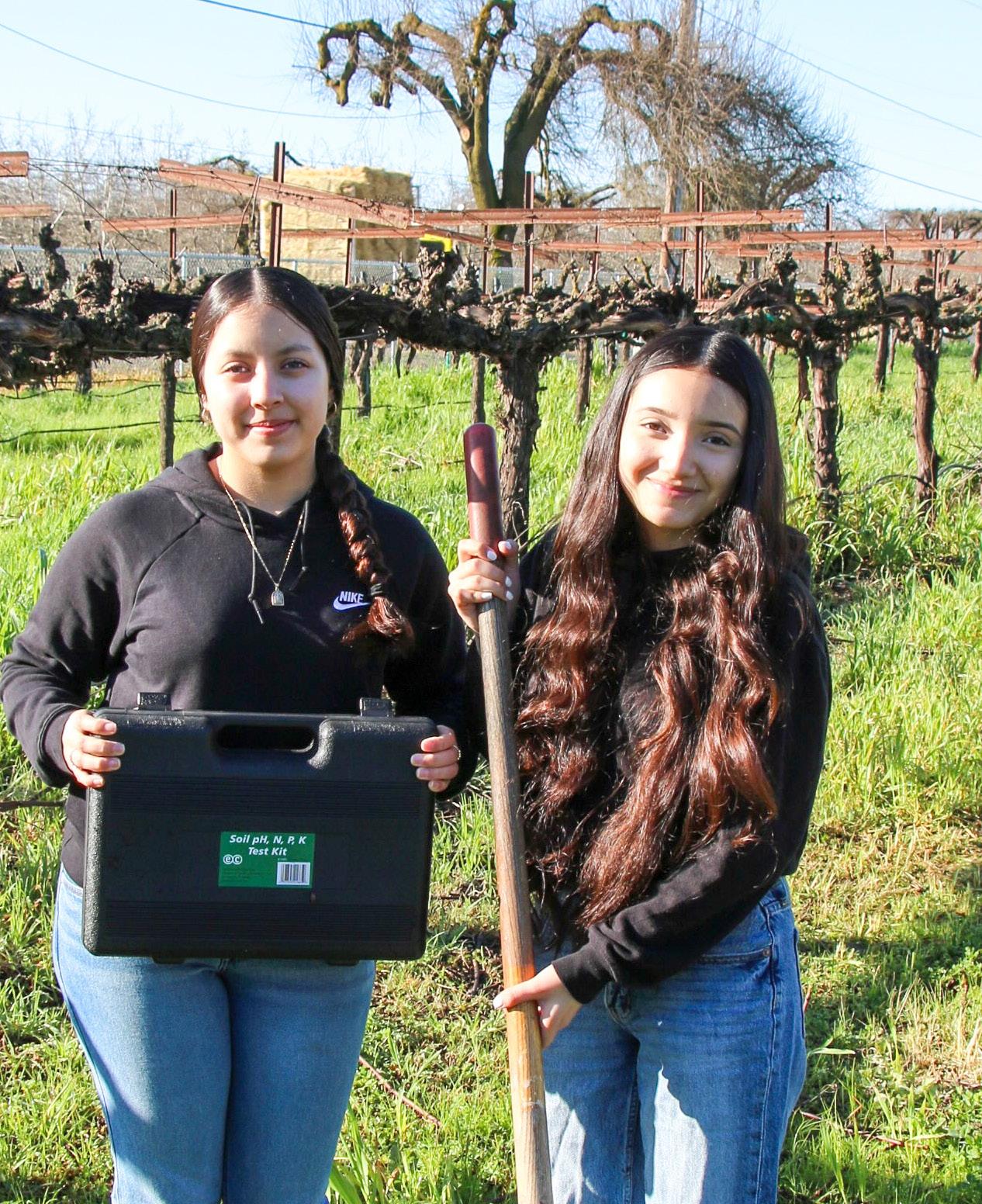
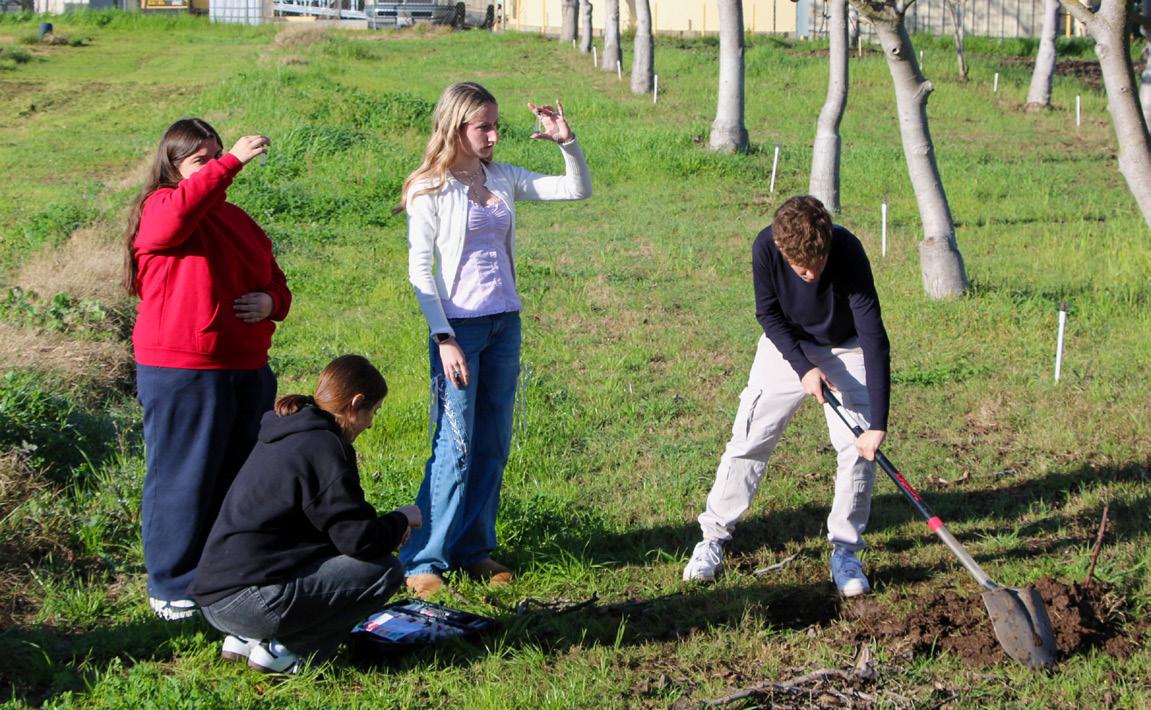
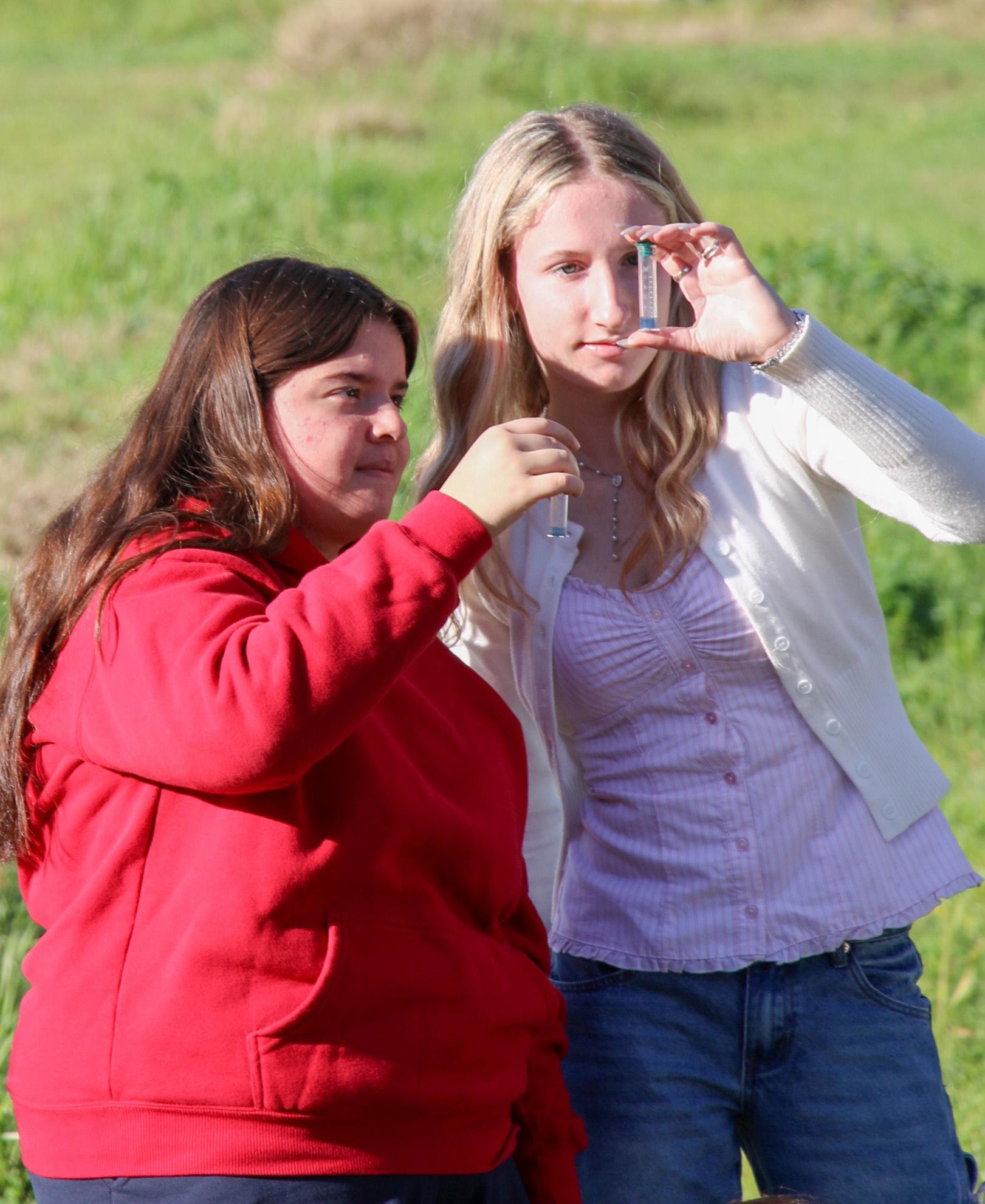
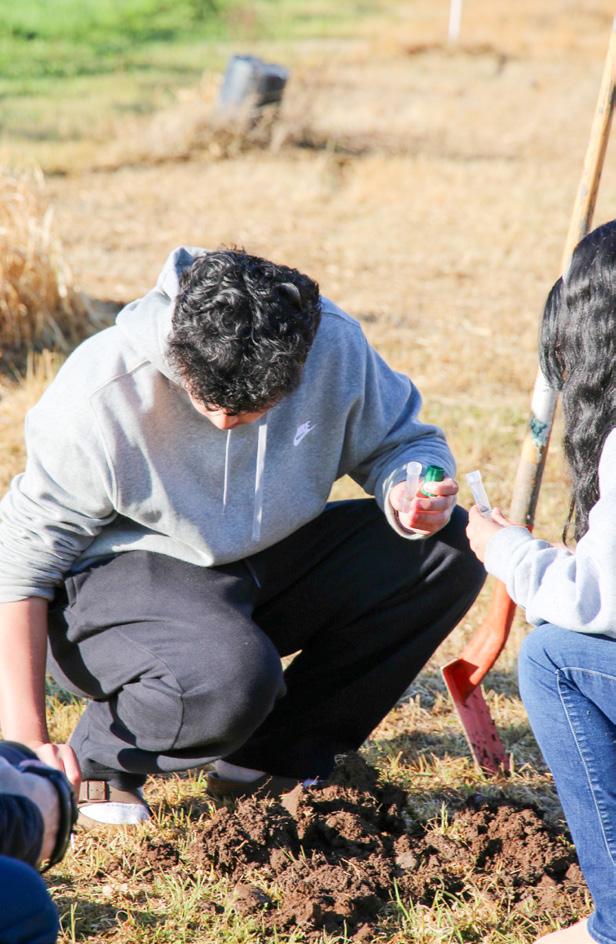
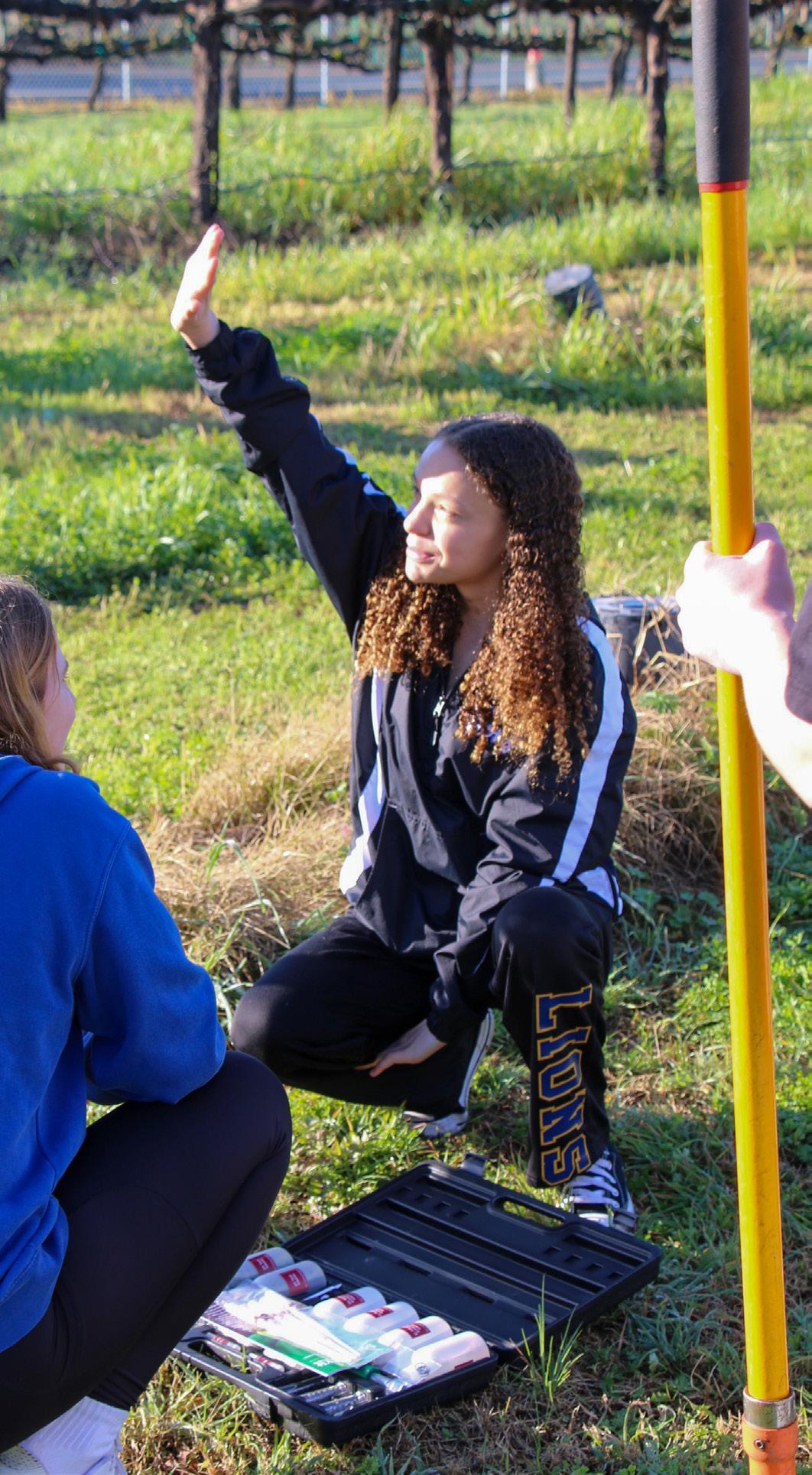
Shovels played an important role during a recent lab, when agriculture chemistry students dug out soil samples between the school’s orchard and vineyard on a crisp and sunny winter morning. The students put the excavated dirt into solutions to test the levels of nitrogen, potassium, and phosphate.
Back in the classroom, teacher Darian Codog asked the class to apply their textbook knowledge to the lab results, which showed that the level of nitrogen and potassium in the soil was low. “What would happen if we were to put a tomato in that soil we tested today?”
Hands shot up to answer. In the days before the lab, the class had learned the importance of nitrogen for leaf growth and potassium for stem development.
The tomatoes wouldn’t make it, said Chance, a sophomore in the class who has grown up in a farming family in Linden. He loves the
OUTLOOK | STEM
hands-on experiences he gets in agriculture science, and sees the soil-testing lab as just one of the skills he is learning that he will use later in life.
“So if one day I continue in the family tradition, I will know that skill and I could do it myself, instead having someone to come out and do it,” he said.
For students in Linden High, they have the option to take STEM classes in the Agriculture Science program, which offers a CTE (career and technical education) pathway through all four years of high school.
The range of options and the hands-on approach is how the program prepares students for future careers, said Jana Colombini, who teaches biology, plant science, and veterinary science in the program.
“We try to provide a holistic agricultural education for our students as it relates to ag sciences, so they can get a little taste of everything and see which sector of the agriculture science they would like the most,” she said.
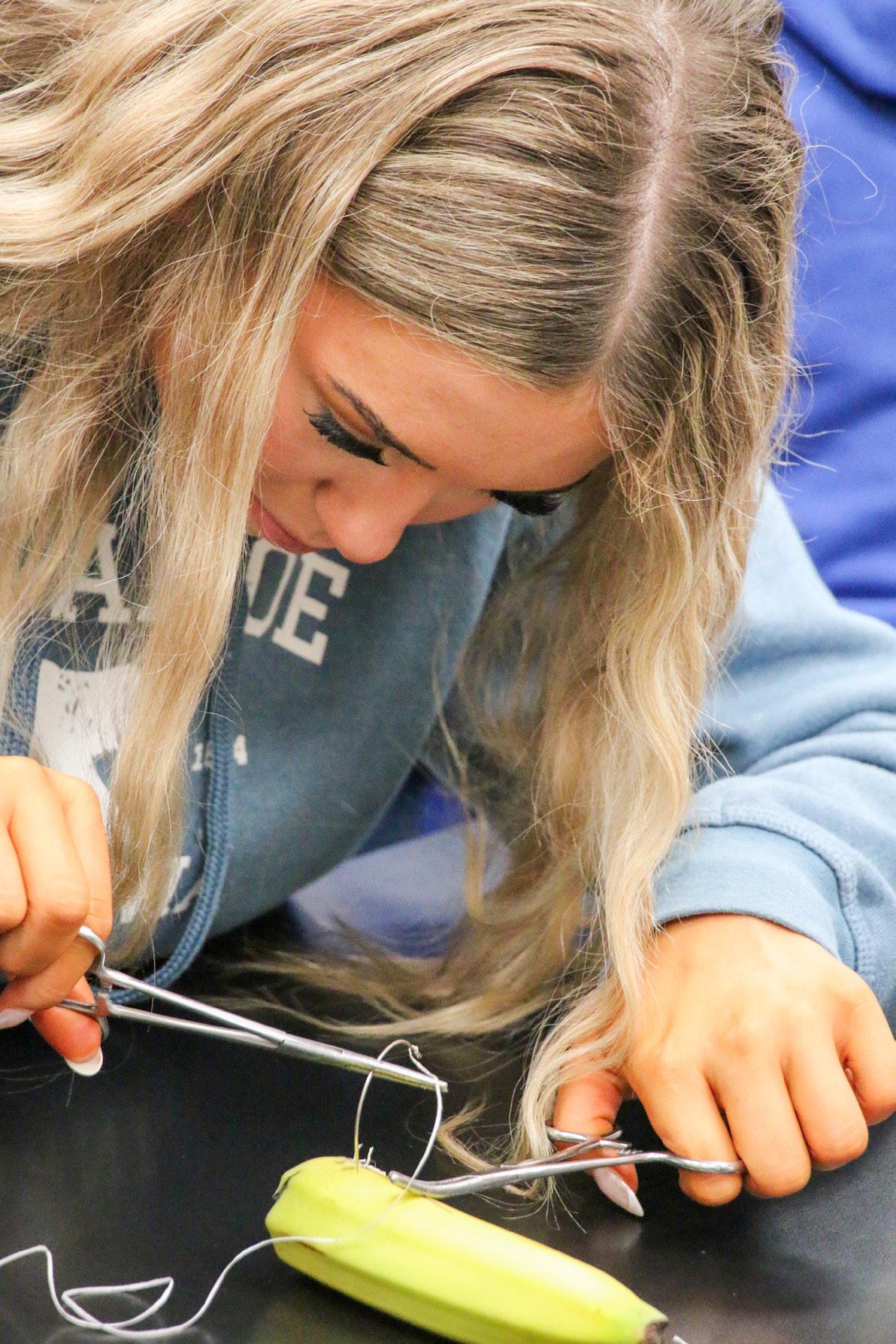
For Samantha, a junior, she is sure Colombini’s veterinary science class is preparing her to become a veterinarian. They’ve already started learning anatomical vocabulary and practiced stitching up wounds by suturing tears on bananas, she said. They’ll be learning injections, too, she added.
“I think that it is just so amazing to do the hands-on learning, now, instead of learning it in a textbook, so that I can use that for the future.”
MATH INCLUSION MATTERS
At Lathrop High School (Manteca Unified School District), inclusion is not just a philosophy. It is a daily practice shaping how students learn and succeed together.
Through a co-teaching model introduced in their math classrooms, general education teachers and education specialists work side-by-side to design and deliver instruction that supports the needs of every student. Led by the Manteca Unified School District Special Education department, this model is grounded in a simple but powerful belief: All students are general education students first.
In this classroom, instruction is intentionally designed to be flexible and responsive to each student. There are students in the class with a wide range of cognitive abilities learning alongside their peers, receiving personalized instruction without being separated from the general education environment.
For Lisa Grabowski, known as “Mrs. G” by her students, the impacts are visible. In her classroom, students are not only learning math concepts, but also learning from one another. Peer-to-peer mentoring has become an unintended, yet defining feature of the co-teaching model.
“Students are leading and helping one another,” Grabowski said. “Peer-to-peer mentoring is a true benefit to this program.”
At its core, this work reflects a shift in mindset across the Manteca Unified School District. After all, special education is more than a place, it is a service to support student success.
TRANSFORMING WASTE INTO OPPORTUNITY
What do almond hulls, nut tree shells, and orchard trimmings have in common?
With BEAM Circular, these agricultural byproducts are being transformed into resources for a range of industries, from building materials to industrial chemicals to consumer goods, and renewable energy.
This innovative approach to bioeconomy extends beyond the organization’s business model. In summer 2025, BEAM (which stands for bioeconomy, agriculture, & manufacturing) Circular partnered with the San Joaquin County Office of Education’s (SJCOE) STEM, Workforce Development, and Innovation department to sponsor two biotechnology camps, one for educators and one for students.
“These programs are part of BEAM Circular’s efforts to build an inclusive, innovation-driven economy in the Central Valley,” said Gloriamar Gamez, chief program officer at BEAM. “We want students to participate in and lead the future of sustainable biotechnology.”

The result? A collaborative space that empowers students to engage, contribute, and grow together. The class reflects Manteca Unified’s broader commitment to equitable access and opportunity. Across the district, nearly 3,500 students benefit from similar inclusionary practices.
Dr. Jody Burris, Manteca Unified’s senior director of Special Education, reaffirmed that all students means all. “We believe in seeing all children as students first. And all students have a right to have a presence in general education classrooms,” she said.
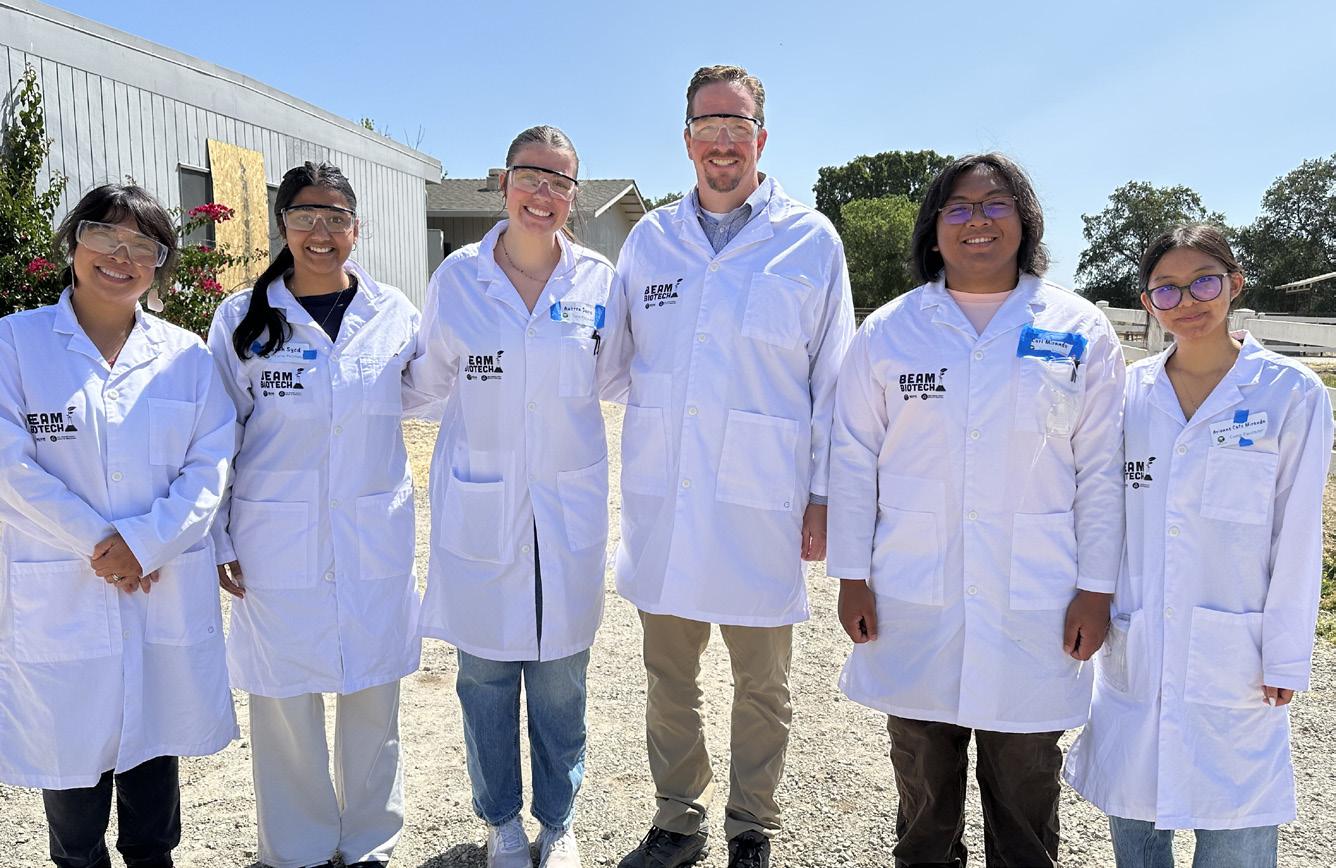
The professional development workshop guided local educators through a series of activities to help build biotechnology into classroom curriculum. The goal was to equip teachers with industryrelevant instructional methods so students were exposed to the benefits of biotechnology.
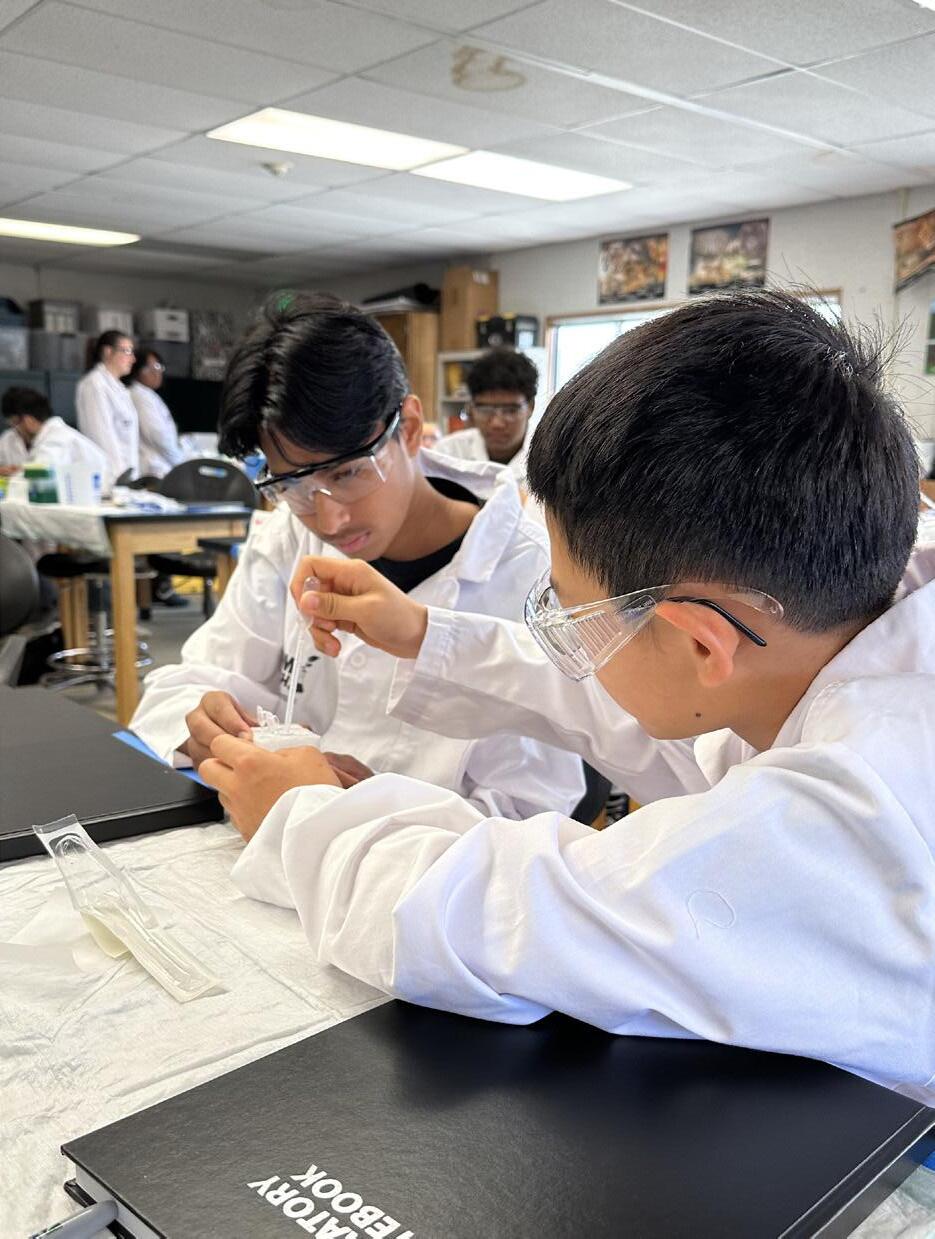
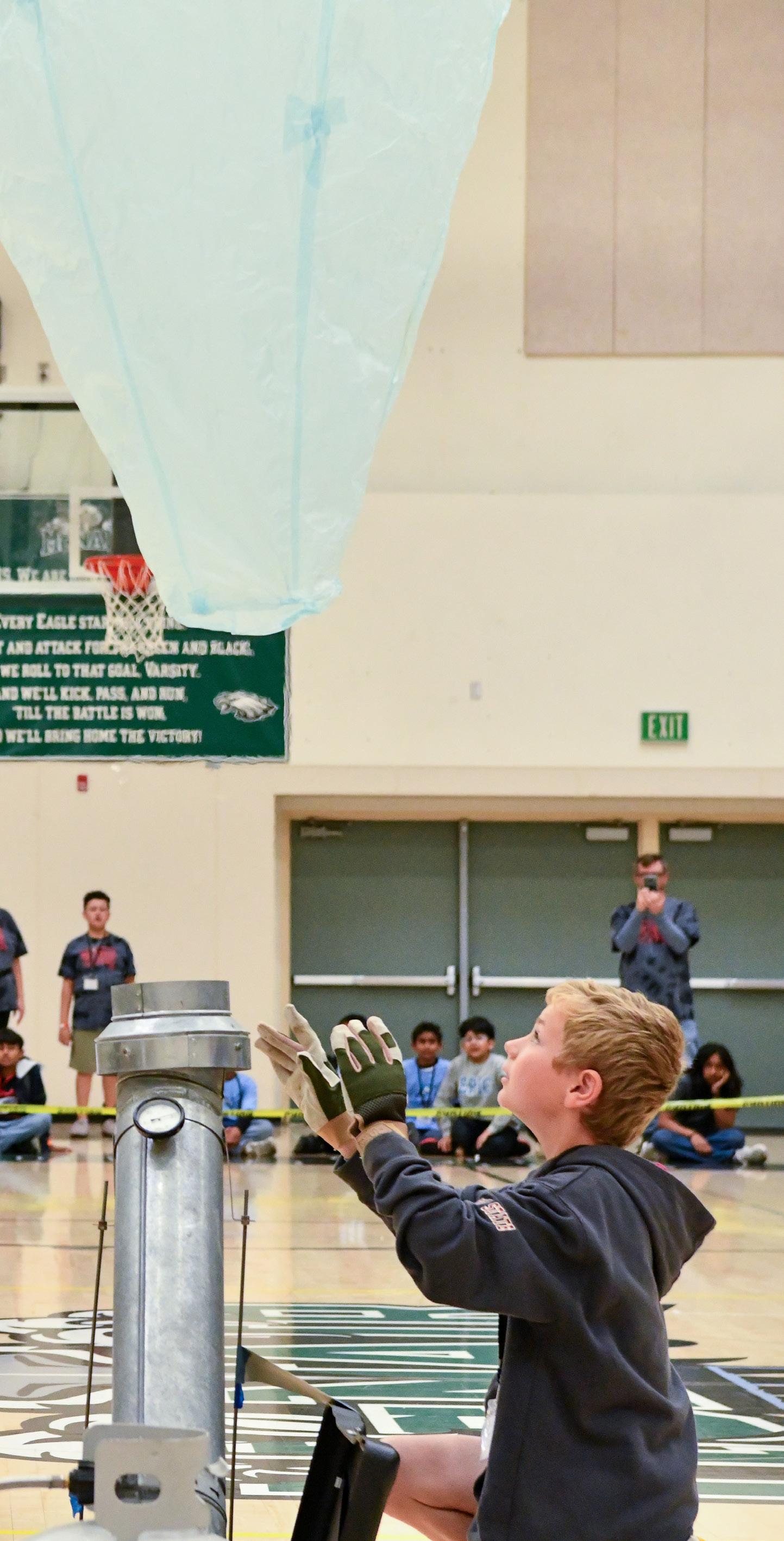
The following week, students arrived at Durham Ferry Outdoor Education Center and were equipped with their own lab coats, eye protection, and research notebook. Microscopes, pipettes, and single-channel pipettors were at each station, ready for students to start using and exploring. One lesson focused on studying the decomposition of mushrooms and the potential transformation into biofuel products. Students also learned from industry professionals in a variety of Zoom-led activities from Lawrence Livermore National Laboratory and beyond.
“Together, we created a one-of-a-kind experience that hopefully inspired students through biotech learning and also empowered local educators,” said Katie Wipfli, SJCOE division director of the STEM department.
With BEAM Circular’s partnership, the SJCOE STEM, Workforce Development, and Innovation department demonstrated what could be possible with the advancements in biotechnology to the next generation. Students as young as sixth grade attended the camp, eager and ready to learn about the value of repurposing biomass residues into sustainable, reliable, and marketable consumer products, building materials, and beyond.
OUTLOOK | STEM
ROBOTICS DRIVING STEM LEARNING IN STOCKTON UNIFIED
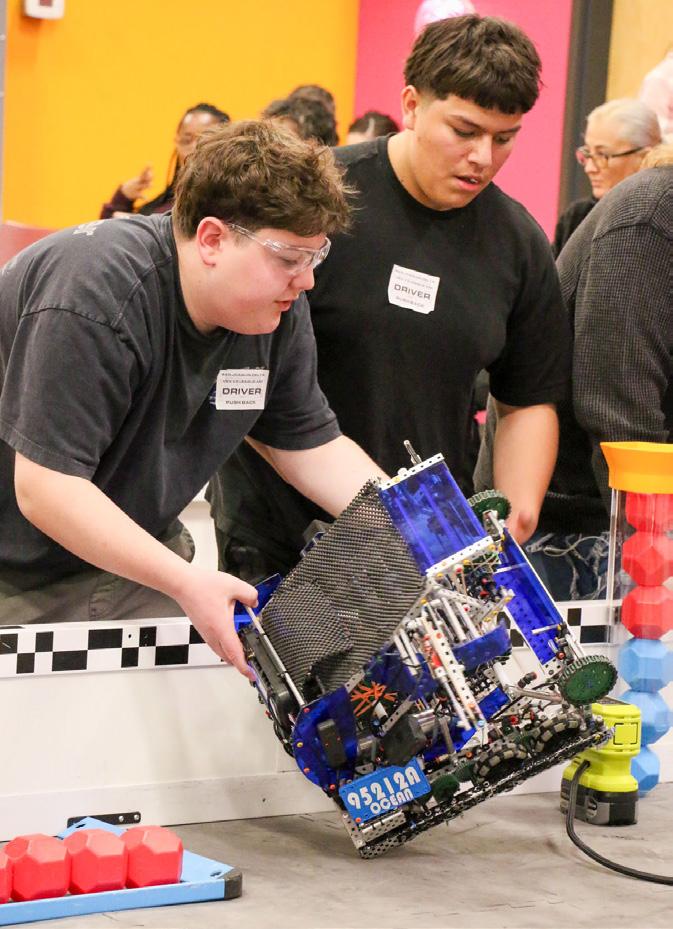
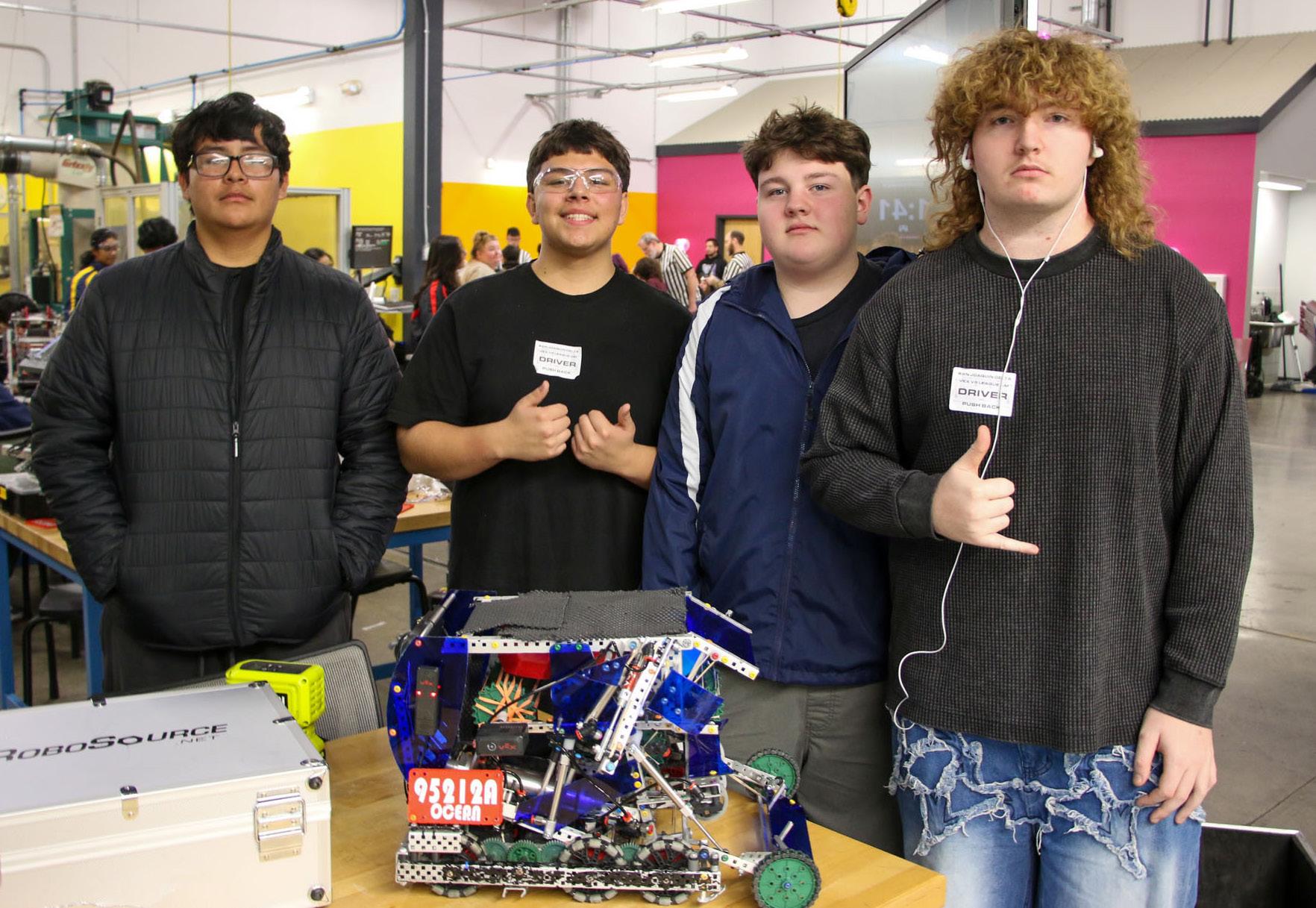
VEX Robotics is a contact sport.
Between matches at a recent tournament of the San Joaquin Delta VEX Robotics League, students reattached parts, made adjustments, or tweaked the computer code behind some of their robots’ actions.
“Team Ocean” from Cesar Chavez High School (Stockton Unified School District) made good use of the precious minutes between matches.
Some of the fixes can be done on the spot, while others will take more work and could lead to improving the robot for the next competition, said Brennan, a team member who has been learning robotics in the district since he was in middle school.
“If it’s major and we can’t do it right away, we can fix it at school and make it better for next time,” he said.
Students on Team Ocean have competed on the national level. They are at the vanguard in the school district, but they are far from alone. Through a concerted effort in recent years, Stockton Unified has brought robotics instruction and competition to hundreds of students at 36 sites across the district’s K-8 schools and high schools, fueling excitement for STEM education, providing fun activities, and preparing students for life after high school.
VEX Robotics is integrated with the Project Lead the Way, a STEM and career technical education (CTE) curriculum implemented throughout the district. Learning robotics teaches students a wide range of skills that could lead to careers, said Rachael Navarrete district STEM coordinator. “It’s important for students to understand there’s different career pathways.”
With robotics starting in middle school, the students build a foundation that can take them further once they reach high school.
Students start learning mechanics and programming before moving on to programming sensors and using autonomous technology, which connects them to the jobs of the future, said Peter Gallegos, robotics instructor at Chavez High.
But robotics develops more than technological skills, and the competitions get students even more engaged in learning.
“As you see them advance technically, they also are advancing in everything else that goes along with robotic projects,” Gallegos said. “They are becoming more collaborative. They’re getting more excited in the programs, in the projects, and robotics.”
“BEING ON THE SCIENCE OLYMPIAD TEAM PROVIDES A PROUD SENSE OF TEAMWORK THAT IS OFTEN OVERLOOKED, ONE BASED ON ACADEMICS.”
- DEBBIE PARKS, DENT ELEMENTARY SCHOOL
Forging the Fabricators of Tomorrow
At Ripon High School (Ripon Unified School District), the Agricultural Fabrication course merges traditional shop work with solid STEM concepts.
Throughout the school year, students dive into extensive handson learning as they build, weld, and fabricate metal projects from start to finish. They learn essential techniques such as oxy-fuel and plasma arc cutting, along with SMAW and MIG welding. They also develop strong skills in blueprint reading, precise measurement, and strict safety practices.
Learning becomes real as students take on real-world projects –barbecues, trailers, repairs, and more – which challenge students to problem-solve, collaborate, and think critically at every stage. These personalized projects keep students engaged while also equipping them with the technical skills and confidence needed for high-demand careers in fabrication, construction, and manufacturing.
Cutting-edge Tech Prepares Students for Careers
STEM education at Mountain House High School (Lammersville Unified School District) took a significant leap forward with a transformative investment in hands-on, technology-driven learning.
The school acquired two new Anatomage tables for its CTE biomedical science pathway. These cutting-edge virtual dissection tables provide students with an immersive, interactive platform to explore human anatomy in extraordinary detail, offering a modern alternative to traditional dissection while meeting California's rigorous high-quality CTE program and pathway standards.
Paired with the expertise and passion of dedicated teachers, students graduate prepared for the realities of higher education and careers in healthcare and STEM fields. It’s part of an authentic, industry-standard experience that will give students a competitive edge, whatever career path they choose.
The biomedical science pathway is one of three STEM-related pathways at Mountain House High School, alongside engineering and computer science, that provide students with hands-on learning experiences connected to real-world careers.
Learning in the Garden
There’s a lot that can be learned in the garden at Banta Elementary School (Banta Unified School District).
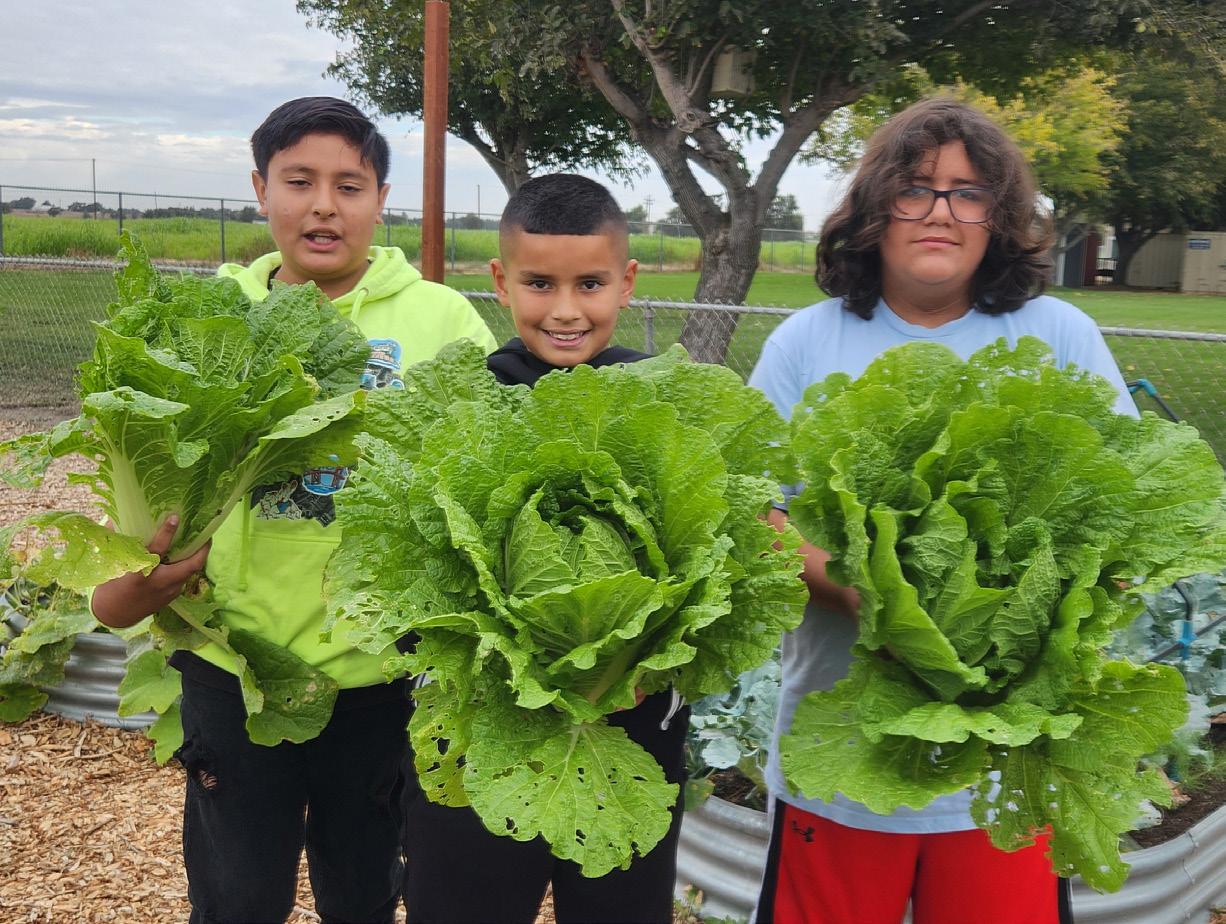
Surrounded by local agriculture, it’s only natural that the school has a big garden. Right now, it has 32 raised beds, and there is room to grow on its 1.3 acres.
Students learn where food comes from because they grow it themselves. Peas, kale, carrots, tomatoes, and more from the garden often make it to the school’s cafeteria.
When pulling weeds and planting seeds, they also learn about natural plants and the animals in the vicinity, like hawks and coyotes, said Gonzalo Garcia, school garden facilitator. They also learn about the insects the pollinator plants attract, and which ones threaten their plants.
“They can tell the difference between the good bugs and the bad bugs.” The community supports the garden with donations. Garcia has plans to add chickens this school year and row crops down the line.
The Science of Teamwork
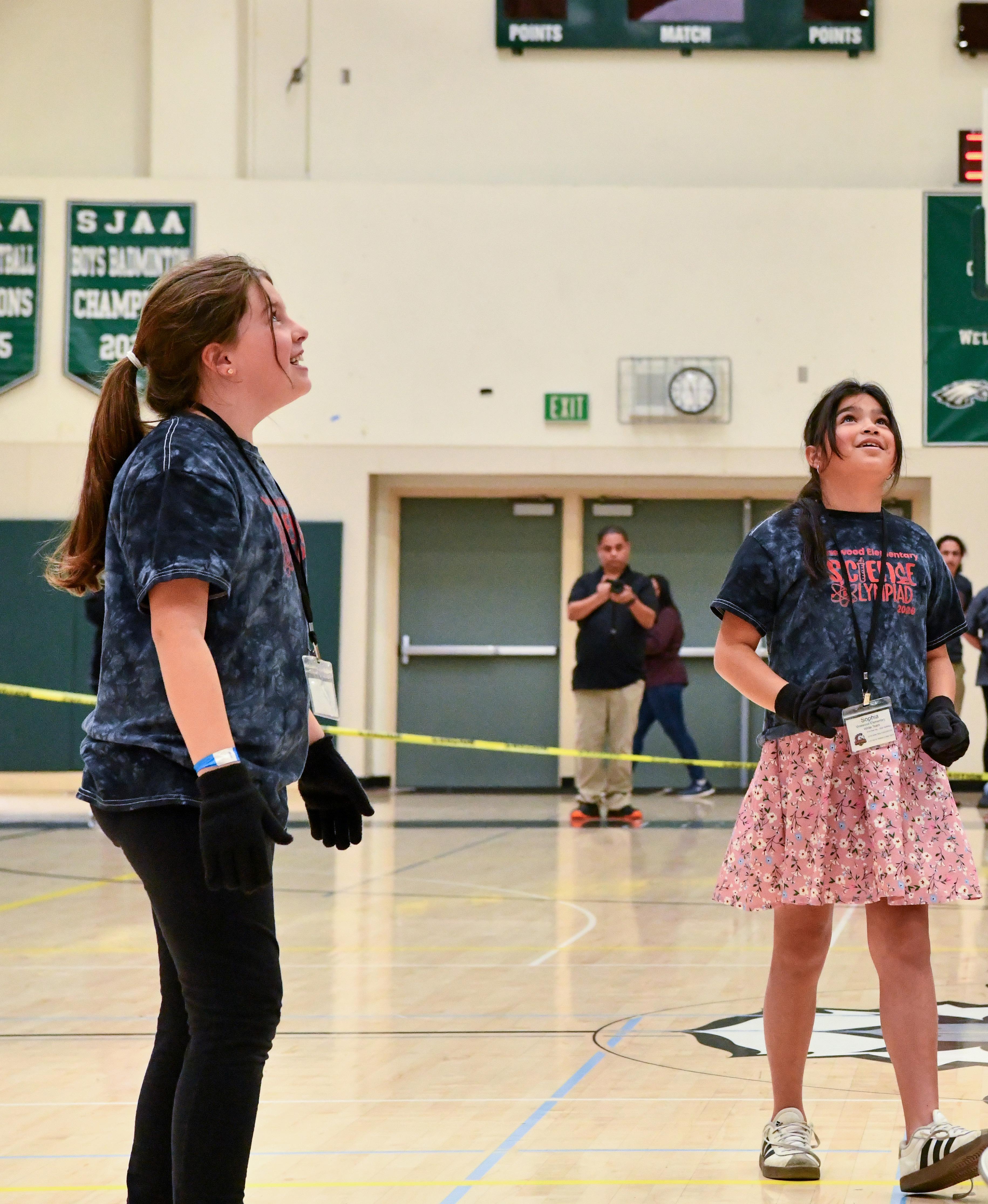
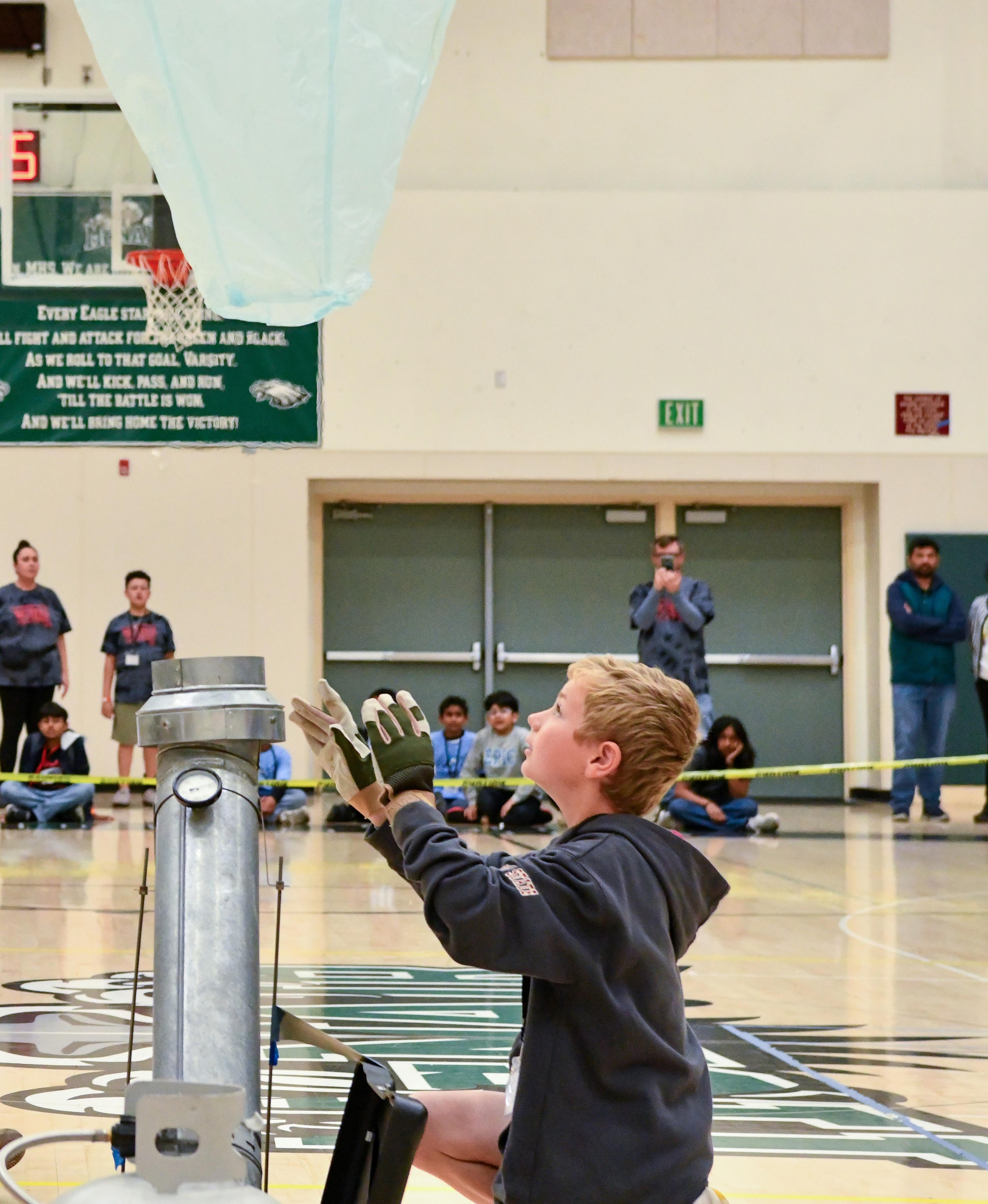
Students at Dent Elementary School (Escalon Unified School District) fall in love with science and engineering each year as they prepare to participate in the annual Science Olympiad. During the series of individual and team events, students dive into a hands-on world of "Study, Do, and Build" activities covering various science disciplines.
“Being on the Science Olympiad team provides a proud sense of teamwork that is often overlooked, one based on academics,” said Debbie Parks, one of two head coaches at Dent Elementary School.
Whether they are coding robots, growing celery stalks, or studying the properties of rocks, each student takes on the responsibility to practice for the event, supported by parent volunteers and team coaches. For many students, this is their first team experience, teaching students to persevere and work together while gaining a deeper understanding of science. It also fosters a unique academic pride, especially among young girls exploring STEM careers.
Making a Splash in Science
At Oak View Elementary School (Oak View Union School District), a small rural district, seventh- and eighth-grade science students are getting a hands-on lesson in the life cycle of salmon through a unique partnership with local hatcheries. This winter, classrooms became mini hatcheries as students cared for salmon and steelhead eggs, observing each stage from egg to alevin to fry. With guidance from Carine Schlesinger, the seventh grade
teacher, and hatchery partners, students monitored water quality, tracked growth and learned about the environmental factors critical to fish survival. The project connected classroom science to real-world ecosystems, deepening students’ understanding of conservation and stewardship.
When the fish reached the appropriate stage, students participated in two field trips to complete the final phase of the cycle. They released their fish into the Mokelumne River and the American River, contributing to local restoration efforts.
All tanks and equipment were generously donated by the Doug Reece Memorial Youth Foundation in memory of beloved Oak View teacher Doug Reece, whose legacy continues to inspire hands-on learning.
ARTS
A well-rounded education includes the arts.
The arts are associated with academics, cognitive ability, critical thinking, verbal skills, and more. The positive impacts don’t stop there. Arts education assists in the development of social skills, teaches discipline, builds self-esteem, and allows creativity to flourish. The arts support the mental wellbeing and social-emotional development of students, too, helping them manage the stress and anxiety that can impact their academics, behaviors, and overall wellbeing.
Additionally, the arts provide one more way for more students to find that strong connection to their school.
It’s no wonder that schools and districts continue to add opportunities for students to paint, draw, play music, sculpt clay, sing, recite lines, and many other avenues for them to grow as artists, students, and, one day, well-rounded adults.
BUILDING CONFIDENCE ON THE STAGE AT BANTA ELEMENTARY SCHOOL
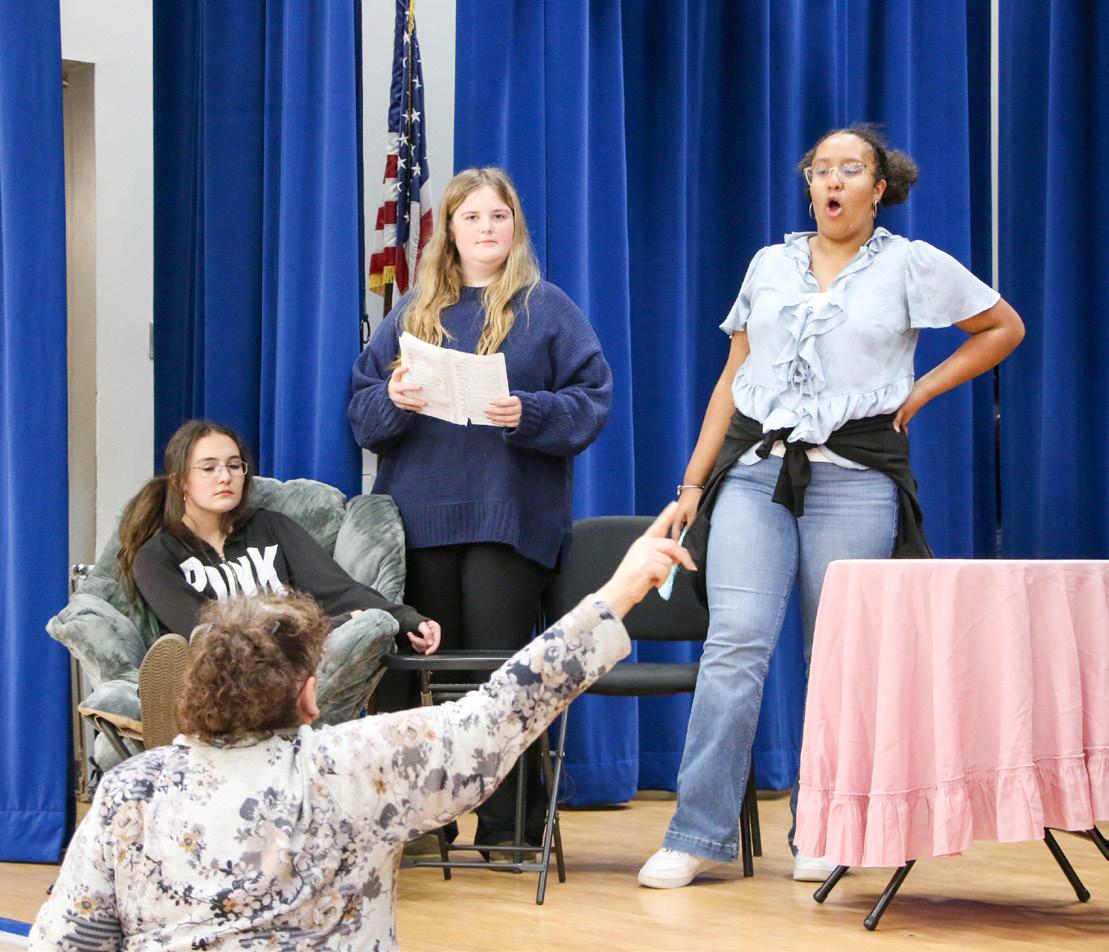
The big performance was only a week away when students in the theater program at Banta Elementary School (Banta Unified School District) took to the stage for their first full run-through.
But they felt good. They had their lines down pat and were having a lot of fun.
Gemma, an eighth grader, looked back to the previous year, when she triumphed over stage fright.
“That felt really good because I feel like it can build more confidence,” she said. “It really makes you feel better and not scared when you see a bunch of people clapping for you and being excited.”
This year she played Smackers, a mouse driven out of town by the protagonist of the play, Pia the Piper. A humorous take on the old Pied Piper fairytale. Pia is no virtuoso leading a plague of rodents out of town. Her piping is so bad, she scares them away.
The theater program has a long tradition at Banta Elementary. Sixth grade teacher Teresa Lorentz started it a few years after she first began teaching at the school 36 years ago. The students, in grades 3-8, hold a daytime performance for the whole school and an evening one for family.
Students in the program performing on stage build a confidence that they take with them, Lorentz said. “You carry that confidence out with you once you leave the stage as confidence that you can take into
high school. It’s confidence you can take into the outside world in jobs, and opens up the ability to talk in college.”
Besides confidence, students also learn about expressing themselves and working as part of a team. “This is not a one-man show. You have to work as a group. You have to know what the person in front of you is going to say,” she said. “You develop a strong sense of unity, that a play is not one individual person.”
It also teaches perseverance, said Brooklyn, an eighth grader playing the role of Pia. “What I learned from performing theater is to never, never give up.”
NATURE AS INSPIRATION: SUMMER STEAM CAMPS INSPIRE YOUNG ARTISTS
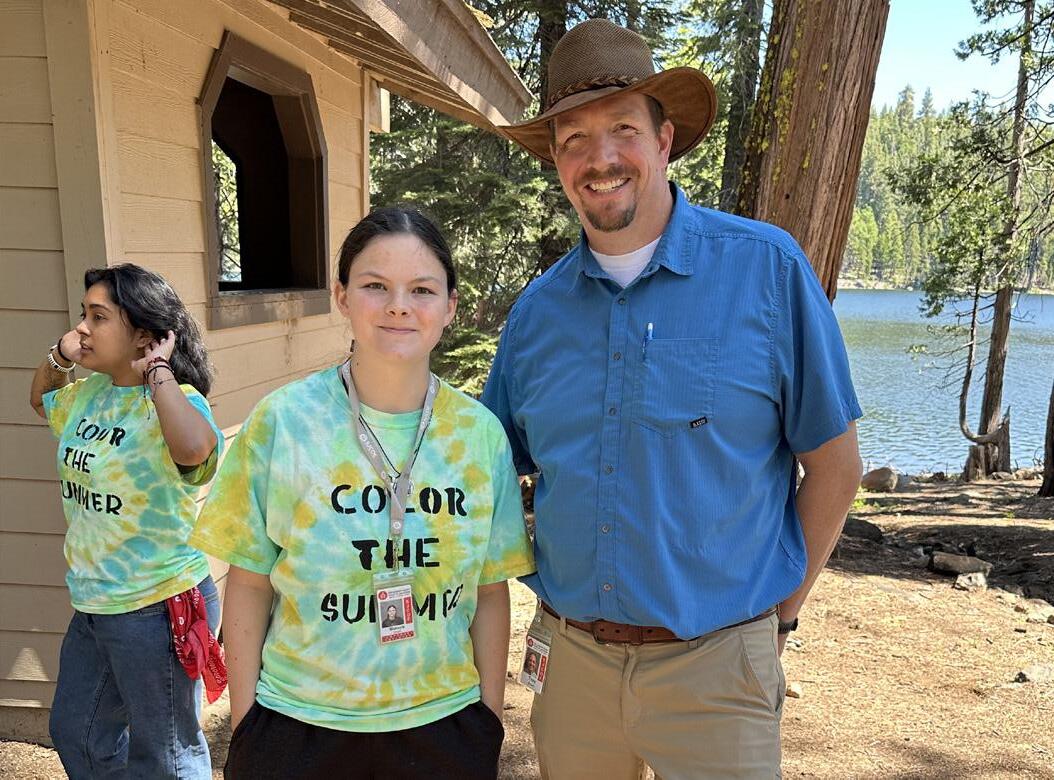
Sitting beside a deep blue lake surrounded by acres of Tahoe National Forest, the Sky Mountain Outdoor Education Center becomes home to young artists in grades 6-8 each summer during the Color the Outdoors STEAM Camp. Meanwhile, younger students in grades 3-5 experience their own version of the program at the Durham Ferry Outdoor Education Center in Manteca, where the natural landscape along the San Joaquin River inspires creativity. These outdoor education centers are owned and operated by the San Joaquin County Office of Education (SJCOE).
Both camps were founded by Erika Chapman, director of the SJCOE Student Engagement and the Arts department. What began as an opportunity for her friends’ children has grown into two countywide summer opportunities designed to help student artists explore with color, creativity, and several art mediums in outdoor settings.
“WHAT I LEARNED FROM PERFORMING THEATER IS TO NEVER, NEVER GIVE UP.”
- BROOKLYN, BANTA ELEMENTARY SCHOOL
Across both camps, students dive into lessons on using watercolors, oil pastels, graphite, colored pencils, and more. They explore color theory and the principles of art, guided by the natural beauty around them. Between lessons, campers enjoy the serene settings outdoors –sitting beside the lake, singing campfire songs, participating in a color run, and building lasting friendships. Last year, the camp expanded its offerings to include music and theater experiences, giving students more ways to express themselves.
Each lesson is taught by high school students across San Joaquin County who are passionate about the arts. Many of them once attended the camp themselves, like Mariah Alcazar Aldaco, who has returned as an assistant camp director. “I’ve definitely seen a bunch of students finding that love for the arts,” Mariah said.
She added that several cabin leaders are also former campers who chose to come back for the opportunity to guide the next generation. “They find that helping these students and learning more about the arts is empowering.”
From its humble beginnings as Chapman’s summer project for her friends’ children, the camp has grown into an innovative experience that changes the lives of students across the county.
“To see that they love it so much that now they want to be the cabin leaders makes me emotional because I would have loved to have this when I was their age,” said Chapman.
ARTS COME ALIVE AT ESCALON UNIFIED
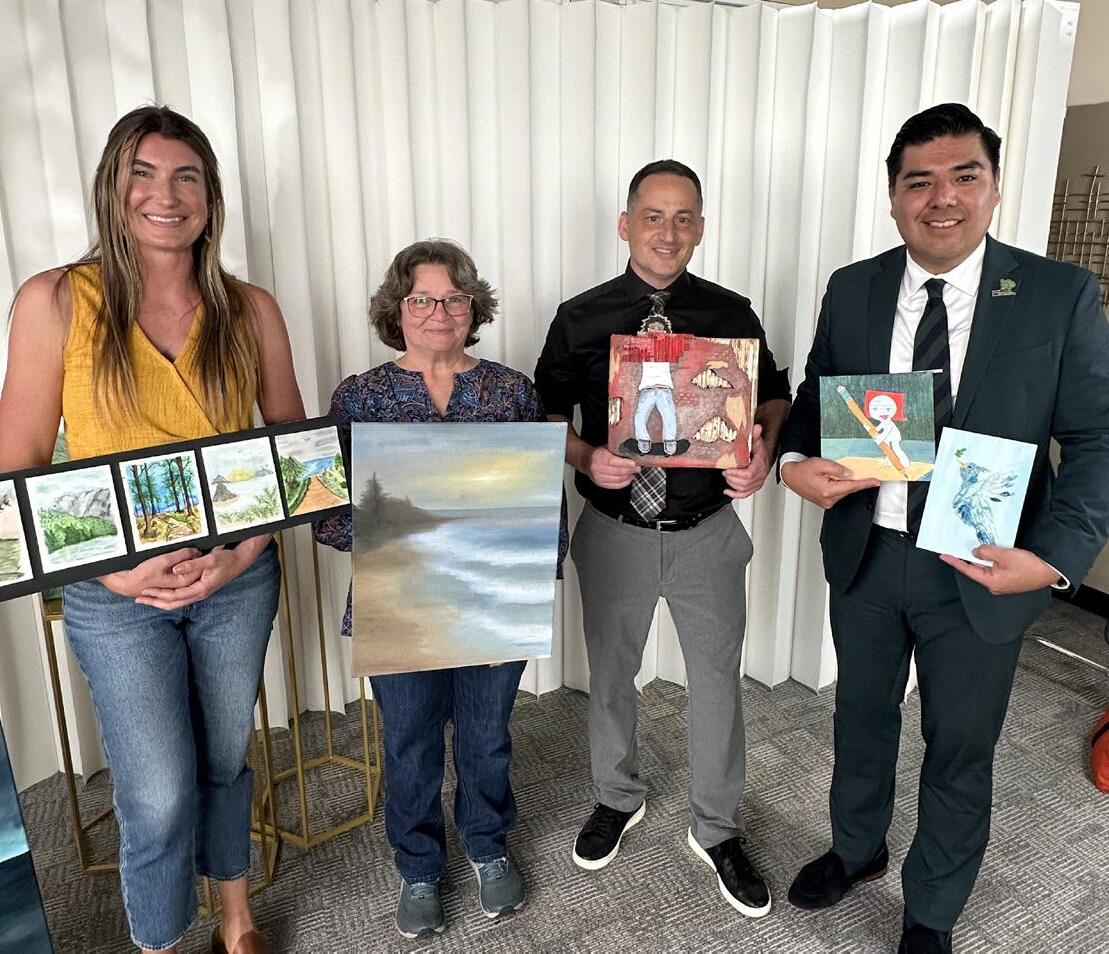
Student creativity took center stage in early March at Escalon High School (Escalon Unified School District), where the district’s Arts Alive! showcase transformed the old gym into a vibrant gallery of imagination and expression.
Featuring artwork from students across all grade levels, the event highlighted a wide range of mediums and styles, including painting, charcoal sketches, sculptures, and more. From the youngest budding artists to high school students considering careers in the arts, each piece reflected a unique perspective. Classes from across the district visited throughout the week, giving students the opportunity to experience both the gallery and a variety of interactive, hands-on art activities.
This year’s showcase was inspired by a quote from French artist Henri Matisse: “Creativity takes courage.” According to Escalon High School art teacher Erin Northcutt, the open-ended prompt encouraged students to explore what creativity and courage meant to them.
The event also reinforced the importance of arts education as part of a well-rounded curriculum. Escalon High School Principal Jason Furtado emphasized its impact. “Art makes education meaningful,” he said.
OUTLOOK | ARTS
Hands-on activities remained a major draw of the event, with stations offering friendship bracelet making, spin art, tile building, and airbrush temporary tattoos.
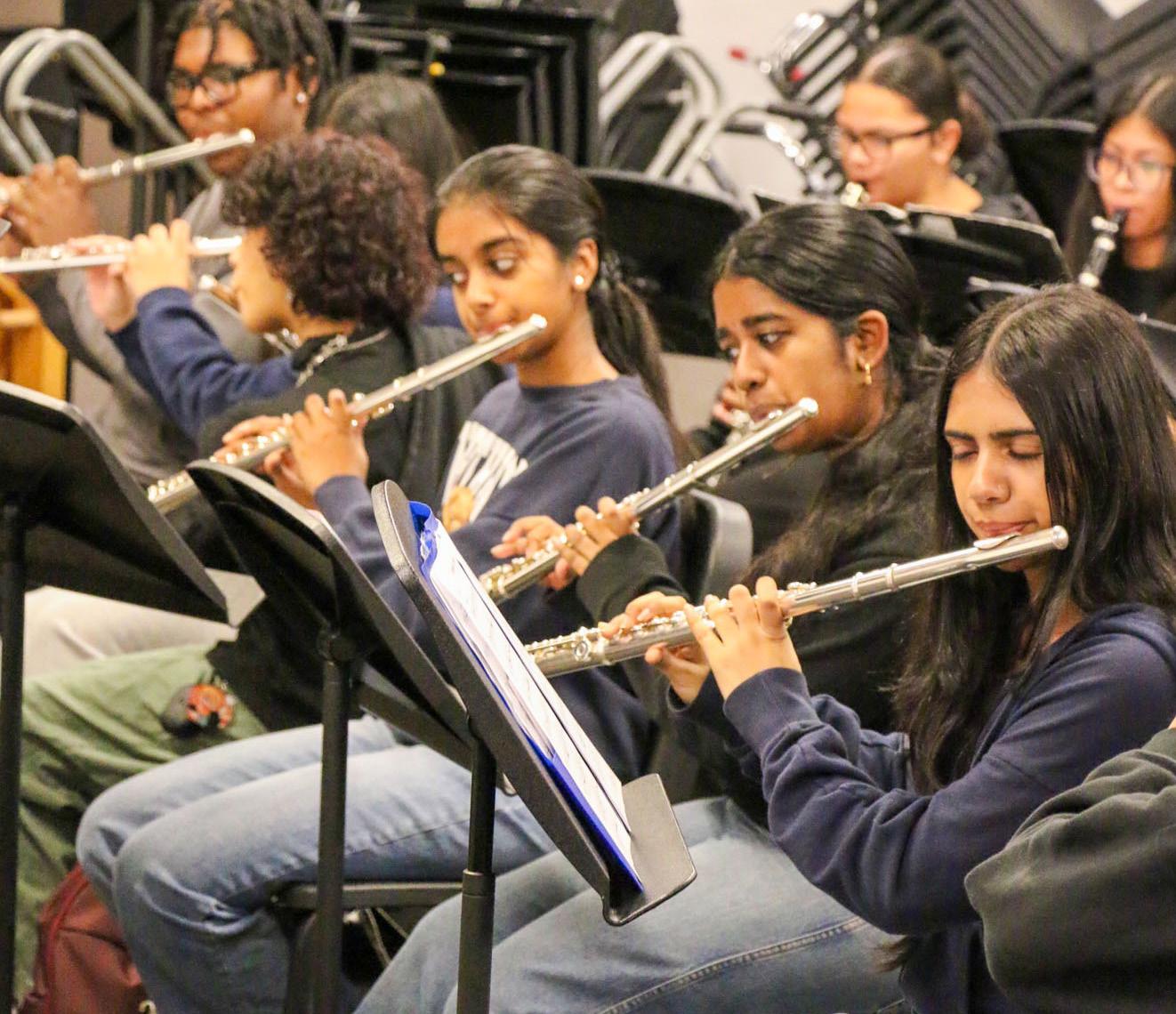
Local elementary schools enjoyed a live performance by the Escalon High School band, highlighting collaboration within the Visual and Performing Arts program. “This is the second year we’ve incorporated the performing arts,” said Northcutt. “I loved the jazz band’s performance.”
Northcutt said the showcase aimed to inspire younger students by giving them a glimpse of the opportunities available in high school arts programs. A former Arts Alive! participant herself, Northcutt now teaches art at Escalon High School, bringing her experience full circle.
With strong turnout and participation, the event delivered a week of creativity, engagement, and inspiration. Organizers look forward to bringing Arts Alive! back to campus in March 2027.
BEATS OF SUCCESS
The seed of Mairyn’s love of music was planted at Wicklund Elementary School (Lammersville Unified School District), where she was a student from kindergarten through eighth grade. Mairyn, now a senior at the district’s Mountain House High School, remembers watching videos about music, playing the recorder, and being truly engaged by a music teacher putting on a puppet show about music. “She made music so much fun.”
By the time she was in fifth grade, she knew that percussion was passion. In high school, she learned and performed in symphonic band, winter percussion, and in the marching band, where she is now captain of the drumline.
Through the music program at the district, Mairyn said she lear discipline, made amazing friends, and discovered the unique joy of performing a challenging piece of music, together, with her bandmates.
“I honestly think band has been like the best experience of my the district has really helped me to fulfill that dream.”
Mairyn’s story echoes many other students’ in the district, whi guarantees a comprehensive music education for students through fifth grade. It sets the stage for students to build their music knowledge, skill, and appreciation as many choose to continue taking music electives through graduation.
In those early grades, students don’t just develop skills on the recorder, bucket drum, and ukulele – they use the skills from math class to learn about rhythm in music class and connect stories of music from different cultures with lessons in English and history classes, said Susan Heinrich, teacher on release time for visual and performing arts. “It’s not an add-on in thi district,” she said. “We consider it one of our core subjects t essential to teach to all students.”
Music education helps brain development, social-emotional development, and connects students to the community. The connection is a two-way street in Lammersville Unified, where student musicians perform at community events, and the people of Mountain House turn out for music performances, she said.
Akshara, a Mountain House High School choir student who has performed on the national stage with support from her school, describes the impact of her music teachers as “life changing.” She also said she made some of her best friends through choir, too.
“I’m just so grateful to be part of the musical program at my school.”
SCULPTING CREATIVITY: ARTS EDUCATION IN RIPON UNIFIED
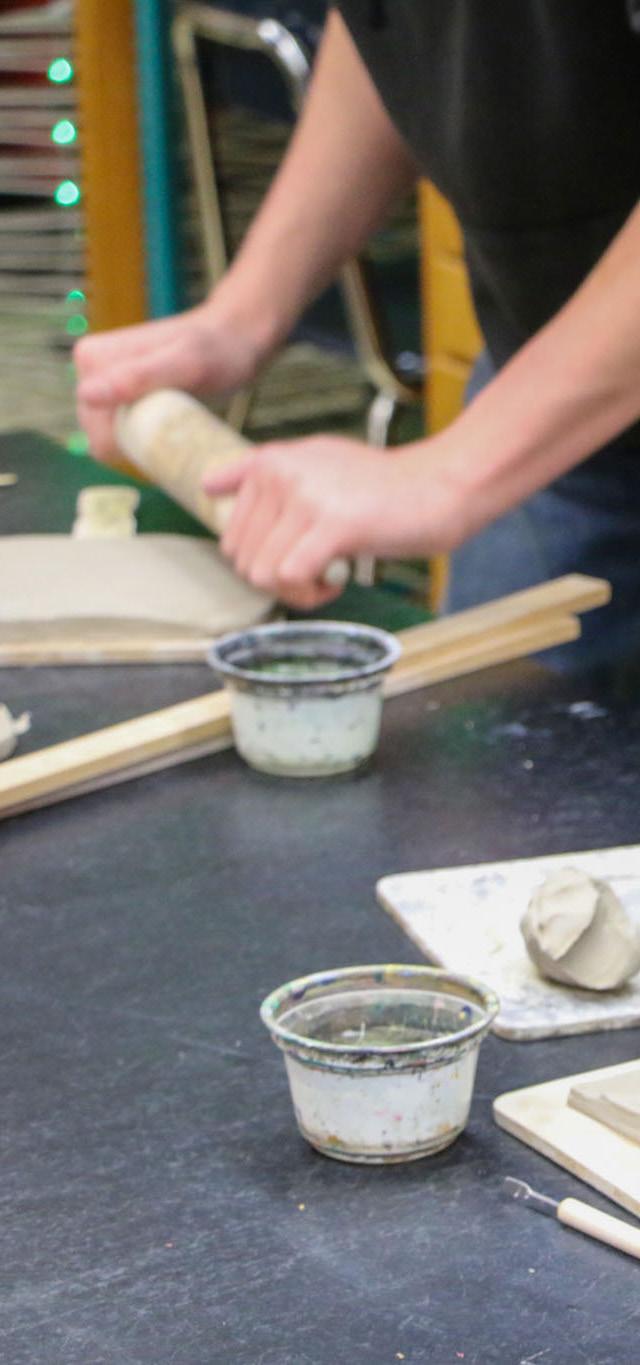
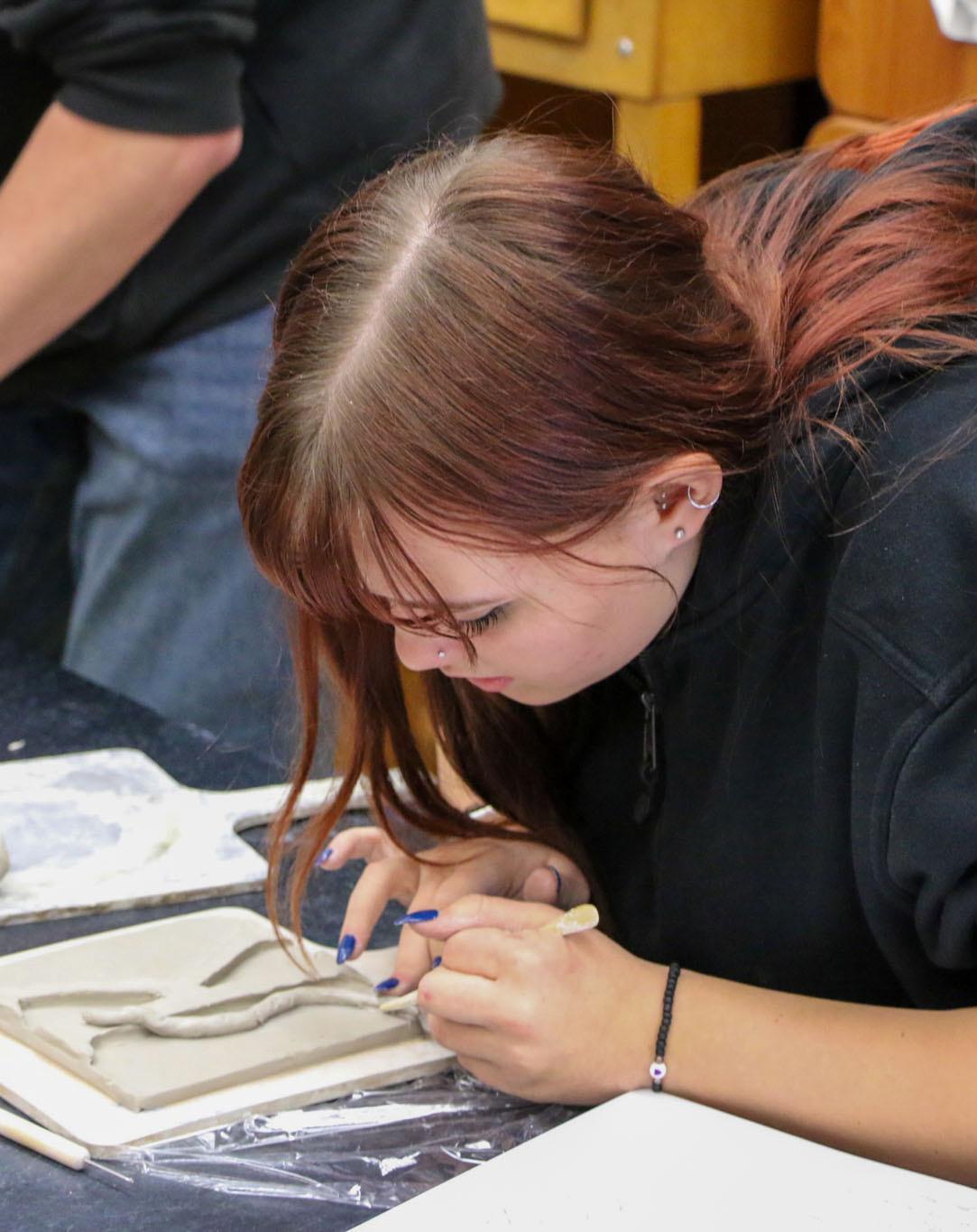
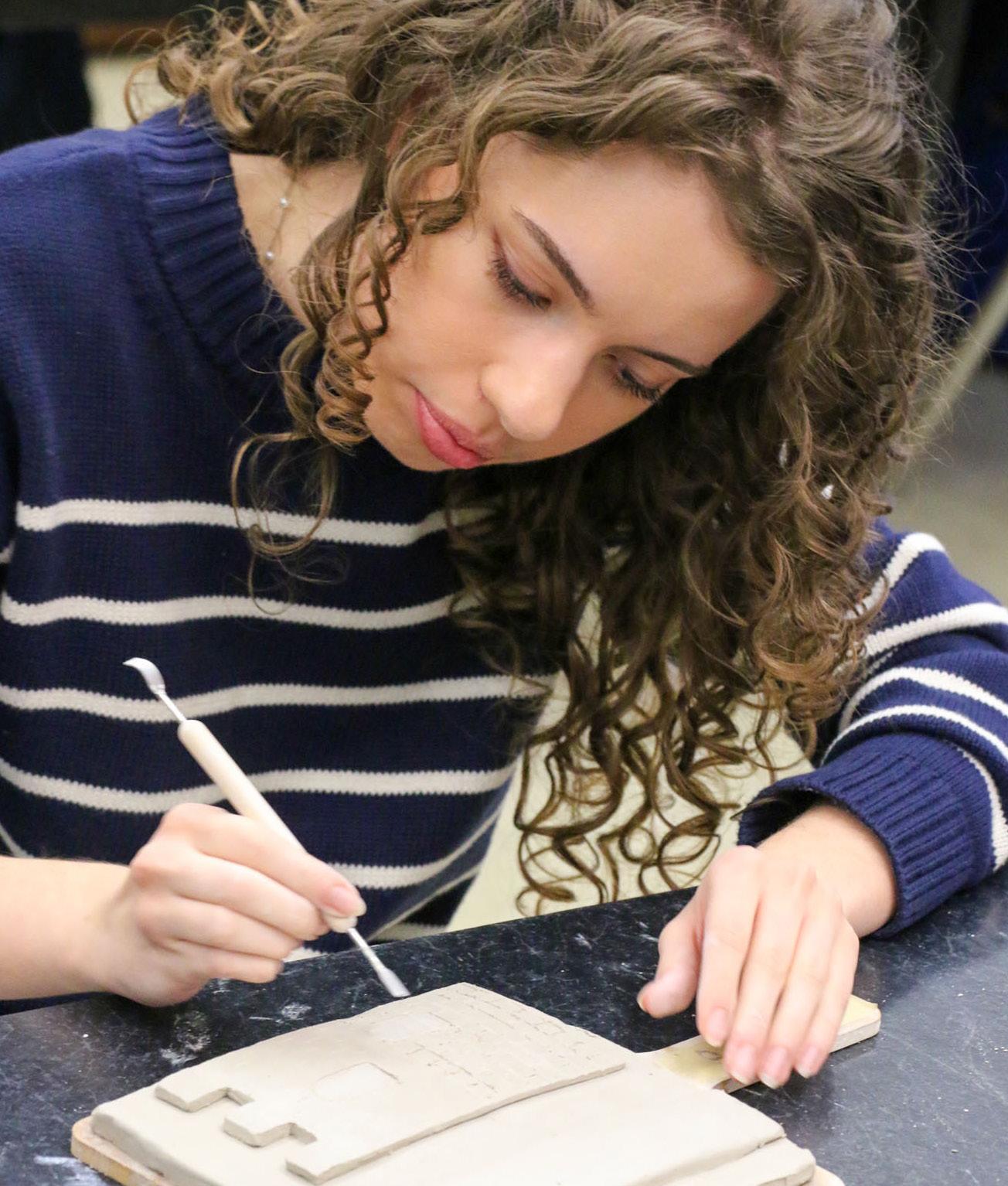
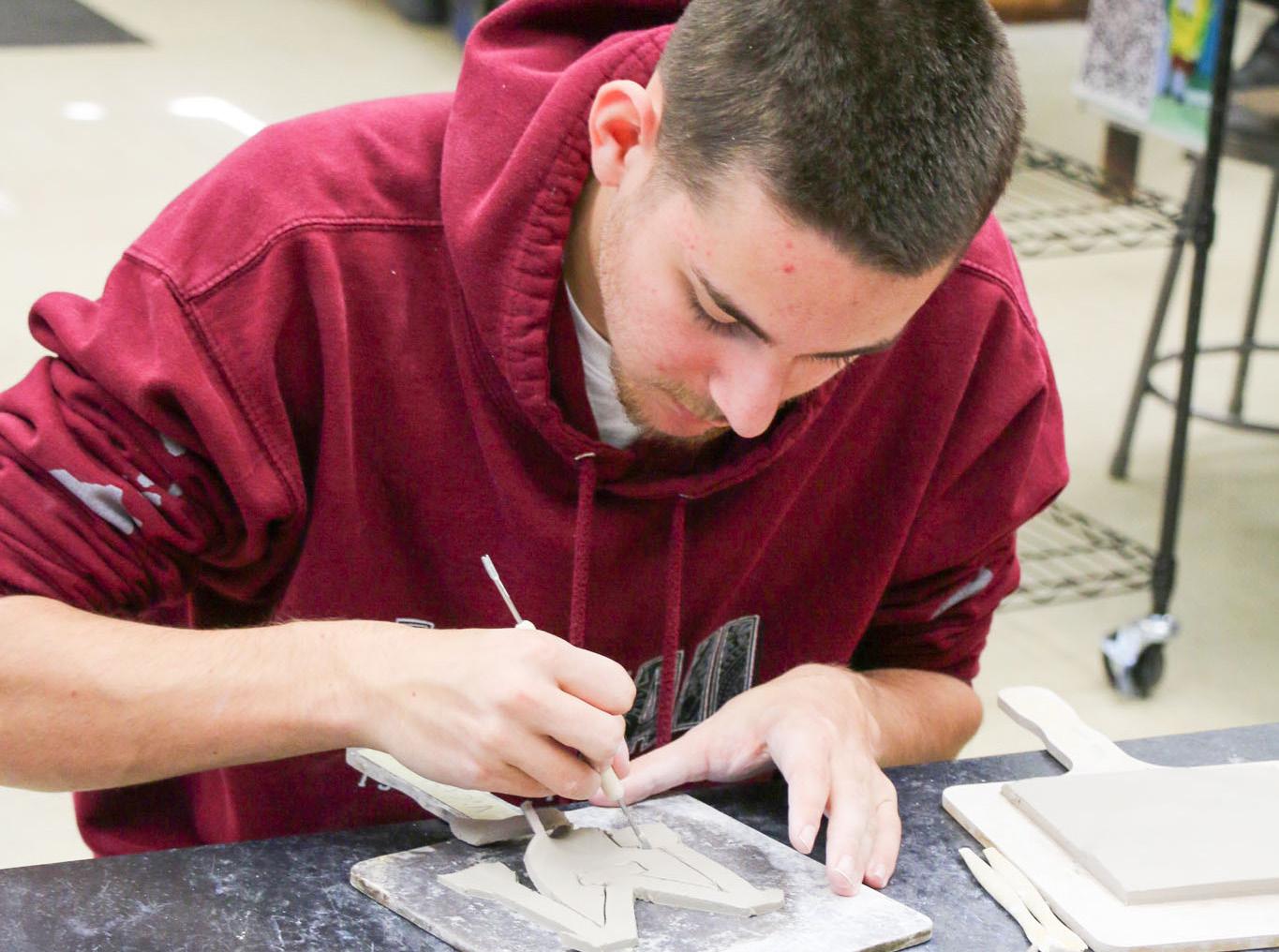
A ceramics assignment in a Ripon High School (Ripon Unified School District) art class for students to make a tile out of one of their initials called on students to do a lot more than just shape and fire some clay.
Sophia, a senior, started with introspection about who she was, where she came from, and where she was going. She considered how a design could reflect her family and her Pacific Islander heritage. The mountain, beach, foliage, and cultural imagery would also track with her choice to attend college in Hawaii.
Through ceramics, students build new, technical skills while discovering another way to express themselves, said Dakota Bowers, high school art teacher. And making the transition from sketchbooks can be difficult, he said. “So I’m helping them understand how to make it more three-dimensional, how to look at it from different angles,” he said. “It’s something creative for them that they can keep.”
The ceramics program at Ripon High shows how the district values and grows arts education for its students to develop artistic skills and explore their creativity.
Getting a ceramics program off the ground takes resources – which the district provided, including upgrading the electrical system and building an outdoor cage to house the kilns. Boosters supported the program, too. This year, the program added wheels to throw clay, allowing students to make bowls, mugs, and other projects.
A program to expand art education to the district’s five elementary schools is in its second year. Teaching art develops critical thinking, problem-solving skills, and other skills. Students also learn the fundamentals of art – from technical skills to self-expression, said Luis Orendain, the teacher of this program.
Younger students learn to see themselves as artists and build confidence, he said. “And then when they get to high school, it’s like: yeah, I’m capable of doing this.”
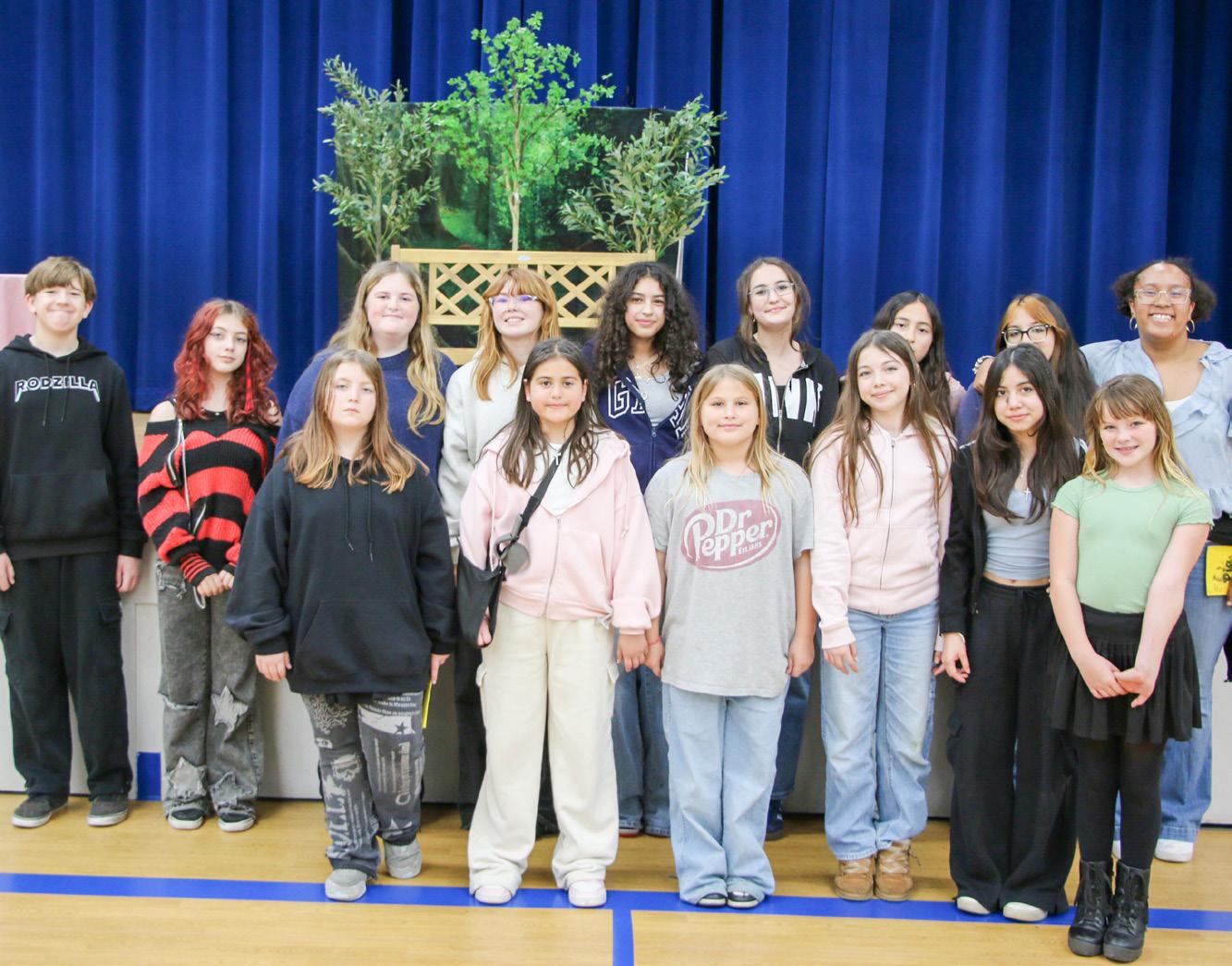
“I’M JUST SO GRATEFUL TO BE PART OF THE MUSICAL PROGRAM AT MY SCHOOL.”
- AKSHARA, MOUNTAIN HOUSE HIGH SCHOOL
Center Stage: Delta Charter Brings Student Creativity to Life
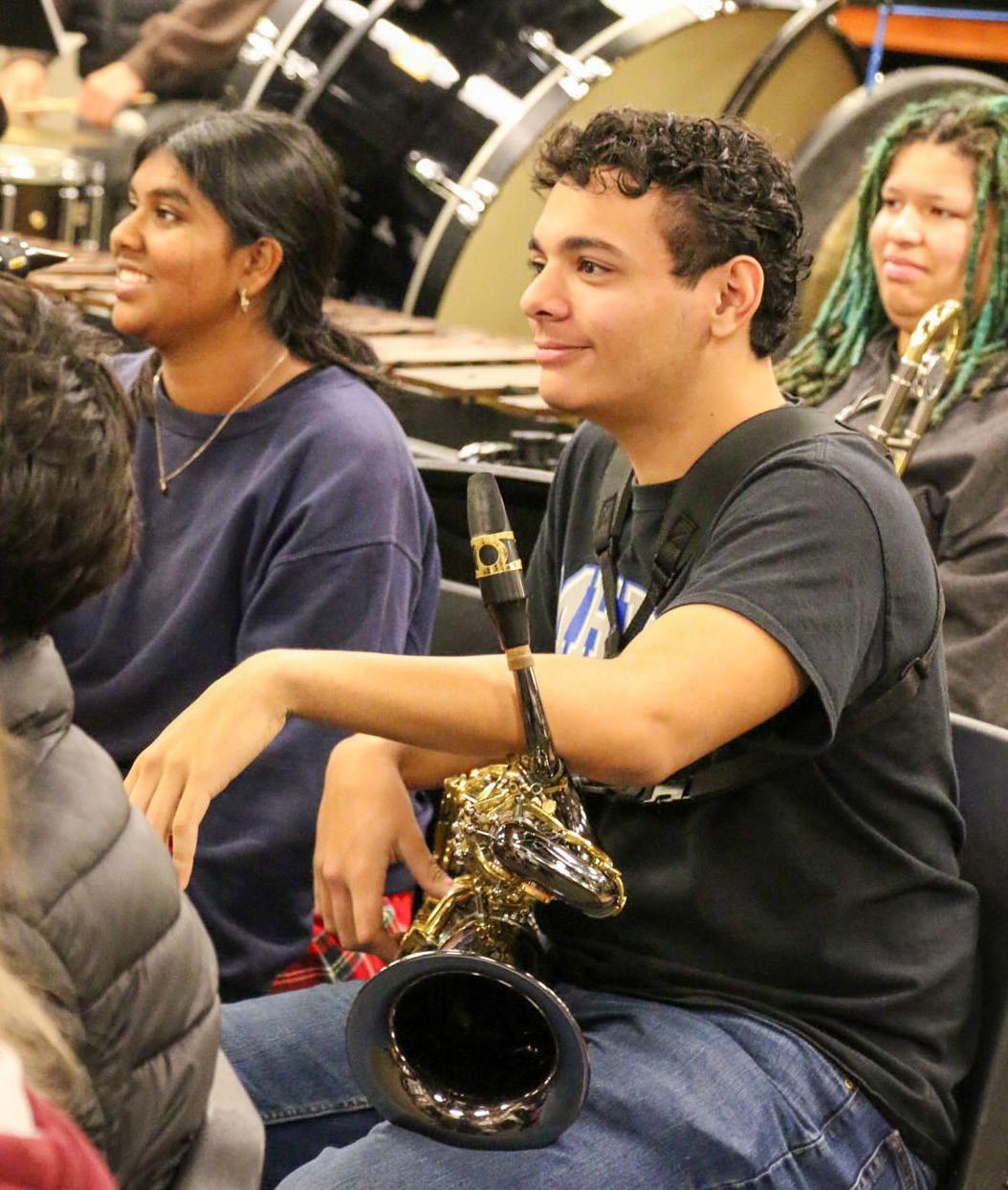
Delta Charter High School (New Jerusalem Elementary School District) places a strong emphasis on Visual and Performing Arts (VAPA), where creativity, collaboration and student voice take center stage. With the flexibility of a charter model, the program offers individualized instruction that allows students to explore their interests while building technical skills in both performance and production.
This semester, students are preparing their first full-length production, a comedic murder mystery set on a soap opera stage, alongside an original improv show. Through mid-April, students will focus on stagecraft, including set design, lighting and technical elements, while the student actors will emphasize acting, character development and live performance.
“Overall, our programs– from drama to music production to Hispanic Strings courses– support creativity and collaboration,” Principal Matthew Hillstead said. “These experiences help students grow in confidence and connect with real audiences.
McNair High Puts Student Artists in the Spotlight
The Visual and Performing Arts (VAPA) pathway at McNair High School (Lodi Unified School District) recognizes students who demonstrate dedication and achievement in visual and performing arts courses. The program allows students to apply time spent developing skills in any art form while receiving support from a mentor, teacher, classroom instructors and peers. Participants select a mentor who aligns with their artistic interests and goals, helping guide their personal creative development. The pathway also encourages students to showcase artistic work created outside the classroom, whether rooted in prior coursework or independent exploration.
Students can earn multiple levels of recognition based on completed course credits, documentation of artistic work outside of class, and participation in showcases. Advancement in the pathway is tied to the number of arts classes completed
and students seeking the highest level of recognition must also complete and document additional hours of artistic work beyond the classroom, demonstrating a sustained commitment to their craft and continued artistic growth.
Arts for All in Manteca Unified
Manteca Unified School District has launched a five-year strategic plan to expand arts integration and ensure every student experiences the benefits of the arts at every grade level. Supported by Proposition 28 funding, the district introduced a pilot program in which Arts Integration Specialists model lessons that blend visual and performing arts with core subjects such as science and math, strengthening engagement and deepening understanding.
The program creates early access to the arts for younger students while supporting an inclusive learning environment that values diverse learning styles. By embedding the arts into daily instruction, the district is increasing opportunities for students to connect academic content with creative expression.
“We want to give students as many opportunities as possible to explore their interests and feel excited about coming to school,” said Anthony Dahl, coordinator of Visual and Performing Arts.
Through strategic planning and classroom innovation, the district continues to expand access to high-quality arts education and reinforce its commitment to developing well-rounded, engaged learners.
Theatrical Performances in Jefferson Connect Students to Their Schools and Themselves
When Hawkins Elementary School (Jefferson Elementary School District) launched its theatrical performance program last school year, it really took off.
They called it the Hawkins Theater Project, and the idea was that anybody could participate – whether it meant performing on stage, working backstage, taking photographs, or playing in the
band. About 100 students took part in that inaugural year, building stronger connections to their school.
“It’s been such a benefit for these kids who are trying to find their groove in our school,” said Casey Hall, one of the co-directors of the program.
With its launch, the program joins the district’s more-established Jefferson School theater program, which includes other district schools in the fun. Jefferson students share the stage with performers from Corral Hollow Elementary, and Monticello Elementary students come out to watch and, maybe, get inspired to sign up when they enter middle school.
Performers connect with school, build confidence, and sometimes discover unknown talent and passion, said Renae Potts, program director at the school. “On stage, they transform into somebody else.”
SUSD’s
Franklin High School Band Performs at Prestigious Carnegie Hall
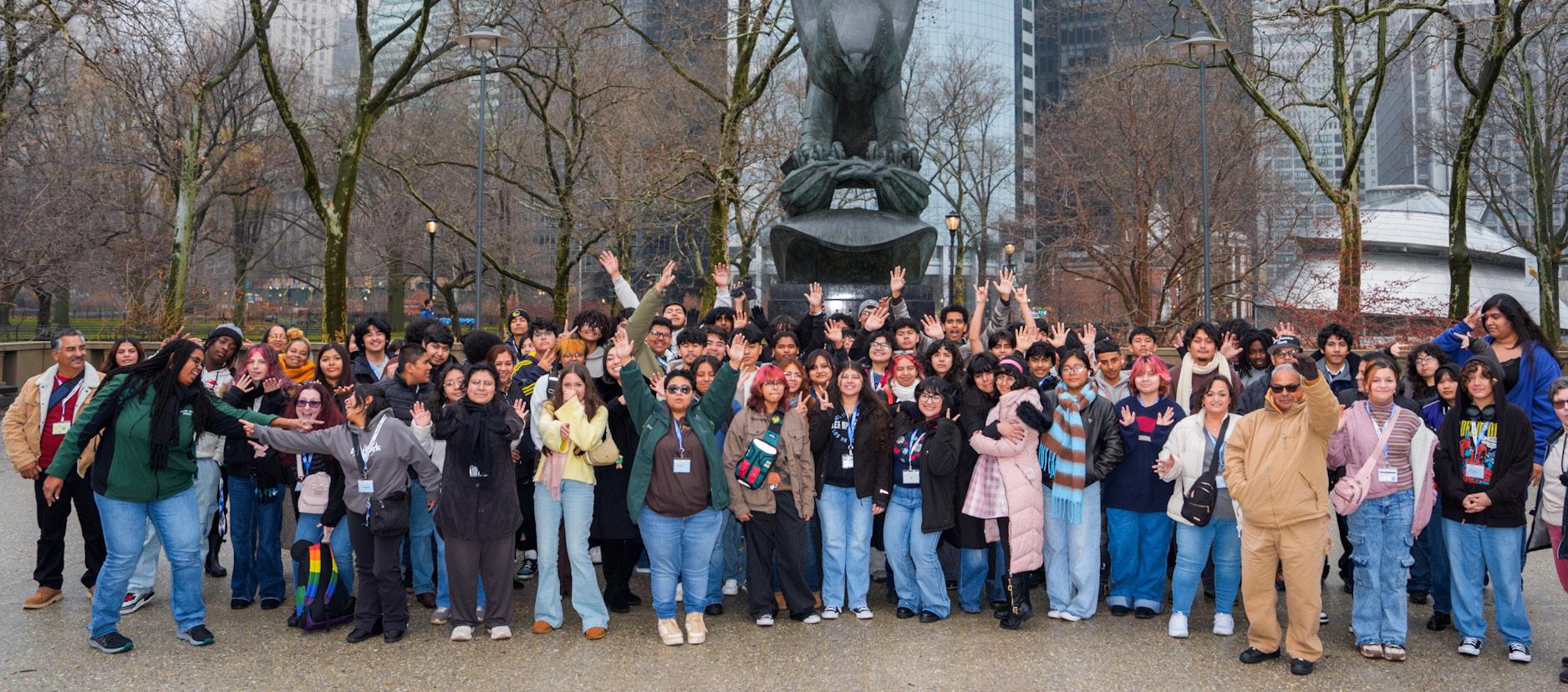
More than 65 band students from Franklin High School (Stockton Unified School District) experienced a once-in-a-lifetime opportunity to perform on the iconic stage at Carnegie Hall in New York City.
It was an experience they will never forget. “I dreamt about something big, but I didn’t know I was allowed to dream this big,” said Ava, a student.
Band Director Jacqueline Hairston emphasized the significance of the moment, not just as a performance, but as a stepping stone for students’ futures. During their time in New York City, students expanded their learning beyond the stage. They participated in a master class, attended a Broadway show, and visited landmarks, including the Empire State Building.
“We invest in our students so they can learn and explore their passions, interests, and talents. Stockton Unified offers a world-class education,” said Dr. Michelle Rodriguez, district superintendent.
The trip was made possible through an arts grant, helping ensure students had access to this unforgettable educational and cultural experience. Edison High returned to Carnegie Hall this year to perform, too.
Middle School Art Show Gives All Students A Chance to Shine
Williams Middle School (Tracy Unified School District) puts student art in the spotlight at the annual Spring Art Show.
Open to all students, no matter their ability, the event mirrors a gala at an art gallery. While a slideshow highlights each individual artist, student musicians sing and play instruments and the community turns out to take partake. The school held its ninth-annual art show on April 9. The theme: Blue. Artworks are showcased online at https://bit.ly/Williams_Art.
“We just make it a whole great night, and students look forward
to it every year,” said Nick Kerin, art and social studies teacher at the school who started the school’s art program 14 years ago and organizes the event.
Kerin’s art classes are welcoming and inclusive places, where Williams students create art side-by-side with students in county special education programs.
Creating art gives students a way to express themselves and be happy with whatever makes them unique, Kerin said.
“I DREAMT ABOUT SOMETHING BIG, BUT I DIDN’T KNOW I WAS ALLOWED TO DREAM THIS BIG.”
- AVA, FRANKLIN HIGH SCHOOL
STEAM
There are many good reasons why educators add the “A” to STEM to turn it into STEAM (science, technology, engineering, art, and math).
Incorporating the arts into STEM education creates an “on-ramp” for students into the material, creating opportunities for more students to be drawn into learning with hands-on activities. Art brings the subject matter to life and helps make the learning last.
Creativity drives art, and being creative assists students approach other subjects and is a valuable skill that will suit them well throughout their lives. Creativity drives design and problem-solving. Would scientific innovation be possible without creativity?
STEAM IS FOR EVERYONE
The quad at Lodi High School (Lodi Unified School District) is usually bustling with students and staff, a steady rhythm of movement between classrooms, meetings, and practices.
But on a chilly Saturday morning in February, the campus was transformed into a gateway for STEAM careers, instruction, and programs across the region.
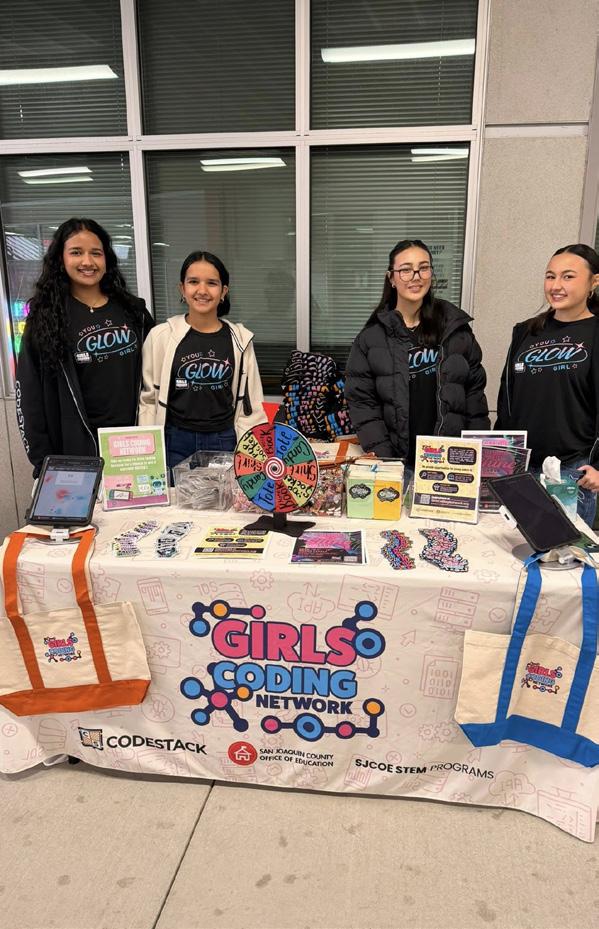
The NorCal Science Festival is a free one-day science exploration event hosted annually by Lodi Unified. Organized by students, it focuses on providing engaging and hands-on interactions in science, technology, engineering, art, and mathematics, also known as STEAM, for the broader community.
Attendees were warmly greeted by the student leadership team and volunteers before receiving a map outlining the day’s presenters, booths, sponsors, and activities. With more than 80 exhibitors encompassing fields like municipal districts and law enforcement agencies to solar exploration and robotics models, the campus offered something for every interest. At one station, community members interested in veterinary medicine could learn new suture techniques on bananas.
“This is what makes the NorCal Science Festival so unique,” said Sandi Starr, Lodi High School teacher and festival advisor. “Students shape the direction with the event each year. The focus can change, from art incorporation to sustainability.”
Andrew, a senior at Lodi High School and current president of the NorCal Science Festival’s planning committee, believes that “STEAM can be for everyone.” He was part of the team that expanded the NorCal Science Festival last year to include an art competition piece so that the “A” in STEAM was fully represented.
This year’s “Junkyard Treasures” art competition challenged participants to create science-themed artwork using recycled materials, blending creativity with environmental awareness.
This festival also marked an important milestone. The Nor Cal Science Festival celebrated its 10th anniversary. Through years of growth, collaboration, and student leadership, it has become a regional staple for Lodi families and beyond.
The NorCal Science Festival represents a commitment to creativity, curiosity, and opportunity. In the hands of its student leaders, STEAM is an open invitation for all to explore and discover.
THE LAYERS OF LEARNING
To deepen engagement with her students, New Hope Elementary School teacher Jill Easton integrates art into the curriculum, giving students a hands-on way to demonstrate their understanding.
“I like the hands-on aspect of incorporating art in my science classrooms,” Easton said. “It makes science fun for students.”
The integration has been an integral part as her sixth grade students have learned about layers of the Earth and how those layers impact the world around them.
Working in groups, students research and design colorful, layered posters to represent the Earth’s structure. They then present their projects to the class, explaining their design choices and scientific reasoning.
“Art can change the way our students interact with science,” Easton said. It connects STEM instruction to the real world, and the blend of art and science fosters collaboration, creativity, and deeper learning, she said. Looking ahead, she hopes to expand these opportunities through a schoolwide science fair.
A veteran educator, Easton has taken on a new challenge this year and is now leading science instruction for students in grades 5-8.
The change in focus for Easton aligns with a “together” philosophy that is part of a culture shift under the leadership of Superintendent Khushwinder Gill in her first year at the school. It’s not just about coming together at the school. It focuses on a connection to the community.
This is an important aspect of New Hope Elementary School, the only school in the New Hope Elementary School District. It is part of the small town of Thornton, a community of fewer than 900 residents nestled between Interstate 5 and a nearby wilderness preserve. At its center, the school serves as a hub of activity, bringing together families, students, and staff in this closeknit community.
Gill keeps this community connection front of mind as she focuses on empowering and supporting teachers and prioritizes understanding the learning opportunities available to her students.
“I wanted to learn more about the school this year,” said Gill. “That way, we all can work together towards new programs and resources to connect to our community and families we serve. This could look like a farmers market or expanded after-school activities.”
ARTS LAUNCH STEM EDUCATION INTO ORBIT AT RIVER ISLANDS
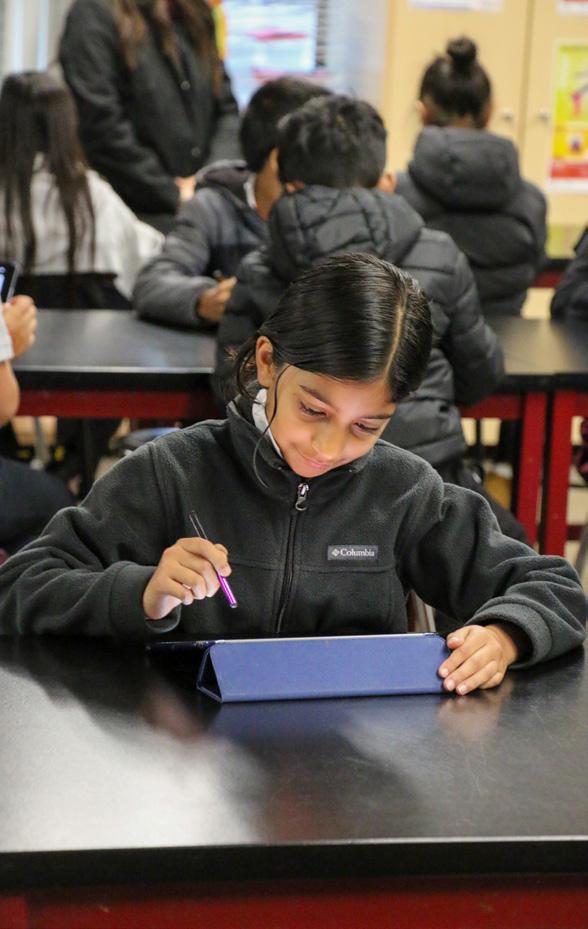
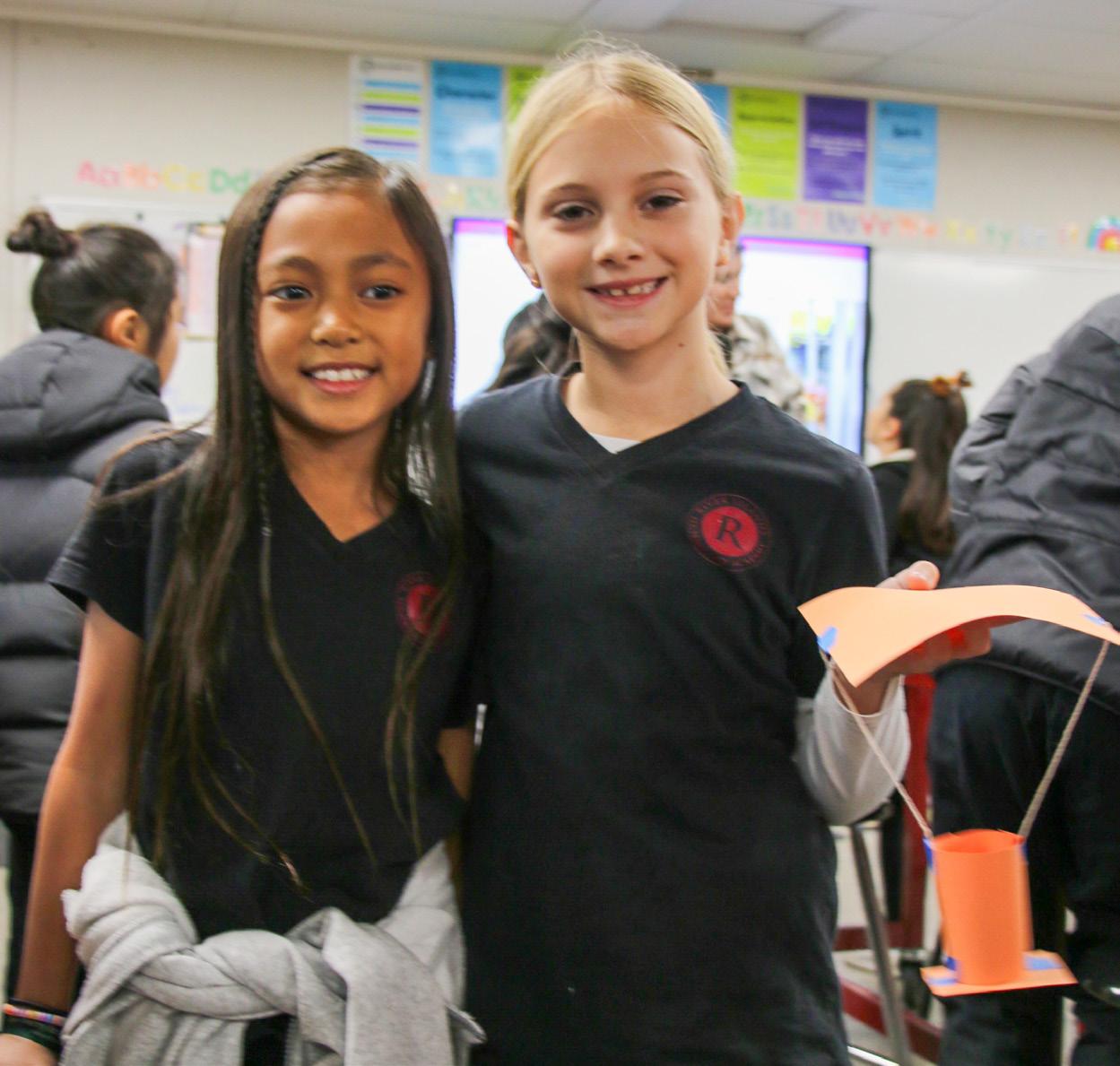
Science and art intertwined in a series of activities for third graders at the River Islands Technology Academy (RiTechA). Related to aerospace engineering, the activities called on students to use everything from iPads to construction paper and scissors.
Creativity and artistic expression drove a computer-coding activity, when students designed interactive characters, called “sprites,” to play in outer space.
Adrija picked an angel as her sprite. She coded it so it glowed, changed colors, and said “hi” before taking flight. “I made it jump 999 feet into space!”
The site is part of River Islands Academies charter school, which offers a wide range of STEM (science, technology, engineering, and math) and STEAM (science, technology, engineering, art, and math) for its students. The aerospace engineering lab brought by the San Joaquin County Office of Education (SJCOE) FabMobile supports what happens throughout the year at the school.
Including arts in STEM programs adds hands-on activities that keep students engaged and builds a supportive learning environment, RiTechA Principal Aaron Colburn said. It also helps connect learning to all students.
“Students learn in 1,000 different ways,” he said. “Art provides another learning opportunity.”
Hands-on learning, including arts activities and writing, are characteristics of science instruction across sites and grades at River Islands Academies, Executive Director Brenda Scholl said. It reflects a philosophy found at all the academies. “Across all of our academies, we believe in giving students as many opportunities as possible to explore, create, and learn in different ways.”
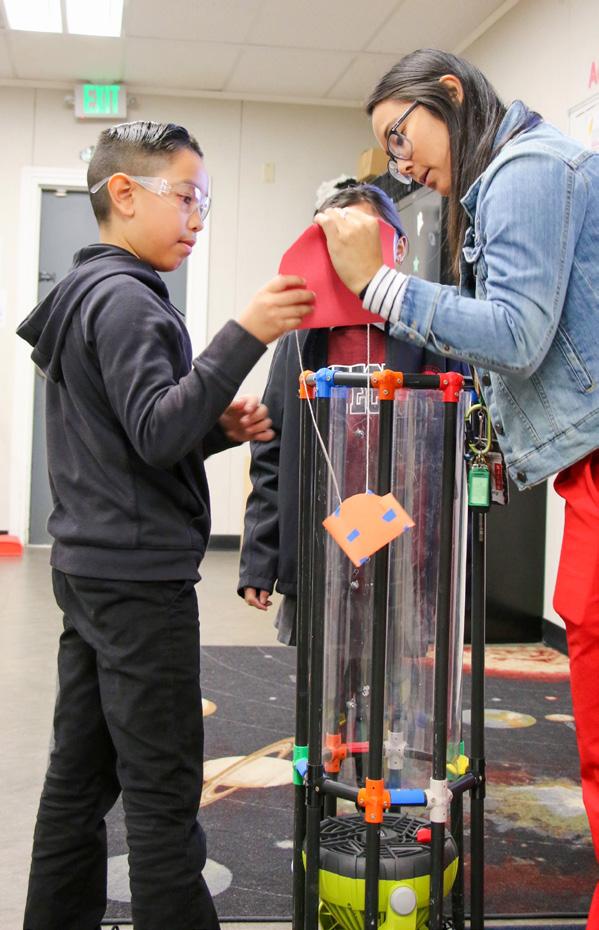
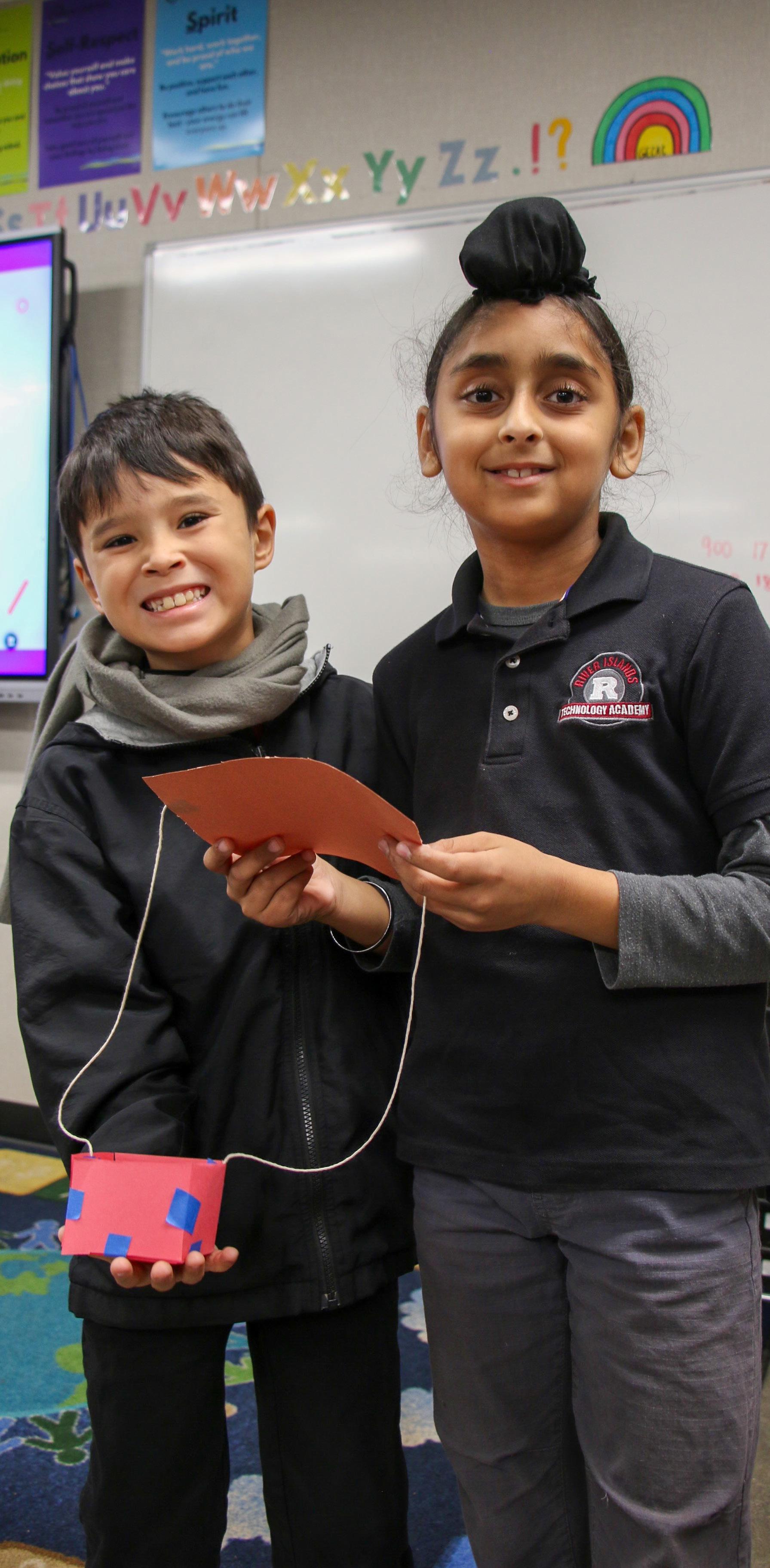
There were many experiences in the RiTechA lab on the day the third graders learned about aerospace engineering. For the last activity, they used construction paper to make their version of the Mars Rover lander. They tested out paper parachutes in a portable wind tunnel.
It was the culmination of a series of activities where students incorporated art as they practiced coding, collaboration, and the engineering process of trial and error.
“It was really fun making it, and also testing it out,” Adrija said about the Mars lander. She loved the project, and she loves science. “It’s really fun. I want to be a scientist when I grow up.”
FUN STEAM PROJECTS KEEP TUSD STUDENTS ENGAGED AFTER SCHOOL
The expanded learning program in Tracy Unified School District spans across schools and grades after the school day ends, offering students homework help, a hot meal, sports, cooking, music, and much, much more.
And they all offer enrichment activities that engage students to be creative on projects that combine science, technology, engineering, the arts, and math (STEAM). Offered through a strong collaboration with the Boys and Girls Club of Tracy, the expanded learning program aligns with the district’s approach to providing robust STEM education to all TK-12 students.
The STEAM enrichment in the afterschool program supports the district’s STEM mission to empower every student for success in tomorrow’s world, said TUSD Expanded Learning Coordinator Aisha Patel.
“We want students to see themselves as engineers, scientists, designers, and innovators. And in the afterschool space, they are able to do that,” she said.
The arts component in the hands-on learning projects allows more students to engage. “The arts are important in STEAM because it allows students who may not feel a close connection to science, technology, engineering, and mathematics to be involved in the enrichment activities.”
The program also gives students access to equipment and enrichment opportunities that might otherwise be out of reach, said Dean Reese, district STEM director. “It allows us to level the playing field and give all students access to those really critical STEM experiences.”
Through the afterschool program’s engineering unit, students can use a safe power tool called a “ChompSaw” to cut shapes out of cardboard, felt, and other materials. The unit calls on students to be creative, brainstorm ideas, and sketch prototypes before cutting out pieces with the saw and assembling the pieces to realize their vision.
Bohn Elementary School fourth grader P.J.’s vision was a wrestling ring. Hooked on pro wrestling since Wrestlemania 40, he designed a project to recreate a WWE wrestling ring.
Engineering challenges followed. Cardboard or paper? How big did he need to cut the holes to thread ring ropes through the corner posts? He stuck at it and made it work. In the end, he had a keepsake representing his passion for wrestling. “I love it,” he said.
“WE WANT STUDENTS TO SEE THEMSELVES AS ENGINEERS, SCIENTISTS, DESIGNERS, AND INNOVATORS. AND IN THE AFTERSCHOOL SPACE, THEY ARE ABLE TO DO THAT.”
- AISHA PATEL, TRACY UNIFIED
The Art of Ag. Science
shop
The classes are also a place where creativity flourishes. Welded metal forms the petals of a rose in one project that is on display that manages to appear as delicate as a flower. On another bench, a blue epoxy stream cuts through a wooden box. There’s also a teacher’s desk that is about 100 years old that the agriculture wood class is refurbishing. Part of removing the 1970s-orange stain with something more contemporary is learning about the color wheel and how to mix colors.
It’s clear in the shop that many of the school’s agriculture science classes fulfill the state’s A-G requirement for visual and performing arts.
Students in the wood class need to know the chemistry in the materials they use, said Darian Codog, who teaches the agriculture wood, welding, and chemistry classes. It helps them understand how to treat wood properly and how the hardening solution in the epoxy resin will work. Projects begin with students using their artistic skills as they turn their vision into drawings into works of art in wood.
“When you make things with your hands and you build things – that is art,” she said.
The
floor connecting classrooms in the Agriculture Science program at Linden High School (Linden Unified School District) is a place where students learn technical skills to work with metal, wood, and other materials.