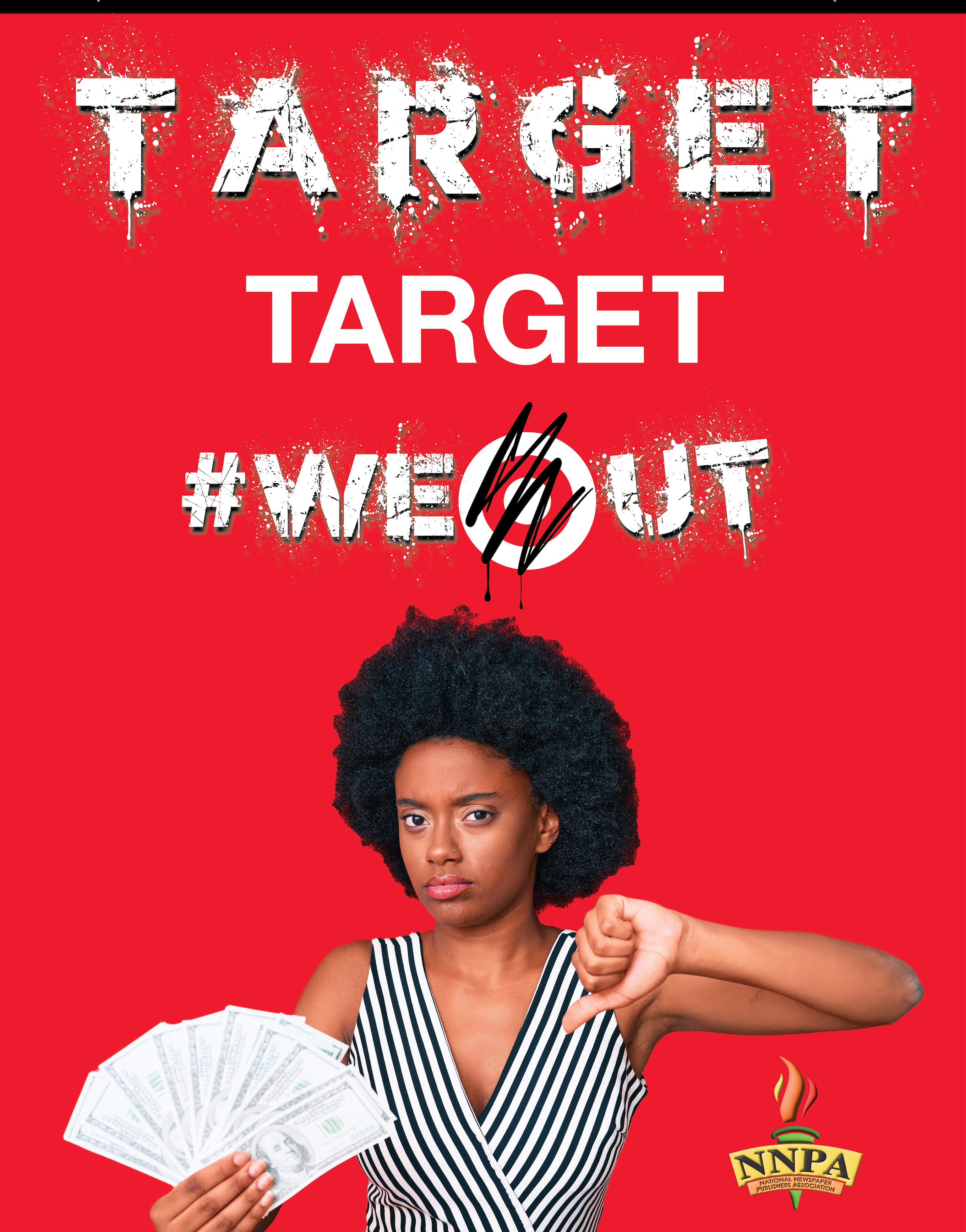

Profiting Off Black Athletes? Suppressing Black votes? Out of Bounds.
The rules changed overnight.
After the Supreme Court’s devastating ruling in Louisiana v. Callais gutted what remained of the Voting Rights Act, lawmakers across the South moved quickly to weaken Black political representation.
The NAACP refuses to stay silent.
That’s why we launched the Out of Bounds campaign! This is a national call for Black athletes, families, fans, alumni, and allies to withhold support from public universities in states attacking Black voting power: Tennessee, Louisiana, Alabama, Florida, Mississippi, South Carolina, Texas, and Georgia.
These states continue to profit from Black excellence on the field while undermining Black representation at the ballot box.
What these states have done is not a policy disagreement. It is a sprint to erase Black political power.
Out of Bounds calls on:
• Top Black recruits to withhold commitments from targeted programs.
• Current athletes use their platforms to demand accountability.
• Fans and allies to redirect spending toward HBCUs and Black institutions.
At the same time, the NAACP is fighting back nationwide — challenging discriminatory maps in court, supporting rallies in Alabama and Mississippi, mobilizing voters, and defending fair representation from the courthouse to the ballot box.
If states want Black talent, Black dollars, and Black support, they must respect Black political power.
No Representation. No Recruitment. No Revenue.
Will you make an urgent donation today to support the NAACP’s fight for voting rights, legal action, and voter mobilization nationwide?
Assembly Announces $1B for New Yorkers Struggling with Rising Utility Rates
Speaker Carl Heastie and Energy Committee Chair Didi Barrett today announced the State Fiscal Year (SFY) 2026-2027 Enacted Budget includes funding to provide relief to families struggling with rising utility rates through Protecting Our Wallets Energy Rebate (POWER) Checks.
“At no fault of their own, New York ratepayers pay some of the highest utility rates in the country,” said Speaker Heastie. “At a time when so many are already burdened by the high costs of living, the Assembly Majority is committed to putting money back into the pockets of hardworking New Yorkers. The enacted budget will provide a one-time POWER Check to ensure New Yorkers get the relief they need.”
“New Yorkers are struggling with rising utility costs, and need real relief now,” said Assemblymember Barrett. “These POWER checks are a win-win for New York families – putting money back into people’s pockets and helping lower utility costs. I thank the Speaker and my colleagues for their support of this and other critical energy affordability measures we included in this year’s budget.”
The POWER Checks will be sent out from September to December of this year and provide $1 billion in relief to 8.2 million New Yorkers. The checks will be available to full-time residents of New York and are based on 2024 tax returns as follows:
Joint filers with incomes below $150,000 will receive a check of $200; Joint filers with incomes between $150,000 and $300,000 will receive a check of $150; and
Single filers with incomes below $150k will receive a check of $100.
ArtsWestchester to Launch County’s Juneteenth Observances on Thursday
WHITE PLAINS, NY -- Westchester County Officials & Community Leaders, Local Black Entrepreneurs, Designers, and Artisans, Area Residents and Culture Advocates are invited to attend the official Westchester County Juneteenth Kick-Off, featuring an opening night reception, live entertainment, guest speakers, a fashion showcase, and a three-day Black Business Expo.
The Opening Reception & Program will be held on Thursday, May 28th, from 6:00 PM – 8:00 PM at ArtsWestchester, 31 Mamaroneck Ave., White Plains, NY 10601
The countywide celebration will continue with a Black Business Expo: Friday, May 29 – Sunday, May 31st, from12:00 PM – 5:00 PM daily.
Volunteers from L&M Development Partners Join Feeding Westchester to Pack Food Donations for Families in Need
WESTCHESTER, N.Y. (May 21, 2026)--On Monday, May 18, 2026, 40 volunteers from L+M Development Partners teamed up with Feeding Westchester, the leading hunger-relief organization serving Westchester County, to sort and pack food donations for local families facing food insecurity. L+M’s team was able to sort through just over 2,800 lbs. of donated product from food drives and the Feeding Westchester Retail Recovery Program.
“We are proud to support Feeding Westchester as part of our inaugural ‘L+M Gives Back’ employee volunteer week and partner with organizations that are making a difference in the lives of those who need assistance,”
said Gingi Pica, Senior Director of Community Investment at L+M Development Partners. “This food-packing event was an incredible opportunity to contribute to their work that is making a positive impact in Westchester, and we are grateful for their partnership.”
The event, which is part of a weeklong focus on community service for the Larchmont-based development firm, L+M Gives Back, took place at Feeding Westchester’s headquarters, located at 200 Clearbrook Road in Elmsford. This was the first time L+M collaborated with Feeding Westchester.
Freedpeople Created Memorial Day
In the years immediately following the American Civil War, newly freed Black Americans played a major role in shaping the traditions that later became Memorial Day. One of the most important early commemorations took place in Charleston, South Carolina, in 1865. Historians widely recognize this event as one of the first large public observances honoring fallen Union soldiers. Although Memorial Day developed through several traditions across the United States, the Charleston ceremony demonstrated how formerly enslaved people helped establish the spirit and purpose of the holiday.
During the Civil War, Charleston had been a center of slavery and Confederate power. Thousands of Union soldiers died while imprisoned at the Washington Race Course, which Confederates had turned into a prison camp. Many of these soldiers were buried in a mass grave without proper recognition. After the war ended, freed Black residents of Charleston decided the soldiers deserved a respectful burial and public honor for their sacrifice.
In April 1865, a group of Black laborers and community members began repairing the burial site. They reburied the Union dead in individual graves and built a fence around the cemetery. An archway was reportedly erected with the words “Martyrs of the Race Course.” Their efforts transformed a neglected mass grave into a dignified resting place for soldiers who had fought, in part, for the destruction of slavery.
First published in the Positive Community
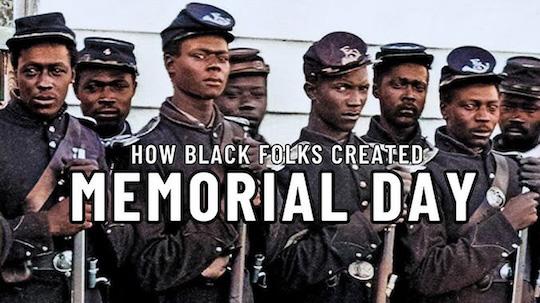
On May 1, 1865, thousands of people gathered at the cemetery for a large remembrance ceremony. Most of the participants were formerly enslaved African Americans, joined by Union troops, teachers, missionaries, and local children. The crowd carried flowers, sang patriotic songs, and listened to prayers and speeches honoring the dead soldiers. Many historians consider this gathering one of the earliest Memorial Day observances in American history.
The ceremony reflected the deep gratitude many freedpeople felt toward the Union Army. Union victory had brought emancipation and the possibility of citizenship and civil rights. By honoring fallen Union soldiers, Black Americans publicly connected freedom with sacrifice. The event showed that remembrance was not only about mourning the dead but also about celebrating the ideals for which they fought.
Children played an important role during the Charleston commemoration. Black schoolchildren marched around the cemetery carrying flowers and singing songs such as “John Brown’s Body.” Their participation symbolized hope for a new future after slavery. Education, freedom, and citizenship were closely linked in the minds of many freed African Americans during Reconstruction.
Although the Charleston event was remarkable, Memorial Day did not emerge from a single origin. After the Civil War, communities across the country began holding ceremonies to decorate soldiers’ graves. Women’s groups in both the North and South organized local tributes. Over time, these separate traditions blended into a national holiday known first as Decoration Day and later as Memorial Day.
In 1868, General John A. Logan officially called for a national day of remembrance for Union soldiers. His order helped spread the observance throughout the nation. However, the earlier Charleston ceremony remains historically significant because it demonstrated that Black Americans were among the first groups to organize a large public tribute to war dead after the Civil War ended.
For many years, the contributions of Black Americans to Memorial Day’s origins received little attention in textbooks and public memory. Historians later rediscovered newspaper reports and documents describing the Charleston event. Scholars such as helped bring wider recognition to the role freedpeople played in creating early remembrance traditions.
The story of Charleston also reveals the broader importance of Reconstruction-era
DAY, Cont’d. on page 11
Rep. Latimer Joins Local Police Chiefs To Discuss Plan to Address the Rising Attacks of Anti-Semitism and Hate Crimes
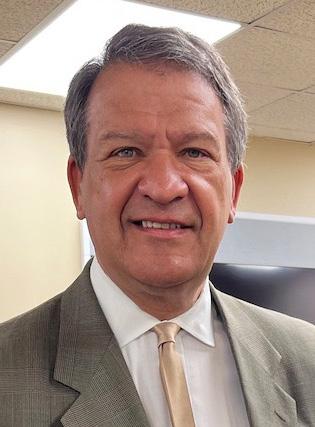
GREENBURGH, NY. – Today, U.S. Congressman George Latimer (D-NY) met with Rivertown’s police chiefs to address rising antisemitic attacks and the increasing use
The
Westchester
County Press
(ISSN 0043-3373) is published weekly on Thursday in White Plains, New York. Copies: 40¢. Yearly Subscription: $25.00, two years: $45.00. National Advertising representative: National Newspaper Publishers Association. Local and national advertising rates on request. Paper founded August 1, 1928 to serve the County of Westchester, New York.
Sandra T. Blackwell President, Publisher & Editor
Carolyn B. Coleman Vice President
Alyce T. Coleman Executive Editor
Bruce L. Bozeman, Esq. Legal Counsel
Celeste Coleman-Housey, Ed.D. Art Director/Managing Editor
Editorial & Advertising Offices P.O. Box 152 White Plains, NY 10602 Telephone:(914) 953-2620
Member: National Newspaper Publishers Association
of hate symbols and speech locally, statewide, and nationally. The event organized by Mayor Tom Drake in Hastings-On-Hudson included presentations by Steve Goldberg of the Holocaust and Human Rights Education Center and Andrew Grascia, Chief Criminal Investigator for the Westchester County DA. They emphasized the need for collaboration to ensure community safety and discussed plans for educational opportunities to combat hate crimes.
This comes as the Anti-Defamation League released its 2025 AntiSemitism reports and found there were 6,274 incidents of antisemitic harassment, vandalism, and assault, of which 1,160 took place in New York State.
Congressman Latimer stated, “Bringing together law enforcement professionals with diverse perspectives is essential to building a team capable of effectively confronting the violent acts of racism, hate speech, and prejudice attacking the Jewish community. I will work at home and in Washington to put our ideas into action and remain committed to advocating for meaningful reform until we achieve a nation where everyone can feel safe to practice their religion.”
Hastings-On-Hudson Mayor Thomas Drake stated, “Following recent antisemitic incidents in our community, our Chief of Police and I believed it was important to take a multi-pronged approach in supporting members of our community. The first step was this training, which was well attended by Rivertown’s police chiefs, mayors, and other elected officials. As a next step, we will host a similar training session for our business owners to help them better understand their rights if targeted by protestors similar to what occurred in our village. The Village of Hastingson-Hudson greatly appreciates the partnership and support of Congressman George Latimer, Westchester County District Attorney Susan Cacace, and Steven Goldberg of the Holocaust & Human Rights Education Center.”
Black Student Loan Default Rate Five Times Higher than Whites
By Charlene Crowell
On behalf of the nearly 9 million people now in default on their student loans, a coalition of advocates from consumer, civil rights, and education organizations is appealing to the federal Education Department to halt plans to begin garnishing borrowers’ wages this month. Default status connotes borrowers are 270 days or more behind on their payments.
Citing new research from Protect Borrowers, formerly the Student Borrower Protection Center, the coalition advised Education Secretary Linda McMahon in a January 7 letter that a new student loan default occurred every nine seconds in 2025. That escalating rate is unprecedented and nearly three times as high as in 2019, the year prior to the COVID-19 pandemic.
Further, according to the advocates, the Trump administration’s student loan policies are disproportionately harming Black and older borrowers. Signing the joint letter of appeal were: Protect Borrowers, American Federation of Teachers, the Debt Collective, NAACP, National Education Association, the Student Debt Crisis Center, and Young Invincibles.
“Research shows that involuntary collections only exacerbate the economic challenges faced by defaulted borrowers, who are disproportionately seniors and Black borrowers,” wrote the coalition. “In fact, of the borrowers already in default, roughly a third of them are older borrowers. Black graduates are additionally five times more likely to default than their white peers.”
Additionally, and according to Protect Borrowers, nearly two-thirds of the borrowers who defaulted during the Trump Administration—more than 2.6 million people—live in states that President Trump won in the 2024 election. Among the states most severely affected were Florida, Georgia, Ohio, and Texas, each of which saw 100,000 or more borrowers default last year.
“The decision to resume wage garnishment against millions of borrowers amidst a growing affordability crisis crushing working families is callous and unnecessary,” continued the coalition. “The decision also comes at a time when struggling borrowers have been forced to wait amidst a nearly 1 million application backlog to enroll in an Income-Driven Repayment (IDR) plan, and as mass layoffs at the Department have made it even harder for borrowers to get help with their student loans or if they are experiencing issues with their student loan servicer.”
For Derrick Johnson, President and CEO of the NAACP, the nation’s oldest civil rights organization, the Trump administration policies are about financial rights.
“By garnishing wages for defaulted student loan borrowers, the Trump Administration will only deepen financial hardship for working families and disproportionately harm Black borrowers,” said Johnson. “Millions are already struggling with rising costs and economic uncertainty, and stripping wages will only push families further into financial crisis.”
Randi Weingarten, President of the American Federation of Teachers, agreed with Johnson: “This is not about borrowers’ responsibility; it’s outright hostility to the young people trying to get ahead. The Trump Administration is choosing to squeeze teachers, nurses and others while prices are increasing and families are struggling to stay afloat, ripping away wages and
REP. GEORGE LATIMER
New study: Young Blacks and Latinos lack access to wealth-building tools Millennials, Gen Z most affected
By Charlene Crowell
As much of the nation continues to grapple with rising costs that are outpacing wage gains, new research affirms that younger, more diverse generations are caught in a financial marketplace built for yesteryear not today.
Ambition Without Access, a newly released study by the Julian Bond Institute (JBI), an initiative of the Center for Responsible Lending (CRL), is the first nationally representative look at how wealth and financial aspirations differ across race and generations particularly for Blacks and Latinos.
“Young Blacks and Hispanics want to own homes, want to start businesses, want to retire comfortably, and want to leave something for their children — at rates that either match or exceed their white peers,” states the study. “They are optimistic. They are financially motivated. And they are determined.”
The JBI 2050 Survey, conducted in cooperation with NORC at the University of Chicago, surveyed white, Black, Hispanic, and Asian Americans across Gen Z (age 18-28), Millennial (29-44), Gen X (45-60), and Boomer (61-79) age groups.
Among its findings:
• 86% of Americans across every race and generation say homeownership was a financial goal when they became financially independent — yet only 23% of Black Millennials who aspired to homeownership have achieved it, compared to 51% of white Millennials.
• 67% of Black Gen Z and 55% of Hispanic Gen Z aspire to own a business — a rate significantly higher than the 34% of white Gen Z who share that goal.
• 77% of Black Gen Z and 70% of Hispanic Gen Z aspire to build an inheritance to pass on, even though only 18% and 20% respectively expect to receive one themselves —compared to 33% of white and 38% of Asian Gen Z who anticipate getting one.
• 46% of Black Millennials are optimistic about their household’s financial future — higher than the 31% of white Millennials — despite having fewer financial resources, lower savings, and significantly less family financial support.
“The gap between financial aspiration and achievement for young and minority consumers is not a matter of motivation. It is a matter of structural access — to family financial resources, affordable credit, adequate income, and the knowledge to navigate a system not de-
signed with these communities in mind. As the United States moves toward a majority-minority future, closing these gaps is not just a moral imperative — it is an economic one,” said Sara Weiss, executive director of JBI and a report co-author.
But homeownership, long considered the foundation for building family wealth, remains out of reach for many younger consumers.
According to the National Association of Realtors, the nation’s average price to purchase an existing home this past April was $417,700. Regionally, the lowest priced home purchases were found either in the Midwest at $324,500, or the South at $366,600. The nation’s highest prices homes at $619,600 were in the West and $510,800 in the Northeast.
Home affordability was also the focus of a recent New York Times editorial citing the vast differences in the ratio between home prices and median household income. In 1950, the median home price in the United States was $7,400 — only 2.5 times the median annual household income. “But that ratio began surging in the 2000s. Today the median home costs almost five times the median household income” states the editorial.
Conventional mortgages, the most affordable and sustainable over the 30-year length of most loans, have the advantage of fixed interest rates, but they require a 20 percent down payment to access the lowest rates available. Few young consumers can independently afford down payments ranging from $64,900 to $123,920. Smaller down payments may be available but come with higher monthly payments that include mortgage insurance.
For JBI and CRL, timely and decisive actions geared towards practical solutions are essential to overcome today’s financial roadblocks.
“The Gen Z and Millennial respondents in this survey are in the formative years when the foundation for wealth is either built or destroyed,” states the study. “The consequences of homeownership decisions, saving habits, and credit trajectories being established right now will compound themselves for decades…Thus, the time for structural reform is not after the demographic transition occurs. It is both before and during it.”
Secondly, according to the JBI study, solutions to today’s homeownership challenges must incorporate initiatives for consumers at every stage of life:
“ Solutions lie in enacting initiatives to fund downpayment assistance at scale for first generation homebuyers, reforming mortgage policy to expand access, increased funding of small business support and capital access programs in communities of color, uniform adop-
CHARLENE CROWELL
tion of state-sponsored retirement programs that allow individuals access to retirement plans when their employers do not provide them, and a commitment to modernize consumer protections so that they align with the present fintech era. Doing so will prepare us for the America that is coming; failing to do so will leave us stuck in the America that has been.”
JBI designs community-informed research that elevates the financial needs, challenges, and opportunities of our increasingly diverse nation to help financial institutions, policymakers and academia effectively design an inclusive financial market for the future.
Just as intentional policies and practices left out communities of color from wealth-building, now is the time to correct course by forging intentional inclusion.
Charlene Crowell is a senior fellow with the Center for Responsible Lending. She can be reached at Charlene.crowell@responsiblelending.org.
COMMENTARY: A “Main Street” Bank Bill That Would Really Hurt Main Street
By Ben Jealous
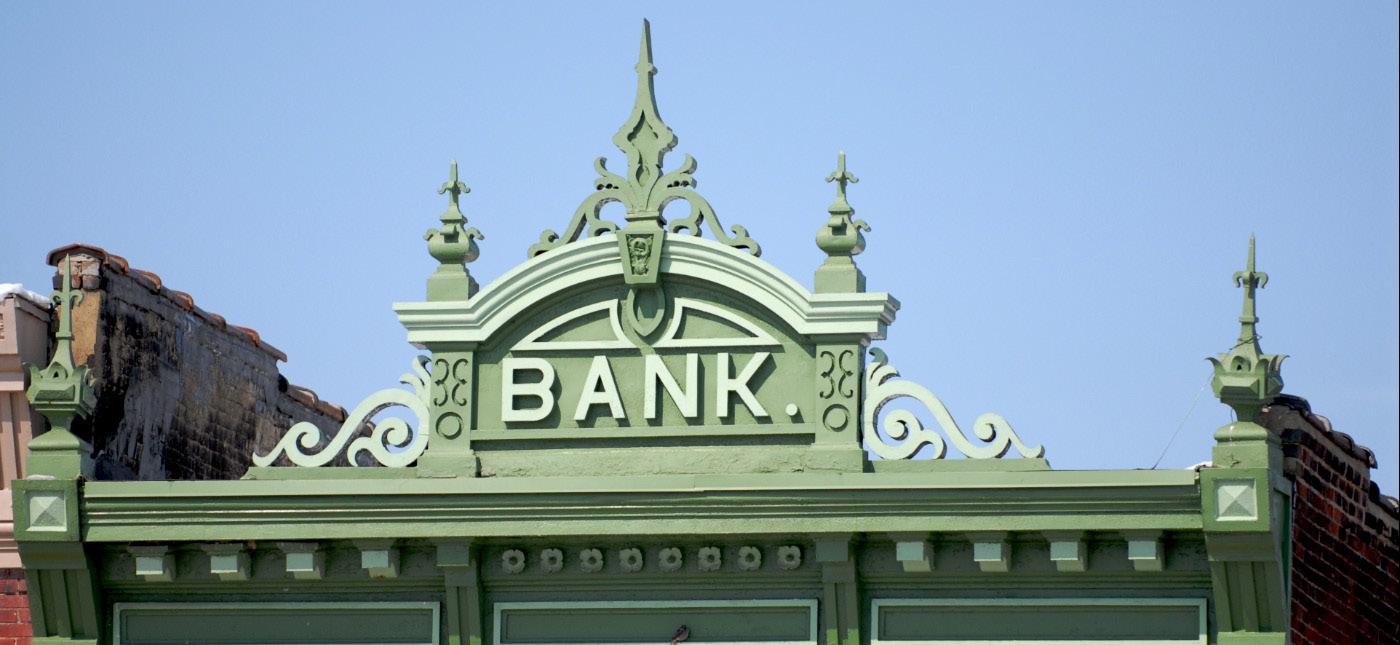
In Washington, the name on a bill is often the opposite of what it does.
The Main Street Depositor Protection Act is the latest example. The name sounds noble. The math is not.
Here is what the bill would change. The FDIC is the federal agency that pays you back if your bank closes its doors. Today, it covers up to $250,000 in each account. Most people never come close to that limit. Most small businesses do not either.
The bill would allow the FDIC to raise that limit to $5 million for business checking accounts that pay no interest. That is not a small bump. That is twenty times bigger.
Supporters say the change will help small community banks and the small businesses they serve. I wish that were true. It is not.
The current $250,000 limit already covers 99 out of every 100 bank accounts in this country. A study by JPMorgan Chase found that the typical small business keeps about $12,100 in its account on a normal day. The new limit would be more than 400 times higher than that.
So who really gains from a $5 million guarantee? Not the corner bakery. Not the family barbershop. Not the small farm down the road. The gain goes to the biggest depositors at the biggest
banks. The bill even covers banks with more than $100 billion to their name. Fewer than one in 100 banks in America are that big. No honest person would call them “small.”
In other words, the bill takes the name of Main Street and hands the prize to Wall Street.
Here is the part that should worry every American. Insurance is not free. When the FDIC raises its guarantee, banks must pay more to fund it. When banks pay more, they lend less. When they lend less, the door closes hardest on the people who are already locked out.
Black-owned businesses are already turned down for loans 39 percent of the time. That is more than double the 18 percent rate for whiteowned businesses.
Hispanic-owned businesses face a 29 percent denial rate. These are the dreamers most likely to hear “no” when they walk into a bank. A new cost on lending will make that “no” come faster and louder.
The economy runs on loans. When loans dry up, the trouble spreads. The Great Recession of 2008 began exactly that way. The people who pay the highest price are never the wealthiest. They are the families with the least cushion to fall back on.
iStockphoto/NNPA
The bill does offer a small shield to community banks under $10 billion. They would not pay the higher costs for ten years. That is a kind gesture. But the wider damage to the loan market will not wait ten years to arrive.
There is one more problem. Deposit insurance works in part because it has limits. Limits force big depositors to pay attention to where they put their money. That attention keeps banks honest. Take the limit away, and you take the watchdog away too. The taxpayer is left to clean up the mess.
The goal of helping Main Street is a good one. This bill is not the way to reach it.
If Congress wants to help small business, it should make loans easier and fairer to get. It should invest in the neighborhoods that banks have ignored for too long. It should knock down the doors that have stayed shut for Black and Hispanic business owners for generations.
And if big corporations want extra protection for their millions, they can pay for it themselves. The taxpayer should not be asked to insure the comfort of the rich while the dreams of working families go unfunded.
Read the name of a bill. Then read the math. The two should match. On the Main Street Depositor Protection Act, they do not.
How UNCF is Cultivating the Next Generation of Legacy Leaders
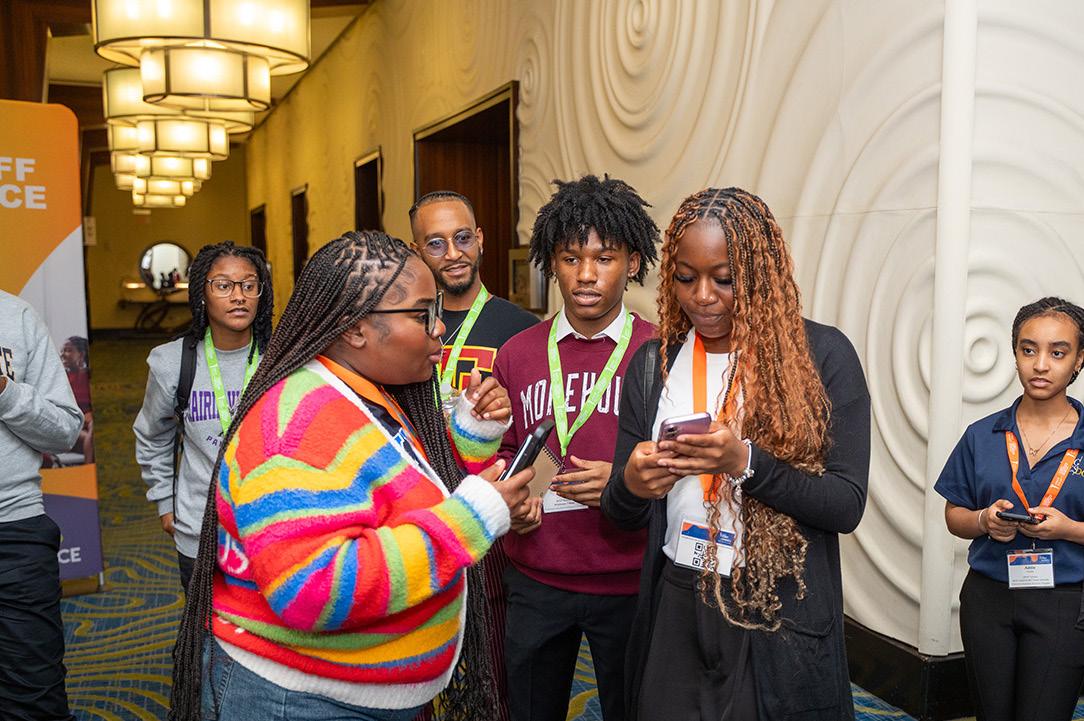
When we think about professional success, we often get caught up in the optics of corporate ladders. We want the office, the directorship, the chief executive tag. But true power doesn’t live on a business card. This year, the United Negro College Fund (UNCF) is challenging undergraduate scholars to dismantle their preconceived notions of leadership and embrace something much deeper: personal legacy.
Returning for its 17th year, the UNCF Student Leadership Conference (SLC) is kicking off with an intentional, urgent theme: “Leadership Beyond the Title: Voice, Influence, and Impact.”
Redefining the Intern Mindset
The core philosophy driving this year’s conference is designed to shift how students view their entry-level roles. Often, interns enter Fortune 500 rooms feeling like passive observers.
UNCF is actively turning that narrative on its head.
“We want the students to go into their internships with the mindset that just because they’re going in as an intern does not mean they can’t be impactful,” says Arnika Jackson of UNCF. “It doesn’t mean they can’t bring some type of influence to the projects they’re working on. They are top talent who have competed against the best and brightest in the country. It’s time to lean into that.”
To bridge the gap between academic brilliance and corporate reality, the conference is leaning heavily on structured institutional partnerships. This year, UNCF is celebrating a massive milestone: 10 years of dedicated service and sponsorship from Wells Fargo. Major corporate powerhouses like Target and Fidelity are also joining forces with the conference for the first time, expanding the ecosystem of corporate advocates who are actively looking to hire HBCU talent.
Navigating Today’s Cultural Climate
The conference arrives at a unique historical juncture, as corporate and political spaces face deep friction regarding diversity, equity, and inclusion (DEI), alongside ongoing battles over voting rights. When asked how students can maintain their career focus amidst these systemic challenges, Jackson offered an incredibly grounded perspective rooted in civil rights history.
“We do not encourage them to ignore what’s happening. We want them to use their voice, influence, and impact in totality. If you look at the civil rights movement, so much of that momentum started on college campuses with youth using their voice. We want our students to remain well-informed, pay attention to who genuinely supports them, and step into rooms where they can directly affect those outcomes.”
Innovation, Elevation, and High-School Pipelines
UNCF isn’t just relying on old formulas; they are consistently leveling up the student experience. This year features an expanded “Table Talks” concept—a professional speed-dating model where introverted and extroverted students alike get guaranteed, rotational FaceTime with CEOs, CFOs, and founders to cultivate authentic corporate mentorship.
Additionally, a revamped partnership with Macy’s will offer students full-scale “dressed for success” prep, complete with on-site professional stylists and makeup artists to ensure every scholar leaves with a flawless executive headshot.
Perhaps most inspiring is UNCF’s intentionality with the pipeline. By inviting local high school students from Dunbar High School to the student reception, UNCF is ensuring the next generation sees a
room filled entirely with Black collegiate excellence.
How to Get in the Room
For students looking to break out of job-board fatigue and secure direct, advocate-backed career paths, active recruitment for next year’s cohort begins on August 1st.
Where to Apply:
opportunities.uncf.org
• Recruitment Window: August 1st through the end of October.
• Pro-Tip: Build your digital profile early during the summer to align with incoming Fortune 500 placements.
As the conference unfolds from May 27th through the 30th, it is clear that UNCF is doing more than just placing students in jobs—they are building the next generation of societal influencers.



Countywide Juneteenth Kick-Off

May 28-31, 2026

Celebrate the legacy, power, and promise of Black entrepreneurship at the sixth Annual Countywide Juneteenth Kick-Off, where culture, commerce, and community come together in one unforgettable celebration. This year’s theme, “Built by Us: The Black Blueprint of American Business,” honors the generations of Black business owners who built opportunity, created pathways, and shaped the economic landscape of America.
Join us for an inspiring weekend that highlights the brilliance and resilience of Black-owned businesses, local talent, and community leadership.
Juneteenth Kick-Off Opening Program & Reception
Thurs., May 28 | 6-8pm
Black Business Expo
Fri., May 29-Sun., May 31 | 12-5pm
ArtsWestchester 31 Mamaroneck Ave., White Plains, NY
From engaging speakers and live entertainment to a vibrant business expo and fashion showcase, this celebration invites everyone to shop, connect, learn, and support the entrepreneurs building the future right here in Westchester.


Produced by Althema Goodson, Adrienne Michel, and the Countywide Juneteenth Coalition, with support from the Westchester County Government
Supported by:
COU NTY 1683 ORGA NIZED
COUNTYBOARD OF LEGISLATORS WESTCHESTER COUNTY, N Y Register today!

STUDENT LOANS,
Cont’d. from page 4
tax refunds when people need them most.”
A fact sheet developed by the Center for Responsible Lending tracks key 2025 policy decisions and summarizes the Education Department’s actions against student loan borrowers. These include:
• In March 2025, the Department cut nearly half its workforce, with the Federal Student Aid office and Office for Civil Rights among the hardest hit. With Federal Student Aid’s servicing and community outreach infrastructures dismantled, systemic servicing errors are less likely to be caught or corrected, leaving borrowers with fewer avenues for help just as major loan policy changes are being rolled out.
• In May 2025, the Department reinstated the Treasury Offset Program, allowing the gov-
MEMORIAL DAY,
ernment to seize tax refunds from borrowers in default.
• On August 1, 2025, the Department of Education resumed interest accrual for borrowers with Department of Education loans under SAVE forbearance. Since 2023, SAVE’s unpaid interest shielded borrowers from balance growth. With that protection gone, borrowers’ balances will now grow during this forbearance and may keep rising if monthly payments do not fully cover accrued interest. This shift makes repayment harder and adds long-term uncertainty for more than 7 million borrowers.
Beginning July 1, 2026, parents who take out new Parent PLUS loans will no longer be eligible for any income-driven repayment plan. That means no access to income-contingent repay-
Cont’d. from page 3
Black activism. Newly freed African Americans were not passive observers after emancipation. They built schools, churches, political organizations, and commemorative traditions. Their Memorial Day ceremony reflected a determination to claim space in American public life and shape the nation’s memory of the Civil War.
Today, Memorial Day honors all American military personnel who died in service to the country. Parades, cemetery ceremonies, and moments of remembrance take place nationwide. Yet the roots of the holiday still connect to the aftermath of the Civil War and to the efforts of formerly enslaved people who believed fallen soldiers deserved honor and gratitude.
The Charleston commemoration stands as a powerful reminder that Black Americans helped define the meaning of national remembrance after the Civil War. While historians continue debating the exact “first” Memorial Day, there is strong evidence that freed African Americans organized one of the earliest and most influential ceremonies. Their actions helped create a tradition of honoring sacrifice, freedom, and national unity that continues to this day.
How to donate blood
Simply download the American Red Cross Blood Donor App, visit RedCrossBlood.org, call 1-800-RED CROSS (1-800-733-2767) or enable the Blood Donor Skill on any Alexa Echo device to make an appointment or for more information. All blood types are needed to ensure a reliable supply for patients. A blood donor card or driver’s license or two other forms of identification are required at check-in. Individuals who are 17 years of age in most states (16 with parental consent where allowed by state law), weigh at least 110 pounds and are in generally good health may be eligible to donate blood. High school students and other donors 18 years of age and younger also have to meet certain height and weight requirements.

ment (ICR) or repayment assistance plan (RAP), leaving the standard repayment plan as their only choice. Borrowers with existing Parent PLUS loans can preserve access to ICR if they consolidate their loans before the July 1, 2026, deadline.
“As safeguards are rolled back and oversight weakens, borrowers face growing balances and greater financial strain, making it urgent to press for stronger policies that preserve the promise of higher education as a pathway to opportunity,” concluded CRL.
Charlene Crowell is a senior fellow with the Center for Responsible Lending. She can be reached at Charlene.crowell@responsiblelending.org

REQUEST FOR QUALIFICATIONS (RFQ) # 2026 – 01A
REQUEST FOR STATEMENT OF QUALIFICATIONS AND PROPOSALS FOR CO-DEVELOPMENT PARTNER FOR THE MHACY HOMEOWNERSHIP DEVELOPMENT INITIATIVE
The Municipal Housing Authority for the City of Yonkers, NY (the Authority) is soliciting Statements of Qualifications and Proposals from development firms interested in partnering with the MHACY for a Homeownership Development Initiative for work under a single award contract with the Authority for a five (5)-year term.
This RFQ is the only information provided to prospective respondents and contains submission requirements, terms, conditions, and other pertinent information for submitting a responsive proposal. The RFQ will be available online starting May 28, 2026, at www.mhacy.org
The deadline for questions prospective respondents may have is June 11, 2026, at 3:00 PM Eastern Standard Time (EST). All questions must be emailed to procurement@mhacy.org prior to the questions deadline. No telephone calls and/or written communication sent via mail will be accepted.
Proposals must reach the Authority no later than 3:00 PM (EST) on June 30, 2026 Late submissions will be handled in accordance with the provisions in Form HUD-5369B.
The Authority is an Equal Opportunity Employer and does not discriminate based on race, sexual orientation, color, national origin, sex, religion, age, disability, or family status. The Authority solicits and encourages the participation of minorities and small businesses in procurement.
Contact, related to this procurement, with members of the Authority’s Board of Commissioners, or Authority’s officers and/or employees other than the contact person show below, during the procurement process could result in disqualification of a proposal.
Wilson Kimball President & CEO
Municipal Housing Authority for the City of Yonkers 1511 Central Park Avenue
Yonkers, New York 10710
Project No RFQ 2026-01A


200 Mamaroneck Avenue, Suite 500 White Plains, New York 10601 (914) 668-4600 • (914) 669-6371
Serving Metro-New York and Westchester County
PRACTICE AREAS
REAL ESTATE (Residential and Commercial)
FAMILY (Adoption)
WILLS/TRUSTS/ESTATES (Guardianship and Elderlaw)
RELIGIOUS /NON-PROFIT (Administration & Tax Status)
BUSINESS LAW (Corporations & Partnerships & Limited Liability Corporation)
*Bruce L. Bozeman, Esq., * Carla Lewis-Burnett, Esq. John S. Savage, Esq. ~ of counsel, Leticia Arzu, Esq.
*Principals of the firm serve as seminar speakers, upon request. Appointments Preferred.

Community Calendar
CALENDAR SUBMISSION: Please use a brief paragraph to describe your event. The paragraph should include event name, date(s), time, location and contact information. Send calendar information via email to westchestercountypress@yahoo.com. Please type “CALENDAR EVENT” in the subject bar.
May 28 to Aug. 2
Exhibits on View at ArtsWestchester: May 16- Aug 2, 2026: Forever, Amen is an ongoing photographic study of the oldest Black churches in White Plains. Despite widespread displacement and cultural erasure caused by urban renewal, some of these churches have existed for nearly two centuries. The series examines how these places of worship have anchored Black residents of the city and its surrounding communities.
Saturday, May 30
Mothers Out Front “Spring Cleaning Clothing Swap”: Saturday, May 30. Mothers Out Front is hosting a Spring Cleaning Clothing Swap: Bring adults’ and kids’ winter gear, clothes and shoes, and swap for new treasures! Textile recycling by Helpsy will also be available. Saturday, May 30, 1 - 3 p.m. at Eastchester Public Library, 11 Oakridge Place, Eastchester.
Monday, June 1
Please join the members of the Westchester County Board of Legislators on Monday, June 1 for our annual celebration of LGBTQ+ Pride Month, streaming live from the BOL Chamber at 7:00 PM, right before our regular board meeting. We are pleased to recognize two outstanding Westchester honorees: • Benjamin Ilany, a decorated Air Force veteran, LGBTQ+ service members advocate, and VFW post commander • Croton Pride, a community organization dedicated to LGBTQ+ connection, advocacy, and celebration. We invite you to celebrate their significant contributions virtually or in person. For more information about viewing the live stream or participating, please visit www.westchesterleg-
islators.com/meetings. During the regular board meeting, a public hearing will be held to consider:
• Funding approval for upgrades to the Eastview Pumping Station, which serves County Water District No. 3
Tuesday, June 2
Tuesday Talk at Dorry’s Home Seeker: Help Searching for Affordable Housing. Featured Speaker: Blanca Lopez, Commissioner, Westchester County Department of Planning Housing Specialist. Important Zoom Information Zoom calls will open at 5:50 PM on the Tuesday the discussion is scheduled. This allows time to join, settle in, and address any technical issues before we begin.
Wednesday, June 3
Register now for a moderated candidate forum, hosted by LWV of Westchester and LWV of Rockland, in which all five Democratic primary candidates (listed alphabetically) in the race to serve Congressional District 17 in the U.S. House of Representatives have agreed to participate: • John Cappello • Cait Conley • Beth Davidson •Effie Phillips-Staley • Mike Sacks. The candidate forum will offer an opportunity for candidate opening and closing statements, as well as a question and answer format with timed responses. An LWV of Westchestertrained moderator from outside of CD 17 will preside, and the forum will be conducted in a way that does not promote or advance any candidate over another. Questions to be posed at the forum will be finalized in advance but not made available to the candidates or any of their staff members.
Friday, June 5th
The Ossining Juneteenth Committe will host the Juneteenth
Flag Raising Ceremony at 6:00 p.m. at Market Square (corner of Spring and Main Streets). All are welcome to witness this event.
Saturday, June 6
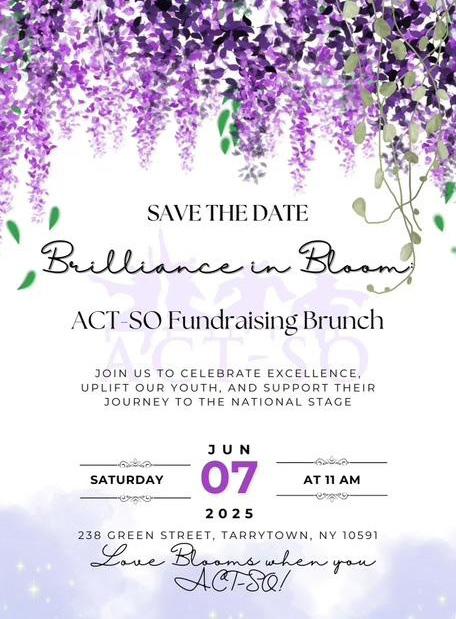
The Westchester Region ACT-SO Coalition sponsors “Brilliance in Bloom” its ACT-SO fundraising brunch at 11:00 a.m. at the Greentree Country Club, 538 Davenport Avenue, New Rochelle, NY. The occasion will be to celebrate excellence, uplift our youth, and to support their journey to the National ACT-SO Competition, which will be held in July in Chicago. Keynote speaker will be L. Joy Williams, President of the NAACP New York State Conference. Don’t miss this opportunity to meet and to hear from our outstanding ACT-SO participants. Tickets are $100/adults, $30 ACTSO alumni, and $20/youth; $850/ table of 10 or Gold sponsorship; $500/table of 6 for Silver sponsorship. Make checks payable to Westchester Region ACT-SO Coalition and send to 10 Cedar Place, Rye, NY 10580.
NOW Thru June 7
As we move toward Memorial Day, the American Red Cross calls on people to schedule their blood or platelet donation appointments now to help medical centers stay ready and respond quickly to emergencies. Having blood products immediately available is a key part of summer safety. With millions of Americans expected to hit the road around Memorial Day and spend time boating, swimming, camping and enjoying the outdoors, the risk of traumatic accidents rises. Blood and platelets on hospital shelves help meet the demand when people experience critical injuries and massive bleeding. During Trauma Awareness Month, the Red Cross high-
lights this need by asking donors of all blood types and those giving platelets to give now to support all patients who count on transfusions for care.Book your time to give lifesaving blood or platelets now — To schedule, visit RedCrossBlood.org, call 1-800-RED CROSS or use the Red Cross Blood Donor App.
Friday, June 19
The Town of Cortlandt will celebrate Juneteenth at Cortlandt Town Hall, Heady Street, Cortlandt, NY. Come out to enjoy the festival, entertainment, food and shopping with the vendors from 11:00 A.M.-3:00 P.M.
Friday, June 19
The City of Peekskill and the Peekskill Juneteenth Committee invite you to join them as they celebrate Freedom with “Gospel in the Park.” The program will start at 1:00 p.m. at Pugsley Park, 1038 Main Street, Peekskill. Bring your lawn chairs and sit back to enjoy an inspiring afternoon.
Saturday, June 20
The Peekskill Juneteenth Celebration will begin at 12:00 noon, starting with a parade kicking off from Park Street AME Zion Church, 1220 Park Street, Peekskill. Festivities will follow with live entertainment, a kids zone with face painting, food trucks, and vendors. For additional information, contact D. Francis@ cityofpeekskillny.gov.
Thursday, June 25
Westchester County Fair Housing Board Meeting will be held on Thursday, June 25 at 6 pm in the Human Rights Commission Conference Room, 112 East Post Road, 3rd Floor, White Plains, NY 10601.Members of the public may view this meeting online at: meetings.westchestercountyny. gov
Community Calendar
CALENDAR SUBMISSION: Please use a brief paragraph to describe your event. The paragraph should include event name, date(s), time, location and contact information. Send calendar information via email to westchestercountypress@yahoo.com. Please type “CALENDAR EVENT” in the subject bar.
Thursday, June 25
Westchester County Human Rights Commission Board Meeting will be held on Thursday, June 25 at 6:45 pm in the Human Rights Commission Conference Room, 112 East Post Road, 3rd Floor, White Plains, NY 10601. Members of the public may view this meeting online at: meetings. westchestercounty.gov.
If you or your family need food today, help is available. Use Feeding Westchester’s pantry locator to search by ZIP code and
find a food pantry near you. Many sites offer weekly food distribution, and hours vary by location. All services are free, and no ID is required unless noted by a partner site. Please call the location you choose ahead of your visit to ensure service availability. (FP = Food Pantry; SK = Soup Kitchen.) If you need immediate assistance, call 914-923-1100. Meals
On Main Street is another excellent organization, offering a food pantry, mobile food pantry trucks, meal delivery, and a friendly fridge network. Contact them at
914-451-7140 or info@mealsonmainst.org.
July 15 thru 19
The National ACT-SO Competition this year takes place July 15-19, where talented high school students from across the country showcase their achievements in science, technology, the arts, entrepreneurship, and more.
July 18 thru July 22
In just a few weeks, thousands of advocates, organizers, leaders, students, creators, and community members will gather for the 117th NAACP National Conven-
tion in Chicago, Illinois. Across Convention week, attendees will experience:• Powerful plenary sessions and national conversations • Advocacy forums focused on the issues shaping our communities • THE HUB activations, engagement spaces, and live experiences • Networking events bringing together changemakers from across the country • The energy and heartbeat of Chicago. Updates on speakers, programming announcements, and more are still to come.
The Renaissance Chapter Celebrates Growth, Leadership, and Service
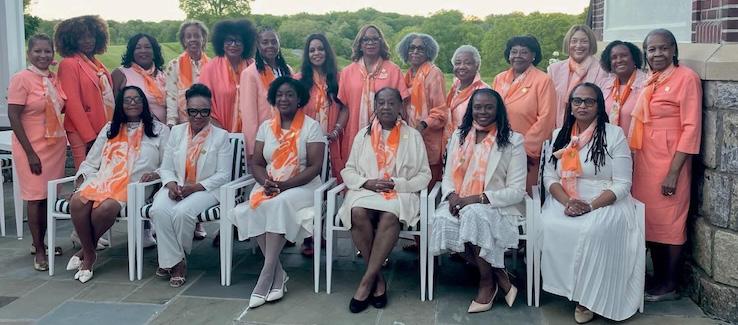
• Six New Inductees: Welcomed Janice Dye Owens, Monique McKnight-Meacham, Brigette McLeod-Williams, Christine Scott-Deutsch, Donaldine Temple, and Dawanna Veneable.
• New Officers Installed: Robin H. Williams (President), Pat Hurlock (Vice President), Donna Walker Kuhne (Recording Secretary), Dawna Michelle Fields (Corresponding Secretary), Sheretta Walthall (Financial Secretary), Joyce Mills-Kittrell (Treasurer), and Barbara L. Edwards (Chapter Establishment Officer).
Mission Focused: The business meeting introduced new members to the chapter’s core mission of empowering youth through artistic programming, mentorship, and community outreach. The inspiring evening reinforced the chapter’s legacy and set a collaborative vision for future growth and service.
On May 15, 2026, the Renaissance Chapter gathered at the Wykagyl Country Club to celebrate its ongoing commitment to youth arts empowerment.