FeaturingWorksbyRenowned ArtistsfromPicassotoBanksy
FeaturingWorksbyRenowned ArtistsfromPicassotoBanksy
FeaturingWorksbyRenownedArtistsfrom PicassotoBanksy
MAY 29 - JUNE 21, 2026
From Bauhaus to Pop to Conceptual practices, artists across movements have used editions not as secondary works, but as primary tools for extending their ideas.
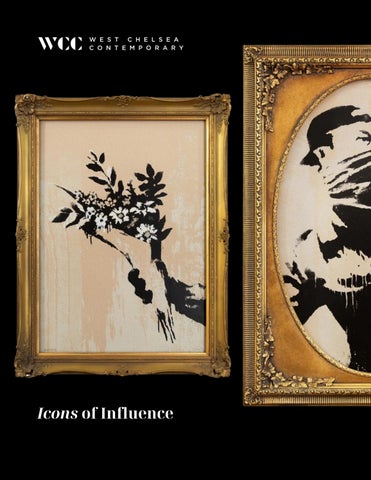
Icons of Influence examines how artists transformed singular concepts into widely circulating images expanding their reach beyond the studio and into the broader cultural landscape. Through repetition, variation, and distribution, the edition becomes not a copy, but a catalyst In a field often defined by rarity, editions challenge the hierarchy of the singular object. They allow an image to move; across collections, across cities, across generations. What might appear as duplication is, in fact, expansion.
These works demonstrate that influence is not built through isolation, but through presence. A form, a symbol, a gesture; each gains power through repetition, becoming embedded within visual culture over time.
Spanning six decades, the artists in this exhibition reveal how printmaking has shaped the way art is seen, collected, and understood today. The edition emerges as a site of translation where ideas are tested, refined, and amplified
What endures is not just the image itself, but its ability to remain in circulation.
This is why editions matter and how they built the art world we have now

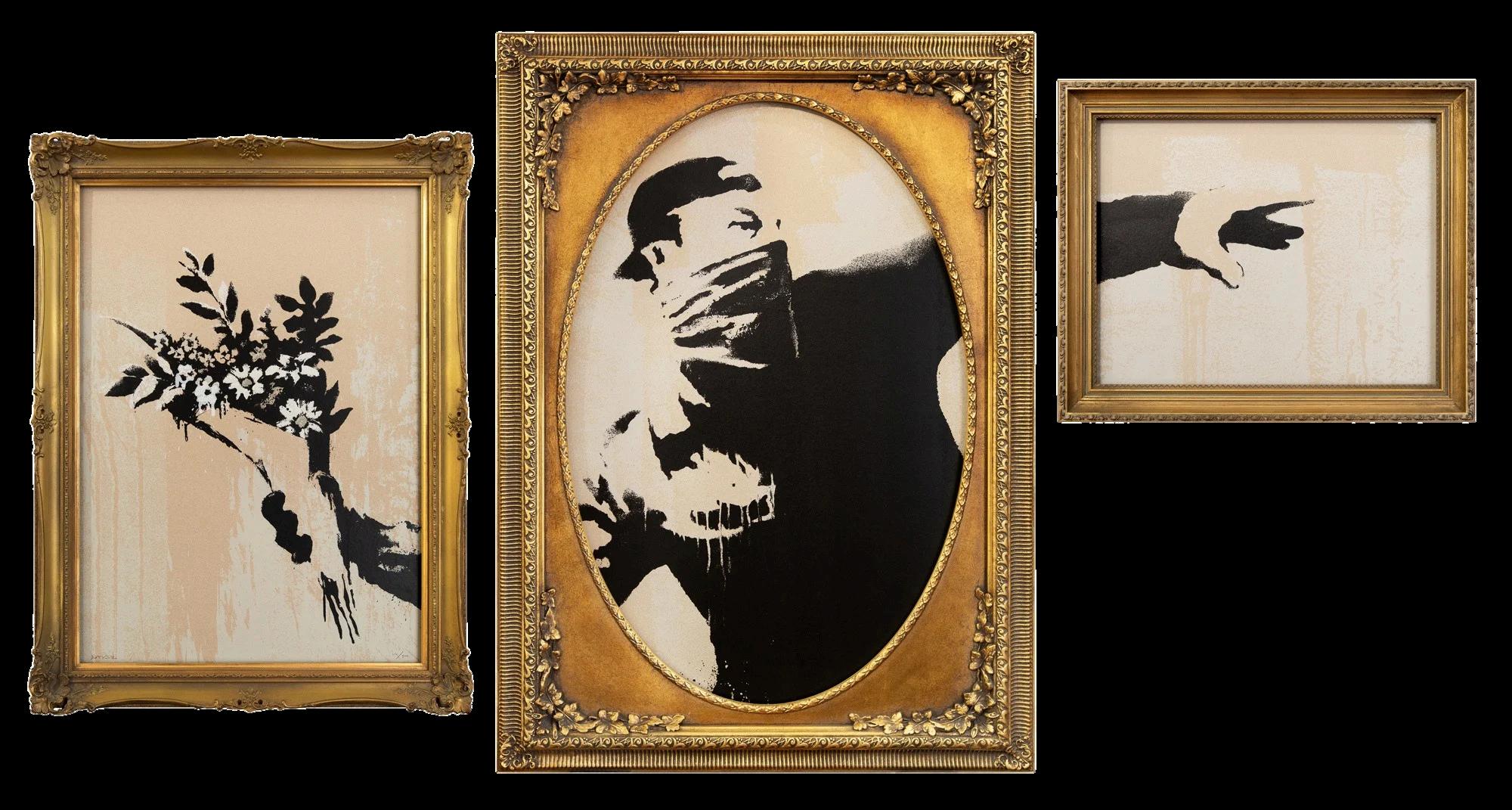
British, b 1974
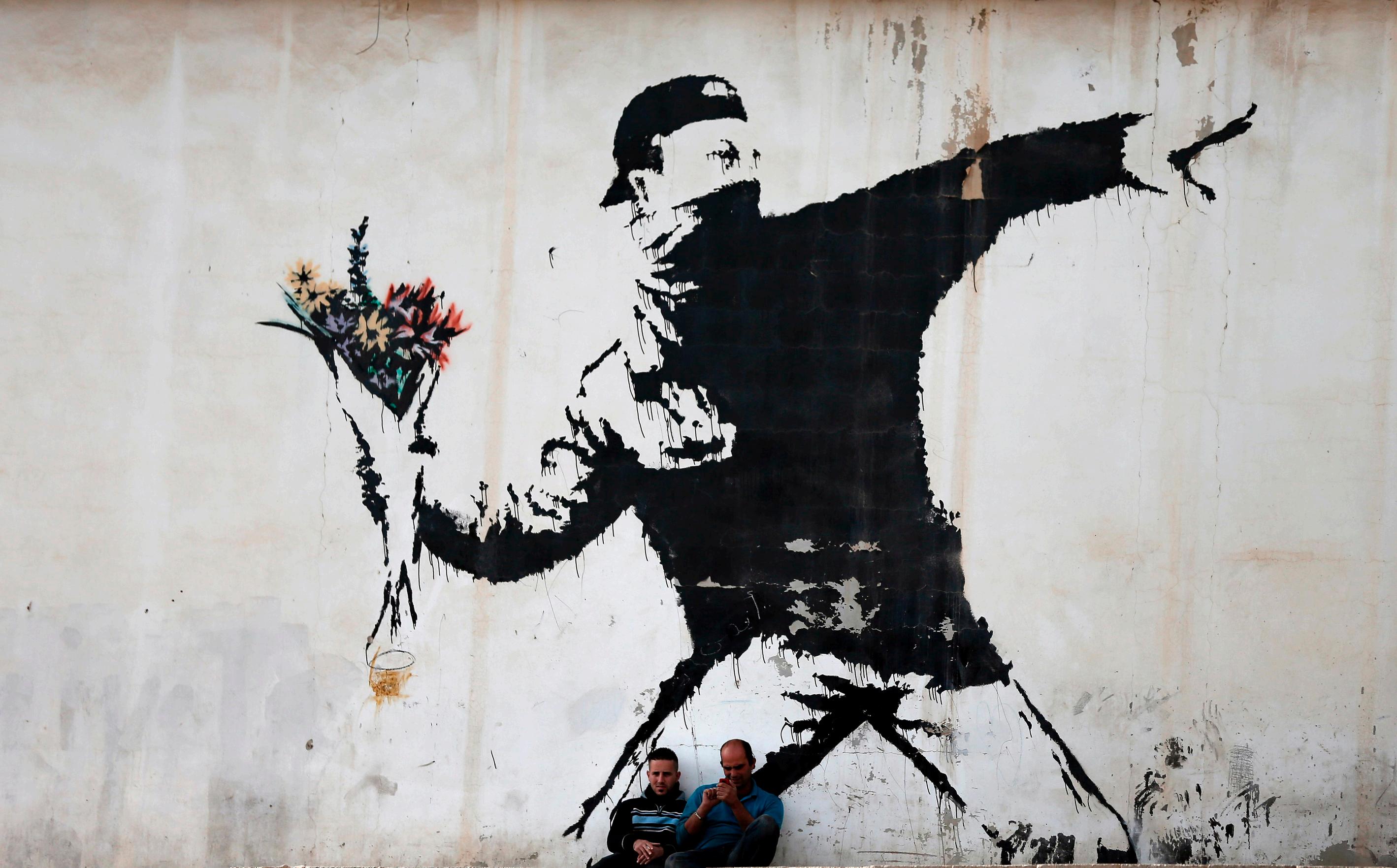
Perhaps the most famous figure in street art working today, Banksy is known for urban interventions that demonstrate irreverent wit and a biting political edge Enhancing his mystique by maintaining an anonymous identity, the artist has modified street signs, illegally printed his own currency, and illicitly hung his own work in the Louvre and the Museum of Modern Art. He often uses spray paint and stencils in his critiques of consumerism, political authority, terrorism, and the status of art and its display. His street art, installations, and studio-produced works have been shown in Los Angeles, New York, London, Bethlehem, and beyond. His art has been subject to widespread interest on the secondary market and has fetched eight figures at auction.
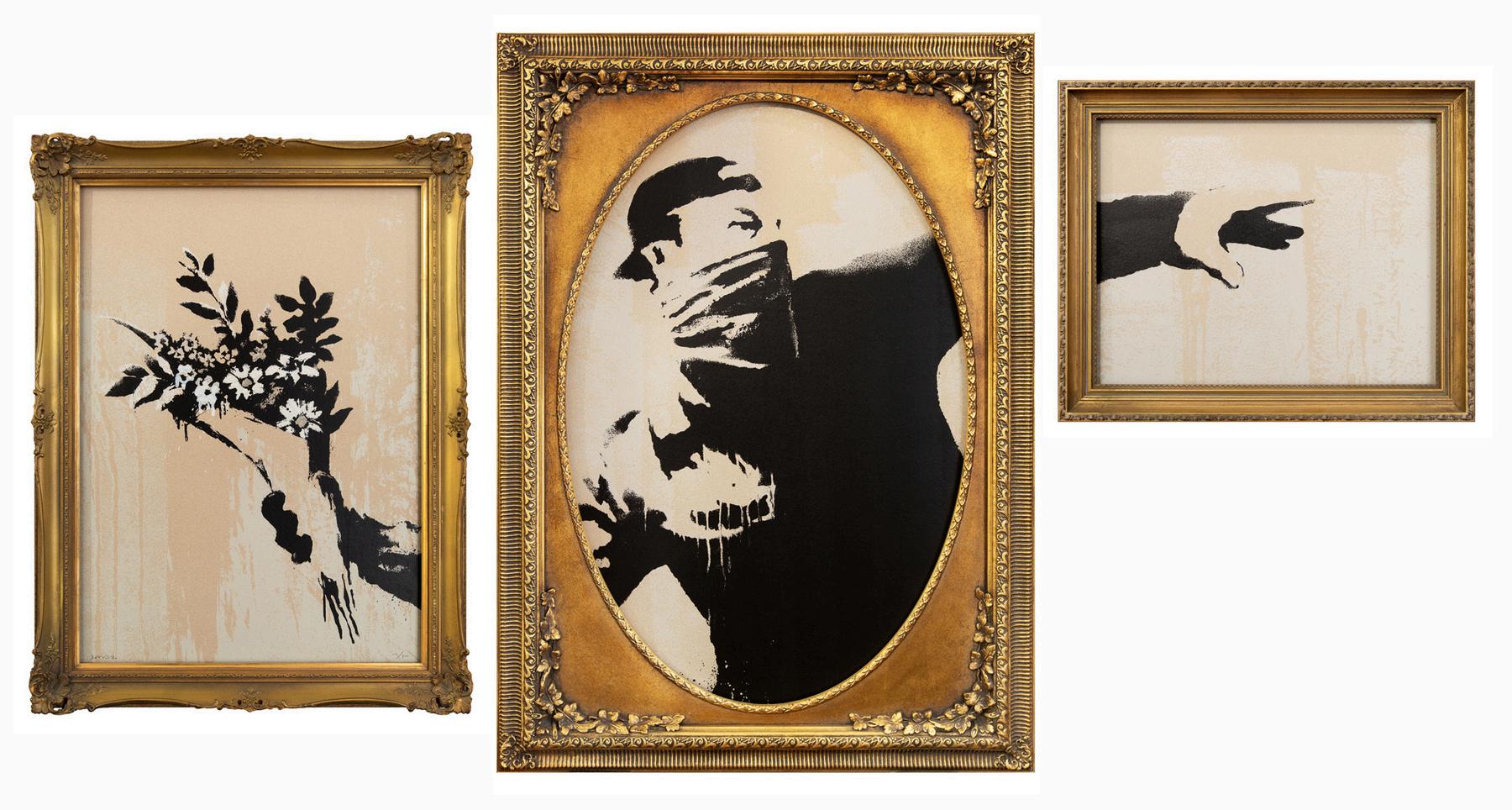
Screenprinted triptych on micron board
43" x 83"
Price on request
ED RUSCHA American, b 1937
Despite being credited with a Pop sensibility, Ed Ruscha defies categorization with his diverse output of photographic books and tongue-in-cheek photo-collages, paintings, and drawings. Ruscha’s work is inspired by the ironies and idiosyncrasies of life in Los Angeles, which he often conveys by placing glib words and phrases from colloquial and consumerist usage atop photographic images or fields of color. Known for painting and drawing with unusual materials such as gunpowder, blood, and Pepto Bismol, Ruscha draws attention to the deterioration of language and the pervasive cliches in pop culture, illustrated by his iconic 1979 painting I Don’t Want
No Retro Spective “You see this badly done on purpose, but the badly-done-onpurpose thing was done so well that it just becomes, let’s say, profound,” he once said. Equally renowned were his photographic books, in which he transferred the deadpan Pop style into series of images of LA—apartments, palm trees, or Twentysix Gasoline Stations (1962), his most famous work
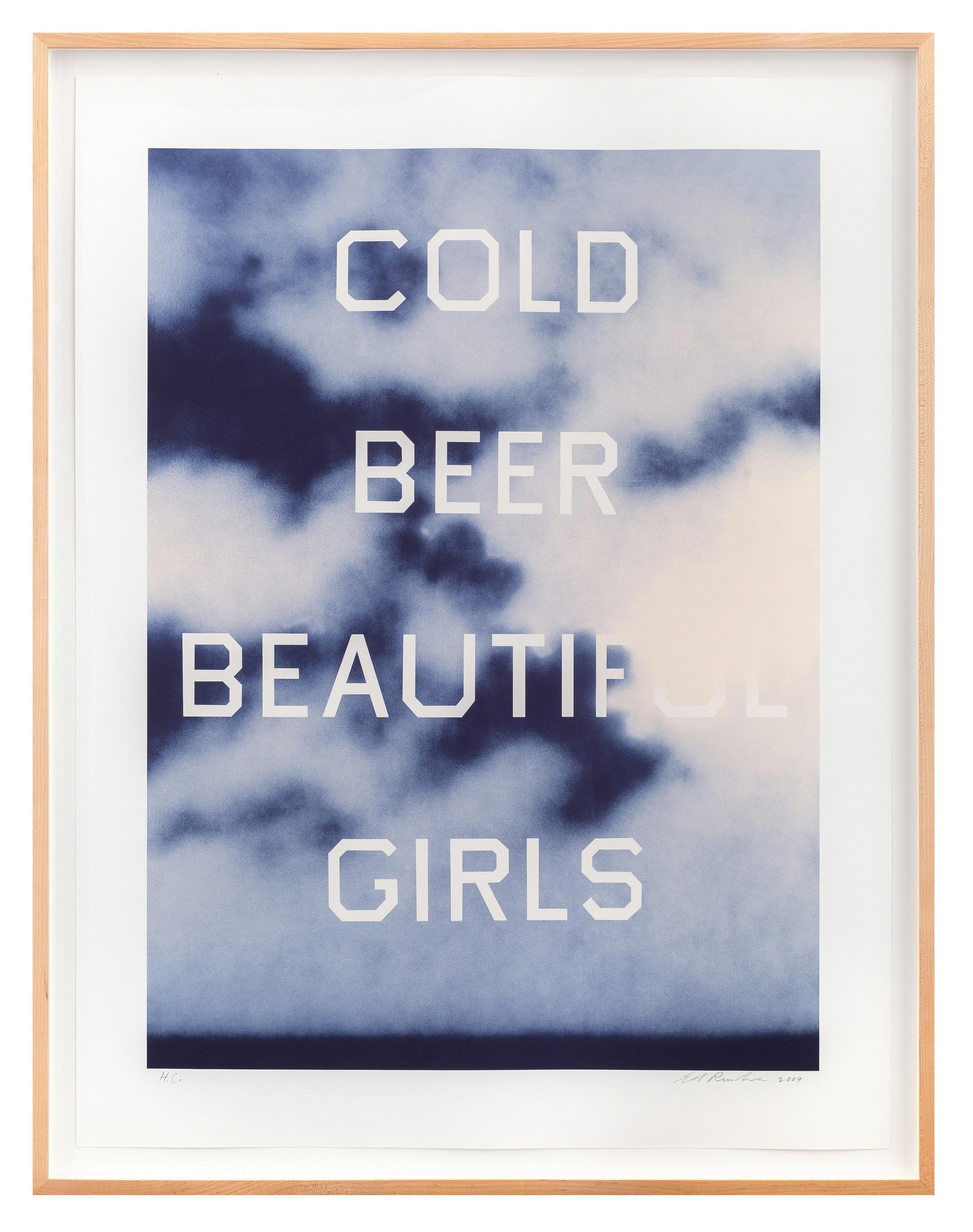
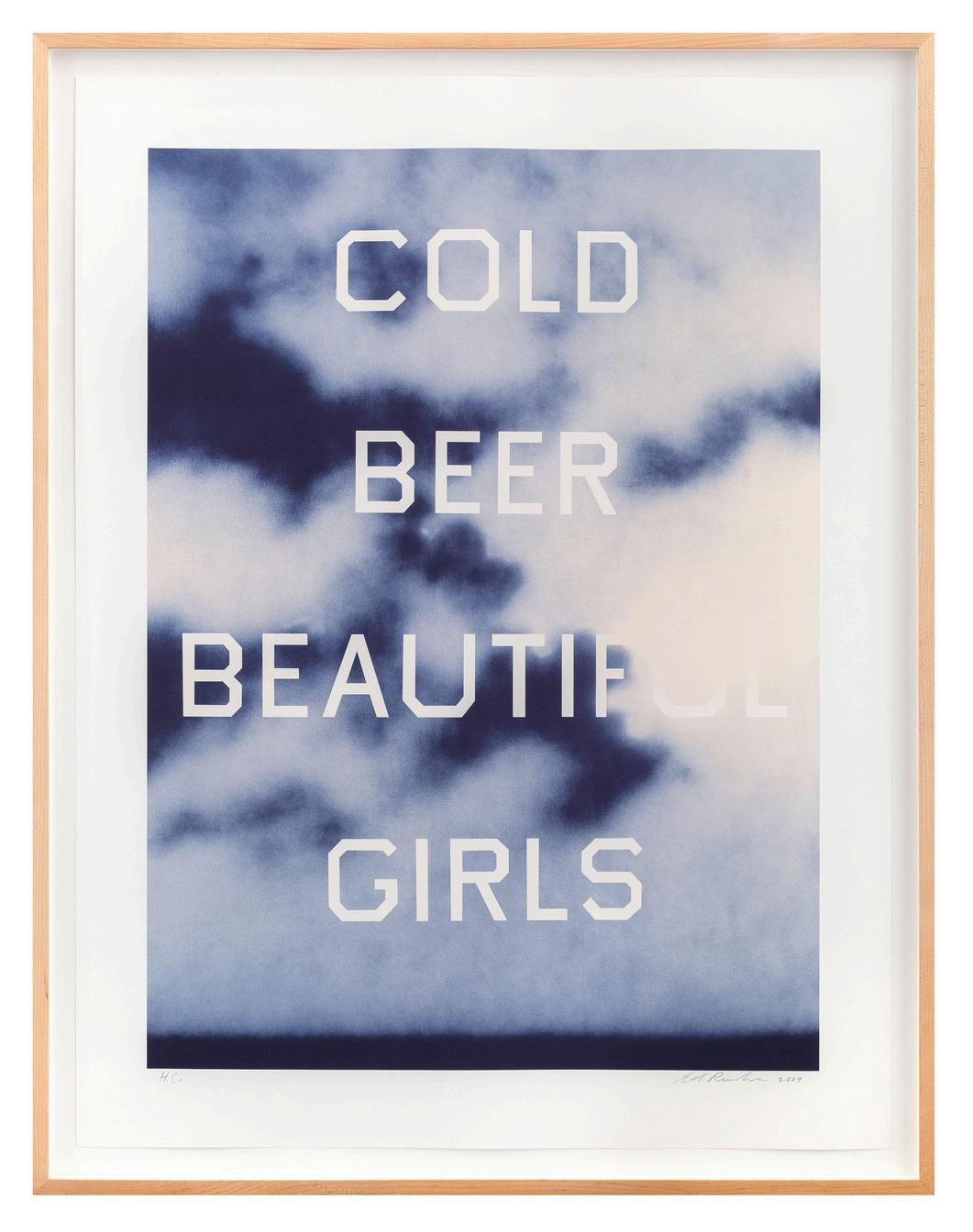
Ed Ruscha
Cold Beer Beautiful Girls (/H.C.), 2009
Lithograph in colors on wove paper
40 62" x 30 75"
Price on request
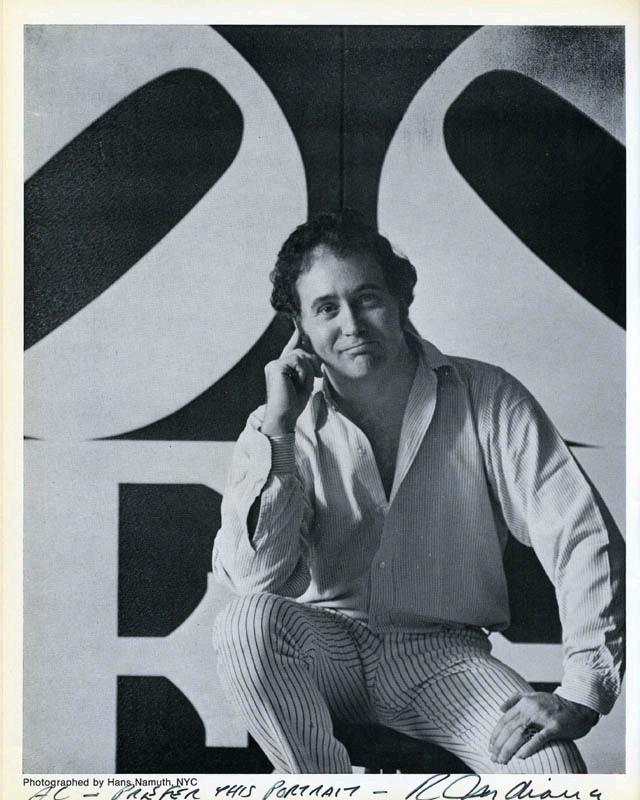
Robert Indiana was an American Pop artist whose work drew inspiration from signs, billboards, and commercial logos He is best known for his series of LOVE paintings, which employed bold and colorful letterforms to spell out the word “love.” Following the advice of his friend Ellsworth Kelly, the artist relocated to New York after receiving his BFA from the School of the Art Institute of Chicago in 1954. It was here that Indiana became acquainted with a number of prominent artists, including Agnes Martin, and James Rosenquist. Over the following decades his work became increasingly popular, with both his LOVE and HOPE motifs transformed into a number of public sculptures In September 2013, the Whitney Museum of American Art opened “Robert Indiana: Beyond LOVE,” the artist’s first retrospective in New York. Indiana died on May 19, 2018 in Vinalhaven, ME. Today, his works are held in the collections of The Museum of Modern Art in New York and the Tate Gallery in London, among others
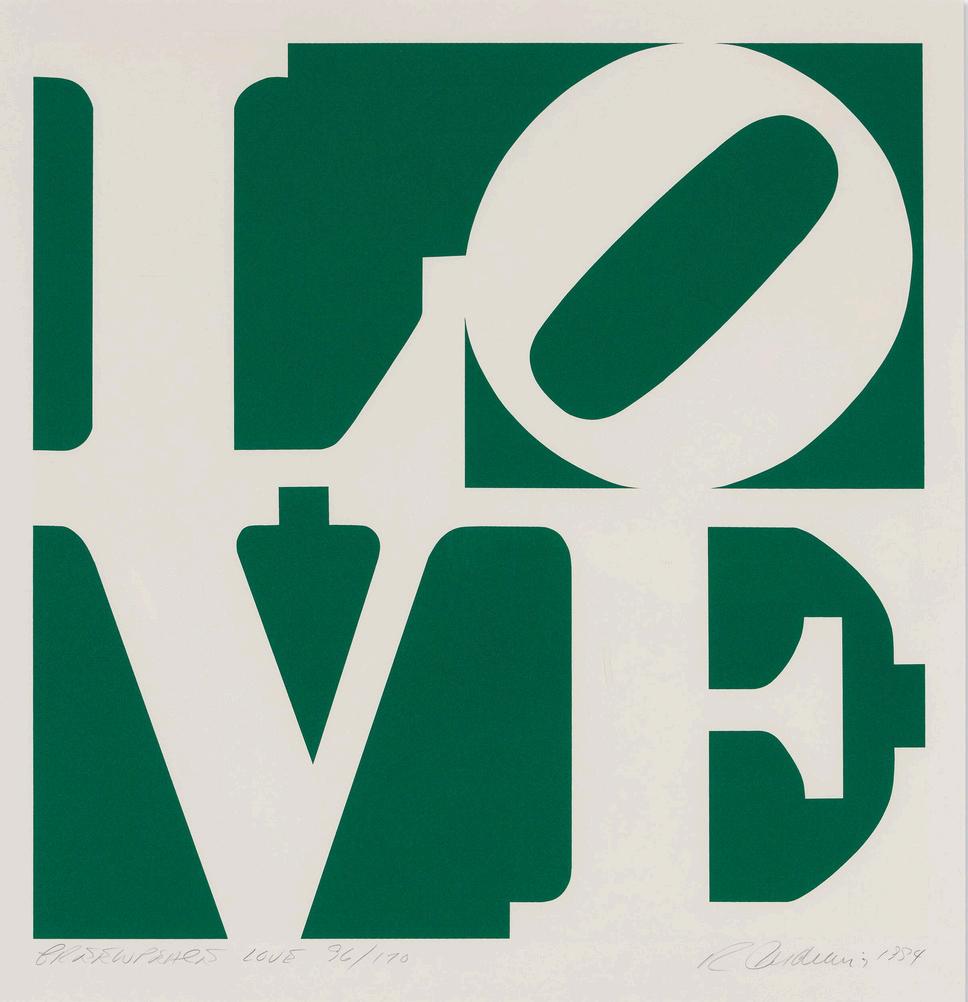
Greenpeace LOVE (96/170), 1994
Color screenprint on Rives BFK paper
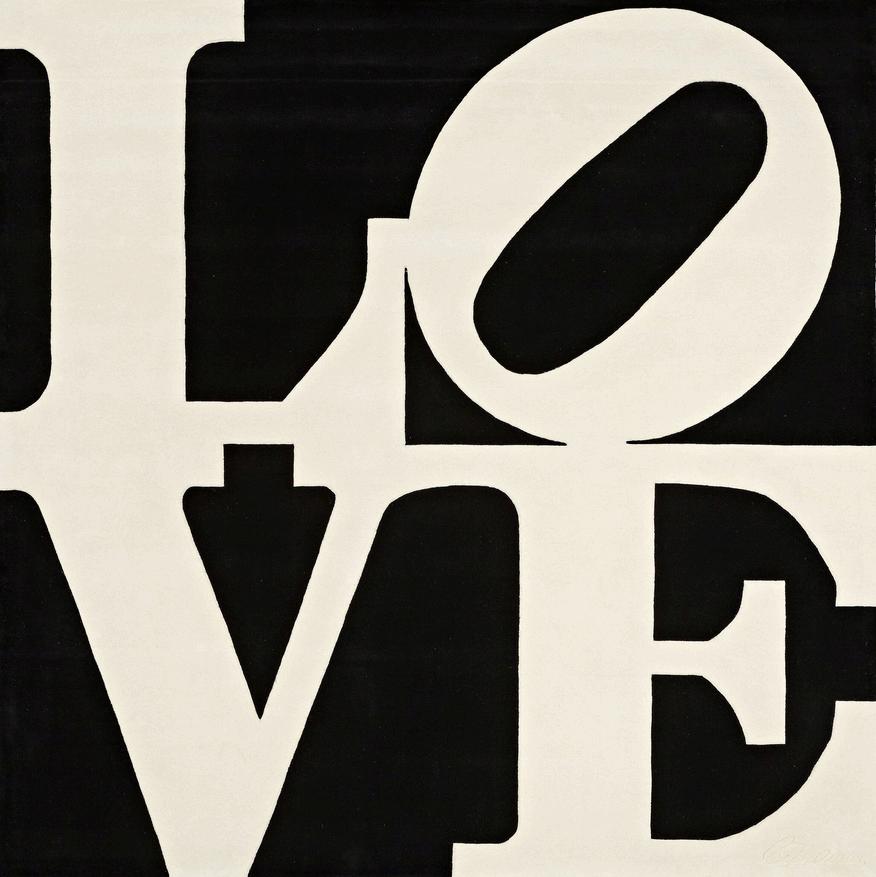
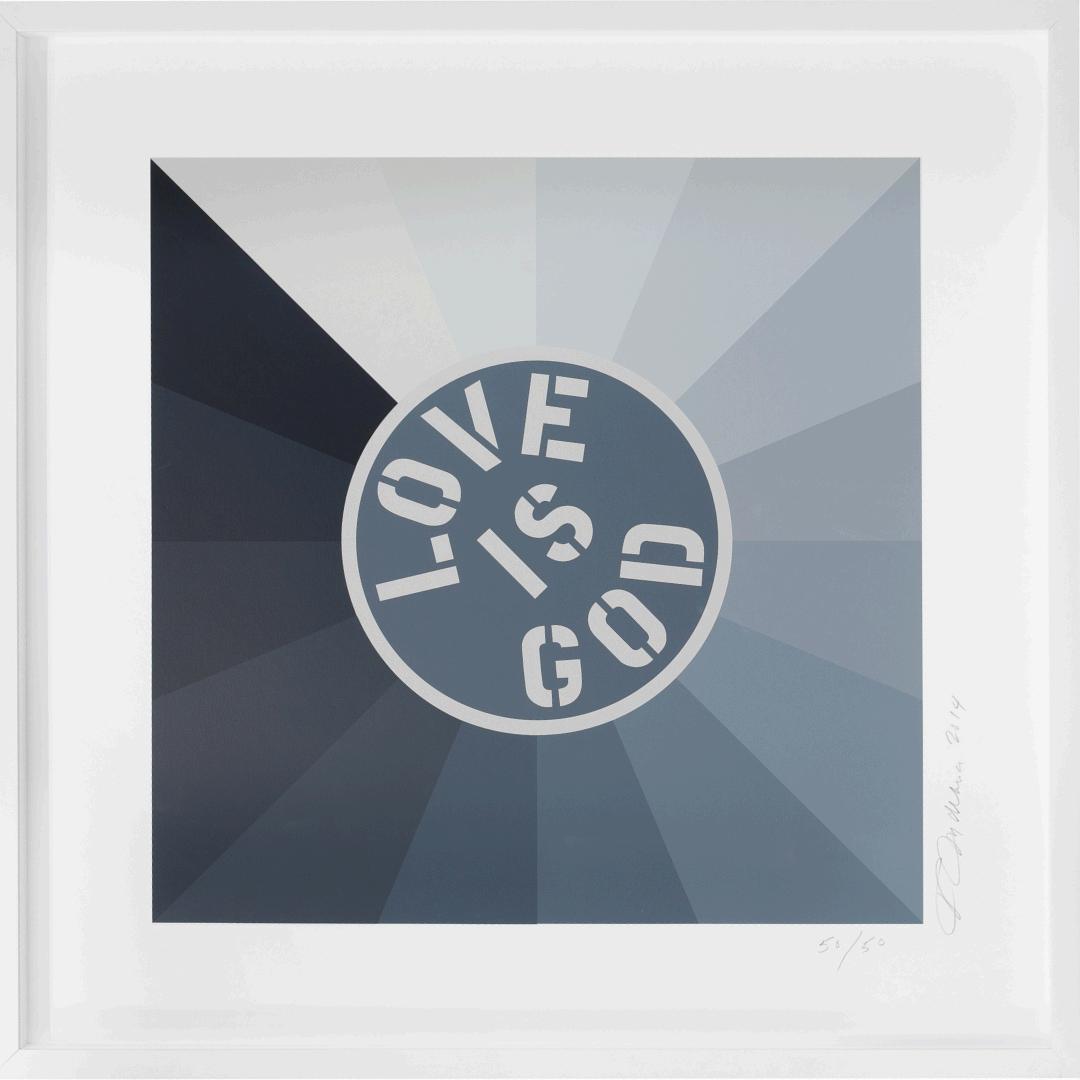
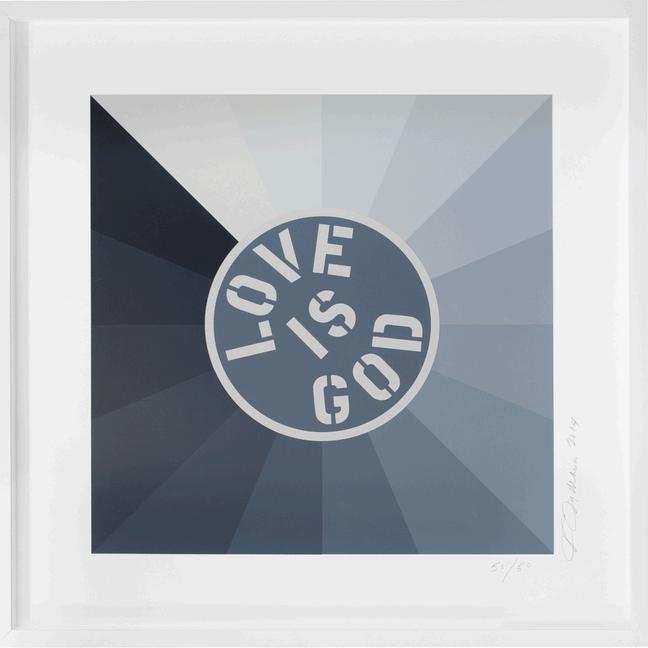
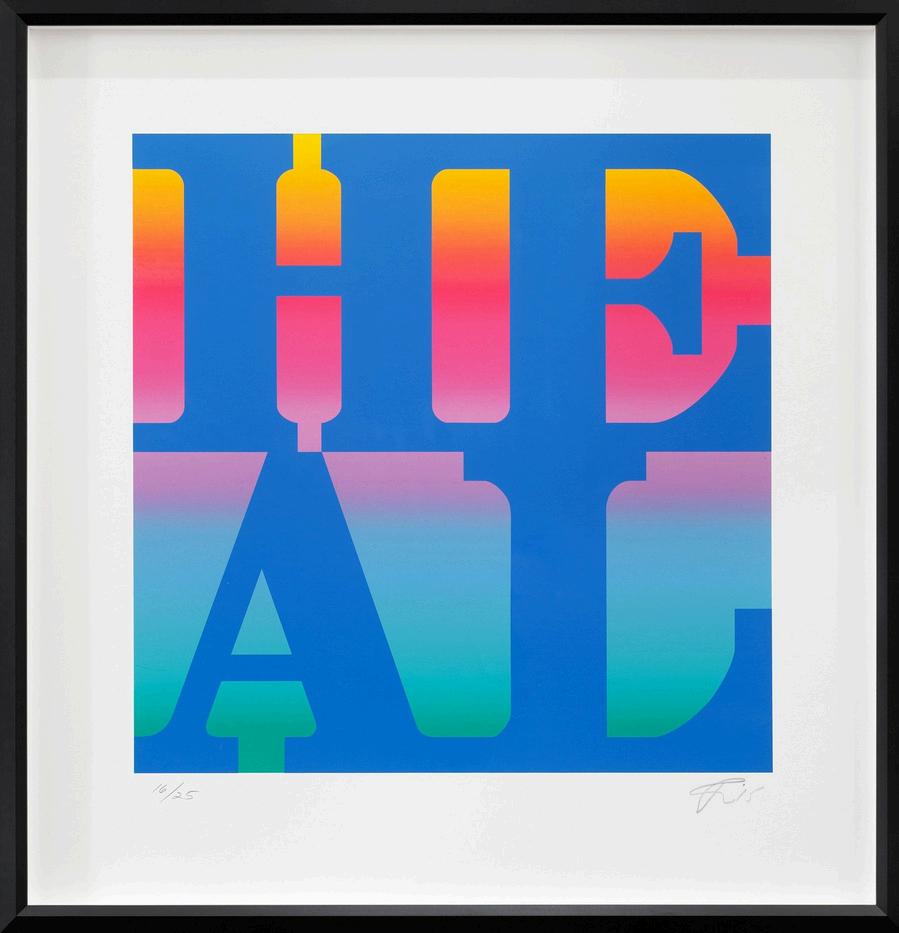
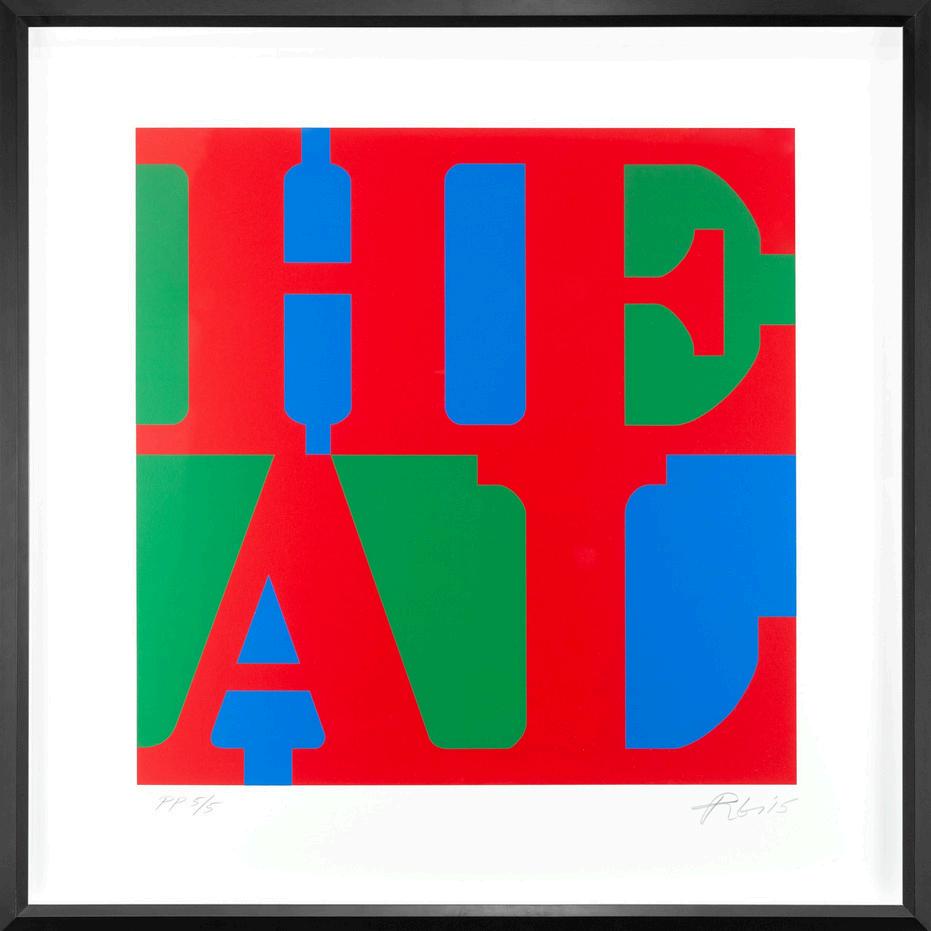
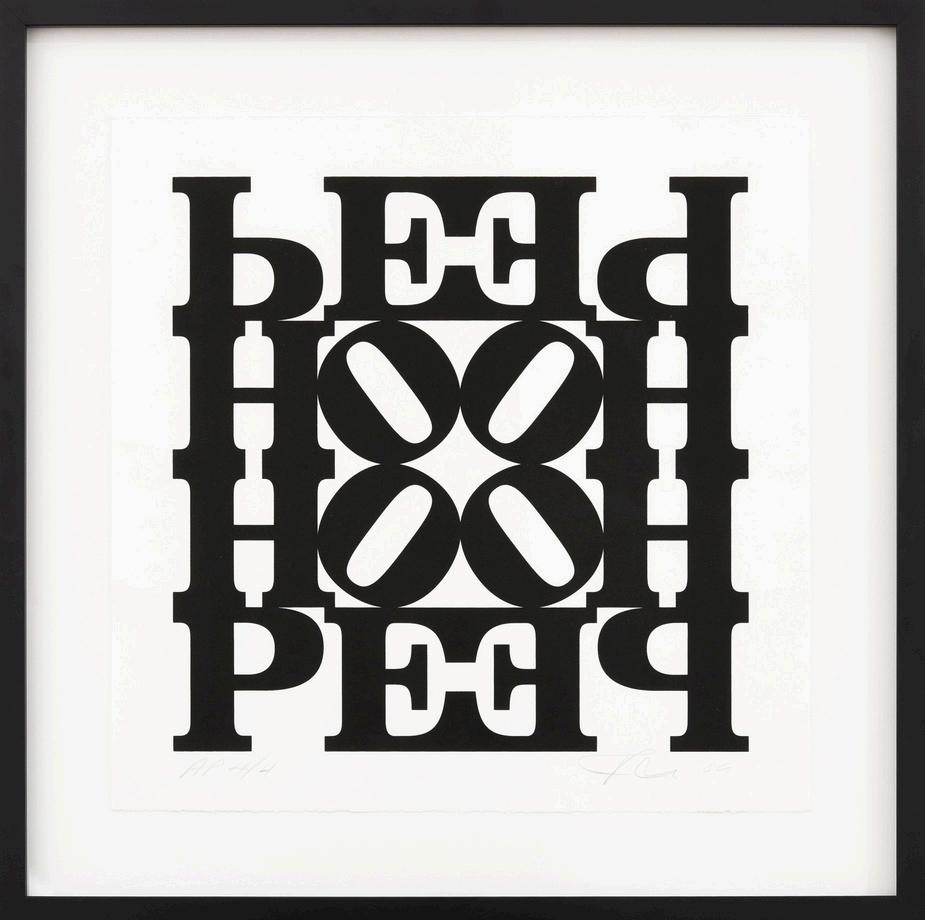
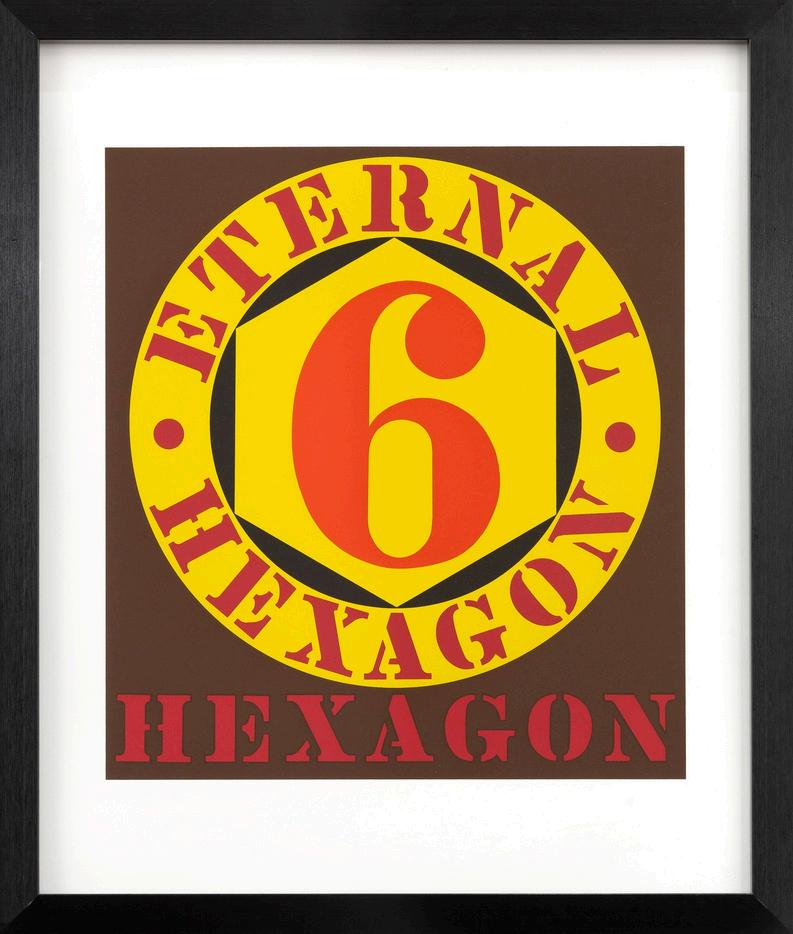
Color screenprint on paper 24" x 20"
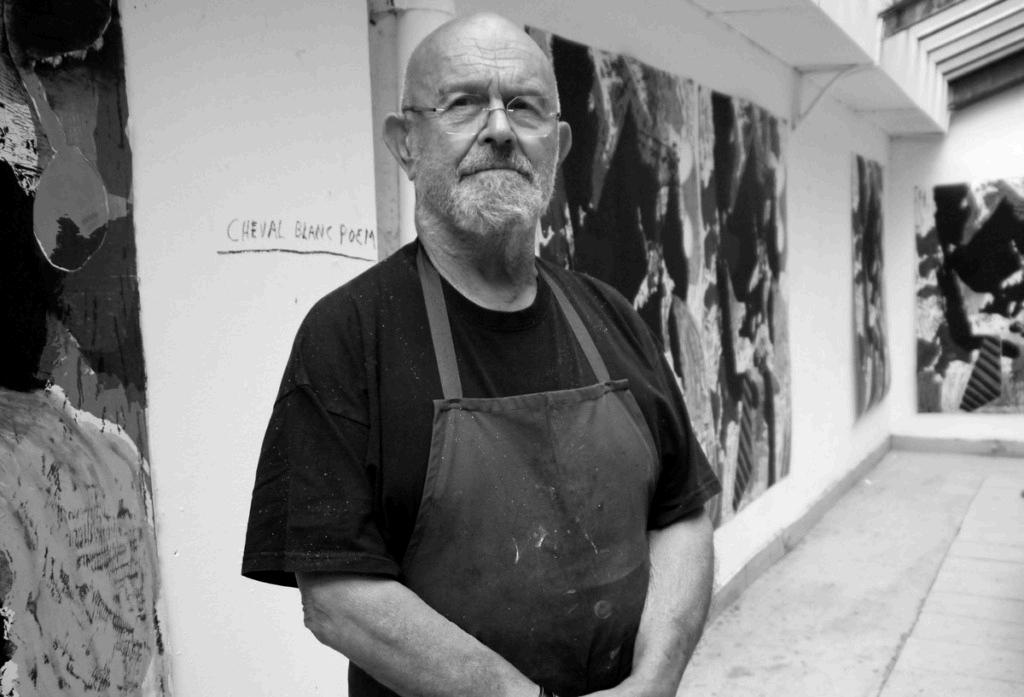
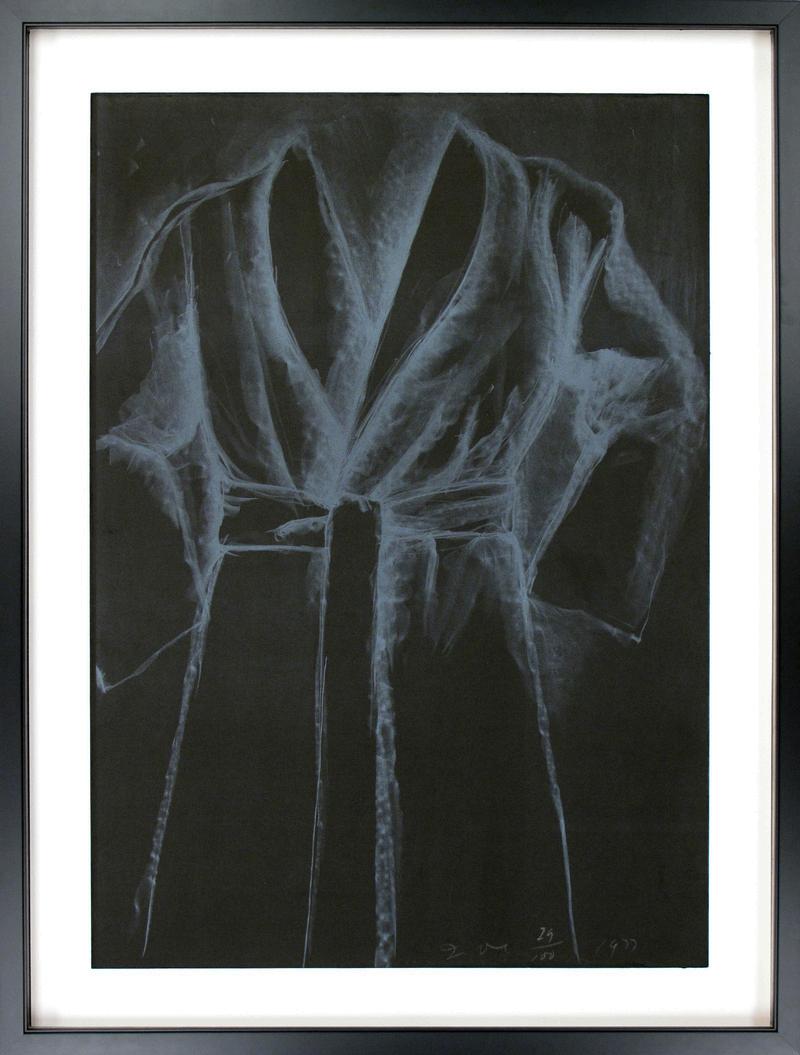
Personally significant objects were Dine’s primary motifs, as in his iconic series of hearts and robes He championed a return to figuration after a period of more concept-dominated works, and is considered an important figure in Neo-Dada and a forerunner of Neo-Expressionism. “The figure is still the only thing I have faith in in terms of how much emotion it’s charged with and how much subject matter is there,” he once said American, b 1935
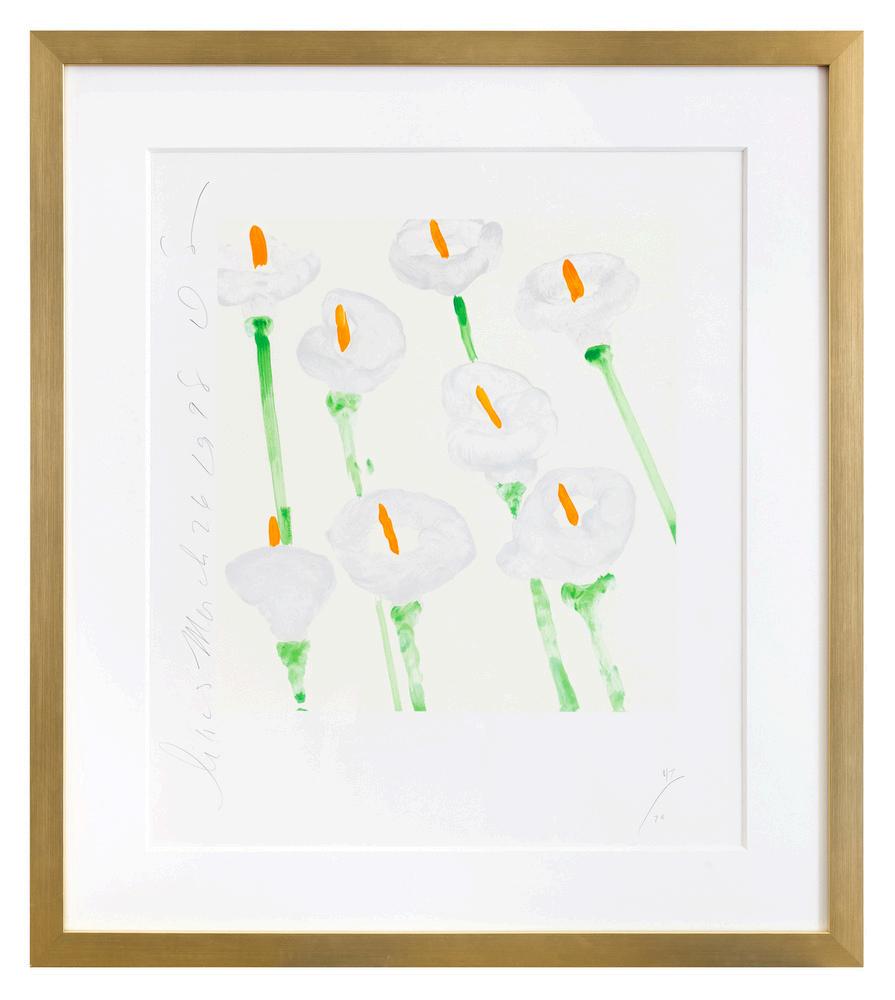
Although often associated with both Pop Art and Abstract Expressionism, Jim Dine did not identify with a specific movement, producing a vast oeuvre of paintings, drawings, works on paper, sculpture, poetry, and performances. Emerging as a pioneer (together with Allan Kaprow, Claes Oldenburg, and Robert Whitman) of New York’s Happenings of the 1960s, Dine would carry the spontaneous energy of this movement throughout his style, which emphasized the exploration of everyday life
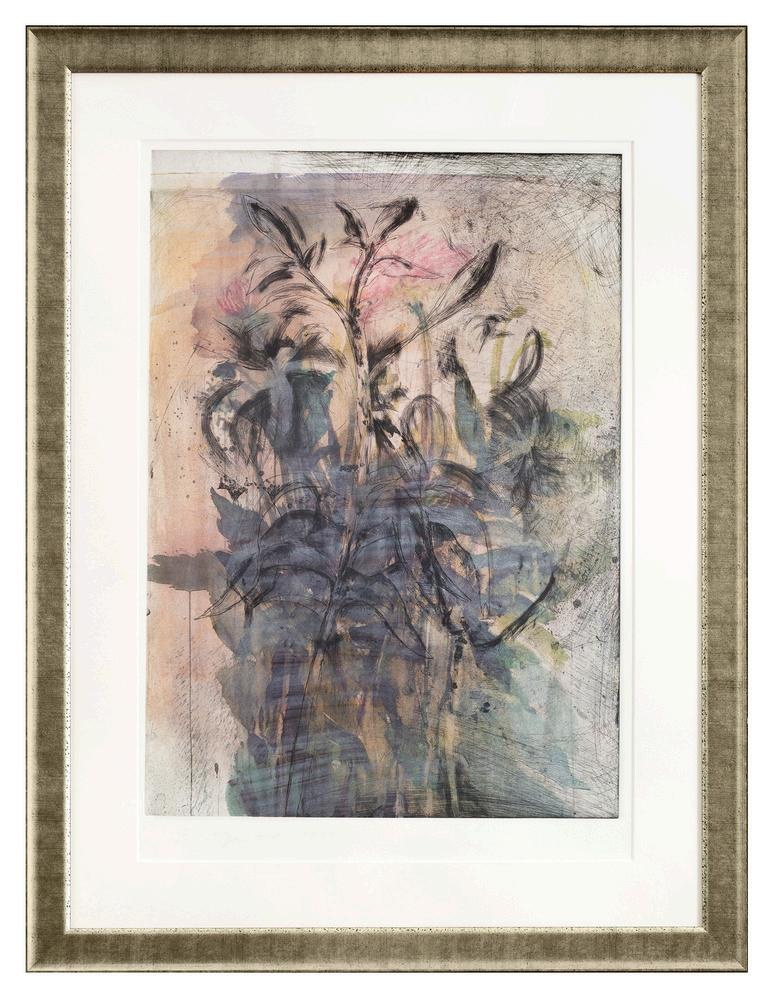
Lily, from Flowers of Manhattan, 1998
Screenprint in colors with etching, aquatint, power-tool abrasion and handcoloring on Hahnemühle paper
37" x 26"
$7,500
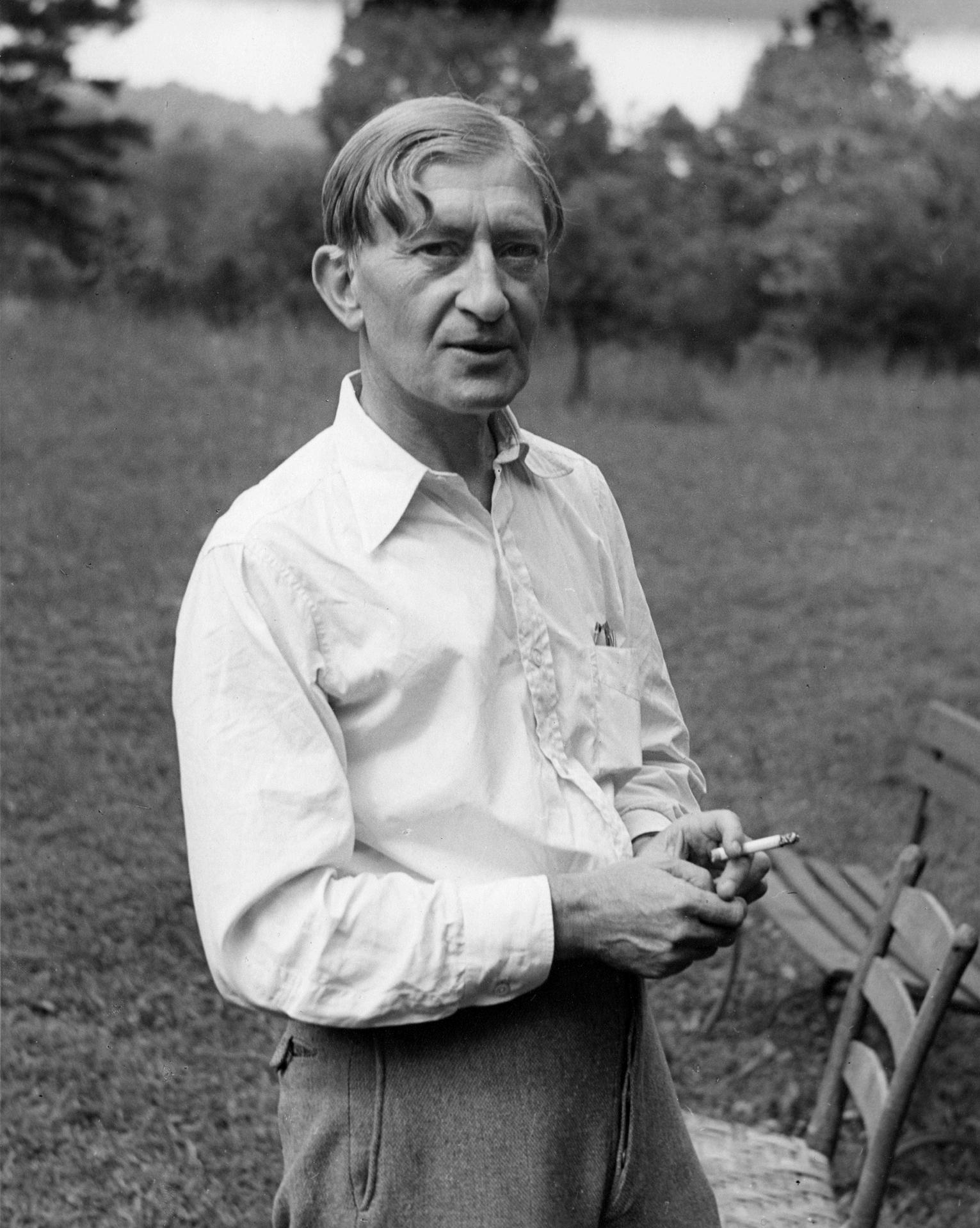
German-American, b 1888 - 1976
Josef Albers was a legendary teacher and color theorist. The artist is best known for his iconic “Homage to the Square” series (1949–76), which features nested squares of varying colors and explores how different juxtapositions of form and hue affect viewers’ perceptions and emotions.
Albers formalized and expanded upon his theories in his seminal 1963 book Interaction of Color. He was closely involved with the original Bauhaus and moved to the United States when the school was closed by Nazis in 1933. In the U.S., Albers taught at the experimental Black Mountain College as well as at Yale, where his teachings influenced generations of American artists.
His work has been exhibited in cities around the world and belongs in the collections of institutions including the Art Institute of Chicago, the British Museum, the Kunstmuseum Basel, the Museum of Modern Art, the Victoria and Albert Museum, and the Metropolitan Museum of Art, among others.
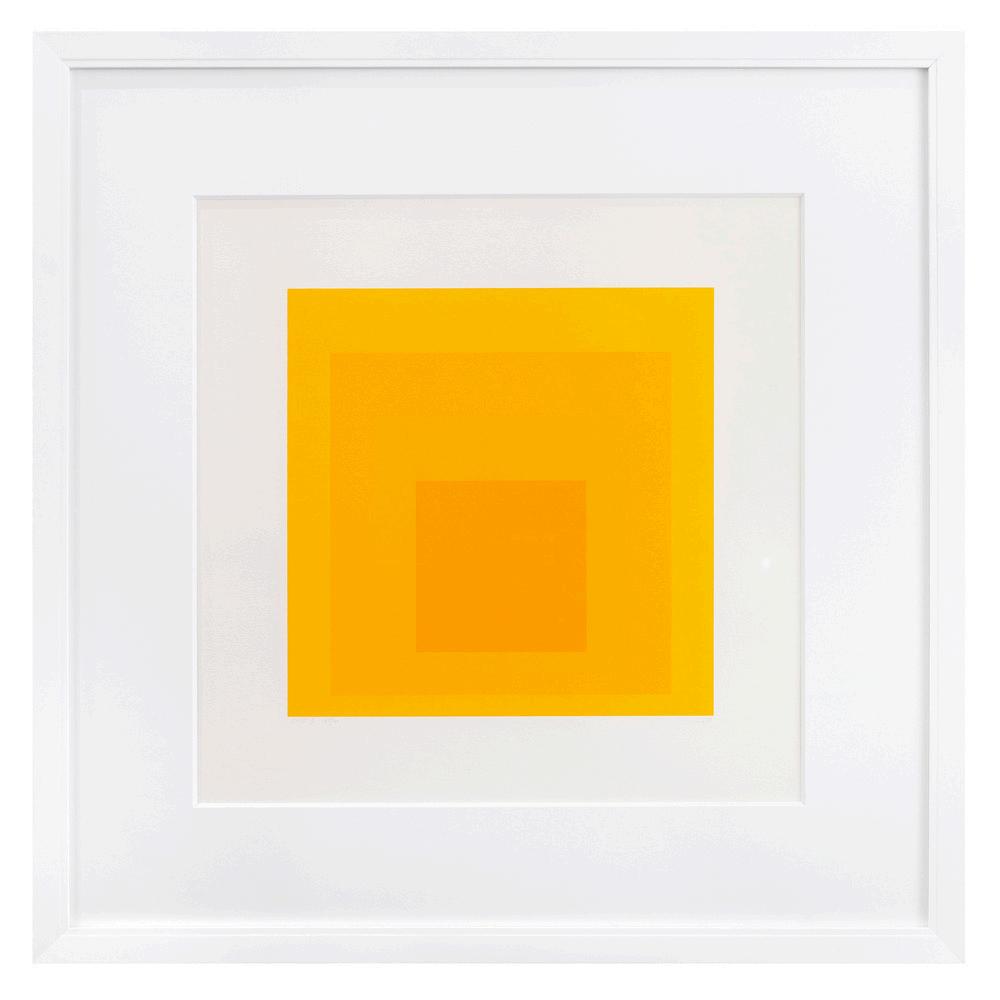
I-S f (125/125), 1970
Screenprint in colors on paper
19 25" x 19 25"
$25,000
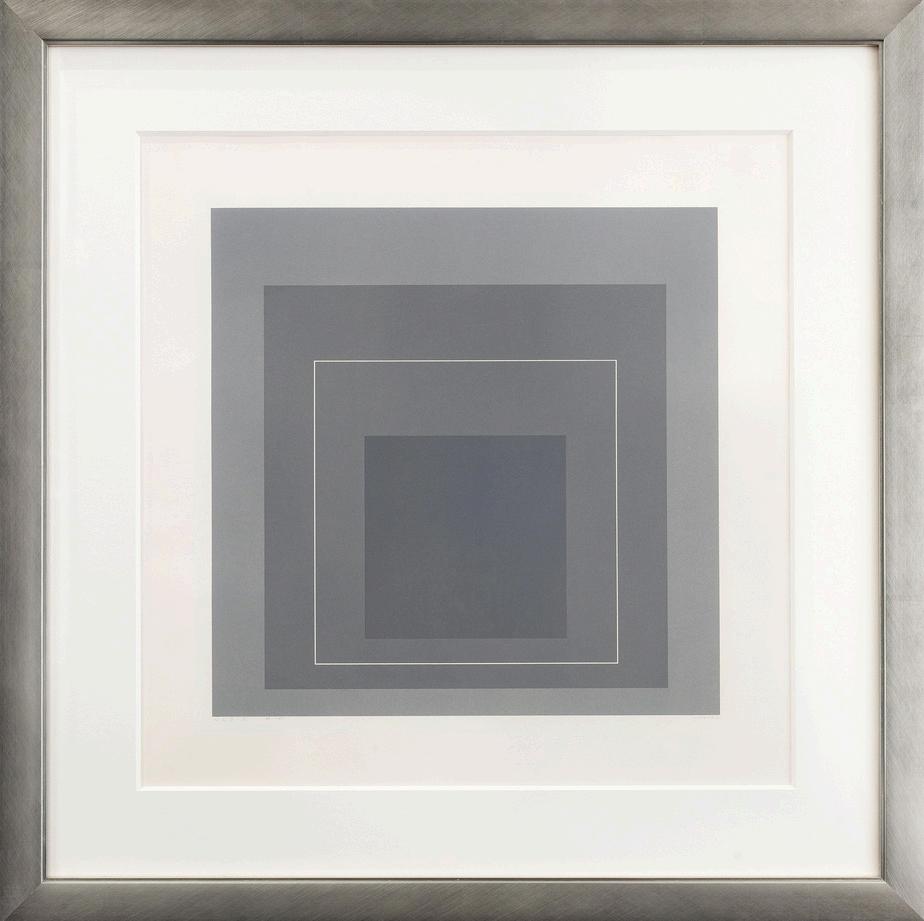
Lithograph in grays on Arches Cover wove paper
20 25" x 20 25"
$25,000
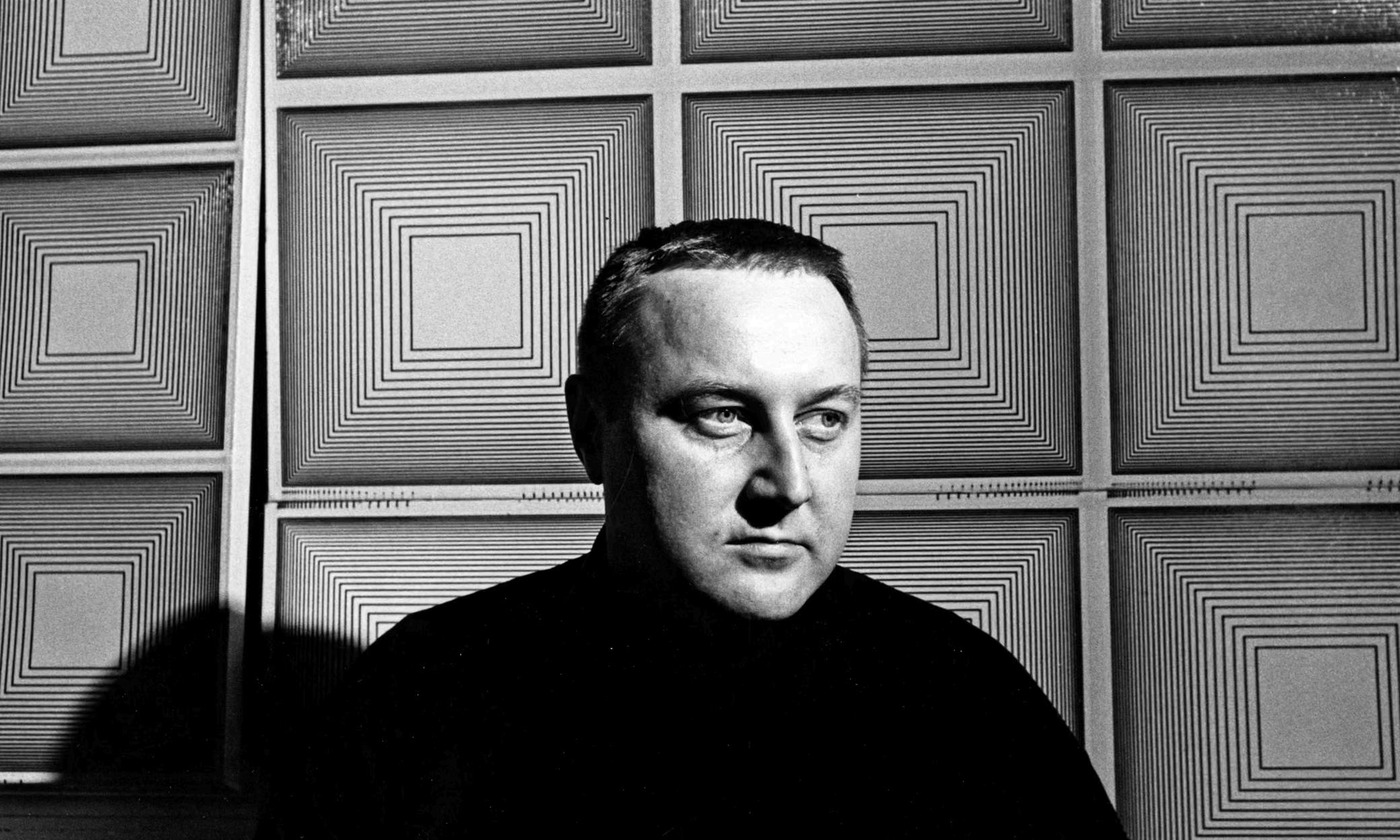
American, 1930 - 2020
Richard Joseph Anuszkiewicz was born in Ohio, and trained in art at the Cleveland Institution of Art Combining an interest in the nature of perception with investigations into the visual and psychological resonance of color, Richard Anuszkiewicz produces paintings whose vibrant colors and geometric shapes seem to pop and pulsate off of the canvas. A student of Josef Albers and one of the leading practitioners of Op art and geometric abstraction, Anuszkiewicz explores color and form in his flat, vibrant abstractions, attempting to reveal the malleability of our perceptions of stillness and movement, depth and color.
Anuszkiewicz was highly influenced by his mentor Josef Albers, and famously noted “I’m interested in making something romantic out of a very, very mechanistic geometry. Geometry and color represent to me an idealized classical place that’s very clear and very pure ”
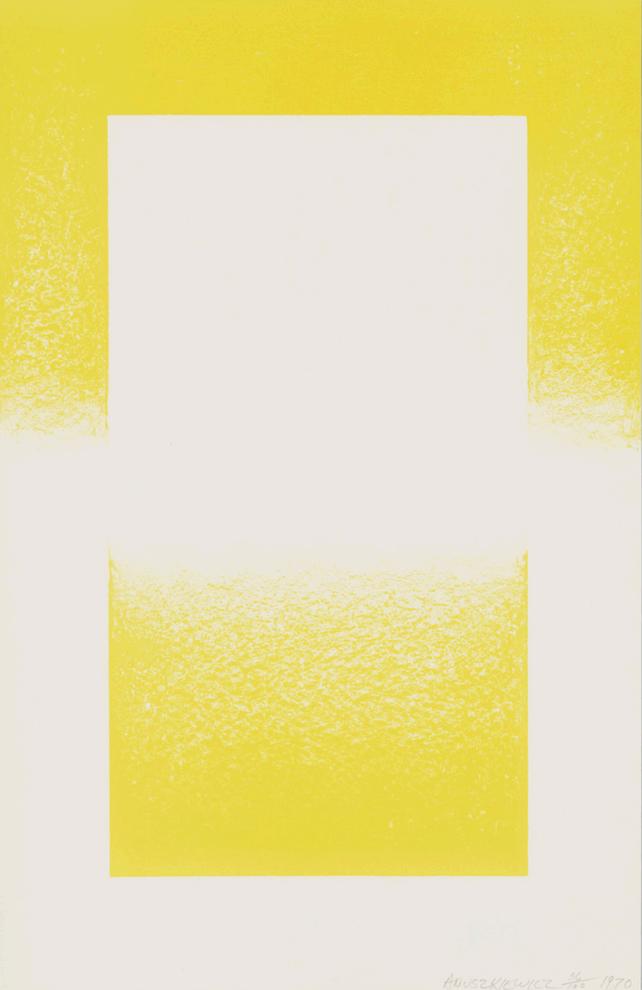
Anuszkiewicz
Yellow Reversed (from Art In America: Graphics 70) (36/100), 1970
Lithograph in colors
17" x 11 25"
$2,500
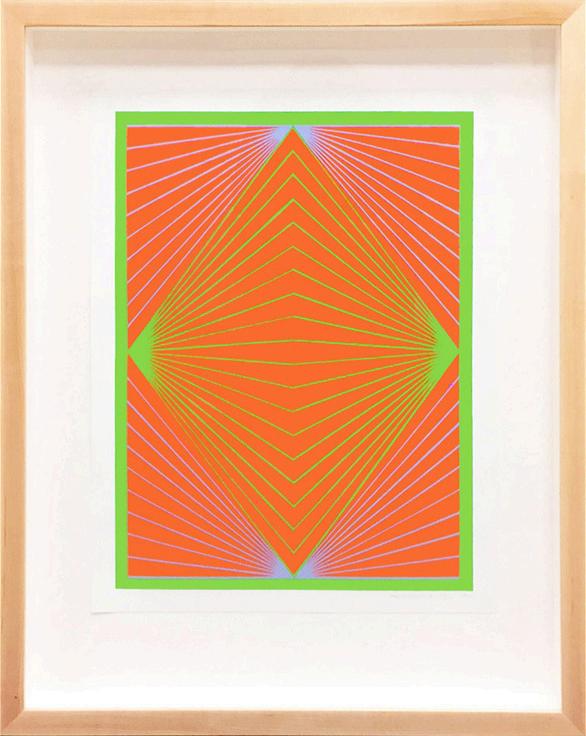
Screenprint in colors
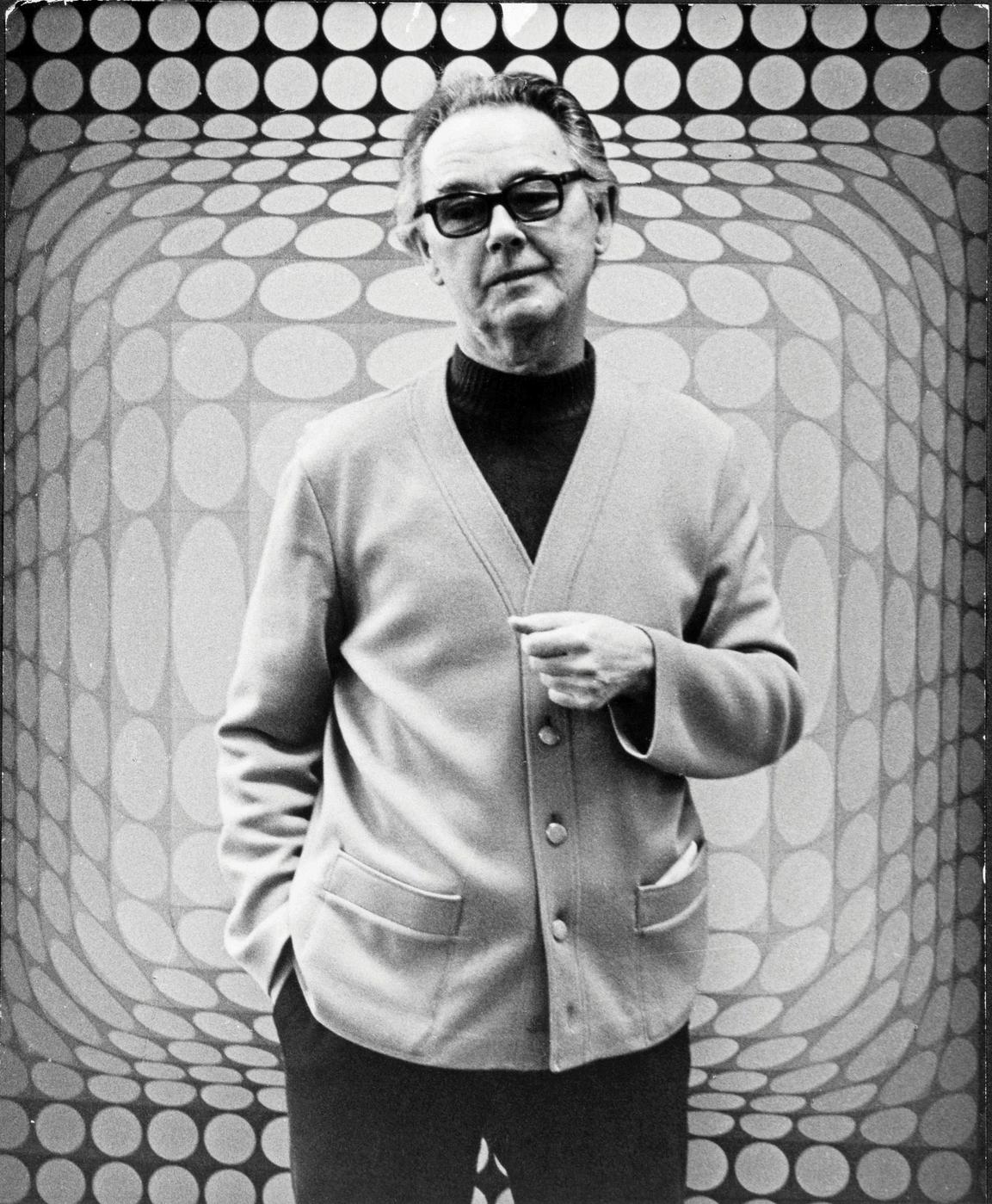
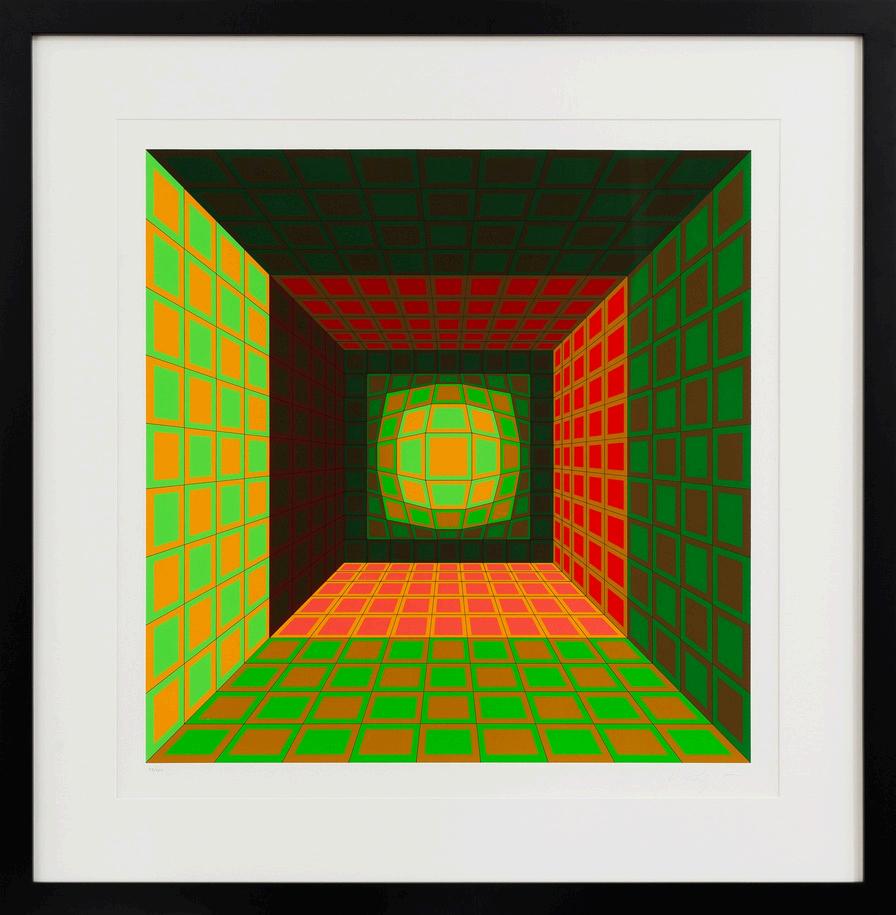
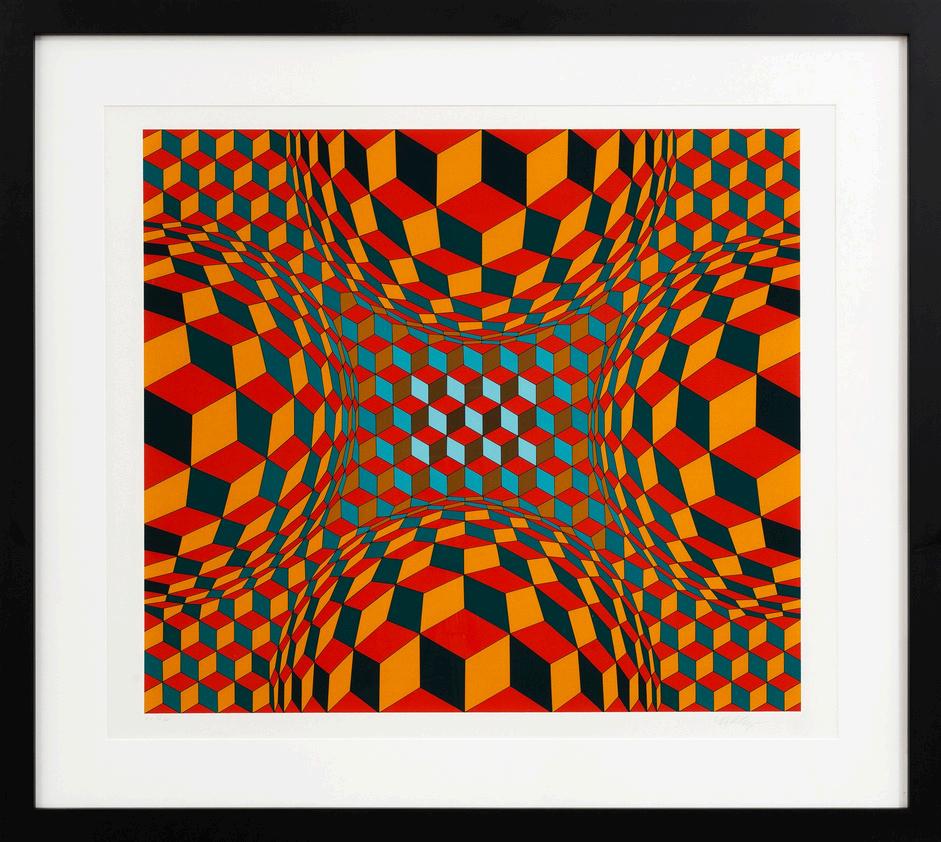
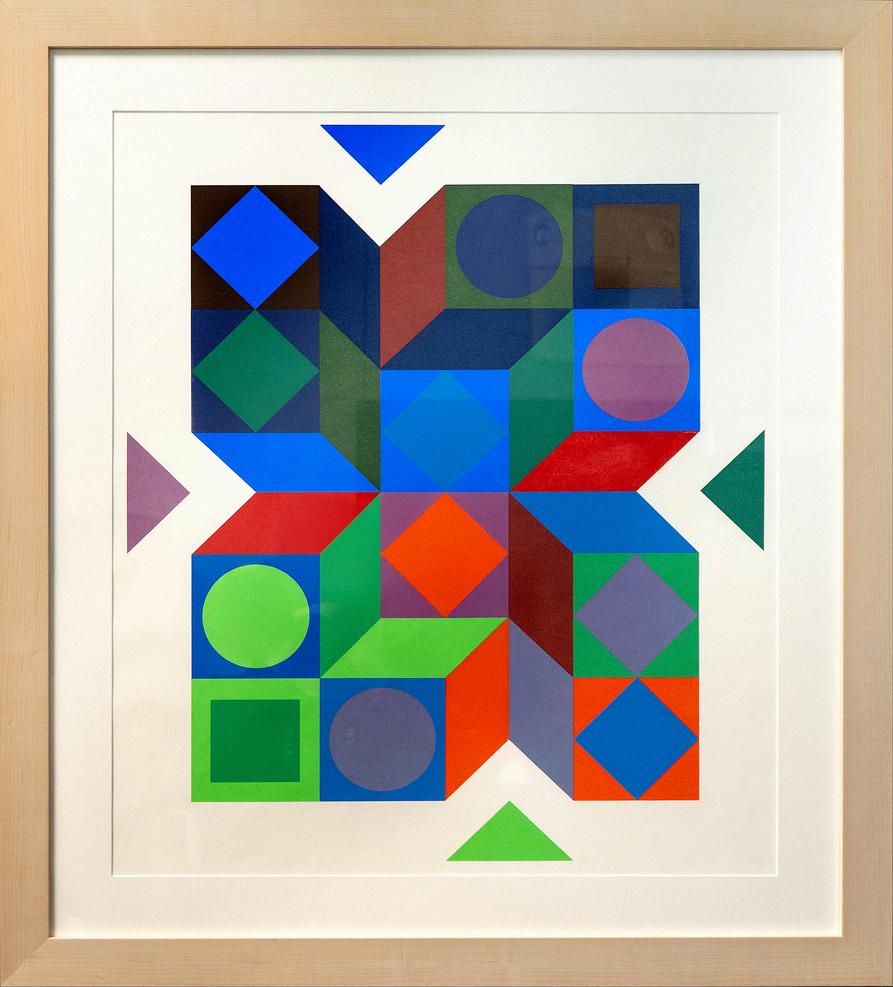
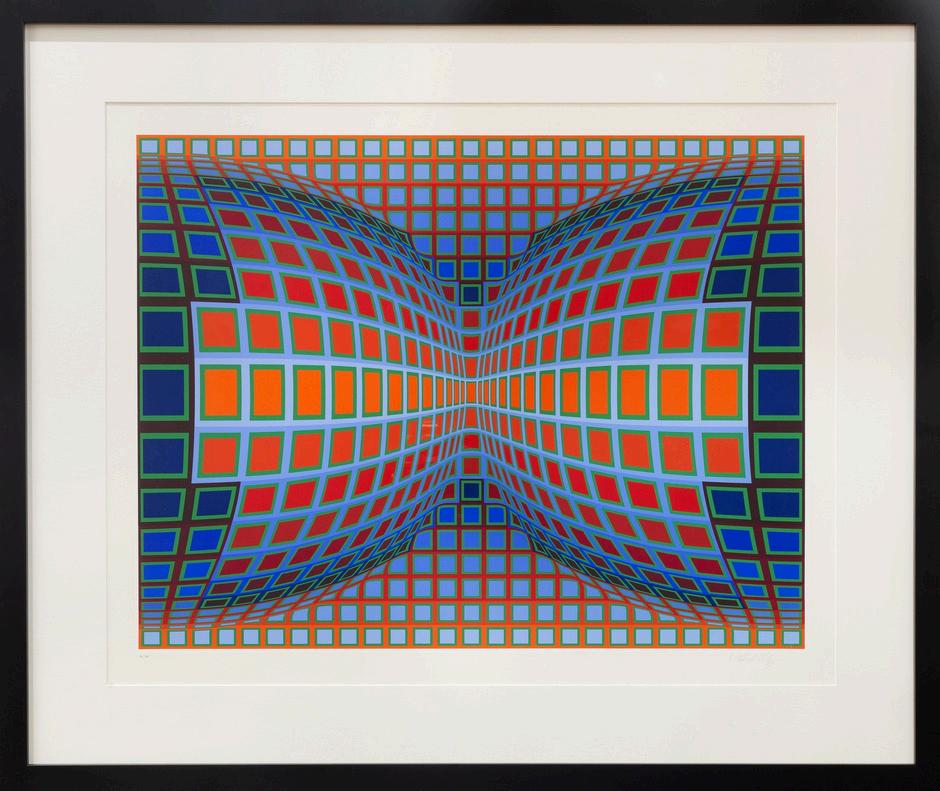
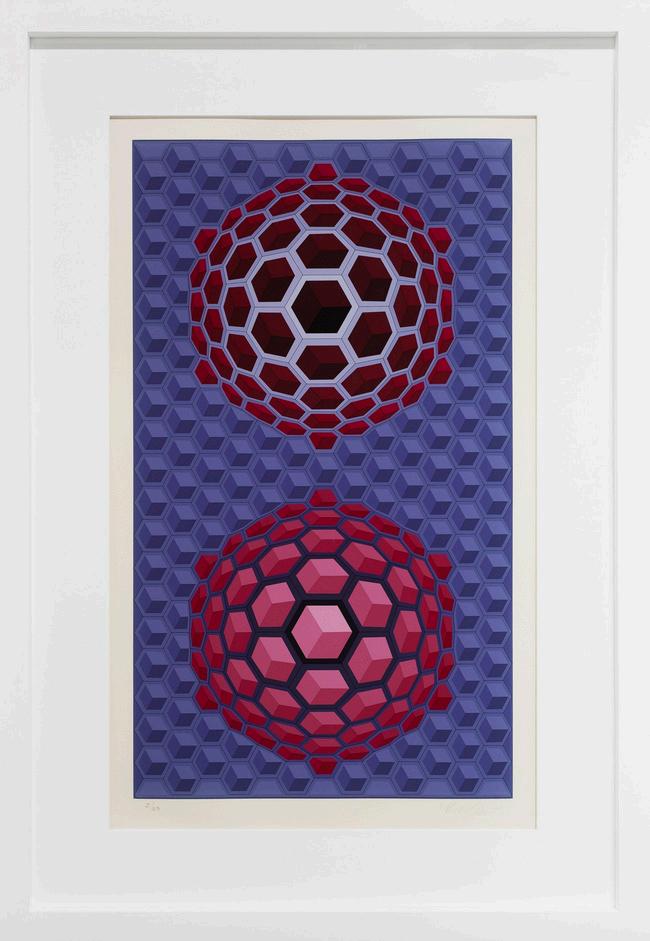
Hungarian-French, 1906 - 1997
Born in Hungary in 1906, Victor Vasarely was a Hungarian-French artist widely regarded as one of the founding figures of Op Art Before fully committing to art, he briefly studied medicine in Budapest before enrolling at the Bauhaus-influenced Mühely school run by Sándor Bortnyik. Vasarely began his career as a graphic designer and, after moving to Paris in 1930, developed a visual language rooted in geometric abstraction, optical illusion, and the interaction of color, light, and form
Through precise combinations of lines, geometric shapes, shading, and vibrant color, Vasarely created striking compositions that appear to shift, pulse, and recede in space. Early works such as Zebras helped establish the foundations of Op Art, while his later paintings expanded into increasingly complex explorations of depth, movement, and perception. Influenced by Bauhaus principles, Constructivism, architecture, and natural patterns, Vasarely believed art should be socially engaged and universally accessible. More than visual illusion, his work sought to communicate a shared visual language, reflecting his belief that “pure form and pure color can signify the world.”
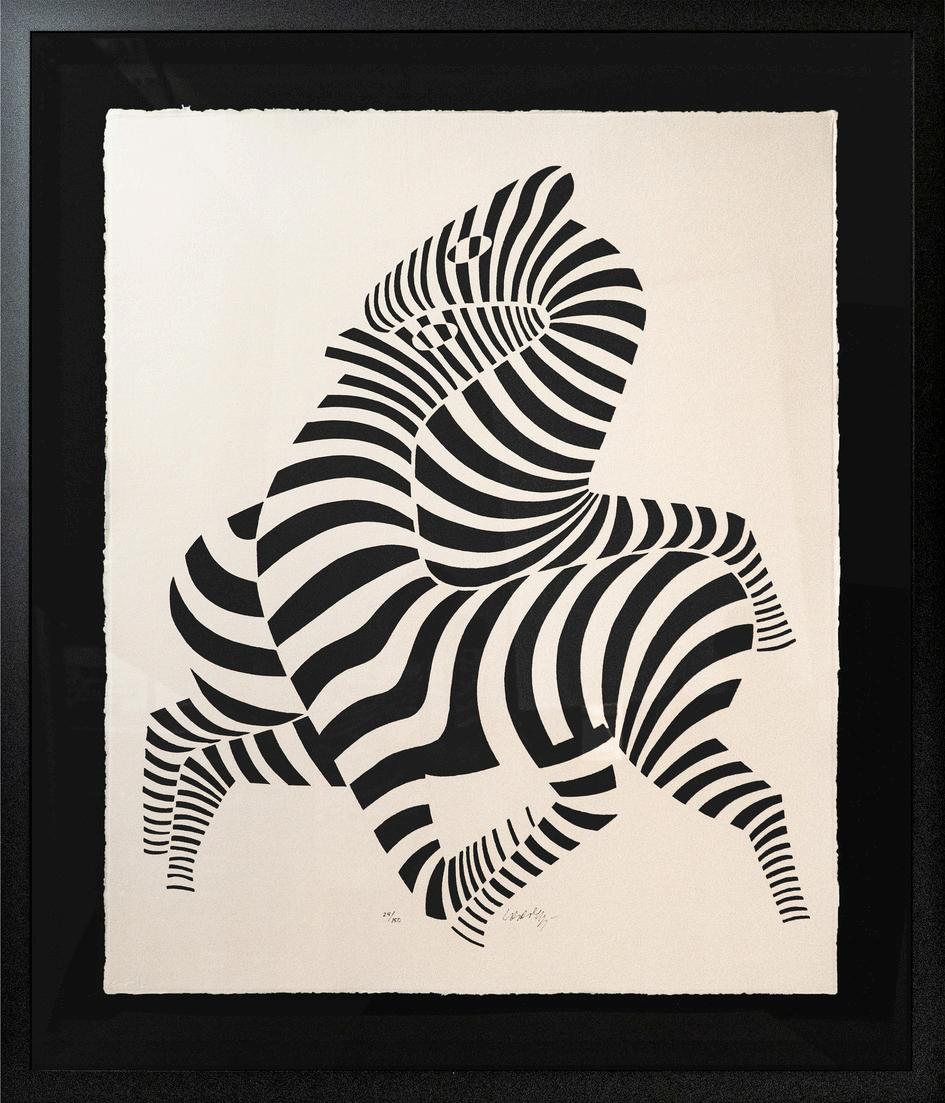
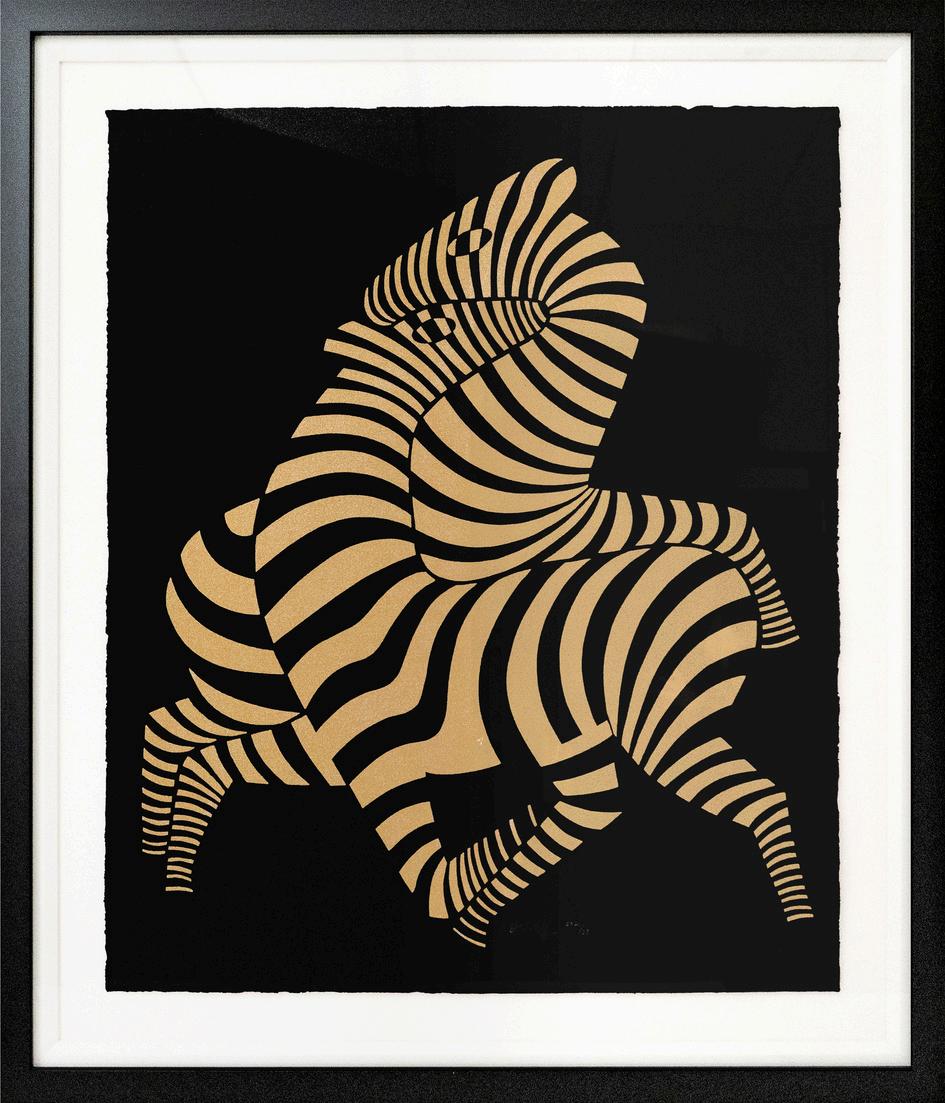
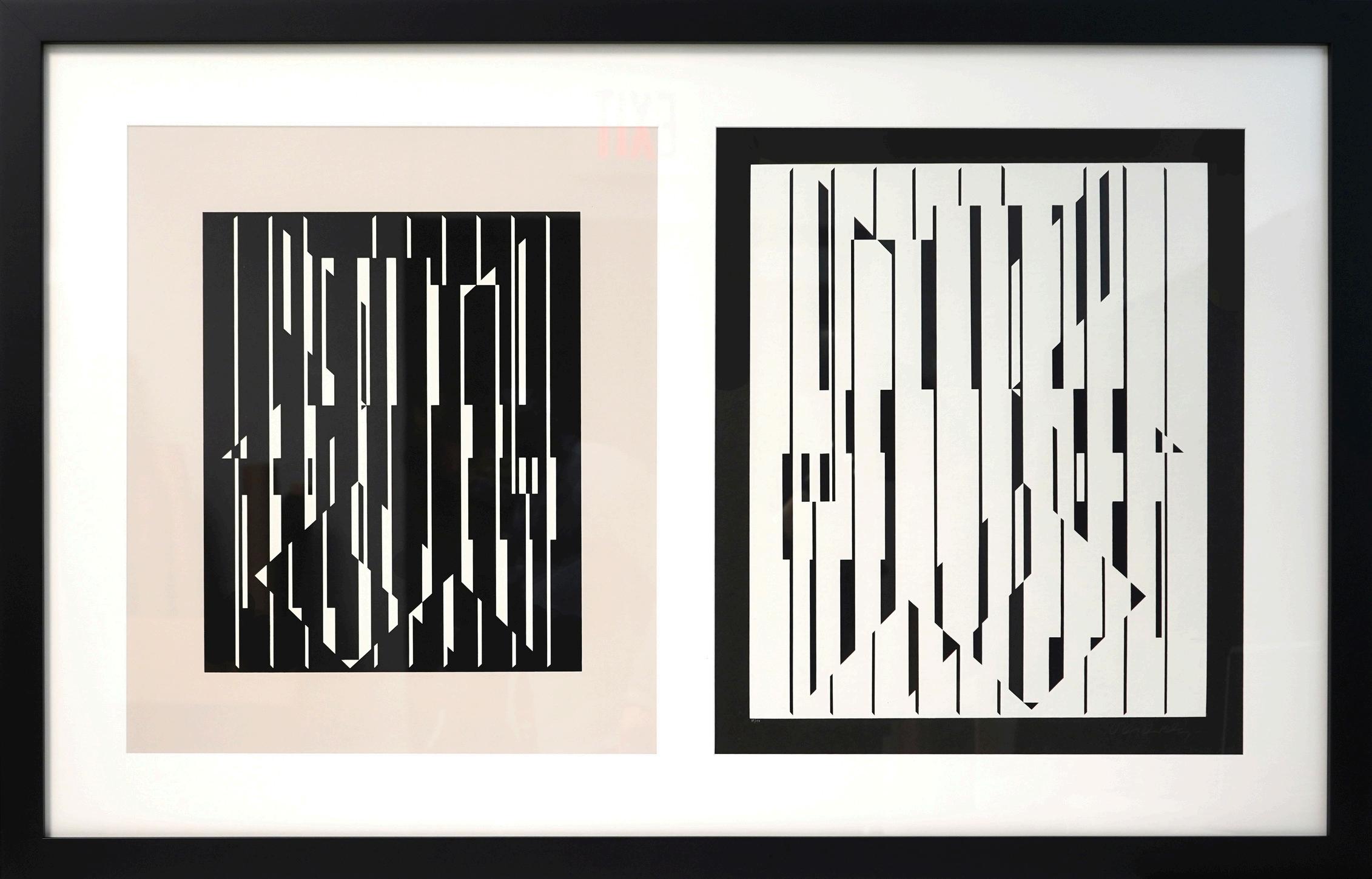
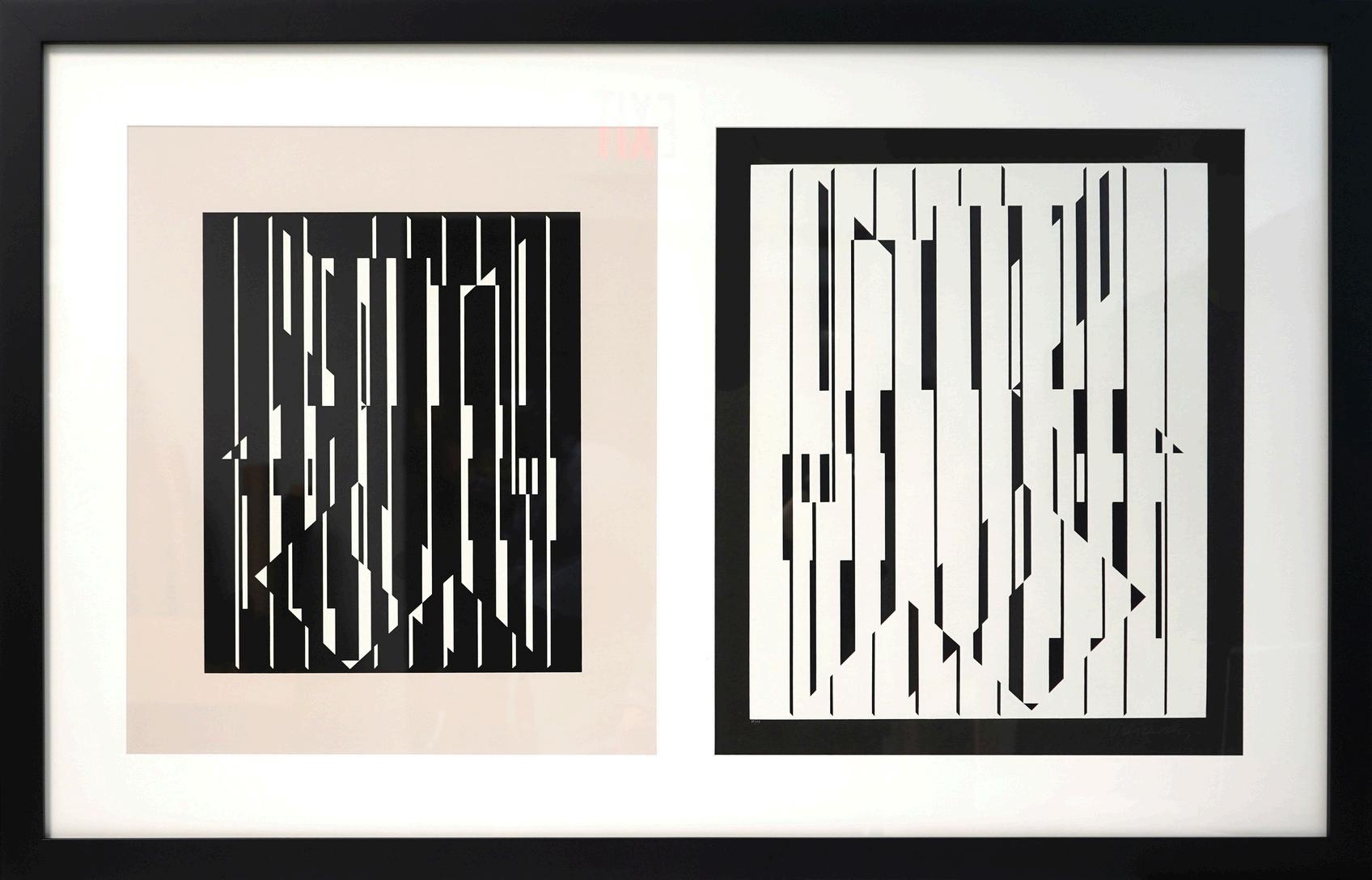
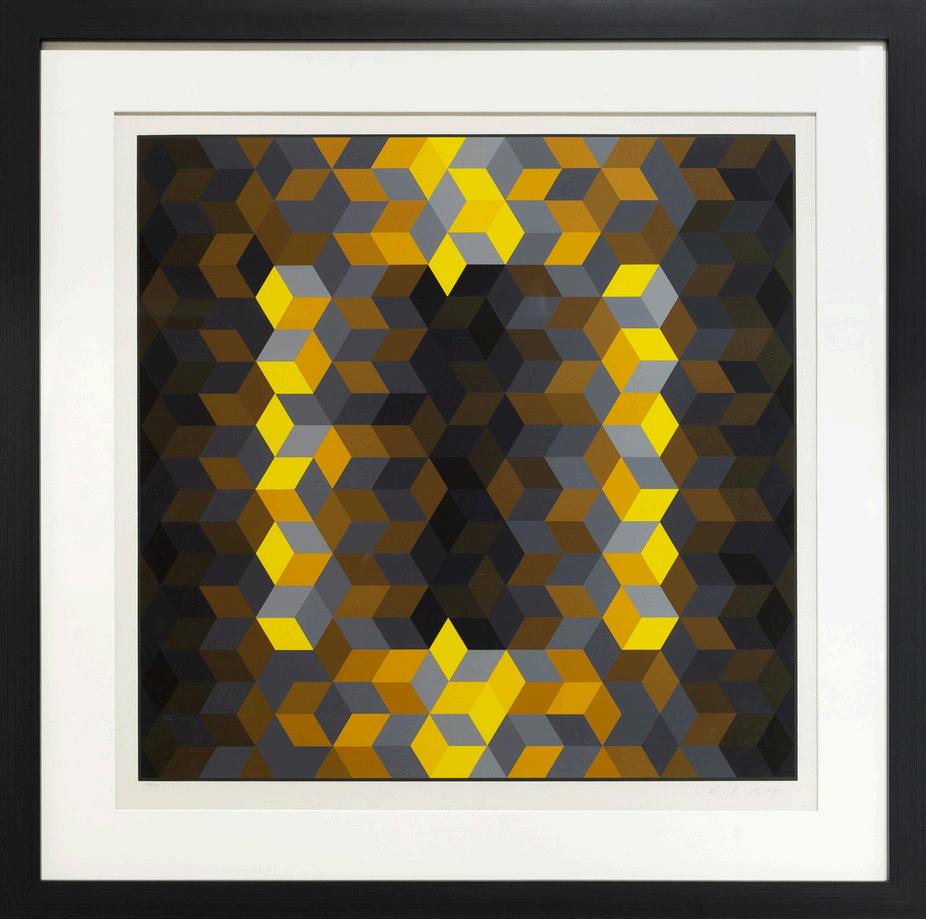
Screenprint
25 5" x 25 5"
$3,950
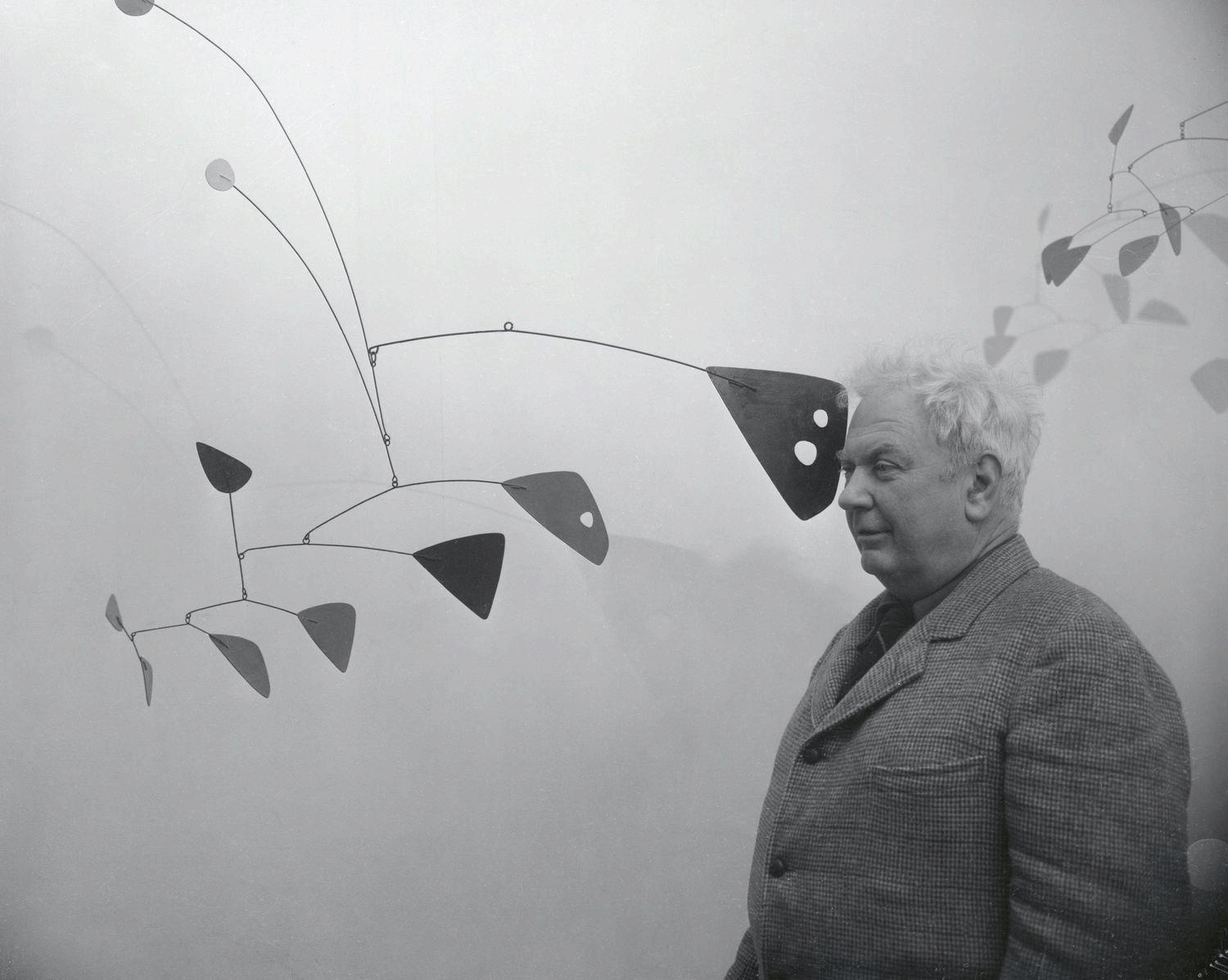
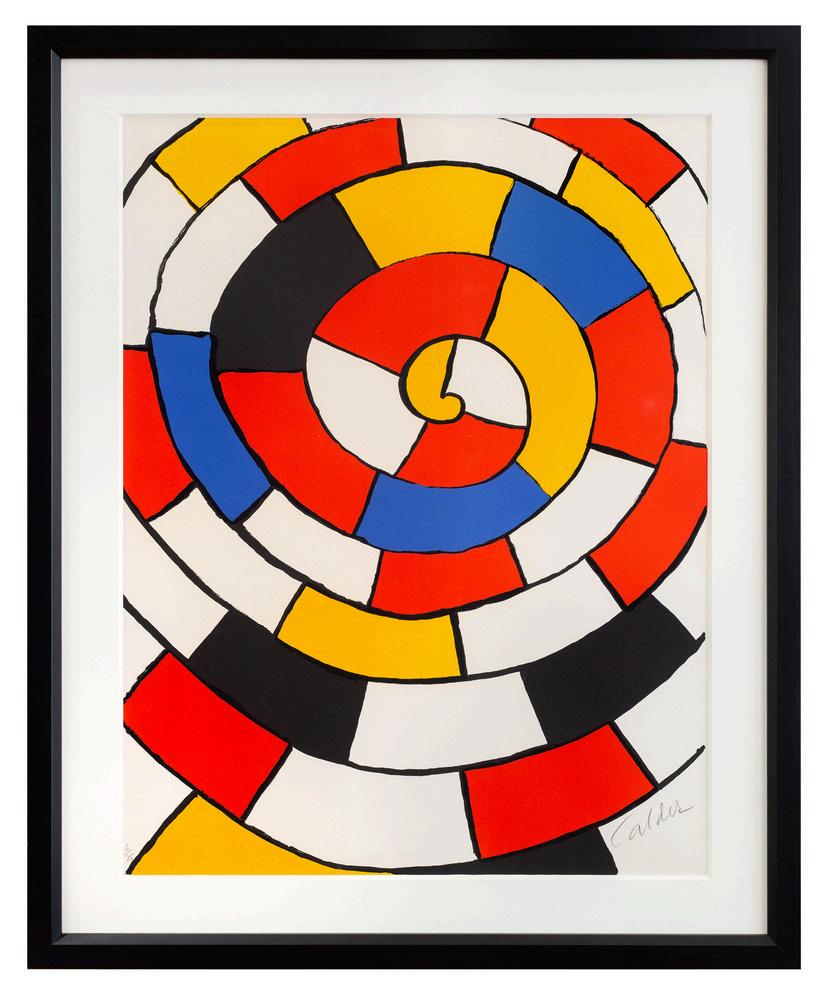
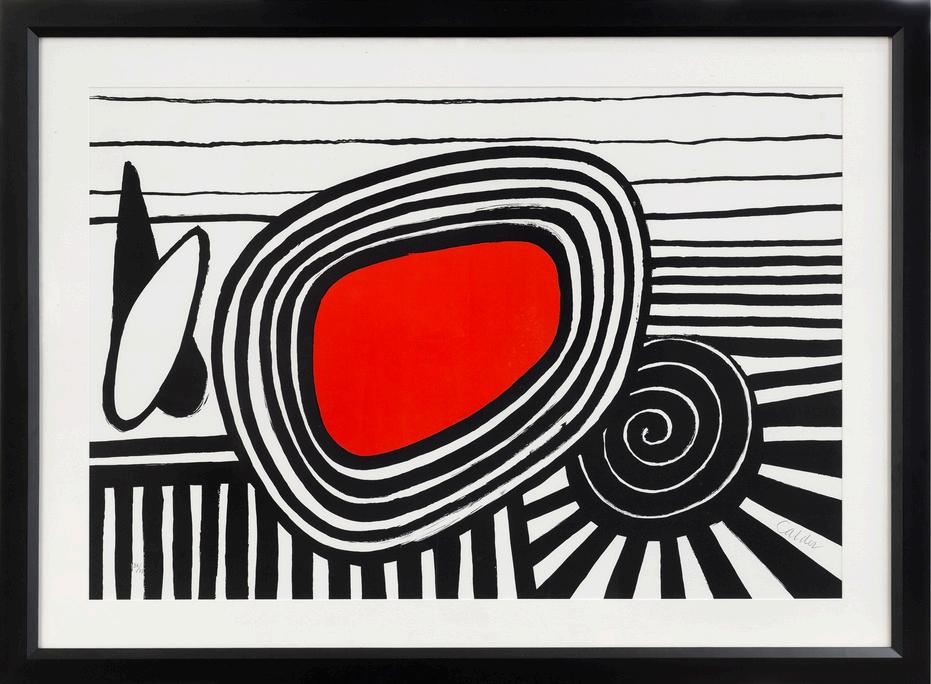
American, 1898 - 1976
American artist Alexander Calder changed the course of modern art by developing an innovative method of sculpting, bending, and twisting wire to create threedimensional drawings in space. Resonating with the Futurists and Constructivists, as well as the language of early nonobjective painting,
Calder's mobiles (a term coined by Marcel Duchamp in 1931 to describe his work) consist of abstract shapes made of industrial materials; often poetic and gracefully formed and at times boldly colored that hang in an uncanny, perfect balance. His complex assemblage Cirque Calder (1926-31), which allowed for the artist's manipulation of its various characters presented before an audience, predated Performance Art by some 40 years. Later in his career,
Calder devoted himself to making outdoor monumental sculptures in bolted sheet steel that continue to grace public plazas in cities throughout the world.
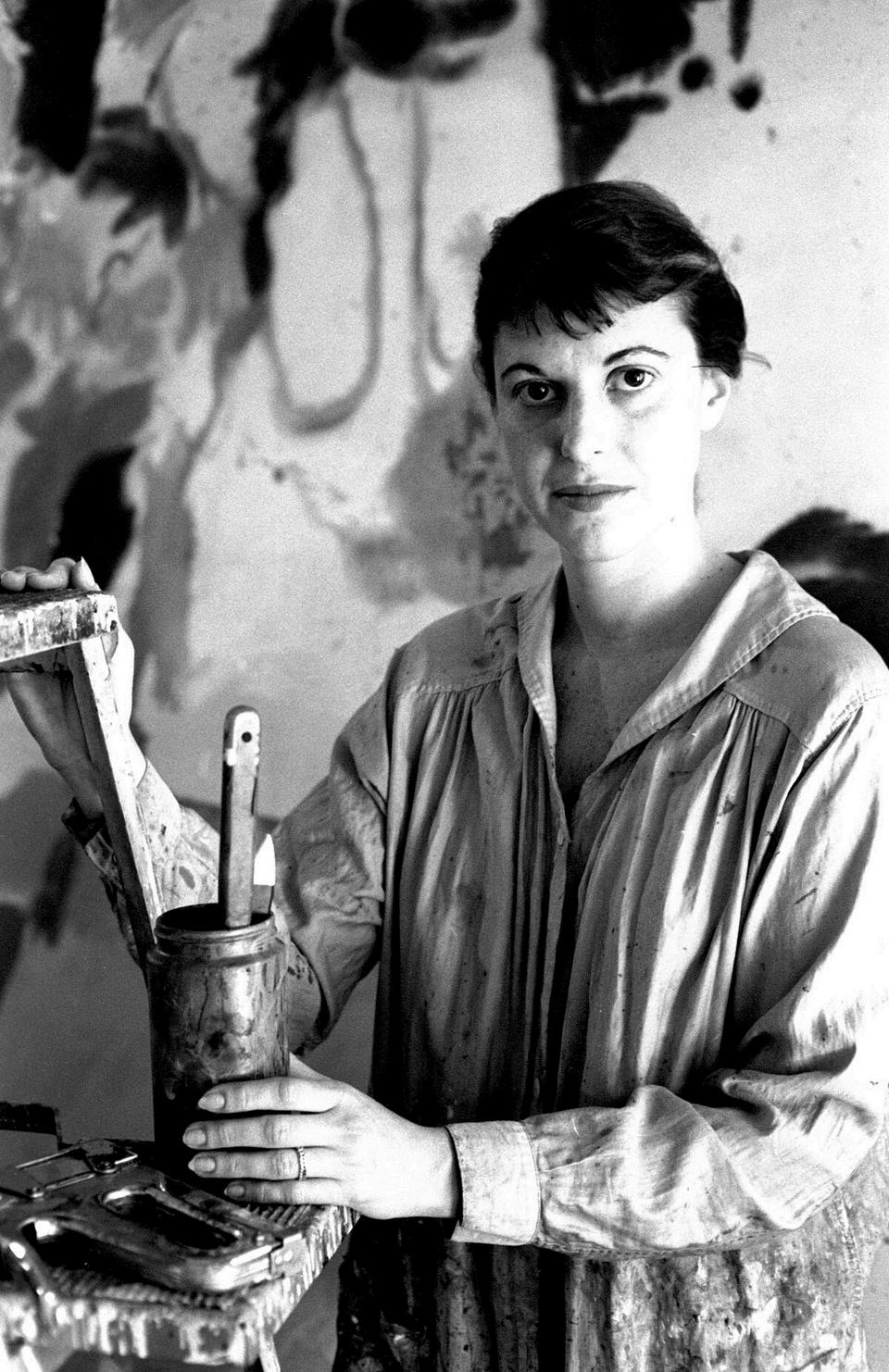
American, 1928 - 2011
Helen Frankenthaler was a leading figure of second-generation Abstract Expressionism and a pivotal influence on the development of Color Field painting Born in New York in 1928, she studied at the Dalton School under Mexican painter Rufino Tamayo before attending Bennington College. Returning to New York in the late 1940s, she became part of the city’s avant-garde art scene, where critic Clement Greenberg introduced her to artists such as Jackson Pollock and Willem de Kooning.
Frankenthaler gained widespread recognition with Mountains and Sea (1952), in which she pioneered her celebrated soak-stain technique by pouring thinned paint onto unprimed canvas. The method allowed color to merge directly with the canvas surface, creating luminous, atmospheric fields that transformed Abstract Expressionism and helped inspire Color Field painters such as Morris Louis and Kenneth Noland. Though abstract, her paintings often evoke landscapes, water, weather, and natural space. As she once explained, “My pictures are full of climates, abstract climates. They’re not nature per se, but a feeling.”
In addition to painting, Frankenthaler worked extensively in printmaking, exploring techniques including etching, aquatint, lithography, and woodcut with the same lyrical sense of color and movement that defined her paintings Her work has been celebrated in major retrospectives at the Whitney Museum of American Art and Museum of Modern Art.
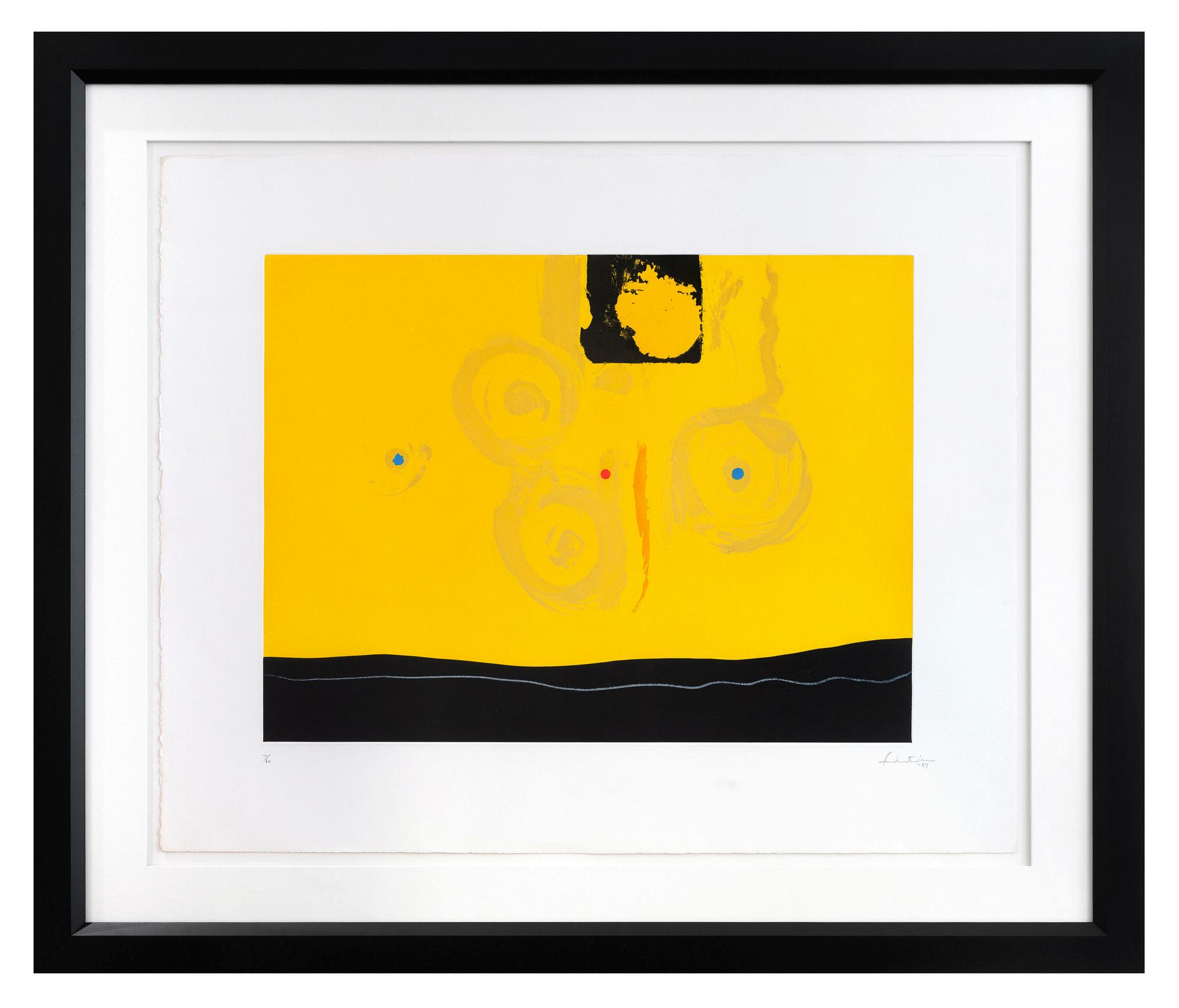
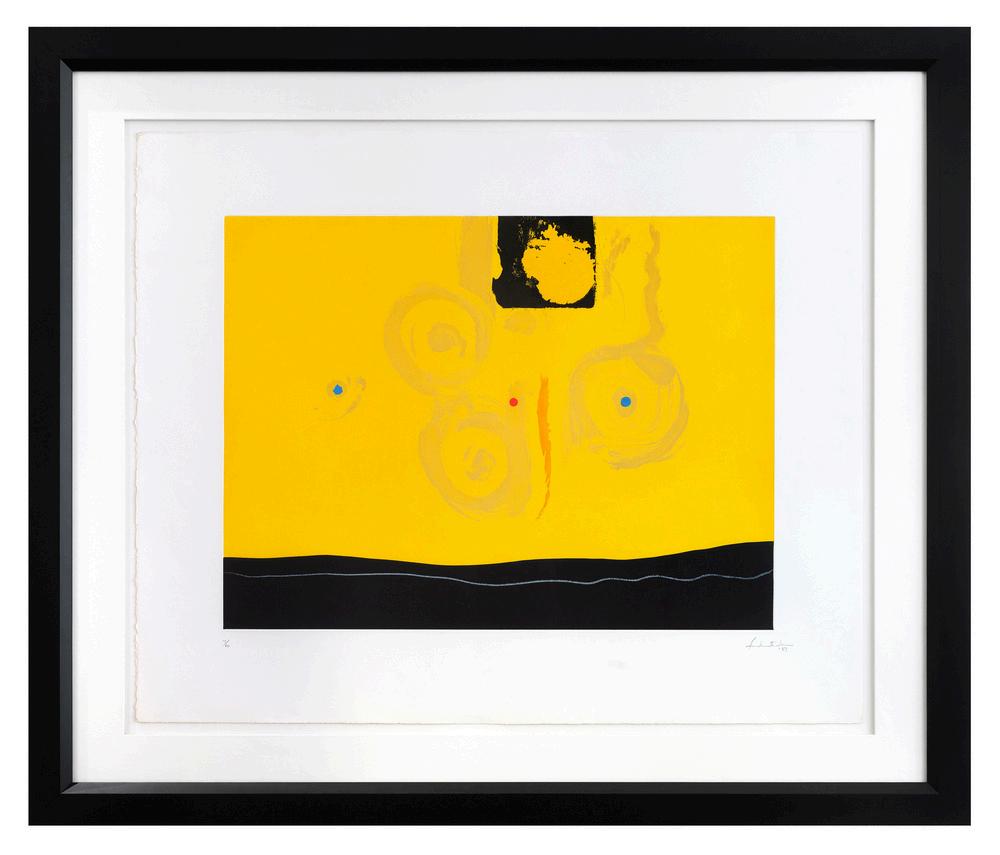
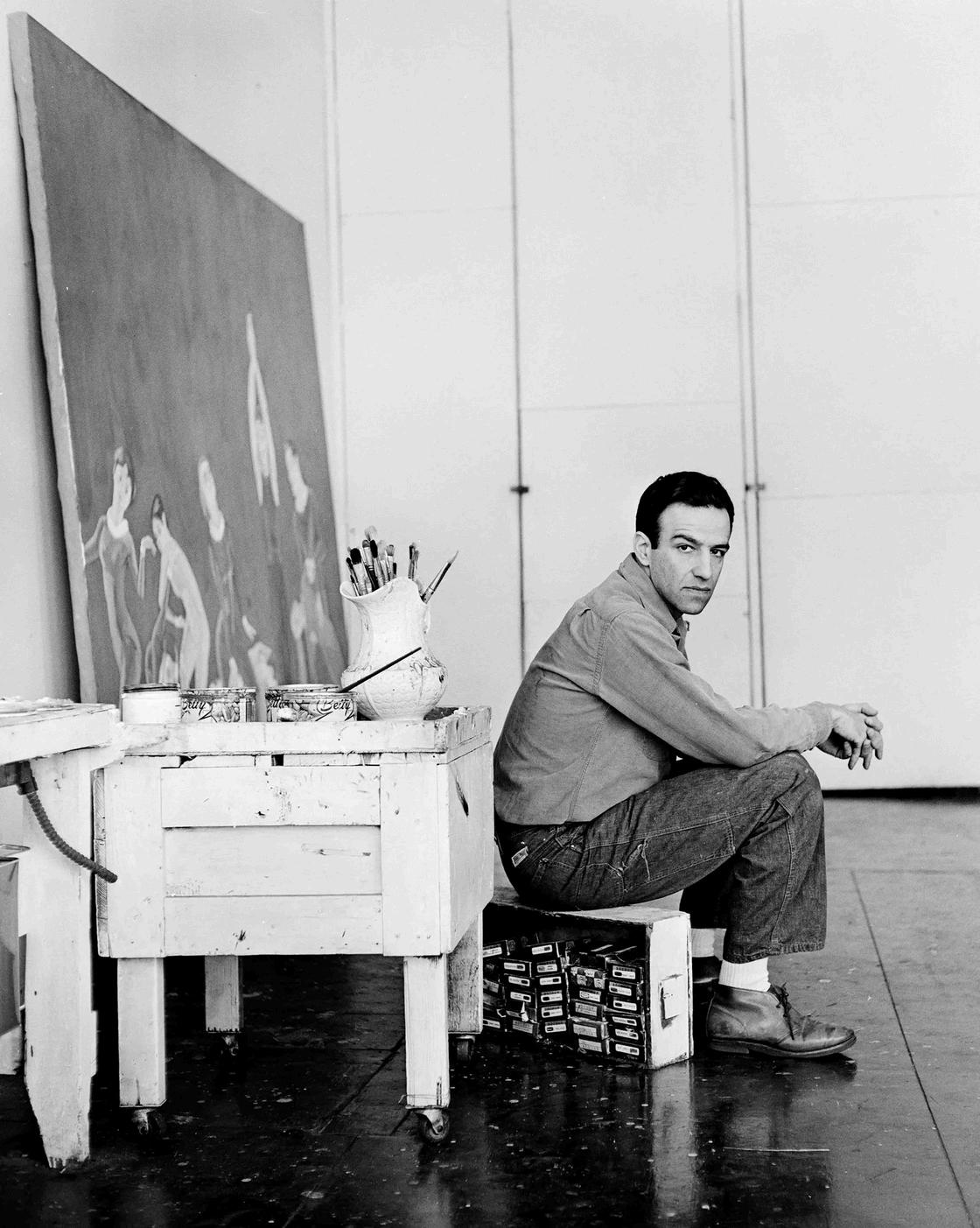
American, b 1927
New York School painter Alex Katz developed his highly stylized aesthetic in reaction to 1950s Abstract Expressionism, finding his own distinctive resolution between formalism and representation. His brightly colored figurative and landscape paintings are rendered in a flat style that takes cues from everyday visual culture like advertising and cinema, in many ways anticipating both the formal and conceptual concerns of Pop Art Well known for his many portraits of his wife and muse, Ada, Katz has also dedicated himself to printmaking and freestanding sculptures of cutout figures painted on wood or aluminum. Katz' work resides in numerous public collections across the world, including: the Metropolitan Museum of Art and Museum of Modern Art in New York, Centre Georges Pompidou in Paris, the Saatchi Gallery in London, and the Museum of Contemporary Art in Tokyo.
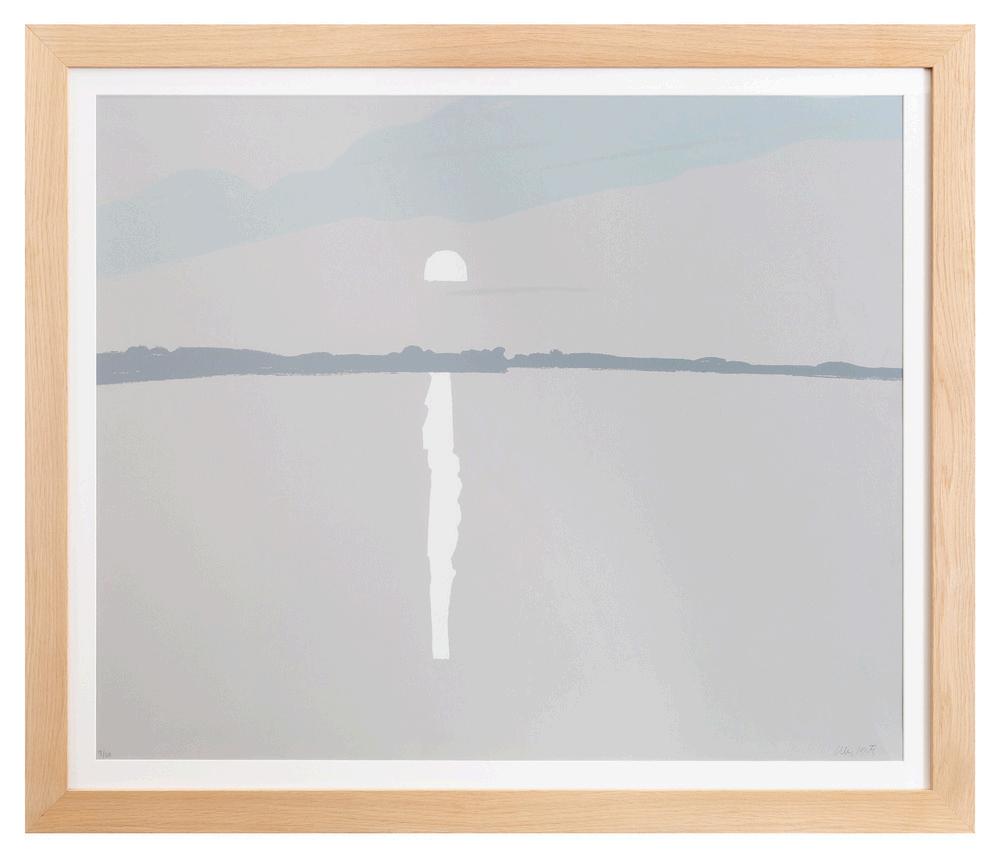
Screenprint in five colors on Arches 30"
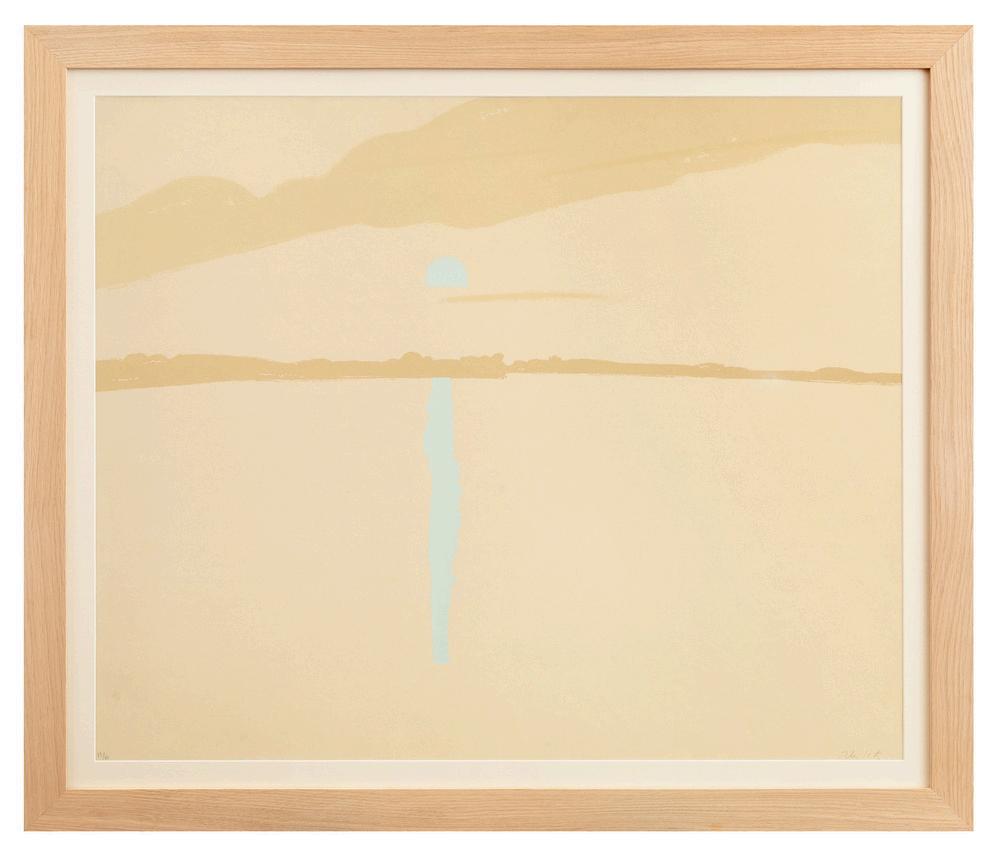
Screenprint in five colors on Arches 30"
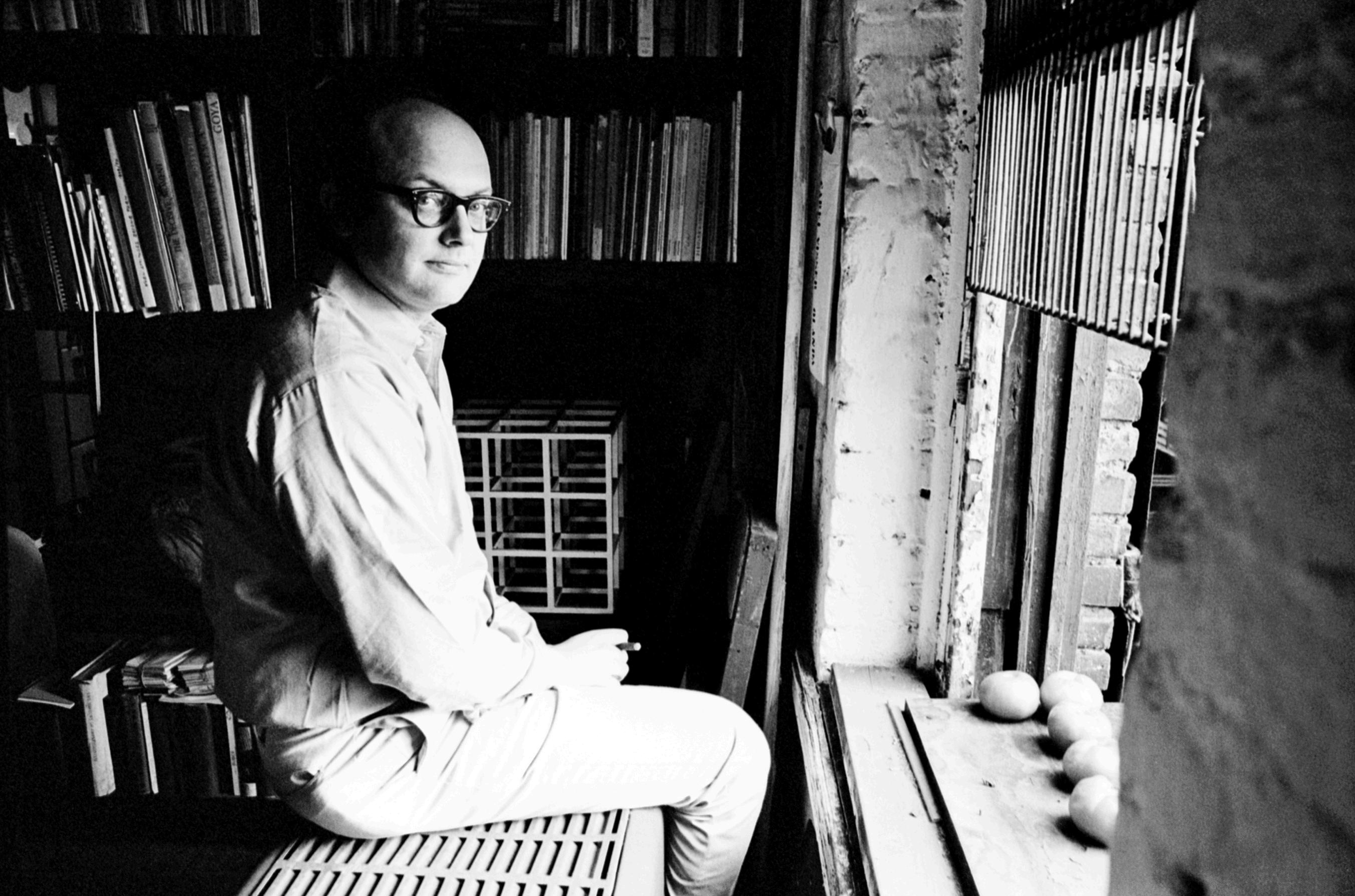
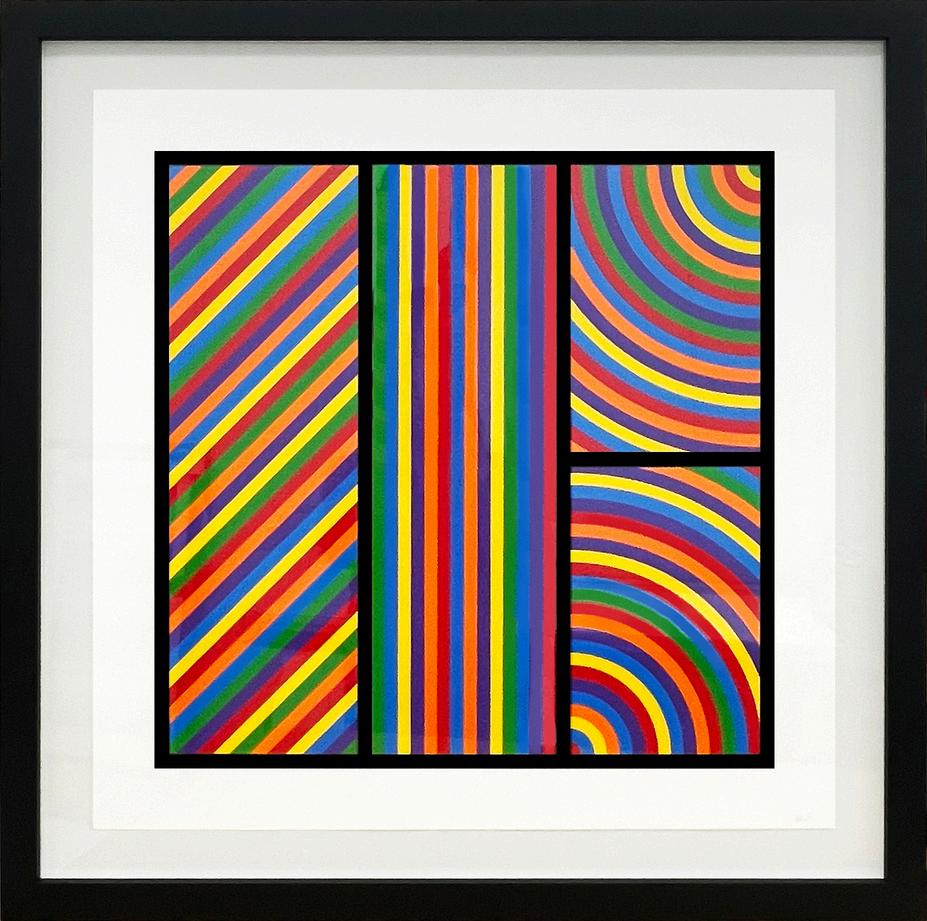
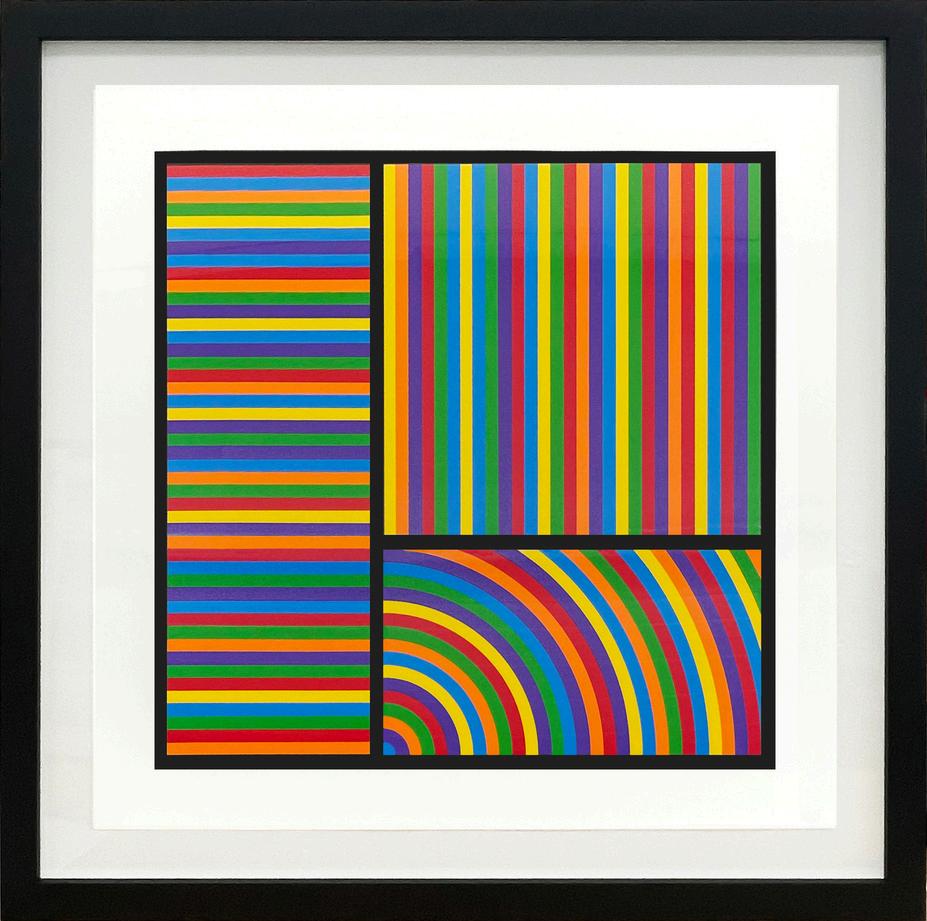
SOL LEWITT
American, 1928 - 2007
Sol LeWitt famously stressed the importance of the ideas that animated his artwork over the particulars of their execution A leading figure of the Conceptual and Minimalist movements, he maintained a practice that included drawing, printmaking, photography, painting, installation, sculpture, and writing. He is perhaps best known for simple, geometric drawings and wall paintings and for his “structures”: modular sculptures of cubed forms, variously constructed from steel, polyurethane, wood, or concrete. LeWitt also received attention for his writings on the nature of Conceptual art. To “install” his wall paintings, contemporary exhibition spaces must follow a set of instructions the artist left behind LeWitt received his BFA from Syracuse University. After graduating, he took classes at the Cartoonists and Illustrators School (now the School of Visual Arts), worked as a graphic designer and, later, worked shifts at the Museum of Modern Art alongside artists such as Dan Flavin and Robert Mangold
His work has been exhibited in a number of institutions including the Museum of Modern Art, MoMA PS1, the Centre Pompidou, the Hirshhorn Museum and Sculpture Garden, and the Pérez Art Museum Miami; it also belongs in the collections of countless museums including the Tate, the Guggenheim Museum, Dia Beacon, and the Musée National d’Art Moderne in Paris.
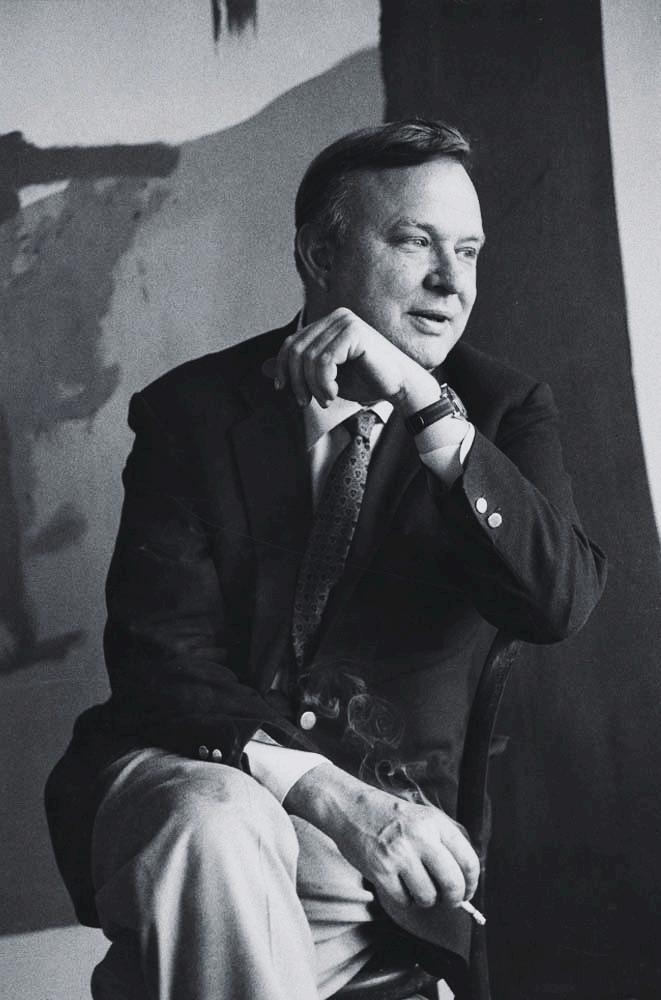
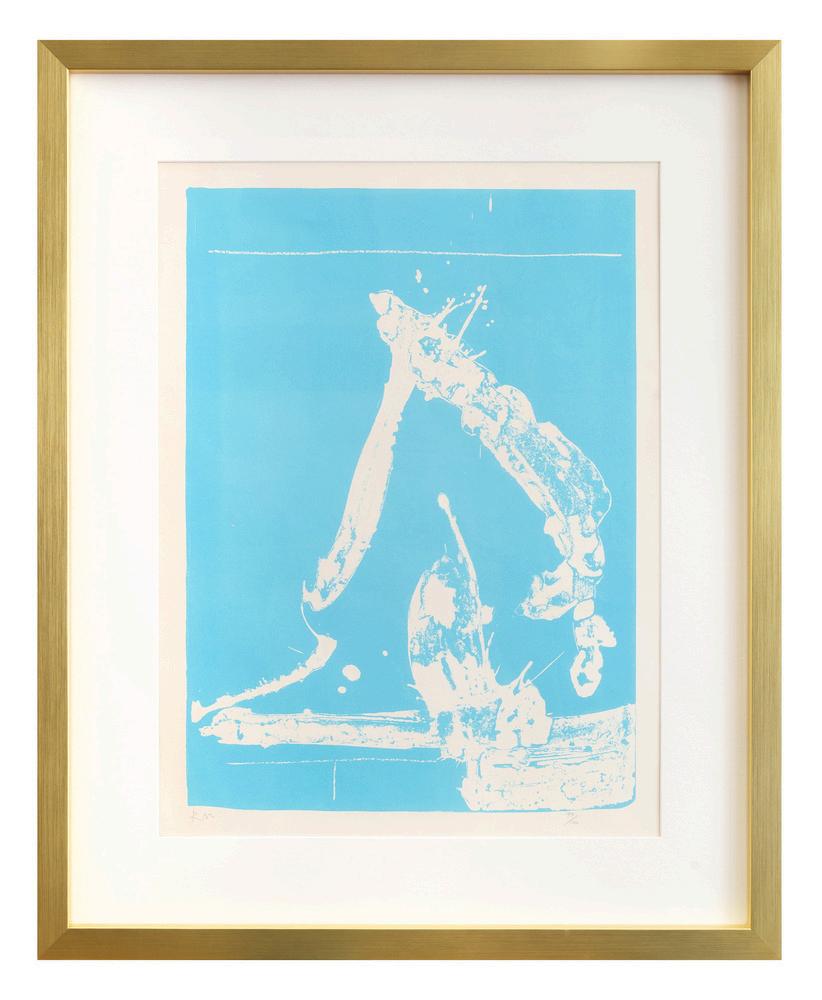
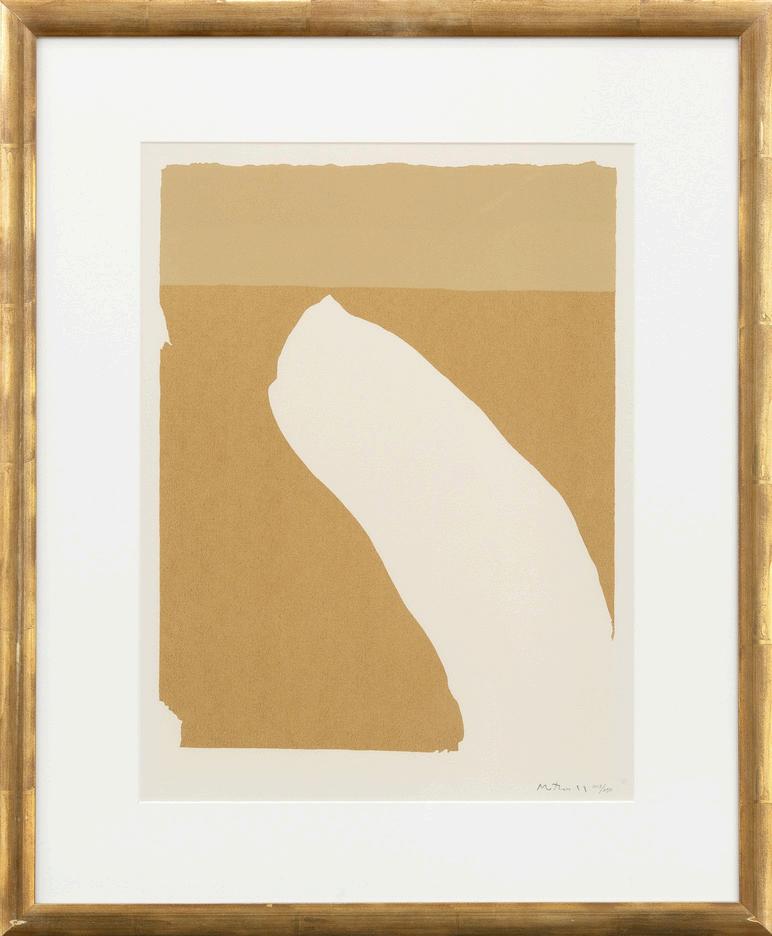
ROBERT MOTHERWELL
American, 1915 - 1994
Alongside Jackson Pollock, Mark Rothko, and Willem de Kooning, Robert Motherwell is one of the great American Abstract Expressionist painters His expressive canvases and collages resulted from a profound dedication to automatism, a method of spontaneous creation that attempts to express the inner workings of the human psyche. Motherwell’s most famous painting series, “Elegies to the Spanish Republic” which he worked on for over 40 years features bold, black shapes against fields of color and patches of white paint. His collages often integrated stamps, letters, musical scores, and boxes of Gauloise cigarettes.
Motherwell’s work can be found in the public collections of the Art Institute of Chicago, the Smithsonian American Art Museum, the Kunstmuseum Basel, and the Tate. The artist has been the frequent subject of solo shows across Europe and the United States At auction, Motherwell’s works have sold for more than $10 million Respected as a writer and theorist, Motherwell forged close friendships with the European Surrealists and other intellectuals. He served as a vital link between the pre-war avant-garde in Europe and its post-war counterpart in New York.
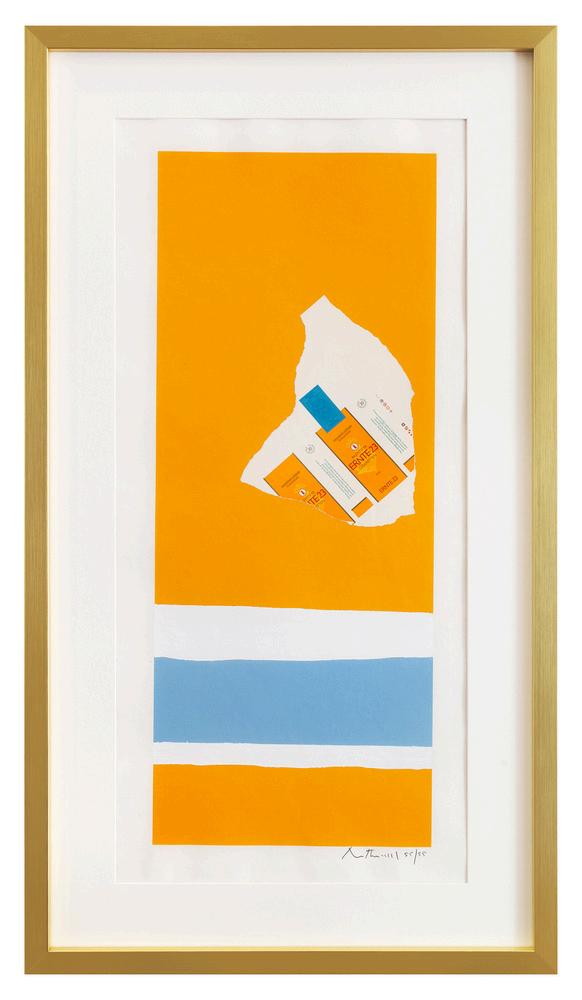
, 1973
in colors with collage on Georges Duchêne Hawthorne paper
30" x 11 75"
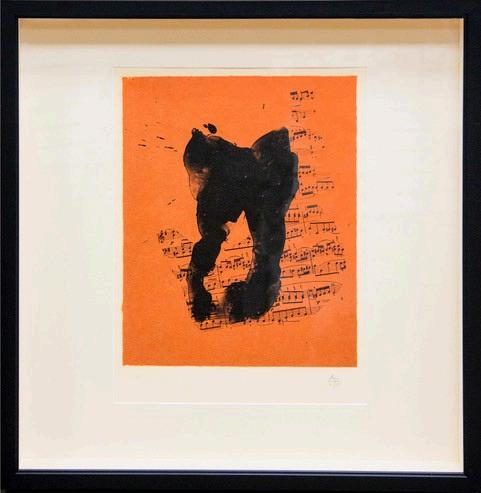
Motherwell Music for JS Bach (24/25), 1989
Color lithograph with chine collé on red Moriki handmade paper,applied to Arches Buff paper
22 5" x 15"
$9,500
Screenprint on Arches
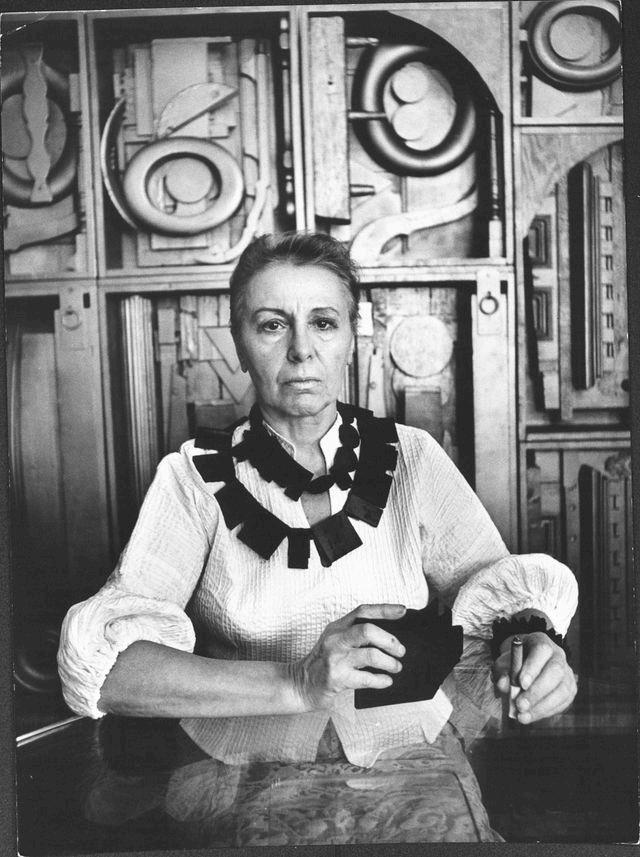
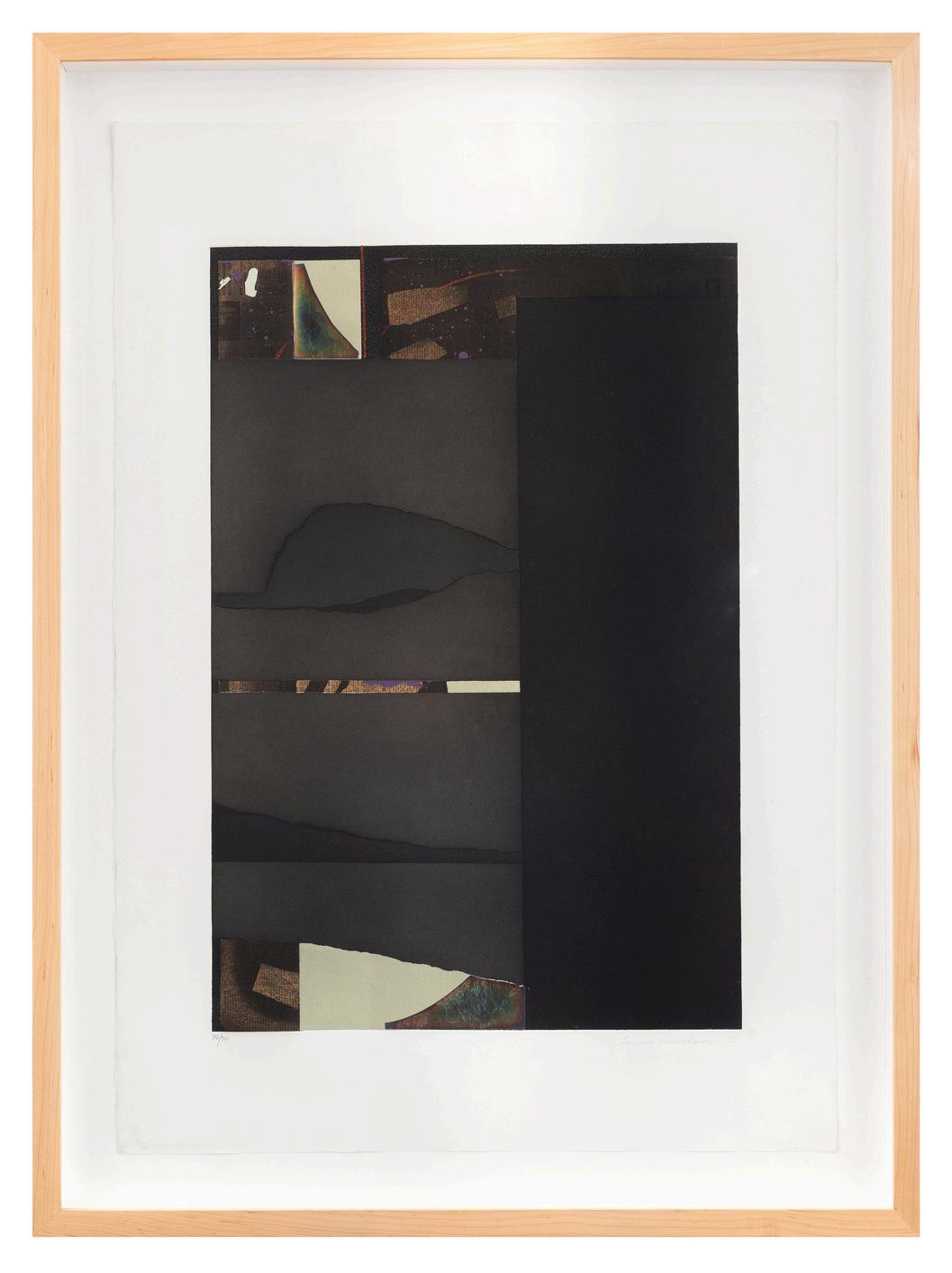
American, 1899 - 1988
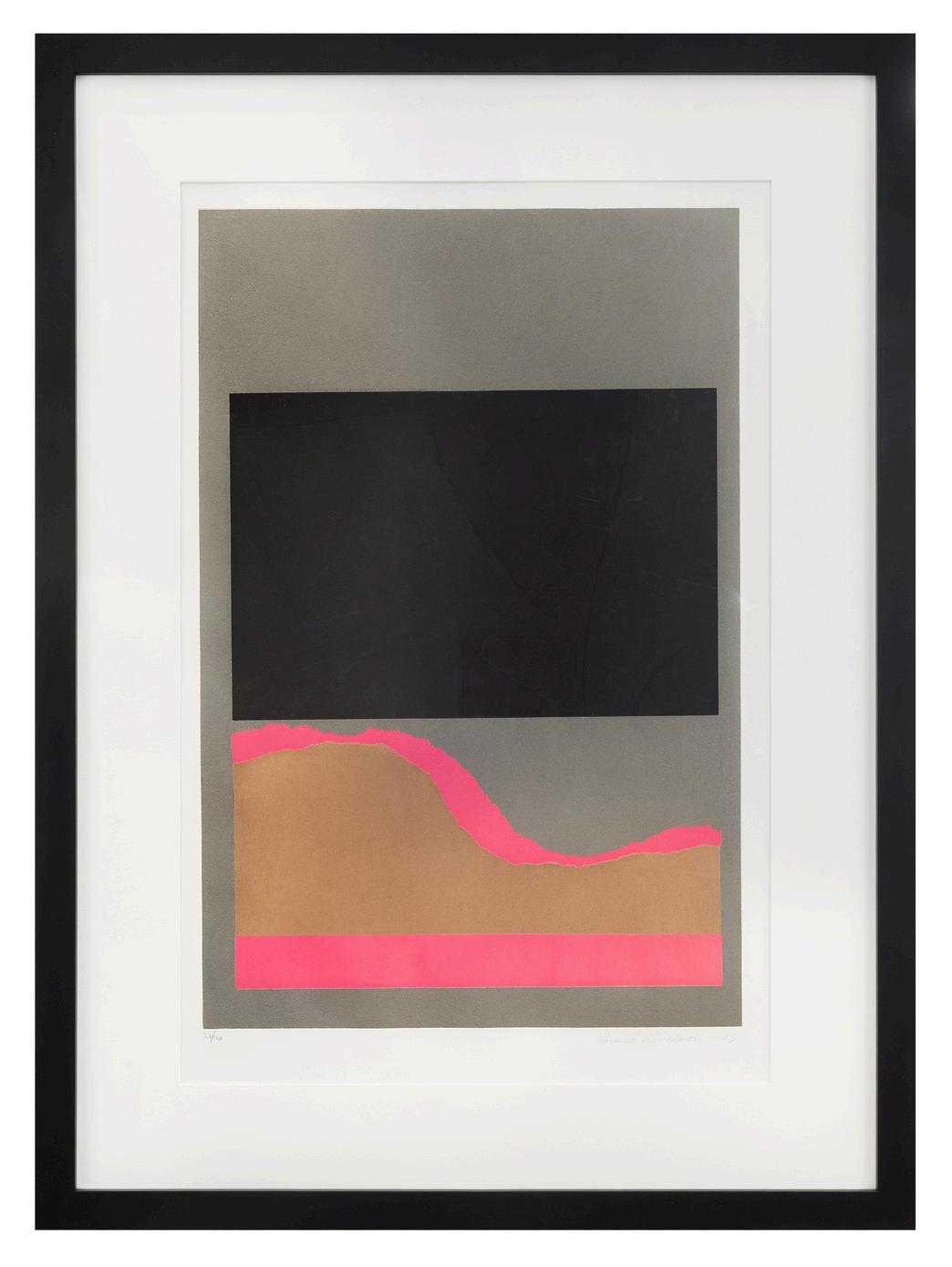
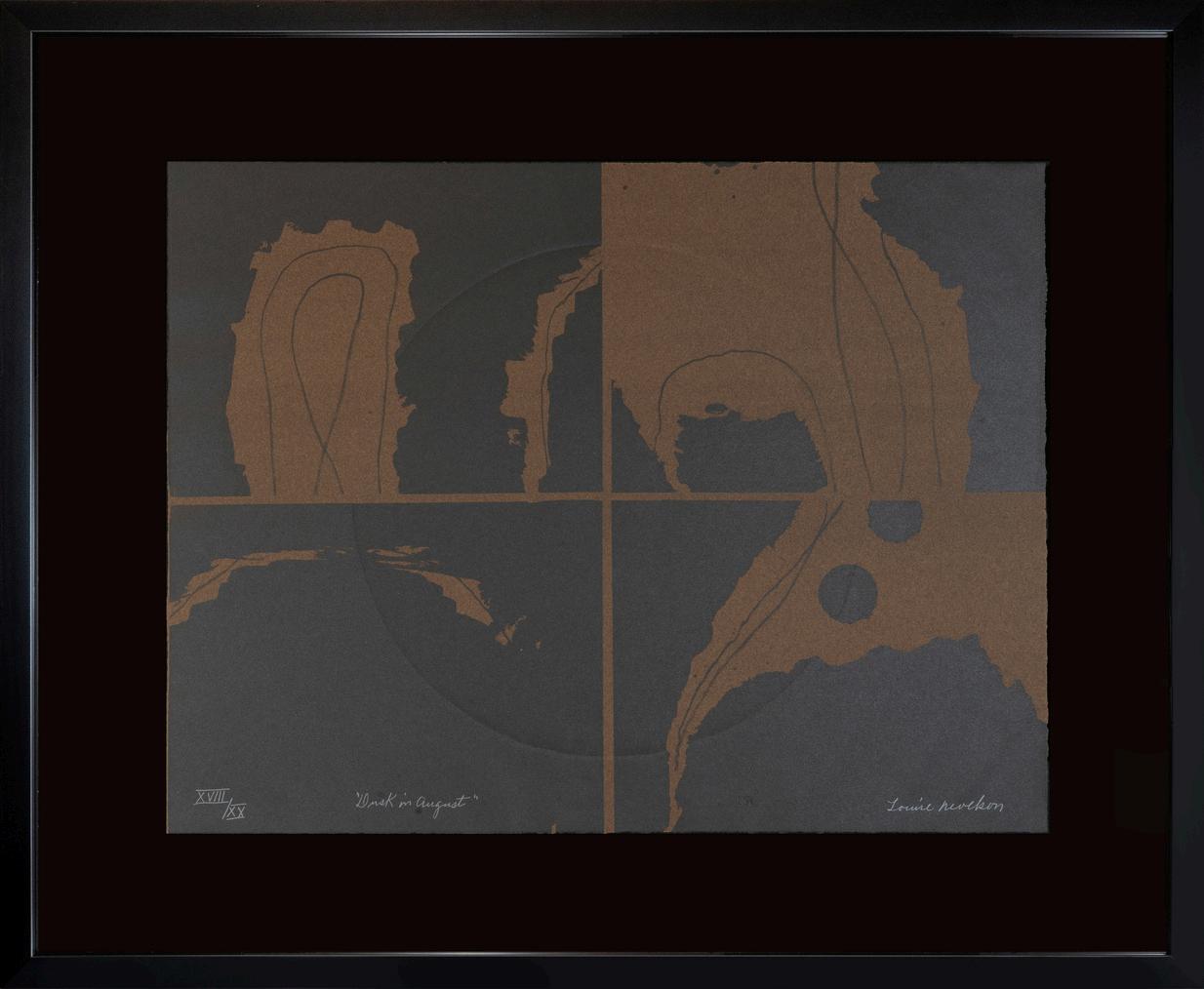
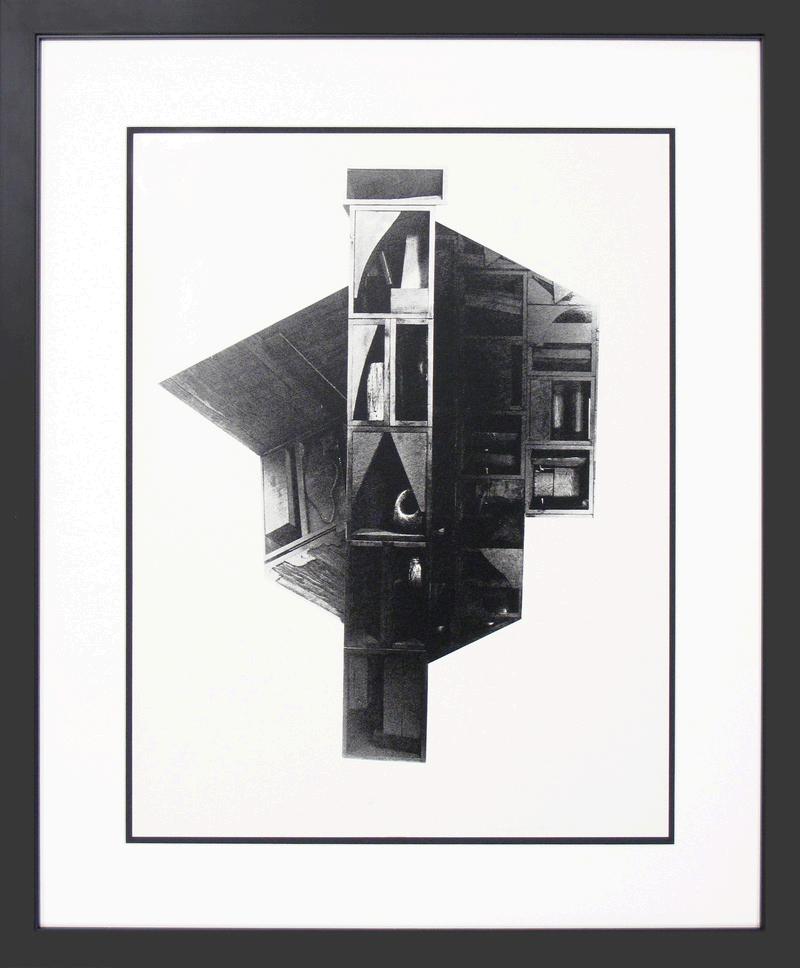
One of the 20th century’s most acclaimed sculptors, Louise Nevelson was a pioneer of large-scale installation art From timber, furniture fragments, and crates, she made massive wooden assemblages rooted in Abstract Expressionism, Cubism, and Constructivism. Monochromatic and typically all black (though there were departures in blue, white, and gold), Nevelson’s work established new relationships between object and viewer that transcended the representational
After studying under influential painter and teacher Hans Hofmann, Nevelson began producing her signature forms in the mid-1950s They were quickly embraced by the art establishment; the Whitney Museum of American Art, the Museum of Modern Art, and the Brooklyn Museum each acquired one before the end of the decade. Nevelson has since been the subject of solo exhibitions at the Whitney, the Los Angeles County Museum of Art, and the Guggenheim, among other institutions On the secondary market, her work has sold for up to seven-figure prices. Nevelson was also a prolific painter, draftswoman, and collage artist.
American, 1933 - 2017
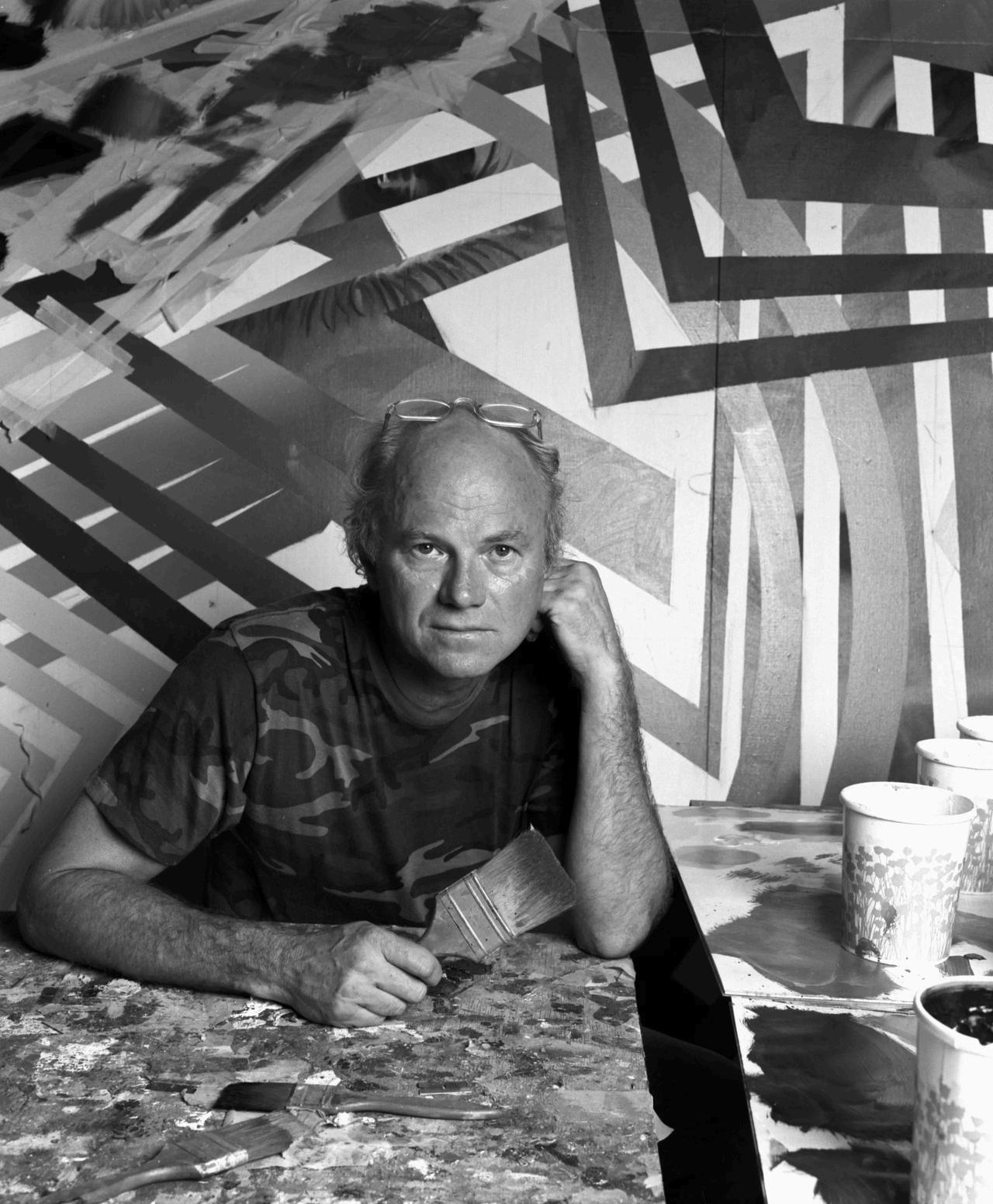
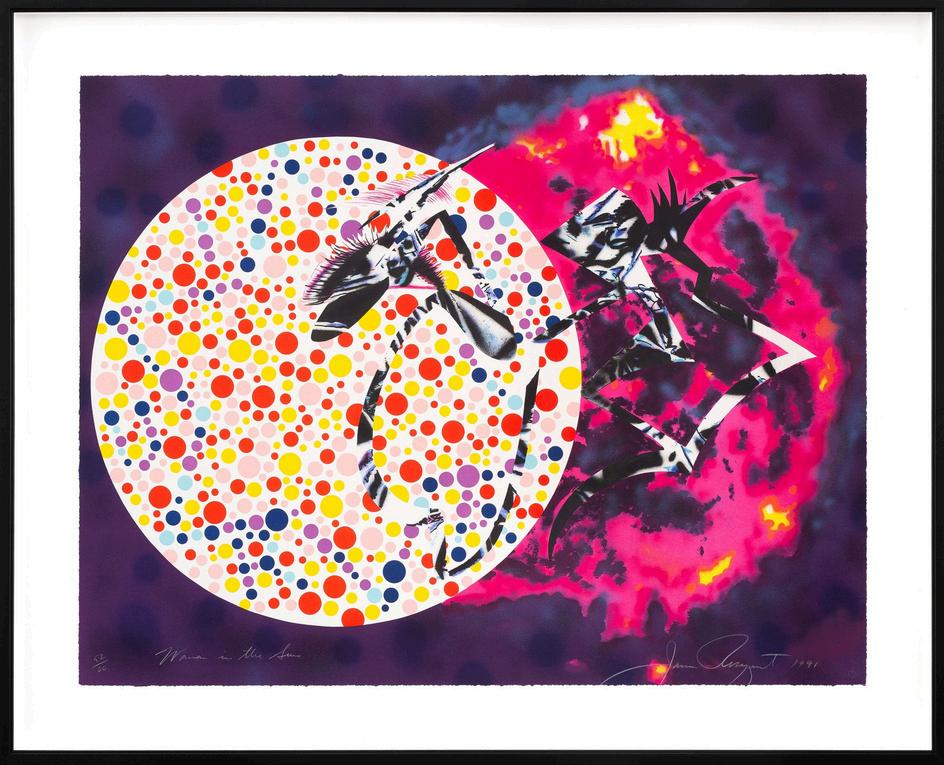
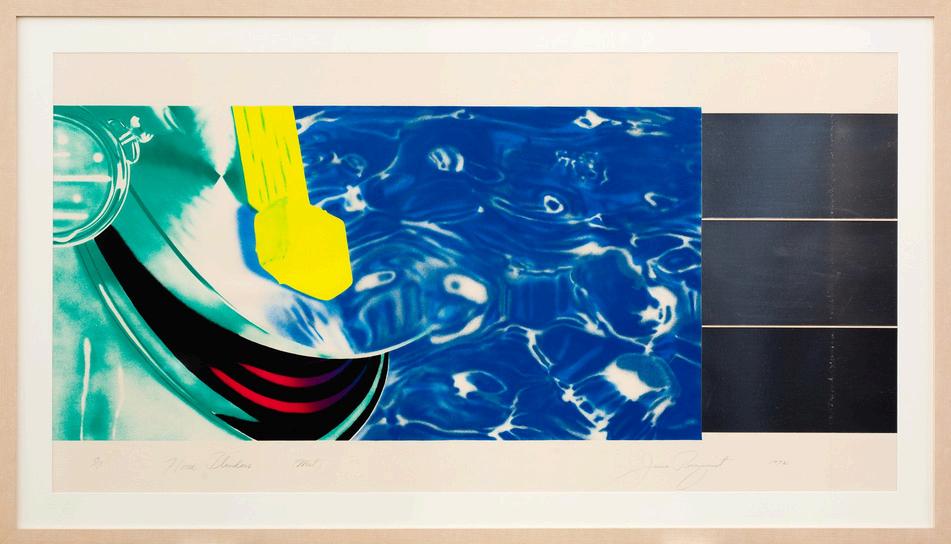
James Rosenquist became well known in the 1960s as a leading American Pop artist alongside contemporaries Andy Warhol, Roy Lichtenstein, Claes Oldenburg, and other figurative artists. As with his contemporaries, Rosenquist’s background in commercial art deeply influenced his nascent fine-art career and radically changed the face of the art world and the annals of art history. While each Pop artist developed a distinct style, there were commonalities in their approaches to imagemaking that helped define the Pop art movement in the early 1960s: the use of commercial art techniques, and the depiction of popular imagery and everyday objects
Drawing on his early experience as a billboard painter, Rosenquist culled imagery from print advertisements, photographs, and popular periodicals and recombined these to create mysterious and bold compositions Utilizing the visual language of advertising, described by the late American curator Walter Hopps as "visual poetry," his work has plumbed questions ranging from the economic, romantic, and ecological to the scientific, cosmic and existential. Creating seminal new work over more than five decades, Rosenquist consistently expressed facile talent in painting, collage, drawing, and printmaking. His work is included in major public and private institutions, and has been featured in solo exhibitions at the Solomon R. Guggenheim Museum, Museum of Modern Art, Walker Art Center, Whitney Museum of American Art, Guggenheim Museum Bilbao, The Menil Collection, The Museum of Fine Arts Houston, Denver Art Museum, Tretiakov Gallery, Wallraf-Richartz Museum, and other international institutions.
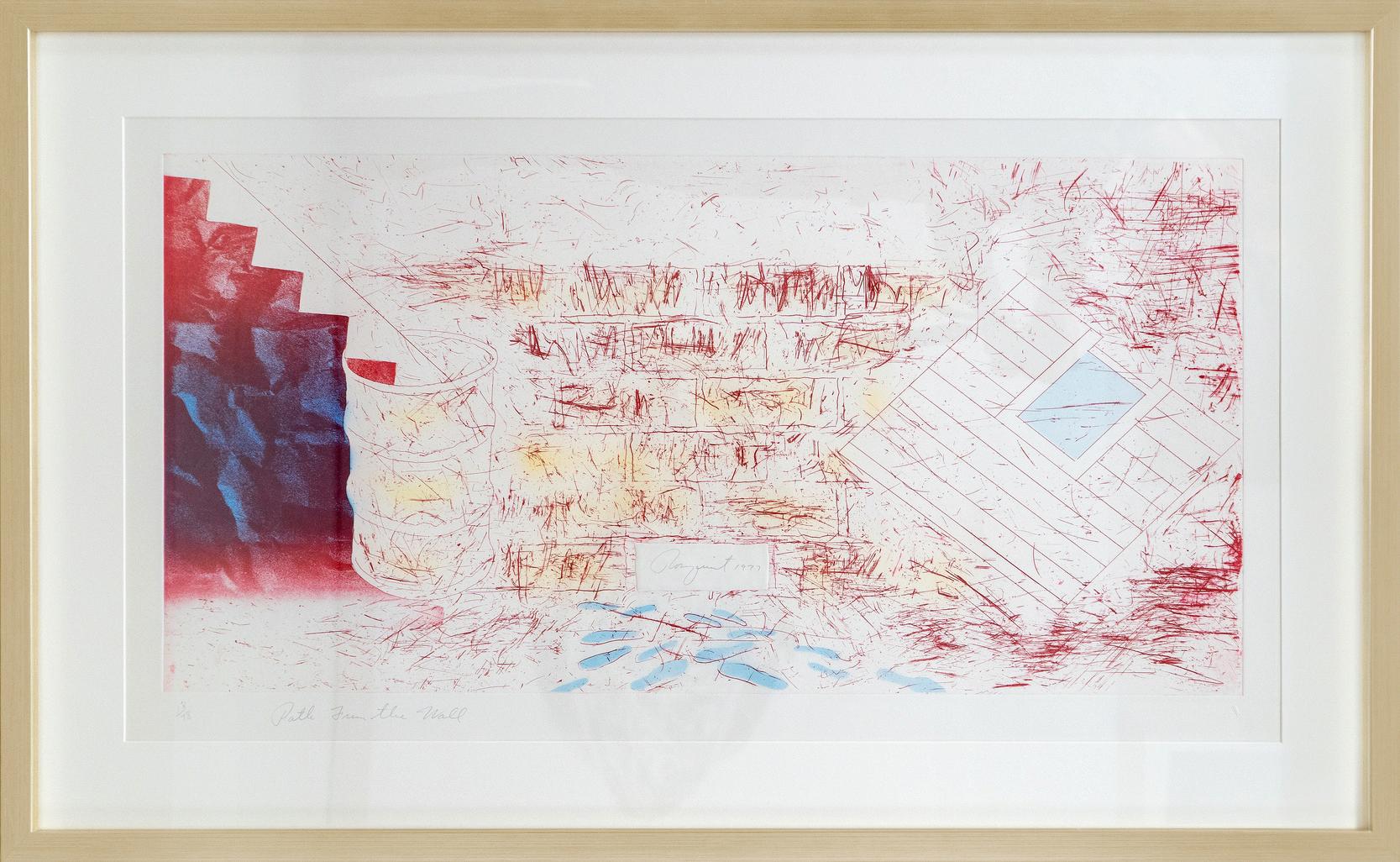
Path from the Wall (18/78), 1977
Color etching, aquatint, and embossing with pochoir and hand coloring
22
$3,500
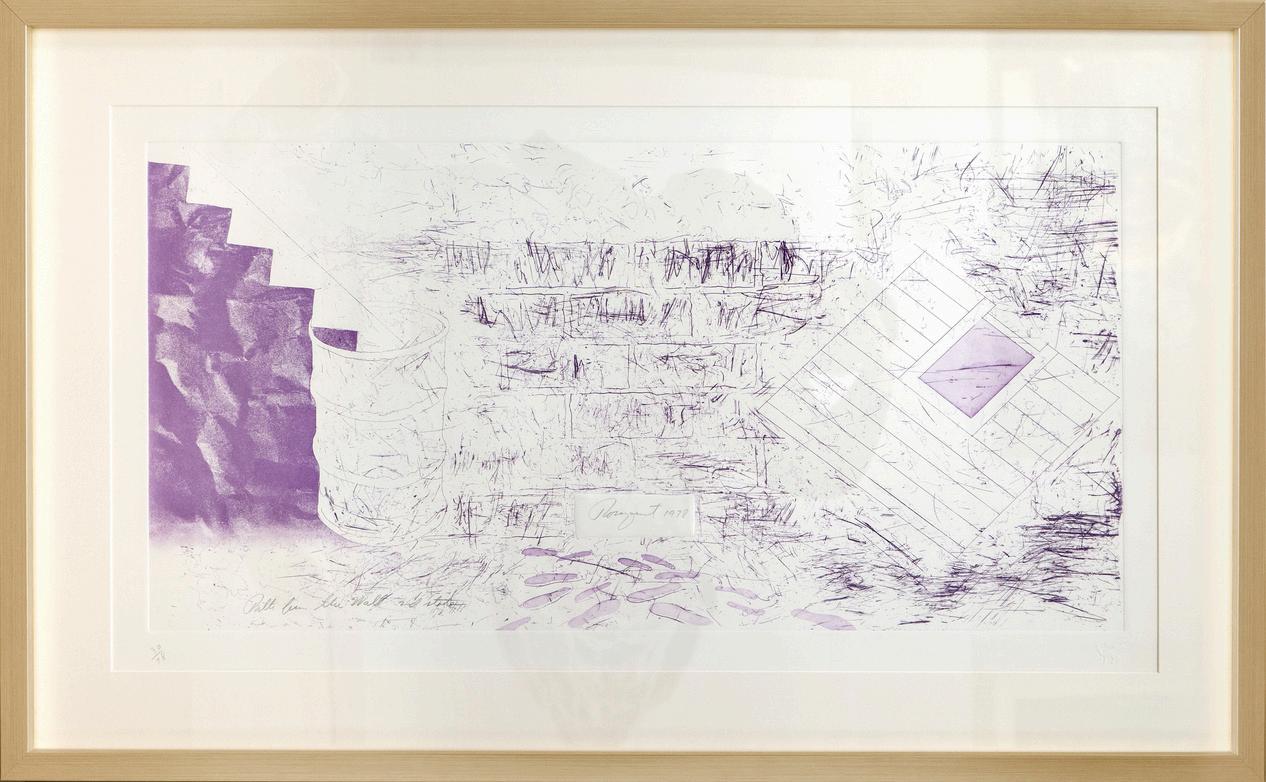
Path from the Wall, 2nd State (30/78), 1978
Etching, aquatint, and embossing, with pochoir and hand-coloring
22 75" x 39"
$5,500
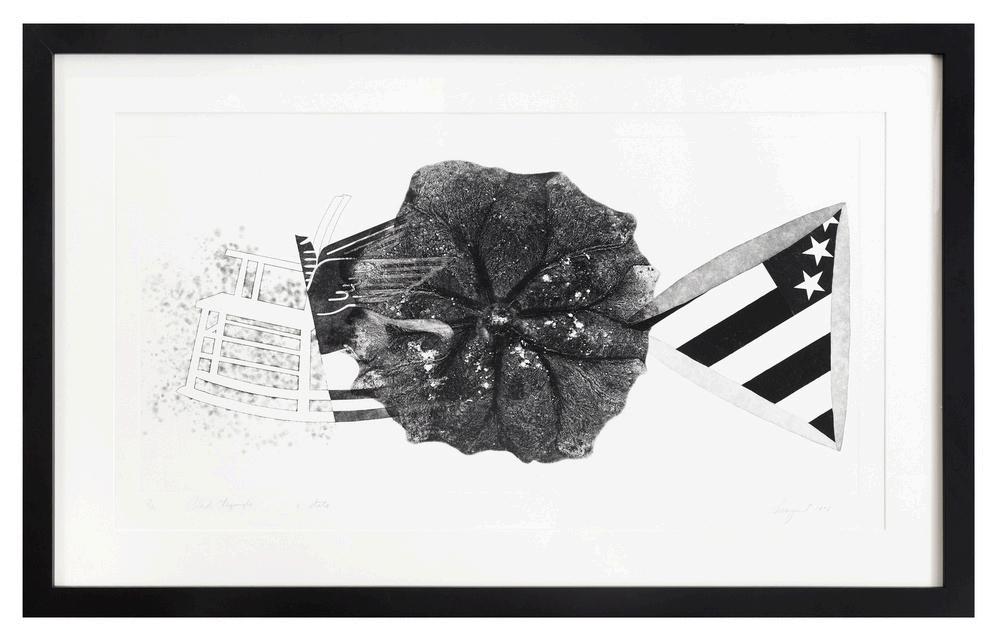
Black Triangle 2 (69/78), 1978
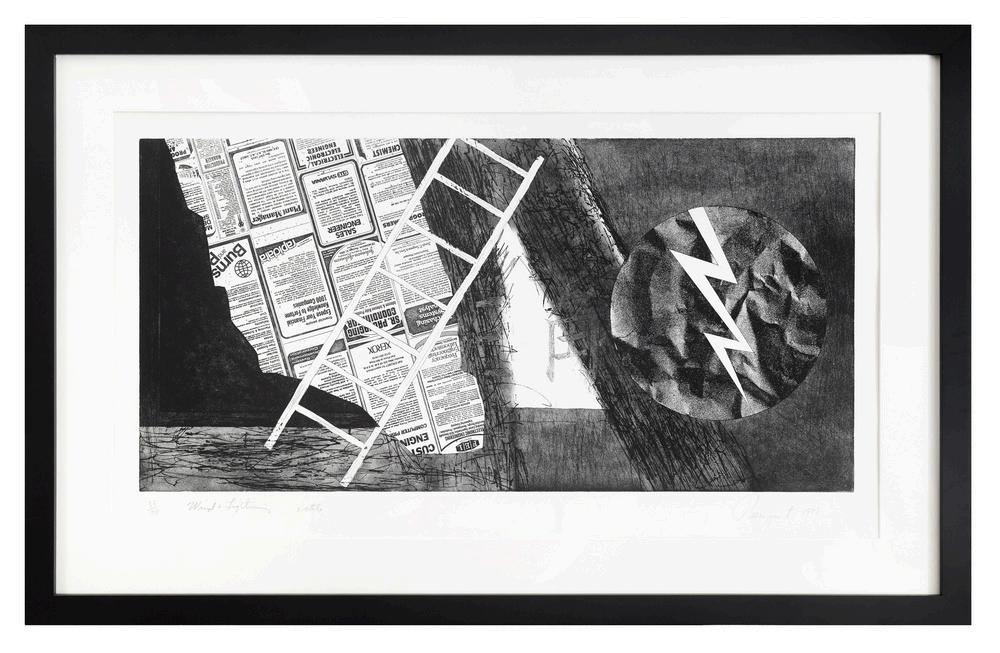
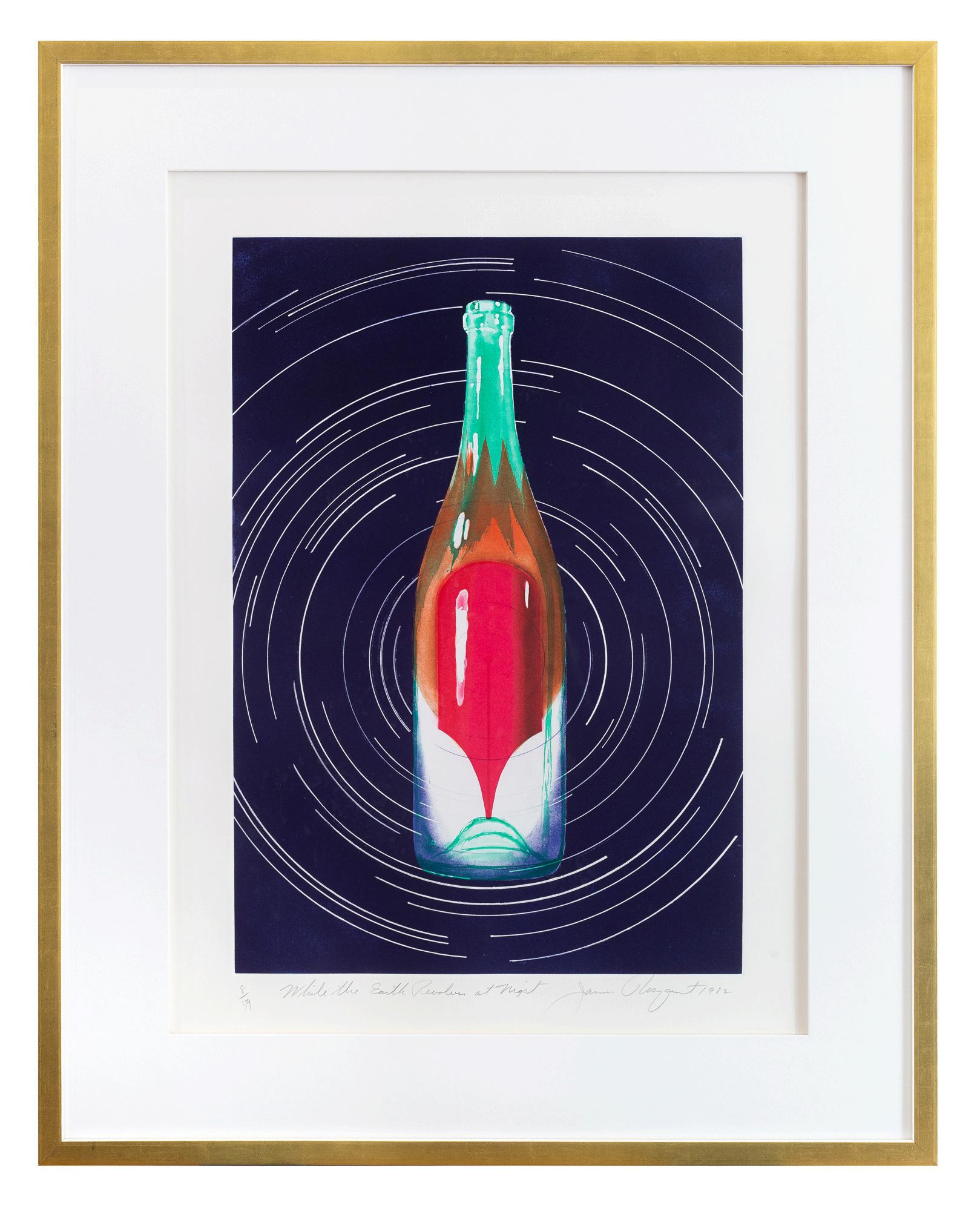
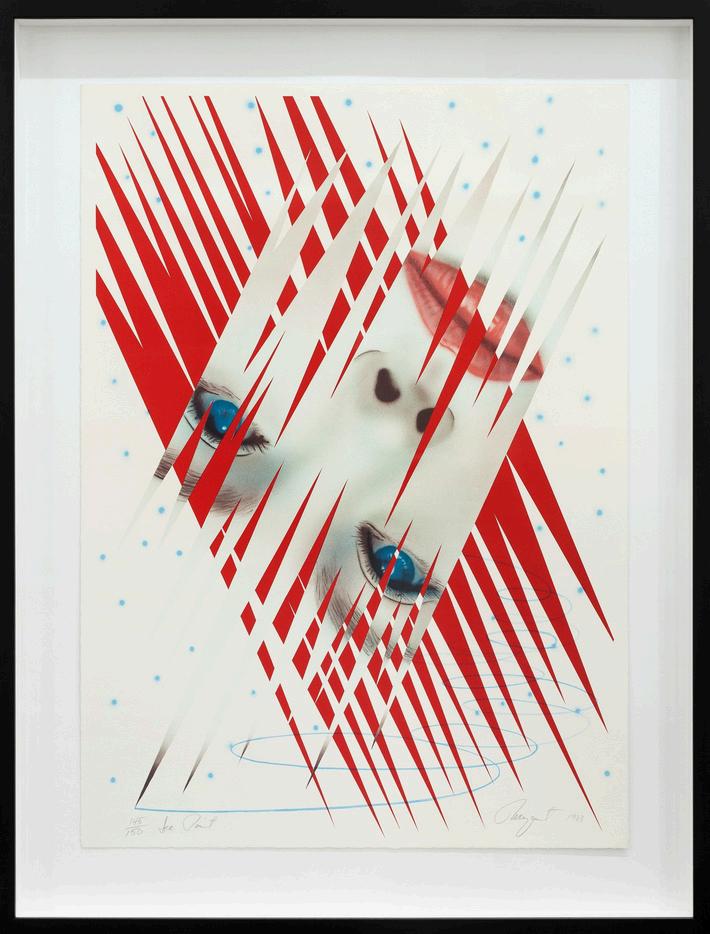
1983
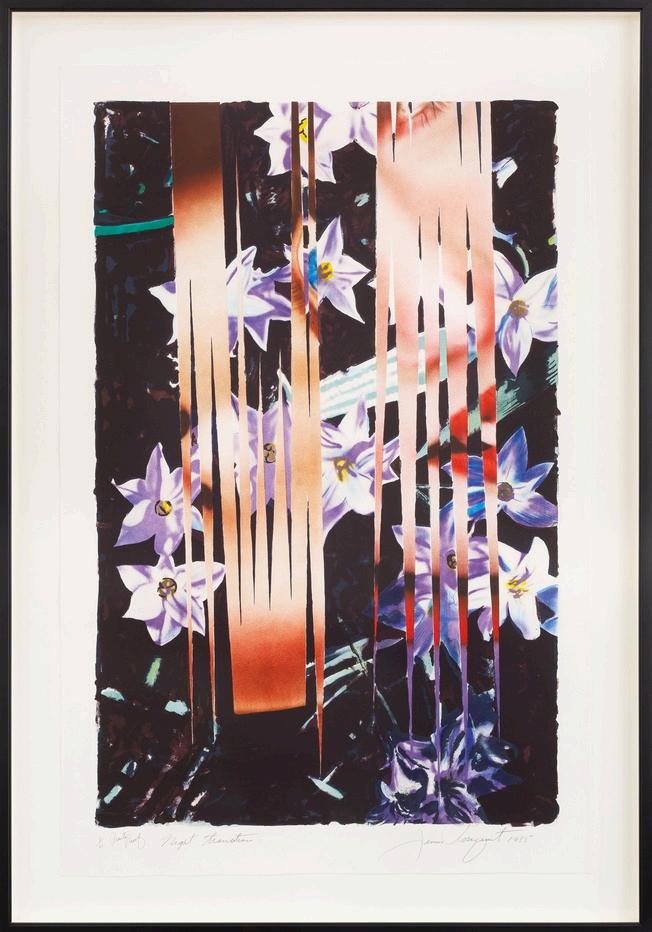
Night Transitions (PP 2/4), 1985
12 color lithograph on Arches paper
53 25" x 34 5"
$6,500
Japanese, b 1937
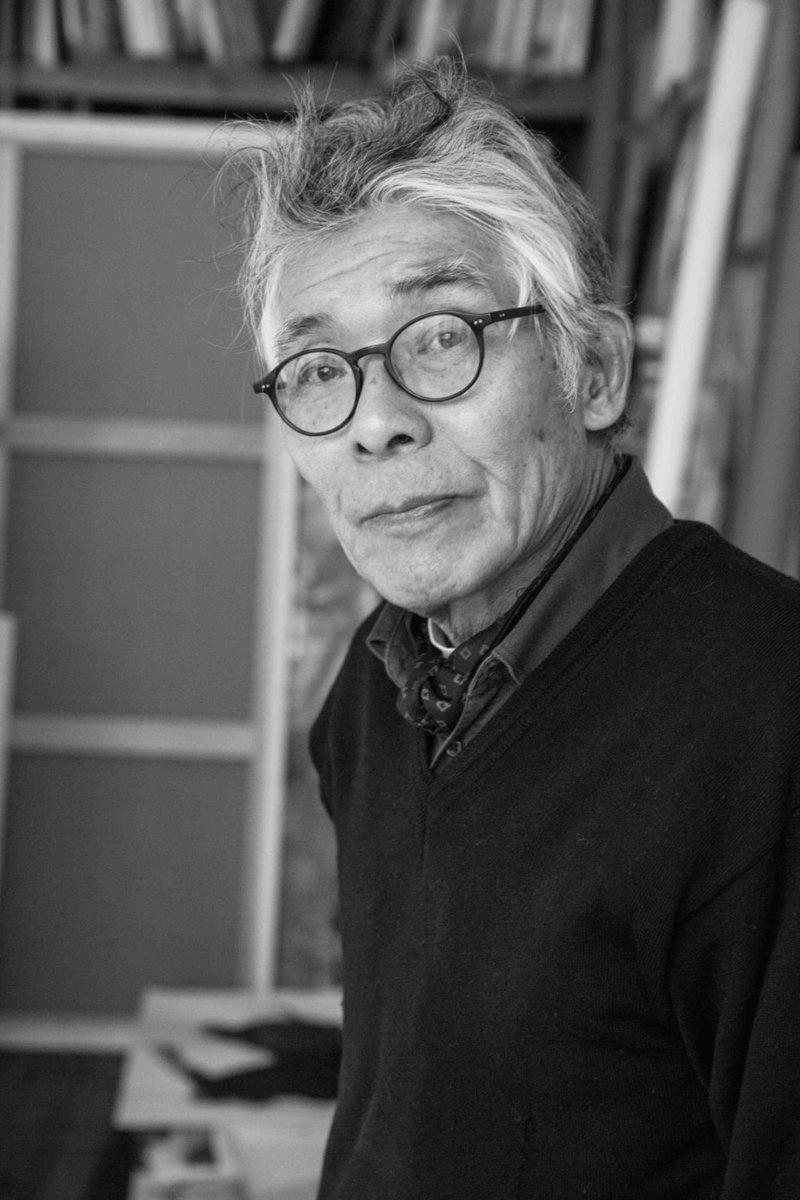
Painter, printmaker, and installation artist Takesada Matsutani is a key figure in the second generation of radical postwar Gutai artists Matsutani’s work is regularly represented in major Gutai exhibitions and was featured in the International Art Exhibition at the 2017 Venice Biennale. Today, he is one of the most widely represented Gutai artists on the market, due to the longevity of his career and his prolific output Throughout his career he has continuously adopted new materials and techniques to push the boundaries of his practice. In the 1960s, inspired by Gutai founder Jirō Yoshihara’s principle of doing what has never been done before, Matsutani began using blown air and vinyl glue then a newly developed material to create bulbous, sensual reliefs on canvas. His later mural-sized graphite and pencil works on paper feature sweeping, gestural strokes that create broad “bands of blackness,” as several of his exhibitions have been titled.
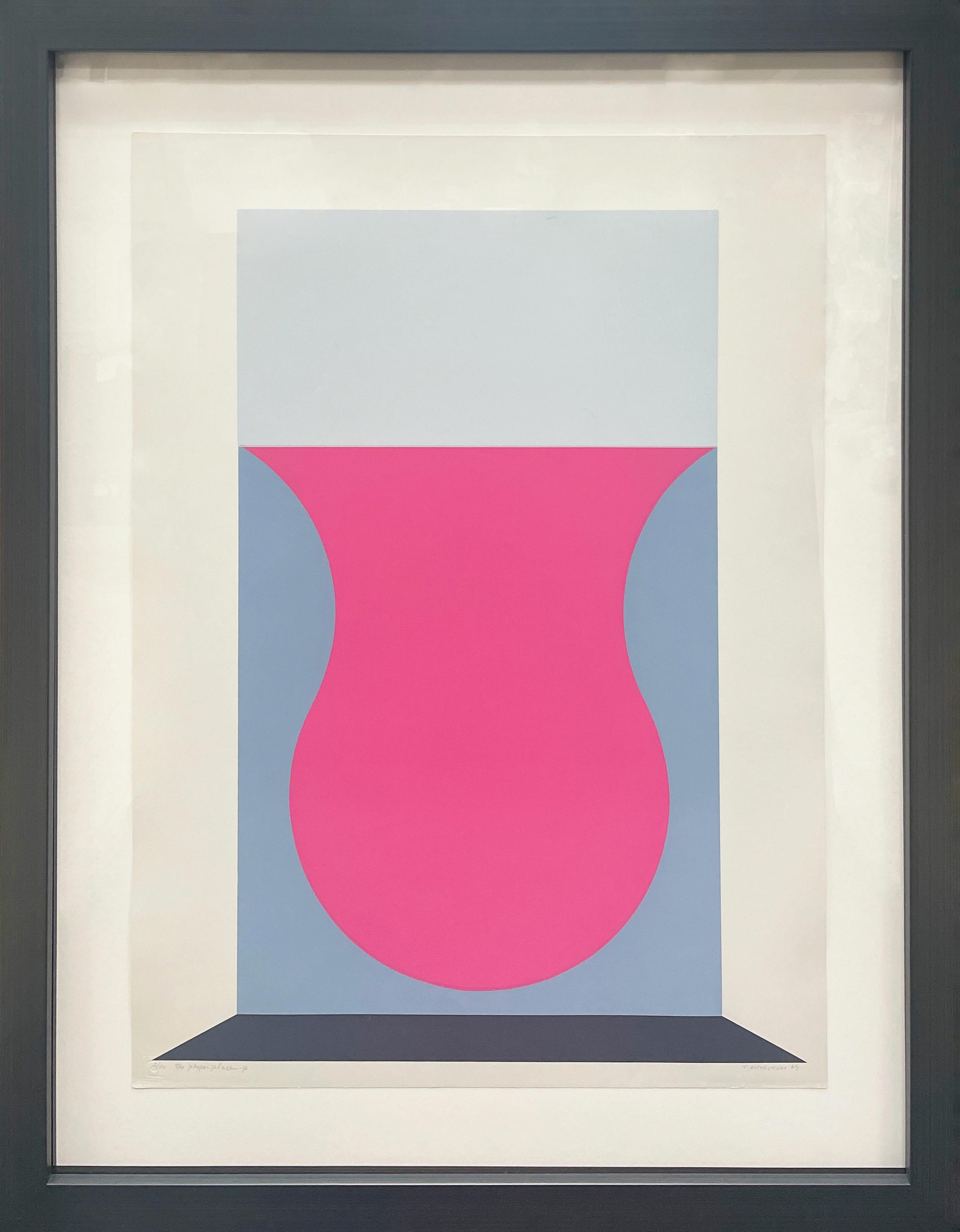
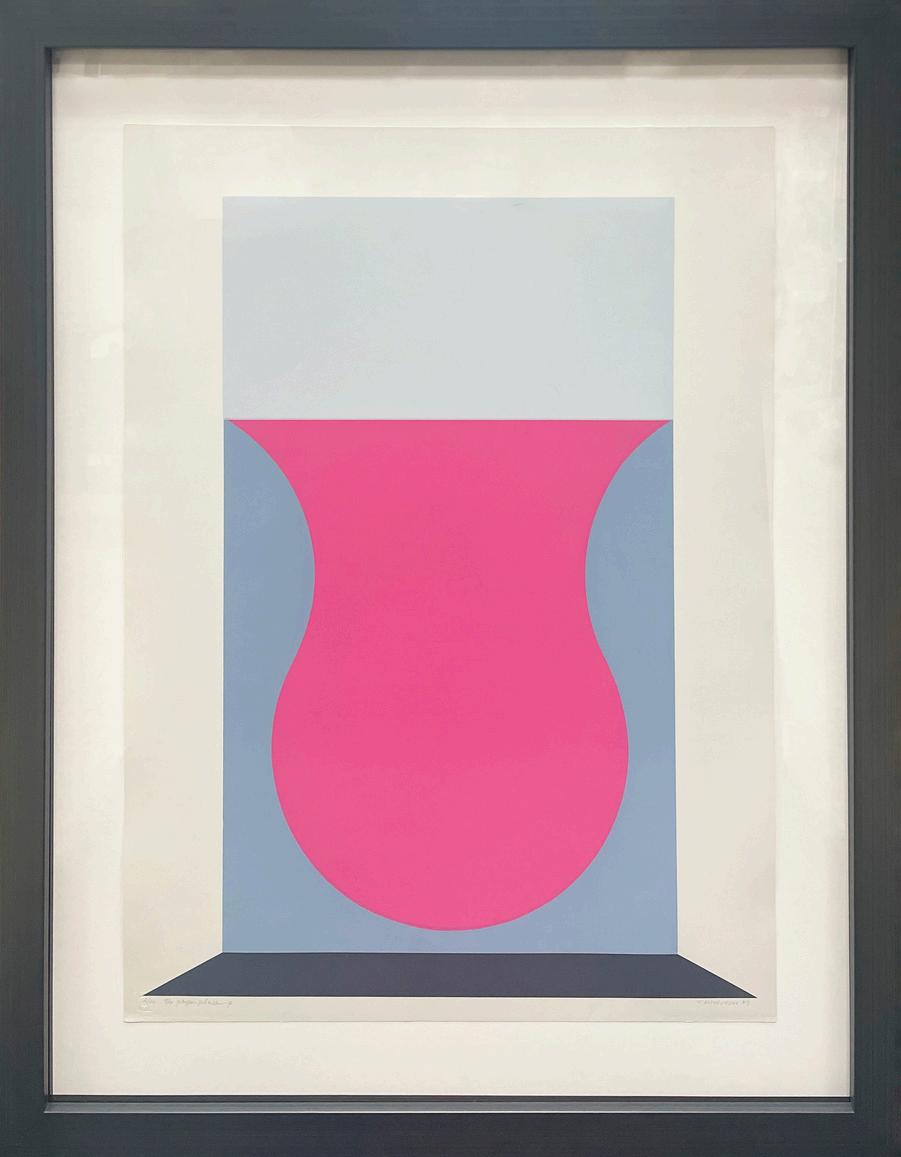
The Proper Place (5/30), 1969
Screenprint in colors on wove paper
31 5" x 23 25"
$6,500
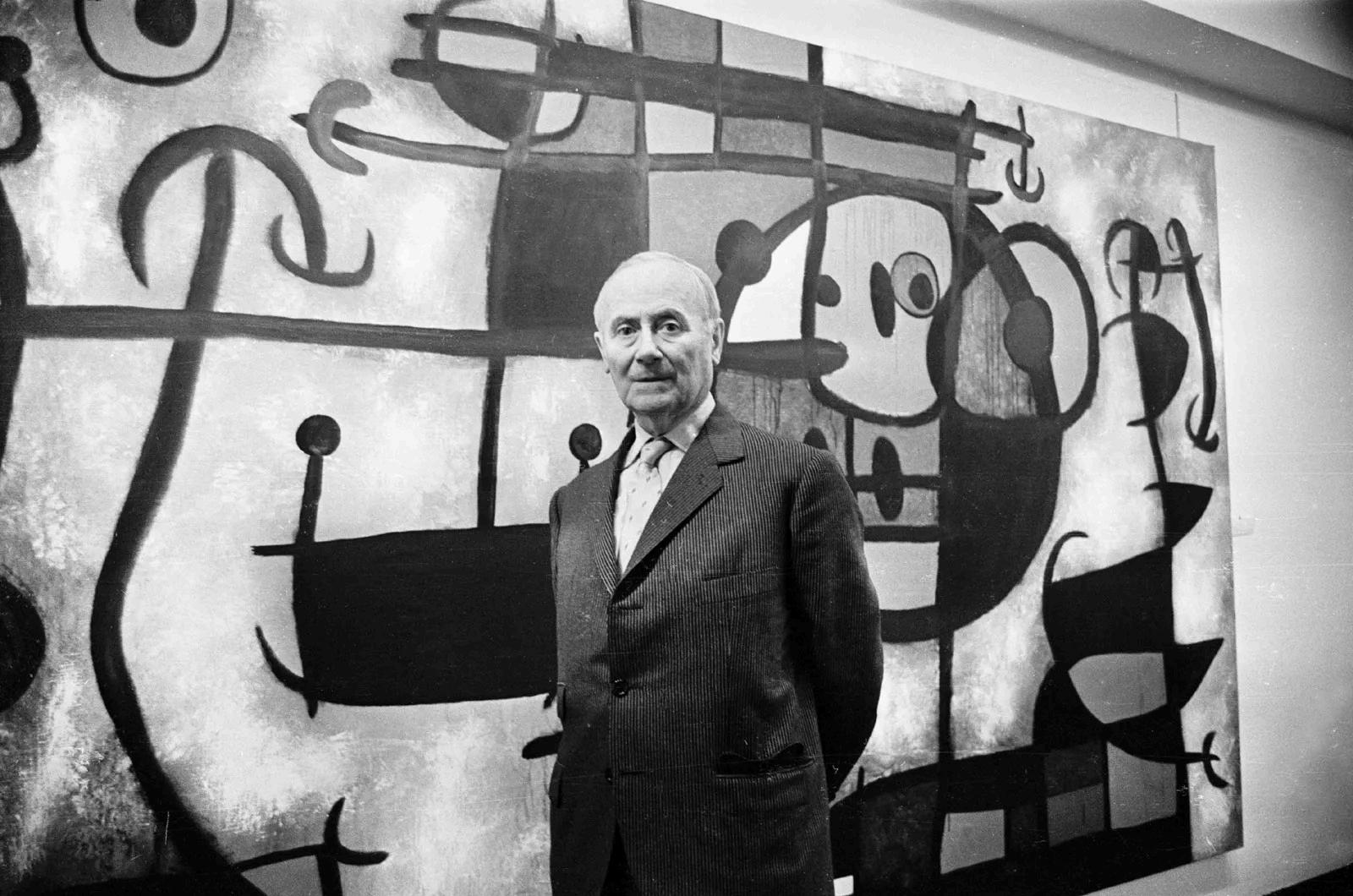
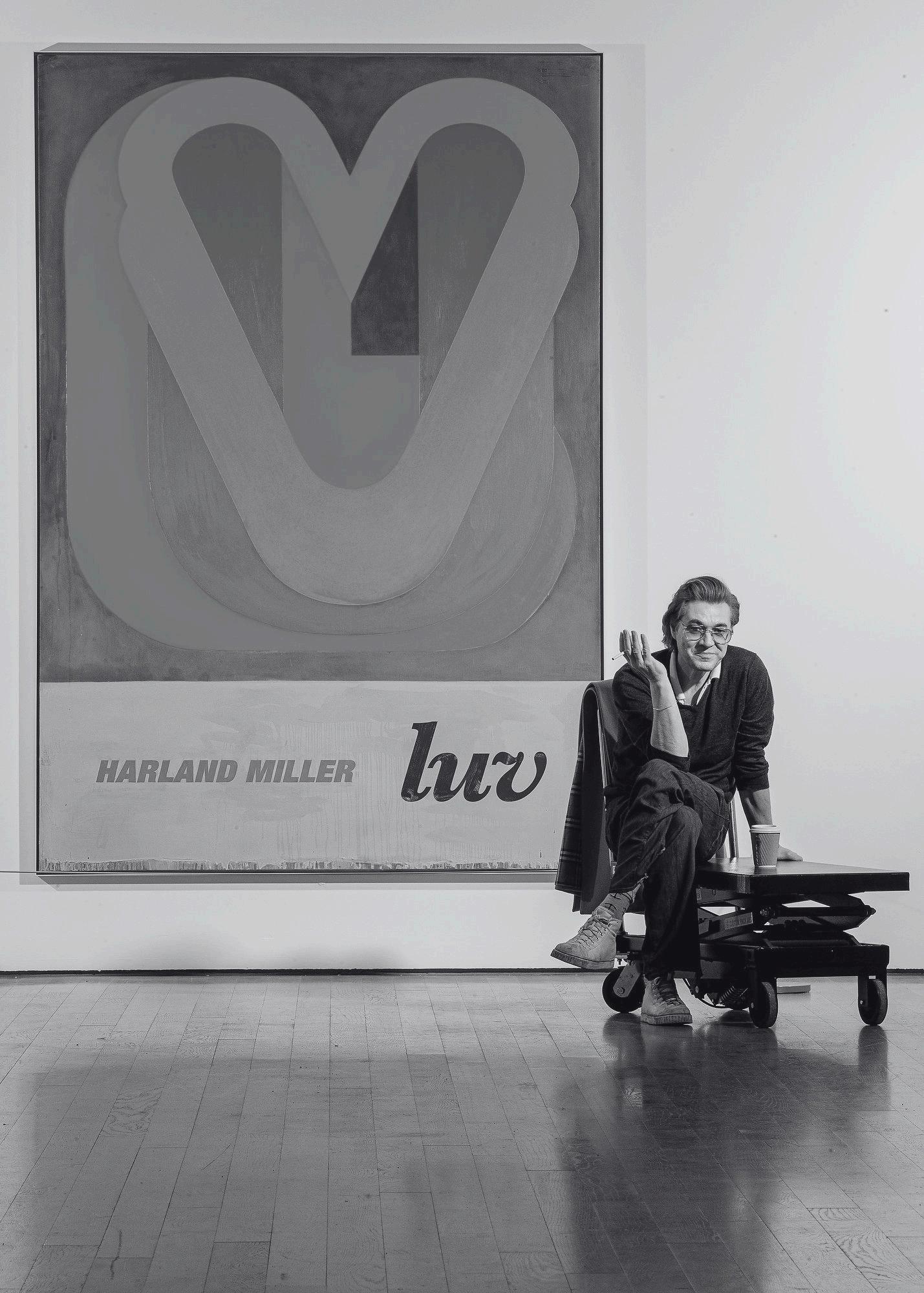
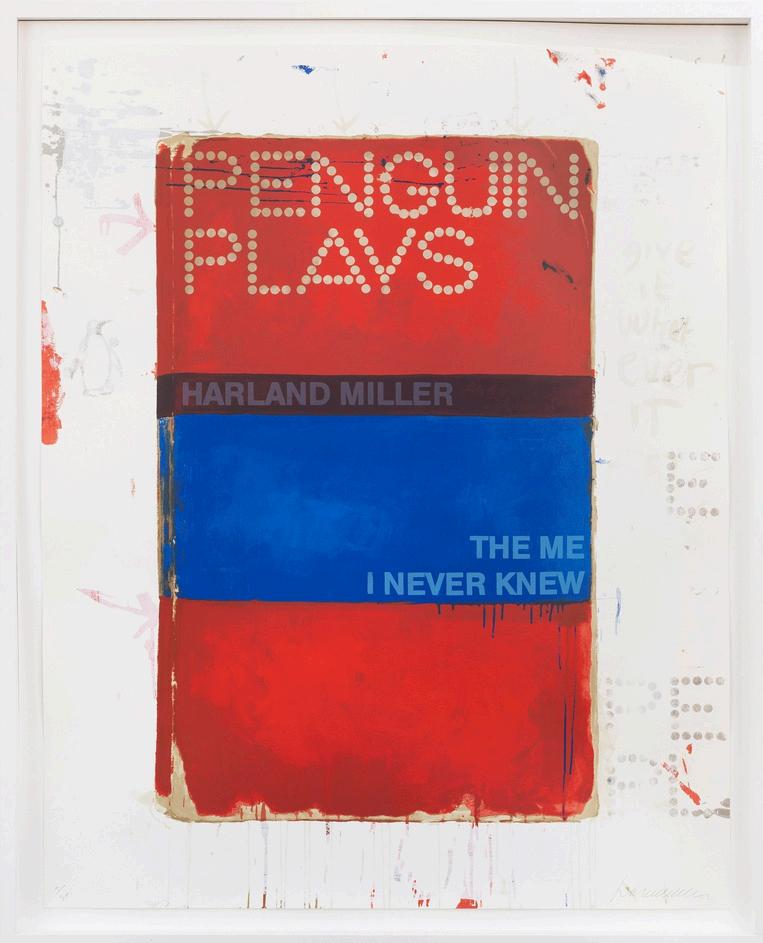
British, b 1964
Writer and artist Harland Miller explores the relationship between words and images and the process of producing meaning in his paintings, sculptures, and mixedmedia works. Interested in canonical authors like Edgar Allan Poe and Ernest Hemingway and drawing influence from Ed Ruscha, Mark Rothko, Anselm Kiefer, and Robert Rauschenberg, Miller pointedly combines text and images to comment on the frequent disconnect between representation and reality For one series of paintings, he transformed canvases into satirical Penguin book covers, inventing keenly witty titles like The Me I Never Knew (2009) to send up classical literary motifs The (often torturous) process of writing itself is the subject of another series, in which Miller covers vintage typewriters with splashes of paint, giving the works titles like, Writing is easy all you do is feed in a sheet of white A4 paper and stare at it till your forehead bleeds (2009).
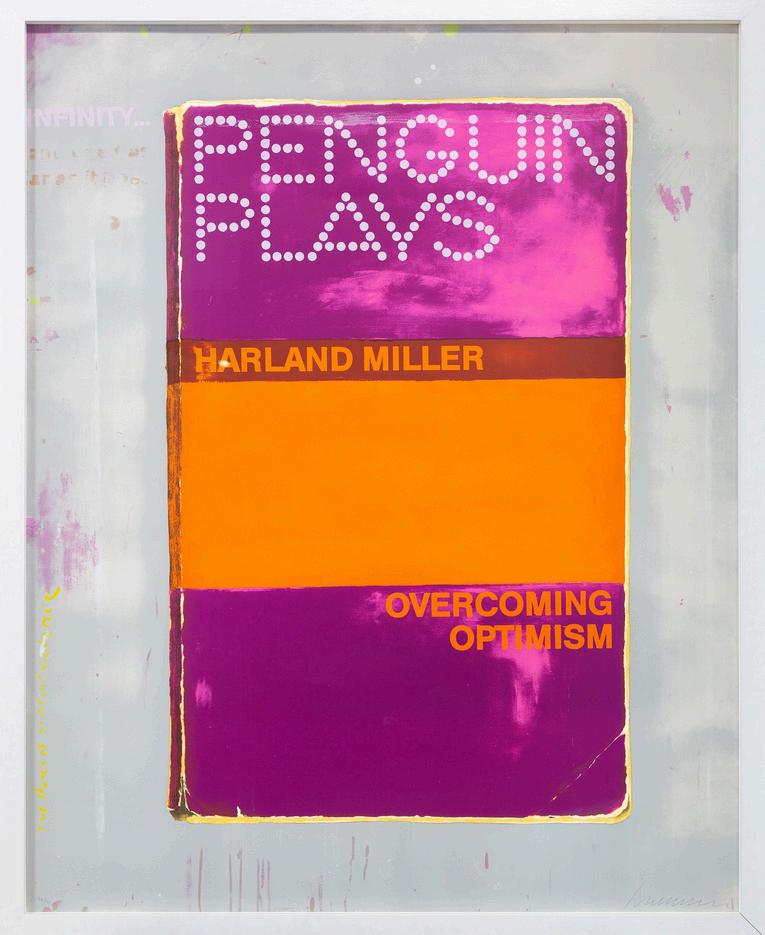
Overcoming Optimism (44/50), 2014
Screenprint in colors on wove paper
54 33" x 43 31"
$30,000
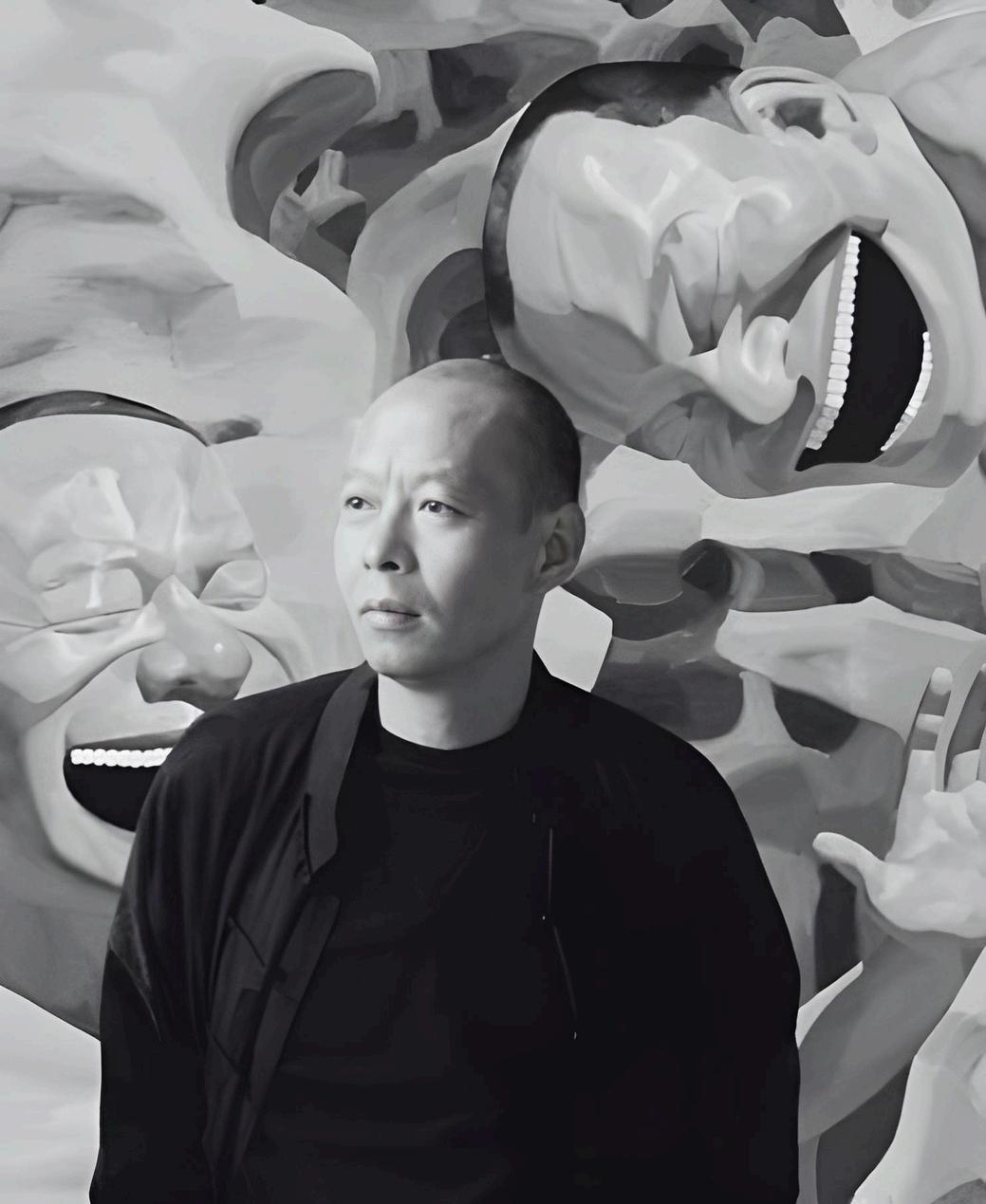
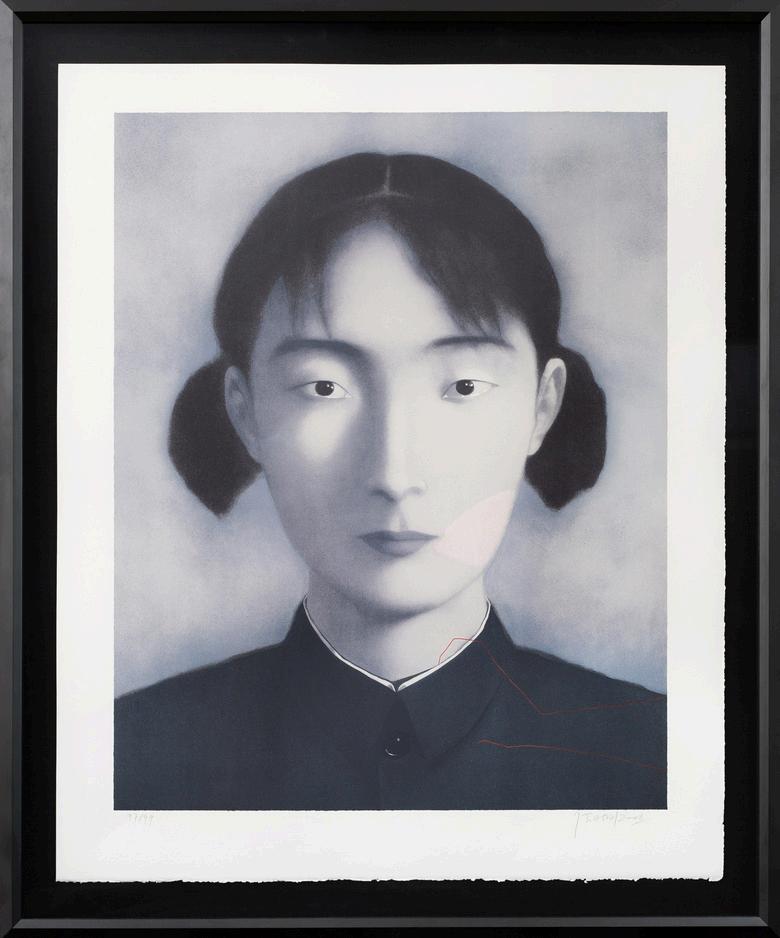
Chinese, b 1962
In his oil paintings, Yue Minjun often inserts himself in iconic moments in art history, painting exaggerated self-portrait figures in candy colors The figures bear wide smiles with gaping mouths as they enact poses from the works of Caravaggio and other artists from the Western canon. Transforming himself into an icon, the artist has said, “was not meant as a self-portrait in its traditional sense, but something more like a movie star acting in different roles ” Surrealism was an early influence on Yue, who shot to the top of an explosive Chinese contemporary scene as a member of the Cynical Realist movement, his serious political criticism and social commentary hidden behind the mask of his smiling faces In another series, Yue turned his practice on its head, recreating famous Western and Chinese socialist paintings as empty settings with their subjects removed.
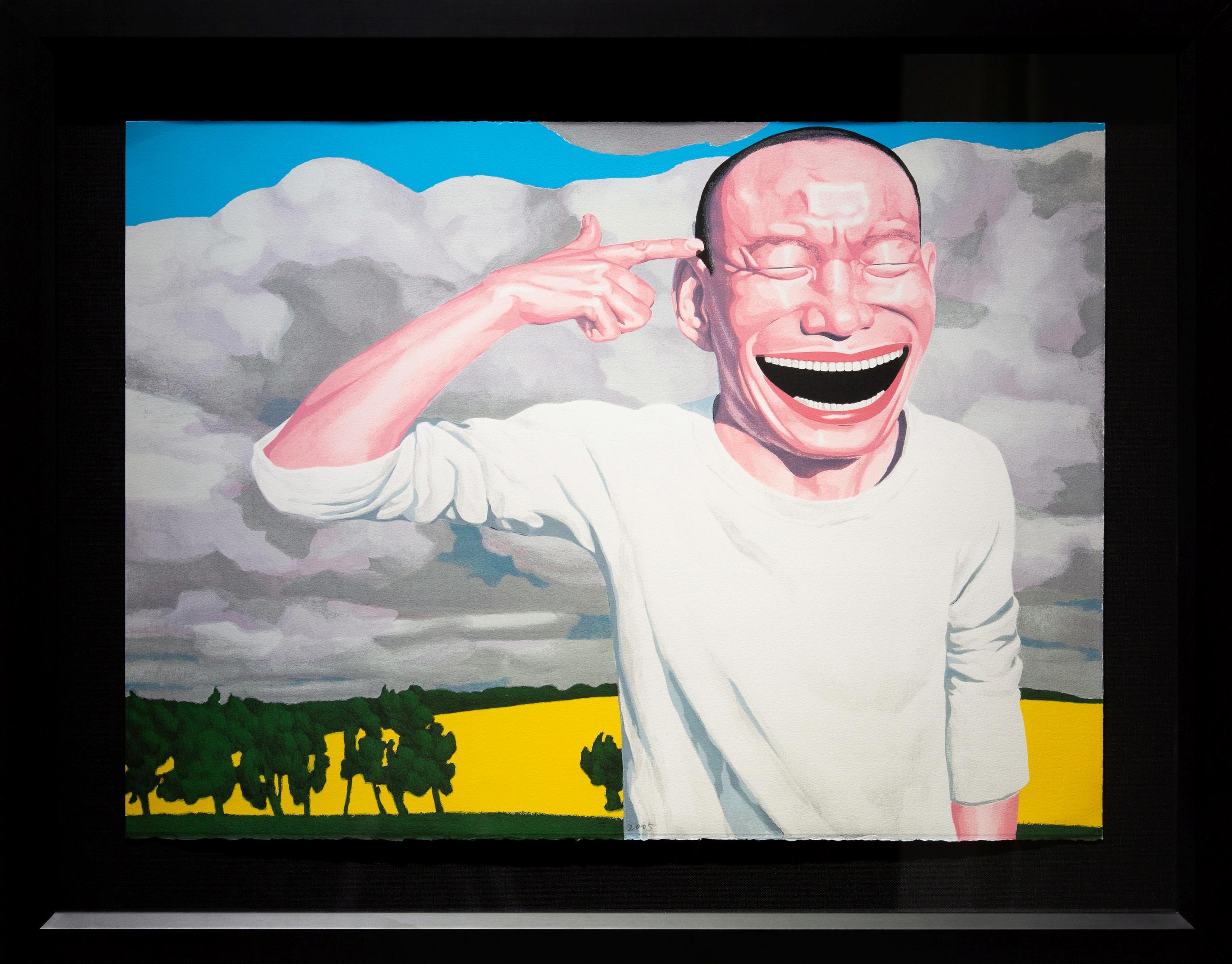
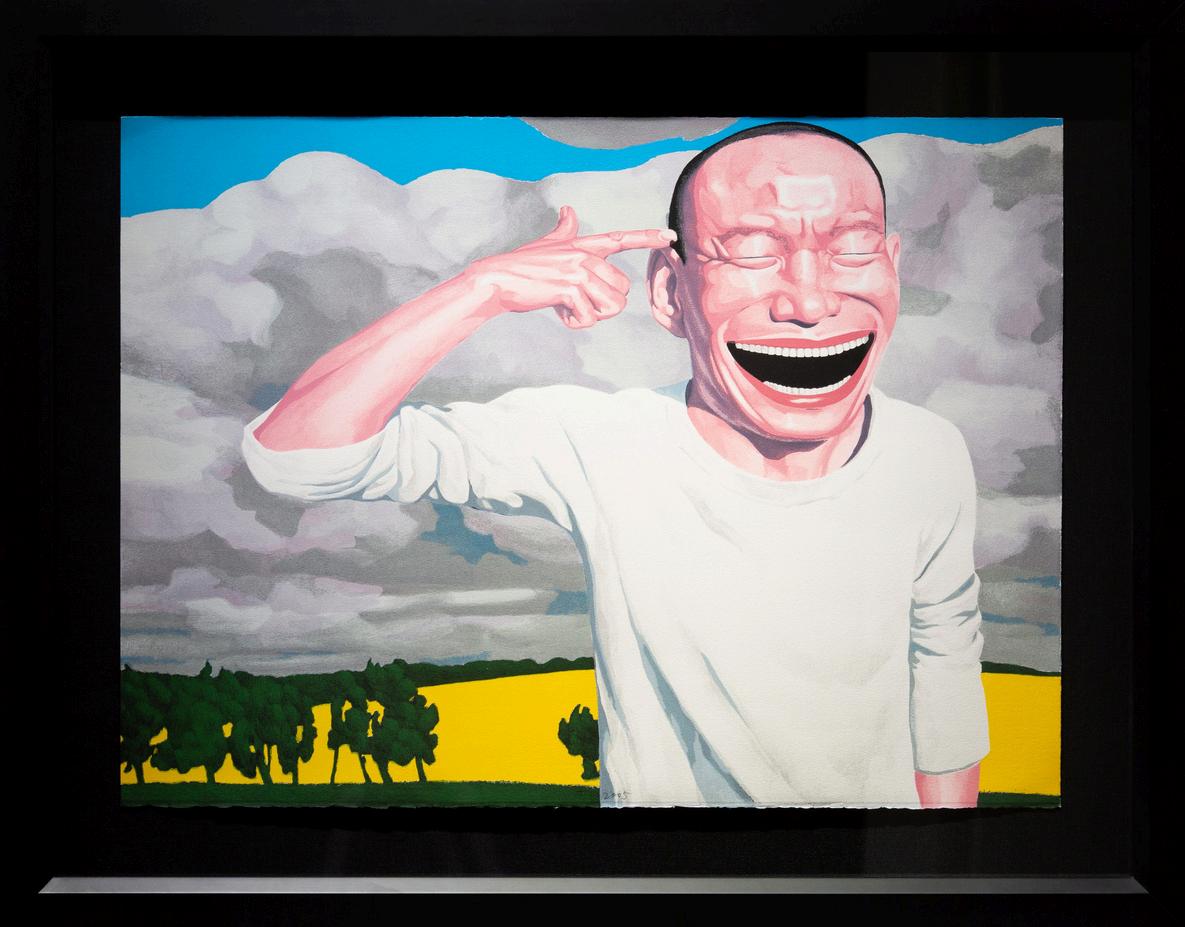
Untitled (from The Giants of Contemporary Chinese Art Portfolio) (17/99), 2005
21 9" x 29 4"
$8,500
Catalan-Spanish, 1893 - 1983
Widely considered one of the leading Surrealists (though he was never officially part of the group), Joan Miró was also a pioneer of automatism: a method of spontaneous drawing that attempted to express the inner workings of the human psyche. Miró used color and form in a symbolic manner, developing intricate compositions and a wandering linear style that combined abstract elements with recurring motifs such as birds, eyes, and the moon During his lifetime, Miró received the Grand Prize for Graphic Work at the 1954 Venice Biennale, exhibited at the first Documenta exhibition in 1955, and enjoyed multiple high-profile retrospectives. Today, Miró’s work which has sold for eight figures at auction can be found in the permanent collections of the Art Institute of Chicago and the Museum of Modern Art, among other institutions. His public sculptures and murals are installed in cities around the world, including Milan, Paris, and Barcelona.
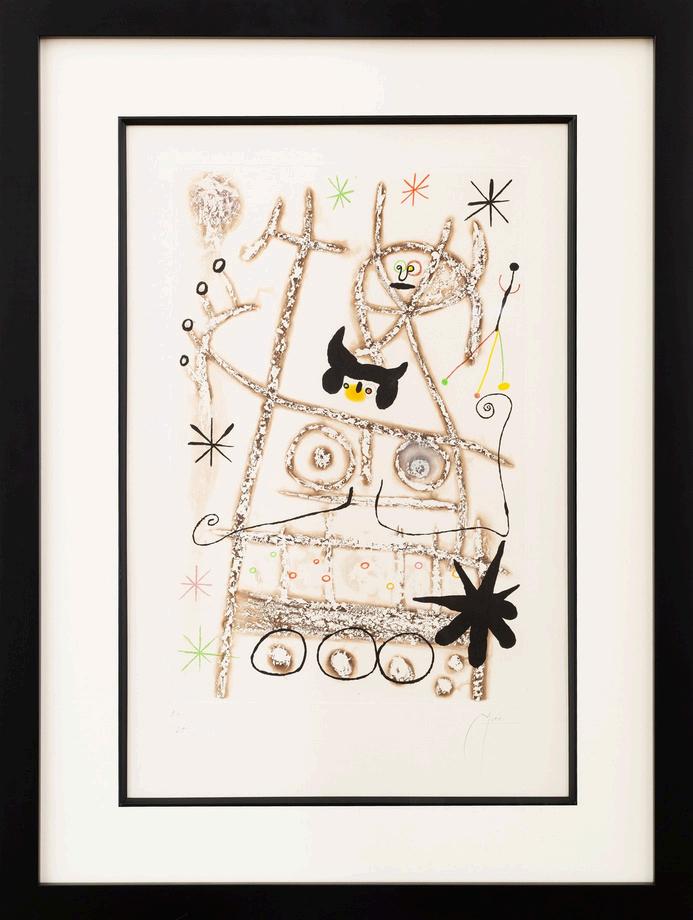
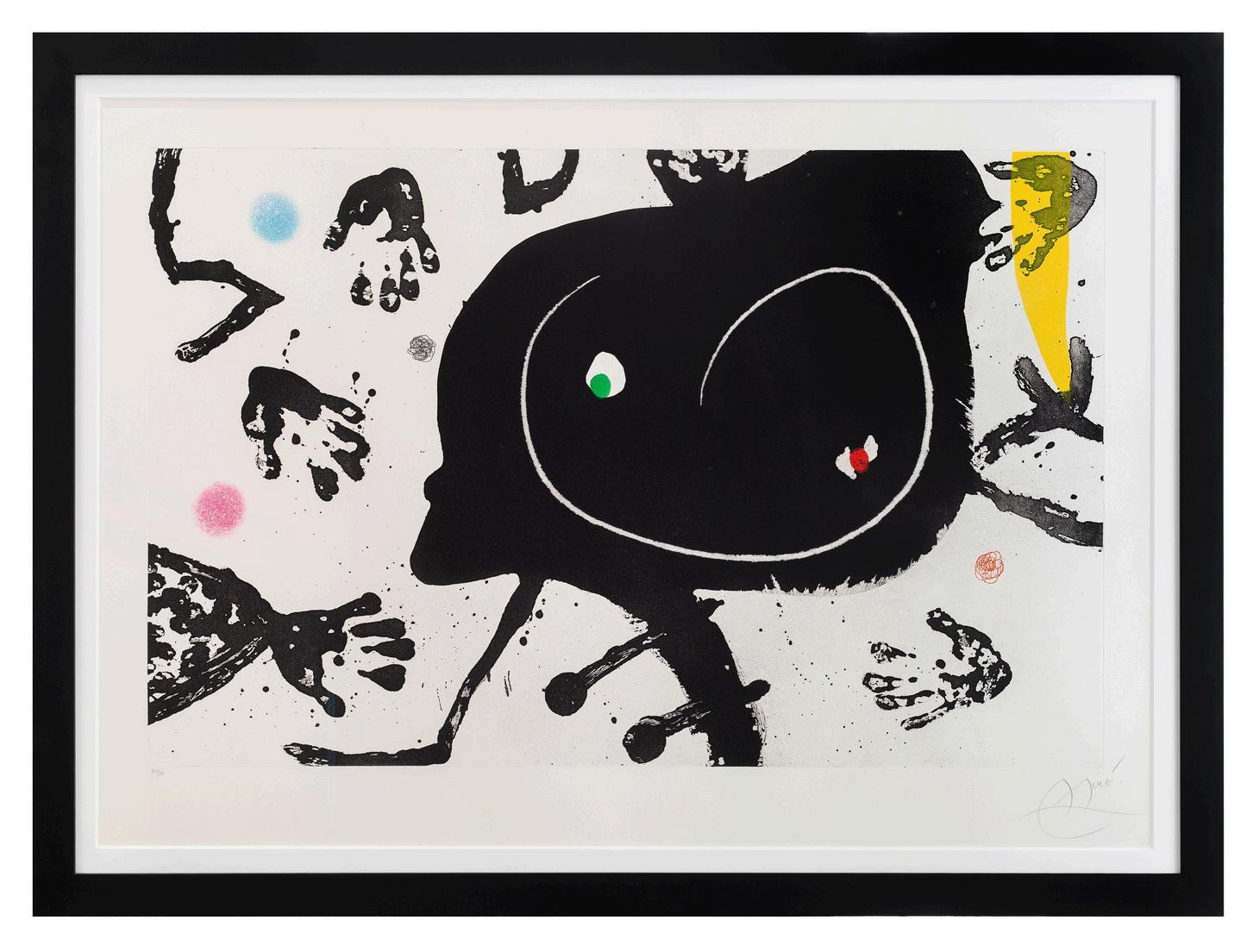
Miró L'encerclement (/50), 1975
Etching and aquatint in colors on Arches 29" x 45 25"
$34,000
Spanish, 1883 - 1973
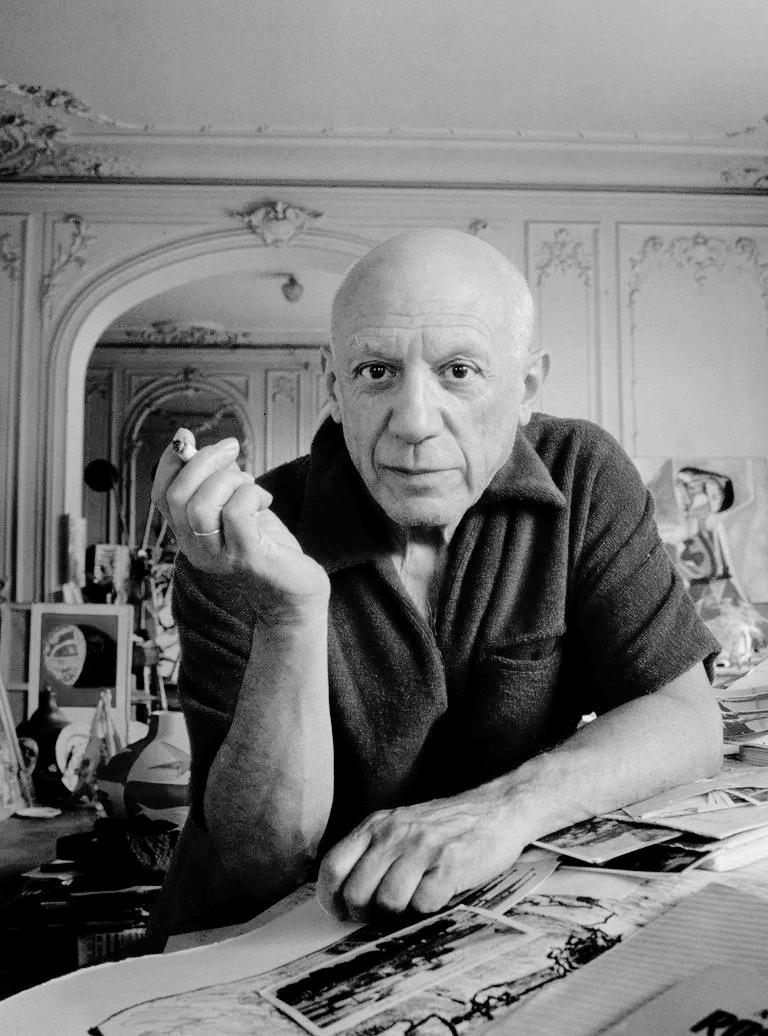
Pablo Picasso (25 October 1881 – 8 April 1973), was a Spanish painter, sculptor, printmaker, ceramicist, stage designer, poet and playwright who spent most of his adult life in France. Regarded as one of the greatest and most influential artists of the 20th century, he is known for co-founding the Cubist movement, the invention of constructed sculpture, the co-invention of collage, and for the wide variety of styles that he helped develop and explore Among his most famous works are the proto-Cubist Les Demoiselles d'Avignon (1907), and Guernica (1937), a portrayal of the Bombing of Guernica by the German and Italian airforces at the behest of the Spanish nationalist government during the Spanish Civil War
Picasso, Henri Matisse and Marcel Duchamp are regarded as the three artists who most defined the revolutionary developments in the plastic arts in the opening decades of the 20th century, responsible for significant developments in painting, sculpture, printmaking and ceramics. Picasso demonstrated extraordinary artistic talent in his early years, painting in a naturalistic manner through his childhood and adolescence. During the first decade of the 20th century, his style changed as he experimented with different theories, techniques, and ideas His work is often categorized into periods. While the names of many of his later periods are debated, the most commonly accepted periods in his work are the Blue Period (1901–1904), the Rose Period (1904–1906), the African-influenced Period (1907–1909), Analytic Cubism (1909–1912), and Synthetic Cubism (1912–1919), also referred to as the Crystal period. Exceptionally prolific throughout the course of his long life, Picasso achieved universal renown and immense fortune for his revolutionary artistic accomplishments, and became one of the best-known figures in 20th-century art
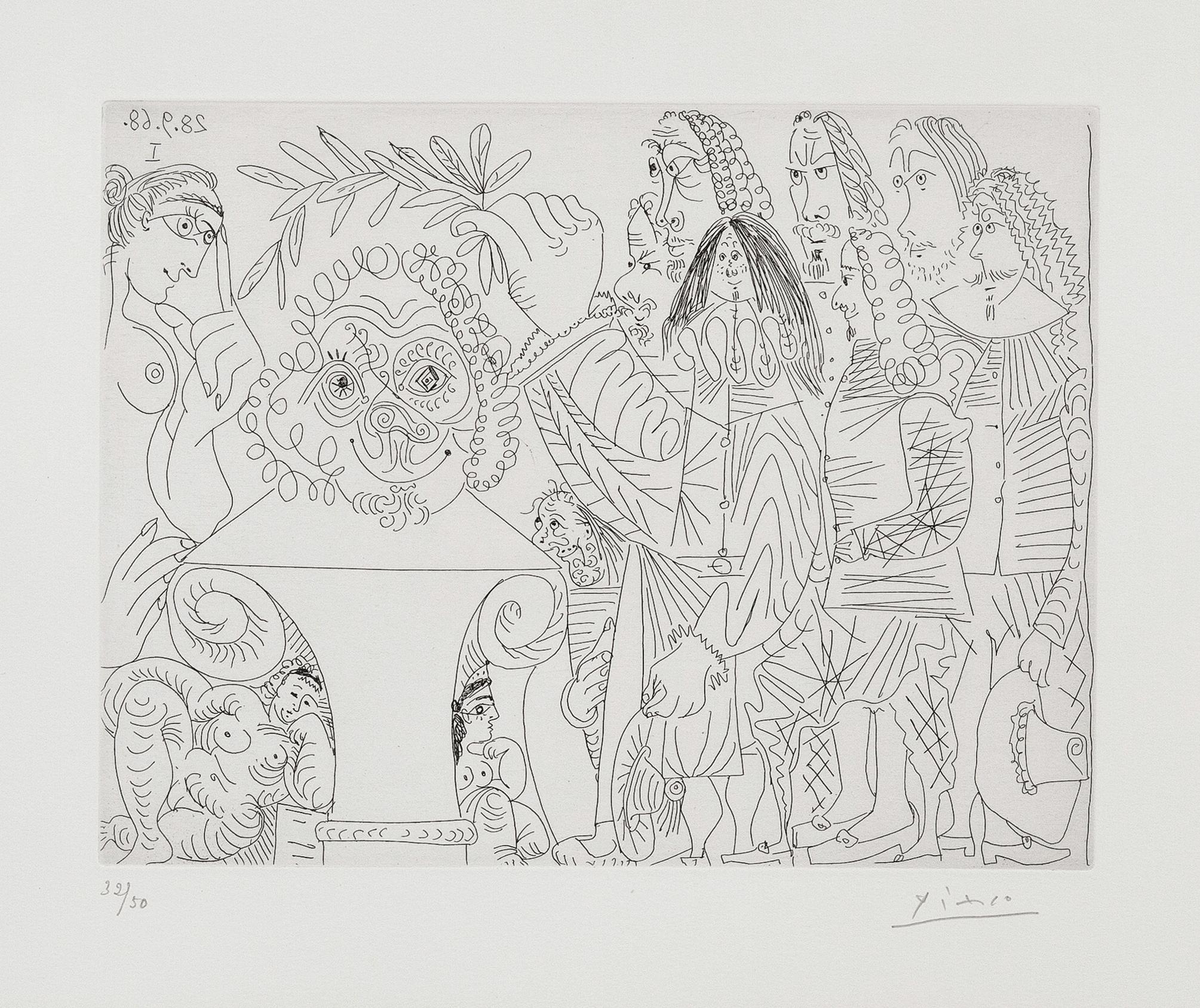
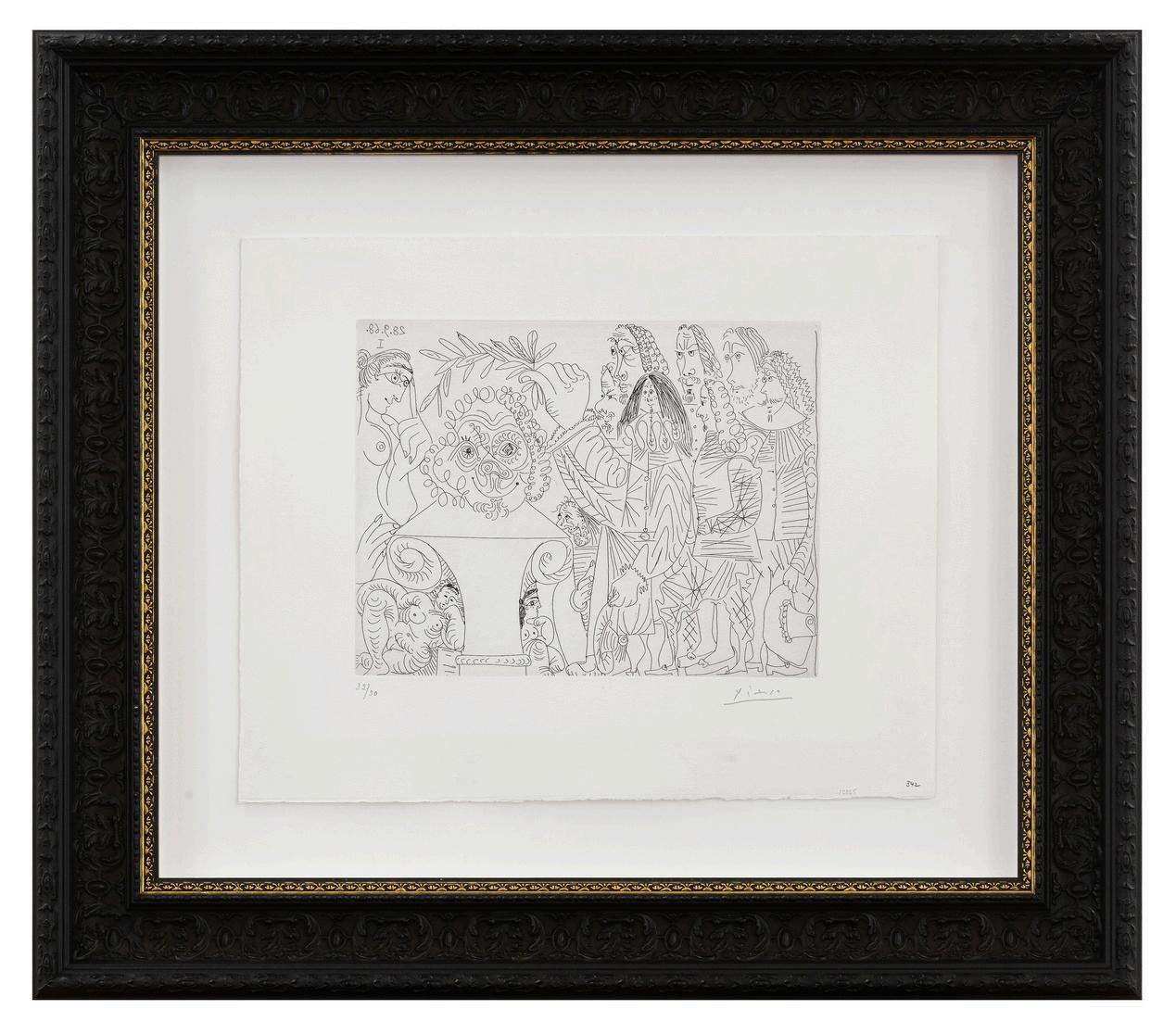
from Series 347 (32/50), 1968
Etching 12 8" x 15 8"
$29,200
American, 1925 - 2008
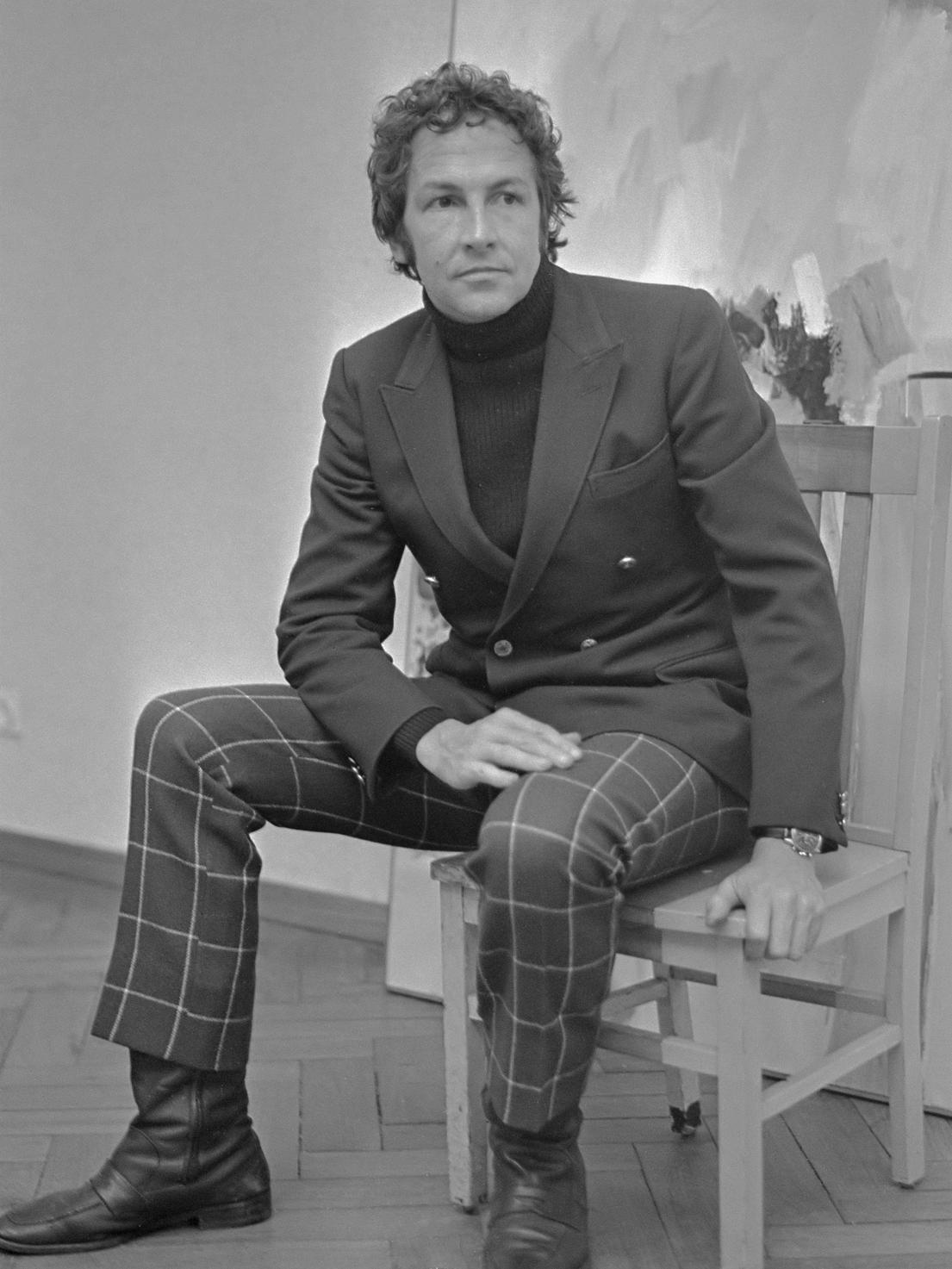
Robert Rauschenberg’s enthusiasm for popular culture and, with his contemporary Jasper Johns, his rejection of the angst and seriousness of the Abstract Expressionists led him to search for a new way of painting. A prolific innovator of techniques and mediums, Rauschenberg’s artwork used unconventional art materials ranging from dirt and house paint to umbrellas and car tires. In the early 1950s, Rauschenberg was already gaining a reputation as the art world’s enfant terrible with works such as Erased de Kooning Drawing (1953), for which he requested a drawing (as well as permission) from Willem de Kooning, and proceeded to rub away the image until only ghostly marks remained on the paper By 1954, Rauschenberg completed his first three-dimensional collage paintings he called them Combines in which he incorporated discarded materials and mundane objects to explore the intersection of art and life. “I think a picture is more like the real world when it’s made out of the real world,” he said In 1964 he became the first American to win the International Grand Prize in Painting at the Venice Biennale. The 1/4 Mile or Two Furlong Piece (1981–98), a cumulative artwork, embodies his spirit of eclecticism, comprising a retrospective overview of his many discrete periods, including painting, fabric collage, sculptural components made from cardboard and scrap metal, as well as a variety of image transfer and printing methods.
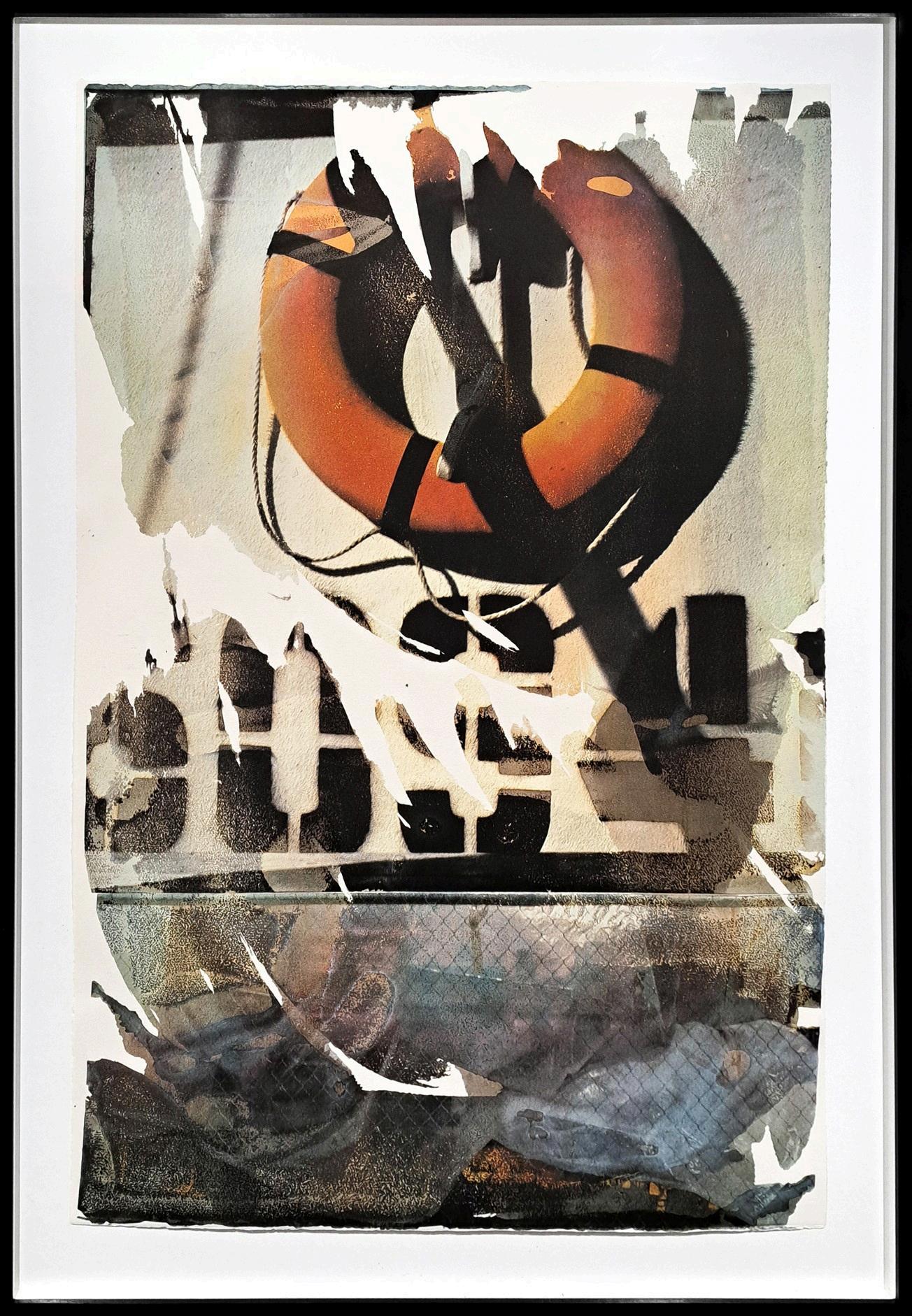
Rauschenberg Health (from Tribute 21) (39/50), 1994
Lithograph in colors with vegetable dye water transfer on Arches Infinity paper 41" x 27 25"
$8,500
American, b 1953
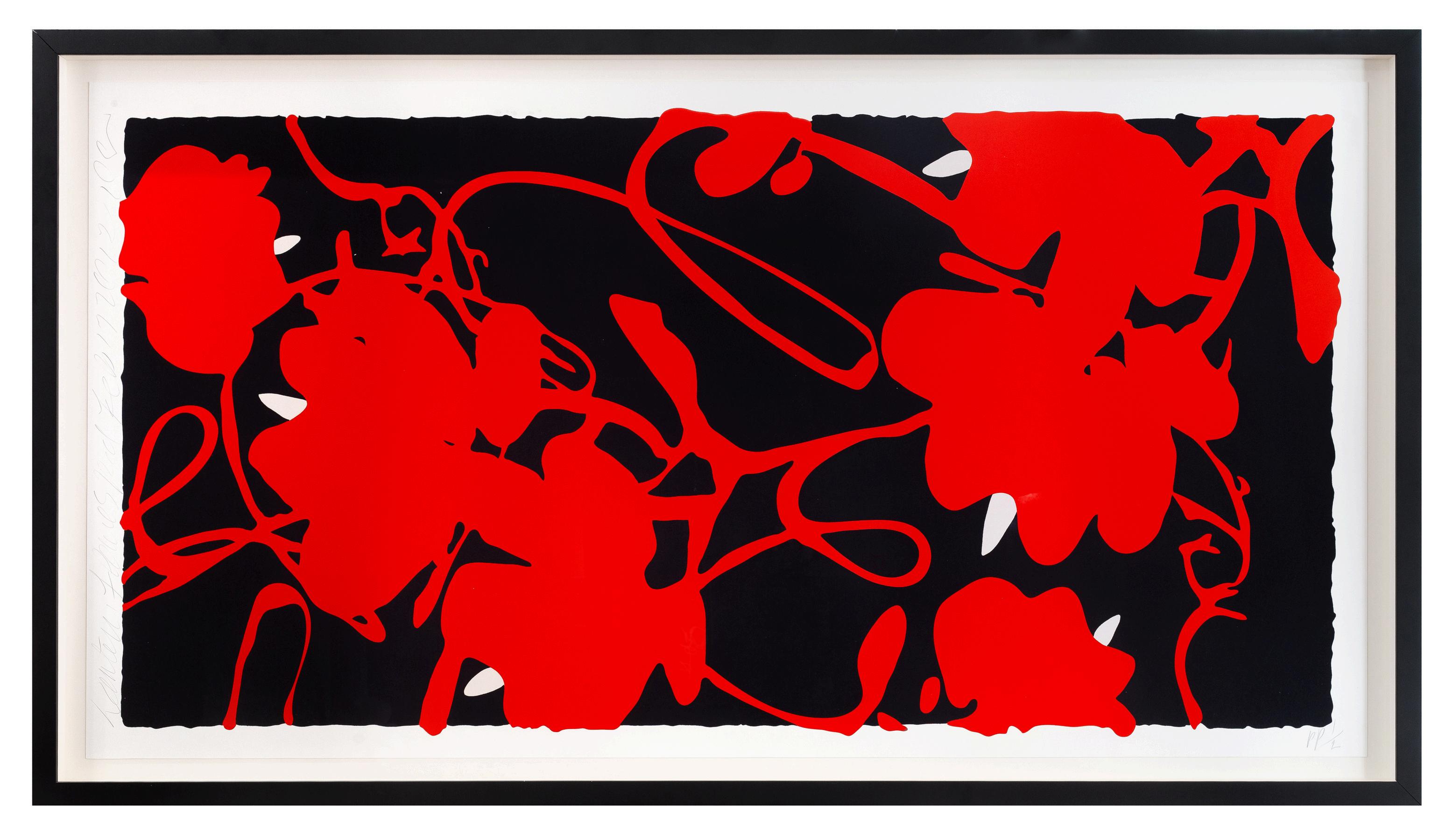
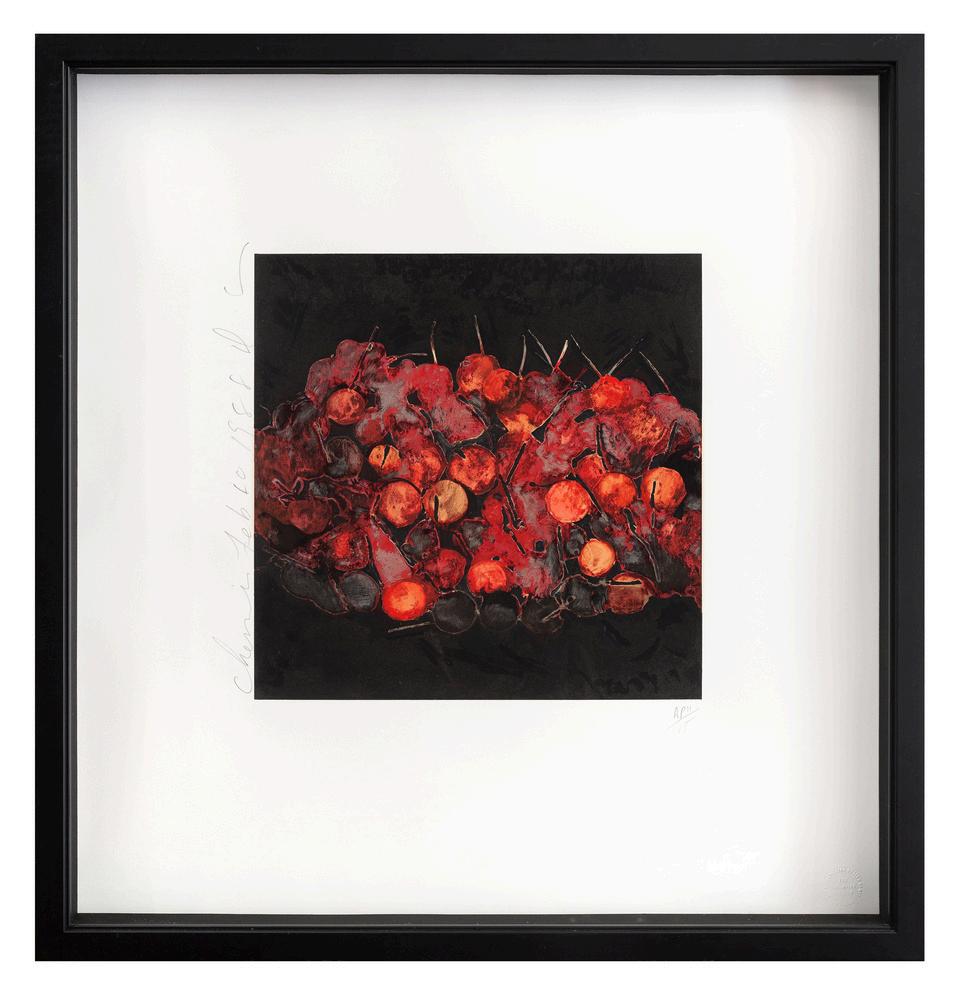
Donald Sultan’s large-scale still life paintings are filled with rich iconography— provocative objects, like bulbous fruits, set against a tar-black background Although primarily classified as a still lifes, Sultan maintains that his works (despite their representational objects flowers, lemons, eggs, buttons) are first and foremost abstract. Born in Asheville, North Carolina, Sultan moved to New York City in 1975 upon completion of his advanced studies He is recognized as a painter, printmaker, and sculptor, and best known for his large compositions made following a unique technique: in place of canvas, Sultan covers masonite with 12-inch vinyl floor tiles, from which he cuts geometric and organic forms Sultan fills the negative spaces with tar or plaster, followed by a layer of paint; his resulting images are distinctively textured and equally balance the contrast of positive and negative space.
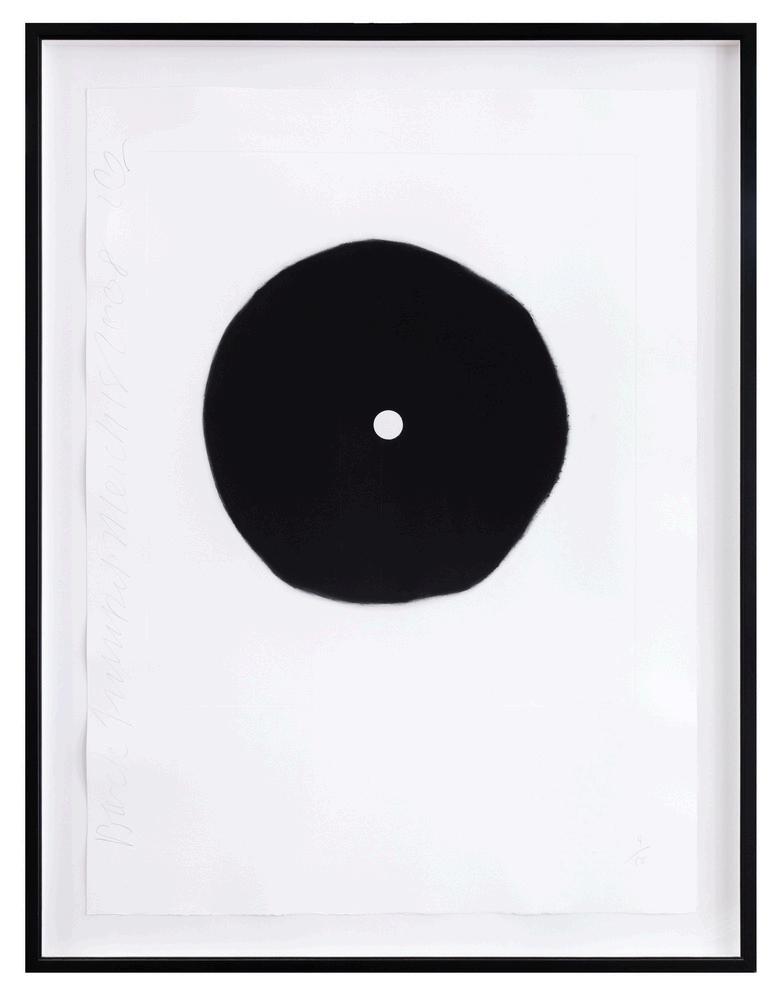
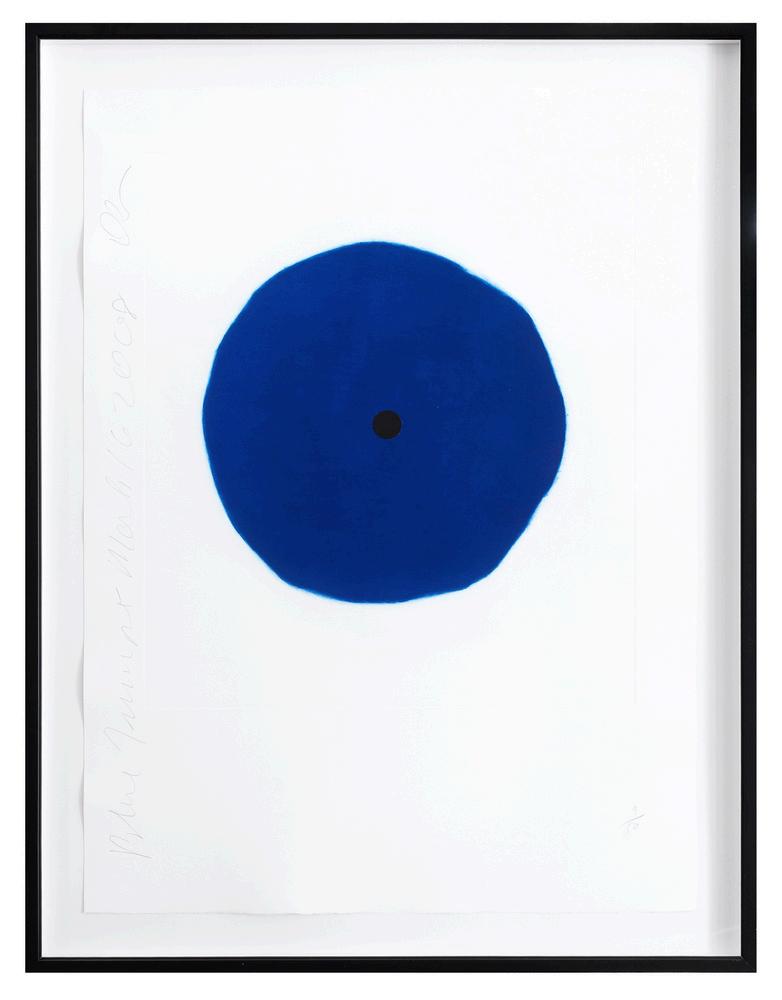
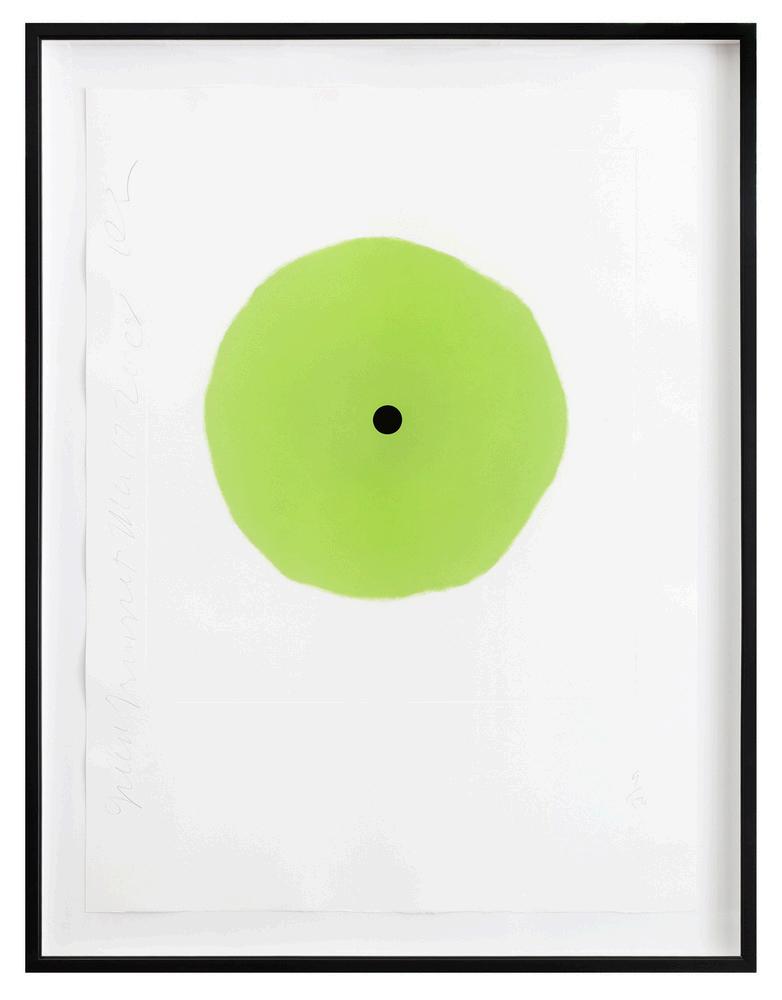
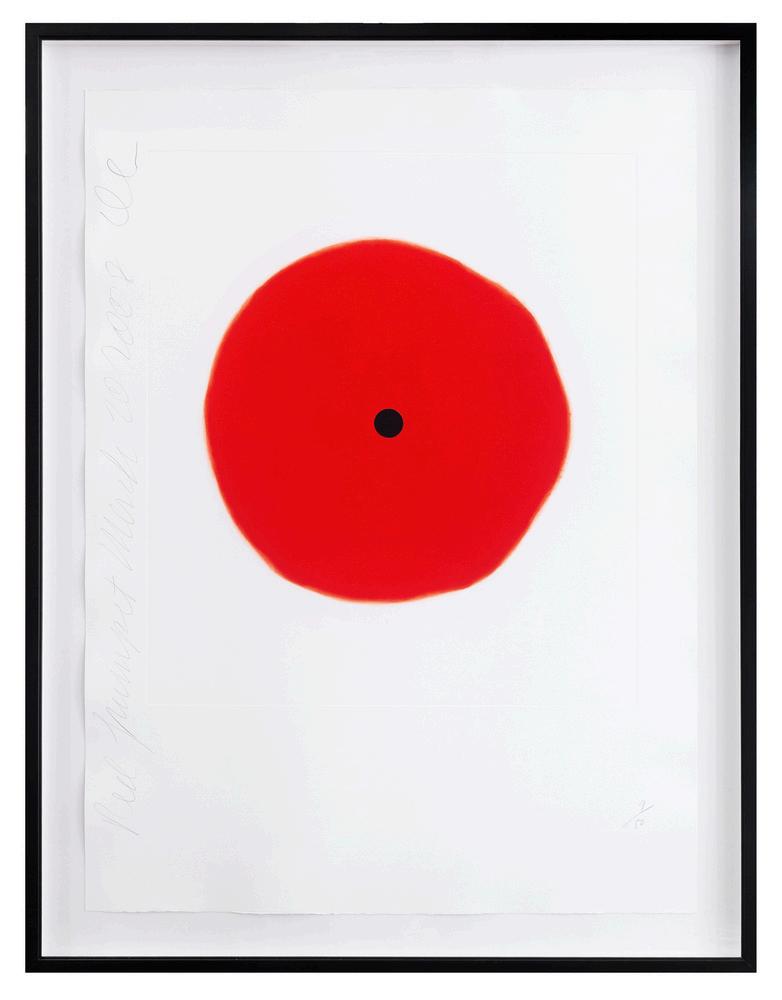
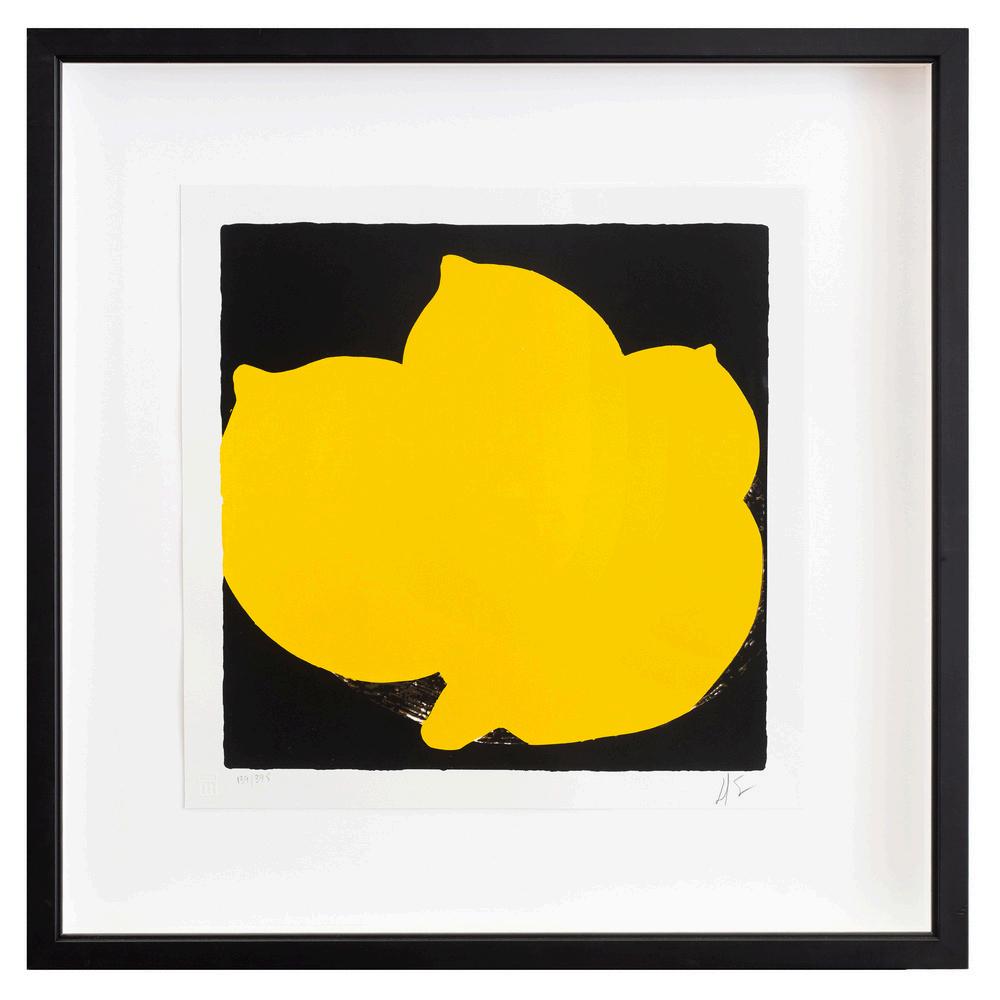
16 25" x 16 25"
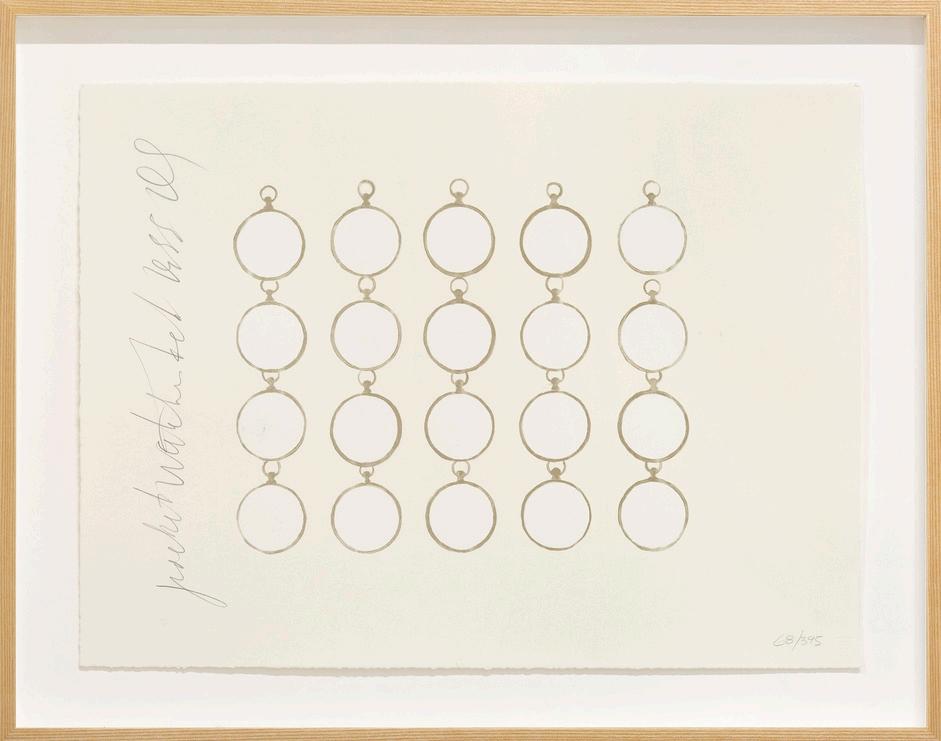
16
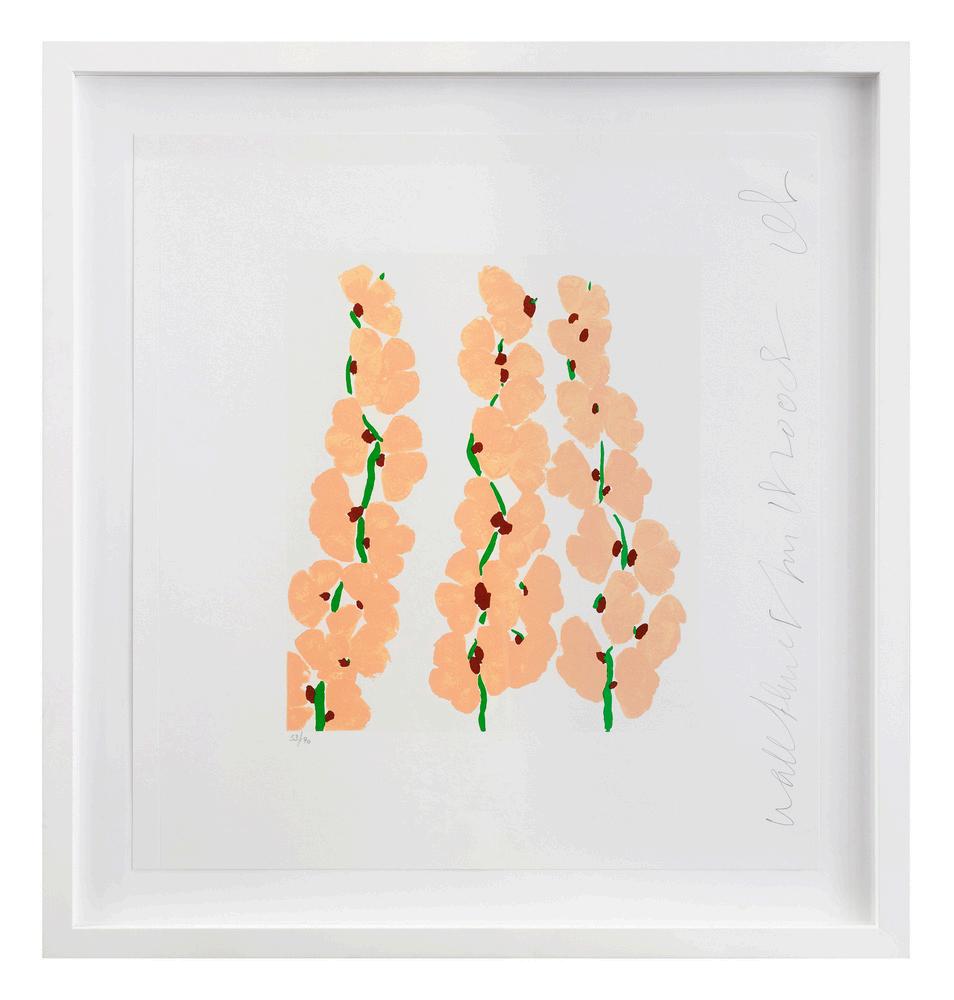
Screenprint in colors on wove paper
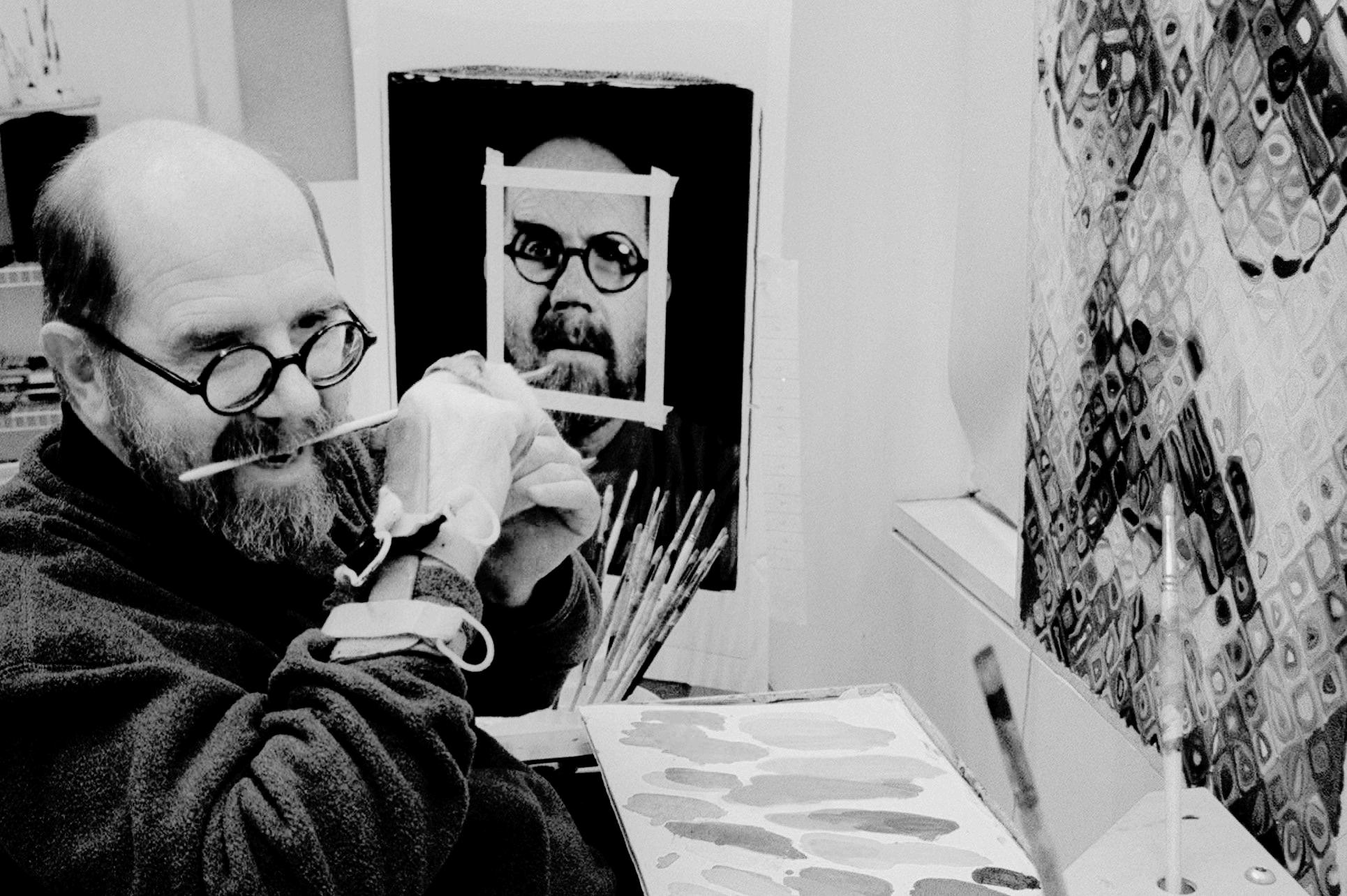
American, 1940 - 2021
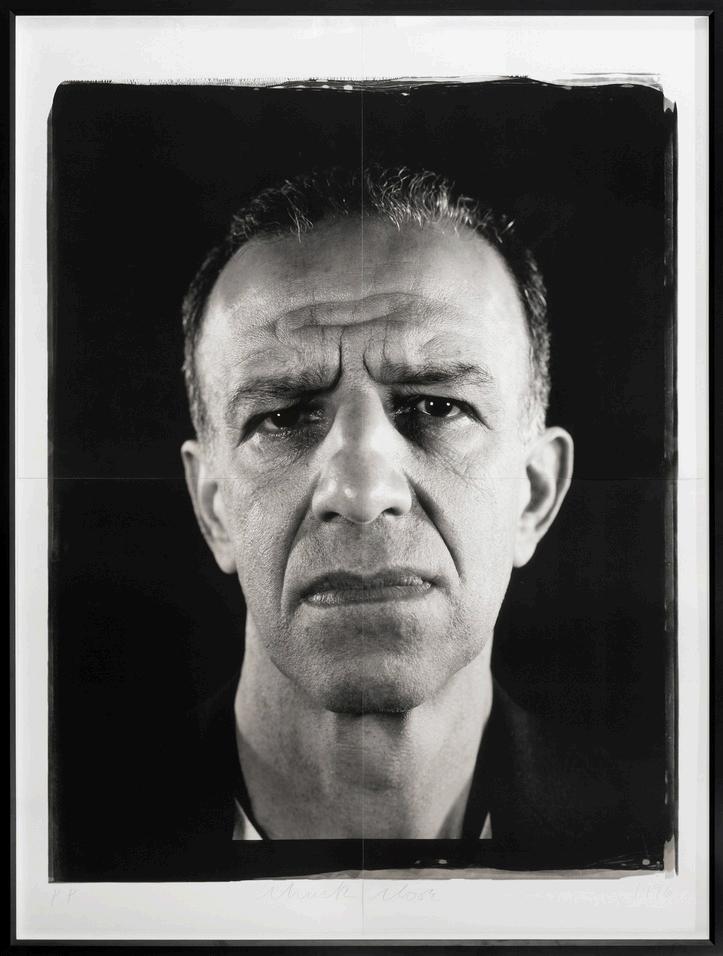
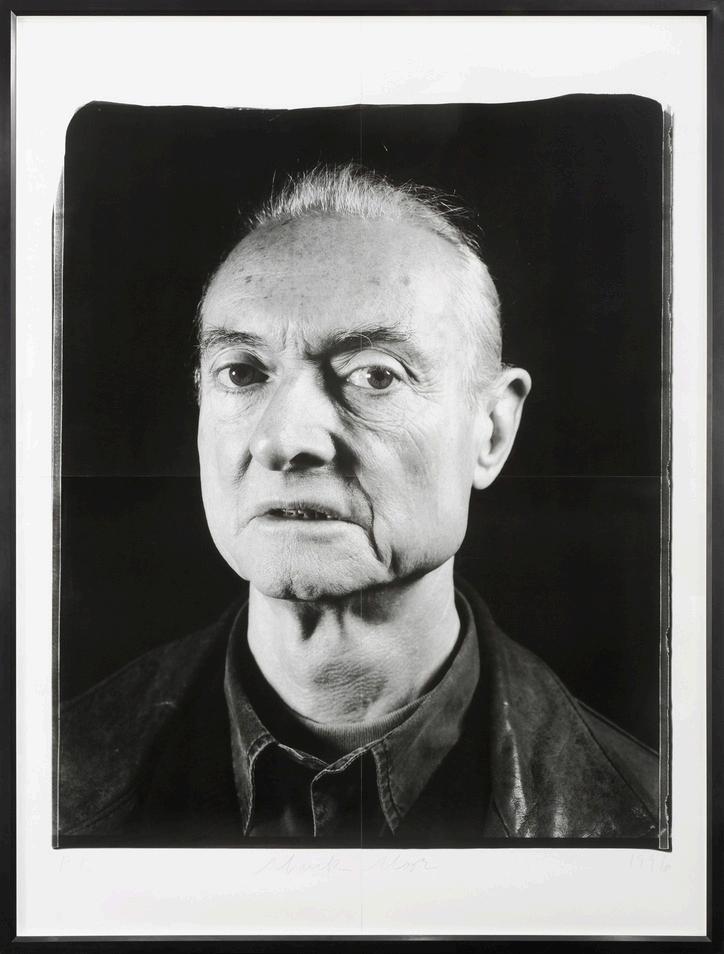
In the 1960s, Chuck Close pioneered Photorealism with his monumental, exquisitely detailed portraits, whose subjects he took from photographic sources Playing with ideas of color, scale, and form, he later gained renown for gridded paintings that appear abstract from up close and highly realistic and pixelated from afar. Close has exhibited extensively since the ’60s and enjoyed solo shows at the Walker Art Center, the Metropolitan Museum of Art, the State Hermitage Museum, and the Museum of Contemporary Art Australia, among other institutions. He has featured in group exhibitions at the Venice Biennale and Documenta on multiple occasions. At auction, his work has sold for seven figures Close has often depicted his family and friends, including fellow artists Robert Rauschenberg, Cindy Sherman, and Richard Serra. His work links him not only to other Photorealists such as Richard Estes and Audrey Flack, but also to the Conceptual art movement.
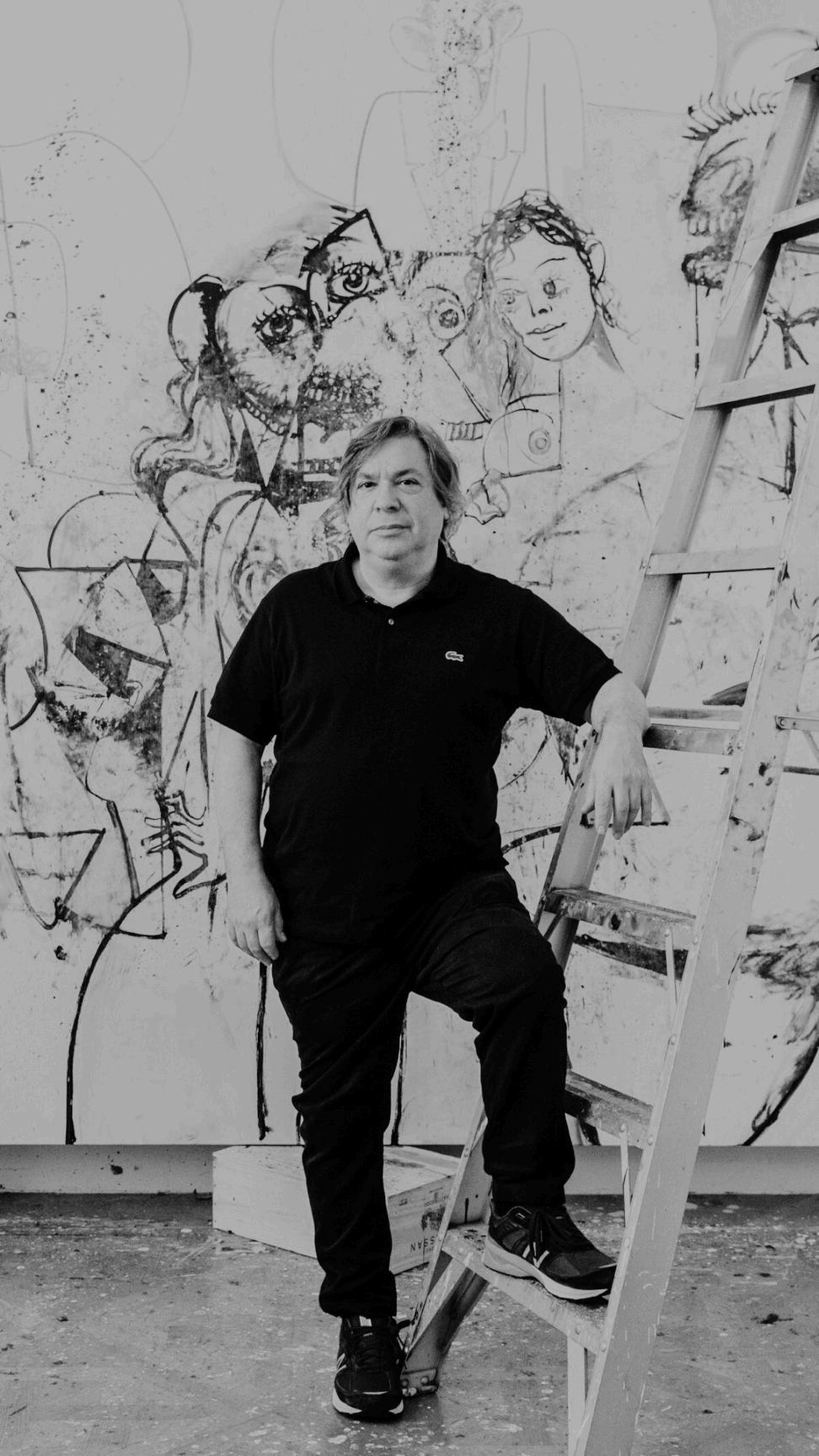
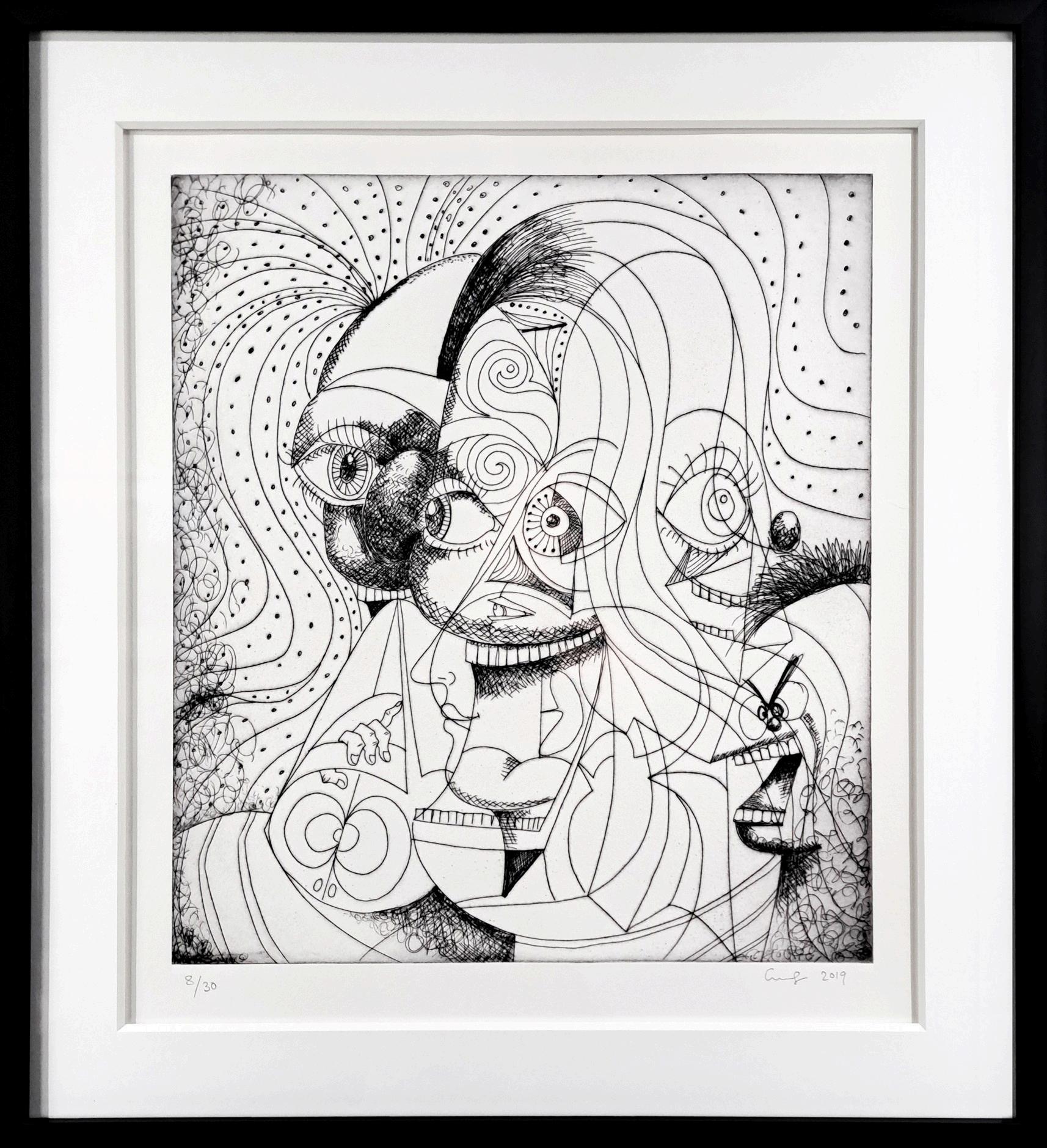
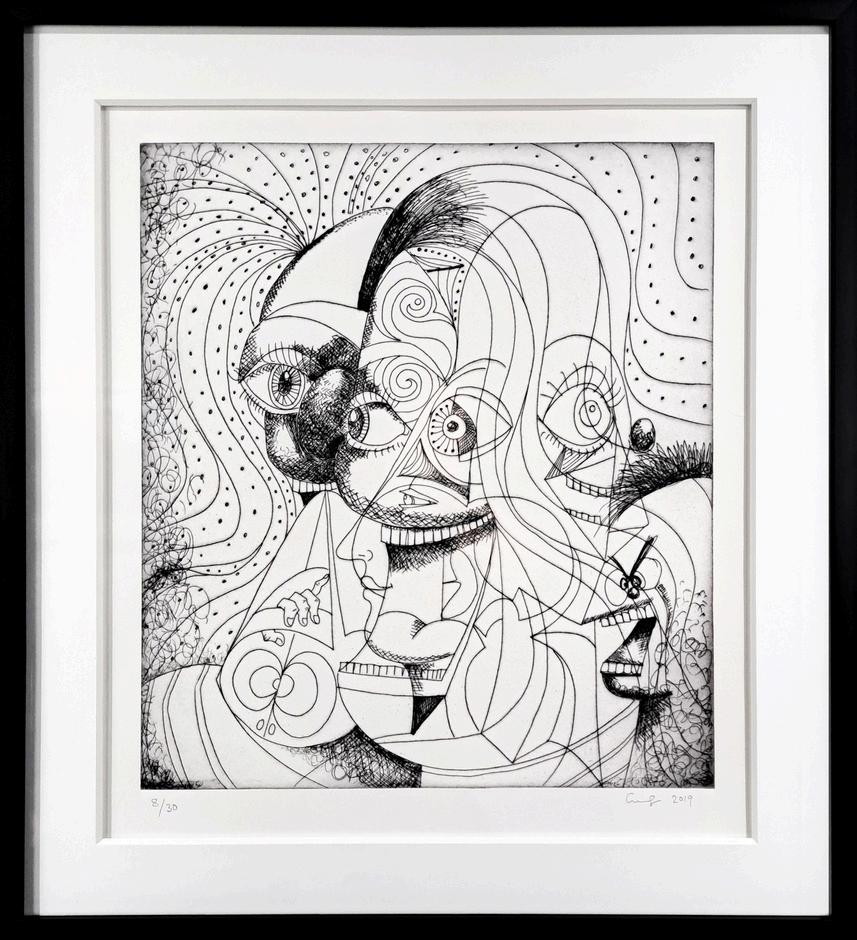
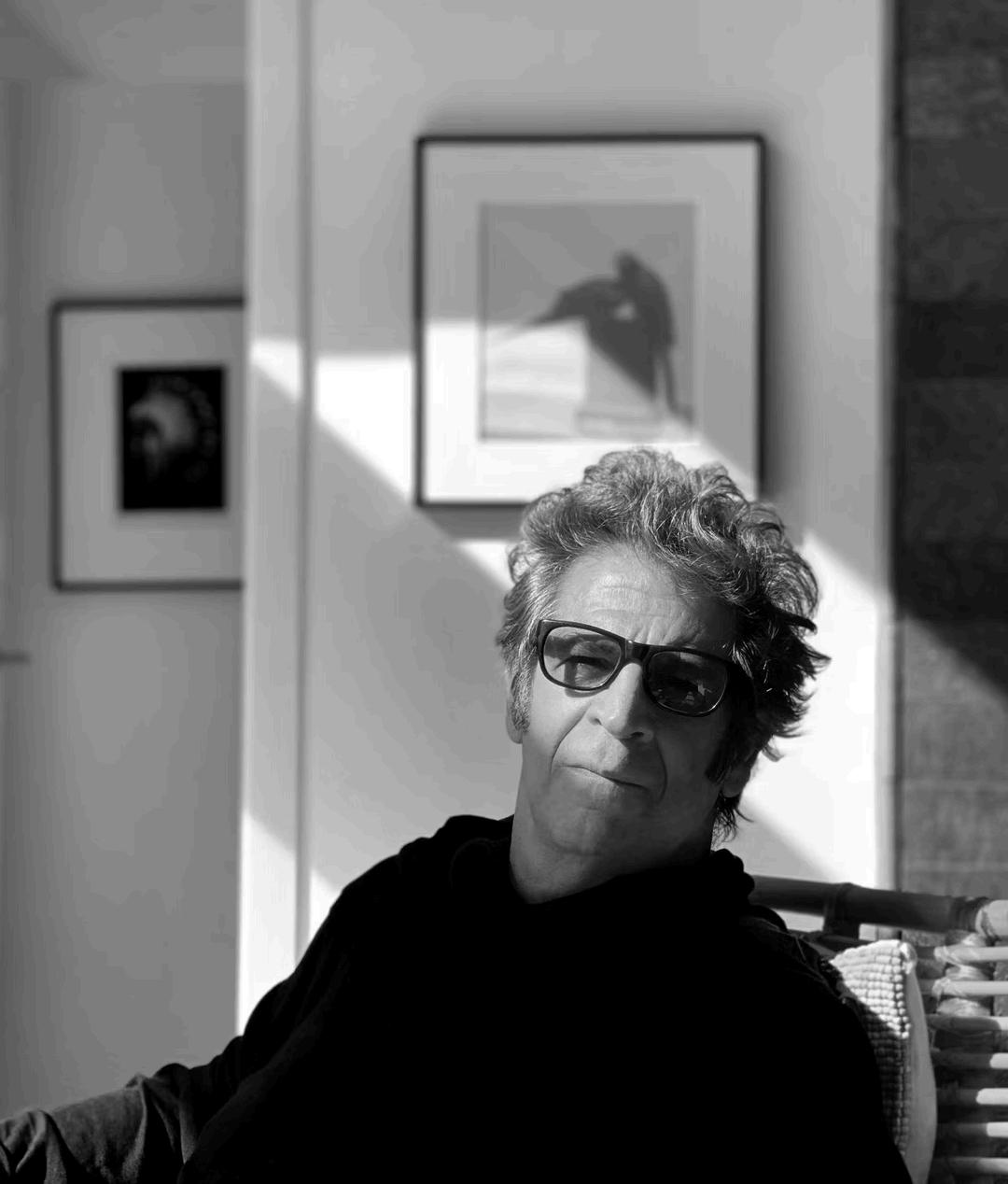
American, b 1957
Painter George Condo populates his canvases with a parade of grotesques; his figures’ bulging eyes, bulbous cheeks, proliferating limbs, and fractured faces evoke the allure and abjection of a carnival.
Condo takes inspiration from artists including Pablo Picasso, Diego Velázquez, Henri Matisse, and Cy Twombly, integrating tenets of abstraction into a practice that ranges from macabre portraiture to more geometrical, less representational compositions. Condo has referred to his surrealistic style as “psychological cubism,” which attempts to capture a subject’s multiplicity, and as “artificial realism” that offers a simulated, distinctly American take on European art history.
Condo has participated in the Venice Biennale and exhibited at Tate Modern and the New Museum, among other institutions; today, his work sells for more than $6 million at auction. He famously got his start working as a studio assistant to Andy Warhol. Condo has also created album art for Kanye West.
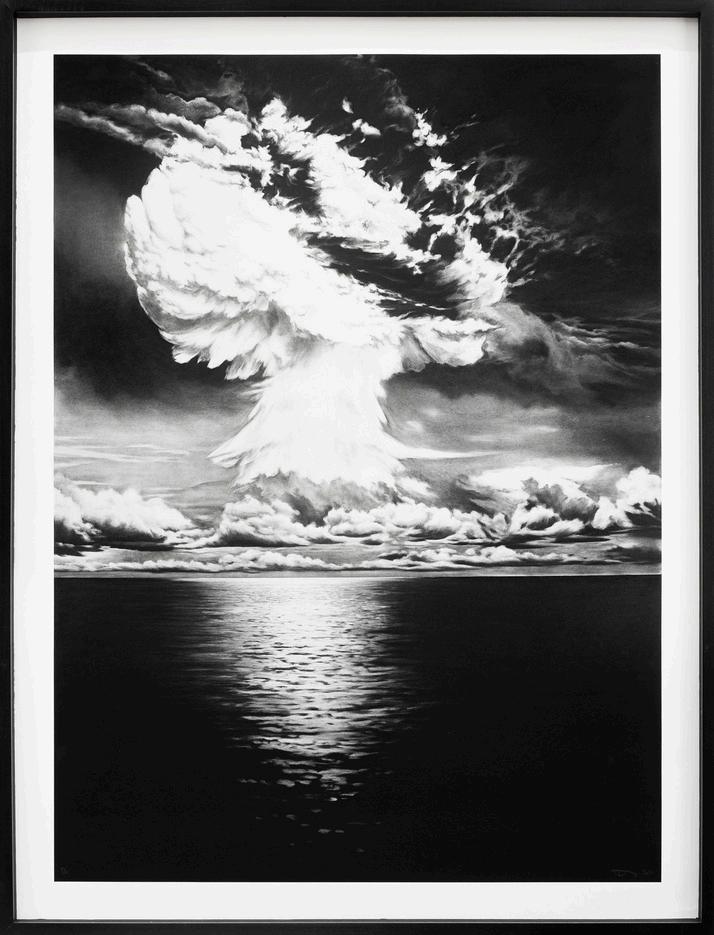
ROBERT LONGO
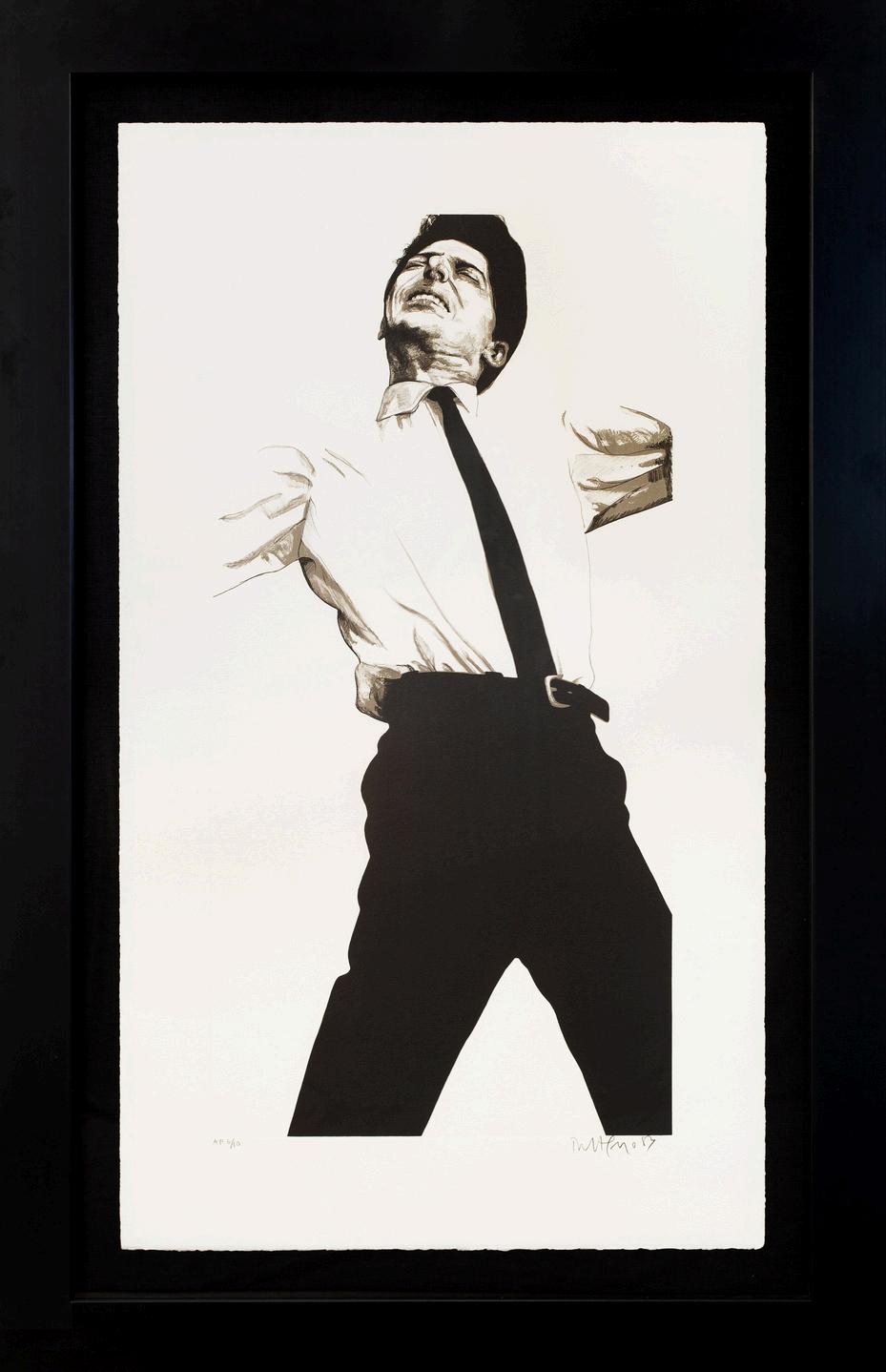
American, b 1953
Robert Longo is an American artist best known for his detailed photorealistic drawings of jumping figures, sharks, tigers, and guns Drawn in charcoal, graphite, and ink, his monochrome series Men in the City renders businessmen and women in a state of suspended animation, and brought the artist critical acclaim in the early 1980s. Born on January 7, 1953 in Brooklyn, NY, Longo studied sculpture with Cindy Sherman at the State University College in Buffalo, NY where he received his BFA in 1975. “I always think that drawing is a sculptural process,” Longo has explained. “I always feel like I'm carving the image out rather than painting the image. I'm carving it out with erasers and tools like that ” He has gone on to have his work shown at the 1983 and 2004 Whitney Biennial in New York and the 47th Venice Biennale. Longo currently lives and works in New York, NY. The artist’s works are held in the collections of the Albertina in Vienna, the Art Institute of Chicago, The Museum of Modern Art in New York, the Tate Gallery in London, and the Stedelijk Museum in Amsterdam, among others.
36
$25,000
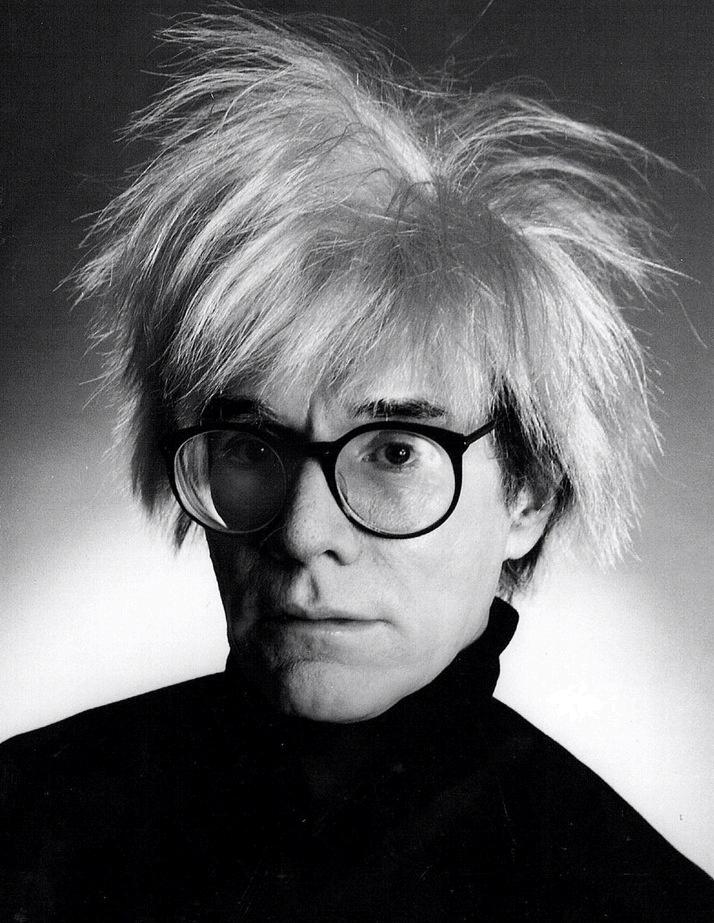
American, 1928 - 1987
Obsessed with celebrity, consumer culture, and mechanical reproduction, Pop artist Andy Warhol created some of the 20th century’s most iconic images He drew widely from popular culture and everyday subject matter in his most famous works: his 32 Campbell's soup cans, Brillo pad box sculptures, and portraits of Marilyn Monroe and Elizabeth Taylor, for example. Rejecting the dominant painting and sculpting modes of his day, Warhol embraced silk-screen printmaking to achieve his characteristic hard edges and flat areas of color. The artist mentored Keith Haring and Jean-Michel Basquiat and continues to influence contemporary art around the world: His provocative successors include Richard Prince, Takashi Murakami, and Jeff Koons. Warhol has been the subject of exhibitions at the Whitney Museum of American Art, Museum of Modern Art, Tate Modern, and Centre Pompidou, among other institutions. His works have sold for upwards of $100 million at auction.
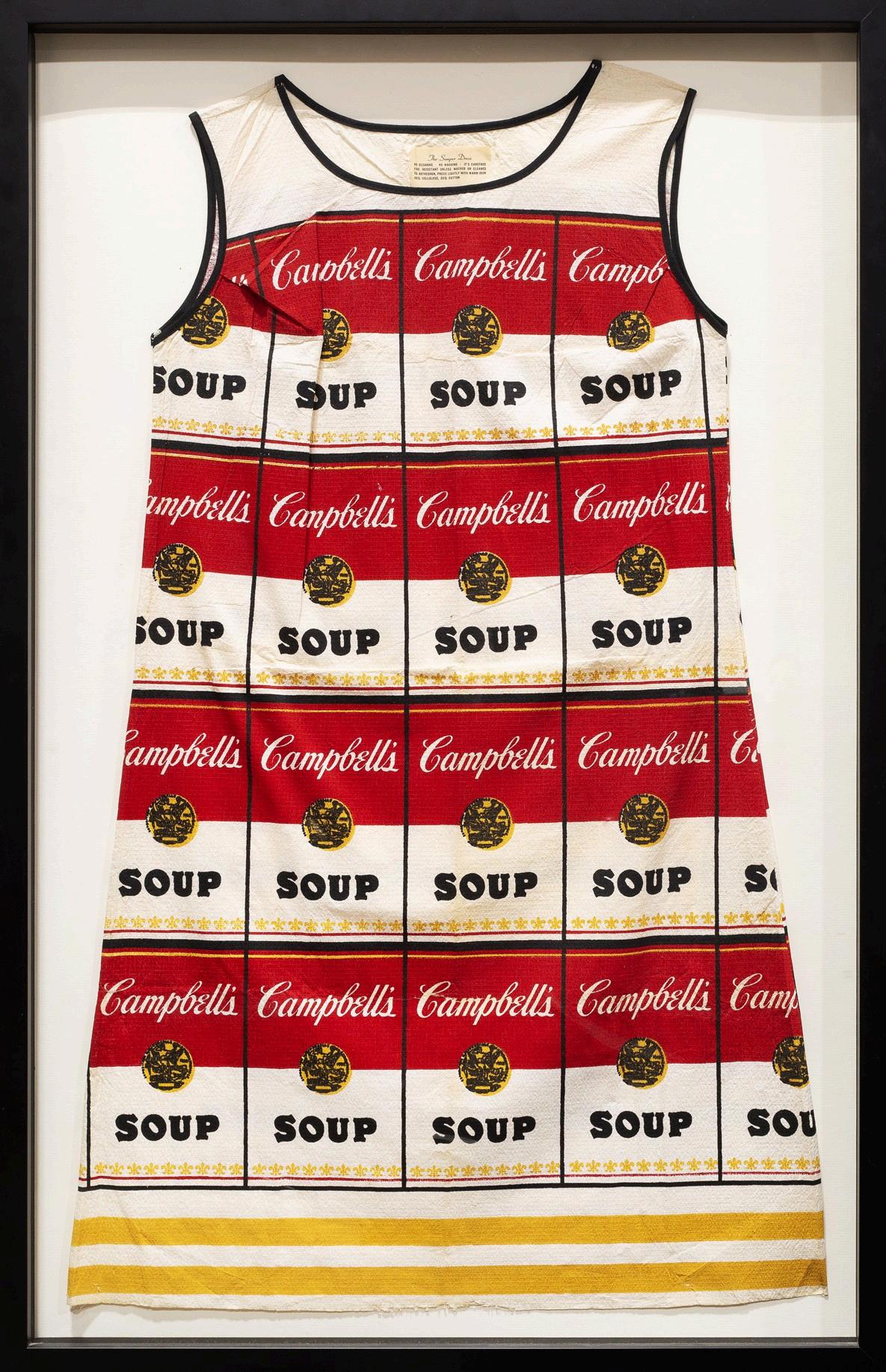
After Andy Warhol
Souper Dress (/Unknown), 1966-67
Screenprint in colors on cellulose and cotton paper dress
42" x 27 25"
$13,000
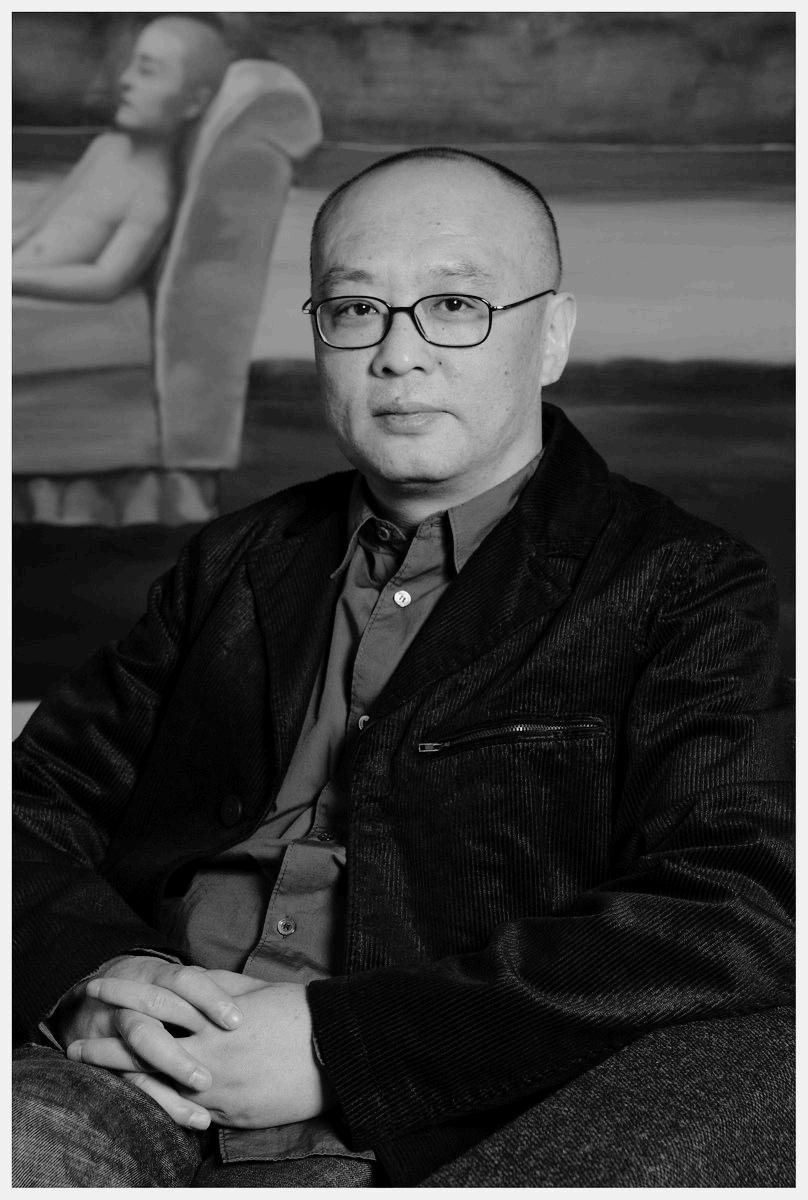
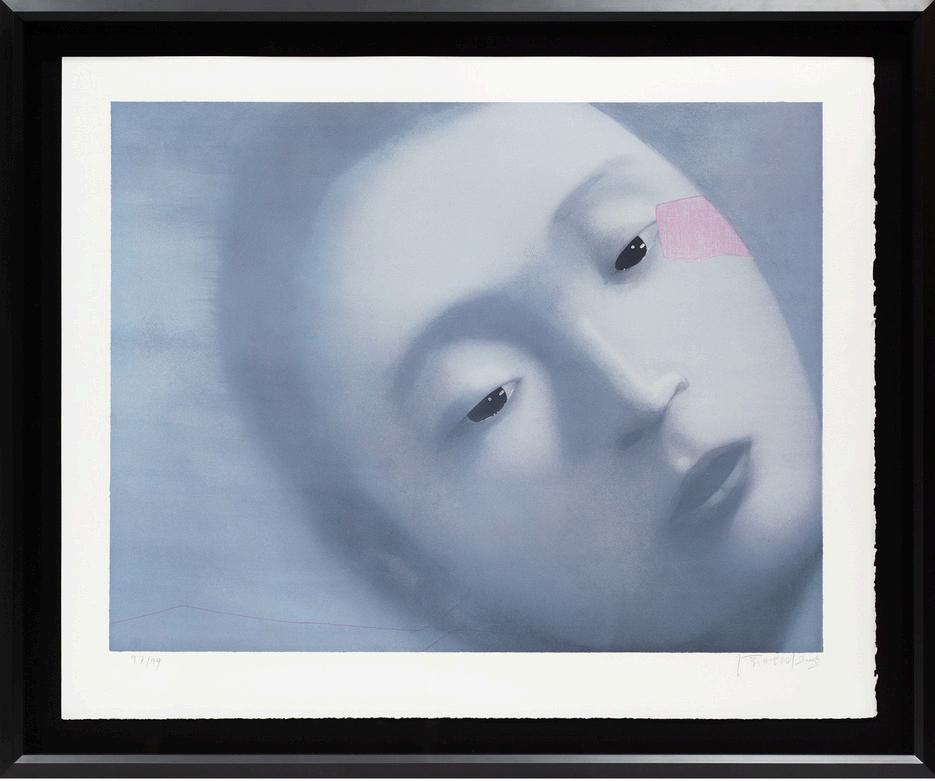
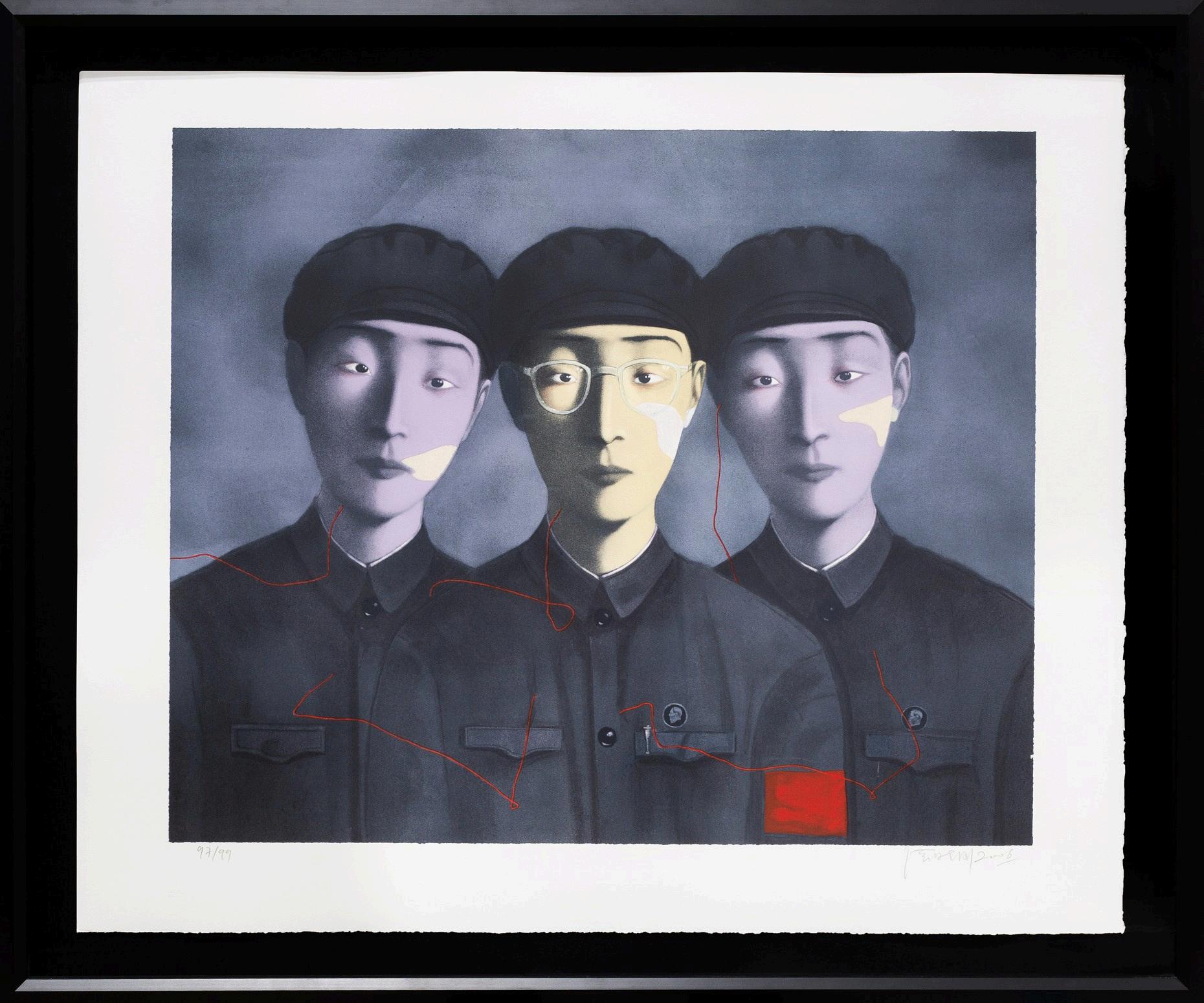
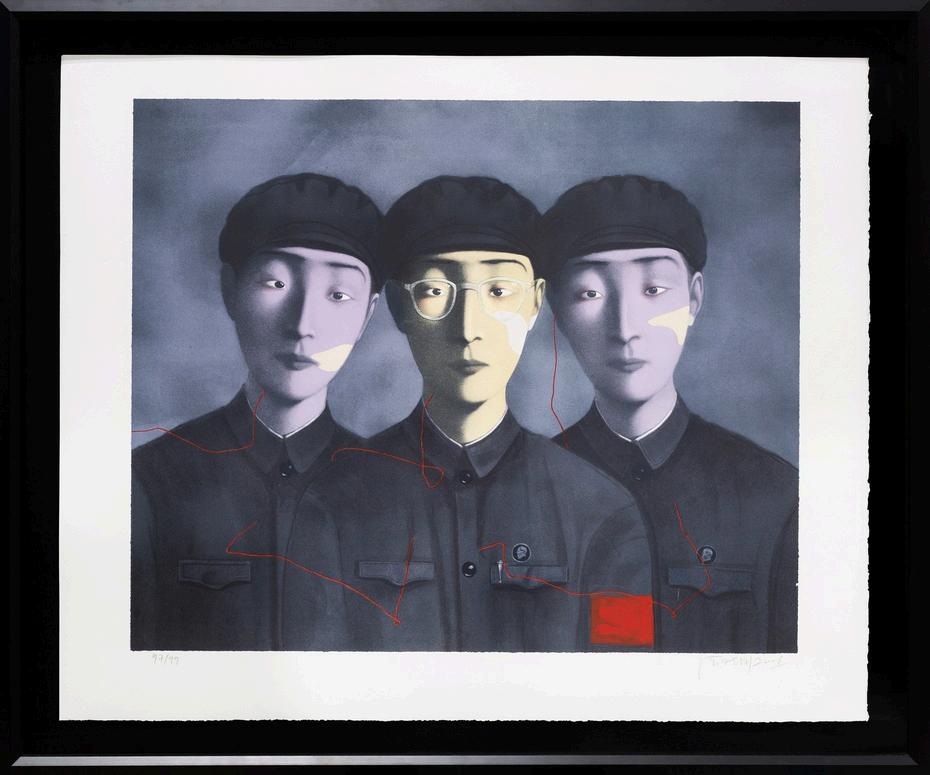
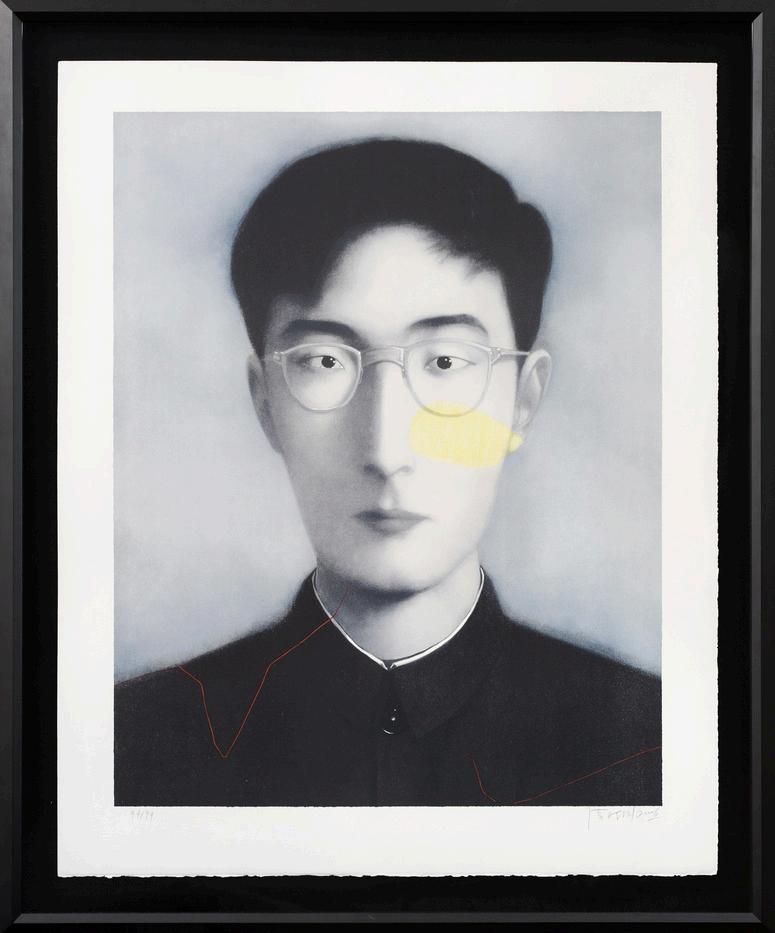
ZHANG XIAOGANG Chinese, b 1958
Relying on memory to recreate a highly personal version of his country’s history, artist Zhang Xiaogang makes art that is as much about himself as it is about China’s past. The grim imaginary families in his “Bloodlines: The Big Family” paintings of the 1990s and his 2005–06 series of grisaille portraits in oil reveal countless narratives about the aspirations and failures of the Cultural Revolution as well as Zhang’s own emotions Like the blank visages of the individuals in these paintings, Zhang’s brass and concrete sculptures of figures, as well as implements used for recording history (such as fountain pens, notebooks, and light bulbs, all 2009), appear compressed and distorted by memory, age, and some unknown force
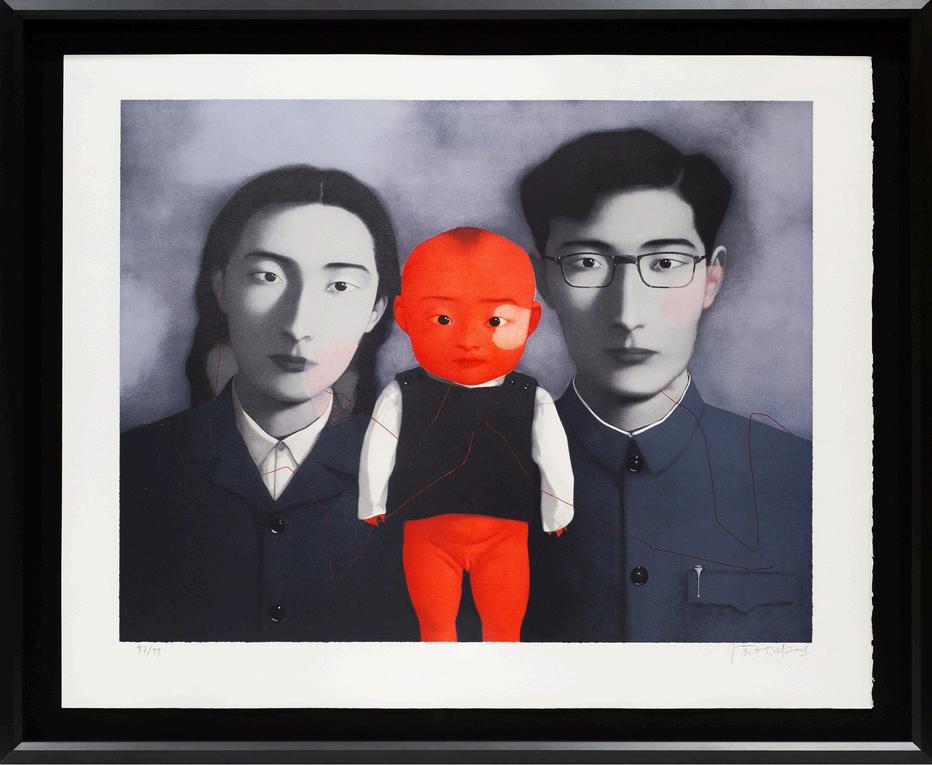
30
$7,000
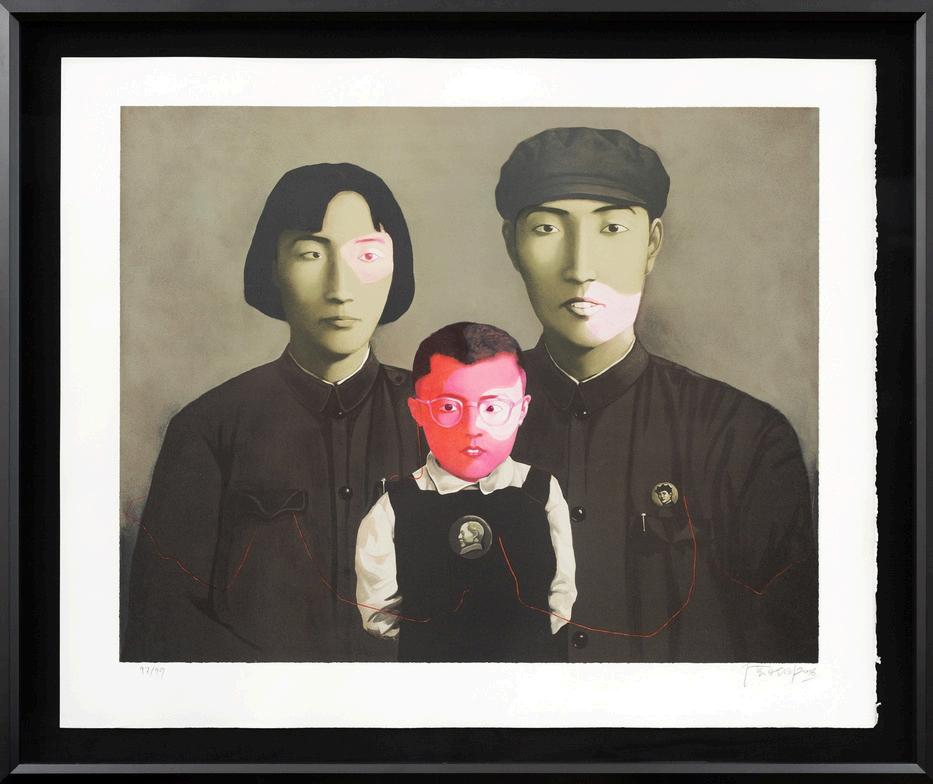
30
$7,000
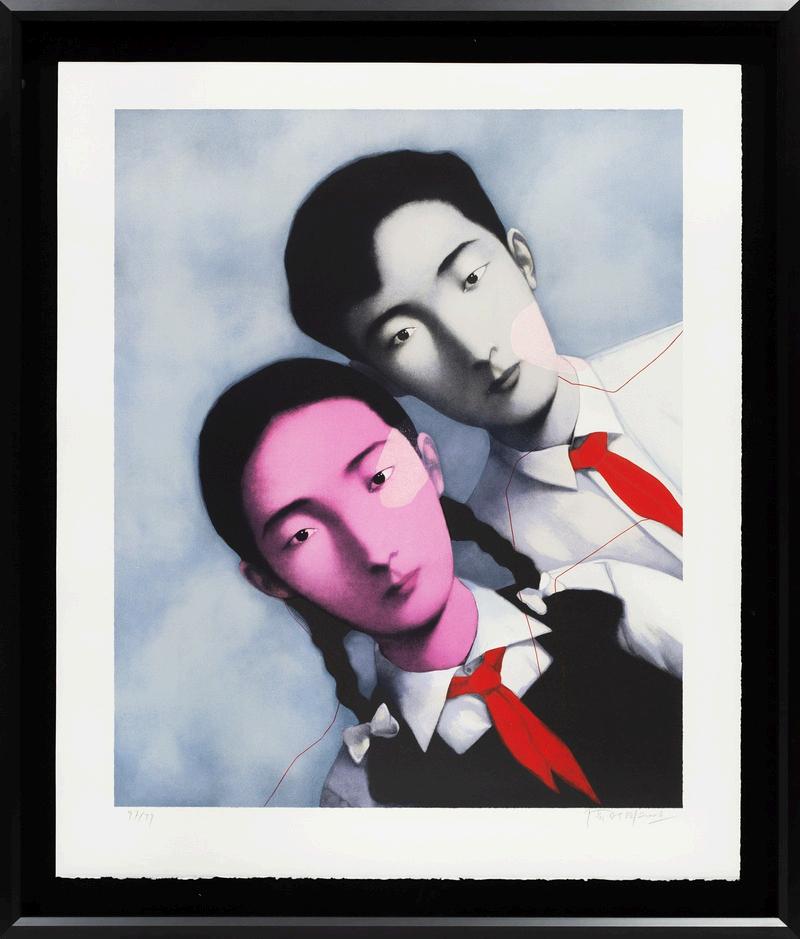
30
$7,000
30
$7,000
Canadian, 1952 - 2017
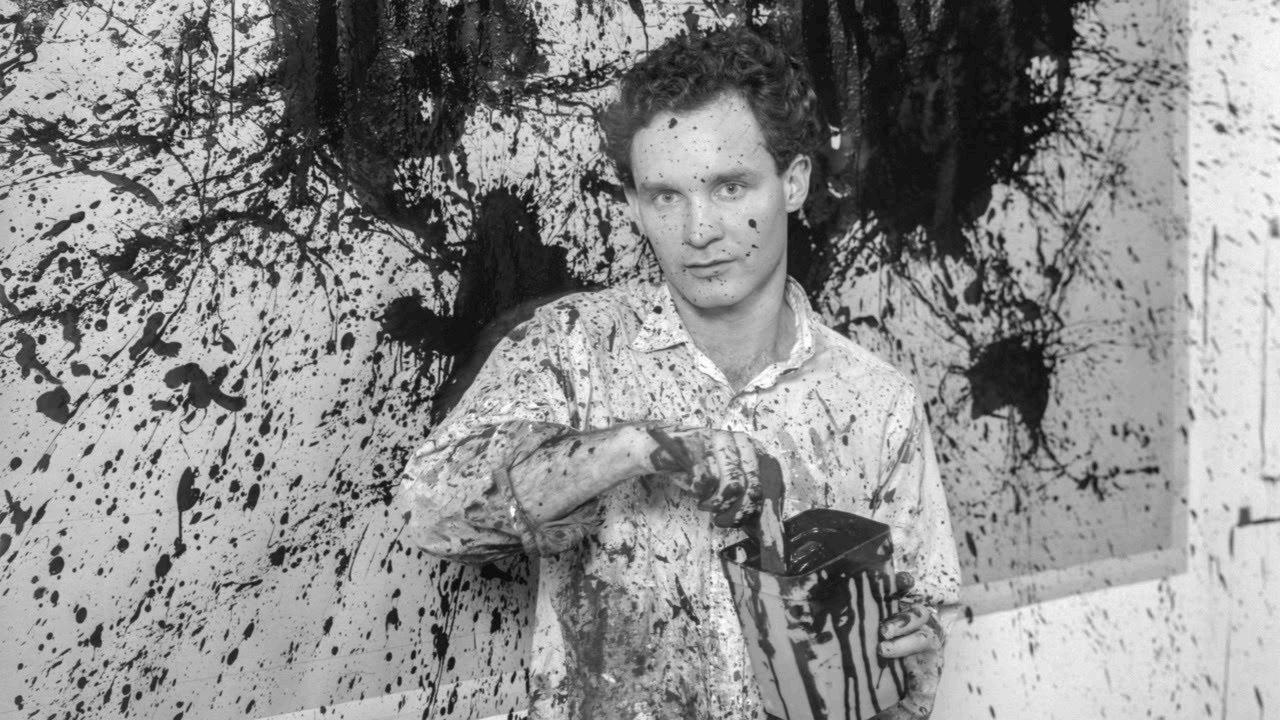
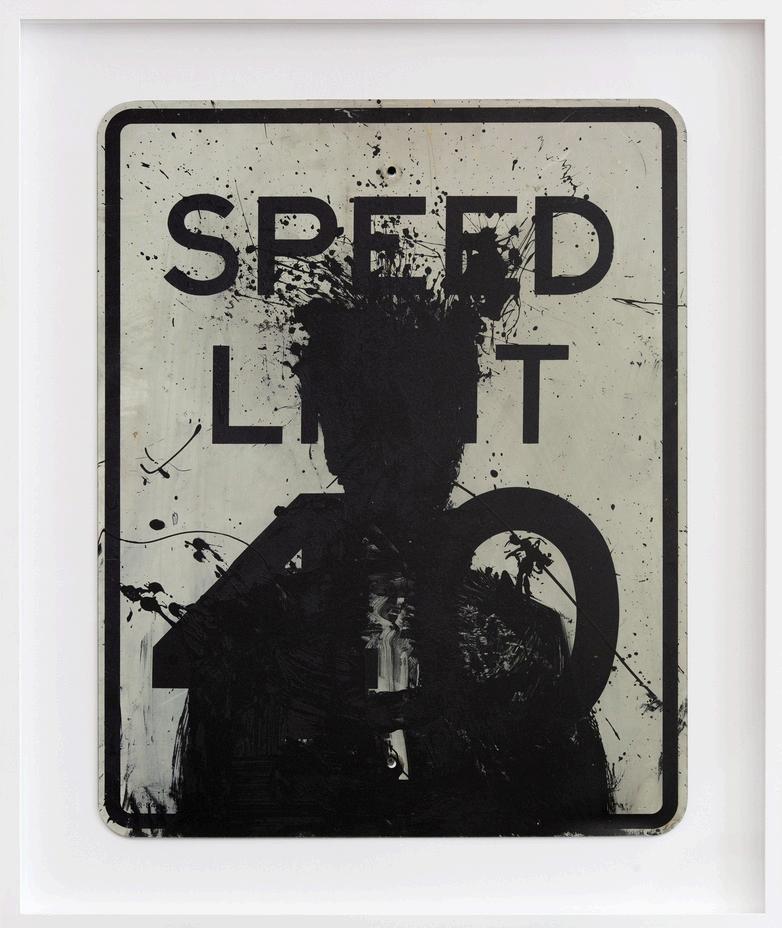
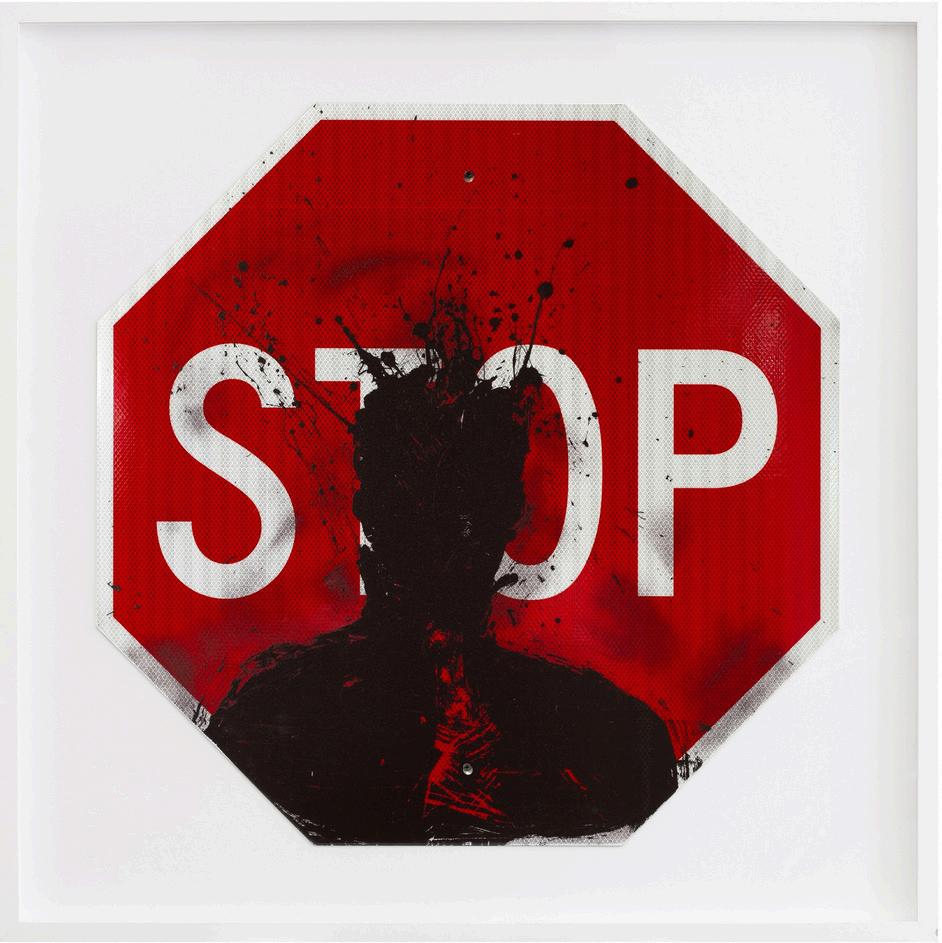
Richard Hambleton, referred to as the “godfather of street art,” was a pioneering Canadian street artist He is recognized as a pivotal intermediary between Abstract Expressionism and the popular “art for the masses” graffiti that boomed in the 1980s. Hambleton is best known for his grisly “Shadowmen” and “Horse and Rider” figures, which he tagged in alleyways and drug-dealing hotspots in Lower Manhattan throughout the '70s and ’80s Despite finding early success in New York and showing at the Venice Biennale in 1984 and ’88, Hambleton was largely forgotten in the ’90s and early 2000s, when his personal battles with addiction alienated him from the art world
Hambleton’s work saw a resurgence in the 2010s, with solo shows, major museum retrospectives, and documentaries taking a new look at the seminal role he played in the history of street art
In 2017, Hambleton’s documentary Shadowman was released, exploring his art, life, identity, and legacy.
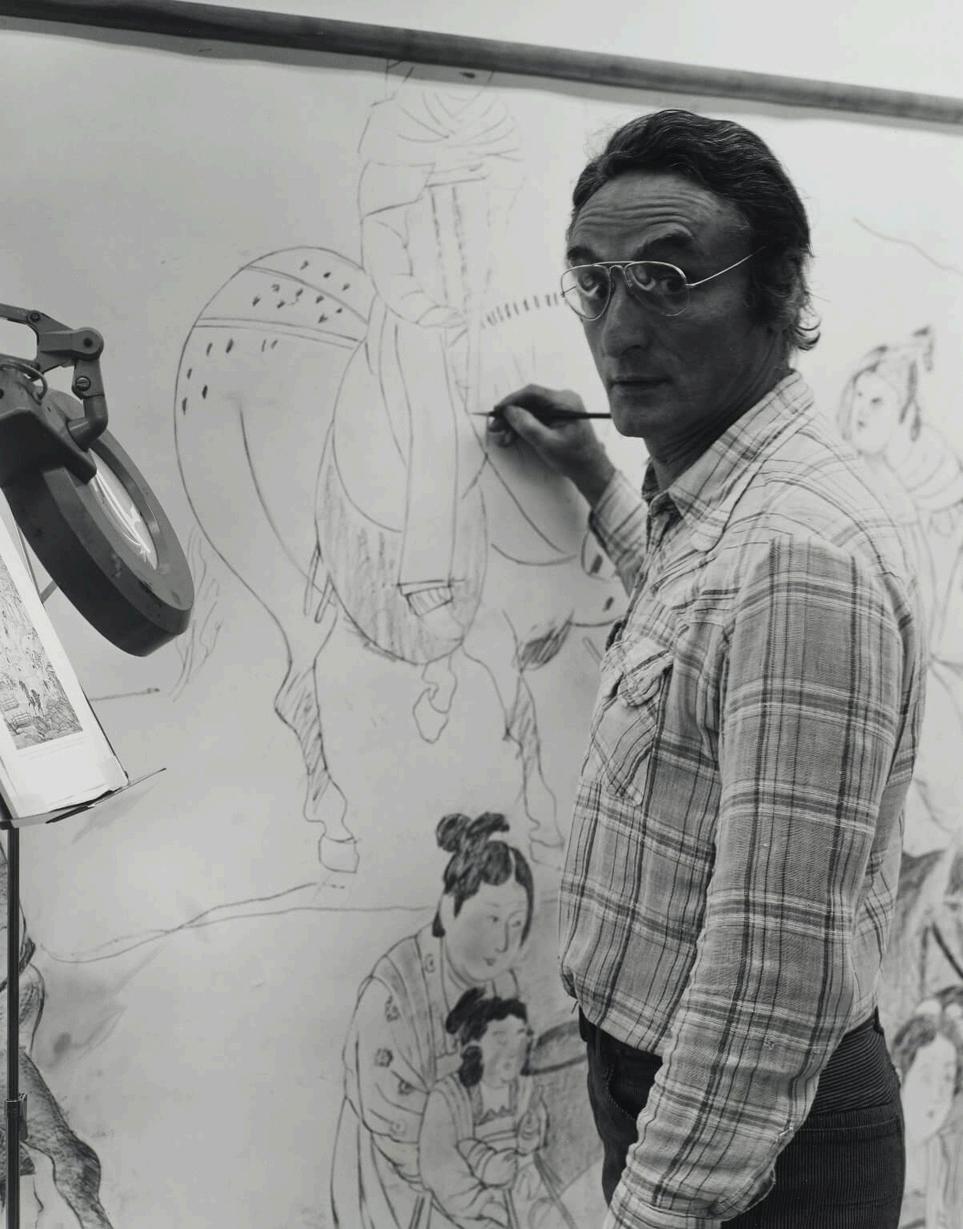
American, 1923 - 2002
Painter, sculptor, poet, and musician Larry Rivers was an established figure in the New York School, recognized for creating large paintings merging abstract and narrative elements, as in Washington Crossing the Delaware (1953), where the general leads his men through a space defined by murky oil washes and broad gestural brushwork. Rivers studied in the late 1940s under Hans Hofmann, the artist often regarded as the grandfather of Abstract Expressionism, but he never abandoned figuration, his compositions often including human subjects and text, as in Vocabulary Lesson (Polish) (1964). Rivers’ work is often compared to that of postmodern artists Jasper Johns and Robert Rauschenberg, and is considered an important precursor to Pop art. As Andy Warhol once said, “Larry’s painting style was unique it wasn’t Abstract Expressionism and it wasn’t Pop, it fell into the period in between. But his personality was very Pop.”
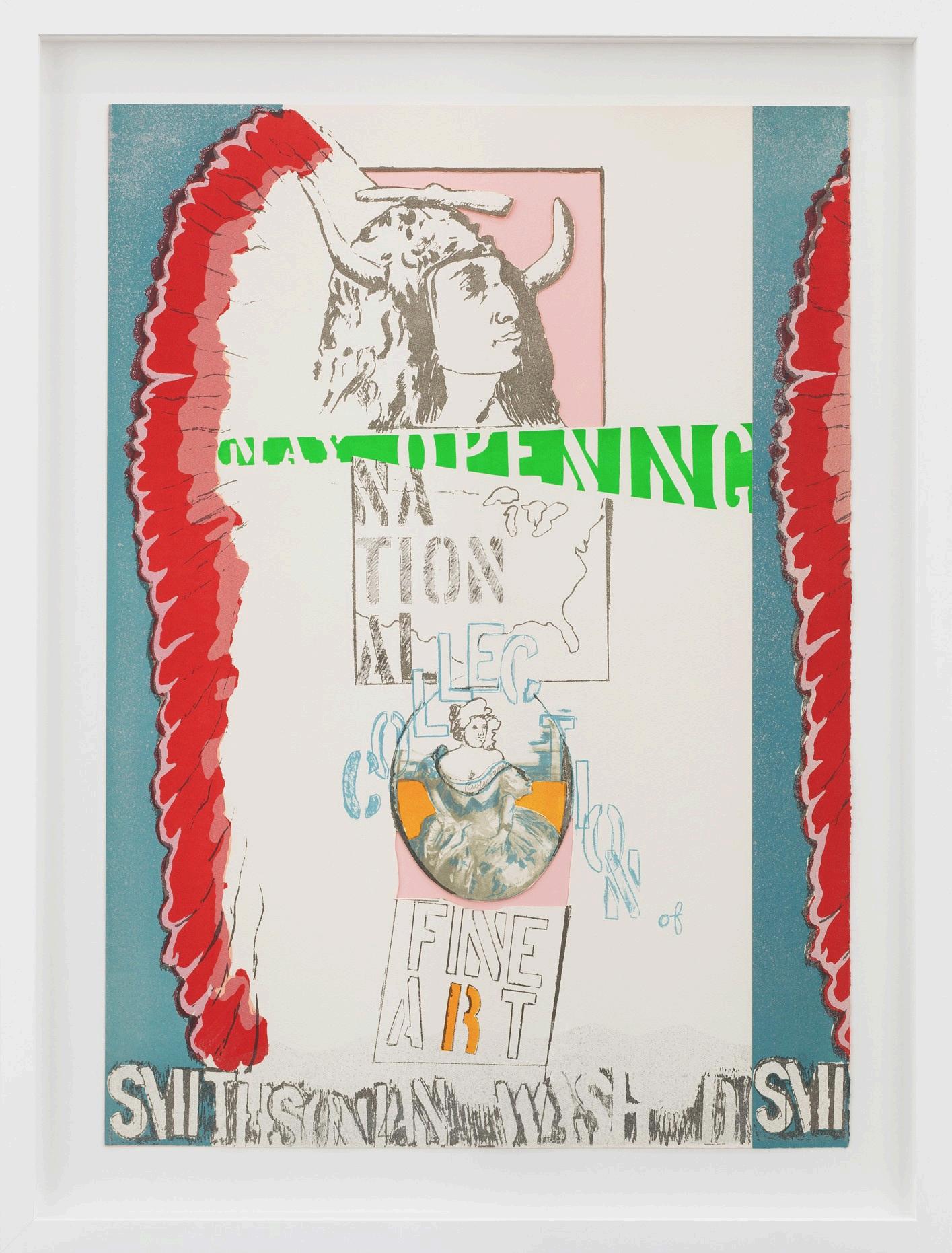
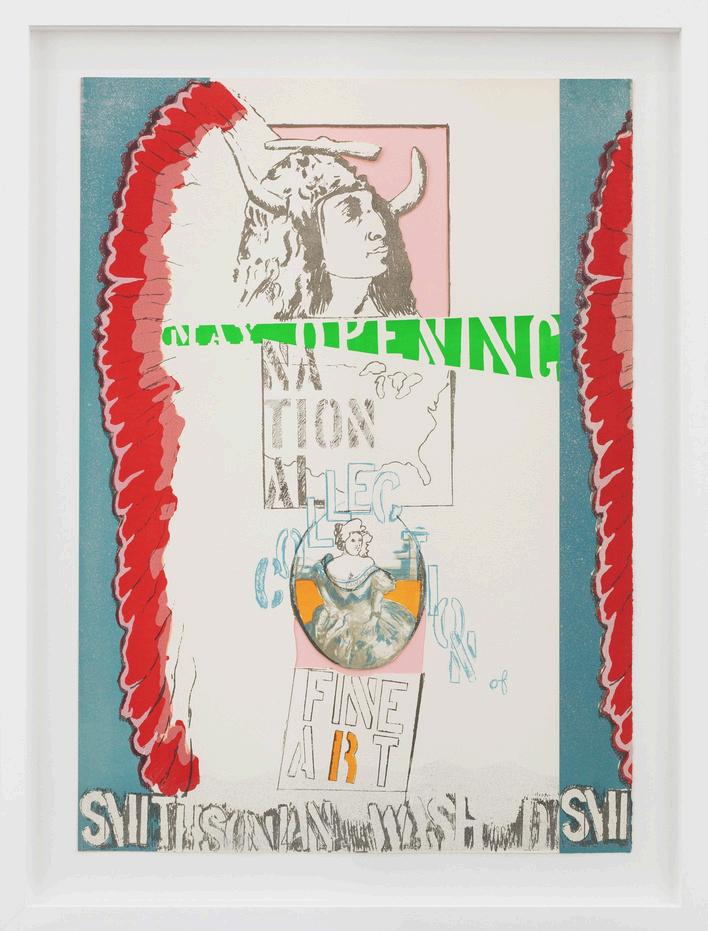
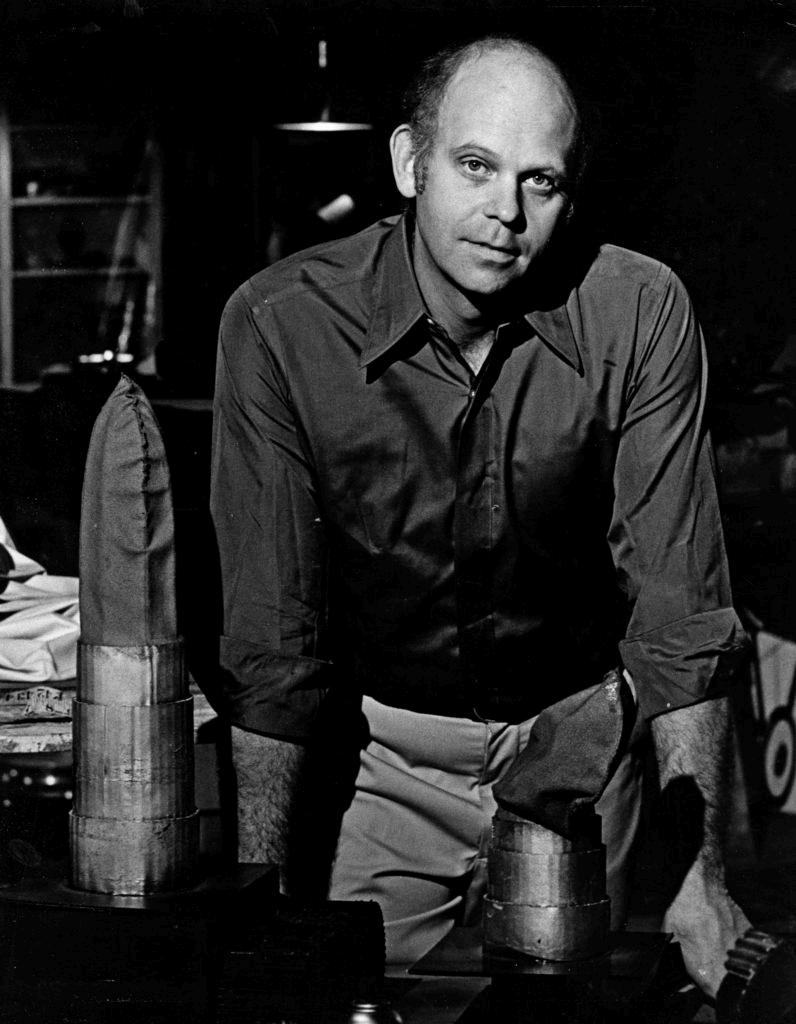
Swedish-American, 1929 - 2022
Since the 1960s, Claes Oldenburg has worked at the forefront of the Conceptual and Pop art movements, and he’s best known for his monumental public sculptures of everyday objects. These include Lipstick (Ascending) on Caterpillar Tracks (1969, reworked 1974) in New Haven, Connecticut; Clothespin (1976) in Philadelphia; Shuttlecocks (1992) in Kansas City; and Cupid’s Span (2002), a gigantic archer’s bow in San Francisco These pieces epitomize Oldenburg’s irreverent sense of humor and fascination with American consumerism, qualities which have also pervaded his performances, drawings, writings, and famous “soft sculptures” cushiony, unserious objects that resemble diner foods and other symbols of Americana Oldenburg’s work can be found in the collections of the Museum of Modern Art, the Guggenheim Museum, the San Francisco Museum of Modern Art, Moderna Museet, and the Centre Pompidou. At auction, many of his sculptures—including those of a clothespin, a depiction of a flexed muscle, french horns, a dress, a trowel, a sewing machine, and a typewriter eraser have sold for more than $1 million. Oldenburg often collaborated with his late wife, Coosje van Bruggen, who died in 2009.
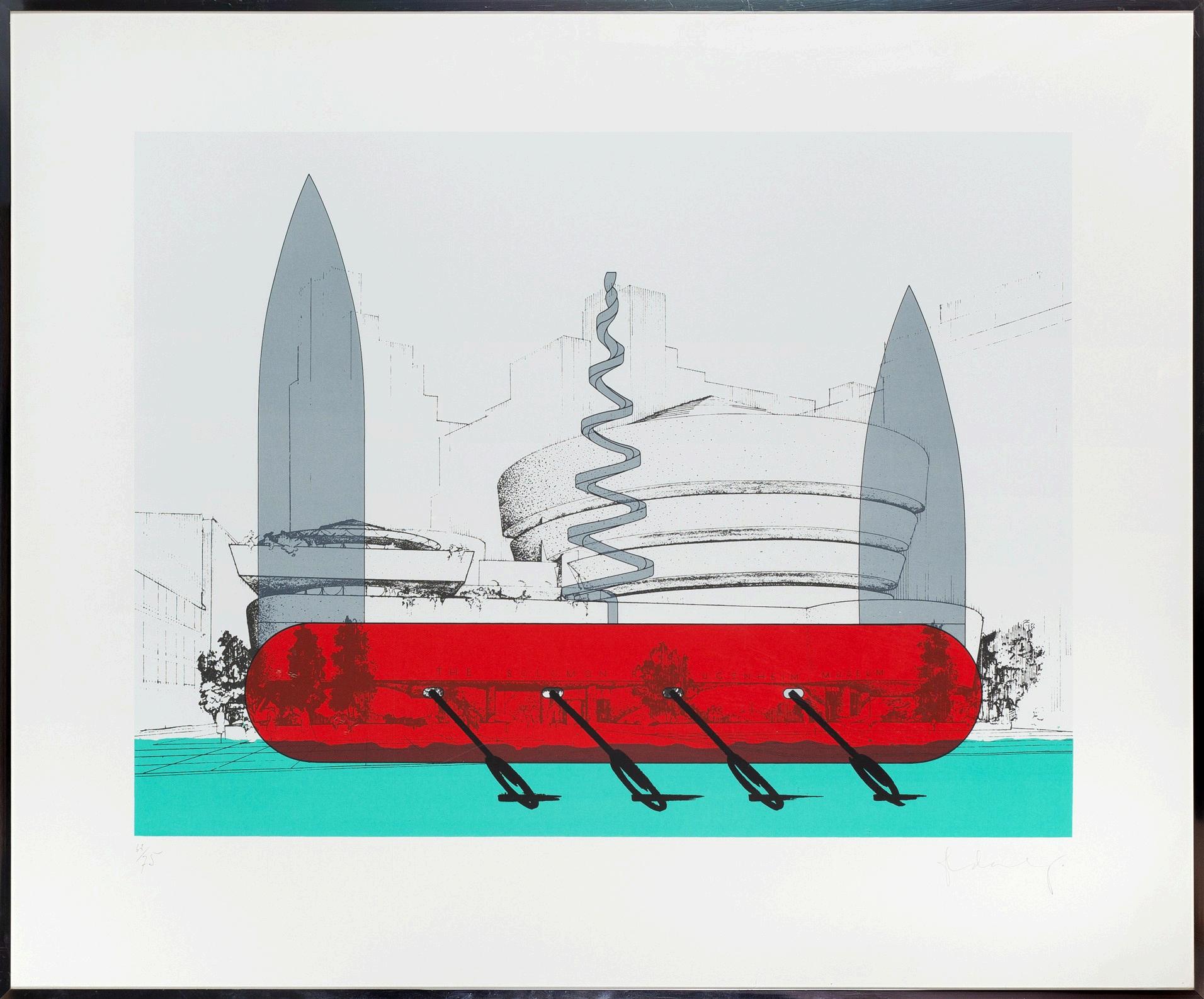
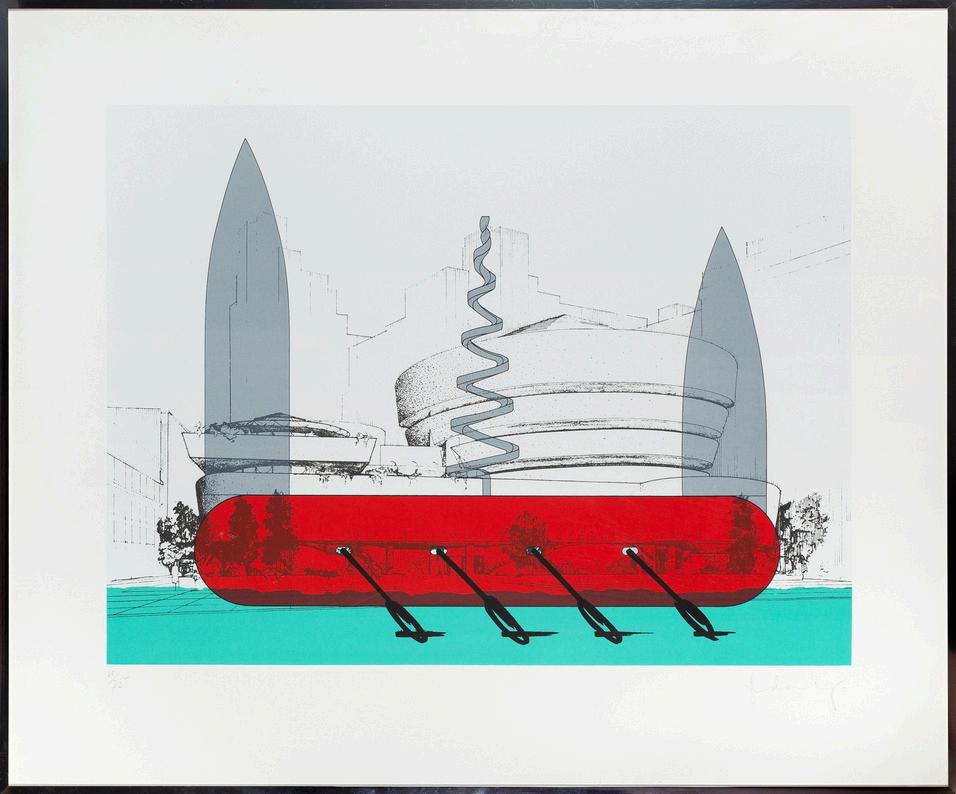
Oldenburg Knife Ship Superimposed on the Solomon R. Guggenheim Museum (68/75), 1985
Color screenprint on white Coventry Rag paper
21 5" x 28 25"
$12,000
West Chelsea Contemporary is much more than the typical gallery. Offering worldclass art in a dynamic, interactive setting WCC produces museum-quality exhibitions year-round with programming that is free and open to the public.
West Chelsea Contemporary’s collection includes artists influential to Pop Art, Street Art, Graffiti, Post-Graffiti and contemporary art as well as tastemakers of these movements. With a local, national, and international roster of represented artists, West Chelsea Contemporary situates artwork from the primary market alongside a highly curated selection of pieces from the secondary market This novel display of represented, emerging and mid-career artists alongside Blue Chip masters increases each artist’s exposure and serves to make connections between their work.
1009 West 6th Street #120 Austin, TX 78703
Monday - Saturday 10am - 6pm
Sunday 12 - 6pm
512 478 4440 sales@wcc.art
wcc art @wcc.art