2026 PIPELINE FELLOWSHIP PUBLICATION

13th Edition


13th Edition
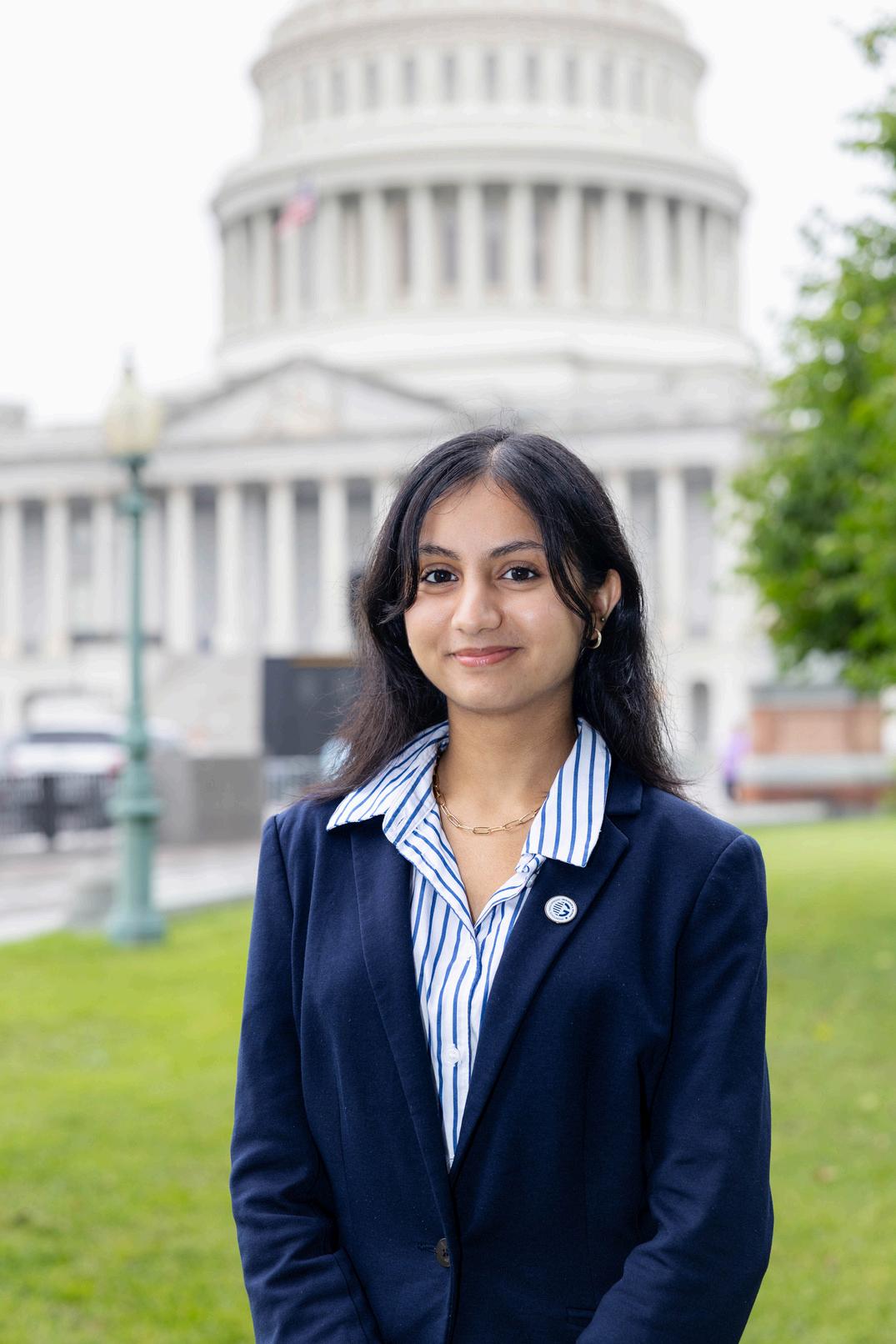
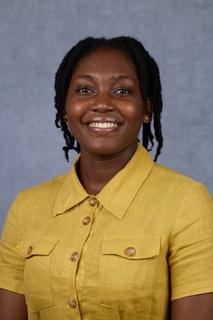
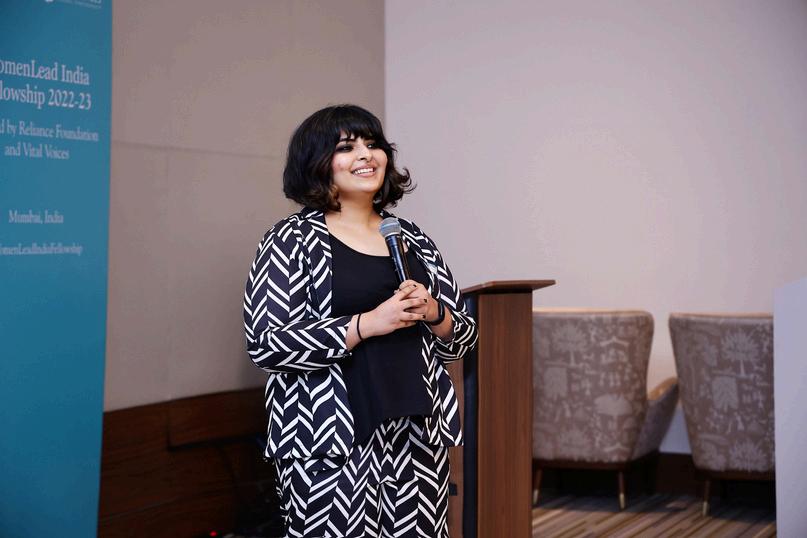



Supporting Editors
Alexandra Greig -Duarte
Myriam Coulibaly
Ayushi Mehta
Pauline Melvin
Lourdes Sanchez | WCAPS Social Media & Communications Strategist
Jada Quinland | WCAPS Program Officer
Localising Women, Peace, and Security (WPS): An Integrated WPS-SDoH Approach to Feminist Security Governance
Author: Asiyah Ball
Mandating Operational End-Use Monitoring toPrevent Civilian Harm from U.S. Arms Transfers
Author: Anavi Khanna
Steady Secularization or Religious Resurgence: Understanding the Drivers of Religious Interest Amongst American Gen Z
Author: Cerllin Chill
Automation Without Anticipation: Gendered Risks to Malaysia’s Human Capital in the Age of AI
Author: Diana Teoh
Beyond the Battlefield: Identity,Interests, and the Struggle for Democratic Transformation in Sudan
Author: Dorine Tyr
Negotiating Survival: Care as Infrastructure, Invisible Labour, and Everyday Peacebuilding
Author: Faiza Ruksar
AI-Powered Violence: Understanding Intersectional Impacts of Artificial Intelligence on Women of Color
Author: Hannah Williams
Governing Through Digital Transnational Repression: Gendered Control of Women Activists in Authoritarian and Diasporic Contexts Author: Kelly Huang
Indigenous Women and Intersectional Inequality: Evaluation of Norway's Equality and Anti-Discrimination Act and its Protection of Sámi Women
Author: Lindsey Gilbert
Peace and Security the Pasifika Way: Unpacking the Women, Peace, and Security (WPS) Policy in the Pacific Islands
Author: Lois Ramilo
The Digital Frontline: Post-Conflict Masculinities and Technology-Facilitated Sexual and Gender-Based Violence
Author: Mariyam Yumna Azeez
Addressing gender-based challenges in the plantations: Indonesia as a case
Author: Nibras Sikkir
The Benefits of Women of Color in Counterterrorism
Author: Nkechi Ilechie
The Benefits of Women of Color in Counterterrorism
Author: Nkechi Ilechie
Women, Peace, and Security in Outer Space
Author: Rhiannon Rasaretnam
Overcoming Language Barriers: Approaches to Addressing Linguistic Barriers for Women in Global Health
Author: Sanajalee Chandrasekara
Legal Perspectives on the Failure to Prosecute Reproductive Violence under International Criminal Law
Author: Sarina Patel
The Risk of Dehumanizing Conflict: The Effect on Low-Income Countries
Author: Tamyrn Sainten
Weaponizing gender in electoral politics; disinformation against women politicians as a security threat in Kenya
Author: Wincate Mukami
Migrants and Displaced People as Stakeholders and Participants in Peace Processes
Author: Zoya Gheisar

This publication has been assembled by a collective of Pipeline Fellow authors as part of the Women of Color Advancing Peace, Security, and Conflict Transformation’s (WCAPS) Pipeline Fellowship Program components. Although the Pipeline Fellowship is the proprietary of WCAPS, the perspectives and viewpoints conveyed herein belong to the authors. The content presented in this publication is intended solely for informational purposes and should not be interpreted as professional advice or a political position endorsed by WCAPS. We encourage readers to continue their own research and consult relevant experts or professionals to address their specific needs and circumstances.
Women of Color Advancing Peace, Security, and Conflict Transformation (WCAPS) remains steadfast in its mission to amplify the voices, leadership, and lived experiences of women of color within the complex and evolving landscapes of global peace and security.
At a time when the United States and the international community face mounting challenges - from protracted conflict and forced displacement to the rise of authoritarianism, climatedriven insecurity, and shifting multilateral frameworks - our commitment to cultivating equity-driven leadership is more urgent than ever.
As a force multiplier for our growing membership, WCAPS serves as both an incubator and a launchpad. We create spaces where women of color can dialogue, build coalitions, develop policy solutions, and lead the way in transforming systems that have long excluded us. Our programming centers not just the professional trajectory of our members, but also their intellectual power, cultural fluency, and commitment to justice.
WCAPS is proud to showcase the 13th Edition of the Pipeline Publication compiled with the work of our 2026 Pipeline Fellows. WCAPS has published many articles by our fellows, and each time I am impressed by the topics they choose, the perspectives they present, and the inquisitiveness they reflect. Congratulations to all of the authors.
I also want to thank our Program Officer, Jada Quinland, for her leadership of the WCAPS Fellowship Program. To our Editors, Guest Speakers, facilitators and volunteer experts who have contributed their time to the program, thank you kindly for your added imapact. Once again, congratulations to all the authors on their incredibly impressive work and for being part of this wonderful group of 2026 WCAPS Pipeline Fellows.
With respect and admiration,
Bonnie D Jenkins, Ph.D Executive Director



EDITOR
Kavitha Nallathambi

Asiyah Ball is an early career professional and interdisciplinary scholar, drawing from the fields of international affairs/development, critical feminist studies, critical race studies, and sociocultural anthropology. She holds an MSc in Gender, Development, and Globalisation from the London School of Economics and Political Science. Her most recent research project examined how U.S. immigration detention centers facilitate reproductive violence against immigrant women of color.
Asiyah applies intersectional and interdisciplinary frameworks to trace policy gaps and inform equity-centered solutions. She has pursued several internship opportunities to develop her expertise in global gender justice, including serving as a WPS intern in the U.S. Department of Homeland Security where she contributed feminist-infomred policy recommendations

Localising Women, Peace, and Security (WPS): An Integrated WPS-SDoH Approach to Feminist Security Governance
Author:
Editor: Institution: PaperFormat: AsiyahBall KavithaNallathambi 2026WCAPSPipelineFellow ResearchPaper
worktoundermine,criminalise,andreversewomen’srights,LGBTQ+rights,andreproductivejustice. Feministscholarshavelabeledthisphenomenonasaglobal“anti-gendermovement”or“genderbacklash” (Brechenmacher,2025;TheUnitedNationsResearchInstituteforSocialDevelopment&UNWomen,2025) InlookingcloselyatcasesliketheUnitedStates,thelong-termimpactsofanti-genderlegislationaremade extremelyclear Forexample,DonaldTrump’sOneBigBeautifulBillAct(OBBBA),signedintoorderinJuly 2025,cutmorethan1trilliondollarsfromMedicaidandtheAffordableCareAct(ACA)(Haider,2026) Asa resultofthis,areportproducedbytheCongressionalBudgetOfficestatesthat7.8millionpeoplewillbecome uninsuredby2034(Swagel,2025;Haider,2026).Evenmorecriticalistheimpactthesecutshaveon reproductivehealthcareaccessinruralareasintheUnitedStates–over130laboranddeliveryunitsareat riskofclosure(Donelsonetal.,2025;Haider,2026).AttacksonMedicaidalsoimpactaccesstoreproductive healthcareservicesforlow-incomeindividualsasPlannedParenthoodandMaineFamilyPlanninghave essentiallybeendefunded(Haider,2026) Thesestatisticshighlightthenecessityfortargetedinterventionat alllevelsofgovernance(state,municipal,andcommunity) Moreover,whensituatingthesenumberswithina muchlargerlandscapeofembeddedstructuralviolenceintheUnitedStates,whatalsobecomesclearishow womenandgirlsofcoloraremostatrisk
Blackwomen,duetoracialisedandgenderedinequality,experiencehighratesofreproductive
Inrecentyears,therehasbeenanincreaseindiscriminatorylaws,policies,andpracticesthat injustice(maternalmortalityandmorbidity)withintheUnitedStates(CDC,2024).Theseratesarepredicted toincreaseasaccesstoqualityhealthcare,food,education,etc.isthreatenedbyfundingcutsandagrowing cultureofviolence.Despitethis,veryfewmodelsattendtomanifestationsofgenderedandracialised (in)securitythatareproducedbystructuralinequalityatthelocallevel.Becauseofthis,localizingtheWomen, Peace,andSecurity(WPS)frameworkbecomesnecessaryfornotjustaddressingeverydayexperiencesof harm,insecurity,andviolence,butitalsoworkstowardscreatingamodelforlocal,feministsecurity governance Thus,thisresearchpaperexaminesthefollowingquestion(s):1) How can integrating the Social Determinants of Health with the Women, Peace, and Security agenda provide an analytical framework for understanding and operationalising a localised feminist security agenda? 2) How will this integrated framework offer a new approach to understanding feminist security governance?
ThisarticleintroducesanintegratedWomen,Peace,andSecurityandSocialDeterminantsof Health(SDoH)analyticalframeworkthatreconceptualisesthesocialdeterminantsofhealthasdeterminantsof humansecurityandalignsthemwiththeWPSpillars Indoingso,itprovidesaconcretetoolfor operationalisingWPSatthelocallevels(state-level,municipallevel,communitylevel,etc) Thislocalised modelreframesWPSasnotjustaglobal,state-centricframeworkforpromotingwomen’speaceandsecurity, butanecessarymodelforaddressinglocal,everydaythreatstowomen’ssafetyandsecurity–threatsthathave beenexacerbatedbyanti-genderlegislation.
Thisresearchpaperwillbedividedintothreesections.Thefirstsectionwillprovideanoverview
ofexistingWPSliterature,specificallyfocusingonimplementationgaps.Thesecondsectionwillpresentthe integratedWPS-SDoHframeworkanddiscusshowtheframeworkgroundstheWPSagendainlocalcontexts–goingbeyondtheunderstandingthatfeministsecurityisaglobal,state-centricconcern Thethirdsection providestheanalyticalandpracticalscopeoftheframework,discussinghowithelpsframeand,essentially, developfeministsecuritygovernanceagendas
OnOctober31,2000,theUnitedNations’SecurityCounciladoptedwhatiswidelyknownasthe
UnitedNations’SecurityCouncilResolution(UNSCR)1325onWomen,Peace,andSecurity(Otto, 2016;Pratt&Richter-Devroe,2011) UNSCR1325intervenedinatraditionallymasculinistfieldand placedwomenandfeministinterventionsasnecessarydriversforchange.Furthermore,theframework establishedfourkeypillarsthatcontinuetoshapeinternationalfeministsecurityagendas:participation, protection,prevention,andreliefandrecovery.Thesepillarsprioritisewomen’smeaningfulinclusionand
agencywithinglobalgovernancesystemsandprocesses(Baldwin&Bertea,2024) However,despitethese interventionsandtransformationsinapproachestointernationalpeaceandsecurity,25yearslater,feminist scholarsandpractitionersofWPSofferessentialcritiquesonthelimitationsoftheagendaandframework–critiquesthatprovideopportunitiesforrevisiting,reimagining,andreconceptualisingWPS.
ThemilitarisationofWPS Feministscholars,inre-assessingtheimpactandprogressofthe WPSagenda,notethatfeministsecurity,overtime,hasadvancedandaffirmedthesecuritisationofwomen's issues DianneOttostatesthat“feministargumentshavebeenmanipulatedtosupporttheexpandingexercise ofunaccountablepowerbytheSecurityCouncil [legitimizing]itsmilitaristicandcarceralapproach,inthe nameofprotectingwomen,mostlyfromsexualviolence,andpromotingtheirrights”(Otto,2016,2) The militarisationoftheWPSagendanotonlylegitimisesneo-liberal-capitalistlogics(expansionofmarketarms andincreasingpowerofstatesecurityinstitutions),butitalsoresultsinthesecuritisationofwomen’slives, whichdiscreditsthevoicesandexperiencesofwomenontheground(Baldwin&Bertea,2024;Otto,2016; Pratt&Richter-Devroe,2011).Thesecuritisationofwomen’speaceandsecurityhasalsoresultedina disengagementanddisconnectionfromcivilsociety,whichcreatesimplementationissuesasthereislittleto noengagementwithlocalstakeholderswhowouldberesponsibleforlocalisingWPS(Baldwin&Bertea, 2024;Basuetal.,2020).Thiscritiquepresentsthenecessityfordevelopinganinterventionthatcaneffectively localiseandimplementWPSinawaythatmovesbeyondtraditionalunderstandingsofsafetyandsecurity–thatgoesbeyondamilitaristicunderstandingofWPS
Failuretoaddressstructuralviolence.AnimportantcritiqueofWPSishowtheagendaandits practitionersoverlookconnectionsbetweenstructuralviolence/inequalityandimplementationofwomen, peace,andsecurityLauraShepherdprovidestheexampleofpovertyasshestatesthatstructuralcauses likepoverty“inhibitwomen[from]actingasagentswithtrulytransformativepotential”(Pratt&RichterDevroe,2011).Thispointisincrediblyimportantasitunderscoresthedeathatpeaceandsecurityare dependentuponone’saccesstothepositiveandnegativerights.Howcanpractitionersexpectsuccessful implementationsofWPSifpeopledonothaveaccesstostableincome,qualityhealthcare,and/oraffordable housing?Additionally,thiscritiquefurtheraffirmspostcolonialcommentaryonreturningtoahuman-centered approachtoWPSasithighlightshowstructuralinequalitylikepovertythreatenone’spersonalsecurity.Sheri Gibbingsoffersasimilarcritiquebyquestioningtheagenda’sinabilitytoaccountforintersectionalviolence Shenotesthatcontinuoususeof“utopianlanguage”andadisregardforintersectionalityfurtherentrenchthe WPSagendawithincolonial-capitaliststructures,causingviolenceratherthanpreventingit(Pratt&RichterDevroe,2011)
GapsinLocalImplementation.AnothercritiqueusefulforthisarticleishowWPSpractitioners havefacedchallengeswithlocalimplementation.Achilleos-Sarlletal.(2025)suggestthattheproblemin implementingtheagendaliesinthefactthatWPSreliesonatop-downapproachratherthanmeaningful engagementfromcivilsocietyandlocalactors–thisisaffirmedbypostcolonialfeministswhoarguethat theWPSframeworkperpetuatespowerasymmetriesbetweenglobaleliteandlocalagents(Basuetal.,2020). Thus,thistop-downapproachisaresultoftheimperialco-optationoffeministaspirationsviatheWPS agenda Thestate-centricsituatednessoftheWPSagendapresentsasachallengeforimplementationas NationalActionPlans(NAP’s),awidelyregardedmechanismforinstitutionalisingtheWPS,failtoaddress everydayinsecurity,especiallyinnon-conflictsettings(Basuetal,2020) Theliteratureevendiscusseshow NAP’softenfeelsuperficialwithnorealengagementoflocalgovernance(Achilleos-Sarlletal,2025;Mesa& Boschiero,2025).TheselimitationspreventWPSfrombeingabletoeffectivelylocalise,especiallyaslocal actorsandcivilsocietycontinuetobedismissedandoverlooked.
Thesecritiquesrevealnotjusttheagenda’smoveawayfromhuman-centeredsecuritybuthow theinstitutionalisationandco-optationofWPSwithinandbyneo-liberalinstitutionshaslimitedthereachof theagenda.Specifically,theagenda’srelianceontheglobaleliteandinstitutionsliketheSecurityCouncil proveaschallengesforimplementationatthelocallevel Moreover,securitywithintheWPSagendais primarilydefinedandunderstoodintermsofnationalinstitutionsandconflictsettings,creating
averylimitedunderstandingofsafety,peace,andsecurity Thus,ifWPSistoaddressitsimplementation issuesandtrulybecomearadical,transformativeframework,itmustmovebeyonditsstate-centric situatednessandconsideralternativescalesatwhichsecurityisdefinedandimplemented.
Moreover,theWPSframework,asitstands,doesnotprovideaclearanalyticalframeworkfor operationalisingthelocalisationofWPS;thus,evenifpractitionersweretofullyengagecivilsocietyleaders orlocalgovernmentsinimplementingWPSwithintheirlocalcontexts,thereisnoclearpathwayormodelto facilitatesuchengagementorintervention
ExistingscholarshipalsodiscusseshowWPSdoesnotadequatelyaddressviolenceagainst womenandgirlsatthelocallevelasitwas/isnotdesignedtodoso.WPSinterventionhasoftenfocusedon addressingconflict-relatedsexualviolence;however,inframingWPSinthisway,itobscuresoroverlookshow otherexperiencesormanifestationsofharmandviolenceimpactthequalityoflifeforwomenandgirls–as LauraShepherdandSheriGibbonsnoteWPScannotbelimitedtosexualviolence,especiallygiventheways thatunequalaccesstoqualityhousing,lackofstableincome,orlivinginfooddesertsimpactthesafetyand securityofwomenandgirls Becauseofthis,anewframeworkormodelisneededtoaccountfor manifestationsorexperiencesof(in)securitythatgobeyondsexualviolence
Forthisreason,thisarticleaddressesthenotedgapsbyintegratingtheSocialDeterminantsof Health(SDoH)frameworkwiththeWPSpillars,offeringastructuredapproachtonotonlyanalysinghowlocal governanceshapeseverydayexperiencesof(in)securitybutalsohowlocalleadersareabletodevelopapolicy agendacenteredonfeministsecuritygovernance
AnIntegratedWPS-SDoHConceptualFramework
TheSocialDeterminantsofHealth,apopularpublichealthframework,highlightshowcertain determinants(economicstability,accesstoqualityeducation,accesstoqualityandrespectfulhealthcare, accesstoqualitysocialinfrastructureandcommunityresources,thebuiltenvironment,andsocialand communitycontext)directlyinfluencequalityoflifeandlifeoutcomes(KatarinaVrtikapaetal.,2025; Flaubertetal.,2021).Thisframeworkmovesbeyondaclinicallensasitidentifiesstructuralandsystemic factorsthatshapeapersonorcommunity’swell-being–factorssuchaspoverty,misogyny,andracism (Ramsoondaretal,2023;Beechetal,2021)
However,theSDoHframeworklacksanexplicitengagementwithpower,security,andgendered violence,despitethewayspower,security,andgendershapepersonalandcommunitywell-beingand outcomes(Aguirreetal,2022) Conversely,whiletheWPSagendahassoughttobroadenandtransform globalunderstandingsofandapproachestosecurity,itsinstitutionalisationwithinstateandmilitarised governancestructureshaslimiteditscapacitytoaddresstheeveryday,structuralconditionsthatshapewomen andgirls’livedexperiencesof(in)security.Additionally,NAP’softenstruggletooperationaliseprevention andprotectionbeyondconflictsettingsbecausetheylackalocalisedanalyticalframeworkcapableof capturinglocal,systemicandstructuralinequalities.
Thus,byintegratingtheSocialDeterminantsofHealthframework(SDoH)withWPSpillars (Figure1),thisarticledevelopsfeminist-informedanalyticaltooltolocaliseWPS.Thisintegrationhighlights howstructuralconditionssuchasaccesstoresources,services,andsocialsupportsystemsshapeexperiences ofsafetyand(in)security Additionally,thispaperengagesSDoHinawaythatgoesbeyondlookingsolelyat healthandhealthoutcomes;thisframeworkreinterpretstheSocialDeterminantsofHealthasdeterminantsof humansecurity
Eachdeterminantcorrespondstospecificdomainsoflocalgovernance,suchashealthcare
systems,education,housing,transportation,andeconomicpolicy–domainsthatshapeconditionsofsafetyand (in)security Thus,bymappingthesedomainsontotheWPSpillars,theframeworkprovidesananalyticaltool forexamininghoweveryday
governance
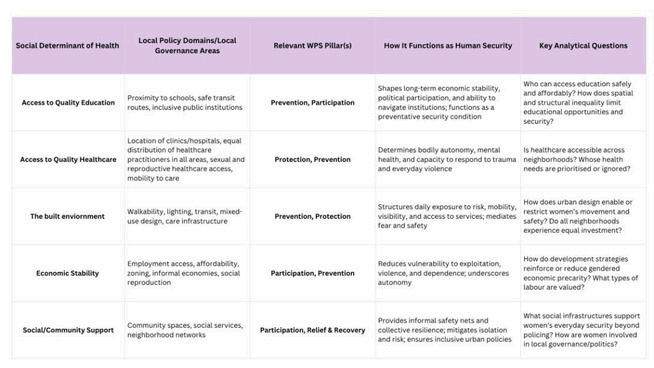
Figure 1: An Integrated WPS-SDoH Framework shapesgendered andracialised experiencesof (in)securitybeyond traditionalconflict settings;italso providesan understandingof insecuritythatgoes beyondsexual violence–issues suchaspredatory loaningorracist zoningpractices creategendered andracialised insecurity For example,accessto qualityhealthcarecanbeunderstoodascentraltotheprotectionandpreventionpillarsastheaforementioned datashowsthatbycuttingorlimitingfundingthatsupportaccesstotheseservices,womenbecomevulnerable toviolenceandadversehealthoutcomes,whichimpactspersonalsafetyandsecurityandeventually communitywell-being.Similarly,accesstoqualityeducationandeconomicstabilityalignwithparticipation andpreventionpillarsbyenablingautonomyandagency,buildingpersonalandcommunityresilience,and reducingvulnerabilitytostructuralviolence.Accesstoinformationandeconomicresourcesshapeswomen’s bargainingpowerandauthority,givingthemmoreleverageandagencyindecision-makingprocesses.Thus, understandinghowSDoH,likeeconomicstabilityandaccesstoqualityeducation,alignswithWPSisintegral towholistichuman-centeredsecurity
Thisintegratedmodelcanbeusedaseitherananalyticaltooltoimprovelocalpolicies,oritcan beusedtodeveloppoliciesthatreflectfeministsecuritygovernance.Furthermore,itshiftstheanalyticalfocus fromstate-centricandconflict-orientednotionsof(in)securitytowardsstructuralconditionsthatshape everydaysafetyand(in)securityinlocalcontexts.Thus,inbringingtheSocialDeterminantsofHealthinto conversationwithWPS,theframeworkexpandswhatcountsasasecurityissueandwheresecuritygovernance takesplace.However,whilethisarticledevelopstheconceptualfoundationsofthisintegratedframework, furtherresearchisneededtoexaminehowitoperatesacrossspecificempiricalcontexts.
Thisframeworkcanbeoperationalisedinthreestages/phasesFirst,practitionerscanidentify relevantsocialdeterminantsshapingagivencontext(healthcare,housing,education,etc.).Second,these determinantscanthenbemappedontotheWPSpillarstoassesshowstructuralconditionsaffectparticipation, protection,prevention,andreliefandrecovery.Third,thismappingcanbeusedtodiagnosegapsandinform policyinterventionsattheappropriatelevelofgovernance(e.g.,state,municipal,community)–eachdeterminant maycorrespondtomultipleWPSpillars,whichreflectstheinterconnectednatureofstructuralinsecurity
Additionally,itisimportanttonotethatthisframeworkisnotmeanttobenormativeor prescriptive Itisintendedtobeaflexibleanalyticaltoolthatallowspolicymakersandpractitionersthe opportunitytoidentifyrelevantsocialdeterminantswithinagivencontextandassesshowtheseconditions shapedifferentdimensionsof(in)securityacrosspopulations,asdefinedbytheWPSpillars In
thisway,theintegratedWPS-SDoHframeworkprovidesastructuredapproachfordiagnosinglocalised insecuritywithoutrequiringasingleoruniversalmethodofapplication
AnalyticalandPracticalImplicationsofAnIntegratedWPS-SDoHFrameworkAcrossLocal GovernanceLevels
Ratherthanprovidingafullempiricalapplication,thissectionoffersseveralexamplesto demonstratewhereandhowtheintegratedWPS-SDoHframeworkcanbemostanalyticallyandpractically useful.Theseexamplesarenotintendedtoactascomprehensivecasestudiesbutasentrypointsthathighlight howtheframeworkcaninformanalysisacrossdifferentlevelsofgovernanceandworktowardsdeveloping feministsecuritygovernancepolicies
Atthestatelevel,recentlegislationandpolicydevelopmentsshowthetypesofstructural

Expandingupontheprevioussection,engagementwithmunicipal-leveldecision-making
conditionstheintegratedWPS-SDoHframeworkisdesignedtoaccountforandaddress Forexample,therise inrestrictionstargetingtransyouth,suchaslimitationsongender-affirmingcareandeducationalexclusion/the banontheuseofinclusivepronounsinschools,demonstrateshowstate-levelpolicymakingshapeseveryday securityconditions(Arrayales&Redfield,2026).Becauseofthis,state-levelrestrictionsongenderidentity andhealthcareaccessintheUnitedStatescanbeunderstoodnotonlyaslegalorpoliticaldevelopmentsbutas securitythreats.Thus,inusingtheintegratedWPS-SDoHframework,thesepoliciesconstituteformsof structuralinsecuritythatfallwithinthescopeofpreventionandprotection,despiteoccurringoutsideof conventionalconflictsettings processesandpoliciesarealsoequallyasimportantwhenthinkingabouteverydaysafetyand(in)security Atthe municipallevel,decisionsrelatedtohousing,transportation,andpublicservicesfunctionassitesoflocal securitygovernance;theyplayanintegralroleindefiningaccess,theallocationofresources,andultimately decidewhoseprioritiesaremet.Forexample,the2025-2026citybudgetinPhiladelphia,whichwassignedby MayorCherelleParker,eliminatednecessaryfundingthatmadereproductivehealthcare(contraception,STI testing,cancerscreenings,andabortioncare)accessible,especiallyaftertheoverturningof Roe v. Wade (Anastasakos,2025;PlannedParenthoodPennsylvaniaAdvocates,2025).Thebudgetwentfromprovidinglocal reproductivehealthnon-profitswith450,000to12milliondollarsannuallyto0dollars(Anastasakos,2025; Brooks,2025) Thesebudgetcutsnotonlylimithealthcareaccessinthecitybutalsoundermineand,essentially, preventreproductivefreedom Thisisespeciallythecaseforlow-incomeresidentsasthecutsexacerbatean alreadydiresituation(Brooks,2025) Ashighlighted,localdecision-makingcaneitherexacerbateormitigate harm,especiallyforwomenofcolor,makingmunicipaldecisions/policiesdeterminantsofhuman(in)securityand anecessaryarenaforfeministsecurityintervention.Bydefiningdomainslikepublicservicesassitesofeveryday (in)security,theintegratedWPS-SDoHframeworkhighlightshoweverydaygovernancedecisionsproduce differentiatedexperiencesofsafetyandaccess.
OneofthemostimportantelementsoftheWPSframeworkisthemeaningfulparticipationof womenandgirlsindecision-makingprocesses Oftentimes,thispillaradvocatesfortheparticipationofwomen inthegovernmentorinthemilitary However,theintegratedframeworkchallengestheselimitsofparticipation andpushesfortheinclusionofwomennotjustinformal,politicalandmilitarysettingsbutatalllevels From women’sinvolvementinlocalcommunity-basedorganisationsandadvocacynetworkstomunicipal commissionsandneighbourhoodadvisorycommittees,womenmustbeinallspacesthatshapeaccessand safety.Thisapproachtodecision-makingshiftsthepowerfromavertical,top-downapproachtoamore horizontal,inclusiveapproachasitredistributespowertolocalactors
Localactorsbecomeessentialtodecidingsecurityconcernsandshapingsecurityagendas,andthus,shaping policy,programming,andpractice
Together,theseexamplesdemonstratethatlocalisingWPSrequiresmorethanjustexpandingits geographicandspatialscope;itrequiresafundamentalshiftinhowsecurityisconceptualisedand governed.
ByintegratingtheSocialDeterminantsofHealth(SDoH)withthecorepillarsoftheWPS
ThisarticlehasarguedthattheWomen,Peace,andSecurity(WPS)agenda,while transformativeinitsoriginalintent,remainslimitedbyitsstate-centricandconflict-orientedframingof security.Inaglobalcontextmarkedbyrisinganti-gendermovements,democraticbacksliding,andpersistent structuralinequality,theselimitationshindertheframework’sabilitytoaddresstheeverydayconditionsthat shapewomen’slivedexperiencesof(in)security.Asanintervention,thispaperhasproposeda reconceptualisationofWPSthroughanintegratedWPS-SDoHconceptualframework agenda,thisresearchadvancesaconceptualframeworkthatredefinessecurityassomethingthatisstructurally andspatiallyembeddedwithineverydaylife Thisapproachshiftsthefocusandpowerfromstateinstitutions andconflictzonestolocalgovernanceprocesses,socialinfrastructures,andeverydaymaterialconditionsthat (re)producesafetyand(in)security.Indoingso,itexpandstheanalyticalandpracticalscopeofWPS, positioningdomainssuchashousing,healthcare,education,andmobilityascentralconsiderationsforfeminist peaceandsecurity.
LocalisingWPSrequiresrethinkingparticipationasaquestionofpower,recognising structuralinequalityasadriverofinsecurity,andcenteringthelivedexperiencesofthosemostaffectedby violenceandexclusion Thisshiftopensnewpossibilitiesforfeministinterventionsinpolicy,governance,and research,particularlywithincontextsthathavetraditionallybeenexcludedfromWPSanalysis
ThispaperrepresentsaninitialstepindevelopingandarticulatingalocalisedWPSframework; however,furtherresearchisnecessarytofullyrealiseitsanalyticalandpracticalpotential Futurestudiescould applytheintegratedSDoH-WPSframeworkacrossdiverseempiricalcontexts–includingurban, rural,andtransnationalsettings–inordertoexaminehowlocalgovernancestructuresshapedifferentiated experiencesof(in)security Inparticular,in-depthcasestudiesofstateormunicipalpolicy/policies,urban developmentstrategies,andcommunity-basedinitiativeswouldprovidevaluableinsightintohowthis frameworkcanbeoperationalisedinpractice.
Additionally,futureresearchshouldexploremethodologicalapproachesthatcenterlived experience,includingparticipatoryandcommunity-basedresearchdesigns,tobettercapturetherelationaland embodieddimensionsofinsecurity.Comparativeanalysesacrossregionsandgovernancesystemsmayalso helpidentifypatterns,limitations,andopportunitiesforscalinglocalisedWPSapproaches.Ultimately, advancingthisresearchagendawillbecriticalfortransformingWPSfromaprimarilystate-drivenframework intoamoreinclusiveandresponsivemodeloffeministpeaceandsecuritygovernance Conclusion
References
Achilleos-Sarll,C.,Kirby,P.,Naraghi-Anderlini,S.,ThuySeelinger,K.,Grimes,R.,Weerawardhana,C., Haastrup,T.,Rebelo,T.,Drumond,P.,Chilmeran,Y.,Jayakumar,K.,Lee-Koo,K.,Krulišová, K.,Wright,H.,&McLeod,L.(2025).Unhappybirthday!Women,PeaceandSecurityat 25. International Feminist Journal of Politics,1–47. https://doi.org/10.1080/14616742.2025.2600069
Aguirre,D.L.,Perez,C.,&Burkett,E.K.(2022).Stability,Security,andtheSocialDeterminantsof Health. Global Security: Health, Science and Policy, 7(1),13–23. https://doi.org/10.1080/23779497.2022.2047092
Anastasakos,E.(2025,June23). Planned Parenthood’s Philly chapter criticizes city budget for not
backfilling federal cuts: “It felt like a gut punch.” Inquirer.com; The Philadelphia Inquirer. https://www.inquirer.com/politics/philadelphia/planned-parenthood-city-funding-federal-cuts20250623.html
Arrayales,J,&Redfield,E (2026) THE IMPACT OF 2025 STATE ANTI-TRANSGENDER LEGISLATION ON YOUTH.https://williamsinstitute.law.ucla.edu/wp-content/uploads/2025Anti-Trans-Legislation-Jan-2026.pdf
Baldwin,G.,&Bertea,M.(2024,October). Where Next for the Women, Peace and Security Agenda? SIPRI https://wwwsipriorg/commentary/blog/2024/where-next-women-peace-andsecurity-agenda
Basu,S.,Kirby,P.,&Shepherd,L.J.(2020).Women,PeaceandSecurity:ACriticalCartography. In New Directions in Women, Peace and Security BristolUniversityPress Beech,B M,Ford,C,Thorpe,R J,Bruce,M A,&Norris,K C (2021) Poverty,racism,andthe publichealthcrisisinamerica Frontiers in Public Health, 9(9) https://doiorg/103389/fpubh2021699049
Brechenmacher,S (2025,June5) The New Global Struggle Over Gender, Rights, and Family Values CarnegieEndowmentforInternationalPeace. https://carnegieendowment.org/research/2025/06/the-new-global-struggle-over-gender-rightsand-family-values
Brooks,K.(2025,September18). ADVOCATES CALL ON CITY TO RESTORE FUNDING FOR REPRODUCTIVE HEALTHCARE - Philadelphia City Council.PhiladelphiaCityCouncil. https://phlcouncil.com/advocates-call-on-city-to-restore-funding-for-reproductive-healthcare/ CDC (2024,April8) Working Together to Reduce Black Maternal Mortality Women’sHealth https://www.cdc.gov/womens-health/features/maternal-mortality.html
Donelson,R.,Eng,M.,&Guerra,M.(2025,June). Republican’s New Health Care Law Will Impact Over 130 Rural Labor and Delivery Units | National Partnership for Women & Families.National PartnershipforWomen&Families.https://nationalpartnership.org/report/republican-budget-billcould-close-over-140-rural-labor-and-delivery-units/ Flaubert,J,Menestrel,S,Williams,D,&Wakefield,M (2021) SocialDeterminantsofHealthand
Health Equity In The Future of Nursing 2020-2030: Charting a Path to Achieve Health Equity National Academies Press (US) https://www ncbi nlm nih gov/books/NBK573923/
Haider,A (2026,January20) One Year In: 53 Ways the Second Trump Administration Is Harming Women and Families.Ms.Magazine.https://msmagazine.com/2026/01/20/trump-administrationharming-women-families-workplace-health-dei/
Mesa,M.,&Boschiero,E.(2025,August5). The Women, Peace and Security Agenda in the Implementation of the Triple Nexus GlobalPolicyJournal https://wwwglobalpolicyjournalcom/blog/06/08/2025/women-peace-and-security-agendaimplementation-triple-nexus
Otto,D (2016) WOMEN, PEACE AND SECURITY: A CRITICAL ANALYSIS OF THE SECURITY COUNCIL’S VISION https://wwwlseacuk/women-peacesecurity/assets/documents/2016/wps1Ottopdf
Parashar,S (2018) TheWPSAgenda:APostcolonialCritique The Oxford Handbook of Women, Peace, and Security,828–839 https://doiorg/101093/oxfordhb/978019063827601346
PlannedParenthoodPennsylvaniaAdvocates (2025,June18) PLANNED PARENTHOOD PA AND PLANNED PARENTHOOD SOUTHEASTERN PA REACT TO CITY BUDGET THAT DOESN’T INCLUDE FUNDIN…. Plannedparenthoodaction.org; Planned Parenthood Pennsylvania Advocates. https://www.plannedparenthoodaction.org/planned-parenthood-pennsylvaniaadvocates/press-releases/planned-parenthood-pa-and-planned-parenthood-southeastern-pa-reactto-city-budget-that-doesnt-include-funding-for-sexual-and-reproductive-healthcare
Pratt,N,&Richter-Devroe,S (2011) CriticallyExaminingUNSCR1325onWomen,Peaceand Security International Feminist Journal of Politics, 13(4),489–503 https://doiorg/101080/146167422011611658
Ramsoondar,N,Anawati,A,&Cameron,E (2023) RacismasaDeterminantofHealthandHealth Care Canadian Family Physician, 69(9),594–598 https://doiorg/1046747/cfp6909594 Swagel,P L (2025) InformationConcerningMedicaid-RelatedProvisionsinTitleIVofHR 1 In CONGRESSIONAL BUDGET OFFICE https://wwwcbogov/system/files/2025-06/ArringtonGuthrie-Letter-Medicaidpdf
TheUnitedNationsResearchInstituteforSocialDevelopment,&UNWomen (2025). UNDERSTANDING BACKLASH AGAINST GENDER EQUALITY Evidence, Trends and Policy Responses R E P O R T 2 0 2 5.https://www.unwomen.org/sites/default/files/202509/understanding-backlash-against-gender-equality-evidence-trends-and-policy-responses-en.pdf Trump,D.(2025,January20). Defending Women from Gender Ideology Extremism and Restoring Biological Truth to the Federal Government TheWhiteHouse;TheWhiteHouse https://wwwwhitehousegov/presidential-actions/2025/01/defending-women-from-genderideology-extremism-and-restoring-biological-truth-to-the-federal-government/

Anavi Khanna is a junior at Colby College studying Government and Economics. As an aspiring diplomat, she is specifically interested in conflict and diplomacy studies with a regional focus on the Middle East and North Africa Through her passion for foreign policy, she hopes to alter people’s perceptions of conflicts, reduce reductive reasoning, and systematically transform foreign policy solutions to create equitable policies for lasting peace. Raised in India, she speaks Hindi, Urdu, Marathi, and some German, and her experiences growing up helped her develop a passion for advocating for inclusive and empathetic foreign policies to ensure no family like hers is ever stranded over policies that affect communities globally.
At present, Anavi is studying abroad in Jordan as a Gilman scholar, where she is delving deep into the geopolitics of the MENA while also learning Arabic. She recently completed her internship at the U.S. International Trade Commission (USITC), where she gained insights into bureaucratic processes and how issues of trade intersect with the realm of diplomacy. She is also a Civic Fellow with the International Leadership Foundation and a 2025 Meridian–Cox Foreign Service Fellow
On campus, she is involved with the mock trial team, is a student advisor for Colby's public affairs center, and enjoys choreographing and performing Kathak (Indian classical) dances with her peers. Her hobbies include reading, writing satire, and listening to rock music. She is always excited to meet new people and hopes they can remember to be much more than just a huge Brian May fan.
MandatingOperationalEnd-UseMonitoringtoPreventCivilianHarmfromU.S.ArmsTransfers
Author:AnaviKhanna
Editor:KevenHernandez
Institution:WomenofColorAdvancingPeace,Security,andConflictTransformation(WCAPS)
PaperFormat:PolicyProposal
The 1979 Arms Export Control Act (AECA) delegates congressional arms transfer authority to the United States President. Since then, the executive branch has leveraged the AECA to make arms trade decisions that have deepened U.S. legal and moral complicity in humanitarian crises and violations of International Humanitarian Law (IHL). This proposal addresses a focal gap in U.S. arms control policies and recommends that Congress amend the AECA to mandate operational End-Use Monitoring (EUM) by establishing an interagency committee aided by non-governmental researchorganizations.
The United States government is the world’s largest arms dealer, accounting for nearly 42% of the global arms trade and eclipsing the market share of the next seven largest exporters combined (Yousif, 2024) While the AECA gives the executive branch significant power to regulate foreign arms sales, weak statutory provisions have allowed U S arms policies to fuel war rather than deter it. In 2021, roughly two-thirds of global conflicts (34 out of 46) involved one or more parties armed by the United States (Hartung, 2022). The existing American foreign policy framework does not prioritize reporting on the use of exported U.S. arms, and this has limited the government’s capacity to respond when those arms are implicated in civilian harm or violations of IHL.
For example, Section 40A of the AECA requires the executive branch to conduct End-Use Monitoring (EUM) of U.S. arms sales. This ensures recipients comply with requirements concerning the “use, transfer, and security of defense articles” and to use these arms solely “for the purposes for which they are provided” (22 U.S.C. § 2785a). However, the AECA does not explicitlyrequire operational EUM—themonitoringofU.S.armsthatrisk
being used to commit violations of IHL. As a result, current EUM programs focus on the diversion of U.S. arms to third parties instead of their potential use in civilian harm (Chappell & Benowitz, 2022). Operational EUM is further constrained by the lack of targeting data and limited informational coordination between EUM administrators at the Department of State (DoS) and the DepartmentofDefense(DoD),accordingtoRAND(2025).
Limited operational EUM has proven to be damaging to American foreign policy, most notably during the Saudi-led war against Yemen, where the U.S. sold over $64.1 billion in weapons to Saudi Arabia against credible concerns of them engaging in human rights abuses (Riedel, 2021).
The Yemen Data project, as of 2022, reports that coalition airstrikes had killed nearly 9,000 civilians in the country, and, as a Washington Post investigation reveals, a substantial portion of the air raids were carried out by F-15 fighter jets developed, maintained, and sold by U S companies (Lee et al , 2022) Furthermore, in 2020, the DoS Inspector General admitted that they had failed to take proper measures to reduce civilian deaths from U S -made bombs transferred to Riyadh (RAND Corporation, 2025), showing how necessary adequate and competent monitoring is in preventing human rights violations committed using American arms.
Congress should amend Section 40A of the AECA to statutorily require operational EUM. This will be implemented through an interagency committee that works alongside non-governmental actors. The committee would include officials from the DoD and DoS who administer their respective EUM programs while coordinating with civilian protection organizations and research firms. Groups like Security Force Monitor and Airwars have already leveraged open-source intelligence to consolidate data on how U.S. arms contribute to civilian harm and will be valuable toestablishingtheoperationalEUMprocess.
Operational EUM reporting would roughly follow a three-tiered process. First, the collaborating non-governmental organizations and research firms would produce biannual EUM reports in line with predetermined evidentiary standards set by Congress. These reports, organized by country, would highlight potential IHL violations caused by exported American arms. Second, after the submission of the report, the interagency committee would convene to discuss, assess, and evaluate findings. This committee would include members from the DoS’s Directorate of Defense Trade Controls (DDTC) and the DoD’s Defense Security Cooperation Agency (DSCA). Both organizations run their respective EUM programs, namely the Blue Lantern and Global Sentry programs. Employees coordinating these programs would be a part of the suggested interagency committee. Third, following review, the committee would faithfully implement AECA reporting requirements to Congress to document IHL violations and be abetted by non-governmental organizationsandverifiedbymembersoftheDSCAandDDTC.
Past attempts at interagency coordination highlight the potential of such models. For example,
USTR’s ICTIME is a multiagency effort that often collaborates with non-governmental actors to monitor foreign parties’ implementation of trade agreements. By pooling research and expertise, ICTIME was able to recognize violators of international trade laws and contribute to successful WTO dispute cases, most notably against China and India (USTR, n.d.). Altogether, the proposed solution would mandate the executive branch to monitor the use of U.S. arms in civilian harm and, through information-sharing, also address the logistical concerns pertaining to information collectionthatpreviouslypreventedoperationalEUM.
High personnel turnover within existing EUM offices risks eroding expertise Because DoD and DoS officials administering EUM programs often serve on a rotational basis (RAND
Corporation, 2025), the proposed interagency committee would either need to secure additional resources to train new personnel or establish more permanent positions to preserve the analytical consistency of operational EUM. This could prove challenging, given that the executive branch has recently experienced personnel reductions and budget constraints. The amendment might also require a stringent definition of the term “end-use monitoring” to circumvent vague interpretations that could be leveraged to waive executive accountability.
Furthermore, collecting accurate information on U.S. arms used during active war zones remains challenging, even with open-source intelligence and non-governmental support. Take, for example,Israel’s war in Gaza, where restricted journalism and NGO operations have severely limitedtheoutflow of information critical for reliable research. As a result, operational EUM is likelytoproduce probabilistic findings, which may require the committee to tailor its evidentiary standardstothescopeandpurposeofitsmonitoring.
Conclusion
TheArms Export Control Act must prioritize how exported US arms are actually used The consequences of this are not abstract In Yemen, civilian strikes have been traced to US-supplied munitions used by Saudi-led coalition forces (Amnesty International, 2018), and, presently in Gaza, Israeli security forces have most likely used U.S.-provided arms in a manner inconsistent with their IHL obligations (Human Rights Watch, 2025). The absence of systematic, operational EUM programs forces policymakers to be reactive rather than preventive. Many Congressional Democrats (2023) have pressed the Departments of Defense and State to properly track and monitor American-made weapons because a failure to do so would stand in contradiction to U.S. values and degrade our nation's efforts to protect civilians. Mandating operational EUM programs throughinteragencyeffortsisessentialtomitigatetheharmful
effects of current arms trade policies that reduce civilian lives to mere figures instead of making themacentralconcernofforeignpolicy
AmnestyInternational.(2018,March26). Yemen: Three years on, US and UK arms supplies to Saudi Arabia-led coalition are devastating civilian lives
https://www.amnesty.org/en/latest/news/2018/03/yemen-three-years-on-us-and-uk-arms-sup plies-to-saudi-arabia-led-coalition-are-devastating-civilian-lives/
ArmsExportControlAct,22U.S.C.§2785a.
CenterforCiviliansinConflict,&AmericanBarAssociationCenterforHumanRights.(2022). Human rights, civilian harm, and arms sales: A primer on U.S. law and policy.
https://civiliansinconflict.org/wp-content/uploads/2022/02/US-Law-and-Arms-Transfers_Fi nal.pdf
Chappell, J. R. & Brittany, B. (2022). Human rights, civilian harm, and arms sales: A primer on U.S. law and policy. Center for Civilians in Conflict & American Bar Association Center for HumanRights.
Hartung,W.D.(2022,October20). Promoting stability or fueling conflict? The impact of U.S. arms sales on national and global security (QuincyPaperNo.9).QuincyInstitutefor ResponsibleStatecraft https://quincyinst.org/research/promoting-stability-or-fueling-conflict-the-impact-of-u-s-arm s-sales-on-national-and-global-security/
HumanRightsWatch.(2025,February4). Suspend arms transfers to end US complicity in Israeli abuses.
https://www.hrw.org/news/2025/02/04/suspend-arms-transfers-end-us-complicity-israeli-abu ses
Lee,J.S.,Kelly,M.,&Mirza,A.(2022,June4).Saudi-ledairstrikesinYemenhavebeencalled warcrimes.ManyreliedonU.S.support. The Washington Post https://www.washingtonpost.com/investigations/interactive/2022/saudi-war-crimes-yemen/
OfficeoftheUnitedStatesTradeRepresentative.(n.d.). Interagency Center on Trade Implementation, Monitoring, and Enforcement (ICTIME) https://ustr.gov/issue-areas/enforcement/ictime
RANDCorporation.(2025). Expanding the scope of end-use monitoring policies to address operational use of U.S.-origin weapons (RRA2961-2).
https://www.rand.org/pubs/research_reports/RRA2961-2.html
Riedel,B.(2021,February4).It'stimetostopUSarmssalestoSaudiArabia. Brookings Institution
https://www.brookings.edu/articles/its-time-to-stop-us-arms-sales-to-saudi-arabia/
Warren,E.,Sanders,B.,&Lee,M.(2023,May15). Letter to the Departments of Defense and State on tracking and monitoring of U.S.-origin weapons. UnitedStatesSenate.
https://www.warren.senate.gov/oversight/letters/warren-sanders-lee-call-on-departments-ofdefense-and-state-to-improve-tracking-and-monitoring-of-us-origin-weapons
Yousif,E.(2024,December16). The hidden costs: Transparency and the US arms trade. StimsonCenter.
https://www.stimson.org/2024/the-hidden-costs-transparency-and-the-us-arms-trade/
YemenDataProject.(n.d.). Data. https://yemendataproject.org/data/
Andreanna Mond EDITOR
Cerllin Chill is a GIS Technical Specialist for local government. In her current role, she is responsible for analyzing, updating, integrating, and interpreting geospatial data in support of city projects and programs. She earned her Master’s degree in Human Security and Geospatial Intelligence from the University of Southern California, as well as two bachelor’s degrees in Political Science and Criminology, Law, and Society from the University of California, Irvine. Cerllin has a well-rounded background in research across multiple disciplines, including legal studies, social sciences, transportation, humanitarian operations, policy, and marketing. She is interested in further applying her spatial science skills within a geopolitical context.
SteadySecularizationorReligiousResurgence:
UnderstandingtheDriversofReligiousInterestAmongstAmericanGenZ
WomenofColorAdvancingPeace,Security,andConflictTransformation
Editedby:AndreannaMond
Abstract
ThispaperexaminesthedriversthatsparkreligiousinterestamongGenerationZ.GenZ istheleastreligiousgenerationinU.S.history,butstillretainsanunconventionalconnection withtheinstitutionsthemselves(i.e,churches,mosques,andtemplestonameafew).Results fromthispapersuggestthatwhilenotallofGenZisbecomingreligiousinatraditionalsense, beliefinGodandparticipationinspiritualcommunitiesaregainingtractionwithinsizable segments–particularlywherereligionispresentedasmeaningfulandcommunity-oriented.
Pleasenote:Thispaperdrawsonlimiteddataacrossreligions,withadisproportionate focusonChristianandCatholicperspectives,whichmayinfluencethescopeofthisanalysis.
Introduction
GenerationZ,orGenZ,waswidelyexpectedtobecomethemostseculargenerationin
Americanhistory.Yet,inrecentyears,signsofrenewedreligiousinterestamongyoungpeople haveemergedacrossdigitalcommunitiesandsocialspaces.AccordingtoPewResearch,GenZ, alsoknownasGenZersorZoomers,referstoanyonebornbetween1997to2012(Dimock,2019). Knownasthefirsttrulydigitallynativegeneration,theyarecharacterizedbytheirhyperconnectivity,intensefocusonauthenticity,diversity,andsocialactivism(DeWitte,2022).This contradictionraisesanimportantquestion:howcantheleastreligiousgenerationalsoexhibitsigns ofreligiousengagement?Thispaperarguesthat,despiteexpectationsofcontinuedsecularization, somesegmentsofGenZareengagingwithreligionduetoasearchforauthenticity,adesirefor communityinanincreasinglydigitalworld,theneedforstructureamidsocialandpolitical uncertainty,andashifttowardmorepersonalizedandnon-institutionalexpressionsoffaith.
Methodology
Thisresearchemploysamixofquantitative,qualitative,andphenomenologicalapproaches
involvingdataresearch,journals,newsoutlets,andanecdotestoexaminewhattheshiftin religiousinterestamongGenZmeans(Soto,2025).Anintegrativeliteraturereviewwas conductedtoidentifysecularizationandreligioustrendsamongGenZers.Datasourceswere selectedbasedontheircredibility,relevance,andcurrency.Anecdotes,althoughbiased,are particularlyhelpfulasfaithisultimatelyapersonalandsubjectivejourneythatcannotbefully capturedthroughformalresearchalone(Soto,2025).
Important Definitions
1. 2. 3. Spirituality:“Thefreedomofinvestigatinganumberofbeliefsandpracticestoseewhat feelsright”(Springtide,2022)
FaithUnbundled:“Thewayyoungpeopleincreasinglyconstructtheirfaithbycombining elementssuchasbeliefs,identity,practices,andcommunityfromavarietyofreligious andnon-religioussources,ratherthanreceivingallthesethingsfromasingle,intact systemortradition”(Springtide,2021)
Nones (also“none”asreligiouslyunaffiliated):“Respondentswhochooseatheist, agnosticor“nothinginparticular”(Center,2024)
LiteratureReview
Gen Z as a Whole: Secularization and Religious Trends
AccordingtoDanielCox(2022),aseniorfellowinpollingandpublicopinionatthe
American Enterprise Institute and the director of the Survey Center on American Life, around one-third of Gen Z (34%) identify as religiously unaffiliated, compared with 29%, 25%, 18%, and 9%, from Millennials, Generation X, Baby Boomers, and the Silent Generation, respectively
Furthermore, Gen Z’s ties to religion seem even weaker with 54% claiming they “seldom/never”
attend religious services, according to Pew Research Center’s most recent Religious Landscape Study (RLS) (2025). Similarly, data from Public Religion Research Institute (PRRI) indicates that 34% of Gen Z identifies as “nones,” beating the average of 27% of all Americans identifying as religiously unaffiliated, reflecting a broader shift away from organized religion (2024). These trends suggest a continuation of long-term secularization patterns, in which institutional religious participation and identification have diminished over time.
However,decliningreligiousaffiliationdoesnotnecessarilyindicateadeclineinbeliefor
spiritualityamongGenZ ”Listeningcarefullytothelanguageofyoungpeopleprovidesamore nuancedpicturethatstatisticsonreligiousaffiliationdonotcapture”(Poma,2024) The Nones are not uninterested inquestionsofGodandmeaning,butrathertheytendtobe skeptical oftraditional religiousinstitutions(Springtide,2025).AccordingtoSpringtideResearchInstitute,asociological researchinstitutelisteningtotheinnerandouterlivesofyoungpeopleages13to25,60%of unaffiliatedGenZerssaythattheyareatleastslightlyspiritual(n.d).SincemanyGenZersare unchurched,conversationsonthistopicoftenuselanguagethatdiffersfromorstretchesbeyond traditionalfaith-basedterminology.Despitetheirnon-affiliation,61%of Nones practice meditation,51%pray,and31%studysacredtexts(n.d.).Diggingintothelanguageofyoung peoplealsocompelsustoopenness,realizingthatGenZisfinding“church,”whetherthatbe communityortranscendentexperiences,outsideoftheChurchitself(Poma,2024).
Analysis
Gen Z in Segments: Four Thematic Drivers
Theme1:DesireforanAuthenticCommunity:Seekingdeepermeaningamiddigitalfatigueand socialisolation
Oneofthemostsignificantfactorsinfluencingrenewedreligiousinterestamongsome
membersofGenZisthedesireforanauthenticcommunity.Asagenerationraisedinhighlydigital environments,manyyoungpeopleexperiencesocialinteractionsthatarefrequentbutoften perceivedasshalloworperformative.Thishascontributedtoasenseofdigitalfatigueandsocial isolation.22-year-oldChristianinfluencer,BryceCrawford,believesyoungAmericansare rediscoveringfaithoutoffrustrationwith“fakestuff”onsocialmedia.Hesays,“We’refedfluff throughourphones,throughdesires,throughwhateverwethinkisgoingtosatisfy.Everyhuman beingisonaquestforlove,andwetrytofillthatvoidwithdifferentthings”(News,2026).
Religiouscommunitiescanofferaspacefordeeper,moremeaningfulinterpersonalconnections. Theseenvironmentsoftenemphasizesharedvaluesandasenseofbelonging,whichmaybe difficulttoreplicateinonlinespaces.Thein-personinteractioncentraltothesecommunitiesnot onlystrengthenssocialbondsbutalsoservesasacriticalresponsetotheemotionaland psychologicaldisconnectionassociatedwithdigitallife. helpalleviate feelingsofisolation.AccordingtoresearchconductedbyGlobalWebIndex(GWI), anaudience insightscompany,eight intenGenZ respondents(80%)agree they’ve felt lonelyin the past 12months(Harlow,2025) While not all membersofGenZ turntoreligionformental healthsupport,the widespreadpsychological distresswithinthisdemographic helpsexplainwhy religiousidentityhasregainedrelevance forcertainsegmentsofthe population(Parket al , 2024) Springtide data showthat manyyoungpeople recognize the value ofreligionand spiritualityformental wellness.Accordingtotheir The State of Religion & Young People 2022 study,youngpeople whosaytheyare religiousare more likelytoagree orstronglyagree that theyare ingoodphysical andemotional conditionand57%agree that theirreligiousorspiritual
Forsomeindividuals,engagingwithfaith-basedcommunitiesorspiritualpracticescan
practicesmatterfortheirmentalhealth(Mental Health & Gen Z - Springtide Research Institute, 2023).Herein,religioncanserveasacopingmechanismthatprovidesasenseofpurpose.
Theriseofsocialmediahasfundamentallytransformedhowreligionisaccessedandpracticed.
ForGenZ,exposuretoreligiousideasisnolongerlimitedtotraditionalinstitutions.Instead,digital platforms have created new forms of religious engagement, where individuals can explore faith through videos, online discussions, and influencer-driven content. These digital spaces allow for personalized and flexible interactions with religion, often bypassing institutional structures altogether.Somuchsothatdigitalplatformsareoftenusedinconjunctionwith,orasareplacement for, physical church attendance, adapting practices to fit Gen Z’s lifestyle (Ninan, 2021). This shift highlights how online spaces are not only supplementing traditional religious engagement but also actively shaping personal spiritual exploration and identity formation. For example, Gen Zer, Gordon Cooke, a young American who recently converted to Catholicism, cited that he was influenced by the "Gen Z faith revival" taking place on platforms like TikTok and Instagram. He discovered a subculture of "hip, young Catholic content creators" who made the ancient faith feel relevantandaccessibletohisgeneration(Angle,2026).Cooke,likemanyyoungpeople,islearning about religion for the first time via social media. The pictures, videos, reels, and posts from social mediaarenotonlyaccessible,butdigestibletoappealandsparkcuriosityamongGenZers.
Broader social and political dynamics also play a role in shaping religious interest among Gen Z. This generation has come of age during a period marked by political polarization, global
crises,andsocialchange.Eventssuchasthepandemic,economicuncertainty,andongoingpolitical tensions have contributed to a sense of instability. In such environments, religion can provide a senseofstructure.Rev.ThermJamesJr.fromNewMacedoniaBaptistChurch,believesCOVID-19 forced many young people to deal with their mortality driving them back to church with questions about the impact of faith and issues generations prior didn’t ask (Boulware, 2025). Additionally, religion serves asawayforindividuals tonavigate complex socio-political issues ortoanchor their valuesinarapidlychangingworld.Accordingto How Americans Are Responding to Charlie Kirk’s Death (2025), astudyconductedbytheBarnaGroup,thebrutalmurderofCharlieKirkin2025has fueled a surge of religiousness in Gen Z members, with 22% reported becoming spiritually active, 7% politically active, and 6% both more spiritually and more politically active. Another possible influence is a broader shift toward conservatism among some segments of Gen Z, reflected in growing support for figures like Donald Trump and Pierre Poilievre. Given conservatism’s emphasis on tradition, this trend may also reinforce interest in the church as a stabilizing institution (Aiken, 2025). While the relationship between religion and politics varies widely, these broader conditionshelpexplainwhysomeindividualsmayturntowardfaith.
PerhapsthemostdefiningcharacteristicofGenZ’srelationshipwithreligionisthe
distinctionbetweenspiritualityandorganizedreligion.Manyyoungpeopledonotidentifywith formalreligiousinstitutions,yetstillengagewithspiritualbeliefsandpractices.Thisphenomenon, oftenreferredtoas“faithunbundled,”reflectsashiftawayfromtraditionalmodelsinwhichbelief, practice,andidentitywerecloselyaligned(Springtide,2021).Accordingto The State of Religion & Young People 2021 study,morethanhalfofyoungpeople(53%)say,“I
agree with some, but not all, of the things my religion teaches” (Springtide, 2021) To put it simply, young individuals who identify as "religious" may not actually engage in traditional religious activities. Most people reject the entire "bundle" of customs and rituals that religious organizations provide (Springtide, 2021). This results in a more individualized and flexible approach to faith, where spirituality is maintained even as institutional affiliation declines.
DiscussionandConclusion
Therearelimitlessreasonswhyonelookstoreligionforananswer.GenZisataunique
spot where older and newer generations are looking to them to answer questions on how to navigate this new world. This overarching power of “having” to know everything combined with unprecedenteduncertaintiesfromexternalfactorsisarecipeforashift,notarevival.
Key Findings:
Religiousdeclineisinstitutional,nonspiritual.
Communityfunctionsasaprimaryentrypointintoreligion.
Socialmediaplatformsarereshapingreligiousengagement
Periodsofsocialandpoliticalinstabilityincreaseopennesstoreligion.
Gen Zfavorspersonalizedspiritualityoverorganizedreligion. would be that Gen Z is more compelled to engage with religion via spiritual and interpersonal meansthantraditionalinstitutions.Ultimately,itcomesdowntoneedingmoredata.Inthenextfive years, survey results will significantly clarify the trajectories of Gen Z when it comes to religion. Amid this research, one thing can be found consistent: Gen Zers are redefining traditional institutions.
Thedatapointsaren’tcontradictory,justcomplex.Asofnow,thesafestargumenttomake
References
18- to 29-year-olds | Religious Landscape Study (RLS) | Pew Research Center.(2025,February 26).PewResearchCenter.https://www.pewresearch.org/religious-landscape-study/agedistribution/18-29/?cb_viewport=tablet&dialogId=dialog_consider-selfspiritual&activeChartId=e432878587efd08af331a94f1869c0af&selectedYear=2024
Aiken,O.(2025,November4). The Rise of Gen Z Churchgoers - The McGill Daily.TheMcGill
Daily.https://www.mcgilldaily.com/2025/11/the-rise-of-gen-z-churchgoers/
Angle,I.(2026,April4). New trend shows Gen Z returning to faith | Fox News Video.Fox News.https://www.foxnews.com/video/6392550078112
Boulware,D.S.(2025,September11). Survey: Millennials and Gen Z Are Going to Church Again.WordinBlack.https://wordinblack.com/2025/09/millenials-gen-z-returningchurch/
Center,P.R.(2024,January24). 1. Who are the “nones”? How are they defined? PewResearch Center’sReligion&PublicLifeProject. https://www.pewresearch.org/religion/2024/01/24/who-are-the-nones-how-are-they-defin ed/
Cox,D.(2022,March24). Generation Z and the Future of Faith in America.TheSurveyCenter onAmericanLife.https://www.americansurveycenter.org/research/generation-z-futureof-faith/
DeWitte,M.(2022,January3). What to know about Gen Z.News.stanford.edu. https://news.stanford.edu/stories/2022/01/know-gen-z
Dimock,M.(2019,January17). Defining generations: Where millennials end and generation z begins.PewResearchCenter. https://www.pewresearch.org/short-reads/2019/01/17/where-millennials-end-and-generati on-z-begins/
Harlow,S.(2025).ConnectingtheDots:2025ConsumerTrends|GWI. Gwi.com https://doi.org/1023116164/1731408981082/module_181023116164_Navigation-new
How Americans Are Responding to Charlie Kirk’s Death.(2025,December4).BarnaGroup. https://www.barna.com/research/impact-charlie-kirk/
Mental Health & Gen Z - Springtide Research Institute.(2023,September29).Springtide ResearchInstitute.https://springtideresearch.org/resources/mental-health-genz?srsltid=AfmBOoo-4n-DL0L
EDQFyTla_DEhgRtNk1uQbI7ZsF4tFbCBNt07W8VfM#mental-health
News,F.(2026,March17). Gen Z Christian influencer says young Americans are “tired of fake stuff,” turning to Jesus.NewYorkPost.
https://nypost.com/2026/03/16/media/gen-z-christian-influencer-says-young-americans-ar e-tired-of-fake-stuff-turning-to-jesus/
Ninan,S.(2021).SOCIALMEDIA:THEIMPACTONSPIRITUALFORMATIONAMONG GENERATIONZFRESHMANCOLLEGESTUDENTS. FireScholars,1–82. https://firescholars.seu.edu/cgi/viewcontent.cgi?article=1081&context=coe
Park,S.Y.,Do,B.,Yourell,J.,Hermer,J.,&Huberty,J.(2024).DigitalMethodsforthe SpiritualandMentalHealthofGenerationZ:ScopingReview. Interactive Journal of Medical Research, 13(13),e48929.https://doi.org/10.2196/48929
Poma,G.(2024). “Personal, Relational, and Extr ersonal, Relational, and Extraordinary”:
Learning fr ”: Learning from the Spiritual Language of Gen Z .DigitalCommons. https://digitalcommons.lmu.edu/cgi/viewcontent.cgi?params=/context/etd/article/2264/& path_info=GabrillePoma_Theology_PSP_2023.pdf
PRRI Generation Z Fact Sheet.(2024,March29).PRRI. https://prri.org/spotlight/prri-generation-z-fact-sheet/
Soto,H.(2025).GenerationZandtheChurch:APhenomenologicalStudyofPerceptions, Barriers,andOpportunitiesforChurchEngagement[Reviewof Generation Z and the Church: A Phenomenological Study of Perceptions, Barriers, and Opportunities for Church Engagement]. Digital Commons.ScholarsCrossing. https://digitalcommons.liberty.edu/cgi/viewcontent.cgi?article=8602&context=doctoral
SpringtideTMResearchInstituteDataShowNuance,Complexity,andDiversityintheWays YoungPeopleUnderstandandExpressTheirReligiousandSpiritualLives.(n.d.). https://www.springtideresearch.org/wp-content/uploads/2020/10/religion-and-young-peo ple-overview.pdf
Springtide.(2021,October7). Spotify as a religious metaphor? (Yes, go with it).Springtide ResearchInstitute.https://springtideresearch.org/post/research-resources/introducingfaith-unbundled
Springtide.(2022,November29). An Inside Look at Gen Z’s Spiritual Practices - Springtide Research Institute.SpringtideResearchInstitute.https://springtideresearch.org/post/religionand-spirituality/an-inside-look-at-gen-zs-spiritual-practices? srsltid=AfmBOoruAZg5BFk7NPzQyVetnuxDFzdJegaTLa5lqDyRz1OI203N4aBI
Springtide.(2025,April15). The Newest Generation of Religious “Nones” - Springtide
Research Institute. SpringtideResearchInstitute.https://springtideresearch.org/post/religionand-spirituality/the-newest-generation-of-religious-nones
Haruka Noishiki EDITOR
Diana Teoh is a global development and capital mobiliser for impact professionals working at the intersection of climate security, gender equity, and international partnerships. She has over a decade of experience advancing resilience-focused innovation across Africa, China, Southeast Asia and Oceania region.
As a General Partner at NextBlaze Ventures, she co-leads IP driven deeptech investment strategies supporting investment deployment, inclusive growth and market access. She also serves as Director & General Manager of Scandic Nexus, guiding ESG, sustainability compliance, and crossborder risk mitigation for regional enterprises.
Diana previously supported 150+ African startups and mobilized capital for ventures operating in fragile and emerging markets. Her work with UN Women and She Loves Tech has empowered 800+ women innovators building solutions for security, climate resilience, and social impact.
She is an AsiaGlobal Fellow at Hong Kong University, trained in global governance, geopolitics, and sustainable development. She is also an Africa–Asia Impact Investing Fellow through AVPA/AVPN, focusing on mobilising catalytic capital.
Diana brings deep experience in blended finance, Public private partnerships, Monitoring and evaluation learning systems, and multilateral partnerships She is committed to elevating women of color in global security and advancing peace-positive development across the Global South
Malaysia’s artificial intelligence (AI) transition is advancing without a workforce strategy that adequately addresses its gendered effects. TalentCorp estimates that about 620,000 jobs across ten priority sectors face high impact from AI and digitalisation within five years, including 32 percent in Global Business Services (TalentCorp, 2024) Women are concentrated in exposed roles such as clerical work, retail, food manufacturing, and routine business processing, yet women’s labour force participation stood at only 56 6 percent in late 2025, behind regional peers (DOSM, 2025; World Bank, 2025) The risks extend beyond employment into household stress and social instability. This paper recommends Option 2: a binding Gender-Responsive Just Transition framework with measurable targets, ring-fenced reskilling support for women in high-exposure sectors, and household-stability measures.
Introduction
Malaysia is rapidly expanding its AI policy architecture. The National AI Roadmap 2021–2025 will be followed by the AI Technology Action Plan 2026–2030, while the New Industrial Master Plan 2030 targets 3,000 smart factories (MITI, 2023; NAIO, 2024). These policies have largely framed automation as a competitiveness issue. This paper argues that automation must also be treated as a human security issue because the groups most exposed to displacement face risks that can undermine household resilience and community stability
First, Malaysia’s AI transition is unfolding in a labour market where women’s workforce participation is already weak. Women’s labour force participation plateaued at 56.6 percent in late 2025,belowtheMadaniEconomytargetandbelowThailand,Vietnam,andSingapore
(DOSM, 2025; World Bank, 2025). Many Malaysian women leave the workforce in their thirties because of caregiving and family responsibilities and do not return in significant numbers, creating asingle-peakparticipationpattern(WorldBank,2025).
Second, AI disruption is likely to affect women disproportionately because the most exposed jobs are routine occupations where women are overrepresented The TalentCorp MyMahir Impact Study estimates that nearly one-fifth of workers in priority sectors are already in highexposure bands, with the Global Business Services ecosystem facing especially acute risk (TalentCorp, 2024). World Bank and ISIS Malaysia analysis also shows that clerical and administrative roles are among the most susceptible to generative AI substitution because they rely on codifiable, repeatable tasks (Said & World Bank, 2025).
Third, automation-related displacement could spill beyond employment into household vulnerability and social instability. Women comprise 69.2percent ofthose outside the labour force, largely due to unpaid care work (DOSM, 2025), limiting their capacity to absorb job loss or reenter work quickly. In Sabah, where absolute poverty reached 17.7 percent in 2024, even modest income shocks can have immediate household effects (DOSM, 2024). Youth unemployment remained 10.2 percent in September 2025, indicating limited alternative income pathways. Past crisis evidence also shows that economic stress can coincide with increased domestic violence (Harun,2022;WAO,2020).
Malaysia’spolicygapisnotsimplyaskillsgap ThedeeperproblemisthatAI-relateddisruptionis still being managed mainly as a productivity and training issue, while its gendered labour-market andhouseholdeffectsremaininsufficientlyaddressed
Option1:Addgendertargetstoexistingreskillinginstruments.
This option would integrate gender-disaggregated targets into existing mechanisms such as HRD Corp, MyMahir, and sectoral programmes under NIMP 2030. Its main advantage is feasibility because it builds on existing institutions. Its limitation is that it treats women’s AI exposure mainly asatrainingissueanddoesnotaddressfragmentedcoordinationorhousehold-levelrisks.
Option2:AdoptabindingGender-ResponsiveJustTransitionframework.
This option would establish a coordinated cross-ministry approach linking labour, AI, industry, and social protection under the 13th Malaysia Plan. It would combine measurable gender targets, ringfenced reskilling support for women in high-exposure sectors, and household-stability measures.
Compared with Option 1, it is better suited to addressing both workforce and human-security risks and aligns with Malaysia’s National Action Plan on Women, Peace and Security 2025–2030 (MWFCD,2025).
Recommendations
This paper recommends Option 2: a binding Gender-Responsive Just Transition framework, because it addresses both the labour-market risks and the household-stability risks of AI-driven displacement.Theframeworkshouldbeimplementedthroughfourconcreteactions.
1.NationalAIOfficeandMinistryofDigital
Include a dedicated gender chapter in the AI Technology Action Plan 2026–2030 with a minimum 40 percent women’s participation target in publicly funded AI and digital reskilling programmes, supported by annual public reporting on enrolment, completion, placement, and wageoutcomes.
Reserveatleastone-thirdofannualtrainingplacesforworkersinoccupationsidentifiedas highly exposed by the MyMahir study, with a sub-target for women in clerical, retail, and Global Business Services roles. Pair this with a temporary automation-displacement income-support schemefundedthroughthe13thMalaysiaPlan’sMTLMTrustFund.
Allocatededicatedfundingforhousehold-stabilityandgender-basedviolenceresponsein districts and sectors with high automation exposure, including hotlines, shelters, referral services, andsupportforaffectedhouseholds.
Commission a 2027 inter-agency review to assess whether the framework is improving women’s labour force participation, reskilling completion, job placement, income recovery, and domesticviolencereportingtrendsinhigh-exposuredistricts.
Conclusion
Malaysia has built a strong AI policy architecture in a short period. Its next test is whether that architecture can protect the workers most exposed, particularly women, and prevent economic disruption from spilling into household and community instability. A Gender-Responsive Just Transition framework is feasible within the 13th Malaysia Plan and consistent with Malaysia’s existing commitments The question is no longer whether Malaysia can act, but whether it can afford not to Without targeted intervention, AI-driven displacement risks widening labourmarket inequality and creating avoidable social costs Acting now would strengthen both competitiveness and stability.
DepartmentofStatisticsMalaysia.(2024). Poverty in Malaysia 2024.GovernmentofMalaysia. https://www.dosm.gov.my/portal-main/release-content/poverty-in-malaysia-
DepartmentofStatisticsMalaysia.(2025). Labour force survey report, fourth quarter 2024 and 2025.GovernmentofMalaysia.https://www.dosm.gov.my/portal-main/release-content/labour force-survey-2024
Harun,R.(2022,March15). Parliamentary reply by the Minister of Women, Family and Community Development on domestic violence cases during the COVID-19 pandemic.Dewan
Rakyat.https://www.nst.com.my/news/nation/2022/03/778648/42pc-spike-domestic-violence-cas es-last-year
KhazanahResearchInstitute.(2019). Time to care: Gender inequality, unpaid care work and time use survey.
https://cdn.prod.website-files.com/684b55df28cddcbe52b406f2/68b7e94789e108896c33
68e8_Publications_Time-20to-20Care_Full-20report.pdf
MinistryofInvestment,TradeandIndustry.(2023). New Industrial Master Plan 2030
GovernmentofMalaysia.https://www.nimp2030.gov.my/
MinistryofWomen,FamilyandCommunityDevelopment.(2025). Malaysia National Action Plan on Women, Peace and Security 2025–2030.GovernmentofMalaysia. https://wpsfocalpointsnetwork.org/wp-content/uploads/2025/09/NAP-WPSMalaysia_compressed.pdf
NationalAIOffice.(2024). About the National AI Office.GovernmentofMalaysia. https://ai.gov.my/about-naio/
ObserverResearchFoundation.(2024). Online radicalisation in Malaysia: Regional risks and
responses.https://www.orfonline.org/expert-speak/online-radicalisation-in-malaysia-regional-risk
s-and-responses
Romahani,R.,&Rahman,H.A.(2022).Intimatepartnerviolenceamongmarriedwomenduring theCOVID-19movementcontrolorderinSarawak,Malaysia. Journal of Public Health and Development,20(2),137–150.
https://he01.tci-thaijo.org/index.php/AIHD-MU/article/view/256442
Said,F.(2024). The future of Malaysia’s AI governance.InstituteofStrategicandInternational StudiesMalaysia.
https://www.isis.org.my/wp-content/uploads/2024/12/AI-Governance-white-paper.pdf
Said,F.,&WorldBank.(2025). Novel AI technologies and the future of work in Malaysia. InstituteofStrategicandInternationalStudiesMalaysiaandWorldBank.
https://www.isis.org.my/wp-content/uploads/2025/08/Novel-AI-technologies-PB.pdf
TalentCorp.(2024,November18). TalentCorp launches landmark study on workforce impact of AI, digitalisation and the green economy
https://www.talentcorp.com.my/images/uploads/publication/192/Impact-Study-of-Artificial-Intel ligence-Digital-and-Green-Economy-on-the-Malaysian-Workforce-Volume-1-175074811 1.pdf
Women’sAidOrganisation.(2020,May19). Budget 2022: A Resilient National Recovery for Women.https://wao.org.my/wp-content/uploads/2021/09/Budget-2022_A-Resilient-National-Rec overy-for-Women.pdf
WorldBank.(2025). Inclusive employment practices survey: Malaysia 2024
https://www.worldbank.org/en/country/malaysia/publication/inclusive-employment-practices-sur vey
Cecilia Ayebare EDITOR
Dorine Samuella Tyr is a Togolese PhD student in Political Science at the University of Idaho, with her areas of focus spanning conflict processes, political psychology and attitudes towards democracy. She was Fulbright Scholar at the Maxwell School in Syracuse University where she earned an M.A. in International Relations, and a Certificate of Advanced Studies in Conflict and Collaboration in 2025 Dorine is also a 2026 Fellow with the Women of Color Advancing Peace, Security, and Conflict Transformation (WCAPS).
She holds a Master of Laws from the University of Lomé, Togo, her home country, and has experience working as a jurist and radio host. Dorine was a consultant and researcher for the International Center for Journalists (ICFJ) and the Africa Women Journalism Project (AWJP). In this role, she co-authored a report on gender representation and the role of women journalists in Francophone African Newsrooms. She authored relevant work in the field of contract law. Dorine is a sought-after speaker who has addressed audiences at high-impact events such as The Commonwealth Annual Women’s Machineries during the UN CSW 69 in New York.
As a Princeton Visiting Editor, she contributed to policy analysis and offered perspectives towards the 36th issue of the University of Princeton’s Journal of Public and International Affairs (JPIA). Before attending the Maxwell School, Dorine founded and hosted the English Within Your Reach radio program, through which she contributed to enhancing Togo’s bilingual educational system. As a campaign lead at the Commonwealth Youth Gender Equality Network (CYGEN), Dorine continues to expand her policy and advocacy work on fundamental rights. She is particularly interested in fostering a better world through the practice of conflict transformation.

BeyondtheBattlefield:Identity,Interests,andtheStrugglefor DemocraticTransformationinSudan
Author:
Editor:
DorineTyr
CeciliaAyebare
Institution:
WCAPS2026PipelineFellowship
The counterrevolutionary war in Sudan constitutes one of the most lethal and protracted conflict experiencesincontemporaryAfricanpolitics.Whilediverseaccountshavebeenprovidedregarding the drivers of this conflict, this paper posits the centrality of identity and interests as alternative explanatory variables using a gendered analytical lens. By emphasizing women and girls as both bearing the largest cost of this conflict and being instrumental to its transformation, this paper integrates those vulnerable populations in the peacebuilding discourse, fostering an inclusive and grassroots approach to induce a hurting stalemate and over time the cessation of hostilities. Although the ongoing conflict is not Sudan’s first contact with war, it officially erupted on April 15, 2023, between the Sudan Armed Forces (SAF) and the Rapid Support Forces (RSF), after both partiesjoinedforcestooustformerpresidental-BashirinApril2019.
The ongoing power struggles between the Sudanese Armed Forces (SAF) and Rapid Support Forces (RSF) have forestalled Sudan’s democratic transition till date. As the war enters its third year, it continues to unfold as the parties intensify strategic offensives as well as key military partnerships with domestic, regional and international players. The conflict, which is not Sudan’s first contact with war, is marked by a series of escalatory dynamics with both actors engaging in offensive strategies to maintain control of key government and territorial areas, thereby expanding the complexity of the war (Ali, Birru & Eltayeb, 2025). The ongoing conflict is characterized by a wide array of tactics entailing the use of weaponry, capturing air and ground bases, airstrikes and militarismamongstothers.Thewarhascreatedtheworld'slargestdisplacementcrisis,withover12 million people displaced and famine officially confirmed in several parts of the country. Despite mediation efforts by organizations like the United Nations and the African Union, the conflict has yet to reach a hurting stalemate. Instead, both parties pursue total military victory, undeterred by international sanctions or regional suspensions (Eldin, 2025). The imposed sanctions, namely economic and travel restrictions, and suspension from participating in regional organizations have not yielded any change. The war has inflicted a devastating humanitarian toll with women and girls standing at the frontlines and bearing disproportionate costs through widespread gender-based violence, displacement, and economic insecurity. Yet they also serve as core catalysts for transformation. As key sites where identity-based marginalization, militarized power struggles, and eroded civic trust are most acutely experienced and contested, their mobilization and leadership offercriticalpathwaystoreshapingtheadversarialdynamicsbetweentheSAFandRSF.
The counterrevolutionary war in Sudan constitutes a solid ground where competing yet complementary conflict drivers cooperate towards its escalation. While emotions, structures and framing contribute to the conflict in their own respect, interests and identity-based drivers offer the greatest utility in understanding the conflict’s emergence and continuous escalation. It is worth noting that although the war in Sudan is not an emotional conflict in essence, there are high emotions already involved. In this regard, an attempt at transforming the conflict over time would require that these emotions be settled first before handling the identity disparity and interests that dividetheprimaryactors.Nevertheless,interestsmattertotheconflictinSudanbecauseitstemmed from the fact that the SAF and RSF were greatly opposed over the security sector reform towards Sudan’sunifiedmilitaryaswellasthetimelineofthemerger.TheApril2023warbegan
aftertheSAForderedtheRSFtointegrateintoitscommandstructurewithintwoyearswhichthe RSFrejected,fearinglossofautonomy.TheSAF,ontheotherhand,doesnotapproveofthis rebelliousandinsubordinatedemeanorfromtheRSFasitwantstoperpetuatethetraditional militaryhierarchy.Thus,theconflictbetweentheSAFandRSFescalatedduetoincompatible intereststhatunderpinbothparties’position,asnoneofthestakeholdersiswillingtoyieldtoeach other.Theseinterest-basedclashesoverautonomyandhierarchyarefurthergendered,as militarizationreinforcespatriarchalstructuresthatmarginalizewomen'svoicesinsecuritysector decisions.Therefusaltointegraterisksperpetuatingamale-dominatedmilitaryorder,where women'sexclusionfrompower-sharingsustainsbroaderinequalitiesanderodespotentialfor democraticlegitimacy.
TheconflictintheSudanalsounveilsadivergenceinidentitythathelpsexplainitsescalation.The RSFwhofeelsmarginalizedseeksstatepowertobreakupthehistoricaldominanceoftheelite andboosttheirsenseofbelongingintheSudanesecommunity.Meanwhile,theSAFwithholdsthe sharingofpowerbecauseitbelievesthemembersoftheRSFareunworthyofitduetotheir backgroundasmerecameltradersandmerchants(Horton,2023).Itisworthmentioningthatthe SAFhasaprivilegedidentity,asitoriginatesfromKhartoum,Sudan’scapitallocatedatthecenter ofthecountryandnearmajoreconomicattractions.Asthecentralmilitaryforce,ithaslongbeen tiedtotherulingclassandtheSudaneseelite.
Onthecontrary,theRSFemergedfromruralareasofDarfur,inwesternSudan,lackingeducational andeconomicopportunities.Thisseparateidentitygivesrisetoastrongsystemofmutual existentialthreatandbiasthatrigidifythepartiesintheirposition.Inconclusion,ananalysisof theconflictinSudanprovidesanin-depthunderstandingofthemanydriversthatsustainthewar overtime.Nevertheless,theinterplaybetweendivergentinterestsanddiscrepanciesinthe stakeholders’respectiveidentityoffersfurtherinsightsintothisconflict’sescalatorydynamics. Thismutualexistentialthreatmanifestsacutelyingenderedviolence,wheresexualviolenceserves asatooltohumiliate,displace,anddismantlecommunitycohesion,rigidifyingdivisionsand blockingsharedidentityformation.Asofearly2026,theSAF’srecaptureofKhartoumhaspushed theconflictbeyondstalemate,repositioningtheRSFasaninsurgentforceandchanginghow identityisweaponizedinruralareas(Karret.Al.,2026).
PolicyOptions
TheconflictsituationbetweentheSAFandtheRSF,beingrootedinanidentitydivideduetodeepseatedinequalities,mustbeaddressedthroughacombinationofbehavioralandcommunity-based changes.Theinclusiveplatformswillbecreatedwiththesupportofgrassrootsmovementsledby womenandyouthalongwithtraditionalleaderstofosterequalparticipationofbotheliteand marginalizedpopulations.Thefocusonwomenandyouthinthisinitiativeismotivatedbytheir longstandinglegacyofmobilizationandresistanceagainstviolenceandauthoritarianisminSudan. Inthisregard,theyconstituteasolidrevolutionaryforcetoleverageinthetransformationofthe ongoingconflict(Bajec,2021).Womenandgirls,asprimarybearersoftheconflict'sgendered costs,disproportionatedisplacement,economiccollapse,andexposuretosexualviolenceasa weapon,embodytheverysiteswhereidentitydividesandinterestincompatibilitiesareliveddaily. Theirleadershipininclusiveplatformsthusdirectlycontestsmilitarizedlegitimacy,humanizesthe otherthroughsharedexperiencesofsuffering,andrebuildscivictrusterodedbyelitecapture.
WhileSudanesehaveseemedtolosetrustinthepoliticalsystemduetotheselfishnessof transitionalgovernmentledpredominantlybythemilitary,itisrelevanttounderlinethattheyhold
traditional leaders and elderly in high esteem (Elsanousi, 2017). Thus, we posit that engaging them in applying contact theory from a bottom-up perspective would be most effective in achieving conflicttransformation.SinceSudan’spoliticaldynamichastraditionallyfavoredArabandMuslim ethnic groups concentrated in Khartoum over marginalized groups located in Khartoum. Facilitating intergroup humanization through cooperative civic projects initiatives between locals fromtheurbanareasandmarginalized peripheries suchasDarfurandKordofanwillfosterashared nationalidentity(Maiese,2003).
The end goal of this theory of change is to arrive at changing the dynamics of the relationship between the Sudanese people divided by taking sides with either the SAF or the RSF (Northup, 1989). Furthermore, if we foster dialogue between the representatives of the leaders of the SAF and the RSF using an interest-based approach, we will be able to decrease hostilities and create a platform for mutual understanding. It is essential to note that representatives must include women's perspectives to address gendered impacts on autonomy and power-sharing. An interest-based perspective looks at the rationale behind the expressed demands of conflict stakeholders, thus offering the parties mutually satisfying options based on their underlying needs (Fisher & Ury, 1977). Prioritizing the representatives of the warring parties is salient because the latter have a track record of ditching negotiation talks due to mutual hatred (Abdulshafi, 2024) In this regard, they usually send representatives or delegates given that each has established parallel governments Because the primary stakeholders fear losing their respective autonomy over the merger agenda, a facilitated dialogue between them, through the agency of their representatives, can transform their adversarial relationship into a solid partnership built upon a shared project around the democratization of Sudan and the reformation of security sector
Recommendation
AproposedconflicttransformationpathwayforSudaninvolvesestablishinglocallygrounded peacecommitteesinkeyurbanconflictzones,particularlyKhartoumandmajorcitiesintheDarfur regionsuchasElFasherandNyala.Theselocationsrepresentcriticalsitesoffragmented governance,wheretheSudaneseArmedForces(SAF)andRapidSupportForces(RSF)have establishedparallelsystemsofauthority.Despitethisdivision,theseurbanandperi-urbanspaces remainsociallyheterogeneous,withciviliansholdingdiverseandoftencompetingpolitical loyalties.Leveragingthisdemographiccomplexity,locallyledpeacecommitteeswillconvene structuredandinformaldialoguesaimedatfosteringtrust,rebuildingsocialties,andreducing polarizationamongcommunitymembers.Thesecommitteeswillbefacilitatedprimarilyby Sudanesewomenandyouthleaders,supportedbyrespectedelderswhoholdmoralauthority withintheircommunities.Thisapproachdrawsonbothcontemporarypeacebuildingmethodsand indigenousSudaneseconflictresolutiontraditions,particularlyJoudiyya,awidelyrecognized formofcommunity-basedmediationthatemphasizesreconciliation,compensation,andsocial harmony.Embeddingsuchculturallyresonantpracticesenhancesthelegitimacyandacceptance oftheintervention,especiallyincontextswhereexternalactorsmaybeviewedwithsuspicion.
Theselectionofwomenandyouthasprimaryfacilitatorsreflectstheirdualpositionalityasboth affectedstakeholdersandpotentialagentsofchange Womenoccupyinfluentialrolesas caregivers,educators,andcommunityanchors,whileyouth,oftenmarginalizedand disproportionatelyimpactedbyconflict,representacriticalconstituencyforreducinglong-term cyclesofviolenceandexclusion Toensureinclusivity,thecommitteeswillincorporate representationfromkeysocialgroups,includingmarketvendors,traditionalleaders,and
educators. Dialogue sessions will initially be held on a weekly basis to build momentum and trust, gradually transitioning to a bi-monthly format as conditions stabilize. These engagements will combine facilitated discussions, cultural exchanges, and experience-sharing platforms. Committee members will receive targeted training in dialogue facilitation, nonviolent communication, and conflict transformation, enabling them to operate effectively within highly volatile and politically sensitiveenvironments.
Conclusion
Transforming the ongoing conflict in Sudan requires a solid peacebuilding agenda that extends beyond the negotiation of formal peace agreements and the reform of the security sector. The conflict is the playground of incompatibilities in identity and interests among the warring factions. While the latter are the direct actors contributing to the escalation, this paper ha argued that women and girls are an integral part to the outcomes of the war. This is underlined by the duality of their contribution to the conflict as both victims and catalysts to its transformation. Women serve as the essential social anchors of the Sudanese family and community unit. This influence is rooted in precolonial African societal structures where women held significant mediatory authority and must be leveraged as a central pillar of conflict transformation. Amidst the failures of both regional and international conflict resolution efforts, it is essential to resort to peace frameworks that emphasize gendered local ownership to facilitate a peacebuilding informed by realities on the ground and with more voices of the war-torn area.
Abdulshafi,Q.(2024).Breakingthedeadlock:NewtalksneededtohelpendSudan’sviolenceand offeraglimmerofhope. Freedom House https://freedomhouse.org/article/breakingdeadlock-new-talks-needed-help-end-sudans-violence-and-offer-glimmer-hope
Ali,M.,Birru,G.J.&Eltayeb,N.(2025).TwoyearsofwarinSudan:HowtheSAFisgainingthe upperhand. ACLED.https://acleddata.com/2025/04/15/two-years-of-war-in-sudan-howthe-saf-is-gaining-the-upper-hand/
Bajec,A.(2021).Sudanesewomenarebackonthefrontlinesofresistance. ZNetwork. https://znetwork.org/znetarticle/sudanese-women-are-back-on-the-frontlines-ofresistance/?amp=1
Eldin, A. G. (2025). Forgotten and Neglected, War-Torn Sudan Has Become the Worlds’s Leading Displacement Crisis. The Online Journal of the Migration Policy Institute. https://www.migrationpolicy.org/article/sudan-civil-war-displacement
Elsanousi, E. A. Y. (2017). Traditional Judiya Leaders in Sudan as Actors of Humanitarian Diplomacy: Are They Eligible to Fulfill These Roles in the Darfur Humanitarian Crisis? https://www.scienceopen.com/document?vid=d4286e1c-3a4f-4167-a929-7063576b4932
Fisher,R.&Ury,W.1997. Getting to Yes Negotiating agreement without giving in.2 edition, nd PenguinBooks.
Karr,L.,DeAngeloM.,Ford,Y.,Sommer,Z.&Thomas,A.(2026).SudanWarContinuesDespite IranWar:PeaceEfforts. Critical Threats.https://share.google/FOeMvxhZnDqN3ZaMX
Horton,M.(2023).CantheSAFDefeattheRSFinSudan?. The Jamestown Foundation. https://jamestown.org/program/can-the-saf-defeat-the-rsf-in-sudan/
Maiese, M. (2003). Dehumanization. Beyond Intractability. https://www.beyondintractability.org/essay/dehumanization
Northrup, A. T. (1989). The dynamic of identity in personal and social conflict. Intractable Conflicts and Their Transformation. Ed. Louis Kriesberg, Terrell A. Northrup and Stuart J. Thorson.SyracuseUniversityPress.
Faiza Ruksar Arif is a gender specialist and feminist researcher from India who works to mainstream gender conversations through an intersectional lens. She advances gender justice by co-creating grassroots programmes and curricula, facilitating inclusive trainings, and supporting institutions, non-profits, schools, and corporates to embed equity into their systems and strategies. Her work spans education, healthcare, and livelihoods, with longterm engagement alongside adolescents, rural women, LGBTQ+ communities, and frontline facilitators. Faiza contributes to research and policy on minority politics, labour, the care economy, and transgender healthcare, centring the lived experiences and structural realities of marginalised groups. She has collaborated on studies examining women’s entrepreneurship, SHG collectivisation, care-economy and gendered labour precarity in the Global South. Beyond research, Faiza is a mixed-media artist whose work explores embodiment, memory, and resistance.
NegotiatingSurvival:CareasInfrastructure, InvisibleLabour,andEverydayPeacebuilding
EditedbyDr.BinyamYitay
WomenofColorAdvancingPeace,SecurityandConflictTransformation (WCAPS)
ResearchPaper,FinalDraft
Peacebuilding scholarship (Paris, 2004; Mac Ginty & Richmond, 2013) has historically rooted itself in event-basedimaginationsofconflict:war,ceasefire,agreement,andreconstruction. The “local turn” in Peacebuilding and Security Frameworks emerged as a response to liberal constructs of elite bargains, institutional templates, and externally defined indicators of stability (Mac Ginty & Richmond, 2013). Mac Ginty’s (2014) notion of “everyday peace” illustrates how conflict-calming occurs through ordinary practices that are rarely registered in formal policy discourse but remain central to community life sustenance. Feminist peace research (Aggestam & Holmgren, 2022; Vaittinen et al., 2019) frames the ‘everyday’ as a site where violence and peace coexist through social reproduction and intimate powerrelations. AggestamandHolmgren(2022)documenthowmainstream peacebuilding hasrhetorically embraced‘genderandresilience’butremainsprocedurallythin.
Climate-security debates often resort to linear narratives of environmental stress and violent conflict. Ide (2017) argues that “space” is politically constructed, through discourses of scale, boundary, and place, that shape how environmental problems are interpreted and governed. Feminist political ecology further sharpens this narrative. Bee et al. (2015) introduce the “global-intimate” that disrupts the binary of global climateprocessesandlocalexperience,therebyillustratinghowclimatechangeisgovernedandfeltthrough everyday life, in activities such as fetching water, food preparation, caregiving, and bodily adaptation. However, behaviour-change governance shifts responsibility onto individuals, masking structural drivers, andasclimatestressdeepens,itfurtherheightenstheprivatisationandfeminisationofcare(Sjoberg,2013).
Healthscholarsonlyreinforcethisprivatisationandfeminisationofcare.Tanyag(2020)’sfeministanalysis of ‘planetary health’ highlights how ecological degradation and gendered bodily vulnerability are inseparable. Reproductive risk, malnutrition, infectious disease exposure, and mental strain cannot be understood independently from environmental stress and political economy. Yet health within the peacebuilding discourse is treated as a humanitarian concern rather than as constitutive of stability and security. The Humanitarian-Development-Peace nexus (Humanitarian Aid European Civil Protection and Humanitarian Aid Operations, 2021) attempts to bridge such fragmentation by recognising the interconnected nature of climate crises and conflict. Ensor (2022) categorised gender within this nexus, wherewomenareexpected tosustain communities butlacktheagencyandsystemic supporttoreshape the veryconditionsthatproduceinsecurity.
ResearchGap
Four gaps emerge across these literatures: the limited integration of feminist care and embodied insecurity in everyday peace frameworks (Vaittinen et al., 2019; Aggestam & Holmgren, 2022); the neglect of gendered care labour in climate–peace scholarship (Ide, 2017; Bee et al., 2015); the under-theorisation of intergenerational and intersectional survival practices (Panter-Brick et al., 2025); and the insufficient documentationofGlobalSouthfeminismsinpeacebuilding(Ensor,2022;Sändigetal.,2024).
Methodology
This study is a qualitative research enquiry, anchored in a central research question: How is peace negotiated and sustained in everyday life through locally rooted feminist practices of care and survival in contexts shaped by climate stress, health insecurity, and gendered vulnerability. The study further examines (i) how climate stress and health insecurity converge, (ii) how gendered and often invisible forms of care labour emerge in peace building; (iii) how intersectionality shapes both vulnerability and the capacity to negotiate survival; and (iv) how practices of care, coping, and resistance are intergenerational. The study draws on 30 in-depth interviews conducted across India, including 20 community participants engaged in Community-Based-Organisations-led programmes on gender, health, and climate, and 10 key informant interviews with practitioners and feminist actors. Participants were selected through purposive sampling. Ethical protocols, including informed consent and confidentiality, werestrictlyfollowed.Datawereanalysedthematicallytoidentifykeypatternsandinsights.
Analysis
Climate stress and health insecurity are constructed as enmeshed entities that reorganise daily life. Participants treated climate change experientially and not as a formal category Imageries included: heat that makes work and movement unbearable, water systems that collapse, floods that destroy homes, contaminated spaces, and ecological shifts that disrupt food and medicine systems Narratives repeatedly return to bodily thresholds, invoking descriptions of exhaustion, pain, infections, breathlessness, malnutrition, dehydration, and reproductive strain These were not treated as anomalies but expected consequencesinthefaceofabsentorexclusionaryprotections.Anothercriticalframinghasbeenclimateas a continuous, slow violence that is enacted upon the body. For example, fisher women of coast al Kerala characterise high-tide flooding as a persistent condition where homes remain water logged, sanitation systems fail, and domestic life must be reorganised around draining water and maintaining minimal hygiene.Narrativesalsocorroboratethatitiswomen’sbodiesthatabsorbtheconsequences:skininfections, recurring fevers, menstrual management difficulties, and the fatigue of repeatedly cleaning and securing household spaces Furthermore, the home that is often imagined as refuge and safety becomes a site of bodily contention where maintains ‘livabilty’ turns into a struggle against dampness, contamination and infastructurebreakdown
Reproductive risks remained at the centre of participants’ health narratives, where they did not exclusively arise from service gaps but from the political economy of gender: early marriage, son preference, repeated pregnancy, restricted mobility, and a denial of adolescent agency. Narratives repeatedly described forced conceptiondrivenbymale-childaspiration,andareluctancetowardsformalinstitutionaldeliveryshapedby distance, cost and distrust. Furthermore, structural failures pushed healthcare precarity into life-or-death bodily risk, characterised by transport gaps, absent doctors, and weak referral systems. Similarly, in drought-prone regions of India, such as Bundelkhand and parts of Maharashtra, climate stress is articulated through ‘continuity’, not ‘rupture’. Vicious drought cycles not only affect agricultural outputs but disorganised the household economy of health Within the household, the first thing that is compromised is women’s nutrition because survival strategies are structured through gender rationing, where women eat last, reduce intake during scarcity, and defer treatment to preserve resources for others Overtime, this leads tochronicanaemia,weakness,reproductiveriskandcompromisedimmunity Forparticipantsofthestudy,
climate change was not a singular catastrophic event but a long-term, prolonged process of bodily depletion.
2.GenderedCareLabour
If climate stress and health insecurity are lived in the body, then peace is sustained through gendered care labour. It emerges as the hidden infrastructure of everyday peace by keeping households and communities intact, despite the extraction of their time, energy and health. Consistently across rural, urban, coastal and tribal contexts, women’s narratives of care centred on minimisation and negotiation: rationing food when crops fail, stretching water through scarcity cycles, negotiating informal loans to cover medical costs, calculating which treatment can be delayed, and mediating conflict when stress spills into domestic tension In cases of illness or vector-borne disease, women deferred their own care, took on additional workloads, and managed household finances to prevent a collapse Here, care emerged as damage control, and peace wasframednotasmitigationbutascontainmentofdeterioration
Carenarrativesalsoextendedbeyondthehouseholdandintocollectiveandpoliticaldomains.Inthecaseof urban water crises, women resorted to collective action by organising neighbourhood coordination, sustained protests, confronting authorities, and maintaining pressure for weeks. The root of these actions were grounded in immediate survival needs and caregiving, such as ensuring water for children, elders, and the sick. Similar dynamics appear in Adivasi (tribal) narratives that are centred on militarisation and land conflict Tribal Women developed collective strategies to prevent sexual violence, maintained food distribution during prolonged protests, erected barricades, and sustained village functioning when the men fled arrest or surveillanceThese practices are rarely discussed informal peacebuilding discourse, yet they prevent community disintegration during extreme pressure A less visible dimension of care is that of psychologicalstressandemotionallabourthatisshoulderedbywomen
Across sites, care labour frequently substitutes for the absence or failure of formal institutions. Women’s collectives or associations and peer educators reported mediating disputes, regulating access to scarce resources, providing first-response healthcare, managing debt, and negotiating with officials. In rural and peri-urban areas, women’s groups managed water distribution schedules and monitored service delivery. These are governance acts at a micro level that stabilise everyday life under scarcity, but remain informal, precarious, and contingent on women’s continued availability The most critical piece of care labour, however, lay in a uniformly felt tension among the participants: empowerment initiatives heavily relied on women’s capacity to care without redistributing labour or structural support Women were “empowered” to manage more crises, not relieved of burden Care-based peacebuilding, while stabilising, can entrench unequal burdens. The participant narratives repeatedly returned to exhaustion, burnout, and the quiet normalisation of overwork. Participant activists also described “firefighting” as a permanent condition, responding to crisis after crisis without time or resources for long-term transformation. Fatigue does not always produce visible breakdown; instead, it is absorbed as part of life. These challenges demonstrate narratives of resilience and community strength. Everyday peace is sustained through continuous gendered labour, yet it does so by drawing disproportionately on the bodies and time of women and gender-diverse peoplethatalreadynavigatingstructuralmarginalisation
3.
IntersectionalandLayeredVulnerabilities
Everyday,peaceisnegotiatedwithinsystemsofcaste,class,religion,age,disability,gender,sexualityand geography that decide whose bodies absorb these risks, and whose suffering remains invisible or expendable Intheparticipantnarratives,casteemergesasadecisiveaxisinthecontextofwater,sanitation and labour Participant narratives show how women avoid public taps to evade caste-based humiliation, often taking longer, unsafe routes Climate-health vulnerability is thus mediated through social power, as the body absorbs harm to preserve dignity Sanitation labour functions as informal environmental governance,yetitscostsarebornebyworkers’bodiesthroughconstantexposuretowasteandtoxicitysuch as sewage, dead animals, and hazardous materials Urban order is thus sustained through caste-marked bodily sacrifice Geography only intensifies these dynamics In tribal and forested regions, Adivasi (tribal) women face layered dispossession, including ecological degradation through mining, deforestation, industrial expansion, weak health infrastructure and political marginalisation Similarly, for gender and sexually diverse communities, vulnerability sits at the intersection of environmental stress with public visibility and heightened stigma. Transgender narratives document how extreme heat, flooding, and water scarcity disrupts livelihoods, housing and transitioning medical aid. Unlike cisgender women, trans people lack safe private spaces and must navigate survival in environments that are marked by harassment and violence. Peace is negotiated through informal networks: resource-sharing, mutual checking, and avoiding unsafe spaces, while safety often requires invisibility through restricted expression and movement. These strategiesreduceimmediateharmbutdeepenlonger-termexclusionfrompublicservices.
Disability introduces another layer of segmented peace. During floods, heatwaves, or displacement, evacuation systems assume mobility, autonomy, and cognitive capacity. Those who do not meet these assumptions are often left behind. Participants reported prioritising able-bodied members and leaving disabled individuals to absorb risk silently. Caring for disabled family members is defaulted to women, further intensifying heavy labour burdens. Simultaneously, disabled women themselves are excluded from livelihood programmes and collective spaces, reinforcing dependency while denying agency. Stability in communities is achieved by concentrating protection around bodies deemed productive or manageable. Additionally, age shapes vulnerability across the life course. Adolescent girls are disproportionately susceptible due to early marriage, nutritional deprivation, and restricted sexual agency. Climate stress intensifies household pressures that prioritise marriage as an economic strategy, redistributing financial strain onto girls’ bodies. At the other end of the life course, elderly women face declining mobility and chronicillnessunderintensifyingenvironmentalstress,yetreliefsystemsrarelyaddressage-specificneeds.
Intersectional hierarchies also operate within movements and collectives. In several cases, women from marginalised backgrounds initiated mobilisation and sustained collective action under risk, only to be sidelined once movements formalised As struggles gained visibility, leadership shifted toward men or more socially privileged actors Women who bore early risk care, coordination, and confrontation found themselves excluded from decision-making when power was consolidated Intersectional agency expands during a crisis, when survival requires collective mobilisation, but contract shrinks as stability returns.
4. IntergenerationalKnowledge&LocalFeminisms
Intergenerational knowledge emerged as a critical response to climate and health insecurities Mothers, grandmothers, elders, and peers transmit strategies for managing bodies, households, and relationships under strain This transmission unfolds through observation, repetition, correction, and storytelling rather than explicit instruction For example, participants shared instances of how girls and young women learn when to reduce their intake during scarcity, how to conserve water during supply cuts, how to tend to illness without clinical access, and how to negotiate with husbands or in-laws without escalating conflict Over time, such practices crystallise into parallel systems of everyday governance In climate-affected regions,olderwomenalsoserveasecologicalmemoryholders Theyrecallshiftsinrainfallpatterns,water tables,cropcycles,andfoodsystemsacrossdecades,andwereabletosituatepresentdistresswithinlonger histories of extraction, displacement, and infrastructural neglect This temporal depth complicates narratives of a crisis and instead frames environmental stress as part of an extended continuum of marginalisation. Younger generations are then able to adapt inherited strategies to new realities: urban precarity, informal labour markets, digital surveillance, and fragmented family structures. What persists is not a fixed repertoire but a feminist logic of survival, one that prioritises relational stability, risk anticipation, and quiet conflict management. However, intergenerational knowledge hinges on endurance ratherthanstructuraltransformation,teachingwomenhowtotoleratescarcity,absorbviolencequietly,and sacrifice personal well-being for collective survival. Several participants articulated this tension directly: women are empowered to manage crisis more efficiently, not to exit it. Training programmes enhance women’scapacitytoperformcarebutrarelyreducethevolumeofcarerequired.
Discussion
What emerges from this study is that peace itself is structurally dependent on unequal endurance and continuous labour that absorbs environmental stress, redistributes scarcity, and contains escalation before it becomes visible. Peacebuilding frameworks must therefore account for chronic insecurity not as background,butasconstitutiveofpeaceitself.Theseconditionsarenotepisodicdisastersbutchronicstates that stretch bodily capacity, producing an ongoing health precarity shaped by access to water, care, mobility, and dignity. Women’s bodies, in this sense, emerge as life-course archives of deprivation, archives deepened by food scarcity, intensified labour, and crisis-driven barriers to care. This is further compounded by infrastructural exclusion, where governance systems such as water reforms privilege technical effecicany over social inclusion. Scarcity enables technocratic restructuring: Public-Private Partnership models, cost-recovery logics, and the erosion of public access, that displace risk downward. Women in low-income settlements are pushed toward unsafe, labour-intensive alternatives, where bodily strain and exposure become routine. State responses thus reallocate rather than reduce harm. Care here moves beyond moral disposition or ethical abstraction; it functions as infrastructure precisely because it compensates for institutional absence, yet in doing so, it masks systemic failure. What appears as strength: stretching food, delaying treatment, mediating conflict, securing water, is in fact the labour of filling structural gaps. Peace that depends on such absorption of harm remains inherently fragile. Much of this stability operates outside formal institutions. The broader implication is straightforward but uncomfortable: peaceunderchronicclimateandhealthstressisalreadybeingbuilt.Thequestioniswhetherinstitutionswill continue to depend on their unequal foundations, or whether they will invest in redistributing risk, labour, andprotection.Withoutthatshift,everydaypeacewillpersist,butunevenly,precariously,andathighcost.
References
Aggestam, K., & Eitrem Holmgren, L. (2022). Feminist peace research and gendered peacebuilding: Continuities, debates, and future directions. International Studies Review, 24(2), 1–25.https://doi.org/10.1093/isr/viac021
Bee, B A, Rice, J, & Trauger, A (2015) A feminist approach to climate change governance: Everyday and intimate politics Geography Compass, 9(6), 339–350 https://doiorg/101111/gec312218
Ensor, M. O. (2022). The meaningful participation of women in solving our common crises: Gendered perspectives on climate change and the humanitarian–development–peace nexus. Journal of Peacebuilding & Development, 17(1), 1–15. https://doi.org/10.1177/15423166221102878
Ide, T. (2017). Space, discourse and environmental peacebuilding. Third World Quarterly, 38(3),544–562 https://doiorg/101080/0143659720161199261
Mac Ginty, R (2014) Everyday peace: Bottom-up and local agency in conflict-affected societies SecurityDialogue,45(6),548–564 https://doiorg/101177/0967010614550899
Mac Ginty, R, & Richmond, O P (2013) The local turn in peace building: A critical agenda forpeace ThirdWorldQuarterly,34(5),763–783 https://doi.org/10.1080/01436597.2013.800750
Panter-Brick, C., Williams, B., Ebnou Abdem, A., Dhehby, K., Coulibaly, Y., & Bilal Eli, T. (2025). Pathways to everyday peace: Visualizing local knowledge to model system change. FrontiersinPoliticalScience,7,1614779.https://doi.org/10.3389/fpos.2025.1614779
Paris,R (2004) Atwar’send:Buildingpeaceaftercivilconflict CambridgeUniversityPress
Sändig, J, Dalmer, N, Ide, T, & Vogler, A (2024) From climate conflicts to environmental peacebuilding: Exploring local dimensions Environment and Security, 2(1), 3–20 https://doi.org/10.1177/27538796241231090
Sjoberg, L. (2013). Gendering global conflict: Toward a feminist theory of war. Columbia UniversityPress.
Tanyag, M. (2020). A feminist call to be radical: Linking women’s health and planetary health. Politics&Gender https://doiorg/101017/S1743923X20000367
Vaittinen,T,Donahoe,A,Kunz,R,Ómarsdóttir,S B,&Roohi,S (2019) Careas1–17 https://doiorg/101080/2164725920191588453
European Commission. (2021). The humanitarian–development–peace nexus: Bridging the divide between humanitarian and development cooperation. Directorate-General for EuropeanCivilProtectionandHumanitarianAidOperations(ECHO).
Rheaa Anand EDITOR
Hannah Williams is a senior at Wellesley College studying International Relations–Political Science and Japanese interested in US-Japan relations, and race and gender in comparative politics. Motivated by her mixed Japanese-Black heritage, she has cultivated her passion in US-Japan relations through the Japanese American Storytelling program, Sasakawa Peace Foundation USA and the Japan Society of Boston. Outside of academics, her hobbies include reading poetry and talking during movies.
AI-PoweredViolence:UnderstandingIntersectionalImpactsofArtificialIntelligenceon WomenofColor
HannahWilliams
WomenofColorAdvancingPeace,SecurityandConflictTransformation
APA7
Abstract. Gender-basedcyberstalking,imagemanipulation,surveillance–while technologycanbeatooltoimprovecommunication,itcanalsobeaweaponthatperpetuates abuseandharm.Globalandpublic-facingwomenofcolorareparticularlyvulnerableintheface ofunconsensualimagegeneration,amongotherAI-assistedprogramsandtools.Thispaperseeksto analyze and systematize emerging online abuse and violence faced by women of color amid an internationallackoflegalprotectionsforvictimsofonlineviolence.
Thedigitallandscapehasbecomeadauntingbattleground.Violencecanrapidlyignore bordersasAItools,specificallygenerativeAI,lowerbarrierstoentryandremainsub-optimally regulated.AbusersandoffendersofonlineviolenceareenabledthroughGenerativeAI’s perpetuationofracialandgenderbias,aswellasalackoflegislationthatbothexplicitlyprotects public-facingwomenandyounggirls,andholdsAItechcompaniesaccountable.
Literature Review. Needlesstosay,onlineviolenceisathreattowomenandgirls,with currentliteratureheavilysuggestingthatbothgroupsaretheprincipaltargetsofAI-assisted harm.Asdefinedby The Conversation,onlineviolenceis“anyactinvolvingdigitaltoolswhich resultsinorislikelytoresultinphysical,sexual,psychological,social,politicaloreconomic harm,orotherinfringementsofrightsandfreedoms”(2025).Onlineviolencesitswithinthe largercategoryoftechnology-facilitatedviolence,andincludesabusersaccessingpartners’ locationdataandthegenerationorsharingofunconsensualimages.Accordingtoaglobal2021 survey,38%ofwomenhavebeenvictimsofonlineviolence,and85%ofwomenhavewitnessed digitalviolence(The Economist,2021).Moreover,a2024 UNWomen studyfoundthat300 millionchildrenwereaffectedbyonlinechildsexualexploitationandabuseinjustthelast12 months(2024).
Whenafemaleuserlogsontosocialmediaplatformsorinboxes,thereisachilling understandingthatshemaybeatriskofabuse,suchasrapevideosgeneratedbystalkersthat bypasscontentmonitoringguidelinesorAI-alteredvideosoffemalecelebrities.In2024,female writersandsocialmediainfluencersexperiencedthehighestexposure,with30.3%ofthose surveyedreportingthattheyweresubjectedtoonlineviolence(The Conversation,2024).Female humanrightsdefendersandactivistshadthesecond-highestexposureratein2024,with28.2% ofthosesurveyedreportingexposure;femalejournalistshadthethird-highestexposurerate,with 19.4%reportingexposure(The Conversation,2024).Basedonthesestatistics,womenin public-facingrolesaremorelikelytoexperienceonlineviolence.
Deepfakespresentnewmodesofharassmentanddigitalviolationbystrangersand intimatepartnersalike,withthevastmajorityofAI-generatedunconsensualsexualimages depictingwomen. UN Geneva pointsout,“manydeepfaketools,developedbymaleteams,are notevendesignedtoworkonimagesofmen,”and–withoneineverythreedeepfaketools allowinguserstogeneratepornography–agenderednaturebehindunconsensualdeepfakesis revealed(2025).Thisunderscoresnotonlytheimportanceofinclusiveuserprotectionby GenerativeAIdevelopmentteams,butalsotheimportanceofdefiningwhatisethicalunderAI. SecurityHerofoundthat,between2019and2023,thenumberofdeepfakevideosincreasedby 550%(2023).AsGenerativeartificialintelligencebecomeswidelyaccessiblewithlittle regulationssetbymajoritymaleteams,thefrequencyofunconsensualdeepfakeimagescould continuetoskyrocket.Thecybersecurityfirmalsofoundthat98%ofalldeepfakevideosonline werepornographic,and99%oftargetedindividualswerewomen(Security Hero, 2023).Moving intomorerecenttimes,Twitter/X’sAIAssistant,Grok,generatedanestimateof3million sexualizedimages,over20thousandofwhichfeaturedchildren(Center for Countering Digital
Hate,2026).Socialmediaaccountsthatthriveonclicksalsogenerateimagesthatintentionally perpetuateracialstereotypestodriveshockfactorandengagementinordertoincreasemonetary gainorrecognition(Lamensch,2023).Becauseprovocativeimagesarenear-impossibleto completelydeleteorproveasfalsefromtheinternetandmindsofviewers,thepublicperception anddigitalfootprintoffeaturedvictims(s)arenegativelyimpactedforthelong-term.Itis undeniablethatthesoaringusageofGenerativeAIgoeshand-in-handwithasurgeinonline sexualandracialviolence.
StrangersbehindakeyboardarenottheonlyperpetratorsofAI-AssistedViolence.AIis often used as a weapon in Intimate Partner Violence (IPV). IPV can be defined as “abuse or aggressionthatoccursinaromanticrelationship.Intimatepartnerreferstobothcurrentand formerspousesanddatingpartners”(Centers for Disease Control,2026).VictimsofIPVcanbe as young as teenagers (Leemis et al., 2022). IPV can include sexual violence, psychological aggression, and stalking, which can all be enhanced through digital platforms and platforms that record targets’ daily lives and details. A UK-based domestic violence charity, Refuge, told The Guardian that they experienced a 62% increase in the last three months of 2025 for women who experiencedtechnology-facilitatedabuse,withstoriessuchasabusersalteringvideosofwomen to make them appear as unfit mothers before custody battles and generating authentic-looking fraudulent documents (Hall, 2026). Therefore, digital abuse and larger online violence should not be viewed as simple ‘Stranger Danger’ issues, nor can they be solved by instructing women to be more careful. AI-Assisted online violence is a fruit grown from a larger, rotten tree rooted in how usersareallowedandenabledtoutilizetechnology,andhowuserprivacyisprotected.
Despitehighratesoftargetedviolence,littlehasbeendonetoregulateartificial intelligenceandonlineplatformstoprotectwomenandgirls.In2021,only27%ofeconomies
had criminal penalties for offenses associated with cyber harassment (Recavarren & Elefante, 2023). Only 9 out of the economies with cyber harassment-specific laws specifically protect women with disabilities, and only 21 economies have laws that specifically protect children, illustratinghowdisproportionatelyaffectedvulnerablegroupsdonothavestrongandexplicit legal protection (Recavarren & Elefante, 2023). As of 2025, 117 countries have either drafted or introduced efforts that address digital violence, showing initial political will. However, much of this progress ultimately lags in legislative priority and is left by the wayside. As found by UNWomen, there are only 46 legislative measures worldwide in 2025 that address technologyfacilitated violence against women and girls, revealing a lack of global standards that both explicitlyprotectvulnerablegroupsandimposecriminaloffenses(UNWomen,2025).
CompaniescanmitigatetheharmfuluseofAI-assistedtoolsbyimplementingContent Credentials (CC), or “a system of watermarks and metadata designed to ensure authenticity and flag AI-generated content” (Booth, 2026). With potential for increasing transparency, CCs are especially important for tracking AI-generated images that feature real women's likenesses. This being said, 51.7% of all AI-related incidents in 2025 were produced on platforms that do not use CCs, and thus are not held accountable (MIT AI Risk Initiative, 2025). Although over 5,000 entitiesusedCCsin2025,itisclearthatmoreimplementationisnecessary(Tse,2025).
Onlineviolenceisnotisolatedfromtherealworldandcanleadtoreal-worldattacks. Researchsuggeststhatcyberharassmentcanbeastepintheprocessofvictimizationora precursortoofflineabuse(European Institute for Gender Equality,2022).Accordingto The Conversation,“fourinten(40.9%)ofwomen[...]surveyedreportedexperiencingofflineattacks, abuseorharassmentthattheylinkedtoonlineviolence,”includingphysicalassault,stalking, swatting,andverbalharassment(2025).Returningtofemalejournalists,theCommitteeto
ProtectJournalistsreportedthat“about93%ofmurdervictimsarelocalreporters”whocover politicsandcorruptionintheirhomecountries,andthatatleast40%ofmurdervictimcases reported“receivingthreatsbeforetheywerekilled,”includingonlinethreats(WitchelE,2017).
Thefrequencyofofflineattacksspawnedbyonlineviolencehasonlysoared:in2020,20%of womensurveyedreportedofflineattacksrelatedtoonlineviolence,andin2025,thatfigure doubledto42%ofsurveyedwomen(The Conversation,2025).Currentmeasuresforensuring onlinesafetyarealsonotreassuring:41%ofwomensurveyedbyAmnestyInternationalfeltthat theirphysicalsafetywasthreatenedafteronlineattacks,and26%ofwomenintheUnitedStates feltthattheirfamily’ssafetywasatriskafteronlineviolence(European Institute for Gender Equality,2022).Theonline-offlineconnectionisonlygrowingstrongerasabusersandoffenders usebothtoenhanceharmandvictimizewomen.Therefore,legalprotectionsthatonlyaddress eitherone or theotherarenotenoughwhenabusefromonebleedsintotheother.Real-world attacksconnectedtoAIuseandonlineabusemayalsomanifestthroughharmfulracialbias.
Teamsthatdevelopdatasetswithintrainingmodelsoftendisregardequity,enablingAIto continually perpetuate racial prejudice as a result. For example, across the United States, justice departments are and have utilized AI tools that provide risk assessments of defendants for the sentencing process – a role that was typically under the discretion of a human judge (Center for Justice Innovation, 2026). ProPublica found that in Florida, based solely on photos from which the machine could detect race, Black defendants were 77% more likely to be flagged as future “violent” criminals. while only 45% of white defendants were labeled to commit a future crime “of any kind” (Angwin et al., 2016). Without efforts by developers to minimize biases from the beginning, as well as dedicated, proper monitoring systems, artificial intelligence’s usage of sensitivedatacaninflictracialharm,suchasincreasedwrongfulimprisonmentofBlackpeople.
Inthefaceofonlineabuse,artificialintelligencecanalsobeusedtofightthebiases perpetuatedbyAI.OnerisingexampleisBodyguard.AI:anappthatusesAItofilteroutonline abuseagainsttennisplayersonsocialmedia(Khan,2023).Bodyguard.AIwasimplemented duringthe2023FrenchOpenandbroughttennisplayersreliefafterseeinglessonlinehateand abuse(Bearne,2023).WhileeffortslikeBodyguard.AIarehelpful,itiscriticaltonotethatnot allissuescanbe,orshouldbe,foughtwithAI,andthatsolutionsshouldbeproactive.
Discussion. AtthehandsofAI-assistedtools,public-facingwomenandPeopleofColor aremorelikelytosufferconsequencesfromAI-assistedtools.Withtheheavyreal-worldimpact oftheselikelihoods,whatdoesthismeanforpeoplewhoarebothwomen and PeopleofColor? ItisimperativethatsolutionsforAI-poweredviolenceexplicitlyaddressandexaminethe “interlocking”effectsthatrace,class,gender,and(dis)abilityhaveonAI-poweredharm (Brisson-Zelenina,2023).Doingsohelpstoensurethatartificialintelligencesystems’ development,accessibility,andutilizationarefairandequitable.AlegislativeapproachtoAI harmthatonlyprovidesbroad,generalstrokeswouldhaveadirect,negativeimpactonforgotten womenofcolorwithdifferentabilities,inabusiverelationships,and/orinpublic-facing industries;effortsmustexplicitlynameandprotectdisproportionatelyaffectedvictims. ContinuingdownthispathoflesserlimitstohowAIcanbeusedwouldrenderAI,andthelarger digitalspace,asonlysafeandaccessibletothosenottargetedbytheseracialandsexualbiases; inotherwords,anAI-utilizingplatformorservicewouldonlybebuiltassafeandcomfortable forstraight,whitemen.Therefore,releasingAIwithlittleexplicitsafeguardsplacesvulnerable groupsevenmoreatriskfortargetedonlineabuse.
Furthermore,policiesthatdonotaddresstheconnectionbetweenofflineandonline attacksperpetuatetheoutdatedthinkingthatwhathappensonlinestaysonline.Whencompanies
donotimplementCCs,thetrackingandmonitoringofharmfuluseofGenerativeAIbecomes exponentiallymoredifficult.Asaresult,whenharmdoesoccur,companiesareenabledtoskirt awayunderanonymityandwithoutaccountabilityforthedamagethattheirproductandusers cause.Acompanypolicy’sdecisionnottouseContentCredentials,oranyotherreportingand auditingsystem,showsthataccountabilityandethicalAIusearenotprioritized.
Framework for the Future. Thereisadeepneedtoeliminate,ifnotdecrease,online violencebykeepingwomenofcolorsafewithinrelationships,theircareers,andtheirdailylives. Theonusshouldnotbeonfemaleusersthemselves;technologycompaniesthatdevelopAI platforms,chatbots,andtools,aswellaspoliticalrepresentatives,shouldbeheldresponsible.
Usingatwo-yeartimeline,technologycompaniesmustbeheldaccountablefortheirrole inallowinguserstoenactharmthroughAIproductsandservicesthatgenerateunconsensual imagesandallowforcyberstalking,hacking,doxxing,andsextortion.Thefirstmechanismthat shouldbeenactedacrosscompaniesismandatingcompaniestoutilizeCCs.TheuseofCCs wouldopenthedoorforvictimstoconfidentlydefendthemselvesinthepubliceyeagainst manipulatedimages.Furthermore,contentcouldbetracedbacktoitsAIdevelopertobeginan auditprocesstoensurethatsimilarcontentwillnotbegeneratedbythatcompanyagain.Ifa companyrefuses,thenapenaltyfornoncompliancecanbethatimagesandvideosfeaturing humansandhumanoidscannotbegenerated.Aquantifiablebenchmarkofsuccesswouldbethat reportingsystems,suchastheMITAIRiskInitiative,wouldseea30%yearlydecreaseinthe numberofunknownAIdevelopersandayearlyincreaseinthenumberofidentifiableAI developers.
AngwinJ,LarsonJ,MattuS,&KirchnerL.(2016,May23). Machine Bias.ProPublica.
Bearne,Adam (2023,June8) Tennis stars get lots of hate online The French Open gave them AI 'bodyguards' Nhpr https://wwwnhprorg/2023-06-08/tennis-stars-get-lots-of-hate-onlinethe-french-open-gave-them-ai-bodyguards
Booth,H.(2026,January19). What the Numbers Show About AI's Harms.Time. https://time.com/7346091/ai-harm-risk/.
Brisson-Zelenina,Y.(November2023). "Beyond Words: Exploring the Experiences of Women of Colour in Voice-Activated Artificial Intelligence Interactions ” https://www.researchgate.net/ publication/375922091 Beyond Words Exploring the Experiences of Women of Colour in Voice-Activated Artificial Intelligence Interactions.
CenterforCounteringDigitalHate.(2026,January22). Grok floods X with sexualized images of women and children.https://counterhate.com/research/grok-floods-x-with-sexualized-images/.
CentersforDiseaseControl (2026,Feb11) About Intimate Partner Violence https://wwwcdcgov/intimate-partner-violence/about/indexhtml
TheConversation (2025,December17) AI tools are being used to subject women in public life to online Violence https://theconversationcom/ai-tools-are-being-usedto-subject-women-in-public-life-to-online-violence-271703
TheEconomist (2021,March1) Measuring the Presence of Online Violence Against Women https://onlineviolencewomeneiucom/
EuropeanInstituteforGenderEquality (2022,November25) Combating Cyber Violence against Women and Girls https://eige.europa.eu/publications-resources/publications/ combating-cyber-violence-against-women-and-girls
Hall,R (2026,Jan30) Abusers using AI and digital tech to attack and control women, charity warns TheGuardian.https://www.theguardian.com/society/2026/jan/30/ abusers-using-ai-and-digital-tech-to-attack-and-control-women-charity-warns
Khan,S.(2023,September25). How AI Exacerbates Online Gender-Based Violence.Organizationfor EthicalSource.https://ethicalsource.dev/blog/ai-and-gender-based-violence/.
Lamensch,M.(2023,June14). Generative AI Tools Are Perpetuating Harmful Gender Stereotypes. CentreforInternationalGovernanceInnovation.https://www.cigionline.org/articles/ generative-ai-tools-are-perpetuating-harmful-gender-stereotypes/.
LeemisRW,FriarN,KhatiwadaS,ChenMS,KresnowM,SmithSG,CaslinS,&BasileKC.(2022).The National Intimate Partnerand Sexual ViolenceSurvey:2016/2017 Report onIntimate Partner Violence. Atlanta, GA: National Center for Injury Prevention and Control, Centers for Disease Control and Prevention.
MITAIRiskInitiative.(2025). AI Incident Tracker. https:// airisk.mit.edu/ai-incident-tracker/alleged-developers.
Recavarren,I.&Elefante,M.(2023,November27). a global assessment. WorldBankBlogs.https://blogs.worldbank.org/en/developmenttalk/ protecting-women-and-girls-cyber-harassment-global-assessment.
Protecting women and girls from cyber harassment:
Tse,Jen.(2025,August8). 5,000 members: building momentum for a more trustworthy digital world ContentAuthorityInitiative https://contentauthenticityorg/blog/5000-membersbuilding-momentum-for-a-more-trustworthy-digital-world
UNGeneva (November20,2025) AI and anonymity fuel surge in digital violence against women https://wwwungenevaorg/en/news-media/news/2025/11/113136/ai-andanonymity-fuel-surge-digital-violence-against-women
UNWomen (2024,October8)
Intensificationofeffortstoeliminateallformsofviolenceagainstwomen and girls: technology-facilitated violence against women and girls: report of the Secretary-General
UnWomen
https://digitallibraryunorg/record/4064890?v=pdf
Global Database on Violence against Women and Girls
https://dataunwomenorg/global-database-on-violence-against-women
SecurityHero (2023) State of Deepfakes: Realities, Threats and Impact https://wwwsecurityheroio/state-of-deepfakes/
TheWhiteHouse (March20,2026) President Donald J Trump Unveils National AI Legislative Framework.https://www.whitehouse.gov/releases/2026/03/ president-donald-j-trump-unveils-national-ai-legislative-framework/ Witchel,E.(2017,October31). CPJ's 2017 Global Impunity Index Spotlights Countries Where Journalists are slain and the Killers go free. CommitteetoProtectJournalists. https://cpj.org/reports/2017/10/impunity-index-getting-away-with-murder-killed-justice-2/. .
EDITOR
Dr. Mercy Kathina
Kelly Huang is a recent graduate of the University of Southern California with a Bachelor’s in Intelligence and Cyber Operations, an interdisciplinary degree focused on cybersecurity and international relations. As a first-generation college graduate, Kelly is passionate about connecting underserved students with opportunities. As a student, she served as a senior advisor for USC’s cybersecurity club and co-founded a language exchange program for middle school students. Currently, Kelly works as a Cybersecurity Consultant in the Washington D.C. area. Her goal is to one day obtain her Master’s in Foreign Service and promote global security. In her free time, she enjoys learning languages, hiking, and music.
GoverningThroughDigitalTransnationalRepression:GenderedControlof
WomenActivistsinAuthoritarianandDiasporicContexts
KellyHuang
WomenofColorAdvancingPeaceandSecurity
MercyMweniKathina,PhD
Asdigitalplatformsincreasinglyshapepoliticalparticipation,advocacy,and peacebuildingefforts,womenactivistsfacegrowingrisksofsurveillance,censorship,anddigital transnationalrepression.Existingscholarshiphasdocumentedtheriseofdigitalauthoritarianism, yetlimitedattentionhasbeengiventoitsgenderedimpactsonwomenpeacebuildersandhuman rightsdefenders,particularlyindiasporacontextssurroundingtheGlobalSouth.Thispaper arguesthatdigitaltransnationalrepressionagainstwomenactivistsisnotmerelyatacticof coercionbutabroadermechanismofgenderedgovernance.Itexamineshowstatesusedigital systemstoregulatewomen’spoliticalparticipation,reinforcepatriarchalnorms,andextend controlbeyondterritorialborders.Drawingonpublishedreportsfromdigitalrightsorganizations andacademicliterature,thispaperhighlightscriticalgapsinexistingplatformguidelinesand arguesforgender-responsivemoderationsystemsthatbetterprotectwomen’sparticipationin peacebuildingandconflictresolution.
Keywords:DigitalTransnationalRepression,DigitalAuthoritarianism,GenderedGovernance
Asdigitalplatformsbecomeincreasinglypoliticized,womenactivistsfacemounting risksofsurveillance,censorship,andcoordinatedharassmentatthehandsofauthoritarian regimes.Digitaltransnationalrepressionagainstwomenactivistsisnotmerelyatacticof coercion,butamechanismofgenderedgovernance.Statesengagedigitalsystemstoregulate women'spoliticalparticipation,reinforcepatriarchalnorms,andextendsocialcontrolbeyond territorialborders.Specifically,authoritarianregimesengageintacticsliketargetedsmear campaignsandsocialengineeringattemptsnotsimplytosuppressdissent,buttodictatehow womenactiviststoleratepoliticalleadership.Throughaqualitativethematicanalysislens,this paperexaminesthepatternamongdigitaltransnationalrepressiontacticsandattributesthe disproportionateimpactondiasporawomenactivistsintheGlobalSouthtothelackof gender-responsivegovernancesystemsinonlineplatforms.
Therearethreeconceptscentraltothisanalysis:digitaltransnationalrepression,digital authoritarianism,andgenderedgovernance.Digitaltransnationalrepressionreferstotheuseof technologicaltoolsanddigitalinfrastructurebystatesorstate-alignedactorstosuppresspolitical oppositionandcontrolinformationflows.Itincludesmethodssuchas“thedeploymentof intrusivespyware,malwareattacks,onlineharassment,andcoordinatedsmearand disinformationcampaigns”(Michaelsen&Anstis,2025,p.1525).Thesetacticsfrequentlyaimat monitoringcommunications,disablingorganizationalcapacity,andmongeringfear.
“Digitalauthoritarianism”hastwomeaningsaccordingtoa2024reportpublishedby RobertsandOosterom.Theycitedpreviousstudies,notingthat“Althoughthetermwas originallyappliedtoChina,andPolyakovaandMeserolelimititsapplicationtoauthoritarian
Lastly,wehavegenderedgovernance.Genderedgovernancerefersto“theattemptsto changegenderregimesbyinsertingnewpolicies,procedures,andvaluesthroughglobaland multilevelgovernance,forexampleviatheUNandtheEU”(Kronsell,Annica,2017).
Theseconceptsinformoneanother:digitaltransnationalrepressionfunctionsasatactic, digitalauthoritarianismdescribesthegoverninglogic,andgenderedgovernanceexplainshow thesesystemsdisproportionatelytargetwomen.Acasestudyapproachbestdemonstratesthe extentofthisconceptualrelationship.TheresearchprimarilydrawsonideasfromtheCitizen Labreport'NoEscape'(Aljizawietal.,2024),acollectionof85interviewsofhumanrights defendersacross24homecountrieswhosharetheirexperiencesofbeingsubjectedtodigital transnationalrepressionabroad,duetoboththeiridentityasprimarilydiasporawomenandtheir occupationinvolvingsomeformofpoliticalandsocialactivism.Alltogether,theseconcepts formananalyticalframeworkforunderstandingdigitaltransnationalrepressionasasystemof genderedgovernancethatoperatesacrossstate,platform,andindividuallevels.
Throughdigitaltransnationalrepression,authoritarianstatesextendtheircontrolwellinto diasporacommunities.Womenactivistsinexilefrequentlyreportpersistentonlineharassment, regimes,Wijayantoetal.(2022)arguethattherearenowtwocompetingconceptionsofdigital authoritarianism:onewhichframesitasthedigitalpracticesofregimesclassifiedas authoritarian,andasecondwhicharguesthatthesamepracticesarealsocarriedoutby governmentsclassifiedbothasdemocraciesandashybridregimes.”(Roberts&Oosterom,2024, p.863).Iwillbereferringtothelatterdefinitionbecauseitacknowledgesthatauthoritarian practices,likeanyformofgovernment,ispracticedonaspectrum.Eventheso-called “democratic”statescanengageinauthoritariandigitalpractices.
spywareconcerns,andcoordinateddefamationcampaignsattributedtoactorslinkedtotheir countryoforigin.Forexample,oneactivistfromBahrainengagedinadvocacyaround gender-basedviolence.Shedescribedhowattacksonsocialmediatargetedherspecificallyfor beingawoman,believingthattheywerecomingfromherhomecountryinordertodefameand discreditherwork:“Thesameintervieweedescribedhowshelivesallofher‘wakingminutes andhoursanddays…ofbeinganxiousthatallofmydeviceshaveaspywareonthem’andthat sheisbeingtracked,whichhashadanimportantimpactonhermentalhealth”(Anstis& LaFlèche,2024,p.679).AnIranian-diasporajournalistnamedFarzanehdescribedher experienceoffacingharassmentfrommediaorganizationswithtiestoIraniansecurity.Notonly washerInstagramhackedandcalledoutasan“attention-seekingwhore”whoowesherworkto asexualrelationshipwithhermanager,butsherecallshowshefeltinthatsituation:“IfeellikeI haveneverreallyescapedtheoppressionoftheIslamicRepublic”(Michaelsen&Anstis,2025, p.1518-1519).Bothexperiencesillustratehowdigitalrepressionfunctionsbeyondborders.
Authoritarianstatesaimtoreassertcontroloverindividualswhohaveescapedtheirjurisdiction. Inmoreextremecases,theyseektoseveractivistsfromtheircommunitiesbyframingthemas politicallydefiant.
SocialmediaplatformssuchasMeta,X,andYouTubearenotneutralinfrastructure. Theirdesignchoices,fromhowthreatsareclassifiedtohowalgorithmsamplifycontent, constitutetheirownformofgovernance.Assuch,thesesiteshavebecomeaprimarysitethrough whichauthoritarianregimesengageindigitaltransnationalrepression.
ResearchfromCitizenLab’sreportattributestheplatforms'failurestoseveralfactors. Forinstance,there’salackofnativeorfluentspeakersofthelanguagewhoworkonthecontent
moderationteams.Asaresult,theseplatformsfallshortofdetectingandpreventingonline abuse,particularlyoutsidethecontextofEnglish-speakingcommunities(Aljizawietal.,2024,p. 62).ThisfailurebecomesmoreapparentlydangeroustowomenintheGlobalSouthas“women intheMiddleEastandCentralandSouthAmericareporthigherratesofexperiencingand/or witnessingonlineviolence”(Aljizawietal.,2024,p.65).
Existingplatformgovernanceframeworksarestructurallyill-equippedtorespondto attacksbecausetheyoperateundertheassumptionthatthreatsaregender-insensitiveand individualized.Currentmoderationsystemsaredesignedtoresolveindividualviolations.Think ofanexplicitmessage,areportedaccount,oraflaggedimage.However,whenawomanactivist istargetedbyastate-sponsoredattack,eacheventmayfallbelowthethresholdforplatform action.Theendresultliesinthecumulativeeffect,orthesystematicdismantlingofherpublic presenceandorganizingcapacity.Despiteplatformshavingtheoptiontoreporthatespeech, somewomenactivistshavereportedthatthesheernumberofaccountsinvolvedinthreatsand trollingmadeitimpossibleforthemtoflageverything.OnerespondentintheCitizenLabreport notedthat“Re-readingorre-watchingharshmessagesisdifficult,andmostofthetime,the contentofthesemessagesisnoteasilytranslatable,”(Aljizawietal.,2024,p.63).Theadditional burdenthatfallsonwomenactivistsisnotincidental.Thereisnorecognitionofthepolitical coordination,cross-platformscope,orauthoritarianintentbehindtheattacks.Toresolvethisgap, platformsmustformallyclassifycoordinatedgenderedharassmentasadistinctthreatcategory, separatefromgeneralharassmentpolicies.Whenexecutivedecisionsfailtoaccountforgender, theyactivelyreproducetheconditionsthatmakegendereddigitalrepressionpossible.Ifleft unaddressed,theseplatformsmaycontinuetopromotedigitaltransnationalrepressionatthe personallevel.
Forwomenactivists,digitaltransnationalrepressionoftenincludesattacksthattarget theirperceivedmoralityandsociallegitimacy,therebyconstitutingmoread-hominemattacks thantheirmalecounterparts.Accusationsofsexualimpropriety,threatstofamilyreputation,and thecirculationofmanipulatedimagesarecommontactics.Aggressorsfrequentlyrelyonthree interrelatedstrategiestoattackwomenactivists:intimidating,shaming,anddiscrediting (Michaelsen&Anstis,2025,p.1522).Theseattacksbecomeincreasinglymorecomplexwhena womanispartofamarginalizedcommunityand/orsimplyexistinginamale-dominatedspace. Womenactivistsmaybeaccusedofsexualimpropriety,infidelity,abortion,ormoraldeviance. OnehumanrightsactivistfromTanzaniadescribeshow,inadditiontobeinglabelleda“whore” and“sex-deprived,”therewasawholediscussion“aboutwhetherIshouldbeinthekitchenor havingsexwithmyhusband”(Aljizawietal.,2024).Suchattacksaimnotonlytoundermine credibilitybuttoremovewomenfrompublicpoliticallifealtogether.Itimpliesawoman'ssexual relationshipsandpromiscuitynegatestheadvocacyworkshehasdone.Theobjectiveisnot merelytosilencepoliticalspeech.Inextremecases,itistopushwomenoutofthepublicsphere altogether.Byreinforcingthenotionthatpoliticalengagementisincompatiblewithacceptable genderroles,regimessustainbroadersystemsofpatriarchalauthority.Gendereddigital governancethusservesasamechanismformaintainingpoliticalandsocialorderbothinthe authoritarianstateandindiasporiccommunities.
Bycenteringgenderwithintheanalysisofdigitalauthoritarianism,thispapermakestwo contributions.Theoretically,itreframesdigitaltransnationalrepressionasaformofgendered governanceratherthanmerelyacoercivepoliticaltactic,revealingthepatriarchallogicsthat
shapehowrepressionisdesigned,deployed,andsustained.Empirically,itdemonstratesthat thesedynamicsareactivelyreproducedthroughplatformgovernancefailuresthatrender coordinatedgenderedcampaignsinvisible,treatingsystematicstate-sponsoredrepressionasa seriesofindividualincidentsratherthanapoliticallymotivatedpattern.
Movingforward,tacklinggender-baseddigitaltransnationalrepressionrequiresreformat two levels. First, platforms must develop gender-sensitive AI moderation systems that can spot patterns of coordinated gendered harassment. Current AI moderation tools are trained on generalizedthreatdatathatdoesnottakeintoaccountpoliticalmotivationsorthegendered natureofstate-sponsoredattacks.Withoutdisaggregatedtrainingdataandgender-informed threatclassification,thesesystemswillcontinuetofailthewomenmostatrisk.Second,host state governments must establish diaspora protection policies that recognize digital transnational repression as a form of foreign interference. They must also extend institutional protections to activiststargetedbytheircountriesoforigin.Womenpeacebuilders andhumanrightsdefendersin diaspora communities are particularly vulnerable to the protection gap. Closing this gap requires bilateral and multilateral frameworks that treat gendered digital repression as a human rights violationthatwarrantsstate-wideresponse.
Together,thesereformsreflectabroaderprinciplethatdigitalrepressionisnotatechnical problemwithatechnicalsolution,butagovernanceproblemrequiringagovernanceresponse.
Protectingwomen'spoliticalparticipationacrossbordersisnotaminorconcern.Itisa prerequisiteforinclusivepeacebuildingandameaningfulcommitmenttohumanrightsinan increasinglydigitalworld.
Aljizawi,N.,Anstis,S.,Michaelsen,M.,Arroyo,V.,Baran,S.,Bikbulatova,M.,Böcü,G., Franco,C.,Geybulla,A.,Iliqud,M.,Lawford,N.,LaFlèche,É.,Lim,G.,Meletti,L., Mirza,M.,Panday,Z.,Posno,C.,Reichert,Z.,Taye,B.,&Yang,A.(2024).Noescape: Theweaponizationofgenderforthepurposesofdigitaltransnationalrepression(Citizen LabReportNo.180).UniversityofToronto.
Anstis,S.,&LaFlèche,É.(2025).Gender-baseddigitaltransnationalrepressionasaglobal authoritarianpractice.Globalizations,22(4),671–688.
https://doi.org/10.1080/14747731.2024.2401706
Kronsell,Annica,'GenderandGovernance'(22Dec.2017),inNalandaRoy(ed.),Oxford ResearchEncyclopediaofInternationalStudies(NewYork,NY,onlineedn,Oxford Academic,21Nov.2017-),https://doi.org/10.1093/acrefore/9780190846626.013.186, accessed28Mar.2026.
Michaelsen,M.,&Anstis,S.(2025).Gender-baseddigitaltransnationalrepressionandthe authoritariantargetingofwomeninthediaspora.Democratization,32(6),1518–1540.
https://doi.org/10.1080/13510347.2025.2476178
Roberts,T.,&Oosterom,M.(2025).Digitalauthoritarianism:asystematicliteraturereview. InformationTechnologyforDevelopment,31(4),860–884.
https://doi.org/10.1080/02681102.2024.2425352
Ara Asgarian EDITOR
Lindsey Gilbert is originally from Toledo, Ohio, where she earned her undergraduate degree in Liberal Arts from the University of Toledo. She previously lived in New York and Atlanta, working as a model, a role that offered valuable opportunities for travel and cross-cultural experience. In 2021, she relocated to Italy to teach English, and in 2023, she began her master’s degree in International Relations and Diplomacy at the American Graduate School in Paris, having graduated last year with her thesis focusing on women's rights policy and implementation gaps. While in Paris, she has worked for the National Peace Corps Association, The International Chamber of Commerce, L'Oreal, UNESCO and most recently, The Women's Forum for The Economy and Society.
Lindsey is recently an alumni of the Women@Dior and UNESCO mentorship program for young women. An advocate for women’s rights, she looks forward to completing her PhD, further continuing her studies on women's rights policy.
Outside of her studies and work, she has recently signed with a literary agent for her debut novel, a historical supernatural horror, with themes of racism, injustice, and female retribution.
IndigenousWomenandIntersectionalInequality:
EvaluationofNorway'sEqualityandAnti-DiscriminationActanditsProtectionofSámiWomen
LindseyGilbert
Editor:AraAsgarian
April2026
WomenofColorAdvancingPeace,Security,andConflictTransformation(WCAPS)
WCAPSResearchPaper
SámiwomeninNorway,anIndigenouspopulationestimatedbetween50,000and 100,000people(InternationalWorkGroupforIndigenousAffairs,n.d.),facecompounded discriminationattheintersectionofgenderandIndigenousidentity.Thisdiscriminationis evidentacrossmultipleareas,mostnotablyinschools,workplaces,andlocalcommunities,as wellasinotherpublicspacesandonline(Hansen,2016).Accordingtothe2012SAMINOR2 questionnairestudybyAstridM.A.Eriksen,KetilLenertHansen,CecilieJavo&BeritSchei,in the Scandinavian Journal of Public Health,researchindicatesthat49%ofSámiwomenreport havingexperiencedphysical,mental,orsexualviolenceatsomepointintheirlives,comparedto 31%ofwomeninthemajoritypopulationinthesameregion.Sámiwomenalsoreporthigher ratesofsexualviolenceduringchildhood(beforetheageof18),at17%,comparedto11% amongwomeninthemajoritypopulation.DespiteNorway’seffortstoaddressdiscrimination throughpoliciessuchasthe2018EqualityandAnti-DiscriminationAct.ThisActconsolidates anti-discriminationprotectionsandrecognizesmultiplegroundsofdiscrimination(Ministryof Culture,2018),butimplementationgapsandthecurrentlackofdatacollection(Norwegian NationalHumanRightsInstitution,2020)limititseffectivenessforIndigenouswomen.
Overthepastseveralyears,Norwayhasformallycommittedtoaddressinggender-based discriminationandstrengtheningIndigenousrightsprotections.Mostnotably,in2002,Norway ratifiedtheConventionontheEliminationofAllFormsofDiscriminationagainstWomen (CEDAW)(MinistryofChildren,2022)andILOConvention169concerningIndigenousand TribalPeoples(MinistryofChildren,2022).Thesecommitmentsareembeddedinthecountry’s EqualityandAnti-DiscriminationActof2018,whichconsolidatesprotectionsagainst
discriminationonmultiplegroundsincludinggenderandethnicity(MinistryofChildren,2022).
But,despitethisstronglegalframework,Sámiwomentodaystillfacecompounded discriminationbasedontheirgenderandIndigenousidentity.Thisresearchpaperevaluates Norway's2018EqualityandAnti-DiscriminationActanditseffectivenessinaddressing intersectionaldiscriminationaffectingSámiwomen.Thecentralquestioniswhetherthis anti-discriminationframeworksufficientlyprotectsIndigenouswomenexperiencingoverlapping formsofdiscrimination,orwhethermoretargetedpolicyinstrumentsareneededtoachieve substantiveequality.
TheSámiareagroupofIndigenouspeoplelivinginNorthernEurope,inthenorthwestof RussiaandinthenorthernreachesofSweden,FinlandandNorway,withapopulationestimated between50,000and100,000people(InternationalWorkGroupforIndigenousAffairs).Around 49%ofSámiwomenreportlifetimeexposuretophysical,mental,orsexualviolence(Officeof theUnitedNationsHighCommissionerforHumanRights,2021).AccordingtoSAMINOR, “almosthalf”ofSámifemalerespondentsreportedanylifetimeexperienceofviolence, comparedto“one third”ofnon Sámifemalerespondents(Eriksenetal.,2015).Inaddition, accordingtoastudycitedbytheSámiParliament,17%ofSámiwomenreportedhaving experiencedsexualviolenceinchildhood(uptoage18),comparedto11%amongwomeninthe majoritypopulation(OfficeoftheUnitedNationsHighCommissionerforHumanRights,2021).
ThesestudiesconsistentlyshowahigherprevalenceofviolenceagainstSámiwomenthan againstnon‑Sámiwomeninthesamegeographicareas.
InApril2018,theUNHumanRightsCommitteerecommendedthatNorwayshould investigatefurthertherootcausesofthehigherlevelsofviolenceagainstwomenintheSámi
TheConventionontheEliminationofAllFormsofDiscriminationAgainstWomen (CEDAW) was adopted by the United Nations General Assembly on December 18, 1979, and enteredintoforceonSeptember3,1981(MinistryofChildren,2022).CEDAWisan international treaty that requires countries to eliminate discrimination against women and girls in all areas and to promote women’s and girls’ equal rights (UN Women, 2019). CEDAW is often describedasthe“internationalbillofrightsforwomen,”(UNWomen,2019)andisoneofthe keyinternationalagreementsthatguidestheworkofUNWomeninachievinggenderequality andempoweringwomenandgirlsworldwide(UNWomen,2019).Norwayhastakenseveral steps to incorporate CEDAW’s requirements within its domestic legal framework. In 1989, Norway signed off on the Indigenous and Tribal Peoples Convention, which grants the Sámi the status of an Indigenous people in Norway and defines specific rights for Indigenous peoples (Ministry of Foreign Affairs, 2004), including Article 1 that states Indigenous and tribal peoples shall enjoy the full measure of human rights and fundamental freedoms without hindrance or discriminationandArticle5thatintegrityofthevalues,practicesandinstitutionsofthese peoples shall be respected (United Nations, 1989). On January 1, 2018, Norway’s Equality and Anti-DiscriminationActcameintoforce,replacingfourearlierstatutesthatprovidedlegal community(NorwegianNationalHumanRightsInstitution,2018).LaterthatyearinMay,the UNCommitteeAgainstTorturerecommendedthatNorwayalsodevelopanactionplanaimedat preventing,protectingfromviolence,andenhancingeffortstobuildupconfidencetowards publicauthorities,inconsultationwiththeSámicommunity(NorwegianNationalHumanRights Institution,2018).
protectionsagainstdiscriminationonthegroundsofgender,ethnicity,disability,sexual orientation,genderidentityandsexualexpression(MinistryofChildren,2022).
Forwomenwhofacediscriminationonmultiplefronts,bothbecauseoftheirgenderand their racial or in this case, Indigenous identity, systemic change requires more than policy on paper.Anti-discrimination lawsremainhollowwithoutmeaningful accountability mechanisms, as compounded discrimination continues unchallenged when institutions face no real consequences. Women's empowerment initiatives face a similar problem, often defaulting to the experiences of non-Indigenous women and leaving Indigenous women, like the Sámi, and other minority women behind. Below are some policy recommendations that should be used to better strengthen what is alreadyinplace.
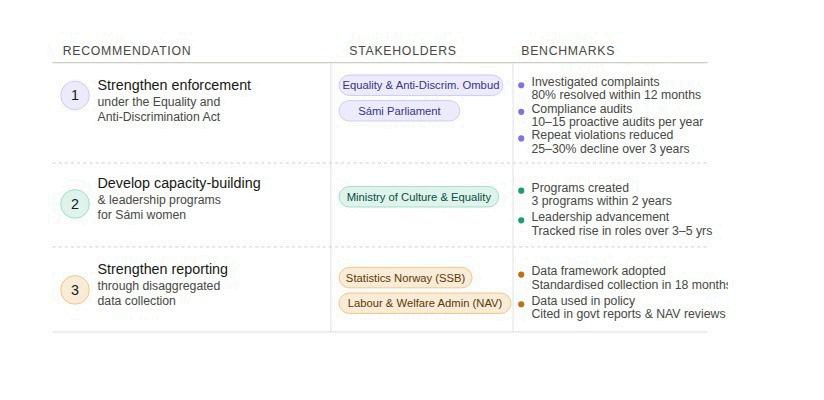
Table 1 Summary of policy recommendations targeting Sámi women
Timeline
Thefollowingtimelineoutlinesaphasedapproachtoimplementingthepolicy recommendationsoutlinedabove.Beginningwithfoundationalstepsinyearoneandbuilding towardfullimplementationby2030,thistimelineisintendedtoreflectarealisticandsequenced pathtochange.Itshouldbereadasalivingframework,subjecttorevisioninresponseto communityfeedbackandevolvingpolicyconditions.
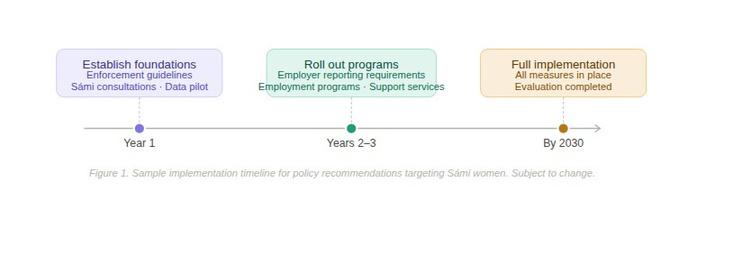
Figure 1 Sample implementation timeline for policy recommendations targeting Sámi women *Subject to change* Conclusion
Norway's2018EqualityandAnti-DiscriminationActisagoodstartingpoint,astheanalysis proved,itdoesprovidetheframeworktopromoteequality,ensureequalopportunitiesandrights andpreventdiscriminationbasedonethnicity,nationalorigin,descent,skincolour,language, religionorbelief.However,itfailstoexplicitlyaddresstherootcausesofdiscriminationagainst Indigenouspeople,likeSámiwomen,whocontinuetofacehigherratesofdiscrimination-based violencethananyothergroupinNorway(NorwegianInstituteofPublicHealth,2024).These recommendationsseektoprovideaframeworkofturninglegalprotectionsintoreal accountabilitybyenforcinganti-discriminationlaws,creatingtargetedprogramstoempower SámiwomenonthebasisofgenderandIndigenousidentity,andimprovingdatacollectionto
makethespecificinequalitiestheyfacevisibleandaddressable.Thecollectivegoalistoensure thatNorway'scommitmenttobothgenderequalityandIndigenousrightstranslatesinto measurableimprovementsinSámiwomen'slivedrealities.
Eriksen,A.M.A.,Hansen,K.L.,Javo,C.,&Schei,B.(2015).Emotional,physicaland sexualviolenceamongSamiandnonSamipopulationsinNorway:TheSAMINOR2 questionnairestudy. Scandinavian Journal of Public Health, 43(6),588–596.JSTOR. https://doi.org/10.2307/45151032
Hansen,K.(2016). 9 Self-Reported Experience of Discrimination against Samis in Norway. https://gtsvn.uit.no/freecorpus/orig/eng/science/samilogut/2016/9_self_reported_discrimi nation.pdf
InternationalWorkGroupforIndigenousAffairs.(n.d.). Sápmi - IWGIA - International Work Group for Indigenous Affairs.Iwgia.org.https://iwgia.org/en/sapmi.html
MinistryofChildren,E.andS.I.(2022,December21). Discrimination based on ethnicity, religion or belief.Government.no.
https://www.regjeringen.no/en/topics/equality-and-diversity/discrimination-based-on-ethn icity-religion-or-belief/id670393/
MinistryofCulture.(2018). Act relating to equality and a prohibition against discrimination (Equality and Anti-Discrimination Act)
https://www.un.org/development/desa/disabilities/wp-content/uploads/sites/15/2019/12/N orway_2017-Equality-and-Anti-discrimination-Act.pdf
MinistryofForeignAffairs.(2004,December). Report on Convention no 169 concerning indigenous and tribal peoples, 1989.Government.no.
https://www.regjeringen.no/en/historical-archive/Bondeviks-2nd-Government/ministry-offoreign-affairs/2004/Report-on-Convention-no-169-concerning-indigenous-and-tribal-pe oples-1989/id420365/
Norwegian Institute of Public Health. (2024, August 23). FHI.no. Norwegian Institute of Public Health. https://www.fhi.no/en/publ/2024/Harassment-and-discrimination-of-theSami-people/ Norwegian National Human Rights Institution. (2018). Violence and Abuse in Sámi Communities. https://www.nhri.no/wp-content/uploads/2019/07/Thematic-report2018-Violence-and-Abuse-in-S%C3%A1mi-Communities.pdf
NorwegianNationalHumanRightsInstitution.(2020). A Human Rights-Based Approach to Sámi Statistics in Norway https://www.nhri.no/wpcontent/uploads/2020/08/StatistikkUrfolk_ENG_web_1708.pdf
OfficeoftheUnitedNationsHighCommissionerforHumanRights.(2021).
Statement by the Sami Parliament in Norway submitted to the Committee on the Elimination of Discrimination against Women for consideration in relation to the ninth Periodic Report on Norway.
UNWomen.(2019). Convention on the Elimination of All Forms of Discrimination Against Women (CEDAW) for Youth
.UNWomen. https://www.unwomen.org/en/digital-library/publications/2016/12/cedaw-for-youth UnitedNations.(1989,June27).
169).OHCHR.
IndigenousandTribalPeoplesConvention,1989(No.
https://www.ohchr.org/en/instruments-mechanisms/instruments/indigenous-and-tribal-peo ples-convention-1989-no-169
Tayyaba Atiq EDITOR
Lois Ramilo is an emerging foreign policy professional and recent graduate of the University of California, San Diego, where she earned her B.A. in International Relations. She currently serves as a Make Room Initiative Fellow at the Center for a New American Security (CNAS). Previously, she interned with the East-West Center in Washington, D.C., conducting research on U.S. defense cooperation, economic strategy, and diplomatic engagement in the Indo-Pacific.
During her undergraduate career, Lois served as an APAICS Congressional Intern in the U.S. House of Representatives, a Section Editor for the Prospect Journal of International Affairs, and an Undergraduate Fellow with the Truman Center for National Policy, contributing to U.S. subnational diplomacy initiatives. She is also an alumna of the U.S. Foreign Service Internship Program (USFSIP), completing rotations in the Bureau of Counterterrorism and at the U.S. Embassy in Kolonia, Federated States of Micronesia.
Lois’s professional interests include U.S. national security strategy, great power competition, conflict prevention, human rights, U.S.–U.S.-Indo-Pacific relations, and Pacific Islands affairs. She is passionate about promoting inclusive foreign policy and advancing peace and security across the Indo-Pacific region.
PeaceandSecuritythePasifikaWay:UnpackingtheWomen,Peace,andSecurity(WPS) PolicyinthePacificIslands
Author:LoisRamilo
Editor:TayyabaAtiq
Institute:WomenofColorAdvancingPeaceandSecurity(WCAPS)
Format:ResearchPaper
Intro:
InOctober2000,theUnitedNationsSecurityCouncilpassedResolution1325,a landmarkresolutionthatintroducedtheWomen,Peace,andSecurity(WPS)agenda(United Nations,2000).ItbecamethefirstformalandlegaldocumentfromtheCouncilthatadvocated forgreaterfemalerepresentationandparticipationandconflictpreventionandresolutionaswell asrecognizedthedisproportionateimpactconflictshaveonwomen.Intheyearssinceits passage,majorcomponentsofResolution1325--suchasitsemphasisonwomen’sparticipation inpolicymaking,protectionofwomenandgirlsfromconflict-inducedviolence,andincluding women’sperspectiveswithinunderstandingsecuritythreats--haveevolvedtobecomethekey frameworkoftheWPSagendaascountriesseektodevelopandimplementtheirownversions.
Spanningalmostafifthoftheentireglobe(CongressionalResearchService,November 2024), the Pacific Islands are simultaneously a small yet large region of the world that is at the forefront of pressing security challenges and geopolitical issues. On one hand, Pacific Island countries(PICs)arediverseingeography,cultures,ethnicities,andeconomies.Ontheother there are several overarching themes the region as a whole collectively faces, particularly when it comestoregionalsecurity.
Women’sissuesoftentimesintersectorarefurtherexacerbatedbythesecuritythreats facingtheseremoteislands,suchasclimatechange.Consideringtheseissues,theregionhas takenstepstowardsdevelopingandimplementingaWomen,Peace,andSecurityagenda.Since thePacificIslandsForum(PIF),theregion'smainmultilateralbody,releaseditsfirstRegional ActionPlan(RAP)in2012,theregionanditsindividualstateshavetakenstepstowards includingfemaleperspectives(PacificIslandsForum,2012).However,implementationgaps havemarginallyslowedorevenstalledtheintegrationofWPSissuesinmultilateralandnational policymaking.
Background
Beyond environmental issues, there are additional factors that impact the region’s peace and security. Inter-communal conflict and political unrest have been key factors that have especially threatenedregionalgovernanceandstability.TheSolomonIslands,forexample,wasembroiledin ethnic conflict from 1998 until 2003 but deep-rooted tensions resulted in the outbreak of violent protestsandcivilunrestin2021(Needham,2021).
Recent geopolitics, particularly the great power competition (Gumbaketi, 2025) between the U.S. and China, has garnered greater international attention to the Pacific Islands. As a result, much of theregion’sforeignaidlargelyprioritizesinfrastructureandsecuritycooperation,whichhasled
toadecreaseinlong-termfundingtowardshumandevelopmentsectorsincludinggender equality.In2023,only3%ofprojectshada“principal”focusongenderequalitywhile29%of projectshada“significant”genderfocus(Dukeetal.,2025).Outmigrationandstallingeconomic developmenthavealsohamperedtheregionwithislandcountriesstrugglingtoaddresslocal laborshortagesanddecreasingregionaleconomicgrowthinrecentyears(WorldBank,2025).
Pacificwomenhavealwaysplayedalongandcrucialroleintraditionalpeacemakinglongbefore WPSwasevenformallyconceptualizedininternationalcircles.Duringaperiodofarmedethnic conflictintheSolomonIslandsknownasthe“Tensions”from1998-2003,localwomenserved asvillagepeacewardensthroughleaningintotheirtraditionalroleandimageasmothersand caretakers(UnitedNationsDevelopmentProgramme,2012).Theretheyencouragedbothsides toceasefightingandengageinpeacedialoguesandledhumanitarianinterventionsinconflict zones.
Inthecommunity,womenleadersacrossallregionsofthePacifichavebeenknowntodevelop systemstoencouragedialogue,promoteconflictresolution,andsupportthoseimpactedby periodsofviolence(Hunter,2025).Theywerealsoknowntowieldmuchinfluenceandrespect eveninpoliticaldecisions.Andyet,whilemuchofthatcontinuestoliveoninmodernPacific societies,Pacificwomenfacepronouncedsocialandeconomicinequalities.Todaythereare disproportionatelylessPacificwomeninthenon-agriculturalworkforcecomparedtomenwith closeto48%ofworkingagewomenstatingtheydon’twork(WorldBank,2025).Theinequality alsoextendsintoadirelackinpoliticalrepresentation,withonly7%ofparliamentariansbeing women,afarcryfromtheglobalaverageof27%(WorldBank,2025).Muchofthisstemsfrom socio-culturalbarriersanddeep-rootedtraditionsandcustomsthatoftentimesbarordiscourage womenfromengaginginpoliticsandgovernmentandfavormen(UNWomen,2022).While womenintheSolomonIslandswereactiveparticipantsinlocalpeacemakingprocessduringthe “Tensions"conflict,theywerelargelyexcludedfromtheformalpeacedialogueprocessdueto moreconservativeviewsoflocalculturalnormsor“kastom” (UnitedNationsDevelopment Programme,2012).Consequently,addressinggenderinequalityinthePacificcanbeadelicate andlayeredendeavorthatrequiresintentionalandeffectiveresourcesandlong-terminvestment.
Pacificislandwomenalsofacesomeofthehighestratesofdomesticviolenceinthe world.Insomecases,1in2womenexperiencesgender-basedorintimatepartnerviolence (GBV/IPV)intheirlifetime(WorldHealthOrganization,2026).Expertsdeducethatclimate changefurtherexacerbatesthehighlevelsofGBV/IPV,asthestressesoftheeconomyandlifealteringimpactsofclimate-relateddisastersincreasethelikelihoodofviolentoutbursts, especiallybetweenwomenandtheirpartners(Stenger&Oo,2025).
Thesechallengesmakeaddressingwomen’sissuesbeyondpeaceandsecuritydifficult. AllthesefactorscollectivelyplacepressureonthePacificIslands,withtheislandshaving limitedcapacitytoproperlyaddressthemindividually,neverthelessatthesametime.Thiscan thuscreateworrywithinthePIFandthegreaterinternationalcommunitythatclimateinsecurity anditsmanifestationscouldpotentiallydestabilizetheregionandcreateorexacerbateconflictor instability.Withlittlefemalerepresentationinboththeeconomyandingovernment,advocating forWomen,Peace,andSecurityissueshasbecomeatopicofdiscussionamongstlocalnational governmentsandthePIF.Thatbeingsaid,however,positiveprogressisstillevident.In2023, withfundingfromAustralia,theGlobalPartnershipforthePreventionofArmedConflict launchedtheWomenMediatorNetwork(PWMN),thefirstofitskindinthePacific.Locallyled, thenetworkworktoadvanceforgreatergender-inclusiveperspectivesinconflictpreventionand theparticipationofPacificwomeninallphasesofconflictpreventionandresolution.
PIFandtheWPSAgenda
Giventheseuniquesetsofchallenges,thePIFandPacificIslandstateshavemadesomeefforts todevelopandimplementtheWPSagendaintotheirpolicies.In2012,thePIFwasamongthe first regional organizations to develop the Regional Action Plan on Women, Peace, and Security (RAP). The RAP primarily focused on involving women in peace processes and security decisionmaking and developing the necessary frameworks to protect women and girls during humanitarian crises and conflicts (Pacific Islands Forum, 2012). While the plan was celebrated at the time for its advocacyforagenderedperspectiveofpeaceandsecurityanditsawarenessof the role Pacific women should play in peacemaking, limits quickly arose The lack of an implementationmechanismseverelylimitedthePIF’sabilitytoholdmemberstatesaccountable inputtingforththeRAPinaction.Furthermore,thePIF’sRAPfailedtosupportitsmember states in developing their own national action plans (NAP) or providing a roadmap on how to incorporate local women’s group, civil society, or traditional communal networks into national securitydecisionmaking(Trojanowska,2025).TheRAPconcludedin2015,buthasneither been renewed or even briefly mentioned following PIF security declarations such as the Boe DeclarationonRegionalSecurityin2018.In2023,thePIFreleasedtheRevitalizedPacificLeaders GenderEqualityDeclaration(PLGED)whichbrieflymentionedthePICscommitment to “the full, equal, effective, and meaningful leadership and participation of women and girls” (PacificIslandsForum,2023).
Somestates,suchasFiji(U.S.Indo-PacificCommand,2022),theSolomonIslands (GovernmentofSolomonIslands,2020),andBougainville(AutonomousBougainville Government,2016),diddeveloptheirownNAPswithinternationalfinancialbackingand support,particularlyfromtheUN,AustraliaandNewZealand.In2023,Fijibecamethefirst PacificIslandandsecondcountryintheworldtodevelopawhole-of-governmentNAPthat focusesonviolencepreventionforwomenandgirls,settingaportionofitstaxdollars--along withinternationalassistancefromAustralia--towardsitsimplementation(UNWomenAsiaand
thePacific,2023).TheNAPsoftheothertwoPICs—theSolomonIslandsandBougainville— haveexpiredandareyettoberenewed.
WhileFijimayshineasabeaconofsuccess,unfortunatelyhowever,suchcasesarefew andfarinbetweenwhenitcomestotheprogressofadvancingtheWPSagendainthePacific Islands.Likepreviouslymentionedearlier,themainchallengeslieinfinancingand implementation.Giventheirrelianceonforeignaidandstallingeconomicdevelopment,many PICshavealimitedfiscalcapacitytodevelopandimplementinitiativeswithintheWPSagenda (WorldBank,2025).Thelackoflong-termfundingforgenderequalityissuesalsomeansthat theregionismissingouttrulymeaningfulinitiativesthatcouldeffectivelyincorporatewomen andtheirperspectivesingovernmentandsecuritypolicymakingwhetherit’dbethrough deepeningpartnershipswithlocalwomen’snetworksorthePWMN,fundingtrainingsfor governmentofficials,orholdingroundtablesandpubliceventsdiscussingWPSissues.To conclude,the2012RAP,whichthePIFsignedoveradecadeago,remainsmerelyan encouragementratherthanaroadmapthatshouldbetakenseriously.
As previously stated, the onslaught of existential threats facing Pacific Island security and the layersofimpactitbringstolocalcommunitiesemphasizetheneedtonotjustdevelopbutactively include women in regional peace and security discussions and policymaking. Similar to Fiji’s NAP, the PIF and the region as a whole should focus on developing a roadmap that builds upon the 2012 RAP. The PIF should look to renew or implement a new RAP that actively seeks to implement four themes based on UN Security Council Resolution 1325, the UN’s landmark resolutionfocusedonwomen,peace,andsecurity:prevention,participation,protection,and reliefandrecovery(UnitedNations,2000).
ThePICs,throughtheleadershipofthePIF,shouldseektoactivelyincludeencourage womentoparticipateinpoliticaldialoguesandgovernment.Havinggreaterfemale representationinalllevelsofgovernmentwouldensurefemaleperspectivesareincludedand advocatedforinpolicymaking,includingdiscussionsregardingpeaceandsecurityissuesaswell aswhenitcomestoaddressGBV/IPVintheregion.Consultingwithwomen-ledNGOsandcivil societygroupsinfuturePIFdecisionsisalsocrucialtoensuringPacificwomenarerepresented atthemultilaterallevel.Furthermore,includingwomen’sperspectivesonclimatesecurity particularlywouldprovidekeyopportunitiestonotonlydeepenlocalgovernments’ understandingoftheimpactsofclimatechangeonallaspectsofitssociety,butalsodevelop policiesthattheaddressGBVandVAWtriggeredbyit.
However,noneofthesethemescanbefeasiblyachievedwithoutgreaterinternational financing to support these initiatives and a whole-of-government commitment to implementing theWPSagenda(Trojanowska,2025).Asoneofthemostforeignaiddependentregionsinthe
world,thePacificIslandsneedglobalsupporttomakesuchaspirationsaviablereality.To translatedialogueintotangibleaction,theUNandmajoraidpartnerslikeAustraliaandNew ZealandshoulddevotemoreoftheirresourcestowardsrealizingtheWPSagendabothinthe regionalandnationallevels.IftheWPSagendaweretobetrulyrealized,internationalaidand inputisneededtoguidethePICstowardsimplementingWPSpoliciesinallaspectsofconflict andconflictresolution.Giventhepressingsecuritychallengesfacingtheregion,renewed momentumforWPSissuesinthePacificIslandsisnecessarytoensurenotjustthesecurityand well-beingofPacificwomenandgirls,butallPacificIslandersimpactedbytherapidchanges arisingintheirregion.
References
Autonomous Bougainville Government. (2016). Bougainville Gender Equality, Peace and Security policy 2016 (PDF). https://www.wpsnaps.org/app/uploads/2019/09/BougainvilleGender-Equality-Peace-and-Security-policy-2016.pdf
CongressionalResearchService.(2024November). CRS product IF11208 [Report]. Congress.gov.https://www.congress.gov/crs-product/IF11208
Duke,R.,Dayant,A.,Ahsan,N.,&Rajah,R.(2025,October27). Pacific Aid Map: 2025 key findings.LowyInstitute.https://pacificaidmap.lowyinstitute.org/analysis/2025/key-findings/ GovernmentofSolomonIslands.(2020).Women,PeaceandSecurityNationalActionPlan 2017–2020(PDF).https://solomons.gov.sb/wp-content/uploads/2020/02/Women-Peace-andSecurity-National-Action-Plan-2017-2020.pdf
Gumbaketi,H.(2025,September8). The Pacific’s diplomatic retreat from great power competition.LowyInstitute.https://www.lowyinstitute.org/the-interpreter/pacific-s-diplomaticretreat-great-power-competition
Needham,K.(2021,November29). What is behind unrest in the Solomon Islands? Reuters. https://www.reuters.com/world/china/what-is-behind-unrest-solomon-islands-2021-11-29/
Oxfam Australia. (2024,November11). Number of people impacted by climate disasters in the Pacific increased 700% in the last decade: Oxfam.https://media.oxfam.org.au/2024/11/numberof-people-impacted-by-climate-disasters-in-the-pacific-increased-700-in-the-last-decade-oxfam/
PacificIslandsForum.(2012,October18). Forum Chair launch Regional Action Plan on Women, Peace & Security.PacificIslandsForumSecretariat. https://forumsec.org/publications/forum-chair-launch-regional-action-plan-women-peace-andsecurity
PacificIslandsForum.(2018September). Boe Declaration on regional security. https://forumsec.org/publications/boe-declaration-regional-security
PacificIslandsForum.(2023). Revitalised Pacific Leaders Gender Equality Declaration. https://forumsec.org/sites/default/files/202402/Revitalised%20Pacific%20Leaders%20Gender%20Equality%20Declaration.pdf
Stenger, H., & Oo, P.-P. (2025, December 5). Cyclones to coups: Crises drive violence against women The Interpreter. Lowy Institute. https://www.lowyinstitute.org/the-interpreter/cyclonescoups-crises-drive-violence-against-women
Trojanowska,B.K.(2025).TheregionalizationofWomen,PeaceandSecurity:ASEANandthe PacificIslandsForum.InternationalAffairs,101(6),2173–2191. https://doi.org/10.1093/ia/iiaf065
UnitedNationsEntityforGenderEqualityandtheEmpowermentofWomen(UNWomen). (2022). Gender equality brief for the Pacific Islands. https://asiapacific.unwomen.org/sites/default/files/202212/UN_WOMEN_REGIONAL_BRIEF.pdf security
https://files.acquia.undp.org/public/migration/asia_pacific_rbap/PC_WomenPeace.pdf
Women’s perspectives of peace and UnitedNationsDevelopmentProgramme.(2012). .
UnitedNations.(2000).Statusofthedeclarationontheeliminationofviolenceagainstwomen (A/RES/55/178).https://documents.un.org/doc/undoc/gen/n00/720/18/pdf/n0072018.pdf
UNWomenAsiaandthePacific.(2023,September).FijiNationalActionPlantoprevent violenceagainstallwomenandgirls2023–2028.https://asiapacific.unwomen.org/en/digitallibrary/publications/2023/09/fiji-national-action-plan-to-prevent-violence-against-all-womenand-girls-2023-2028
U.S.Indo-PacificCommand.(2022,September30).FijipartnerswithU.S.Indo-Pacific CommandforFiji’sfirst-everWomen,PeaceandSecurityNationalActionPlan. https://www.pacom.mil/Media/News/Article/3176683/fiji-partners-with-us-indo-pacificcommand-for-fijis-first-ever-women-peace-and/
WorldHealthOrganization.(2026).Violenceagainstwomenprevalenceestimates,2023(ISBN 9789240116962).https://www.who.int/publications/i/item/9789240116962
WorldBank.(2025June). Pacific Economic Update: Employ Women, Empower the Pacific: A Strategy for Uncertain Times. https://documents1.worldbank.org/curated/en/099061125000029992/pdf/P506957-7d26eb990110-4068-8a06-4ddf33304488.pdf
Mariyam Yumna Azeez is an Attorney and development professional from Sri Lanka with six years of experience in human rights, peacebuilding, and gender justice. She holds an LLB (Hons) and an LLM in Public and International Law from the University of Colombo. Her work focuses on advancing the Women, Peace and Security agenda through research, advocacy, and community engagement. Mariyam currently serves as a Project Officer at the Centre for Equality and Justice, leading initiatives on peace and conflict resolution, transitional justice and human rights. Her international experience spans collaborations with institutions in Asia, Europe, and the Pacific. Mariyam has published widely on women’s roles in peacebuilding within the post-conflict context. She is passionate about amplifying women’s voices in post-conflict recovery and advancing gender-responsive governance globally.
TheDigitalFrontline:Post-ConflictMasculinitiesandTechnology-FacilitatedSexual andGender-BasedViolence
Author:MariyamYumnaAzeez
Editor:De’OminiDaniely
Institution:WCAPS PaperFormat:ResearchPaper
Technology-facilitated sexual and gender-based violence (TFSGBV) has emerged as a significant security and peacebuilding challenge in the digital age. In post-conflict societies, digital spaces often reproduce and amplify gendered power structures shaped during armed conflict. This paper examines how post-conflict constructions of masculinity have influenced the perpetration and normalization of TFSGBV in Sri Lanka following the end of the civil war in 2009. Drawing on feminist peacebuilding theory and scholarship on masculinities in conflictaffected societies, this paper develops a conceptual framework that positions digital platforms as extensions of post-conflict power struggles Through a qualitative synthesis of existing literature across feminist security studies, digital governance, and masculinity studies, the research identifies a critical gap: while scholarship addresses online violence, conflict legacies, and gender norms separately, few analyses examine how these dynamics intersect in digital spaces. The paper argues that addressing TFSGBV in post-conflict Sri Lanka requires integrating gender-transformative approaches to masculinities into digital governance and peacebuilding policy. Doing so is essential for preventing the reproduction of conflict-era genderhierarchiesinthedigitalsphereandforadvancinginclusiveandsustainablepeace.
TFSGBV has emerged as a significant challenge in contemporary digital societies, particularly in contexts marked by political transition and post-conflict recovery. As digital technologies increasingly shape public life, online platforms have become spaces where gendered power relations are reproduced, contested, and amplified. In post-conflict environments, where institutions remain fragile and social divisions persist, digital spaces can also serve as new arenas in which unresolved tensions and inequalities are expressed. This paper argues that TFSGBVinpost-conflictsocietiescannotbeunderstoodsolelyasatechnologicalorlegalissue, but must be examined in relation to the gendered social dynamics that shape post-war reconstruction.FocusingonSriLankafollowingtheendoftheSriLankanCivilWarin2009,it exploreshowmasculinitiesforgedthroughconflictmaybereproducedindigitalspacesthrough harassment,reputationalattacks,andotherformsofonlinecontrol.
I.Technology-FacilitatedSGBV
Technology-facilitated sexual and gender-based violence (TFSGBV) is defined as the use of digitaltechnologiestoperpetratesexualharassment,non-consensualsharingofintimateimages, doxxing, and online threats targeting individuals based on their gender or sexuality (Dunn, 2020). The amount of information on TFSGBV has proliferated, with a focus on three primary areas:online harassment patterns, legal remedies, and platform accountability and regulation. Global studies suggest that between 16% and 58% of women have experienced some form of TFSGBV, highlighting the widespread nature of the problem across different regions (Hicks,2021). Additionally, approximately 38% of women worldwide report direct experiences of online abuse, while 85% report witnessing such violence directed at other women online, demonstrating that harassment has become normalized within many online environments (Economist Intelligence Unit, 2021). Empirical studies further reveal that these forms of abuse are not confined to the digital sphere but often produce tangible offline consequences.Women journalists, activists, and political figures are particularly vulnerable; one international survey found that more than two-thirds of women journalists across 119 countries had experienced online violence (Keaten, 2025). Legal analyses advocate for updated legal frameworks, including criminalization of non-consensual intimate imagery and victim-centered redress (Citron & Franks, 2014). Globally, measures such as the EU’s Digital Services Act and laws in countries like the United Kingdom and Australia address online harms. Meanwhile, platform responsibility literature critiques algorithmic biases and moderation failures, urging tech giants to adopt feminist design principles (Gillespie, 2018). In response to growing scrutiny, major technology companies such as Meta Platforms, Google, and TikTok have introduced AIassisted moderation systems, reporting tools, and policies on online abuse. However, it should be noted that enforcement remains inconsistent and often reactive, particularly innon-English contextsandconflict-affectedsocietieswheremoderationresourcesarelimited.
Existing literature on post-conflict masculinities illuminates how war reshapes gender norms andsocietalexpectations,emphasizingmilitarized ideals,emasculationthroughpowerloss,and compensatory nationalism (Messerschmidt & Quest, 2024). These shifts do not operate in isolation but shape everyday social interactions, often creating environments where dominance, control, and aggression are normalized. For women and marginalized groups, this can translate intoheightened scrutinyandrestriction oftheirparticipation inpublicanddigital spaces, where TFSBV becomes a mechanism for enforcing these norms and maintaining unequal power relations. Post-conflict contexts further intensify these dynamics, as fragile institutions, economic precarity, and lingering social divisions intersect with limited digital literacy and weak regulatory frameworks, creating conditions in which online harms can proliferate (Ebert, 2025). The expansion of internet access, often uneven along gender lines, enables these power imbalances to be enacted without physical proximity (Treuthart, 2019), allowing digital platforms to reproduce and amplify practices of surveillance, control, and psychological intimidation rooted in conflict-era dynamics (KhosraviNik & Kelsey, 2019). Economic disenfranchisementanddemobilizationexacerbatetheseshifts,promptingmentoreclaimstatus viadomesticcontrolorcommunalvigilantism(Myrttinenetal.,2017).
This study employs a qualitative, desk-based research design that uses secondary data analysis to examine the construction of masculinities in digital spaces in post-conflict Sri Lanka. Rather thanconductingprimaryempiricalresearch,thestudyreliesonauthoritativeinstitutionalreports and peer-reviewed journal articles situated within studies of feminism, masculinities, and postconflict contexts. The methodology involves a theoretical analysis of these existing works and mapping them against theoretical frameworks of gendered power relations. By analyzing how militarized or traditional masculinities are reproduced and renegotiated online, the research interprets digital violence as a localized extension of broader post-conflict social hierarchies. Ethical integrity is maintained through documentary ethics, ensuring the accurate contextual representation of secondary findings while addressing the sensitivities inherent in Sri Lanka’s transitionalsociopoliticallandscape.
I.DigitalSpacesasPost-ConflictBattlegroundsinSriLanka
In the Sri Lankan context, the digital “checkpoint” replaces the physical one, as coordinated groups of men use cybertsalking and doxxing to police the movements and visibility of women across ethnic and social boundaries This transition from “boots on the ground” to “fingers on the keyboard” allows conflict-era hierarchies to persist under the guise of digital interaction, where the destruction of a woman’s social reputation through morphed imagery or gendered disinformation serves as a modern form of symbolic conquest Consequently, the smartphone becomes a portable site of combat, enabling the democratization of "wartime" harms that enforce communal boundaries and silence dissent without the need for physical weaponry. A recent study in Sri Lanka found that over 57% of the 361 study participants reported feeling unsafeinonlinespaces,with35%unawareofonlinesafetyrisks(UNFPA,2025).
In Sri Lanka, state actors have historically deployed surveillance against ethnic minorities. Digitaltoolsreplicatethesetactics,trackingdissidents,amplifyingdisinformation,and
enforcing communal boundaries (Ranganathan, 2011). Platforms such as Facebook, predominantly, enable reputational violence against women, such as harassment, doxxing, or morphed imagery that erodes victims' social capital (Groundviews, 2018), akin to wartime shaming (Trottier et al., 2025). Crucially, this grim reality ruptures dominant narratives that portray Sri Lanka’s post-2009 period as one of stable peace, reconciliation, and national recovery following the end of the Civil war. State and policy discourse frequently emphasizes post-warreconstruction,economicdevelopment,andreconciliationasmarkersofaconsolidated peace. However, these narratives often obscure persistent social tensions and gendered power hierarchies that continue to shape everyday life. The expansion of social media platforms such as Meta Platforms has created new arenas where these unresolved dynamics are expressed (Centre for Equality & Justice, 2024). Increasing internet access and smartphone penetration haveamplifiedthereachofsuchpractices,whileentrenchedculturalnormssurroundinggender, sexuality, and honour contribute to the targeting of women activists, journalists, and political actors online (Centre for Equality & Justice, 2023). In this sense, digital spaces can reproduce and intensify conflict-era gender hierarchies, complicating narratives that frame the post-war period as a fully realized peace. Further, in transitional contexts, access to the internet is unevenly democratized, empowering marginalized men to wield harms once reserved for elites, therebynormalizingTFSGBVaseverydayresistancetoperceivedemasculation(Ging,2023).
II.Post-ConflictMasculinitiesinSriLanka
Post-conflict masculinities, configured through emasculation narratives, militarized honor codes, and backlash against women's visibility (Porter, 2013), drive digital aggression as compensatory violence (Greig, 2022). Demobilized ex-combatants and economically sidelined men, confronting loss of provider roles in Sri Lanka's post-2009 economy, invoke "warrior" ideals to reassert dominance (Kanagarathnam, 2021). Similarly, hegemonic masculinities, rootedinSinhala-BuddhistnationalismandTamil/Sinhalaethnicbinaries,manifestas"warrior" archetypesthatprivilegeviolenceandmoralpolicing(Schubert,2016).Online,thismanifestsas gendered trolling that polices women's public presence, e.g., activists challenging ethnic narratives face slut-shaming or threats framed as "honour" defence. Perceived threats from women's digital visibility, such as feminist organizing or inter-ethnic interactions, provoke TFSGBV as boundary enforcement. Drawing on hybrid masculinity theory, perpetrators blend overt aggression with covert normalization (via memes or likes), rendering harms culturally legible inpost-conflict settings (Myrttinen etal.,2025).Thisdigital pivotallowscircumvention ofofflinesanctions,perpetuatingconflictmasculinitieswithoutphysicalrisk.
A feminist peacebuilding lens reframes TFSGBV as structural violence embedded in unequal power relations, demanding attention not only to the immediate cessation of harm but also to long-term processes of reconciliation and social transformation. Core principles such as dismantling patriarchal structures, centering gendered power dynamics, and fostering inclusive security reveal masculinities as pivotal sites for intervention (Moura, 2025). In Sri Lanka, wherepeaceprocesseshavesidelinedgenderperspectives,addressingperpetratormasculinities counters the persistent "add women and stir" approach that focuses on women’s participation withouttransformingthegenderedsystemsthatenableviolence.Instead,it
highlights deeper drivers of conflict-shaped gender identities, including militarized and nationalistconstructionsofmasculinity(Myrttinenetal,2025)
Buildingonthisperspective,thispaperproposesatheoreticalframeworkthatsituatesdigital masculinitieswithinpeacebuildinganalysis,arguingthattechnologygovernancemustbe integratedwithgender-transformativeprogramsthatengagemenandboysinchallenging harmfulnorms.WhileSriLankahasintroducedlegalmechanismssuchastheOnlineSafety ActandtheComputerCrimesAct(2007)toregulateharmfulonlinebehavior,these frameworksrarelyaddressthegendereddynamicsthatunderpintechnology-facilitatedabuse. Consequently,uncheckedpost-conflictmasculinitiescanbecomereproducedindigital spaces,whereonlineabuseundermineswomen’sagencyandcomplicatesbroaderefforts towardsocialreconciliation Engagingmenasalliesintransformingthesenormsistherefore essential for advancing feminist peacebuilding and building more inclusive forms of digital securityinpost-conflictsocieties.
TFSGBVviolencemustbeunderstoodnotmerelyasabyproductofdigitalexpansion,butas a peacebuilding concern rooted in post-conflict power relations. In societies emerging from armedconflict,violencedoesnotsimplyceasewiththesigningofpeaceagreements;rather, it often mutates, reappearing in less visible and socially sanctioned forms. Digital spaces increasingly function as sites where gendered hierarchies disrupted during conflict are reasserted, allowing harm to persist beyond the battlefield, adversely affecting women (Jones et al., 2018). Treating TFSGBV as a peacebuilding issue, therefore, requires recognizing it as part of the continuum of conflict-related violence that undermines women's social trust and political participation, and as a long-term impediment to reconciliation (Santos & Pourmalek, 2022)
Feminist social peacebuilding frameworks emphasize structural violence, gendered power, and the everyday reproduction of insecurity (Smith, 2021). These principles seek to dismantle patriarchalpowerstructures,centergenderedexperiencesofconflictandrecovery,andpromote inclusive forms of security that address the social conditions enabling violence. Yet policy responses to TFSGBV, both globally and in Sri Lanka, frequently remain detached from these principles. Globally, responses have largely focused on legal regulation, platform governance, and digital safety initiatives led by governments, technology companies, and international organizations. While such measures have increased awareness and provided reporting mechanisms, these responses remain fragmented, often failing to address the structural gender norms that underpin digital abuse. In Sri Lanka, the challenge is particularly acute in the aftermath of the war. As post-war peacebuilding efforts, such as economic reconstruction, national security, and reconciliation narratives, have been prioritized, gender perspectives have often been marginalized within formal peace processes and digital governance frameworks. Existinglegalresponses,includingprovisionswithintheComputerCrimesActandmorerecent regulatory measures such as the Online Safety Act (2024) of Sri Lanka, provide mechanisms to address certain forms of online harassment or harmful digital content. However, these policies do not explicitly address technology-facilitated gender-based violence or the gendered social dynamicsthatshapeit,leavingsignificantgapsinprotectionandprevention.
By failing to interrogate masculinities, many of the Sri Lankan State interventions focus on managing symptoms rather than addressing root causes Harmful post-conflict masculinities, as stated before, can manifest in digital aggression as a means of reclaiming power and enforcing gender norms In Sri Lanka, masculinities shaped by militarization, nationalist rhetoric, misogyny, and patriarchal cultural expectations continue to influence social behaviour These dynamics intersect with longstanding norms of female modesty, honour, and respectability, which have historically regulated women’s participation in public life
Such practices can function as a mechanism for policing women’s visibility in public and political discourse, reflecting broader struggles over gender roles and authority in the postconflict period When policies overlook these dynamics, they risk reinforcing a narrow understanding of security that prioritizes technological fixes while leaving underlying socioeconomicdriversintact(Georgeetal.,2025).
The dominance of platform-centric and legalistic responses further limits the effectiveness of current approaches. Content moderation and regulation, reporting mechanisms, and criminalization are necessary but insufficient tools when deployed in isolation. In Sri Lanka, interventions addressing online violence have included awareness campaigns by civil society organizations, digital safety training programs, and advocacy initiatives calling for stronger protections against online harassment. While these initiatives play an important role in documenting abuse and supporting survivors, they often operate alongside state regulatory measuresthatfocusprimarilyoncontentcontrolratherthangenderjustice.Suchmeasurestend to individualize harm, positioning TFSGBV as a matter of user behaviour or platform governance rather than as a manifestation of broader gendered power structures. In postconflict societies, where trust in institutions may already be fragile, purely punitive or technocratic solutions may also deter reporting and fail to resonate with lived realities on the ground(Akinbi,2025).
Integrating a feminist security lens into digital governance requires moving beyond reactive measures toward transformative peacebuilding strategies In practice, this would involve embedding gender-transformative approaches within multiple levels of governance, including national digital policy frameworks, post-conflict recovery initiatives, and community-based reconciliation processes Collaboration between governments, technology companies, civil society organizations, and international institutions to develop policies that address both technological harms and the social norms that enable them is also essential Potential measures could include gender-responsive digital governance policies, educational programs engaging men and boys in challenging harmful masculinities, and stronger partnerships between technology platforms and women’s rights organizations to improve reporting systems and survivor support Addressing harmful masculinities alongside legal and technologicalreformsisessentialtoensuringthatdigitalspacesdonotbecomenewfrontlines for old conflicts. Without such integration, efforts to combat TFSGBV risk reproducing the veryexclusionsandsilencesthatfeministpeacebuildingseekstodismantle.
Results/Findings:TheMissingLink
These contributions, while vital, exhibit key limitations. Much of the work individualizes harm, treating TFSGBV as a decontextualized psychological or juridical issue rather than a structural manifestation of power (Barker, 2025) Critically, it rarely situates digital violence within post-conflict power structures, such as those in Sri Lanka, where wartime ethnic
divisionsandmilitarizedsurveillancepersistintoonlinespaces.Thisoversightneglectshow transitionalcontextsintensifyvulnerabilitiesthroughunevendigitalaccessandstate complicityinonlineharms Yet,thesestudiesremainanalogue-centric,overlookinghow digitaltoolsenablenewexpressionsofpost-conflictmanhood,fromethno-nationalistmemes tovirtualharassmentenforcinggenderedhierarchies Farfromapost-waranomaly,TFSGBV representsacontinuationofconflictdynamics,wherewartimepatternsofgenderedaggression migrateonline,amplifiedbyaccessibletoolsandanonymity(Onditi,2021) Thecritical researchgapliesattheintersectionofpost-conflictmasculinitiesandTFSGBV Theanalysis ofexistingliteraturerevealsthatwhilesignificantscholarshipexistsondigitalviolence, conflict-relatedmasculinities,andfeministpeacebuilding,thesebodiesofworklargely developinisolationfromoneanother Asaresult,fewstudiesexplicitlyexaminehow masculinitiesshapedbyarmedconflictmayinfluencetheemergenceornormalizationof TFSGBVinpost-conflictsocieties
First,researchononlineviolencefrequentlyfocusesonemphasizingtechnologicalorregulatory responses.Whilethesecontributionsareimportant,muchofthisworkindividualizesharmby treatingTFSGBVprimarilyasapsychological,behavioural,orlegalissueratherthanasa structuralmanifestationofgenderedpower.Thistendencyrisksobscuringthebroadersocial andpoliticaldynamicsshapingdigitalviolence,particularlyinsocietiesemergingfromconflict wherepowerrelationsremaindeeplycontested.
Second,scholarshiponmasculinitiesinpost-conflictenvironmentsprovidesvaluableinsights intohowmilitarization,nationalism,andconflictlegaciesreshapegenderidentities,yetthese studiesremainlargelyanalogue-centricandrarelyexaminehowdigitaltechnologiesenablenew expressionsofpost-conflictmanhood.Indigitalenvironments,conflict-shapedmasculinities maybereproducedthroughpracticessuchasreputationalattacks,coordinatedharassment,or thecirculationofethno-nationalistdigitalcontentthatreinforcesgenderedandethnic hierarchies.Inthissense,technology-facilitatedabusecanbeunderstoodnotasapost-war anomalybutasacontinuationofconflict-eradynamicsexpressedthroughnewtechnological forms.
Third,feministpeacebuildingscholarshiphighlightsthepersistenceofgenderedpower hierarchiesafterconflictbuthasonlyrecentlybeguntoengagewiththeroleofdigital technologiesinreproducingtheseinequalities.Together,thesepatternsrevealafragmented researchlandscapeinwhichthesocialdynamicsofmasculinityandthetechnologicaldynamics ofonlineplatformsareseldomanalyzedtogether.Anothersignificantfindingisthelimited availabilityofcontext-specificresearchexaminingTFSGBVinSriLanka.Whilereportsand anecdotalevidencesuggestthatonlineharassmentandreputationalattacksareusedtopolice women’sparticipationindigitalspaces,systematicempiricalstudieslinkingthesepracticesto post-conflictgendernormsremainscarce.Thislackofintegrateddatarestrictstheabilityto fullyunderstandthescopeoftheissueandhighlightsanimportantareaforfutureresearch.
Addressingthisgaprequiresaninterdisciplinaryapproach.Futureresearchshouldprioritize empiricalinvestigationsintohowpost-conflictgenderidentitiesareexpressedandcontested withindigitalenvironments,particularlyinsocietiesundergoingpoliticalandsocialtransition. SuchworkwouldnotonlystrengthenacademicunderstandingofTFSGBVbutalsoinform peacebuildingstrategiescapableofaddressingemergingformsofgendereddigitalspaces.In particular,survivor-centeredandethicallygroundedinsecurityin
methodologies, such as digital ethnography and participatory research, could provide critical insights into how online violence is experienced, resisted, and negotiated by women and marginalized communities Strengthening collaboration between researchers, policymakers, civil society organizations, and technology companies will also be essential to translating feminist security insights into practical interventions that promote digital safety while supportinginclusiveandsustainablepeacebuildingoutcomes
Addressing TFSGBV in post-conflict societies requires policy approaches that move beyond reactive regulation toward structural and gender-transformative interventions (Koch et al, 2025) While the governance aspect through policy and legislative means remains important, feminist security frameworks underscore the need for policies that engage with the social conditions and power relations that enable digital violence to persist. In post-conflict contexts, this necessitates situating TFSGBV within broader peacebuilding, reconciliation, and security agendasratherthantreatingitasadiscretedigitalharm(Santos&Pourmalek,2022).
Governments and peacebuilding actors in Sri Lanka should integrate gender-transformative approaches to masculinities into post-conflict recovery and peacebuilding programs The current transitional justice mechanisms and community reconciliation efforts in the country often overlook how gender identities and power relations are reshaped after conflict Incorporating structures of engagement with masculinities, through community dialogue, education programs for men and boys, and gender-sensitive peacebuilding initiatives, can help address how power, control, social status, and legitimacy are renegotiated in the postwar period, including within digital spaces. In Sri Lanka, where the end of the war did not fundamentally transform patriarchal norms or militarized gender identities, integrating critical engagement with masculinities into reconciliation and recovery programs could help prevent the reproduction of violent gender norms online and offline Such integration would align digital governance with feminist peacebuilding principles that emphasize prevention, accountability, and long-term social transformation
Governments should embed gender analysis into national digital governance frameworks to address TFSGBV as part of broader security and governance agendas. The Computer Crimes Act and Online Safety Act in the country operate in silos. While these legal tools aim to regulate harmful online content, they rarely incorporate gender analysis or recognize online abuse as part of the continuum of violence affecting women’s political participation, freedom feminist security approach would require coordination between digital policy actors, gender ministries, peacebuilding institutions, and civil societies to ensure that online violence is addressed as a structural gender and security issue rather than a purely technological one These efforts should be supported through partnerships between governments, regional organizations, and civil society actors working on digital rights and gender justice Further, policy responses must prioritize survivor-centered approaches, including safe reporting mechanisms, stronger legal protections, and digital safety initiatives that ensure confidentiality, informed consent, and protection from retaliation.
In conclusion, this paper theorizes TFSGBV as a digital prolongation of post-conflict masculinities.Byconceptualizingdigitalplatformsasextensionsofpost-warpowerstruggles,it reframes TFSGBV notas ananomaly oftechnological change butas acontinuation ofconflictrelated violence. In post-conflict societies, such harms perpetrated by TFSGBV threaten hardwon gains under the Women, Peace, and Security agenda. This analysis underscores that feminist peacebuilding responses must engage masculinities alongside survivors' needs, legal reform, and platform accountability. Addressing TFSGBV requires integrating gendertransformative approaches into post-conflict recovery processes holistically, such as DDR, digital literacy initiatives, and cybersecurity frameworks. By bridging feminist security studies, masculinity theory, and digital governance, this paper offers a conceptual framework for understanding how digital violence can undermine reconciliation and long-term peace if left unaddressed.
References
Akinbi,I J (2025) TransformativeGovernanceforPeacebuilding:BridgingInstitutionalAccountability and Equitable Development in Post-Conflict Societies International Journal of Research Publication and Reviews, 6(5), 6470-6487
Barker, K (2025) Online Violence as a Digital Condition: A New Cultural Habit? Pólemos, 19(1), 2745
CentreforEqualityandJustice (2023)TRAPPED:ARapidAssessmentoftheprevalenceand responsetocasesofCyberSexualandGender-basedViolenceandGenderedOnlineHateSpeechCentre forEqualityandJustice (2024) StifledGender,ViolenceandFundamentalRightsinthe DigitalSphere
Citron, D K, & Franks, M A (2014) Criminalizing revenge porn Wake Forest L Rev , 49, 345 Computer Crime Act, No 24 of 2007 (Sri Lanka) https://wwwsrilankalawlk/revisedstatutes/alphabetical-list-of-statutes/239-computer-crime-act.html Dunn, S. (2020). Technologyfacilitated gender-based violence: An overview. Centre for International Governance Innovation: Supporting a Safer Internet Paper No 1, https://www.cigionline.org/publications/technology-facilitatedgender-based-violence-overview/
Ebert, I. (2025). Challenges of Global Governance: Digital Technologies in Post/Conflict Settings and Implications for Corporate Responsibility to Respect Human Rights. In Business, Human Rights, Technology, and Transitional Justice in Latin America: Tracing Connections (pp. 75-96). Cham: SpringerNatureSwitzerland.
Economist Intelligence Unit. (2021, March 1). Measuring the prevalence of online violence against women https://onlineviolencewomeneiucom/
George, R, Koppell, C, Smith, J, & Kawamura, A (2025) Implementing Women, Peace and Security: Reflectionson25Years Commitment, 100,25
Gillespie,T (2018) Custodians of the Internet: Platforms, content moderation, and the hidden decisions that shape social media YaleUniversityPress
Ging, D (2023) Digital Culture, Online Misogyny, and Gender‐based Violence The handbook of gender, communication, and women's human rights,213-227
Greig, A L A N (2022) Findings from a four-country study by the Women’s International League for PeaceandFreedom Men, Masculinities & Armed Conflict GovernmentofCanada Groundviews (2018, January 15) Technology-related violence against women and girls in Sri Lanka: Key trends Ground views https://groundviewsorg/2018/01/15/technology-related-violence-againstwomen-and-girls-in-sri-lanka-key-trends/
Hicks, J (2021) Global evidence on the prevalence and impact of online gender-based violence InstituteofDevelopmentStudies.
Jones, E., Kendall, S., & Otomo, Y. (2018). Gender, war, and technology: Peace and armed conflict in thetwenty-firstcentury. Australian Feminist Law Journal, 44(1),1-8. Kanagarathnam, J. (2021). Political, social and economic issues of the rehabilitated ex-combatants in the SriLankanNorthernProvince. International Journal of Teaching and Education. KEATEN,J.(2025,December9).Newreportshowsriseinviolenceagainstwomenjournalistsandfrom activists linked to digital abuse. AP News. Retrieved April 8, 2026, https://apnews.com/article/un-women-report-rise-violence-online-66c38bb80b79d64be18b477f209c2 db0
KhosraviNik, M., & Kelsey, D. (2020). Social media, discourse and politics: Contemporary spaces of power and critique. BloomsburyAcademic.
Koch, L., Russo Riva, M. P., & Steinert, J. I. (2025). Technology-Facilitated Gender-Based Violence Against Politically Active Women: A Systematic Review of Psychological and Political Consequences and Women’s Coping Behaviors. Trauma, Violence, & Abuse, 15248380251343185. Messerschmidt, M, & Quest, H (2024) Change in practice: a framework for analysing the transformation of postconflictmasculinities Critical Military Studies, 10(1),40-60
Moura, T (2025) Feminist masculinities: a transformative approach Frontiers in Political Science, 7, 1622137
Myrttinen, H, Khattab, L, & Naujoks, J (2017) Re-thinking hegemonic masculinities in conflictaffectedcontexts Critical Military Studies, 3(2), 103-119
Myrttinen, H, Lewis, C, Touquet, H, Schulz, P, Yousaf, F, & Laruni, E (Eds) (2025) Routledge handbook of masculinities, conflict, and peacebuilding London:Routledge
Onditi, F. (2021). New possibilities for a peaceful digital society in violence-prevalent geographies. Journal of Peacebuilding & Development, 16(2),162-178.
Online Safety Act, No. 9 of 2024 (Sri Lanka). https://www.parliament.lk/uploads/acts/gbills/english/6311.pdf
Porter, A. (2013). ‘What is constructed can be transformed’: Masculinities in post-conflict societies in Africa. International Peacekeeping, 20(4), 486-506.
Posetti,J,Hellmueller,L,Williams,K,Renaud,P,Aboulez,N,&Shabbir,N (2025) Tipping point: The chilling escalation of online violence against women in the public sphere UN Women
Ranganathan, M (2011) Eelam online: The Tamil diaspora and war in Sri Lanka Cambridge Scholars Publishing Santos, A F D, & Pourmalek, P (2022) Preventing violence in the digital age: women peacebuilders and technology-facilitated gender-based violence Mapping online gender-based violence, 71-92 Schubert, A (2016) Warriors and fathers: war, visual culture and the complexities of constructing masculinitiesaftertheendofSriLanka’scivilwar NORMA, 11(3),139-157 Smith, S. (2021). Gender, Security, and Peacebuilding. The Oxford Handbook of Peacebuilding, Statebuilding, and Peace Formation,204. Treuthart,M.P.(2019).Connectivity:Theglobalgenderdigitaldivideanditsimplicationsforwomen's humanrightsandequality. Gonz. J. Int'l L., 23,1. Trottier, D., Huang, Q., & Gabdulhakov, R. (2025). Digital Media, Denunciation and Shaming: The Court of Public Opinion (p 130) Taylor&Francis UnitedNationsPopulationFund(UNFPA),&UnitedNationsEntityforGenderEqualityandthe EmpowermentofWomen(UNWomen) (2025) Research study on technology-facilitated violence experienced by women and marginalized groups in Sri Lanka
Annaleah Westerhaug EDITOR
Nibras Sakkir is a Social Governance Analyst at Kaleka, a non-profit research organization focused on sustainable resource management. She is responsible for conducting social research, supervision, and data collection to monitor plantation conflicts. She works closely with communities and district governments in Central Kalimantan, Indonesia, to ensure that Free Prior Informed Consent (FPIC) are honoured in conflict resolution processes. She is knowledgeable on global market standards, certifications, grievance mechanisms, and specializes in oil palm standards (RSPO and ISPO). Nibras holds degrees in Social Anthropology from the University of Kent (BA) and the University of Cambridge (MPhil).
Author: Editor Institution: PaperFormat: NibrasSakkir(nibras.sakkir@gmail.com) :AnnaleahWesterhaug WCAPS Policypaper
KeyWords
:plantationeconomy;grievancemechanism;gendercommittee,labor
Women play an important role in the palm oil industry in Indonesia The industry roughly absorbs 46 million workers in Indonesia, half of which are women Nevertheless, women are experiencing precarious working conditions in plantations and mills due to their remote locations With that in mind, palm oil growers should create a body specifically designed to handle gender-based grievances With Indonesia as a reference point, this paper will present a series of recommendations for policymakers of all jurisdiction levels to mandate the creation of gender committees for workers in the palm oil sector. In this instance, policy makers also include those who are experienced at drafting company policies to improve working conditions, business transparency, and accountability within their respective businesses. Promoting equitable working conditions requires coordinated advocacy through multistakeholder collaboration
Indonesia’s palm oil industry plays a central role in the global supply of vegetable oil and serves as a major source of employment domestically. With millions of workers engaged across plantations and mills, the sector is particularly significant for women, who make up a substantial proportion of the workforce (Maftuchan and Harja 2021). Despite their contributions, women workers often face disproportionately precarious working conditions, especially in remote plantation areas where access to formal protections, healthcare, and grievances mechanisms is limited (UNICEF 2016) These challenges are compounded by gendered divisions of labor, exposure to occupational hazards, and limited institutional support toaddressworkplaceconcerns.
Ensuring equitable and safe working conditions in the palm oil sector is therefore not only a labor issue, but also a matter of governance, accountability, and sustainable development. While existing certification schemes and regulatory frameworks aim to improve industry practices, gaps remain in addressing gender-specific vulnerabilities. In particular, the absence of accessible and gender-responsive grievance mechanisms limits the ability of women workerstoreportandresolveworkplaceissueseffectively.
This policy brief aims to address these gaps by advocating for the establishment of dedicated gender committees within palm oil plantations and mills Using Indonesia as a reference point, it provides targeted recommendations for policymakers at various levels, as well as industry actors, to strengthen institutional accountability and promote more inclusive labor practices through multistakeholder collaboration
Methodologically, this policy brief is based on a qualitative review of existing literature, including academic studies, policy reports, and publications by government agencies, international organizations, non-governmental organizations, and industry bodies. It is difficult to estimate exactly the amount of reports being collected regarding gender-based violence that specifically took place in Indonesian plantations. The National Commission on Violence Against Women (Komnas Perempuan) produced annual reports of gender-based violence that are gathered from multiple resources. These data are derived from non-governmental organizations (NGOs), civil society elements, think tanks, and government agencies (Komnas Perempuan2024).Thispresentsmethodologicalchallengesaseachorganizationpossessestheir respectivedefinitionsofwhatcountsasviolationsintheplantationsettings.
The analysis of this policy brief draws on relevant regulatory frameworks and documented industry practices in Indonesia. By synthesizing these sources, the brief identifies key challenges faced by women workers and formulates evidence-based, policy-oriented recommendations.
The plantation as an institution has always had a place in Indonesian history as a site of labor control and social experiments. Under Dutch colonialism, social life in the plantations was stratified according to race, class, gender, and ethnicities. As Ann Stoler (1985) observed when studying about the history of the Sumatran timber plantations, social life in the plantations was constantly changed to regulate workers, maximise profits and reap benefits for colonial economic gain Under these stratifications, various forms of resistance also came into shape on the plantations; unions and communities were formed, and workers became agents of social change.
Fast forward to forty years later, the plantations remain an important part of the postindependent Indonesian economy. Where Stoler was writing about the Sumatran timber plantation belt, former timber concessions have now transformed into palm oil concessions. In 2016, it was recorded that Indonesia and Malaysia account for at least 85% of the total global production of palm oil (UNICEF 2016) There is a steady demand for vegetable oil around the world, and palm oil and its derivatives are important ingredients in many household goods used dailyThis means that the industry absorbs a significant amount of the workforce In Indonesia alone, this number is at 46 million workers, half of which are women (Fatimah, Santoso, Sudaranti 2022). As palm oil plantations are mostly located in the islands of Sumatra, Kalimantan, Sulawesi, and Papua, many workers come from other parts of the country as transmigrantsinsearchforincomeontheplantations.
A substantial number of workers in the palm oil sector are considered informal workers and takeup labor-intensive roles in the field that includes harvesting fresh fruit bunches (FFBs), pesticide spraying, pruning, applying fertilizers and weeding (de Vos and Delabre 2018) They are paid based on harvest quotas, and are recruited informally by the leader of their group As a result, workers are sometimes not provided with formal contracts, which limits them from job security and prevents them from accessing certain benefits and insurance to which they are legallyentitled(CNVInternational,Daemeter,andProforest2022)
As a consequence of stratified labor divisions and limited job options, women who are informal workers in the plantations are constantly experiencing discrimination, stereotyping, and overwork (Rohani and Arifin 2023). They are usually assigned jobs that require the mto run maintenance around the estate, which mainly involves applying fertilizers, pesticides, and herbicidesWhile jobs that are considered to involve a lot more heavy-lifting areas signed to male workers (Risdayati et al 2024) Nevertheless, women’s shifts do not end at thee state; it continues into the domestic sphere where women are still expected to be the primary carer of childrenandotherfamilieslivinginthehouse.
The remote locations of palm oil plantations render women vulnerable to various types of harassment.Various investigations conducted by the media, NGOs, and advocacy groups have indicated an accepted practice of sex work in plantations (Colchester et al 2006). Challenges that are presented are not just coming from the plantation management but are systemic in nature (Li 2014; Mason and Mcdowell 2020) These cases were found to be underreported (IJRS 2022) because women workers are scared of the consequences that they would have to bear once they are publicized Culturally, it is a taboo if women are found to be working alone with a man who is not her husband. She is shamed through gossips if found being alone with male harvesters (Li 2014: 9), which is a blame-shifting tactic that made it increasingly more challenging to report sexual harassment cases. Companies also do not make it a practice to disseminate their standard operating procedures (SOPs) on reporting harassment. As a consequence,sexualharassmentreportscomingfromwomeninformalworkersarenotfollowed with concrete next steps or are responded with retaliations against workers (Mason and Mcdowell2020)
Existing modes of protections for women are the laws enacted by the Indonesian government, as well as palm oil market-based modes enacted by certification bodies, both domestically and globally. Indonesia has ratified the Convention on the Elimination of All Forms of Discrimination Against Women (CEDAW) and produced several regulations related to labor practices concerning women workers and their rights (Retnaningsih et al 2021). Nevertheless, its implementation remains a challenge as complaints from women workers remain unresolved and not appropriately addressed by local governments who are responsible for monitoring the activities of companies operating in their jurisdictions (Colchester et al 2006). As a result, market-based standards and civil society organization (CSO) advocacies became integral to the protection of women workers. The Roundtable of Sustainable Palm Oil (RSPO) requires all companies who are to be certified by their standards to follow a series of criteria to ensure the protection of women workers’ rights. This includes the formation of gender committees as the first point of contact in the company for reports regarding all forms of discrimination against women(RSPO2025).
A gender committee is a dedicated group within an organization that is established to promote gender equality (CNV Internationaal, Daemeter, and Proforest 2022) They are women and men within the company who can produce policies to protect workers against gender-based violence, and provide a safe and confidential space for complaints regarding sexual and gender violences. They are also able to create a series of programs to build capacity on gender equality issues, conduct early assessments of rights, responsibilities, and gender-based discriminations,andconductduediligence(Gender-ResponsiveDueDiligence2021).
Findings As previously explained, women are disproportionately impacted in palm oil plantation operations.MaleinformalworkersareresponsibleforharvestingFFBsandareexpectedtomeet specific harvest quotas in a day. This work requires heavy-lifting of FFBs that can weigh between10-30kg(roughly22-66lbs)andputsthematriskofback-relatedinjuries.Thisresults inwomenbeingassignedjobsthatrequirelessheavy-lifting,butarenonethelessjustasriskyas it exposes them to chemicals (Moulin et al 2017; Ramdan, Candra, and Purwanto 2020). Women are assigned to spray pesticides, manually weed and clear lands, apply fertilizers, pesticidesandherbicides,andpickuploosefruitstomeettheharvestquota.
Findings show that there are serious occupational health hazards for female workers exposed to certain chemicals. The World Health Organization (2020) restricted the use of highly hazardouspesticidesaccordingtotheStockholmConventionandRotterdamConvention.The severity of these chemicals are categorized based on its acute toxicity and lack of antidote (Moulin et al 2017). Some of the most commonly used chemical that is banned in several countries but remains commonly found in Indonesian palm oil plantations is paraquat, which is a type of herbicide used to remove weeds Effects from paraquat poisoning leads to shortness of breath and potential death from hypoxia due to the scarring of lungs, rendering them unable to transfer oxygen into the bloodstream effectively (Ramdan, Candra, and Purwanto 2020) For women, it has been recorded that pesticides and herbicides exposure, including paraquat, have adverse effects that include disturbed reproductive cycles and stillbirths in the agriculture sector (Lu 2009; Mason and Mcdowell 2020) Protection equipment such as aprons, gloves, eyewear protection, masks, and boots are often not provided adequately This then forces workers to buy their own protection equipment and bring them into their homes in the workers’ barracks (Li 2014), potentially exposing their children to these chemicals too This is especially evident when rinsing stations are not easily accessibletoallworkersthroughoutaplantationestate
Aside from bearing social expectations, women informal workers are marginalized from accessing resources and facilities that they are legally entitled to. For instance, workers are entitled to a menstrual leave during the first and second day of their period (Fatimah, Santoso, and Sudaranti 2022). Under various company policies, this leave is often regulated differently, and some companies can be more stringent than others. For instance, by law, women workers are not required to attach a doctor’s note to request their menstrual leave. However, some companies made it a requirement for workers to obtain one. Additionally, women informal workersexperiencejobinsecurityoncetheyhavebecomepregnantorarenursingtheirchildren. The often unknown status of their contract makes it difficult for them to access medical paid leaveandmaternityleave.Insomecases,theybecomesubjecttodismissalsandlayoffs(Wendy 2024), which makes it more difficult economically not just for the women to survive, but also fortherestofherfamilymembersifthewomanisthebreadwinnerofthefamily.
As women workers' identities and expectations overlap with being a primary caretaker of the household, impacts are also reflected on the protection of children’s rights and wellbeing. In often very remote locations, workers have to find a way to send their children to school if companies are not providing transport, a local school, or nursery facilities. In addition, Living amongst a palm oil plantation means less safe space for children to explore the surrounding nature, as being in specific parts of the estate can be hazardous. The long hours mothers work also contributes to lower breastfeeding rates and poor infant health nutrition (UNICEF 2016). Thisputstheirchildrenatriskofbecomingstuntedintheirearlygrowthanddevelopmentyears.
Findings on the activities of gender committees in Indonesian palm oil plantations remain scarce, though present literature have indicated that programs and activities related to motherhood and children are becoming popular (Risdayati et al 2024: 397). Though lessons from Kenya show that activities on child nutrition and care are easier to be approved by the gender committee budget panel compared to addressing challenges of gender empowerment and issues of conflict transformation (Said-Allsopp and Tallontire 2014). Even within the gender committee panel, the male voice can become dominant and marginalize women workers. This shows that a gender committee project remains constrained by budget approvals and other bureaucratic selection within the organization.
There is much work to be done in shaping gender committees as the forefront of a safe space for victims of gender-based violence Some challenges identified include a lack of direction both from management and local government in regards to how gender committees are supposed to develop themselves as a body within a company (Risdayati et al 2024) There is no blueprint on how an ideal gender committee should be run Each gender committee experienced different problems and local contexts across Indonesia, which results in various issues being handled differently. Additionally, committee members are highly reliant on capacity building and training conducted by NGOs that specialize in labor or environmental advocacy.
For local governments: : Village, sub-district, or district governments have the ability to lobby companies for decent wages and working conditions for informal workers Ensures that governments also keep a copy of workers’ contracts and notes of any negotiation procedures and agreements The District's Manpower Agency should have a comprehensive database of workers’ contractual status to ensure their rights are met. Aside from the Manpower Agency, the District’s Women Empowerment and Child Protection Agency should maintain a database for all reports collected on all forms of discrimination against women and children. The Agency should create a forum where gender
committees from multiple companies can come together and share lessons learned from handling cases in their respective companies. A coordinated effort with the help of gender committees could create a much more efficient coordination between companies and district representatives when dealing with cases of sexual violence. The district government should build contacts with national bodies such as the Witness and Victim Protection Agency (LPSK) toprovidecareandmentalsupportforvictimsofsexualviolence.
For workers: Workers should join a trade union to leverage their bargaining position with management. It is within a worker’s rights to be freely associated with a trade union to protect theireconomicandsocialinterests.Workwithparalegals,legalaidorganizations,NGOs,orany organization that can provide legal counsel and advice when needed. Organize and push companies to create gender committees that assign individuals with specific jobs and tasks to carry out its functions as the first point of contact for any gender-based grievances. This can be sexual harassment, alerts of child abuse, or improvements on facilities. Produce annual work plans, identify yearly targets, and conduct meetings consistently. Strategic plans discussed during these meetings should be written on minutes of meetings (MoMs), archived systematically,andfollowedupconsistently.
For palm oil plantation companies: Company management should invest in gender committees as part of the company’s sustainability and certification requirements. Beyond compliance, these committees serve as dedicated grievance mechanisms, enabling clearer and more traceable resolution processes. Companies should also support training and capacity building initiatives for gender committees, facilitate social dialogue with trade unions, and promote the adoption of anti-discrimination and anti-harassment policies within the organization.
For all stakeholders: District governments can facilitate a multistakeholder working group that specifically focuses on sustainability, protection of women and children, and conflict transformation Important issues that can be addressed in these working groups include a more equitable working environment for women, prevention of child labor, and promoting controlled use of hazardous chemicals For districts with palm oil as their top export commodity, this can be centered around palm oil governance improvements This working group can focus on delivering district-level regulations, systems, and a centralized database of palm oil production In line with this policy brief, a regulation which mandates the formation of gender committees in every plantation should be formulated and consulted with the working group The working group has to make sure that all decision-making processes within this working group involve trade unions, smallholders, Indigenous Peoples, women, andrepresentativesofvariouslevelsofthelocalgovernment
Conclusion
Women’s significant contribution to Indonesia’s palm oil industry stands in stark contrast tothe precarious and often invisible conditions under which many of them work. Addressingthis gap is not only a matter of fairness, but also of long-term industry resilience. The establishment of well-resourcedtradeunionsandgendercommitteesmustbecomeapolicyprioritytostrengthen oversight and safeguarding workers’ contractual rights. Ultimately, meaningful reform requires multistakeholder collaboration through a coordinated action across government, workers, companies,andcivilsocietyelements.
deVos,R.andDelabre,I.(2018).Spacesforparticipationandresistance:gendered
References experiences of oil palm plantation development. Geoforum, 96: 2017-226. DOI:10.1016/j.geoforum.2018.08.011
CNVInternationaal,Daemeter,andProforest.(2022).GuidancePaperonSocialDialogue, Colchester,M.,Jiwan,N.,Andiko,Sirait,M.,Firdaus,A.Y.Surambo,A.,andPane,H.
Freedom of Association and Collective Bargaining in the Palm Oil Sector in Indonesia Available from: https://www proforest net/fileadmin/uploads/proforest/Guidance Paper Palm Oil In donesia 2022.pdf
(2006). Promised Land: Palm Oil and Land Acquisition in IndonesiaImplications for Local Communities and Indigenous Peoples FPP and Sawit Watch.
https://www.forestpeoples.org/fileadmin/uploads/fpp/migration/publication/201 0/08/promisedlandeng.pdf
Fatimah,D.,Santoso,H.,andSudaranti,A.(2022).GenderreviewfromIndonesian gender committees drastically reduce cases. Available from: https://www.genderduediligence.org/sexual-harassment-assessments-bygender-committees-drastically-reduce-cases/.
Sustainable Palm Oil SPOS Indonesia. Avaliable from: https://sposindonesia.org/wp-content/uploads/2022/03/Review-Gender-ISPOSPOS-INDONESIA_ENG.pdf
Gender-ResponsiveDueDiligence(2021). Case Study: Sexual harassment assessments by
IJRS(2021) Indonesia’s Sexual Violence Data and Facts 2021 Availablefrom: https://ijrs.or.id/en/publikasi-ijrs/indonesias-sexual-violence-data-and-facts-2021/
REFLEKSI PENDOKUMENTASIAN DAN TREN KASUS KEKERASAN TERHADAP PEREMPUAN. Available from: https://komnasperempuan.go.id/catatan-tahunan-detail/catahu-2024-menata-datamen ajamkan-arah-refleksi-pendokumentasian-dan-tren-kasus-kekerasan-terhadapperempuan
Li,T.M.(2014).TheGenderedDynamicsofIndonesia’sOilPalmLabourRegime.ARI
KomnasPerempuan(2024).CATAHU2024:MENATADATA,MENAJAMKANARAH: WorkingPaper225.AsiaResearchInstitute.NationalUniversityofSingapore.
Lu,J.L.(2009).Comparisonofpesticideexposureandphysicalexamination,neurological
assessment, and laboratory findings between full-time and part-time vegetable farmers in the Philippines. Environ Health Prev Med, 14(6): 345-352. DOI: 10.1007/s12199-009-0105-x.
Maftuchan,A.andHarja,I.T.(2021).TheFulfillmentofPalmOilWorkers’Rights:Oneof
the Pillars of Sustainable Plantations PRAKARSA Avliable from: https://repositorytheprakarsaorg/media/publications/353669-pemenuhan-hakburuh-sawit-salah-satu-pil-8b7374e0pdf
Mason,M.andMcdowell,R.(2020).Rape,abusesinpalmoilfieldslinkedtotopbeauty
brands AP News Available from: https://apnews com/article/palm-oil-abuseinvestigation-cosmetics-2a209d60c42bf0e8 fcc6f8ea6daa11c7
Moulin,M.,Wohlfahrt,J.,Caliman,J.,Bessou,C.(2017).Decipheringagriculturalpractices andenvironmentalimpactsinpalmoilplantationsinRiauandJambiprovinces, Indonesia. International Journal of Sustainable Development &World Ecology, 24(6):512-523.DOI:10.1080/13504509.2016.1239232.
Ramdan,I.M.,Candra,K.P.,andPurwanto,H.(2020).FactorsAssociatedWith
Cholinesterase LevelofSprayingWorkersUsingParaquatHerbicideAtOilPalm Plantation In East Kalimantan, Indonesia. Jurnal Kesehatan Lingkungan Indonesia,19(1):16-20.DOI:10.14710/jkli.19.1.16-20.
Retnaningsih,U.O.,Asriwandari,H.,Ningsih,R.B.,Purwanti,I.T.,Sidiq,R.S.S.,Artina, D., and Rosaliza, M. (2022).The persistence of patriarchy in the palm oil sector: Evidence from the Riau Province of Indonesia. Cogent Social Sciences, 8(1), 21 12825.DOI:10.1080/23311886.2022.2112825.
Risdayati,Yesi,Ariwandari,H.,andWidodo,T.(2024).GenderEqualityinOilPalm Plantations (A Study on The Role of Gender Committees) Kabupaten Pelalawan, Riau. 2nd International Conference on Gender, Culture and Society (2nd ICGCS). DOI:10.18502/kss.v9i23.16747.
Rohani,M.andArifin,M.(2023).KETIDAKADILANGENDERPADABURUH PEREMPUAN DI DESA TENGIN BARU KECAMATAN SEPAKU. Pembangunan Sosial, 11(2): 61-72. Available from: https://ejournal.ps.fisipunmul.ac.id/site/?p=1668
RSPO (2025). 2024 RSPO Principles & Criteria for Sustainable Cultivation of Oil Palms Production of Sustainable Palm Oil and Oil Palm Products. Available from: https://rspo.org/wp-content/uploads/ENG-Version-4-0-Updated-PC2024_19092025-1.pdf
Said-Allsopp,MandTallontire,AM(2014)EnhancingFairtradeforwomenworkerson
Plantations: insights from Kenyan agriculture. Food Chain, 4 (1): 66-77. ISSN: 2046-1879DOI:10.3362/2046-1887.2014.006.
Stoler,A.L.(1985). Capitalism and Confrontation in Sumatra’s Plantation Belt, 1870-1979. AnnArbor:UniversityofMichiganPress.
UNICEF(2016).PalmOilandChildreninIndonesia:ExploringtheSector’sImpacton Children’sRights.Availablefrom:https://www.unicef.org/indonesia/media/4391/file Wendy,S (2024) DeritaBuruhSawitPerempuandiTengahKrisisIklim,dariKeguguran hingga Nyaris Buta Kompas Available from: https://pulitzercenterorg/id/stories/derita-buruh-sawit-perempuan-di-tengah-krisis-ikli m-dari-keguguran-hingga-nyaris-buta
WorldHealthOrganization.(2020). The WHO Recommended Classification of Pesticides by from: Hazard and Guidelines to Classification. Available from: https://www.who.int/publications/i/item/9789240005662
Amb. Bonnie Jenkins EDITOR
Nkechi Ilechie is a Policy Director specializing in the U.S.–Africa relations, conflict prevention, and humanitarian policy. She leads national advocacy efforts for immigrant relief measures and champions policies that protect immigrant communities affected by the harsh security, economic, and governance realities in their home countries. Her work focuses on strengthening governance, advancing people-centered foreign policy, and addressing the root causes of conflict. She aspires to become a minister and develop lasting, transformative policies that promote peace and stability across Africa.
Counterterrorismpolicyhasoftenbeenshapedbymilitaryinstitutions,intelligenceagencies,andpolitical leadershipcirclesthatdonotalwaysreflecttheperspectivesofthecommunitiesmostaffectedby insecurity.Overthelasttwodecades,however,researchandfieldexperiencehavemadeonethingclear: securityismoresustainablewhenitincludesbroadervoices.Womenofcolor,inparticular,bringlived experience,culturalfluency,andcommunitytrustthatstrengthenprevention,response,andlong-term stabilityefforts.
Thisisnotaboutrepresentationforitsownsake.Itisabouteffectiveness.Whenwomenofcolorare involvedincounterterrorismpolicy,intelligencework,andpreventionprograms,outcomesimprovein measurableways.
Counterterrorism is no longer understood solely as military operations against armed groups. Since the early 2000s, the field has shifted toward prevention and stopping radicalization before violence occurs. This includes addressing drivers such as marginalization, economic exclusion, identity-based grievances, and political underrepresentation. Women of color often come from communities that have experienced some of these pressures firsthand. That proximity matters. It provides insight into how extremist groups recruitandhowexclusionarynarrativesareframed.
Research from UN Women shows that women are often the first to detect early signs of radicalization withinfamiliesandcommunities.¹Mothers,educators,andlocalleadersfrequentlynoticebehavioralshifts before authorities do. In contexts affected by violent extremism, women have intervened to discourage recruitment and redirect vulnerable youth toward safer paths.² When women of color are included in designingpreventionstrategies,programstendtobemoregroundedinlocalrealities.They are less likely to rely solely on enforcement and more likely to incorporate education, access to employment, and community dialogue, factors that research increasingly links to long-term reductions in extremistrecruitment.
Trustisafoundationalcomponentofeffectivecounterterrorism Intelligencegathering,earlywarning systems,andinterventioneffortsallrelyoncooperationfromlocalpopulations Withouttrust, communitiesarelesslikelytoshareinformation,engagewithauthorities,orsupportprevention initiatives
Inmanymarginalizedcommunities,trustinstateinstitutionsisweakenedbyhistoricalexperiencesof over-policing,discrimination,orpoliticalexclusion Thiscreatesalegitimacygapthatundermineseven well-designedsecuritypolicies
Womenofcoloroftenoperateastrustedintermediarieswithintheseenvironments Throughleadership rolesincommunityorganizations,faithnetworks,andgrassrootsinitiatives,theybuildlong-term relationshipsgroundedinsharedexperienceandsustainedengagement Theserelationshipsfacilitate accesstoinformationandenablede-escalationeffortsthatformalinstitutionsmaystruggletoachieve
TheWomen,Peace,andSecurityagenda,establishedthroughUnitedNationsSecurityCouncilResolution 1325,recognizesthestrategicvalueofwomen’sparticipationinpeaceandsecurityprocesses³While initiallyfocusedonconflictresolution,itsprinciplesofparticipation,protection,andpreventionare directlyapplicabletocounterterrorism.
Empiricalstudiesshowthatpeaceagreementsinvolvingwomenaresignificantlymoredurable,witha35 percenthigherlikelihoodoflastingatleast15years.⁴Thisdurabilityislinkedtoincreasedlegitimacyand broadersocietalbuy-in.Incounterterrorismcontexts,thesameprincipleapplies:strategiesthat incorporatetrustedcommunityactorsaremorelikelytogeneratecooperationandsustainlong-term stability.
Policyblindspotscancreateunintendedconsequences Counterterrorismstrategiesthatfailtoconsider genderedimpactsmayoverlookhowextremistgroupsspecificallytargetwomen,exploitgender grievances,orusesexualviolenceasatactic.GroupssuchasBokoHaramhaveusedwomenandgirls bothasvictimsandasforcedparticipantsinattacks.InIraqandSyria,theIslamicStatedevelopedhighly genderedrecruitmentnarrativesaimedatwomen,promisingbelongingandpurpose.⁵
When women of color are at the policy table, these dynamics are less likely to be ignored. They bring attention to how extremist messaging intersects with identity, race, migration, and economic vulnerability. This results in more comprehensive threat assessments and more targeted prevention strategies. Data from the Global Counterterrorism Forum highlights that gender-responsive approaches improve community resilienceanddisruptrecruitmentpipelines.⁶Policiesthatintegratewomenintosecurityplanningalso tend to invest more in education, health systems, and economic empowerment areas that research consistentlylinkstodecreasedconflictrisk.
Contemporarysecuritythreatsaretransnational,operatingacrossbordersthroughdigitalcommunication, financialnetworks,anddiasporicconnections Asaresult,effectivecounterterrorismrequiresbothlocal knowledgeandglobalawareness
Diasporacommunitiesoccupyauniquepositionwithinthislandscape Theymaintainconnectionstotheir countriesoforiginwhilenavigatingthepoliticalandinstitutionalsystemsoftheirhostcountries Women ofcolorindiasporaleadershiprolesoftenactasbridgesbetweenthesecontexts,translatinglocalrealities intopolicy-relevantinsights
ThisdualperspectiveisparticularlyvaluableinregionssuchastheLakeChadBasin,whereeffortsto counterBokoHaramhaveevolvedbeyondmilitaryresponses.Community-basedreintegrationprograms,
manyledbywomen,focusonrehabilitatingformerfightersandpreventingre-recruitmentthrough psychosocialsupportandvocationaltraining⁷Theseinitiativesaddressbothindividualand community-leveldynamics,includingstigma,trauma,andeconomicvulnerability Researchcontinuestosupportthelinkbetweengenderinclusionandsecurityeffectiveness A2020study bytheCouncilonForeignRelationsfoundthatcountrieswithhigherlevelsofgenderequalityareless likelytoexperienceinternalconflictandviolentextremism ⁸TheWorldBankhassimilarlynoted correlationsbetweenwomen’slaborforceparticipationandincreasedeconomicstability ⁹
Traditionalcounterterrorismhasoftenemphasizedreactivemeasures,arrests,militarystrikes,and surveillance.Thesetoolsremainnecessaryincertaincontexts.However,long-termsecurityincreasingly dependsonprevention.
Womenofcolortendtoemphasizeupstreamsolutions:accesstoeducation,youthengagement,economic opportunity,andcommunitymediation.Thesearenot“soft”issues;theyarestructuralriskfactors.The costofglobalterrorismreachedover$33billionatitspeakinthemid-2010s.¹⁰Bycontrast,preventive community-basedprogramsoperateatafractionofthatcostwhileaddressingrootcauses.Integrating womenofcolorintocounterterrorismleadershiphelpsshiftthebalancetowardsustainabilityratherthan constantcrisisresponse.
AcrossAfricaandtheMiddleEast,womenofcolorhaveprovenessentialtocounterterrorism effectiveness InnortheasternNigeria,organizationssuchasWomenWithoutWallsInitiativehave facilitatedreintegrationprogramsforwomenandchildrenwhoescapedBokoHaram Bycombining psychosocialsupportwithvocationaltraining,theseprogramsimprovecommunityacceptanceandreduce theriskofre-recruitment ¹¹
InKenya,women-ledinitiativesunderthenationalcounter-violentextremismframeworkhavehelped identifyearlysignsofradicalizationamongyouth,strengtheningtrustbetweencommunitiesandlaw enforcementinregionssuchasGarissaandMombasa¹²
AcrosstheSahel,women’sassociationsinMaliandBurkinaFasohaveorganizeddialogueforums bringingtogetherelders,youth,andsecurityofficialstoaddressgrievancesexploitedbyextremist groups¹³
InLibya,organizationssuchasVoiceofLibyanWomenhavemobilizedcommunityleaderstosupport inclusivedialogueonsecurityandgovernance,strengtheningresilienceagainstextremistinfluence.¹⁴
Theimportanceofwomen’sleadershipextendstointernationalcounterterrorismstructures.Bonnie Jenkinsprovidesaclearexample.DuringhertenureattheU.S.DepartmentofStateandleadershiproles intheG7GlobalPartnership,shehelpedcoordinatemultilateraleffortstopreventextremistaccessto weaponsofmassdestruction.¹⁵ShealsofoundedWomenofColorAdvancingPeaceandSecurity, expandingthepipelineofdiverseleadershipinnationalsecurity.¹⁶
Takentogether,theseexamplesshowthatleadershipbywomenofcolorfromgrassrootsorganizingin AfricaandtheMiddleEasttopolicymakingattheinternationallevelstrengthenscounterterrorism throughprevention,trust-building,reintegration,andmultilateralcooperation Theirparticipationisboth practicalandstrategic;itimprovesoperationaleffectivenesswhileaddressingtherootdriversthatallow extremistnetworkstoflourish
Conclusion
Counterterrorismismosteffectivewhenitiscomprehensive Militarystrength,intelligencecapacity,and lawenforcementtoolsremainimportant Butprevention,legitimacy,andcommunityresilienceare equallycritical Womenofcolorcontributeuniquelytotheseareasthroughlivedexperience,trusted networks,culturalinsight,andpolicyperspective Datashowsthatgender-inclusiveapproachescorrelate withstrongerpeaceandsecurityoutcomes Fieldexperienceconfirmsthatcommunity-drivenstrategies reducerecruitmentandstrengthenreintegration
Thebenefitisclear:whenwomenofcoloraremeaningfullyincludedincounterterrorismstrategyand leadership,policiesbecomemoreinformed,moregrounded,andmoresustainable.Thefutureof counterterrorismwillnotdependsolelyonforce.Itwilldependonwhethersecurityinstitutionsreflectthe communitiestheyaimtoprotectandwhethertheyarewillingtoincorporatethefullrangeofexpertise availabletothem.
Footnotes
1 UNWomen,
2 UnitedNationsDevelopmentProgramme, ,2019. ,2017
Women and Countering Violent Extremism Journey to Extremism in Africa
3.UnitedNationsSecurityCouncilResolution1325(2000).
4 CouncilonForeignRelations,
5 UnitedNationsOfficeonDrugsandCrime, ,2019. ,2019.
Women’s Participation in Peace Processes HandbookonGenderDimensionsofCriminal Justice Responses to Terrorism
6.GlobalCounterterrorismForum,GenderandCVEpolicyframework.
7 InternationalOrganizationforMigration, Programs,LakeChadBasinreports.
Disarmament,DemobilizationandReintegration
8.CouncilonForeignRelations,2020genderequalityandconflictstudy.
9.WorldBank,Genderandeconomicparticipationdata.
10.InstituteforEconomicsandPeace, Global Terrorism Index,2016.
11.WomenWithoutWallsInitiativeprogramreports.
12.GovernmentofKenya,NationalStrategytoCounterViolentExtremism.
13.UNWomen,Sahelwomen’speacebuildinginitiatives.
14.VoiceofLibyanWomen,programdocumentation.
15.U.S.DepartmentofState,ThreatReductionProgramsoverview.
16.WomenofColorAdvancingPeaceandSecurity,organizationalmissionandactivities.
Faith Riri EDITOR
Rhiannon Rasaretnam is a young professional with experience in the non-profit sector. She served as an AmeriCorps fellow with the University of Washington’s Dream Project program, serving local Seattle high school students. She also worked at TeenTix as a program coordinator, supporting youth arts initiatives. In her recent role at the World Affairs Council, she organized citizen diplomacy initiatives with the U.S. Department of State’s Bureau of Educational and Cultural Affairs.
These diverse experiences cultivated Rhiannon’s belief in community advocacy and educational opportunities. She is interested in studying emerging technology policy, with an emphasis on supporting mechanisms to democratize access to space.
Rhiannon is currently studying Russian in Almaty, Kazakhstan, as a Fulbright-Hays fellow with American Councils, and will be receiving her B.A. in International Studies from the University of Washington.
rhiannon2427@icloud.com
Women,Peace,andSecurityinOuterSpace
WomenofColorAdvancingPeace,Security,andConflictTransformation(WCAPS)
PolicyPaper
TheNationalAeronauticsandSpaceAdministration(NASA)successfullyreturnedtothe mooninApril2026,withthefirstcrewedflybysince1972(NASA,2026).Notably,this spacecraftcarriedthefirstwomanbeyondlowEarthorbit,andwhowilleventuallylandonthe moon.ThismissionisnamedArtemis,butnotsimplyasacomplementtothepriorApollo missions.Artemiswasthegoddessofthemoon-andthehunt.Thissymbolismunderliesthe universalandhistoricalentanglementbetweenwomen,space,andsecurity.
AstheUnitedStatesconstructsandimplementsitsspacesecuritypolicy,itmustcenter Women,Peace,andSecurity(WPS)asitscentraltenets.Spacesecurityiscriticaltomilitaryand civilinfrastructure,whichinturnrelatestothesecurityofwomen,whodirectlyimpactthestate oftheworld,andbeyond.
TheWomen,Peace,andSecurityactwasconfirmedontheinternationalstagein2000 withthepassageofUnitedNationsResolution1325.Itssignificancewasduetowomenbeing acknowledgedasacentralroleinconflict.Despitebeingasignatory,andexpressing commitmentsin2017,inearly2025,theTrumpadministrationproposedandenactedsignificant cutstoWPSstaffingandresourcesacrossagenciesincludingthePentagon,theUnitedStates AgencyforInternationalDevelopment(USAID),andtheStateDepartment,mistakenlyblending theoperationalprogramwithDiversity,Equity,andInclusion(DEI)initiatives(Hegseth,2025).
TheinstabilityanddemocraticbackslidingofthefederalgovernmentmeansthatviewingWPS asadistinctagendamakesitvulnerable.Itisessentialtobuilditsprinciplesintothefoundations ofspacesecuritypolicywhilealsocreatingmulti-sectorapproachesandbuildingstrong grassrootscollaborations.Thisnotonlyfulfillsthegovernment’sresponsibilitytoensurethatall itspeopleshareequalrights,butitalsocreatesamoresecureworldoverall.
TheUnitedStateslacksadistinctspacesecuritystrategy,andtechnologicaldevelopments inthecommercialsectorareoutpacinggovernmentoversight.Atthedomesticlevel,thisisnot unintentional.InAugust2025,theTrumpadministrationpassedanexecutiveorderexplicitly designedtoremoveregulatorybarriersfornovelspaceactivity(Exec.OrderNo.14335,2025). Thiscrossroadsdetermineswhetherwere-entrenchoutdatedmentalitiesortaketheopportunity tofosterinclusiveexcellence.
Despiteouterspacebeingdepictedasanewfrontier,theconsequencesofreplicatingour currentapproachtosecurityarenotamystery.Womenarealreadydisproportionatelyimpacted byspacetechnology,specificallysatelliteswhichhavedual-useapplications--thecapabilityof performingcivilianandmilitaryduties.Theabilityofsatellitestotrackhumansusing geolocation,monitorclimatepatterns,andactasvesselsforglobalcommunication,meansthat theyarecriticaltechnologiestoregulate,andmustbedonesoinaccordancewithWPS principles.
Applications
Satellitesplayanintegralroleinthecommunicationandaidingvictimsofgender-based violenceanddomesticviolence,particularlythroughtheGlobalPositioningSystem(GPS)and otherformsofgeolocation.Thesemechanismscanalsofallundertechnologybasedgender violence(TBGC).Disruptionstoclimatechangemonitoringandagriculturaltechnologycanalso createmoreconsequencesforwomen’ssafety(Muneri,2023).Lackoflandownership,limited financialagency,anddiscriminatorysocialnorms,allconstitutebarriersthatpreventwomen fromadequatelyrespondingtoclimateandfoodinsecurity.
Oncethecivilsectorexpandstospaceitself,genderresponsivepoliciesandinfrastructure willberequiredtoresponsiblyaddressdomesticviolence,emergencysituationsandsupportfor
women.OneexamplecanbefoundinresearchstationsinAntarctica,wheretheremote environmentisolatedwomenfromfastandadequatesupportincasesofharassment(Kushner, 2024).ThesystematiclackofprotectionforwomenonEarthprovesthatcurrentapproachesto securityaredeficient.Women,aidedbylivedexperience,areessentialtodiscussions determiningsecurityprotocolinouterspaceinordertoproactivelyaddresstheirsafety.
SatellitesarealsointegraltoU.S.militaryoperations,carryingdataandfacilitating communicationduringwarorconflicts.TheRussiancyberattackinFebruary2022onViasat communicationsystemsdirectlyimpactedthousandsofUkrainians.Inaddition,Starlinkhas playedanoutsizedroleintheRussia-Ukrainewar.ReportswerecomingoutthatStarlink’s accessallowedRussianforcestomovewithintelligence.TheUkrainianministerrequestedthe StarlinkCEO,ElonMusk,tocutoffaccess.MuskcompliedatthebeginningofFebruary2026, whichbegantobereportedafewweekslaterasdisruptingRussianmovementintoUkraine (Adams2026).
Spacefaringstatesarealreadytestinganddemonstratingtheircapabilities.Anti-satellite testsdatebackto2007,withChinadestroyingitsownweathersatellite,andcreatingthelargest orbitaldebrisfield.Morerecently,Russia’s2021direct-ascentanti-satellitetest(ASAT) provokedconcernsrevealingthepotentialforaggressiveattacksinspace.
Womenarethemostvulnerableasaresultofsocial,political,andeconomicconstructs, but also possess the greatest capacity for change. The beauty of WPS agenda is recognizing that women can, and have, played an active role in their own protection and advancing peace. They are not simply the affected groups of these military and civil policies and therefore, this should notbeviewedasaonewayprocessofchange.Indeed,theinvolvementofwomenincreasesthe
successofpeacenegotiations,decreasesastate’slikelihoodofusingviolenceby5times,and reducesoveralllikelihoodtogotowar(UnitedNationsSecretaryGeneral,2015).
PolicyApproach,Limitations,andRecommendations
PolicymakersmustadoptprinciplesofWPS.Thereisalreadyprecedenceinother securityagreements.TheArmsTradeTreatyrecognizestheimportanceofequalparticipationof womenandusesgender-basedviolenceamongtheriskcriteria.TheTreatyontheProhibitionof NuclearWeaponsacknowledgesthedisproportionateimpactofnucleartestingandwarfareon womenandyounggirls.Therefore,updatestothe1967OuterSpaceTreatyandtheArtemis AccordsshouldalsoincludespecificmentionofWPSaspartofitscommitmenttocreatea cooperativeenvironmentwhereeveryonebenefitsfromspaceactivity.
Thisapproachdoesnotadequatelyaddresstheissueofgenderbinariesoreffectively weightherelevanceofothermarginalizedidentities.However,womenarethebroadestcategory andbeingthemajorityofpeoplemakesitthemosteffectivemechanismtohavemorenuanced andspecificgroupsfollow.Moredistinctionshouldalsobemaderegardinghownon-stateactors, particularlyprivatespacecompanies,arebecomingmuchmorepowerfulthanstateactorsand howthatinturnimpactsWPS.Butthisjustunderlieshowthegovernment’srateofresponseis fallingbehindandwhyspacemustbequicklyprioritizedasaformofnationalsecurity.
InorderfortheUnitedStatestohavethegreateststrategicadvantageinspacesecurity,it must:
1.IncludetheWomen,Peace,andSecurityagendaaspartofitsspacesecuritystrategy
2.Strengthenthepipelineofwomenandworkforcedevelopment
3.Advocatefordemilitarization
4.Investinmoredatacollectionofrepresentationofwomen,inordertoincreasevisibilityand clarifynecessaryactions
5.Aligntheoryandpracticebybringinginandcenteringcommunityleadersandgrassroots organizations
Conclusion
Securityshouldbeseenasproactivelypursuingpeace.Itisthekeytode-escalating conflicts,avoidingmilitarization,increasingcollaboration,preventingresourceconflicts,and strengtheningresiliency.WithcountrieslikeChina,India,andJapanhopingtoleavetheirown imprintonthemoonandfurther,theUnitedStatesmustuseitsdiversityofperspectivesand skillstoconfirmspacesuperiority.Thereisawaveofemergingtechnology,andasweenternew worlds,bothvirtualandphysical,howweconductourselvesnowwillhaveanoutsizedimpact onthefuture.NASA'sArtemisprogrampreparestolaunchanditisparamounttodoasArtemis did:fiercelyprotectwomenanddemonstratetheirstrength.Butinordertocapitalizeonthis momentum,theUnitedStatesmustprioritizeWPSasnormativeframeworksaroundspace explorationarebeginningtosolidify.
Adams,P.(2026,February19).
MuskcutsStarlinkAccess for Russian forces, giving
Ukraine an edge at the front.BBCNews.
https://www.bbc.com/news/articles/c0q3ndj7052o
Exec.OrderNo14335,3C.F.R.1(2025)
https://www.whitehouse.gov/presidential-actions/2025/08/enabling-competition-in-the-com mercial-space-industry/
Foreign,Commonwealth&DevelopmentOffice.(2022,May10). Russia behind cyber-attack with Europe-wide impact an hour before Ukraine invasion
.GOV.UK.
https://www.gov.uk/government/news/russia-behind-cyber-attack-with-europe-wide-impac
t-an-hour-before-ukraine-invasion [Post].X.
Hegseth,P.(2025,April29). This morning, I proudly ENDED the “Women, Peace & Security” (WPS) program inside the @DeptofDefense. WPS is yet another woke
https://x.com/PeteHegseth/status/1917203362396639518
Kushner,D.(2024,April4). These women came to Antarctica for science. then the Predators emerged.Wired.
https://www.wired.com/story/women-antarctica-science-predators-whistleblower/
Muneri,Eunice.2023. Norms and institutional obstacles cause differences in women’s and men’s adoption of climate-smart agriculture. Nairobi,Kenya:CGIARGENDERImpact
Platform.
NASA.(2026,April11).
ArtemisII:NASA’s first crewed lunar flyby in 50 years
https://www.nasa.gov/mission/artemis-ii/
Stover,D.(2025,April9). As more countries enter space, the boundary between civilian andmilitaryenterpriseisblurring. dangerously.
BulletinoftheAtomicScientists.
https://thebulletin.org/2025/04/as-more-countries-enter-space-the-boundary-between-civili
an-and-military-enterprise-is-blurring-dangerously/
UnderSecretaryofDefenseforPersonnelandReadiness.(2025,April30).
on sexual assault in the military, Fiscal Year 2024.SAPR.mil.
https://www.sapr.mil/Portals/156/FY24_Annual_Report.pdf
Annual report
UnitedNations.(2023,October19). Outer Space becoming contested domain for supremacy with space-based communications, intelligence assets, anti-satellite weapons, First Committee hears | UN meetings coverage and press releases.UnitedNations.
https://press.un.org/en/2023/gadis3722.doc.htm
UnitedNationsInstituteforDisarmamentResearch.(2023,October25).
and the arms trade treaty → UNIDIR.UNIDIR.
https://unidir.org/publication/factsheet-gender-and-the-arms-trade-treaty/
Factsheet: Gender
UnitedNationsSecretaryGeneral.(2015). Women’s participation and a better understanding of the political.Women’sParticipationandaBetterUnderstandingofthe Political|GlobalstudyontheimplementationofUNSecurityCouncilresolution1325.
https://wps.unwomen.org/participation/ .NASA.
Amb. Bonnie Jenkins EDITOR
I am a language enthusiast and linguist from Colombo, Sri Lanka, driven by a passion for multilingual communication, technology, and meaningful global impact. With experience spanning localization, project management, and language technology, I thrive at the intersection of people, language, and innovation. I currently serve as the Global Manager for the Job Board at Women in Localization, where I connect language professionals with global career opportunities and support a thriving international community. Alongside this, I work with CLEAR Global as a Project Officer, managing language support initiatives that improve access to information for vulnerable communities worldwide. With a growing interest in language technology and innovation, I strive to explore new ways of meaning-making and expand access to multilingual communication. I am currently pursuing a Master’s degree in Technology and Innovation Management at the University of Colombo, further deepening my commitment to bridging language, technology, and global development
OvercomingLanguageBarriers: ApproachestoAddressingLinguisticBarriersforWomeninGlobalHealth
Author
Editor
-SanajaleeChandrasekara
-AmbassadorBonnieJenkins
Institution (WCAPS)
-WomenofColorAdvancingPeace,SecurityandConflictTransformation
PaperFormatResearchPaper
Introduction
Imagine in a rural clinic, a woman tries to explain a persistent, unfamiliar pain in her lower abdomentoadoctorwhoonlyspeaksthenationallanguage.Thediscomfortisnotsevere,butit has lasted for weeks and feels different from her usual menstrual cramps. She struggles to find the right words in what may be her second language or a completely foreign one. The details she understands, when the pain began, how it changes throughout her cycle, what feels unusual compared to her normal experience, remain trapped in her mind, untranslated and unheard. Without a shared language, her embodied knowledge of her own health is minimized. The doctor may interpret the symptoms as routine or minor, offering general advice without fully grasping her concern. Beyond the clinical misunderstanding, this gap is often widened by the provider’sownpositionality.Intheabsenceofclearcommunication,medicalprofessionalsmay consciously or unconsciously fall back on prejudices, viewing the patient as 'the other' and providinglower-qualitycarebasedonperceivedsocialorlinguisticdistance.Theissueisnot a lack of medical resources, but a lack of mutual understanding or incorrect assumptions. As a result, a manageable condition such as a mild reproductive or urinary tract infection may go untreated longer than necessary, simply because she cannot fully describe what her body is tellingherinhernativelanguage.
In this article, I will explore how linguistic barriers act as a hidden wall between women and the care they deserve It is necessary to move beyond the idea that language is just about "words" and instead look at it as a tool for equity The focus would be on identifying actionablelinguisticinterventionsandlocalizationstrategiessuchasculturalmediators,audiobased accessibility services and medical glossaries in refugee camps which can help ensure that a woman’s access to health services is not treated as a luxury, but as a right. Specifically, thefollowingsectionswillconsistofaliteraturereviewdetailingthegenderedimpactofthese gaps and a breakdown of strategic interventions. Finally, the article includes a discussion of real-world implications to show how these changes lead to measurable improvements in marginalizedcommunities.
The core of the issue lies in how language acts as a silent "gatekeeper," determining who is allowed to access the benefits of health services and who is left outside the gates. In many non- Anglophone regions, healthcare systems and international aid organizations operate using English by default or only a national language, which creates a significant power imbalance. For women who speak local, less widely spoken languages or different regional variants of the main language, this barrier is doubled. Because women in many developing regions often have lower literacy rates or less access to formal education than men, they are less likely to speak the language used by doctors or supporting medical staff. This creates a specialized form of linguistic marginalization where a woman’s inability to speak the "right" language is treated as a lack of knowledge, rather than a failure of the system to communicate
Furthermore, this gatekeeping effect turns medical consultations into one-sided monologues When a woman cannot articulate her symptoms, she loses her medical agency, the power to make informed choices about her own body In global health, this leads to a dangerous gap, because if women cannot communicate their experiences, their specific health needs are never recorded in official statistics, leading to poorly designed programs that fail to address what is required in the community In short, linguistic barriers don't just cause misunderstandings, they actively exclude women from the global health narrative, reinforcing a cycle where their voicesareneitherheardnorcounted
Linguistic barriers function as a primary determinant of health inequity, disproportionately impacting women’s access to global health services. As Yeo (2004) describes, language is the primary means by which patients access care, yet individuals who are female, older, or marginalized and economically disadvantaged are significantly more likely to face severe communication obstacles. Evidence suggests that migrant women often suffer from more maternal and general health problems than native populations, with Origlia Ikhilor et al. (2019) noting a direct link between language barriers and adverse birth outcomes. Furthermore, as Eslieretal.(2023)describe,womenwithlimitedhost-countrylanguageskillsfaceaheightened risk of inadequate prenatal care utilization, characterized by late care initiation and a higher frequencyofmisseddiagnosticscreenings.
However,thesebarriersarenotmerelytechnical,theyaredeeplyinfluencedbythepositionality andprejudicesofhealthcareproviders.Whenasharedlanguageisabsent,medicalprofessionals may consciously or unconsciously view the patient as "the other," leading to a significant clinical empathy gap. (Hall et al., 2015) Research into maternal health in the United States highlights that Black women frequently receive lower-quality treatment compared to white patients due to systemic racial prejudices. In global health settings, a language barrier often serves as a proxy for this "otherness," reinforcing a provider’s internal biases. This dynamic transforms the consultation into a "stripped down" interaction where the woman’s pain may be dismissed or her symptoms interpreted as routine because the provider cannot or chooses not to bridgethecommunicativedivide(Smedleyetal.,2003).
This linguistic "gatekeeping" extends to preventive gynecology; Schmidt et al. (2018) identify that migrant women report significantly lower rates of cervical and breast cancer screening because they cannot navigate complex healthcare systems or understand technical medical terminology in translated materials. Ultimately, these barriers correlate with decreased satisfactionandlessfrequentclinicalfollow-up.
Thegenderedimpactoflanguagebarriersisfurtherreflectedintheerosionofpatientautonomy and the failure of the informed consent process. As Barrio-Ruiz et al. (2024) describe in this article, communication barriers undermine a woman’s right to make informed decisions concerning herhealth. Inclinical settingslacking language support, Origlia Ikhilor et al. (2019) observe that communication is frequently "stripped down" to non-verbal gestures, leading to "imposed health services" where interventions are performed without the woman’s full understanding or agreement. This lack of agency is often exacerbated by a reliance on ad hoc interpreters,suchaschildrenorspouses;asSchmidtetal.(2018)describe,thispracticeviolates a woman’s right to privacy and prevents the disclosure of sensitive issues like reproductive health taboos. Furthermore, Bauer et al. (2000) emphasize that such barriers are particularly obstructive for women seeking help for intimate partner violence. The resulting feelings of anxiety, embarrassment, and perceived discrimination during these interactions discourage future health-seeking behavior, effectively marginalizing women within the global health landscape.
Furthermore, Yeo (2004) highlights that women of color from diverse ethnic backgrounds, including those from Mexico, various Latin American countries, and Asian regions, are disproportionately represented among patients with the most severe language barriers These barriers are often intensified by sociopolitical factors; as Bauer et al (2000) describe, immigrant women, particularly those who are undocumented, may avoid seeking help for sensitive issues like intimate partner violence due to a fear of deportation or a belief that they
lack legal rights in the host country. Consequently, the "double burden" of linguistic exclusion and provider-side prejudice functions as a significant deterrent, discouraging women of color from engaging with essential reproductive and preventive health systems. This exclusion is not solely patient-side, it is mirrored in provider bias. Research into maternal health in the United States, for instance, has shown that Black women often receive lower-quality treatment than white patients due to systemic 24/7 access prejudices. When a language barrier is added to this dynamic, providers are even more likely to dehumanize the patient, leading to a 'clinical empathy gap' where the woman’s pain is dismissed or her intelligence is underestimated becauseshecannotspeakthedominanttongue.
To bridge the gap between theoretical gatekeeping and actual health equity, global health organizations must move beyond simple word-for-word translation toward holistic localization. In this section, I explore specific, practical strategies that can dismantle the linguistic barriers surrounding women’s healthcare. From community-empowered approaches to the use of technology, the possibilities are extensive, if we correctly identify the issue and the target populations.
Culture is an integral part of language, and the two cannot be separated, as they are deeply interconnected. While a translator converts words from one language to another, a cultural mediator translates meaning. In medical settings, women are more likely to feel safe and heard when supported by someone from their own community who understands the social norms, taboos, and traditions that may prevent them from speaking openly. For example, in maternal healthcare, a mediator can help patients navigate sensitive topics such as reproductive rights or domestic violence, issues that a professional translator might render literally but without the necessary cultural context. Therefore, a professional translator is not always the best or only solution, sometimes what is needed is someone who can bridge the culturalgapandensuretrueunderstanding.
Translating highly technical medical jargon alone is not sufficient to make healthcare knowledge accessible in underrepresented communities. In many regions, women have historically been excluded from formal education, resulting in lower literacy rates. In such contexts, written translation, no matter how accurate, may still fail to reach those who need it most. Strategic interventions should therefore shift toward multimodal communication, including audio-based applications, visual aids, and pictorial glossaries. Voice-recorded instructions in local dialects help ensure that a woman’s inability to read does not become a barriertoreceivingessentialorevenlife-savingmedicaladvice.
Oneofthemajorchallengesinglobalhealthisthelackofclarityinmedicalterminology.Many Indigenous languages may not have direct terms for certain conditions, or they may use concepts that differ significantly from the biomedical terms used in English. Without shared vocabulary, explanations can become inconsistent, overly simplified, or reliant on metaphors that may create confusion. A critical strategy is the collaborative development of standardized medicalglossaries.Byworkingwithlocallinguists,healthcareproviders,andfemale
community leaders to agree on culturally and linguistically appropriate terms, health workers can deliver consistent, accurate information that avoids unnecessary technical jargon while preservingmedicalprecision.
In many cultural contexts, women may feel uneasy or embarrassed discussing reproductive or intimate health concerns in front of a male interpreter. A highly human - centred approach is to provide female interpreters and, where possible, female healthcare providers for female patients. Whether in person or via secure video-remote platforms, matching the patient and interpreter by gender fosters a safe environment that encourages openness and honesty about symptoms and medical history. During medical emergencies, being judged or harassed can compound stress and create lasting emotional impacts. Ensuring gender-sensitive interpretation not only improves access to care but also protects women’s mental well-being, making healthcarebothsaferandmoresupportive
Amoretechnologicallyinnovativeapproachinvolvesusingchatbotsascompanionsthatspeak a woman’s own language, allowing her to discuss her health privately. For highly stigmatized health issues, such as HIV or contraception, the main barrier is often fear of judgment from a human listener. Localized AI chatbots, delivered through platforms like WhatsApp or SMS in local dialects, provide an anonymous, safe space for women to seek guidance. These tools provide 24/7 access to accurate health information in a woman’s native language, enabling her to ask sensitive or otherwise “forbidden” questions without fear of community repercussions or social stigma. On the other hand, a key concern is the handling of sensitive medical data. Privacy must be prioritized and protected through end-to-end encryption and strict data-sharing protocolstosafeguardtheuser’sidentity.
Real-world interventions demonstrate that when we remove linguistic "gatekeeping," we don't justimprovecommunication,weimproveclinicaloutcomesandcommunitytrust.Theexamples belowdemonstrate thatlinguistic inclusionisnotaluxury,butamedical necessity. Topromote better accessibility across the sector, global health organizations must acknowledge that deliveringcareinawoman’snativelanguageisoneofthemosteffectivewaystosafeguardher health.
CLEAR Global’s audio-visual glossaries used in Rohingya refugee camps transformed lifesaving information into a format accessible to women with lower literacy. In North America, the "Doula-Interpreter" hybrid has proven that language-congruent support significantly drops the rate of emergency C-sections. By empowering women to advocate for their own labor preferences, these programs reduce maternal health disparities and create a safer, more respectful birthing environment. Italy’s "Cultural Mediator" model at the Ospedale degli Infermi showed that when women can discuss sensitive topics (like FGM or domestic violence) in a culturally safe environment, prenatal check-up rates soar. These mediators bridge the gap between standard medical care, which can often feel distant, and the patient’s specific cultural context. In Sub-Saharan Africa, Conversational AI (like Uji or Zolela) provides a vital safe space. Because privacy is a main concern that should be safely handled, thesebotsallowwomentoaskaboutcontraceptionorSTIsintheirnativetonguewithoutfear ofjudgment,facilitatingaccesstocareforhighlystigmatizedconditions
Conclusion
At its core, language serves as an invisible barrier that prevents women from fully accessing global health services. For many women in non-Anglophone regions, the inability to speak a dominant national or colonial language isn't just a communication hiccup; it is a barrier to lifesaving care. When a woman cannot describe her symptoms or understand her treatment in her own tongue, she loses her medical agency. This gatekeeping effect is backed by sobering evidence: in places like the Rohingya refugee camps or rural Sub-Saharan Africa, women with lower formal literacy are often excluded from health dialogues, leading to undiagnosed maternal infections and a deep-seated mistrust of medical institutions. To dismantle these barriers, the article proposes five strategic interventions that go beyond literal translation and aim for genuine linguistic bridging The necessity of these approaches is proven by real-world results Whether it is the interpreting Doula program or localized conversational AI, the evidence is clear: when the health services speak a woman's language, we save her life Linguistic inclusion is not a bonus feature of a health program; it is a fundamental requirement for equity We must stop expecting women to learn the language of the system and instead demandthatthesystemlearntospeaktothem
References
Yeo,S.(2004).Languagebarriersandaccesstocare. Annual review of nursing research, 22, 59-76.
OrigliaIkhilor,P.,Hasenberg,G.,Kurth,E.,Asefaw,F.,Pehlke‐Milde,J.,&Cignacco,E. (2019).Communicationbarriersinmaternitycareofallophonemigrants:Experiencesof women,healthcareprofessionals,andinterculturalinterpreters. Journal of advanced nursing, 75(10),2200-2210.

Schmidt,N.C.,Fargnoli,V.,Epiney,M.,&Irion,O.(2018).Barrierstoreproductivehealth careformigrantwomeninGeneva:aqualitativestudy. Reproductive health, 15(1),43.
Eslier,M.,Deneux-Tharaux,C.,Schmitz,T.,Luton,D.,Mandelbrot,L.,Estellat,C.,...& Azria,E.(2023).Associationbetweenlanguagebarrierandinadequateprenatalcare utilizationamongmigrantwomeninthePreCAREprospectivecohortstudy. European Journal of Public Health, 33(3),403-410.

Hughson,J.A.,Marshall,F.,Daly,J.O.,Woodward-Kron,R.,Hajek,J.,&Story,D.(2018). Healthprofessionals’viewsonhealthliteracyissuesforculturallyandlinguisticallydiverse womeninmaternitycare:barriers,enablersandtheneedforanintegratedapproach. Australian Health Review, 42(1),10-20.

Squires,A.(2018).Strategiesforovercominglanguagebarriersinhealthcare. Nursing management, 49(4),20-27.
Bauer,H.M.,Rodriguez,M.A.,Quiroga,S.S.,&Flores-Ortiz,Y.G.(2000).Barriersto healthcareforabusedLatinaandAsianimmigrantwomen. Journal of health care for the poor and underserved, 11(1),33-44.
Barrio‐Ruiz,C.,RuizdeViñaspre‐Hernandez,R.,Colaceci,S.,Juarez‐Vela,R.,Santolalla‐Arnedo,I.,Durante,A.,&DiNitto,M.(2024).Languageandculturalbarriersand facilitatorsofsexualandreproductivehealthCareforMigrantWomeninhigh‐income
Europeancountries:anintegrativereview. Journal of midwifery & women's health, 69(1),7190.
CLEARGlobal.(2024). Why language inclusion matters for sexual and reproductive health and rights (SRHR).https://clearglobal.org/wp-content/uploads/2024/04/Language-inclusionsexual-reproductive-health-rights-SRHR.pdf
Gorsline-Flamm,E.(2002).Prenatal,laboranddeliverysupportthroughdoula-interpreters. International Journal of Childbirth Education, 17(2),20.
Smedley,B.D.,Stith,A.Y.,&Nelson,A.R.(Eds.).(2003).UnequalTreatment: ConfrontingRacialandEthnicDisparitiesinHealthCare.NationalAcademiesPress. https://doi.org/10.17226/12875
Hall,W.J.,Chapman,M.V.,Lee,K.M.,Merino,Y.M.,Thomas,T.W.,Payne,B.K.,Eng, E.,Day,S.H.,&Coyne-Beasley,T.(2015).ImplicitRacial/EthnicBiasAmongHealthCare ProfessionalsandItsInfluenceonOutcomes:ASystematicReview. American Journal of Public Health,105(12),e60–e76 https://doi.org/10.2105/AJPH.2015.302903

Gabaikanngwe
Ethel Mambo EDITOR
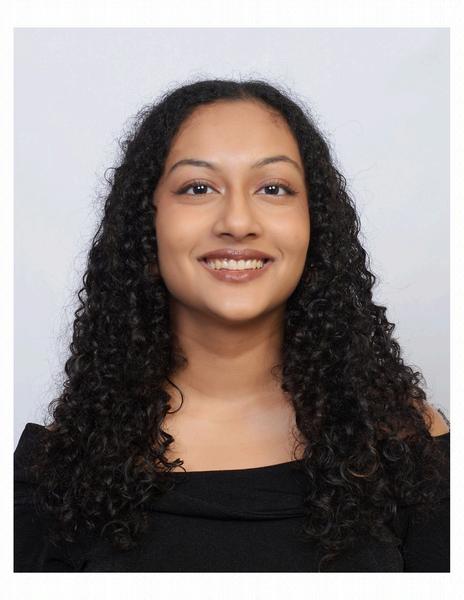
Sarina Patel is a recent graduate of American University’s School of International Service and a former Washington DC Youth Poet Laureate. She has performed her work at the National American Poetry Museum, the National MLK Jr Memorial Library, the University of Pennsylvania Kelly Writers’ House, and more. Currently, Sarina is an Associate Fellow in War, Conflict, & Global Migration at the Global Research Network Think Tank.
LegalPerspectivesontheFailuretoProsecuteReproductiveViolenceunderInternational CriminalLaw
SarinaPatel EthelMambo
WomenofColorAdvancingPeace,Security&ConflictTransformation
TraditionalResearchPaper April18,2026
Introduction
Sexualviolenceisdefinedasanyunwantedsexualact,advance,comment,coercion,or anyattemptontheabove,inanysetting(Rajandran,2004,58).Itisoneofthebroadestcategories ofcrimeininternationallaw(Rajandran,2004,58). However,thereisanemergingcategoryof crimethatdemandsrecognition.Thatcategoryisreproductiveviolence,definedasanyviolationof reproductiveautonomy,includingforcedabortion,contraception,pregnancy,andsterilization (Laverty,2021,616).Ininternationallaw,reproductiveviolenceisoftensubsumedunderthe categoryofsexualviolence.Bothcrimesareequallyimportant;itdoesnotcompetewithor diminishthesignificanceofsexualviolencetoacknowledgethatinternationalcriminallawshould recognizereproductiveviolence.Butitisimportantthatsexualandreproductiveviolenceare addressedindividually,andwiththesamesenseofurgency.
Reproductiveviolenceisaseverecrimethatinflictsdistinctandoverarchingharmsupon itsvictims.Whenanindividual’sreproductiveorgansaretargetedthroughbattery,rape,torture, orforcedsterilization,theresultingtraumaextendsfarbeyondphysicalinjury(Laverty,2021, 616).Itfundamentallyshatterstheirreproductiveautonomyandtheirpsychologicaldesireto bearchildren(Malabou,2009,33).Evenwhenvictimsdecidetobearchildreninthefuture,they arestrippedoftheirautonomytomakethatdecisionfreeofanyreproduction-associatedmental orphysicaltrauma(Malabou,2009,34).Onthesegrounds,thispaperarguesthatreproductive violenceisamultigenerationalharmthatsitsatthespecificintersectionofbiologicalandsexual violencethatshouldnotbesubsumedbyeithercategory.Reproductiveviolencedoesnotjust controlavictim’sfuture,butthefutureoftheirbloodline.
Thispaperaddressesthefollowingresearchquestion:Whatgapsexistintheprotection againstreproductiveviolencewithintheframeworkoftransitionaljusticeandininternational
litigation?Thispaperarguesthatinternationallitigationlacksthejurisprudentiallanguage necessarytorecognizereproductiveviolenceasadistinct,genderedharm.
Theliteraturereviewaddressesthemesfrombroadesttonarrowest.Itdefinesandoutlines types of transitional justice, the values and limitations of criminal prosecution, the values and limitationsoftheInternationalCriminalCourt(ICC),andwhytheICCisvitaltothisinquiry.
Transitionaljusticeisdefinedasaprocessofachievingsocietalchange,distinguishedby legalresponsesandaddressingtheviolationsofapastregime(Teitel,2020,69).Therearesix typesoftransitionaljusticeframeworks:criminalprosecution,financialreparations,memorials, publicapologies,structuralreform,andtruthcommissions(Revkin,2024,1591).Criminal prosecution,thefocusofthisresearchinquiry,isthelegalprocessbywhichanorganization bringsformalchargesagainstapersonorgroupofpeopleaccusedofviolatinginternational criminallaw(Revkin,2024,1596).Criminalprosecutionhasitsstrengths:casting“individual responsibilityforviolations”and“punish[ing]perpetratorsaccordingly”(Revkin,2024,1596).
Atadeeperlevel,itcantransformthelawsusedtoreachfuturejudgments.Butcriminal prosecutionisnotwithoutitsflaws.Scholarshavelongcriticizedtheframework’sfocuson detention,incarceration,andthepunishmentofperpetrators(HafezHassan,2023,8).Criminal prosecutionoftenobsessesoverapunitiveobjective,withlittleconsiderationforwhathappens afterpunishmentisdelivered(HafezHassan,2023,22).
Nowhereisthissystemmoreevidentthanininternationallaw.TheICCwasfoundedin 2002.Despiteitsnoveltyintheinternationallitigationsystem,theICChassuccessfullyindicted over40individuals(Kerr,2020,16).TheICChasjurisdictionoverfourcategoriesofcrime: genocide,crimesagainsthumanity,warcrimes,andthecrimeofaggression,anditcanhold individualsresponsibleforperpetratingsuchcrimes(Murphy,2004,5).Foracasetoappear
beforetheICC,thecrimemustbelongtooneofthefourcategorieslistedabove,andthecrime musthaveoccurredinamemberstate.Ifacrimehappensinanon-memberstate(suchasChina, India,Russia,andtheUS),theICCdoesnothavejurisdiction(Murphy,2004,33).
SomescholarshavepraisedtheICC,citingthattheICCoffersgreaterneutralitythan domesticjusticesystems(Ford,2016,4)andthatithasmoreresourcesandtechnicalexperience thananydomesticjusticesystem(Ford,2016,4).OtherscholarshavecriticizedtheICC,citing thatmechanismsofcriminalprosecutionareoftenpioneeredbyjudges,lawyersandotherswho, bynatureofthembeinglitigatorsandnotpractitioners,lackknowledgeofthelocalized inequalitiestheyseektoaddressincourt(Sarkin,2025,268).Additionally,whiletheRome StatuteprovidesrightsforvictimparticipationattheICC,theICChasbeencriticizedforits strictcriteriaforvictimeligibility(Yang,2023,72).Courtsrarelyacknowledgevictims’rights; fortheserightstoberealizedatall,mosthavetofile“applications”withthecourt”,whichare oftencomplexforthevictimstowriteanddifficultfortheICCtoprocess(Yang,2023,72).Once admitted,victimsarerarelygiven“enoughfinancialcompensation”or“control”overtheirown litigationprocess(Yang,2023,72).Instead,theICCoftencentersallies’andglobal superpowers’desirestopunishandmakespectacleofpunishmentontheworldstage,leadingto whatsomescholarshavedeemeda‘victor’sjustice’(Sarkin,2025,271).
Manylegalchallengeshavemadetheprosecutionofreproductiveviolenceinordinately difficult.Researchonthesubjectislimited,asitoftenbringsshameandstigmatoitsvictims. Moreover,reproductiveviolencecanbecomeritualizedinsituationsofconflict,makingitless likelyforvictimstoidentifywhentheyorothersareexperiencingit,discusstheseexperiences, andreportinstancesofcrime(Rautio,2026,87).Victimswhodoreportinstancesofreproductive violenceareliabletofacetargeteddiscrimination,harassmentorretaliationfromthose governmentorpoliceofficials,andsometimes,eventhecontinuationofreproductiveviolence
itself (Rautio, 2026, 90). It is impossible to investigate every single perpetrator of a large-scale crime, especially a gender-based crime which comes with its own challenges of survivor reporting, like reproductive violence. But the ICC has shown interest in recent years. By litigating on issues of reproductive violence in 2019 (Colombia) and 2021 (Uganda), the court hasheightenedcriticalinquiryandlegalattentiontowardsthistypeofcrime.
Methodology
Thispaperwillconductqualitativeresearchintheformofathematicdiscourseanalysis. ItwillanalyzetheICC’sofficialdocument“PolicyonGender-BasedCrimes”forlanguage pertainingtoreproductivejustice.Associatedvaluesandlimitationsarelistedbelow.
GeneralValues:First,thelevelofanalysisprovidedbythismethodology.Adiscourse analysisoffersavitalopportunitytoanalyzeasinglecasestudyanddeterminewhatitreveals aboutabroaderphenomenon.Next,thedynamicsofthisanalysis.Languageexacerbatesexisting inequalities,andpolicyisnodifferent.Adiscourseanalysiscanhighlightpowerdynamicsby highlightingwhatissaid,howitissaid,andwhatthelanguagerevealsaboutitssubject.
Document-SpecificValues:First,theICChasamoralandsystemicincentivetopublisha policyreportaddressingreproductiveviolence,asaleadinghumanrightsorganization.Next,the ICCisgloballyconsideredtobeareputablesourceofinternationallegalknowledge.Itspolicy reportshouldproviderelevantassessmentsofin-fieldperceptionsofreproductiveviolence.
GeneralLimitations:First,bias.Adiscourseanalysisreliesontheresearcher’s interpretationofkeyarguments.Next,time.Itwouldbeimpossibletoaccess,readandanalyze everysingledocumentthatreferencescrimesofreproductiveviolence;thispaperfocusesonone.
Document-SpecificLimitations:First,thelanguageisnotgoingtobeovertlybiased, beinganofficialandlegalICCdocument.Next,threeyearshaveelapsedbetweenthe publicationdateofthepolicyreport(2023)andofthispaper(2026),whereinmoreatrocities
involvingreproductiveviolencehaveoccurred.Asitwaswrittenin2023,thepolicyreportdoes notreflectanyofthesemorerecentincidents,andhowtheICCmayhaveupdatedpolicies, prosecutorialstandards,ororganizationalstatementsinlightoftheseincidents.
EthicalConcerns:None.Allthedataisavailableonline,sotherewillbenoparticipant interaction.
DataCollection
ThisinquiryvisitedtheICC’sofficialwebsite,selectedthe“OfficeoftheProsecutor”tab, selected the “Policies and Strategies” tab, and read the “Policy on Gender-Based Crimes” policy report, published in 2023 (Khan, 2023, 1). From there, this inquiry scanned the document, and conducted a thematic analysis via open coding: analyzing the report and organizing data very generally, for the intertextuality or repetition of key words. Then, this inquiry analyzed the data more specifically, examining each line for its use of language. Finally, this inquiry analyzed the dataforathirdtime,andhighlightedwhatgapswereobserved.
Intertextuality
Thisinquiryorganizedthedatafortheintertextualityorrepetitionofkeywords associatedwithreproductiveviolence.Notincludingfootnotesorworkscited,itwasasfollows: 28mentionsof“rape”,21mentionsof“reproductiveviolence”,11mentionsof“forced marriage”,7mentionsof“forcedpregnancy”,6mentionsof“abortion”,and4mentionsof “forcedcontraception”.Thepolicyreportcoveredthestandardcrimes,butscarcelyincluded reproductiveviolencebeyondconventionalobservationsofthephenomenon:“infertility”(1), “infection”(2),“labour”(1),“experimentation(2)(Khan,2023,45).
Language
Accountability:TheICCcitesaplethoraoffactorsincluding“discrimination,stigma, underreporting,andsurvivorreservationsaboutlawenforcement”forwhymostGBC“evades
accountability”andwhyjusticeactorsfailtotreatGBCasseriouslyasothercrimes(Khan,2023, 1).ThelanguageisvagueanddoesnotconsiderhowtheICChasadheredstrictlytotheRome Statutein“consideringsexualviolenceandviolenceagainstchildren”(Khan,2023,1).
GBC:GBC,orgender-basedcrimes,isthegroupingof“sexual,reproductive,andother types”(Khan,2023,1).ReferstocrimesasGBCinalmosteverysentence.Bylumpingthese categoriestogetherandabbreviatingthem,itsomewhattrivializesanddesensitizesreaderstothe acutehorrorsofgender-basedcrime.
GBV:GBV,orgender-basedviolence.ClaimsICC“includes”sexualandreproductive violence,onceagainlumpingreproductiveviolenceunderthebroadercategoryestablished (Khan,2023,5).
Gender:Todefinegender,ICCcitesArticle7(3)oftheRomeStatute,whichstatesthat “genderreferstothetwosexes,maleandfemale”(Khan,2023,6).Limitsthevisibility, discussion,andreportingofcrimesexperiencedbygenderfluid/minority/transpeople.
Gender Perspective: Defines gender more comprehensively in later sections. Still uses “men and women”, “including LGBTQI+ persons” and vague language like “an awareness of how gender-relatednormscanvary”withoutspecifyinghowtheymight(Khan,2023,11).
Office’s Internal Tools:Writesthatinvestigationsmustbe“guidedbytheOffice’sinternal tools”,bothlimitingthenatureofinvestigativeinquiryandvague(Khan,2023,12).
Relevant Factors:Mentions“gendercompetent”investigationandanalysisand“relevant factors”asprerequisitesfordeterminingthe“nature”ofacase,intwosections,without specifyingwhatthosemaylooklike(Khan,2023,11).
Reproductive Violence and its Crimes:Doesnotnameoutsideofthethreespecificallyin RomeStatute(forcedpregnancy,enforcedsterilization,genocidebypreventingbirths).Other actsarenot“explicitlynamed”,but“couldbecharged”“underdifferentprovisions”.Listsother
Sexual and Gender-Based Crimes → Gender Based-Crimes:Mentionshowearlier wordinginICCpolicylabeledthesecrimesas“sexualandgender-basedcrimes”,butnowrefers tothemas“gender-basedcrimes”,afurtherreductiononanalreadycrampedspacefor reproductiveviolenceininternationallaw(Khan,2023,12).
Sexual Violence vs. Reproductive Violence:Articulatesthatsexuallyandreproductively violentcrimesare“closelyrelated”in“motivations,formsorimpacts”.Listsacomparisonof physicaltrauma(rapeandtortureaffectinggenitals),butnotacomparisonofthementaltrauma bothinduce(affectingone’srelationshiptothemselves,theircommunity,theirdecisiontohavea family,theiridentity,theirreproductiveorgans,andtheirsexuality,etc.)(Khan,2023,20).
Conclusion
Owingtothediscourseanalysisabove,thispapermaintainsthatinternationallitigation lacks the jurisprudential language necessary to consider reproductive violence in a way that accountsfordistinctandgenderedharms.WhiletheICCdoesincertainsectionsacknowledgethe existence of reproductive violence, this policy report and its language has belied an overall organizational hesitancy to quantify reproductive violence as a separate and tangible harm. This beingtheonlypolicyreporttheICChaspublishedongender-basedcrimesindicatesthat researchinthisthematicareaisneeded.
Thispaperisinnowayaskinginternationalpolicymakersandlitigatorstodivestfrom usingthelawtocombatreproductivejustice.Thelawhasandwillalwayshaveuseful mechanismsforprotectinggroupsagainstcategoriesofharm.Rather,thispaperisasking internationalpolicymakersandlitigatorstobemindfulaboutthelanguageusedtotalkabout, thinkabout,andpursuecrimesofreproductiveviolence.Thiswillmanifestdifferentlyacross possibletypesofcrimesbutdoesnotspecifyhowtheycouldqualifyfordifferentprovisions (Khan,2023,15).
fields.InternationalpolicymakersmustaidtheICCinwritingpolicyrecommendationsfor gender-basedcrimes,andinprioritizingsurvivorinvolvementindatacollection.Meanwhile, internationallitigatorsmustaidtheICCinadjudicatingonnewmodelsforprevention, leadership,andaccountabilitywherereproductiveviolencecrimesarediscovered,andinshaping thepracticeoflawtobemorerestorative(attheveryleast,tocreateasymbioticrelationship betweentransitionaljusticeframeworkssothatcriminalprosecutionisn’tofferedinisolation).
Thereisnoexhaustiveandperfectwaytoapproachthelaw.Ofcourse,thatiswhythe lawiscalleda practice.Asthelawevolves,soshouldlegalnotionsonwhatqualifiesas reproductiveviolence,howjusticecanberestoredtovictimsofreproductiveviolence,andwho iseligibletoreceivejusticeunderthelaw.
Ford,Stuart.(2016). What Investigative Resources Does the International Criminal Court Need to Succeed?: A Gravity-Based Approach,WashingtonUniversityGlobalStudiesLaw Review.https://openscholarship.wustl.edu/law_globalstudies/vol16/iss1/5.
HafezHassan,K.(2023). Reparation for The Irreparable: Is Punishing International Crimes a Universalist Hoax? AmericanUniversityinCairo.https://fount.aucegypt.edu/etds/2097.
Kerr,Christa-Gaye.(2020). Sovereign Immunity, the AU, and the ICC: Legitimacy Undetermined.MichiganJournalofInternationalLaw. https://www.mjilonline.org/journal/sovereign-immunity-the-au-and-the-icc-legitimacy-un dermined/.
Khan,KarimA.A.(2023). Policy on Gender-Based Crimes.TheInternationalCriminalCourt. https://www.icc-cpi.int/sites/default/files/2023-12/2023-policy-gender-en-web.pdf.
Laverty,Ciara,et.al.(2021). Reproductive Violence as a Category of Analysis: Disentangling the Relationship between ‘the Sexual’ and ‘the Reproductive’ in Transitional Justice, InternationalJournalofTransitionalJustice.https://doi.org/10.1093/ijtj/ijab022.
Malabou,Catherine.(2009). Ontology of the accident: An essay on destructive plasticity.Polity.
Murphy,Ray.(2004). International Criminal Accountability and the International Criminal Court,IrishCenterforHumanRights,SchoolofLaw, https://ciaotest.cc.columbia.edu/casestudy/mur01/mur01.pdf.
Rajandran,Malaika.(2004). Sexual Violence and International Law,RefugeeSurveyQuarterly, http://www.jstor.org/stable/45054864.
Rautio,Sirpa.(2026). Seeking Safety From War: Violence and Rights Abuses Against Women From Ukraine,EuropeanUnionAgencyforFundamentalRights, https://fra.europa.eu/sites/default/files/fra_uploads/fra-2026-women-fleeing-war-ukraine_ en.pdf.
RevkinMaya,et.al.(2024). Evidence-Based Transitional Justice: Incorporating Public Opinion into the Field, with New Data from Iraq and Ukraine,TheYaleLawJournal. https://yalelawjournal.org/pdf/133.5.RevkinAlrababahMyrickFinalDraft_sknpcgmp.pdf.
Sarkin,JeremyJulian.(2025). Why the International Criminal Court Should Apply Restorative Justice and Transitional Justice Principles to Improve the Impact of Its Criminal Trials on Societies around the World,InternationalJournalofTransitionalJustice, https://doi.org/10.1093/ijtj/ijaf005.
Teitel,RutiG.(2020). Transitional Justice Genealogy,HarvardLawJournal, https://journals.law.harvard.edu/hrj/wp-content/uploads/sites/83/2020/06/16HHRJ69-Teit el.pdf.
Yang,Yidou.(2023).
TheGapbetweentheInternationalCriminalCourt and Victims: Criminal Trial Reparations as a Case Study
,UniversityofMacauLaw, https://doi.org/10.3390/laws12040072.
EDITOR
Mahan Aslam
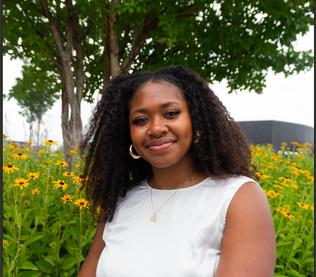
Tamryn Sainten is a student John Hopkins School of Advanced International Studies pursuing her master’s degree in Global Risk in Bologna, Italy. She recently earned her Bachelor’s Degree in International Affairs from Howard University. Having minored in Spanish and Journalism, Tamryn possesses multidisciplinary areas of specialization including policy writing, film production and editing, qualitative and quantitative data analysis, and research. At Johns Hopkins Tamryn currently serves as the president of the Black Student Union, aligning with her primary focus of the advancement of marginalized communities within the field of international affairs.
TheRiskofDehumanizingConflict:TheEffectonLow-IncomeCountries
Author:TamrynSainten
Editor:MahanAslam
WomenofColorAdvancingPeaceandSecurity
ResearchPaper
April17 ,2026 th
Abstract:
ThispaperseekstoexaminetheriskspresentwhenusingLethalAutomatedWeaponsSystems (LAWS) in developing countries, where artificial intelligence has the potential to exacerbate harm if allowed to operate without extensive testing and safety measures. LAWS refers to weapons systems that use artificial intelligence to identify and engage human without or partial human control. Using the rules of warfare, deterrence theory, and international human rights law as a basis for theirusagewecanassessthefatal,infrastructural,andsocietalimpactsthattheusageofLAWShas ondevelopingcountrieswhicharedisproportionatelyaffectedbyconflict.
Themethodologyanalyzespreviousmilitaryinterventionsindevelopingcountriesby"Advocating Nations" to establish a baseline for civilian fatalities and post-conflict stability It also ranks the automation levels and lethality of these weapons to support data from automated systems usage in Palestine and Libya Results indicated that the lethality and environmental damage from LAWS is contingent upon (1), the goal of its user, (2) testing to ensure that it can accurately identify and engage targets rather than civilians and civilian infrastructure, and (3) regulations surrounding their usage that add a layer of humanity to the decision making process on taking a human life.
Ultimately,thegoalistoestimatetheeffectthatlarge-scale,globalusageofLAWScould haveonpostwarstabilityandlimitingciviliancausalities.
Introduction
According to U.S. Congress, Lethal Autonomous Weapons Systems (LAWS) refers to a “special class of weapons systems” utilizing complementary sensors that apply real-time analysis of conflict and computer algorithms to “independently identify and employ an onboard weapon system to engage and destroy the target without manual human control of the system,” (Sayler, 2025). While the international community has no universally agreed upon definition for automated weapons systems, their usage is contentious given that artificial intelligence in conflict has the potential to either reduce military and civilian fatalities with the necessary provisions in place or exacerbate harm if allowed to operate without extensive testing and safety measures This paper seeks to examine what are the risks present when using lethal automated weapons systems in developing countries
LiteratureReview:
WiththedevelopmentandusageofLAWStakingplaceindozensofcountries(Bhatt, 2024),manybelievegettingaheadofthecurveintermsofregulatingorprohibitingthisweaponry isanecessarypreventativemeasure.ThedebateagainstLAWShasbeenpioneeredbystatesand non-governmentalorganizations,withtheconcernbeingthatthey“fundamentallychallengethe righttolifebyremovinghumanjudgementfromlethalforcedecisions,”asarticulatedbyAlgeria duringthe2025UnitedNations(UN)GeneralAssemblyMeeting(HumanRightsWatch,2025), alongsidethefearthatautomatedweaponryinherentlycannotadheretoInternationalHumanitarianLaw(IHL).
UnderIHLor jus in bello “therightofbelligerentstoadoptmeansofinjuringisnotunlimited,”(HagueConventionIV,1907,art.22)andincludesprovisionsthatpreventtheemployment
of “arms, projectiles, or material calculated to cause unnecessary suffering” (Hague Convention IV, 1907, art. 23e). It also prohibits the type of weaponry used in warfare, specifically those that are“inherentlyindiscriminate”(Mulligan,2022)suchasLAWS.WhilesignatoriesoftheHague Convention and the United Nations Charter such as the United States, Australia, Japan, Israel, and Russia are technically bound by these rules of warfare, the way they have operated during conflict iscontradictorytotheirmembership.WiththeinclusionofLAWS,thiscontradictionistakenastep further as artificial intelligence has no ability to employ the moral regulation necessary to adhere to theseprinciples.
Atthe2023Data,Analytics,andArtificialIntelligenceAdoptionStrategy,DeputyDefense
Secretary Kathleen Hicks argued that “from the standpoint of deterring and defending against aggression, AI enabled systems can help accelerate the speed of commanders’ decisions and improve the quality and accuracy of those decisions, which can be decisive in deterring a fight,” (Clark, 2023). Conversely, organizations like the American Red Cross point to automation bias, the human tendency to over-rely on automated systems because they believe that they have superior analytical abilities, to explain this belief (Klaus, 2024). They also argue that AI enabled decision support systems can result in ethical violations and hinders meaningful human control in favor of acceleratingthedecision-makingprocess(Klaus,2024),effectivelyreplacingmorallybaseddecisionswith data-driven optimization. The most obvious example of deterrence was during the Cold War when the U.S. and Russia’s nuclear advancements resulted in mutually assured destruction upon usage. While this worked because the U.S. and Russia were evenly matched in terms of military capabilities, this is often not the case for low-income countries. If countries with huge defense and technology budgets and widespread influence develop LAWS to threaten countries who do not possessthemorwhoseAIcapabilitiesarenotasadvanced,thentherewouldbeasymmetric
deterrencewhichfurtherinvitescyberwarfare,terrorism,andcontinuesmilitaryescalationfrom low-incomecountriestooffsetthisadvantage(Beehner&Collins,2019).
Countries that are classified as experiencing violent conflict and high levels of institutional and social fragility by the World Bank Group (WBG) are especially sensitive to food insecurity, forced displacement, and economic and geopolitical implications (WBG, 2025). With fragile and conflictaffected situations making up two-thirds of low-income countries, their development is at risk if it holds true that automated military weaponry does not deter war, but encourages and exacerbates it (WBG,2025).
Methodology:
Tosupportthisargument,thispapermeasurestheleveloflethalityandautonomyofLAWS todeterminetheimpactoninfrastructureandcivilianfatalities.Then,weanalyzetheeffectof LAWSinconflictbyintegratingdatafromtheirusageinPalestineandLibya,allowingustoestimatetheeffectofautonomousweaponssystemsbyAdvocatingNationsonlong-termstabilization andcausalityratesindevelopingcountries.
Findings:
UsingtheFrontiersinArtificialIntelligencethreelevelsofincreasingautonomy(DrespLangley, 2023), we can assess some of the weapon’s systems of advocating countries currently in combat with developing nations to understand the level of automation and key factors that increase ordecreaselethality(inthiscasereferringtociviliancausalitiesandinfrastructuredamage):
•Semi-AutonomousWeapon:Autonomouslyengagesspecifictargetgroupsthat havebeenselectedbyahumanoperator
•FullyautonomousWeapon:Canselect,searchfor,andattackintendedtargetsover a specified area or electronically jam communications without human intervention once activated.
SupervisedAutonomousWeapon:Humanoperatorscaninterveneandterminate engagementsbeforeunacceptablelevelsofdamageoccur •
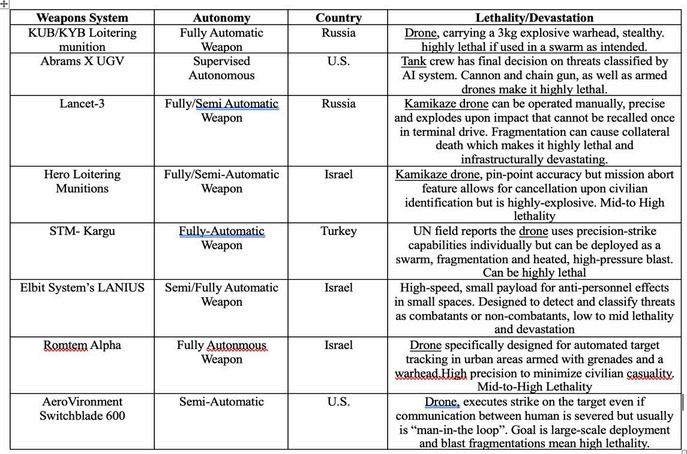
Figure 1: Autonomy and Lethality of Land & Air Weapons Systems by Advocating Countries Currently in Conflict Source: (Automated Decision Research, n.d.)
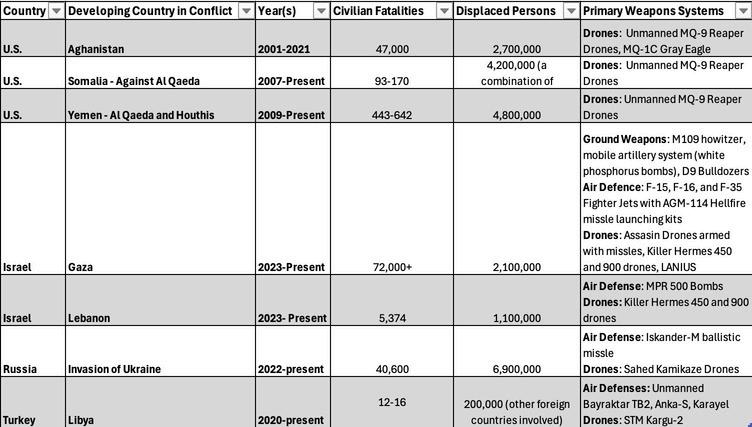
Figure 2: Conflict Figures from Advocating Countries
Sources: Airwars, n d , New York Times(2019), PBS(2025), Brown University n d , AutoNorms (2020), Amnesty International (2025), The Lancet (2026), UN OCHA n.d., Reuters 2026, AFSC n.d,CBC (2026), Council on Foreign Relations (2024)
Figure 2 gives context to the lethality of these manual weapons in conflict by analyzing fatalities frompreviousandcurrentconflictsinvolvingcountriesthatvotedfortheusageofLAWS.Systems liketheunmannedMQ-9reaperandSTMKargu-2dronesalreadyhavesomelevelofautomation.
Discussion:
The level of lethality and devastation coupled with the number of civilian fatalities give us an idea of what their usage looks like or what it will look like without regulation. In Figure 2 we can see that heavy usage of unmanned reaper drones by the U.S. coupled with ground combat result in between47,000to47,812civilianfatalitiesandmillionsofdisplacedpeople.
Whilereaperdronesareremotelypiloted,ifLAWSbeingdevelopedbytheU.S.likethe AeroVironment Switchblade in Figure 1, which can execute strikes even if communication is severed, fatalities could increase due to unbiased target selection which cannot employ any discernment. Israel, for example has employed the fully automated LANIUS system and has a death toll higher than the U.S. presence in Somalia, Afghanistan, and Yemen combined from 2001 to 2026. Turkey’spresenceinLibyaisminor,thereforecivilianfatalitiesislowercomparatively.
Still,examplesofLAWSusageincludewhattheUNPanelofExpertsonLibyadescribed as“anasymmetricalwarofattrition”worsenedbyTurkishautomatedweaponsliketheKargu-2 whichreportedlyhunteddownandremotelyengagedretreatingHAFandoperatedina“fire, forgetandfind”capability(UnitedNationsSecurityCouncil,2021).Onamuchlargerscalethere istheusageoftheGazastripasa“laboratory”totestLAWSincludingasystemcalled“Hasbora” whichautomaticallygeneratestargetsatanunfathomablerateandenablesthearmytoruna“mass assassination”accordingtoIsraeliintelligenceofficers(StateofPalestine,2024).Theirusagealso spurstheuncheckedproliferationofLAWS,ascompanieslikeSpearauv,whicharmsIsraelwith theVipersuicidedronethatautonomouslylocatesandengagestargetsbyexplodingintothem,
contendthatIsrael’s2023attacksonGazaacceleratedproduction(AmericanFriendsService Committee,n.d.)
Assessments of asymmetrical conflict on infrastructure and displacement in developing countries indicate that it has short and long-term effects on development and economic growth The United Nations estimates that approximately 81% of all structures in the Gaza have been destroyed, largely due to the use of explosive weapons like missiles, bombs, and tanks specifically designed to decimate civilian infrastructure (Humanity and Inclusion, 2023). These large, airdropped munitions with heavy explosive payloads are inaccurate, and ‘smart’ or ‘guided’ bombs could allow for better targeting through automation (Young, 2023). In cases like the Israeli invasion of Gaza where total destruction appears purposeful, there’s no reason to employ automated weapons except to increase the ability to cause destruction rather than discern between an enemy and a civilian In situations like Turkey and Libya, however, the programmed discernment proved to be faulty Thus, the usage of LAWS is at worst a lethal weapon of mass destruction, and at best an automated weapon with algorithmic failure that removes the layer of moral responsibility
Conclusion:
ThemembersofIHLhaveamoralandcivicresponsibilitytoupholdtheregulationsofthe IHL,butartificialintelligencedoesnot.Whilehumansarefullycapableofcommittinglargescale atrocities,theuncheckeddevelopmentofweaponsofmassdestructionputsciviliansinadeadly position.Althoughmanyadvocatingcountriesdisputethecompleteprohibitionofthesetypesof weapons,thefactthatmostcountrieswhovotedtocompletelybantheusageofLAWSwerelowincomecountriesisnotacoincidence.Theirvoteiscementedinyearsofunderdevelopment,oppression,andviolenceoftenatthehandsofthesamecountriesfightingtocontinuetheusageof lethallyautomatedweaponssystems.
AutomatedDecisionResearch.(2022,September2). State positions | Automated Decision Research https://automatedresearch.org/state-positions/
Beehner,L.,&Collins,L.(2019).Canvolunteerforcesdetergreatpowerwar?Evidencefrom theBaltics. Journal of Strategic Security, 12(4),50–68.https://doi.org/10.5038/19440472.12.4.1747
Civilianskilled&displaced.(2025,June7). Costs of War | Brown University https://costsofwar.watson.brown.edu/costs/human/civilians-killed-displaced
Clark,J.(2023,November2). DOD releases AI adoption strategy.U.S.DepartmentofWar. https://www.war.gov/News/News-Stories/Article/Article/3578219/dod-releases-ai-adoption-strategy/
HagueConvention(IV)respectingtheLawsandCustomsofWaronLandanditsannex:RegulationsconcerningtheLawsandCustomsofWaronLand.(1907,October18).InternationalCommitteeoftheRedCross.https://ihl-databases.icrc.org/ihl/INTRO/195
Hammad,N.,Khafif,M.E.,&Hanna,N.(2020).Costoptimizationofhigh-speedrailwayprestressedboxgirderbridge. International Journal of Civil Engineering and Technology (IJCIET), 11(4).https://doi.org/10.34218/ijciet.11.4.2020.008
Japan.(2024,May24). Working paper submitted by Japan to the United Nations on emerging technologies in the area of lethal autonomous weapon systems (LAWS).UnitedNations. https://docs-library.unoda.org/General_Assembly_First_Committee_-Seventy-Ninth_session_(2024)/78-241-Japan-rev-EN.pdf
Mulligan, S. P. (2026, February 23). The law of war and the Russian invasion of Ukraine (CRS Report No. LSB10710). Congressional Research Service. https://www.congress.gov/crsproduct/LSB10710
Peri,D.(2024,January10).AutonomoussystemsbecomingpreferredchoiceinOrderofBattle fornationsacrosstheglobe:NavyChief. The Hindu.https://www.thehindu.com/news/national/navy-chief-formally-receives-drishti-10-long-endurance-uav-from-adani-defencein-hyderabad/article67726088.ece
RepublicofEstoniaMinistryofDefence.(2025). Defence artificial intelligence strategy for Estonia.https://kaitseministeerium.ee/sites/default/files/defence_artificial_intelligence_strategy_for_estonia.pdf
Sayler, K. M. (2026, February 24). Defense primer: U.S. policy on lethal autonomous weapon systems (CRS Report No. IF11150). Congressional Research Service. https://www.congress.gov/crs-product/IF11150
StateofPalestine.(2024,May24).
WorksCited: Submissionby the State of Palestineonautonomousweapons systemssubmittedbytheStateofPalestine to theUN Secretary-Generalpursuantto
resolution 78/241 adopted by the General Assembly on 22 December 2023.UnitedNations.https://docs-library.unoda.org/General_Assembly_First_Committee_-SeventyNinth_session_(2024)/78-241-State_of_Palestine-EN.pdf
UN:Starttalksontreatytoban‘Killerrobots.’(2025,May23). Human Rights Watch. https://www.hrw.org/news/2025/05/21/un-start-talks-treaty-ban-killer-robots
UnitedNationsSecurityCouncil.(2021,March8).
Letterdated8March2021fromthePanelof Experts on Libya established pursuant to resolution 1973 (2011) addressed to the President of the Security Council (S/2021/229)
.https://undocs.org/S/2021/229
Amb. Bonnie Jenkins EDITOR
Wincate Mukami is a highly organized communication professional specializing in media development, stakeholder coordination and event management. With experience in project management, content development and customer relations, she is adept at fostering partnerships and driving impactful media initiatives. Her strong writing and editing skills combined with proficiency in various communication technologies enable her to produce compelling content and effective reports that resonate with diverse audiences. Driven by intellectual curiosity and a commitment to addressing key issues in communication and media, she continuously seeks out new knowledge and innovative approaches to enhance her professional practice. Whether coordinating with stakeholders, managing high-profile events or developing impactful content, her goal is to contribute to the success and growth of the organization she works for.
Weaponizing gender in electoral politics; disinformation against women politicians as a security threat in Kenya.
Author: Wincate Mukami
Editor: Ambassador Bonnie Jenkins
Institution: Women of Color Advancing Peace, Security and Conflict Transformation
Research Paper
Kenya’s digital transformation continues to gain momentum, with the latest Sector Statistics Report by the Communications Authority of Kenya (CA) revealing a remarkable increase in the uptake of mobile, broadband, and digital services. The report further indicates that as of June 2025 Smartphone penetration reached 83.5 per cent (Communications Authority of Kenya report 2024/2025). According to a proprietary analysis conducted by Kepios,there were 18.4 million active social media user identities in Kenya in October 2025.
Social media platforms have long been acknowledged as a platform of representation for diverse sections of society including marginalized groups and communities. These spaces offer platforms for women politicians to express their views and reach their audiences. On the flipside, these
same This paper explores how gendered disinformation targeting women politicians in Kenya is both a political weapon and an emerging security threat. By looking into secondary research such as policy reports, academic literature and social media listening analyses, the paper examines how well coordinated online attacks against women weaponize the already existing gender stereotypes to undermine their credibility, competence and political legitimacy in a male dominated landscape. The findings highlight patterns of sexualised narratives, morality, body shaming and emotions of few prominent women politicians. Most of the attacks tend to shift the focus away from policy debates and toward profiling the women by reinforcing the already existing patriarchal norms that have placed profiled women as mere caregivers. The paper clearly argues that gendered disinformation, as a security issue, threatens the women as well as electoral integrity and democratic participation. It further calls for a multistakeholder approach response on content moderation reforms and digital governance.
platforms have exacerbated the patriarchal silencing of women that happens offline Social media platforms namely; Facebook, X (formerly Twitter), Instagram, Telegram, TikTok and YouTube have emerged as spaces of targeted attacks against women with the rise of gendered and sexualised disinformation campaigns. Gendered and sexualised disinformation can be defined as, “a subset of online gendered abuse that uses false or misleading gender and sexbased narratives against women, often with some degree of coordination, aimed at deterring women from participating in the public sphere. This type of harassment is planned and set in motion intentionally with the aim of silencing women ((Boberg, Citation2021).
According to (Tshuma et al), women are not only targeted for their gender and sexuality, but also for their professional capabilities and credibility. Women politicians tend to face gendered attacks with an aim of undermining their professional capability, competence and credibility mainly leading to a pivot from their campaign agendas and manifestos, shifting the focus to their personal lives These attacks often demean their roles, profiling them as caregivers, domestic workers, and emphasizing their looks instead of pursuing politics. These attacks clearly highlight misogynistic comments that reinforce gender stereotypes with the goal of silencing women and discouraging their participation in public life.
According to (Kimeu, 2023), misogynistic discourse is increasingly prevalent in the expanding Kenyan manosphere, which has been defined as "a loosely connected network of websites and social media platforms that promote misogyny online.” This in many instances involves the portrayal of female political candidates through patriarchal perspectives (Kishwar et al., 2024), which corroborates (Nyabola, 2018,0.266) statement of male dominance in Kenyan politics (as cited in Too Aggressive or Slay queens 2026)
Gendered disinformation constitutes a very broad security concern, however, in most instances it is dismissed as online harassment. These well-coordinated attacks discourage women from political participation, distort electoral discourse and amplify polarisation. In Kenya, where electoral environments are competitive, social media attacks always exacerbate into offline attacks leading to risks such as personal safety and political instability
It is for this reason that this paper seeks to examine gendered disinformation targeting women politicians in Kenya as a political weapon and a security threat, and also weakens democratic processes in a male dominated political landscape.
Women have made significant inroads into politics in recent years, but in many parts of the world, their increased engagement has spurred attacks, intimidation, and harassment intended to deter their participation (Krook Mona Lena, 2020). Lena posits that violence against women in politics is not simply a gendered extension of existing definitions of political violence privileging physical aggressions against rivals Rather, it is a distinct phenomenon involving a broad range of harms to attack and undermine women as political actors. Blatnik (2022), posits that disinformation is gendered if it targets women on the basis of their identity as women. Research shows at least one of two contrasting approaches is usually taken when it comes to online attacks on women politicians. First, there is the presentation of women leaders as enemies and, secondly, as victims without agency, In doing so, rather than directly attacking the policy decisions women make, as is the case with male politicians, gender stereotypical characteristics (like being emotional or polite) and physical appearance are used instead to challenge female politicians. Such disinformation may come in different forms, from harmful graphics to conspiracy theories.
Barry Buzan posits that the understanding of security should be broadened beyond its traditional scope whereby an issue becomes a security threat in the event it is coined existential (Buzan et al., 1998). In that respect, gendered disinformation particularly against women politicians tends to also threaten electoral integrity, women’s political participation, and democratic integrity which are also security concerns According to the U N Human Rights Council, the erosion of women’s human rights “is a litmus test for the human rights standards of the whole of society,” and this tech-enabled backlash against women’s rights has broader ramifications including threatening democratic integrity, social cohesion and global peace and security (Di Meco & Wilfore, 2021)

I will rely heavily on desktop, also known secondary research or library research, as my preferred method of gathering information and insights This research will provide a solid analysis and synthesis of existing data and sources as opposed to conducting primary data collection through fieldwork or surveys. I have scoured through journal articles, published reports, studies, newspaper articles and videos and other publicly available materials to extract valuable knowledge and make informed decisions.
In my findings, I highlight some of the key women politicians in Kenya who have time and again experienced gendered disinformation based on their physical appearance, spanning around sexualised comments, hate speech, morality, body shaming, claims of incompetence, and profiling based on gender roles (Nendo)conducted a social media listening research on some of the sentiments women in leadership positions experience that uncovers a list of attacks from the online social media space. These politicians include Martha Karua, Esther Passaris, Aisha Jumwa and Millicent Omanga.
Esther Passaris is one of the main victims of attacks through news headlines, political commentators and social media. Users consistently oversexualize her body with suggestive sexual comments. Some comments regarding Martha Karua portray her as rigid, difficult to work with, and egotistical Aisha Jumwa is criticised for not being “feminine” enough while Milicent Omanga is oversexualised for being curvaceous and dancing in political gatherings (Nendo)
Based on these few examples as outlined in the report, there are patterns of gendered disinformation that targets women politicians in Kenya based on sexuality, morals, their physical appearance, emotions and competency, all whose main aim is to silence the women in a patriarchal dominated political battle ground (Nendo).
DISCUSSION & CONCLUSION
In the context of Kenya, the 2010 constitution stipulates that no gender should make up more than two-thirds of the members of any public body. However, despite this constitutional mandate, the representation of women in leadership remains alarmingly low. As of 2023, women held only 22.5% of the seats in the National Assembly, even though they represent over half of Kenya’s population (Eva-Maria Okot 2025) Eva further highlights that there are several barriers that prevent women from accessing leadership positions in governance, namely structural and institutional, socio-cultural, political and economic, as well as systemic barriers Deep-rooted socio-cultural and gender stereotypes have inherently perceived leadership to be masculine.
During the colonial period, the British administration systematically appointed only male chiefs, thereby institutionalizing patriarchal governance structures and excluding women from formal leadership. These norms have therefore entrenched leadership to be seen as a male role. Additionally, religious bodies, patriarchal family systems, and clan-based structures still continue to uphold male leadership as the norm.
With the proliferation of social media platforms, these stereotypes are amplified with women who manage to rise into leadership positions being subjected to disproportionate scrutiny whereby the media often focuses on their personal lives, diminish their professional credibility, and subtly undermine their authority leading to online coordinated attacks Disinformation campaigns against women politicians weaponize gender stereotypes by targeting the women’s morality, physical appearance, motherhood and sexuality subsequently undermining their competence in leadership roles.
These attacks and online facilitated gender-based violence against female politicians in Kenya are very prevalent It is evident that gendered disinformation against women politicians in Kenya is not just online harassment but a deliberate strategy that weaponizes the already existing patriarchal norms to censor women and weaken the democratic process. Looking at these coordinated attacks from a security lens, we clearly see how they threaten democratic legitimacy and electoral integrity especially in already polarised electoral contexts well amplified by highly fragmented and digitally polarized social media platforms. Gendered disinformation must be identified as a democratic governance issue and a nontraditional security threat that requires urgent intervention.
To address gendered disinformation, Kenya requires a multistakeholder approach. Violence against women in politics is a systematic strategy that undermines their democratic participation and political legitimacy (Krook, 2020) From a security lens, any threat to democratic order is a security threat (Buzan et al , 1998) UNESCO in its guidelines for the governance of digital platforms further advocates for localised content moderation and multistakeholder approach with relevant stakeholders (UNESCO,2023). Therefore, recognising gendered disinformation in this framework, is imperative in protecting electoral integrity in Kenya particularly as the country prepares for the 2027 general elections.
1. Ana Blatnik (2022). https://wiisglobal.org/an-overlooked-threat-to-democracy-gendereddisinformation-about-female-politicians/
2. Emma Lygnerud Boberg. (Blog, 2021) Digital misogyny: Why gendered disinformation undermines democracy | IMS
3 Full article: social media and gendered disinformation: the double-edged sword for women journalists
4. https://datareportal.com/reports/digital-2026 kenya#:~:text=Internet%20use%20in%20Kenya%20in,from%20numerous%20reputable %20sources%2C%20including
5. https://en.wikipedia.org/wiki/Special:BookSources/1-55587-784-2
https://www.academia.edu/39047709/Buzan Waever and De Wilde 1998 Security A New Framework For Analysis#outer page 6
6 https://www ca go ke/sites/default/files/202509/Sector%20Statistics%20Report%20Q4% 202024-2025 1 pdf
7. Jamil, S., Çoban, B., & Appiah-Adjei, G. (2025). Social media and gendered disinformation: the double-edged sword for women journalists. Media Asia, 52(4), 539–546. https://doi.org/10.1080/01296612.2025.2564860
8. Mona Lena Krook. Violence against Women in Politics. https://academic.oup.com/book/36672
9 Nicola Davies-Laubscher, Dani Madrid-Morales & Herman Wasserman (2026) ‘Too aggressive’ or ‘slay queens’: gendered attacks, threats and disinformation in Kenyan elections, The Round Table, 115:1, 44-57, DOI: 10 1080/00358533 2025 2588589
10.Nyabola,N.(2018). Digital democracy, analogue politics: How the internet era is transforming Kenya.ZedBooks.
11. Public, M. Buzan, Waever and De Wilde 1998 Security - A New Framework For Analysis. 12.
Public, M. Buzan, Waever and De Wilde 1998 Security - A New Framework For Analysis. 13. Social Listening Analysis of Online Gender Disinformation. https://she-persisted.org/wpcontent/uploads/2022/11/NENDO-Social-Listening-Analysis-Gender-Disinfo-Kenya.pdf
14. The Polarization Footprint (part 2) | by Build Up | Medium
15. UNESCO. (2023). Guidelines for the governance of digital platforms. United Nations Educational, Scientific and Cultural Organization. https://www.unesco.org/en/internettrust/guidelines
16. Lucina Di Meco and Kristina Wilfore March 8, 2021. Gendered disinformation is a national security problem
Zoya Gheisar (She/Her) is a proud Seattleite and graduate of Denison University, with a double major in history and data analytics, concentration in political science, and minor in Spanish. She is passionate about how data can be used to create more effective and equitable policy. For the past two years, she lived in Bogota, Colombia as a Fulbright English Teaching Assistant.

MigrantsandDisplacedPeopleasStakeholdersandParticipantsinPeaceProcesses
ZoyaA.Gheisar
WomenofColorAdvancingPeace,Security,andConflictTransformation
March9,2026
Internallydisplacedpeople(IDPs)havelongbeenviewedaspassiveplayersinpeaceprocesses andaretypicallyexcludedfrompeacebuildingefforts.ThispaperexamineshowIDPsare uniquelyequippedbytheirlivedexperiencestoparticipateinpeacebuildinginitiatives,andhow inclusivepeacebuildingcansupportdurablesolutionstodisplacement.Focusingonthecaseof Colombia,whichhasoneofthelargestIDPpopulationsintheworld,thereisaclearmodelfor howIDPscanparticipateinpeacebuilding.
Theexistenceofforciblydisplacedpeopleisalivingtestamenttotheeffectsofconflict.
AgreementsliketheDaytonPeaceAccordsrecognizethattherightofrefugeesandIDPsto returntotheirhomessafelyafterconflictisfundamentaltopeace(Annex7,1995).Yet,while thelivesofIDPsandrefugeesaredefinedbyconflict,theyareoftenheldaspassivebystanders totheresolutionoftheveryconflictsthathaveshapedtheirexperience.However,theparadigm ofhowrefugeesandIDPsparticipateinpeacebuildingisshifting.Increasingly,programsare beingdesignedtoutilizetheuniqueexperienceandskillsetrefugeesandIDPshavefromtheir livedexperienceinconflictresolution.PeaceinitiativesincorporatingIDPsandrefugeesfortify thepeaceprocess,whilesimultaneouslypreventingfurtherdisplacementandsupportingdurable solutionstoforceddisplacement.
ColombiaoffersacompellingcaseforhowIDPscanbeincorporatedintopeacebuilding.
Thereareover7millionColombianswhohavebeendisplacedbyconflictlivingwithinthe country(Avril,2025).Theimpactsofdisplacementdynamicsarefarreaching;forexample,from 1985to2019,itisestimatedthat16%oftheColombianpopulationwasdisplacedbyconflict (PradaRamírez&Murphy,2025,p.47).Thecountryhastakenaninnovativeapproachfor incorporatingIDPsintoitspeaceprocess.

Reflectingthepeaceprocessestheystudy,peacebuildingandconflicttransformation scholarshiphashistoricallycenteredprivilegedandpowerfulactors.Yet,asinnovativeinclusive approachestopeacebuildingarebeingintroducedandimplementedaroundtheworld,scholars arealsoincreasinglyconsideringtheparticipatorypotentialofgroupsthathavebeen marginalizedintheseprocesses.Onegroupthathasreceivedsignificantattentionisforcibly displacedpeople,agroupthatencompassesIDPsandrefugees.
Scholarsgenerallyacknowledgethatdisplacedpeoplehavelongbeensidelinedinpeace processes,oftenperceivedas“passiverecipientsofoutcomes”frompeaceagreementsnegotiated byelites,ratherthanautonomousindividualswhohavethecapacitytomakesignificantand valuablecontributionstopeacebuilding(Jacobsenetal.,2008,p.313).However,attheendof thetwentiethcentury,thewayconflictswereresolvedandnegotiatedshifted,andwiththat,the roleofdisplacedpeopleinnegotiations.Forthemajorityofmodernhistory,conflictshadbeen settledviaviolenceandforce.Evenduringmostofthetwentiethcentury,onlyone-in-five conflictsweresettledinpeacetalks(Sisk,2001).However,inthelastdecadesofthetwentieth centurythischangedcataclysmically:from1990to2000,nearlyhalfofarmedconflictsended withnegotiatedpeaceagreements(Sisk,2001).Itwasthecontextofthisshiftinconflict resolutionthatpermitteddisplacedpeopletotakeonanewroleinpeacenegotiations,increasing academicinterestinthepotentialofthesenewplayers.
Inthisnewera,RefugeesandIDPshaveengagedinpeacebuildingindiversemanners aroundtheworld,bothintheirnewcommunitiesandhomelands.Forexample,inindependence referendumheldinEritreain1993,whichconcludedEritrea’s30-yearwarforsovereigntyfrom Ethiopia,approximately300,000membersoftheEritreandiasporavoted,compromisingnearly 30%oftheelectorate,demonstratingthepowerofdisplacedpeopletohelptheirnationsprogress
beyondconflict,evenwhenoverseas(Janmyr,n.d.).Diasporashavealsoworkedtofillcritical gapsinresourcesessentialforstabilityintheirhomelands,aswasthecasewhenexiledSyrian professorsestablishedtheFreeSyrianUniversityforSyrianrefugeeyouthinTurkey,withthe aimofeducatingfuturegenerationswhohopetosupportacountryofpeaceandjustice(Janmyr, n.d.).Colombiahaspioneered“citizen-basedpeacemaking”whichreferstoorganizedinitiatives byIDPstostopmilitaryactivityintheirterritories(Jacobsenetal.,2008,p.321).
FocusingontheexampleofColombia,thispaperwillexaminecasestudiesand community-levelresearchexamininghowdisplacedpeoplehaveparticipatedinpeaceprocesses inthecountryandhowtheyhavebeenabletouniquelycontributethroughprogramsestablished bythe2011VictimsLaw.ParticularlyVictimParticipationTables,whichensuredisplaced peoplearegivenavoiceinpolicyandrecieveresourcesandreparations.Thispaperusesthis evidencetoconsiderhowsuchprogramssupportdurablesolutionsfordisplacement,including permittingdisplacedpeopletoreturntotheiroriginalterritoriesandintegratingthemintotheir newcommunities.
Results
Colombiaisahighlycentralizedcountry,whereresourceshavehistoricallybeen concentratedinthecapital.Forthisreason,duringtheover50yearsofarmedconflictpreceding theagreements,impactswerefeltdisproportionatelyinruralareasandsmalltowns,andamong IndigenousandBlackColombians.Frequently,thesepopulationswereforcedbyconflicttoflee theircommunitiestourbancenters,wheremanylivedinunder-resourcedneighborhoodsand
informalsettlements.However,despitebeingthemostimpactedbyconflict,theirmarginalized identitiesoftenresultedintheirvoicesandexperiencesbeingerasedinlawandpolicy.
TheVictimsLawof2011wasestablishedtogivereparationstovictimsoftheconflict andwasthefirstColombianlawtobedefinedasatransitionaljusticemechanism(MonroySantanderetal.,19).ThelawrecognizesColombia’simmensepopulationofIDPsasvictimsof theconflict,whichiscriticalforunderstandinghowthislawfacilitatesIDPs’participationin peacebuilding.TheVictimsLawimplementedthecreationofaregistryofvictims,processesfor theirstolenlandstobereturned,andprogramstoensurevictimsarecenteredinpeace negotiations.Infact,delegationsofvictimsofgovernment,paramilitary,andguerillaviolence wereinvitedtoparticipateinthepeacenegotiationsthatbeganin2012andultimatelyculminated inthe2016PeaceAgreement(Siegfried).
The2011lawalsoenactedtheVictimParticipationTables,whichhavebeenacritical instrumentthroughwhichIDPscaninfluencethepeaceprocessinColombia.Victim Participation Tables occur at local and national levels in Colombia, resulting in victims being represented at multiple levels of government policy negotiations related to the conflict and its impacts (Unidad para la Victimas). Victims at the local level choose representatives for the departmental level roundtables, who then choose representatives for the national level. Notably, the national Victim Participation Tables include victims of the conflict living abroad, incorporatingtheperspectivesofColombianswhohavebeenforcedtoliveinexilebythe conflict (Unidad para la Victimas). These tables also are often organized by identity, like race or sexualorientation,capturingtheuniquewaysidentityandconflictintersect.
Discussion
VictimParticipationTableshaveresultedinapeaceprocessthatismoreresponsiveto theneedsofIDPsandsupportsthemincreatingspacesforcommunityandhealing.IDPs connectedwithpeoplewhohavesimilarexperiencestothemthroughtheVictimParticipation Tables,whichledthemtoembarkonothersharedinitiativestogether. AreportexaminingtheimpactsofVictimParticipationTablesorganizedforwomendescribes howwomenfromthegroupconnectedovertheirsharedexperiencesofsexualviolenceduring theconflict,whichledthemtostartmemoryquiltprojects(Monroy-Santanderetal.,42).The memoryquiltprojects,centeredaroundtheirexperienceswithsexualviolence,servedasan outletforbothpoliticaladvocacyandhealingfromtrauma.ThisexampleshowshowVictim ParticipationtablesfortifiedcommunityorganizingalreadyhappeningamongIDPsandother victims,allowingthemtobuildnewcommunitiesandlives.

Conclusion
Colombia’sapproachtocenteringIDPsintheirpeaceprocessandpolicydevelopment shouldbeusedasamodelbyothercountriesnavigatingconflictnegotiations.TheirVictim ParticipationTablemodelrecognizeshowIDPsandothervictimshaveauniqueperspective whichmustbeconsideredduringconflictresolution,andhowstructurescanbeputinplaceto engagewiththesecommunities.Simultaneously,incorporatingIDPsinpeacebuildingrecognizes theirrighttobelonginboththeirnewandoriginalcommunities,andcanfacilitatecollective healing.Goingforward,countriesexperiencingconflictshouldprioritizecreatingprogramsthat promoteIDPs’roleinpeacebuilding.
OfficeoftheHighRepresentative(n.d.). agreement/annex-7-2/
References
https://wwwohrint/dayton-peace-
Avril,H.(2025,November3).Colombia:Forceddisplacementreachesa10-Yearpeak.
European Civil Protection and Humanitarian Aid Operations. https://civil-protectionhumanitarian-aid.ec.europa.eu/news-stories/stories/colombia-forced-displacement-reaches10-year-peak_en
Jacobsen,K.,Young,H.,&Osman,A.(2008).RefugeesandIDPsinPeacemakingProcesses.In Contemporary Peacemaking Conflict, Peace Processes and Post-war Reconstruction (pp.
313–327).essay,PalgraveMacmillan.
Janmyr,M.(n.d.).RefugeesasContributorstoPeace. Global Policy Journal. https://www.globalpolicyjournal.com/blog/06/06/2016/refugees-contributors-peace
Monroy-Santander,L.,Colmenares,L.J.,Cortés,L.X.,EspitiaPerdomo,V.,&OtáloraGallego, G.(2022).Colombianvictimandsurvivorleadershipandparticipationininformal transitionaljustice. Impunity Watch & BSocial. https://www.impunitywatch.org/wpcontent/uploads/2022/11/Final-EN-Colombia_Report-Colombian-victim-and-survivorleadership-and-participation-in-informal-transitional-justice.pdf.
Annex 7 JournalonMigrationandHuman
PradaRamírez,M.,&Murphy,E.(2025).TheRighttoPeaceandtheRighttoStay:Insights fromApproachestoPeaceandMigrationinColombia. Security, 13(1),45–55.https://doi.org/10.1177/23315024241309721
Siegfried,K.(2016).WhatColombia’speaceprocesscanteachtheworld. The New Humanitarian. https://www.thenewhumanitarian.org/analysis/2016/07/20/what-colombias-peace-process-can-teach-world.
Sisk,T.(2001).PeacemakinginCivilWars:Obstacles,Options,andOpportunities.
Joan B.
Kroc Institute for International Peace Studies. https://ciaotest.cc.columbia.edu/wps/sit02/
UnidadparalasVictimas(2019).PaipawillbethesceneoftheelectionoftheNationalVictim ParticipationBoard.https://www.unidadvictimas.gov.co/noticias/55138-
2/#:~:text=The%20end%20result%20is%20that,tables%20and%201%20National%20Tabl e).


www.wcaps.org pipelinefellowship@wcaps.org