CL A SSIC BE AU T I E S
ARTISTS, ITALY, AND THE ESTHETIC IDEALS OF THE 18TH CENTURY
12
14
Neoclassicism at the End of the Eighteenth Century
Tatyana Bushmina
Mikhail Piotrovsky Foreword: Journey into Classicism
Sergej Androsov
Cathelijne Broers Foreword: Noble Simplicity and Youthful Grace
20
Pompeo Batoni 36
140
Antonio Canova
122
Angelica Kauffmann
Maria Garlova
Revelling in the Beauties of the South
Thera Coppens
Bernard Woelderink
The Visit to the Dutch 114 Republic by the Count and Countess of the North
Sergej Androsov
TABLE OF CONTENTS
150
Sergej Androsov
Eric Moormann
Ekaterina Deryabina
Maria Garlova Anton Raphael Mengs 50
Hubert Robert
62
The Quest for Ideal Beauty
76
TABLE OF CONTENTS
Bibliography
200
Glossary 204
List of names and terms
168
Catalogue notes and literature
All works in the exhibition
Catalogue
The Count and Countess of the North: A Journey through Europe 94
Opposite: The Three Graces, fresco from Pompeii First century CE. Museo Archeologico Nazionale, Naples
Grigory Mikhaylov, The Ancient Gallery in the Imperial Academy of Fine Arts, St Petersburg. 1836 State Russian Museum, St Petersburg
Pompeo Batoni, Thetis going to the Centaur Chiron to retrieve Achilles. 1768–70. Hermitage, St Petersburg
Inleiding
I
I
Sergej Androsov
Anton Raphael Mengs, Madonna with Child and two Angels. 1770–73 Kunsthistorisches Museum, Vienna
Cat. 15. Anton Raphael Mengs, Perseus and Andromeda. 1778
Cat. 22. Hubert Robert, Pyramid of Cestius. 1765
Following pages: Cat. 23. Hubert Robert, Tomb of Caecilia Metella. c. 1765
Knights Hall, Pavlovsk Palace
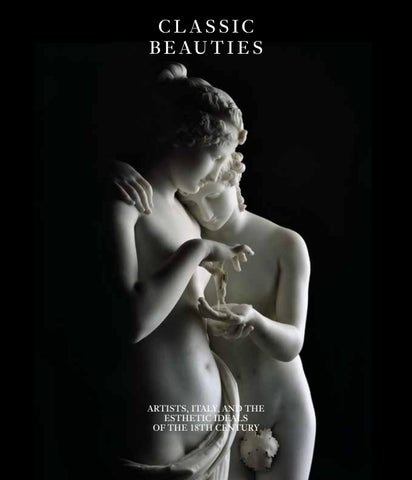
Cat. 42. Antonio Canova, The Three Graces. 1812–16
Cat. 49, 50. Johann Friedrich August Tischbein, Portraits of Grand Duke Paul and Grand Duchess Maria Fyodorovna of Russia. 1782. Private collection
CL A SSIC BE AU T I E S Around the middle of the eighteenth century, Europe was enthralled by the archaeological excavations then taking place in Italy. Artists and young aristocrats from across the continent travelled there to see the country’s classical Roman and trendsetting contemporary art for themselves. The ‘Grand Tour’ often lasted many months. Among those who made it were Goethe and the ‘Count and Countess of the North’ (the later Russian Tsar Paul I and his wife). In Rome, they met renowned artists like Pompeo Batoni, Anton Raphael Mengs, Hubert Robert, Angelica Kauffmann and – most famous of all – Antonio Canova. In short, all the great names of eighteenth-century Neoclassicism. Classic Beauties allows readers to share the adventures of the ‘Grand Tourists’ and meet the leading Neoclassical artists of the day. Their accounts and the book’s many illustrations, both of works of art and of contemporary tourist attractions, paint a vivid picture of a period in which the quest for classical beauty and the ideal nude was at the forefront of people’s minds.