The Makeover of The Shoppes at University Place Creating a vibrant Charlotte tourist attraction
The History of Memorial Day Remembering Its African American Origins
ESO Artisanal Pasta
A restaurant built with love, culture and connection




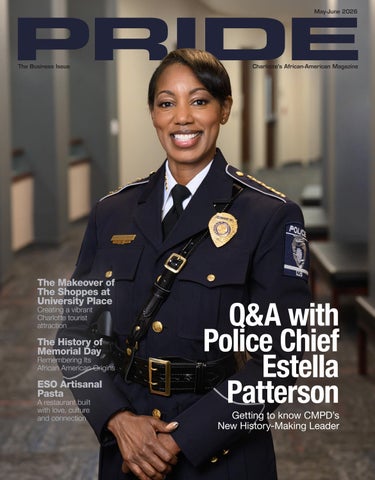
The Makeover of The Shoppes at University Place Creating a vibrant Charlotte tourist attraction
The History of Memorial Day Remembering Its African American Origins
ESO Artisanal Pasta
A restaurant built with love, culture and connection
Pride Awards 2026 will explore how artificial intelligence is reshaping how we live, work and play.
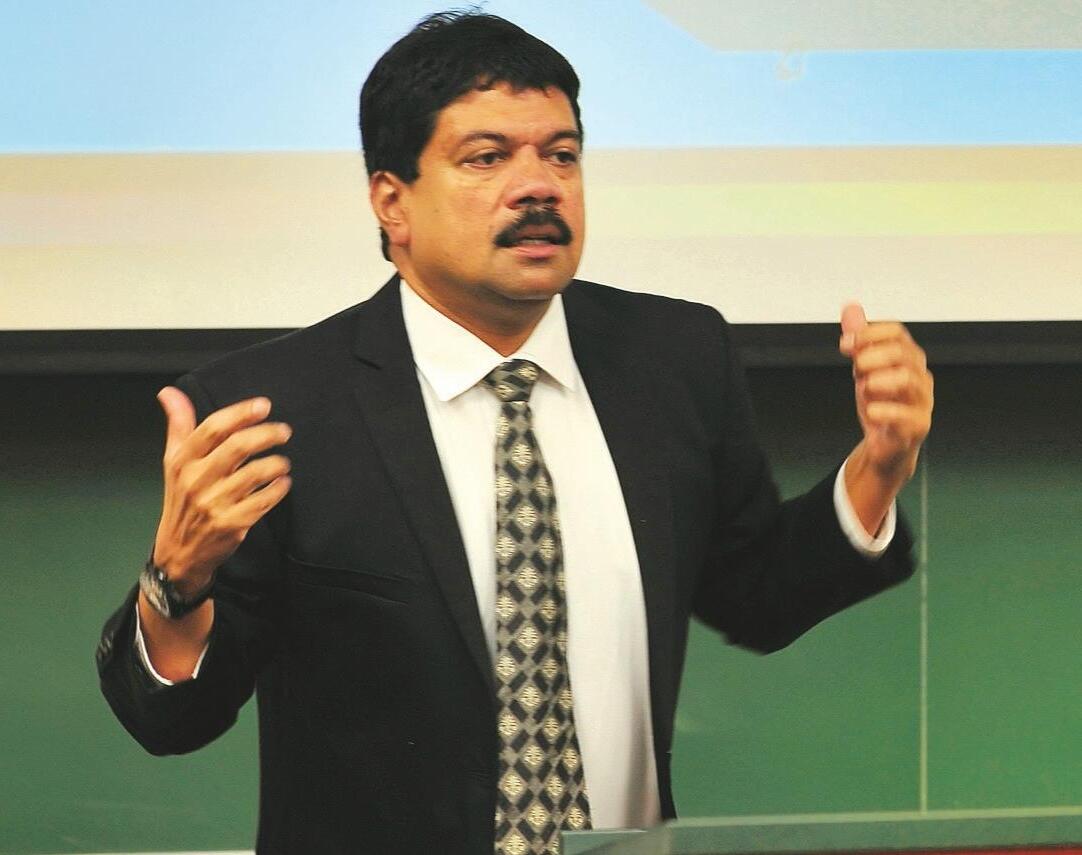
Dr. Erevelles will challenge everything you think you know about artificial intelligence.
1. Why/how is AI fundamentally different from every technology from the past?
2. Will AI control and dominate humans?
3. Can AI feel? Can it think?
4. Is AI capable of making better decisions than we do?
5. What is the future of business in an AI –Dominated world? Will managers be replaced?


You volunteer and donate to your favorite nonprofits because giving back is important to you. But did you know that by partnering with your local community foundation, your gifts can make an even greater impact?
As our community’s go-to philanthropic resource and partner, Foundation For The Carolinas helps individuals, families and companies achieve their unique charitable goals.
Want your gifts to build on the long tradition of Black philanthropy in our local community? Join others who share your passion for giving by partnering with our affiliate Foundation For Black Philanthropy.




Walk in for same-day ortho injury care.
If your pup got a little too excited on the walk and your ankle or wrist paid the price, we’re here to help you feel better fast. Walk in today for same-day orthopedic injury care that treats sprains, strains and those surprise “pulled a bit too hard” moments. Visit us at NovantHealth.org/OrthoNow to find a location near you.
CEO/Publisher
Dee Dixon
Editor
Alicia Michele Benjamin
Copy Editor
Sonja Whitemon
Lead Writer
Angela Lindsay
Creative Director
Larry Preslar
Design & Production
SPARK Publications
www.SPARKpublications.com
Distribution
©Watch Dog Entertainment® LLC
Digital Content Distribution
Account Executive
Nikelle Fesperman
Public Relations
Nepherterra Estrada Best
Subscribe to Pride
$13.25. Please subscribe online at www.pridemagazineonline.com, mail to P.O. Box 30113, Charlotte, NC 28230 or call 704-375-9553
Letters to the Editor
Please send an e-mail to info@pridemagazine.net fax to 704-375-9550 or mail to Pride Magazine 8401 University Executive Park Drive, Ste. 122, Charlotte, NC 28262 www.pridemagazineonline.com

Copyright© 2026 Pride Magazine
All rights reserved. Copying or reproduction, in part or in whole, is strictly prohibited.
Pride Magazine reserves the right to deny any advertisement, listing or feature that does not meet Pride Magazine standards or that is outside the scope or mission of our magazine. Pride Magazine assumes no responsibility for information, products, services, or statements made by advertisers or editorial contributors.

Pride Magazine prints with soy ink.
Vol. 34 No. 3
May–June 2026
All rights reserved for PRIDE Communications Inc.


Find us on Facebook: Facebook.com/PrideMagazineNC Find us on Instagram: @pridemagazinenc Find us on LinkedIn: Pride Communications, Inc.

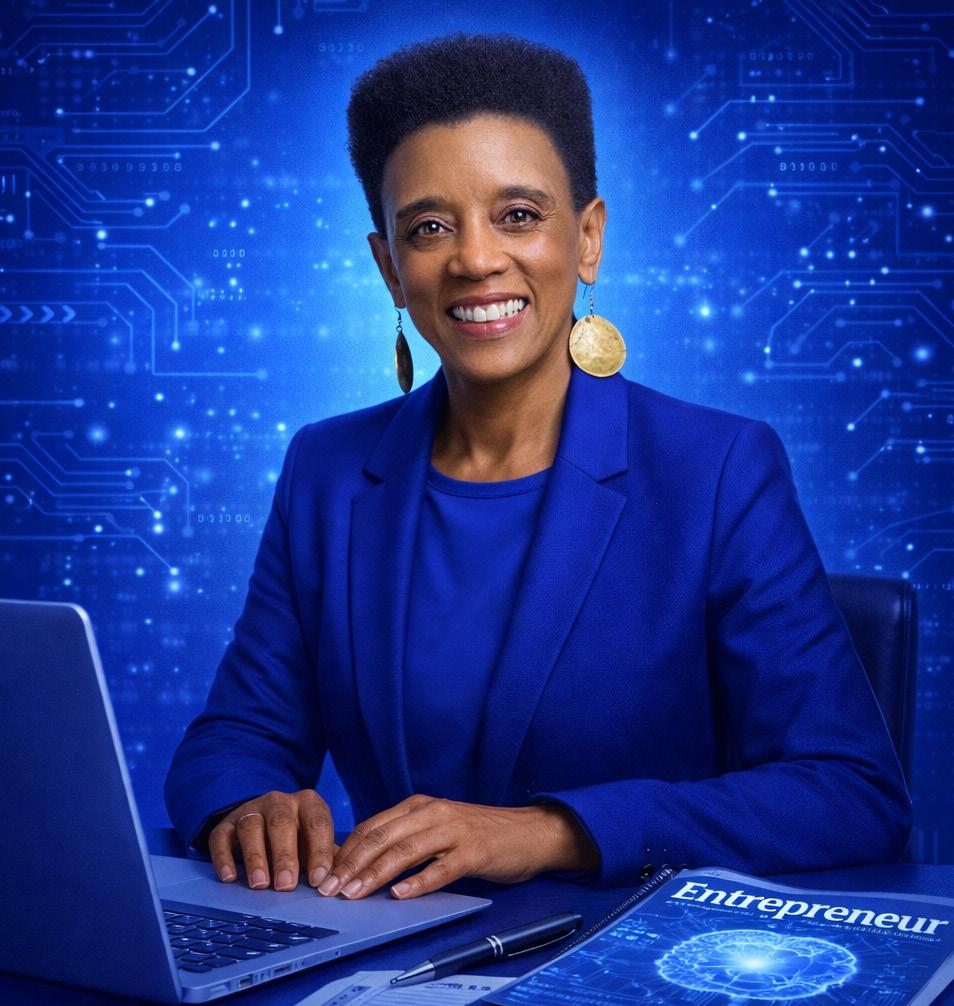
As we prepare for our annual Pride Awards luncheon on July 10 centered on generative AI and its impact on the future, I want to share my simple perspective with you.
From jump street, I’ve had my reservations about AI because it’s artificial. It’s an imitation of intelligence, not the real thing. This makes me nervous. Nonetheless, it is obviously here to stay. It’s everywhere and is used in business, healthcare, government, education, transportation and the list goes on. As a small business owner, I approach it as a tool. I don’t want it to think for me.
A closer look from my point of view.
Generative AI is definitely a gamechanger. It gives us access to information, strategies, and advice in seconds. It can write books, create blogs and more. It is a powerful instrument, creating images, words, music, and solve complex issues almost instantly. It’s like having an assistant without paying the salary. It definitely saves time and money — two of societies’ most treasured commodities.
Incorrect, unverified or false information. Deep fakes, frauds and the lack of proper ethics. No governing body to monitor what AI can or cannot do. My AI research
(if I can trust what I read) says big companies such as OpenAI, Google and Amazon have their own models which give them power and control. Yikes! What about the average citizen? What happens to our voice? Is our democracy at risk with generative AI? I think so.
Overdependence on AI for adults and especially students. Are we losing our critical thinking skills by letting a machine think for us? What’s going to happen to our creativity, our originality and our motivation?
Let’s not leave out the loss of jobs. According to Google, the so-called “godfather of AI,” Geoffrey Hinton, says, “unemployment will be massive with AI while increasing wealth inequality.” Of course, we all know that wealth inequality has always been a “thing.” Also, let’s not forget the real danger of increase in bias and discrimination from AI and the damage big data centers are starting to have on the environment.
Spiritually speaking, I’m staying closer than ever before to my Bible because God’s word is truth you can trust. “All things were made by Him (Jesus) and without Him was not anything made that was made.” Colossians1:16
Let me know your thoughts at info@pridemagazine.net


To learn more about the Pride Awards 2026 luncheon on July 10 and to reserve seating: Visit www.pridemagazineonline.com or call the office at 704-375-9553 for more information.




Proudly serving the communities we call home.

At Mills Auto Group, we combine the strength of multiple brands with a deeply personal approach to customer care. We believe in showing up, giving back, and creating experiences that feel welcoming, transparent, and built around you.

Because when you choose us, you’re not just visiting a dealership - you’re becoming part of something bigger.













By Alicia Michele Benjamin
Queens University of Charlotte alumna Mystique Ro, competed in the women’s skeleton and mixed team relay events at the Olympic Winter Games Milano Cortina 2026.
Ro, a 2016 Queens University graduate, finished 15th overall in the women’s skeleton and 7th in the mixed team event alongside partner Austin Florian.

With this participation in the 2026 Olympic Winter Games, Ro made history as the first Black athlete from Queens University to compete at the Games and the first Royal to compete in the Olympic Winter Games.
“Watching Mystique compete at the Olympics was a profoundly proud moment for the entire Queens community,” said Queens University President Jesse Cureton. “She remains an inspiration to us all, and her journey will undoubtedly motivate future generations of Royals to pursue their dreams with the same unwavering passion.”
In a February 2026 interview with The National Collegiate Athletic Association, Ro recalled her time with the Royals at Queens University in Charlotte.
“Queens took me in when I needed support,” she said. “They helped me develop my skills as a track and field student-athlete, and then from there, I was able to build the skills I would later need that I didn’t know at the time for skeleton — which are bouncing back through different things and just being pivotal.”
Erica Batts to Its Board of Directors
The Board of Directors of The Kaizen Foundation of North Carolina announced the appointment of Erica Batts to its Board of Directors in February. Batts currently serves as the Community Lending Manager at Peoples Bank in Newton, North Carolina, where she leads lending efforts and community engagement across low-tomoderate income (LMI) communities.
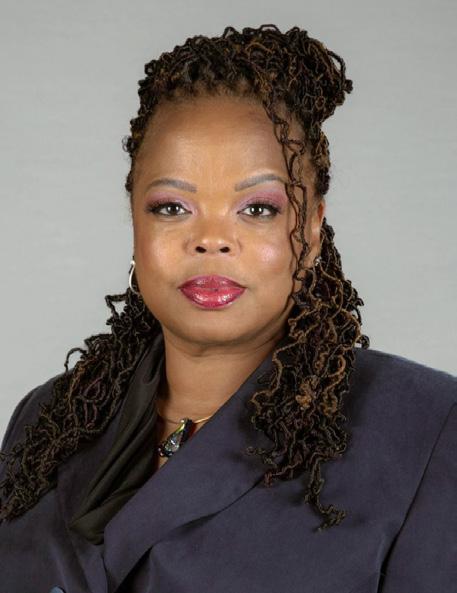
Throughout her career, Batts has demonstrated a commitment to community development through roles as a mortgage loan officer and a housing and debt consolidation specialist. She brings specialized expertise in CRA performance objectives, borrower education and community outreach.
Batts earned a Bachelor of Science degree in Business Administration and Marketing at North Carolina Agricultural and Technical State University.
“Queens took me in when I needed support. They helped me develop my skills as a track and field student-athlete, and then from there, I was able to build the skills I would later need that I didn’t know at the time for skeleton — which are bouncing back through different things and just being pivotal.”
—MYSTIQUE RO
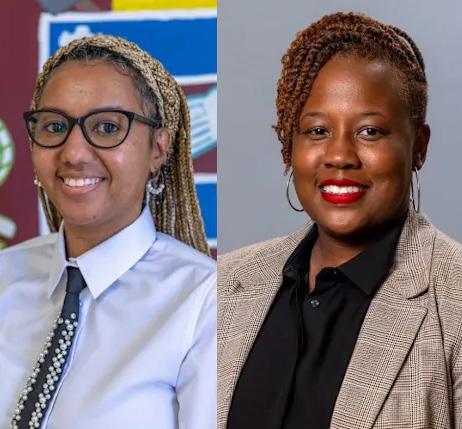
Two Charlotte-Mecklenburg Schools principals — Patrice McCauley of Wilson STEM Academy (left) and Tammillye Ward of Whitewater Middle — are among 34 educators selected for the 2026 National Aspiring District Leaders Fellowship by the Women of Color Education Collaborative, in partnership with the National Center for the Elimination of Educational Disparities at Morgan State University.
The cohort represents women leaders from districts across the country who are prepared to extend their impact beyond school buildings and into district-level systems. Each fellow brings a record of instructional leadership, community-centered practice and a demonstrated commitment to advancing educational equity at scale.
The fellowship supports high-performing principals and school leaders as they transition into central office roles through rigorous professional learning, executive coaching, applied district-based experiences and participation in a powerful national network.
ByFaith
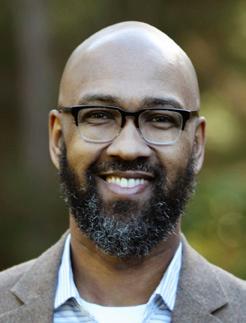
By Rev. Dr. Dwayne Bond
We live in a culture that admires the grind, but we are quickly shifting toward one stalled by fear of being replaced by artificial intelligence (AI). It is reshaping business and industry, reducing costs, making information retrieval quicker and more efficient. At the same time, it’s whispering fear into the hearts of human workers.
Our civilization is built upon human work and productivity. If AI replaces jobs, then how will working-class people be able to eat and take care of themselves at all levels of industry? Fear and concerns are quietly consuming the thoughts of many. Most are considering the financial possibilities, but there’s room to consider the spiritual as well. If I and my work can be replaced, what does this say about my view of myself, my value, my dignity and my worth?
Hustle culture has traditionally caused people to compete for worth. We try to be better than others or have more than our peers. But AI is creating competition that isn’t seen, touched, or personally experienced. It is causing all of us to ask, “What is my identity in?” Is it in my job and ability to secure a pathway to a future, or is it in something else?
An opportunity for all humans to seek where their identity rests can lead to reassurance. If our role can be replaced, how does this intersect with God’s plan for my life? Trust in God’s sovereignty can bring peace amid uncertainty.
Our true worth is rooted in our spiritual identity, not in our work or productivity. If you’re a Christian, you belong to God. He has taken you from spiritual death to life. He has forgiven your sins and adopted you into His family. You are not the Lord of your life; He is.
Can AI shift God’s plans for you? Can it cancel the career that God ordained for you? The obvious answer is no. However, God, in His kindness, can use AI advancements to expose gaps in what we truly believe about God. Will we trust God amid projections of job and business

replacements, or will we trust God’s plan and will for our lives?
As a Christian, your future isn’t in the hands of technology, but instead in the hands of God. Will AI replace some jobs, yes? Is AI catching God off guard? No. Will God use AI to shape humanity, including His followers, yes? Is AI as sovereign as God? Absolutely not!
I want to gently exhort you not to race to figure out how you can leverage AI for your future, but to learn to rest in God’s sovereign plan for your life. Christians are accepted in Jesus Christ.
They are secure in Jesus Christ and His finished work on the cross. We are useful, of value, and worth everything to Him. Personally, ask God to show you where you need to rest in Him.
Ask Him to help you see where your anxiety and striving are outpacing your faith in God. Turn your heart and attention towards God while working hard in your current job, not to maintain relevance but for His glory.
Renewed Perspective of Work
We need a renewed perspective. First, be faithful where you are; work for an audience of one (God), not to avoid being replaced. Colossians 3:23 says, “Whatever you do, work at it with all your heart, as working for the Lord, not for human masters.”
Work diligently, but not desperately. Secondly, pursue excellence on your job to show off God’s work in your heart and
life, but not for approval. God approves of you. Rest in His approval of you and work excellently out of that truth. Thirdly, be willing to adapt to change, without the fear of losing out on anything. What God has for you is for you. Nothing can change what God has pre-ordained for you. Be flexible and open to learning and using new skills. AI may change and/or enhance what you do, but it can’t change who you are. You belong to God.
Technology isn’t sovereign; God is. Rest in His control for your future, allowing this season to deepen your relationship with Him. AI may produce swift results, but it cannot replace God’s sovereignty. Trust in God’s plan can bring confidence and calm.
In a world that is shifting and changing by the minute, remember that the Christ follower rests on something unshakeable:
• Christ died the death we deserved to die.
• Christ took upon Himself our sin and gave us His righteousness.
• Christ rose to secure a future no economy could ever touch.
• Christ is coming back for those who belong to Him.
So, you can rest, not because you have a secure job that AI can’t replace, but because Jesus Christ is the Sovereign Savior of the world and reigns and rules over all of Creation. May this encourage you and grow your faith in Him. P
The Rev. Dwayne Bond is the lead pastor of Wellspring Church.
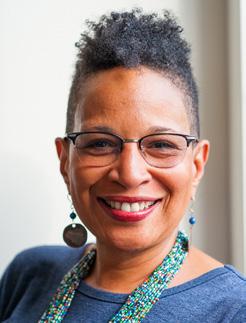
By Angela M. Haigler
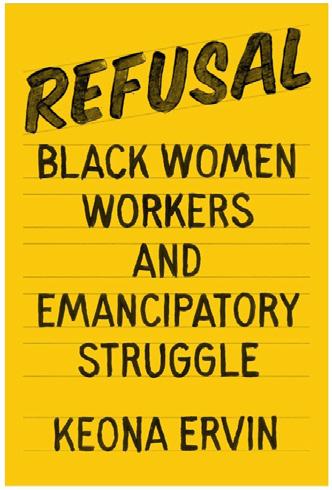
“Refusal:
by Keona Ervin
This effort by Keona Ervin spotlights Black women workers in the way they’ve always deserved— up front and fully seen. They are featured in the big moments, the quiet moments and through their everyday decisions to push back, speak up, and refuse to comply. It stretches what we think of as “work” and shows how resistance shows up everywhere. Readers will walk away realizing Black women haven’t just been part of the fight—they’ve been shaping it all along. It’s the history lesson we’ve missed and the truth we’ve always known.
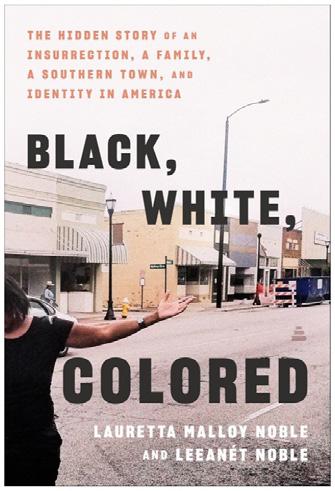
“Black, White, Colored: The Hidden Story of an Insurrection, a Family, a Southern Town and Identity in America”
by Lauretta Malloy Noble and LeeAnet Noble
This book uncovers a buried chapter of Black history in Laurinburg, North Carolina. It traces how a thriving Black community built power, stability, and legacy after Reconstruction. Then, in 1898, white supremacist violence shattered that progress in a calculated insurrection. Through family lineage and deep research, the authors piece together both loss and resilience. What emerges is a story that refuses to stay hidden—and demands its place in American memory.

“My
by Randal Maurice Jelks
This portrait of Langston Hughes brings him off the pedestal and back into the real world. We see a man shaped by movement, curiosity, and a deep love for Black life across cities and continents. His work reminds us that art has always been a form of resistance—and a choice. What stands out is how he held onto joy while still telling hard political truths. It leaves you thinking: what does it look like to practice both justice and joy right now?
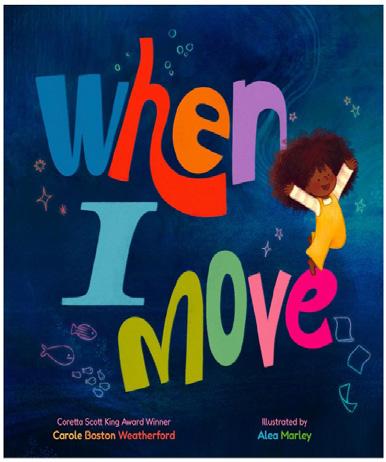
“When I Move”
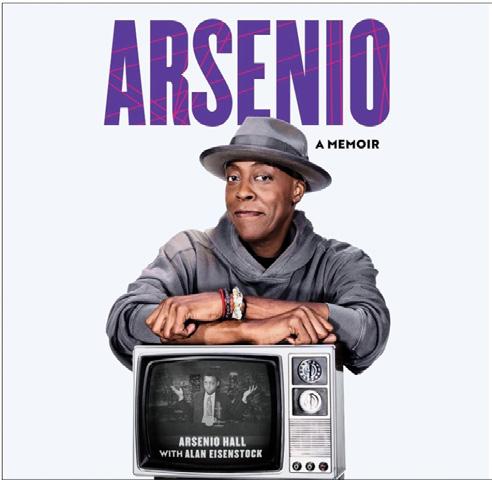
Hall
This memoir lets Arsenio Hall tell his story in his own voice—bold, funny, and unfiltered. From Cleveland beginnings to Hollywood nights, you see the grind behind the glow. What stands out is how he moved through rooms with legends while still carving his own lane. He reminds us that The Arsenio Hall Show was more than entertainment; it was a cultural shift. When he pulls back the curtain, you feel the cost, the choice, and the power of knowing when to walk away.
by Carole Bosten Weatherford, Illustrated by Alea Marley (Children’s Choice)
Carole Boston Weatherford gives us a story that celebrates movement as pure freedom. Through rhythm and repetition, a young Black girl turns play into imagination and possibility. Every jump, swim, and spin becomes something bigger than the moment. The illustrations by Alea Marley bring warmth, texture, and life to every page. It’s the kind of book that invites children to move—and reminds us joy lives in the body. P
By Dawn Hilton-Williams
Walk into any convenience store from Beatties Ford Road to Central Avenue and the priorities tell the story before a single label is read. Colorfully labeled sweet teas, sodas, sports drinks and energy drinks stretch across refrigerated shelves as far as the eye can see, all competing for attention in a sea of carefully crafted marketing and claims.
Drinks engineered for sweetness or stimulation dominate shelf space, while water rests among them, outfitted with its own labels and promises inside a multibillion-dollar beverage industry. In Mecklenburg County, where thousands of households navigate food insecurity every year, those same shelf patterns intersect directly with access, affordability and health equity.
When the body signals thirst, it’s asking for water to regulate temperature, move nutrients, remove waste and support every cell around the clock. The simplest source, aside from high water-content fruits and vegetables, is water.
Yet nearly half of American adults are underhydrated, with 45% drinking fewer than four cups of water a day, 7% drinking none and average intake hovering around 44 ounces a day, while most health guidance places daily hydration needs closer to 64 ounces or more depending on body size, activity level and climate. This reflects chronic underhydration, a quiet, everyday deficiency that most either don’t recognize or attribute to headaches, brain fog or fatigue.
National health and nutrition research shows persistent racial disparities in tap water consumption, with increased tap water avoidance and greater reliance on bottled water in many communities following water crises such as Flint, Michigan.
For many families, the decision to reach for bottled water over tap reflects questions about safety, infrastructure and whether systems meant to protect public health do so equally.

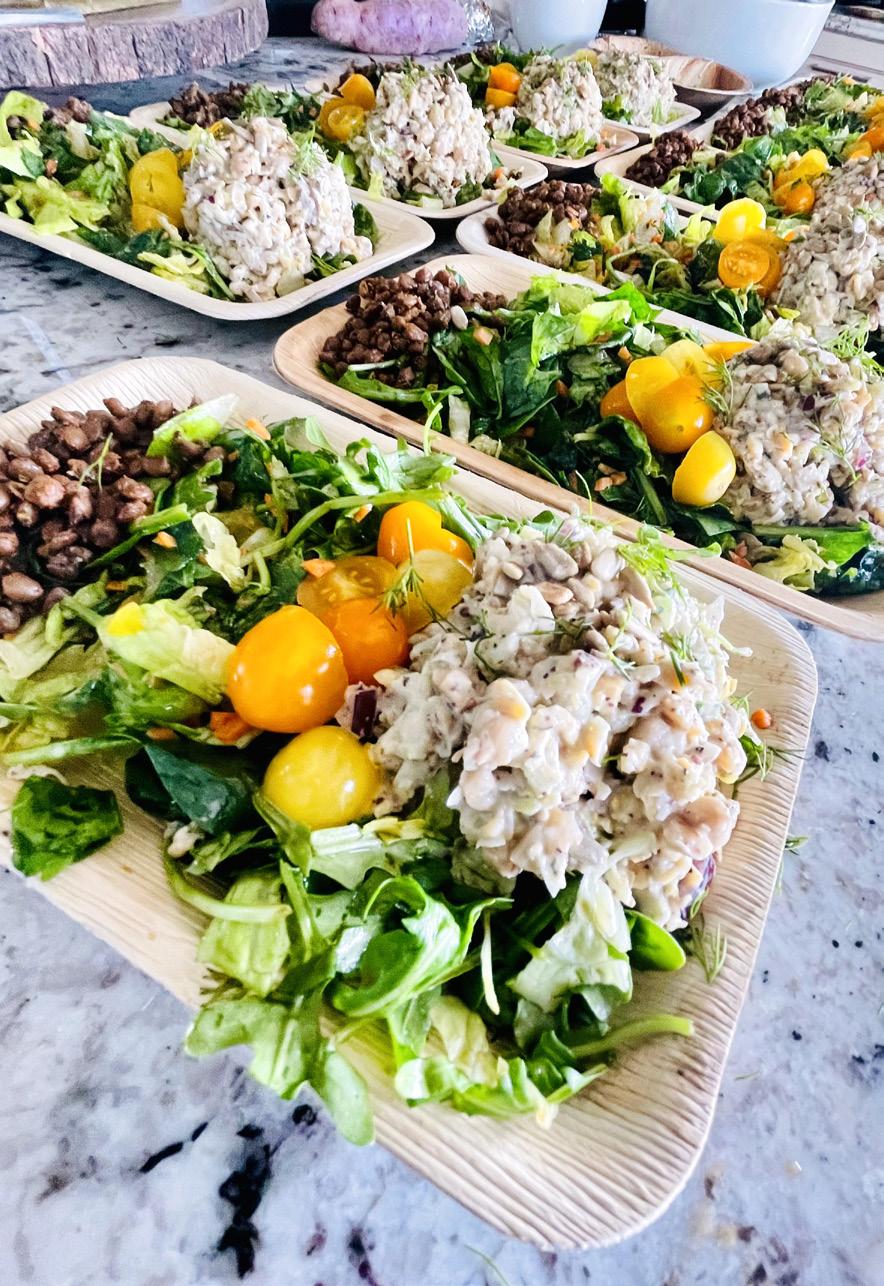
Scan the QR code to view the recipe for Chickpea Not So Tuna Salad by chef Dawn Hilton-Williams.
Alkaline water is marketed with the suggestion that drinking a higher pH water can rebalance the body’s chemistry, but human physiology tells a different story. Blood stays tightly regulated within a narrow range of about 7.35 to 7.45, with the lungs and kidneys constantly adjusting gases and acids to keep that balance in place. The stomach remains highly acidic to do its job, so the body isn’t waiting on support from a product to balance it.
So, whether a label lists a pH of 9.0 or 3.5, the body brings fluids back into the balance it needs, which is why alkaline water doesn’t alkalize or hydrate any differently than regular drinking water. It just costs more.
Alkaline water isn’t the only product promising better hydration. Infused waters, detox waters and premium labels all push the idea that one option hydrates better than another, when the real gap isn’t the type of water, it’s that too many aren’t drinking enough of it.
Long before companies turned hydration into big business, it was already woven into our food traditions. Across Southern kitchens it appeared in melon slices and blackberries on hot afternoons, in cucumbers and tomatoes harvested from backyard gardens and in greens simmered low and slow, each carrying water, fiber, potassium and protective plant compounds that support optimal wellness.
1 Begin and End with Water. Let the first and last thing you drink each day be water. Before caffeine or sugar enters the routine, give the body what it’s asking for.
2
Don’t Confuse Stimulation with Hydration. Sports drinks, sweet teas, sodas and energy drinks are designed to drive consumption, not restore what the body actually needs.
3
Hydrate with Plants. Watermelon, cucumbers, citrus, tomatoes and leafy greens carry water along with fiber, potassium and protective plant nutrients that support circulation and digestion.
At $5.3 trillion a year in U.S. healthcare spending, this isn’t a small lifestyle conversation. Sugary drinks are linked to weight gain, obesity, type 2 diabetes, heart disease and fatty liver disease, while obesity itself is associated with 13 cancers and type 2 diabetes increases dementia risk.
When environments normalize sugarsweetened beverages, heavy caffeine and ultra-processed zero sugar alternatives as everyday hydration, the consequences show up in clinics, hospitals and in the financial strain carried by families already navigating inequity.
Thirst remains one of the clearest signals the body sends and it’s up to us whether we answer it with what the body needs or what the marketplace keeps trying to sell. P
By Angela Lindsay
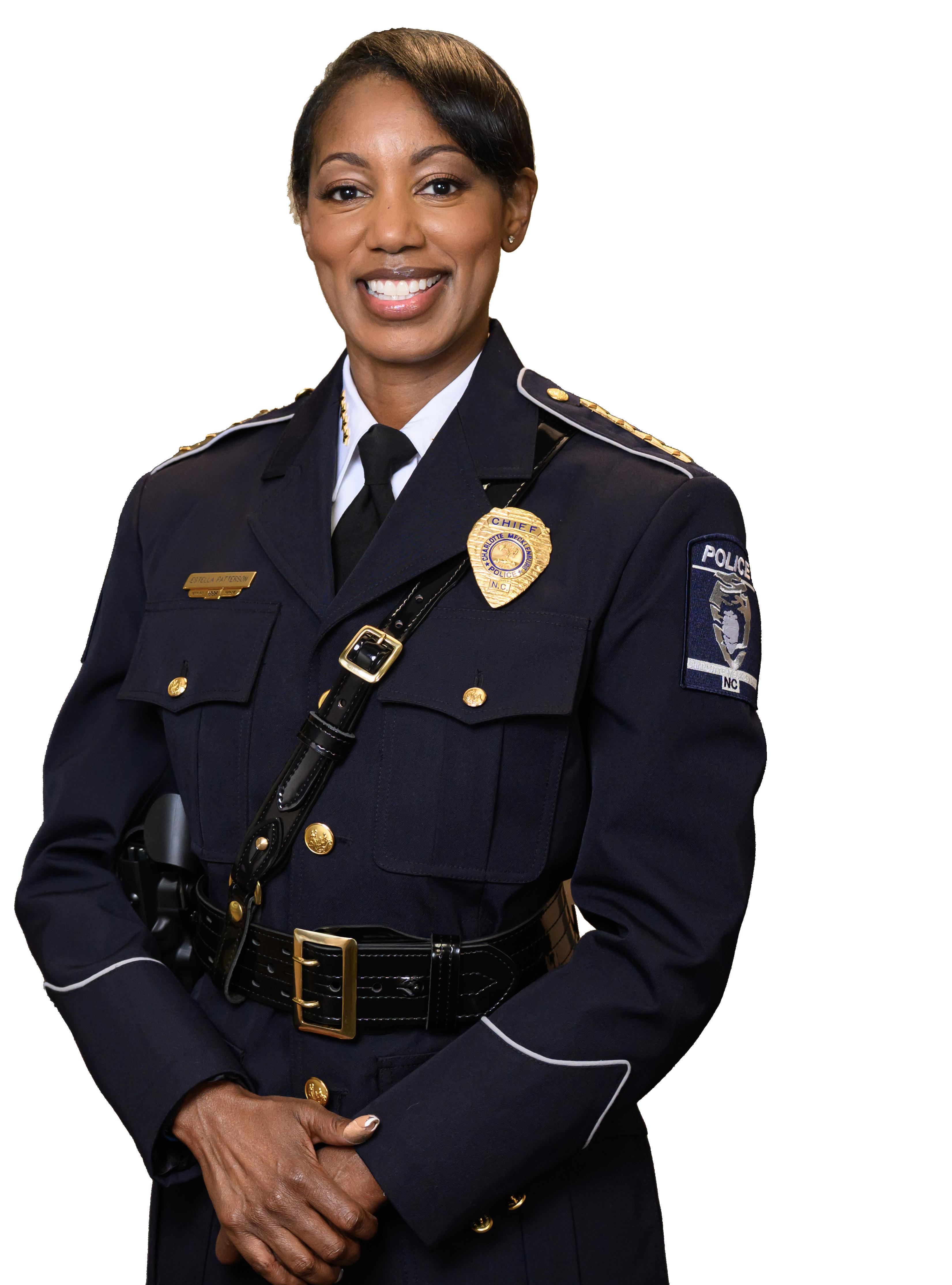
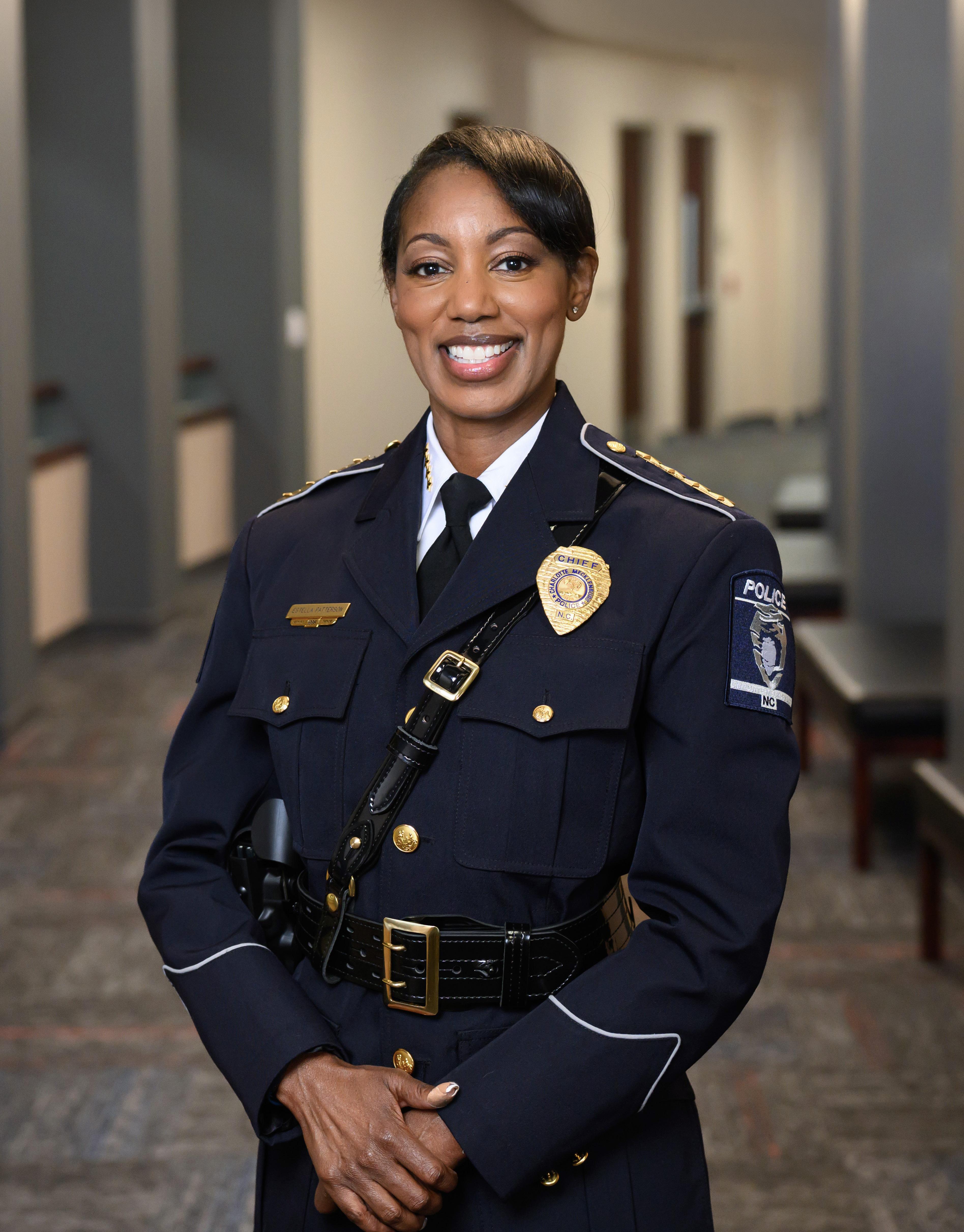
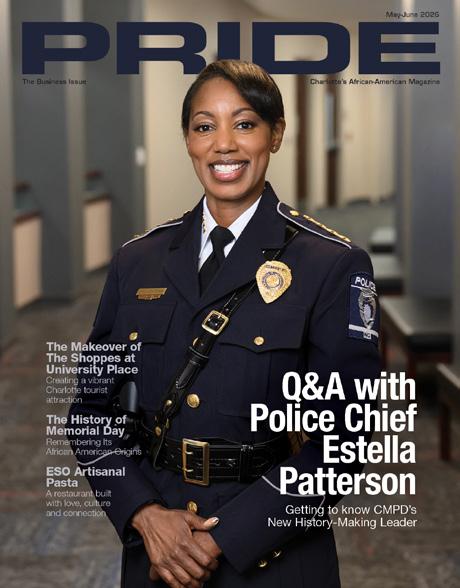
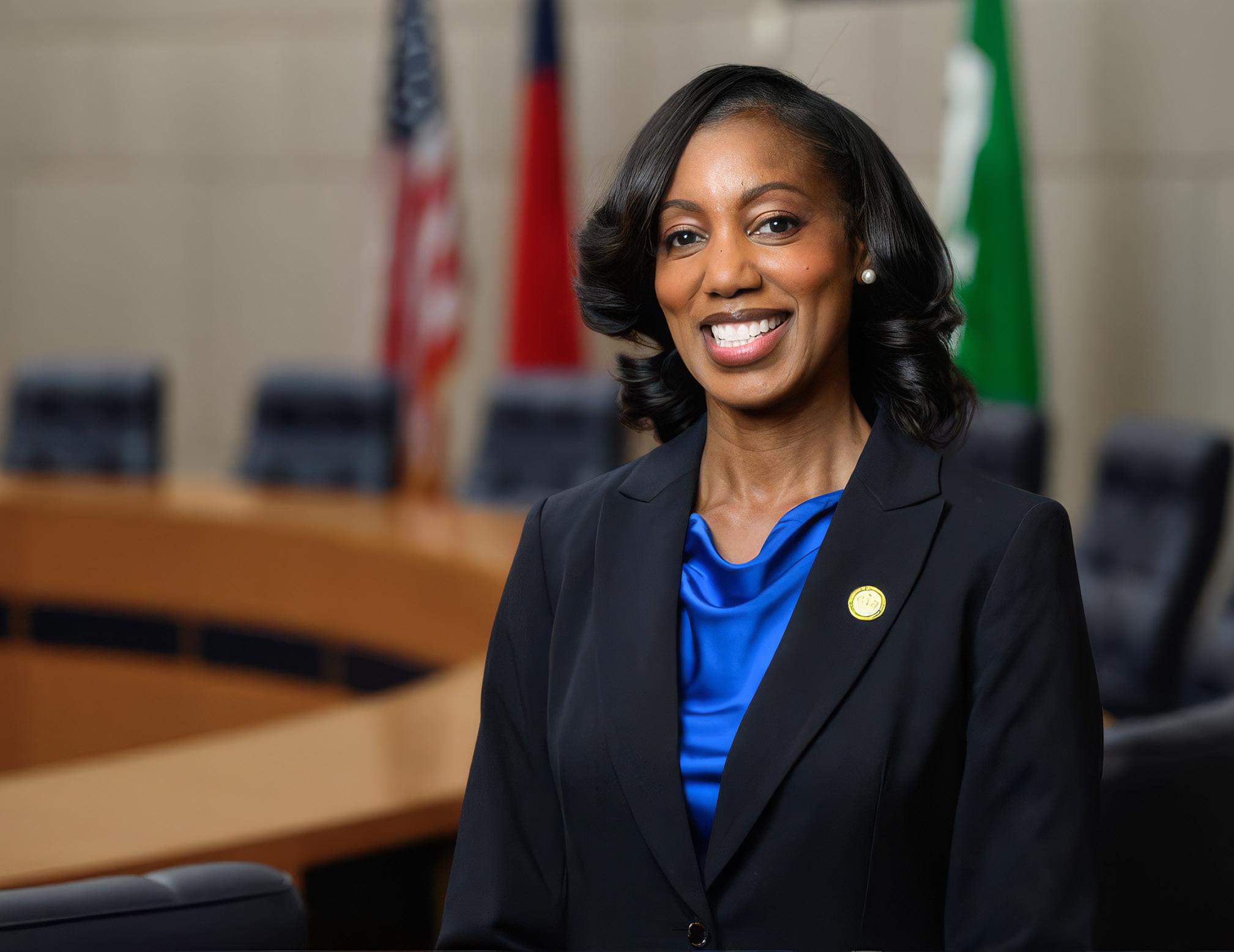
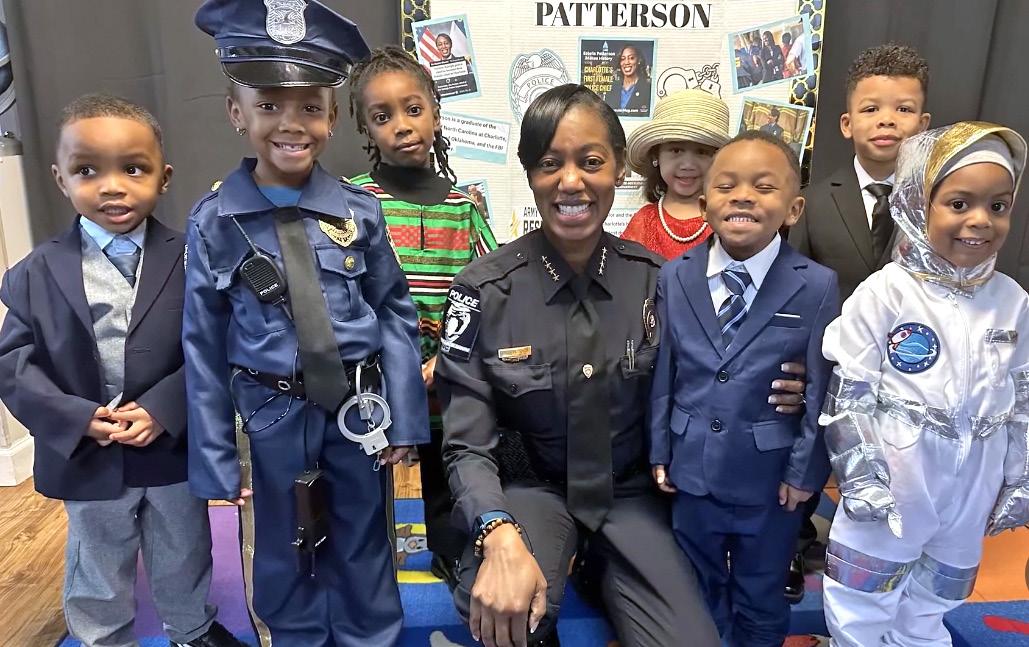
Estella D. Patterson officially assumed the role of chief of police with the Charlotte Mecklenburg Police Department (CMPD) in December 2025, making her the first woman in Charlotte’s history to hold the position. Patterson, who was born in Colon, Panama, where her military father was stationed, earned a bachelor’s degree in political science from the University of North Carolina at Charlotte and master’s degree in criminal justice from the University of Oklahoma. After working with CMPD for over two decades, she was appointed chief of the Raleigh Police Department where she served from August 2021 to March 2025.
In her current role as CMPD chief, Patterson has come full circle. She’s the leader of one of the largest local police departments in the U.S., which serves
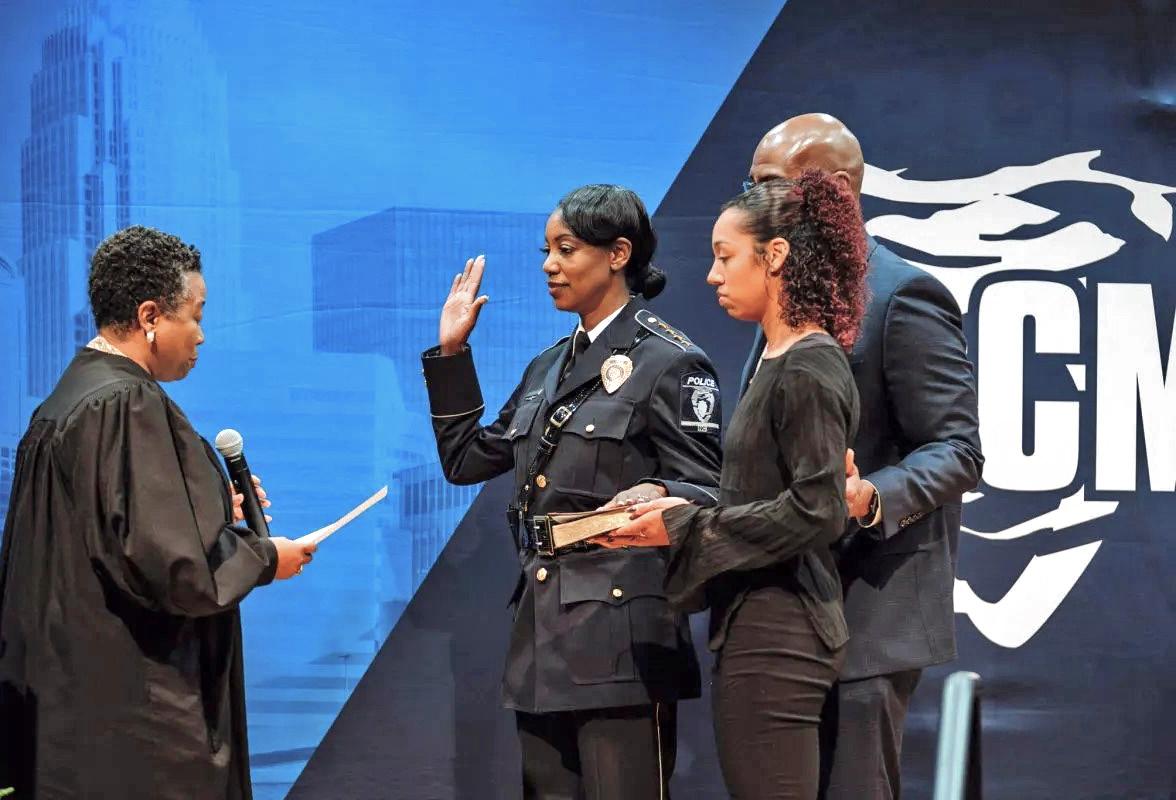
approximately 1 million residents. In her swearing-in ceremony in December 2025, the new chief said she is “committed to lead with excellence, integrity and transparency while upholding the nobility of this profession.”
When did you first know you were interested in a career in law enforcement? Do you come from a family background in law enforcement?
My interest in law enforcement wasn’t something passed down through family tradition – it was something I discovered on my own through education and a growing desire to serve and make a meaningful impact.
What was the journey to your current position like? In what ways has your background and experiences both
personally and professionally prepared you for this role?
My path to this role has been shaped by service, continuous learning and a wide range of experiences in policing and public safety. I spent 25 years in roles that gave me a deep understanding of this profession — from patrol and academy instruction to recruiting, Internal Affairs, and ultimately deputy chief. First, overseeing the Administrative Services Bureau and then the Patrol Services Bureau.
During that time, I also served in the U.S. Army Reserve, completing combat tours in Kosovo and Iraq and earning the rank of captain. Those years taught me resilience, accountability, and the importance of leading with purpose. I continued to build on that foundation through my education, earning degrees in political science and criminal justice and
graduating from the FBI National Academy in Quantico, Virginia.
My tenure as chief in Raleigh further strengthened my leadership experience. I focused on innovation, community trust, and crime reduction — launching new initiatives, improving recruitment and staffing, and helping the city achieve a 100 percent homicide clearance rate in 2024. I’ve also had the privilege of serving in state and national law enforcement leadership roles that allowed me to help shape training and standards across the profession.
as chief is deeply personal. I was drawn to this position because I believe in this department, I believe in this community, and I’m committed to giving back to the place that gave me my start.
What does it mean to you to return to Charlotte to begin this next chapter of your career?
Returning to Charlotte truly feels like coming home. This city and this department shaped the foundation of my career, and it means a great deal to step back into a place
What are some immediate goals you wish to accomplish?
My immediate focus is on strengthening the core areas that keep Charlotte safe. That means continuing to reduce violent crime and disorder, deepening our engagement with the community, and investing in the wellness and morale of our officers. When our people are supported, they can better support this city.
We made real progress in 2025, and in 2026 we’ll build on that by expanding datadriven strategies, enhancing partnerships with our law enforcement allies, and leveraging technology that helps us respond faster and smarter. At the heart of it all is a simple commitment: every neighborhood in Charlotte deserves to feel safe, and public safety is something we build together.
Every step — whether in a patrol car, a combat zone or a command staff meeting — has prepared me for this moment. These experiences have given me a broad perspective, a steady leadership style, and a deep commitment to public safety that I bring with me as I return to lead CMPD.
What was it in particular that interested you in this position as Charlotte Mecklenburg Police Chief? For me, it was an opportunity to give back to a community that supported me in the years I served. CMPD is where I began my career nearly three decades ago, and it’s the department that shaped me as an officer and as a leader. The people here are family, and the chance to return and serve

that has always been part of who I am. What excites me most is the opportunity to help ensure Charlotte continues to be one of the safest and most forward-moving cities in the nation as it grows. Being able to contribute to that progress, in the community where I started, makes this next chapter especially meaningful.
“My vision is for CMPD to be a department that leads with trust, transparency and innovation —one that keeps Charlotte safe while strengthening the bond between officers and the community we serve.”
—ESTELLA D. PATTERSON
In your opinion, what are some of the more pressing issues facing the Charlotte community right now and how will you and your team endeavor to solve them?
Charlotte is a growing, dynamic city, and with that growth come real challenges—particularly around violent crime, community trust and ensuring our officers have the support they need to do their jobs well. One of the most pressing issues is reducing violent crime and the perception of crime in a way that is both effective and sustainable. We’ve made progress, but we know there is more work ahead. My team will continue expanding datadriven strategies, strengthening partnerships with local, state and
federal agencies, as well as investing in technology that helps us respond faster and smarter.
Another critical priority is deepening our engagement with the community. Public safety is built through collaboration, not in isolation. We will continue working closely with residents, businesses and community organizations, to ensure every neighborhood feels safe and supported.
Finally, supporting the wellness and morale of our officers is essential. When our people are healthy, motivated and equipped with the right tools and training, they are better able to serve Charlotte. That commitment to our workforce directly translates into better services for our community.
Together, these efforts reflect a simple but powerful vision: every neighborhood deserves safety, every resident deserves trust and every officer deserves support.
Undoubtedly, working in law enforcement comes with its own set of challenges, but what have been the most difficult or unique ones that you’ve personally encountered?
Law enforcement is an incredibly rewarding profession, but it does come with challenges that shape you both personally and professionally. One of the most difficult has been leading a department through periods of intense public scrutiny. In those moments, it’s essential to support our officers while also
ensuring our community feels heard and respected. Striking that balance requires transparency, steady communication and an unwavering commitment to doing what is right for everyone involved.
Recruitment is another significant challenge facing agencies across the country, and it remains one of my top priorities. It was a major issue during my time as chief in Raleigh, and through focused, sustained effort, we were able to dramatically reduce vacancies. I’m committed to bringing that same level of determination to Charlotte.
Attracting individuals who are dedicated to service and who reflect the diversity of our community is critical to our success. That means modernizing our recruitment strategies, expanding outreach and creating pathways that show young people that they have a future in this profession. For me, it’s not simply about filling positions; it’s about building a department that is strong, inclusive and prepared to meet the needs of this community for years to come.
What or who has been your inspiration along your journey?
Did you have the guidance of any mentors?
There are many people who have inspired and motivated me from my mother, who has always been a best friend to me. My first pastor, the late Bishop Edward C. Roberts was another great mentor of
mine. Retired Deputy Chief Nina Wright, the late Assistant Chief Vicki Foster, Chief Rodney Monroe and Chief Putney were also influential to me.
When you’re not working, what are some of your interests/hobbies?
I enjoy going for jogs to clear my mind and taking my beagle for long walks. My husband and I enjoy traveling. I’m also a big football fan and have enjoyed attending several Super Bowls.
Ultimately, what’s your vision for the city’s police department and the community as a whole?
My vision is for CMPD to be a department that leads with trust, transparency and innovation —one that keeps Charlotte safe while strengthening the bond between officers and the community we serve. I want every neighborhood to feel the impact of effective, datadriven policing, and every resident to feel heard and valued. At the same time, I’m committed to supporting the men and women of CMPD, so they have the tools, training, and wellness resources they need to do their jobs well.
Ultimately, I see a city where public safety is a shared effort and where Charlotte continues to grow as one of the safest, if not the safest city in the nation.
Do you have advice for anyone, young black women in particular, who wish to follow in your footsteps?
My advice to anyone who aspires to serve in law enforcement or step into leadership is to believe in your own potential, even in moments when others may not recognize it yet. This profession demands integrity, resilience and the courage to keep showing up, particularly on the hard days.
Seek mentors who will challenge you, support you and help you grow. Surround yourself with people who see your strengths and push you to develop them. And above all, stay true to who you are. When you carry yourself with confidence, work with purpose and remain focused on service, there is no limit to what you can accomplish.
And when you reach the place, you’ve worked so hard to be, make sure you hold the door open for the next generation of young women coming behind you. Your success should create pathways for others.
Lastly, and most importantly, stand on your faith and trust that God has a plan for your life. Be prayerful and trust him to guide your path. The outcomes will leave you in awe. P
OUR RESIDENCES
Windsor Run® in Southeast Charlotte offers maintenance-free floor plans to fit your style and budget.
• Enjoy contemporary fixtures and finishes.
• Choose from a range of custom upgrades.
• Retire from the hassle of house repairs.
Call 1-800-983-7609 for your free brochure.


By Angel Brown
At ESO Artisanal Pasta restaurant in Optimist Hall, the pasta may be what brings people in, but it is the story behind the brand that makes it memorable.
For owners AJ Sankofa and Kristina Gambarian, food has never been just food. It has been culture, craft, connection, and
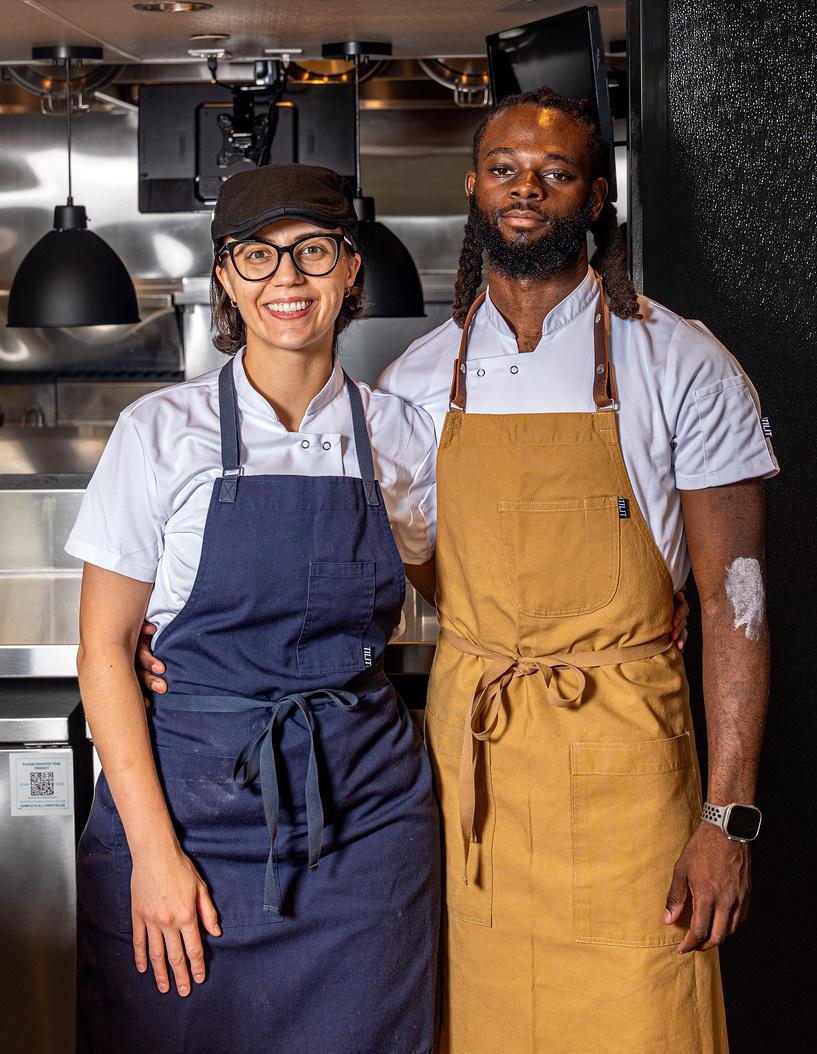

eventually a business built from love, timing and a lot of grit.
Gambarian’s connection to food started long before Charlotte. Raised in Ukraine, she grew up in a family deeply rooted in the culinary world. Her mother owned a frozen dumpling and pierogi factory, while her father ran a bakery production business and later opened a Georgian restaurant. Food was central to family life, celebration and everyday routine.
“I always knew food was a big part of my life,” she said.
Sankofa’s path looked different. A Charlotte native, he got his start in the restaurant industry during his senior year
of high school, initially drawn in by the money his friends said they were making. But on his first day, something clicked. He fell in love with the pace, teamwork and intensity of restaurant life.
He started in the front of the house, working through multiple roles before eventually finding himself pulled toward the kitchen — especially the pasta station.
That passion led him to Italy, where he trained and immersed himself in authentic Italian cooking. The experience reshaped how he viewed food.
“Italian food in America is not real Italian food,” Sankofa said. “I really learned the fundamentals.”
The couple eventually met while working in the same New York restaurant, where both were assigned to the demanding pasta station. Gambarian remembers Sankofa as focused and reserved, while she was naturally more social and warm. Their relationship grew through shared
shifts, subway rides home after work, and one memorable night when Sankofa missed his train and ended up staying at Gambarian’s apartment, she said. They spent the night talking until morning. Two days later, he asked her on a hiking date. Since then, they have been together in life and in business.
The name “ESO” itself is rooted in restaurant culture. Sankofa described it as a celebratory term he picked up early in his career from Hispanic coworkers. Whenever something went well — a dish, a service, a shift — someone would say “eso,” a way of celebrating the moment.

ESO was born during the uncertainty of the pandemic, though not with some elaborate business plan. According to Sankofa, it started out of boredom and a desire to keep their skills sharp while the world slowed down. Gambarian began baking pies and cakes, and the response online came quickly. Soon, they began exploring what it would look like to launch a pasta concept of their own. From there, one opportunity seemed to lead to another.
Just before launching as a delivery concept, a former pastry chef offered them unused dining room space during covid, creating an unexpected storefront opportunity. Later, another chance moment helped lead them to Charlotte’s Optimist Hall. While visiting the city, Sankofa struck up a conversation with a food hall operator who connected them to the landlords. The numbers made sense, the opportunity aligned, and ESO found its Charlotte home.
The name “ESO” itself is rooted in restaurant culture. Sankofa described it as a celebratory term he picked up early in his career from Hispanic coworkers. Whenever something went well — a dish, a service, a shift — someone would say “eso,” a way of celebrating the moment.
The word stuck. Catchy, meaningful, and personal, it eventually became the perfect name for the brand they were building.
What makes ESO stand out is not only the quality of the food but the authenticity behind it. Sankofa is passionate about introducing people to artisanal pasta made with intention, technique and carefully sourced ingredients. Gambarian said customers are also drawn to the honesty behind their story.
“Our brand is based on story,” she said. “People see the grind.”And the grind is real. The couple now manages a fast-growing operation with 27 employees and round-the-clock production demands. They speak openly about the challenges of entrepreneurship, from staffing and long hours to learning how to protect their marriage while building a business together. Still, they remain committed to the vision. Gambarian said he wants people to realize there is another level to pasta P

By Charles K. Harris
One of the most critical objectives of memorizing a team playbook is to ensure that both individual players and the team can implement an alternative play straight away, effortlessly, cohesively and seamlessly. NFL cornerback Troy Pride Jr. has learned that having an alternate play when life pulls an audible is equally critical.
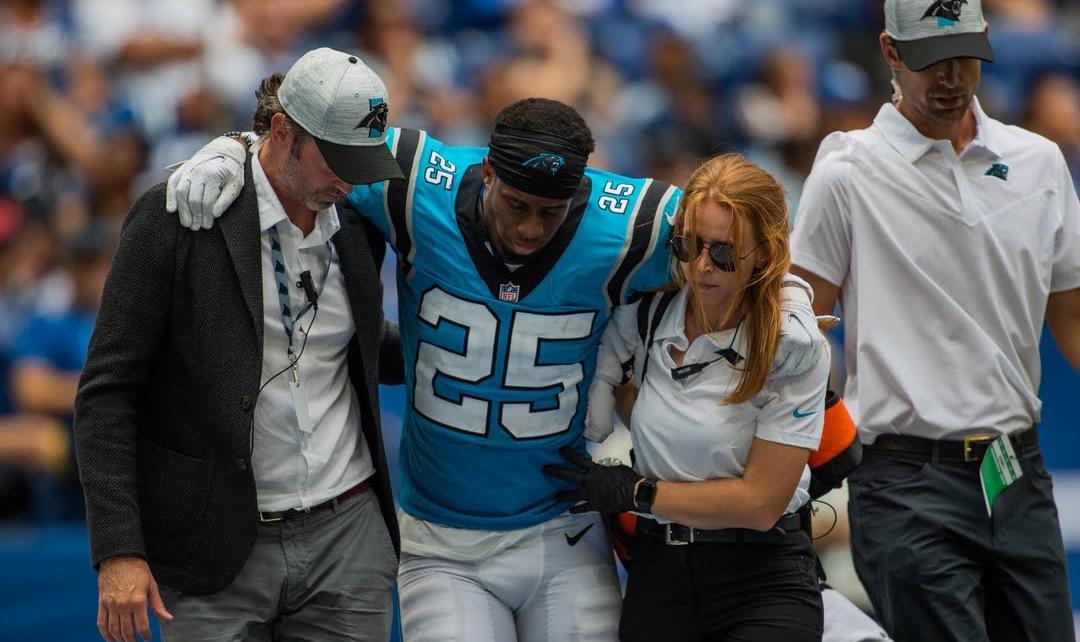
“I was staring the death of my career in the face,” Pride, 28, explained, referring to the moment in 2021 during the Carolina Panthers preseason when he heard his ACL pop and suffered a knee injury. “I didn’t have a safety net. I could only ever see being able to play.”
While Pride’s career wasn’t dead, it was delayed and he would spend the next two years in rehab, determined to make a complete recovery. However, recovering from the unsympathetic reaction Pride received from his Panther teammates and coaches took a little longer.
“I was without [the] people who I had thought were my friends,” he said. “No calls, no texts, no ‘How’s it going?’ from the coaches. You would think they had a vested interest in me getting better.”
Still by 2023, Pride had recovered well, therefore he was optimistic when he was called to the general manager’s office. The meeting was very brief. They told Pride he was being cut. “I was just a piece of paper, an injured piece of paper. A number, a name, a dollar sign,” Pride said.
A large component of his shock was because the NFL atmosphere sharply contrasted with his years at Notre Dame where he developed close and enduring friendships with his teammates.
Pride said he continues to maintain tight connections with his former Notre Dame teammates such as Julian Love, Alohi Gilman, Khalid Kareem and Kyle Hamilton — all who have moved on to the NFL.
Although unceremoniously cut from the Panthers, Pride was still eligible to be signed to other teams, which happened in very quick succession. In fact, between 2023 and 2025, Pride was signed to and released from five other teams, often as a member of the practice squad. He’s now a free agent.
“I’m a good player,” he said. “It’s frustrating and heartbreaking to be looked at as an extra, or a backup.” But Pride has no time for wallowing. “There is always something to gain from adversity.”
In this instance, Pride has channeled his adversity into creating a new career path — one that’s not on the football field. “The key is to pivot,” he said. “If something isn’t working and you want it to be successful, you change. If something isn’t good and you want it to be great, you change. Figure out a way to get there.”
However, Pride cautions against making impulsive changes.

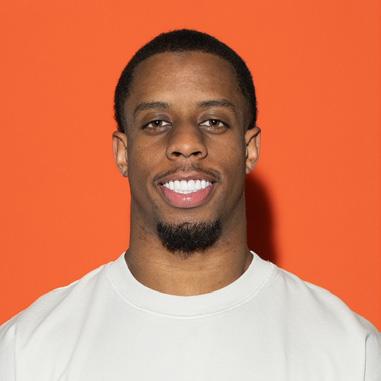
“Charlotte is such a special city,” he said. “I felt at home the moment I was drafted here and it’s shown me that same love since.”
right scenario,” he said. “I want to be out on the field.”
Despite discouraging experiences he still relishes the chance to play again. “I love the game,” said Pride. “It’s an amazing time and space where nothing else matters, it’s so freeing.”
Although he has played in five major U.S. cities and travelled extensively, the Greer, South Carolina, native said he has chosen the Queen City as his forever home.
“With these pivots [you need] intention, research and cultivated ideas,” he said. “If you can become comfortable with delayed gratification, it opens up so many possibilities.”
With deliberate research and calculated strategy, Pride began looking into the real estate industry. He said his casual interest soon blossomed into a new passion.
“First I thought ‘I can do this’ and now ‘I want to do this,” Pride said. He’s currently involved in his first house flip and is discussing maybe creating a new development, he added.
“I’m investing in funds that are helping to guide my understanding while [also] being an active participant,” he said. “I want to be onsite, taking in tangible information. I want to understand what each person is being paid to do.”
But make no mistake, Pride’s new interest is not solely about lining his pockets. “Land acquisition is a powerful thing and I would not look to abuse that by just trying to make a quick buck,” he said.

“Anything I do I want to be the absolute best. So my intention is to procure deals that make sense,” he explained. “Then build homes meant to last and hopefully make my community better in the process.”
Pride, who began 2026 as a free agent, continues to train vigorously in the hopes of being signed to another team, which he aims to do on his own terms. “It has to be the
“Charlotte is such a special city,” he said. “I felt at home the moment I was drafted here and it’s shown me that same love since.”
Pride said he plans to do most of his investing and acquisition in the area, investing in the community where he hopes to raise a family. “Now (Interstate) 77 traffic can be better,” he said. “But other than that, it’s the best place for me.” P
By John Burton Jr.
Across the South, unofficial parents — teachers, mentors and chosen family — are doing what Black communities have always done: raising children with a love that blood alone never guaranteed.
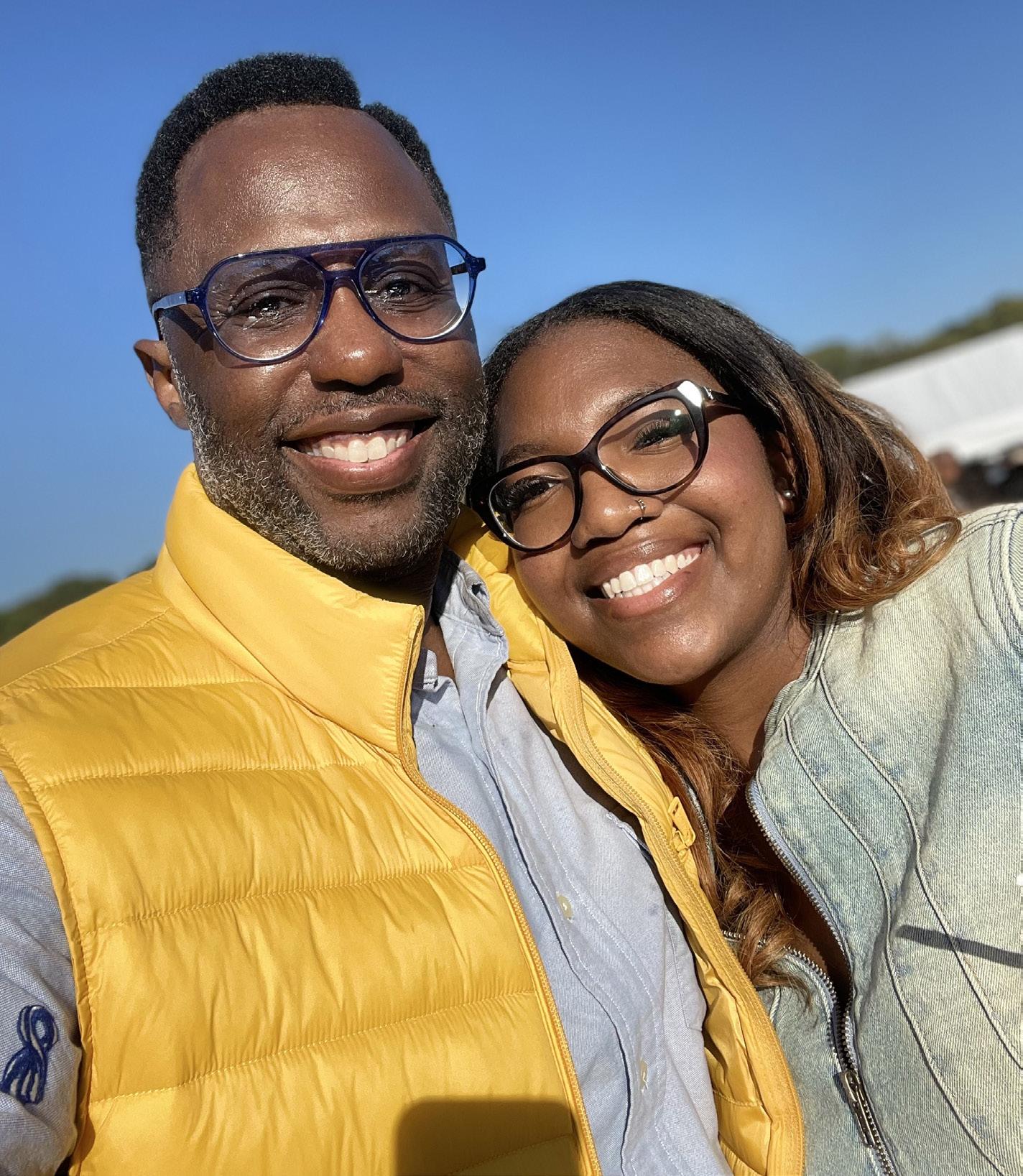
The ballroom smelled like patchouli oil and good nerves. Fathers shuffled across the shiny floor learning footwork they were uncomfortable with. But one pair moved like they’d been practicing their whole lives — not the steps, but each other.
The jokes landed. The laughter was real. Nobody in that room thought to
ask whether the man guiding that young woman across the floor shared her last name. What they shared couldn’t be found in any document. It could only be felt. He wasn’t her father by birth. He was something our language hasn’t always had the right word for. But in the Black community — especially across the South — we’ve always known exactly what to call him. He was “her people.”
We didn’t need a proverb to tell us it takes a village. We lived it. Grandmothers who raised grandchildren without a
second thought. Church mothers who knew every child’s name and business. Aunties, blood or not, who kept a spare key and an open plate on Sundays. This is not new. What’s new is that the rest of the world is finally paying attention.
Tomeka Barbour, currently a high school assistant principal, was formerly a math teacher who didn’t set out to become a mother to one of her students. Jade Moody walked into Barbour’s honors pre-calculus class when she was 16. By senior year, “Ms. B” had quietly become “Ma.” Barbour didn’t engineer it. “She just started doing it on her own,” Barbour said. The transition felt as natural as Sunday dinner, unhurried, unforced and deeply familiar.
Barbour traces her capacity to step in directly to the women who stepped in for her. Her Aunt Pat, her mama, she insists, and a grandmother whose temperament she inherited: straight, no chaser.
“These women showed me how to love beyond material things,” she said. That inheritance is exactly how the village sustains itself — not through policy, but through example. “Blood makes you related. Love makes you family.”
Dr. Lorenzo Johnson Jr. drove to a McDonald’s in a neighboring North Carolina county and sat in a corner booth watching two little Black boys, ages
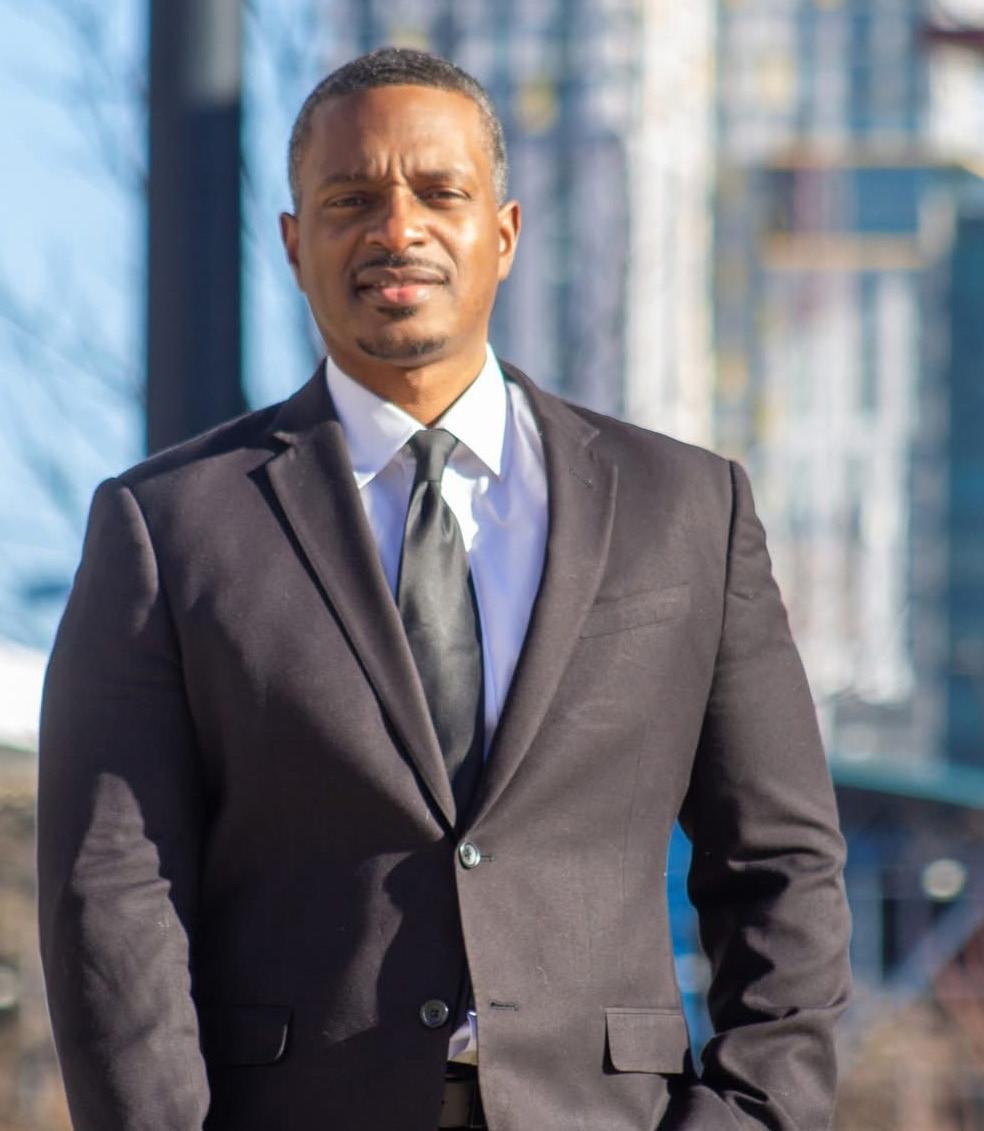
“These women showed me how to love beyond material things. That inheritance is exactly how the village sustains itself — not through policy, but through example. Blood makes you related. Love makes you family.”
— TOMEKA BARBOUR

five and seven, find out that someone wanted to adopt them. He wasn’t there to introduce himself. He was there to witness. What he saw was enough. “They really wanted a forever family and they appeared so sincere,” Johnson said. “That’s when I knew this would work.”
What followed was real parenting — unpacked emotional baggage and all. Johnson pursued family therapy, built a village of friends and church family around his new sons, and restructured his entire life around their needs. He’s honest about the hard parts: The days he moved
too fast, the walls kids build that look like healing from the outside. “I didn’t keep the therapy going through their middle school years,” Johnson said. “I think I rushed the unpacking.”
That honesty matters. Unofficial parents don’t get the grace of being in process — society either crowns them saints or forgets them entirely. The truth is they are regular people doing extraordinary work, mostly without recognition and often without rest. “The title doesn’t matter. The presence does,” said Johnson.
I have to tell you something about that debutante ball. Ryann-Elise Asbury is not mine by law or bloodline. But when we hit that dance floor — silliness synced along with the steps.
At that moment, I understood something I hadn’t been able to put into words. I had already become her father in every way that counts. She gifts me Father’s Day cards which says it all. She doesn’t correct strangers who assume. And her particular brand of sarcastic humor? That’s mine. We can look at each other and fall out laughing while everyone else wonders what’s so funny. That’s not performance. That’s a genuine connection built on something stronger than biology.
“Coming alongside Ryann made me realize that life is not about what you give but what you’re able to pour into someone else,” I’ve said. What I didn’t expect was how much she would pour back into me. Purpose. Joy. A reason to be my best self. She made me a father without a single piece of paper saying so. Unofficial parents rarely get the credit, but they often help write the story of a child’s future.
I hope Ryann tells her children about the man who showed up — not because he had to, but because he wanted to. I hope Dr. Johnson’s sons tell their children about the father who drove to a McDonald’s to see them and chose them before they ever chose him. I hope Jade tells her babies about the teacher who became “Ma” and never once made her feel like a charity case.
And I hope every unofficial parent reading this knows something the world doesn’t say enough: What you are doing is sacred. What you are doing is seen. You may not have a birth certificate. You may not have a ceremony. But somewhere, a child knows your face when the world goes dark. Somewhere, a child calls your name — out loud or in their heart — and means it.
We have always been the village. We have always done this work. It’s time we honored the ones who showed up — not because the law required it, but because love did. P
By Sonja Whitemon
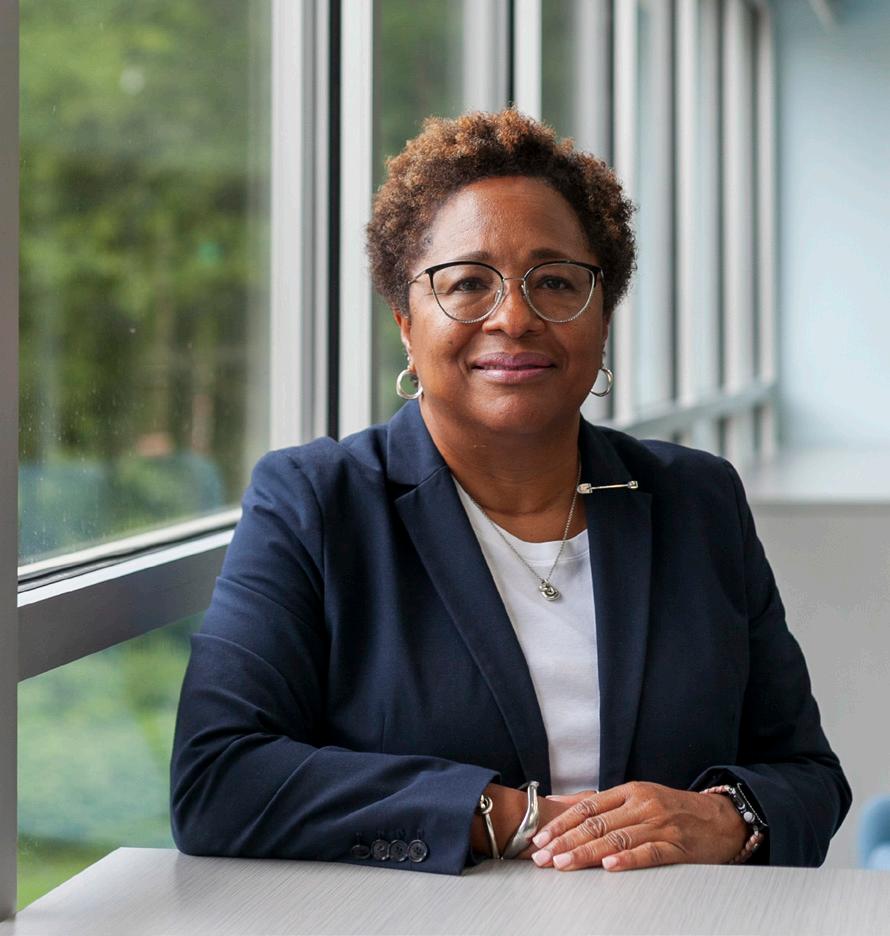
Most people don’t spend time thinking about their local water department — pipes, pumps, treatment plants. Maybe they notice the water bill, but rarely the people who keep everything running. Yet for more than three decades, one woman’s determination and steady leadership have helped shape the system that keeps her community’s water flowing.
Angela Charles is director of Charlotte Water, the largest public water and wastewater utility in the Carolinas, serving more than one million customers across the City of Charlotte and Mecklenburg County — including Matthews, Mint Hill, Pineville, Huntersville, Davidson and Cornelius. She leads an organization of more than 1,300 employees responsible for water treatment, wastewater and stormwater services across the region.
Charles joined Charlotte Water in 1988 after earning a bachelor’s degree in industrial engineering from North Carolina State University. She later earned a master’s degree in public administration from the University of North Carolina at Charlotte.
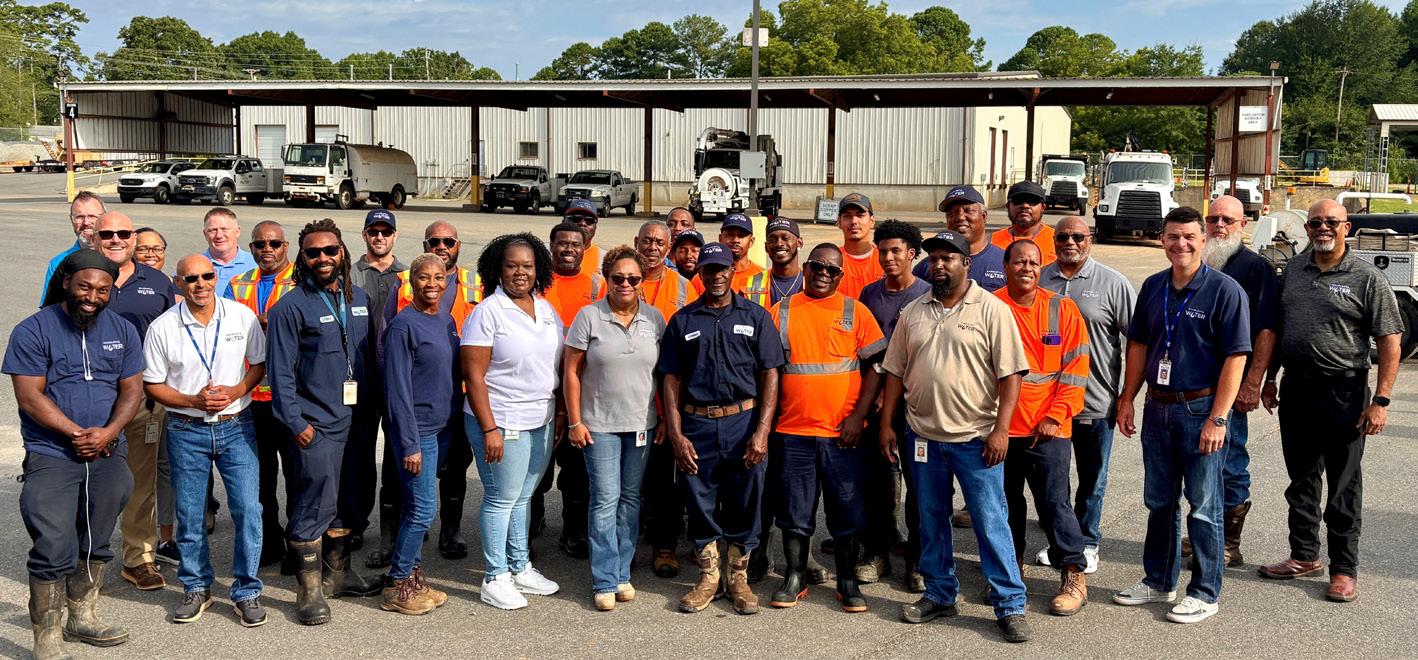
Her career began on the frontlines as part of the storm drain section — orange vest, hard hat, steel-toe boots and all — helping maintain the system that ensures rainwater flows safely off streets and properties. At the time, she was the only Black woman working with crews, working in what was largely a man’s world. She excelled.
“My mentor, Joe C. Stowe, Jr., former director of Charlotte Water, saw something in me in 1990, that I did not see in myself,” Charles said. “He gave me the opportunity to lead water workers at a very early age.”
Over 38 years with Charlotte city government and Charlotte Water, Charles steadily rose through the ranks, including a year as an assistant city manager. Along the way, she built a reputation not just for technical expertise, but for her ability to lead people — something even her former storm drain colleagues recognized early on.
Today, one of her top priorities is ensuring the safety and reliability of water for more than 1.2 million residents. As she puts it, her goal is for customers to be able to “wash, brush and flush” with confidence. Under her leadership, Charlotte Water is a national leader in the utility industry and has an impeccable regulatory record. It consistently ranks high in water quality year after year.
The most recent Drinking Water Quality Report confirms the city provides clean, high-quality drinking water with
no violations. Charlotte Water meets or exceeds all state and federal standards. The report highlights water sources, more than 170,000 annual tests, and ongoing monitoring of substances such as lead, copper and PFAS — commonly known as “forever chemicals” because they do not break down easily in the environment or the human body.
Despite its scale and performance, Charles often refers to Charlotte Water as a “hidden gem” — a critical public service that operates out of sight but touches nearly every aspect of daily life.
City Manager Marcus D. Jones underscored her impact in an interview with the Charlotte Water blog: “Angela is a valuable leader in Charlotte Water. She has been instrumental in affecting change and improving processes for nearly one million customers throughout Charlotte and Mecklenburg County.”
Charles has indeed been a catalyst for change. Today, she is leading Charlotte’s transition to a “One Water” approach — an integrated way of managing all water systems, including drinking water, wastewater, and stormwater. The philosophy recognizes that all water has value and that better coordination among departments leads to better service.
One major milestone in that effort is the One Water Facility, which opened in late 2023. The facility brings together more than 200 professionals across multiple disciplines, creating a centralized hub for collaboration and innovation in the region’s water management. This facility is on Charlotte’s west side.
“We have to think differently as water industry professionals,” Charles said. “We have to knock down those boundaries and embrace innovation. I am tremendously blessed to lead such a capable team.” P
If your eyes often feel dry, tired, burning or irritated, you are not alone. Millions of people struggle with these symptoms every day. Many assume eye drops are the only solution, but today’s eye care offers something more.
Modern technology now allows us to use light and gentle energy to help your eyes function more naturally and comfortably.
These treatments are called energy-based therapies, and they work by supporting your body’s own healing systems rather than simply covering up symptoms.
There are three advanced therapies that most dry eye centers of excellence should have:
• Intense Pulsed Light (IPL)
• Radiofrequency (RF)
• Low-Level Light Therapy (LLLT)
While the names may sound technical, the idea behind them is simple.Instead of only adding artificial moisture, energy therapies aim to improve how your eyes work.
Think of it this way: Better function leads to Better comfort. These treatments help restore balance, improve gland activity, and calm irritation. Let’s take a look at these therapies:
IPL uses gentle pulses of light applied to the skin around the eyes. This light helps reduce inflammation and improve the quality of oils produced by the eyelid glands.
Patients often notice:
• Less redness
• Less burning
• More stable tears
• Greater overall comfort
Radiofrequency therapy delivers safe, soothing warmth to the eyelids. This warmth helps soften thickened oils and encourages healthy gland flow. Many patients describe the treatment as relaxing and comfortable.

LLLT uses specific wavelengths of light to gently stimulate cells. This therapy supports the tiny energy centers inside cells, helping tissues recover and function more efficiently. No heat, no discomfort, just calming light.
Eye comfort is not only about the eyes themselves. Daily habits play a powerful role in how the eyes feel and perform.
At our practice, we emphasize SEE for Life™, a simple but important concept:
• Managing Stress
• Not Smoking
• Sleep
• Exercise
• Eating habits
These lifestyle factors influence inflammation, circulation, hydration and even tear stability.
For example:
Poor sleep can worsen eye irritation. Chronic stress can increase dryness Dehydration can affect tear quality.
Energy therapies work beautifully alongside healthy lifestyle choices, creating a more complete approach to eye wellness.
Many traditional treatments provide for short-term comfort. Energy-based therapies aim for something deeper and longer lasting. Energy treatments restore function, support healing, thereby improving comfort.
Patients often find they rely less on frequent over the counter drops and experience more lasting relief. One of the most appealing aspects of these therapies is that they are:
• Non-invasive
• Medication-free
• Designed to support natural processes
• Comfortable for most patients
One of the negative issues is that these procedures are not covered by most insurance companies but can be paid by Health Savings Accounts or Flexible Spending Accounts.
So, the next time your eyes feel gritty and uncomfortable, know that you may need a dry eye evaluation so that we can determine the root cause and attack it.
Light and energy therapies represent a new chapter in eye care. By improving gland function, calming irritation and supporting cellular health, these treatments help your eyes work naturally the way they were designed to.
When combined with healthy SEE for Life™ habits, the result is often more clear, more comfortable vision and eyes. P
By Alicia Michele-Benjamin Editor of Pride Magazine
As African American people in the United States, we shape the narrative around Juneteenth and what it means. Juneteenth is about more than good food, parades and good times. It’s a day that reminds us of who we are, what we’ve survived and what we should continue to build for ourselves and future generations.
Another poignant reminder of the trauma the multinational system of chattel slavery caused our ancestors, happened in New York City a few months ago.
The United Nations General Assembly, in March, voted to declare the enslavement of Africans during the transatlantic slave trade as “the gravest crime against humanity.” The vote was a reminder of the centuries of atrocities our ancestors survived.
The resolution passed with 123 countries voting “yes,” while 52 countries abstained — including most European nations, Australia and Japan. Only three countries voted against the resolution: Israel, Argentina and the United States. The “no” vote by those countries, especially the U.S., is like a slap in the face for many African Americans and other descendants of enslaved Africans.
Juneteenth is a day for us to pause and reflect on this grave crime, the obstacles our ancestors overcame and the plans we should be making to ensure our future happiness and survival.
In other words — Juneteenth is not just a holiday — it’s a consistent call for us to organize and take action.
Let’s review the history of Juneteenth: Although the Emancipation Proclamation was signed on January 1, 1863, more than two years after that (June 19, 1885, to be exact), over 250,000 Black people in Texas remained enslaved. Why? Because Texas was isolated, and slaveholders intentionally withheld the news.
Many had already heard, by word of mouth, that Abraham Lincoln signed
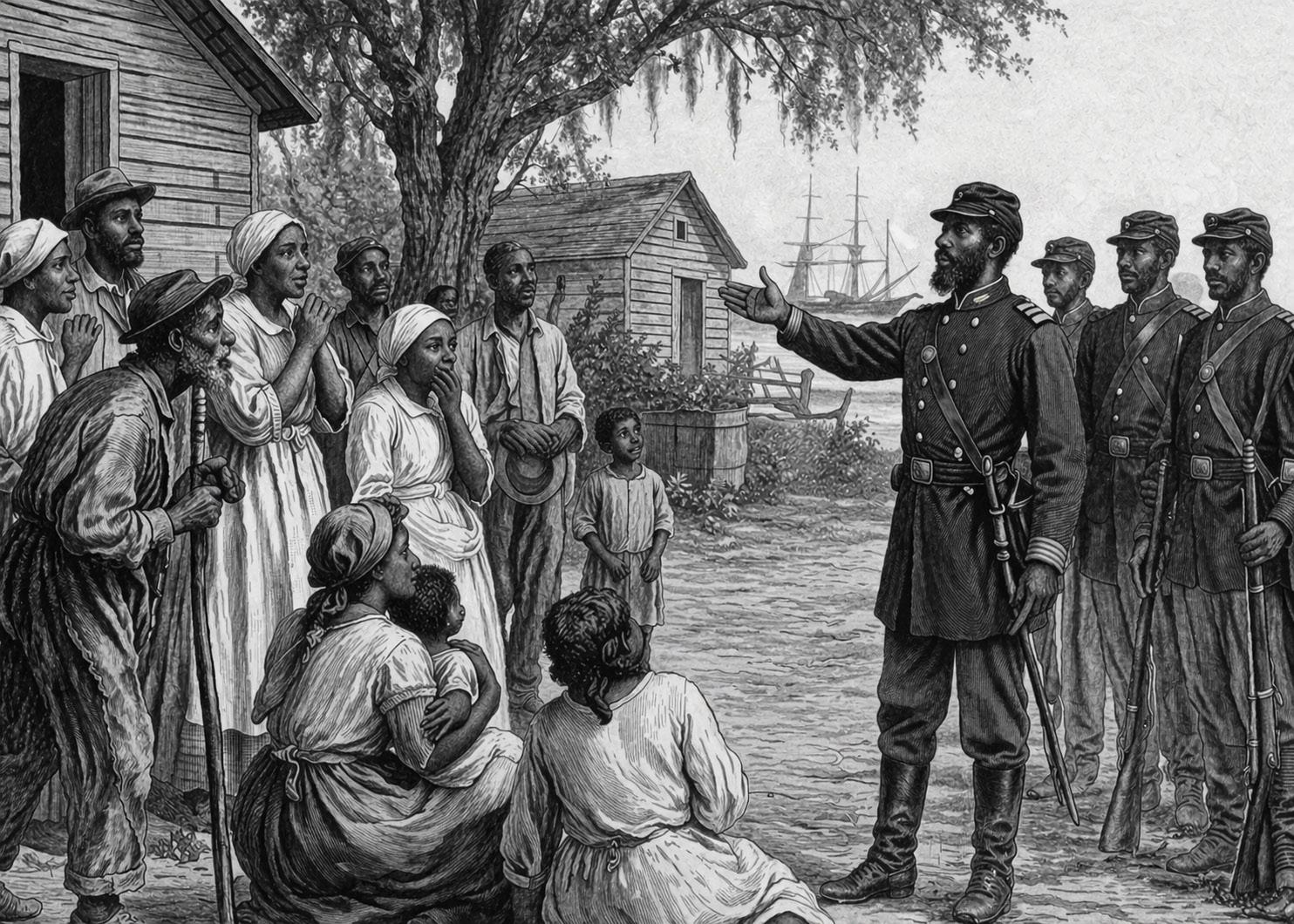
When Union General Gordon Granger arrived in Galveston, Texas, on June 19, 1865, and issued the president’s General Order No. 3, they didn’t just announce freedom — they delivered an official message with force and power behind it.
the executive order making them free. But that knowledge didn’t mean they could act on the information. Their freedom was delayed because they had no power. Leaving a plantation could mean being beaten or killed. Slaveholders and powerful people and systems were still in control. They used violence and fear tactics to keep Black people subservient.
When Union General Gordon Granger arrived in Galveston, Texas, on June 19, 1865, and issued the president’s General Order No. 3, they
didn’t just announce freedom — they delivered an official message with force and power behind it.
Records from the Freedman’s Bureau from 1865–1868, and the Federal Writers’ Project from the 1930s reveal that while some of the freed people joyously celebrated or held prayer services when they heard the news. Others immediately looked for family members that were sold away and searched for safer territory.
But some were in disbelief and feared retaliation from slave owners.
In fact, many faced violence from former masters who prevented them from leaving, according to a June 2025 article by history professor B.L. Wilson in “GW Today,” a George Washington University digital publication.
Nonetheless, many of the freed people were motivated to act by the executive order. They planned for a better life for themselves, their children and their descendants. They had hope for the future.
That’s why Juneteenth deserves our full attention and recognition.
When we celebrate Juneteenth every year, we should follow in the footsteps of our ancestors. Let’s rejoice, pray, organize, plan and fight for more control. Let’s remember what our ancestors did when they were free. They fought for a better future for their children, grandchildren and their future descendants — us P
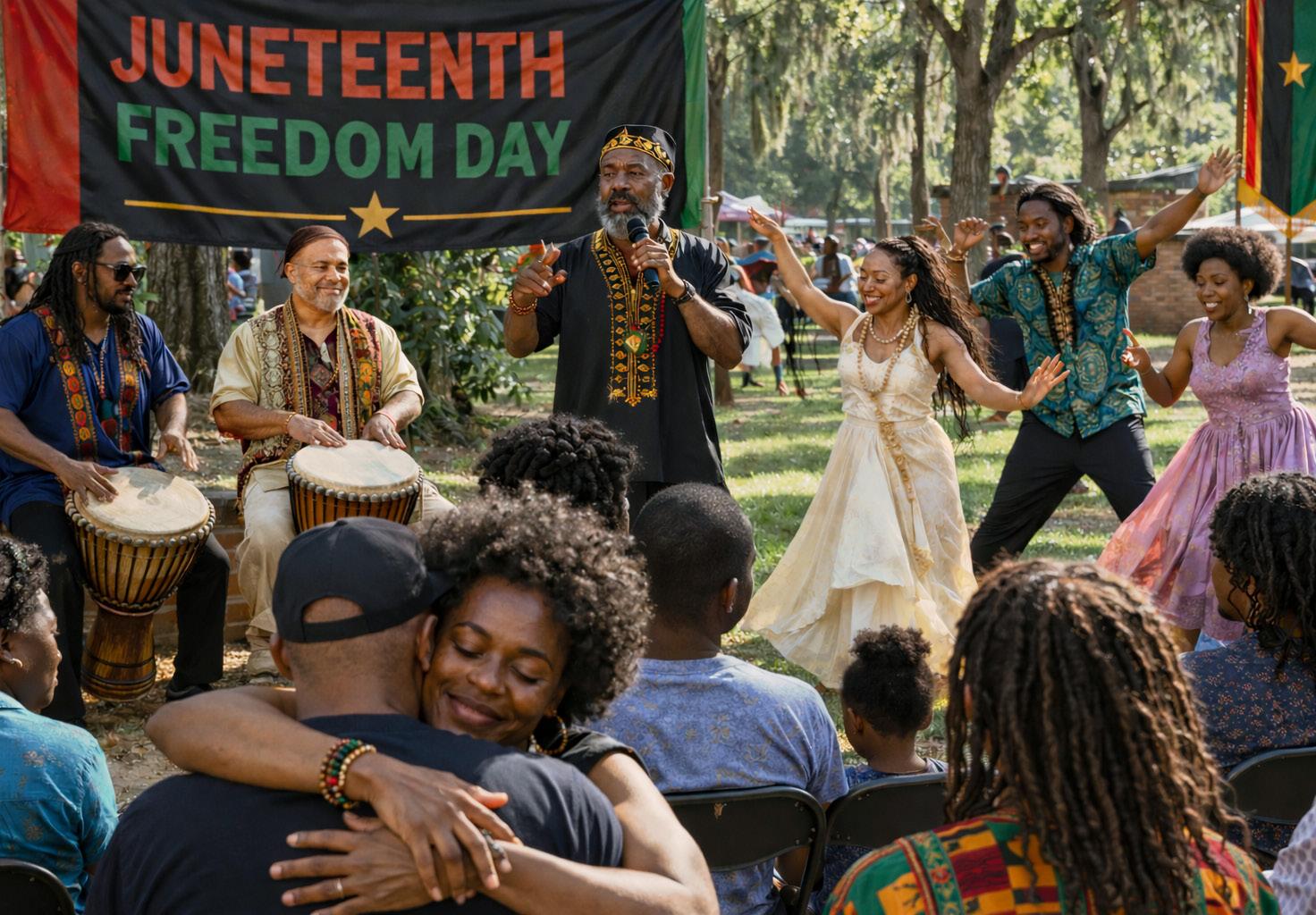


Juneteenth Festival of the Carolinas June 18 – 21, 1215 Thomas Ave. Plaza Midwood, Charlotte Opening ceremony, drum circle, gospel camp and more
Indian Trail Juneteenth Celebration Fri., June 19, 6 – 9 p.m., Crossing Paths Park, Indian Trail Offering family-friendly activities
Juneteenth Celebration in Huntersville Thur., June 18, 6 – 9 p.m. Veterans Park 201 Huntersville-Concord Rd. Live concert, food trucks and children’s activities
Celebrating Juneteenth/Bridging the Gap City of Salisbury Parks & Recreation Sat., June 13, 1-5 p.m., 316 Lake Dr. Live music, vendors and children’s activities
You may be eligible for special financing with HomeOwnership Now Mortgage, available only at HomeTrust Bank.

By Brenda Porter-Rockwell
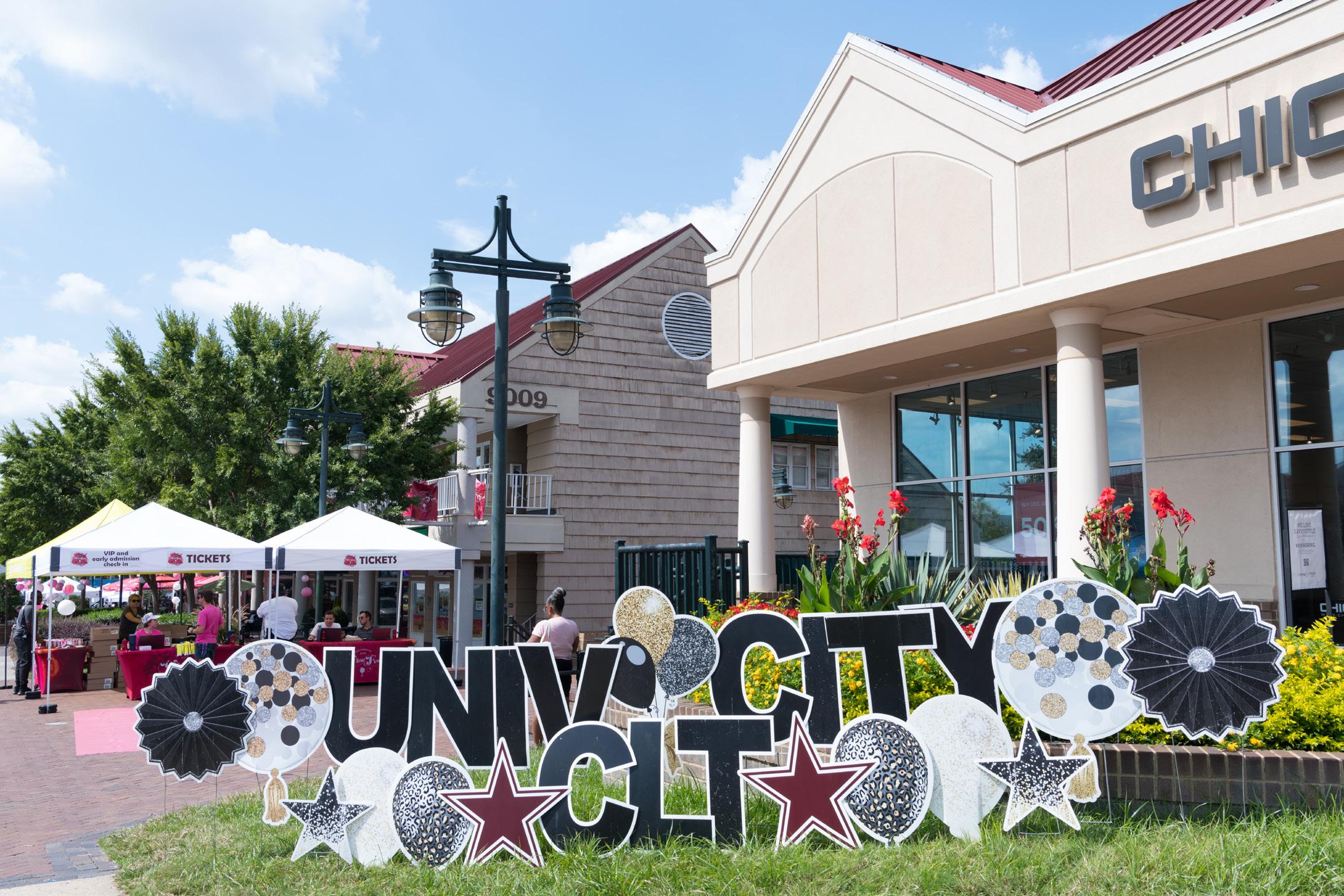
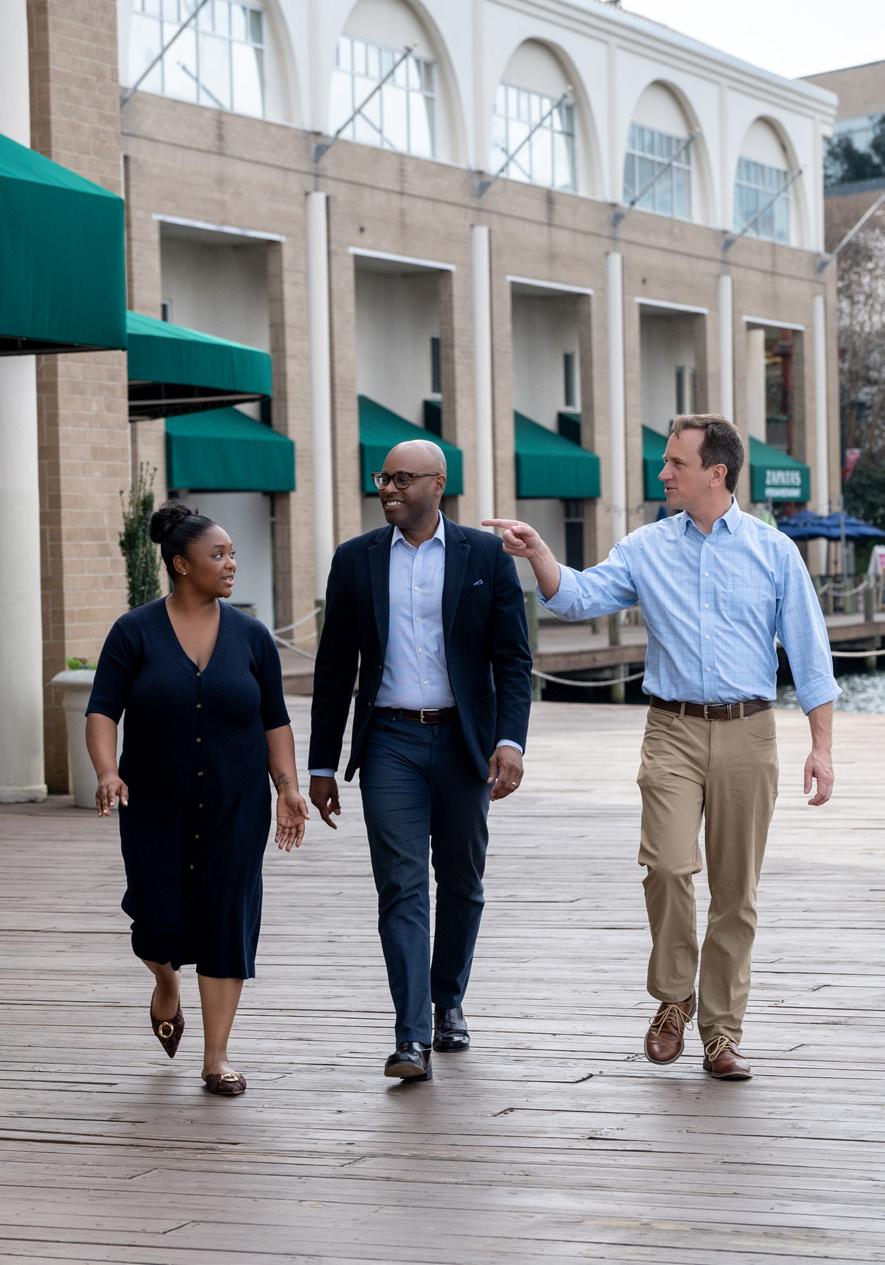
The successful redevelopment of The Boardwalk at University City — formerly known as The Shoppes at University Place — is about more than lighting upgrades, fresh facades and modern security measures. The make-or-break threshold for Red Hill Ventures’ multi-million-dollar transformation hinges on something less visible. It’s the relationships between the developer and the businesses that will give that Charlotte lakefront district new life.
The Boardwalk at University City, a major retail and office center, is strategically located in the heart of the University of North Carolina at Charlotte community, one of the fastest growing areas in North Carolina. The eight-acre center also boasts easy access to the Lynx Blue Line light rail and Atrium Health hospital; plus, it’s surrounded by a scenic 10-acre lake and, true to its name, a boardwalk.
Built in the 1970s, the following decades saw businesses exit; storefronts remained empty. By the time Red Hill finalized
purchase plans in 2024, the center was only 69% occupied. Despite those challenges, Red Hill saw opportunity others had overlooked. The company closed on the plaza for nearly $19 million and committed an additional $5 million in site upgrades to the shopping center, the boardwalk and a nearby office building.
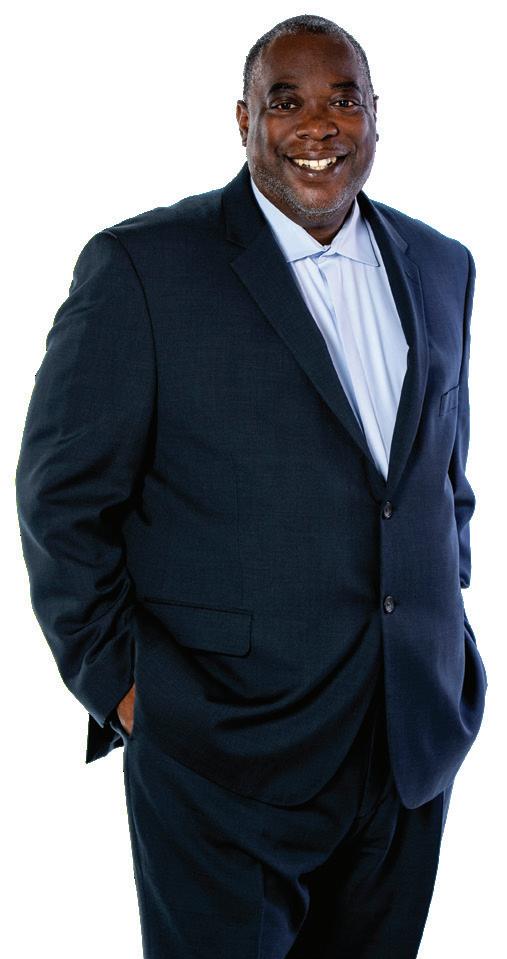
“We thought it was … a diamond in the rough and that we could really do well to make it what it really should be,” said Todd Collins, Red Hill Ventures’ CEO. Collins said The Boardwalk at University City is poised to become a destination for locals and visitors to enjoy a vibrant lakefront, winding trails and year-round events and programming, including the UCity Lights Festival.
The event, managed by the non-profit University City Partners, welcomed more than 19,000 attendees in 2025, and aims to attract even more in the coming years thanks to Red Hill’s bold plans.
“We think that district will be really a tourist attraction for the city of Charlotte. We think people will come and want to
stay in the Hilton and experience that corridor in the same way they may want to visit South Park or the Bowl at Ballantyne,” said Collins.
To Collins, The Boardwalk at University City revival is working because Red Hill aims to be a partner, not just a landlord.
“When you’re working on developing a retail center, like what we’re doing with The Boardwalk, what you want to do is have leases with businesses that serve the community very well,” Collins explained.
For example, Collins said Red Hill is actively engaged in conversations with local dental practices about expanding into The Boardwalk at University City. Businesses like dental offices, he said, will provide critical services, while other businesses will be exciting destinations or great places to eat.
“You want to create a cluster of businesses and clients that help support each other,” said Collins, adding that like attracts like. For instance, if a fitness studio moves in — another type of business Red Hill is actively courting — it then attracts a healthy eatery.
“That’s how you want the ecosystem to work — where all the businesses are hyper supportive of the community, and then they’re also hyper supportive of each other,” said Collins.
The ecosystem also works when there’s a very visible, built-in, hypersupportive community like the dedicated patrons of Sol’Delish CLT restaurant. The Charlotte eatery has an original location on North Tryon Street, but their dedicated following allowed them to expand to a second location at The Boardwalk at University City.
Specializing in American, soul and seafood cuisine, Sol’Delish committed to opening at The Boardwalk at University City before Red Hill purchased the commercial center.
“Although we already had a loyal following from our original location, we were excited about introducing a second Sol’Delish location to residents and visitors in The Boardwalk area. The location offers a unique environment with a mix of dining, shopping and entertainment, which aligns well with the atmosphere we aim to create for our guests,” said Mac Stephenson, one of the owners of Sol’Delish.
Latell Brice, the restaurant’s second
owner, said he and Stephenson, like Todd Collins of Red Hill Ventures, also saw the potential of the diamond in the rough, when they decided to open at The Boardwalk.
With Red Hill Ventures’ bold plans added to the mix, the restauranteurs were even more confident in their decision to move in alongside other locally-owned businesses like Brixx Wood Fired Pizza.
“Seeing Red Hill’s plans for revitalizing and redeveloping the center has definitely reinforced our confidence in the decision to expand here,” said Stephenson. “Their vision for the property brings renewed energy and opportunity for businesses within the center, and we’re excited to be part of that growth.”
“We think that district will be really a tourist attraction for the city of Charlotte. We think people will come and want to stay in the Hilton and experience that corridor in the same way they may want to visit South Park or the Bowl at Ballantyne.”
— TODD COLLINS, CEO
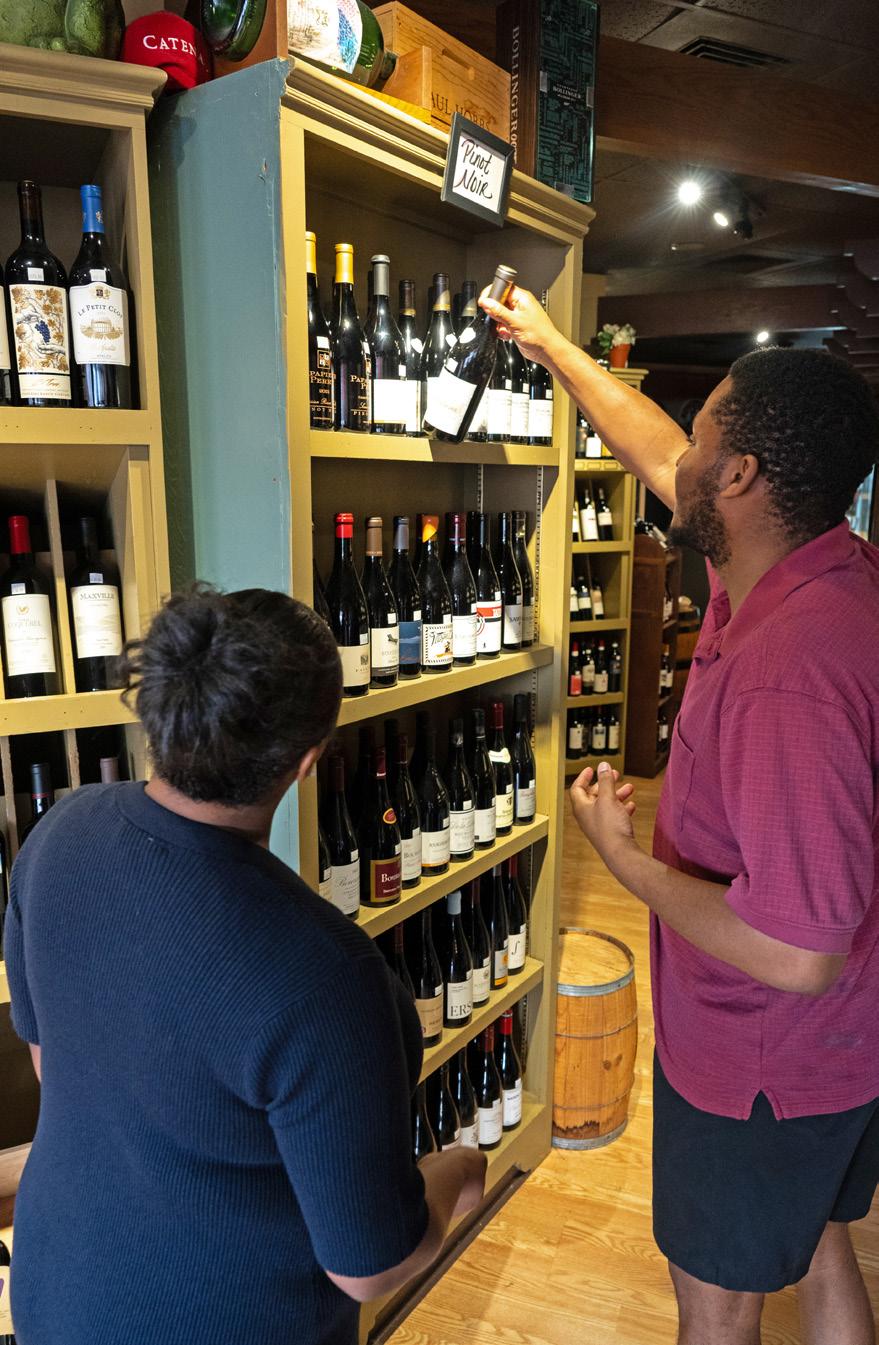
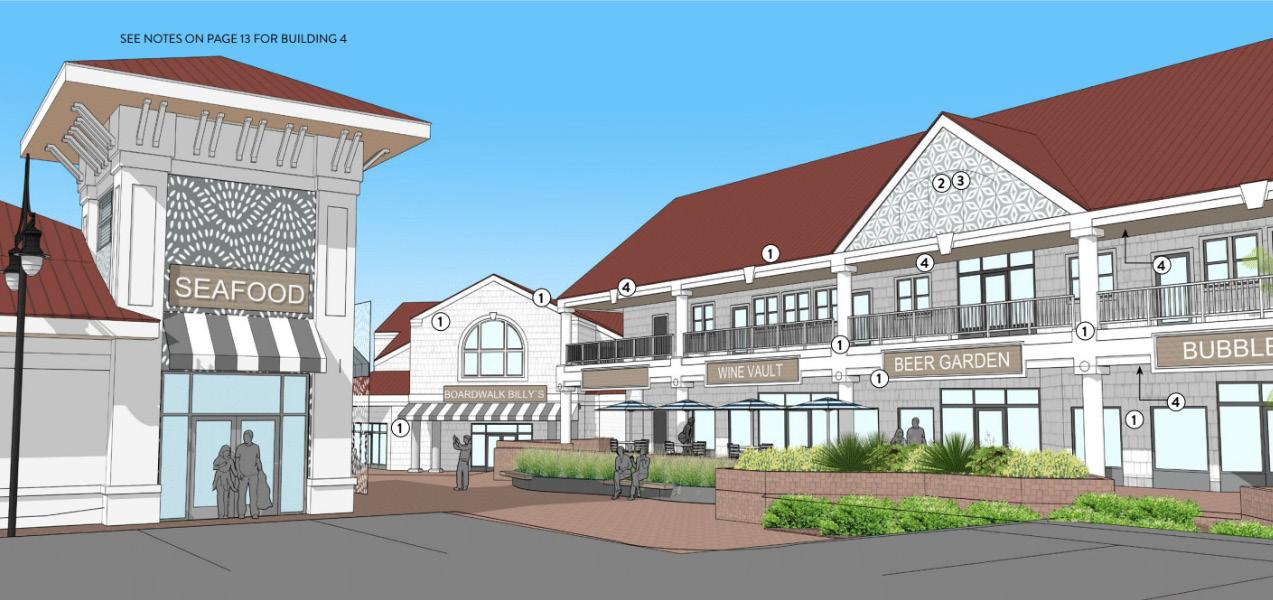
They joined anchor businesses like Famous Toastery (which is expanding its footprint), Boardwalk Billy’s Raw Bar & Ribs, The Wine Vault, Crafty Crab Seafood and Ninety’s Dessert Bar. Together, these businesses represent the kind of diverse, community-driven tenant mix Red Hill believes will transform The Boardwalk at University City into a true destination.
Another human touch is the tenant access to a full-time, on-site commercial property manager and professional maintenance person. Collins said he hopes his approach proves that long-term success in redevelopment isn’t just about capital investment, but about cultivating trust, collaboration and shared vision between developers and the businesses that serve the community. P
When Red Hill Ventures acquired the former Shoppes at University Place in late 2025, the firm saw an opportunity to reimagine a well-known lakefront property into a vibrant destination that better serves the surrounding community. Long a gathering place for University City, the property is being thoughtfully revitalized to enhance the experience while preserving the atmosphere that has made it a local favorite.
Renamed The Boardwalk at University City, the property is undergoing a multimillion-dollar transformation. Planned improvements include exterior renovations, enhanced lighting and landscaping, safety upgrades, modernized amenities, office enhancements and a refreshed brand identity. Together, these upgrades are designed to create an inviting environment for visitors, tenants and the broader community while supporting the property’s long-term vitality.
As a mixed-use destination featuring retail, restaurants and office space, Red Hill Ventures has taken an intentional approach to leasing. Rather than simply filling storefronts, the focus is on cultivating a vibrant mix of businesses that reflect the character and diversity of University City. By welcoming both established favorites and growing entrepreneurs, The Boardwalk aims to offer a balanced collection of goods, services and experiences for all.
“We’re focused on bringing in businesses that align with our vision of providing a balanced collection of goods, services and experiences for all, and that also contribute to the area's long-term vitality.”
Todd Collins | Red Hill Ventures CEO
With a strong understanding of the surrounding community, Red Hill Ventures is working to ensure The Boardwalk continues to evolve as a place where people gather, local businesses thrive, and University City comes together along the water.
Boardwalk Billy’s has long been a University City favorite, known for its relaxed waterfront setting and loyal following. Its patio overlooking the lake has become one of the area’s most popular dining spots, offering
guests the chance to enjoy great food in an easygoing atmosphere.
“Our patio is unmatched.” says founder Jamie Jenkins.
The restaurant is investing in a patio renovation that will include a new roof and screens, enhancing the experience while preserving the open-air charm that makes the location so unique.
“Where else can you get oysters, BBQ, or premium burgers with a lake view?”
— Jamie Jenkins, Owner Boardwalk Billy’s
Whitney’s Wittle Wonders, a locally owned pet grooming boutique, is another business that calls The Boardwalk home. The shop is built around a team of skilled and compassionate professionals dedicated to providing exceptional care for every pet.

Owner Whitney Mitchell describes her approach in three words: artistic, talented and passionate. Each dog receives personalized attention tailored to temperament, creating a customized experience for both pets and their owners.
“Luxury care to us means having a true animal lover and expert handle a client’s pet as if it’s their very own,” she says.
“No matter how successful we become, I will always remain affordable.”
— Whitney Mitchell, Owner Whitney’s Wittle Wonders
At Sol’Delish, the experience goes far beyond the plate, it’s about culture, energy, and connection. Founded by Latell Brice and Mac Stephenson, with Marilyn Brice leading day-to-day operations, the restaurant was created to bring soulful flavors and warm hospitality together.
Known for its flavorful menu, including its popular turkey wings, the restaurant quickly turns first-time visitors into regulars. The welcoming atmosphere reflects the same sense of comfort and community that defines its cuisine.
“The heart of Sol’Delish is people. It’s community. It’s family.”
— Sol’Delish Team
As redevelopment continues, The Boardwalk at University City is evolving into more than a renovated property. It is becoming a place where local businesses thrive, neighbors gather, and the community’s future takes shape along the water.





Pack your knives and clear your plates as “Top Chef” Season 23 has arrived, shining a national spotlight on the Charlotte region and its distinctive culinary identity.
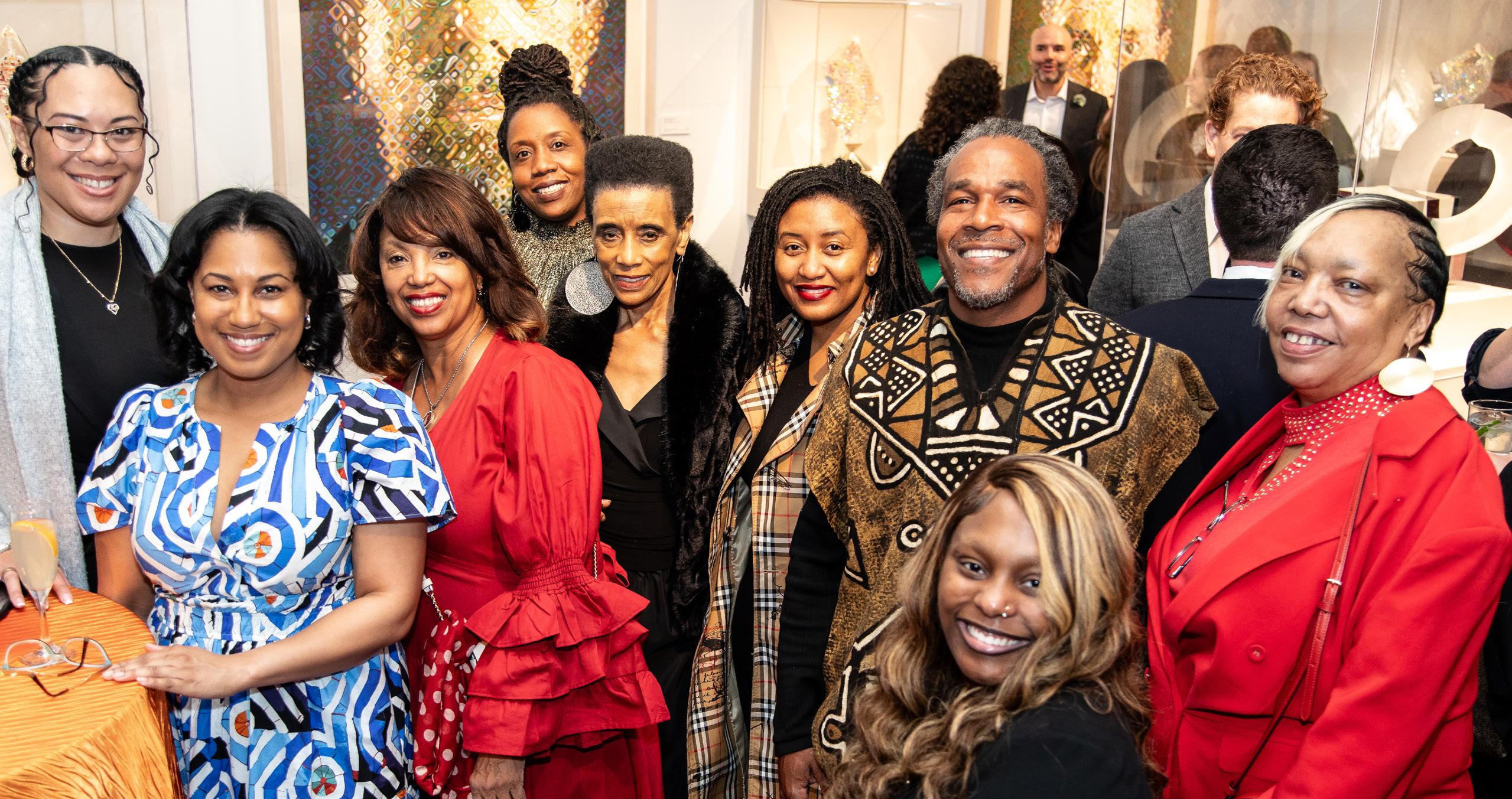
Hosted by Kristen Kish, with judges Tom Colicchio and Gail Simmons, the series features 15 “cheftestants,” including Charlotte’s own Brittany Cochran of Stagioni, competing in challenges inspired by bold regional
flavors and a generous helping of Carolina charm. The Charlotte Regional Visitors Authority hosted an exclusive “Top Chef: Carolinas” premiere event at the Carolina Theatre on March 2, 2026. Kristen Kish, Tom Colicchio, and

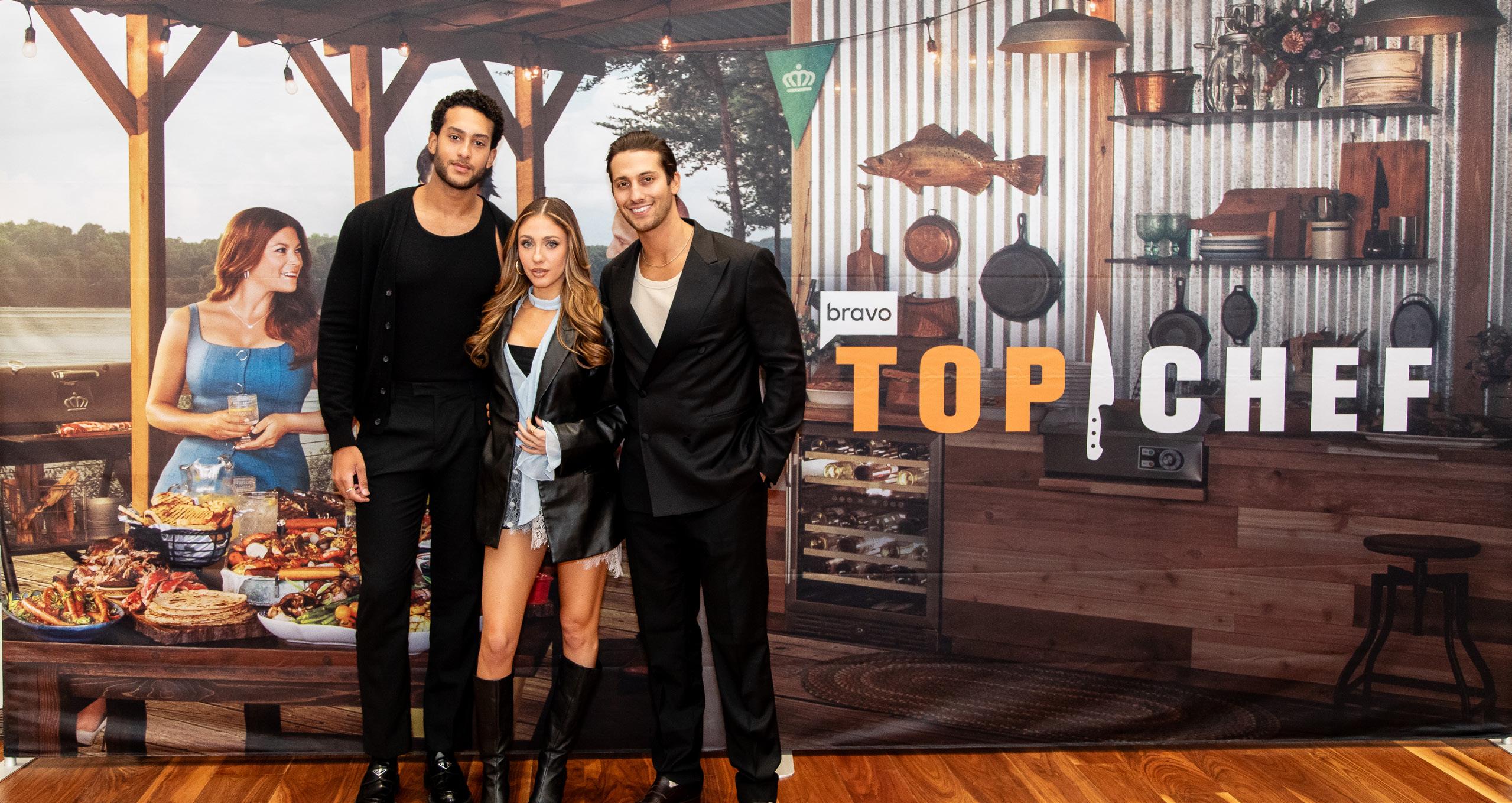

Gail Simmons were joined by four Season 23 “cheftestants”: Brittany Cochran, Jennifer Lee Jackson, Nana Araba Wilmot and Oscar Diaz.
Sherri Belfield
Photographers: Jon Strayhorn, Sasha Bello and Jonathan Cooper












By Derik Hicks
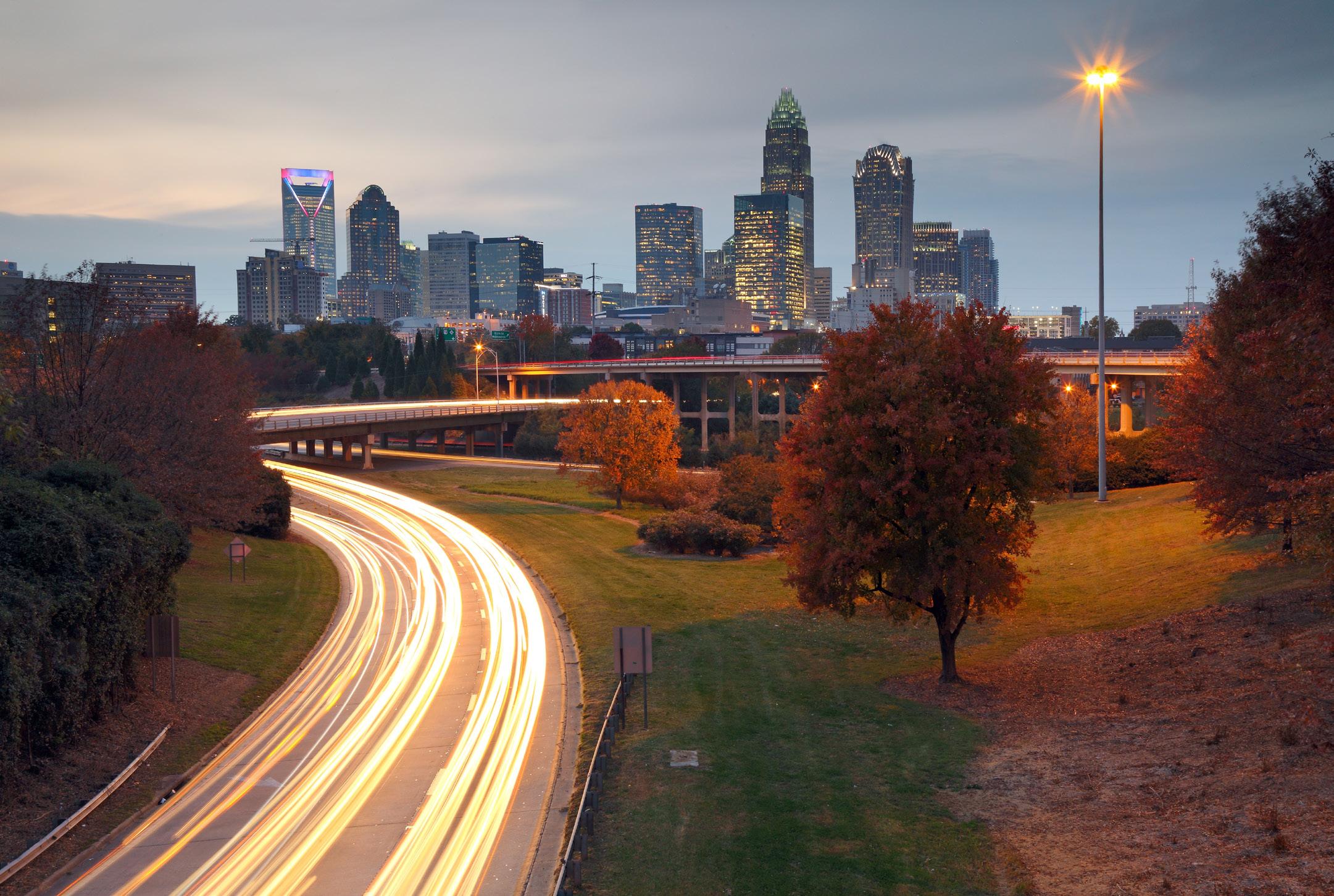
Charlotte has long been known as one of the fastest-growing cities in the Southeast. Now, recent data from LendingTree shows the city is also becoming a significant hub for Black entrepreneurship.
According to LendingTree’s 2023 study analyzing data from the U.S. Census Bureau, Charlotte is ranked 16th among the 50 largest U.S. metro areas for the percentage of Black-owned businesses. In 2023, 6.5 percent of businesses in the Charlotte metro area were Black-owned, a figure that remains well above the national average.
The ranking reflects several years of growth. In 2021, Black-owned businesses accounted for 5.3 percent of businesses in the Charlotte metro area. That figure rose to 7.1 percent in 2022 before settling at 6.5 percent in 2023.
7.1% of businesses in Charlotte were Black-owned in 2022.
10.7% of businesses in Atlanta are Black-owned. Atlanta has the highest shart of Black-owned businesses in the U.S.
1 in 4 Black-owned businesses are in the health care and social assistance industry.
3.4% of businesses in the United States are Black-owned.
Researchers with LendingTree analyzed 2023 data from the Census Bureau’s Annual Business Survey to determine which metro areas have the highest percentage of Black-owned businesses. The methodology involved compiling the number of Black-owned businesses in the 100 metros with the largest totals and comparing those figures with the total number of businesses in each area. The metros were then ranked based on the percentage of Blackowned firms.
For the 4th year in a row, Atlanta has the highest share of Black-owned businesses at 10.7 percent. Fayetteville, N.C. with 9.9%, and Washington, D.C. at 9.4%), rank second and third, respectively.
The LendingTree study found that about 1 in 4 Black-owned businesses are in the health care and social assistance industry, with 26.2% of Black-owned businesses involved in this industry in
2023 — up from 25.6% in 2022. The Blackowned business with the next highest percentages are scientific and technical services at 14%, and administrative and support and waste management and remediation services at 8.1%.
Although only 3.4% of businesses in the U.S. are Black-owned, the percentage of Black-owned businesses in the country has increased in recent years. In 2020, 2.4% of the country’s companies were Black-owned, with that percentage rising to 2.7% in 2021 and 3.3% in 2022, the study shows.
metro areas stand out for their higher representation,” the report notes. Charlotte is among those cities. The ranking reflects both the region’s demographic diversity and its expanding economy.
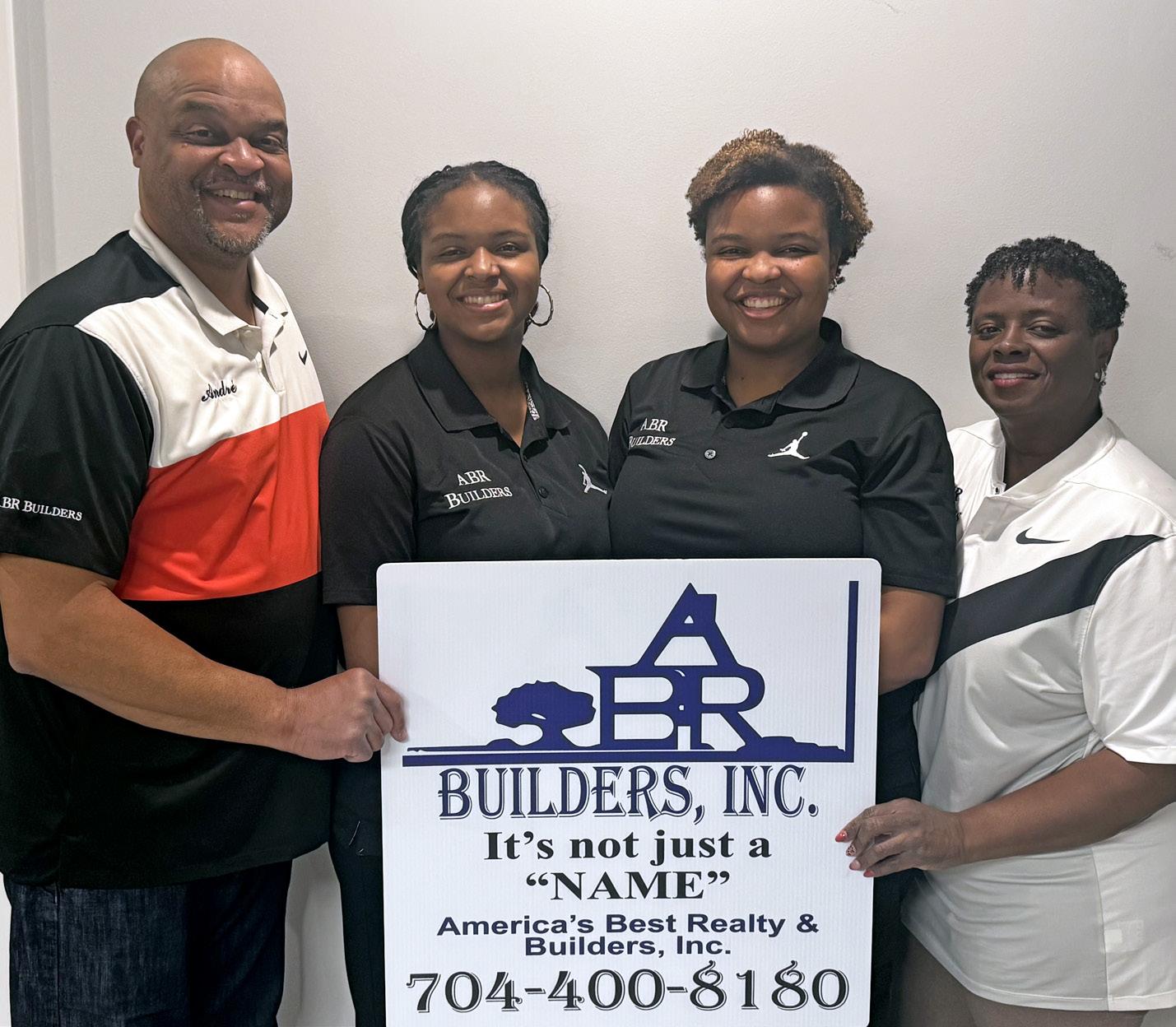
For many Charlotte-area entrepreneurs, the numbers reflect what they have experienced firsthand. Andre Richmond, owner of America’s Best Realty & Builders, has spent nearly three decades building his
“The persistent low share of Blackowned businesses partly reflects ongoing structural barriers that many entrepreneurs of color face,” according to the study. “Research indicates that access to funding remains a central challenge: Black founders are more likely to rely on personal savings or highinterest credit because of loan-denial disparities and lower intergenerational wealth than their white counterparts.”
“Black-owned businesses make up a relatively small share of businesses nationally, but certain
business. A licensed real estate broker since 1995 and a licensed general contractor since 1997, Richmond runs a full-service company that handles real estate transactions, remodeling, additions and new construction projects.
Born and raised in Charlotte, Richmond watched the city transform from a regional hub into one of the country’s most dynamic metro areas. “My family owned a small business in Charlotte,” he said. “I knew I wanted to run my own business, but when I was
younger, I just didn’t know what type of business it would be.”
While working full time after high school, Richmond attended trade school at night to study real estate and construction. In 1995, he began working part-time as a real estate agent while building a client base. After earning his general contractor’s license in 1997, Richmond worked in both fields part time before launching his business fulltime in 1999.
Despite the challenges that come from the Queen City’s changing landscape and diversity, Richmond credits Charlotte’s strong corporate presence and local networks for helping entrepreneurs gain experience and build relationships.
“Sometimes you have to link up with some of those companies to get the proper training and experience as a subcontractor while still owning your own business,” he said. “For me, community support is very important,” Richmond said. “Ninety-five percent of my work comes from referrals within the community. The key is to do a very good job the first time.”
Still, Richmond said challenges remain for many Black entrepreneurs, particularly with financing and overcoming stereotypes. “Starting off, it was very difficult to secure funds,” he said. “I had to use my car or house as collateral to get a loan.”
The growth of Black-owned businesses in Charlotte represents more than economic progress. According to Richmond, it represents a legacy. “Charlotte has a large Black population and is still growing. We have to leave an example for the next generation. The city can flourish when all cultures and races are doing well.”
As Charlotte continues to attract new residents and investment, the city’s entrepreneurial landscape is likely to grow further. If the trends identified by LendingTree continue, Charlotte’s Black entrepreneurs may play an increasingly important role in shaping the city’s economic future — one business at a time. P
Have a skill that needs polishing or a career that needs pivoting? Browse hundreds of continuing education classes at Central Piedmont to find the best path forward for you — and your dreams. Don’t get stuck, get started.
SCAN TO LEARN MORE.




By Kurtavia Burton
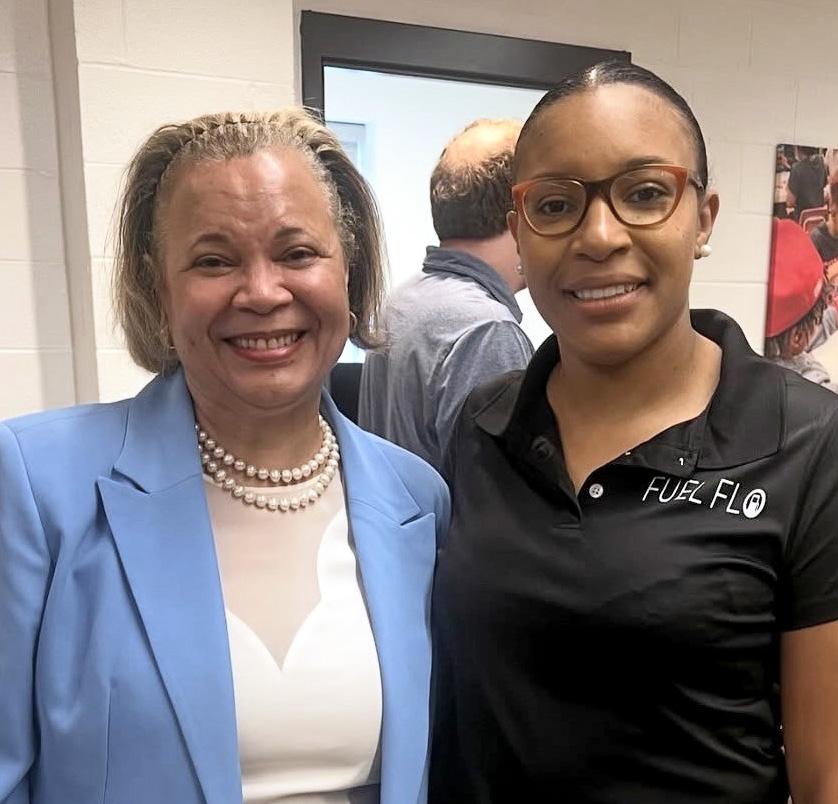
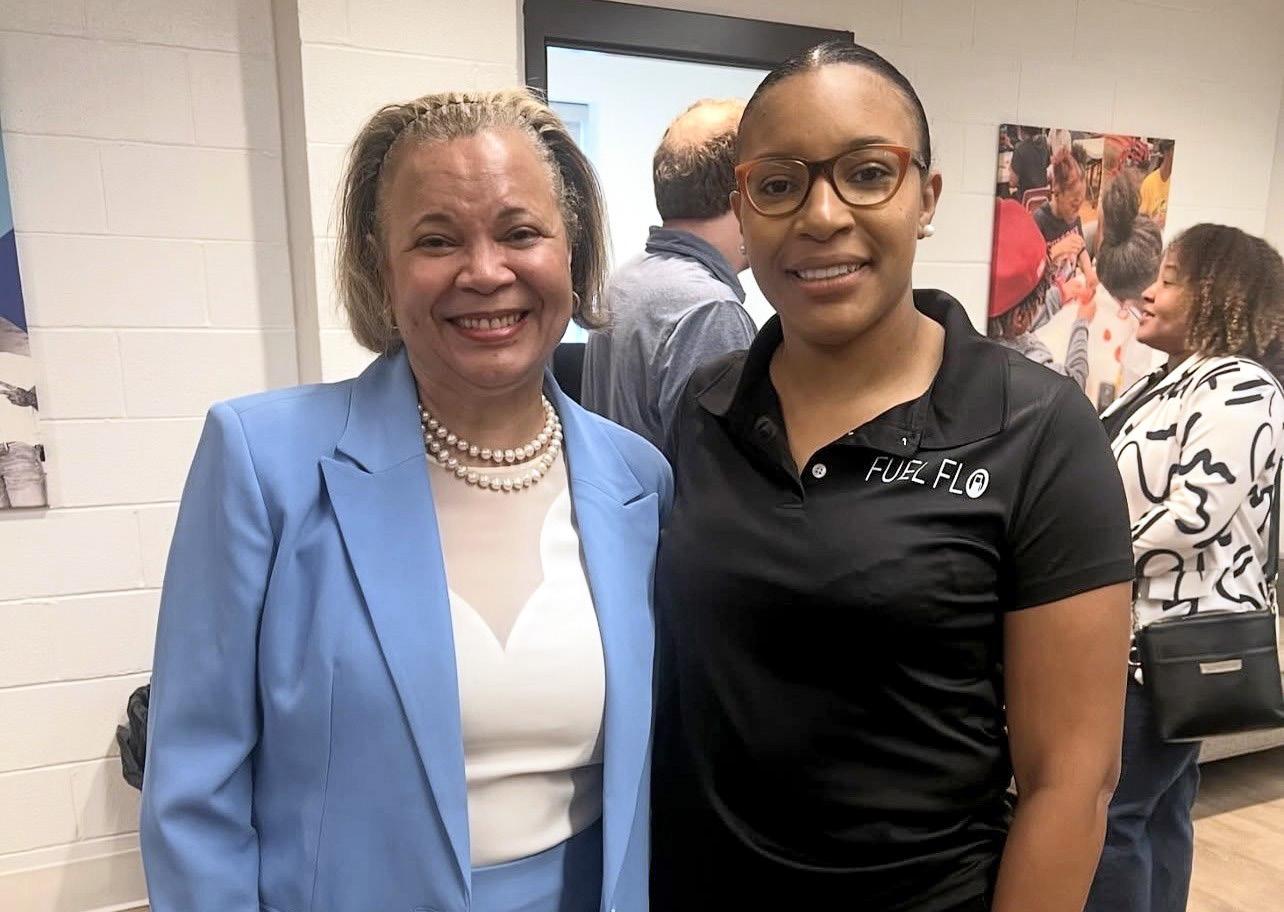
Amber Murray has made it her mission to end gas station inconvenience by bringing the pump to your front door. As the founder of Fuel Flo, she created a business that conveniently delivers gas to you. Simply put, it is “DoorDash, but for gas.”
“For the first time in my life, as a fully grown adult, I ran out of gas on I-85. I had to
a reality, she earned her A-Class CDL with hazmat and tanker endorsements. “I had to go and learn, so I can drive anything,” Murray said. She successfully launched Fuel Flo shortly after covid.
The idea is if you can get your food and groceries delivered, why not your fuel? The process is designed to be as seamless as possible. Customers sign up on the website, fuelflosc.com, and every week they are serviced on the same day.
sit on the side of the highway for two hours while a tow truck brought me five dollars’ worth of gas. And I thought, ‘If I hate going to the gas station this much, somebody else has to as well,’” Murray said. This very thought became the spark for a blueprint and an innovative new business model.
Originally from South Carolina with an educational background in business administration and accounting, Murray chose to pivot into a new industry where she is not only one of the few women, but a woman of color.
“As far as this model on this scale, I am sure I am the only Black woman in the country, if not the world, doing something of this sort,” she shared. To make this dream
“The day prior, I reach out to ask if you need a fill-up,” Murray said. “Your day isn’t interrupted. We come, pump to fill the tank, and go.” Fuel Flo offers both regular 87 and premium 93 fuel options. “Fueling is complex, but we make this as least complicated as possible for our customers,” she said.
Being in a new industry did bring roadblocks. “From the jump, there were challenges,” said Murray. “One big one was getting a bank to fund this idea that was unheard of. I lost count of the denials I got.” Eventually, a community lender in South Carolina believed in her vision and funded the idea. With the love and support from her family and close friends,
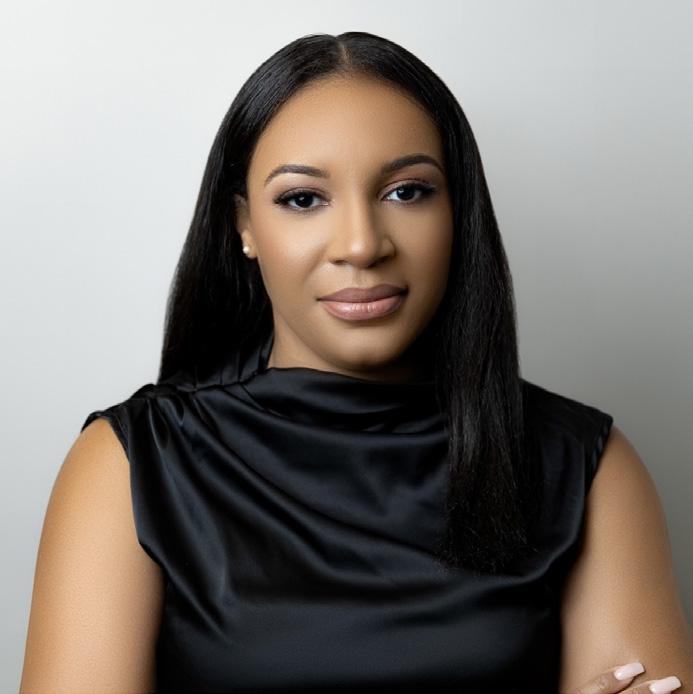
five years later her dream continues to come true.
Though this is a male-centered industry, Murray is optimistic about being a Black woman from the South who is changing lives one fill-up at a time. Based out of South Carolina, Fuel Flo serves Lowcountry South Carolina including Dorchester, Berkeley, Charleston and Orangeburg, and has now expanded to Charlotte.
Customers can go to the website, choose their region, pick their service and have fuel delivered on the same day each week. There is no contract, only a subscription for either as needed or monthly service.
“When you call, you’re speaking to me directly, not a bot. I want people to experience a convenience that gives them some time back to themselves,” Murray said. Fuel Flo has serviced women, fleet drivers and senior citizens, bringing convenience through timesaving and safety for anyone, she added.
“I sat on bustling I-85 thinking how I could’ve stopped but thought I would make it to the next gas station,” said Murray.
Today, as she expands into Charlotte, her advice to other women is an echo of the Nike slogan, “Just Do It.”
“Once you start doing it, you’ll get past that fear. Do it scared. Read up on the industry as much as you can and go from there.” Murray said she has hopes for corporate contracts in Charlotte, servicing employees and expanding marketing to extend her service even further. P

By Alicia Michele Benjamin
Some people try to erase history and rewrite it to match false stories they’ve been taught or what they want it to be. But truth often rises to the top and shines brighter than it did before it was buried.
For example, in January, the current presidential administration ordered an exhibit in Philadelphia’s Independence National Historical Park — which included panels, plaques and videos that featured information on nine enslaved people held captive by President George Washington in the late 18th century — to be taken down to “restore truth and sanity to American history.” They said the panels condemned George Washington and showed a negative view of U.S. history.
But with the administration’s efforts to erase this ugly part of American history, they brought international attention to the very truth they were trying to erase. Eastern District of Pennsylvania Judge Cynthia M. Rufe ordered the administration to restore and put the items from the exhibit back up. The judge said the government can’t “disassemble historical truths.”
The same is true regarding the overlooked and sometimes forgotten history of Memorial Day.
The holiday is often associated with Union Gen. John A. Logan’s order in 1868 to decorate graves of fallen Civil War soldiers with flowers. But in 1996, historian David Blight found evidence of the African American origins of Memorial Day when he discovered documents at Harvard University.
Here is the history of that first celebration which occurred May 1, 1865, as Blight details in his 2001 book, “Race and Reunion: The Civil War in American Memory.”
• During the final year of the Civil War, Confederate soldiers turned a fancy horse racing track in Charleston, South Carolina, into an outdoor prison. They kept Union soldiers there in foul conditions, and at least 257 Union prisoners had died from hunger and disease. Those soldiers were buried in a huge, unmarked grave on the racecourse grounds.
• When the war ended in 1865, the white residents of Charleston left, and the city was mostly filled with newly freed enslaved people. A group of 28 Black
workmen went to the racecourse to honor the soldiers who had died fighting for their freedom. They dug up the mass grave and gave every soldier a proper, individual burial. They built a tall fence around the new cemetery and painted it white. Over the entrance, they placed a sign that read: “Martyrs of the Race Course.”
• A massive crowd of 10,000 people gathered at the track, consisting mostly of Black people. This event was called “Decoration Day.” Leading a procession to the gravesite were 3,000 Black schoolchildren who had just started attending school for the first time.

• The children marched onto the racecourse carrying roses and lilacs as they sang a song called “John Brown’s Body” (a famous Union marching song). Hundreds of Black women with baskets of flowers and wreaths marched behind the children to help decorate the graves.
• After the children, various Black social groups and Union regiments, including the 54th Massachusetts Regiment — a predominantly Black volunteer infantry with white officers — marched around the graves. Families had picnics on the grass, listened to speeches from ministers and sang spirituals. They were celebrating their freedom.
For over 130 years, this story was hidden. Blight explained that after the war, many leaders wanted white people from the North and South to make peace and get along, so they stopped talking about the Black people who fought in the war and the ones who started the day of commemoration that would become Memorial Day.
People claimed the holiday was “officially” started by Logan in 1868, and the Charleston story of Black people honoring the fighters who had helped them gain freedom was buried — until the truth came to light. P
Compiled by John Burton Jr.
Charlotte will soon welcome one of gospel music’s biggest nights. City leaders announced in March that the Queen City will host the 41st Annual Stellar Gospel Music Awards, one of the genre’s most influential celebrations. The ceremony will be taped live from the Spectrum Center on Saturday, Aug. 15, 2026.
Don Jackson, founder, chairman and CEO of Central City Productions and founder of the Stellar Network, said Charlotte was chosen for its strong faith community, vibrant culture and growing national profile.
Several local leaders joined the announcement, including Mayor Vi Lyles, City Council member Malcolm Graham, Charlotte Regional Visitors Authority CEO Steve Bagwell, and Charlotte Center City Partners President and CEO Michael Smith.
The press conference featured live gospel performances from Jekalyn Carr and Charlotte’s own John P. Kee & The New Life Community Choir — a fitting tribute to a city with deep musical roots.
In the days leading up to the main event, Charlotte will host Stellar Plus Week from
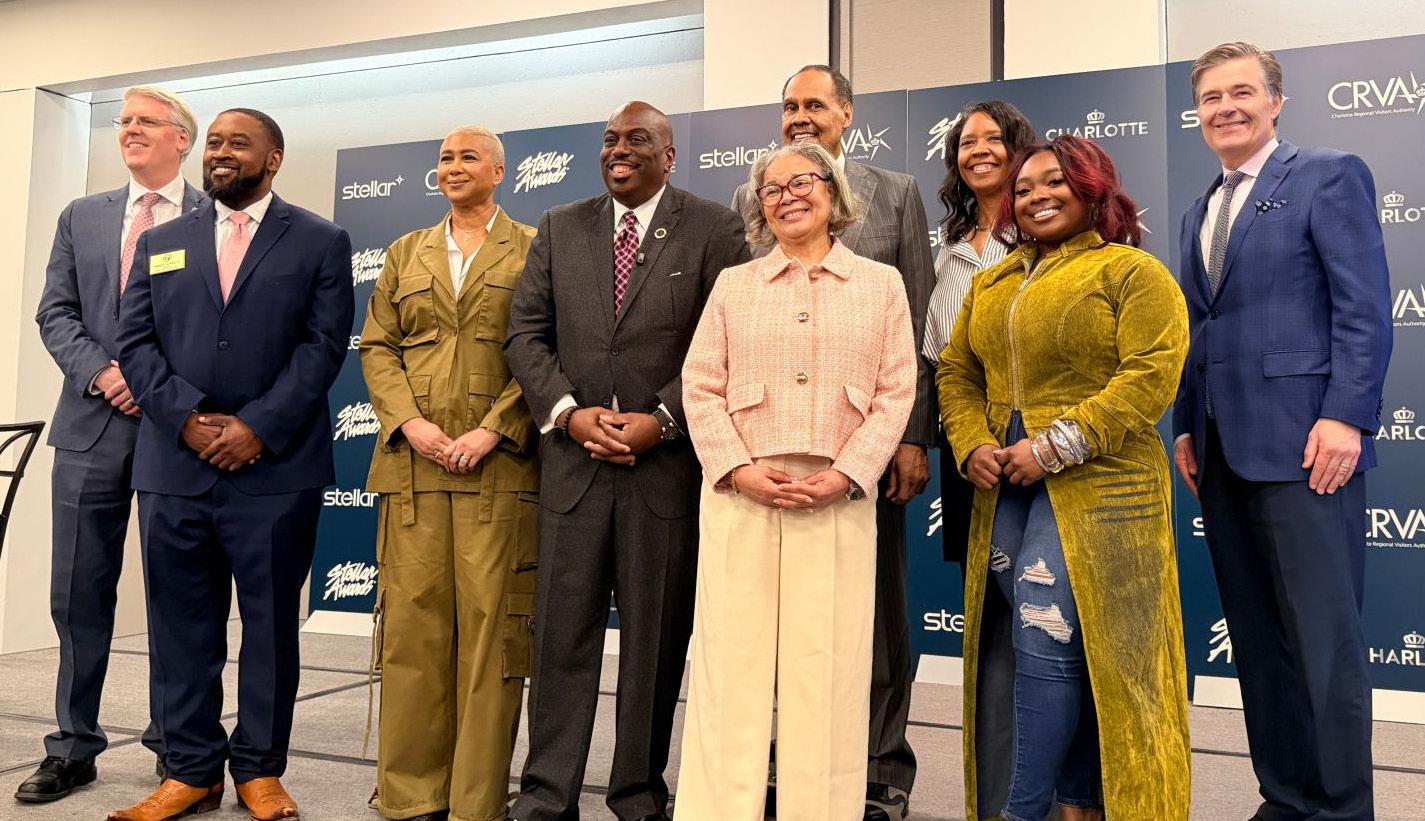
Aug. 12–14, a multi-day celebration packed with master classes, soundstages, fashion shows, comedy showcases and immersive fan experiences.
The Stellar Gospel Music Awards, established in 1985, airs nationwide on BET, Bounce TV and the Stellar Network,
bringing gospel music’s greatest moments into homes across the country.
With its passionate faith community and thriving cultural scene, Charlotte is poised to deliver an unforgettable experience for gospel music lovers everywhere.
More than 600 hospitality and tourism leaders gathered as the Charlotte Regional Visitors Authority celebrated a recordbreaking year for Charlotte’s visitor economy at the 2026 Partners in Tourism Awards, presented by American Airlines.
“Last year was a record-breaking year for our visitor economy, and that success belongs to the partners who collaborate, innovate and deliver exceptional service every day,” said CRVA CEO Steve Bagwell. More than 33 million visitors came to Mecklenburg County last year, fueling record visitor spending and reinforcing tourism as one of the region’s largest industries.
Small Business of the Year — The Secret Chocolatier: Now in its 18th year, this family, woman and veteran-owned business

“Last year was a record-breaking year for our visitor economy, and that success belongs to the partners who collaborate, innovate and deliver exceptional service every day.”
—STEVE BAGWELL
has grown from local farmers markets into a nationally recognized Charlotte brand, offering immersive experiences and handcrafted chocolates that have become a signature convention gift.
Unsung Hero Award — Brothers Bobby and Lance Snyder, each with 40-plus years at American Airlines, were recognized for leading baggage operations handling nearly 50,000 bags daily — achieving the strongest performance since 2017. Also honored was Wes Smyth of Sheraton Le Méridien Charlotte, the backbone of group operations at the 605-room convention hotel.
Outstanding Ambassador Awards — Johnny Wright (Taste Charlotte), Sara Ellerbroek (JW Marriott Charlotte) and Tom Phlegar (Charlotte Museum of History).
Hospitality Professional of the Year — Travis Dancy of Visit Lake Norman for nearly two decades in sports tourism, including securing the 2027 USBC (U. S. Bowling Conference) Women’s Championship projected to generate 28,000 room nights.
Destination Impact Award — Jamie Brown and Jeff Tonidandel: The duo behind a $25 million restaurant group earning MICHELIN recommendations and Bon Appétit recognition, elevating Charlotte’s culinary profile nationally.
The program also included a special tribute honoring the legacy of Ravi Patel, a prominent hospitality leader and co-founder of Charlotte-based SREE Hotels.

North Carolina Independent Colleges and Universities (NCICU) marked a landmark moment at the 15th Annual Ethics Bowl, held at the North Carolina Legislative Complex as Johnson C.
Smith University became the first Historically Black College/University to claim the championship title.
Competing under the theme “Ethics in Leadership,” 18 student teams gathered





for two days of rigorous ethical debate. JCSU’s team — Marvin Brown, Captain Holiness Mhlanga, Alastair Park, Christian Smith and Jaslynn Vorachith — defeated NC Wesleyan University in the final round, having previously bested Catawba College in the semifinals.
“This win reminds us that excellence lives here at 100 Beatties Ford Road,” said team member Marvin Brown. Captain









































Mhlanga reflected on the team’s chemistry, “We didn’t see each other as teammates — we saw each other as people. Channeling all our differences is what made us unique.”
Faculty advisor Dr. Kendal Mobley praised each member’s contributions, from ethical framing to rhetorical strategy, noting that most of the team will return next year to defend the title. Long-time advisor Dr. Laurie Porter, who followed the victory remotely, called it “an historic moment” after more than a decade of guiding JCSU’s Ethics Bowl teams.
“Johnson C. Smith’s outstanding presentations during our 15th anniversary year were remarkable,” said NCICU President Dr. A. Hope Williams. “This event highlights the intellectual rigor and leadership potential across our 36 campuses.”
The competition also debuted a new digital scoring system, enhancing real-time tabulation for judges throughout the event.
Health Provider Builds Upon Long-Standing Support for Unhoused People in Charlotte
Advocate Health believes everyone deserves a safe place to call home because housing isn’t just a basic need, it’s the foundation for good health. The Charlotte-based health system has announced a $1 million investment into A Home For All, an initiative addressing homelessness and housing instability in Mecklenburg County.
“Good health doesn’t begin in a hospital room — it begins with the dignity and security of having a safe, stable place to call home,” said Advocate Health CEO Eugene A. Woods, who co-chaired the initiative at its 2021 launch. “This commitment builds on years of work to reduce homelessness across the Charlotte region from investing $21 million in housing programs to donating 14 acres of land for affordable housing and launching a street psychiatry service. We will continue working alongside community leaders to ensure homelessness becomes rare, brief and non-recurring.”
Since its founding, A Home For All has directed more than $12 million in grants toward housing stability and the prevention of homelessness. Advocate Health’s cumulative $21 million commitment has helped create thousands of affordable housing units locally, in partnership with Housing Impact Fund and Roof Above.
Additional support includes a street psychiatry program, with Atrium Health’s behavioral health team bringing care directly to unhoused community members, and a “Health and Housing” program serving chronically unhoused individuals with complex needs. The results speak for themselves. More than 90% of participants remain in stable housing, avoid relapse and stay out of emergency mental health services. P
August
June
April
April
March
January 1

Running a business means taking risks, digging deep, and caring for your customers and community. Having a true banking partner that understands this—and works hard for you—can make a difference.
We’re here to meet your evolving needs with practical advice and tailored solutions for every stage of your business.
See what a true partnership can do. Truist.com/SmallBusiness