2026 COMMENCEMENT EXERCISES
Roy and Diana Vagelos
Division of Biology and Biomedical Sciences

MAY 12, 2026
Graham Chapel

Roy and Diana Vagelos
MAY 12, 2026
Graham Chapel
PROCESSION | “Pomp and Circumstance Op 39,” Sir Edward Elgar
Hannah Frey | Violin
Manuela Topalbegovic | Violin
Amy Greenhalgh | Viola
Jun Seo | Violin
Steve Mennerick, PhD | Associate Dean
Jarret Glasscock, PhD
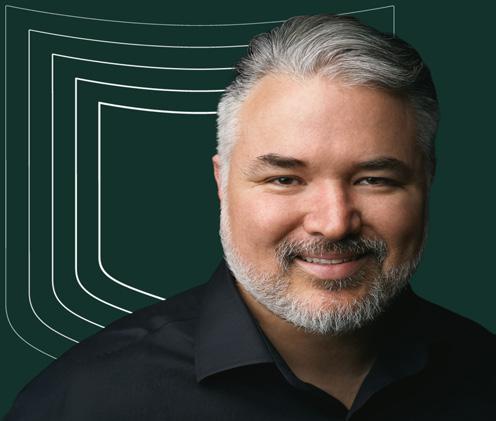
Dr. Jarret Glasscock is a geneticist and computational biologist. He currently serves as Founder and Chief Technology Officer of Cofactor Genomics, a company employing the most advanced technologies in RNA and data science to bridge The Precision Medicine Gap.
Prior to co-founding Cofactor Genomics, Jarret was faculty in the Department of Genetics at Washington University and part of The Genome Institute. While at WashU, he was involved in the Human Genome Project, published the first Cancer Genome, lead the Institute’s Computational Biology Group, and was part of the Institute’s Technology Development Group tasked with characterizing the first RNA-seq experiments on early instruments such as 454 and Illumina/Solexa(Serial #1).
Jarret’s work to leverage signals in RNA to propel Precision Medicine Initiatives has been covered by Genetic Engineering News (GEN), Tech Crunch, STAT News, and Wired Magazine. He is a member of the Personalized Medicine Coalition, International Society for Computational Biology, American Association for Cancer Research and is a Y Combinator Alum.
Steve Mennerick, PhD | Associate Dean
Degrees will be announced by Program Directors and Representatives
Steve Mennerick, PhD | Associate Dean
Arranged by Program and Last Name
BIOCHEMISTRY, BIOPHYSICS, & STRUCTURAL BIOLOGY
Rashmi Karki
Megan Michie
Rick Searfoss
Yuang Song
Yilin Wang
Lianjie Wei
Yao-Peng Xue
BIOMEDICAL INFORMATICS & DATA SCIENCE
Seunghwan (Nigel) Kim
Zitian Tang
CANCER BIOLOGY
Molly Brakhane
Alessandra DiMauro
Omar Ibrahim
Heming Zhang
Darya Khantakova
Isabelle Seppa
Judith Sokei
COMPUTATIONAL & SYSTEMS BIOLOGY
Marie Crane
Ariel Hernandez-Leyva
Ji-Sun Kwon
Jeffrey Lotthammer
Bridget Philips
Xuan Qu
Aidan Schneider
James Shepherdson
DEVELOPMENTAL, REGENERATIVE, & STEM CELL BIOLOGY
Dereck Alleyne
Ilya Strunilin
Jiameng (Linda) Sun
Daniel Veronese Paniagua
Arranged by Program and Last Name
ECOLOGY & EVOLUTIONARY BIOLOGY
Mahal Bugay
Lauren Johnson
Aryeh Miller
Sarah Swiston
HUMAN & STATISTICAL GENETICS
Joseph Bradley
Nahyun Kong
IMMUNOLOGY
Lucas James
Jehiel Abigail Ajanel Gomez
Noah Earland
Shannon Kelley
Chieh-Yu Liang
Ray Ohara
Jian Ryou
Kuangying Yang
Feiya Ou
Haley Schmidt
Alexandria Sturtz
Morgan Timm
Jeesang Yoon
MOLECULAR CELL BIOLOGY
Ariella Coler-Reilly
Emily Eul
Katherine Floyd
Sophia Gasperino
Jade Hostetler
Paul Jones
Sarah Koester
Taylor Malachowski
Arranged by Program and Last Name
MOLECULAR GENETICS & GENOMICS
Aparna Anand
Caitlin Dingwall
Hannah Dorando
Nicole Hamagami-Samson
Jessica Harrison
Gejae Jeffers
Kimberly Johansson
Lori Llaci
Reilly Sample
Sofia Smith
Christian Suarez
Yawei Wu
Cyrus Zhou
MOLECULAR MICROBIOLOGY & MICROBIAL PATHOGENESIS
Jesus Bazan Villicana
Bishan Bhattarai
Daphne Boodwa-Ko
Gowri Kalugotla
Evan Pardue
NEUROSCIENCES
Jhoan Aguilar
Apoorva Arora
Kia Barclay
Emma Pascal Danhash
Michael Fitzpatrick
Miwei Hu
Alyssa Labonte
Ki Yun Park
Sarah Pye
Jully Sadadiwala
Cassandra Thompson
Erin Wang
Junjie Zhao
JeongJun Park
Din Selmanovic
Justin Guang Wang
Zelun Wang
Chase Winholtz
Yifan Wu
Samuel Wycoff
Xiaoyue Zhu
Arranged by Program and last name
Antonio Brazelton
Christopher Harper
Arranged by Last Name
Martha Bagnall, PhD
Megan Baldridge, PhD
Grant Challen, PhD
Gautam Dantas, PhD
John Edwards, PhD
Eric Galburt, PhD
Andrew Kau, MD, PhD
Daniel Kerschensteiner, MD
Eynav Klechevsky, PhD
Barbara Kunkel, PhD
Kory Lavine, MD, PhD
Ben Major, PhD
Arranged by Last Name
Erik Herzog, PhD
Anastasiia Onyshchenko
Jonathan Myers, PhD
Phillip Payne, PhD, FACMI
Maria Remedi, PhD
John Rice, PhD
Nancy Saccone, PhD
Jim Skeath, PhD
Nathan Stitziel, MD, PhD
Thomas Brett, PhD
Jason Weber, PhD
Po- Yin Yen, PhD
Andrew Yoo, PhD
Xuehua Zhong, PhD
Heather True, PhD
The academic dress worn by faculty and degree candidates originates in the clerical robes worn by students and teachers at the earliest medieval universities. American colleges and universities adopted a code of academic dress based on these robes in 1895 that included regulating the cut and style of the gowns and prescribing colors to represent the different fields of learning. The code, which has since been updated and revised, is recommended for use by U.S. colleges and universities.
The design of caps and gowns is determined by:
Level of Degree Earned
This is reflected in the design of the gown - how full it is, whether or not it has trim on the sleeves, and the design of the sleeves.
Bachelor’s Degree
The gown for the bachelor’s degree, designed to be worn open or closed, has pointed sleeves.
Master’s Degree
The gown for the master’s degree, which can be worn open or closed, has an oblong sleeve.
Doctoral Degree
The doctoral degree gown can be worn open or closed and has bell-shaped sleeves with three bars of velvet.
The institution is reflected on the hoods for advanced degrees. The backs of the hoods are lined with silk that shows the colors of the institution granting the degree, or the institution with which the wearer is connected. Washington University in St. Louis’ hood is lined with red and green, the school’s official colors. The color of the tassel on the cap and of the velvet edging of the hood, carried forward around the throat, indicates the division of the university: white for bachelors and masters and dark blue for doctors of Arts & Sciences, brown for Art, silver beige for Business, orange for Engineering, blue-violet for Architecture, purple for Law, citron for Social Work, golden yellow for University College and green for Medicine.