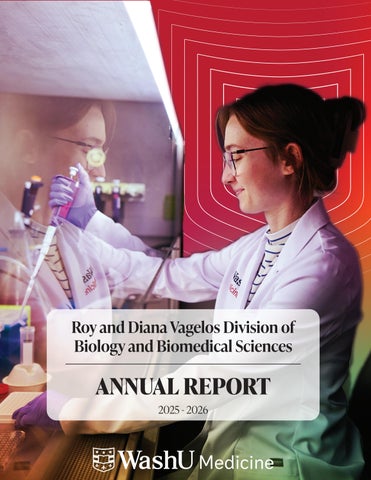
Roy and Diana Vagelos Division of Biology and Biomedical Sciences
ANNUAL REPORT 2025 - 2026
CONTENTS: 2 By the Numbers 3-4 From Our Leaders 5-11 Program Updates 12 Program Pathways 13-14 Retreats 15-16 Admissions and Recruitment 17 Faculty Celebrations 18 Staff Celebrations 19 Staffing and Leadership Updates 20 Student Celebrations 21-23 Alumni Celebrations 24 The Ongoing Legacy of Dr. Vagelos 25-29 Student Affairs 30 Hooding and Recognition Ceremony
LOCATION Medical Campus Becker Medical Library, Floor 4 Suite
COVER IMAGE: Brianna Carman, PhD candidate, Molecular Cell Biology, works under the hood while studying Wolfram Syndrome in the lab of Fumihiko Urano, MD, PhD. BELOW IMAGE: Doris Wu, PhD candidate, Molecular Genetics and Genomics (left), and Yoon Lee, PhD candidate, Developmental Regenerative, and Stem Cell Biology, (right) talk with their mentor, Andrew Yoo, PhD, in his lab at the Couch Research Building.
In memoriam — Kennedy Reed, April 23, 2000 – August 04, 2026 A beloved DBBS scholar, mentor, and community leader. Read Kennedy’s full tribute and learn how to support the Kennedy Reed Memorial Summer Program Fellowship on page 30.
WEBSITE dbbs.wustl.edu EMAIL dbbs-info@wustl.edu
SOCIAL MEDIA @washumeddbbs WASHU CNX DBBS
11
Admitting PhD Programs
151
133
Students from Disadvantaged Socioeconomic Backgrounds
First Generation Students
292
48
International Students
137
First Author Publications 111 PhD 36 MSTP
$39,700 2025-2026 Stipend
Ananda Rankin, PhD candidate, Molecular Microbiology and Microbial Pathogenesis, does research in the lab of Christina Stallings, PhD in the Center for Women’s Infectious Disease Research at WashU Medicine.
828
Total Students 643 DBBS PhD 185 MSTP DBBS PhD
738
DBBS Faculty 662 Program Members 76 General Members
Countries
3.73 Average GPA
297
Thesis Advisors
124
Faculty who have completed 8+ hours of mentorship training 3
3
I’m proud to guide a biosciences PhD training enterprise that centers the student journey, from application to hooding. As a DBBS alum myself, I particularly resonate with the narratives of alumni who have returned to contribute to our community (see pages 21-23) . These and other stories included in this year’s Annual Report show that our community is committed to developing scientific excellence alongside wellbeing, belonging, and career readiness. This past year, DBBS met its admissions goal and celebrated the largest hooding ceremony in our history. These achievements only gain meaning through the collective efforts of engaged faculty, motivated trainees, dedicated staff, and valued university partners—all evidenced in this report. Mentorship remains central to this work. We are building a culture of mentorship that extends across classrooms, labs, and career programming. Since 2023, in partnership with the Office of Postdoctoral Affairs, we have provided day-long mentorship training to 118 faculty and more than 150 postdoctoral scholars who often serve as graduate students’ primary bench mentors. Together with additional partners leading faculty career development efforts, we have strengthened mentoring skills across labs and fostered more consistent, effective support and feedback for DBBS scholars. Our collaboration with Dr. Mei Zhu (featured on page 22) and the Center for Career Engagement also ensured monthly career workshops, Pivot314 internships, and other professional development opportunities.
(Left) Steven Mennerick, PhD, talks with 2026 DBBS Molecular Cell Biology Graduate Sarah Koester, PhD.
Priorities identified at our spring DBBS-wide retreat will continue to guide our work: expanded mentorship networks, stronger community building, and deeper career integration. My vision is that every DBBS graduate leaves graduate training with a network of mentors, advisors, and supporters within and beyond WashU. Our goal is simple but ambitious: to make exceptional science inseparable from exceptional mentoring and to leverage university-wide partnerships to expand student success and career opportunities.
Steven Mennerick, PhD Associate Dean for Graduate Education, Roy and Diana Vagelos Division of Biology & Biomedical Sciences | Feighner Professor of Neuropsychopharmacology, Department of Psychiatry
4
(Left) Steven Mennerick, PhD, and Jarret Glasscock, PhD, the 2026 Hooding and Recognition Ceremony speaker.
4 One of the privileges of working in DBBS is seeing how much graduate education depends on people showing up for one another. The accomplishments in this report are important, but so are relationships that make them possible: students learning from one another, faculty mentoring students as they develop scientific judgment, confidence, and independence, and staff helping a journey feel navigable. Like Associate Dean Steven Mennerick, I am “Team WashU.” I earned my undergraduate degree here and began my career at the School of Medicine’s then-Genome Sequencing Center during the Human Genome Project. In that early work, I saw people take on difficult questions together, share expertise across fields, and make room for each other’s ideas. After years in biotechnology, I returned to Washington University by intention. Coming back felt like coming home—not only because of my own history, but because I recognized a continuing culture of rigorous science sustained by generosity and collaboration. That culture is carried forward each day by faculty and staff who invest their time, judgment, and care in the next generation of scientists. The May 12, 2026 Hooding and Recognition Ceremony was a particularly special day, recognizing 97 graduates—the largest ceremony in Division history. It is one of my favorite events because it celebrates the interdisciplinary vision that Roy Vagelos envisioned for DBBS, bringing together the next generation of scientists from across the breadth of research represented here. It also honors the people and relationships, especially faculty and staff mentorship, that help make each student’s achievement possible. As you read this report, I hope these moments stand alongside its achievements. They reflect a community built not only on discovery, but on attention: in faculty and staff who make time, share hard-won guidance, and stand beside students as they find their footing and pursue ambitious questions. I am grateful to the students, faculty, staff, alumni, and partners whose dedication makes DBBS a place where people can grow, contribute, and belong.
Cami Spampani Executive Director, Roy and Diana Vagelos Division of Biology & Biomedical Sciences
(Left) Cami Spampani, and Jeffrey Gordon, MD, attend5the DBBS 2026 Hooding and Recognition Ceremony.
5
Data from 2021-2025 About the Program: The BBSB program brings together scientists who are interested in a quantitative understanding of biological systems from single molecules to whole organisms. Students investigate topics such as protein structure and dynamics, the molecular mechanisms of nucleic acid and cytoskeletal motors, membrane ion channels, metabolic enzyme function and trafficking, immunological signaling, and more. This work informs our understanding of biological processes including DNA repair, muscle function, metabolic regulation, transcription regulation, cancer, and mechanisms of infectious diseases caused by bacteria and viruses.
2025-2026 Highlights: BBSB continued to strengthen its training and community-building efforts through a series of engaging academic and social activities. BBSB-related NanoCourses were offered on cryoEM, machine learning, qualifying exam preparation, and single-molecule fluorescence. The program also created memorable moments for participants through a talent show featuring student dance teams, music, and co-director karaoke, along with activities at the St. Louis Zoo. Additionally, the program hosted two junior faculty keynote talks, student talks, one-minute flash talks, and poster sessions, all of which helped showcase student research and foster connections across the BBSB community.
About the Program: The BIDS PhD program provides opportunities for graduate students with diverse backgrounds to gain expertise in the field of biomedical informatics, to train as future biomedical researchers and industry leaders in biomedical informatics and data science core competencies, and to engage in scholarly activities under the guidance of experienced informatics faculty. Beyond an educational program, the mission of BIDS is to support biomedical informatics practice through applied research in real-world settings.
2025-2026 Highlights: BIDS continued to build community and support student engagement throughout the 2025–2026 academic year through journal clubs and other events. The year-round Institute for Informatics, Data Sciences and Biostatics (I2DB) seminar series was organized by I2DB faculty members, providing students with ongoing opportunities to learn from experts across the field. In addition, BIDS students were able to use the fifth- and sixth-floor spaces at Becker Library, with some students also having designated workspaces, helping to create a more connected and collaborative environment.
6
6
About the Program: The goal of research within the CB program is to explain the mechanisms of the fundamental processes of cancer biology in molecular terms. Such processes include cell motility and metastasis, proliferation and growth, the tumor microenvironment, adhesion of cells to matrix and to each other, receptor-ligand interactions, DNA, RNA and protein modifications, tumor suppressor and oncogene function, and cell signaling. A common theme that unites these diverse endeavors is the desire to push the limits of our understanding of these processes to the highest possible molecular resolution.
2025-2026 Highlights: CB launched a Faculty Presentation Forum in the fall to introduce new PhD students to the labs of Cancer Biology faculty members. In this forum, each faculty member gave a 15-minute synopsis of their lab, helping students become familiar with the breadth of research in the program. The program also celebrated a significant achievement this year, with three Cancer Biology students receiving NIH F30/31 awards, the most ever awarded in a single year. In addition, the program marked an important milestone as its first class, the 2020 cohort, graduated eight students.
Data from 2021-2025 About the Program: The goal of the CSB Program is to train the next generation of scientists in technology intensive, quantitative, systems level approaches to molecular biology. We aim to graduate students who are as comfortable operating the latest high-end instrumentation as they are manipulating the mathematical formalisms that are required to make sense of their data. It is our hope that the students who join the Computational and Systems Biology Program will apply these approaches to unravel the complex genetic circuits that control the cell and to understand the genetics of human disease.
2025-2026 Highlights: CSB supported both intra-program and cross-program scientific interactions through a weekly, faculty-guided CSB-specific journal club and a weekly work-in-progress meeting in collaboration with several other programs and Next Generation of Science Scholars (NGSS) trainees. First-year students were also supported through a group advising meeting, which reviewed rotation and thesis lab affiliation timelines, procedures for requesting extensions, new registration procedures, qualifying exam logistics and timelines, and general program requirements for the upcoming year.
7
7
Data from 2021-2025 About the Program: The various research groups in the DRSCB program study problems in embryonic development and cell and tissue differentiation in a variety of model systems, ranging from vertebrates such as fish and mice to invertebrates such as Drosophila and C. elegans as well as stem cell and reprogramming models. Genetic (both classical and molecular), genomics, cell biological, immunological, and biochemical approaches are utilized to elucidate the molecular mechanisms that underlie many key processes of development and diseases. Research areas include embryo and tissue organization, cell-cell and cell-matrix interactions, and control of cell fate, differentiation, tissue specific gene expression, and pattern formation.
2025-2026 Highlights: The DRSCB program reviewed course requirements to better align with student needs. Specifically, DRSCB students may choose two of three courses in their first year: Nucleic Acids & Protein Biosynthesis; Introduction to Coding and Statistical Thinking for Genetics and Genomics; and Molecular Cell Biology. This gives students the flexibility to take two core courses in their first semester, helping to address gaps in foundational scientific knowledge across students from diverse backgrounds.
Data from 2021-2025 About the Program: As of Fall 2025, the application for the graduate program in Ecology & Evolutionary Biology transitioned from DBBS to the WashU School of Arts & Sciences Office of Graduate Studies. Current and incoming EEB students will now be served by Arts & Sciences. DBBS is proud to have supported this program and looks forward to its continued success under its new home.
8
2025-2026 Highlights: EEB students David Hernandez and Raymond Castillo co-organized the fall and spring EEB Seminar Series, which featured 26 seminars and 35 presenters. The series brought together numerous presenters and subject matter experts, providing students with valuable opportunities to engage with researchers, exchange ideas, and expand their professional networks. Additionally, EEB student Sarah Swiston designed and co-taught the new DBBS NanoCourse, Mathematical Modeling in Ecology and Evolution, an exciting example of student leadership in action.
8
Since program founding About the Program: The HSG Program, which focuses on quantitative genetic methods for understanding human disease, is being consolidated with other programs that share quantitative and genetic emphases. Although the HSG Program began to sunset in 2022, its curricular elements will be integrated into these other programs.
Nathan Stitziel, MD, PhD 2025-2026 Highlights: HSG students have continued to publish high-impact papers in the field of human genetics, and the program is proud to have graduated four additional students this year, each of whom produced outstanding dissertation work.
“What I have enjoyed the most about being a Program Director for HSG is interacting with the students, helping them to navigate situations, and celebrating their successes.” -Nathan Stitziel, MD, PhD Any DBBS student who is interested in human genetics can still explore the Human and Statistical Genetics (HSG) core curriculum and master important concepts and methods used in human genetics research through the Human Genetics Emphasis. Students wishing to complete this emphasis commit to taking two elective courses, Human Genetic Analysis and Computational Statistical Genetics. Completion is awarded with a certificate of completion and an electronic micro credential. Learn more about pathways programs on page 12.
9
9
Data from 2021-2025 About the Program: The IMM program aims to give students a strong foundation in science and immunology research through formal training and regular opportunities to connect with faculty, peers, and visiting speakers. Students present annual progress talks on their research and are provided with weekly opportunities to meet with outside immunology speakers through our seminar series. These opportunities were set up so that our students regularly interact with other immunologists at a variety of career stages, including postdocs and junior faculty.
2025-2026 Highlights: This year, IMM students demonstrated exceptional dedication, earning a 100% pass rate on the qualifying exam and advancing successfully to candidacy. The program was also pleased to celebrate IMM trainees who received the prestigious Olin & Kipnis Awards in recognition of their outstanding research and leadership. Lastly, IMM successfully launched the ImmunoLab Spotlight series, a 10-week initiative where over 40 faculty members delivered short talks to introduce incoming students to their research and laboratory environments.
Data from 2021-2025 About the Program: The mission of the MCB program is to provide rigorous training in elucidating the molecular mechanisms that underlie fundamental cellular processes in normal and disease contexts. These include autonomous and cooperative processes such as cell motility and adhesion, cell cycle regulation, transcription, translation, molecular trafficking, signal transduction, and metabolism. A unifying theme across these areas is a commitment to achieving a comprehensive molecular understanding of how cells function and adapt to internal and external pressures. By advancing mechanistic insights into these essential processes, our work enriches fundamental biological knowledge while establishing the molecular foundations for translational discovery. 10
2025-2026 Highlights: The MCB program continues to provide added support and structure for the qualifying exam (QE), which is based on an on-topic format modeled after an F31/NRSA. In August 2025, the program updated the QE guidelines to better align the process with other graduate programs and to give students clearer expectations, evaluation criteria, and rubric details. Additionally, the program will introduce two new NanoCourses in Fall 2026, QE Preparation and Proteomics and Mass Spectrometry.
10
Data from 2021-2025 About the Program: Laboratories in the MGG program leverage forward and reverse genetics and genomic and computational approaches to address key outstanding questions in all areas of biomedical research with a focus on human disease. Integrating wet and dry bench approaches, students in the MGG program advance our understanding of the genetic, cellular, and molecular basis of how cells, tissues, and organs develop and function and how alterations in these processes lead to disease.
2025-2026 Highlights: The MGG program developed a new Graduate Research Fundamentals (GRF) section that combined guided support for students as they created a customized Individual Development Plan (IDP) for their PhD training with personalized training in effective scientific presentation. Student feedback was overwhelmingly positive, and all surveyed students recommended that the GRF section be offered again next year. One student noted, “I personally found the academic planning to be really helpful! It was nice to lay out my goals with what I want to achieve at the end of my PhD, and I think it forced me to think about what I want in a long-term mindset that I don’t think I would have done on my own.”
Data from 2021-2025 About the Program: Our program is tailored to the needs and interests of the individual student and emphasizes laboratory research, supported by coursework, journal clubs and seminars. The program teaches comprehensive and modern approaches to understanding microbes and the diseases they cause. Our faculty span both the WashU Medicine and Danforth campuses. This program includes two major areas of research: Molecular Microbiology and Microbial Pathogenesis and Host Defense.
2025-2026 Highlights: MMMP has introduced three new NanoCourses on subjects including; Bioinformatic Analysis of Microbial Genomics led by Scott Handley, PhD; Basic Laboratory Techniques, led by Sebla Kutluay, PhD, and Mario Feldman, PhD; and ID Gateway, featuring invited speakers from a variety of careers, including DBBS alumni. All three courses were popular and received very positive student reviews, and we plan to offer all of them again next year.
11
11
Data from 2021-2025 About the Program: The NS program features a large and collaborative faculty that is engaged in nearly every area of modern neuroscience, from molecular studies of ion channels to positron emission tomography (PET) imaging of the human brain, and the genetics of neurological diseases. Faculty from a variety of departments serve as advisors for thesis research and as teaching faculty. The diverse expertise of the faculty ensures students gain exposure to a wide range of neurobiological challenges and research methods.
2025-2026 Highlights: We continue to be pleased with the success of our NanoCourses, which are now expanding across programs. This past year also featured outstanding student research contributions, including a collaborative finding that genetic enhancer activity is predictive of epilepsy (Boros, Gachechiladze et al.), a landmark demonstration that norepinephrine acts via astrocytes to influence synaptic transmission (Lefton et al.), and a discovery that during cancer, the immune system signals through neural circuits to influence motivation (Zhu et al.). The NS program is proud of both the breadth and the impact of our students’ research accomplishments.
Data from 2021-2025 About the Program: The PMB program trains PhD students to have a strong background in modern biology, as well as research training specific to vascular plants, mosses, algae, plant-associated microbes, photosynthetic prokaryotes, and other microbes as experimental organisms to address both fundamental and applied biological questions.
12
2025-2026 Highlights: The PMB program has made several changes to its weekly in-house seminar series, in which students present their research and works-in-progress talks, in order to increase engagement and foster a stronger sense of community. These changes include moving the meeting time, holding one seminar each month at the Donald Danforth Plant Science Center, and arranging for presenting students to receive direct feedback from a PMB faculty member immediately after their seminar. These changes have been very well received, and we have seen a significant increase in attendance, as well as a more enthusiastic exchange of ideas during and after the seminars.
12
Interdisciplinarity is central to the DBBS mission. We believe that the most impactful science is advanced by diverse teams working collaboratively across disciplinary boundaries. In addition to our interdisciplinary approach within programs, the Division supports a variety of pathway and emphasis options that further extend opportunities for specialized training, collaboration, and professional growth. Many of these opportunities are supported by fellowships that cover or supplement stipends. Current pathway and enrichment options available to students include: Cancer Biology | Chemical Biology | Cognitive, Computational, and Systems Neurosciences | Human Genetics | William H. Danforth Plant Sciences | Precision Medicine | Imaging Sciences | Infectious Disease | Interdisciplinary Training in Vision Science | Lucille P. Markey Special Emphasis Pathway in Human Pathobiology
Spotlight – CCSN Pathway Cognitive, Computational, and Systems Neurosciences (CCSN), one of our longest-standing pathways, has supported students for 15 years. CCSN brings together students from Biomedical Engineering, Psychological & Brain Sciences, and DBBS Neuroscience for courses, workshops, and thesis projects at the intersection of these disciplines. While any student may participate in CCSN’s a la carte curricular offerings, the formal pathway begins in the first two years of training within a student’s home program. A limited number of training grant positions are also available for students engaged in the full pathway. The CCSN Pathway is structured in two phases. In Phase 1 (years 1–2), students complete three prerequisite courses, at least one of which also fulfills a requirement in their home PhD program. These courses provide foundational training across the pathway’s three core areas: behavior and cognition, systems neuroscience, and neural computation. In Phase 2 (years 3–4), CCSN students receive extended transdisciplinary training through two custom-designed courses that strengthen quantitative fluency and introduce cutting-edge data science approaches. This training culminates in the development of a transdisciplinary research project. In addition, students enhance their scientific and professional skills through a range of career development activities, including mentoring junior CCSN students, organizing and participating in immersive engagements with external speakers, presenting in the CCSN seminar series, and joining informal dinners with CCSN faculty. Through these experiences, CCSN students build leadership skills, strengthen community connections, and expand their professional networks.
Timothy Miller, MD, PhD, talks with Aishwarya Nambiar, PhD candidate, 13 Neurosciences in Miller’s lab at the Fort Neuroscience Research Building
13
participants uploaded photos of plants observed on the Gateway Arch grounds.
14
PMB Retreat, Oct. 2025
14
The Division held a retreat on April 10 at the Missouri Botanical Garden, bringing together nearly 150 faculty, staff, and student leaders. The retreat centered on the graduate student experience and explored strategic challenges and opportunities related to well-being, belonging, mentoring, and career development. Sessions also focused on designing the ideal student journey, with particular attention to supporting students through uncertainty, challenge, and change, as well as strengthening student support infrastructure. In addition to these discussions, the retreat provided valuable opportunities for community building and clarity around priorities, values, and next steps related to DBBS student support infrastructure. As DBBS prepares for the upcoming academic year, our efforts will be guided by key themes that emerged from our April retreat, which focused on building a shared vision for graduate student support.
Mentorship Culture: DBBS trainees desire mentorship and coaching networks in addition to and separate from their laboratory and thesis committee environments. DBBS has collaboratively established Center for the Improvement of Mentored Experiences in Research (CIMER) training (with the Office of Postdoctoral Affairs) and Restorative Practices (with the Office of Diversity, Equity, and Inclusion). These programs and partner-led programs like #MentorFirst, Lead Your Lab, and COMPASS have strengthened mentorship culture in our training environment.
Belonging and Community: In addition to the strong communities created within our program structure, students want informal and structured opportunities for connection for trainees across all programs. Across years, students desire social gatherings and specific spaces for informal conversation and relaxation. Trainees also noted that community begins during admissions and at enrollment. They recommended the creation of a co-developed, pre-orientation guide that includes curricular and co-curricular activities, as well as information on St. Louis amenities, housing, and lifestyles.
Career Integration: We heard a clear need to move career development from a “final stage” consideration to a core component integrated throughout the entire PhD journey. To address this, suggestions included improvement in communication and clarity about opportunities to explore both academic and non- academic career pathways. One important and specific suggestion was enhancement of current alumni career panels and connections with alumni broadly. Iterative engagement with a career development plan is among five core expectations for all DBBS scholars, and updates are expected at each thesis committee meeting.
The DBBS community gathered for a small group discussion while at the Division Retreat.
15
15
On April 15th, 2026, DBBS closed the PhD admissions season as offers of admission and applicant decisions were finalized. We budgeted for and targeted 100 incoming students, including the previous season’s deferrals; we are glad to share that collectively and collaboratively we achieved that target. Thank you to the many faculty and students for their meaningful engagement during the admissions season. More than 200 faculty members signed up to read 2,011 applications and interview 260 applicants. Over 360 current students participated in roles related to the visit weekends. Finally, a huge thank you to the staff who managed much of the logistical planning and lift. Les Sutton, PhD candidate, Developmental, Regenerative, & Stem Cell Biology, talks with prospective students during an Interview Weekend Mixer.
WHO COMES TO DBBS? All about the incoming class of 2026.
2,000 Applications Recieved
27
28
Average Months of Research Experience
U.S. States Represented
3.73
12
Average GPA
Countries of Origin
9%
16
Admission Rate Prospective students gather for a poster session during an Interview Weekend.
16
To better understand why applicants chose DBBS for their PhD training, we asked our incoming class members to share the factors that influenced their decision. Their responses highlight the strengths that make DBBS an exceptional place to pursue graduate study.
Stephanie Do
Helena Heiberger
Ethan Chang
“I chose DBBS for my PhD because its community, research, and opportunities will help me become the best scientist I can be. The faculty I spoke with were not only passionate about their groundbreaking research but also eager to share their knowledge, wisdom, and support with students, ensuring they feel included and valued for their contributions. There is no doubt that WashU is a leader in scientific discovery, and the collaborative nature of the DBBS faculty fosters the exploration of more nuanced questions while creating a close-knit group of passionate scholars.”
“I chose DBBS because the Plant and Microbial Biosciences program perfectly aligns with my research interests in plant-microbe interactions. I was awarded the Ann W. and Spencer T. Olin-Chancellor’s Fellowship, which provides both funding support and the opportunity to be part of a diverse, collaborative community. I was also drawn to WashU for its beautiful campus and welcoming graduate environment.”
“I chose DBBS because it embodies the spirit of collaboration and interdisciplinary research. With my interests spanning multiple fields, I needed a program that encouraged diverse partnerships, which is precisely what I found. Additionally, my conversations with current and former students and faculty revealed a genuine, open, and welcoming community committed to both professional and personal growth. As such, I am confident that DBBS will provide the support and resources to make the most of my graduate career!”
Developmental, Regenerative, and Stem Cell Biology
Plant and Microbial Biosciences
Neurosciences
Most Affordable of America’s Top 25 Metros - Cost of Living Index
Best City Park in the U.S. - USA Today 10 Best
17
Students visit the The Gateway Arch during Orientation, August 2025.
17
DBBS mentors and educators are central to our training mission. Our faculty are world-class experts in their fields, deeply committed to student mentorship and success. They are consistently recognized for excellence in teaching and for their groundbreaking, cutting-edge research. We are proud to recognize some of our exceptionally talented faculty below.
Faculty Elected to AAAS
Dean’s Impact Awards Recipients of the Dean’s Impact Awards represent the compassion, innovation, and commitment required to build dynamic, meaningful, and community-focused efforts to improve clinical care, education, and research. Congratulations to the 6 DBBS faculty who have received this award, and all they have done in service to patients, learners, and our community.
Excellence in Education Award Congratulations to the 9 outstanding faculty members recognized with the inaugural DBBS Excellence in Education Award! Nominated by students, these faculty were honored for their exceptional mentorship and steadfast commitment to the development of our PhD trainees as scientists and professionals.
Ram Dixit, PhD David Fike, PhD Andreas Herrlich, MD, PhD Petra Levin, PhD Karen O’Malley, PhD John E. McCarthy, PhD David Pagliarini, PhD Lori Setton, PhD
Peter Burgers, PhD Yao Chen, PhD Mayssa Mokalled, PhD Colin Nichols, PhD Michael Province, PhD David Sibley, PhD
William Buchser, PhD Kevin L. Cox Jr., PhD Meaghan Creed, PhD Lijuan Feng, PhD Antonina Frolova, MD, PhD Charles W. Goss, PhD Mark Huffman, MD, MPH, FAHA, FACC Amber Stratman, PhD Fumihiko Urano, MD, PhD
Election to the American Association for the Advancement of Science (AAAS) is one of the most distinguished honors in the scientific community. This year, 9 DBBS faculty members were selected for this recognition, reflecting the exceptional breadth and impact of their contributions to science.
New Faculty Welcome to our new Program Faculty (July 2025-June 2026). Program faculty serve as principal lab advisors, mentoring students in their thesis work: Sadaf Amin, PhD | Armando Bravo, PhD | Jeffrey Brown, MD, PhD | Alexander Chamessian, MD, PhD Ganesh Chand, PhD | Elizabeth Draganova, PhD | Lijuan Feng, PhD | Doug Frantz, PhD | James Friend, PhD Whitney Grither, MD, PhD | Usheer Kanjee, PhD | Fanwei Kong, PhD | Daniel Kreisel, MD, PhD | Jan Kubanek, PhD Aaron Lee, MD, MSCI | Cecilia Lee, MD | Susan Lin, MD | Lucia Lohmann, PhD | Scott Marek, PhD Edward Marti, PhD | Toby Pennington, DPhil | Stephen Persaud, MD, PhD | Jennifer Phillips-Cremins, PhD Eduardo Rosa-Molinar, PhD | Erica Schmitt, MD, PhD | Mengcheng Shen, PhD | Aydan Szeto, PhD Samuel Taylor, PhD | Michael White, PhD We would also like to extend a warm welcome to our new incoming General Faculty (July 2025-June 2026). General faculty serve in various training and mentorship roles, such as committee members, course instructors, and career mentors: Miguel Minaya, PhD | Muhammad Ali, PhD | Lamees Hegazy, PhD
18
18
Milestone Anniversaries This year marked a milestone anniversary for 5 of our staff members, who are celebrating significant career achievements with the university. Their years of service reflect a strong commitment to professionalism and meaningful contributions to DBBS and the broader WashU community.
From left: Denise Gregoire, 30 Years | Patrice Foy, 25 Years | Shonda Dukes, 20 Years | Bridget Stubbs, 10 Years Not pictured: Stacy Kiel, 40 Years Melanie Relich, Project Coordinator II, has won the Outstanding Staff Award.
“Melanie was nominated by 22 students, which speaks volumes about the impact she has. Melanie has been with MGG since 2000 and with WashU for nearly 39 years. She has perfected the craft of student support, and it is wonderful to see her students celebrating her in such a significant way.” - Cami Spampani, Executive Director “Melanie takes the time to get to know us, and because she does this, she is able to point out opportunities around campus that might help us professionally. She is so ingrained in the world of DBBS and WashU” 19 - Rachel Baits, PhD candidate, Molecular Genetics and Genomics
Staffing and Leadership Updates
19
This past year, the division experienced key leadership and staffing updates designed to strengthen our student support infrastructure and enhance operational efficiency across our programs. Shelby Cripe Joins as Manager, Graduate Student Coordinator To further bolster our academic operations, the Division welcomed Shelby Cripe as our new Manager, Graduate Student Coordinator. Shelby joins us with an exceptional background in graduate education operations and project leadership at WashU, having recently served as a Senior Project Manager. Shelby holds a Master of Arts in Counseling from Webster University and a Bachelor of Arts in Psychology from McKendree University. Her extensive experience in higher education administration, student record integrity, and academic policy implementation—coupled with her established, strong relationships with university offices and DBBS collaborators—makes her uniquely suited to lead our Graduate Program Administrators (GPAs) and ensure the continued strength of our program operations.
Madeleine Rector Promoted to Senior Project Manager We are also proud to highlight the promotion of Madeleine Rector to Senior Project Manager. Since joining DBBS in 2023, Madeleine has made a tangible, far-reaching impact on all functional areas of the Division. Her meticulous management of documentation, creation of streamlined processes, and strategic contributions to large-scale initiatives have been vital to our operational success. Madeleine holds a Bachelor of Science in Molecular and Cellular Biology from East Carolina University, followed by both a Master of Business Administration (with a focus on Data Analytics) and a Master of Health Administration from Saint Louis University. She is also a certified Lean Six Sigma Green Belt. Her sharp attention to detail, analytical mindset, and robust technical skillset provide a phenomenal foundation as she steps into this expanded project management role.
Heather Ahrens Promoted to Associate Director of Assessment and Evaluation Further strengthening our commitment to academic excellence, Heather Ahrens, PhD, has been promoted to Associate Director of Assessment and Evaluation. Since joining DBBS as an Education Specialist in 2023, Heather has been instrumental in designing evidence-based, competency-driven frameworks, notably co-developing the DBBS Essential Scientific Skills framework for PhD training. She also led DBBS participation in the university-wide gradSERU implementation and contributed directly to strategic curriculum reform as a member of the DBBS Curriculum Executive Team. Heather brings over ten years of experience in higher education curriculum design, learner assessment, and program evaluation. She earned her PhD in Functional Anatomy and Evolution from The Johns Hopkins University School of Medicine. In her new leadership role, Heather will manage the technical design and implementation of educational assessment tools, drive curriculum mapping, and oversee strategic program evaluation methodologies to ensure our PhD training environment remains inclusive, transparent, and data-informed.
Rosie Jones Promoted to Director of Admissions and Student Affairs In a significant organizational shift, Rosie Jones was promoted to the combined leadership role of Director of Admissions and Student Affairs. Rosie joined DBBS in January 2020 as the Coordinator of Diversity and Student Affairs, quickly moving into roles as Senior Project Manager and Director of Strategic Projects. Her rapid progression reflects her profound impact on the Division, where she has spearheaded key initiatives in operational excellence, strategic division branding, restorative justice workshops, and student advocacy on the SAFE Committee.
20
Rosie brings an extensive and highly specialized academic background to this leadership position. She holds Bachelor of Arts degrees in both Women and Gender Studies and Philosophy, alongside a Master of Public Policy and Administration with an emphasis in Gender and Policy. Additionally, she is a certified Project Management Professional (PMP) and is currently an EdD Candidate in Educational Practice. In her new capacity, she oversees the strategic direction of our PhD admissions while continuing to champion wellness, community inclusion, and comprehensive wrap-around support from admissions through graduation.
20
The Division takes great pride in the diverse array of honors achieved by our students. We celebrate the recipients of the awards, fellowships, and scholarships listed below. American Heart Association Predoctoral Fellowship | American Society of Hematology (ASH) Graduate Hematology Award Ann W. and Spencer T. Olin-Chancellor’s Fellowship (OCF) | Antoinette Frances Dames Award in Cell Biology and Physiology Autism Science Foundation | Autism Science Foundation | Canadian Institutes of Health Research Doctoral Award Chancellor’s Graduate Fellowship | Croucher Foundation | DBBS Internal Student Fellowship | Dean’s Distinguished Graduate Fellowship | Dr. Michael V. Seiden Fellowship | Dr. Philip Needleman Endowed Fellowship | Gary D. Stormo Computational & Systems Biology Fellowship | Howard Hughes Medical Institute Gilliam Fellowship | Imaging Sciences Pathway Fellowship | McDonnell International Scholars Academy | MilliporeSigma Fellowship | Ministry of Education (MOE) Taiwan - Partial Scholarship | Molecular Science Software Institute (MoISSI) | National Institutes of Health Individual Pre/Post Transition Award (F99/K00) | National Institutes of Health Individual NRSA (F30) | National Institutes of Health Individual NRSA (F31) | National Science Foundation Graduate Research Fellowship | Rheumatology Future Physician Scientist Award | Spencer T. & Ann W. Olin Medical Science Fellowship | William H. Danforth Plant Sciences Fellowship
13
Olin-Chancellor’s Fellows
16
13
F30
F31
3
American Heart Association (AHA)
24
NSF Graduate Research Fellowship Program (NSF- GRFP)
Student Internal Fellowship Award Recipients The DBBS Internal Student Fellowship provides support to trainees who have limited access to external competitive fellowships that qualify for a standard merit award. Students may apply for this award after completing their thesis proposal. The fellowship is highly competitive, with up to two awards granted annually based on the applicant’s merit, the quality of the research proposal, limited access to external funding, and alignment with the DBBS mission of interdisciplinary research. The 2025 DBBS Student Internal Fellowship Awardees are Devashish Sen, Molecular Cell Biology, and Lite Yang, Neurosciences.
Devashish Sen
Lite Yang
PhD candidate, Molecular Cell Biology
PhD candidate, Neurosciences
“My goal is to become an independent scientist and lead a multidisciplinary lab focused on the basic and translational aspects of cancer immunology. The support provided by this fellowship will offer me critical training in mechanobiology and cancer immunology, which perfectly align with my career aspirations.”
“As an international student who has very limited external funding opportunities, this award provides a unique opportunity for me to reflect on my work and practice essential professional skills, such as grant writing. This award is a strong recognition for my research and really motivates me to pursue my scientific interests.”
21
Alumni Rooted in In this special alumni spotlight section, we are proud to feature four WashU PhD alumni: Chuanmei (Mei) Zhu, PhD; Anneliese Schaefer, PhD; Erin Reinl, PhD; and Ting Wang, PhD. Each alum reflects on their journey after graduating, and while each has followed a unique professional path, their roads led them back to WashU. These alumni stories reflect one of the most powerful aspects of the DBBS community: its enduring commitment to giving back long after graduation.
22
22 Mei Zhu, PhD, currently serves as the Associate Director of Career and Professional Development for PhD students and postdocs at the WashU Center for Career Engagement. In this role, she works to empower WashU’s PhD students and postdocs through comprehensive, student-centered career services and opportunities that prepare them for lifelong success across diverse career paths. After completing her PhD, Dr. Zhu pursued a brief postdoctoral appointment at the Donald Danforth Plant Science Center before building a career that spanned academia, industry, and consulting. She held positions at CTC Genomics, Bayer CropScience, and Premier Strategic Consulting, where her work evolved from bench research to client management and people development. Her varied professional experiences reflect both her adaptability and her commitment to growth.
Chuanmei (Mei) Zhu, PhD
Plant and Microbial Biosciences, 2014 “There are far more career possibilities than many people initially imagine. Beyond faculty or traditional industry roles, there are countless paths that PhDs are capable of pursuing if they remain open and curious.”
Dr. Zhu returned to WashU because learning and impact are two of her core career drivers. She wanted the opportunity to continue learning in higher education, a field in which she had not previously worked, while also making a meaningful difference by supporting students. At this stage in her career, she felt both the courage and the financial stability to pursue work that more closely aligned with her values and interests. One of Dr. Zhu’s favorite memories from her time in DBBS was connecting with the local Chinese community. Spending time together outside of work enriched her experience at WashU and added an important sense of belonging during her training. She also credits DBBS with giving her a strong foundation in research skills, critical thinking, problem-solving, and other transferable competencies that prepared her to succeed across a range of work environments and career paths.
Anneliese Schaefer, PhD, is the Professor and Lead of Communications & External Relations at WashU Medicine Neurology. She also serves as the Executive Director for the Hope Center for Neurological Disorders, the Director of the Office of Neuroscience Research, and Co-Lead of the Children and Youth Collaborative Network. One of Dr. Schaefer’s favorite memories from DBBS was being part of a lab environment that brought together graduate students from different DBBS programs, including Neuroscience and Molecular Cell Biology. Although each student approached overlapping scientific questions from different perspectives, all were studying the synapse—how it forms and how it functions—in the model system C. elegans. She found it especially rewarding to engage with these different scientific viewpoints, which enriched both her research experience and her appreciation for interdisciplinary collaboration. Another memorable part of her training was the series of first-year student lunches with faculty members. These gatherings gave students the opportunity to hear faculty share their personal histories and perspectives on work-life balance, among other topics. Dr. Schaefer valued the way DBBS created space for meaningful connection and informal learning.
Anneliese Schaefer, PhD Developmental Biology, 2001
“My training in DBBS reinforced the collaborative spirit that is unique to WashU, and that has carried through to Hope Center‘s mission and vision.”
When she began in DBBS, Dr. Schaefer’s goal was to run her own lab. Toward the end of graduate school, as she considered postdoctoral opportunities, she attended the Society for Neuroscience meeting, where she had the chance to hear from Paul Greengard and Eric Kandel, who had recently won the Nobel Prize. She has never forgotten Paul Greengard’s advice: that one can either stay with the same scientific question and change the system, or remain in the same system and change the question. Because her PhD work in C. elegans had already led her to become deeply interested in synaptic biology, she realized that changing the system made the most sense. For personal reasons, it was simplest for her to remain in St. Louis, and she was fortunate that Josh Sanes and Jeff Lichtman, both experts on the vertebrate neuromuscular junction, were also at WashU. She ultimately received a Helen Hay Whitney Postdoctoral Fellowship, which helped validate her decision to pursue her postdoctoral training at the same institution. 23
23 Erin Reinl, PhD, is an Assistant Professor in Obstetrics and Gynecology and the Program Director for the Master of Science in Reproductive Sciences program. Over the past several years, she has been part of a small team that developed the framework and curriculum for the program. Now, as the program launches, she is involved in developing and implementing curriculum content, directing courses, overseeing admissions and recruitment, and mentoring students. In her research, she works with collaborators to study mechanisms of uterine contractility, with a focus on oxytocin signaling in uterine smooth muscle cells.
Erin Reinl, PhD
Molecular Cell Biology, 2016 “By having the opportunity to present at numerous lab meetings, seminars, journal clubs, and conferences during my time in DBBS, I gained more confidence in public speaking, came to understand my own work at a deeper level, and improved my ability to convey scientific concepts to others.”
Following graduation, Dr. Reinl completed a postdoctoral fellowship at the University of Maryland in Baltimore with Margaret McCarthy, where she studied the role of immune cells in sexual differentiation of the developing rodent brain. During her postdoc, she also gained additional teaching experience through the Collaborative Teaching Fellowship Program, which helped spark her interest in pursuing teaching as a career. Around that same time, her PhD advisor, Sarah England, shared an opportunity at WashU to help develop a new master’s program in reproductive sciences. The position felt like the perfect fit. Some of Dr. Reinl’s favorite memories from her time as a DBBS student center on the friendships she formed and the time spent together in and around St. Louis. She also valued the social connections made through university-organized gatherings, especially the intramural softball league, where she met many friends and eventually her husband. Her training at WashU supported her professional ambitions in numerous ways, including teaching her how to do rigorous science with a critical lens, preparing her to publish her research, how to form relationships, and earn the trust of her scientific colleagues. Ting Wang, PhD, is the Sanford and Karen Loewentheil Distinguished Professor of Medicine and Head of the Department of Genetics at WashU Medicine. He currently directs the NIEHS Environmental Epigenomics Data Center, the Human Pangenome Reference Consortium, the IGVF Data Administrative and Coordination Center, the SMaHT Network Organization Center and Genome Characterization Center, and the Multi-Omics for Health and Diseases Data Production Center.
Ting Wang, PhD
Computational and Systems Biology, 2006
“While a thesis lab lets you go a mile deep, DBBS is a broad, inclusive community that lets you go many miles wide. My DBBS training has helped me to be more open minded and balanced.”
Before entering DBBS, Dr. Wang spent 3.5 years as a technician at WashU. After earning his PhD, he completed postdoctoral training as a Helen Hay Whitney Fellow at UC Santa Cruz. Ultimately, he was recruited back to WashU, where he launched his own lab in late 2009. He credits his return to the university’s high-caliber science, laid-back Midwestern mindset, and the strong network of friends and colleagues he had maintained since his time as a technician. Dr. Wang is an internationally recognized geneticist whose research explores the genetic and epigenetic impact of transposable elements on gene regulation. He and his group are known for defining the widespread contribution of transposable elements to the evolution of species-specific gene regulatory networks, as well as to the conservation of 3D genome architecture. Their work has also revealed that epigenetic dysregulation of transposable elements is a major mechanism driving oncogenesis.
Alumni Outcomes
15% 24
36% Business 13% Medicine 10% Law 6% Journalism 6% Non-Profit 6% Teaching 3% Student
24
The Ongoing Legacy of P. Roy Vagelos, MD, has built a legacy few can match — spanning scientific discovery, business innovation and ethical leadership that’s transformed lives worldwide. At WashU Medicine, he founded the Medical Scientist Training Program and the Division of Biology and Biomedical Sciences (DBBS), WashU’s PhD training program in biosciences. Vagelos later spent 19 years in the pharmaceutical industry — first as president of Merck Research Laboratories, then as CEO and chairman — carrying forward the commitment to scientific rigor first instilled at WashU Medicine. At Merck, he revolutionized drug discovery by moving beyond trial-and-error methods to a strategy grounded in biochemistry — targeting enzymes, receptors and ion channels to develop more effective therapies. This approach fueled a golden era of innovation, producing breakthrough drugs like the statins Mevacor and Zocor, the heart failure drug Vasotec and the M-M-R®II vaccine. Under Vagelos’ leadership, Merck became the industry’s leading biopharmaceutical company, and throughout, he maintained that science — not profit — must guide discovery. Vagelos’ ethical standards earned admiration from researchers and Wall Street. In 1987, he set a global precedent for corporate responsibility when Merck announced it would donate ivermectin (Mectizan) free and indefinitely to combat river blindness, a debilitating parasitic disease common in Sub-Saharan Africa, Asia and Latin America. This led to the creation of the Mectizan Donation Program, which has helped eliminate the disease in multiple countries.
Vagelos proved that great science, ethical leadership and global impact go hand in hand. As former WashU Medicine Dean David H. Perlmutter, MD, notes, “He became the world’s most shining example of what you can do in a physician scientist career.” 25
25
Career and Professional Development Month
Graduate & Professional Student Appreciation Week (GPSAW), held during the second week of Career and Professional Development Month, brought our community together for a week of connection, celebration, and well-being. Events included a Sweet Connections treat party with the Office of Graduate Studies, featuring chocolates from around the world; a Paws and Pause event, which gave students the chance to relax with brownies and visit with the WashU PD therapy dogs Brookie and Bear (pictured below); professional headshot opportunities; and opportunities on social media to recognize students’ support networks.
11
200+
Division Sponsored Events
Participants
9
19
Student Groups Involved
Community Organizations Present
Winter Warm Up
On January 15, 2026, students gathered to pick up their DBBS-branded fleece jackets and enjoy a festive, welcoming event featuring cookies, a hot cocoa bar, candy, and a photobooth. A total of 117 fleeces were ordered for students, and the event also provided an opportunity to tour the DBBS suite and meet DBBS Central staff members.
Race to the Finish
DBBS proudly hosted multiple sessions of Race to the Finish throughout the year. This special event honors graduates as they reach one of the most significant milestones of their academic journey, defending their thesis. The event serves as a powerful celebration of the resilience, dedication, and perseverance that carried our graduates to the finish line. In recognition of their achievements, students were presented with a monogrammed WashU champagne flute. Graduates, faculty, and staff shared heartfelt remarks, celebratory toasts, delicious food, and meaningful opportunities to connect with career resources and stay involved in the DBBS community. Students share a meal together at the Race to the Finish Event during Spring 2025.
26
26 Fall Ball
The Division’s inaugural Fall Ball took place on Saturday, November 11, 2025, at Risa Commons. This event was suggested, planned, and brought to life entirely by DBBS student leaders. 187 DBBS students participated in the festivities, which included dinner and dancing.
“I had a great time at the Fall Ball! I was able to dress up, be in a fun atmosphere, and reconnect with fellow students! I’m excited to be on this year’s committee to make this year’s event a better experience, and to promote a positive environment where DBBS students can feel belonging and support.” - Emily Luc, PhD candidate, Developmental, Regenerative, and Stem Cell Biology
Wednesday Wraps
Wednesday Wraps are monthly events designed to keep students informed, connected, and engaged through rotating topics of interest. Throughout 2025-2026, highlighted themes included: admissions and recruitment, curriculum feedback, governance updates, and meeting the Ombuds. These sessions provided a valuable opportunity for students to stay informed of important information, ask questions, and connect with campus resources in an approachable setting.
“In grad school, it is very easy to fall into a pattern of being consumed by your work, but being able to take a break during the day to engage in fun activities with my peers helps me avoid that and return to my work with heightened spirits and a renewed vigor. Whether it be trying new food at the Chat + Global Treat Parties, catching up with my mentee at Peer Mentor Breakfast, or setting for my teammates at the annual DBBS volleyball tournament, I love being able to contribute to a DBBS community that is so connected, something I really cherish as a core facet of my grad school 27 experience.” - Aadit Mukherjee, PhD candidate, Molecular Genetics and Genomics
27 INSPIRE Conference & Career Expo
The Association for Black Biomedical Graduate Students (ABBGS) hosted the fourth annual INSPIRE Conference on April 9. INSPIRE, short for The Interdisciplinary Conference for Networking, Supporting, and Promoting Inclusive Research Endeavors, is designed to connect the WashU and greater St. Louis scientific community with historically underrepresented scientists while also promoting professional development opportunities for trainees. The conference is open to all scientists. This year’s conference featured keynote speaker Avery August, PhD, and provided attendees with valuable opportunities for learning, networking, and community building. Following INSPIRE, the Society for Advancement of Chicanos/Hispanics and Native Americans in Science (SACNAS) and the Graduate Association of Latinx, Native American, and Caribbean Students (GALNACS) hosted their annual Career Expo. The event brought together a variety of organizations and companies, each hosting booths where representatives met with students to share information about career paths, industries, and professional opportunities. The primary goal of the expo was to help students network with professionals, explore diverse career options, and gain insight into different fields. This year’s event was open to all scientists and featured 16 booths, giving students meaningful opportunities to connect, ask questions, and build professional relationships.
Sierra Wallace, PhD candidate in Molecular Genetics and Genomics, presents during INSPIRE Conference.
HER Symposium
The inaugural Honoring Excellence in Research (HER) Symposium was held by Women in STEM (WiSTEM) on March 31. The symposium included panel discussions, talks, and a poster session. The keynote speaker was Lynn Cornelius, MD, who gave a talk entitled “Elevating Excellence: Advancing Women’s Health Through Women’s Research.” The winner for best talk was Kevin Prifti, PhD candidate, Molecular Cell Biology and winner for best poster was awarded to Anupama Melam, PhD candidate, Cancer Biology.
FROM 28LEFT: Abigail Stack-Nothstine, MS, Kiona Elliott, PhD, Kelsey Tinkum, PhD, Arnesia F. Terrell MA, CDP, CPG, CADDCT, and WiSTEM President Kaci Mitchum, PhD Molecular Genetics and Genomics, participate in the Gender Equity in Industry Panel during the HER Symposium.
28 Next Generation of Science Scholars (NGSS)
The Next Generation Science Scholars (NGSS) program – Graduate Division is open to all STEM PhD students and post-baccalaureates at WashU. Its mission is to provide a supportive community through networking events, scientific outreach and engagement with surrounding communities, and near-peer mentoring for research-focused WashU undergraduates from first-generation and low-income backgrounds.
“The NGSS program has been a pivotal source of support throughout my Ph.D. journey here at WashU. NGSS has allowed me to build a strong sense of community with my peers in a way that has been both fun and rewarding. What stands out most to me is how NGSS has provided guidance, resources, and encouragement through every major milestone of my graduate training, from navigating coursework and qualifying exams to professional development and research. Knowing that there is always a community invested in my success has made the challenges of graduate school feel much more manageable, and I truly credit that support as an important part of the successes I’ve achieved throughout my Ph.D. journey.” - Kennedy Reed (April 23, 2000 - August 04, 2026)
29
NGSS students, including Kennedy Reed (first row far right).
29
The Division hosted our Hooding and Recognition Ceremony on May 12, 2026, recognizing 97 graduates. This marked the largest participating class in the Division’s history. This year’s celebration honored not only the extraordinary achievements of our students, but also the dedication of the faculty and staff whose mentorship helped shape each student’s academic journey. The Ceremony’s Alumni Keynote speaker was Jarret Glasscock, PhD, Founder and CEO of Cofactor Genomics. In his remarks, Dr. Glasscock encouraged graduates to embrace ambition and resilience as they move into the next chapter of their careers.
“My specialty did not define my career opportunities. As you venture into the world, remember your foundational training can go anywhere.” - Jarret Glasscock, PhD
97 Participating Graduates
30
30
The DBBS and WashU Medicine communities mourn the loss of Kennedy Reed, whose life was celebrated through memorial services that reflected her deep commitment to family, faith, scholarship, and service. Kennedy’s passion for science, dedication to her community, and unwavering pursuit of excellence left a lasting impression on all who knew her.
Scan to Donate & Honor Kennedy’s Legacy
To honor her memory and legacy, WashU has established the Kennedy Reed Memorial Summer Program Fellowship Fund. This memorial fellowship honors Kennedy’s commitment to education and scientific excellence by supporting an ongoing partnership with her alma mater, Alcorn State University. Contributions will sponsor two Alcorn State undergraduate students annually to participate in a summer research experience in Roy and Diana Vagelos Division of Biology & Biomedical Sciences (DBBS) laboratories at WashU. Through this fellowship, Kennedy’s impact will continue to inspire and support future generations of researchers, ensuring that her passion for learning, mentorship, and scientific advancement lives on. We are grateful to all who have contributed their support and helped celebrate the remarkable life and legacy of Kennedy Reed.
31
Kennedy Reed (left) poses with friends at Poster Event.
Roy and Diana Vagelos Division of Biology & Biomedical Sciences September 2026, All Rights Reserved