International Journal of Emerging Trends in Engineering Research
Available Online at http://www.warse.org/IJETER/static/pdf/file/ijeter031132023.pdf

https://doi.org/10.30534/ijeter/2023/031132023

Available Online at http://www.warse.org/IJETER/static/pdf/file/ijeter031132023.pdf
https://doi.org/10.30534/ijeter/2023/031132023
1Department of Software Engineering, Babcock University, Ogun State, Nigeria, ajayiw@babcock.edu.ng
2Department of Computer Science Babcock University, Ogun State, Nigeria omoghene0416@pg.babcock.edu.ng,
3Department of Computer Science Babcock University, Ogun State, Nigeria arowosegbe0409@pg.babcock.edu.ng,
4Department of Computer Science Babcock University, Ogun State, Nigeria oladotun0028@pg.babcock.edu.ng
Received Date: January 29, 2023 Accepted Date: February 27, 2023 Published Date : March 07, 2023
This paper addresses data management threats, challenges, and measures for mitigation of such data threats in the telecommunication industry. The telecommunications industry handles tonnes of essential, personal and sensitive data on staff, clients and customers. This data is critical in developing product lines and marketing strategies for telecom companies, opening them up to opportunities that otherwise would have been beyond their reach. As a result, telecom companies’ databases are rendered vulnerable to violation and unauthorised access from insiders, third-party entities, as well as hackers. They have become premium target for cyberattacks, malware, interference, data theft and loss of vital data. While systems for the management of data in the telecom industry are crucial in gathering, storing, and analysing data, it is equally important for such systems to be efficient enough to provide a safe and secure mode of accessing, analysing and storing data assets. This is to prevent illegitimate use of sensitive data, cyberattacks, malware and data infringements on telecom data assets.
Key words: Cyber-attacks, Data management, Data processing, Data security, Data storage, Data threats, Telecommunication.
There are various definitions for data management. One study on the subject defines data management as forming, applying and handling procedures and guidelines that secure data and information resources, and enhance the usefulness through its lifecycle [1]. Data management is also defined as the methods involved in pulling together, preserving, and using data in a fashion that guarantees its continued confidentiality, utility and cost-effectiveness over the full information lifecycle, from creation to archiving and subsequently disposal [2].
Data management is a key component for developing the IT infrastructure that powers business operations, and provides data-driven function and tactical plans by management teams, stakeholders, and clients [3]. The aforementioned suggests that data is crucial to the expansion and development of many industries. Data is a veritable business resource, valuable in its efficacy in directing marketing leads, advancement of company operations, and determining bestbusinesspracticetoreduceexpenditure whileincreasing profits.
The scope of data management operations is extensive. It covers a wide range of activities from the capacity to decide consistently how to derive insightful information from data, to the technical implementation and performance of databases. As a result, both technical and non-technical (i.e., business) abilities are needed for data management. To guarantee that a company has high-quality data that satisfies its strategic needs, responsibility for managing data must be divided between business and information technology roles, and individuals in both fields must be able to work together. Having established the importance of data, an organization cannot effectively manage data without a proper Database Management System (DBMS).
A database management system can be said to be a software program that holds organised data and gives authorised users access to desired information [4]. The DBMS consists of the stored data along with the necessary tools and facilities to access it. The primary purpose of the DBMS is to put forth a platform that facilitates a safe, easy and straightforward mechanism for the collection, organising, storing and retrieval of data.
The databases in the telecommunication industry are highly susceptible to infringements, illegal activity, data theft and cybercrimes. However, there is limited information on the
extent of harm data management systems are at risk of. Sensitive and private data ofclients and customers are stored and utilised onadailybasisinthetelecomindustry,exposing it to unauthorized usage and exploitation by insiders, thirdparty entities and hackers. Securing the database of the industry is therefore ensured by implementing safety protocols that effectively prevent the occurrence or continuance of data management threats and attacks in the system.
The aim of this work is therefore to discuss the features and characteristics of a telecommunication system; and to categorise and expatiate on various data management threats in the telecommunications industry. This work will also help to identify challenges in maintaining an efficient data management system, and finally to proffer effective data management measures to assure security of data assets in the telecom industry.
The purpose of this research work is to examine the situation of data management, specifically in the telecommunication industry, and to define methods that would be beneficial to telecommunication companies to appreciablyimprovedata managementintheirprocesses. An array of related literature was carefully investigated to verify facts, draw conclusions and proffer recommendations. Additionally, previous research works were explored to derive a holistic approach for proposing certain recommendations for data management. This work comprises features of data management, concerns, and methods of mitigation as it relates with these concerns.
Telecommunications, also called telecom, is the electronic transmission of voice, data and video information over distances, using various types of technologies [5]. The science of telecommunication encompasses the use of various communication technologies and devices including mobile phones, PCs, radios, cable television, and the internet, through wire, fibre-optics, or other electromagnetic systems [5] [6]. The focus of contemporary telecommunication is fixed on tackling the complications of conveying enormous volumes of information across significant distances, while preventing interferences, noise or damage to transmitted signals.
In the most basic sense, the components of a telecommunication network include a transmitter to catching signals, a medium of transmission of collected signals, and a terminal computer to receive information and process it to useable form [7]. More expansively, modern telecommunication companies have in addition to the components listed above, input and output devices, telecommunication channels, processors, control software, messages and a protocol system [8].
Input and output devices: These are the terminals in a telecommunication system; they act as the beginning and ending points of all communications within the system.
Telecommunication channels: These comprise of the different types of wires, fibre-optics, wired and wireless radio frequencies which send out and receive data.
Telecommunication processors: These are apparatuses which handle maintenance and regulatory operations of the telecom system. They are responsible for such operations as translating analogue data to digital and vice versa.
Control software: This component is designed to enable and facilitate hitch-free functionality and the smooth working of activities in the telecommunications system.
Messages: These are the actual data being conveyed. They comprise of audio, video and graphical data.
Protocol:Thisprocess manageshowthe systemdeals withthe various types of data in transmission. Within the telecom system, various protocols exist for communication over mobile phones and communication over the internet, such as GSM, GPRS, EDGE, HTTP, SMTP and TCP/IP
The telecommunications industry handles an immense volume of data – including personal data- generated from mobile phone usage, call logs, new customer signups, data plan activations, payments etc. [9]. This data is extremely valuable in providing up-to-date information useful for telecoms companies to enhance their services, predict payments as well ascustomer needs,and fulfilregulatoryrequirements[10].The volume of data is constantly increasing, hence requiring telecom establishments to improve on their data management strategies, as well as resolve issues pertaining to data management.
An efficient telecommunications company is one whose data management systems make for the accessibility, usability, integrity, and security of enterprise data assets, including clientele personal data [11]. By this, the data assets of the organization are maintained at a consistently uniform and accurate state. Examples of telecom networks include computer networks, Cable TV networks, telephone networks, the internet – being the most extensive example of a telecommunication network – and, broadcasting systems [5].
Data management comprises of gathering, storing and making use of data in an easy but secure, professional and economic way; with the goal of implementing measures capitally beneficial to the organization [12]. A comprehensive system ofdatamanagementisavitalaspectofthetelecommunications industry, because ofthe volume ofdata managed dailyby such organizations.
A research study indicated some challenges of data management in telecoms to be data integration and quality [13].Itnotedthat“results are only as good as your data
quality,”assuch,inmanytelecomorganizations,dataintegration, cleansing and reconciliation consume a greater portion of time delegated to any data analytics project, than the actual analysing of the data. Furthermore, resources abound for the integration and cleansing of data, however, data reconciliation continues to be a tedious operation [13].
Another study that evaluated the common problems in the telecommunications industry found challenges in improving network capacity, predicting turbulence and customer churn (loss of clients or customers), customer sentiment analysis and developing new product lines [14]. In the study, it was discovered that Big Data analytics are highly effective in resolving these challenges.
The term "Big Data" describes datasets that are too massive or diverse for use with the standard or conventional approach to data processing, such as the Extract, Transform and Load (ETL) method [15]. Big Data is typically defined as having five main features: volume, value, variety, velocity, and veracity [16]. In order to handle a vast and rapidly expanding data pool that is stored in a variety of file formats, telecom agencies and other businesses use big data processing applications. Management of Big Data is profoundly valuable in its ability to provide quality data, and secured ease ofaccess to data for business intelligence and big data analytics applications [17]. It is being used by businesses to make databased decisions, including security of company data assets, development of new product lines, improvement of existing products, predictive system maintenance, improving customer experience and enhancing operational effectiveness [12]
In the telecom industry, big data management is majorly advantageous as it unravels significantly large collections of data from highly diverse sources such as call records, server logs, phone billings, social sites, and helps businesses extract valuable information from them for informed business decisions [17]. A significant advantage of big data to the telecommunications industry is its ability to rapidly detect erroneous transactions in the database, illicit or other unlicensed activity, as well as anomalies in data assets indicativeofpresentorpotentialdatasecurityandnon-security issues [18].The prompt discoveryand categorisation oferrors, fraudulent activities and other data qualityissues enables rapid action to prevent further escalation of such situations. It also makes allowance for appropriate management procedures to be set up.
Inastudythatevaluatesthe valueofdata managementtoany organization [10], data management techniques were described as including:
Data preparation: A process of cleaning and organizing data into a form usable for processing and analysis.
Data pipeline: Involves the moving or transferring of data from its source to its destination.
ETL (Extract, Transform, Load): The extraction of data from multiple sources, transformation, and loading of data into a single repository called the warehouse.
Datacatalogue: Makesuseofmetadatatodescribeafullpicture ofthedata, givingdetailsofchanges,locations,and dataquality, as well as easy access to the data.
Data warehouses: These are locations to combine diverse data sources,handlethenumerous datakindsthatfirms maintain,and offer a clear path for data analysis.
Data governance: Includes policies and standards that organizations employ to improve the accessibility, reliability, and security of its data.
Data architecture: Describes the management of data, from collection to transformation, dissemination, and consumption. Data security: Processes employed to protect data from harmful, unauthorized and illegitimate access.
Data modelling: Visual representations of data elements and associations in an application or organization, using texts and symbols.
In using these techniques, critical functions of data are made faster and easier. These functions of data include visibility, where a telecom company’s data assets are made easily accessible to authorized personnel for analysis. Reliability ensures minimal errors in data that is to be used to determine customer needs and improve company product lines. Efficient data management guarantees the safety and security ofcompany data. Telecom companies rely heavily on personal data, and as such, must provide a safe and secure data management system to safeguard company, staff and client data from loss, theft, interference, and unauthorized usage through the use of verification and encryption tools. In addition to managing client data, it is in charge of maintaining data security, managing network resources effectively, and making sure legal requirements are followed [19]. Furthermore, data management strategies allow for effectual scalability and concurrent usage of data by the organization to avoid time wastage in data analysis, as well as cost-effective repetition of queries [10].
The proficiency of a telecom company’s data management system is visible in its ability to grant authorized users the means to create, alter, manage and safeguard data in the company’s database [20]. Data management systems also provide a platform that gives multiple users from different locations secure and rapid access to the data in a controlled manner, concurrently. Users within the network are able to interact with the company’s data assets at the same time, without interruptions or interference with one another. It also affords administrative control tasks such as observing and regulating efficiency, safety, backup and restoration of data in the organisation database [20].
Lapses in data management are made possible when there is less than optimum incorporation of computer technology, maintaining compatibility with telecom [21]. According to the study, these established data management needs necessitate customized telecom inquiry infrastructure, large amounts of detailed data and time-sensitive requirements, a combination of traditional and real-time bases, a widespread dispersion encompassing several nations, the use of particular telecom standard interfaces to interact with legacy telecom platforms [21].
Telecomcompaniesareknowntobeatreasurehouseofdata; this makesthemsusceptibletonumerousvulnerabilities.The data obtainable is highly prized by telecom companies as well as other industries to meet market needs, and therefore must be protected from breaches. Data management infringements could result from cybercrimes, malware, negligence, software failure, etc.
Malware: Known as Malicious Software in full, malware describes a software that is secretly installed on a computer primarily to intrude upon the victim, and compromise the privacy, consistency, or ease of use of the victim's data, programs, or software system [22].
Supply Chain Risks: Thereisalsotherisktoacompany’s data that is constituted by third-party vendors within the telecoms supply chain such as web hosting services, data administration services, service vendors, collaborators, etc. Where these middle-men vendors lack a formidable and reliable cybersecurity arrangement, hackers are given easy access into the telecom network. There are numerous intermediaries and third-party entities that the telecom sector deals with. Ifthe cybersecurity integrity levels ofthese thirdparty agencies or individuals are weak, it gives hackers illegitimate access into the telecom network. Some of the middle-men that the telecom sector interacts with include vendors, web hosting companies, data management services, managed service providers, collaborators, etc. For hackers to do significant harm, all that is required is one weak link in the supply chain [23].
Insider Threats: Insider threats constitute one of the greatest hazards facing the telecom sector. It alludes to a lapse in security caused by insiders or employees of the telecomcompany. Risks from company personnel are of two kinds:vindictivenessfromdisgruntledstaff,andcarelessness or a lack of awareness of the hazards associated with their activities. Hackers take advantage of frustrated and dissatisfied employees to perpetrate cyber-attacks and other malicious activities in company databases. Also, cyber problems have escalated with the expansion in remote or virtual work practices and access to unsecure networks. Cybercriminals could spam a company's emails with malicious links in a procedure known as phishing. Phishing appears to be one of the major threats to telecom firms [23].
DNS Attack: A Domain Name System threat is any attempt to compromise the security, dependability, or stability of the DNS service on a network. Cyberattacks that leverage DNS threats as part of their larger attack strategy, such as cache poisoning, are also classified as Domain Name System attacks [24]. They include:
Network Floods: This involves “flooding” or inundatingthenetworklinktotheDNSservers,thereby leaving the service unavailable to other network users.
Software Vulnerability: This is exploited to generate spurious records in the DNS database, or cause a system failure in the DNS server.
Unauthorized Update: Authoritative name servers are able to receive dynamic updates, which effectively allows them to instantly produce new DNS records. Attackers might use this feature to insert illegitimate files or records in the DNS zone, though.
Subdomain Attack: This is a form of DoS assault whose objective is to deplete the authoritative name servers of resources to the extent where they are unable to reply to genuine requests.
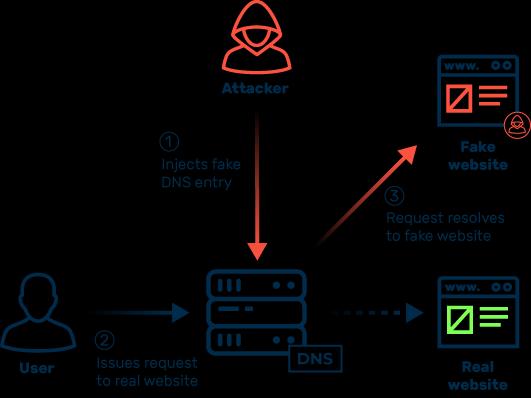
Cache Poisoning: This seeks to tamper with the cached replies, rendering them unusable for any further queries fromother clients. Figure 1 shows DNS Cache Poisoning redirecting issued requests to a fake website.
Data Exfiltration and Tunnelling: Domain Name System Tunnelling is a broad approach that encrypts communication and data in DNS requests and responses, primarily to avoid recognition Owing to the constantly altering of domain names and the chosen encodingdecodingstructure,itisverychallengingtoidentifywhen someone utilizes DNS Tunnelling to extract delicate information out of the intended domain [24].
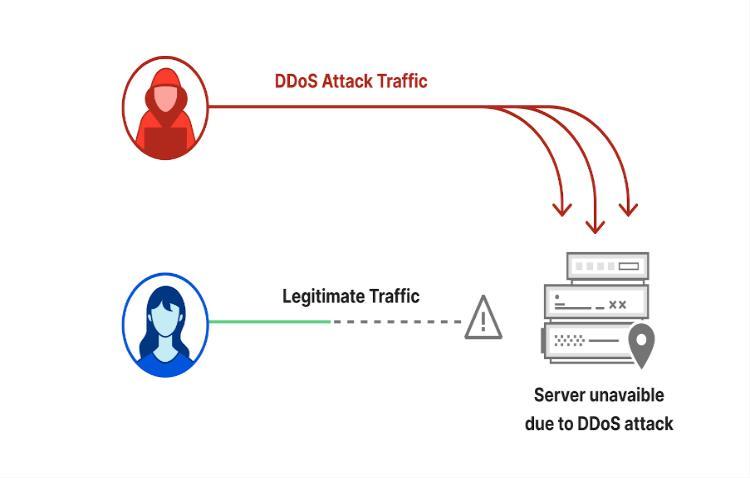
DDoS Attacks: (Distributed Denial of Service) These assaults are a type of hostile cyberattacks that temporarily or permanently stop a host that is connected to the Internet from providing its services. Cyber-terrorists and hackers employ these cyberattacks to prevent the legitimate users ofawebsite,networkservice, orwebserver fromaccessing it. The telecom sector has been the target of more DDoS assaults than any other sector, making it one of the most prevalent types of cybercrime. By concentrating their efforts on Internet Service Providers, these assaults result in data breaches and identity theft, compromise internet access, cause service disruptions, and trigger the rise of traffic costs [26] [27]. Figure 2 below shows a diagrammatic representation of how DDoS attacks prevent legitimate traffic.
[28]
Employee Negligence: It appears that employees are unaware of the types of security dangers that the telecoms industry faces; frequently, employees unintentionally and accidentally start security breaches [29].
Internet of Things: IoT use has increased in recent years, and as moredevicesareconnected tothenetwork,thedanger exposure is also growing. IoT adoption is very risky due to the large number of endpoints with weak security. System flaws and weak passwords are some of the main concerns connected with IoT [23].
Loss of Data: This could be brought on by lost or stolen portable devices, worms, viruses, or malfunctioning networks.
Government Surveillance: This involves hacking perpetrated by the government to covertly and virtually gain entrance into networks and all the sensitive information stored in them. Governments covertly hack networks and personal devices. This is done to modify data by destroying, corrupting or installing data; restoring access to data that has already been erased; it could also be adding or altering code to modify or enhance functionality. Additionally, government hacking serves to compromise the level of security of infiltrated networks, and potentially even the internet as a whole [30].
The relevance of mobile technology and the sensitive data stored by telecommunications companies is on a fast-paced rise, therefore necessity is laid on the telecom industry to efficientlyand effectivelymanagetheirdatabase.Itiscrucial that telecommunications providers secure their databases circumspectly using effective resources and technologies to prevent breaches and infringements [19]. A study [31] outlined telecom data management challenges to include:
Exploding Data Volumes: Telecom companies are overwhelmed with the amounts and various types of data being collected from different sources per time. These disparate data types include data obtained from machine
learning algorithms, sensory data, 3D models, location-based information, videos, etc IoT networks, AI algorithms, data transmitted throughout the extended network of collaborators and ecosystem constituents, data produced from communicating with clients via social media, data created through transactions, etc., are all sources of data. When these additional data types and streams are integrated into operational databases, it creates problems of data redundancy, weak data integrity, data homogenization challenges and constraints in data reuse. This leads to difficulty in keeping track of data types and sources, restricting data insights, and escalates data storage costs [31].
Time-Consuming Data Preparation Tasks: Reports show that about 45% of Data Scientists’ time is spent sorting and preparing data for analysis [13]. The process of data preparation has proven to be an exhausting, time- and costintensive ordeal that involves processes like:
Data exploration to categorize sources of data
Data characterizing to verify features and quality of data
Data importation into data warehouses or cloud-based storage using intricate Extract, Transform and Load (ETL) processes
Data cleaning to manage data inaccuracies such as misplaced data, erroneous data, or invalid data
Data enrichment to fill in lacking information including location or date
Dataconversiontotransformdatafromonecomposition to another.
Due to the increasing volume of data in the telecom industry, Data Scientists are forced to sort through tonnes of data to extricate actual valuable information. This process of data preparation is intensively laborious and the data is susceptible to inconsistencies, errors and unavailability [31].
Talent shortages: Many telecommunications companies are low on qualified data scientists and data engineers. Data engineers whose job it is to design data pipelines and architectures capable of dealing with complex data management processes are mostly lacking in the industry. Hence, the available data scientists are saddled with the responsibilities of the data engineers as well as theirs. The rate of extraction of valuable data is this greatly slowed.
There are many factors contributing to the rising dearth ofdata science and engineering skills :
High demand exists for data experts and data professionals require progressively high salaries accordingly.
The skilled workforce for data is still modest because data science and data engineering are relatively new professions.
Data scientists and data engineers need a variety of technical competencies that one data professional might not possess.
Data preparation is a labour-intensive procedure that needs perseverance, meticulous precision, which are qualities that can take years to master. [31].
Data privacy and accessibility: Data security is of major interesttotelecomcompaniesaswellasothercompaniesthat gather large amounts of data on their customers. Data breaches, identity thefts, cybercrimes, malware, and the use ofcustomers'data without prior knowledge or consent are on theriseandaworryingsituation.Inthemidstofguaranteeing data integrity, data administration personnel must concurrently maintain data accessibility. This situation requires achieving a critical balance between data availability and ensuring data security from illegal access, which in itself, is tricky and challenging. A challenge is presented by the diverse types of data collected by telecommunications from varied sources; telecom companies must ensure accurate, safe and readily available data to relevant authorities [31].
Regulatory compliance: Having satisfied and maintained the above requirements, telecoms companies must simultaneously meet regulatory bodies' requirements. Data compliance for these companies is as important as data accessibility. Telecom companies must readily provide data to regulatory bodies for auditing and investigations of data breaches and security incidents. Data management systems must be flexible enough to accommodate the ever growing and changing compliance requirements [31].
Due to the growing volume of sensitive data collected regularly, telecommunications databases are susceptible to cyber-attacks, security breaches, insider threats, etc. Several measures are available to mitigate the threats to Data management by telecom companies. A good first step would be adequate training of staff in data security awareness.
Adequate Training: Training and enlightening data management staff on potential cyber threats and security, new crypto-virus strains, and industry standards for identifying phishing scams, dubious emails, and other potential hazards to data are valuable in guaranteeing data security and ensuring efficiency of data management processes. Rewarding reports of suspicious activity and controversial content will serve to mitigate database security breaches, as well as increase awareness [29].
Cloud Technology: This is a recently developed method of data storage and processing for telecom companies, permitting providers to store, access and process data efficiently. It is effective in reducing the bulk that comes with hardware and software devices. It presents a centralised database, accessible to authorised personnel over the internet. It is able to store a wide variety of data such as voice, text, email, etc. The use of cloud technology enables telecom companies to provide safe, secure and accurate data [19].
Big Data: Data collected by telecommunication companies include cell phone utilization, accounts, telecom infrastructure, server registers, billing, and online community networks. Each ofthese data sets contain sensitive information about customers and networks. Telecom companies need to speedilysort,prepareand analysethisvaried datafromvarious networks, hence the value of big data.
Principal advantages of analysing Big Data includes:
Identifying the times when the network will be heavily used and then making additional actions to reduce congestion.
Identifying clients who are having problems and focusing on improving the recovery and convenience of service through analysis of the data provided
Identifying the problem's underlying causes in order to reduce client attrition.
It accomplishes this by boosting client experience, securing network infrastructure, and optimizing network services [32].
Limiting sensitive data transfers: In any cyber security system, the human factor represents the weakest link. By utilising Data Loss Prevention technique, telcos are able greatly stall the adverse effects of wrongful sharing of data by employees. Telecom companies have the prerogative to pick and defined profiles for sensitive information such as OIL and financial information; DLP solutions can search for it through hundreds of file types using contextual scanning and content inspection. Real-time monitoring can be done to track the movement ofsuch defined sensitive files to limit or block their movement.Telecommunicationcompaniescanbythisprevent employees from erroneously or deliberately distributing sensitive information through any means [33].
Other data management measures include controlling removabledevicesand Cross-platformcapabilitiestoascertain thatalloperatingsystems withinthenetworksareona uniform level of security to prevent breaches [33].
Data management is a critical feature of the telecommunications sector. Telecom companies can reduce the chance of compromising or losing critical data. They can ensure that only individuals with permission can access and utilize their networks, keeping them safe and secure. They must take sufficient precautions to protect it the more sensitive data they store [19]. This study categories some of the challenges and threats consistently faced by telecom companies, and measure towards mitigating them. From the study, it can be drawn that the telecommunications industry is faced with diverse and critical dangers, as the industry grows. Responsibility is therefore laid out for the data management teams of telecom organisations to appropriately identify challenge points and areas of threats and vulnerability.
Therefrom, adequate control measures can and should be put in place.
[1] i-SCOOP, “What Is Data management, and Why Is It Important for organizations?,” i-SCOOP, 2022. https://www.i-scoop.eu/data-management/
[2] TheUniversityofQueensland,Australia,“WhatIsData management?” data.uq.edu.au, Sep. 18, 2020. https://data.uq.edu.au/data-essentials/what-datamanagement (accessed Dec. 21, 2022).
[3] C.StedmanandJ.Vaughan,“What Is Data Management andWhyIsItimportant?,”TechTarget,Dec.22,2022. https://www.techtarget.com/searchdatamanagement/defi nition/data-management%3famp (accessed Jan. 12, 2023).
[4] M. Raza, “Introduction to Database Management Systems (DBMS),” BMC Blogs, 2018. https://www.bmc.com/blogs/dbms-databasemanagement-systems/ (accessed Dec. 22, 2022).
[5] W. Chai and I. Lazar, “What is telecommunications (telecom)?,” SearchNetworking, 2021. https://www.techtarget.com/searchnetworking/definition /telecommunications-telecom
[6] International Telecommunication Union, “Radio Regulations, Edition of 2012 (English version) - Volume 1,” 2012. [Online]. Available: https://www.itu.int/dms_pub/itus/oth/02/02/S02020000244501PDFE.PDF
[7] TeamTesca,“WhatIsTelecommunicationNetworkand TypesofTelecommunicationNetworks?,”TeamTesca, Apr. 21, 2021. https://www.tescaglobal.com/blog/whatis-telecommunication-network-and-types-oftelecommunication-networks/
[8] P. Zandbergen and C. Cena, “The Components of a Telecommunications System - Video & Lesson Transcript | Study.com,” Study.com, 2019. https://study.com/academy/lesson/the-components-of-atelecommunications-system.html
[9] SOLIX, “Data Management Solutions for Data-driven Telecom Industry | Solix,” SOLIX TM Technologies, Inc. https://www.solix.com/data-managementsolutions/digital-transformation-data-driven-telecom/ (accessed Dec. 28, 2022).
[10]Tableau,“TheImportanceofDataManagementfordatadriven Decision Making,” Tableau Software, 2014. https://www.tableau.com/learn/articles/what-is-datamanagement (accessed Dec. 28, 2022).
[11]F. Villamor, “MDM in telcos: Why It’s Important and How to Automate It through ML,” Ducen IT,Nov. 18, 2020. https://ducenit.com/importance-of-master-datamanagement-telecom (accessed Dec. 27, 2022).
[12]Oracle, “What is Data Management?,” Oracle.com, 2014. https://www.oracle.com/database/what-is-datamanagement/
[13] C.-M.Chen,“UseCasesandChallengesinTelecom Big Data Analytics,” APSIPA Transactions on Signal and Information Processing, vol. 5, 2016, doi: 10.1017/atsip.2016.20.
[14]P. Gautam, “Challenges Covered by Big Data for TelecommunicationIndustry,”KsolvesBlog,Jul.19,2022. https://www.ksolves.com/blog/big-data/challengescovered-by-big-data-for-telecommunication-industry (accessed Dec. 28, 2022).
[15]UpGrad,“BenefitsandAdvantagesofBigData& Analytics in Business,” upGrad blog, Oct. 31, 2019. https://www.upgrad.com/blog/benefits-and-advantages-ofbig-data-analytics-in-business/
[16]Teradata, “What are the 5 Vs of Big Data?” www.teradata.com.
https://www.teradata.com/Glossary/What-are-the-5-V-s-ofBig-Data
[17]
C.StedmanandM.Luna,“WhatIsBigDataManagement?,” Tech Target, 2022. https://www.techtarget.com/searchdatamanagement/definiti on/big-data-management (accessed Jan. 12, 2023).
[18]A.S.Rawat,“10AdvantagesofBigData|AnalyticsSteps,” www.analyticssteps.com, Jan. 03, 2022. https://www.analyticssteps.com/blogs/advantages-big-data (accessed Jan. 12, 2023).
[19]M.Brborović,“DataManagementintheTelecomIndustry,” PythonBlog, May 16, 2022. https://www.pythonblogs.com/data-management-in-thetelecom-industry/ (accessed Dec. 30, 2022).
[20]C. Mullins, “What Is a DBMS? Database Management System Definition,” Tech Target, Jul. 2022. https://www.techtarget.com/searchdatamanagement/definiti on/database-management-system
[21]J. Fessy, B. Finance, Y. Lepetit, and P. Pucheral, “Data Management Framework and Telecom Query Service for TINA,” Research Gate, Jan. 1997. https://www.researchgate.net/ (accessed Jan. 12, 2023).
[22]CSRC Content Editor, “Malware - Glossary | CSRC,” csrc.nist.gov. https://csrc.nist.gov/glossary/term/malware
[23]M. Mariano, “Cybersecurity Landscape in the Telecommunications Sector,” https://www.ispartnersllc.com/, Oct. 31, 2022. https://www.ispartnersllc.com/blog/cybersecuritytelecommunications-sector/
[24]Infoblox,“WhatAreDNSAttacks?|InfobloxDNSSecurity Center FAQ,” Infoblox, 2022. https://www.infoblox.com/dns-security-resourcecenter/dns-security-faq/what-are-dns-attacks/
[25]MyraSecurity,“DNSAttacks|MyraSecurity,”Myra,2022. https://www.myrasecurity.com/en/dns-attacks-overview/ (accessed Dec. 30, 2022).
[26]Check Point, “What is DDoS Attack?,” Check Point Software. https://www.checkpoint.com/cyber-hub/cybersecurity/what-is-ddos/# (accessed Dec. 30, 2022).
[27]Omreon,“SecurityinTelecom:CommonCyber Threats and Their Solutions,” Omreon, Mar. 19, 2022. https://omreon.com/security-in-telecom-common-cyberthreats-and-their-solutions/
[28]O.Yoachimik,“DDoSAttackTrendsfor2022Q1,”The Cloudflare Blog, Apr. 12, 2022. https://blog.cloudflare.com/ddos-attack-trends-for-2022q1/
[29]S.Cavey,“TheImportanceofTelecommunicationData Security,” Ground Labs, May 13, 2020. https://www.groundlabs.com/blog/the-importance-oftelecommunication-data-security/
[30]Privacy International, “Government Hacking | Privacy International,” privacyinternational.org. https://privacyinternational.org/learn/governmenthacking
[31]M. Horner, “Top 5 Data Management Challenges that Threaten the Telecom Sector,” www.timextender.com, Mar. 05, 2022. https://www.timextender.com/blog/dataempowered-leadership/top-5-data-managementchallenges-that-threaten-the-telecommunications-sector (accessed Dec. 30, 2022).
[32]Techvidvan,“RoleofBigDatainTelecomIndustrywith Case Studies,” TechVidvan, May 21, 2021. https://techvidvan.com/tutorials/big-data-intelecommunication/
[33]A. Coos, “How Can Telecom Companies Reduce Data SecurityRisks,”EndpointProtectorBlog,Nov.23,2021. https://www.endpointprotector.com/blog/reducing-datasecurity-risks-in-the-telecom-industry