International Journal of Advanced Trends in Computer Science and Engineering
Available Online at http://www.warse.org/IJATCSE/static/pdf/file/ijatcse051162022.pdf https://doi.org/10.30534/ijatcse/2022/051162022


Available Online at http://www.warse.org/IJATCSE/static/pdf/file/ijatcse051162022.pdf https://doi.org/10.30534/ijatcse/2022/051162022
Adel A. Alzahrani1 , Professor Dr. Hassan A. Alsereihy2 1King Abdulaziz Medical City, MNGHA, Jeddah, Saudi Arabia adelabz38@yahoo.com 2King Abdulaziz University, Jeddah, Saudi Arabia alsereihy@yahoo.com
Received Date: October 19, 2022 Accepted Date: November 25, 2022 Published Date: December 06, 2022
The main objective of this article is to investigate the role of using new technologies in the security and confidentiality of vast amounts of health care big data. After performing this survey and reviewing numerous studies based on the analytical descriptive methodology that is based on the evaluation of several scientific articles from 2011 to 2022, the study reaches to several outcomes, the most significant of which are: Theabilityofthesetechnologiestopredictthebehavior ofbeneficiariesofpatientsanddoctors,reducetherisks they face, keep data confidential and ensure that it is preserved. Many health institutions are unable to familiarize themselves with and use all their data. Finally concluded, it was proved that emerging technologies have changed the practice of healthcare and transformed the entire nature of the relationship between disease and health.
Key words: Emerging Technologies, Blockchain, Big Data, IOT, Cloud Computing, Healthcare, Data Confidentiality
Today's technological advancement has resulted in an increased utilization of emerging technology applications in different parts of life. Institutions pursuing excellence and leadership are continually attempting to deploy and operationalize these technologies in their institutions, connecting this to knowledge in terms of creating, extracting, and safeguarding it.
The significance of implementing IOT technologies is demonstrated by highlighting the importance and need to improve the quality and accessibility of health care, as well as the fact that the increase in hospitalization needs and the number of patients in urgent need of continuous care significantly raises the cost of medical treatment with the same importance of IOT, and priority came Blockchain technology which provides a secure means to conduct all medical transactions
without the need of a central authority or a bank as a controller, a strategy that has the potential to replace existing operations. This study focuses on surveying and analysing technologies and their relevance to managing and safeguarding knowledge in the medical industry in terms of security.
Emerging technologies are modern technologies that areusedexperimentallyandappliedinvarioussciences to help people for developing and saving time and effort,buttheyarenottestedorconfirmedatahighrate [14]. There are no deficiencies and some errors, and therefore they need continuous development to reach a stageofstabilityinperformanceandhighqualityinuse because it is used in sensitive sectors, such as the medical sector, for example, which does not allow a large number of errors, because this will affect human lives directly [15] There are various technologies used in many fields, such as medicine and education, which are among the most important fields, and the rest of the sciences, such as economics, politics, sociology, physics, chemistry, engineering, architecture, mechanics, electricity, and many other fields [10] There are various examples of emerging technologies anditsapplications.Wewillpresentthemostimportant and famous ones, which are given by:
Blockchain is a technology similar to the central database in principle, so it is a group of computers connected to each other through a network, and each device keeps a copyof the database, which can only be modified with great powers, and there is no single database that can be accessed [16]. There is one server in which the central database can be accessed and controlledbytherestofthedevices.Inblockchains,the data is read-only for all users, while modification, writing, or other permissions are specific and not available to everyone, but with the consent of all users [17].
Acopyofthe database iskept inall devices Therefore, there is no mainserver that keepsthe data, but there are a number of copies present on all devices, and automatic synchronization takes place between these devices in the event of modification, but the modification is not easy, because it requires extreme powers and approvals. The data here is encrypted and each part of data has a specific encryption code that cannotbedecryptedorstolen Alldevicesplaytherole
of a server at the same time and are connected to each other in a synchronous, real-time and secure manner, and chains of nodes take into account privacy, complete confidentiality, and security, so data cannot be obtained or modified without authority [1] as shown in figure 1.
Based on the previous concept, permissions are the most important property of blockchain. The reading permission is available for everyone, but the writing or modifying permission is for a specific group of people, and the modification needs several approvals
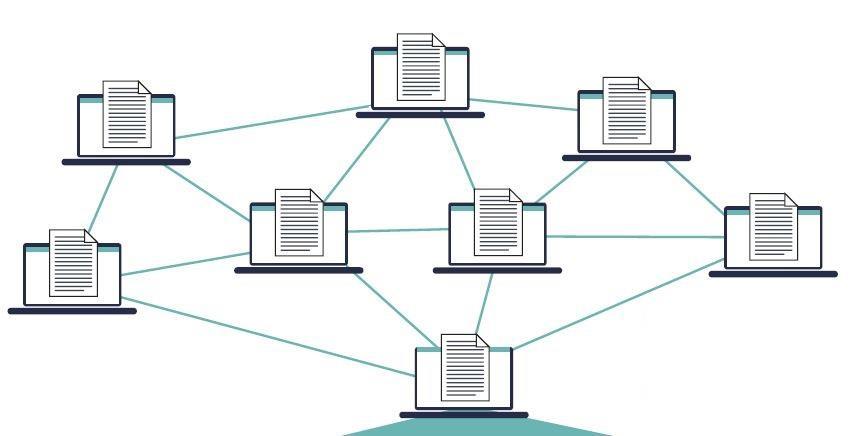

From figure 1, we see that the databases here has a single copy, but duplicated in eachcomputer, and these copies are linked together with an encrypted identification number called HASH, and they can only be changed by modifying the chain of identification numbers. Any change done by the hacker to this encrypted number will change the whole chain, and thusthemodificationisrejectedandIntrusiondetection be alerted
There are a lot of work have been done to invest the scientific knowledge of the Blockchain in financial investments such as Bitcoin and some of them have been bankrupt, as is well known, but the important thing in the matter is the application of the Blockchain and not the results that are not related to this application. Blockchain may be used in the health sector due to its importance in storing and preserving data for patients and confidential as well as the private medical reports Thus, the patient's information is kept strictly confidential, ensuring privacy and credibility. Some other usage may be related to the medical, physical and psychological history of patients, which allows doctors to know everything about patients, but
thismustbedonewiththeconsentofthepatient,sothat it is not recorded as a violation of privacy
On other hand, blockchain can also be used in the field of education, the field of remittances, banking, health, trade,tourismandotherfields Theusageofblockchain depends on the same technology, which focus on the confidentiality, privacy, the authoritarian assigned to some people, and the securityinrecording, transferring and modifying data
Big Data is a huge set of data that is stored to be used instatistics,analyseit,collectreportsfromit,andstudy it in whole or in part. Big data is useful in many fields such as economic, social, educational, medical and otherfields,butbigdataneedsverylargestoragespace, a certain organization and structure for preservation, and it also needs technical support and a specific mechanism for storage, retrieval, backup, and analyse [22]. In the medical sector, specialists use big data to analyse diseases, symptoms, and rare cases, and compare resultsand studies, newand mutated diseases, germs, bacteria, and mutated viruses. It is also used in emergency and emergency cases to search for similar cases and how to treat them accurately [11]
Data is processed in a system consisting of inputs, operations, outputs, feedback and data in the form of letters, numbers, symbols, text, images, video and audio. After processing, the data is converted into information that is stored in databases in the form of text or in servers for files, images, video and audio. Special types of protocols are used to transfer files to store them. After storage, the encryption is done, and sometimes the information is encrypted when it is
processed, and the content is changed, but it is difficult to recover it [19].
Storage is carried out in large-sized servers located in dedicated and cooled places, which may be owned or rented from companies that rent huge servers with extraordinary capabilities. The data may be copied to keep a backup copyof it periodically, or its copies may be synchronized simultaneously in several servers at the same time to prevent its loss and damage in the event of problems and software errors. Information retrieval is also done using pre-set protocols and algorithms [21] See figure 2.
One of the most important industries to which Big Data technology is applied is the pharmaceutical industry, healthcare, medical and patient care sector, which in itself is an independent industry that is not related to the rest of the industries because it has great privacy [20].
Such technology is important in storing transportation and transportation data for humans in smart cities, recording financial movements and recording purchases to predict consumption, and is useful in identifying people by collecting the largest possible number of data about these people.
The more data, the better because it can be deleted, modified and revised using algorithms prepared for that [20]
There is another smart possibilityfor this type of data, such as the ability to search and simultaneous translation by writing or photographing with a camera and for any language in the world There is also the ability to read any barcode or QR code as well, and old information stored in the form of images can be accessed, for example, by converting the image to text and storing it All these kinds ofnewtechnologyisanapplicationofbigdata [24].
Among the benefits and applications of big data is also its use in social networking sites such as YouTube, Facebook, Twitter, Instagram and other applications that have become famous and known to everyone [23]
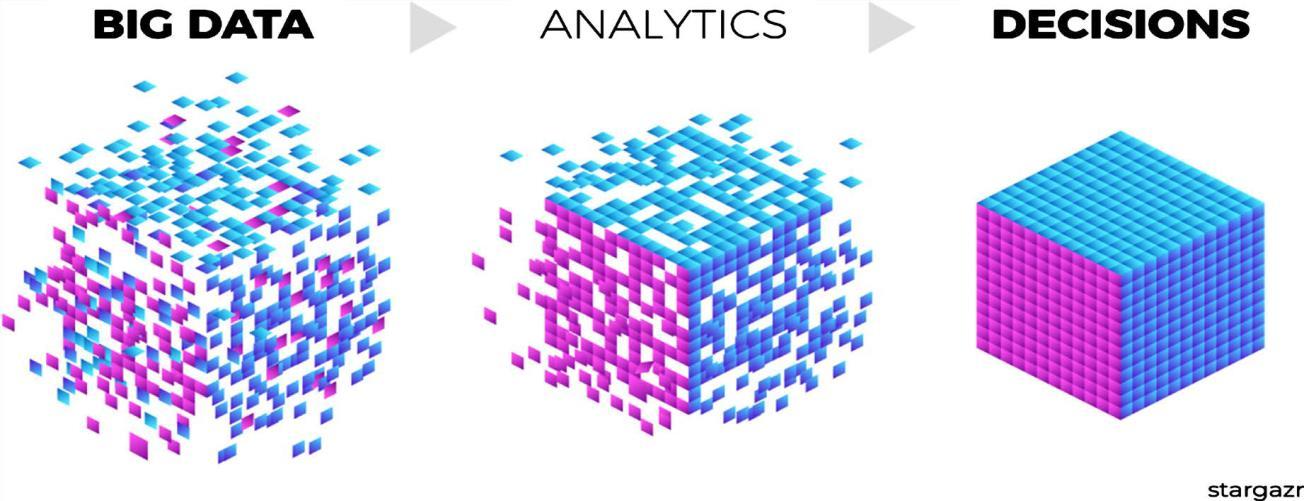
This Bib Data technology has been applied in self-driving cars as a kind of smart city and future smart civilization, and because cars are not available to everyone and therefore the number of people who own them is limited and there are no smart cars significantly, this allowed the possibility of experimenting with this type of technology [21]
By storing data in very large quantities, it has become possible to expand business, increase corporate revenues, and communicate more, not only socially, but also financial communication, knowledge communication, commercial communication, and other means of communication [23]
Itisusedinthefieldofeducationbyproviding scientific and academic references and other scientific data and storing them on special servers [19]
The Internet of Things is the network connection between modern technical devices, and this connection may take several forms. Two or more devices can be linked together or linked to the Internet and thus controlled through the global network and remotely [25]. In order to secure this link, encryption and high sophisticated technologies must be used, because any fraud or data breach may destroy data or devices or change the mechanism of using it [11]
Two devices can be connected to one network through a router wirelessly, or through a wireless telephone network, that is, through coverage and a virtual private network VPN [25]
Asfor satellite networks, theyare not veryuseful inthe medical sector because they need a wide geographic land and may be useful in the battlefields to treat the injured and injured with smart robots linked to each other and to a central server through satellites or an automatic transmission vehicle [11] See figure 3
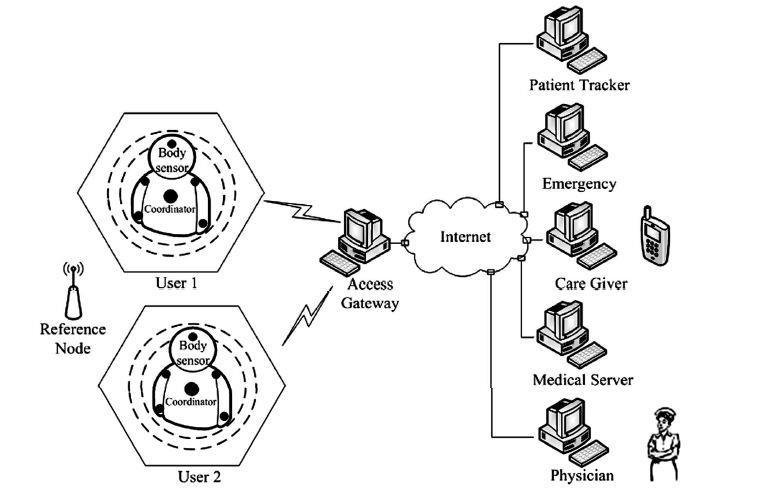
The usage of the Internet of Things application start from integrating programming with mechanical and digital machines and making them programmable in a way that allows the machine to make decisions according to the available alternatives, variables and data it encounters, and a series of pre-prepared decisions Artificial intelligence, complex algorithms and software functions may be introduced to give commands to machines to carry out a specific activity without referring to humans and at certain scheduled times or when facing a specific situation [26]
InternetofThingscanbeusedthroughthedevelopment of these things and the introduction of new electronic circuits on them, and these circuits are of the programmable type. Therefore, it is possible to take advantage of additional features and strengthen these things to a very large degree by introducing artificial intelligence and new software, so that the development of things becomes programmatic only through orders and not through mechanical parts and materials [26] Inthe medical sector, the IoT technologiescanbe used. Papers, catalogs, and magazines can be replaced with a simple QR code. Machines can be used to buy drugs
with electronic prescriptions to prevent fraud and manipulation. Projectors can be added to explain and clarify diseases and therapeutic methods. Improvements can also be made to machines to make themoperate bytouchand automaticallythroughsmart programs and Artificial intelligence [28].
Internet of Things can be used in the field of marketing to promote products through robots that rotate between consumers in restaurants or stores, for example, and through devices that scan barcodes and QAR codes for theproduct,whichhavebeenaddedinmanystores,and through which the buyer can know the price and componentsofthe product and itsvalidityperiod faster and with search filters that he adds according to his wish [29].
The Internet of Things can also be used in sustainable energy production machines such as wind power generation fans, solar cells, modern batteries and innovative generation turbines [30]
2.4.
Usually data is saved in many devices that contain interrelated tables called databases, Databases allow fast, encrypted and secure data storage and recovery, but there are cloud servers in which the data is saved
with access to it at any time and from any device through a password and a username.. This method is called cloud storage. There are many international companies that provide cloud storage for data for free, such as Google After storing the file, it can be shared and given permissions to read, modify or delete Cloud storage can also be used in many fields such as economy, tourism, education and medicine [13]
Cloud storage also allows access to information through many devices, not through one type. The data
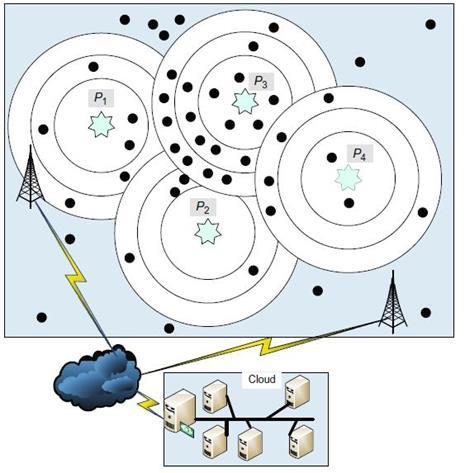
may be displayed on tablets, laptops, desktops, or any other type of smart device connected to the Internet. Cloud storage is primarily based on the Internet, and it isstoredsecurely,encrypted,confidentially,andallows privacy [13] as shown in figure 4.
Figure 4: Cloud computing with servers and coverage areas [13]
The cloud network operates through servers to store data in an organized manner and in a large amount. It often uses Google Drive, Dropbox, Media Fire and OneDrive services, and there are many similar companies, but these companies are the most famous. Every minute and every second [33], billions of data aredownloadedandtransferredthroughthesenetworks and through the Internet, and transfer with protocols to dedicated servers that guarantee safety, security, and full encryption. Any file can be stored, transferred, and
shared by giving the authority to read and modify it at any time [32]
Through real-time synchronization, information can be retrieved and transferred to any electronic device, or copied for use onseveral devices at the same time. You can also make a backup so that we don't fall into the problemoflosingdata, losing it, or suddenlydamaging devices. Thus, cloud computing guarantees us many features that did not exist before, including data retention permanently, with high security and privacy [34] See figure 5
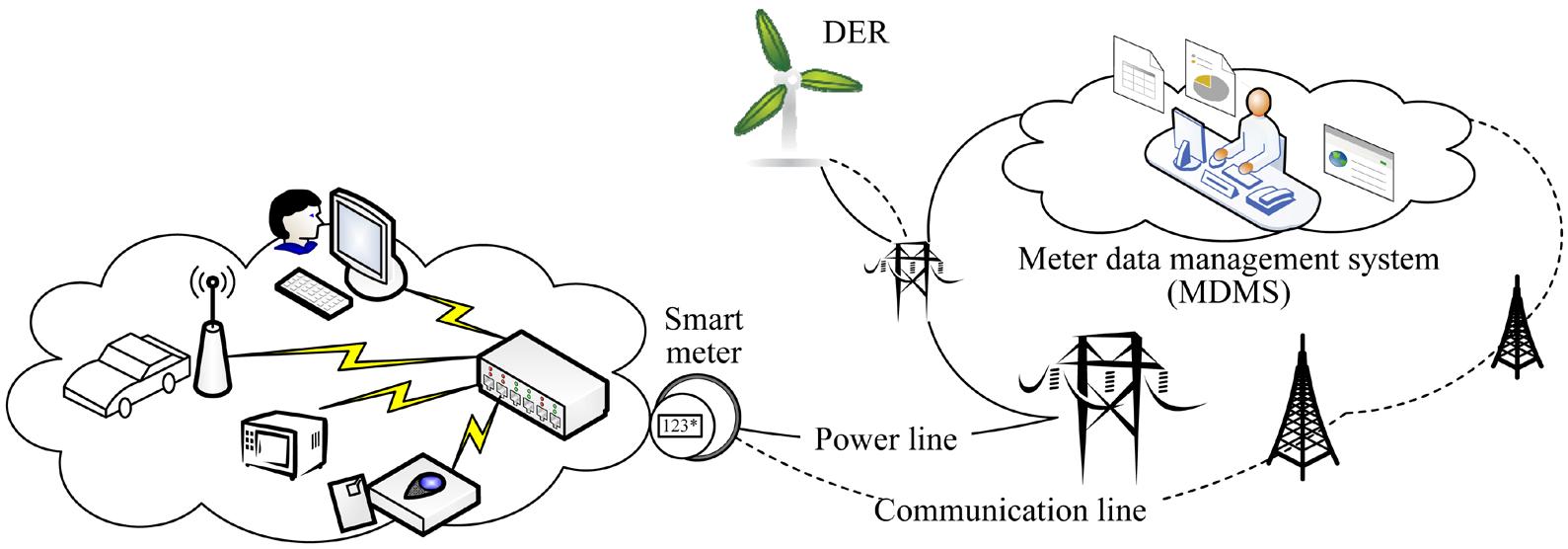
Figure 5: A typical cloud system model (Li et al., 2016).
Cloud computing can be used in the application of forensic medicine by collecting evidence, storing it, organizing it into groups, and matching it with the standards used and laws. It is also possible to study the case by writing a group of sentences to compare it with previous statistics or to choose alternatives from many similar cases to study it and identify the clues [35] Forensic medicine needs secure technologies, the content of which cannot be modified, and it must be encrypted. All these features are available in cloud computing, as there is high security, privacy, and encryption, and it cannot be modified except with certain permissions [36]
Cloud computing can also be used in architecture, design, electrical engineering, communications, transportation, tourism and all sectors. In view of the large amount of data that can be accepted and stored in an encrypted and secure manner without the possibility of losing it, it can be used in the financial sector [38], but not to complete operations and deals, but rather for financial analysis and study such as preparing budgets, financial statements, cost accounts and statistical studies. It can also be used in business management by preparing plans, strategies, goals and standards and studying them in a way that guarantees automatic preservation and that information is not lost, especially important information [39]
Emerging technologies are used in the health sector through the modernization and development of technical devices as well as through the rehabilitation of workers in the health sector [40]
To use Big Data in healthcare applictions we can collect data of former patients or data about diseases and then made it available to workers in the health sector so they can compare the data of current patients withpreviouspatientsor use acomputer to dothistask. Thus, the disease is diagnosed by finding similarities between the current disease and a previous disease stored in the database [41]. Then the disease is treated with prescriptions similar to the old ones, with some improvements and modifications with regard to the use of the cloud internet, data can be stored to make it available on the Internet and access it at any time, from anywhere and on any device [42] On other hand, it is alsopossibletotakeadvantageoftheInternetofThings
by connecting devices with each other and making them perform tasks faster, which saves fatigue and effort and reduces human errors and problems. Robots can be made available to do radiography, write reports, electrocardiograms, or perform endoscopy or simple operations such as hair transplantation or the removal of polyps and other simple operations. Modern equipment has been used to perform accurate operations inside the brain or endoscopic operations to
remove any damaged organ, such as the appendix, gallbladder [11]
However, modern technologies are still relatively dangerous while they were used in the medical sector because human lives are invaluable and cannot be compensated.Therefore,attentionmustbepaidandthe use of any smart devices should be accompanied by human control, no matter what, because any error in data processing may lead to a great loss [13]. The advantages that can be obtained from modern technologies are very large and cannot be counted, but the defects, despite their small number, are considered relativelylargeduetotheendangermentofhumanlives (Odom, 2017) Therefore, a control mechanism must be found and immediate treatment of technical medical errors [13]
Emerging technologies have emerged as a result of accelerated growth in ICTs in particular, and these technologies may be unclear and specific in their definition, being a relative concept that varies from person to person, and from area to area, where emerging technologies may be defined as any technology currently being developed or to be developed in the next 5-10 years [43]
Itcanbesaidthatemergingtechnologiesinthe medical sector represent technologies and software that can be adapted in hospitals and have a clear impact in the comingyears.Itcanbesaidthatemergingtechnologies in the medical sector represent technologies and software that can be adapted in hospitals and have a clear impact in the coming years [44]. "Medical Service", which represents an integrated system encompassing everything new in the field of medical service, the health sector, from medical devices, software, applications, educational environments, working methods, and concepts to upgrade service in this vital sector and work to generate, extract, and secure knowledge [3]
Knowledge is relative and related to many variables and changes from one measure to another, and we can identify a number of types of knowledge, which are as follows:
Patient knowledge: This sets out a clear description of the patient’s state of health, which helps doctors to identify observations and indications which are recorded in the medical records to submit a full report to the patient [45]
Practitioner's knowledge: implicit knowledge regardingthepracticesofmedicalstaffwhileproviding care to patients, and the practitioner acquires knowledge through continuous learning, observations, and experiences [46]
Medical knowledge: the basis of knowledge through which theories about medicine and health care,
methods of presentation and processes are described (Chronaki et al., 2003).
Knowledge of resources: an estimate of the resources provided and the infrastructure available in the field of health care. It is important for practitioners to have knowledge of the resources available: diagnostic medical devices, instruments, medicines, support staff, nursing and family in hospitals and surgical facilities [48]
Process knowledge: Understanding of particular procedures or steps used in health facilities to decide the rules of care for certain medical conditions such as emergencies and others. Process knowledge is a consistent technique of treating the patient with concerns such as required resources [49]
Organizational knowledge: the organizational structure and policies of the health institution, organizational
knowledge involves information and the flow of knowledge within the organization, meaning how information flows from one source to another [50]
Knowledge of social relationships reflects the social capital withinthe institutionand consistsof health-care providers or even administrative personnel, where knowledge is shared, secured, and preserved among health-care providers and professionals [51]
Knowledge of measures: the set of criteria used to measure the success of the health care management processes and system and associated health outcomes, wheretheyhelptocontrolperformance,efficiency,and integrity of indicators and standards in measuring important information. [5]. The above various medical knowledge is illustrated in the following figure 6.
Since the services of the medical sector depend on the analysis and exchange of information and knowledge within and outside the medical institution, health knowledge management is an important strategic matter and rule that can improve medical performance. Therefore, the application of knowledge management in medical institutions helps to develop the performance of its employees [4].
Inour view, the growingrole ofemerging technologies in the management of knowledge in the medical sector inbridgingdifferent knowledge gapsisconcerned with thedevelopmentofsystemsandprocessesthat enhance knowledge and information in order to create authenticity, creativity, and continuous learning in the medical field. Accordingly, the most important components of knowledge management in the medical sector are the usage of modern technologies and strategies associated with manpower , where emerging technologies are characterized by five basic features that help them secure medical knowledge, which are given as follows [4]:
Emerging within their specific context. For example, there are many techniques that have been emerging for years but have emerged to be used to preserve knowledge and its security [52]
Go through phases beginning with their discovery, adoption, activation, use and maturity, followed by influence and enthusiasm towards them [53]
Despite the ability to change prevailing medical practices, theyhave not been properlyunderstood or exploited, including Web 2 techniques and their medical adaptation[53]. .
On the other hand, IOT technologies in the medical sector as defined by the World Health Organization (WHO) manage knowledge by employing technology to enable workers to create, capture, store, retrieve and use knowledge . There are also five important elements to be provided for the application of knowledge management in the health sector, in which IoT technologies play a role provided as follows:
Availability of communities of practice: Knowledge management is more than a repository or center for data, documentation, and other information, encompassing other people's experiences and lessonslearned.Therefore,itisimportant tobenoted that knowledge management encompasses the principle of collaboration and understanding among individuals to disseminate, share and use knowledge for getting benefits
Content management: A knowledge repository must be developed to facilitate knowledge sharing. This requires a thoughtful plan to determine the type of content to be published and processes to ensure that the content published is context-specific and up to date, so that staff members have a repository of
medical knowledge to frequent as their renewable resource..
Transfer of knowledge and capabilities: Knowledge management is an actionable process as it changes the behaviour of knowledge sharing and thus the emergence of new behaviours. Knowledge transfer should provoke innovation and improve the process of operation [3]
medicalsector, whichisofgreatimportanceandurgent need to employ emerging techniques in ensuring knowledge management and the security of health big data, Many previous studies focused on addressing the applications of emerging technologies in different fields, bothineducational and other service institutions [8].
Overall performance results tracking: In order to improve the performance of a health organization, thereisanurgentrequesttotracktheresultsincluded in the knowledge management program, and performance resultstrackingprocesses that include a wide range of tools and metrics such as survey and data analysis, and interpretation of data results [5]
The problem of this study in the medical sector is manifested by the increase in the volume and multifaceted forms of data, which makes it vulnerable to risks and infringes on the specificity of such data [40], as well as the inability to organize and manage such data for its magnitude. Based on these facts, the current study problem can be formulated as the following question:
Technology and infrastructure support: Web technologies represent one of the most important means of enabling knowledge because they streamline collaborative processes, make knowledge available immediately and essentially, and provide a structure for disseminating content in a form that facilitates access to and reuse of knowledge [3]
Due to the usage of emergent technology in different patterns and forms in knowledge extraction and management processes (generated, transferred, shared, etc.) through effective and efficient recruitment, it will facilitate knowledge accessible to all places and times in which it can be said that through IoT techniques, knowledge can be extracted and interacted between individuals, so it is generated. Among individuals and groups, it also provides an electronic learning environment that allows all members to have equal accessto knowledge and to communicate freelyamong themselves [5].
Successive and ongoing developments in the field of emerging technologies and their use as well as its employment in different sectors, in particular the
What is the major role of emerging technologies in securing and confidentialzing big health data?
The study relied on the analytical descriptive curriculum through the collection of previous studies covering the period from 2011 to 2011, being the most appropriate approach to the nature of the study. These studies focused on addressing the topic of emerging technologies but from multiple angles, such as the Internet of Things, blockchain techniques, and a third one focused onbigdata, with different sectorsin which the study was applied [40].
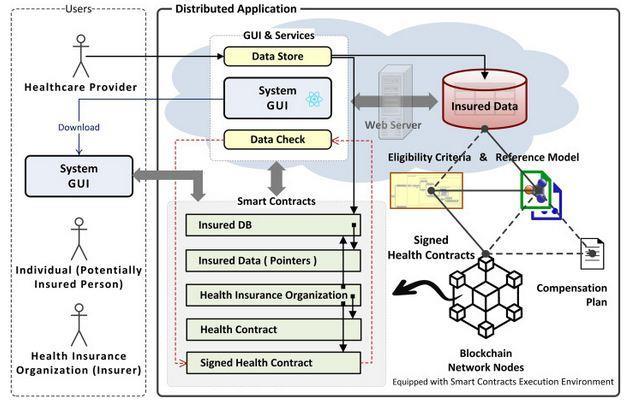
Themainachievedresultsofastudy[6]entitledtheuse of blockchain technology and the semantic web for the implementation of smart contracts between individuals and health insurance institutions. Blockchain: research and applications, also found that the system developed validates various features related to block chain and smart nodes features that were briefly discussed in this work, which can be mitigated in part or all of them throughthe use of your licensed block chain. The study also found that the application of well-established techniques for potential malfunctions in external services could also enhance the system's security and prevent it from potential attacks. See figure 7.
The study [2] Entitled: Emerging Technologies in Health Care: an Educational Program, aims to address the use of emerging technologies in health care approach ", done based on the descriptive approach, its results showed that emerging technologies in health care were proceeding at a rapid pace, The results showed that emerging techniques changed the practice of health care and transformed the entire nature of the relationship between disease and health. This isdespite the fact that healthcare techniques will not work for all health care problems, but it can improve practice, decision-making, and health care management. The study recommended an educational program on emerging technologies in health care.
A study [7] entitled "IOT Applications in Health Institutions and their Role in Improving Medical Care Services" explored the use of IOT applications in the medical sector and their role in upgrading medical care services in health institutions. The study focuses on IOT applications by improving the quality of health services provided by drawing on the descriptive approach through the analysis of published literature. The results showed that IOT applications in health institutions contribute to obtaining accurate patient health diagnoses, which helps in improving the quality of service provided to patients. The results also show that this reduces the patient's periodic reviews of the hospital by relying on IoT applications for remote diagnosis.
The study (Bachrachel, 2017) Entitled "Application of knowledgemanagementinhealthinstitutions",focused on identifying the application of knowledge management to health institutions because of its important role in the development of medical and administrativeperformanceofmedicalpersonnelbased on the content analysis methodology to examine publishedintellectualproductioninordertounderstand the problem of research. The study found that although it is important to apply knowledge management in the health sector, it faces a number of constraints that may prevent its application or understand its importance, such as terminology, trust, poor technology, and time wasted. Anditrecommendstheattentionthatshouldbe paid to health knowledge management in Saudi Arabia to clarify its importance in the State health sector specifically in the light of the Kingdom's Vision 2030. (Supai,2015)Inhisstudyentitled“SharingKnowledge and Its Relationship to Employee Empowerment: An AppliedStudyfortheLibyanHospitals”hasmentioned knowledge sharing and its relationship to employee empowerment: an applied study on Libyan hospitals. This study aims to examine organizational structures and processes based on the idea of teamwork and task forces that allow the exchange of knowledge, information, and experience Knowledge sharing is therefore one of the modern methods that hospital human resources management seeks to strengthen among its various cadres as a nucleus that helps to applyemployee empowerment. Basedonthe analytical descriptivecurriculum,thestudywasappliedtomiddle
and direct management staff in the hospitals operating in the city of Bangladesh (Benghazi Medical Center, RepublicHospital,JalaHospital,October7thHospital)
The study found that the level of practice of medical personnel and personnel to share knowledge in general was moderate, witheachdimensioninhospitalsas well as the implementation of the policy for the empowerment of staff in the hospitals in question.
In his study entitled "The role of knowledge transfers in reducing the knowledge gap," [3], a survey of doctors' opinions in some hospitals in Nineveh governorate, aimed at detecting transfers of knowledge in reducing the knowledge gap, Thus, through analysis of the linkages and impact of knowledge transfers to reduce the knowledge gap by drawing on the descriptive curriculum, the studyfound that knowledge transfer processes are modern entry points that seek to achieve a successful transfer of knowledge among individuals working in organizations and at their differentlevelsandspecializations,asevidencedbythe correlation and moral impact of knowledge transfers in reducing the knowledge gap In accordance with the conclusions presented, a set of proposals were formulated that could be adopted by the research hospitals aimed at improving knowledge transfers to reduce knowledge gaps.
It was in line with the objectives of the current study, another studyby[10] dealt withemergingtechnologies in health care, overcoming risks and evaluating rewards, One of its most important findings was that it demonstrated the availability of two technologies, radio frequency sensors (RFID) and global positioning systems (GPS), which benefit health-care institutions and appear capable of reducing costs but may require substantial initial investment and have an impact on some modern technologies such as nanotechnology, and recommends that health-care institutions that can navigate upcoming technologically driven model transformations should be given attention by more flexible organizations.
Similarities, differences, strengths and weaknesses in this studies and comments on it:
The similarity in the previous work was to study the Internet of Things with the same examples, which is to connect devices to a single network to perform routine work However, previous studies that studied the Internet of Things did not care about the machine’s superiority over humans and its benefits in terms of saving time, reducing human errors, and saving effort and costs. Also, previous studies have defined the Internet of Things through very simplified graphics, and they were not deep and clear graphics.
There is a great similarity in the studies that were carried out to show the relationship between technology and knowledge. All previous studies were based on the same basis, which is the definition of technology and the performance of related tasks. However, many previous studies did not provide
solutions to the lack of experience among medical personnel.
Also, most of the previous studies were conducted in mafia that is not qualified to develop computer technologies and integrate technology and programming with medical uses and the health sector. Therefore, it is better to obtain specialized studies in the field of experimentation, development, and development for the healthsector, whichstudymedical technologies in a specialized manner, practice them, and test them in reality. It is not possible to rely on realistic experiences in hospitals to use the Internet of Things,forexample,bydefault,withoutconnectingthe devices in reality and testing them.
5.
All previous studies agree with this paper on the importance of using emerging technologies to secure and confidential big health data for several reasons, such as:
- The ability of these technologies to predict the behavior of beneficiaries of patients and doctors and reduce the risks they face.
- Keep data confidential and ensure that it is maintained.
- Many health institutions cannot access and use all their data.
- Emerging techniques of various kinds contribute to data analysisand confidentiality. The results of the study [2] showed that emerging technologies in health care are proceeding at a rapid pace, with the results showing that emerging technologies have changed the practice of health care and transformed the whole nature of the relationship between disease and health.
A study [9] also showed that there are many factors to consider when choosing an IOT data processing solution, and there are many challenges in IOT data exploration addressed through big data.
Inadditionto these findings, the resultsof the study [8] showed that block chains were described as virtually non-hackable, but most block chain transactions had much less secure endpoints, and the study emphasized that smart contacts should be scanned thoroughly for any errors by experts before implementation, which I agree with the results of the study [7], which showed thatIOT applicationsinhealthinstitutionscontributeto the patient's accurate health diagnoses, helping to improve the quality of service provided to patients, as well as the results show that this reduces the patient's periodic hospital reviews by relying on IOT applications for remote diagnosis.
Althoughthepreviousresearches differinthehandling of IOT technologies in health big data security, some of them focused on addressing blockchain techniques
in the medical field, others focused on IOT in the medical sector, especially hospitals, as well as some studies focused on big data in the medical sector However, there was no study that collected and addressed all the current study's variables in their focus on emerging technologies and their handling of health information and big data security.
As a future Studies, the Internet of Things and cloud storage canbe used to store thelargestpossible number of patient files and build smart algorithms to identify and diagnose diseases and try to treat them with innovative recipes and methods.
It is also possible to take advantage of the blockchain to build a database of the health status of customers, so that medical and health institutions can easily return to the medical file and identify the diseases that a person may have contracted and his health condition directly.
It is also possible to benefit from the applications of health sciences technology in forensic medicine in identifying evidence, examinations, and how to die, and storing data for return to them or submitting them to the competent authorities.
In some emergency cases and delicate operations such as brain surgery or endoscopic operations, smart devicescanbeusedtoperformpreciseandmicroscopic surgeries, especially brain, eye, neurosurgery and microscopic surgeries.
The author of this article recommend the following:
- Attention should be highlighted to further studies arranged by the security of emerging technologies.
- Improve the quality of medical services using emerging technologies.
- Empowering hospital workers to have the ability to cope with emerging technologies and their nature.
- Linking scientific knowledge with technical knowledge and introducing technology to academic, scientific and academic curricula in universities and schools.
- Increasing introductory training courses for nurses, doctors and health personnel to introduce the impact of modern technology in the medical sector.
- Allocating a budget for development and scientific research in hospitals, a budget for training, a budget for purchasing modern devices, and working to find appropriate financing ways to obtain devices in the future.
- Networking of computer and medical devices as much as possible so that technology becomes part of the profession and practice
[1] Abdul Karim, Salwa al-Saeed.. Blockchain technology and enhanced use of Arabic manuscripts in Egyptian libraries: a study of readiness. Scientific Journal of Libraries, Documents, and Information, 4 (11), 43-83, 2022.
[2] Ajasri. Emerging technologies in healthcare: an educational program. International Journal of Advancement in Scientific Research and Engineering, 1-12, 2019
[3] Al-Hafiz, Ali Abdul-Satar . The role of knowledge transfers in reducing the knowledge gap: an exploratory study of doctors' opinions in some hospitals in the Nineveh governorate. Journal of Waddin Development, University of Mosul, 33 (104), 171-189, 2011
[4] Al-Jahni, Lili Said, Al-Rahili, Abdul Fatah tweeted.. Looking ahead to emerging higher education techniquesoverthenext five yearsUniversityofTabuk Journal of Humanities and Social Sciences (6), 97121, 2019
[5]Al-Soaii,HindKhalifa..KnowledgeSharingandIts Relationship to Employee Empowerment: An Applied Studyon SmallpoxHospitals .The Scientific Journal of Economics and Commerce (2), 101-131, 2015
[6] Andronikou, V., & Efstathios Karanastasis. Using blockchain and semantic web technologies for the implementation of smart contracts between individuals and health insurance organizations. Blockchain: Research and Applications.journal homepage: www.journals.elsevier.com/blockchain-research-andapplications(3), 1-14, 2022
[7] Arabh, Said bin Sultan . IoT applications in health institutions and their role in improving medical care services. Within the work of the 25th Annual ConferenceoftheAssociationofSpecialized Libraries, Arabian Gulf Branch: IoT: The Future of Interconnected Internet Communities, p. 492-508, 2019
[8] Bachrachel, Omar's Hedeah.. Apply knowledge management to health institutions. Journal of Information Studies (19), 125-140, 2017 Chavan, S. (2022). A Study Of Security Issues In Blockchain Technology And Its Preventive Measures. 12(4), 12-24.
[9] Mandhare, S. S., & Sheetal A Wadhai.. Data Mining Models Using the Internet of Things. International Journal of Advanced Research in Computer and Communication Engineering, 11(4), 2319-5940, 2022.
[10] McGrady, E., & Su conger. Emerging technologies in healthcare: navigating the risks and assessing the rewards. Journal of Health Care Administration/American College of Health Care Administrators(5), 53-64, 2010
[11] Anantha, Guptha.. INTERNET OF THINGS & ITS APPLICATIONS, Department of Electrical & Electronics Engineering, MALLA REDDY
COLLEGE OF ENGINEERING & TECHNOLOGY, India, 2021.
[12] Dan C. Marinescu.. Cloud Computing Theory and Practice, Waltham, USA, 2013.
[13] Sankeerthana, Neelam. Internet of Things in Healthcare, Faculty of Computing, Blekinge Institute of Technology. Karlskrona, Sweden, 2017.
[14] Budinger, Thomas F. and Miriam D. Budinger. Ethics of Emerging Technologies: Scientific Facts and Moral Challenges. Hoboken, N.J.: John Wiley & Sons, 2006
[15] Richins, Suzanne Moss. Emerging Technologies in Healthcare. Boca Raton, Fla.: CRC Press, 2015.
[16] Atzori, M. 2015. “Blockchain Technology and Decentralized Governance: Is the State Still Necessary?” Available at SSRN. Retrieved August 9, 2016
(http://papers.ssrn.com/sol3/Papers.cfm?abstract_id=2 709713).
[17] Condos, James, William H. Sorrell, and Susan L. Donegan. Blockchain Technology: Opportunities and Risks. Montpellier, Vermont, 2016. 2016.” CoinDesk. Retrieved (http://www.coindesk.com/state-of-blockchain-q12016).
[18] Tapscott, Don and Alex Tapscott. Blockchain Revolution: How the Technology Behind Bitcoin Is ChangingMoney,Business,andthe World.NewYork, N.Y.: Portfolio, 2016
[19] Sakr, S. Big Data 2.0 Processing Systems A Survey; Springer Briefs in Computer Science; Springer: Berlin/Heidelberg, Germany, 2016; ISBN 978-3-030-44186-9.
[20] Khan, M.; Jan, B.; Farman, H. Deep Learning: Convergence to Big Data Analytics; SpringerBriefs in Computer Science; Springer: Berlin/Heidelberg, Germany, 2019; ISBN 978-981-13-3458-0.
[21] Desai, P.V. A survey on big data applications and challenges. In Proceedings of the 2018 Second International Conference on Inventive Communication and Computational Technologies (ICICCT), Coimbatore, India, 20–21 April 2018; pp. 737–740.
[22] Niyizamwiyitira, C.; Lundberg, L. Performance evaluation of SQL and NoSQL database management systems in a cluster. Int. J. Database Manag. Syst. 2017, 9, 124.
[23] Jiang, M.; Fu, K. Chinese social media and big data: Big data, big brother, big profit? Policy Internet 2018, 10, 372–392.
[24] Nobanee, H. A Bibliometric Review of Big Data in Finance. Big Data 2021, 9, 73–78.
[25] S. Mahfoudh and P. Minet, “EOLSR: An Energy Effi- cient Routing Protocol in Wireless Ad hoc Sensor Net-works,”JournalofInterconnectionNetworks,Vol. 9, No. 4, 2008, pp. 389-408. https://doi.org/10.1142/S0219265908002345
[26] Ng, I.C.L. and Wakenshaw, S.Y.L. The Internetof-Things: Review and Research Directions. International Journal of Research in Marketing, 34, 3-
21, 2017
https://doi.org/10.1016/j.ijresmar.2016.11.003
Kannan, P.K. and Li, H.A. (2017) Digital Marketing: [27] A Framework, Review and Research Agenda. International Journal of Research in Marketing, 34, 2245.
https://doi.org/10.1016/j.ijresmar.2016.11.006
[28] Weinberg, B.D., Milne, G.R., Andonova, Y.G. and Hajjat, F.M. Internet of Things: Convenience vs. Privacy and Secrecy. Business Horizons, 58, 615-624, 2015. https://doi.org/10.1016/j.bushor.2015.06.005
[29] Robson, K., Pitt, L.F. and Kietzmann, J. APC Forum: Extending Business Values through Wearables. MIS Quarterly Executive, 15, 167-177, 2016
[30] Lamberton, C. and Stephen, A.T. A Thematic Exploration of Digital, Social Media, and Mobile Marketing: Research Evolution from 2000 to 2015 and an Agenda for Future Inquiry. Journal of Marketing, 80, 146-172, 2016 https://doi.org/10.1509/jm.15.0415
[31] Li, Q. , Liu, H. , Ning, H. , Fu, Y. , Hu, S. and Yang, S. Supply and Demand Oriented Energy Management in the Internet of Things. Advances in Internet of Things, 6, 1-17, 2106. https://doi.org/10.4236/ait.2016.61001
[32] Rani, D.R. and Geethakumari, G. An Efficient Approach to Forensic Investigation in Cloud Using VM Snapshots. 2015 International Conference on Pervasive Computing (ICPC), Pune, 8-10 January 2015, 1-5, 2015 http://dx.doi.org/10.1109/pervasive.2015.7087206
[33]Hashizume,K.,Rosado,D.G.,Fernández-Medina, E. and Fernandez, E.B. An Analysis of Security Issues for Cloud Computing. Journal of Internet Services and Applications, 4, 1, 2013
[34] Jadeja, Y. and Modi, K. Cloud ComputingConcepts, Architecture and Challenges. 2012 International Conference on Computing, Electronics and Electrical Technologies (ICCEET), Kumaracoil, 21-22 March 2012, 877-880. http://dx.doi.org/10.1109/icceet.2012.6203873
[35] Xiao, Z., Song, W. and Chen, Q. Dynamic Resource AllocationUsingVirtualMachines forCloud Computing Environment. IEEE Transactions on ParallelandDistributedSystems,24,1107-1117,2013 http://dx.doi.org/10.1109/TPDS.2012.283
[36] Wang, C., Wang, Q., Ren, K., Cao, N. and Lou, W. Toward Secure and Dependable Storage Services in Cloud Computing. IEEE Transactions on Services Computing, 5, 220-232, 2012. http://dx.doi.org/10.1109/TSC.2011.24
[37]Hashizume,K.,Rosado,D.G.,Fernández-Medina, E. and Fernandez, E.B. An Analysis of Security Issues for Cloud Computing. Journal of Internet Services and Applications, 4, 1, 2013 http://dx.doi.org/10.1186/1869-0238-4-5
[38] Damshenas, M., Dehghantanha, A., Mahmoud, R. and bin Shamsuddin, S. Forensics Investigation Challenges in Cloud Computing Environments. 2012
International Conference on Cyber Security, Cyber Warfare and Digital Forensic (CyberSec), Kuala Lumpur, 26-28 June 2012, 190-194, 2012
[39] Sindhu, K.K. and Meshram, B.B. Digital Forensic Investigation Tools and Procedures. International Journal of Computer Network and Information Security, 4, 39 2012.
[40] Hurst, E. J. 3D Printing in healthcare: Emerging applications. Journal of Hospital Librarianship,16(3), 255-267, 2016. doi:10.1080/15323269.2016.1188042
[41] I., Redyarsa, D., Lai, J., Essomba, T., & Lee, P. . Integration of computer-aided pre-operative planning and 3D printing technology for comminuted fracture bone surgery. 2017 International Conference on Applied System Innovation (ICASI), 2017 doi:10.1109/icasi.2017.7988116
[42] Kirkpatrick, K. 3D-printing human body parts. Communications of the ACM,60(10), 15-17, 2017 doi:10.1145/3131068
[43] Miyachi K, Mackey TK. hOCBS: a privacypreserving blockchain framework for healthcare data leveraging an on-chain and off-chain system design. Inf Process Manage. (2021) 58:102535. 10.1016/j.ipm.2021.102535
[44] Kolodner RM, Cohn SP, Friedman CP. Health information technology: strategic initiatives, real progress: there is nothing magical about the strategic thinkingbehindhealthIT adoptioninthe UnitedStates. Health Aff. (2008) 27:w391–5. 10.1377/hlthaff.27.5.w391
[45] Spanakis EG, Bonomi S, Sfakianakis S, Santucci G, Lenti S, Sorella M, et al.. Cyber-attacks and threats for healthcare – a multi-layer thread analysis. In: 2020 42nd Annual International Conference of the IEEE Engineering in Medicine & Biology Society (EMBC). Montreal, QC: (2020). p. 5705–8. 10.1109/EMBC44109.2020.9176698
[46] Velsen LV, Hermens H, d'Hollosy WO. A maturitymodelforinteroperabilityineHealth.In:2016 IEEE 18th International Conference on e-Health Networking, Applications and Services (Healthcom). Munich: (2016). p. 1–6.
[47] Chronaki CE, Chiarugi F, Mavrogiannaki E, Demou C, Lelis P, Trypakis D, et al.. An eHealth platform for instant interaction among health professionals. In: Computers in Cardiology, 2003. Thessaloniki Chalkidiki (2003). p. 101–4. 10.1109/CIC.2003.1291100
[48] Spanakis EG, Lelis P, Chiarugi F, Chronaki C. R&D challenges in developing an ambient intelligence eHealth platform. In: EMBEC 2005, Prague, Czech Republic, November 2005. Prague: (2006). vol. 11; p. 1727–983.
[49] Siknakis M. Spanakis M. Adoption of innovative eHealth services in prehospital emergency management: a case study. Proceedings of the 10th IEEE International Conference on Information Technology and Applications in Biomedicine. Corfu: (2010). p. 1–5. 10.1109/ITAB.2010.5687752
[50] Spanakis EG, Psaraki M, Sakkalis V. Congestive heart failure risk assessment monitoring through internet of things and mobile personal health systems. 2018 40th Annual International Conference of the IEEE Engineering in Medicine and Biology Society (EMBC). Honolulu, HI: (2018). p. 2925–8. 10.1109/EMBC.2018.8513024
[51] Spanakis M, Sfakianakis S, Sakkalis V, Spanakis EG. PharmActa: empowering patients to avoid clinical significant drug–herb interactions. Medicines. (2019) 6:26. 10.3390/medicines6010026
[52] Vergne J. Decentralized vs. distributed organization: blockchain, machine learning and the future of the digital platform. Organ Theory. (2020) 1. 10.1177/2631787720977052
[53] Triantafyllou A, Jimenez JAP, Torres ADR, LagkasT, RantosK, SarigiannidisP.The challengesof privacy and access control as key perspectives for the future electric smart grid. IEEE Open J Commun Soc. (2020) 1:1934–60. 10.1109/OJCOMS.2020.3037517