CONTRIBUTORS
TIM b AKLAND ‘94, P ‘31
ISA b ELLE COOKSON ‘15
SAVERY KELLEY ‘02
JAN LINDSAY, b OT & P’ 05, ‘07
LESLIE LYMAN S’10, P’13, P’15, S’21
LAUREN MARANO P’21, P’25
FRANCIS SCHAEFFER ‘92
CHRISTINE TROW b RIDGE S’22, P’23
STEVE WILKINS
NOTECARD from Tim
TIM BAKLAND (‘94, P’31) HEAD OF SCHOOL
Dear Waring Community,
As you have recently heard, Waring’s mission statement has been newly articulated, and yet it feels like something we already knew:
TO CULTIVATE VOICE THROUGH AUTHENTIC ENGAGEMENT IN THE LIBERAL ARTS AND SHARED EXPERIENCE, PRACTICING COMMUNITY AT WARING AND BEYOND WITH GENEROSITY, CURIOSITY, AND PURPOSE.
When I re-read this alongside the stories gathered in Notecards, I think: yes, this is exactly what we mean.
On the surface, this edition of Notecards centers on medicine and neuroscience. You will hear from Ally Colarusso ‘12, who knew at Waring that she wanted to be a healer. Anders Erickson ‘13, who told his teacher Francis as a senior that he wanted to do something with meaning—and is now completing an MD/PhD focused on rare childhood brain cancers. You will read about Monty Sherwood ‘08 and Kay Sherwood ‘06, two former athletes and writers who surprised themselves by becoming nurses. You will encounter the b oyd family, who helped bring medicine into Waring’s classrooms— and whose daughter Madeline is now in her first year of medical school. And you will spend some time with Steve Wilkins and his fourteen seniors, who enjoyed a year learning how the brain actually works—and then taught the rest of us what they learned.
What I notice in all of these testimonials is that they are not really about the technical aspects of science and medicine. They speak to us about remaining curious. b eing good listeners, making human connections of all kinds, and meeting people where they are. bill b oyd puts it succinctly: Waring “threads the needle” with an informality that breaks down hierarchy, alongside genuine care and curiosity. This makes for a thriving Waring student just as it makes for good nurses, scientists, medical caregivers and innovators of all kinds.
Waring has always believed that rigor and empathy are not in tension, and that science and the humanities ultimately share a common purpose: helping us better understand ourselves, one another, and the world we inhabit. How we learn and grow—with curiosity, with others, in dialogue—shapes our journeys and ourselves.
These pages offer a glimpse of outstanding Waring community members still unfolding, years and decades after graduation.
Warmly,
TIM BAKLAND (‘94, P’31) HEAD OF SCHOOL
THE INSPIRATION FOR THE MEDICAL ENDTERM
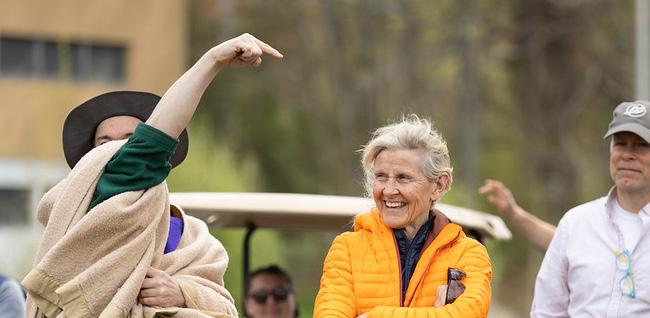
BY JAN LINDSAY
It was winter 2010 and I still didn’t have any inspiration for my Endterm. In a panic, I whined about my lack of ideas to Andy, my husband, who looked up from his reading and said, with a smile, “How about a medical Endterm?”
Aha. What a crazy, novel, and compelling idea.
As Waring’s school nurse, I was in love with medicine and excited to share any access to it I could with our students. We had a great number of generous and willing medical Waring parents who worked at medical facilities right in our backyard. And we had curious bright students up to the task of learning.
A lot of work to organize, but I was hooked. My head spun with possibility - a student might watch a baby being born or learn how hospice cares for a dying patient. They might learn how to conduct a physical assessment or listen to cardiac arrhythmias. It sounded perfect.
Faculty members Rich Stomberg (P ‘20) and Maureen Gedney (P’15) joined the team and Medical Endterm 2010 was born.
Our students followed doctors at Salem Hospital’s Emergency and Cardiology units, witnessed vaginal and C-section births at b everly Hospital, and attended well child visits at Garden City Pediatrics. They shadowed patient visits at brooksby Village Senior Living facility, and adult primary care exams in Peabody and Marblehead, to name a few experiences.
On the Waring campus, students learned how to conduct physical assessments with James MacLean, MD (P ‘13, P ‘10). Mary b oyd, MD (P ‘16, P’19, P ‘22) ran a suturing techniques lab, and Stephen Hinrichs, PA (Alum ‘83, P ‘12) taught students how to do aortic valve replacements on cow hearts. Students tested their own blood sugar after downing a breakfast of sugar donuts and orange juice, and measured their heart rates after running up hills. And they all learned CPR.
It was an exhilarating and exhausting experience. And of the roughly 50 students who participated in the four iterations of Medical Endterm, a good number are now pursuing medical careers.
I feel so happy that we were able to offer a hands-on introduction to this exciting field. And so grateful to Waring for its constant willingness to try new experiments in learning. What other school would lend its support and free rein to create a program like this?
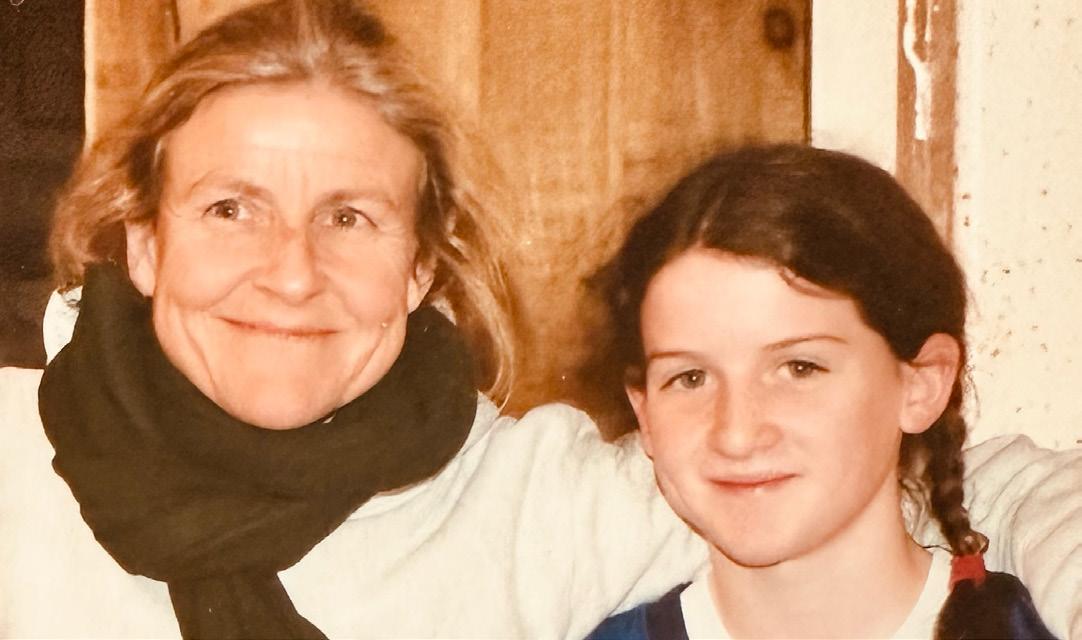
F 2000 - 2016, P’05, ‘07, BOT (‘21 - )
Jan Lindsay a few years ago with daughter, Barrie’07
A FAMILY PRACTICE
BY JAN LINDSAY
F 2000 - 2016, P’05, ‘07,
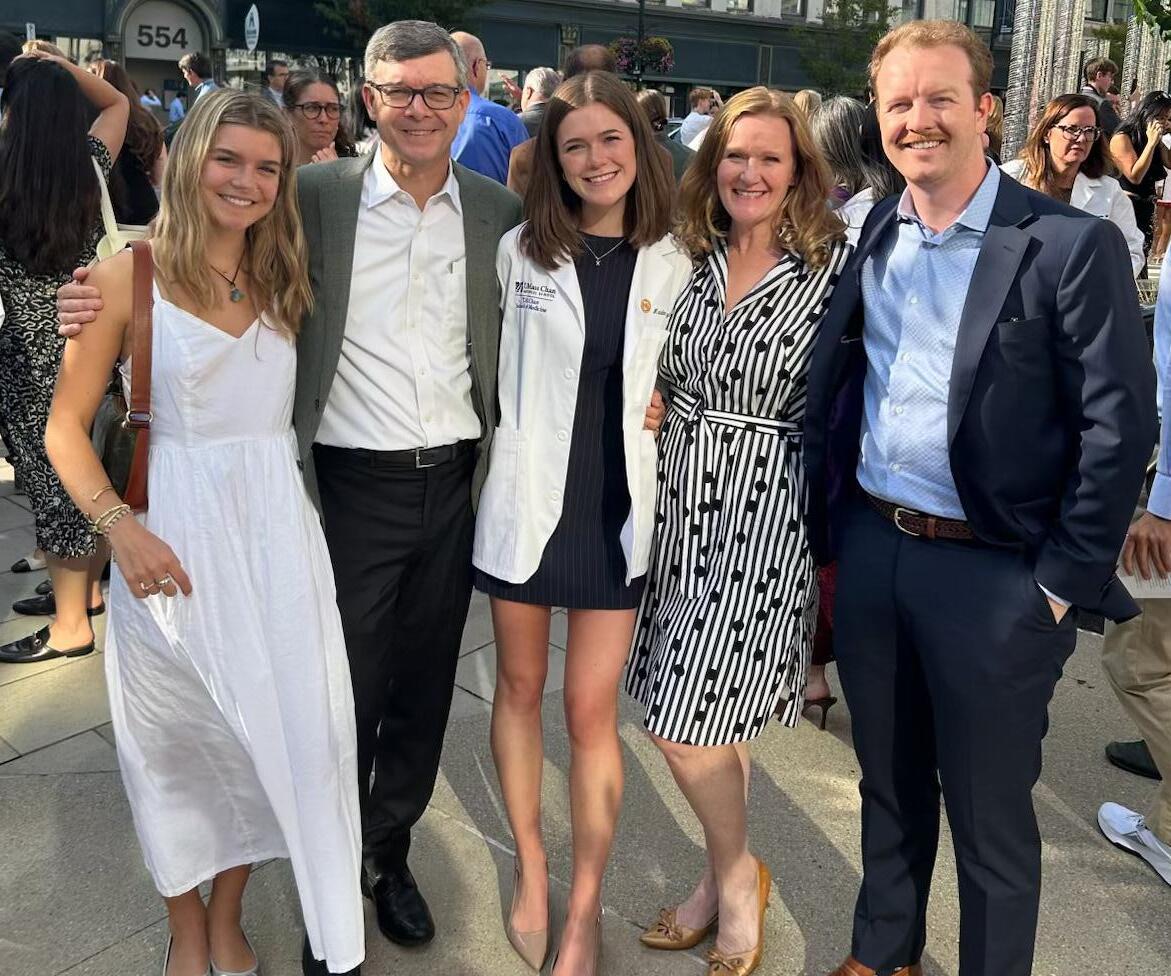
I met with Madeline ‘19 and her parents, Dr. Mary b oyd and Dr. bill b oyd at their home in b everly when Madeline was home for the weekend.
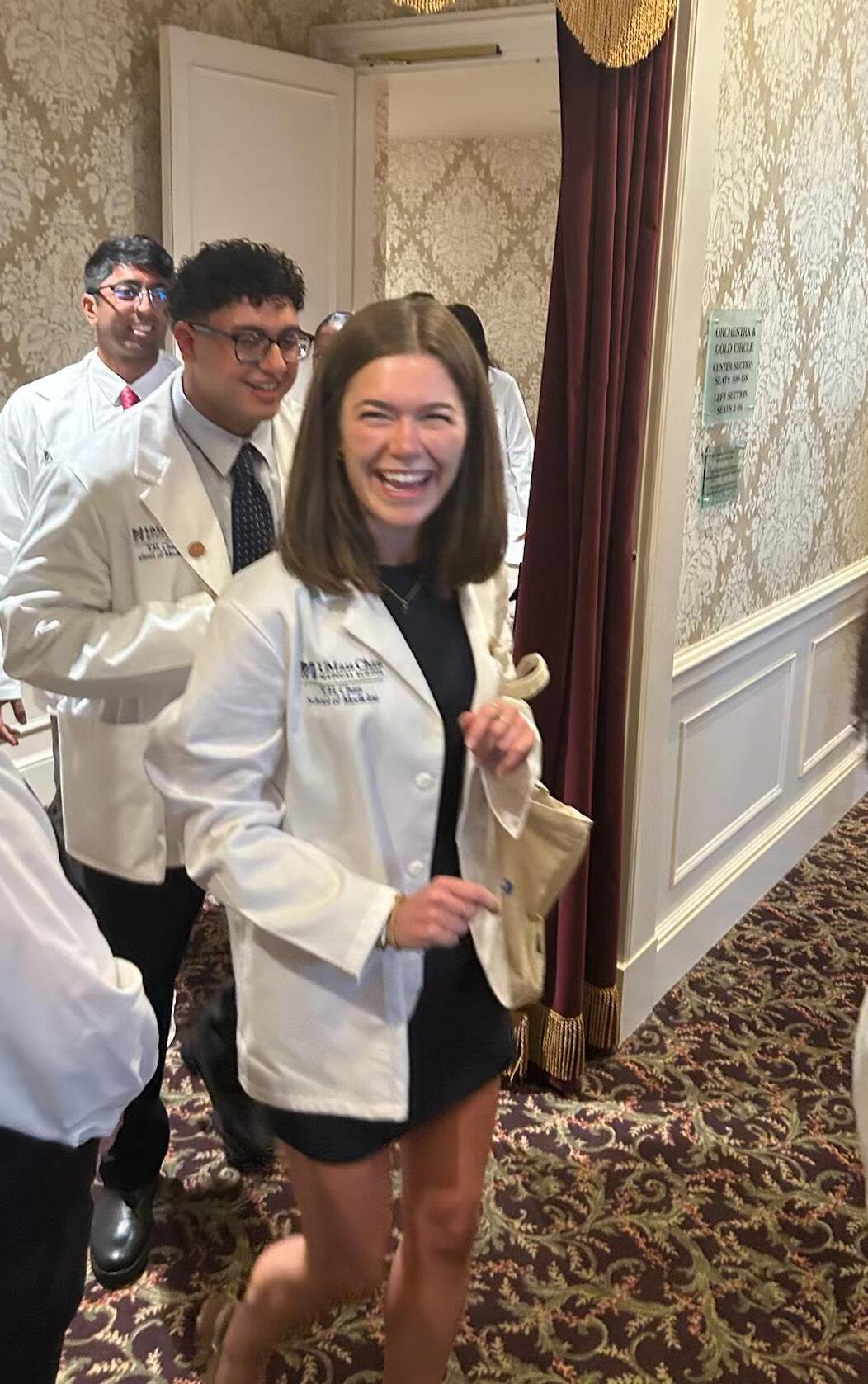
Madeline is finishing her first year at UMass Chan Medical School and energy, confidence and joy radiate off her.
Madeline: I know I’m supposed to feel like I’m drinking from a fire hose but I don’t. I love medicine; I find it compelling. And I am used to studying hard.
BOT
(‘21 - )
As a practical, more rigid learner, I am comforted by the organizational rules and patterns of chemistry. I took so many chemistry classes at Wake Forest (undergrad) that I fulfilled my pre-med requirements unintentionally.
WHY MEDICINE?
Madeline: b oth my parents are doctors and they love their jobs. It’s what they talked about at the dinner table. And the way they talked about it,
taking care of people. I love the order, the science of medicine, but it’s really about your relationship with people. You can affect lives harnessing science and protocol.
Madeline’s father, bill, works in internal medicine while her mother, Mary, is chief of Obstetrics and Gynecology at b everly Hospital.
They love their work and they love Waring.
CONNECTION
Bill: I have about 900 patients over 65, people I’ve known for so long, who I love. Many of them will not be alive in six months.
They’re grappling with questions like: “Should I plant my garden this year?”
I try to meet them where they are. You realize how much people want connection. That is central in suffering, in death and dying.
Mary: The need for human connection is so great. You walk through my door, I’ll look after you. I don’t care what your background is; I will treat you with kindness.
One patient may be pregnant, living in her car, and worried about taking her baby home because she doesn’t have a home, and at the other end of the spectrum is the privileged wealthy person who also has concerns.
Everyone will get the very best of me. That is my life.
WHY WARING
Mary: Aside from the fact that everything we wanted was all there in one place, intense reading, art, language, math, there was this sense of responsibility to self and community.
[Our oldest son] Liam ‘16 had only been in Core at Waring for two weeks when we went to our First Convocation. In his graduation speech, senior Paul Hemberger ‘10 characterized Waring as “the place where shame goes to die.”
Bill: We looked at each other, stunned, and we both knew we were in the right place.
We wanted that for our kids.
Mary: At Waring, you learn how to be a member; what you bring is important: to the classroom, on the field, in writing class, theater, or art. While the star knows they’re a valuable member of the team, every kid learns that they can contribute and that they have value. It’s the same in medicine.
Bill: Watching our kids interact with their tutors in their evaluation sessions, tutors listening empathically, we saw that Waring totally trained them. It was the most important part of their upbringing.
Mary: Each one of our kids was a part of the community and each one had a voice.
Bill: Waring threads the needle; informality breaks down hierarchy to connect on a human level with people of different backgrounds, yet very much holds you to a standard of acceptable behavior. I haven’t met an institution that nails diligence and empathy quite the way Waring does. When you combine those two things you have everything,
WHAT DID YOU TAKE FROM WARING TO MEDICAL SCHOOL?
Madeline: Waring was super formative; you had to do everything. You discover new strengths that you grow to love. Not fearing failure; working your way through it. Giving yourself grace when you’re not as good as you want to be.
Waring helped me stretch my practical concrete mode. And Joshua, specifically, through his philosophical lens in our Americas course in Group 4, softened and expanded my rigid approach to learning.
I became a curious and lifelong learner. At medical school, some of my peers learn in order to pass a test. I want to understand the material and the grade takes care of itself. Don’t get me wrong. I care about my grades.
MEDICAL ENDTERM
Madeline participated in Waring’s Medical Endterm and both bill and Mary welcomed Medical Endterm students to shadow them both in the office and in surgery.
Madeline: I was in Medical Endterm in 7th Grade. It was such a cool concept. I was 12 years old! It was awesome!
I shadowed Dr. Mulder (Gallaudet Howard’s husband and father of Sparhawk ‘21 and Rowan Mulder ‘23) specializing in Geriatric medicine, and Internist Dr Moynihan (mother of Sarah Pfeiffer ‘15).
I began to think I wanted to be a doctor when I grew up.
Bill: I brought a patient in who’d had a stroke to talk to the Endterm. His mind was clear but he couldn’t express it. He talked about how he experienced it. The class was so cool for him.
Mary: What was cool for me was seeing their excitement about what I do. I’d been doing it for 20 years. Seeing how excited these kids were reminded me how cool it is. I’ve not forgotten that.
I remember I had Henry Mitchell ‘15, who’s going to medical school now. I also had Madeline.
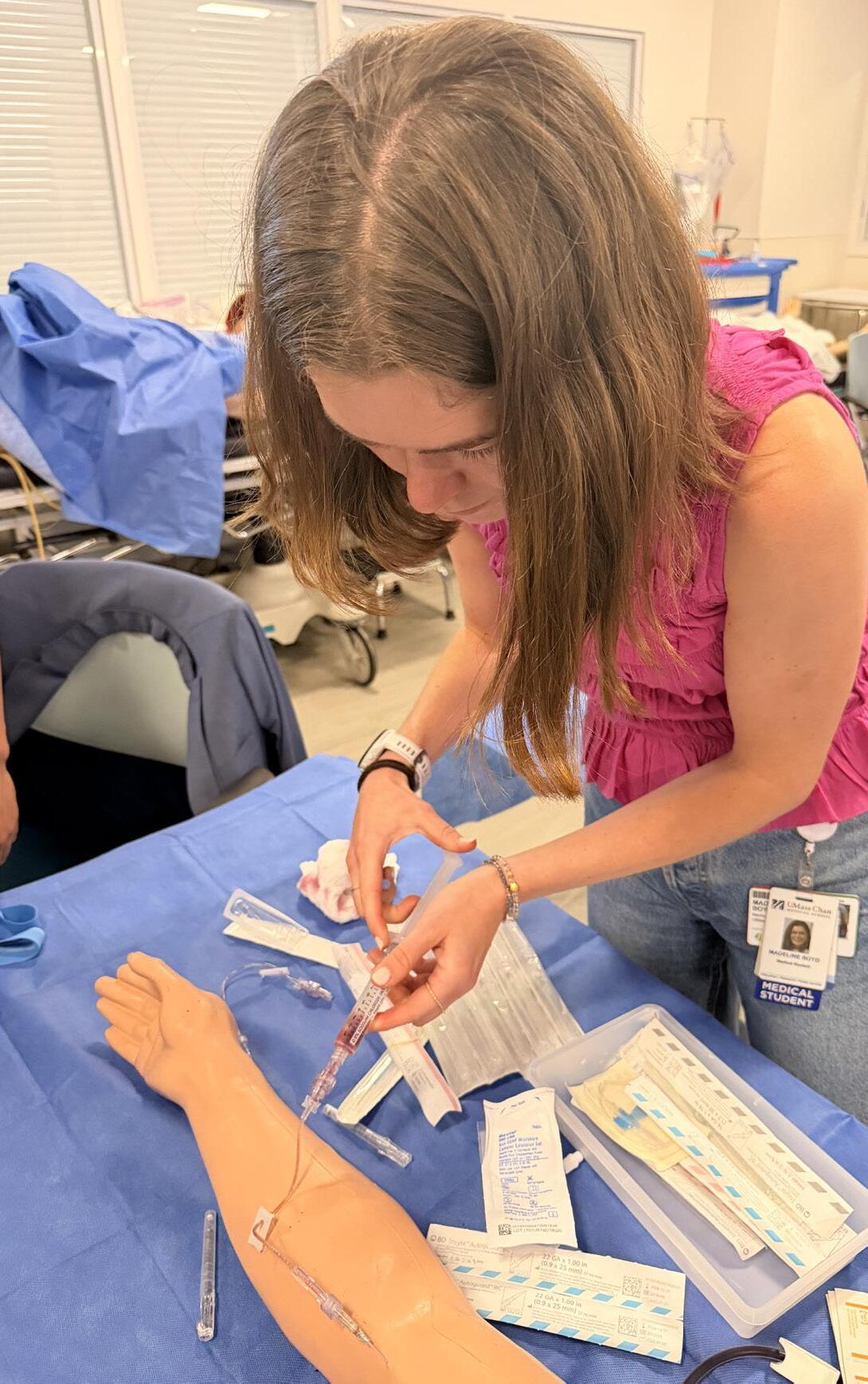
Madeline: I watched my Mum do a C-Section. I kept saying, “Don’t cry!”
Bill: I too watched Mary do a C-Section.
I cried.
PARTING THOUGHT
“
MADELINE: AT WARING, YOU DON’T FIT INTO ONE BOX AS A PERSON. YOU BECOME WHO YOU ARE.
ALUMNI PROFILES
ALLY COLARUSSO ‘12
BY LESLIE LYMAN S’10, P’13, P’15, S’21
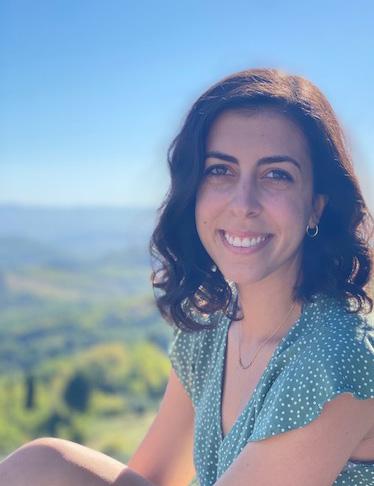
Ally is one of those rare and fortunate people who knew very early what she wanted to do with her life. She was drawn to medicine. Even while still at Waring, she was eager to get into the medical Endterm and actively studied in summer programs at MIT and Tufts. She confessed to feeling worried while here about how her Waring experience would translate out in the bigger academic world. Would no AP’s in the sciences she loved hold her back? Were her science classes rigorous enough? Ultimately, she felt very prepared, and recognized well after leaving, that many skills she acquired at Waring were easily transferable. Namely, her abilities in time management, writing and french memorization added significantly to her medical studies.
Torn between research and clinical paths Ally finally decided to pursue a degree as a Physician Assistant (PA). Knowing her direction, meant that she could enroll in an accelerated program - with three years as an undergrad and two more for her master’s degree. During this time, Ally continued to stay in touch with Waring, returning to help teach a medical Endterm, and seeking guidance from Waring parent and alum, Stephen Hinrichs ‘83, also a PA.
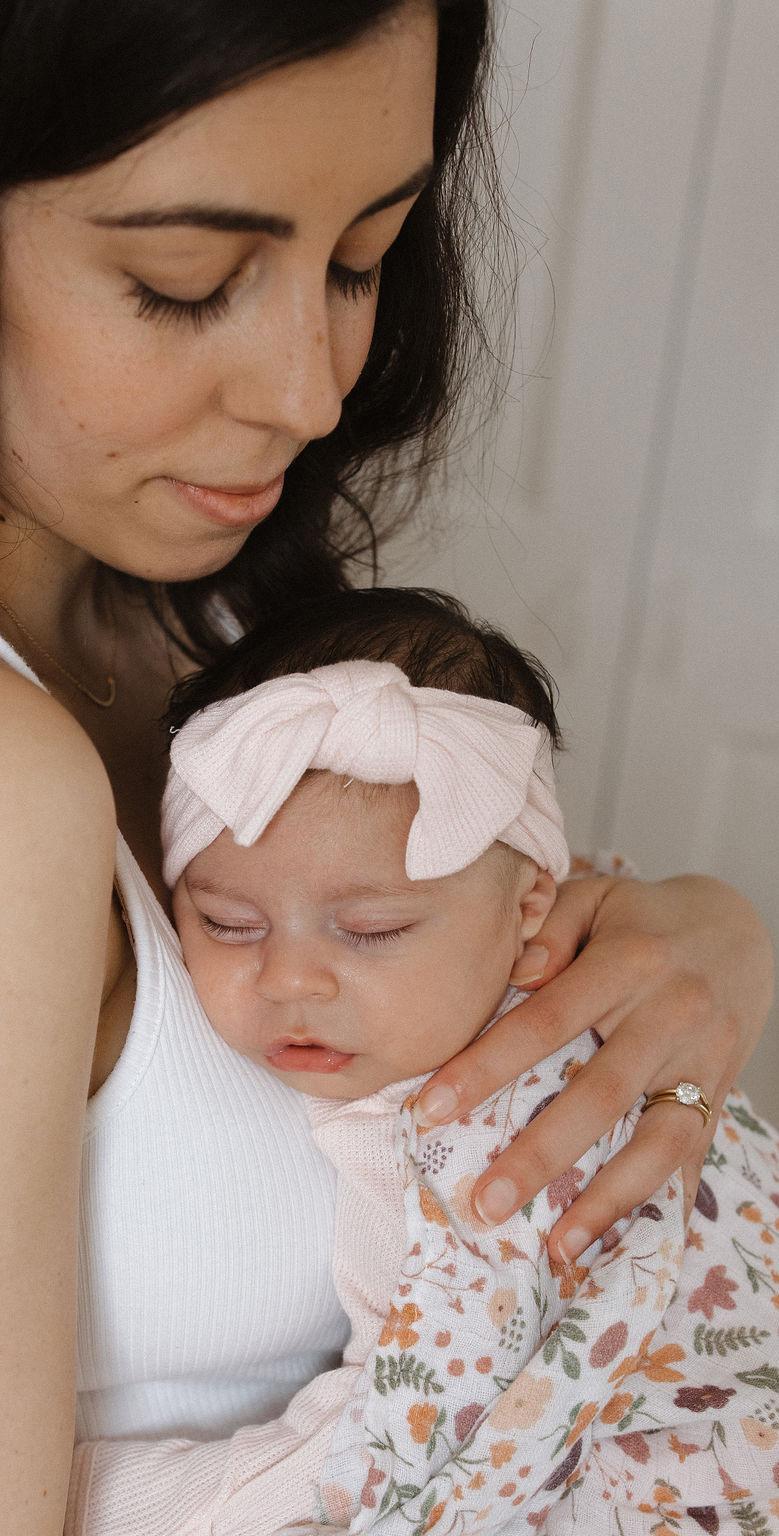
Ally’s choices have been universally guided by her interest in helping patients get healthier and prevent illness as opposed to just treating people when they are sick. She has sought out practices that provide longer appointment times and deliberately focus on understanding the whole person. She recalled in her first job as a PA there were no computers in the exam rooms. She was given an hour for her initial appointments with patients and was taught how to be present, how to ask good questions, and how to really see someone deeply. Putting patients first at every step feels like a signature of Ally’s medical practice.
A new mother of a fifteen month old daughter Maya, she currently works in telemedicine as an obesity and lifestyle specialist. This role allows her to see patients weekly and provide support, education and advice as people navigate getting healthier. Most of her conversations with patients are centered on nutrition, physical activity, stress management and sleep. She works with patients of all ages and with a variety of health conditions including hypertension, diabetes, high cholesterol, sleep apnea, fatty liver disease, PCOS (now called PMOS). This rapidly growing field poses many new opportunities with emerging medicines, technology and testing, as well as the challenges that come along with all of that change. Ultimately, Ally knows that each and every patient is an individual with their own life pressures, habits and circumstances. It is both an educational and a psychological process - she acknowledges that choosing health, even for those who know the right things to do, isn’t always easy.
When asked what her future might hold, Ally wonders aloud about having a bigger impact. Moving toward Public Health and policies that touch more people are on her mind. With someone as passionate and directed as Ally, we are excited to see where her next steps lead.
ALUMNI PROFILES
ANDERS ERICKSON ‘13
BY FRANCIS SCHAEFFER ‘92
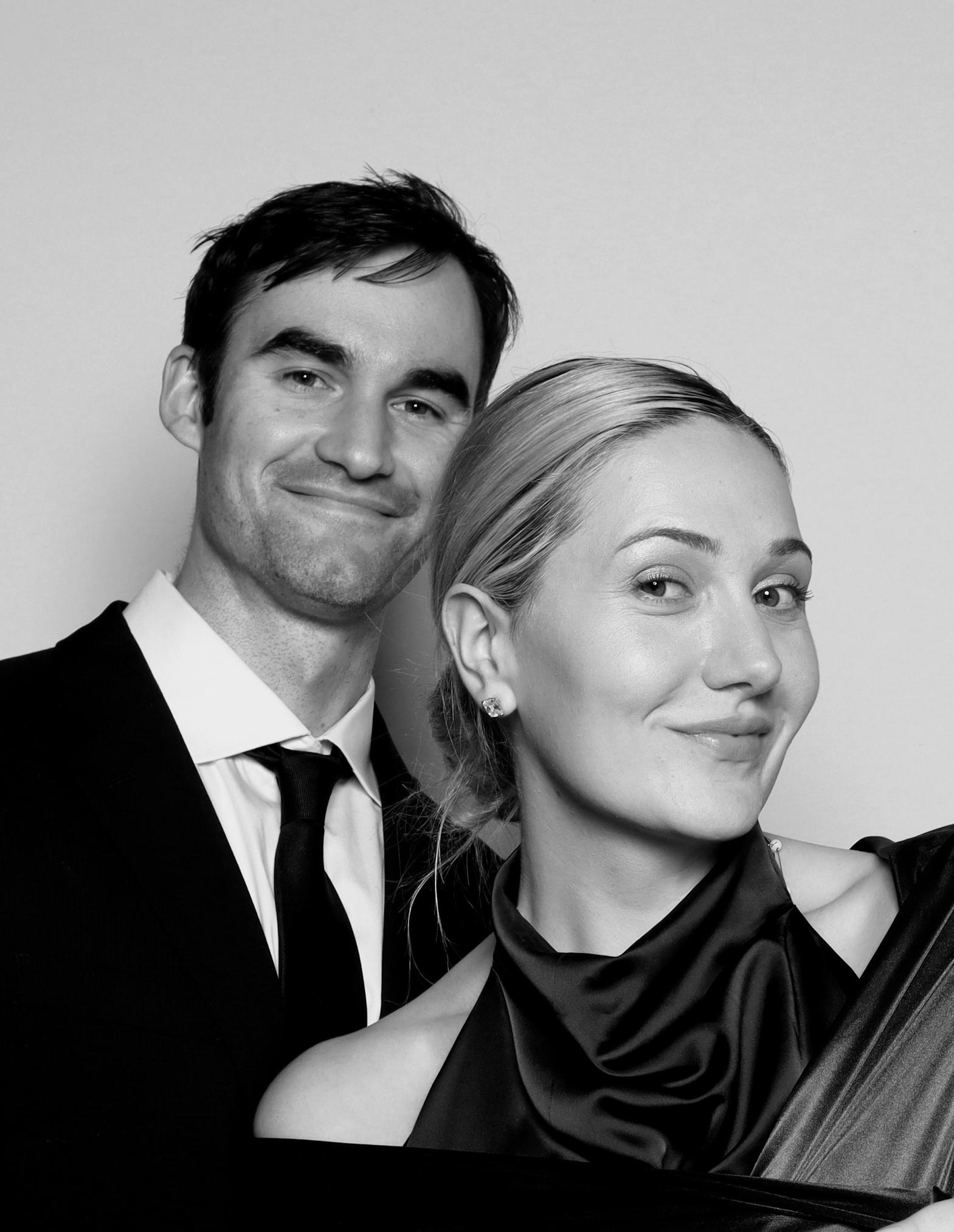
On April 30, I caught up with my former student Anders Erickson, Waring class of 2013. After our conversation I remembered that I interviewed Anders when he was a senior at Waring as I prepared to write his college recommendation. Reading my notes from that first interview brought back my memories of Anders as a senior, with his hopes, the things he was proud of, the things he wanted to tell me. One line in my notes stuck out to me. After talking about all he had done at Waring, Anders and I talked about his bigger goals in life; he told me he wanted “to do something with meaning” something with “a higher calling.”
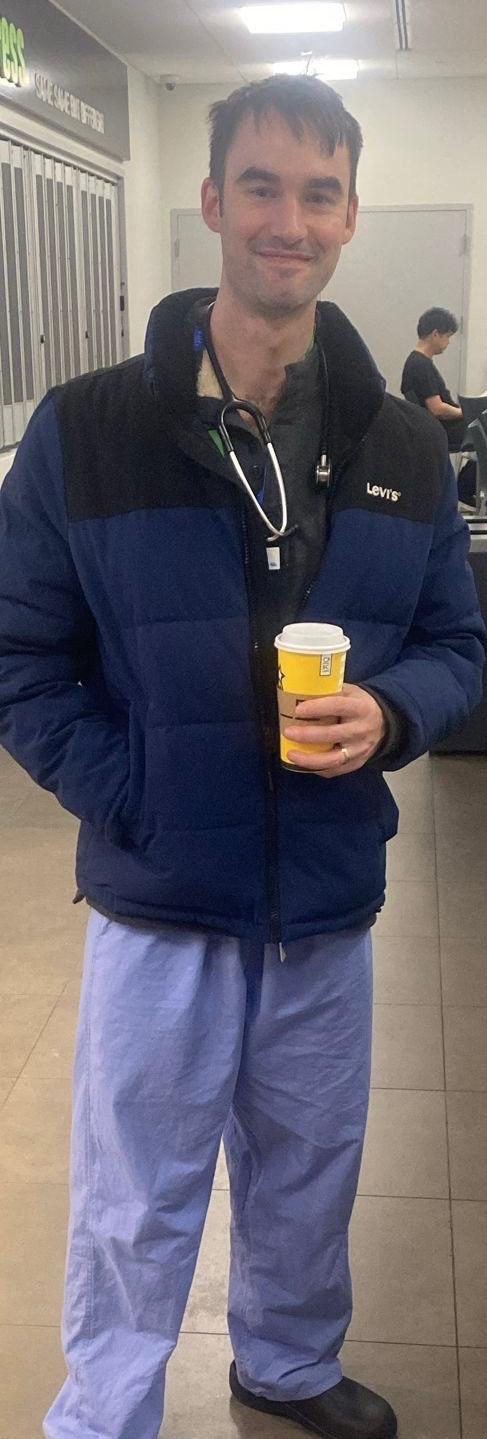
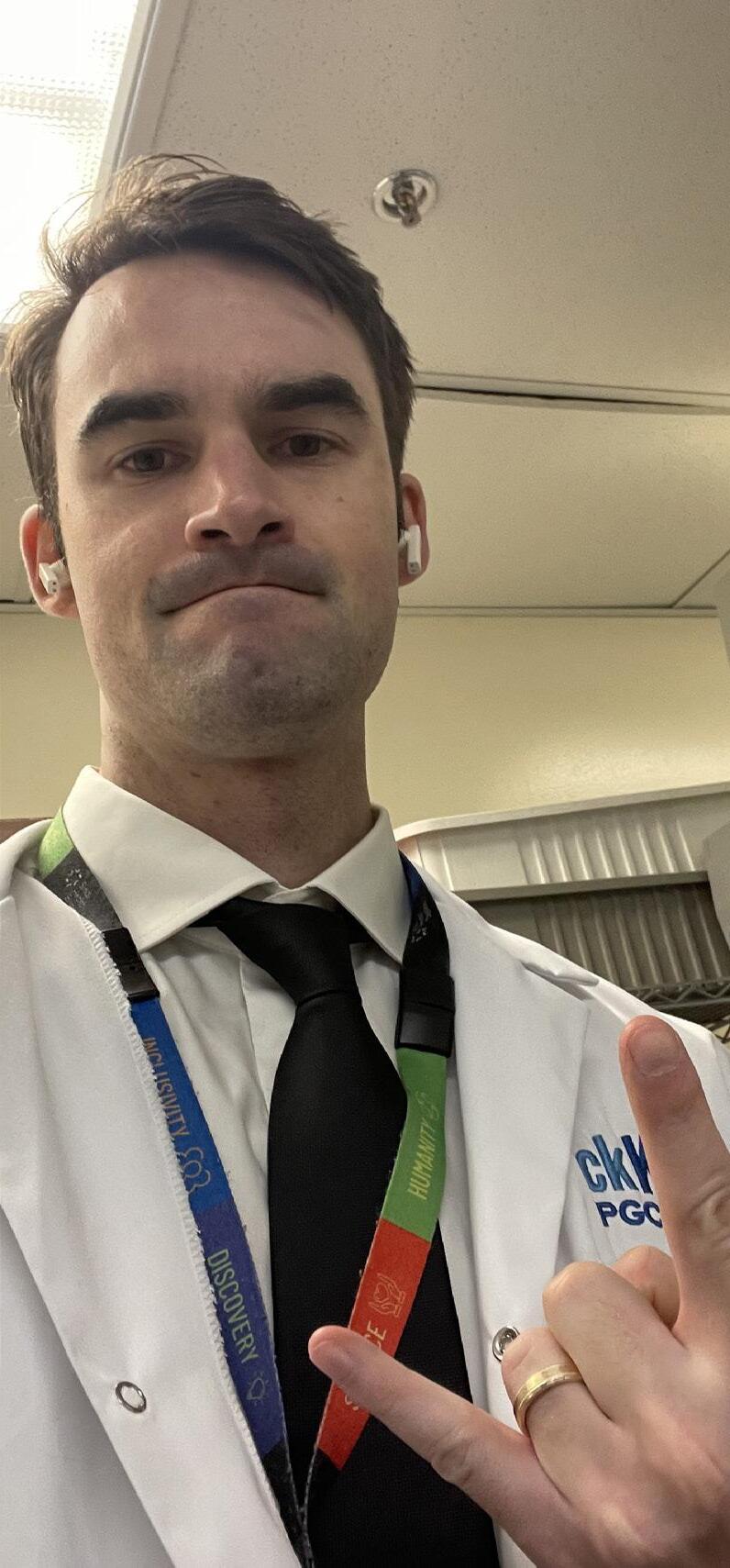
I think that Anders has done that. In June 2025, Anders completed the Ph.D. part of his M.D. Ph.D. program. At the moment he is in the middle of his medical rotations but Anders already knows what he wants to specialize in, neurosurgery. Anders has chosen a path in life that has him doing the most school you can possibly do, both because he is curious and finds ideas beautiful in themselves, but also because it puts him in a position to serve others in a way that makes a true difference and changes lives. Anders’ Ph.D. work focused on treating rare childhood brain cancers. Specializing in Neurosurgery will mean seven more years of training, after which Anders plans to pursue a post-doc so that he can continue his cancer research. He will not be done with “school” until after he is 40.
After Waring, Anders began college studying electrical engineering. He told me that his interest was caught by our physics class and that the beauty of the ideas, particularly the electricity and magnetism unit, inspired him to want to pursue the subject. However, once he began studying electrical engineering at McGill University, he realized that it was not inspiring him the way he hoped. On a run with a friend who was studying biology, Anders became fascinated by his friend’s description of the mechanism by which thalidomide interfered with fetal development and felt a sense of the responsibility to use knowledge wisely to help others. He reconsidered what he was studying and realized that he felt a call toward medicine, which would allow him to help others while also fulfilling his love of learning new, beautiful, ideas. Anders also told me that his previous life experience prepared the way for this change. His
grandfather was a medical illustrator; young Anders was fascinated by the illustrations, finding them compelling in their honesty and fascinated by their accuracy. Also, during his time at Waring, Anders participated in an Endterm led by Jan Lindsay, long-time school nurse and now board member, called Medicine and Mountain biking. Anders remembered the depth of the material, and said that conversations about organelle’s, cells, and other technical topics, became “seeds” sown in his mind that came to fruition in his decision to become a research doctor.
Anders is now living and studying in Toronto with his wife Nina. He proposed to her in June 2025 on the same day he successfully defended his Ph.D. thesis. He described it as one of the best days of his life. Anders told me that when he began his neurosurgery rotation, he realized he had found “his people”. He saw in its practitioners people devoted to care, study, and thoughtful craft. Anders also told me that when working in a neurosurgery context, the conversations with patients and families has a level of reality and contact that is not like his other life experiences; there is a direct sense of being able to help others. I see in this a connection to the 18-year-old Anders who told me he wanted to use his intellectual gifts for a higher purpose.
IN THEIR b LOOD: TWO SISTERS AND THEIR MEDICAL PATHS
BY SAVERY KELLEY ‘02
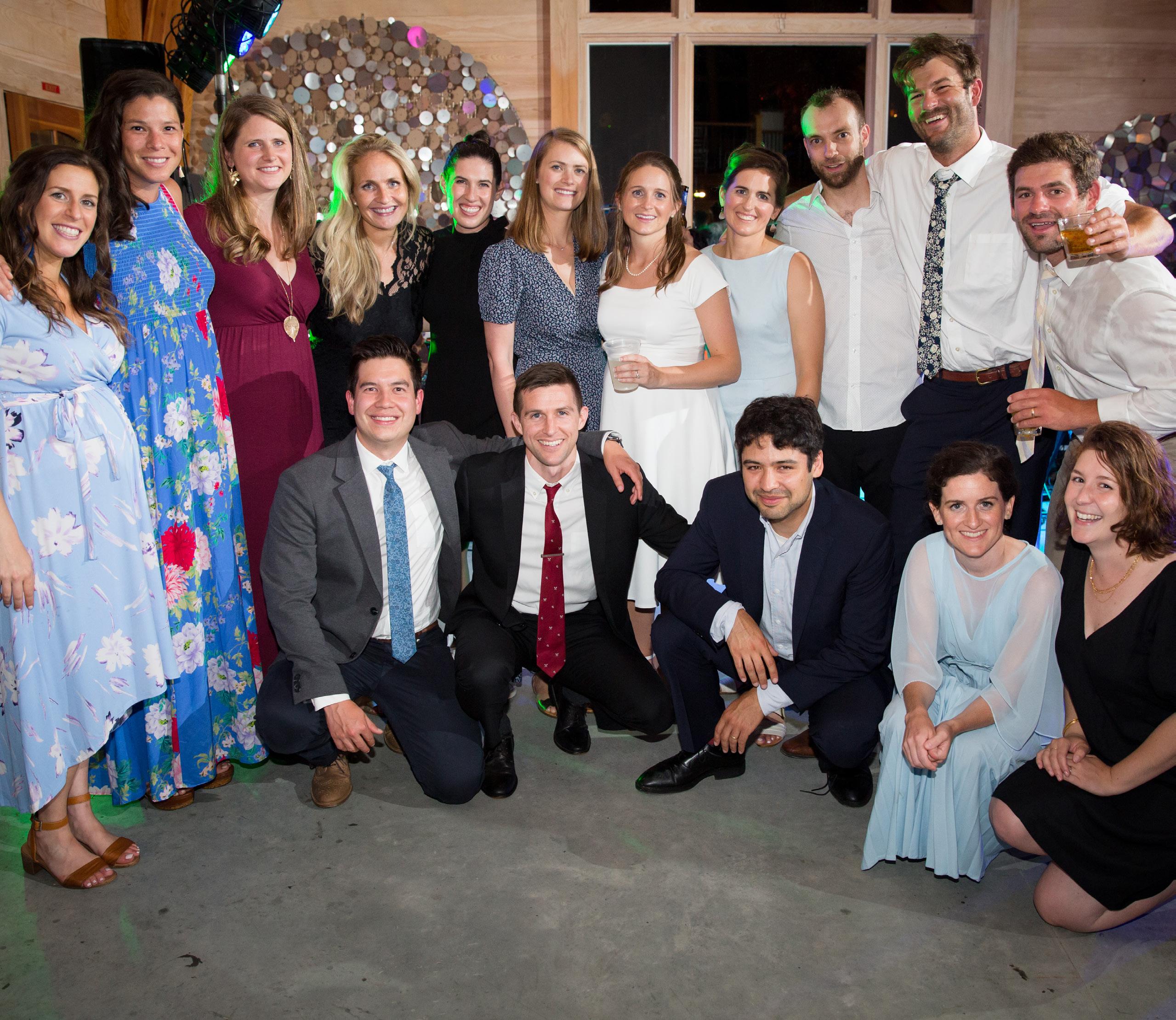
Left to right back row: Laurel Ganem ‘08, Sarah Warner ‘07, Francesca Marangell ‘05, Ashleigh (Duff) Lindsay ‘05, Rachel Kalman ‘08, Gabrielle Marangell ‘08, Monty (Sherwood) Graham ‘08, Kay Sherwood ‘06, Sammy Steward ‘07, Karl Roth ‘08, Luke Diehl ‘08.
Left to right front row: Chris Hemberger ‘05, Jack Lindsay ‘05, Nick Geron ‘08, Barrie Lindsay ‘07, Tatiana (Matthews) Geron ‘08.
MONTY (SHERWOOD) GRAHAM ‘08
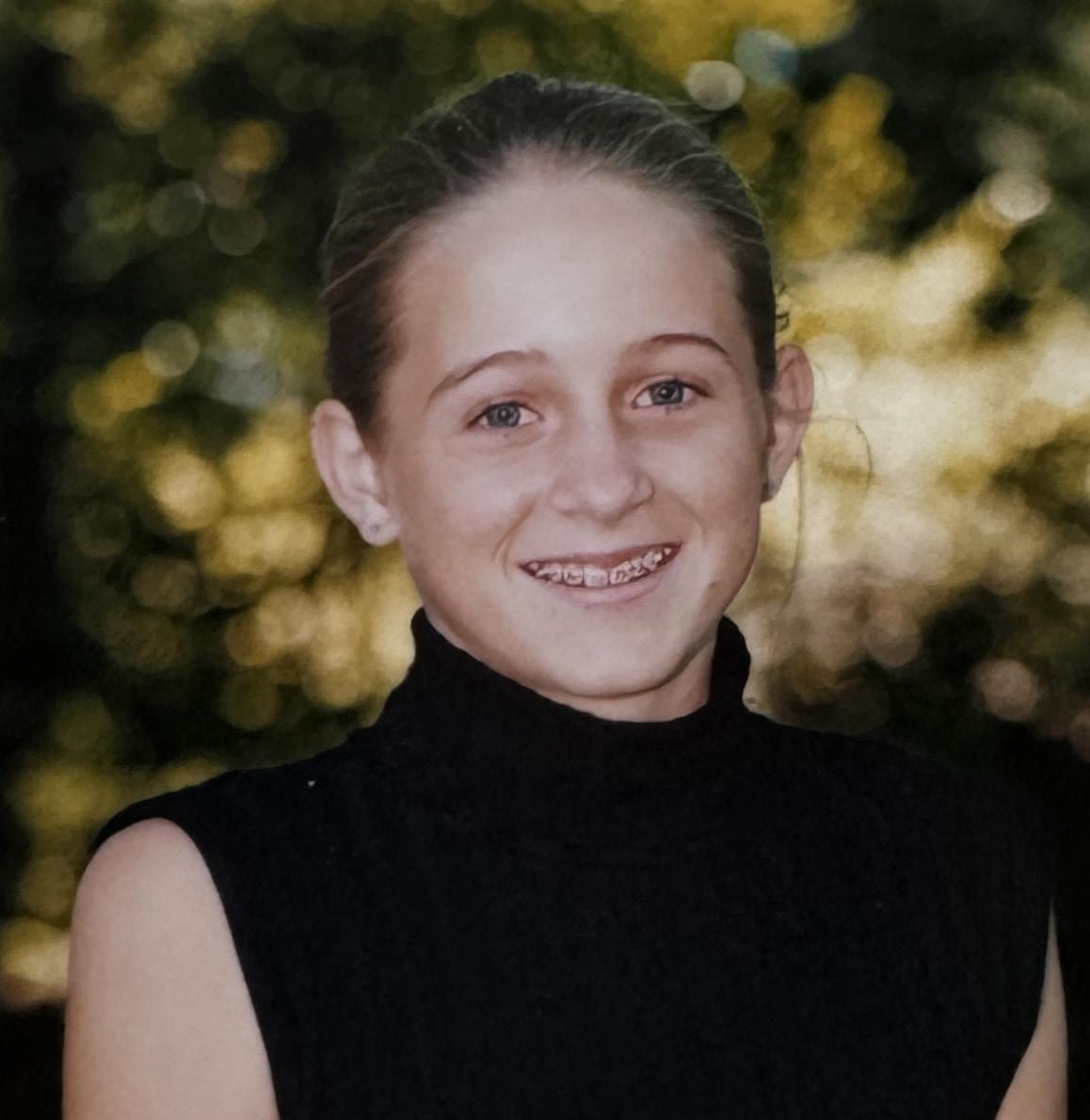
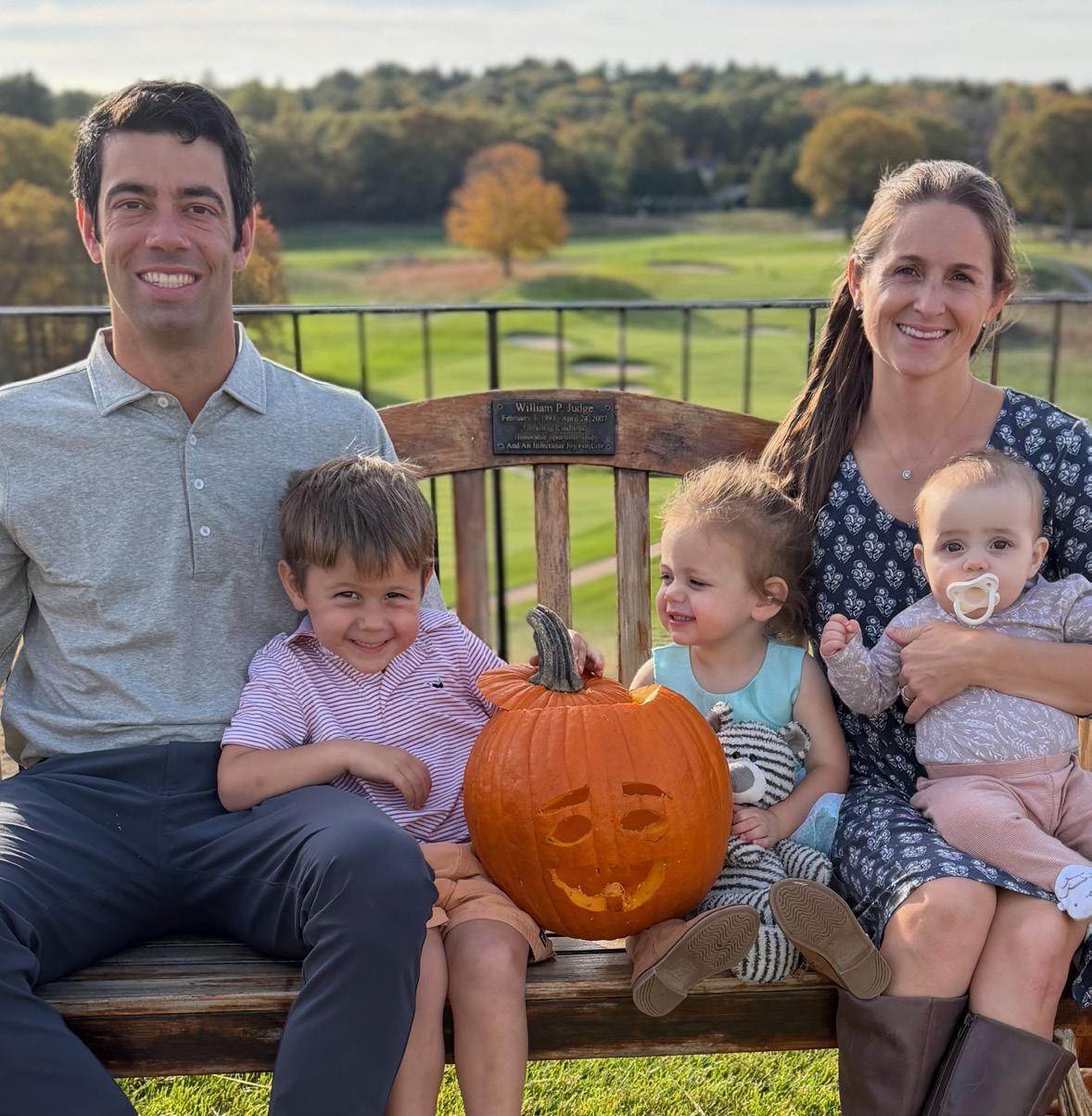
In May, I had the pleasure of reconnecting with Monty (Sherwood) Graham ‘08 who is currently a Nurse Practitioner (NP) in the Gastroenterology department of MGH, and mom of 3 (son Jamie who is 4.5, daughter Molly who is 2.5, daughter Maggie who is 1) with husband Mike, living in Dover, MA.
While a student at Waring, Monty was not particularly drawn to STEM, but felt most comfortable on the sports field and in creative writing. This continued in her undergraduate experience at Kenyon ‘12 where she majored in International Studies and Modern Languages. After graduation she found herself working in the Virgin Islands before returning home to Ipswich. It was in downtown Ipswich where she ran into John Wigglesworth one day. After catching up a bit, he proposed having her return to Waring and substitute teach for Robine Vaneck in Advanced Algebra as Robine was going to be on maternity leave. Monty agreed to it, stepping out of her comfort zone in true Waring fashion. Advanced Algebra turned it into Core bio, other math classes as well as sports and writing. The former subjects she was not particularly confident in while a student at Waring, but greatly enjoyed the new challenge of teaching them. She was at Waring in this teaching and coaching capacity for 3 years, 2012-2015.
Monty greatly enjoyed her teaching experience at Waring and considered continuing teaching. She nearly pursued a Masters of Education degree before settling on an RN → NP program at Simmons University, because NPs are listed as one of the jobs with the highest rates of career satisfaction. In this application process, she thought fondly of blood drives with Jan Lindsay, as her nursing ideal, but had no other direct experience with healthcare, at
this time. She also had no science classes on her transcript from undergrad, choosing to do prerequisite courses, like organic chemistry, also at Simmons. She jokes that the “20 year ago Monty” would have said, “absolutely not!!” It’s amazing how much we can surprise ourselves. During this program, one clinical that really stuck with her was at b oston Medical Center ( b MC) in their ED (Emergency Department) working with a patient suffering from a gunshot wound to the chest, on her first day. In that clinical experience she thrived with a diverse patient load: all ages, ethnicities and demographics. Monty graduated from her program in 2020, right at the start of COVID. Her first position after graduation was also at b MC on a floor, which soon turned into a COVID unit. One month into that experience she joined a small team at a Primary Care office, a private practice, where she was for one year. She initially liked that primary care was a little bit of everything, but ultimately felt the urge to specialize and took a position at MGH in the Gastroenterology department, where she continues to practice today.
The most challenging aspect of her current role is maintaining patient integrity and making sure she is adequately helping each person amidst feeling continual pressure to see more patients. In the NP role, there is a lot of bureaucratic back-and-forth with the business side of the healthcare system.. She has ultimately made the choice to decrease her hours so that she can have more time with each patient and balance motherhood. She works part time: 3 days a week– 2 days via telehealth and 1 day in person. She sees 6 patients in 4 hours– telehealth has really broadened access and diversified her patient load.

Monty sees a common issue in medicine being a misunderstanding that diagnoses are black or white, but at Waring Monty was encouraged never to see things in this way. She continues, “learning at Waring was never didactic” and always discussion and dialogue-based learning, and teaching. She has taken this with her while working as an NP. Her appointments consist of asking lots of questions, having patients be at ease to ask their questions, and looking at pictures together to better understand anatomy and medical terminology. It is her priority to keep patients engaged during the entirety of the visit. Her medical practice is never one-sided, whether in person or online. She takes the time with each patient to listen, address concerns, and build trust. Many times the Waring philosophy has helped frame her thinking and be more comfortable in her relationships with her patients and experiences helping them. There are no cookie cutter set of symptoms that fit into a diagnosis, each individual patient experience is unique.
One aspect of her role that she really enjoys is helping orient new Physician Assistants and NPs at MGH. I asked her to describe a hope for what the future may hold and she said to bring teaching into her daily role through clinical work and through working with nursing students.

When steps become story
KAY SHERWOOD ‘06
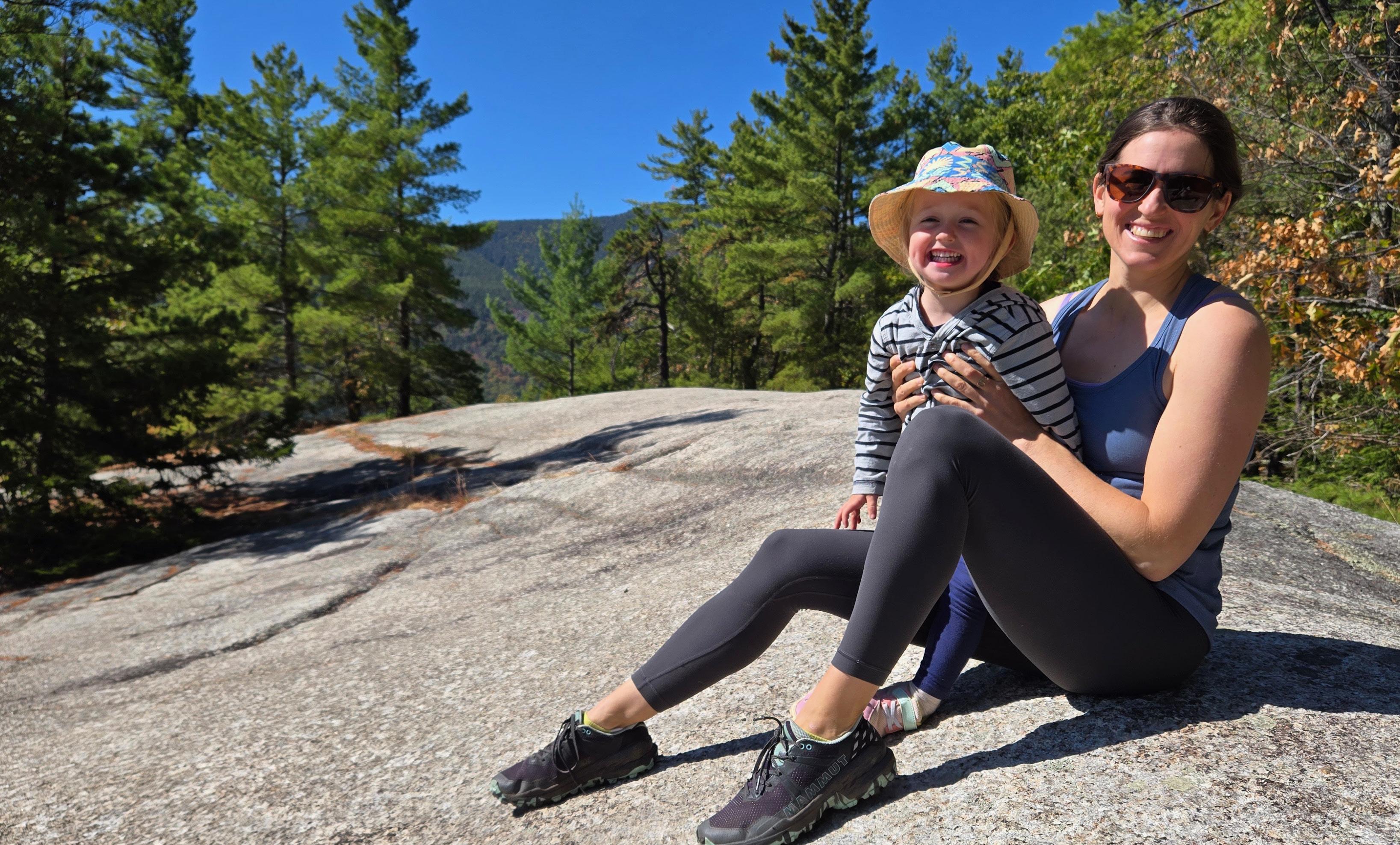
After graduating from Waring in ‘06, Kay Sherwood went to Colorado College ‘10 and “fell in love with the west.” After graduation, she pursued outdoor education positions at High Mountain Institute in Leadville, Colorado and led programs at the National Outdoor Leadership School (NOLS) in Wyoming for 6 years. Although she is very passionate about all the aspects of wilderness training, the transient lifestyle was not feasible for her for the long term. She saw two potential and practical options going forward: to continue to teach or nursing. b oth seemed like solid paths, but she was particularly drawn to nursing because of the flexibility.
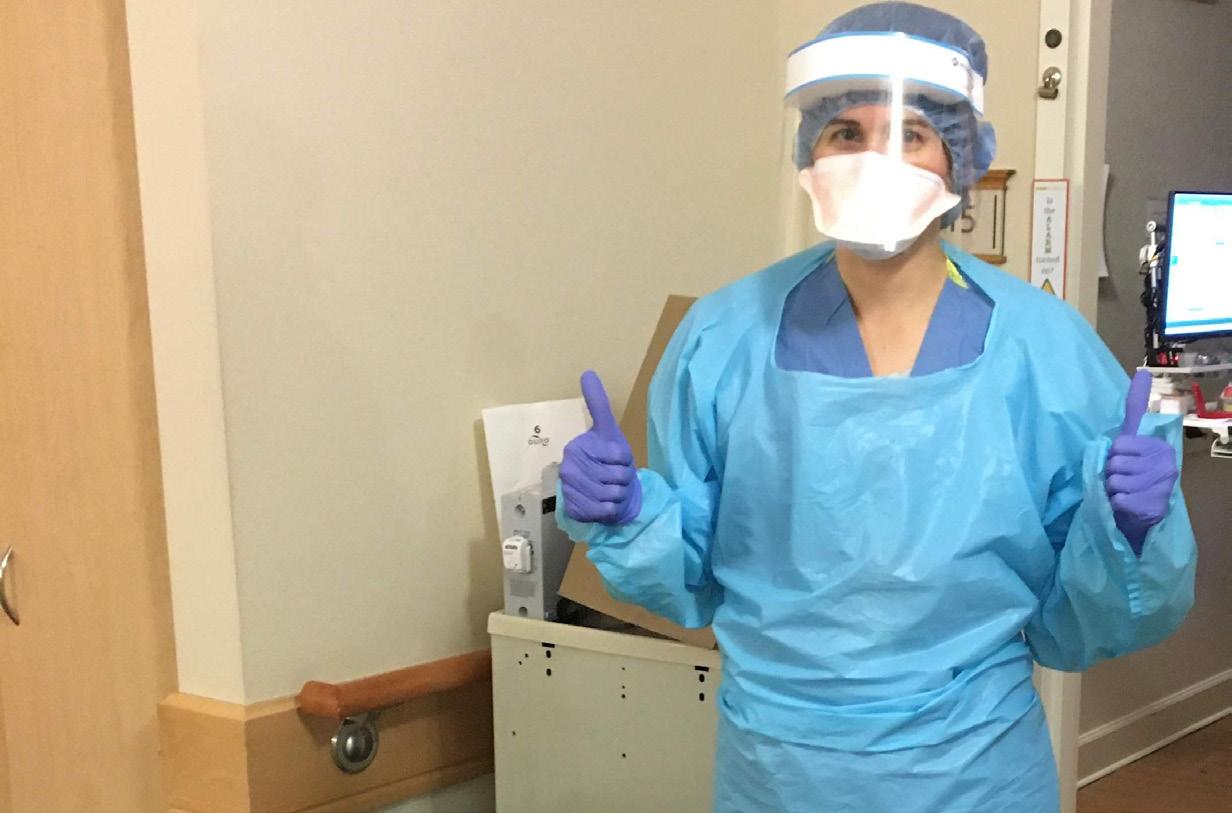
Kay attended an extremely accelerated RN program at Regis University in Denver that was one year long. She enjoyed a diverse range of nursing specialties through clinicals in Denver hospitals. She graduated from nursing school in 2019 and got a position in a Telemetry unit in Longmont, CO, but 6 months into the role, it turned into a COVID unit. She was there for 1.5 years and then held several more nursing positions out west, one in Jackson Hole, WY, while combining it with travel nursing opportunities back on the east coast. One an outpatient pediatrics unit at MGH another a position at Portsmouth Regional Hospital then she made the switch to outpatient. All these inpatient experiences were in the haze of COVID. She was ultimately drawn to outpatient for the flexible hours. She continues to use all of her nursing knowledge, but the acuity is not as high.
Kay is now in a GI nursing position at MGH, that is per diem and fully remote. On any given day she responds to wide-ranging patient needs through phone calls and messages for covering providers. She works 2 weeks on and 2 weeks off and this schedule works well while balancing her fulltime role as mom to Ruthie, who is 3. Kay is also in a fully remote NP program at Simmons University in order “to advance and open more doors.” She is able to take all her courses online and is able to do it in her own timeline. Often one course a semester. This is a welcome change from her full-time nursing school experience.
Kay has returned to her hometown of Ipswich. When asked what the future may hold, her response is that if she continues on the RN path then school nursing is appealing. Once her NP masters degree is completed, she is drawn to primary care. She misses the hands-on experience of inpatient work and working with a big team, but prefers the health promotions side of things and lifestyle changes, opportunities that her current role brings.
Kay notes that she felt like she was a little over her head at Waring. She recollects that after long days of classes and wrapping up sports, she would then wake up at 4am the next morning to finish homework. Waring always rewarded hard work and a strong work ethic. b oth of these were developed at Waring and continue with her today. One aspect Kay loved about the Waring experience was that it was “not about the product, but the effort, it was all about the process.”
NEUROSCIENCE AT WARING
BY STEVE WILKINS
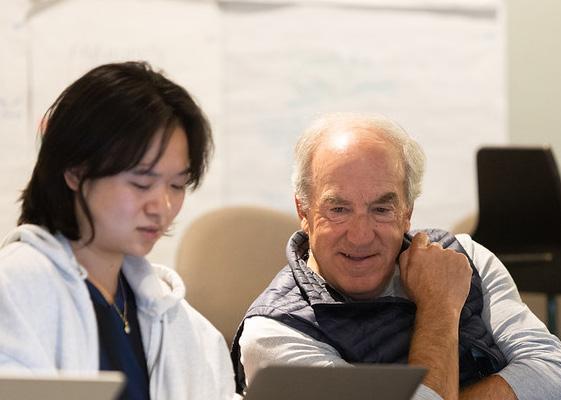
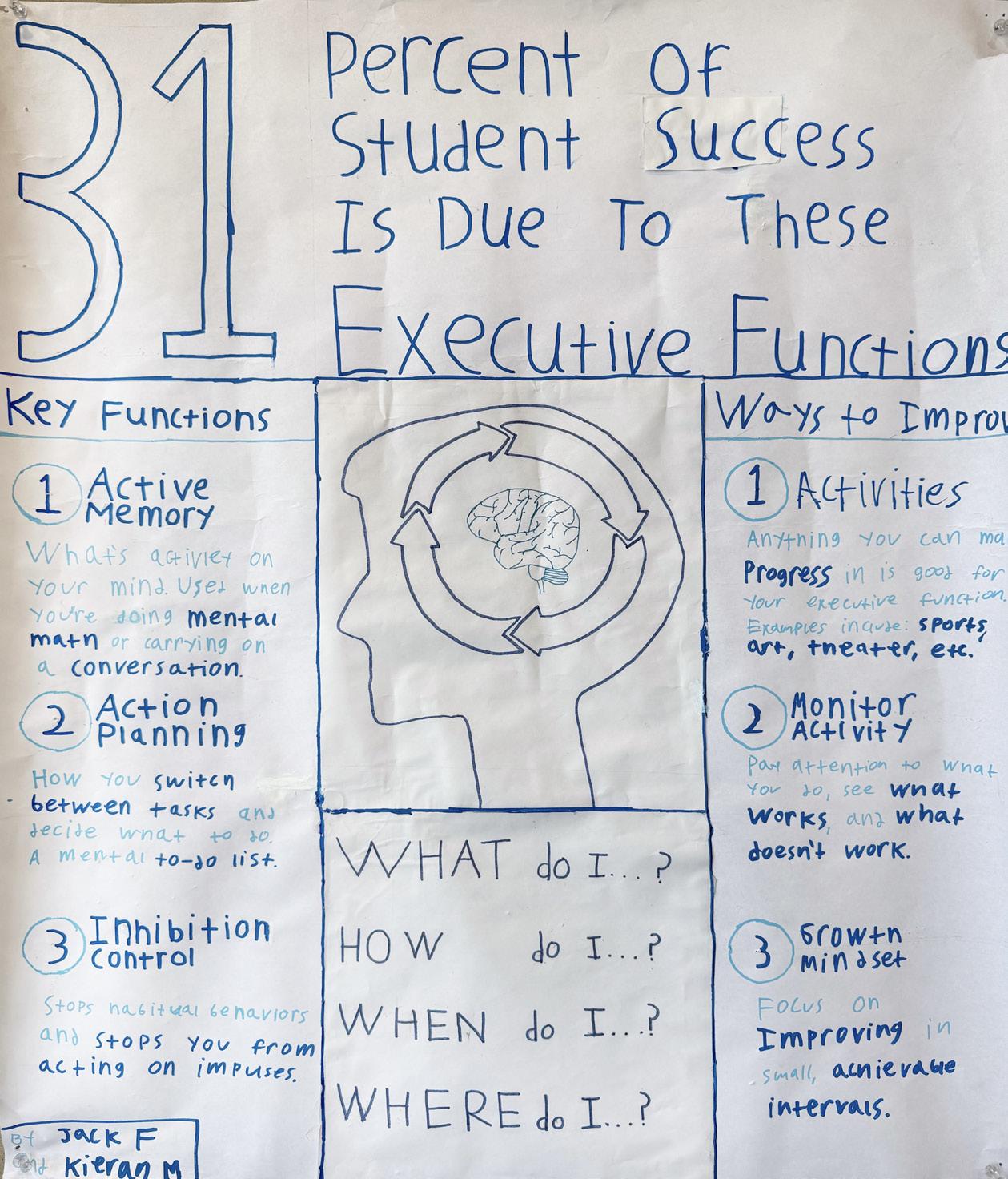
What is the brain doing when its body walks it into a classroom in The House on a Monday morning? Waring’s neuroscience students can talk about this in ways that most teenagers cannot. They might say that we enter the classroom in Default Mode Network which is our rich, creative, inner mental state. Likely, we rely on our Ventral Attention Network which is lousy at riveted focus, but important for scanning the social and physical environment. The Limbic Network is fully engaged in risk management and avoidance of humiliation. Quickly, as the teacher calls the class to order, we need to activate our Salience Network so as to shift to task orientation in the Central Executive Network (what to do, how to do, when to do) and switch to the Dorsal Attention Network which is great at focusing on a specific, often external topic. Understanding this transition allows both teachers and students to navigate the opening minutes of class with more empathy and efficiency.
“Neuroscience is a culmination of the liberal arts; knowing how we think, understanding the math behind our minds, and appreciating the beautiful patterns that emerge. In more practical applications, it teaches us how to better control our thinking--knowing how we learn lets us deliberately choose to learn.
KEIRAN MATTINGLY ‘26
The Waring faculty is also working to view teaching and learning as neuropsychological experiences. Annually, each Waring Faculty Member generates one “master teaching goal” to guide us, serve as our North Star, and focus our work with our students and the larger community. My goal for this year intersected with goals that Tim bakland elucidated at Convocation in September. My North Star was to develop an engaged group of students who find approaches to sharing “how your brain learns” with the Waring community throughout the year.
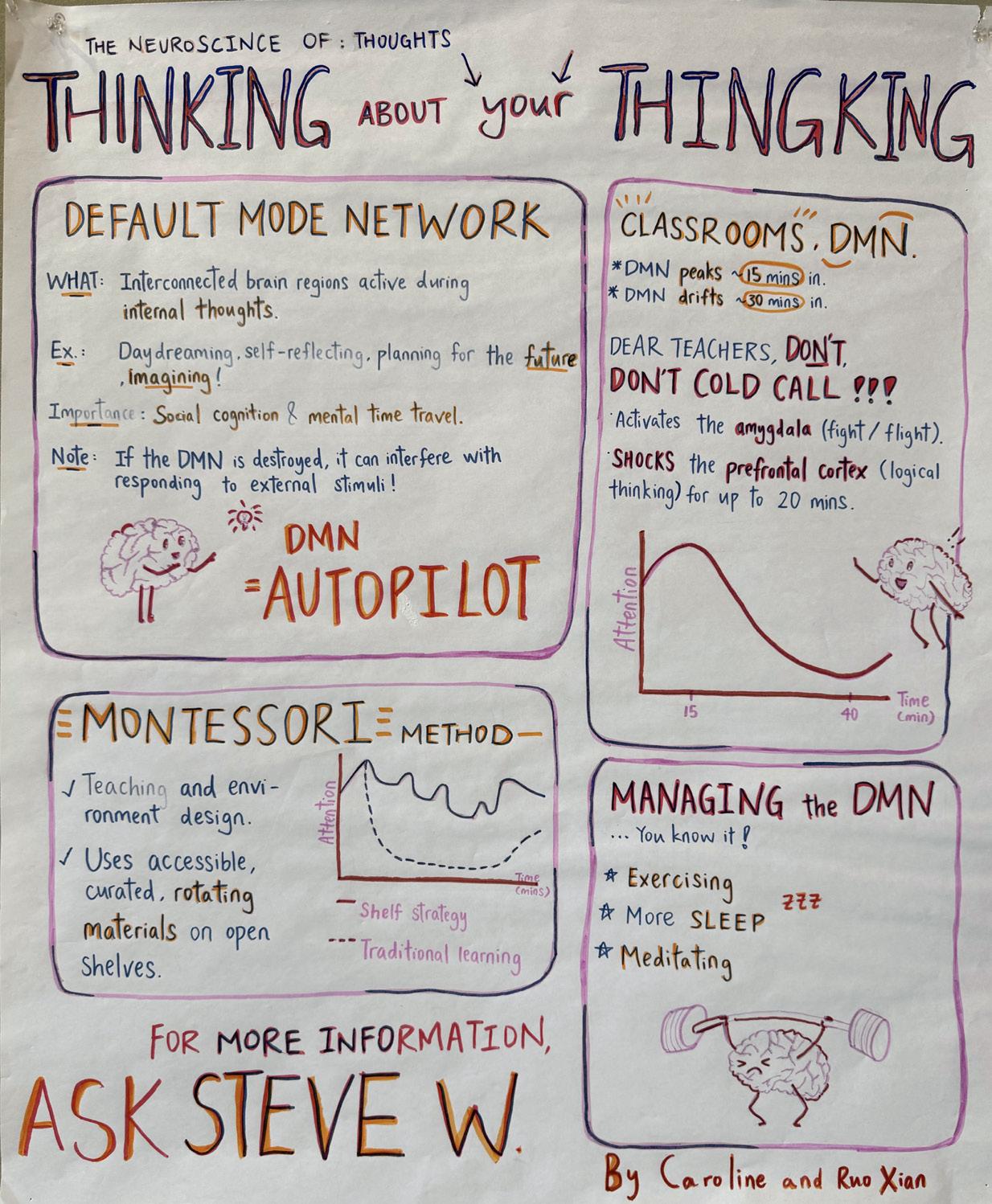
I have had the pleasure and honor of teaching fourteen Waring School seniors in a course entitled, “Introduction to Neuroscience.” On the surface, we collectively achieved some aspects of my annual goal through an All-School Meeting presentation in which these students taught their peers and the faculty about neuroplasticity, myelination, memory, metacognition, attention, executive function, and the benefits of sleep to our cognitive functioning. These presentations were then transformed into posters that adorned the bulletin board in the Forum Foyer for several months. Song Kim ‘26 wrote, “Neuroscience as a class has forced me to turn my scientific lens inwards for the first time, and confront my brain.”
Importantly, the faculty has begun professional development work to understand how the brain learns and how we can structure Waring educational experiences to maximize student outcomes. While this teacher education work is a mutli-year endeavor, this year we established some foundational understandings of the neuroscience of lesson plan design, the “do’s and don’ts” of social-emotional learning within a rigorous academic program, and what is happening in the brain as we take on challenges, such as learning something new and difficult. Academic Chairs are taking the lead on this project, and we will all read “Culturally Responsive Teaching and the brain” by Zaretta Hammond as our summer reading. This will set the stage for our continued work in 2026-2027 and beyond.
The faculty has begun examining, questioning, debating, and engaging deeply in the topic of maximizing student learning through our educational offerings. The decennial report of the New England Association of Schools and Colleges after its visit to Waring in 2025 included a comment that Waring should do the work to adopt “a more structured approach to articulating its pedagogical philosophy and core instructional practices.” The faculty is doing this complex work in the context of the neuroscience of learning in meaningful and enduring ways that will positively impact student learning.
At a deeper level, though, the existence of a neuroscience course at Waring permeates the student and faculty ethos by simply existing in this amazing community. Esteemed French neuroscientist Stanislas deHaene commented that most teachers know more about how their car engines work than how their students’ brains function. Waring is actively and enthusiastically working to counter that assertion. “I think that
Waring’s “joy of learning” motto applies directly to this class because I have often (almost daily) found myself thinking about and applying what we learn in class to the real world. When I’m smiling, I think about my neurotransmitters.” reflected Ana Mier ‘26.
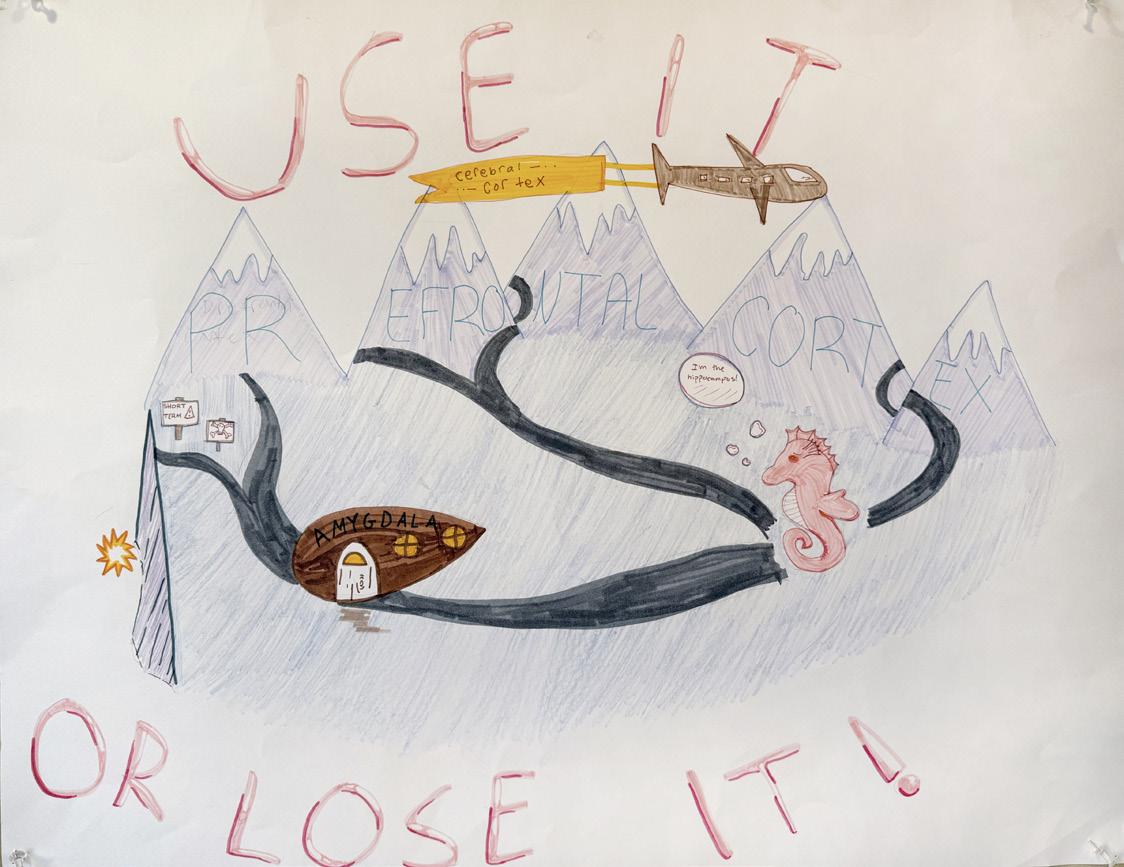
“When I was choosing my classes, I did not think Neuroscience was more relevant than Ocean Science to me and my interests. Nor did I think Neuroscience was going to be more useful than learning about the ocean, since environmental science is likely the major I will be going into as a college student. I was worried that Neuroscience would be mostly theories or psychology and such, which did not seem adequate to me.
Fortunately, I was wrong. Neuroscience as a class has forced me to turn my scientific lens inwards for the first time, and confront my brain which was recently diagnosed with ADHD. Taking this class and learning about what networks and lobes control different parts of human behavior has been really fascinating. Similarly to physics, if you take away even one part of the brain, the entire system of human behavior changes. Neuroscience has been great in learning how to better understand my behaviors and quirks and others. It’s helped me clarify behaviors from bad habits to innate neurobiological differences which can be worked around. The human brain is super complex and requires a lot of nuance to properly view. This class is great in times where nuance and understanding of other brains is Little.
I think Neuroscience should be taught in all schools as something that teenagers should know about themselves. It would’ve been a lot nicer if I had known earlier how to make my brain work better.
SCARLETT
“
“ “ “
NS is genuinely an interesting class and topic because it allows you to understand more about how you function day to day. I have become a lot more aware of my behavior and where it stems from (neurologically) due to the research papers, lectures, and projects we have done. Not only does it help you understand your own behavior, it helps you understand the behavior of others. I also think the “joy of learning” motto applies directly to this class because I have often (almost daily) find myself thinking about and applying what we learn in class to the real world. When I’m driving I think about the myelinated pathways and how my amygdala functions, aspects of my brain that make me a cautious driver. When I see a group of kids all get influenced by each other when it comes to laughing at a silly joke, I think about my research paper and how our brains are wired to find community and belonging in a group. When I’m smiling I think about my neurotransmitters. It is genuinely fascinating how we are wired as humans and I truly believe one of the best ways to access this beauty and understanding of humanity is through neuroscience.
It is important for schools to have a course in neuroscience so that we can not only learn about our brains and how they function, but to understand how our brains learn, so we can do it more effectively. It is good for Waring to have this course because we already have a great community, so it could do us good to also learn how/why humans socialize to just get a better understanding into the way our school works as a whole.
SKYLER
I think it is interesting to learn about neuroscience because it is something that is really unknown unless you have a class on it. I had no idea about even the four lobes of the brain prior to this course. I have also found it useful to understand how things like neuroplasticity and attention work, as I can use those to do better in classes. There were a lot of tricks I had been using throughout school to do better (eg. sleeping well the night before a test right after reading through my notes, even when I didn’t feel like I had studied enough, as I always woke up inexplicably with a better understanding of the content, or making an effort to re-engage in a class around 20 minutes in), that all had a strong basis in neuroscience, but I hadn’t been fully able to take advantage of those tricks without knowing the actual mechanics of why they worked. neuroscience class has also given me opportunities to better understand how neurodivergence affects the brain, which I have in turn used to take advantage of my own neurodivergence and counteract some of my weaknesses. Neuroscience is also just really interesting and it’s awesome to be learning about a field where so much is unknown.
— CAROLINE
I think neuro is important because it helps students to understand how we learn. I really enjoyed the unit we had on sleep, one because I do like to sleep, and two because it’s overall interesting to learn about how your brain is still active even when you yourself aren’t. Adding to that, I also think it’s really important to understand why people need sleep. School is something that can get in the way of getting good rest, so learning about why we need sleep was something I was excited about.
This class also allows us to look into topics that we are interested in individually. For example, I did a project on PTSD and EMDR therapy, which I found super interesting. Most recently, I did a project on alexithymia. All of us did a little snippet of our projects for the class, so it was also really interesting to learn about the topics that other people found really interesting.
— PHOEBE
“
My thoughts on why Neuro is important for Waring are as follows. It is a culmination of the liberal arts; knowing how we think, understanding the math behind our minds, and appreciating the beautiful patterns that emerge. In more practical applications, it teaches us how to better control our thinking--knowing how we learn lets us deliberately choose to learn. Neuro is also a bit off the beaten path in terms of high-schools science courses, which I personally like.
KIERAN
It’s so beneficial for learning to learn about the brain. With this knowledge of how the brain operates, we are better able to adapt our study habits, emotions, ways of learning, and just better understand the brain in general.
MINNA
I think the neuroscience course is important because it really offers a course unlike anything else at Waring. The way the course is taught is also very unlike anything else at Waring. The class provides useful insight into how our brains/minds work in an interesting and engaging way. I think it is a very important course to have at Waring.
I think it really makes a difference when you are able to understand your thoughts and behaviors and make them interpretable through technical terms, and that’s what learning about neuroscience brings. It offers a different and more scientific insight into both self-perception and interpersonal relationships and I just think that’s really important for a school like Waring that emphasizes community and the study of liberal arts.
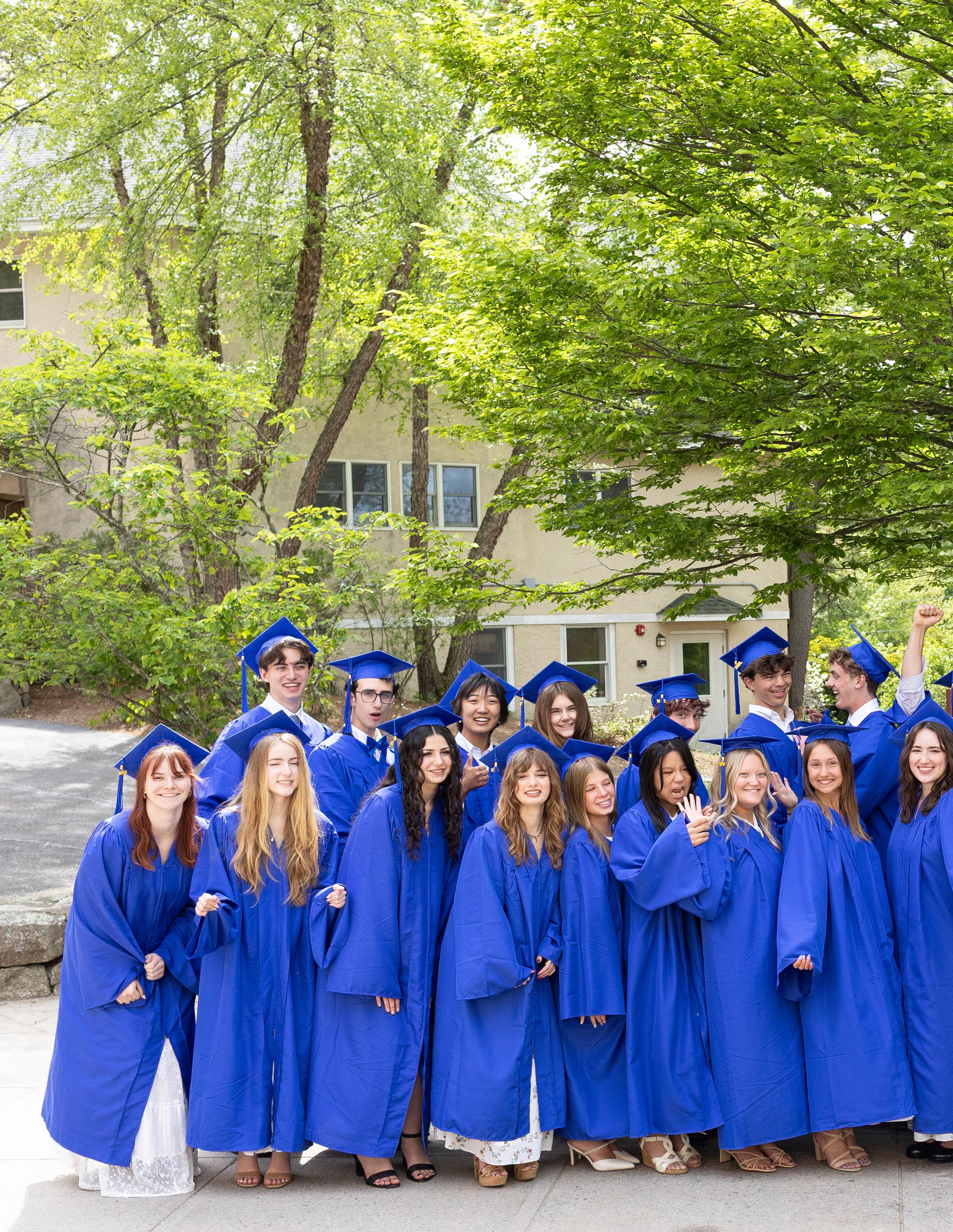

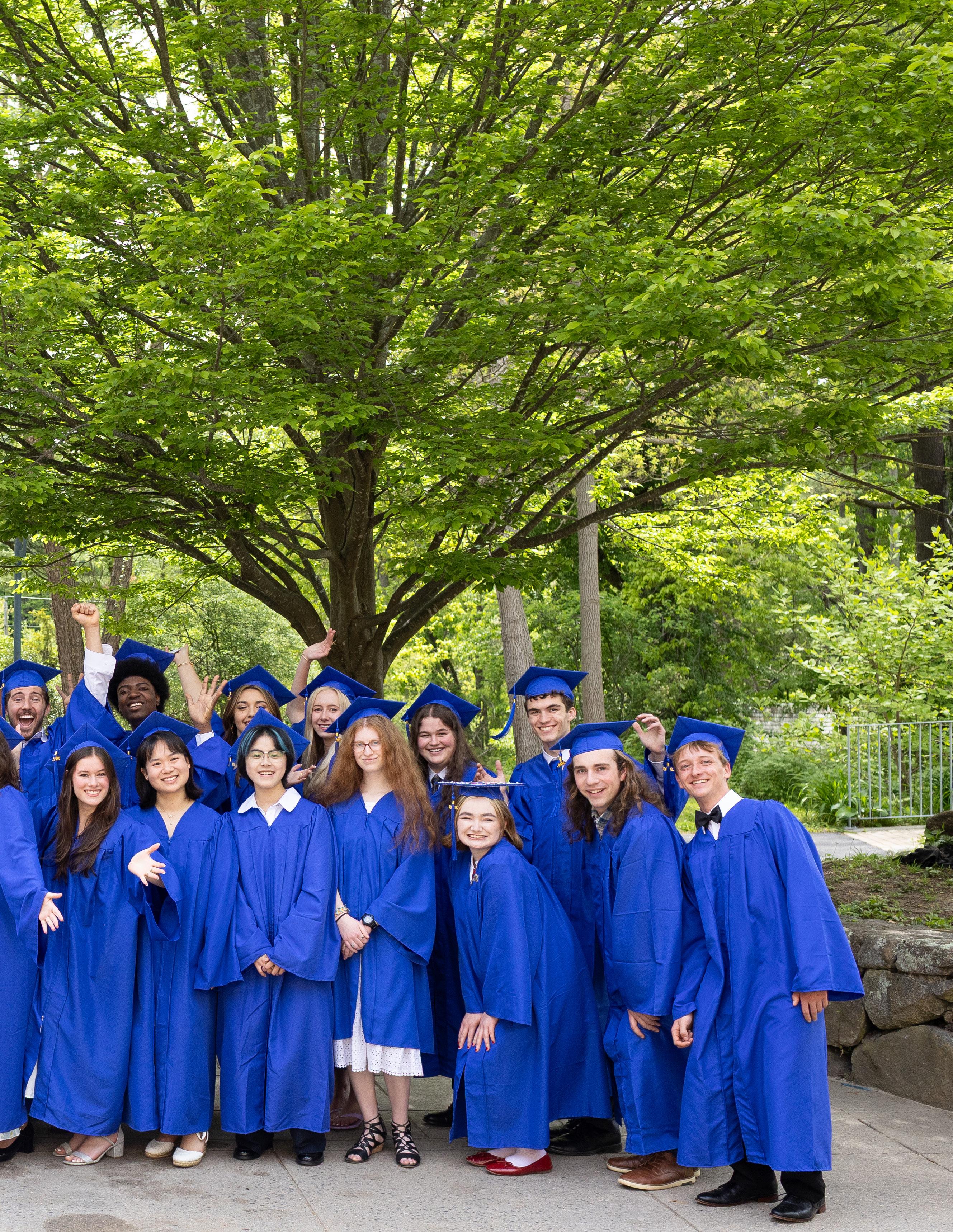
SOLOMON bENNETT
Haverford College (Haverford, PA)
SKYLER bICKMORE
Northeastern University (Boston, MA)
MINNA bRACE
Scripps College (Claremont, CA)
ANNAbEL bURKHARDT
University of Pittsburgh (Pittsburgh, PA)
MICAH bYRON-SMARRA
University of Michigan (Ann Arbor, MI)
RUO XIAN CHAN
Tufts University (Medford, MA)
DYLAN COOK
Northeastern University, Honors College (Boston, MA)
AVERY COOPER
Georgia Institute of Technology (Atlanta, GA)
PHOEbE COTTER-HOLLAND
Bentley University (Waltham, MA)
SCARLETT DOWLING
Pratt Institute (New York, NY)
DESPINA EFTHYMIOU
Wheaton College (Norton, MA)
ASTRID EVEREST
Brandeis University (Waltham, MA)
JACK FAWCETT
Bucknell University (Lewisburg, PA)
PASCAL FISHbURN
Oberlin College (Oberlin, OH)
CHARLOTTE FORTIN
University College Dublin (Dublin, IRL)
ELI GOODMAN LORbER
JULIETTE HALE

Vassar College (Poughkeepsie, NY)
Northeastern University, Honors College (Boston, MA)
CATE HENNESSEY
McGill University (Montréal, CA)
SONG KIM
Penn State University (University Park, PA)
bELLA KRISTENSEN
University of Toronto (Toronto, CA)

KIERAN MATTINGLY
University of Oxford, Wadham College (Oxford, UK)
ANA MIER
Colgate University (Hamilton, NY)
UNA NORTON
Syracuse University (Syracuse, NY)
b ROOKE O’DESKY
College of the Holy Cross (Worcester, MA)
CAROLINE ORINGER
Cornell University (Ithaca, NY)
LUCY SCHAEFFER
Kenyon College (Gambier, OH)
MICHAEL TOWNE - SMITH
Brandeis University (Waltham, MA)
SOPHIA VACA
Worcester Polytechnic University (Worcester, MA)
HELEN YU
Wellesley College (Wellesley, MA)


“
And that pattern, that’s what Waring’s given me above all things. It’s what I want to thank the school for the most. It’s given me evolution through thousands and thousands of perils and victories. Waring has given me thousands and thousands of chances to evolve.
— JACK FAWCETT
“ “
I was excited to leave middle school.... I made the comfortable guess that Waring was going to be just what I needed.
My god am I smart.
Waring is the springtime oasis in a perpetual desert. Here and nowhere else on earth have I found love, in full force, so powerful, so moving, so untarnishable. Here I have laughed till crying and cried till laughing. Here I have performed, played uncountable roles - friend, teacher, mentor, student, tutee, leader, guide, so many more - and never before in my life have I felt so wanted. And now, it’s time to leave.
Waring: je vous laisse avec ces mots: ne laissez pas la peur vous empêcher de faire des choses que vous désirez, ou de découvrir ce qui vous intéresse. J’aime énormément cette école, et le temps s’est écoulé trop vite. Merci infiniment à vous tous.
— LUCY SCHAEFFER
MICHAEL TOWNE SMITH
“I’ve skated on the minefield, sang at the Cabot, dabbled in soccer, kickboxing, cross country, ultimate, theater, and homework (which I think should be considered an afternoon activity). I’ve had the very best of friends, the very best of teachers, and been supported by the very bestest of families (pardon my biases). I’ve been stargazing, and sunbathing. I’ve cried, sighed, laughed and moshed. I’ve hiked the Presidentials, and gone rowing for my first period classes. I could go on and on, but I’ve also been to countless graduations, and I know I wouldn’t want that. So, I’ll leave you with you this:
I have taken almost every opportunity here, and it has been a privilege and an honor.
“I love words. I love reading them, I love writing them, I love learning new ones and finding spiffy synonyms for the old ones…
I know now that anything I say is better than saying nothing at all. These days some of my teachers refer to my early Waring years as “the days back when she didn’t talk,” which I can appreciate now seeing how much I’ve lived and learned since then. Wisdom doesn’t have to be profound to be meaningful, and neither do words–simplicity is often the most direct way to truth. Thank you Waring, for bursting my wordy bubble and reminding me that my voice matters too. — PASCAL
— MINNA BRACE
WARING WILL
IT IS WITH DEEP GRATITUDE THAT WE SAY GOODBYE THIS SPRING TO TWO BOARD OF TRUSTEES LEGENDS - MARY COOKSON AND JOE JUTRAS. THEY HAVE EACH SPENT OVER TEN YEARS VOLUNTEERING THEIR TIME AND TALENT TO WARING.
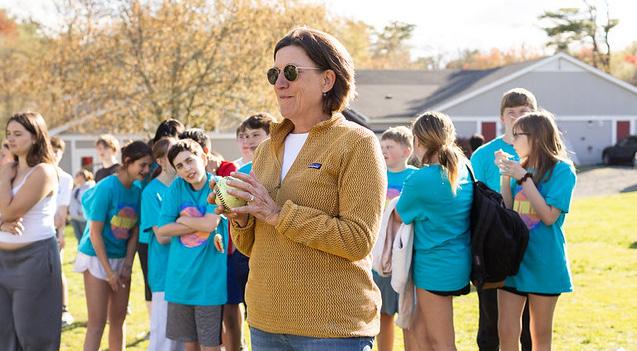
MARY CHAIRED OUR COMMITTEE ON TRUSTEES FOR MANY YEARS AS WELL AS SERVING ON THE DEVELOPMENT COMMITTEE, THE 5OTH ANNIVERSARY COMMITTEE AND IN MANY OTHER CONTRIBUTING POSITIONS. DESCRIBED BY MANY AS THE “GLUE” THAT HELPS TO KEEP THE BOARD TOGETHER, MARY’S HARD WORK, WARMTH, GENEROSITY AND SENSE OF HUMOR WILL BE GREATLY MISSED.

MISS YOU
THANK YOU BOTH FOR ALL THAT YOU HAVE SHARED WITH THIS GRATEFUL COMMUNITY. WHILE WE KNOW YOU WILL NO LONGER BE AT BOARD MEETINGS, WE LOOK FORWARD TO A DIFFERENT, BUT CONTINUED RELATIONSHIP.
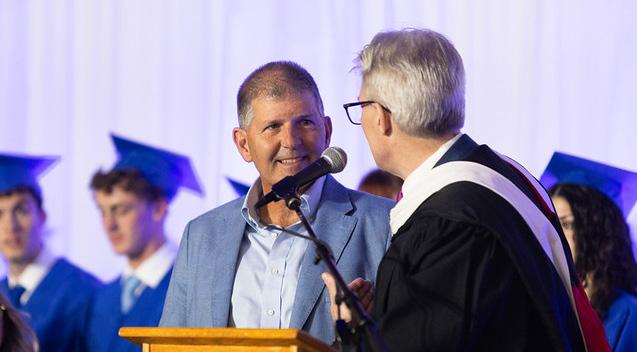
JOE HAS JUST COMPLETED HIS THIRD YEAR AS THE CHAIR OF THE BOARD. HE HAS BEEN A STEADY PRESENCE FOREVER ON THE FINANCE COMMITTEE, A STALWART ADVISOR TO TIM AND A HUGE WARING ENTHUSIAST. FROM HIS DAYS YEARS AGO MOUNTAIN BIKING WITH JAN’S ELECTIVE, HE HAS BEEN AN ENDURING WARING VOICE WHOSE SUPPORT, CARE, KNOWLEDGE AND CONSISTENCY WILL BE HARD TO REPLACE.
A NEW FUNDRAISER AT WARING

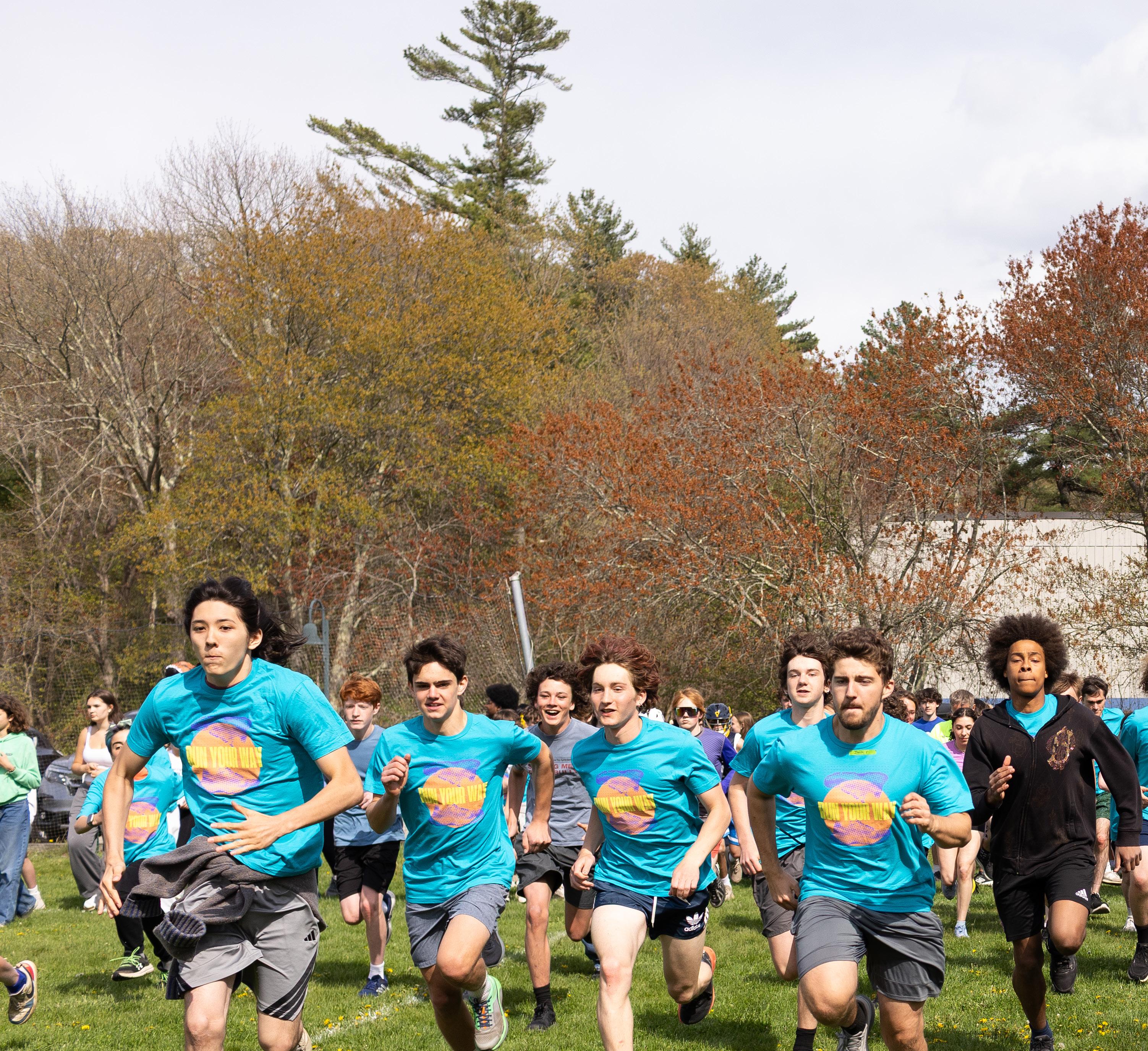
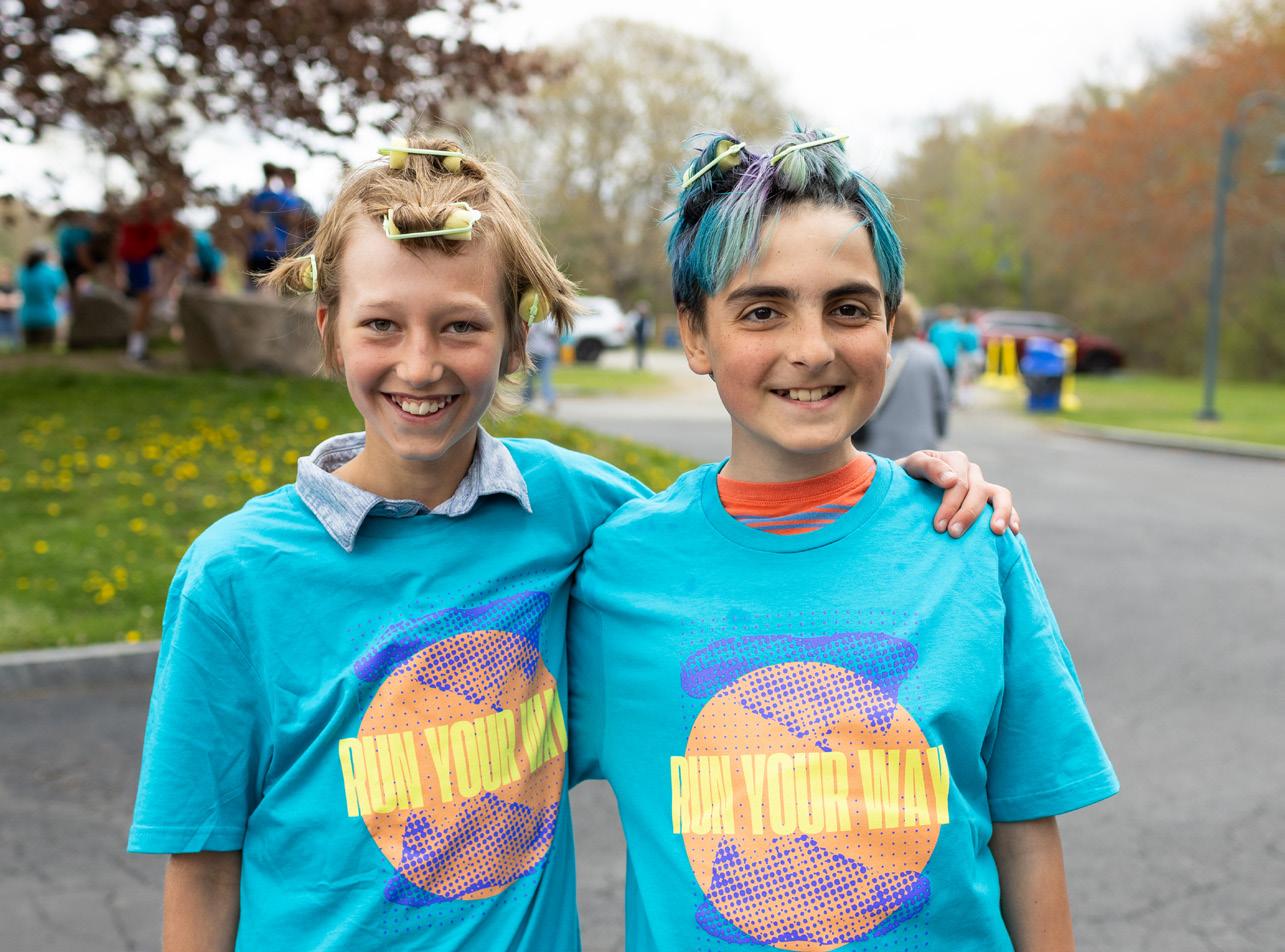
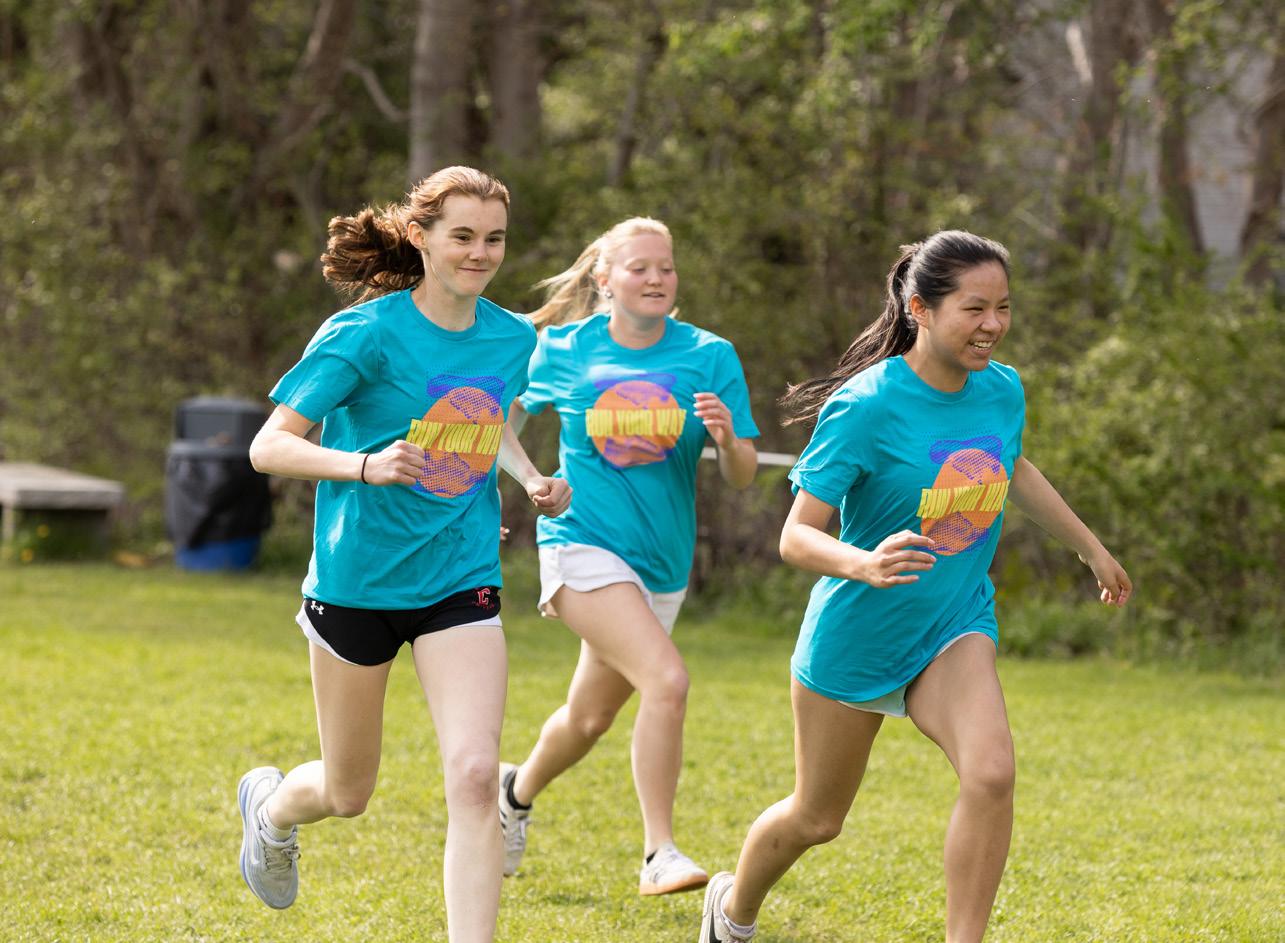
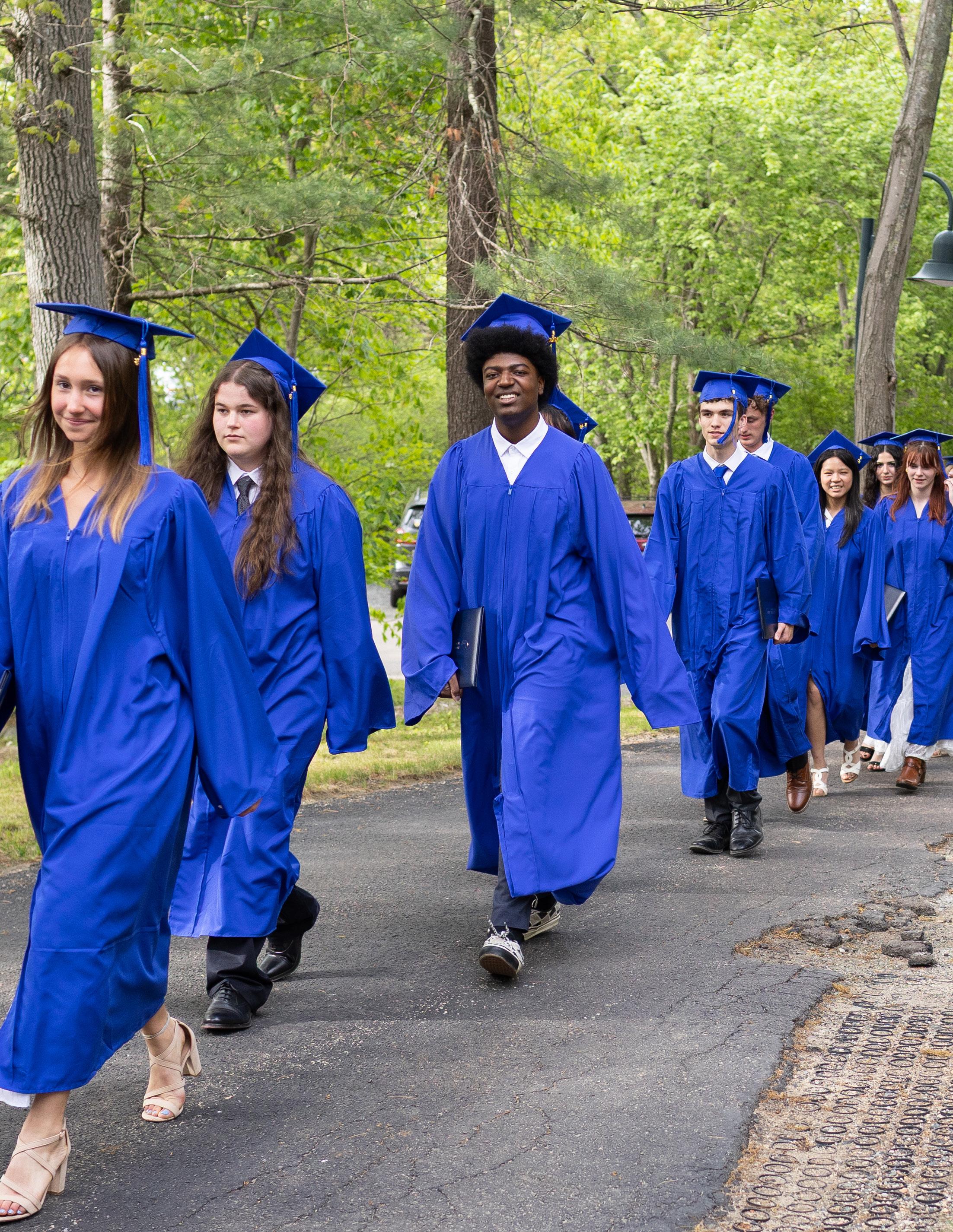
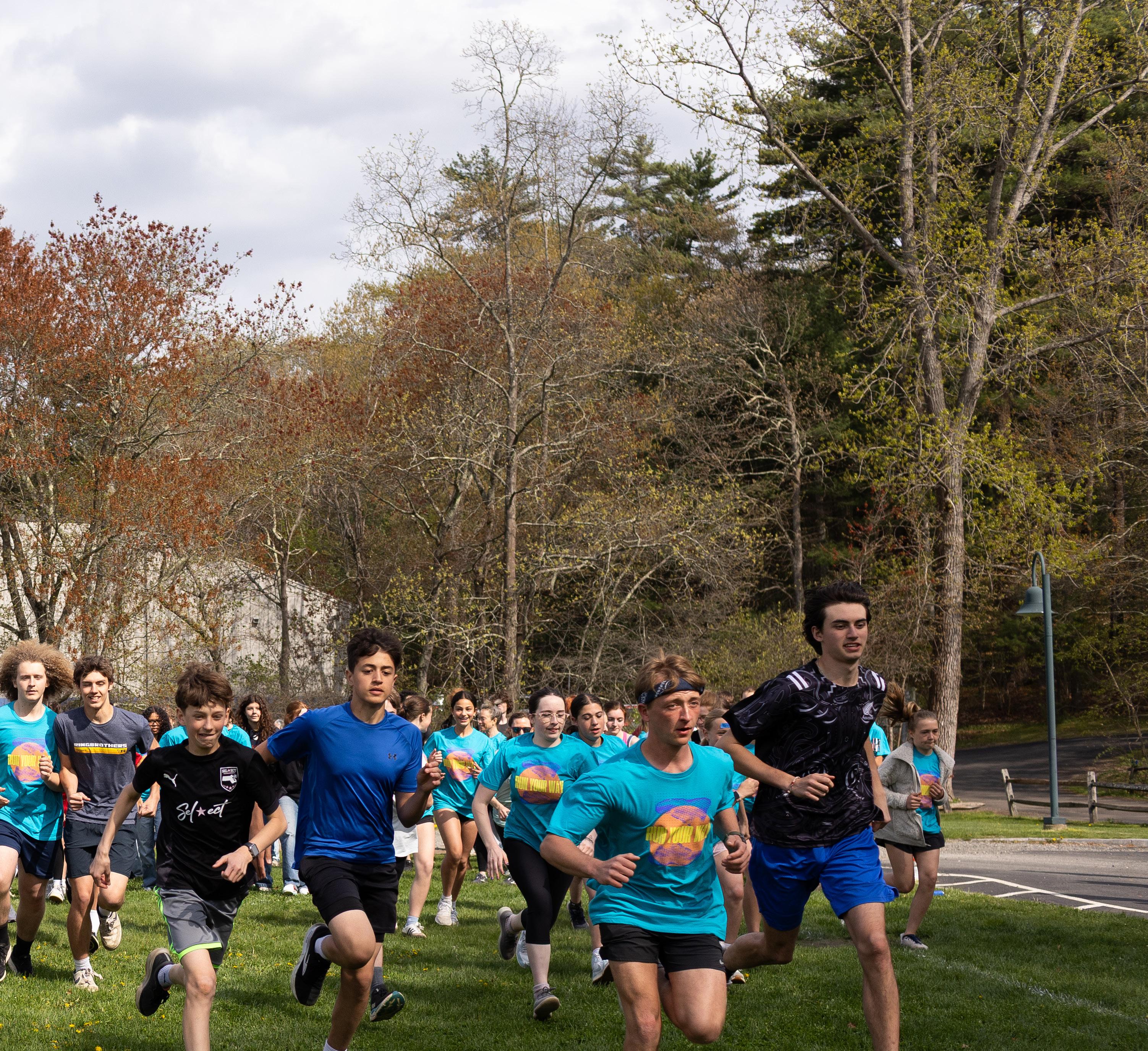
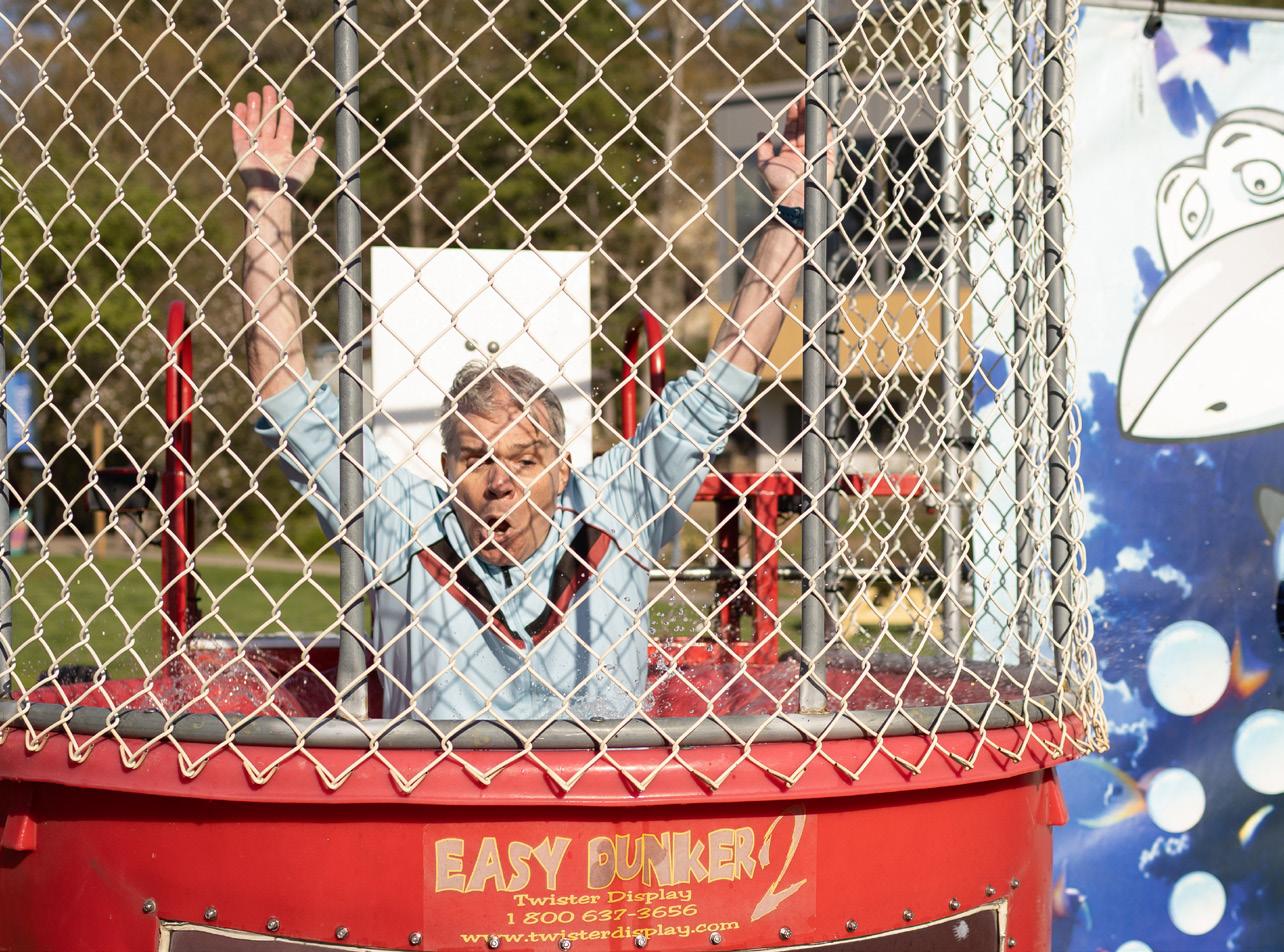
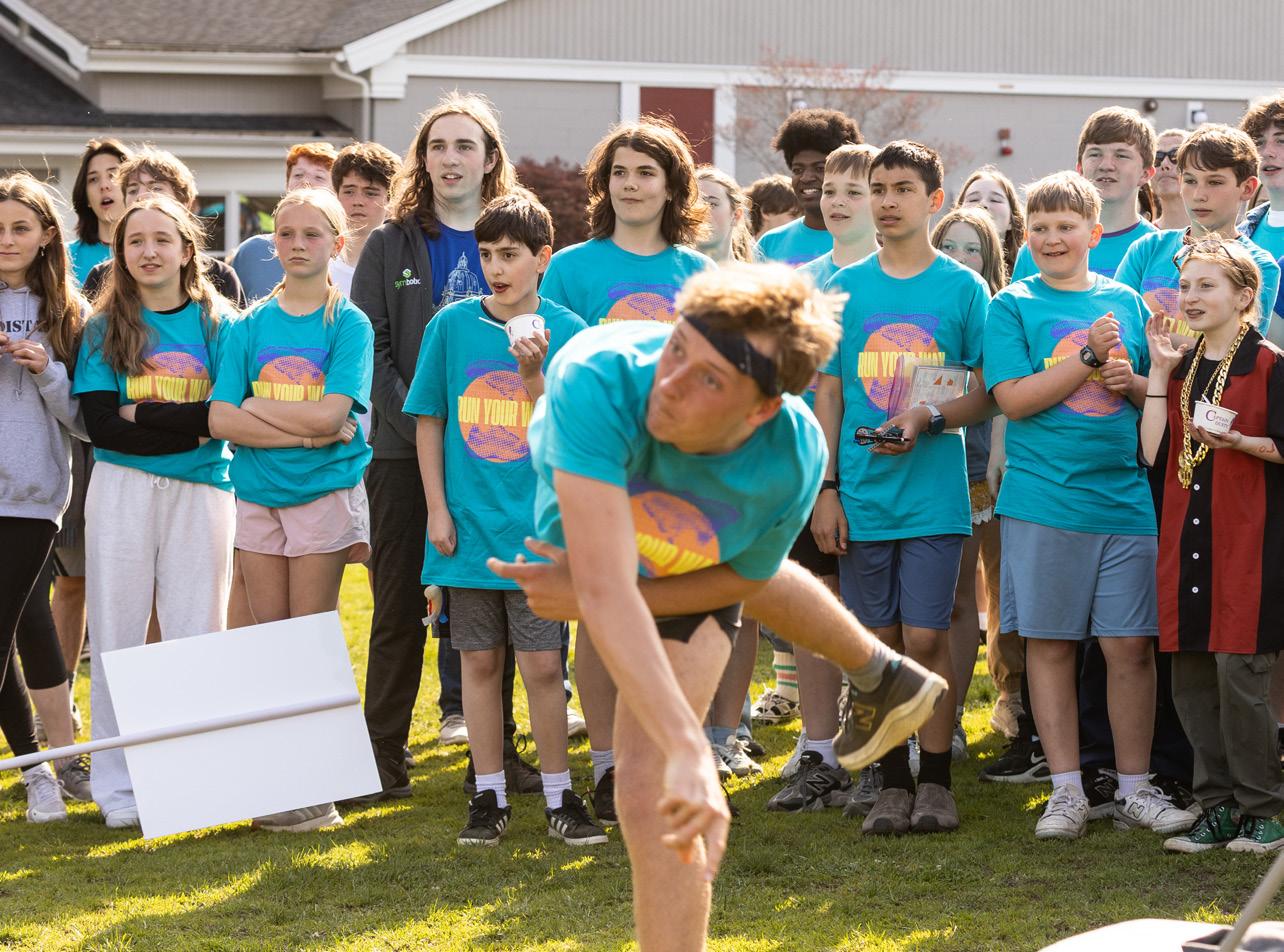
This spring Waring had an entirely different fundraiser - a new run. Each student was encouraged to participate in their own unique style—competing, walking, reciting poetry, playing instruments, teaming up, or even dressing in costumes! Students solicited sponsors for their individual effort.
The event supported our Annual Fund, boosting faculty, financial aid, travel, and the arts. RUN YOUR WAY was instead of the Wiggs Fair Winds 5K and/or the Run, Walk, Crawl of yesteryear.
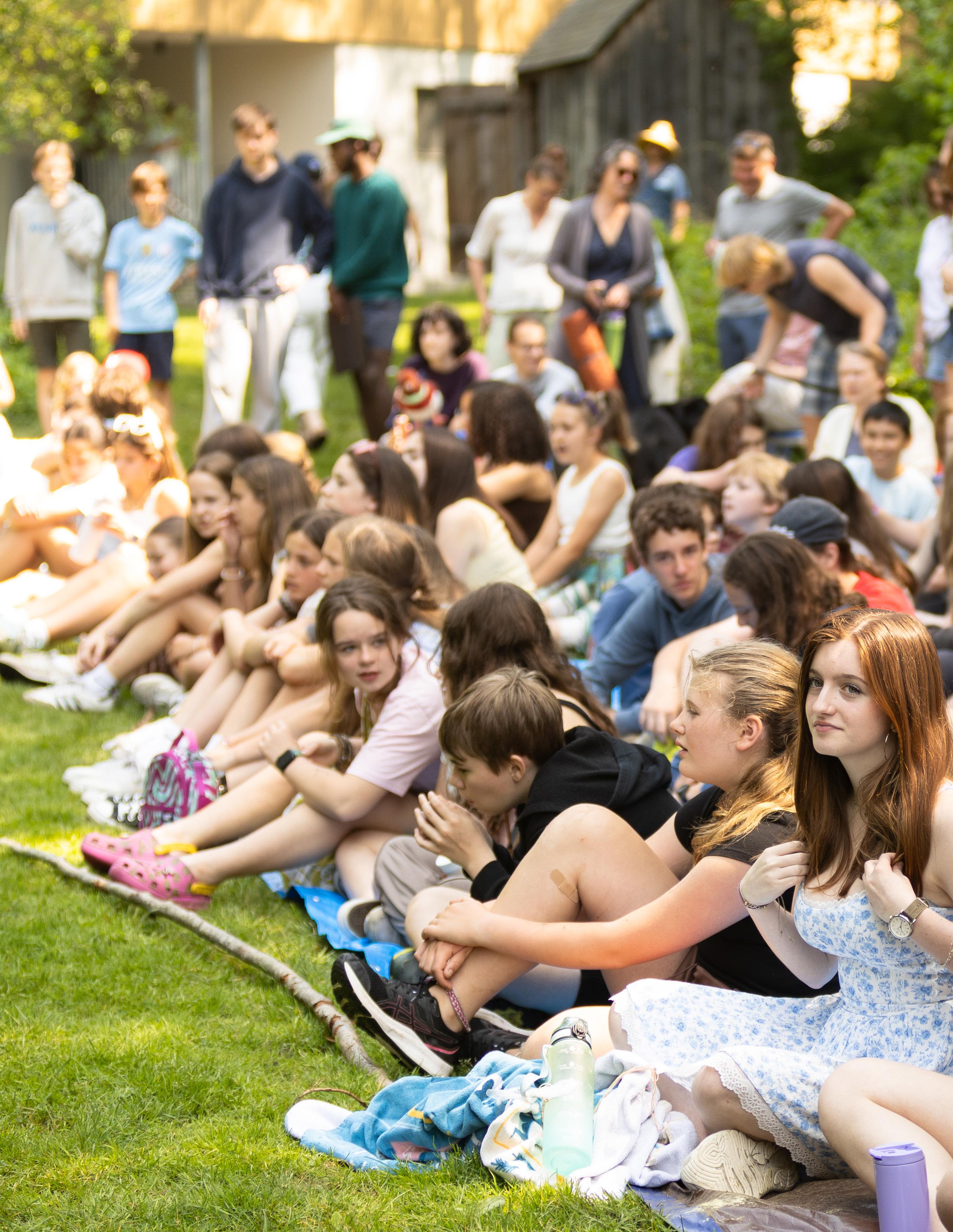
As always, it was a fun and fast event with much humor and joy. We finished with ice cream, snacks and a dunk tank in some chilly 60 degree weather!
2026Endterm
SNACK ON THIS!
Do you like to eat? Do you want to learn to cook, bake, chop, and plate like a pro? Do you wonder where food comes from, about its journey en route to our plates, and what it can tell us about our families and communities? In this Endterm, we will explore the many roles that food plays in our lives like celebration, sustenance, hospitality, connection, and identity, just to name a few!
Elizabeth Gutterman, Anita Richardson & Reena Patel
MARITIME STUDIES
In the Maritime Studies Endterm we will explore how humans have interacted with Marine environments in New England throughout history. We will learn about ships, mapping, and navigation, as well as studying how the fishing and shipping industries shaped (and continue to shape) the economics, social structure, and culture of New England through art, music, and tales of the sea. We will be on and off campus, including field trips to the Essex Shipbuilding Museum, the Schooner Ardelle, and the Schooner Adventure. Together we will learn practical skills like sailors’ knots, reading a tide chart, and the teamwork it takes to work on a boat. We will also reflect on the impact of humans on the ocean and what it could look like to be in the right relationship with the marine ecosystems around us.
John Wiggs, Mike Kersker, Marika Whitaker & Tabitha Robinson-Alden
IT’S PUZZLING!
If you can’t stop at your daily Wordle, but need to complete the Mini, the Spelling b ee, and Connections before grabbing a book of word searches or running through a sudoku and a ken ken; if you are itching to try an escape room or head to a corn maze; if a great night at home involves a 1500 piece jigsaw puzzle while watching Wheel of Fortune; if you like scavenger hunts, orienteering, geocaching, or trying to figure out how to use a napkin to get a cork out of a wine bottle - then this is the Endterm for you. We can’t imagine a better use of twelve days than exploring, imagining, creating, building, solving, and being thoroughly frustrated and stumped by all kinds of puzzles. This will be a grass-roots Endterm co-created by all of us, as we share our favorite puzzle varieties and test ourselves with new challenges.
Jill Sullivan, Sara Golden & Anna Maria D’Ippolito
PICTURE THIS: COMICS & ILLUSTRATED STORIES
Do you like to draw? Do you like to write? Are you obsessed with comics, graphic novels, illustration, or children’s books? What about illustrating a classic tale in your own style? Join Waring alumna Leah Hayes, a NYTimes bestselling illustrator, author and educator, in a class where you will learn to show and tell the stories only you can. No prior experience with drawing or creative writing is required — just a fascination with visual story-telling, lively curiosity, and a willingness to explore being both the artist AND the author. by the end of the class, every student will have created a short graphic story.
Ella Brandon, Terry Kidd & Leah Hayes ‘99
THE ALGORITHM & THE MIRROR
What happens when the technology we create starts to reflect the best—and worst—of us? This Endterm is an immersive investigation into the “black box” of Artificial Intelligence. b eyond the buzzwords like Machine Learning and Generative AI, we will explore the blurry boundary between human consciousness and silicon intelligence. We’ll look at how “coded bias” can accidentally bake human prejudices into our software and debate the “apocalypse” scenarios of sci-fi: if we don’t treat our technology (and each other) ethically, what happens when the systems we build start pushing back? Through a mix of “unplugged” ethics debates and hands-on tech-play, we will deconstruct how these tools function and what they mean for our future.
Rebecca Reed, Casey Stevens, Steve Wilkins & Lyn Towne-Smith
MOCKUMENTARY
When a Waring lounge singing Endterm begins a weeklong series of lunchtime concerts at a local bowling alley, all seems well until students start disappearing. OR a placid entomologist gives an in-depth presentation on the world’s most tedious insects. OR students embark on a campus improvement project that, through a series of snowballing mishaps, results in broken windows, poked eyes, a small fire, and the release of a long contained Waring ghost. All these scenarios and more are possible in Chris and brendan’s silent film and mockumentary making Endterm.
Chris Brandt & Brendan Pelsue
WON’T YOU BE MY NEIGHBOR?
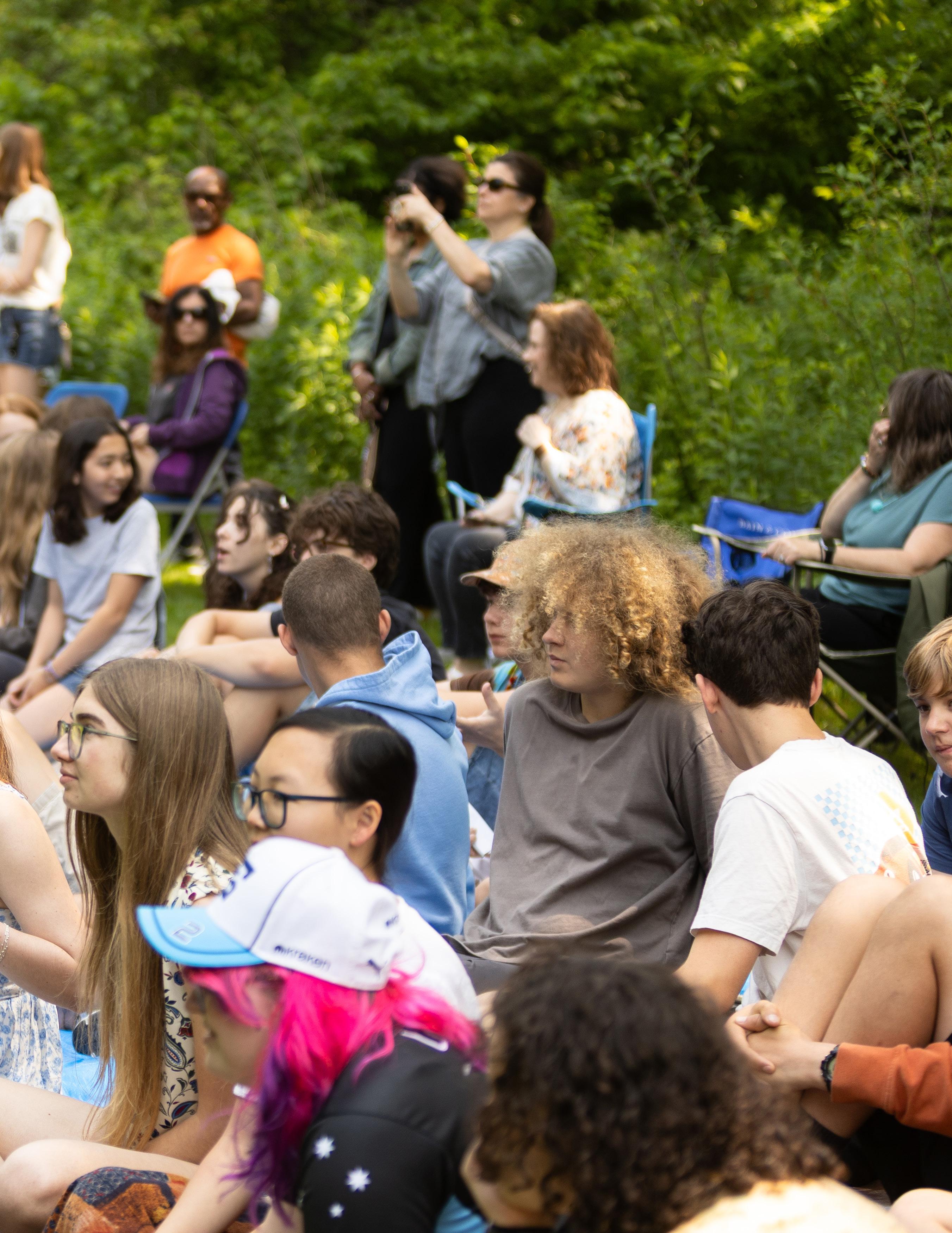
“Would you be mine? Could you be mine? Won’t you be my neighbor?” Join us this Endterm as we consider our neighborhood (Waring, b everly, the North Shore and beyond) through the frame of the classic children’s TV show Mister Rogers’ Neighborhood. What is “culture,” and where do we find it? Learn some of the patterns by which people live all over the world, and create a home-away-from home together at Waring. Slip into a cardigan as we practice baking bread, making meals and serving them to others, and learn to mend and sew. Consider the pleasures of music, and learn to be curious about bach’s favorite instruments— organs—visiting where they are made and hear them played. Learn how stories can be used to tell hard truths about tough questions, and make puppets, draw together, and dialogue about things we wonder such as, where and how is the food sold at Dunkin’ Donuts made? And, who is my neighbor?
Joshua Fisburn & Sarah Carlson-Lier
SEW WARING
Welcome fashionistas! Do you love creating? Do you love fabrics? Do you love clothes? Do you love anything handmade? We are going back in time and making our own clothes, modifying existing outfits to reuse them, making what we SEW desire buying. Have a look at your current outfit, wouldn’t it be cool if you had made it yourself? Think of that perfect pair of pants that you tried on...if only they had been… shorter, longer, bigger here, smaller there... then, you would have bought them! Why buy perfection when you can make perfection? How about gloves, bags, sachets, towels, napkins? The list goes on... If you can imagine it made out of fabric, then you can sew it.
Anna Marie Smith & Julie Nelson
SCRABBENNIS
What’s the difference between Novak Djokovic and Nigel Richards? Well one probably needs an introduction: Novak Djokovic is a Serbian tennis player who has won a record 24 Grand Slam titles. And as I’m sure everyone knows, Nigel Richards is the greatest scrabble player of all time, winning world championship titles in 2007, 2011, 2013, 2018, and 2019
– and who could forget that time in 2015 when Nigel, who didn’t speak a lick of French, spent nine weeks memorizing the French Dictionary and won the French World Scrabble Championships. In the Scrabbennis Endterm, we will focus on two games: tennis, a game of fitness and patience and scrabble, a game of probability and vocabulary. Central to both games is the art of putting your opponent at a disadvantage, but to do so, we must refine our own skills.
Gus Greenberg & Jack Reading
DISCOVER QUÉBEC!
Do you love to travel and learn about other cultures? We will go to Quebec June 1 through 4. We will learn about the history of Quebec and the Indigenous Nations of the area. We will visit the Huron/Wendat museum and make a traditional talking stick, an ancient craft used to guide group discussions or a medicine wheel. We will visit the atelier of an artist who is a friend of Paul from Haystack and have a jewelry workshop with her. Hone your interview and moviemaking skills! We will explore the city and interview Quebecois to learn about their daily lives and what is special about their French language.
Paul Merter & Roseann Vidal
CANOEING
In this Endterm we’re going to head into the wilderness, and fall in love with canoeing. There is simply nothing quite as delightful as exploring by canoe… And sometimes challenging - get ready for an arms and core workout. We’ll take our fleet of canoes out every day, starting here on the north shore plying the waters of Chebacco Lake, where we’ll learn a slew of basic skills like steering, maneuvering, and safety. by day 3, we will be ready for our first overnight camping trip, and we’ll fall asleep on an island on the Ipswich River, snug in our tents, listening to owls, beavers, and coyotes. We’ll continue to build skills in week two, heading to northern Maine for a 3-day 2-night camping trip. b esides learning to paddle, you’ll learn trip planning, campcraft, cooking, knots, navigation, New England ecology and history, teamwork, and more.
Molly Cyr-Redcross & Dan Wellehan

ALL - SCHOOL SUMMER READING
SAVE THE DATE! VIRTUAL ALUMNI DISCUSSION LED b Y JESS (DELFORGE) ROSE ‘02 AND TIM b AKLAND ‘94, P’31 WILL b E TUESDAY, SEPTEM b ER 8TH IN THE EVENING. MORE DETAILS TO FOLLOW AND HAPPY READING!
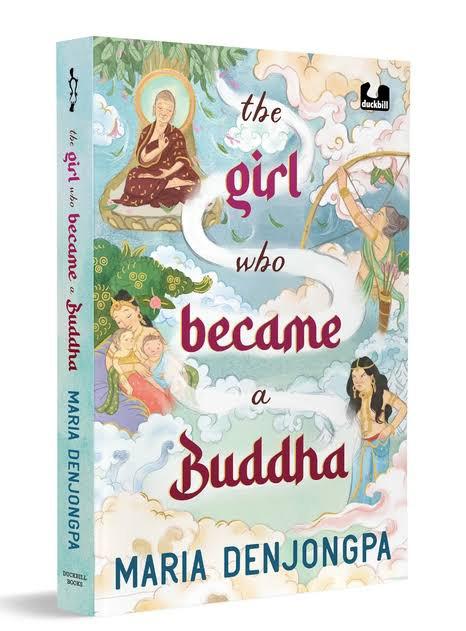
HERE’S THE LINK TO KINDLE VERSION
QUOI DE NEUF
To our AlumniWaring Families,and
WE’RE STILL HERE... b UT WHERE DID YOU GO??! WE NEVER LOST YOU ON THE FRENCH TRIP OR DURING ENDTERM, b UT WE’VE LOST TRACK OF YOU SINCE.
PLEASE LET US KNOW WHERE YOU LIVE NOWADAYS, WHAT YOU DO FOR WORK AND FOR FUN, WHAT OTHER WARING ALUMS YOU SEE OUT THERE IN THE WORLD, WHAT’S ON YOUR MIND. PLEASE REACH OUT VIA THIS LINK TO TELL US WHAT YOU’RE UP TO!
When steps become story