WHAT’S INSIDE...
CONTRIBUTORS
TODD BALF P ‘12, ‘14
TIM BAKLAND ‘94, P ‘31
CHRIS BRANDT
KB BREISETH
ISABELLE COOKSON ‘15
MARY COOKSON, BOT & P ‘15, ‘17
ELIZABETH GUTTERMAN
SAVERY KELLEY ‘02
MIKE KERSKER
VICKI LINCOLN, P ‘15, ‘17
JAN LINDSAY, BOT & P’ 05, ‘07
LESLIE LYMAN S’10, P’13, P’15, S’21
LAUREN MARANO P’21, P’25
BRENDAN PELSUE ‘04
ANITA RICHARDSON S’12
JESS ROSE, ‘02 & BOT
FRANCIS SCHAEFFER ‘92
CASEY STEVENS
JILL SULLIVAN P’18
CAITLIN TOWERS ‘12
CALLI TOWNE, BOT & P ‘24, ‘28
JOSH WEBB ‘99
NOTECARD from Tim
TIM BAKLAND (‘94, P’31) HEAD OF SCHOOL
The liberal arts invite all of us to cross thresholds—from study to experience, from ideas to practice—in a life of ongoing inquiry and curiosity. This issue of Notecards from Waring is a celebration of just that, with testimonies from four of our Waring faculty: learners, artists, translators, travelers, and teachers who model for students what it means to live, as Petrarch describes, on thresholds between the “active” and “contemplative” life.
Dan Murphy (P’31, Writing and Humanities Teacher), whose recent poetry collection Estate Sale was awarded the Agha Shahid Ali Prize, invites students into the depths of meaning and movement in his upcoming 4/5 Writing class, “Lost in Translation.” He writes:

THERE ARE IMAGES WE SEE JUST BEFORE THE LENS OF LANGUAGE COLORS AND NAMES THEM... THERE IS A RICHNESS IN ALL OF THESE MODES OF PERCEPTION WHICH REMAINS INACCESSIBLE WITHOUT SOME FORM OF TRANSLATION.
For Dan and his students, “translation” becomes a metaphor not only for language but for all the ways we carry meaning across the thresholds of our learning, teaching, and life pursuits.
Josh Webb’s (‘99) words are a beautiful reminder that learning is not confined to our classrooms or campus, but rather stretches into the reaches of the world and our own appetite and curiosity:

WARING GAVE ME AN APPETITE AND THEN PROVIDED ME WITH A PICNIC ON THE LAWN OF THE MUSÉE RODIN.
Anita Richardson (S’12, Humanities and French) reflects on returning to the piano as an adult—aided by Waring’s Faculty Grant Program—in a piece both technical and deeply human. Through painstaking attention to movement, technique, and artistic interpretation, Anita connects her return to the Taubman piano technique to the craft of teaching French and Humanities.

“
FACING INTELLECTUAL PUZZLES AS A STUDENT MAKES ME A MORE EMPATHETIC AND ENGAGING TEACHER,” SHE WRITES. “CURIOSITY IS THE ZENITH OF HUMAN QUALITIES.
This year, our entire faculty is engaged in professional development with master educator Steve Wilkins, who brings deep expertise in neuroscience-informed teaching. Our collective learning mirrors the journeys described by Anita, Josh, and Dan: how subtle patterns of attention, gesture, and memory shape learning at every level. Across disciplines, we constantly return to fundamentals—not unlike the slow, methodical return to a long-set-aside piano piece—this time with deeper questions and more fully developed tools.
“
There’s a moment in Brendan Pelsue’s (’04, Humanities and Writing) Convocation address when he reframes what it means to be “new”—either entirely new, or new again, as a returning alumnus and teacher at Waring:

THERE IS SOME THREAD BETWEEN WANTING TO CLIMB INTO [THE LOFT IN WARING’S BARN], AND WANTING TO MAKE A WORK OF ART, AND HAVING A CAPACITY TO SIT WITH ALL WE DO NOT KNOW.
That thread runs through every contribution in Notecards from Waring, from faculty and alumni alike: we are constantly becoming, living betwixt and between the known and unknown, what we have learned or read or seen, and how we translate this across new experiences.
With this latest issue of Notecards, I am reminded that one of Waring’s greatest offerings for our students (and all of us) is in fostering and modeling a sense of guided wonder.
Warmly,

TIM BAKLAND
(‘94, P’31)
HEAD OF SCHOOL
A TEACHER’S TEACHER
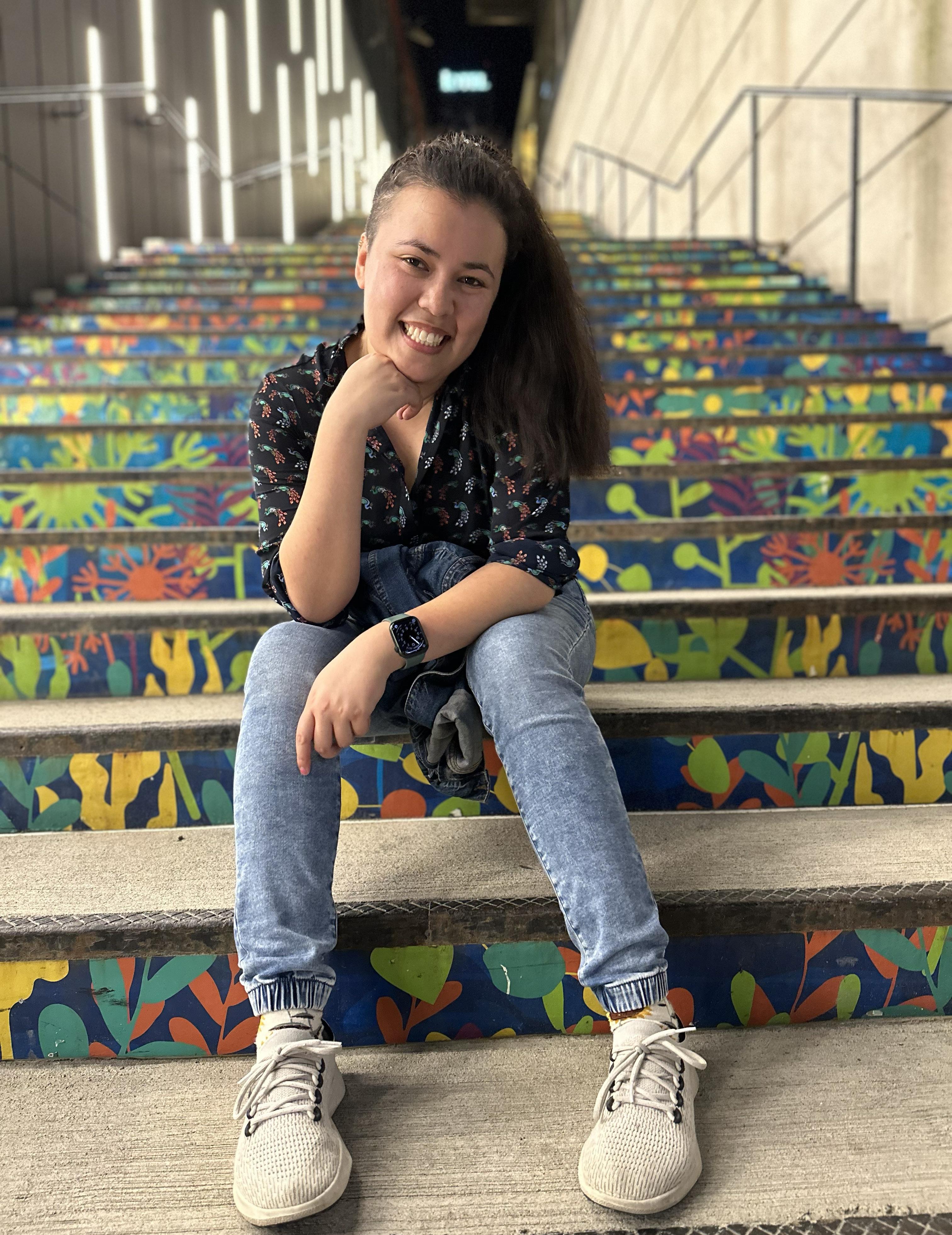
BY ANITA RICHARDSON S’12
Growing up, my relationship with the piano was complex––carving out time to practice was a constant challenge, and I have visceral memories of waking up at 5:30 on winter mornings to soak my hands in a bowl of warm water just so I could feel my knuckles––but I was fascinated by the music. I was floored by the way Chopin could convey grief through a cadenza, by Debussy’s cloudscapes, by Bach’s meticulous and masterful polyphony. Glenn Gould’s recording of the Aria from the Goldberg Variations is still the only thing that lowers my heart rate when I’m anxious. As an introverted high schooler, I found playing the piano to be a far more authentic expression of my feelings than writing mediocre poetry (although I did plenty of that, too). There’s nothing quite like hammering out Rachmaninoff when you’re angry.
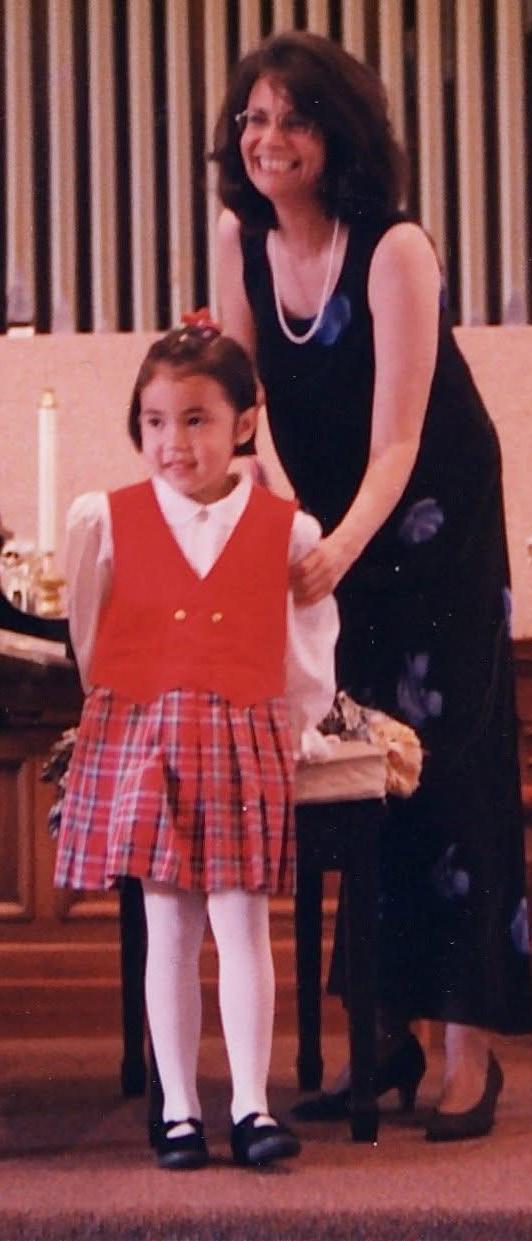
My teacher, Margaret Banacos, was the most consistent mentor of my childhood and adolescence. I met with her weekly for twelve years. Returning to her in my early thirties, I realize how many of my worldviews came directly from her life lessons. Isn’t that the mark of a good teacher: someone who expands your world, who makes you think beyond yourself? Margaret is kind, wise, an expert teacher, and so extraordinarily generous with her time and energy. She started ear training with me when I was five and patiently guided me until I had developed perfect pitch. She coached me through countless recitals and Waring soirées.
I lost touch with the piano for several years when I went to college. I played a bit at first, but my technique stagnated without Margaret’s guidance. Choir, a cappella, and music theory classes filled the void. When I graduated, I spent two years teaching English on a tiny French island in the Indian Ocean called La Réunion. All my free time was spent hiking the active volcano and cliff diving into waterfalls with the other language assistants. (Those are stories for another day.) After a year on Guadeloupe doing similar things, I returned to Beverly to teach at Waring. The lack of piano in my life became a dull ache—after all, I was known as “the piano kid”
growing up––but the responsibilities of being a new teacher overwhelmed the potential for any extracurricular hobbies. It wasn’t until 2024, in my sixth year teaching at Waring, when I applied for a Faculty Grant to take lessons again.
Returning to the piano as an adult has been just as rewarding professionally as it has been personally. I find that the meticulous technical work exercises the same analytical muscles I encourage my own students to cultivate as they learn French grammar or close textual analysis in the Humanities classroom. Facing intellectual puzzles as a student makes me a more empathetic and engaging teacher. I remember the agony of those early-morning practice sessions, and I feel compassion for our students’ busy schedules. Many of my lessons with Margaret have been spent poring over resources from the Golandsky Institute, the primary hub of ever-evolving research on the Taubman Approach. I was particularly struck by Edna Golandsky’s question: What do you teach when the experience of the parts differs from the experience of the whole? In the French classroom, I teach my students how to conjugate verbs, but when they speak with a Francophone person, they will not use a Bescherelle conjugation book. How do we teach technique and theory without losing sight of the overall musicality or the experience of having a conversation with a native speaker? Edna verbalized a pedagogical question I’d been struggling to put my finger on for years.
I am also reminded that teaching and learning are collaborative, and I have profound gratitude for the community that has made my piano lessons possible. The concept of lifelong learning can sometimes come across as performative or hokey, and it is always accompanied by immense privilege. However, I am a fierce believer that curiosity is the zenith of human qualities, and I am grateful to Waring’s Faculty Grant Program for providing a path for me to develop my spirit of inquiry. I cannot overstate the significance of belonging to a community that puts its resources toward its values.
THE TAUBMAN APPROACH
The Golandsky Institute website describes the Taubman Approach as “a groundbreaking analysis of the mostly invisible motions that function underneath a virtuoso technique.” Basically, it explains the relationship between physicality and musicality.
In the 1970s, pianist and teacher Dorothy Taubman asked herself, What makes a virtuoso? Why are so many professional pianists getting injured? Through years of study, she developed a technique that analyzes how the fingers, hand, and forearm function synchronistically to harness gravity. In addition to helping the pianist develop advanced technical skills, this approach helps them avoid––or recover from––injury. Dorothy Taubman and her student Edna Golandsky founded the Taubman Institute, which would later become the Golandsky Institute.
When I was fifteen, Margaret took me to the Golandsky Institute Summer Symposium at Princeton University. I met people who had used the Taubman Approach to heal from injuries like carpal tunnel, tendonitis, and dystonia. I realized this technique could have important medical implications as well as real-life applications. This has become an intellectual fascination of mine in adulthood.
Last spring, when I began working with Margaret again, we realized my right hand was injured from years of isolating my thumb while scrolling on my phone. As I continue to navigate the healing process, I reflect on how I can apply the Taubman Approach to activities in my daily life––driving, writing, cooking, etc. How can I hold the cast iron pan using my elbow as a fulcrum? As I type this article, am I rotating from my forearm every time I hit the spacebar?
TECHNICAL SNAPSHOT: A LESSON WITH ROBERT (BOB) DURSO, MARGARET’S TEACHER
October 2025
“It’s not only because you have small hands.” Bob leans in toward the webcam. “It’s a movement pattern issue. Very often when we’re opening to the octave, for some reason as we go into the keys themselves, the fingers continue a kind of pathway away from each other. You’re opening, and as you’re playing, the fingers are actually pushing away. We call it splaying.”
I goggle at the Zoom window. I’ve been banging my head against a wall for months trying to figure out why my hypermobile thumbs collapse when I play octaves. I’ve even tabled the piece of my dreams— Chopin’s Ballade in G minor—because I’m wondering if I will ever be able to play octaves without experiencing pain in my hand. Has Bob just cracked the case? He watched me play one measure through a webcam and he immediately knew. It turns out collapse isn’t the issue; it’s the splaying that has been causing stretching.
I show Bob two other passages. He explains my pinkie is not releasing properly, and we talk about what it means to put all the energy into the playing finger, to feel a tactile sense of aliveness that triggers a rebound as I release from the key. He picks apart the tiniest details in my technique, then describes how we can’t practice these things in isolation. Studying piano technique is like looking through a periscope at the bottom of the ocean; we can focus on one aspect at a time, but if we lose sight of the big picture, we’ll get lost in the weeds.
CONVOCATION A SABBATICAL
BY JOSH WEBB ‘99
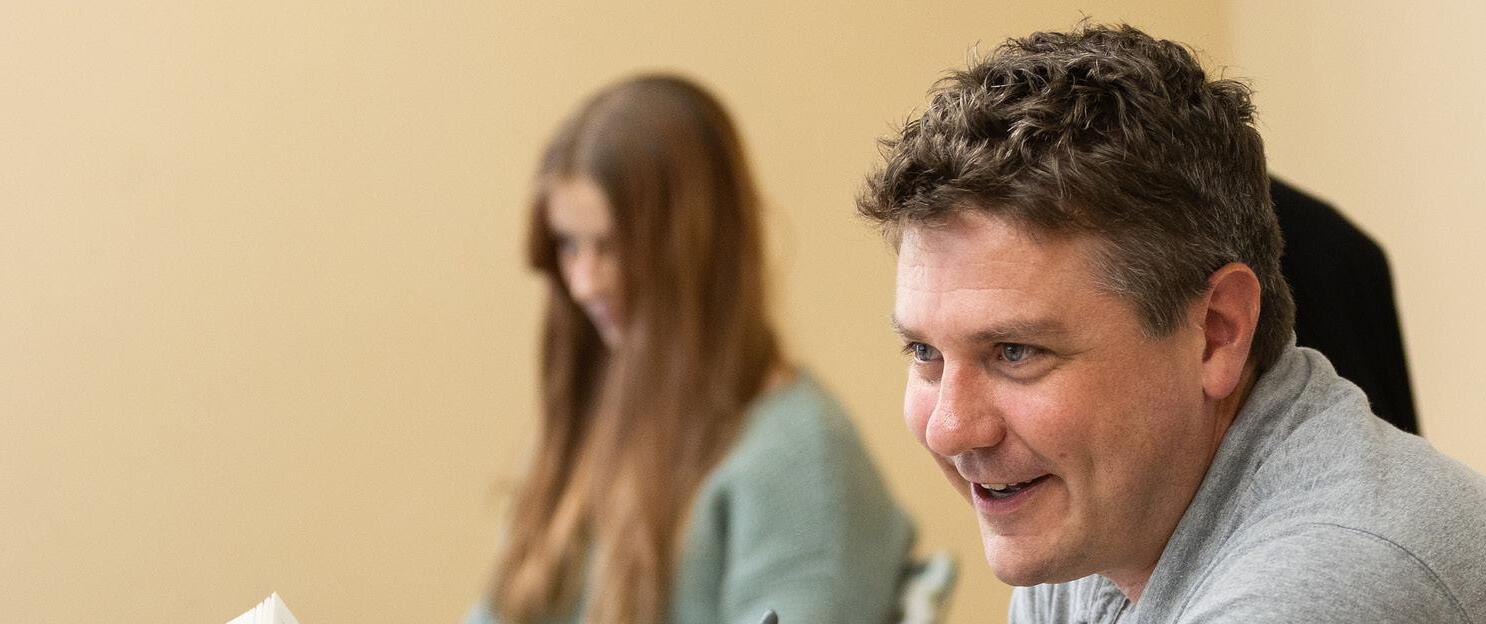
A confession: I am, by nature, a homebody. I have spent many happy weekends watching soccer games, reading novels, and completing crossword puzzles without ever leaving my couch. Being a member of the Waring community, however, requires constant exploration, both of the liberal arts and of the physical world. During my time at Waring, the school has packed me into vans, coaches, canoes, and trains, and then deposited me in some distant city, town, or community. Because the school took me on these adventures, I learned how to travel with intention, curiosity, and joy. Waring gave me a sketchbook and taught me how to look at works of art. Waring gave me a journal and taught me how to reflect on what I had experienced. Waring taught me the history of the World Wars before taking me to the trenches at Vimy Ridge and the beaches of Normandy. Waring gave me an appetite and then provided me with a picnic on the lawn of the Musée Rodin.
As a teacher, I have tried to nurture these skills in my students. I have asked them to take a sketchbook rather than a camera when we go to Alabama. I have encouraged them to have meaningful conversations with Congressional aides, registered voters, and veterans of the Civil Rights movement. I teach them history so that they can feel the resonances between past and present when we walk across the Edmund Pettus Bridge and when we march up Dexter Avenue with the Poor People’s Campaign.
All this means that Waring prepared me for the sabbatical I took last semester. I spent five months traveling to many of the places that I have discussed with students in the classroom, but never seen with my own eyes. Over the course of my journey, I visited 25 cities in 15 countries on 3 different continents. I walked through palaces, cathedrals, mosques, and synagogues, averaging 21,838 steps a day. I stood just a few feet from Son Heung-min when he warmed up for a Premier League match and I cheered with the home crowd when Mbappé scored a game tying goal against Atlético. I saw the brushstrokes on some of my favorite works of art and I touched memorials that honored those who died during the world wars. I ate mushy peas in London, tapas in Madrid, tagine in Casablanca, pasta in Bologna, schnitzel in Vienna, pierogies in Warsaw, goulash in Budapest, and the best lamb chop I have ever eaten on the island of Crete. I got lost, I got sick, I occasionally missed some of you.
Yet Waring would not allow me to merely stand in the place where Princip fired his pistol at Archduke Franz Ferdinand or to snap a quick photo of Michelangelo’s David. Waring asked that I immerse myself fully in each city I visited. To that end, I discussed the pope’s health with nuns in Rome, learned about the history of carpet making from a French speaking merchant in Fez, mourned losses with Tottenham fans from around the world, and received life advice from a grandmother on a train ride from Venice to Vienna. I read books about the places I visited. While in Prague, I realized that I had inadvertently spent an afternoon walking in the footsteps of Tereza, a character from The Unbearable Lightness of Being, when I explored the monuments and churches in Old Town Square. I filled several notebooks with notes from history museums and observations about works of art. I kept a daily journal in which I reflected on my day and made connections between my experiences on the road and my experiences in the classroom.
I WANT TO SHARE ONE JOURNAL ENTRY WITH YOU NOW:

MAY 11, 2025…ISTANBUL
A MAGICAL DAY!
I walked over the Golden Horn on the Galata Bridge and saw hundreds of fishermen casting their lines from the side of the bridge into the waters below. I took a ferry across the Bosphorus to the district of Üsküdar. For many passengers, this transcontinental voyage is part of a daily routine. They chat with friends or scroll on their phones while anticipating a day at work or a return to home. But there are other passengers, like me, who cross the liminal space between Europe and Asia for the first time and stare with wonder at the New Mosque, the Galata Tower, and the pier on Üsküdar.
It was such a warm day that I decided to find a café in the sun. I heard the call to prayer while drinking sweet Turkish coffee.
When the sun set, I took the ferry back across the Bosphorus in order to see a performance of Whirling Dervishes in an intimate theater with 200 seats arranged around a circular stage. Before the performance began, the hosts asked us not to applaud for the dancers and musicians because the performance is a religious ritual. Text projected onto the walls informed us that the dancers and musicians were reenacting the creation of the universe, using their bodies and musical instruments to generate earth, plants, and humans, all while embracing non-existence and the annihilation of the self. The music and dance were mesmerizing and meditative. I was totally absorbed by the sight of twirling white gowns and the sounds of lute, flute, drums, and vocals.
When the performers left the stage, we were left with the following words from Rumi:
COME, COME, WHOEVER YOU ARE WANDERER, WORSHIPPER, LOVER OF LEAVING. IT DOESN’T MATTER.
OURS IS NOT A CARAVAN OF DESPAIR.
COME, EVEN IF YOU HAVE BROKEN YOUR VOW A THOUSAND TIMES.
COME, YET AGAIN, COME, COME.
CONVOCATION RETURNING
BY BRENDAN PELSUE ‘04
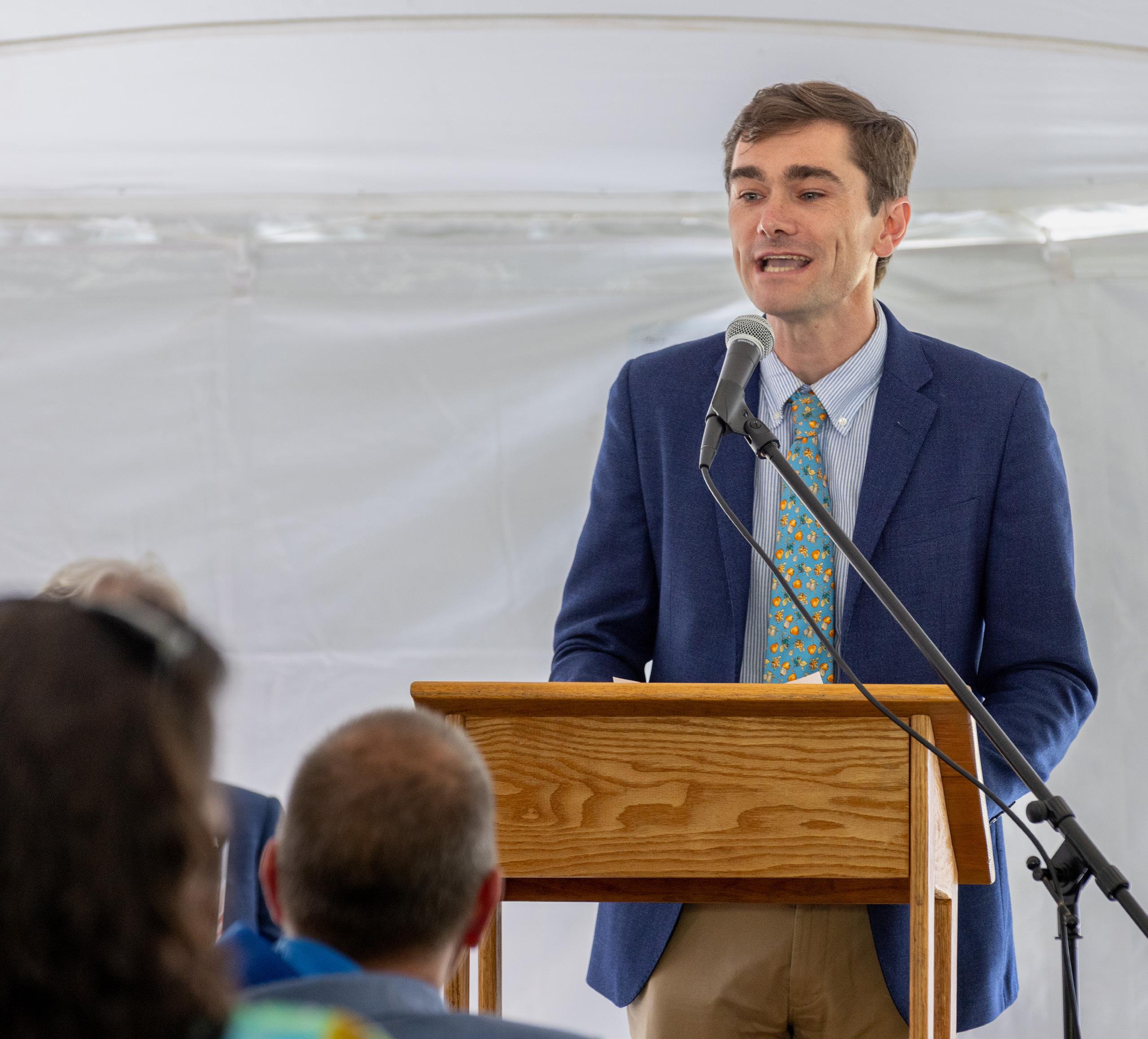
Good afternoon. For those of you who don’t know me, my name is Brendan, and this is my third time being new at a Waring Convocation. I was a new student in 1997, when I was eleven. I was a new teacher in 2016, when I was thirty-one. And I’m a new teacher now, again, in 2025, when I’m still thirty-one. Being old and new to a place is a wobbly thing. The other day, I was in the Barn with my tutorial playing hide and seek, and one of my tutees asked me if they could hide in the loft above Front Court—a space, for those of you who are unfamiliar, that can only be accessed by walking through a kind of mystery door that opens into a second story abyss, crawling out along a railing that’s not even really a railing, and then doing a sort of scramble jump behind a defunct basketball hoop—and I realized, I am the adult here now. That means no one is going to walk in and say this is a bad idea. And so, for the record, I did say it was a bad idea. But not before doing some serious soul-searching. Because I used to love crawling into the loft above Front Court, or into the culvert beneath the stream, or hiding in any number of other hazardous places I cannot endorse any of you new students discovering for yourselves. As any good Humanities teacher would ask: what’s the deal with that? Why return—especially if it means bearing the responsibilities of adulthood in a place where you knew some of your last afternoons as a child?
Well, as any good Humanities teacher would answer: there are many reasons, and one of them probably has to do with a book. And like any good Humanities student, you might now be thinking, I hope it’s finally gonna be a book with some jokes. And it is. Because this past winter, as I started to have conversations with Tim about coming back to Waring, I was also working away at my other job, as a playwright, and in that domain of my life, a theater had asked me to write a new version of Winnie the Pooh—which, for those of you who are unfamiliar, is about a stuffed bear who likes honey, lives in the forest, and belongs to a boy named Christopher Robin. Re-reading the story, I was struck by an element of the plot I had forgotten: Christopher Robin is going away to school, and this means he’s not going to be able to play with his animals anymore. In some ways, this seems like the normal course of events. As we grow up, who we are changes. How we make meaning changes. One day, you’re playing with a stuffed bear, and the next you’re telling your tutees they can’t go into a dangerous but alluring loft. But if we read closely, we learn that Christopher Robin does not see school as a place where he might change—he sees it as a place where he will have to give up his imagination, or, as he calls it, “doing nothing.” “I’m not going to do Nothing anymore,” he tells Pooh. “Never again?” Pooh asks. “Well not so much,” he says. “They don’t let you.”
It’s easy to read this and think, well, that’s because the story takes place in England one-hundred years ago. They didn’t have feelings, only scones. But too often, I think what Christopher Robin is describing is still the arc of education. Because what is he doing in the woods? Telling stories. Pretending. Beginning to make art. And when children are young, we’re okay with this. We like the idea that they find meaning in art. We show them beautiful illustrations. We tell them stories. We ask them to write and draw their own. We even claim to know why: yes, the child is drawn to a particular book for its own sake, out of some pure delight, but also, we tell ourselves, they are using the events in the story to work out their primal fears—of the dark, of abandonment, of the monster under the bed. Which is to say that when it comes to children, we believe in something Waring has been talking a good bit about recently: the liberal arts, by which I suppose I mean any form of art or knowledge or inquiry that we pursue for its own sake, because it compels us, but with the intuition that it helps us grapple with some fear or question or search for meaning that would otherwise be beyond our grasp.
And then, somewhere along the line, we stop. We begin treating stories—works of art—as quarries for socalled “real world skills.” Partly, this is necessary—we live in the so-called “real world”; we better have the skills for it—but partly I think it is because we become afraid when the questions young people ask from art become too close to our own. We can handle a story about a child’s fear of the dark because we are not afraid of the dark—or more accurately because we do not let ourselves think about the fears beneath a

I HOPE THIS WILL BE A PLACE WHERE CHRISTOPHER ROBIN’S “DOING NOTHING,” THAT PLAYFULNESS OF SPIRIT THAT ANIMATES SO MANY BEAUTIFUL AND DIFFICULT PARTS OF LIFE, WILL STAY ALIVE IN YOU.
child’s fear of darkness. But what about when their questions become the ones we can’t answer: how should we govern ourselves? Create justice? Survive heartbreak? Reckon with our own capacity for love and cruelty? Live knowing that we will die? We can’t let young people look at what we can’t look at ourselves, and so we come up with excuses. The liberal arts are decadent, we say, in our society we can’t afford them. Well things have come to a sorry pass, if we think we can’t afford what our spirits give us for free.
So I suppose I have come back to Waring because it has always seemed to me like a place that believes in inviting young people into the biggest questions—that knows that sitting with what frightens us means keeping the door open to what delights us, because there is some thread between wanting to climb into a loft, and wanting to make a work of art, and having a capacity to sit with all we do not know. New students, I hope this community will invite you into its question and that you will invite it into yours. I hope this will be a place where Christopher Robin’s “doing nothing,” that playfulness of spirit that animates so many beautiful and difficult parts of life, will stay alive in you. I am so happy to be new with you all again. Thank you.
NEW BOARD MEMBER:
CALLI TOWNE

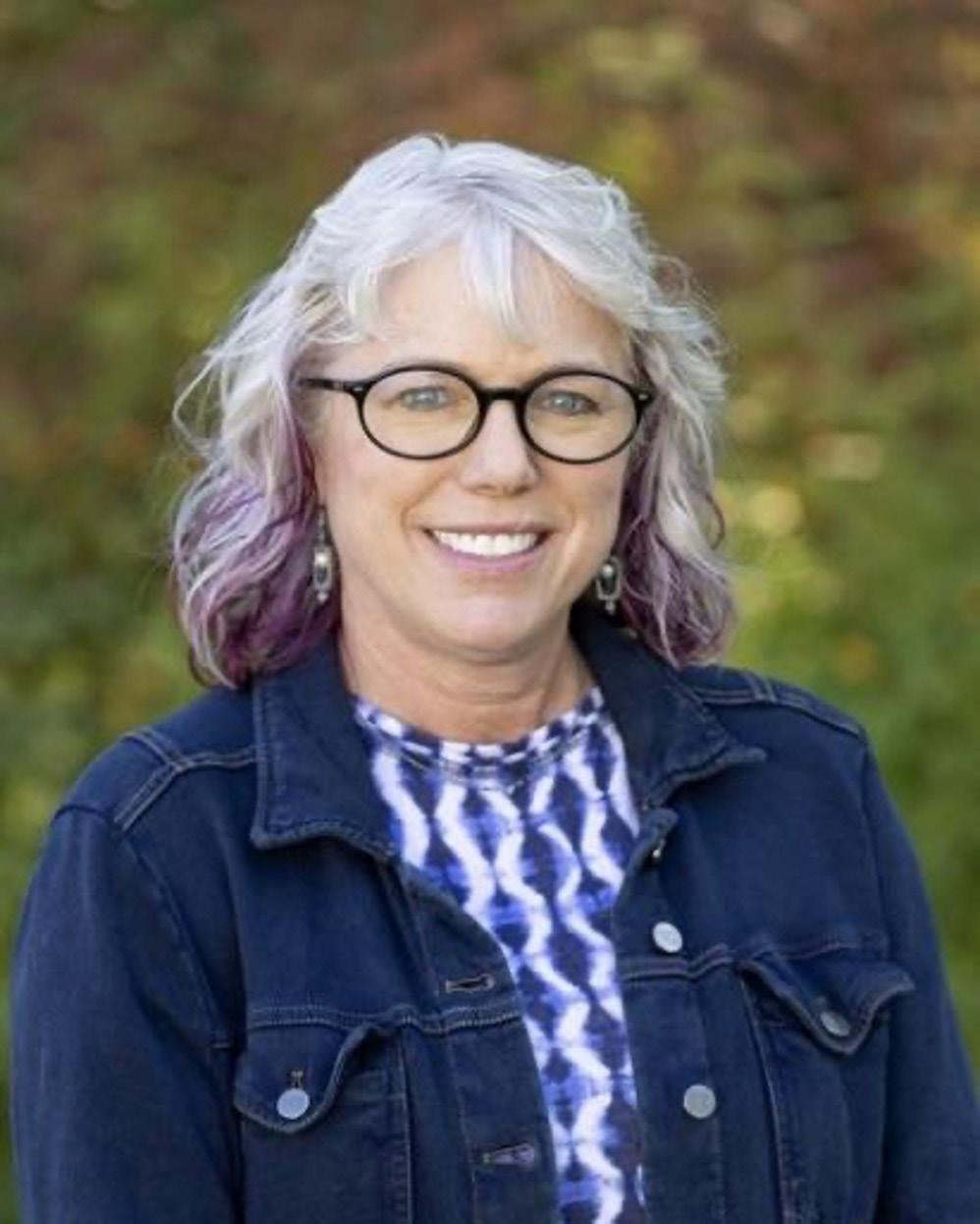
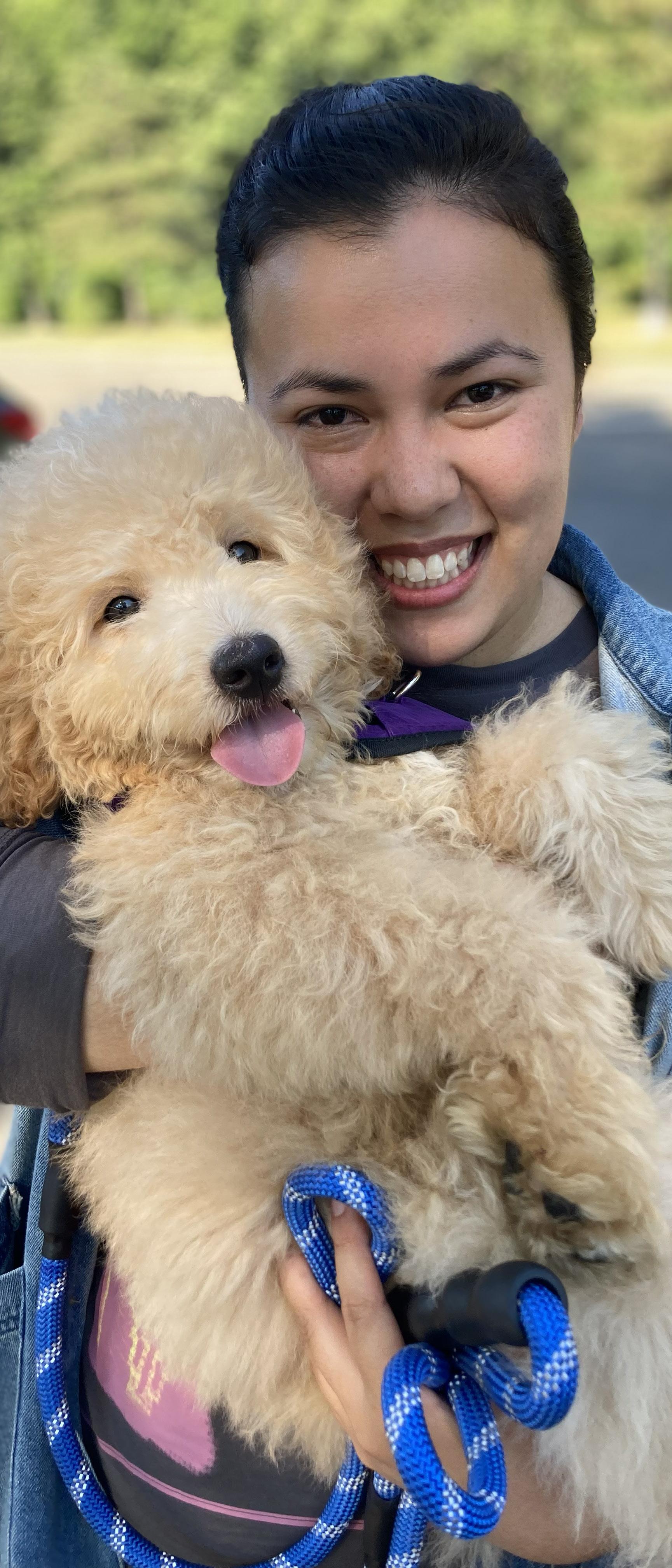
Calli has degrees from Kenyon College (BA Psychology) and Northeastern University (MS Human Resource Counseling). She spent 18 years working for the MSPCA in various roles including Volunteer Coordination, Community and Public Relations, Fundraising and Events and lastly, creating a public facing dog training program from the ground up. She has worked for several healthcare institutions in Boston and locally. Calli is the proud mom to Ari ‘24 and Aren ’28. She served as the Parent Co-Chair from 2021-2023. Outside of Waring and work, she enjoys outdoor activities from the mountains to the beach and doing K9 Nosework classes with her Beagle, Tuna.
NEW BOARD MEMBER: CAITLIN FAWCETT
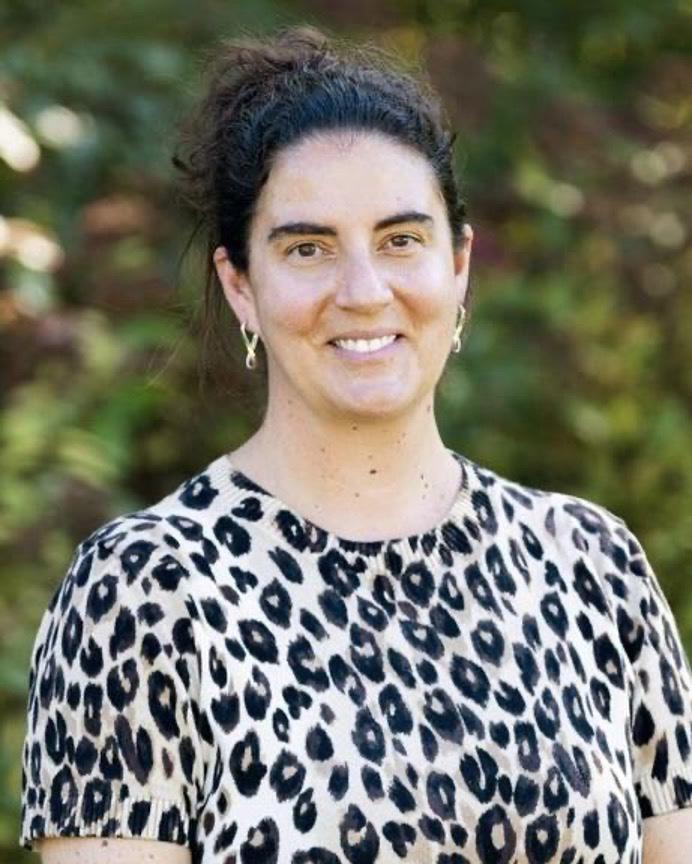
After graduating from Brown University with a degree in public health, Caitlin worked for a year as an AmeriCorps Fellow, designing and implementing projects to improve healthcare access to working uninsured in Massachusetts. She went on to get her MD at UMass Medical School where she was involved in the Massachusetts Medical Society and served as the Vice Chair of the student section. Caitlin worked for 14 years as a Physician in Primary Care and teaching Resident physicians at Beth Israel Deaconess in Boston. After seeing her patients struggle to navigate the health care system, she joined ConsumerMedical (now AlightSolutions) in 2012 and started down the career path of Clinical Navigation.
Caitlin is the mother of three boys (Jack ‘26, Rocco, and Jones ‘31) which, she has determined, means her house will never actually be clean.
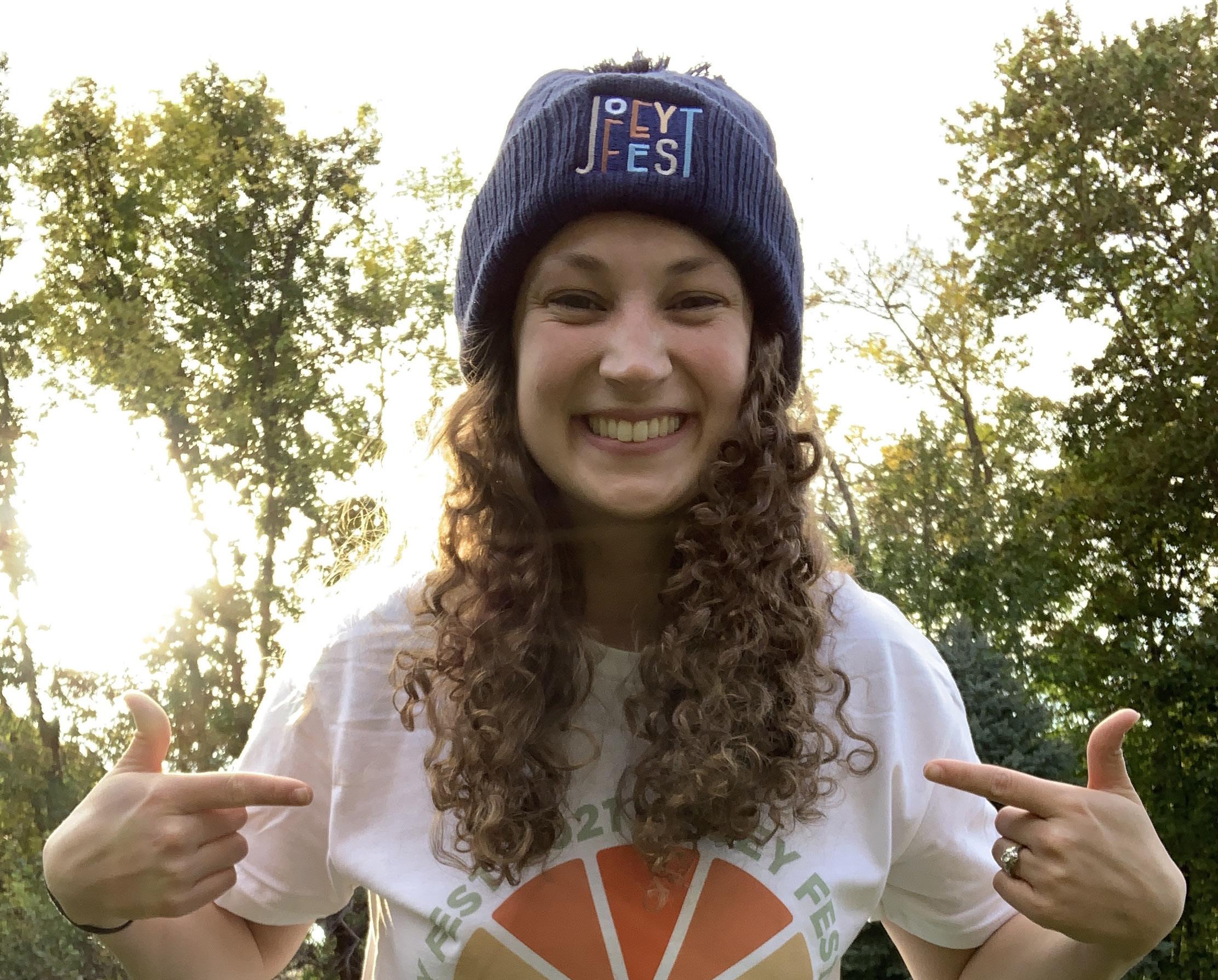
CAITLIN’S STORY
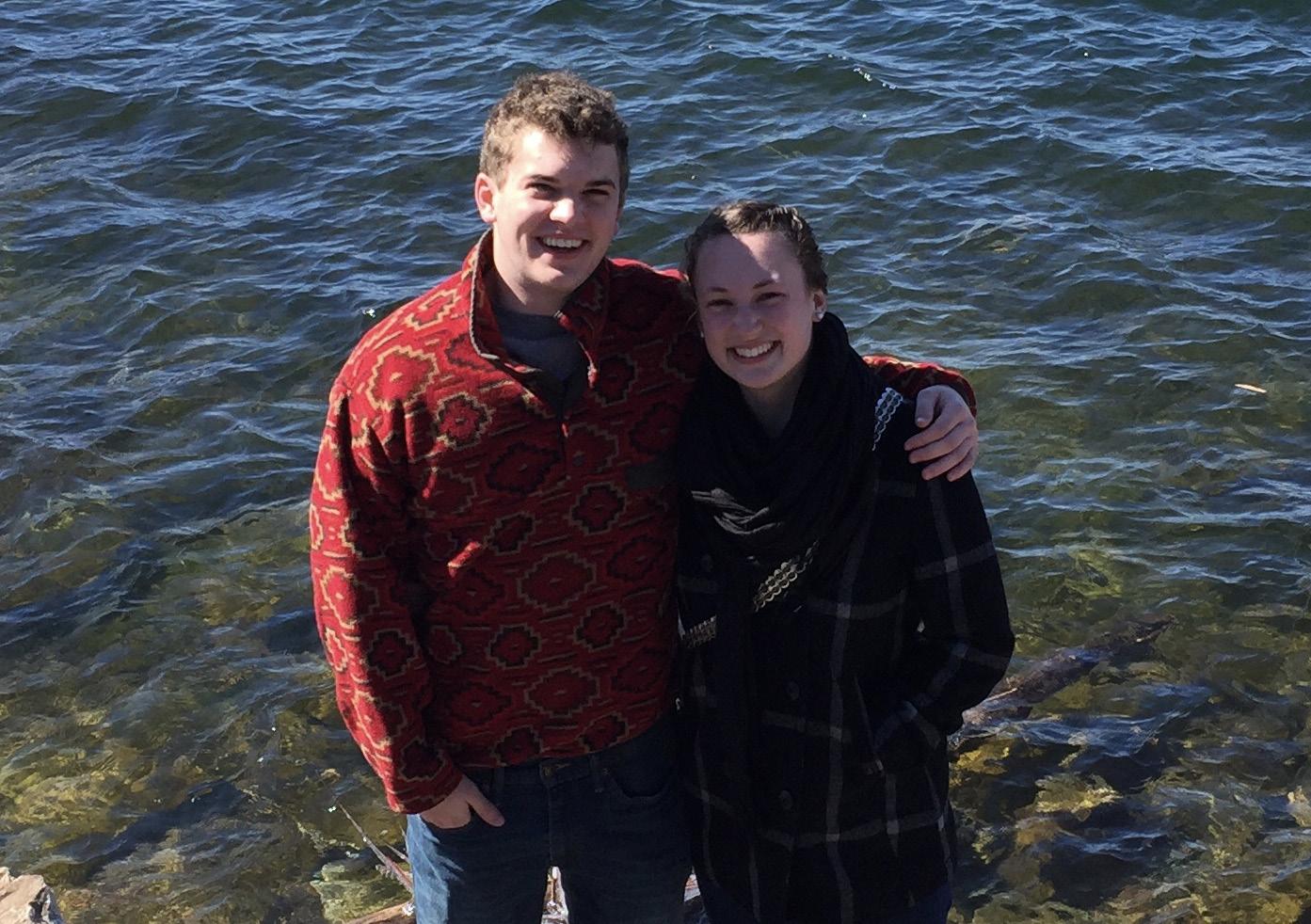
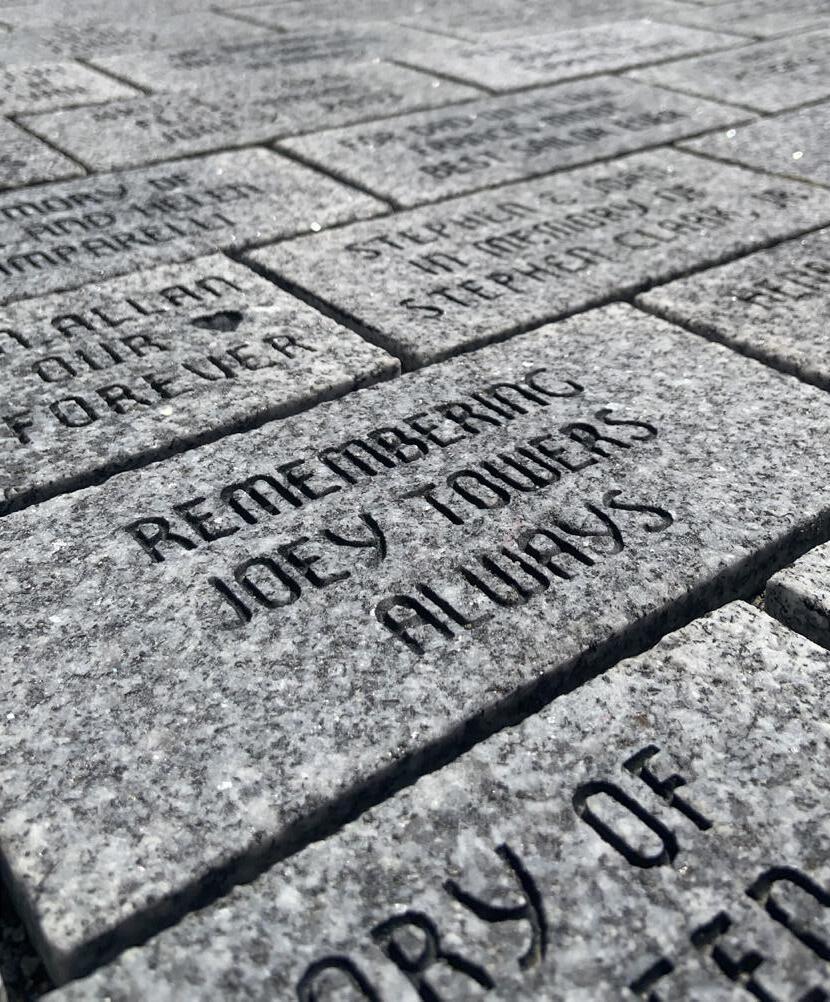
I’m Caitlin Towers ‘12, and everything I am today is wrapped up in the memory of my little brother, Joey (Waring Class of 2014). In the fall of 2016, at just twenty years old, Joey died by suicide, and with him went my best friend. He was kind and goofy, genuine and musical, endlessly curious about the world. Growing up, I proudly wrote “Joey’s sister” on my name tag at every school event instead of “Caitlin.” It annoyed him to no end, but no part of who I am was ever more important than being his big sister.
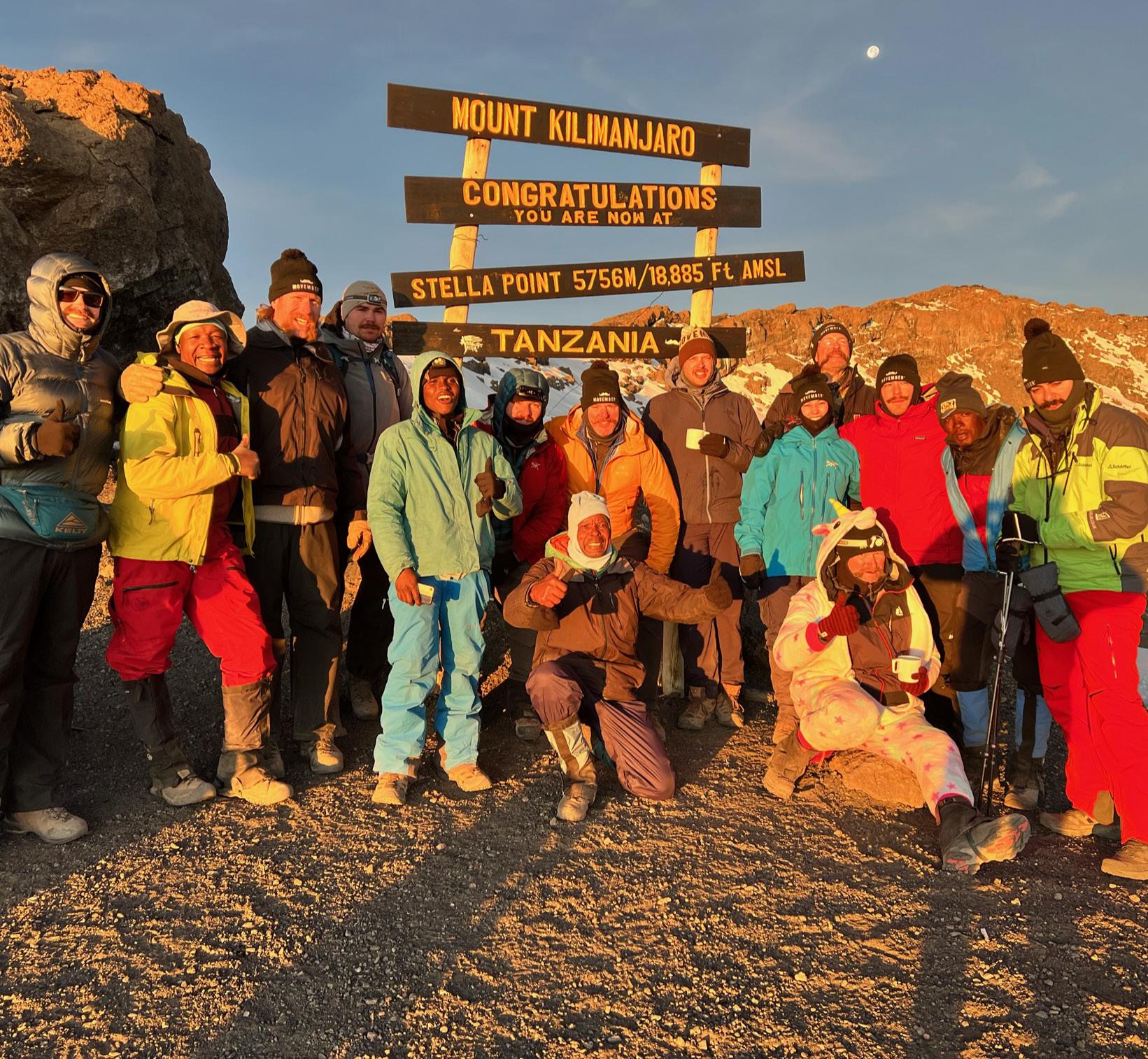
After Joey’s passing, our family and his friends rallied around one another, sharing stories that made us laugh and cry in the same breath. It was through his fraternity’s annual bikeathon in his honor that I first discovered Movember, an organization dedicated to men’s mental health and suicide prevention. Seeing how a simple conversation or a shared mustache could break down walls of silence, I realized I wanted to be part of something bigger than my own grief. As a high school English teacher, I’ve carried that lesson into my classroom every day: young men shouldn’t have to go it alone, and sometimes even a small act of openness, a friend reaching out or a teacher sharing her why, can change a life.
Out of that conviction, in 2019 JoeyFest was born. What started as a gathering at a local brewery has become an annual ritual of live music, heartfelt conversation, and community connection. Each year we carry forward Joey’s passions, the songs he loved, his love of the outdoors, and the easy laughter he sparked in everyone around him, and we open the door for honest talks about mental health, loss, and hope. It’s a night where the music is upbeat, the stories run deep, and no one is expected to hide their scars.
JoeyFest is my way of honoring my brother’s spirit and reminding every brother, son, friend, and neighbor that they are not alone in their struggles. I see it in the faces of my students when I share my story: those young men who nod slowly, relieved to know that asking for help isn’t weakness, it’s strength. I’ve watched students open up at our school’s Movember club and friends and strangers alike share their voices at JoeyFest’s openmic segment or on the written word wall, voices and pens shaking as they name what they’ve carried in the dark. I’ve been humbled by the community of people who drive miles to stand shoulder to shoulder, to raise a toast to Joey and to the promise that together, we will keep fighting for every man’s right to a tomorrow.
Today, I carry Joey with me in every classroom discussion, every hallway greeting, every late-night email from a student who just needs to know someone is listening. His absence has shaped my presence, for my students, my community, and myself. Through JoeyFest and my work with Movember, I’ve found purpose in turning heartbreak into hope, grief into gathering, and silence into song, and I’ll keep showing up, because every young man deserves to know that he’s seen, he’s heard, and he’s worth fighting for.
This article by Caitlin Towers was first printed in Movember’s The Real Face of Men’s Health Report.
Explore Movember’s landmark report on the state of men’s health in the US, its impact on partners, families, and communities, and the bold, community-led solutions that could lead to a brighter future: www.movember.com/realfaceusa
FACULTY GRANT PROGRAM
BY VICKI LINCOLN P ‘15, ‘17
Created entirely by Waring’s parent community to show their deepest gratitude for Waring’s teachers and staff, the Faculty Grant Program provides funding for Waring employees to pursue enriching experiences beyond the walls of the campus to broaden their personal and professional horizons. The Faculty Grant Program affords faculty and staff the opportunity to think outside the box, pursuing passions for subjects that they might not otherwise be able to access. In return, they will then bring that experiential knowledge back into the classroom to inform and enrich their students’ learning.
Thanks to a generous base of current and alumni parents, Waring has created a designated endowed fund for the Faculty Grant Program. Since it is not funded by the school’s annual budget, it relies on the generosity of our community. Please consider making a donation of any size to help us grow this program. In just nine years, generous donors to the Faculty Grant Program have already made possible 46 exciting grants. Read below about this year’s grant recipients and about the enriching trips, workshops, and lessons they plan to bring back to the school.
TASHA FRANK
BRENDAN PELSUE
TABITHA ROBINSON-ALDEN
MOLLY CYR-REDCROSS
REBECCA REED
JACKIE RAPOSO
GUS GREENBERG
ANITA RICHARDSON
MARIKA WHITAKER
MAD CROW FELLOWSHIP
MFA MEMBERSHIP AND VOICE LESSONS
TRAVEL TO WISCONSIN TO WORKSHOP HIS PLAY
ART CLASSES
CYR WHEEL CLASSES AT ESH
SKATING CLASSES
SUPPLIES FOR FURNITURE REFINISHING
FIRST TIME TRAVEL TO PARIS
ONGOING PIANO LESSONS
TRAVEL TO NEW MEXICO TO STUDY O’KEEFFE’S ARCHIVES
STIPEND TO DEFRAY COSTS
ASSOCIATED WITH HAYSTACK, ELLA BRANDON THIS YEAR’S RECIPIENT
WHAT DOES ENDTERM LOOK LIKE NOW?
BY
CALLI TOWNE P’24, ‘28 AND MARY COOKSON P’15 ‘17
What does the color blue, symbiosis, bicycles, and fashion have in common? Waring Endterm of course! The end of school year classes have provided opportunities to explore areas of interest that are rarely seen in the classroom at Waring or elsewhere. Choosing between how one might reinvent the library versus exploring New England whaling traditions within the context of Melville’s Moby Dick, can be challenging.
Over the years of Endterm’s existence, the school has seen the program grow from cross country road trips with 6 to 7 students, to the creation of in-depth courses that require months of planning. Science Teacher, Core Montreal Trip Coordinator, Tutor and Camping Trip Coordinator, Dan Wellehan, is the current Program Coordinator whose background also includes a long tenure with Outward Bound. His first year coordinating Endterm was 2022. “Unlike my other roles, I am trying to work with 30 people to make 10 decisions that all dovetail together,” says Dan. “You are freeing yourself from the 45 minute period to look at a subject in depth giving more teacher / student contact time.” His goal is to ensure that staff feel supported and that this unique learning program is done well and is sustainable for the school. While he describes their process (already 2 months along for 2026) as a “blank slate”, there is always something new as well as changes and tweaks made to previously offered courses that make each year different from any other. Dan has co-taught Endterm classes on water, bicycles with Joshua and Todd Balf (P ‘12, ‘14) and recently a course called Symbiosis. “The bicycle Endterm was my favorite because of the problem solving and mechanical skills the students learned; plus it’s a healthier and more sustainable way to get around.”
“I’ve been a parent volunteer in three endterms. Each of them was memorable, and not just because the students write the best and funniest thank you notes I’ve ever received. Each endterm affirms what we think we know of a Waring education but rarely see so close. Leaders emerge, creativity flourishes, reflection deepens, and, well, good things get done — a town trail is built, bikes fixed and donated to villages abroad, and much more. Best of all someone almost always finds a passion that will never leave them.”
-Todd Balf P’12,
P’14
There is a desire with Endterm to create skills that transcend the Waring experience whether it is cooking, dance, kayaking or hiking that expresses learning in different ways. Anna Marie Smith, French Department Chair, Teacher and Tutor, has offered several unique learning experiences including introduction to basic automotive skills, but one, called Sew Waring, started in 2018 is one of the longest running offerings due to its popularity.
“Sharing my interests is part of why I got into teaching whether it’s French, music or sewing. Sew Waring is pure joy for me,” states Anna Marie. Some students want the opportunity to do something they know in an ideal environment with lots of space, time and support where others want to try something new. Students learn to craft one’s own clothing from beginning to end, how to repair a favorite item or alter clothes to fit them perfectly.
“We are asking something different from the brain. It is a spatial project with lots of math, patterns and working with your hands as well as hand-eye coordination,” says Anna Marie. The students start and end each day in a ‘care’ and ‘share’ circle so they can support each other’s projects which helps them build community.
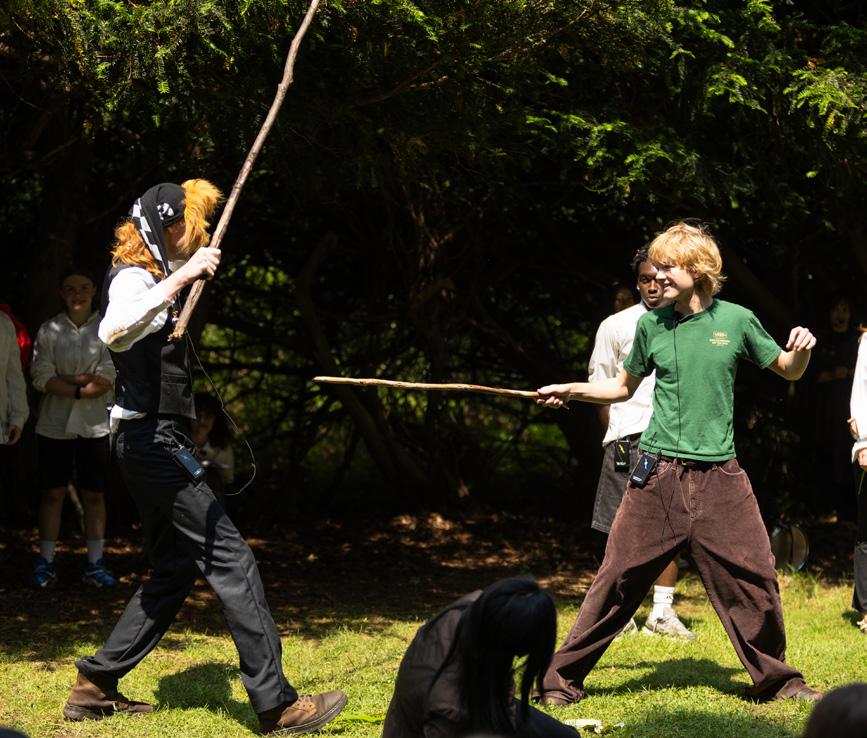
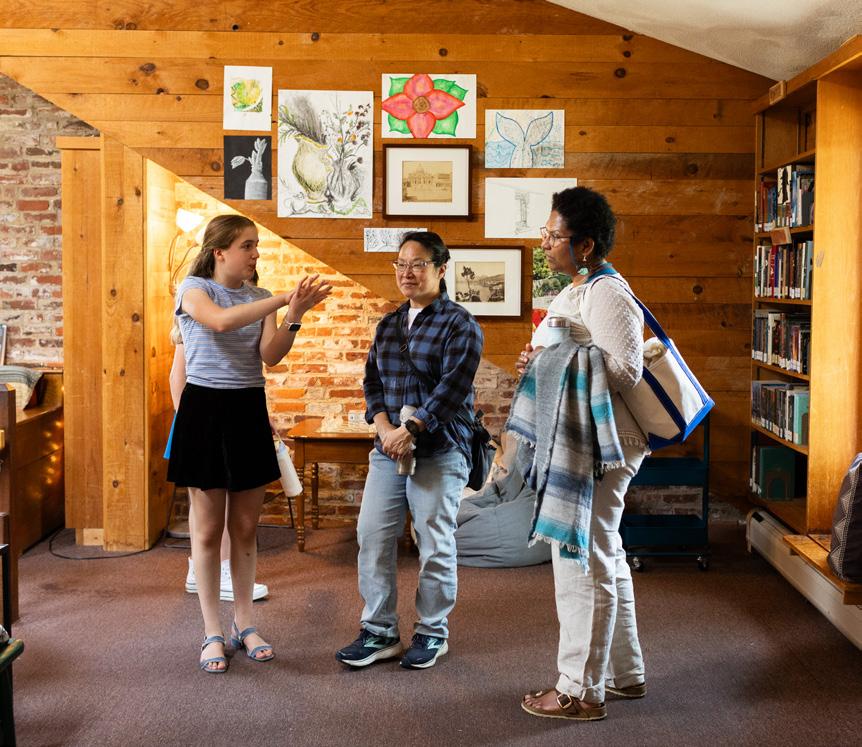
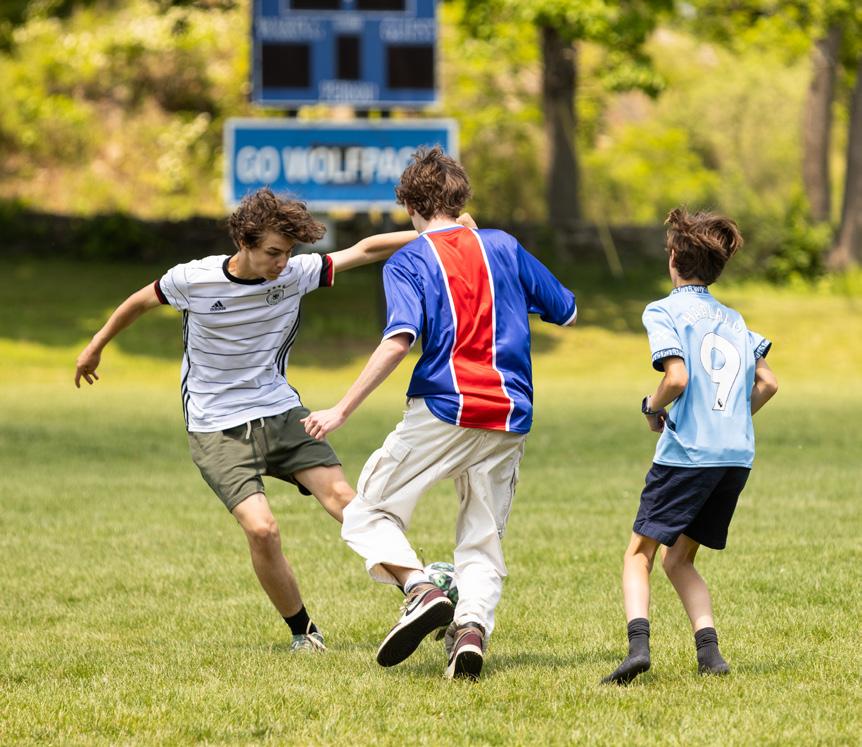
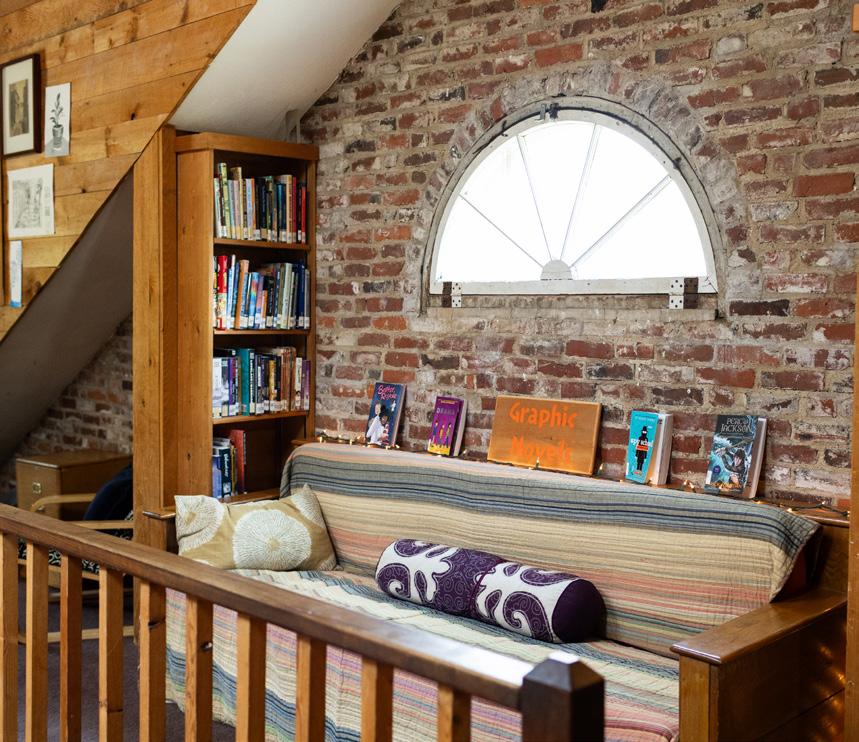
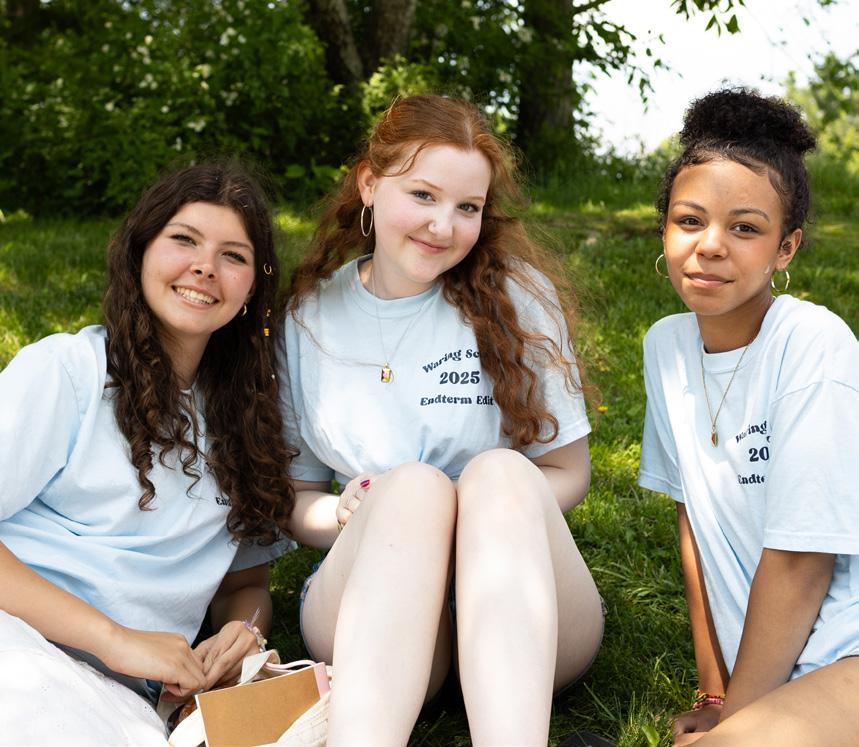
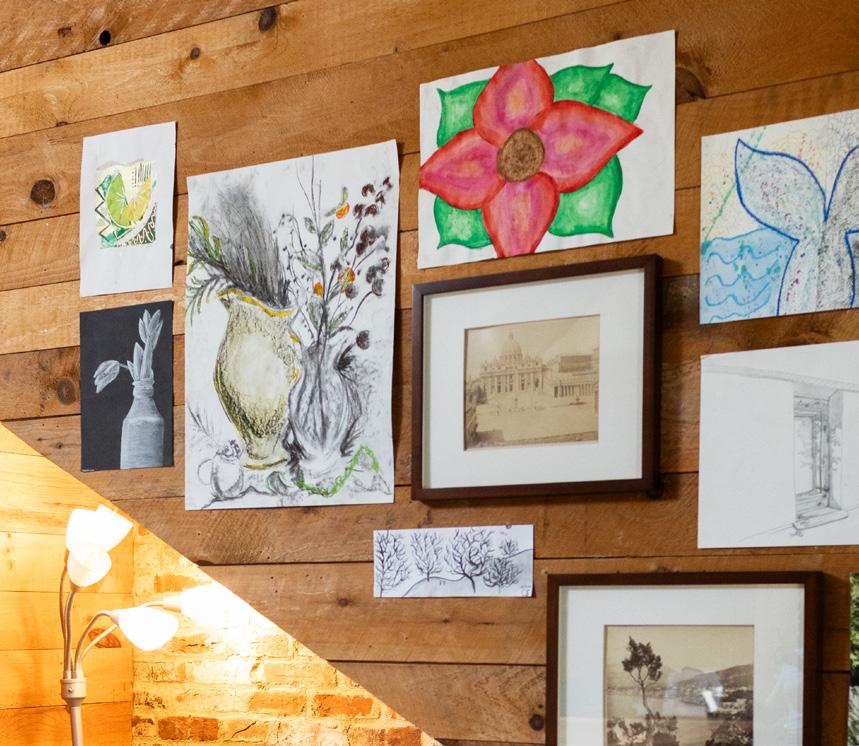
The Endterm classes finished with an Open House for the community to come see what the students have worked on and hear from them about the impact of the experience. The enthusiasm and camaraderie was on full display during;
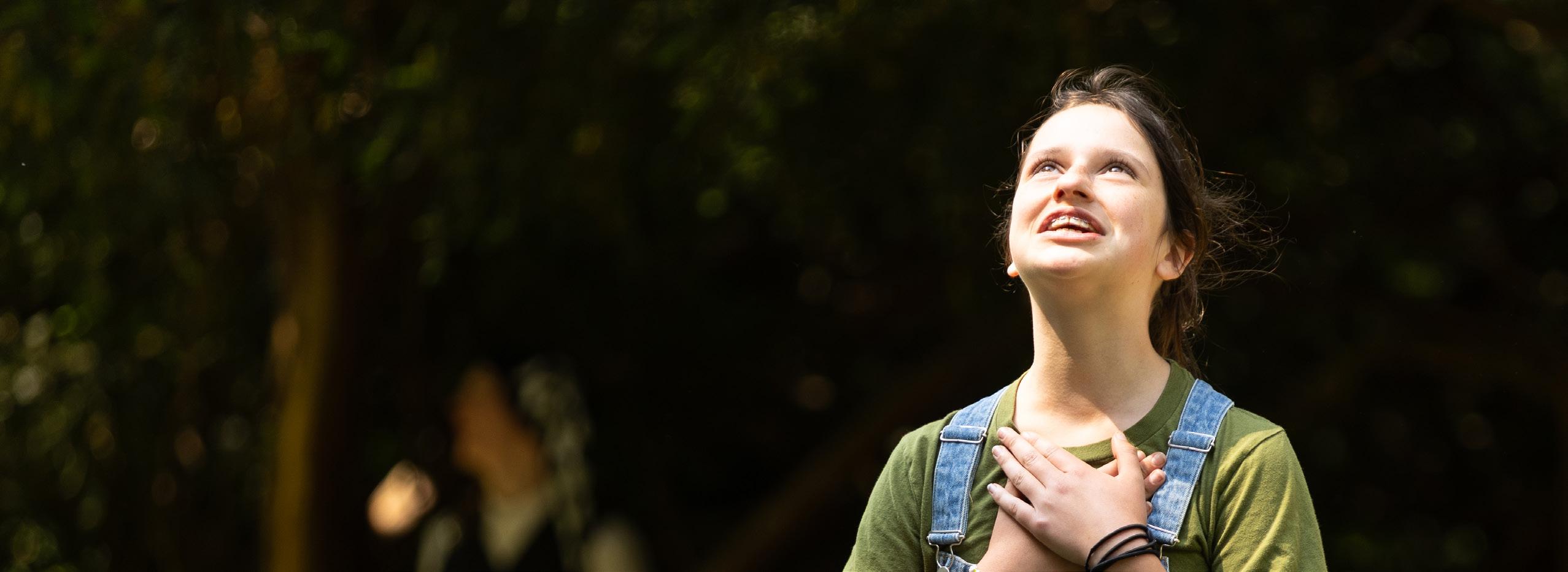
As You Like It in the Woods, dog training lessons, a fashion show, a documentary film festival, an invitation into the creative spaces of Symbiosis, In the Mix, Everything We Do is Business, Primitive Ceramics and a reimagining of the Waring Library.
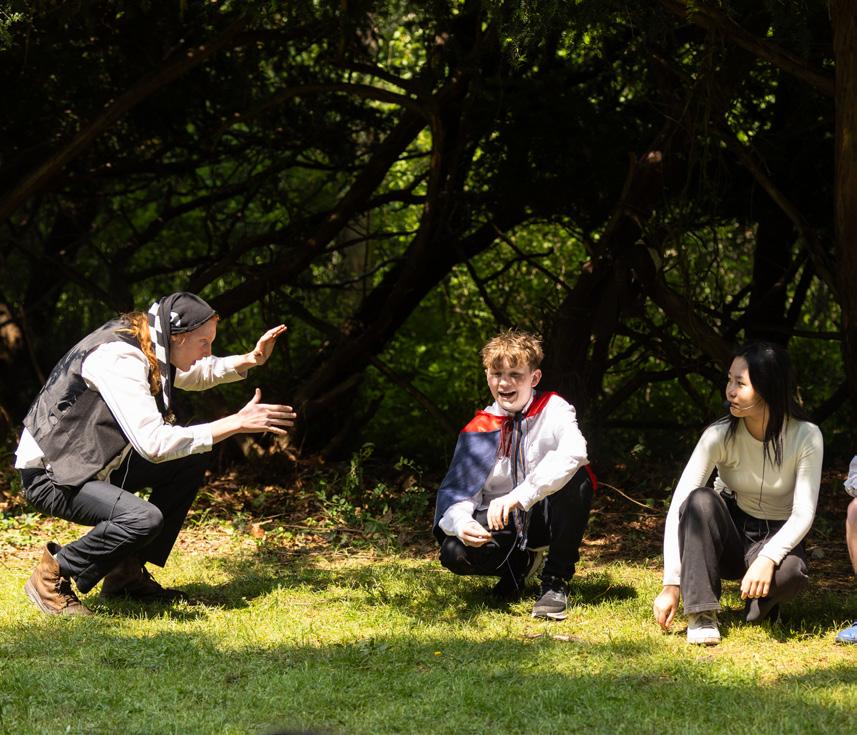
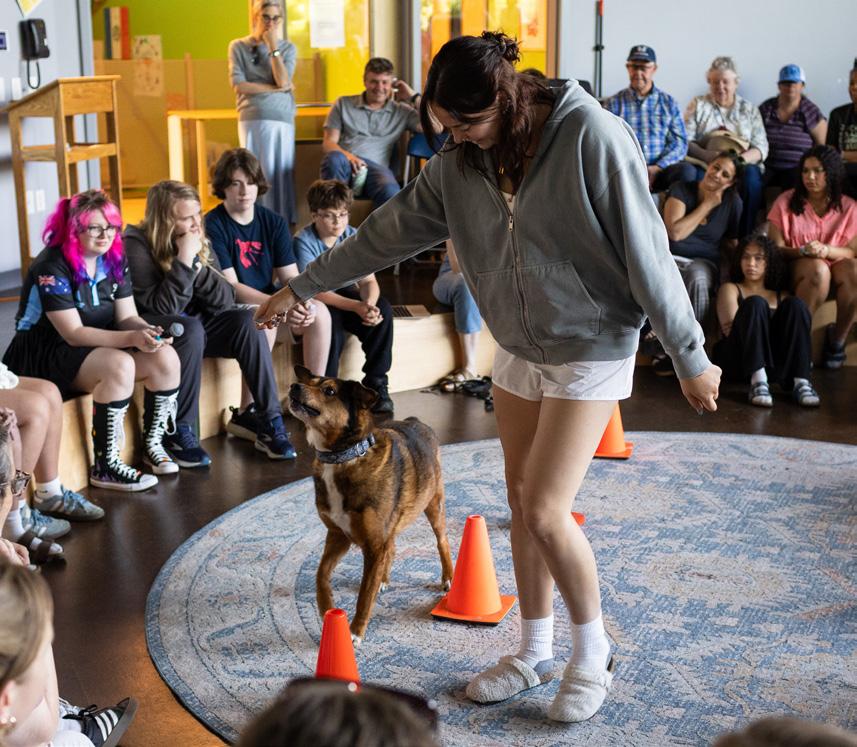
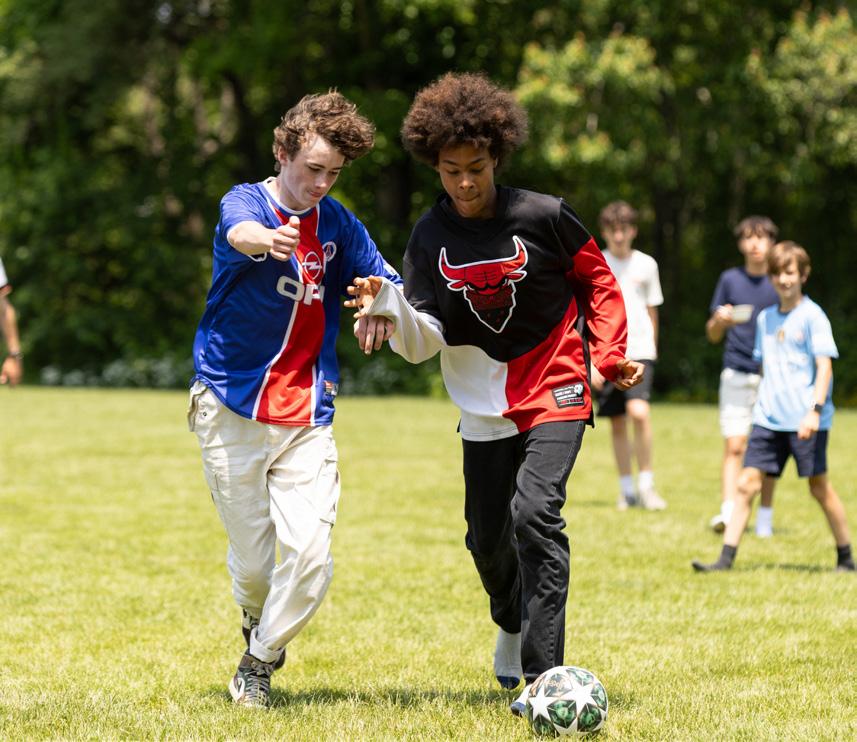
For Dan, Endterm is more than just a way to end a year. “As a teacher, the year is compartmentalized by subjects. The beauty of Endterm is its an opportunity to mash up and combine various subjects that might not be otherwise.” These unique experiential learning opportunities are Waring at its best and at its core, inspiring learning in the moment and for the future.

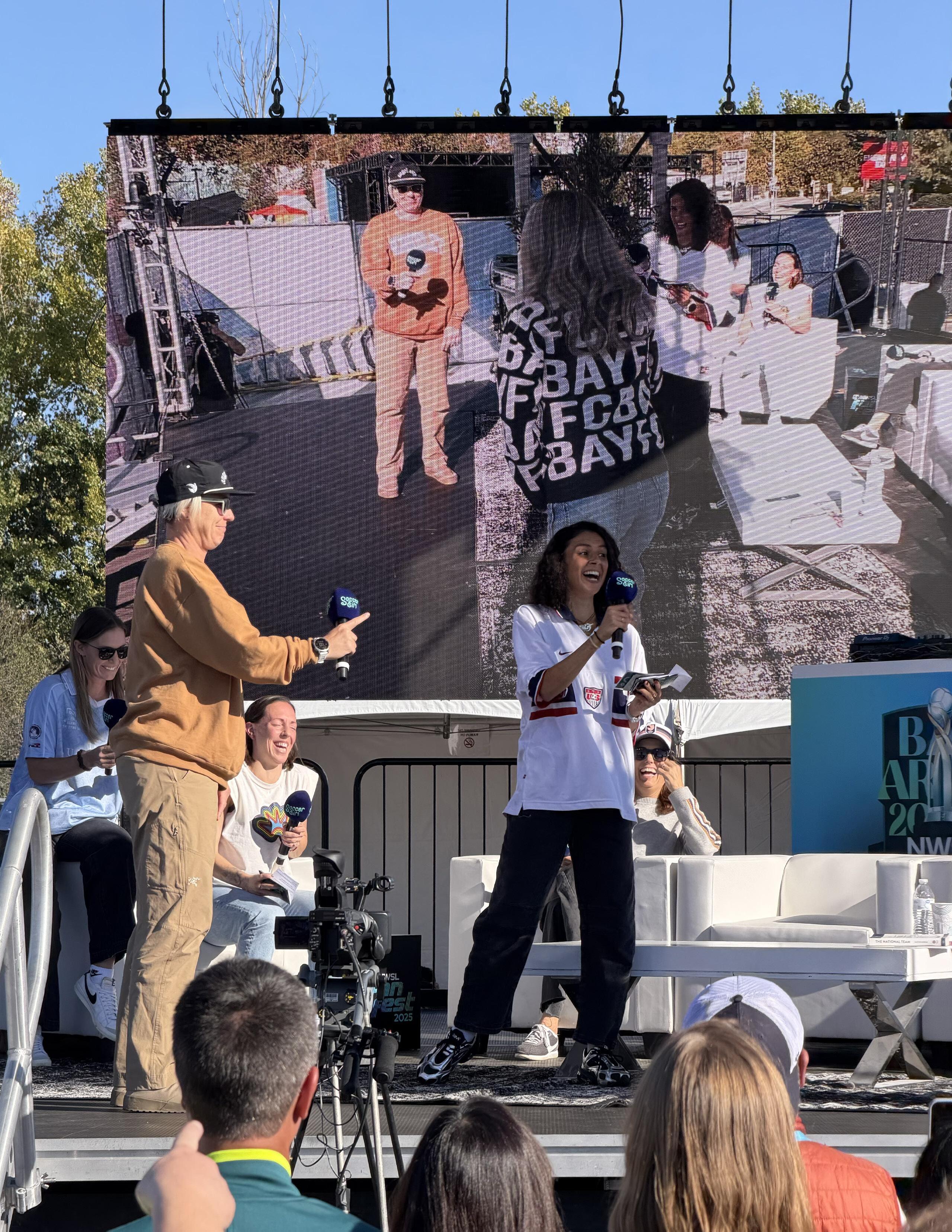
CELIA WITH ABBY WAMBACH
PROFILES
CELIA BALF ‘12 ALUMNI
BY JAN LINDSAY P ‘05, ‘07
Celia Balf ‘12 arrives in Brooklyn’s tiny Grumpy Cafe, where, true to its name, the barista is not smiling. It’s Park Slope in Brooklyn after all, a local hipster outpost.
Celia, on the other hand, is beaming: her adorable 3 month old baby JT is tucked next to her, asleep in his cozy snuggly.
Celia graduated from Waring in 2012. It’s thirteen years later, and not surprisingly, she’s on fire.
Today she straddles an impressive sports and journalism career: she’s currently on maternity leave from her Assistant Coach post for the Women’s Soccer team at Columbia University, she works as Senior Editor for the media company FootballCo, and hosts the INDIVISA Show - a soccer podcast featuring iconic US Women’s National Team (USWNT) and National Women’s Soccer League (NWSL) legends.
She’s married to Peter Panousopolous. They met when he was coaching basketball at Brooklyn’s JJ Byrne Park, and she was coaching youth soccer. Together they created Parkway Hoops, a project to build community, and manifest their love of play. Five years after its inception as an affordable after school alternative to pricier AAU programs, “Hoops” now serves 700 kids.
A soccer phenom at Waring, Celia played Division 1 soccer at SUNY Albany. “I had to stop playing because I had 3 ½ ACLs ; my knees are shot so I started writing about soccer….
She’s grateful that at Waring everyone did everything. “Thanks to Waring, I got to be both an athlete and a writer.”
Now she still does everything: a combination of teaching, writing, speaking, and story telling. She also does interviews in front of the camera now, a scary transition from print for her. There’s no word smithing to perfection when you’re in front of the camera; you can’t tell your guest what to say to fit your agenda.
She’s grateful to Waring, where teachers constantly encouraged her to jump into new territory. “That was good, Celia. Now why don’t you lead All School Meeting?” And she’s grateful her parents believed in her, giving her the confidence to try new things.
So she’s learning to get comfortable in that sink or swim live interview mode. “At first, I thought I knew the guest, I had my plan. But it doesn’t work that way, it turns out, and it was awkward. So I started listening! Now I look for what lights them up. It’s kind of like receiving a pass. You have to figure out what to do with the ball.”
Recently she covered the November 2025 NWSL championship in San Jose CA, where Gotham FC beat out Washington Spirit with the game’s first goal in the 80th minute.
She hosted a live show with some of U.S. women’s soccer greats — Brandy Chastain, Abby Wambach, Julie Foudy, and Leslie Osborne to name a few.
Oh, and did you catch her story on Megan Rapinoe in Mundial magazine?
Celia is passionate about the value team sports played in her life at Waring. “Sports lead to social, academic, and professional success in a playful way, all while building confidence and community. I hope Waring will always embrace team sports.”
Celia wanted to be sure to include a shoutout to former Math and Science teacher John Wiggs. “I’ll always be grateful to him. He made me feel seen in Math and Science class, two subjects I could not do. I’ve never met someone who believed in me more.”
SAM GALE ROSEN ‘02
BY JESS ROSE ‘02
How did you come to journalism? Can you share a bit about your journey?
Throughout college I mostly had no sense at all about what I wanted to do as a job. I’d always been interested in radio journalism, just as a consumer and enthusiast, so after graduating I eventually applied for an internship to work on the show Open Source before becoming a producer for On Point on WBUR.
After seven years, and learning a lot, my wife and I moved to Burlington, where I was a producer and then the managing editor of Vermont Edition, the local news magazine and talk show produced by Vermont Public Radio. Most recently I’ve worked as digital editor at VTDigger, a nonprofit digital news org, working 20 hours a week so I can be flexible enough to take care of my young son.
What I’ve enjoyed throughout all of this is the chance to be an extreme generalist, where you get to immerse yourself in a world, allowing yourself to be an enthusiastic, curious person over and over with each story.
You’ve spoken publicly about mental health. How is that a part of your story?
What I summarized before about my career can seem like a strange way of distilling everything, because the other thing that has been interacting with every aspect of my career and life is that I struggle with a lot of severe mental health challenges, including depression, anxiety, suicidal ideation, and obsessive compulsive disorder.
I feel like that kind of stuff is often left out of profiles like these, but I also think it’s important to be transparent about these things and work to reduce stigma. It took me a very long time to recognize a lot of my serious conditions for what they were, and even longer for me to be willing to get serious about trying to treat any of it.
And the weird dual-life aspect of it can be really crushing; you can embrace the lie of being “highfunctioning” for a while until you can’t anymore. Now I have more skills to deal with a lot of the challenges I have, and a better network to support me when I need it, but it still can be really rough. At some point I had to radically accept that.
How has your journey with mental health influenced your work?
I think my story is more common than not. It’s the reality for many people, even if it’s not a story that necessarily gets elevated or told much. So, one thing I’ve at least tried to do is help present stories of the people who are most affected by the policies and structures that get debated by powerful people.
If you’re putting together a radio show, it’s always going to be easier to find someone from some board of trustees, or some college professor somewhere to talk rather than say, someone experiencing homelessness and living in a shelter, or someone who might be the actual person who might use the overdose prevention center that people are arguing about. But you have to try!
Once, when I was working on a radio show I was told it would be a bad idea to interview someone with schizophrenia because they were too unpredictable and didn’t speak well and that it would be a better idea to talk with a doctor who treated them or a family member.
While there might have been some elements of truth to what this person was saying, at the same time it crystallized in my mind a lot of the challenges that the media can have around this. At some point we have to talk with people rather than talk about them. Allowing people to share their multifaceted selves, including the hard parts, has become something that I care a lot about and want to continue to try to do.




MARGUERITE MULLEN ‘14
BY JAN LINDSAY P ‘05, ‘07
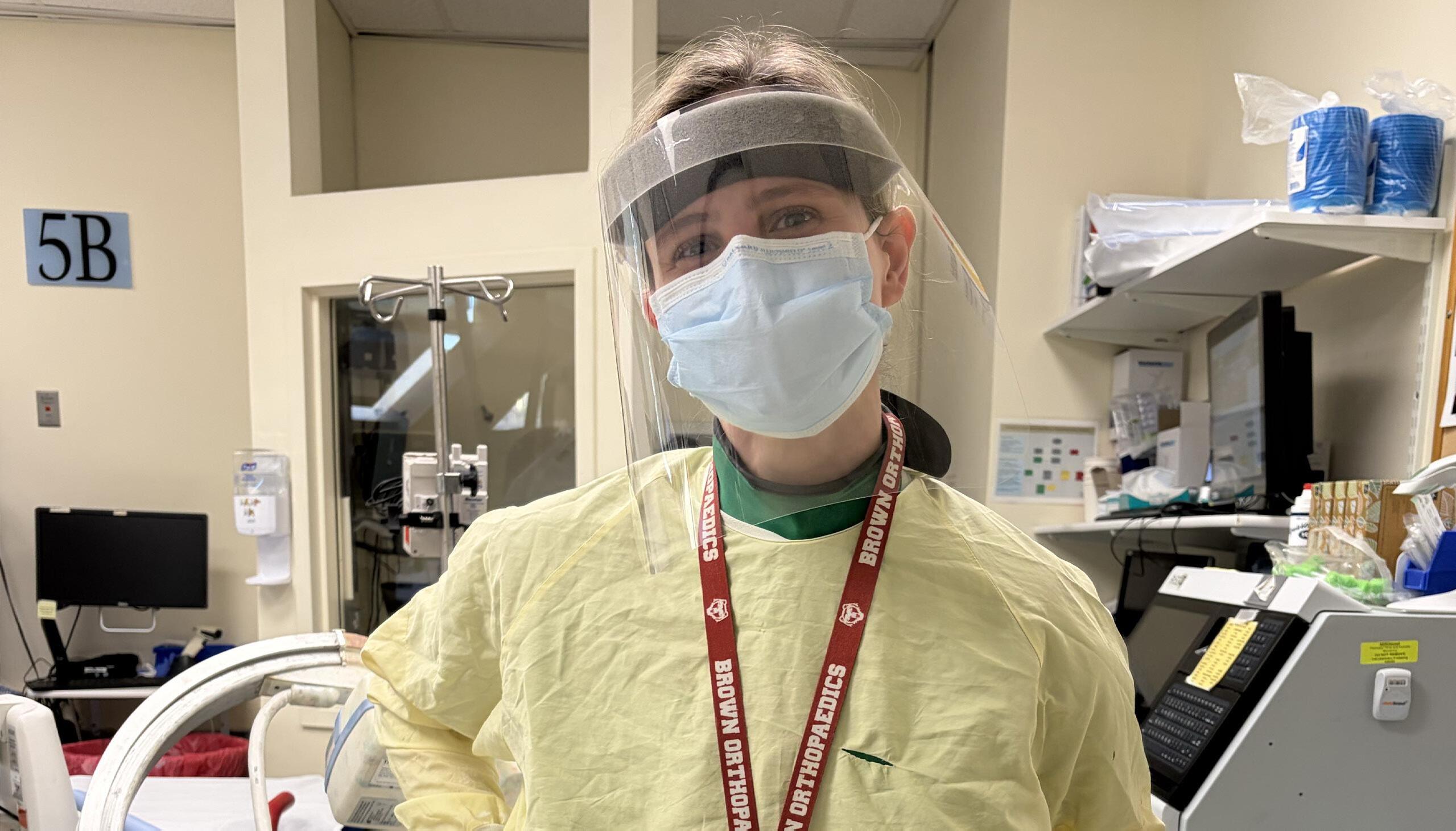
Marguerite Mullen ‘14 is a doctor in her second year of her orthopedic surgical residency. It’s taken her ten years to get this far. She is very grateful and quite tired.
It’s a long haul to become an orthopedic surgeon. After graduating from Waring in 2014, she got her BA in Comparative Human Development and Biological Sciences at University of Chicago. She took two years after that to work at a health tech start up in San Francisco. Then she studied four years at The Warren Alpert Medical School at Brown University to become a doctor. Her residency at Rhode Island Hospital, Brown University’s Level 1 Trauma Center, is another five years. She is in year two of that residency.
We talked on a Saturday, during the day. She’d been working nights for two weeks and the very next day was starting a two week session working days. Remarkably, she was smiling, thoughtful, and very present.
Marguerite decided early in life that she wanted to become a doctor. She certainly knew at Waring, having participated in Waring’s first Medical Endterm as an 8th grader. She still remembers the excitement of shadowing doctors and doing research on diseases like cancer. The combination of theoretical and experiential lit her up.
And medical school at Brown University, with two years in the classroom and two more years of clinical practice, “felt like one huge Medical Endterm”. She loved it.
Why orthopedics?
When Marguerite played club lacrosse at University of Chicago and struggled with some back and rotator cuff injuries, she realized how much being sidelined by injury impacts one’s sense of well being. She chose orthopedics because of its potential to make a real difference in people’s lives.
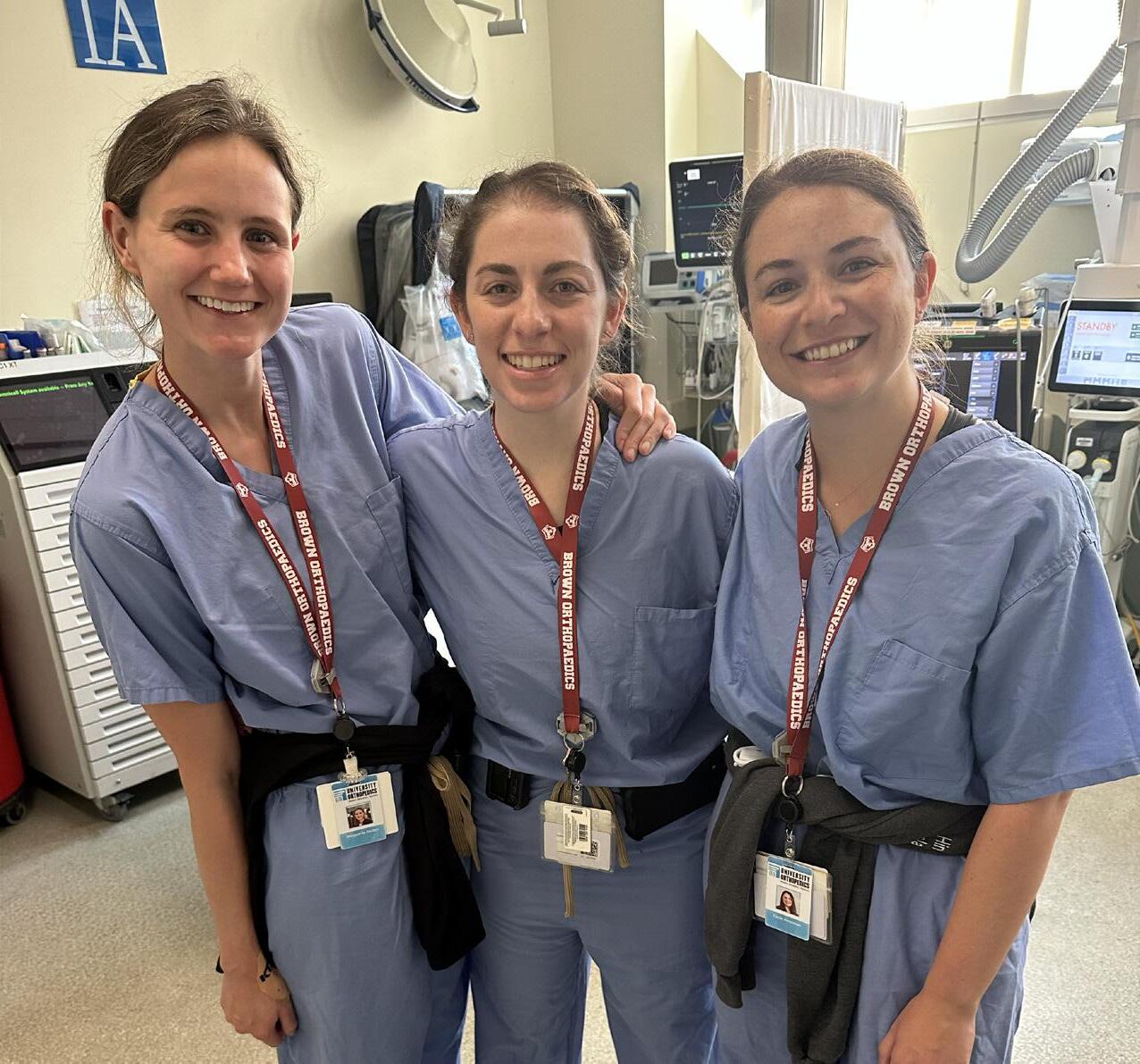
“It’s so hands-on!” A kind of playfulness permeates her reflections on such serious demanding work. “Having time to think ahead and plan my (mostly elective) procedures”, she laughs, “makes it feel like a glorified arts and crafts project.”
Medical school is stressful. There’s a lot of pressure to feel successful among very successful classmates. And getting into a surgical residency is highly competitive.
Waring set me up for success.
Not only was the content of Francis Schaeffer’s physics class challenging, but thinking through problem sets and problem solving was such good preparation for college. “He was such a dynamic teacher. His class taught me to find my limit.”
Gallaudet Howard’s US History Humanities class was also important. “I learned so much in her class: how to think critically, the value of speaking up, that it was okay not to have the correct answer, that it was cool to be smart and a girl. Turns out, it was also cool to be smart in medical school.”
Waring asked me to be my best self.
“Waring set me up for a career in medicine. Its challenging work load taught me how to deliver. I am trying to solve problems everyday, whether I’m in the OR or the ER. In contrast to many of my peers in medical school who were strictly science focused, having a literary understanding, about India in Core, for example, or World History, or Apartheid, helps me solve problems here at work.”
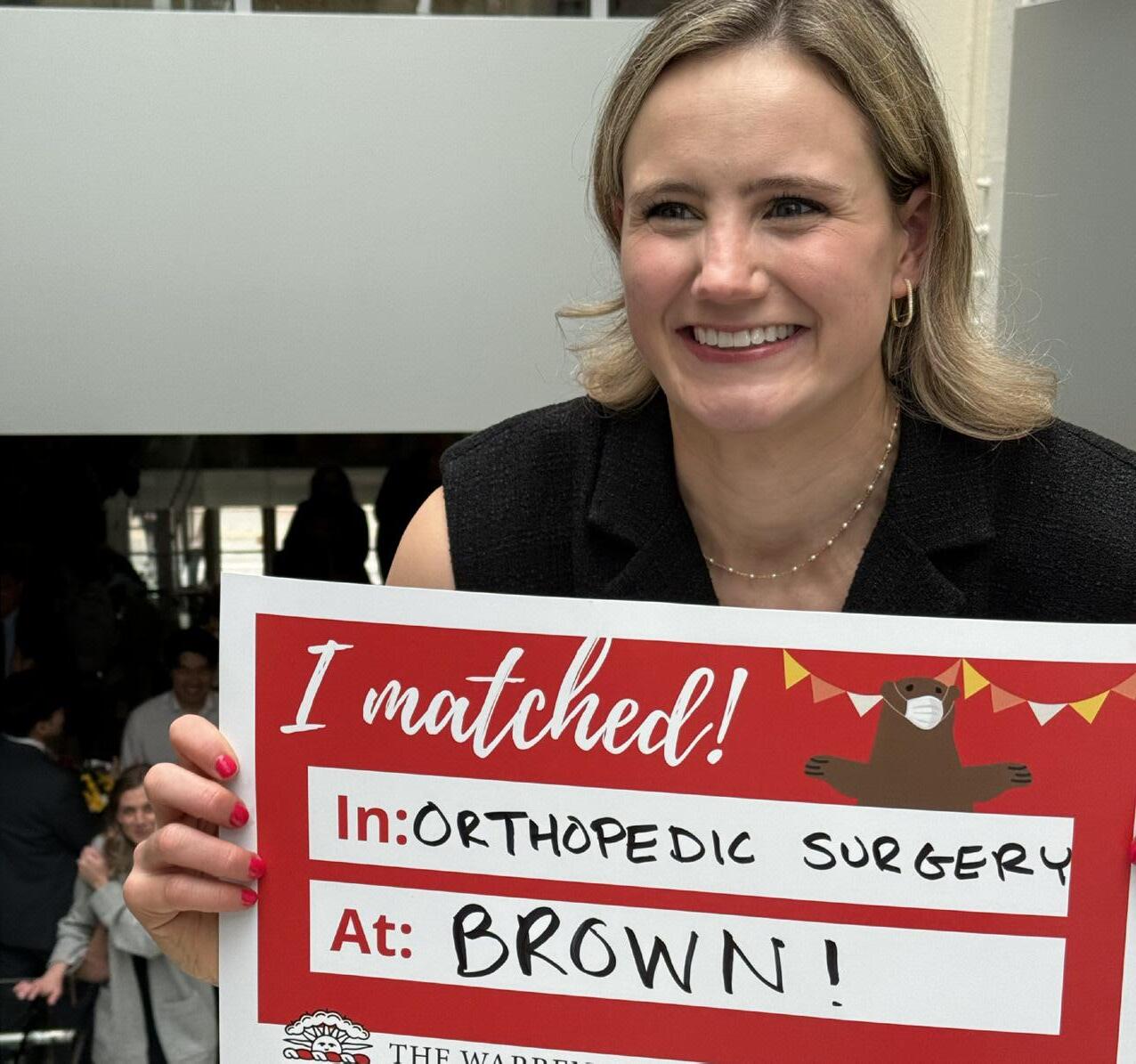
What about sleep?
“You get used to it. Once you’re up and caffeinated, it’s surprising how well you can work on too little sleep. I would probably fall asleep if I had to sit all day, but constant problem solving and walking the halls, clocking 10,000 steps everyday, keeps me alert.”
Marguerite was on call when the victims of the Brown University shooting came in. She doesn’t like to talk about it, and of course she can’t share patient details. “It was horrible. We are all working on healing from that experience. But at the same time, it was incredible how our ED trauma team mobilized. Off duty friends came in. Everyone was there waiting after the call came in; interns, orthopedic staff, senior trauma faculty, physician assistants, all volunteered to come in on their rare time off. I will never forget that horrible time, but I will also remember how we all came together, to show up for each other.”
Marguerite is in the second half of her second year of residency. With 80 hour work weeks, it’s universally recognized as the most grueling year of residency. But the end of this year is in sight. Then three more years to go. Harder work, yes, but more sleep.
”Residency is your time to learn as much as you can before you are in harness as a surgeon.
It’s a steep learning curve, with lots of responsibility. It’s exhausting and demanding. But I get to do more and more under my attending physician. Today I’m feeling more and more confident.”

WARING HAPPENINGS

WARING SPORTS
Department Spotlight:
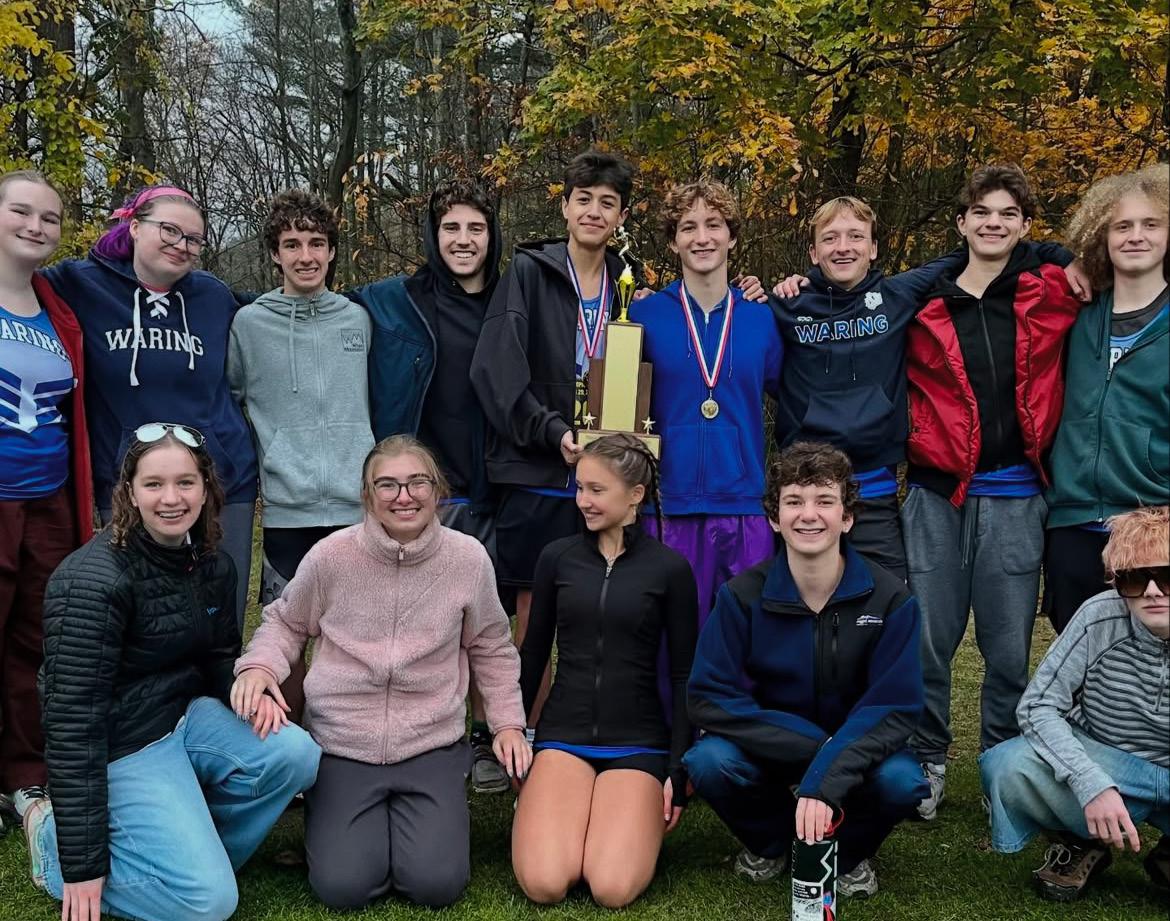
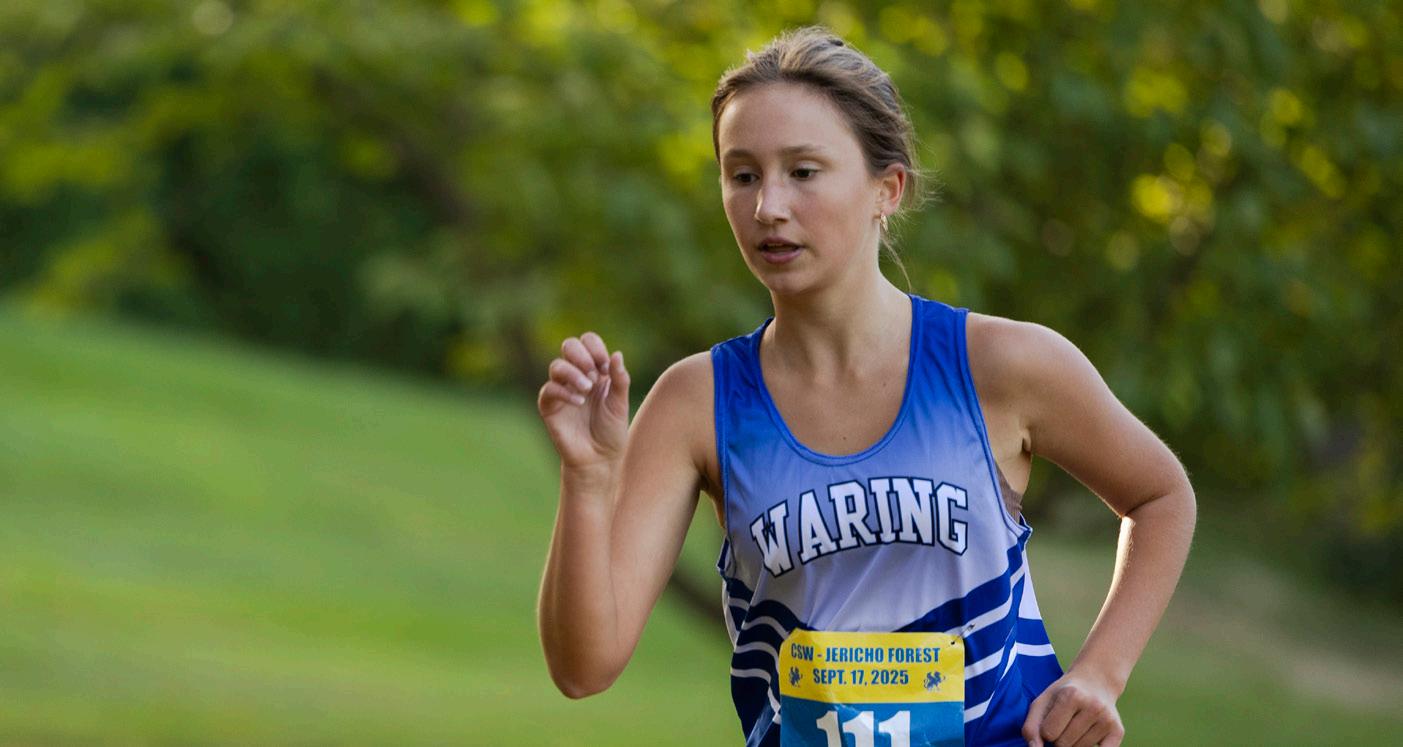
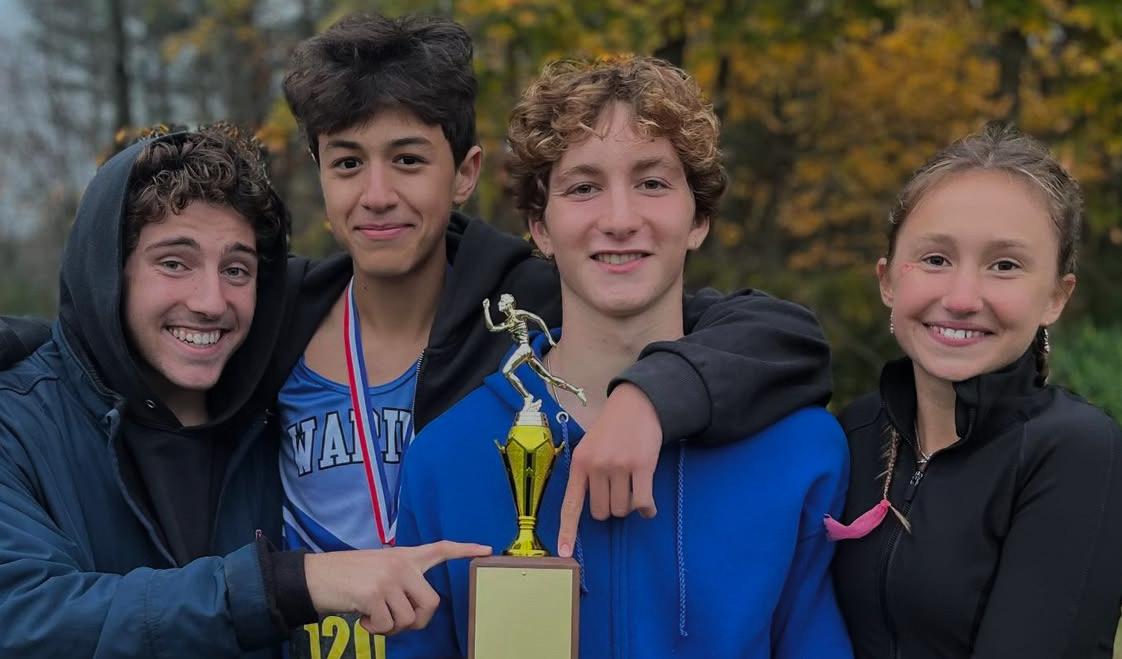
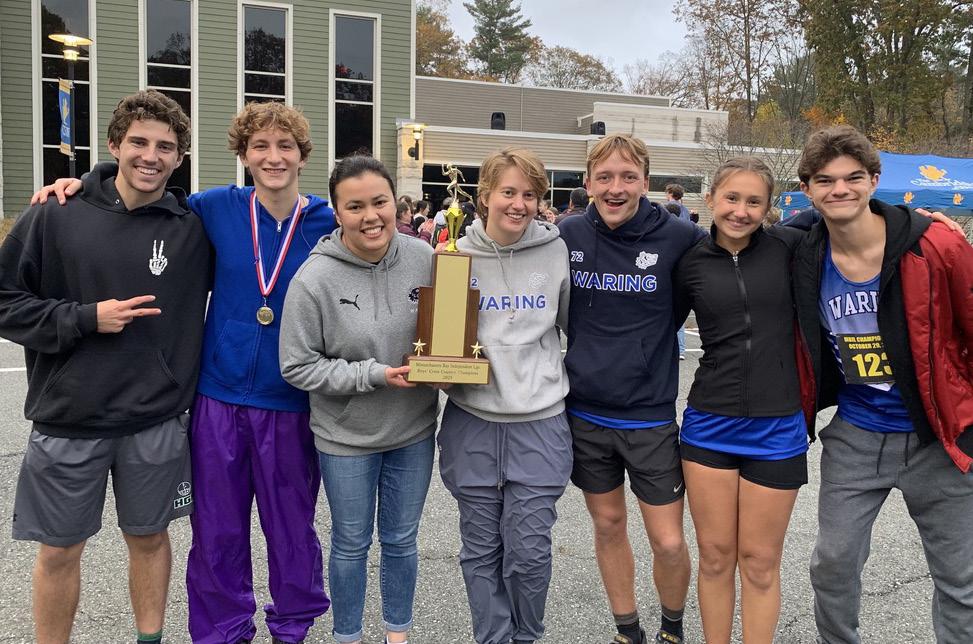
WARING CROSS COUNTRY WINS THE MASSACHUSETTS BAY INDEPENDENT LEAGUE CHAMPIONSHIP!

BY MIKE KERSKER
On October 29, the Waring Cross Country Team won the Massachusetts Bay Independent League (MBIL) Boys Championship! In addition, Adam Bererhout (‘28), Minna Brace (‘26), Jack Fawcett (‘26), and Eli Goodman Lorber (‘26) earned League All Star status for their outstanding performances throughout the season and at the Championship. Eli Goodman Lorber was recognized as a co-MVR (Most Valuable Runner) in the league. These outstanding accomplishments capped off a season of continued evolution and success for Waring Cross Country. Said Coach Molly Cyr-Redcross at the conclusion of the season, “It was especially gratifying to watch the team succeed so that everyone could know
have known all along–that these runners are really good!” In addition to this year’s team having fast runners as individuals, they all ran strategically and worked well together by pacing off of each other, a testament to the team’s esprit de corps.
The boys’ team won 3 of the 4 regular season races in addition to the MBIL Championship, and placed 6th of 22 at the NEPSTA DIV Championships in Augusta, ME on Saturday, November 8. “Anita and I are incredibly proud of all the runners this season,” said Molly. “Their success, both individual and as a team, is the result of immense amounts of hard work and dedication. Their focus during track workouts and determination on hills is aweinspiring and the general joy they bring to running is contagious. Thank you all for another great season!”

Thoughts from the cross country students and MBIL league champs:
“I joined cross country because I’d been running for a while and was tired of running alone. I didn’t know how different having a team would be. Our team changed running from exercise to fun: for once sports was something I looked forward to. I love cross country because of my wonderful team and coaches: thank you all for an amazing last season!”
-Minna Brace, Captain (‘26)
“I like cross country because of how rewarding it is. I love the feeling after a race or hard practice, because I share this experience with my friends. It makes us so much closer. I also like that I am able to get to know and run with kids on other teams.” -Eli Goodman Lorber, Captain (‘26)
“I joined cross country for the challenge because I deemed it the most difficult sport offered. I like it because although I run alone, I run with and for my team.” -Pascal Fishburn, Captain (‘26)
“I joined cross country because I love running. Running is so calming and fun. Cross country feels so much more inclusive than soccer or any other sport because you never have to sit on the bench because you aren’t good enough. You can excel both as an individual and as a team. Cross country is all about how hard you train. You can’t get cheated out of a win, it’s all about how hard you work.”
-Adam Bererhout (‘28)
“I joined cross country because nothing else gives me the same feeling of triumph when I cross the finish line, regardless of what time or place I get. When I cross the line I feel satisfied with everything in my life.” -Jack Fawcett (‘26)
Cross Country’s roots at Waring:
The Waring Cross Country Team evolved originally from what was once an “alternative sports” option in the late 1990’s—a mix of power-walking and light jogging for students looking for options beyond the other traditional team offerings. By the early 2000’s, the cohort of power-walkers saw an opportunity to develop into an official cross country team under the leadership of longtime co-coaches, John Wigglesworth and Tim Bakland. Waring School developed its own cross country route in the Beverly Commons, which remains one of the most challenging trails in the league to this day; and over time, and with the vision and support of Athletic Directors, Jan Lindsay and Mike Kersker,
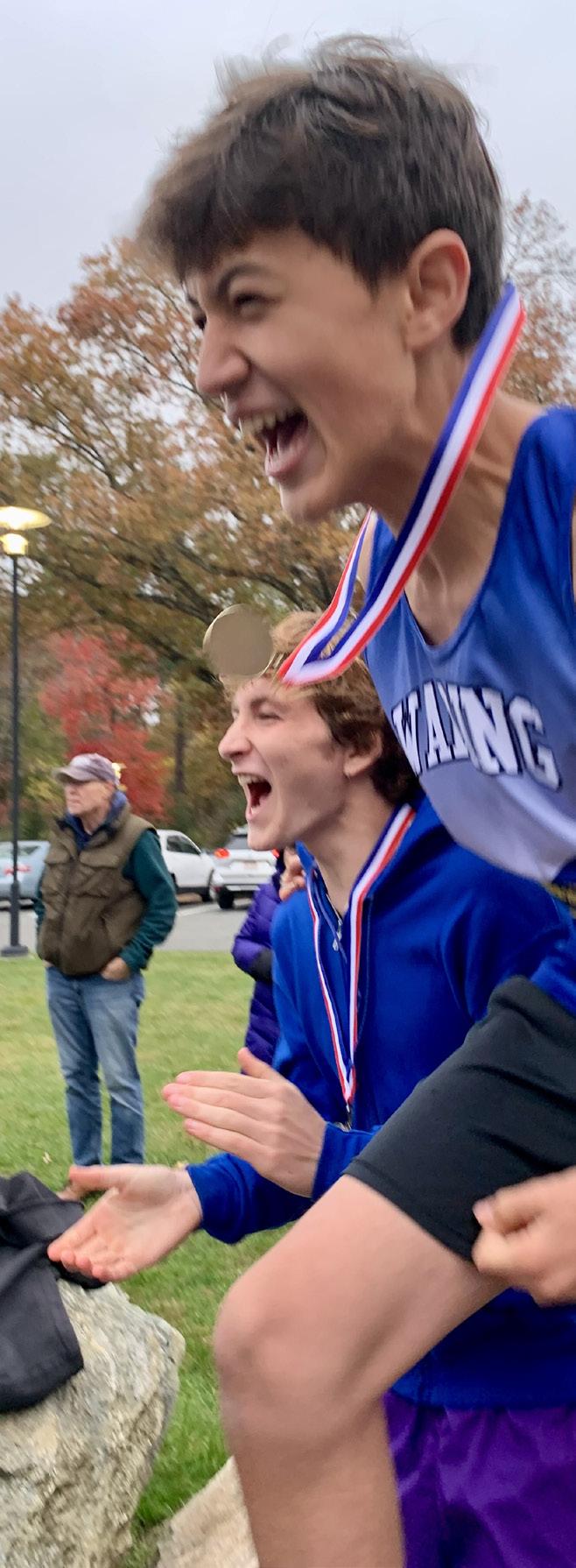
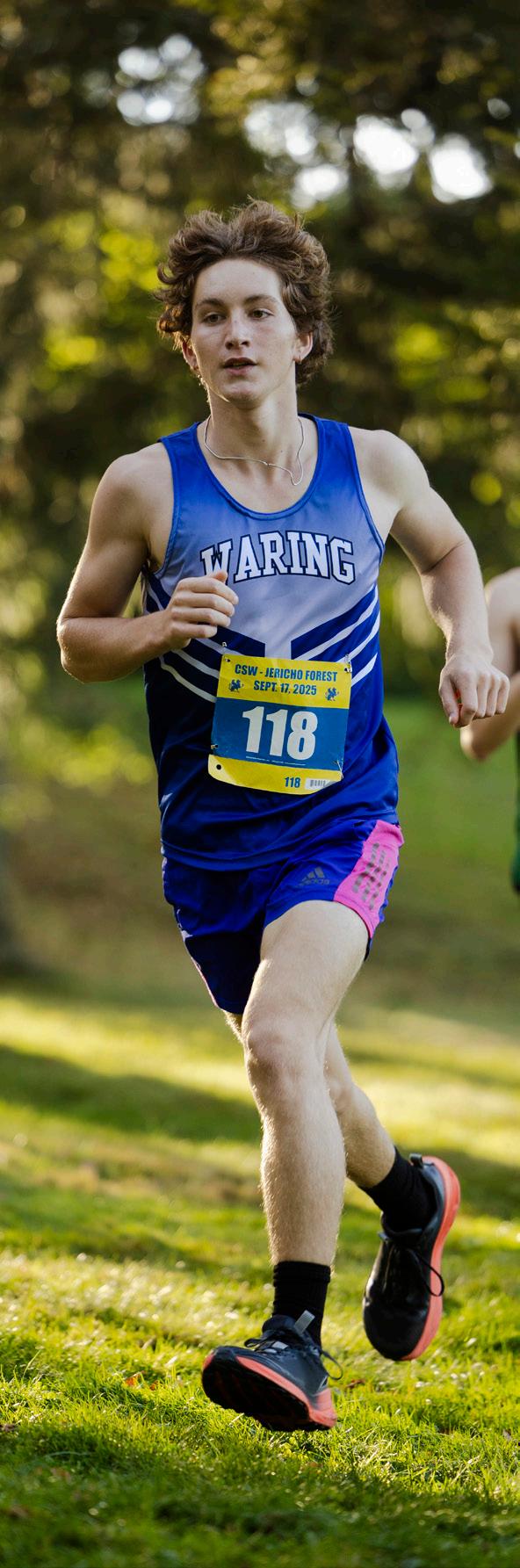
the team emerged as competitors in the MBIL, often scoring among the top several teams at meets, or showcasing front-running individual efforts on both the Girls’ and Boys’ sides: alumni Alison Davis (‘02), Jack Turnbull (‘03), Harry Otis (‘04), Nathalie Davidson (‘04), Noah Kellerman (‘07), Walker Staples (‘10), Emma MacLean (‘10), Ione Barrows (‘11), David Lovejoy (‘13), Rosie Wigglesworth (‘14), Henry Mitchell (‘15), Hans Goudy (‘15) and Ethan Wood (‘22) were among several Waring individual front-runners during the teams’ developing years. Over a 25 year period, and through a succession of wonderful coaches such as Edith Fouser, Janelle Williams, Josh Webb and Rebecca Reed, what was once an alternative sports offering for walkers developed into a championship level team, and Waring is extremely proud of the ultimate accomplishment made by the 2025 team as a whole along with their coaches, Molly Cyr-Redcross and Anita Richardon.
LONG MAY YOU RUN, WARING CROSS COUNTRY!
WARING ROBOTICS
BY FRANCIS SCHAEFFER ‘92
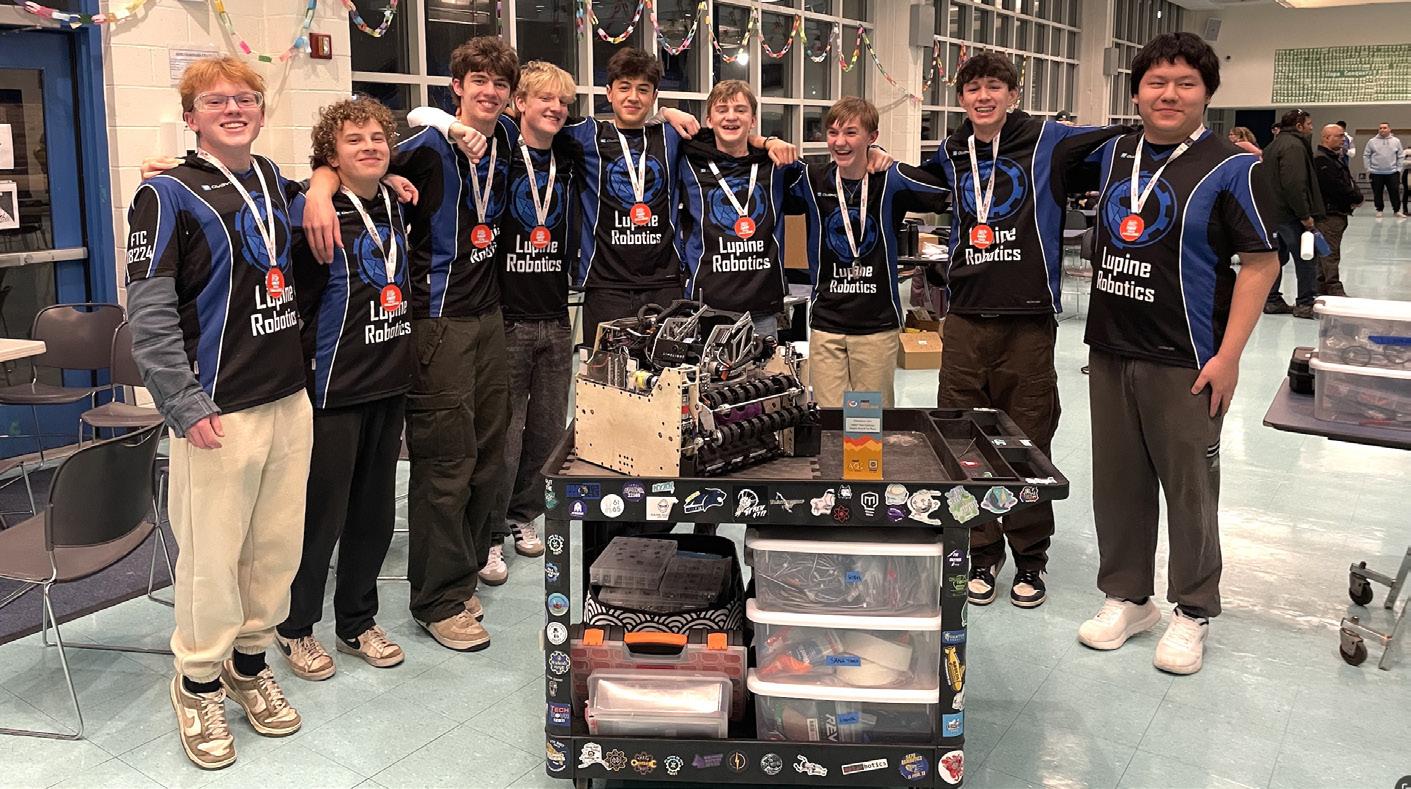
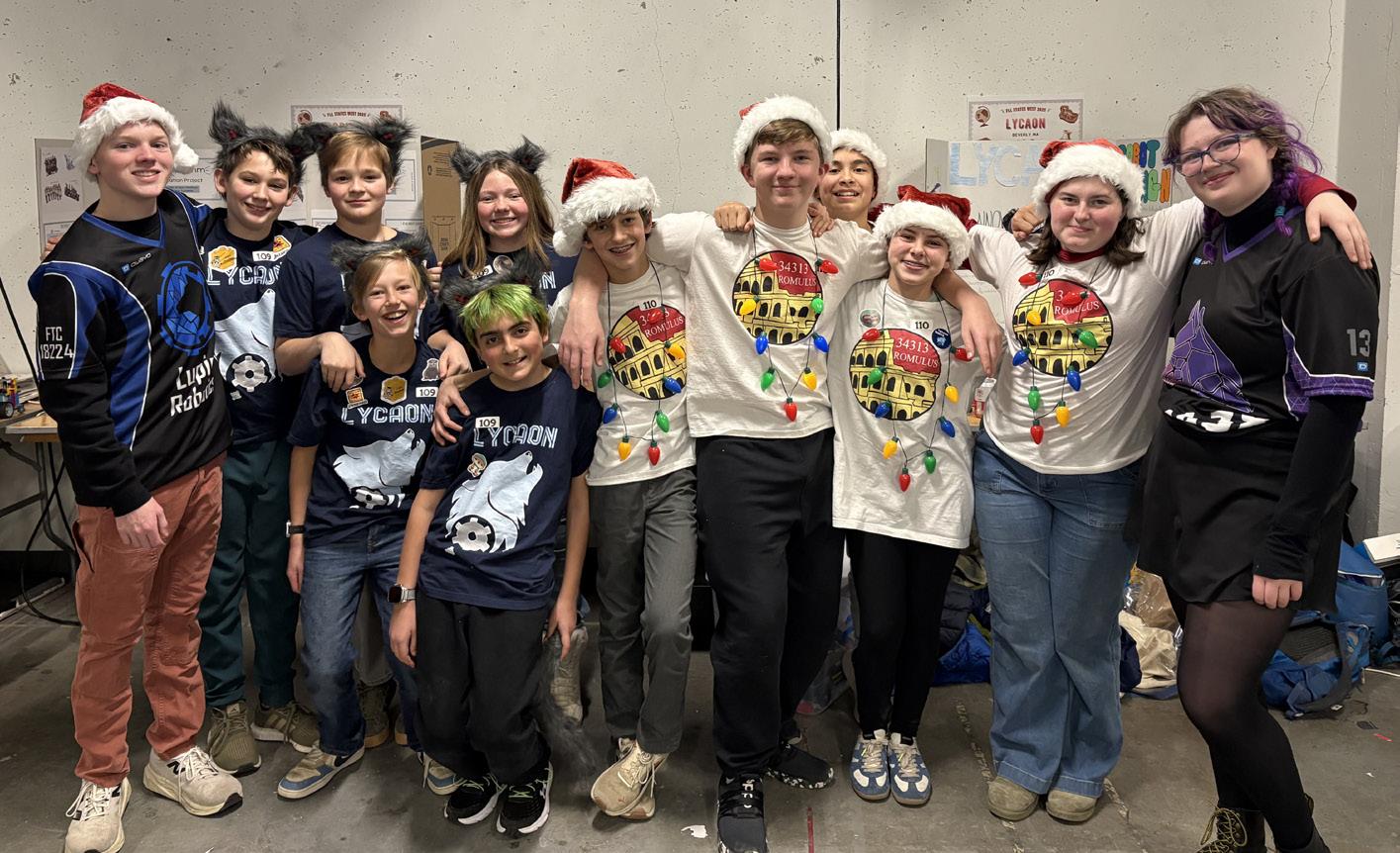
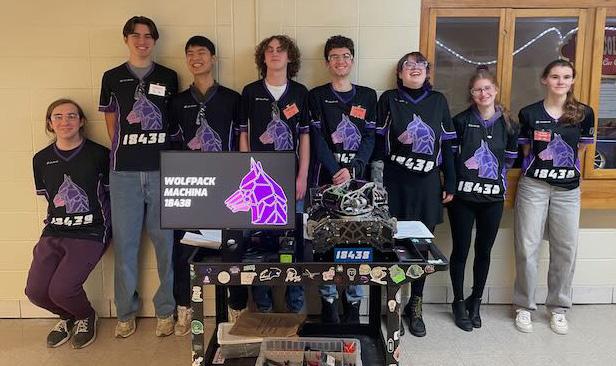
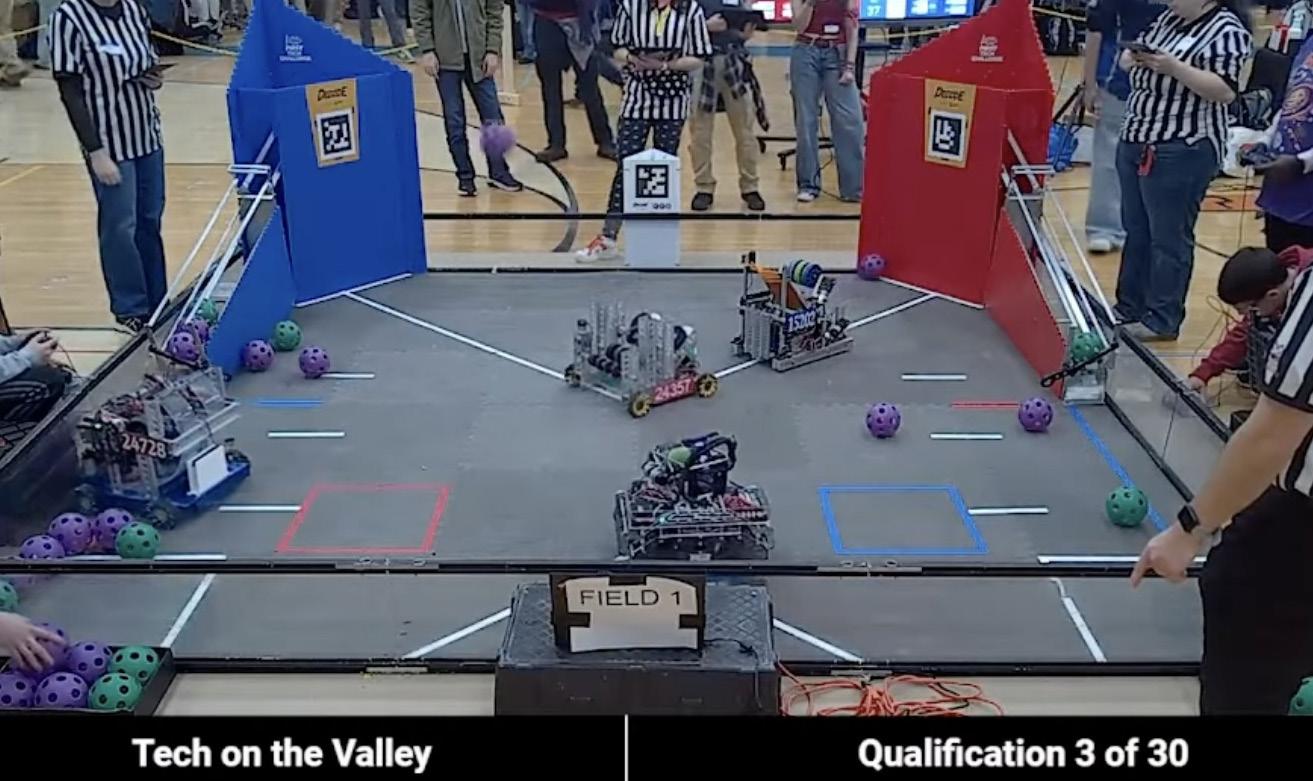
Waring Robotics continues to thrive with a record number of teams competing this year! Waring has three FIRST LEGO League (FLL) teams and three FIRST Tech Challenge (FTC) teams, with 47 students participating, which is about 27% of the entire school on a team. All six teams are busy getting ready for their competitions, most of which are in mid December or early January. One of the things that makes the program work is the mentorship that the FTC teams offer the FLL teams and the mentorship that Waring alumni offer to the FTC teams.
Waring’s FTC teams are running some great outreach programs to help spread robotics skills to the greater community. Lupine Robotics helped start nine FLL teams in Dunedin, New Zealand over the summer. Read about their multi-year effort in Dunedin at this link. This year, Wolfpack is running its 6th year of robotics classes at Centerville Elementary School in Beverly and has started a new robotics education program in cooperation with local libraries. So far Wolfpack has held four 90-minute robotics classes at 4 different local libraries during which participating children build and program LEGO robots. Wolfpack recently ran two official FIRST events at Waring, a 12-team FLL scrimmage in the All School Meeting space on Nov 9, and a 15-team FTC scrimmage in the Gym on November 15. Such events help to build up FIRST, which is mostly a volunteer organization that depends on leadership from its most experienced teams. Wolfpack was proud to see the Waring’s FLL and FTC teams perform so well at the scrimmages! Wish us luck as all 6 teams work feverishly to prepare for our big upcoming competitions.
WARING DEBATE
BY CASEY STEVENS
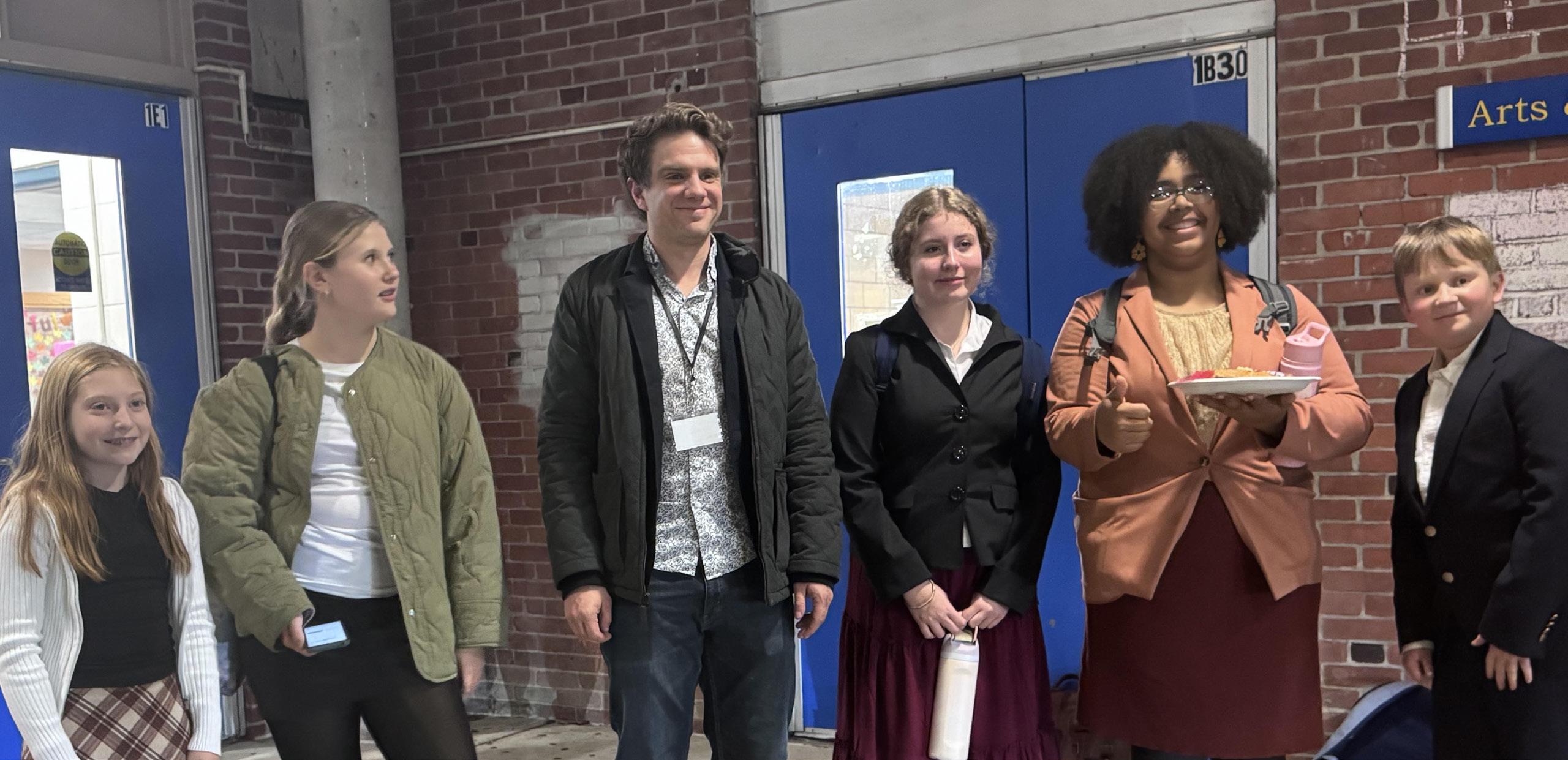
Waring Debate is continuing its new chapter as Coach Casey, graciously assisted by parent volunteer Tarin McAdoo Comer, works to rebuild the team following the departure of the esteemed Tim Averill. This year, the program has quickly gained traction, regularly sending five or more teams to tournaments at Newton South, Lexington High School, and Harvard University. Debate captain Micah-Bryon
Smarrah ‘26 has continued to serve as a leader on the team and was recently recognized with a National Speech and Debate All-American Academic Award. As the program moves forward, Casey aims to build on this momentum and further strengthen the tradition Waring Debate has already established.
Department Spotlight:
DAN MURPHY’S SPRING POETRY CLASS “LOST IN TRANSLATION”
BY JILL SULLIVAN
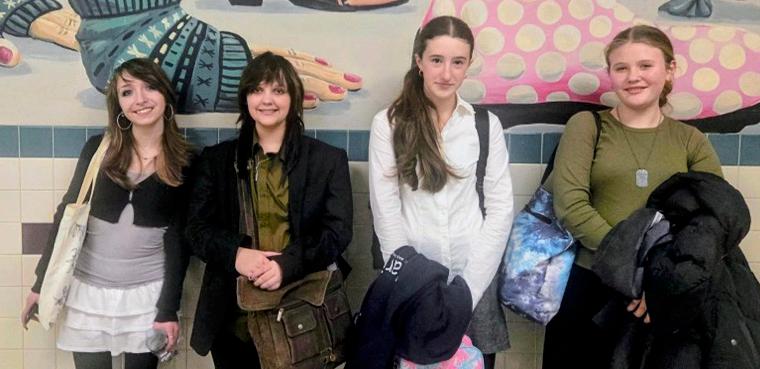
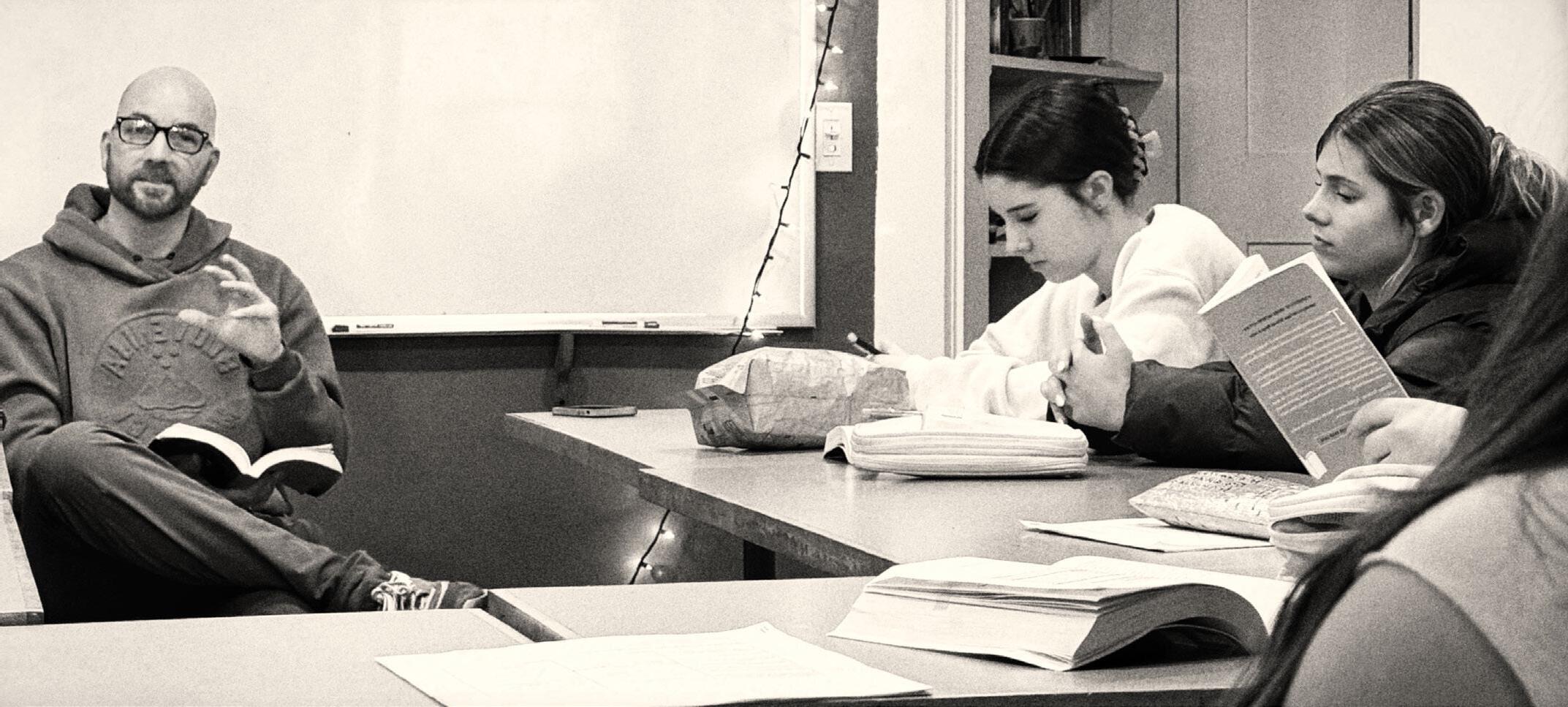
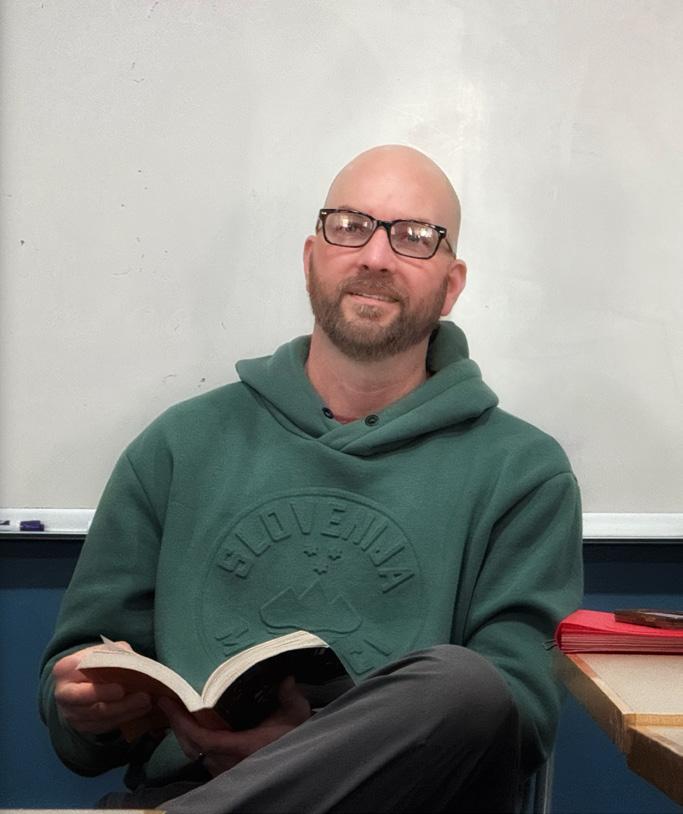
We are so fortunate to have Dan Murphy on our faculty. Dan is the 2024 winner of the prestigious Agha Shahid Ali Prize in Poetry for his collection Estate Sale. This spring, Dan will be teaching an exciting new writing class for our Juniors and Seniors called “Lost in Translation.” In his introduction to this class, Dan writes:
“There are whole worlds lived, written, and performed outside of the English language. There are poems, prose, and plays which hold an abundance of global culture and experience. There is also meaning made in the movements our bodies make and the visual art we shape. There are sounds which can intimate narratives. And there are images we see just before the lens of language colors and names them. There is a richness in all of these modes of perception which remains inaccessible without some form of translation.”
POEM BY DAN MURPHY
In Irish and in English
AR BHRUACH
Glaonn mac tíre amach faoi sholas na gealaí ag iarraidh cara a aimsiú.
Seasann fear leis féin ar bhruach an locha. Feiceann sé é féin ag crith san uisce nuair a shéideann gaoth trí na crainnte.
Ólann mac tíre ón loch agus stadann sé go cíuin ag fanacht le fuaim seachas a fhuaim féin.
Glaonn fear amach leis féin faoin spéir gan deireadh san oíche ag iarraidh é féin a aimsiú ag an uisce.
The class will offer students the opportunity to translate non-verbal forms of communication and experience into language and vice versa. In addition, students will begin to parse the complex world of literary translation by comparing different translations of the same works, and by exploring the difference between literal translation of words at the level of syntax and the more inchoate work of translating intended meaning from one language to another. This class has excited the appetites of many subsets of Waring students: those who have been immersed in our French education for years, our many multilingual students who hail from near and far, and a few who just want to explore the gloriously complicated nature of language.
Dan himself writes in both English and Irish, and we are so excited that Dan will be taking a batch of Waring writing students on this intellectual adventure to someplace new.
ON THE BRINK
A wolf calls out under light of the moon to find a friend.
A man standing alone at the lake’s edge sees himself shuddering in water when wind blows through the trees.
A wolf drinks from the lake and softly pauses listening for the rustling of others.
A man alone calls out under the endless night sky trying to find himself by the water.





WARING THEATRE
BY ELIZABETH GUTTERMAN

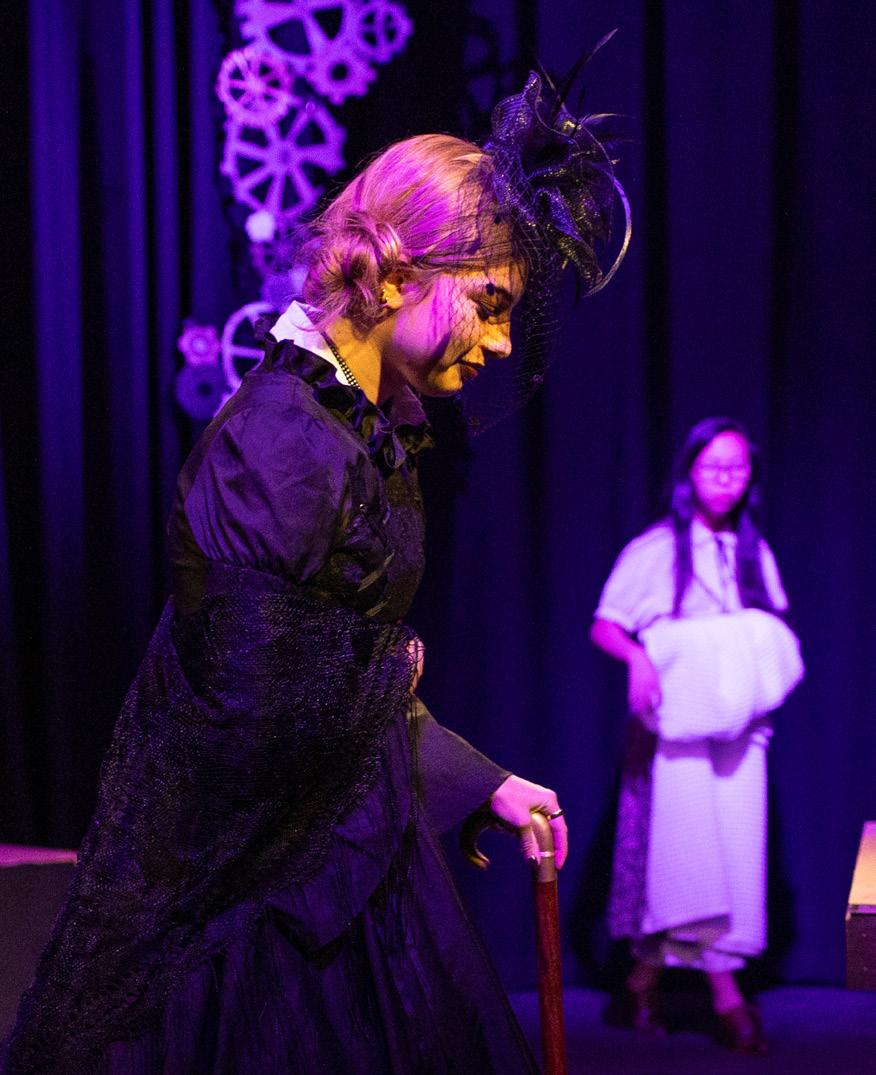
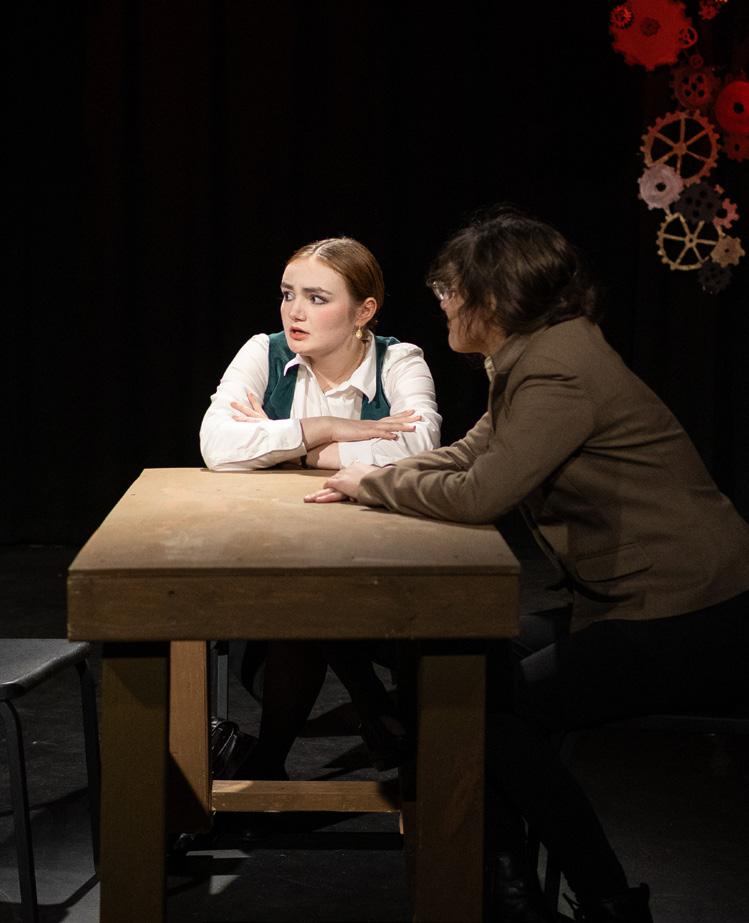
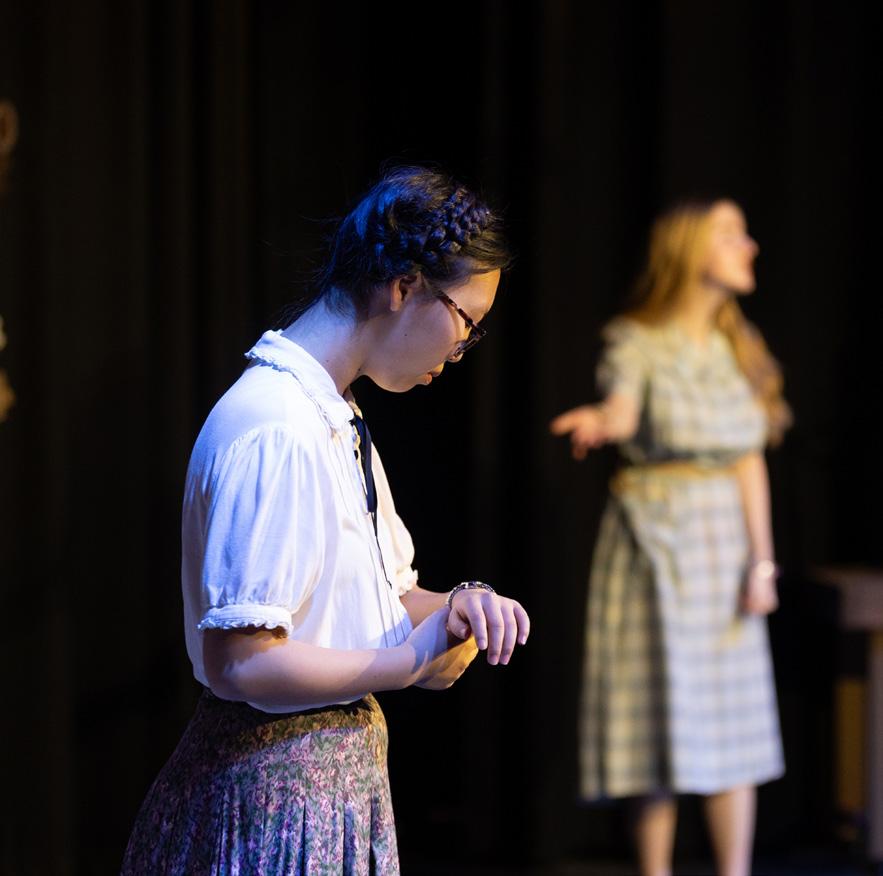
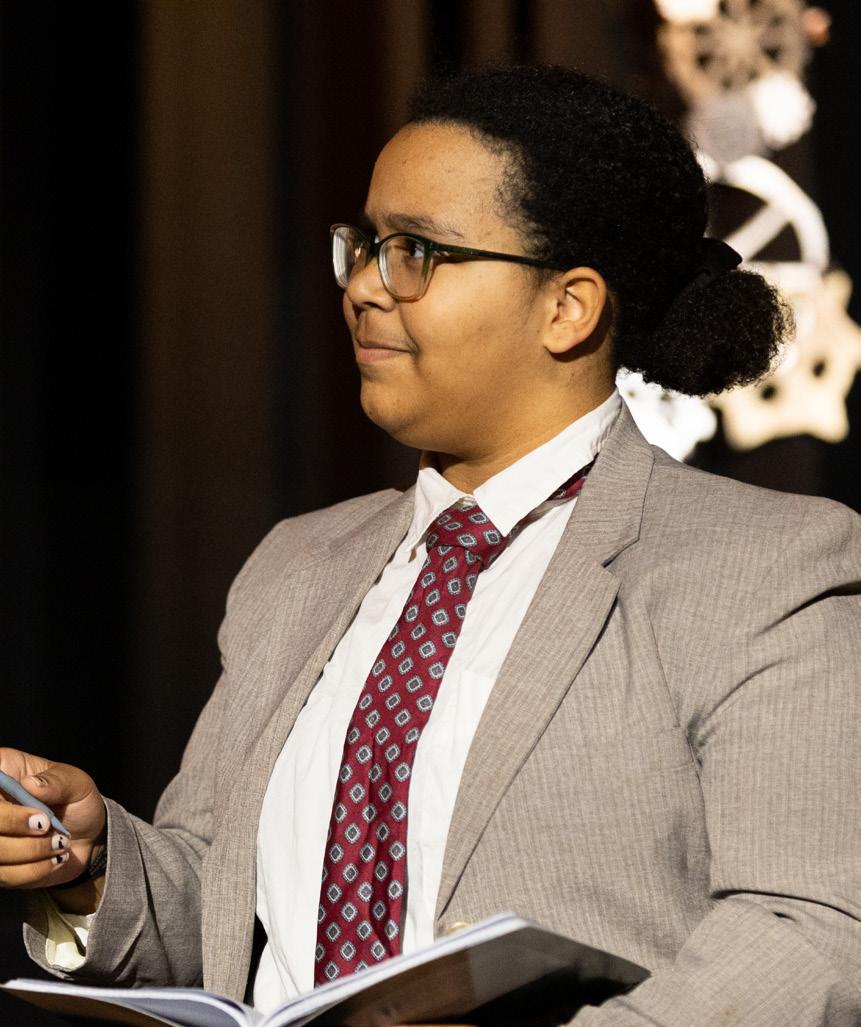
Waring Theatre has continued its journey into storytelling and imaginative world building, always putting ensemble first. For our fall play, we produced D. W. Gregory’s Radium Girls, about women who were poisoned while working in watch factories. This complex play gave our students the opportunity to delve into the fashion, music, zeitgeist of the 1920s while grappling with the many issues the play presented including health, advocacy, and the marginalizing and silencing of low-income workers, particularly women. Additionally, under the innovative and steady guidance of Waring’s Technical Director, Tiffany Soucy, our designers created the world of the play
through their creative expressions of the dynamic set, lighting, sound, props, and costume design. We have many more plays to look forward to this Waring Theatre season! Our Upper School students are currently rehearsing the clever and macabre Addams Family musical. Our Core students are readying their ambitious comic piece under the direction of Lyn Towne-Smith. This spring we will have performances of our Honors play and our Upper School Spring play. Additionally our spring 4-5 Playwriting class is starting soon. We look forward to welcoming you to our small yet mighty theatre - no reservations required!


WARING ART
BY KB BREISETH
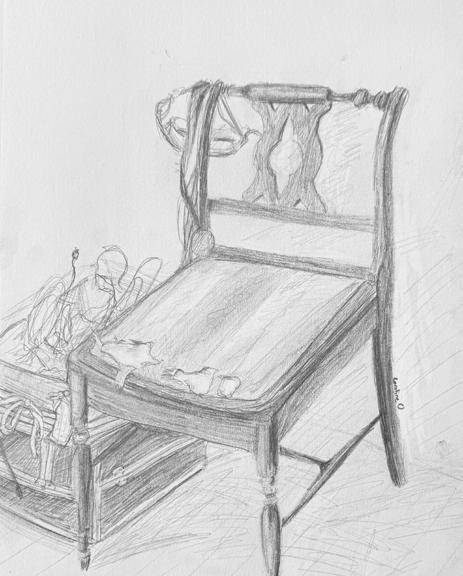
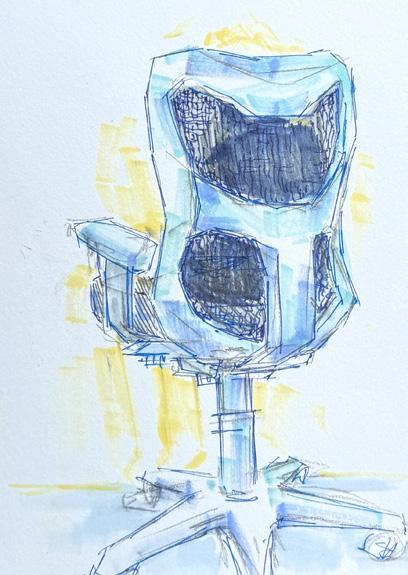
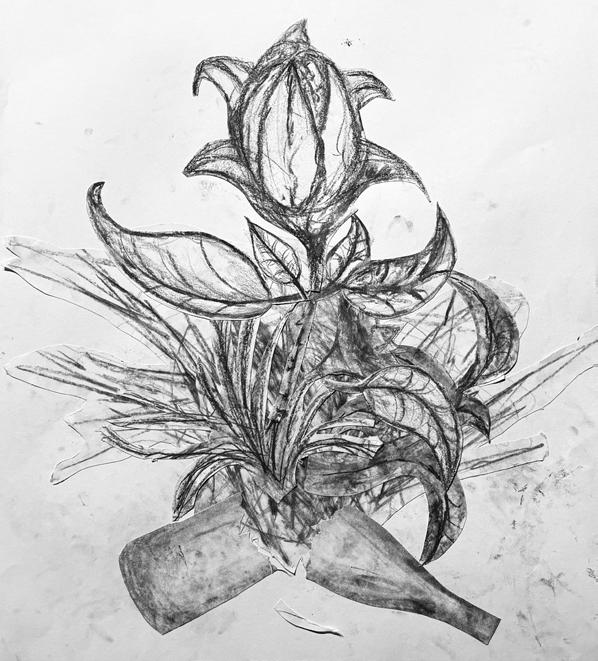
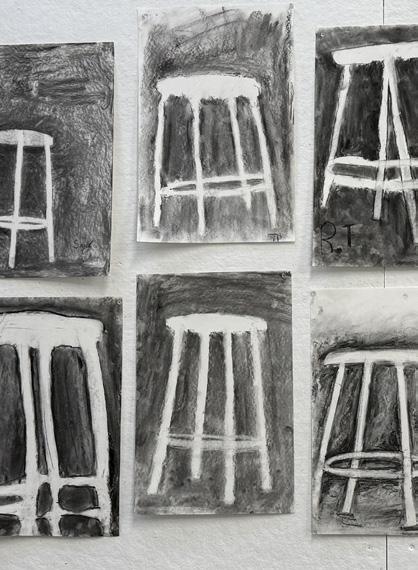
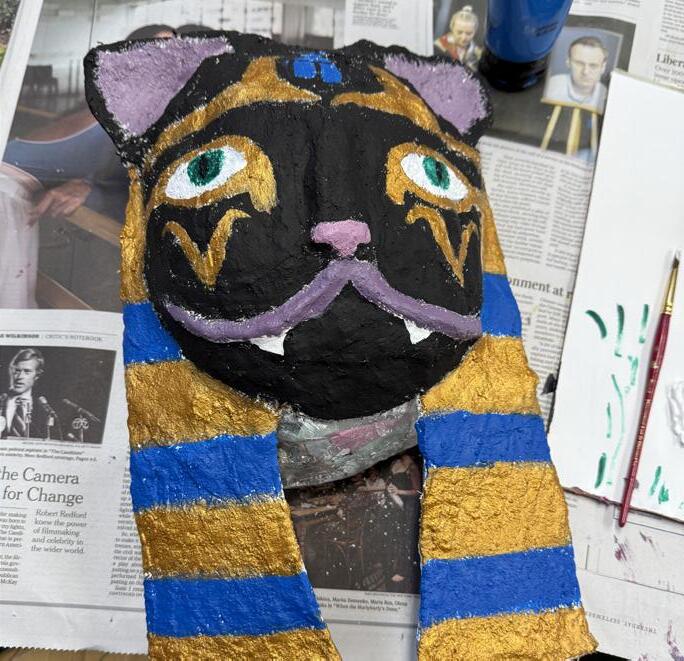
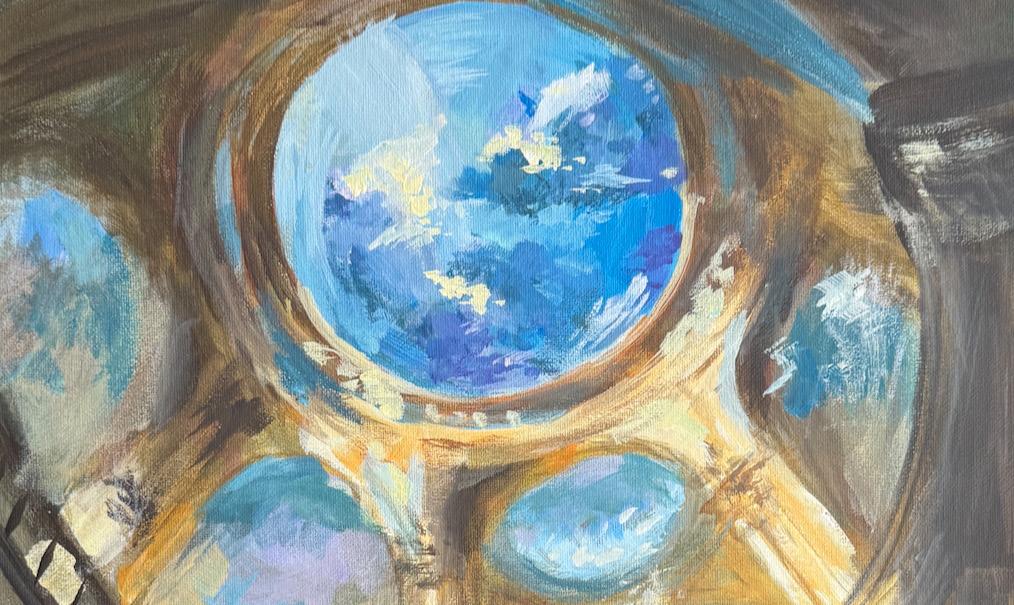
The Art Department had its usual busy fall semester, using viewfinders and singing the praises of observational drawing. We drew at camp, outside on campus, at the Essex Marsh, in the studio from still life and even with charcoal and pencils at the end of 3 feet dowels. We also welcomed a new member of our department, Tabitha Robinson-Alden, who is teaching Group 1 and Black & White Photography, in
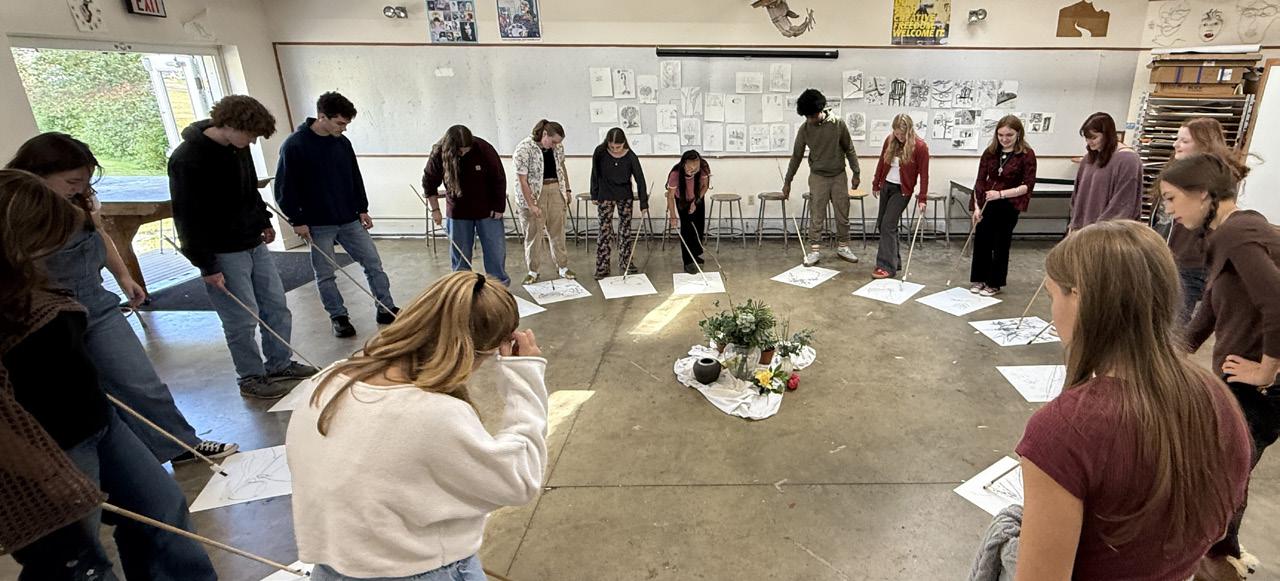
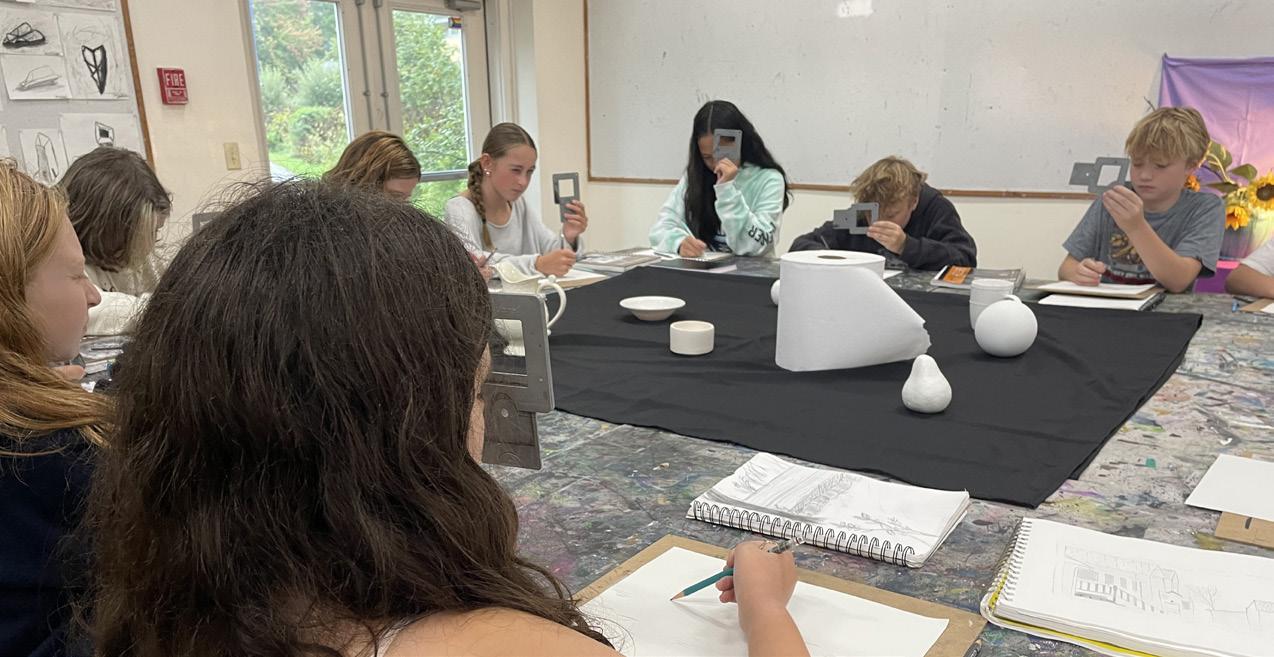
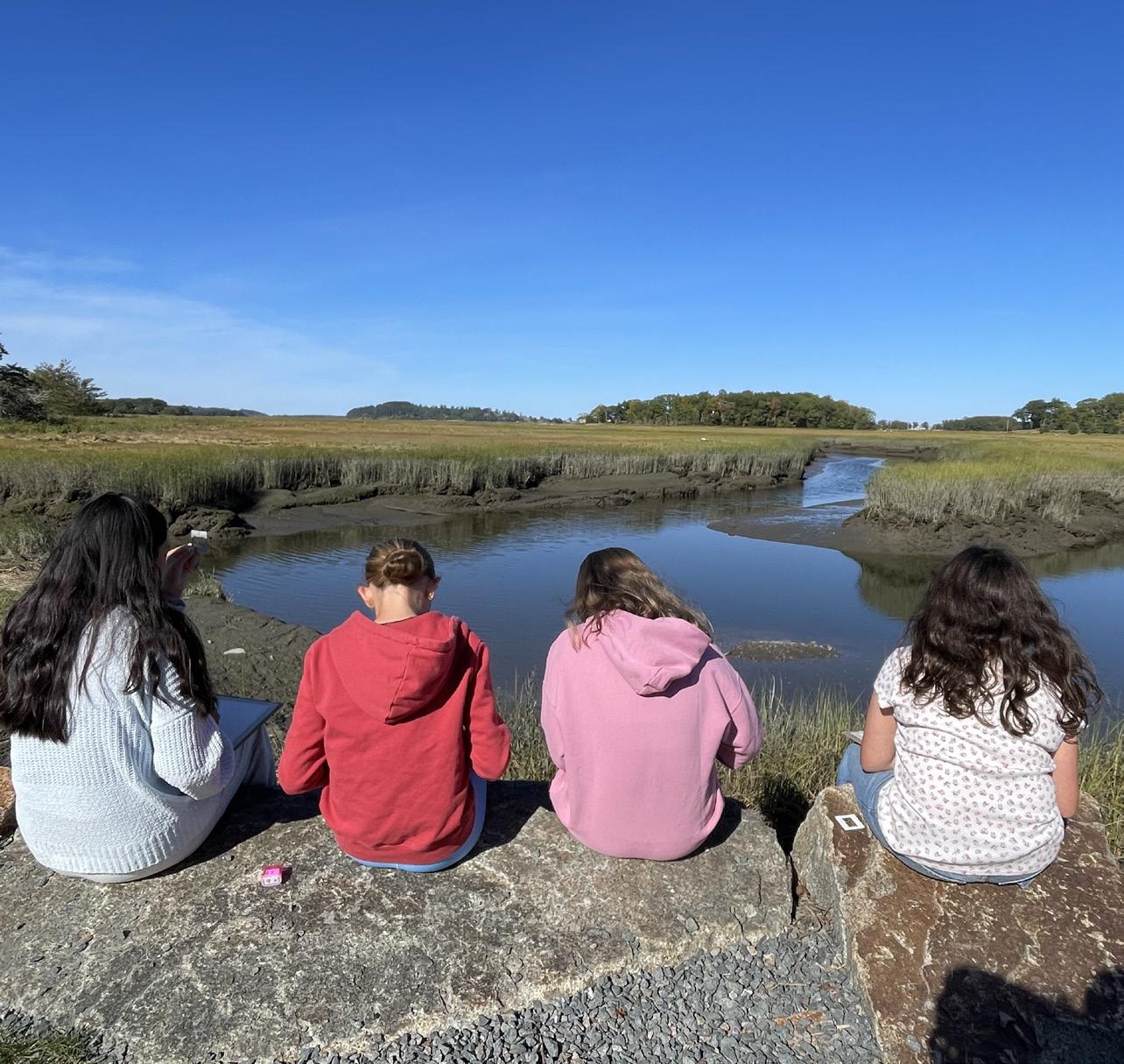
addition to being a tutor. Tabitha has a BA in Visual Arts from Gordon College and an MFA in Photography and Integrated Media from Lesley University. She also has a thriving portrait photography business, and loves reading, museum-going, travel, being outside walking her dog Clarabell, and looking for birds. Welcome, Tabitha!

WARING MUSIC
BY CHRIS BRANDT
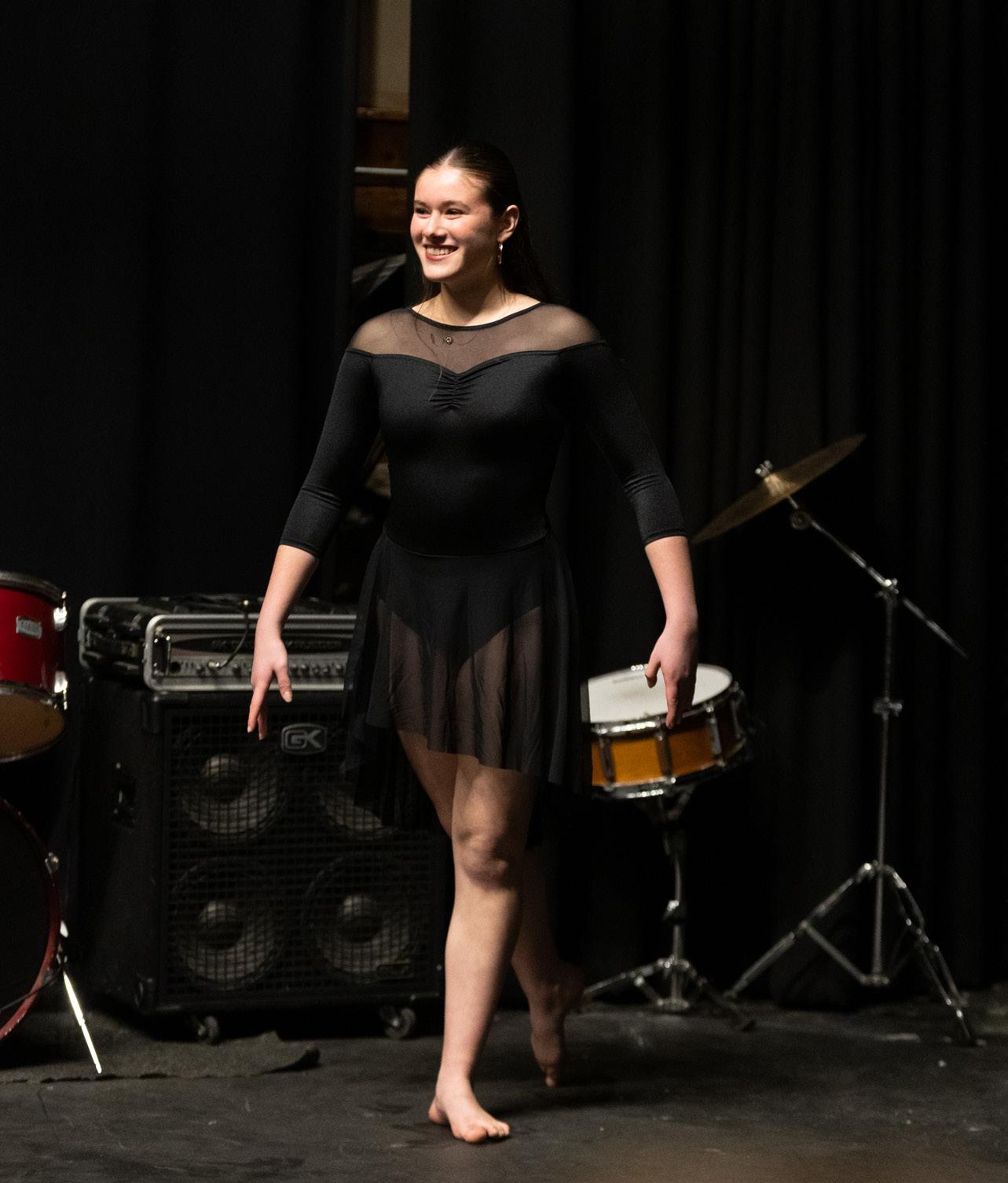
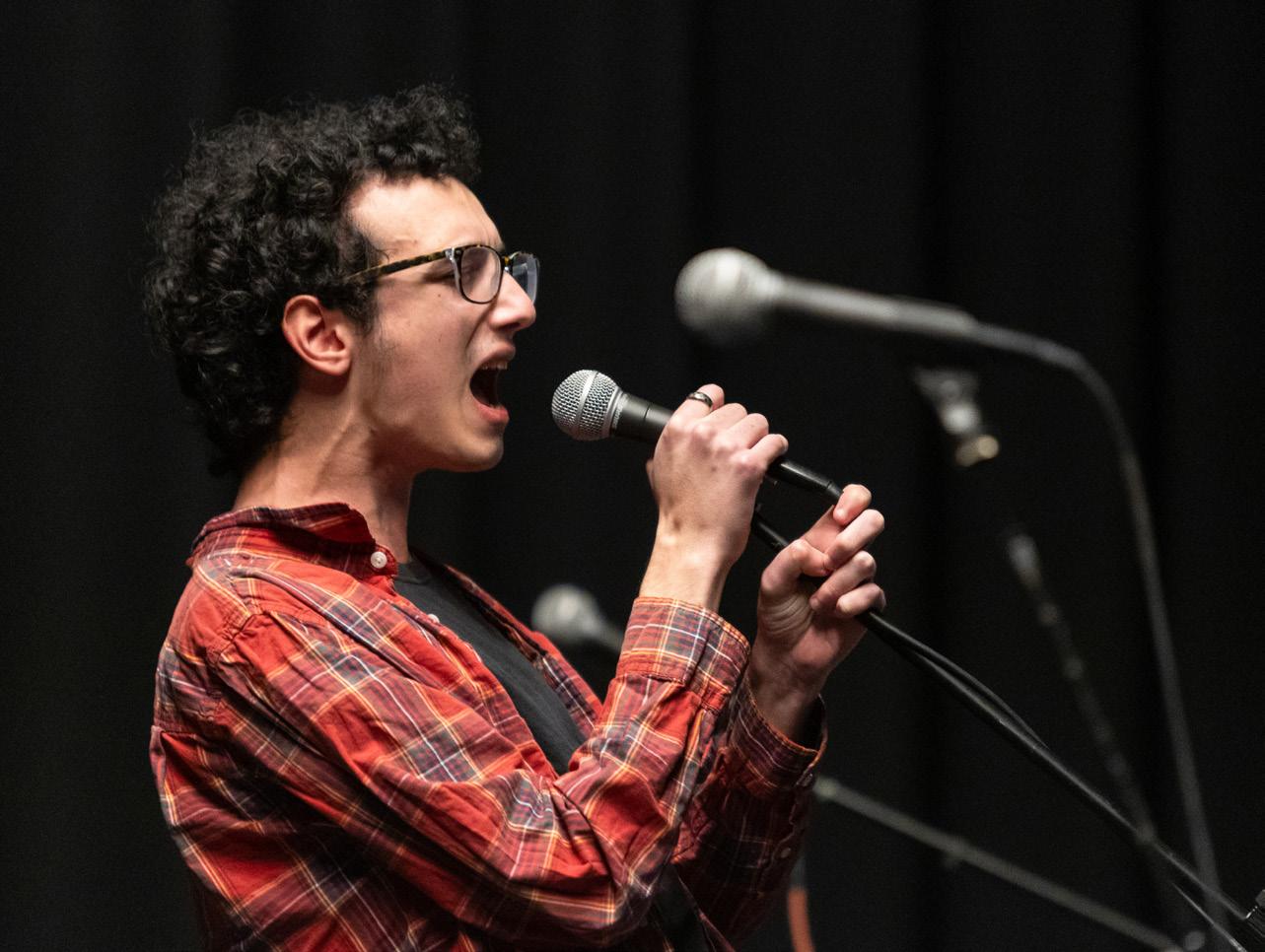
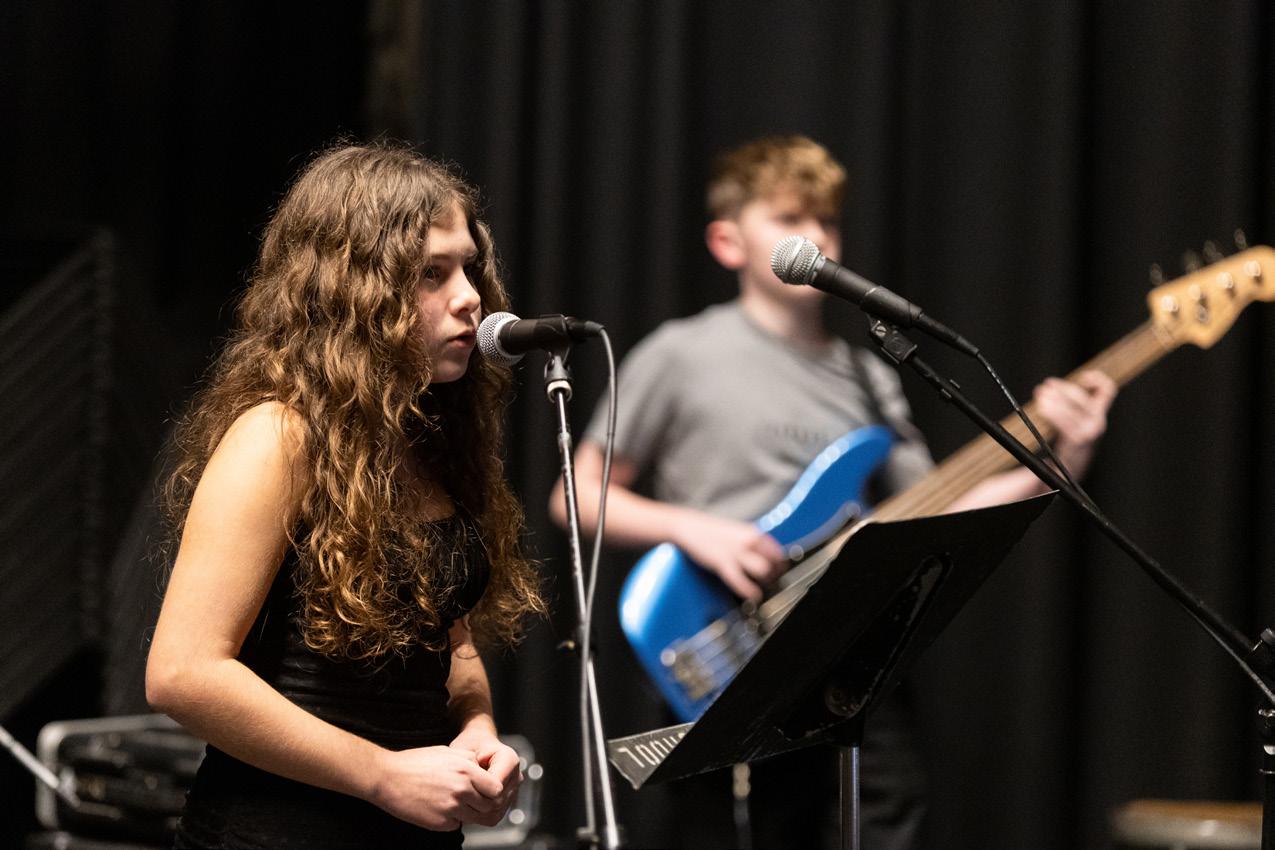
At the midpoint of the academic year, it’s a perfect time to reflect on the quality and amount of music that has already happened at Waring and look forward to a great deal more in the new semester. Our first semester soirées and the coffeehouse turned up some real gems and featured that special quality of the unexpected which is always abundant at these concerts. Core Chorus performed brilliantly at Core Night and it continues to be a promising year for the ensemble. Naturally, the Winter Concert was the high point of the previous semester’s concert calendar. We introduced a new group, The Chamber Chorus, under the direction of Jetta Olson. The chamber choristers are highly enthusiastic about their new chorus and presented a polished (and memorized) performance. It was a beautiful evening of fine performances and a highly atmospheric finish to the semester of music-making. Music at Waring never stops and the choruses, orchestra, and jazz bands are beginning new material for eventual performance at the Spring Concert. The next soirée is coming up soon- Jan. 23 at 7:00 in the Theatre, The Addams Family rehearsals are in full swing, we’re in the middle of the Districts and All-State season, in fact, I’m writing this while chaperoning our two students, Bea Martin-Epstein ‘27 and You Zhang ‘27, at the first Senior Districts rehearsal at Arlington High School. All-State and Junior District auditions are at the end of January.
I’d like to thank and congratulate all our first semester performers and to encourage everyone to enjoy the wonderfulness at our upcoming concerts.
Bravi tutti!
Quoi de Neuf
Jack Kelly ‘17 lives in Cambridge, MA and is an Economics PhD Student at MIT who had recent Waring alum spottings of Maddie Jutras ‘20 while introducing PhD cohort to the wonders of Russell Orchards and Rosie Wigglesworth ‘14 during an intense Harvard vs MIT crab walking competition!
Brooklyn Stam ‘15 recently moved to Oegstgeest from Amsterdam, a sleepy village just above Leiden. Brooklyn is working as a residential counselor for refugees and asylum seekers across four different refugee centers and is the co-president of the board of the Lacrosse club she plays on in Leiden.
Brooklyn recently ran into the Ballin/Greiner family because a friend from Amsterdam plays pond hockey with them!
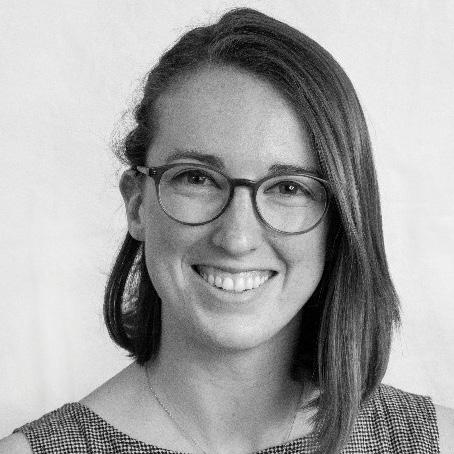
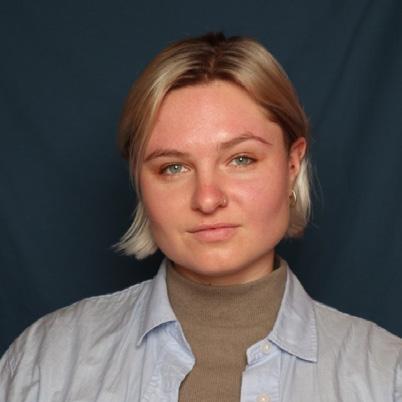
Clare Stanton ‘10 lives in Rockland, ME and works remotely for a group that merges library science, emerging technology and the law. Teddy Lyman ‘13 is practically Clare’s neighbor in Rockland, a complete coincidence!
Dakota (Coco) Young ‘13 lives in Northampton, MA and works with youth, previously as an educator & social services direct care provider, and currently as a social worker. Coco enjoys cooking, writing, playing pool and exploring nature and the food scene of the Pioneer Valley.
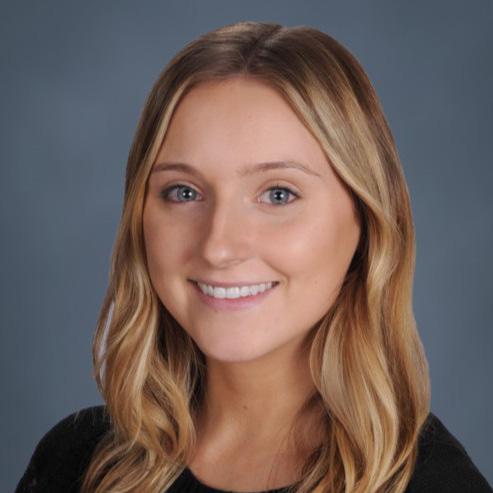
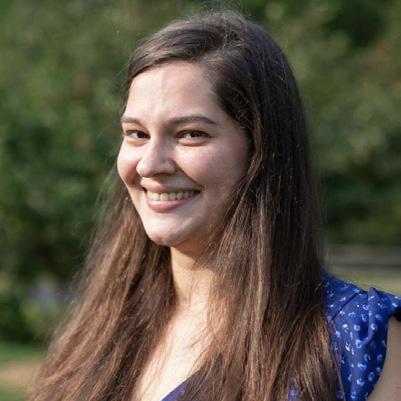
Sarah Pfeiffer ‘15 lives in New York City and has been teaching elementary school in the city since graduating undergrad, and currently teaches 1st grade at a public school on the upper west side. In between undergrad and now, Sarah finished a MA Ed. in special education and has settled in at a school that in glimmers is reminiscent of Waring.
Sarah Malboeuf ‘19 is currently living in Boston, working as a veterinary technician at the MSPCA Angell Animal Medical Center. Sarah enjoys spending time with partner, cat and their revolving door of foster kittens.
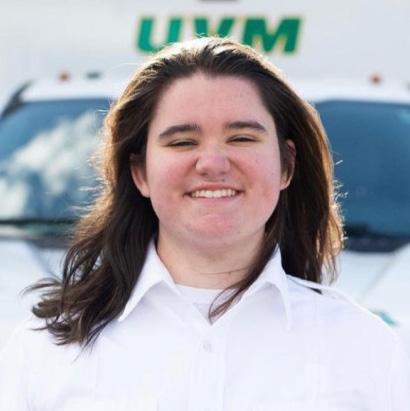
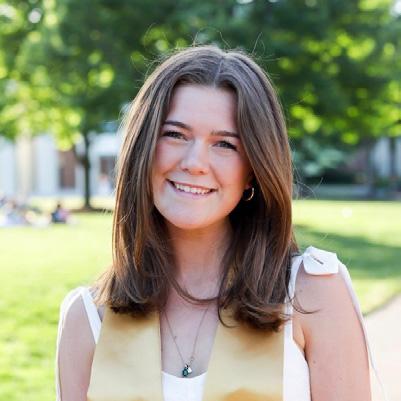
Madeline Boyd ‘19 is an M2 student at UMass Chan School of Medicine.
Natasha David-Hays ‘03 was recently appointed as Clinic Director to Bridgewell Counseling Services in Amesbury, MA. Natasha’s broad experience and passion will enable the non-profit to continue evolving its outpatient practice to meet the growing demand for mental health care in Northeastern Massachusetts.
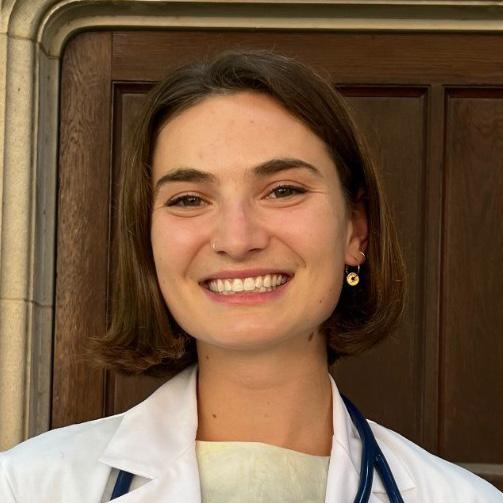
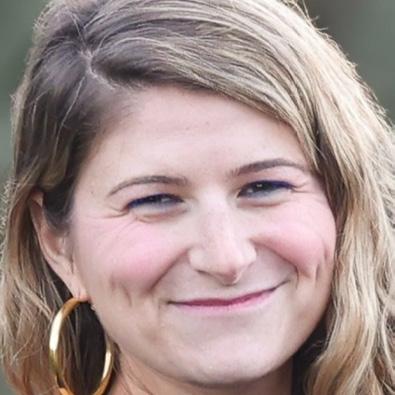
Eleanor Lustig ‘14 got married this past summer and the couple celebrated their rehearsal dinner the eve of the wedding in the Soirée Room!
Henry Balf ‘14 has an upcoming wedding in the Berkshires Memorial Day Weekend and Jack Stanton ‘14 is getting married in Aluin, France next fall!


Roger (Watras) Herson ‘96 lives in Beverly with husband Ethan and they are raising their 4 kids. Ethan was the first trans man to give birth at Beverly Hospital, and works in early childhood education. Roger is the owner of the first walking tour company with regular tours of Beverly. Roger also produces a history and tourism related podcast out of BevCam called the Official Beverly Witch.