Every month here is a favourite, but June is a standout not only for the hours of sunshine and skies of blue, but for the number of events across the region that fill your diary with not-to-be-missed signposting.
Music plays a big part in the entertainment on offer, and Loulé’s two-day celebration of world music, Festival Med (26th and 27th), in the heart of the old town, promises to deliver not only amazing talents but also street art, local crafts, exhibitions, gastronomy and more. This year is the 22nd edition of Festival Med and more visitors than ever are expected.
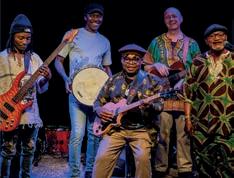
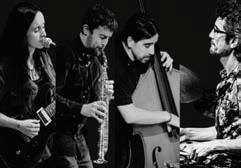
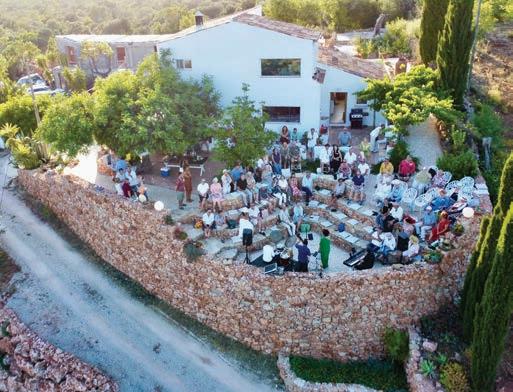
For music in a more intimate atmosphere, check out the concerts at the Songbird Amphitheatre in the hills of Querença – see page 99 for details. And over in Carvoeiro, the annual Black and White Night party on the 20th (no prizes for guessing the dress code) will feature one vast dance floor across the beach and main square, and nine stages with various acts, including DJs, bands, street performers and acrobats. If the classics appeal, the Amigos de Música have two concerts this month, and at Figuras Theatre in Faro there will be a Tribute to Elgar.
And you still have a chance to see Bowie: The Photographers, the remarkable exhibition of works by seven big names, featured at In The Pink in Loulé. Check our Agenda pages each month to see what’s on, but there is always so much more than we have room to cover – so a visit to eventos.visitalgarve.pt is absolutely worthwhile.
Enjoy the summer. And enjoy this issue of AlgarvePLUS; we think we have the seasonal mix perfectly balanced, and everything in easy reach.
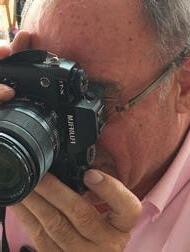
Casa Amor’s corner shop in Olhão is always full of surprises, and the IZIPIZI Paris sunglasses collection has just joined the line up of carefully curated products. They are stylish but accessible at €55, a chic blend of Parisian fashion and reasonable pricing. And there’s a great choice of frames and colours. We love the blue – a great match for summer sun. Oh, and thank you, Jacques, for modelling! casaamor-olhao.com
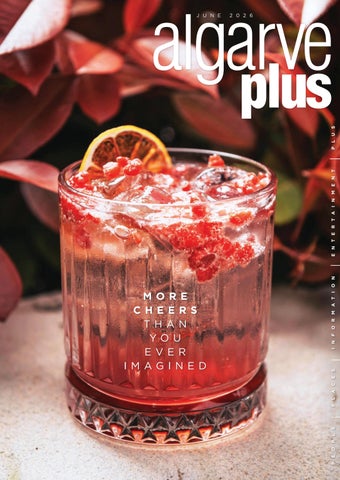
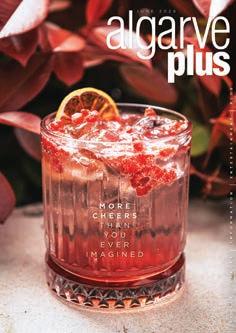
FRONT COVER:
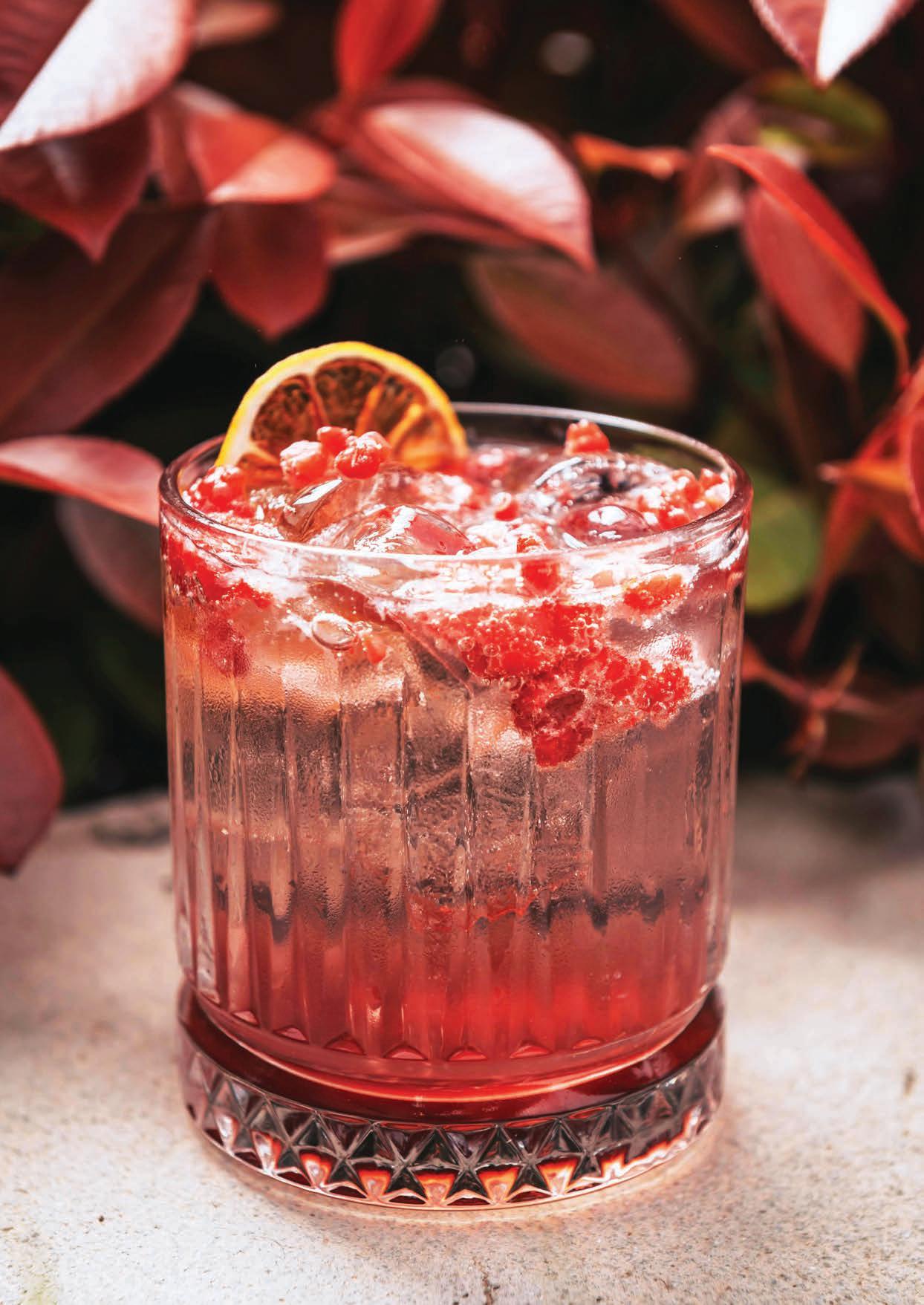
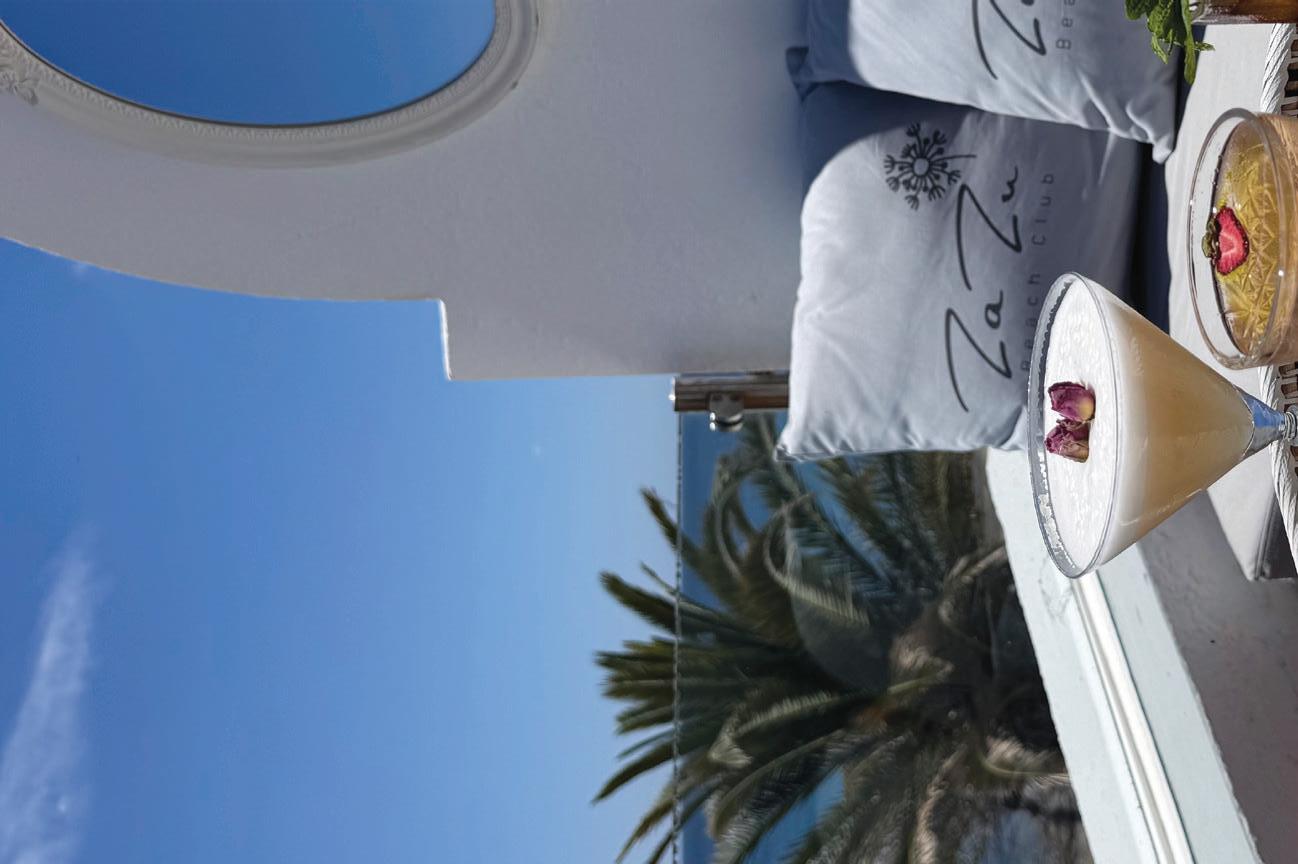
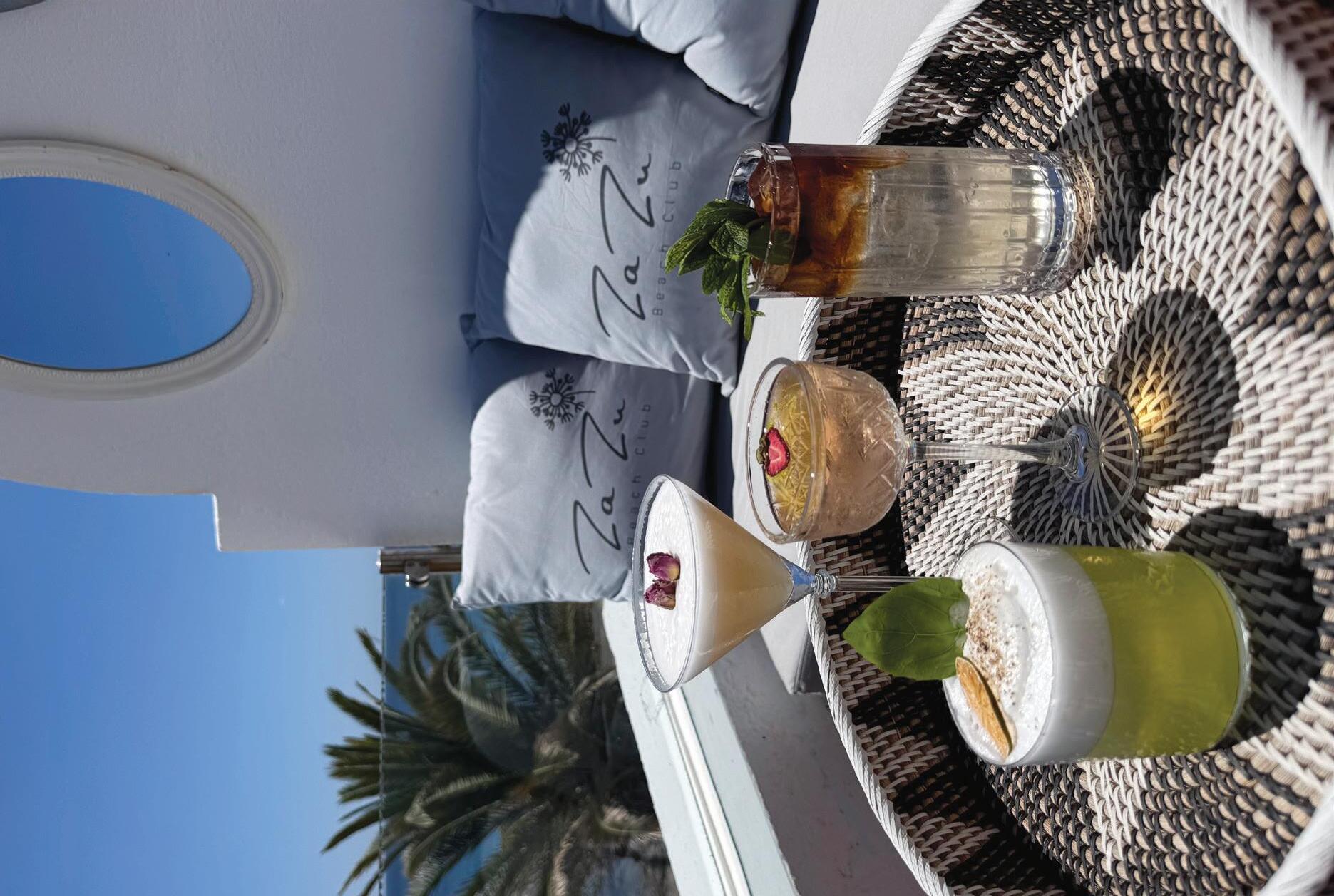
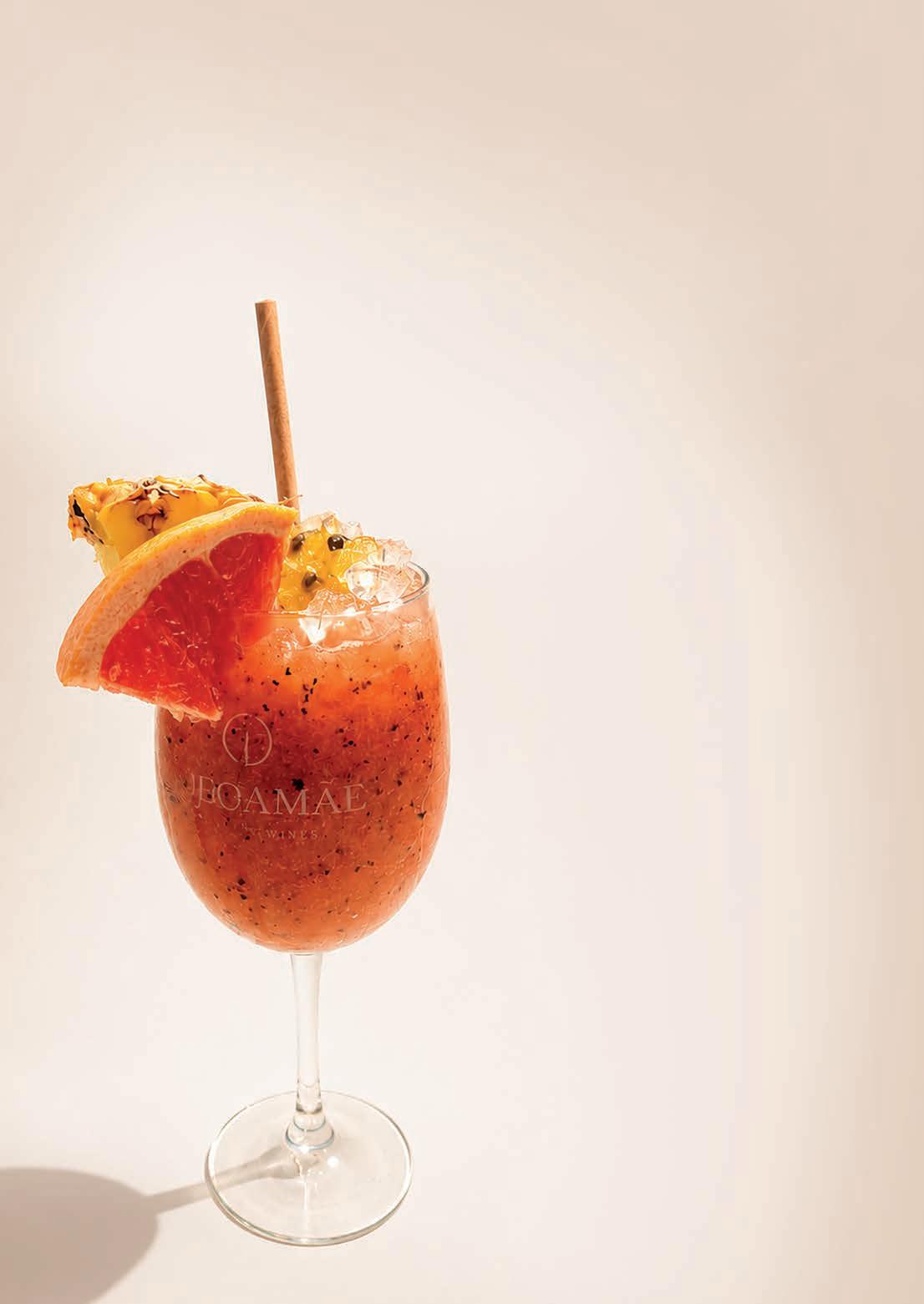
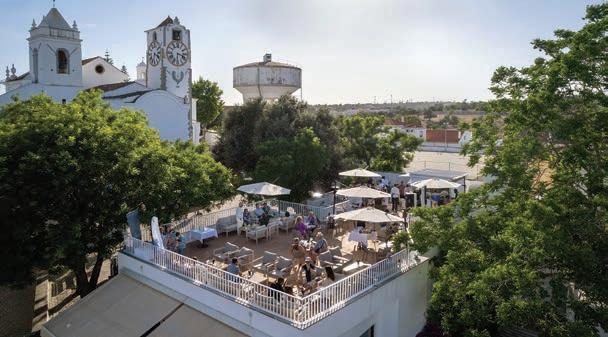
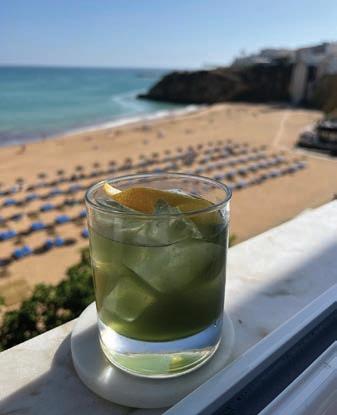
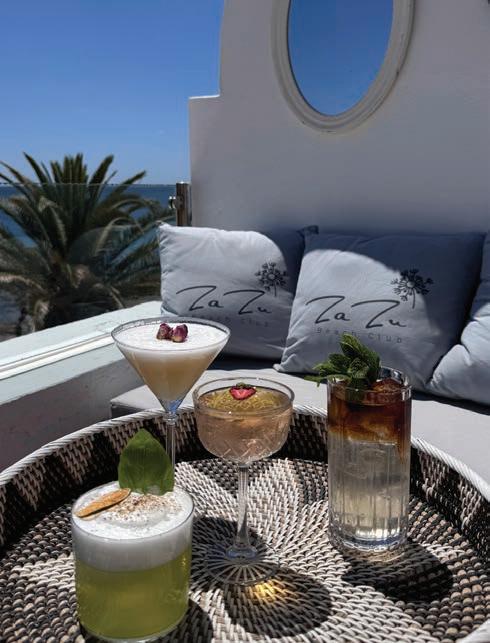
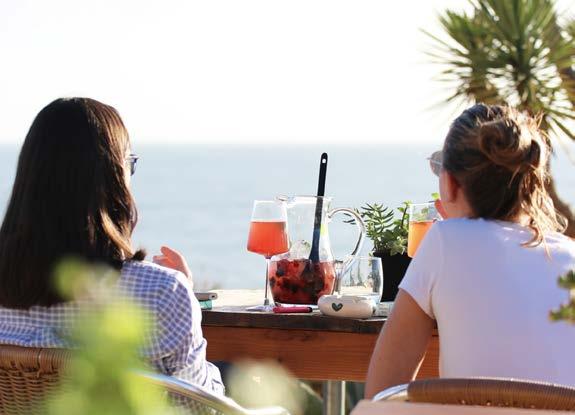
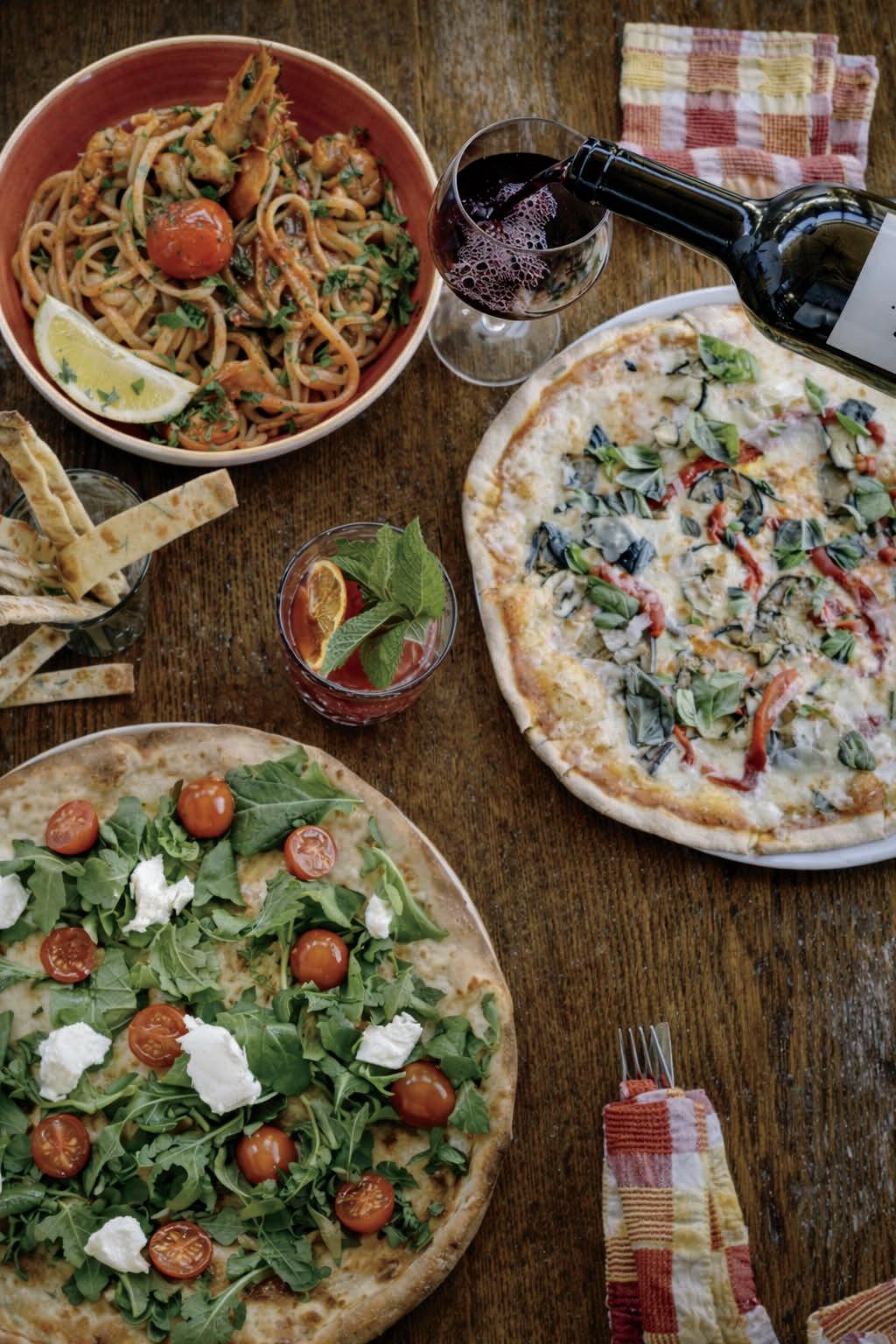
Sipping pretty. Where to find the best summer cocktails - see page 55
You’ll have every idea why you’re at the revamped Oysho store in Mar Shopping. It’s big, breezy and packed with the best ever selection of casual and sporty kit. And, yes, the T-shirt is a must with its smile-worthy message. Cotton, boxy and good looking. €17.99 oysho.com
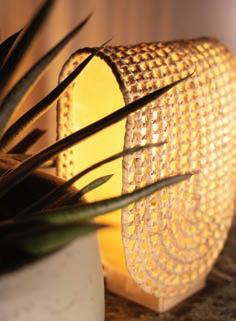
Under the Mahloo brand name, Gonçalo Gama presents a line of products in which new technologies and new bio-based plastics get into a harmonious dialogue with ancestral techniques and natural materials. His lamps bring together two facets of this designer/ artisan – 3D printing and the traditional palm-weaving technique. They are available in different colours and in two heights: 17cm (€40) and 26cm (€50), online and also in the Loulé Criativo shop. instagram.com/mahloo_pt/
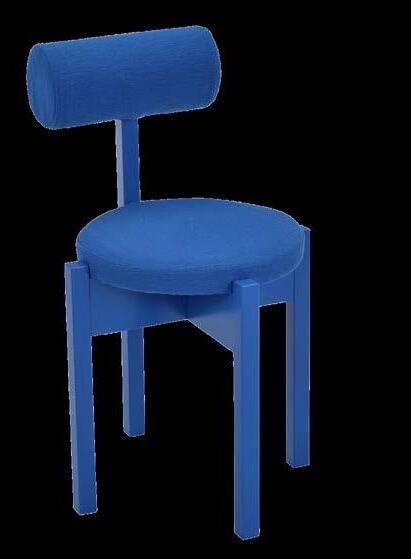
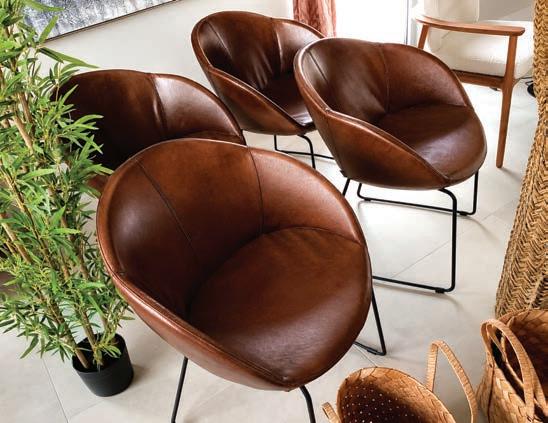
Colourful IKEA PS 2026 chair comes with a creative personality that doesn’t mind how you sit – forward, backward, arms on the backrest… it’s all about what feels good to you. €70 ikea.com/pt
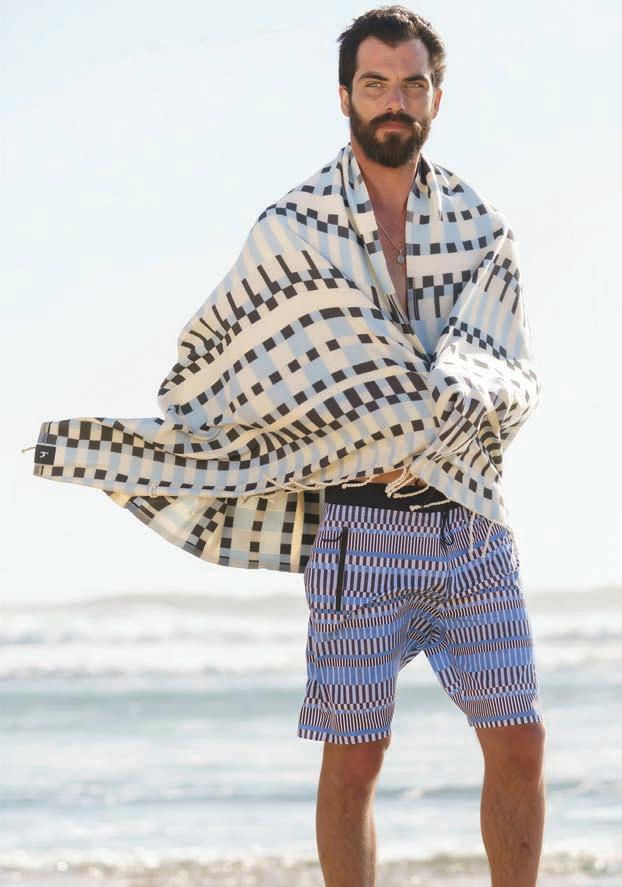
Launched in 2013 by sisters Cataria and Mariana and their cousin Ricardo, Futah® beach towels were born on the Portuguese coast with a warm breeze in the air and sunsetting over the ocean. Made in 100% fastdrying, lightweight cotton, inspired by the artisanal weaving of traditional Arab towels, they come in a great choice of colours and designs, €59. And today, collections under the brand umbrella include boardshorts, €59, swimwear, T-shirts and much more. futah.pt
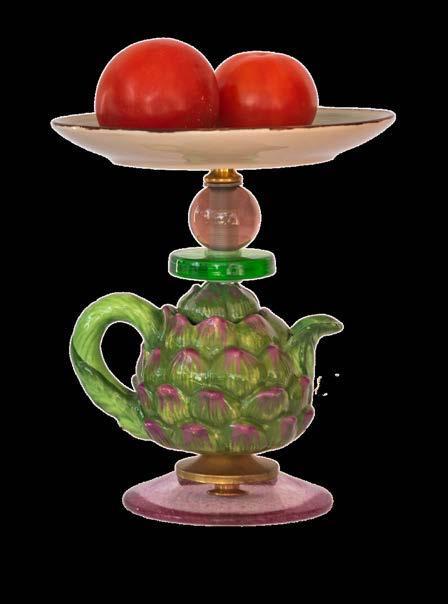
Italian artist Sandra Dori takes recycling to a whole new level with her creative and thought-provoking, enchanting designs that turn the ordinary into something very special.
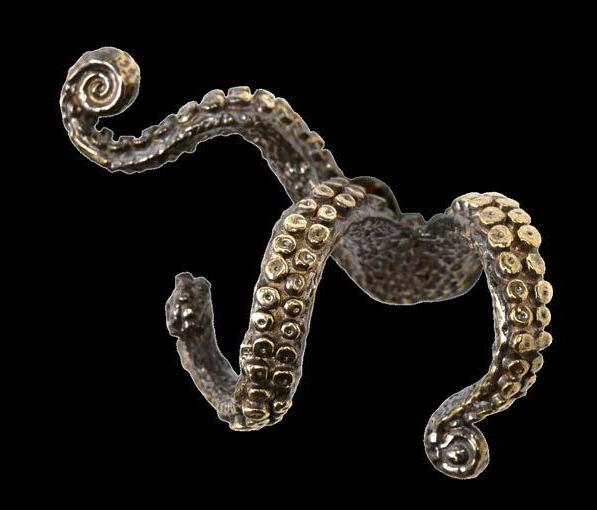
The Octo drawer handle by the experts at Pullcast is a product of understated elegance, bound to bring instant get-noticed character to any piece of furniture. It is the perfect design accessory to create a sculptural scheme with diverse aesthetics.
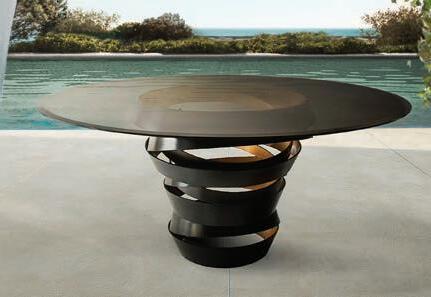
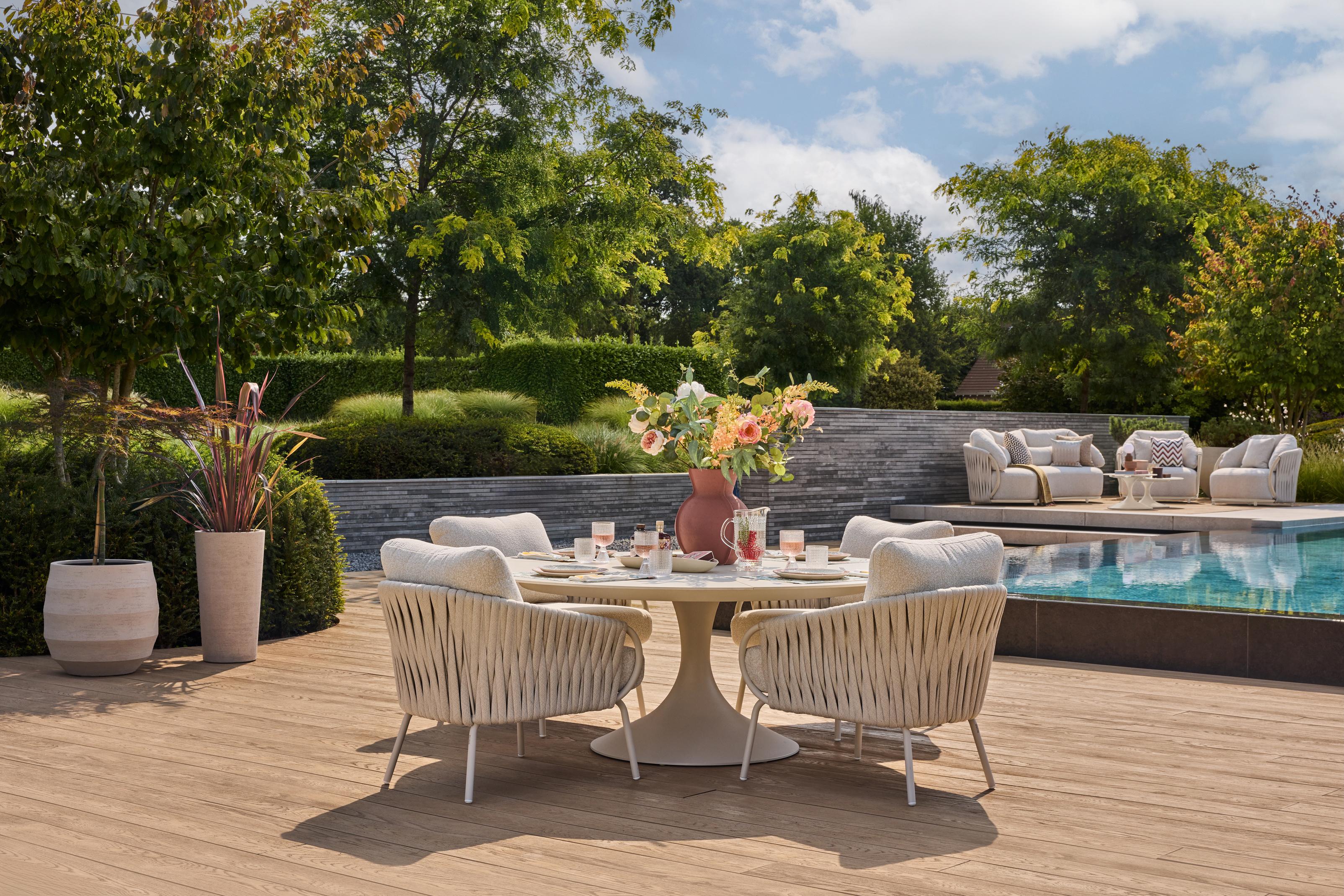
Outdoor table with swirls of two-tone metal ribbons forming the base, and a gleaming circular glass top; it doesn’t get more elegant than this. Another treat from Covet House, one of Portugal’s reference names in design and a collection of internationally-respected furniture brands. covethouse.eu
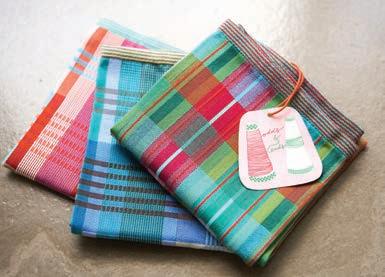
Even a tea towel should have a personality and these, from Martina in Loulé, are made here in Portugal of industry leftovers, by Odds & Ends. Lots of colours, a sensible 50x70cm size, €12.50 each. martina-loule.com
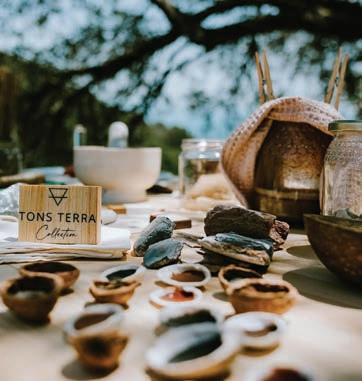
The Tons Terra Collection is one of the most recent arrivals in the Loulé Criativo community. Created by Marta Rodrigues, it is a brand that, based on pigment extraction techniques and the production of natural paints, develops products that promote sustainability and the conscious use of nature’s resources. At the Loulé Criativo shop, you will find Marta’s watercolours inspired by the Portuguese mountains and wax crayons made from mineral and plant-based pigments. Prices range from €9 to €40. instagram.com/tonsterra_collection/
ANIMAL WELFARE
TALGARVE-BASED WIGGLESTAIL ANIMAL SANCTUARY FOCUSES ON RESCUE, REHABILITATION, AND REHOMING. THE ORGANISATION WORKS PRIMARILY WITH ABANDONED AND NEGLECTED ANIMALS, MANY OF WHICH REQUIRE MEDICAL TREATMENT OR BEHAVIOURAL SUPPORT BEFORE THEY ARE READY FOR ADOPTION
Words: ELISABETH LEONARD
HE SANTUARY’S role extends beyond immediate rescue, incorporating longer-term care to ensure animals are placed in stable environments.
Currently, it is home to approximately 130 animals, including cats, dogs, pigs, goats, two horses, and a donkey – reflecting both the scale and diversity of its work, which addresses ongoing structural challenges in the region.
Animal overpopulation, abandonment, and limited access to affordable sterilisation continue to strain local resources. Seasonal patterns also contribute, with abandonment often increasing outside peak tourist periods. Within this context, organisations like Wigglestail provide essential capacity where gaps persist in the broader animal welfare system.
The sanctuary frequently takes in animals requiring extended care or behavioural rehabilitation – cases that are more difficult to place and therefore at higher risk. It also supports members of the public who encounter animals in need, helping them navigate limited local resources. Co-founder Sofia Ferreira explains: “Without Wigglestail, many animals would have far fewer options for safe refuge and rehabilitation.”
Making that difference
The impact of this work is best understood through individual outcomes. One case involved a group of underweight puppies taken in earlier in the year. With veterinary treatment, consistent feeding, and structured socialisation, all were eventually adopted. Their progression from vulnerable intake to stable placement reflects the organisation’s focus on recovery and rehoming.
Volunteers are central to sustaining this
model. Daily operations rely heavily on unpaid support for essential tasks. Responsibilities range from feeding, cleaning, and exercising animals to assisting with socialisation –particularly for those recovering from trauma or neglect. Volunteers also contribute through fostering, transport, administrative support, and outreach.
Fostering remains one of Wigglestail’s most urgent needs. Temporary home environments significantly improve outcomes, particularly for animals that struggle in shelter conditions.
“Foster homes provide a more natural, low-stress environment for animals, which is particularly important for their emotional recovery and social development,” says Sofia. “Foster care enables more individualised attention and helps animals adapt to domestic routines, increasing the likelihood of successful adoption. At the same time, the sanctuary requires ongoing support for veterinary care, daily operations, and specialised roles such as fundraising and communications.”
Behind the scenes
Much of Wigglestail’s work happens out of view. Animal rescue is both deeply rewarding
and consistently challenging. Behind each successful adoption is a sustained effort involving care, coordination, and difficult decision-making.
Collaboration is another critical component of Wigglestail’s approach. The organisation works closely with local veterinarians to provide vaccinations, treatment, and sterilisation. It also partners with other rescue groups and charities across the Algarve to share information, transfer animals when appropriate, and support rehoming efforts. This cooperative model reflects the realities of animal welfare in the region, where resources are limited and coordination is essential.
The Algarve’s international population also plays an important role. Wigglestail regularly engages with non-Portuguesespeaking volunteers and adopters, offering communication in English. This broadens the pool of potential adopters and strengthens the volunteer network.
At a broader level, the organisation emphasises that rescue alone cannot solve the problem. As Sofia states: “It is also important to understand that prevention – through education, sterilisation, and responsible ownership – is just as critical as rescue itself. Long-term progress depends on addressing the root causes of abandonment and overpopulation, not only responding to their consequences.”
Taken together, Wigglestail’s work represents a practical, community-based model of animal welfare: direct care, reliance on volunteers, and active collaboration. Its impact is visible in individual success stories, but its broader significance lies in supporting a system facing ongoing demand and limited capacity. For those interested in volunteering, fostering, or supporting their work, more information is available at wigglestail-animal-sanctuary.pt
INDOOR
LIGHTING
INTERIOR
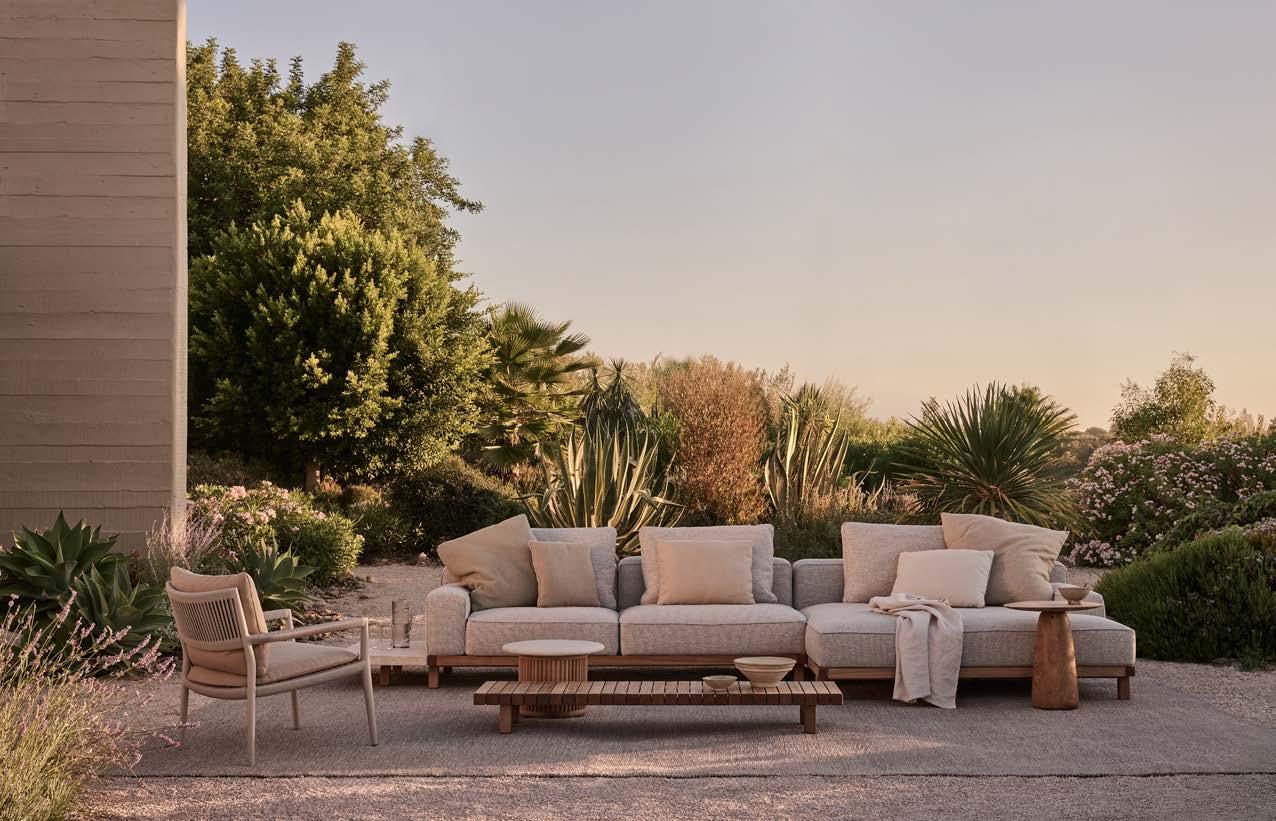
OUTDOOR FURNITURE
PROPERTY RENOVATION
BURGAU not to be missed
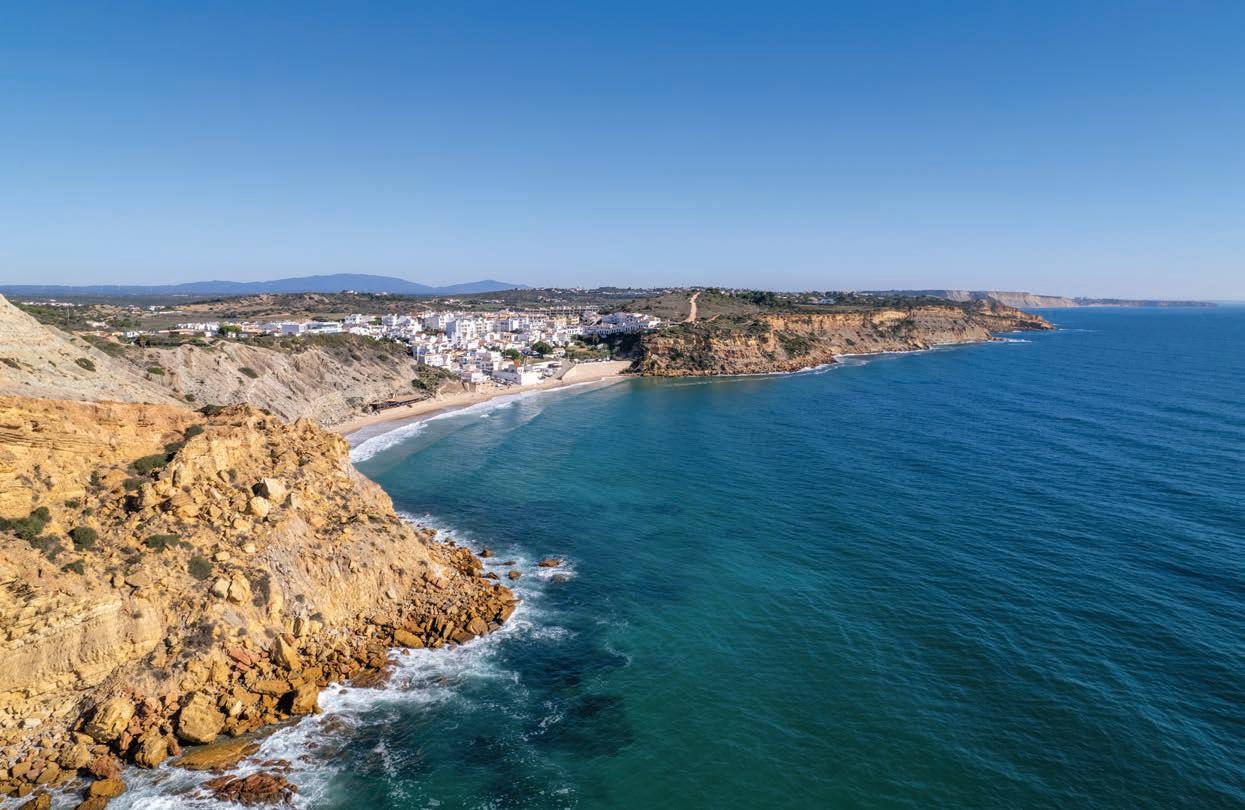
THIS ENCHANTING BEACHSIDE VILLAGE, NESTLED IN A BAY ON THE WEST COAST, NEVER FAILS TO DELIGHT THOSE WHO TAKE THE TIME TO DISCOVER IT. AND IT IS SO WORTHWHILE, A PERFECT EXAMPLE OF SLOW LIFE IN THE SUN, AND PROOF THAT YESTERDAY AND TODAY ALIGN
Words: NICK ROBINSON, ALGARVE ADDICTS
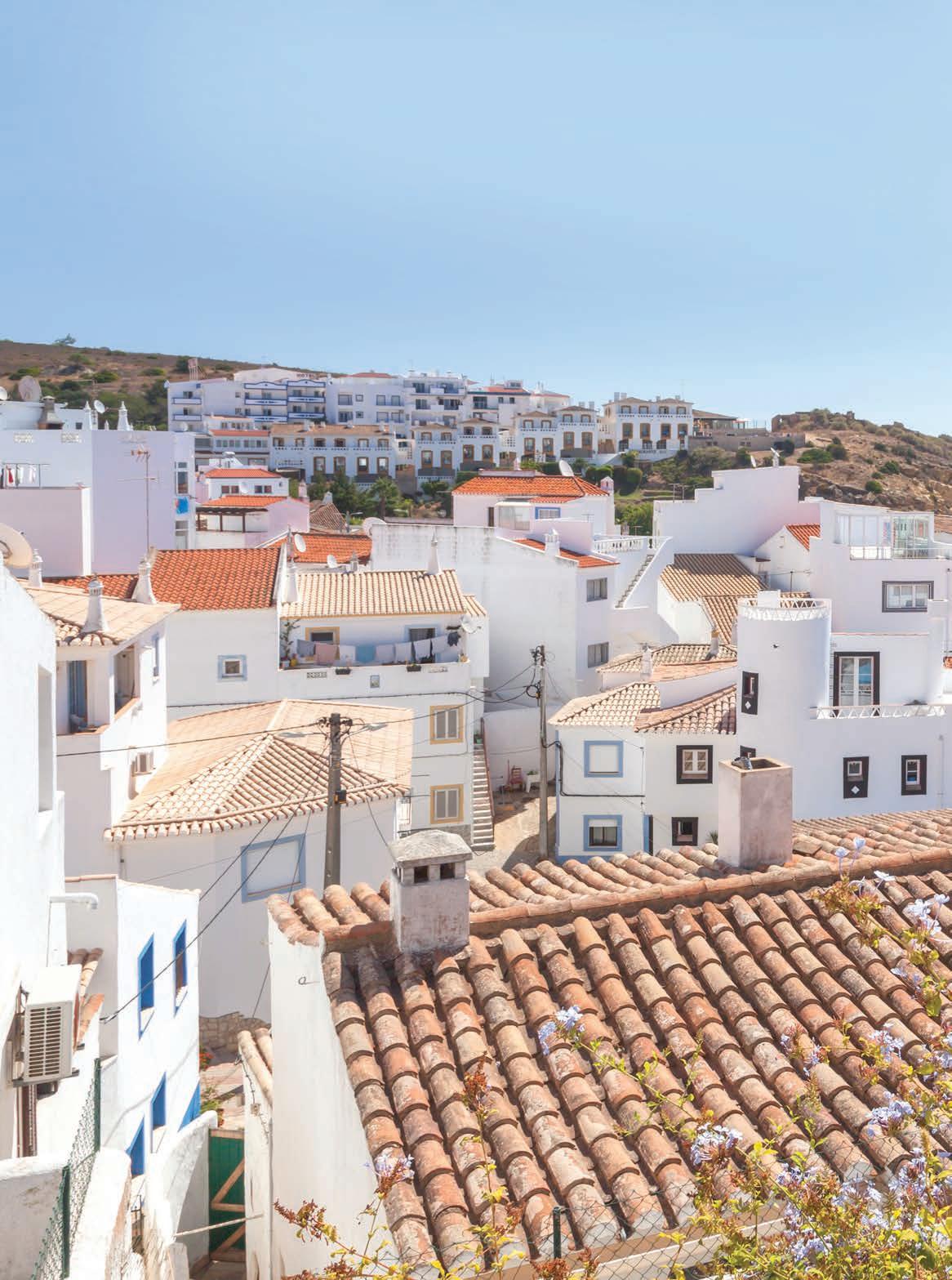
I’LL BE HONEST; I nearly drove straight past the turn-off. The sign for Burgau is modest to the point of being apologetic, which is perhaps fitting for a village that has spent the better part of several centuries quietly getting on with things while the rest of the Algarve sold itself to the highest bidder. Twenty minutes west of Lagos, wedged between two golden cliffs on the Costa Vicentina, this is a place that genuinely doesn’t need you to visit – and that, paradoxically, is precisely why you should.
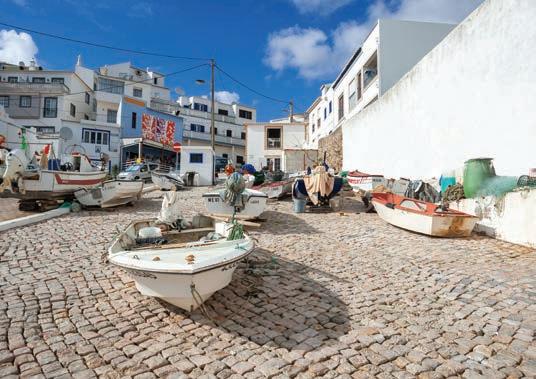
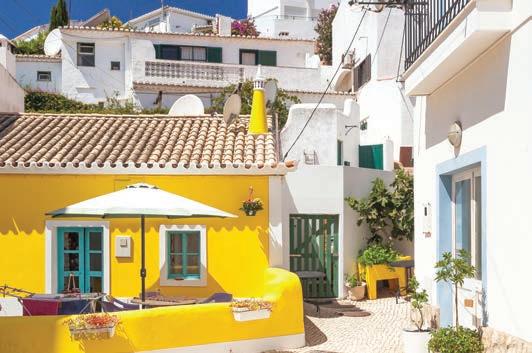
Pull in, park up, and take a moment just to look at it. Whitewashed houses tumble down a steep hill toward a small but spectacular beach, the cobbled lanes are just about wide enough for one person and a dog, and the whole thing feels like it was designed by someone who had very strong opinions about charm and very little interest in efficiency. Lonely Planet readers once voted it the quaintest beachside village in Europe, which strikes me as the kind of accolade that would make the locals roll their eyes, smile politely, and go back to their coffee.
Early days
The history here goes deep, and I mean that almost literally. The Romans were already extracting value from this coastline centuries before anyone thought to put a hotel on it.
Archaeological finds nearby have turned up ancient salt tanks and pottery fragments, remnants of a thriving fish-salting operation that supplied the empire.
The Moors followed, calling the region Algar Al Andalus, weaving these small coastal communities into a Mediterranean trading network that stretched across the known world. Then came the Reconquista, the Kingdom of Portugal, and eventually the pirates – which prompted someone with a good deal of common sense to build a small fort to protect the fishermen and their families. That fort still stands, quietly keeping watch.
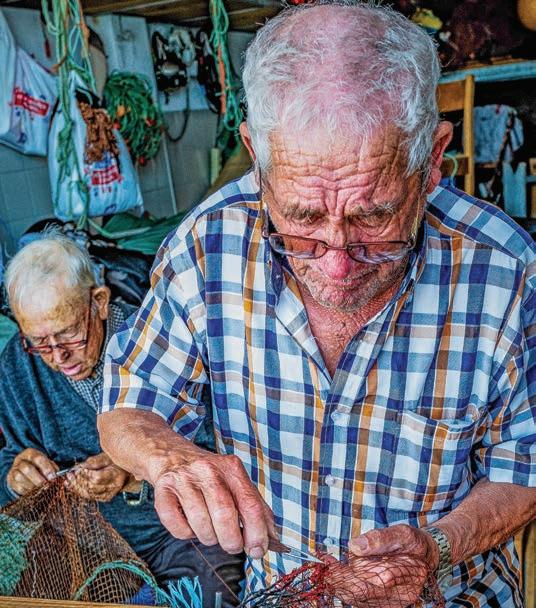
What I find genuinely remarkable about Burgau, though, is how recently it was still a world apart. Electricity arrived in the 1970s. Paved roads were a novelty not long before that. The local women used to carry baskets of fresh fish on foot all the way to Lagos and Vila do Bispo to sell at market. Every evening, the fishermen would haul their boats up off the sand by hand to protect them from the tides. It’s the kind of hardship that’s easy to romanticise when you’re sitting comfortably at a beachfront café, which is exactly what I recommend you do next.
Burgau today
Start the morning at the local padaria and order yourself a pastel de nata. Now here’s the thing – the baker here infuses hers with lavender. I raise an eyebrow at most things that mess with a custard tart, but this works beautifully, the floral note cutting through the richness in a way that makes you genuinely
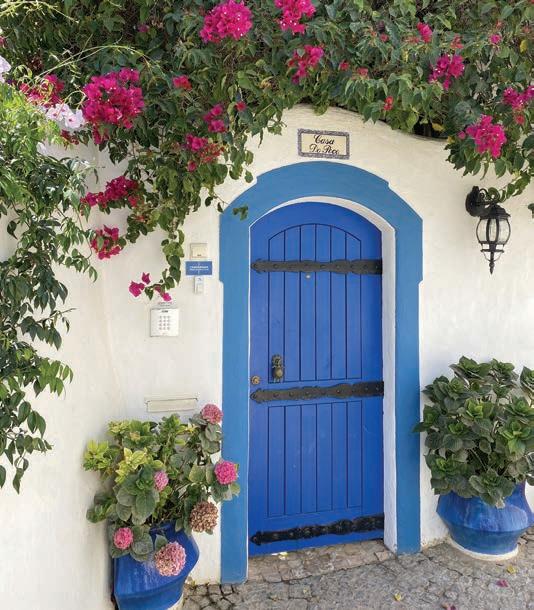
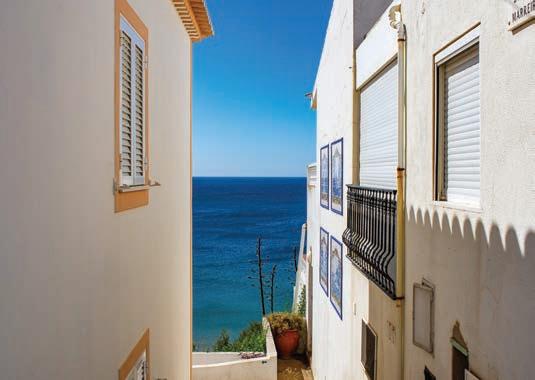
Below: The stunning Praia de Burgau. Opposite page, top left clockwise: The backstreets have a charm of their own; local fishermen – years ago their womenfolk carried the fresh catches to the markets in Lagos and Vila do Bispo; fishing boats rest at the end of the day; houses spill down to the sea along narrow lanes
The whole thing feels like it was designed by someone who had very strong opinions about charm and very little interest in efficiency.
reconsider your life choices.
From there, wander to Remy’s Horizon Coffee Corner, operating as a sort of pop-up residency out of the Corso Pizzeria from Thursday to Monday. Remy pulls excellent speciality coffee; the aesthetic is wonderfully eccentric and the ocean view from your seat is the kind of thing that makes you forget you had plans.
When you’re ready to stretch your legs, the cliff paths are right there waiting. Burgau sits inside the protected natural landscape of the Barlavento Algarvio, and you can pick up the coastal trail directly from the village and follow it west all the way to Sagres if the legs are willing.
High above the Atlantic, with nothing but wild scrub and sea on either side, you start to understand why this coastline has captivated people for millennia. The views are sweeping, the air is clean, and you'll have most of it entirely to yourself.
Back down at the beach, the adventurous should know that just southwest of the main bay, lying in about five metres of crystal-clear water, is the wreck of an old barge that was
carrying rocks to build a local pier but didn’t quite make it. The water here is transparent enough that you can spot it from the surface of a paddleboard – making it arguably the most accessible shipwreck snorkel in the Algarve. And if that’s not enough of a workout, there’s a local instructor named Nick who runs an underwater fitness programme involving breath holds, 20kg weights, and something called diving torpedoes. People do this voluntarily. I found it exhilarating.
The beach itself
Praia de Burgau deserves its own quiet appreciation. Flanked on both sides by those tall cliffs, it is sheltered from the ferocious Barlavento winds that make life complicated further west, giving it a warm and almost drowsy microclimate that’s perfect for doing absolutely nothing. Two sunbeds and a parasol will set you back €25 for the day – excellent value when you factor in the entertainment of watching a local vendor weave across the sand selling Bolas de Berlim. These cream-filled doughnuts,
Burgau won’t overwhelm you. It won’t compete for your attention or flood you with things to do. It will just quietly show you what the Algarve was like before the world caught up with it.
purchased directly on a Portuguese beach, are one of those experiences that sounds simple and delivers something much larger. Don’t skip it.
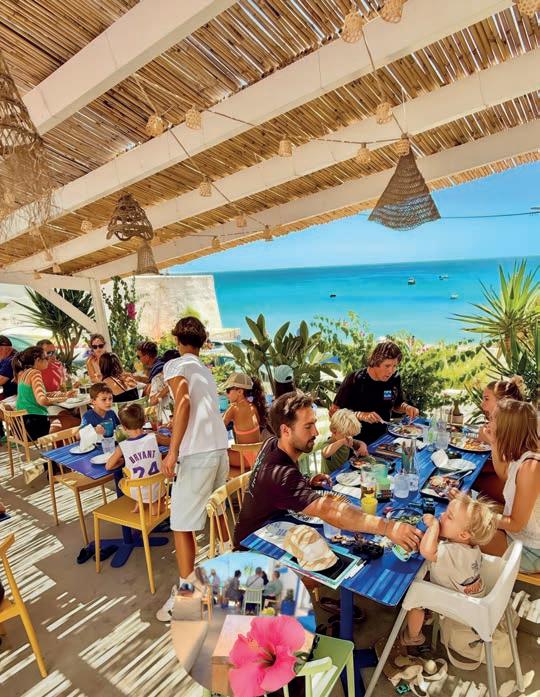
Come evening, Burgau punches well above its weight. For a village with a permanent population somewhere between 400 and 500, depending on who is counting, it has an impressively lively collection of bars and restaurants clustered around the Rua Principal. A little further towards the water, Miam Burgau and Britzy Bar face the ocean and come into their own around sunset, when the sky turns shades of orange and coral that no photographer has ever quite managed to capture accurately. If you prefer the village square, Barraca is reliably good for a cold drink and a conversation with whoever happens to sit down next to you. Dinner is the decision you’ll be most glad you made. Head to Casa Padaria, which is technically a pizza restaurant, but don’t let that fool you. Their signature dish is a pizza topped with mature steak that has been slow-cooked for six hours and arrives at the table drenched in its own rich meat sauce. It sounds like a lot, because it is a lot, and it is spectacular. If the mood calls for something else, Aires Restaurant brings genuine South African
warmth and flavour, the Red Fort does a fine curry, and O Clube covers typical Portuguese café food and tapas ably. In a village this size, that range of choice is nothing short of extraordinary.
The journey there
Getting here takes a little commitment, which is largely why Burgau has stayed so wonderfully itself. The A22 doesn’t reach it – you’ll peel off onto the N125 from Lagos, a single lane road that winds through countryside and reminds you that some journeys are improved by a little inconvenience. From Faro airport it’s about an hour and ten minutes by car. No car? The train gets you to Lagos, and from there a local bus (around €4.15) or an Uber covers the last stretch. Accommodation ranges from the boutique charm of Casa Grande to the marvellous vistas from Ocean Blue Active – just book well ahead if you’re coming in summer, because this particular secret has been getting out slowly but surely.
Burgau won’t overwhelm you. It won’t compete for your attention or flood you with things to do. It will just quietly show you what the Algarve was like before the world caught up with it – and if you’re anything like me, you’ll find that’s exactly what you needed.
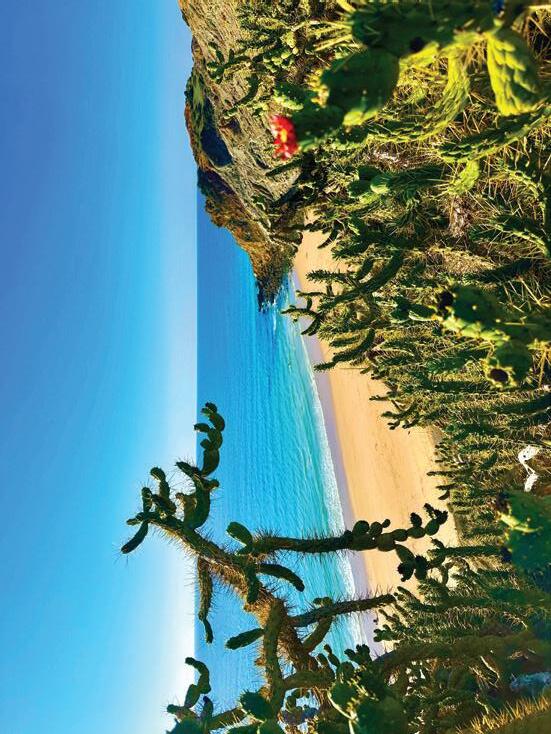
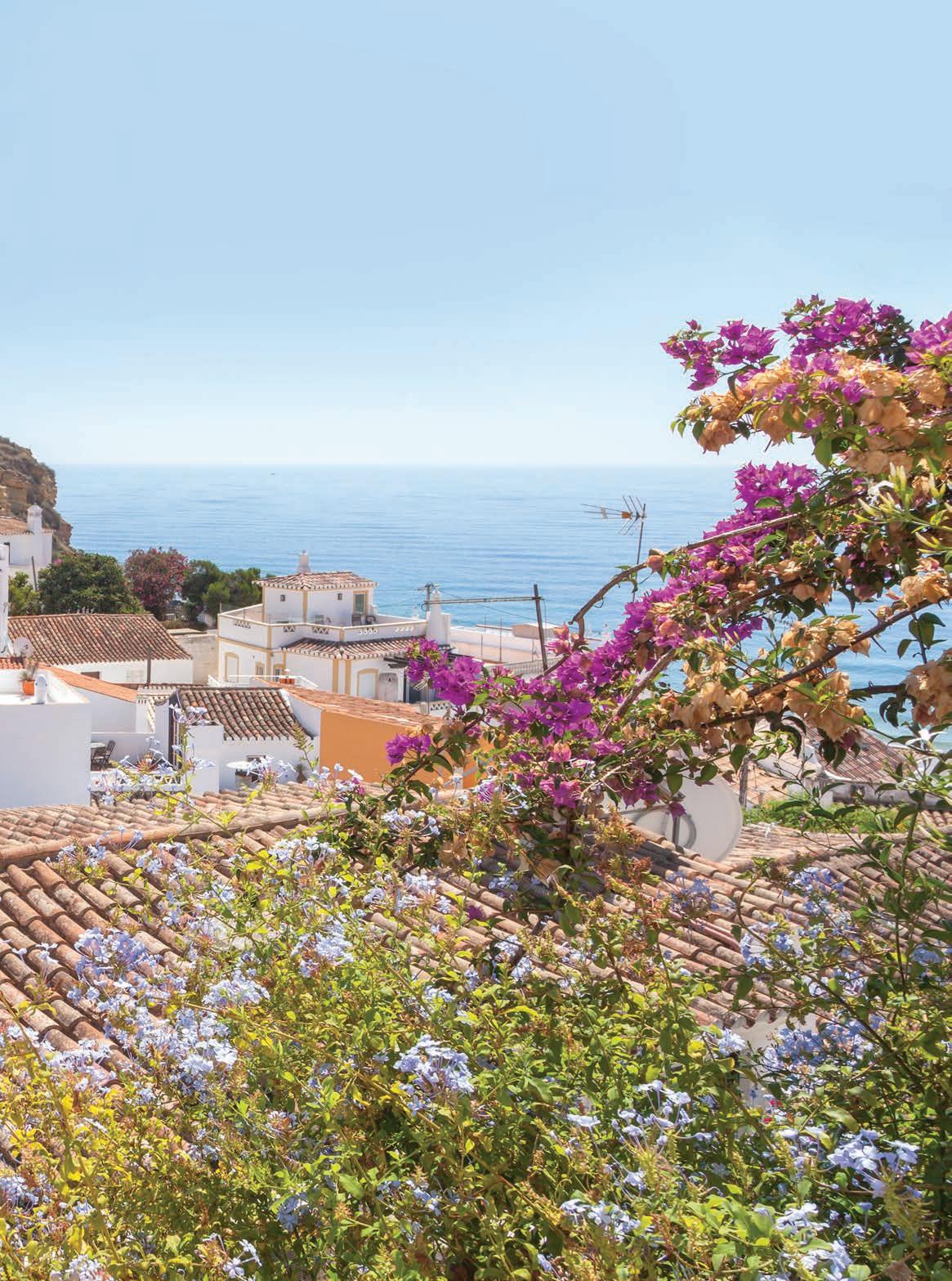
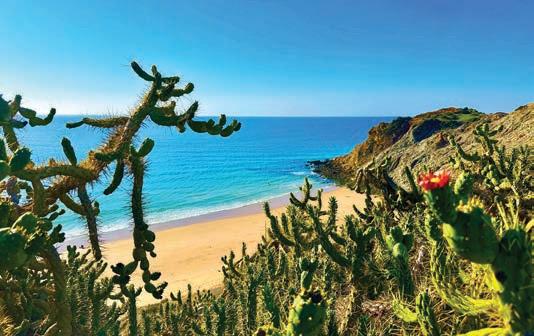
Below, top left clockwise: Tiny houses, sun-filled terraces, and bright colours that stand out from the traditional whites; Miam Burgau, for a perfect family lunch overlooking the ocean, or early evening drinks when the sun sets; Another view of the quiet beach and bay, framed by wild flowers and spikey cactus
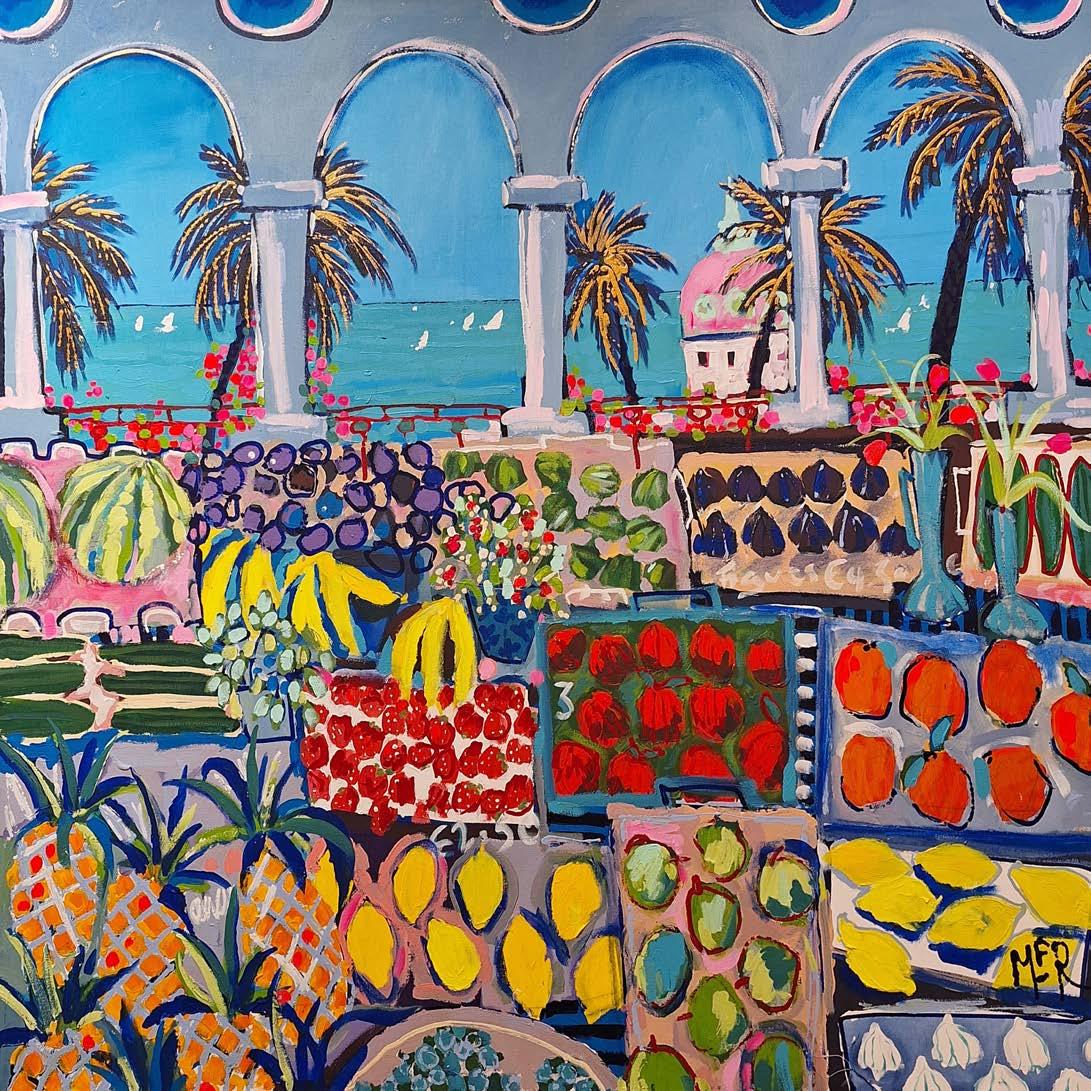
Michael F. Rumsby
New Exhibition - from the 18th June
Acrylic on Canvas
Retour Aux Marché Des Légumes, Nice
140cm x 140cm
BAGS OF
WHILE STUDYING LAW IN SAARBRÜCKEN, BEATRIX ANTON-GRÖNEMEYER BEGAN SEWING HANDBAGS AT NIGHT ON HER GRANDMOTHER’S TREADLE SEWING MACHINE, SOURCING LEFTOVER LEATHER FROM A NEARBY SHOE FACTORY. TODAY, PUTTING PURPOSE AND RESPONSIBILITY FIRST, HER BAGS ARE BIG BUSINESS
Words: JOANA KATYA
BEATRIX ANTON-GRÖNEMEYER’S first career was in international finance, where she held the role of first Chief Sustainability Officer of a global asset management company.
Sustainability, in both her professional and personal life, has always been part of how she thinks; design, however, was always present in a quieter way, long before it became visible.
A regular visitor to Portugal since the late 1990s – first on holidays and later through her work in investment banking –Lisbon and Porto were her first destinations, followed by the Algarve. “Portugal offers something rare,” she says, “clarity, warmth, and a slower rhythm. It is a place where ideas have time to emerge without being forced. I have always felt a certain calm here that is difficult to describe, but easy to recognise. When I decided to establish a second home in 2021, Portugal felt like a natural continuation of both my personal and creative life, and the Algarve with its raw beauty, pine forests and Atlantic light, was my first choice.”
Back then
When Beatrix started sewing handbags, she did not look at her pastime as a way to build a brand. “All I was doing was creating things for myself that I couldn’t find. It was when others began asking where they could buy my bags that the business concept developed – it happened quite naturally. The success I enjoyed served to finance my studies, and stayed with me as something I would return to later.”
Beatrix launched The B.A-G Collection in Germany in the late 80s as a small, focused label built on craftsmanship and integrity.
B.A-G stands for Bespoke, Authentic, and Grateful. A part of the proceeds supports educational initiatives, which is an important aspect of the brand.
One of her earliest designs from the 90s was selected by the German Leather Museum as a trendsetting piece. “Looking back, that was the moment that gave me a certain sense of confirmation, even if I did not fully realise it at the time,” she says.
“During my years in finance, I was always searching for bags that were elegant, functional and understated and without visible logos. They were surprisingly difficult to find.
“That’s when I began designing pieces that support presence rather than define it. Objects that feel natural to carry, that do not compete for attention, but still have a quiet strength. My work is guided by art, architecture and a belief that good design should last – both physically and emotionally. You could say that my aesthetic is influenced by Bauhaus principles, especially the idea that reduction reveals essence.”
The very first piece that Beatrix made was a leather bucket bag, entirely hand-stitched. Made from discarded leather remnants, it carried a sense of resourcefulness and independence. “In many ways,” she says, “that first bag, and the concept behind it, contained everything that still defines my work today. A refined version of that model remains part of the ongoing collection.”
Being selective
Design usually begins quietly. While gardening, visiting museums or simply observing people, ideas start to form almost without intention. “The search for the right materials takes time, as they need to meet both aesthetic and sustainability-related standards. The making itself can take weeks or months.
“There is usually a clear vision at the beginning, but the final form develops through working with the material,” she explains. “I also developed a custom inner lining together with a German company to ensure it is skin-friendly and certified. These details may not always be visible, but they matter.”
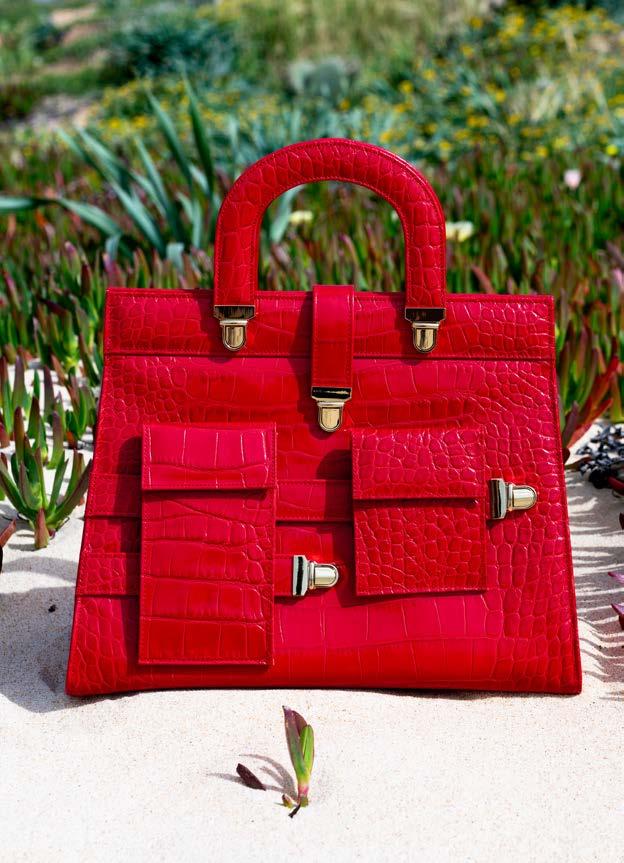
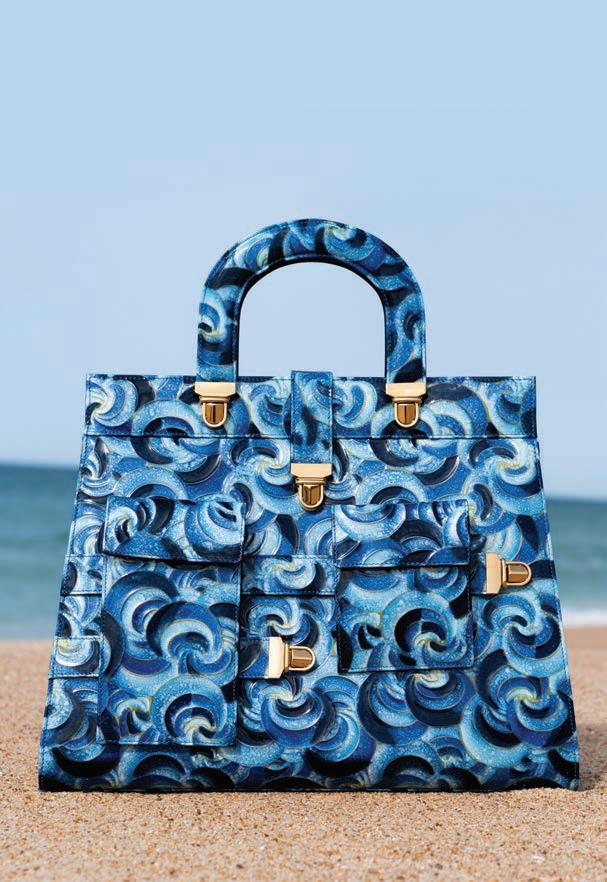
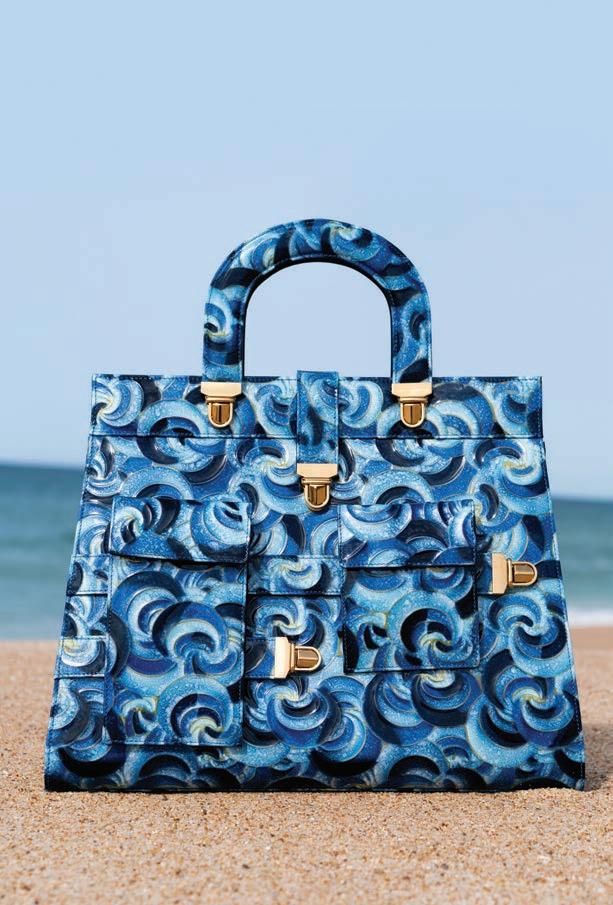
Each design in the B.A-G Collection is produced in small quantities, usually between ten and 50 pieces. Some are unique, depending on the materials available. Models such as the Weimar Bag can be made individually, with choices of material and colour. This is about exclusivity.
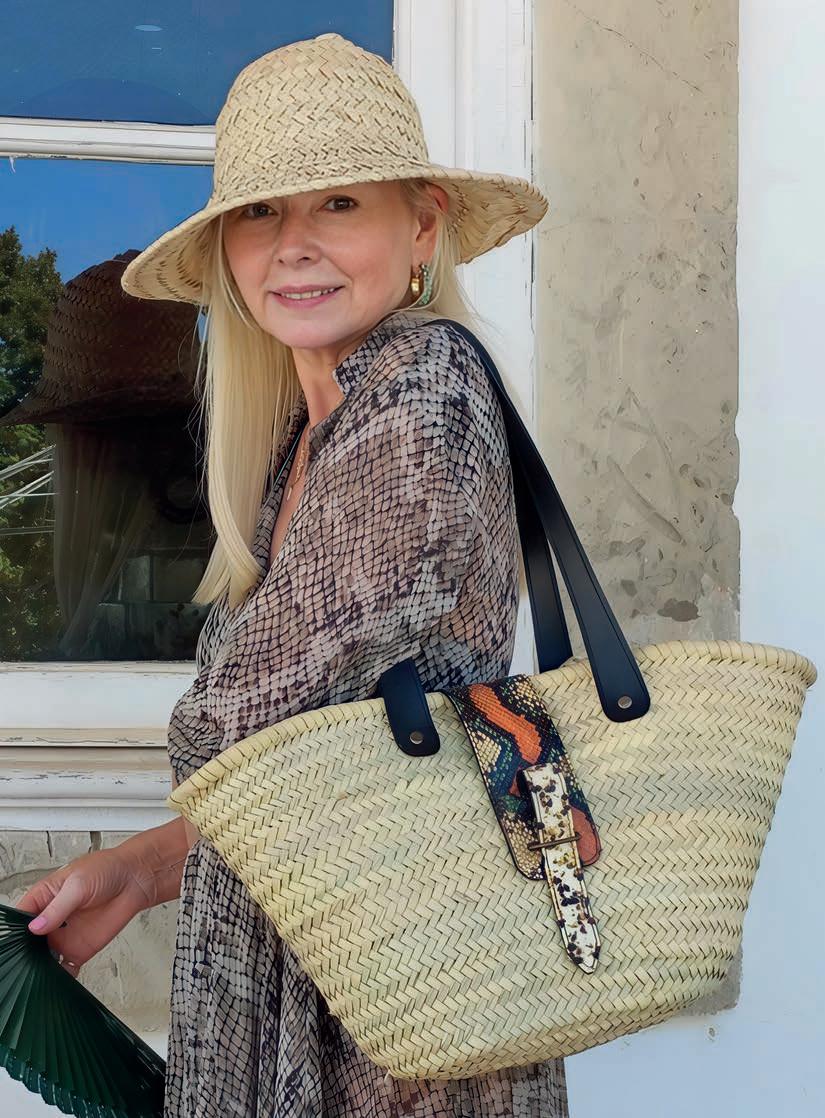
Beatrix works mainly with carefully selected Italian leather, including laser-treated goat hide, as well as certified Portuguese cork leather and locally-sourced reed materials. These materials are closely connected to the places that influence her work. The most complex pieces are limited editions of the Weimar Bag and designs made from rare materials. They require time, precision and experience. These bags are designed to adapt, with interchangeable elements that allow them to move between different contexts. Beatrix supervises the production of each bag, which is handcrafted in a factory that worked for European aristocracy.
Many clients return over time, not only because of the design, but because the pieces become part of their daily lives. There is a shared appreciation for understatement and quality, which creates a quieter, long-term relationship. And styles can be adapted through modular elements such as straps or additional components which result in something unique, and personal.
Beatrix is currently working in collaboration with an artist, creating elements such as drawings and personal motifs that can be integrated into the design. The idea is to create pieces that carry not only function, but also a special meaning.
Produced in Portugal
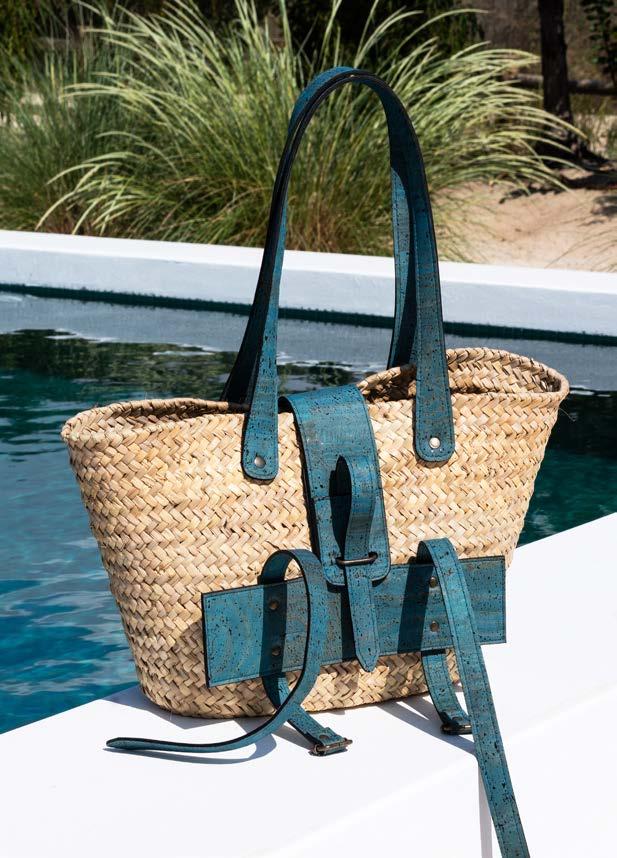
Beatrix’s work with Portuguese reed and refined cork developed when she began spending more time in the Algarve. The local weaving tradition was something she wanted to understand more deeply. Together with a close collaborator, Julia, she created a bag that could move easily between beach and city. It was a new material context, but the philosophy remained the same: respect what is locally available and work with it thoughtfully.
Depending on the design, production can take several days. “Time is not something I try to reduce,” smiles Beatrix. “It is part of the quality.”
Vila Vita Parc presents a curated, exclusive selection of Beatrix’s Comporta reed and cork designs that are created specifically for this environment. These bags reflect the surrounding landscape and a quieter form of luxury. They combine traditional craftsmanship with practical features designed for everyday use. The intention was to create something that feels natural in that setting without being overstated, the refined cork a plant-based, waterproof, lightweight and elegant alternative to traditional leather. Couple those materials with centuries-old craftsmanship and what you have is effortless sophistication.
It is the special features that add to the personality of this limited-edition collection – a patented external holder keeps towels or blankets outside the bag, while a removable inner pouch offers practical storage. And there are four sizes – small, medium, large and family – allowing a seamless transition from beach to city.
And in Almancil, Casavostra offers selected designs that focus on functionality and ease – weekend bags and everyday pieces that are practical but still carry a clear design language.
“I do not design by season,” Beatrix explains. “New pieces emerge when there is a genuine need or a clear idea worth developing.” Her structured leather backpack is one of the most recognisable pieces. Its form is very clear, and it solves a functional problem in a subtle way. And her smaller bags are also widely used. They are compact, but often more spacious than expected. “I use one myself daily, which is always the best test,” she says.
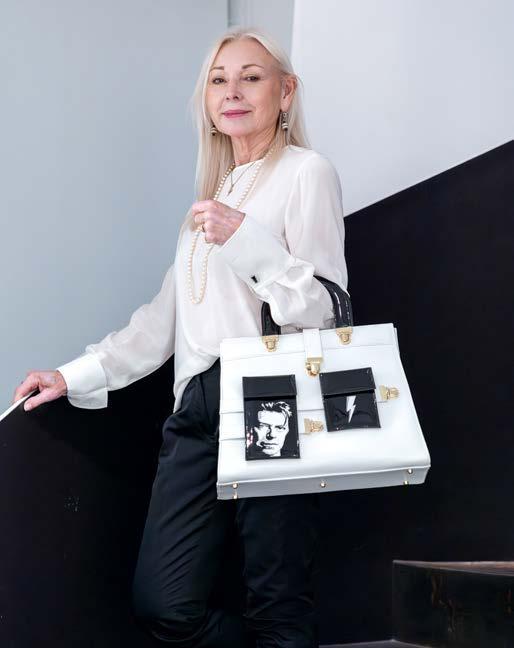
For the opening of the ‘Bowie: The Photographers’ exhibition at In The Pink fine photo-art gallery in Loulé, Beatrix created an exclusive model of the Weimar bag, details of which are exchangeable and can be tailored precisely to a client’s wishes
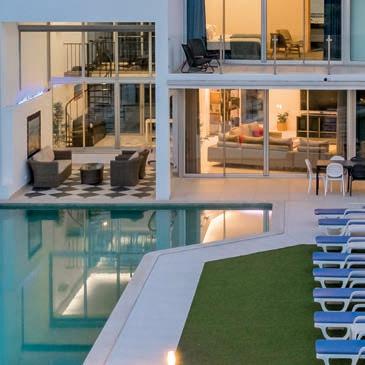
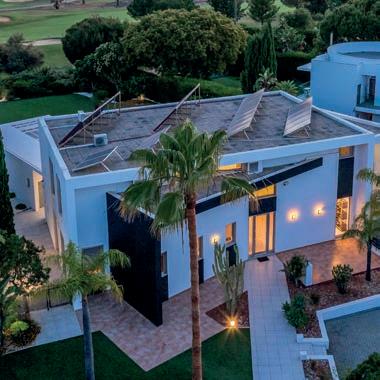
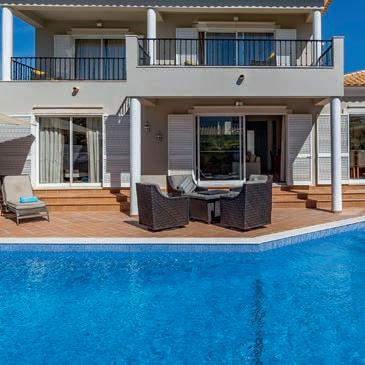
20 YEARS. ONE REGION. EXCEPTIONAL VILLAS.
Celebrating 20 years in the Golden Triangle, SandyBlue offers a curated collection of luxury villas and apartments, delivering exceptional holidays defined by elegance, quality and personalised service - powered by 100% direct bookings.
Copos & Petiscos, Santa Eulalia
IF YOU NEED A REASON TO GO TO ALBUFEIRA’ S BUSY TOURIST-PACKED SANTA EULALIA WHERE THERE ARE MANY DOZENS OF RESTAURANTS AND CAF É S COVERING EVERY POSSIBLE TYPE OF CUISINE, THEN MAKE THAT REASON THIS MONTH ’ S SPECIAL FIND, WHICH YOU COULD PASS BY WITHOUT NOTICING. BUT ONCE YOU DO, AND ONCE YOU ’ VE SAMPLED WHAT ’ S ON OFFER, YOU ’ LL HAVE EVERY REASON TO RETURN TIME AND TIME AGAIN
LET ME TELL you first how we got to discover this veritable little treasure that sits surrounded by other eateries where the signposting is brighter, the music louder, and the quality often questionable.
Well, some friends arrived from the UK to attend a conference in the Santa Eulalia resort down by the beach. This was their first time in the Algarve – in Portugal, in fact – and their full-on timetable was pre-arranged by the conference organisers – think smart food and glossy surroundings.
Reckoning that at best we could get them out for a local lunch so long as it was just minutes from the resort, we went online and came up with C&P, Copos & Petiscos, removed in every way from the usual run-of-the-mill places that tourists love but locals avoid in the busy season.
C&P’s shots on Instagram are impressive, not least because of the
variety of dishes that are far removed from the usual. And the reviews gave a real thumbs up. So we booked.
The restaurant could not be more simple in design; basic is probably the best adjective, and that adds to the charm and individuality. There are tables under a wooden pergola and a few more inside. There is a charming waiter, Antonio, who made us feel we’d made the best decision ever – and that was even before we saw the menu.
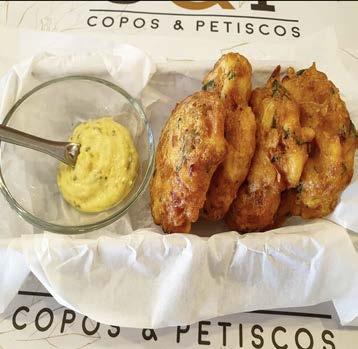
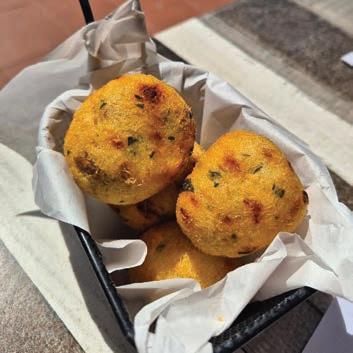
But when we did, we had so many questions because much was unfamiliar to us. Grandmother’s codfish cakes; fried chickpea crunch, regional sausage with greens or a quail’s egg; stewed gizzards; roasted padrón peppers; fried codfish dough; octopus as a salad or deep-fried; skin-on chips. And that’s just a taster. There are platters of mixed smoked sausages and smoked hams, cheese boards and, cleverly, the option of a whole mix of different dishes – for two, for four, or for six.
FOOD
Think northern specialities and cleverly combined flavours and textures.
DECOR
You’ll feel relaxed here. The restaurant seats up to 40 diners.
We ate a lot and reckoned we spent €35 a head. €
PRICE
We munched and crunched, and went back for repeats. At dessert time, we did the right thing and ordered one of everything to share.
Now for the background: C&P was opened by the Pacheco family from Porto – mother, father, and son – in April 2019.
Son Miguel had previous experience in the culinary field, having worked for chef José Avillez. The parents, Samuel and Augusta, had owned a textile factory so the restaurant industry was a whole new world to them, and one they loved from the start. Today, the kitchen is run by Augusta and Miguel who share the chefing responsibilities.
According to Samuel, key to their success is bringing the very best of traditional cuisine from the north, and reinterpreting it. “Most of our speciality ingredients are sourced from the north to preserve the authenticity of our cuisine, although many other ingredients are purchased here from local markets,” he says. The most in-demand dishes include Black Pork Cheeks with Serra cheese, Seafood à Bulhão Pato, and the Francesinha, Porto’s famous meat sandwich with a traditional sauce.
C&P is open Mondays from 18h00 to 23h00; on Tuesday to Friday, from 12h00 to 15h00 and 18h00 to 23h00. Saturday times are the same as Monday’s. And Sunday is a rest day. Get ready to go treat yourself.
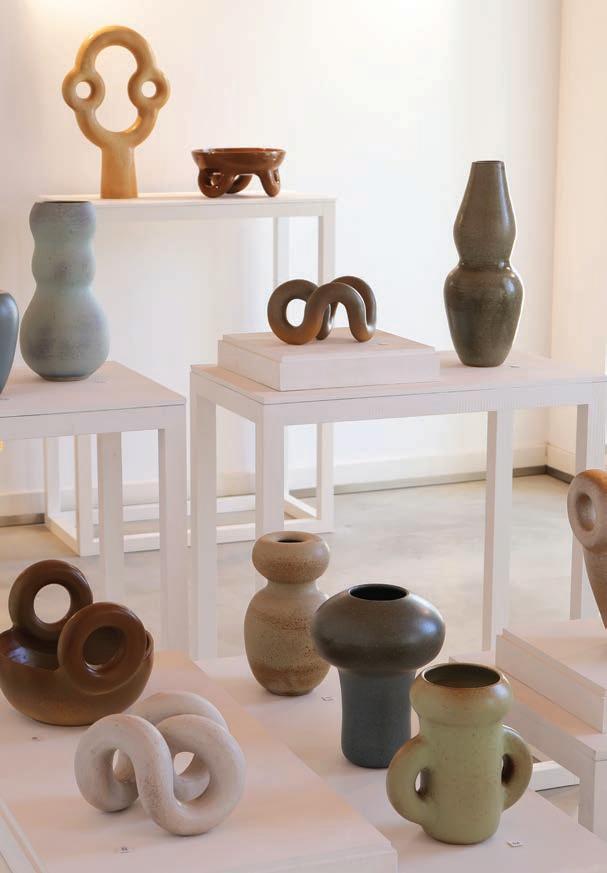
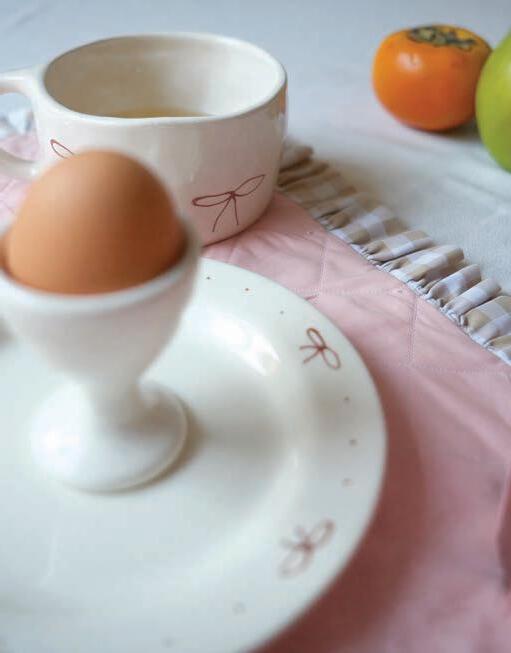
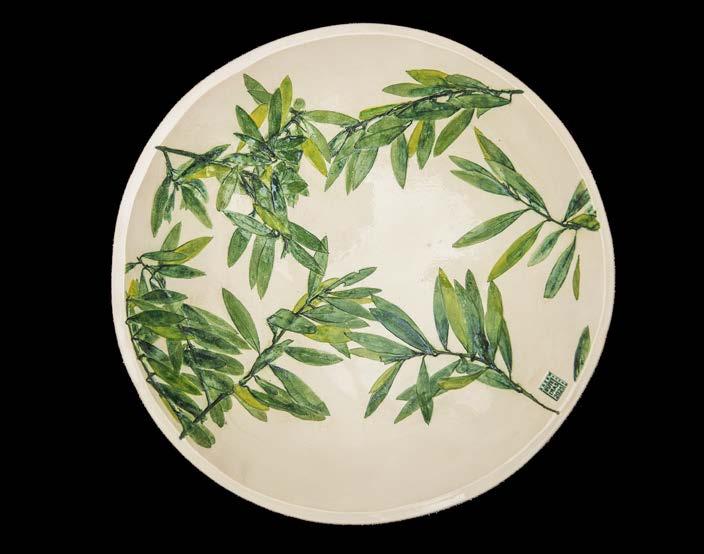
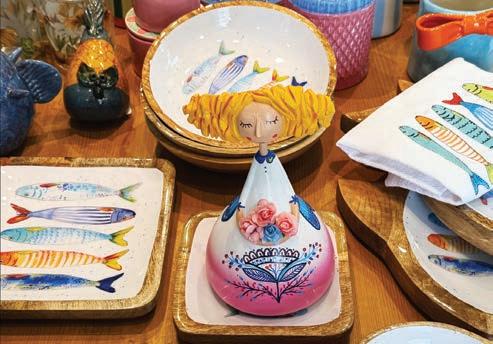
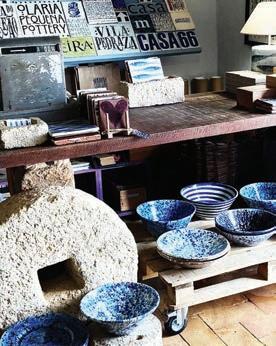
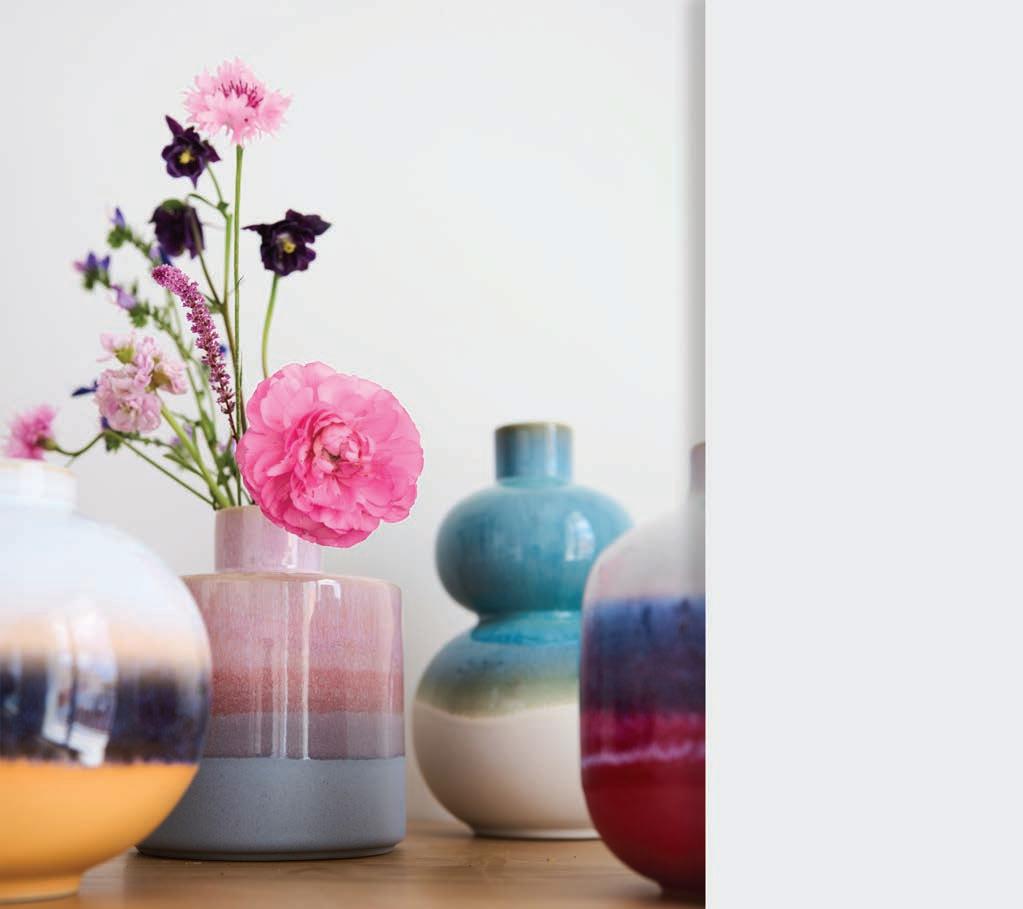
Top left, clockwise: Luz Editions light. Ben and Nadrali bowls; dainty dishes from Pomme Ceramic; Catarina Gonçalves at Loulé Criativo.
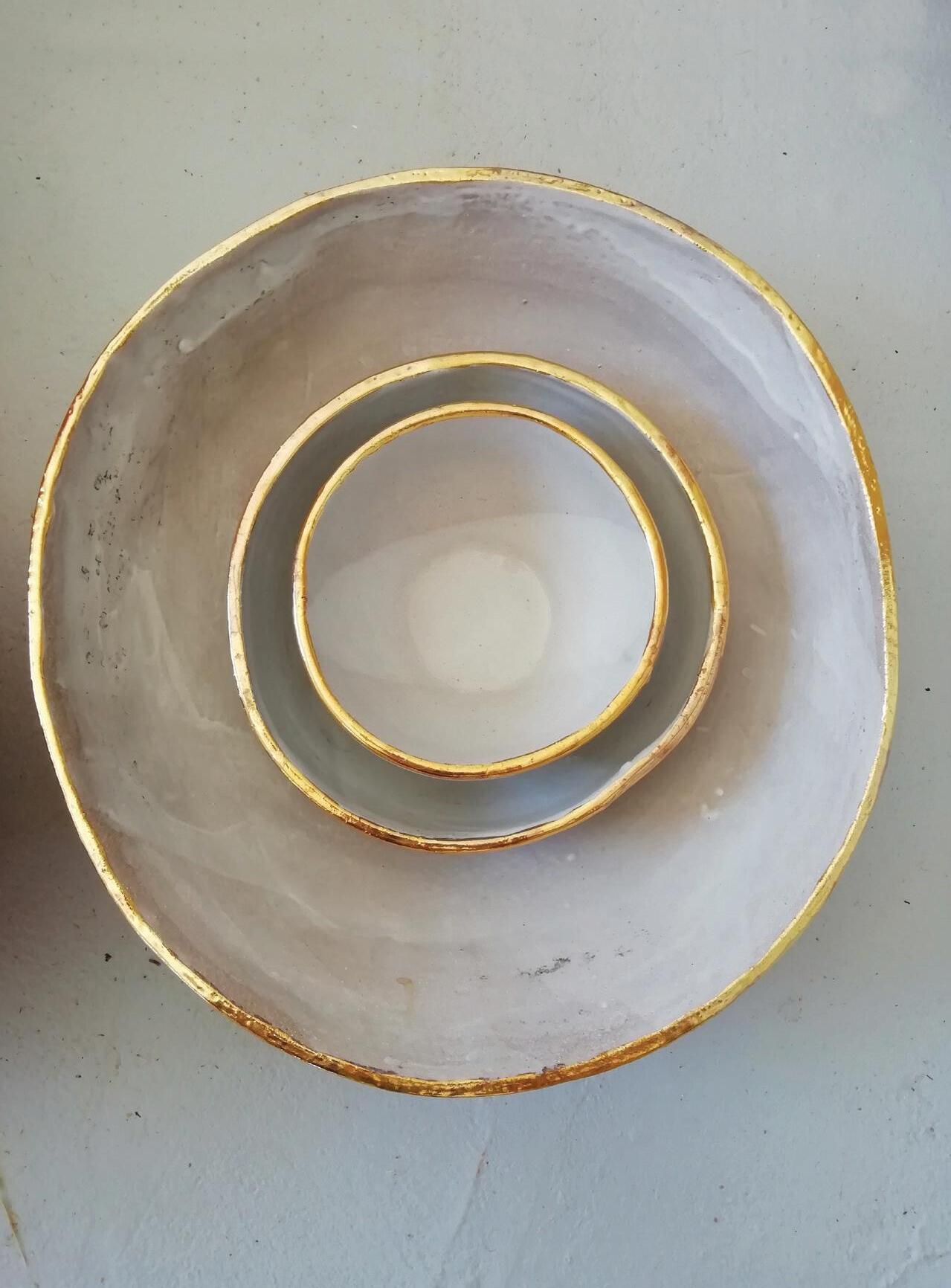
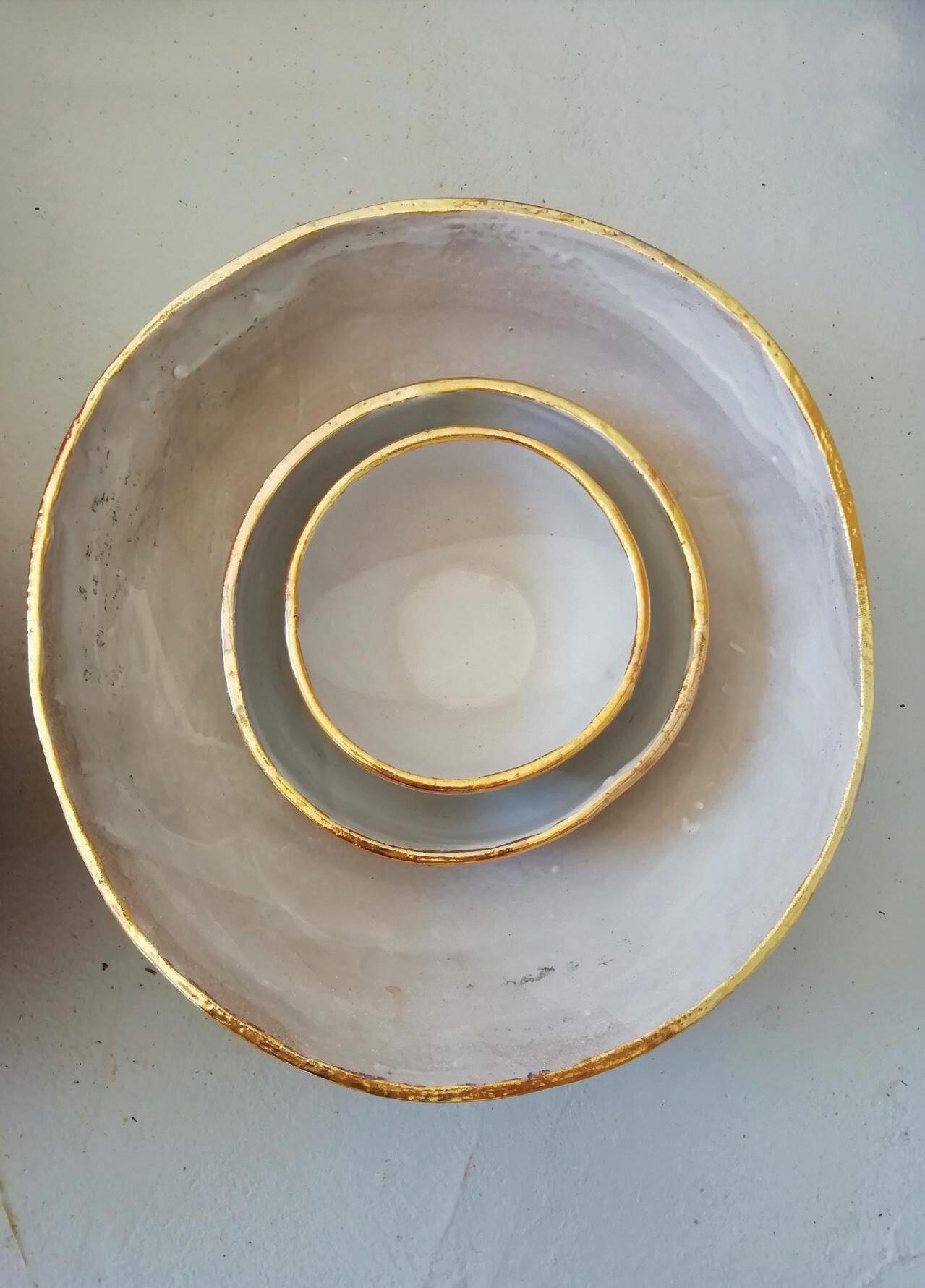
Opposite page: Bowl by Rute Dias, at Côrte Real
CATARINA GONÇALVES CERAMICS
If you were lucky enough to catch the solo exhibition Fragmentos de Memória of Catarina’s work at Loulé Criativo, Palacio Gama Lobo, then you will already be familiar with her talent for combining nature and art. If you haven’t yet seen the show, you still have until 4 July to catch a glimpse. Focusing on the unique beauty that the earth presents, Catarina’s work is gently crafted with great care and the investment of time taken on each piece. Imagine soft and comforting tones and textures mirroring the landscape outside, and offering you a moment of true peace and reflection. Working from her studio in Loulé, you really can have a special piece of Algarve art to take home. catarinagoncalvesceramics.com
RITA CAVACO OF POMME CERAMIC
Solely responsible for the stunning look and creation of each design, Rita Cavaco has art in her blood, thanks to her mother and grandfather passing down some inspirational talent. During the pandemic, Rita discovered ceramics thanks to some courses, and the obsession began, combining her love of coffee with her very own handmade mugs. Now a range of stylish and modern pieces are available, showcasing the bestloved themes of Portugal with fresh colours that would suit every home. Ideal as a gift for someone special or as a treat for yourself, the second part of her Algarve Collection is dropping in early June. Make sure to check out her website and get your hands on your favourite pieces before they sell out. Rita is the brains behind the process from start to finish, and it is easy to see her love in every detail, from the photos and the marketing to the unique style of the piece you can enjoy in your home. pommeceramic.com
ceramics
ACROSS PORTUGAL, LOCAL CERAMICISTS WORK OUT OF THEIR STUDIOS TO PRODUCE INDIVIDUAL SIGNATURE COLLECTIONS THAT RETAILERS ARE FAST TO BUY INTO AND COLLECTORS CAN ’ T GET ENOUGH OF. WE ’ VE HIGHLIGHTED A FEW SPECIAL NAMES AND LISTED OUT GREAT SHOPPING OPPORTUNITIES, AND, OF COURSE, THE EXPERTS WHO WILL INVITE YOU TO JOIN A WORKSHOP
Words: LAURA SHEA
PAULA FRANCO, LUZ EDITIONS
Aptly named and meaning light, if you need some elegant and stylish lighting for the home, then go straight to Luz Editions. Paula Franco, the founder, prides her business on working with artists to celebrate a passion for all that is beautiful. Every piece is made to order, which makes it both unique and awe-inspiring ensuring that there is no unnecessary waste of the artists’ time and resources. You are even able to purchase some ‘imperfect’ items, which when you look at them, still appear absolutely stunning, offering a chance to consume differently and more mindfully. This authentic approach to a business is what allows them to stand out, as the craftsmanship of Portugal is celebrated, and never compromised.
PORCHES POTTERY
Porches Pottery has been providing people with its signature ceramic pieces since 1968. The majolica pottery is renowned for the bright colours and natural themes, with items ranging from coasters to full dining sets. This isn’t just a stop for a bit of shopping, this is an unforgettable experience. You can watch the designs being made and painted, and then relax on the stunning patio with a treat from the café. The setting alone makes you feel you have been transported back to a simpler time, where art and culture and history all blend for the most magical experience.
where to learn
BEN & NADRALI CERAMICS
Set up in Alportel in 2010, the couple behind this adventurous brand work together to create vibrant colours and effects in high-fire stunning glazes. Combining olive wood ash and Algarve river sand in their clays and glazes, their work has a flavour of the Algarve and their bold and instantly recognisable style features in dinnerware, cups, bowls and sculptural pieces. They also make wall-hanging plaques in ocean blues with positive messages stamped into the clay. Insta: benandnadrali
WHERE TO SHOP
Ange Boutik, São Brás Bean 17 Coffee and More, Loulé
Casa da Bli, Quinta Shopping
Côrte Real, Paderne
Espaço Luzitano, Faro Gamarama, Faro
Martina, Loulé
Olaria Nova, Lagos
Oliveira Decor, Tavira
Studio Bongard Ceramics, Monchique
Olaria Pequena, Porches
Zé e Maria, Olhão
Loulé Criativo
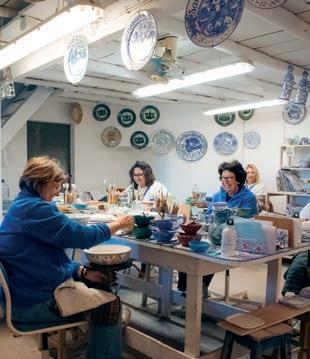
Loulé’s city centre offers so many hidden gems from history, and Loulé Criativo is another one to add to the list. Next to the medieval walls, this is a space to explore your inner artist and unleash your creative skills in a range of workshops aimed at various levels of knowledge.
You will have the chance to meet some of the resident experts in the field, and you can watch them demonstrate their techniques and see how their processes develop.
Bernadette Martins can show the Japanese skill of Raku, and blends her love of nature with her work in stoneware and porcelain. Catarina Gonçalves is based in this studio, and her exhibit is a must-see; at Loulé Criativo you can witness her creations coming to life and how her creative mind works.
And to see something honouring the tradition and history of the area, the Algarvian chimneys, watch Domingo Gonçalves, or Xavier as he is known, at work, in collaboration with his son Antonio, they are ensuring that the beauty of this form is not lost to time. Check out what workshops are available and when on the website – tile painting is particularly popular. loulecriativo.pt/
Porches Pottery
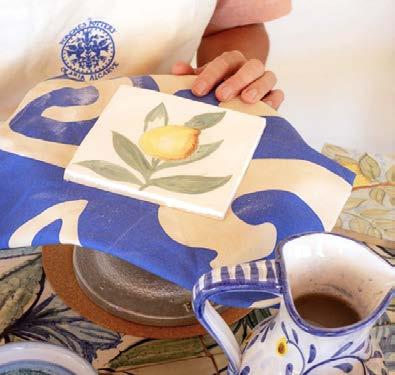
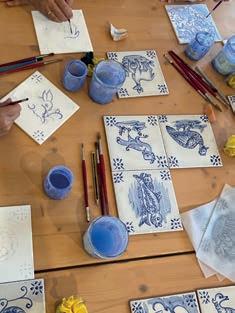
This year, for the first time, the historic Porches Pottery is running workshops, every Wednesday, 09h30–12h30, where you can paint your own azulejo, the traditional Portuguese tile, and as an extra treat, lunch is included! In an intimate group setting, you will learn the practical fundamentals and the cultural history of one of Portugal’s most iconic art forms, directly from one of its most famous producers. porchespottery.com
Ben & Nadrali
Go on one of the Ben & Nadrali workshops and you’ll be back for more. Some are held in the couple’s studio in Santa Barbara de Nexe for small groups or they can come to you in your own location and provide a paint-a-pot experience, returning your finished glazed piece to you within a couple of days. This is perfect for retreats and small groups on holiday and parties. You’ll get smooth clay from which to create your own piece, or you can choose to have a ready-fired piece to paint. Great instruction is given, and the workshop atmosphere is friendly.
benandnadraliceramics@outlook.com
Top, left and right: Porches Pottery showroom, and a tile you can learn to paint in the pottery’s workshop. Above: Casa da Bli in Quinta Shopping has many exclusive pieces
Discover Solar do Bisavô
WHILE BIG INVESTMENT-LED, CORPORATE HOTEL OPENINGS STILL DOMINATE THE HEADLINES IN PORTUGAL’S TRAVEL WORLD, AT ALGARVEPLUS WE REMAIN MOST INTERESTED IN THE COUNTRY’S SMALLEST AND MOST PERSONAL NEW STAYS
Words: EMMA CAMPUS, DESIGN ESCAPES PORTUGAL
At Solar do Bisavô, every area tells a personal story of quiet, considerate design and careful planning. This is not a place that demands attention, but it is one that cannot fail to delight its guests who will return time and time again
HERE’S OUR thinking: Not the sprawling resorts with rooftop bars and branded spas, but a quieter generation of owner-led hotels created slowly and thoughtfully – places with fewer rooms, stronger identities and a genuine connection to the buildings they inhabit and the landscapes around them.
Beyond the Algarve coast’s endless cycle of polished developments and increasingly interchangeable luxury concepts, a small collection of intimate countryside hotels has quietly reshaped the region’s hospitality scene over the past decade. Hotels where atmosphere matters more than spectacle, where restoration takes precedence over reinvention, and where owners remain deeply involved in daily life, really extensions of their own homes.
In Loulé, where we set our scene for this month, Farmhouse of the Palms once represented a pure expression of that spirit tucked away in the Algarve’s interior. A serene whitewashed retreat that captured the softer, slower side of the region before its recent sale to private owners, quietly marked the end of an era for one of the Algarve’s original boutique pioneers, Frank and Véronique Persy.
And two years ago, Alex and Liz Harvey opened Âmago – Uma Casa Lenta to help fill that gap, their own interpretation of intimate, character-driven hospitality rooted in stylish simplicity and a strong sense of place.
A new addition
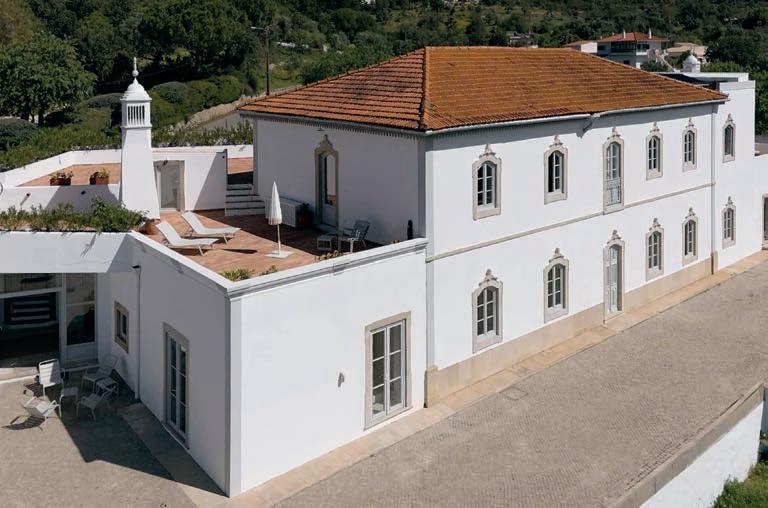
And now, there’s another newcomer to add to our list of recommendations for friends and family visiting us on holiday. A small quinta near São Brás de Alportel that, after almost seven years of careful, patient planning and renovation, is gently joining this growing community.
Solar do Bisavô is the latest addition to the still relatively small collection of authentic, stylish, owner-led hotels redefining the Algarve beyond its coastline. Tucked quietly into the countryside, this
Solar do Bisavô is a perfect example of the small, intimate hotel where personal touches make a marked difference. Owner-run exclusive establishments think small and focus on detail, and that is what puts them in a class of their very own
is the kind of opening that could easily pass unnoticed if you weren’t looking for it. In fact, we almost missed the gate as we arrived at golden hour on a hazy spring afternoon. There are no dramatic entrances here. Instead, the old palacete reveals itself slowly beyond a thick stone wall flanked by wild gardens and a view stretching all the way down to the sea.
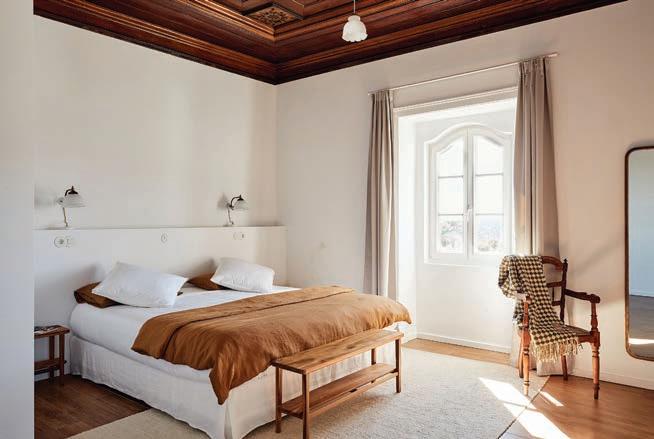
Standing together in the driveway, linen-clad Pascale and bold-spectacled Igor – a couple from Paris who traded city life for the central Algarve countryside –greet us with warm smiles in front of their new baby: an old manor house left largely untouched for almost five decades. In an era where boutique hospitality increasingly leans towards polished uniformity disguised as authenticity, this immediately feels refreshingly restrained – simple and understated, yet at the same time cosy and deeply curious.
Stepping through the doorway with our bags, I’m struck immediately by the original features that remain proudly
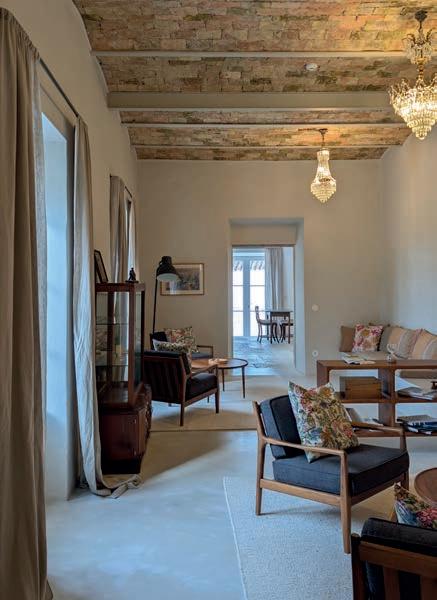
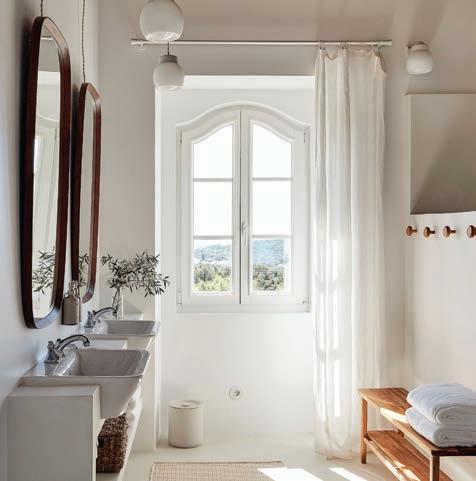
visible throughout the house: thick stone doorways, old wooden ceilings restored rather than replaced, aged dappled wall textures preserved instead of concealed beneath layers of contemporary luxury finishes. It’s clear that, crucially, in that enviably effortless, classic French way, Pascale and Igor resisted the temptation to over-design.
The result feels immediately calm, elegant and deeply personal, a sensitive restoration that preserves the soul of the building rather than polishing it into something unrecognisable.
Peace, quiet and calm
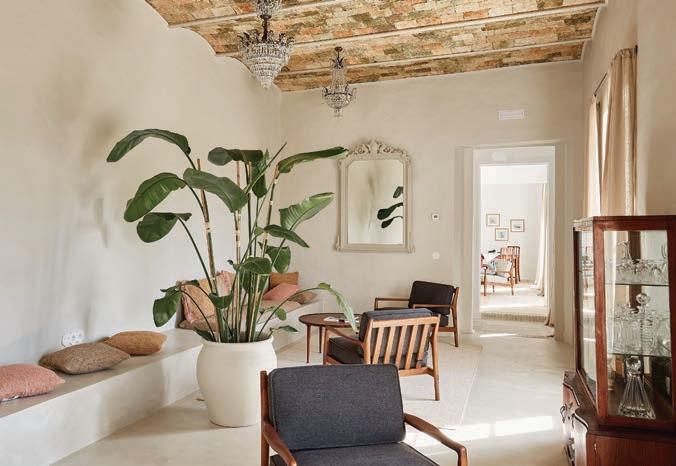
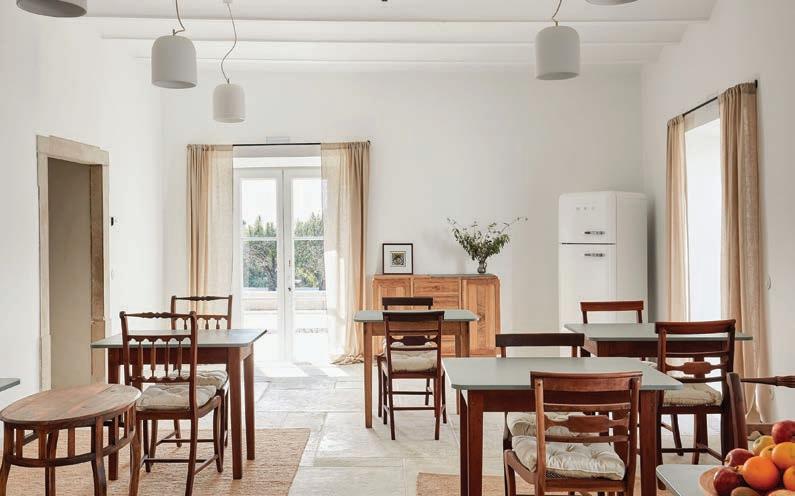
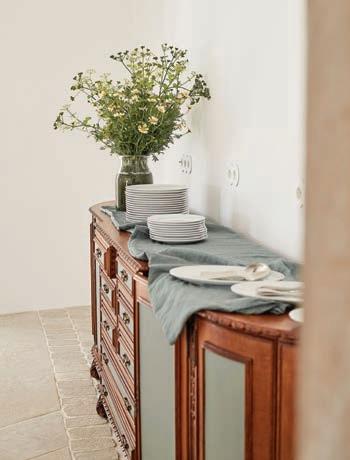
The house retains the atmosphere of an old Algarvian manor home while offering the quiet comfort of a beautifully lived-in private residence. Nothing feels overly curated, overly decorative or staged for photographs. Instead, the spaces rely on texture, light and atmosphere and the interiors strike a careful balance between refinement and simplicity; antique
The house retains the atmosphere of an old Algarvian manor home while offering the quiet comfort of a beautifully lived-in private residence. Nothing feels overly curated, overly decorative or staged for photographs.
furniture sits comfortably alongside soft linens and natural materials, while the proportions of the old house – high ceilings, thick walls and tall windows – allow the architecture itself to take centre stage.
Walls are adorned with books and subtle sketches, line drawings depicting scenes of traditional Algarve life –fishermen hauling in their catch, women chatting beneath washing lines, farmers tending fields and quiet village moments that root the house firmly within its landscape and history.
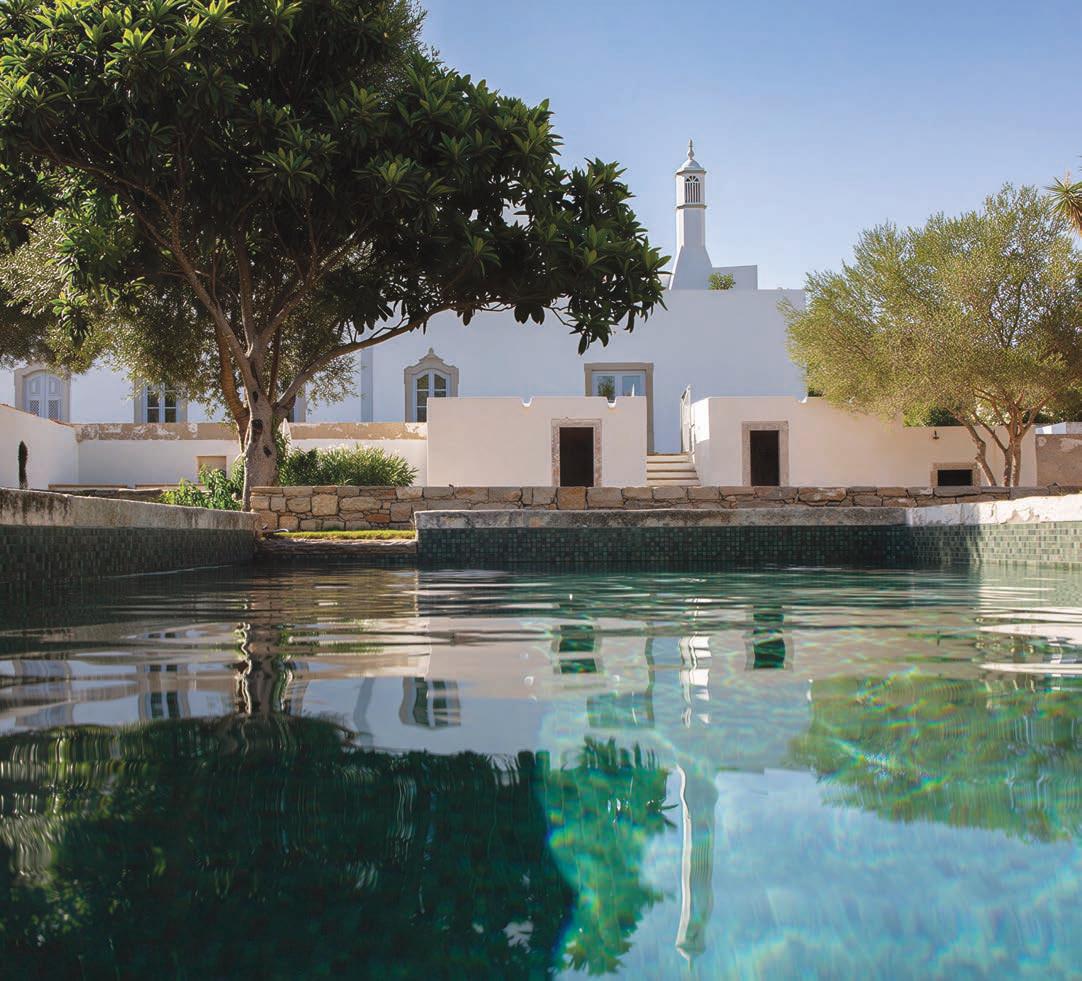
Outside, the gardens feel wonderfully established, dotted with orange and kumquat trees that perfume the warm afternoon air. We wander onto the terrace and along gravel paths past the ‘in-progress’ vegetable and herb garden, weaving between pockets of shade and sun towards the swimming pool, lined entirely with old stone salvaged from the land during the renovations. The tank feels less like something newly built and more like something discovered – evocative of a Provençal farmhouse, elegant but softened by age and texture.
By late afternoon, the light is beginning to soften across the surrounding countryside. Cicadas hum quietly through the gardens as warm light washes over the pale façade of the house. We can’t resist a dip and a glass of wine before padding upstairs to our suite and, with just four rooms in total (soon to be six, with the addition of two new spaces, the ‘cave’ and ‘stable’), the house feels wonderfully calm and intimate.
The translation of Solar do Bisavô is ‘Great Grandfather’s House’, and there’s certainly a strong sense of being welcomed into a nostalgic and familiar home rather than processed through a
Like the best small hotels, Pascale and Igor remain central to the experience, and what ultimately defines Solar do Bisavô is not its design, however beautiful, but the discreet presence of Pascale and Igor themselves.
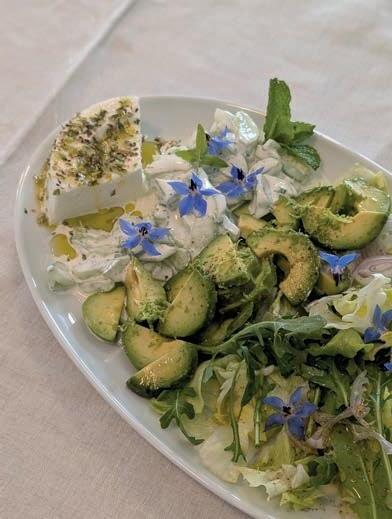
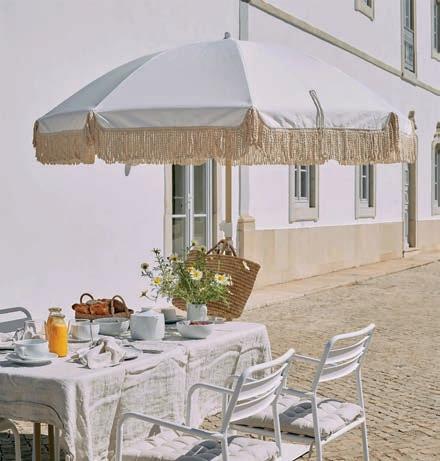
The next morning, as they do each day, they prepare breakfast, chitchatting with guests as they trickle down after deep night’s sleep. Breakfast arrives; fresh eggs, seasonal salads (Pascale’s speciality!), fresh juice, homemade crumbles, cakes, pastries and excellent speciality coffee, prepared by self-taught Igor on his beloved Rocket machine.
As we reluctantly pack up to head back towards reality, I reflect on how perfectly positioned the hotel feels, too. Sitting just below São Brás and above Estoi, the Solar occupies that ideal middle ground between coast and countryside. Faro, Tavira and the beaches remain within easy reach, yet the surrounding landscape still feels unmistakably local – whitewashed villages, winding roads lined with olive and almond trees, and cafés filled with residents rather than tourists.
It’s safe to say that Solar do Bisavô, alongside Casa Âmago, now sits firmly at the top of my list to recommend to anyone seeking an Algarvian experience that feels increasingly difficult to find: one with genuine soul. Quietly, confidently and without unnecessary fuss, Pascale, Igor and their Solar are part of an important and growing group of small Algarve hospitality projects proving that the future of ‘luxury’ hospitality should always, in fact, feel personal.
SOLAR DO BISAVÔ Rua José Sousa Gago Pai, 141 A, Santa Bárbara de Nexe / solar-do-bisavo.com
Perfect pairings
IN JUNE, WHEN THE CITY CROWDS BEGIN TO SWELL WITH HOLIDAYMAKERS AND THE HARVEST IS STILL A DISTANT DREAM ON THE HORIZON, THE PORTUGUESE TABLE INVITES LIGHTNESS, FRESHNESS, AND CONVIVIALITY WITH LOCAL WINES PARTNERED WITH THE VIBRANT FLAVOURS OF SUMMER CUISINE
Words: LÍVIA MOKRI
AS THE SUN climbs higher and the days grow longer, Portugal awakens to the rhythms of summer: open-air markets, sizzling grills, and ocean breezes that carry the scent of salt and citrus. From the rocky Atlantic coastline to the fertile valleys inland, Portugal’s wine culture is as diverse as its culinary heritage. Today, we explore how to marry summer dishes – from grilled seafood to salads and light meat plates –with Portuguese wines that elevate every bite and sip. Wine pairing isn’t just a technical exercise; it’s about enhancing an experience. In summer, two factors dominate:
Temperature: Chilled wines flatter cold dishes and refresh the palate.
Flavours: Summer cuisine often balances brightness (citrus, herbs), oceanic salinity, and light fats – all of which call for wines
with vibrant acidity and aromatic nuance. Portuguese wines have a natural affinity for these elements. Many come from cool Atlantic-influenced regions, express crisp acidity, and showcase indigenous grape varieties that thrive in warm weather without losing elegance.
PRACTICAL TIPS
Here are a few summer pairing principles, distilled from Portuguese terroir and tradition:
1. CHILL WITH PURPOSE
Serving temperature changes perception:
Whites and rosés: cooler (8–12°C)
Light reds: slightly cool (12–15°C)
Too cold dulls flavour; too warm loses freshness.
2. KEEP IT LOCAL
Portuguese wines and Portuguese dishes are often born from the same terroir and
cultural palate. This innate harmony makes pairing intuitive and rewarding.
3. THINK TEXTURE, NOT JUST FLAVOUR
Oily or creamy foods crave acidity. Crisp wines cut through and refresh the palate, making each bite feel new.
4. HERBS AND CITRUS ARE HEROES
Summer cuisine loves parsley, oregano, coriander, basil, lemon and orange zest. Choose wines that echo or complement these notes – many Portuguese whites do this superbly.
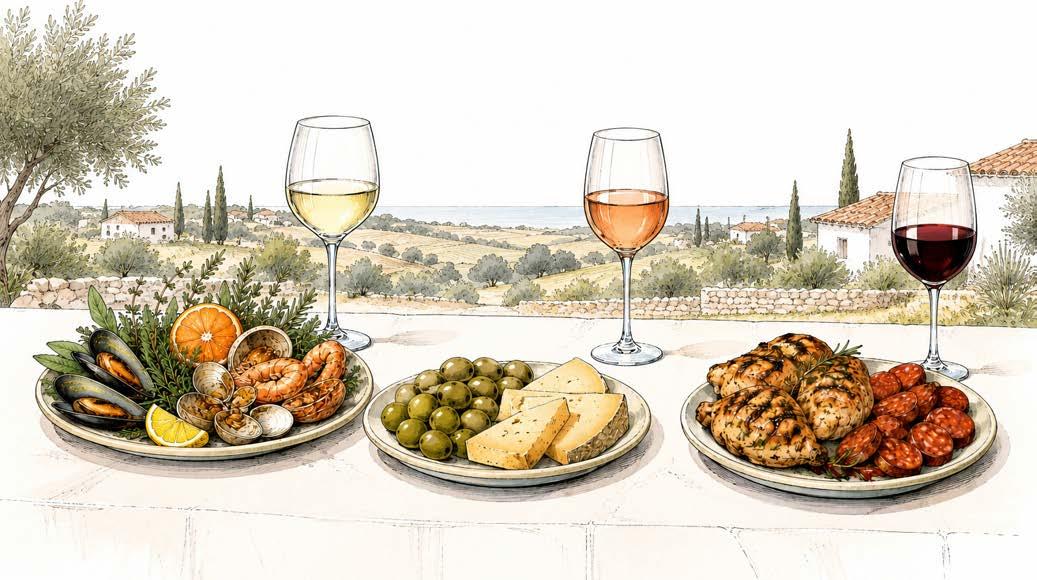
Turn the page for six standout Portuguese wines, each paired with seasonal summer dishes you’ll find gracing tables from north to south. Whether you’re hosting a seaside lunch or offering recommendations to travellers, these pairings embody summer in every sense – effortless, bright, and thoroughly delicious.
VINHO VERDE: PERFECT WITH GRILLED SARDINES
MY WINE SUGGESTION: Quinta de Azevedo Loureiro
Region: Vinho Verde
Vinho Verde is the quintessential summer wine. Light, spritzy, and bonedry, it brings a zesty lift with citrus and green apple notes. The slight effervescence makes it especially refreshing under the sun.
Food pairing:
Grilled sardines with sea salt and lemon. Sardines are a staple of Portuguese summer – simple, smoky, and rich with oils that demand acidity and brightness. This Vinho Verde’s sprightly citrus and minerality cut through the fat, cleansing the palate between bites and highlighting the briny, citrus-kissed fish.
Serve both slightly chilled on a shaded terrace for maximum impact. Why it works: High acidity and subtle bubbles make a perfect counterpoint to grilled, oily fish. garrafeirapepe.pt/ loja/garrafeira/vinhos/ brancos/vinho-quinta-deazevedo-loureiro-escolhabranco-2023/
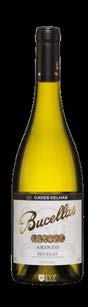
ARINTO: SALADS, SEAFOOD AND SALTY ANCHOVIES
MY WINE SUGGESTION: Arinto de Bucelas
Region: Bucelas, Lisboa
The Arinto grape delivers racy acidity and lemony freshness without overwhelming weight – ideal for lighter fare.
Food pairing:
Mixed green salads with citrus vinaigrette
Octopus carpaccio
Anchovy toasts
Arinto’s combination of bright acidity and saline undertones makes it versatile with summer salads dressed in olive oil and citrus, and with seafood that carries brine and delicate smoke. Why it works: Citrus backbone mirrors the acidity in dressings and its minerality echoes the sea. garrafeiraportugal.pt/pt/ lisboa-vinho-branco/14090vinho-branco-doc-bucelascaves-velhas-bucellas-arinto75-cl.html
ALVARINHO: SUMMER SHELLFISH FEAST
MY WINE SUGGESTION:
Anselmo Mendes Contacto Branco Region: Monção e Melgaço (Vinho Verde)
Alvarinho – the noble white of northern Portugal – offers a richer texture than many Vinho Verde wines, with aromas of apricot, citrus blossom, and fresh herbs.
Food pairing:
Shellfish (clams, prawns, scallops) in garlic and olive oil. When you prepare shellfish, simply lightly sauté them with garlic, parsley, and a squeeze of lemon – Alvarinho complements without overpowering. Its ripe fruit notes balance the sea sweetness and its energising acidity refreshes between bites.
Why it works: Aromatic richness + clean finish pairs with sweet, briny seafood. cavelusa.pt/loja/vinho/ portugueses/anselmomendes-contacto-branco/
RAMISCO: CHILLABLE RED FOR SUMMER MEAT DISHES
MY WINE SUGGESTION: Adega Regional de Colares Ramisco Region: Colares (near the Atlantic coast)
Red wine in summer? Absolutely... when chosen wisely. Ramisco, grown in sandy soils near the ocean, produces a lighter-bodied red with firm acidity and savoury red fruit character.
Food pairing: Grilled chicken with herbs and lemon, or chorizo tacos
The wine’s acidity and moderate alcohol make it suitable for warmer weather and red meat that isn’t too heavy. Serve slightly cool (about 14–15°C) to enhance its refreshing qualities. Why it works: Light red with high acidity bridges the gap between wine and grilled summer meats.
Rosé isn’t just a trend – it’s a lifestyle during hot months. Made from the Baga grape in Bairrada, this rosé delivers crisp red fruit, subtle spice, and refreshing acidity.
Food pairing:
Gazpacho
Watermelon and feta salad
Tapas with olives and Manchego This rosé’s fruitiness and structure make it versatile with cold soups and summery salads. It’s a wine that invites conversation, laughter, and another glass. Why it works: Fruit + acidity = crowd-pleasing versatility with chilled plates. portugalvineyards.com/ en/bairrada/25009prior-lucas-fenixrose-2022-718114120070. html
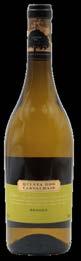
DÃO WHITE: BLEND –ELEGANT SUMMER SIPPER
MY WINE SUGGESTION: Quinta dos Carvalhais Colheita Branco
Region: Dão
A blend often featuring Encruzado and other indigenous whites, this wine combines complexity with freshness. Expect floral aromatics, stone fruit, and a crisp finish.
Food pairing:
Grilled asparagus with olive oil and lemon
Light fish stews
Goat cheese with herbs
With slightly more body than a basic Vinho Verde, this Dão white has the complexity to stand up well to earthy greens and light stews without losing its refreshing appeal. Its balanced structure supports flavours without masking summer brightness. portugalvineyards.com/ en/dao/7182-quintados-carvalhais-colheitawhite-2023-5601012004717. html
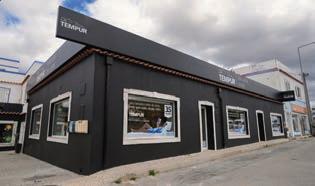
TEMPUR PRO ® COOLQUILT™
Our most adaptive cooling mattress ever. Inside, our new TEMPUR ® Advanced Material relieves 20% more pressure*, adapts even better and absorbs more motion. While our innovative SmartCool™ Cover is cool-to-the-touch and absorbs excess heat to keep you feeling cool and fresh.
Come and discover this unique TEMPUR ® feel and enjoy a different shopping experience in Algarve.
IN A WORLD OF RAMPANT THROWAWAY CONSUMERISM, IT’S COMFORTING TO KNOW THAT SUSTAINABILITY IS CATCHING ON AND SHOWING UP AT VINTAGE MARKETS SECONDHAND, AND AT CHARITY SHOPS ACROSS THE ALGARVE
Words: DEBBIE REYNOLDS
Preloved and reloved
CALL ME old fashioned, but my furniture penchant has always erred on the side of vintage and antique rather than modern and functional. I can totally see the beauty of the sleek uncluttered nouveau design of our modern world, but I could never lose my heart to it.
My passion is for those imperfect pieces passed down through the ages that tell stories of times, places and people that shaped our future. Vintage clothes have that same unique appeal, especially the high-quality curated pieces which have been worn once or twice but will last several lifetimes. Old and interesting gets me every time, not to mention that because most people want to get rid of the stuff I love, it’s much more affordable.
So, when editor Susi, asked me to write about “the best specialist places where you can pick up bargains in unusual secondhand stuff” I was like the proverbial kid in a candy store.
First stop, my stomping ground of Tavira which is known for its bi-monthly Saturday morning (every first and fifth Saturday) flea market outside the Mercado Municipal.
Soldier your way through the ubiquitous junk and nine times out of ten you’ll find the Venetian glass goblets you’ve lusted over for years or the brass bell just like your granny had. Don’t miss out on the clothes rails, because you just might find a Prada jacket or vintage T-shirt lurking around.
Next up is the delightful jumble of everything and anything which is the ACT Charity Shop at the railway crossing near the Tavira train station. A Christian-based charity started by Geoff Hickman in 2016, the shop has everything from clothes to decorations and furniture.
My most recent find there was a mid-20th century mahogany Georgian-style writing desk with brass handles and a leather inlay, hunted down after nearly five years of searching. Solid and enduring it cost less than a bland flat-pack assemble-ityourself option from a big box furniture store. Furthermore, my donation (for that is how the shop works) goes to worthy local community causes including aid for underprivileged children and the elderly or families in need. In fact, while I was ferreting round, a shopper with obviously limited resources was offered her purchase at half price with another item as a gift.
For sheer bargain hunting bliss, the Feira de Velharias on the second Saturday of every month, alongside the Fuseta camping grounds is a must. Again, you’ll find your fair share of junk and jumble, but there are also incredible finds like the solid brass chandelier a friend scouted for the same price as a regular hamburger, or the Persian carpet another friend found for a fraction of the shop price. I love showing off the two hand-engraved wood side tables I picked up there for the price of a movie ticket.
Continue up the drag to Olhão and you’ll find the Olhão Vintage 1951 store, known for its unique, historical and decorative pieces that reflect a traditional aesthetic rather than current mass-produced furniture. From here I’ve bought beautiful traditional antique mirrors and several hand-carved dining table chairs. The secret is to keep popping in, because the stock changes frequently and the item you desire might only appear months later.
961 369 342
Another gem is Moces Artists and Fleas, an NPO (non-profit organisation) pop-up market that floats around the Algarve. Often in Olhão, it also has events in Lagos and Faro, where it originated in 2022.
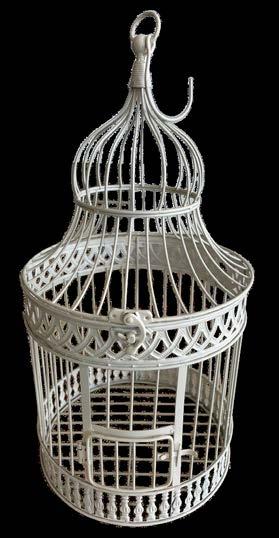
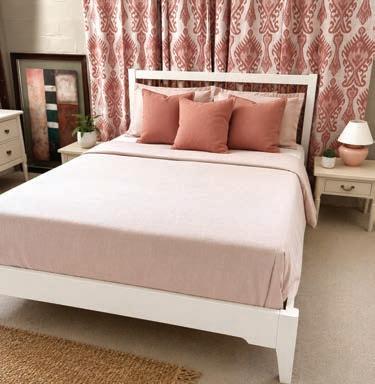
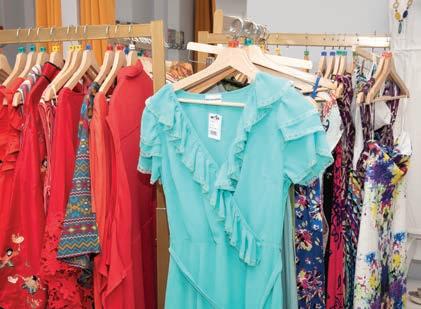
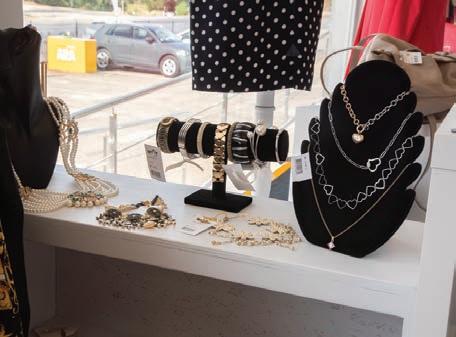
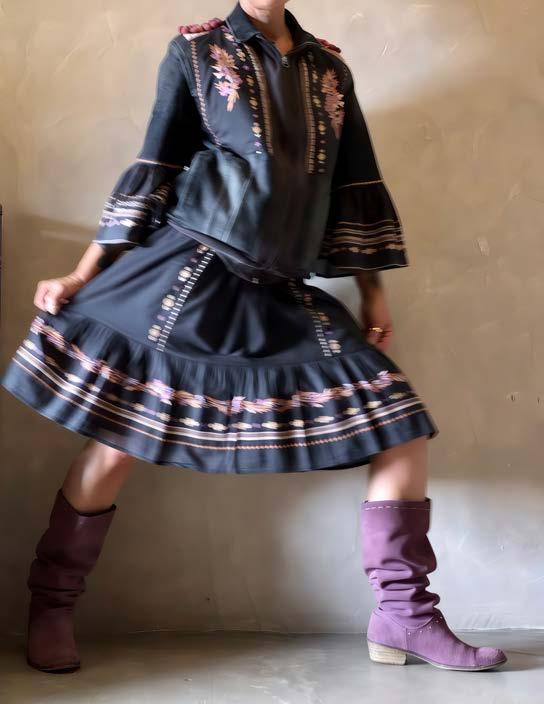
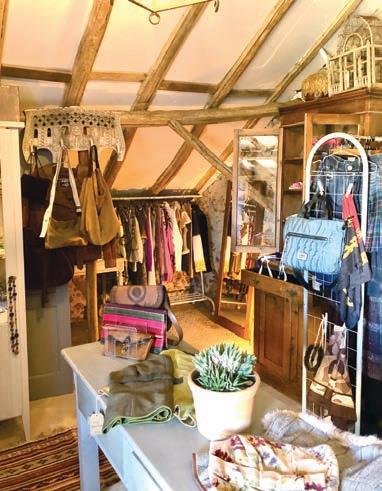
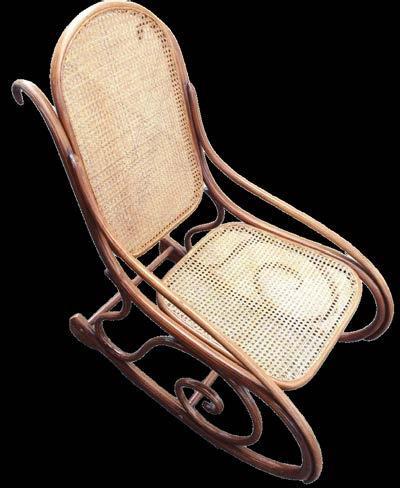
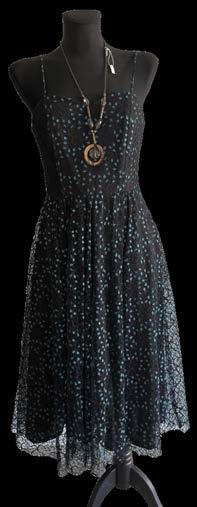
Opposite page: chairs and bed from Kit & Caboodle; decorative cage from Able: clothing and jewellery from Woof. This page; remade clothing by Kate @sussuro.studio; vintage wood burner and rocker from Olhao Vintage 1951. Following page: dress from Able
Often referred to as “the coolest market in the Algarve”, part of its charm is the vintage component offering everything from upcycled decor, antiques and collectables to clothing, which ranges from authentic retro pieces to previously loved fashion from the past ten years.
The organisers say they wanted to create a space where creativity, sustainability and community could come together – “a place where you can find traditional artisans, side by side with vintage fashion, prints, vinyl records and unique handmade pieces”. moces.pt/markets
Barking good
More firm favourites are the Wooff (Worn Only Once Fashion and Furniture) Charity Shops in Almancil, Loulé and Troto. These high-end quality stores support the muchloved ARA (Animal Rescue Algarve) which rescues abandoned dogs and cats in the area, rehabilitating them for selective adoption.
Conceived by animal lover Sid Richardson and staffed by volunteers, the shops represent the high-end experience of the shelter where I’m told the animals “live their best lives” until they are hopefully adopted
into a loving family.
The Troto store’s Sarah Elliott tells me that they are very careful about what they put on their shop floor. “We are fussy and discerning in both our clothes and furniture, but we also don’t throw anything away,” she explains. “Whatever we can’t use we pass on to other charities.”
I like the way the shop is thoughtfully merchandised with the clothes (all washed and ironed) displayed according to daywear, eveningwear, brights, denims, kiddies and men’s, and all correctly sized. The furniture section downstairs is laid out like a furniture store rather than a junk shop and it’s clear the items on display are in top-notch condition, but still fairly priced. I had my eye on a beautiful antique dresser, a silver cutlery set, a vintage brass oil lamp and some original paintings. 917 558 121 / animalrescuealgarve.com
Dressing the part
Another successful expedition was to the hills of Monchique where Kate Moore has her quirky showroom (@sussuro.studio) offering the very best of vintage and upcycled clothing. With her ethos being all about sustainability, Kate started off
selling second hand and vintage clothing at various Algarve markets.
“I realised that most women with disposable income don’t want fast fashion because they are into sustainability and ecology,” she says. “But they also want something different, so I decided to invest more time into creating handmade garments from recycled materials,” she adds.
Her studio on her Monchique farm, Wild Oasis, is packed with second-hand fabrics that she uses to remake or enhance the second-hand clothes she buys. So, for example, she’ll take a vintage denim jacket and add various embellishments or turn two skirts into one with a unique design and fabric mix.
“One of my designs started with a denim jacket and a cotton dress and from those I created a bomber jacket style, swapping the long denim sleeves of the jacket for soft three-quarter cotton ones instead,” she explains. “I then reshaped the jacket by removing the boxy waistband and added a soft ribbed hoodie band and changed the buttons for a zip.”
During my visit she was working on turning small pieces of waste fabric into beautiful patchwork which will be added to her latest collection. While she creates the new styles, she says she has a professional production team on the coast who make up the garments.
Her clothing is playful and definitely unique, making a visit to her showroom quite the experience. She also stocks shoes, menswear and various accessories from belts and bags to hats. Visits to the studio are by appointment only 912 120 216 / @sussuro.studio
And there’s more...
While I couldn’t visit every vintage outlet on the Algarve there are those readers shared with me which are definitely worth a visit!
Passionate about reusing existing resources, the Kit and Caboodle ethos is about giving furniture a second life and thereby contributing to a more eco-conscious way of living. Founded in 2018, the journey started with a commitment to sustainable furniture solutions and grew into a unique retail experience with two locations in the Algarve – the warehousestyle Almancil store and a more styled boutique-like shop in Alcantarilha. Or you can shop online.
289 394 257 / kandc.pt
Over in Moncarapacho, ABLE (Animal Blue Light Emergency) vintage shop supports the charity which provides fast, practical support for animals experiencing sudden injury, illness, abandonment or trauma to ensure that no animal in crisis is left suffering simply because emergency treatment cannot be afforded. The shop stocks clothing, home décor items and accessories and runs special promotions.
967 046 023 / info@able.pt
And based in Cabanas de Tavira, the Paws Charity Shop opened in 2023 to support the Cacela Dog Haven in its work of rescuing, rehabilitating and rehoming dogs in the eastern Algarve. The shop deals primarily with clothing, sporting goods, bric-a-brac, jewellery, household goods and books, but as donations grew a second shop, Paws Too, opened in Vila Nova Cacela, last year mainly to accommodate furniture donations. 926 767 544 / caceladoghaven.com
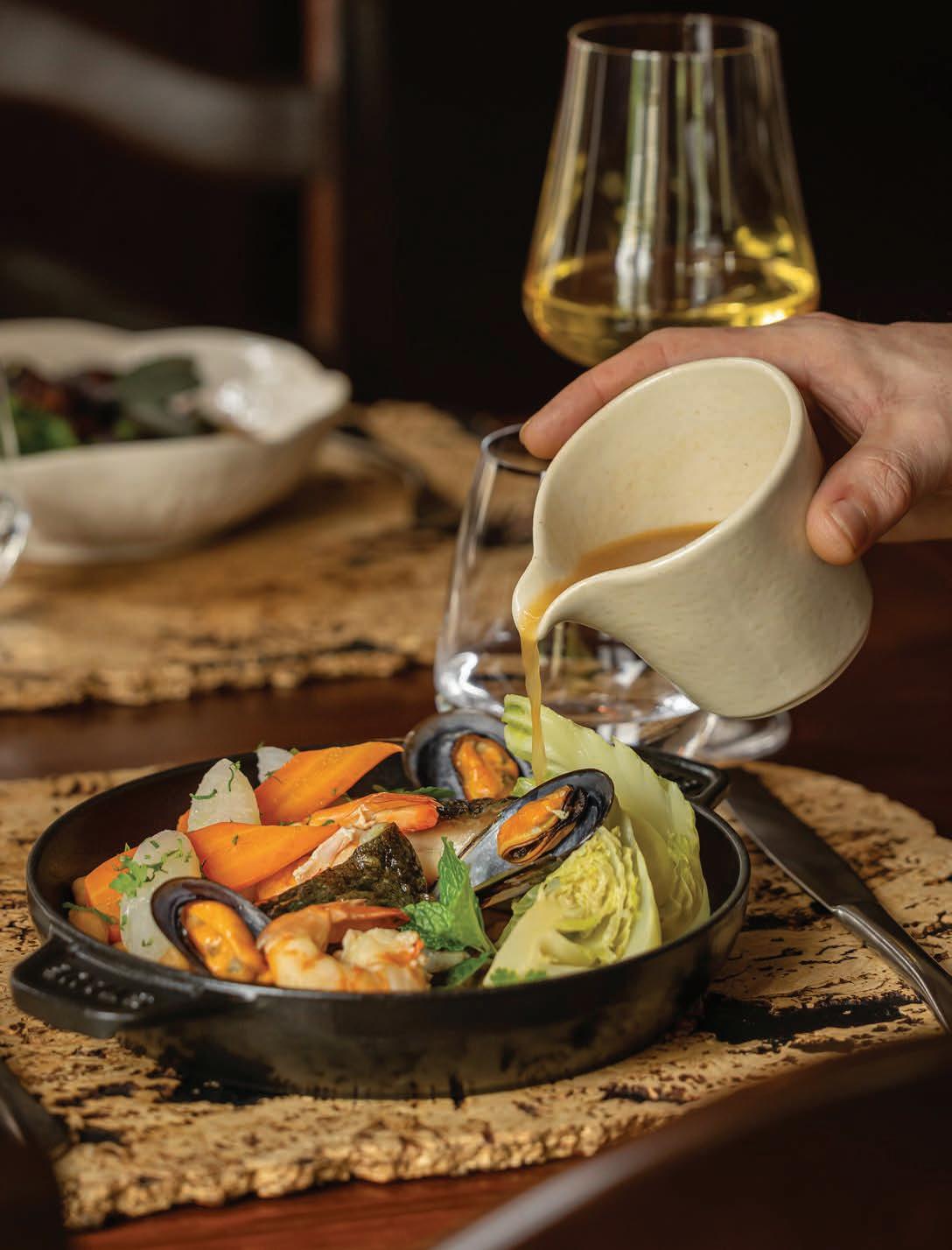
COZIDO DO MAR
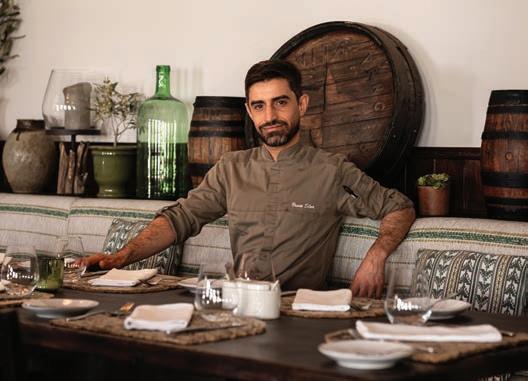
CHEF BRUNO SILVA OF THE ADEGA RESTAURANT IN THE PIAZETTA AT VILA VITA PAR, HAS SHARED THIS DELIGHTFUL RECIPE WHICH IS INSPIRED BY THE CONCEPT OF A SEAFOOD STEW, COMBINING FISH, SHELLFISH, PULSES AND VEGETABLES SERVES 2
INGREDIENTS
2 chopped onions
month...
4 cloves of garlic, sliced
200g deseeded tomatoes, diced
1 red pepper, peeled and diced
2 medium carrots, sliced
150g sliced potatoes
150g fresh fish – the choice is yours
50g mussels, or clams if preferred
60g shrimps
3 bay leaves
75ml white wine
700ml fish stock
100ml olive oil
150g white beans, a jar or tin, rinsed well
Salt and pepper, to taste
Coriander and mint, chopped, to serve
FOR THE STOCK
2 chopped onions
4 cloves of garlic, sliced
1 bunch of fennel, finely diced
1 bay leaf
Saffron threads to taste
Paprika, to taste
75ml white wine
METHOD
1 First, make the stock. Sauté the two chopped onions and garlic cloves, add the bay leaf and cook gently, then add the fennel. Cook until translucent. Add the saffron threads and paprika. Deglaze with white wine and simmer for one hour. After an hour, blend everything, strain through a fine sieve and set aside.
2 Now for the ‘stew’. Sauté the onions and garlic in olive oil. Leave to cook gently. Add the bay leaves and paprika and cook for a little longer.
3 Add the tomatoes and leave to cook until they break down. Deglaze with the wine, allowing it to evaporate. Then add the potatoes, carrots and the stock prepared earlier and leave to simmer gently.
4 When the potatoes and carrots are almost cooked, add the rinsed beans and reduce the heat to cook very gently. When all the vegetables and pulses are cooked, add the chosen fish and shellfish and cook – ten minutes should be fine.
5 Adjust the seasoning and sprinkle with chopped coriander and mint to serve.
Bruno Silva, Executive Chef of Adega Restaurant in Vila Vita Parc, was born in Lisbon, but it was in the Alentejo region, in the village of São Martinho das Amoreiras, where he built the roots that today define his identity as a chef. Throughout his career, he has consolidated a cuisine that focuses on authenticity, technical precision, and the appreciation of high-quality produce, reflecting both the influences of his personal history and the international experiences that have shaped his culinary vision.
SOCK & SOUL
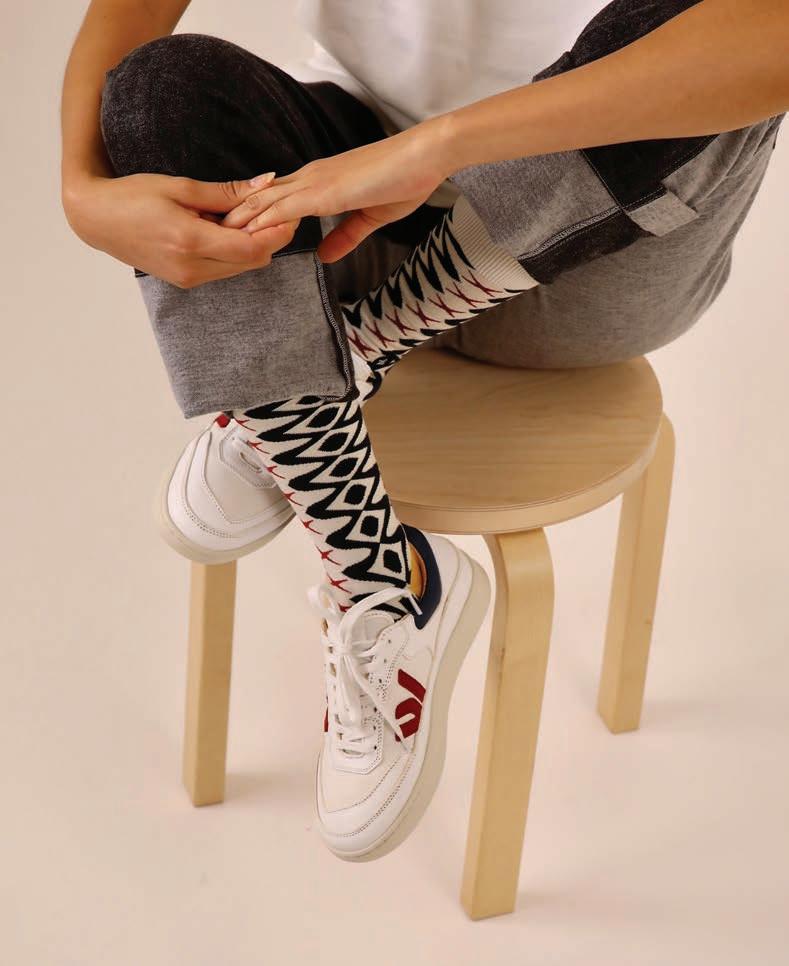
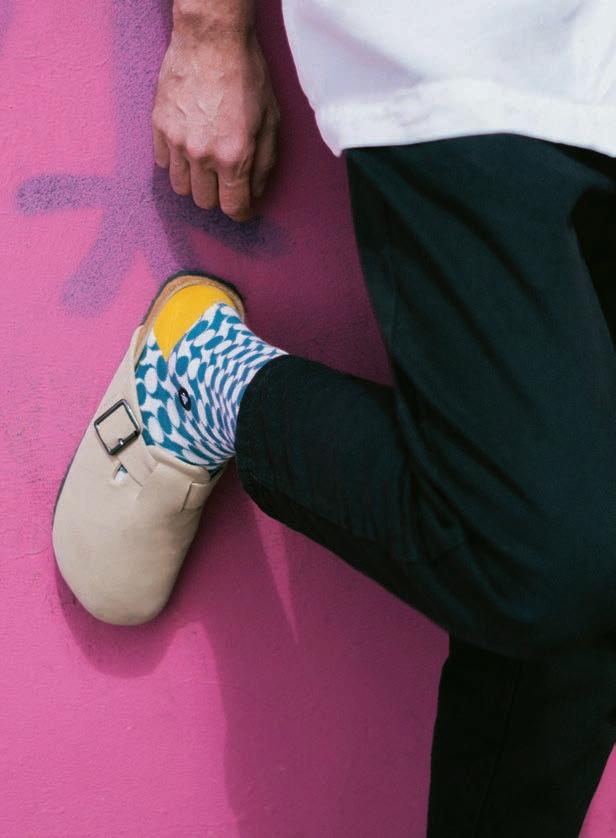
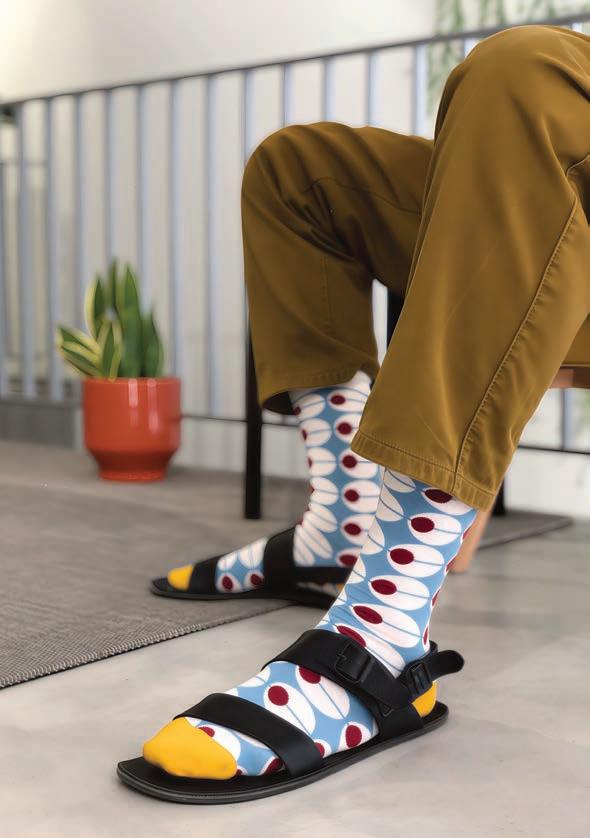
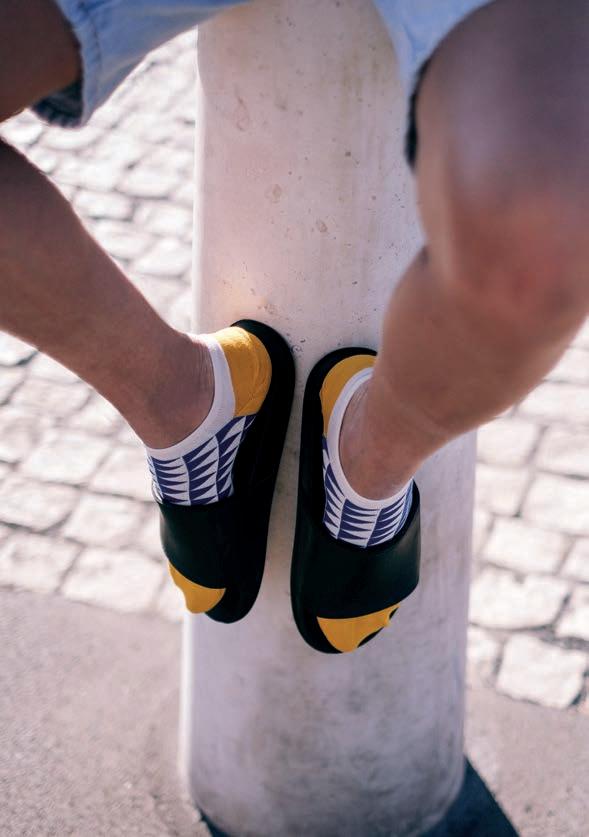
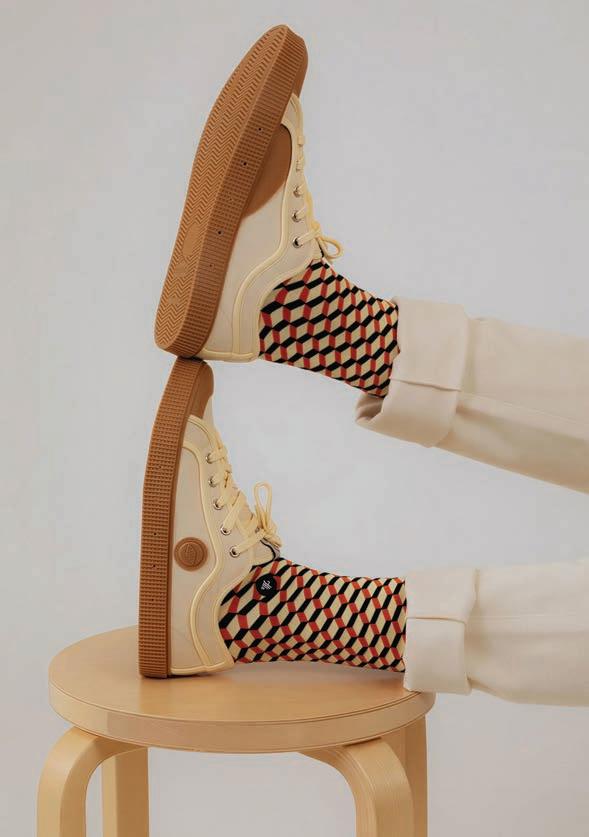
SOME PEOPLE WILL GO FOR CONSERVATIVE COLOURS AND MINIMAL PATTERNING WHEN IT COMES TO THEIR CHOICE OF SOCKS. OTHERS WILL LOOK FOR STATEMENT DETAILING THAT BECOMES AN ACCESSORY IN ITSELF. ONE PORTUGUESE COMPANY, SIR TILE ® , HAS BUILT ITS NAME, AND ITS COLLECTION, ON CULTURE, AND OUTSPOKEN GLAM
Words: MAXIMO EDUARDO
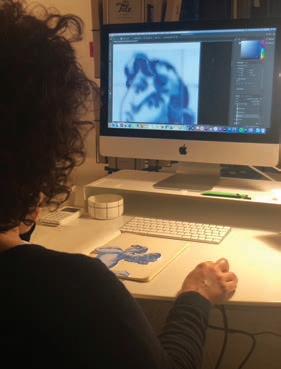
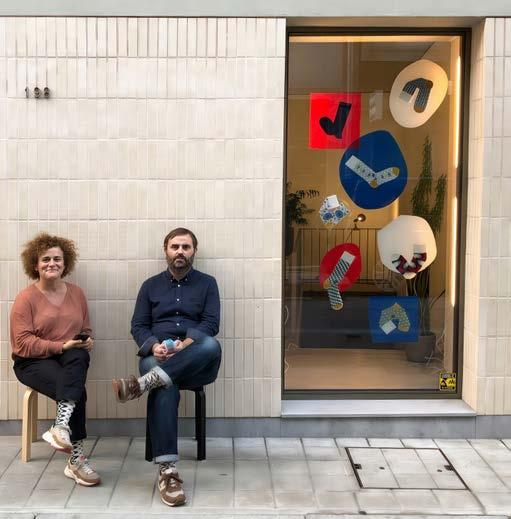
JOÃO AND Paula Portas, from Porto both studied industrial design at university and worked together as colleagues in their final year. On graduating, João focused on staying in the industrial sector while Paula opted to teach, and to study urban concepts.
So how did they move from heavyweight design to footloose and fancy free? And why socks?
Not as complex a decision as you might think –Paula’s father was a sock producer, so it was almost a natural re-direction when the couple had the opportunity to get involved in the family business, particularly in developing samples for other brands.
“Once we moved into the market and researched what was available, we felt that many products lacked a strong identity – or any identity at all, in fact – that set them apart from their competitors,” says João. “We recognised that there was space for something more connected to culture and place, room for a brand with its own personality and a special story to tell.
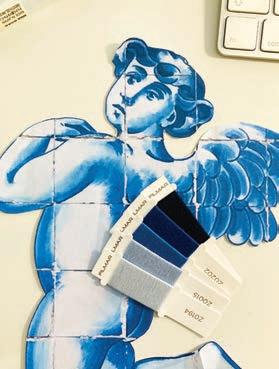
“We were drawn into the concept of developing a product that combines everyday use with a clear visual identity, rooted in Portuguese culture. Living in Porto, tiles are an integral part of our daily life. As designers, we started to look at them beyond decoration, and as a rich visual language, full of rhythm, repetition and identity. And that is how our creative strategy came together – it was an organic process of observation and interest, developed over time and supported by some research. It starts with observation, followed by the simplification and adaptation of patterns to work within the structure of a sock.
“We do not replicate existing tiles directly. We reinterpret patterns, which allows us to work creatively without relying on specific permissions. We are constantly discovering new patterns and details, which continue to inspire new designs.”
Style right
João and Paula have their own criteria before finalising a design. “It needs to work both visually and technically as a sock. Not all patterns translate well into this format,” João explains. “My father-in-law was in the industry, and we were already familiar with the manufacturer, knowing they were among the best in sock production in the country, producing for various brands, both local and international. While the family factory is no longer operating, we now work exclusively with that same producer who meets all our standards and technical requirements. The quality of materials, consistency in production, and the ability to reproduce detailed
João and Paula Portas have a clearly defined design direction for their sock collection and have built a modern business that puts heritage first
patterns accurately, which is not common in sock production, those are key criteria.”
Sir Tile works with a mix of independent stores, museums, and concept spaces, both in Portugal and abroad. Design inspiration is the result of constant awareness of the surroundings. “Cities, buildings, social media, whenever we go for a walk or on a trip –tiles are always one of our main points of attention,” says Paula.
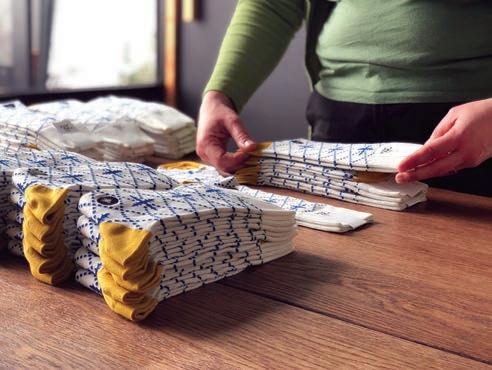
Launched in 2019, the brand currently has a base of 23 styles in crew socks and ankle socks and the collection is being added to regularly. “Our policy is to release new designs throughout the year expanding on our offer, breaking away from the conventional concepts of fall/winter and spring/summer collections,” says João.
And it’s not a one-size-fits-all concept, either; there are two adult sizes to cater for all types of feet. Cubes and Blue Triangle are patterns that perform consistently well, and of course that they appeal to both men and women is an added bonus. The socks are mainly cotton-based (90%), with polyamide and elastane for durability and comfort.
Best foot forward – what comes next? Children’s sizes are currently being sampled, and a sport sock is to be launched shortly to test the market. And the tagline, ‘Inspired by azulejos. Made in Portugal’ couldn’t be more appropriate.
You’ll be spoiled for choice on the Sir Tile website, but if you are in Porto, the brand store is located in the Miguel Bombarda district, at Rua de Miguel Bombarda 198, and the place to explore the collection, experience the patterns and connect with the brand beyond the product.
VILA NOVA DE MILFONTES
The town across the Mira
IF YOU HAVEN ’ T BEEN TO VILA NOVA DE MILFONTES YOU MAY BE WONDERING WHAT IT HAS THAT THE ALGARVE DOESN ’ T. IF YOU HAVE BEEN THERE, YOU ALREADY KNOW. IT ’ S A LESS THAN TWO-HOUR DRIVE FROM PORTIM Ã O AND PERFECT FOR A JUNE DAY TRIP OR A MINI-BREAK BEFORE SCHOOLS ARE OUT
Words: GILLIAN HISCOTT
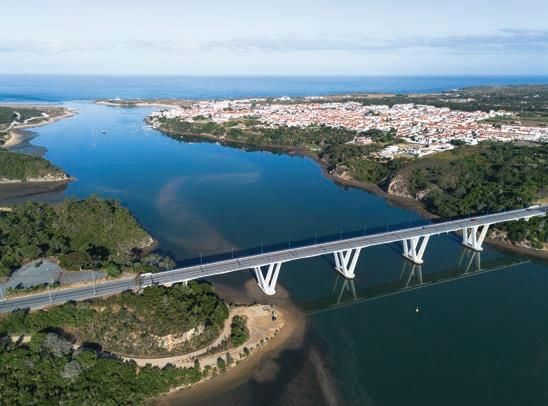
AFTER YOU have crossed the bridge to Vila Nova de Milfontes and stopped along the mouth of the River Mira where it meets the sea, you will know that the beauty is exquisite and the atmosphere less hurried. The sandy golden dunes by the river offer calm waters and safe bathing, and if you walk out around the head and along the breezy coastal path, you will get a spectacular view of the Atlantic crashing in. Many years ago, we came across the haunting spot where the wreck of a ship nestled in amongst the rocks. We used to check on its slow deterioration every year or so, but I think it’s about
gone now – just a whisper of a past tragedy. Beyond here the coastal path ends – you need some good walking shoes to get there and back again but it’s a perfect few hours for hikers.
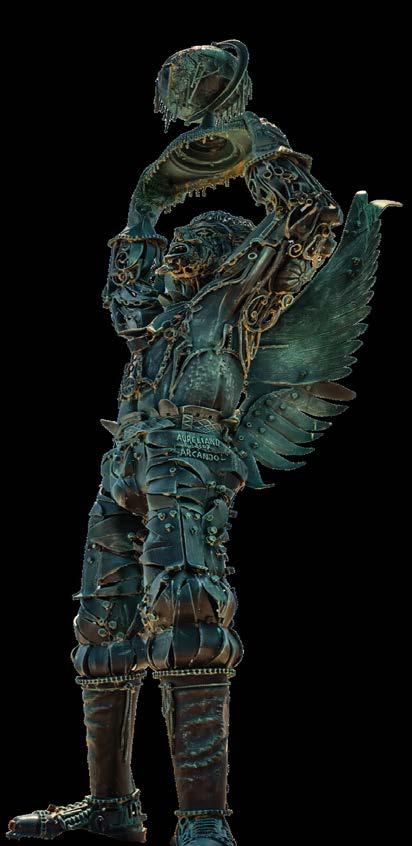
At the Lighthouse Beach roundabout in the town, stands Aureliano de Aguiar’s Archangel, created by the artist between 2007 and 2008. Made of reused iron, it stands some 3.5 metres high and conveys an ecological message regarding the human destruction of the planet. Archangel won in the sculpture category of the international Utopia Fantastic Art Prize sponsored by the Portuguese Centre for Fantastic Art.
If you are into art, Aureliano’s sculptures are worth a treasure hunt in the Alentejo. The AlgarvePLUS story on the six-metre-high Shoemaker in Almodovar last year attracted lots of ‘must visit’ comments.
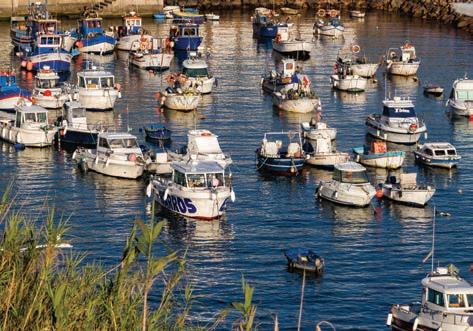
You can cross the river by boat at Vila Nova de Milfontes. The small taxi boats run frequently –mainly between the town and Praia das Furnas – and cost around €5 a journey. Here you can view Vila Nova from a different perspective and what is widely considered to be one of the best beaches in the southwest Alentejo and the Vicentine Coast Natural Park. Some companies run scenic boat trips where you can slowly cruise inland through marshes and see birds including herons and storks. There is also a trip which goes toward Odemira where the river becomes narrow, green and wild, and others along the coast.
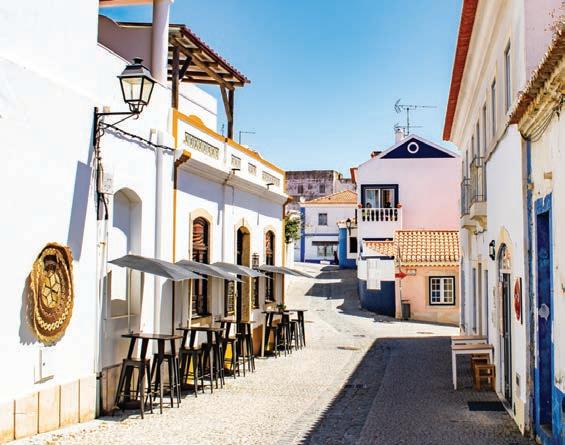
If you feel like a bit of retail therapy, browse the main street for its little boutiques and craft shops plus the usual Chinese store and the municipal market selling fish, fresh fruit and veg and other local products. Just outside the town is the Mercado das Brunheiras – a large open air street market which takes place twice a month, on the second and fourth Saturdays.
And finally, if you’ve got the time for a drive just 40 minutes away, it’s worth going to Sines. We spent a few days there and were pleasantly surprised – after going through an industrial area of refineries and power plants – to find a gorgeous atmospheric old town with winding streets, a castle and a quiet but impressive sea front and promenade.
The castle can be visited and it also hosts events, including an annual major international music festival with artists from Africa, Latin America, Europe and Asia. The 2026 festival starts on 17 July at nearby Porto Covo, and the main concerts happen from 20–25 July at Sines Castle. Interested? Check out fmmsines. pt/ where you will find all the information on artists performing, tickets, venues which will be constantly updated as artists are added.
Gillian Hiscott is a UK playwright and author. Read of her experiences of buying a ruined school with her husband in Alentejo Days, Magical Nights. Links available on gillianhiscott.weebly.com
Fairways, Avenida
Quinta do Lago
Akacorleone something different
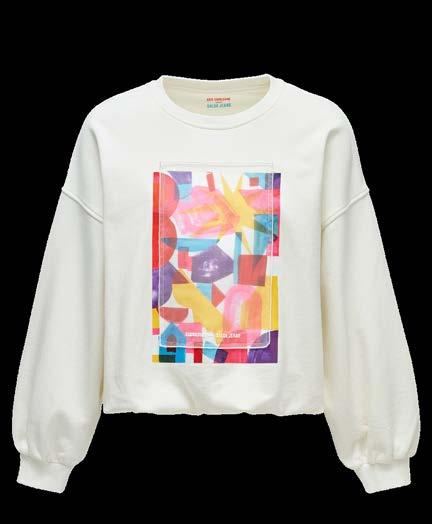
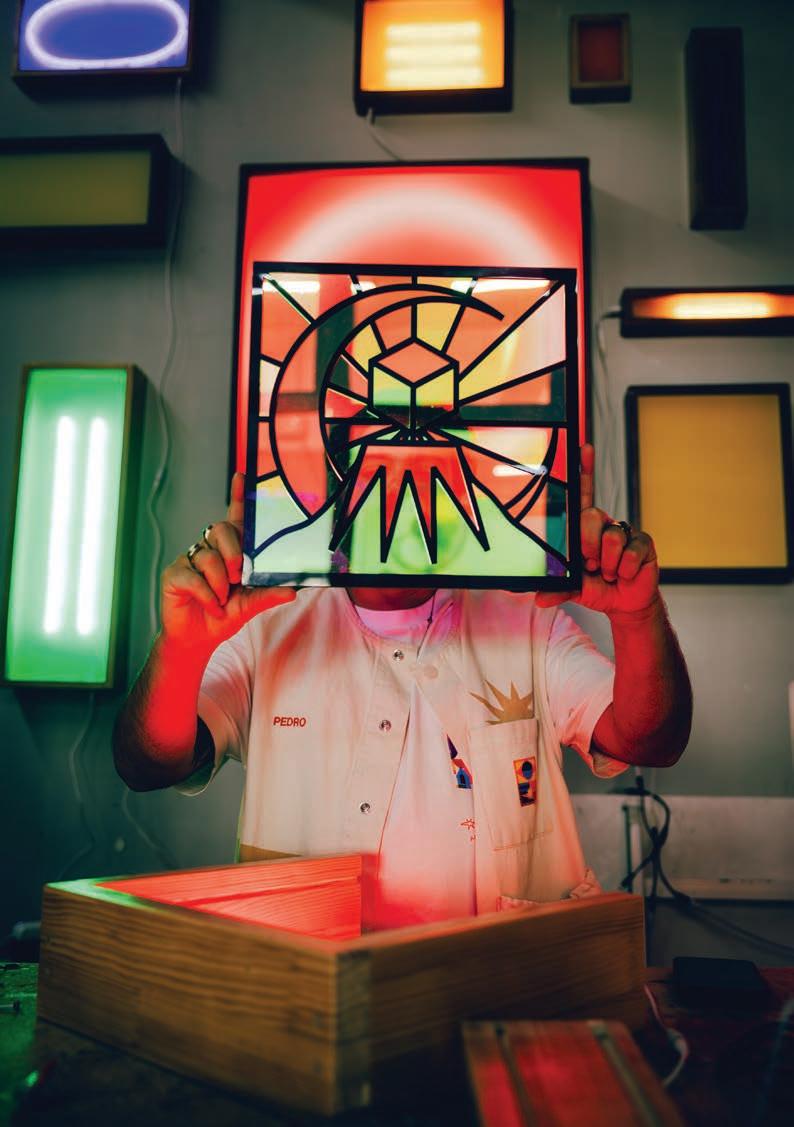
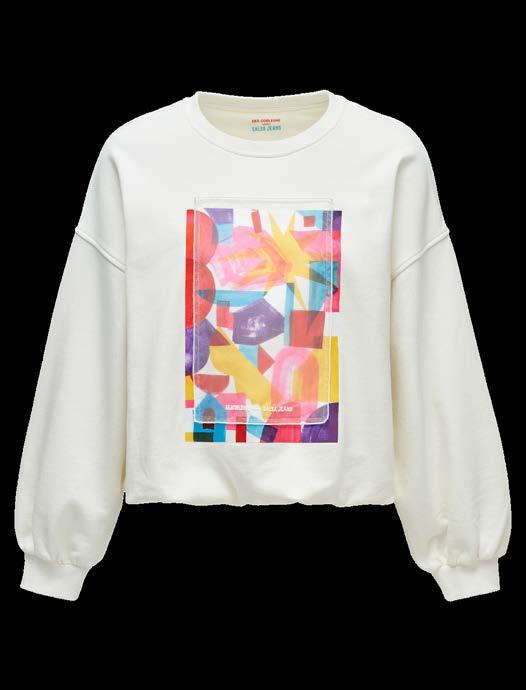
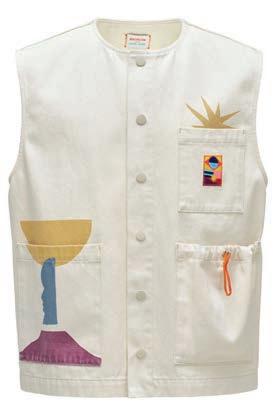
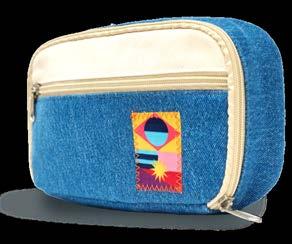
HIS FIRST ART SCHOOL WAS ON THE STREETS OF LISBON, WHERE HE FOUND HIS VOICE THROUGH GRAFFITI. HE THEN EXPERIMENTED WITH SEVERAL OTHER ART FORMS AND CURRENTLY HE IDENTIFIES AS AN INTERDISCIPLINARY ARTIST. MEET PEDRO CAMPICHE, AKACORLEONE, WHOSE COLLABORATIONS INCLUDE A COLLECTION FOR SALSA JEANS
Words: SANDRA GATO
AKACORLEONE’S artistic journey actually began with graffiti when he was around 14 and he still considers the Lisbon streets his first artistic home. At the same time, he attended an art-focused secondary school where he studied graphic design and then went to university to focus on the same arena because, he says, he thought graphic design was the closest thing to graffiti –drawing letters and working with typography. After leaving university, he worked for a few years as a graphic designer, but quickly realised it wasn’t for him.
“I quit and started working as a commercial illustrator and for some four or five years, I created imagery for magazines, advertising, independent brands, bands, and graffiti-related businesses. During that time, I also started doing exhibitions as a kind of escape from the more commercial work.
“That was when I realised that what interested and motivated me most were exhibitions. So I decided to become a full-time artist – still doing some illustration for a few years, but focusing more on gallery work and studio practice.
“At the same time, I developed my work as a muralist, travelling all over the world painting murals. I now have dozens of murals spread across many different places. In recent years, I’ve focused more on studio work and a multidisciplinary practice. Today, I define myself as a multidisciplinary artist in the truest sense of the word. What defines my style is the multiplicity of techniques, materials, and scales.”
Chosen mediums
AkaCorleone works across many different mediums: painting, watercolour, muralism, installation, sculptural pieces, laser-cut
acrylic, wood, stone, ceramics. “I think what makes a statement about my artistic style is this ability to work across different media and techniques,” he says.
For a long time, what defined his work were the colours he used – mainly primary colours (yellow, magenta, cyan) and the complementary colours created by their overlap. Today, however, he has freed him self from that palette and works more intuitively with colour. His style is also strongly influenced by surrealism, geometry and, increasingly, abstraction.
“I don’t like to put myself in a box or define myself strictly as a painter, sculptor, muralist or street artist,” he says. “I want my work to move freely between different practices without feeling restricted by a specific label.”
Why the name?
“The name AkaCorleone came about somewhat by chance. When I was doing graffiti, I had many names – different tags I used as a signature. One of them was CORLE1, because in graffiti you use the number 1 as a statement, saying: ‘I am unique’, or ‘there’s no one like me’, or ‘I can’t be copied’.
“So CORLE1 became CORLEONE, like the mafia boss from The Godfather, a film I’ve always loved and must have watched dozens of times. The name stuck when I started doing illustrations.
“The ‘AKA’ came from the fact that I had many names, and everyone called me something different. I was always ‘AKA plus some tag’ or ‘AKA plus some nickname.’ It was also the name of a blog I had a long time ago, called “also known as”. Unintentionally, that became the name associated with my work.”
The influences
“My creative process really depends on the project, since my work varies a lot,” he explains. “Mural work requires different preparation to that of an exhibition, which is different again from creating, say, a clothing collection.
“What connects all these projects is that they often start on paper or from a loose idea – something in my mind that turns
into a quick note. What I do a lot is revisit the past and try to adapt a sketch or idea to my current knowledge and the work I’m doing now. I also revisit ideas that were ‘left in the drawer’ and never had the chance to be used. If there’s a briefing, I dive into research, explore the topic deeply, draw extensively, and once I feel comfortable with what I’m creating, I begin testing and developing it on a larger scale.”
Meaningful
exhibitions
Ask AkaCorleone about a work that has special meaning to him and he’ll talk about the difficulty of making that selection. “It’s never easy to choose a standout piece, because I produce a lot of material and tend to favour my most recent ones. I often disconnect from older works because they no longer represent what I want to explore.
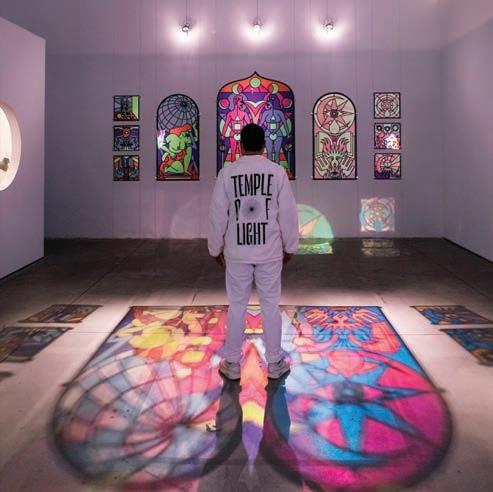
“That said, some projects have marked me deeply, like the exhibition Temple of Light at the Underdogs Gallery in Lisbon in 2021. It was very important because it created a body of work that continues to evolve. The origin of Temple of Light, the mural Equality created for the Iminente Festival in 2020, was also very meaningful – it grew into something bigger and deals with a topic that remains important to me: equality.
“More recently, my solo exhibition, Out of My Control, also at Underdogs, reflects my life as a father, professional, partner, adult, friend. It’s a more personal project focused on things beyond my control.”
A dream yet to be fulfilled
“One of my ambitions – something I’ve been working on for about three years – is to see my work in public spaces in a more permanent way, through tiles, sculpture, or bas-relief.
“I’ve done muralism for many years and understand its ephemeral nature. A painted wall has a short lifespan – it gets painted over, it fades, it gets tagged...
“One dream I have is to create a project where I can cover a swimming pool with tiles or mosaic. I’m very interested in seeing my work from an aerial perspective, interacting with water, which constantly distorts and transforms the visual experience.”
Upcoming projects
“I can reveal that I have a sculpture in a public space that’s ready and about to be inaugurated alongside works by other artists in Porto. I’m very excited about this project, as it’s an opportunity to have a permanent piece in a public space. I’m also working on several group exhibitions this year and have some travel plans ahead. Every experience adds to my story.
“It may sound like a cliché, but my inspiration comes from everything around me. From conversations, things I see, things I read, artists around me, past and present. It comes from the materials I work with, from walking in the street and noticing things others might overlook, which I document through photos or drawings. Like many artists, I’m a sponge – inspiration can come from any situation.
Collaborations
“When it comes to collaborations, it’s important for me to connect with the brand or project in some way. I look for the opportunity to learn something new or step out of my comfort zone. I’m interested in being challenged – working with brands or projects that push me to use unfamiliar materials or techniques, helping me expand my knowledge and open new creative paths.
“What was really interesting and special about the collaboration with Salsa Jeans was, firstly, working with a brand I didn’t know well. But when I visited their facilities and factory, I realised how well-crafted their work is – they are technically exceptional. What also surprised me was their focus on experimentation and finding new ways of working, especially with denim, their core.
“It was also a great opportunity for me to work with new materials and techniques, to create a collection from scratch, and to be given the freedom to propose something representative of my work. I feel it was a true collaboration in every sense of the word, with a strong team effort involved.” Akacorleone.com
Above right: The 16-piece collection AkaCorleone has created for Salsa Jeans – salsajeans.com – incorporates unique artworks in clothing and accessories that perfectly express his use of shape and colour. Below: The Temple of Light exhibition remains one of his favourites
Visit. Taste. Experience.
An award-winning taste of the Algarve.
Quinta dos Capinhas is a boutique, family-run vineyard where you can enjoy exclusive dinners, curated tastings, and wines crafted in harmony with the land.
Your hosts, Horst and Inês, share their expertise and stories to make every visit memorable.
Our dinners and tastings can cater for a maximum of 30 guests. Whatever feels right today - a tasting with buggy ride, a picnic by day, or a tranquil dinner by night, call us to enjoy our carefully crafted events –by wine lovers, for wine lovers.
Estrada da Carrasqueira, 8400-458 Porches
ITINERANT ARTIST
WITH BEAUTIFUL NEW PAINTINGS DISPLAYED AT GALERIA CÔRTE-REAL IN PADERNE, JERRY SAUNDERS BRINGS THE TRADITIONAL MEDIUM OF OILS INTO THE 21ST CENTURY. ILLUSIONS, DEPTH AND DRAMA ARE CREATED USING IMPASTO AND CHIAROSCURO TECHNIQUES
Words: CAROLYN KAIN
JERRY SAUNDERS is a widely-travelled artist, but it is particularly striking how so many paintings of his home base in Cornwall could be of the west coast here. On many occasions, these distinctive areas have been likened to each other with their high cliffs and deep sandy beaches, located facing the rolling waves of the Atlantic where stiff ocean winds have shaped the wild landscapes.
One noticeable difference is the climate. The further south you venture in Portugal, there is a conspicuous variation in the temperature and many of the plants that flourish would not survive in Cornwall.
Jerry’s recent visit to the Bahamas has resulted in a wonderful exhibition that could easily have been painted in the Algarve. Lush foliage, palms, pines and vines create shadows amongst multicoloured wooden houses that you might see on the islands of the Ria Formosa.
Jerry is an expert at noticing the detailed growth of low shrubs, the configuration of tree branches and succulents making patterns in sand dunes. On expeditions to places such as Tahiti, Cuba and French Polynesia, he has recorded many natural habitats and local communities.
The small Cornish coastal towns and their slow pace of life also feature in his paintings as do rugged cliffs. Filled with three-dimensional drama they could be of the Algarve or the Alentejo and there is a fascinating explanation for this: it may be surprising to learn that the regions share the same geology.
Long ago the two were joined together. Geologists calculate they were part of the same Variscan mountain range approximately 100–120 million years ago. To understand this concept, you require knowledge of plate tectonics which will take you back still further – as far as 200 million years ago –when all the land was joined together, surrounded by the sea, and the supercontinent of Pangea existed.
At that time, Portugal, Cornwall and what is now the East Coast of the USA were lined up side by side. They were bedfellows forming part of the world’s continuous landmass. Maps that recreate the breakup of Pangea show how over millions of years the North Atlantic Ocean opened up and slowly separated Europe and Africa from the USA. During the separation period islands such as Cuba and the 700 that make up the Bahamas broke off as bits of debris. The bond between Portugal and Cornwall remained intact for much of that time until the Iberian Peninsula rotated away creating the Bay of Biscay.
Places once joined together as part of Pangea still exist. Many of them are painted by Jerry Saunders who is an example of an itinerant artist and a modern master at work.
Previous
on the cocktail front, there are several options to choose from, including Forbidden Door and Indigo Bar, which also serves up all-day brunch.
In Alvor, a place you cannot miss is Caniço. Set among the clifftops of Praia da Prainha and boasting a Michelin Guide restaurant, it is busy, busy and always good. The must-try here is the Watermelon Margarita – you’ll thank me for the suggestion later. Green Heart @ Cloque in Portimão is more laid-back, no reservations are needed, but don’t go there if you are in a rush.
Staying in beach club mode, NoSoloÁgua in Portimão is a good spot (and has partner bars further east in Albufeira and Falesia) but if you fancy a more secluded option, try Edd’s Beach, or Club Nau in Ferragudo, which have both bars and restaurants, in a rustic setting with both food and cocktails and often live music. Over in Albufeira, you are drowning in options of where to get a drink. Two spots that come to the top of the list are Sal Rosa and Matts Bar. The first is an elevated cocktail-only experience, with stunning views over the Praia do Penedco Beach; a sunset reservation is recommended. The second is the place to party – the rooftop terrace has live music, good vibes and lots of drinks.
Stepping into sophistication, you have the Argo Cocktail Bar at Tivoli Marina Vilamoura, which has won its fair share of accolades. If you’re serious about what’s in your glass, go here.
If you are wanting more laid-back vibes, head to Shacka or Pelican Bar in Quarteira. Or go to Loulé for views with a bit of castle charm, at Oliwanders or CaféZique. But if your sunset drink must be served by the ocean, then you can head to any of the many beach restaurants from Restaurant Rocha Baixinha to Gigi’s in Quinta do Lago.
Julia’s Beach Bar in Vale do Garrão is a must, always. The snazzy beach bar answers many wants with two screens showing all major sports events. And the choice of cocktails is a delight. Down a few steps from the newly-renovated restaurant, right by the beach, the atmosphere is laid back.
Hopefully not nursing a hangover, we head east. Get ready for some possible vertigo, as both Faro and Tavira offer elevated experiences, in every sense. Faro’s LAB Terrace Sunset Bar, and Tavira’s Rooftop Nomad Bar & Restaurant in the AP Maria Nova Lounge Hotel and especially the Roof Top Gastro Bar A Ver Tavira hit the spot, but if you want to stay closer to the ground, try Columbus Culinary Bar in Faro instead, with live music on Sundays and opposite a small park, so it’s good for those with kids as well.
For your final views over the Portuguese Atlantic Ocean, try Guaita Terrace in Castro Marim, Prime Beach Club in Monte Gordo, and Sambé Beach in Vila Real de Santo António. Enjoy.
page: Cocktail time at Julia’s in Vale do Garrão is always a treat. This page, below, clockwise: the Roof Top Gastro Bar A Ver Tavira; ZaZu Beach Club in Luz; Green Heart @ Cloque in Portimão; Sal Rosa in Albufeira
THERE IS SOMETHING DECEPTIVELY LIGHT ABOUT THE PAINTINGS OF THOMAS BOSSARD. AT FIRST GLANCE THEY CHARM WITH ELEGANCE, HUMOUR AND A POLISHED SENSE OF VISUAL PLEASURE, YET BENEATH
THE SURFACE LIES A FAR MORE PERCEPTIVE STUDY OF MODERN BEHAVIOUR. SEE HIS NEW WORK AT ARTCATTO LOUL É – THIS SPECIAL SHOW OPENS ON THE 18TH OF THE MONTH
Words: BEN AUSTIN
THE ART of appearances
THOMAS BOSSARD paints people performing versions of themselves. His subjects dine, observe art, pose, socialise and drift through carefully constructed interiors, but behind these moments sits a quietly satirical understanding of vanity, aspiration and the rituals of contemporary life.
Born in Poitiers in 1971, Bossard studied graphic arts at the Institut Saint-Luc in Tournai before developing a career that moved between illustration, decoration and theatre scenography.
For several years he worked at the Théâtre du Capitole in Toulouse as a painter-decorator, creating theatrical environments and visual narratives. That experience remains deeply embedded in his paintings today. Each canvas feels staged – almost cinematic – as though the viewer has entered halfway through a scene. The characters occupy spaces with the exaggerated choreography of actors, and yet the emotions remain recognisably human. Humour is essential to the work, but it is humour sharpened by observation.
Bossard belongs to a distinctly European tradition of artists fascinated by social performance. One senses echoes of Honoré Daumier in his caricature-like figures and the gentle social satire of Jean-Jacques Sempé in his treatment of human awkwardness. Yet there is also a painterly sophistication that draws from much older traditions. He has often spoken of his admiration for Velázquez, Vermeer and Rembrandt, and their influence can be felt not in direct quotation but in atmosphere and psychological tension. Like those painters, Bossard understands that
Bossard is an observer of behaviour, a painter of social theatre and of human fragility disguised beneath sophistication. In an art world often dominated by conceptual heaviness or fashionable spectacle, he offers something far rarer
appearances reveal as much as they conceal.
The paintings themselves often revolve around moments of leisure and cultivated taste. Museums, restaurants, hotel terraces and domestic interiors become stages upon which people attempt to project refinement or control. Yet something always slips. A gesture becomes slightly absurd, a pose too deliberate, a scene too carefully composed. It is within these tiny fractures that Bossard’s paintings become most interesting.
Portuguese influences
One of the strongest works in the exhibition at ArtCatto depicts three chefs seated before a monumental blue-and-white azulejo mural inspired by classical Portuguese tile painting. At first the scene appears playful and almost surreal. The chefs, rendered with elongated white hats and exaggerated proportions, sit quietly around a green table handling oysters, while behind them a mythological sea figure emerges dramatically from swirling waves. The contrast between the grandeur of the tiled backdrop and the quiet mundanity of shellfish preparation is both comic and strangely poetic.
The painting works on several levels at once. On one hand it is unmistakably rooted in Portugal, drawing upon the visual language of traditional azulejos and maritime mythology. Yet Bossard transforms this familiar decorative tradition into theatre. The chefs appear dwarfed by the history and spectacle behind them, as though contemporary gastronomy itself has become another form of performance. Their anonymity is important. They are less portraits than archetypes, representatives of modern service culture and the elevated rituals of food presentation that now dominate luxury hospitality. What makes the painting particularly successful is its balance between elegance and irony. The tiled mural carries a faded grandeur, cracked and
weathered like a fragment of old Europe, while the chefs seem almost cartoon-like in comparison. Bossard captures something distinctly contemporary here: the way luxury culture increasingly repackages heritage, craft and authenticity into carefully curated experiences. The oysters on the table become symbols of cultivated taste, yet the overall atmosphere remains quietly absurd. One can admire the beauty of the composition while simultaneously recognising the subtle critique beneath it.
In the museum
Another standout work presents the interior of a grand museum gallery viewed through an exaggerated perspective that stretches dramatically into the distance. The polished parquet floor dominates the composition, pulling the viewer into the vast architectural space where tiny visitors wander almost anonymously between paintings. In the foreground, two figures lounge awkwardly on a circular red sofa, while scattered groups of spectators drift through the room with studied detachment.
This painting reveals Bossard’s fascination with the rituals surrounding art itself. Museums are often spaces of silent performance, places where people attempt to appear cultured, thoughtful or intellectually engaged. Bossard exaggerates that atmosphere brilliantly. The architecture overwhelms the human figures, reducing them almost to decorative elements within the institution. Even the paintings on the walls become secondary to the choreography of observation.
There is a loneliness inside the image despite its apparent sophistication. The figures rarely interact directly. They exist beside one another rather than together, connected only through the social ritual of viewing art. Bossard understands that contemporary cultural life often operates through appearances of participation. To be seen attending exhibitions, dining in fashionable restaurants or inhabiting elegant spaces has itself become a form of performance.
Yet the work never becomes cynical. This is where Bossard differs from many contemporary satirists. There is warmth in the absurdity. His figures may appear awkward or self-conscious, but they remain strangely sympathetic. The viewer recognises aspects of themselves within these scenes: the desire to belong, to impress, to appear comfortable within environments that often feel subtly intimidating.
Taking to the stage
In this sense, his work feels particularly relevant today. We live in an age dominated by image-making and curated identities, where experiences are often valued as much for how they appear as for the way they are lived. Bossard captures this condition with extraordinary subtlety. He does not moralise or condemn. Instead, he observes with wit and intelligence.
What ultimately makes Thomas Bossard’s work memorable is its ability to combine visual pleasure with psychological insight. The paintings are beautifully made, rich in atmosphere and composition, yet they linger because they reveal something uncomfortable and familiar about contemporary life. They remind us that modern society is built upon endless performances of taste, success and sophistication.
And yet Bossard approaches this theatre of appearances with affection as much as satire. He understands that human beings have always invented roles for themselves. His paintings simply expose the fragile, humorous and occasionally poignant moments when those performances begin to crack. That tension between elegance and vulnerability gives the work its enduring resonance.
Gillian Catto, founder of ArtCatto, recalls first encountering Bossard’s work as an immediate “coup de foudre” – love at first sight. “I have always been attracted to the unique,” she says. “Thomas has the quality not only to make you smile but also to keep you glued into looking and seeing more and more.”
The theatrical quality of Bossard’s compositions also deserves attention. His background in stage design gives him a remarkable sense of spatial drama. Every figure is positioned with intent. Every room functions like a set. Light is used less naturalistically than emotively, directing attention towards gestures and relationships within the scene. The result is work that feels suspended between painting, theatre and cinema.
This cinematic quality allows the paintings to suggest narratives without fully explaining them. The viewer is invited to complete the story. Why are the museum visitors so disconnected? What conversation has just ended between the chefs? What social tension sits beneath these polished surfaces? Bossard leaves these questions deliberately unresolved.
There is also a broader reflection here on European identity and contemporary culture. Bossard paints a world shaped by refinement, tourism, gastronomy and visual consumption, yet beneath the elegance lies uncertainty. His paintings subtly examine a society increasingly obsessed with presentation. Restaurants become stages. Museums become social arenas. Even leisure itself becomes performative.
Catto compares Bossard to the late British painter Roland Batchelor, an artist she collected for many years, known for his quietly observant scenes of everyday French life. “They both picked up on the quirky and funny side of the human condition,” she reflects.
Her observation feels particularly accurate. Bossard’s paintings reward prolonged looking. Details emerge slowly: a glance between figures, a gesture of discomfort, a moment of vanity hidden within an otherwise elegant scene. The humour draws viewers in, but it is the humanity beneath the satire that gives the work depth. “In the world we live in today, we need artists like Bossard to remind us and keep us in touch with what is important,” Catto adds. “With Thomas it’s not so much eavesdropping as eyedropping.” Bossard offers paintings that are intelligent without becoming pretentious, humorous without losing depth and sophisticated without sacrificing accessibility. That balance is precisely what makes his work so compelling.
GREAT BOOKS
OUR LIBRARY OF RECOMMENDATIONS GETS BIGGER AND BETTER EVERY MONTH. WE ’ D LOVE TO HEARD WHICH REVIEWS HAVE REALLY STRUCK A NOTE WITH YOU AND HAD YOU SEACHING FOR MORE FROM THE SAME AUTHORS
BURFORD HURRY A GARDEN AGAINST TIME
By Olivia Laing
Published by Pan Macmillan
This is a contemporary book born at the time of Covid and the advent of Trump. It is an autobiographical account of the author’s personal struggle to bring the paradise of a rich, old, moribund but wonderfullyconceived walled garden back to life. She does so driven by an almost frenetic desperation to achieve her Eden correctly and so is guided as to what should be planted through careful research as well as informed hearsay.
At the same time, she discusses at length, and often with anger, at what cost gardeners, poets and others created their own particular paradise.
Olivia Laing is an exceptional writer who is steeped in the historical traditions and background of English gardens and assumes that her reader knows the gardeners and poets she refers to. I had the disadvantage of being a colonial, but I was at least familiar with names like Milton, Capability Brown, Gertrude Jekyll, Little Dixter and Derek Jarman.
There was something else. The book was given to me on my 88th birthday and had a title that contradicted everything that I have come to learn about gardens. So it was with some relief to learn that the author reaches her objective, and also comes to recognise that any paradise we can conjure up will never be absolutely or permanently perfect. A Garden Against Time isn’t an easy read, but it is certainly a stimulating one.
CATHERINE ALMEIDA BRAVEMOUTHLIVING WITH BILLY CONNOLLY
By Pamela Stephenson
Published by Headline
This is less a conventional biography and more an intimate, unfiltered portrait of a man who refuses to live cautiously. What struck me most was the vulnerability and transparency that run through the book. Connolly comes across exactly as he does on stage: unapologetic, fiercely honest, and completely uninterested in sanitising his past to make it more comfortable for anyone else. He doesn’t apologise for his reactions or his actions, and that stubborn authenticity is strangely refreshing.
What also shines through on every page is the hysterical, razor-sharp sense of humour that made Connolly famous. Even in moments of reflection he can’t resist skewering life’s absurdities. I found myself crying with laughter at some of his observations, only to turn the page and feel a completely different kind of emotion. Beneath the comedy there’s the story of the boy he once was, and those glimpses are genuinely moving. The humour never hides that truth—it sits alongside it.
The book captures Connolly at 60, a moment that he meets not with dread but with curiosity. He looks back with gratitude for the extraordinary life he’s lived, yet admits quite openly that he has no real idea what might come next. That honesty gives the book a warmth that feels deeply human.
Stephenson’s role as both author and wife adds something special. She writes with affection but doesn’t smooth away his eccentricities. What emerges is a portrait of a man whose intelligence, passion for life and fearless willingness to call out anyone’s theoretical nonsense are inseparable from his humour.
ELLIE CURRY
A VERY SHORT HISTORY OF PORTUGAL
By AH de Oliveira Marques
Published by Tinta da China
After moving from the UK to Portugal to open my business, SIP? Algarve, I wanted to better understand the history and culture of the country I now call home. This book felt like the perfect introduction. It’s concise, engaging, and insightful without ever feeling overwhelming.
What I admired most was how accessible Marques makes Portuguese history. From the foundations of the kingdom to the Age of Discoveries and modern Portugal, he explains important historical moments in a way that feels both informative and accessible. The book gave me a deeper appreciation of Portugal’s cultural identity, resilience, and pride, which are still visible in everyday life today.
What makes this book even more special to me is that I actually bought it in a small café bookshop in Lisbon before I even knew I would one day move to Portugal. At the time, I was simply curious about the country and wanted to learn more during my visits here. Now, reading it again while living in the Algarve and running my own business feels incredibly full circle.
As someone learning the language and building a life here, the book helped me connect more deeply with the people and the country around me. I recommend it to anyone wanting a beautifully written and approachable introduction to Portuguese history.
THE TANGLEWOOD TEA SHOP
By Lilac Mills
Published by Canelo Romance
The Tanglewood Tea Shop is a warm, comforting read that feels like settling into a cosy corner with a proper brew and nowhere else to be. Set in a picturesque village, the novel centres on a struggling tearoom and the lives that gradually gather around it.
The story follows Stevie, who arrives in Tanglewood in need of a fresh start. Drawn to the faded charm of the tea shop, she takes on the challenge of bringing it back to life. As she throws herself into the task – revamping menus, winning over locals and navigating the inevitable hiccups – she also begins to rebuild
her own confidence and sense of direction.
Stevie’s journey is shaped as much by the people she meets as by the tearoom itself. There’s a delightful mix of characters, from supportive friends to more guarded individuals whose motives take time to unravel. Relationships develop naturally, with a gentle thread of romance woven through the story without overpowering it.
The plot leans into themes of second chances, community, and quiet resilience. While it doesn’t rely on dramatic twists, it offers steady emotional rewards, with small victories that feel genuinely earned. The tea shop becomes a symbol of comfort and renewal – not just for Stevie, but for those around her.
Overall, it’s an uplifting, feel-good novel with plenty of heart – perfect when you want something reassuring, charming, and just a little bit indulgent.
MELISSA
VAN MAASDYK I REGRET ALMOST EVERYTHING
By Keith McNally
Published by Gallery Books
As a foodie who seeks out memorable restaurants wherever I go, I enjoyed Keith McNally’s memoir I Regret Almost Everything, almost as much as Anthony Bourdain’s brilliant Kitchen Confidential. Both immerse the reader in the mythology and mayhem of the New York restaurant scene, and are opinionated, irreverent and engrossing.
But while Bourdain wrote from the heat of the kitchen, McNally offers a front-of-house perspective, shaped by décor, atmosphere, and the delicate dance between staff and diners. In the latter regard, for example, he relates how he famously banned James Corden from his brasserie Balthazar after the actor was rude to staff, which quickly went viral.
McNally’s own story is compelling. He charts his rise from a working-class childhood in London’s East End through a patchwork of jobs – actor, busboy, restaurant manager – to being described by the New York Times as “the restaurateur who invented Downtown”. He also writes candidly about failed marriages, professional setbacks, borderline bankruptcy and the 2016 stroke that totally altered his life and perspective.
Even if you never set foot in one of McNally’s New York City institutions, I Regret Almost Everything is a highly relatable, engaging read thanks to his provocative, unfiltered, self-aware voice – as satisfying and layered as a great meal.
DAWN ANNANDALE
For Coffee Lovers
Discover bean17 in Loulé Market! Savour house-roasted Speciality Coffees like espresso or cappuccino, indulge in organic kombucha, and treat yourself to heavenly homemade cakes. Take the magic home with freshly-roasted organic Arabica beans from Peru and Ethiopia. Craving more? There are healthy breakfasts, light lunches, and a curated selection of premium products, including Portuguese olive oil,
MEET... CAT ALMEIDA
WHEN CATHERINE ‘ CAT ’ ALMEIDA STEPPED ONTO THE SET OF CONECTV IN JUNE 2024, SHE BECAME THE FIRST ENGLISH-SPEAKING TELEVISION PRESENTER IN PORTUGAL. HER PATH TO THE SPOTLIGHT IS ONE THAT CANNOT FAIL TO DAZZLE BECAUSE IT COVERS A REMARKABLE RANGE OF EXPERIENCES, ENTHUSIASM AND TALENT
Words: ELLI TOWNSEND
BRITISH-BORN, Cat Almeida has built a life shaped by reinvention, resilience, and community. Her diverse career has spanned sales and marketing, oil and gas recruitment, real estate, wedding planning, and founding Aura Alternative Therapy Clinic & Agency – a first for the Algarve. Today, she devotes her time to supporting organisations including DEBRA – Dominant Dystrophic Epidermolysis Bullosa Research Association for people living with epidermolysis bullosa (‘butterfly skin’); Associação DOINA Algarve – a non-profit initially established to assist Romanian and Moldavian immigrants of the Algarve, but now welcoming all nationalities; and Associação Talentos Unidos (TU), a non-profit initiative focused on youth education and social inclusion in the Algarve. She is also an active member of Women’s International Network (WIN) Portugal and Women of Loulé, both dedicated to supporting and empowering women across the region.
That was then
From a debilitating health scare to becoming a media pioneer, Cat’s story is a testament to adaptability and grit. During her third year of part-time study to earn a degree in osteopathy in the UK, and while juggling a full-time role in the oil and gas industry, Cat suffered a relapse of meningitis. The illness took a toll, leaving her physically and mentally depleted. Needing a complete reset, she accepted a lifeline: a recuperative break in Portugal with a close friend.
In 1995, Cat arrived in the Algarve for her first
holiday in 14 years. But fate had other plans. Two hours after stepping off the plane, she met the man who would become her husband.
Although she initially returned to the UK, the pull of that connection was cemented by a marriage proposal six weeks later. Acting uncharacteristically on instinct, Cat soon packed her belongings, left her life behind, and returned to the shores of Vilamoura to marry her Portuguese partner. What began as a fresh start grew into a family of four, and now includes a grandchild.
The next stages
The arrival of her daughters in 1999 and 2000 marked a new chapter in Cat’s life, inspiring her to start a groundbreaking venture. In 2001, she opened Aura Alternative Therapy Clinic & Agency, bringing together a multinational team of selfemployed therapists across the Algarve who worked both from the clinic and external locations.
In a country where holistic approaches were not yet widely accessible, Cat’s unwavering belief in mind-body wellness led her to offer a range of alternative therapies for clients seeking relief, healing, and renewal. Word spread quickly and soon people were travelling to the Algarve in search of a transformative experience. Although the clinic closed in 2004, Cat’s instinct to help others remained constant, ultimately leading her in a new direction.
career began, and Cat stepped naturally into the role of destination wedding planner.
The role of wedding planner evolved naturally through referrals from the families of CST clients. Armed with local knowledge, Cat quickly became their trusted planner for destination weddings, introducing ceremonies to venues that had never hosted them before. Her influence extended far beyond the celebrations themselves, helping to transform local spssces into sought-after wedding destinations and establishing wedding planning as a recognised profession throughout the Algarve. While she still feels privileged to organise bespoke events, it has become an enjoyable sideline reserved exclusively for referred clients.
In 2014, Cat launched Virtually There Events, inspired by the idea of recreating iconic experiences often missed by expats and proving that events traditionally associated with life abroad could be brought to the Algarve.
From the UK oil and gas sector to running an alternative therapies clinic, selling real estate and becoming Portugal’s first English-speaking television presenter, Cat has led a multifaceted life
Through Aura, Cat connected with European Craniosacral Therapy (CST) therapists and trainers from the Dr John Upledger Institute and Dolphin Project Ireland – Portugal, to facilitate Europe’s first aquatic CST training courses. Clients with conditions including multiple sclerosis, Parkinson’s, cancer and arthritis received treatment and support. But the clinic’s success sparked an unexpected pivot. Captivated by the Algarve’s beauty, clients began asking the question: could Cat help them get married there. From this simple request, a new
Different roles
Cat’s willingness to do whatever it takes speaks volumes about her character. There were nights when she stocked shelves at a supermarket and worked in a currency exchange – roles which might seem worlds apart from her later success. However, the currency exchange taught her the intricacies of global markets, laying the intellectual groundwork for her transition into real estate.
Much like her holistic practice, her approach to wedding planning and property sales was rooted in a genuine desire to help people. “My life is a caldeirada. I just keep putting one foot in front of the other,” she says, referencing the traditional Portuguese fish stew in which diverse ingredients come together – much like her very own journey.
Born with a mild case of epidermolysis bullosa, Cat became a founding member of DEBRA Portugal. She served on the board before stepping back when
Cat Almeida has led the most amazing life and her career as a television presenter has made her a familiar face. Right, with author Alicia M Rodrigues. Far right: interviewing Pedro Machado, the Secretary of State for Tourism, Commerce and Services
it became clear that she could make a greater impact through continued independent advocacy and fundraising.
For many years, the insecurities tied to her condition kept her in the background. It wasn’t until she turned 50 that she adopted a new mindset, deciding not to let her condition hold her back anymore.
Cat remains an unwavering advocate for DEBRA today and continues to raise awareness and support for those living with butterfly skin. Because of advocates like Cat, conditions once hidden by stigma are becoming more openly understood.
Another cause close to Cat’s heart is Associação DOINA Algarve, a non-profit organisation and newly established base for the Portuguese Platform for Women’s Rights (PpDM). Dedicated to protecting the rights of immigrants and fostering cross-cultural exchange, the organisation promotes gender equality, supports victims of domestic and gender-based violence, combats human trafficking and sexual abuse, and provides both formal and informal education to aid personal, social, and economic integration. Central to its mission is helping those unfamiliar with local systems – particularly immigrants – navigate life in Portugal with greater confidence and support. Cat also serves on the board of Associação Talentos Unidos (TU), further reflecting her deep commitment to building bridges across communities.
In 2009, Cat’s longstanding commitment to the causes closest to her heart led her to a pivotal moment when she spoke about DEBRA at an International Rotary Club event in Almancil. It was there she met
Cat’s career has taken her from country to country and one organisation to another. When she met Uschi Kuhn, Chair of Almancil International Rotary, the two forged a special friendship that continues to grow
Selma Ferreira, now president of TU and also a presenter with ConecTV. The two quickly formed a lasting friendship, and they have supported each other’s projects over the years. This connection eventually led to Selma inviting Cat to join the board of TU and introducing her to Euds Consoli Polito – founder and producer of ConecTV – in 2024.
Presenting
During an informal conversation at the studio, Euds recognised Cat’s ability to connect with people. He invited her to join the ConecTV team to help develop English-language programming aimed at the Algarve’s international community. Drawing on her experience in recruitment, sales, and therapy, Cat reinvented herself again to help launch ConecTV’s programme Algarve in English – later renamed Welcome to the Algarve – in June 2024. Her debut guest was Katarzyna Taylor of Vea Vinho e Arte.
Since then, Cat has interviewed memorable figures, including Alicia Rodriguez, author of the acclaimed The Shaman’s Wife, and Pedro Machado, Portugal’s Secretary of State for Tourism, Commerce and Services. The popularity of the programme has led to the addition of a podcast series, Algarve Unpacked, which focuses on human-interest stories and recently featured actor and musician Mario Spencer and Bruce Hawker, founder and CEO of Open Media Group.
ConecTV has been a catalyst for this renaissance. Cat draws on social media posts and community contacts to source programme content and sponsorship. In 2025, ConecTV expanded onto Portuguese cable television with MEO Canal 164.
Today, the network reaches an estimated 250,000 viewers per month, alongside more than 1.1million viewers across YouTube, Facebook, and its SmartTV app.
With three studios across the US and one in Brazil, the network is led by Euds and his team, whose passion for the Algarve is woven into every programme.
Says Cat: “I’m very grateful to Euds for recognising the English-speaking demographic and having the courage to provide business owners, dependent on this demographic, a professional platform to be seen. Also, of course, for the leap of faith he has shown in me. It still feels surreal!”
From the UK oil and gas sector to running an alternative therapies agency and clinic, from selling real estate to becoming Portugal’s first Englishspeaking television presenter, Cat has led a multifaceted life. These experiences represent far more than an impressive résumé; they have shaped the distinctive presence that allows her to turn formal interviews into authentic conversations. Her background in therapeutic practice brings a rare sense of intuition and empathy, allowing even the most reserved guests to feel immediately at ease. Combined with years of professional experience across diverse industries, it enables her to speak confidentally on virtually any subject at a moment’s notice. Yet, this is hardly the final chapter. Cat sees the Algarve as a region filled with untold stories waiting to be discovered. With every hidden gem she uncovers and every voice she amplifies, she continues to connect cultures, communities, and generations – proving that reinvention is not a single moment in life, but an ongoing journey.
JUNE IS THE month of Santos Populares, Lisbon’s beloved festival season dedicated to the popular saints, especially Santo António, the city’s patron saint. For those two weeks, the city spills outdoors: streets are strung with paper garlands, charcoal grills smoke with sardines, music tumbles down staircases, and neighbourhoods turn into open-air parties that carry on long into the night. And there is nowhere better to experience it than Alfama, where the district’s steep lanes, tiny squares and village-like intimacy make the celebrations feel completely natural rather than staged.
For a 48-hour stay, Alfama offers the most cinematic version of Lisbon: historic, musical and gloriously walkable, with tiled facades, river views and that wonderful feeling that something is always happening just around the corner. In June, that atmosphere is amplified by the festival mood, which is exactly why it is such a rewarding time to come.
Where to stay
For a stay that feels deeply rooted in the neighbourhood, Santiago de Alfama is a beautiful choice. The family-run boutique hotel has the kind of old-world charm that feels especially welcome in Alfama, where the streets outside can be lively late into the evening in June.
Memmo Alfama is another excellent option, particularly if you want something a little more contemporary. With its terrace, pool and sweeping views over Alfama and the Tagus, it offers a more design-led mood and a lovely sense of retreat after a day in the streets.
DAY ONE
Viewpoints, wine and hidden pauses
Begin with a morning wander and let Alfama reveal itself slowly. This is a neighbourhood best explored without too much structure, where narrow alleys, laundry lines, tiled walls and small shaded squares all seem to appear at just the right moment. It is also home to some of Lisbon’s most famous miradouros, the elevated terraces and viewpoints built into the hills that offer sweeping views over rooftops, church domes and the river beyond. In Alfama, Miradouro de Santa Luzia and Miradouro das Portas do Sol are the best known, and both are part of the district’s everyday rhythm as much as its sightseeing circuit.
Start the day with coffee and something sweet at Pastelaria Santo António, then settle into brunch at Folks or Augusto Alfama if you are in the mood for a slower beginning. For lunch, Taberna Sal Grosso remains one of the area’s most dependable favourites, with generous, unfussy plates that feel grounded and genuinely local. Later in the afternoon, Antù Alfama and Pausa are both good names to have in your back pocket for something lighter or a pause between wanderings.
48 HOURS IN ALFAMA
Words: PIPPA O ’ KEEFE, PIPPA ROSE TRAVEL
Alfama is a place made for wanderers, The narrow backstreets are full of colour and distinct personality and at night come to life with a buoyant atmosphere. The National Pantheon – the Church of Santa Engrácia – should be on your agenda, as should the Se, and Antù Alfama is a great place for an afternoon snack
Above left: the Santiago de Alfama hotel sits in a perfect location and every area has its own special detailing; right: during June and the Santos Populares the streets are decked out, creating a dazzling background for the lively city processions. Below, the flea market, Feira da Ladra, on Tuesdays and Saturdays, should not be missed by the bargain hunters
When the streets begin to feel a little full, retreat to Bar Terraço de Santa Luzia for a cold beer or a glass of sangria. Tucked beside one of Alfama’s loveliest viewpoints, it is exactly the kind of hidden pause that makes the neighbourhood so rewarding in June.
From there, drift down towards Antù Alfama, near the Sé. It is an easy place to work into the day, whether for an early evening glass or a relaxed later stop, with a cosy, local feel and a strong Portuguese wine list that makes it a particularly good fit for Alfama’s slower, more atmospheric side.
For dinner, you can stay in the neighbourhood at Mesa de Frades, one of Alfama’s most atmospheric places to hear fado, with live music in a former chapel and a mood that feels deeply tied to Lisbon’s soul. Or, if you do not mind a short walk beyond Alfama, book O Velho Eurico in nearby Mouraria, a much-loved neo-tasca known for its modern take on classic Portuguese dishes and its lively, hard-to-book charm. And yes, the chocolate mousse with olive oil absolutely deserves a mention – chef’s kiss indeed.
DAY TWO
Santos Populares at full volume
If you are in Alfama in June, your second day should lean fully into Santos Populares. During the festival season, Alfama becomes one of Lisbon’s most emblematic party districts, with live music, dancing, sardines and food stalls taking over the streets.
This is the main reason June works so well here. Alfama already feels intimate and communal by nature, but during Santos Populares that quality intensifies. Its staircases, tiny plazas and narrow lanes become part of the party itself, and the whole experience feels distinctly neighbourhood-led rather than purely visitor-focused. The best approach is not to over-plan: follow the music, stop where the atmosphere feels right, and let the day unfold in fragments.
Make time for a sugar stop at Alfama Doce, then book Chapitô à Mesa for lunch or dinner with a view. Set beside the wider Chapitô project, which includes Lisbon’s circus school, the restaurant has a playful, slightly theatrical spirit and wide views over the city and river that make it one of the most memorable tables in this part of Lisbon. It is fun, scenic and just the right amount of offbeat.
The rest of the day is best spent continuing to explore on foot. Walk back to Portas do Sol as the light changes, dip in and out of the festa atmosphere, and let Alfama pull you along. It is one of the few parts of Lisbon where doing very little in particular can still feel like a very full day.
Must-see sites in Alfama
São Jorge Castle for the best views and the strongest sense of Lisbon’s medieval history.
Lisbon Cathedral (Sé de Lisboa) the oldest major church in the city and an important historic landmark.
Miradouro de Santa Luzia for one of the prettiest viewpoints in Lisbon, with classic tiles and river views.
Miradouro das Portas do Sol for sweeping views over Alfama’s rooftops and the Tagus.
National Pantheon for architecture, history, and another excellent viewpoint.
Fado Museum for understanding Alfama’s musical soul and its role in fado culture.
Feira da Ladra if you’re there on a Tuesday or Saturday and want Lisbon’s classic flea market experience.
Fresh seasonal flowers are hard to find in the Algarve. Sometimes you meet someone whose energy, creativity and passion instantly cheer you up, that’s how I met Anna.
Anna grows seasonal flowers on her farm in the Monchique hills and now delivers her bouquets every Wednesday to my shop in Loulé. The mist of the hills and her positive energy shine through in every arrangement.
And if your flowers need a stylish companion, we have a lovely collection of vases waiting.
HOMES: Rua das Lojas, Rua 5 de Outubro nº 68 .
FASHION AND ACCESSORIES: Largo Dr. Bernardo Lopes, nº5
THE FLOWERS OF SHRUBS AND TREES PLAY AN IMPORTANT PART IN OUR MEDITERRANEAN GARDENS BUT OFTEN FLESHY AND SUCCULENT LEAVES CAN BE JUST AS SIGNIFICANT. THE LARGE SHARPLY POINTED LEAVES OF AGAVES (AGAVE AMERICANA) ARE A CASE IN POINT
Words: BURFORD HURRY
WHILE AGAVES, because of their size, are rather difficult to incorporate in a garden, there is a group of related plants with similarlooking leaves but smaller growth. These plants have smoother more straplike or thinner leaves often toothed along the edges with sharp tips. All of them will grow in welldrained soils with very little water, even in merciless summer sunshine, so they do well in the Algarve. Like agaves, most of these plants belong to the Asparagus family and come from the deserts or drier regions of Mexico or south-west USA, apart from cordylines that come from tropical regions.
However, although agaves came to the Algarve with all the necessary gardening credentials and grow well, they do present challenges. Their strong growth attracted the attention of agave snout weevils (Scyphophorus acupunctatus) which has proceeded to decimate them. The weevils also got stuck into a few of the other family members. The good news is that most of the plants that I am going to suggest do not attract weevils and are well worth growing.
In general, plants grown for their leaves need to either have a prominent solitary position or grow in clusters in the garden to be appreciated. A dramatic example of the former is the ponytail palm (Beaucarnea recurvata) grown in a large clay pot by Jean François. She immediately grabs your attention when you walk into the garden with her flared elephantrumplike base and her head of long thin straps of leaves with razor sharp edges that cascade down over her body.
There is real choice here, of colour and structure. Opposite page: Cordyline fruticans. This page, top:
Agave americana; above: Yucca aloifolia
Oliveira,
Tavira ~ Love your home? Why compromise?
Jean Francois’ Ponytail palm has one head but she could have developed two or three heads if the tip of her growing stem had been snipped off when she was younger. That’s not as painful as it sounds and there is something to be said in having more leaves flowing down her trunk.
Another of my favourite plants is the dazzling Desert spoon (Dasylirion wheeleri). To start with, she has a stunningly neat rosette of blue-green leaves held close to the ground when she is young which, as she ages, she holds above her trunk. She is a slow grower but at whatever age the play of light on her fountain of leaves in brilliant sunshine means that she shimmers every day. You will love her. However, like others in the family she has sharp thorns along her leaf margins and when planted in your garden should be treated with respect.
Her cousin the Mexican grass tree (Dasylirion longissimum) is equally dramatic and lovely – the difference is that the leaves growing out of the top of her trunk are much longer, thinner and softer so they seem to billow down over her body.
Other arresting-looking garden plants are those with sharp pointed leaves. Probably the most well-known arsenal of dangerous weapons is the Yucca family. They look so seriously aggressive they
are often called dagger plants, or even Spanish Bayonets. Their stiff, sometimes sharp-tipped, leathery green and occasionally boldly-striped leaves are impressively handsome. In addition, they have large towering panicles of showy candelabras of snow white, bell shaped thick-petalled blooms. Not only are the blooms beautiful but they are eaten in some Mexican dishes and bees and insects love them. This does not go unnoticed; one year I saw a chameleon place himself at the base of the flowers and whip out his tongue to catch a tasty morsel as it flew by.
Taking care
Having them look good in our gardens is one thing, doing the right thing for them requires special treatment and often specialised garden tools. One way around our well-armed plants is to plant them in solitude or in groups. This will make their care simpler. Plant striped Spanish bayonets (Yucca aloifolia), an erect, woody evergreen shrub, as a solitary specimen or in small groups with plants of different heights close together so that their handsome dark green or striped leaves jostle and show each other off. Remember to avoid injuries by investing in long handled secateurs to trim off dead leaves, and a good pair of leather gardening gloves.
New Store Address:
(Next door to the Gran Plaza
Top left, clockwise: the proud Dracaena cinnabari; the family of Dasylirion longissimum; Yucca rostrata; Cordyline australis
For the less adventurous gardener there is the soft tipped yucca (Yucca gloriosa), a trub that grows to about five metres. Being evergreen and tall she would provide a focal point in any garden.
If you are looking for a yucca which grows as tall as a small tree then the Beaked yucca (Yucca rostrata) from Texas, and Y. gloriosa from south-eastern USA will fit the bill nicel, although they grow rather slowly so it would be wise to plant them in your copse of trees or at the back of your shrubbery.
More options
Another tree is the Dragon tree (Dracaena draco) from the Canary Islands in the Atlantic. She has similar leaves to yuccas but they are blue-green and are softer without sharp points. The leaves grow on dramatic web-like branches at the top of the trunk to provide an umbrella of deep shade. It’s worth remembering when planting D. draco that although she does grow extremely slowly she will grow into a substantial tree. Unfortunately, the impressive architectural shape under her crown may be more likely to be seen by your children than by you.
D. draco has a cousin, the Socotra Dragon Tree (Dracaena cinnabari) from Socotra, an island in the Indian Ocean, which is very similar and equally impressive. A plant that also has softer, kinder, long strap-like leaves is the Cabbage tree (Cordyline australis). While young, the leaves grow in clusters at the tip of the single stem, and once she has flowered, she begins to branch. Cordylines take from three to ten years to flower depending on the soil so don’t hold your breath. Her perfume is strong and rich. She will eventually grow into a tree.
Years ago, I came across a Ti plant (Cordyline fruticans) growing in the small shady courtyard of a restaurant above Almancil. Unlike the plants mentioned before, she requires bright light rather than direct sunshine to grow well. It wasn’t only her lovely red-pink leaves that caught my attention, but also her strong fragrance which reminded me of lilies. C. fruticans grows best in a good moist soil. She also grows well as a houseplant.
Last but not least of the family of succulent leafy plants that belong to the ‘asparagus’ (Asparagaceae) family, we have Mangaves. Mangaves are an intergeneric hybrid of Manfreda and agaves. They came to prominence about 20 years ago. I first came across them in Tamsin’s garden. They lack the fearsome spines of many Agave species and I was struck by their green, plain or speckled leaves. Their names say it all – Lavender Lady, Mission to Mars, Ink Blot, Snow Leopard and Harlequin among others. Compared to the plants I have already mentioned, they are small, growing to about 20 to 60cm high and up to 50cm wide.
Tamsin has had them for several years growing in pots or in the soil. She loves them as she finds them very attractive and different. They are also fast and easy growers in sunshine with little water and have lots of ‘pups’. The downside is that the weevils love them, especially the ones with red-coloured leaves.
It is fascinating to think that this entire group of plants has been classified as being in the Asparagaceae family. Whatever their ancient origins, their today leaves will provide interesting forms and shapes in our Mediterranean space. Why not plant one as a focal point or a dazzling cluster of them?
The tranquil village of Monte da Palhagueira in the sun-dappled Portuguese hills has elevated luxury retirement living to new heights.
A traditional development of beautiful villas, houses and apartments, Monte da Palhagueira offers luxury independent retirement living with the added reassurance of qualified medical assistance on hand should it ever be required.
Our English Nursing and Care Home offers a wide range of professional services. From convalescent and respite to full residential care with 24/7 Nursing safety. We offer tailored Person-centric holistic care: it is all about you and your needs.
Contact: Alexandre Neves
mdpmanager@amesburyabbey.com
montedapalhagueira.pt
Tel.: +351 289 990 900
TUNE IN Y ZONE OUT
STEP AWAY FROM THE VISUAL WORLD AND IMMERSE YOURSELF IN THE ALGARVE’S SOUNDSCAPE. A LOCAL SOUND GUIDE HAS CREATED AN AMAZING EXPERIENCE TO RECONNECT YOU WITH YOUR ENVIRONMENT THROUGH THE POWER OF SOUND
Words: SALLY DIXON
OU’VE GOTTA love a Facebook group for finding out something you didn’t know about the Algarve.
In preparing for my upcoming Portugal move, I joined a couple of local groups and they never fail when it comes to interesting things to do or people to know. A recent Facebook post is the reason for this very article, and led to my discovery of sound guide, Tata Regala, and his intriguing Soundwalks.
From the very first sentence of Tata’s post, I knew it would be right up my street. Becoming attuned to the sounds of nature is something I’ve homed in on during my 30 years of city living as a Londoner, even more so now that I’ve temporarily moved to the East Yorkshire countryside.
In my little garden in central London, the sounds of the birds never ceased to amaze me, signalling a sense of comfort that harked back to my Yorkshire roots. Even in the dead of night, walking the streets of London after a night out, the sounds of birds twittering away (clearly confused from the light pollution, bless them) would give an indescribable feeling of lightness and peace.
When was the last time you took a moment to truly listen to your surroundings? Not just heard them, but truly tuned into them? Most of us move through our days with our ears switched to autopilot, eyes fixed on screens, unconsciously, yet selectively, filtering out the symphony of sounds that constantly surround us.
So, what if you could hit the reset button on your auditory perception and rediscover the world through a new level of sound? Cue Tata and his Soundwalks, experiences that are part nature walk, part audio adventure, and entirely transformative.
An environmental consultant and marine biologist turned sound guide, Tata, creates a sensory practice helping people to tune in to the acoustic richness of the natural world in an innovative way.
“We perceive the world through sounds, but we do it blindly, unaware of the sounds being there all the time,” explains Tata. When you think about it, we can’t physically close our ears the way we can shut our eyes
Preparing the way to a whole new experience where sounds becomes the focus and your senses react accordingly. It is a complex procedure which requires vast knowledge, and experience with specialist equipment, allowing you to hear sounds you never knew existed
or mouth. My thoughts instantly go to how wonderful it would be to shut my ears for the night to not hear my elderly cat constantly wailing and waking me up.
Rather than shutting our ears, our brains do the filtering for us, deciding what’s worth paying attention to and what can safely be ignored. When we fall into steady routines, our brains become overly efficient, filtering out so much that we end up experiencing only a fraction of the acoustic world around us.
A passion for sound
Tata’s journey into soundwalks stems from a lifelong passion for all things auditory. As a marine biologist who monitors protected species in the water using hydrophones, he has a professional relationship with sound.
“I have been passionate about sound since I can remember,” he says. “And I’ve always assumed that everybody was the same.” This passion has taken him to extraordinary places; to Sweden to listen to frozen lakes as they crack and reverberate (a sound he likens to the light sabre sounds of Stars Wars), and to the Azores to hear volcanic stones crashing together on the beaches, creating sounds not unlike Spanish castanets played by millions of invisible hands. Such experiences led him to wonder if there could be a way to share this passion with others.
The method behind the magic
The concept of soundwalks isn’t a new one. Tata tells me he draws inspiration from Raymond Murray Schafer, a composer and founder of the World Soundscape Project, who developed the practice decades ago as a way to combat what Tata calls the “boredom of the brain”.
Schafer worked with musicians and composers, creating soundwalks to help them discover new acoustic textures and fight against the brain’s tendency to filter out familiar sounds. Tata takes the concept a step further by incorporating modern technology in the form of headphones for his walking guests, connected to
It’s not that the world has become quieter; it’s that listeners have become acutely aware of just how much they’ve been missing all along.
highly specialised microphones. His gadgets include shotgun microphones that capture sounds from a narrow 30 to 40-degree angle, to contact microphones that pick up vibrations through solid surfaces, and even hydrophones for underwater acoustics.
“What I do is actually diminish the angle of your listening ability,” Tata explains. “I reduce it to 30 to 40 degrees, rather than the 360 degrees of unassisted hearing, providing an immersive, almost-enhanced reality experience, bypassing the neural filter of what our brain deems relevant or irrelevant”. This focused approach means everyone in the walking group is listening to the same thing at the same time, a shared acoustic experience that would be impossible without the equipment.
Tata’s clever use of technology allows participants to hear sounds they’d never normally perceive. Ultrasounds beyond human hearing range are converted and time-stretched to reveal intricate patterns, like the movement of ants inside a nest.
The revelation
According to Tata, the real ah-ha! moment is when participants remove their headphones at the end of a soundwalk. “You realise how silent your perception is,” says Tata. “How you lack the contrast, you lack the texture.” After two hours of amplified listening, the ordinary world suddenly seems muted and flat by comparison.
But here’s the twist – it’s not that the world has become quieter; it’s that listeners have become acutely aware of just how much they’ve been missing all along. That revelation is precisely the point.
“What I’m trying to do is create a method that allows you to regain control over that filter.” Tata explains. “And start listening, even in your home, to new sounds.” The goal isn’t just to provide a novel experience alongside a delightful walk in nature, but to fundamentally change how people perceive sound in their everyday lives.
Beyond entertainment
As a sound guide, Tata carefully selects landscapes that pack maximum acoustic diversity into short distances, and he can identify most of what you’ll hear along the way, from insects and mammals to birds, explaining exactly what each sound is telling you.
But the benefits of soundwalks extend beyond an appreciation of nature’s soundtrack. As Tata says: “If you can interpret the sounds that surround you, you feel much safer. Because even the other creatures want to feel safe.”
Learning to read the acoustic landscape, distinguishing between alarm calls, mating calls, and the simple presence of movement, creates a deeper connection with the environment. Something we’ve lost in our visually dominated culture.
A 2025 National Geographic article pointed out that sounds such as birdsong may be calming to the human brain because birds often stop singing when a predator is nearby. Meaning a wonderful chorus of birds is a sign that all is okay in the world.
WhereTata is in the process of mapping out sound hotspots throughout the Algarve, from the old salt pans in Tavira to the woods near Faro where he regularly conducts walks. Different seasons bring different sound experiences; the rutting of the red deer north of Silves during September and October, and specific frog species that can only be heard at certain times of the year in certain locations. His goal is to create a comprehensive soundscape map of the Algarve as part of a PhD thesis in ecologically sustainable sound tourism, eventually publishing a sound guide that will allow avid sound explorers to know exactly where and when to hear specific sounds of nature.
JOIN THE SYMPHONY
Tata’s Soundwalks typically last two to three hours and are kept to small groups of five to ten people to maintain the intimate, immersive nature of the experience. No special preparation is required, just a good pair of walking shoes, a large dose of curiosity, and a willingness to let your ears take the lead.
As Tata beautifully puts it: “Our brain filters out so much that we eventually end up just listening to only a fraction of the world that surrounds us.” A Soundwalk offers the chance to rediscover a world that has been patiently waiting for us to tune in.
For more information about soundwalks in the Algarve, visit Tata's website, sonsdaqui.com, or get in touch via Instagram @ sons_d_aqui to book an acoustic adventure.
The studio-gallery of painter Corine Thinon in Lagos is open to visitors, offering an authentic and welcoming space where the artist works daily. Guests can experience her creative process up close, watching her bring each piece to life.
Her paintings, created in oil and acrylic, move between realistic, abstract and impressionistic styles. Visitors are also invited to enjoy personal artistic guidance, helping them find the perfect pieces to complement their homes and individual style, with the option of works tailored to their preferences.
IT WAS 639 YEARS AGO THAT REPRESENTATIVES OF PORTUGAL AND ENGLAND SAT DOWN AT WINDSOR CASTLE TO SIGN A MATCHING PAIR OF DOCUMENTS. THEY CANNOT HAVE KNOWN THIS WOULD BECOME THE LONGEST-STANDING PEACE TREATY IN THE WORLD
Words: CAROLYN KAIN
England’s King Richard II and Portugal’s João I signed the Treaty of Windsor in 1386. The agreement was later sealed by the marriage of King João to Philippa of Lancaster
COPIES OF THE Treaty of Windsor are archived in London and Lisbon. They are not just a couple of old documents with little relevance today. The wording used is surprisingly similar to the defensive system that forms the basis of NATO.
When Winston Churchill stood up in the House of Commons in 1943 and said: “An alliance without parallel in world history,” he was referring to the importance of the Treaty of Windsor and what could be learned from this longlasting relationship. It played a useful part in the Second World War but firstly, with so much current debate circulating around NATO, it is interesting to review the wording of the original treaty and under what circumstances it was drawn up.
In a nutshell the terms were these:
If one kingdom was attacked, the other would defend it, and both countries would protect each other’s citizens Peace treaties with other countries were to be agreed by both and future heirs could not break any previous peace agreements
This enduring friendship was endorsed in Windsor after the Portuguese, assisted by the English, won a significant battle against the Castilian forces and their French allies. Despite having fewer soldiers, the win was decisive and it assured João I’s position as King of Portugal. For the English, who had been fighting intermittently with the French for 20 years, it was a significant victory. The success was partly attributed to the highly experienced English longbowmen able to create a ‘hail of arrows’ firing continuously at the rate of ten per minute. This, combined with the brilliance of the Portuguese tactics, proved to be more than a match for the enemy. Additionally, João did not hang back with flat feet or any other physical malfunction; he was seen “in the midst of battle with a poleaxe giving hard strokes knocking down three or four of the stoutest of the enemy, insomuch as none dared to approach him”.
Cementing relationships
To seal the bond of friendship between the two nations a further step was taken when João married Philippa of Lancaster, the the granddaughter of the English King Edward III. João was a member of the House of Avis, the first of a new Portuguese dynasty, and by marrying Philippa of the long-established English Plantagenet dynasty he was able to advance his status.
On the other hand, it was considered a risk since Philippa was 27 and might be beyond child bearing age. What João needed was a legitimate heir. The two children he already had were illegitimate and therefore could not take the throne. They were brought up in the royal
WORTH KNOWING
A museum, interpretation centre and archaeological remains at Aljubarrota give insight into what happened at the battle against the Castilian forces and their French allies Nearby the magnificent abbey at Batalha was constructed by João to commemorate the victory. There is something ironic that the peace treaty sprang out of a bloody battle where a total of 6,000 lives were lost. As the victors, the Portuguese and English would probably say that it was justified and in that respect many modern-day parallels can be drawn.
THE WEDDING NIGHT
household and to further strengthen the bond between Portugal and England Philippa arranged for João’s daughter to marry the 5th Earl of Arundel. It was a canny move to mix the bloods of Avis with one of the most revered members of the English aristocracy. More importantly, far from being barren, Philippa gave birth to six children who survived into adulthood. She was a highlyeducated woman who had been tutored by Geoffrey Chaucer, a relative through marriage. Her children benefitted from her attitude to education. Their dual nationalities and royal pedigrees gave them enormous status. Throughout Europe they were identified as the ‘Illustrious Generation’, with Pedro of Coimbra regarded as one of the most intellectual princes of the time. Edward (later King Duarte I) and Prince Henrique the Navigator becoming Knights of the Garter. Although they were brought up in Portugal they were raised with strong English courtly values of chivalry and piety and some would say the so-called ‘special relationship’ still exists today. Whether that involves chivalry and piety is another matter. Certainly not in Albufeira on a Saturday night!
The marriage of João I and Philippa of Lancaster took place in Oporto Cathedral in 1387. The streets were strewn with herbs as the king and his bride rode forth on horses blanketed with gold. The procession was announced by Portuguese bagpipes and trumpets and followed by singing noblewomen. After the ceremony in the cathedral, the couple feasted at the palace; the napkin-bearers and cup-bearers were knights. When the entertainments were over, everyone began to dance while the ladies stood around in groups singing joyfully. Meanwhile, the king went to his chamber and, after supper in the evening, the archbishop of Braga and other prelates with many burning torches blessed the bed. Then the king remained with his wife, and the others all went to their lodgings. The bedding ceremony took place, incidentally, without papal dispensation for Dom João to break the oath of chastity he swore when he became Master of the Order of Avis.
Side by side the tombs of Philippa and João are the centrepiece at Batalha Abbey, their hands joined together as a symbol of the friendship between their nations. In João’s other hand, instead of the longsword more usually held by a medieval monarch, João clutches a pole-axe. In an equivalent situation, a present day leader would have plenty of choice of modern weapons to clutch or lay across his effigy.
The Treaty of Windsor was renewed on ten more occasions, rather like a couple renewing their marriage vows. On other occasions it was taken out of the archives and used as a tool for friendly negotiations. Only once was it put to one side: from 1580 to 1640 when the Spanish usurped the Portuguese throne.
– The Interpretation Centre, Battle of Aljubarrota, includes entertainment and educational projects located in the village of São Jorge. A full visit can last up to two hours. fundacao-aljubarrota.pt
– Batalha Abbey is open seven days a week, 09h00 to 18h30
AH: “The atmosphere is exceptional – this is pure early morning. The diffused backlight through the mist creates depth and separation, and the tree is beautifully isolated as a subject. Composition is strong, with the stone circle grounding the frame and subtle layering in the background adding dimension.”
1st place
Early morning
This month’s submissions, judged by Avery Holt, visual culture critic and curator, showcased a wide variety of interpretations; the strongest images combined clear theme expression with structured composition, timing, and visual impact, often using motion, light, or mood to elevate the storytelling. Entries that minimised distractions and presented a clear focal point tended to stand out most, while creative interpretations added welcome variety to the competition
DARYL GABIN ON THE TEE
Quinta do Lago North Course (Tee 1), January 2026
Camera: Canon R3, 70-200mm 1/10000sec, f/2.8, ISO 1250
AH: “Beautiful use of shallow depth of field to isolate the subject. The soft morning light and mist create excellent atmosphere, and the composition balances foreground and background well.”
2nd place
JAN CHAPMAN
MORNING CATCH
Fuzeta, March 2026
Camera: Nikon D3200, 1/250sec, f/8.0 ISO100
AH: “This image tells a story – fishermen at work, birds in motion, and layered activity. The composition uses diagonals effectively, and the soft warm tones support the early morning feel.”
3rd place
KEVIN SAUNDERS
EARLY MORNING WALK
Bengado, Sta. Catarina, February 2026
Camera: iPhone14 pro
AH: “The leading line of the road works very well, drawing the viewer into the scene. The dog adds a strong foreground subject and narrative. The sunrise provides a clear sense of time and atmosphere.”
5th place
JOHN KENDAL
COBWEBS
Moncarapacho, April 2026
Camera: iPhone 15
AH: “Excellent detail and sharpness in the dew droplets – this is a strong technical macro. The subject clearly communicates early morning through moisture and freshness; the colour is vibrant but controlled.”
4th place
t. +351 917 203 850 . design@suzisteinhofel.com . www.designworks.com.pt
PASS IT ON
WE ALL KNOW THAT PASSWORDS ARE COMPLETELY USELESS BECAUSE HACKERS CAN USUALLY WORK THEM OUT BY MAKING THOUSANDS OF ATTEMPTS, OR EVEN JUST BUYING THE PASSWORD ON THE DARK WEB. SO IT WILL BE A GREAT RELIEF ALL ROUND WHEN PASSWORDS ARE FINALLY ELIMINATED BY NEWER, MORE SECURE TECHNOLOGY
Words: CHRIS PARTRIDGE
PASSWORDS are the bane of our lives. Too short, they are easily guessed by hackers. Too long and complex and they take forever to enter and are impossible to memorise unless you write them down on a post-it note and stick it to your screen for everyone to see. Is there a solution?
Good news is that we are entering a password-free era where security is no longer a memory test, but a seamless interaction with the devices we already own. This shift is being driven by three new technologies: passkeys, biometric integration hardware, and advanced security protocols.
The most significant advancement in recent years is the widespread adoption of passkeys, based on public-key cryptography. Unlike a password, which is a secret you share with the website you are trying to access, your device generates a unique pair of mathematical keys, one of which, the public key, is sent to the website’s server. The other key, the private key, stays securely on your phone, laptop, or tablet. It never leaves the hardware. The private key is used to verify the public key for the website.
Because your device only ‘signs’ a login request locally, there is no password for a hacker to intercept. Even if you are tricked into visiting a fake ‘phishing’ website, the passkey won’t work because it is cryptographically tied to the legitimate domain.
Recent developments
Over the past few years, smartphones have been equipped with a plethora of ways in which they can detect that you are you, known as biometrics. Fingerprint sensors are now excellent at detecting your own fingerprints quickly and securely while rejecting attempts to recreate your prints.
Painful memorisation is being replaced by the ease of a glance or a touch. Facial recognition is also getting very powerful after an initial period in which it tended to be frustrated by spectacles or new facial hair and could also be alarmingly easily fooled by a photograph. Apple’s Face ID, which uses special sensors to scan faces in three dimensions, is the gold standard here but Android’s facial recognition based on the selfie camera is beginning to catch up. The advanced Windows Hello camera adds infrared sensors to improve recognition.
The main use of biometrics is to trigger those cryptographic passkeys to gain access to the relevant website.Biometrics have evolved beyond simple image matching. They now utilize liveness detection which analyses micro-movements, depth mapping, and even light reflection patterns on the skin to ensure that the person in front of the screen is a living human and not a high-resolution photo or a sophisticated AI-generated deepfake. This makes getting into your device both faster (often under two seconds) and significantly more secure than a 12-character password.
For those who want the highest level of security – or for professionals handling sensitive data – physical gadgets known as hardware security keys such as YubiKeys or Google Titan keys have become essential.
These are small USB or NFC-enabled dongles that act as a physical anchor for your identity. To log in, you simply simply plug the key into your laptop USB port or
Above right: NexiGo HelloCam Pro, Webcam with Windows Hello, 1080P 60FPS autofocus, true privacy, automatic electronic shutter, computer camera, microphone, facial enhancement. Below: Apple’s Face ID
We are entering a password-free era where security is no longer a memory test, but a seamless interaction with the devices we already own. This shift is being driven by three new technologies, including biometric integration.
tap it against your phone’s contactless sensor.
A hardware security key has to be set up, but once that is done, it is quick and easy to use as well as being highly secure.
One of the big advantages of the hardware approach is that they automatically sense when you are trying to log on to a fake ‘phishing’ site because they will always contain the correct URL. In addition, a hacker in another country cannot access your account because they don’t physically have the plastic key in their hand.
Most keys require a physical touch or a button press to operate. This prevents remote malware from ‘silently’ logging you into accounts without your knowledge.
The transition away from passwords isn’t just about the gadgets; it’s about the infrastructure. Most major internet service providers (ISPs) and ecosystem giants (Apple, Google, Microsoft) now offer Cloud Keychain services to enable you to change devices without the pain of entering every password you possess separately.
Getting it very right
In the past, losing your device meant losing your digital keys. Today, these providers use end-to-end encrypted synchronisation. If you get a new phone, your passkeys ‘follow’ your account securely, verified by a one-time setup from your old device or a recovery chip. This eliminates the fear of being locked out that used to plague early adopters of advanced security.
In the bad old days, it was thought that the most secure access control methods were the ones that were most difficult to use. We are moving away from the era of security through friction, where we believed a system was safe only if it was annoying to access.
By utilising the biometric sensors on our phones and the cryptographic power of passkeys, we have effectively automated the security process. We no longer need to be security experts or memory champions to protect our digital lives; we just need to be ourselves.
The password isn’t dead yet, but for the average user in 2026, it has finally become a backup of last resort rather than a daily burden.
HAIR ARTIST
WIMBLEDON, the world’s oldest tennis tournament was founded in 1877 as the All England Croquet and Lawn Tennis Club. At first, only the men’s singles were played and 22 competitors paid a guinea each to take part and spectators were permitted to watch if they paid a shilling.
The ladies’ singles were added in 1884.
The tournament was not held during either of the World Wars, and also had to be cancelled during the Covid pandemic. A new retractable roof over Centre Court was added in 2009, to protect players and spectators from the unpredictable British weather – although, of course, many tennis fans are happy to risk rain on Henman Hill. There is still a strict dress code for competitors though there have been controversies over the years, such as Gorgeous Gussie Moran who wore lace trimmed panties in the 1940s. By tradition, the sports manufacturer Slazenger is still the major sponsor, having provided tennis balls since 1902. And, of course, it wouldn’t be Wimbledon without strawberries and cream…and Champagne.
GAME FOR A MATCH
WIMBLEDON IS A MAJOR SPORTING EVENT LASTING TWO WEEKS IN LATE JUNE AND EARLY JULY. IT’S ALSO REGARDED AS THE MOST PRESTIGIOUS TOURNAMENT, ALTHOUGH FANS OF THE FRENCH, AUSTRALIAN AND US OPENS MAY DISAGREE. THE BIG NAMES HAVE STAYED IN THE SPOTLIGHT SINCE RETIRING FROM ACTIVE PLAY
Words: JILL ECKERSLEY
It was more than just her achievements on the tennis courts that made Life magazine in the USA vote BillieJean King: “One of the most important Americans of the 20th century” in 1990. Her tennis career was certainly extraordinary, including, as it did, 20 victories at Wimbledon and being voted World Number One six times between 1966 and 1975.
The California-born daughter of a fire-fighter, the young Billie-Jean Moffitt was always athletic and earned the money to buy her own racquet by doing odd jobs, before attending California State University. Her earliest Wimbledon win came in 1961 when, at the age of 18, she won her first Doubles title alongside Karen Hantz. As she progressed, she became aware of the inequalities in the prize money for the men’s and women’s games. She led a protest about this in 1970. Three years later, she hit the headlines when she took on self-confessed ‘male chauvinist’ Bobby Riggs in what became known as the Battle of the Sexes. She beat him soundly, 6-4, 6-3, 6-3.
Ever since then, while continuing to triumph on-court, Billie-Jean has campaigned for better access to tennis and other sports for girls and women. She was the Founder of the Women’s Sports Federation and her own BillieJean King Foundation which offers more sporting opportunities for women. The World Cup in women’s tennis is now called the Billie-Jean King Cup in her honour.
She retired from competitive tennis in 1984 after a period coaching several top teams and is still an activist for what she has described as “a more equitable and inclusive world”.
BORIS BECKER
Boris Becker won his first Wimbledon in 1985 at the tender age of 17 and seven months. That early triumph was followed by two more Wimbledons, 49 career singles and 15 doubles titles, after which he coached fellow champ Novak Djokovic for three years and then became a professional poker player.
Boris was born in Leimen, just south of Heidelberg, where his father had founded a local tennis centre, and young Boris learned to play there. He won several German youth tennis titles and turned professional in 1984, winning the Tennis World Young Masters in Birmingham in 1985. His rivals included Ivan Lendl and Stefan Edberg and it seemed as though the sky was the limit for this super-talented player who was ranked World Number One by the Association of Tennis Professionals.
However, his post-tennis career has been colourful, to put it mildly. In April 2022, he was sentenced to two and a half years in prison in England for financial irregularities, including non-payment of debts. He served eight months of his sentence before being deported in December of the same year, and is now banned from returning to Britain for ten years. He has settled in Italy with his third wife, Lilian de Cavalho Monteiro, and their baby daughter Zoe Victoria.
He has four other children from his two previous marriages and now says that he is no longer bankrupt, has settled his debts and is rebuilding his life.
JOHN MCENROE
John “You cannot be serious” McEnroe was always as well known for his combative attitude to umpires and court officials as he was for his tennis. His career as a player was spectacular. At one point he was ranked as Men’s Number One in singles tennis for 170 weeks, and Number One in doubles for 269 weeks. He is the only player to hold both rankings at the same time. He was voted Player of the Year by both the Association of Tennis Professionals and the International Tennis Federation three times each.
McEnroe was born in what was then West Germany where his father was stationed with the US Air Force, but he was brought up in New York and took up tennis at the age of eight. His talent began to be noticed when he was a teenager and in his first Wimbledon he made his mark, only losing to Jimmy Connors. He won his first Grand Slam titles in 1979 and 1980, but by that time he was frequently booed by the crowds for his altercations with officials – especially as his great rival at that time was the Swedish superstar Bjorn Borg, often known as the ‘Ice Man’ for his cool demeanour. McEnroe became the captain of the US Davis Cup team, and when he finally retired from competitive tennis he produced an autobiography called, of course, You Cannot Be Serious! His next ambition was to become – of all things – a rock star, and he was taught to play guitar by good friends like Eric Clapton and Eddie Van Halen. The Johnny Smyth Band concentrated on small, local gigs and eventually quit in the late 90s. However, he is still much in demand as a tennis commentator for US TV networks.
Secure Self-Storage with 24/7 access
Where Advanced Skin Science Meets 30+ Years of Expertise
Manuela, a German esthetician with over 30 years of experience, offers some of the most advanced antiaging treatments in the Algarve.
Specialising in non-invasive lifting, skin regeneration, and highperformance facial technologies, each treatment is tailored to deliver visible, long-lasting results.
From cutting-edge devicebased treatments to deeply rejuvenating skin therapies — this is where expertise meets true skin transformation.
Your money
RICARDO CHAVES OF ALL FINANCE MATTERS IS HERE TO HELP PEOPLE UNDERSTAND WHAT IS ALLOWABLE – AND NOT – WHEN IT COMES TO FINANCIAL MATTERS IN PORTUGAL. AFM EXPERTS CAN ADVISE YOU ON HOW TO DEAL WITH BOTH BUSINESS AND PERSONAL TAX MATTERS TO ENSURE YOU ARE IN THE BEST POSSIBLE POSITION
QI moved to Portugal at the end of 2024 and only finally received my residency card in March this year, following my AIMA appointment in December 2025, when should I register my tax residency and can I still apply for NHR status?
Although the original Non-Habitual Resident (NHR) regime ended in 2024 and the application deadline was 31 March 2025, it may still be possible to submit a late application in your case. To do so, your Portuguese tax residence would need to be amended retrospectively to 2024. If accepted, the NHR status would apply from 2026 to 2033, meaning that you would benefit from the regime for eight years rather than the usual ten.
Please note that, although the Portuguese Tax Authorities previously did not permit tax residence registration before the issue of the residence card, a retrospective change of address to 2024 would require you to regularise your Portuguese tax position for the relevant period.
QI am considering acquiring a Portuguese company with accumulated tax losses of approximately €75,000. From a Portuguese corporate income tax perspective, can those losses be used after the acquisition and, if so, under what conditions?
Generally, Portuguese corporate income tax rules allow tax losses to be carried forward and offset against future taxable profits, but their use is subject to quantitative limits and may be restricted where there is a significant change in the company’s ownership structure. The key tax points are: Impact of a change of ownership: under Article 52(11) of the Portuguese Corporate Income Tax Code, carried-forward tax losses may be disallowed if there is a change of ownership of more than 50% of the share capital or voting rights. A transfer of exactly 50% should not, by itself, trigger the loss of those tax losses, because the statutory threshold refers to a change exceeding 50%.
If the transaction results in a transfer of 50.01% or more, the company will generally lose the right to deduct tax losses generated before that change of ownership.
An exception may apply if it can be demonstrated to the Tax Authorities that the transaction was driven by valid economic reasons and was not undertaken primarily for tax purposes. However, this exception is interpreted restrictively and should not be relied upon without supporting documentation.
In summary, the accumulated tax losses may remain available after the acquisition, but this depends on the amount of ownership transferred and the facts of the transaction. If preserving the losses is an important objective, the structure should be reviewed carefully before completion and, where possible, a transfer of more than 50% should be avoided unless there is a well-documented commercial rationale. Carriedforward tax losses may be deducted up to 65% of the taxable profit assessed in each tax year. Any tax losses that cannot be utilised because of that annual cap may be carried forward to subsequent years.
There are also special rules for losses generated in 2020 and 2021. Depending on the company’s status and the applicable regime, those losses may benefit from a higher deduction cap, which can in certain cases reach 75% or 80% of taxable profit.
QMy wife and I are going through a divorce settlement. If we gift the Portuguese property to our son, who lives and works in Belgium, would we be liable for Portuguese capital gains tax?
As a general rule, a gift of property is not treated in the same way as a sale for Portuguese capital gains tax purposes. Because there is no disposal for consideration, no taxable capital gain should arise for you at the time of the transfer. Instead, the tax implications would generally arise only if and when your son later sells the property.
That said, the transfer should still be formalised by notarial deed or equivalent legal instrument, and Portuguese Stamp Duty would apply at 0.8% of the property’s tax value. For future capital gain tax purposes (in the event of a sale), the Tax Authorities will generally consider the property’s taxable patrimonial value (VPT), rather than any higher declared value, as the relevant acquisition value.
If the property were gifted to someone outside the direct family line, the transfer could instead be subject to Stamp Duty at an overall rate of 10.8%.
Send questions you may have to info@afm.tax for possible inclusion in AlgarvePLUS. To consult directly with the experts at AFM, email info@afm.tax
REMOVALS
REMOVALS
• Weekly removal service to and from the UK, Portugal and Malaga, Spain
STORAGE
• Weekly removal service to and from the UK, Portugal and Malaga, Spain
• Full or part packing and wrapping service
STORAGE
• Storage warehouses located in the UK, Algarve, Lisbon and Malaga, Spain
• Storage warehouses located in the UK, Algarve, Lisbon and Malaga, Spain
• Shop online with any furniture retailer and have your items delivered the following week
• Shop online with any furniture retailer have your items delivered the following
• Full or part packing and wrapping service
• Fully insured, secure and alarmed
• Fully insured, secure and alarmed
• One/multiple items of furniture
• One/multiple items of furniture
• One box to full house removals
• One box to full house removals
• Villa to villa moves within the Algarve
• Storage available for long or short term
• Villa to villa moves within the Algarve
• Storage available for long or short term
• All customs paperwork and procedures taken care by our in house customs experts
QI am a British resident living in the Algarve on a D7 visa. My family moved to Portugal believing we could apply for Portuguese citizenship after five years of legal residence.
We are nowhearing that the law has changed and that non-EU citizens may need to wait ten years instead. We are also confused about whether residency time counts from the application date or from the date the residence permit was actually issued.
Can you explain what the Portuguese nationality law currently says, and what this means for British residents already living in Portugal?
AMany foreign residents in Portugal planned their future around Portugal’s long-standing five-year route to citizenship. In 2026, the Assembleia da República approved major amendments to the Portuguese Nationality Law that would significantly change the rules for naturalisation.
However, it is important to distinguish carefully between the nationality law currently in force and amendments that have already been approved and promulgated, but which have not yet entered into force.
Under the law currently in force – the Portuguese Nationality Law, Law No. 37/81 – the standard residence requirement for naturalisation remains five years of legal residence in Portugal.
The relevant provision is Article 6(1)(b) of Law No. 37/81, which currently provides that Portuguese nationality may be granted by naturalisation to foreign nationals who
Going legal
LEGAL EXPERTS NELSON RAMOS AND ROBERTA RAMOS WHO, TOGETHER WITH THEIR SPECIALIST TEAM AT RAMOS & ASSOCIADOS IN ALMANCIL, ADVISE CLIENTS ON VARIOUS ISSUES. THE LAWS GOVERNING RESIDENCY AND CITIZENSHIP ARE A KEY TOPIC CURRENTLY AMONG NON-EU NATIONALS
have legally resided in Portugal for at least five years. However, in 2026 Parliament approved a decree amending Law No. 37/81 that would substantially increase residence periods for naturalisation.
According to the amended framework, most non-EU nationals would need ten years of legal residence before applying for Portuguese citizenship, whereas citizens of EU member states and CPLP countries (the Community of Portuguese Language countries) would generally require seven. For British citizens, this is especially important because the UK is no longer part of the European Union.
Another key issue concerns how residence time is calculated for nationality purposes. Questions concerning residence permits, application dates, renewals and administrative recognition of lawful residence are also connected to Portuguese immigration legislation.
These immigration reforms became especially important during the transition from SEF to AIMA, when many residents experienced lengthy administrative delays in obtaining or renewing residence cards. The amended nationality framework appears to calculate qualifying residence from the official issuance date of the first residence permit, and that could significantly affect some applicants.
For example, a resident who applied for a residence permit in 2021 but only received their first residence card in 2023 could potentially lose two years of qualifying residence time under the amended framework. The crucial legal point, however, is that the amended nationality law is not
yet in force, and under Article 119 of the Portuguese Constitution, legislation only becomes legally effective after publication in the Diário da República, Portugal’s official gazette. As a result, the law currently in force remains the existing version, including the current five-year residence requirement.
Preventive review by the Constitutional Court also appears closed, as the Presidency expressly stated that the revised text addressed the constitutional concerns raised previously by the Constitutional Court.
In theory, constitutional challenges could still arise later through successive constitutional review after the law enters into force, although that would be a separate process. Another important distinction is that permanent residence and citizenship are different legal statuses.
Even if nationality rules later become stricter, many residents may still qualify for permanent residence after five years, which, while allowing indefinite residence in Portugal, does not automatically grant Portuguese nationality, a Portuguese passport, or full EU citizenship rights.
For British residents currently approaching five years of lawful residence, the legal position remains the same. However, because the amended law has been approved by Parliament and promulgated by the President, residents close to eligibility should promptly consider obtaining individual legal advice regarding timing, applications and any future transitional arrangements once the amended law enters into force.
Email questions for Ramos Associados to martin@algarveplusmagazine.com
Art, science, nature and fragility come together in the work of Polish artist Weronika Anna Rosa. Awakening is formed by impressive flowy installations of botanical shapes printed on Portuguese organic cotton, together with several beautiful drawings, making the perfect excuse to escape the city’s turmoil for some moments of pure contemplation.
WORKSHOPS
JO Ã O BRUNO WEAVING WORKSHOP
João Bruno Videira’s studio, Tomar jbvideira@gmail.com, 13 and 14 June
Saturday 09h00–13h00 and 14h00–18h00 Sunday 09h00–13h00 Limited places
This is a rare opportunity. Each participant will receive a kit that includes a tote bag with a wooden frame, wooden needle and other wooden tools. They will have full access to all the wool they wish to use, as well as other tools required to create the wool panel — a 35×35cm framed piece that they will take home at the end of the workshop.
The technique demonstrated and applied is loom weaving, with each participant building their own loom directly on the panel. From there, guided by the artist, creativity and imagination lead the way. Fee: €200 inc materials.
GAMA RAMA
Rua do Prior 46, Faro gamaramagallery@gmail.com
Until 20 June Group exhibition, Fruta da Época, featuring the work of 22 Portugal-based artists that reflects on processes of transformation, maturation, and context.
Loulé Criativo
Email Loule Criativo for full details of workshops and courses THE ART WORKSHOPS
E: loulecriativo@cm-loule.pt, FB: @loulecriativo
IN: @loule_criativo, W: loulecriativo.pt
NATURAL DYEING COURSE
Date: 11 and 12 June 10h00–13h00 / 14h00–18h00
Location: Palácio Gama Lobo, Loulé
Partner: Cláudia Moreira
Registration: cm.tanta@gmail.com
In this workshop, participants will learn the process of dyeing wool yarn using natural pigments and materials of both plant and animal origin, creating more than 30 different colours and tones. Fee: €250
TILE PAINTING
Date: 12 June, 14h30–17h30
Location: Oficina do Barro Loulé
Partner: Bernadette Martins
Registration: bernadetteceramics@gmail.com
You’ll be introduced to the traditional 17th-century tile painting technique using cobalt blue pigment, and recreate three Figura Avulsa tiles, exploring their traditional themes — floral motifs, animals and boats. Fee: €40
BOTANICAL PRINTING ON COLOURED SILK
Date: 20 June, 14h00–16h30
Location: Casa do Artesão, Alte Partner: Gadjodilo
Registration: casadoartesao. alte@gmail.com
Discover the colours and shapes of the Caldeirão hills printed onto silk through botanical printing — a unique and contemporary artisanal technique that combines the ancestral art of natural dyeing with the latest sustainable practices. This ecological printing technique offers a sustainable and nontoxic way of printing textiles, ideal for those wishing to reconnect with nature and embrace a more natural and healthy lifestyle. Fee: €45
HANDMADE PAPER WORKSHOP
Date: 27 June, 10h00–13h00
Location: Palácio Gama Lobo, Loulé
Partner: Juliett Sarmiento Nieto
Registration: juliettpaolasarmiento@gmail.com
Learn how paper recycling makes it possible to reuse materials that would otherwise be discarded, such as old newspapers, notes and fabrics. Then move on to explore different paper pulps and natural materials — including leaves, threads and petals — to create handmade paper. Fee: €40
MUSIC
República 14, Olhão
republica14.pt, Tickets: republica14.bol.pt
6 June, 21h00 Dekula Band
This international collective of musicians from CongoKinshasa, Sweden, Uganda and Senegal keep the traditions of Congolese rumba, soukous, salsa and afro rhythms alive. Founded in Stockholm in 2015, the band has built a strong following across Europe. The concert will also celebrate the release of their new album Slavery is Crime / Coltan Sounds, coming out this summer.
7 June
Vinyl Fair
Another open-air edition, weather permitting. A gathering for music lovers to browse records, exchange recommendations and spend the afternoon surrounded by collectors.
13 June, 21h00
Proyecto Jazz Colombia A unique fusion between contemporary jazz and
traditional Colombian rhythms, creating a musical bridge between jazz improvisation, indigenous sounds and Afro-Latin traditions with Andalusian musicians connected to flamenco, and Juana Gaitán, a Colombian artist and researcher dedicated to the traditional music of her country.
14 June, 18h00
Therapeutic Meditative Concert with Jacqueline Begosso
A deep vibrational immersion experience through the sound of Tibetan bowls and the powerful resonance of the gong. This meditative concert guides the audience into a state of relaxation and introspection, helping to release tension and restore balance between body and mind.
17 June
Poetry Evening – Rogério Cão & Guest Every third Thursday of the
Focused on observing the luminous coastal scenery of Ilha da Armona and translating light into quick watercolour studies. All materials and ferry tickets included.
FARO SKETCHWALKS OUTDOOR SKETCHING SESSIONS
exploring historical streets and architecture, with insights into local history while practicing quick observational studies.
month, Rogério Cão hosts a Poetry Evening, with a new guest. An intimate gathering dedicated to spoken word, shared readings and conversation in a relaxed and welcoming atmosphere.
20 June, 21h00
Couple Coffee
This Brazilian duo, Luanda Cozetti on vocals and Norton Daiello on electric bass, celebrates 20 years on stage with a special anniversary concert. Based in Portugal since 2005, Couple Coffee revisit important moments from their artistic journey.
28 June
Swap Market
On the last Sunday of the month, the Swap Market is dedicated to conscious exchange and giving clothes and accessories a second life. The idea is simple: bring pieces that no longer belong in your wardrobe and trade them for something to relove.
PABLO LAPIDUSAS SOLO RECITAL
Galerie Meinke Flesseman
Portimão pablolapidusas.com
14 June, 17h00
Tickets €30 from melchiorsessions@gmail.com
The Argentine-Brazilian pianist and composer, now based in Portugal, presents his newly-released album live in an intimate solo recital. After the performance, there will be a vinyl signing session. With improvisation and sensitivity, Lapidusas invites listeners into a unique experience of attentive listening.
Amigos do Museu
Museu do Traje, São Brás, 966 329 073, admin@amigosdomuseu.com
ARCHAEOLOGICAL TALK (in English)
2 June, 14h30
Dr Ana Rufà
Bones and feathers
Recreating how prehistoric people used small game during prehistory.
Tickets: €5
QUIZ: HELPING HANDS
ALGARVE (in English)
9 June, 19h00
To take part: €3.50
CINEMA CLUB
DOCUMENTARY FILM (in English)
19 June, 18h00
Riefenstahl by Andrés Veiel
Tickets €4 / Amigos €2
RICARDO JESUS JAZZ QUINTET
Concert in the Garden
21 June, 19h00
Tickets €12 / Amigos €10
SECOND HAND BOOK SALE
25 June, 10h00–15h00 Free entrance
FADO
28 June, 21h00
Tickets: €5
To reserve, call Filomena 926 354 516
PHOTOGRAPHY EXHIBITION
Smartphone Only
On until 30 July Free entrance
ART EXHIBITION New Gallery
Visions of Portugal by Will Killerman On until 29 June Free entrance
Edward Elgar is much more than the Pomp and Circumstance Marches suggest. Gifted with a profound worldview and a language that synthesises German Romanticism with English nationalism, his music was acclaimed during his lifetime and is today the heritage not of one country, but of all humanity. Unmissable and timeless music, featuring soloist Irena Josifoska in her debut with national orchestras, and conducted by Enrico Pagano.
Amigos de Música
Os Agostos Santa Bárbara amigosdemusica.org to reserve email reservasconcertos@gmail.com
Russian pianist Rem Urasin will play works by Mozart and Schubert on 16 June and Chopin on 18 June. Wine, juices and canapes will be available from 18h15; concerts start at 19h00. Tickets €30.
EXPERIENCES
Vale do Lobo
SUNRISE YOGA
Indulge in a harmonious blend of tranquillity and wellbeing with a 60-minute yoga session led by Vale do Lobo’s yoga teacher. Open to all levels.
STARGAZING
Experience the beauty of an open night sky through a high-precision motorised telescope. Discover star clusters, galaxies and constellations, with Venus and Jupiter visible after sunset, for a truly magical evening. Just bring your curiosity.
Farmers’ Market
Quinta Shopping 7 June, 10h00–13h00
DON ’ T MISS
VILAMOURA MARINA
INTERNATIONAL BOAT SHOW
vilamouraboatshow.fil.pt
6–14 June, 11h00–21h00
More than 50 brands, a hundred boats and around 40 exhibitors are expected, plus 100,000 visitors, reinforcing the event’s position as one of the main business platforms for the nautical industry in southern Europe.
As in previous editions, the sands and the square by the beach will be transformed into a huge dance floor, showcasing some of dance music’s biggest hits. Dress Code: Black & White.
EXPERT
FINANCIAL SERVICES FOR EXPATS AND BUSINESSES IN PORTUGAL
Our dedicated team offers personalised, professional accounting and tax solutions tailored to your specific needs. With deep expertise in Portuguese tax law and international fiscal matters, we ensure your finances are managed with precision, integrity, and care.
Accountancy
Tax advice
Tax Relocation Services (including the
Fiscal Representation
Property Rental Compliance
Personal Income Tax
And finally
OKAY, BE HONEST, WHEN DID YOU LAST EMBROIDER THE TRUTH TO MAKE AN IMPRESSION? ANTHONY MARTIN IS BEGINNING TO BELIEVE THAT BOTH LITTLE FIBS AND OUT-ANDOUT LIES SHAPE OPINIONS AND FAIL TO TELL IT LIKE IT IS
MY SISTER phoned the other day from London to see how we were and, as always, asked about the weather here. It was absolutely bucketing down but, just to annoy her – because she’s my sister and that’s practically a legal requirement – I told her it was glorious. So glorious, in fact, that yesterday morning I’d taken a jet ski to the caves at Benagil before going water skiing in the afternoon. “Oh wow,” she said. “I’m impressed. And at your age as well.”
And impressed she should be, because she knows my default setting is to tell it as it is. To be, in a word, truthful. What she doesn’t know, however, is that being truthful is becoming increasingly difficult to maintain because truthfulness is, let’s face it, so yesterday. Lying nowadays is seen as more modern, more hip, more à la mode.
These days, untruths seem to be the norm and we’re all at it. I’m not talking about harmless fibs deployed to spare someone’s feelings, as in: “This soup is delicious,” when it tastes faintly of rancid dishwater. I mean proper lies. The sort wheeled out to protect ourselves, avoid blame or make us appear rather grander than we really are.
The bottom line is that I neither jet-skied nor waterskied. I was telling a porky.
fumbling about looking for its shoes.
Now, with AI everywhere, it’s becoming harder to know what’s true and what isn’t. Deepfakes and manipulated images blur the line between truth, persuasion and outright fiction. We are drifting into an era where seeing is no longer believing. Personally, I’ve reached the point where I instinctively disbelieve almost everything unless it can be proven beyond doubt. Politicians, naturally, have long been masters of what might politely be called the economy of truth. Some, possessed of either a tiny smidgeon of guilt or perhaps simply a healthy fear of perjury, have perfected the wonderful escape phrase: “I have no recollection of that.” A marvellous line really, neatly replacing the old pleading the Fifth routine.
Embellish the plain truth a little, add a splash of drama and suddenly both the story and the storyteller become far more attractive.
What’s more, I lied without the slightest twinge of guilt because everybody else seems to be doing it, too. The lie has become so widely used that it’s almost as though society has issued a blanket permission note.
Public speakers, newspapers, television personalities and global corporations now lie at the drop of a hat and often with such ease that it feels almost unconscious. Trust has quietly packed its bags and slipped out the back door and, as social media constantly reminds us, a lie can travel halfway around the world while truth is still
I once challenged a friend over something he’d said, only for him to cheerfully admit that it might not be entirely accurate but was, in his words, “a more interesting version of events.”
And, annoyingly, I suppose he had a point. The plain truth can sometimes be rather dull. Embellish it a little, add a splash of drama and suddenly both the story and the storyteller become far more attractive.
Complicating matters further, we are more inclined to believe an untruth if it conveniently agrees with what we already think. And that, really, is the danger. Once lying becomes normalised, what happens when truthfulness finally arrives at the door, bright and shiny with a halo over its head? Will anybody believe that either?
And where does all this leave us morally? Not in a particularly impressive position, I’d suggest. For that, we can partly thank the people we were taught from childhood to respect. Morality filters down from the top and when those at the top scream: “Fake News!” at anything they dislike, while encouraging dishonesty and a complete absence of empathy, you know we’re heading into rather choppy waters.