FOOD AND DRINK NETWORK NETWORK




Insight, straight to your inbox






Recognised. Respected. Read by decision-makers across the food and drink industry.
Join thousands of professionals and get every issue delivered directly to your inbox.
Be the first to access every issue
Stay up to date with the latest news, features and innovations
Convenient, quick and easy to read
100% free subscription

& DRINK
Showcase your brand to a highly engaged audience of industry professionals.
Reach key decision-makers across the food and drink manufacturing sector

Promote your products and services effectively
Benefit from print + digital multi-channel exposure
A respected platform for B2B visibility and growth
EDITORIAL:
Brands2life
Dakota Digital
Hartford Control - Specialist Writer
Interfood Technologies
Interpack Trade Fair
Jargon Group
Malcolm Allan
Marbles PR
Neo PR
Nudge PR
Sharp Relations
Smart Food Safe
Spring and Tonic PR
The Chancery Lane project
Think B2B Marketing
Tunley Environmental Limited
Yakult UK
ADVERTISEMENT SALES:
KIMBERLEY READ (Advertisement Sales Manager)
JOANNE MURPHY
AMANDA WALMSLEY
EVELYN WOOLSTON
RACHEL RILEY - Manager
WALTONS PUBLICATIONS LTD
46 HENEAGE ROAD, GRIMSBY N.E. LINCOLNSHIRE DN32 9ES
Kimberley Read at: kimberley@foodanddrinknetwork-uk.co.uk or Joanne Murphy at: joanne@foodanddrinknetwork-uk.co.uk
foodanddrinknetwork.co.uk


Find us on LinkedIn TWITTER: @fdnetworkuk






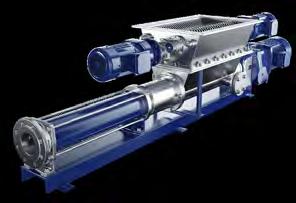
SEEPEX presents FlowShred, a solid conditioning system that reliably shreds food waste and converts it into a pumpable medium.

London Packaging Week brings together the industry’s leading minds at a moment when packaging is no longer competing for attention, but for meaning—where
why
For any organisation storing chilled or frozen goods, temperature control is not a back-office task. It directly affects safety, compliance, stock protection and, in some sectors, the quality of research or patient care.

Creator-founded iced coffee brand Rodd’s has surpassed £3m in retail sales during its first year and is launching its sixth SKU into Sainsbury’s this month.
Founded by UK creators Will Lenney and James Marriott, the brand entered Sainsbury’s in May 2025 with three chilled SKUs and has since expanded to six products. New flavour Rodd’s Brown Sugar Latte is rolling out to more than 360 Sainsbury’s Local stores to coincide with the brand’s first anniversary.
Rodd’s has rapidly expanded from an initial 300 Sainsbury’s stores to nationwide supermarket coverage within six months, alongside growth into Sainsbury’s Meal Deal, convenience stores, forecourts and Ocado. The brand is also stocked by food-to-go operator Sandwich Sandwich.
The brand has demonstrated strong repeat purchase and category recruitment since launch, with 75% of Rodd’s consumers at Sainsbury’s new to the iced coffee category entirely. Rodd’s is also now the number one plant-based iced coffee brand in Great Britain.
Leading aluminium tray producer, i2r Packaging Solutions, has demonstrated its commitment to product quality and continuous improvement with a significant investment in advanced vision inspection technology across its aluminium tray manufacturing operations.
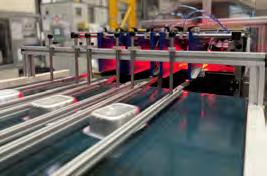
The business has introduced a new state-of-the-art detection system capable of delivering 100% inspection of the complete tray during production, identifying holes, splits and micro-defects in real time before products leave the line. The investment forms part of i2r’s wider long-term quality strategy, ensuring the company continues to meet the evolving demands of food manufacturers, processors and distributors operating in increasingly performance-driven markets.
Following a detailed review of available technologies, i2r partnered with a specialist provider to implement a best-in-class inspection solution, with the first system installed successfully in late 2025. Additional systems are now scheduled for introduction throughout 2026.
“This investment is about building even greater confidence in the quality and consistency of our products,” said Tom Cliffe, i2r’s sales director.
“As customer requirements continue to evolve, it is important that we continue investing in technologies that support both performance and reliability. These new systems strengthen our ability to identify issues instantly, improve production control and maintain the exceptionally high standards expected from i2r.” i2r is Europe’s largest aluminium tray producer. Manufacturing over 1.2 billion products annually, it supplies many major food producers and retail brands, as well as to wholesaler and distributor markets worldwide, including Central & Northern Europe, Asia, North & South America and Australia.
For more information on i2r visit i2rps.com

While Rodd’s originated from two well-known digital creators, its first year in market has been driven by in-store performance rather than online popularity.
The brand has secured major retail milestones including inclusion in Sainsbury’s Meal Deal and winning The Grocer Gold award for NPD innovation.

The UK RTD coffee market is now worth £360m, with growth being driven by plant-based recipes and demand for chilled drinks. Rodd’s says flavour-led variants such as Waffle, Maple Sea Salt and Brown Sugar have helped attract new shoppers into the category.
“Getting people to try it is the easy bit, but getting them to come back is what actually matters,” said co-founder Will Lenney.
Modern Milkman, the British scaleup reimagining the traditional milk round, has become the first company in the UK to introduce the homecompostable bread bag from Treetop Biopak to its customers, adding to Modern Milkman’s offering to provide households with sustainable solutions during the plastic waste crisis.

The new compostable bags are fully home compostable, naturally breaking down in around 12 months and without leaving any microplastics or pollutants behind. By contrast, typical plastic bread bags can take up to 450 years to degrade. The new single-layer film is waterproof, keeping the bread fresh until customers are ready to dispose of it in either their food waste bin, garden compost heap or even reusing the bag as an organic waste bin liner to collect food waste.
The compostable bread bags are being rolled out across Modern Milkman’s freshly baked bread range, including loaves from bakery partner Bread of Life and a network of local bakeries nationwide. The new packaging will be introduced at no extra cost to customers, with a nationwide rollout underway.
Jenny Thomason, Head of Commercial at Modern Milkman in the UK, said, “The search for a solution that protects the quality of our bakery on the doorstep in an eco-friendly way has taken years – so we’re really excited to launch this to our customers. We’re incredibly proud of this move, bringing us one step closer to our mission of ensuring that with the products we deliver absolutely nothing goes to waste.”
Amir Goss, CEO of Treetop Biopak comments: “We are delighted that the strengths of our compostable solutions have been recognised and adopted by a proactively environmentally responsible operation such as Modern Milkman. Performance strength was as fundamental as compostability in the decision to create this circular packaging approach.”
With around 11-12 million loaves of bread sold in the UK every day*, the move represents a significant step towards reducing the vast number of single-use plastic bread bags that typically end up in landfill or incinerated.
For more information, visit www.themodernmilkman.co.uk.
Sustainable and fully automated packaging solutions
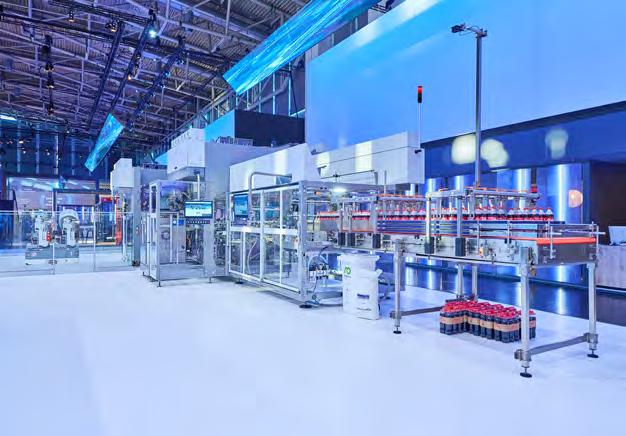
Interpack in Düsseldorf, which took place in May 2026, once again brought together the global packaging industry - and Krones was there. At stand B75 in Hall 13, the technology group demonstrated how sustainability, flexibility and automation can be seamlessly combined - with live technology in operation and presentations delivered by Krones experts with hands‑on industry experience.
The centrepiece of Krones’ exhibition was the Variopac Pro. This 17-metre packaging machine for non-returnable containers demonstrates how sustainable packaging concepts can be implemented using proven machine technology. With LitePac Top Strap, Krones presented a pack example in which six 1.5‑litre PET bottles are held together solely by a cardboard clip and a strap banderole.
This solution offers clear sustainability advantages: it requires no energy-intensive shrink tunnel, and both the clip and the banderole are made from renewable raw materials and are fully recyclable. LitePac Top is also suitable for glass bottles and cans in various sizes and pack formats.
Krones also showcased how fully automated material supply could look in the future. As part of the Ingeniq autonomous material-handling concept, an Automated Guided Vehicle (AGV) from the Italian subsidiary System Logistics delivers and loads packaging material directly to the machine. This demonstrates how routine tasks in filling and packaging lines can be automated to reduce operator workload. The AGV is, of course, controlled via a digital solution from the Krones Group.
For gentle yet highly flexible container distribution, Krones presented the new Robobox SynFlow sorting system, which can be positioned upstream of the Variopac Pro. A parallel-kinematics robot distributes single-lane and dual-lane container flows precisely into three to nine lanes. The system is suitable for all common container types.

Sustainability as the driver of innovation
We attach great importance to combatting climate change, feeding the world’s population and using packaging responsibly by ensuring resource-economical production and offering ecofriendly packaging solutions and efficient recycling innovations.
Dantex Group has further strengthened its strategic focus on digital print growth with the appointment of Christoph Michel as Global Commercial Director Digital.
Based at Dantex Germany in Bensheim, Christoph officially joined the business on 12th January and will initially focus on developing the company’s presence across Germany, Austria and Switzerland, while also supporting wider business development initiatives throughout the Dantex organisation.
Christoph brings more than 20 years of experience within the packaging and printing industries, combining technical expertise with leadership and business development across both digital packaging and commercial print technologies. His background spans folding carton converting and print, digital inkjet solutions for packaging and labels, toner-based commercial print technologies, and consumables including UV and water-based inkjet inks. Educated in Mechanical Engineering, Christoph also holds an MBA from TIAS School for Business and Society in the Netherlands.
A secure digital platform that transforms supplier collaboration to help customers achieve flexibility, growth, and faster time to market

Loftware today announced the launch of Loftware Connect, a transformative new platform that redefines how organisations manage product identification across global supply chains. Representing the most significant technology launch in the company’s history, Loftware Connect introduces the industry’s first secure, scalable network that connects companies with their trading partners, replacing fragmented coordination with a unified digital foundation designed to improve resilience, compliance, and speed.
In an era defined by volatility, supply chains are only as strong as their weakest link. A single breakdown in product identification accuracy, regulatory compliance, or authentication can halt production lines, delay shipments, trigger recalls, and erode brand trust. As supply chain networks grow more distributed and regulatory requirements more complex, traditional siloed systems can no longer keep pace.
Loftware Connect addresses this challenge by shifting product identification from isolated enterprise systems to a dynamic collaborative network. The platform establishes structured digital connections between organisations and their trading partners, creating visibility and governance across every interaction that supports product identification and supply chain execution.
“With Loftware Connect, we are building the infrastructure of trust for modern global commerce,” said Jim Bureau, CEO of Loftware. “For decades, product identification has been managed within the four walls of the enterprise. But goods move across borders, through suppliers, co-packers, and distribution centres, creating costly unknowns like a mislabelled component delaying an assembly line or triggering regulatory fines. The future requires fast and seamless collaboration. Loftware Connect ensures that every partner, every process, and every product identity is aligned, so when disruption occurs, our customers stay ahead of it. With Loftware, it’s all right there.”
By enabling organisations to onboard suppliers rapidly and at scale, standardise product identification processes across regions, and ensure accuracy at every point of delivery, Loftware Connect delivers measurable business outcomes. Companies can reduce rejected shipments, avoid regulatory fines, lower operational and compliance costs, and accelerate order processing, all while improving inventory velocity and minimising downtime across global operations.
On joining Dantex, Christoph said: “Dantex is a highly dynamic and lean organisation that works collaboratively without country borders. The company is fully focused on labels and packaging and genuinely listens to its customers, with a clear growth strategy in digital print.”

Commenting on the appointment, Dantex CEO Ben Danon said: “Christoph’s appointment marks another important step in Dantex’s digital growth strategy. His blend of technical expertise and commercial insight will be invaluable as we continue to expand our presence across mainland Europe and further strengthen our digital offering globally.”
Roberts of Port Dinorwic, a long-established supplier of ready-to-cook meal components to leading QSR brands, pub and restaurant groups, and foodservice wholesalers, has announced a significant business turnaround.
The transformation comes eight months after investment from GIL Investments protected the jobs of the company’s 65 employees and saw the appointment of CEO Mark Rodgers.

With more than 30 years’ experience in the food industry, Rodgers has led a programme of operational change, investment and cultural development across the business, helping move the company from a trading loss in 2025 back to profitability in 2026.
Over the past six months, more than £650,000 has been identified for investment into key operational areas, improving efficiencies and strengthening infrastructure as the business targets continued growth.
The company recently featured in the Alantra Fast 50 ranking, placing it among the UK’s fastest-growing private companies despite challenging market conditions.
Customer satisfaction has also risen significantly, with complaints now at an all-time low, reflecting a renewed focus on quality, consistency and service delivery.
At the heart of the turnaround is a business with deep roots in North Wales and a strong sense of identity. Roberts of Port Dinorwic operates without agency staff, employing a fully dedicated and loyal workforce.
Mark Rodgers, CEO of Roberts of Port Dinorwic, said:
“We’ve worked hard to reset the business and give ourselves a strong chance of achieving our growth targets. Most encouragingly, customer satisfaction is rising, which tells us we’re moving in the right direction.
“We’ve also got a fantastic team and a real family feel across the business, giving us a solid foundation for future growth.”
Backed by GIL Investments, Roberts of Port Dinorwic is now positioning itself as a strategic processing partner for the wider food industry, with ambitions to expand partnerships across QSR, hospitality and food manufacturing sectors.
This month, Fearne & Rosie, the UK’s fastest-growing jam brand, is celebrating a new milestone for its duo of Strawberry Preserves, as it continues to drive distribution for its reduced sugar range. From 1st June, Tesco will stock Fearne & Rosie’s classic Strawberry Preserve in over 1,000 stores nationwide.
The supermarket has also confirmed listings for one of the more recent additions to the brand’s expanding product portfolio; Strawberry Seedless Preserve, which launched in January and will roll out across more than 500 main estate stores from 8th June.
Rachel Kettlewell, Founder of Fearne & Rosie says: “We’re so incredibly grateful for the opportunity to take Fearne & Rosie to an even broader audience. We have a responsibility to provide healthier alternatives and I’m so proud that we can help play a small part in driving these changes. Our increased distribution not only shows appetite from retailers for jams filled with more fruit and less sugar, but will help more consumers reduce their daily sugar intake. We believe this is the future of the category both commercially and morally.”
A new range from Malcolm Allan featuring small portion packs of some of its best-loved products has been launched into the Scottish convenience store sector.
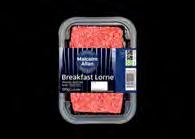
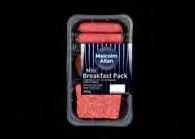
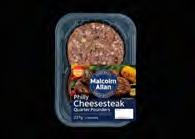
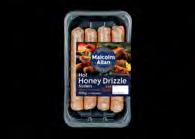
The range is aimed at single-person households and smaller convenience stores, which do not have the same shelf space as larger retail outlets.
The small portion pack range comprises:
130g Breakfast Lorne pack, comprising two slices of Lorne sausage.
140g Link Sausage pack, comprising four link sausages.
100g Haggis Slices pack, comprising two slices of haggis.
100g Black Pudding pack, comprising two slices of black pudding.
300g Mini Breakfast pack, comprising two slices of Lorne sausage, two slices of black pudding and two link sausages.
All the packs proudly display Malcom Allan’s eye-catching new logo that underlines the company’s family butcher heritage and commitment to quality. The convenience range will be listed in Booker cash and carries (four packs per case), and sold in their Premier stores in Scotland (around 800 outlets).
Jenni McAllister, Group Head of Commercial at Malcolm Allan, said: “This new offering will be welcomed by single-person households by making their shopping experience much more convenient and cost effective, whilst at the same time benefiting smaller convenience stores, which don’t have the same depth of shelf space as larger retail outlets.”
Meanwhile, Malcolm Allan has also launched an innovative new barbecue range for larger multiple retailers for the summer season.
400g pack of Hot Honey Drizzle Sizzlers (comprising four honey-drizzled flavoured pork sausages), including a pillow pack of Hot Honey
240g pack of Chilli Koftas (six koftas).
240g pack of Masala Spiced Koftas (six koftas).
227g pack of Beef, Bacon & Cheddar Quarter Pounder Burgers (two burgers).
227g pack of Beef & Haggis Quarter Pounder Burgers (two burgers).
227g pack of Philly Cheesesteak Quarter Pounder Burgers (two burgers).
Jenni McAllister said: “Our fabulous summer barbecue range has something for everyone, and we are confident that consumers will love them.”
Fearne & Rosie was launched by teacher-turnedentrepreneur Rachel Kettlewell in November 2019 with the aim of providing the nation with delicious, fun and healthier food choices while reducing the amount of sugar in spreads. It is now the fastest-growing jam brand in the UK, achieving +140% in sales growth (Sweet Preserves & Spreads, Geography: IRI All Outlets CC, 52 w/e 25 Jan 2026).

Alongside its range of healthier jams, Fearne & Rosie is also proud to be B Corp certified, working with schools to provide food education resources and supporting charitable causes including Children in Need and FareShare. Follow the journey on Instagram: @fearne_and_rosie
Yakult has relocated its UK headquarters to Power Road Studios in Chiswick, marking a significant milestone for the business as it enters its 30th year operating in the UK.

The move sees Yakult take up residence in a revitalised workspace designed to better support its current operational needs, offering a modern, functional environment that encourages more collaborative ways of working. After many years at West Ruislip, its new 3,200 sq ft office is now home to the company’s London team and is secured on a long-term lease.
Power Road Studios, which forms part of Feldberg Capital’s Akoya venture, is a refurbished 1930s former factory that has been transformed into a creative and sustainable campus. The scheme has become a standout destination for forward-thinking occupiers seeking high-quality, characterful workspace in West London. The campus offers occupier amenities including an on-site café and gym, alongside landscaped external areas across the wider estate.
Yakult UK’s relocation reflects growing confidence in London’s office market, particularly in West London, where Chiswick is fast becoming a high-growth global business hub. The area is attracting a strong mix of established multinational brands as well as start-ups, supported by ongoing local investment and infrastructure improvements.
The relocation also coincides with a leadership transition, with Shinji Yamaguchi recently appointed as Managing Director of Yakult UK & Ireland, succeeding Hiroaki Yoshimura, who has taken on the role of Managing Director of Yakult Europe at the company’s European headquarters in the Netherlands. Since entering the European market in 1993, the company has been at the forefront of introducing the concept of gut health to consumers across the region.
Shinji Yamaguchi, MD of Yakult UK and Ireland, comments: “Relocating to Power Road Studios marks an exciting new chapter for Yakult UK operations. The space reflects how we work today: more collaborative, more flexible and better connected. As we celebrate 30 years in the UK, this move demonstrates our continued commitment to growth, innovation and investing in our people and operations in the country .”
Rebecca Hore, Associate Director, Asset Management, Feldberg Capital, comments: “Yakult’s decision to relocate to Power Road Studios underlines the strength of demand for high-quality, designled workspace in well-connected west London locations. Our Studio 5 development delivers new build, high quality office space with ESG at the heart of the design to ensure we are meeting the evolving needs of modern occupiers. We are very excited for Yakult to join our evergrowing campus.”
For years, the food and drink industry viewed product recalls as a “bolt from the blue”—a rare, catastrophic failure of the supply chain. However, as we navigate 2026, the landscape has fundamentally shifted. We are witnessing a product recall paradox; while demands for labelling sophistication increase, the severity, volume of units impacted, and the financial ‘sting’ have also reached an all-time high.
The backdrop to this year’s quality crisis is a punishing economic climate. Latest forecasts reveal that UK food inflation is set to rise to 5.7% by December 2025, before slowing to 3.1% by the end of 2026 (Food and Drink Federation).
Between January 2020 and July 2025, food and drink prices surged by 37%, significantly outpacing overall UK inflation (28%). With government regulation now emerging as the leading driver of food inflation, manufacturers find it increasingly difficult to pass these costs onto retailers. In this “no-margin-for-error” environment, a single recall isn’t just a PR nightmare—it’s a balance-sheet executioner.
The diversity of recent recalls highlights that risks are evolving faster than many legacy systems can track:
• Pathogens & Toxins: Tesco recently recalled its Grape & Berry Medley due to Salmonella, while Nestle and Danone faced high-stakes withdrawals of Aptamil, Cow & Gate and SMA infant milks due to the potential presence of cereulide toxins.
• The Allergen Gap: labelling errors remain the industry’s Achilles’ heel. Lidl (Southern Fried Chicken Burgers), Coop (Triple Cooked Chips), Farmfoods (Ritz Cheese Sandwiches), Aytac Foods (Darna Tahini), and THIS™ (Isn’t Chicken Deli Pieces) all issued recalls for undeclared or poorly emphasised allergens like celery, milk, peanuts, soya and gluten.
• Administrative Oversight: Althams Fine Foods and Tanpopo Japanese Food were forced into recalls due to simple, yet critical, incorrect use-by dates.
To combat these risks, the industry is pivoting toward Digital Product Identity. This framework moves beyond a simple pricescan to a dynamic, data-rich ecosystem.
Digital Food Identity transforms traceability into a “surgical” tool, enabling rapid batch



identification during recalls and robust counterfeit prevention across the supply chain. By utilising these unique digital IDs, brands can significantly reduce food waste—blocking expired sales at the point of purchase—while boosting consumer engagement through 2D codes that offer interactive nutritional data, recipes, and preparation tips directly to smartphones.
Tesco is currently spearheading this transformation. Powered by GS1, a pilot is replacing traditional barcodes with nextgeneration QR codes on 12 own-brand meat and produce lines.
Isabela De Pedro, Supply Chain Development & Change Director at Tesco, notes: “While it’s still early days, we’re already seeing the benefits of connecting our products to dynamic digital information... helping Tesco with issues including traceability, compliance, and shelf-edge communication.” With 33% of GS1 UK members planning to adopt this technology within the year, the “unique digital identity” is fast becoming the industry standard.
Transitioning isn’t without hurdles. Moving from 1D barcodes to data-rich 2D codes (QR codes) requires significant Technology Adoption. Manufacturers face the “Data Integration” challenge—standardising data from various sources into a secure format. Furthermore, Data Security is paramount;
many are looking toward blockchainbased storage to maintain immutable, trustworthy records.
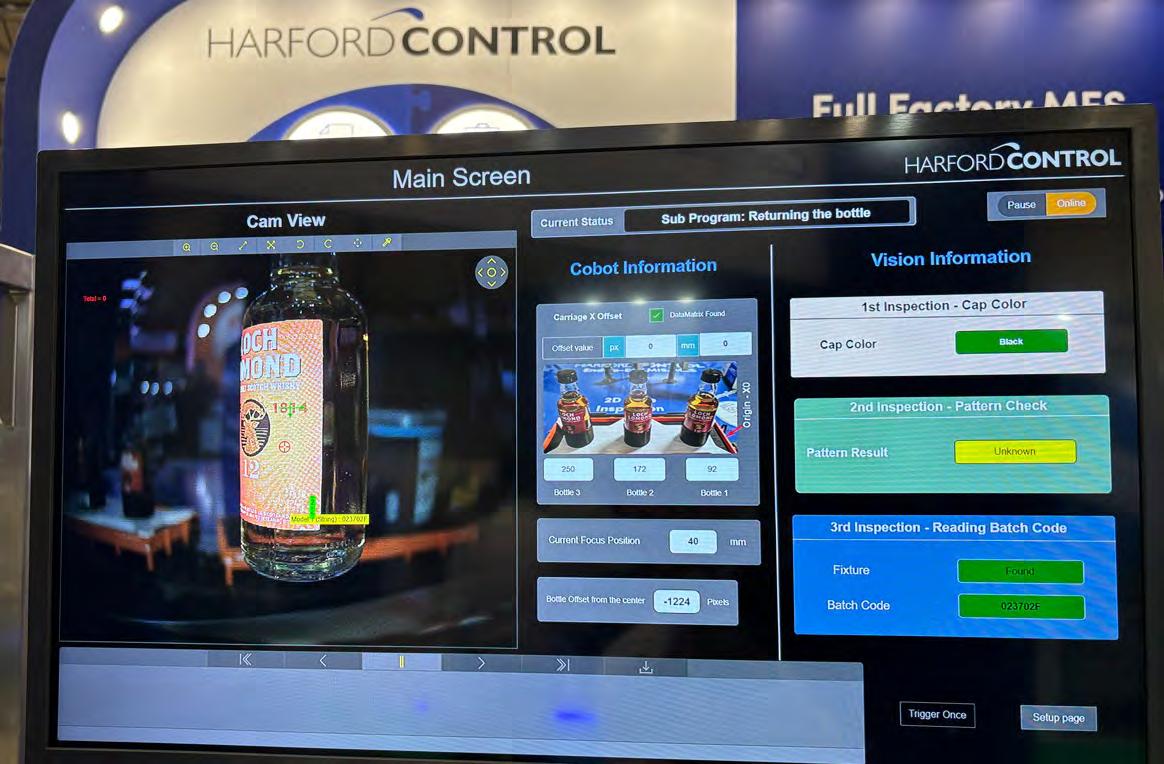
In an era where inflation is high and tolerance for error is zero, the difference between a minor hiccup and a businessending recall, comes down to the quality and instant visibility of your shop-floor data. This is where Harford Control excels.
As the market leader of Manufacturing Execution Systems (MES), Harford Control specialises in turning manufacturing chaos into actionable intelligence. Our solutions are designed to eliminate the exact risks seen in recent market failures:
• Coding & Label Verification: Harford’s systems provide high-speed inspection of 1D, 2D, and QR codes. This ensures the right label, correct use-by dates, and accurate allergen declarations are on the right pack, every time, eliminating the major causes of recalls.
• Paperless Quality Management:
Replacing unreliable manual logs with real-time digital checks. If a date code is entered incorrectly (as seen in the Tanpopo or Althams cases), the system triggers an immediate alert.
• End-to-End Traceability:
Providing “one-click” traceability from raw intake to dispatch. This acts as a “scalpel,” allowing manufacturers to narrow the scope of a recall and defend their brand during rigorous audits.
• Weight/Volume Control:
In a high-inflation market, Harford’s average weight/volume control ensures you aren’t “giving away” profit through overfill while maintaining strict legal compliance, for less effort.
By integrating prevention directly into the production process, Harford Control helps manufacturers move beyond “compliance” and toward operational excellence.
Don’t let a labelling error or a traceability gap threaten your brand’s future. Ensure your facility is ready for the revolution and protected against the rising costs of non-compliance.
Contact Harford Control today to discuss your requirements or request a live demo of our integrated MES solutions.
Phone: +44 (0)1225 764461
Website: www.harfordcontrol.com
Email: info@harfordcontrol.com



In spite of increased effort, product recall frequency is still on the rise, and the financial sting and volume of impacted units have hit an all-time high. With UK food inflation squeezing margins to breaking point, the industry has moved beyond simple compliance.
Harford Control provides the ‘scalpel’ needed to eliminate product recall and protect your brand from the rising costs of non-compliance.
High-speed inspection of 1D, 2D, and QR codes ensures the right label and allergen data on every pack.
Replace manual logs with real-time digital alerts. If a date code is wrong, operators receive an alert immediately.
Go from raw intake to dispatch in seconds, defending your brand during rigorous audits.
Don’t let a labelling error or a traceability gap threaten your future. Move beyond simple compliance toward operational excellence with Harford Control.
Explore Harford MES and request a demo one label error. one
Profit Protection
Advanced weight and volume control stops 'giveaway' through overfill reduction, thereby protecting your margins.

+44 (0)1225 764461
+44 (0)1225 764461
info@harfordcontrol.com www.harfordcontrol.com
info@harfordcontrol.com www.harfordcontrol.com
Explore Harford SPC and book a discovery call



interpack 2026 made the energy of an entire industry truly tangible. Once again, it became the global meeting place for the processing and packaging industry and impressively demonstrated how concrete transformation is already being implemented in technology, materials and processes.
interpack 2026 sent a clear signal: the packaging industry is more closely connected, more innovative and more dialogue-oriented than ever before. This momentum was immediately visible in the exhibition halls. High visitor traffic, intensive discussions and a consistent international presence shaped the atmosphere. Everywhere, it was possible to experience the determination with which companies are working on solutions for the future. Ideas were discussed, tested and decisions were made. The entire value chain was presented in live.
From 7 to 13 May, 2,804 exhibitors from 65 countries and trade visitors from 161 countries came together in Düsseldorf on the fully booked exhibition grounds. Of all visitors, 75 percent came from outside Germany, including 28 percent from outside Europe. Around 100 additional companies were represented at components, the supplier trade fair held in parallel. This made interpack 2026 the largest edition in its history in terms of exhibitors, underlining what was clearly felt in the halls: this was an event with exceptional impact.
“That was a top interpack. Busy halls, intensive exchange and concrete projects showed the strength of this global community. interpack is the most important meeting place for the industry worldwide, and this edition impressively confirmed that,” said Thomas Dohse, Director of interpack, at the close of the trade fair.
For seven days, concrete solutions and partnerships took centre stage. Many discussions led to projects and investment decisions. The trade fair thus confirmed its role as the leading platform for the global processing and packaging industry – with strong visitor attendance, particularly from the food and pharmaceutical industries, as well as a high quality and density of leading and innovative suppliers.
Market growth – industry under pressure
interpack 2026 took place at a time when the industry is undergoing transformation. Demand for packaged products continues to rise, but requirements for materials, production systems and supply structures are changing. A key focus at the trade fair was the European Packaging and Packaging Waste Regulation (PPWR), which marks a turning point for the industry in many respects.
interpack made one thing clear: companies are not responding in isolation, but systemically. Exhibitors presented solutions in which materials, machines and processes are increasingly considered together and coordinated with one another. In this way, interpack confirms its role as an economic driver for the industry: this is where projects are initiated, investments prepared and economic momentum generated.
Automation, data-based applications and flexible plant concepts have arrived in industrial practice and were presented at interpack as concrete applications of smart manufacturing. In the field of materials, the focus was on innovative solutions that work under real-world conditions and meet regulatory requirements. Future skills became tangible wherever connected and data-driven systems require new competencies in production. Personal proximity, shared experiences and open dialogue gave interpack a special intensity.
interpack also set important accents beyond the exhibition stands. The enhanced specials complemented the trade fair activities and brought in additional perspectives. The interpack Spotlight Forum, SAVE FOOD Expert Talks, Women in Packaging, the Start-up Zone and Young Talents Day showed how broadly the industry’s transformation is being discussed – from technology and sustainability to diversity, start-up culture and the promotion of young talent, as well as qualification and future skills.
What remains is more than a successful trade fair. It is a clear signal: the industry faces major challenges and is meeting them with innovative strength, cooperation and the will to actively shape the future. Added to this is a special combination of international density, technical depth and a palpable spirit of new beginnings that characterised this interpack.
The next interpack will take place in 2029. The date will be announced shortly.
www.interpack.com
London Packaging Week brings together the industry’s leading minds at a moment when packaging is no longer competing for attention, but for meaning—where cultural pressure, commercial reality and consumer expectation collide.




Markets rarely shift in neat, declared moments. They accumulate pressure quietly, through changing expectations, subtle cultural corrections, and the growing friction between what brands want to say and what audiences are willing to believe. Packaging sits directly in that tension: part signal, part system, part cultural object. And it is within this evolving landscape that London Packaging Week 2026 (16 & 17 September, Halls S2 & S3, Excel London) reflects the scale and intensity of an industry actively redefining how packaging is designed, experienced and commercialised.
For Kelly Dawson, Co-Founder & an Innovation Strategist at Studio Every, the starting point is not aesthetics or even category norms, but behaviour.
“Understanding the market begins with understanding people in motion,” she explains. “We’re looking at how expectations are evolving across categories, not just within them. What people tolerate, what they ignore, and what they actively seek out is constantly changing. Packaging has to respond to that shift, not resist it.”
That response is increasingly complex. In categories where shelf noise is intensifying and digital discovery is reshaping physical purchase decisions, clarity has become a competitive advantage. Yet clarity alone is no longer enough.
Kelly continues: “The most effective packaging today doesn’t just communicate, it interprets. It translates cultural signals into something immediate and understandable. That’s where leadership in design really sits now.”
As Jo Smith, Design & Visual Identity Leader at Diageo, puts it, the challenge is rarely a lack of ambition, but a failure of translation.
“Agencies want bold ideas that stretch the brief. Clients are measured on market share, growth, performance, and brand reputation. The reality is that everyone wants the same thing: work that works.”
It is in that gap, between intent and outcome, that ideas are most often lost.
But interpretation without structure quickly becomes aesthetic noise. For Gaby Granier, Associate Strategy Director at Boundless Brand Design, the differentiator lies in how brands build coherent worlds that can hold meaning over time.
“We focus on how brands make people feel,” she says. “Designing with both playfulness and thoughtfulness, we create emotional stickiness to ensure audiences feel genuinely understood. This approach creates brands people return to and love to talk about.”
That sense of return is not accidental. It is built through consistency, through systems that extend rather than fragment identity.
“Every project begins by building or extending a brand’s world,” Gaby adds. “This gives every execution a logical home: nothing feels bolted on. It creates the consistency that earns instinctive trust, and the room to grow without the costly identity crises that so often come with scale.”
In a crowded marketplace, Gaby argues, attention is no longer won by escalation. It is earned by coherence.
“Shouting louder is a strategy that rarely wins,” she says. “We focus on building worlds, strategic and creative spaces designed to attract attention rather than compete for it.”
This idea of coherence is increasingly extending beyond identity into physical form itself. As Nick Vaus, Co-founder and Managing Partner at Free The Birds, notes, structure is becoming a defining competitive lever in saturated categories.
“We’re seeing a clear shift, particularly within beauty, towards more bespoke structural design and a move away from traditional off-the-shelf solutions,” he explains. “This shift is largely driven by saturation. Beauty, like many categories, has become intensely crowded, both on shelf and in the scroll.”
In that environment, he argues, differentiation cannot rely solely on graphics.
“While graphic design remains important, it can only do so much when formats and pack types are fundamentally the same. That’s where structure becomes a powerful differentiator. The silhouette of a pack, its form, proportion, and physical presence, can create immediate recognition and memorability, often before branding or messaging is even processed.”
If Kelly defines the market reading, Gaby defines the emotional architecture of response, and Nick introduces structural differentiation as a physical advantage. Lisa Cain, Technical Lead – Food, Confectionery & Premium Drinks at Smurfit WestRock, brings the necessary systems discipline to hold it all in place.
“The market is forcing brands to confront what is real versus what is excess,” Lisa explains. “Packaging is often where that tension becomes visible first.”
There is a discipline in restraint that she returns to repeatedly, not as an aesthetic preference, but as a systems requirement.
“We’ve spent years adding layers — more finishes, more complexity, more justification,” she says. “But increasingly, value is being redefined by what you remove rather than what you add.”
That shift has implications beyond design language. It reshapes production logic, material choice, and the commercial viability of packaging decisions.
“Good packaging doesn’t just look resolved,” Lisa adds. “It is a system that makes sense commercially, environmentally, and operationally. If one of those fails, the rest becomes fragile.”
That discipline, however, requires precision because reduction without understanding can erode value just as quickly as excess can obscure it.
As Jo Smith reflects, “when you remove detail, you can start to unravel the experience.”
Nick’s perspective also extends into the sensory dimension of packaging, where differentiation is increasingly achieved through tactility and finish rather than form alone.
“We’re seeing brands invest more deliberately in elevated finishes and crafted details to create richer, more memorable experiences,” he explains. “Techniques such as embossing and debossing, interior carton printing, and tactile coatings are subtle but powerful interventions that reward interaction and encourage deeper engagement.”
He adds that this shift is being driven by the same underlying force as structural innovation: saturation.
“As categories become increasingly saturated, brands are looking beyond surface-level graphics to create moments of discovery and delight through touch and materiality. These sensorial cues can significantly enhance perceived value and emotional connection.”
Sasha Ferguson, Creative Design Manager at Castle Colour Packaging, brings the final perspective: the translation of intent into something that can physically exist in the world without distortion.
“We don’t design in isolation,” he says. “We design with manufacturing, logistics and reality in the room from the start.”
This proximity to execution is not a constraint; it is a filter for seriousness.
Sometimes, as Jo Smith observes, “it’s the execution of the idea, not the idea itself, that fails.”
Which is why the role of design leadership is not to choose between creativity and constraint, but to ensure neither is lost in the process.
“The strongest ideas are the ones that survive contact with reality,” Sasha explains. “Constraint isn’t where ideas get reduced. It’s where they become precise enough to matter.”
In practice, that means removing the gap between conception and production.
“When something isn’t working, everyone knows immediately,” he says. “There’s no layering of interpretation across teams. That directness protects the integrity of the idea.”
There is a temptation, in any crowded market, to believe that clarity comes from simplification. But clarity is not the absence of complexity. It is the ability to hold it without distortion.
The most effective work rarely presents itself as innovation. It tends to arrive with a sense of inevitability, as though no other version would quite make sense. It earns attention not by escalation, but by alignment among structure, story, material, and intent.
It is also a question of leadership. Not loud, performative decisionmaking, but the quieter ability to hold direction under pressure.
“Real creative bravery is a commitment,” Jo Smith notes. “It’s knowing your assets so well that you can flex them without losing them.”
And increasingly, that alignment is being shaped before a word is even read. In form. In surface. In the quiet decisions that determine whether something is noticed, held, or passed over.
Leadership in packaging is therefore shifting away from expression alone, and towards orchestration of structure, sensation, and meaning in equal measure.
What remains is not louder. Just more resolved — and increasingly shaped in the spaces where scale, scrutiny and decision-making converge, such as London Packaging Week 2026.
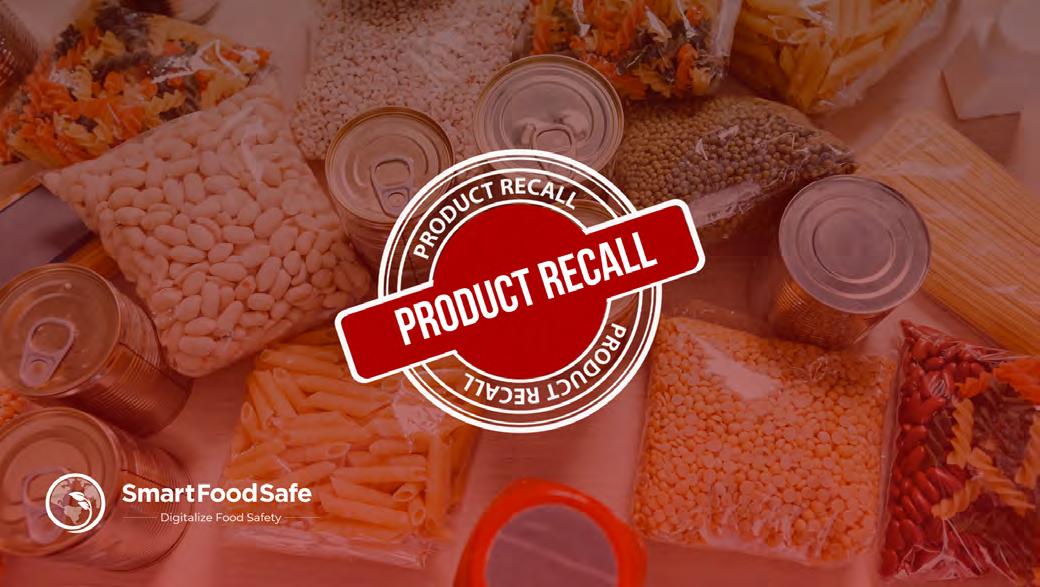
In modern food manufacturing, recall severity is increasingly measured by response speed rather than recall size. In 2026, delays in identifying impacted batches, suppliers, and distribution routes are increasingly what determine how quickly an incident escalates across the supply chain. For many manufacturers, the operational fallout caused by slow traceability and fragmented investigations now creates greater pressure than the original contamination event itself.
Across the food manufacturing sector, recall response times are coming under closer scrutiny from retailers, supply chain partners, and regulators. The challenge is no longer limited to removing affected stock from circulation, but how quickly businesses can establish clarity before disruption spreads across production, warehousing, logistics, and consumer channels.
For manufacturers, the challenge is no longer limited to removing affected stock from circulation. The larger issue is how quickly teams can isolate impacted batches without disrupting unaffected production, distribution, or retail supply. In many cases, delayed identification now causes wider operational fallout than the original contamination event itself. Warehouses place holds on inventory, retailers request immediate updates, and supply chain partners look for reassurance while internal teams work through disconnected records and fragmented traceability data.
The growing complexity of food manufacturing is adding further pressure. Multi-site production, shared suppliers, copackers, and international sourcing models have created supply
chains where investigations often involve multiple systems, departments, and external partners. Even relatively contained incidents can escalate when traceability information is slow to verify or inconsistent across sites. Retailer expectations are also shifting. More suppliers are being asked to demonstrate recall readiness through mock exercises, traceability validation, and faster reporting timelines. The influence of regulations such as FSMA 204 is extending beyond the US market, shaping wider expectations around data visibility and rapid traceability across global supply chains.
As a result, manufacturers are increasingly reassessing whether fragmented recall processes still reflect the realities of modern food operations, with connected quality and traceability environments, including Smart Food Safe, forming part of wider efforts to improve recall coordination and operational visibility. Recalls will remain an unavoidable part of food manufacturing. What increasingly separates resilient businesses from vulnerable ones is not necessarily the size of the incident, but how quickly clarity can be established when pressure across the supply chain begins to build.
Across UK food processing operations, most obvious sources of waste are already monitored closely. Yet many sites still lose significant margin through small variations that become accepted as part of daily production. Slight overweighting, inconsistent trimming, handling damage and packaging rejects may appear minor individually, but across high-volume lines they can quietly remove substantial amounts of saleable product.
One of the most common causes of yield erosion is inconsistent portioning. Operators naturally work cautiously to avoid underweight packs, particularly under retail specifications. However, even a small average overweight can quickly escalate across production volumes. A few extra grams on every pack may feel insignificant during a shift, but over a week it can equate to hundreds of kilos of unpaid product.
Slicing and trimming operations also create hidden variation. Blade condition, product temperature and setup consistency all affect portion accuracy. Excess trimming is often accepted as “part of the process”, yet differences in operator technique or unclear specifications frequently increase unnecessary giveaway. In many cases, variation causes more loss than the average target itself.
Packaging inconsistency is another overlooked source of yield loss. Poor sealing, incorrect vacuum settings or damaged packs can result in rework, secondary trimming and additional handling. These issues are not always recorded under yield reporting, despite directly reducing saleable mass and increasing waste. Small packaging inconsistencies
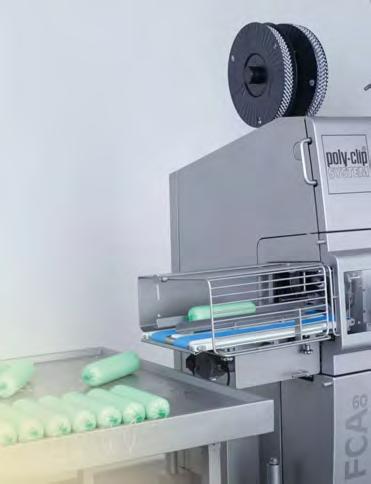
repeated across multiple shifts can quietly remove large amounts of usable product over time.
Handling practices also matter. Every additional product movement increases the risk of breakage, dehydration or damage. In high-care environments especially, unnecessary handling can gradually reduce yield without appearing as a major operational issue. Material flow, transfer points and line discipline all influence how much product ultimately leaves the site in saleable condition.
The strongest-performing processors tend to focus on consistency rather than speed alone. Standardised setups, controlled product temperatures, clear trimming specifications and regular calibration between shifts all help reduce variation. Monitoring average pack weights, trim percentages and packaging rejects also provides a clearer picture of where losses occur.
In today’s high-cost environment, protecting yield is not simply a technical objective. Labour costs, raw material prices and operational pressures continue to rise, making every gram of saleable product increasingly valuable.
The most significant yield losses are rarely dramatic events. More often, they come from small inconsistencies repeated thousands of times across production. Reducing those variations is often one of the most practical ways processors can protect margin without major capital investment.
Rachel Newton is the Innovation Lead at Interfood Technology https://interfoodtechnology.com/
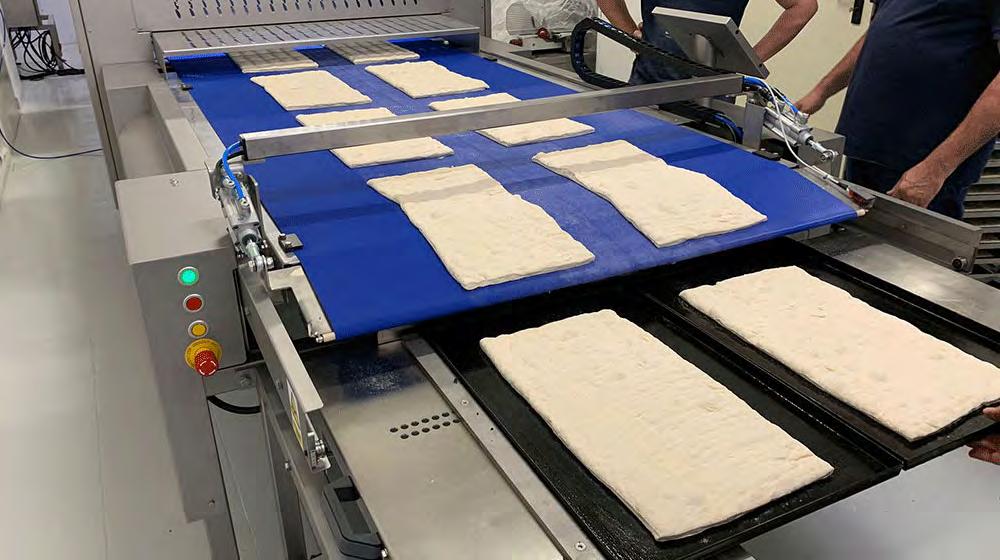
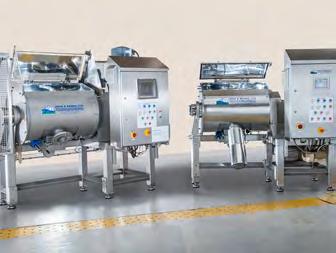
SEEPEX presents FlowShred, a solid conditioning system that reliably shreds food waste and converts it into a pumpable medium. The solution integrates a twin-shaft grinder and a progressive cavity pump in a compact unit, enabling smooth and controlled removal of organic residues from food production. FlowShred is designed for operations that need to handle heterogeneous food waste efficiently.
In food production, large volumes of organic by-products are generated, including fruit and vegetable peels, residues from meat and fish processing, dough scraps, and frozen products that can no longer be used. These materials vary widely in size, moisture content, and consistency, creating challenges for conveyors, pumps, and disposal systems. Large or fibrous components can block conveyors, clog augers, or cause pump failures. Such disruptions lead to downtime, higher maintenance requirements, and increased operational costs.
FlowShred takes a system-oriented approach. Food waste is fed through a hopper and initially reduced to a particle size of 10–20 mm by the twin-shaft grinder. Directly below, a progressive caavity pump continuously transports the shredded material to silos, collection containers, or tanks, for example for pickup by external disposal providers or further processing in biogas plants. The result is a homogeneous, pumpable suspension that can be conveyed reliably with stable process control.
“With FlowShred, we offer the first fully integrated system combining shredding and conveying of food waste,” explains Bernd-Guntram Schulz, Product and Market Manager at SEEPEX. “The aim is to process heterogeneous organic residues so they can be transported in a controlled and stable manner.”
The twin-shaft grinder features two counter-rotating shafts with hardened cutting tools, producing a uniform particle size that ensures reliable pumpability. SEEPEX applies a special snail geometry in
the grinder: spiral-arranged cutting segments with varying radii and tooth profiles reduce bulky or fibrous materials step by step. Food waste such as pressed oranges, mango pits, whole melons, or bones is continuously drawn in, preventing bridging and reducing load peaks. This design improves operational reliability, reduces strain on pumps, and prepares the waste optimally for downstream processes such as separation, storage, or energy recovery.
The cutting tools are made from martensitic stainless steel, offering high hardness and corrosion resistance for long service life, even with abrasive or fibrous media. Robust construction reduces maintenance needs and increases system reliability.
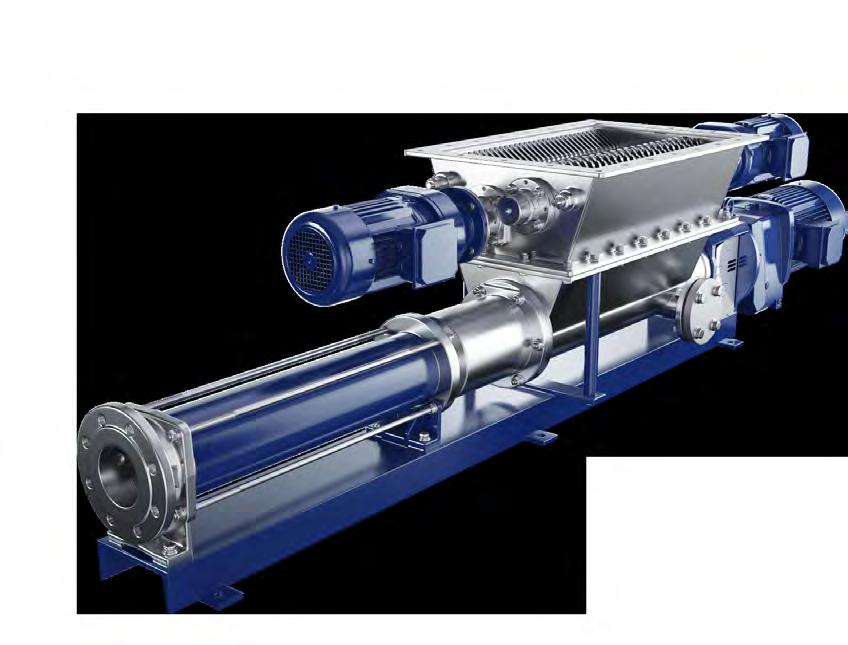

FlowShred operates at high torque and low speed, delivering effective size reduction even for bulky or fibrous residues. This reduces mechanical wear, lowers energy consumption, and minimizes noise, ensuring efficient and economical operation.
Beneath the twin-shaft grinder, the progressive cavity pump handles continuous transport. Designed for media with high solids content, it provides a stable, low-pulsation flow.
For long-distance transport, optional SEEPEX Smart Air Injection (SAI) further enhances efficiency.
FlowShred’s enclosed system minimizes odor emissions and keeps the working environment clean. The compact, pre-assembled unit integrates easily into existing production lines or waste handling systems without requiring additional space.
FlowShred is highly flexible and suitable for both continuous and intermittent waste streams. Typical applications include:

• Food production facilities of all sizes
• Slaughterhouses and meat processing
• Fish processing
• Frozen food industry
• Facilities with on-site biogas plants
Shredding reduces waste volume, lowering storage, transport, and disposal costs, while increasing material surface area, which accelerates degradation in biogas fermentation. Stable material flow prevents blockages and allows adaptation to variable production batches and waste streams.
FlowShred integrates shredding and pumping in a single, precisely coordinated system. The twin-shaft grinder and progressive cavity pump work together to ensure stable, controlled transport from the start, improving reliability and operational efficiency.
“FlowShred efficiently shreds food waste and converts it into a pumpable medium,” adds Bernd-Guntram Schulz. “It delivers higher process reliability, fewer downtimes, and reduced planning and installation effort, as shredding and pumping are perfectly matched.”
SEEPEX is a leading worldwide specialist in pump technology. Our portfolio comprises progressive cavity pumps, pump systems and Digital Solutions. SEEPEX also offers innovative solutions for the conveyance of aggressive or abrasive media with low to high viscosities. Since 2021, SEEPEX has been part of the Ingersoll Rand Group, a global supplier of mission-critical flow creation and industrial solutions across 60+ respected brands. Ingersoll Rand Inc. (NYSE: IR) driven by an entrepreneurial spirit and ownership mindset, is dedicated to helping make life better for our employees, customers and communities.
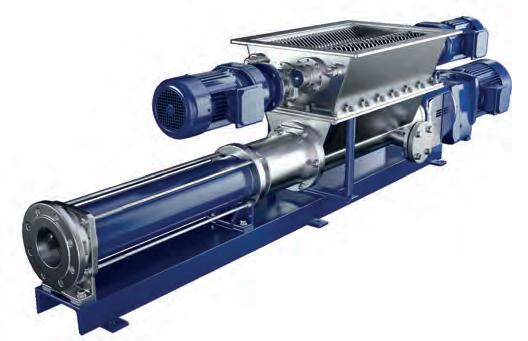
Food waste handling does not need to mean blockages, downtime and complex system layouts. SEEPEX FlowShred combines shredding and conveying in one compact, integrated unit. The coordinated system reliably reduces heterogeneous food waste and converts it directly into a pumpable medium.
y Reduced installation footprint and simplified integration
y Uniform particle size for stable conveying
y Reliable handling of fibrous and heterogeneous waste
y Reduced maintenance requirements and downtime
y Enclosed design for cleaner operation
y Continuous conveying with stable process control
For any organisation storing chilled or frozen goods, temperature control is not a back-office task. It directly affects safety, compliance, stock protection and, in some sectors, the quality of research or patient care.
Food businesses, for example, have clear responsibilities around chilled storage. The Food Standards Agency states that chilled food must be kept at 8°C or below, with fridges ideally operating at 5°C or below. Temperature checks and accurate records are a core part of showing due diligence.
However, many businesses still rely on manual checks, basic thermometers and paper-based logs. While these methods can work in simple environments, they leave gaps. A fridge may fail overnight. A freezer door may be left open between checks. A power cut may go unnoticed until stock has already been compromised. For organisations holding high-value or sensitive goods, those gaps can quickly become expensive. Chris Potts, Marketing Director, ANT Telecom, explains why temperature monitoring needs to move beyond the clipboard.
Why manual monitoring is a thing of the past The problem with manual temperature checks is that they depend on someone being available and remembering to take the reading. If this is done then the next step is to record it correctly. If an issue does occur they then need to react to it in a timely manner. In a busy workplace, this process is very easily forgotten or disrupted.
Of course, there are solutions to this. A thermometer with an audible alarm is a popular solution, and can help - but only if someone is close enough to hear it. This doesn’t, however, solve the record-keeping burden as staff still need to write down readings, maintain logs and provide evidence during audits or inspections.
Manual monitoring essentially creates three common risks. The first is a delayed response. If a fault happens outside working hours, the alarm may not be acted upon until the next day. The second is human error, with checks missed or recorded incorrectly. The third is limited visibility, especially for businesses managing multiple fridges, freezers or sites. These risks may be manageable for smaller operations. But for larger organisations, or those storing high-value food, pharmaceuticals, samples or other temperature-sensitive goods, they can become a serious operational weakness.
The risk
There are many risks for businesses if they get temperature monitoring wrong, some of which carry serious consequences. There is not just a visible cost, but a reputational cost that some businesses may never recover from. If temperature control creates a food safety risk for example then bacteria could spread and make customers ill. For healthcare businesses and pharmaceutical companies incorrect storage conditions can compromise medicines, samples or research materials, which could cost people their lives. This is why businesses need a clear process for monitoring temperatures, escalating alerts and recording the action taken.
One way to navigate this problem effectively is to install an automated temperature monitoring system to ensure continuous monitoring 24/7. This works by inserting wireless sensors in the fridge and freezers to constantly measure temperatures around the clock.

Chris Potts, Marketing Director, ANT Telecom
If a temperature moves outside of its designed threshold, alerts can be sent to the right people by phone call, SMS or email. Just as importantly, temperature data can be recorded automatically, creating a digital audit trail that supports compliance and removes much of the manual administration. This is perhaps most valuable when the business is out of hours. Automated alerts give teams the chance to move stock, check the appliance, close a door, investigate a power issue or call out maintenance before goods are lost.
For multi-site businesses, cloud-based monitoring can also provide a central view of appliances across different locations. This helps teams identify recurring issues, compare performance and spot equipment that may need attention.
As with everything in life, there is no one size fits all system. And businesses will need to invest in systems that best fit their organisation. So, when selecting which technology works best for a business, it is recommended to consider which technology best suits the operating environment. As well as this, businesses should factor in the value of goods being stored, the number of appliances needed, whether there are any compliance requirements and the resources available to manage checks.
The questions to ask are: How often are temperatures checked? Who is responsible for recording them? What happens if an alarm sounds overnight? How quickly could staff respond to a breach? Are records easy to access during an audit? How much stock could be lost if an appliance failed unnoticed?
The answers often reveal whether automated monitoring would provide better protection than a manual check. Alarm management is another important factor. Systems should allow thresholds and escalation routes to be set in a way that reflects real working practices. Too many unnecessary alerts can lead to alarm fatigue, where staff begin to ignore notifications. Too few alerts can leave the business exposed. The balance matters. Scalability also needs consideration. A business monitoring one fridge today may need to monitor multiple appliances, locations or environmental conditions in future. Selecting an approach that can grow with the organisation avoids unnecessary replacement costs later.
Basic thermometers, manual checks and logs certainly have a place in smaller lower risk environments. But when storage requirements become more complex and businesses face greater pressure to prove compliance these processes will always struggle to keep pace. Automated temperature monitoring is not about replacing responsibility. It is about giving teams better information, faster alerts and more reliable records. For any organisation storing perishable, sensitive or high-value goods, the question is not simply whether the fridge is cold enough during a scheduled check, it is whether the business would know quickly enough if it wasn’t.
Pallet Truck Shop, the UK’s largest supplier of pallet and sack trucks, says more businesses are beginning to pay attention to noise levels inside warehouses as operators recognise the impact excessive workplace noise can have on concentration, communication and overall working conditions.
While warehouse noise has traditionally been viewed as an unavoidable part of logistics operations, the company believes attitudes are changing. Growing focus on staff wellbeing, productivity and workplace quality is prompting businesses to look more closely at the everyday sources of noise inside busy storage and distribution environments.
One of the most overlooked contributors is manual handling equipment. The type of pallet truck used, the condition of its wheels, and even the quality of warehouse flooring can all significantly affect noise levels throughout a site.
Phil Chesworth, Managing Director at Pallet Truck Shop, said many operators underestimate how much difference equipment choice can make.
“People tend to associate warehouse noise with large machinery or vehicle movements, but manual handling equipment plays a major role too,” he explained. “The wrong wheel material on a rough floor can create constant rattling and vibration across a warehouse. Over time, that background noise becomes draining for staff and makes communication more difficult.”
Chesworth added that as warehouses become busier and
more densely packed, noise issues can intensify further. “In high-traffic environments, multiple pallet trucks, stackers and table trucks moving continuously across hard surfaces can create a surprisingly loud working atmosphere, especially in enclosed spaces or urban fulfilment centres.”
Wheel material is one of the biggest factors affecting operational noise. Harder wheels may offer durability in certain environments but can generate more sound and vibration on uneven floors. Softer compounds, meanwhile, often provide quieter movement and smoother handling, particularly in retail backrooms or customerfacing storage areas.
Floor condition also plays an important role. Damaged or uneven surfaces increase vibration and impact noise, while worn pallet truck wheels can create additional rattling and friction during movement. Regular maintenance and appropriate equipment specification, Pallet Truck Shop says, can make a noticeable difference without major operational changes.
Beyond comfort, the company notes that excessive noise can affect efficiency and safety. Teams may struggle to hear instructions, warning signals or approaching equipment, particularly during busy periods when concentration is already under pressure.



Written by Ellis Clark BA (Hons), Head of Marketing, Tunley Environmental

www.tunley-environmental.com
For many organisations, Extended Producer Responsibility (EPR) is still being treated as a compliance task, something to submit and move on from. However, the businesses looking more closely at their packaging data are starting to realise something different: EPR is one of the clearest opportunities to reduce costs associated with packaging.
The reason for this is that EPR doesn’t just charge you for the volume of packaging you place on the market, it charges you based on how that packaging is designed, how recyclable it is and how accurately it’s reported. That means two organisations with similar products can end up paying very different fees, depending on how well they understand and manage their data.
This is where many businesses are missing value. Packaging data is often incomplete, inconsistent, or pulled together at the last minute. Materials get grouped into broad categories, assumptions are made to fill gaps, and in some cases, packaging is effectively treated as “worst case” just to ensure compliance. The result is that organisations can default into higher fee categories without realising it, paying more than they need to year after year.
An EPR assessment changes that. It looks beyond submission and focuses on what’s genuinely increasing cost. Through analysing packaging formats, increasing data accuracy and identifying where materials fit within recyclability criteria, inefficiencies can be identified and exposure to higher fees reduced. It is about turning ambiguous data into unambiguous decisions and, in many cases, high-cost packaging into lower-cost alternatives.
As EPR reporting requirements continue to evolve, the organisations
that treat EPR as a cost lever rather than a compliance exercise will be in a much stronger position. Not just to stay compliant, but to actively reduce costs and make more informed packaging decisions over time.
One of the most significant developments within EPR is the introduction of modulated fees, which are designed to reflect the recyclability of packaging materials. From April 2026, these fees will be adjusted using the Recyclability Assessment Methodology (RAM), a framework that assigns each packaging format a recyclability rating. This marks a clear shift in direction, moving away from flat or generalised cost structures toward a more targeted approach that incentivises better packaging design.
Under RAM, packaging is assessed and categorised using a Red, Amber, or Green (RAG) rating system. Red-rated packaging is considered difficult to recycle, often due to material composition, lack of infrastructure, or contamination risks. Amber-rated packaging represents transitional materials, which may be recyclable under certain conditions but are not yet widely supported. Green-rated packaging, on the other hand, is widely recyclable and aligns with existing collection and processing systems.
This classification system has direct financial consequences. Packaging that falls into the Red category will incur increasing surcharges over time, with a 20% increase applied in 2026–27, rising to 60% in 2027–28, and reaching 100% by 2028–29. In contrast, Green-rated packaging will benefit from reduced fees, with the exact level of discount determined by the scheme administrator. This structure is designed to encourage organisations to move away from difficult-to-recycle materials and toward more sustainable alternatives.
While the intention of this system is to support the transition to a circular economy, it also introduces a level of financial exposure that many organisations have not previously had to manage. Packaging decisions that were once driven by cost, functionality, or branding must now also account for recyclability and compliance costs. As a result, businesses that do not fully understand how their packaging is assessed may find themselves facing higher fees than expected.
Despite the increased focus on EPR, many organisations are not yet fully equipped to manage these new requirements efficiently. EPR reporting often relies on data that is inconsistent or incomplete. Packaging information may be stored across multiple systems, owned by different departments, or sourced from suppliers who do not provide the level of detail required for accurate reporting.
This creates several areas where unnecessary costs can arise. In some cases, organisations may over-report packaging volumes due to duplication or conservative assumptions, leading to inflated fees. In others, materials may be incorrectly classified, resulting in packaging being assigned a higher-cost category than necessary. There may also be gaps in data, particularly for imported goods, where visibility over packaging composition is limited.
These challenges are compounded by the fact that EPR reporting requirements are still evolving. As guidance becomes more detailed and enforcement increases, the margin for error is reduced. What may have been acceptable in earlier reporting cycles may no longer meet the required standard, increasing the risk of non-compliance or financial penalties.
Without a structured approach, organisations can find themselves reacting to EPR requirements rather than managing them proactively. This can increase the administrative burden and make it more difficult to identify opportunities for cost reduction.
An EPR assessment provides a structured way to address these challenges by bringing together data, processes, and packaging design into a coherent view. It allows organisations to understand how their packaging decisions translate into reporting requirements and into cost.
Once obligations are defined, the focus shifts to data collection and validation. This involves gathering detailed information on packaging materials, weights, and formats, and ensuring that this data is accurate and consistent. In many cases, this process highlights discrepancies or gaps that would otherwise lead to incorrect reporting.
From there, the assessment can begin to identify cost drivers. By mapping packaging formats against RAM criteria, it becomes possible to see which materials are likely to attract higher fees and where there may be opportunities to improve recyclability. This does not necessarily require a complete redesign of packaging; in
many cases, relatively small changes, such as simplifying material composition or improving labelling, can have a tangible impact on recyclability scores.
One of the most immediate benefits of an EPR assessment is improved data quality. While this may seem like an operational detail, it has a direct impact on cost. Accurate data ensures that organisations are only reporting what is required, avoiding overpayments caused by duplication or incorrect assumptions.
It also enables more precise classification of packaging materials. Rather than defaulting to higher-cost categories due to uncertainty, organisations can confidently assign materials based on verified information. This reduces the risk of overpaying while also supporting more robust compliance.
In addition, better data creates a stronger foundation for future reporting. As EPR reporting requirements become more detailed, organisations with well-structured data systems will be better positioned to adapt. This reduces the time and effort required for each reporting cycle, lowering administrative costs and freeing up internal resources.
Beyond data, an EPR assessment also provides valuable insight into how packaging design influences cost. By understanding how different materials and formats are assessed under RAM, organisations can make more informed decisions about future packaging strategies.
This does not mean that all packaging must immediately shift to Green-rated materials. In many cases, there are practical constraints related to product protection, supply chain requirements, or customer expectations. However, having visibility over the cost implications of different options allows organisations to make balanced decisions that consider both functionality and compliance.
Over time, this can lead to a more strategic approach to packaging design. Rather than reacting to regulatory changes, organisations can plan ahead, gradually transitioning toward more recyclable formats and reducing their exposure to increasing fees. This supports compliance and aligns with broader sustainability objectives.
As EPR reporting requirements continue to develop, the expectations placed on organisations are likely to increase. This includes more detailed data requirements, stricter enforcement, and greater alignment with international frameworks. For organisations that are not yet fully prepared, this presents both a challenge and an opportunity.
An EPR assessment offers a way to get ahead of these changes by establishing a clear understanding of your current position and identifying practical steps for improvement. By addressing data quality, refining packaging design, and streamlining processes, organisations can reduce their exposure to rising costs while building a more resilient approach to compliance.
The value of an EPR assessment ultimately becomes that it makes a complex and evolving requirement manageable. It offers clarity, structure and actionable insight that enable organisations to shift from reactive compliance to a more strategic approach that not only meets regulatory expectations but generates tangible commercial benefits over time.
https://www.tunley-environmental.com/extended-producer-responsibility-for-packaging?utm_campaign=6690568-Carbon%20 PR%20Advertising&utm_source=referral&utm_medium=public_relations&utm_term=service&utm_content=epr
In today’s food manufacturing sector, labelling is about far more than simply identifying a product. It has become a critical part of food safety, compliance, traceability and operational efficiency, helping businesses meet increasingly complex regulatory requirements while maintaining consumer confidence.

Every label tells a story. From ingredient declarations and allergen information to use-by dates, batch numbers and nutritional data, labels provide the information needed to ensure products can be traced throughout the supply chain and consumed safely by customers. In an industry where accuracy is paramount, even small labelling errors can have significant consequences, including product recalls, financial losses and reputational damage.
As regulations continue to evolve, manufacturers are under increasing pressure to ensure information is accurate, consistent and readily available. Food businesses must manage a growing



Providing label solutions as unique as your business, our versatile range has exactly what you’re looking for.
We provide standard and bespoke premium-quality labels tailored to your business needs. Take a look behind the scenes at the variety of products we offer, and expertise our team delivers. Discover Our New Improved& Website
Our products
Thermal Transfer Labels
Direct Thermal Labels
Custom Printed Labels
Flexographic Printed Labels
Synthetic Labels
Fanfold Labels
Inkjet Labels
Weigh Scale Labels
Hazardous Chemicals Printed Label

Product Labels
Laser Sheets
Blockout Labels
Piggyback Labels
Water Soluble Labels
Tamper Evident/ Security Labels
Printer Ribbon
Self-Tie Tags
Product Tags
Printers and Parts
BS5609 Marine Transportation Labels
Mobile Printer Labels
Inkjet Coders Service Contracts

volume of data while responding quickly to changes in recipes, packaging formats, legislation and customer requirements. Effective labelling systems help manufacturers maintain control of this information and reduce the risk of human error.
Digital transformation is also changing the role of labelling within food production environments. Many manufacturers are moving away from disconnected processes and manual data entry in favour of integrated systems that connect production, stock management and labelling functions. By linking data sources, businesses can ensure information flows automatically between departments, improving accuracy while reducing duplication of effort.
The benefits extend beyond compliance. Modern labelling solutions can help improve productivity, reduce waste and support more efficient stock rotation. Accurate date coding and batch tracking allow manufacturers to manage inventory more effectively, helping to minimise spoilage and support sustainability objectives. At the same time, clear and reliable labelling enables staff to make informed decisions throughout the production process.
Consumer expectations are also driving change. Shoppers increasingly want transparency about the products they buy, including information about ingredients, allergens, provenance and sustainability credentials. Well-designed labels help communicate this information clearly, supporting informed purchasing decisions and strengthening trust in food brands.
For manufacturers supplying multiple customers, sectors or export markets, flexibility is becoming increasingly important. Labelling systems must be capable of adapting to different product specifications and regulatory requirements while maintaining consistency across operations. This ability to respond quickly to changing demands can provide a valuable competitive advantage.
Looking ahead, the importance of accurate, efficient and connected labelling will only continue to grow. As food manufacturers embrace automation, digitalisation and greater traceability, labels will remain a vital link between production processes, regulatory compliance and consumer confidence.
Ultimately, effective labelling is not simply about meeting legal requirements. It is an essential business function that supports food safety, operational performance and customer trust. With strong labelling processes and technologies, manufacturers can build resilience, improve efficiency, and position themselves for long-term success in a demanding marketplace.
How Dill is turning food labelling into connected, traceable infrastructure — on both sides of the Atlantic.
Most food operators run labelling as a handful of disconnected jobs. Stock rotation in one place, Food to Go in another, edge-shelf tickets somewhere else, design in a tool that wasn’t built for food, and print ordered from yet another supplier. Each works alone. None of them talk. So the same ingredient data gets re-entered by hand again and again — and every re-entry is a chance to get an allergen, a date or a price wrong.
Dill treats the label as what it actually is: the visible output of everything upstream. Get the system underneath right and the label takes care of itself. That means connecting the tools operators already run — ERP and production systems like CyBake, ingredient and nutrition databases like Erudus, and POS platforms like Clover, Lightspeed and EposNow — so data is entered once, flows through automatically, and every label is tracked and logged for traceability. Less manual input, one connected system for every labelling workflow — running on Brother industrial hardware.
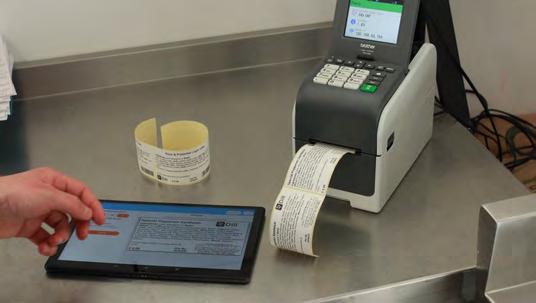
The results show up fast. At atis, moving labelling onto one connected system cut manual labelling time by 60% and reduced food waste through tighter stock rotation.
At patisserie group L’éclair, the same approach cut labelling errors by 80% and sped up production fivefold.
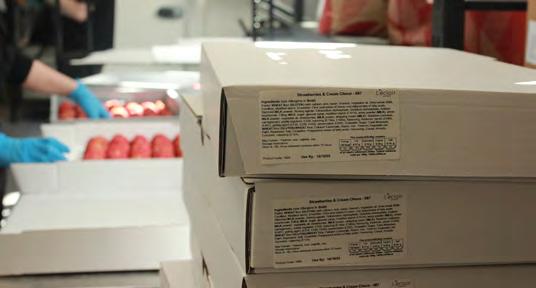

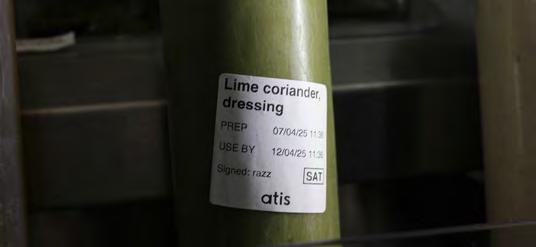
Day-dot stock rotation at atis: allergens, prep and use-by dates flow straight from the system to the label.
Compliance is where the stakes are highest, and the rules are tightening in both the UK and the United States. In the UK, Natasha’s Law already requires full ingredient and allergen labelling on food pre-packed for direct sale. In the US, New York has just passed the first state allergen-labelling law of its kind — effective November 2026, it requires top-nine allergen labelling on food packed on-site, and other states are following. On top of that, FSMA Rule 204 is pushing traceability requirements through food retail and service. When labelling data is already structured, connected and logged, compliance stops being a separate scramble and becomes a by-product of how the system already works.
The same infrastructure running UK forecourts, delis and bakeries is now live across North America — because the underlying problem is identical wherever food is prepped, dated and sold.


Today, Dill is already running across service stations, fresh-food groups and hospitality brands — from Shell, BP, Texaco, Esso and Jet operated by groups including Penny Petroleum, Highland Group and Tankerford, to restaurant brands including atis, BrewDog, Busaba and Brava Hospitality in partnership with Jamie Oliver Restaurants.
Unlike legacy desktop-driven labelling systems, Dill runs mobile-first and cloud-managed across every site.
The operators who’ll find the next few years easiest are the ones who stop treating labelling as a stack of separate jobs — and start running it as one connected system that scales without changing shape.
Dill is food labelling infrastructure for modern food operators — one connected system for stock rotation, Food to Go, edge shelf, design and print. Hardware by Brother. See Dill live at the Hospitality Tech Expo, stand HT416.
UK: www.mydill.co.uk North America: www.mydill.com
The atis story (Brother UK): brother.co.uk → atis case study
Natasha’s Law & PPDS: mydill.co.uk/ppds-natashas-law
Stock rotation & food safety: mydill.co.uk/stock-rotation
Watch how it works: How atis scales smart labelling across London
YouTube: @dillfoodlabelling
LinkedIn: linkedin.com/company/dillapp
Updated Runa’s Clause provides businesses with a practical legal tool to measure, reduce, and report food waste across supply chains.
Developed in collaboration with WRAP, the clause aligns with recognised frameworks and best practices for food waste reduction.
Supports organisations in reducing costs, cutting greenhouse gas emissions and meeting sustainability and climate commitments.
The Chancery Lane Project (TCLP), a UK-based legal nonprofit driving climate action through contracts, has collaborated with WRAP (Waste and Resources Action Programme) to update Runa’s Clause (Reducing Supply Chain Food Waste). The clause is a practical contractual tool designed to help businesses reduce food waste across supply chains while supporting sustainability goals and operational efficiency. WRAP will be advising its partners to incorporate this clause to reduce supply chain food waste and help deliver sustainability goals.
Reducing food waste delivers both financial and environmental benefits. Businesses can cut unnecessary costs while also reducing greenhouse gas emissions associated with wasted food production, transport and disposal.
The updated clause strengthens requirements for businesses to measure the tonnage of food waste generated, record reduction initiatives and outcomes, and report progress against food waste reduction targets. It encourages organisations to use recognised frameworks such as WRAP’s Food Waste Data Capture Sheet and aligns with best-practice guidance, including WRAP’s UK Food and Drink Pact and Food Waste Reduction Roadmap.
UK-based food manufacturer English Provender Company has already received board approval to adopt Runa’s clause. The company specialises in sauces, dressings, marinades, condiments, chutneys, and cooking ingredients, supplying major UK retailers, food manufacturers, and foodservice businesses.
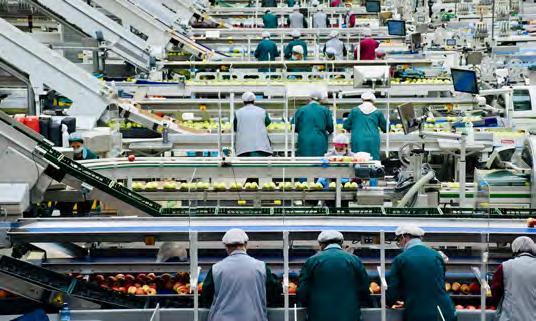

By embedding these practices directly into contracts, businesses can improve transparency across supply chains while working with suppliers to identify the causes of waste and implement practical solutions.
Ben Metz, Executive Director at The Chancery Lane Project, said: “Contracts are one of the most powerful levers businesses have to drive change across supply chains. By building food waste reduction directly into contracts, companies can move from good intentions to measurable impact. The updated Runa’s Clause helps organisations work collaboratively to address the issue with suppliers to reduce waste, cut emissions and deliver on their sustainability commitments.”
“Caroline Conroy, Senior Specialist Food System Transformation at WRAP, added: “Last year, the average cost incurred by a company for every tonne of food waste it generated ranged between £1,638 and over £4,200, across various sectors. The updated Runa’s Clause will be welcome news for businesses, as it means they can reduce costly food waste at the contract stage and avoid these heavy, persistent losses.
“This is good news environmentally too, as reducing a tonne of food waste prevents nearly 4 tonnes of CO2e from being produced. WRAP is delighted to collaborate with The Chancery Lane Project to update Runa’s Clause.”
Carl Steckerl, Business Lead for Environmental, Social and Governance at English Provender Company, added, “The Billington Group is committed to reducing our food waste both within our business and the value chains in which we operate. We are pleased to have adopted the principles of Runa’s clause to increase transparency in cases of avoidable waste. We are looking forward to working collaboratively with our suppliers and customers and embedding these principles into our ways of working.”
Through legal design, legal tech, co-creation, and legal playbooks, The Chancery Lane Project is continuing its commitment to provide practical guidance and tools for applying climate-aligned solutions that drive decarbonisation and sustainable practices.
Tetra Pak has refreshed its award-winning1 Approach to Nature, strengthening action on responsible sourcing and water resilience to sharpen its focus on the areas where it can maximise positive contributions while addressing its most significant nature-related impacts, following two years of implementation across its value chain.
First launched in 2024, the Tetra Pak Approach to Nature sets out more than twenty targets guiding action across the value chain to halt and reverse nature loss, restore ecosystems, and enhance global water security, in alignment with international biodiversity goals.
Reflecting insights gained over its rollout, the company has now made focussed updates to the framework to prioritise areas where it can deliver the greatest results. This has shaped a more targeted approach, directing resources towards high impact materials, locations and supplier sites, with clearer expectations for traceability, verification and measurable outcomes. The Approach to Nature will continue to be structured around four key, value chain-wide action areas – Upstream, Operations, Downstream and Transform – with a strengthened emphasis on upstream activities, where the company’s most significant nature impacts and dependencies occur. This includes targeted revisions to selected goals, such as using geographic information systems to verify the deforestation-free status of high-priority sourcing locations and reducing total water withdrawal by 10% by 2030 at suppliers with the highest waterrelated impacts.
Commenting on the update, Francesca Priora, Vice President Climate & Nature at Tetra Pak, said: “Two years of implementation have given us much clearer insight. The refresh of our Approach to Nature reflects a shift towards sharper execution, focusing action where it can deliver the greatest impact across the value chain.
Our industry relies heavily on nature to shape sustainable and secure food systems for the future. As we move towards our next milestones, collaboration remains critical. By working closely with suppliers, customers and partners, we aim to protect key ecosystems and help strengthen the resilience of food systems”.
The framework also covers efforts to support the transition to a circular economy through improved product design and performance, more efficient equipment, and an optimised approach to collection, recycling and waste management.

Alexander Nick, Senior Director Climate and Nature at WBCSD said: “Tetra Pak’s updated Approach to Nature reflects an effort to translate ambition into clearer priorities and action across its value chain. By recognizing interdependencies across sustainability areas and taking stock of implementation experience, the company is strengthening the focus of its approach over time. WBCSD welcomes this willingness to review and adapt: sharpening focus, learning from practice, and aligning corporate action with the shared global ambition to halt and reverse nature loss.”
The sharper focus of the updated Approach to Nature builds on implementation insights and concrete progress delivered since its launch in 2024, including:
Collaborating closely with suppliers, engaging its entire supplier base in nature-related impact assessments and establishing relevant procurement requirements.
Strengthening responsible sourcing practices, sourcing 100% of the paper-based materials2 used in its products from FSCTM-certified3 and other controlled sources, and 100% of plant-based polymers as Bonsucro-certified4
Advancing action on water resilience, ensuring high-impact suppliers report on water quality and quantity, while introducing target requirements to reduce water withdrawal intensity at those supplier sites5
Delivering ahead of schedule on air pollution reduction, demonstrating how greater focus and prioritisation can accelerate impact, meeting its 2030 target to reduce volatile organic compound emissions across its production sites by 50% against a 2019 baseline.
John R Boone is a leading Industrial Mixer manufacturer who designs, manufactures and installs their industrial mixers, blenders and mixing systems. Our innovative range of mixers, blenders and mixing systems are used worldwide in the production of powders, granules and pastes.
We offer a wide range of sizes from 2L to 25,000L, for batch and continuous up to 250 TPH for a variety of materials for the Food industry, with a wealth of options in terms of feed / discharge equipment, drive configuration, spray systems, refiners, agitators, ATEX rating, variable speed, and control systems, all running efficiently, with short mixing times and heating/cooling options as required.
Your choice of mixer or blender will depend on many factors but key elements in the selection will be the mixer type best suited to the ingredients you are mixing, the cycle time and working capacity. We can verify the test mixer for your products in our test facility where the mixing time and power will be confirmed on a small scale and shows how we scale up to your production size required.
All this comes to fruition by our dedicated test engineers who Research and Develop our mixing equipment on an ongoing basis and work closely with our clients to ensure that we understand their industries needs and deliver innovative solutions for their applications.
We have all our mixer types available for single product testing or extended pilot scale tests.
For extended tests and pilot runs on new products all of our mixers are available for site hire and supplied with a test engineer to set up the mixer and assist with the first days test. Part of the test cost is refunded should the test result in the placing of an order.
We work together to ensure your company has the right mixing application for your product.

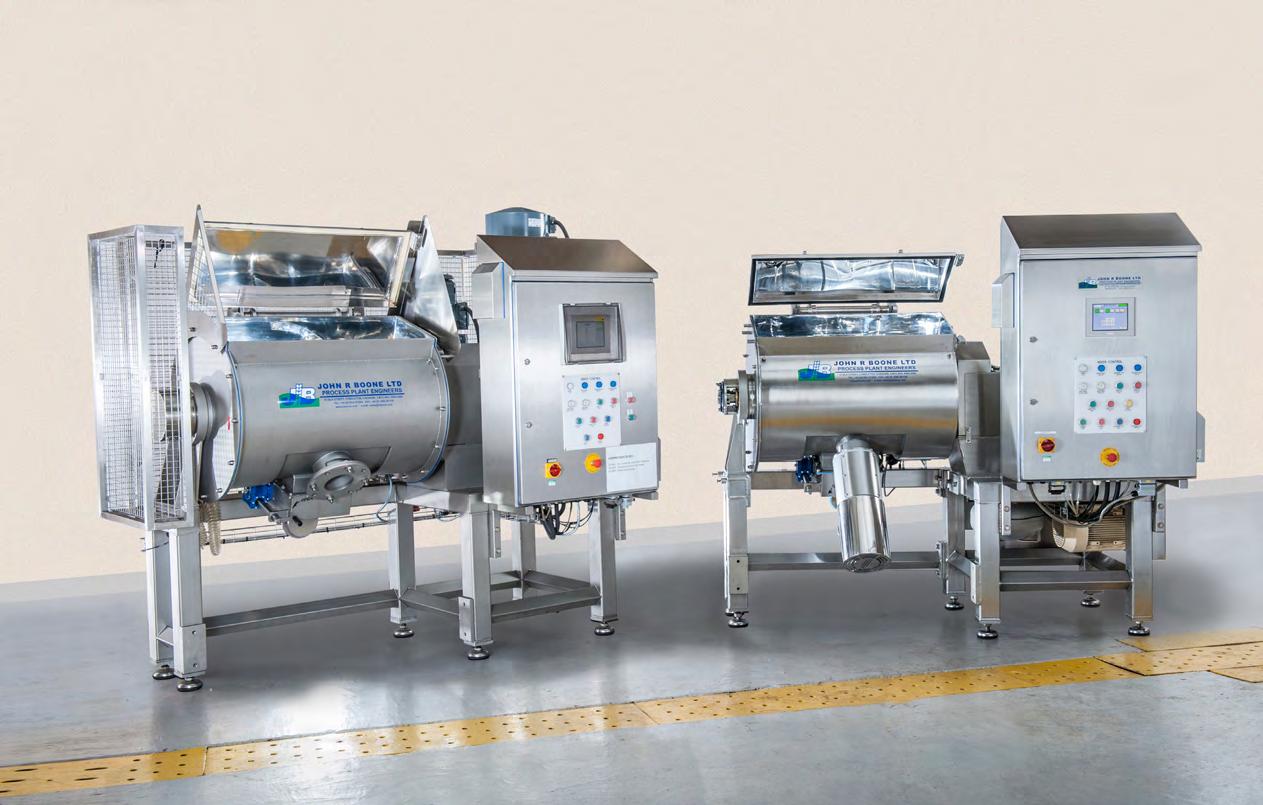

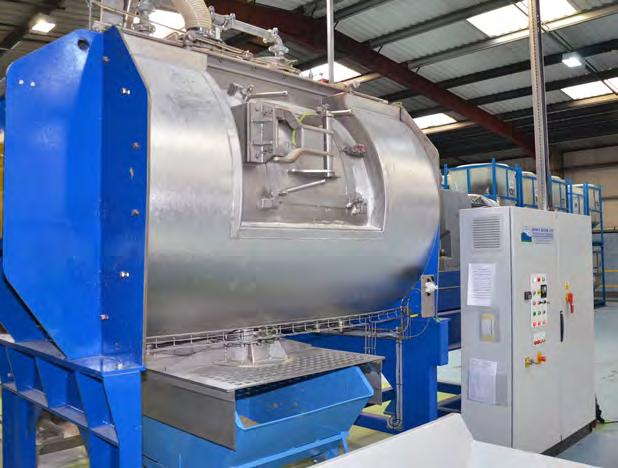
• UKCA and CE compliant
• In house design and engineering team
• Built, programmed and tested in house
• Full after care service
Boone Mixer Range:-
• Horizontal Delta Blade
• Helical Blade, Plough Share
• Paddle Blade
• U Trough, Continuous
• Rotary Drum blender
• Lab mixer Delivering concise, even mixing with efficiency and durability.
Tel: +44(0)1260 72894 Email: sales@jrboone.com www.jrboone.com
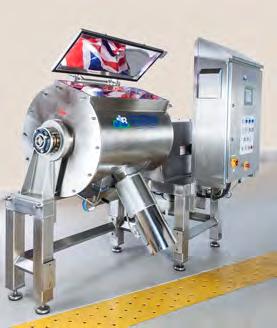
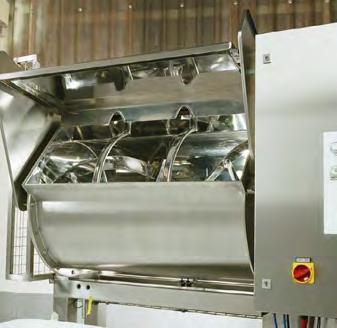
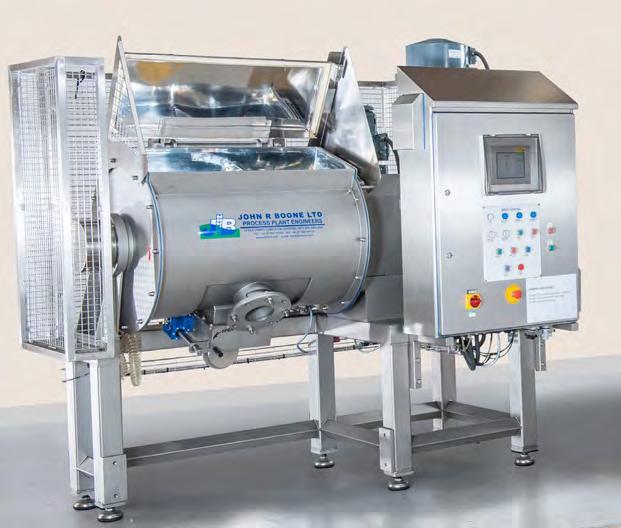


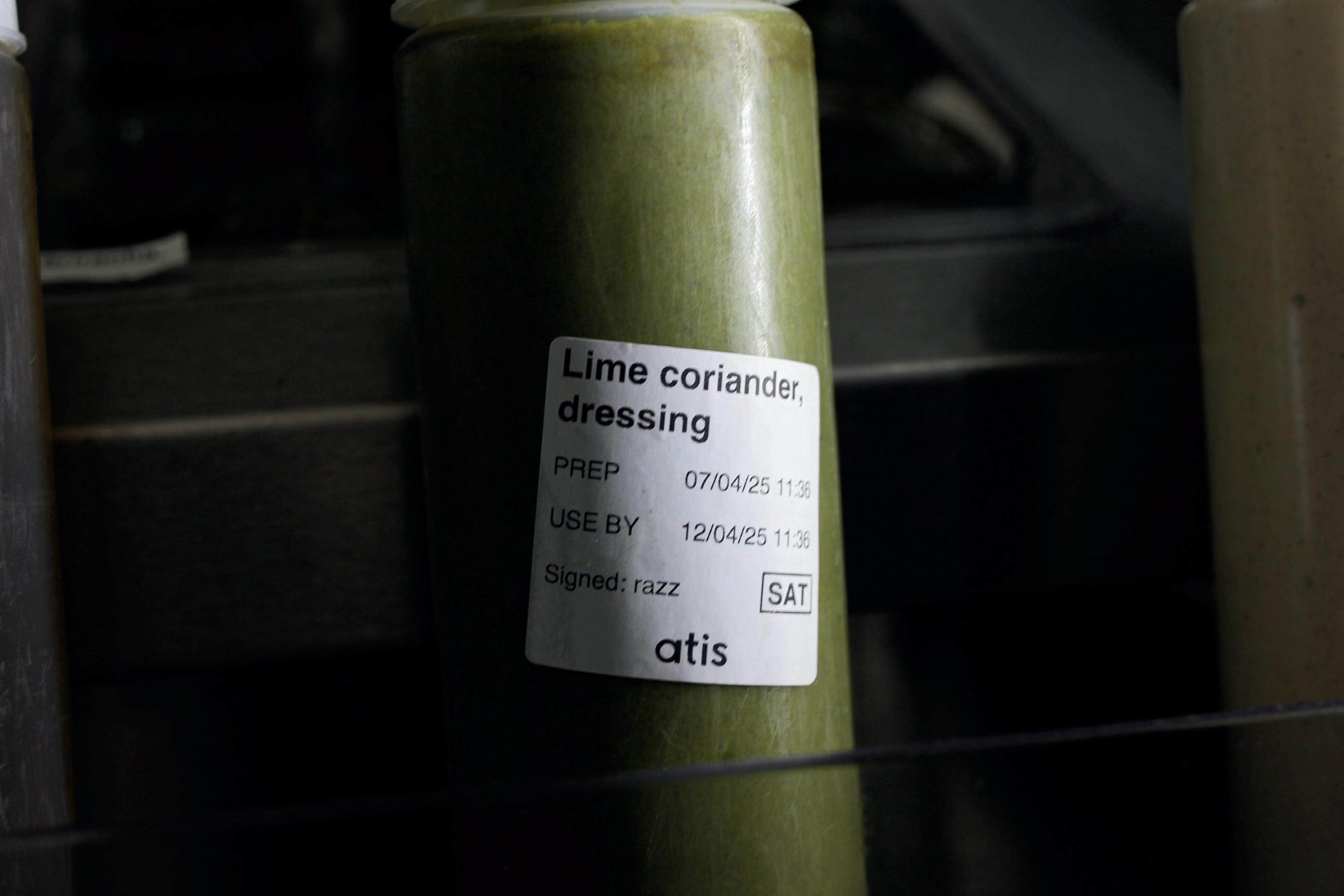
stock rotation, food to go, edge shelf, design & print — connected to your POS, ordering and data systems. compliance built in. less labelling timesaved per year 60 % 416 hours