
CODA is a word sometimes used to refer to the concluding passage of a piece of music, forming an addition to the basic structure. It has been the name of our school magazine for over fifty years.

CODA is a word sometimes used to refer to the concluding passage of a piece of music, forming an addition to the basic structure. It has been the name of our school magazine for over fifty years.
EDITOR
Mrs O Cornes
With thanks to: Mrs N Baker, Mrs C Jenner, Mrs S Hickman
STAFF CONTRIBUTORS
Mrs N Baker
Ms P Evernden
Mr N Ramsden
STUDENT CONTRIBUTORS
Maisie, Hayley and Alice, Year 12 and Emily, Year 9
ARTWORK ON COVER
Anna, Year 11
DESIGN, ARTWORK AND PRODUCTION firebrandcreative.com

This magazine is Carbon Balanced by World Land Trust, mitigating the environmental impact of the printing process. World Land Trust is an international conservation charity that protects the world’s most threatened habitats.
“The money that is given to the World Land Trust, in my estimation, has more effect on the wild world than almost anything I can think of.” - David Attenborough, WLT Patron
Welcome to the new look CODA! All our school magazines have now been brought together into one publication brimming with happy memories.
Whatever stage you are at on your Wally journey, you can now see how last year unfolded for our community. Our Juniors received the final edition of their bespoke magazine, BOOM in the autumn, so the Junior section of this edition reflects their return to the Holly Bush Lane site after 33 years away. We are now one school on one site - with one magazine.
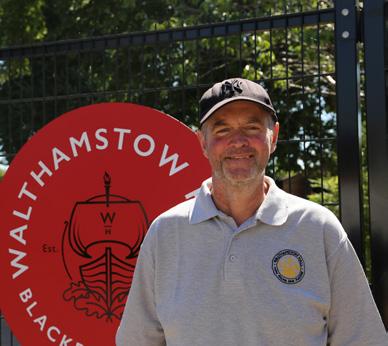
The Editorial Team may be a little more camera-shy than our amazing Maintenance Team, who are interviewed on page 11 about their work in Blackburn House, but
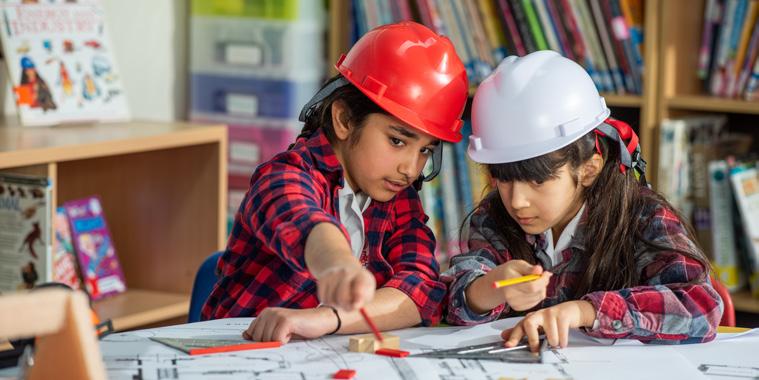
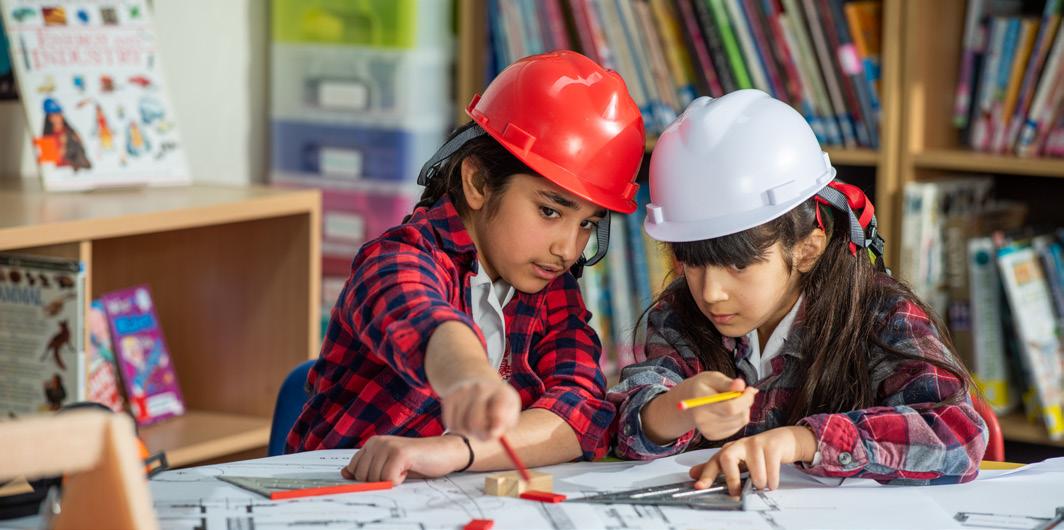
they have crafted something truly special in this publication. There is real joy in seeing the arc of life in this ship of ours, from the emerging architects featured on page six to the transatlantic sportswoman whose obituary appears on page 98.
Muddy Stilettos recently described Wally Hall girls as “bright, sparky and confident” with “thoughtful and enquiring minds.” This edition of CODA showcases that beautifully. Whether you have been part of our community for one year or 99, there is something in these pages for you.

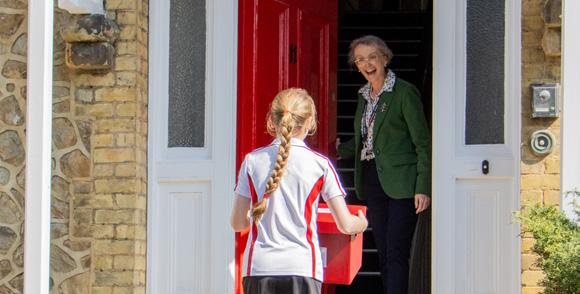
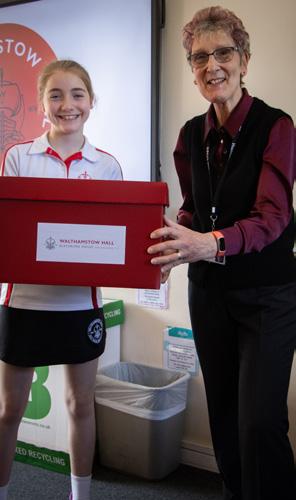
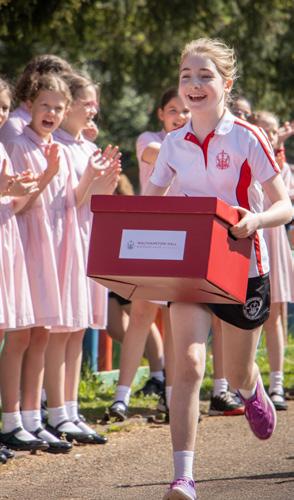
Plans began in February 2025 to return the Junior School to its original site at the Senior School. We told the story of the move in a film showing Ruby in Year 6 carrying a packing box from Bradbourne Park Road, to the Senior School main building and on to Blackburn House.
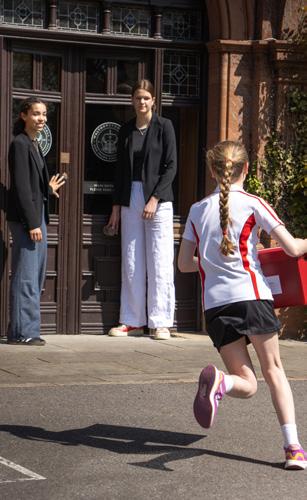
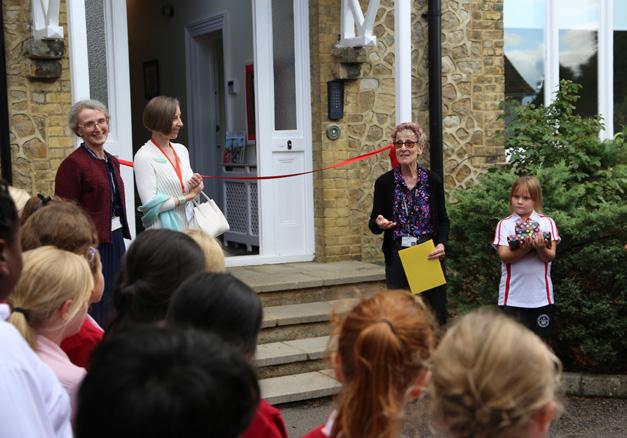
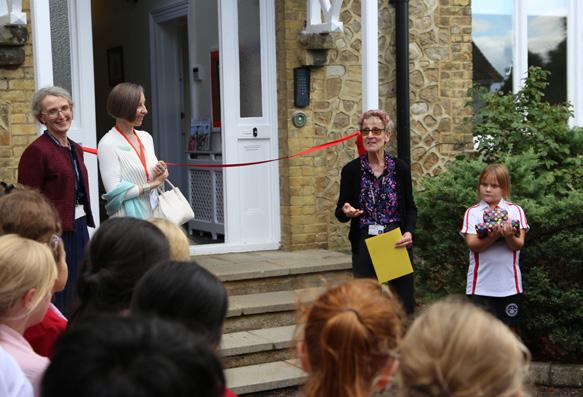
Former Chair of Governors Jayne Adams officially opened Blackburn House
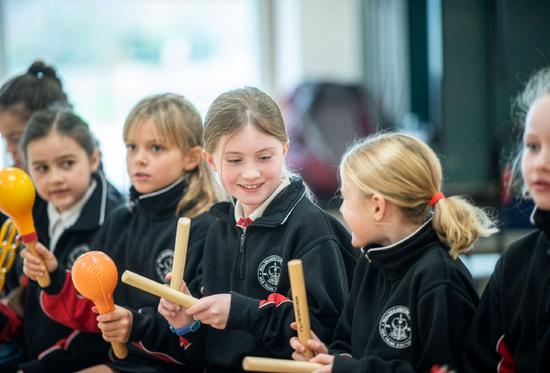
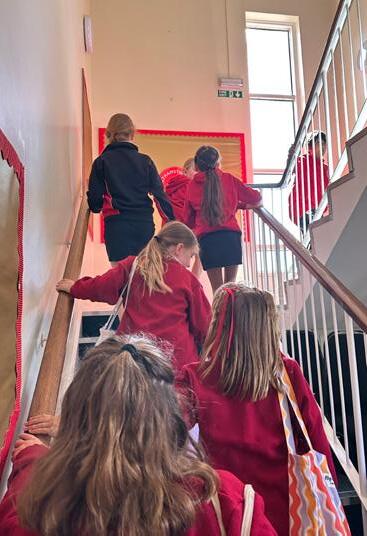
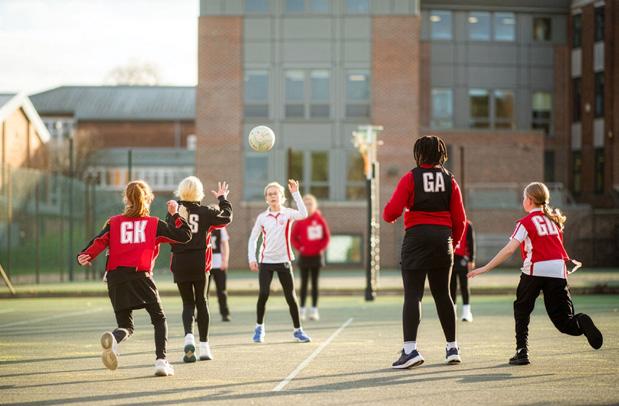
Heading to the classrooms upstairs

MRS PHYL POTTER HEAD OF BLACKBURN HOUSE
What is your favourite part of the curriculum to teach?
I’ve always loved teaching maths because I am passionate about it and I love to transfer that passion on to my students and pupils. I particularly enjoy investigative maths as it encourages pupils to think carefully about what they’re doing, and to think about relationships and connections.
What’s your favourite event of the School year?
It has to be Christmas; when it is quite gloomy going from autumn to winter, Christmas is bright, everyone is happy and you have all the wonderful decorations. There is a lovely warm feeling, certainly at Blackburn House.
What is your secret superpower?
I think mine is patience and a sense of humour. I think they go hand in hand!
Do you have any pets?*
A: I have a cat called Mika, he came from Battersea Cats and Dogs home and I love him to pieces. I have a cushion in my office with his picture on!
B: I have a budgie called Billy and I have his picture on my mug at work.
C: I have a cat called Susan, I adore her and have a photograph of her on my desk.

What’s your favourite part of the curriculum to teach?
Art. It’s wonderful to see how pupils interpret the works of an artist differently, which inspires them to each produce unique pieces of work. I love to put music on and let creativity in the classroom run wild! In art there is no wrong answer.
What event do you look forward to most in the School year?
The Carol Service. Sitting in the church, hearing the carols being sung beautifully by the girls in candlelight lets me know every year that Christmas has arrived!
What is your secret superpower?
Curriculum teleportation! The ability to jump between teaching French, maths and computing, all before getting back home to look after my one-year-old!
What’s the naughtiest thing you did as a child?*
In Year 4:
A: I hated peas and scooped them all onto the floor at lunch time and then blamed the mess on someone else.
B: I told a gullible girl in my class that I’d seen a unicorn in the playground at lunchtime. She believed me.
C: I took the clock off the wall and changed the time to break time. When our teacher returned I told her there were no bells that day and that it was time to go out to break.
What’s your favourite part of the curriculum to teach?
I love music. I love teaching the choir, love doing the instrumental groups and the instrumental work in class lessons, but music is my absolute favourite.
What’s the event you most look forward to in the School calendar?
We have major music events at the end of each term; I love the Christmas Carol Service in the church, that’s a special evening. Easter time we have our little in-school performance, with the choir. In the summer we’ve got our production with the acting and the drama as well. They are all very different, but I enjoy them all.
What is your secret superpower?
Enthusiasm! I’m very enthusiastic.
What’s your strongest childhood memory?*
They’re all musical moments.
A: Impaling myself on a music stand when I tripped over it during an exam.
B: Singing at the Royal Albert Hall, aged 9 and knowing I wanted to be part of the music world when I grew up.
C: Deciding to learn the clarinet after hearing Gershwin’s Rhapsody in Blue on the radio, aged 8.

MR JOSH MOOR PE LEAD
What’s your favourite part of the curriculum to teach?
Any new sport that pupils are introduced to. Nothing beats the buzz of watching students surprise themselves with what they can do in different sports. This year we have introduced volleyball into the Year 6 curriculum and the pupils loved it so much that we had to buy a volleyball net so they could play at break and lunch times.
What is your favourite event in the School calendar?
Sports Day – the girls put so much work into practising for this in their lessons and it is then amazing to see them perform at such a fantastic venue [as Tonbridge School racetrack].
What is your secret superpower?
As a PE teacher it has to be that I can spot untied hair, untied shoelaces and pupils wearing earrings when they shouldn’t from at least 100 metres away.
What’s the naughtiest thing you did as a child?*
A: I threw a lump of plasticine into the plait of the girl sitting in front of me at school.
B: I once bit my mother to get her attention.
C: I kicked a football through the window of our school dining hall – never have I run so fast away from a scene.

MRS CHLOE CHAPMAN ENGLISH LEAD
What’s your favourite part of the curriculum to teach?
I adore teaching my Year 6 unit on War Poetry. I always teach it around Remembrance Day to keep it relevant and topical. Learning about these poems and their historical context adds so much meaning to the School’s various remembrance activities.
What is favourite event in the School calendar?
The big summer performance at the end of the School year! There is no feeling like the buzz of bows after a show. Our girls (and staff!) work so hard to put the show together and seeing all that hard work come to fruition is an incredible feeling.
What is your secret superpower?
I’m a stickler for grammar. I can spot a misplaced apostrophe from a mile off, and will happily proofread anything that’s put in front of me.
What would you be if you weren’t a teacher?*
A: A furniture upholsterer, I love giving old things a new lease of life.
B: I love to sing and trained in opera before becoming a teacher, so something singing-related.
C: I trained as an actress before becoming a teacher, so something drama-related.

What’s your favourite part of the curriculum to teach?
Science, because it naturally sparks curiosity and encourages students to ask questions about the world around them. I enjoy how hands-on and interactive it can be, allowing students to explore ideas through experiments and real-life examples.
What is your favourite event in the School calendar?
There is not one but two events! I love the calmness and time for peaceful reflection during the Carol Service and at the other end of the scale, the teamwork, determination and buzz on Sports Day. Two very different events but both as important as each other.
What is your secret superpower?
The other teachers in the school think that as soon as I walk near a broken computer it fixes itself, so they always ask me for tech help. I seem to manage to fix it just by looking at it.
What’s your strongest childhood memory?*
On holiday in Cornwall, where my mum is from:
A: A donkey biting me at a petting farm.
B: Spending time on the beach.
C: Having an ice cream knocked out of my hand by a seagull.
MRS ELLIE PILLING MATHS LEAD
What’s your favourite part of the curriculum to teach?
Before becoming a teacher, I studied at The London College of Fashion and worked in fashion buying, so I really enjoy teaching maths and art.
What is your favourite event in the School calendar?
Anything Christmas-related! Being a teacher at Christmas time is the most magical time of the year.
What is your secret superpower?
Multi-tasker!
What would you be doing if you weren’t a teacher?*
A: Writing for a travel publication, as it would be fantastic to travel the world.
B: Running yoga retreats abroad for children.
C: Going to Italy to film all the traditional pasta dishes made by old Italian grandmas.

What’s your favourite part of the curriculum to teach?
Maths, because I love puzzles and working out how to do things. When I was at school I wasn’t always the fastest person at maths, but I feel like with maths, it builds and I just find it great!
What is your favourite event in the School calendar?
The Carol Service at St John’s Church. I feel it is the proper start to Christmas, and I’m always really impressed with the girls who are singing solos and doing the readings. The choirs are wonderful.
What is your secret superpower?
I try to be patient with almost everyone (but maybe not my husband!).
Strongest childhood memory?*
A: Winning a poetry competition when I was about 10. I remember having my name read out and then reading out the poem at school.
B: When our family cat was run over by the milkman in our road. Sorry, a sad one!
C: A teacher telling me only to pretend to sing during our school carol concert, because I was so out of tune.

MRS LAURA CARTER MATHS TEACHER
What’s your favourite part of the curriculum to teach?
I do enjoy teaching maths. I try to make it fun with lots of games, puzzles, problem-solving, all that side of maths I really enjoy.


Additional reporting by Alice and Hayley
What is your favourite event in the school calendar?
The Junior School Carol Service at St John’s Church. It marks the start of Christmas for me and my family, and it’s a nice opportunity for the school community to get together.
What is your secret superpower?
The ability to create a dice game in less than 30 seconds. I can create a really good maths game on the spur of the moment.
What would you be if you weren’t a teacher?*
A: A British Rail timetable supervisor. Creating templates comes really easily to me and I love trains and memorising routes.
B: A Formula I strategist! I’d be working out how many pit stops the car needs to take and how much fuel is on board.
C: A fraud investigator at a bank. I can spot when the figures don’t add up and behind my smiley demeanour I would love to help catch criminals.

What is your favourite part of the curriculum to teach?
I am going to say spelling, because I am a dyslexia teacher, so I know how to make it fun. If you are dyslexic, you find spelling very hard, so I like to teach little ways around tricky words and mnemonics.
What is your favourite event in the School calendar?
Christmas lunch is really fun because we all wear our Christmas jumpers and the staff end up serving the girls their Brussels sprouts, turkey and gravy. We take this role seriously and then we all sing Christmas songs and the girls love it!
What is your secret superpower?
My superpower is that I have the ability to listen to people for hours on end.
What would you be if you weren’t a teacher?
A: A midwife. It is amazing to bring life into the world and to look after people.
B: A marriage guidance counsellor, aided by my superpower, see above!
C: A full-time foster carer, what’s more important than giving a child a good start in life?
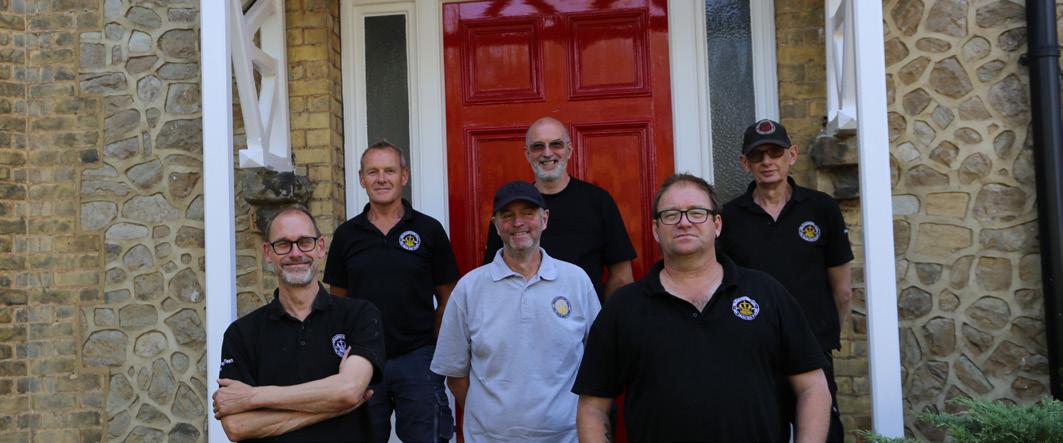
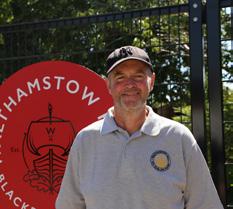
Estates Manager Craig Osburn and his team had the enormous task of preparing Blackburn House for Junior pupils in September 2025, while lessons were still going on for Senior pupils in the building. CODA caught up with Craig in July.
Q: Outline the progress you and your team have made so far.
Craig: We have had to rewire the whole place. The electrics have to come before everything else, because if we don’t have enough power to run the school, it’s no use!
We have put in stud walls to make new rooms on both the ground and first floors. Plastering, decorating, building new radiator covers, new fire doors all the way through and new carpet in certain areas. It’s been thorough.
Q: What’s been the biggest challenge?
Working around the students that were still here having lessons. Trying to make it safe for them while still getting on because of the tight time scales.
To move Photography out we had to build another room in the Main School for them to move into.
The same with Art. It’s been absolute chaos, but we haven’t done too bad, considering.
Of course, we still have to do all the other normal jobs around the School in the meantime, so, yeah, it’s been a crazy few months.
Q: Tell us about the pretty sky ceiling panels in the entrance hall!
It was my idea. The electrician suggested we put in two panels instead of one, because it’s quite dark. We were thinking about bringing more light in through the front door, but that would ruin the look of the front door. So, two light panels instead!
Q: What are you especially pleased with?
The outside gates, we got a company in to do them through a landscaping friend of mine and I think they are really nice, and I think they really set it off.
Q: What do you want to say about your team?
They’ve been amazing. They’d do anything I ask and even though I know they’ll be busy here and I need something done at the Main School, they’re quite happy to drop tools, do that quickly and then come back.
Steve’s been coming in at weekends to finish off the painting. He’s been putting the extra effort in. It’s just how everyone works together, you can’t ask for a better team.
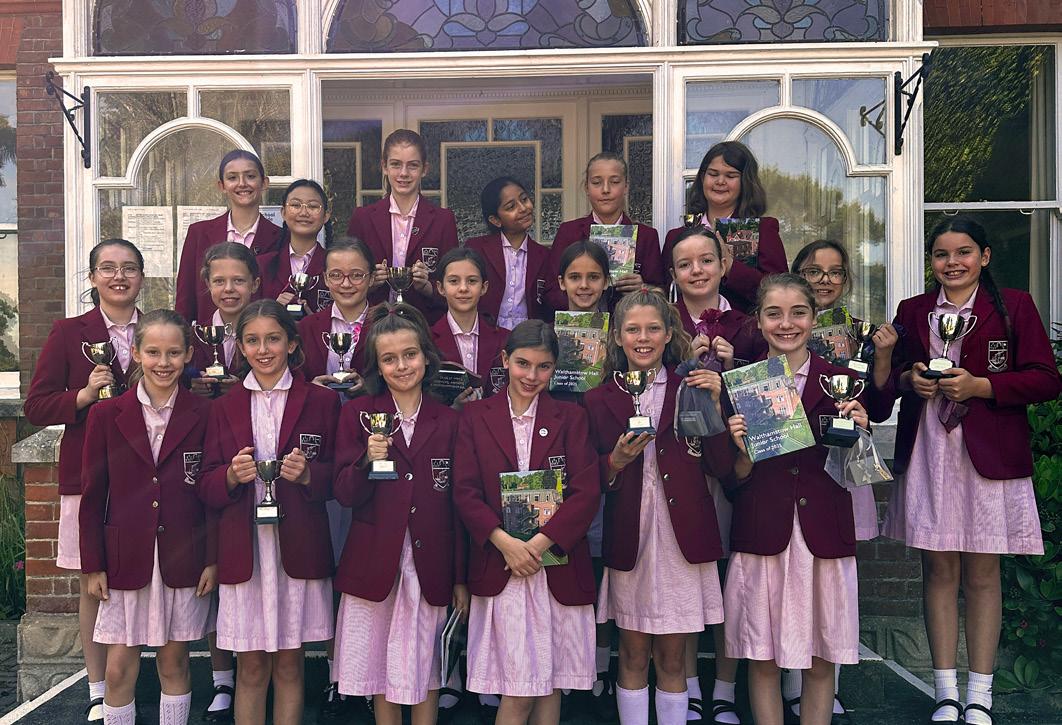
WALTHAMSTOW
Elodie
SEVENOAKS
Ella-Marie
ROYAL
Perla
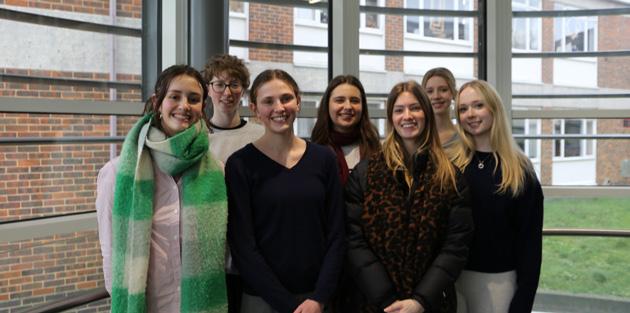
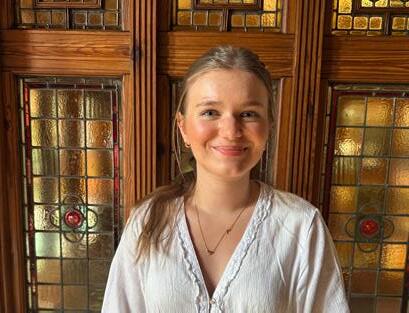
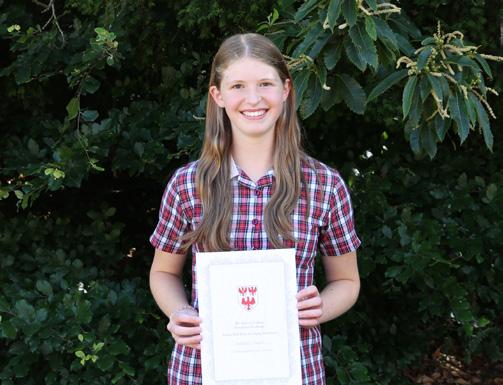
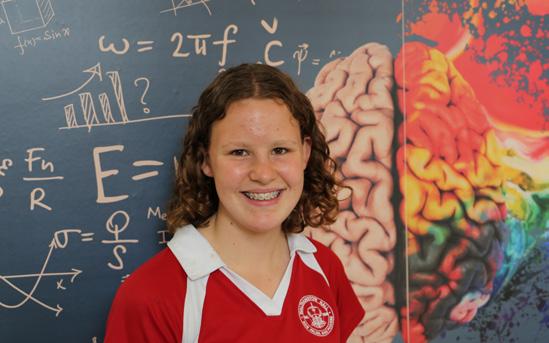
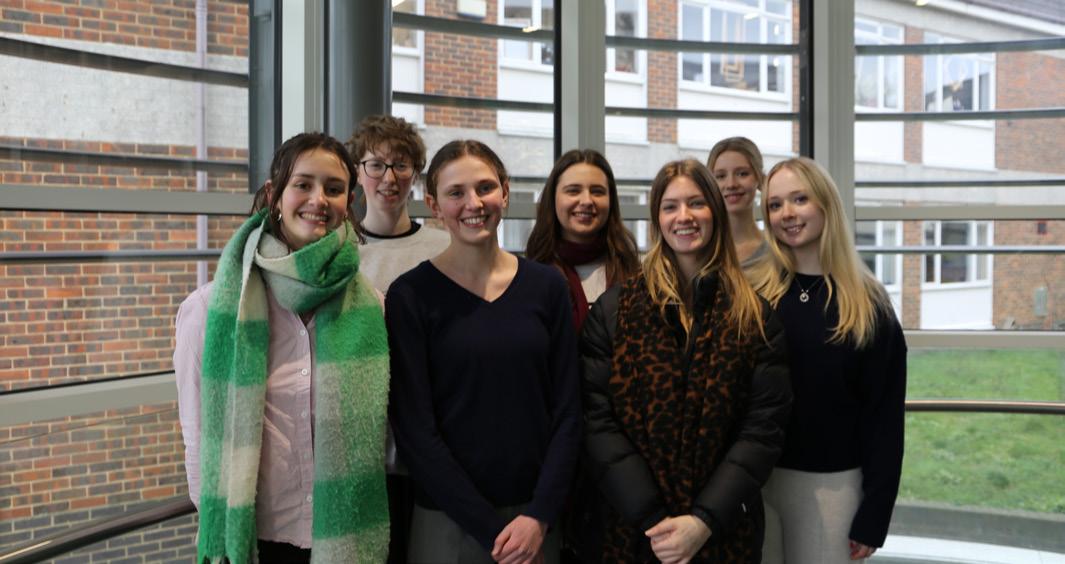
Year 13 pupils who had completed an Extended Project Qualification (EPQ) the previous year were rewarded with some fantastic results, with 86% receiving an A* or A. Doing an EPQ in Year 12 is optional; pupils can choose to either write a 5,000 word essay or to create an artefact, such as a piece of music, or a performance, with a shorter report. It gives them the chance to choose a topic they want to explore deeply and demands independent learning and critical thinking. The qualification is valued highly by universities.
This cohort all chose to submit a piece of written work, with the following titles:
Assess the reasons why Philip II of Spain decided to invade England in 1588.
Why is the gut-brain-skin connection important?
Which is the most effective treatment for sarcoids [a type of cancer] in horses?
How effective were the 2010 and 2017 UK Drug Strategies?
Assess the view that the psychological impacts of music are beneficial.
To what extent was President Nixon’s foreign policy from 1969 to 1974 a success?
Assess the reasons for the rise in youth protest in 1960s America.
Several of the Sixth Formers carried out original research. Lucie sent a questionnaire to two vets about cancer treatments for horses and said “I was able to compare both opinions and then come to my own opinion”.
Daniella interviewed a GP for her research into the gut-brainskin connection and Rosie visited the National Archives: “I looked at some original documents from the time of Mary Queen of Scots, like the ciphers she used when she sent letters to her Catholic supporters”.
Millie said her EPQ on the psychological impact of music was “a good option to explore something I’ve been interested in but had never had the time to learn about”.
All of them agreed it had meant a lot of work, but they were proud to have completed it.
By Ms Polly Evernden, Deputy Head, (Academic)
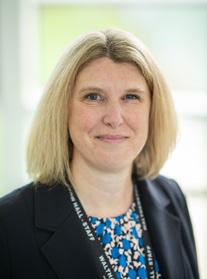
Academic Scholarship is at the heart of what we do here at Walthamstow Hall: the challenging curriculum we teach, the high expectations we set in lessons and the way in which students flourish under the guidance of their academically expert teachers.
The Academic Scholars’ Programme seeks to build on that and to extend our scholars’ academic interests beyond the classroom. This is evident in the reading they do, with classic novels such as Pride and Prejudice currently taking centre stage, and the seminars they attend, such as ‘Should the British Museum return the Parthenon Marbles?’ Or ‘What is the possibility of extraterrestrial life?’.
Students take part in activities, such as debating how far social media represents Foucault’s Panopticon and diving into a range of Fermi estimation questions (I wonder if you can estimate how many sourdough loaves are eaten in Sevenoaks annually!). All of these sessions aim to broaden their academic horizons and sharpen their reasoning and critical thinking abilities.
One of the most valuable parts of the programme however, is the work that students do independently. Each year, academic scholars in most year groups write an article that seeks to answer a question that they have themselves posed. They explore a range of sources, develop arguments and come to meaningful conclusions.
The diversity of subject matter always astonishes me: Space, AI, medicine, food, law, psychology, morality, the classical world and capybaras all featured in last year’s selection. Contemporary issues like the environmental costs of space exploration and the harms of ultra-processed foods allow students to delve into the latest scientific research. More timeless questions about the relative or absolute nature of morality yield thoughtful debate, often engaging with centuries of scholarship.
Our Year 7 scholars took part in the ISEB Independent Project Qualification, which provides a framework for pupil-led, researchbased learning. Within the group, they produced a presentation, a piece of art and a website exploring neurodiversity and the future of the jobs market in an AI world. These projects were received very positively by the judges.
The independence of thought exhibited by all these students is truly striking; it is heartening to see them engage in self-directed learning and communicate their particular interests with real maturity. It gives us a window into their educational futures and possible careers, and, by any estimation, they are going to flourish when they step into those worlds.
Overleaf are just some of our scholars explaining why they chose the topic for their most recent articles and what they learnt.
The impact of ultra-processed foods on causing cancer
There has been a very steep rise in cases of bowel cancer in the under 50s and there is a correlation between this and with food. Reading Ultra-Processed People by Chris Van Tulleken was part of my research. What I learnt doing the essay was the impact that different chemicals can have on our health. Red 40 is a red food dye that is banned in the UK but is still used in the US. It causes dysbiosis in the gut – an imbalance of bacteria –
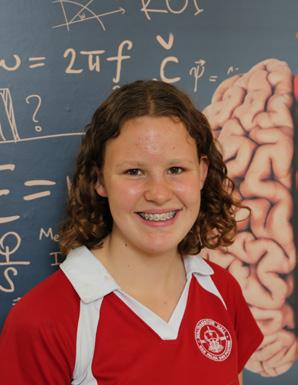
The relationship between sleeping patterns and academic performance
I explored how specifically in adolescence the circadian rhythms of your internal clock are changing. Teenagers naturally tend to stay awake later in the evening. So, it could be argued that school should start later for teens.
Other research showed how this could be unrealistic, as it is hard to shift schedules just for sleep. In my essay I also explored the benefits of different stages of sleep: REM and non-REM sleep and what
which creates an environment that could lead to cancer developing.
It’s the combination of lots of these chemicals, such as maltrodextrin [a food additive used to improve texture and shelf life] and emulsifiers that is bad. They are addictive, very low in fibre and have no nutritional value.
I liked the freedom of being able to research what I was really interested in. It has meant I’ve tried to stop eating so much processed food and I don’t eat breakfast cereals anymore.
How do personality traits influence adult success?
I’d never done an essay before where we were just told to write this many words on any topic. I really enjoyed that independence. I had been reading some psychology books and I found it interesting to learn how your personality will impact your life, so chose that for my essay.
I found out there is a model called the Big Five; these are the traits that scientists use to measure personality. They are: openness to experience, conscientiousness, extraversion,
agreeableness and neuroticism. A Scottish university did a personality test on people in their teens and then followed up with the same test on the same group ten years later. The study found that people with openness to experience and conscientiousness had the highest income. But it had less of a boost as you got older.
Something else I found interesting was defining the work / life balance because sometimes this can be misunderstood as the work / family balance, rather than looking at other aspects of life such as leisure time and romantic relationships.
kind of roles they play in your academics. In the end I figured out that instead of actually changing schedules it would be more effective if we improve general sleep patterns and improved people’s awareness of and knowledge about the benefits of sleep.
I read the book Why We Sleep by Matthew Walker as part of my research and watched a few programmes on it. It has helped me prioritise my own sleep, so I sleep better myself now.
To what extent will AI take over jobs in animation?
I’m interested in this because I want to go into Computer Science. I made a 3D animation of a wizard by hand on the computer. I got AI to do the same thing and compared the two throughout my essay, with pictures.
I said I could have just AI-generated my final product, but had I wanted to change one specific thing, that would have cost more money because AI would have had to have recreated the entire thing.
To what extent should the law intervene with our personal autonomy?
I want to study law at university, so this was a very useful topic to research. I looked at euthanasia, because at the time the Assisted Dying Bill was going through parliament and there were quite a few articles and debates over that. Then I looked at access to our personal data and compulsory vaccinations. I was doing an EPQ as well – about to what extent the law protects women from domestic violence – another cheery topic!
What I tend to do is to look at the law, then back it up with a case study or a
The AI one was much better than I thought it was going to be, but it still had problems. For example, I wanted the model to wear glasses. In the AI version, the colour of the eyes transferred to the glasses, whereas in my version, I manually created the eyes and then the glasses came on top. These are tiny details!
I concluded that I think AI will definitely change how animation jobs develop, but I don’t think AI will be as detrimental as some people think.
The benefits and drawbacks of space exploration
There is controversy over how much governments spend on their space programmes and I wanted to ask, is it worth it? From the point of view of the financial and environmental cost.
Rocket fuel releases soot into the air, which is something like 50 times better at holding heat than normal soot, which means it contributes greatly to the greenhouse effect. So, there’s a huge race to get to renewable and less environmentally costly fuel. On the plus side, the vast funding for the sharpest
minds to work on space research has resulted in huge steps in technology. This has led to things like better cochlear implants for deaf people, water filtration systems and mobile ultrasound units.
I concluded that overall, I thought space exploration was giving back to the community more than it took, whether through the desire to find out more about the universe or by creating jobs, or making sure that medical science can go further. Once you have passed the environmental hurdle, these things will have a positive effect on society.
news article and then explore it in its real-world application. Sometimes you have an act or a law that is not necessarily practised in the real world as effectively as you may believe.
On personal autonomy, the issue was keeping the balance between coming down on someone or on society when there is a threat present, but also not encroaching on personal liberties. That is the balance that society and the government really need to keep playing with.
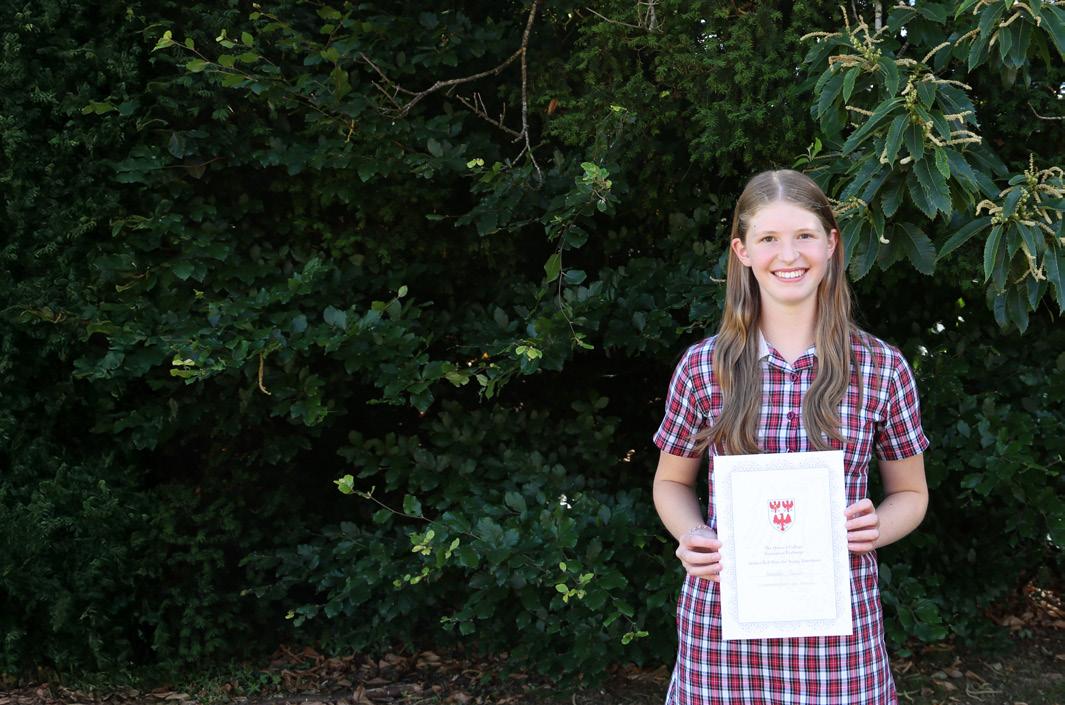
Isabella in Year 9 won a Commendation in a national competition for her translation of a poem from French into English. The Anthea Bell Prize for Young Translators is run by Queen’s College at the University of Oxford. The judges received five thousand of the best entries, submitted by students’ teachers. They praised Isabella’s work for its “impressive balance of accuracy and creativity”.
Sur le coteau, là-bas où sont les tombes,
Un beau palmier, comme un panache vert, Dresse sa tête, où le soir les colombes
Viennent nicher et se mettre à couvert.
Mais le matin elles quittent les branches;
Comme un collier qui s’égrène, on les voit
S’éparpiller dans l’air bleu, toutes blanches, Et se poser plus loin sur quelque toit.
Mon âme est l’arbre où tous les soirs, comme elles, De blancs essaims de folles visions
Tombent des cieux en palpitant des ailes, Pour s’envoler dès les premiers rayons.
Théophile Gautier, 1838
Where the hillside connects with the sky, lie the tombs, A towering oak tree, the comfort of homes, Rooted and twisted right through the earth’s core, Where peace can draw breath and be troubled no more.
But as morning dawns and sunlight kisses the ground, Doves disperse from the leaves as if shot from first sound,
See as just stars in azure, newborn skies, Only to land in a flurry of cries.
Evenings like these make my soul light on fire, my eyes bright alight as snowy wings take them higher, soaring and falling and soaring again, a part of our world since nobody knows when.
Théophile Gautier, 1838
Translation by Isabella
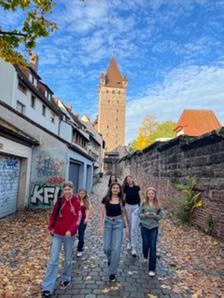
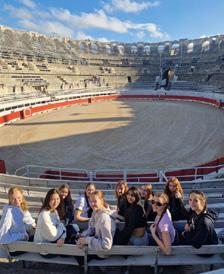
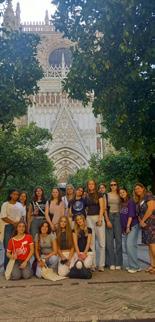
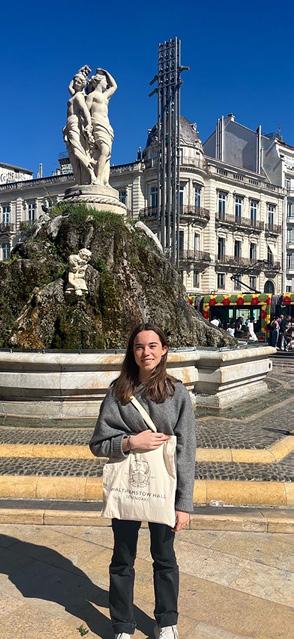
GCSE language students immersed themselves in the country of the language they were studying for five days over the October 2024 Half Term. MFL teachers accompanied them to (left to right): Nuremberg, Montpellier and Seville.
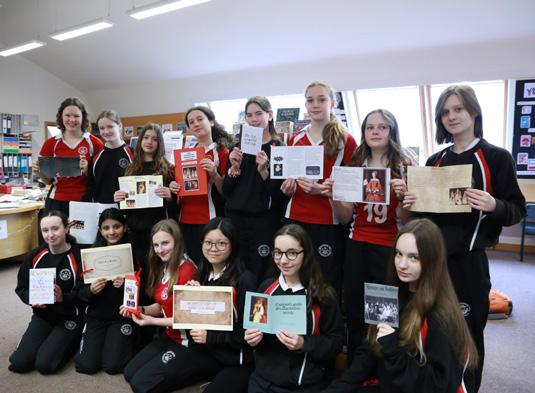
“Sing beautifully and obey your husband” – Year 9 wrote pamphlets on what society expected from women in Shakespeare’s time.
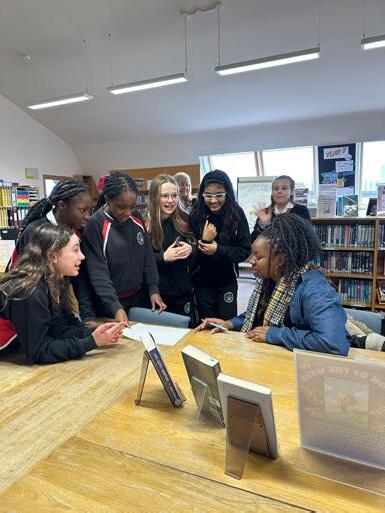
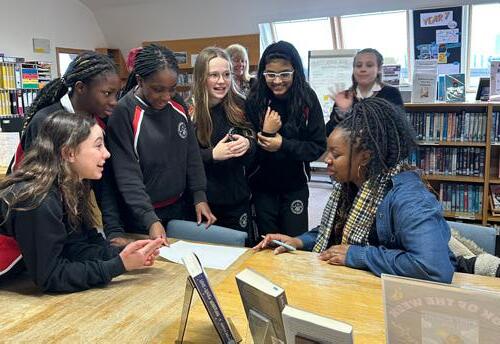
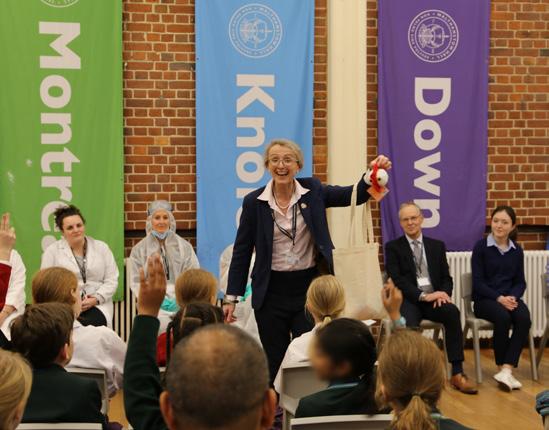
Author Abiola Bello spoke to pupils in Book Week about writing her award-winning “Emily Knight” fantasy series and co-founding Hashtag Press and The Diverse Book Awards, in her drive to publish under-represented authors and increase diversity in books for young people.
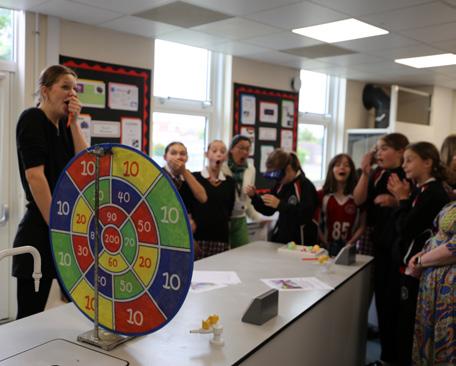
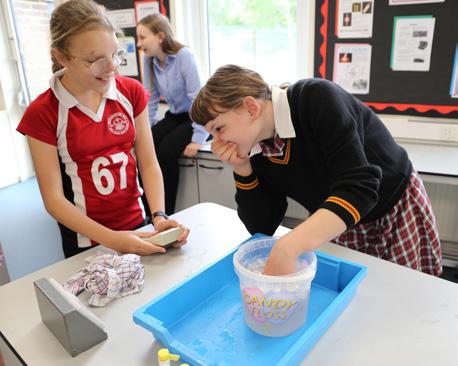
Science Week celebrated the evolution of science and technology across key areas including medicine, communication, education, and environmental innovation. Each day focused on a different scientific discipline.
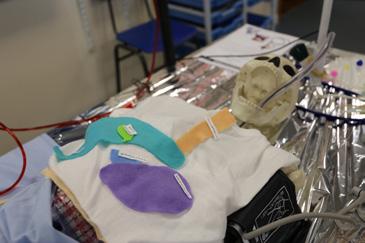
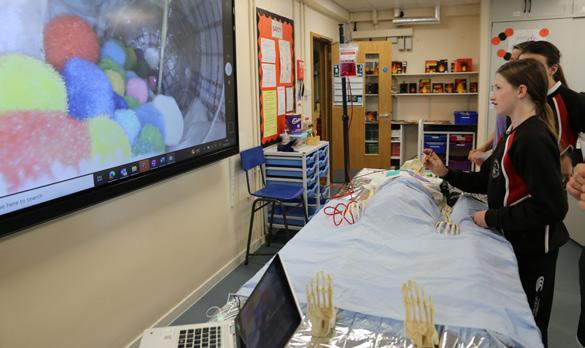
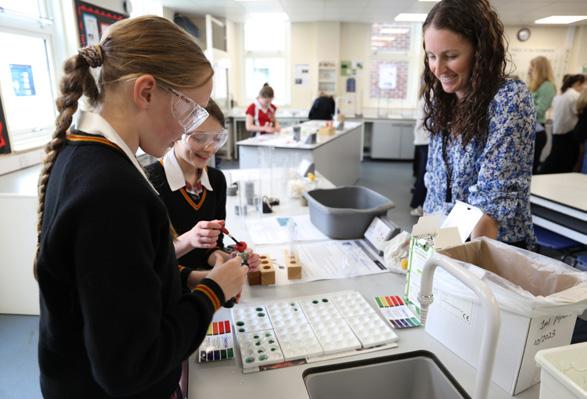
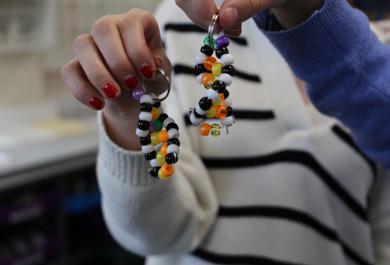
On the Biology Day, pupils tested acid levels and modelled DNA keyrings. Topics like mRNA, AI, and sustainable practices were discussed in the healthcare aspect of Adapt and Change.
In the middle of Science Week, we hosted the Schools’ Aerospace Careers Programme (ACP) Roadshow. We invited pupils from neighbouring schools to share a day focused on the future of aerospace, aviation, and space industries.
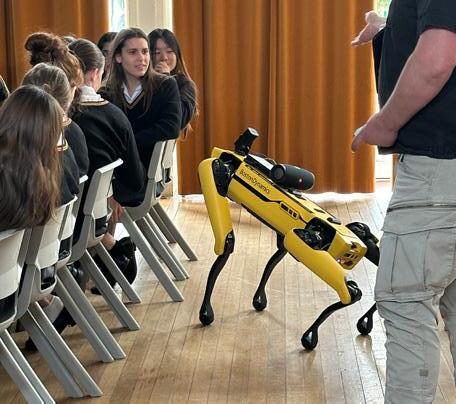
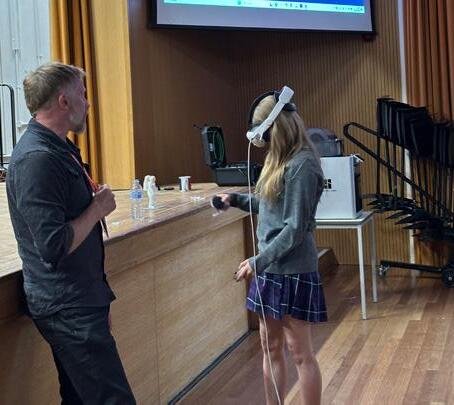
Highlights included a Boston Dynamics robot (above left), a replica NASA space suit, and a camera-equipped drone. Students were immersed in the possibilities of the Fourth Industrial Revolution, with insights into artificial intelligence, quantum computing, virtual reality (above right) and more.
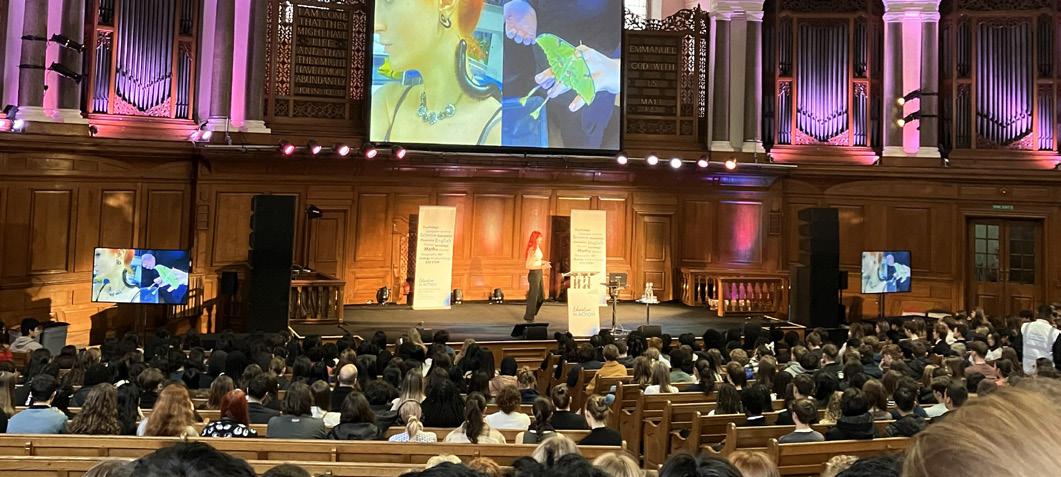
Lucy summarises the fascinating talks her biology set heard at this conference in London
The first talk was The Usual Suspects, by Lucy Eckersley. This talk communicated the immeasurable effects of disease not only to an individual but to ecosystems and wildlife as a whole. One of the most powerful subjects of Eckersley’s talk was taking us through the link between Californian driveways and sea deaths in Hawaii. She explained how toxoplasmosis, a disease spread by the parasite Toxoplasma gondii, had been spread by runoff from driveways which had carried the parasite into the ocean where it then infected the Hawaiian monk seals. This communicated the domino like effect that can occur within ecosystems.
The second talk was Epigenetics – why DNA is not your destiny, by Nessa Carey. This talk emphasised how DNA doesn’t define you, whilst delving into how epigenetics bridges the gap between nature and nurture. She explained that whilst our DNA provides a blueprint, epigenetics influences how or even if these genes are expressed. For example, Carey described how these patterns of gene expression can mean the difference between an individual living to a healthy old age or dying an early death due to cancer. This talk challenged the deterministic view of genetics, opening our minds to how certain characteristics arise within individuals.
The third talk was From Genome to Surgeon’s table – Tales from the Oesophagus, by Tim Underwood, which explored how genomics is allowing for early detection of oesophageal cancer. Underwood allowed us to view an operation involving removing part of an oesophagus and the cancerous tumour within it, whilst also reconstructing the stomach to form a ‘new’ oesophagus. Underwood explained how using a high-tech system called ‘drop sequencing’ they are now able to examine cancer cells removed from patients in microscopic detail to determine the genetic makeup of the tumour environment. This talk enabled us to gain a deeper appreciation for how genomics is being used to optimise patient care.
The final talk was Cooperate or Die, by Alex Lathbridge. He took us on a biochemical journey, showcasing how our lives are run by the remarkable protein haemoglobin, which is responsible for carrying oxygen to every cell, powering every function in our body. This engaging talk informed us of a wide array of subjects offering a unique biochemical perspective on the human body. Overall, it was an immensely engaging and interesting day which showcased the incredible diversity of biology, which we are very grateful to have witnessed.
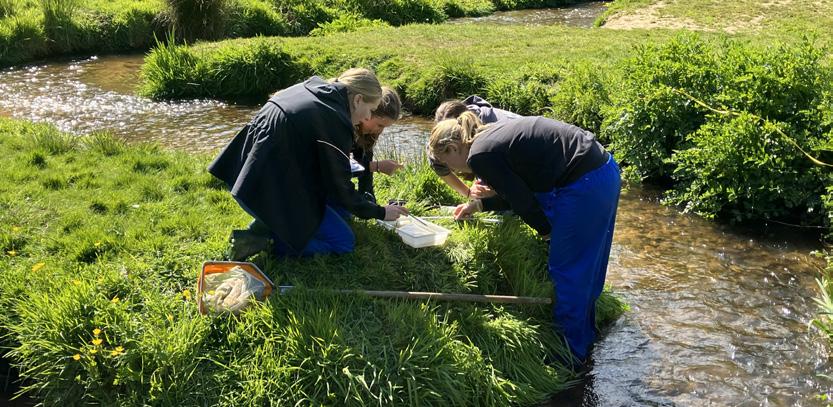
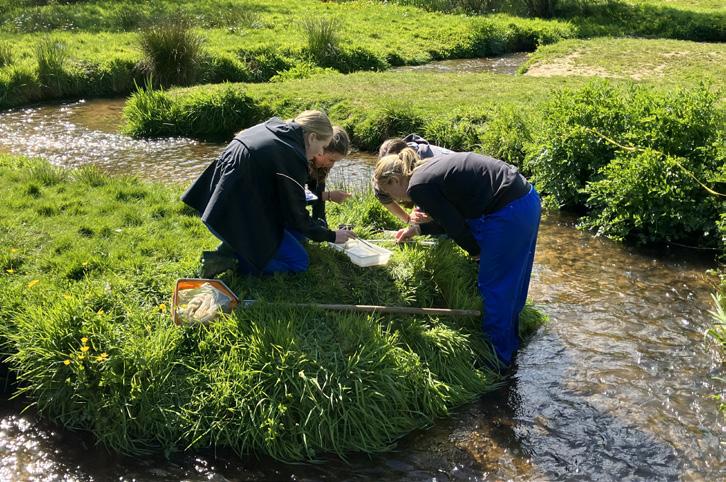
Year 12 biologists completed three out of the twelve practicals required for A Level Biology at this Field Studies Centre in Surrey. Above: collecting riverbed sediment, measuring water velocity, temperature and pH levels in the River Tillingbourne.
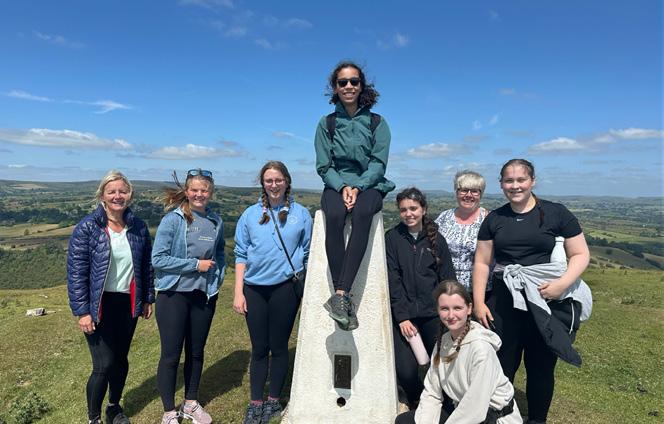
Six Year 12 scientists went on a three-day road trip with Head of Science Dr Doyle and Science Technician Mrs Osborne. They visited the National Space Centre in Leicester for workshops on space science and technology. They visited Ecton Hill Field Studies Centre (pictured) near Buxton for geology and practical fieldwork. Finally, they explored scientific artefacts at the University of Cambridge Library Museums and Chemistry Laboratories.
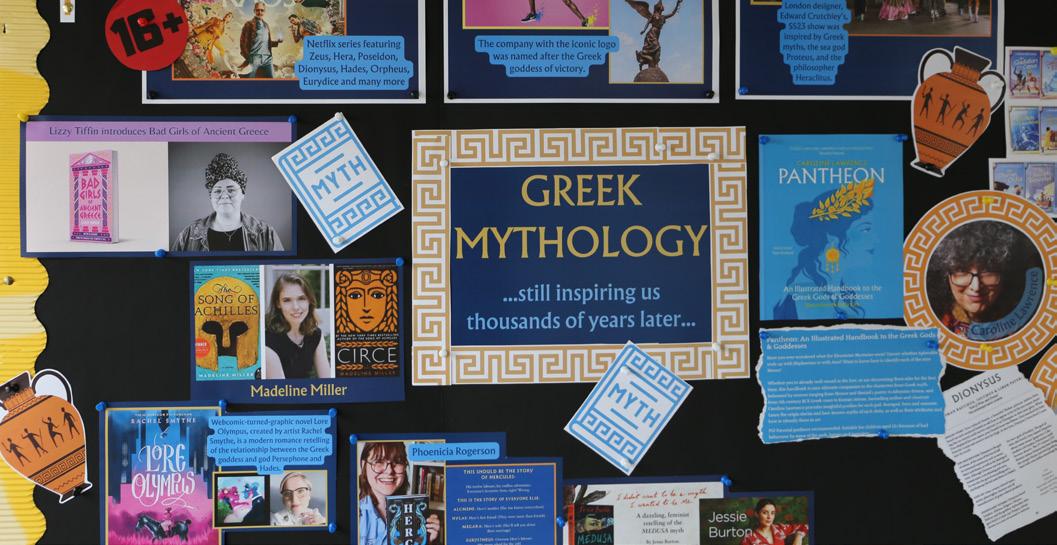
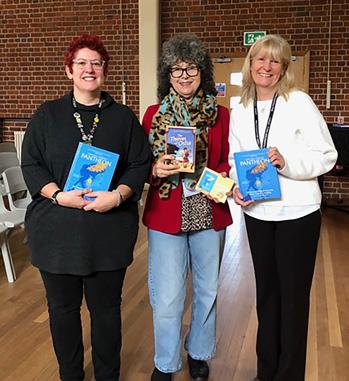
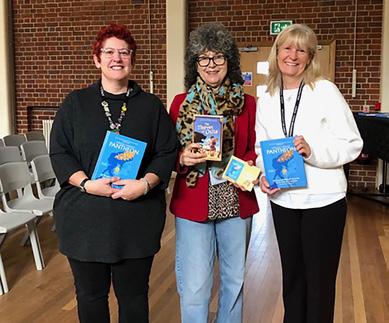
We explored some of the ancient stories, gods and goddesses and how they remain present in our lives today.
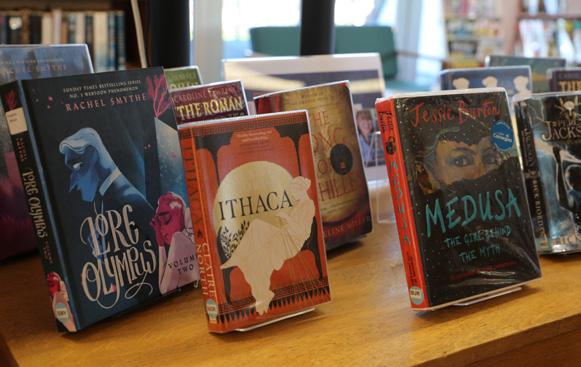
The Library promoted some fantastic modern literature that draws on classical myths.
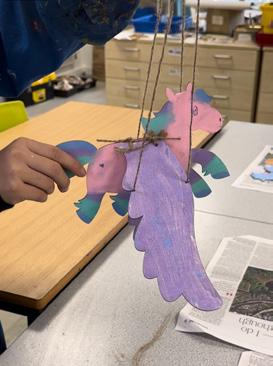
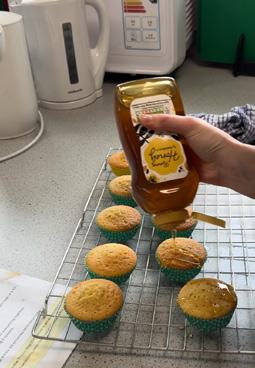
Key Stage 3 pupils were invited to make flying Pegasus models and honey cakes to appease the gods.
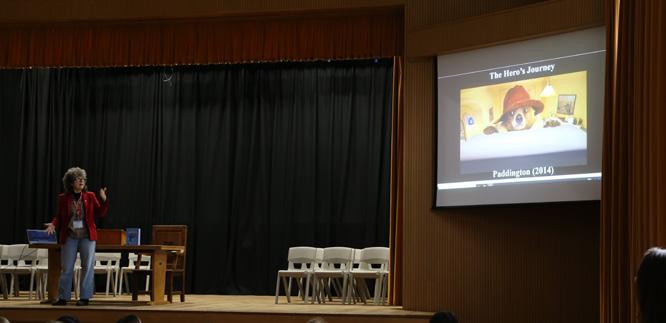
Children’s author, Caroline Lawrence, who is famous for her Roman Mysteries series, spoke to Years 5, 7 and 8. She took them through the seven ‘plot beats’ of a hero’s journey, using the first Paddington film as one of her contemporary examples.
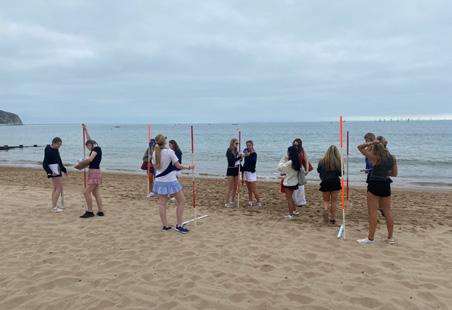
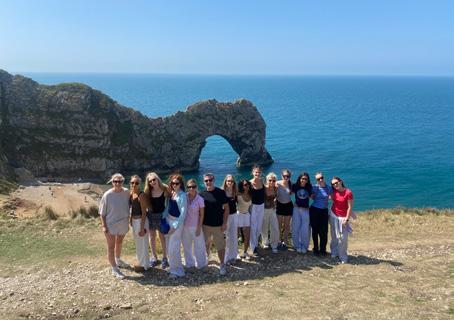
12 geography
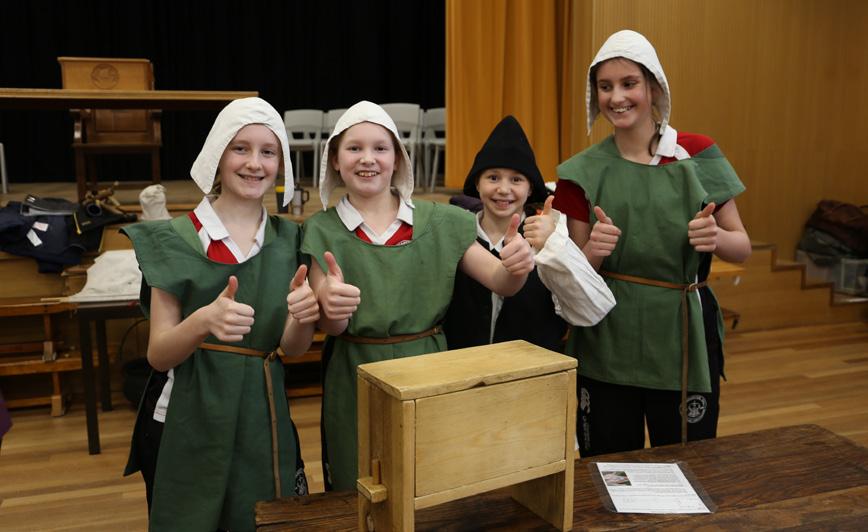
Year 7 dressed up in late medieval garb: tabards, coifs and belts to learn about life in the fifteenth century, in a workshop from the Happening History team. They learnt about the gap between rich and poor, the Black Death, warfare and alarming medical practices.
Our Summer Term award ceremonies recognise the effort, achievements and character of individual students who have stood out in some way over the year. Teachers choose the academic winners, but students can also vote for their year group peers, alongside staff, for our Walthamstow Hall values awards. Our School values are: individuality, respect, integrity, aspiration and community.
Academic Winners Cici, Lettie, Eleri
Aspiration Value Champion Alba
Respect Value Champion Belle
Individuality Value Champion Liza
Enterprise Award
Lisa, Jessica, Kundai, Jessie, “Team Joey” winners for their cereal design which received the highest scores from the Wally Dragons
Platinum Level Reading Track Lotti
Academic Winners Alice, Theresa, Noa
Aspiration Value Champion Alice
Respect Value Champion Poppy
Community Value Champion
Half Full Cup
Chloe
Eva (for irrepressible positivity)
Academic Winners Anisha, Amelia, Ellen
Aspiration Value Champion
Community Value Champion
Respect Value Champion
Individuality Value Champion
Citizenship Cup
Anna
India
Livia
Evelyn
Natalie
Academic Winners Honey, Merryn, Luisa
Community Value Champion Annabelle
Integrity Value Champion: Aurelia
Aspiration Value Champion
Amber
Respect Value Champion Daisy
Juggling sport and academic work Araba
Resilience and dedication to sport
Sophie
Embodying all the school values and being an outstanding student Poppy
Margaret Gash award for promise in art Megan
Mrs Carson textiles prize Scarlett
Amstell prize for hard work and perseverance Millie
English Gabriella
Maths & Economics
Maya Further
Religious Studies Hayley
Politics Isabella
Psychology Jemima
12 YEAR 13
Business Alexandra
Drama Violet
PE Emma
Classics Bella
Photography Lucy
Fine Art Ruth
Unwin Memorial Prize for effort and commitment to studies Lile
The Laura Davis Award for all round contribution to school life Olivia
St Hilary Prize for outstanding effort and achievement in the Extended Project Lucie
Palme d’Or for effort in Photography Jessica and Gracy
Palme d’Or for effort and perseverance in French Scarlett
Palme d’Or for effort and extraordinary achievement in Politics and Model United Nations Madeleine
Palme d’Or for effort and extraordinary determination in History Elena, Ava
Palme d’Or for effort in Politics Saira
Palme d’Or for effort in Mathematics Saira, Daniella, Emilia, Lucie
Palme d’Or for effort in Biology Daniella, Lucie
Palme d’Or for effort in Chemistry Daniella
Palme d’Or for effort in Philosophy Harriet
Palme d’Or for effort in Sociology Olivia
Palme d’Or for effort in Geography Lizzie, Rowan
Palme d’Or for effort in Psychology Ava
Pye-Smith Prize for Veterinary Medicine Lucie
E L Ramsay Prize for French Madeleine
Sister Dora Whitby Prize for Classics Krystyna Krish Prize for English Elizabeth
Emmeline Blackburn Prize for the Arts –Photography Elysia
The Shirley Brushett Textiles Prize Amber
A W D James Prize for service to the School Ella as Deputy Head Girl
Friends and Parents’ Award for service and leadership to the School Emily as Head Girl
Warham Award for service to the community Daniella
WHFP prize for service to the School Ireoluwade
Sir Geraint Evans Prize for Music Emily
The Crawley Award for Contribution to Musical Theatre Amelia
Elwes Prize for Drama Freya
The Melanie Shiels Prize for Business Studies Elysia
The Diana Burn Rosen Award for Science Emilia
The Mulberry Prize for Mathematics Emily
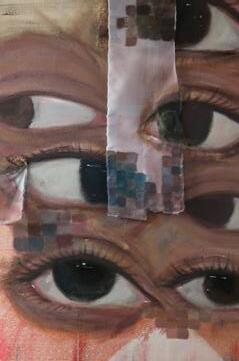

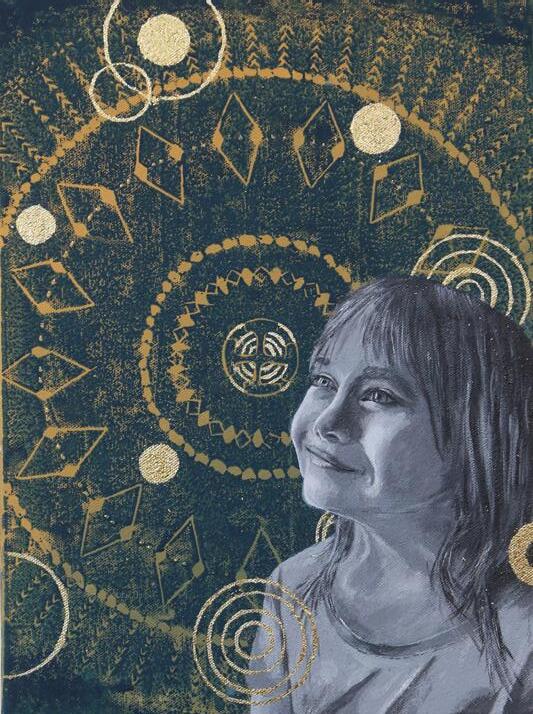
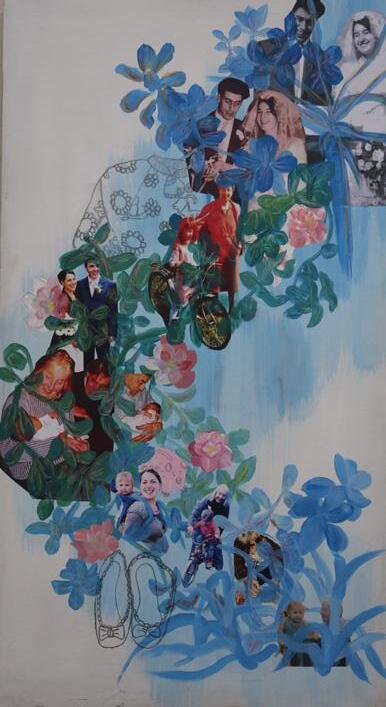
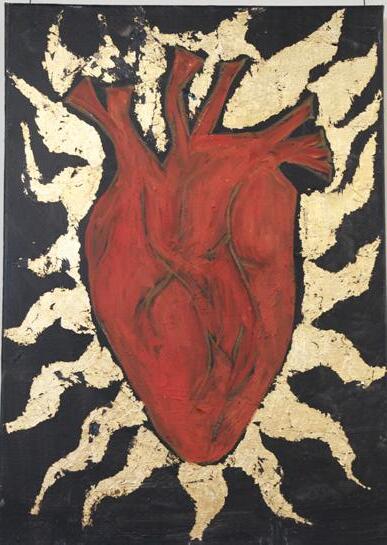
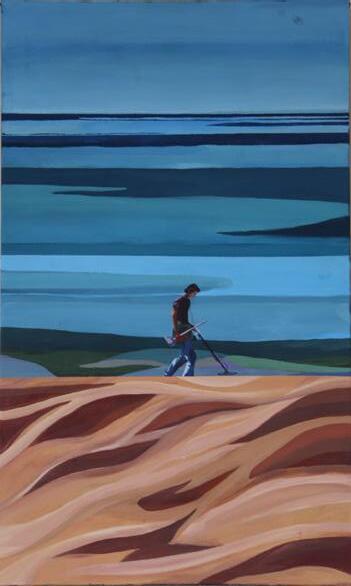
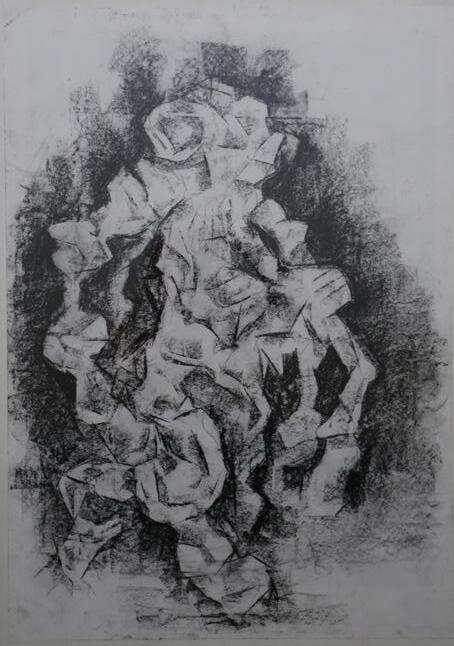
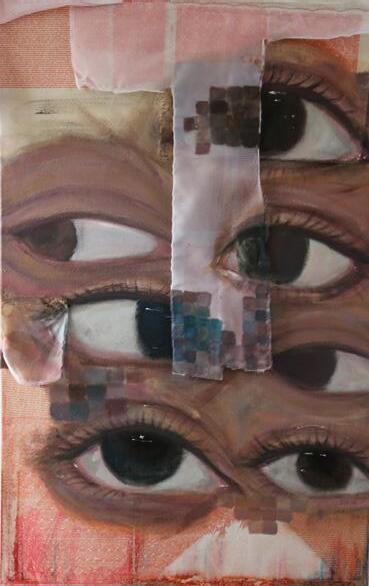

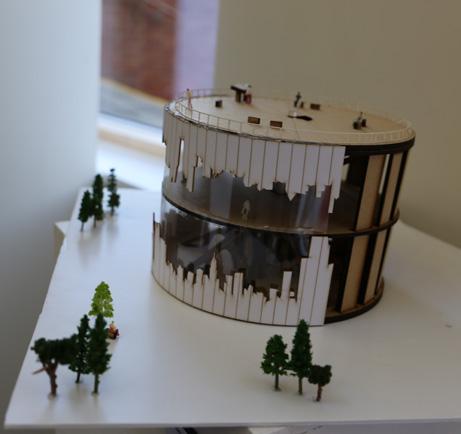
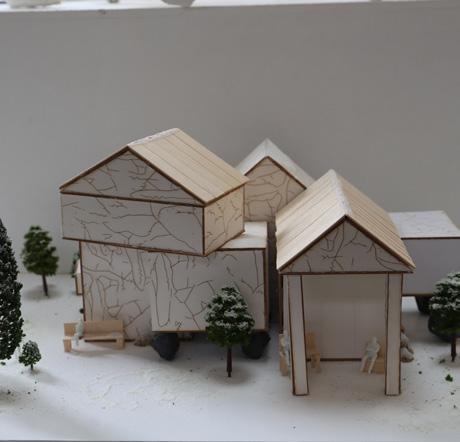
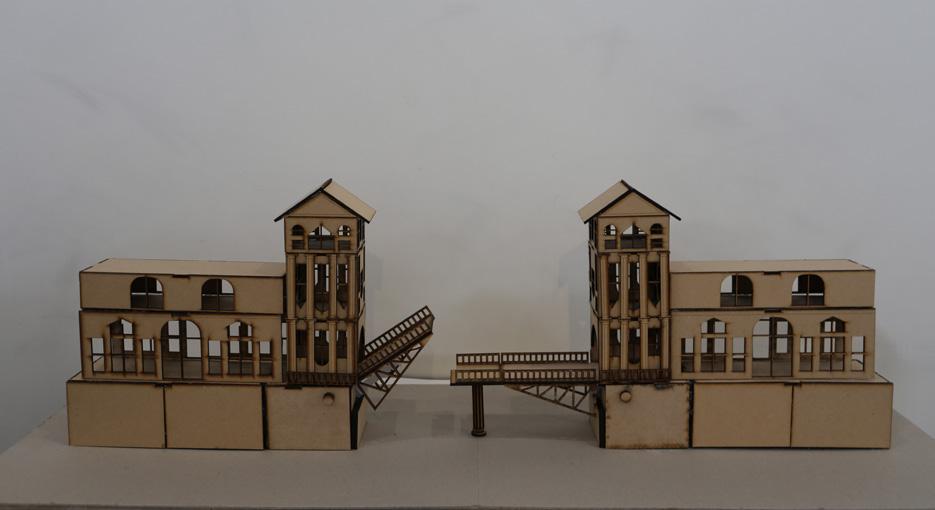
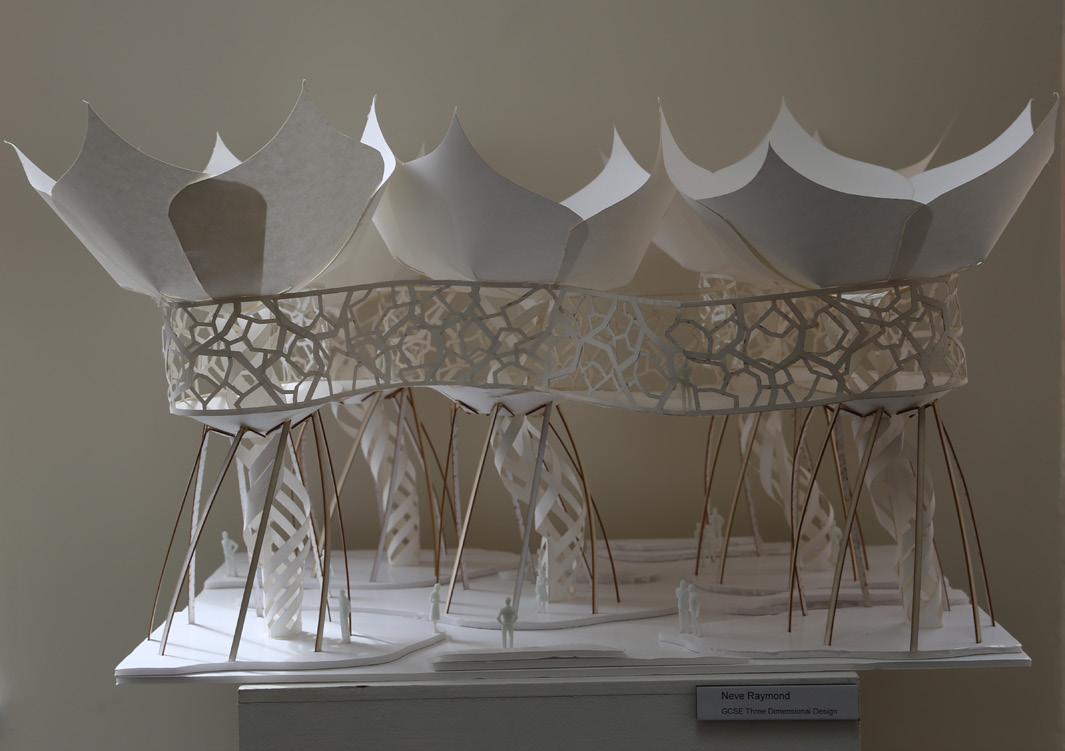
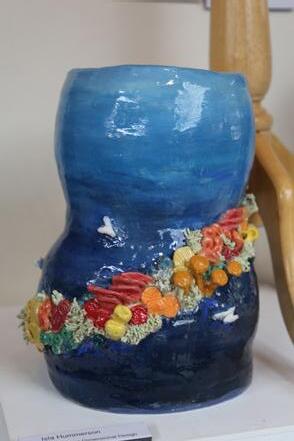
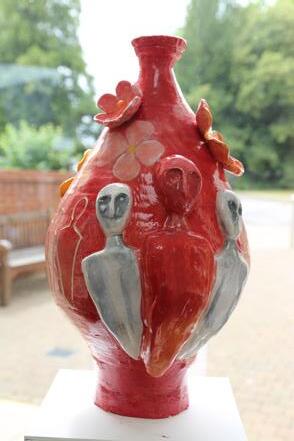
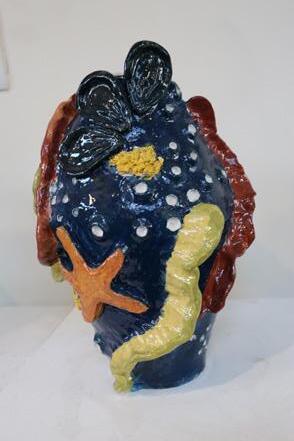
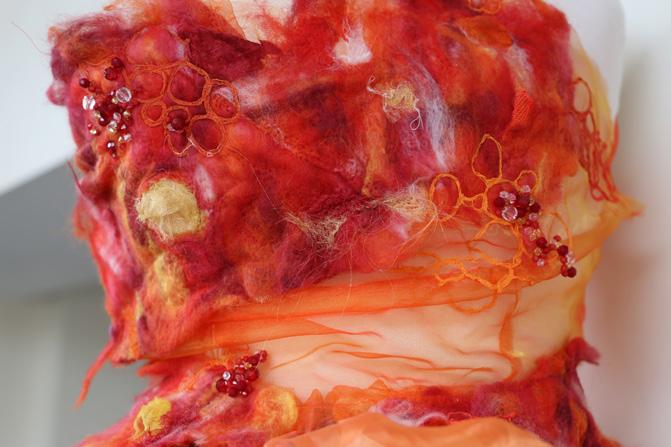
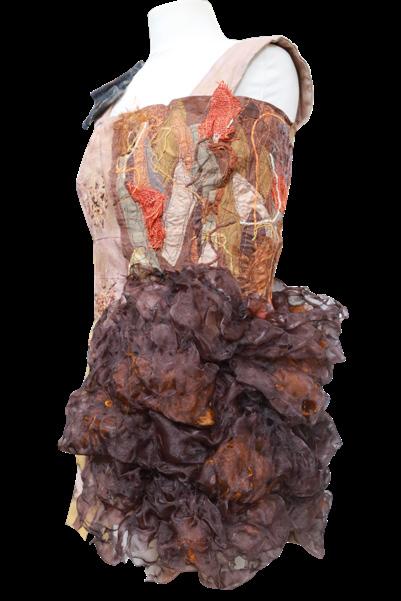
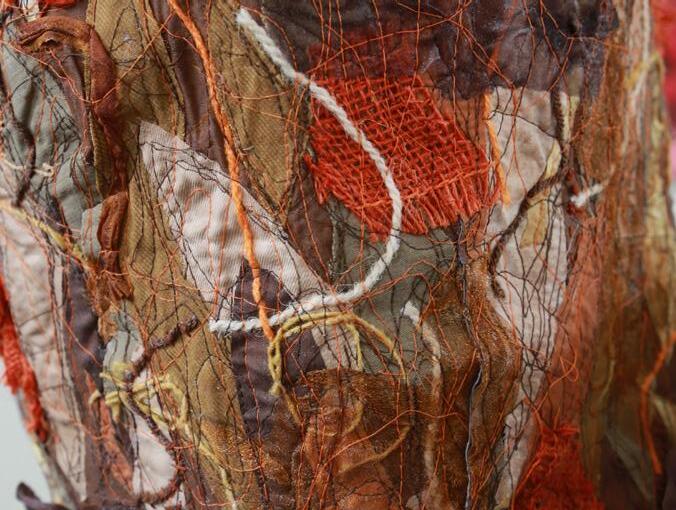
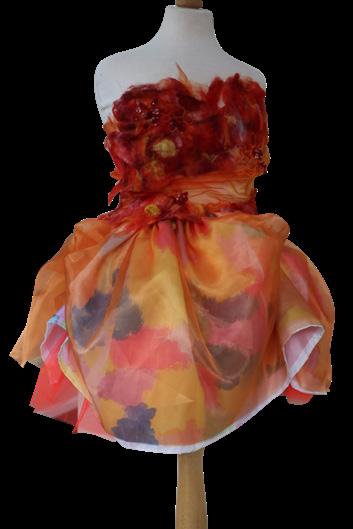
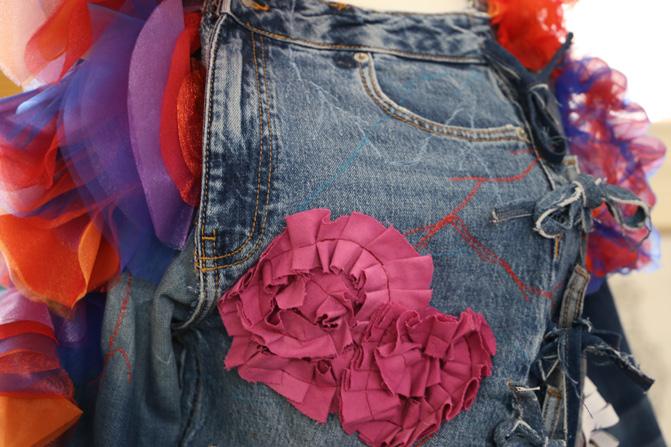
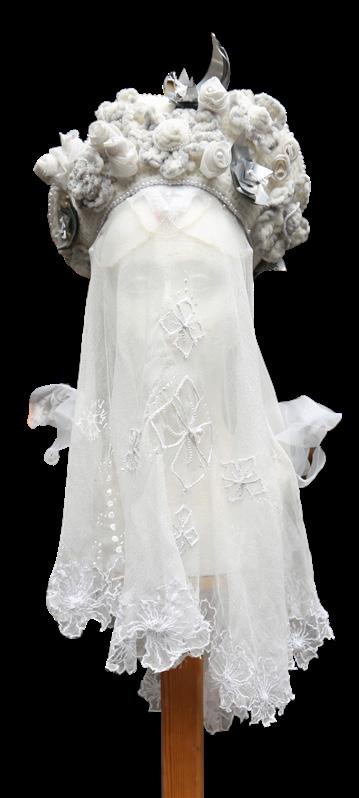
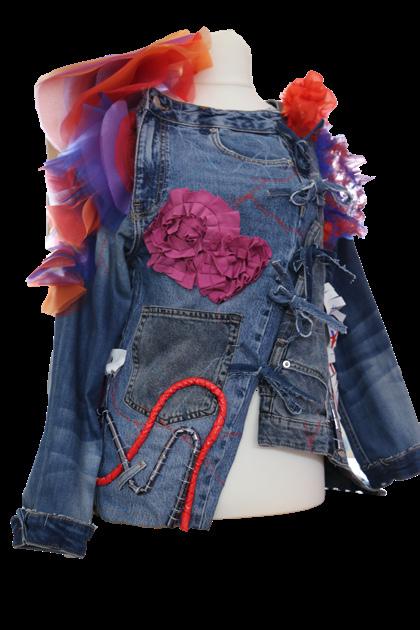
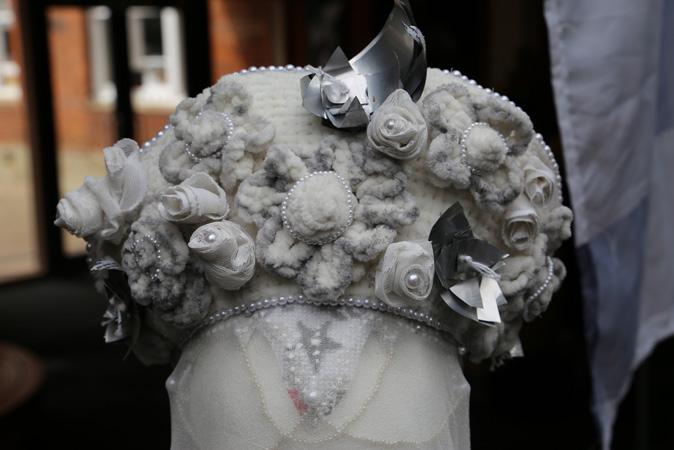
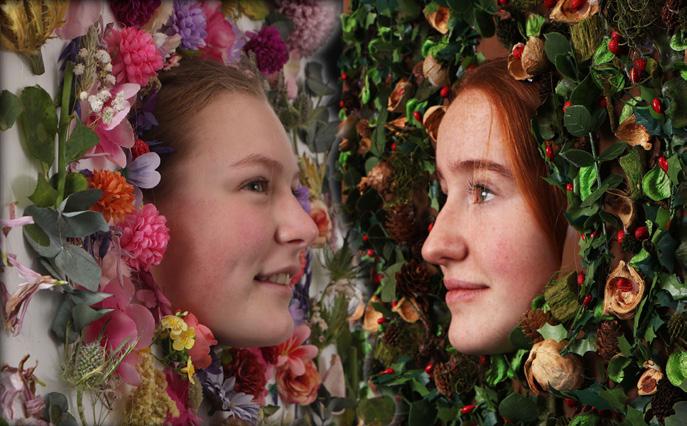



Pupils looked at the work of Naum Gabo, Jeroen Cremers and Peter Banks for inspiration before recreating a face in cardboard, while maintaining proportion and form.
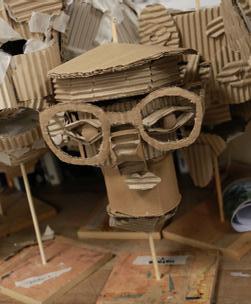
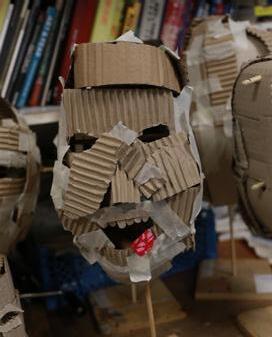
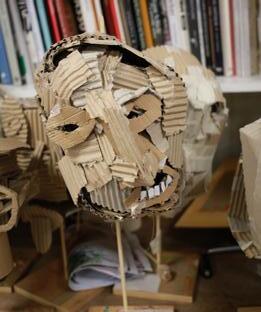
YEAR 7 WALL ART IN THE HUB FOR
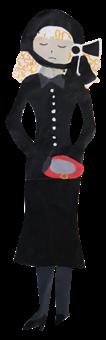
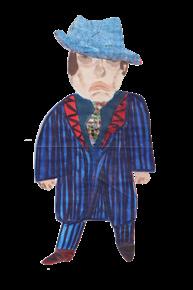
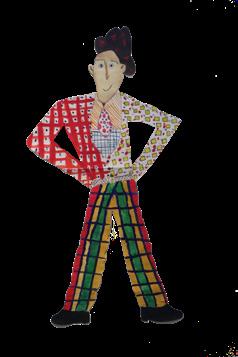
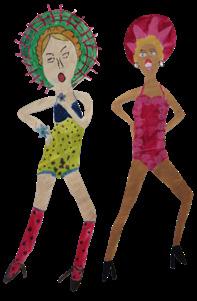
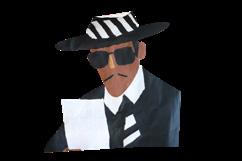
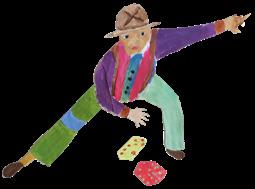
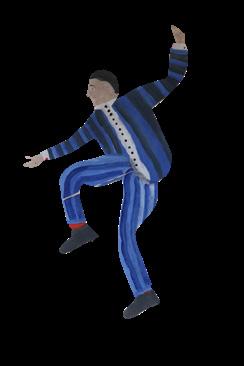
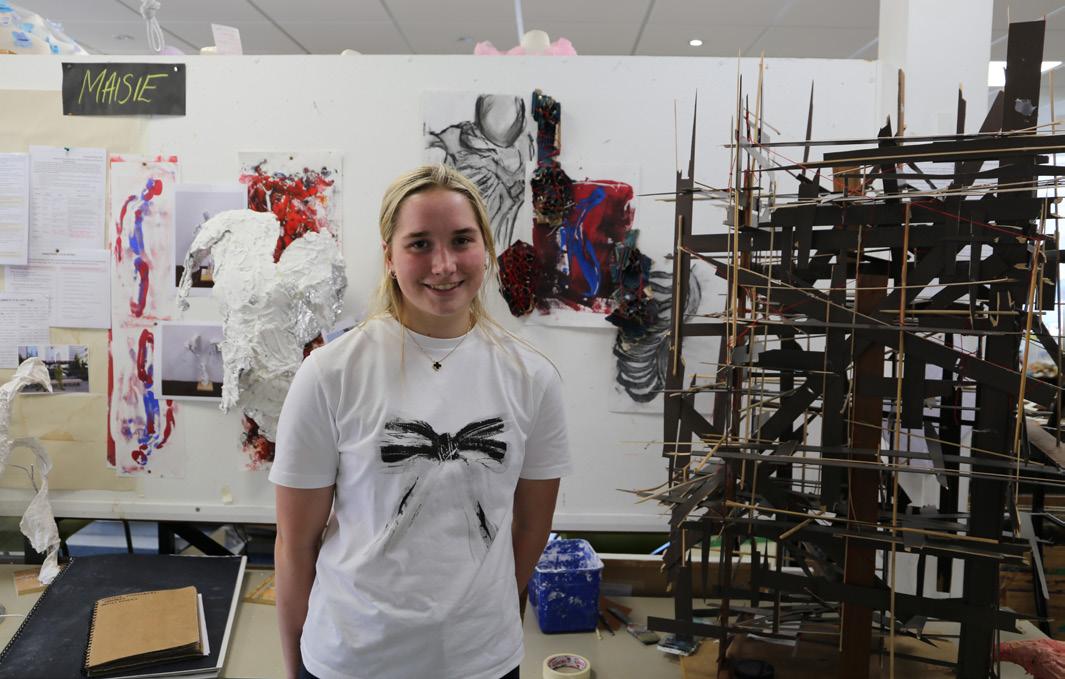
Every other Saturday, Maisie in Year 12 heads to the Royal Academy in London to take part in attRAct, a year-long programme of free artistic workshops for people aged 15-19. She won a place on the scheme after hearing about it from our Head of Fine Art, Mrs Mulcahy.
Creating art has always been something I’ve enjoyed deeply, but over the last two years of doing A Level it has turned into something more meaningful. I think what I love the most about art is the freedom it allows me to have. It provides me with a space where I can completely switch off from everything else and focus entirely on exploring materials or simply following an idea to see where it could go. I find it very satisfying to make something from nothing, whether that is a drawing, a sculpture or a quick sketch. I wouldn’t say that I have always felt this strongly about art, but I have always been drawn to it. However, the more I have learned and experimented, the more I realised my enjoyment of it.
That would partly be why I applied to the Royal Academy and why it appealed to me so much. I wanted to go beyond what I was already doing and learning at School to explore what it is like to work in a more professional and creative environment. I had heard about the RA’s reputation and how it supports young artists, so when I heard about the course, I knew I had to apply.
The selection process was in two stages. The first stage was an online application, which involved answering a series of questions about why I wanted to do the course and what kind of art I was interested in. The second stage was an in-person
interview, where I had to bring along some artworks and discuss them with the tutors. I found visiting the Academy very exciting as we were able to see artworks that aren’t typically on display for others.
The workshops themselves have been amazing. We are taught by professional artists or students in their final year at the Academy, many of whom are preparing their final pieces of art for the degree show.
I find being taught by people who are still producing their own art brings a totally fresh perspective. We also have a strong focus on experimentation, collaboration and discussion, which makes the whole experience feel like a real art school or studio environment.
Some of my favourite workshops have been the sculpturing and making ones. Working with clay was completely new to me, however I loved how hands-on and physical it was. I also really enjoyed the life drawing sessions I have attended; I have done life drawing twice now at the RA, and both times felt like valuable experiences. The atmosphere is always focused but relaxed and being able to draw from a live model has massively improved my observational skills and my confidence in mark-making.
Attending the workshops has changed the way I approach making art. I am more open to experimenting now, even if it is something that won’t always work in the traditional sense, I see it as part of the process.
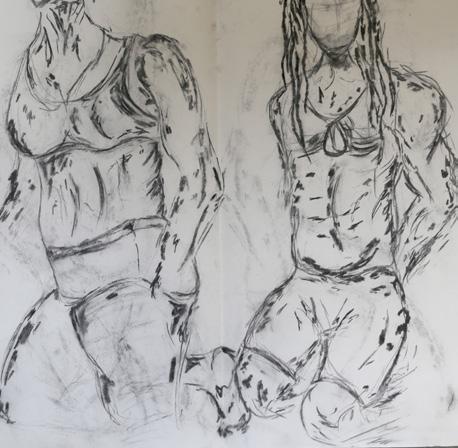
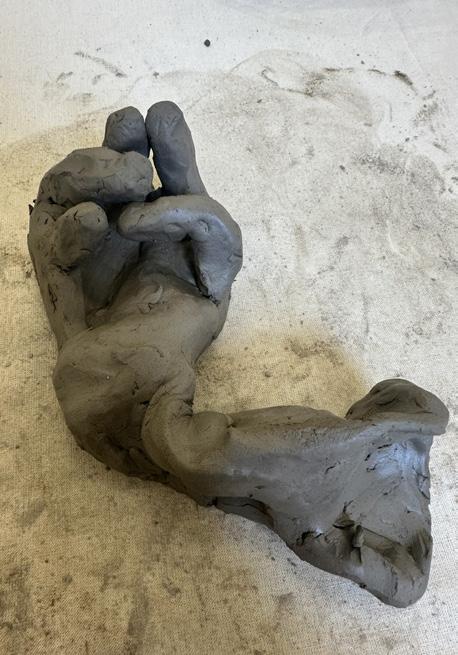
I have also become more thoughtful about my intentions and how different materials or techniques can communicate different ideas.
The tutors often push us to think critically about our work, which has also helped me to develop my ideas. I also have found sharing ideas with the other members of the group to be helpful, as we learn new techniques and skills, enabling us to learn from each other’s style of working.
One thing that surprised me about the course is how professional it all feels, from the quality of teaching to the way we’re encouraged to work and think. It has made me realise there is a place for younger artists in the wider art world, and that it isn’t something you have to wait until university or beyond to be part of.
As for what comes next after Wally, I am still figuring that out, but the RA has provided me with experiences and skills that will stick with me. It has been an incredibly rewarding journey so far, which I have been very grateful to be a part of.
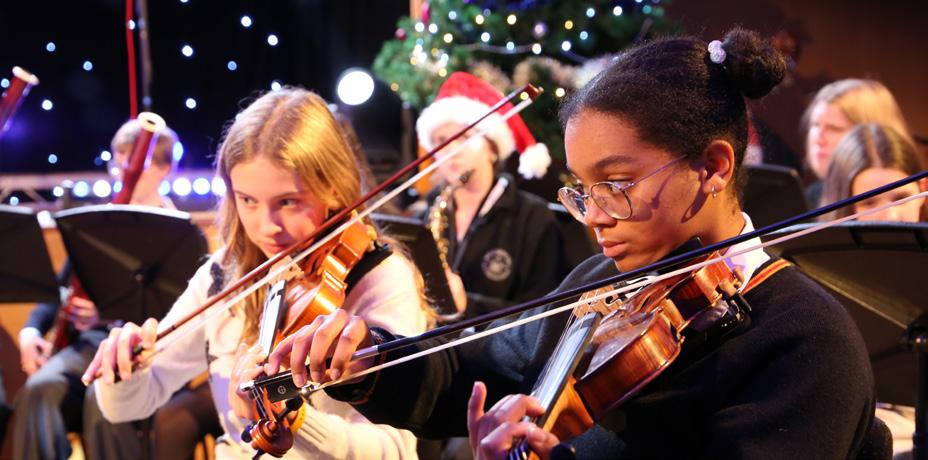
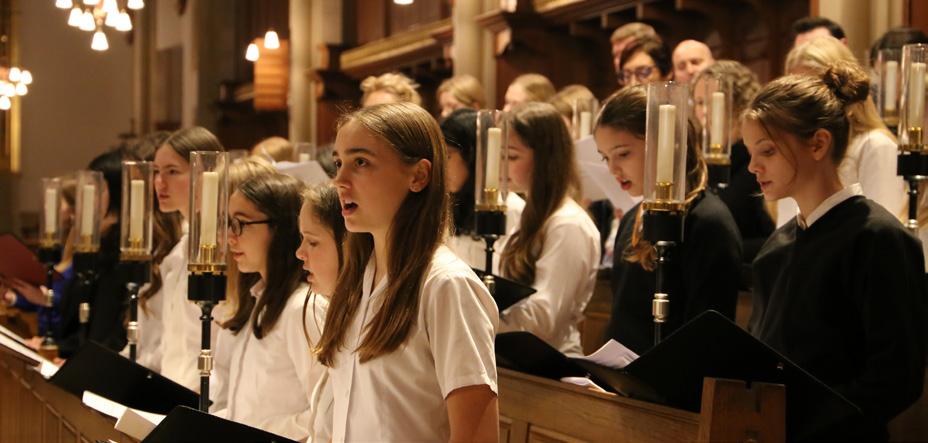
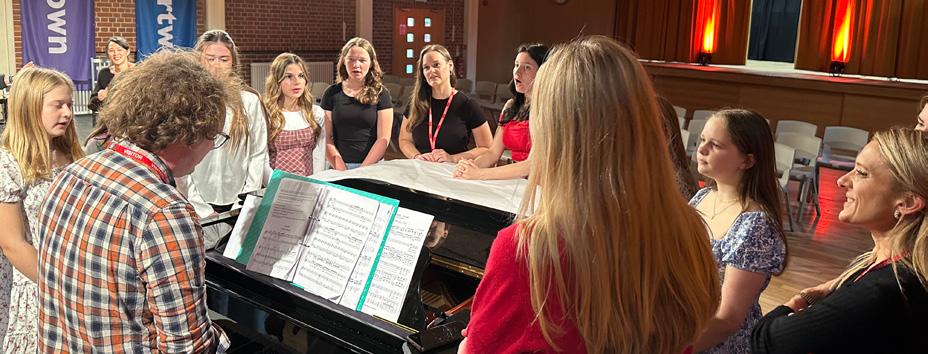
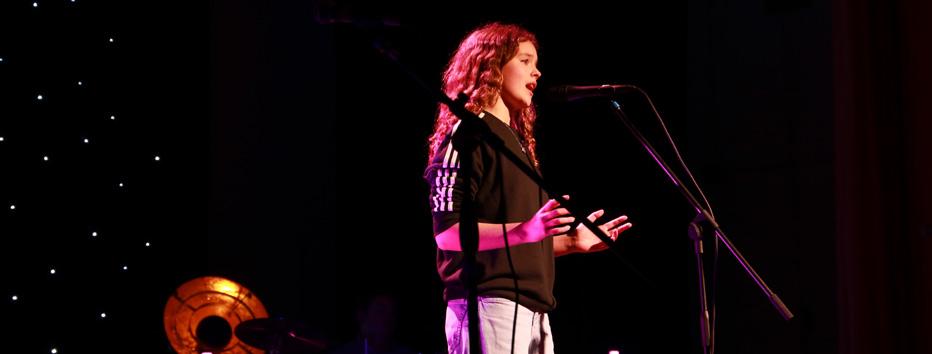
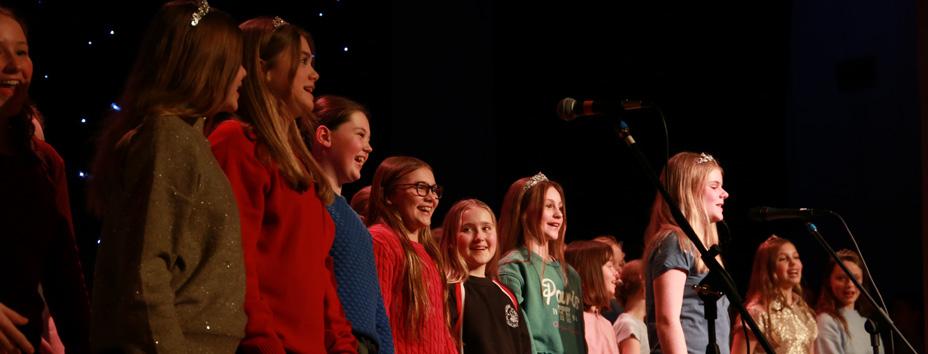
Music is for everyone at Walthamstow Hall. We sing hymns in Prayers twice a week, every pupil in Year 7 sings in the Year 7 Choir at the Christmas Yuletide Concert, Wally Stage & Screen and Wally Pop. Orchestras, wind bands, guitar ensembles, Scholars’ Concerts, informal concerts, opera, our School calendar rings with music at every turn!
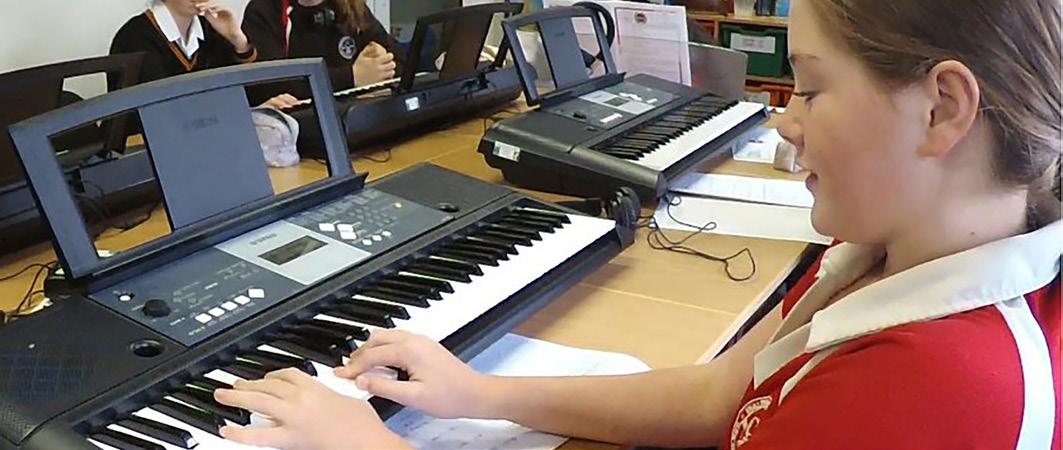
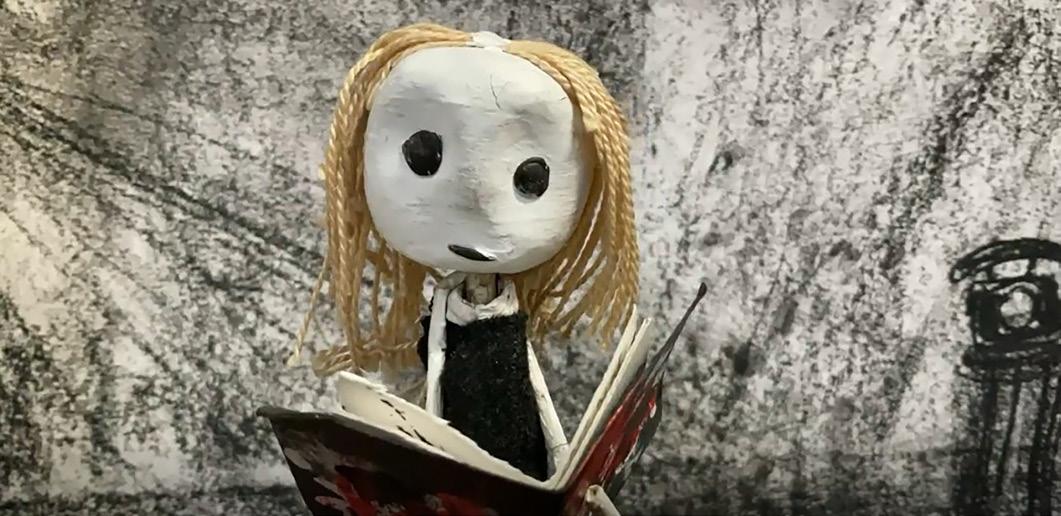
All Year 8 pupils have the opportunity to gain this external qualification which is aimed at encouraging young people to enjoy the arts and develop as artists. At Walthamstow Hall we run it as a cross-curricular programme between Art, Drama and Music, using the English Department’s focus on Gothic literature as inspiration.
Girls come up with the idea for a story and develop it through several stages, ultimately presenting it as a stop-motion
animation. Along the way they sketch their ideas, create a set and build models of their characters out of various materials, such as paper, wire or clay. They compose simple music accompaniment on the keyboard to create atmosphere.
The Award isn’t about reaching a certain standard in a particular art form. Instead, it assesses creativity, communication and leadership skills in participants’ involvement as creator, audience and reviewer.

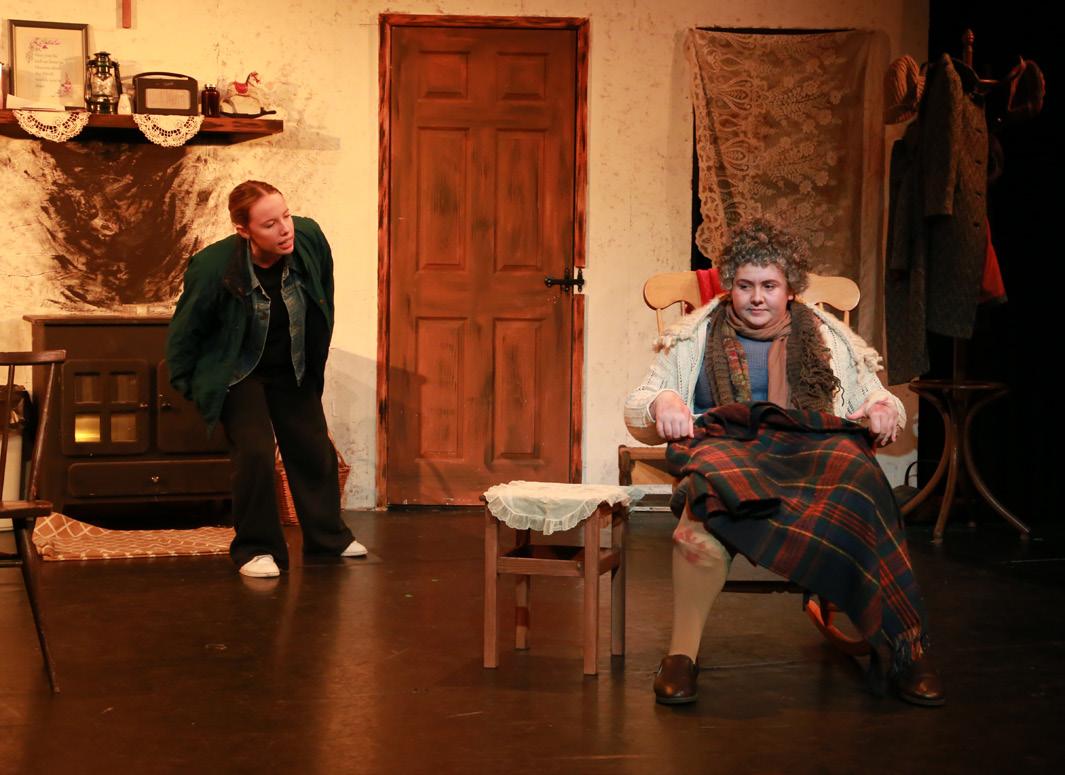
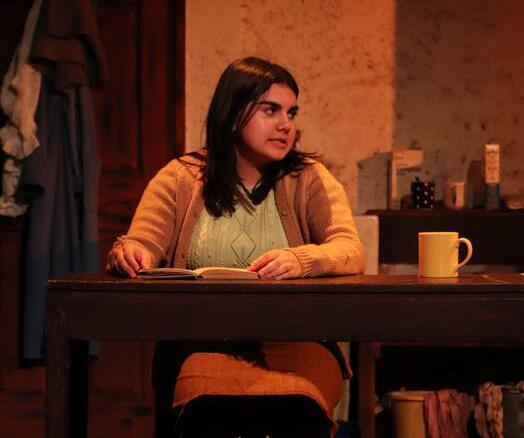
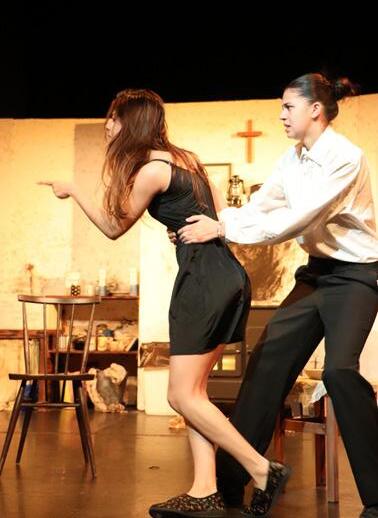
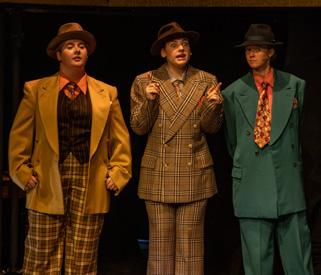
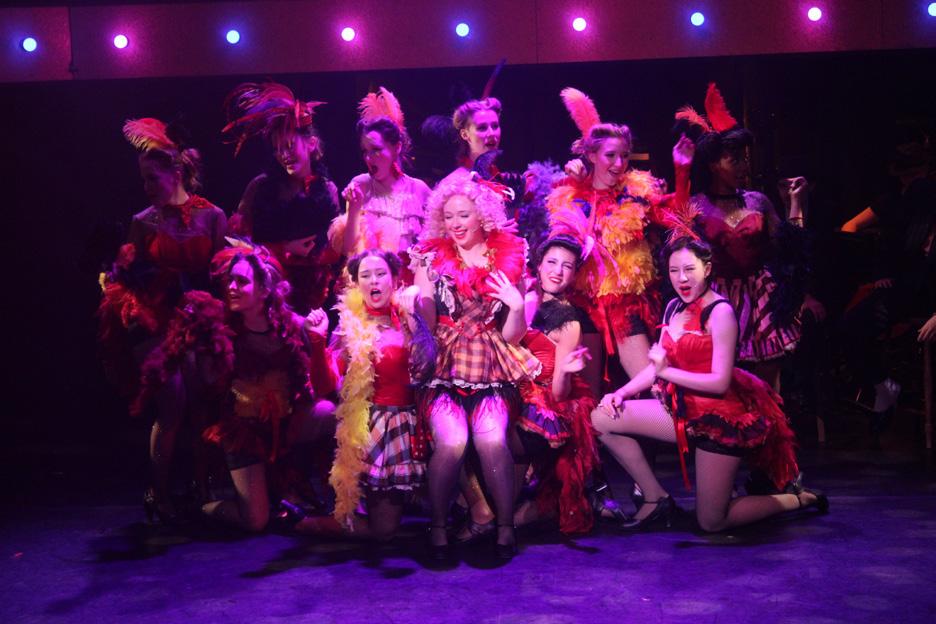
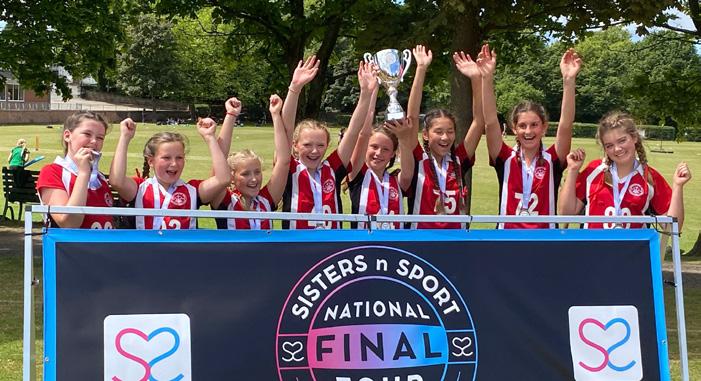
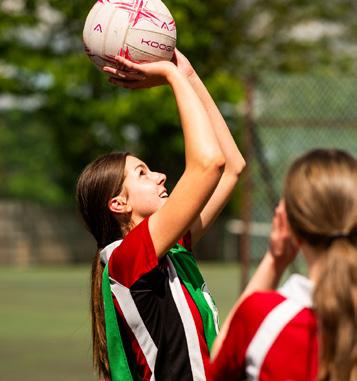
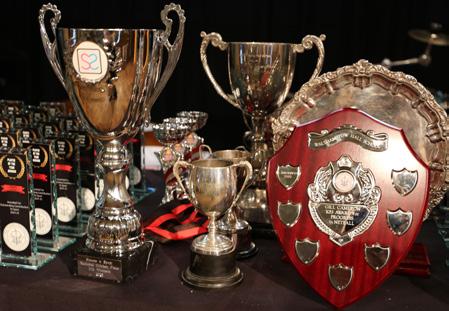
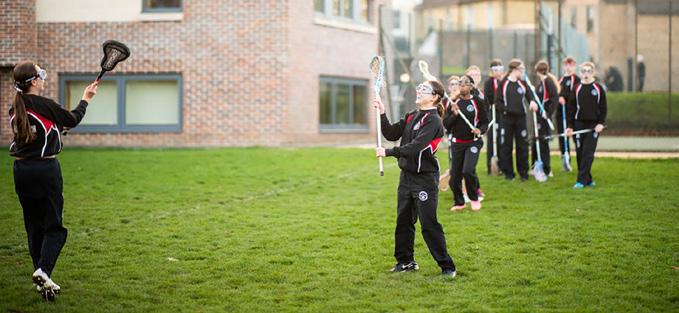
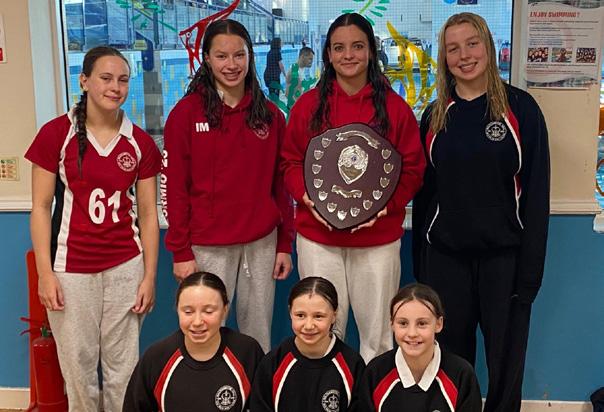
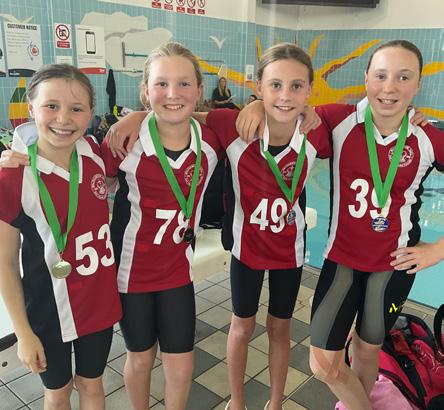
Students played more than 670 sporting fixtures over the year and took part in more than 60 co-curricular sporting clubs. It’s against this background of enthusiasm, participation and staff support that the fantastic results shown in the next few pages were able to come about.
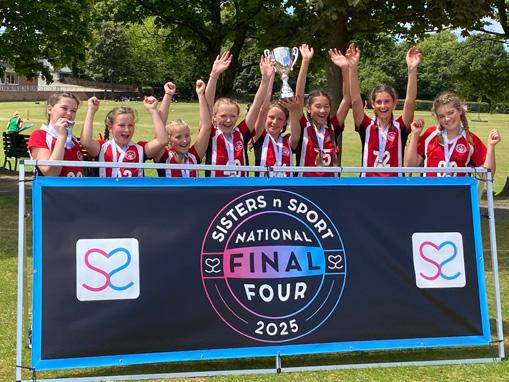
Outstanding play from our U12 cricket team saw them win the SNS National Schools Championships.The Year 7 team progressed through four rounds to reach the final.
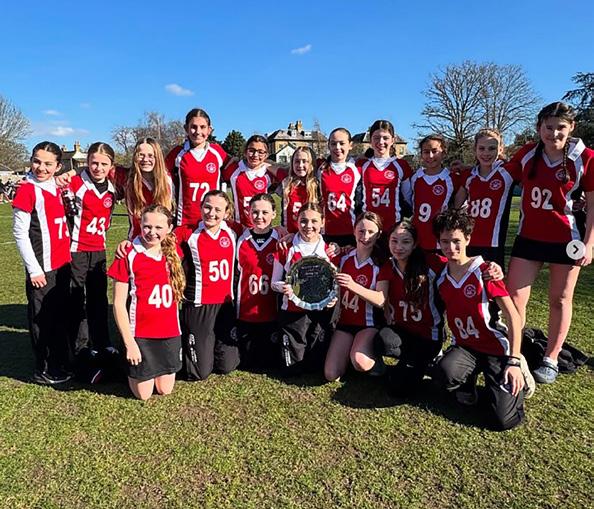
Our newest lacrosse players gained a huge amount of new skills over the year, eventually winning the Tri-Counties Tournament where they were unbeaten against five other teams.This is a first for Wally!
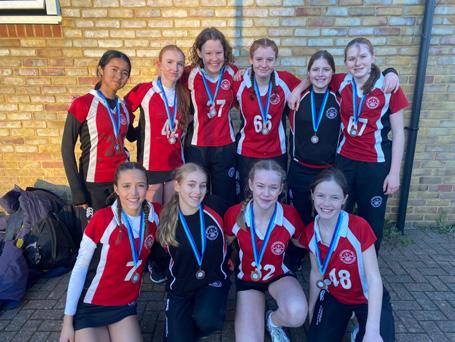
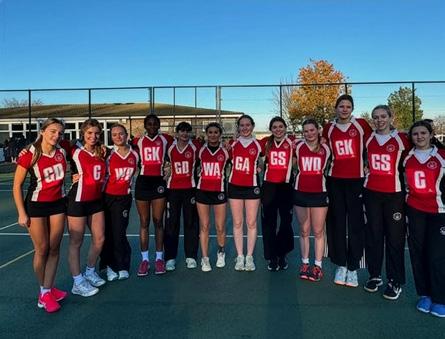
All five of our teams who competed in the county schools’ finals finished in the top three for their age groups: U12, U13, U14, U16 and U18, with some going on to qualify for Regional and National finals.
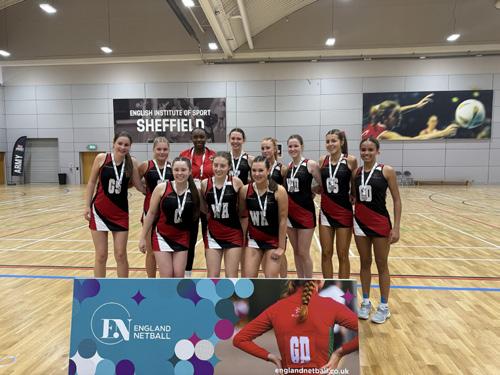
The U16A team qualified at county and regional rounds to reach the National Finals in Sheffield. The players won eight matches on the day, only losing in the final to be second in the country.
Walthamstow Hall dominated this event across all age categories, winning four gold medals and one silver medal out of six races.
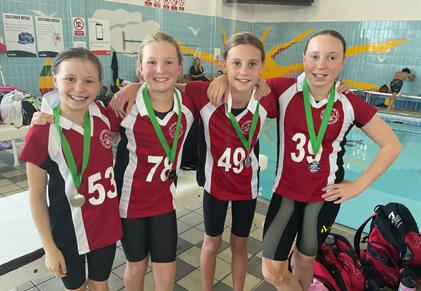
Everyone contributed valuable points towards the team’s score, resulting in the overall trophy for Best Girls’ School Swim Team. Gold medallists: Maisie and Imogen, Silver medallists: Jess, Caitlyn, Maisie.
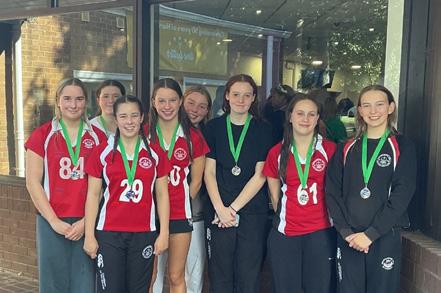
Our U13s competed against the top 24 schools in England, after qualifying for the English Schools’ National Finals at the Sandwell Aquatics Centre in Birmingham.
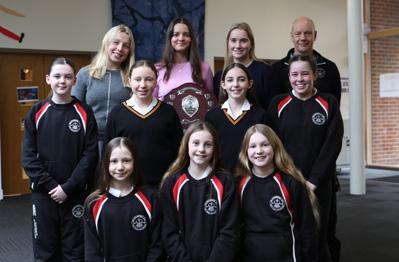
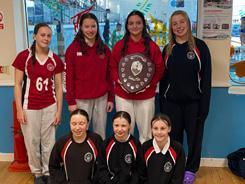
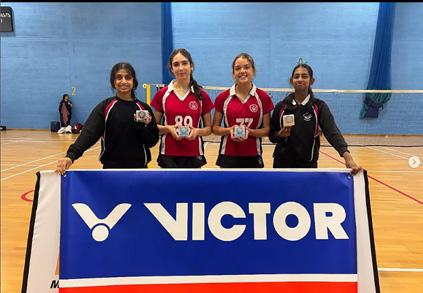
We hosted the School Sports Magazine National Semi Finals and Finals for the U14 & U16 Badminton competition – and won Silver in the U16 event.
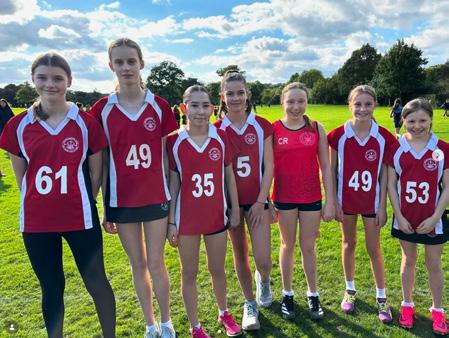
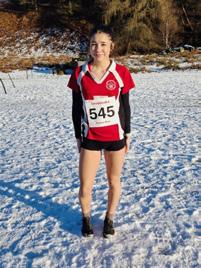
The U13s achieved Silver medals at the English Schools Cross Country and the Dobson Run. Neve finished 17th in the U19 Knole Run, even though she is only U16.
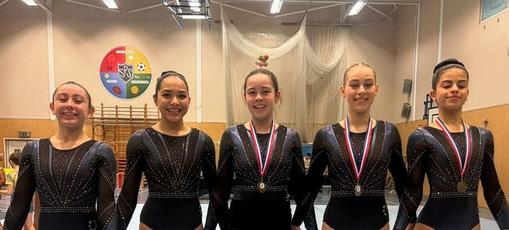
The U14 and U19 gymnasts competed in the regional tumbling competition, with Eva and Amber’s routines earning them places at the National Finals.
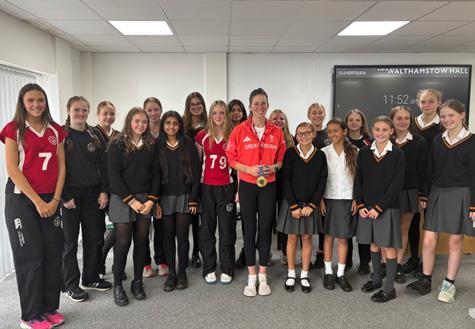
Olympic rowing champion, Emily Craig spoke in Prayers about the highs and lows of being an elite athlete. She then held a Q&A with our Sports Scholars, pictured.
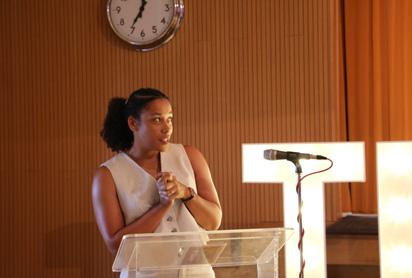
We celebrated successes and improvements of students at the annual Sports Awards evening. Guest speaker, Emma Kirk-Odunubi (runner, coach, sports scientist) presented more than 90 awards to girls who had shone in some way and spoke of the importance of motivation and perseverance, insisting “It’s never a fail, always a lesson!”.
This section can only touch on the wealth of cocurricular opportunities on offer to pupils, some of which appear in other sections of this magazine. More than fifty clubs ran over the academic year, from the highly visible, such as the major annual drama productions, to the less obvious, such as Ms Chamberlain’s Medical Ethics discussion club for Key Stage 4 pupils.
In between lie Chamber Choir, Robotics and Wally Engineers, to name a few. All are built around the School timetable, with most taking place in our extended lunchtime break. Pupils are encouraged to try at least three clubs each term and our Co-cu offering forms a core part of how we want pupils to approach life: try new things, pursue interests and have a go.
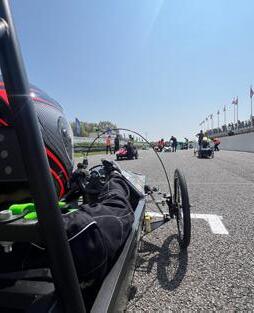
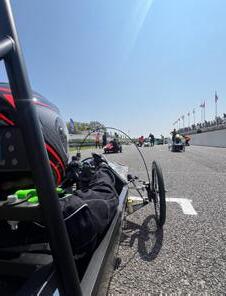
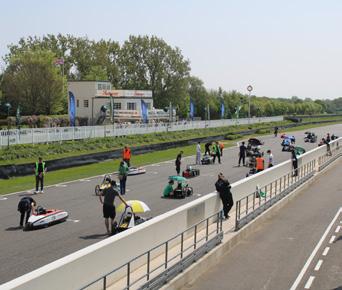
Members of Greenpower Club maintained and refined our self-built electric car ahead of competing at Goodwood in the summer. The challenge is to balance economy and speed at events hosted by the national charity, the Greenpower Education Trust.
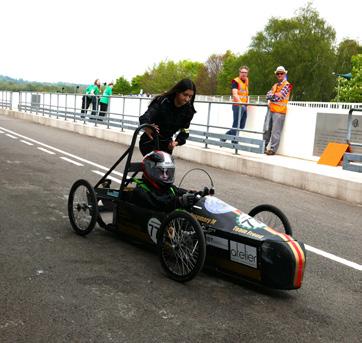
Bringing the car into the pits to swap drivers and tweak the engineering
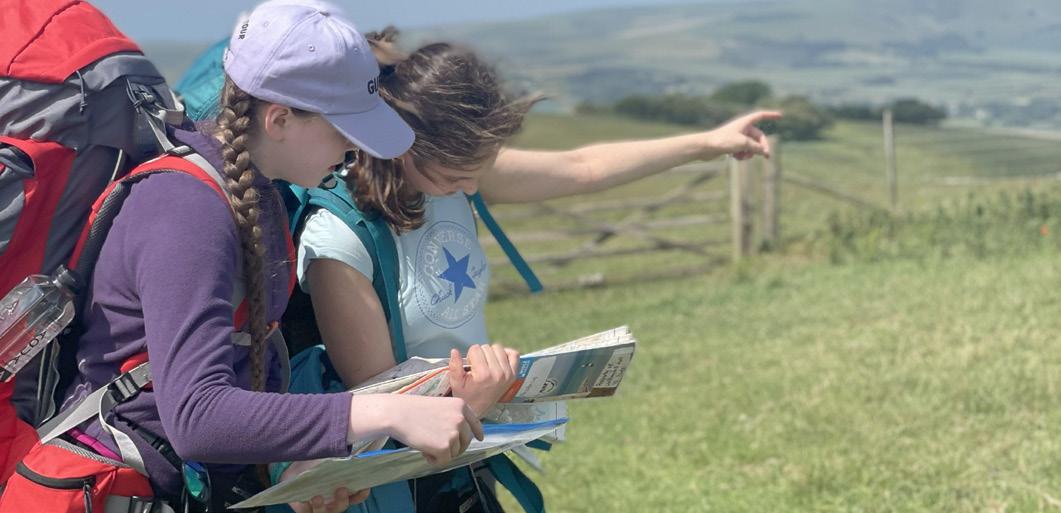

The Wally Hall DofE Centre has had another wonderful year with many students achieving their awards as well as an active expedition season in the summer. Our Year 9s and Year 10s all gained key skills in teamwork, resilience and problem-solving on their assessment expeditions in the South Downs.
Our Gold Award programme has been particularly strong, with our highest number of pupils yet receiving Golds halfway through their final year at school – a remarkable achievement. Many more Year 12s and Year 13s have already completed the expedition and residential sections that count towards their Gold Award.
This residential component requires young people to work with others they don’t know on a shared adventure project or activity.
Some of the activities our students have undertaken for this section include studying in a foreign language school, taking part in outdoor adventure weeks, cooking courses and creative drama residentials. One residential saw a pupil spending two weeks in Kefalonia on a Greek conservation project.
Volunteering experiences have included: teaching ballet at VR Dance, helping the Brownie troop in Hildenborough and helping coach netball at CFX. All worthwhile activities.
Many thanks to our assessors on the staff here who have encouraged and enabled our students to seize all the opportunities on offer.
Mr Nic Ramsden Walthamstow
Hall Duke of Edinburgh Award Scheme Manager
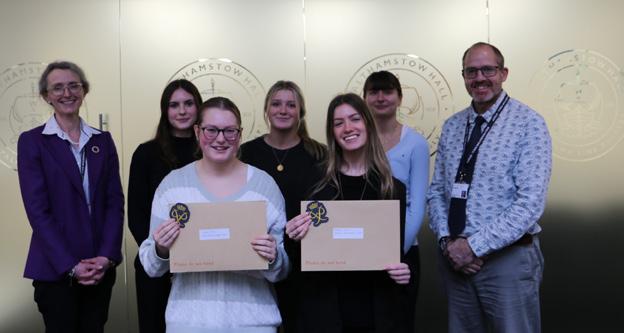

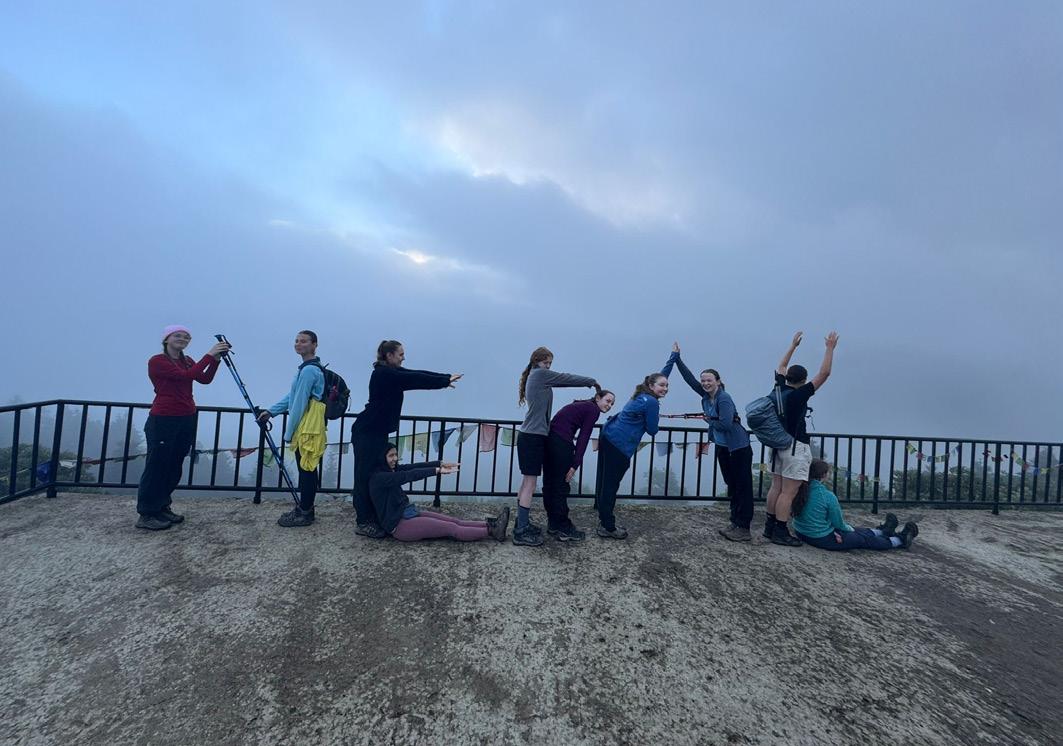
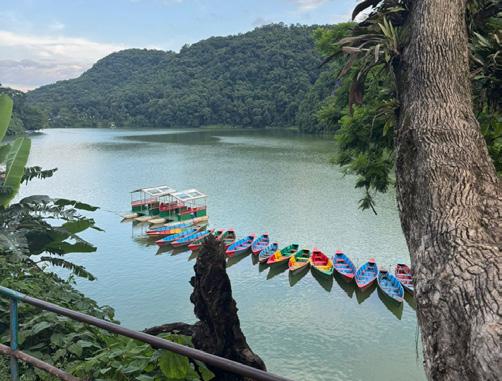
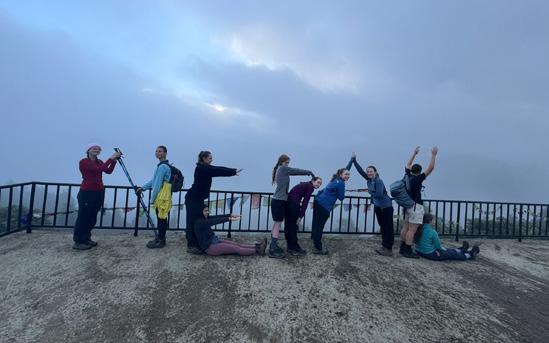
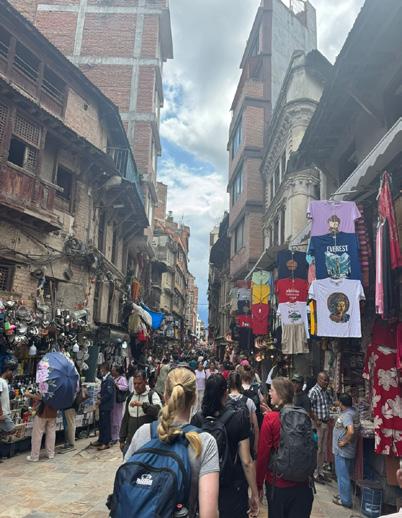
In the summer holidays, 13 pupils and two members of staff went on a trip of a lifetime to Nepal, masterminded by World Challenge. Beginning and ending in Kathmandhu, the first part of their adventure was a five day trek from the lakeside city of Pokhara to Poon Hill, a station high up in the Annapurna Sanctuary.
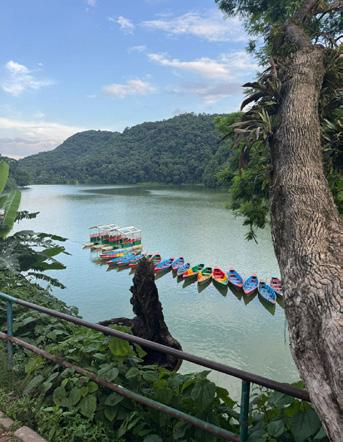
“Pokhara was surrounded by mountains and set next to a peaceful lake.”
“We learned about Nepal’s legendary soldiers, the Gurkhas, and were lucky enough to see a group of them on a training run.”
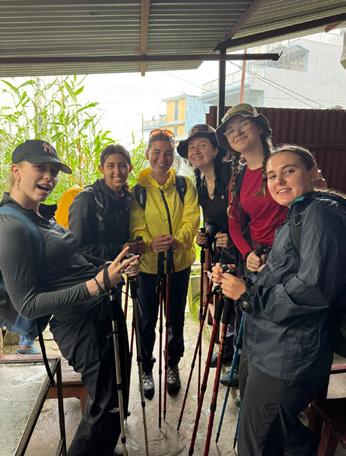
“The trek was challenging, we climbed right into a full-on monsoon.”
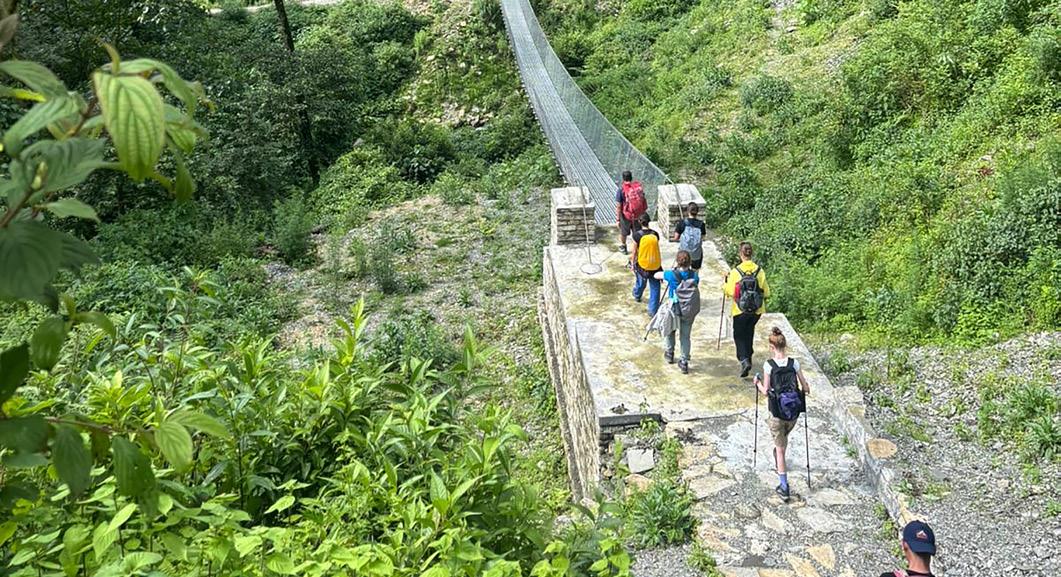
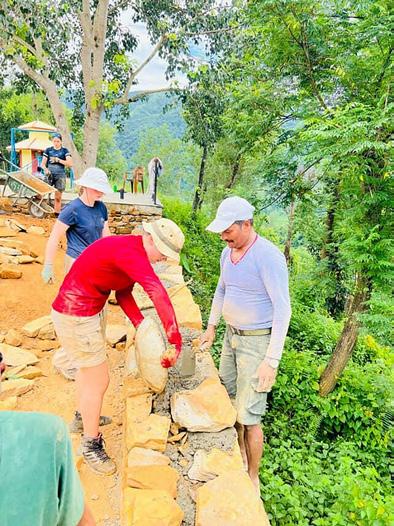
“After the trek, we worked on our community project in a village near Pokhara. ”
“We contributed by painting the school, constructing a new wall to level the ground for an extended playground and creating new posters for the children’s English lessons.The children came to play and we enjoyed playing football and volleyball with them.”
“Back in Kathmandhu we explored many of the city’s famous sights, took a cooking class and shopped at a local initiative that empowers disabled Nepali women.”
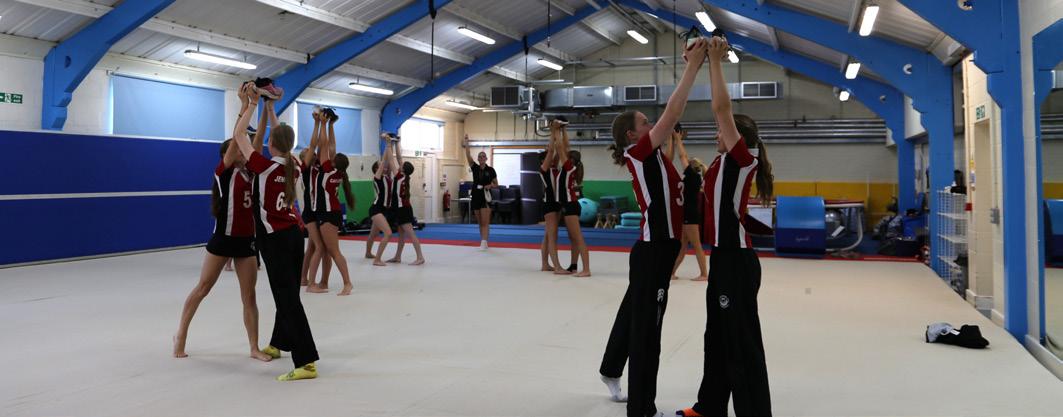
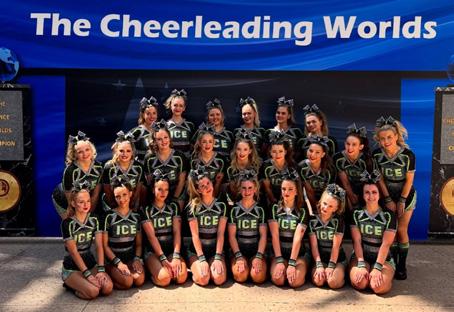
A new and very popular lunchtime club began this year under the direction of sports teacher and cheerleading coach, Miss Jo-Lee van Leeuwen. Sport England only officially recognised Cheerleading as a sport in March 2025, catching up with its rapidly growing popularity – especially in girls under the age of 18 – and clear evidence of the physical challenges it offers participants. Cheerleading incorporates dance, gymnastics and stunt elements and demands strength, fitness and teamwork. Miss van Leeuwen – who competed at the Cheerleading World Championships in April 2025 – told CODA about her new club at Wally and her own achievements in the sport.
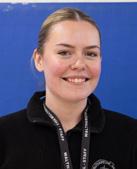
“We have about 15-20 students turning up regularly to Cheerleading Club, but we can sometimes end up with over 30. It is mainly Years 8 and 9, but we do have some Year 7s and Year 11s that come along as well.
The aim at the moment is to develop the girls’ skills before eventually going to competitions, as there is a lot to learn, especially when you are just starting out.
I think the club is popular as it is something different! It gives pupils the opportunity to develop their physical strength while having fun and learning new skills.
The pupils seem to have fun and create a very warm and welcoming atmosphere, which attracts others.
I have been coaching various teams for eight years now, and I have been competing at regional and national levels for 11 years.
I compete with ICE Athletics Subzero which is an International Open Non-Tumbling Level 6 team.
This means that we complete a two minute routine consisting of stunts, pyramids, jumps and dance.
There are seven levels of competition in Cheerleading. Only some teams in Levels 5, 6 and 7 can compete in Worlds – and you have to be invited to compete.
In April I attended the World Championships in Orlando, Florida where we came 12th in the world.”
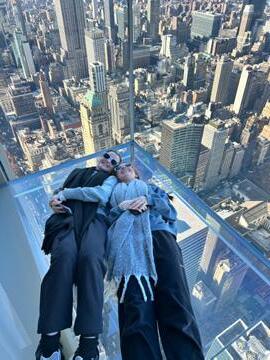
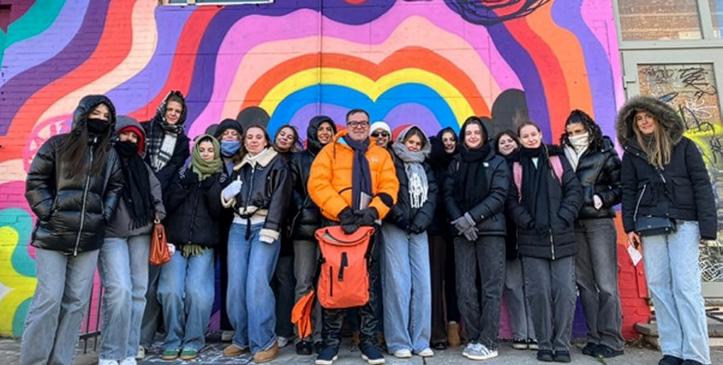
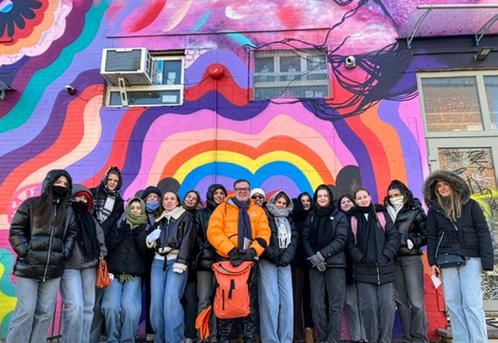
During a four night trip in December, 17 students and three staff members took in visits to the Guggenheim, MOMA, The Metropolitan Museum of Modern Art, Grand Central Station, the 9/11 memorial, a ferry trip to Staten Island, a show on Broadway and more. Pictured: on a walking tour of Brooklyn street art.
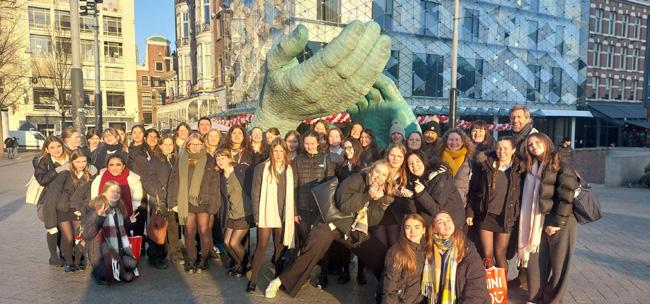
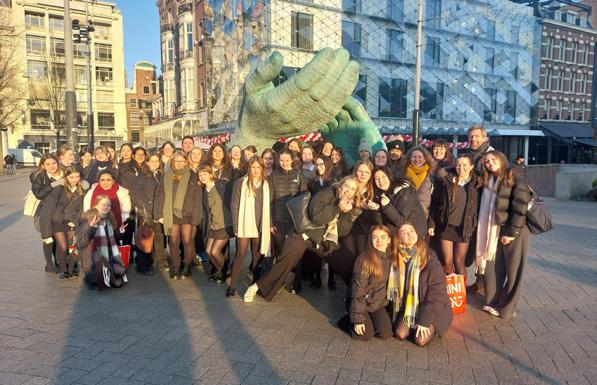
In the February Half Term, the Choir performed three free concerts in Amsterdam and The Hague, with plenty of time for sightseeing in between performances.
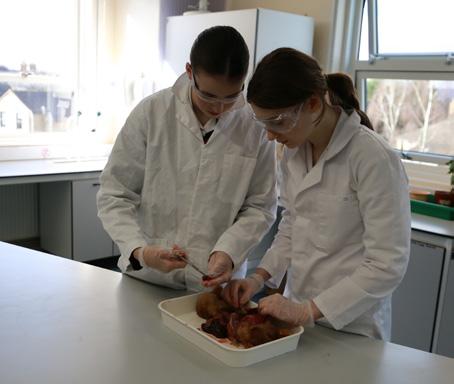
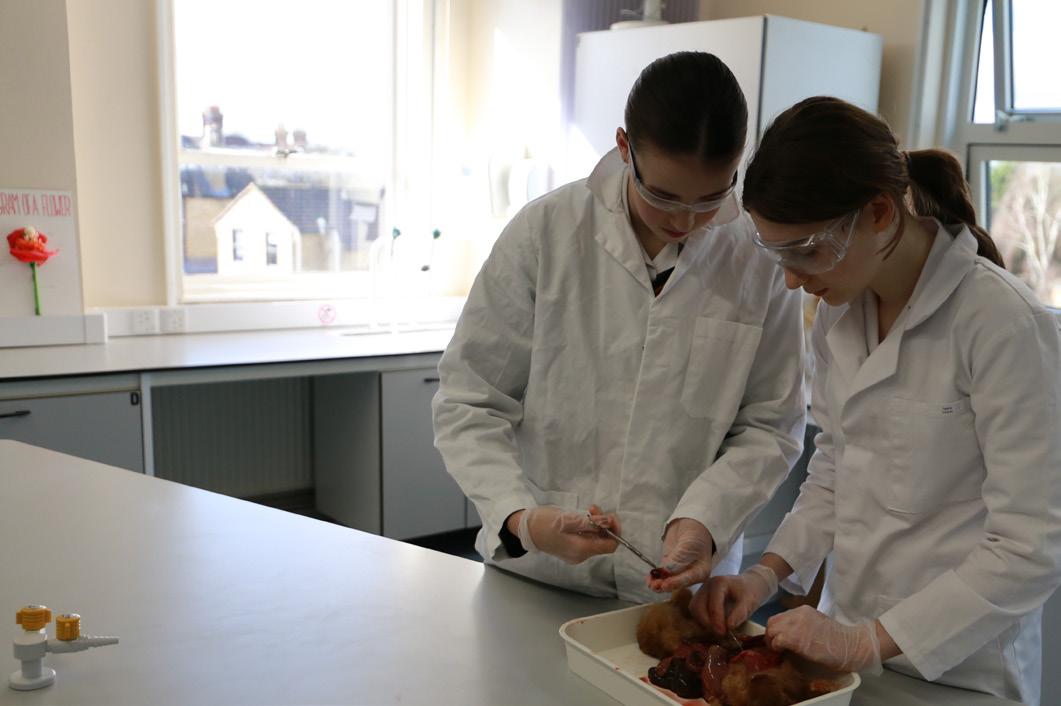
Dissecting a rabbit; the Year 10 and 11s attending this club dissected a range of specimens including: chicken feet, brains and pig trotters, which helped them gain a better understanding of anatomy. They were particularly interested to see how delicate the brain tissue was, which helped them understand how easily it could be damaged.
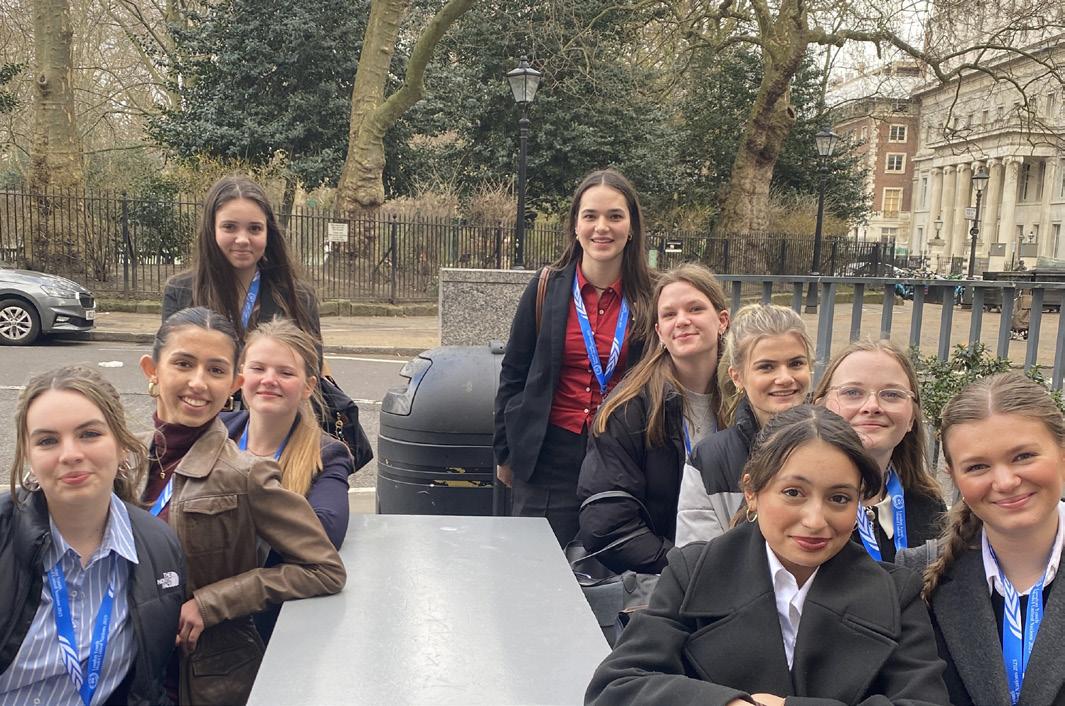
Ten students attended the London YouthMUN at the London School of Economics with hundreds of other Sixth Formers. The event aims to promote an understanding of international relations and diplomacy. Our students came away with a clutch of awards after arguing the standpoint of their country with other student delegates.
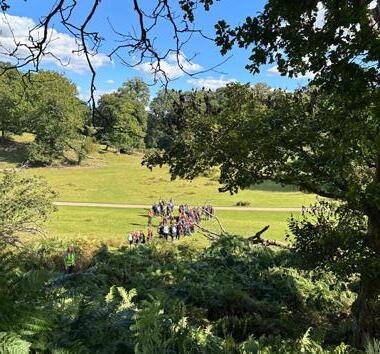
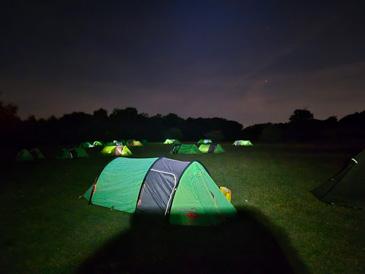
As part of their induction, we led Year 7 on a walk across Knole Park before an overnight camp at Romshed Farm near Underriver, in early September. It was a great chance for the girls to get to know each other away from School life and to build strong relationships with the tutor team.
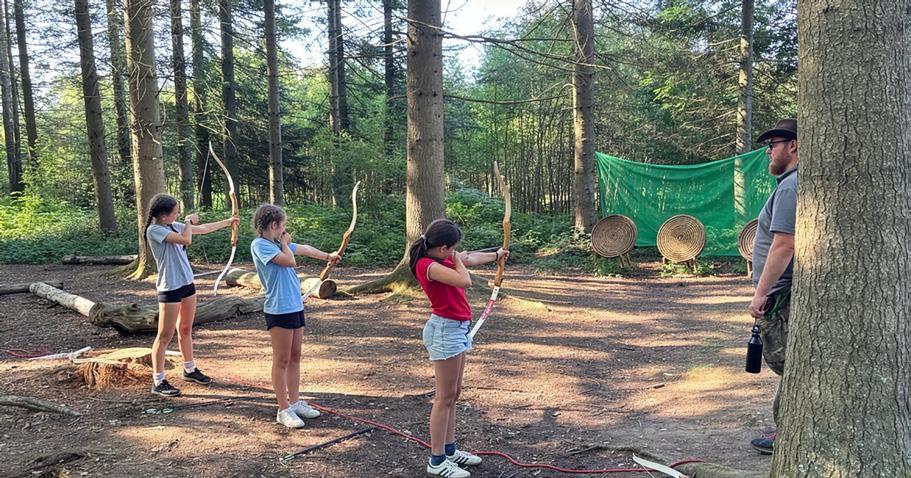
At the end of the Summer Term,Year 8 attended a three-day residential trip to Penshurst Place, giving them a chance to build friendships in the great outdoors, away from technology.They took part in activities such as making a fire, building a shelter, learning basic navigation skills, archery and wilderness first aid.
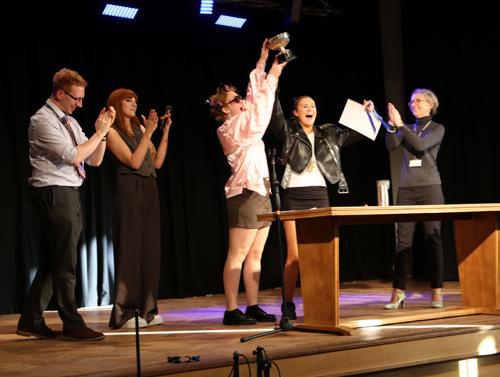
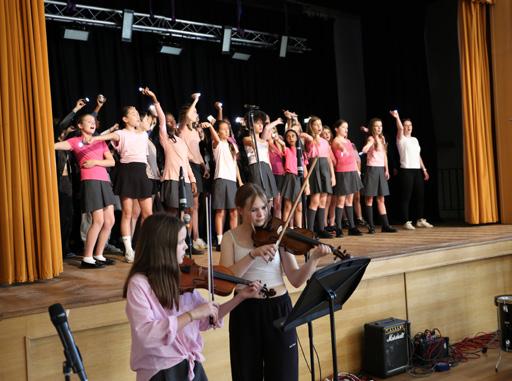
Chartwell won the House Performing Arts Cup! House Captains lead their House members in rehearsing and performing songs and dances in the most eagerly-anticipated House event of the School year.
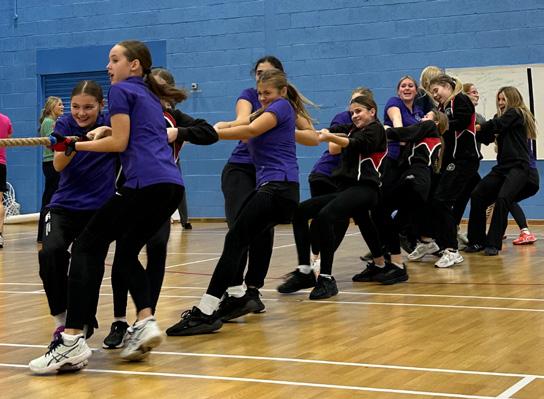
In a mighty show of strength, Down won House Tug of War.
Penshurst House Captains celebrated a third consecutive victory
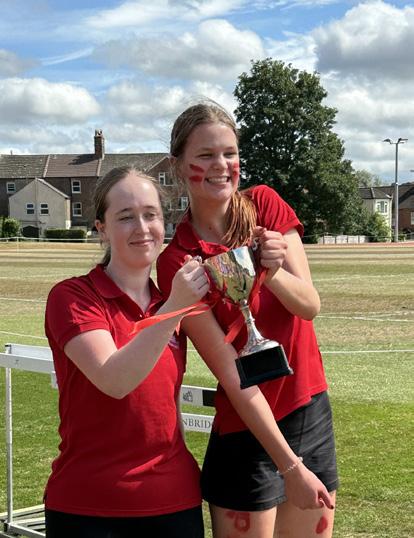
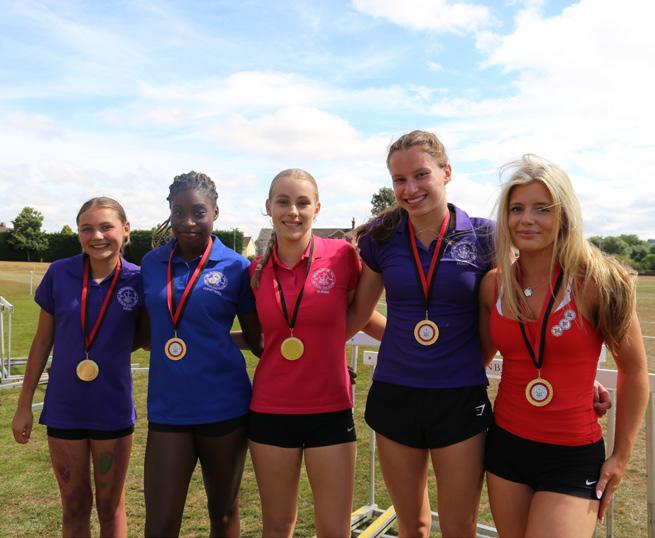
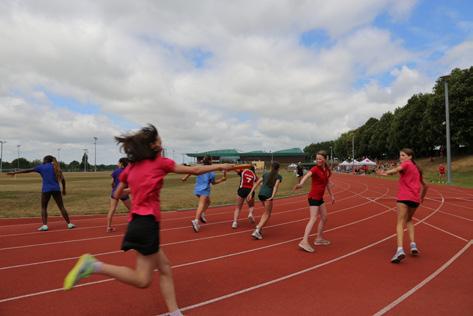
Students wore their House colours to compete in field and track events on a sunny day in June at Tonbridge School athletics track. Family spectators watched as Penshurst lifted the winners’ cup for the third year running. Staff joined in the novelty races in the afternoon.
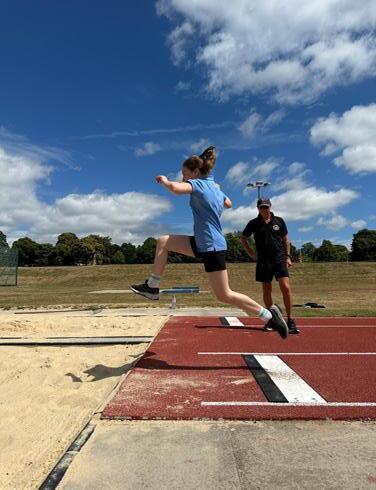
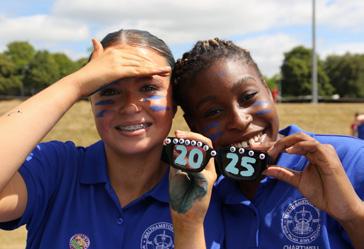
On the last three full days of Summer Term, girls took part in a range of fun and educational trips and activities. Some highlights are pictured below.
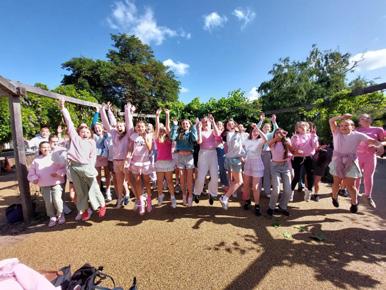
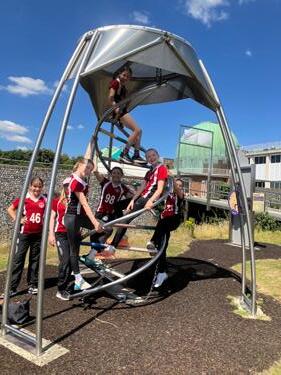
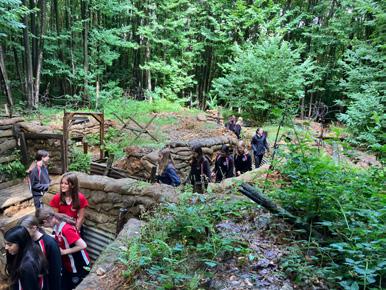
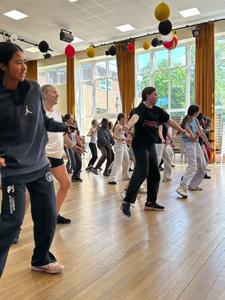
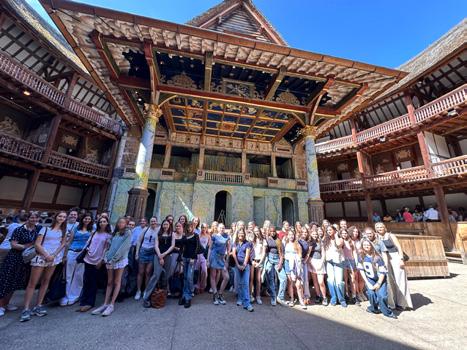
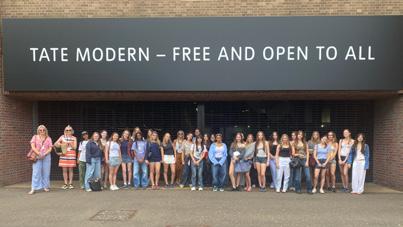
Combined trip to London: a tour of the Globe Theatre followed by a play or a trip to Tate Modern
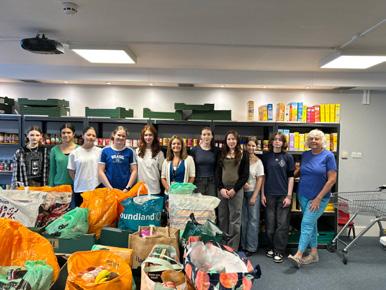
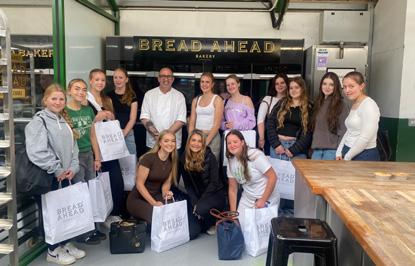
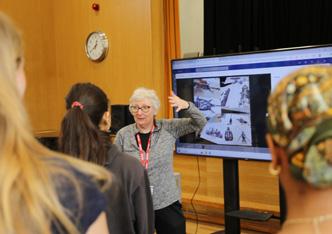
Volunteering with Sevenoaks Larder
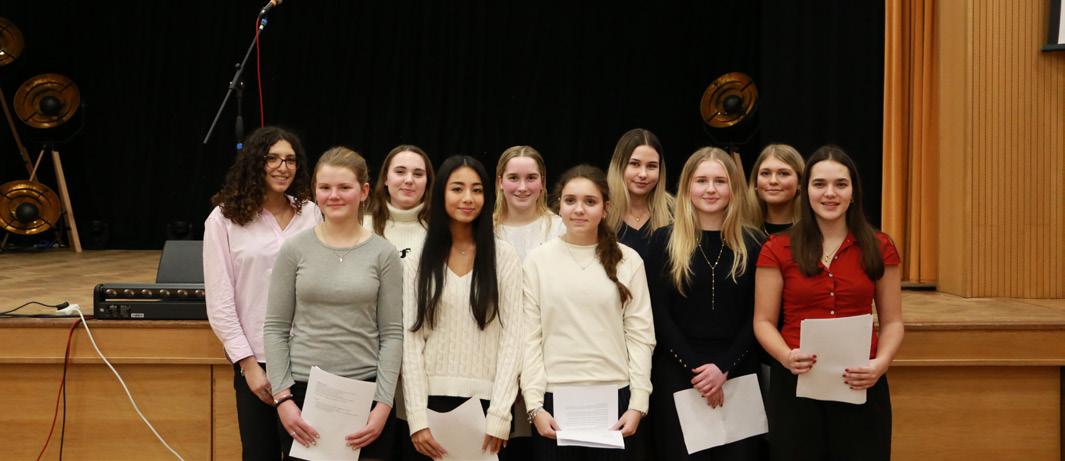
A group of Year I2s met every week to devise and execute a business plan. They made trinket trays, investing £15 each - and receiving £32 back once they wound up the company! CODA caught up with Managing Director, Maya and Sales Rep, Lucie to find out more.
Q: Why did you join Enterprise Club?
Maya: I thought it would be fun to see what it’s like to run a business and to bring a product to the table.
Lucie: For me it was about teamwork, to see if we could create a product as a group. We wanted it to be sustainable. Making something from scratch meant we could get a bigger return because buying raw materials is cheaper than getting something ready-made.
Maya: Coming up with the idea was difficult, everyone pitched an idea then we all voted. It took a few tries to get our first prototype right. We used air-dry clay and a glue-type mixture which would glaze, so we didn’t have to use a kiln.
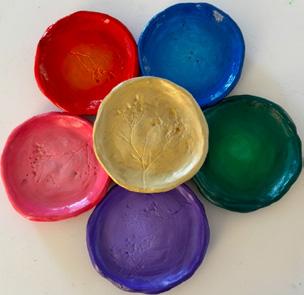
Q: What did you enjoy about it?
Lucie: The painting was very therapeutic and doing it with friends was fun.
Q: What was harder than you were expecting?
Maya: Making them all look the same. They weren’t always going to turn out uniform as they were handmade.
Q: How did you choose the price?
Maya: We sold them first for £7 then we lowered it, after thinking about demographic. Parents would be prepared to pay more, students wouldn’t!
Q: What have you learnt?
Maya: I’d say leadership and organisation was very important, because you couldn’t come to a session and not have a plan. The third was teamwork.
Lucie: Communication was definitely a big one especially when there was some turbulence because we thought some departments weren’t contributing as much as everyone else! For Maya it must have been hard because she was the leader, as well as being an equal in our peer group.
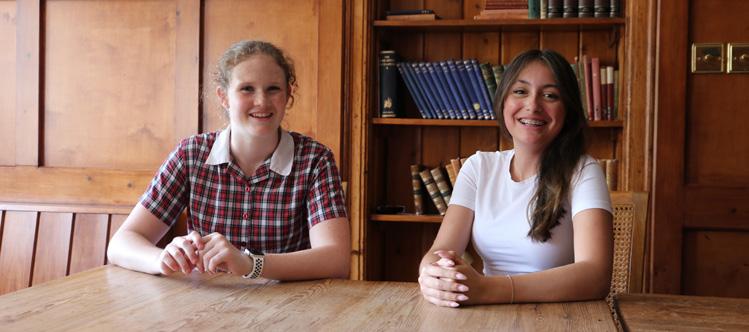
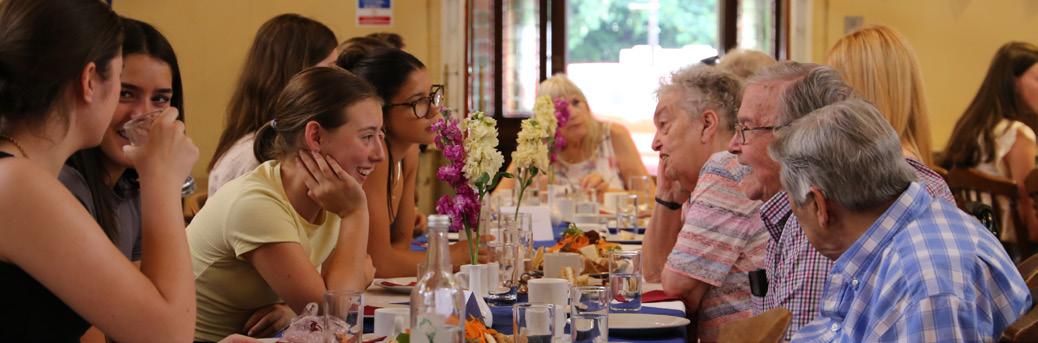
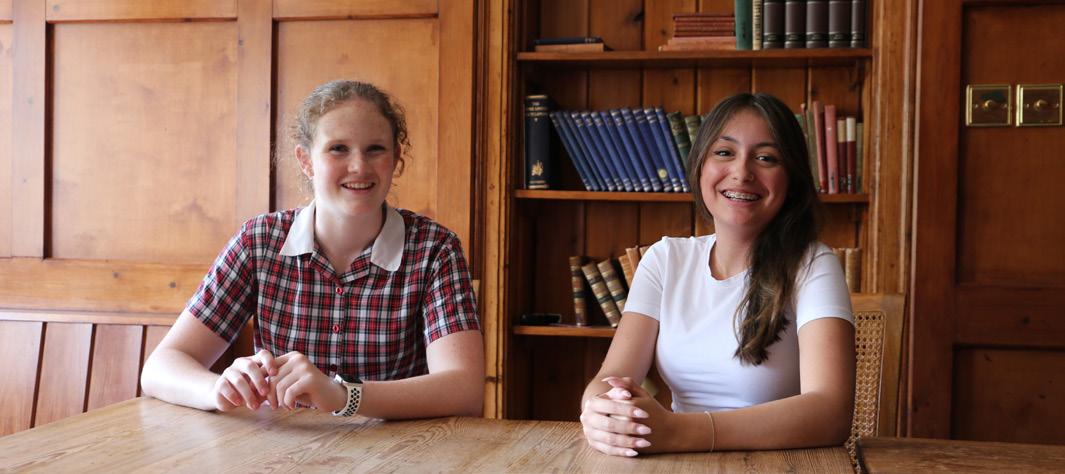
Two students are currently on the Kent Youth County Council. The KYCC is a group of 11-18 year olds elected annually by young people in Kent, who also choose what issues they want their representatives to campaign on for the year. This is the third year on KYCC for Emma (Year 10) and the first for Bella (Year 12). CODA reporter Hayley, in Year 12, spoke to both young politicians about what they’ve been doing.
Why did you want to get involved in KYCC?
E: I saw it online and I thought that it sounded interesting. I got my brother to do it with me and once his term ended, I carried on. It is very outside your comfort zone and I thought that would be a good experience.
B: I ultimately want to end up in politics as a career so I felt joining a youth council would be a good way to see what it takes to make policies, to go to council buildings and meet people.
How does the structure of KYCC work?
B: When you get elected there are typically eight people per district (for Sevenoaks there are six this year, because there weren’t enough people running). Whatever issues are voted the most important by young people in Kent become the Campaign Groups, but in-house we decide on the smaller Project Groups.
E: Based on the number of votes, you get either Deputy Member, which is for one year, or Member, which is two years. First time I ran I only got Deputy, but second time I got Member.
B: In the Council you have different leadership opportunities. I ran for Chair of Tackling Poverty and Free School Meals and got it.
E: I am Vice-Chair of Life Skills which is a Project Group. We are doing a series of short videos on budgeting and How to make cheaper recipes. The Chairs are important; I think a lot of the younger members look up to the older Chairs to guide them. If you make sure everyone is involved, then it turns out quite well.
The three Campaign Groups for 2025
1. Free school meals and tackling poverty
2. Public transport
3. Mental health and wellbeing
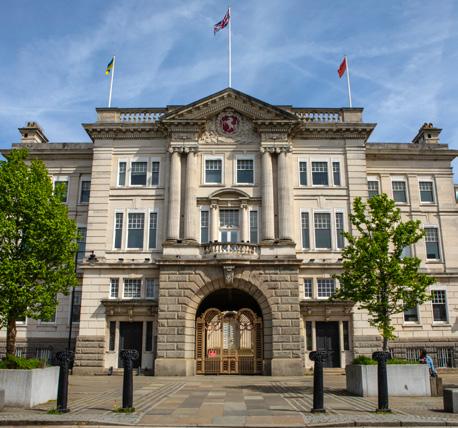
What challenges do you face in KYCC and how do you overcome them?
B: Being Chair of Tackling Poverty and Free School Meals, I need to listen to my group more as it is not something that I can personally relate to. It is a very diverse group and it is important to create a space and to listen to everyone. Being on the Cabinet includes having days of learning how to be leaders and how to manage a budget.
E: I think it is important that a Chair and Vice-Chair’s visions are aligned. My Chair and I have outside of meeting Zoom calls, which is just us and our group leader. I already know that she is very independent in her life-skills (often she is cooking when we are on call) while I am just learning, so it is a good mix which allows us to have a range of ideas.
How valuable are these skills that you learn in KYCC?
B: You must have a certain level of empathy, which is a skill that everyone needs a little bit more of today. Being able to get real with someone who might have a different viewpoint to yours is very important.
E: I think it builds confidence; you don’t just walk in there with confidence. I remember in my first year I was quite underthe-radar, I was involved in my group, but I wouldn’t speak in the Chamber. Whereas now you get used to speaking in the big Chamber and adding on to their ideas and working in harmony.
Have you achieved any specific goals in KYCC so far?
B: My Vice-Chair and I split up into two groups for ‘Tackling Food Poverty’ and ‘Tackling Hygiene Poverty’. We have designed our posters; we are collating recipes, and we are about to get them printed. Recipes should start popping up in schools from September.
E: I am in the Hygiene Poverty Group, we have made posters on period poverty, clothing and hygiene, and on hygiene hacks, giving advice like use a bar of soap instead of dispensable as it’s cheaper and lasts longer. For Life Skills, we are making short videos on making easy budgetfriendly meals.
Is there a certain aspect of KYCC that you have really enjoyed?
E: Meeting new people who you probably would have never met otherwise. A lot are from Ashford. In one Feeling Safe in Kent meeting, people were talking about this guy who came onto their bus with a big knife. I remember thinking that would never happen in Sevenoaks, but clearly it does happen and not that far from us.
B: What I like about KYCC is getting stuff done. I want to be able to look at something at the end of my time here and think ‘I did that and that is going to help someone else’.
Is there anything else either of you would like to say?
E: In Tackling Poverty and Free School Meals, our adult leader, Hannah has a lot of connections to schools so any of the posters or pamphlets we make she sends out to them. They help us understand if a target is realistic and they help formulate the steps to make the project worthwhile.
B: We come from an all-girls school; being in a leadership role in a mixed council is new. It is learning to be a little more elbows-out because we are polite. We slip into this position of thinking we need to people-please but sometimes you have to stand your ground and say no. I think that is the most important skill that I am learning from KYCC.
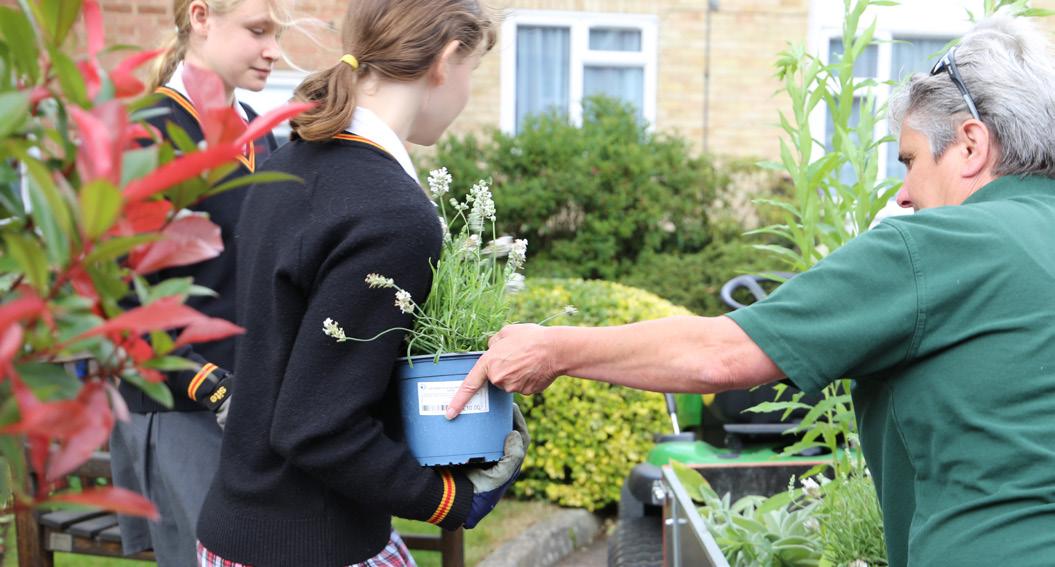
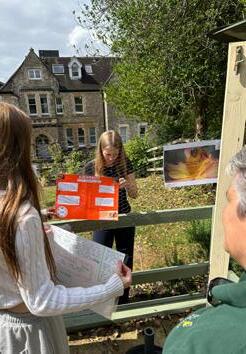
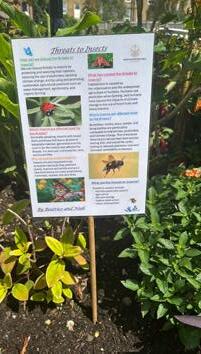
We were delighted to play our part in Sevenoaks in Bloom, the Town Council’s award-winning entry to the national RHS Britain in Bloom competition. The Sevenoaks in Bloom theme for 2025 was “Celebrating Bugs – edible planting and planting for pollinators”. Walthamstow Hall worked with Rockdale Housing Association on their garden display:
• Wildlife Club designed a garden bed and worked with Rockdale’s Head Gardner, Annette Whitney to plant it out
• Year 7s and Year 8s created bug posters and fun fact signs for display around the gardens
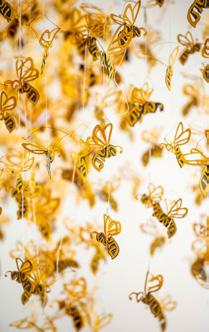
• The Science Department’s bee mobile, which had been created by staff and students for an earlier Science Week, was suspended in Rockdale’s “Hive”
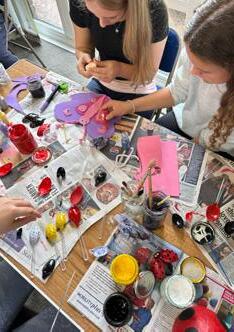
• Pottery Club donated their ceramic bugs to be placed in the gardens
• During Enrichment Week,Year I0 placed all the signage created by Year 7 and 8 around the various gardens being judged
Sevenoaks in Bloom won four awards in the national competition. This included the Community Champion Award for Rockdale’s Head Gardner, Annette Whitney, recognising all the hard work Rockdale staff, residents and volunteers had put into creating its stunning garden. Sevenoaks in Bloom was also given a Gold standard in the Town Centres & City Centres category, recognising outstanding community effort.
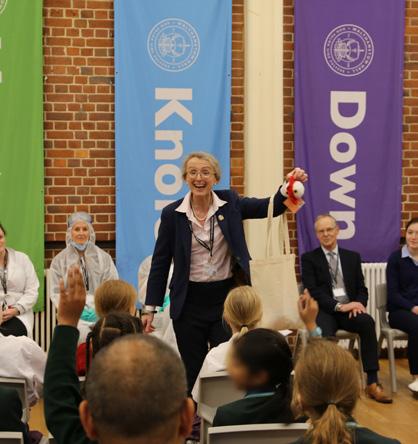
We welcomed more than 150 children from 10 local primary schools (including our own Juniors) to three fun and educational events at our Senior School:
• Marvellous Microbes – to share research into the unseen world of bacteria
• Singing Day – to perform songs from Joseph and the Amazing Technicolour Dreamcoat to their parents in The Ship after a day with our fabulous Music teachers
• The Great Maths Race – to get some sums right and sprint around the Hall to deliver the answers!
Other outreach events included sending six of our Year 9 instrumentalists to a Music Day at St Mary’s Church in Chiddingstone, aimed at inspiring children to enjoy playing instruments in a group.
Our Sports staff, Year 11 and Year 9 Sports Leaders planned and led PE lessons and Sports Days at Lady Boswells, Chiddingstone and St John’s Primary Schools as well as with our own Juniors.
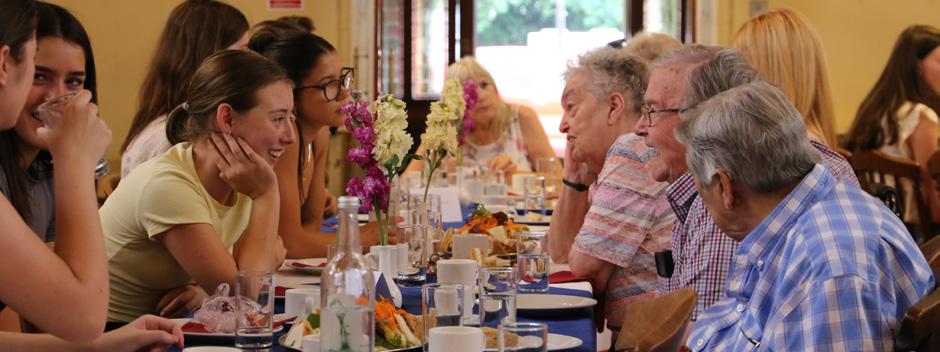
After completing their GCSEs, Year 11 hosted a tea party in the Dining Hall for guests from Rockdale sheltered housing. They chatted to their guests, before performing musical entertainment and holding a quiz.
Our School community benefits hugely from the energy and commitment of its Friends and Parents committee. Over the year, WHFP volunteers organised fun events for parents: wine tastings and a Quiz Night, and for the girls, the Junior School Christmas Fair, a film night and a disco.
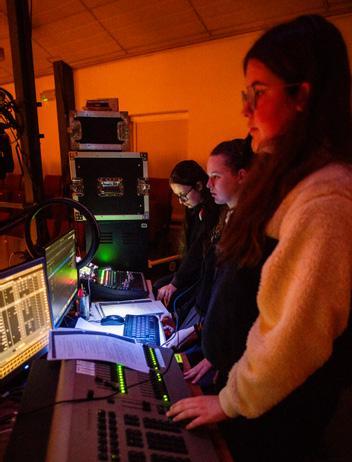
Ticket sales to these events plus a bar at the parent socials helped raise funds, along with sales of uniform and merchandise at the WHFP School shops, Junior School Christmas cards and commission-based donations.
WHFP also funded the following projects after receiving bids from members of staff:
• New recreational space for all students: resurfacing the Multi Use Games Area (MUGA) outside the Sports Hall and adding table tennis tables and equipment
• Technical equipment for student productions: Colour Source Spotlights and wireless microphone packs
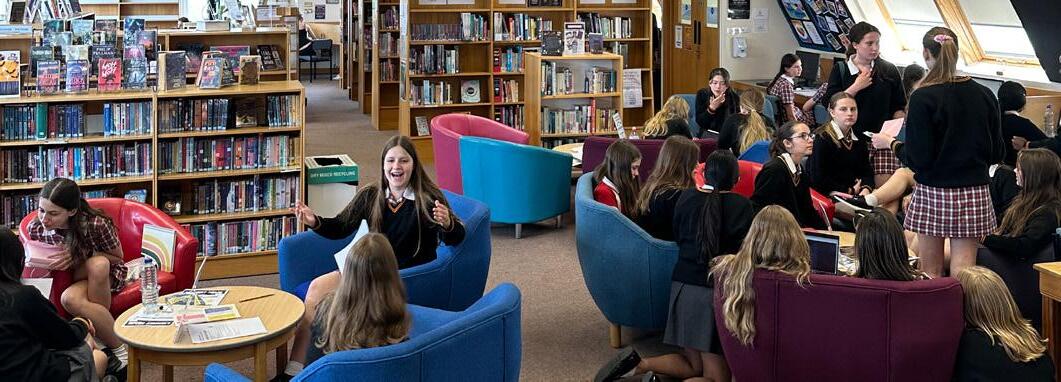
• Comfortable seating for the Library
• Wildlife cameras and binoculars for Wildlife Club, to help them look for birds, foxes, badgers and hedgehogs
• Digital theatre membership to enable students to watch recordings of live theatre in Drama and English lessons
• First aid equipment for students
• New library books for Blackburn House
• Football kit for Blackburn House
Parents and friends of Wally from across the School community are always very welcome to get involved with WHFP activities. Please contact whfp@whall.school for further information.
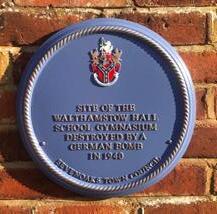
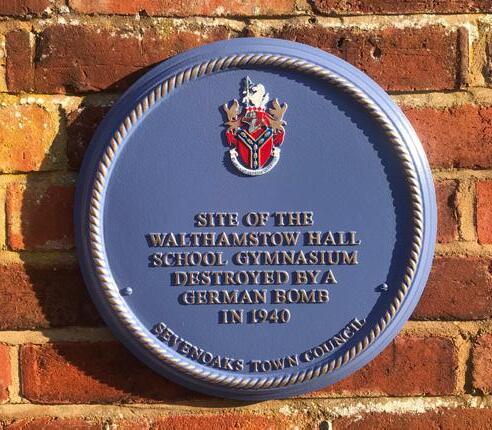
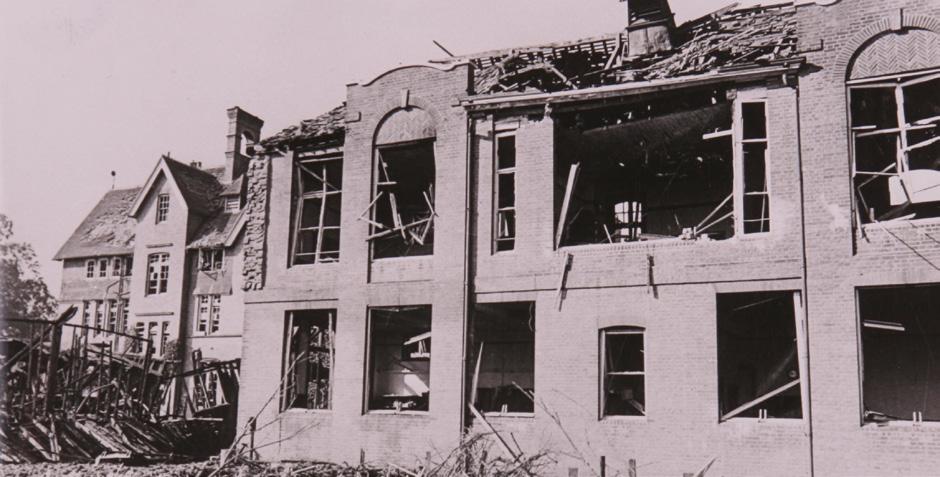
As part of the events marking the 80th anniversary of the end of World War II in 1945, Sevenoaks Town Council installed a series of commemorative plaques around the town to mark the places where bombs had fallen during the war.
On the night of September 21st, 1940, Walthamstow Hall was hit. Fortunately, there was no loss of life, but the bombing destroyed the Gymnasium, Science Laboratory and Craft Room.
The attack prompted the Headmistress at the time, Miss Ramsay, to send the younger girls away from Sevenoaks to a place of greater safety, at Pontesford House in Shropshire, where they stayed for the first few years of the war.
After the plaque was affixed in August 2025, Headmistress Louise Chamberlain remarked:
“At Walthamstow Hall we are very proud to be part of the history of Sevenoaks.The commemorative plaque now installed by our main entrance marks the destruction of our Gymnasium and Science labs following a direct bomb hit during the Second World War. As a scientist myself, I am delighted that this loss did not deter the girls from continuing to pursue Science with enthusiasm.This plaque is an inspirational reminder of the resilience of a generation of staff and pupils.”
Three other locations in Sevenoaks that suffered significant bomb damage during WWII have also received a town blue plaque. They are: the Bus Station at Buckhurst Lane, where bombing destroyed some cottages, Boots Optician in the High Street and Vine Gardens, the site of the Sevenoaks Club Hall (town theatre) lost during the war.
In the Spring Term, Year 9 welcomed a French girl from Montpellier, Juliette, to join their classes for a month. Juliette’s family have relatives living near Sevenoaks and they were keen to give her a placement in the UK. Juliette settled in quickly, with Head of Modern Foreign Languages, Mrs Hunt describing her as “a wonderful addition to my form”. One of Juliette’s friends here, Emily, contacted her in Montpellier to ask for her reflections.
Q: What were your first impressions of Wally?
I was very nervous and scared but as soon as I arrived, I was welcomed very well, the place was beautiful. Mrs Hunt and the girls were very kind and all helped me out with speaking.
Q: Was there anything that surprised you about our school?
Food Prep and Textiles classes, because we don’t have this in France. In France we have a lot of pressure to work extremely hard and sometimes it’s a bit too much for me, and sometimes it is a bit daunting to ask the teachers for help. In Wally, I felt the teachers were open to questions even if they sounded silly.
Q: Were there any lessons or activities you really enjoyed?
I loved Textiles and Drama, but also, I loved Maths and PE. All of the teachers were amazing and super-supportive so that made all of the lessons extra exciting. Maths in France is my favourite subject so in England it was even cooler. Then in France we don’t really have specific art, so Textiles was fun to focus on fabrics and wool. Drama was mainly fun because of the teachers and PE was also cool because we don’t really do PE like that in France.
Q: What do you miss most about Wally and England?
Everything, but I will miss you guys and the teachers because here in France they are very strict compared to Wally. The schedule was good as we had a very long lunch which gave me an opportunity to hang out with my friends. In France we have less time for breaks.
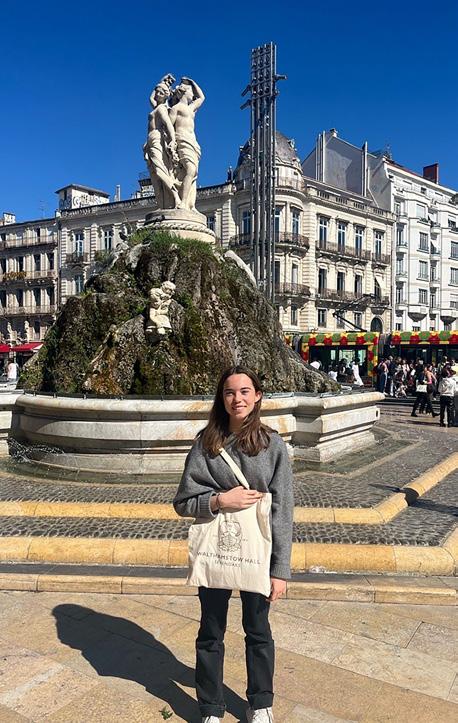
Q: Describe your whole trip to England in just three words and explain your choices!
1. Incredible because I think it was the best experience of my life!
2. The second word is instructive because I learnt so many things, and I think I improved my English.
3. My last word may be unforgettable because I won’t forget about you and all the people I met in England. Thank you so much for Wally and for you and my other friends for making this experience so great and for even allowing it to happen.
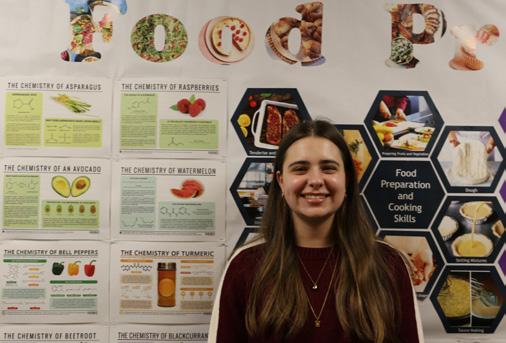
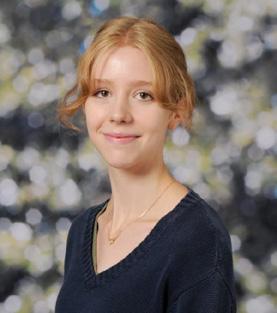
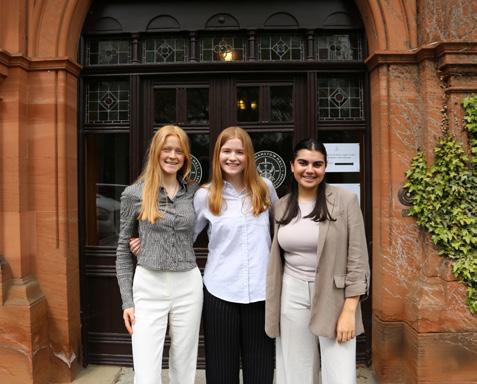
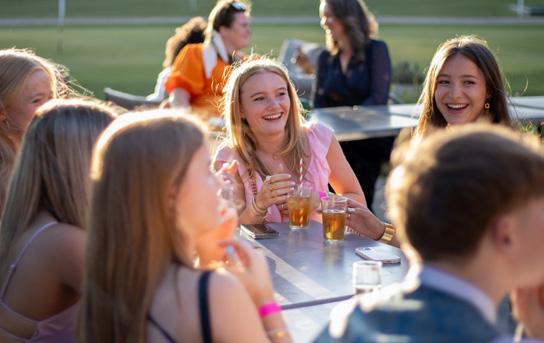
A look at what some Year 13 pupils from a range of academic departments are planning to do after school.
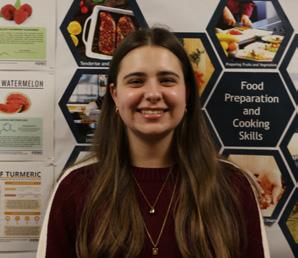
Nutrition and Dietetics, University of Surrey
A Levels: Geography, Chemistry and Biology
For a long time I wanted to study medicine, but I changed my mind while doing my EPQ. I was researching the links between the gut health, the brain and skin and it all led me to thinking more
Acting and Performance, University of the Arts, London
A Levels: Drama, Art, Sociology
I did my National Youth Theatre audition through school and through that I met so many people. Everyone was talking about getting an agent, so I looked some up and sent off a self-tape to Top Talent Agency. I have been lucky enough to have had an agent since last year.
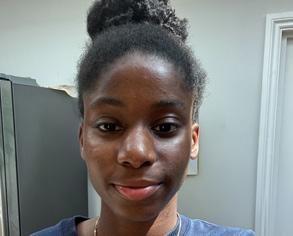
I was going to apply to drama schools instead of university, then I realised I wanted to be around people with different interests, as well as like-minded people, so I thought university was better for that. I want to be based in London because that’s where my agency is. The Drama Department here are really supportive, they’ve pushed me to do the best I can.
about nutrition. My focus is still on helping people and I’d love to work in a hospital setting, but my focus is different. It’s a four year course at Surrey and the lecturers were really engaging. The course contains lots of science elements, sometimes the sole Nutrition degrees weren’t science-y enough for me. There are lots of connections with the NHS at Surrey, there’s plenty of opportunity. It’s one of the top universities for my course.
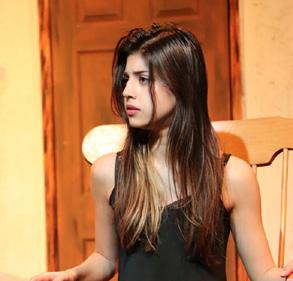
Physiotherapy, St George’s, University of London
A Levels: Psychology, PE, Biology
My interest in physio started because of how much I enjoy sport. Initially I thought I could become a sports physio, but then I did some work experience at Darent Valley Hospital and saw how many
different specialities there are: cardiorespiratory physio, stroke physio.
My proudest sporting moment at Wally was playing at the lacrosse Nationals. It was a new sport for me when I joined, so being able to compete with the best from such a small school I think is really cool. Also, getting to regionals for netball, that was really quite remarkable, our team is so good.
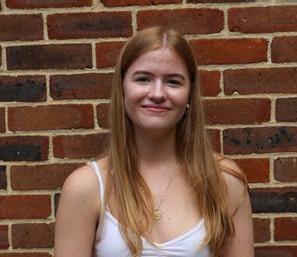
Biology, Lady Margaret Hall, Oxford University
A Levels: Maths, Further Maths, Biology, Chemistry
At Oxford they cover four really broad areas in the first year which I like, then you get to specialise in the second and third years. They do a lot of travel, at the end of the first year you get to go abroad.
Events Management, Bournemouth University
A Levels: Business, Drama, Photography
I like the idea of planning events for people. It’s not too academic but it’s still interesting. Bournemouth is a four year course with a year out, which really
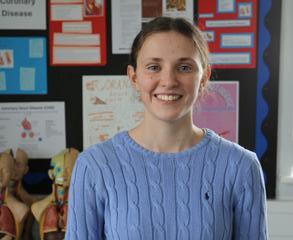
appealed to me and it’s quite business-y. I sorted lots of work experience for myself: I interviewed this lady who does events and who is running Winter Wonderland [in Hyde Park], I did some work for Wealden Times, they do magazines and a massive Christmas and Summer Fair. I also met up with the Head of Events for Claridges Hotel and spoke to her. It’s all about connections, especially in the Events Industry.
Veterinary Medicine, Edinburgh University
A Levels: Biology, Chemistry, Maths
I am super interested in science and in animal welfare. I have horses and I did work experience at an equine referral centre. I saw the difference the vet made
They’ve also got amazing resources; they’ve got Wytham Woods where they’ve been doing a 70 year long study on birds, an amazing natural history museum where you get to have lectures and a really nice botanic garden too.
As Head Girl at Wally I’ve really enjoyed being able to represent the student body when we go to weekly staff meetings. They really listen to us and it’s nice to be involved in change and improvement.
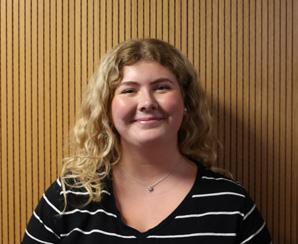
not only to the animal but also to the owner. I stood next to the surgeon, as he treated a horse for skin cancer on its eyelid, using laser surgery and chemotherapy. I was holding the vacuum next to the surgeon, clearing up all the smoke. That’s what sparked my interest for my EPQ. I want to be an equine vet and to be a surgeon. The teaching here has been amazing, the teachers are so supportive if I go to them for help.
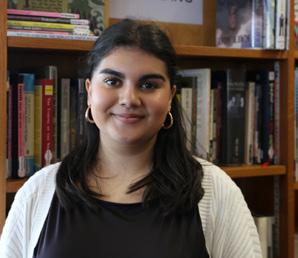
Post Qualification Application
A Levels: English, Classics, Drama
I would like to read English at university with a conversion to Law afterwards. But first, I want to get a TEFL qualification and to teach English abroad, which will allow me to travel. You’ve been in education since you were four, so it’s nice to have a
International Relations, University of St Andrews
A Levels: Politics, French, Economics
I knew I wanted to do International Relations or Political Sciences and I chose to do my EPQ on President Nixon’s foreign policy 1969-72, with the
intention of it informing my later degree. Writing the essay, I felt like I was a bit of an expert on it and that gave me a lot of confidence in my own research abilities. Understanding a topic I hadn’t come across before meant I felt a lot more confident in the type of work that will be expected of me at university. I want to work internationally; I love learning languages.
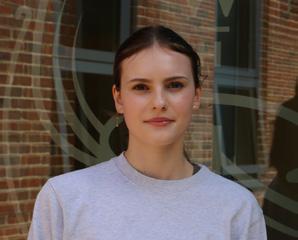
Business and Management, University of Bristol
A Levels: Sociology, English Literature, Business
I wasn’t too sure what I wanted to do, but of my A Levels, Business interested me the most. My father has his own
break! I like being able to shut the world out and read a book; I love what literature does, it changes people’s perspective on things, it educates you and I want to pursue that as long as I can.
As part of the Head Girl Team [Líle was a Deputy Head Girl] we came up with the Freshers Ball for Year 12, which we hope will continue and we also tried to get more volunteering built into the timetable.
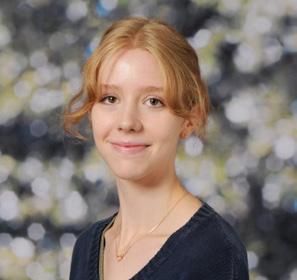
business, so I’ve always been interested in it. I also like the marketing aspect of the subject, there’s maths in there too and human resources. I was Business Captain which meant I gave a bit of help to other students if they needed extra support. I did Enterprise Club last year, making and selling coasters. It was quite a lot of work! We learnt how to manage people in different roles and to make sure everyone had the same amount of responsibility.
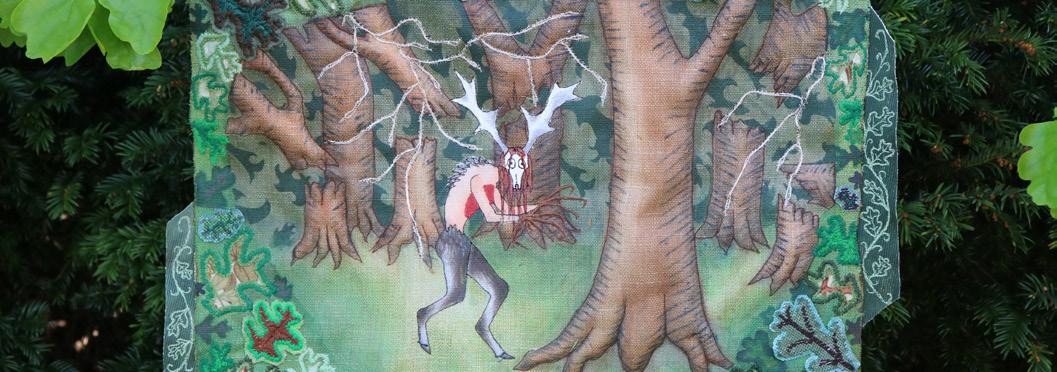
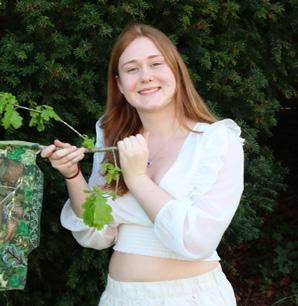
Arts and Design Foundation, University of the Arts, London
A Levels: Maths, Physics, Textiles
I want to try everything: architecture, fine art, product design at UAL and then see what I like most. I’ve always been good at maths and problem-solving too, but doing an engineering degree sounds really boring to me – can I find a balance?
History, University of Leeds
A Levels: History, Classics, Religious Studies
I find history fascinating, especially ancient history. Doing the epics like The Odyssey in Classics was great, plus you find out where a word or passage that everyone
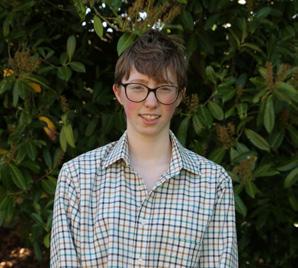
uses originally came from and it’s so satisfying to know. I put a lot of work into my EPQ [on Philip II of Spain] and that was reflected in universities lowering their grade offers to me. I thought that was something extra I could offer. I am dyslexic so I get extra time in exams, which is very helpful because I struggle with the essay structure, even though I’m doing all essay subjects!
Geography, University of Bristol
A Levels: Maths, English, Geography
I love geography! It’s about how the world works and you can touch on all sorts of different topics. On the physical side you can move into biology and on the human side you can move into economics. I’m not sure what I want to specialise in yet as I pretty much like all aspects of it.
I’ve always loved the Art Department at Wally. For my final Textiles project I did “Creatures” and created a tapestry of my own medieval mythical creature. What I really loved was that I brought in my Physics, so I started creating circuits with motors and sewing LEDs into the fabric. I’m Textiles Captain and House Captain – we won House Music! Last year, I was a Costume Angel for the drama production, helping with the mermaids’ make up, hair and tails in Peter Pan. I’d always recommend helping out, everyone gets so excited about it!
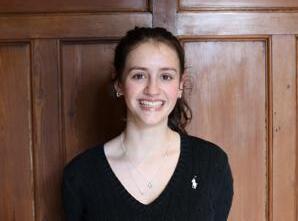
Doing an EPQ [on US Youth Protest in the 1960s] was a good way to kickstart going into the Sixth Form. Most of my research articles came off JSTOR and similar academic websites which we were shown how to use. I learnt to footnote, to create tutorial and research logs and just generally manage myself and overcome obstacles.
Subjects in which 60% or more of pupils attained A*/A: Art (Textiles), Chemistry, Drama & Theatre, Economics, Geography and Mathematics
Ireoluwade St George’s, University of London Physiotherapy
Jessica University of Sussex Business and Management Studies
Olivia University of Exeter Liberal Arts
Emily University of Oxford Biology
Karis University of Bristol Mathematics
Emilia University of Bristol Biomedical Sciences
Elena University of Exeter International Relations and MFL with Int Placement
Rosemary University of Leeds History
Emily University of Manchester English Literature
Amber Post Qualification Application
Olivia University of Bristol Business and Management
Daniella University of Surrey Nutrition and Dietetics
Stephanie Post Qualification Application to US universities
Olivia University of Bath Economics with prof placement or study abroad
Daisy Taking A Levels in 2026
Laura University of Exeter Biomedical Engineering
Poppy Employment
Charlotte University of the Arts London Foundation Art and Design
Freya University of the Arts London Acting and Performance
Lucie The University of Edinburgh Veterinary Medicine
Elysia Post Qualification Application
Hannah Durham University Biochemistry
Fern Oxford Brookes University Business and Management
Amy Grace Durham University Geography
Sonia University of Liverpool Geography (Foundation) (1+3)
Imogen The University of Edinburgh German and History
Ella University of Exeter Psychology
Amelia University of Manchester Law
Saira King’s College, London Global Health and Social Science
Jessica Bournemouth University Events Management
Amelie University of Exeter English
Honor Loughborough University International Business (with placement year)
Ava University of Bristol Criminology
Elliot University of Nottingham Law
Grace University of Southampton Marine Biology
Zara Durham University Geography
Harriet University of Bristol Geography
Alaia Leeds Beckett University Sociology and Criminology
Elizabeth Durham University Geography
Madeleine University of St Andrews International Relations
Sofia Fashion Retail Academy Marketing & Communication for Fashion
Rowan University of Bristol Geography
Líle Post Qualification Application
Estella University of Exeter
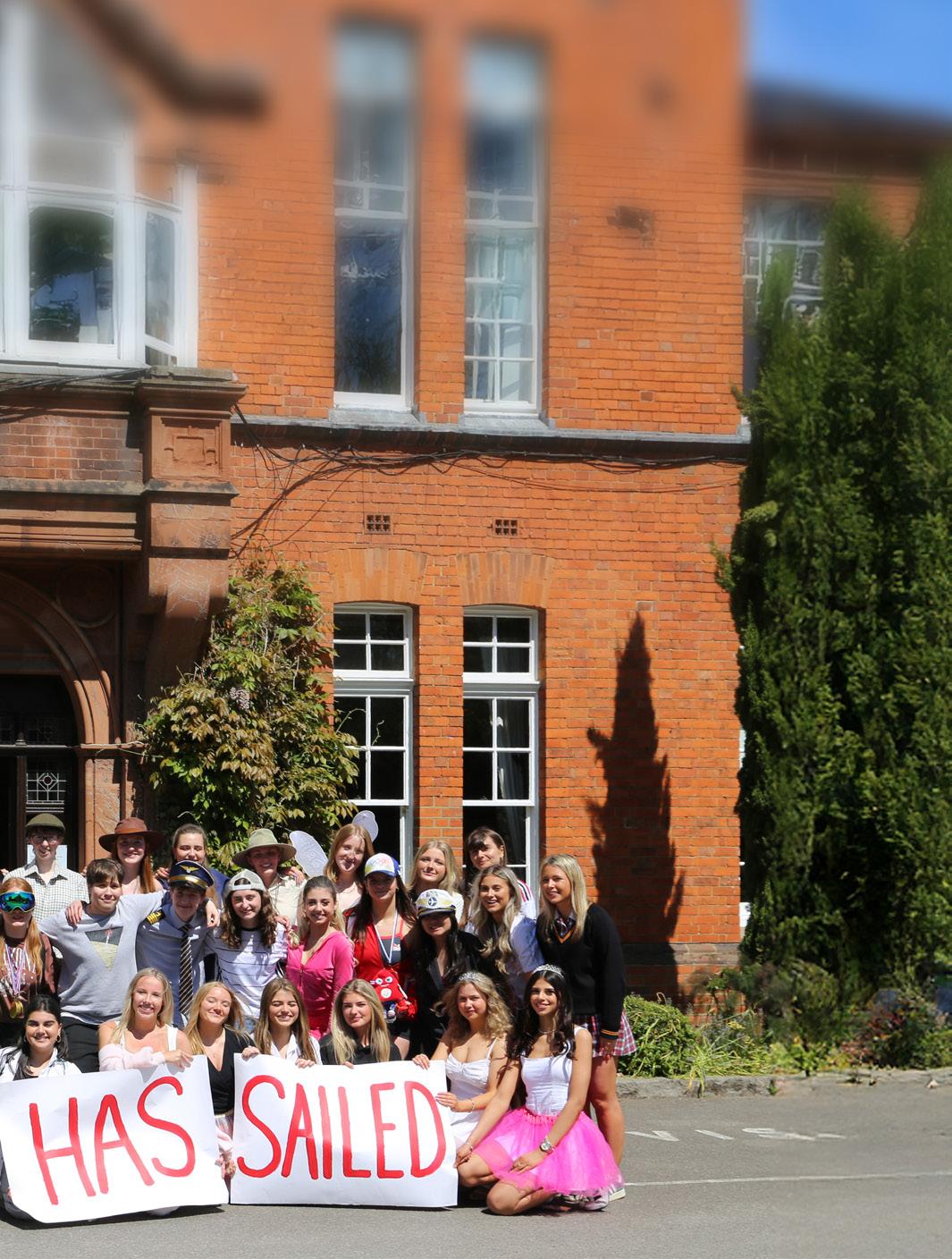
Media and Communications
Gracy Liverpool University Marketing with a year in industry
Amelia Employment
Annie University of Southampton Business and Management
Krystyna Royal Holloway, University of London
Classical Archaeology and Ancient History
Florence University of Exeter Neuroscience
Scarlett Newcastle University Combined Honours
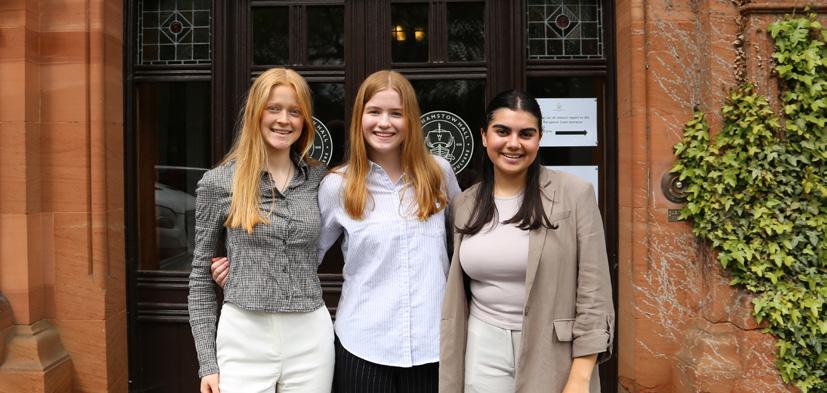
The Head Girl, Emily and her deputies, Ella and Líle represented the student voice at weekly meetings with the Senior Leadership Team. They helped set up the first Freshers’ Ball for the Sixth Form in the Autumn Term and they lobbied successfully for a greater volunteering element in Enrichment Week.
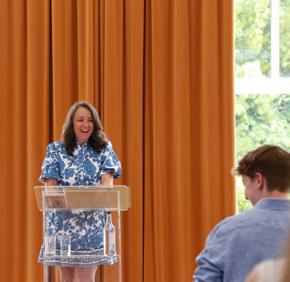
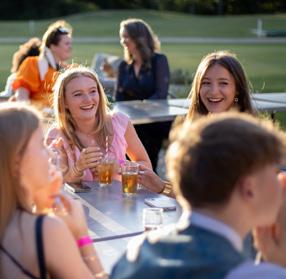
After the exams were over, Year 13 returned to school with their families for their Setting Sail Ceremony when the School officially says goodbye to each student and awards prizes. Outgoing Head of Sixth Form, Mrs Brown said some poignant goodbyes too, pointing out she had joined Wally when her Year 13 leavers had begun in Year 7. A drinks reception for pupils, their parents and staff followed in the Hub. Celebrations continued the next week with the Leavers’ Ball at Nizels’ Golf Club.
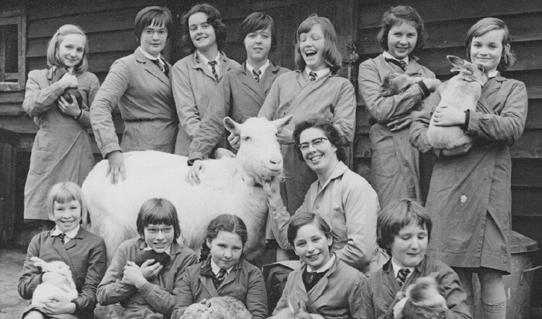
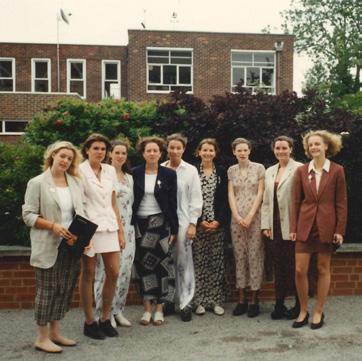
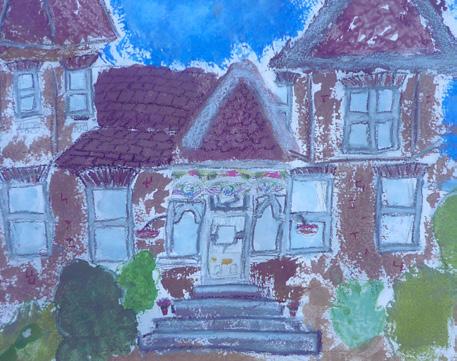
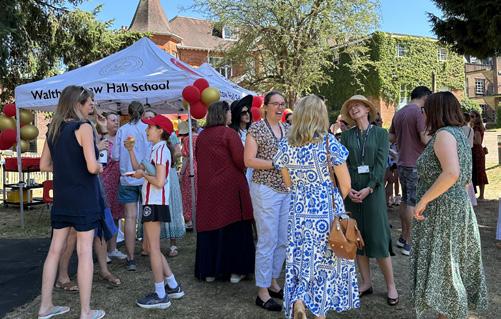
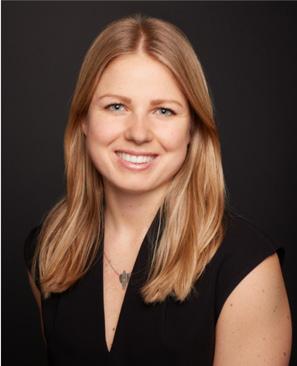
Another busy year has passed in what feels like the blink of an eye, preparing this edition has been a welcome opportunity to pause and reflect on everything that has taken place across our community.
One alumna wrote to us after last year’s issue to say how much she enjoyed reading the magazine “from cover to cover,” adding that, even though she left Walthamstow Hall in 1968, hearing about the activities and achievements of today’s students is “reassuring and gratifying,” keeping memories alive while offering hope for the future. This sentiment has stayed with us throughout the process of creating this year’s magazine.
My thanks go, as always, to everyone who has contributed, shared updates and helped shape the alumnae pages this year. I am especially grateful to the Marketing team, Olivia Cornes and Nina Baker, for their hard work throughout the process.
Finally, a small personal note: I will be signing off on maternity leave from January 2026, but you will be in excellent hands with the Marketing team and my maternity cover, Gemma Mahoney-Jones.
from Claire Sunnucks (JARVIS) 1980-1987, President of the Walthamstow Hall Association
I’m delighted to write a piece for this inaugural publication, bringing together the magazines representing all of the current and former pupils of Walthamstow Hall. This is an excellent initiative, fitting perfectly with the School’s core value of Community.
I’ve always believed that the alumnae of the School should have a prominent place in the minds of current pupils. This can be particularly valuable when they start choosing what to study at school or in higher education, which ideally requires them to have an idea of what
they might want to do in later life. I hope that current pupils will take inspiration from the stories about the careers and achievements of former pupils. I know that we alumnae will enjoy reading about and will be inspired by the amazing achievements of the current generation of Wallies!
I’m looking forward to seeing many of our WHA members at our alumnae events this year - our London networking reception in April and the annual reunion in June.
Many siblings have passed through Walthamstow Hall, but it takes something, or someone special to bring two sisters back for a visit at the same time, many decades after they left.
That someone is our Head Girl, Isobel who is the granddaughter and great niece of alumnae Rowena Wood (CLARKE), 195264 and Jennifer Medd (CLARKE), 1947-61. With her cousin, Elizabeth Reid (MEDD) 1992-1996, Isobel is the third generation of her family to attend Wally.
Shortly after becoming Head Girl in June 2025, Isobel toured her proud grandmother, Rowena (who became known as Rosie after she married) and great aunt Jenny around the school.
Isobel remembers hearing many stories about Wally as she grew up, “mostly about how well-prepared and polite all the girls who came out of it were”. She also knew that her relatives’ memories of school were very different: Jenny’s were positive, Rosie’s were not.
When CODA caught up with them after the tour, however, both sisters were unanimous in praising the values and standards they felt the school had given them.
Jenny explained that these values had – together with a happy home life – “influenced and formed the framework of my life”.
Pressed on what these values were, Jenny replied “Thinking of others before yourself”.
Rosie agreed, but also laughed at this, referring to it as “the Wally Hall curse! We think of everybody else before ourselves, which can become a bit of a nightmare at times”.
Code of Courtesy
Chatting in the Dining Hall led the sisters to remember some of the rules which governed mealtimes.
Girls were not allowed to sit next to their friends at lunch. Instead, Jenny explained, “We moved around the table each day, so we all had a chance of sitting next to a Prefect at one end or a member of staff at the other”. They were expected to hold suitable conversations with whoever they found themselves sitting next to.
Neither were girls allowed to help themselves to a glass of water, they had to ask the person next to them if they were thirsty. “If she said, ‘Yes please’, Rosie explained, ‘but not ‘Would you like some too?’, you weren’t allowed to have any. Can you imagine?”.
At some point, every girl would be invited to Top Table to dine with the Headmistress, which Rosie remembers “was a great honour, [and] served to sharpen table manners”.
All this was part of the Code of Courtesy, details of which were pinned up outside cloakrooms and around school. The message was to be considerate.
Jenny remembers the Code of Courtesy less as a set of rules, more as an encouragement to think of others.
This emphasis on manners harks from gentler times, but Walthamstow Hall was always a place where, as seen in the School prayer, girls were encouraged “to lead purposeful lives”.
It is fair to say both Rosie and Jenny carried a sense of purpose as well as the message of thinking of others, into their lives after school.
Jenny’s first job was with the charity Oxfam, where she spent a long career helping raise awareness of what was then a young organisation. She became Oxfam’s first female Regional Organiser, setting up an office in Sevenoaks and being responsible for the charity’s school educational programme and fundraising initiatives in Kent.
Part of her role involved a three-month spell in East Africa, visiting a mission station to see the charity’s work in action.
A week before their school tour, Rosie had attended a Buckingham Palace garden party. Her invitation was in recognition of her many years of work at her local parish council.
Rosie has been Chairman of Sevenoaks Weald Parish Council for 15 years – a role she still holds – and a Parish Councillor for 25.
“Abysmal Failure”
Despite royal recognition of her efforts in later life, Rosie confidently asserts that at school she “failed abysmally –academically and, well, mostly, really.” Her older sister murmurs: “Not true. Not. At. All”.
Rosie remembers being kept down a year, not paying attention in lessons and not really making friends.
“I’m sure now, I’d probably be diagnosed with ADHD, or whatever. I know I have a brain; I just didn’t know how to use it back then.”
She couldn’t wait to go home every day and remembers a school that was “catching up with the 1960s, but very slowly”.
Rosie feels a less academic school might have suited her better and claims she only started using her brain properly in her early sixties, when due to her husband’s ill health, she and her eldest daughter took over the running of the family business.
Asked for a positive memory of school, Rosie mentions getting into the second team for tennis and attending the Young Farmers Club.
“There was lots of chatting and stroking rabbits, there was Ambrose the goat and a kind, deaf biology assistant called Miss Angus.”
The club came in useful when Rosie wanted to avoid telling her mother she had to stay after school for detention. “I used to say I had Young Farmers. I was one for a while, but the detentions took over.”
Shining example
By contrast, Rosie describes her older sister as being a “shining example” of what a Wally Hall student was meant to be.
Jenny recalls: “I was happy from the moment I went into the Junior School, it was absolutely lovely here.” She took a little longer to settle into the Senior School, but gradually found her feet, especially after getting involved in the Debate Club.
She says she would never consider herself academic, but “I did enjoy learning, and still do.” She became a prefect and was offered places at two universities after school to read Social Science.
Instead, Jenny accepted a place on a new scheme with the company, Deloittes. They were offering placements in their personnel department to young people, alongside studying for a two-year Diploma in Social Studies at City of London College.
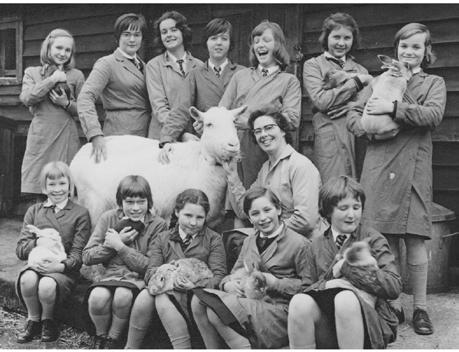
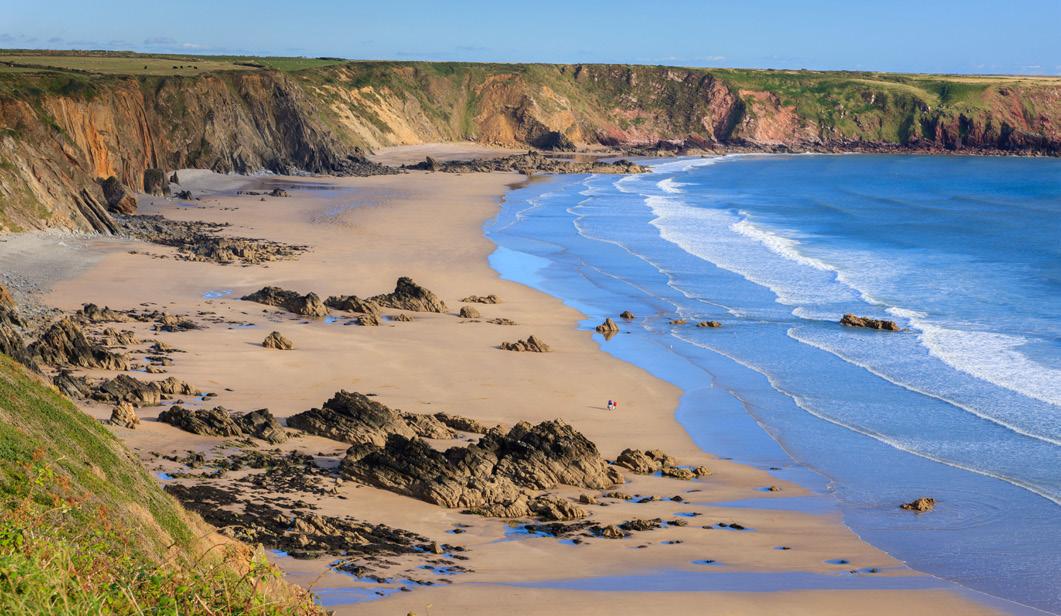
“During this time my thoughts turned more and more towards working for a charity that supported overseas aid.” Oxfam had been Jenny’s Penshurst House charity at school, so she approached them first.
On learning of her role at Oxfam, her former Housemistress and school needlework teacher, Miss Deed, invited Jenny back to school to talk about her work.
Out of this sprang a lifelong friendship with Miss Deed and “a continuing fond connection” with the Headmistress, Miss Blackburn and the biology teacher, Miss Mitchell.
These three teachers, who devoted their working lives to Walthamstow Hall, were firm friends. They bought a holiday cottage together in Little Haven, Pembrokeshire and later, when they all retired to Wales, they upgraded to a bigger house, The Crest, nearby.
Miss Blackburn sent a letter to CODA in June 1971, in which she described the “bliss” of retirement, and issued an invitation:
“We are keeping on Lantern Cottage so we shall have plenty of room for any of you who want to come and stay.The two are 200 yards apart, the cottage nestling on the side of a hill; the house, the Crest, on the edge of the cliffs with a magnificent view across St Bride’s Bay and exposed to all the winds that blow. So take your choice!”
Jenny was one of many former pupils who took her Headmistress up on the offer. She remembers holidays there with her husband and young children as “unbelievably happy”.
All three retired teachers were accomplished artists and had a wonderful time painting the natural beauty around them. Jenny says her family “are all very fortunate to have examples of their beautiful paintings, drawings and pastels in our homes”.
The friendship lasted until the end of their lives. Jenny would sometimes host the three teachers for lunch, before driving them all to the School’s summer alumnae reunion.
Jenny’s connection with the School deepened when her daughter Elizabeth attended Wally. Elizabeth became a teacher herself and even held her wedding reception in the School’s Dining Hall.
Jenny speaks of her immense debt of gratitude to the School and staff of her era for providing an “outstanding education and lifelong friends”.
For years, Rosie had avoided returning to the School where she had felt so unhappy. The tour with her granddaughter, the Head Girl, must have helped put some of this to rest though, because she subsequently came to the summer reunion for Walthamstow Hall Associates.
Isobel is delighted to report “I know she absolutely loved the tea party and got to reconnect with so many people… including a teacher who taught her in the Junior School [see the photo on page 91 of Rosie sitting opposite Miss Fay Plant].
It is wonderful to think that connections can be re-forged in such a positive way after so many years.
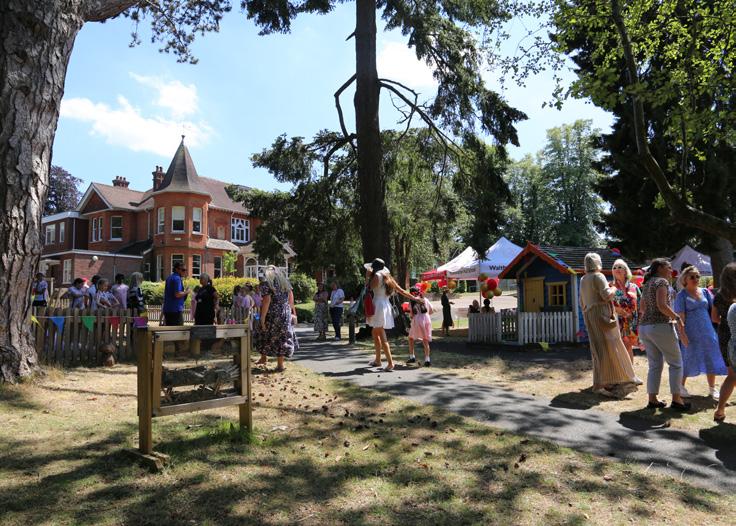
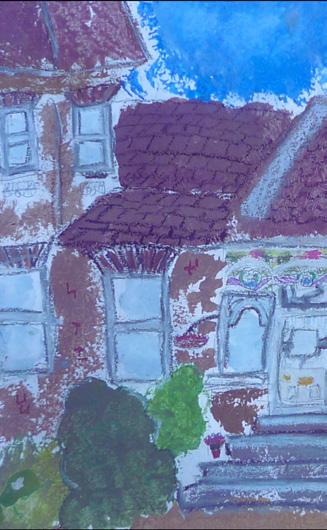

The Junior School leaves Emmeline Blackburn House on Bayham Road to move to the Bradbourne Road site, merging with St.


The School celebrates its 175th Anniversary
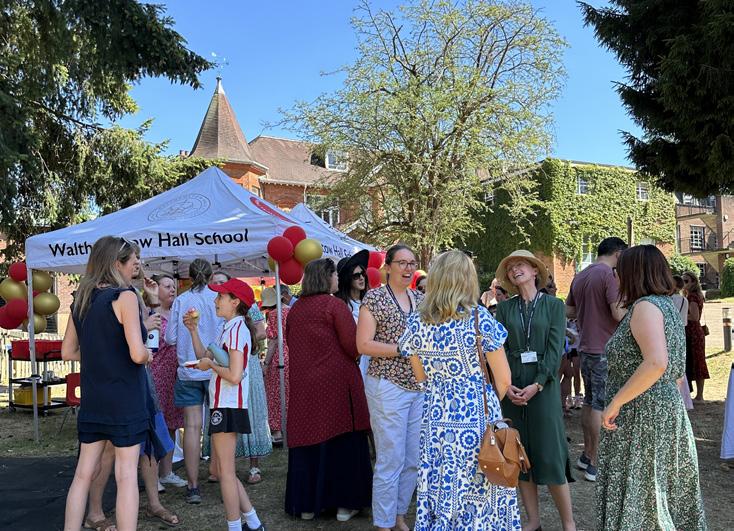
Ahead of the Junior School move back to its original home, a tea was hosted in June for everyone on the Dell to mark the end of Walthamstow Hall’s presence on Bradbourne Park Road. Girls, families and staff gathered in the glorious sunshine to help close this chapter in the School’s history.
When St Hilary’s merged with Walthamstow Hall in 1992, the Junior School left Emmeline Blackburn House on Bayham Road
Miss Stephanie Ferro becomes
for what was then the St Hilary’s school building on Bradbourne Park Road. Thirty-three years later, the Junior School has come full circle, returning to its original building, which is now known as Blackburn House. As part of the celebration, Lead Librarian and School Archivist, Mrs Sam Hickman, created a display of archive photos and articles, illustrating Junior School life through the years.
Ms Louise Chamberlain becomes
of Walthamstow Hall, in its 185th anniversary year
The Junior School returns to its former home on Bayham Road, which is now named Blackburn House
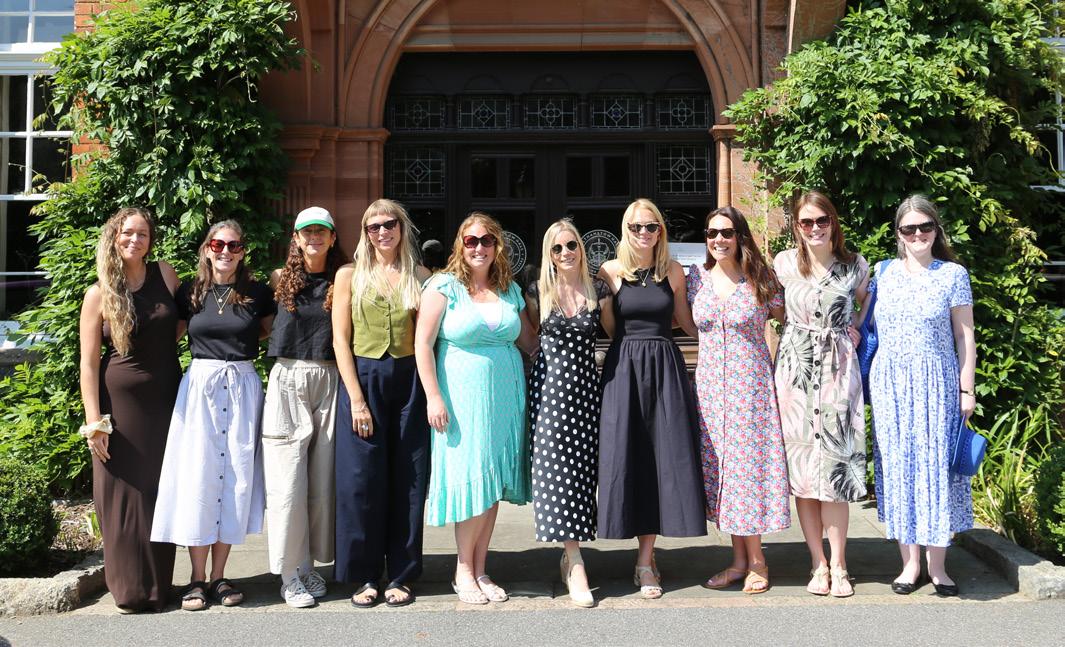
Thank you so much to everyone who joined us at the annual Summer Reunion! It was wonderful to see so many of our alumnae; we welcomed a record number of attendees this year, as over I00 guests joined us to share tea, cake and stories and tour their former haunts on Saturday 14 June.
Most, but not all, belonged to a leavers’ year ending in a ‘5’, with impressive numbers from the 1985 and 1995 cohorts. Several guests attended from overseas, travelling from as far as the Czech Republic and New Zealand, to see their school friends and celebrate coming together.
We were delighted that 1946 leaver, Joy Pennells, was with us once again, selling strawberries for the benefit of the School.
1995 alumna, Alexandra Harrison summed up the experience:
“Was it four weeks ago already we were all together? I’m not sure I’ve had friends later on in life like the ones from school. Feeling pretty
fortunate that we had a shared experience growing up that was chaotic, challenging yet fun; there was always fun to be had, looking back.
There’s something magical about the friends you grow up with - the ones who know every version of you without ever needing to ask why. I see my eldest finish her GCSEs this year so can’t help but reminisce. Post exams; the summers of no responsibilities, cares or worries.You literally just live it.
Would be lovely to meet up before our 40th. Our memories, these bonds - they’re gold.We might outgrow the uniform (brown and yellow; ghastly!) but I hope we never outgrow each other.”
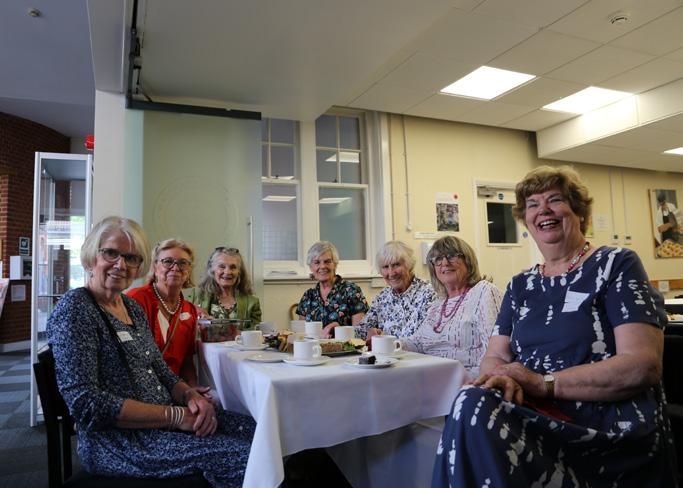
The current Head Girl’s grandmother, Rosie Wood, in red, sitting opposite her Junior School teacher, Fay Plant
A huge thank you to Sarah Humphries for bringing her photo albums along to the summer reunion and sharing them with our School Archivist and Lead Librarian, Mrs Sam Hickman. Her photos documented an array of school activities in and out of the classroom, including Duke of Edinburgh adventures, fun with friends and prize-giving. These photos were taken in 1995, can you spot yourself or friends in them? We would love to know. If you also have photos you are willing to share, do get in touch, we would love to see them.
Highlights from updates shared by our Associates across diverse careers, showcasing professional milestones and personal achievements that reflect the breadth, impact and energy of our wider School community today.
2016-2023
Since graduating from Wally Hall in 2023, Katya Iwasko has been studying and pursuing a career in film. Katya attended the Young Filmmaker’s Academy at the London Film Academy and also completed an additional A Level in Film at Ashbourne College in London. She is now in her second year at the University of Leeds, studying Film, Photography and Media.
Katya’s short film, Ikebana, which she wrote, directed, edited and scored, won Best Short Film at the British Film Institute’s Moving Image Awards in 2025. It also won Best Screenplay at Future Frame Fest and has been shortlisted at a number of other film festivals around the UK. In her films, Katya draws inspiration from Japanese culture and customs to tell universal stories to Western audiences. Ikebana is the story of a young girl who expresses her grief for the loss of her mother through ikebana, the Japanese art of flower arrangement. Katya will be studying in Tokyo for the 2026-27 academic year, with the aim of further improving her Japanese language skills.
In addition to her own films, Katya has worked on multiple featurelength studio films. She is credited as an Assistant ADR on Blunt Production’s featurelength thriller, Black Noise, starring Game of Thrones’s Aidan Gillen, and is also contributing to the upcoming comedy-drama, Yamas!
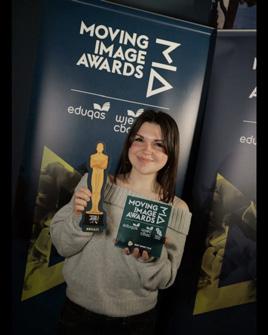
2002-2013
Madeleine tells us that having had a career in technical theatre, in London’s West End and overseas in Australia, she pivoted her career during the Covid years and stepped into hospitality and operations. An invaluable opportunity to develop skills and experiences in event management, she has now returned to Kent and is managing the Literary Festival and large-scale seasonal event Skate, both in Tunbridge Wells.
1997-2003
“Hello from Denver, USA where I live with my husband (who’s American) and our two children who are five and three. We met through a mutual friend on a ski trip in Austria back in 2018. Fast forward seven years and I am a green card holder, working for a Denver advertising agency as an Account Director. Before my husband and I met, I had a successful career working at some of the biggest ad agencies in London including Ogilvy and Wunderman Thompson. I stumbled across the school website as I was looking for information about the Business Studies A-Level teacher, Mr. Boyden. It’s thanks to him that I am where I am in my career today!
I have thought about Wally Hall a lot lately as I have been touring schools here in America for my son who will start kindergarten in August! I am quickly realizing just how lucky and fortunate I was to get all the education and exposure to such a wide range of subjects and experiences. I’d love to keep in touch and receive the digital alumnae magazine. And if I’m ever in the UK when the reunion is taking place, I’d love to be there!”
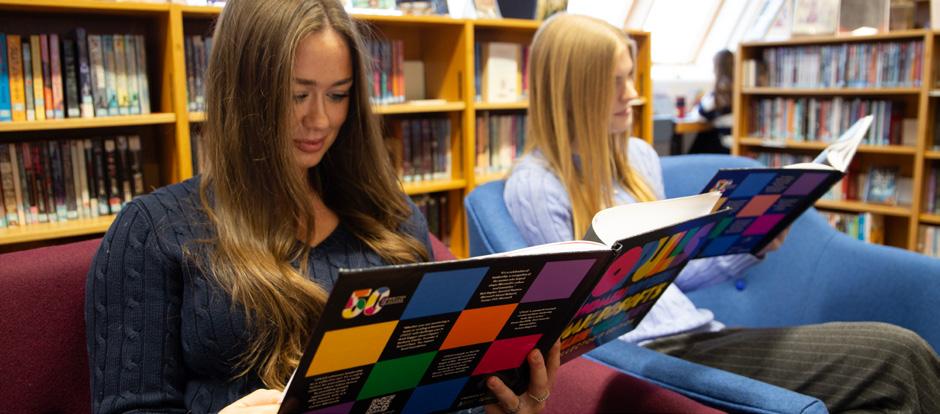
1988-1995
Most of Alexandra’s early career had been sales-based, but her background in travel - and the extensive travel she completed through that work - meant she was lucky to combine travel with a job she enjoyed. Alexandra retrained in her thirties, moving into swim teaching in 2012 after having her daughter, and quickly discovered it to be a rewarding and fulfilling career. She went on to run the swim school at Tonbridge for eight years before starting her own business, though she continues to teach on a casual basis at local schools. With a significant shortage of qualified swim teachers across the UK, she believes it’s an excellent qualification for school leavers, offering flexible, well-paid work both locally and during university. Teaching is a genuinely transferable skill.
In addition to her teaching, she works for a luxury ski company, training their nannies in swim-based games and water safety - an opportunity that takes her to France every Christmas to deliver a training programme she devised.
Working as a swim school business owner she has to cover all elements, not only teaching but training, HR, marketing, accounts and sales too!
The 1995 cohort enjoyed a meal together after the summer reunion - with brown and yellow balloons!
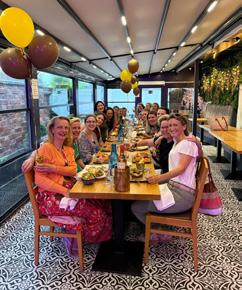
1976-1983
Nickie was recently selected as one of 50 women business honorees for Microsoft’s 50th anniversary, and has been included in a book, OPULIS, which highlights women whose leadership helped transform Microsoft into a trillion-dollar company. Proceeds of the book sales will fund 1000 scholarships for women.
Thank you for kindly donating a copy of this book to the school, Nickie, the students are enjoying reading it in our library.
1974-1980
“I have worked as a fashion designer in London and in Hong Kong and as a fashion buyer in London and with children, my path changed to Interior Design of residential properties both in London and the South East. Currently trying to reconnect with drawing and painting which I really enjoyed whilst at school.”
1962-1969
“After leaving school 56 years ago I trained to teach 4-8 year olds at Keswick Hall, Norwich. I taught in various schools full-time for five years and in 1974 I married John, who was training at Bristol Baptist College. John’s first pastorate was in Haddenham, Buckinghamshire and our elder two boys were born there.We then moved to Northampton where our youngest son was born. During these years I worked in our local playgroup, became a school governor and worked in a church-run day nursery before becoming a supply teacher.
When we moved to Hitchin, Hertfordshire I worked in supporting roles in our son’s school before taking on the leadership of our church-run pre-school for 10 years. During all these years I received the WOGA magazine but when my husband retired and we moved to Rushden, Northamptonshire I lost touch. Our three boys are all married and we now have six grandchildren ranging from 20 years to three months!
I have kept in touch with Tessa Barton (WALTERS) and it was lovely to meet up with her this summer and hear about others from our year group. I am grateful to her for giving me the contact details for the school alumnae and hope to stay in touch now.”
1954-1967
“Almost thirty years after I left the School, I discovered that my father, Bill Probert, was not at all the man he appeared to be. My mother, brothers and I knew him as a decorated war hero, a gifted linguist and a man with a successful international business career. He spoke the Queen’s English and could be both very charming and quite intimidating. Four months after he was buried in St Faust de Haut in the Pyrenees, where he lived with my mother for the last decade of his life, a letter arrived for him, announcing that his nephew, Denzil, from Brecon in Wales, had finally found him, and was coming to visit. We were about to discover that Bill began his life as Roy, in an impoverished Welsh mining family in the Rhondda. We, including my mother, had always assumed that he had no living family when they met at the end of the war. But in fact, his mother and three of his siblings were still alive and well when we were born. We had no idea why Roy decided to become Bill and to erase Wales and his family from his life.
Thirty years after this discovery, my brothers and I agreed to try and work out how Roy became Bill, and why he did this. In the process, I discovered his ongoing work with MI6, as well as a much more personal connection to his role with British Intelligence in 1944. It turned out to be such an extraordinary story that I wrote a book about it, published 2025, here in Australia, where I have lived since 1976. In the book I describe his childhood in the Rhondda, his war experiences, but also our life in Kemsing, during our school years in the 1950s and 1960s.The book is called: Bill’s Secrets: Class,War and Ambition, and is published by Upswell. It is available from Amazon and can be ordered from any good UK bookshop.”
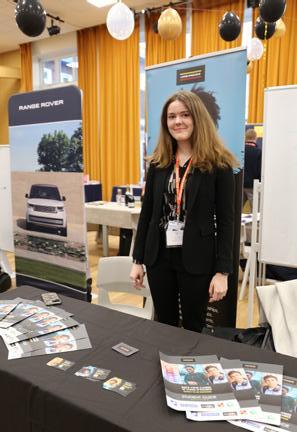
1978 leaver and author, Susan Baker, visited us during Book Week in March 2025.
Susan has spent her career sharing her love of storytelling with young people, teaching English at a secondary school in Hull after her degree in English Literature at Cambridge. She recently fulfilled a lifelong ambition of writing a novel and her first, Calm, was published last year. As a dystopian thriller set in a near-future Britain, it’s a tale of where the state meddles with the nation’s water supply.
Susan joined us in school to share insights into her writing process and talk about her inspiration behind the book with our pupils in Year 9.
2024 leaver, Anika Hansen presented at the Careers Fair in March and shared her experiences after leaving school:
“I’m currently studying Civil Engineering at the University of Exeter and working at Laing O’Rourke. I’m on a block-release apprenticeship, which means I attend university for four blocks each year, each being two weeks - a slightly different structure to the typical one-day-a-week format. It’s strange to think I’ve already been out of school for two years, and halfway through my apprenticeship.
Apprenticeships aren’t for the faint-hearted. You learn to balance an intense mix of academic work, professional responsibilities, and - somehow - a social life, all while adapting to the pace of the world of work. The learning curve is steep, and it’s clear that this trajectory will continue for much of my career, which I find genuinely exciting.
One of my biggest challenges has been staying true to myself in a high-pressure, male-dominated environment. It can be tempting to reshape who you are just to blend in, but developing the confidence to remain authentic has been an important part of my growth.That self-awareness and resilience have carried me through each transition - from my time on-site at M25 Junction 10 to now moving deeper into the technical side with Temporary Works design.”
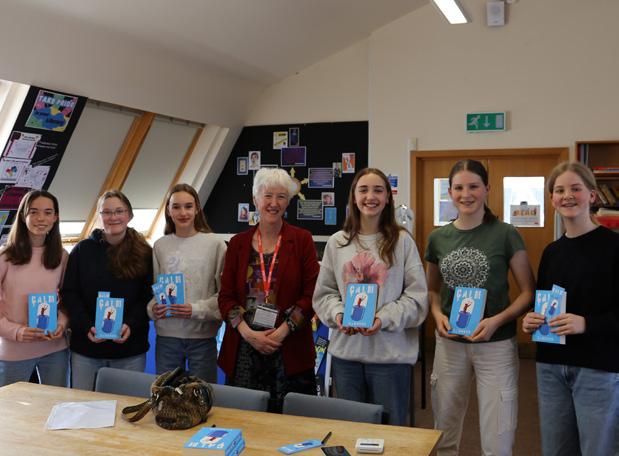
Our thoughts go to the families and friends of Walthamstow Hall alumnae and staff lost in recent years.
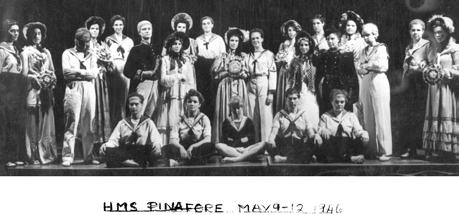
1946 School production of HMS Pinafore, Diana is sitting in the middle of the front row, wearing a sailor suit
1939-1947
Diana joined the school in 1939 and was evacuated to Shropshire, where her older sister Anthea was a particular comfort. Her sporting abilities soon shone through, playing in many different teams, becoming Games Captain, and competing in Junior Wimbledon.
Whilst a Medical Secretary in Harley Street, she joined Guildford Squash Club where she met her husband, Derek Corbett, and they settled in Fulham. In I959 she represented Great Britain in the national Squash team, travelling on the QEII across the Atlantic to play the US. After the birth of Melanie and Candy she was administrator to The Women’s Squash Association and a Level 4 professional coach, working with international players and training other coaches, only hanging up her racket at the age of 77.
She remained highly active, bright and independent until her last week of life. Many of her friends commented on what an inspiration she was: always cheerful, helpful and interested in others.
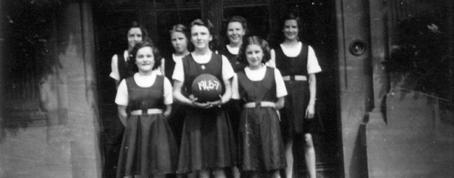
1940-1952
Gillian Coffin (WALTON) 1964-75, shares news that her mother, Anne Walton died in August 2025, with her beloved dog Luna by her side.
Married to a farmer, Anne’s love of animals and farming began during her school years. A ‘naughty’ boarder at Wally and Prefect in 1951-52, she spent her spare time walking across Sevenoaks to care for her first pony. She once dreamed of becoming a surgeon and studied sciences at Sevenoaks School, which was another daily walk across town.
According to the 1951 Alumnae News Sheet, Anne played for the First Team in both netball and lacrosse. Our records also show that she was a Trustee for WOGA from 1970 (when the Magazine cost just 4 shillings!) through to 1991. Fittingly, Anne’s care home has asked if Luna will take on the title of Carer Dog and continue her visits to the home to help raise the spirits of those living there. What a wonderful legacy that is.
We share with sadness the news that former Walthamstow Hall drama teacher, Robert Dilks, died in early January 2026, at the age of 84. Robert had been a headmaster for many years, before being persuaded to join the school. In the decade he spent at Wally, he supported 53 drama productions! On his eventual retirement our Head of Drama, Mrs Bower-Morris gave a beautiful tribute, thanking him for his generosity and professionalism, but most of all, his human touch: “What is rare about Robert is the joy he sprinkles... and the ability he has to make people feel not only happy but very special; no matter who you are or what your position - everyone has experienced that Robert magic.”
Our thanks go to the Walthamstow Hall Association Committee:
Mrs Jill Milner - Patron
Mrs Claire Sunnucks - President of the Alumnae Association
Ms Collette Lux - Chair of Governors
Dr Nigel Jepps - Governor
Mrs Micaela West - Governor
Mrs Kelly Clews - alumna
Mrs Katie Franzen - alumna
Miss Alice Somerset - alumna
Ms Louise Chamberlain - Headmistress
Mrs Elizabeth Walsh - Bursar
Mrs Camilla Jenner / Mrs Gemma Mahoney-Jones
Director of Marketing
If you would like to attend an event, get involved, connect with old friends or pass on your news, please contact us on alumnae@whall.school
The Walthamstow Hall Associates Committee supports the Alumnae team to present events and nurture relations across our School community. We welcome new members. Please get in touch if you are interested in joining.
All former students are automatically members of the Association, so no annual subscription fees are charged. We are delighted to receive regular donations, via direct debit or standing orders. These gifts are used for our general charitable purposes, including, for example, Old Girls’ prizes, like the Lantern Art Award, and the Science Bursary.
A legacy gift is the perfect way to recognise the part that Walthamstow Hall has played in your life and makes a significant difference to the lives of students here. Leaving a percentage of your Estate helps protect your gift from inflation and even 1% can be significant.
UK registered charities, such as Walthamstow Hall, are exempt from Inheritance and Capital Gains Taxes so a gift to a charity in your Will does not count towards the nil
rate band, reducing the taxable value of your estate. As a charity we are unable to offer financial or legal advice and recommend that you contact your Legal Advisor or Wealth Manager before drafting or updating a Will or making plans for your estate.
The generosity of Walthamstow Hall alumnae significantly enhances the experiences of current students; if you would like to leave a gift in your estate, please contact our Bursar who will be able to help you through the process: bursar@walthamstow-hall.co.uk
The Walthamstow Hall Old Girls’ Association has a longstanding, dedicated fund to be used to give small grants, of up to £250, to former Walthamstow Hall staff or old girls who find themselves in need. The grants are small but might be just the job for fixing a broken washing machine or paying an unexpected bill, for example.
If any Associates know of a former staff member or fellow alumna in need who could benefit from such a gift then please get in touch with President: cjarvis@walthamstow-hall.co.uk
Annual Reunion Saturday 13 June 2026, 2pm
We are delighted to welcome former Walthamstow Hall pupils back to School for our Annual Reunion in June. All are welcome with a special invitation extended to those who left in the years ending ‘6 and who are celebrating a significant anniversary. There will be the opportunity to revisit old haunts, see the School archives and catch up with friends. To give us an idea of numbers, and to enable us to contact you easily should there be any changes to the event, please RSVP using the QR code: Or via email: alumnae@whall.school

Headmistress: Ms Louise Chamberlain, BSc Hons, PGCE
Holly Bush Lane, Sevenoaks, Kent, TN13 3UL | marketing@whall.school

@walthamstowhall www.walthamstow-hall.co.uk