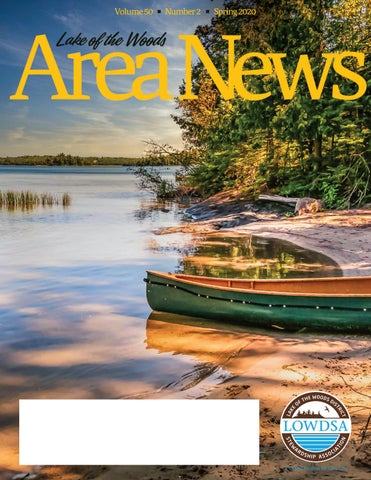
Volume 50
Number 2
Spring 2020
L I S T I N G S • M A R K E T E VA L U A T I O N S B U Y E R R E P R E S E N TAT I O N • R E N TA L S
file 4237
file 4297
file 4320
file 4358
file 4361
1545 REDDITT ROAD | BLACK STURGEON
5 ROCKERIES ROAD | CLEARWATER BAY
MCCALLUM POINT ROAD | CLEARWATER BAY
938 PETERSON ROAD | BLACK STURGEON
26 WORONA BAY ROAD | BLACK STURGEON
899,000
$
899,000
899,000
$
$
599,000
$
563,700
$
file 4368
file 4370
file 4371
file 4374
file 4379
1807 KENRICIA ROAD | CLEARWATER BAY
292 BRANCH ROAD 16 STORM BAY ROAD
LOT 1-55 LILY PAD BAY | LOTW
12A LORI-LEE BAY | WINNIPEG RIVER
MINAKI YURTS
$
1,690,000
789,000
785,000
$
$
file 4384
file 4403
file 4404
307 BEAUTY BAY ROAD | BLACK STURGEON
391 WORONA ROAD | BLACK STURGEON
2B RILEY ROAD | CLEARWATER BAY
499,000
799,000
$
$
file 8048
file 8049
595,000
$
file 8045
file 8046
LOT 3 BIRCHCLIFF ESTATES | BLACK STURGEON LOT 5 BIRCHCLIFF ESTATES | BLACK STURGEON
1,495,000
$
$
file 8056
file 8060
file 8063
$
219,000
LOT 7 BIRCHCLIFF ESTATES | BLACK STURGEON LOT 8 BIRCHCLIFF ESTATES | BLACK STURGEON LOT 11 GOLD CREEK TRAIL WESTVU DR | BLACK STURGEON TJ3 BEAUTY BAY GOLF COURSE | BLACK STURGEON
210,000
$
219,000
$
770,000
$
409,000
$
75,000
$
219,000
19 SANDSTONE PLACE | KENORA
79,000
$
file 8065 LOT 9 DARLINGTON TRAIL | MIDDLE LAKE
199,000
$
138 MAIN ST S, KENORA, ONTARIO |
toll free
1.800.528.8848 | INFO@CABINCOUNTRY.COM | WWW.CABINCOUNTRY.COM
In this Issue 3
Cover photo by Kim Pirie-Milko
LOWDSA
Executive Director's Note 3 President’s Message 4 In Memoriam 6 Our Contributors 7 Letters to the Editor 9
59
A brief history of stewardship in Canada 10
Treading Wisely: Green Over Grey 59
Fire bans imposed 11
Member Recipe: Baked Potato Soup 60
Mark Your Calendars 12
Notes from Razberry Lane: Solanum tuberosum: The not-so-humble potato 62
Updates and changes: Setting plans in uncertain times 13 Government Notes 17
Yards and lawns: The good, the bad, and the bugly 64
Welcome to new directors 21 Online Member Directory 23
27
So you want to catch a walleye? by John Hayes
30
Growing up on Lake of the Woods by Jeff Gustafson
33
In the District
Suit up! It’s tick season 66
40
Summers off the grid by Cathie Pickerl
42
Old abandoned mines still pose hazards by Cecil Burns
Forest fires in region impacting air quality 67
68
LOWDKids!
Spring into Action 68
44
Environment
A look at nutrients in the lake trout hideouts of Lake of the Woods 44
Growing community through gardening 33
Lake of the Woods Water Sustainability Foundation 47
The Minaki Cottagers Association gives way to The Minaki Conservancy 35
Flowering rush threatens Lake of the Woods 52
Lake of the Woods Control Board achieves target level 36
Helping to eradicate flowering rush is a LOWDSA priority 55
Sioux Narrows-Nestor Falls: Inspired by our surroundings 37
Choose non-invasive when gardening and landscaping 56
What’s happening on your lake in Summer 2020? 38
Living
Kat the Nature Dog: Kat's spring nature walk 70
72
Services
Classifieds 72 Real Estate Listings 73 Home & Cottage Services 74 Advertisers’ Directory 75
76
The Agwinde by Lori Nelson
Lake of the Woods District Stewardship Association
LOWDSA
1
Executive Director's Note DIANE SCHWARTZ-WILLIAMS One word, nine letters, many interpretations— isolation—suddenly took on huge significance with far-reaching impact. In a sense, it even applied to how we developed the content for this issue of the Area News, isolating information and updates related to COVID-19 to one part of the magazine while maintaining familiar topics, columns and features elsewhere. (Some normalcy does continue.) The volume of information, resources and commentary ‘out there’ on COVID-19 is tremendous, Diane Schwartz-Williams. Photo: Tom Thomson Area News Editor, Leanne Fournier and the messages change rapidly. While we have and will continue to share information affecting our We will miss her and wish her success in completing the writing members through our eNews, website and social media, we project she’s determined to complete by the end of the year. are not equipped to be a complete source of info for COVID-19 information. The scope and variety of resources and information Our incoming editor is Leanne Fournier and she worked with out there is as diverse as LOWDSA’s members. Please just ensure Elsie on this issue of the Area News. You might recognize you’re getting your information from reliable sources. Leanne’s name as a regular contributor to the Area News for the past two years. She brings an extensive background in writing, We have received a number of calls, posts and emails from researching and editing which, in addition to living sustainably LOWDSA members responding to our March eNews and partially off the grid, will be a great complement to our editorial posts relaying and supporting the message from all levels of team. She shared these thoughts. government and health care providers about travelling to the cottage. With only a couple exceptions, these responses have “I feel like I’ve come full circle. During the 15 years we had a camp been positive, but with an understandable underlying feeling of on the Winnipeg River, I’d read the Area News cover to cover and frustration. I look forward to that direct contact with members always hoped to write for the publication. This became a reality when you reach out and encourage you to call or email with your when we moved here full time in 2017 and I’m thrilled to be comments and questions. (If you have not received our eNews taking this next step.” so far, please make sure we have your email address so we can Changes will continue. Changes to LOWDSA with a new include you next time.) executive, changes to Area News with a new editor and changes Chris Semenchuk, incoming president, referred to this being a as COVID-19 dominates our lives for a while yet. What lies year of change for LOWDSA (page 5), and indeed it has been. Do ahead for the summer is uncertain at the moment for each of us you remember last fall when high water levels were causing us individually, for our communities and for our association as well. all great concern? It might seem they have fallen off our radar, The plan may continue to change and we will adapt as required, but no. Jack McKenzie’s observations on spring lake levels will keeping you informed as updates are available. What won’t update you on water levels now (page 36). Nature and people change is our wish for you to be safe, be healthy … until we see keep rolling along, adapting, changing and evolving. you at the lake. For example, another change is happening right here on the pages of this magazine as we prepare to say farewell to our editor, Elsie Neufeld, and welcome Leanne Fournier. Under Elsie’s lead and direction, the Lake of the Woods Area News has continued to evolve. Her creativity, dedication and success in expanding the talented writer base contributing to the magazine have taken a great publication up several notches. As we wrapped up this issue and talked of the ones we have worked on together Elsie told me, “I love magazines and the Area News is a special one. I just hope that love and my journalism experience served the Area News, LOWDSA and its members well.” My response: it absolutely did.
Lake of the Woods District Stewardship Association
LOWDSA
3
Two presidents, one continued focus on LOWDSA’s vision to preserve one of the most beautiful places on earth Editor’s note: With the postponement of LOWDSA’s Annual General Meeting in April, the transition of presidents has been Hardy Bock delayed. We took this opportunity to Zoom chat with Hardy Bock (outgoing president) and incoming president Chris Semenchuk (currently vicepresident) about the transition, working with the board and staff, and what’s being done to continue to deliver LOWDSA’s mandate during the COVID-19 pandemic, which is an unprecedented time in our history. Q: What are some of the steps you’re taking to ensure LOWDSA continues to move forward during this transition? Hardy: Chris and I collaborating during this time is really nothing new. LOWDSA is never just about one person or even one organization. It’s always been about people working together. That’s more important than ever before. COVID-19 is like an invasive species that we can manage by following the recommendations and doing what we can to protect ourselves and others. Instead of going into silos, we need to look out for one another. That’s what’s been happening at LOWDSA for almost 60 years—thinking about the future and how we can take what we’ve learned and use it in a positive way. Chris: Things will keep moving forward and we will keep doing what we’re doing with the widespread support of the board and
Diane and Shelley who cover a lot of ground. Also, our members are reaching out with their concerns and ideas to again, help us all get through this. Q: How will programs like LakeSmart be affected by all the uncertainty right now? C: It’s ever-changing. LakeSmart is LOWDSA’s flagship program that supports our vision and connects with the lake community by delivering key messages on the environment and sustainable lake living. As a board, we’ve been having discussions about how we can creatively deliver the program under current conditions. H: At the last executive meeting there was agreement that we will have something in place for LakeSmart in 2020. Maybe it will be a virtual boat ride! We are relying on some of our younger board members to help us conceptualize what this might look like. Q: Are there other challenges you envision due to COVID-19 that will directly affect LOWDSA in terms of sponsorship, government and business support? H: The government agencies are under incredible pressure but there may be an opportunity to apply for some funds to help LOWDSA. It’s difficult to go to vendors for support when so many of them are struggling right now. At LOWDSA, we remain supportive of the Kenora and Lake of the Woods community. We will continue to do so through abiding by the recommendations and being there when things return to normal.
The official publication of the Lake of the Woods District Stewardship Association
PUBLISHED BY
DISTRIBUTION & MEMBERSHIP
Wake Marketing Inc., 140 Main St. S., Kenora, ON P9N 1S9 Phone: (807) 407-7252
Lake of the Woods Area News is published five times per year and is mailed to LOWDSA members. To receive Area News visit lowdsa.com and become a member today.
Publisher: Mike Greaves, mike@areanewsmagazine.ca Editor: Elsie Neufeld, Leanne Fournier, editor@areanewsmagazine.ca Art Director: Shayla Smith, shayla@wakemarketing.ca Design & Layout: Mike Newton, Ashley Pereira Advertising: Deb Polakoff, deb@areanewsmagazine.ca
Publication mail agreement #43107013. Printed in Canada.
UPCOMING EDITORIAL DEADLINES July 29 October 7
© 2020 LOWDSA. All rights reserved. The contents of this publication may not be reproduced by any means, in whole or in part, without prior written consent. Statements of fact or opinion are the responsibility of the author and may not represent the view of LOWDSA or Wake Marketing Inc.
4
LOWDSA
Lake of the Woods Area News Spring 2020
C: We had to cancel the LakeShow, which is an important part of our outreach into the business community and postpone the AGM that we still may need to do virtually. We will just have to continue to follow health and safety guidelines and modify as needed. We started out the year talking about it being a year of change, but didn’t expect it to be this radical. Q: Cottagers were advised to stay away this spring. What are your thoughts on that? C: It was tough. I am one of those cottagers who had to choose to stay home when I would normally be at our camp. The reasons were clearly laid out and we all need to understand that local resources, including both first responders and the Lake of the Woods District Hospital are going to be stretched. Anything we can do to help one another and protect ourselves is the right thing to do. H: I agree, it was a heartbreaking decision for a lot of people who would have liked to physical distance at the place they love best. Our governments are acting on the latest information they’re getting from the medical experts and right now the best advice is to stay home, wherever that might be. How that’s going to affect cottage season is an unknown right now. But that doesn’t change LOWDSA’s mandate and our work will continue. Q: Is there anything you want to share about the future of LOWDSA in 2020? C: There are initiatives in place to continue to attract new members, which has been a focus for the last couple of years. Cottage ownership is changing and we hope to bring that new, younger generation on board. We now have some board members from that demographic who are helping us tap into what we need to do to attract these members. As we have done for some time, we also continue to look beyond cottagers and summer residents to increase membership and deliver our mandate. Many boaters, sailors, campers, visitors and year-round residents are members and we will continue to reach out to those other communities to grow the association.
Q: Any final notes for existing and potential directors or members? C: Technology is making it easier than ever to participate at the board level or as a member. We’ve been using Zoom for a couple of years now so that directors can attend meetings from Winnipeg, Kenora, a cottage on Lake of the Woods or the Winnipeg River or Chris Semenchuk from further away. As a result, meeting attendance has never been higher. We really look forward to continuing to attract new directors who can join us this way and help us continue our mandate to inform, educate, bring people together and advocate for the things that are part of our vision, mission and values. Our strong presence on social media also makes it possible to reach out to existing and potential new members about our work in all of these areas and for people to share news from their “neck of the woods” wherever that is. H: I encourage members to consider becoming a board member. The board is a diverse group with contacts in different areas of the community—environmental, social, government and business. It’s a great way to get to know people in the community and be involved. I am looking forward to continue working with our board as past-president for another two years! People interested in becoming a LOWDSA member can find out more at our membership page at lowdsa.com/join. If you wish to put your name forward to join the board or a committee contact us at lowdsa.com/cpages/contact.
LAKE OF THE WOODS DISTRICT STEWARDSHIP ASSOCIATION Executive Committee
Board Members
Staff
Contact
PRESIDENT Hardy Bock, Black Sturgeon
Dave Christie, Granite Lake Garth Collier, Ottermere Lake Jason Coreau, Big Traverse Bay Carley Fyke, Welcome Channel Lucas King, Woodchuck Bay Chelsea Lobson, Kendall Inlet Jackie Lowe, Gun Club Island Jeff Rempel, Pine Portage Bay Trevor Templeton, Minaki John Waterer, Clearwater Bay
EXECUTIVE DIRECTOR Diane Schwartz-Williams (807) 543-4287 diane@lowdsa.com
P.O. Box 1160 Kenora, ON P9N 3X7
VICE PRESIDENT & TREASURER Christine Semenchuk, Storm Bay PAST PRESIDENT Nancy Salmijarvi, Welcome Channel DIRECTOR Don Parfitt, Winnipeg River
ASSISTANT EXECUTIVE DIRECTOR Shelley Bujold (807) 468-8715 shelley@lowdsa.com
EMAIL info@lowdsa.com
M LOWDistrictStewardshipAssoc N @lowdsaLakeTime P @lowdsa TOLL-FREE 1-888-265-9784 PHONE (807) 468-8715
Lake of the Woods District Stewardship Association
LOWDSA
5
In Memoriam Jake MacDonald Jake MacDonald, 70, a past contributor to the Lake of the Woods Area News, died in an accident on January 30, 2020, in Puerto Vallarta, Mexico. A voracious outdoorsman, Jake made this region his second home. His obituary tells how, despite all of the pleasure Jake took in the many memorable landscapes he visited and wrote about, none were “more powerful or prominent than the raw, sometimes gothic, culture and geography of Northwestern Ontario: the rivers and lakes and granite, the deep boreal forest, and perhaps most of all the wildlife—the muskies, the bears, the bald eagles.” An award winning writer, Jake authored eight books of fiction and non-fiction and many articles, drawing on his personal experiences of growing up at the family cottage in Laclu, exploring and guiding in the area and eventually setting up his own camp on the Winnipeg River near Minaki. The power of Jake’s story telling and stewardship of the land and water continue to inspire us.
Jake will be deeply missed and lovingly remembered by his partner Petra Kaufmann and her children, Rory, Lily, Theo and Julia; his daughter Caitlin MacDonald and her husband Alex Nisbet; also Wendy MacDonald, Dawne McCance, Sally and Bert Longstaffe, Danny and Deb MacDonald, Peter and Sherry MacDonald, Mary-Kate and John Harvie, and all of their children. Jake once said: “I like the idea of sitting on top of the water, because it's like sitting on the subconscious, and the fish below are like half-glimpsed stories and dreams. You go down there after them and try to bring them to the surface.” See full obituary: passages.winnipegfreepress.com/ passage-details/id-270549/Macdonald_Jake
Raymond Philip Oakes Raymond Philip Oakes, 60, who contributed several articles on legal matters to the Lake of the Woods Area News, died January 24 in Winnipeg after a short journey with cancer. "Ray loved the outdoors, and enjoyed fishing, boating, shore lunches, star gazing, observing eagles, and the smell of a birch fire. Nature was an integral part of the life he shared with his family at Lake of the Woods. Special times were sunsets on the dock with a glass of Old Boys Port on quiet evenings, listening to the loons, and enjoying the company of others," states his obituary. His legal career commenced in 1983 when he articled at the Booth Dennehy LLP law firm which later bore his name as a partner - BD Oakes LLP. He was known for his positive, calm and easy-going nature. We at Lake of the Woods Area News appreciated his ability to write about complex legal matters in plain English. We are grateful for his contributions and will miss his special talent.
6
LOWDSA
Lake of the Woods Area News Spring 2020
Ray is survived by his wife of 38 years, Rose (nee Kamchen); two sons, Daniel and Bentley; daughter-in-law Alicia; granddaughter Vivienne Rose; father Gordon; brothers Les and Robert; sisters-in-law Maggie and Irene; nieces and nephew. He was predeceased by his mother, Jean, in 2019. "Ray’s Wisdom: Grief is like a wake behind a boat. It can be a huge wave at first right behind you. Don't be swamped. Keep moving and the waves will dissipate in time and become calmer. Then the memories of your departed loved one shall shine brighter than the stars above. There is no force stronger than love." See full obituary: passages.winnipegfreepress.com/ passage-details/id-270365/ OAKES_20RAYMOND
Our Contributors Jeff Gustafson is a fishing guide, tournament angler and fishing promoter from Kenora—he grew up on the shores of Lake of the Woods. You can find him at gussyoutdoors.com. Don Engebretson is a Minnesota native and lifelong summer resident of Minaki. His articles on gardening, plants and agriculture have appeared in magazines and newspapers across the United States. Don is also a member of the Minaki Conservancy. While researching flowering rush, he has corresponded with and reviewed studies by flowering rush experts across the United States and Canada. Phil Burke
Shauna DeGagné
Lucas King
Cathy Pickerl
Dave Schwartz
Cecil Burns
Mark Engebretson
Jack McKenzie
Diane Schwartz-Williams
Bev Clark
Heather Gropp
Drew Monkman
Henry & Anita Rasmussen
Susan Day
John Hayes
Lori Nelson
Rosemary Robertson Jacob Rodenburg
Lake of the Woods District Stewardship Association
Todd Sellers John Waterer
LOWDSA
7
BUILDING DREAM S
Letters to the Editor
We’d like to hear from you!
Dear Editor, Under the heading, What might work - the big picture, (What on earth is stewardship? Early Spring 2020, page 8) Dyke Williams references Wm. James observation that “disparate peoples and communities could be brought together in common purpose through the vital challenges, shared experiences and camaraderie of war.” Dyke asks, “Could that also be true through other sorts of crises …?" He goes on to suggest the climate crisis could be just such a challenge. Enter coronavirus, COVID-19. Could this crisis be that challenge that unites disparate groups and communities? I believe that this reality is unfolding at this time to assist in the uplifting of humanity into a more kind, loving and peaceful world. Could this pandemic bring purpose to the chaos of life that we are now seeing and hearing about? We see fear bubbling up everywhere. This is a time for us all to look at our fears. We have a personal choice to make; either succumb to those fears (are they true or part of the media mandate to sell advertising time/space?) OR acknowledge them, feel them (without getting stuck there) and attempt to manage and minimize them. Dyke believes the climate crisis will push us all and we, the collective, will flourish or flounder in how we treat Mother Earth. Working together and making better choices on how we use our resources could result in a “profound sense of community focus and effort” that was evident during and right after WWII. I agree that our collective efforts to act in the best interests of our planet, to be the best stewards we can be, will support global survival. I also whole-heartedly believe that this pandemic is pushing us all in ways we never thought imaginable in our time. The time is now. Use the time we have been gifted through self isolation and social distancing to think about what is really important to you, your family and your relationship to the rest of humanity.
Help us continue making this magazine great. Send us your comments, suggestions, pictures and story ideas: editor@areanewsmagazine.ca.
Greetings LOWDSA members, I hope that you are all safe and well during this difficult time. As you are aware, this year’s LOWDSA LakeShow has been cancelled, which is particularly unfortunate as our team had hoped to visit with many of you at the All Nations Hospital Project booth in hopes of hearing your ideas and vision for the new hospital. Although this important event and all upcoming in-person All Nations Hospital Project public forums and engagement sessions have been suspended due to the current COVID-19 pandemic, the public engagement phase will continue via: • The online survey (anh.lwdh.on.ca) – Please take the time to fill this out as feedback from summer residents is very important during the early planning stage (Now!) • One-on-one discussion. Call or email me or my colleague Kathy Kishiqueb. We would be happy to hear from you. Kathy’s contact information is 807-276-8956 or kathy.kishiqueb@kenorachiefs.ca. I can be reached at 807-468-9861, extension 2599 or (cell) 807-464-1941 ckissick@lwdh.on.ca. • Also note, our team is currently exploring opportunities to host engagement sessions via technology and will post all updates on the All Nations Hospital Project website, anh.lwdh.on.ca. If this is something you are interested in please reach out to us today. Thanks in advance for your thoughtful feedback. Charlene Kissick Community Project Planner All Nations Hospital Project Lake of the Woods District Hospital
If you love our planet, will you make the choices that will contribute to our Earth’s growth and survival? If you love our planet, will you release the fears that COVID-19 has dropped at your door? I choose to flourish and am focusing on my love for myself, my family and all humanity to get through these crises. Val Hendrickson, Trout Lake
Lake of the Woods District Stewardship Association
LOWDSA
9
A brief history of stewardship in Canada BY DAVE SCHWARTZ
“If you don’t fight for what you want, then don’t cry for what you lost.”
—Bhagavadgita
We are all environmentalists! Who doesn’t want clean water, clean air, safe food, abundant wildlife and beautiful scenery to enjoy, and wilderness in which we can hike or canoe? All of us should be fighting to protect or to restore these. Environmental stewardship, in my view, is the management of our natural environment in a sustainable manner so its ecological integrity and natural beauty are preserved for as long as the sun shall shine, the grasses grow and the waters flow. For centuries North American Indigenous Peoples lived off the land with little apparent destruction. Clearing areas for settlement and agriculture, or driving game by lighting fires, affected the environment but caused little or no long-term damage. Initially, European settlers in North America regarded the forests, lakes, fish and wildlife as inexhaustible and abused them accordingly. Toward the end of the 19th century, the finite and fragile nature of those treasures became evident through tragedies like the extinction of the passenger pigeon and the near-extinction of the plains bison.
Canada’s efforts to preserve our natural wonders began with the creation of Banff National Park in1885 and Yoho National Park in 1886. Those early parks were intended to spark tourism and fill the coffers of the railroad, as opposed to protecting their natural environments. The earliest Canadian example of pure stewardship I could find was the creation of a wetland waterfowl sanctuary at Last Mountain Lake in Saskatchewan in 1887. That reserve was held back from sale or development during the settling of the prairies. Now it includes some surrounding moist, mixed-grass prairie and is known as the Last Mountain Lake Migratory Bird Sanctuary. During migration seasons it boasts spectacular numbers of migratory birds. (Trish and I hoped to visit this year but it is presently closed due to COVID-19.) The first North American Conservation Conference in 1909 paved the way for more modern environmentalism and stewardship efforts. For Canada, it led to the formation of the Dominion Parks Branch in 1911, which became Parks Canada. Parks Canada aims to create at least one national park in each of Canada’s 39 natural regions. Now 48 national parks in 27 natural regions cover three per cent of Canada’s land mass. National Parks are protected for public understanding, appreciation and enjoyment, while being maintained in an unimpaired state for future generations.
Title photo: We are blessed with many sites where we can enjoy the beauty of nature, in solitude or with friends, at our own secret spots.
10
LOWDSA
Lake of the Woods Area News Spring 2020
Fire bans imposed
Provincial parks began at the end of the 19th century when civil servants, politicians and the general public became concerned about the depletion of natural resources, the degradation of scenic places and the need for a growing urban population to have opportunities for recreation in a natural setting. Now there are over 1,000 provincial and territorial parks.
City of Kenora imposes total fire ban On April 2, the Kenora’s chief fire official declared the City of Kenora under a total fire ban (Restricted Fire Zone).
In the 1960s, the modern environmental movement was born in response to issues like air, water and land pollution, hazardous wastes and the careless use of pesticides. The following decades brought the formation of many organizations dedicated to environmental goals. These groups put intense pressure on governments to enact strong environmental protection legislation. Simultaneously, pressure was put on industry to clean up factory emissions to air and water.
This ban will stay in effect until further notice. For an update, please visit kenora.ca/category/public-notices or contact Kenora Fire and Emergency Services at 807-467-2090. The ban applies to all open-air fires including, brush piles, burn barrels, campfires, chimeneas, cooking fires, consumer fireworks, incinerators and other types of outdoor burning that use solid fuels such as wood or charcoal.
For the most part, industry had to be pushed, kicking and screaming to clean up pollution from factories and cars. In fact, North American car manufacturers did not up their game until Japanese manufacturers took them to the woodshed.
Cooking appliances such as propane or natural gas cooking equipment and outdoor appliances with a mechanical shutoff are permitted. Due to concerns surrounding the spread of COVID-19, the need for social distancing and to assist the health, safety and well-being of our firefighters, this open-air burn ban is being implemented as a precautionary measure to avoid any additional strain or exposure risk on our fire services during these uncertain and unprecedented situation.
The first major success of the modern environmental movement was the 1972 banning of DDT in the USA, Canada and most of Europe as a result of Rachel Carson’s 1962 book, Silent Spring. DDT had caused the precipitous decline of top predators such as eagles, pelicans, osprey and peregrine falcons. Their populations have since recovered and we are again privileged to see those majestic birds soaring in our skies.
Province declares Restricted Fire Zone Effective April 3, Ontario declared a Restricted Fire Zone for the entire fire region of the province (Restricted Fire Zones 1 to 36) to ensure public safety and well-being during the evolving COVID-19 outbreak.
The environmental movement strengthened significantly with the first Earth Day in 1970, which had over 20 million participants. As well, dozens of environmental organizations formed in Canada: Nature Canada, Nature Conservancy of Canada, Canadian Environmental Law Association, David Suzuki Foundation, Canadian Wildlife Service, Greenpeace, and the Green Party are some of the most familiar names, and a myriad of local and regional groups, like Lake of the Woods District Stewardship Association (LOWDSA), have done excellent work addressing local environmental issues.
The Restricted Fire Zone is in effect until further notice. This is a proactive action to reduce the number of preventable human-caused fires and reduce the risk of wildfires impacting the public.
As a result of modern environmental pressure and stewardship, we have cleaner cars, clearer skies, cleaner air, sparkling waters, safer food and healthier forests. We are indebted to environmental stewards of the past. Their visionary actions left us with a much better world than we would otherwise have and with far less hope for the future. Most environmental groups have very dedicated members and carefully thought out objectives. These deserve our financial and political support. Do your research, pick your favourite(s) and shell out. Your grandchildren will thank you. The elephant in the room, of course, is climate change with a worst case scenario of an uninhabitable planet. That would obviously render all stewardship efforts, past and present, irrelevant. Dealing effectively with climate change requires world-wide cooperative action on an unprecedented scale. Let’s hope for some great leaders and informed, motivated voters to bring them to power.
Restricted Fire Zones help protect public safety. In a Restricted Fire Zone, outdoor fires are restricted. Portable gas stoves may still be used BUT must be handled with extreme care. More information and an update about Restricted Fire Zones can be found at ontario.ca/page/forest-fires. For more information, contact your local Ministry of Natural Resources and Forestry (MNRF) Fire Management Headquarters. Kenora MNRF Fire Management Headquarters Phone: 807-548-1919 Fort Frances (including Morson) MNRF Fire Management Headquarters (Morson Area) Phone: 807-274-8643
Lake of the Woods District Stewardship Association
LOWDSA
11
Mark Your Calendars LOWDSA’s spring and summer calendar has been laid out below, but it is of course subject to change dependent on the status of COVID-19. Several changes already made are explained on the following pages. We will notify members of any further changes and final decisions on events with as much advance notice as is possible. Any changes and updates will be posted on our website and social media platforms, but we will also send out eNews updates. Make sure we have your email address so that we can provide you with those updates.
MAY
Last Day to Order Seedlings
JUN
Seedling Pick-up Day
22 6
Place your red pine seedling order! Online: lowdsa.com/cpages/seedlings Phone: 807-468-8715 or TF 1-888-265-9784
10:00 a.m. – 1:00 p.m. at 8 locations
We'll be launching LakeSmart 2020 to run for three months beginning June 1. LOWDSA is looking at a creative way of adapting and delivering the LakeSmart program in the event that social distancing is still required in June. Please welcome them if they drop by your dock this summer! Let us know if you would like to arrange a visit to your neighbourhood for dock visits or presentations on living green at the lake, healthy shorelines, invasive species and more.
JUL
3
24 AUG 26 JUN
— TO —
LakeSmart Team & LOWDSA at Matiowski Farmers’ Market
Whitecap Pavilion, Kenora 8:30 a.m. – 2:00 p.m. every Wednesday.
JUL
1
LakeSmart Team & LOWDSA at Matiowski Farmers’ Market Whitecap Pavilion, Kenora 10:00 a.m. – 4:00 p.m.
Dates for LOWDSA programs and events subject to change; updates to be posted online and in eNews as available.
12
LOWDSA
Lake of the Woods Area News Spring 2020
SAT
TBD
LOWDSA 58th Annual General Meeting – Kenora Seven Generations Education Institute 240 Veterans Drive, Kenora 3:00 – 4:00 p.m.
Free Metal Waste Collection Day 10:00 a.m. – 1:00 p.m.
Get all the metal junk out of your yard, shed, garage and surrounding bush. Drop off by truck or boat. Volunteers will be on hand to help unload.
Plans in the works & dates pending • LOWDSA & LakeSmart Team visit to Morson • LakeSmart Team visits to area lakes Let us know if you would like the LakeSmart team to visit your lake community. • LOWDKids activities including Storm Drain Painting to spread the message “A healthy lake starts here!”
Updates and changes: Setting plans in uncertain times BY DIANE SCHWARTZ-WILLIAMS Plans for many LOWDSA programs and events are tentative at this point, with some already cancelled in response to measures we are all taking in the midst of COVID-19. Any updates we have as of mid-April are included below. Further changes to our plans are sure to come. As changes are made, we will post them on our website, Facebook, Twitter and Instagram. For members not on social media, the frequency of our eNews bulletins may increase a little so that we can keep you up-to-date between issues of the Area News. If you are not already receiving the LOWDSA eNews and would like to, make sure your current email address is on your profile.
LOWDSA Annual General Meeting
be cancelled for 2020. Rescheduling it to the summer or fall was considered. However, recognizing the time and costs involved and a concern about attendee and exhibitor interest in either season raised doubts about rescheduling to July or September. LOWDSA’s LakeShow is a member benefit and service, not a source of net revenue. Exhibitor registration fees cover most of the cost of staging the show, but planning, organizing and promoting an event the size and scope of our LakeShow involves significant up-front costs. The association must cover these hard costs even with the event being cancelled. LOWDSA has limited flexibility to absorb those costs.
LOWDSA’s board of directors decided to postpone the AGM in mid-March out of concern for the health and safety of our members and our communities in accordance with recommendations and directions from government and health authorities. The AGM will now be held in Kenora on Friday, July 3, at 3:00 p.m. at the Seven Generations Education Institute, 240 Veterans Drive, subject of course to health and safety concerns. While we would have preferred not moving the AGM to Kenora in July, the upside is now even those summer residents who do not arrive until then will have the opportunity to attend.
LOWDSA LakeShow 2020 Postponing the AGM led to a lengthy discussion about plans for the LakeShow. With regret it was decided the LakeShow would
When we notified exhibitors of the cancellation, we offered to refund their registrations fees but asked them to consider allowing LOWDSA to retain a portion for exhibitor promotion already provided and to help cover a portion of other up-front costs. We understand and appreciate that in the face of a tough economic climate not all exhibitors could do so, and are so very grateful to the many that readily agreed to this (page 13). For a complete list of exhibitors who had planned to participate in LakeShow 2020 go to lowdsa.com/cpages/cottage-show-2018.
Lake of the Woods District Stewardship Association
LOWDSA
13
LakeSmart program LakeSmart 2020 is planned to run for three months beginning June 1. LOWDSA is looking at a creative way of adapting and delivering the LakeSmart program in the event that social distancing is still required in June. That decision will be made by the time you are reading this note. Watch for details on our website, on social media and in an eNews bulletin.
LOWDSA & LakeSmart at Matiowski Farmers’ Market At time of writing, the Matiowski Farmers’ Market is still expected to carry on as scheduled. Should that plan change, you can count on us to let you know. If the market is on, you can also count on seeing on LOWDSA and LakeSmart at the market each week June 24 – August 26.
Red Pine Seedlings We have extended the order cut-off for red pine seedlings to May 22, and for the time being the pick-up date remains unchanged on June 6 from 10:00 a.m. – 1:00 p.m. Should the date change, all those who ordered seedlings will be notified by email.
CWRA (Canadian Water Resources Association) National Conference Due to the unfolding COVID-19 situation, CWRA has cancelled the 2020 National Conference scheduled for June 15-18 in Winnipeg. LOWDSA was proud to be a gold sponsor of this national water conference in our efforts to raise awareness of the value of water and to promote responsible and effective water resource management. The conference theme “How well is Canada managing its water resources?” was providing an opportunity to reflect on past experiences, discuss best practices, and explore where improvements need to be made to ensure greater resiliency and more effective approaches to future water management, topics relevant to the Lake of the Woods watershed. We were looking forward to hosting Get LakeSmart, a workshop at the conference taking LakeSmart dock talk from the dock to a workshop setting. While this will not happen this year the idea is one we will look at in the future. CWRA and LOWDSA are looking forward to future opportunities to collaborate and coordinate to achieve our mutual goals.
IISD-ELA Tours Regretfully, our popular day long trips to IISD Experimental Lakes Area will be cancelled for summer 2020. With the degree of uncertainty present and IISD-ELA’s need to manage risk to their ability to continue key monitoring of ecosystems, partnering with them for tours this year is not possible.
We are looking at alternative options for program delivery given COVID-19 but bookings still being taken for now.
Book a visit from LOWDSA’s LakeSmart team to your lake, property or event in June, July or August Take advantage of the knowledge and resources available from the LakeSmart team, including healthy shorelines, buffer zones, reducing run-off, invasive species, safe boating, septic systems and so much more.
For more information or to book a visit: » Go online to lowdsa.com/cpages/lakesmart » Call 807-468-8715 or TF 888-265-9784 » Email info@lowdsa.com
14
LOWDSA
Lake of the Woods Area News Spring 2020
Interested in reaching out to over 3,000 Lake of the Woods area cottagers, vacationers and residents? CANCELLED
Register now as an Exhibitor at the
LakeShow LOWDSA
2020
Sunday, April 5, 2020
•
1:00 – 7:00 p.m.
•
DELAYED
Lake of the Woods District Stewardship Association’s 58th Annual General Meeting
Victoria Inn, Winnipeg
With regret and only after a lengthy discussion, it was decided the LakeShow would be cancelled for 2020. Rescheduling the LakeShow to the summer or fall was considered at some length. However, recognition of the time and costs involved to put on the event, and a real concern with anticipated attendance and exhibitor interest in either season, raised doubts about the wisdom of rescheduling to July or September.
New date, new name—same great show!
Exhibitors
New date and location for the AGM, subject of course to health and safety concerns being addressed.
LOWDSA 58th Annual General Meeting Friday, July 3, 2020 from 3:00 – 4:00 p.m. Seven Generations Education Institute 240 Veterans Drive, Kenora While we would have preferred not moving the AGM to Kenora in July, the upside is now even those summer residents who do not arrive until July will have the opportunity to attend.
Thank you to all those businesses and organizations who were on board for LakeShow 2020. For a complete list and link to their websites go to lowdsa.com/cpages/cottage-show-2018 And a special thank you to these exhibitors who made a contribution to help cover a portion of LOWDSA’s upfront costs for the event:
Registration packages online at lowdsa.com 89.5 The Lake
LOTW Septic Barge
Register now to confirm your booth location!
All Nations Hospital
Lumber One Building Supplies More info: info@lowdsa.com or call 807-543-4287
Artspan
McKenzie Insurance
Bell's Septic (Kenora) Inc
McMunn & Yates
Canadian Water Resources Association
Morgan Fuels
Cabin Country Realty
Nature Conservancy of Canada (The)
Century 21 Northern Choice Realty
Oakwood Roofing & Sheet Metal Company
City of Kenora
Partners for Home
Cloverdale Forge
Q104 Kenora Online
Conquest Manufacturing
Rainfresh Water Treatment
Cottage Fire Safety Service
ReMax NorthWest Realty Ltd.
Denver's Windows
Springfield Woodworking
Docks & Lifts Unlimited Inc.
Sunset Spray East Ltd.
Earth4U Consulting Inc
Turtle Beach - Save our Lakes
Faux Rocks Northwest
Wolframe's World of Water
Green Adventures
WSL Sport & Leisure
IISD Experimental Lakes Area Image One Designs Keeman LSB Lake of the Woods Sustainability Foundation Lake of the Woods Cottage Guide
Lake of the Woods District Stewardship Association
LOWDSA
15
Government Notes Your directors and staff communicate regularly with representatives of a number of ministries and departments at all levels of government. Whether communicating via email, talking on the phone or meeting in person, we enjoy positive working relationships including collaboration in some instances. This makes it possible for us to access and share government bulletins in a timely manner, and open lines of communication often allow us to go directly to the source with questions on your behalf. Since February with the awareness of COVID-19, regular communication with government agencies and departments has been anything but routine. In response to your questions, particularly related to Ontario/Manitoba Travel restrictions, we queried all levels of government and local health care agencies, in Ontario and Manitoba and brought the information together in one place on our website at lowdsa.com/articles/lowdsa-member-update-on-manitobaontario-travel-restrictions. We also sent out an eNews to members and posted the information on Facebook, Twitter and Instagram. To receive our eNews emails, ensure we have your current email address.
Federal Meeting with MP Eric Melillo As virtual meetings became the norm, we had one on March 20 with Eric Melillo, Kenora District MP and member of the Standing Committee on Natural Resources. Attending the meeting were LOWDSA members Don Parfitt, director and chair of government affairs committee; Hardy Bock president, Chris Semenchuk, vice president, and Diane SchwartzWilliams, executive director.
rate of 10.1 cents-per-kilowatt-hour. This reduced price will be available 24 hours per day, seven days a week to all time-of-use customers, who make up the majority of electricity consumers in the province. By switching to a fixed off-peak rate, time-of-use customers will see rate reductions of over 50 per cent compared to on-peak rates. "We thank the Ontario Energy Board and our partners at local distribution companies across the province for taking quick action to make this change and provide immediate support for hardworking people of Ontario," said Bill Walker, Associate Minister of Energy. To deliver savings as quickly and conveniently as possible, this discount will be applied automatically to electricity bills without the need for customers to fill out an application form. For more information visit news.ontario.ca: Electricity Rate Relief. Quick facts:
This hour-long session was the first we have had with our MP since he was elected and we took the opportunity to introduce him to the association, our mandate, our members and Area News. We also addressed key issues including highway twinning; cellular service, and health care.
• The Ontario Energy Board sets time-of-use electricity rates for residential and small business customers through the Regulated Price Plan.
It was a positive conversation and we have put in a request to meet three or four times a year to discuss issues facing our members and Lake of the Woods district.
• Depending on billing cycles, some customers will see these changes on their next electricity bill. TOU customers whose billing cycle ended before their local distribution company implemented this change will receive the reduced rate as a credit on a future bill.
Provincial Province of Ontario suspending time-of-use rates for 45 days On March 24, the Government of Ontario announced it would provide immediate electricity rate relief for families, small businesses and farms paying time-of-use (TOU) rates.
• Time-of-use prices as of November, 2019: Off-Peak: 10.1¢/ kWh, Mid-Peak: 14.4¢/kWh, On-Peak: 20.8¢/kWh
• The Ontario Electricity Rebate (OER) will continue to provide a 31.8 per cent rebate on the sub-total bill amount for all existing Regulated Price Plan (RPP) consumers. • There are approximately five million residential consumers, farms and some small businesses billed using time-of-use (TOU) electricity prices under the RPP. • The Ontario Energy Board has extended the winter ban on disconnections to July 31st.
For a 45-day period, the government is working to suspend timeof-use electricity rates, holding electricity prices to the off-peak
Visit ontario.ca/page/2019-novel-coronavirus for the provinces latest COVID-19 updates.
Lake of the Woods District Stewardship Association
LOWDSA
17
Deferral of unincorporated area property tax payments As a result of the COVID-19 outbreak, many residents and businesses are facing challenges in making their scheduled property tax payments. To support unincorporated area residents and businesses the Government of Ontario is extending the amount of time that taxpayers have to pay their property taxes without interest or penalties. All unincorporated areas are in northern Ontario outside of municipal boundaries. Each of the four property tax instalments due in 2020 will be deferred 90 days for those taxpayers that need more time. For example, taxpayers who would be required to pay the April 7 property tax instalment will have until July 6 to pay this instalment without interest or penalties. This deferral of unincorporated area property tax payments applies to all of the levies that are collected through the consolidated Provincial Land Tax (PLT) bill. This includes PLT, education property tax, and any Local Road Board and Local Service Board levies that are paid through the PLT bill. In order to support the work of Local Roads and Services Boards, and to ensure this deferral does not have a financial impact on these boards, the province will continue to make payments to local boards for levies that have been billed as previously scheduled. In addition, to ensure this does not have a financial impact on school boards, the Province will adjust payments to school boards to offset the deferral. The Provincial Land Tax (PLT) is the property tax paid in unincorporated areas of northern Ontario outside municipal boundaries. The province collects the PLT to help fund important community services, such as policing, land ambulance, public health, and social services, on behalf of unincorporated areas. For more information: fin.gov.on.ca/en/consultations/ landtaxreform/ If you have any questions about PLT payments or billing, please contact the PLT administration office in Thunder Bay at plt@ thunderbay.ca. For additional questions about PLT, please contact the Provincial Land Tax Policy Unit of the Ministry of Finance at info.propertytax@ontario.ca.
Public Access to MNRF forest management planning process If you have questions about forestry in the area, whether it is planting, harvesting or planning, the Ministry of Natural Resources and Forestry have several online tools that are very informative. Keep informed: efmp.lrc.gov.on.ca/eFMP/home.do Get involved: files.ontario.ca/involvement_handbook_final_english “Useful tips on navigating the eFMP (electronic forest management plan) website” guide is available by contacting LOWDSA: info@lowdsa.com or (807) 468-8715.
18
LOWDSA
Lake of the Woods Area News Spring 2020
Four-laning Highway 17 update At this time we do not have any updates to provide about next steps for four-landing Highway 17. Should any significant information be received before the next issue of Area News, we will send an eNews to all LOWDSA members who have a valid email on their profile. If you are not already receiving our eNews and would like to, please email info@lowdsa.com and let us know what email address to add to your profile. If you have comments, suggestions or questions for the ministry and consultant, or simply want to be added to the study mailing list, email project-team@4LaneHighway17Kenora.ca. Full contact information including mailing addresses are available online.
Municipal City of Kenora relief measures On March 31, the City of Kenora council approved relief measures for the citizens of the City of Kenora during the COVID-19 pandemic. Effective April 1 until August 31, interest and penalties on property taxes will be waived. Taxpayers are reminded that the taxes owing are still due. This measure is expected to reduce the City’s revenues by approximately $170,000. The tax due date which has historically been the third week in July will be extended to August 26, 2020. Interest on utilities (water and sewer services) will be waived for until August 31. Customers are reminded that all amounts owing are still due. There will just be no charge for deferring payments until the end of August. Waiving this interest is expected to cost the City approximately $20,000. The City of Kenora is providing relief to help residents during this difficult time in a way that allows the municipality to maintain service levels. The relief measures are anticipated to impact the 2020 operating budget by approximately $190,000. In addition to the impact on the City’s 2020 budget, the provincial government has postponed the planned property tax assessment for 2021 to maintain stability for property owners. In 2021 the tax levy will be based on 2020 assessments as opposed to the updated 2021 assessments. This will negatively impact the City’s 2021 budget by approximately $1,100,000 based on current value assessment increases over the past three years. For more information visit kenora.ca/category/media-release or call Customer Service, Kenora City Hall at 807-467-2000.
Kenora Harbourfront Business Development Plan In 2020, the City of Kenora will be examining funding opportunities to begin the initial design work for implementation of the Harbourfront Business Development Plan. The plan was officially received by Kenora’s city council at its meeting, December 17, 2019, and identifies a balance of public amenity improvements and commercial development opportunities for the Harbourfront area defined as the south parking lot to Husky the Muskie. Initial work on the project began in August 2018. The project was led by a steering committee comprised of local business owners, property owners, city staff, city council, and partner organizations including LOWDSA. The engagement process included two broader based workshops attended by local business and property owners and representatives from a variety of organizations. There were further discussions and smaller workshops hosted with local Indigenous organizations as well as neighbouring Indigenous communities.
The City of Kenora and HTFC Planning and Design hosted a public open house November 5, 2019, to present the draft Harbourfront Business Development Plan and provide an opportunity for the public to learn about the project, submit comments and make changes. Costs for implementation phases are estimated at $19.8 million for all zones with individual project elements identified separately. This total does not include capital work related to the intersection of Water Street, Bernier Drive and Second Street South. In addition, a parking study for the Harbourtown Centre and a market analysis were conducted as components of the overall project and the findings of this research are included in the final strategy. Funding support for future implementation will be pursued through private-public partnerships, senior levels of government and potential allocation of the Municipal Accommodation Tax revenues. The 2019 Harbourfront Business Development Plan can be found online at kenora.ca/ government/strategies-plans-and-publications/ harbourfront-business-development-plan/
Participants in the process identified nine goals that have provided a framework for the plan—four season destination development; connectivity; sustainability; embracing Anishinaabe and Metis culture; safety and security; opportunities for business; inclusivity; programming; and a place for learning.
Seedling pickup date may be changed given COVID-19 situation, but seedling sales still being taken for now. All those ordering seedlings will be notified of date change by email.
LOWDSA Red Pine Seedlings
ORDER BEFORE MAY 22
Over 300,000 seedlings planted by LOWDSA members to date; 10,000 to be planted in 2020. NEW PICK-UP DATE: Saturday, June 6 from 10AM - 1PM Clearwater Bay (Firehall) Kenora (Safeway) Laclu (PUFF Fire Hall) Minaki (Minaki Marina)
Morson (Spruce Creek Golf Course) Nestor Falls (Dalseg’s Trading Post) Sioux Narrows (Government Dock) Storm Bay Rd. (Firehall)
Order online lowdsa.com/ cpages/seedlings
# OF BUNDLES __________ AT $10 EACH (15 SEEDLINGS IN EACH BUNDLE)
Payment Information
PLEASE MAKE CHEQUES PAYABLE TO LOWDSA
Member Name Email Address City Prov/State Country Postal/ZIP Visa
Mastercard
American Express
Amount $ (cad) _________________
Card #_______________________________ Name on card __________________________ Expiry (mm/yy) ____ / ____ CVC (required) _____ (3-4 digits back of card)
lowdsa.com N @lowdsaLakeTime M LOWDistrictStewardshipAssoc P lowdsa 807-468-8715 • 1-888-265-9784 • info@lowdsa.com • Box 1160, Kenora, Ontario, P9N 3X7
Lake of the Woods District Stewardship Association
LOWDSA
19
Welcome to new directors LOWDSA is fortunate to have three new directors joining the board, filling vacant positions. Their collective experience and knowledge will be a huge asset for the association and its members. Typically, they would have been introduced and officially welcomed at the Annual General Meeting April 5, but as we all recognize this is not a typical year. Although the AGM has been delayed to July 3, Chelsea, Jackie and Jeff assumed their roles as directors in April and attended their first board meeting on April 8. They are all looking forward to meeting LOWDSA members in person, and we are pleased to introduce them to you here.
Chelsea Lobson Chelsea Lobson is a program manager at the Lake Winnipeg Foundation in Winnipeg where she has managed their community-based water monitoring network since 2017. Chelsea has a Bachelor of Science in biology and a Masters of Science in Environmental Science from Photo by Paul Mutch the University of Manitoba. Chelsea and her family began coming out to Lake of the Woods in 2014 and have a cottage on Kendall Inlet. She is excited to work with LOWDSA to protect her favourite place on earth.
Jackie Lowe Jackie Lowe recently retired as General Counsel and an executive of National Leasing Group Inc. Jackie and her family moved to Kenora when she was thirteen where she lived during her adolescence. After leaving for university, Jackie and her brothers maintained a close connection to the community and the lake.
She summered in the Lake of the Woods area, first as a guest (thanks to gracious parents), and then as a renter (thanks to a helpful network of friends). Since 2000, she and her lake enthusiastic spouse and sons have enjoyed their own lake home on Gun Club Island. Jackie has experience with both corporate and non-profit boards and is looking forward to learning more about lake stewardship and assisting in the promotion of environmental awareness.
Jeff Rempel Jeff Rempel is a CPA/CA at PricewaterhouseCoopers and a recent cottage owner, having purchased his family’s property on Pine Portage Bay in 2017 with his wife Nicole. Jeff's history at the family “camp” dates back many years as his grandparents acquired the property in 1964. He has been enjoying summers there since he was a child. His interest in LOWDSA was sparked as he was transitioning the property from his grandparents and he looked to Area News magazine for articles on succession planning, hydro rates, taxation and all things a new cottage owner needs to know.
We’re preparing to take care of you 21 Sylvan Street West Kenora, On P9N 3W7 (807) 468-9861 x2419 lwdhf@lwdh.on.ca www.lwdhf.com
Charitable Registration (BN) 13710 5243 RR0001
Lake of the Woods District Stewardship Association
LOWDSA
21
LOWDSA membership has its benefits, and of course the Lake of the Woods Area News might be the most recognized of many. Now, we’re excited to offer one more...
LOWDSA Rewards from: Green Adventures REMR Roofing Solar Solutions Canada WSL Sport & Leisure/ Tall Pines Marina ...and the list is growing! lowdsa.com/cpages/rewards
Rewards! L WDSA
So, what is it?
Rewards from participating businesses will include special pricing, free upgrades, gifts with purchase, discounts of course... and those are just the ones we know about at this point. Timing will vary from one reward to another; From June 1 – August 31 or any portion within those dates (and we know some rewards will be offered earlier and last beyond those dates).
Where are the rewards listed? Visit lowdsa.com/cpages/rewards to see a current list of all our participating businesses with links to their websites.
How to claim your rewards:
LOWDSA is making a
BIG SPLASH with Green Adventures this summer!
Get on board with a 20% discount for LOWDSA members on all Green Adventures services...
All you need is your LOWDSA membership card in print or electronic form to confirm your membership and eligibility for rewards.
How to get your Member Card: 1. Login at lowdsa.com/login 2. Select your name (top right corner) 3. Select Member Card in drop down menu. Your member card will be displayed as a PDF file you can print and/or save to your phone.
Visit greenadventures.ca!
STAND UP PADDLEBOARDING KAYAKING | ROCK CLIMBING SCUBA DIVING | CAMPING FISHING | CANOEING & MORE
22
LOWDSA
Green Adventures services range from providing top-of-the-line rental equipment for your individual/group trip, to deluxe all-inclusive guided trips that include transportation, meals and all required gear. Trips vary in intensity—something for all different skill levels. Most importantly, we provide knowledgeable, experienced guides, guaranteeing your trip will be both safe & memorable. Green Adventures does commercial dive work and can fix docks, dive for equipment and check water pumps. Looking for instruction? Contact Green Adventures for next course info.
Lake of the Woods Area News Spring 2020
Would you like to be listed (or not!) in the LOWDSA...
Online Member Directory It’s simple: complete a short online form (surveymonkey.com/r/J6L9FSM) or return this form to us by June 15, 2020. Distribution of the Member Directory is changing, both in terms of method and timing. After lengthy discussion and with consideration for the environment and management of association expenses, the LOWDSA board has decided that Member Directory will be available to members online only (i.e. not printed). Once logged in members will be able to view the directory online with the option to download and print it if desired. If you are not yet set up with online access to login to your member profile, we can assist you with that process. We plan to have the directory available online in August 2020. Please mail your completed survey to: Box 1160, Kenora, Ontario P9N 3X7 or email to membership@lowdsa.com
If you do not wish to be listed in the LOWDSA Online Member Directory, it is very important that you let us know. Otherwise, in the absence of a response either way, members will be included in the directory. Name:________________________________________________________________ Phone:_______________________________________________________________ Email:________________________________________________________________ Yes, list me in the LOWDSA Member Directory Do NOT list me in the LOWDSA Member Directory If yes, what location would you like included with your name? (We may have one on your member profile; please include it here just in case we do not) ______________________________________________________________________
Reliable Monitoring
Reliable Backup
OmniMetrix 24/7/365 monitoring of backup generator
Generac standby generator with a 5-year warranty
(807) 468-8813 | bowmanelectric.com | 1025 Railway St., Kenora
Lake of the Woods District Stewardship Association
LOWDSA
23
Lake of the Woods District Stewardship Association
2020 Membership Renewal PLUS GIFT MEMBERSHIPS & SEEDLINGS
2019 was a busy, eventful year for LOWDSA. Please renew today and add your voice to the association’s in 2020. Not sure when your membership is due for renewal? Call or email us to find out. The Lake of the Woods Area News might be the most recognized benefit of membership, but we think LOWDSA membership is more than a great magazine. What more is there? Here’s what we’ve heard from members: 1. On the forefront of best practices ensuring your lakes and rivers are healthy 2. Keeping informed on what’s happening and important in the Lake of the Woods district 3. Receiving eNews with updates between issues of Lake of the Woods Area News 4. Staying up to date with the latest information on preventing the spread of invasive species 5. Recognized and respected voice with all levels of government 6. Living green at the lake with the LakeSmart team and at member events 7. Offsetting your carbon footprint by planting seedlings—over 300,000 planted by LOWDSA members since 1991 8. Preserving one of the most beautiful places on earth 9. NEW! LOWDSA Rewards—Special member pricing free upgrades, discounts and more As an association we can make a difference in protecting and preserving this unique and beautiful part of the world we care so much about, doing what we can individually and collectively to ensure it is enjoyed by generations to come.
Four ways you can renew your membership, order seedlings, purchase gift memberships or contribute to the EISP fund; choose what works best for you. TO RENEW ONLINE Login at lowdsa.com/login using your email and your password. If you have forgotten your password or this is your first time to login, you can request a new password. Once logged in you can renew your membership, sign up for auto renewal going forward, order seedlings and gift memberships and make a contribution to the EISP fund. PREFER TO RENEW BY EMAIL, MAIL OR PHONE? Scan (or digitally photograph) your completed renewal form; email to shelley@lowdsa.com. Renew by mail (envelope enclosed) or phone; all contact information below. QUESTIONS? NEED ASSISTANCE TO RENEW ONLINE? Contact Shelley Bujold, Assistant Executive Director and Membership Coordinator at 807-468-8715, toll-free 1-888-265-9784 or by email at shelley@lowdsa.com.
Remember, membership is worth it for anyone who enjoys lake life— seasonal and year round residents, boaters, campers, visitors. Spread the word, consider a gift membership, share this package and grow our LOWDSA membership.
lowdsa.com N @lowdsaLakeTime M LOWDistrictStewardshipAssoc P lowdsa 807-468-8715 • 1-888-265-9784 • info@lowdsa.com • Box 1160, Kenora, Ontario, P9N 3X7
We need your help. Membership fees alone do not cover the costs of LakeSmart and other familiar LOWDSA programs. Environmental Initiatives & Special Projects (EISP) Fund Please take a moment to consider contributing to the EISP Fund. Your contribution to the Environmental Initiatives & Special Projects (EISP) Fund will allow us to continue providing our well-known and highly regarded programs and services. While we have been successful in securing corporate sponsorships and some government funding, that funding does not fill in the remaining gap and is variable from year to year. Contributions to the EISP Fund can also be made online any time at lowdsa.com/campaigns/eisp. $250
$100
$50
Other $__________
total $
YOUR MEMBERSHIP
Red Pine Seedlings
Gift Memberships
Select either a Full Membership (magazine mailed) or a Virtual Membership (digital magazine).
LOWDSA members planted 10,000 seedlings in 2019 and over 300,000 since this program was launched. Please indicate a pick-up location and how many bundles (each with 15 seedlings) you would like to order.
Please fill out recipient’s information, and select Full or Virtual Membership.
1 Year Full Membership ($50) 2 Year Full Membership ($100)
NEW PICK-UP DATE: Saturday, June 6 from 10AM - 1PM
1 Year Virtual Membership ($42)
Clearwater Bay (Firehall) Kenora (Safeway) Laclu (PUFF Fire Hall) Minaki (Minaki Marina) Morson (Spruce Creek Golf Course) Nestor Falls (Dalseg’s Trading Post) Sioux Narrows (Government Dock) Storm Bay Rd. (Firehall)
2 Year Virtual Membership ($84) Not renewing your membership? Please let us know why not...
total $
LOGIN to lowdsa.com to renew online—auto-renew option now available. You can also mail completed form to the address below, or scan and email to shelley@lowdsa.com.
Payment Options
Email Address City
# OF BUNDLES __________ AT $10 EACH
total $
Name
State/Prov
Zip/PC
Country
Phone
Please send gift card with message:
FULL MEMBERSHIP ($50) VIRTUAL MEMBERSHIP ($42)
total $ GRAND TOTAL
$
PLEASE MAKE CHEQUES PAYABLE TO LOWDSA
Member Name Email Address City Prov/State Country Postal/ZIP Visa
Mastercard
American Express
Amount (Grand Total) $ (cad) _________________
Card #_______________________________ Name on card __________________________ Expiry (mm/yy) ____ / ____ CVC (required) _____ (3-4 digits back of card)
lowdsa.com N @lowdsaLakeTime M LOWDistrictStewardshipAssoc P lowdsa 807-468-8715 • 1-888-265-9784 • info@lowdsa.com • Box 1160, Kenora, Ontario, P9N 3X7
3 SEASON ENCLOSURES
E X PA N S I V E S C R E E N PA N E L S
CUSTOM DESIGN & BUILD
V E RT I C A L M Y L A R C U RTA I N WA L L
suncoastenclosures.com (204) 510-8900
Q U A L I T Y
Y O U
West Hawk Lake, MB
C A N
T R U S T
S I N C E
1 9 9 1
So you want to catch a walleye? Article and photos by John Hayes
Walleye fishing is easily the most popular sport fishing activity in Northwestern Ontario. In fact, the sport has grown exponentially over the years and continues to be the focus of most anglers in our region today. Our beautiful walleye are known for being exceptional table fare, and are extremely crafty, cautious and challenging to catch.
As anglers or aspiring anglers, we are often faced with two questions: where to fish, and what to fish with? Like real estate, it’s about location and figuring out seasonal patterns of these often-elusive fish. Once you have a sense on location—shallow, deep, weeds, shorelines— it’s time to look for an appropriate presentation for your fishing event. Being a successful walleye angler takes patience, commitment, knowledge and passion. Embrace technology, grab some friends or family and figure out a pattern. To me, one of the most important factors is to be diverse. Just like having many golf clubs in your bag, being versatile and learning multiple techniques will help you be successful in pursuit of marble eyes.
Trophy walleyes can be caught using slip bobbers over humps and rock reefs.
Lake of the Woods District Stewardship Association
27
Here are some basic tools and techniques to consider: Jig & Minnow/Leech Easily the most popular, and can be fished at multiple depths with a variety of weights and colours. My rule of thumb is use as light a line possible and ditto for the jig. Get yourself a proper, highly sensitive spinning rod combination to feel the bite. I like natural colours in clear water and brighter, ultraviolet paint in stained or deeper water. Recently, I have been using many soft plastics in place of live bait and this has been an incredible innovation in walleye fishing. Slow and methodical vertical jigging, or a slow drift works great and is typically highly effective all year long. Bottom Bouncing This funky looking weight and spinner combination is becoming more popular when the dog days of summer arrive. “Pulling” a bouncer with one or two ounce weight with a spinner and crawler is extremely effective in covering water over structure. I use a two ounce weighted bouncer with a 6 ft leader and experiment with blades, beads, and floats. I make my own, and it if fun to experiment with many combinations. Rigging Not as popular as other techniques, but can catch fish when nothing else can. A barrel sinker, bead, swivel and long snell tipped with bait is as basic and natural as it gets. I use super small hooks and prefer leeches. When you detect a bite, much like a Lindy Rig, you can “feed” the walleye line leading up to a sweeping hook set. Crankbaits One of my favourites for both numbers and size. Recent innovations have made this a very precise technique, and covers water very quickly. Matching the hatch to crankbait colour is important. My favourite on Lake of the Woods is pearl white in the four to five inch size. Bounce these babies over humps, make contact with the bait and hang on!
A jig and a minnow or a soft plastic is an excellent choice all year long.
Slip Bobbers Often overlooked for walleye, there has been a recent resurgence in this technique amongst craft walleye anglers. It has evolved, and matured, the science of slip bobbers is evident. Anyone can do this, you can fish from anywhere, and it is relatively inexpensive. It is a “visual” presentation, which is part of the appeal. Anglers become transfixed on “watching” the bobber, waiting for it to disappear below the water with a walleye on the end. Jigging Baits & Spoons Although not as popular in our area, it is incredible at the right time. It’s a basic drop to the bottom technique, reel up a little and aggressively pump the jigging bait or spoon. Walleye fishing can be as basic or as complicated as you want to make it! Learn new techniques, adjust your methods when the situation requires. Take a kid fishing, be safe and keep our walleye population by practicing catch and release. an
28
Lake of the Woods Area News Spring 2020
RBC Dominion Securities Inc.
In every walk with nature one receives far more than he seeks. – John Muir
The Darcy Zaporzan Wealth Management Group of RBC Dominion Securities www.dzwmg.com
The DARCY
Zaporzan W E A LT H M A N A G E M E N T G R O U P
of RBC Dominion Securities RBC Dominion Securities Inc.* and Royal Bank of Canada are separate corporate entities which are affiliated. *Member-Canadian Investor Protection Fund. RBC Dominion Securities Inc. is a member company of RBC Wealth Management, a business segment of Royal Bank of Canada. ® / ™ Trademark(s) of Royal Bank of Canada. Used under licence. ©2019 RBC Dominion Securities Inc. All rights reserved. 19_90783_N4D_001
Foundation for a pro fishing career:
Growing up on Lake of the Woods The headline could read “Local boy lives his dream!" This was definitely the case when I competed in the 2020 Bassmaster Classic this past March in Birmingham, Alabama. Getting to fish in this particular event is something that I have literally dreamed about since I was ten years old.
By Jeff Gustafson (aka Gussy)
01
04
03
02 While I didn’t have a great tournament, finishing 31st in the 53 angler field, fishing it was by far the biggest accomplishment of my angling career and something that I'm proud of. I did manage to reel in the biggest fish on day two at just over seven pounds, which was pretty cool as it ended up being the second largest fish of the tournament. This was the 50th anniversary of the event and prior to this year there had been only two other Canadian competitors. The Classic is the premier event in the sport of professional fishing, attracting over 50 competitors and 100,000 spectators and fans to the weekend event. The $300,000 first place prize is significant but from a promotional standpoint, you are almost set for life with the title of Bassmaster Classic Champion. It's a tournament where you don't fish to "do well", you fish to win. The Classic aside, the last few years have been especially exciting, taking my professional fishing career to a new level. I did the Fishing League Worldwide (FLW) Tour for six years before making the jump last season to the Bassmaster Elite Series. It’s a similar tournament circuit in terms of entry costs and payouts
30
Lake of the Woods Area News Spring 2020
but it has a larger audience and is simply a bigger stage so it was a good opportunity. This move worked out even better than my sponsors and I had hoped when I qualified for the 2020 Bassmaster Classic. I am so thankful to all of my supporters in Kenora and Lake of the Woods for helping to make this happen.
Where it all began Many of my favourite memories throughout my childhood took place at our family camp on the north side of Echo Bay. I constantly begged my parents and grandparents to take me out to camp and would be up with the birds, fishing off the dock or as time passed, out on the lake. I was lucky that my dad took me fishing at a young age but when we went, it was for walleye or lake trout; fish you could eat. That meant jigging or trolling. Grandpa enjoyed fishing as well, but he had a box full of lures and was more interested in casting and
catching whatever took the bait, which was more up my alley. Bass and pike were still plentiful, so when Grandpa and I went out in the evening, we always caught fish and that fed my desire to be in the boat even more. I didn’t just learn out on the lake. My grandfather had a box full of old Fishing Facts magazines from the '70s and '80s that I spent hours flipping through. I still remember some of the cool, artistic covers those old magazines had. While I had participated in the Kids KBI (Kenora Bass International) for a few years, I was thrilled when my parents gave me an entry for the real KBI for Christmas when I was 10. It was by far the most memorable and meaningful present I ever received.
05
That first year fishing the KBI with my dad, our goal was to simply catch a bass so that we could walk across the stage and weigh in. While we missed winning any money, we caught a few fish and weighed in each day. In the following years we started to make finishing in the money (the top 40 at the time) a regular occurrence. A few years later I started doing the KBI with one of my friends from school, Jess Swenson. We spent a couple of weeks preparing for the tournament and we ended up having a great event, finishing second. The $10,000 prize was a big deal for us and it was likely around that point that I decided maybe I could make a living at this fishing thing. Working and guiding at camps like Ash Rapids, Crow Rock and Wiley Point helped. I worked wherever I could in between fishing the tournaments so I was on the water a lot. As time went on, after university, I continued to be busy within the fishing community guiding, doing some writing and photography, and working for several fishing sponsors. Tournament fishing remained my number one priority. At least that was the activity I was most passionate about but it was such a short season around Lake of the Woods, with only a few big events where there was significant money to win.
08
09
06
07
10
01 Gussy holds up a seven pound bass that was the largest bass caught on day two of the 2020 Bassmaster Classic. Photo by Gary Tramontina.
06 A young Gussy meets fishing legends Bob Izumi and Gord Pyzer at the 1993 KBI.
Classic. Photo by Gary Tramontina
07 Shelby Gustafson is one of Jeff’s biggest supporters. They are pictured here at a Bassmaster event in 2019.
03 The Bassmaster Classic was a dream come true. Photo by Seigo Saito.
08 In addition to bass, Gussy does a lot of walleye fishing in his spare time.
04 Gussy at Bassmaster Elite Series event, Cayuga Lake, NY, 2019.
09 Gussy and his dad Jim pose for a photo at the 1994 KBI.
05 Early ’80s Fishing Facts magazines were also an inspiration.
10 Gussy catch on camera during an FLW competition in 2018.
02 Day one weigh in at the Bassmaster
In 2012, I caught a huge break when a guiding client from Minnesota, Don Nelson, offered to help me make the jump to the pro level in the U.S. He sponsored me by paying my entry fees ($4,500 per tournament/$27,000 for the season) for the Fishing League Worldwide (FLW) Tour and I dove right in. I went through some struggles at first, fishing all of these new waters in the southern U.S., but I did well enough to keep doing it. Fishing pro tournaments is my main source of income.
While the original place on Echo Bay was sold in 2005, my wife Shelby and I live on Inglis Lake in Clearwater Bay, so I’m still attached to the west end of the lake. I get asked all the time by my acquaintances south of the border if I am ever going to move down there to be closer to where our events happen and to be able to bass fish year round. My answer is always the same. “You couldn’t pay me to live anywhere else!” Lake of the Woods is simply part of my soul. I am proud to share my adventures on the lake with people from all over the world and I enjoy the topnotch multi-species fishing opportunities that the lake provides. I’m a lucky guy.
an
Lake of the Woods District Stewardship Association
31
Growing community through gardening BY SHAUNA DEGAGNÉ. PHOTOS BY ERIN BEULAH.
The Old Keewatin Ballpark is now a new community garden space due to the efforts of three environmental stewards with a vision. Erin Beulah, Dan Fafard and Jake Boutwell make up the trio behind Harvest Kenora, a non-profit, community-centred collective created in the spring of 2019. The group hopes to lessen the reliance on the industrial food system by offering the community a space to grow and harvest vegetables, and socialize and learn as well. Beulah, who holds a biology degree and a technical certificate in the horticultural production of fruits and vegetables, grew up on a cherry orchard in the Okanagan Valley. She said that given the current climate crisis, she feels it is important for people to learn as much as they can from one another when it comes to food security.
Left: Harvest Kenora's founding members gather for a photo in the early stages of the gardening season. L-R: Dan Fafard, Erin Beulah, Dan Boutwell, Jake Boutwell. Below: Volunteers transplant fresh herbs and leafy greens, and set up a trellis for the cucumbers and peas to climb.
“When you feel ownership of something, you care for it a lot more,” he explained. Boutwell’s gardening knowledge was gained through an internship position at Blue Lagoon Organics, an organic farm in St. Francois Xavier, Manitoba. He is excited to see what the future holds for Harvest Kenora and hopes to keep having conversations about community gardening. “We love talking about ideas and trying to make things happen,” he said. “Doing it collectively is the way to getting it done.”
“We promote a model of growing food that brings people together and fosters connections with one another, as well as with the land that provides for us,” Beulah said.
So far, this collective approach has definitely been successful. In its first summer, 324 kg of produce was harvested from Homerun Gardens, which consists of several raised beds on a 60 ft by 40 ft plot of fenced-in land at the corner of Tenth and Superior in Keewatin.
Fafard, who grew up in Kenora and is Beulah’s partner at home and in the garden, said the whole project has been by the community, for the community.
The produce, everything from tomatoes to squash to many different types of herbs, was divided among those who took part in the building, planting, and watering of the garden.
Title photo: Homerun Gardens, handcrafted sign made by Laurie Dufresne, in all its glory, mid-summer 2019. The fence is to keep the deer out, not the people!
Lake of the Woods District Stewardship Association
In the District
33
It was also shared at community workshops, including a pickling workshop at St. Louis Church, a tomato canning workshop at KACL’s Arts Hub, and a baby food making workshop at Women’s Place Kenora in conjunction with the Northwestern Health Unit. Harvest Kenora has even found a home for its produce in a local restaurant. Carl Hensrud, chef and owner of The Hungry Pug Café in downtown Kenora, purchased Harvest Kenora’s produce once a week and featured a dish made exclusively with those vegetables. Hensrud said he tries to adopt the 100-mile diet principal as much as possible, meaning he uses locally grown produce whenever it is available. His customers were very enthusiastic when they found out where the vegetables they were eating had come from, he said. “They were blown away! They loved it,” Hensrud said. “You can’t beat real, fresh, organic produce.” Hungry Pug customers can look forward to Harvest Kenora’s produce on the menu again this summer, and Hensrud said he is open to new ideas when it comes to creating dishes. So far, Hensrud is the only chef in town buying Harvest Kenora’s vegetables, but the group has also received one-time financial support from the Kenora Rotary Club and Copperfin Credit Union. Park Place Apartments, located beside the garden, allowed the group to access water through its building and covered that cost.
Dan Fafard harvests snap peas for a fresh summer snack.
Any money granted will help the garden grow. The City of Kenora has already approved its expansion proposal, which will see the garden double in size this summer. Other future projects may include an on-site compost, a composting toilet for use by volunteers, a shelter for gatherings with a wash station, a rainwater harvesting system, a bug tent, more signage, and a Mini-Farmers program for parents with small children. For information, contact harvestkenora@gmail.com.
an
Editor’s Note: Due to the uncertainty related to COVID-19 at the time of writing, please watch for local updates or contact Harvest Kenora about their plans. Harvest Kenora is offering information and tips to #GrowFood on their Facebook page where you can also sign up for their newsletter—facebook.com/harvestkenora
The group is anxiously awaiting news about other funding applications it has submitted at the provincial level.
Easy to order! Login online at lowdsa.com
Share a gift of membership!
Call 807-468-8715 (TF 888-265-9784) Email order form to info@lowdsa.com
For a graduation, first home, birthday celebration or just because… give the gift of member to your adult children and grandchildren.
Mail order form to LOWDSA PO Box 1160 Kenora ON P9N 3X7
Payment Information
PLEASE MAKE CHEQUES PAYABLE TO LOWDSA
Member Name Email Address City Prov/State Country Postal/ZIP Visa
Mastercard
American Express
Amount $ (cad) _________________
Card #_______________________________ Name on card __________________________ Expiry (mm/yy) ____ / ____ CVC (required) _____ (3-4 digits back of card)
34
In the District
Lake of the Woods Area News Spring 2020
The Minaki Cottagers Association gives way to The Minaki Conservancy BY THE MINAKI CONSERVANCY After 15 years of work on environmental and land use issues affecting the Minaki area along the Winnipeg River, the Minaki Cottagers Association has changed its name to The Minaki Conservancy. The name change accompanies a restating of the organization's corporate purposes and mission statement.
natural environment on the Winnipeg River, and its special community heritage, including the heritage and history of the Wabaseemoong and Niisaachewan Anishinaabe nations. The new mission statement became: “The mission of The Minaki Conservancy is to sustain and enhance the extraordinary natural environment and special community heritage of Minaki for the benefit of all owners and visitors, now and in the future." The new name came last, with an emphasis on "conservancy"—a body concerned with the conservation of something valuable. In elaborating on the corporate purposes, the retooling materials emphasized that conservation does not mean resistance to change or to growth. They include these points:
Formed in 2005 in response to issues raised by a logging plan, the Minaki Cottagers Association was based on organizing documents that provided only broad guidance with respect to its purposes. Its name, furthermore, obscured the eligibility for membership of all residential property owners in the Minaki area, both year-round and seasonal. The association's board began work on a retooling of the corporation in 2017. Its goal was to narrow the corporate purposes to make clear which issues affecting Minaki the entity was designed to work on and which it was not, and to avoid duplication of efforts of other organizations active in Minaki and in the Lake of the Woods region. The result was a focus on two distinctive aspects of the Minaki area: its spectacular
• Change and development will occur, but that change and development can and should happen in a sustainable manner that respects and protects Minaki's natural environment and community heritage. • The association welcomes new owners and visitors to this special place. The conservancy's full mission statement and supporting materials are available on its website minakiconservancy.org. Under its new name and focus, the conservancy's priority in 2020, and likely for years to come, is the devastating environmental impact of flowering rush, described on page 52. For more information visit minakiconservancy.org.
Lake of the Woods District Stewardship Association
In the District
35
Lake of the Woods Control Board achieves target level BY JACK MCKENZIE What they are observing is the lake at a normal spring draw down level forgetting that the COVID-19 has returned them to Canada and in many cases, their lake home, a good month or month-and-a-half earlier than in normal years. They are seeing the lake at or near the normal spring level.
Here we are at the end of the first week in April, and as I look out my window at the ice, I see a few vehicles still coming and going on the ice road. Pretty late in the season for ice travel—at least in my opinion. The Lake of the Woods Water Control Board (LWCB) managed to get the lake level down from just over 1,061 feet in late October (about 1,060.75 at freeze up) to 1,057.5 feet by April 1. Many involved in the planning last fall did not think that spring target level was possible, however are pleased to report that they reached their target.
If you look back at the April 1 levels for the past couple of years, you will see the lake stood at 1,058 in 2019 and 1,057.5 in 2018. They did not return to their lake home until early to mid May, by which time the spring run off had refilled the lake to what they considered to be a normal spring level.
Now the refill process starts with conditions on the lake (lower than normal snow cover) looking encouraging. The concern expressed by board staff has to do with the above average water content in the snow on the ground at the headwaters of the Rainy Lake system.
Concern has been expressed this year about navigation and rocks causing problems that were well under water last, and most years.
Remember the majority of the inflow to the Lake of the Woods comes from the Rainy River/Rainy Lake system. And then April/May rain still has to be factored in.
I’ve written about this subject in the past, but with conditions where they are this spring, it’s time to repeat the warning to all boaters. Look at your navigation chart and you will see a note on every chart that the datum—the level at which the water depths shown on the chart—is based upon the lake being at 1,059 feet elevation.
LOWDSA and I have heard from some members expressing concern over the lake level they observed in late March. The concern is that the lake has been drawn down too much.
So, if you see a depth shown on your chart for a channel you intend to take your boat, as four feet, that means that there is four feet of water in that channel if the lake level is at 1,059 feet. At the time of writing this article, the lake stood at 1,057.5 feet which means the channel marked four feet has just two and a half feet of water—and that’s on a good day. Boaters have to remember that the lake level given by LWCB is based upon an average level on the lake. It does not take into consideration such things as the “wind tide” which, depending upon the strength of the wind can be six inches or more. What is a “wind tide”? When you have a strong north wind, the water in the lake is pushed down into the southern basin, dropping the level of the lake at the north end by six inches or more. The same thing happens with a strong south wind. The water in the south basin is pushed north, dropping the level in areas such as Morson and Nestor Falls. 1 Willow Drive Falcon Lake, MB R0E 0N0
Your Project Is Our Passion 36
In the District
E: info@lumberone.ca W: www.lumberone.ca TF: 1-866-325-2661 P: 204-349-2294
Lake of the Woods Area News Spring 2020
So, the message I am trying to get across here is don’t take the depth shown on your chart for granted. Take a look at where the lake level stands and adjust accordingly.
Sioux Narrows-Nestor Falls: Inspired by our surroundings BY HEATHER GROPP, COMMUNITY DEVELOPMENT OFFICER, TOWNSHIP OF SIOUX NARROWS-NESTOR FALLS
“An artist must possess nature. He must identify himself with her rhythm, by efforts that will prepare the mastery which will later enable him to express himself in his own language.” — Henry Matisse The connection between the Lake of the Woods region’s geographic landscape and the art it inspires is nothing short of breathtaking. This connection can be found throughout Sioux Narrows-Nestor Falls, nestled into the eastern shores of Lake of the Woods. Embracing the stunning surrounding scenery, the town of Sioux Narrows-Nestor Falls invites artists from around the world to come and be inspired by its rocky shores and boreal forest, through its Bridge and Falls Residency Program. This program encourages emerging and professional artists to spend five days in the community to develop their body of artwork. Participants can choose between a studio “on the water” (a small floating platform studio located near the Government Docks, in the heart of Sioux Narrows), or “on the rock” (an artist residency site perched on Canadian Shield bedrock at the head of a prominent walking trail in Nestor Falls.) The program encourages interactions between the visiting artists and the large artistic community of Sioux Narrows-Nestor Falls. Many residencies end in a celebratory event, in which the artist shares their work with other local artists and the community at large. These events contribute significantly to the already diverse
artistic community and further enhance the experience and growth by visiting artists. It is important to note that the natural landscape does not just inspire the artists who visit Sioux Narrows-Nestor Falls. One can reasonably assume that the abundance of local artists in this region strengthens the premise of the connection between our local environment and art. Wanda Kabel-Easton, a local photographer whose art features prominently in the community, explains the connection between her art and the environment: “Growing up in Sioux Narrows, the wild beauty of the Lake of the Woods and surrounding Canadian Shield is a prominent feature in my photos. Though I generally consider myself a landscape photographer, the night sky in particular is one of my favourite subjects. Thankfully, there are dark skies, mostly free of light pollution, right outside my door. Long exposure photography, from dark sky vantage points, combined with the fact that I am outside when most people are sleeping, lends a view into a world that they normally wouldn’t get to see.” Intertwined throughout the fabric of the community are displays of locally crafted creations and works of art for everyone to enjoy, most that are again inspired by the natural surroundings. These are enhanced each summer by a group of local artists who, since 2016, have collaborated to put together a Lake Arts exhibit in the community. Kathy Valentini, co-chair of the Sioux Narrows Arts Council and coordinator of the Lake Arts Collaboration, explains that Lake Arts is “an annual summer exhibition by local artists that promotes the heritage, natural beauty and culture of the people and places of the Town of Sioux Narrows-Nestor Falls.”
Title photo: Low light creates a dramatic evening skyline. Photo by Wanda Kabel-Easton.
Lake of the Woods District Stewardship Association
In the District
37
Butterflies were a prominent theme in the 2019 Lake Art’s “Catch and Release” exhibit. Butterfly featuring glass and copper wire by Jeannie Woods.
In its inaugural exhibit in 2016, Lake Arts featured 24 local artists who displayed works that included paintings, drawings, glass, sculpture and fibre art all mounted on driftwood panels with dock cleats. In 2019, eight artists joined together to embrace the fishing history of the town and re-purposed discarded fishing nets for the “Catch and Release” exhibit, which featured everything from lake monsters to butterflies. It was thoroughly enjoyed by visitors and local residents alike. This year, visitors can expect to be wowed by a larger collaboration, located inside the Northern Ontario Sport Fishing Centre entitled “Post Cards of Sioux Narrows.” And of course we couldn’t write about art in the area without mentioning the Sioux Narrows Arts Festival, which will be held August 1–2, 2020. For nearly 59 years, generations of creative people passionate about Lake of the Woods have gathered to demonstrate, exhibit, share and market their unique talents and original works. The festival features something for everyone—a juried art exhibit, music and children’s activities. More information is available at siouxnarrowsartsfestival.com and on the Sioux Narrows Arts Festival Facebook page. an Editor’s Note: Due to the uncertainty related to COVID-19, please watch for local updates or contact event organizers about their plans.
38
In the District
Lake of the Woods Area News Spring 2020
What’s happening on your lake in Summer 2020? At this time of year we typically would be talking about all the plans coming together for lake communities and associations in the district for spring and summer 2020. This year is so very different. At this point in time, plans for many activities and events had been cancelled or put on hold indefinitely. If the situation changes and new plans come together, be sure to let us know so that we can help spread the word, perhaps first with a ‘save the date’ notice to be followed with details when available. We’d like to attend as many of those events as possible and even bring the LakeSmart team too! We’ll be ready to swing into action and talk up your event(s) in Area News, on our website, and on Instagram, Facebook and Twitter too. Contact us at info@lowdsa.com or 807-468-8715.
Summers Off the Grid
BY CATHIE PICKERL
Imagine you are invited to an old cottage in the woods. It’s accessible only by bumping down a logging road, taking an aluminum boat across a lake, and hauling in and hauling out all your supplies. Oh, and the place has no electricity, no indoor shower, and you’d have to go to the bathroom in something called an “outhouse”? Like many before you, the answer is likely a resounding “MAYBE NEXT TIME!”. But, what if instead the invite is to a 100 year old (mouse-proof!) eco cottage, with vaulted ceilings, wall to wall windows, solid wood custom cabinets with Pinterest-worthy cement countertops, focal point fireplaces, gravity fed taps, a fullystocked fridge accompanied by homemade meals cooked on the wood stove, a heated outdoor shower, a two-seat biffy bathroom with hardwood flooring… plus a few solar panels for occasional cell phone access. Your answer might instead be “Start the car!”
: Photos courtesy of Cathie Pickerl, top to bottom ng and portaging kayaki ng, canoei include might ures Daily advent . country back through pristine ed view is always a A relaxing time overlooking the spectacular, unspoil day. the of end the at great way to wind down prepared on the wood The kitchen is always a gathering place for meals g to test their skills. stove by experienced and aspiring chefs wantin entirely by candlelight There’s a unique ambiance in the great room lit a spectacular view. and kerosene. The wall to wall windows afford
This contrast is what a trip to our small lake northeast of Kenora is all about; adventure and comfort, backcountry and coziness. It starts the moment you hit the first logging road where your fillings might be jiggled loose. Then, backpack in all your gear down a hill for 10 minutes, including food in a 16 in. by 24 in. barrel on a backpack-harness. Next, boat across the lake to our dock, and hike everything 25 metres uphill again. On arrival, in darkness lit with flashlights, track down the matches or lighter to light the kerosene lamps and candle chandeliers. Finally on the to-do list is room temperature regulation—cool the cottage by opening the windows and listen to gentle lapping of waters along the shore, or warm the cottage by lighting logs in the fireplace. Welcome to Cache Lake! So, how did we end up building our piece of paradise off the grid in this hard-to-access area? To answer that I need to take you back in time to 1917. Then, long before the advent of vaccines and antibiotics, health professionals advised my grandparents that the only way to cure the ailments their son, my uncle, was experiencing was to find a place to spend summers with “lots of fresh air”. It must have worked as he lived into his seventies. My grandparents accepted the challenge with enthusiasm. The first place they considered, Victoria Beach, was in my grandfather’s impression too commercialized. So, they set off on a road trip to Lake of the Woods. It was intriguing and beautiful, but the roads were super narrow, hilly and winding. Cars of the day were not safe to travel at high speeds. Their search continued.
40
Lake of the Woods Area News Spring 2020
A colleague of my grandfather suggested a visit to Cache Lake, a small lake about 20 miles northeast of Kenora, only accessible by steam train that transported not only people, but building materials, fuel, food, newspaper, mail, and all other necessities twice a day from Winnipeg. There, the resident station master and his wife would greet passengers and assist with unloading supplies and safe keeping. The station, Farlane, was a mere two flights of stairs above the northern shore of the lake, with a chute alongside the stairs to the dock for heavy items. Train travel was so comfortable, cost less than $7 ($150 by today’s standards) for a season’s pass and help was available on arrival. My grandparents were sold! Cottage building began by strapping two canoes together to bring lumber supplies across the lake. At that time, there was only residents of two other properties on the lake, so my grandfather hired a carpenter to work alongside him. In the early 1920s during the summer, Anishinaabe people joined these lake residents on this Treaty #3 land. The groups of people quickly became friends, and the Anishinaabe people’s knowledge of the land and willingness to help – falling trees, building cabins, dock construction, and fishing guiding – was greatly respected and rewarded. These Ojibwe companions and friends were also known to be the quickest blueberry pickers anywhere, and with berry desserts always proving scrumptious on the wood stove, it was one more reason for admiration. Boats and motors also evolved in the 1920s. Folks welcomed the advent of the float plane to deliver brutally heavy kerosene fridges and wood stoves. Deadfall is always abundant in this part of the boreal forest, so fuel for the stove was as simple as wood chopping, which, conveniently enough, was and is a great way to build the muscles necessary for hauling goods of all kinds including chopped wood back to the cabin for burning. Kerosene fridges evolved into less cumbersome propane fridges, with bigger freezers great for large gatherings. As the generations passed, old dresses worn at the lake in the early 1900s turned into fabulous dress up clothing for rainy days, accompanied by creative songs and skits, paint by numbers, beadwork, puzzles, charades, and some epic story telling. With the shift from steam to diesel engines in the early 1950s, the train frequency dropped to less than once per day. Sadly too, the need for the station master and his wife to refill the engine with water disappeared, and so did their admired presence in the community. Train arrivals on weekends were always huge attractions, and a great way to socialize with the local cottagers. Friday nights were popular with young folk telling ghost stories in the dark of the train station, with hurricane lamps or flashlights carefully set aside for the impending arrivals. Sunday evenings beckoned cottagers of all ages to gather and share lake updates, then bid farewell to the unlucky souls who were city-bound. It was not until the loss of the weekend train in the 1980s that lake residents reluctantly agreed to a road nearby, bringing us the rustic logging roads we endure today. No one wanted road access to their property, so the road and parking lot was carefully positioned to be inconvenient. Travels are all part of the adventure.
My grandson is the fifth generation of family coming to this lake where all residents have always lived off the grid and still do to this day with no regrets. Our children, hundreds of family friends over the years, and guests from all over the world (including Ivory Coast, Morocco, Japan, Seychelles, France, Kenya and Tasmania) are repeat visitors. In 1996 with a new generation at the helm, renovations began. Small Victorian-style rooms were removed, windows replaced, and the kitchen enlarged. Outside, the dock was reconstructed, and a beach house rebuilt for those seeking quieter refuge by the shore. Mornings begin with coffee on the propane stovetop, followed by breakfast always cooked on and in the wood stove. Frittatas, biscuits, blueberry delights, rollups… the possibilities are endless. Compliment these with fruit salad, yogurt, sausages, hash browns and fresh spring water, and you have Cache Lake breakfast! Sit around the oval table set for four or eight, or twelve if you like, and plan the day based on the weather. Socializing while washing dishes twice a day when the wood stove is on to heat up the water is popular. Other routine chores worth fighting for include sweeping mounds of sand indoors, or falling, hauling, chopping, or stacking wood outdoors. Then there are always yet undiscovered chefs eager to test their kitchen skills while the wood stove is on. Next…is it a lake day for canoeing or kayaking? Perhaps portaging to an adjacent lake for fishing and a swim is preferred? Conditions may be good for sailing, or windsurfing, or a traditional lake swim to one of many destinations. Historical hiking trails abound and are welltravelled for those who prefer to keep their feet on the ground. Blueberry and raspberry pickers delight in season, as do those who adore a myriad of flora in the boreal forest. After returning from morning escapades, we allow time for cliffjumping or a swim at the beach before refuelling with lunch. After the refreshing—hot or cold—mid-day meal, some choose to rest, or read in a hammock, or relax in the sun on the beach or floating dock before heading on another tempting journey. A trip to the falls perhaps, the caves, or the nearby train station? Popular as well, a lake gathering for a canoe regatta, or scavenger hunt as the day moves along. Dinner hour gatherings filled with laughter are often followed by a paddle along the shore, evening fishing, or a visit to Reflection Bay where the sun dances on the cliffs before sundown. As dusk approaches and mosquitoes chase us inside, out come the kerosene lamps and candle chandeliers to illuminate the cottage creating an incomparable ambiance! It’s time for cards, board games, guitar, and star gazing. Your energy depleted, you discover there’s no need for TV anyway. Oh, and one more thing…there’s a phone charging you’ve probably already forgotten about. Living this lifestyle takes about 24 hours to adapt. It’s all worth it though, for an incredibly relaxing getaway to paradise! You too may want to contemplate summers off the grid. They’re natural, comfortable and affordable. Think about it! an
Lake of the Woods District Stewardship Association
41
OLD ABANDONED MINES STILL POSE HAZARDS BY CECIL BURNS
In the first part of this series, I outlined a bit of the history of mining in the Lake of the Woods area. Although the mining activities made for exciting and interesting times, it also left a legacy of abandoned mine workings rife with physical and other hazards.
I
n the past, mining companies and operators were under no legislated obligations to ameliorate hazards left by their operations or to rehabilitate sites after operations closed down. Much of this changed in the early 1990s when the Ontario government introduced changes to the Ontario Mining Act. If you want to learn more, see ontario.ca/laws/ statute/90m14#BK190.
were assigned the area of the Minnesota border to Hudson Bay and the Manitoba border to just east of Manitouwadge. A considerable area to cover for two inspectors, but we had lots of support.
the mineral rights you may be responsible for the rehabilitation of mine hazards on your property. To be sure about what you actually own, you should check with the Provincial Land Registry Office.
A
C
s part of our duties, we were also tasked with trying to identify the owners of the mining properties with existing hazards and to use the legislated authority to direct owners of those properties to remediate or eliminate those hazards to the public. Tracking down owners wasn’t always easy due to the many times companies and properties changed hands over the years—sometimes requiring quite a bit of interesting detective work. Rights to land ownership in Ontario are generally divided between mineral rights and surface rights. Mineral rights may be in the form of patents, where the Crown grants outright ownership of the mineral rights to a company or individual; or in the form of a lease whereby the company or individual has exclusive rights to the minerals for a specified time period, usually 21 years. The surface rights to a property are normally the only rights that someone acquires when they purchase a piece of property. As such, a mining property may have two different rights holders; one owning mineral rights and one owning surface rights.
The changes to the mining act included the requirement for mining operations to develop and implement formal mine closure plans. These plans were to include progressive rehabilitation and the posting of financial assurances to ensure that adequate mine closures, to specific standards (see O.Reg. 240/00 - Schedule 1 Mine Rehabilitation Code of Ontario), would be completed at the end of a mine’s life. To support those changes in the mining act, a new branch of the Ministry of Northern Development and Mines (now the Ministry of Energy, Northern Development and Mines) was formed: the Mineral Development and Mine Rehabilitation Branch.
F
I was fortunate enough to be part of that ground-breaking group as one of the province’s first mine rehabilitation inspectors. Our main role was to work with owners of mining properties to develop mine closure plans and to inspect active and abandoned mining operations to identify mine hazards in our assigned areas of the province. My partner and I
This may cause some concern for area property owners whose properties’ deeds include surface and mineral rights. This may be the case for some of the older patents granted by the Crown. If you own
42
or anyone who owns property on which mine hazards are located, it should be noted that, in layman’s terms, the mining act specifies that the holder of the mineral rights is responsible for the rehabilitation of any mine hazards (see definition of “mine hazard”) located on the mining property.
Lake of the Woods Area News Spring 2020
urrently in Ontario, there are over 6,000 abandoned mines that have been identified and assessed. The provincial government maintains a searchable database of abandoned mines known as the Abandoned Mines Information System (AMIS). The database contains a vast storehouse of information on these sites including the official name of the site, the location (longitude, latitude and UTM coordinates), commodities mined, dates opened and closed, the types of hazards identified, the status of those hazards and other pertinent details. This database is updated regularly and can be downloaded as an Excel file from mndm.gov.on.ca/en/minesand-minerals/applications/ogsearth/ abandoned-mines.
A search of the database shows over 650 abandoned mines in the Kenora Resident Geologist District. Of that total, approximately 160 or so are situated on or around the Lake of the Woods, all of which have some type of mine hazard identified as being present. The Ontario Mining Act defines a mine hazard as the following:
“MINE HAZARD” MEANS ANY FEATURE OF A MINE, OR ANY DISTURBANCE OF THE GROUND, THAT HAS NOT BEEN REHABILITATED TO THE PRESCRIBED STANDARD; (“RISQUE MINIER”) Mine hazards are generally physical, chemical or other hazards. Most of the physical hazards associated with these abandoned mines are categorized as
openings to surface: open shafts, trenches, pits, adits and the like. However, physical hazards such as unsafe structures and abandoned machinery have been noted. Chemical hazards in the form of old processing chemicals such as mercury, cyanide compounds and flotation chemicals could be found on-site either in old storehouses or mill buildings or just scattered around the site.
O
ther chemical hazards which could pose threats to people and the environment include mercury, arsenic and heavy metals that may leach out of tailings. Ores and waste rock that contained significant amounts of sulphide minerals may also generate acid mine drainage, which can accelerate the leaching of heavy metals such as cadmium, zinc, lead, copper and nickel, as well as contribute to acidification of surface and ground waters.
Old electrical equipment can contain PCBs or residues of PCBs. Abandoned
powder magazines have been known to contain old unstable dynamite and other explosives such as blasting caps, detonating cord or black powder. Underground or surface fuel tanks may contain quantities of diesel, gasoline or bunker C oil which may leak out into the environment. Buildings and machinery may have components made of asbestos.
T
he provincial government has been working to mitigate the hazards associated with these abandoned mines. Since 2003, the province has invested millions of dollars through the Abandoned Mines Rehabilitation Program to secure and rehabilitate many of the most significant abandoned mine hazards. Hazards do still exist at some of these sites and it is important for people to be able to recognize the threats that these hazards impose. It may seem like an adventure to explore abandoned mining sites, but the adventure could turn into tragedy if one is not careful. A fall into an unprotected
mine opening, contact with a hazardous chemical, or entrapment in a collapsed structure could change a leisurely afternoon into a nightmare or worse. If you come across an abandoned mine in your travels, be cautious and stay well away from any surface openings. Do not under any circumstances enter abandoned mine workings or buildings or disturb any suspect containers or tanks. Recognize the hazards: be smart and be safe. an
If you have any questions or concerns about abandoned mines in the area you should contact the Kenora District Geologist's Office (807-468-2813) or the Rehabilitation Section of the Ministry of Energy, Northern Development and Mines (1-888-415-9845 ext. 3023) in Sudbury. Or you can always email me (cecil.burrns451@gmail.com) and I may be able to help you find an answer.
Digital Editions
!
Free with your LOWDSA membership Read Area News wherever you are! Access this issue as well as all previous issues since 2016.
Sign up for eNews Make sure we have your current email address & keep up to date on LOWDSA news & events
Visit lowdsa.com to view digital editions & login online! We enjoy your phone calls, emails and letters, and our member online community gives you one more way to stay informed, up-to-date and: Access your member profile
Contribute to the EISP Fund
Renew your membership
Purchase a gift membership
Register for events
Sign up for eNews
Email shelley@lowdsa.com or call (807) 468-8715 or 1-888-265-9784.
lowdsa.com
N lowdsaLakeTime
There’s always plenty going on with your association and sometimes getting updates and info out to you in a timely manner does not fit into our Area News publishing schedule. That’s where LOWDSA’s eNews fills the gap. Our eNews is sent periodically (but not too often) and includes breaking news that may be time sensitive, important reminders, event updates, and useful links. Three ways to sign up for eNews: • Email shelley@lowdsa.com, • Call 807-468-8715 or 1-888-265-9784, • Login & update your profile at lowdsa.com Problems with login? Call or email us!
M LOWDistrictStewardshipAssoc
P lowdsa
Lake of the Woods District Stewardship Association
43
A look at nutrients in the lake trout hideouts of Lake of the Woods BY BEV CLARK, FOR THE LAKE OF THE WOODS WATER SUSTAINABILITY FOUNDATION The first science projects that I worked on in Lake of the Woods involved algal blooms. That was 25 years ago. It was perceived that blooms were getting worse and a solution would be welcomed if possible but, in those days, there was a paucity of This article summarizes research conducted by Clare Nelligan (shown above) for her PhD along with her data and no clear colleagues at the Paleoecological Environmental way to approach Assessment and Research Lab (PEARL) of Queen’s managing the University and at the Dorset Environmental Sciences system to produce Centre of the Ontario Ministry of Environment, Conservation and Parks. a positive effect on Nelligan’s research was part of a larger project “Predicting the blooms. After I dissolved oxygen concentrations in lake trout lakes: inherited the Lake Developing new tools for a multiple-stressor world” at the Partner Program PEARL" (post.queensu.ca/~pearl/laketrout/index.html). around the turn The Lake of the Woods Water Sustainability Foundation of the century, I provided financial support to this research project. began to realize that there was a great deal of grass roots interest in science when it comes to Lake of the Woods. Science coordination in the basin quickly picked up speed and we soon saw the organization of an international science forum in International Falls, MN. In the early days I knew that there were concerns about lake trout sustainability in areas of Lake of the Woods, especially in Clearwater Bay. This was after getting over the shock of using the words lake trout and Lake of the Woods in the same sentence. Okay, so now back to that science forum that I mentioned earlier. The great thing about a science forum is that it can coordinate the science community in a way that will provide a focus on the compelling issues. This happened like an avalanche Sediment cores waiting to be sectioned.
44
Environment
in the Rainy - Lake of the Woods basin. The International RainyLake of the Woods Watershed Forum is in its 17th year and has been, by far, the best and most effective cooperation between science partners that I have seen in my career. If you give them a compelling question, and a way to cooperate, the science folks will come over to have a look. So what about these lake trout? Lake trout are a sensitive indicator and they need access to ample supplies of cold, oxygenated water during the summer months when they are imprisoned in the bottom waters of the lake (the hypolimnion). Nutrients play a role here because higher nutrients work to reduce oxygen concentrations in areas of the lake near the bottom. In severe cases, the bottom water becomes unusable due to low oxygen so the lake trout can’t go down and they can’t go up because they can’t tolerate the warm mixed surface water. They are in a bit of a squeeze. Now it’s easy to go out and measure current conditions to assess the volume of optimal habitat for the lake trout to determine whether or not they are in peril but what we really want to know is: Are the conditions getting better or worse from a historical perspective? This is difficult to determine because we don’t have data from years ago. Or do we? Luckily there is an investigative technique called paleolimnology that allows us to examine the sections of a core sample from the bottom of the lake to infer the past conditions stretching well back into preindustrial times. A PhD candidate with Queens University, Clare Nelligan, and her co-workers began such a project in 2017 to examine changes over time in the nutrients and oxygen climate for three different areas of Lake of the Woods that support lake trout populations. She used these paleolimnological techniques whereby a sediment core from the bottom of the lake can be sectioned into slices that represent past years. These slices can be examined to infer historical water quality conditions in the lake. Nelligan asked: 1. How has water quality changed in Lake of the Woods embayments that support lake trout? 2. Are changes observed in the sedimentary record suggestive of a particular environmental stressor? 3. Are trends similar between embayments? Here is what Nelligan did. She collected sediment cores from three areas of Lake of the Woods where there is a viable population of lake trout. These were Whitefish Bay, Cul de Sac Bay and Echo Bay. She and her coworkers used three different paleolimnological methods to track changes in nutrients (phosphorus) and dissolved oxygen in these three areas over the past approximately 200 years.
Lake of the Woods Area News Spring 2020
Fig 1: The areas of Lake of the Woods that were studied using paleolimnological techniques.
The paleo methods used were: 1. Diatoms. Changes in sub-fossil diatom communities through time. Diatoms are algae that have glass shells that preserve well in the sediments. Their individual preferred conditions can hindcast the water quality conditions (phosphorus concentrations) that existed for each section of the core going back in time. 2. Chlorophyll a. Spectrally-inferred chlorophyll-a (chl-a) as an indicator of whole-lake primary production. Methods to infer chl-a concentrations in the different sections of the core going back in time will allow the researchers to infer primary production conditions for years in the past. Production can be interpreted as how much algae is present. 3. Chironomids. Chironomids are excellent indicators of the oxygen climate in the lake (end-of-summer volume weighted hypolimnetic oxygen (VWHO)). They are little midges whose head capsule preserve well in the sediments. Some like more oxygen than others.
On the way to collect cores.
What did she find? Diatoms. The Hyatt et al. (2011) diatom Total Phosphorus (TP) model was applied to all three cores to quantitatively reconstruct TP from downcore diatom assemblages. At each site, modelled diatominferred total phosphorus (DI-TP) has remained stable (or slightly decreased) over the sedimentary record (Figure 2). Diatom shifts through time were characteristic of increased thermal stability and associated water column changes as a result of climate warming. However, while this change was common to all bays, the timing varied between sites.
We are Manitoba’s largest lumberyard with state of the art truss design and manufacturing. We offer a huge selection of lumber, finishing, building materials, a full service saw shop, and our new retail store featuring a large display area as well as all the tools and hardware you need to complete any project. We are what a lumberyard should be with great advice and service you can count on! Come see for yourself!
1-888-STARWPG (782-7974) or 204-233-8687 · 16 SPEERS RD, WPG MB · VISIT OUR WEBSITE FOR STORE HOURS · STARBUILDING.CA
Lake of the Woods District Stewardship Association
Environment
45
Fig 2: Diatom inferred phosphorus between late 1800s and present for three areas of Lake of the Woods that support lake trout.
Chlorophyll a. Spectrally-inferred chl-a concentrations increased above the pre-1900 mean in Echo (~1960) and in Cul de Sac (~1980) bays despite stable diatom-inferred TP. These data suggest that increased whole-lake primary production in Echo and Cul de Sac bays is likely not a result of external nutrient inputs, but instead due to regional warming and its associated changes. Whitefish Bay has lower concentrations of spectrally-inferred chl-a and undergoes more subtle changes relative to Echo and Cul de Sac bays. The chlorophyll-a results suggest there has been an increase in whole-lake primary production to above historic levels in Echo and Cul de Sac bays. This increase begins after the 1950s without an increase in phosphorus concentrations. The chlorophyll-a profile is slightly different for Whitefish Bay where the chlorophyll-a increases post-1950 then sharply decreases in the early-2000s (a similar trend in VRS-chlorophyll-a was observed in an earlier 2002 sediment core collected from Whitefish Bay). Chironomids. Preliminary chironomid results from Cul de Sac Bay indicate that deep-water oxygen concentrations decreased
to near-anoxic conditions during the 1980s to mid1990s. Interestingly, chironomidinferred VWHO increased in Cul de Sac Bay from the late-1990s to the present day, suggesting the recent influence of another as yet unknown environmental variable in addition to warming.
Fig 3: Chl-a inferred production through time in Echo, Cul de Sac and Whitefish Bays.
Summary of Results There are consistent diatom assemblage changes across all bays indicating enhanced thermal stratification (persistent, stable, warm water) with inferred TP stable or slightly decreasing in all bays. In the face of stable nutrients, there is an observed increase in production in Echo and Cul de Sac bays that is likely due to a longer growing season. Increases in chironomid inferred oxygen after 1990 in Cul de Sac means that there may be more habitat available for lake trout despite increases in productivity. This may be a result of additional influences such as increased water colour and changes in the depth of the hypolimnion (the cold unmixed layer at the bottom). In the end, it is more complicated than we thought with climate change playing a role in all of this. At least now we have a few more clues. By assessing long-term environmental trends and identifying stressors influencing lake trout habitat, this project can better inform the actions of resource managers in the future. an The writing of this article was undertaken by the Lake of the Woods Water Sustainability Foundation with the financial support of the Government of Canada through the Federal Department of Environment and Climate Change Canada. Clare Nelligan is now pursuing postdoctoral research at Ryerson University.
46
Environment
Lake of the Woods Area News Spring 2020
Lake of the Woods Water Sustainability Foundation Put a plan in place. Ensure there's enough science and management expertise. Unite and coordinate actions bi-nationally—communities, researchers and policy makers. That’s our vision. BY TODD SELLERS, LOWWSF EXECUTIVE DIRECTOR
Watershed Forum – Spotlight on Lake of the Woods nutrient & algae science Elder Priscilla Simard of the Coochiching First Nation and Women’s Council of Grand Council Treaty #3 helped open the 2020 International Rainy-Lake of the Woods Watershed Forum, March 11–12, with a prayer and ceremony honouring water and the work to be done together to respect and protect it.
did we realize that the world was changing rapidly around us with the first declaration of the COVID-19 pandemic reaching us on the last day of the forum and restrictions on travel and gatherings soon to come. The forum program featured an update on the Minnesota plan to cut phosphorus, a focus session on toxins produced by algae, a full day devoted to outcomes of Environment Canada’s Lake of the Woods science program and an international panel discussion session on next steps – with science as the foundation, how do Canadian and American agencies move forward to develop a plan for the lake. It’s impossible to summarize the huge volume of information in the 39 oral and poster presentations during the two days, so I would encourage you to read the proceedings report, available for download at lowwsf.com/ forum-proceedings. For now, here’s a few highlights: The Minnesota Pollution Control Agency’s (MPCA) plan to cut phosphorus is in final review by the U.S. EPA and the MPCA plans to take it through public consultation this coming summer prior to finalizing it. Obviously, timelines on this may now change, due to the COVID-19 situation.
Crowd at Forum attend presentations by Lucas King, Grand Council Treaty 3 on the Treaty 3 Nibi (water) Declaration and by Caren Binding, Environment and Climate Change Canada on the use of satellite remote sensing to develop indices of algae extent, duration and severity on Lake of the Woods.
Chief Lorraine Cobiness of Niisaachewan Anishinaabe Nation presented the foundation with the Nibi (Water) Declaration of Grand Council Treaty #3 and a ceremonial gift of a blanket and spoke to how the Nibi Declaration provides teachings and principles to fulfill our responsibilities for honouring and respecting Nibi that unites us all. As the forum attendees focused their eyes on the results of research in our watershed, little Presentation from Chief Lorraine Cobiness; from left: Kelli Saunders, LOWWSF; Lucas King, GCT#3; Todd Sellers, LOWWSF; Chief Lorraine Cobiness, Niisaachewan Anishinaabe Nation.
Environment and Climate Change Canada (ECCC) made ten research presentations—far too much to do justice to here, so just a few summary comments from this work: • Modern septic drain fields function effectively in preventing phosphorus from entering the lake. • Satellite remote sensing may provide useful tools to track and assess indices of algae bloom severity. Bloom severity indices have decreased since 2002, suggesting that the lake may be responding to historical decreases in phosphorus loads. • The watershed and lake models developed can be used to identify hotspots for nutrient loads and applicability of best management practices; the models indicate that lake phosphorus concentrations and algae can respond to reductions in watershed phosphorus sources and that cyanobacteria (blue green algae) reductions are more pronounced than other algae. • Trent University researchers, working with ECCC, found that there are potentially important hotspots of phosphorus loading in small Ontario streams flowing into the Rainy River and Lake of the Woods that are candidates for best management practices.
Lake of the Woods District Stewardship Association
Environment
47
Ontario’s Commitment to Lake of the Woods: Lake of the Woods a priority under environment plan
Deborah Battigelli Memorial Fund Award recipients: Kelly Macgillivray and Seth McWhorter
In addition to the science presentations, the foundation’s reception at the forum featured a guest presentation by Andrea Khanjin, parliamentary assistant to the Ontario Minister of Environment, Conservation and Parks, Jeff Yurek, and MPP for Barrie-Innisfil. On behalf of Minister Yurek, Khanjin delivered an address highlighting progress under Ontario’s environment plan which identified Lake of the Woods as a priority for actions. Khanjin noted with appreciation the effective collaborations between Andrea Khanjin, Parliamentary Assistant to Ontario Minister of Environment, agencies, First Nations, Conservation and Parks, Jeff Yurek, speaks to U.S. Tribes, NGOs and the Ontario’s commitments to Lake of the Woods. public in the Rainy-Lake of the Woods Watershed—as evidenced by the forum. She also asserted the commitments of the Government of Ontario to Lake of the Woods, including:
Two of the up-and-coming generation of scientists presented their research at the forum, with the help of the Deborah Battigelli Memorial Fund. This fund was established by the Battigelli family to honour the memory of Deborah and her love of our lake area. This year’s recipients were Kelly Macgillivray, MSc candidate at Trent University, and Seth McWhorter, MSc candidate at the University of Georgia.
• Continuing to work with partners on reducing phosphorus that, in excessive quantities, can cause toxic blue-green algal blooms. • Supporting research efforts to better understand phosphorus nutrient loadings within Ontario through monitoring, field work and analysis. • Helping to build scientific knowledge about the state of the lake through the Lake Partner Program. We all appreciated the efforts of Khanjin to attend the forum and present these messages on behalf of Minister Yurek.
48
Environment
Kelly Macgillivray is studying under the supervision of Dr. Catherine Eimers and is part of Trent University’s Kelly Macgillivray, MSc candidate, Trent University, taking streamflow Lake of the Woods measurements in the Pickerel River. Watershed Loading Project. Kelly is investigating the relationships between water quality and landuse/landcover, and phosphorus loads in four rivers in the Lower Rainy River watershed that either drain into the Rainy River (Sturgeon and Everett rivers) or into Lake of the Woods directly (Little Grassy and McGinnis rivers), and two in the upper shield region (Pickerel and Trout rivers). Kelly’s research and presentation at the forum titled "Longitudinal patterns in nutrient export in the lower Rainy River watershed" is improving our understanding of sources of nutrients and potential best management practices to limit phosphorus loading to the Rainy River and to Lake of the Woods. This will be very important information contributing to the development of a plan to cut phosphorus from Canadian sources, similar to what Minnesota will be doing with its phosphorus reduction plan.
Lake of the Woods Area News Spring 2020
Battigelli Award recipient Seth McWhorter, MSc. candidate U. Georgia, is studying cyanotoxins in water and fish tissue in lakes in Voyageurs National Park.
Seth McWhorter is studying ecotoxicology at the Warnell School of Natural Resources, University of Georgia, in Athens, Georgia. Currently a MSc candidate, he hopes to transition directly into a PhD program this fall. Working with researchers at Voyageurs National Park, the U.S. Geological Survey (USGS) and the University of Georgia, Seth is studying harmful cyanobacterial algal blooms that can release toxins into the water. A key element of Seth's research is investigating whether these toxins are present in walleye, yellow perch, smallmouth bass, and white suckers from Lake Kabetogama and Rainy Lake at Voyageurs National Park. Seth’s research, presented at the forum “Investigating presence of cyanotoxins in fish of Voyageurs National Park” is examining how algae toxins can accumulate in water and transfer up the food chain, including into fish tissues. His research will contribute to ecological risk assessments and importantly help inform human health risk in lakes plagued by blue-green algal blooms. To honour the memory of Deborah Battigelli, her family established The Deborah Battigelli Memorial Fund at the Lake of the Woods Water Sustainability Foundation. Awards from this fund provide support to the up-and-coming generation of scientists to present their research at the International RainyLake of the Woods Watershed Forum.
Kallemeyn Award: Top Notch Canadian Scientist Honoured Tim Pascoe, environmental scientist with Environment and Climate Change Canada (ECCC) is the 2020 recipient of the Kallemeyn Award, recognizing his outstanding professional achievements and contributions to collaborative research and resource management in the Rainy-Lake of the Woods Basin.
Tim Pascoe of ECCC (3rd from left) received the Kallemeyn Award for scientific achievement accompanied by former award recipients (at left) Ryan Maki, Voyageurs National Park and Mark Edlund, Science Museum of Minnesota and (from right) Kevin Peterson, Minnesota DNR and Jesse Anderson, Minnesota Pollution Control Agency. Todd Sellers (3rd from right) presented the award on behalf of the Foundation.
The Foundation presented the award on behalf of the community of scientists and resource managers from the United States and Canada working in our watershed. Tim is described by his international colleagues as their first contact—the “go to guy”—who other agencies and scientists turn to when they need data from ECCC, advice or assistance with collecting water or sediment samples and who is always helpful in connecting partners with ECCC scientists. Tim has led the Lake of the Woods and Rainy River monitoring program for ECCC for more than a decade. This has included the collection of water quality and bio-monitoring data that have formed the basis of technical reports, scientific studies, and national and international collaborations. The Kallemeyn Award selection committee noted that Tim works tirelessly behind the scenes to ensure that ECCC collects high quality data, and that these data are made available to answer important research and management questions in the basin. These data collected by the team led by Tim have been used in nearly every major initiative, including published papers, the 2014 Rainy-Lake of the Woods State of the Basin Report, International Joint Commission reports, and Minnesota's Lake of the Woods Total Maximum Daily Load study. A heartfelt thanks and congratulations to Tim from the Foundation and the Forum researchers for a well-deserved accolade!
Lake of the Woods District Stewardship Association
Environment
49
Pauline Gerrard of the IISD-ELA was honoured with the Wilson Stewardship Award at the 2020 Rainy Lake of the Woods Watershed Forum. From left: Todd Sellers, LOWWSF, Pauline Gerrard, IISDELA, Kelli Saunders, LOWWSF, and Jeff Pike, White Iron Chain of Lakes Association.
Wilson Stewardship Award: Pauline Gerrard, IISD-ELA receives a well-deserved honour! Pauline Gerrard, Deputy Director of IISD Experimental Lakes Area (IISD-ELA) is the 2020 recipient of the Wilson Stewardship Award. She was honoured for this international award for her leadership in developing environmental education programs at IISD-ELA; for building knowledge sharing between scientists, First Nations community members and the general public; and for helping to educate the scientists of tomorrow. The Lake of the Woods Water Sustainability Foundation presented the award to Pauline on behalf of the community of scientists, resource managers and water stewards from the United States and Canada at the 2020 International Rainy-Lake of the Woods Watershed Forum in International Falls, Minnesota. As Deputy Director of IISD-ELA, Pauline Gerrard is building high impact education and outreach programs through the IISD-ELA that reach the broadest audience and those who can make a difference. As one of the many who nominated Pauline for the award said: “Awards go to those who do their jobs exceptionally well, who initiate new, effective and sustainable programs, and who inspire others in their positive, effective and sustained growth. Award winners leave a trail of positive change wherever they work. Pauline makes these things happen daily!” We could not have said it better! Congratulations to Pauline and her team at the IISD-ELA!
50
Environment
Fourth Annual Civic Engagement Workshop The fourth Bi-national Civic Engagement Workshop ran on the day before the Watershed Forum, hosted by the Lake of the Woods Water Sustainability Foundation and Minnesota Pollution Control Agency. It drew a crowd from soil and water conservation districts, lake associations, resource agency staff, NGOs, the International Joint Commission and others who came together to hear from each other on civic engagement programs, successes and approaches. Presentations were made on topics ranging from how to bring science to citizens, finding common ground to protect water quality and prevent AIS with partners and promoting stewardship through a diverse toolkit. Diane Schwartz-Williams was one of the presenters, highlighting the success of Area News magazine, the LakeSmart Program and on-the-ground projects like the purple loosestrife/beetle project and Metal Waste Collection Day. Some key messages that came from the workshop were: continuously get the word out on your stewardship successes; utilize social media wherever possible; and, don’t be afraid to include a bit of “wow” factor in outreach materials to attract attention. With 27 people in attendance, the session was well attended and there was great conversation—for anyone interested in the summary report, please contact Kelli Saunders at ksaunders@lowwsf.com.
How you can help Your continued help will ensure that we maintain the momentum for our lake. Sign up at the foundation’s website to show your support and receive our email updates. Please consider making a donation to the foundation. Canadian donors: www.lowwsf.com/donate/Canada American donors: www.lowwsf.com/donate/USA Your gift will help make sure that Lake of the Woods is a priority with governments, that research is completed and a sustainability plan is developed and implemented to restore and protect the water quality of Lake of the Woods. an
Lake of the Woods Area News Spring 2020
CLEARWATER BAY, LOW - $2,300,000
ANDREW BAY, LOW - $995,000
SNAKE BAY, LOW - $925,000
CLEARWATER BAY, LOW - $819,000
KENDALL INLET, LOW - $700,000
STORM BAY, LOW - $649,000
THE HADES, LOW - $649,000
LONGBOW LAKE - $615,000
WHITEFISH BAY, LOW - $575,000
WHITEFISH BAY, LOW - $399,000
LOBSTICK BAY, LOW - $349,000
WINNIPEG RIVER - $329,000
GREG KIRBY BROKER
FIRST CHOICE REALTY LTD. BROKERAGE Each Office Independently Owned and Operated
Kenora /Lake of the Woods P
807-466-8266
E
sold@gregkirby.ca
w w w. g r e g k i r b y. c a
Flowering rush threatens Lake of the Woods BY DON ENGEBRETSON An invasive aquatic plant causing major environmental destruction to waterways in southern Canada and the northern United States has entered the Lake of the Woods and the Winnipeg River. Flowering rush (Butomus umbellatus) spreads quickly and has already clogged channels, filled entire bays and adversely impacted water quality, wildlife habitat and recreational use in lakes and rivers from Nova Scotia to British Columbia. Conjecture about the potential devastation to the Lake of the Woods is unnecessary. One need only examine the facts surrounding the plant’s documented devastation in North America to understand its threat to the future of Lake of the Woods.
History Flowering rush is native to Europe and Asia. It was first noted in North America in the St. Lawrence River in 1897. It may have been imported for sale as an ornamental plant. The plant then
entered the Great Lakes via seed and root fragments in the ballast water of cargo ships. From there it steadily spread west. By 1964 flowering rush had reached the northern shore of Flathead Lake in Montana. It is now found in every province and state along the Canadian/U.S. border.
Habitat and identification Flowering rush grows in fresh water in depths of a few centimetres to three metres. It expands via creeping rhizomes, which when disturbed break off to form new plants. The rhizomes produce small bulblets that break off and take root. The plant flourishes in cool water and spreads rapidly in waters with current. The plant’s slender, pointed green leaves are visible approximately one-half to one meter above the surface. Leaves are narrower and shorter than native Ontario aquatic rushes and grow further from shore and in much deeper water. The sure way to identify flowering rush is to cut off a leaf. If the cross section is triangular, the plant is flowering rush. All Ontario native aquatic rushes have flat, two-sided leaves. The plant is easy to identify when in flower from late July to mid-September. Umbrellashaped clusters of pink upright flowers emerge from round stems held just above the tips of the leaves. The only saving grace is that seeds produced in late summer are usually not viable in northern regions.
Environmental impact Flowering rush disrupts the natural cycle of waterways. The dense underwater foliage clogs shorelines, bays and channels. The zone from the shoreline to water three metres deep is home to aquatic weed, insect, crustacean and minnow populations, all vital food sources for heron, duck, otter and muskrat. It is where wild rice grows. Minnows and walleyes spawn in this zone while all Ontario fish species rely on the food produced there. Stocking programs in rivers in the United States have been implemented due to loss of food and spawning habitat caused by flowering rush.
52
Environment
Lake of the Woods Area News Spring 2020
Flowering rush in bloom, August 2019, Winnipeg River.
Flowering rush clogs the three-metre depth zone, August 2019, Winnipeg River.
The plant’s growth adversely affects recreational boating, fishing and swimming. In several northern Minnesota lakes, flowering rush has been so persistent it has reduced cottage property values.
The Winnipeg River For a first-hand look at the detrimental impact of flowering rush one need travel no farther than Minaki, Ontario, on the Winnipeg River. First identified about fifteen years ago in a few sparse patches, the plant is now found growing in abundance along shorelines and in bays downstream and upstream from the town. The spread of the plant in less than two decades is astonishing.
Flowering rush easily propagates from pieces of its rhizome.
Enormous wilderness bays are choked with the plant. Some shallow channels are unnavigable. One island cottage owner absent for a summer arrived the next year and had to paddle and pole his boat to his dock.
Lake of the Woods The first report of flowering rush in Lake of the Woods was by a Ministry of Natural Resources and Forestry (MNRF) officer who spotted it in Portage Bay (Keewatin) in 2017. That there have been no additional documented sightings is almost certainly due to lack of awareness on the part of year-round and seasonal Kenora area residents.
Providing insurance, protection and advice to Northwestern Ontario since 1897. Find the best coverage & rates for your peace of mind at standardinsurance.ca
Lake of the Woods District Stewardship Association
Environment
53
How the plant somewhat hopscotched Lake of the Woods and now flourishes with such expediency downstream in the Winnipeg River is not worthy of much discussion. It doesn’t matter. It unquestionably is present in Lake of the Woods.
Property owners tempted to treat flowering rush with commercial, glyphosate-based sprays such as Aquamaster or Shoreline Defense used to control bulrushes are advised that these products are wholly ineffective against flowering rush.
Control, eradication by property owners
Big picture solutions
Removal of flowering rush by hand is counter-productive. Manually pulling the plant from the lake or river bottom dislodges bits of rhizome as well as bulblets, which then root elsewhere. Pulling flowering rush by hand is the best way to spread the plant in waterways with current such as Lake of the Woods.
Experts in the United States have been battling flowering rush for over twenty years. The only success in larger-scale eradication has been through controlled use of aquatic herbicides, and here finally there is encouraging news. In trials in lakes and streams in the Pacific Northwest and Minnesota, flowering rush has been nearly eradicated. These trials date as far back as 2012. Careful monitoring of water quality, fish populations and other aquatic life forms shows that today, these waterways have been restored to their healthy, natural state.
Manually cutting the leaves below the surface is effective for keeping areas around docks navigable as well as improving the appearance of shorelines. Tools for cutting lake weeds have been tested by the author (Weed Razor is one). Keep the blades sharp and be careful to cut, not pull up, the plants. Cutting the plant as close to the bottom as possible with sharp, manual hedge sheers while wading or floating is also effective. It is vitally important that all cuttings be removed from the water. They float. Scooping them with a large fishing net is one way. Cuttings must then be deposited on shore above high water levels. Removal by cutting two to three times per season will knock the plant back but not eradicate it. Research by universities in the United States has found that plants need to be cut every two weeks for multiple seasons to kill the plant rhizomes.
Action is needed Avoiding the destruction of the Lake of the Woods by flowering rush must start with consciousness-raising and coalition building. Most of the infestation of Lake of the Woods and the Winnipeg River has and will occur in unorganized territory, with no municipality to provide help. Verification by experts as to the safety of aquatic herbicides is necessary. The plant has not yet been listed under Ontario’s Invasive Species Act. The Minaki Conservancy has been a loud voice in the ear of the MNRF. Funding at the provincial level will no doubt be required. LOWDSA and the conservancy need to team up to work with the MNRF in leading this effort. an
What You Can Do 1. Be on the lookout for flowering rush as you travel this area. 2. Report your sightings at eddmaps.org/Ontario. 3. Also email the Ontario MNRF from their website with details of your sighting. 4. Stay informed as awareness builds, and support LOWDSA’s efforts to eradicate flowering rush.
54
Environment
Lake of the Woods Area News Spring 2020
Helping to eradicate flowering rush is a LOWDSA priority BY LUCAS KING AND JOHN WATERER, ENVIRONMENT COMMITTEE Flowering rush is considered a high priority species for eradication in parts of Ontario and is a top LOWDSA concern as well. LOWDSA member Don Engebretson’s (Minaki) detailed perspective in the previous pages describes how controlling flowering rush can be very difficult, and identification of the plant can be just as hard especially when not in flower. Flowering rush closely resembles many native plants and improper control methods can lead to an increase spread of the species. However, as Don shared, there are some methods of control that do work. Cutting from below the surface is effective. It will not eradicate the plant but will control its abundance in the area. It is very important to be careful of the root fragments as pieces may break off and lead to increased plants on your shoreline. The cuttings can be used for compost at your lake property as long as they are kept far from the shoreline. LOWDSA also encourages stewards of the lake to download the EDD Maps Ontario app to share the location of all invasive species around the lake. Other measures LOWDSA is taking include the LakeSmart program, which puts detailed
FUELLING YOUR
WSLSPORT.COM
information about shoreline health and invasive species into the hands of cottagers along our lakes and rivers. Frequent updates about invasive species and actions we can take appear on the LOWDSA website and social media, and we are always happy to answer any questions you have. Your LOWDSA Board is working diligently to have a mobile boat wash station up and running this season, which will follow the clean, drain, dry protocols to help reduce the spread of invasive species throughout the area. Once we return to normal circumstances, the mobile wash station will be available to boaters, tourists and fishing enthusiasts at different local launching sites throughout the summer months. To clarify, it is one single mobile unit, which will move around the district. Our changing locations will be shared at lowdsa.com and with Facebook, Instagram and Twitter posts. Follow us online and sign-up for the LOWDSA eNews for updates and information.
OUTDOOR PASSION
1272 Dugald Road, Winnipeg • 204.987.5640 || 832 Lakeview Drive, Kenora • 807.468.5975
Lake of the Woods District Stewardship Association
Environment
55
Choose non-invasive when gardening and landscaping This chart serves as a guide to avoid introducing potentially invasive plants when planting your gardens and buffer zones. The recommendations come from A Guide for Northern Ontario: Beautiful Non-invasive Plants for your Garden. The original brochure with more detail, including botanical names of the plants, is available at ontarioinvasiveplants.ca. Type
Potentially Invasive
Non-invasive
Ground Covers
Creeping Bellflower, Periwinkle, Goutweed
Wild Strawberry, Wild Ginger, Bearberry, Wintergreen, Foamflower, Wild Geranium, Mayapple, Bunch Berry, Running Euonymus
Ox-Eye Daisy
Black-Eyed Susan, Lance-Leaved Coreopsis, Pale Purple Coneflower
Grasses
Miscanthus, Reed Canary Grass
Big Bluestem, Indian Grass, Feather Reed Grass or Sweetgrass
Tree & Shrubs
Japanese Knot Weed
Saskatoon Berry, Red Osier Dogwood, Common Elderberry
Non-native honeysuckle shrubs, Siberian Pea-shrub
Nannyberry, Common Ninebark, fragrant Sumac, Alpine Currant, Wild Roses, Silver Buffaloberry
False Spirea
Common Elderberry, Bush Honeysuckle, Flowering Raspberry
Norway Maple
Sugar, Silver, freeman Maples, Basswood, Hackberry
Oriental Bittersweet, Bittersweet Nightshade
American Wisteria, Jackman Clematis, Virgin’s Bower, Virginia Creeper, Dropmore Scarlet Honeysuckle, Goldflame Honeysuckle
Vines
Ornamentals Himalayan Balsam
Aquatics
Bleeding Heart, Meadow Rue, Spotted Jewelweed
Dame’s Rocket
Anise Hyssop, Fireweed, Wild Bergamot
Giant Hogweed
Wild Angelica, Ornamental Rhubarb, Rodgersia
Yellow Flag Iris, Flowering Rush, Purple Loosestrife
Northern Blue Flag Iris, Blue Vervain
European Common Reed, Common Cattail, River Bulrush, Hardstem Bulrush Narrow Leaf & White Cattail Eurasian Watermilfoil, Water Soldier
56
Environment
Coontail, Common Waterweed, Common Mare’s Tail, Yellow Pond Lily, Fragrant White Water Lily, Water Smartweed
Lake of the Woods Area News Spring 2020
Tranquility It’s what cottaging is all about. It’s also what wealth management is all about. When you have the right Investment Advisor stewarding your wealth, it’s easy to relax, unplug and take the time to really enjoy life’s simple moments. We’ll put a tailored plan in place to preserve and grow your assets so that you and your family are very well looked after for the long term. All you’ll need to navigate is the canoe. Call us to start the conversation. Richardson GMP Limited One Lombard Place, Suite 1100 Winnipeg, MB R3B 0X3 Tel.: 204.957.7735 Toll-free: 1.866.205.3549 www.RichardsonGMP.com
Our advisors Bruce Bennett Greg Bieber Michelle Bradet Simpson Lou Caci Joanne Lee Jason MacDonald Kenneth W.P. Martin Kim McCartney Benji Miles John Nelson Jeremy Ruban Trevor Stark Jari Stromberg Todd Tanchak Valerie Wowryk
The opinions expressed in this report are the opinions of the author and readers should not assume they reflect the opinions or recommendations of Richardson GMP Limited or its affiliates. Richardson GMP Limited, Member Canadian Investor Protection Fund. Richardson and GMP are registered trademarks of their respective owners used under license by Richardson GMP Limited.
Treading Wisely In this column, Rosemary Robertson explores how we, as individuals, can tread wisely and with a lighter step in the natural world, incorporating small or simple changes in our consumer choices and behaviours.
Green Over Grey BY ROSEMARY ROBERTSON As we plan this year’s projects, a good move is to harness the capital we already have in nature. Yup, green over grey. Let’s focus on nature-based solutions (NBS), for mitigating damage and adapting to climate change.
we are not already doing so. In addition, property owners should try to leave as many trees standing as possible when building new structures. Any other green spaces we create, like roofs and surfaces, store greenhouse gases in their vegetation and soils.
Grey solutions, cement retaining walls, walkways or driveways, rely on finite resources which are not recyclable. As climate risks increase, they may need to be improved or replaced. A concrete retaining wall to protect properties from erosion or increased wave action from violent storms might seem just the ticket. But, maybe not.
By slowing water down and providing a basin for sediments, carbon, and extra precipitation, wetlands are natural climate change warriors. Wetland plants absorb contaminants, which deters algae blooms in lakes. Flood and drought cycles put stress on wetlands. We need to be their custodians so they continue to protect us from climate change damage. A first step can be to stop pulling weeds, which disturbs the marsh bottom and disperses the carbon and run off nutrients they have absorbed.
Concrete is responsible for eight per cent of CO2 emissions worldwide. Mining for sand suitable for concrete is depleting the world supply and degrading the environments from which it is dug like riverbeds. Our previous wisdom in using riprap, man-placed rock and other materials, to beef up shorelines is looking less wise these days because of how it impedes the development of a healthy riparian zone that reduces wave energy, erosion, filters pollutants, traps and holds sediments and woody debris, replenishes soils, and provides habitat and diversity. Instead, we could use engineered logjams, brush mattresses or hydro-seeded grass. Green solutions need maintenance and restoration but not as often. Their purpose is to conserve and create resilience in the environment while buffering climate change. A menu of solutions for removing carbon from the air while we wait for advanced technology to catch up to climate change is available. We lake lovers can come to the table. Mixed forests absorb carbon, cool the land, create buffers along waterways and restore wildlife corridors. They are huge cost savers compared to any human-engineered system. Kudos to LOWDSA for encouraging us to buy and plant trees. This is also why the federal government’s pledge to plant two billion trees over 10 years is significant. We can all set a yearly tree planting quota, if
Global warming will intensify earlier spring peak melting, rain, and rising lake levels. Creeks near our properties are assets for managing rainfall if we maintain them naturally, rather than building channels to handle extra rainfall. Rain gardens, dry wells, trees, rain barrels or cisterns are other natural features beneficial for water catchment. It is vital that we find ways to absorb precipitation not only to shield against run-off but also to store water in the land for times of drought and fire. Rising water and storm activity plays havoc with beaches that are efficient in guarding against erosion and inland flooding, acting like a sink for water and giving wildlife a place to hang out. Dumping more sand on them is not advisable as it removes sand from another area and using diggers creates more fossil fuels. Mechanical grooming to clean or beautify your beach just covers up the mess, flattens the sand so that more can easily blow away, and removes any vegetation that is holding it in place. The old school method of doing the work by hand with rakes and your crew is best. We can do so many things all to help green win over grey this spring and summer. A little research can go a long way.
Title photos, L-R: Green roofs, which are common in Europe, conserve energy, and reduce noise and non-recyclable waste; Wetlands are a natural way to absorb carbon dioxide and a host of other water, land and air management tasks. They should be left alone to do their job; Natural sand beaches like this one along a rocky shoreline at Pickerel Lake are beautiful just the way they are and don’t need mechanical enhancements.
Lake of the Woods District Stewardship Association
Living
59
Member Recipe
Baked Potato Soup BY SUSAN DAY, RIOUX BAY AND WINNIPEG Our involvement with Lake of the Woods started around 1972 when my husband’s brother bought a cottage just off Keewatin’s Beach Road. We loved spending time there with them during the summers, enjoying boating and swimming. Their cottage was small so we often tried to rent one for ourselves nearby. The summer our daughter was born, we went to see some cottages for sale and found one we liked on Rioux Bay, which we bought in 1982. Since then we have tried to spend as much of our summers there as possible. We love the nature and tranquillity of the area. With all the trees and plants and water, the air you breathe seems so much fresher and cleaner than in the city. The wildlife and birds are interesting to see and hear. The loons on the lake calling and the eagles screeching in the distance tell you it is summer and you are in Lake of the Woods. I incorporated many loon images into the decor of our cottage. There are also so many activities in the area. With our children we did the usual boating, water skiing, and swimming. They took swimming lessons at both Keewatin Beach and Rabbit Lake Beach and now our grandchildren are taking swimming lessons there too. Like their parents before them, they are also building sand castles and watching the minnows and crabs with other curious children. We frequently make use of the Farmer's Market for delicious foods and other items and we attend interesting activities at the Harbourfront or arena during the summer. Our parents also used to come and spend time in the summers with us at our or my brotherin-law's cottage. We have great family memories with them and our children. Now our children’s children are spending time with us at the cottage making memories for four generations. Once, when we were visiting family in Emerson, MB, we went to a local restaurant, which served home cooked meals and discovered a delicious baked potato soup that had a rich flavour you could not forget. I started searching for a similar recipe and found one in an American cookbook that I modified to my own liking. You may want to adjust the flavours for your own tastes. Options include adding finely chopped celery, garlic powder, chicken broth and/or chicken bouillon for a richer taste. A hand blender can be used to make it smoother. This is a great comfort dish to enjoy while relaxing on a cool cloudy day at the lake.
60
Living
Lake of the Woods Area News Spring 2020
Baked Potato Soup You will need: • 4 large baked potatoes • 2/3 cup butter • 2/3 cup flour • 6 cups milk • 3/4 tsp salt • 1/4 tsp pepper • 1 tsp onion powder • 1 cup sour cream • 10 (plus) strips bacon, cooked, drained and crumbled • 1 cup cheddar cheese Peel and cube potatoes. In a large pot, melt butter. Stir in flour on low heat and continue stirring until incorporated. Add milk, whisking until smooth and thick. Add salt, pepper and onion powder. Whisk in sour cream. Add potatoes and crumbled bacon. You can mash the potatoes for a thicker soup. Serve and garnish with cheese. Susan and her grandson Evan enjoy some family time out on the dock.
Notes from Razberry Lane
Solanum tuberosum: The not-so-humble potato BY ANITA AND HENRY RASMUSSEN
"A potato is neat and can’t really be beat; And though very humble, it is really a treat." In the hierarchy of edible staples, potatoes are at the top right after wheat, rice and corn. It is hard to beat a potato, but you can bake it, dice, rice, slice, cube, hash, mash or fry it. It is a main ingredient in stews, soups, dumplings and innumerable other dishes.
Most of us rely on the potato and its versatility without giving it much thought or attention. Though a common and regular component of our daily intake, it is probably the food we most take for granted. Its very ordinariness and blandness may be among its greatest assets as it blends with almost any seasoning and is the perfect accompaniment to other foods. A modest and self-effacing tuber, the potato has been a significant factor in the world of nutrition generally and is even credited with altering the course of human history to some degree. When did this ubiquitous tuber become the world staple it is today and where did it originate? It seems people of what is now Peru have been cultivating and eating potatoes for some 5,000 to 8,000 years though it would be hard to compare the modern Idaho variety we are all familiar with to those early species. Potatoes, like everything else, have changed and evolved over the years, though some 3,500 potato varieties are still grown and consumed in Peru compared to only 80 varieties in the UK. The potato did not arrive in Europe before 1536 when the Spanish conquistadors
62
Living
Lake of the Woods Area News Spring 2020
discovered the Inca’s eating it and spread it to ports all over the world. Initially viewed with suspicion, it was either blamed for a number of ills from fever to leprosy or touted as an aphrodisiac. Described as flat and tasteless, its road to wholesale acceptance was slow in arriving. Louis XVI attempted to alleviate some of his troubles by trying to persuade farmers to plant potatoes for human consumption.
historians trace the rise of the West directly back to the influence of the potato’s introduction in Europe.
For a time French aristocrats sported potato flowers in their lapels and in their hair. In 1744 King Frederick the Great actually ordered Prussian peasantry to eat potatoes. Perhaps its most famous promoter was Antoine-Augustin Parmentier, the Johnny Appleseed of potatoes, who while imprisoned by the Prussians during the Seven Years’ War subsisted mainly on a diet of potatoes. Having emerged in good health in 1763, he decided to make its cultivation and acceptance a life’s work. At one point he had forty acres of potatoes planted in the outskirts of Paris knowing that the famished people would steal them. He once hosted a fine dinner party consisting entirely of potatoes. It is said that Ben Franklin was one of the exclusive guests, going on to popularize the potato upon his return to the United States. Parmentier may have unwittingly pioneered monoculture in the world of agriculture, in turn giving birth to the modern agroindustrial complex as we know it. Though sluggish to catch on initially, potato cultivation once established, spread rapidly and is credited with helping end the spectre of hunger which had plagued Europe for centuries. France recorded forty famines in the 17th and 18th centuries alone, not counting the small local famines that occurred with terrible regularity. Cities generally fared better, having more capacity and wherewithal for food storage and distribution. Rural folks on the other hand were completely vulnerable to the vagaries of crop and weather conditions, often running out of food well before the next growing season.
By the end of the seventeenth century it was a mainstay of the poor everywhere, and the exclusive diet in parts of Ireland and the Scottish highlands. Potatoes constituted the only solid food for 40 per cent of Ireland’s population. However its lack of genetic diversity made it vulnerable to disease with tragic consequences. In the years between 1845 and 1852 blight attacked potato crops everywhere leading to successive crop failures and the Great Irish famine. The fungus would result in the death of over one million people with over two million forced to flee the country mostly to North America. To this day, Ireland remains the only country with a population lower than it was 150 years ago. Large scale farming of potatoes has been a mixed blessing, leading to the development of the fertilizer and pesticide industries, with often dire consequences for other species. In an effort to keep ahead of disease, more poisons have been created, each one more potent than the last, all quickly losing effectiveness. In smaller plots, pests like potato beetles can be eliminated by clearing off snow in winter to allow the frost to penetrate, and crop rotation is still the most effective control of all. The value of the potato in the world and locally cannot be over emphasized. At Razberry Lane it has long been a favourite crop right after tomatoes, and the delight in watching grandchildren dig the rich black earth to uncover treasure troves of large plump tubers never wanes. an
England fared no better with seventeen famines in a one hundred year span. The introduction and acceptance of the potato in Europe was to curtail the misery of chronic hunger for many of its people. It eventually spread from Ireland in the West as far as Russia’s Ural Mountains to the East, adapting easily to moist cool conditions and almost any soil. As its popularity grew and its cultivation became the norm, this indispensable daily staple resulted in better nutrition, in turn spurring an unprecedented growth in population from fewer than one billion in 1700 to over seven billion people today. The potato’s increasing popularity and cultivation also led inexorably to a marked increase in far-flung exploration especially among seafaring nations. From around 1750 to the 1950s, a handful of these empire builders were to assert dominion over much of the world. Indeed some
Lake of the Woods District Stewardship Association
Living
63
Yards and lawns: The good, the bad, and the bugly ARTICLE AND PHOTOS BY DAVE SCHWARTZ
It’s been almost four decades since Trish and I moved to our home on Laurenson Lake. It was perfect for us, located just a nice walk, bike ride or a very short drive to work. Much the same for entertainment and shopping. Canoeing, kayaking and swimming were a few flights of stairs away. The house was compact, south-facing and easy to heat. In all, it meshed well with our environmental values and desired lifestyle except for one thing—too much lawn. On most properties, it is difficult to avoid having at least some lawn. A carpet of green and the open space it provides are visually appealing and gives opportunity for play. The open space reduces fire risk to our buildings. Lawns connect neighbours and neighbourhoods, opening up the landscape and enabling us to see our neighbours approaching in time to hide the best rum. For many, lawns are a source of pride and act as an indicator of character and success. For lawn extremists, the bigger, more weed free and more uniformly green their lawn is, the more satisfied their ego. But bragging about your perfect lawn resembles taking pride in your truck making the blackest smoke and consuming the most fuel. It’s a testament to waste and environmental harm.
We began to reduce the size and the nature of our lawn for two reasons: To reduce our environmental impact and so we could spend more time on the lawn chair and less on the lawn mower. The first step in reducing the soul-sucking drudgery was to stop mowing some areas. We began this deliberate neglect with the steep slope toward the lake. Once the mowing stopped, nature quickly took over and the area was reclaimed by wild shrubs and trees. Occasional trimming of trees and thinning of brush preserved the view of the lake. The trimmings go into brush piles to provide cover and nesting sites. The view is actually enhanced by the intervening trees, especially in the spring when the wild fruit trees are in bloom or covered in colourful fruit. Adding to the visual beauty, songbirds vying for mates and nesting sites serenade us. The net result is a delightful, wildlife and bird-friendly buffer between our house and the lake. Some of the original lawn was converted to gardens and flower beds. These are filled with raspberries, haskaps, strawberries, flowers and vegetables of many types. While the garden is more work than lawn, its products are definitely more nutritious than grass clippings. Luckily, the sound of me talking nastily to the weeds is no less popular with the neighbours than the noise and fumes of the lawn mower.
Data is lacking for Canada but lawns cover almost two per cent of the United States and turf grass is the nation’s largest Top: The buffer zone’s cranberry bushes are adorned with brilliant white flowers in irrigated crop. The amount the spring and a blaze of red berries in the fall. These make fine jelly. Bottom: The A small patch of native forest view from our front window is enhanced by the trees and shrubs in the buffer zone. of resources expended and was allowed to remain on the the pollution resulting from property and provides some wood for the fireplace and more watering, fertilizing, applying pesticides and mowing lawns is wildlife habitat. staggering. What’s more, traditional lawns have little biodiversity and negligible habitat for wildlife. Without diversity pollinators, Deciduous trees were planted strategically to shade the house and insects, birds and most other wildlife have nothing to eat and keep it cool in summer. They, and the pines planted in other areas nowhere to live. As a result, lawns are ecological deserts. also stem the growth of the underlying grass. Earlier efforts to use
64
Living
Lake of the Woods Area News Spring 2020
fruit trees for that purpose ended when the trees were decimated by bears or felled by beavers.
month. It does well in shade or sun, requires little watering, and is kid-friendly.
To encourage biodiversity, wild flowers and white clover are left to mingle with, or replace, the grass. When the flowers start to bloom, we delay mowing or mow around them if at all. That adds to the chore but makes for a more interesting yard which is friendly to a wider variety of species.
Another alternative to typical lawns is xeriscaping, which is replacing lawns with native plants and mulch to limit the amount of water and maintenance needed. If your lawn is necessary, eliminating the use of chemicals, introducing some white clover or fescues, mowing less frequently and letting grass be taller can reduce energy consumption, water needs and the overall impact of your lawn.
For anyone starting a new lawn from scratch, white clover or fescue are great alternatives to the usual Kentucky blue grass. On its own, white clover makes a beautiful low-growing lawn that seldom or never requires mowing, never needs fertilizer as it fixes nitrogen from the atmosphere in the soil, and is drought tolerant with little or no need for watering. Its white flowers add beauty to your lawn and provide habitat for pollinating insects and the birds that feed on them. Happily, Fido can pee on a clover lawn to his heart’s delight without causing brown spots of dead grass. A clover lawn is greener, healthier, easier, cheaper and more ecologically sound. With its thin blades that fold over on themselves, fescue only requires mowing about once a
There are numerous online sources with information on how to develop easy-care, environmentally sensible lawns and yards. A good garden centre should be able to supply appropriate seeds and advice.
Top: The garden’s bounty beats the pants off grass clippings. Squash is a labourefficient crop as the plants spread out over a large area and crowd out weeds. The squash are delicious and last all winter. Bottom: White clover in the lawn supports bees and other pollinators and adds colour to the lawn.
4 acres with 1152’ of shoreline
One of the finest islands on the lake!
Amazing values!
Private Point
Private Island
Storm Bay Road
Completely remodeled!
Upgraded gem in Kenora
Cottage, boathouse & beach
Lakeview Drive
Rush Bay
Inquire LOTW
“Dedicated to Lakefront Property” Storm Bay Road
Ian Carmichael, Broker of Record O:
807-467-2323
C:
807-466-2236
carmichaelrealestate@lakeofthewoods.net
We fought the lawn and the yard won. Songbirds and a variety of small mammals were winners and were quick to adopt the new habitat. In terms of reducing the amount of work, our efforts have been a dismal failure but environmentally and in terms of personal satisfaction, it’s a resounding success. Our yard is much more interesting and beautiful than when it was dominated by lawn grass. an
$1,250,000 LOTW
$2,150,000 LOTW
$719,000 LOTW
$1,890,000 LOTW
$519,000 LOTW
lakeofthewoods.net Lake of the Woods District Stewardship Association
Living
65
Suit up! It’s tick season No sooner does the snow disappear but tick season begins and we need to suit up—not for the cold—but against the blood suckers, black-legged (deer) ticks and wood ticks. While we want to avoid both, deer ticks as carriers of Lyme and anaplasmosis bacteria, pose the greatest hazard. They are most abundant during spring and early summer. The Canadian Lyme Disease Foundation (canlyme.com) has 10 tips to protect ourselves, our children and our pets during the warm months and still enjoy the great outdoors. 1. Use insect repellent with 20 per cent DEET or higher on your skin and clothing. Carefully apply the repellent by hand to your face, neck, and ears—you don’t want DEET in your eyes or mouth! Adults should apply DEET products to young children. You may need to reapply after several hours. 2. Apply permethrin to clothing, hiking boots, tents and camp chairs. Permethrin products should never be used on skin. It remains effective on clothing through several washings. Permethrin is also sold under the names Permanone and Duranon. 3. Wear light-coloured clothing. You’ll have a better chance of seeing a dark tick crawling on you before it makes its way to your skin. 4. Wear long pants with sneakers or hiking boots. Tuck your pant legs into your socks, and keep your shirt tucked into your waistband. In areas where ticks are abundant, you may even want to wrap duct tape around your ankles, over the top of your socks. You’ll look ridiculous, but it makes it harder for ticks to find your skin. 5. Outfit yourself in bug repellent apparel. Want a sporty, outdoor look with built-in tick protection? Sporting goods stores often sell clothing that is pretreated with permethrin. The treatment lasts for up to 70 washes. 6. Stay on the trail. Ticks hang out in high vegetation, waiting for a passing host. When your leg brushes through the vegetation, the tick transfers to your body. Walk on designated trails, and avoid blazing your own through meadows or other high vegetation areas during tick season. 7. Avoid tick-infested places. In some places, ticks may be too abundant to avoid, even with the best repellents and long pants. If you venture a few feet into a wooded area or field and find your legs covered with ticks, get out of there and remove all ticks! 8. Be vigilant—do a daily tick check. Strip down and search all those places that ticks love to hide: in your hair, under your arms, between your legs, behind the knees, and even in your belly button.
Create a tick-free zone around your home • Keep your lawn well manicured • Create a tick barrier using chips or gravel between your lawn and taller grasses or bush • Eliminate mouse habitats because deer ticks get the Lyme disease bacteria from mice • Add a deer fence to protect your garden See the Johns Hopkins Lyme Disease Research Center website for more information on these tips and Lyme Disease: hopkinslyme.org/author/weslinda
Lyme Disease Lyme disease is an infection caused by the bacteria Borrelia burgdorferi. These bacteria are spread by the bite of a blacklegged tick. The black-legged tick is found throughout Ontario, including the Northwestern Health Unit region. They are very small and hard to see. Not all black-legged (deer) ticks carry the bacterium that causes Lyme disease. Ticks must be attached for at least 24 hours for transmission of the bacterium to occur, and is most likely if they have been attached for at least two days of feeding. Symptoms of Lyme disease usually begin within three days to one month of being bit. The symptoms include: fever, headache, muscle and joint pain, fatigue, and a skin rash that looks like a red bull's eye.
Risk of Lyme Disease The risk of being bitten by any black-legged tick mainly depends on the activities of the person. A person is more likely to be bitten by one if walking through a wooded or bushy area and if not wearing protective clothing or using an appropriate insect repellent. The risk of being bitten may be higher in Kenora, Rainy River or the areas surrounding these municipalities where black-legged ticks have been repeatedly collected. Some of these ticks tested positive for carrying the bacteria that causes Lyme disease. If bitten, disease can be prevented by removing the tick within 24 hours.
Anaplasmosis Anaplasmosis is an infection caused by the bacteria Anaplasma phagocytophilum. Humans can become infected with this bacterium when they are bitten by an infected black-legged (deer) tick.
9. Put your clothes in the dryer, and tumble them on high heat. Research shows many ticks can make it through the washing machine, even when you wash in hot water. Most ticks will die during a cycle in the hot, dry air of your clothes dryer, though.
Symptoms of anaplasmosis usually begin within five days to three weeks of being bit. The symptoms include: fever, headache, chills, muscle and joint pain, fatigue and nausea. Less common symptoms include abdominal pain, vomiting, cough and confusion. A rash is rarely noticed. Anaplasmosis is most often a mild and self-limiting illness. More serious infections and complications may occur in people who have weak immune systems or in older adults. If bitten, disease can be prevented by removing the tick within 12 to 24 hours.
10. Check your pets and your kids before letting them loose in the house. Ticks can drop off on carpets or furniture.
For more information, contact the Northwestern Health Unit or visit nwhu.on.ca.
66
Living
Lake of the Woods Area News Spring 2020
Forest fires in region impacting air quality Forest fire season is upon us, and smoke from forest fires in our region has begun to arrive in Northwestern Ontario communities. The health unit reminds the public and individuals most at risk of harm—children, elderly, pregnant women, people with heart or lung conditions, or persons with active and/or physical jobs—to reduce the length of time they are exposed to the forest fire smoke and the amount of air breathed in. Forest fire smoke is made up of a mixture of gases and very small particles that can be harmful to your health. If developing a new or worsening cough, shortness of breath beyond what is usually experienced, chest pains, significant weakness or fatigue, please seek medical care as soon as possible.
• If you are in your car or truck, keep the windows closed and put the air system on ‘recirculate’. Smoke levels from forest fires may vary considerably due to fire conditions and wind directions. People who are at higher risk should consider taking precautions when smoke conditions are light to moderate. This is usually indicated by a smoke odour and haziness or visibility that is less than 8 km. People who are low-risk, or in good health, should also consider taking precautions when smoke conditions are heavy. Heavy smoke conditions exist when visibility is less than about 4 km, and is especially of concern when these conditions last for a day or more.
Follow these tips to protect you and your family: • If it looks smoky outside, stay inside as much as possible with your windows and doors closed. If you have room air cleaners with high-efficiency particulate air (HEPA) filters, turn them on. Keep your activity level low. • To help keep particle levels lower indoors, avoid using items that ‘burn’, such as wood stoves and gas stoves or even candles. • If you have an air conditioner set it to ‘recirculate’ and keep it running to help filter and cool the air. If you do not have air conditioning, if possible, try spending some time in an air conditioned place, such as a mall or library, to cool off. • Avoid smoking. Smoking puts even more harmful particles in your lungs and also affects the quality of air for people around you.
• If you have asthma, use your medication as prescribed by your doctor. If you are supposed to measure your peak flows, make sure you do so. Call your doctor or nurse if your symptoms worsen.
For more information contact: Brian Norris, Public Health Inspector Northwestern Health Unit (800) 830-5978, ext. 3636 bnorris@nwhu.on.ca
Smoke Finder Smoke is covering your area? Wondering how close the fire is to you? Check out firesmoke.ca/forecasts/current/
Title photo: Summer 2019, heavy smoke blanketed Kenora driving people inside to breath easy. Forest fire smoke can be harmful, particularly to those with respiratory conditions. Photo: Elsie Neufeld
Lake of the Woods District Stewardship Association
Living
67
g n i rinto action
Sp
Some activities to help you savour the spring season
by Jacob Rodenburg and Drew Monkman
Bird Songs Spring is a time when the woods throb with life. From the unfurling of leaves, to hum of mosquitoes—from the vibrant hues of wildflowers to the ethereal song of the Swainson’s Thrush – the world is well and truly waking up! To fully appreciate the sounds of spring, stand in a nearby field or woods. Take your two hands, cup them together and place them directly behind your ears and push forward. You’ve just created “extenda-ears,” which helps enhance your hearing by 10 fold. In the morning between 6:00 – 9:00 a.m. find a quiet spot and really listen using your extenda-ears. You’ll hear a remarkable chorus of bird song, including chattering, whistles and hoots. Spring is such a lovely time to soak in the variety of sounds which, while uplifting, only last until the early to middle part of the summer. Birds have syrinx instead of larynx. This is positioned lower in their body cavity which helps them not only produce loud and often beautiful sounds for their size but in some cases they can make more than one sound at once. Just listen to the haunting
downward spiralling song of the Veery—a bird that can sing harmony with itself! Not all birds use their syrinx to sing. A pileated woodpecker smacks its beak on a resonant tree trunk, drumming out its mating song. A ruffed grouse beats its wings against its chest, creating percussive thumps. There is a difference between a “call” and a “song.” Birds call to stay in touch with each other, as a warning that danger is coming or to beg for food. Songs are most often given by males who are trying to attract a mate or defend their territory. A good example is a black-capped chickadee whose call is the familiar “chick-adee-dee-dee.” However, its song is perhaps less well known and can be characterized by a two or three noted, slurred whistle that sounds like “hi sweetie” or just “sweetie.” Birds of course sing in the spring—the mating season. It can be hard to remember what bird makes what song or call. Luckily birders have come up with a way to help you. Called mnemonics, these are sayings that help you recall the cadence, rhythm and pitch of the vocalizations. Try matching the song you hear to the saying. Here a few that might work for you:
Bird Species
Mnemonic
Mourning Dove
There’s nothing to do!
American Robin
Cheerily cheer up cheerily
Yellow Warbler
Sweet, sweet, I’m so sweet
Red-eyed Vireo
Here I am, up in a tree!
Song Sparrow
Maids, maids, maids bring out your tea kettle- ettle
Great horned Owl
Who’s awake? Me too!
Barred Owl
Who cooks for you? Who cooks for you all?
To hear the birds before you go outside, visit allaboutbirds.org/news/how-to-learn-bird-songs-and-calls
68
LOWDKids
Lake of the Woods Area News Spring 2020
Lessons from the Goose Every spring, we are greeted with the breathtaking site of a flock of Canada geese winging their way northward in their characteristic “V” formation. They are on their way to their nesting grounds soon after the ice thaws. There are actually some wonderful lessons geese can teach us about working together as a team. Here are just a few: Geese position themselves behind and a bit to the side of the goose that is ahead of them so they can pick up the updraft from the swirl of air made by each beating wing. They also time the rhythm of their wing beats so they can take maximum advantage of this upwelling of air. Geese that fly in formation extend their flying range by 71 per cent—compared to a single goose flying on its own. Goose Lesson 1: By working together towards a common purpose we can harness our collective energy and accomplish much more than each of one of us alone. The head goose expends the most energy as he or she battles against the wind to lead the way. Geese tend to share the head position. The head goose, after a time, will tire and peel off, to allow another goose to lead the way.
An Eggcellent Activity Really eggs are eggsquisite. Within this fragile, round container, is the promise of new, feathered life. And bird eggs come in a surprising variety of shapes, sizes and colours.
Camouflage your own egg: You’ll need: hard-boiled eggs (both brown and white), different coloured markers or paintbrushes and tempera paint. Background: Explain that many birds such as mallards, killdeer and grouse nest on the ground. As a result their eggs are exquisitely camouflaged, not just in colour, but in pattern and texture as well. Birds that nest in cavities often lay allwhite eggs, because camouflage is not a concern. Here is how: Have each child take two or three eggs and using the markers/paint, have them use colours and patterns to camouflage their eggs. If you can, show pictures of real eggs from ground nesting birds as examples. Think about the most effective colours and patterns. Once their eggs are ready, ask them to hide their eggs within a designated area. Hide a few unpainted white eggs as well for comparison. Excluding their own eggs, how many could they find? Which eggs were the best camouflaged? How easy was it to find the white eggs? Drew Monkman and Jacob Rodenburg co-authored "The Big Book of Nature Activities: A year-round guide to outdoor learning" (2016). The book is a comprehensive guide for parents, grandparents and educators to help children—as well as adults—develop a greater appreciation for the natural world. It won a gold medal from the Green Book Festival, a double gold from Nautilus Book Awards, a silver medal from Moonbeam Children’s Award and was a finalist for the Indie (Independent) Book Awards.
Goose Lesson 2: It helps when we all share the task of leadership. It is up to all of us with our own unique attributes and skills to take on some kind of leadership role. The only question we need to ask in order to become a leader is: “how can I help?” Geese have an incredible work ethic. They’ve been known to fly more than 1,200 kilometers in a single 24 hour period if conditions are right. That is further than many of us would be willing to drive in a day! Goose Lesson 3: We can accomplish a great deal if we have a clear goal and destination; if we are focused on the task at hand and if we work hard with all of our team mates to get there. It is amazing just how much noise a flock of geese make. The males call out in a lower pitched two noted “honk.” The females have a slightly higher pitched sounding honk. They honk in order to encourage the geese further up front to keep up their speed. Scientists determined that geese make many other vocalizations as well. Geese are constantly supporting one another by their calls. Goose Lesson 4: We all work more effectively when we support one another. A hearty “good for you” or “well done” gives each of us a bit more confidence and a little more energy to work even harder. Don’t underestimate the value of encouragement. If a goose becomes sick, injured or unwell, often two other geese will escort it to a place of safety and remain there until the goose is able to fly again. Goose Lesson 5: We need to take care of one another even during difficult times. That means being mindful and watching out for our teammates who are in trouble and helping them when we can. So the next time you hear the raucous honking of a flock of Canada Geese, look up and remember the incredible teamwork taking place right overhead. Why not see if you can bring the ethic of “goose leadership” to your own family or team?
Lake of the Woods District Stewardship Association
LOWDKids
69
Kat the Nature Dog Kat’s spring nature walk Kat the Dog loves spring and May is just about the middle of the season. Sometimes she has to wear her raincoat but Kat knows that if it didn’t rain we wouldn’t have any plants and if we didn’t have any plants we wouldn’t have any bugs. And if we didn’t have any bugs we wouldn’t have animals including birds. She asked if she could go for a spring walk and Kat’s humans said yes. Kat didn’t really ask in people words because she can’t do that. However, she did wag her tail and point her nose at the door. That means she wants to go out.
Kat the Dog ran off the deck onto the green grass in the back yard. Dandelions bobbed their little yellow heads in greeting. She was so happy that the ice and snow had finally melted and she hopped merrily onto the path that leads to the forest pond. Overhead a raven circled in the blue sky, then landed atop a nearby aspen tree.
“You seem happy,” croaked the raven. It was Kat’s friend, Jake. “So do you,” said Kat. “Do you have your nest built yet?”
“What?” laughed the raven. “Our nest has been up so long that there was snow on Alice’s eggs just after she laid them. We ravens start early you know. In fact our four eggs hatched last week. Which reminds me. I can’t talk any longer. I have to find some food for the kids.” He flapped his giant wings and flew over the forest. Kat saw a movement in the grass as she came near the pond. A small frog came out of some tall weeds onto the path. It was green with large black spots. When it saw Kat it stopped.
“Who are you?” asked Kat. The frog didn’t answer.
Then a small, tinkling voice came from a nearby tree. “It won’t answer you,” said the voice that turned out to be another one of Kat’s friends, a small yellow and black goldfinch named Findlay. Kat looked up.
“Frogs can’t speak until they get a little older,” said Findlay. “See its spots? It’s a leopard frog.”
“What? A leopard frog? Does it have teeth like a real leopard?” asked Kat.
“No,” tweeted the bird. “But it has spots like a leopard. And it doesn’t have any teeth at all. It eats insects and worms and other tiny critters you might find around a pond.” Kat stared at the frog. “And where did you spend the winter, little frog?”
Findlay the goldfinch answered, “Leopard frogs dig into the mud at the bottom of the pond and sleep the whole season breathing oxygen through their skin.”
As the frog hopped away Kat said, “But he doesn’t look like Theresa the frog that we saw on our back deck last summer. Theresa was smaller, with tiny little bumps all over her back, and her long toes had suction cups to help her climb trees.”
“Yes, I remember Theresa,” said the goldfinch. “She is a gray tree frog. And they don’t sleep in the bottom of a pond over winter. They sleep under dead leaves and plants and the snow actually protects them from the really, really freezing air temperatures. Findlay the goldfinch and Kat chatted for a while about how nice the world was with the bright sun and warm, cozy air. Then the little bird flew off searching for some seeds to eat. Kat smiled to herself and happiness rose up in her so fast she jumped into the air and gave a happy bark. Then she stopped to sniff a new flower that had a bee on it. The honeybee didn’t like that and it chased Kat all the way home.
Kat the Dog loves to get mail and she answers all her letters. Her address is otter1@sympatico.ca. 70
LOWDKids
Lake of the Woods Area News Spring 2020
My name is Kat the Dog and I am a teenaged labradoodle. My parents are Pat and Phil Burke, retired teachers who love kids and nature. My dad helps me write this column because it is impossible to type with paws, and he has been writing nature columns for grown-ups for many years. I love living in the Lake of the Woods area because it gives me a chance to meet the plants and animals that share our lives. And I am thrilled to have you accompany me on my nature adventures.
Finish This Story
Kat's Nature Walk Word Search
Fill in the spaces with the words from the list on the right— Kat's Word Search. You can only use a word once. The __________ in the pond was full of tall _________ that grew there. Beside the path near the shore, a ________ bloomed large and yellow on a patch of green _________. A __________ from a nearby ash tree drifted to the ground. A ___________ family had built a nest nearby. The birds hunted for _______ in the bright __________ during the day. At night, even in strong __________, it was too dark for robins to hunt. The forest with the pond was a wonderful ____________ for all kinds of wildlife.
Kat's Favourite Jokes
Find these words:
feeder water moonlight cattail robin grass sunshine leaf bugs dandelion
C
M
T
O
A
If a rooster laid a brown egg and a white egg, what colour would the chicks be? Nothing. Rooster can’t lay eggs. How do you know that bees are happy? They hum while they work. Why did the M&Ms go to school? Because they really wanted to be Smarties.
N
T
L
K
S
M
S
E
E
E
L
R
S
N
H
N
O
I
N
E
L
G
B
F
A
H
M
T
B
U
G
U
D
B
I
A
Z
R
N
S
G
N
C
H
H
J
D
F
I
R
G
M
A
D
A
L
T
S
What is a little bird after it is five weeks old? Six weeks old.
R
Z
O
I
What do you call a rabbit with fleas? Bugs Bunny.
O
B
I
I
Why is the letter A like a flower? A bee (B) comes after it!
F
E
I
T
H
I
J
A S
A D L
E E F
I
R
N
D
B
H
R T
A
R
W
C
I
A
Watching Spring When you go out to a swamp or pond with your folks, be sure to bring a clean plastic juice container and a clean plastic jar. Dip your jar into water near the shore and hold it up to see if any tiny critters are moving in it. Then transfer your catch into the larger container and catch a few more.
You will catch insect larvae (lar-vee) which are very young insects and you may also see some tadpoles that are also called pollywogs. They are baby frogs and toads. To make sure your critters have something to eat, put some of the moss and algae from the pond into your container. Keep your container out of the direct sunlight.
After you watch your critters for a few days, replace the water with more pond water. And when you are finished observing them, release your critters where you caught them. Lake of the Woods District Stewardship Association
LOWDKids
71
Classifieds
Classified ads are a free service for LOWDSA members.
How to Submit Classifieds
Email: diane@lowdsa.com | Mail: LOWDSA, Box 1160, Kenora, ON P9N 3X7 Next submission deadline: May 17, 2020 Please try to keep your listing to 35 words or less.
FOR RENT Lakefront - Clearwater Bay. S. exposure; road access; spacious docks. Lge great room, kitchen/dining with great lake view. 3 bdrm; master with ensuite. Full 2nd BR, shower & bath. Den -fireplace, sat. TV, pullout sofa. Dishwasher, microwave, washer, dryer. Lge deck; BBQ. Minutes from liquor store,gas, groceries. 1-2 wk stays, June -Sept $4000/wk. dpeever@mymts.net Island property on LOW. 20 minutes from town. 3 bdrm, sleeps 6-8, full bath, hydro, sat TV, lots of decks, docking, hot tub, diving board, paddle board, kayaks, lakeside fire pit. Transportation to & from the property incl. Optional boat available. $1500/wk. Shorter or longer stays available. Brad at 807-464-1190 or brad@kmts.ca Lakefront property on Coney Island, LOW. Walking distance to Coney Island Beach & 5 min. boat ride from Kenora. Rustic 2 bdrm. cottage plus guest house. Dock, multi-level decks, fire pit, & beach. Full service hydro &water. June – Sept. $1,250/week, 1-week min. Discounts for multiple weeks. 310coney@gmail.com LOTW Island Cottage 5 Br./2 B.R. 2800 sq. All amenities. Long dock with sunshade; deep water; beach area. We want to rent it for 2 weeks. You pick the dates; we’ll work around your schedule.10 min. from Kenora near Keewatin Channel. $2500/week, 2 week min. 204-229-2219 Road access lakefront cottage on LOW. Near Kenora (south down McKenzie Portage Rd). Cottage is fully modern; septic system/washer/dryer/dishwasher etc; 2 bedrooms, screened porch. Just one week left during summer of 2020 – August 14 thru 21 @ $835 for the week. For detailed information and pictures, contact lowcottage@hotmail.com. LOW Storm Bay Rd. 9 Large house with 9 bdrms, hot tub, multi level decks, granite kitchen, boathouse, sauna, WiFi, fireplace, washer & dryer, dishwasher. Kayak & boat are a possibility. $2500-$7000 weekly. Discounts available in the fall. mail@ markmcgregor.ch Island rental Storm Bay Rd. near the rollers. 2 log homes, new mattresses, 1 king, 1 king, a double and a single. 2 kayaks & a boat can be included. $200-$375 per night. kaitlyn.mcgregor@gmail.com Bulman Bay Cottage, LOTW – Near Yacht Club/Keewatin, 10 min. down McKenzie Portage Rd. Lake front; large dock; great swimming. 4 bdrm; full bath; washer/ dryer; dishwasher; wood burning fireplace; sat. TV. Screened porch; lge deck; firepit. Recently renovated. Available Jan. – Dec.. Min. 2 week $3080/wk. hklapman@ mwgapparel.com Lakefront Island Property Brule Point boat access only,16 m.from Kenora. Sand beach, dual docking facilities (with plugs), fully equipped; hydro/water; 3 bdrms. Ideal for families & fishing. Weekly rate (7 nights) - $1195.00. (Add individual nights $170/night). Donna Bell @ 204-736-4555 or taketwo@taketwoinc.com Coney Island LOTW - W exposure. Open concept. 4 lge bdrms, 3 bathrms; separate master suite/bathrm/private deck. Full kitchen; all appliances, dishwasher,
72
Services
microwave, washer/dryer, lge island, dining area. Wood burning fireplace, sat. TV. Screened porch, wrap around decks, outdoor shower, gas BBQ. Lge main dock; 2 floaters with deep water docking. 2 wk. min. bill.ralph@shaw.ca Lakefront 3 BDRM cottage – Road access. 30 min. from Kenora. On beautiful quiet lake; lots of bays; swim – kayak – canoe – paddle board – fish – boat -blueberry picking – hike – bike. Modern, comfortable, clean & well-equipped; newly renovated kitchen, washer/dryer, 2 decks, floating dock. Good cell reception. Rent by week or longer. LakeforU@mymts.net or 204 941-0475. Lakefront - Trout Lake 20km North of Kenora. 2 or 3 bdrm Cabin available for rent weekends or weekly May-June. Full kitchen & bathrm, TV/DVD, BBQ. Comes with canoe, kayaks & 12 ft. alum. boat. Deck off front of cabin; private deck at water’s edge; your own sand beach. Spring fed lake with crystal clear water. huffgear@hotmail.com Lakefront Cottage on Lake of the Woods, near Kenora, road access. Includes 3 bedrooms, full kitchen, bath. 2 acres, private bay, sandy beach, floating dock and good fishing! Available June, July, August. $2,500/week. Email hkvoth@gmail.com
LAND FOR SALE 300 ft Water Front lot. On approx. 2 acres in Quiet Bay off McKenzie Portage Road via Northern Penninsula Road to Pine Meadows road. Hydro & Telephone at the lot line. Serious buyers only. Inquiries by e-mail to darord@mymts.net
REAL ESTATE FOR SALE Lake of the Woods - Pipestone Pt.: 1.2 acres,175 feet frontage, S exposure. Approx. 800 sq.ft.,2 bdrm. Lake access only, ice road in winter. Lge new deck; new walk-in porch/washroom with work to finish but functional; renovated kitchen; new countertops. Fixed/floating dock. New solar panels; solar fridge/freezer. Propane tank on site, hot water tank/cooktop. lstebs@ icloud.com; text/call 467-7664/467-7678 Cottage in beautiful NW Ontario? Lakefront on a pristine lake known for its clean, clear water; a great combination of seclusion & neighbours; Road access - 3 hrs. from Winnipeg; well maintained & equipped 3 bdrm. cottage; phone Internet & TV available; move in ready; $379,000. cottage4sale@mymts.net or (807)548-7702 for more info on this special property. Andrew Bay, Pipestone Point, LOTW. 255 ft. shore frontage, 277 ft. deep on west side, 319 feet deep on the east side and 104 ft across the rear. Lot nine. Sheltered Bay, well treed, gradual drop off. 20 minutes by boat from Kenora. Asking $185,000.00 migizi.bonnie@gmail.com Malachi Lake- Boat access cottage; 5-min. ride. S facing; 230 ft. lake frontage; 1,057 sq.ft. includes.160.sq.ft. 3 season sunroom & wrap around deck. Beautifully finished open concept. 2 bdrm, 4-piece bath w/tub & shower, composting toilet and bunkie. 100 amp. hydro, phone, sat. TV, electric baseboard heaters & wood stove. 2018 taxes $227.85. $298,900. escarlett@ shaw.ca or (204) 896-3486.
Lake of the Woods Area News Spring 2020
All classified ads are posted online at lowdsa.com. Note that they are posted within a couple days of submission and not subject to magazine deadlines. Golf Course Bay, Lake of the Woods. For sale by original owner, 3200 sq. ft. 2 story air conditioned home, 2.5 stall garage with heated workshop, on 2 lots with sand beach, dock, covered boat lift, municipal water & sewer, natural gas heat, paved driveway, many other features. (807) 468-8770.
WANT TO RENT Boat or road access cottage. To sleep 4 men (all retirees) for 2 consecutive nights, preferably 3rd week of August 2020 (date is flexible). All very familiar with LOTW; one of us a former cottage owner. Preference for areas south &/or west of Kenora. Boat or road access fine. Wifi & TV req’d. jim. coldwell@mymts.net or 204-782-2808 or 204-885-4275. Road access cabin for former owner. Retired, responsible, clean, quiet N/S seeks modest (senior budget) drive up cabin, canoe & good swimming spot, within 20 minutes of Kenora (wifi and tv would be ideal). No kids, no pets. Flex dates May - Sept. 2019 (2 or 3 months). Excellent references. murrace@mymts.net Road access cottage for 2 to 3 weeks in July. Prefer west side of Kenora. No children, pets or houseguests. Just for two persons. Elskevin@hotmail.com
FOR SALE: MISC. Free to Give Away! One WiFi Router Globe Surfer 3+ 3G GATEWAY Allansmeall@shaw. ca or call Allan Smeall 204-452-8765. Composting Toilet. Never used, mint condition, bought 2007. Sun-Mar Excel Electric model. Bone colour. See sun-mar. com for specs. $500. Free delivery to Minaki Marina. jane.moorespoint@gmail.com. Z-Dock 15’x18’ floating dock. With integral small boat ramp $5000. 204-292-3970. BOAT RAIL SYSTEM, Morson area. Approx. 100 ft. long with carriage for 17’ to 20’ boat (more or less) complete with winch system powered by a solar panel with charging system not including battery. Asking $4750. jaslaw1@shaw.ca. Boat trailer, for use on rails into the lake, built for boat up to 18 foot. Trailer has adjustable bunks with rubber rollers. Solid wheels of trailer fit into or onto the rails. Winch which will be sold separately if desired has a switch with approx. 10 ft. of cable. Price to be negotiated. 204-253-2145 or jrcousin@hotmail.com
WANT TO BUY Microtouch Foot Pedal Control. To fit Minn Kota Power Drive bow-mount trolling motor. allansmeall@shaw.ca or 204-452-8765. Building lot on LOW. Wanted—retired couple looking for building lot on LOW’s contact Richard at kaletzke@mymts.net.
BOATS/MOTORS FOR SALE 1998 Nitro LX 800 Bass Boat 17’. Includes trailer & 115 HP Merc plus extras! Very good condition. Call/txt John 204-791-4202 or email tyjohn@shaw.ca $10,500 OBO 1989 Sea Ray bow-rider. 18’ Includes trailer and 175 HP Yamaha outboard.
Comes with new top, ski bar, swim ladder and more! Very good condition! Text or call John 204-791-4202 or email tyjohn@shaw. ca $7,350 OBO FOR SALE 2008 Baylliner 175 Bow Rider. Blue and white, with a 3 ltr - 135 horse power motor and a 2008 galvanized trailer. Boat is very clean and in very good condition. Seats 8 people. Asking $11,999.00. Call Luke 204-295-9309. 15 ft Albacore sailboat. Complete set of sails including main, jib, spinnaker and sail bag good shape. Custom built trailer included, needs lights rewired. Mast support for trailering. Asking $2500, call 204-489-6787 or email brugin1@mymts.net Invader 16ft. 1988 economical 4cyl. Mercruiser. Always boathouse/port kept. Original top. Good upholstery. Includes 9.9. Merc., skis, tube, tow ropes, paddles and new fish finder. Trailer roadworthy, newer tires & spare. $4000 OBO. 807-733-3089 (Woodchuck Bay) 204-471-2515 (Wpg) 2012 Chaparral Xtreme 204 Boat-Ski/ Wakeboard. Excellent condition, clean, new custom carpet fitted for the floor. Purchased from the US, imported to Canada. 260HP, 20 ft., single I/O, 105hrs, JBL Speakers and Stereo. Includes Eagle trailer. Winterized every year. Currently in Storage and wrapped. 431 335 4240 campbell9@me.com Pontoon Boat. 21-foot pontoon boat, 50 HP, trailer included. Very good working order. $12,500. wjathompson@gmail.com 19 ft Lightning sailboat. With 2 sets of sails, spinnaker and trailer. $3000 or best offer. Call Carole at 204 3341168. LAZY E SAILBOAT, Morson area. Approx. 16' centerboard fiberglass sloop style dinghy with wood deck. With supplied sails this boat is fully equipped for daysailing. Calkins trailer included. Scupper area requires some repair. Asking $1450. jaslaw1@shaw.ca. 1986 Doral 17.4 BowRider. 4.3L Cobra I/O, SunDeck Package, one owner, convertible top, travel cover, Calkin Trailer, stored near LOTW. Asking $6,500. Please call 807-5432393 or email dmbrueckner@gmail.com Spindrift 13 sailboat. Centreboard dinghy built by Vandestadt & McGruer. Fully equipped with mast, boom, centreboard, rudder, tiller, mainsail and jib. Needs some fiberglass patching. Great fun for just $350. (Open to offers.) Call Bob at 204-474-0976. 1956 Lyman 19ft, with 100HP Gray Marine inboard. Boathouse/garage kept. Original condition, runs great. Call 807-466-2578 or for pictures burchwell@ sympatico.ca. $15,500 or best offer. C&C 24 1978. Sails main ,jib100 150, Honda 7.5 4 cycle, galley (sink,alcohol stove folding table), head, VHF radio, depth finder, compass,diaphragm bilge pump. Well maintained. 807 543-2018 gjwise10@ gmail.com Asking price $6500
MISCELLANEOUS LOVE DOGS? It's A Dog's Life needs foster and forever homes for their rescue dogs. Cottagers can help with short or long term fostering or adopting. Website: adogslife.cc or call 807-467-3647.
Real Estate Listings
French Narrows, LOTW
Little Sand Lake
Corkscrew Island, LOTW
This vacant water access property is approx. a 30 min. boat ride south of Kenora. Approx 1.88 acres; 170 ft of frontage; Low/medium profile, south facing. The main north/south boat track is nearby and great walleye fishing in the area.
1 Bed, 1 Bath, 1216 square feet, plus guest cottage. 2 acres.
19 acres; over 1,000 ft of frontage. Located outside Clearwater Bay Restricted Development area. Low profile with eastern views.
$119,000
$229,000
Greg Kirby, Re/Max First Choice Realty Ltd 807-466-8266 / gregkirby.ca
$275,000
Re/Max NorthWest Realty
807-468-0101 / remaxnorthwestrealty.com
Carmichael Real Estate Inc.
807-466-2236 / lakeofthewoods.net
Longbow Lake
Sioux Narrows
Tresoor Point Road, Wpg River
Cozy little cottage built on water’s edge. New septic, great water depths. Access to Lake of the Woods. Short drive down Storm Bay Road.
Year-round home and guest cabin, surrounded by crown land, close to town
3 bed, 2 bath, 2 garages, guest cottage, 112' of low-profile waterfrontage.
$369,000
$549,900 ($392k US)
807-226-1024 / northwoodsrealtyltd.com
807-547-4020 / kenora-realestate.com
$319,900
Re/Max NorthWest Realty
Northwoods Realty
Shelley Torrie Home & Cottage Realty
807-468-0101 / remaxnorthwestrealty.com
Tooles Island
Lot 21 Lily Pad Bay
Strecker Road - Black Sturgeon
This private island is close to town and has a great profile. With southwest views and close to amenities.
Year-round cottage. 1.08-acre lot; 152 ft frontage. 4 bdrm, 2 bath; 2,680 sq ft. Sand beach; large pipe dock with boat port. As you head towards the water, you will notice the sand beach as you approach the large pipe dock with boat port.
327 acres, 1 1/2 miles of shoreline, 6,000 square feet, shop & numerous outbuildings.
$649,900
Century 21 Northern Choice Realty Ltd Independently Owned & Operated – Brokerage
807-468-3747 / century21kenora.com
$755,000
$1,695,000 ($1.208M US)
Shelley Torrie Home & Cottage Realty 807-547-4020 / kenora-realestate.com
Cabin Country Realty
807-468-3541 / cabincountry.com
Lake of the Woods District Stewardship Association
Services
73
Home & Cottage Services
A family business serving Lake of the Woods cottagers for over 30 years
Bob’s
ElEctric
ELECTRICAL CONTRACTING
• new construction/renovations/cottages
Owned/Operated by
• lake Work ready 24/7
rick Brignall
• acP contractor ESa/Ecra #7008852 • call anytime for a FrEE EStiMatE
COMMERCIAL
•
RESIDENTIAL
807.468.5915 rBrignall@yahOO.ca
•
INDUSTRIAL
•
COTTAGE
Security Systems, ULC Monitoring, CCTV, Intrusion, Smoke, Hi/Lo Temp, Flood & Fire • CCTV • Card Access • Electronic Door Controls • Lock Sales, Repairs, Rekeys • Deadbolts • Padlocks • Safe Opening & Repairs • Restricted Key Systems • Keys by Code
Cottage & Marine Insurance Specialists Over thirty years of experience
•
•
PHONE: 807-468-7878 Toll Free: 1-888-893-6488
74
Services
•
1221 HWY 17 W., Keewatin info@keystonelock.ca
Lake of the Woods Area News Spring 2020
Richard McKenzie, CAIB 204.410.1010 | richard@mckenzie.insure | mckenzie.insure
Advertisers’ Directory BUILDING SUPPLIES 36
Lumber One
1 Willow Drive, Falcon Lake
204-349-2294
lumberone.ca
45
Star Building Materials
16 Speers Road, Winnipeg
204-233-8687
starbuilding.ca/winnipeg
COMMUNITY & PHILANTHROPY 46
Lake of the Woods Control Board
800-661-5922
lwcb.ca
21
Lake of the Woods District Hospital Foundation 21 Sylvan Street W, Kenora
807-468-9861
lwdhf.com
39
Municipality of Sioux Narrows-Nestor Falls
Sioux Narrows-Nestor Falls
807-226-5241
snnf.ca
CONTRACTORS 74
AK & Company
Highway 17 W, Keewatin
807-543-2493
16
Black Fox Construction
225 Main Street North, Kenora
807-468-5915
28
Brian Dyck Carpentry
Kenora
807-467-1022
2
Creative Spaces
Winnipeg
204-452-1106
creativespacesltd.ca
Docks & Lifts
1940 Highway 17 East, Kenora
807-547-4444
docksandlifts.ca
8
DTL Carpentry
Keewatin
204-979-4055
dtlcarpentry.ca
54
Oakwood Roofing
Highway 17 East, Kenroa
807-467-8824
oakwoodroofing.com
57
REMR Roofing
2053 Hwy 17 E, Kenora
807-548-2811
remrroofing.com
56
Revco
950 5th Street West, Fort Frances
807-274-7918
revcocarpet.com
74
Bob's Electric
1025 Railway Street, Kenora
807-468-8813
rbrignall@yahoo.ca
23
Bowman Electric
Kenora
807-467-1022
bowmanelectric.com
Inside Back
blackfoxconstruction.com
ELECTRICAL
FINANCIAL SERVICES 29
RBC Darcy Zaporzan
3100-201 Portage Avenue, Winnipeg
204-982-2635
dzwmg.com
58
Richardson GMP
1 Lombard Place, Winnipeg
204-943-5263
richardsongmp.com
625 Wall Street, Winnipeg
204-957-4940
faveriswoodfurniture.com
HOME & COTTAGE FURNISHINGS 63
Faveris Wood Furniture
HOME & COTTAGE MAINTENANCE 74
Denver's Window Cleaning
30 Deerfield Trail, Steinbach
204-320-1935
denverswindowcleaning.com
60
Faux Rocks Northwest
Kenroa
807-467-7693
fauxrocks.ca
49
Hitchinge
705-933-8439
hitchinge.ca
74
Keystone Security
1221 Highway 17 W, Keewatin
807-468-7878
keystonelock.ca
48
LOW Septic Barge / Bell's Septic
Kenora
807-464-3468
septicbarge.ca
74
Mason Plumbing & Heating
West Hawk Lake
204-349-2672
masonplumbing.ca
74
Penta Protective
39 Merit Crescent, West St. Paul
204-992-2603
penta.ca
9
Separett
855-402-9735
separett.ca
7
Sunset Spray East
Kenora
807-464-3104
sunsetsprayinc.com
74
United Tree Service
Kenora
807-464-3602
13
Wolframe's World of Water
712 Lakeview Drive, Kenora
807-468-4338
worldofwateronline.ca
74
Richard McKenzie Insurance
57-99 Scurfield Boulevard, Winnipeg
204-410-1010
mckenzie.insure
53
Standard Insurance
319 Second Street South, Kenora
807-468-3333
thestandardonline.com
50
Brown & Associates
71 Main Street South, Carmen
204-745-2028
brownlawoffice.org
62
Shewchuk Ormiston Johnson
214 Main Street South, Kenora
807-468-5559
kenoralaw.com
INSURANCE
LEGAL
MARINE & RECREATION 35
The Boat Centre
Keewatin
807-467-1644
lotwdocking.ca
32
S.A.R. Sport & Recreation
Highway 12, Steinbach
204-326-4154
sarsteinbach.com
Woodlake Marine
1956 Highway 17 West, Kenora
807-468-2628
woodlakemarine.com
WSL Sport & Leisure
832 Lakeview Drive, Kenora
807-468-5975
wslsport.com
Back Cover 55 REAL ESTATE Inside Front
Cabin Country Realty
138 Main Street South, Kenora
807-468-3541
cabincountry.com
65
Carmichael Real Estate
625 Lakeview Drive, Kenora
807-467-2323
lakeofthewoods.net
61
Century 21 Northern Choice Realty Ltd
213 First Street South, Kenora
807-468-3747
century21kenora.com
51
Greg Kirby, ReMax
Kenora
807-466-8266
gregkirby.ca
52
Northwoods Realty
5701A Highway 71, Sioux Narrows
807-226-1024
northwoodsrealtyltd.com
20
Oneida Island Estates
Lake of the Woods
204-795-9200
oneidalakeshore.ca
32
RE/MAX NorthWest Realty Ltd
334 Second Street S, Kenora
807-468-0101
remaxnorthwestrealty.com
38
Shelley Torrie Home & Cottage Realty
721 Beach Road, Kenora
807-547-4020
kenora-realestate.com
Suncoast Enclosures
1106 Buchanan Boulevard, Winnipeg
204-292-2173
suncoastenclosures.com
SUNROOMS 26
Lake of the Woods District Stewardship Association
Services
75
The Agwinde BY LORI NELSON
In the early summer of 1900, steamboat traffic along the Rainy River had been reduced to a mere trickle. That year, like many before, the low water conditions on the Rainy River had made it impossible for the deeper drafted steamboats to travel any further than Boucherville. Freight was piling up at several stations along the route, while settlers further up the river anxiously awaited the arrival of supplies. Steamboat captains and businessmen whose trade depended on the boats for transportation were directing their mounting frustrations at the government.
In October of 1900 she was launched and christened Agwinde, an Ojibwe word meaning “floats”. An official inspection was made by steamboat inspector George Phillips on October 18th and on the following day the Agwinde left on her first trip to Fort Frances with a full load of freight. The Agwinde and her sister ship the Keenora, worked together, covering the one route with two boats. The Agwinde made the sheltered run between Fort Frances and the mouth of the Rainy River. The Keenora covered the northern leg, crossing the open expanse of the Big Traverse and manoeuvring among the islands en route to Rat Portage. The two steamboats kept a busy schedule during the May to November season, running daily passenger trips from one end of the lake to the other.
The Rat Portage Board of Trade began lobbying the government to designate funds for the improvement of the waterway— improvements that would help alleviate the problem The Agwinde on the Rainy River. The sternwheeler, owned by the Rainy River encountered every spring Navigation Company, ran the passenger route between Fort Frances and Rainy River. and fall. There were many Photo: Carl G. Linde. Lake of the Woods Museum who predicted doom and The lobbying of gloom for the economic government affected some change, as did the operation of the future of the lumbering industry. Ontario and Rainy River Railway which had a direct impact on Embroiled in this situation was the Rainy River Navigation steamboat passenger travel. Eventually the Agwinde was put Company (RRNCo.) whose business was primarily the passenger to other uses. In the summer of 1908, with hotels taxed to their trade between Rat Portage and Fort Frances. Their finest craft, limit with tourists, the Agwinde was refitted to accommodate the Keenora, was well-suited to the wide open water of the Big any surplus hotel traffic. She underwent a facelift for her Traverse but, in years of low water, encountered innumerable new clientele. A fresh coat of nautical blue and white paint problems navigating the river. was applied to the rotunda which was also refurnished. The berths also underwent a complete overhaul. Electric lights and Instead of waiting for the government to change the condition of telephone connections were made for the convenience of the the river, the RRNCo. decided to change the style of boat used. operators and guests, and a taxi service to and from the train When the manager of the company, George Graham, began station was provided. The floating hotel, which was moored at to look at the design of steamers that were being used under the RRNCo. wharf at the foot of Second Street South, also hosted comparable conditions he settled on the sternwheeler. These afternoon teas and private parties. flat-bottomed boats with a shallow draft had addressed a similar navigational challenge on the Mississippi River and what had In 1912, the Agwinde was no longer in use and she sat proved ideal on that river boded well for passenger and freight abandoned until 1916 when the Rat Portage Lumber Company transport on the Rainy River. purchased her. Realizing later that they had little use for her and were spending a considerable sum of money just to keep her Graham supervised the building of a sternwheeler that was pumped out and afloat, they sold her for a mere $700 to Captain 105 feet in length, with a 22.5 foot beam and a draft of only four Lawrence Budreau in 1917. Budreau used her on the Rainy feet. She provided accommodation for 45 people, was lit with River for a short time and then in the 1920s the Agwinde was electricity, and also had a large enough hold to accommodate a dismantled and her register closed in 1929. an large carriage of freight.
76
History
Lake of the Woods Area News Spring 2020