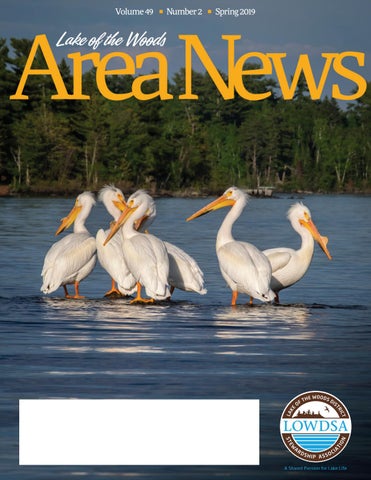
Volume 49
Number 2
Spring 2019
File 4357 | Unit 401-10 Forestry Way | Lake of the Woods | $829,000
LESS WORK MORE PLAY
Penthouse at the lake! Condo living affords you the opportunity to participate in all the lake activities you like and none of the ones you don’t. This unit is on its own private floor and offers 2271 sq ft of generous spaces to call home or home away from home. Gather around the gas fireplace or on the private terrace (264 sq ft) and enjoy a spot where sunsets will never get old. Includes parking, docking and more.
SOLD
file 4237
file 4251
file 4285
file 4290
1545 REDDITT ROAD | BLACK STURGEON
LOT 28 STORM BAY ROAD | LOTW
29 MCCALLUM POINT ROAD | CLEARWATER BAY
121 PEBBLE ROAD | LOTW
949,000
769,000
$
1,775,000
$
1,169,000
$
$
file 4294
file 4297
file 4312
file 4326
#7 MCKENZIE PORTAGE FIRE ROAD 2 | LOTW
5 ROCKERIES ROAD | CLEARWATER BAY
PROFESSOR ISLAND | LOTW
482B PETERSON ROAD | BLACK STURGEON
529,000
949,000
$
360,000
$
SOLD
file 4341 741 PETERSON ROAD | BLACK STURGEON
525,000
LISTINGS
|
$
SOLD
file 4348
file 4356
file 4333
MOTH LAKE
WOODCHUK BAY | CLEARWATER BAY
BURLEY ISLAND | LOTW
679,000
$
1,139,000
$
1,395,000
$
M A R K E T E VA L U AT I O N S
1,589,000
$
|
$
B U Y E R R E P R E S E N TAT I O N
GRAHAM CHAZE
CHRISTOPHER CLARK
DUSTIN SHORE
BRYCE WITHERSPOON, BBA
broker of record
broker
broker
807.407.5253 graham@cabincountry.com
807.466.8819 chris@cabincountry.com
807.407.3211 dustin@cabincountry.com
appraisal consultant aic candidate member
www.cabincountr y.com 138 MAIN ST S, KENORA, ONTARIO 1.800.528.8848
807.468.3541 bryce@cabincountry.com
|
R E N TA L S
Beautiful Inside & Out Kenora’s Quality Builder
807 407 9983 | blackfoxconstruction.com
In this Issue…
President’s Message
5
Executive Director's Note Our Contributors Members
Avoid renter grief with clear expectations How to plant white pine seedlings LOWDSA receives Wilson Stewardship Award LOWDSA Members Economic Impact Survey results available soon Don’t get ticked!
22
LOWDSA
10
Mark Your Calendars Environmental Initiatives & Special Projects Fund We're counting down to summer… Government Notes LOWDSA membership term becomes annual
In the District
7
6
32
New airport terminal brings Kenora Airport up to date Lake of the Woods water level report What’s happening on your lake? Getting to know them: KeeMan LSB Clearwater Bay Restricted Area Order Appealing a work permit refused by MNRF Kenora’s new art centre opening August
Retiring to the Lake: Keeping it Real by Leanne Fournier Boating & Cannabis: Know the Rules by Marianne & Rod Nuttall The Living Fossil by Barry Corbett
54
Environment Cover photo: Tom Thomson
68
The home or cottage workshop: Electrical, lighting, safety The ants go marching one by one… Knot King
Living
77
Member Recipe: Fish Tacos Just how good is nature for us…really? Notes from Razberry Lane: Of bears, bunnies, beavers and other visitors
LOWDKids!
82
Classifieds
87
48
LOWWSF: Watershed forum highlights science and management actions The Role of Science in the Lake of the Woods-Rainy River Basin Our shorelines: The Ribbons of Life where water meets the land Tips to keep your septic system working IISD-ELA ramp up for its summer research
Do It Yourself
50
44
Kat the Nature Dog Discovering the Birds of Spring
88 Advertisers' Directory 89 Real Estate Listings 90 The Kathleen by Lori Nelson 92 Home & Cottage Services
President’s Message Hardy Bock, LOWDSA President Hopefully you have all survived this winter. Although we did not win the gold award for the most miserable weather from Environment Canada’s Dave Phillips—Ottawa has that honour— we surely had a challenging winter. I certainly have had enough snow for skiing and more than enough in our driveway! In my last message, I referred to our January call centre evening—a wonderful opportunity to connect with our members. We were able to talk to members and hear what they had to say about the association. With only a couple exceptions, everyone we called chose to renew their membership, some during our phone call, others online within minutes of our call and yet others within the next few days. We made approximately 250 calls and the immediate response was very positive with 25 renewals confirmed that evening, over 50 members committing to renewing the next day and dozens of voicemails left. Unfortunately, we were unable to connect with a number of members by phone as the phone number on file for them is not current. As members responded to our voicemails over the following weeks, renewals continued to come in. The board members, staff and volunteers had a great evening with a healthy competition for the most renewals between the Winnipeg based callers and those in Kenora. Despite a valiant effort, the Winnipeg team graciously conceded the win to the Kenora team. As of March 16, 2,700 members had renewed for 2019. The board remains concerned about our membership numbers. The call centre evening was successful in reminding members to renew, but our association needs to encourage new people to join and sustain the organization. I believe our name change to LOWDSA will attract new members who enjoy the Lake of the Woods district, but may not necessarily own property. As you may have seen in the latest Area News, the word stewardship provoked some very meaningful thoughts and reflections from our board and members. I was particularly encouraged by the comments made by a member who doesn’t own property on the lake but now feels it is her organization. Our Government Affairs committee is keeping very busy, working to stay on top of a number of new and recurring issues that we know are of interest to members. Please see the Government Notes section of the magazine to keep informed on federal, provincial and municipal issues. You will find e-links to various websites included, giving you access to further information about how these issues may affect you. As we continue with the second instalment of our Getting to Know Them series (page 38) you will learn something about another rural organization in the area. We want to get know more about your group or organization and to develop an online directory to connect the many local organizations in our almost 5,500 square kilometre area. Please contact us to share your organization information by calling Diane Schwartz-Williams at (807) 543-4287 or email info@lowdsa.com.
Beyond what we include in Area News, by using our database, website and social media we can assist each other in sharing information about resources and relevant developments. This also gives LOWDSA the ability to go to the source to obtain answers to your questions and to then share that information with you. A recent example of this is the municipal issue regarding the proposed expansion of the aggregate permit (gravel pit) on Ritchie Road highlighted in our last issue. What’s happening on your lake? Page 37 is also a great way for all members to learn what’s going on in our local lake communities and associations. You can share upcoming events and promote your activities. A recent article highlighted the arrival of 911 service to Pellatt United Fire Fighters (PUFF) coverage area. With the successful implementation of 911 in Pellatt, the KeeMan Local Services Board is now working towards a similar service. I believe this a great example of how we can assist each other by developing networks to work together on common issues. I am looking forward to spring and to getting out on the water again. I hope to see many of you at the Annual Cottage Show and the AGM on May 6 at the Victoria Inn in Winnipeg. Our various committees are working hard to make this a memorable event! Enjoy our lengthening days as we approach another spring, turn the page and dive into this issue of your Area News.
Executive Director's Note Diane Schwartz-Williams A winter that felt like it would never end has suddenly given way to days filled with my favourite signs of spring— Photo by Tom Thomson aerial photos taken by the Lake of the Woods ice pilot capturing the first glimpses of open water, melting snow leaving bare patches of grass in my yard, days warm enough to shed my winter parka—I love them all. The transition is absolutely wonderful, and I welcome the energy that comes with it. That energy is going to come in handy over the next couple months as we prepare for the Cottage Show and AGM and line up events and activities for a busy summer. Your directors and staff already have many plans in the works and we hope to integrate events around the district into those plans. We are always looking to learn more about what your lake community has going on, happy to help you promote your events and welcome all invitations to join in. In March, I attended the International Rainy-Lake of the Woods Watershed Forum held annually in International Falls. Having now attended the forum three times, the program, the participants and even the science are becoming familiar. Although much of the science is over my head, the calibre and importance of the work being done by so many is beyond dispute. Aside from the pure science component of the forum, the opportunity to learn from others who are as concerned for the health of the basin as we are is invaluable. A highlight each year for me is the civic engagement workshop when I join other lake associations and professionals in the field and we each make presentations on a variety of topics, exchange ideas and share success stories.
contribution to environmental stewardship and sustainability of the Rainy-Lake of the Woods watershed ecosystem’. I had the great honour to accept the award on behalf of our association. In doing so, I remarked that the foundation of the development, strength and success of LOWDSA’s programs and partnerships is captured in our vision statement—the desire to preserve one of the most beautiful places on earth as a high-quality environment for future generations to enjoy. This commitment is shared and translated into action by over 3,000-member families, directors and staff, both past and present. The selection committee recognized The Lake of the Woods District Stewardship Association for several of our programs and initiatives—LakeSmart program promoting living green at the lake, waste reduction and recycling programs, tree-seedling planting program, work on invasive species prevention and control, and efforts to spark the interest and engagement of the next generation in water stewardship. Every initiative relates back directly to that shared commitment. There is special significance for LOWDSA in receiving the Wilson Award, first awarded to and named for Gerry Wilson, a former executive director of our association, and in receiving the award for stewardship and civic engagement in the year that we changed our name to include stewardship. I have the privilege of working for a vibrant association led by a hands-on, effective board of directors that leads the charge on stewardship and civic engagement. This award however, is shared by many—members, directors, volunteers and staff—and all have the right to take great pride in the recognition that the Wilson Award brings with it. Congratulations!
This year's Watershed Forum is one to remember for LOWDSA as we were presented with the Wilson Stewardship Award, an award that is given to ‘recognize the outstanding achievements of an individual, group, or project that has made a significant
The official publication of the Lake of the Woods District Stewardship Association
PUBLISHED BY
DISTRIBUTION & MEMBERSHIP
Wake Marketing Inc. 140 Main St. S., Kenora, ON P9N 1S9 Phone: (807) 407-7252
Lake of the Woods Area News is published five times per year and is mailed to, and available online for, LOWDSA members. To receive Area News visit lowdsa.com and become a member today.
Publisher: Mike Greaves, mike@areanewsmagazine.ca Editor: Elsie Neufeld, editor@areanewsmagazine.ca Art Director: Shayla Smith, design@areanewsmagazine.ca Design & Layout: Mike Newton, Ashley Pereira Advertising: Mike Greaves, Deb Polakoff, Jason Petric
Publication mail agreement #43107013. Printed in Canada.
UPCOMING EDITORIAL DEADLINES:
May 1, 2019
July 24, 2019
October 2, 2019
©2019 LOWDSA. All rights reserved. The contents of this publication may not be reproduced by any means, in whole or in part, without prior written consent. Statements of fact or opinion are the responsibility of the author and may not represent the view of LOWDSA or Wake Marketing Inc.
Our Contributors
Don Brown
Dave Schwartz is a former science and outdoor education teacher and long-time resident of Kenora. His background includes a long-standing interest in environmental and conservation issues, community activism and volunteering, development of trails and cycling routes, wilderness canoeing, photography, travel, nature in general and birds in particular. He also has some experience as a humour writer and considers himself one of the best humorists in his price range. Glimpses of his humour appear occasionally in his scribblings for the Lake of the Woods Area News. Anita Rasmussen started adult life teaching elementary school, took some years off to raise a family, then worked in the Mental Health field until retirement. A life-long reader, she compliments her love of books with occasional writing on the side. She grew up on a farm in the Rainy River district, so a commitment to coaxing beautiful things from the soil dovetails nicely with Henry’s interest. Henry Rasmussen, a transplanted Manitoban who fell in love with this area years ago, was a contractor most of his working life. He crushed a lot of gravel and built many roads. From a market gardening background, a love of growing things resurfaced in later life. One small greenhouse led to another until several greenhouses and garden plots filled the property. When not engrossed in growing vegetables or making maple syrup, Henry spreads his gospel of food self-sufficiency by speaking and writing. His greatest wish is to turn us all into gardeners. Ryan Stelter is a journalist for the Kenora Daily Miner and News and Lake of the Woods Enterprise and expat Manitoban. Ryan spent his summers growing up at his family cottage on Muriel Lake. Ryan enjoys all types of sports, with hockey holding a special place in his heart. When he’s not covering the Thistles or the local high school sports teams he’s playing shinny at the local outdoor rinks or streaming the latest Netflix docuseries.
Cecil Burns Bev Clark Kat the Dog Pat Drew Leanne Fournier Jack McKenzie Susan McLeod Drew Monkman Lori Nelson Marianne & Rod Nuttall Jacob Rodenburg Todd Sellers Dennis Wallace Dyke Williams
LAKE OF THE WOODS DISTRICT STEWARDSHIP ASSOCIATION Executive Committee
Board Members
Staff
Contact
PRESIDENT Hardy Bock, Black Sturgeon
Chris Boult, Mackies Island Robert Bulman, Tunnel Island Dave Christie, Granite Lake Jason Coreau, Big Traverse Bay Anneke Gillis, Paddy Lake Jean Anne Hallas, Lily Pad Bay Lucas King, Woodchuck Bay Trevor Templeton, Minaki John Waterer, Clearwater Bay
EXECUTIVE DIRECTOR Diane Schwartz-Williams (807) 543-4287 diane@lowdsa.com
P.O. Box 1160 Kenora, ON P9N 3X7
VICE PRESIDENT & TREASURER Christine Semenchuk, Storm Bay PAST PRESIDENT Nancy Salmijarvi, Welcome Channel DIRECTOR Don Parfitt, Winnipeg River
ASST. EXECUTIVE DIRECTOR Shelley Bujold (807) 468-8715 shelley@lowdsa.com
EMAIL info@lowdsa.com
M LOWDistrictStewardshipAssoc N @lowdsaLakeTime TOLL-FREE 1-888-265-9784 PHONE (807) 468-8715
ADVERTISEMENT
L.O.W. AREA NEWS
SPRING 2019
10 Members
Letter to the Editor: Mar 2, 2019 We really enjoyed reading the Smith Camps
Share your passion for lake life... with a LOWDSA gift membership!
article. Al, Joanie, Mac, and the rest of the Smith camp employees have been so helpful to us as new cottage owners. We have come to love the atmosphere at Smith Camps...
Easy to order! Login online at lowdsa.com or call 1-888-265-9784.
and our small part of the magnificent Lake of the Woods! Caelin & Dan Philippot
You can also order by mail. See page 25 for details, or contact info@lowdsa.com or (807) 468-8715.
Digital Editions Free with your LOWDSA membership
Read Area News wherever you are! Access this issue as well as all previous issues since 2016.
Visit lowdsa.com to view digital editions & login online! We always enjoy your phone calls, emails and letters, and now our member online community gives you one more way to stay informed, up-to-date and: Access your member profile Register for events Purchase a gift membership Renew your membership Order seedlings Sign up for eNews Email Shelley Bujold at shelley@lowdsa.com or call (807) 468-8715 or 1-888-265-9784
lowdsa.com
N @lowdsaLakeTime
M LOWDistrictStewardshipAssoc
BUILDING DREAM S
L.O.W. AREA NEWS
SPRING 2019
12 Members
Editor's note: Keep those phone calls, emails and letters coming! Your comments and questions often take us down a path to another article for the magazine.
Avoid renter grief with clear expectations by Susan McLeod
If you are wondering about something you see (or miss seeing) in the Area News or have a suggestion for an article, chances are that there are others with similar thoughts. Such is the case with the article that follows about avoiding renter grief. One day last summer we received a lengthy letter from a member expressing her frustrations with the folks renting the cottage next door to her as well as some valid concerns related to safety. We had a couple conversations and set the topic aside for possible inclusion in a future issue. Less than a week later we received a call that touched on the same issues. Then came a letter with questions from the perspective of a cottage owner looking to find renters, wanting to know what permits and rules existed—and on it went. We soon understood that what had initially been taken to be a conversation with one or two people was actually a topic of interest to many members. So, read on, and if this article or others leave you with questions or ideas, let us know!
With the rising costs of cottage properties and upkeep these days, renting the cottage for a few weeks each year has become a financial reality for some owners. Deciding to rent your property can help cover the costs of taxes, mortgage, insurance and maintenance, but it can also be fraught with challenges to both you and your neighbours. Renting the cottage is not new, but the rental environment is a different world today. Online abilities to list your property, and instant bookings with virtually no vetting or approval process often leads to folks arriving unprepared for the experience—bad news for both parties. Increased and unregulated private rentals have also raised the need for controls, licensing and new bylaws throughout cottage country in Canada. It might sound easy, but there is a lot involved with renting your property, ensuring the right guests and managing any issues that arise. Before making the decision to go ahead, it’s important to clearly understand the pros and cons, as well as the responsibilities to your guests and your lake neighbours.
Insurance and other Many cottage policies do not cover short-term rentals so check with your broker to find out if you can rent at all. Pay close attention to any motorized vehicles, including boats and ATVs. If you decide to permit their use, additional liability and damage coverage may be required. It’s not worth the risk to rent without appropriate coverage so make this a first priority. Check municipal or provincial regulations for limitations related to short-term rentals. If there are, be sure to understand your limitations and responsibilities. Also talk to your accountant about the requirement to report this income and the tax implications.
Your neighbours Our lake experience is often greatly impacted by near neighbours so to help maintain friendly relations, it’s best to share your rental plans with those close by. By explaining your goal of renting responsibly, you’ll reduce their concerns, and also have an extra set of eyes and ears on the ground in case of problem situations. Let them know you hope they’ll contact you if problems arise, and if
L.O.W. AREA NEWS
SPRING 2019
Members 13
you do hear from neighbours, respond immediately and explain the rules again to your renters. Then follow up! “Although rental properties might be profitable for some cottage owners, a never-ending chain of inexperienced renters can also impose undue inconvenience, annoyance and anxiety for the established tax-paying neighbours”, writes a LOWDSA member affected by a rental next door.
Set your policies and guidelines
These items may seem small when planning, but will quickly grow in importance if not clearly outlined in your rental descriptions. What is your maximum capacity? Will you accept pets? Is your property suitable for small children? Will you provide linens or should renters bring their own? Do you have laundry facilities? Will you provide beach towels? Will you allow
use of your boat and other ‘toys’? Think it through carefully, then include all the terms and conditions in your rental description BEFORE your guests sign the agreement.
Communicate! Before signing the rental agreement, talk, talk, talk to your potential renters. What are their activities or expectations? Will they be bringing their kayaks or their wakeboard boat? Are they a young family or a retired couple? Clarity will again save headaches later. Renters come to cottage country for the same reasons you do, but many won’t have your experience, especially with the particular quirks of your property (everyone has a few) and with the local area or waterways. It’s important to provide them with a “Welcome Book” upon arrival, outlining the details for both
L.O.W. AREA NEWS
SPRING 2019
14 Members
your protection and for their safety. Take a walk through your cottage and around the grounds, considering those little things you can do with your eyes closed, but will be completely foreign to someone new to lake life.
Exploring: Stick to the yard or public trails. While a midnight stroll under the stars might seem like a good idea, having to knock on the neighbour’s door for directions back to camp will not be well received.
In addition to the basics like emergency numbers and any finicky appliance tricks, your welcome book should include a set of house rules to help eliminate the need to have to repeat things, as well as reduce the potential of upset neighbours, damage or accidents. When your guests are all on the same wavelength, knowing what they can and can’t do, you will feel a lot more in control.
Pets: If allowed, ensure they are kept on your property, not visiting and leaving unwelcome gifts throughout the neighbourhood.
Cottage etiquette
Perhaps the most important item to share with renters is cottage etiquette. There is almost nothing else that will more quickly erode long term relationships with your neighbours than loud, unruly, disrespectful renters. Noise: While everyone likes to have fun at the lake, set a time to shut down the music and dock party, or take it inside and close the windows. Remind them how sound carries over water, and that not everyone wants to join their festivities. Water sports: Keep the boats and PWCs well away from shore, protecting both wildlife and your neighbours’ docks and property. Intrusion of the loud music or possible dock and property damage is NOT appreciated.
Campfires: Outline your rules, and any area restrictions as well as associated fines for non-compliance. Provide clear instructions on overall fire safety. If you say no to campfires, say it loud and clear! Wildlife: remind renters that critters are a part of lake life, there for enjoyment—at a distance. Leaving food or garbage out will invite all sorts of unwelcome wildlife guests to the neighbourhood. After all your research you decide to go ahead with your cottage rental, remember that respect is the main ingredient to success. Respect between you and your renter, their respect for your property, the outdoors and the neighbourhood. On the slim chance you do end up with a problem guest—don’t be shy, get ’em outta there! AN
It’s not too soon to book the LakeSmart team for a visit to your lake, property or event in July or August 2019 800 DOCK STOPS AND EVENTS ON 10 LAKES IN 2018 & WE’RE LOOKING TO TOP THAT RECORD NEXT SUMMER Take advantage of the knowledge and resources available from the LakeSmart team, including healthy shorelines, buffer zones, reducing run-off, invasive species, safe boating, septic systems and so much more.
For more information or to book a visit call 807-468-8715 or 1-888-265-9784 or email info@lowdsa.com Invitations and bookings accepted from LOWDSA members and friends of the association.
Duncan Carmichael
Broker of Record • Cell: 807-466-2323
Ian Carmichael
Broker • Cell: 807-466-2236
“Dedicated to Lakefront Property”
807-467-2323 or 888-954-2323 • carmichaelrealestate@lakeofthewoods.net
LakeoftheWoods.net
Like us on facebook
WE REPRESENT THE FINEST LAKE PROPERTIES!!! CALL US DIRECTLY AND LET US HELP YOU!!!
Perfectly private point near Kenora One of a kind! 4 acres, 1150’ fr., 100ft pines
Lake of the Woods INQUIRE
Storm Bay Road 6000+ sq ft. deluxe palace. Sparkling clean & excessively appointed! 2 garages, guest facilities, amazing boathouse!
Lake of the Woods $2,350,000
80.9 dynamic acres with approx. 8448 ft frontage, 3 BR cottage beside beach
Private Island Retreat $1,150,000
LOTW LOTW
ACCEPTED AGREEMENT
Woodchuck Bay $999,000
LOTW LOTW
Landmark estate! 6.5 acres, 16 total BRs, 12 baths, amazing grounds, 2 islets
Treaty Island $2,450,000
LOTW LOTW
Amazing 4.1 ac peninsula with 1187’ fr., 2 cottages and docks
Beautiful main cottage, guest cottage, double boathouse and beach. Picture-perfect amazing views!
Private Island INQUIRE
LOTW LOTW
55 acres! The only site on a private lake! Lovely 3000 sf leisure home & guest.
NEW
Clearwater Bay $1,995,000
LOTW LOTW
Private Lake INQUIRE
Quality build, no disappointments. Must be seen!
Storm Bay Road $1,075,000
LOTW LOTW
Private 2900 sq ft facing sunsets. Boathouse and sand beach.
Zigzag Island $785,000
LOTW LOTW
South facing private cottage, 6000 deluxe sq ft. on 3 levels
Eagles Nest Poplar Bay $1,375,500
LOTW LOTW
SOLD
Poplar Bay $699,000
LOTW LOTW
L.O.W. AREA NEWS
SPRING 2019
16 Members
Editor’s note: In a recent documentary about trees, someone said: if everyone on the planet planted six trees, global warming would be stopped. This seems a manageable solution on first blush, but think of all the people who can’t plant six trees. We, LOWDSA members, through LOWDSA’s seedling program, can plant many more than six and, as Dyke Van Etten Williams explained in an article several years ago, it is so easy. The article below is based on Dyke’s original article about how to plant white pines, the seedling offered by LOWDSA this year.
How to plant white pine seedlings by Dyke Van Etten Williams, planter of about 15,000 tree seedlings, some 500,000 tree seeds and more than 200 potted trees and transplants. As easy as poking a stick in the ground Early each year LOWDSA offers very high quality native tree seedlings for sale at bargain prices. These 8-12 inch seedlings come with four- to six-inch root sections in plugs that make planting them a snap. They come in bundles of 15—moist, healthy and ready to plant—and it is easy: Poke a stick, shovel or pointed rake handle four to six inches down, wiggle it, insert the plug, remove tool, pack the dirt back with hands or feet and you’re done. Here is something almost everyone do can every year, be it 15, 150 or 1,500 seedlings. I recommend you order at least three bundles of 15 each so you can see and enjoy the results—and allow for attrition. They’ll go in the ground in a short afternoon. We plant 200–300 on a long weekend and still have time for other chores and relaxation. Plant something new each spring for as many years as you can!
Why plant trees?
Something is always eating something. A healthy forest has multiple tree species so that impact on one species doesn’t significantly affect the entire site. Continually renewing your forest with young, new and different species of
trees helps keep both your location and the whole area healthy and young. White pines tower over our shores and islands and are considered the signature tree of the north woods. Indiscriminate logging drastically reduced their numbers, and today the white pines are unable to reproduce themselves as quickly as they are being killed, harvested or destroyed. They could disappear altogether. Most foresters estimate that only 25 per cent of those white pines planted or naturally seeded will survive the 15–20 years needed to reach seed-bearing maturity. Disease and pests—white pine blister rust and the white pine weevil—take a significant toll. Commercial logging continues, along with ongoing clearing of recreation home sites and building of cottages, septic fields, docks and the like. Windstorms and fires have had a notable impact. Deer crave the white pine leader shoots and their habitable territories have expanded as human habitation continues to encroach on the wilderness. With so few trees now remaining, there are not enough to naturally replenish the dwindling stock. Most experts agree that the only way for the white pine to survive is to plant millions of new trees. And this is how to do that Photo by Stacey Skene
L.O.W. AREA NEWS
SPRING 2019
Members 17
Order Your White Pine Seedlings!
MAY 18
Pick-up is Saturday, May 18, 2019 from 10:00 a.m. to noon
ORDERING DEADLINE MAY 4
PICK-UP AVAILABLE AT SIX LOCATIONS THROUGHOUT THE REGION
You can also order online. Visit lowdsa.com/cpages/seedlings For more information contact us at (807) 468-8715 or email info@lowdsa.com.
How to plant seedlings Believe! ANYONE can successfully plant trees. No special skill is needed—just some time, a bit of effort and common sense. Believe also that planting trees can be both fun while doing it and immensely rewarding as time goes on and they grow and grow and grow. I now have 40-ft. sugar maples, 50-ft. white spruce, and 16-ft. red pine planted just 8 years ago. I planted every one of them by hand, and the satisfaction every time I see them is huge.
White pine planting White pines grow best among other trees where the overhead canopy density is roughly 40–60 per cent. This is true for most other native species as well. Whites will grow, but very slowly, in deep shade—they prefer an opening in the upper story to let in sun and to grow up through. They do adequately-to-quite-well in direct open sun if you are reforesting a clearing or a burned area. They do well being somewhat solitary—you can spread them out so each tree eventually becomes a seed source for a large area. They prefer a sandy soil. Plant the seedling in mineral soil (dirt). Northern forest floors often have a top layer of duff—two to five inches of a lightweight blend of pine needles, molding leaves, dust, twigs, etc. Under that is either rock or dirt. Pick spots where the dirt is deep and wide enough to contain a full root system ten to twenty years out. Conifer roots grow outward at least to their drip line—where water would drip off the tree’s outermost branch tips. They do not have “tap roots” (hardwoods do) that grow downward since they’d hit bedrock in most northern places. Make sure the dirt area chosen has natural access to moisture. If the dirt you clear or dig in is bone dry today, it is likely
to be so in the future. Plant in relatively or potentially moist soil, avoiding moisture extremes like low, wet areas or dry hilltops. Make sure there are no air pockets in the dirt around the roots and tamp the dirt down. Ideally, transplants should get lots of water for several weeks if possible, though many will survive on their own. Plant a safe distance (a mature tree-length) away from any buildings. Tall white pines are sometimes hit by lightning, which can then jump sideways to a building, and mature trees can do notable damage when they are blown over onto something. AN
L.O.W. AREA NEWS
SPRING 2019
18 Members
LOWDSA receives Wilson Stewardship Award; credit shared with many The Lake of the Woods District Stewardship Association (LOWDSA) and the Vermilion Lake Association were honoured at the 2019 International Rainy-Lake of the Woods Watershed Forum, March 13, in International Falls. The two associations were each recipients of the 2019 Wilson Stewardship Award, recognizing their outstanding contributions to environmental stewardship in the Rainy-Lake of the Woods watershed.
“The Vermilion Lake Association and the Lake of the Woods District Stewardship Association both have histories of over 50 years of engaging citizens in stewardship,” said Todd Sellers, Lake of the Woods Water Sustainability Foundation executive director. “They have been very effective at raising awareness of environmental issues and actively pursuing solutions and partnerships to advance science and implement concrete stewardship actions.” LOWDSA was recognized for its: LakeSmart program of dock to dock visits promoting “living green” at the lake; waste reduction and recycling programs; tree-seedling planting program in which association members have planted over 300,000 trees; work on invasive species prevention and control, and efforts to spark the interest and engagement of the next generation—children and youth—in water stewardship. For more information about the award go to lowwsf.com/wilson-award.
Terry Grosshauser, president of the Vermilion Lake Association, and Diane Schwartz-Williams, executive director of the Lake of the Woods District Stewardship Association, accept the 2019 Wilson Award on behalf of their associations. Photo by Lee Grim.
LOWDSA Members Economic Impact Survey results available soon
In accepting the award on behalf of LOWDSA, Executive Director Diane Schwartz-Williams proclaimed that the credit (and award) belong to the association’s cast of thousands over a period of almost six decades... over 3,000 member families (some who have been with the association from the beginning), countless volunteers, community, government and business partners, directors past and present (dozens of them) and the dedicated executive directors who preceded her. She noted that the diverse mix and depth of knowledge, energy, passion and contributions of all kinds brought to LOWDSA by this group is quite remarkable. Congratulations to all LOWDSA members!
Many LOWDSA members took time to complete the Economic Impact Survey circulated last spring. The survey remained open throughout the summer and into the fall with a steady flow of responses received. We are working with our survey partners—the City of Kenora, the Township of Sioux Narrows–Nestor Falls and the Lake of the Woods Business Incentive Corporation—and the process of reviewing the data collected is well under way.
Prior to initiating this survey, we were confident that LOWDSA seasonal and year-round members make a significant economic contribution to the area. That belief has already been confirmed in our preliminary review of the survey results, and we are looking forward to sharing details about that and so much else that we have learned from the completed surveys. Our plan is to have the results ready in time to have on hand at our cottage show on May 6, in Winnipeg.
RBC Dominion Securities Inc.
In every walk with nature one receives far more than he seeks. – John Muir
The Darcy Zaporzan Wealth Management Group of RBC Dominion Securities www.dzwmg.com
The DARCY
Zaporzan W E A LT H M A N A G E M E N T G R O U P
of RBC Dominion Securities RBC Dominion Securities Inc.* and Royal Bank of Canada are separate corporate entities which are affiliated. *Member-Canadian Investor Protection Fund. RBC Dominion Securities Inc. is a member company of RBC Wealth Management, a business segment of Royal Bank of Canada. ® / ™ Trademark(s) of Royal Bank of Canada. Used under licence. ©2019 RBC Dominion Securities Inc. All rights reserved. 19_90783_N4D_001
L.O.W. AREA NEWS
SPRING 2019
20 Members
Don’t get ticked!
At work or play, prevent tick bites The Northwestern Health Unit (NWHU) encourages individuals working or exploring the outdoors with friends, family or pets, to make small changes that can help to prevent tick bites. The risk of contracting a tick-borne disease is lower if you take steps to prevent tick bites: • Check yourself, your children, and your pets for ticks after being outdoors. • Avoid places with long grasses. If you are hiking or walking, stay in the centre of the trail. • Wear light coloured clothing that covers as much skin as possible. • Use an insect repellant with DEET or Icaridin. Be sure to follow the product label guidelines especially for use on infants, children, and pregnant women. • Talk to your veterinarian about options to protect your pet. • Ensure all ticks are removed properly as soon as possible. If a tick is attached to a person: • Grasp the head of the tick with clean tweezers as close to the skin as possible . • Pull it straight out, gently but firmly. • Clean the area with an alcohol swab or soap and water. • Keep the tick in a container and note the date and site of the tick bite.
To remove, grasp the head of the tick with tweezers as close to the skin as possible.
This summer, download the free NWHUConnect – Healthy Environments app! You can find information on ticks, and even submit a photo of a suspicious tick found on a person. A health inspector will identify the tick and respond with further instructions. If it is identified as a tick species that is linked to carrying disease, the sample can be submitted and sent for further testing for our disease surveillance. We cannot diagnose diseases and may recommend you see your healthcare provider. The health unit continues to accept suspicious tick samples that are dropped off to be examined by a public health inspector, but have launched the app so people can save a trip in to our office. There are two main tick species in northwestern Ontario; wood (dog) ticks and blacklegged (deer) ticks. Wood ticks have reddish-brown bodies and legs with white markings on their back. These ticks are not known to transmit tick-borne disease and pose little risk to a person’s health. Blacklegged ticks are smaller, dark brown or black with no white markings on their back. The female blacklegged ticks have an orange or red back. Deer ticks can transmit tick-borne diseases to humans. Lyme disease is a tick-borne disease caused by a bacteria that is carried by some blacklegged ticks. Symptoms of Lyme disease may occur three to 30 days after being bit by an infected tick.
Thursday, July 18, 2019 Kenora Golf & Country Club
OVER $1 MILLION IN PRIZES!
an all-inclusive event
18 chances for a hole-in-one prize valued at $30,000-$75,000 per hole plus closest to the pin prizes on each hole!
COST: $500 PER GOLFER | $300 TAX RECEIPT
includes your game, cart, networking lunch, dinner and spirits. Leave your wallet at home! Early Bird Registration has been reserved for returning supporters. Open Registration begins June 1, 2019.
Sponsorship opportunities available! Please call 468-9861 X2468 for more details. A special thank you to
for an amazing 10 years and over half a million raised for your hospital!
LWDHF | 21 Sylvan Street West | (807) 468-9861 x2468 | lwdhf@lwdh.on.ca | www.lwdhf.com
L.O.W. AREA NEWS
SPRING 2019
Members 21
A deer tick is dark brown or black with no white markings on their back.
Possible symptoms include fever, headache, muscle and joint pain, fatigue, and a skin rash that looks like a red bull’s eye. The earlier treatment starts the better. If you think you have Lyme disease, please visit your physician. For more information on the most recent surveillance data or tick-borne diseases download the free NWHUConnect – Healthy Environments app, visit the health unit website at nwhu.on.ca, or contact a public health inspector at your local health unit office. AN
A wood tick has a reddish-brown body and legs, with white markings on their back.
Tick Talk Every spring, when tick activity increases in most parts of Canada, the Canadian Veterinary Medical Association (CVMA) runs a campaign called National Tick Awareness Month. They use the campaign to remind Canadians how important it is to be informed about ticks and the potential hazards ticks pose for you and your pets. The Tick Talk website offers a series of educational videos that answer your questions and set straight some misconceptions about ticks. There is also a FAQ page and other up-to-date information to keep you informed.
L.O.W. AREA NEWS
SPRING 2019
22 LOWDSA
Mark Your Calendars May
4
Last Day to Order Seedlings Place your white pine seedling order online at lowdsa.com/cpages/seedlings, phone 807-468-8715 or TF 1-888-265-9784
We’ll be launching the LakeSmart boat at the beginning of July, and our LakeSmart team will be on area waters for the 9th year in a row. Please welcome them if they drop by your dock in July or August. Let us know if you would like to arrange a visit to your neighbourhood for dock visits or presentations on living green at the lake, healthy shorelines, invasive species and more.
Jul
1
LOWDSA joining Zig Zag Yacht Club for ZZYC Welcome Reception & Fireworks 4:00 p.m. - 6:00 p.m.
May
6
57th AGM & Lake of the Woods Cottage Show Victoria Inn, Winnipeg 1808 Wellington Ave. Cottage Show doors open 1:00 p.m. – 7:00 p.m. Over 90 Exhibitors last year, and we’re on the way to matching that! Annual General Meeting 7:00 p.m. – 8:00 p.m. Catch up on your Association business, with a presentation by meteorologist, Jay Anderson, retired from Environment Canada to follow. Jay’s presentation will be about the June 2021 solar eclipse that will be visible from Kenora and other stories about eclipses he has travelled to see.
May
18 Jul
1
Jul 3Aug 28 LakeSmart at Matiowski Farmers’ Market
Whitecap Pavilion, Kenora 8:30 a.m. – 2:00 p.m. every Wednesday.
Seedling Pick-up Day
10:00 a.m. – 12 noon at eight locations.
Jul
LakeSmart at Matiowski Farmers’ Market Whitecap Pavilion, Kenora 10:00 a.m. - 4:00 p.m.
4
IISD Experimental Lakes Area Full Day Visit & Tour
Pre-registration required. Discount rates for LOWDSA members. See page 24 for details.
L.O.W. AREA NEWS
SPRING 2019
LOWDSA 23
LOWDSA’s spring and summer calendar is definitely filling up and we have more plans yet to be finalized and added. Look for updates in the next issue of the Area News, and in the meantime follow us on Facebook or Twitter to keep up to date. And don’t forget to let us know what’s happening at your lake!
Jul
8
LOWDSA Summer Meeting at the Lake – Kenora 1:00 p.m. at the Clarion Lakeside Inn & Conference Centre
Missed the AGM in May? Catch up on LOWDSA business, meet your LakeSmart team and learn about plans going forward. Plans for a special presentation and exhibits are underway; stay tuned for more details.
Jul
15 Jul
11
2:00 p.m., Morson Community Hall
15
To follow immediately after the LOWDSA Summer Meeting.
IISD Experimental Lakes Area Full Day Visit & Tour Pre-registration required. Discount rates for LOWDSA members. See page 24 for details.
Jul
Turtle Portage Public Consultation with MNRF in Morson
LOWDSA Summer Meeting at the Lake – Morson
Aug
4
1:00 p.m. at the Morson Community Hall
We’re hoping to see members from Nestor Falls and Morson areas out for this. If you missed the AGM in May, this is your opportunity to catch up on LOWDSA business over the past year, meet your LakeSmart team, and learn about plans going forward. Plans for special presentation & exhibits underway; stay tuned for more details.
Plans in the works & dates pending: • LOWDSA & LakeSmart Team visit to Morson
• LakeSmart Team visits to area lakes Tentative dates lined up for LacLu and Morson with many more to follow. Let us know if you would like the LakeSmart team to visit your lake community. • LOWDkids activities including Storm Drain Painting to spread the message “A healthy lake starts here!”
Aug
15 Aug
24
LOWDSA & LakeSmart Team at Laclu Regatta 10:00 a.m. – 1:00 p.m.
IISD Experimental Lakes Area Full Day Visit & Tour Pre-registration required. Discount rates for LOWDSA members. See page 24 for details.
Free Metal Waste Collection Day 10:00 a.m. – 1:00 p.m.
Get all the metal junk out of your yard, shed, garage and surrounding bush. Drop off by truck or boat. Volunteers will be on hand to help unload.
L.O.W. AREA NEWS
SPRING 2019
24 LOWDSA
Environmental Initiatives & Special Projects Fund The strength and financial viability of our association is directly attributable to the ongoing contributions of our members who support LOWDSA through their membership fees and their additional contributions to two restricted funds, Environment and Tax. As included in the financial report at the May 2018 AGM and reported in the Summer 2018 issue of the Area News, these two funds are being combined into one restricted fund—LOWDSA’s Environmental Initiatives & Special Projects Fund (EISP Fund). Member contributions will be held in this fund, with board approval required to use the funds and reports to be made annually at the AGM. The EISP Fund will be used for planned future environmental initiatives and special projects that would otherwise not be viable within the operating budget, such as addressing invasive species, environment awareness initiatives, and researching and sharing tax, government and legislative issues.
IISD-ELA TOURS
Your day tour of the IISD-ELA facility includes:
• Transportation to IISD Experimental Lakes Area (details provided with registration confirmation) • A welcome presentation that gives an overview of the history of lowdsa.com • PO Box 1160, Kenora, P9N 3X7 • info@lowdsa.com IISD-ELA andON IISD-ELA science IISD Experimental Lakes Area is one of the • A tour of facilities and closest research lakes including: (807) 468-8715 • the TF 1-888-265-9784 world's most influential freshwater research discussions of standard water flow, quality and fish sampling; tours facilities. Come take part in hands-on testing of the chemistry and fish labs; a tour of the Environment Canada and learn about the importance of freshwater metrological station; a hands-on netting activity to collect small fish science for sustainable development. or zooplankton. Cost: $30 for LOWDPOA members; • Lunch at the beach in the camp recreational area. Please pack your $35 for non-members own lunch. We ask that you help to reduce waste by packing your lunch as waste-free as possible. Registration Details Below. • A visit to the ongoing whole-ecosystem experiment in which Meet in Kenora at 8 a.m., return by approx. 5 p.m. scientists have reduced water flowing into a lake to mimic drier Tour is on – rain or shine. Appropriate footwear and conditions expected in the Canadian Boreal Shield due to clothing recommended. Anyone under 18 must be climate change. accompanied by an adult.
July 4, July 11, August 15
REGISTER BY MAIL, PHONE OR SCAN & EMAIL PO Box 1160, Kenora ON, P9N 3X7 | Toll Free: 1-888-265-9784 | Phone: 807-468-8715 | shelley@lowdsa.com
REGISTRATION DETAILS July 4
July 11
Member
Non-Member
Name: Mailing Address: City: Home Ph: Email:
August 15 # of Attendees
PAYMENT INFORMATION Total amount: Cheque (payable to LOWDSA) VISA/Mastercard
Prov/State:
PC/Zip: Cottage Ph:
Attendees under 18 will be accompanied by an adult.
Card number: _ _ _ _ _ _ _ _ _ _ _ _ _ _ _ _ Expiry date: _ _ / _ _
CVC: _ _ _ 3 OR 4 DIGITS ON BACK OF CARD—REQUIRED
Signature: Please email updates on LOWDKids events & registration
NEW
WHEN YO
U RENEW
CONTACT INFORMATION
ONLINE
Name _________________________________________________________
AUTO-RENEW OPTION NOW AVAILABLE
Address _______________________________________________________
LOGIN to renew or call/email for details.
Please tell us a little about yourself for your confidential member profile.
City _______________________ State/Prov _________________________ Country _______________________ Postal/Zip ______________________ What you include here will help us better understand who our members are. This info will only be used by LOWDSA and will not be shared.
YES, email LOWDSA eNews (updates between issues of Area News) YES, send my renewal notice by email YES, email LOWDKids in the Wild notices and events
EMAIL ____________________________________________ Please do not print my name in the membership listing in the June issue of Lake of the Woods Area News. Please tell us how you enjoy the Lake of the Woods area. Check all that apply: Owned my own property in the Lake of the Woods area for ________ years. Part owner of a shared/family property for ________ years. Not a property owner; enjoyed Lake of the Woods area for ______ years as a camper sailor renter other: ______________________ When are you at the lake? Summer Only Permanent Part-time year round
Home Phone ____________________________ Cottage Phone ___________________________ Mobile Phone ___________________________ Please indicate where you cottage or you spend most of your time in the Lake of the Woods area (please select one only): Clearwater Bay area Kenora area Minaki area Morson area Sioux Narrows-Nestor Falls area Other_________________________________ What location would you like included with your name in the membership listing published annually in Area News? ___________________________________________
Your Age Range (check one): under 21 21-30 31-40 41-60 61-70 over 70
2019 MEMBERSHIP
WHITE PINE SEEDLINGS
Full Membership (Magazine Mailed) One Year Two Year
$50 $ ________ $100 $ ________
Virtual Membership (Digital Magazine) One Year Two Year
$42 $ ________ $84 $ ________
Seedlings (see right) $ ________ Gift membership (see right) $ ________ Donation Environmental Initiatives & Special Projects Fund $ ________ I will not be renewing my membership because: ____________________________________________
TOTAL AMOUNT DUE . . . . . . . . . . . . . . . . . . . . . . . . . . .. . . . . . . . . $ ________
Our members planted 10,000 seedlings in 2018 and over 300,000 since this program was launched. 15 seedlings per bundle: # of bundles ____ @ $10 each
$ ________
Pick-up location (Sat., May 18: 10 am - 12 pm) Clearwater Bay (Firehall) Kenora (The Blue Heron) Minaki (Minaki Marina) Laclu (PUFF Fire Hall) Morson (Location TBA) Nestor Falls (Location TBA) Sioux Narrows (SN Gov’t Dock) Storm Bay Rd. (Firehall)
GIFT MEMBERSHIP Full Membership ($50 ea.) Virtual Membership ($42 ea.) Name ______________________________________
PAYMENT OPTIONS
Address ____________________________________
Online: LOGIN at lowdsa.com to renew.
City ______________________ State/Prov. ______
By Cheque: Please make payable to LOWDSA.
Country _______________ Postal/Zip __________
Visa
Email ______________________________________
Mastercard
Amount $ ________(Cdn.)
Card # _____________________________________________ Expiry date (mm/yy) ______ / ______
CVC (3 or 4 digits on back of card ) ______ (REQUIRED)
Name on card _____________________________________________
Phone _____________________________________ Please send recipient a gift card with message: _________________________________________ _________________________________________
Mail completed form to Box 1160, Kenora, Ontario, P9N 3X7 or scan and email completed form to shelley@lowdsa.com. Questions? (807) 468-8715 or 1-888-265-9784
Monday, May 6, 2019 | 1:00 p.m. to 7:00 p.m. Victoria Inn, 1808 Wellington Avenue, Winnipeg 57th Annual General Meeting: 7:00 p.m. to 8:00 p.m.
Lake of the Woods
COTTAGE SHOW AND
ANNUAL GENERAL MEETING Share your passion for lake life! Bring a friend and introduce them to the benefits of LOWDSA membership.
P R E L I M I N A RY E X H I B I TO R L I ST Accurate Fire and Safety Ltd.
Earth4U Consulting Inc
Lake of the Woods Docking
All Brands Boat Repair
Enviro Doctors
Artspan Inc.
Faux Rocks Northwest
Lake of the Woods Water Sustainability Foundation
Bell’s Septic (Kenora) Inc
Frederick Ross (Dr)
Brown & Associates Law Office
Garriock Insurance
Cabin Country Realty Ltd.
Grace Anne Residence Club
Century 21 Northern Choice Realty Ltd.
IISD Experimental Lakes Area
City of Kenora Conquest Manufacturing Cottage Fire Safety Service Denver’s Window Cleaning Docks & Lifts Unlimited Inc. Donny B’s Duncan Carmichael Real Estate Brokerage
KeeMan LSB Kenora Home Hardware Building Centre Lake of the Woods Brewing Company Lake of the Woods Control Board Lake of the Woods Cottage Guide / Brignall Media Lake of the Woods Distrcit Hospital Foundation
Linwood Homes / TF Leisure Marketing
Oakwood Roofing & Sheet Metal Co. Ltd. Ontario Provincial Police Kenora Detachment Penta Protective Coatings Ltd
LOTW Septic Barge
Rainfresh Water Treatment
Lumber One Building Supplies
Royal LePage Landry’s for Real Estate Kenora
Luxe Furniture Company
Star Building Materials
MB Sustainable Development Forestry & Peatlands Branch
Suncoast Enclosures MB
McMunn & Yates Building Supplies
Sunset Spray East
Nature Conservancy of Canada (The)
Swimwear Express
Naturescape Photography
Wake Marketing
Ontario Ministry of Natural Resources & Forstry Kenora District
Wolframe’s World of Water WSL Sport & Leisure
Don’t miss out! Reserve your booth space today—contact info@lowdsa.com, visit lowdsa.com or call 807-543-4287.
L.O.W. AREA NEWS
SPRING 2019
LOWDSA 27
We're counting down to summer…
Let’s kick it off together! At the Lake of the Woods Cottage Show & 57th Annual General Meeting The Lake of the Woods ice pilot recently posted his first aerial photos, and the ice is starting to melt—a sure sign that spring is finally on the way and a reminder that it’s time to making plans to attend the Lake of the Woods Cottage Show, LOWDSA’s traditional way to kick-off summer and lake time. Last year’s cottage show was one of our biggest ever with over 90 exhibits covering all aspects of lake life, and we’re looking to match that again this year. Whether you are looking for something for your cottage, watersports, information on lake living or tips for living green at the lake you will find it at our 28th Annual Lake of the Woods Cottage Show. You can count on seeing a wide range of exhibitors eager to showcase their products, share their knowledge and answer your questions.
Jay travels the world with his wife Judy to see solar eclipses (30 so far) and the occasional active volcano. Jay’s presentation will be about the June 2021 solar eclipse that will be visible from Kenora and other stories Monday, May 6th about eclipses Victoria Inn, Winnipeg he has travelled to see. Distance Jay Anderson to speak at AGM Lake of the Woods and timing about 2021 solar eclipse. prevents some Cottage Show: members from attending but, thanks to 1:00 p.m. - 7:00 p.m. technology, it will be possible for even those of you located thousands of miles away to 57th Annual be able to view the AGM on a computer or listen to it on the phone in real time. General Meeting:
7:00 p.m. A new addition to the cottage show last year was a series of info sessions that were held hourly on a number of topics including estate and cottage succession planning, choosing the right water system, fire extinguishers, AEDs and first aid. Thanks to the knowledge of our presenters and to the interest displayed by visitors, these sessions were well attended. Based on the popularity of these info sessions, we will be holding similar sessions again this year. We may be changing up the topics a little and have improved upon the location/sound for these sessions. Although there will be much to explore at the Cottage Show, we know that for many members in attendance each year there is a real sense of homecoming. We can see it and feel it in the buzz of conversations, smiles and hugs as members greet old friends and neighbours and gather in the aisles to reminisce and make plans for the coming summer at the lake. Doors to the cottage show will open at 1:00 p.m. and will be open until 7:00 p.m. when the annual general meeting (AGM) begins. The AGM is your opportunity to get an overview of the association’s activities in 2018 and to learn about some of the issues on the horizon for LOWDSA. As we did last year, we are going to keep the business meeting as short as possible, to be followed by a presentation by meteorologist, Jay Anderson, retired from Environment Canada.
- 8:00 p.m.
We’re looking forward to seeing LOWDSA members at the cottage show and encourage you to invite your friends and neighbours to join you. If they enjoy our lakes and rivers as much as we do, whether at a cottage, camping, sailing or visiting friends and family, they will find much of interest at the show. It is also a great opportunity to share the benefits of LOWDSA membership and support our growth and programs.
See you on May 6! Watch for show updates on activities & exhibits at: lowdsa.com/cottage-show M LOWDistrictStewardshipAssoc N @lowdsaLakeTime
L.O.W. AREA NEWS
SPRING 2019
28 LOWDSA
Government Notes Your directors and staff communicate regularly with representatives of a number of ministries and departments at all levels of government. Whether communicating via email, talking on the phone or meeting in person, we enjoy positive working relationships including collaboration in some instances. This makes it possible for us to access and share government bulletins in a timely manner, and open lines of communication often allow us to go directly to the source with questions on your behalf. FEDERAL
Meeting with the Honourable Bob Nault MP In January we sat down with the Honourable Bob Nault MP, the representative for Kenora-Rainy River, for our semi-annual meeting. LOWDSA Director Don Parfitt was joined by Barry Baltessen, a past president of LOWDSA, and Executive Director Diane Schwartz-Williams for the meeting. The lead topics for discussion were two key issues of ongoing interest and importance to LOWDSA members—highway twinning and cellular/internet service. We were also able to take some time to bring our member of parliament up to date on association programs and plans for the summer season.
FEDERAL & PROVINCIAL
Four-laning Highway 17 update In 2018, engineering work on four-laning Highway 17 between the Ontario/Manitoba border and Kenora re-started including activities such as route selection and preliminary design, design updates, and environmental assessment (EA) approval processes. Assessment of project effects are key components of these environmental assessment studies. The assessment and evaluation of route alternatives will be based on a range of environmental factors (i.e. aspects related to the socioeconomic, natural and cultural environments as well as transportation and engineering). Once the preferred highway route has been selected, the project team will work to mitigate direct and indirect impacts associated with the improvements. For planning purposes, the 40 km corridor has been divided into three sections that are in various stages of implementation. The MTO’s intent is to see a construction contract tendered for Section 1 in 2019 for the portion of Highway 17 between Manitoba and Highway 673 provided environmental approvals are received and there are no unforeseen design related issues that arise.
Future work includes reviewing and selecting a preferred route between Highway 673 and Kenora. A public information centre (PIC) for Section 2 from Highway 673 to Rush Bay Road is expected later this year in late summer or the fall. A PIC for Section 3 from Rush Bay Road to Kenora is anticipated in the winter or spring of 2020 with the start of construction work beyond 2022. The full set of display boards presented, timelines for the complete project and full contact info for the project team can be viewed online at 4lanehighway17kenora.ca If you have comments, suggestions or questions for the ministry and consultant, or simply want to be added to the study mailing list, email project-team@4LaneHighway17Kenora.ca. Full contact info including mailing addresses are available online as noted above.
PROVINCIAL
Meeting with Greg Rickford MPP At the beginning of March, we were pleased sit down for our first meeting with Greg Rickford MPP who represents the riding of Kenora-Rainy River and currently serves as Minister of Energy, Mines, Northern Development and Indigenous Affairs. Attending the meeting for LOWDSA were: Don Parfitt, director, Diane Schwartz-Williams, executive director, and virtually by Chris Semenchuk, LOWDSA vice-president. Not surprisingly, the first topic of conversation was highway twinning. In spite of time constraints due to unforeseen circumstances, we did have time to discuss a number of topics and to familiarize MPP Greg Rickford with current association programs and plans for the summer season.
L.O.W. AREA NEWS
SPRING 2019
LOWDSA 29
Proposed decommissioning of Turtle Portage – public consultation in July Although details are being finalized, we can confirm that open public consultation on this matter will take place on July 15, in conjunction with one of LOWDSA’s summer members’ meetings. This meeting will be held in Morson and will be open to all interested members. Stay tuned for more information and final location and time. As per our recent communication with MNRF, barring any unforeseen circumstances, the ministry intends to provide public access to the Turtle Portage Marine Railway system during the 2019 boating season. Fiscal constraints however remain unchanged, and the ministry advises that a long-term, cost-saving solution must be found. In the future, it is MNRF’s hope that a partnership can be established that allows for the continued operation of this facility. MNRF’s staff encourage LOWDSA members and others to consider potential opportunities and are looking forward to hearing your ideas at this summer’s meetings.
Whiskey Jack Forest & Kenora Forest Annual Work Schedules available for review The Kenora District Office of the Ontario Ministry of Natural Resources and Forestry (MNRF) has reviewed and approved the April 1, 2019 – March 31, 2020 Annual Work Schedule (AWS) for the Whiskey Jack Forest and the Kenora Forest. The AWS describes forest operations such as road construction, maintenance and decommissioning, forestry aggregate pits, harvest, site preparation, tree planting and tending that are scheduled to occur during the year. The notices and maps are posted at lowdsa.com/articles and facebook.com/ LOWDistrictStewardshipAssoc. The AWS is also available for public inspection at the MNRF Kenora District Office, Miisun Integrated Resource Management Company on behalf of the MNRF, and the Ontario Government website at ontario.ca/forestplans and will remain so for the one-year duration of the AWS.
Access to MNRF forest management planning process To keep informed: efmp.lrc.gov.on.ca/eFMP/home.do To get involved: files.ontario.ca/ involvement_handbook_final_english "Useful tips on navigating the eFMP (electronic forest management plan) website" guide is available by contacting LOWDSA via info@lowdsa.com or (807) 468-8715.
Ontario Endangered Species Act closed for comments; review and finalization pending The stated proposal’s intent is to improve protections for species at risk, consider modern and innovative approaches to achieve positive outcomes for species at risk, as well as to look for ways to streamline approvals and provide clarity to support economic development. It is posted online and was open for comments until March 4, 2019. A link to the full proposal can be found at ero.ontario.ca/notice/013-4143 or at lowdsa.com on our News page. LOWDSA will follow this on the Ontario Environmental Registry and updates will be provided as available.
Boat launches, landings, rollers, lifts , marine railways... What do you use? We really would like to hear from you! We are interested in learning more about docks, landings, and/ or boat transfer systems are used by our members. To tell us about what you use on your lake email info@lowdsa. com and/or editor@areanewsmagazine.ca or call 807-543-4287.
MUNICIPAL & UNINCORPORATED
Proposed Expansion of Aggregate Permit (Gravel Pit) – Ritchie Road The City of Kenora submitted an aggregate permit application to the Ontario Ministry of Natural Resources and Forestry (MNRF) in November 2018 for the expansion of their category 9 aggregate permit (gravel pit) located east of the Ritchie Road and north of the Wynd Road. In response to LOWDSA's letter to MNRF requesting an extension of the period for comments, it was extended by 30 days and closed January 20, 2019. Landowners, agencies and stakeholders in the immediate area were notified of the proposal by mail and invited to provide any comments or concerns that they may have with the proposal. LOWDSA expanded the distribution of proposal notice by email to members we could identify as Black Sturgeon area property owners, to all LOWDSA members in an eNews bulletin and with posts on Facebook, Twitter and our website.
L.O.W. AREA NEWS
SPRING 2019
30 LOWDSA
Proposed Aggregate Permit Applications for Longpoint Road & Pickerel Lake Road Category 9 (gravel pit) and Category 11 (quarry) aggregate applications were submitted to the Ontario Ministry of Natural Resources and Forestry (MNRF) for two sites, one located off the Longpoint Road (Km. 1.2) approximately 1.5 kilometres northwest of Sioux Narrows and the second located off the Pickerel Lake Road (Km 10.9) approximately 30 kilometres northwest of Kenora. LOWDSA was included in the distribution of the notices for these applications, which were also sent to other identified stakeholders. The MNRF shared this notice with us so that we could reach out to our members in proximity to the two sites. We were advised that the notice was not issued to private landowners in the relevant area and that there are no private landowners within at least 120 metres of either site. The period for comments closed on Tuesday, April 2. The project summaries and notices for all 3 applications can be viewed online at lowdsa.com/articles or in person at the MNRF office in Kenora. Digital copies of the site plans and technical reports are available to landowners and stakeholders by contacting either Ron Simmons at simmons@kmts.ca or Sonya Zuber at Sonya.Zuber@ontario.ca. Other contact options and details available online or by calling LOWDSA at 807-468-8715 . Updates on all three applications will be posted on line as soon as available. AN
UPDATES PENDING We are working to stay on top of any updates on topics including highway twinning, the proposed Made-in-Ontario Environment Plan and the proposed expansion of one pit and creation of two other aggregate permits. Updates will be shared as received on our website, Facebook page and Twitter feed:
lowdsa.com M LOWDistrictStewardshipAssoc N lowdsaLakeTime
L.O.W. AREA NEWS
SPRING 2019
LOWDSA 31
LOWDSA membership term becomes annual The auto-renew option introduced this past fall has been well received with many members choosing to take advantage of the convenience. With the introduction of that new feature, we also changed the membership plan from a calendar year term to an annual one. This will not change anything other than your membership expiry date for some of you. For those of you who renewed your membership prior to December 31, 2018 (and that is over 70 per cent of you), your expiry date will remain December 31. If you have not yet renewed, we hope you will, and when you do your new membership plan will start on that date and will continue for one year from the date of your renewal. For example, if you renew March 15, 2019, your new renewal date will be March 15, 2020. Don’t worry; you’ll receive a reminder as your date approaches. If you have any questions about this, please call Diane or Shelley at 807-468-8715 or email info@lowdsa.com.
Auto-renew need-to-know
• Lock in the price of membership! If the membership fee were to increase in the future, and you already have an active auto-renewing membership at that time, you will not be affected by the price change and will continue to be billed at the previous rate. • If you wish to set your membership for auto-renew, you can only activate it when you renew your membership online. It is not something that we can activate for you. • We will send you a reminder email of when your plan will be automatically renewed a few weeks prior to the scheduled billing date and then again one week prior to the scheduled billing date. • You will also receive a confirmation email that your renewal was successful. • If you wish to change the credit card number associated with your auto renew, that is something that we must edit for you, and that is as simple as a phone call. • If for some reason your auto-renew transaction is not successful, you will receive an email notification, as will we. You can then go online to renew and reset your membership to auto renew or contact us directly if you prefer to handle your renewal another way. • You can deactivate the setting for auto renew at any time—and that is something we can do for you upon request.
Powerful Performance and Natural Beauty NEO 2.5 offers elegant, modern lines and a practical tall profile design with a larger firebox and higher heat output. With no-stoop loading, a large glass door, and simplified air control, the NEO 2.5 is a practical wood stove with Pacific Energy’s clean-burning technology that reduces emissions while maximizing burn length and fuel efficiency. Installation is simplified with leveling legs for uneven surfaces.
204-943-5263 318 LOGAN AVE. LARGE SHOW ROOM FREE CUSTOMER PARKING
NEO 2.5
www.flameandcomfort.com
L.O.W. AREA NEWS
SPRING 2019
32 In the District
New airport terminal brings Kenora Airport up to date by Ryan Stelter When the new Don McDougald Terminal opened September 2018, it brought the Kenora Airport into the 21st century. The old terminal was built in 1967 with expansions in 1988 and 1995. The new terminal cost $6.4 million and consolidated all the Kenora Airport services into one building. The Canadian federal government and the Ontario provincial government each contributed $2 million to the project. Tourists walking into the new terminal are provided a unique glimpse at what Kenora is all about. The locally sourced timber framing, high ceilings and bright natural light welcome guests. The airport’s 5,800-foot long main runway is capable of landing
a Boeing 737 and the Kenora airport is the only airport in the region that has a Canada customs office. The Don McDougald Terminal was one of the finalists for the WestJet Airport Innovation and Excellence Award, one of the Canadian Tourism Awards presented in December 2018. The Canadian Tourism Awards are presented annually by the Tourism Industry Association of Canada to recognize success, leadership and innovation in Canada’s tourism industry, and to reward those people, places, organizations and events that have gone above and beyond to offer travellers superior tourism experiences in Canada. “The pure publicity of (this award) to the airlines is helpful because it shows we’re on the right track,” said Stefan Robinson, the business development intern with the Kenora Airport. Given Kenora’s focus on tourism, an airport of this calibre is important and will make the area stand out, he added. The Kenora Airport is operated and maintained by the Kenora Airport Authority, who took the reins from Transport Canada officially in March 1996. The authority is made up of 12 members— citizens who volunteer their time. Kenora’s airport has a long history. In the 1930s, the civil aviation branch of the Department of National Defense attempted to find a suitable site for an
L.O.W. AREA NEWS
SPRING 2019
airport in Northwestern Ontario. In 1936, a site was found and work began but because of delays was not completed until 1939. It had only three turf runways, the main one being 4,000 feet long. The Department of Transport licensed the airport in 1946. In 1956, the longest runway was resurfaced with concrete and extended to 6,000 feet. The turf runways stuck around until the last one closed in 1993. Bearskin Airlines is the primary airline in Kenora flying as far east as North Bay and as far west as Winnipeg. The Kenora Airport also accepts charters from places such as Texas, Florida, Minnesota, California and New York. 15 passengers—including crew—on board can enter per plane as Kenora is an airport of entry. River Air can also deliver passengers directly from the airport to fly-in fishing lodges, private lake cabins or any other remote location. River Air is based in Minaki but also operates from the Kenora Harbourfront. The Kenora Airport can be found on Facebook (Kenora Airport), Twitter (@AirportKenora) and Instagram (@kenoraairport).
LOWDSA applauds the name choice for the new terminal Don McDougald, chairman of the Kenora Airport Authority, has put a lot of time and effort into the Kenora Airport and the Kenora/Lake of the Woods area, so here at LOWDSA we are pleased that the new terminal was named in his honour—the Don McDougald Terminal. Don has dedicated countless hours to community volunteer work over the years and our association has benefited from this. Don sat on the LOWDSA board for 10 years—2004 to 2014. “He was a director while I was executive director,” said Susan McLeod, former LOWDSA executive director. “Because of his local area connections and time as a city counsellor, he was a huge contributor to everything related to government affairs; taxation, forestry, land use planning, and highway twinning, to name a few topics. His shoes were hard to fill when he retired.” Don was involved with the airport before the original board was created in 1993 and has dedicated 31 years to the airport. He had no idea they were going to name the terminal after him, finding out just days before the grand opening. “It’s a great honour, it’s not something we did the project for,” he said, “We did the project for the community not for personal efforts.” We feel this is an honour that is well deserved, and take this opportunity to both congratulate and thank Don for his selfless contribution to the airport and to our community. AN
Professional tree removal, felling, pruning Stump grinding Hazard tree assessment Certified. Licensed. Insured.
807-464-3602 Kenora, ON
The classic quest Thoreau said, “Many men go fishing all of their lives without knowing that it is not fish they are after.” This is also true of investors: many pursue impressive returns, but it’s really peace of mind they seek. We will steward your wealth so you can confidently live your life without financial worries. We will design a tailored plan to grow and preserve your assets and serve your needs with clarity and transparency. Call us to discuss which of our fifteen highly-qualified Financial Advisors would be best suited to help you net a secure financial future for your family. Richardson GMP Limited One Lombard Place, Suite 1100 Winnipeg, MB R3B 0X3 Tel.: 204.957.7735 Toll-free: 1.866.205.3549 www.RichardsonGMP.com
Our advisors Bruce Bennett Greg Bieber Michelle Bradet Simpson Lou Caci Joanne Lee Jason MacDonald Kenneth W.P. Martin Kim McCartney Benji Miles John Nelson Jeremy Ruban Trevor Stark Jari Stromberg Todd Tanchak Valerie Wowryk
The opinions expressed in this report are the opinions of the author and readers should not assume they reflect the opinions or recommendations of Richardson GMP Limited or its affiliates. Richardson GMP Limited, Member Canadian Investor Protection Fund. Richardson is a trade-mark of James Richardson & Sons, Limited. GMP is a registered trade-mark of GMP Securities L.P. Both used under license by Richardson GMP Limited.
L.O.W. AREA NEWS
SPRING 2019
In the District 35
Lake of the Woods water level report Project winter levels reached mid-January by Jack McKenzie Water level conditions on the lake finally turned around in mid January with the lake level being drawn down to projected winter levels and the temperature turning cold. Up until that time, the above average outflow through the Norman Dam in Kenora had led to poor ice roads with the ice roads that did exist, taking different routes to avoid areas of bad ice. With the lake level finally being drawn down to manageable winter levels, the outflow was reduced and the cold weather returned, making for better ice and the relocation of many of the ice roads to where many considered normal routes. The Lake of the Woods Control Board meeting March 12 in Kenora reviewed current conditions and looked at what they might expect over the next three months. One consideration was a report that the snow on the ground was not only higher than normal but also had an unusually high water content. While the lake level had been drawn down to close to the spring target level, conditions at the time of the meeting suggested
that the draw down had reached its low point (approximately 1,058 feet.) The concern was what would happen next. Rainy Lake and area, which provides approximately 75 per cent of the water for the Lake of the Woods, was expected to increase it’s outflow cancelling any hope that that body of water could help control the spring re-fill of the Lake of the Woods. Unfortunately, there is a problem with the Slave Falls power generating dam in Manitoba which is undergoing emergency repairs. This has led to a restriction in the combined flow (Lake of the Woods and the English River) down the Winnipeg River. Depending upon how fast the snow melt takes place, and what spring rain the watershed gets, Lake of the Woods may be called upon to act as a reservoir until repairs are completed on the dam. The estimated completion date for repairs is April 15. If we get a dry spring and the snowmelt takes place over a period of time (instead of all at once), we may just escape high water levels come spring. Hopefully projections based upon past years of similar conditions turn into reality. Keep up to date on conditions by visiting the Control Board’s website at lwcb.ca. AN
DREAM IT, BUILD IT.
WE
DELIVER MB&NW ON
WE ARE THE PROJECT PEOPLE! ADVICE YOU CAN TRUST, SERVICE YOU CAN COUNT ON.
Star Building Materials offers everyone the same expert advice Manitoba home builders and contractors have relied on for decades. We have Manitoba’s largest lumber yard, state of the art truss design and manufacturing equipment, a full service saw shop, and retail store with quality tools and hardware.
STARBUILDING.CA 1-888-STARWPG (782-7974) OR 204-233-8687 16 SPEERS RD, WINNIPEG MB
PISTOL LAKE - $809,000
THE HADES, LOW - $725,000
WHITEFISH BAY, LOW - $599,000
LONGPINE LAKE - $399,900
SHOAL LAKE - $389,900
WHITEFISH BAY, LOW - $369,000
LITTLE SAND LAKE - $249,000
Lake
of the
Woods, Kenora
w w w. ke n o ra co t t a g e co u n t r y.co m
GREG KIRBY BROKER
807-466-8266
greg.kirby@century21.ca
L.O.W. AREA NEWS
SPRING 2019
In the District 37
What’s happening on your lake? If you and your lake community or association are already making plans for gatherings, activities or meetings next spring and summer, it is not too early to share those details with us. Whether it is an event you would like us to promote, something you would like us to attend or an invitation for our LakeSmart team, please let us know. We’ll be ready when you are to swing into action and talk up your event(s) in the Area News, on our website, and on Facebook and Twitter too. Contact us at info@lowdsa.com or 807-468-8715 or editor@areanewsmagazine.ca.
BUSY SUMMER LINED UP FOR ZIG ZAG YACHT CLUB
Don’t miss ZZYC’s 65th Anniversary BBQ— Saturday August 17, 2019 Come celebrate with ZZYC. Start the day sailing in a ZZYC Regatta and end the day with a delicious BBQ! Help us celebrate 65 years of memories. Please share your stories of ZZYC—email Ivy at commodore@zzyc.ca.
Mark your Calendars! Saturday, June 29 4:00 – 6:00 p.m. Welcome Back Reception Sunday, June 30 Dusk in Deception Bay Arch Angel Fireworks Display Sunday, July 7 Pancake Breakfast
10:00 a.m. – 12:00 p.m. (noon)
Saturday, July 20 6:00 p.m. – dusk Annual Dinner Dance
Tennis Lessons Weeks: July 15-19 and July 29-August 4. Back by popular demand, George Kylar, a level 3 certified coach and his son Kevin Kylar, an ATP World Tour player are returning to ZZYC this summer. They will be providing our tennis
participants with a high level of instruction, catering to the specific needs of each student, regardless of skill level. Check our website regularly for registration information. Want info on sailing, swimming, summer fun and many more exciting programs and events? Check us out at zigzagyachtclub.com.
An employment opportunity for the right person! ZZYC is a 65-yearold not-for-profit organization, hiring its first club director. The board of directors is seeking a unique individual who will be the lead employee of the club, responsible for overseeing and managing staff, programs and events. Knowledge of QuickBooks an asset. Work hours are live-in full time during the summer months in a lovely apartment on the island, and part-time during the off-season. The club is located on Fisherman’s Island in Clearwater Bay on Lake of the Woods. ZZYC offers its community of members and guests a variety of programs and events throughout the summer months. For more information or to apply, please contact Michelle Williams at: michybaz@gmail.com. AN
oh, how we’ve missed you!
Welcome back to
LAKE TIME
COMING SUMMER 2019 new brewery locations in warroad, MN & winnipeg, MB
#MAKEITLAKETIME
L.O.W. AREA NEWS
SPRING 2019
38 In the District
Getting to know them: groups who serve and protect your lake interests This is the second of a regular series we will run introducing you to rural groups—associations, road boards, rural fire departments (whether they be highly organized or ad hoc)—that serve seasonal and permanent lake residents.
KeeMan LSB The KeeMan LSB is the largest local service board (LSB) in Ontario. There are about 2,200 properties and 9,000 people present in peak months in an area that stretches from the Kenora boundary to the Manitoba border, north to the CPR tracks and south and southeast through the Keewatin Channel then west across Ptarmigan Bay to Shoal Lake. Effectively, KeeMan LSB is third in population after Thunder Bay and Kenora. Most residents are seasonal and enjoy Lake of the Woods and surrounding lakes in the catchment area.
In recent years many traditional cottages have been replaced with insulated and heated homes that offer year round enjoyment. Even island cottages are well used and accessed by a number of winter roads. There are also many businesses operating in the KeeMan LSB area, ranging from a service centre at Clearwater Bay, marinas, a liquor store, professionals working at home by Internet, carpenters, welding, construction, electrical services and more. Residents largely look after their own needs by working together. There are about 20 or more private road boards, 11 road boards recognized by the Ontario Ministry of Transportation and a number of community groups such as the Zig Zag Yacht Club operating in the KeeMan LSB area. Each of these groups does much more than their basic tasks. They are true volunteers. The KeeMan LSB is the main governance body in the area. It was formed in 2011 and is operated by a board of five elected members—a chairman, secretary/treasurer and three directors. It provides fire protection through an agreement with the McKenzie Clearwater Fire Protection Corporation. Seventeen fire fighters are always on call always to respond to fires—home, business and forest fires. They also deal with highway accidents on Highway 17 West, provide fire and first responder services to islands and isolated areas with two fire boats and, in the winter, they serve with snow machines and rescue sleighs.
L.O.W. AREA NEWS
SPRING 2019
In the District 39 McKenzie Clearwater Fire Department fire crew: (left to right): Bryan Marcyniuk, Rick Suche, Steve Suche, David Dewind, Eion Henderson, Todd Percival, Russ Bell, Chris Toon, Chris Grasby. Firefighters missing: Dale Charbonneau, Derrick King, Raymond King, Brad King, Brandon Beaulieu, Tyler Martin, Trevor Belair, Dieter Regehr, Todd Skene, Ross Playfair.
Groups—We want to know you! LOWDSA is building a comprehensive list of associations and other groups, official or ad hoc, in the Lake of the Woods district. We are asking these groups to contact us to ensure they are on our list and to provide relevant information: organization name, its main focus, area of concern and/or service provided, catchment area, some contact information and any other information they would like to provide. OUR LIST
Responding to about 80 calls per year, the McKenzie Clearwater Fire Department is one of the ten busiest fire departments in Northwestern Ontario, an area that includes Kenora, Thunder Bay, Dryden, Red Lake and many other communities with volunteer fire departments. We are very lucky to have committed and highly trained fire fighters who are certified professionals. The area lacks an emergency communication system to help the fire department, Ontario Provincial Police, paramedics and other emergency service providers to respond to emergency calls, but KeeMan LSB has launched process is to consult with residents on the implementation of a 911 strategy. A key part of this work will be to establish addresses for every property. It is hoped that a property owner vote planned for August will see 911 emergency communication proceed. In the interim, continue use the following numbers: Fire: 547-2400 Police: 1-888-310-1122 Ambulance: 468-3311 For more information about KeeMan LSB and to contact us with questions or suggestions, go to keemanlsb.ca. AN
Black Sturgeon Lake Property Owners Association
Red Pine Ridge Road / Granite Lake & Woodchuck Bay
Coney Island Rate Payers Association
Rice Lake Road Cottage Owners Association
District of Kenora Unincorporated Areas Ratepayers Association (DoKURA)
South End Road Association (SERA)
Gibi West Development Association
Trout Lake Association
Hay Island Cottage Association Laclu Campers Association Minaki Cottagers Association Pickerel Lake Cottagers' Association
Tannis Lake Cottagers Association Washagamis Bay Cottage Association (WBCA) Zig Zag Yacht Club
L.O.W. AREA NEWS
SPRING 2019
40 In the District
Clearwater Bay Restricted Area Order What is it?
What does it mean?
The Clearwater Bay Restricted Area Order (RAO) was implemented to ensure additional development on private lands will not negatively impact water quality and lake trout habitat in a designated portion of the Clearwater Bay area (see map). Studies conducted from 1984 to 1987, by the Ministry of Natural Resources (now MNRF) on Clearwater Bay, Echo Bay and Cul de Sac Lake, revealed that reduced oxygen conditions along with higher than normal nutrient levels were prevalent in the main basins of Clearwater Bay and Echo Bay.
Briefly stated, except under the authority of a work permit issued under Section 13 of the Public Lands Act, no building or structure shall be erected and no improvements shall be made to any lands within the restricted area. Proceeding with any work in the restricted area without the necessary work permit is subject legal action and fines.
Gilbertson Roa d
HIGH
PELLATT
GIDLEY
JAFFRAY Restricted Area Order Clearwater Bay HIGHWAY 17A
dy
Greenwater Lake
d oa eR
Road Heino
w er Sh
ak dL oo
ke
d oa
BRODERICK
Studying the map or reviewing the area description in the guidelines will give you a good idea if your property is subject to the RAO, but the conclusive answer will be the one you obtain from the ministry.
R er od hr Sc
Pick er e l L a
If your property is in the area broadly recognized as the Clearwater Bay area, the best advice we can give is to be sure—really sure— whether or not your property lies within the boundaries of the RAO before you start to do anything on your property. Property owners are advised to consult with MNRF staff to determine if proposed maintenance activities require a work permit as the line between maintenance and improvement is subjective.
Sa n
Following consultation with landowners in the Clearwater Bay area, the Clearwater Bay Development (CBD) Guidelines were approved by the Ministry of Natural Resources in 1991 and revised in 2010. These guidelines provide direction for implementing the restricted area order under the Public Lands Act and set out the minimum requirements that must be met by landowners before MNRF will issue a work permit. The guidelines strike a balance between the need to ensure the health, safety, convenience and well-being of present and future residents of the bay with the need to maintain its water quality and fish habitat.
Does it affect you?
La
ke
DARL INGTO
WAY 641
Lulu
Ostursund Road
D
N WAY
SR UFFU ( !
Lake
ROAD
OAD
Keewatin
OTTAWA STREET D gle rea Wa
rive
W VIE KE LA
DR
IVE
( !
Y 17 HWA HIG
Boyne Lk. d
K478 Roa 17
ad ula Ro Penins
ic nr Ke
oa d
( !
FORGIE
allum McC
Woodc huck Bay
t Ro Poin
Clearwater Bay
yR Ba sh Ru
McKenzie Trai
Road
Zigzag Island Corkscrew rive Oak D
e Pin ad Ro
R
d oa
Island
C
e Driv
Webco Road
Ptarmigan Bay
ly t ie
Bay C
ern
la
Ash
GLASS
B
rth No
su ni n Pe
Echo Bay Sunset Strip Road
n ero am
Legend Clearwater Bay RAO Boundary Shoal Lake RAO Boundary
ay
Highways Primary Roads
Bag
Other Roads
This map is illustrative only. Do not rely on it as being a precise indicator of routes, locations of features, nor as a guide to navigation.
Bay
1:85,000
UTM Nad83 Published July 18, 2013 (c) 2013, Queen's Printer for OMNR, Kenora District dp
l Road
Clearwater Bay
ad
d oa
C
Clytie Bay Roa d
ne La ar ed
0
0.35
0.7
1.4
2.1
Treaty Island
Spruce Lake Road
Road
BOYS
ad Ro
idg eR
ke Inglis La
Re dP ine R
ia
17
Kilometers 2.8
±
oc k w RRailway Cro
Pipeline Transmission Line
Stream Lake Mather District BoundaryIs. Shamm is Township Geographic Is.
Regulated Park/Reserve Patent Land Federal Land
Allie Is.
L.O.W. AREA NEWS
SPRING 2019
In the District 41 What are the guidelines and restrictions? The CWB Development Guidelines are broken into a number of categories, supported by dozens of definitions. While the guidelines are too lengthy to include here, they can be obtained by contacting the ministry directly, emailing LOWDSA at info@lowdsa.com or going to lowdsa.com/cpages/resources. Guideline categories include: • Further development (building additions, docks, boathouses, modifications to natural conditions & vegetation) • Further development on existing lots • Docks and boathouse construction • Severance and subdivision • Commercial or industrial development • Replacement of damaged structures • Non-conforming uses • General principles • Work permits (requirements and process) Healthy shoreline requirements in the Clearwater Bay Restricted Area A good idea anywhere, but mandatory here. • No more than 25 per cent of the shoreline may be disturbed, impacted, modified or occupied by shoreline improvements and/or structures. • No more than 20 per cent of the area of a lot (including the 20-metre shoreland setback area—whether Crown or privately owned) shall be occupied by main building and/or ancillary buildings or cleared of natural vegetation, e.g. parking lots, driveways, gardens, septic fields, lawns, etc. • Within the 20-metre shoreland setback area there shall be essentially no alteration made to the vegetative cover or the existing soil mantle, to minimize erosion and maximize nutrient retention. AN
Appealing a work permit refused by MNRF If your work permit is denied, you have the opportunity to appeal the MNRF decision to the Clearwater Bay Restricted Area Order Appeal Board. The Appeal Board is comprised of a representative of the Lake of the Woods District Stewardship Association, Ontario Federation of Anglers and Hunters, Ministry of Environment and the Ministry of Natural Resources. The Appeal Board provides advice and recommendations to the Kenora MNRF District Manager. Submissions to the Appeal Board will be based on written supporting material only.
Appeals and the supporting rationale must be made in writing to: Clearwater Bay Restricted Area Order Appeal Board c/o Ministry of Natural Resources, P.O. Box 5080, 808 Robertson Street Kenora, Ontario P9N 3X9
L.O.W. AREA NEWS
SPRING 2019
42 In the District
Kenora’s new art centre opening August by Lori Nelson Excitement builds as progress on the construction of Kenora’s Art Centre continues. During the winter months, the new-build portion of the centre has taken shape with its attachment to the historic Land Titles building, the erection of the structural steel, cladding, and interior framing. The roofing and exterior polished limestone cladding will begin shortly. A recent tour of the building provided a sense of the two impressive gallery spaces, the multipurpose room, public space, and the beautiful melding of the two buildings— historic and modern. In addition to construction progress, work is moving ahead with operational plans, which included the hiring of the art centre curator in December 2018. Sophie Lavoie is a practicing artist whose work has been collected internationally. She earned her bachelor of fine arts from the Nova Scotia College of Art and Design in Halifax in 2002. Throughout her 15-year career she has worked in many facets of the art industry: production, exhibition, education and sales. She is passionate about the arts and she’s committed to creating engaging, cultural rich, dynamic experiences for art centre visitors.
Cryeoauter image
Home ngs Furnishi
“I am excited to share my passion for art, what it can mean to all of us and how it can be the greatest expression of what and who we are as people,” she said. The hiring for a programmer for the art centre is currently in progress and plans are also underway for the opening of the new space in mid-August of this summer. The art centre is being constructed in Kenora’s downtown Memorial Park, on the south end of Main Street and adjacent to the Lake of the Woods Museum, which is leading the project. The $4.5 million dollar project has been supported by an incredible response from private donors and by both the provincial and federal governments, which together are contributing over $2.1 million. The City of Kenora is contributing to the operational costs. For more information about the project, please contact Museum Director Lori Nelson at the Lake of the Woods Museum at (807) 467-2202 or lnelson@kmts.ca. AN
Windonwgs Coveri
Home Cottage TEL
1060 Railway Street, Kenora (807)468-3641 TOLL FREE (800)834-8770 imageonedesigns.com
y r e t s l o h p u e R
Reliable Monitoring
Reliable Backup
OmniMetrix 24/7/365 monitoring of backup generator
Generac standby generator with a 5-year warranty
(807) 468-8813 | bowmanelectric.com | 1025 Railway St., Kenora
Retiring to the lake:
44
KEEPING IT REAL As the sun set on their working years, a lot of LOWDSA members have made camp their permanent home. Are they living the dream? The answer from those we spoke to was a resounding yes, but it hasn’t come without some hard work. Top advice across the board was to be realistic about how this new lifestyle was going to be different than weekend visits to the lake.
Plan for financial and lifestyle factors
Most experts suggest that those thinking about moving to the cottage full-time have a strong understanding of the financial and lifestyle factors that may be involved. This includes the plethora of new expenses, such as cottage and system upgrades, higher taxes, road clearing and maintenance, and increased utility and insurance costs. Will and Joan Miller, of Route Bay on Lake of the Woods, took some of this advice—but not all—when they retired to their cottage in 2007. “We retired on the same weekend, sold our house and moved to Lake of the Woods—all within a single week,” Will said. They had already winterized the cottage and had plans in place to deal with some of the additional expenses. “When we moved, we were aware that the cost of electricity in Ontario was quite a bit higher than in Manitoba,” Will explained. “We installed a geothermal heating/cooling system rather than conventional electric heat. Since then, the price of electricity has more than doubled, so I suggest that anyone deciding to make the move to Ontario consider the cost of energy (electric and/ or propane or gas if available).” Solar panels, a high efficiency fireplace, and growing most of their own vegetables are other steps they’ve taken to reduce costs. “Another concern we had was snow clearing of Storm Bay Road. This has turned out to be a non-issue since snow is generally cleared within several hours after the end of a storm.” He cautioned this may not be the case for other rural roads. Heather Grasby and Mark Green, who retired in 2017, still see dollar signs when they think about the steps they had to take for year-round living at their seasonal cottage on Storm Bay Road.
Barry and Bonnie Baltessen of Laclu enjoy some winter respite. Sometimes escape is the best winter survival skill.
“We knew the cottage had to be winterized properly, as it was sitting on posts and pads and pipes were exposed,” said Heather. The building was lifted allowing for a new basement and crawl space. Additional improvements, much of which they did themselves, included new windows and siding, stone work and tile flooring. New septic tanks were not in the plan but required because a line froze. Barry and Bonnie Baltessen of Laclu retired in 2009. Barry stressed the importance of planning financially for the long haul. “If you’re going to do this, you have to be disciplined on the finance side to avoid the disappointment of poor cash flow to finance your dream.” “You also need to change your Ontario Hydro from seasonal to residential and think about your access and snowplowing, which you can contract out or do yourself depending on how much snow you have to move.”
45 by Leanne Fournier Be prepared for whatever Mother Nature may throw your way, advised Tom Hallas, Lily Pad Bay, who retired in 2015 with his wife Jean Anne. “The weather seems more menacing at times with high winds blowing the trees, waves and lightning over the lake and thunder that shakes the house. If this scares you, then maybe retiring here is not a good idea.” Expect extra costs for protecting water lines and septic fields from freezing. Above all else, get good advice on how to set up these utilities, Tom added. Susan McLeod, also of Storm Bay Road, who retired in 2016, had actually tried moving to the area years earlier when she was still doing marketing and contract work. She had to change her plans when she wasn’t able to get reliable Internet and telephone service. “Research solutions that will provide the level of service you need,” she said.
The annual Lily Pad Bay winter dock party is a cherished memory for Fred and Marion Wright.
Tom offered this advice: “Don’t think you have to do everything yourself. Find out who can provide services for you and build relationships with those people. You don’t have to use them but have them at your fingertips.”
Find ways to be social, involved and connected All of these retirees recognized the need to shift from weekender mindset to realizing that this was now their real, everyday life.
“That view from your deck that you hate to leave on Sunday night is not going to sustain you for long if that’s all you do,” Susan said. “You do have to think about it,” said Barry. “You need to be good at meeting new people and open to developing new friendships or you’re going to be really lonely.” His advice? “Join things—get involved.” All are doing just that with their own community services organizations and neighbours, as well as church, arts and community projects in Kenora. Most also said keeping in contact with family wasn’t an issue. “Because our whole family enjoys our lake home and we are close to town we don’t feel isolated and have not missed living in Winnipeg; it’s only a couple of hours away,” Tom said.
The Hallas’ cottage at Lily Pad Bay holds memories for four generations.
Expect extra work
Like others, Mark and Heather quickly learned that the yearround lake lifestyle can mean more work than they initially expected, especially in winter when there’s wood to be cut and piled and snow to be cleared. “The driveway here is a lot longer than Winnipeg!” Mark said. They own a Bobcat for the job. “There always seems to be something to fix or finish,” Heather added.
But it isn’t always easy. “The quiet is fantastic for a while, and then the reality that your nearest neighbour isn't very near sets in,” said Bonnie. “People need people who will welcome you and show you the many things that happen in the neighbourhood.”
Be open to change
Tom and Jean Anne are immersed in living the dream but they also know dreams can change. “There may come a time when a condo in the city makes sense as we age. We are flexible. But right now, our health is good and living on Lake of the Woods is pretty hard to beat,” Tom said.
46
Mark Green and Heather Grasby enjoy some carefree time on the Lake of the Woods.
The journey has been a little different for Fred and Marion Wright, who retired in 2011 and sold their cottage on Lily Pad Bay in 2017 to move into town. Being within walking distance or short drive of their volunteer commitments and activities was a definite draw. “We both cherish the time we had on the lake,” said Fred. “We are just in a new phase of our lives.” Fred offered a cautionary note. “There is a significant shortage of houses and serviced lots in Kenora, especially within walking distance of downtown. Many of the homes that might be suitable for renovation are priced at a point that will make them substantially more expensive than a new build.” Like most of those interviewed, Heather and Mark found they need a winter break. “I am considering getting a job as we love being away through the winter; it would just give us a bit of extra money to do that,” Heather said.
Surprises, good and bad, lie ahead Tom was pleasantly surprised by the excellent medical services he received during knee surgery and a brief stay at the Lake of the Woods District Hospital (LOWDH).
“The surgery was done at LOWDH by a top notch surgeon from Thunder Bay. The physiotherapist and nurse came to the house for follow-up and therapy after I was discharged.” Another great surprise has been the quality of theatre and the arts. “I assumed I would have to travel for arts and concerts but what I have found is there are so many talented people here,” Jean Anne said. Heather and Mark learned that income tax in Ontario had some advantages over Manitoba. A not so good surprise was when their lab, Harley, fell through the melting spring ice requiring a canoe rescue, and also when he contracted blastomycosis. “That is absolutely a concern being out at the lake as neighbours around the area have also lost animals to blasto,” Heather said. All commented on the higher cost of living and groceries, but generally felt it was a fair trade off. “I think that Lake of the Woods is a true jewel and natural wonder,” said Joan Miller. “Every spring l eagerly await the first loon call of the year. Whether we’re working in the garden or sitting in the middle of the lake with a fishing rod, the lake is a dream come true.” AN
47 by M
arian
ne an
d Ro
d Nu
Boat ing & Cann a b i s KNOW THE
Recreational cannabis (marijuana) has been legalized in Canada but this doesn' t mean you can bring it on board your boat.
ttall
RULES
We all know that alcohol and boating do not mix. The same applies to cannabis. Both can lead to impaired driving. There is no difference between impaired driving and impaired boating in the eyes of the Criminal Code of Canada.
One exception—you can use cannabis and alcohol only on boats used as temporary or permanent living space, and not when the boat is being operated. They must meet certain criteria (e.g. have permanent sleeping accommodations, permanent bathroom and cooking facilities, and must be parked or anchored).
Operating a vehicle or a boat/vessel while impaired by cannabis risks property and people’s lives. Cannabis, like alcohol, will affect people differently. Its effects may remain in your body much longer than alcohol. As an example, edibles can take an hour for the effects to kick in. It is suggested that you wait six hours after smoking a “joint” to allow the effects to wear off before driving.
Transporting in your car or boat: You can transport alcohol or cannabis as long as all containers are unopened (beer, etc. should be in a sealed case) and not be readily available to anyone on board. In a car, keep it in a locked trunk. If a trunk is not available, keep it well secured and out of reach. The best is to keep it in the original unopened packaging from the store. Cannabis will have an excise stamp.
“Be safe and listen to your body,” said Jason Canfield, OPP Kenora.
It is always recommended to not transport opened alcohol or cannabis. If you do, it will be at the discretion of the enforcement officer to assess if they feel it is packaged and stored appropriately to not be readily available to anyone in the car or boat. Some may not allow any transportation of alcohol or cannabis.
Cannabis restrictions similar to alcohol For boaters, think about the boating and alcohol impairment restrictions; the rules for cannabis use are much the same. Use by the driver/operator and passengers: Whether it is a boat or a vehicle, the driver/operator and passengers cannot be drinking alcohol, smoking or otherwise consuming any form of recreational cannabis or any other controlled substances. Some may think only the driver is a concern but impaired passengers run the risk of falling overboard, causing a boat to capsize and causing problems for everyone.
How will boating “high” be controlled? Impaired driving by a drug and/or alcohol is illegal in Canada. Police are able to test for drug-impaired driving using Standard Field Sobriety Tests (SFST) and the use of Drug Recognition Experts (DRE). On June 21, 2018, new legislation designed to strengthen impaired driving laws came into force. These new laws make it easier for police officers to detect drug-impaired driving.
48
L.O.W. AREA NEWS
SPRING 2019
Cannabis for medical use Some people are able to access cannabis for medical reasons. There are some changes to possession limits. Even if you are legally allowed to access cannabis for medical reasons—the impaired driving regulations in a vehicle and/or boat still apply to you. You can be charged with impaired driving and are expected to transport any cannabis properly and out of reach of all others. Those authorized to access cannabis for medical purposes must be prepared to show they are legally allowed to possess more than 30 grams (or equivalent) in public, if requested by law enforcement.
Impaired driving is dangerous and against the law There's a lot going on around you when you drive a vehicle or a boat. You need to be totally focused so that if a split-second— and potentially life-saving—decision needs to be made, you're ready for it. Drugs affect your ability to react and increase the chance of a crash. Don't get behind the wheel/tiller, get in a car, or boat with an impaired driver—it's just not worth the risk.
Cannabis Act essentials
Impaired Driving and Criminal Code
As of October 17, 2018, the Cannabis Act (Bill C-45) came into effect to legalize, regulate and restrict access to cannabis and controlling the production, distribution, sale, possession and use of cannabis in Canada.
In addition, Bill C-46 set out three new drug-impaired driving offences. The three offences are for having specified levels of a drug within two hours of driving. Under Bill C-46, it will be illegal to drive while having: • A THC* level between 2 and 5 nanograms (ng)
The new legislation allows adults to possess and use small amounts of cannabis, but be aware of restrictions.
• A level above 5 ng • A blood alcohol concentration of 50 mg per 100 mL of blood, in addition to a THC level of more than 2.5 ng
The Cannabis Act: Here are a few points of the Cannabis Act that you need to know: • To buy, possess or use cannabis, you must be of legal age (19 in Ontario). • Legal cannabis has an excise stamp appearing in different colours for each province and territory on product labels. • If you use cannabis, learn how to use it responsibly. Know the health effects. Like alcohol and tobacco, cannabis has risks. • Don’t drive high or work impaired. Cannabis can impair your ability to operate vehicles or equipment safely. • You are limited to carrying a maximum of 30 grams of dried cannabis in public.
*THC is the main psychoactive compound in cannabis.
What you need to know: cannabis effects Cannabis impairs your ability to: • focus • make decisions • follow instructions • handle equipment and tools • safely operate a vehicle Bill C-46 also gave police wide-ranging new powers to demand sobriety tests from drivers, boaters and even canoeists. Police no longer need to have any reasonable grounds before demanding you submit to a test— refusing can result in a criminal charge.
ACP CERTIFIED • FULLY LICENSED & INSURED • ECRA/ESA 7011123
New Construction • Renovations • Equipped for Remote/Lake Access Serving Kenora, Dryden, Northwestern Ontario KENORA AREA
RESIDENTIAL | COMMERCIAL | INDUSTRIAL
sandh.electrical@gmail.com
807-221-9418
DRYDEN AREA
807-938-7203
In the province of Ontario, impaired operation of your boat extends to your privileges to drive your automobile. In addition, your motor vehicle driver’s licence can be suspended from one to five years. The mandatory minimum fine is $1,000. Maximum prison sentence is five years. Local, provincial and federal police enforce the laws—marine police carry alcohol-screening devices on the water. This is just a brief outline of the rules and regulations regarding cannabis. Anyone consuming cannabis should do their own research to understand the Cannabis Act. AN
Where Memories Are Made Exclusive Community of 35 Fractional Ownership Residences Elegant, Carefree Vacation Ownership Impeccably Designed, Luxuriously Furnished 2- and 3-Bedroom Lakeview Suites Big Verandahs with Gas Barbecues and Unending Lake Views 70-Slip Marina, Owners’ Clubhouse, Attentive Club Concierge Services
PHONE NOW TO DISCUSS PRE-CONSTRUCTION PRICES: 1.866.OWN.LOTW w w w . g r a c e a n n e r e s c l u b . c o m | ow n @ g r a c e a n n e r e s c l u b . c o m
s
This advertisement is not intended to be an offer to sell a unit or a fraction of a unit in the condominium resort. All architectural renderings, plans, specifications, amenities, existing or future views and photos depicted or otherwise described herein are proposed and conceptual only, and are subject to withdrawal or revisions without notice. They should not be relied upon as representations of the final resort.
Time is a relative concept. As the species Homo sapiens, we’ve wandered the land for over 50300,000 years and without doubt our early ancestors would be astounded by the changes that have occurred. Now imagine a species that has changed little in form and function, roaming the earth for over 200 million years. Such a creature witnessed the extinction of dinosaurs, the first flight of birds and endured periods of global warming and several ice ages. Hard to imagine such an animal? It shouldn’t be, since it lives in waters surrounding Kenora. It’s called
Living
Acipevser fulvescensor or lake sturgeon, sometimes referred to as “the living fossil”.
The
Fossil
Historically, lake sturgeon occupied lakes and rivers in the interior of North America including the Mississippi, Great Lakes and Hudson Bay drainages. Lake sturgeon is North America’s largest and longest-lived freshwater fish. The largest lake sturgeon came from the Roseau River in Manitoba weighing in at 185 kg and measuring 4.6 m in length.
The oldest recorded lake sturgeon—154 years old and weighing 94 kg—lived in our own Lake of the Woods. Today few lake sturgeons achieve a weight of 40 kg. Lake sturgeon is a throw back to an ancient era retaining most of their ancestral features. Like sharks, sturgeons are covered with a tough skin, possess a heterocercal or sickle-like tail and their skeleton is cartilaginous rather than bone. Instead of scales, sturgeon possesses five rows of bony plates or scutes. Juvenile sturgeons scutes are equipped with sharp hooked spurs providing protection from predators while adult sturgeons rely on their large size for defense. No longer needed, the scutes gradually smooth and embed in the body wall.
by Barry Corbett
For most of their lives, lake sturgeons are found stirring the bottoms of lakes and rivers in the pursuit of food, usually aquatic insects, molluscs, crayfish or small fish. Since these waters tend to be dark or murky, they don’t rely on vision to detect their prey. Instead they smell and taste the bottom with corkscrew nostrils on the top of a long nose and four fleshy whiskers or barbels hanging in front of the mouth. Sturgeons use electromagnetic fields to detect prey—not bad for an ancient fish! Sturgeons lack teeth to seize prey; instead, once a tasty morsel is sensed they extend their tube-like mouth vacuuming it up. For a fish, lake sturgeon is a late bloomer; males become sexually mature at 12 to 20 years while females wait until 14 to 33 years. Unlike most fish sturgeons do not spawn every year. Males spawn every two to three years while females every four to nine years. Sturgeons spawn in the spring from early May to late June when water temperatures are between 13° and 18°C. Prior to the construction of hydroelectric dams, sturgeons were known to migrate upstream
Sturgeon often inhabit murky or dark waters—the clear waters of the St. Clair river offer a rare glimpse of migrating sturgeon. Photo by Chris Napran.
an impressive 200 to 400 km to spawning sites. Sturgeons seek out areas with current, depths ranging from 0.5 to 4.5 m with bottoms covered with clean cobble or broken rock. Spawning sites are often below impassible obstacles such as waterfalls or dams. The spawning act is impressive with a large female surrounded by several smaller males, broadcasting her adhesive eggs over the clean rock bottom while the males simultaneously release sperm. No parental care is given to the eggs, and less than one per cent may hatch. As a result, sturgeon lay an abundance of eggs—50,000 to 1 million—to compensate for the high egg mortality. Those who survive, hatch as worm-like larvae in five to 14 days drifting passively downstream at night to deep pools in the river or lake. During the larval and juvenile stages mortality is also significant until they reach a length of 250 mm when their protective scutes render them difficult to swallow and unappealing to most predators. After spawning, adults migrate downstream to deeper areas of the river or lake. Adults prefer spending their time in depths ranging from two to three metres while juveniles occupy waters exceeding 9 metre depth. Adult sturgeons have few predators except humans. Even so, for thousands of years Indigenous people co-existed with lake sturgeon. This fish was and continues to be significant to many
Sturgeon use four fleshy barbels hanging in front of their mouth to "taste" the bottom for food. Photo courtesy of Al Anderson.
First Nations not only as a food source, but as an integral part of their spiritual and cultural identity. For those First Nations following the clan system, Sturgeon Clan members are the mediators and teachers. The Ojibway call sturgeon name (pronounced na-may). Historically, families gathered at traditional spawning sites in the spring to harvest sturgeon. Lake sturgeon was called the “buffalo of the water”, embodying the same relationship the western plains people shared with bison. Nearly every part of the sturgeon was utilized: meat and caviar consumed; cartilaginous skeleton rendered into soup; oil extracted from the head, viscera and gonads; containers fashioned from skin; scutes used as rasps; isinglass found in the swim bladder produced paint and glue; and pointed bones along their back crafted into arrow heads and needles. These gatherings involved people from a wide geographic area trading, renewing friendships, social ties, discussing military, political affairs and holding religious ceremonies.
One of the most significant meeting locations is just down the road from us at Kay-Nah-Chi-Wah-Nung, also known as Long Rapids, on Rainy River. Oral history and archaeological evidence show Indigenous people fishing for sturgeon and meeting here for over 8,000 years.
52 The handwritten caption of the back of this photo says, “Freshwater sturgeon at Norman Dam”, c1920. The photograph was taken by local photographer Carl G. Linde. The man in the photo is unidentified. Photo courtesy of Lake of the Woods Museum.
Unfortunately, European settlers did not embrace this relationship with sturgeon. At first, they considered sturgeon a nuisance fish fouling their nets set for more “valuable” species. Captured sturgeon were discarded on the shore or piled up like cord wood and burned as fuel in steamships. By the mid 1800s, the newcomers discovered commercial markets for sturgeon. Canneries opened in the U.S. for meat, but the greatest payback came from selling sturgeon eggs or caviar, and isinglass used in clarifying wine and beer. Commercial fisheries opened on most of the major interior water bodies including Lake Winnipeg, the Great Lakes, Lake of the Woods, Lake Nipigon, Lake Nipissing and the St. Lawrence and Ottawa rivers. So valuable were these commodities that unprecedented harvesting occurred. In Ontario alone, between 1885 to 1889, harvests exceeded seven million kilograms followed by a spectacular collapse. By 1905 to 1909, the harvest decreased to less than 10 per cent of what it had been only 20 years earlier.
The fate of sturgeon in Lake of the Woods mirrored this decline. Once called the “greatest sturgeon hole in the world”, within one decade (1893-1903) the commercial harvest declined by 95 per cent and by Overfishing of sturgeon looked like this, where 480 pounds of sturgeon was caught in one day, 1927. Photo courtesy of Lake of the Woods Museum.
1930 the fishery was virtually non-existent.
Clear and practical advice Providing services in recreational, residential and commercial real estate
W. Randall F. Seller
Stephen R. Lundin
Cheryl C. M. Siran
Beth Allison White
Reid E. Thompson
Kimberly P. Mejia
rseller@hsllaw.ca
slundin@hsllaw.ca
csiran@hsllaw.ca
bwhite@hsllaw.ca
rthompson@hsllaw.ca
kmejia@hsllaw.ca
B.A., LL.B
B.A., LL.B
B.A. (ADV), LL.B
B.H.Ec., LL.B
HOOK SELLER LUNDIN
LLP
BARRISTERS AND SOLICITORS
B.A., LL.B
B.B.A., LL.B
807-468-9831
hsllaw.ca
53 This decimated species then faced a myriad of environmental degradations preventing recovery and further reducing their numbers. Declines in water quality caused by poor agricultural practises, log drives and pulp and paper effluent covered spawning and feeding habitats with sediment and wood fibre. Construction of hydroelectric dams fragmented rivers blocking migration to spawning sites. Furthermore, water flow regimes often maximized power generation without taking into consideration enough flow for successful spawning and egg incubation. Some researchers believe it took only 100 years for sturgeon populations to be decimated to three per cent of their historic abundance. The life history traits of sturgeon, longevity, delayed maturity and periodic spawning that allowed this species to adapt and survive for millennium rendered them ill-equipped to cope with the duel onslaughts of overexploitation and habitat degradation.
Lake sturgeon maybe down, but they are not out. There are glimmers of hope, some populations are responding positively to improving water quality and regulations eliminating or severely reducing harvest. Stocks are improving in the Detroit, St. Lawrence and St. Clair rivers. Closer to home, surveys confirm the Rainy River/Lake of the Woods population of sturgeon greater than one metre is increasing. Even in rivers fragmented by dams, populations can recover if habitat is available for all life stages and flow conditions are enough for successful spawning and egg incubation. The sturgeon population between Point de Bois and Slave Falls Dams on the Winnipeg River in Manitoba is one such success story (see the article Partners in Name in the 2019 Early Spring edition of Area News). Lake sturgeon existence and recovery is dependent on us to prevent over exploitation, protect the few remaining wild rivers they inhabit and ensure water quality and flows are enough for survival of this ancient fish. Sturgeon populations may not reach their historic abundance, but they can be self-sustaining. Only time will tell if we have the will to help them reclaim their waters. AN
L.O.W. AREA NEWS
SPRING 2019
54 Environment Lake of the Woods Water Sustainability Foundation Put a plan in place. Ensure there's enough science and management expertise. Unite and coordinate actions bi-nationally—communities, researchers and policy makers. That’s our vision.
Watershed Forum highlights science and management actions by Todd Sellers, LOWWSF executive director Over the years, the annual two-day International Rainy-Lake of the Woods Watershed Forum has grown in attendance and scope—such that it is now better described as “Forum Week”. The agenda this year was jam-packed. Despite a major winter storm, over 160 researchers and members of the public attended the symposium sessions, featuring 34 research presentations covering a wide range of topics, including studies of nutrients and algae, satellite remote sensing tools, water quality models, beavers, fish and much more. The forum featured dedicated sessions for: • Updates on the Canadian federal science projects underway on Lake of the Woods and Rainy River that are aimed at informing the development of water quality objectives and targets for phosphorus to reduce harmful algae blooms. • Science at the IISD-Experimental Lakes Area, including studies of the effects of nanosilver used in clothing, hydroelectric reservoir drawdowns, atmospheric mercury deposition, and the impacts of shoreline spills of conventional heavy oil versus diluted bitumen (dilbit). This latter study is continuing in the coming year to assess the efficiency of clean up methods for oil spills—a hot topic given the concerns about transportation of oil and dilbit across our watershed.
The Dalles First Nation Chief Lorraine Cobiness prefaced the Sturgeon Recovery Program presentation with inspiring comments about the educational and cultural significance of the program and partnerships created, and the importance of working together for common goals and the health and protection of our waters for generations to come. This was a great reminder about the context of what all this research is for. The foundation reception provided a casual venue for networking, recognition awards, and the poster session. This year’s poster session covered a wide range of topics, ranging from the status of spread of zebra mussels in the Big Fork River (they are not in Lake of the Woods!), to monitoring in the Rainy River Basin, to a live demonstration of a virtual reality enhancement of SimRiver, an educational software simulation being used in schools around the world. SimRiver helps students study and understand the relationship between human activity, river environments and a key type of algae, known as diatoms that are indicators of water quality conditions.
There were many more presentations—far too many to report on here. A detailed summary of the forum is available at lowwsf.com/forum-proceedings. However, it was clear from this forum that much has been achieved scientifically that positions us to move from pure research to management solutions. Many of the presentations this year focused on knowledge and tools that will inform management actions. Examples were real-time satellite remote sensing tools to assess progress on reducing harmful algae blooms, the use of the sediment history record in lakes to inform management, and on-the-ground projects such as identifying restoration targets for several rivers in Minnesota and the Winnipeg River Sturgeon Recovery Program of the Dalles First Nation.
At right, Darcy Wolframe of Kenora explores SimRiver using the virtual reality enhancement to the educational software, under the watchful eyes of Professor Matthew Julius of St. Cloud State University (left), one of the collaborators on the SimRiver Diatom project. Photo by Lee Grim.
In addition to the symposium presentations, many other sessions took place, including a civic engagement workshop for lake associations and soil and water conservation groups working in the watershed, meetings of the IJC watershed board
L.O.W. AREA NEWS
SPRING 2019
Environment 55 and its community and industry advisory groups, a public meeting of the watershed board’s water levels committee, and workshops for science experts and the public to engage them in the project of the IJC board to develop international objectives and advisory alert “trigger” levels for water quality and aquatic ecosystem health. All in all, a very busy week indeed.
Foundation honours Minnesota scientist at forum Jesse Anderson of the Minnesota Pollution Control Agency Receives the Kallemeyn Award for Scientific Achievement The foundation presented Jesse Anderson of the Minnesota Pollution Control Agency with the Kallemeyn Award recognizing his outstanding professional achievements and contribution to research and resource management in the Rainy-Lake of the Woods basin.
From the left are Larry Kallemeyn, award recipient Jesse Anderson, and Nolan Baratono (MPCA retired) who made the presentation on behalf of the foundation. Photo by Lee Grim.
For over 20 years, Jesse has been a major player in the MPCA’s monitoring and research in the Lake of the Woods watershed. His work has led directly to the development of Minnesota’s plan to cut phosphorus to address the state’s designation of Lake of the Woods as an impaired water.
Mississippi watersheds. He is a scientific leader and a strong collaborator, committed to engaging other agencies and the public on both sides of the international border in the work to protect the waters shared between Minnesota and Ontario. Many Area News readers met Jesse last August in Kenora when he made a presentation on Minnesota’s plan to cut phosphorus entering Lake of the Woods.
His colleagues describe Jesse as the “go to” guy for information in the Lake of the Woods watershed and other areas in northern Minnesota, including the Lake Superior and the Upper
Heartfelt thanks and congratulations to Jesse from the foundation and the 160 researchers gathered at the forum for a well-deserved accolade!
L.O.W. AREA NEWS
SPRING 2019
56 Environment Two “powerhouse” lake associations honoured at the 2019 forum Wilson Stewardship Award honours achievements of the Vermilion Lake Association and the Lake of the Woods District Stewardship Association. Photo on page 18. The foundation presented Lake of the Woods District Stewardship Association (LOWDSA) and the Vermilion Lake Association with 2019 Wilson Stewardship Award, recognizing their outstanding contributions to environmental stewardship in the Rainy-Lake of the Woods watershed. The Lake of the Woods District Stewardship Association was recognized for its: LakeSmart program of dock to dock visits promoting “living green” at the lake; waste reduction and recycling programs; tree-seedling planting program in which association members have planted over 300,000 trees; work on invasive species prevention and control, and efforts to spark the interest and engagement of the next generation—children and youth—in water stewardship.
With the Wilson Award, the Foundation and the international research, resource management, and stewardship community at the Forum thanked the Vermilion Lake Association and the Lake of the Woods District Stewardship Association for their efforts that have been effective at raising awareness of environmental issues and actively pursuing solutions and partnerships to advance science and implement concrete stewardship actions.
Thanks to our 2019 forum sponsors Thanks to our sponsors for assisting with the 2019 International Rainy-Lake of the Woods Watershed Forum. This event would not be possible without the dedicated efforts of the researchers and resource managers and the financial and in-kind assistance of the following groups:
MINNEAPOLIS
The Vermilion Lake Association was recognized for its extensive work on aquatic invasive species prevention and training of volunteers to inspect and decontaminate boats; over 40 years of water quality sampling and support of research alongside partners and its success in offering the longest running, singlelake count of common loons anywhere in the United States.
How you can help Your continued help will ensure that we maintain the momentum for our lake. Sign up at the foundation’s website to show your support and receive our email updates. Please consider making a donation to the foundation. Canadian donors: www.lowwsf.com/ donate/Canada American donors: www.lowwsf.com/donate/USA
• Web Site (updated each workday): www.lwcb.ca Current information & advisories, historic data & more º Regulation Guide - Regulation rules & criteria; basin physical features; water level & flow preferences Before You Build - Hazard lands and docks; water º levels to plan for; determining the level on your shore • Recorded Message (updated weekly): 1-800-661-5922 Current level and flow information; advisories as needed • Staff: Call: 1-800-661-5922 Email: secretariat@lwcb.ca Write: Lake of the Woods Control Board Ottawa ON K1A 0H3
Your gift will help make sure that Lake of the Woods is a priority with governments, that research is completed and a sustainability plan is developed and implemented to restore and protect the water quality of Lake of the Woods. AN
HUGE ESTATE LOTS 2 TO 3.5 ACRES
KENORA KEEWATIN
CONEY ISLAND
TREATY ISLAND
SHRAGGES ISLAND
Oneida Lakeshore Estates Build Your Dream, Create Your Legacy
24 premium lots in a unique island development. 10 minutes from Kenora & 3 minutes from the Royal L.O.W. Yacht Club Early bird pricing and financing available.
oneidalakeshore.ca • (204) 795-9200 • oneidaisland@gmail.com
L.O.W. AREA NEWS
SPRING 2019
58 Environment
The Role of Science in the Lake of the Woods-Rainy River Basin by Bev Clark Science provides understanding. Understanding provides tools. At the end of the process, you may end up with a space pen that writes upside down, or a drug or operation that saves your life, or anti-lock brakes in your car. In the scientific process there’s an invisible line. To the left of the line are the things that you don’t understand and problems with no solutions. To the right of the line are tools and solutions from the insights science provided. The Lake of the Woods-Rainy River basin is a hotbed of science complete with invisible lines. I was chatting recently with a colleague involved with a science review for the Lake of the Woods Rainy River Basin. He said the basin is one of the most intensively studied watersheds in North America, if not the world. Certainly, many large ecosystems have been studied for long periods of time, but when it comes to being intensively studied, I think he might be right. Case in point… In December 2017, the North American Lake Management Society published a special issue of their journal, Lake and Reservoir Management, dedicated to research in the Lake of the Woods basin. A special issue in a scientific journal highlights a topic’s priority issues, focusing on the most current understanding using recent scientific papers. It’s trying to move the invisible line further to the left. Since the early days algal blooms and nutrients in Lake of the Woods have raised compelling questions. For many years we have
Bev Clark takes a sediment core from Lake of the Woods. Photo by LWWSF.
known blue green algal blooms are fuelled by excess phosphorus in the water, but there are many more things we don’t know. How much phosphorus is too much? What are the other things driving algal blooms? What do we need to do to control them? Are the old nutrients in the sediments from days gone by still impacting algal blooms? Are things getting better or worse? The special issue contained 11 scientific papers and eight of them were related to nutrients or algal blooms. In the beginning we needed to know whether the old legacy phosphorus loads in the sediments of Big Traverse Bay were contributing to current nutrient and algal bloom conditions in the lake. Several papers in the special issue try to get to the bottom of this (pun intended) but reveal other changes that make these not so simple questions even more complicated. Three central papers in the special issue caught my eye, because they have similar conclusions based on different approaches. They show Lake of the Woods has changed. Not back towards where it was before industrialization, but to a new and different steady state. The researchers in these three studies use a technique called paleolimnology. This tool relies on the history stored in lake sediments. Cores extracted from the bottom of the lake are sectioned into many thin slices. The historical date when each slice was deposited in the lake bottom is determined and then the researchers can infer by the fossil algae preserved in the slice what the water chemistry and climate conditions
L.O.W. AREA NEWS
SPRING 2019
Environment 59 were at that time. Other aspects of the sediment slices, such as chemistry, pigments and the presence of other fossils, can help to recreate the history of the lake. In the first paper, Reavie et al. showed major changes in the types of algae in the water following the peak phosphorus loads of the mid 20th century. Algae types Algal bloom on Lake of the Woods near Kenora. that prefer higher Photo by LWWSF. nutrients are now in the lake. So, the system is different than it was before the high phosphorus loading years. Reavie describes a human enriched system that has undergone great changes due to fertilization in the mid-to-late 20th century. Also, Reavie’s studies indicate a second period of change reflected in the most recent sediments of the lake. Since even the 1980s additional changes in algae composition have occurred, despite progress in reducing nutrient loads. This is thought to be due to multiple external influences including climate change.
occurred to phosphorus concentrations in the lake that by many measures has declined. Seems a change is in the air, and in the water. The special issue of Lake and Reservoir Management tried to tackle many of the outstanding questions with respect to nutrients and algae in Lake of the Woods. All to help define where this invisible line is. We are definitely beginning to figure this thing out. Am I the only one who noticed that the effects of climate change are noted by all three of these researchers? The elephant in the room is right over there… in the corner… can’t you see it? For more detail you should read Mark Edlund’s excellent article Unlocking Lake of the Woods: lowwsf.com/blog/30-unlocking-lake-of-the-woods The newest information provided by these papers in Lake and Reservoir Management is shared between researchers who now have a better understanding of how the ecosystem is responding to change, and it all comes with a new set of questions. This is science. AN This article was written for the Lake of the Woods Water Sustainability Foundation as part of the foundation’s project: “Enhancing capacity for collaborative governance in the Lake of the Woods Basin”
In the second paper, Edlund et al. developed a phosphorus budget for the south basin that showed much of the old legacy phosphorus in the sediments has been depleted through outflow and burial. The effects of this legacy pool of phosphorus to the overlying water are now minimal. Phosphorus in the water was higher in the 1950s-1970s but the new steady state existing under the lower loads from the Rainy River in recent decades and lower nutrients in the in the water has created a system with more algae than would be expected for the phosphorus that is available. This is a counterintuitive decoupling of the link between phosphorus and algal production. We have ended up with a new aquatic ecosystem that we do not entirely understand. Seasonal changes in the loads, shifting nutrient limitation, and climate warming are all playing a role in the new system. Edlund suggests that the system is sensitive to external P loading and the lake could respond PROPANE to further load reductions, if further Residential reductions are possible. Commercial This is an incredible encouraging notion— that the legacy effects are behind us and the lake has shown that it can respond to load reductions from the watershed. In the third paper this change to a new system was also noted by Paterson et al. who showed that recent increases in chlorophyll, a component of algae, were more correlated to climate change variables than to the changes that have
FUELS Gasoline Clear & Dyed Diesel
Industrial
PROPANE • FUELS • LUBRICANTS
Construction
Aviation
Bulk Fuel Delivery • Oils Lubes • Propane • Drummed Jets and Aviation Fuels Dryden 937-2149
Kenora 468-6050
Pickle Lake 928-2261
www.morganfuels.ca
Red Lake 735-9920
Sioux Lookout 737-2250
info@morganfuels.ca
Winnipeg 204-832-2446
1-(800)-661-3635
Thunder Bay 807-473-4449
3 SEASON ENCLOSURES
E X PA N S I V E S C R E E N PA N E L S
CUSTOM DESIGN & BUILD
V E RT I C A L M Y L A R W I N D OW SYS T E M
suncoastenclosures.com (204) 510-8900
Q U A L I T Y
Y O U
West Hawk Lake, MB
C A N
T R U S T
S I N C E
1 9 9 1
L.O.W. AREA NEWS
SPRING 2019
Environment 61 OUR SHORELINES
The Ribbons of Life
WHERE WATER MEETS THE LAND by Susan McLeod
Shorelines are one of the richest and most ecologically productive places on earth, and are up to 500 per cent more diverse in plants and animals than other areas found upland. The shallow waters and the first 10-15m of shore provide a rich habitat essential to the survival of many species including plants, microorganisms, insects, amphibians, birds, mammals, and fish. In fact, 90 per cent of all lake life is born, raised and fed on that narrow strip at the water’s edge. Shoreline issues in the Lake of the Woods region include overall water quality, erosion, and loss of wildlife habitat as a result of human action (waterfront development, boat traffic) and natural processes. The removal of native plants, shorelines with little vegetation, wave activity, and unfiltered rainwater runoff all have a negative impact on our lakes, rivers and waterways.
Shoreline Ecosystems: A Team Effort There are three important zones in our natural shoreline ecosystems: the upland zone, the riparian zone and the littoral zone, all working together to create that Ribbon of Life at the water’s edge.
Upland Zone This area is generally the high and dry ground that is home to trees, shrubs and animals that prefer shoreline habitat. Depending on the age of your home or cottage this is likely where it was built.
Riparian Zone This is the transitional area between land and water where you will naturally find a wide variety of plants and animals as a result of the abundance of food and shelter. This area acts as a filter, reducing run-off, shoreline erosion and helps to shade and cool shallow waters.
Littoral Zone Extending from the water’s edge into the lake as far as sunlight will penetrate, this area is home to aquatic plants and organisms. As much as 90 per cent of all the creatures in the water will spend some portion of their lives in this shallowest portion of our lakes.
Established by local artist Holly Ann Friesen Fine Art, Local Artists, Sculpture, Pottery, Unique Gifts and Art Supplies. Art Commissions welcome. Drop in or contact Holly Ann for an appointment.
215 Second St S Kenora
807.407.7852
www.hollyannfriesen.com hollyannfriesen.art
L.O.W. AREA NEWS
SPRING 2019
62 Environment 7
3
5
9
5
7
4
6
8
8
1
4
3
10
10
2
1
2
9
6
Illustration courtesy of the Rideau Valley Conservation Authority 1. Natural shoreline: great wildlife habitat.
6. Work less—relax more!
1. Bare shoreline: subject to erosion.
2. Small floating dock: low impact on "ribbon of life."
7. Kitchen compost improves your soil quality.
2. Solid dock destroys wildlife habitats, alters currents.
3. Septic system far from the shore: reduces 8. Low-maintenance native plants: provides water pollution. shoreline buffer.
3. Fertilizer spills and chemical runoff damages water quality.
4. Narrow, gravelled footpath: less chance of erosion.
9. Building is set back from shore and in character with setting.
4. Paved lane: pollution-laden runoff flows to water.
5. Trimmed trees and adjustable awnings: natural air conditioning.
10. Well-maintained motor: electric or modern 4-stroke outboard.
5. No shade trees overworks your air conditioner.
6. Removal of natural vegetation means more work for you. 7. Collecting lawn clippings: deprives soil of nutrients. 8. Ornamental shrubs require chemicals and extra work. 9. Poor fuel management creates deadly spills. 10. Hardened shoreline: eliminates "natural filter."
WHAT TO PLANT? RECOMMENDED WATERFRONT PLANTS INCLUDE: • Staghorn Sumac
• Joe Pye Weed
• Wild Lupin
• Jewelweed
• Elderberry
• Pagoda Dogwood
• Ferns
• Yellow Pond Lily
• Flag Iris
• False Sunflower
• Grasses (Sweetgrass)
For more ideas on native or suitable plantings talk to your favourite local greenhouse expert or visit the Ontario Invasive Plant Council website ontarioinvasiveplants.ca for non-invasive alternatives and watersheds.ca/plant-database/ for native plants suitable to our zone, soil type and sun.
L.O.W. AREA NEWS
SPRING 2019
Environment 63 What does a healthy shoreline do?
What should I look for?
1. Provides food & habitat
Common signs of an unhealthy shoreline:
• Den sites, breeding and nursery areas, food sources and protection for many creatures.
• The water’s edge has been cleared of all or most of the vegetation
• Feeding, nesting and perching areas for songbirds, waterfowl and raptors.
• Manicured lawns extend right to the water’s edge
• Trees along the water’s edge help stabilize temperatures and improve water quality by shading shallow water and cooling headwaters. Cooler water is critical for many fish species. • Tree trunks or roots that fall into the water add structure and cover for hiding places for fish, basking areas for turtles and resting sites for waterfowl. Remember: The more species of plants present, the greater diversity of wildlife that can be sustained.
2. Mother Nature’s filter Lakes, rivers and wetlands are low lying areas within a watershed so any runoff will naturally make its way into the water. Hard surfaces increase the flow of nutrients, sediment, heavy metals, oils, fuel and chemicals including fertilizers and pesticides into our lakes, rivers and streams. A healthy shoreline acts as a living filter to intercept and absorb these sediments and chemicals. Once trapped in this “natural buffer”, they are taken up onto plant surfaces, incorporated into plant tissues, or broken down into less harmful substances by soil bacteria and microorganisms.
3. Prevents waterfront erosion—keeping it all together Erosion can be caused by natural actions; waves, wind, and ice, and by human impacts; poor land-management practices and boating close to shore. Well-vegetated shorelines are protected against erosion by native or appropriate waterfront plants with their expansive root systems. Aquatic vegetation also helps prevent erosion by absorbing wave energy before it even hits the shore and has the chance to cause damage.
4. Provides enjoyment—loving life near the water Natural beauty ranks as one of the top reasons people come to live by the water, and our shorelines provide the chance to simply relax and enjoy the sights, sounds and smells of nature. Natural shorelines also help provide privacy and can screen noise from motorized watercraft, lawn mowers, music, and conversations.
• The natural shoreline has been replaced by a hardened structure such as a break wall • Concrete walkways or launch ramps run directly to the shoreline • Visible shoreline erosion or poor water quality • Algae blooms and excessive weed growth are prominent
What can I do? Simple solutions and less work: • Start a buffer strip by leaving some grass uncut near the water’s edge • Protect or create a strip of native plants, shrubs and trees along my shoreline • Check for invasive plants and remove them carefully • Let imported beach sand erode naturally and let native plants grow back • Let natural debris like rocks, fallen trees accumulate as much as possible • Be sure to build a low-impact docks and walkways to the shore • Avoid clearing trees during construction projects • Prune trees for a better view, instead of removing them
L.O.W. AREA NEWS
SPRING 2019
64 Environment Boaters
Enjoy the day, but make the right choice.
Cottage or home
• Use phosphate-free, non-toxic soaps and cleaners
Boating too close to the shore causing increased wave action can be extremely damaging to the shoreline, impacting waterfront ecosystems and lakeshore properties. This is especially true when skiing, wakeboarding or tubing.
• Inspect your septic field and pump out the tank every two to three years
The results? Disturbed fish habitat and spawning beds, increased growth of algae and aquatic weeds, swamped loon, duck and turtle nests, and property damage. To do your part to protect our shorelines, find open areas and rocky shorelines, especially during high water periods. Stay away from marshy areas, potential fish habitats, docks, boats and cottages. Always leave and approach shore in a straight line, diminishing turning waves, and regularly check your wake to see where it’s heading.
• Conserve water and save your septic by using low-flow showerheads and toilets
To mow or not to mow Create a buffer strip of native plants or no-mow zone near the water’s edge to capture and filter nutrients and sediment run-off. You’ll help improve water quality and provide an important food source and nesting place for wildlife.
• Stagger full laundry and dishwasher loads to avoid overloading your septic system
• Only use approved fertilizers and pesticides on your property • Handle fuels, oil and chemicals well away from the water and be prepared in case of spills Shorelines are unique, sensitive areas protecting the health of our lakes and rivers. They also provide us with the recreational opportunities we love; swimming, fishing, canoeing or simply enjoying a sunset from the dock. Let’s do our part to understand, protect, restore and enhance the Ribbon of Life on our properties. LOWDSA and the LakeSmart Program can help you evaluate the health of your shoreline and provide manageable recovery plans specific to your property. Contact diane@lowdsa.com to arrange a visit this coming summer. Also see FOCA’s Shoreline Owners Guide to Healthy Waterfronts at: foca.on.ca/shoreline-owners-guide-tohealthy-waterfronts/ AN
Providing insurance, protection and advice to Northwestern Ontario since 1897. Find the best coverage & rates for your peace of mind at standardinsurance.ca
L.O.W. AREA NEWS
SPRING 2019
Environment 65 Tips to keep your septic system working Your septic system "is alive" and just like your digestive system it relies on bacteria to process the material we put through it. By paying attention to what we put into our systems we can really improve our septic system performance. Perform regular maintenance:
Refrain from pouring grease down the drain:
Solids MUST eventually be pumped from the tank, even if you are on an island. If you can't remember the last time your tank was pumped, you're likely overdue. Septic tanks can contain toxic fumes and tank pumping and filter cleaning is best left to the professionals.
Grease can clog the septic field, making it impossible for soil to absorb liquids. If you pour too much grease down the drain, you may need a completely new field.
Prevent overloading the septic tank and field: Ensure that your septic system has grown with your cabin. If your can has doubled its sleeping capacity, it should have doubled its septic capacity. Use low flow toilets, aerators on faucets, and flow reducer nozzles on showers to help lower water consumption. Reduce water levels for small loads of laundry or consider buying energy efficient appliances. Wait until the dishwasher is full to run it or try a shorter dishwahing cycle, which uses less water. Avoid using the toilet as a garbage disposal: Cat litter, disposable diapers, sanitary napkins, tampons, paper towels, facial tissues, coffee grounds, or cigarette butts and filters should never be flushed down the toilet. These items can quickly clog septic systems. Keep trees away from the septic system: Discourage root damage by keeping trees away from the septic system. Trees with very aggressive roots, such as willows, should be even farther away from the system.
Use garbage disposals wisely: Using a garbage disposal will greatly increase the amount of solids entering your system. No matter how well they are ground up, they are still solids and will clog up your field. Therefore we do not recommend their use with septic systems. Compost plant material instead. Minimize heavy-duty cleaners: Overuse of heavy-duty cleaners and anti-bacterial products kills beneficial bacteria in the septic tank, so solids won't break down as well. Also many solid detergents (laundry and dishwasher) contain clay as a filler—filler that can clog your field. So use environmentally-friendly liquid detergents whenever possible. Avoid hazardous chemicals Varnish, paint thinners, motor oils, gasoline, and other similar chemicals can ruin your system and are a hazard to groundwater. Store used hazardous chemicals in appropriate containers and dispose of them in accordance with your jurisdiction's hazardous waste laws. Protect the System from Damage Do not drive over the field, build a structure on top of it, or cover it with concrete or asphalt. Do plant grass on the field to minimize soil erosion. AN
L.O.W. AREA NEWS
SPRING 2019
66 Environment
IISD-ELA ramp up for its summer research by Sumeep Bath, Communications Manager, IISD Experimental Lakes Area Happy spring everyone! Although it may not feel like it right at this moment, here at IISD Experimental Lakes Area—the world’s freshwater laboratory—we are already planning and gearing up for what will be our fiftyfirst summer research season. Our fiftieth year brought much excitement and action, from new research emulating the behaviour and impact of oil spills on freshwater lakes (which was covered by the BBC, no less!) and tweets of congratulations from Margaret Atwood to reunions, events and symposiums across the country. This winter has been far from quiet—we have headed out on the lakes to perform our usual winter sampling (we do this twice a winter to check everything from the water chemistry to the temperatures of the depths of the frozen lakes), fish tracking (yes, fish move around the lakes even in the winter), and maintenance of the site.
As winter moves into spring we are closely tracking when the lakes become 80 per cent ice free—a process we call ‘ice off’ internally. Not only does it signal that the summer research season can begin, this process also forms part of an important project we are conducting with the Canada Centre for Remote Sensing (CCRS), and Natural Resources Canada. This project requires us to set up a series of cameras on select lakes across the 58 lakes and their watersheds on which we work. These cameras take regular photos of the state of the lake and reveal when the lakes are at 80 per cent ice-off. We then compare that data to the date being collected by CCRS from satellites, to verify that the CCRS data is correct. This process is called ‘groundtruthing’ and helps CCRS get an on-the-ground reading of whether their satellite data is accurate and use this remote data to tell when water bodies are freezing and thawing across Canada. It also helps us more closely track when we are at ‘ice-off’ and the summer research season can begin.
What else is happening at IISD Experimental Lakes Area this summer? Do you remember hearing about the research we launched last year safely emulating small oil spills in enclosures on our lakes? This year we are continuing that work with even more shoreline enclosures to better understand the impact of oil spills on the shorelines of lakes, but also to test out and evaluate the efficiency of different clean up (or remediation) techniques. Last year, we also set out to discover what happens when you reintroduce a species that has already been eliminated (or extirpated) from a lake. The 1970s research at IISD-ELA on acid rain resulted in the loss of Mysis (a major predatory zooplankton species and important source of food for larger fish) from one of our lakes. In 2018 we reintroduced the species see how easily it could recolonize the lake and the impact it would have on the fish
L.O.W. AREA NEWS
SPRING 2019
Environment 67 All photos courtesy of IISD Experimental Lakes Area.
populations. This year, we are introducing more Mysis back into the lake, and we will keep you posted on the results. We always say that research into what causes algal blooms is our flagship project. Every year since we opened our doors in 1968 we have been artificially manipulating lakes with additions of phosphorus and nitrogen to learn what causes algal blooms. More recently, we have been exploring some exciting ideas around the potential role of iron in affecting harmful algal blooms—work which we will be continuing this year.
And what about new research? We have some very interesting and timely pieces of research on the horizon. With the world very much focusing its gaze on the devastation that plastics can cause in oceans, rivers and lakes, we are getting ready to start looking into the impact of microplastics (or very small pieces of plastics) in lakes. This year we will be starting some baseline collection of data (that means collecting data now to see what the lake is like before we start the experiment) and in the next couple of years we expect to start the experiment. And last but not least, with Canada’s recent legalization of recreational marijuana, we need a better understanding of what cannabis can do to freshwater systems such as lakes. This year, we are exploring potential research into what cannabis metabolites (the compounds which are excreted from humans after they ingest marijuana) could do to a lake. While still very much in its early stages, as with all of our research projects you will be able to find more information about IISD-ELA’s research at iisd.org/ela. AN
Life is better at the Lake Talk to us about how to keep it that way.
brown law office
COTTAGE SUCCESSION PLANNING
Mona Brown mbrown@brownlawoffice.org Andrew Winkless awinkless@brownlawoffice.org
40 years of experience
204-745-2028
L.O.W. AREA NEWS
SPRING 2019
68 Do It Yourself Part 4: The home or cottage workshop
Electrical, lighting, safety by Cecil Burns
In this fourth and final part of the home or cottage workshop series, I’ll discuss power, lighting and workshop safety, three very important considerations when developing and using your workshop.
Electrical Most workshops are going to require power. Depending on your particular workshop circumstances you may already have standard 15-amp 110-volt outlets available to you. You should ensure that you have a sufficient number of these, ideally located at various spots in your workshop within a few feet of where you do most of your work. This eliminates or reduces the need for extension cords. Using extension cords can reduce the available power to your tools and can create tripping hazards.
If your workshop is not connected to the electrical grid, you will need to find another source of power. Portable generators are available in a variety of power levels and can provide you with the electricity that you need. They range in price from about $500 to several thousand dollars, depending on the electrical output and may be powered by gasoline, diesel or propane. Be aware of the limitations of these units and also make sure that appropriate ventilation is available for getting rid of exhaust fumes.
Lighting Adequate lighting is another key component of a good workshop. Incandescent, fluorescent and LED lighting may each provide the appropriate lighting for your workspace. Placement of the lighting is key to getting the best illumination possible. If you can, place the lighting above and in front of the places you use most in the workshop such as over your workbench or above the stationary power tools you use the most. This will reduce or eliminate shadows in the working area, allowing you to see more clearly and work safer. For close up or detailed work you may want to have an extendable lamp available to provide additional focused lighting. One of my kayak-building partners referred to these as “geezer lights”—of course he was quite a bit younger than me, but it was a point well taken. And they worked!
This bench top power bar mounted above the work surface, allows you to plug in several power tools at once making it convenient if you need to use a number of different tools for a specific project and don’t want to continually plug and unplug tools. It is also fused to prevent overloading the circuit. Photo by Cecil Burns.
The outlets should be of the three-pronged variety even though many new power tools are double insulated. This will ensure that the connections are properly grounded. The standard 15-amp circuits should be able to handle the peak loads from most power tools, but if possible, you should consider upgrading to 20-amp circuits. If you do, make sure the outlets are rated for 20 amps and that the wiring is of the appropriate gauge. The 20-amp circuits will reduce the chances of popping a breaker during peak loads. You may also want to consider at least one 220-volt outlet (similar to a clothes dryer or electric range outlet) if you have machinery with more powerful motors or for large electric welders. If you need to install or modify any of these circuits in your workshop you should always enlist the services of a qualified electrician. By doing so you will ensure that the wiring and outlets are installed correctly and will not create a hazard to your person or your facility.
If you already have incandescent or fluorescent lights in your workshop, you may want to consider replacing these with LEDs. In most cases it’s only a matter of changing the bulbs or tubes since many new LED configurations are designed for this purpose. In addition, power use by LEDs can be significantly less than either incandescent or fluorescents for the same lighting levels. I recently renovated my workshop and added four additional light fixtures. I replaced all of the bulbs with equivalent LED bulbs. As a result my entire light system now uses the same amount of power as previously used by one incandescent bulb. In addition to using less power, LED lights tend to provide crisper, cleaner light. Every workshop should have at least one of these handy fire extinguishers readily available. Check them frequently to make sure they are fully charged—this one has been taken out of service because it has lost most of its charge. Photo by Cecil Burns
L.O.W. AREA NEWS
SPRING 2019
Do It Yourself 69 Safety Safety in the workshop should always be a top priority and should never be compromised. Serious injury or death can result from unsafe facilities or unsafe workshop practices. The following is a list, in no particular order, of some safety considerations for your workshop: • Make sure your workshop has adequate ventilation to get rid of dust, fumes and other airborne hazards. • Ensure that your workshop is adequately protected from fire. Have at least one working ABC fire extinguisher readily available to quickly extinguish any inadvertent fires. • Repair or discard extension cords or tools with cords that are frayed. They are a shock and fire hazard. • Keep tools sharp and in good repair. More injuries are caused by using dull tools or tools that are not working properly. • A clean and uncluttered workshop is a safer workshop. Clean up often and make sure tools are cleaned and properly stored when not in use. • When working with rotating power tools do not wear items such as ties, jewellery or clothes with loose fitting sleeves and make sure long hair is tied back and secured. Entanglement in a rotating tool can happen in an instant and can cause serious injury.
• Always be alert and vigilant when working in your shop. It is easy to get distracted when completing repetitive tasks. It only takes a millisecond for things to go wrong. • Always wear safety glasses and hearing protection when working in your workshop. It only takes a few seconds to put them on and it can save your sight and your hearing from damage or loss. • Wear respiratory protection when required to protect your lungs from dust, vapours and fumes that may be harmful. • Make safety your first priority in the workshop and in all aspects of your life. I hope you have enjoyed this series on home and cottage workshops as much as I have enjoyed presenting them. I also hope that you have been able to take some of what has been discussed and use it to develop or modify your particular workshop. Have fun in your workshop and be safe. Send any feedback or comments to editor@areanewsmagazine.ca. I’d love to hear from you. AN Woodworkers Words of Wisdom: A good quality tool, well maintained, will last you a lifetime—buy the best you can afford and take care of it! Old woodworkers never die they just plane waste away!
L.O.W. AREA NEWS
SPRING 2019
Do It Yourself 71
The ants go marching one by one… What you can do before they launch a full assault by Leanne Fournier You might not want to hear this but ants are a huge problem in the region. “The soil composition and conditions here are just perfect,” said Kaija Saarinen, Green and Gone Pest Solutions. Ants love to feed on fallen trees. While this is a good thing in the forest, if the tree is close to your home or cottage and there’s a way for the little crawlers to get in they will. “Those are great conditions for moisture so you’re more at risk because that moisture transfers and really attracts the ants,” Saarinen added.
Know your ants CARPENTER ANTS People often confuse carpenter ants with termites, because of the shavings—frass—they leave behind. Our climate is right for termites, said Saarinen. Carpenter ants, typically larger than other ants, come in a variety of colours—black, red, red/black or brown. They have a rounded thorax (middle body section) with one node/spike between middle and butt sections.
ACROBAT ANTS The acrobat ant will also eat the timber in your house. They are smaller than carpenter ants and have a unique, raised abdomen when threatened. You’ll most often see them in insulation or old carpenter ant nests.
You have a problem when… You see the worker ants—at night, between about 10 p.m. to 2 a.m. Worker ants are most active at night and can forage up to 100 meters from the nest. This means they might be in your neighbour’s house. It’s worth taking note and checking in with your neighbours.
Carpenter Ant. Photo courtesy of Pirate Pest Control.
You see frass. This looks like sawdust but will also contain dead insect parts or insulation. You see some swarmers. These male, winged reproducers usually only appear in the spring for mating, but they can show up at other times. “In an ant colony, almost every ant you see is a female. The males are just there to reproduce,” said Saarinen. “What I’ve seen happen is a cottage is shut down, but the cottagers show up in February, turn on the heat, and these male reproducers come out thinking it’s spring and time to have some fun!” You hear rustling behind the walls. This means there’s likely a satellite nest set up by the worker ants or swarmers. The main nest, where the queen stays, is almost always outside.
L.O.W. AREA NEWS
SPRING 2019
72 Do It Yourself
Frass, a fine sawdust generated by carpenter and acrobat ants, littered with other insect parts, signal that destructive ants are at work. Photo courtesy of Kaija Saarinen, Green and Gone Pest Solutions.
Carpenter ants’ appetite for wood causes structural damage. Photo courtesy of Chad Flemming, Aegis Pest Control Solutions.
Prevention and war
Dead trees near your buildings may harbour ant nests and provide a launch point for invasions on your house, cottage or outbuildings. Photo courtesy of Kaija Saarinen, Green and Gone Pest Solutions
You may also want to:
“The main prevention strategy is exclusion,” Saarinen said. “Seal around windows and doors and all cable, pipe, and wire entry points. You may also want to protect the perimeter of the home with a diatomaceous earth dusting, which is an environmentally safe chemical made from fossilized ancient algae.”
• Remove any trees or shrubs touching the structure. These can make an ant bridge, which rodents also like.
It can be injected into voids or used as perimeter treatment around the outside of the home, and in the areas under a raised floor, cracks and crevices, etc. While it’s low toxicity, Saarinen recommends using a dust mask when applying.
• Be aware of shifts in timber frame buildings. These often shift and shrink creating openings. Use a silicon sealer to seal openings.
The open ventilation in many metal roofs and any open gaps in the walls are primary entry points that need to be controlled. Foam board insulation is a preferred nesting site for both carpenter and acrobat ants as it’s sturdier and easier to chew.
• Keep things tidy. Clean up food remnants and put food away. • Be on top of moisture issues. Dripping pipes promote fungus or decaying of wood that attracts the ants.
• Clean out eavestroughs. The ants can nest there and this may attract other ants. • Investigate. If you hear rustling or are stumped as to how the ants are getting in and surviving despite your efforts, you may have to drill holes in the wall to locate the satellite nests.
L.O.W. AREA NEWS
SPRING 2019
Do It Yourself 73 The risks of doing nothing The worst-case scenario is when the ants have been left to their own devices long enough that they cause structural damage. While this isn’t overly common, it has been known to happen in attics, basements and inside walls. “For the most part, they won’t go after solid, good wood but they may for those buildings on rocks, where beams are exposed to the elements,” Saarinen said. “What you don’t know is what we’re worried about. It’s not an issue until there’s structural damage that could be dangerous. The longer you leave it, the more it can cost you.”
Treatment While baiting can be a good starting point, carpenter ants eat proteins as well as sweets. The bait may not be what they’re looking for.
“They quickly scatter (and try to take their larvae with them) and there are those that are out of the nest foraging at the time too.” That’s where professionals have an advantage because they have the residual products that can keep protecting/knocking down the ants for up to 90 days and they know how the bugs react. “There’s also a risk as the ants can become defensive and may bite if you are too close!”
When to leave good enough alone Ants can do some good when they’re not inside your home. “They are great at breaking down the trees that fall and returning them to the soil, which would take so much longer without the ants.” The key is making sure your home is protected. “Then they will usually just do their outside thing.” AN
Saarinen is also so-so on home remedies such as baby powder, cinnamon, white vinegar or Borax. “They could work, but the ants may still find another way in.” Exclusion really is the best line of defense.
Time to call in reinforcements
Sandals Optional
When you see those winged producers, you know that there’s an established nest that’s been around from two to four years, and that there’s likely a pretty substantial colony.
Sandals Optional
“Even in a satellite nest, you could have about 3,000 ants,” Saarinen says. If you see the frass, you can be pretty sure they are starting to do some damage and will keep going unless there’s intervention. “Even if you don’t want to hire an expert, you want to start to look inside walls to assess the level of damage.” While you can try to remove the nest yourself it isn’t recommended as there’s the risk that, by disturbing the ants, you may force them deeper somewhere else into your home. If you’re determined to do it on your own, you can use a shop vac along with some type of pesticide to assist in knocking down the bugs.
Your Project Is Our Passion
FALCON LAKE, MB
204-349-2294 www.lumberone.ca
L.O.W. AREA NEWS
SPRING 2019
74 Do It Yourself
Knot King by Dave Schwartz The bowline is often referred to as the king of the knots. The lofty, royal status comes from its usefulness and ease to tie and untie. Moreover, it’s even easy to untie after being subjected to a heavy load. It’s also a strong knot, and while all knots weaken a rope, a bowline is better than most in this regard, weakening the rope by only about 25-30 per cent. When a non-slip loop is needed at the end of a rope, the bowline is usually the knot of choice because it’s an easy one to remember: “Rabbit comes up through the hole, goes around the tree and back down the hole.” You just have to remember what that means. If stranded on a high ledge on the face of a cliff, the bowline is the knot you would want to know when a passing good Samaritan passes a rope down to you. Just tie a bowline snugly around yourself and let them hoist you to safety. I’d recommend a safety knot in the bowline, though. More about that later. Actually, there are better knots for this situation but anyone in this predicament would be most unlikely to know them and delighted that the loop won’t tighten and make breathing difficult.
You can foil/neutralize/confound the prank-loving nature of the bowline by adding a safety knot. The double overhand knot, as pictured above, works best.
L.O.W. AREA NEWS
SPRING 2019
Do It Yourself 75 But maybe you want to be a smart ass and show off. You could tie the bowline with one hand! Or maybe you would have to tie it with one hand because you have no place to set your beer down, which might offer a clue as to how you got into the predicament in the first place. It could also be that you don’t want to let go of the twig that’s keeping you from toppling over the edge. You can amaze your friends and dazzle spectators by learning the one-handed bowline. Just ask Mr. Google how to tie one or go to youtube.com/ watchv=cWCbC7GwkB4.
Because the bowline can easily come untied, people who depend on it, like climbers, secure the working end of the rope with a double overhand knot, which has a lot of friction within the knot and will never fail. Climbers do this, not just for the bowline but for most other knots, as well. For example, if they were joining two ropes with a reef knot, both of the free ends would be secured with a safety knot.
It’s rare for non-sentient objects to have a sense of humour but the bowline is a great lover of practical jokes. I learned the hard way when I was lining a canoe down a rapid above a waterfall. I had tied a bowline around the front thwart and was leading the canoe from the shore when I noticed that the bowline had untied itself and the canoe was bobbing along on its own exciting adventure. Fortunately, I was able to rescue it without mishap. Smashing your canoe to bits, losing your food, shelter and clothing in the middle of a two-week wilderness canoe trip might not amuse your canoeing partner.
involves drawing confusing diagrams. Showing
The bowline is so easy to untie that sometimes it just undoes itself. In the canoe story, it happened because the rope involved was that cheap yellow polypropylene stuff which is slippery and hard. It also has memory. So, when I tied the rope to the canoe and didn’t use a safety knot, the rope “remembered” its shape before the knot was there. Since the rope was hard and slippery, the bowline just loosened, came undone and the rope resumed its former knotless shape.
Explaining how to tie these knots is tedious and people how to do it is easy and there are excellent videos on YouTube, which do a great job. Here’s a link showing how to tie a bowline with a double overhand safety knot: youtube.com/watch?v=DEBSCg5scQM Or, easier still, just ask your search engine how to do it. Mr. Google knows all. AN
HAVING THE CONVERSATION?
• GIFTING OR SELLING THE COTTAGE TO THE KIDS • CAPITAL GAINS CONSIDERATIONS • CO-OWNERSHIP AGREEMENTS • FAMILY TRUSTS • ESTATE PLANNING Contact Raymond P. Oakes of the law firm BD OAKES JARDINE KANESKI UNRUH LLP for Discussions on Succession Planning for cottage properties in Manitoba & Ontario.
Over 35 Years of Legal Experience
RAYMOND P. OAKES Licenced for Manitoba and Ontario
Partner of BD OAKES JARDINE KANESKI UNRUH LLP
Call 204-957-1717 Toll Free: 1-800-204-4080
Fax: 204-949-9232 roakes@bdoakes.com 387 Broadway, Winnipeg, Manitoba, R3C 0V5 www.bdoakes.com
it all starts
with the dock
Showroom
Personnel Carr ier
Structural
Marine Railway
NEW T PRODUC
Floating Boat Lift
Hydraulic + Cable Boat Lift
Pile & Helical Pile Drilling
Floating Dock
CONCEPT TO COMPLETION S E R V I N G N O R T H W E S T E R N O N TA R I O & M A N I T O B A F O R O V E R 3 0 Y E A R S
Our business is your leisure 807 547 4444 | 1940 HWY 17 W, KENORA | info@dockandlifts.ca
docksandlifts.ca
L.O.W. AREA NEWS
SPRING 2019
Living 77
MEMBER RECIPE
Fish Tacos by Don Brown, South of Shammis Island/Tower, MN I grew up near the south end of Lake of the Woods so our family spent much of each summer camping on Big Traverse in an old school bus converted to a camper. We fished as much as the weather allowed in a 12-foot cedar strip boat powered by a green 10-horse Johnson. We did not stray far from shore for obvious reasons. Walleyes were plentiful but small because of heavy commercial netting. We learned how to fillet fish by watching those commercial guys and were always envious of the big piles of cheeks they saved for themselves. One summer, circa 1966, I discovered the beauty of the island studded north end when our Boy Scout troop hitched a ride on the Bert Steele from Warroad to the Northwest Angle for a week’s stay at the Boy Scout Camp on Oak Island. The Bert Steele, along with the Resolute, was one of the last freighters to serve the roadless Northwest Angle from Warroad. A road was completed a few years later and water freight service ended soon after that. So, almost twenty years ago, when a friendly Kenora realtor offered an island property just south of the Barrier Islands at a reasonable price, the decision to buy was pretty easy. Even today, every day at the lake is, in its own way, as exciting as the day that deed was delivered. The camp and other structures are mostly completed so now there is more time to entertain family, friends and lake neighbours and that, of course, means food and beverages. Shore lunch is a favourite meal of many and will be my last supper if I’m lucky enough. But, sometimes you just don’t feel like doing all that work or maybe you didn’t catch quite enough fish. That’s a good time to try these Fish Tacos. Fish tacos originated in Baja California and there are many variations online. This one is easy and quick because the only thing to cook is the fish, the rest can be bought ready to eat. Many modifications are possible. That friendly realtor, now a close lake neighbour and friend, tops them with mango and avocado—delicious additions. You can substitute your favourite brand of beer but don’t omit it; it’s essential.
Fish Tacos by Don Brown 6
walleye fillets split lengthwise
1 c.
guacamole
3 c.
finely shredded cabbage
1/2 c. mayonnaise 1
12
lime, sliced
flour tortillas
Fry the fillets using your favourite recipe. Spread guacamole and mayonnaise on tortillas. Add about 1/4 cup cabbage. (Note: Prepackaged coleslaw mix works very well.) Add 1/2 fried fillet. Squeeze a slice of lime on top. Roll up and enjoy with a cool beer. Serves 4 to 6.
Muy bien mi amigo. Disfrutar.
We prepare to clean fish caught on the Big Traverse, circa 1966, note the big water boat.
L.O.W. AREA NEWS
78 Living
SPRING 2019
Just how good is nature for us…really? by Leanne Fournier I feel I’m preaching to the choir on this topic for readers of Area News. Most of us already know time in nature is good for us. But do we know just how good? Dr. Joti Samra, a registered psychologist and a national thought leader on mental health, says while we understand nature is good for us, we don’t understand all the reasons why. “There’s persuasive evidence that time in nature can help reduce cortisol levels, which in turn can lessen stress levels, anxiety and even the symptoms of depression.” She cites that it’s only natural (pun intended) for so many of us to gravitate toward green space. “The move away from and ultimately, our separation from nature is quite recent when you consider the length of time we humans have been on this planet.” Dr. Joti Samra says that nature really is the best medicine.
It's all good news for those of us living in the Lake of the Woods area, enjoying an innate connection to nature. But what about our young people who are part of a generation that is screendependent for both work and play? Studies have shown that screen time is associated with increased fatigue, depression, anxiety, ADHD in children, and poor concentration. Samra says this is a serious concern—there’s measurable scientific evidence that short term and working memory improve
in nature. Additionally, nature supports the creative process allowing for higher levels of concentration and sharper thinking. “There’s also proof that being outside and in green space has a protective impact on children’s eyesight as they are less likely to get near sightedness,” she says.
Natural medicine with no side effects Then there’s the obvious fact that being outdoors provides the benefits of natural sunlight and vitamin D. This contributes to a natural stabilization of melatonin levels, which helps regulate sleep cycles and that is upset by too much screen time. “Exposure to natural light can equal and surpass the beneficial impacts of anti-depressants,” Samra says. “We know that being exposed to light even on cloudy days can provide tremendous benefits for people that are impacted by a seasonal component to their mood.” Even on a cloudy cold day, she urges clients to open blinds, sit out on the deck or to just get a coffee and sit by a window and look outside. Samra says that being “hyper aroused physiologically”, which occurs when we’re in an environment with tons of stimulation, can amplify negative emotions. “Nature counters that naturally and organically.” Part of this, she says, is its repetitive structure. “Looking out at water, or mountains, or a forest is easy on the brain. When we’re constantly moving from task to task, our senses are being bombarded. Anything that does the opposite of that is relaxing.” She adds that it’s a misnomer that we can multi-task. “The perception of being busy goes up but production and efficiency
L.O.W. AREA NEWS
SPRING 2019
Living 79
Good for all of us goes down,” she says. A short walk allows us to go back to work or whatever we’re facing in a more focused way.” This can be particularly helpful through tough times. “Nature combats mental fatigue, so when we hit those points where we need to get away from the intensity of other things in life—be that big life events such as divorce, death, or worries about our children or parents, or even smaller day to day stressors—time in nature gives us a pause so that we can shift our perspective and go back to the rest of our life with more energy.” There’s also a theory, although less proven, that being in awe of the natural world leads to a more positive mood. “We become less self-focused and start to see ourselves as part of something much grander.”
Many of you know the joy of being active in nature but did you know that there are psychological benefits that may increase your physical prowess when jogging or doing other active sports outside rather than on a treadmill? Nature can energize you in a way that increases positive thoughts and can actually reduce fatigue. But what about those of us who are seasonal or weekend dwellers in nature and have to spend time in the concrete jungle that is home? Experts suggest creating green spaces within your urban environment and if possible work or relax in spaces that have a view of greenery either outside or around you. If this isn’t possible, have photos of nature nearby and as screen savers. Watching videos featuring nature can also be helpful. Eating natural foods, including fruits and vegetables, nuts and seeds, lean and hormone-free proteins and wholesome grains is another way to bring nature into your body. If you can grow your own food, it’s even better.
A study by a team of Japanese researchers found that chemicals called phytoncides in some trees can While a “city girl” living in Vancouver, Samra Being in awe of the natural world reminds us that reduce stress hormones, lower anxiety, surrounds herself with plants, has a view of we are part of something bigger. and improve blood pressure and the mountains and is within walking distance immunity. Their conclusion was that of Stanley Park. She is also the new owner of a “tiny house” on forest-air bathing (being in the presence of trees) and a scenic, rural acreage in Pemberton, B.C., where she hopes to walking is beneficial to human health. feed the call of nature she is feeling more and more. Her new neighbours (see photo) have been very welcoming. Samra says that there is also evidence that time in nature can lower rates of inflammation, which is tied to a range of Those of us with camps or homes in the Kenora and Lake of autoimmune diseases such as cancer and inflammatory bowel the Woods area are truly the lucky ones. Here’s to making disease, as well as depression. more time in our glorious green spaces, to living longer and healthier, and being better able to cope with the ups and Nature really is the ultimate natural medicine, which, as downs of life… naturally! AN Samra says is mostly, “free with no side effects!”
Community based since 1971. 1666 Hwy 17 W | Keewatin, ON
Make it better
|
P0X 1C0 | 807.547.3366
™
The cottage. It’s where some of summer’s best memories are made
DID YOU KNOW?
McMunn & Yates offers free 3D design services and free estimates for Deck and Fence Packages. Learn more at mcmunnandyates.com.
L.O.W. AREA NEWS
80 Living
SPRING 2019
Notes from Razberry Lane by Henry & Anita Rasmussen
Of bears, bunnies, beavers and other visitors Most gardeners have battled their share of raiders and pests at some time or other and lived to tell the tale. Some creatures present a real challenge in the war of the vegetable patch, eating everything they can find. Others are more discriminating, picking and choosing what they like most. We have come to realize that certain animals acquire a taste for certain delicacies just as humans do for olives, spices or strong cheese. Our first experience of this phenomenon involved a small herd of deer whose regular path ran alongside an open garden for many years. All was well until one day an adventurer in the group reached out and took a bite of a ripe tomato. Obviously unimpressed, he spit the rest on to the ground. Alas, the die was cast. The next day a number of his friends and relatives followed his lead and what had begun as a tentative sampling turned into a free-for-all. By the end of the season, they had destroyed all the tomatoes and nibbled each plant right down to the nub. We were never again to enjoy an unfenced garden plot. It was the beginning of a battle of wits that rages to this day, with victory not always on our side. A case in point is the “summer of the groundhog”. That year, as soon as new bean shoots pushed their way towards the sun, they disappeared overnight. Seeds were replanted and came up with the same result. The culprit, spotted slinking away, was round, brown and very fat. No problem, we thought. A well-baited live trap would take care of him. Thus began the battle of the groundhog. Various treats were proffered: apples, peanut butter, oranges; he loved them all. Each day the bait was gone but the trap remained empty. It turned out this fellow was so big that when he entered the trap, most of him still stuck out, preventing the trap door from closing. All he had to do was eat his fill and back out.
Even the greenhouses were not safe from this expert digger who tunnelled underneath them effortlessly. We were to learn that being outwitted by a groundhog can be humbling as well as frustrating. Finally one sunny morning, we arrived to find our furry friend had miscalculated and was crouched inside the trap, fuming. He was relocated several miles east of town where we like to believe he adapted to his new environment. Subsequent groundhog visitors continue to roam the premises but inexplicably have left the vegetables alone ever since. Not all animal visitors are pests. Two years ago, a family of foxes made their home in a sandy burrow on the side of the hill. Every morning the kits put on a show as they playfully rolled around in the grass chasing one another, as delightful as any litter of puppies. While on her daily hunt for food the mother fox would trot by us seeming to trust that no harm would come to her young ones. Entertainment value aside, the fox family’s presence had to have taken a severe toll on the local vermin population. Then there was the summer a yearling bear became a regular. Initially any loud noise would spook him, and he would scurry away. But as time went on he began to lose his fear of humans and he became bolder and harder to discourage. We knew he had to leave when he’d ripped a large hole in the wall of a greenhouse. Our problem was to come up with a strong enough deterrent that would not cause an injury. The solution proved simple: an arrow tipped with a golf ball. When fired at our young friend, it whacked him on the side of his round furry stomach. The young bear stopped in his tracks, cast a reproachful glance at the archer over one shoulder, and fled into the woods. It was to be his last visit. We like to think only his pride was hurt.
L.O.W. AREA NEWS
SPRING 2019
Living 81
A few years ago masked bandits invaded the well-fenced corn patch in the night. It was August and the stalks were tall, beautiful and almost ready to harvest. We arrived to find that something or someone had raided the corn, stripping each and every stalk bare. Half eaten cobs lay in neat piles all over the garden, leading us to believe that the thieves were people. Closer inspection found no sign of human footprints. The culprits had climbed the fence, feasted on our precious cobs, and destroyed the beautiful wasp nest at the gate on their way out. All signs pointed to those masked hit-and-run artists, raccoons, who have not returned to date.
It would be nice to think he finally found a mate and is raising a family in safety somewhere deep in the forest.
Cartoons and children’s stories are replete with thieving rabbits that thrive on fresh garden carrots. Our experience with rabbit visitors suggests a strong preference for tender lettuce leaves. Though not averse to sharing a portion of our greens, we draw the line at sharing them all. When rabbits get into the lettuce patch, they generally decimate it completely. Protective screening and growing lettuce in hanging pots that are well out of reach have proved effective. The odd stray rabbit still drops by on occasion. One got into the shop recently, ran right over the startled welder’s foot and kept right on going. And always with us are the cute but pesky chipmunks that abound and compete for fresh produce, squeezing into the smallest openings. Then there are the even tinier shrews whose apparent predilection for baby beets will leave you with only the green tops untouched.
This past summer proved to be an unusually busy one partly because of “The Great Beaver Invasion.” A very large specimen had taken up residence in the creek that runs behind our shop and gardens. As beavers do, he set about building a dam in order to create a large pond for his family. In so doing, he caused the banks to overflow and a stream to run through the property. Every day we would try to discourage him by pulling the dam apart; every night he built it up again. A number of friends and relatives generously offered suggestions, labour, solutions and advice, all to no avail. This went on for weeks until one morning, mysteriously, the flow dried up. Had the beaver moved away or simply become battle weary? We dare not believe we have actually won this war of attrition. More likely, a truce has been declared until next year.
Our most unusual visitor put in an appearance several years in a row. We thought of him as “The Lonesome Suitor” because he spent the good part of each day under a tall spruce tree behind the shop, wings drumming, obviously hoping for a female partridge to come along. There was an expectant air about him as he stood there alone day after day. He would leave in late autumn only to return each spring. One year he stayed until December 21 when an ill-advised attempt at imitating his drumming obviously offended him. Next day he was gone for good.
Each and every season Razberry Lane is treated to a parade of varied and colourful creatures—some by coming, some by leaving—as well as the ravens, crows, porcupines, squirrels, bees and butterflies that populate the landscape. Most do not disturb the vegetable beds and some are beneficial. The ones that are not, present an ongoing challenge as we compete for the same garden produce. Even visitors we would happily do without are fascinating and interesting in their own way. The place would not be the same without them. AN
Last winter, we were visited by two wolves that brought down a deer. Captured on film by a trail camera, they were observed that same night devouring their prey leaving nothing behind but the hide. Graphic evidence of deer kills over the years would indicate routine and frequent wolf visits. For a while, a pack of coyotes were regulars until the dreaded mange decimated them all. We still miss their habit of greeting every passing train with their haunting chorus of slightly blood-chilling howls.
LAKE SEASON = 9 WEEKENDS GET THE MOST OUT OF THEM BY HEARING YOUR BEST L I S A
R E I D
AUD OLOGY
W E ’ R E
Make an appointment today
204.837.4327
412 Marion St • Winnipeg
204.482.3738
360 Eveline St • Selkirk
A L L
LisaReid.ca
E A R S
L.O.W. AREA NEWS Spring 2019
82 LOWDKids!
lowdkids.ca
Kat the Nature Dog In search of the It was late in the month of March and Kat was walking through a snow-blanketed forest. It had been spring for over a week. Kat looked around for signs of the new season and didn’t see too many. Of course, it was warmer than it was in January and February and the sun was definitely staying up longer but she was looking for real signs of the new season. The path she was following led to the lake which, of course, was frozen solid. “What are you looking for?” said a strange little voice. Kat looked around but could see nothing. Then she noticed some movement in a nearby birch tree. She stared and eventually saw a dark little bird with an orangish coloured breast. It was a red-breasted nuthatch.
Easter Bunny “Exactly. My forest friends and I can help you find the Bunny,” said the nuthatch. Then the little bird called and two other birds flew in. “What do you want?” asked a hairy woodpecker. “I was busy hunting for food, you know. I can’t take a lot of time to talk.” “I’d love to help,” said the Canada Jay who talked from atop a nearby spruce tree. “What can I do?” The hairy woodpecker said, “Well, if the Canada Jay is willing to help, I’ll just go and get back to my feeding.” The nuthatch looked sternly at the woodpecker. “You stay where you are. We need everyone to help Kat find the Easter Rabbit.”
“Hello,” said Kat. “I’m looking for signs of spring. It’s supposed to be here by now. It actually came on March 20 this year.”
The woodpecker sighed. “The Easter Rabbit doesn’t live in our area. Don’t waste your time looking. There are no rabbits around here.”
The red-breasted nuthatch laughed. “Ha! Don’t believe that. Real spring arrives when it is ready, not when the calendar tells it to come.” Kat looked at the snow-covered forest floor and the snow piled on the branches of the trees. “Oh,” she said. “I guess you are right. Well, what can I look for?” The nuthatch thought for a moment and then chirped, “Why don’t you look for the Easter Bunny. This year it is coming late because Easter Sunday is on April 21 and the Easter Bunny always comes the night before Easter Sunday.” Kat brightened. “That means the Easter Bunny should still be around.”
The Jay said, “Of course there are no rabbits here. But there are hares. We call them snowshoe hares and there are lots of them.” Kat looked confused. “Isn’t a hare just another name for a rabbit?” All three birds laughed at this. “You can think what you want, but don’t ever say this to a snowshoe hare. To humans they look alike but we animals know they are different.” Kat was very confused now. “But… but how are they different. Don’t they all have long ears, big hind legs for jumping and fluffy little round tails?”
Easter Bunny Jokes How many eggs can the Easter Bunny put in an empty basket? Answer: Just one because after that the basket won’t be empty.
What do you call an Easter Bunny that tells good jokes? Answer: An Easter Funny Bunny.
What is a good name for a snowshoe hare with fleas? Answer: Bugs Bunny.
lowdkids.ca
L.O.W. AREA NEWS Spring 2019
LOWDKids! 83
My name is Kat The Dog and I am an eleven year-old labradoodle. My human parents are retired teachers who love kids and nature. My dad helps me write this column because it is impossible to type with paws, and he has been writing nature columns for grown-ups for more than twenty years. I love living in the Lake of the Woods area because it gives me a chance to meet the plants and animals that share our lives. And I am thrilled to have you accompany me on my nature adventures.
The nuthatch looked at the Canada Jay and said, “They may look the same in many ways but they are definitely different.” “True,” said the woodpecker. “Hares are bunnies like rabbits, but hares can’t mate with rabbits.” “Well, what’s the difference?” asked Kat. The Jay thought for a moment and said, “Hares give birth to little hares that have open eyes, fur all over them, and they can hop around almost from the day they are born.” “And rabbits,” said the woodpecker, “give birth to young that are hairless, with eyes shut for a few weeks and they can hardly move around at all. That why they have underground nests called burrows.” The nuthatch nodded. “Around here we have hares and hares keep their young family hidden above ground in tall grass or in the bush. The Jay smiled and said, “Hares are bunnies but they aren’t rabbits.” “That’s right,” said the Woodpecker, “and rabbits are bunnies but they aren’t hares. Around the Lake of the Woods area, look for snowshoe hares to be your Easter Bunny. Do you understand?” Kat shook her furry little head. “I… I think so. All hares are bunnies, but all bunnies aren’t hares. Am I right?” The woodpecker looked at the other birds, shrugged its feathery shoulders and said, “Listen. I have to go find supper. Goodbye.” And it flew off.
Easter Bunny Word Search Find these words: BUNNY EASTER RABBIT
R E
E
H
Z
C
W
A
P
D
O
O
W
K
N
N
Z
C
U
W
O
H
Q
E
U
A
H
M
Q
O
T
S
P
Q
U
A
B
W
L
T
B
O
Y
I
F
N
H
A
R
B T
T
W K
F
C
H
A
U
E
W
G
U
Y
R
M I
E
M
A
Z
C
H
E
X
K
N
T
S
BURROW CAMOUFLAGE HARE JAY NUTHATCH SNOWSHOE WOODPECKER
J
T J
O
Did you know?
A T
R
N B
S
O S
C
O
R
U
Q V L
T
B
Snowshoe hares were given that name because their feet are so large that they are like snowshoes. It helps them travel across snow in the wintertime. A snowshoe hare changes from brown to white in the fall so that its colour can blend in with the white snow making it harder to see. This is called camouflage. A snowshoe hare changes from white to brown when spring comes. This helps it to blend in with summer colours. During the changeover times, the snowshoe hare has to remain hidden. If the snow disappears early and the snowshoe hare hasn’t yet turned to brown, its white coat can easily be seen by a
L.O.W. AREA NEWS Spring 2019
84 LOWDKids!
lowdkids.ca
Discovering the Birds of Spring by Drew Monkman and Jacob Rodenburg
Learning to see and hear birds
not only adds to the enjoyment of spring but can lead to a
life-long ethic of conservation By any measure, watching birds provides a wonderful window onto the natural world. For us, a childhood interest in birds grew to embrace all facets of nature and a lifelong commitment to conservation. Countless other conservationists would say the same thing. Bird-watching, or birding as it is often called, combines finelytuned observation skills along with a knowledge of season, range, habitat, field marks, song and behaviour to identify and more fully appreciate these amazing creatures. And, there is no better time to enjoy birds than in the spring. Millions of songbirds, shorebirds, waterfowl and other species are migrating through our region now to breeding grounds further north, while others are setting up home and nesting right here. With their boisterous songs and bright breeding plumages, birds are more noticeable in spring than at any other time of year. Identification skills, however, take time and effort to develop. Some kids start out with lots of enthusiasm for our feathered friends but end up losing interest, especially if too much emphasis is put on names. We’d therefore like to propose activities that will help children simply notice how abundant and diverse birds are, while at the same time having fun. You can easily combine some or all the activities during a single outing.
A non-identification bird walk Rather than worrying too much about names, it can be fun to simply focus on bird movement, location, behaviour, size and colour. This approach is more like a scavenger hunt and lots of fun. All you’ll need is a checklist (see sidebar and add to the list if you wish), a pencil, and maybe binoculars. However, they aren’t necessary. Try to choose a location where several habitat
types come together like a body of water, field and woodland. Your own neighbourhood or a nearby park might be good, as well. How many checklist items can each kid or the entire group find? How many birds of a common, easy-to-identify species can they find? Consider making it a competition of sorts. Kids can use smartphones to take pictures of birds like this Barn Swallow perched only metres away and apps like Merlin Bird ID to recognize bird sounds. Photo by Drew Monkman.
Camera fun During your bird walk or on another occasion, ask the kids to see how many different birds they can photograph, maybe using a smartphone or a point and shoot camera. Show them how to zoom in. If a bird is singing, ask them to make a short video. You can make this a fun challenge. Who can come back with pictures of the most species and/or videos of the most different songs? Let the kids try to identify the species in each other’s pictures and videos.
Sound maps Choose a site and time of day—morning is best—that offers a variety of natural sounds. Edge habitats near a marsh can be excellent. Give each child a pencil and an index card with an X
lowdkids.ca
L.O.W. AREA NEWS Spring 2019
LOWDKids! 85 Bird Song Mnemonics
Drawing a sound map helps kids tune into bird songs and learn about the sounds around. Photo by Drew Monkman.
Here’s some locally-common birds to get you started. Add other species, too. You can make up your own mnemonics or see a list at: fernbank.edu/Birding/ mnemonics.htm American Robin: Cheer-a-lee, cheer-up, cheer-a-lee (bright, fast) Mourning Dove: There’s nothing to do (slow, deep and descending)
in the center. Tell the kids that the card is a map and the X is where they’ll be sitting. Each time they hear a sound, they should mark its location (direction and distance from the X) and represent it with a simple symbol (e.g., a few parallel lines for wind, a musical note for bird song, a number after the note for each different bird). Show the kids how to cup their hands behind their ears to amplify distant sounds. Make sure that each child finds a listening location well-separated from other children. Have them listen and mark their cards for 5-10 minutes, depending on the age of the participants. Bring the kids back together and ask them to share their maps with a partner, sharing what they heard.
Black-capped Chickadee: Hi sweetie or Fee-bee-bee (high pitch) American Goldfinch: chip-chip-chipchickaree (bright, fast) White-throated Sparrow: Oh, sweet Canada-Canada-Canada (slow, high and all on same pitch)
You can also have a group discussion. How many different sounds did you hear? How many were bird sounds? What sounds did you particularly like? What sounds were new to you? What species may have made them? Do some of these sounds have a purpose? If so, what might they be? What sounds were human-related?
Bird Walk Checklist
Listen for your mate
a bird hopping
Here’s a fun game to help kids become familiar with common bird songs. Select a large open area, free of obstacles. Start by explaining that birds sing to attract a mate and to advertise ownership of territory. Depending on the number of children, decide which species you want to use in the game. See the sidebar for a list of species and the mnemonic (memory aid) for each song. If possible, choose species that are present in your area. Using an app like the free Merlin Bird ID, listen to a recording of the song of each species. You may also wish to use a small Bluetooth speaker. Have children form pairs. Give each pair a blindfold and tell them which species they are. Allow a few minutes for everyone to practice their “song” by repeating the mnemonic. Decide who will be the male and who will be the female. Help each of the females to put on a blindfold. The males then spread out, but no more than 20-30 ft. (6-10 m) away. When the leader yells, “Sing your hearts out!” all the males begin singing their species-specific song loud enough and continuously enough so the females can hear and find them. Afterwards, have everyone switch roles. What challenges were there in finding a mate? What would the challenges be in nature for real birds? What made for a good male? Play the recordings again to see if the kids can now identify the songs more easily. Encourage everyone to get up and go outside early one morning and listen to the real bird chorus! AN
a bird walking a bird soaring a bird swimming a bird flying in a straight line a bird perched in a tree a bird perched on a wire a bird perched on a building a bird swimming a flock of birds a bird singing or calling a bird eating a small (sparrow-size) bird a big (crow-size) bird a bird all one colour a bird of 2 colours or more How many ______________(fill in species) can you find? ________
L.O.W. AREA NEWS
Classifieds 87
Classified ads are a free service for LOWDSA members.
How to Submit Classifieds Email: diane@lowdsa.com | Mail: LOWDSA, Box 1160, Kenora, ON P9N 3X7 Next submission deadline: May 10, 2019 Please try to keep your listing to 35 words or less.
FOR RENT Road access cottage for rent on Poplar Bay, LOTW. May to October. 3 bedrooms with screen porch. Yard and dock. Washer/dryer/dishwasher (no A/C). $1400/ week. Discount for monthly and seasonal rentals. For more information: info@lonestarfarm.ca or call (204) 745-7129. Road access Lakefront Cottage on LOW. Storm Bay Road, Branch Road 6. Located 15 minutes east of Kenora, this sunny, bright 3 bedroom cottage has beautiful views. Sleeps 6. Well equipped kitchen, fridge, stove, dishwasher, washer, dryer, one and a half baths, internet, TV, wood stove. Large dock area with waterfront sauna and boat lift. Excellent swimming. Kayaks available. Non smoking, no pets. Weekly rentals available with reduced rates in the fall. Email for details & rates darbruce@shaw.ca Lakefront cottage on Lake of the Woods. Access off the Northern Peninsula Road (south down the McKenzie Portage Road). Cottage is fully modern septic system/washer/dryer/dishwasher etc. Two bedrooms, screened porch, very private setting. Some time still available during July and August 2019. Rate is $835 per week. Contact lowcottage@ hotmail.com for pictures, detailed information and available dates. LOW Storm Bay Rd. 9 Large house with 9 bedrooms, hot tub, multi level decks, granite kitchen, boathouse, sauna, WiFi, fireplace, washer and dryer, dishwasher. Kayak and boat are a possibility. $2500$7000 weekly. Available now and discounts available in the fall. Email mail@markmcgregor.ch Island rental Storm Bay Rd. near the rollers, two log homes, new mattresses, one king, one king, a double and a single. Two kayaks, and a boat can be included. $200-$375 per night, email kaitlyn. mcgregor@gmail.com Private Cottage in Bulman Bay, LOTW minutes from the Yacht Club. Near Keewatin, 10 minutes down McKenzie Portage Rd. Lake front with large dock and great swimming. 4 bdrm, full bath with washer & dryer, good size kitchen with dishwasher, wood burning fireplace & satellite TV. Screened porch, large deck and firepit. Lots of parking; recently renovated. Available Jan - Dec. Min 2 wk stay. $2940/ week. Email hklapman@mwgapparel.com. Lake front 3 bedroom cottage for rent—Road access. 30 mins from Kenora. On a beautiful quiet lake with lots of bays and, clear clean water—perfect for swimming, kayaking, canoeing, paddle-boarding, fishing, boating, blueberry picking, hiking & biking. The cottage is great—modern, comfortable, very clean and well equipped with a GREAT newly renovated kitchen, washer/dryer, 2 decks, floating dock. Good cell reception. It will appeal to those who enjoy the outdoors and the simple joys of lake life. Rented by the week or longer periods. Email: LakeforU@mymts.net. Phone 204 941-0475. Exceptional location on Coney Island…minutes from Kenora / Keewatin with western exposure. Newer, open concept cottage with 4 large bdrms and 3 baths. Separate master suite with bath and private deck. Amenities include full kitchen (dishwasher, microwave, washer/dryer, large island), separate dining area, wood burning fireplace, satellite TV. Screened porch with large wraparound deck, outdoor shower and built-in gas bbq. Waters edge has large main dock with two floaters that provide deep water docking and great swimming. Minimum 2 week stay. Email enquiries to bill.ralph@shaw.ca Lakefront Cabin on Trout Lake 20km North of Kenora. 2 or 3 bedroom cabin available for rent weekends or weekly in May & June. Full kitchen & bath, TV/ DVD player, BBQ. Comes with a canoe, kayaks & 12 ft
SPRING 2019
All classified ads are posted online at lowdsa.com. Note that they are posted within a couple days of submission and not subject to magazine deadlines. WANT TO BUY
aluminum boat. Chairs on deck off front of cabin & on private deck at the water’s edge with your own sand beach. Trout Lake is a spring fed lake—clear water and beautiful natural sand beaches. For more details email huffgear@hotmail.com. Lakefront Island Property Brule Point. Boat access only, 16 miles from Kenora. Sand beach, dual docking facilities (with plugs), fully equipped and has full service hydro and water. 3 bedrooms—ideal for families and in ideal fishing area. Weekly rental rate: $1195 (Can extend your stay—add individual nights at $170/night). Contact Donna Bell by phone 204-736-4555 or email taketwo@taketwoinc.com. Beautiful lakefront cottage on LOTW. Rush Bay Rd, west of Kenora. Large 2 storey cottage: 4 bdrms, 3 baths, bunk room that sleeps 6. Full kitchen with dishwasher, oven, microwave. Full washer and dryer, 2nd refrigerator. Dining room, living room, enclosed sun porch. No A/C but has attic fan. Furnished outside deck with grill overlooking lake. Great for fishing, swimming, water sports. Available June, early July, August. Cost $2500/wk. Call Alan at 214-6296006 or e-mail at alanhull@sbcglobal.net. Lakefront Cottage on Lake of the Woods, near Kenora, road access. Includes 3 bedrooms, full kitchen, bath. 2 acres, private bay, sandy beach, floating dock and good fishing! Available June, July, August. $5,000/month. Call (204) 951-5812.
FOR SALE Poplar Bay Cottage for sale. 1800 sq. ft, 3 bed rooms, master bedroom with ensuite, full second bathroom. 3 season sunroom and large deck. Oil heating with new oil tanks installed 2 years ago, central air. New metal roof in 2014. Built in 1996, low profile, road access, south east exposure. Contact doug@drls.ca. LONGBOW LAKE 3 BDRM, 1100 sq. ft. Cottage with 2 BDRM guest Cabin for sale. Spectacular southern exposure with low sloped lot to the water’s edge. 2.4 acres with 186ft. lake frontage. Easy access to Lake of the Woods. Contact 133primmersroad@gmail.com. Golf Course Bay, Lake of the Woods for sale by original owner, 3200 sq. ft. 2-storey A/C home, 2.5 stall garage with heated workshop, on 2 lots with sand beach, dock, covered boat lift, municipal water & sewer, natural gas heat, paved driveway, many other features. Phone (807) 468-8770.
WANT TO RENT Road access cottage for 2-3 weeks in July. Prefer west side of Kenora. No children, pets or houseguests. Just for 2 persons. elskevin@hotmail.com.
Building Lot. Our family has enjoyed LOTW for more than 40 years—my wife and I are looking for a building lot on the lake. Also open to older cabins that need some TLC—either mainland or island— within a 10 min boat ride to Kenora. Not in a hurry, waiting for the right opportunity. Please get in touch! Paul Christie, paulallanchristie@gmail.com. Retired couple looking for building lot on LOTW contact Richard at kaletzke@mymts.net
BOATS & MOTORS FOR SALE Harkin MKIII Jib Reefing & Furling System Unit 0 never been used. With a reputation for being an excellent Furling system, this was originally purchased brand new for a 27’ C&C sailboat; but was never used and is still in the original boxes. The current equivalent system is the MKIV, which retails for approx. $2,600 - $3,000. Originally paid $1,800; now asking only $950. Contact Colleen at 204-8855255, or by email at cgsmith@mymts.net. 1986 Doral 17.4 BowRider, 4.3L Cobra I/O, SunDeck Package, one owner, convertible top, travel cover, Calkin Trailer, stored near LOTW. Asking $6,500. Call 807-543-2393 or email dmbrueckner@gmail.com Prindle 16 Catamarin Sailboat, Sioux Narrows, JuneSeptember. Hobie type dual hull fiberglas sailboat with main & jib sails.Older, fast sailing comes with many replacement lines and rigging. No trailer $1200.00 larry.yarham@gmail.com. Spindrift 13 sailboat. Centreboard dinghy built by Vandestadt & McGruer. Fully equipped with mast, boom, centreboard, rudder, tiller, mainsail and jib. Needs some fiberglass patching. Great fun for just $350.00. (Open to offers.) Call Bob at 204-474-0976. 1956 Lyman 19ft, with 100 H.P. Gray Marine inboard. Boathouse/garage kept. Original condition, runs great. Call 807-466-2578 or for pictures email burchwell@sympatico.ca. $15,500 or best offer. C&C 24 1978, sails main, jib100 150, Honda 7.5 4 cycle, galley (sink,alcohol stove folding table), head, VHF radio, depth finder, compass,diaphragm bilge pump. Well maintained. 807 543-2018 / gjwise10@gmail.com. Asking price $6500
MISCELLANEOUS LOVE DOGS? It's A Dog's Life needs foster and forever homes for their rescue dogs. Cottagers can help with short or long term fostering or adopting. Website: adogslife.cc or call 807-467-3647.
FOR SALE – MISCELLANEOUS Boat trailer, for use on rails into the lake, built for a boat of up to 18 foot. Trailer has adjustable bunks with rubber rollers. The solid wheels of the trailer fit into or onto the rails. Winch which will be sold separately if desired has a switch with approximately ten feet of cable. Price to be negotiated. Contact by phone at 204-253-2145 or email jrcousin@hotmail.com Used Duracell 3000 watt Inverter $150, ProStar30 Charge Controller prewired in the fusebox $100 & main battery cables $100. ($300 for set). Call Pam @ 204-489-6337 or Simon 204-803-0609. 2 Shore station SS1053 manual lift personal water craft lifts. Dock mount, 800 lb capacity. Asking $1000 ea. Offers? Jneufeld13@shaw.ca for more info and pictures.
Looking for your LOWDSA membership renewal package? If you haven't received it yet, contact Shelley to have your renewal package sent out or check page 25 for everything you need to know about membership renewal.
info@lowdsa.com 807-468-8715 / 1-888-265-9784
L.O.W. AREA NEWS
SPRING 2019
88 Home & Cottage Services COMMERCIAL
•
RESIDENTIAL
•
INDUSTRIAL
•
COTTAGE
Security Systems, ULC Monitoring, CCTV, Intrusion, Smoke, Hi/Lo Temp, Flood & Fire • CCTV • Card Access • Electronic Door Controls • Lock Sales, Repairs, Rekeys • Deadbolts • Padlocks • Safe Opening & Repairs • Restricted Key Systems • Keys by Code •
•
PHONE: 807-468-7878 Toll Free: 1-888-893-6488
•
1221 HWY 17 W., Keewatin info@keystonelock.ca
A family business serving Lake of the Woods cottagers for over 30 years
Bob’s
over 30 years in marine experience
ElEctric
ELECTRICAL CONTRACTING
• new construction/renovations/cottages
Owned/Operated by
• lake Work ready 24/7
rick Brignall
• acP contractor ESa/Ecra #7008852 • call anytime for a FrEE EStiMatE
807.468.5915
NOW LOCATED ON HIGHWAY 17 WEST! KENCAVANAGHHBELLNET.CA
rBrignall@yahOO.ca
SPRAY
FOAM P rot ePcrot tyo r ur momsotstvvaalluu aabbl el ea sse a s st s.e t s . e c tuyo
Cottage & Boat Cottage & BoatSpecialists Insurance Specialists Insurance
Richard McKenzie, Richard McKenzie, CAIB CAIB
800.773.7157 800.773.7157 | rmckenzie@garriock.ca | www.garriock.ca rmckenzie@garriock.ca | www.garriock.ca
INSECT TREATMENT • Free Estimates • Safe Around Kids & Pets • Safe Around Water & Wells • 1 Year Guarantee
204-205-0035 www.spidersandmore.com Certified / Licensed / Insured • Manitoba & Ontario
L.O.W. AREA NEWS
SPRING 2019
Advertisers' Directory 89 Arts Aviation Building Supplies
Community & Philanthropy
Contractors
Electrical Financial Services Fireplaces Food & Drink Greenhouse Home & Cottage Furnishings
Home & Cottage Maintenance
Hospitality Insurance
Legal
Marine
Personal Services
Real Estate
Retail Sunrooms Wilderness First Aid
61 30 13 73 79 35 Inside Back 56 20 43 2 76 11 41 62 21 4 88 43 48 19 34 31 37 8-9 38 42 32 17 88 88 65 88 59 88 88 33 78 49 88 64 75 67 52 27 71 69 88 21 55 Back Cover 74 81 72 Inside Front 46 15 36 66 57 53 63 70 86 60 58
HAF Air Sprint Kenora Home Hardware Building Centre Lumber One Building Supplies McMunn & Yates Star Building Materials City of Kenora LOW Control Board LWDHF Sioux Narrows Nestor Falls Black Fox Construction Docks & Lifts DTL Carpentry ECN Construction Linwood Custom Homes Oakwood Roofing REMR Roofing Bob's Electric Bowman Electric S&H Electric RBC Darcy Zaporzan Richardson GMP Flame & Comfort LOW Brewing Company Plantz Sunshine Greenhouse Image One Designs Nikki Longmuir Interior Decorating Vertishade Denver's Window Cleaning Keystone Security LOW Septic Barge / Bell's Septic Mason Plumbing & Heating Morgan Fuels Penta Protective Spiders & More United Tree Service Wolframe's World of Water Grace Anne II Garriock Insurance Standard Insurance BD Oakes Brown & Associates Hook Seller Lundin Shewchuk Ormiston Johnson Frank Hickling Sales LOTW Docking LOW Mobile Marine Snow Much Fun West Hawk Marine Woodlake Marine WSL Sport & Leisure Lisa Reid Audiology White Wolf Recovery Cabin Country Realty Century 21 Northern Choice Realty Duncan Carmichael Real Estate Greg Kirby, Century 21 Northwoods Realty Oneida Island Estates Remax Northwest Realty Royal Lepage Shelley Torrie Home & Cottage Realty Donny B Suncoast Enclosures Northwest Emergency Planning
215 Second Street S., Kenora
807-407-7852
1105 Highway 17 East, Kenora 1 Willow Drive, Falcon Lake 1666 Highway 17 W, Keewatin 16 Speers Road, Winnipeg 1 Main Street South, Kenora
807-468-8975 204-349-2294 807-547-3366 204-233-8687 807-467-2000 800-661-5922 807-468-9861 807-226-5241 807-407-9983 807-547-4444 204-979-4055 204-292-9018 204-261-5359 807-467-8824 807-548-2811 807-468-5915 807-468-8813 807-221-9418 204-982-2635 204-943-5263 204-943-5263 833-321-2337 807-547-0005 204-326-9053 807-468-3641 204-290-1961 807-468-3980 204-320-1935 807-468-7878 807-464-3468 204-349-2672 800-661-3625 204-992-2603 204-205-0035 807-464-3602 807-468-4338 800-987-3857 800-773-7157 807-468-3333 204-957-1717 204-745-2028 807-468-9831 807-468-5559 204-222-3301
21 Sylvan Street West, Kenora Highway 71, Sioux Narrows Lot 19, Williams Road, Kenora 1940 Highway 17 East, Kenora Keewatin Winnipeg Highway 17 East, Kenroa 2053 Hwy 17 E, Kenora 225 Main Street North, Kenora 1025 Railway Street, Kenora Highway 641, Keewatin 3100-201 Portage Avenue, Winnipeg 1 Lombard Place, Winnipeg 318 Logan Avenue, Winnipeg 350 Second Street South, Kenora 1820 Highway 17 W, Kenora 824 Main Street, Steinbach 1060 Railway Street, Kenora Winnipeg Harbourfront, Kenora 30 Deerfield Trail, Steinbach 1221 Highway 17 W, Keewatin Kenora West Hawk Lake Kenora 39 Merit Crescent, West St. Paul Kenora 712 Lakeview Drive, Kenora Kenora 390 York Avenue, Winnipeg 319 Second Street South, Kenora 387 Broadway Avenue, Winnipeg 71 Main Street South, Carmen 203-301 First Avenue South, Kenora 214 Main Street South, Kenora Kenora 5005 Highway 17 West, Kenora Winnipeg Highway 44, West Hawk Lake 1956 Highway 17 West, Kenora 832 Lakeview Drive, Kenora 412 Marion Street, Winnipeg Kenora 138 Main Street South, Kenora 213 First Street South, Kenora 625 Lakeview Drive, Kenora 213 First Street South, Kenora 5701A Highway 71, Sioux Narrows Lake of the Woods 334 Second Street South, Kenora 231 First Street South, Kenora 721 Beach Road, Kenora 39 Main Street S., Kenora 1106 Buchanan Boulevard, Winnipeg
807-548-7540 204-269-4357 204-349-2239 807-468-2628 807-468-5975 204-977-6867 807-468-3541 807-468-3747 807-467-2323 807-547-5555 807-226-1024 204-795-9200 807-468-0101 807-468-9871 807-547-4020 807-468-3084 204-292-2173 807-467-1561
hollyannfriesen.com airsprint.com homehardware.ca lumberone.ca mcmunnandyates.com starbuilding.ca/winnipeg kenora.ca lwcb.ca lwdhf.com snnf.ca blackfoxconstruction.com docksandlifts.ca dtlcarpentry.ca renovationsdirect.ca linwoodhomes.com oakwoodroofing.com remrroofing.com rbrignall@yahoo.ca bowmanelectric.com sandh.electric@gmail.com dzwmg.com richardsongmp.com flameandcomfort.com lowbrewco.com plantz.ca sunshinegreenhouse.ca imageonedesigns.com nikkilongmuir.com verti-shade.com denverswindowcleaning.com keystonelock.ca septicbarge.ca masonplumbing.ca morganfuels.ca penta.ca spidersandmore.com worldofwateronline.ca graceanne.com garriock.ca thestandardonline.com boothdennehy.com brownlawoffice.org hsllawyers.com kenoralaw.com fhsales.ca lotwdocking.ca lowmobilemarine.com snowmuchfun.com westhawkmarine.com woodlakemarine.com wslsport.com lisareid.ca whitewolfrecovery.ca cabincountry.com century21kenora.com lakeofthewoods.net kenoracottagecountry.com northwoodsrealtyltd.com oneidalakeshore.ca remaxnorthwestrealty.com royallepagekenora.ca kenora-realestate.com donnyb.ca suncoastenclosures.com nwep@bell.net
L.O.W. AREA NEWS
SPRING 2019
90 Real Estate Listings
Harbour Island, Minaki
Corkscrew Island, LOTW
Five Point Island, LOTW
$129,900
$144,900
$159,000 - $225,000 + HST
18x28 "A" frame cottage with a huge deck overlooking the bay just 15 minutes from Minaki by boat. Excellent boating and fishing on the Winnipeg River system with Big Sand beach just around the corner!
Century 21 Northern Choice Realty 807-468-1167 / century21kenora.com
Located outside the Clearwater Bay RAO. Approx. 10 min out of Kendall Inlet. 0.95 of an acre with approx. 152 ft. of rocky shoreline; low profile with amazing eastern views; fantastic beach with good water and plenty of privacy.
Duncan Carmichael Real Estate Brokerage 807-467-2323 / lakeofthewoods.net
14 vacant lots on Five Point Island, an ~130 acre beautiful island located east of the Ptarmigan Bay beacon. Lots range from approx 2.24 to 7.9 acres and lake frontages range from about 334 ft to 1043 ft. Choice to face all directions.
Duncan Carmichael Real Estate Brokerage 807-467-2323 / lakeofthewoods.net
Yellow Girl Bay, LOTW
Darlington Bay
Sandy Lake
$235,000
$264,900
$227,500
Over 4 acres, 1,000 feet of good shoreline. 20-minute boat ride from Sioux Narrows. Small dock plus 12’x16’ shelter and outdoor privy gives you a starting point. North and west long sunset views. Low taxes.
Northwoods Realty
807-226-1024 / northwoodsrealtyltd.com
20 Coward Road, Sandy Lake
Updated 3-season cottage with amazing views of Sandy Lake. Good water depths, large waterside deck, dock and boulder studded sandy shoreline.
$299,500 ($224,715 US)
Shelley Torrie Home & Cottage Realty 807-547-4020 / kenora-realestate.com
Year-round getaway on Winnipeg River. 2 bed, 1 bath 900 sq ft cottage. Many upgrades, perfectly maintained. Lake drawn water system: jet pump, 200 amp hydro, wood stove, electric baseboard heating, composting toilet.
Cabin Country Realty
807-468-3541 / cabincountry.com
Whitefish Bay, LOTW
Location says it all. Privacy with unsurpassed natural landscaping located on Whitefish Bay.
$299,900
Northwoods Realty
807-226-1024 / northwoodsrealtyltd.com
Affordable year-round cozy two-bedroom home or cottage on Sandy lake. Approx. 150 feet of waterfront and landscaped park like property down to the water’s edge. One stall wired garage with attached woodshed.
Re/Max NorthWest Realty
807-407-4276 / remaxnorthwestrealty.com
Winnipeg River
1.17 acre lot with 310’ frontage. Sand beach. 1,140 sq/ft cottage, 2 bedrooms, 1 bathroom. 12’x20’ guest cabin, 10’x10’ bunkhouse. Winter access via ice road.
$324,000
Duncan Carmichael Real Estate Brokerage 807-467-2323 / lakeofthewoods.net
L.O.W. AREA NEWS
SPRING 2019
Real Estate Listings 91
30 Coward Rd, Sandy Lake
1,000 sq/ft main cottage with separate 1-bed guest cottage, oversized workshop/garage, dock shed, dockside deck & floating dock. Park-like setting with 232' of deep water frontage & 2 lots.
$330,000 ($247,599 US)
Shelley Torrie Home & Cottage Realty 807-547-4020 / kenora-realestate.com
Lot 2 Moore Bay, LOTW
Well-maintained 5 bedroom, 2 bath seasonal cottage built in 2001. Offering approx. 203 ft. of west facing water frontage & 3.94 acres. Extras include: screened in sunroom, crib dock with floater extension & million dollar sunsets.
$490,000 ($367,206 US)
Shelley Torrie Home & Cottage Realty 807-547-4020 / kenora-realestate.com
Storm Bay, LOTW
3 bedrooms, 1 bath, 1,638 square feet on 2.75 acres. Road access.
$695,500
Greg Kirby, Century 21 Northern Choice Realty
807-547-5555 / kenoracottagecountry.com
Lobstick Bay, LOTW
3 bedrooms, 2 baths, 11,248 square feet on 0.86 of an acre. Road access.
$349,000
Greg Kirby, Century 21 Northern Choice Realty
Tresoor Point Rd, Winnipeg River 1400 sq. ft. 2-bedroom year-round home with 3-season gazebo overlooking the river. Guest bedroom attached to gazebo. Deep, clear water and excellent fishing.
$399,000
807-547-5555 / kenoracottagecountry.com
Cabin Country Realty
Winnipeg River
Rush Bay Road
3 bedrooms, 1.5 baths, 1,656 square feet on 3.25 acres with 2 bedroom guest cabin and 2 piece boathouse. Water access.
$490,000
Greg Kirby, Century 21 Northern Choice Realty
807-468-3541 / cabincountry.com
Beautiful 1-acre lot with low profile and a gentle slope to the water and sand beach. Seasonal cottage: 3 bedrooms, open living and dining area, front sitting sunroom. 2-bedroom guest cottage.
$545,000
807-547-5555 / kenoracottagecountry.com
Cabin Country Realty
Tooles Island, LOTW
Storm Bay Road, LOTW
2 Acre Private Island with a very convenient location just 1 minute from downtown Kenora. 1366 sq.ft cottage, double boat port, city water service (seasonal) and massive white pines!
$699,900
Century 21 Northern Choice Realty 807-468-1167 / century21kenora.com
807-468-3541 / cabincountry.com
THE RE/MAX COLLECTION Gorgeous views! Year-round cottage/home with spacious living, 5 bedrooms, 2 baths, sunroom, rec room, extensive decking, hot tub, covered boathouse, full separate guest cottage & more.
$1,490,000
Re/Max NorthWest Realty
807-468-0101 / remaxnorthwestrealty.com
L.O.W. AREA NEWS
SPRING 2019
92 History
The Kathleen by Lori Nelson Launching a boat with dynamite is not normally what one would think of as a good idea. But on March 31, 1906, the newly constructed steamboat of Mr. Dowsett and Mr. Robinson, was launched on the Winnipeg River using a stick of dynamite. During the winter of 1905/1906, local boat builder, Henry Sigurdson, constructed the 60-foot steamboat, with a breadth of 13.5 feet and a draft of 4 feet, on the ice of Rideout Bay. When all that was left to do was to install her boiler, an interesting plan was hatched to float the boat. On a Saturday afternoon with a small crowd gathered, a large circle was cut in the ice around the boat just a few feet from the vessel. A stick of dynamite was detonated with the hopes that it would break the ice around her and set her afloat. While a large hole was blasted in the ice, the vessel failed to move and additional effort was required to get her floating in the ice-filled bay. Christened that day as Kathleen, in honour of Mr. and Mrs. Dowsett’s youngest daughter, the boat was built for freight and passenger transport on the river. Two years previous, in 1904, an engineer with the Dominion Public Works Department had been dispatched to Rat Portage to gather data on the navigational challenges of the Winnipeg River. With the pending construction of the National Transcontinental Railway to the north (which later became part of the Canadian National Railway), it was anticipated that river transportation would be vital for the movement of construction supplies. While the river had been navigable for boats with shallow drafts for many years, the size of vessel needed to convey heavy equipment and supplies required greater depths. The engineer had been tasked with taking soundings and locating obstructions that would hinder travel for freight vessels. A cost determination for improving the river for navigation was made and the work was undertaken shortly after so that when construction of the rail line began around 1905, the waterway was passable for large boats.
Russell Dowsett and his business partner Albert Robinson saw an opportunity and had the Kathleen built. Equipped with powerful engines and also a 50 h.p. capstan to traverse the one obstruction the government had not tamed, the Dalles Rapids, the Kathleen was designed to tow a barge load of supplies and machinery or bring a boatload of passengers on a scenic cruise on the picturesque Winnipeg River. When the Kathleen made her maiden voyage at the end of April 1906, a month after her faltering launch, she proved to be fast and comfortable. The 30 passengers, guests of the owners, boarded at Rideout Bay at 1:30 p.m. and set off on the four-hour cruise which took them to the Dalles Rapids and back, with a brief stopover above the rapids for sightseeing. For years after, the steamboat, operating under the ownership of the Northern Transportation Company, ran the route between Kenora and the National Transcontinental Railway crossing daily. She left Rideout at 9:00 a.m. and returned at 5:00 p.m. On Sundays she set off at 10:00 a.m. In 1909, the round trip cost $1.00. One passenger described the trip as “the most delightful and satisfying outing in the Rainy River district”, extolling the scenery “of which the eye never tires.” Her most popular trips were the blueberry excursions she made in late summer. During these outings lunch could be purchased on board or for those who brought their own picnic baskets, hot water for tea was available. During the 1908 season, the blueberries were so plentiful that the Kathleen made two daily trips and brought in a total harvest of 600 baskets of berries! In 1910 the Kathleen underwent reconstruction. She was lengthened to 76 feet and widened to 15 feet. She continued her regular route on the Winnipeg River until 1917 when she was pulled from service having served her owners and her passengers well for 12 seasons. AN
The Kathleen coming through the Dalles Rapids on the Winnipeg River. (Lake of the Woods Museum Collection)
entire summer Don’t spend your the cottage! just relaxing around Kenora Dog Show June 7 Dingwall Water and Wheels June 13-16
Matiowski Farmers’ Market Every Wednesday from June 19-October 2
Winnipeg Symphony Orchestra June 29
Canada Day Celebrations July 1 at the Harbourfront
Kenora and Lake of the Woods Regional Community Foundation Golf Tournament July 4 The Walleye Open - Catch and Release Team Tournament July 6-7
Coney Island Music Festival July 28
103rd Annual Kenora Agricultural Fair August 1-3
Harbourfest August 2-4 LOWISA 54 August 3-10 Sioux Narrows Arts Festival August 3-4 KBI Fishing Tournament August 8-10
Moose N’ Fiddle Music Festival August 15-17
Angler Young Angler National Championships August 22-23
Rotary Lobsterfest September 14
For a complete listing of events, please visit
kenora.ca
It’s time to start thinking about
SPRING on Lake of the Woods!
KENORA - LAKE OF THE WOODS
a team dedicated to customer satisfaction
SALES | SERVICE | STORAGE | ON-SITE FINANCING
1-866-460-2628 TOLL FREE
1-807-468-2628 LOCAL
www.woodlakemarine.com