together healthy A Publication of
SUMMER 2020
SAINT BARNABAS MEDICAL CENTER
KIDS AND SLEEP: WHAT’S HEALTHY?
‘BACK TO NORMAL’ A PARKINSON’S STORY NEW HELP FOR
AORTIC VALVE DISEASE
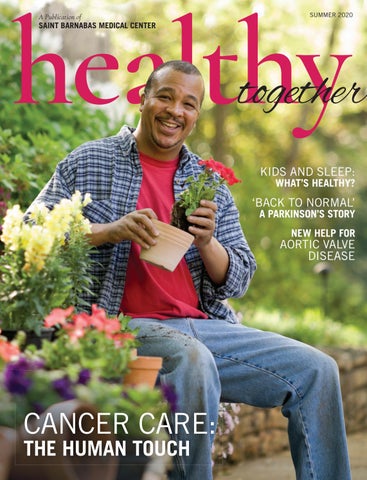
CANCER CARE: THE HUMAN TOUCH SBMC_Cover_Sum20_final.indd 1
7/29/20 2:36 PM
A MESSAGE FROM LEADERSHIP
New Ways to Care
HEALTH NEWS
A
t RWJBarnabas Health, in addition to treating medical conditions, we actively engage on a variety of levels to promote the health and wellbeing of our communities. That outreach takes many shapes, including healthy living classes, educational programs for seniors, partnerships with local arts organizations, providing healthy food and much more. Social distancing and other pandemic-related restrictions haven’t stopped these efforts, only changed their form. We’re providing virtual support for all kinds of needs, including breastfeeding, perinatal mood and anxiety disorders, arthritis, addiction recovery and more. People who want to learn about wellness techniques, such as guided relaxation or chair yoga, can find what they need through our online programs. For a full list, visit www.rwjbh.org/events. Meanwhile, we are creatively retooling signature events such as runs, walks and galas to include virtual participation. Our annual Running with the Devils 5K will be going virtual as well (learn more at www.rwjbh.org/runningwiththedevils). Our partners are also creating new events, such as the Somerset Patriots, who hosted sold-out drive-in movies at TD Bank Ballpark with proceeds going to the RWJBarnabas Health Emergency Response Fund to help local healthcare workers. To make a donation to the fund, visit www.rwjbh.org/give. As we reimagine events this fall at Saint Barnabas Medical Center (SBMC), we will celebrate the 20th anniversary of Miracle Walk with a virtual 1-mile walk. Participants complete the walk between Sunday, October 11 and Saturday, October 17. Since its inception, Miracle Walk has raised almost $6.5 million for the SBMC Neonatal Intensive Care Unit. To walk on behalf of our tiniest patients, register at www.miraclewalk.com. Regardless of the limitations imposed by COVID-19, we continue to partner with our communities in providing virtual health education programs, support groups and events. We encourage our community to continually check SBMC event listings on our website (www.rwjbh.org/sbmcevents) for the latest programs and offerings in our new virtual world. How we meet the needs of our diverse communities will continue to evolve, but our commitment to providing a broad range of culturally competent care for our communities hasn’t changed—and never will. Yours in good health,
BARRY H. OSTROWSKY PRESIDENT AND CHIEF EXECUTIVE OFFICER RWJBARNABAS HEALTH
STEPHEN P. ZIENIEWICZ, FACHE PRESIDENT AND CHIEF EXECUTIVE OFFICER SAINT BARNABAS MEDICAL CENTER
VIRTUAL SUPPORT FOR NEW AND EXPECTING MOTHERS WE ARE PLEASED to offer our communities safe places for new and expecting moms to connect online. For more information and to be sent the link to participate in the group, register at the online address provided below. Breastfeeding Support, every Monday from 12 to 1 p.m.: International Board-Certified Lactation Consultants will provide guidance and answer questions about latch issues, breast/nipple pain, milk supply concerns, pumping, supplementation, returning to work and weaning. Register at www.rwjbh. org/breastfeedingsupport. Perinatal Mood and Anxiety Disorders, every Wednesday from 11 a.m. to 12 p.m.: One of the most common complications of childbirth is anxiety or feelings of anger or sadness. You are not alone. Join our judgment-free and supportive virtual community, led by a perinatal mood disorder certified specialist. Register at www.rwjbh.org/PMADsupport.
94 Old Short Hills Rd., Livingston, NJ 07039 973.322.5000 | www.rwjbh.org/saintbarnabas
CONNECT WITH US ON @SaintBarnabasMedicalCenter @SaintBarnabasNJ RWJBarnabas Health @SaintBarnabasNJ
Saint Barnabas Medical Center complies with applicable federal civil rights laws and does not discriminate on the basis of race, color, national origin, age, disability or sex. For more information, see link on our home page at www.rwjbh.org/saintbarnabas. Saint Barnabas Medical Center cumple con las leyes federales de derechos civiles aplicables y no discrimina por motivos de raza, color, nacionalidad, edad, discapacidad o sexo. ATENCIÓN: Si usted habla español, servicios de asistencia lingüística, de forma gratuita, están disponibles para usted. Llame al 973.322.5000. Saint Barnabas Medical Center konfòm ak lwa sou dwa sivil federal ki aplikab yo e li pa fè diskriminasyon sou baz ras, koulè, peyi orijin, laj, enfimite oswa sèks. ATANSYON: Si w pale Kreyòl Ayisyen, gen sèvis èd pou lang ki disponib gratis pou ou. Rele 973.322.5000.
Healthy Together
| 2 |
SBMC_Memo_Sum20_final.indd 2
Summer 2020
7/29/20 2:41 PM
together healthy contents SUMMER 2020
18 2. WELCOME LETTER. A community update from our CEOs.
9
4. IS YOUR CHILD GETTING ENOUGH SLEEP? Eye-opening truths about kids and the effect of too little shut-eye. 6. NEW HELP FOR AORTIC VALVE DISEASE. A minimally invasive surgery can be the answer for aortic stenosis.
9. YOUR HEALTH, AT YOUR FINGERTIPS. Now you can manage your healthcare from an app on your iPhone.
8. FUNDING THE FUTURE. Emergency care is transformed with the help of a generous partner.
10. CANCER CARE: THE HUMAN TOUCH. How oncology nurse navigators help patients.
17
4
6
20
22
11. ‘THE SKY’S THE LIMIT.’ Intense physical therapy helps a teenager move again after a traumatic neck injury.
17. PARTNERS IN A PANDEMIC. A subacute facility provided essential help to SBMC.
12. SUPPORTING ARTS FOR THE HEALTH OF IT. Partnerships with local arts organizations promote the well-being of communities.
18. ‘BACK TO MY NORMAL SELF.’ Advanced treatment allows a Parkinson’s patient to return to daily activities.
14. A HIGH-TECH LOOK AT THE HEART. Artificial intelligence powers a noninvasive, highly accurate test for coronary artery disease.
20. WHAT DOCTORS WISH YOU KNEW ABOUT STROKES. Why fast action is urgent.
Saint Barnabas Medical Center
SBMC_TOC_Sum2020_final.indd 3
22. ‘ONE MINUTE AT A TIME.’ Teamwork in the critical care unit saved a seriously ill COVID-19 patient.
16. MIND, BODY AND HEALTH. Why caring for the whole person is the future of healthcare.
|
RWJBH.ORG/SAINTBARNABAS
3
7/29/20 2:45 PM
IS YOUR CHILD GETTING ENOUGH SLEEP? T EYE-OPENING TRUTHS ABOUT KIDS AND THE EFFECTS OF TOO LITTLE SHUT-EYE.
Healthy Together
| 4 |
SBMC_Sleep_Sum2020_final.indd 4
he baby who wakes you at 3 a.m. The nap-resistant toddler. The teen who texts deep into the night, then sleeps too late in the morning. For many parents, concerns about when a child should and should not be sleeping begin at birth and don’t end until the child is out of the house—and for good reason. “Sleep is the glue that holds us together,” says pediatric sleep physician and pediatric pulmonologist Stephanie Zandieh, MD, Director of Pediatric Sleep Medicine at Saint Barnabas Medical Center and a member of RWJBarnabas STEPHANIE ZANDIEH, MD Health medical
group. “Lack of sleep contributes to difficulties with learning, memory and emotional control, and causes disruptive behavior, decreased energy and lack of motivation.” So how can you help write a better bedtime story for your child?
THE EARLY YEARS: BABIES AND TODDLERS Newborns don’t enter the world with an internal clock. “Before 3 months of age, baby doesn’t know the difference between day and night,” says Dr. Zandieh. “Once they are about 3 months old, you can teach baby to self-soothe and fall asleep without parental presence, and keep to a schedule.” Most babies will take a morning nap and an afternoon nap. Between 1 and 2 years old, the morning nap gradually gets later and becomes the only nap. Since
Summer 2020
7/29/20 2:48 PM
nap time often becomes a battle of wills, how does a parent know when to insist? Dr. Zandieh offers a guideline based on your child’s behavior: “If a child is 3 years old and doesn’t nap and is a wreck the whole day, then that child still needs a nap.” Having an established sleep routine at night (for example, taking a bath, brushing teeth and reading a book) helps signal the brain that there is about to be a shift to sleep.
LATER ON: TWEENS AND TEENS By the teenage years, most kids have evolved from larks (showing a preference for waking early and going to bed early) to owls (staying up later and wanting to sleep later). A “perfect storm” of sleep-disturbing factors takes place in these years, Dr. Zandieh points out: School starts earlier, kids go to bed later, and electronics in the bedroom detract from sleep. Uneven schedules play a role. Teens sleep in on weekends, stay up even later on weekend nights and create a bad cycle of morning sluggishness for the beginning of the new school week. To compensate, many teens go back to taking a nap. “Napping can be good if it’s 20 to 40 minutes and if it’s sporadic,” says Dr. Zandieh, “but many teens nap after school and then have trouble going to sleep at night.” She recommends no more than two hours’ difference between weekend and weekday bedtimes. Another problem endemic to this age group: Teens do everything in their bedrooms, including homework, phone calls and social media. “This becomes bad for sleeping,” says Dr. Zandieh. “They subconsciously associate the stresses of life with bed, as opposed to looking at bed as a place for sleep and comfort.”
THE BEST REST: DAILY SLEEP GUIDELINES BY AGE 0 to 3 months
Up to 17 hours
4 to 12 months
12 to 16 hours (including naps)
Toddlers (1 to 2 years)
11 to 14 hours (including naps)
Preschoolers (3 to 5 years)
10 to 13 hours (including naps)
Grade schoolers (6 to 12 years)
9 to 12 hours
Teens
8 to 10 hours
Per 24 hours. Sources: Stanford Children’s Health, American Academy of Pediatrics
Regardless of age, Dr. Zandieh offers these suggestions for setting the stage for a good night’s sleep. • Keep the bedroom cool (at a temperature less than 75 degrees), comfortable and quiet. • Block out as much light as possible. • Keep electronics out of the room and keep pets out of the bed.
COULD IT BE A SLEEP DISORDER? If your child’s sleep-related behavior is troubling, a sleep disorder is a possibility. “We classify something as a sleep disorder when a lack of sleep seeps into daytime behavior or activities,” says Dr. Zandieh. “If you have a child who is snoring three or more days a week, or who is exhibiting daytime sleepiness or difficulties in school, speak to your pediatrician or see a sleep doctor.” Diagnosis of a sleep disorder begins with a thorough history and physical exam. For babies and younger kids, keeping a sleep log can be helpful. For teens, Dr. Zandieh suggests a wrist recorder or smartwatch to track this information. The most common childhood sleep disorders include: • Obstructive sleep apnea, marked by
snoring and feeling tired even after a full night’s sleep. • Insomnia, which causes trouble falling asleep and/or staying asleep. • Hypersomnia, which causes excessive sleepiness. • Parasomnia (sleepwalking or sleeptalking). • Rhythmic body movements. The most common among these is restless leg syndrome, which causes a creepy-crawly feeling in the legs, often mistaken for growing pains. • Secondary nocturnal enuresis, a form of bedwetting that develops six months or more after a child has learned to control his or her bladder. • Delayed sleep phase syndrome, in which sleep is delayed by two or more hours beyond bedtime and thereby causes difficulty waking. When necessary, Dr. Zandieh will order a sleep study. The Center for Sleep Disorders at Saint Barnabas Medical Center is equipped for children of all ages, including those with special needs. Each room is private (a parent stays with the child) and comfortable. Noninvasive monitors track brain activity, breathing, airway pressure, heart rate and more, to diagnose any disorder and inform treatment plans.
We have taken every precaution for the safety of our patients and team members. To learn more about the Center for Sleep Disorders at Saint Barnabas Medical Center, call 973.322.9800 or visit www.rwjbh.org/sbmcsleep.
Saint Barnabas Medical Center
SBMC_Sleep_Sum2020_final.indd 5
|
RWJBH.ORG/SAINTBARNABAS
5
7/29/20 2:48 PM
NEW HELP FOR
AORTIC VALVE DISEASE
Arash Salemi, MD, Clinical Chairman of Cardiothoracic Surgery for RWJBarnabas Health, Northern Region, has performed more than 2,000 TAVR procedures.
A MINIMALLY INVASIVE SURGERY CAN BE THE ANSWER FOR AORTIC STENOSIS.
T
he true value of innovative heart surgery technology often comes down to the look in a patient’s eye. “You can see the worry in the patient’s eyes when they come for an evaluation,” says board-certified surgeon Arash Salemi, MD, newly appointed Clinical Chairman of Cardiothoracic Surgery for RWJBarnabas Health, Northern Region, and a member of RWJBarnabas Health medical group. In the case of patients with aortic stenosis, the valve in the aorta—the large blood vessel that carries blood from the heart to the rest of the body—has narrowed, hindering the body’s blood supply. “They’ve been told that, left alone, their valve eventually will get them, and that is correct,” Dr. Salemi says. “By far the most gratifying piece of what I do is seeing the relief in the eyes of patients and their families as that weight is lifted after successful surgery.”
A NEW OPTION Dr. Salemi and colleagues at Saint Barnabas Medical Center (SMBC) can now provide that relief to more aortic stenosis patients, thanks to a technology known as transcatheter aortic valve replacement (TAVR). This minimally Healthy Together
| 6 |
SBMC_TAVR_Sum20_final.indd 6
Summer 2020
7/29/20 2:50 PM
invasive procedure anchors a new aortic valve on top of the existing one via a catheter that’s inserted in an artery in the groin and threaded to the heart through blood vessels. “People ask me how TAVR is different from open-heart surgery, and I’m especially qualified to answer, because I do both,” says Dr. Salemi, who performs all forms of adult cardiac surgery and is an international leader in structural heart disease with a particular interest in valvular disorders. Open-heart surgery typically is a three-to-four-hour operation in which a patient undergoes general anesthesia, has an incision to open the chest, is put on a heart-lung machine, has the heart stopped and restarted, spends five to seven days in the hospital and takes about a month to recover. In contrast, TAVR usually takes about one hour and the patient is sedated, doesn’t require general anesthesia or a breathing machine and goes home the same day or the next. “You’re off to the races after a day or two resting at home,” Dr. Salemi says. “I had a patient recently send me a video of himself teaching a spin class 13 days after having his TAVR.”
SAVING MORE LIVES Prior to TAVR, treatment for aortic stenosis had significant limits. “There is no medical therapy, diet or exercise for this condition,” Dr. Salemi says. “The only available therapy was valve removal and replacement with open-heart surgery.” Even so, he says, up to two-thirds of aortic stenosis patients over age 75 were not given open-heart surgery. The reason: Many older people with aortic stenosis also have other serious conditions or are frail in ways that could complicate a major surgery. This care gap was significant for RAVI KARANAM, MD a large group of
patients. “Aortic stenosis is a progressively worsening disease,” says Dr. Salemi. “The two-year survival rate for untreated people with symptoms is only 50 percent.” In 2012, the Food and Drug Administration (FDA) approved the minimally invasive TAVR procedure for patients who were at higher risk for traditional open-heart surgery. However, patients who had aortic stenosis but no significant risk factors for traditional surgery were not able to have TAVR. Then, in 2019, the FDA approved TAVR even for lower-risk patients. Research by Dr. Salemi and others at multiple centers nationwide—including RWJBarnabas Health and New York Presbyterian/Weill Cornell Medical Center, where Dr. Salemi previously served as the endowed Carrie and David Landew Associate Professor of Cardiothoracic Surgery—has demonstrated that, for TAVR, outcomes in lower-risk patients are equal to or better than outcomes for aortic stenosis patients who have open-heart surgery. “We essentially are now able to offer TAVR to anyone with aortic stenosis,” says Dr. Salemi, who has personally performed more than 2,000 of the procedures in addition to having deep experience with open-heart operations. “TAVR is a revolutionary technology and a paradigm shift in how we treat aortic stenosis.”
THE VALUE OF VOLUME Centers where surgical teams have considerable TAVR experience, like those at SBMC, produce especially good outcomes, with lower risk of complications such as stroke, according to a recent study by Dr. Salemi and colleagues published by the American College of Cardiology. “It’s not just the surgeon and cardiologist doing a good number of cases,” says cardiothoracic surgeon Ravi Karanam, MD, Director of the Cardiothoracic Residency Program at RWJBarnabas Health. “The entire surgical team keeps well-tuned so that unexpected
AORTIC VALVE
WHAT IS AORTIC STENOSIS? Aortic valve stenosis is a narrowing of the opening of the aortic valve that restricts blood flow to the heart. Aortic stenosis can develop as a person ages due to scarring and calcium buildup in the valve flap. High blood pressure, diabetes and high cholesterol levels can also be risk factors. Symptoms can be mild or severe, and include difficulty breathing, heart palpitations and chest pain. A routine exam with a stethoscope can reveal a heart murmur, which is a possible sign. Other diagnostic tests include electrocardiogram, chest X-ray and echocardiogram.
events can be addressed effectively. Volume creates experience, and experience creates better outcomes.” With a local patient population of almost 10 million, it’s important that SBMC has the technology, knowledge and skills to provide new services within the community. “Having a well-known leader in heart disease like Dr. Salemi is a tremendous asset,” says Dr. Karanam. “He’s the right person to be at the helm as these services expand.”
Your heart doesn’t beat just for you. Get it checked. We’ve taken every precaution for the safety of our patients and team members. To find a cardiac specialist at Saint Barnabas Medical Center, call 888.724.7123 or visit www.rwjbh.org/heart.
Saint Barnabas Medical Center
SBMC_TAVR_Sum20_final.indd 7
|
RWJBH.ORG/SAINTBARNABAS
7
7/29/20 2:50 PM
Seated, front: Lester Bornstein, Vice Chair, HFNJ. Standing, from left: Marsha Atkind, Executive Director and CEO, HFNJ; Stephen P. Zieniewicz, FACHE, President and CEO, SBMC; Christopher Freer, DO, Chair, Emergency Department, SBMC; Beth Levithan, PhD, Honorary Chair, HFNJ; Jay Blumenfeld, Assistant Treasurer, HFNJ; Amy Schechner, Chair, HFNJ; Lisa Block, Senior Program Officer, HFNJ. Note: This photo was taking pre-pandemic and before mask and social distancing requirements.
HOW TO SUPPORT SAINT BARNABAS MEDICAL CENTER Out of abundance of caution and for your safety, Saint Barnabas Medical Center has canceled or reimagined all in-person events for 2020. The funds raised through these events remain critical. We are counting on your continued support of our critical care initiatives.
FUNDING THE FUTURE EMERGENCY CARE IS TRANSFORMED, WITH THE HELP OF THE HEALTHCARE FOUNDATION OF NEW JERSEY.
T
he Healthcare Foundation of New Jersey (HFNJ), a longtime partner of Saint Barnabas Medical Center (SBMC), has awarded the medical center a $1 million grant toward the 25,000-square-foot expansion of the Emergency Department. The HFNJ gift will be used specifically to expand the size of the department’s observation unit to 22 beds and purchase movable clinical, patient monitoring and nursing equipment. The expansion will allow the Emergency Department to accommodate 130,000 visits per year. “We are grateful to the Healthcare Foundation of New Jersey for their continuous support and assistance with the transformation of the Saint Barnabas Medical Center campus and the expansion of our Emergency Department,” says Stephen P. Zieniewicz, FACHE, President and CEO, SBMC. “This transformation is part of the ongoing campus enhancements to address the evolving needs of our patients and community for the future.”
To learn more about events and how to support Saint Barnabas Medical Center, visit www.sbmcgiving.org.
Healthy Together
| 8 |
SBMC_Foundation_Sum20_final.indd 8
• GOLF: Our nurses, physicians and staff exemplified courage and compassion when it was needed most. This year, we are asking our valued supporters of the 46th Annual Saint Barnabas Medical Center Golf Open and Friends of Saint Barnabas Golf Classic to support the Emergency Response Fund in honor of the frontline heroes who work here. To support, please visit www.rwjbh.org/ sbmcgolf. • MIRACLE WALK: The 20th Annual Miracle Walk is now taking place virtually! Participants are being asked to walk 1 mile, from home, any time between Sunday, October 11, and Saturday, October 17. Since its inception, Miracle Walk has raised almost $6.5 million for the Neonatal Intensive Care Unit at Saint Barnabas Medical Center. To walk on behalf of our tiniest patients, register at www.miraclewalk.com. • BREAST CANCER: Every two minutes, a woman is diagnosed with breast cancer. In lieu of the Fashion for the Pink Crusade, we are asking our friends to support these women and their families by donating to the breast programs at Saint Barnabas Medical Center and Barnabas Health Ambulatory Care Center. Every donor will receive a link to an exclusive fashion presentation by Neiman Marcus. To make your gift, visit www.rwjbh.org/ fashionforthepinkcrusade. We look forward to celebrating these events with you—in person—next year!
Summer 2020
7/29/20 2:52 PM
YOUR HEALTH, AT YOUR FINGERTIPS Now you can manage your healthcare right from the Apple Health app on your iPhone. You can easily keep track of allergies, conditions, immunizations, vitals and more, and consolidate your health records in a timeline—all in one place. Here’s how:
1
If you don’t have one yet, create a username and password for the RWJBarnabas Health Patient Portal (www.rwjbh.org/patientportalenroll).
2
Download the Apple Health app from the Apple Store. (You’ll need an iPhone running iOS 11.3 or later.)
3
Be sure your iPhone is passwordprotected, ideally with two-factor authentication.
4
Go to the Health Records section of the Health app, search for RWJBarnabas Health, and log in.
5
After you log in once, your health records will start to appear in the Health app, and will update automatically.
Download the Apple Health app at the Apple Store and access your RWJBarnabas Health medical records at www.rwjbh.org/patientportalenroll.
RWJBarnabas Health
System_AppleHealth_Sum20_REV1.indd 9
|
RWJBH.ORG
| 9
7/30/20 12:09 PM
RWJBarnabas Health, together with Rutgers Cancer Institute of New Jersey—the state’s only NCI-Designated Comprehensive Cancer Center—provides close-to-home access to the latest treatment options. For more information, call 844.CANCERNJ or visit www.rwjbh.org/beatcancer.
CANCER CARE: THE HUMAN TOUCH HOW ONCOLOGY NURSE NAVIGATORS HELP PATIENTS
P
social or medical—the navigator can help the patient get the benefit of resources from throughout the health system.” When a patient makes an appointment with an RWJBH cancer provider, the oncology nurse navigator will follow up with the patient the next day. “The navigator asks if there are any questions about the upcoming appointment and goes through some of the specifics of what will happen,” Silva says. That’s just the beginning. Oncology nurse navigators, who are located at each RWJBH facility, also do the following: Identify possible barriers to treatment. Does the patient have financial or insurance concerns? Does the patient have family or friends who can provide support? Is there a transportation issue? The nurse navigator can identify and help with these problems right away. “In one case, we were able to get a patient to To contact the Oncology Access Center, see a specialist located 70 miles call 844.CANCERNJ (844.226.2376). away from the
atients who seek care through the RWJBarnabas Health (RWJBH) Oncology Access Center have a big advantage: They get connected to an oncology nurse navigator who acts as their problem-solver and supporter before, during and after treatment. The oncology nurse navigator becomes an important member of the patient’s healthcare team and serves as his or her advocate while compassionately supporting their physical, emotional and spiritual needs from diagnosis through survivorship. “When you choose RWJBarnabas Health for your cancer care, you’re not only getting quality care, but someone to walk beside you on your treatment journey,” explains Jeanne Silva, RN, Director, Nurse Navigation, Oncology Services at RWJBH. “Moreover, we coordinate all of our resources, so that if a patient has a problem—be it financial,
Healthy Together
| 10 |
System_OncologyNav_Sum20_Final.indd 10
patient’s home,” Silva says. Communicate constantly. This is essential in two ways. First, the nurse navigator is the central clearinghouse for information provided from the many specialists on a cancer patient’s care team—medical oncologists, radiation oncologists, surgical oncologists, social workers, nutritionists and more. The navigator can ensure that no aspects of treatment fall through the cracks and that the patient receives the highest quality of care. Second, the navigator can follow up to be sure a patient understands what’s happening. “Doctors do a great job of explaining, but often you can see the patient’s mind drift off as the person starts to worry about things like, ‘Who’s going to pick my kids up from school?’” Silva explains. “A navigator can talk to the patient later about what he or she understood and relay the necessary information over again in smaller bits so it’s easier to process.” Set priorities. “Sometimes what feels urgent to a patient is not clinically urgent, but our nurse navigators have the ability to know what is truly time-sensitive,” Silva explains. “For example, recently a young man needed to see a specialist as soon as possible. Based on the navigator’s intervention, he was able to get in to see the doctor in one day.” Save time. Often, a patient needs several medical procedures—for example, an echocardiogram and a port insertion before chemotherapy treatment can begin. A nurse navigator can arrange for multiple appointments to be scheduled at the same facility on the same day. “A navigator is key to making sure all the pieces fit together and to minimizing the time a patient needs to spend at a facility,” Silva says. “An oncology nurse navigator is a critical part of a patient’s cancer care team,” she continues. “He or she is the kind of person who can anticipate what’s needed and make it happen—and who has a relentless desire to help patients.”
Summer 2020
7/29/20 3:00 PM
Sam Jarmer made remarkable progress at Children’s Specialized Hospital and continues doing well with outpatient therapy.
‘THE SKY’S THE LIMIT’ AFTER A TRAUMATIC NECK INJURY, INTENSE PHYSICAL THERAPY HELPS A TEENAGER MOVE AGAIN.
J
uly 24, 2019: a grayish, unremarkable day on the beach at Ocean Grove. Lifeguard Sam Jarmer, 16, dives into the water to cool down, but hits a hidden sandbar. Soon after, Sam’s mom, Jessica, sitting on the beach several blocks away, sees a call from Sam’s boss come in on her phone. “I immediately knew not only that he was injured; I could feel that it was bad,” she remembers. When he hit the sandbar, Sam suffered a burst fracture in the C6 vertebra near the base of the neck and lost the ability to move his arms and legs. A fellow lifeguard jumped in to lift his head above the water, and a trauma team was dispatched from a nearby hospital. Sam was strapped to a backboard, and six of his fellow lifeguards carried him to a waiting ambulance. “He kept saying, ‘I’m so sorry, Mom,’ because we were supposed to go on vacation the next day,” Jessica remembers. Sam was in surgery for six hours while the burst vertebra was replaced with a titanium cage. He spent the next five days
An RWJBarnabas Health facility recovering at the hospital. At that point, he could occasionally raise his arms a bit, but nothing more. It was time for intensive inpatient rehabilitation and therapy at Children’s Specialized Hospital (CSH) in New Brunswick. “I remember feeling that this would be the place that would make it all better,” Jessica says.
MAKING PROGRESS The first piece of good news came from Michele Fantasia, MD, Director of the Spinal Cord Injury Program at CSH. Her evaluation determined that Sam’s injury was “incomplete,” meaning that Sam still had some motor and sensory function below the level of injury. “As I say with all incomplete injuries, ‘The sky’s the limit,’” Dr. Fantasia told Jessica. Four months of recreational, physical and occupational therapies followed. “The occupational therapists made modifications
for everything,” Jessica remembers. “They kept constructing things in some kind of magical workshop they had.” There was a special fork to help Sam relearn how to feed himself, a device to help him brush his teeth and more. “Everyone at Children’s really helped me when I was at one of the lowest points in my life with my injury,” says Sam. “They just showed compassion in all of the support and love that they gave me.” On November 19, Sam was discharged from CSH. Today, Sam continues with a rigorous program of outpatient physical therapy. During the COVID-19 lockdown, he did his exercises via telemedicine for a few weeks. His older brother, home from college, was there to help. Sam continues to work on his core muscles, arms and fingers. He now has muscle control in all parts of his legs and continues to work on walking independently. “I’m staying positive,” he says. “I know it will take time and I’ll be back to where I was, but for now I’ve just got to keep pushing forward.” To learn more about Children’s Specialized Hospital, call 888.244.5373 or visit www.childrens-specialized.org.
At Children’s Specialized Hospital, we provide world-class care for children and young adults who face special health challenges across the state of New Jersey and beyond. Our locations in Bayonne, Clifton, East Brunswick, Egg Harbor Township, Hamilton, Jersey City, Mountainside, New Brunswick, Newark, Toms River and Warren treat everything from chronic illnesses and complex physical disabilities like brain and spinal cord injuries to developmental and behavioral issues like autism and mental health.
RWJBarnabas Health
System_CSH_Sum20_Final.REV1.indd 11
|
RWJBH.ORG
| 11
7/30/20 2:07 PM
[ANYTOWN]
A musical with a mission: “Anytown,” an original educational musical, tells the story of Hope, a high-achieving high school student who becomes addicted to opioids after a soccer injury. The show has toured middle and high schools in New Jersey and was developed through a partnership with George Street Playhouse in New Brunswick, RWJBH and the Horizon Foundation of New Jersey.
[BEAT BUS] They’ve got the beat: Students in Long Branch, Asbury Park and Neptune have experienced a state-of-the-art mobile recording studio to create their own music thanks to the Beat Bus, a collaboration between Lakehouse Music Academy and the Asbury Park Music Foundation that is supported in part by RWJBH. In addition to providing a means of creative expression and new ways to collaborate, the Beat Bus helps prepare students for success in the digital age. Healthy Together
| 12 |
System_Arts_Sum20_Final.indd 12
Summer 2020
7/29/20 3:04 PM
[ASBURY PARK MUSIC + FILM FESTIVAL]
Making (sound) waves: The Asbury Park Music + Film Festival, of which RWJBH is a Founding Partner, celebrates the role of music in film, as well as the shore town’s long history as an incubator of great music. It benefits underserved children in Asbury Park and surrounding areas by providing music education, instruments and social connection opportunities. Note: All photos on these pages were taken before the COVID-19 pandemic and social distancing guidelines.
SUPPORTING ARTS FOR THE HEALTH OF IT
PARTNERSHIPS WITH LOCAL ARTS GROUPS HELP PROMOTE THE WELL-BEING OF COMMUNITIES.
R
esearch has shown that the arts stimulate creativity, ease stress, promote joy, improve memory and enhance education. That’s why RWJBarnabas Health (RWJBH), with its strong commitment to creating and sustaining healthy communities, partners with local arts organizations. “We understand the clear and beneficial impact that taking part in the arts has on health and well-being,” says Michael Knecht, Senior Vice President of Strategic Marketing and Communications for RWJBH. “These partnerships are an important way for us to help people in our communities and also support local grassroots organizations.” RWJBH supports a broad range of arts events. Music, dance and film are high on the list: RWJBH has sponsored the Asbury Park Music + Film Festival; the Bridge Arts Festival
in Bayonne; the Montclair Jazz Festival; the Central Jersey Jazz Festival; Maplewoodstock Music & Art Festival; the “Sounds of the City” free outdoor concerts presented by the New Jersey Performing Arts Center in Newark; and the SOMA Film Festival in South Orange and Maplewood. Drama has a place as well. RWJBH is a sponsor of the New Jersey Repertory Company, a professional nonprofit theater in Long Branch with a mission to develop and present new plays. And in a proactive move to help stem the opioid epidemic among young people, RWJBH has partnered with the George Street Playhouse in New
Brunswick and the Horizon Foundation of New Jersey to create “Anytown,” a one-hour musical that demonstrates how addiction can happen to anyone. The show has toured to schools throughout the state, followed by Q&A discussions with students. “These partnerships are all part of the RWJBarnabas Health commitment to reaching out beyond the walls of our medical centers to help people get and stay healthy in all kinds of ways,” says Knecht. “And they’re wonderful examples of how meaningful collaboration with local organizations can make an impact throughout the state.”
To learn more about RWJBarnabas Health corporate partnerships, visit www.rwjbh.org/corporatepartners.
RWJBarnabas Health
System_Arts_Sum20_Final.indd 13
|
RWJBH.ORG
| 13
7/29/20 3:04 PM
The Heartflow Analysis FFR-CT software generates a 3D color-coded image of a patient’s heart and arteries, indicating the location and degree of artery blockages.
A HIGH-TECH LOOK
AT THE HEART DOCTORS CAN NOW USE ARTIFICIAL INTELLIGENCE FOR A NONINVASIVE, HIGHLY ACCURATE TEST FOR CORONARY ARTERY DISEASE.
Healthy Together
| 14 |
System_FFR_Sum20_Final.indd 14
Summer 2020
7/29/20 3:06 PM
“A
fter the test, they told me I was a walking time bomb,” says Ray Duarte, 50. As the Regional Director of Information Technology at Monmouth Medical Center Southern Campus and at Monmouth Medical Center, Ray had volunteered to be among the first for an advanced noninvasive technology known as Fractional Flow Reserve Computed Tomography (FFR-CT). This test evaluates how well blood flows through a patient’s heart arteries and determines whether— and where—blockages exist. “I had upper back pain on and off, for which I was seeing a chiropractor with no relief,” says Ray. “I did have high cholesterol, which I was addressing with improved diet and exercise, and a family history of heart disease. “However, due to my active lifestyle and symptoms that were not typical for heart disease, my primary care doctor told me he would never have recommended so much as a stress test for me,” Ray recalls. But the FFR-CT test showed that Ray’s right coronary artery was 99 percent blocked. Without the test and subsequent treatment, such a blockage could have led to a heart attack at any time.
FINDING THE BLOCKAGES The powerful, artificial intelligence-based FFR-CT test is used to diagnose coronary artery disease (CAD)—blockages in the blood vessels supplying the heart. CAD is a leading cause of death in the U.S., accounting for 600,000 to 700,000 deaths per year. It can cause shortness of breath, chest pain (typical and atypical) and heart attack, and can lead to death. When a patient has chest pain or suspicious symptoms, the usual RAJESH MOHAN, MD
noninvasive ways of detecting inadequate blood flow include an electrocardiogram (ECG), which uses electrical signals; a stress test, in which blood flow is tested while a patient exercises, via ECG or an echocardiogram (ECHO), which uses ultrasound waves; or a nuclear stress test, which uses radioactive dye and an imaging machine. In addition, a computed tomography (CT) scan can show calcium deposits that could narrow arteries. Prior to FFR-CT technology, however, the only way physicians could see for certain whether coronary arteries were blocked was to do an invasive procedure, known as cardiac catheterization and angiogram. In this procedure, a special dye is injected through a long, thin, flexible tube (catheter) that is threaded through an artery in the leg up to the arteries of the heart. If a blockage is found, the cardiologist can decide whether to correct it during the angiogram—for example, by inserting a small tube (stent) to keep the artery open— or to send the patient for bypass surgery.
ARTIFICIAL INTELLIGENCE While a crucial and sometimes lifesaving technology, an angiogram often shows no significant blockages, according to Rajesh Mohan, MD, MBA, FACC, FSCAI, an interventional cardiologist and Chief Medical Officer at Monmouth Medical Center Southern Campus (MMCSC). That’s where noninvasive FFR-CT comes in. Using “machine learning,” an application of artificial intelligence, the software compares images from existing CT scans of a patient’s heart to an evergrowing database of tens of thousands of other CT images. This large database helps physicians analyze the likelihood that any specific blockage could cause harm and also provides direction about treatment. “The FFR-CT technology creates a three-dimensional image of blood vessels and color-codes them based on
the severity of the blockage,” says Dr. Mohan. “It then also shows how each blockage impacts blood flow to the heart.” Armed with this knowledge, a physician can decide whether lifestyle changes, medication, a stent or surgery is the best course of action. “With this information, we can give our patients a more definite diagnosis and have confidence in the best treatment plan without putting them through unnecessary invasive procedures,” says Dr. Mohan. “Its accuracy is unlike that of any other noninvasive tests available to us.”
IS FFR-CT FOR YOU? Since CAD is a common type of heart disease, many patients can benefit from this advanced technology. However, FFR-CT is not available everywhere. Specialists at MMCSC are among the first in the state to use it, and MMCSC is the earliest hospital in the state to utilize it in the Emergency Department and throughout the hospital, as well as for outpatients. “The test needs to be done appropriately, according to criteria set by the American College of Cardiology,” says Dr. Mohan. “Patients need to have symptoms—for example, chest pain or shortness of breath on exertion, which a lot of people actually disregard. “If these exist in association with some of the coronary risk factors like smoking, hypertension, diabetes, high cholesterol and family history, then I think that patient is an ideal candidate for this study.” As for Ray Duarte, a stent procedure opened his blocked artery, his back pain has resolved and medication is controlling his cholesterol. He is back to an active lifestyle. Says Dr. Mohan, “We at Monmouth Medical Center Southern Campus are excited and privileged to introduce such a cutting-edge, revolutionary technology.”
Your heart doesn’t beat just for you. Get it checked. To learn more about FFR-CT or to find a cardiac specialist, call 888.724.7123 or visit www.rwjbh.org/heart.
RWJBarnabas Health
System_FFR_Sum20_REV1.indd 15
|
RWJBH.ORG
| 15
7/30/20 12:11 PM
BO DY
MIN D
MIND, BODY
AND HEALTH
WHY CARING FOR THE WHOLE PERSON IS THE FUTURE OF HEALTHCARE
A
t his yearly physical, a patient is found to be 35 pounds over ideal body weight. He has hypertension, and his lab results indicate prediabetes. His doctor urges him to change his diet, be more active and lose the extra weight to reduce his risk for stroke, heart disease and diabetes. The patient acknowledges that he should. But at his next yearly physical, he’s still 35 pounds overweight. In that all-toocommon scenario lies the possibility for a new approach FRANK A. GHINASSI, PHD to healthcare,
one that simultaneously provides help for behavioral as well as physical issues. “The goal is to help people make better choices—about things like what they eat, how they exercise and about alcohol and nicotine—and thereby avoid many chronic health disorders,” says Frank A. Ghinassi, PhD, ABBP, Senior Vice President, Behavioral Health and Addiction at RWJBarnabas Health (RWJBH), and President and CEO of Rutgers University Behavioral Health Care. “Through integrated care delivery, we want to treat both body and mind, preferably in the same location and during the same healthcare visit,” he says. In the case of the overweight patient, for example, the primary care provider will look to determine the cause of the
For help accessing mental health services, call the RWJBarnabas Health Access Center at 800.300.0628.
Healthy Together
| 16 |
patient’s inability to lose weight. “Is the issue genetic? Does the patient have a low metabolism?” asks Dr. Ghinassi. “Or is there a mood disorder that’s affecting energy level and motivation?” Once barriers to a healthier lifestyle are identified, doctors and behavioral health specialists can work together to develop solutions tailored to the patient’s specific needs.
AN INTEGRATED APPROACH “Often, people with behavioral and addiction disorders are treated ‘from the neck up’ and are referred to dedicated behavioral health offices,” says Dr. Ghinassi. But that approach can create roadblocks. “Maybe the patient can’t get an appointment for three weeks, or he doesn’t like the idea of walking into a building that says ‘counseling services’ or ‘psychiatry’ on the sign,” he explains. To provide coordinated care, RWJBH and Rutgers University Behavioral Health Care are bringing services closer together. “At many of our primary care and pediatric delivery sites, primary care physicians work with psychologists or social workers who are located in the same office suite or in the same building,” says Dr. Ghinassi. “A patient can be offered a chance to meet the physician’s behavioral health colleague even before leaving the initial appointment, find out what might be possible and perhaps find it easier to commit to following up with a subsequent call or visit.” The next evolution of care at RWJBH and Rutgers University Behavioral Health Care will be to have a clinical social worker or psychologist located right in the same office space as the primary care provider. Integrated healthcare is the future, Dr. Ghinassi believes. “People tend to come to a healthcare system when they’re in crisis—they need coronary artery surgery, for example, or their depression makes them unable to function in daily life. Of course, we’ll always be there for those people,” he says. “However, we’re evolving to an equal focus on early screening and intervention. Together, RWJBarnabas Health and Rutgers University Behavioral Health Care are on a mission to improve the health and life satisfaction of patients and families throughout New Jersey.”
Summer 2020
System_BehavorialHealth_Sum20_Final.indd 16
7/29/20 3:08 PM
Former COVID-19 patient Leola Hill made great progress at Spring Hills Post Acute Care in Livingston, which partnered with Saint Barnabas Medical Center.
could convert all 124 of their private rooms for COVID-19 patients. “The beauty of it was that they saw the need and came to us proactively,” says Bridget Keyes, RN, BSN, Administrative Director of Case Management at SBMC. “We had so many patients to care for, and because of this partnership we were able to keep them all under Saint Barnabas Medical Center care instead of having to send them to a field hospital set up by the state.” Working with medical leadership at SBMC, Spring Hills Livingston converted its rooms for COVID-19 and increased its staffing. The two organizations worked hand in hand. At one point, SBMC provided personal protective equipment for Spring Hills. At another, Spring Hills loaned SBMC 15 beds. After the peak of the pandemic had passed, Spring Hills accepted non-COVID patients from SBMC as well. “We have profound gratitude for the teamwork of Saint Barnabas Medical Center and Spring Hills,” says Stephen P. Zieniewicz, FACHE, President and CEO of SBMC. “Thanks to this partnership, we were able to keep true to our mission of compassionate care, healthcare excellence and superior service.”
PARTNERS IN A PANDEMIC A SUBACUTE FACILITY PROVIDED ESSENTIAL HELP AS COVID-19 CASES CONTINUED TO INCREASE.
O
n April 10, East Orange resident Leola Hill, 67, was struggling with many of the symptoms of COVID-19—fever, difficulty breathing, loss of taste and smell. She and her daughter met via telemedicine with a doctor who recommended that Leola go to the Emergency Department (ED) at Saint Barnabas Medical Center (SBMC). After evaluation in the ED, she was admitted to SBMC, weak, tired and in need of supplemental oxygen 24/7. “To be honest with you, I felt I was close to death but I was so miserable that I didn’t care,” Leola recalls. The story has a happy ending: By May 2, Leola was well enough to be discharged to neighboring Spring Hills Post Acute Care of Livingston for rehabilitation, and by May 16 she was able to go home. Along her journey, Leola had the
BACK TO HEALTH
benefit of an extraordinary partnership between SBMC and Spring Hills.
AN OFFER OF HELP In March, as cases of COVID-19 were rising rapidly in New Jersey, Alexander Markowits, CEO of Spring Hills, and the leadership team at Spring Hills Livingston began to discuss ways they could help. “We saw how the pandemic was progressing, so we thought we could be useful by extending a place for patients at Saint Barnabas Medical Center,” says Jesse Palma, Regional Director of Business Development for Spring Hills. Their idea: After safely discharging their existing patients, they
When Leola Hill got to Spring Hills, she was able to sit up in bed and to feed herself, but not much more. “I couldn’t go to the bathroom on my own, wash myself or dress myself,” she recalls. “But mentally, I was ready to do whatever it would take to go home.” She received visits right away from her physical, occupational and speech therapists, “and by the next day, everything was rolling,” she says. Now back at home with her daughter, she’s “100 percent better, though still not 100 percent back to where I was,” she says. “I’ve come a very long way and I feel blessed to be alive. And I’m so grateful to everyone at Saint Barnabas Medical Center and at Spring Hills. They all did their jobs so well, and that’s why I’m here today.”
For information about programs and services available at Saint Barnabas Medical Center, visit www.rwjbh.org/saintbarnabas.
Saint Barnabas Medical Center
SBMC_Subacute_Sum20_final.indd 17
|
RWJBH.ORG/SAINTBARNABAS
17
7/29/20 2:54 PM
‘BACK TO MY NORMAL SELF’ DEEP BRAIN STIMULATION ALLOWS A PARKINSON’S PATIENT TO RETURN TO DAILY ACTIVITIES.
Parkinson’s patient Ted Fattoross is back to his regular routine at his lakeside home in Wharton.
Don’t put off the healthcare you need. We’ve taken every precaution for the safety of our patients and team members. To learn about treatment for Parkinson’s disease at Saint Barnabas Medical Center, call 973.322.7023 or visit www.rwjbh.org/sbmcpd. Healthy Together
| 18 |
SBMC_Parkinsons_Sum20_final.indd 18
Summer 2020
7/29/20 2:58 PM
“F
or years, my wife and I traveled from New Jersey to New York City for my care, taking trains and buses, or sometimes relying on a neighbor to drive us,” says Ted Fattoross, 73, of Lake Shawnee in Wharton. “But beginning last year, I could no longer safely make those trips. It was just too difficult.” Ted has Parkinson’s disease (PD), and severe tremors (shaking of the legs, arms and other parts of the body) had a huge impact on his life. Medicines that had once worked to control symptoms no longer did. “I thought we had exhausted all treatment options,” he says. “But then we learned about a treatment, deep brain stimulation surgery, just 30 minutes away at Saint Barnabas.”
A NEW OPTION Common symptoms of PD include slow hand and leg movements, rigidity and problems with walking and balance. Medicines to treat these can cause side effects such as uncontrolled movement of the arms, legs and head. Over a period of 14 years, Ted gave up driving, then gardening. Eventually, he needed help buttoning his shirt, brushing his teeth and walking. Socially, life was difficult too, he says, because PD limited the effectiveness of his facial muscles. As the years went on, he needed pills every two hours around the clock, but their effectiveness would not last. “Most people with Parkinson’s have excellent results with medicines to
ARASH FAZL, MD, PHD
PAUL GIGANTE, MD
treat the symptoms,” says Arash Fazl, MD, PhD, a specialist in movement disorders at Saint Barnabas Medical Center (SBMC) and a member of the RWJBarnabas Health medical group. “But when the medicines do not last, or when their side effects are extreme, deep brain stimulation, or DBS, surgery offers a completely different— and long-lasting—option to calm the symptoms of PD.” Prior to DBS surgery, the neurosurgeon uses a special 3D MRI to identify the location in the brain that controls movements. The surgeon uses this 3D map to plan precisely where electrodes, or “leads,” will be placed during surgery. The wires are implanted under the skin and connected to a generator, or pacemaker, that sits just below the skin in the chest and can be manipulated to send electrical impulses to the brain. DBS is not a cure for Parkinson’s. But when medicines no longer work, the procedure is effective in calming tremors and improving rigidity of muscles and slowness of movement. It will likely help with balance problems but does not always help with walking, Dr. Fazl says.
DRAMATIC RESULTS Dr. Fazl explained DBS to Ted and his wife of 53 years, Barbara. “He and the entire staff kept me involved and talked to me about all my options,” Ted says. “They let me know that I could say or ask anything about DBS, that nothing was offlimits. It was outstanding care.” In September 2019, Paul Gigante, MD, an expert in DBS and Parkinson’s at SBMC, performed Ted’s surgery. In the following weeks, Ted and Dr. Fazl used the generator to fine-tune the electrical impulses. Both were exceptionally pleased with the results. “We tried many things with the controller, then, all of a sudden, we hit the ball out of the park!” Ted says with a chuckle of delight.
“Now, after 14 years with Parkinson’s, I’m about 85 to 90 percent back to my normal self. “I no longer need any medicines for Parkinson’s. None. Zero. Nada,” he says. “Parkinson’s is now old hat, not my concern any longer.”
CUSTOMIZED TREATMENT As promising as DBS is for people like Ted, this exciting treatment is not widely available. “About four of every 10 Parkinson’s patients could benefit from this surgery, but not all hospitals offer it,” Dr. Fazl says. “Most community hospitals cannot offer DBS, because it is very complex and time-consuming,” says Dr. Gigante. “It also requires specialists who are fellowship-trained to treat Parkinson’s.” A team at SBMC has worked for more than three years to develop the DBS program, and its efforts bring life-changing results. At SBMC, trained neurosurgeons can offer three different types of DBS surgeries. “Each has its own merits,” Dr. Fazl says, “so we can better customize treatment for each patient.” DBS is part of a broad range of options at SBMC for people with Parkinson’s. “Our specialists use both medicines and DBS, and our team includes surgeons and specialists in movement disorders, so that our patients can enjoy as full and active a life as possible,” Dr. Fazl says. Now free of most symptoms of Parkinson’s, Ted has turned his attention back to things he once took for granted: buttoning his shirt, tying his shoelaces, driving, working in his garden and basic home maintenance. In time, he hopes to resume playing handball. “When people get this kind of care early enough, they can expect incredible results, just like Ted’s,” says Dr. Gigante. “And it’s a big deal for us to be part of this kind of result for our patients.” “Before DBS at Saint Barnabas, my symptoms were devastating,” Ted says. “It’s been a wonderful thing.”
Saint Barnabas Medical Center
SBMC_Parkinsons_Sum20_final.indd 19
|
RWJBH.ORG/SAINTBARNABAS
19
7/29/20 2:58 PM
WHAT DOCTORS WISH YOU KNEW ABOUT
STROKES
THEY’RE COMMON—BUT ALSO PREVENTABLE, AND TREATABLE IF YOU ACT FAST.
Healthy Together
| 20 |
SBMC_Stroke_Sum20_final.indd 20
W
hen the brain’s blood supply is interrupted by a blocked or broken blood vessel, stroke occurs. Blood cells, deprived of oxygen and nutrients, begin to die, and important body functions can be impaired. “Stroke is an extremely significant condition,” says Danielle Haskins, MD, Medical Director of the Comprehensive Stroke Center at Saint Barnabas Medical Center (SBMC). “About 800,000 strokes
occur in the U.S. every year. And stroke is actually the fourth-leading cause of death in New Jersey.” The thing Dr. Haskins most wishes people knew about stroke, however, is not just that it’s common and dangerous. It’s that most of the deaths and disabilities caused by stroke could be avoided. “I wish people understood that they’re really in the driver’s seat with regard to stroke prevention,” Dr. Haskins says. “Up to 80 percent of all strokes could be prevented if people would control the risk factors.”
WHAT YOU CAN DO Some risk factors aren’t controllable—for example, aging (the chances of having a
Summer 2020
7/29/20 3:04 PM
HOW MUCH DO YOU KNOW ABOUT STROKE?
ACT F.A.S.T. FOR STROKE SYMPTOMS
1. Which of the following is a controllable risk factor for stroke? ■ A. High blood pressure
F
is for Face Drooping: It’s a cue to see if one side of the face is numb or droops.
A
is for Arm Weakness: Watch for numbness or weakness in one arm.
S
is for Speech: It refers to difficulty speaking or being hard to understand.
T
is for Time to Call 911: If any of these symptoms appears, call for emergency help right away.
■ B. Overweight ■ C. Diabetes ■ D. All of the above 2. Which of the following is not a possible symptom of stroke? ■ A. Sudden severe headache
Other symptoms to look for, according to the American Stroke Association:
■ B. One side of face drooping
• • • • •
■ C. Sudden rash
Sudden Sudden Sudden Sudden Sudden
numbness or weakness of the leg confusion or trouble understanding trouble seeing in one or both eyes trouble walking, dizziness, loss of balance or coordination severe headache with no known cause
■ D. Difficulty speaking 3. What should you do if you notice possible signs of a stroke? ■ A. Take a nap and see if it passes ■ B. Call 911
SYMPTOMS AND SPEED
■ C. Call your doctor
One of the most striking things about strokes is how quickly they can happen. “Stroke typically happens over the course of seconds, or maybe minutes,” Dr. Haskins says. “One of the more common things I hear is, ‘I was fine half an hour ago.’” Advances in stroke treatment mean that today it’s far more likely for a person to survive without serious disability than ever before. However, every minute between the onset of a stroke and getting treatment is critical. “Close to two million brain cells can die each minute that they’re not getting blood flow,” Dr. Haskins explains. “If you show up at the hospital less than one hour after a stroke, you’re nearly twice as likely to have significant improvement with treatment as if you showed up at two hours. Earlier is better.” The F.A.S.T. acronym (see illustration, above) reminds people what to watch out for. If you do suspect a stroke, call 911. Emergency medical service responders can get you to the hospital fastest, and can even potentially treat you on the way there. Comprehensive stroke treatment facilities, like the one Dr. Haskins directs at SBMC, allow doctors to greatly reduce the
■ D. Ask someone to drive you to the hospital 4. Which of these can help prevent a stroke? ■ A. Drinking alcohol in moderation, or not at all ■ B. Regular physical activity ■ C. Quitting tobacco ■ D. All of the above Answers: 1.) D 2.) C 3.) B 4.) D
stroke go up as you get older) and having a family history of stroke. If you do have such a history in your family, be sure your doctor is aware of it. Controllable risk factors, on the other hand, are areas in which you can take medication and make lifestyle changes to prevent stroke. Hypertension, or high blood pressure, is the leading cause of stroke. It may not have symptoms, so be sure yours is checked regularly. Other conditions that can be managed in consultation with your physician include high cholesterol, uncontrolled diabetes and obesity. Heart conditions, including irregular heartbeat and coronary artery disease, also increase stroke risk. Lifestyle changes that lower a person’s chance of having a stroke include quitting smoking, maintaining a healthy weight and drinking no or only moderate amounts of alcohol. DANIELLE HASKINS, MD
damage of stroke. They have special training and access to medications, equipment and procedures to break up and remove the blood clots that cause most strokes. Of course, the best way to deal with a stroke is to keep it from ever happening, Dr. Haskins emphasizes. “That takes seeing your physician on a regular basis and identifying and controlling the risk factors you have,” she urges. “If you control those early, you may prevent the damage of stroke by avoiding it altogether.”
We’ve taken every precaution for the safety of our patients and team members. To learn more about stroke prevention and treatment at Saint Barnabas Medical Center, call 973.322.6500 or visit www.rwjbh.org/sbmcstroke.
Saint Barnabas Medical Center
SBMC_Stroke_Sum20_final.indd 21
|
RWJBH.ORG/SAINTBARNABAS
21
7/29/20 3:05 PM
Michael Somekh on the day of his discharge with his daughters, Skylar and Sloane. He received a long, loud “clap out” from dozens of SBMC doctors, nurses and staff. BELOW: Michael’s friends donated numerous meals for SBMC healthcare providers as thanks for their heroic work.
‘ONE MINUTE AT A TIME’ WITH TEAMWORK AND TENACITY, CRITICAL CARE SPECIALISTS AT SAINT BARNABAS MEDICAL CENTER SAVED A COVID-19 PATIENT’S LIFE.
O
n March 18, Livingston resident Michael Somekh, 52, went to the Emergency Department at Saint Barnabas Medical Center (SBMC). He had what he thought was a very bad cold or the flu. As it turned out, Michael was one of the first COVID-19 patients at SBMC, and he had one of the most severe cases doctors there saw. As a result of the intensive efforts of the
Healthy Together
| 22 |
SBMC_CCUPatient_Sum20_final.indd 22
multidiscplinary critical care team at SBMC, however, he made it through. On May 22, he was released from SBMC to rehabilitation. “Neither Michael nor any of the survivors, and there were many, could have done as well as they did were it not for everyone on our healthcare team working together,” says critical care physician Paul Yodice, MD, Chairman of Medicine and Director of Clinical Excellence and Effectiveness at SBMC. “We were focused on one goal, and that was getting people back home with their families where they belonged.”
A MOVING TARGET In mid-March, doctors around the world were reaching out to each other to try to figure out treatments for this new viral threat.
As a first step, Michael was given antibiotics in case he had a bacterial infection. He was tested for COVID-19, and while test results were pending, he was given hydroxychloroquine, the only management for COVID-19 doctors had at the time. But Michael’s condition deteriorated rapidly. Within two days, he was on life support. “His blood pressure was falling so fast that he was in shock,” Dr. Yodice recalls. “He needed a special kind of ventilator reserved only for the most hypoxic [oxygendeficient] patients. We had to put him in a medication-induced coma.” Michael got bacterial pneumonia. His kidneys were barely functional. He developed what’s known as a “cytokine
Summer 2020
7/29/20 3:07 PM
storm” in which the body begins to attack its own cells and tissues as it attempts to fight off a virus. “It’s like a fire in a fireplace that rages out of control,” explains Dr. Yodice. “It stops doing what you need it to do and burns down the house.” To fight that battle, doctors tried tocilizumab, an immunosuppressant. “It may have helped prevent him from getting worse, but we can’t really know,” says Dr. Yodice.
ALL HANDS ON DECK SBMC was seeing many cases like Michael’s during that period. “We had to convert the entire OR and recovery room space, as well as several additional floors, into intensive care units to accommodate people as sick as Michael was,” says Dr. Yodice. For weeks, no one working in critical care was able to leave the hospital for more than a few hours. Reinforcements were pulled in from throughout the medical center: residents from all specialties, anesthesiologists, nurse anesthetists, physician assistants, physical therapists. Engineering and environmental services teams put themselves at personal risk to do what was needed to make the rooms safe. “Every single person went well above what anyone would ask or expect, and did so every day without complaint,” says Dr. Yodice. “We were all determined to succeed.” In dealing with COVID-19, there are no quick fixes. Patience, perseverance and endurance are necessary because patients often have multi-organ system failures, Dr. Yodice explains. “We have to take it one minute at a time,” he says. “As I tell families, minutes become hours, hours become days and days are what you need to get you home.”
TURNING THE CORNER At one point, Michael’s condition was so dire that, despite the no-visitors rule, his older sister, Barbara Julich, was allowed in to see him for a couple of hours. “There must have been six people standing over him the entire time,” she recalls. “Doctors, nurses, respiratory PAUL YODICE, MD therapists.”
Members of the critical care team in the lobby of the Cooperman Pavilion
Barb held up her phone so that his daughters, Skylar, 18 and Sloane, 22, and other family members could talk to the unconscious Michael, hoping that he could somehow hear them. It was the low point. Soon thereafter, however, Michael’s condition stabilized. In early May, doctors were allowed to try convalescent plasma therapy for people with severe cases of COVID-19. In this treatment, patients get blood from people who’ve recovered from COVID-19 and have developed antibodies to it. No one knows for sure if the treatment is why Michael turned the corner, but turn it he did. He was moved from the ICU to the respiratory floor. He was slowly weaned off the powerful anesthesia he’d been on. Nurses showed him pictures of his daughters and asked if he recognized them, and he blinked “yes.” Soon, he was able to talk on his own. “Why isn’t anyone coming to see me?” he asked Barb via FaceTime. She explained about the no-visitor policy. As he talked with Barb and his sister Carole Baron—who’d served as the main conveyor of information between the family and medical professionals—Michael began to realize that the world had changed. He
understood why the nurses had full plastic suits on when they entered his room, and why they took them off when they left. “Those nurses were so great,” Michael recalls. “Anything you needed, anything you asked, they were there for you.”
NEXT STEPS
On May 22, Michael became SBMC’s 750th COVID-19 discharge. On June 3, he was released from rehab to home. He has begun to regain some of the 50 pounds he lost and to get muscle strength back. “His recovery is just one example of how dedication and perseverance can make a difference to the life of a person and an entire community,” says Dr. Yodice. Given the nature of viruses, the world can expect another outbreak at some point, Dr. Yodice says. “But I’m hopeful that we won’t see anything approaching what we saw in the COVID-19 pandemic, because people and healthcare providers are now more aware and if they see anything developing, will take rapid steps to prevent its spread. “The analogy of fire is an important one,” he says. “Constant vigilance is the only way a fire doesn’t escape and burn everything around it.”
For information about physicians, programs or services at Saint Barnabas Medical Center, visit www.rwjbh.org/saintbarnabas.
Saint Barnabas Medical Center
SBMC_CCUPatient_Sum20_final.indd 23
|
RWJBH.ORG/SAINTBARNABAS
23
7/29/20 3:08 PM
NONPROFIT
U.S. POSTAGE PAID Lebanon Junction, KY
PERMIT #799
94 Old Short Hills Rd., Livingston, NJ 07039
MEDICATIONS AND THE SUN: WHAT YOU NEED TO KNOW
YOUR PRESCRIPTION MAY MAKE YOU MORE PRONE TO SUNBURN AND OTHER EFFECTS.
B
asking in sunshine is good for the soul—but not always for the skin, particularly if you’re taking medication.
That’s because many drugs, including common over-the-counter ones, can intensify the effect of sun on skin by causing a reaction to UV (ultraviolet) light. The risks: sunburn, rashes and blistering or aggravation of existing skin conditions, such as eczema. A sticker notifying you that a medication causes sun sensitivity, or a similar warning on a package insert, means you need to be especially vigilant. The time it takes for your skin to get sunburned will be greatly reduced, so use a product with SPF (sun protection factor) and reapply it according to the instructions on the label. In addition, wear sunglasses and
SBMC_Back_Sum20_final.indd 24
protective clothing, and try to avoid the sun between the peak hours of 10 a.m. and 4 p.m., even in fall and winter. These precautions apply to all skin tones.
SUN-SENSITIZING DRUGS
A wide range of drugs can cause sun sensitivity, including some medications in these categories: • Antibiotics • Allergy medications (oral antihistamines) • Antidepressants • Cholesterol-lowering drugs • Diuretics • Oral contraceptives • Non-steroidal inflammatory drugs, such as ibuprofen and naproxen • Retinoids Ask your pharmacist about any concerns you have about a medication.
MEDICATION SUPPORT FOR THE UNINSURED Barnabas Health Retail Pharmacy at Saint Barnabas Medical Center participates in the nationwide Dispensary of Hope program to distribute certain generic medications, free of cost, to low-income and uninsured people. In this program, pharmaceutical manufacturers donate generic medications, and they are sent to pharmacies across the nation. Currently, only oral medications are available, but the program is seeking to expand into other medications, including injectables. To be eligible, patients must be uninsured and have an income that is at or less than 200 percent of the Federal Poverty Level. To learn more, visit www.dispensaryofhope.org or call the Barnabas Health Retail Pharmacy at Saint Barnabas Medical Center at 973.322.2445.
7/29/20 3:12 PM