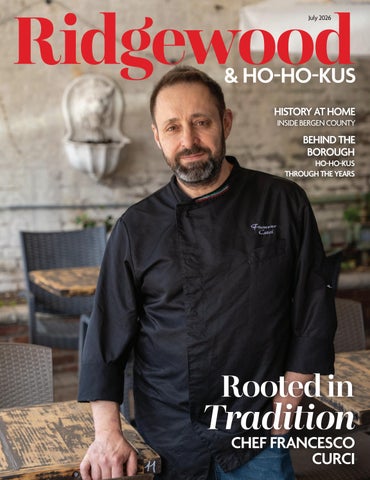
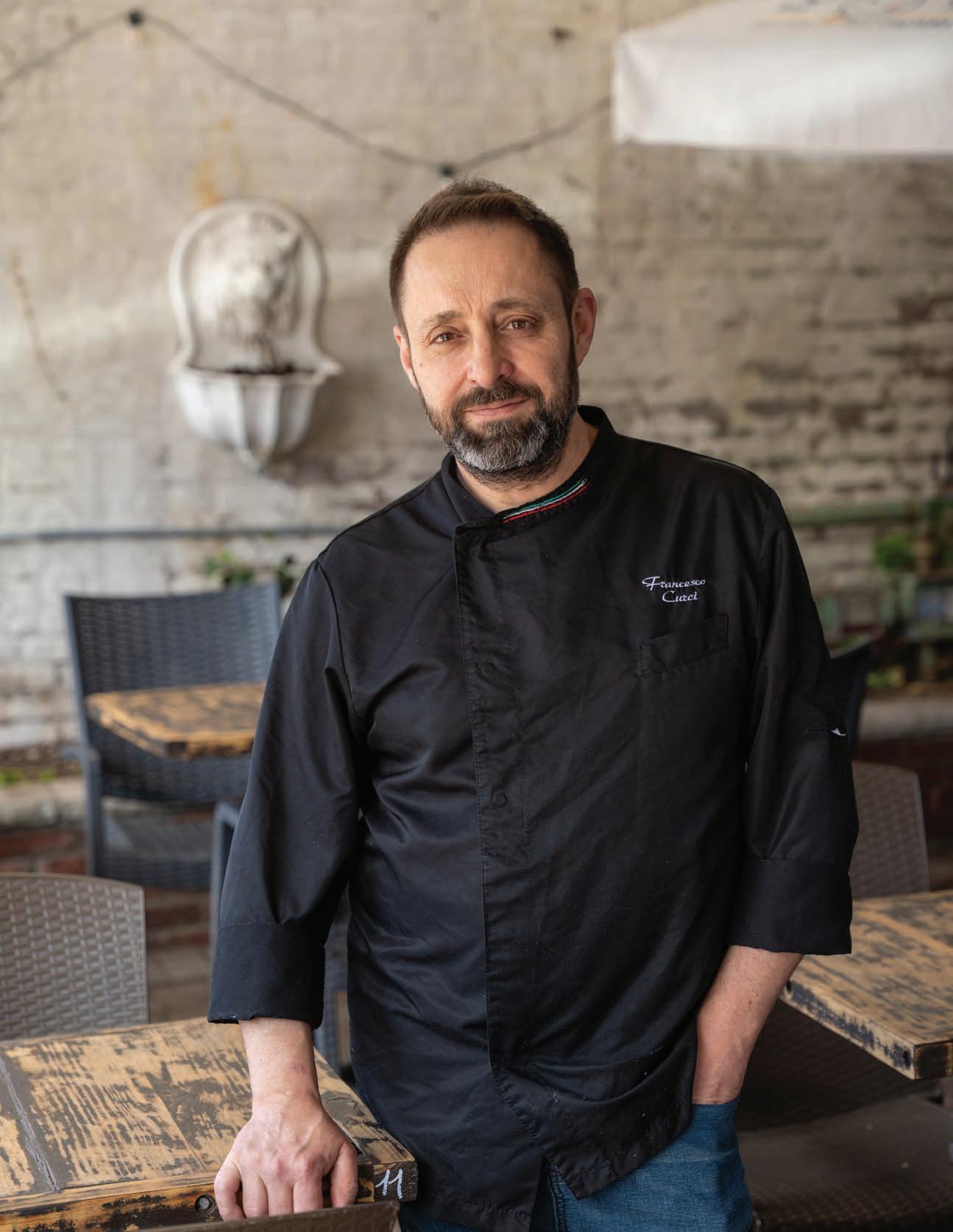
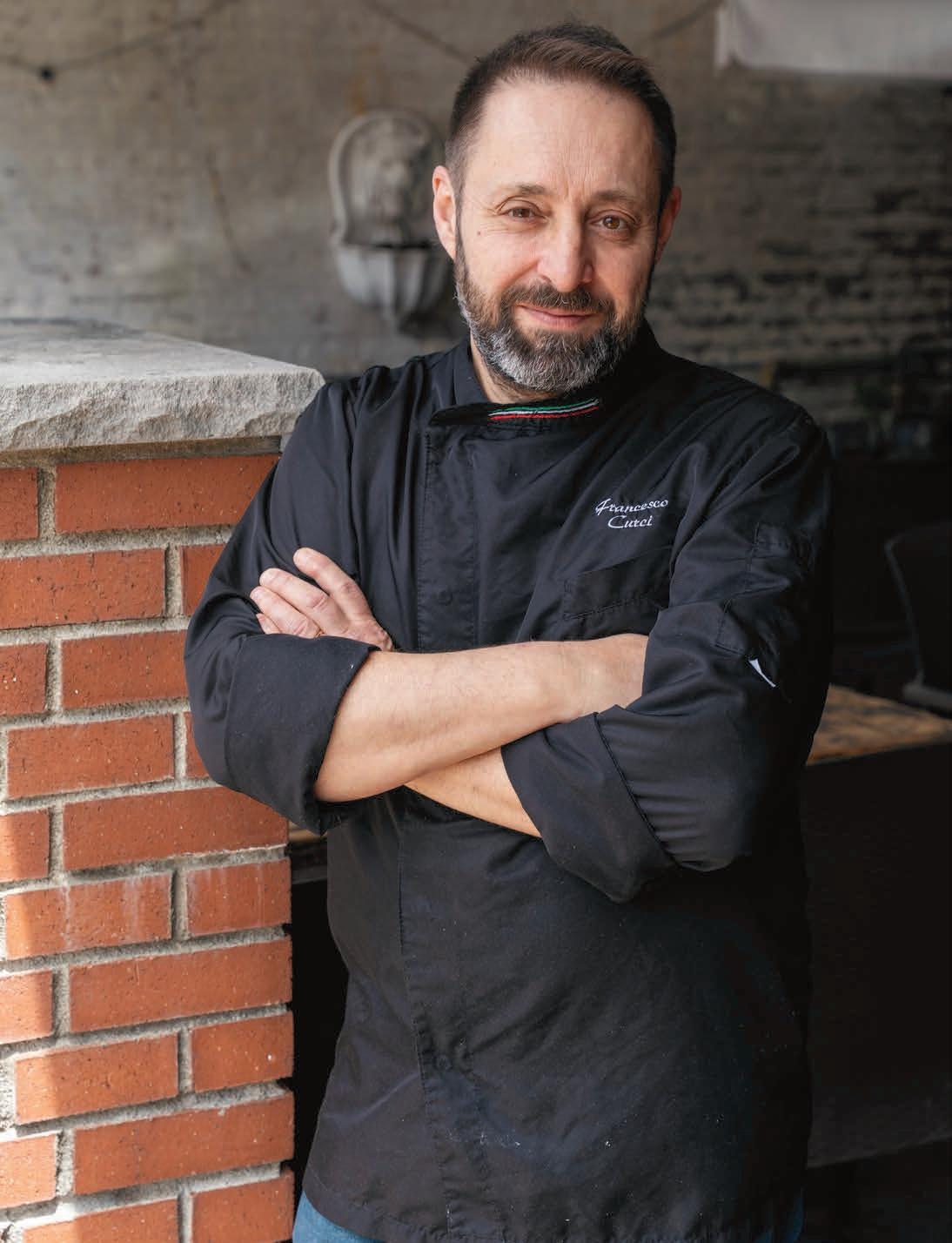
From Puglia to Ridgewood, Chef Francesco Curci of Morsetto bakes authenticity into every dish.
18 History Marches On
As America celebrates its 250th birthday, this is an ideal time to look beyond the textbooks and discover historic events that unfolded right here in the “201.”
22
A Borough Steeped in History
The U.S. gained independence 250 years ago this month. To celebrate the area’s deep historical roots, we delve into the top five things you might not know about Ho-Ho-Kus.
THIS
4 EDITOR’S NOTE Joys of Summer 6 LOCAL FUN Sun’s Out, Fun’s Out!
AROUND TOWN Blooming with Color and Literary Intrigue 12 LIVING WELL Stars, Stripes, and Strong Families
You See?
Providing guidance and knowledge at no cost to you.
Overwhelmed: That's the word used by every family that contacts me for help.
Finding the right senior living option for you or a loved one can certainly feel overwhelming. There are so many options and choices depending on needs, wants, budget, and location. Whether you are looking for independent or assisted living or need memory care, don't navigate it alone.
Call me today and let's have a conversation.
Jennifer Lizza Owner/Lead Senior Care Advisor
973-747-7271 ask-carol.com info@ask-carol.com Find us on Facebook!
Check all your senior living boxes with a one-and-done move to Brightview Joy’s Farm
VIBRANT SOCIAL SCENE
AMENITIES &
&
ON-SITE CARE CONTINUUM FINANCIAL FREEDOM monthly rentals with no buy-in fee
IT’S TIME TO LET YOUR BRIGHT LIFE SHINE. SCHEDULE YOUR PERSONAL VISIT TODAY. 201.975.6419 | BrightviewJoysFarm.com
JOYS OF SUMMER
aAHH, SUMMER. That glorious stretch of long days, firefly nights, and just enough nostalgia to make you forget your inbox.
Growing up in Fair Lawn, July 4 meant claiming a spot at Memorial Pool for the fireworks. We’d watch the sky erupt in color—always with an Italian ice in hand (cherry, of course). Some traditions are simply non-negotiable. Those memories have a way of pulling us back to simpler times. And while we can’t quite bottle that feeling, we can take a closer look at the rich history right here in our own backyard.
What was it like to live in Bergen County at the time of our nation’s founding? Believe it or not, Ridgewood and Ho-Ho-Kus were part of that story. In this issue, we invite you to step back in time with a visit to the Ridgewood Historical Society and Museum, where history feels anything but dusty. The current exhibit brings the past to life—and
yes, there’s even a document signed by George Washington himself. It’s worth a visit, especially with curious kids (or curious adults) in tow.
We also take a deep dive into Ho-Ho-Kus past, thanks to writer Sarah Nolan and borough historian John Hanlon. This story spans the generations and is filled with fascinating details and vintage photos that will make you look at familiar streets in a whole new way.
We’ve been hearing from many of you about how much you’re enjoying these explorations of local history. These stories connect us to the people, places, and moments that shaped our communities, adding a layer of meaning to everyday life (and sparking a little imagination along the way).
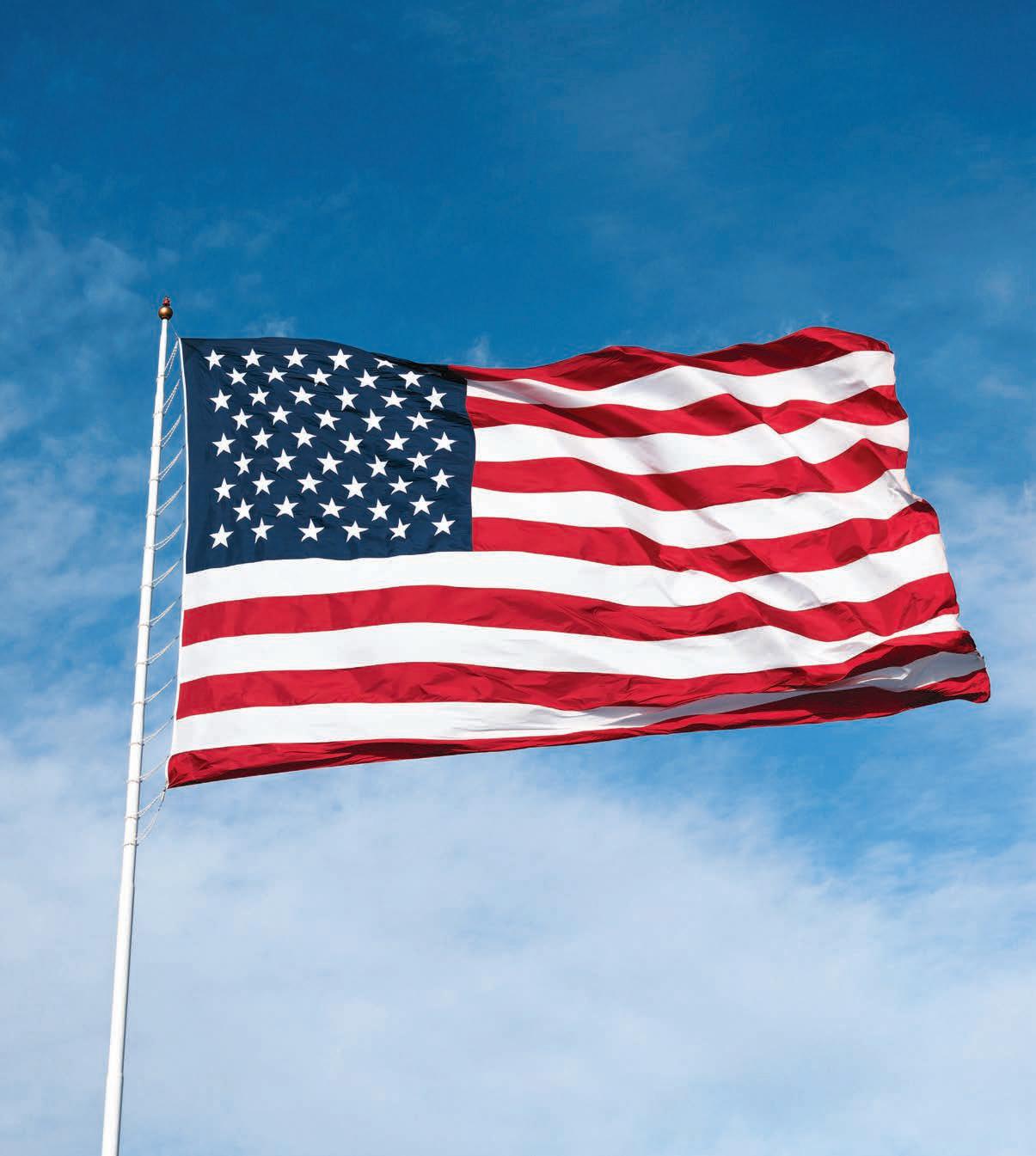
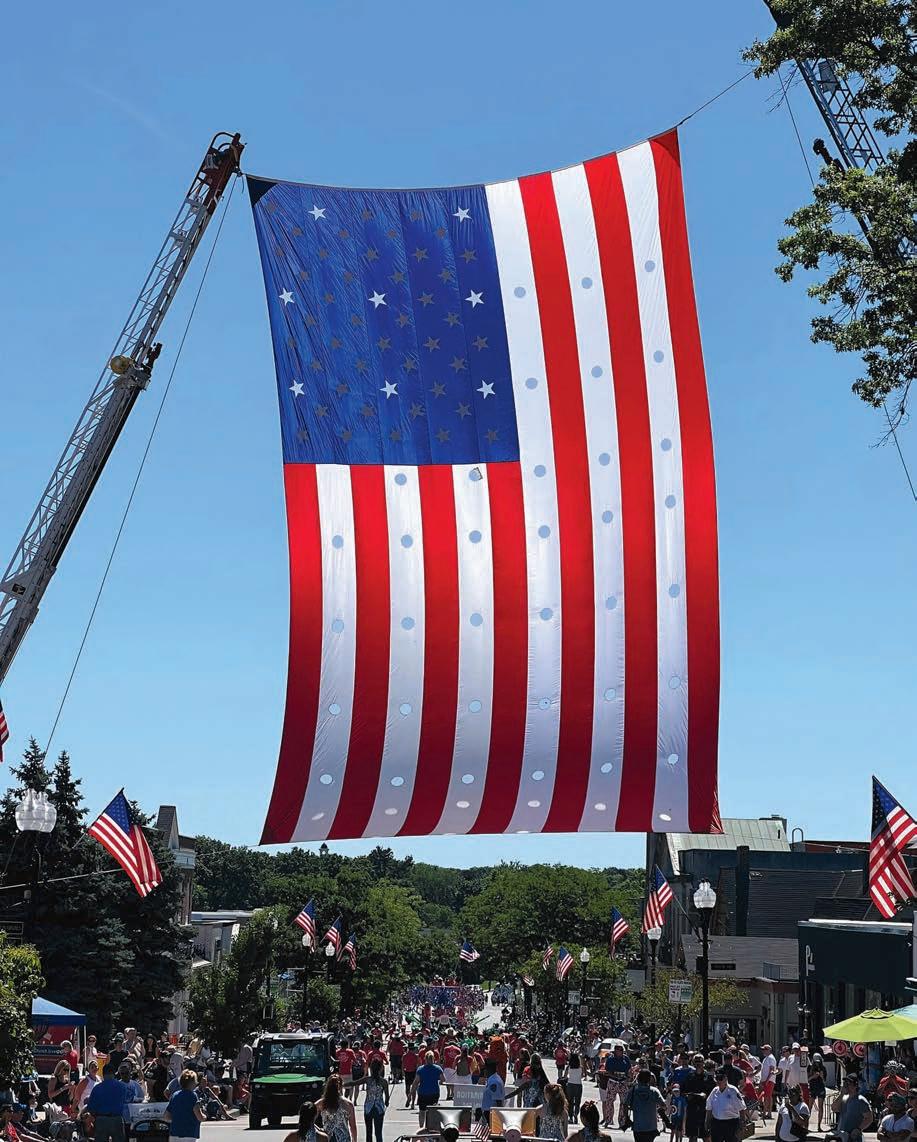
As you prepare to unfurl your American flag this season, be sure to check out our Q&A on proper flag etiquette—we’re here to help you fly it proudly (and correctly…because, let’s be honest, the neighbors are paying attention).
As always, I’d love to hear from you—your ideas, your stories, your favorite hidden gems around town. And while you’re flipping through these pages, don’t forget to give a nod to our advertisers. They’re the local businesses that are invested in bringing you this magazine to your mailbox each month.
Here’s to sunshine, small-town stories, and maybe even a cherry Italian ice or two.
See you at the parade.
Kris Pepper Editor
editor@ridgewoodmag.com
ridgewoodmag.com @ridgewoodmag
Publisher Karen Stires
karen.stires@wainscotmedia.com
Editor
Kris Pepper
Writers
Kris Pepper
Sarah Nolan
Rebecca Bleich
Stacy Antine, RD Lorri Steinbacher
Photographers
Joe Nolan
Adam Paray
WAINSCOT MEDIA
Chairman
Carroll V. Dowden
President and CEO
Mark Dowden
SVP, Group Publisher
Thomas Flannery
VP, Content Strategy
Maria Regan
Creative Director
Kijoo Kim
Art Director
Rosemary O’Connell
Associate Editor
Sophia Carlisle
Advertising Services Director
Jacquelynn Fischer
Operations Director
Catherine Rosario
Production Designer Chris Ferrante
Print Production Manager
Fern Meshulam
Advertising Production Associate
Griff Dowden
Ridgewood Magazine is published by Wainscot Media. Serving residents of Ridgewood and Ho-Ho-Kus, the magazine is distributed monthly via U.S. mail. Articles and advertisements contained here in do not necessarily reflect the opinions of the publishers. Copyright 2026 by Wainscot Media LLC. No portion of this magazine may be reproduced in any form without written consent.
PHOTOGRAPH BY MARJORIE RAGGO
Sun’s Out, Fun’s Out!
Summer in Ridgewood and Ho-Ho-Kus is in full swing. Check out our list and bring the family for lots of fun in the sun!
BY REBECCA BLEICH
THE MUSIC OF “1776”
When: Sunday, August 2; 4 p.m.
Where: 335 North Turnpike, Ho-Ho-Kus; The Hermitage
Celebrate summertime and America’s 250th birthday with a free outdoor concert with songs from the movie “1776.” Bring a chair or blanket to sit under the stars and listen to great music, making it a night to remember.
For more information, visit: thehermitage.org/ events.
THE REVOLUTIONARY WAR AT THE HERMITAGE
When: Saturday, July 11; 10 to 4 p.m.
Where: North Turnpike, Ho-Ho-Kus; The Hermitage
Tickets required: Kids: $5 and Adults: $10
Celebrate “America 250” at the Hermitage! Experience the American Revolution firsthand with members of the Outwater’s Militia and get up close and personal with the troops. Spend the day learning about America’s history in an interactive and fun way.
For more information, visit: thehermitage.org/events.
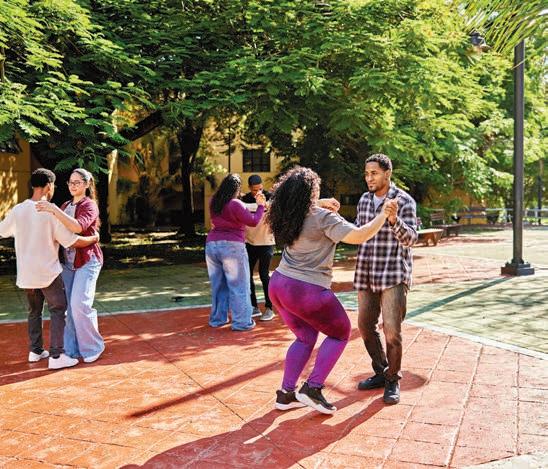
LATIN DANCE WORKSHOP WITH GREENHOUSE ARTS CENTER
When: Saturday, July 11; 11 a.m.
Where: Ridgewood Public Library, 125 North Maple Avenue, Ridgewood Spice up your morning with a high-energy Latin dance workshop. Learn the basics and the cultural history of salsa, merengue, and bachata. Take part in this fun workout and learn to move with confidence. No prior dance experience is required, but registration is!
For more information, visit: ridgewoodlibrary.org.
LACE UP AND SHOW OFF YOUR MOVES!
When: Friday, July 10, 6:30 to 8:30 p.m.
Where: Skate Park at the Stable, 259 N. Maple Avenue, Ridgewood
Bring the family for a night of roller skating, games, and music. No scooters or skateboards; rentals available.
For more information, visit ridgewoodlocal.com/events/family-skate-night or call Parks and Recreation at 201-670-5560.
MP MUSIC SHOW
When: Tuesday, July 21; 10:30 a.m. to 11:15 a.m.
Where: Sycamore Community Church, 32 Sycamore Ave, Ho-Ho-Kus
Move, dance, and sing along with Michelle from MP Music. Join this exclusive event and spend the morning with a fun, interactive music show. Registration required.
For more information visit: hohokuslibrary.org.
LIVE MUSIC UNDER THE STARS
RIDGEWOOD HISTORICAL SOCIETY AND MUSEUM
250 YEARS OF PROGRESS EXHIBIT
When: March 14 to Dec. 20; Saturdays and Sundays, 1 to 3 p.m.
Where: 650 East Glen Avenue, Ridgewood
Join the Ridgewood Historical Society and Museum in its new exhibit exploring the defining moments, struggles, and achievements that have shaped the United States. In honor of America 250, the exhibit celebrates American independence, ingenuity, and endurance. Bring the kids and check it out! (See a sneak peek in this issue!)
For more information, visit: ridgewoodhistoricalsociety.org.
ROYAL-TEA PARTY
When: Tuesday, July 28; 10:30 a.m. to 11:15 a.m.
Where: 91 Warren Avenue, Ho-Ho-Kus
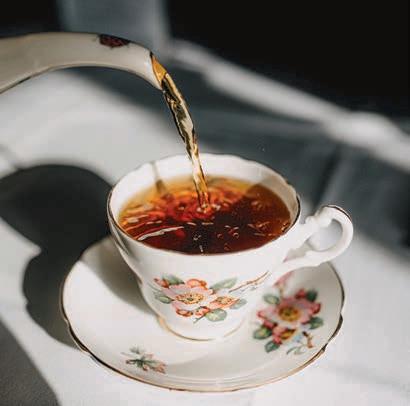
Have you ever dreamed of dressing up like a princess? Well, your dreams have been answered. Join the Ho-Ho-Kus Library in a special morning tea with story with a princess and a special coronation ceremony. Come in your finery and prepare to be treated like royalty. Registration required.
For more information, visit: hohokuslibrary.org.
When: Tuesdays, July 2 to 28; 8:30 to 10 p.m., Thursdays, July 7 to 30; 7:30 to 9:30 p.m.
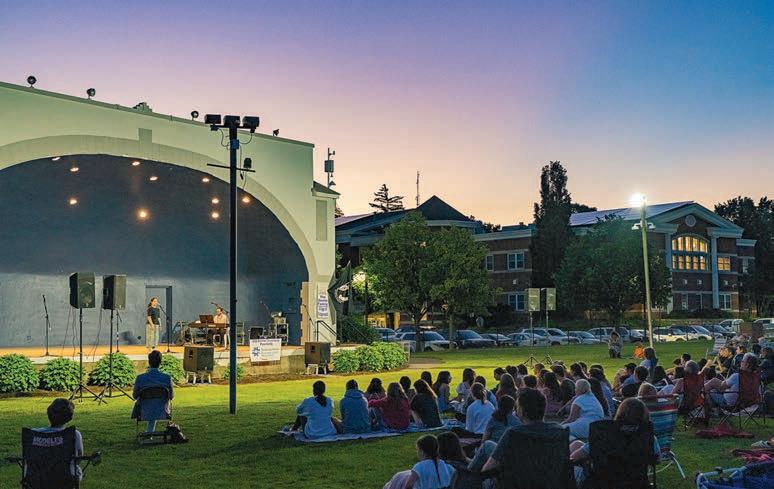
Where: 125 North Maple Avenue, Ridgewood; Kasschau Memorial Shell
Spend your summer nights under the stars at Ridgewood’s free summer concert series at the Kasschau Memorial Shell. From classic covers to upbeat party tunes, unforgettable evenings are in store. Bring a blanket or chair to enjoy the show.
For more information, visit: kasschaumemorialshell.com.
Rebecca Bleich is a recent graduate of Ramapo College, where she majored in journalism and writing.
Response
Blooming with COLOR and LITERARY Intrigue
Catch up on the latest updates around town with local author Neal Lipschutz and the Ridgewood Women’s Garden Club.
BY KRIS PEPPER
RIDGEWOOD RESIDENT and former deputy editor-in-chief of The Wall Street Journal, Neal Lipschutz, has just released his second novel in a series. His first, “No Write Way to Die,” was released last July and was described by Kirkus Reviews as a “tidy whodunit with a New York state of mind.”
Lipschutz will soon be releasing his latest novel, which will once again feature successful New York City management consultant Scott Morgan
as he finds himself tangled up in an investigation—this time when the longstanding chairman of his firm dies soon after his abrupt retirement.
Scott teams up with his former nemesis, retired NYPD Homicide Detective Delmore Kerbich, now a private eye, to find the real cause of the chairman’s demise and identify who, if anyone, is responsible. The investigation leads them down a dark path involving a nefarious secret organization that Scott’s firm—and
sometimes Scott himself—have enlisted in the past to “clean up” messy complications, not always within the purview of the law.
Scott’s mission is complicated by the need to keep some of his own ethically dubious past actions buried.
Lipschutz’s growing fan base in Ridgewood, Ho-Ho-Kus, and beyond is looking forward to this next gripping tale!
For more information, visit tuckerdspress.com.
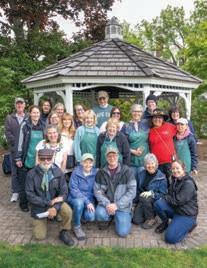
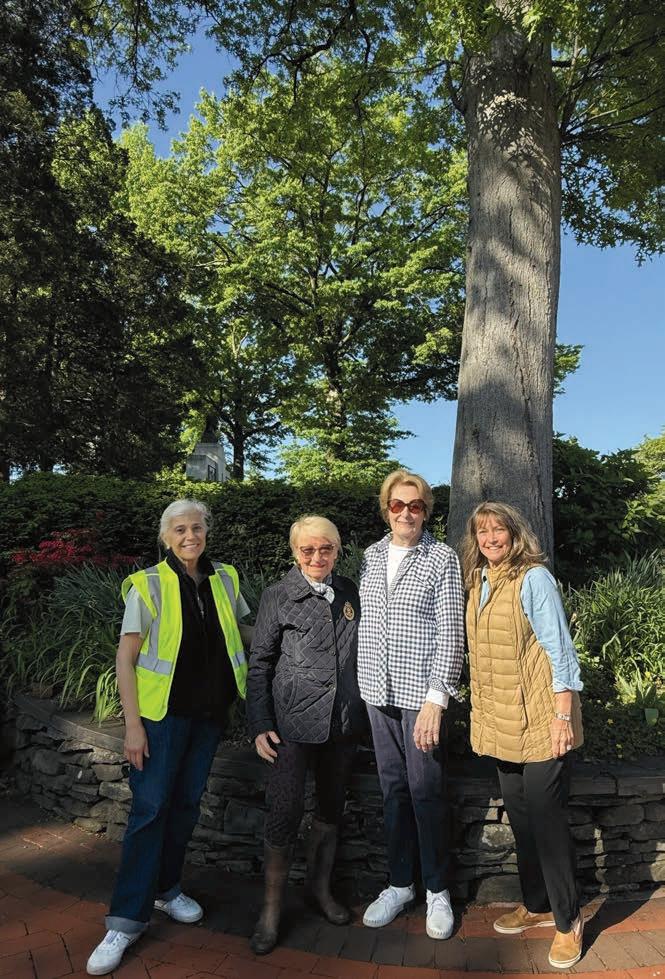
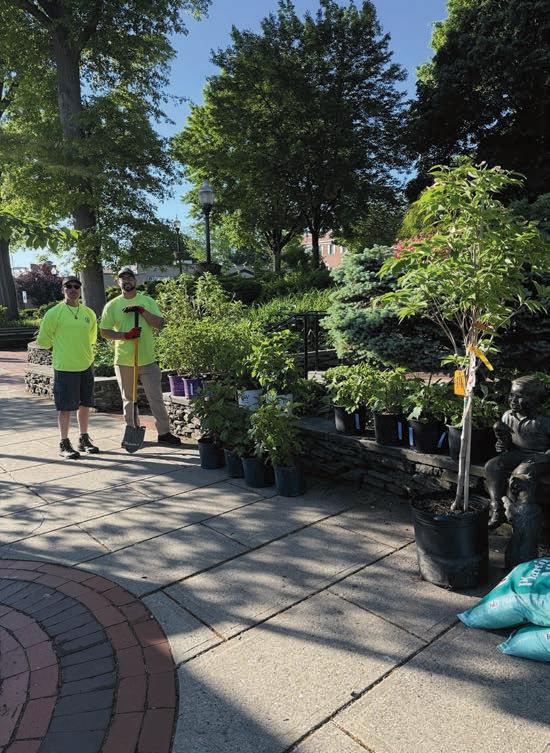
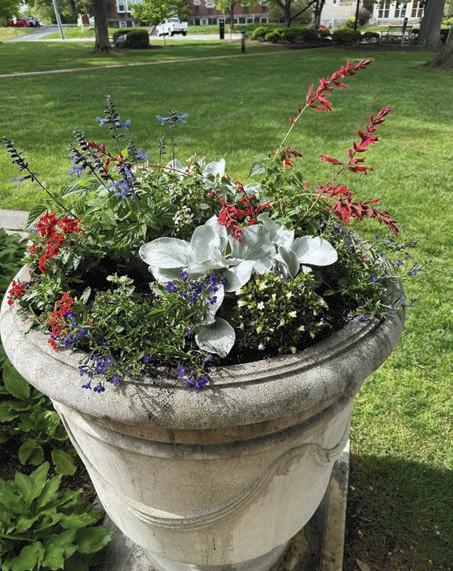
THE RIDGEWOOD Beautification Team, the Women Gardeners of Ridgewood, the Conservancy for Ridgewood Public Lands, and the Ridgewood Parks and Recreation Department recently organized the planting of hundreds of annuals and several shrubs in the Central Business District.
Planting containers line the streets, filled with colorful annuals (red, white, and blue) in recognition of America’s 250th anniversary. The
Women Gardeners of Ridgewood maintains the Van Neste gardens along East Ridgewood Avenue and has donated 15 flowering shrubs and a dogwood tree as well. A special thanks to the Ridgewood Parks and Recreation Department and the volunteers who brought our flowering displays to life.
For more information, visit womengardenersofridgewood.com.
Stars, Stripes, and Family Time
BY STACEY ANTINE, MS, RDN, HEALTHBARN USA
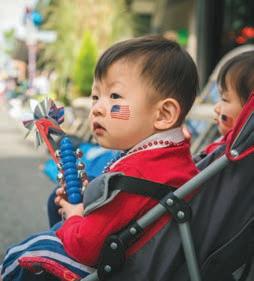
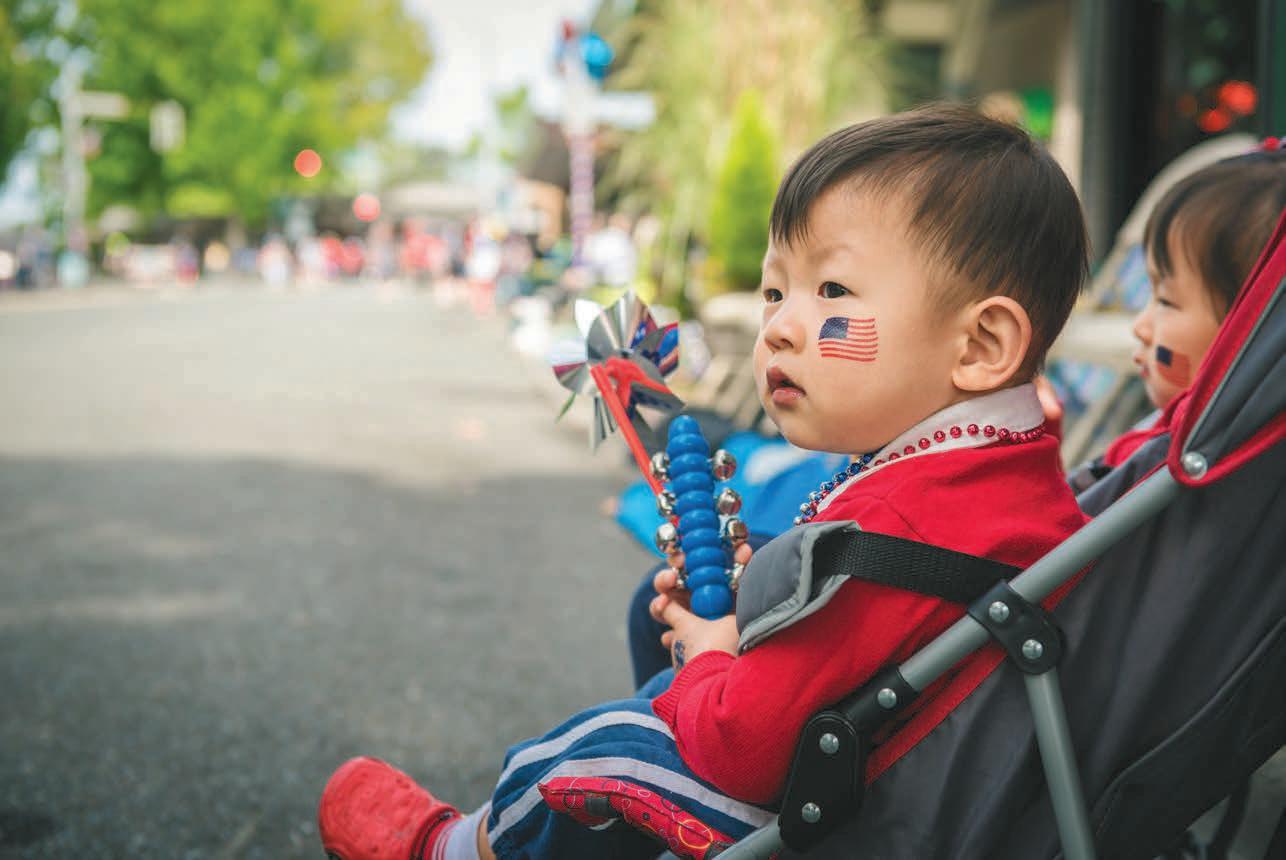
AS THE RIDGEWOOD Fourth of July Parade marches down the streets and fireworks light up the summer sky, this year’s celebration feels especially meaningful. America is kicking off its 250th birthday celebration—a milestone known as the semiquincentennial—that invites us to reflect on our nation’s history while creating new traditions for the future.
For many families, July 4 is more than a holiday. It’s a time to gather with friends and neighbors, enjoy summer’s bounty, and celebrate the freedoms that allow us to build healthy, connected communities.
In today’s fast-paced world, one of the greatest gifts we can give our children is the opportunity to slow down and experience meaningful traditions. America’s 250th birthday provides the
perfect excuse to do just that.
Rather than simply watching history unfold, families can become part of the celebration through activities that inspire connection, gratitude, and community spirit.
CREATE A “250 ACTS OF KINDNESS” CHALLENGE
Freedom and community go hand in hand. Challenge your family to complete acts of kindness throughout the year—from delivering baked goods to a neighbor to writing thank-you notes to veterans, teachers, healthcare workers, or first responders. Children quickly discover that being a good citizen starts close to home.
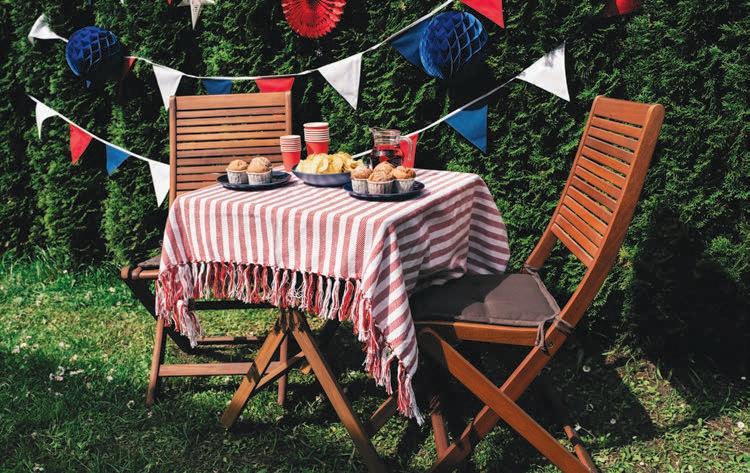
HOST A RED, WHITE, AND BLUE TASTE TEST
Turn healthy eating into a game by
creating a patriotic tasting station featuring strawberries, blueberries, watermelon, cauliflower, jicama, yogurt, and other naturally colorful foods.
Encourage children to sample something new, vote for favorites, and learn how America’s farms and gardens help nourish our communities.
EXPLORE LOCAL HISTORY
Take a family walk through Ridgewood and Ho-Ho-Kus and discover local landmarks, historic homes, and community treasures (there are a few ideas in this issue!). Visit a museum, attend a historical event, or simply ask grandparents and longtime residents to share memories of Fourth of July celebrations from years past. History comes alive when we connect it to the people and places we know.
Be intentional about celebrating during America’s 250th birthday.
DEDICATE 250 MINUTES TO FAMILY CONNECTION
Instead of planning one big event, think in minutes rather than hours: 250 minutes of intentional family time spread throughout a holiday weekend.
Break it into simple, joyful moments. The goal isn’t perfection— it’s presence:
• Cook a meal together using seasonal or locally grown ingredients.
• Share stories about family traditions.
• Enjoy an unplugged afternoon of outdoor games.
• Watch the parade or fireworks and talk about what freedom means to your family.
CREATE A FAMILY TIME CAPSULE
Invite each family member to write a letter describing life in 2026. Include favorite foods, hobbies, dreams, and hopes for the future. Add photographs, drawings, newspaper clippings, or community event programs and seal them away for a future opening date. Imagine the conversations your family will have when America’s 300th birthday arrives.
ASK THE BIG QUESTIONS
Some of the most meaningful celebrations begin with simple conversations. Children often offer the most thoughtful and inspiring answers:
• What do you love most about your community? What freedoms are you most thankful for?
• How can our family help make our community stronger?
• What traditions do you hope future generations will continue? As fireworks light the sky this July, may they also spark something lasting at home: gratitude, curiosity, and connection. America’s 250th birthday is not only a celebration of the past—it’s an opportunity to invest in the future, one family tradition at a time.
Happy Birthday, America. Here’s to the next 250 years of growing.
Stacey Antine is the founder of Ridgewood’s HealthBarn USA and author of Appetite for Life. She is a national expert in family nutrition and has appeared on The Rachael Ray Show, CNN, PBS-TV, and hundreds of broadcast, print, and social channels.
250 WAYS? START WITH THESE 25!
Celebrate America’s 250th birthday by choosing a few family-friendly activities throughout the year:
a Attend the Ridgewood Fourth of July Parade
a Watch fireworks together
a Visit a local historic site
a Interview a grandparent
a Write thank-you notes to community helpers
a Plant a vegetable or herb garden
a Make a patriotic fruit salad
a Learn a family immigration story
a Volunteer as a family
a Have a screen-free afternoon
a Visit your local library
a Read a book about American history
a Fly a flag respectfully
a Support a local business
a Take a community nature walk
a Pack a picnic in a local park
a Learn about a state you’ve never visited
a Start a family gratitude journal
a Create a time capsule
a Learn a patriotic song
a Visit a farmers market
a Donate to a local food pantry
a Make homemade ice cream
a Host a neighborhood gathering
a Watch the sunset and reflect on what makes your community special
Living Well Challenge: How many of these can your family complete before America’s 250th birthday celebration concludes next year?
Rooted in Tradition
From Puglia to Ridgewood,
Chef Francesco Curci of Morsetto bakes authenticity into every dish.
BY KRIS PEPPER
IIN AN ERA where fusion and reinvention tend to dominate the dining scene, Chef Francesco Curci is not chasing trends or reinventing classics. Instead, he is doing something far more deliberate— preserving the integrity of Italian cuisine exactly as he knows it to be.
Curci’s connection to food began long before his career in professional kitchens—it was established in Puglia, in southern Italy, where meals were not just nourishment but a way of life. “The biggest influence on my love of food was my mother Angela, whom I lost this past January,” he shares. Her impact continues to shape his work, grounding his approach in memory, tradition, and respect.
In his childhood home, meals were made from scratch and prepared with intention. “Everything was done with care and respect.” That sense of responsibility is evident in the way he approaches his craft today. After honing his skills in small kitchens throughout Puglia—where he learned “respect for ingredients, hard work, and consistency,” Curci moved into more demanding culinary environments before ultimately bringing his talents to the United States.
“I learned first in the family kitchen, then I built everything through work in professional kitchens. This profession is learned through discipline, repetition, and experience. There are no shortcuts.”
His arrival stateside came with both opportunity and clarity. “I moved to the United States for opportunity, but also with a clear intention to bring authentic Italian cuisine without compromise,” he explains. What he found only strengthened his resolve. “I saw many interpretations of Italian food that were far from its authentic roots. That confirmed my direction.”
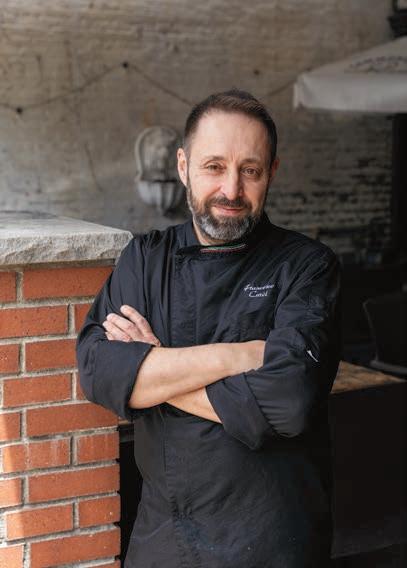
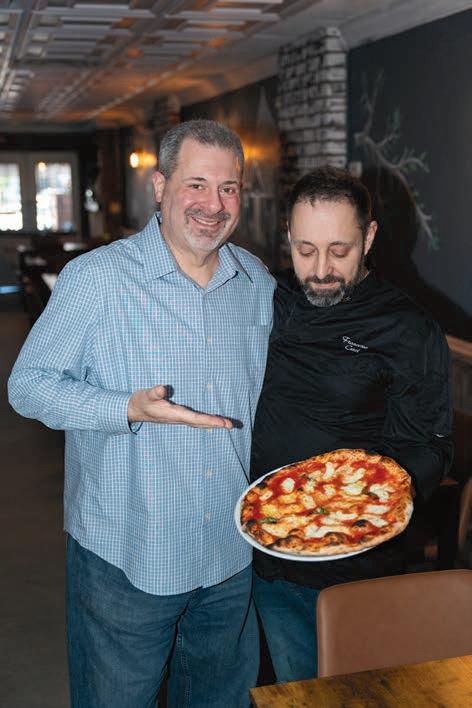
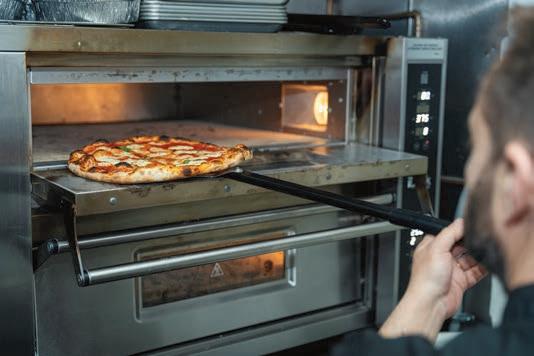
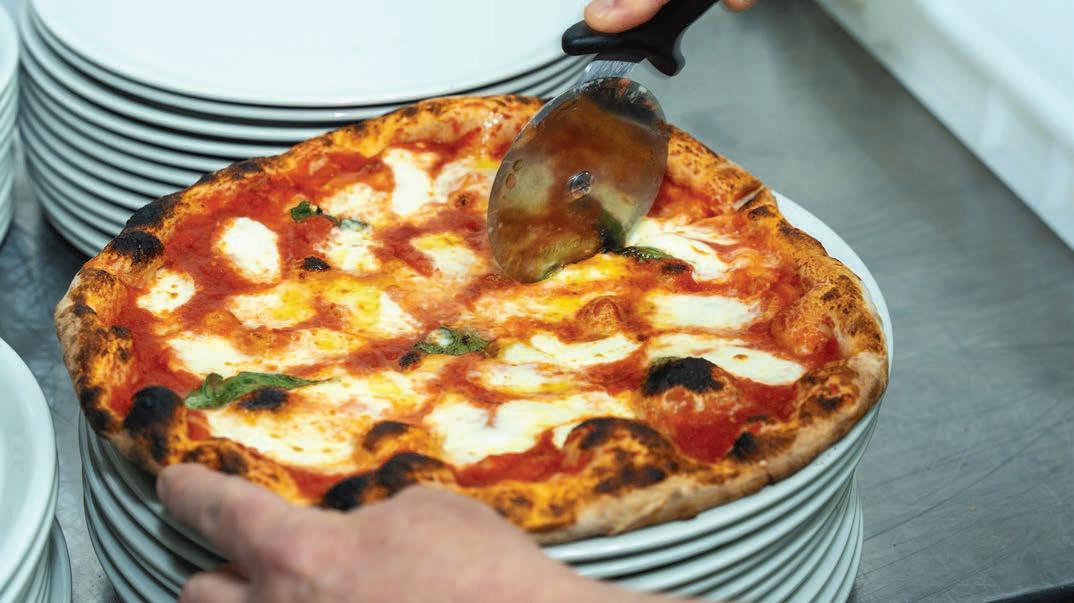
Below: Curci and business partner, Sal Latella show how pizza is done!
That philosophy remains unchanged today. “I stayed firmly grounded in tradition. My cooking does not accept compromises. I don’t change recipes to meet expectations; I believe in educating the palate. What I serve is authentic—fresh vegetables, highquality olive oil, and handmade pasta, reflecting the way Italian food is meant to be prepared and understood.”
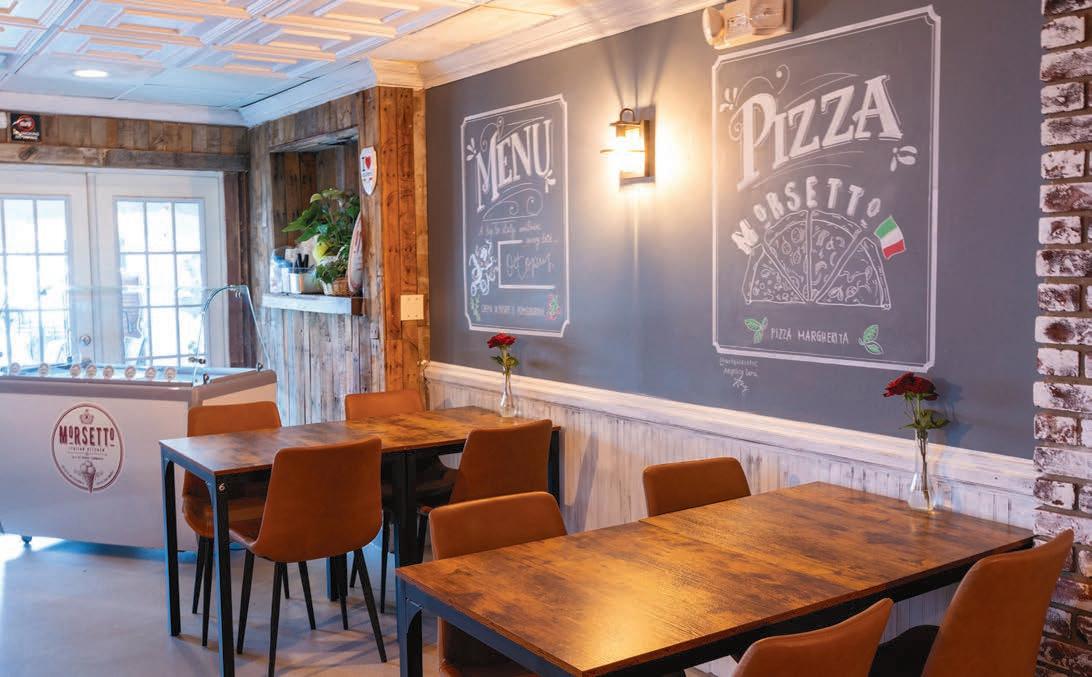
Ridgewood, he says, is the perfect place for his vision. “Ridgewood is a community that truly values quality and consistency.” After taking over Piccolo Bistro, Curci partnered with Sal Latella, “my business partner and the brother that life has given me,” to transform the space into Morsetto. For Curci, it became more than a restaurant; it became a platform. “That allowed me to express my vision, without compromise or distraction.”
His vision is clear and uncompromising. “The philosophy is
simple and strict: no compromises. We respect tradition, ingredients, and technique.” The menu avoids trends in favor of authenticity, with each dish grounded in purpose and history, elevated by a subtle creative touch.
Even something as universally familiar as pizza is approached with meticulous care. “The dough is treated with time and respect, proper fermentation, correct technique, and organic ingredients. No shortcuts.”
The result isn’t about novelty—it’s about precision. “It’s not about making something different; it’s about making it correctly.”
That same rigor extends to sourcing his ingredients. “It’s everything. Without the right ingredients, there is no authenticity.” From olive oil to tomatoes to flour, every component must meet his exacting standards. “If the foundation is not correct, the dish cannot be correct.”
Curci also brings traditional Italian techniques that often surprise American diners—not because they are elaborate, but because of their simplicity. “Sometimes that surprises people. They are not used to that level of purity.”
For all his discipline and intensity, Curci’s ultimate goal is not just to serve a meal but to create insight into real Italian cooking. “I want them to leave with understanding. Not just satisfaction, but awareness of what authentic Italian cuisine truly is.”
In a world that often rushes toward the next new thing, Chef Francesco Curci offers something rare: a steadfast commitment to authenticity. At Morsetto, every plate is an invitation— not just to eat, but to experience Italian cuisine as it was always meant to be.
For more information, visit morsettousa.com.
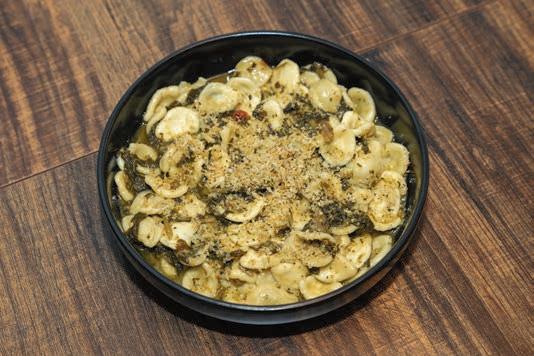
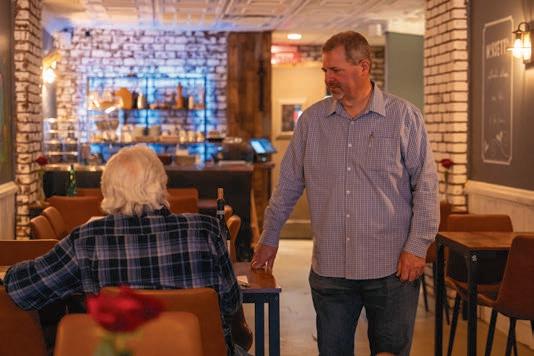
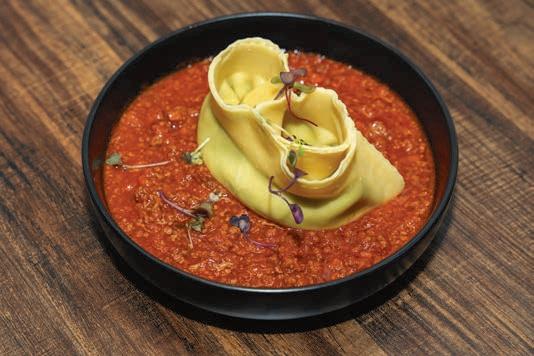
Opposite page, clockwise from top left: Le Pugliesi orecchiette. Sal catches up with a lunch guest. Morsetto’s welcoming atmosphere always lends itself to friendly conversation. Fresh out of the oven! A charming dining room with nine flavors of gelato conveniently located nearby! Pappardelle Ripiene.
This page: Morsetto’s mouthwatering traditional pizza is a must-have!
HHistory Marches On
As America celebrates its 250th birthday, this is an ideal time to look beyond the textbooks and discover historic events that unfolded right here in the “201.”
BY KRIS PEPPER
HOW DO YOU make history come alive nearly 250 years later? Just ask Anthony Cavo. The curator of the Ridgewood Schoolhouse Museum has transformed the past into a vivid, compelling experience with the museum’s current exhibit, “250 Years of Progress: A Celebration of American Independence and Endurance.”
Through defining moments in America’s journey to independence—including several with close-to-home significance— the exhibit traces the resilience, innovation, and enduring spirit that shaped the nation we know today.
REVOLUTIONARY IN OUR BACKYARDS
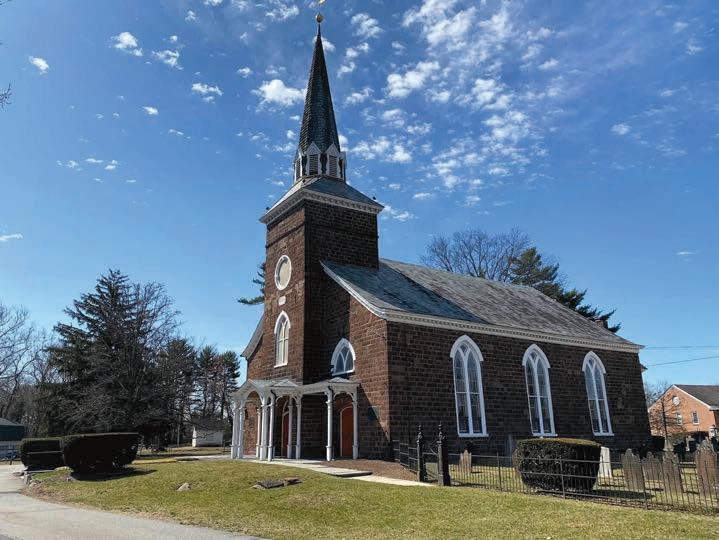
Two notable events took place near the Old Paramus Church on Route 17.
The 1780 “Battle of Paramus” was a Revolutionary War skirmish fought on March 23, 1780, when roughly 300 to 400 British and Loyalist troops raided American outposts across Bergen County. The battle occurred near the Old Paramus Church, a major crossroads where American troops were camped.
The Old Paramus Church was also the site of part of the court-martial trial of Major General Charles Lee from July 10 to 15, 1778. The trial stemmed from Lee’s disobedience of orders at the Battle of Monmouth, which led to a disorderly retreat, as well as his disrespect toward George Washington. Proceedings began in New Brunswick on July 4, 1778, and moved as the Continental Army traveled throughout New Jersey and the Hudson River Valley, concluding on August 12, 1778, in New Brunswick with a guilty verdict.
HISTORY: UP CLOSE AND PERSONAL
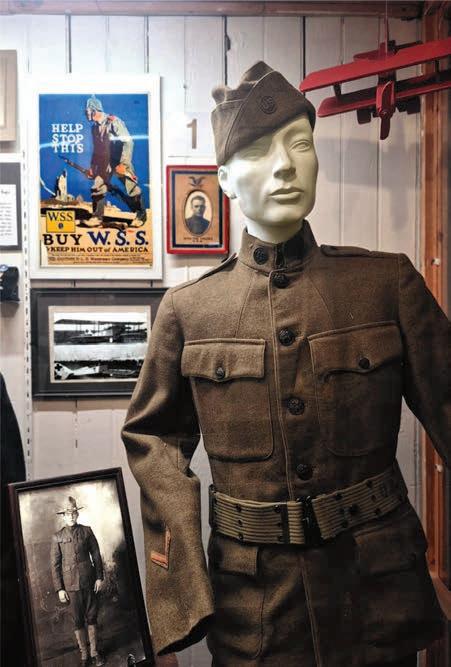
The Ridgewood Schoolhouse Museum’s exhibit traces the nation’s 250-year journey through a curated collection of artifacts, military regalia, and everyday utilitarian objects from the period.
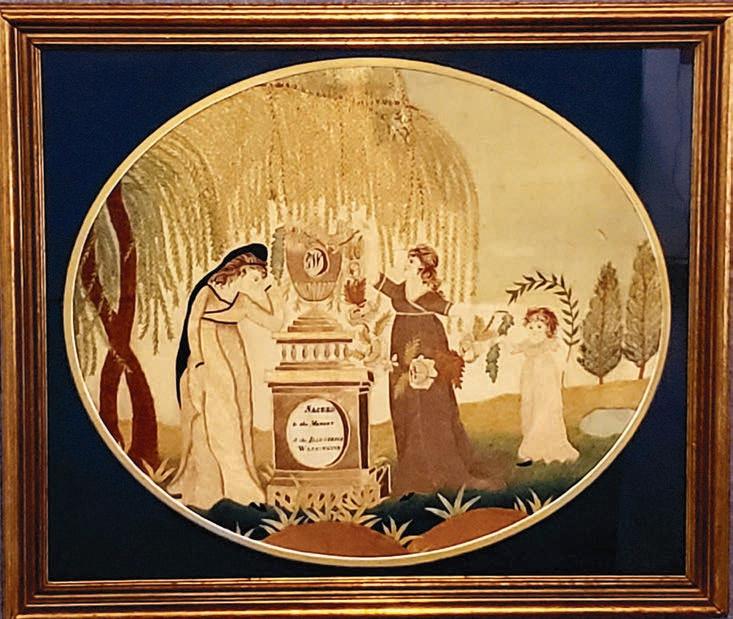
GEORGE WASHINGTON MOURNING SAMPLER
This finely worked, brilliantly colored sampler, circa 1807, memorializes George Washington, whose death on Dec. 14, 1799, was deeply felt by the young nation. Philadelphia artist Samuel Folwell created a series of mourning designs honoring Washington, incorporating classical symbols of grief such as the willow tree, urn, and sorrowing figure. The sampler was most likely stitched by young girls at the school run by Folwell’s wife, Elizabeth Folwell.
It is one of four known examples in this style. Similar samplers with slight variations are held by the National Museum of American History, the Metropolitan Museum of Art, the Old Barracks Museum in Trenton, and the Schoolhouse Museum.
To modern viewers, these memorials may seem formulaic. Still, in the early 19th century, national mourning was as much a fashionable expression of sentiment as it was a personal act of grief.
WWI UNIFORM OF RIDGEWOOD RESIDENT, JARED BANTA
Displayed alongside a photograph of Jared in uniform, this piece also reflects the long history of the Banta family, which has been in Ridgewood since the 1600s.
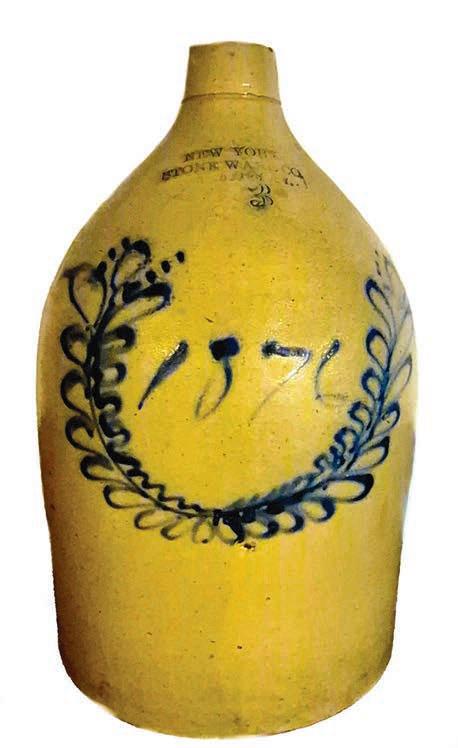
BOGERT FAMILY CENTENNIAL STONEWARE JUG
An extremely rare three-gallon centennial jug marked “1876,” this piece was made by the New York Stoneware Company of Fort Edward, New York. It is decorated in a cobalt-tinted slip with the date “1876” encircled by a wreath signifying victory. Such jugs were used to store and transport liquids ranging from alcohol to molasses. This jug was recently donated to the museum by Sally Bogert Hemsen.
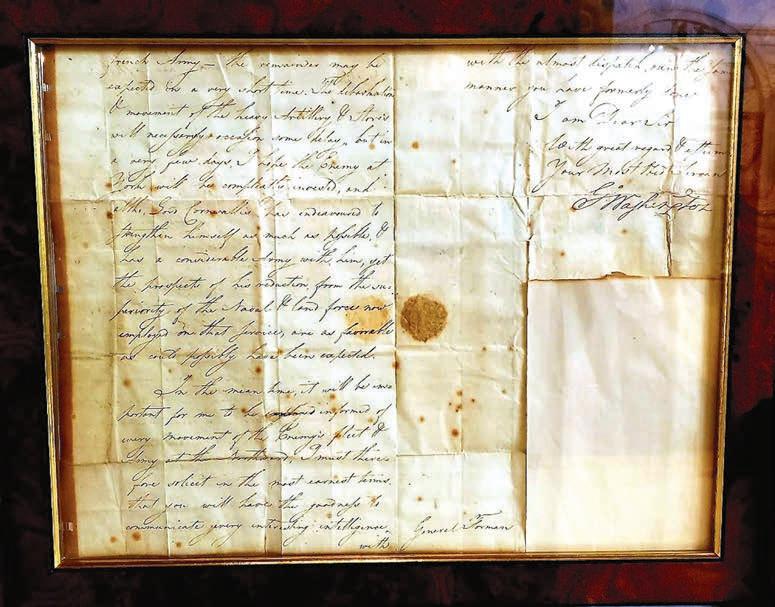
LETTER FROM GEORGE WASHINGTON TO BRIGADIER GENERAL DAVID FORMAN, SEPTEMBER 24, 1781
David “Black David” Forman, a Princeton-educated Monmouth County native, began the Revolution as a lieutenant colonel in a New Jersey state regiment. Notorious for harsh campaigns against local Tories, he was promoted to brigadier general of militia in 1777. From coastal outposts, Forman organized intelligence networks that reported British and French ship movements to General George Washington, who addressed this letter to him.
Washington later convened part of General Charles Lee’s 1778 court-martial at the original Paramus Church, where Forman testified against Lee; portions of the proceedings took place on the grounds of today’s Schoolhouse Museum.
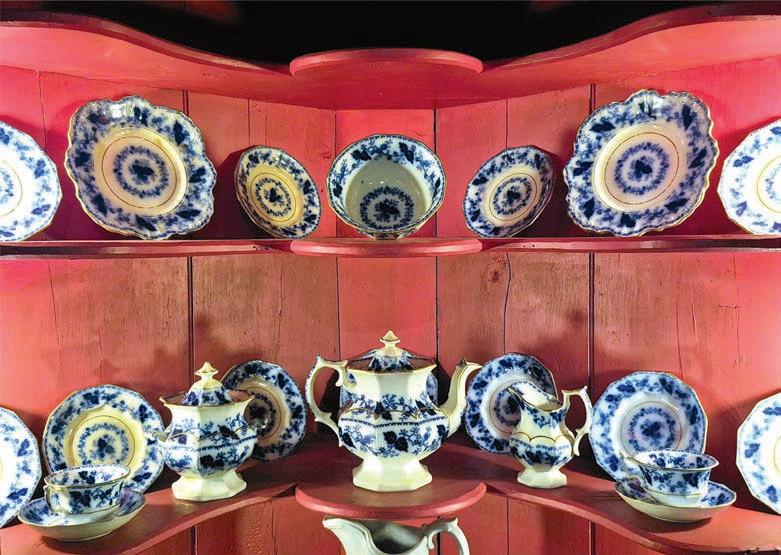
SAMUEL CHASE TEA SET
This blue-and-white tea service belonged to Samuel Chase (1741 to 1811), a Maryland lawyer, politician, and ardent patriot who signed the Declaration of Independence on August 2, 1776. Chase was appointed by George Washington to the U.S. Supreme Court, becoming the only justice ever impeached and acquitted. His fiery disposition earned him the nickname “Old Bacon Face.”
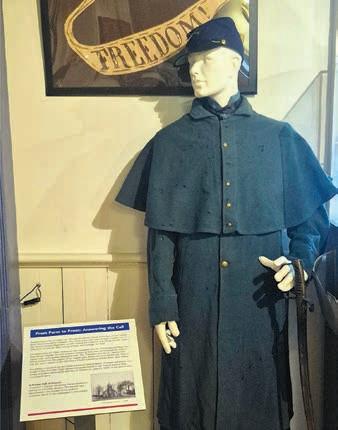
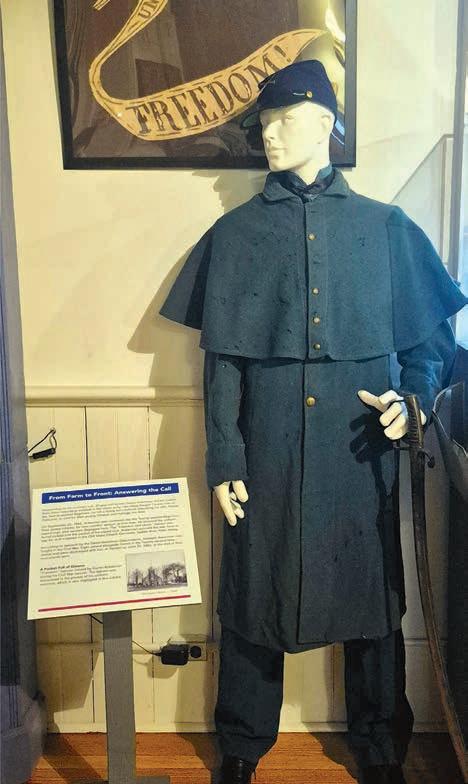
FROM FARM TO FRONT
Responding to his country’s call, 30-year-old farmer Garret Ackerman of East Saddle River Road voluntarily enlisted in the Union army. Like many Bergen County men of the 22nd Regiment, he left his family farm behind, entrusting his wife, Rachel (Terhune), to care for their young children and manage the land.
On Sept. 22, 1862, Ackerman was mustered into the 22nd Regiment, New Jersey Infantry, for nine months of service. At that time, he received the uniform, caped coat, and canteen displayed here.
The “Freedom and Union” banner was found tucked into the pocket of his caped coat. Ackerman survived the war, lived to age 82, and is buried in the Old Stone Church Cemetery in Saddle River.
According to research by the descendants of David Ackerman, nineteen Ackerman men fought in the Civil War. Eight served alongside Garret in the 22nd New Jersey and were discharged with him at Trenton on June 25, 1863, at the end of their nine-month term.
Visit the Ridgewood Schoolhouse Museum to see, appreciate, and reflect on the sacrifices our local forebears made in the cause of freedom. Bring the kids and see history come to life! For more information, visit ridgewoodhistoricalsociety.org.
A Borough Steeped in History
The U.S. gained independence 250 years ago this month. To celebrate the area’s deep historical roots, we delve into the top five things you might not know about Ho-Ho-Kus.
BY SARAH NOLAN
HHO-HO-KUS BOROUGH historian
John Hanlon says he’s not necessarily a history buff. It’s just that having been born and raised in the bucolic town, then returning to raise his own family there, he’s been around for a while and knows a thing or two about the events that shaped the municipality.
And, as the United States celebrates 250 years of independence this month (officially called the semiquincentennial), the Ridgewood & Ho-Ho-Kus Magazine team thought it would be apropos to explore some historical facts/sites that make Ho-Ho-Kus what it is today, with Hanlon as our guide.
Many are aware that the original inhabitants of the area were the Lenni-Lenape (or Delaware Indians), who left behind artifacts indicating their inhabitance. The name Ho-HoKus is a contraction of the Indian word meaning “the red cedars.” The first recorded date of white settlement in the area is 1698.
Another well-known historic fact is that during the Revolutionary War, famous visitors to the historic Hermitage included George Washington, Alexander Hamilton, and James Monroe. The home was also the scene of the courtship between Aaron
Burr and Theodosia Bartow Prevost. They married there after her first husband’s death.
Hanlon, who was the longtime chairman of the borough’s Planning Board, says that including a section detailing the history of the town in the latest version of the Master Plan in 2019 was a labor of love that helps preserve the building blocks that make Ho-Ho-Kus what it is today—a charming town that residents cherish and call “home.”
Here are some perhaps lesserknown historical nuggets about the town.
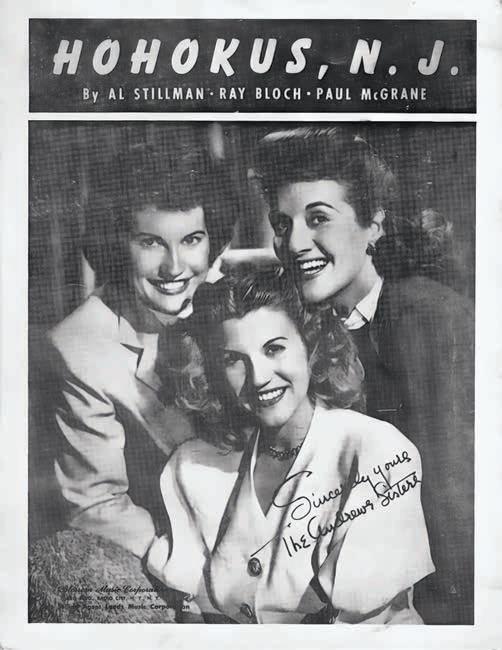
THE “HO-HO-KUS, NJ” SONG
Did you know Ho-Ho-Kus has a theme song? The novelty tune was composed by well-known lyricist Allan Stillman, in collaboration with band leader Ray Block, with contributions from Paul McGrane, in early 1947, when a trend in music called for upbeat tunes featuring perky city and town names.
Several recordings of the song exist (it’s reported that Stillman sent the track to Bing Crosby, who recorded it in the studio but never released it for sale).
The Andrews Sisters recorded the song in 1949, and this version is the best known. In June 1949, the sisters flew to New York for a three-week string of live performances at the famous Roxy Theater. The Ho-Ho-Kus Chamber of Commerce arranged for the trio to attend a block party and dance on the town green and Orvil Court in the borough and perform the song.
On June 9, the sisters were greeted at LaGuardia Airport by Ho-Ho-Kus Police Chief John McElroy, Chamber of Commerce president James Anderson, and Alice Henry of the Contemporary Club. Flowers and gifts were presented to the singers, along with the official invitation to attend the block party.
On Friday, June 24, 1949—a very hot and humid night—a crowd of 5,500 people showed up for the block party. Stillman, Block, and McGrane also made an appearance.
At around midnight, the sisters, Patty, Maxine and Laverne arrived with a police escort. They sang “HoHo-Kus, NJ” along with other hits before mingling with the crowd (down to about 4,000 due to the late hour) and signing autographs, returning to Manhattan in the early hours of the morning. What a night in Ho-Ho-Kus!
Opposite page: John Hanlon
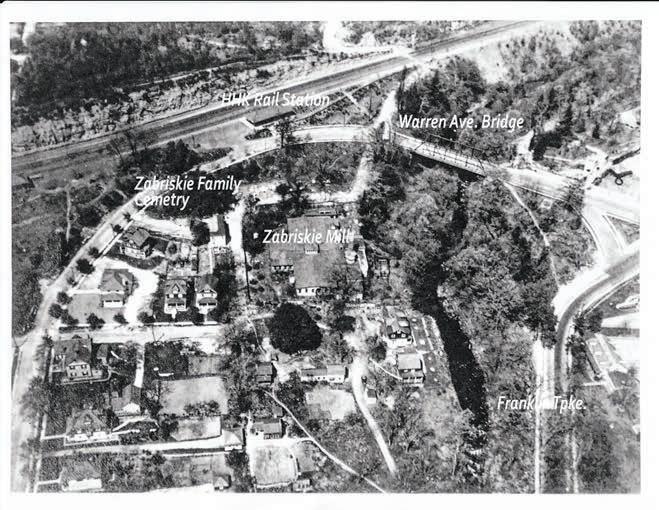
This page, top: The Andrews Sisters recorded a song about Ho-Ho-Kus and paid a visit in 1949. Above: An aerial view of historic Ho-Ho-Kus.
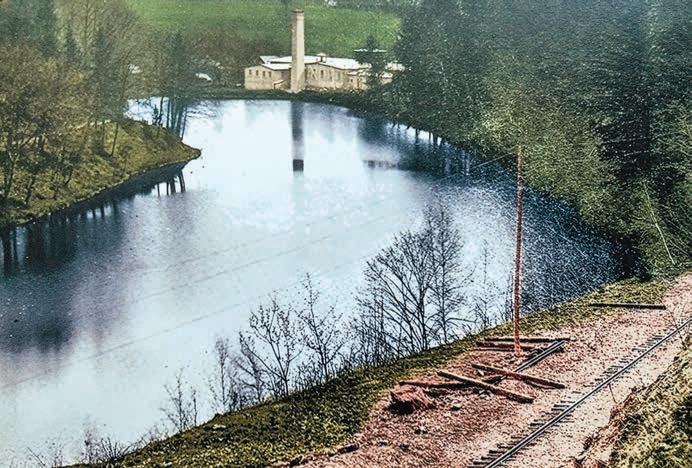
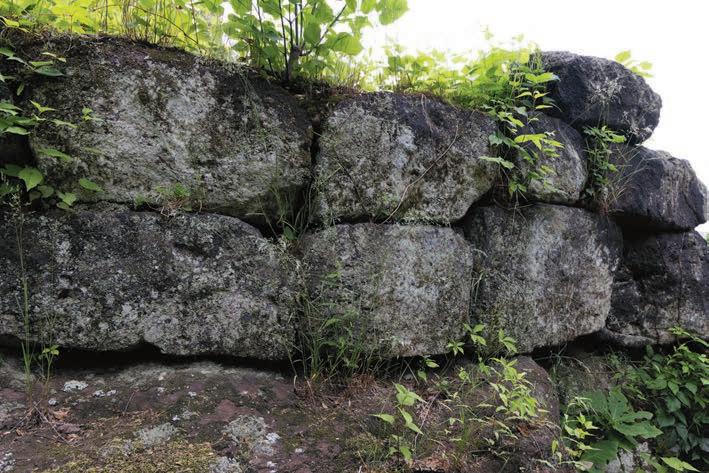
THE ZABRISKIE DAM, SYLVAN LAKE, AND THE SYLVAN LAKE HOTEL
Believe it or not, there was once a large manmade lake in Ho-Ho-Kus called Sylvan Lake that stretched from the business district to the edge of Hollywood Avenue. The lake, which covered about 70 acres and was over 70 feet deep in some areas, was formed by a 50-foot-high cut brownstone dam built in 1863 by John “Jake” Zabriskie to supply water power to local mills, including the Zabriskie Cotton Mill, located in the area of today’s railroad station’s lower-level parking lot.
In addition to providing power to
the mill, the lake became a recreation center and tourist attraction. At the base of the Zabriskie Dam, a picnic ground and recreation area were formed, and people came from miles to visit and enjoy the view. At the north end of the lake, there was a pavilion for band concerts, exhibits, and dancing, along with a beach area for boating, fishing, and swimming.
The Erie Railroad advertised the area as a tourist attraction and ran special trains to the Ho-Ho-Kus Train Station, which in those days was located at the top of Hollywood Avenue. People would come to stay for weekends and holidays at the Sylvan
Lake Hotel—a two-story wooden building built in the mid-1850s, where many a jolly time was had in the dining and bar section of the first floor.
The lake disappeared shortly after 4 p.m. on Saturday, Sept. 24, 1882, after a very intense three-day rainstorm, during which several mill dams failed upstream, causing undue pressure on the Zabriskie Dam.
According to the Master Plan, if one wishes to understand the magnitude of the lake’s size, terrain and depth, they should walk along Knollwood Drive and marvel at the view down into the ravine and across to the rail cut along the western edge.
Above: A colorized photo of Sylvan Lake.
Below: The remains of the Zabriskie Dam.
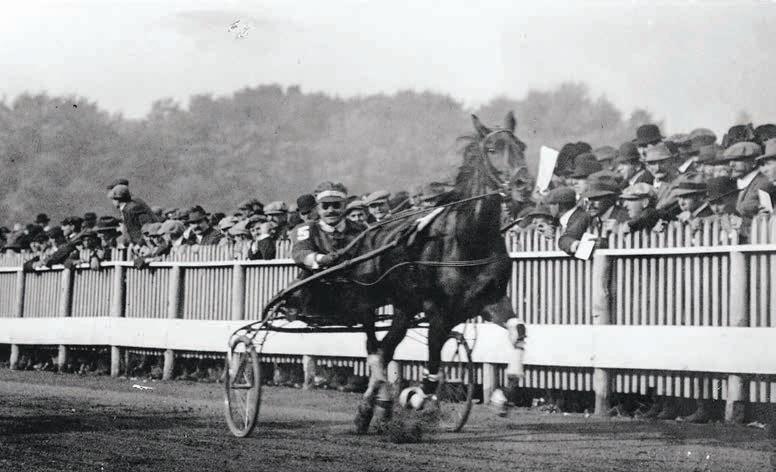
THE HO-HO-KUS RACETRACK
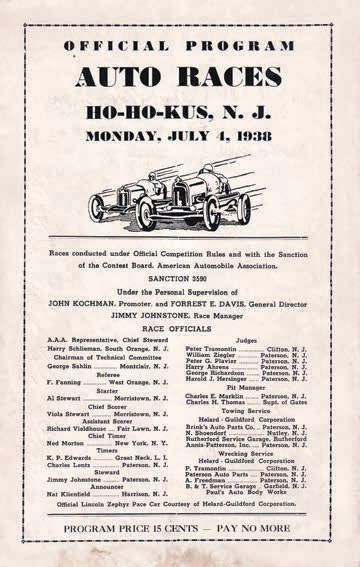
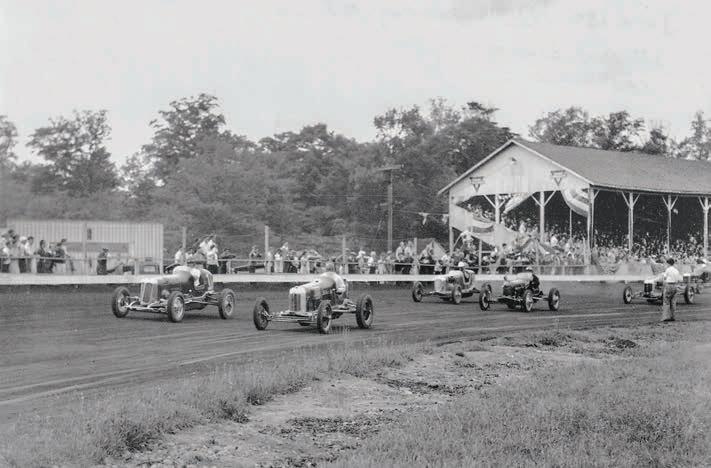
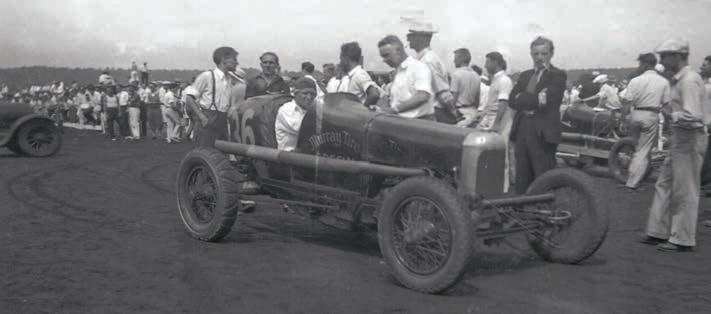
Racetrack Road is named thusly for a reason; the Ho-Ho-Kus Race Track and grounds, developed in the late 1860s and early 1870s, flourished for nearly seven decades, until a serious accident in 1938 halted operations.
It was considered one of the most important and historic tracks in the United States and was a key stop on the first circuit of auto racing from 1920 to 1938.
Of course, before auto racing, there was horse racing. The track was also used for a variety of community events, including livestock exhibitions (after all, Ho-Ho-Kus began as a farming community), county fairs, carnivals, weddings, fireworks, bicycle
races, baseball games, polo events, and even as a military remount center for horses during World War II.
In the 1800s, people came by horse and wagon, horseback, stagecoach, and train. But by 1920, nearly all arrived by car or trolley.
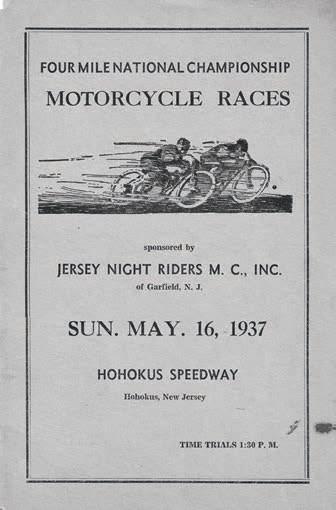
It was at the annual Fourth of July race, attended by nearly 10,000 people, that a fatal crash brought the fun to an end.
During the first lap of the 30-lap main feature, two cars locked wheels in front of the grandstands, careening into the pit area on the other side of the roadway. They hit more than a dozen people, plus several cars in the pits at 60 miles per hour.
The police and track employees transported the injured to various
hospitals. An 11-year-old boy and a photographer died of their injuries.
The Borough Council held a special meeting on July 6 to ban auto racing and speed racing at the track came to an end.
Over the next decade, the grounds continued to host events, such as the annual Labor Day picnic and field day programs. During World War II, residents set up large “Victory Gardens” inside the track as part of the war effort.
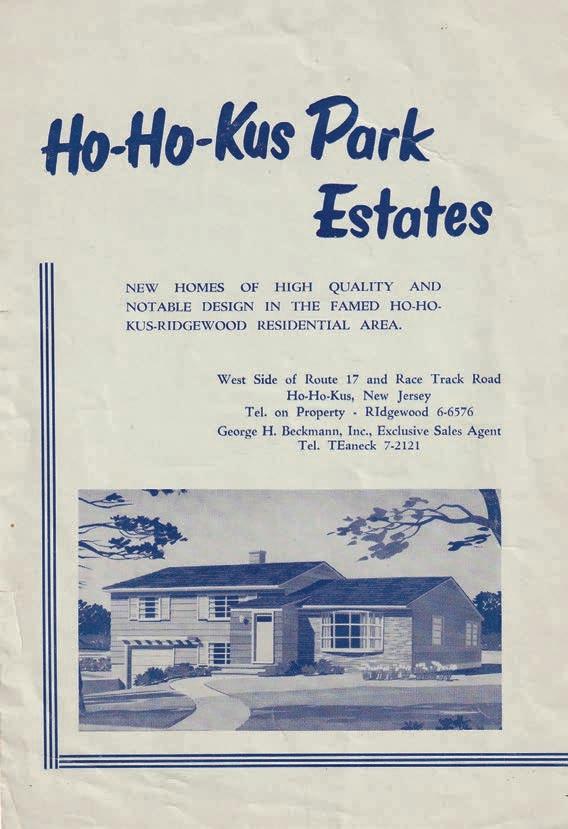
In 1950, most of the track grounds and buildings were sold to a construction company. Roads and more than 100 homes were built on the parcel, forming the neighborhood many residents call home today.
Above: The final race program before the track closed due to a crash.
CHEELCROFT
One of Ho-Ho-Kus’s most sought-after neighborhoods is also its first, and a notable subdivision at the time, as various local and nationally recognized architects were commissioned to design individual homes.
Cheelcroft is the vision of Harold Cheel, who grew up in Ridgewood and went on to attend Yale and serve with the United States Army Air Services during World War I. In 1926, Cheel was the high bidder for six lots on the west side of Sheridan Avenue, north of Hollywood Avenue.
He constructed six homes (a Cape Cod, a French Tudor, and four English Tudors). The entire neighborhood would take 25 years to complete, as Cheel acquired more land, with the final home completed in the mid-1950s.
The term “development” was not common when Cheel entered the real estate world. Yet, with advertising (including two very large billboard signs along what’s now Route 17) featuring photos, he showed future homeowners what his vision was and
why it was desirable.
Cheel’s concept of community development was an award-winning idea. Better Homes & Gardens gave its “Seal of Approval” in 1931 for the eclectic styles of home construction. Several homes won design awards.
Cheelcroft is beloved for its unique, individually designed homes with no repetitive construction. Architectural styles found in the neighborhood include Cape Cod, Dutch colonial, English Tudor, English cottage, Georgian, modern traditional, ranch, saltbox, and split-level.
Despite best efforts to secure positive press, Cheelcroft ended up in the spotlight for the wrong reasons in the spring of 1935. A neighborhood resident discovered the body of an unidentified man. He had been dumped in the undeveloped fields at Ackerman Avenue and Gilbert Road.
He was identified as Edward Martin, a well-known East Coast gangster. The killers were found and prosecuted, and the incident was on the front pages of newspapers for several weeks.
Motorcycle races
THE TROLLEY
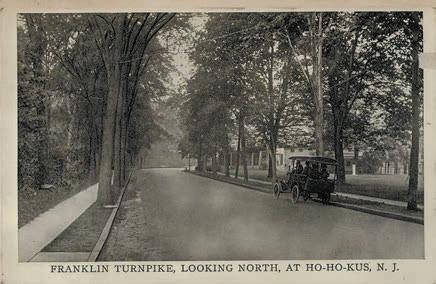
Have you ever noticed the public service right-of-way in town? It’s a grassy, relatively wide pathway that runs between Warren Avenue and Hollywood Avenue, once the route of a trolley that traveled through town and served as an incredibly popular mode of transportation in the area from 1909 to 1929.
Officially known as the North Jersey Rapid Transit line, the trolley was a single-track system with bypass tracks to allow two-way traffic. When fully operational, the route started in East Paterson (now Elmwood Park) and had stops in Fair Lawn, Glen Rock, Ridgewood, Ho-Ho-Kus, Waldwick, Allendale, Ramsey, Mahwah, and Suffern.
The headquarters building
was in Ho-Ho-Kus, off East Franklin Turnpike; it was the largest in the borough at the time and included a sizable substation, a coal-fired heating plant, a machine shop, and a three-bay car barn with repair pits.
The trolleys seated 44 passengers but were known to have carried more than 150 with ease on special race days.
In Ho-Ho-Kus, crossing signals were located at East Franklin Turnpike, Warren Avenue, Sheridan Avenue, and Hollywood Avenue, and though there were two official stops in Ho-Ho-Kus, friendly trolley operators were known to pick up and drop people off in between stations.
The Ho-Ho-Kus Board of Education arranged for high school students to travel to and from Ridgewood High
School (where borough students attended at the time) via the trolley.
The trolley was very popular and prospered until the middle of 1925, when bus companies began to take over the transportation market. More roads were paved, and automobiles were becoming popular and accessible.
At the end of 1928, the company received permission from the state to terminate operations at the end of the year—truly the end of an era.
We hope you enjoyed these tidbits of Ho-Ho-Kus’s rich history. Perhaps you learned a thing or two about the borough and had a little fun imagining what your hometown was like hundreds of years ago. And for the true history buffs, there’s much, much more to learn.
Find the borough’s Master Plan at hhkborough.com/planning-board.
Sarah Nolan is a writer with a passion for telling people’s stories. A Ho-HoKus native, she believes in the power of local journalism to connect and inform residents and foster a sense of community.
Left: A flyer for The Ho-Ho-Kus Park Estates, built on the racetrack property after its closure.
Above: Franklin Turnpike in historic Ho-Ho-Kus.
ALL ABOUT PROPER FLAG ETIQUETTE
A quick guide to American flag etiquette as the nation approaches its 250th anniversary.
BY KRIS PEPPER
AS THE UNITED STATES gathers together in support and prepares to mark 250 years since the United States signed the Declaration of Independence, the American flag is taking on renewed visibility—and meaning. From front porches to public ceremonies, the Stars and Stripes remain a powerful symbol of unity, sacrifice, and national pride. But how well do we really know the proper way to display and handle it? Here’s a brief refresher on American flag etiquette.
When should the American flag be displayed?
The flag can be displayed every day, but especially on national holidays such as Independence Day, Memorial Day, and Veterans Day. It should be raised briskly and lowered ceremoniously. Traditionally, the flag is displayed from sunrise to sunset, though it may remain up at night if properly illuminated.
What is the correct way to hang the flag?
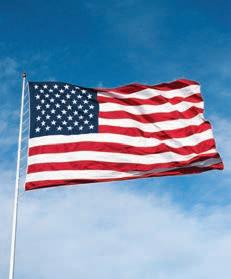
When displayed horizontally or vertically against a wall or window, the union (the blue field with stars) should always be in the upper-left corner from the viewer’s perspective. If hung over a street, the union should face north or east, depending on the street’s direction.
Can the flag be worn or used as decoration?
The flag should not be used as apparel, bedding, or drapery. However, flag-inspired designs are common and acceptable, as long as they are not actual flags. The flag itself should always be treated with respect and never altered for decorative purposes.
What condition should the flag be kept in?
The flag should always be clean
and in good repair. A worn or tattered flag should be retired in a dignified way, preferably by burning in a respectful ceremony—often conducted by local veterans’ organizations.
Are there rules about flying the flag at half-staff?
Yes. The flag is flown at half-staff as a sign of mourning, as directed by the President or a state governor. On Memorial Day, it is flown at halfstaff until noon, then raised to full staff for the remainder of the day.
What does proper flag etiquette ultimately represent?
At its core, flag etiquette is about respect—for the country, for those who have served, and for the ideals the nation was founded upon. As America approaches this milestone anniversary, these small but meaningful acts of respect help keep those values front and center. In a time of reflection and celebration, honoring the flag is one simple way to connect with the nation’s past—and to show pride in its future.
Guidelines for American flag display and care are based on the United States Flag Code (Title 4, U.S. Code), with additional reference to educational materials from the American Legion and the Veterans of Foreign Wars.
Music for America
Ridgewood High School’s marching band reps New Jersey for America’s 250th.
BY KRIS PEPPER
THE RIDGEWOOD HIGH School
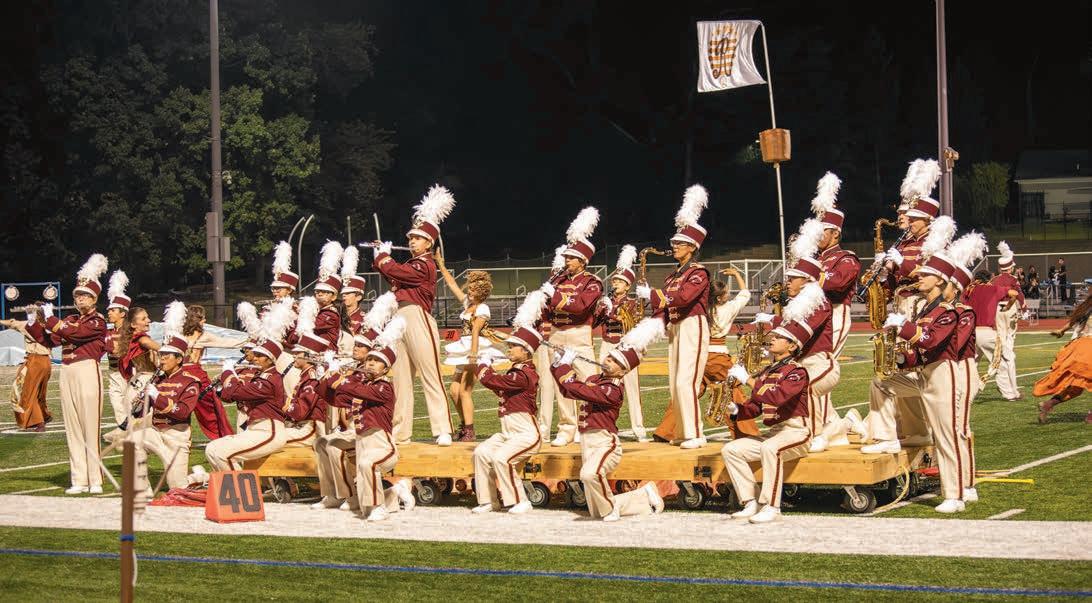
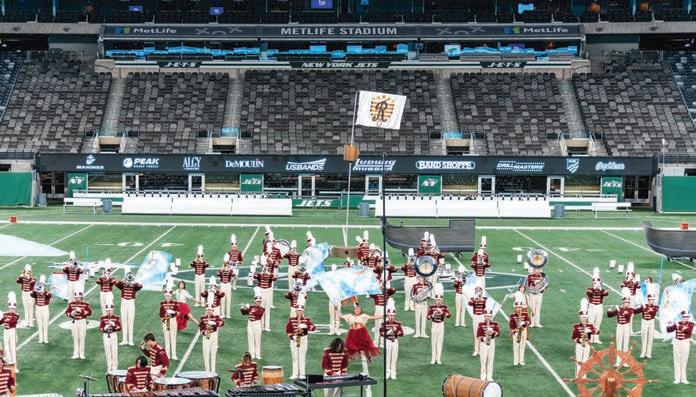
Marching Band has been selected to perform in the Salute to Independence Semiquincentennial Parade in Philadelphia, Pennsylvania, on July 3, 2026. This landmark event will be the largest professionally produced 250th anniversary celebration parade in the nation.
It’s quite exciting, considering that it is one of only 50 marching bands chosen from around the world.
“This is an incredible honor and a truly once-in-a-lifetime opportunity for our students,” says
John Luckenbill, Marching Band Director at Ridgewood High School. “To march through the very streets where our nation’s independence was born 250 years ago is a memory these students will carry with them forever. It is a testament to the hard work, dedication, and talent of our young musicians.”
The parade begins at 11 a.m. along an expanded historic route. The procession will start at 5th and Chestnut Streets, pass directly in front of Independence Hall, continue down Market Street, circle City
Hall, and travel along the Benjamin Franklin Parkway and Logan Circle.
The Ridgewood community is invited to support the band as they prepare for this prestigious national stage. Participation in an event of this scale involves significant logistics and preparation, and the band program looks forward to sharing this journey with the local community.
For more information about the Salute to Independence Parade, visit july4thphilly.com.
Revolutionary Reads
The British are coming! Commemorate America’s 250th Anniversary with titles that explore the people, politics, battles, and everyday lives that shaped the Revolutionary War era.
BY LORRI STEINBACHER, RIDGEWOOD PUBLIC LIBRARY
MY DEAR HAMILTON
by Stephanie Dray and Laura Kamoie
See the Revolutionary era through the eyes of Eliza Schuyler Hamilton, a founding mother who shaped an American legacy in her own right, struggling to define herself in the wake of war, betrayal, and tragedy.
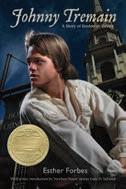
JOHNNY TREMAIN
by Esther Forbes
This beloved classic by Pulitzer and Newbery Prize winner follows a young silversmith’s apprentice as he becomes a dispatch rider for the Committee for Public Safety, where he meets many Boston patriots involved in the struggle for independence from England. It remains one of the most engaging fictional portraits of the American Revolution.
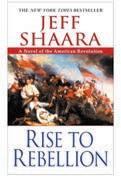
RISE TO REBELLION
by Jeff Shaara
This novel traces the years leading to the Revolution through the perspectives of George Washington, Benjamin Franklin, John Adams, and others. Ideal for readers who enjoy immersive historical storytelling.
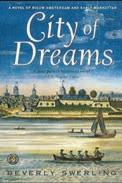
CITY OF DREAMS
by Beverly Swerling
An epic novel of Manhattan’s first century follows two families— one Dutch, the other British—from the earliest days of the settlement to the Revolutionary War.
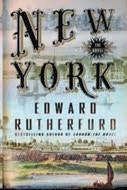
NEW YORK: THE NOVEL
by Edward Rutherfurd
This novel follows generations of families from the city’s earliest Dutch settlement through the Revolutionary War, immigration waves, the Gilded Age, and beyond.
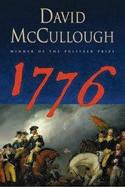
1776
by David McCullough
A gripping narrative history focused on the Revolution’s pivotal first year and George Washington’s leadership during moments of uncertainty and near defeat. Highly readable and deeply researched.
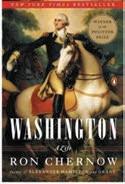
WASHINGTON: A LIFE
by Ron Chernow
This Pulitzer Prizewinning biography presents a portrait of George Washington, from ambitious young officer to reluctant revolutionary leader and first president.
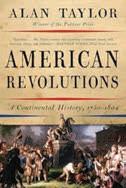
AMERICAN REVOLUTIONS: A CONTINENTAL HISTORY,
1750–1804 by Alan
Taylor
Looking for a different take on the Revolution? This book examines how the conflict affected Native Americans, enslaved people, loyalists, and ordinary citizens across North America.
THE BRITISH ARE COMING
by
Rick Atkinson
The first volume of a planned Revolution trilogy, this account covers the war’s opening years with vivid battle scenes, political intrigue, and compelling storytelling.
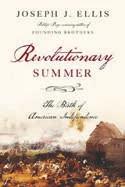
REVOLUTIONARY SUMMER
by Joseph J. Ellis
Ellis focuses on the crucial months of 1776 when the Declaration of Independence, the British invasion of New York, and George Washington’s struggle to hold the Continental Army together all unfolded at once.
Lorri Steinbacher is the director of the Ridgewood Public.. Library and facilitator of the Book Circle and Cover 2. Cover book groups at the library.
Find Your Place at The Shore
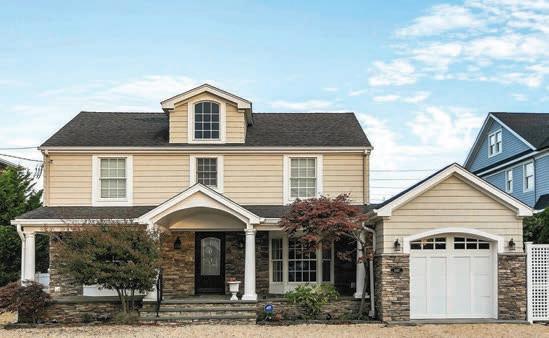
$1,595,000
The path to back pain relief
Everything medicine can do. A few things medicine can’t.
Eighty percent of us will experience back pain at least once in our lifetime. Valley’s Spine Center offers solutions. It all starts with a team of medical, surgical, pain management, and rehabilitation specialists delivering highly skilled treatment and ongoing management of acute and chronic back pain conditions. And with an experienced navigator dedicated to helping you schedule tests, imaging, and physician visits, you’ll get the care you need – plus peace of mind.
Make the call. Valley’s Spine Center experts are waiting to help.
To schedule your over-the-phone evaluation with Valley’s Spine Center navigator, call 201-689-3800. For more information, visit ValleyHealth.com /SpineCenter begins at our Spine Center.