MyDenver


BELCARO & BONNIE BRAE
SMALL BUT MIGHTY
SUSTAINABLE STYLE
BY ABBY CERNE
THE ART OF AGING
AESTHETIC NURSE
POLLY MCKIBBEN










and


SMALL BUT MIGHTY
SUSTAINABLE STYLE
BY ABBY CERNE
THE ART OF AGING
AESTHETIC NURSE
POLLY MCKIBBEN
and
BELCARO & BONNIE BRAE EDITION
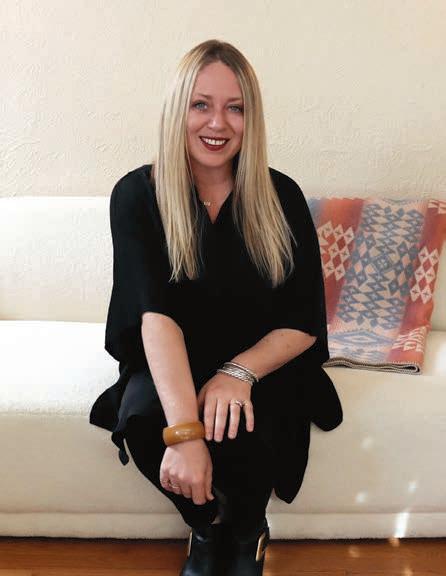
It’s a joy to share this month’s issue, an homage to wellness in all its forms. Summer is the perfect time to prioritize self-care, whether by hiking through wildflowers, kayaking across lakes, or simply relaxing outside with family and friends.
This 4th of July marks our nation’s 250th birthday, and there’s no better place to celebrate than Wash Park. July is also full of festivals honoring cultural exchange as well as traditions, both old and new. We’re particularly excited for the Cherry Creek Arts Festival, which brings over 200 artists to our backyard every year. We also plan on eating our weight in crepes at the Denver French Fest, a celebration of Bastille Day complete with champagne, baguettes, and jazz reminiscent of Parisian cafes. There’s something undeniably romantic about the height of summer, and our
calendar is full of events designed to foster connections and create lasting memories with loved ones.
For this issue, we had the pleasure of sitting down with two dynasties of the Denver business world, our friends at Howard Lorton Furniture and Design, and Fred Emich of Emich Automotive. Both Howard Lorton and Emich Automotive are family businesses dating back to the 1920s, and each has left an indelible mark on our city’s history and urban landscape. We also got to know an exciting newcomer to our neighborhood’s business scene, Carolina Corrêa, who founded Numia last fall in Cherry Creek and is transforming mental health care with psilocybin-based therapy. She’s joined by Dr. Jim Grigsby and Dr. Shandra Brown Levey of CU Denver, who are collaborating with researchers from NYU on the nation’s largest study of psilocybin’s therapeutic benefits for late-stage cancer patients.
You’ll also be introduced to Abby Cerne, an art therapist and the founder of Abby’s Aesthetics, the upcycled and sustainable slow fashion brand that’s a beloved staple of the Denver market circuit. And, on the beauty beat, we went straight to the experts to learn more about advanced skincare treatments in the age of “Ozempic face” and how you can slow unwanted signs of aging at home. From new frontiers in psychedelic-assisted therapy to tried-and-true methods of self-care, this issue celebrates wellness and that magical feeling of joie de vivre. For best results, we recommend reading under a shady tree, next to a lake, surrounded by wildflowers.
With gratitude,

Emilie
Trice Editor,
MyDenver emilie.trice@wainscotmedia.com mydenvermag.com @mydenvermag
Publisher
Sawyer Matz
sawyer.matz@wainscotmedia.com
Editor
Emilie Trice
Writers Abby Cerne
Chelsea Frederickson Smith
Emilie Trice
Jaylin Goodloe
Photographer Chelsea Reynolds
WAINSCOT MEDIA
Chairman Carroll V. Dowden
President and CEO
Mark Dowden
SVP, Group Publisher
Thomas Flannery
VP, Content Strategy Maria Regan
VP, Director of Digital Media Nigel Edelshain
Creative Director
Kijoo Kim
Art Director
Rosemary O’Connell
Associate Editor Sophia Carlisle
Advertising Services Director Jacquelynn Fischer
Operations Director Catherine Rosario
Production Designer Chris Ferrante
Print Production Manager Fern Meshulam
Circulation Manager Kathy Wenzler
Advertising Production Associate Griff Dowden
MyDenver magazine is published by Wainscot Media. Serving residents of Bonnie Brae and Belcaro, the magazine is distributed monthly via U.S. mail. Articles and advertisements contained herein do not necessarily reflect the opinions of the publishers. Copyright 2026 by Wainscot Media LLC. No portion of this magazine may be reproduced in any form without written consent.



KALO, The #1 multi-faceted space for women.
At KALO, we design our programs with a deep understanding of how women’s bodies actually function, from hormonal cycles and recovery needs to emotional regulation and nervous system health, because respecting your body extends beyond physical strength into emotional awareness, self-trust, and education. Through an ever-evolving, service-rooted approach, we are creating a space where women learn how to support themselves more fully and train in a way that allows them to thrive.

Think sun-drenched patios, clinking glasses, and bottles that don’t take themselves too seriously. This month’s Wine Lover Club is all about summer sips — expect bright fruit, refreshing acidity, and easygoing elegance in every pour.
Each month our team hand-selects two wines and pairs them with simple tasting notes to help you sip, learn, and enjoy!

•• (303) 733-7261


As we celebrate our nation’s 250th birthday on July 4, summer’s best events are just getting warmed up. Immerse yourself in the joie de vivre of Denver French Fest this month, and indulge your senses across a movable feast of bustling farmers markets, shopping soirées, vibrant arts festivals, and romantic outdoor concerts.
July 3 to 5
Cherry Creek Arts Festival
During Independence Day weekend, Cherry Creek North will welcome more than 260 artists for its annual Arts Festival, a sprawling survey of regional and national talent. You’ll find a wide range of arts and crafts, from paintings and photographs to jewelry, ceramics, unique fashions, and beyond. The event is free to attend and runs each day from 10 a.m. to 8 p.m. across Cherry Creek North. Visit cherrycreeknorth.com/summer-inbloom-events to learn more.
July 4
Fourth of July Celebration at Wash Park
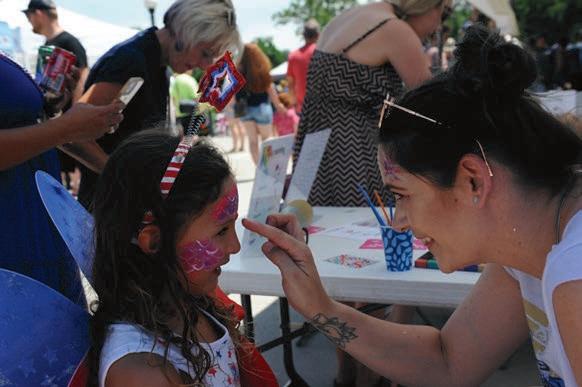
The annual July 4 Celebration returns to Wash Park’s historic Boathouse Pavilion with a neighborhood picnic and colorful parade showcasing a moveable feast of bikes, trikes, and strollers all decked out with patriotic flair. Enjoy live music, free ice cream, face painting, and balloon artists, along with a bevy of other familyfriendly activities. Pack your picnic basket, lawn chairs, and show some love for Uncle Sam in honor of the country’s 250th birthday. Festivities run from 11 a.m. to 1 p.m. at Wash Park. For more information, check out wpena.org.
Every Sunday this month, take a morning stroll through the South Pearl Street farmers market and peruse a hearty sampling of fresh fruits and veggies, savory baked goods, artisan coffee roasters, colorful flowers, and a variety of handmade crafts. One visit and you’ll understand why “it’s not just a market, it’s a weekly ritual.” Leave your pets at home! Every Sunday from 9 a.m. to 11 a.m. More details at southpearlstreet.com/farmersmarket.
This annual Bastille Day tribute brings together the very best of French culture, including delectable pastries, freshlybaked baguettes, bubbly Champagne, lively musical performances, and so much more. More than a street festival, it’s an immersive experience that invokes the romantic markets of lavenderdrenched Provence, the café culture of Paris, and the gastronomy of the French countryside. Choose between free admission or curated VIP experiences. Located at the Fillmore Plaza in Cherry Creek North. Learn more at denverfrenchfest.com.
July 13, July 15, and July 27
Evenings al Fresco at the Denver Botanic Gardens
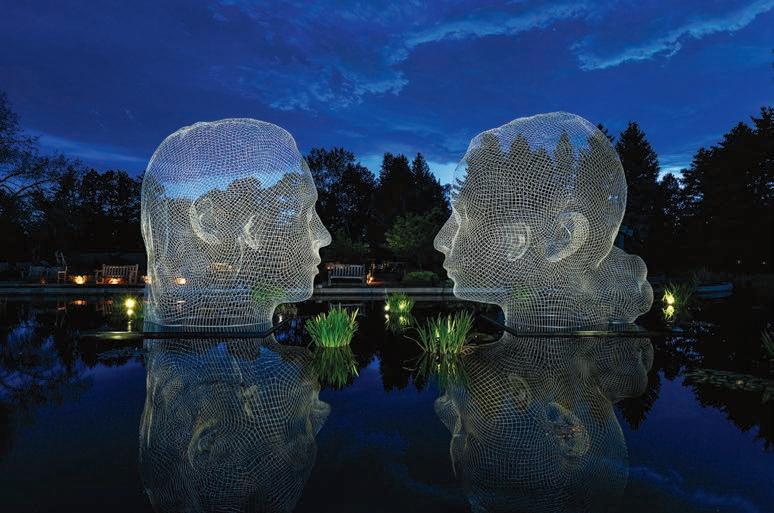
The Denver Botanic Gardens marry music and nature in their Evenings al Fresco series, which showcases live performances by local talent amidst the serenity of their curated outdoor gardens. This summer’s lineup promises an exceptional sensory collision, as acoustic melodies meet the stunning sculptures of renowned artist Jaume Plensa, whose surreal creations amplify the beauty and wonder of the gardens’ dreamy atmosphere. Performances begin at 5:30 p.m., and the event concludes at 9 p.m. Seating is limited, so bring your own blanket or lawn chair. Tickets must be purchased in advance and are priced at $22 for members and $32 for the general public. More details at botanicgardens.org.
July 16 to July 19
Cherry Creek Sidewalk Sale
This annual sale event along Cherry Creek’s sidewalks offers a relaxed, outdoor shopping experience like none other. Browse a vast selection of discounted offerings as the boutiques and shops of Denver’s most upscale shopping district prepare to refresh their racks for fall. Learn more at cherrycreeknorth.com/summerin-bloom-events.
July 18
Summer in Color: A Local Social Indulge yourself with this beauty-themed social event offering make-up sessions, on-site hair styling, expert color consultations, and unique
fashions for every budget. Guests will be treated to 20% discounts on products and exclusive booking promotions, as well as complimentary refreshments and, most importantly, good company. Hosted by The Local Parlor, from 1 p.m. to 5 p.m. at 1093 S. Gaylord St., Denver.
31
Final Friday Art Walk South
Head to South Pearl Street for the Final Friday Art Walk and discover artistic talent inspired by Denver’s eclectic cultural landscape. More than a gallery crawl, the Final Friday Art Walk features live demonstrations, unique vintage finds, live music, and delicious food and drink. The event runs from 5 p.m. to sundown across the 1400 to 1600 blocks of South Pearl Street. Additional information at southpearlstreet.com/final-friday.

BY CHELSEA FREDERICKSON SMITH
AS BONNIE BRAE Liquor’s resident mixologist, Chelsea Frederickson Smith has been creating her own cocktails and sharing them with the community for years.
“I love giving people new ideas of drinks they can make with local spirits,” she says. “I tailor my cocktails to the seasons or holidays, and now we have printed recipe cards so folks can take those home with them.”
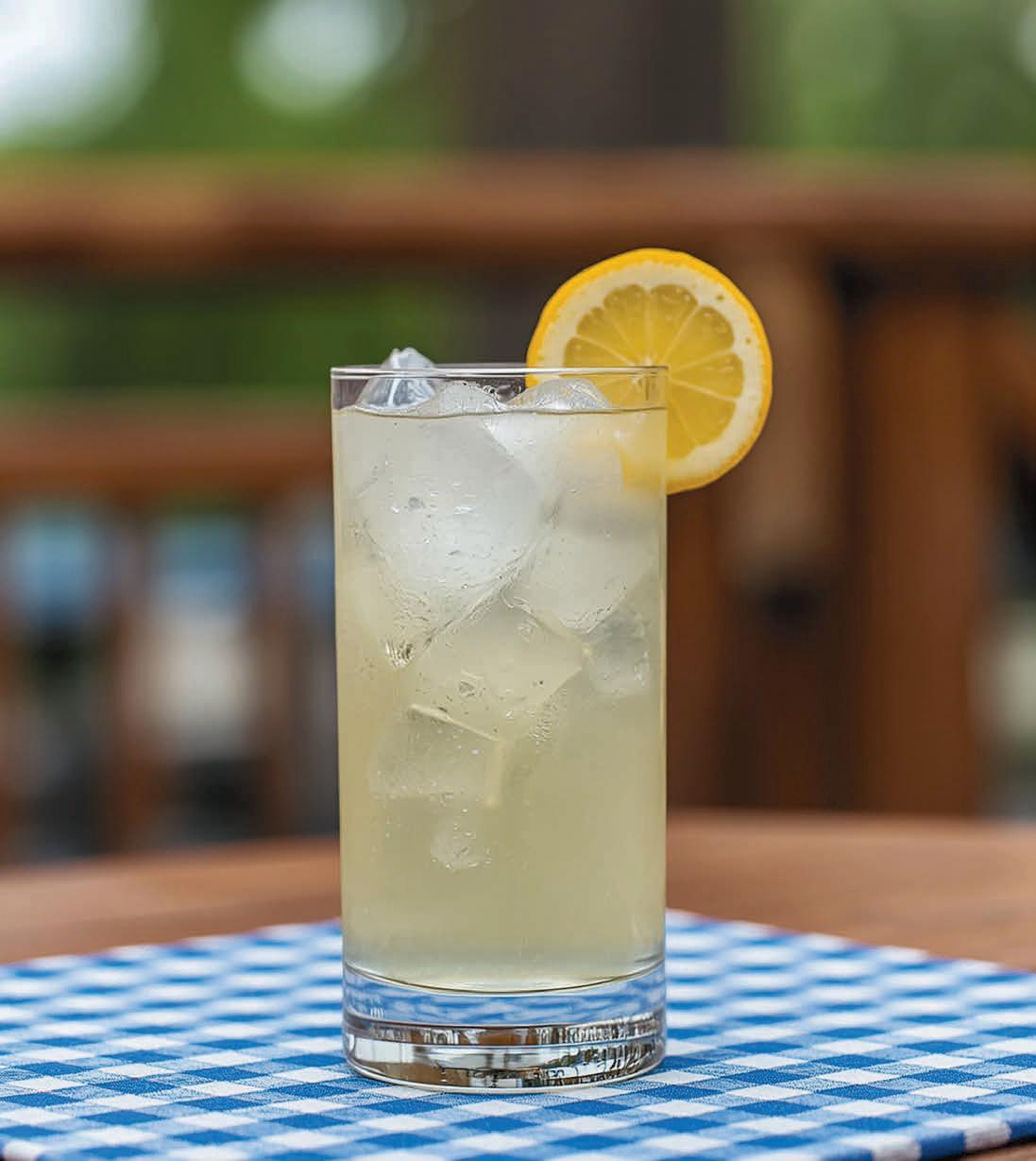
Her update on lemonade, a classic summertime staple, is light, refreshing, and bubbly, the perfect complement to any outdoor picnic or backyard barbecue. To find more original “Cocktails by Chel-C,” head to Bonnie Brae Liquor, where Chelsea rolls out new, delicious recipes every few weeks that are always simple to make and designed to delight.
INGREDIENTS
Pudding
• 2 ounces of your preferred Locke & Co. Whiskey
• 1 ounce Triple Sec
• ½ ounce Lemon, freshly squeezed
• ½ ounce Simple syrup
• 4 ounces Lemon/Lime soda
• Garnish: Lemon wedge
INSTRUCTIONS
1. Add the bourbon, triple sec, lemon juice, and simple syrup into a shaker with ice and shake until well-chilled.
2. Strain into a tall glass filled with ice.
3.. Top with lemon/lime soda and stir gently to combine.
4. Garnish with a lemon wedge.
Chelsea Frederickson Smith is the creator of “Cocktails by Chel-C”, as well as the assistant manager of Bonnie Brea Liquor.


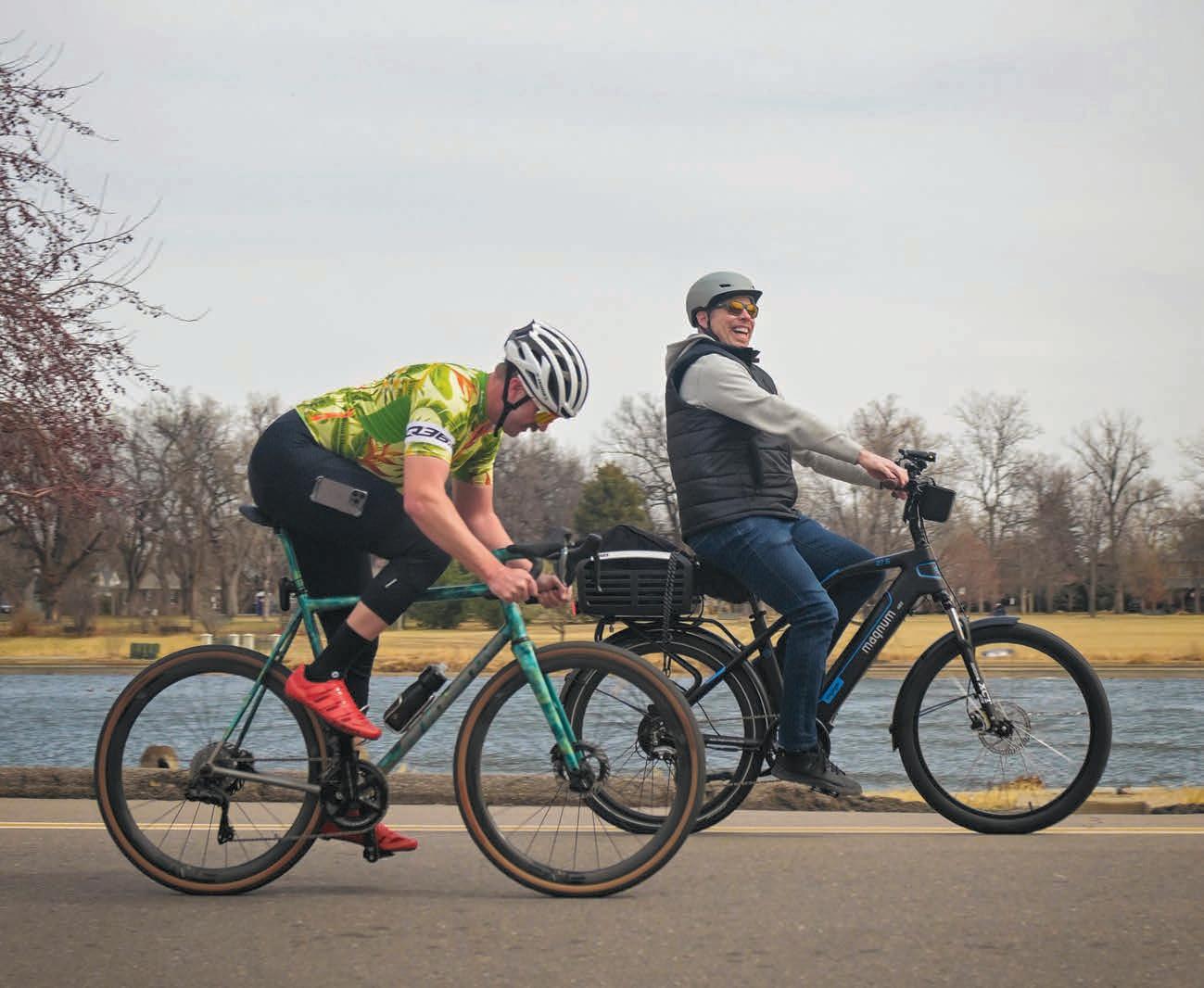
Fred Emich of Emich Automotive took over the family business 20 years ago and hasn’t slowed down since.
BY MYDENVER STAFF
How long has your family been in the car business?
My family’s been in the automotive industry since 1922, so for more than 100 years. Our first dealership was in Chicago, and then my father and great-uncle started an Oldsmobile dealership here in Denver in 1975. My father grew that business to seven different dealerships, which he then sold to AutoNation in the 90s. Growing up, after my dad sold the dealerships, I didn’t think I would necessarily take the same path he did. But after going to college out East and spending a summer in New York City, I decided to come back home to Colorado and work at AutoNation for a few years.
I had spent nearly half my life as a kid waiting around the dealership for my dad to give me rides home, so I had absorbed a lot of knowledge about the car business just through osmosis, and I figured I should leverage everything I learned into my own career. Then we got an opportunity to buy the Chevy store and the VW store in Denver, and Emich Automotive restarted from there.
When we bought the stores in 2006, I still didn’t have much full-time experience. We were essentially offered the franchises based on my father’s pedigree, but then he was diagnosed with late-stage prostate cancer. He’s recovered since then, but he took some time away, and that kind of threw me straight into the deep end. I was 25 years old at that point, and I had to figure things out rather quickly. Fortunately, another business partner, Bob Colbert, had worked with my father for years (he recently retired), and we were able to apply all the aspects that had made Emich Automotive successful in the past to our new endeavor. It’s been 20 years since we’ve been reestablished in the Denver market, and we’re really happy to still be here.
What has changed under your leadership?
One thing we’re really proud of is our client experience. When I entered the
automobile business, or even growing up within it, there was a lot of negativity around car dealers. People felt the sales tactics were too aggressive, there wasn’t enough transparency around price, things like that. So, the first thing I wanted to do was improve the client experience, to make it enjoyable and just do it right, because it really didn’t have to be that way. We’ve done our best to dismantle those stereotypes around buying and selling cars, and I think we’ve come a long way.
We’ve also integrated a lot of new technology into the business. Back when e-commerce was still brand new, we started using Google Analytics and digital lead-generation, and now we’re beginning to optimize our systems with AI. Still, our customer relationships are our most valuable assets. I was just listening to an industry podcast this morning; the expert on the show is this legend in the auto trade, and he said, “This business is about three things: people, people, and people.”
It’s our employees on the front lines who deliver that customer experience, and we invest as much as we can to keep those people. There’s usually a lot of turnover in our business, but we have a lot of tenured employees, particularly as sales consultants and service advisors, and 80% of our management team were promoted internally. That continuity really helps in terms of having the experience—and the confidence—to deliver an outstanding client experience.
How does Emich Automotive give back to the community?
We have a board consisting of employees called Emich Cares, which we fund with an annual six-figure budget. They meet once a month to discuss different nonprofits that have approached us, and then they decide which organizations to support and at what level. We also save a portion of our philanthropic funds for our own employees who have recently
experienced a hardship, and we figure out how best to support them as well.
What do you do outside of work?
I drive my children around. Seriously, I drive them to practice and to games, and it’s great—I love watching their sports. But before we had sports every weekend, I did a bit of auto racing. I was a ski racer growing up and all through college, and there are some similar dynamics in terms of knowing the best line to take a turn, for example, to maximize speed and acceleration. Back in 2012, Volkswagen was kind enough to give me a chassis, basically a shell of a vehicle, and we built a race car from that. We had some podium wins, and I also started doing some endurance races, but then my twins were toddlers, and my wife wasn’t thrilled about me racing, so that hobby took a backseat. I still love racing, though, so Emich Automotive sponsors two racetrack days a year, when we open the track up to both clients and anyone else who wants to come out and drive with us. We give rides in the race cars, we do some teaching, and things like that. The next one is coming up in October. We’ve sold out almost every year, and it’s a lot of fun. I started ski racing when I was about six years old, so I have a long history with speed. I was very competitive and was ranked number one nationally in my age group a few times, but the pinnacle of my ski racing career was during my senior year at college in Vermont, when I won the Eastern Conference Championship. I’ve gotten to race in Europe, South America, Australia, New Zealand, and all over Canada, but nothing compares to skiing in Colorado. Living in Denver is great because I get to do all the outdoor activities I enjoy, and also spend a couple of days at the racetrack every year. Whether it’s skiing, biking, playing golf, or kayaking, there are great places in and around Denver to do all those things, great weather to do them in, and great people to do them all with.




•
•
• Many options available – Wood,
• Custom Designs for the
• Traditional Hot Rock Heat, Infrared and Red Light Therapy
• Options for Features like Himilayan Salt Walls, Stone Accents, Glass Walls
• Products available from Leading Sauna Brands











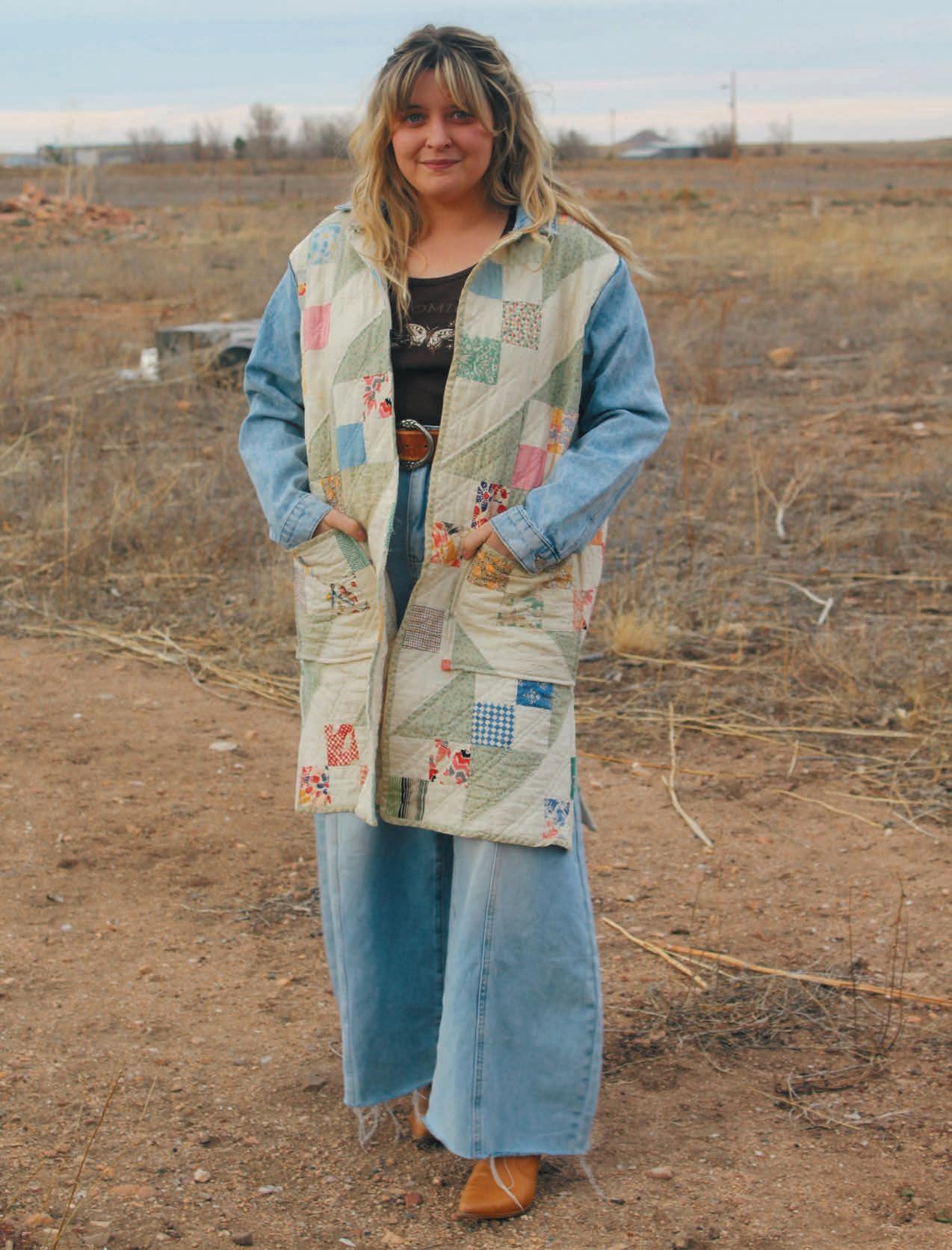
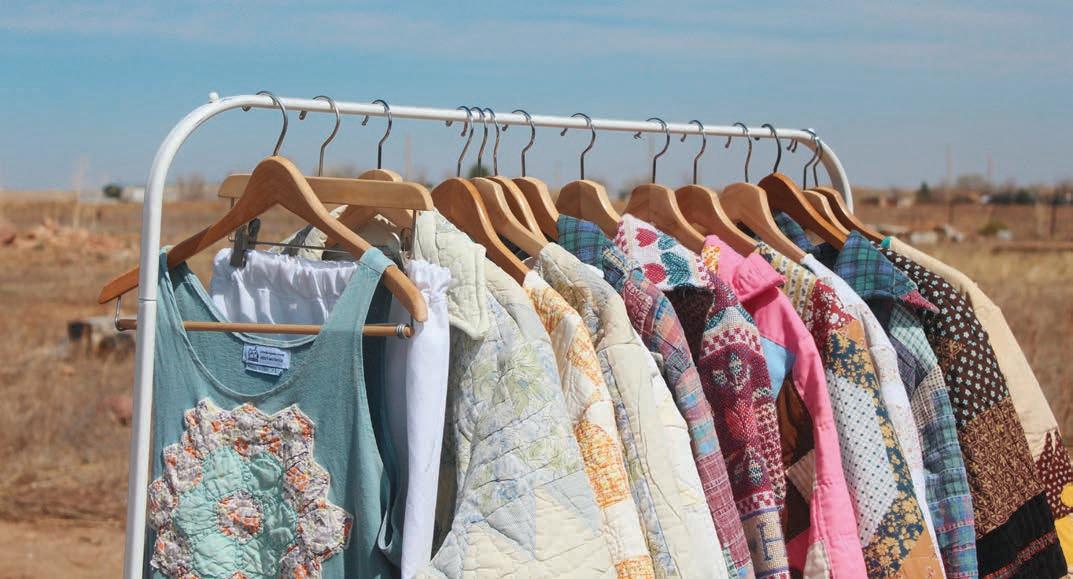
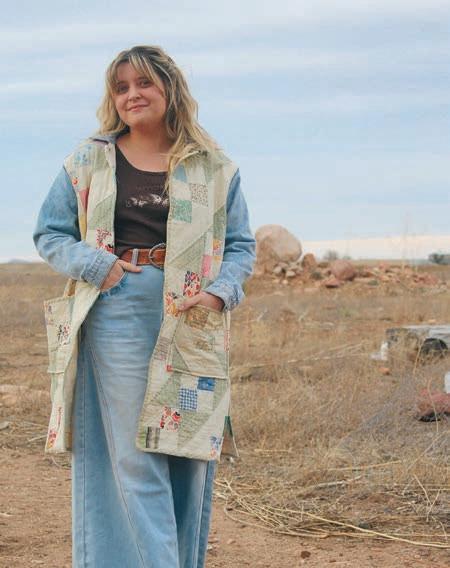
Abby Cerne of Abby’s Aesthetics shares the triumphs and tribulations of building a small but mighty sustainable fashion business in the era of Amazon Prime.
BY ABBY CERNE
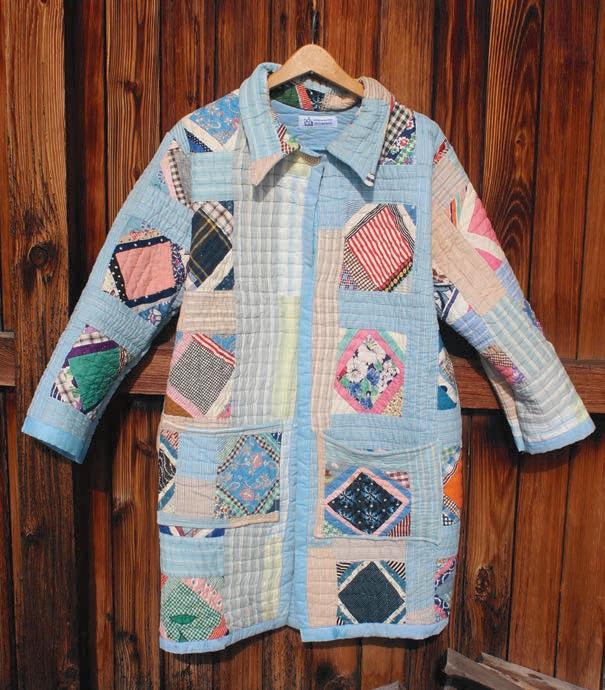
II BEGAN MAKING and selling wearable garments in the summer of 2024, but like any story, mine began long ago. My dad first taught me to sew back when I was in the 5th grade. He was a counterculture motorcycling and sewing man, who made our farmhouse’s curtains and our family’s quilts. Domestic crafts, including quilting, crochet, and needlepoint, were once essential in maintaining and decorating a home and typically linked to women’s work. You’ll notice it’s called a “craft” rather than “fine art” for this reason. In the era of Amazon Prime, domestic crafts are being replaced by convenience and speed. Something remarkable is lost here, and my goal is to find it.
“I dream of hosting art therapy spaces for social justice groups, where we reuse fibers to create something meaningful—small but tangible acts of change. Teaching folks to sew, repair, and mend is radical, and I want to be part of that movement.” - Abby Cerne
As someone who spends a lot of time thrifting, I started to notice a pattern: quilts were often left behind. If a quilt is tattered, ripped, or stained, it may be donated and then passed over. When these pieces aren’t purchased, they are pulled from the floor and eventually sent to the landfill. Sewing quilts takes immense craft, accuracy, and time. I am heartbroken at the idea of these resources going to waste. In time, quilts are landing in the waste stream, and family history is being thrown away.
I value art-making and sustainability more than anything. With a background and degrees in art and art therapy, I decided there was something I could do to be part of my
beloved sustainability community, and so I’ve taken actionable steps toward a solution. The second driving force behind my sewing is paying off my student loan debt and the high interest attached to it. I spent seven years studying art and art therapy, but with steep interest rates, the balance often feels like it’s growing rather than shrinking. To keep up, I work a full-time job, run a private practice, and operate this sustainable sewing business where everything I earn here goes toward student loans. I share this not just as my own lived experience, but because it reflects a much broader reality: People are working multiple jobs and still struggling under the growing rate of student loan interest.
I have some strong feelings about the quality of fiber materials and the impact of fast fashion. We’re living in a culture that prioritizes quantity over quality, where design, durability, and fair compensation are often sacrificed for the instant gratification of microtrends and corporate greed.
Of the 100 to 150 billion garments produced annually, an estimated 15 to 45 billion are never sold. In contrast, vintage garments continue to hold up as quality pieces, with materials that stand the test of time. It is both more expensive and of lower quality to buy new rather than secondhand.
Slow fashion or handmade items have become luxury items, but they don’t need to be. I feel it is important to learn to sew, share these skills with your neighbors, and spend time getting to know your clothes. In a world that pushes us to move fast, we can move slowly with intention. I actually like to
call my work “the slowest fashion.” It’s a deliberate, time-intensive process that begins with sourcing materials—often through trips to thrift stores, in search of the right pieces. Once, my partner and I drove ten hours from Colorado to Nebraska in search of cutter quilts; another time, we traveled two hours for a single quilt from Facebook Marketplace. Some days, we spend hours looking only to come home empty-handed.
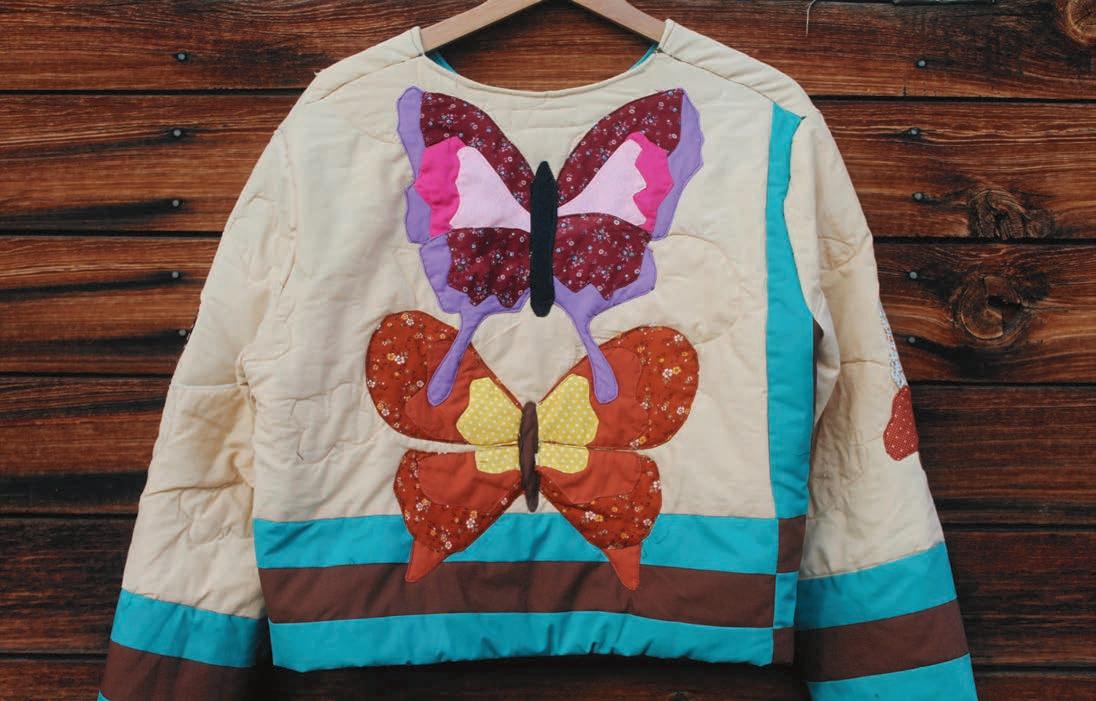
After sourcing, I carefully clean and spend time with each quilt, considering how its existing patterns and history can best translate into a garment. I design the layout and handcut each pattern. Often, I mend rips and worn areas to honor the history before me. Finally, I sew the pieces into the finished garments you see at markets. Every step is intentional. It’s a labor of love and slow fashion. My creative process includes consuming an alarming amount of Diet Coke
and listening to the Grateful Dead or Joan Baez. I go on what I call a ‘sewing marathon’ for 12 hours on Saturdays and Sundays, fueled by caffeine, good music, and the company of my pal, Reva the Dog.
One thing I wish people knew about being a maker is the immense impact of buying from a local artist or small business. Supporting my work means supporting my creative dreams and helping keep quilts out of landfills, and thereby—in a small but meaningful way—saving the world. Another thing I wish people knew is how impossible this would be without the support of my friends, family, and community. As a small business owner, I wear many hats. I am a shopper when sourcing fiber materials, a laundromat when cleaning them, a designer when reimagining each quilt into a one-of-a-kind piece, and a seamstress
when bringing it all together. I am a photographer when documenting my work, a social media marketer when shaping its visual story, an accountant when managing finances, an athlete when setting up for markets, and something else entirely when I meet you and invite you to try on my pieces.
I can only do this with the support of those beside me. My best markets are the ones where my partner David cheers me on through every piece I sew in the weeks leading up to it, my best friend Claudia sits beside me for hours at a booth, and I call my mom Amy afterward to talk through every detail. There is a whole community surrounding each small artist.
At the heart of the maker and thrifting community is something deeply collaborative and generous. I think I once imagined our culture’s forces of scarcity and capitalism would make this space feel competitive or gatekeeping. Thankfully, I was wrong. Instead, this
community has far exceeded my expectations in embodying something closer to anti-capitalism—a culture rooted in showing up for and supporting one another.
At each market, I make new connections and friendships. We uplift each other, whether through the social media platforms we creatively curate or by passing along our newest finds. Some of the best examples of this mutual aid are thrifters like Lydia Lyon, Matthew Simonson, and Emma Bridgewater, whom I met through Market in the Parket. They regularly send me photos of quilts, blankets, and materials they think I might work with, and even collect pieces with my work in mind. Many of my favorite quilts have come through these connections, becoming some of the most meaningful pieces I’ve ever made.
I’ve learned that despite living within
an individualistic culture, we don’t just thrive—we can only survive—through collective care and by consistently supporting one another. At this time, all of my sales and the relationships that I build are made possible through local pop-up markets. This season, I made the decision to prioritize quality over quantity—vending at only a select number of markets each month and spending the time I would have otherwise been vending at my sewing machine instead. I love meeting the folks who wear the clothes I make and feel that personal touch is important in a digital age. As long as there’s an overflow of textiles headed to landfills, I know this work matters.
For more information, visit the-art-therapylady.square.site, follow Abby on Instagram @abbysaesthetics, or meet her in person at Market in the Parket in Wash Park and City Park this summer. More details at marketintheparket.com.
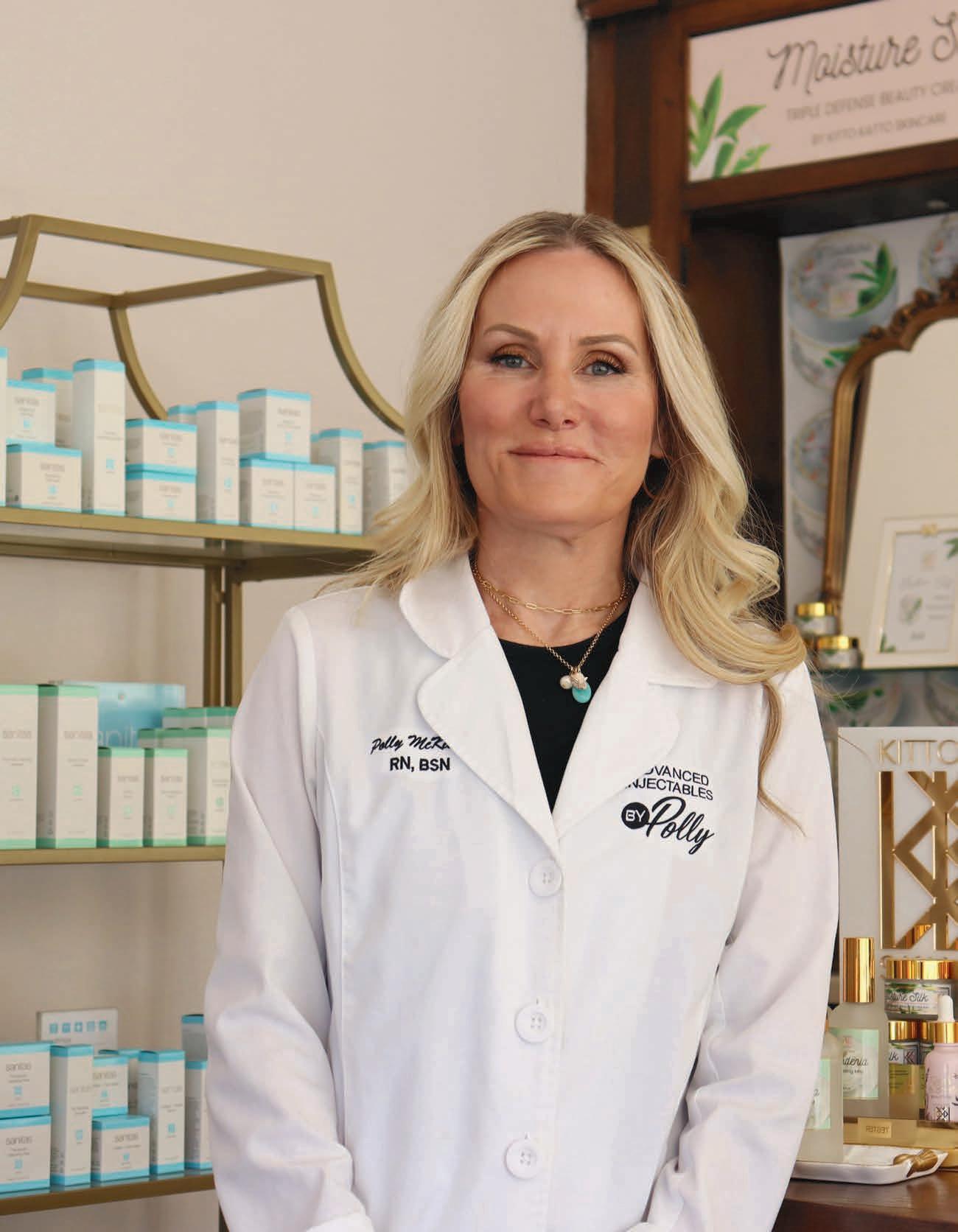

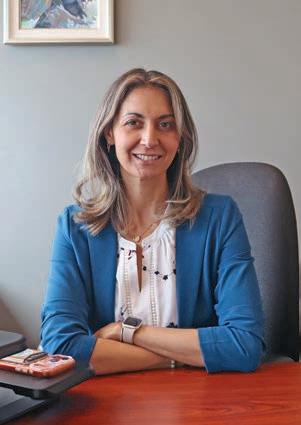
Aesthetic nurse and injectables expert Polly McKibben shares her skincare secrets for a radiant, youthful look at any age.
BY MYDENVER STAFF
IICONIC FASHION designer Coco Chanel once said, “Nature gives you the face you have at twenty. Life shapes the face you have at thirty. But at fifty, you get the face you deserve.” Skincare has come a long way since then, and today we have more control over how our faces evolve than ever before. Polly McKibben, an aesthetic nurse and the owner of Advanced Injectables by Polly, understands how important it is to feel some agency over one’s appearance. After earning degrees in psychology and nursing, McKibben was working as a labor and delivery nurse when she suddenly developed severe cystic acne. “It took a huge toll on my self-esteem and my confidence,” McKibben explains. “I was incredibly frustrated that I was unable to find an effective treatment for my situation. That experience
led me to my true passion—medical aesthetics.”
Motivated to help others suffering from skin-related issues such as hers, McKibben began working with plastic surgeons as a medical aesthetician 20 years ago. She’s now an expert injector with a repertoire of highly specialized non-surgical facial procedures. In 2018, McKibben founded her own injectables business, serving clients from the ages of 20 to 80 seeking treatment for a range of aesthetic concerns and challenges. Paramount among these is the desire to prevent or reverse certain signs of aging— the sagging undereye area, the vertical lines between the eyes, sometimes called ‘the elevens,’ or deep-set forehead wrinkles, for example—that can make someone appear tired, sad, or angry.
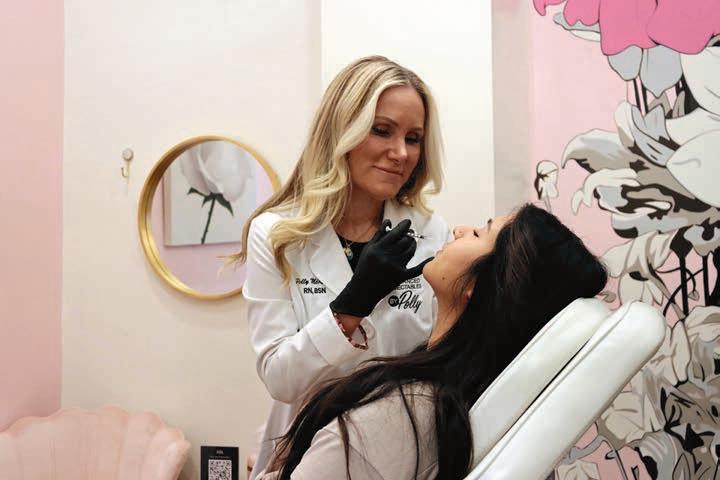
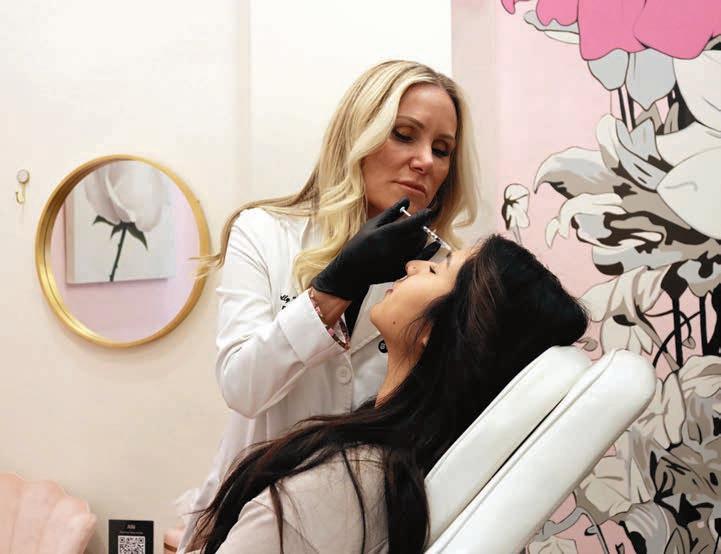
McKibben specializes in neuromodulators like Botox and Dysport that relax the muscles known to cause frown lines, crow’s feet, and other unwanted facial contours. With the advent of GLP-1s and the rise of “Ozempic face”—characterized by sunken cheeks and loose skin around the jawline—McKibben has witnessed an increase in requests for the ‘Nefertiti Neck Lift’, which focuses on platysma bands, the neck muscles responsible for facial expressions. McKibben also frequently works with Sculptra, a polylactic injectable filler that restores the body’s natural collagen and elastin, smoothing and tightening skin in the process. As certain celebrities have demonstrated, too much filler can change someone’s face dramatically (and not always for the better), so McKibben works with each client to ensure they still look like themselves post-treatment, just younger and healthier.
Recently, McKibben has begun offering Skinvive injections, which are designed to help rehydrate the skin and help it retain its own moisture. “I create little micro droplets under the surface of the skin,” she explains. “The body reflexively sends water to that area, which replenishes the hyaluronic acid we all have naturally. It’s almost like creating a lake under the skin’s surface.” This treatment has soared in popularity among local clients, since everyone living in Denver can benefit from additional hydration.
While new technologies have vastly expanded skincare options, simple acts such as drinking lots of water, getting adequate rest, and committing to a consistent skincare routine at home are all vital to maintaining a healthy complexion. Cosmetic injections can’t completely undo years of neglect or sun damage. McKibben recommends—at minimum—four core products for at-home facial care. Sunscreen is the most important, especially in sun-drenched Denver, and should be used every single day. Her next recommendation is a cleanser like Obagi, a medicalgrade skincare brand that must be purchased from a med spa or other clinical establishment. McKibben also highlights Pro-Heal, a clinical
serum rich in Vitamin C that prevents redness and protects against UV rays. Finally, McKibben recommends using a moisturizer tailored to one’s skin type—oily, dry, combination, etc.— and emphasizes that, because Denver has such a dry climate, moisturizer is critical in keeping skin both looking and feeling young in the Mile High City.
Complementing at-home skincare with advanced injectables will achieve the best results, and the client-clinician dynamic plays a central role—building trust is essential. “The most important part of my career has been the relationships I’ve developed along the way,” McKibben says. “Some of my clients have been coming to see me for 20 years.” Aging is a natural process,
but medical aesthetics can also look natural if done correctly. Before any injection-based treatment, McKibben advises abstaining from all bloodthinning agents such as Ibuprofen, fish oil, vitamin E, and alcohol for at least two days. “I’ve seen how just a little bit of Botox can make someone feel better about themselves,” McKibben explains. “I know that what I do has the power to transform some people’s entire lives, and I’m grateful to be part of that journey.” No matter your age, it’s never too late to begin nurturing the appearance you deserve.
McKibben sees clients at Kitto Katto Skincare, Denver’s first medicallydirected skincare clinic. Check out Advanced Injectibles by Polly at aibypolly.com for more information.

The profound healing potential of psilocybin-assisted mental therapy.
BY EMILIE TRICE
CCOLORADO STANDS of at the forefront of the psychedelic renaissance. In 2022, we were the first state to decriminalize the personal use of certain psychotropic substances, including the mind-altering compound psilocybin active in “magic mushrooms.” In 2024, CU Denver launched the country’s first psychedelic-facilitator training program within academia, and the university is collaborating with NYU on the country’s largest study on psilocybin’s benefits for stage-3 and
terminally ill cancer patients. As a naturally occurring medicine that’s been around for ages, psilocybin’s recent resurgence feels distinct, mature, professional—a far cry from its 1960s counterculture heyday. Renewed interest in its uses within a regulated, therapeutic environment has revived both public engagement and institutional funding.
“We’ve finished almost four years of a five-year study that’s funded by the National Cancer Institute with a grant of $2.1 million,” says Dr. Jim Grigsby, who’s been working
towards this critical mass for almost 50 years. Today, he and his colleague, Dr. Shandra Brown Levey, lead CU Denver’s Center for Psychedelic Research as codirectors and investigators on its marquee study, “Psilocybin for Anxiety and Depression among People with Late-Stage Cancer.”
“It’s some of the most meaningful work I’ve ever done,” Brown Levey says. “There wasn’t any support or funding for this type of research for a long time, so I’m glad that people are coming back around to it.”
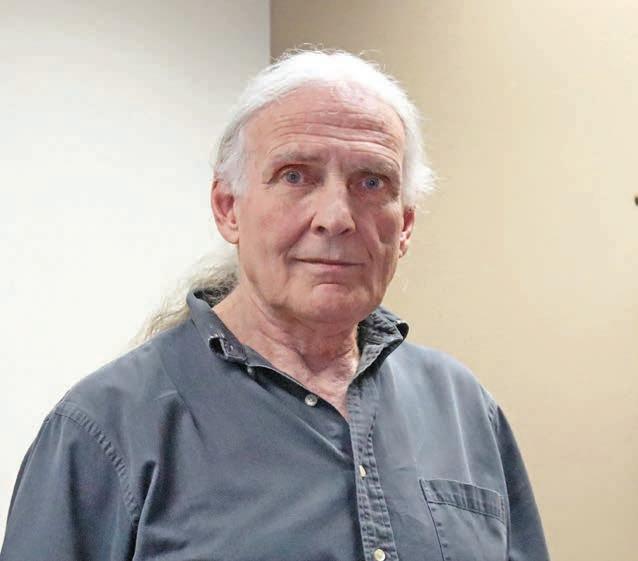
Opposite page: Dr. Shandra Brown Levey and Dr. Jim Grigsby lead CU Denver’s Center for Psychedelic Research as co-directors.
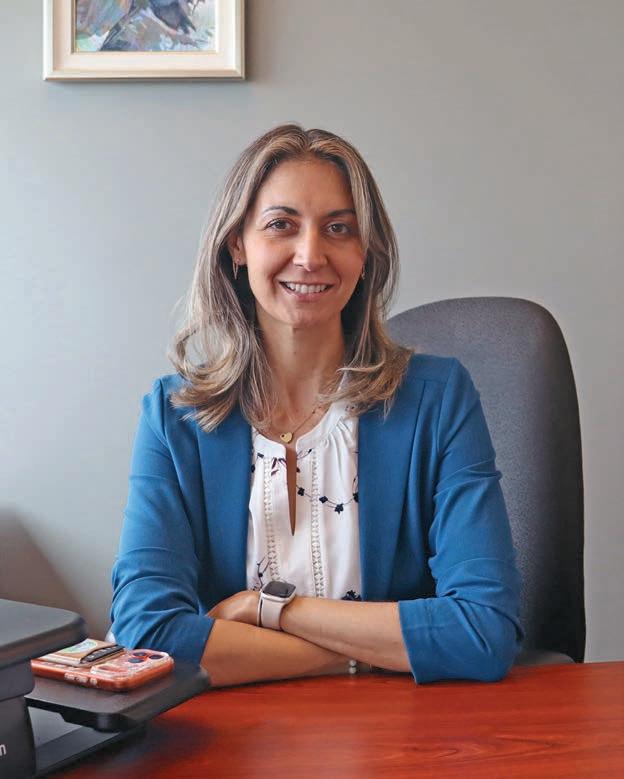
This page: Carolina Corrêa, founder and clinical director of Numia in Cherry Creek.
Brown Levey observes that attitudes towards therapeutic, plant-based psychedelics have shifted. “It’s something I think our populations are asking for,” she says. “We want to be able to offer these methods in safe, effective ways, so people can have the option and engage if they so choose.” While earning her doctorate in clinical psychology, Brown Levey developed an interest in oncology and general health psychology. Before joining Grigsby at the Center for Psychedelic Research, she spent 15 years as the Director of Integrated Behavioral Health in the Department of Family Medicine at CU Anschutz. She says her current research reinforces the same ideals that led her to clinical psychology in the first place. “It’s not that psychedelics were something that I was initially drawn to,” she explains. “It was more a general motivation to alleviate suffering. And then, through the pandemic and through this study, I’ve found that psychedelic work is deeply profound and has a tremendous amount of healing potential.”

As a double-blind, placebocontrolled study, Brown Levey, Grigsby, and their co-investigators don’t know which participants have been given psilocybin or a placebo. Their course involves three preparatory sessions, a dosing day, and then four integration sessions, providing a substantial amount of data. It’s a rigorous study with exacting inclusion and exclusion criteria, ensuring the safety of each participant, all of whom have been diagnosed with either stage 3 or stage 4 cancer. At the end of the study’s official run next year, their research team will compile and analyze the data, at which point they can begin to publish their findings.
“Because of things like MKUltra [the CIA project carried out from 1953 to 1963] and Richard Nixon’s political tricks, we lost about 30 years’ worth of research on this,” Grigsby says. The study will eventually comprise around 100 participants, and the researchers are actively seeking more individuals who meet the criteria and could benefit from this clinically oriented, therapeutic process. Both Brown Levey and Grigsby are also adamant in crediting Indigenous cultures with stewarding this ancestral knowledge— an intergenerational understanding and respect for the healing properties of psychedelics that can be traced back for centuries, perhaps millennia.
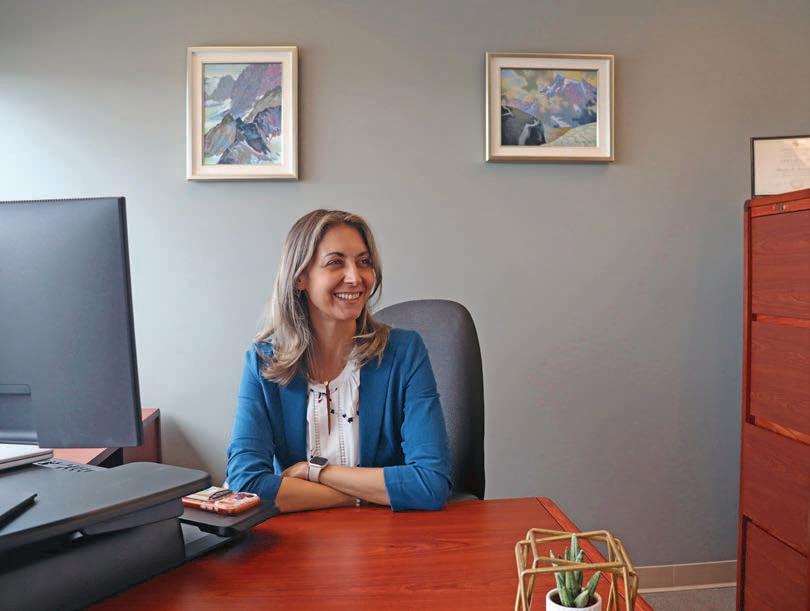
Carolina Corrêa was first introduced to Indigenous legacies of psychedelic healing while earning her undergraduate degree in Brazil. She studied with Dr. Silvio Coelho dos Santos, a prominent anthropologist and expert on southern Brazil’s Indigenous tribes. “That exposure to Indigenous communities and to the world of psychotropic plants was how I began to realize the power of this medicine,” she says.
Last September, Corrêa launched Numia, a clinic for psychedelic-assisted therapy located in Cherry Creek. As a woman-founder and an immigrant, she’s already overcome ingrained biases within the business world. She’s more focused, however, on shaping a new era of integrated psychedelic therapy and all the responsibilities that role entails. At Numia, “we are very much focused on trauma-informed care,” Corrêa explains. “For some individuals, it’s just harder to really get in touch with traumas that were perhaps locked in their unconscious.” Numia’s clientele represents a broad demographic. “We are working with
A recent study, published this past May in the journal Frontiers in Neuroscience, documented the effects of psilocybin on an elderly patient with advanced Alzheimer’s, who temporarily regained her ability to talk, dress herself, and perform basic daily tasks after being given a single “heroic” dose of the psychedelic.
“It’s not that psychedelics were something I was initially drawn to; it was more a general motivation to alleviate suffering.”
-Dr. Shandra Brown Levey, Co-Director of the Center for Psychedelic Research at CU Denver
individuals from the ages of 21 to 80, and they’re coming to us from all over the country,” she says. “We help a lot of people with mental health conditions like treatment-resistant depression, addiction, PTSD, and serious childhood trauma. But we also work with couples and people simply wanting to explore and expand their minds, and better themselves in the process.” Additionally, Numia has had success working with pro-athletes and former athletes, especially those who have experienced traumatic brain injuries, identity crises, or feelings of hopelessness.
Studies have shown that the U.S. is currently experiencing unprecedented levels of depression, anxiety, and loneliness, which Corrêa has observed in her practice. “Younger people are feeling so disconnected,” she says. Still, simply administering the medicine is not a magic cure-all. “The protocols we’ve developed are essential. We offer two preparatory sessions and two integrations, and it’s a participatory process of working together—client
and clinician—with integrated support across all health channels following the protocol. It’s a very multidisciplinary approach.” She also points out that Colorado is the first state to allow for this type of integration across psychedelic therapies and more traditional health care providers.
Brian Levin, Numia’s Director of Operations, explains that psilocybin effectively resets certain neural connections or pathways in the brain that may have been causing unwanted behavioral patterns and/or emotional responses, such as persistent anger or sadness. He uses the metaphor of skiing to describe how psilocybin-assisted therapy can allow for new thought patterns to emerge. Let’s say you’re skiing a mogul hill, and you have your preferred route down the mountain. It can be difficult to deviate from that route, or those thought patterns, even if they’re unhealthy or unwanted. Psilocybin is akin to a powder dump on that mountainside. It has the potential to wipe out old ways of thinking and unlock new neural pathways—the “first tracks” of the mind.
While psilocybin-oriented wellness and therapeutic practices have been gaining traction within mainstream American culture, the future of this medicine within the United States is still unwritten. Brown Levey elaborates that, in terms of government regulation, “trying to predict what is going to happen legislatively at a state or federal level is almost impossible. We see things moving forward; we see other things moving backwards. I hope that we—as scientists, as caregivers, as clinicians—can continue to work together and support one another to improve our quality of life.”
Corrêa understands that, as early adopters and practitioners of regulated psilocybin-based therapy in the United States, she and her team must adhere to the highest ethical standards. “Being familiar with certain traditions, I wanted to provide this therapy in a setting that I thought would be the safest for the Western world,” she says. “That requires a therapist guiding the
journey, knowing how to monitor it, and how to make sure someone is a good candidate—a professional who holds space for the participants in a way that is careful, with warmth and attunement, and who will be really cautious while proceeding with this type of work. I am obviously very protective of this space—what I built was not easy to do. I don’t take it lightly.”
It’s notable that, for the first time in history, women are holding leadership positions in the scientific, governmental, and business fields that psilocybin and psychedelic-related initiatives must successfully orchestrate in order to thrive. “I know I have the best intentions to make this go the way it needs to go in terms of clinical models,” Corrêa asserts. “It’s taking responsibility for people’s health— for their bodies, their minds, their spirituality—everything that makes someone a human being.”
Perhaps that’s what differentiates this era from past cultural movements. Maybe the 1960s
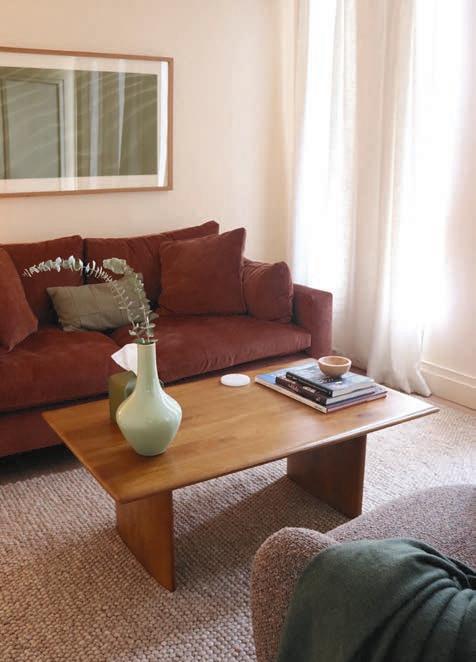
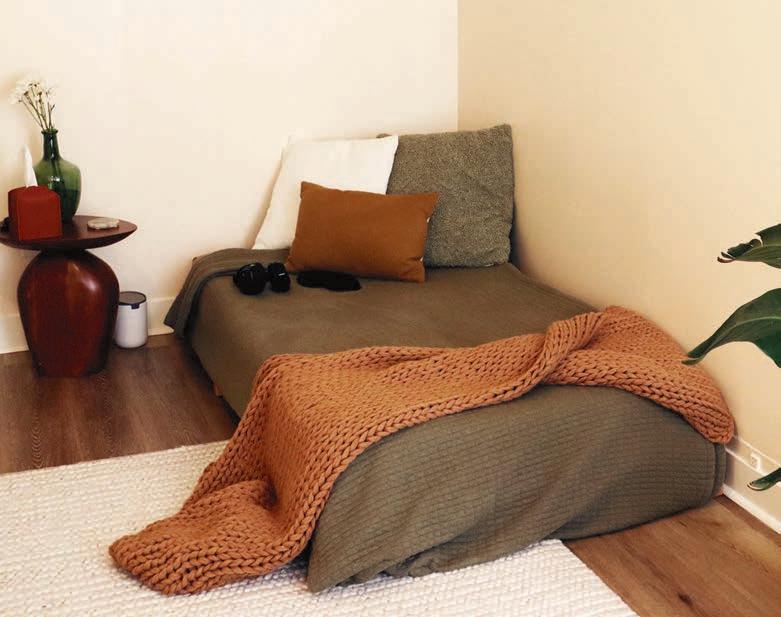
This page: The therapy rooms at Numia are designed for optimal comfort with eye masks, headphones, cozy seating and soft textures.
were just the prelude, and this new approach to psychedelics will lead to lasting, meaningful change. “We’re really here to help inform in the best way possible,” Brown Levey says.
“That’s why we got into this—to put some good into the world, and to alleviate pain and suffering. If we can do that together, then hopefully we’re benefiting one another. We don’t have all the answers, but we’re continuing to learn.”
Emilie Trice is the local editor of MyDenver. Her writing has appeared in The New York Times, The Paris Review, and many other publications.


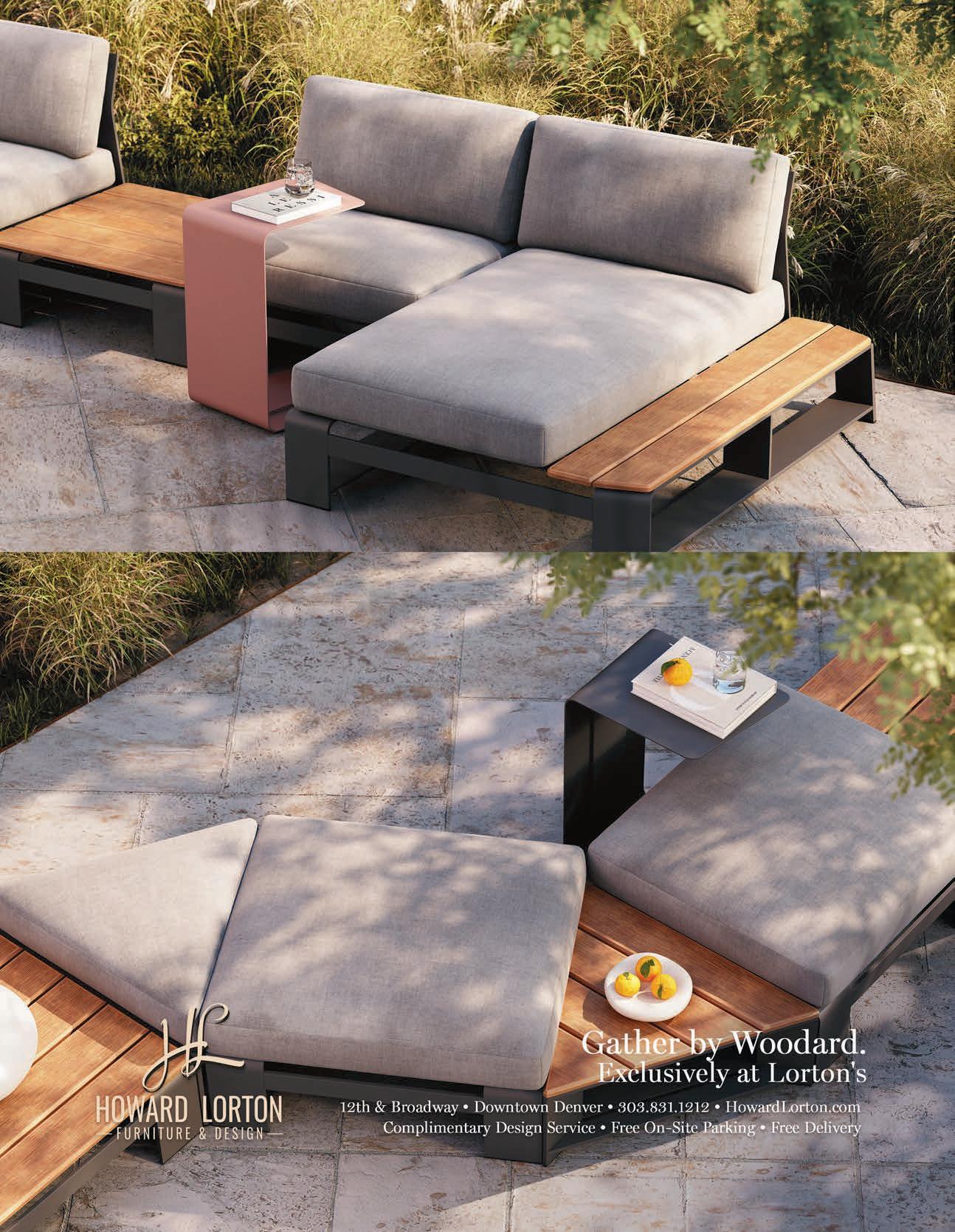
Howard Lorton Furniture & Design has been helping Denver families elevate their outdoor environments for nearly 100 years.
BY MYDENVER STAFF
THE BACKYARD IS where life happens.
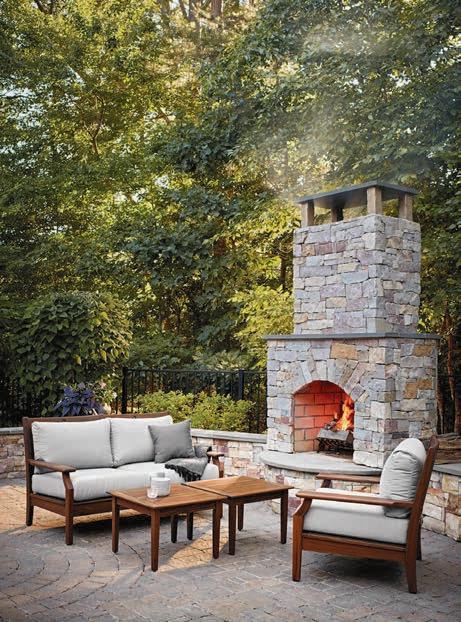
Updating outdoor spaces can turn any space into an oasis where lifelong memories take root and flourish. “We still have furniture out on the deck passed down from my husband’s grandmother, Lois Lorton, that she bought from the store in the 1970s,” says Margot Cook, Vice-President of Operations for Howard Lorton Furniture & Design. As a family business celebrating its centennial next year, Howard Lorton has helped countless families across Denver transform both their interior and outdoor spaces.
In a rapidly changing urban landscape, where businesses seem to open and close in quick succession, consistency can feel surprisingly refreshing. “We have those multi-generational customers who come back as a family to shop; grandmothers will come in with their daughters and grandchildren. It speaks to the quality of
our furniture,” Cook explains. “We are really proud and honored to have served Denver and Colorado for almost 100 years.”
Among Horward Lorton’s outdoor offerings are elegant sectionals, cozy armchairs, and design-forward dining sets with built-in recessed fire pits. “We offer customized fabrics, finishings; everything can be tailored to fit your unique style, whether that’s traditional or more contemporary,” Cook says. From large-scale projects like adding an outdoor kitchen to more modest improvements, such as updating lighting, pillows, and blankets, the Howard Lorton team provides expert guidance designed to fit every budget.
Visualizing a furnished outdoor space can be difficult, so Howard Lorton offers complimentary in-home consultations


with their patio designers. “Usually, people start with a visit to the store so we can understand what they like and naturally gravitate toward. Then we’ll go to their home, and we’ll measure and outline the actual designs for patio furniture the same way we would for a home’s interior.”
Cook asserts that with gas prices and the general cost of living on the rise, her team strives to add value wherever possible. “We also offer free delivery,” she says. “Our delivery range goes all the way up I-70 and into the mountains, based on our schedule.”
We’re living in an era of instant gratification, but hasty decisions can result in “disposable” design. Maybe you bought an inexpensive bistro table from a hardware store, but after one summer outside, it’s totally warped and oxidized. Cook points out that quality begets longevity. “We’re really trying to create
sustainable solutions that you can live with for a long time,” she explains.
Investing some thought and a bit of time into one’s outdoor living experience isn’t frivolous, especially in Denver. “Of course, we love the outdoors here,” says Cook, who hails from Toronto and doesn’t miss its overcast skies. “I’ll take 300 days of sunshine anytime because I can sit in my backyard almost every month of the year.” Thoughtfully curated outdoor design fosters conversation, allowing families to put down their phones and reconnect.
“Just asking simple questions—‘How was your bike ride? What trail did you hit? Where should we go next?—is so important in nurturing relationships and creating lasting memories,” Cook explains. “These are spaces where adventures are planned, but they also invite us to slow down, relax, and reward our selves for a day well spent— it’s the feeling that ‘I’m home, and nothing else matters.’”

Simple steps can prevent these common causes of seasonal injury and illness.
SWIMMING AT THE beach, hiking in the woods: There’s no shortage of appealing summertime adventures. But spending more time outdoors also raises the risks for injuries. A little caution and use of sound judgment can help you make the most of the sunshine while avoiding any unnecessary trips to the emergency room.
Here are seven common warmweather emergencies— and tips on avoiding them.
While minor-to-moderate sunburns can be treated at home with overthe-counter remedies like aloe vera, severe sunburn can require
emergency treatment. Warning signs include blistering skin and uncontrollable pain. The true extent of a sunburn may take 12 to 24 hours to develop. Steps to prevent sunburn include using a sunscreen with a sun protection factor (SPF) of 30 or more. Reapply it every two hours and every time you come out of the water. Also consider wearing a brimmed hat and sunglasses to protect the face and eyes.
Heat cramps and heat stroke represent a spectrum of illnesses that occur when the body begins to lose the ability to regulate its temperature.
Heat exhaustion is marked by heavy sweating, dizziness, nausea and thirst. When heat exhaustion becomes heat stroke, it can cause confusion and even unconsciousness. Heat stroke is a medical emergency—call 911. Children and the elderly are typically more likely to suffer from heat stroke. To limit your risk of heat-related illness, stay properly hydrated, especially with water and/or fluids with electrolytes. Limit soda and alcohol. Carry a reusable water bottle wherever you go. Thirst is a sign of dehydration: If you feel thirsty, it’s time to catch up on fluid intake. Avoid outdoor exercise or other physical activity during the hottest times of day.
A little planning can help you stay on the field or court longer and avoid injuries like muscle sprains, muscle strains and twisted ankles. Always stretch and perform warmup exercises prior to starting any kind of physical activity. Give yourself time to cool down after you play. Stay properly hydrated. If you’re cycling, skateboarding or riding scooters, wear a helmet. Avoid aggressive speed and maneuvers when bicycling, riding a personal watercraft or operating any type of vehicle.
Trips and falls on the playground can lead to scrapes, bruises and lacerations. Keep children safe by always supervising them and limiting running and horseplay as much as possible. Look for playgrounds with softer ground cover such as rubber or mulch instead of asphalt or concrete. Discourage high-risk
activities such as pushing a child higher on a swing than they find comfortable. Check the temperature of playground surfaces such as slides before children begin playing on them.
A tick bite can lead to a condition called babesiosis, a bloodstream infection that brings flulike symptoms such as body aches. Tick bites can also cause Lyme disease. The hallmark of Lyme disease is a rash that classically looks like a bullseye. It occurs on average in about seven days at the site of the tick bite and can cause fever, chills, headache, fatigue and muscle and joint soreness. Ticks can bite not only in the woods but even in your backyard. Prevention includes wearing moisture-wicking, long-sleeve shirts; long pants; and tall socks to cover your skin. Check yourself for ticks or signs of a bite when you step back indoors.
Never light a gas grill with the lid closed. If the grill doesn’t light immediately, let gas dissipate before attempting to light again. Use only the amount of lighter fluid you need to start a charcoal grill. Cook any meat, seafood or poultry thoroughly and to temperatures recommended by the USDA. Keep food—and guests—safe by refrigerating leftovers so they don’t spoil in the sun.
Drownings are the leading cause of death among young children. Ways to reduce risks include:
• Be aware that small children can drown in shallow water.
• Make sure at least one adult swimmer provides constant supervision of any children near or in the water.
• Install fences and gates around home pools. Consider adding an alarm that alerts you anytime someone goes into the water.

• Prohibit children from running around the outside of pools to reduce the risk of slips and falls.
• Enroll children in swim lessons. Have them wear life jackets, vests and floaties in the water if they can’t swim.
• Never dive head-first into water unless you know how deep it is. Instead, wade in or jump in feet-first.
• Always swim near a lifeguard. Heed red-flag warnings for high rip currents at the shore. If you get caught in a rip current, swim parallel to the shore.
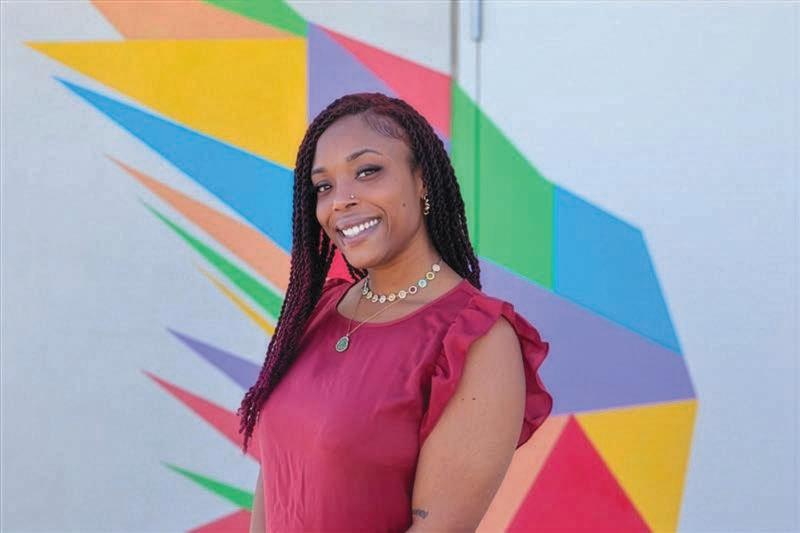
How a mental health professional uses her Sundays for self-care.
BY JAYLIN GOODLOE
MY SUNDAYS are very structured. I wake up and fix myself some kind of drink, either coffee, matcha, or tea. I always need a beverage. After I make my drink, I typically sit on my couch and cuddle my dog for a bit. Then we take a walk on the Cherry Creek Trail and watch the ducks. Being out in nature with my dog helps me reset. It’s a natural de-stressor and one of the most effective ways to ground myself after a demanding work week.
I’m the Director of Mental Health Services at The Center on Colfax, which provides free therapeutic services to LGBTQ+ adults aged 18 and older. I love my job and our community, but I also need to practice self-care, and my Sunday routine is integral to my overall well-being.
After walking my dog, I usually
clean my whole apartment: I sweep, mop, vacuum, wipe things down, the works. Then I go grocery shopping for the week, which typically takes a few hours because I always go to three or four different stores—I get my produce from Whole Foods, I swing by Trader Joe’s for my breakfast foods, and I grab cleaning supplies from Dollar Tree. Sometimes I’ll go to Walmart and treat myself to a new houseplant, since living with greenery is also proven to have therapeutic benefits.
I’m very into meal planning, and I enjoy cooking. So I’ll prep a full week of meals, storing everything in individual containers for easy access when I’m running out the door. Once that’s done, I’ll put my feet up and read a book or watch a show I like. My Sundays
are definitely “me time” and help me prepare for the week ahead, so I can show up for my community at my best. When I’m not able to do my routine, my whole week feels thrown off balance. There’s something about waking up on a Monday morning to a clean house, with breakfast made, that just eases the transition into the work week. I love the idea of taking care of my space and making sure it meets my needs, whatever they may be. The world can feel chaotic and unpredictable, but my Sunday routine always makes me feel centered and self-reliant, giving me a deep sense of serenity, confidence, and purpose.
Glendale resident Jaylin Goodloe is the Director of Mental Health Services at the Center on Colfax.



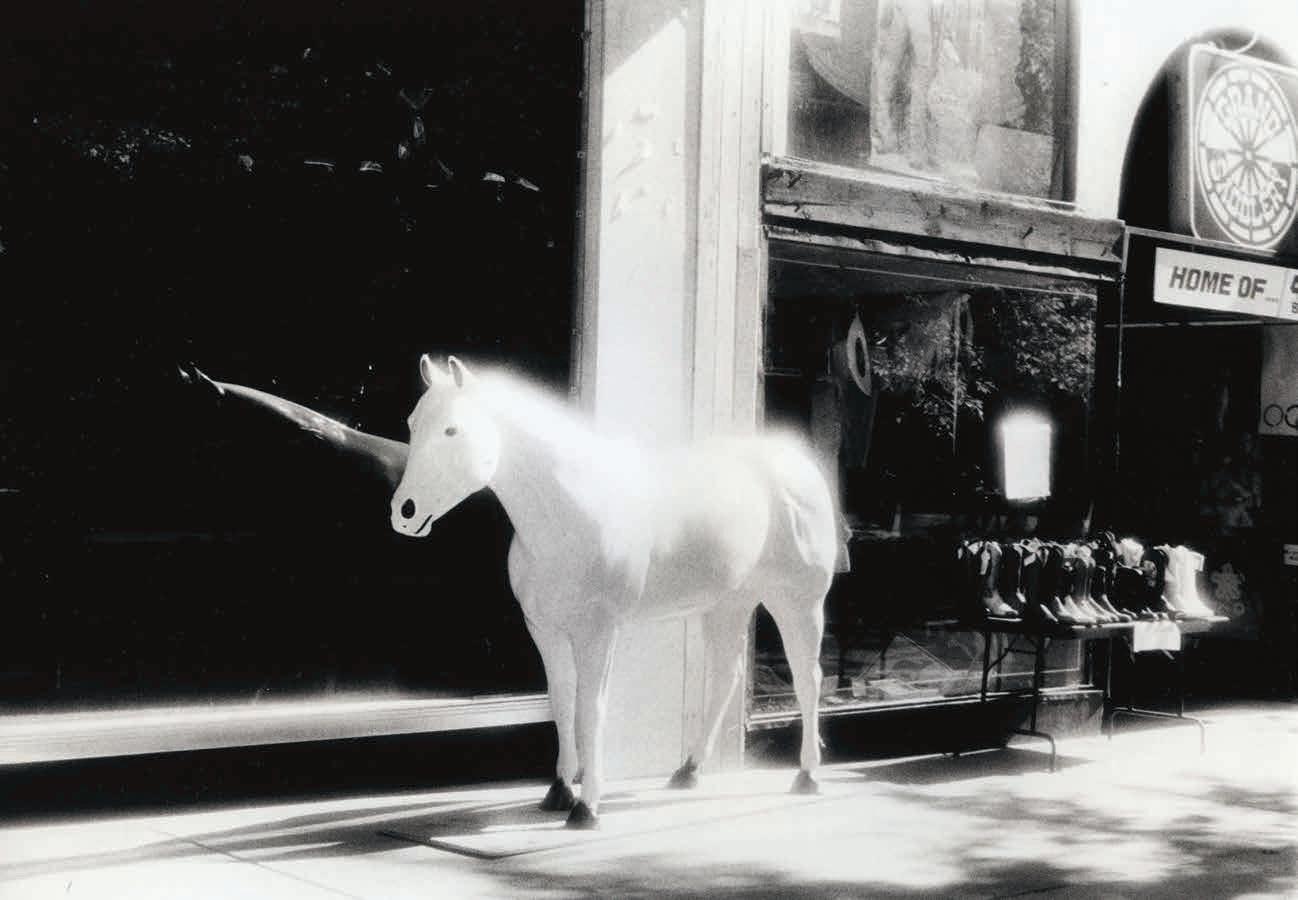
REVEALING THE MAGIC embedded in everyday life, this image was taken in the 1980s by R. Skip Kohloff (1941 to 2020), a former president of the Colorado Photographic Arts Center (CPAC) and a high school teacher in the Cherry Creek School District for nearly 30 years. It appears in the recently published anthology “Outside Influence: Photography in Colorado 1945 - 1995” by Denver-based historian and curator Rupert Jenkins, a gorgeous compendium of artworks by photographers who defined Colorado’s post-WWII era of analog image-making.
Tracing the development of photo-friendly institutions, movements, and social history, “Outside Influence” includes 135 images that emphasize non-traditional landscapes, documentary photo essays, portraiture, and experimental approaches to the medium. A significant contribution to the field of photography, Jenkins’s beautiful book honors the legacies, artistic ethos, and innovations that shaped regional lens-based imagery. The book is available for purchase at the Denver Art Museum bookstore, History Colorado, and online at amazon.com. To learn more about the project, visit rupertjenkins.com.
Have a great image for Photo Op?
Submit your high-resolution shot to emilie.trice@ wainscotmedia.com.