Director Gary Dunning shares secrets of Vivo Performing Arts’ longevity, its celebrity past, and its innovative future.
14
Not-So-Dirty Water
A decades-long effort to clean up the Charles pays off in the form of a much-loved swimming event.
18 Three Decades of Design
Architect David Sharff loves the challenge of preserving historic homes while introducing modern design elements.
COLUMNS
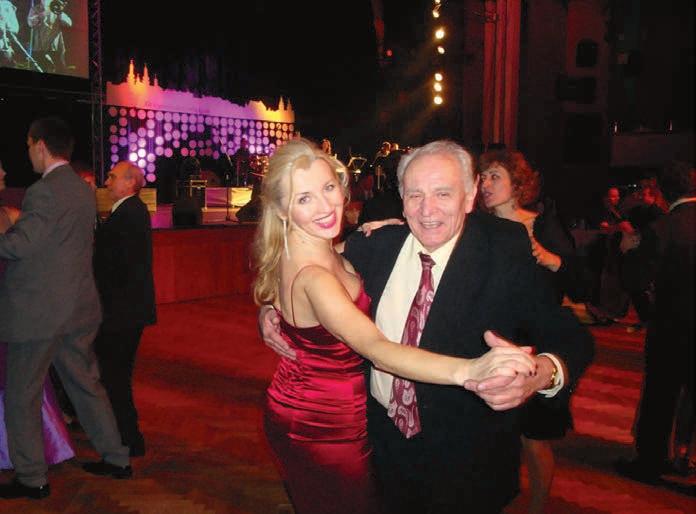
4 PUBLISHER’S NOTE One More Dance, Dad
6 LOCAL PULSE Community Calendar
8 LOCAL TASTES Willie’s
22 5 BEST Neighborhood Playgrounds
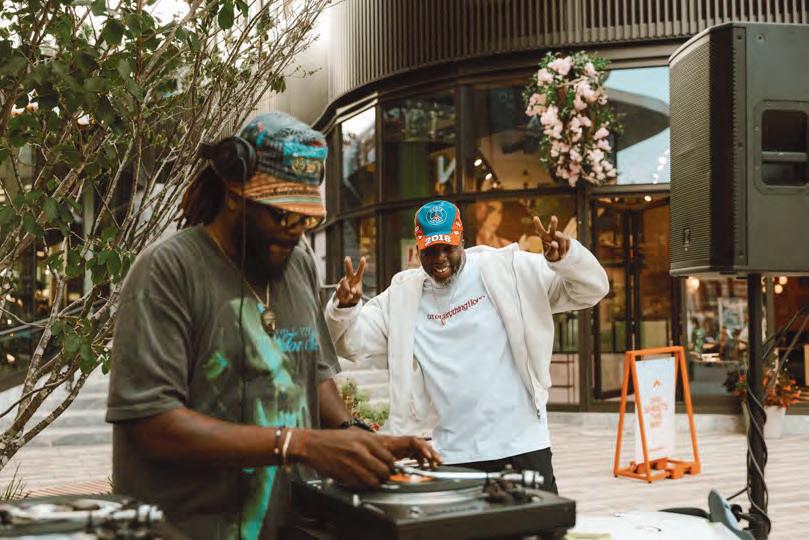
26 LOCAL SOCIAL Community Gatherings
30 MY SUNDAY Lucia Johnson
COVER
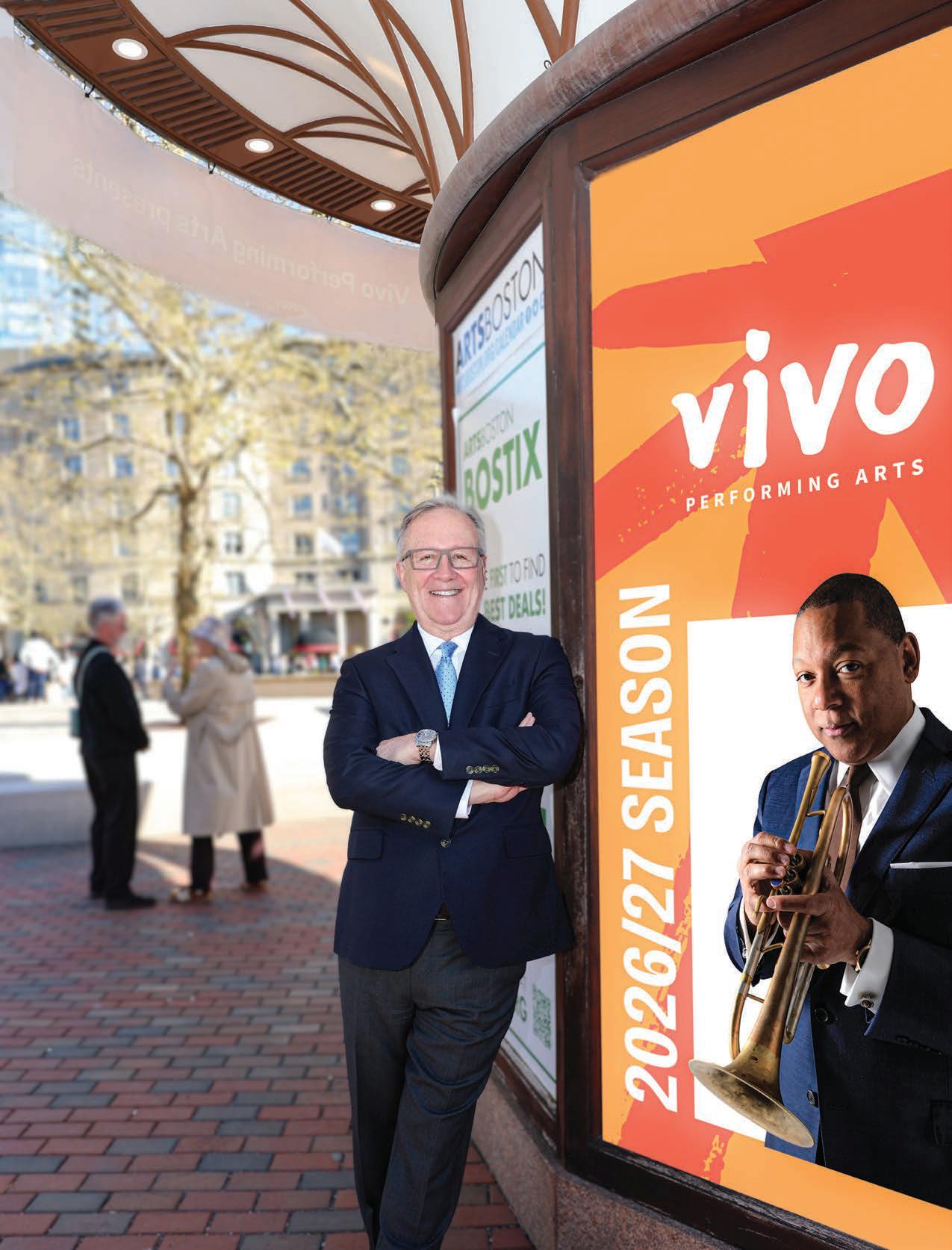
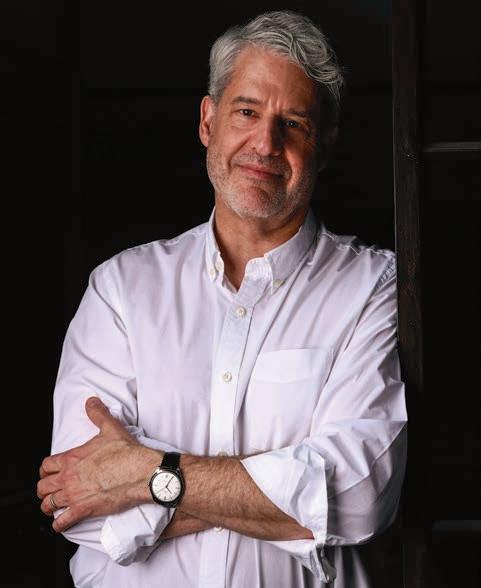
President and Executive Director of Vivo Performing Arts, Gary Dunning
Photograph: Claire Vail
Eyeware: Blink Boston
Location: Copley Square
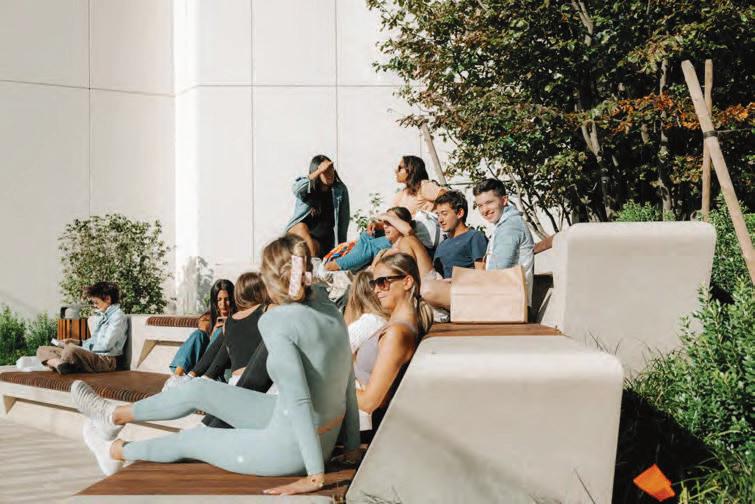
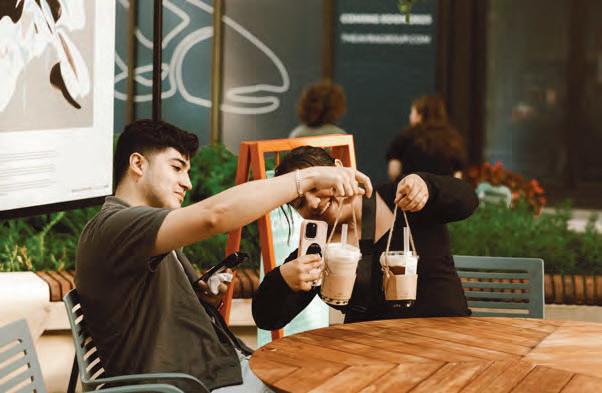
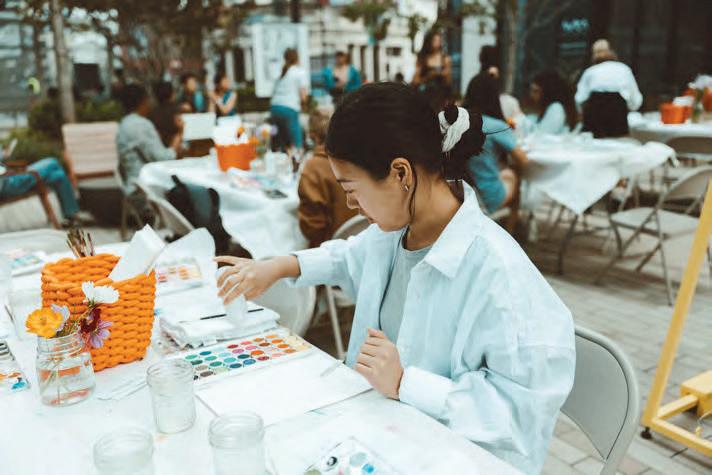
Your favorite free weekly events are back! Join us for live music, art classes, and kid’s programming.
Your favorite free weekly events are back! Join us for live music, art classes, and kid’s programming.
tONE MORE DANCE, DAD
THIS JUNE, I’m sharing a photo of a dance that never really ended.
Father’s Day always brings me back to my dad—a true gentleman who moved through life with passion, elegance, and joy. He loved to dance and, somehow, he never stopped. Even five years after his final dance, I still feel his presence in music, in movement, and in the memories we created together. I miss him dearly.
We rarely missed a concert, symphony, ballet, or art exhibit, and daily tennis, swimming, or skiing were simply part of life. He taught me from early childhood to appreciate the arts, stay curious, show up fully, and never take beautiful moments for granted.
It feels especially fitting this June, as we celebrate many of those same passions. Vivo (formerly Celebrity series) continues a mission of bringing exceptional artists to Boston to inspire and enrich our community—a beautiful reminder to truly live—vivere. In this issue, we also explore the surprising possibility of swimming in the Charles, celebrate three decades of
exceptional design with a Back Bay architect, and, as always, share the people, gatherings, and stories that make our neighborhoods feel like home.
I’m especially excited that all three of our main features this month were written by new contributing writers. Supporting fresh voices and perspectives is an important part of what we do at MyBoston, and I hope you enjoy their work as much as I did. We always appreciate your feedback and kind words about the magazine—they truly mean a lot to our small team. Follow along with us on Instagram, continue sharing your stories and ideas, and, as always, see you in the neighborhood.
Renata Coker Publisher, MyBoston
www.mybostonmag.com @mybostonmag
Publisher
Renata Coker
Renata.Coker@mybostonmag.com
Editor and Lead Photographer
Claire Vail
editor@mybostonmag.com
Writers
Julia Badders
John Michael Kennedy
Zak Kinnaird
Sharin Schober
Advisory Board
Collin Bray
Leigh Harrington
John Michael Kennedy
Lisa Mulman
Sharin Schober
David Sharff
Cindy Sullivan Zak Kinnaird
WAINSCOT MEDIA
Chairman Carroll V. Dowden
President and CEO
Mark Dowden
SVP, Group Publisher
Thomas Flannery
VP, Content Strategy
Maria Regan
VP, Director of Digital Media
Nigel Edelshain
Creative Director
Kijoo Kim
Advertising Services Director
Jacquelynn Fischer
Operations Director
Catherine Rosario
Production Designer Chris Ferrante
Print Production Manager
Fern Meshulam
Circulation Manager
Kathy Wenzler
Advertising Production Associate
Griff Dowden
Community CALENDAR
June is in full bloom with music, museum outings, garden tours, and other exciting events happening in Back Bay, Beacon Hill, and beyond.
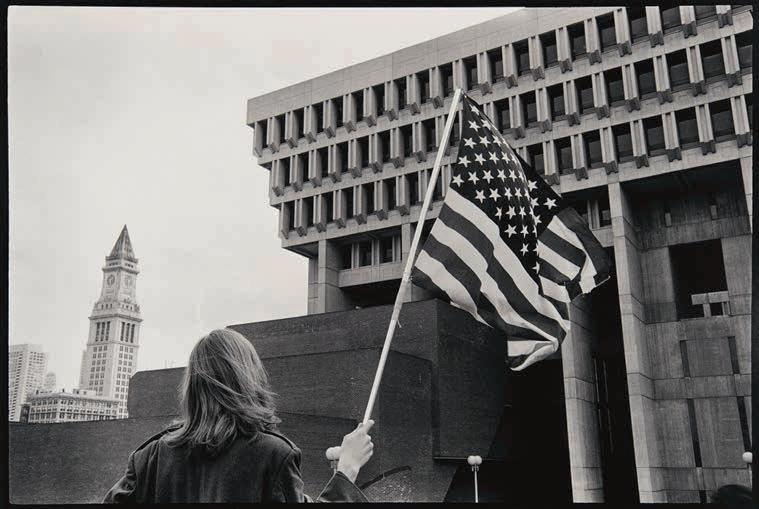
“WHERE’S BOSTON? 50 YEARS LATER”
June 15
5:30 to 7:30 p.m.
Join the Boston Athenaeum for the opening of its newest exhibition “Where’s Boston?
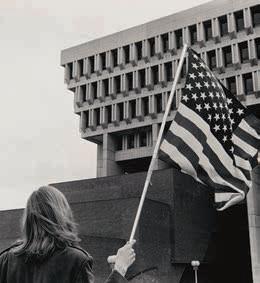
50 Years Later,” centered on the work of Boston photographer Constantine Manos. Originally commissioned to celebrate America’s Bicentennial, the photographs, singularly and serially, celebrate Boston’s diversity, community, and idiosyncrasies.Reserve your ticket for free at bostonathenaeum.org/events.
June 1 to 30
Berklee Summer Concert Series
Berklee’s Summer in the City series will feature more than 200 free concerts by students, faculty, and alumni at iconic locations throughout Greater Boston from June to September. Visit college.berklee.edu/events/summer for more information.
June 1-27
“Wandering the City,” an Exhibition by Chris Firger
Take in Copley Society of Art’s exhibition featuring artist member Chris Firger’s work. “Wandering the City” is a celebration of Boston’s neighborhoods, communities, architecture, and natural beauty. After years of painting New England and Massachusetts, this exhibition is Firger’s first foray into capturing the city that he called home for nearly a decade. Throughout this body of work, he portrays Boston as he sees it: vibrant, captivating, and full of life. Copley Society of Art, 158 Newbury St.
June 3
A French Lens on Art—Modernism Reimagined at the MFA
Calling all artists! Join painter Cecile Ganne for an abstract landscape painting night. Experience the creative process of how to decipher landscapes and transfer them onto paper. Ganne will teach students how to paint lush abstractions, layer color, and play with different mediums. Paper, brushes, and acrylic paint provided, along with a glass of wine. The class is in French (beginners are welcome),
Demonstrator in front of City Hall, Government Center, by Constantine Manos
Photograph courtesy of the Boston Athenaeum
an experienced music producer. Learn how to make beats, record, write songs, and mix and master music. From 2 to 5 p.m. at Copley Square Public Library, 700 Boylston St.
June 14
Boston Dragon Boat Festival on the Charles The Boston Dragon Boat Festival is the oldest such festival in the United States. Hosting over 70 teams and 60,000+ festival attendees and athletes in 2025, it is one of the largest dragon boat festivals on the east coast. Festival day includes arts and crafts, performances, food trucks, and racing. This fun event invites families and friends to enjoy the summer weather and be part of the community. Activities take place along Memorial Drive starting at noon. Visit bostondragonboat.org for more information.
June 21
Boston Athletic Association 10K Race
and will take place from 6 to 8 p.m. at 55 Marlborough St. $70 for non-members. Register at the French Library website.
June 3
Nichols House Museum Spring Fete
Celebrate the season with the Nichols House Museum staff and guests and experience the splendor of this charming 1804 townhouse and the hidden spaces and unique objects throughout its many periodaccurate rooms. Guests can enjoy wine while meeting new friends in the garden, or sample some gin during a tasting with Short Path Distillery. 6 p.m. at 55 Mount Vernon St. Visit nicholshousemuseum.org for details.
June 6
The 19th Amendment Special Anniversary Walking Tour
This 2.5-hour guided, small-group walking tour will explore Boston’s Back Bay neighborhood. It highlights the role of local activists in the women’s suffrage movement, starting in the Public Garden and moving through sites like Copley Square and the Boston Women’s Memorial. 10 a.m. to 12:30 p.m. $35. Presented by Hub Town Tours. Tickets at hubtowntours.com.
June 6
Boston Pride Festival & Parade
The 2026 Boston Pride for the People Festival & Parade will feature a 1.7-mile parade from Copley Square to Boston Common, followed by a festival, concert, and block party. Organized by Boston Pride for the People, the event celebrates LGBTQ+ equality with community marching groups and vendors.
June
7
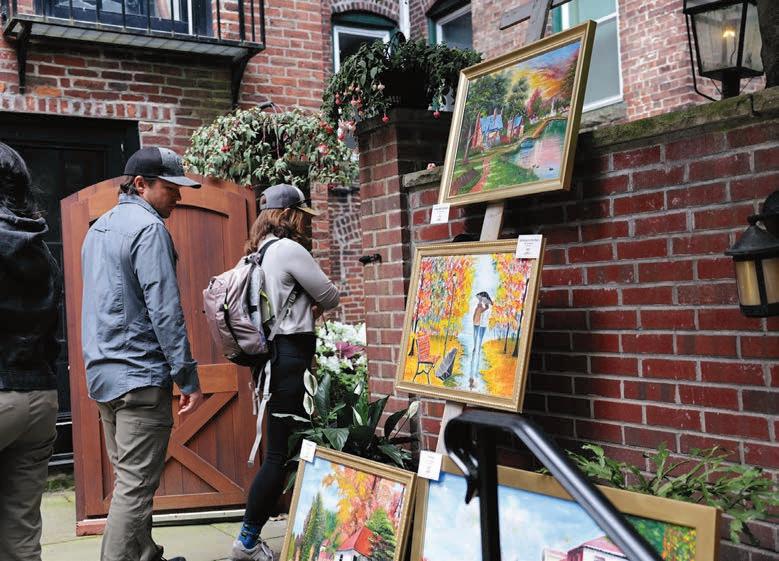
Beacon Hill Art Walk
Experience the beauty of Beacon Hill alongside works by local artists in every medium. This annual event showcases the historic charm of the neighborhood and the talent of artists across Boston and beyond. Bring friends and visitors to explore Beacon Hill, support the local artist community, listen to live music, and have a memorable afternoon. Noon to 6 p.m. Recommended start: the north side of Beacon Hill.
June 12
Boston Public Library: Music Production with Hamstank Teens can explore creating digital music on Friday afternoons at the Teen Lab with
The 2026 B.A.A. 10K, presented by Mass General Brigham Cancer Institute, will take place near Boston Common. The race features 10,000 participants running through Back Bay, Cambridge, and Kenmore Square, finishing near the Boston Marathon finish line. Race begins at 8 a.m. Visit baa.org for more information.
Above: Support local artists and take a stroll through one of the country’s most historic neighborhoods on the Beacon Hill Art Walk on June 7.
Photograph by Claire Vail
Below: On June 3, learn to paint abstract landscapes at the French Library. Photograph courtesy of the French Library
SAUCE BOSS
A new pizza (and more) place in Beacon Hill offers an innovative approach to familiar foods.
BY CLAIRE VAIL
BEACON HILL HAS a new hangout. Immediately to the left of Zurito’s on Charles Street, Willie’s looks like a standard upscale neighborhood pizzaand-pasta joint, with white aproned cooks twirling dough and ladling sauce, but there’s far more on offer here than a routine slice of pepperoni pie. This culinary team brings a creative twist and uncompromising standard of perfection to America’s favorite everyday foods.
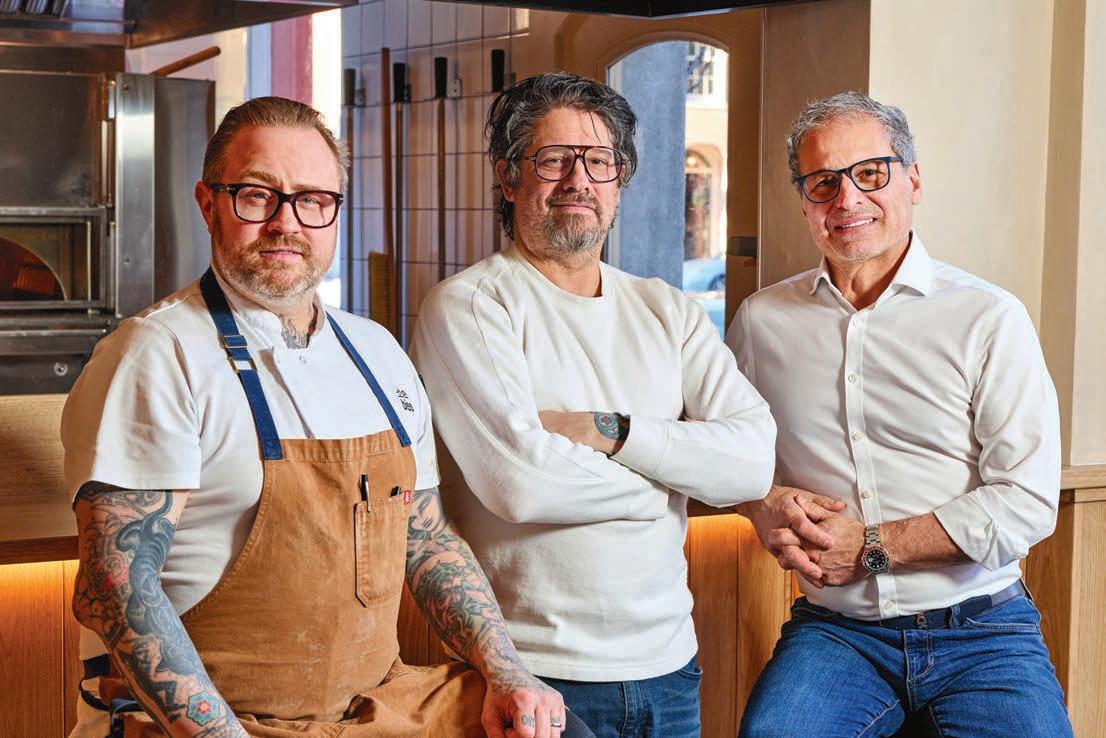
The group behind Willie’s is BCB3 Hospitality, founded and run by industry veteran Babak Bina and his partners Andy Cartin and chef Jamie Bissonnette. They’re responsible for several of the restaurants that are transforming Boston’s dining scene into a foodie paradise—high energy spots that pair a casual vibe with elevated cuisine.
Bina’s concepts have caught on in a big way with customers who expect good food, innovative design, informed servers, and obsessive attention to detail. There’s Someak on Temple Street, an homage to Bissonnette’s love of Korean cuisine, which has been a James Beard semifinalist two years running and has earned mentions on best restaurant lists in Conde Nast Traveler and The New York Times. The underground den Sushi@Temple Records serves the freshest fish from a bar made of Hinoki wood imported from Japan. Willie’s next-door neighbor, Zurito—the two restaurants sometimes trade ingredients and swap staff—promises to transport guests to the streets of San Sebastian with its authentic Basque menu.
ROOTED IN NEIGHBORHOOD ENERGY
Willie’s, says Bina, takes him back to early days in his career. “My first job in hospitality was in a pizza shop, and after spending the past four decades opening more complex restaurants, I wanted to come back to something simple, honest, and rooted in neighborhood energy. Willie’s is built with the same care and intention we bring to everything we do.”
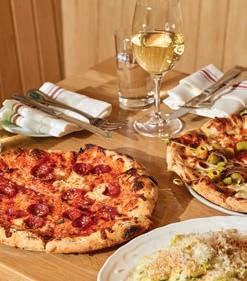
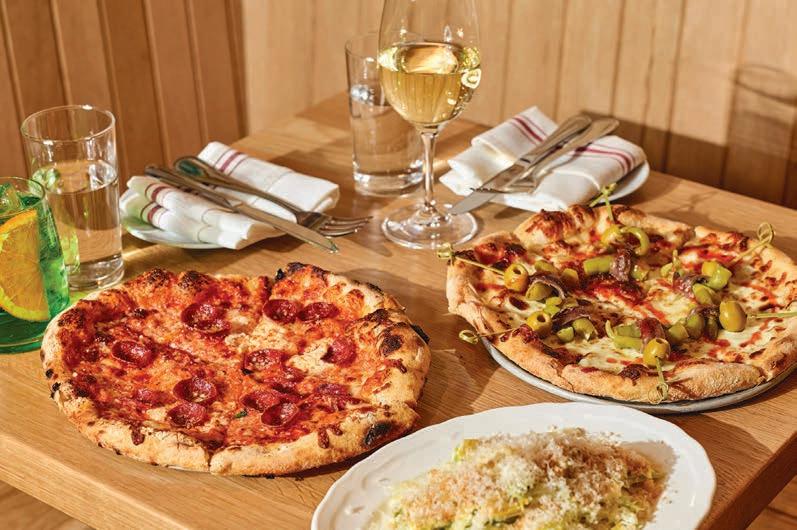
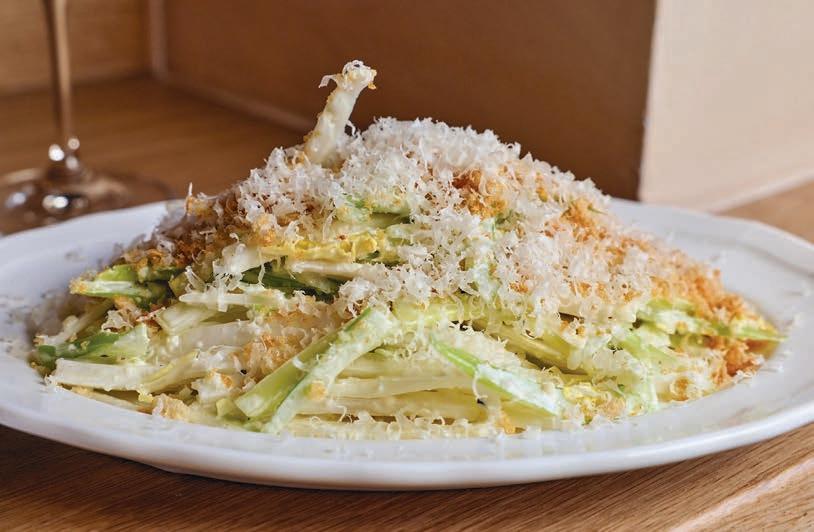
Willie’s menu is Italian inspired, with pasta dishes and pizza dominating, but many dishes are tempered with Asian, Spanish, and other welcome influences. Classic Caesar salad is revamped with Napa cabbage, celery, and anchovy migas, a gorgeous balance of fresh crunchy greens and salty savoriness. Innovative ingredients such as farm fresh eggs, mushrooms, and wild ramps are mainly local sourced, and can be added to pizzas a la carte. The Nduja adds celery root to creamy pork sausage and ricotta for a pleasant change. The Calabrian Hot Honey pizza mingles sweet honey, tomato and spicy salami, and the Spinach pizza—the kitchen staff’s favorite—includes daubs of sesame that turn a basic white pizza into a novel experience.
Reviewers describe the crust as achieving a perfect balance between crisp and chewy, served directly out of the onsite ovens. Bina says there’s no secret or shortcut. Rather, “It’s about discipline and consistency. Jamie focused on the fundamentals: dough that’s properly fermented, high-quality ingredients, and a team that really cares about every pie that comes out
of the oven. When you respect the process and don’t overcomplicate it, people can taste the difference.”
Pastas are equally on point. Handmade cavatelli smothered in broccoli sugo, made by blending boiled, pan-seared broccoli with oregano and fennel, has original, intense flavor. Hand cut tagliatelle with tender braised lamb neck, fava beans, and sesame leaf is exceptional—the kind of dish you’ll wake up thinking about and wanting more of.
Wines are well-chosen, from unpretentious to fancy. A 2020 Sangiovese described as a “regal, aristocratic pizza wine” pairs admirably with many of the dishes, but then so does a 2019 Grasparossa, a lovely sparkling red with dark cherry notes. Everything is refreshingly and affordably priced, especially considering the quality and the location.
Bina calls Willie’s “a place people can return to again and again without overthinking it. If it becomes part of someone’s weekly routine—whether it’s a quick pizza at the bar or dinner with family—then we’ve done what we set out to do.”
Opposite page, top: BCB3 Hospitality Group founders (from left) chef Jamie Bissionnette, Andy Cartin, and Babak Bina Bottom: A selection of pizzas at Willie’s
This page: A novel take on the classic Caesar salad Photographs by Brian Samuels
Viva Vivo
As his 15-year tenure ends, President and Executive Director Gary Dunning shares secrets of Vivo’s longevity, its celebrity past, and its innovative future.
BY JOHN MICHAEL KENNEDY
O
ON A SPRING MORNING in Boston, as the city hums with marathon energy, Gary Dunning sits in his quiet home office, momentarily removed from the downtown bustle that has defined much of his professional life in Boston. After a decade and a half of leading one of the city’s most influential cultural institutions, he is preparing to step away. Thanks to his long-term vision and thoughtful planning, the organization he leaves behind is adroitly positioned to serve the evolving tastes of Boston audiences.
Under Dunning’s direction, The Celebrity Series of Boston
has a new name: Vivo Performing Arts. The rebranding, introduced right after the new year, signals a philosophical shift. Dunning says the change reflects an evolution that had been bubbling under much of his tenure: moving from a traditional presenter of worldrenowned artists to a multifaceted cultural engine embedded deeply in the life of the city.
Founded in 1938, the Celebrity Series built its reputation on an ambitious but straightforward premise: Bring the world’s greatest artists to Boston. In its earliest years, that meant performances by legendary classical musicians and other artists whom audiences
might otherwise have had to travel to New York, London, or beyond to see.
And That core mission remains intact today. “Our business is live performance,” Dunning says. “And presenting exceptional artists who inspire and enrich us—individually and collectively.”
But over nearly nine decades since Celebrity Series began, the cultural landscape has shifted. So has Boston itself. And during Dunning’s tenure, the organization began to expand its definition of what it means to serve a community through the arts.
At the heart of that expansion is a dual identity: on one hand, a presenter of international touring artists performing in major venues; on the other, a curator of deeply local, accessible experiences.
Each year, Vivo presents roughly 65 to 75 performances across 50 or more engagements. Most are single-night events—a logistical reality of working with touring artists. But alongside those highprofile performances is a growing portfolio of community-centered programming: about 25 free neighborhood concerts annually, plus dozens of workshops, school visits, and artist residencies.
“We’re a multi-genre, multi-venue organization,” Dunning explains. “And increasingly, we’re also a multicommunity one.”
BEYOND THE CONCERT HALL
One of Dunning’s most significant contributions has been the expansion of what the organization calls its “Neighborhood Arts” program. Originally conceived as a way to bring performances to all Boston neighborhoods, the initiative quickly evolved. Not every neighborhood had suitable venues. And a single annual performance, the team realized, was not enough to build meaningful engagement.
Instead, Vivo focused on depth over breadth…returning to the same
communities multiple times each year, building relationships, and offering a range of artistic experiences.
“It’s about creating a critical mass,” Dunning says. “Three or four events in a place over time—that’s when people begin to connect, to recognize, to trust.”
These performances often take place outside traditional cultural institutions: in community centers, churches, libraries, and public spaces. Many are free. All are designed to lower barriers to entry while maintaining the same standard of artistic excellence. That philosophy, equal value for all forms of presentation, has become central to Vivo’s identity.
In recent seasons, the organization has even integrated neighborhood events into its main season brochure, listing them alongside ticketed performances. “That’s a statement,” Dunning says. “We view them as equal.”
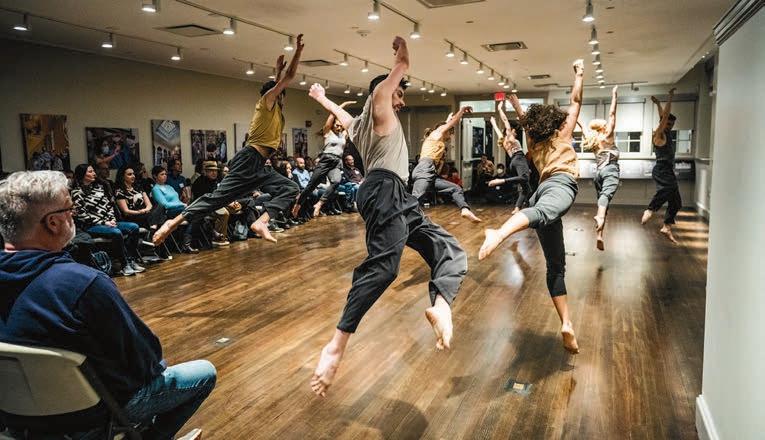
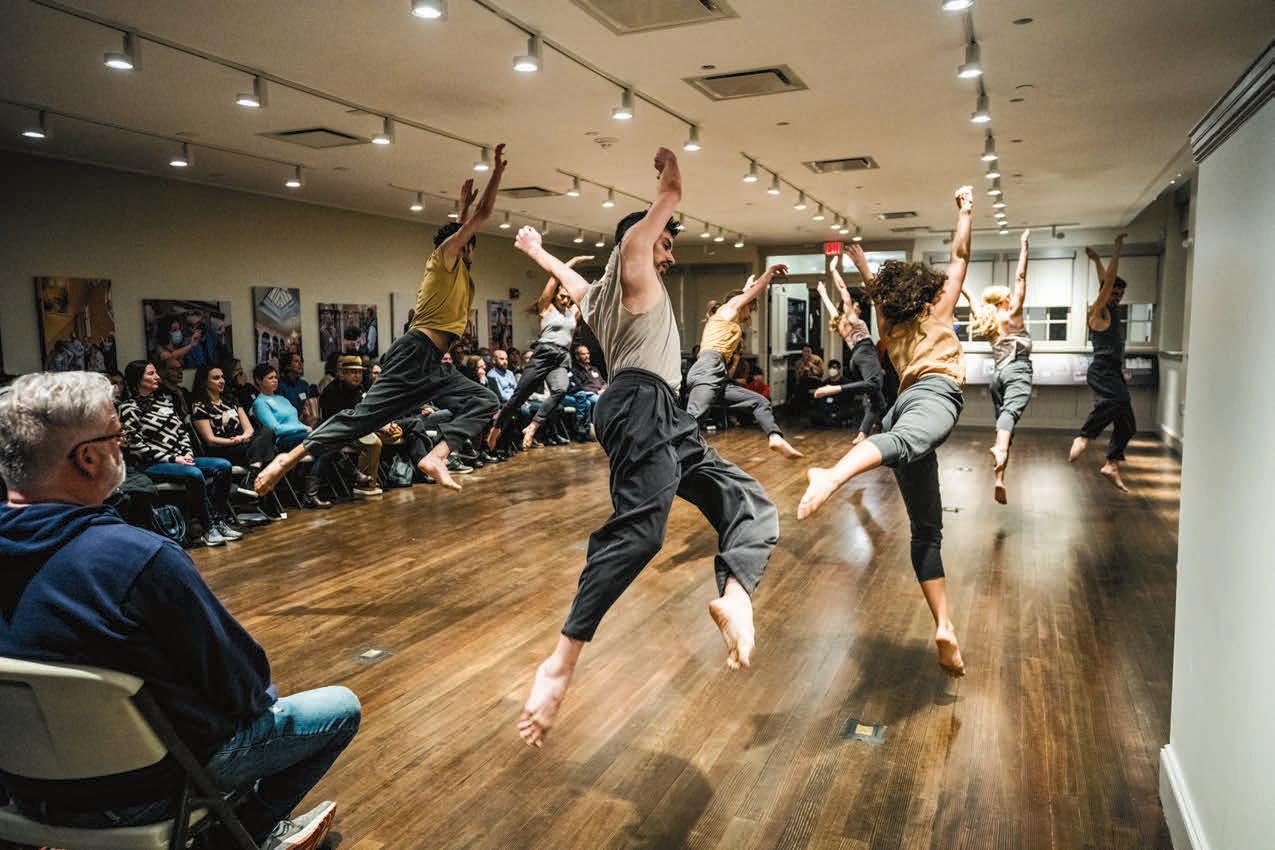
Opposite page: Israel’s Vertigo Dance Company holds an open rehearsal at the Vilna Shul on Beacon Hill.
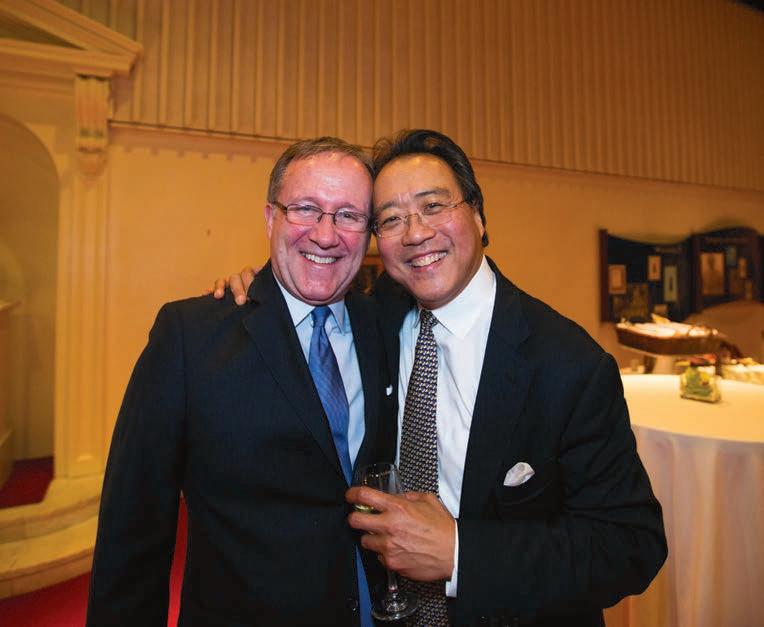
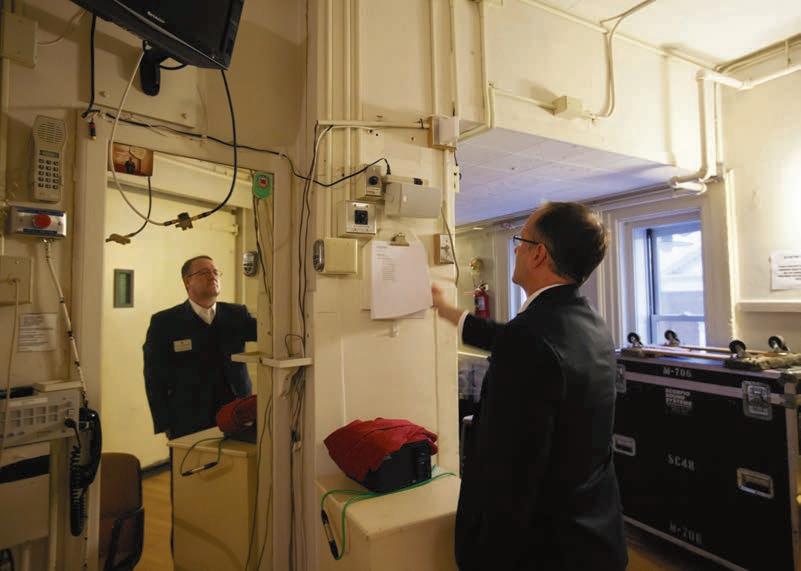
Above: Gary Dunning (left) celebrates a performance with Grammy Award-winning violinist Yo-Yo Ma backstage at Symphony Hall. Left: Dunning checks a backstage schedule before a performance at Symphony Hall. Photographs by Robert Torres
PROGRAMMING AS PHILOSOPHY
For all the innovation around format and access, the fundamentals of programming remain consistent: quality, variety, and balance. But Dunning introduced one key shift early in his tenure—an intentional focus on the full arc of an artist’s career.
When he arrived in 2011, about 85% of the roster consisted of established, mid-to-late-career performers—artists who were already widely recognized. Dunning saw an opportunity to broaden that scope.
“I wanted to present the full career range,” he says. “From emerging artists to veterans.”
That meant taking calculated risks: booking younger artists in smaller venues, building audiences over time, and trusting that quality would translate into
long-term engagement.
The results have been notable. Artists like Daniil Trifonov, who made his Boston debut in an intimate setting, has gone on to perform in the city’s largest halls. Audiences, in turn, have developed a deeper sense of curiosity—and discernment. “I’m less concerned with whether someone likes a particular artist,” Dunning says. “I’m more interested in whether they can tell me why.”
That emphasis on audience development, on cultivating not just attendance but engagement, has been a defining feature of his leadership.
THE NAME THAT NO LONGER FIT
Over the years, as the group’s work became deeper and more expansive, the question lingered: Should the Celebrity Series change its name?
Dunning recalls being asked about it during his initial job interview. His answer was cautious but clear: A name change should only happen from a position of strength. “You don’t change your name as a Hail Mary,” he says. “It doesn’t solve problems on its own.”
For much of his tenure, the name remained. It was familiar. It carried history. And for longtime patrons, it still resonated. But over time—especially in the wake of the COVID-19 pandemic—that began to change.
Dunning says audience research revealed two growing issues. First, the word “series” was increasingly misunderstood. Many people assumed the organization was a programming arm of another institution, a series within a venue, rather than an independent entity.
Second, the word “celebrity” had
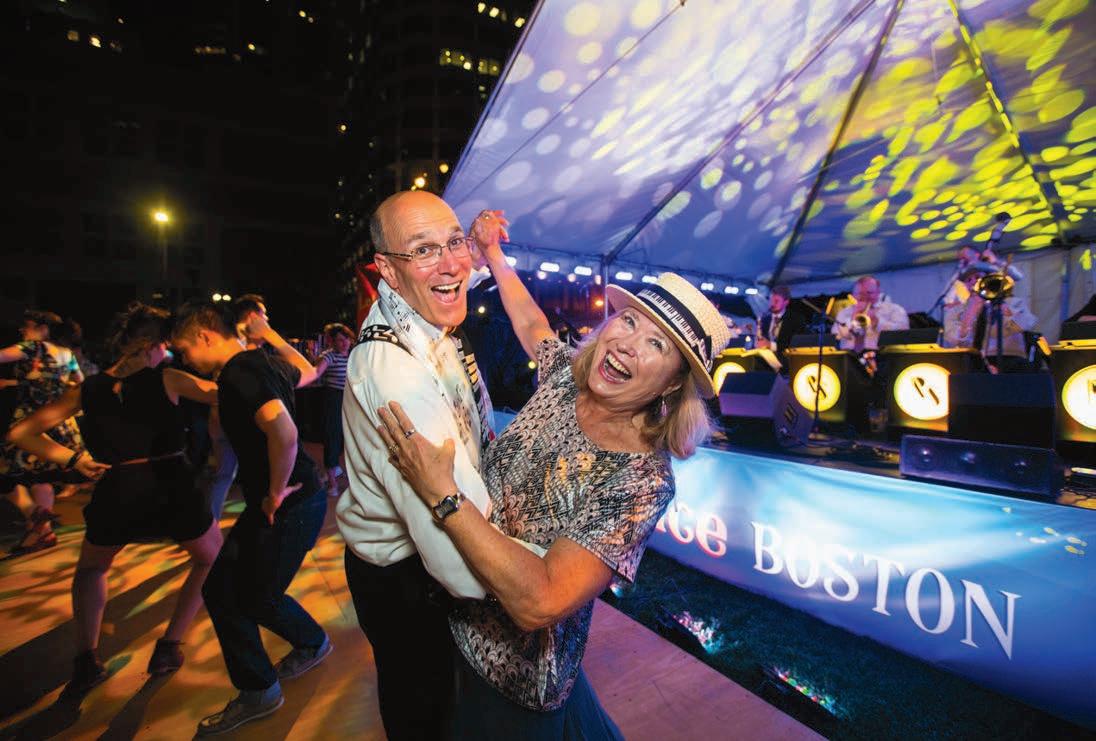
Free public arts events like the five-night Let’s Dance Boston on the Greenway are among the audience building efforts at Vivo Performing Arts under Gary Dunning’s tenure.
taken on new cultural meanings. For some, it suggested elitism. For others, it implied a focus on fame over artistry. In both cases, it created a disconnect with the organization’s actual work. “It was becoming problematic,” Dunning says. “The name and what we were doing were drifting apart.”
At the same time, Vivo’s programming had expanded significantly, into neighborhoods, public spaces, and in new formats that bore little resemblance to what audiences might associate with a “celebrity series.” The conclusion became unavoidable: The name needed to catch up with the organization.
BUILDING “VIVO”
The process of finding a new name took about 18 months and involved extensive research, stakeholder engagement, and creative exploration. More than 300 potential names were generated. They ranged from descriptive to abstract, each evaluated for clarity, distinctiveness, and availability. Ultimately, the organization opted for an abstract name: Vivo Performing Arts.
“Vivo” derives from the Latin vivere, to live. While the etymology may not be immediately apparent to all audiences, it reflects a core belief: that the arts are not separate from life, but integral to it. “It’s in the DNA of the word, even if people don’t consciously know it,” Dunning says. The addition of “Performing Arts” provided necessary clarity and addressed one of the key issues with the previous name.
As the new identity took shape through design, messaging, and public communication, the organization began the gradual work of transition. Dunning is realistic about the challenges. “It doesn’t happen overnight,” he says. “It takes a season or two.” But he is confident that the substance of the work will carry the brand forward. “If we deliver the goods,” he adds, “people will get used to it.”
As Dunning prepares to step down, he reflects on his tenure with a mix of pride and pragmatism. He inherited a strong organization, built over decades by his predecessors. And he says his goal was to build on that foundation, expanding its reach, diversifying its programming, and positioning it for the future. “I hope I’m handing off an organization with a clear sense of purpose,” he says. “And the stability to grow.”
That growth will be led by the recently announced new executive director, Thor Steingreber, who starts his tenure as President and Chief Executive Office this summer. Dunning knows Steingreber will bring his own vision and priorities… and he’s comfortable with that.
“The organization doesn’t have to maintain everything I did,” he says. “That’s not the point.” What matters, he believes, is that the organization continues to remain responsive, relevant, and rooted in its mission.
LIFE AFTER VIVO
As for what comes next, Dunning is deliberately unscripted. He plans to take time to travel, study and
reflect—maybe learn a few new things in the process. A month in Spain, including an intensive language course, is already on the calendar. But one thing is certain: He won’t step away from the arts entirely. “I need to be part of something bigger than myself,” he says.
That instinct—to connect, to build, to contribute—has defined his career. And it has shaped Vivo Performing Arts into the organization it is today. A presenter, yes. But also, a convener. A connector. A living, evolving part of the city it serves. In that sense, the new name feels less like a departure than a recognition of what has been true all along. The work was already alive, now it simply has a name that reflects it.
Visit VivoPerformingArts.org for details and tickets.
John Michael Kennedy heads JMKPR, a public relations, media, and communications strategy firm that focuses on clients in the arts and other creative industries. He lives in Melrose, with husband Alan and their chocolabradoodle, Evie.
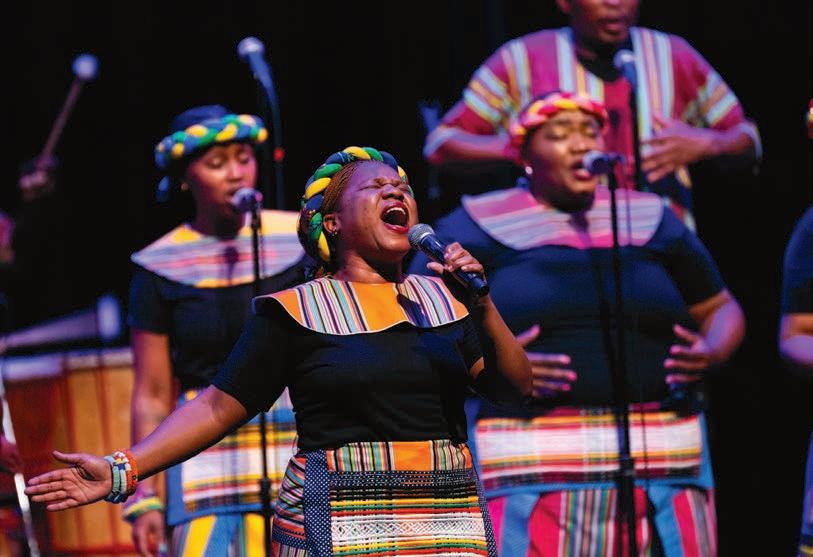
The Soweto Gospel Choir performs their show Peace, a powerful rendition of African American spirituals, gospel, and folk music.
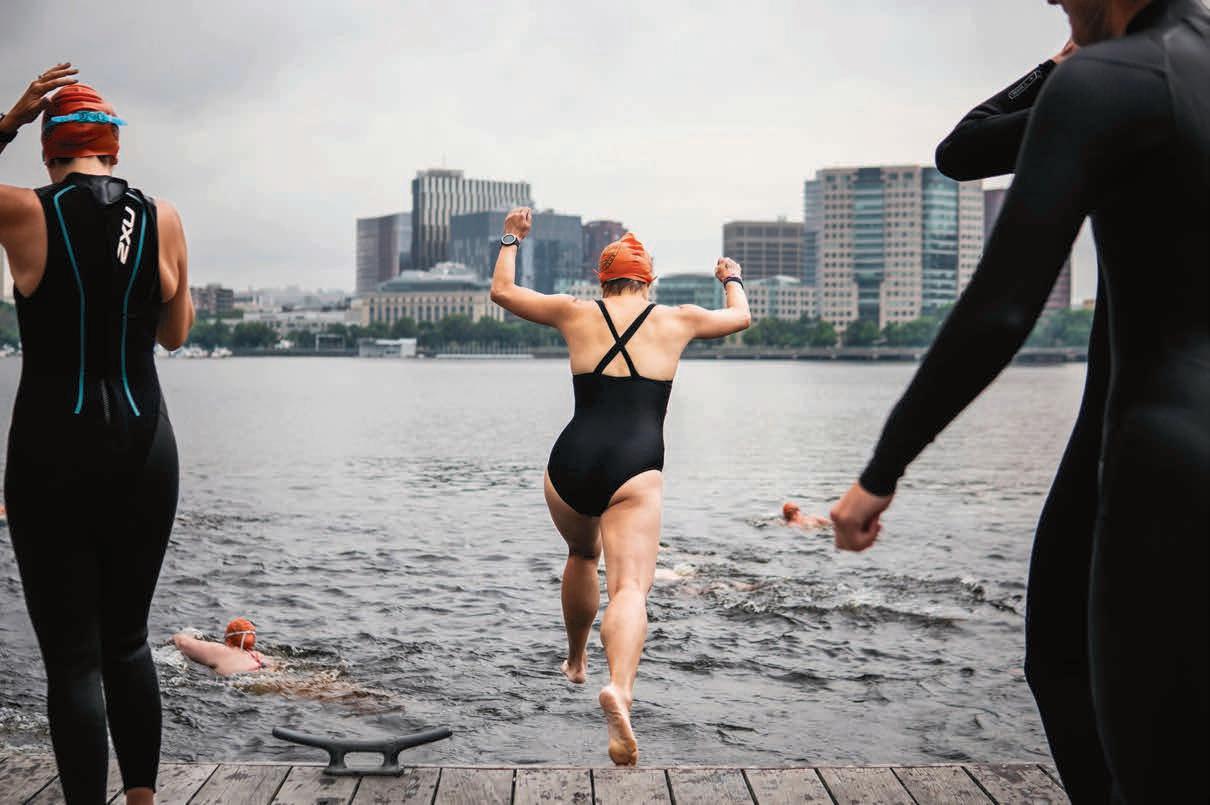
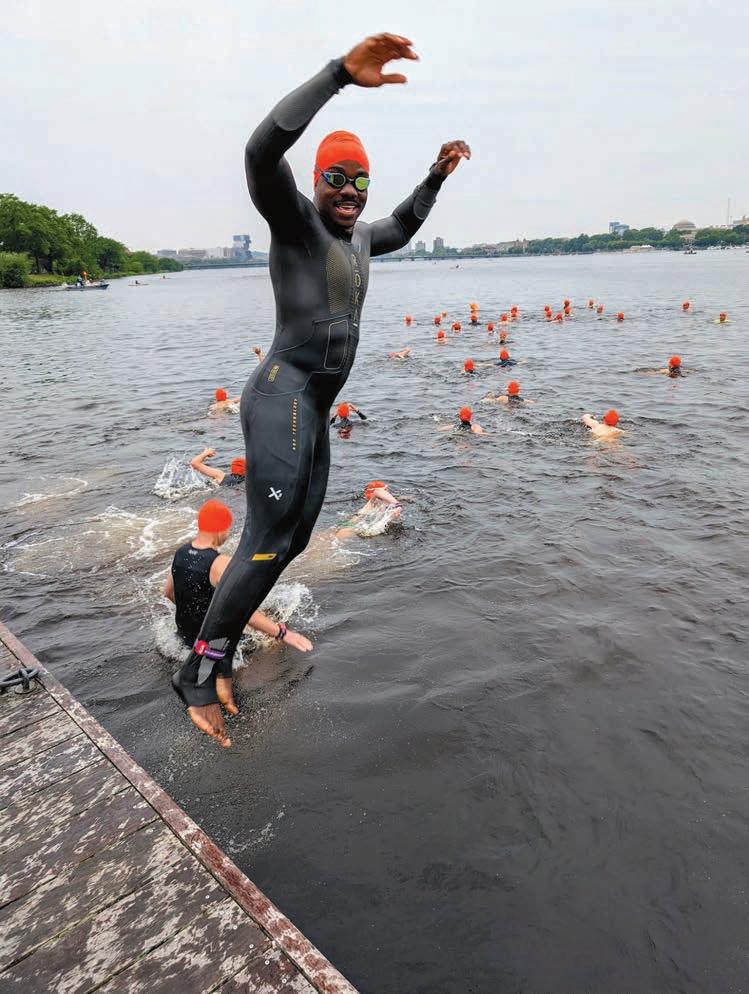
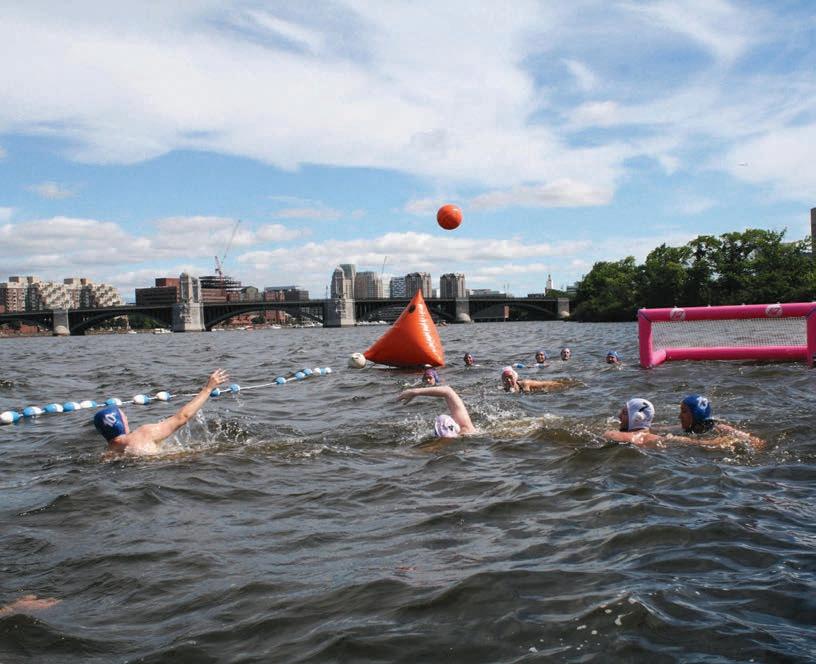
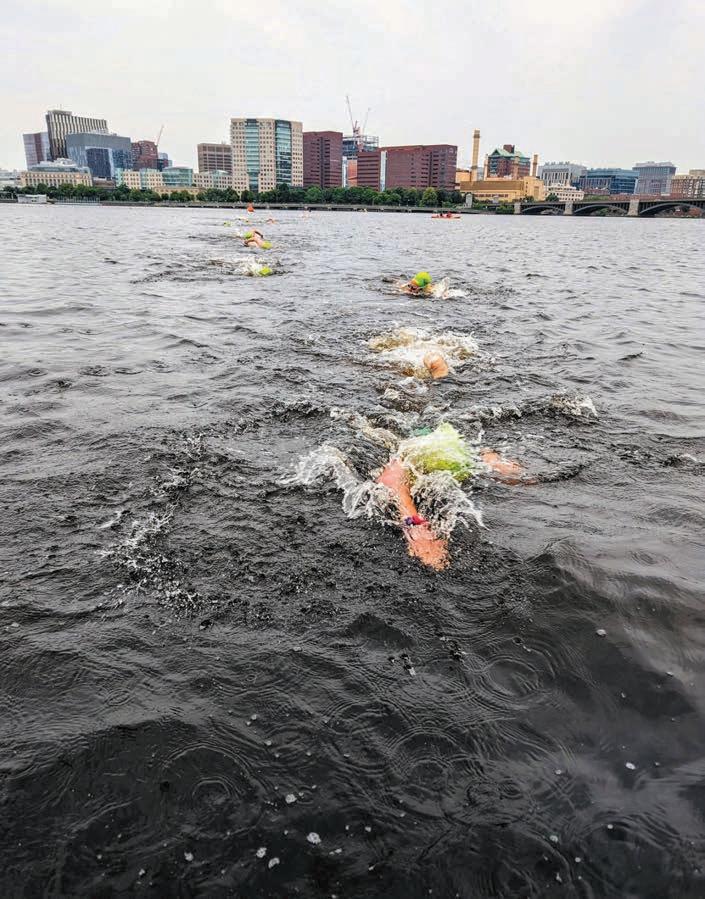
Above: Participants take the big plunge at the Charles River Swimming Club’s One Mile Swim.
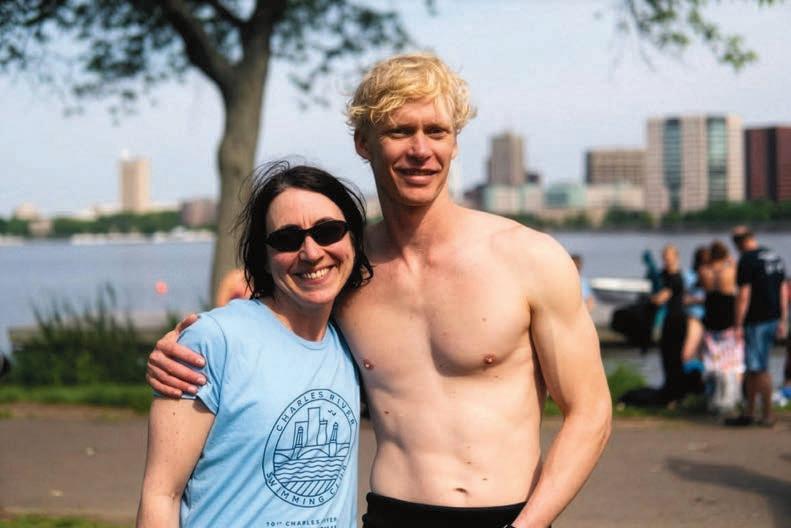
Right: Ulla Hester and Frans Lawaetz, founders of the Charles River Swimming Club
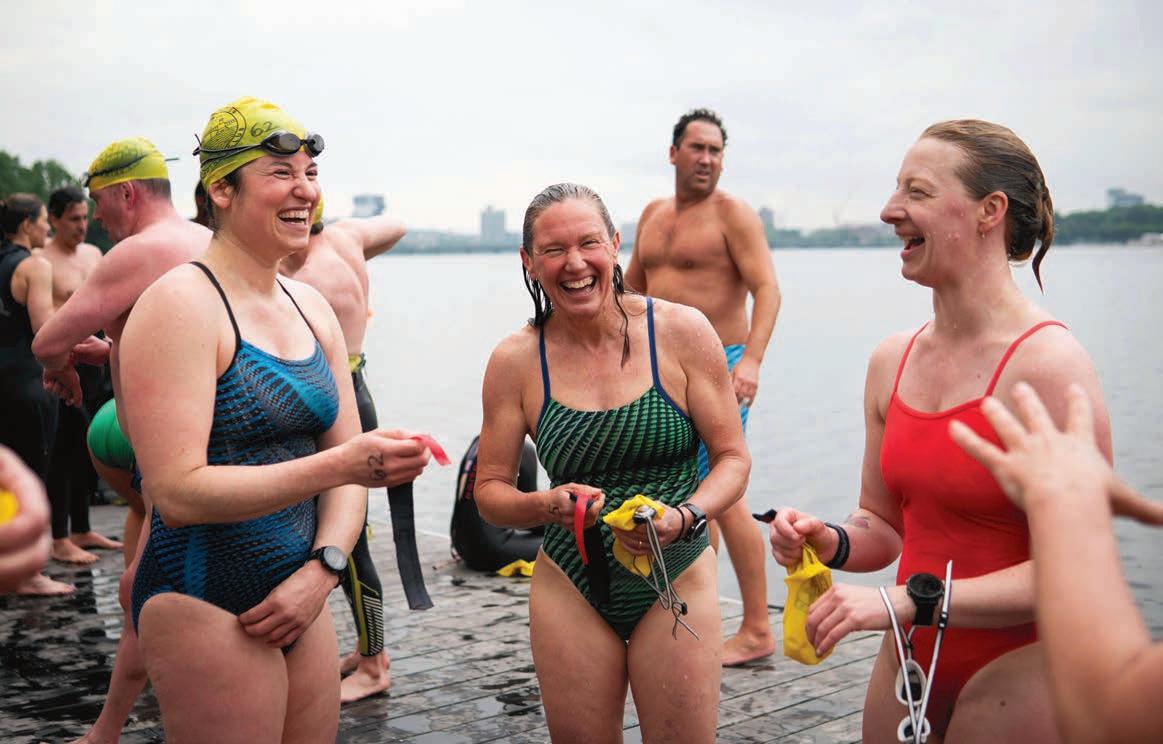
Opposite page: Swimmers congregate on the dock after the Charles River One Mile Swim.
Photographs courtesy of Charles River Swimming Club
A decades-long effort to clean up the Charles pays off in the form of a much-loved swimming event.
BY ZAK KINNAIRD
h Not-So-Dirty Water
“HOW DID I KNOW you’d be the last one?” a man gleefully bellows over the cheering crowd as he admires a swimmer completing a course during the Charles River One Mile Swim. By way of answer, the breathless athlete hauls himself onto the dock and wraps his heckler in a soaking bear hug, drawing loud, laughing protests from his friend, who had, until that moment, remained dry.
The Charles River Swimming Club (CRSC), which organizes the One Mile Swim, has for 20 years played host to thousands who have taken the plunge to swim a neat loop of buoys in a stretch of water better known for warnings than welcomes. Organizers chose a Latin slogan, Quid illud aqua inest? which translates to, “What is that in the water?” The slogan, of course, winks at doubters and gives a nod to that
century-old feeling of trepidation about the Charles that still lingers in the Boston psyche.
In fact, many people are still hesitant to swim in the event. Not only because the open-water milelong course is a demanding athletic endeavor, but also because, for years, the River was treated as a residential and industrial drain for the city.
Now, at great cost of time, effort, and resources to modernize pipes
and water treatment, the river has been coaxed back toward being not only a place to swim, but even a place to frolic. There are still some serious caveats about the river water after large rainstorms, thanks to the contaminated bottom-sediment and legacy drainage systems. And as-yet unaddressed overflows can still cause temporary deterioration in the river’s water quality. But the CRSC makes something once unthinkable look inviting. An urban river is becoming a place for people once again, even if swimming in it is
only permitted once or twice a year.
As swimmers take their mighty lap between Longfellow and the Mass Avenue bridge, they are celebrating the city’s progress and urging us to continue to see urban rivers as something special.
“You’ll pop your head up to get a bearing, see MIT to one side, the Boston skyline to the other and the Longfellow straight ahead,” says Frans Lawaetz, a co-founder of CRSC. “A little wave of giddiness will hit as it sinks in that you really are swimming in the Charles!
“I overheard a woman whose son was in the race leaving a voicemail to her husband,” he continues.
“The way she described the scene, the emotion in her voice, how she wished he could be there, it brought a little lump to my throat, and I realized this is something special, even for those who don’t jump in.”
In what has become a recent One Mile Swim tradition, after the last swimmer has clambered up the dock ladder, MIT’s Metro Polo team jumps in for a rollicking exhibition water polo match complete with taunts, jests, and barely intact boundary lines that shift in the wind to the amusement of onlookers.
A MULTI-GENERATIONAL EFFORT
As playful and exuberant as CRSC presents itself, it is among the ranks of the new vanguard taking up a multi-generational effort to improve the urban waterway space for city dwellers. From the 1880s to 1910, Charles Eliot conceived the regional park system, and Frederick Olmsted designed the first “Charlesbank” beaches to provide people with democratic access to nature and exercise. In the early 20th century, James Storrow spearheaded efforts to stabilize water levels, while his widow, Helen Storrow, later funded the expansion of the Esplanade parkland to ensure it remained a “joy for the city’s millions.”
By 1955, however, as an unintended result of blocking the tides, street runoff, industrial toxins, and biogenic waste emulsified and settled in the river basin, which led officials to prohibit swimming in the Charles for decades. The formerly tidal Charles River basin could no longer be washed out into Boston Harbor.
The metaphorical tides could not be dammed, however, and began to turn in 1965 with the founding of the Charles River Watershed Association. Improvements accelerated in the 1990s, when
A swimmer leaps off the dock at the Charles River One Mile Swim.
John DeVillars launched the EPA’s cleanup mandate. In 2000, Renata von Tscharner founded the Charles River Conservancy to make swimming in the Charles a reality again. Not to mention the massive impact of the Deer Island Wastewater Treatment plant and an alphabet army of allies: MWRA, BWSC, CLF, DRC, MassDEP, Esplanade Association, and so many others.
HONORING THE RIVER
Celebrating that history, the CRSC, which was founded in 2005, plunges on each year—not only celebrating each athlete’s accomplishment, but also the work of so many who continue to renew the River. In fact, swimming has gone from something fully banned to specially permitted twice a year at events like these. Beyond swimming, and as confidence in river health
grows, windsurfers and hydrofoilers now also cool off in the water on hot summer days as they toy with the dividing line between watercraft use (permitted) and swimming (still not broadly allowed).
After the One Mile Swim ends, the course empties, the buoys are collected, the lifeguards kayak in a line to Community Boating’s docks, and the slow, familiar current of the Charles resumes. On shore, swimmers wrap themselves in towels and spectators linger a little longer than planned. No one seems in a rush to leave.
“What’s that in the water?” the swimming club’s slogan asks. At least today, the answer is obvious: us.
The organizing team for CRSC is Kate Radville, Frans Lawaetz, Amy Whitesides, Jen Downing, Sheryl Bierden, Pat Costello, and Noel LaPierre.
Zachary Kinnaird works as an attorney at Philips. He has swum in the Charles River.
An exhibition water polo match has become a tradition after the yearly swim.
Three Decades of
Design
i
MyBoston talks with architect David Sharff, who loves the challenge of preserving historic homes while introducing modern design elements.
BY JULIA BADDERS
IN BACK BAY, historical preservation is top of mind for many homeowners and commissions, but behind original moldings are interiors with a unique modernity that architect David Sharff has spent his career influencing. This year, Sharff celebrates 30 years of residential design and home renovations across Massachusetts. MyBoston magazine sat down with Sharff to discuss his career, Boston architecture, and the historical influence of Back Bay brownstones on home design.
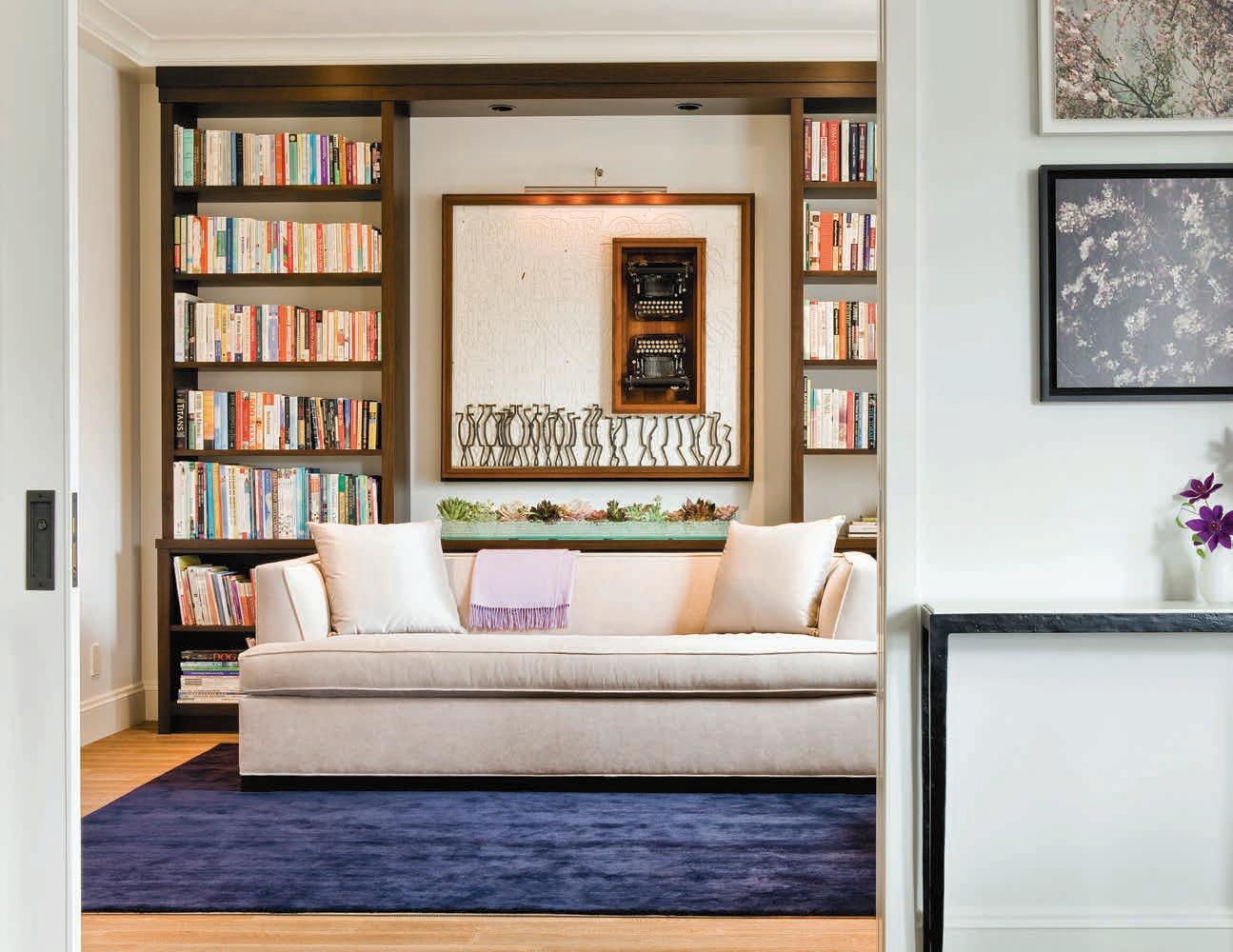
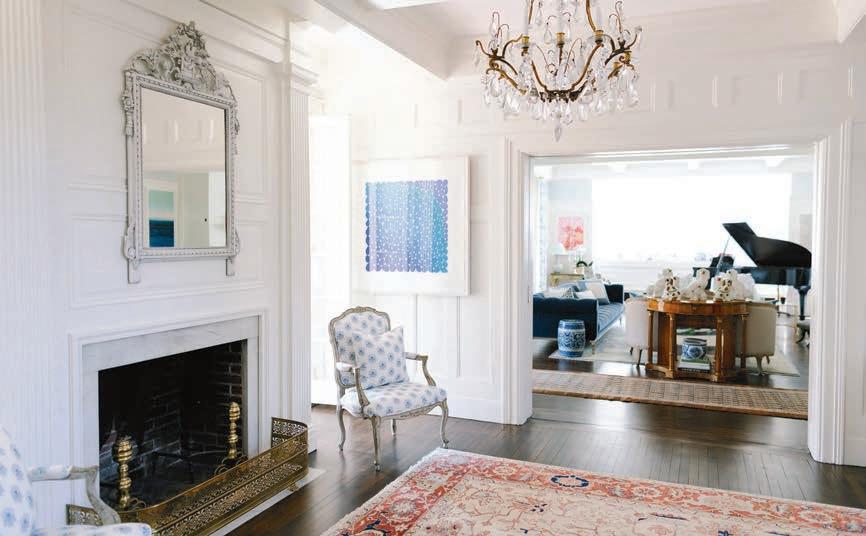
This Back Bay apartment features custom pocket doors to reveal a den that functions as study, sitting room, and guest room—floor-to-ceiling bookshelves and art.
Photograph by Michael J. Lee
What inspired your start in architecture?
I really enjoyed studying art and I’ve always enjoyed history. I’ve just been curious about different cultures and socio-economic times, and I feel like that so influences our housing. I like to bring a lens of updated, 21st-century sensibility to old homes and make spaces work for the way we use them now.
What were some of your pivotal projects?
When my practice was in Medfield, I got to work on an old Medfield house. That was one pivotal moment for me. It wasn’t necessarily the biggest project, but it was an introduction to taking an old house and adding onto it, having it all blend seamlessly.
The next was getting my first commission in the city in 2007. Adding that project type was really pivotal because then I could go after more of Back Bay. Interior architecture is another passion of mine. Working within the confines of a footprint is really an incredible challenge for me in trying to transform something.
Does the firm do more urban or suburban renovations?
I’m still doing a balance of things. I have strong pulls into the suburbs still but I’m also trying to grow the practice that’s working in the city. I started working in the city in 2022, so it’s been a reintroduction process into making connections here.
How have your relationships developed through the years?
It was so much easier to have people come to me, but in the last few years, I’ve really enjoyed reaching out and meeting other designers, architects, and builders. Having 30 years of experience has relaxed me in terms of worrying less about what others are doing and going ahead and doing what I want to do.
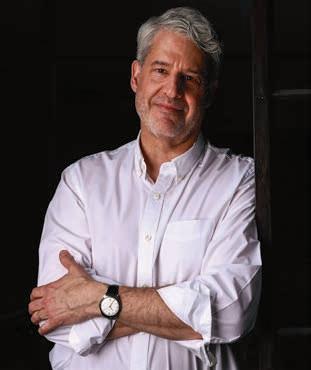
Top right: Architect David Sharff
Photograph by Claire Vail
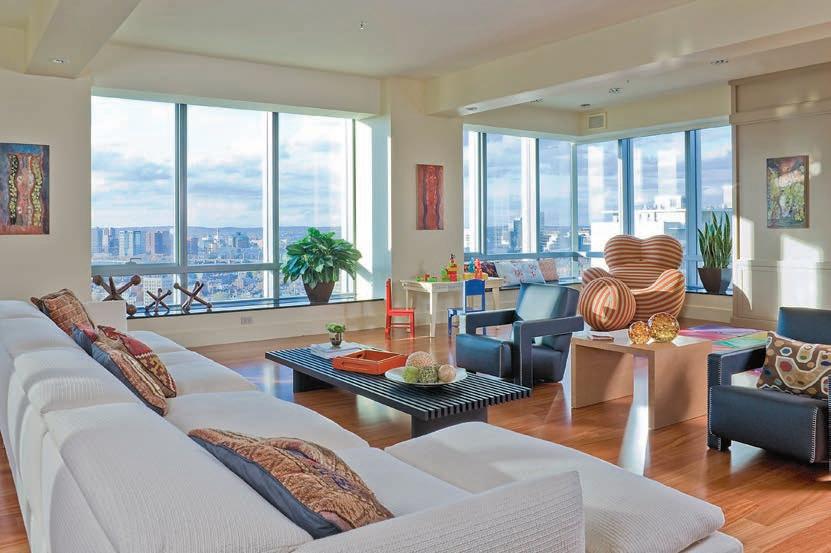
Right: In this apartment, perched high above the city, the architect and client’s vision suggested a modern and sophisticated aesthetic that was fun, warm, and inviting. A complete gut renovation resulted in witty, art-inspired, cohesively designed spaces that were also child friendly.
Photograph by Michael J. Lee
How do you describe your architectural style and how has it evolved?
Building technology has really been changing, and so there are things I have to keep up with, but I really feel like my designs are consistently sympathetic to the neighborhood that they’re in or the client’s vision. I also want to make spaces that are timeless and calm. That’s the kind of inner lens I have on it, and I don’t think that’s changed.
There’s an Italian saying “sprezzatura,” which is the art of taking something complicated and making it look like there was no effort involved. I feel like that’s how I approach architecture. I’m trying to make it look like it was always that way. I think the trick is being sensitive to what’s there. The architectural term for it is working within the context of the house or the neighborhood, so that’s always been important to me.
How do you balance your design goals with the client’s and the context of the house?
We go from the big picture and work inwards. I let my clients share their ideas, and then we work together to edit them. If I see it going off the rails, I’ll sort of reign them in, but I’ve learned that there are some things you just can’t force on people because they want to have ownership over their project. I kind of see it as a superpower—mentoring my clients in
terms of making good choices while honoring the decisions they make and helping them navigate what can be a tricky kind of experience.
What makes Back Bay unique from a design perspective?
Each house or brownstone is so different from the next, but they all use similar parts to make them connect as a whole block.
It’s just so interesting to see how parts were used back in the 1850s to the 1880s to really make these individual homes and to see how things are different yet the same. If you’re lucky, you can find a house that hasn’t been badly remodeled and a lot of those details are still here.
Are clients leaning more historic or modern?
I think it’s probably shifted. People were interested in having very traditional details in these houses, and then, in the past decade or so, there’s been this push to create more modern designs.
In Back Bay it’s harder to make those changes. However, when you’re dealing with a historic property, mostly the regulation is on the outside of the house, and that doesn’t mean that on the inside you can’t create a different feel.
How has Boston’s architecture evolved?
People love Boston because it’s historic and it has a really livable size and scale to it, but they are thirsty for the modern architecture they might find in a bigger city. It’s important to balance that. There is this mindset to make the Seaport the modern part of Boston but there is no anchor to the rest of the city, and that’s what we want to avoid here in Back Bay. I think we want to work hard to have it feel like it is anchored but not get too mired into the history when you get inside the building. There you can let yourself be a little adventurous.
How might it evolve in the future?
Technology is important and energy technology has to find its way into an old structure without interfering with the historic feel. There has to be a way to live in the modern era and be able to update your house, hopefully with solar energy somehow. Other parts of the state and country have to deal with that, and it’s been hard to do here in a neighborhood that’s sort of controlled by historic commissions.
What excites you most about the future of Boston architecture?
I love to travel and to see how architecture exists in other cultures. What’s most exciting to me is how I can bring back some of those ideas to Boston, whether it’s a color or a type of tile or the way spaces relate to one another.
What thoughts have come up for you as you reflect on 30 years?
Mainly, I’m just grateful. All the clients I’ve had and the builders and designers I’ve worked with have contributed to the projects that have gotten me here. Thirty years goes fast when you love what you do.
Julia Badders writes about culture and people for MyBoston magazine and other publications.
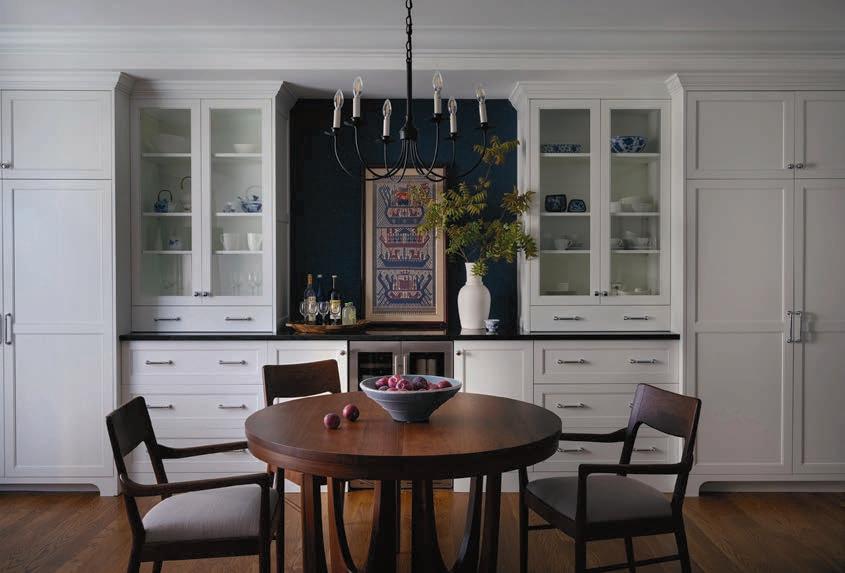
In a pied-à-terre, every room has to pull double duty. This dining room is also a bar, a display space, and a place to linger—all held together by a wall of custom millwork. Photograph by Sabrina Cole Quinn
Neighborhood PLAYGROUNDS
Give your kids the gift of outdoor playtime while you enjoy classic Boston vibes.
BY SHARIN SCHOBER
SOMETIMES, THE BEST playgrounds aren’t the biggest ones, but the ones right around the corner. From the splash-filled fun of the Frog Pond to Beacon Hill favorite Myrtle Street Playground, these five playgrounds are ensconced in neighborhoods known for history and architecture—along the Charles River, tucked between brownstones, or in the midst of Boston’s most iconic spots. These spaces allow kids to climb and explore while parents are entertained by some of the city’s most scenic views. They remind us that some of Boston’s most special moments happen at kid height— between slides, swings, and the simple joy of playing outside.
TADPOLE PLAYGROUND
Boston Common
Located in the heart of Boston Common near Frog Pond, Tadpole Playground is one of the most popular play spaces in the city. It features whimsical climbing structures and frog-themed elements that delight younger children. There’s also a nearby carousel.
Part of what makes this spot special is its seasonal transformation. In summer, Frog Pond becomes a lively spray pool where kids cool off on hot days. In winter, the same space turns into a skating rink, making it a yearround destination for family fun.
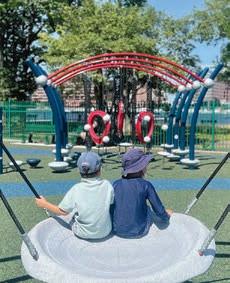
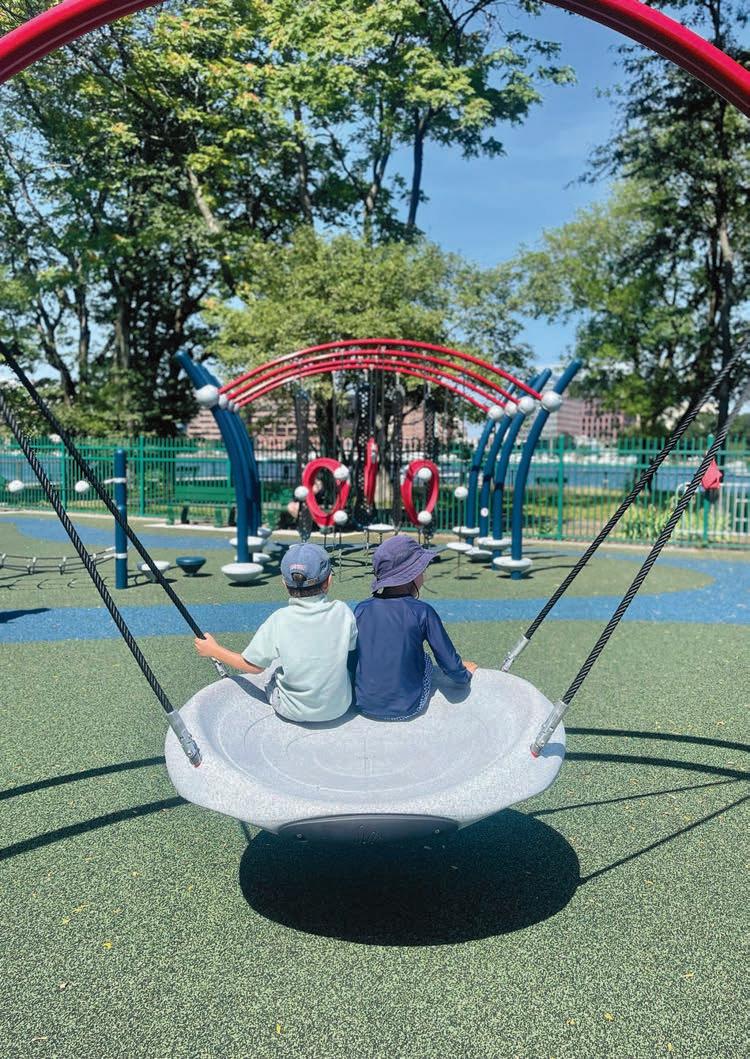
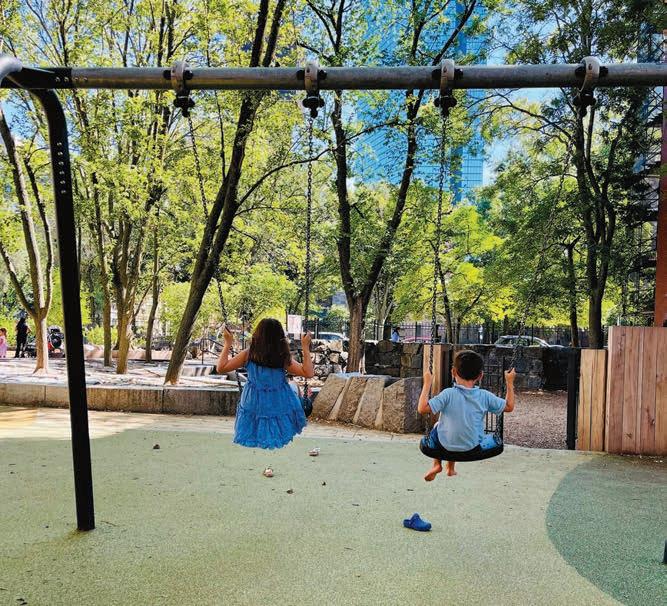
The Gronk playground has a playful design that includes Boston-inspired features. Photographs by Sharin Schober
With the city skyline and historic common surrounding it, Tadpole Playground offers a uniquely Boston backdrop for playtime.
MYRTLE STREET PLAYGROUND
50 Myrtle Street
Tucked into a quiet Beacon Hill neighborhood, Myrtle Street Playground is a perfect example of a park that feels like a hidden gem. The small but lively playground is a favorite among local families, offering slides, climbing structures, and shaded seating for parents.
Its most famous resident, however, is the “Turtle,” a bronze sculpture created by Boston artist Nancy Schön—the same sculptor behind the iconic Make Way for Ducklings statues in the Public
Garden. The sculpture was installed in 2019 and quickly became a favorite climbing spot for kids.
In summer, the playground becomes a gathering spot for local families thanks to free weekly community events organized but the Friends of Myrtle Street Playground. Recent programs have included puppet shows, live music, bubbles, face painting, and visits form the fire trucks. More information is available at myrtlestreetplayground.com.
GRONK PLAYGROUND
251 Causeway Street #101
Boston sports pride meets outdoor play at Gronk Playground along the Charles River Esplanade. Named after former Patriots star Rob Gronkowski, the playground was created with support from the athlete’s Gronk Nation Youth Foundation.
The playful design includes Boston-inspired features such as duck-boat themed structures and active climbing elements that encourage kids to run, jump, and explore. Located right along the river, the playground offers scenic views and plenty of space for families to relax nearby.
It’s a fitting tribute to Boston’s love of sports—and one of the city’s most energetic playgrounds.
ESPLANADE PLAYGROUND
Charles River Esplanade
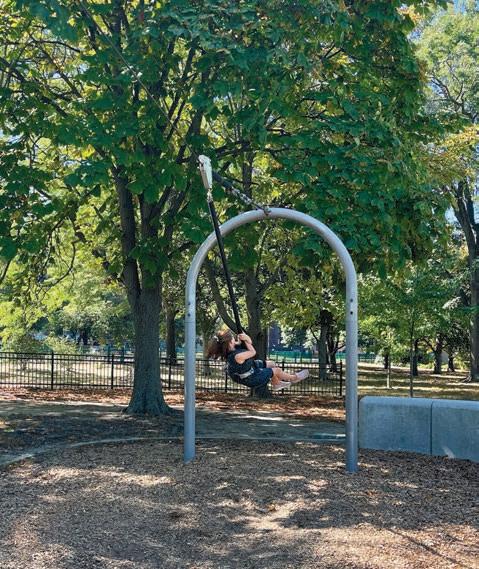
Just a short walk or bike ride down the Esplanade from Gronk Playground is another standout play area. The Esplanade Playspace near the Hatch Shell is designed for adventure, with climbing nets, swings, and even a zip-line play feature.
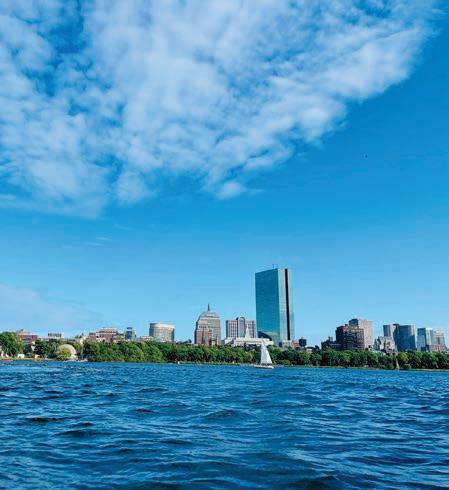
The playground’s biggest draw may be its setting. With views of the Charles River, sailboats drifting by, and the Boston skyline in the distance, it may be one of the most scenic playgrounds in the city. Families often combine a stop here with a bike ride along the Esplanade paths or a picnic on the nearby lawns.
CLARENDON STREET PLAY LOT
260 Clarendon Street
In Back Bay, playgrounds are often tucked neatly between historic brownstones and Clarendon Street Play Lot is one of the neighborhood’s most charming examples. This compact playground offers slides, climbing structures, and a safe enclosed space that makes it especially popular with families of younger children. Surrounded by classic Back Bay architecture, it feels like a pocket park designed just for the neighborhood.
Sharin Schober is a Boston-based contemporary artist and mother of two small city explorers who love discovering Boston’s playgrounds. For more about her work and to explore collaborations, see sharinschober-art. com and instagram.com/sharin.schober.art.
The Esplanade playground offers a stunning view.
The Clarendon Street Play Lot is popular with families of younger children.
The zip line on the Esplanade playground is a favorite with kids.
APRIL HOME SALES
Back Bay and Beacon Hill
Brought to you by Lara
Shuqom,
Principal of The Collective
The accuracy of the statistical data in this table is not guaranteed by MyBoston magazine. The listings broadly represent the local real estate market rather than the listings of any single agent or agency. MLSP in condo and single-family sales in Beacon Hill and Back Bay from 04/1/26-04/30/26.
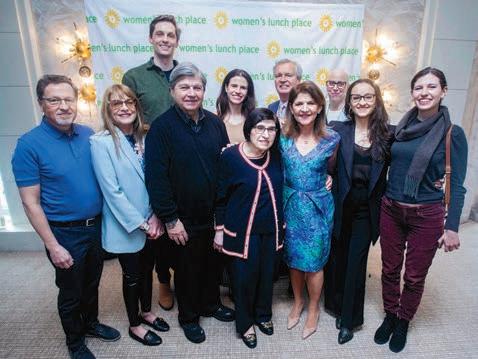
Women’s Lunch Place “eat LUNCH give”
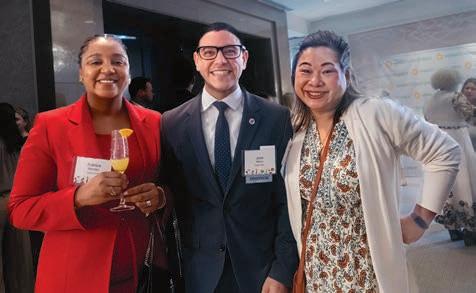
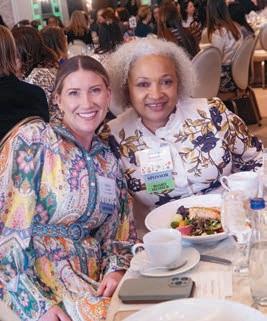
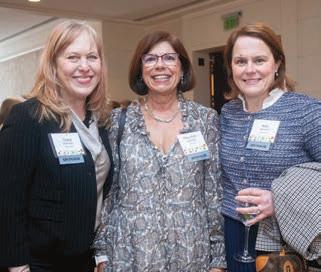
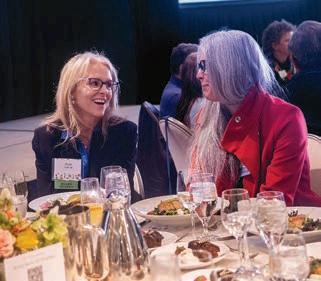
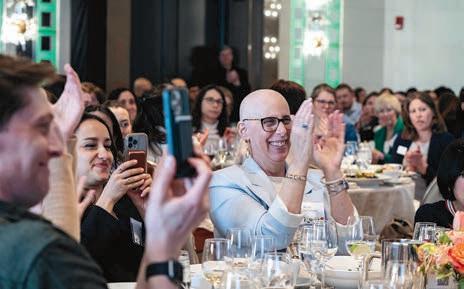
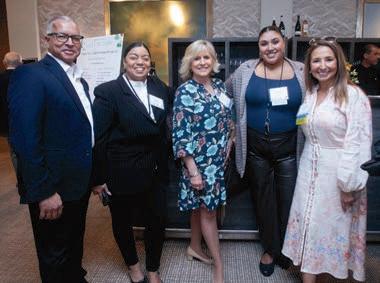
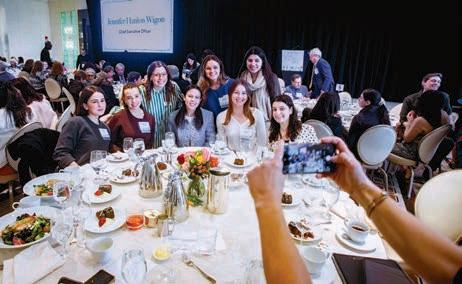
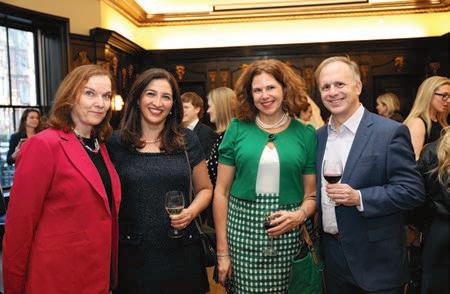
WOMEN’S LUNCH PLACE hosted its sold-out “eat LUNCH give” fundraiser on March 27 at the Mandarin Oriental, Boston. The event raised over $430,000 to support the organization’s mission of providing essential services and pathways to housing for women experiencing hunger, homelessness, and poverty.
The annual springtime event brought together a dedicated community of supporters, united by a shared commitment to the women of Boston. Guests gathered for a powerful midday program that highlighted the impact of Women’s Lunch Place’s work and the importance of continued investment in dignitycentered care.
Photographs by Keiko Hiromi
Top: Adelsa Mendes, Jose Abreu, and Abby Nguyen-Burke Center: Debra Bulkeley, family and friends Left: Valarie Couillard and Clemia Brittenum
Right: John Barros, Senator Liz Miranda, Tammy Kraus, Larissa Acevedo, and Pamela Abeiga Far right: PSG Providence Strategic Growth
Top: Diana Kenneally, Mary Beth Mahoney, and Kelly Broderick Center: Kate Gallivan and Andrea Killory Left: Kate Evans Correia
COCKTAILS, DINNER BITES LIVE MUSIC
Secure your support before July 1 for your access to the
MyBOSTON Cover of the Year
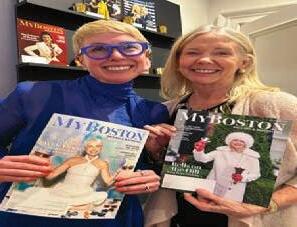
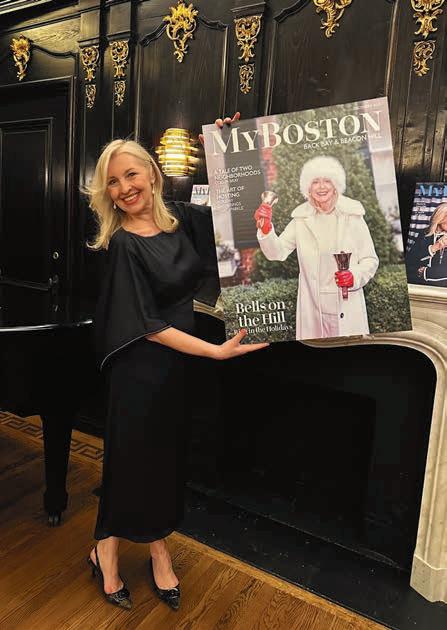
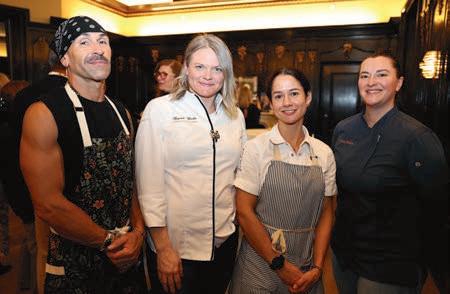
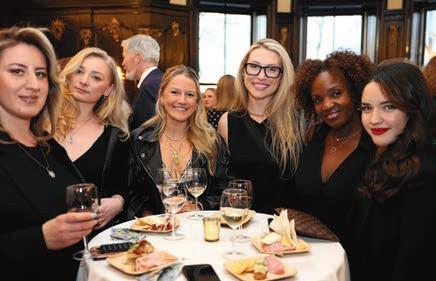
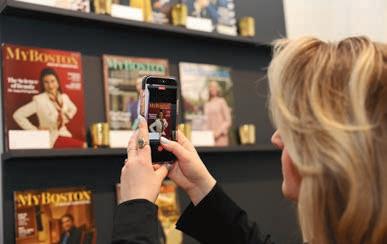
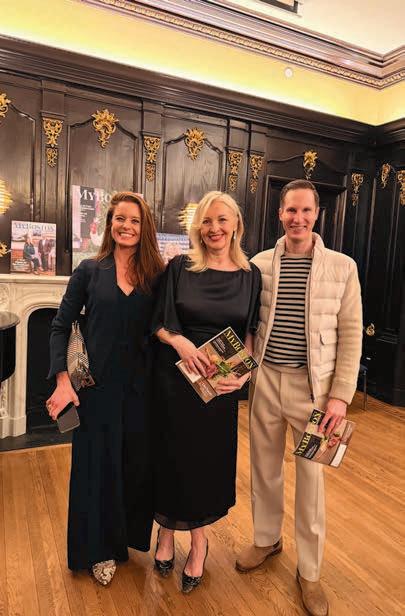
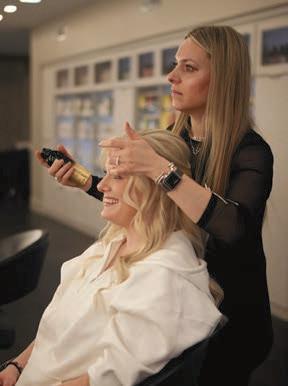
IN MARCH, MyBoston magazine held its inaugural Cover of the Year celebration, an exclusive event for partners in collaboration with the French Library. Magazine cover personalities from the past year, advertisers, readers, and supporters of MyBoston magazine gathered to select their favorite covers and to connect over great food, wine, and music. Our December issue featuring bellringer Pamela Madigan won Cover of the Year, and the Cover of the Evening award went to our January issue, featuring Dr. Stacy Coen. A surprise performance by the Back Bay Bellringers charmed all listeners. Special thanks to our private chefs, La Voile, Royce, Cuyana, Peserico, Poetry, Sharin Shober art, Columbus Hospitality Group, and the French Library.
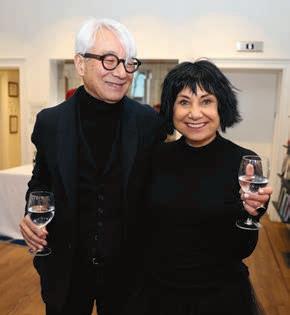
Above: (from left) Barbara Bouquegneau, Gigi Shafai, Karen Pevenstein, and Jeff Stillman. Center: Cover models Dr. Stacy Coen and Pamela Madigan.
Right: Personal chefs Jason Jernigan, Krystal Clarke, Fernanda Tapia, and Kristin Harloch provided incredible bites.
Photographs by Claire Vail
MyBoston Publisher Renata Coker with the cover of the year—our December issue!
Above left: Masayuki and Dava Muramatsu, owners of the Matsu boutique in Beacon Hill
Above center: Staff members of Stilisti Salon
Right: The competition for cover of the evening heats up!
Artist Sharin Schober, Renata Coker, and interior designer Trevor Fulmer
LUCIA JOHNSON
After starting her Sunday with coffee from Beacon Hill Market, this recent college grad delights in many things, from Boston Ballet matinees to yoga.
BY LUCIA JOHNSON
A SUNDAY IN MY apartment always starts with a few hits of the snooze button. Once I slip on my L.L. Bean moccasins and start my morning, I don’t turn on my Nespresso machine as I would every other day of the week. I feel an obligation, on my day of rest, to deprive myself of the thing I need to start my day to ensure I leave the house. I have the freedom to get my coffee outside on a weekend, so I have to take advantage, right?
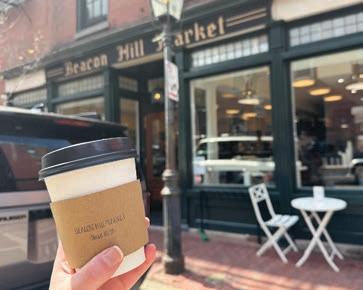
Lately, I’ve been strolling to the newly reopened Beacon Hill Market. I used to live right next door to it on Anderson. Naturally, that was the entire year it was closed to be redone. It has everything you’d need for an afternoon picnic on the Common and more. Its Beacon Hill Medium Roast is my go-to. While espresso-based drinks are usually
my preferred vessel of caffeine, supporting local businesses is very important to me, and I have yet to find my perfect, non-franchised iced latte in Beacon Hill.
A PERFECT AFTERNOON
If I don’t have plans with a friend and am not attending a matinee at Boston Ballet, where I’m the media coordinator, I’ll usually go for some kind of walk, pick up a sandwich from the deli at Deluca’s Market, and end up doing some window shopping at my favorite hidden gem, Houndstooth Consignors on Myrtle. Well, sometimes just
shopping—no window.
A truly perfect Sunday includes an evening class at Beacon Hill Yoga, preferably with Bonnie Dellerose. None of that “sculpt” stuff; a nice, earnest vinyasa is my flow of choice. After that, I’ll trek back up the hill and settle in for the night. I’m no chef, but I’ve developed a few staples. Springtime is for things like Lemony Parmesan Kale Salad and homemade Moscow Mules.
A recent graduate of Emerson College, Lucia Johnson is an early-career arts marketer navigating the post-grad lifestyle in her neighborhood of two years, Beacon Hill.
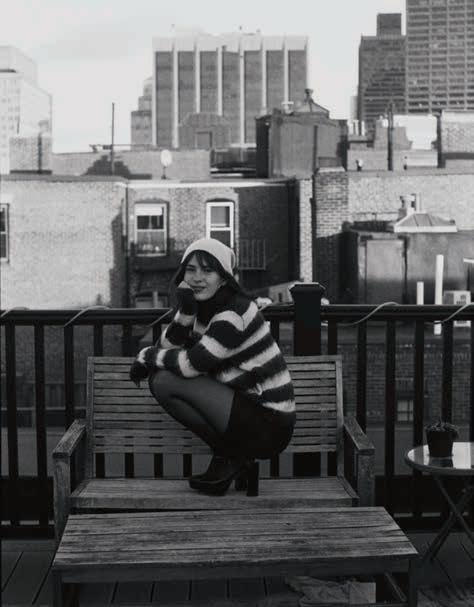
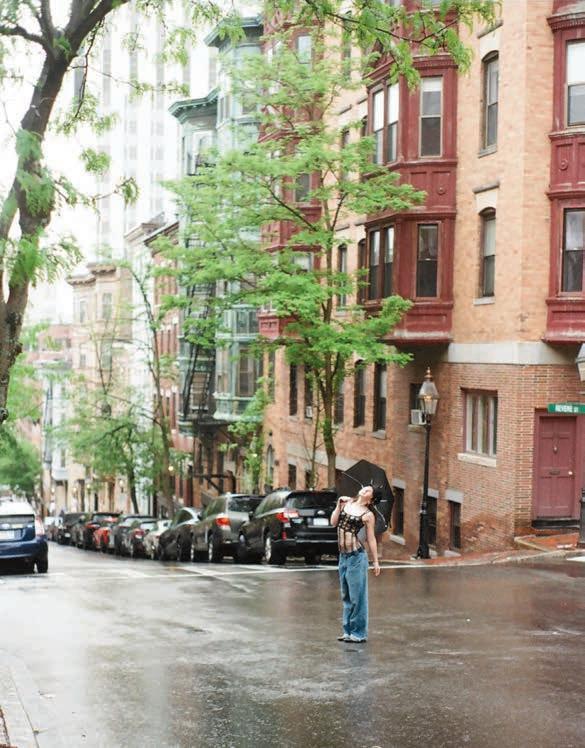
Top: The corner of Anderson Street and Revere Street
Photograph by Sasha Winett
Middle left: The exterior of Beacon Hill Market on Anderson Street
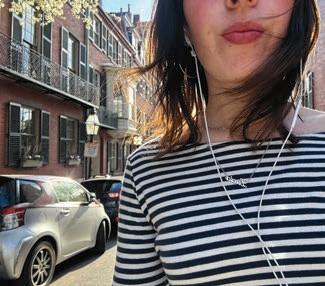
Middle right: A walk in Beacon Hill, accompanied by my wired earbuds
Bottom left: Atop a roof on Anderson Street
Photograph by Sasha Winett
Influence, redefined.
TRUE INFLUENCE IS FELT IN THE STRENGTH OF RELATIONSHIPS, THE CALIBER OF OPPORTUNITIES, AND THE RESULTS THAT SPEAK FOR THEMSELVES.
AT MGS GROUP REAL ESTATE, OUR APPROACH IS CONSIDERED, CONNECTED, AND QUIETLY POWERFUL - LED BY ONE OF BOSTON’S MOST INFLUENTIAL NAMES IN REAL ESTATE.
Congratulations to our very own Maggie Gold Seelig on being named one of the 150 Most Influential Bostonians!
MGS Group Real Estate is the premier boutique real estate brokerage, delivering unmatched insight, guidance, and support to help you with your most valuable asset - your home. As the only boutique firm with market leaders covering 20+ towns and cities from a single powerhouse group, we offer an unrivaled depth of expertise and reach. With an unwavering commitment to excellence, every MGS Group Agent is dedicated to ensuring you are fully supported at every stage of your real estate journey. Buying, selling, renting or just exploring? Let’s get started! Scan to find out more.
Danielle Gina Teri Ellie Jamie Jamie Peter Maggie Rachel Maggie L. Meghan Mark Abby