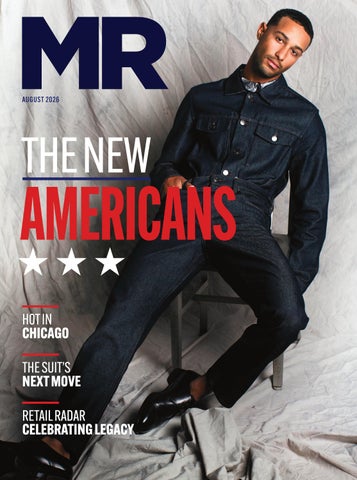
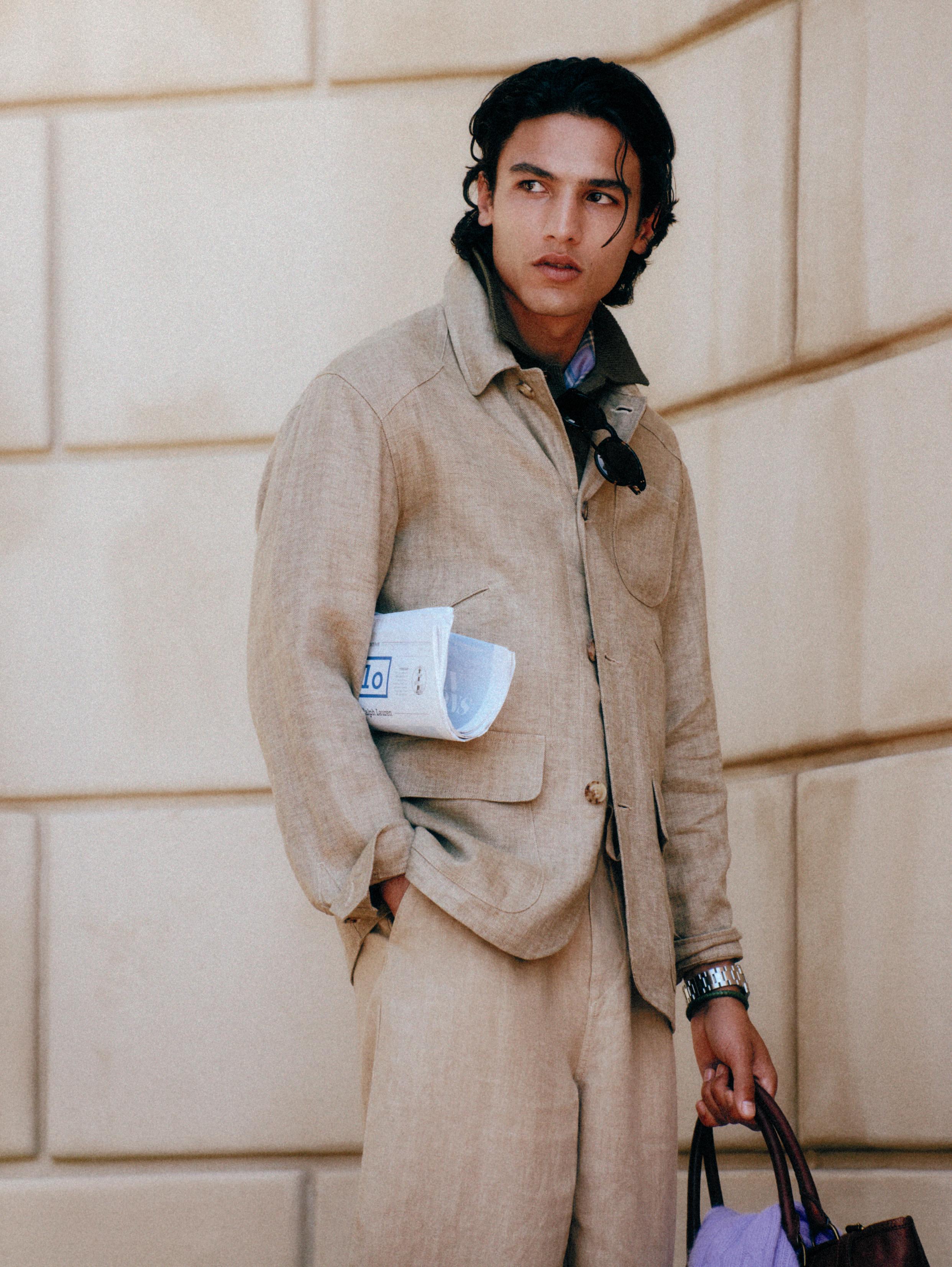
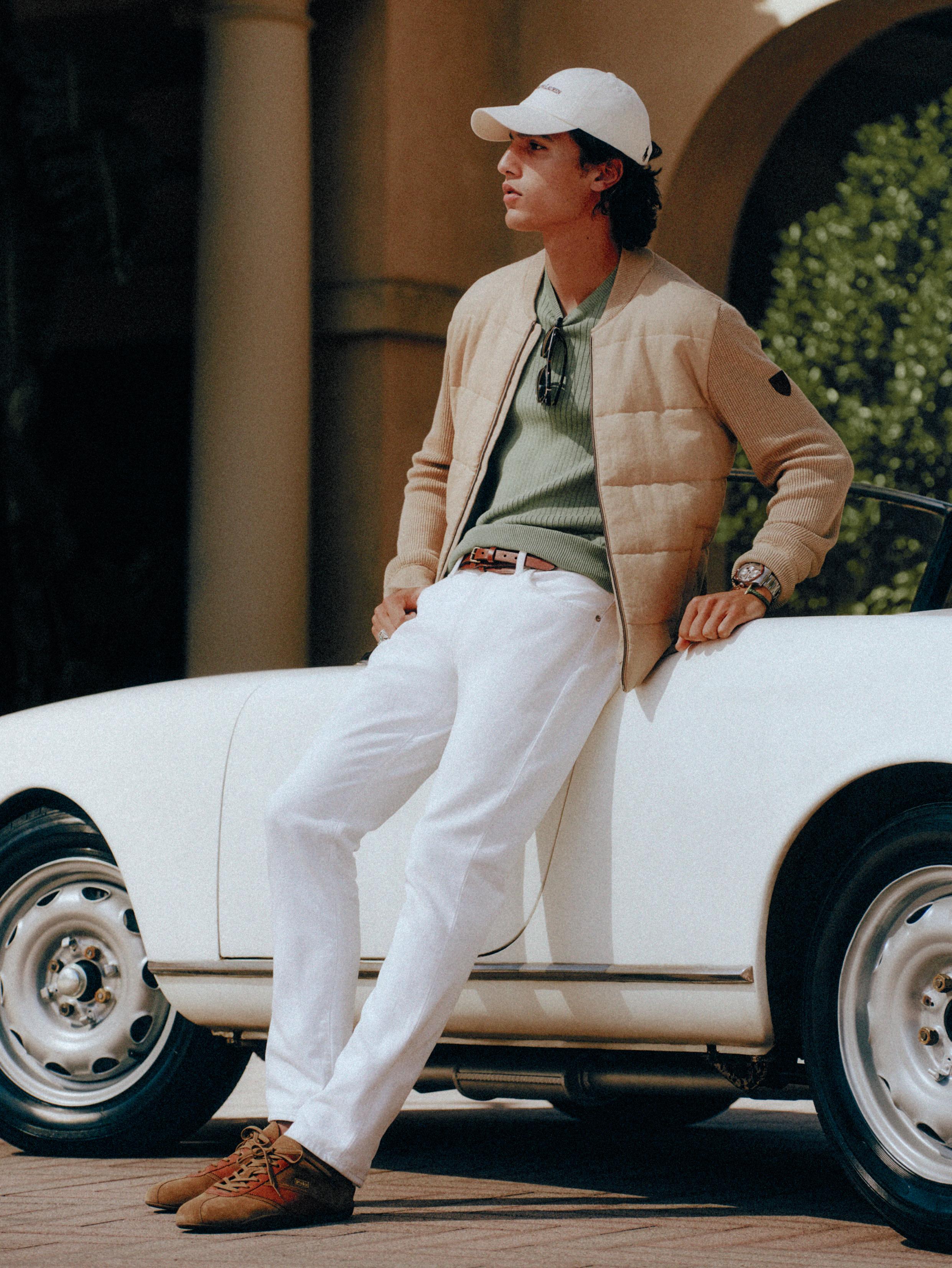
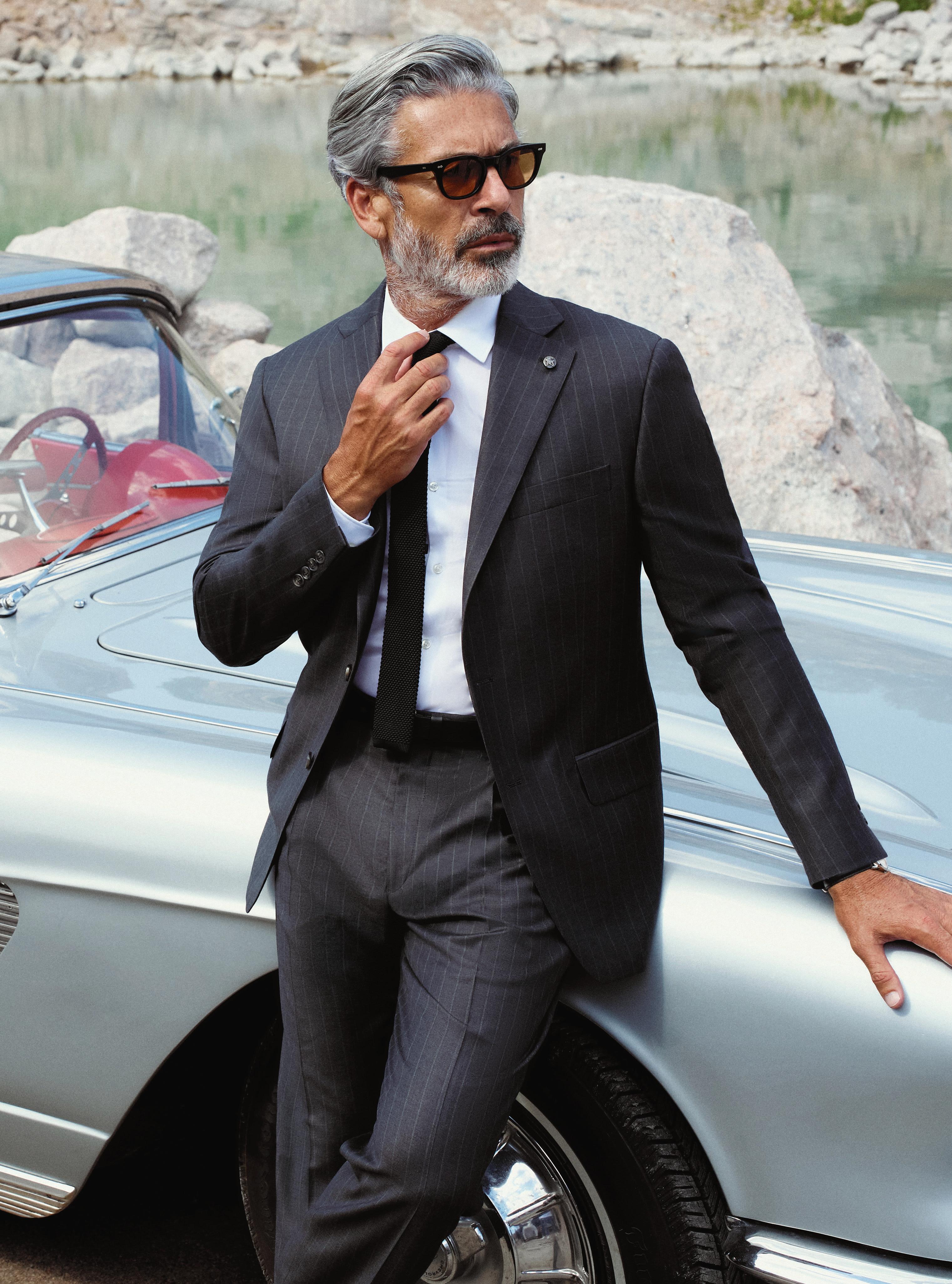
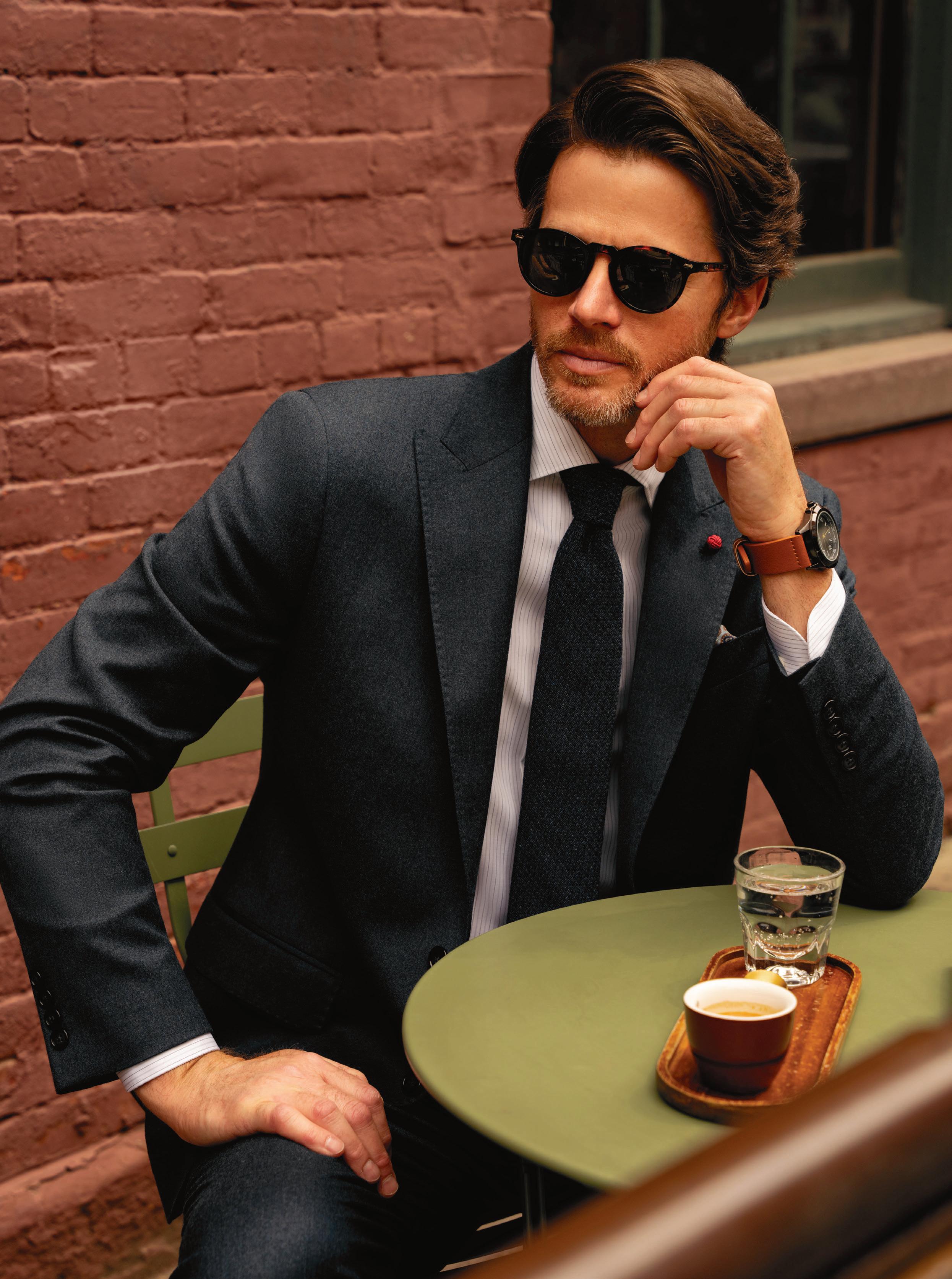
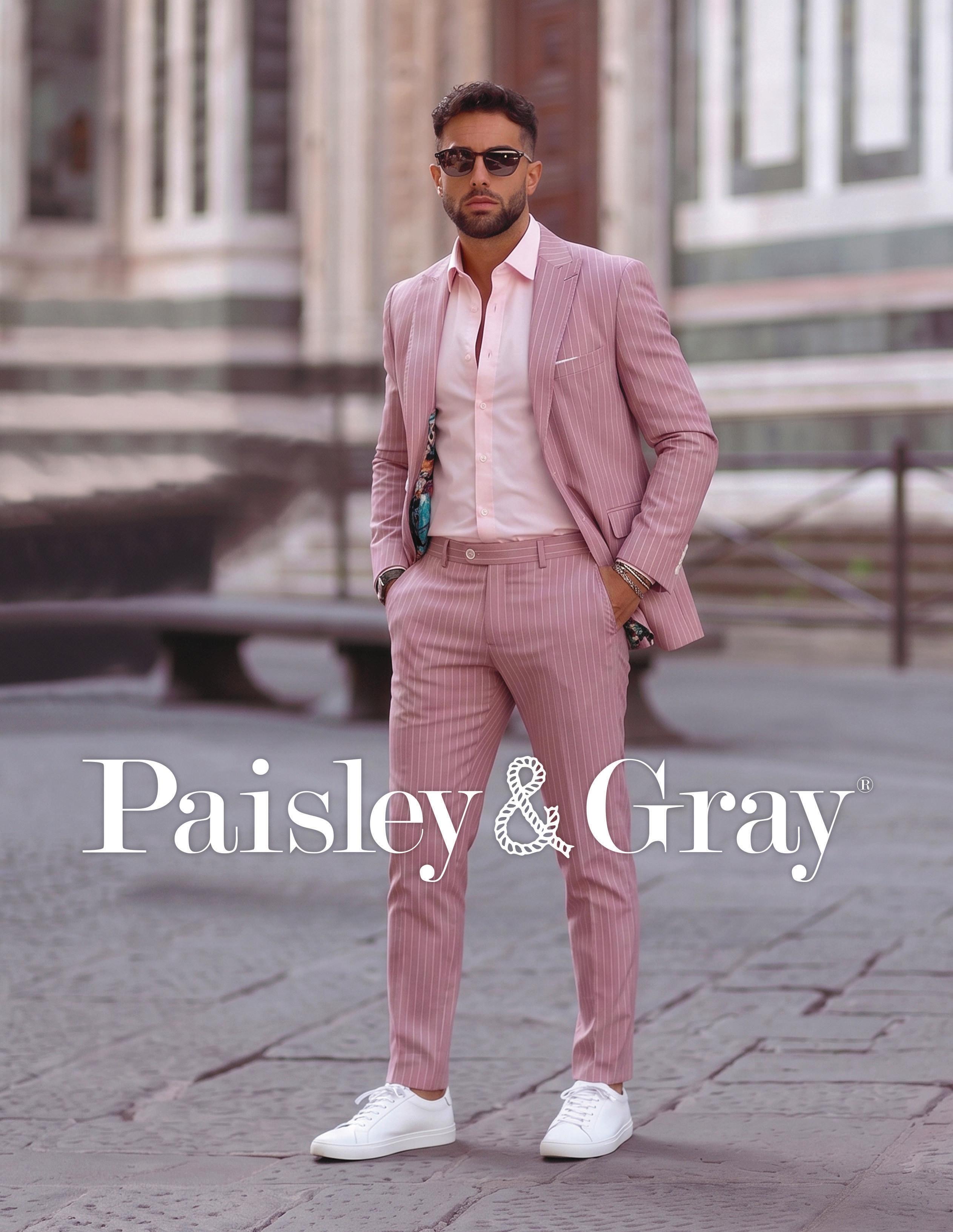
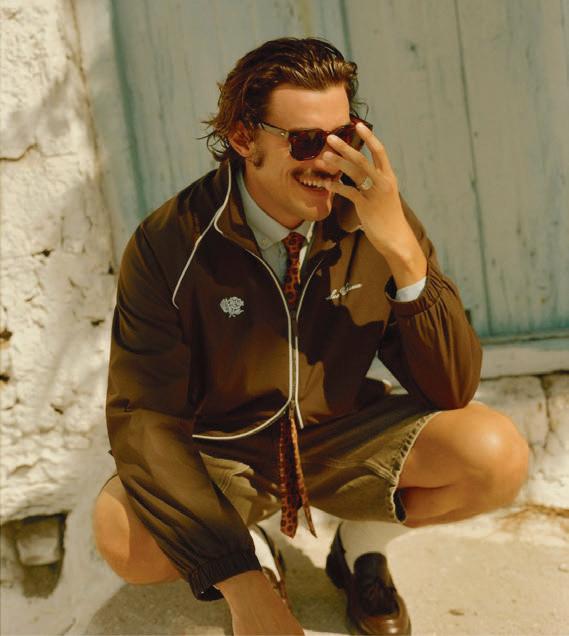
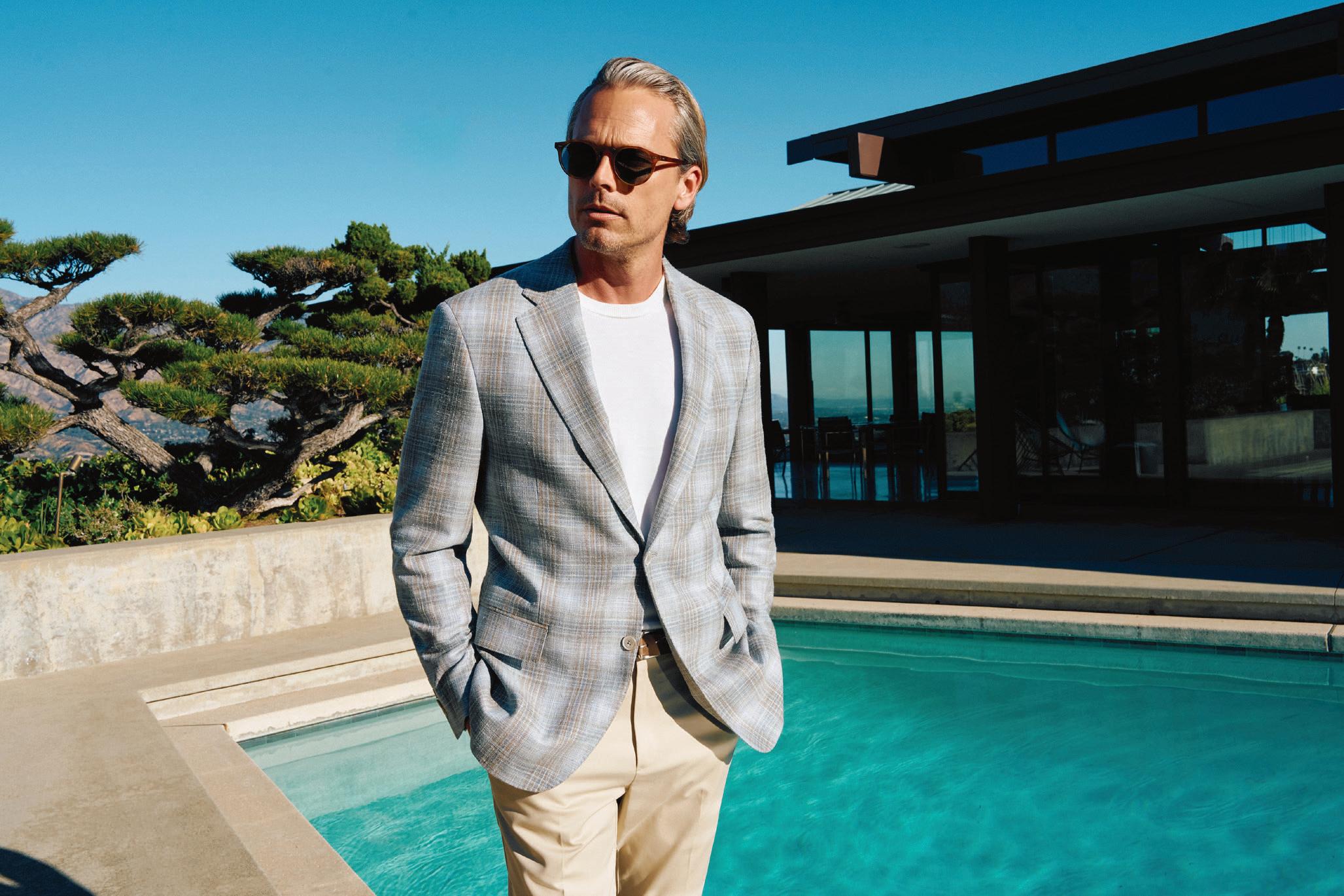
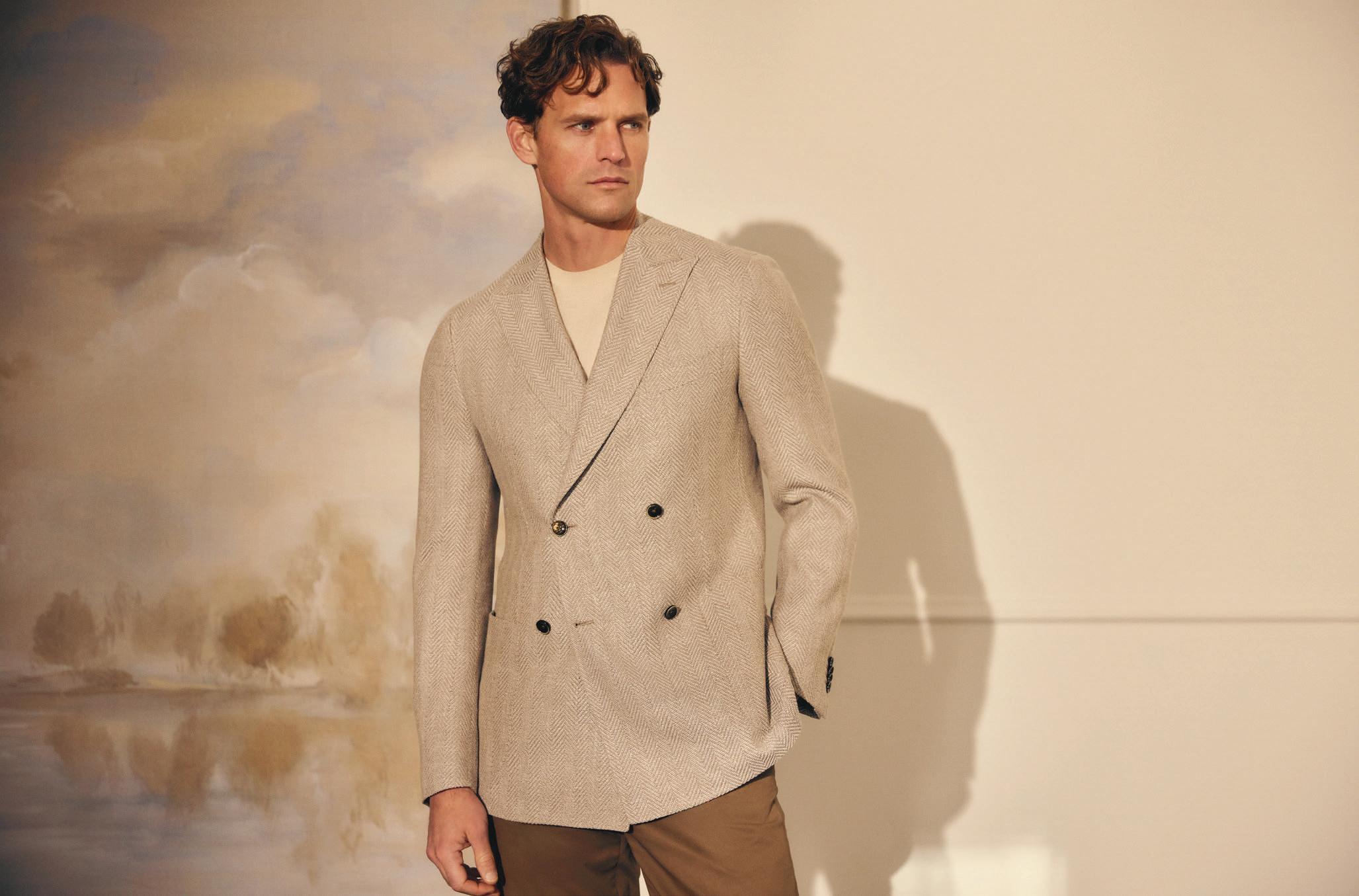
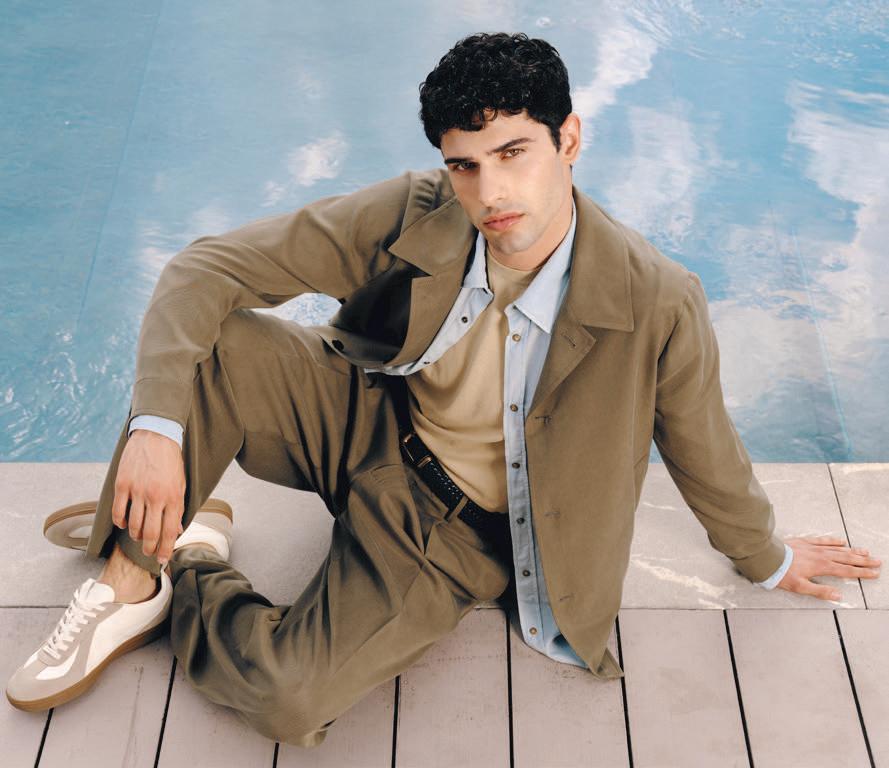
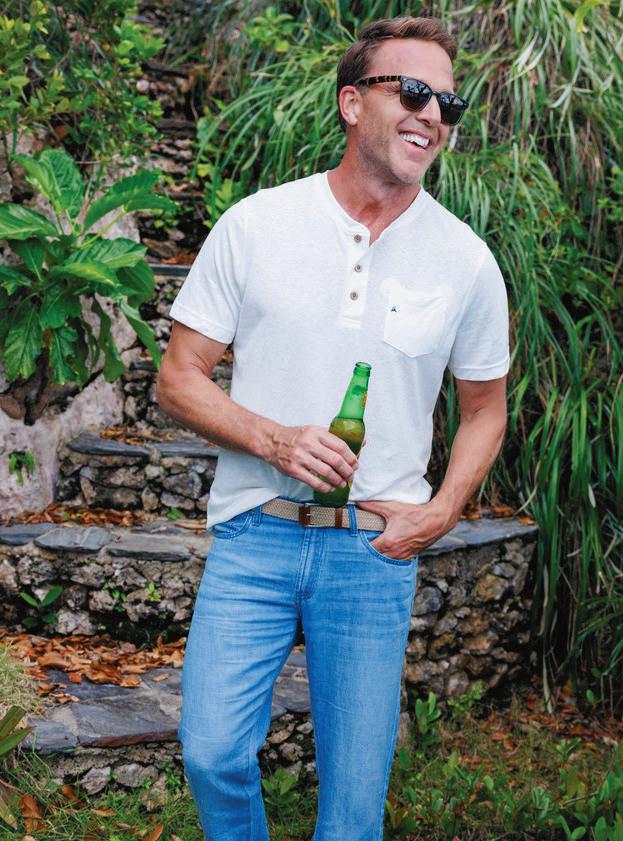
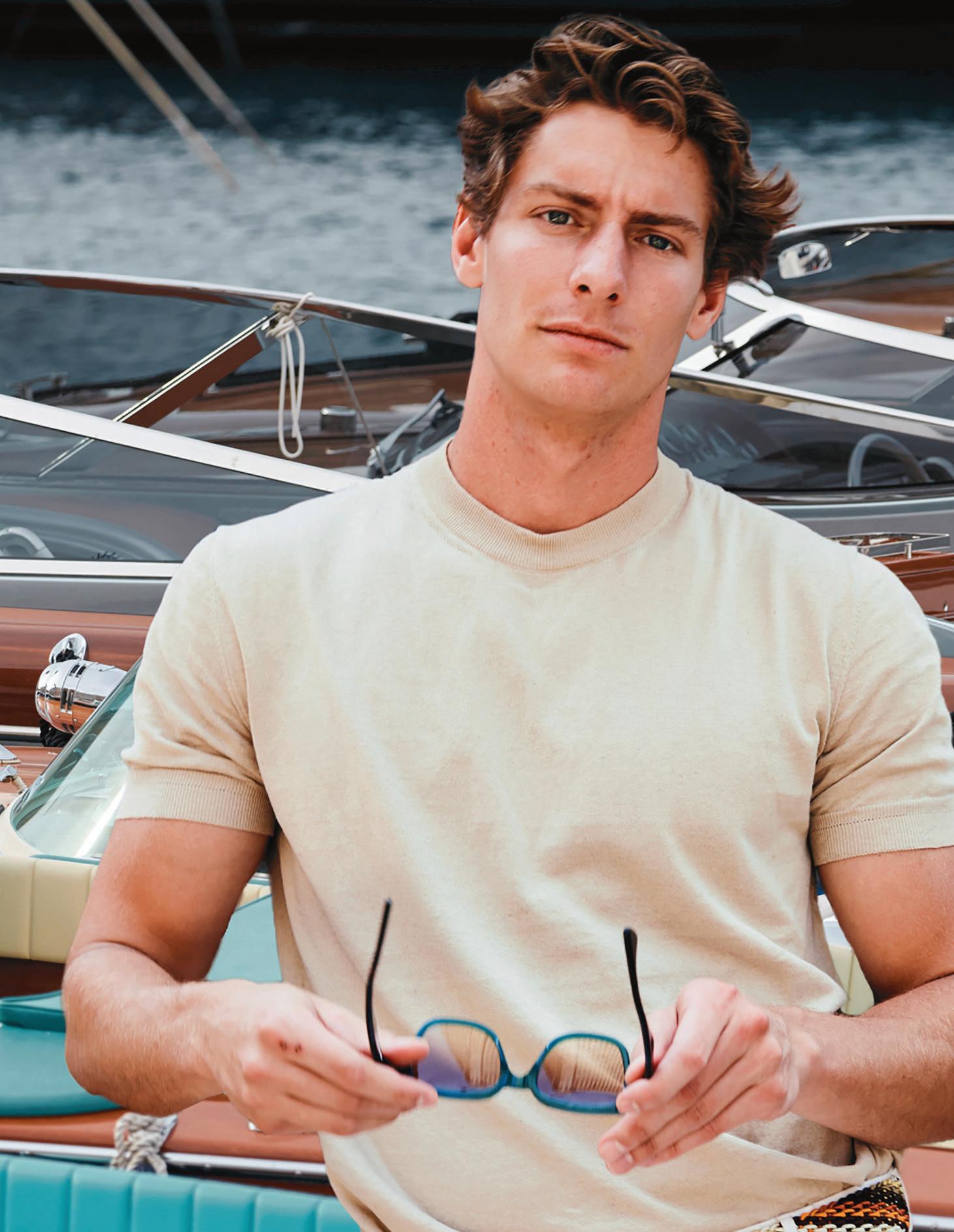
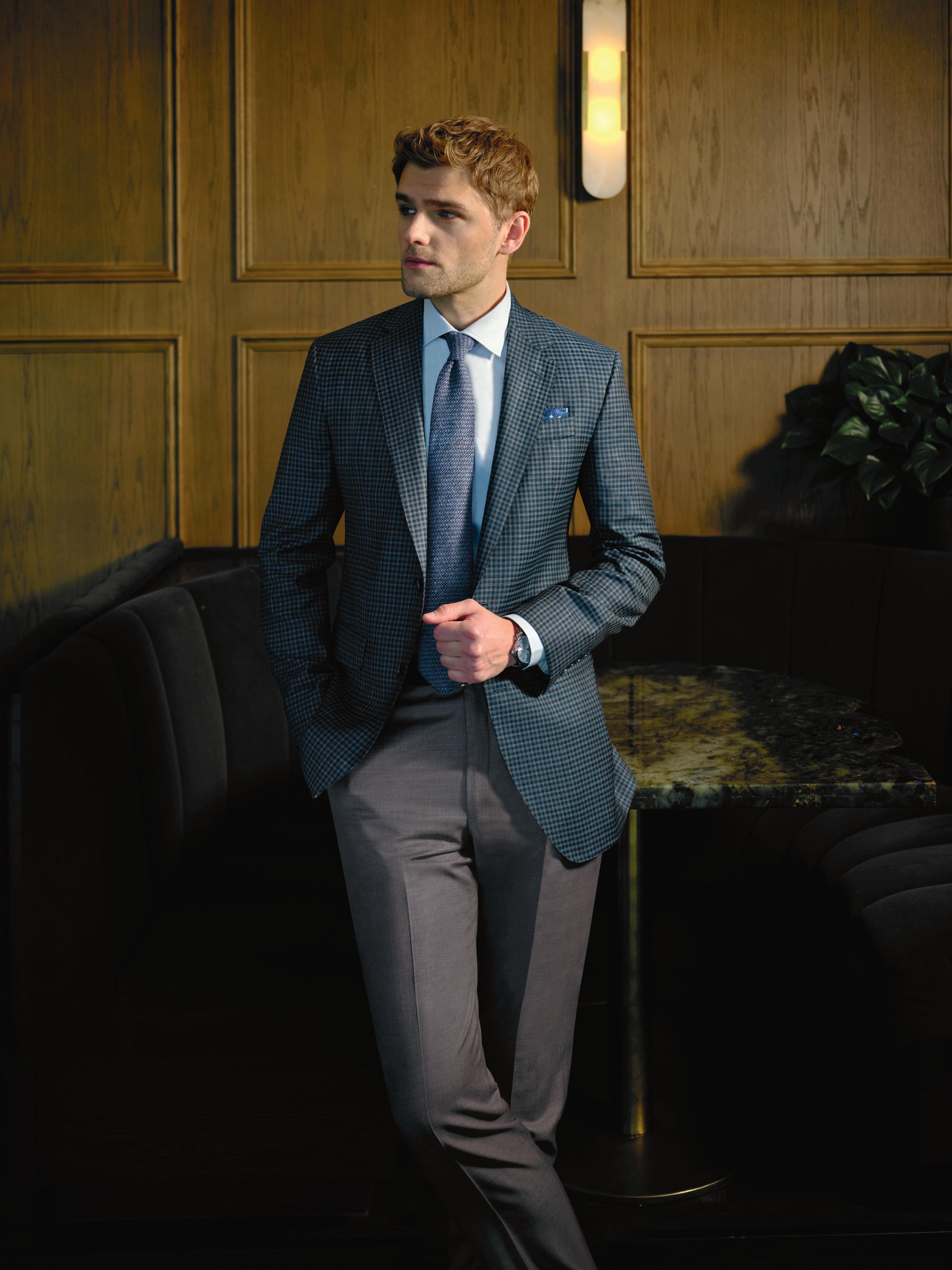
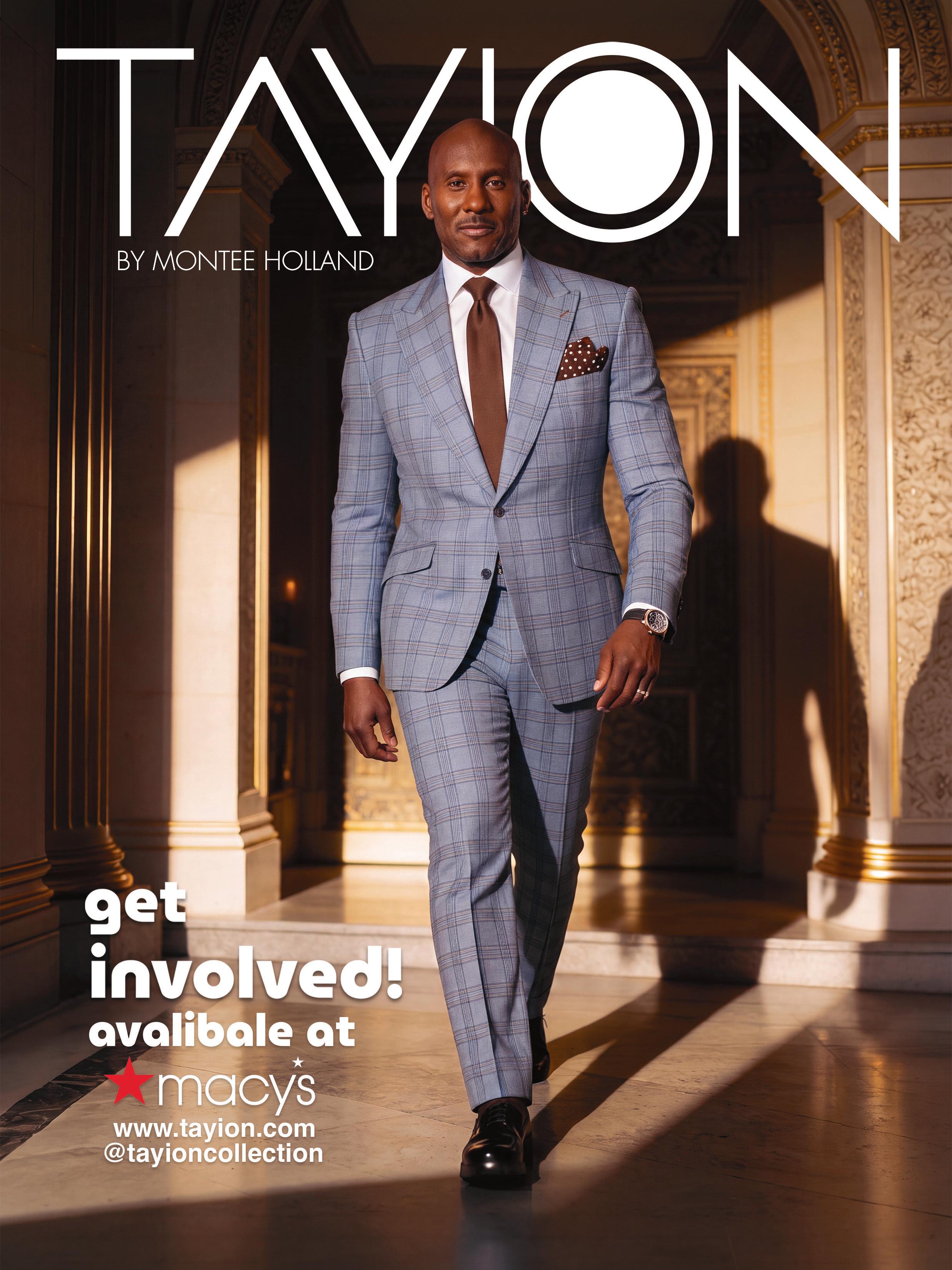
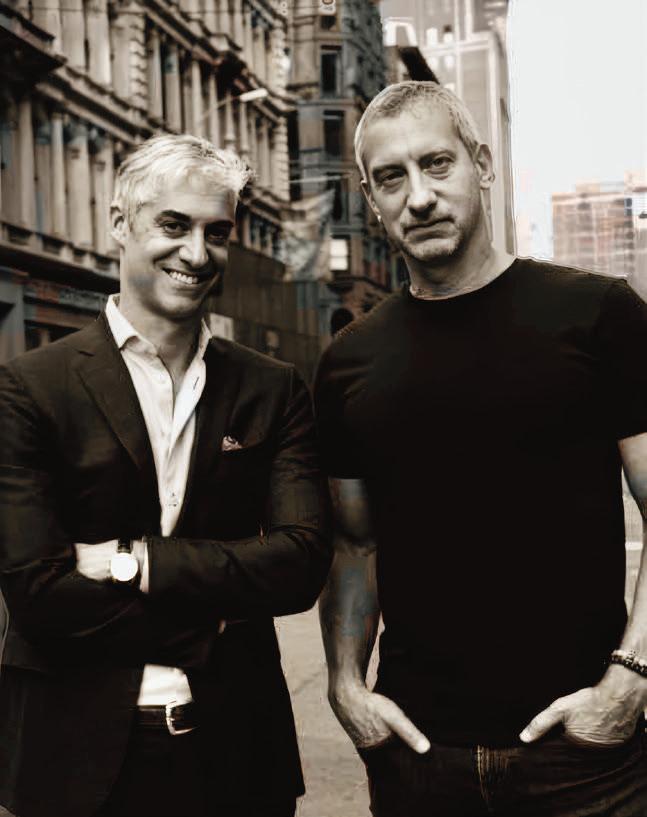
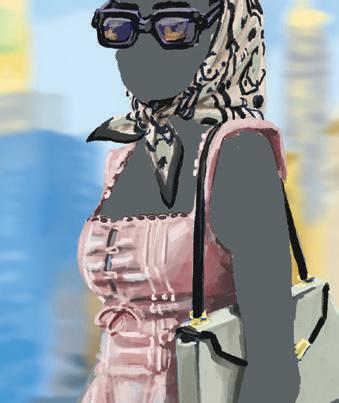
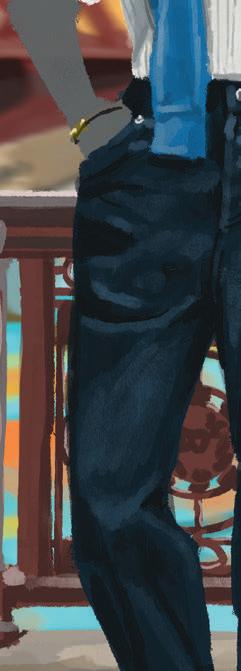
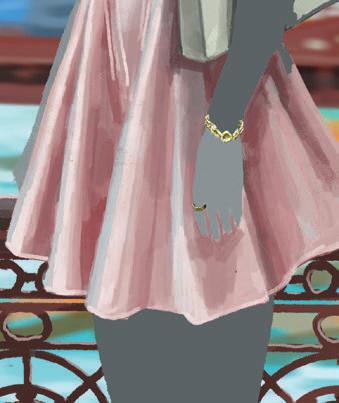
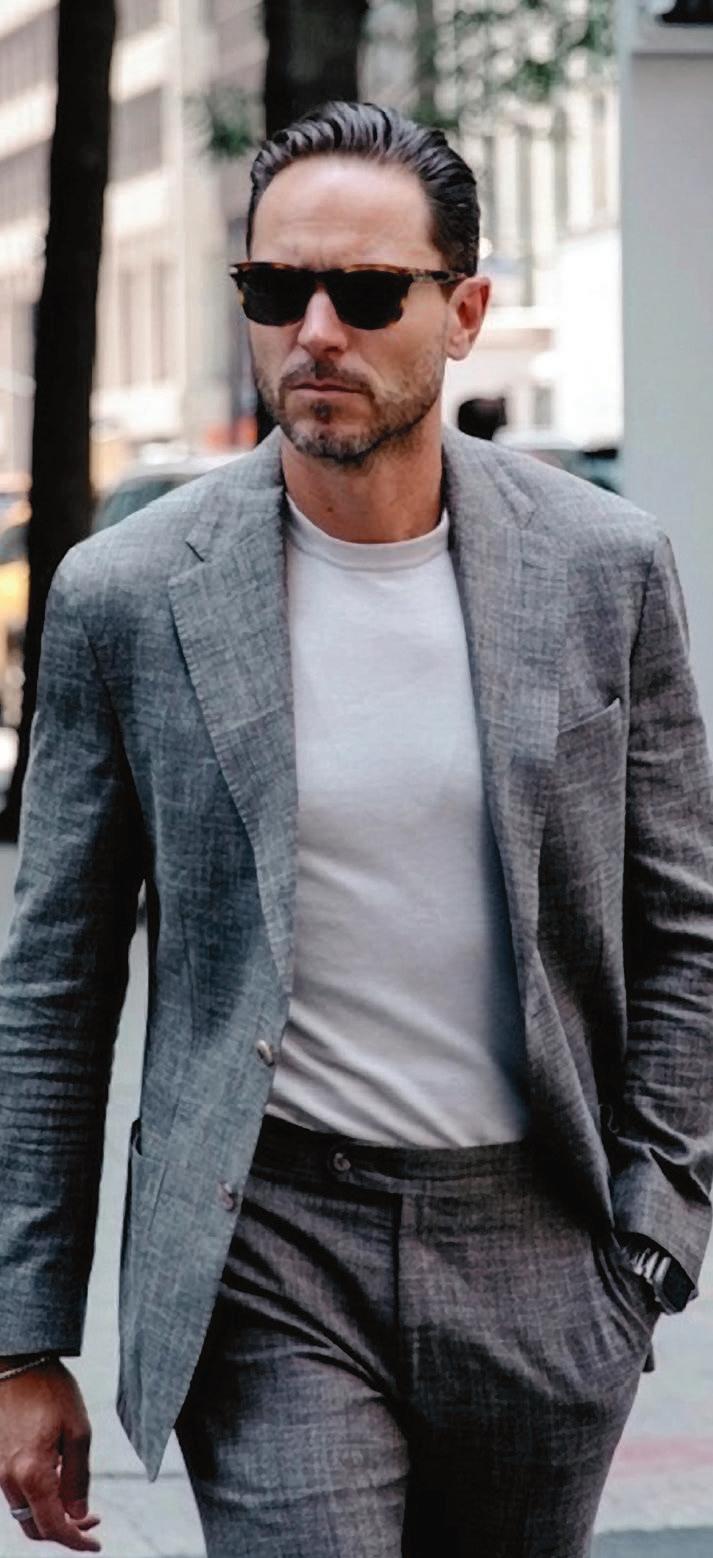
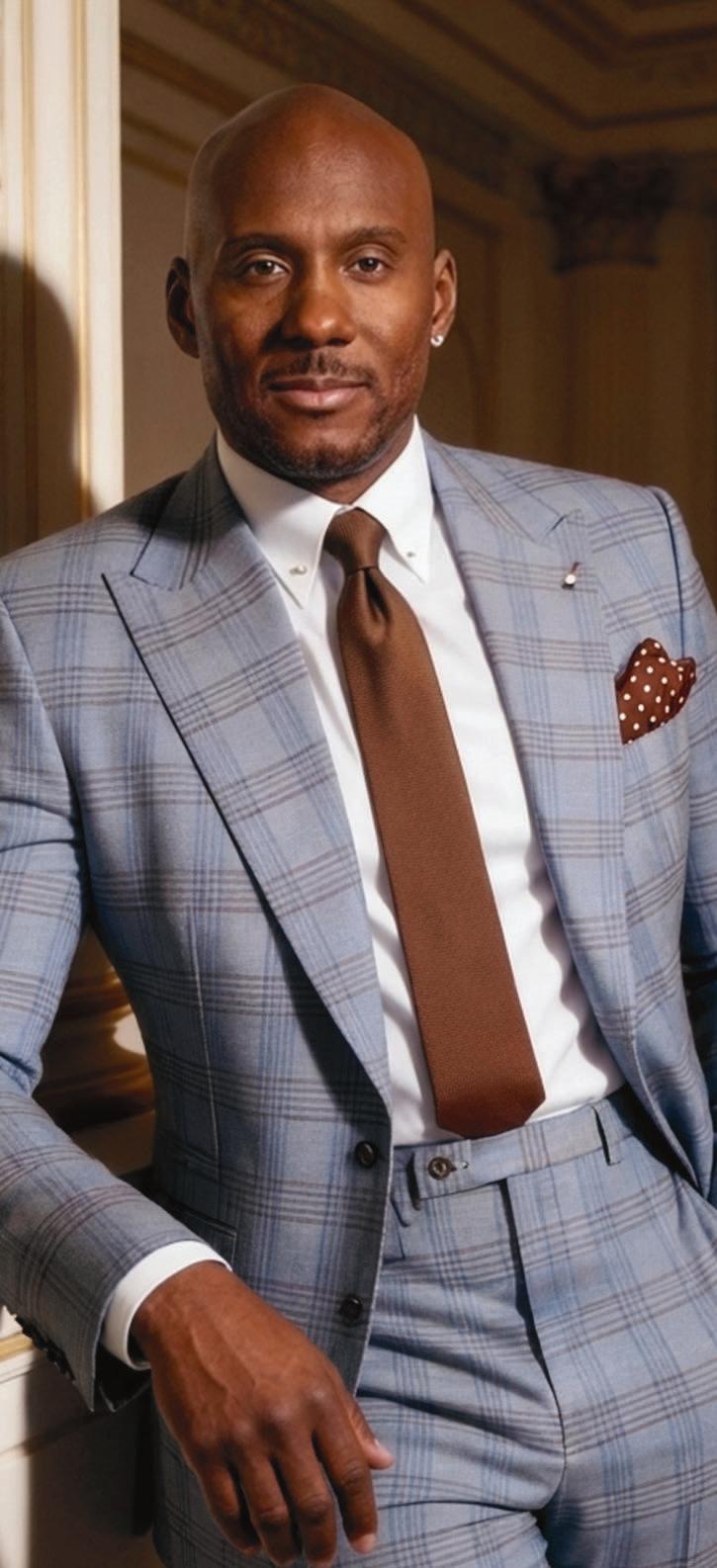
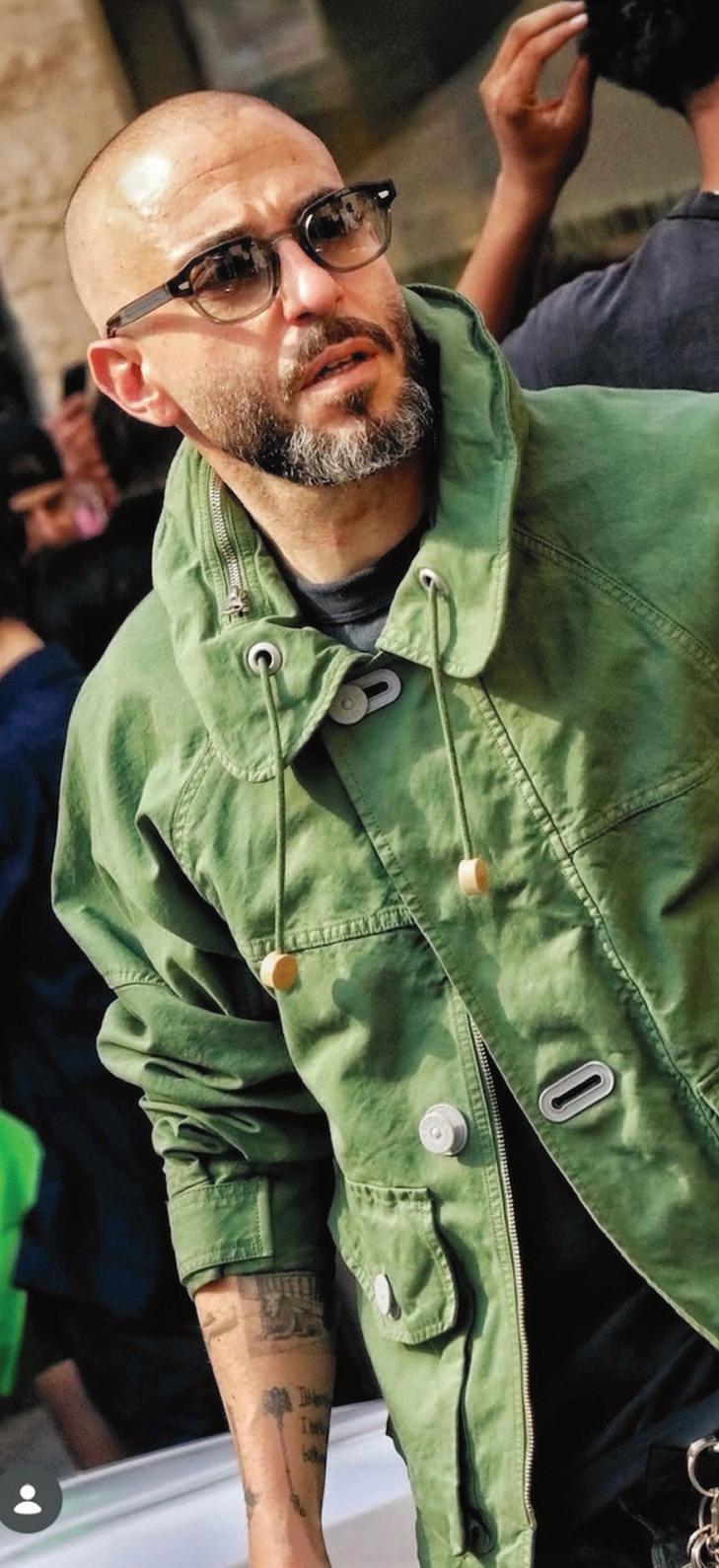
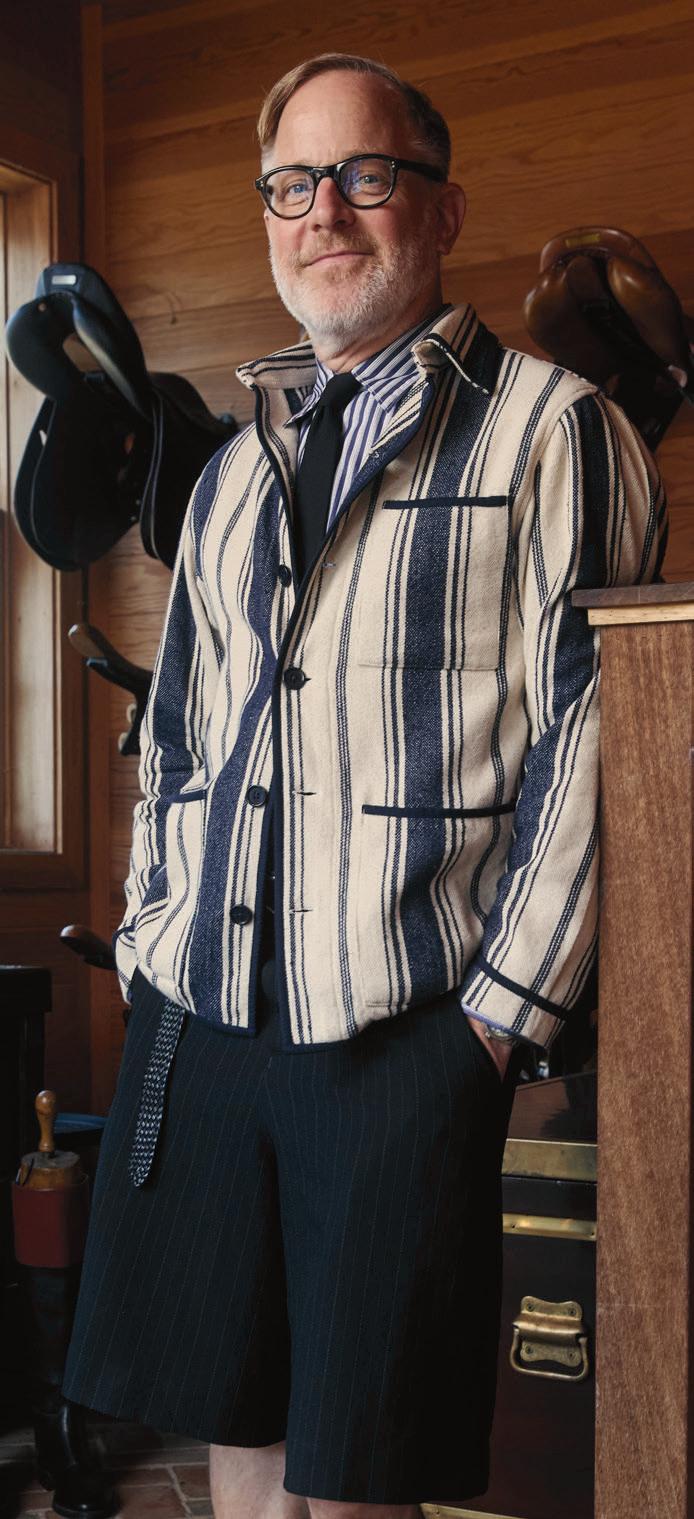
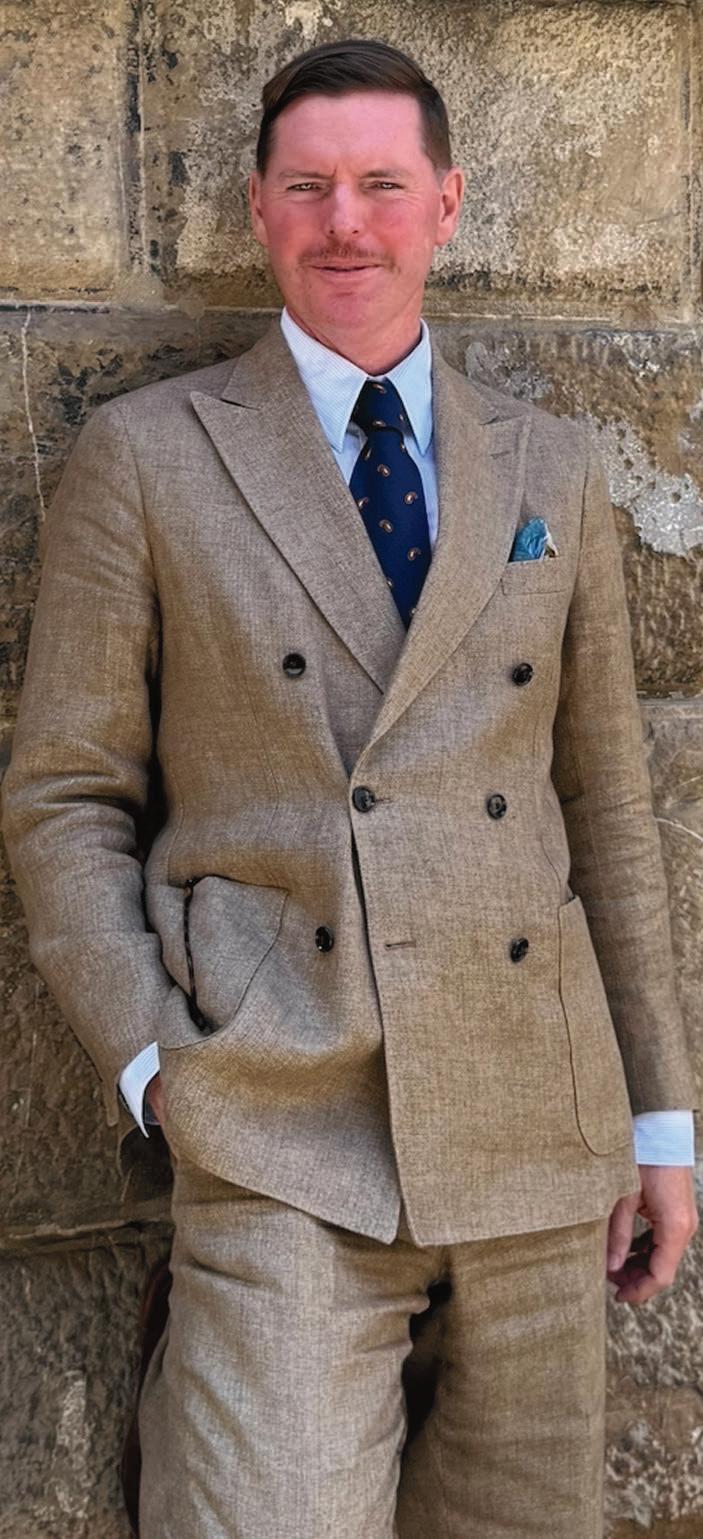
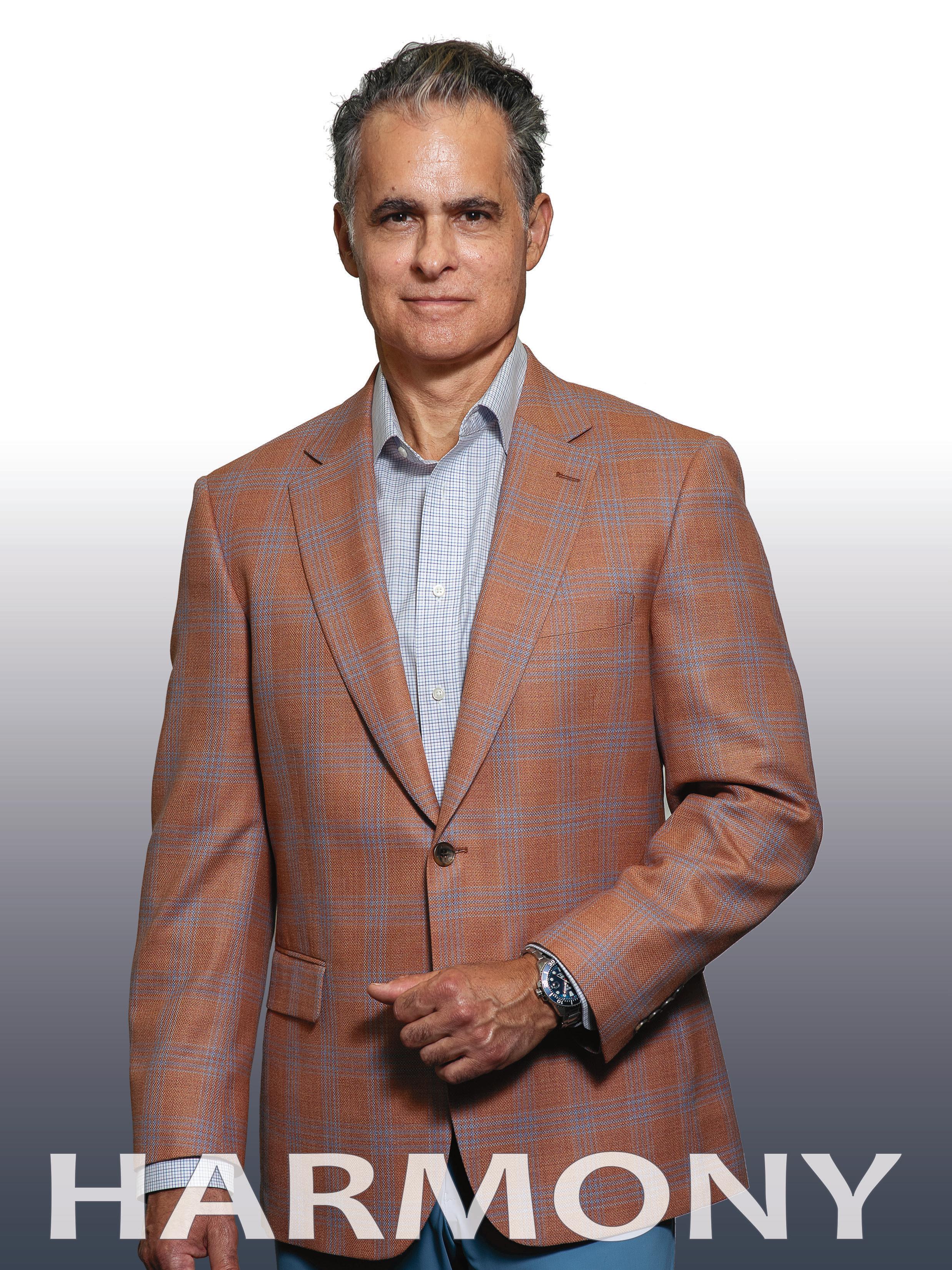
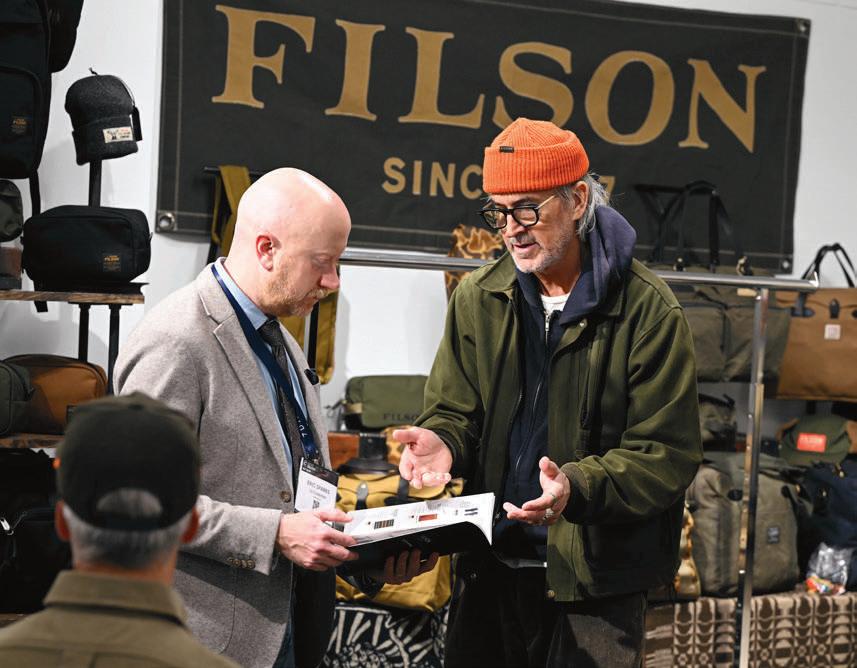
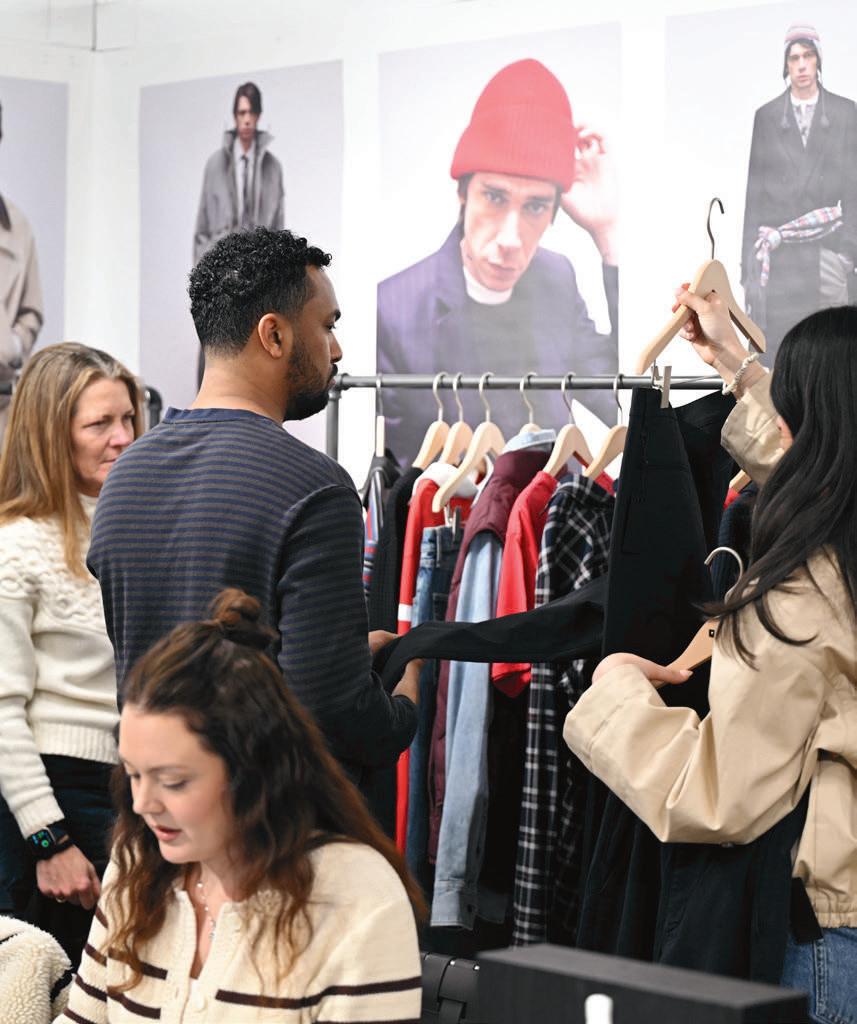
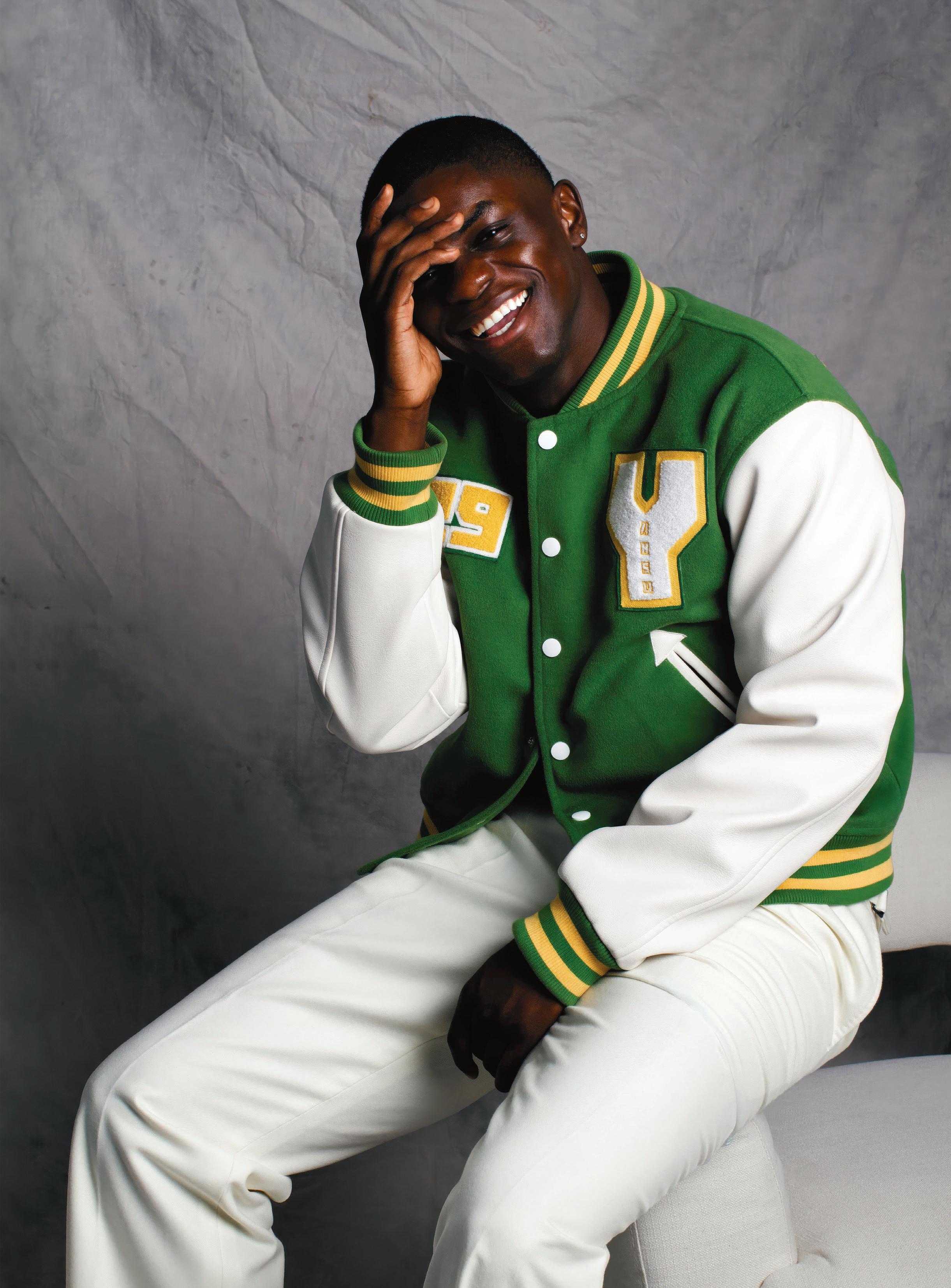
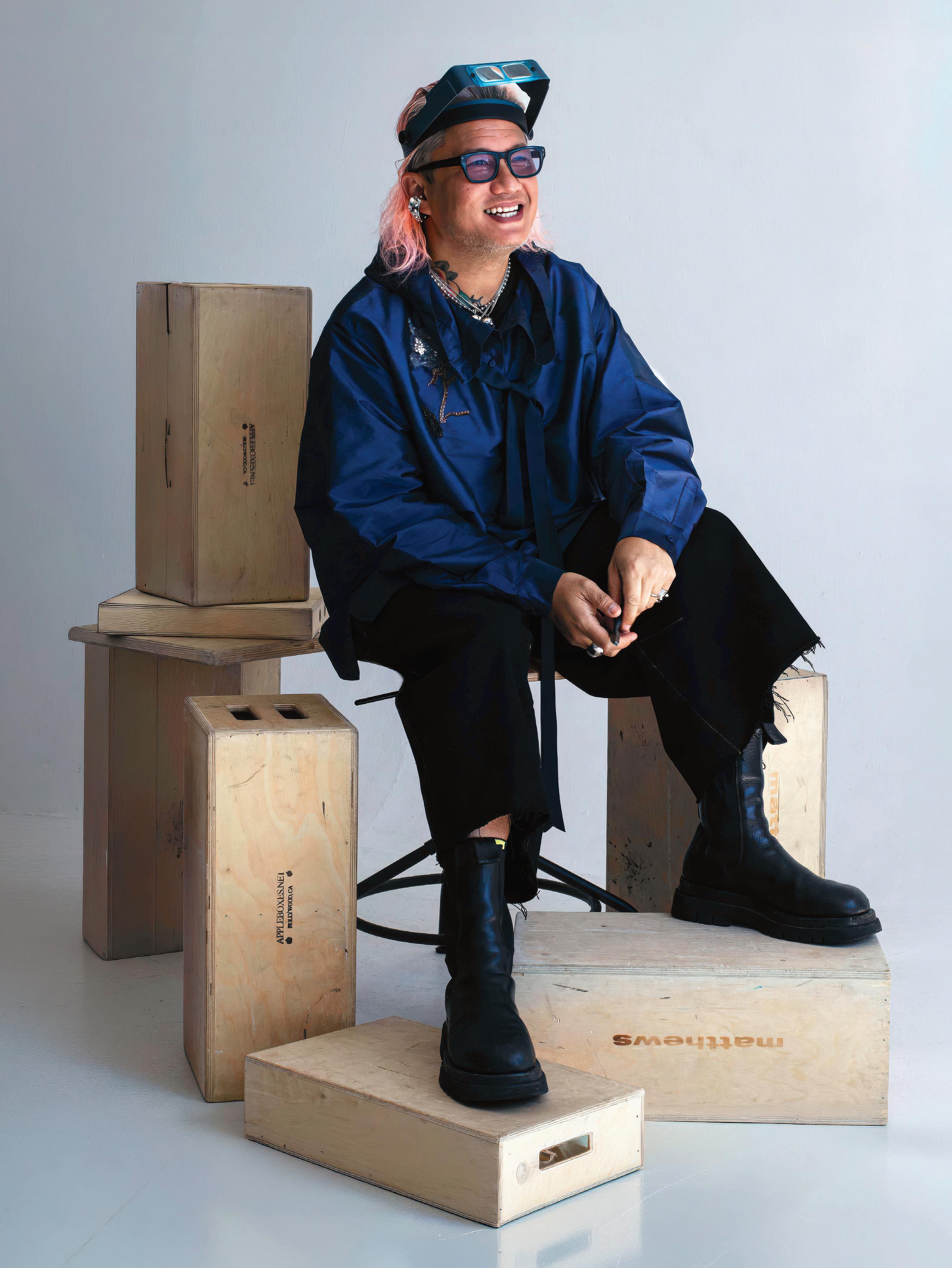
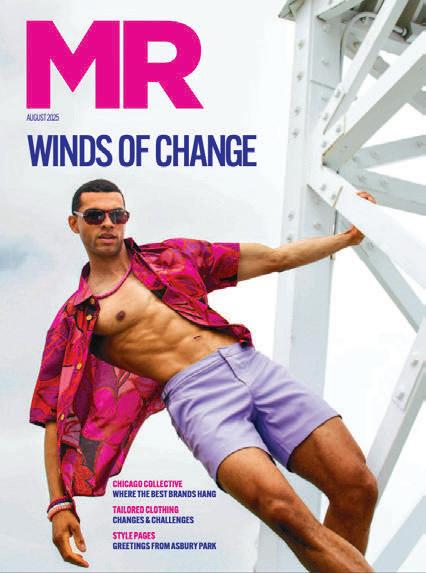
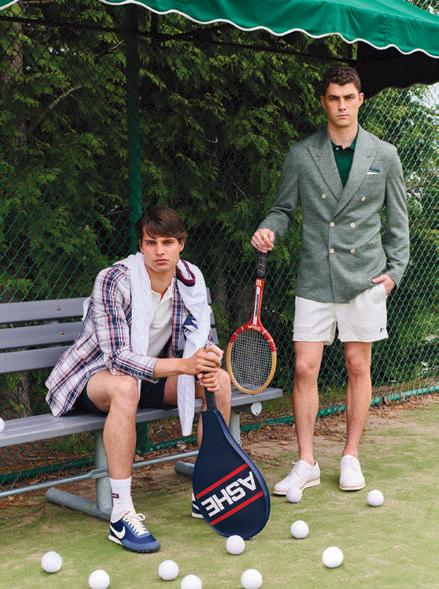
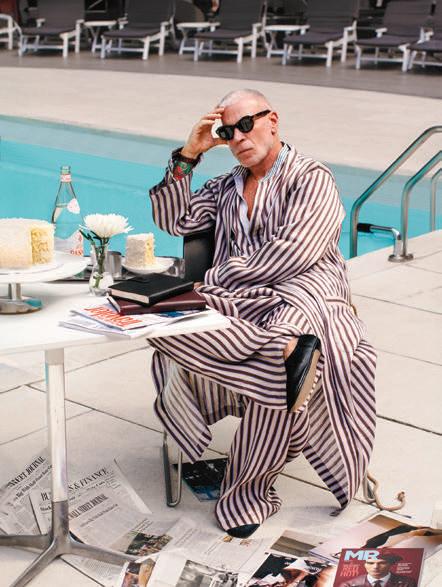
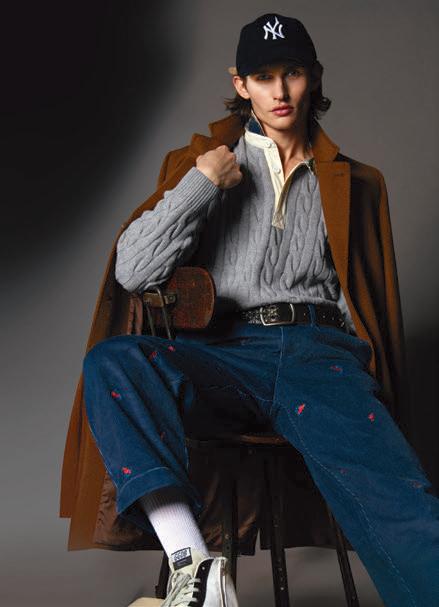
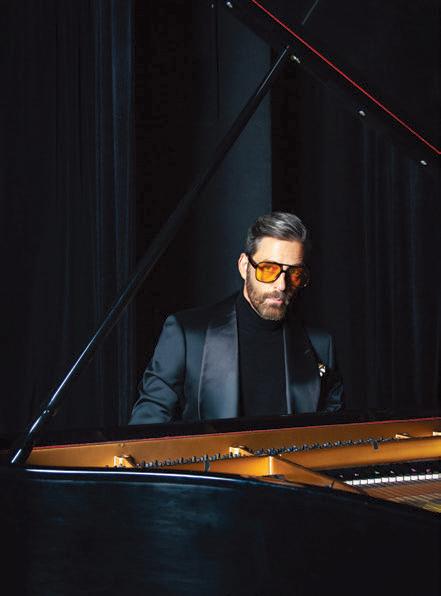
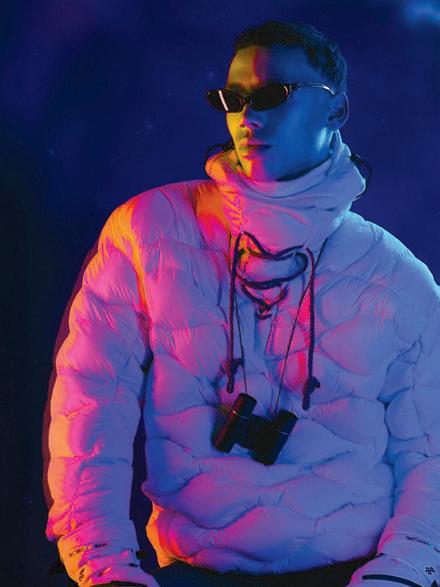
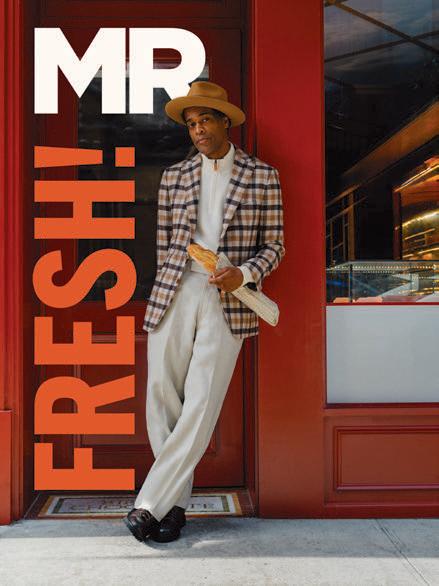
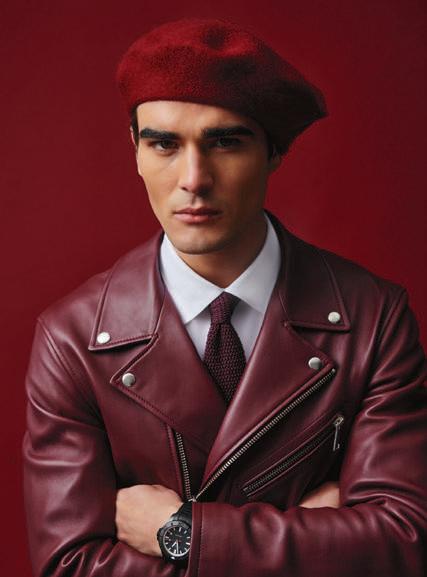
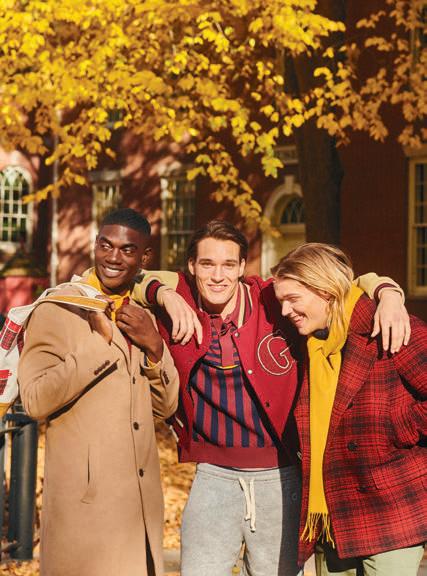
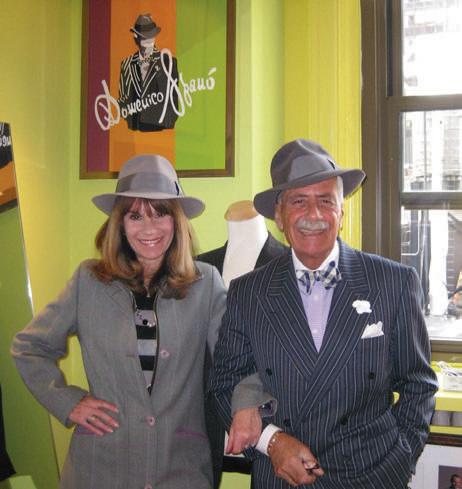
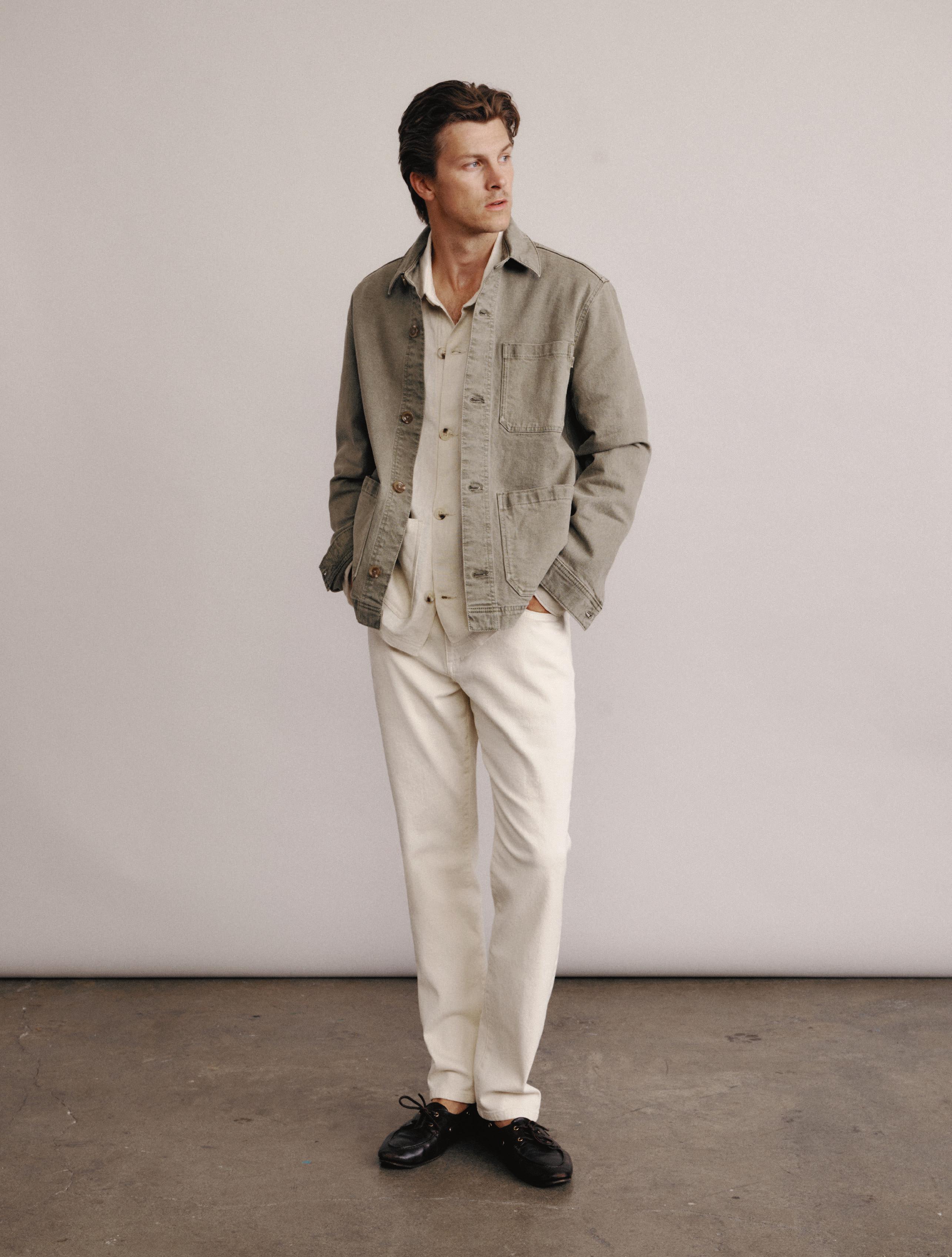
On the Cover: Shirt and Pants: Perry Ellis, Shoes: ISAIA Model: Fernando Espinal
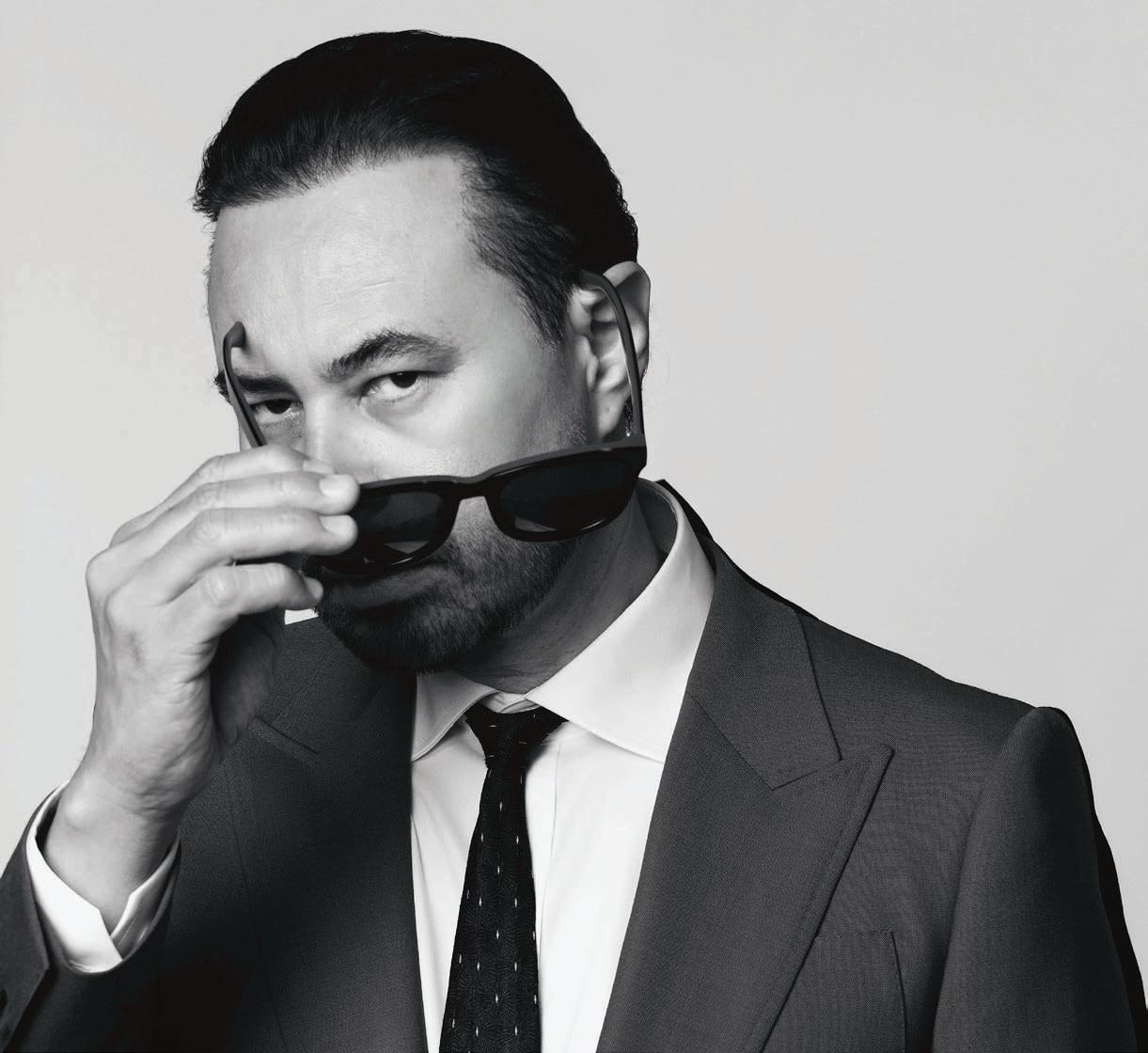
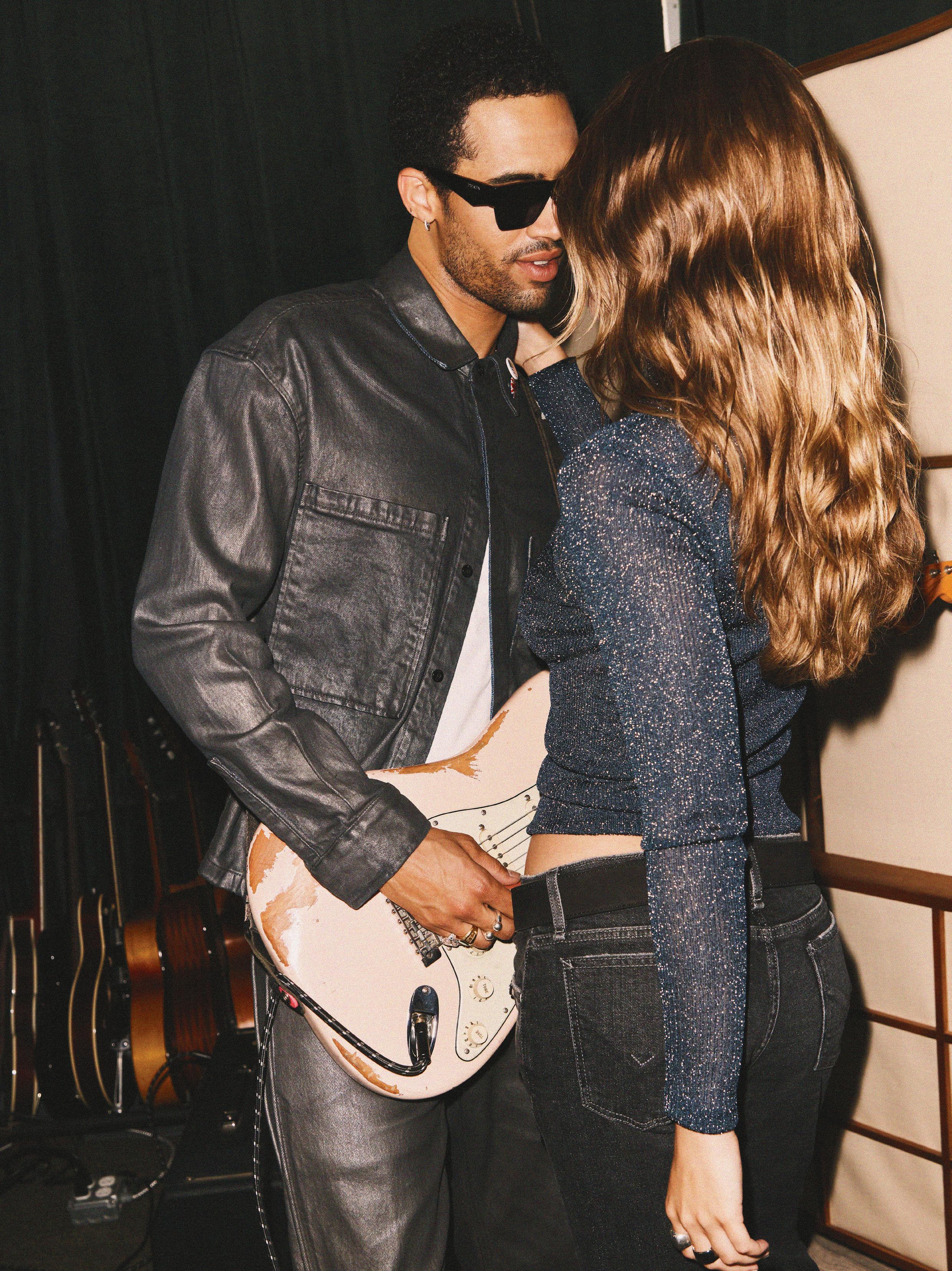
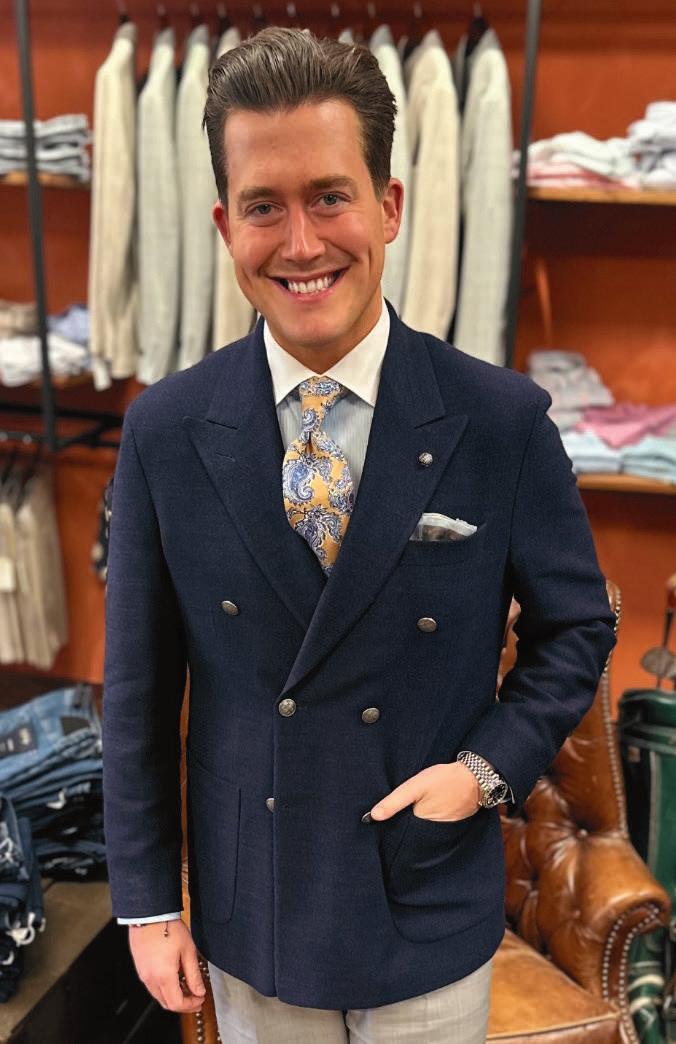
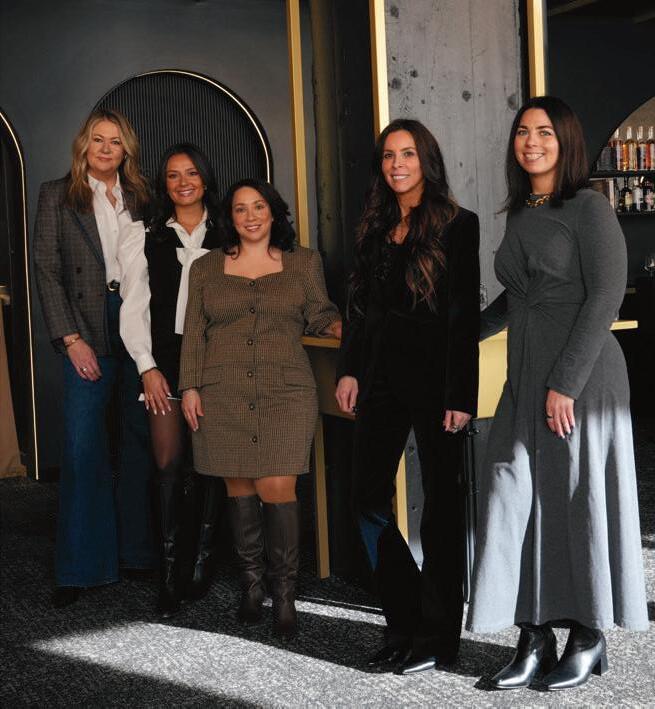
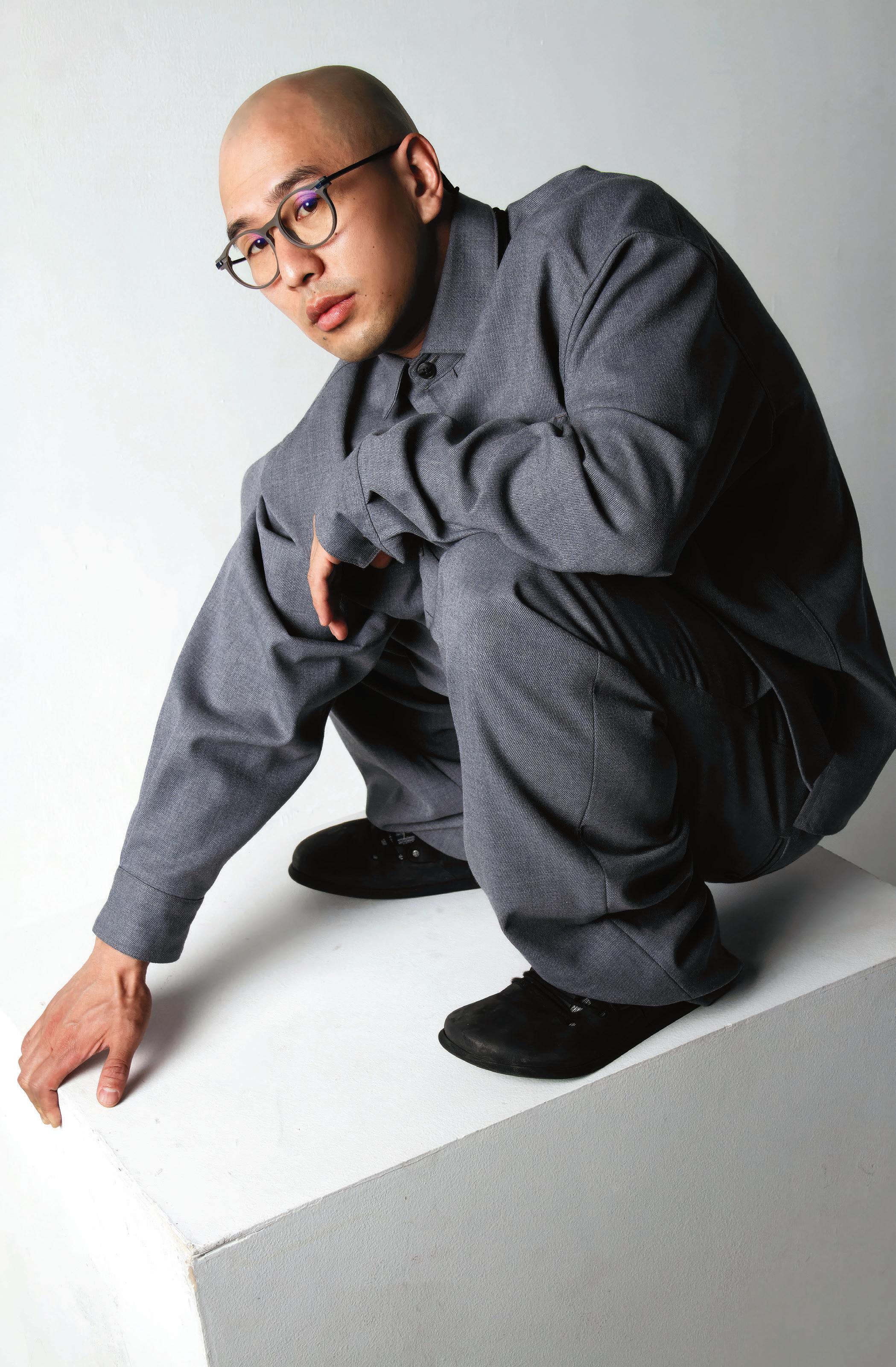
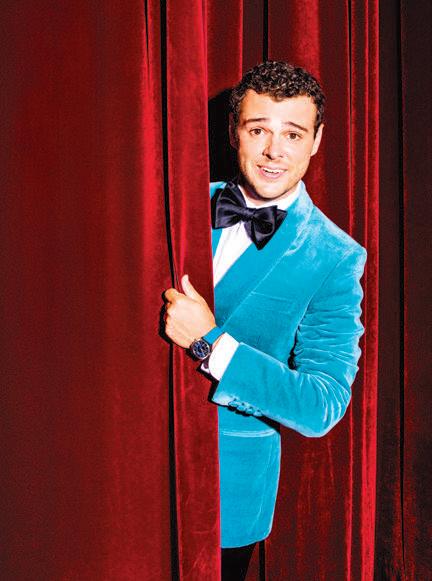
Above: Suit, Shirt & Tie: Carlos Campos Producer: Michael Fisher
Stylist: Jahn Hall Photographer: Marko Kalfa
EDITOR-IN-CHIEF KAREN ALBERG GROSSMAN
EDITORIAL DIRECTOR MICHAEL FISHER
WEB & CONTENT EDITOR BRETT EDWARD STOUT
ART DIRECTOR MIKE STEVEN FRANÇOIS
CONTRIBUTING EDITORS
CHRISTOPHER BLOMQUIST / SAMANTHA LANDE
CONTRIBUTING CREATIVE DIRECTORS
NANCY CAMPBELL / TREVETT MCCANDLISS
ADVERTISING PRODUCTION
GROUP PUBLISHER LIZETTE CHIN
PUBLISHER CHARLES GARONE
PRODUCTION MANAGER
LAURIE GUPTILL
MARKETING & PRODUCTION SPECIALIST
CATHERINE ROSARIO
OFFICE MANAGER
KRIS PEPPER
ACCOUNTING
KASIE CARLETON / URZULA JANECZKO / SCOTT KATIRACHI
EDITORIAL WAINSCOT MEDIA
CHAIRMAN CARROLL V. DOWDEN
PRESIDENT & CEO MARK DOWDEN
SENIOR VICE PRESIDENTS LIZETTE CHIN / RITA GUARNA/ ED BURNS
CHIEF FINANCIAL OFFICER/VICE PRESIDENT STEVEN RESNICK
VICE PRESIDENTS
NIGEL EDELSHAIN / THOMAS FLANNERY
NOELLE HEFFERNAN / MARIA REGAN
CORPORATE OFFICE
Who Am I?
As I approach retirement, I’m hoping to find out…
By Karen Alberg Grossman
“ To all our devoted readers who take the time to respond to our business queries and surveys, you are the force that keeps MR relevant.”
If I’m no longer Editor in Chief of MR magazine, who am I? It’s the kind of question few of us ever ask ourselves, yet at certain turning points in life, it seems worthy of investigation.
And so, 36+ years after Stu Nifoussi and I launched MR (Menswear Retailing) magazine, a then monthly publication that we hoped would compete well against Fairchild’s DNR by giving readers a more human perspective on menswear business, I find myself at a turning point. No, I’m not officially retiring as I have many more tales to tell, merchants to meet, stores around the country to visit and write about… But for the past decade, I’ve dreamed about spending more time with my five grandchildren while they’re still young enough to tolerate hanging out with their grandma. I still have many life lessons to teach them (“treat everyone you meet with kindness: you never know what hardships they’re struggling with…”), practical wisdom to impart (“if you’re invited out to lunch, never order the most expensive thing on the menu!”), and plenty of love and encouragement to spread around Rockville Maryland and Escazu Costa Rica where I hope to be spending more time.
To my current MR team: Lizette, Charles, Michael Fisher, Mike François, John Jones, Brett, Negi, Laurie, Nancy and Trevett—what a pleasure it’s been to work with such talented and genuinely nice people! You’ve become like family to me, and I hope our friendship lives on and on.
To MR’s loyal readers--retailers, manufacturers, designers, sellers, creatives of all persuasions who take the time to call or email whenever you like (or dislike) something we’ve written, how I appreciate your input, for how else would the magazine stay relevant? And to all our devoted readers who respond to my business queries and surveys, sharing facts and figures that have allowed MR to analyze the business over so many decades, how can I thank you enough? Your trust in MR has kept me involved and inspired for the past 36+ years! May you continue to share your vision in the years to come.
Finally, a big thank you to Mark and Carroll Dowden and the fabulous Wainscot team in Park Ridge NJ for creating a culture of caring, an especially tough task when teams are working from different spread-out locations. You’ve somehow figured it out and I am grateful. Look forward to seeing everyone at the always fabulous Chicago Collective show where I will be moderating a panel on Dressing the Modern Gentleman, sponsored by Gladson Ltd. and HMS Fabrics, on Monday August 3rd. Hope you can make it!
In conclusion, here’s to new beginnings, fresh ideas, enduring friendships, beautiful clothing, sharing, caring and making the most of life!
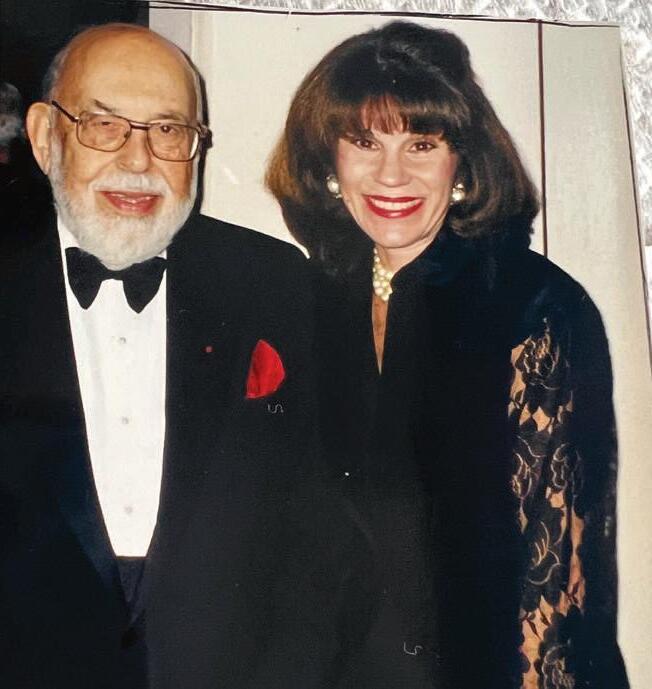
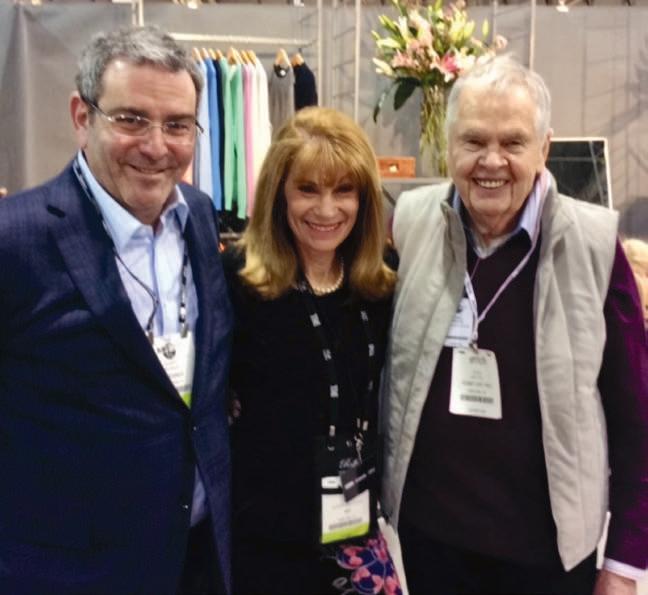
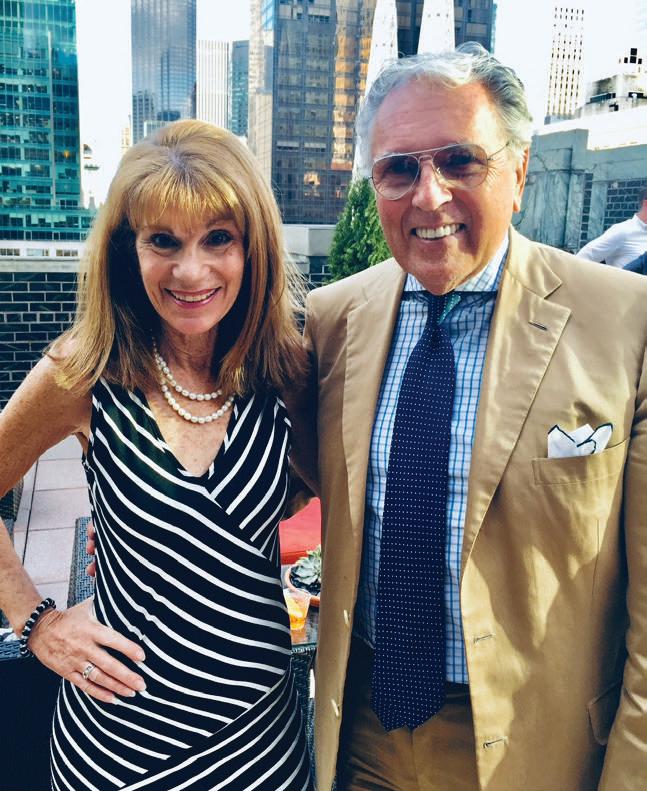
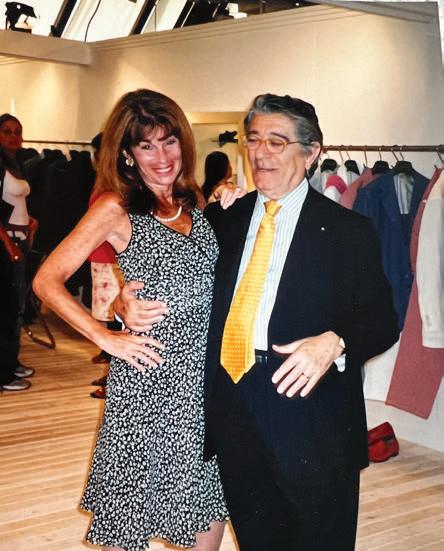
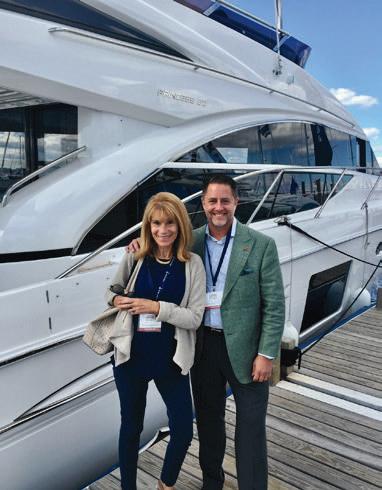
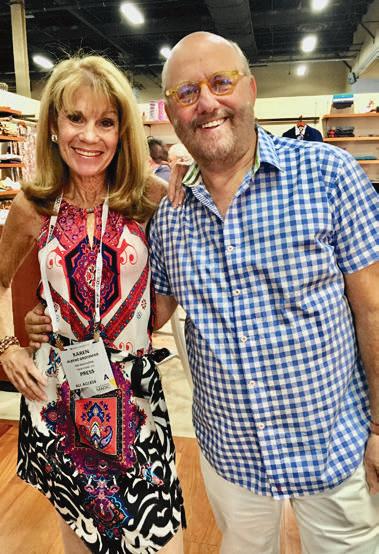
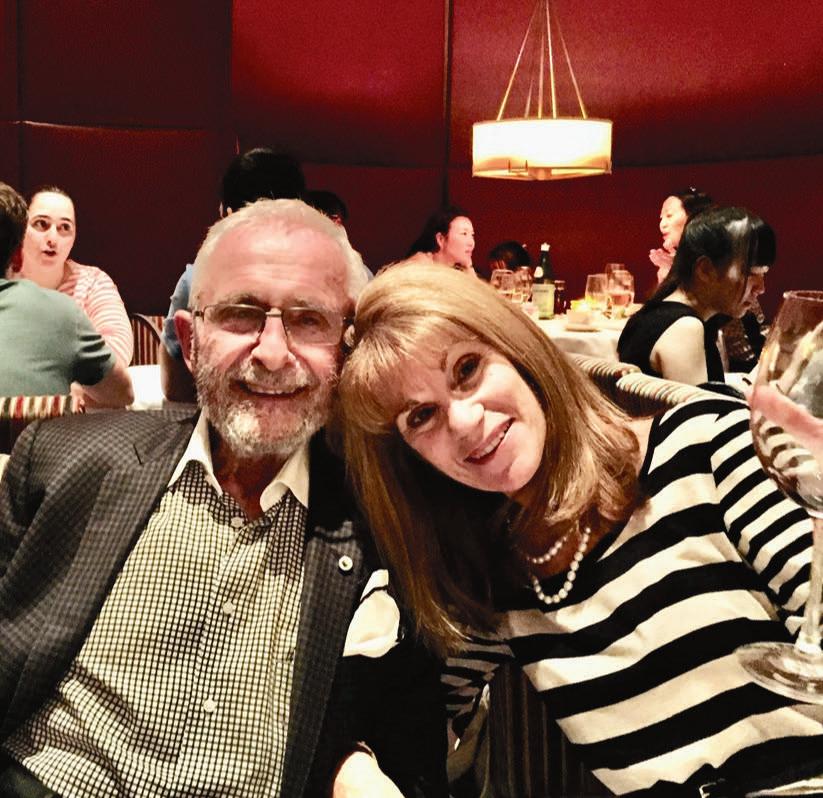
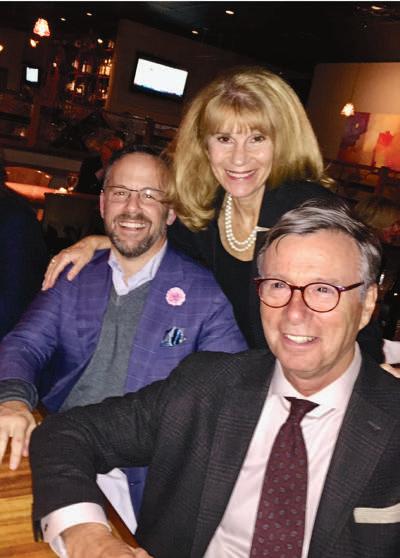
Toasting my many wonderful friends in menswear!
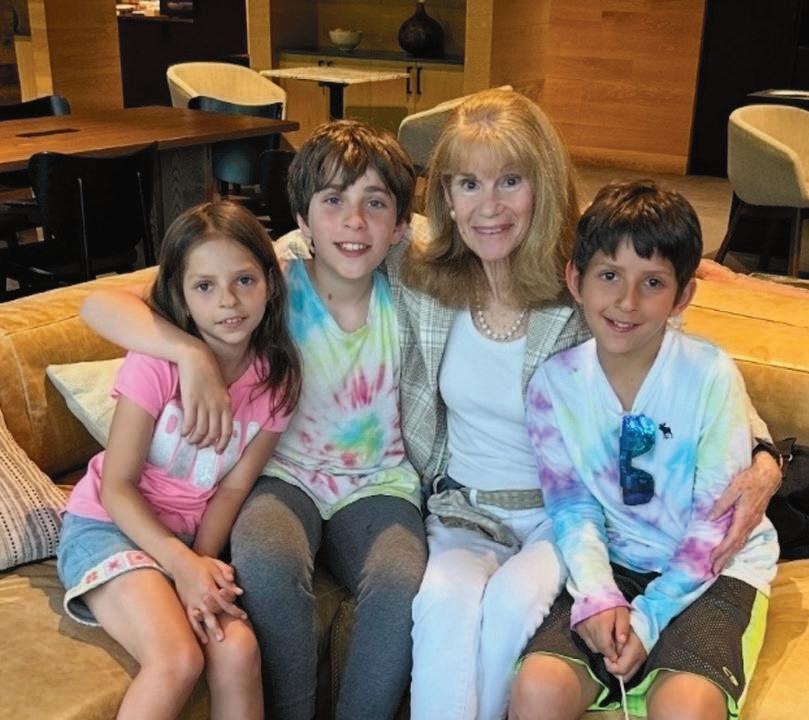
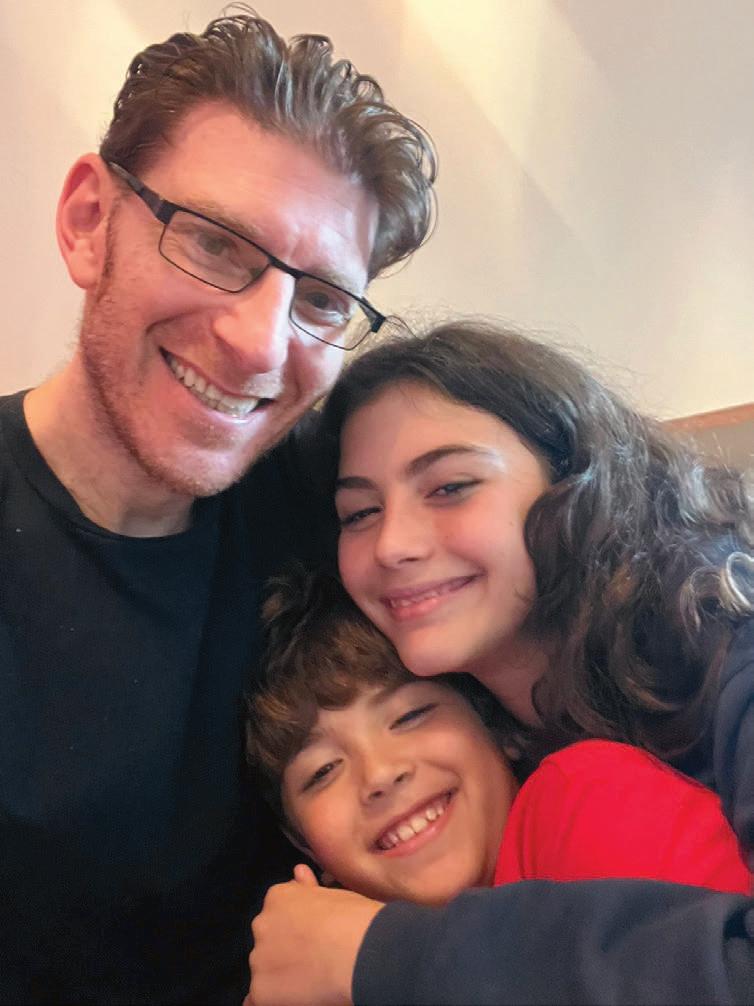
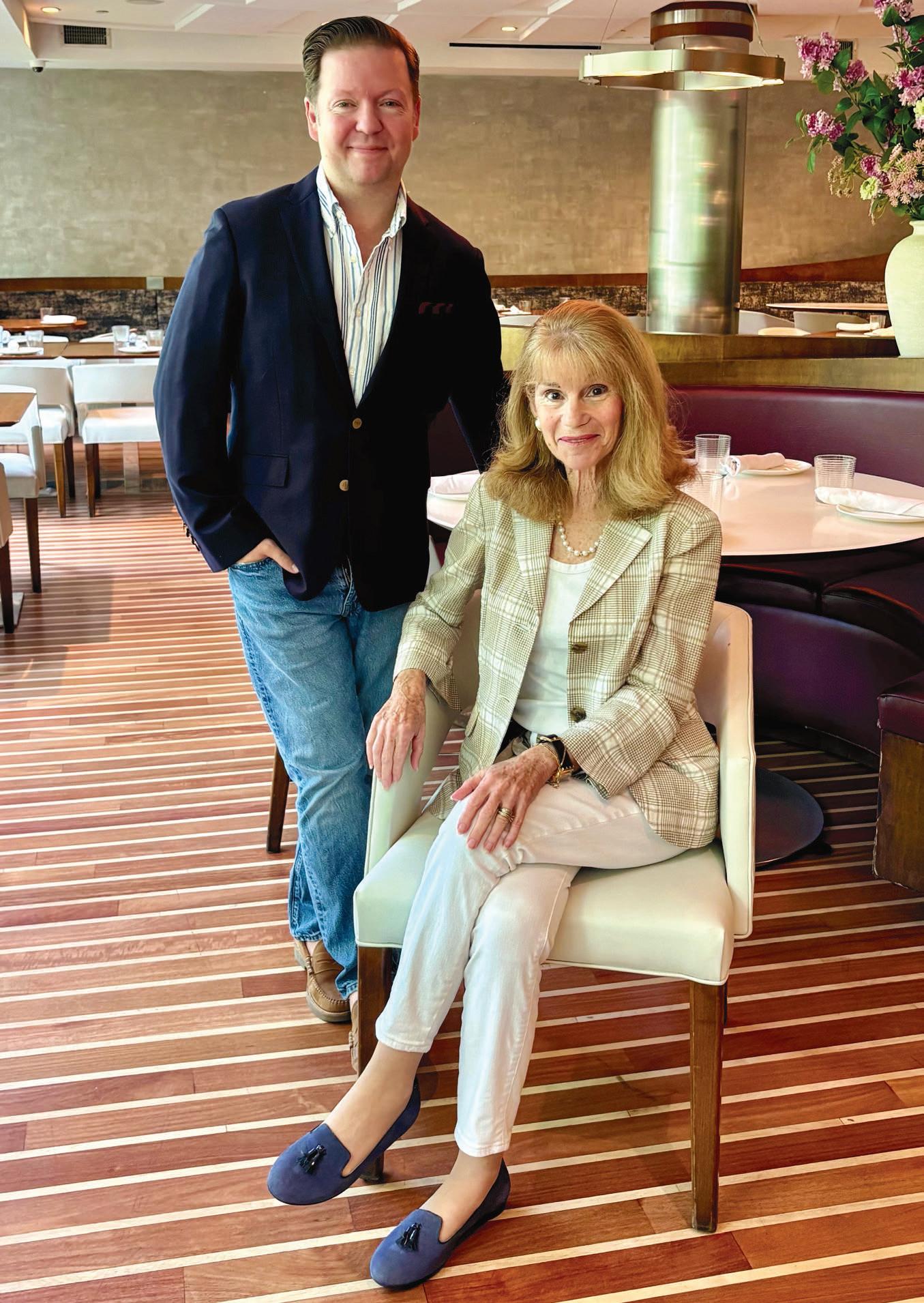
The Grossman kids from Rockville: Emma, Max, me, and Jonathan (missing Mike!)
The Grossman crew in Costa Rica: Dan, Victoria and Benjamin
jackets, chore coats, and more relaxed trousers, often finished with drawstrings or a buckle closure instead of a traditional waistband.
Shannon Stewart, EVP and Chief Merchandising Officer at Harry Rosen, pushed back a little on the premise when I put it to her. “Contemporary as a category didn’t die, it became diluted as the customer became more diverse in how he dresses and how he lives,” she said. “Today’s client isn’t defined by price point or demographic. He’s defined by his lifestyle and his personal point of view on style.”
That’s a meaningful distinction. Dead implies the customer left and isn’t coming back. Diluted implies he’s still there, just harder to merchandise toward because he no longer fits one box. And that reframe matters, because it shifts the question away from “how do we revive contemporary” and toward “how do we build an assortment flexible enough for a customer who refuses to stay in his lane.”
THE 9-TO-9 CUSTOMER, BY ANOTHER NAME
Here’s where Totolis and Stewart, despite starting from different premises, land in nearly the same place.
Totolis is describing a product solution: relaxed, heritage-coded pieces in natural fibers that read as intentional without trying hard. Stewart is describing the customer behind that demand. “At Harry Rosen, we’ve always approached assortment through the lens of occasions, dressing a man for the full range of his life, from professional to personal, formal to casual,” she said. “Sometimes those lines become blurred.”
Blurred is the operative word, and it’s the same thing I’ve been calling the 9-to-9 customer for a couple of years now: the guy whose actual day doesn’t have hard borders between work and life anymore, who goes from a stand-up meeting to his kid’s soccer game to dinner with his spouse without changing clothes, because his day never asked him to compartmentalize in the first place.
The data backs this up from the formal side too. A McKinsey study last year reporting on department stores found that even as casualwear dominates the floor, tailoring isn’t vanishing, it’s being repositioned as “smart business attire,” flexible enough to read as professional without reading as rigid or costume-y. Bloomingdale’s has reported a genuine rebound in tailored clothing tied to office attendance
ticking back up. And at Pitti Uomo and Milan menswear this season, brands from Paul Smith to Brunello Cucinelli kept circling the same question from a luxury angle, with retailers describing a recurring industry conversation around “what is luxury today?” The honest answer increasingly sounds like: clothes that don’t ask you to perform.
Stewart’s read on what that customer actually wants is the sharpest articulation of it I’ve heard: “What customers are looking for is versatility, but not just basic items. They want some unique items in their wardrobes. Pieces that have a point of view, but don’t demand that he be fashion-forward to wear them. Our client doesn’t want to disappear into the crowd, but he also wants to know he’s dressed right for the room he’s walking into.”
Read that closely, because it’s doing a lot of work. It’s not a customer who wants less. He wants pieces with a point of view, not basics, not stretch fabric in every direction, not safety. But he also doesn’t want to perform fashion-forwardness to earn the right to wear something interesting. He wants the payoff of personal style without the risk or effort traditionally required to access it.
That is, almost exactly, the gap contemporary used to occupy. The category isn’t gone. The customer just outgrew the version of it that demanded he be young, trend-literate, and willing to chase newness to belong there.
WARDROBING, NOT SELLING
Which gets at what might be the real fix, and it’s less about naming a new category than about changing the job retailers think they’re doing.
“Our role has always been wardrobing, not just selling pieces,” Stewart told me, “and that philosophy is more relevant now than ever.”
Wardrobing versus selling is the whole argument in five words. Selling assumes a customer who knows what category he’s shopping and just needs the right item in it. Wardrobing assumes a customer whose closet has to function as a single, flexible system across a day that won’t stay zoned, and treats every piece as one move in that larger system rather than a category checkbox.
That’s a genuinely different way to build a floor. Instead of a contemporary section sitting between designer and better, defined by price point, you build around versatility as the organizing principle: pieces that move between
registers, that have a point of view without demanding fashion-forwardness, that work whether he’s walking into a 9am meeting or a 9pm dinner. Whether the industry eventually settles on Totolis’s “Relaxed Heritage” or some other name for it, the underlying shift Stewart is describing, occasion-based wardrobing for a customer whose occasions no longer separate cleanly, is the same instinct from a different angle.
WHERE THIS LEAVES SPECIALTY RETAIL
So back to my original, mildly uncomfortable question. Do specialty retailers even have a contemporary floor anymore, or have we been propping up a sign over a section that quietly turned into something else years ago?
I’d argue the smarter move isn’t to defend the old definition, or even to rush toward a replacement name for its own sake. It’s to do what Stewart describes: build toward the customer’s actual life instead of a category that assumes he still lives in zones. Value is migrating from “fashion-forward” to “thoughtfully versatile.” From newness for its own sake to pieces with enough point of view, and enough flexibility, to earn their place in a closet that has to do more jobs with fewer items.
Nostalgia for what contemporary used to mean isn’t going to bring that customer back, because he’s not lost. He’s standing right in front of you, in a chore jacket, on his way from a 9 a.m. meeting to his kid’s game, wanting to know he’s dressed right for whatever room comes next. The category just hasn’t caught up to him yet.
Got a take on the contemporary void, or a name for the category that’s replacing it? I want to hear it. Email me at Michael.Fisher@wainscotmedia.com.
Les Deux
THE SHAPE OF SUITS TO COME
How softer construction, wider lapels, and a new definition of power are reshaping the suit for 2027 and beyond.
By Michael Fisher
For the better part of a decade, the power suit had a fixed address: sharp shoulders, a strong chest, a silhouette built to announce authority before a word was spoken. That suit isn’t gone. But it’s no longer the only one doing the talking.
Walk a sales floor today and you’ll find a quieter kind of confidence taking hold: jackets with less structure, softer shoulders, lapels that have crept wider, and construction that trades heft for ease. The shift away from skin-tight, heavily padded tailoring started a few years back, but by 2026 it has settled into something less like a passing
trend and more like a recalibration. The question MR put to the people building these garments wasn’t whether the suit is changing. It’s what the suit means now that it has.
THE NEW BASELINE
“At Scabal, we see the market moving toward a more nuanced balance rather than a single dominant direction,” says Craig D. Wertheim, the company’s President of Fabrics – Americas. “There’s a clear shift toward softer construction and ease, but not at the expense of structure or elegance.”
TailoRED
Not everyone is ceding ground on structure, and that dissent is worth noting. Chris S. Brueckner, President of Sales at Oxxford Clothes, draws a sharp line between sport coats and suits. “Regarding the ‘relaxed but intentional’ aesthetic, this direction has primarily applied to sport coats for some time and is expected to continue,” he says. “In contrast, our suits are trending toward greater structure and formality.” Oxxford has seen a strong revival of the traditional power suit over the past eighteen months in navy, grey, sharkskin, and subtle pinstripes, with peak lapels, ticket pockets, and double-breasted silhouettes all gaining ground. The lesson: softness is winning the room, but it hasn’t won unanimously, and the category may be splitting by garment type as much as by customer type.
THE CONSTRUCTION CONVERSATION RETAILERS NEED TO HAVE
If there’s a single idea retailers should walk away from this story with, it’s this: less structure is not less value, and the trade has a real education gap to close.
“There’s still a perception gap at the consumer level, where lighter garments can sometimes be misinterpreted as less valuable,” Torello-Viera says. “In reality, deconstructed tailoring often requires more technical expertise, skills and higher-quality materials to perform properly.” The retailers who succeed, he adds, are the ones who can speak fluently to what’s actually happening inside the jacket: the role of canvas, cloth, and craftsmanship in building something that’s simultaneously lighter and more sophisticated.
Spano agrees the gap is real, though he sees it closing. “From a consumer perspective, ‘less structure’ can still be misread as ‘less product,’ especially when the tactile cues people historically associated with value, heaviness, padding, rigidity, are no longer present.” His prescription isn’t a lecture on canvas construction. It’s a sequence. Start with experience: how the garment moves, how it sits, how it ages. Then translate construction into function: half-canvas or fully unconstructed isn’t a reduction, it’s what lets the jacket breathe and conform to the wearer rather than holding a fixed shape. Finally, anchor the pitch in longevity rather
than visible complexity. “True value is not in how much structure you see, but in how intelligently the garment is built and how it performs over years of wear,” he says. When a customer asks why an unstructured jacket costs what it does, Spano’s answer is built for the floor, not the workshop: “This jacket is designed to disappear on the body. You’re paying for how it wears over time, not how heavily it’s built.”
Torello-Viera makes a similar case for shifting the conversation away from weight entirely.
“The value lies in the unseen details. The internal architecture, the quality of the fabric, and the expertise behind the build,” he says.
Condon offers maybe the sharpest version of the argument, borrowed from a mentor early in her career: “You cannot hide any sloppy work in an unconstructed garment the way that you could in a fully lined garment.” Every seam shows. Samuelsohn’s entire collection, including its featherlight Super Canvas jacket, is still built on a full canvas. Proof, in her view, that lightness and quality were never in conflict to begin with.
Brueckner’s read on the value question comes from the other direction, but lands
Scabal
in a similar place. Oxxford builds exclusively with full canvas, with a lighter-weight canvas and shoulder option for customers who want a softer line, and the result, hand-padded lapels included, is what justifies a retail price of $3,500 and up for a sport coat. The construction story, in other words, doesn’t disappear when the silhouette firms back up. It just gets told in the other direction.
ADAPTABLE, BUT NOT ABSTRACT
The idea that one suit should move seamlessly from boardroom to dinner to weekend has become close to a marketing cliché. The brands MR spoke with largely believe it, with an asterisk.
“The ‘one suit, multiple lives’ idea has definitely become part of the language around tailoring, but consumer behavior is still more nuanced,” Spano says. Most customers, he notes, don’t buy on abstract versatility. They buy for a wedding, a job, a trip. What’s changed is what happens after the purchase. “Once they own it, their expectation of how it performs has expanded. So versatility is less the trigger for purchase, and more the justification after the fact.”
He traces the deeper shift to blurred occasions rather than a change in shopping psychology. “Post-pandemic, the biggest shift hasn’t been that people stopped dressing for occasions. It’s that occasions themselves have blurred.” The customer who built a segmented wardrobe of work suits, event suits, and seasonal pieces in 2019 is, today, buying fewer suits and asking more of each one.
Condon sees that elasticity showing up as enthusiasm rather than obligation. “The mentality is no longer hinged to boardroom only,” she says. “It’s not so much bound to just business, but more lifestyle… Men who are dressing up are truly enjoying the experience of it all.” Samuelsohn sees that energy concentrated in its made-to-measure business, and in a near-total absence of price resistance for elevated fabrics, Super 160s and 180s wools, naturally pigmented linen blends, when a customer wants something special.
Oxxford’s customer base complicates the versatility narrative on purpose. “The Oxxford customer purchases with purpose, selecting garments for specific occasions,” Brueckner says, pointing to a linen suit for a beach wedding or
and the right fabric, not the architecture built into the jacket.
Spano frames the shift as a change in the question itself. “The question is no longer ‘how strong does this look?’ but ‘how aligned does this feel with the person wearing it.’” Where the classic power suit relied on sharp shoulders and heavy canvassing, today’s version leans on proportion and fabric intelligence: still tailored, but no longer defensive. “It’s about restraint, balance, and intention, knowing when to structure and when to let go of it.”
Condon’s version makes room for both temperaments at once. A man in a dark, dressy pinstripe double-breasted suit in a knockout fabric and a man in a bright plaid tropical-weight suit with an unconstructed jacket and pleated trouser, she says, “both scream power suit to me.” The common denominator isn’t the cut. It’s the wearer’s certainty in it.
Orwig sees the same occasion-driven buying habit, but adds a layer the others didn’t raise: performance has quietly become a baseline expectation rather than a selling point. “Consumers still purchase tailored clothing for specific occasions, but they’re increasingly expecting those pieces to work across multiple settings, making versatility a key driver of the category, especially within suit separates,” he says. The stretch and comfort features that brands marketed aggressively in the years after the pandemic haven’t gone away. They’ve simply stopped being news. “As those benefits have become standard, we’re seeing customers gravitate back toward refined, heritage-inspired tailoring that delivers timeless style without sacrificing comfort.”
a commanding suit for the boardroom. “Our clients prioritize building a versatile wardrobe of occasion-appropriate pieces rather than relying on a single garment for every situation.” Versatility, in this telling, lives in the closet, not in any single jacket.
SO WHAT IS A POWER SUIT NOW?
Ask five people in tailored clothing to define a power suit in 2026, and you’ll get five answers that disagree on the details and agree on the premise: it’s no longer about the shoulder.
“The definition of a power suit has evolved,” Wertheim says. “Today, it’s less about rigidity and formality, and more about confidence and authenticity. A modern power suit reflects personal style while maintaining a sense of polish and intention.” At Scabal, he adds, power is the confidence that comes from craftsmanship, fit,
Brueckner’s data points the other way, at least for Oxxford’s customer: a genuine, eighteen-month revival of the traditional power suit, peak lapels and double-breasted silhouettes included, sold to a man who still wants the room to register what he’s wearing the moment he walks in.
Orwig’s read splits the difference, and may be the most useful definition for a retailer trying to sell to both customers at once. “The power suit will always symbolize confidence and presence, but today those qualities are no longer defined solely by rigid structure or formality,” he says. The customer still wants tailoring to do the work of projecting confidence. He just wants it to travel further than a single room. “In 2026, the power suit isn’t just about commanding a room. It’s about feeling confident wherever the day takes you.”
Maybe that’s the real answer to where the silhouette is headed: not toward one shape, but toward two coexisting definitions of power that no longer pretend to be the same thing. One is quiet, lifestyle-fluent, and built to disappear on the body. The other is exactly as loud as it always was. The interesting story for 2027 and beyond isn’t which one wins. It’s that the welldressed man finally gets to choose where, and how often, he wants his suit to speak for him.
Boglioli
DENIM’S IDENTITY CRISIS
After several seasons of ballooning denim, the trend pendulum appears to be swinging back towards either a straight fit, or in some cases, even a skinny redux.
By Christopher Blomquist
WHAT A DIFFERENCE TWO YEARS CAN MAKE.
On March 3, 2024, The New York Times ran a Sunday Magazine cover story titled “Why Are Pants So Big (Again)?” Style reporter Jonah Weiner traced the shift from skinny to wide, writing that by 2020, jeans had “showed symptoms of acute-onset elephantiasis.”
In June 2026, the Gray Lady noted a similar shift at Prada’s Spring/Summer 2027 menswear show in Milan, where co-creative directors Miuccia Prada and Raf Simons sent a brigade of models down the runway in super-slim jeans across a wide range of colors. Jacob Gallagher wrote that the silhouettes were “tight. Tiny. Maybe too calibrated for this Ozempic moment,” calling it a new extreme for the brand.
So, is denim history on the verge of repeating itself, swinging from one extreme silhouette (baggy) to another (skinny)? Most denim retailers and manufacturers MR spoke to do not think so, and believe the real go-to for guys in 2026 is a cut that’s somewhere in the middle.
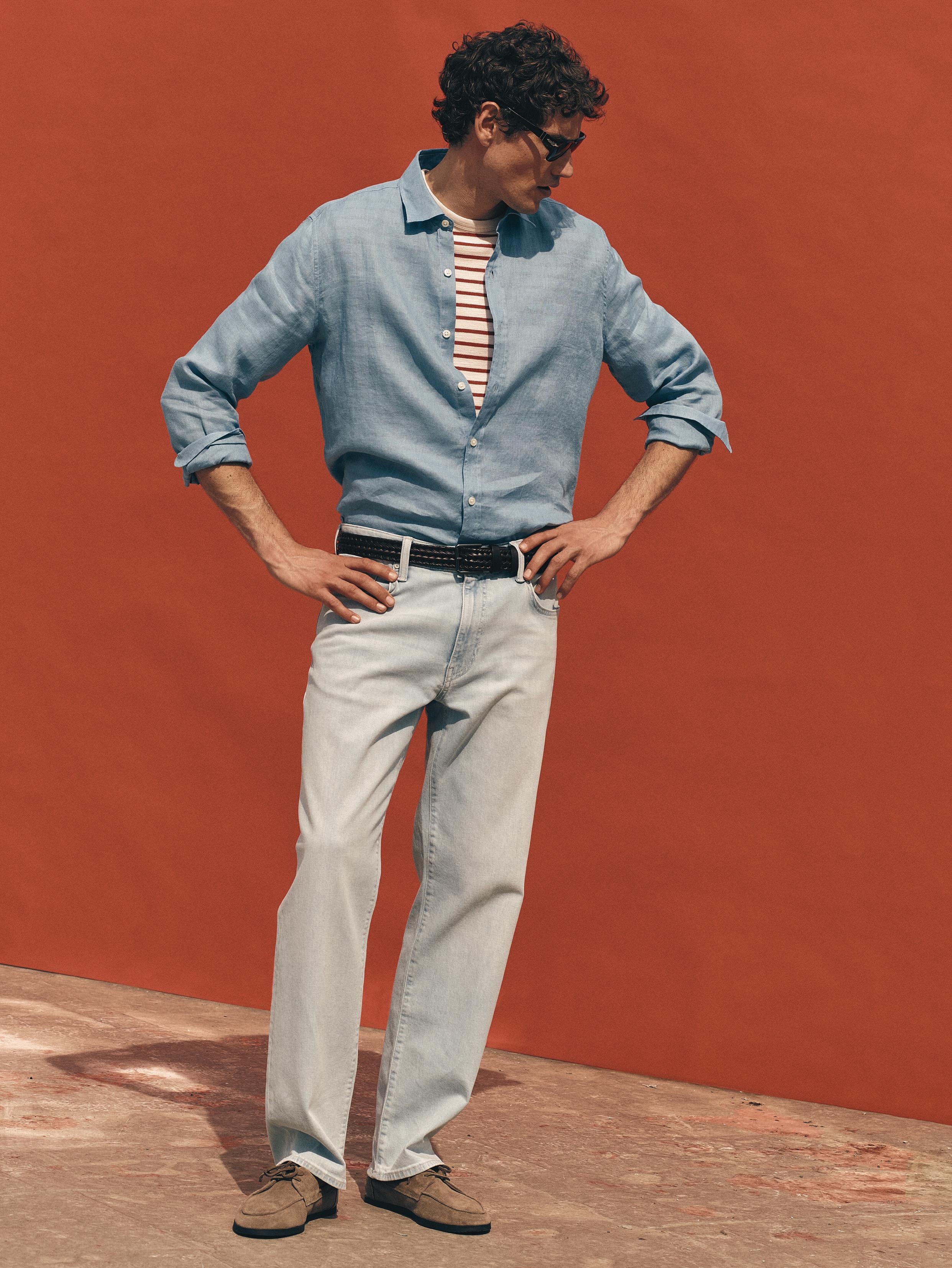
As Volkan Ureten, SVP of sales at denim brand 34 Heritage, puts it, “Are the days of wide fits numbered? We wouldn’t say they’re dead, but they’re growing up. The market is finding a much more elegant middle ground: clean, well-proportioned silhouettes that give you room to move but still respect great tailoring and sharp lines.”
For Roger Stevens, who runs the multibrand denim store City Workshop Men’s Supply Co. in Maplewood, NJ, with his wife Josefina Ruiz, “taper” is the magic word. “The Classic Taper fit, with room in the top block and a slight taper starting at the knee, is the sweet spot,” he explains. A bestseller in the category is Freenote Cloth’s Portola fit, and “Relaxed
Taper” overlaps, offering more room in the top block and thighs for guys concerned about their midsection.
Jess Butters, senior buyer at the 51-year-old denim emporium Over The Rainbow in Toronto, is also a proponent of tapered jeans. “Slim straight, straight and athletic tapers make up the bulk of our business, a nice middle ground for our customer,” she says. “We’ve seen an uptick in wider silhouettes, but no return to the skinny jean, and don’t foresee changing our mix.”
Adds Over The Rainbow’s founder-owner Joel Carman: “The baggy trend has been a demographic trend: younger and more urban. My customer, a younger urban professional, has tended to go more straight leg, athletic straight or relaxed slim. We stock 150 styles and carry a wide range of washes and fits because of our age demographic. Guys come in thinking they want a looser fit, but once they try on several, straight or slim usually wins out because it’s more flattering and versatile.”
Christine Rucci, a longtime denim designer who runs the consultancy Godmother NYC, points to two more trends: relaxed legs and a return to 100% cotton. “There’s a shift toward slimmer fits, specifically a relaxed leg,” she says. “My client Raimundo Langlois’ current bestseller is the Low Rise Relaxed Boot: alpha sized, lowered rise, comfortable through the thigh and leg, in 100% cotton, which is currently lacking in the market. ‘Slim Straight’ is a more accurate descriptor than ‘skinny,’ since skinny jeans are almost always stretch and offered in the same ill-fitting silhouette for years, too tight and flattening to the derriere. It comes down to the pitch of the jean and the shape of the rise.”
Rucci also predicts more natural fibers in 14 oz weights and up, crosshatch textures, clean dark resin rinses, and 1980s-inspired lighter indigo washes.
Benjamine Nwaodu Tärk, commercial and product manager at the Scandinavian denim brand Saburo Jeans, sees jeans’ current “shape shift” as two types of consumers swapping signature looks. “The everyday customer is trying roomier silhouettes, while the fashion-driven customer moves away from oversized looks toward cleaner, straighter proportions,” he explains.
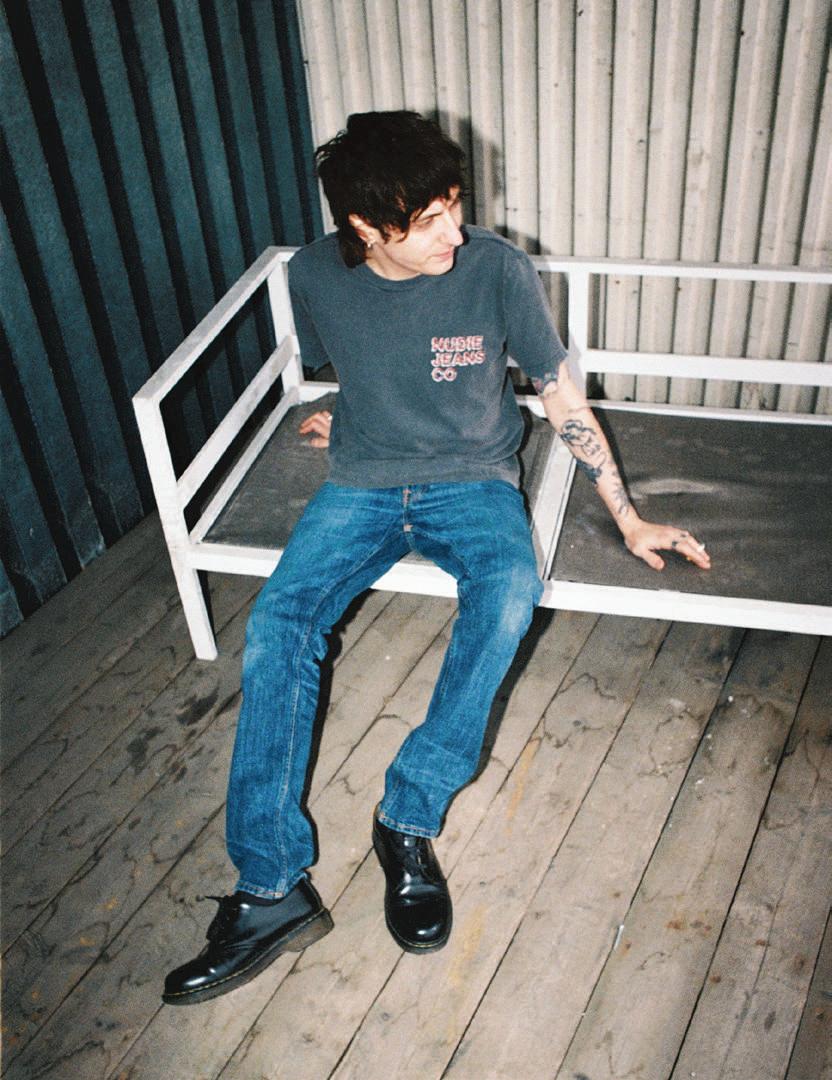
In the end, some say the secret to success will be to offer a wide selection of styles. “Rather than the market moving entirely back toward slimmer fits or further into oversized silhouettes, we believe the future is about choice,” notes Matt Garcia of Blackwatch Agency, distributor of Nudie Jeans. “Consumers are becoming more confident wearing different fits depending on personal style, occasion or mood. We expect slim, straight, relaxed and wide fits to continue coexisting, allowing retailers to build assortments that appeal to a broader range of customers.”
Nudie Jeans
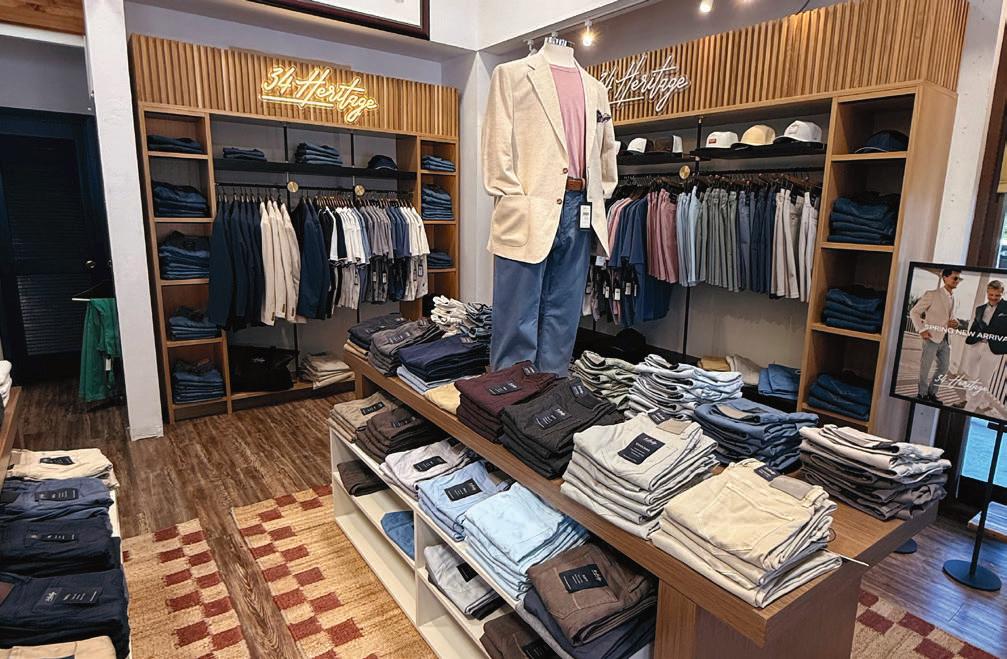
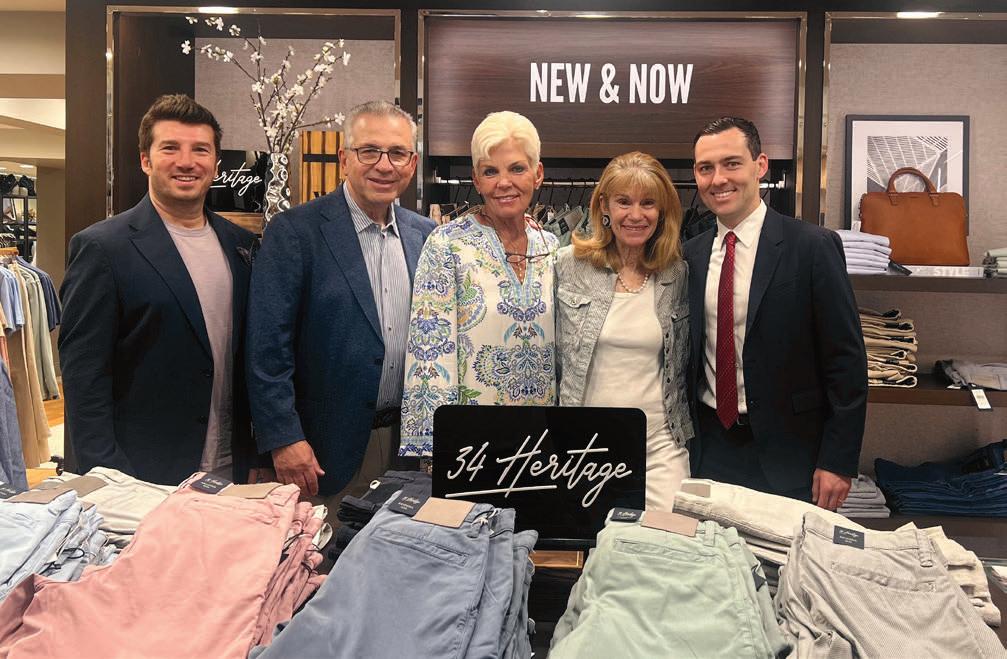
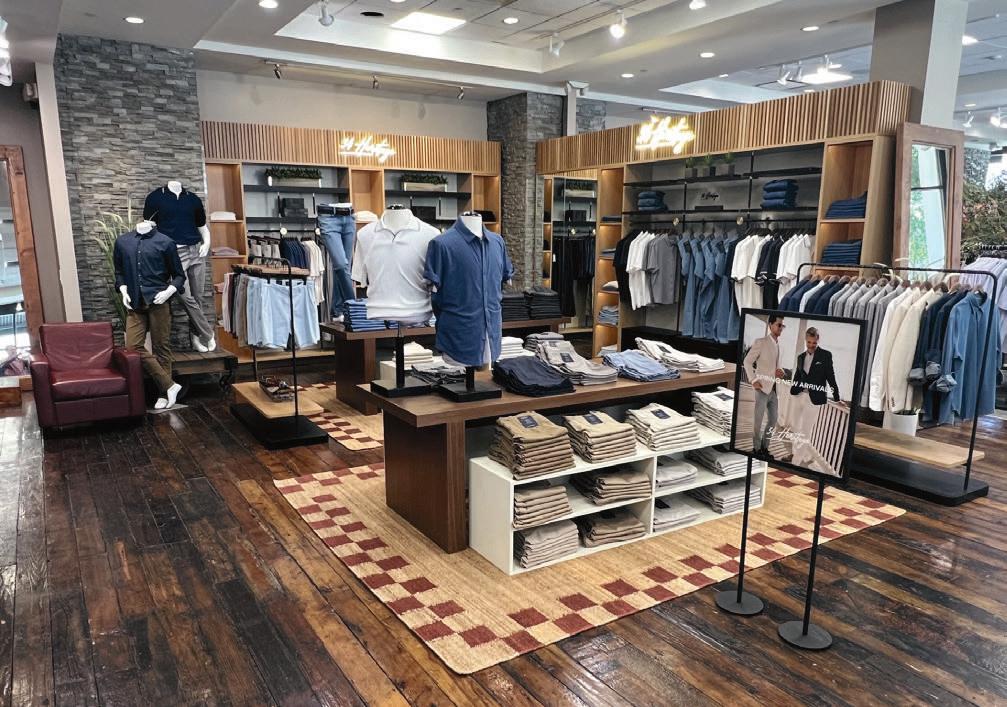
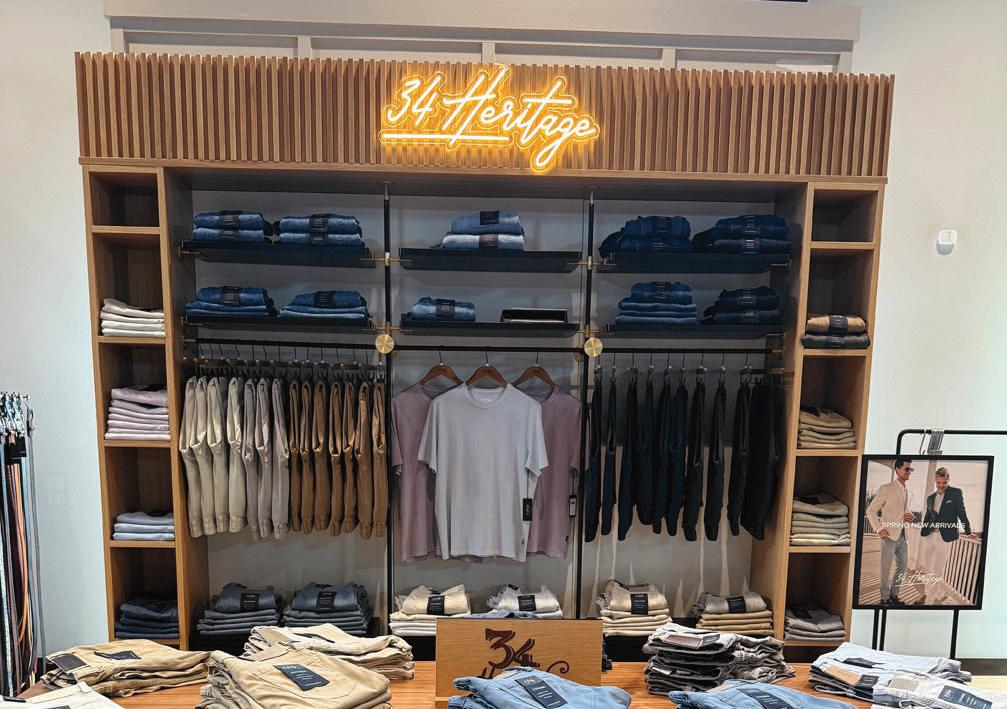
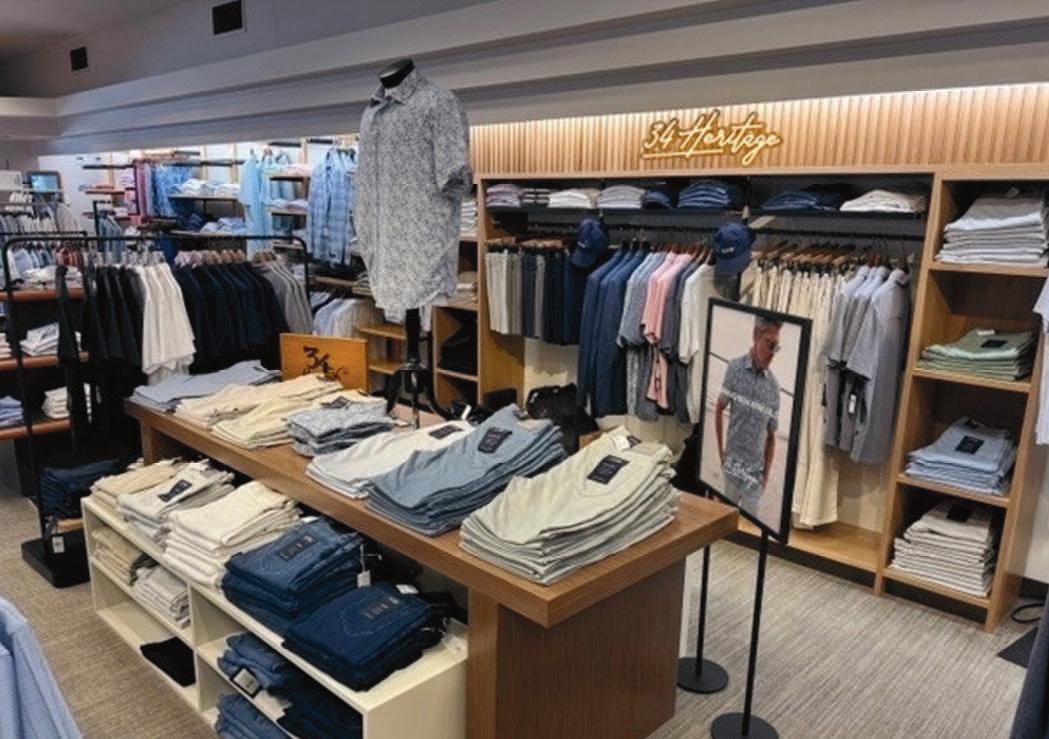
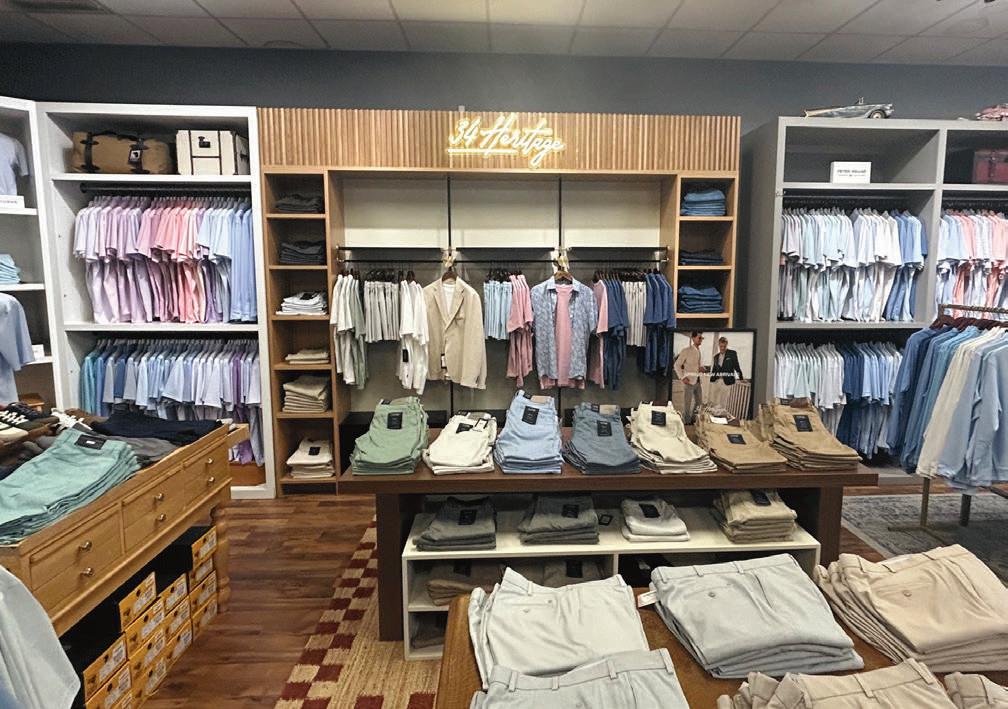
A NEW SHOP-IN-SHOP CONCEPT from 34 Heritage
How can retailers elevate the customer experience from product discovery to a lifestyle destination? 34 Heritage answers the call by creating dedicated spaces in select doors to showcase compelling fashion stories. These strengthen brand perception, improve local performance, and provide a scalable framework for long-term growth.
Through thoughtful merchandising and storytelling, these dedicated shops elevate the perception of 34 Heritage from quality five-pocket pants to complete wardrobe offerings. This expanded footprint allows the brand to maintain strong inventory levels of best sellers while introducing new fits, fabrics, and seasonal collections. Each Shop-in-Shop location is treated as a distinct market. Assortments are tailored to local climates, customer preferences, and seasonal demand, ensuring the product mix reflects local needs. Shop-in-Shop locations also offer opportunities for targeted customer engagement via trunk shows, VIP events, and in-store activations. These serve to drive brand awareness and strengthen retailer-customer relationships.
Most importantly, retail environments are supported by knowledgeable staff. Store associates receive training in fits, fabrics, and key product features. Performance incentives keep 34 Heritage top of mind on the sales floor and support sell-through. Weekly reviews of sell-through and inventory levels maximize productivity and reduce missed sales.
Bottom line is the bottom line: Retailers across the country are growing sales and profits with these new lifestyle shop-in-shops from 34 Heritage. For more information: us@34heritage.com
John Hornacek, Carters Men’s Shoppe, Phoenix, AZ
I believe in Shop-in-Shops. I was in the golf business for 30 years and learned that with 20-30,000 square feet stores, it’s more impactful to set up by brand.
We now do shop-in-shops with 34 Heritage and Johnnie-O, and both are doing really well. Our business is all about relationships, and it’s a pleasure working with the 34Heritage Team. We’ve had the shop only a few weeks, but customers are definitely noticing. We’re used to selling 34H bottoms, and now business is growing in sportswear and knits. It’s funny: customers come up to me saying “We didn’t know you carry 34 Heritage” when we’ve been carrying this brand for 15 years… So yes, I believe Shop-in-Shops increase traffic, loyalty, and repeat business.
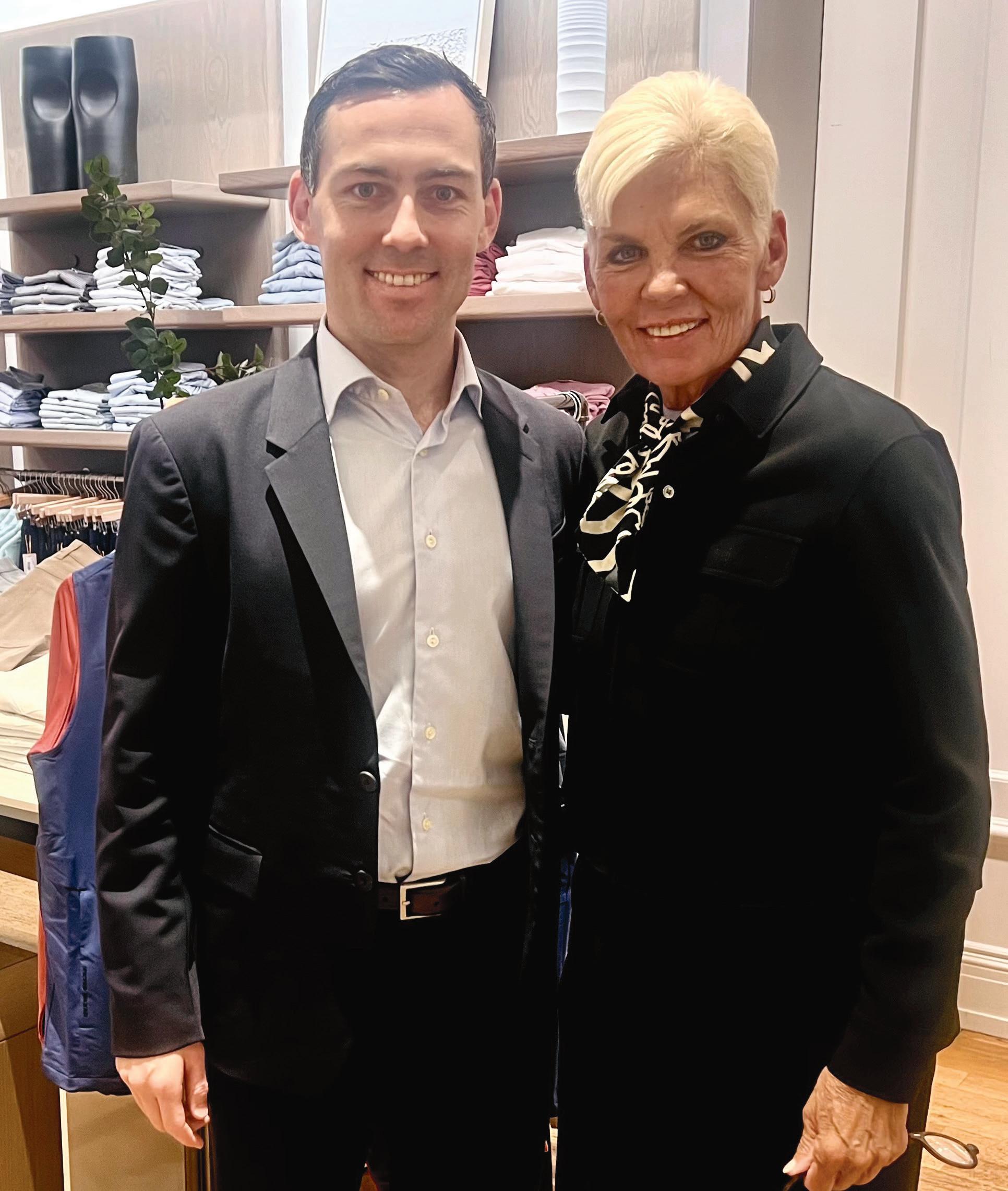
Gina Zangrillo, Darien Sport Shop, Darien, CT
I believe in Shop-in-Shops because I believe in our key partners. In fact, the first thing I learned from my father was “Go Big or Go Home.” We don’t need single racks or just one table of anything. Better to give more business to the partners we trust.
So I strongly believe in Shop-in-Shops. The trick is knowing how big is big, and how long to ride the wave. But how will we know if we don’t try?
I’ve found it a pleasure to work with the team at 34Heritage. They’ve been patient with us since last fall, allowing us to first test the shop concept before committing to buildouts. We tested; it proved successful, and now we’re building out.
David Guenther, J. David’s Custom Clothier, Valencia, CA
I’ve been in the business for 43 years and have just signed a seven-year extension, doubling our store size to 7,000 square feet. The motivating factor for this was our relationship with 34 Heritage. We’d mentioned we wanted to commit more space to the brand since we were selling more than 1,000 pairs of their five-pockets annually, and they were introducing some great sportswear. But for this we’d need more space and better display fixtures. Discussion led to J. David’s becoming the first 34 H shop-in-shop in the world.
We are thrilled with the results: the 420-square-foot shop design looks terrific, and they let us be part of the process. They were always open to making adjustments: they listened and were totally professional every step of the way. To be honest, I was surprised to see how easy it is to increase sales with an impactful collection and fixtures that are kept full.
Brandon Price, Smith&James, Greenville, SC
We just recently put in a 34 H shop-in-shop and we’re expecting strong results. It’s a big brand for us and their team is a pleasure to work with. (I wish all my vendors were as knowledgeable and easy to deal with…) For shop-in-shops to notably impact sales requires square footage, which is why it’s only in our Greenville store. I believe shop-in-shops offer two major advantages to retailers: repeat business (people come back to the brand for the fit) and new customer acquisition.
Greg Degeeter, Dean’s Clothing, Naperville, IL
I’m a real believer in Shop-in-Shops, largely as a relationship builder between retailers and brands. Anytime we can partner up, we help each other. With so much online competition these days, these relationships are more important than ever and are the best way for stores to grow. That said, I’m selective about who we partner with since the collection must represent our store and must be a two-way street.
It’s a pleasure working with the 34 Heritage team: they understand that to sell pants, you have to invest in sizes, and you must count and fill. Shop-in-Shops are a good way to make it work for both retailers and brands.
Dale Parker, J. Parker, Savannah, GA
I believe in Shop-in-Shops, but they must be chosen carefully. Since April, we’ve launched 34 Heritage Shop-in-Shops in two of our stores. We’ve always done well with their five-pocket pants, and the sportswear (though I don’t have much of it yet) is a great addition. I continue to be selective with Shop-in-Shops: since each of my stores is unique, I don’t want a cookie-cutter look in the Shop-in-Shops.
CHI-TOWN LOWDOWN
MR asked some of the Chicago Collective’s denim exhibitors what they’ll be showing this season. Here’s what they said….
“34 Heritage is heading into this season’s Chicago Collective with a major focus on what we do best: sophisticated comfort. Expect to see a lot of incredibly soft, premium fabrics leading the charge, including our lightweight Kona denim, Organic Ultra denim with an organic cotton/Tencel blend, breathable Coolmax blends, Cross Twill, a refined crosshatch, lightweight, dressy twill and our Cloud Luxe twills with a Tencel blend. The color palette is clean and sharp for the season, leaning into crisp summer (off) whites, cool ice grays, sky, melon, iceberg/mint green, peach parfait/blush, and deep, classic indigos across our signature fits. Ultimately, the whole collection is built around “polished versatility”–meaning these are high-quality jeans made from elevated fabrics like organic cotton and Tencel.”
“For Spring/Summer 2027, we’re continuing to refine what C.O.F. STUDIO stands for–modern, everyday garments with longevity at their core. Denim remains the foundation of the collection, built around our signature fits in premium organic fabrics, alongside utility-inspired jackets, overshirts and relaxed tailoring that reflect how men dress today. You’ll see aunthetic indigo, black and ecru denim, garment-dyed pieces and carefully developed washes that emphasize character rather than excess. It’s a collection that balances Scandinavian restraint with Italian craftsmanship, designed to feel relevant today and just as wearable years from now.”
“Mavi is showcasing a collection centered on refined, everyday versatility, featuring fabrics like Ocean Blue, crafted from a breathable blend of cotton and elastane that offers softness with just the right amount of stretch and a relaxed drape and lightweight feel. We’re also very excited to expand our Air-Lite fabric. It is crafted from a cutting-edge blend of regenerative cotton and Coolmax fibers. Beyond being a sustainable, lightweight fabric, it also offers technical features such as temperature regulation and moisture management. Another key fabric for us is Classic Vintage, which retains the texture of traditional denim while adding softness for a truly premium feel. Lastly, the fabrication we’re really excited about is Linen Denim that’s crafted from a breathable linen blend with added softness and stretch.”
“Spring ‘27 for Tailor Vintage is denim with a distinctly New England point of view — color and texture in true spring weights. Garment-dyed color denim is our largest fabric story, alongside an indigo knit-look terry in an easy, super-comfortable five-pocket style and a dobby jean that brings real texture to the line. The key item for the season is an indigo cotton/ linen blend with 1% spandex in a relaxed straight leg, and we’re pushing our E-waist jean to fit this easy-fit moment. We’re also introducing our new selvedge denim collection at this show, with washes inspired by our coastline–from clean rinses to sun-softened fade–to bring back the easy straight leg with fabric that has real character. It’s authentic, wearable denim built to age well, which is what our guy has always wanted from us.”
Nudie Jeans
“Nudie Jeans continues to stay true to its heritage rather than chasing trends, offering a strong assortment of fits ranging from slim to wide while introducing new washes each season. For Spring 2027, the collection expands the Life Tracks series, featuring authentic worn-in finishes created using advanced laser technology to replicate years of natural wear on dry denim; all crafted in Italy. For customers who love the look of broken-in raw denim without the wait, Life Tracks delivers exceptional authenticity. The season also introduces the new Italianmade OHM Dry Selvage, a 13.9 oz. stretch selvage denim available in our best-selling slim fits, combining premium craftsmanship with everyday comfort.”
“We’d describe this season as refined, timeless, and modern. The collection balances everyday essentials with more statement-driven pieces, creating a cohesive range that feels current without chasing trends. Visitors can expect rich indigo blues, from lighter vintageinspired washes to deeper, darker tones, alongside our take on heritage selvedge denim and lightweight brushed and peached twills. Our goal is to create pieces that feel relevant today while remaining something people will want to wear for years to come.”
—Volkan Ureten, SVP of sales
—Richard Rosenthal, CEO and founder
—Benjamine Nwaodu Tärk, Commercial and product manager
—Per Fredriksson, founder and owner
—Volkan Ureten
—Matt Garcia, Blackwatch Agency
34 Heritage
C.O.F. Studio Tailor Vintage
Saburo Jeans
Mavi
Tailor Vintage
PASSING THE TORCH
Karen Alberg Grossman & Michael Fisher on MR’s Past, Present, and Future
“ What MR readers remember most is the thought process, wisdom and humanity of our industry leaders.”
—Karen
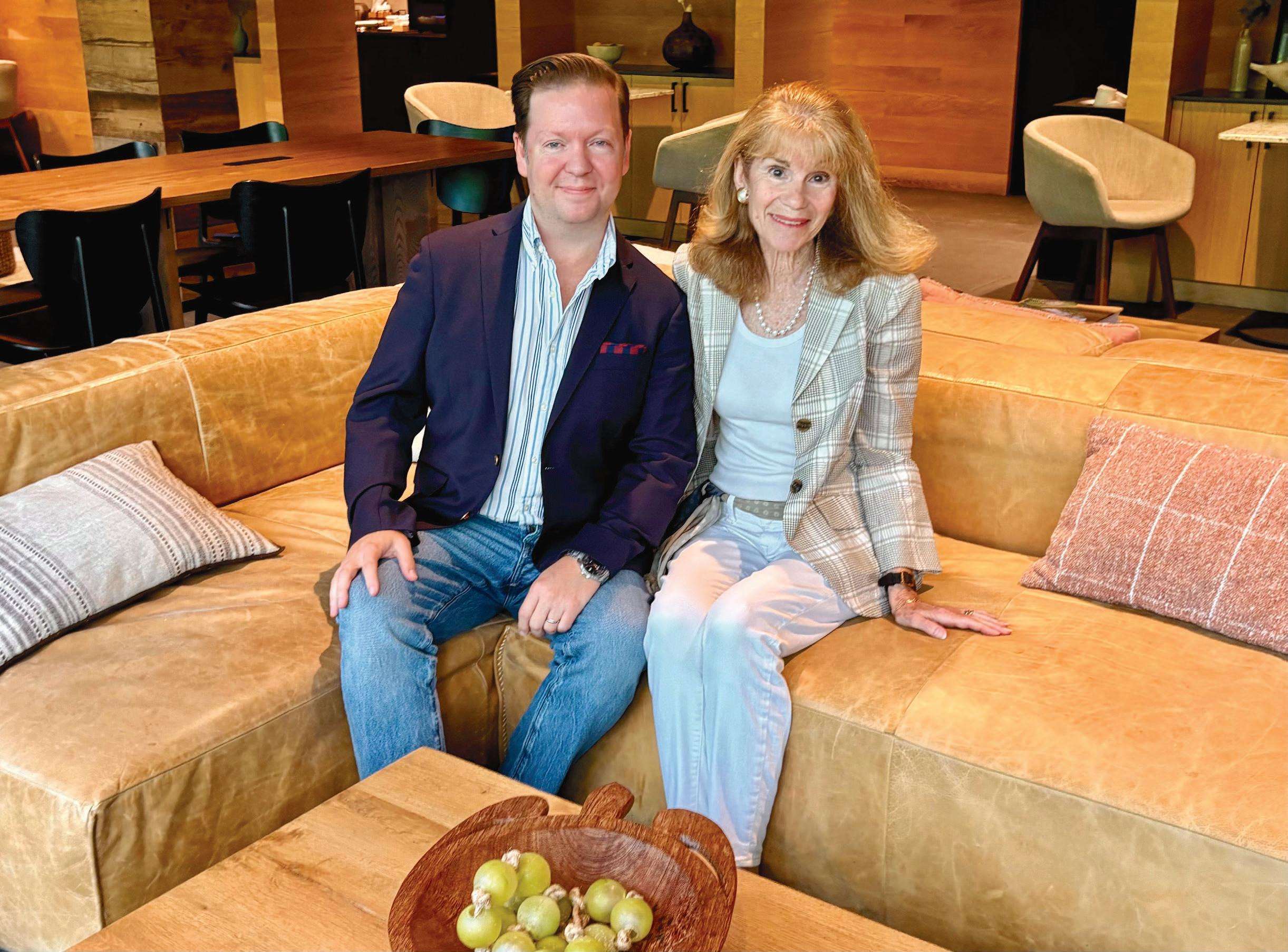
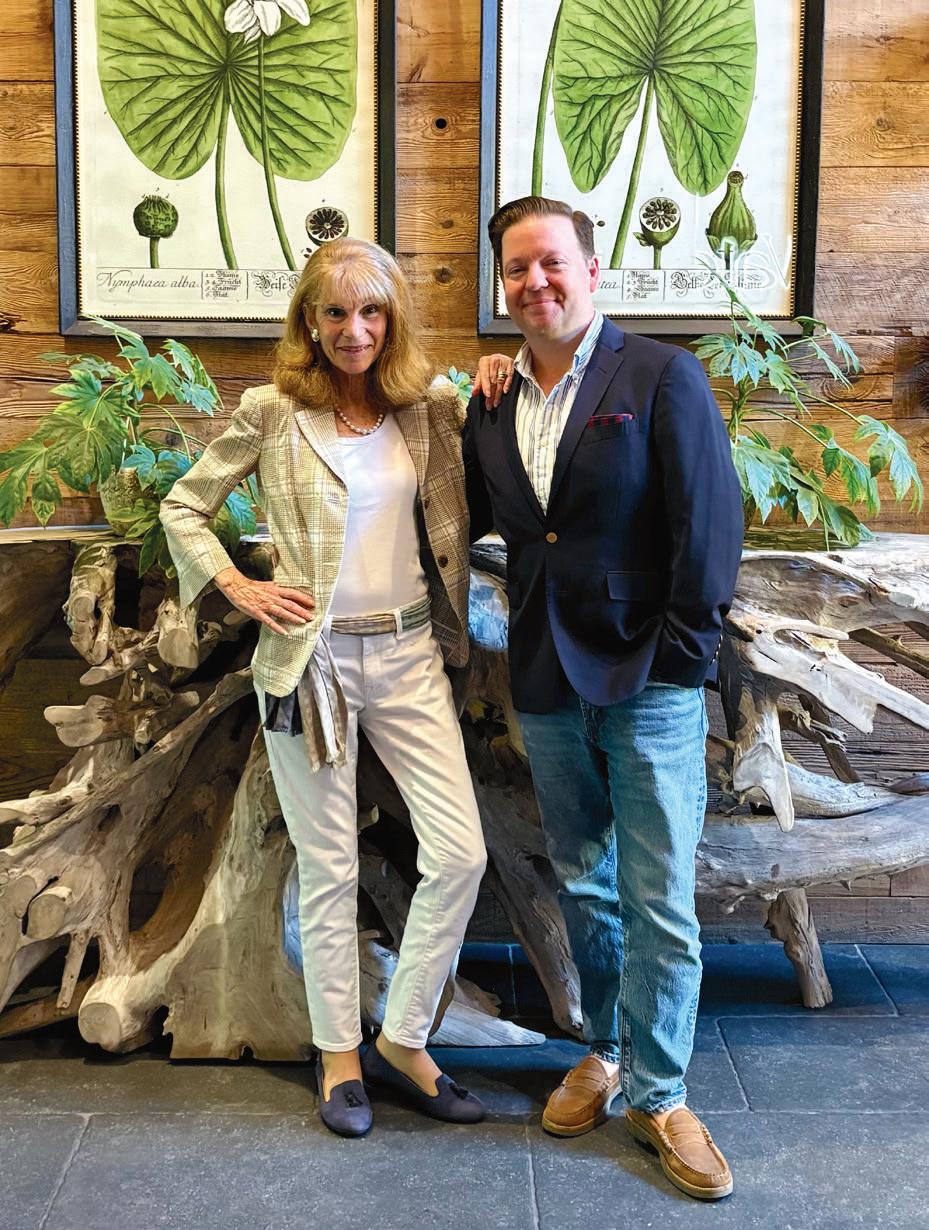
After 36 years as the defining voice of MR, Karen Alberg Grossman is stepping back — though not away. This month, she transitions to Editor-at-Large, passing the torch to the magazine’s new Editorial Director, Michael Fisher. To mark the occasion, the two sat down together for a dual interview: Karen reflecting on the industry she helped shape, and Michael sharing the path that led him here. What follows is part retrospective, part introduction, and entirely a family affair.
mf: You’ve been the defining voice of MR for decades. When you think about what you’ve built here, what do you most hope the industry remembers, not just about the magazine, but about the way you approached it?
kag: I’ve always focused on people over product. Over the years, I’ve tried to showcase how menswear executives think and why. I’ve tried to uncover their upbringing, their interests, their values and how these things impact their business decisions. Yes, fashion forecasting is important, as are profit margins and store renovations, and marketing and the rest of it. But what MR readers remember most is the thought process, wisdom and humanity of our industry leaders.
mf: You’ve said in the past that you think you’d be a better interviewer if you learned to “keep your mouth shut.” But honestly, do you think that instinct to jump in, to engage, to have a point of view, was actually one of your secret weapons as an editor?
kag: I hope you’re right about that, Michael. But I’ve always been more interested in the point of view of others than my own. I’ve never considered myself a fashion person and have often joked that the styles I select in a
showroom will be the ones that end up on the markdown racks. If I could do it again, however, I think I’d inject my point of view more frequently and more adamantly. It takes a certain confidence to do that, and I don’t think I was ever that sure of myself.
mf: You could have fooled me, because I think you have such a decisive point of view! You’ve watched menswear go through enormous cycles. What worries you most about where the industry is headed, and what gives you the most hope?
kag: Most upsetting now is brands competing with the same independent retailers who helped build business for them over the years. If a customer comes into his favorite menswear store and wants to buy a specific knit shirt that’s sold out in the desired size, and the retailer calls the company asking them to send it but the company won’t send it because that item is reserved for online purchasing, something is wrong. Also disturbing, when brands dictate to independent store owners (who know their customers well) exactly how their collections must be bought. What gives me hope is the spirit of camaraderie that still exists among most retailers and brands, the genuine affection and caring and enduring friendships that make the menswear industry so special. This is why I’ve loved this industry for the past 36 years.
—Michael “”
I don’t see my role as editorial director as that of a gatekeeper, but more or less, a conversation starter.
mf:
You’ve spent your career discovering what makes other people tick. Now that you have some breathing room, what do you want to discover about yourself? Is there a version of Karen Alberg Grossman the industry has never gotten to see?
kag: Michael, if there’s a version of me that the industry has not yet seen, I’ve not yet discovered it. But yes, it would be wonderful (I hope) to take some time for myself, to do some travel, to take classes, to explore new places and perhaps discover who I am away from the showrooms and my dreaded computer (which I still don’t know how to use!) It’s a little scary for me this “next act” since I’ve always worked and don’t know how I will fill the hours. But to start with, I look forward to spending quality time with my husband Terry, my sons Mike and Dan, and my five amazing grandchildren (Max, Jonathan and Emma in Rockville, Maryland; Victoria and Benjamin in Costa Rica) while they’re young enough to tolerate the hugs and kisses I plan to bestow upon them. mf: We also look forward to still seeing your byline in MR. You know this publication, this industry, and frankly this readership better than anyone. What’s the one thing you’d want me to never lose sight of as I step into this role?
kag: I can’t narrow it down to one thing so let me give you three:
kag: So, Michael, can you tell me a little about how and where you grew up?
mf: I grew up in Roanoke, VA, in the Blue Ridge mountains. It’s the home of Davidsons, a great store I went to for pretty much every rite of passage. It was probably my first exposure to a great specialty store in fact. I had a super close family with many uncles, aunts, cousins, and grandparents. We saw each other at least weekly. I was the oldest grandchild of six, which was super advantageous because my grandparents traveled a lot and took me to many places. They introduced me to nice restaurants, culture, plays, museums, and how to behave like a little gentleman… They took me to NYC for the first time as a child, and I
and now all skills have aligned with this new role at MR, which is a dream come true. It’s the perfect marriage of my skills and interests.
kag: Where do you live now?
mf: About 17 years ago, my husband, Rich, and I moved from the city to the Connecticut suburbs. We currently live in the Danbury area. He does a top-rated morning radio show, and we have a six-year-old named Hampton who gives me a run for the money when it comes to good style.
kag: You come from a strong retail background before you spent 17 years in trend forecasting and consulting. What did you learn from your numerous retail experiences?
“ There’s always been a seat at the table at MR for everyone, and that won’t change, but I want to add in more chairs… We’ll just get a bigger table! ”
• Take strong stands on whatever you believe in. In retrospect, I wish I’d been just a bit less cautious over the years. As my old boss (Lewis Kaplan from Retail Week magazine) once told me: “You can be wrong, just don’t be stupid!”
• “Plus ça change, plus c’est la même chose…” Fashion works in cycles: feature and celebrate the new but respect and learn from what came before.
• And have fun with it! We’re talking about clothes here, not nuclear wars. If you can figure out how to work hard while enjoying the process, I predict a nice long run for Michael Fisher, MR’s new and multi-talented editorial director.
mf: This is great advice, Karen. I hope I make you proud.
—Michael
decided at age 10 I wanted to move there when I was grown up, which I did right after college. My mom and I were super close and she always encouraged my imagination. Because I was an only child until I was 14, I played so much by myself and I really credit that to how creative I became as an adult. My mom was also a great writer and so, I started writing short stories and poetry and letters to the editor at a young age, and that notion of wanting to be a storyteller really drove me. My entire life, I wanted to be a journalist, but took a slightly left turn when I started college at VCU in Richmond and fell in love with the fashion business. My family was shocked when I changed my major, but honestly, it worked out well. I’ve been comfortable writing and presenting for my entire career,
mf: Retail is in my blood. When I was growing up, my dad managed the distribution center for a southern department store we had in VA called Heironimus. I would go with him to work some days and I had so much fun getting lost in this massive warehouse and seeing all of the brand-new clothing and home decor before it was in the stores. I always loved retail. I worked non-stop retail as a teenager, from a one-hour photo lab, working at the call center for Orvis, and on the selling floor at the Gap in its ‘90s heyday. I learned so much about the importance of customer service and merchandising. Once I moved into the industry as a buyer and fashion director, I think what I learned most from my mentors is to meet your customers where they are and not to merchandise from an ivory tower — that the entire process should be an ebb and flow with your team, with the associates in the stores. Listen to them because they usually know more than anyone about what the customer needs. I also learned about the importance of storytelling working at brands like Ralph Lauren and Barneys, and the importance of discovery and surprise, especially at BNY. Finally, I learned the importance of an edit. Consumers suffer from too many choices. They come to your store for a decisive point of view and not to see you throw everything at the wall and see what sticks. Less is more.
CHICAGO
CHICAGO COLLECTIVE | AUGUST 1-4, 2026
GUERCILENA 1944
FIORONI
MAURO BLASI
GARRETT
INGRAM
PAOLO VITALE
PASOTTI
LENOCI
PASHMERE
VOGLIO
GIANCARLO FIORE
PRIVATI FIRENZE
AGF MAROSTICA
ARMERIA MESCHIERI
BRETELLE & BRACES ANT45
ATALASPORT
CALABRESE 1924
CASTORI
BOB
CAMOUFLAGE AR AND J
ESCLUSIVO ITALIANO
ARCURI TIES
ENZO PISANO NAPOLI
AERONAUTICA MILITARE
ALESSANDRO GHERARDI
ALESSANDRO GILLES
ITALO FERRETTI
DI BELLO BY FONTANI
EDO CAMICIE SARTORIALI
ERRICO FORMICOLA
BARMAS
BELVEST
CAMICERIA SANNINO
ANGELO ROMA
ARTICO
AVANT TOI
FEFÈ NAPOLI
CORDONE 1956
GERMANO 1952
GALÀ
FUGÀTO
L’IMPERMEABILE
PAOLO SCAFORA
PLOUMANAC’H
SAINT GREGORY TAILORS IN NAPLES
SALVATORE MARTORANA
PIETRASALATA NAPOLI
MARTIN ZELO
MASSIMO CORRADO NAPOLI
STEFANO CAU
VIBE SCIAMAT
VITALIANO
SCUDERI
SERÀ FINE SILK
SOZZI MILANO MATEMA
MONTECHIARO MORGANO
KAMAR
PAOLO ALBIZZATI
NR NAPOLI
INSIDE THE CLUB: ITALIAN STYLE
CHICAGO IN
CHICAGO COLLECTIVE | AUGUST 1-4, 2026
The Italian Trade Agency presents 64+ Italian menswear collections, featuring tailored clothing, sportswear, outerwear, denim, footwear, leather goods & accessories. While at the show, don’t forget to visit the ITA lounge; to rest, re-group & refresh!
AERONAUTICA MILITARE | 4093
AGF MAROSTICA | 2120
ALESSANDRO GHERARDI | 2114
ALESSANDRO GILLES | 3125
ANGELO ROMA | 5101
ANT45 | 3107
ARCURI TIES | 3101
ARMERIA MESCHIERI | 5094
ARTICO | 5104
ATALASPORT | 3113
AVANT TOI | 3119
BARMAS | 2118
BELVEST | 2112
BOB | 4094
BRETELLE & BRACES | 3109
CALABRESE 1924 | 2116
CAMICERIA SANNINO | 4100
CAMOUFLAGE AR AND J | 5103
CASTORI | 2102
CORDONE1956 | 2096
DI BELLO BY FONTANI | 4096A
EDO CAMICIE SARTORIALI | 5100
ENZO PISANO NAPOLI | 6105
ERRICO FORMICOLA | 5102
ESCLUSIVO ITALIANO | 2106
FEFÈ NAPOLI | 2108
FIORONI | 2100
FLY3 | 6099
FRAY | 3100
FUGÀTO | 3121
GALÀ | 3117
GARRETT | 4094A
GERMANO 1952 | 2122
GIANCARLO FIORE | 2110
GUERCILENA 1944 | 4099
INGRAM | 3105
ITALO FERRETTI | 3095
KAMAR | 4100A
L’IMPERMEABILE - ZEROSETTANTA STUDIO | 3099
LENOCI | 4096
MARTIN ZELO | 3093
MASSIMO CORRADO NAPOLI | 5096
MATEMA | 6101
MAURO BLASI - SARTORIA PARTENOPEA | 2126
MONTECHIARO - LORENZONI - IMPULSO | 5099
MORGANO | 3094
NR NAPOLI | 5106
PAOLO ALBIZZATI | 3123
PAOLO SCAFORA | FRONT AISLE 15
PAOLO VITALE | 3115
PASHMERE | 6093
PASOTTI | 5093
PIETRASALATA NAPOLI | 2124
PLOUMANAC’H | 2094
PRIVATI FIRENZE | 5105
SAINT GREGORY TAILORS IN NAPLES | 2104
SALVATORE MARTORANA | 6095
SCUDERI | 3103
SERÀ FINE SILK | FRONT AISLE 14
SOZZI MILANO | 3111
STEFANO CAU | 5095
VIBE - SCIAMAT | 6103
VITALIANO | 4095
VOGLIO | 3096
I’ve always focused on people over product. “ ”
—Karen
kag: How would you describe yourself to someone who doesn’t know you?
mf: I am a dreamer, a romantic, a lifelong learner, and I think I’m a pretty nice guy. When I become fascinated with a new topic, I fall down the proverbial rabbit hole and go all in — obsessed with becoming an expert. My friends will tell you I’m a sponge of information… Some call me their “personal AI,” which I love. I always kind of think about the world in a very cinematic way, which maybe comes from working at RL at the beginning of my career. Everything plays out in my mind like a movie. And, yes, I absolutely love fashion and retail, and just observing people in the wild. It’s why I was such a successful trend forecaster for so many years — I see what others don’t.
kag: What is your most recent read?
mf: I wish I read more for pleasure than I do, but with a busy career and a six-year-old, I have to really carve out time to do so. I read multiple media outlets every day to make sure I’m always informed, and I spend a lot of time on Instagram to stay inspired. Right now, I’m reading The Shards by Bret Easton Ellis (soon to be an HBO series), which is a kind of auto-biographical novel that takes place at an LA prep school in the early ‘80s. I usually like darker things, which is funny, because I have a pretty sunny disposition.
I always read at least three things at once because what I read depends on my mood. I also just finished Empire of the Elite: Inside Condé Nast, the Media Dynasty That Reshaped America by Michael Grynbaum, which was really juicy, and Status and Culture by David Marx, who I love… He writes books about consumer behavior, and this one explores
how our desire for social rank creates taste, identity, art, and fashion.
kag: What is your vision for how you’d like to see MR evolve?
mf: My first priority is for MR to become a daily or at least a weekly touchpoint for our readers, to move our content and conversations beyond the printed page to social media, podcasts and webinars, and hopefully find more opportunities to be with each other in person. I don’t see my role as editorial director as that of a gatekeeper, but more or less, a conversation starter who is helping our readers prepare for the future of the industry.
I’ve always been obsessed by how MR brings
our industry together — this concept of community and camaraderie is so special in menswear. I’ve always loved how much emphasis is on storytelling and really getting to know the subjects of our stories. I’d like to see us grow the community even more; to bring in a whole new generation of menswear enthusiasts who, like me, love to gather and just nerd out over design details and fabrics… Everyone from content creators to those who work at really special stores. There’s always been a seat at the table at MR for everyone, and that won’t change, but I want to add in more chairs… We’ll just get a bigger table!
THE REAL MEANING Of Legacy
An interview with James Bower Jr, The Clothing Commission
By Karen Alberg Grossman
You now have three stores in Virginia (R. Coffee Ltd., Davidson’s and S.H. Franklin), with two more planned for end-September. What inspired you to buy menswear stores? The inspiration came from the idea of legacy. There are so many amazing men’s stores that have become so important to their communities. Their legacies need to continue. The biggest benefit of owning multiple stores is learning from each what we can do to better serve our clients. Seeing the differences in each store helps me with that.
What’s most special about each store is the relationships we’re able to cultivate. With each store I acquire, in the forefront of my mind is continuing a legacy.
What’s the average age of your customer?
Of your employees? How will you get more young guys into the stores?
I have salaried full-time employees ranging in age from 21-85, averaging around 45. The fact that our young sellers lean on our more experienced staff to teach them is wonderful to watch. There’s no trick to gaining younger clients. We simply offer fabulous product from high school to college to weddings to business attire. For every aspect of a man’s life, we’re there for them, and then for their children.
What’s selling best these days?
Sales wise, CLOTHING IS BACK! It never really left, but now is the time to sell the “fun” pieces. The last few years we maintained a heavy stock of blue and grey suits. Now, everything is selling. We have a younger demographic come in, wanting to dress like their grandfathers, not like their fathers. Tailored clothing will always generate our biggest volume, but Sportwear is coming close.
What do you see as your greatest challenge moving forward?
Our key challenge is finding talent. We’re blessed with an amazing team, but we are ALWAYS looking for talented individuals who have a passion for this business. In our corporate culture, our focus is built around the team.
For those retirement-age retailers hoping to sell their stores: what should they be doing to optimize the potential of getting top dollar? At the end of the day, we’re all in business to make a profit. But what’s unique about the menswear industry is that an equally valued
goal is service, a life well lived, an understanding that you’re building something special. The key to getting the most for your company is focusing on the ideals of legacy and what you (as a proprietor) have built. The biggest pitfall is underestimating the company’s value to the community.
I’ve had eight companies in the past year wanting to sell to us; I’ve presented a letter of intent to two of them. But the bottom line in my story is simple: there was a merchant who took a chance on me, who hired me, trained me, and taught me all the things retailers actually do. My mentor Rick Coffee was in the “service” business. He served his clients day in and day out, considering our business a privilege, and our main job to be a friend.
That’s the true meaning of legacy, and that’s why I do what I do.
James Bower Jr.: soon to have five stores
Davidsons in Roanoke: the legacy lives on!
DARIEN SPORT SHOP:
Keeping It Fun!
By Karen Alberg Grossman
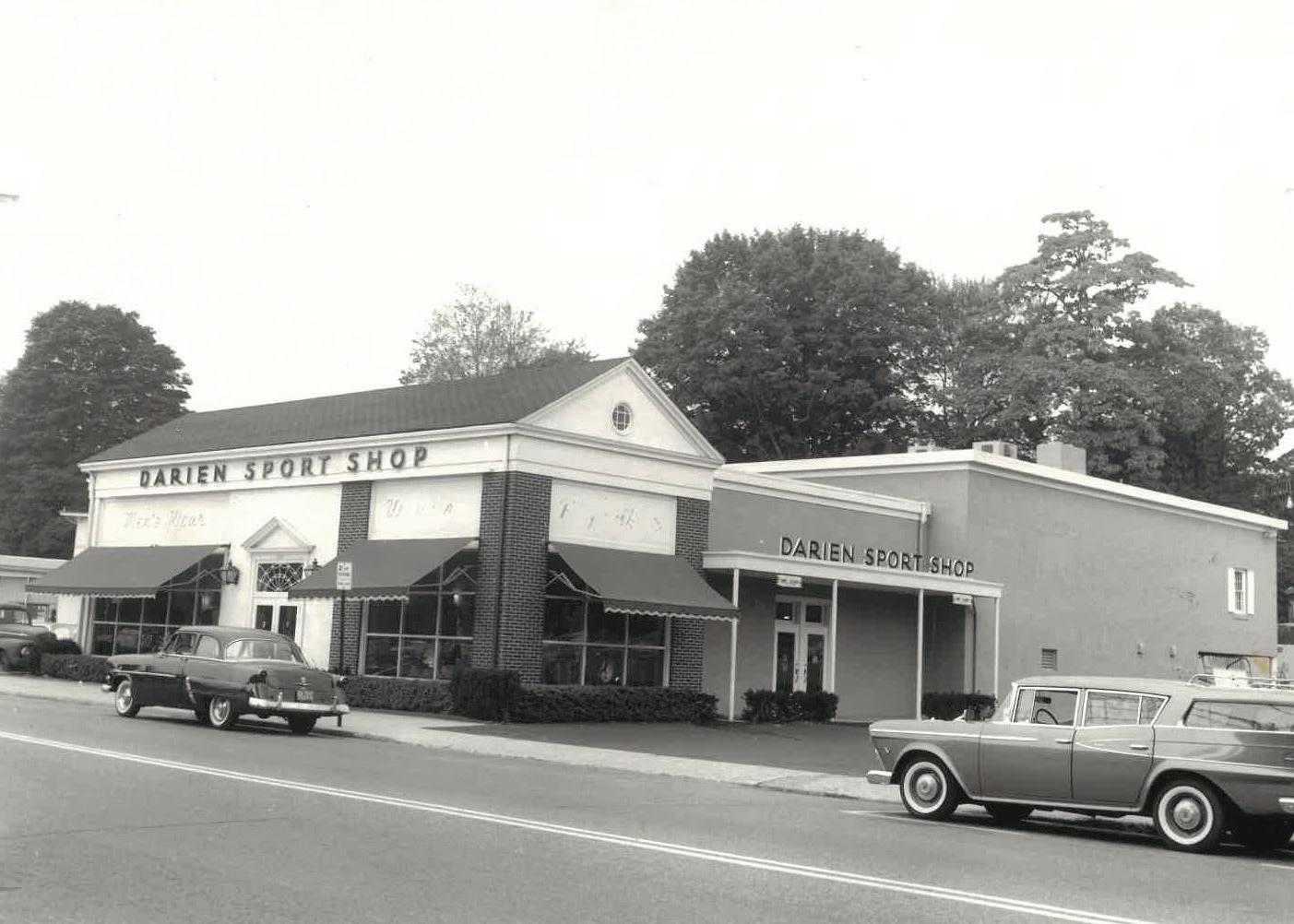
Not every merchant is born for retailing but for Steve Zangrillo, it was both a calling and an obsession. His daughter Gina sums up a life well-lived: “My dad was a WW11 veteran, born, raised and educated in Darien Ct. His first job was for Pitney Bowes in Stamford; he would hitchhike to and from work. On weekends, he was a caddie, with a passion for golf that our entire family still shares. At some point, Steve’s dad, a roofer by trade, disparaged Steve’s career choice, suggesting that he open a store in Darien to compete with Bob’s Sports, a hot spot owned by Bob Mallozzi. Obeying orders, my dad rented a tiny space in 1946. (How I wish he’d chosen a store with a different name: the Sports connotation has haunted us over the years…)”
Gina explains her dad’s uncanny ability to study people and project trends. “When I first joined the company, I was amazed at his
predictive powers. He’d sit by the front door and watch women walk in, bedecked in quilted jackets and Burberry handbags. So he brought in Burberry, our first major fashion brand, and it quickly became a Darien staple.
“The store soon became my father’s first love,” Gina recalls. “And my mother knew it! He was obsessed with growing it bigger, so from a tiny space in a strip center where Dunkin Donuts is now, he bought a double lot down the road. He then bought a piece of land where the men’s department now sits and added to the store once again. He then bought the land that the parking lot was on and added a ladies department and a kids’ department on the third floor. Where we’re sitting right now was a gas station; can you believe it? But the guy who owned the gas station was smart: he knew that whenever he wanted to retire, Steve Zangrillo would write him a check for whatever he wanted…”
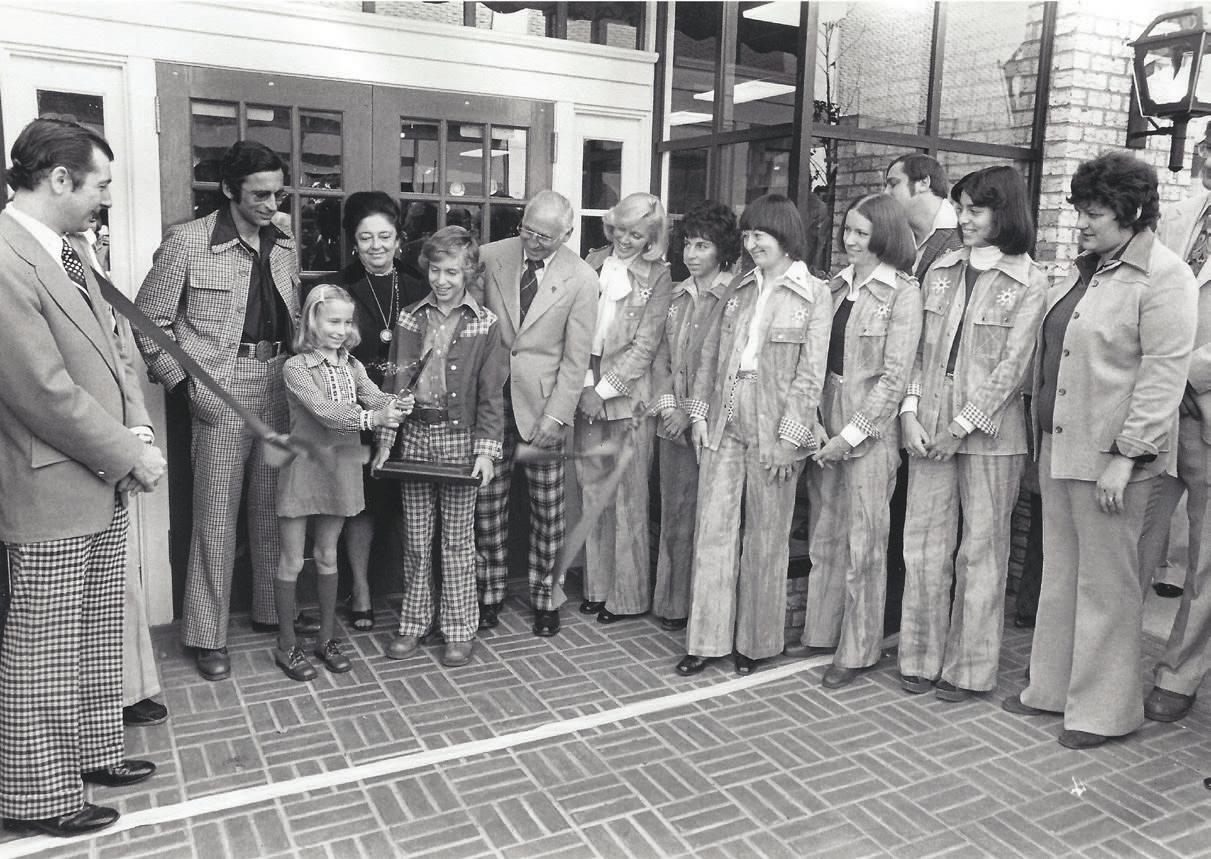
Gina did not join her dad at the store until she was in her early 30s. “As a teenager, I had to work in the store after school so I couldn’t wait to find a different career. I went to a twoyear fashion college in Atlanta which was a total waste of time and then had a few jobs I liked in the business world. I finally joined my dad at the store when he desperately needed help because his controller had quit. I first spoke to his accountant who advised me not to take the job, reminding me that my dad could be difficult and that recent business was not promising. But I had this crazy desire to make the store as great as it could be, so only one week after a C-section, I showed up at the store determined to make a difference. Not long after Gina came to work for her dad, he gave her a project: to work with an architect to create a 12,000 square foot addition that includes a beautiful park. “It was to be a gift to the town of Darien but maintained by us,” he had told her. Gina looks out at Zangrillo Park and remembers her dad. “There’s a plaque in the garden to prove it’s ours,” she says with a touch of irony. “So knowing nothing about architecture, I got to work building a park...” According to Gina, her dad’s real reason for expanding the store was the growing population of school-age children and thus a booming demand for team sports and ski rentals. “So we began leasing gear for skiing, lacrosse, soccer and other sports. Everything we did was overthe-top. For the tennis shop, we had custom fixtures crafted from metal to look like netting. Our entire first floor was an unbelievably beautiful sporting goods emporium. The third floor was an expanded ski shop because we soon learned that leasing 3,000 pairs of skis requires off-season storage for both the skis and for the 3,000 pairs of boots…”
Learning from the past to ensure the future
And thanks to Steve’s unstoppable ambition, the store kept growing, with menswear soon moving to the mainfloor. Says Gina, “I worked with Hickey Freeman to create the most magnificent men’s clothing department, featuring fabulous photographic backdrops of New York City skyscrapers, grass cloth wall coverings, impeccable luxurious tailored clothing. We opened in September of 2008, just in time for the financial crisis…”
And unfortunately, Darien was hit hard by the crisis since so many of their residents were NYC commuters with jobs in finance and insurance. “We had to step back a notch or two,” Gina confides. “We’d grown too fast. From 1994 to 2008, we’d more than tripled our volume…”
These days, Gina is running the business with much apparent success. “When my dad passed in 2015, I couldn’t imagine the business going on without him. I mean to everyone who knew him, Mr. Z was God. But then I had this aha moment, realizing that since my dad started from nothing with only a high school education, maybe I also had an innate ability for retailing. So I studied the business piece by piece. I looked at our advertising and introduced a loyalty program in 1996, way before Nordstrom did it. I looked at our personnel, at our buying. We lost 50% of our business during the financial crisis and then another 50% during Covid. But today, our business is the best it’s ever been. It took perseverance. And some guidance from a family business counselor who helped us identify some key issues.”
These days, Gina is delighted to be working with her son/store manager Doug Reilly, who’s been at the job only three months. Says Gina, “A senior executive was dealing with some health issues so I thought it might be the perfect time to approach Doug. I didn’t want to exert any pressure, but I thought this could be good timing…” Doug wasn’t so sure. His wife had recently given birth to their first son (Jack, now 18 months) and he was in his 8th year at a hedge fund/mortgage finance company after starting out in sports marketing. “I found value in forging my own path, but couldn’t envision myself actually enjoying the work. I’m a people person, not a spreadsheet person. So I decided now might be a good time to try out the retail business.”
Gina jumps in: “I’m all about speed over accuracy; Doug is just the opposite. I’ve made a lot of quick business decisions based on gut
reaction with very few serious mistakes. In the fashion business, you have to kind of feel your way.” Adds Doug, “My mom is very dynamic and I’m more methodical. She’s constantly rearranging the selling floors so customers don’t see the same stuff each time they visit.” Says Gina, “Doug is a real people person with a wonderful manner. He’s a problem-solver who makes difficult situations less difficult and makes people feel they’re in good hands.”
Asked what they consider their secret sauce, what’s enabled them to reach an 80th anniversary, Gina doesn’t hesitate. “It’s the family dynamic,” she explains. “I think about my dad and how smart he was. With all the liabilities of running a ski shop, especially the insurance costs, it was a definite traffic driver that kept us going for a long time.”
Adds Doug, “Our store is a place for families, a place where you’ll see different generations shopping together. And a place where you’ll always find someone who knows you.”
“We have about 50 employees,” says Gina. “32 are sellers and half of those have been working here for at least 10-15 years… It’s also a more light-hearted shopping experience than at some of the luxury stores. Like the other day when I was trying to drum up activity, I brought some yard games down from the third floor to the front entrance, along with lemonade and snacks. We were all having a great time playing (and selling) the yard games. And these days, with Mahjong such a big thing, we’re selling tons of Mahjong sets and squishy toys and GOAT USA sweats and cool shorts for boys…What could be more fun than that?”
The store turns 80; the team stays forever young!
HARPERS CELEBRATES A Century of Style
By Karen Alberg Grossman
The original Harpers store, first called Young Men’s Shop, was founded in 1926 by Brian Cohen’s s grandfather Joseph F. Cohen in downtown Altoona Pa. That same year, a gentleman by the name of Jack Harper opened a similar store in State College, across from the University, also with tasteful merchandise and high standards. The two stores eventually joined forces. In 2017, Brian and his wife Lisa moved the store up the block on College Ave and expanded space to 8,000 square feet. In 2019, they further expanded Harper’s Varsity Club, filling it with Penn State logo product from respected brands. A smaller (310 square feet) but impactful shop was designed for the lobby of a new on-campus hotel.
Brian has given much thought lately to how the store has survived for 100 years. “Much credit goes to the university for sponsoring career fairs that bring numerous businesses to the campus. We’re lucky to get 400 students coming through our door for interview suits
(our suit package is $389 for a suit, shirt and tie) as well as their parents and relatives who end up shopping for themselves.
“It’s interesting,” he continues. “I find we talk about the same issues today that my parents and grandfather discussed decades ago. Styles might have changed but it’s still about how we can make customers happy or make their lives easier. Lately, we do a lot of delivering purchases: it’s rarely more than a 10-minute drive and it’s amazing how much it’s appreciated. We also bring in lunch for the team every Saturday. My wife Lisa spends lots of time making sure the staff is happy, since happy sellers means happy customers.”
Among the bright spots at retail these days, custom clothing has notably increased these past three years, now surpassing 25 percent of total clothing volume. “Our suits open at $1000 and range to $1600, averaging around $1300. Our sport coats average $1100. We also do some custom outerwear, which has been selling surprisingly well and sets us apart. We’re
“ Harpers is the adult entertainment on campus. ”
—Brian Cohen
always looking for special items and innovative brands to balance the well-known labels. I’m loving BOB, a whimsical men’s sportswear brand out of Italy, and a collection of recycled sailcloth totes from Sea Bags, customized and selling well at $200-$300 retails.”
Brian believes his greatest growth opportunity involves intensified marketing to make more people aware of the store. “Our whole metropolitan area is only 80,000 people; there are virtually no other stores around. But think about it: Pittsburgh and Philadelphia are each only two hours away. With the right marketing, there’s tremendous potential for more business…”
Does Brian think his son Jaxson might continue the family legacy by working in the store? Although he doesn’t think so (Jaxson is 19 and seems more interested in finance than fashion), Brian doesn’t worry about it, truly believing that “our business will keep moving forward, even without us.” But for the foreseeable future, they’re celebrating 100 in style!
Back in the Day
ROTHMAN’S AT 100: The Best of Times is Now!
By Karen Alberg Grossman
Harry Rothman’s dad was tragically killed by a horse-drawn carriage when Harry was 15. Needing to support his family, Harry dropped out of school, then opened a tiny shop on Bleeker Street in 1926. Brothers Ken and Jim Giddon have been minding their stores, now in Bronxville, Scarsdale, and Union Square, for 40 years (Ken) and 35 (Jim). Here, we speak with them about challenges and opportunities.
Since you two have been running the stores, what have been the best of times? The toughest times?
Ken: From 9/11 to Hurricane Sandy to the George Floyd riots, it seems there’s always something that disturbs the flow of business. I believe the best of times is now, but it lasts only until the next bump in the road. The best we can do is take the hits and get right back up. Jim: I agree that the best of times is now: we’re hitting our groove and running on all cylinders. Our customers know that they can trust us. We still have to prove ourselves every day, but we no longer have to start from scratch. The toughest time was Covid. We were closed
for six months, but we still had to work hard every day, even though we had no sales. We did everything we could just to stay afloat. Anyone can run a business when things are good, but the real challenges occur during difficult times.
What lessons did you learn from your parents/grandparents?
Ken: Unfortunately, our grandfather was not well when we got involved in the business; he never lived to see us run things, but I like to think that he’d be proud.
Jim: His legacy remains to treat everyone with respect, starting with our own people, and then of course our customers. From Harry we learned to not take ourselves too seriously: we’re not curing cancer, just selling pants.
What do you see as your greatest challenge as a retailer today?
Ken: The greatest challenge is giving customers a reason to buy from us when so many stores and websites are selling virtually the same stuff.
So why should they buy from you?
Ken: Because we’ve managed to out-service everyone else.
Jim: I see our online business as our biggest challenge. Our vendors have become our biggest competitors since they have a huge pricing structure advantage.
Your greatest opportunity?
Jim: Our greatest opportunity is to convert the on-line shopper to an in-store customer. This will give us opportunity to highlight the in-store difference and show them the advantages of hands-on service, guidance, and advice.
What’s the biggest mistake you’ve made in business?
Ken: Our big mistake was never trusting our ability to succeed so we never bought a building in New York City.
Jim: We also made the mistake of paying rent that was simply too high, for too many years. One of the positive results of Covid was our ability to re-negotiate the terms of our lease. Thanks to a generous landlord, we no longer feel like we’re working for the landlord, but rather for ourselves.
Your plans for Rothman’s this next decade?
Ken: We will continue to build our team, and give them more decision-making power as Jim and I get older…
Jim: We plan to keep doing our best, for both our employees and our customers. Our staff is top-notch, so we need to retain them and move forward together. Also, we’ll always consider a new location if the right opportunity presents itself.
If you weren’t doing this, what might each of you be doing?
Ken: I would run for Mayor of New York City.
Jim: I’d be manager of the Boston Red Sox…
What keeps you up at night these days?
Ken: Old age!
Jim: I used to take every problem home with me at night. But I now sleep better, thanks to a great team to worry about details for me.
What’s the best in-store event you’ve had lately?
Ken: It wasn’t an event but since the Knicks won the championship, we’re selling a lot of Knicks product. The folks at Fanatics expect it to be a five-year run…
So what’s planned for the next decade?
Jim: We plan to continue the legacy that Harry Rothman built. We want to do our absolute best to make him proud of us every day so we’re planning our commitment to quality, service, and community for the next 100 years.
Jim & Ken Giddon
MEN’S EDITION
SAT/SUN/MON/TUE
AUGUST 1 - 4, 2026
CHICAGO COLLECTIVE
WOMEN’S EDITION
SUN/MON/TUE
AUGUST 23 - 25, 2026
THE MART | FLOOR 7
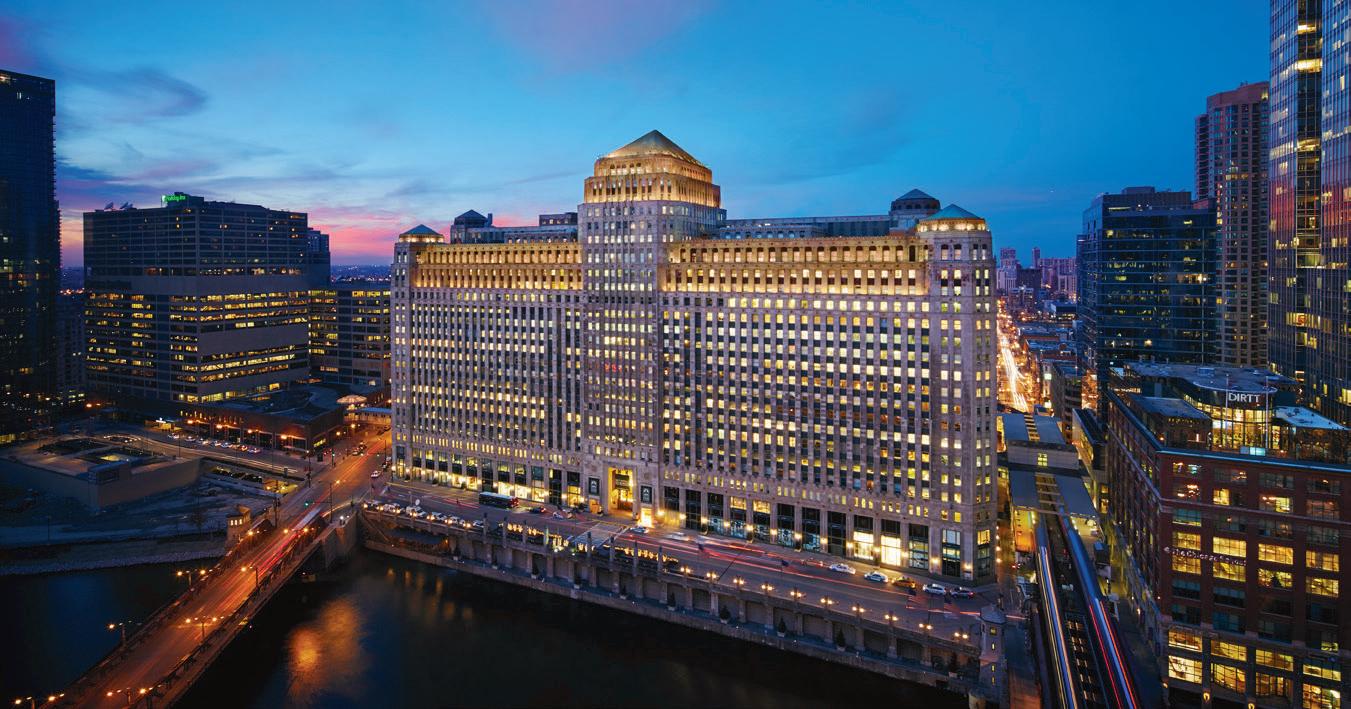
The Chicago Collective is the premier menswear show in North America. On 2 floors at THE MART, Chicago Collective hosts the top brands and retailers from around the world. Come shop your favorite lines, and enjoy exciting events and amenities.
OPENING NIGHT PARTY
SUNDAY, AUGUST 2, AT 6:00 PM SPONSORED BY:
SHOW HOURS:
SATURDAY PREVIEW DAY: 12:00 - 6:00 PM
SUNDAY: 8:00 AM - 6:00 PM
MONDAY: 8:00 AM - 6:00 PM
TUESDAY: 8:00 AM - 3:00 PM
THE MART | FLOORS 4 & 7 chicagocollectivemens.com
The Women’s Edition features everything you love about Chicago Collective. Enjoy a great selection of brands, an easy to shop floor, a fun opening night party, special pop-up events and our popular buyer hotel reimbursement program.
OPENING NIGHT PARTY SUNDAY, AUGUST 23 AT 6:00 PM
SHOW HOURS:
SUNDAY: 9:00 AM - 6:00 PM
MONDAY: 9:00 AM - 6:00 PM
TUESDAY: 9:00 AM - 3:00 PM
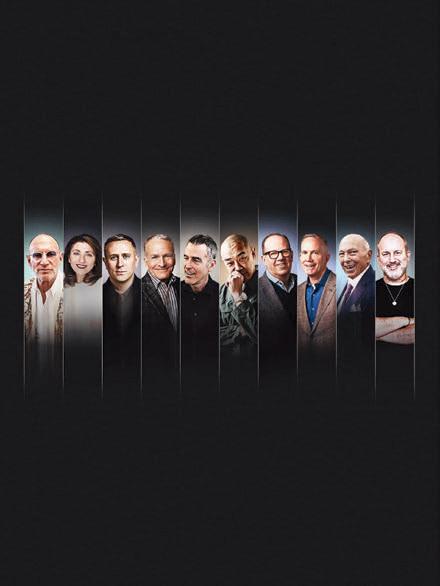
MENSWEAR’S
The votes are in: these are the 12 people the menswear industry can’t stop talking about (in the best way) this season.
I’ve always believed that great style is timeless, purposeful, and made to fit your life, not the other way around.
MONTEE HOLLAND
Owner, Tayion Collection
Fashion is how I show up to the world; a way to express identity, mood, and intent without words. It is storytelling through silhouette, color, and detail: honoring heritage, challenging expectations, and celebrating confidence. My personal style blends refined tailoring with bold, unexpected accents, classic structure with modern edges, thoughtful textures, and statement pieces that reflect individuality and purpose.
JARON LEE ROSS
Head of Wholesale, America Stone Island
I gravitate toward items that I know will stand the test of time: the perfect vintage patina, the most interesting new technology, garment dyeing or true technical expertise. Now in my 40’s, I’m constantly asking myself how to age with grace, and I’m subconsciously asking the same of my clothing.
BEST-DRESSED
BRUCE PASK
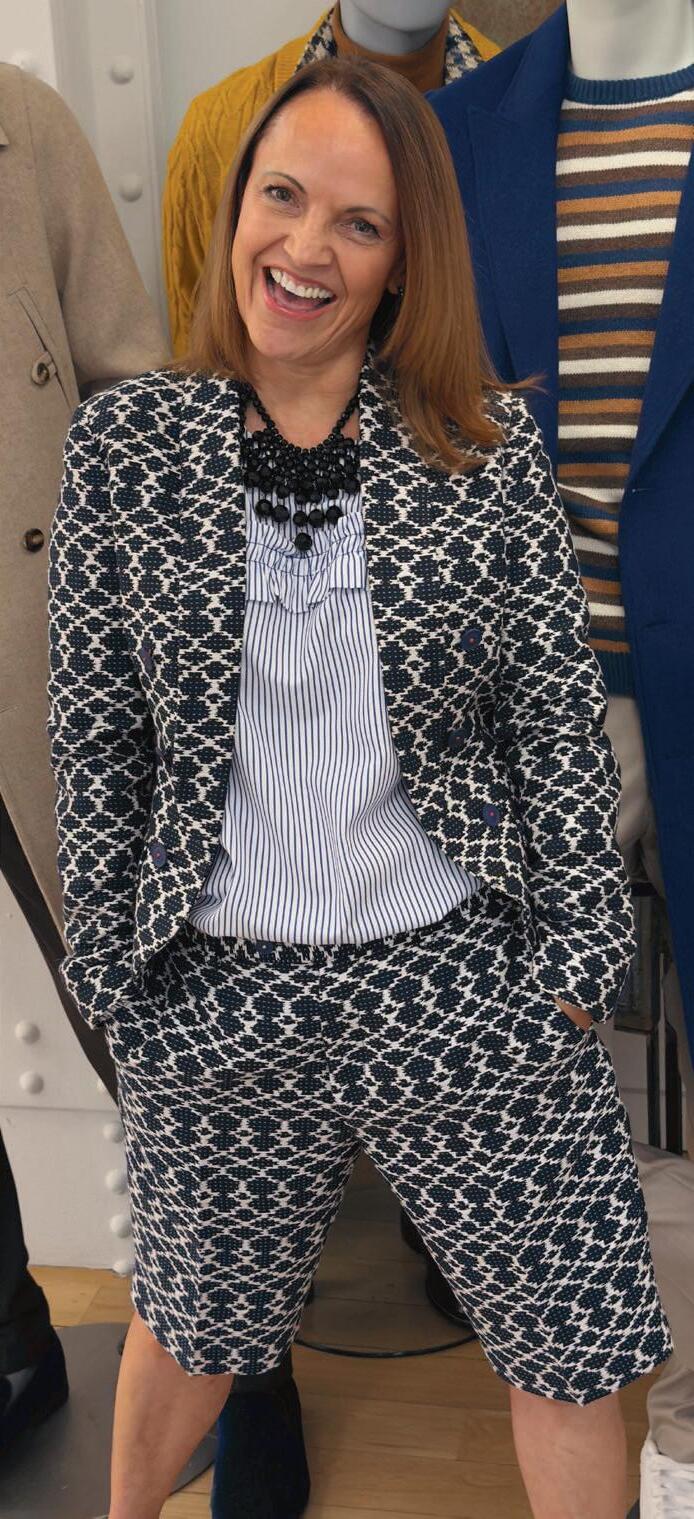
As fashion is ever-shifting I am always curious and open to new ideas, silhouettes, and styles that interest me. Lately, I have been wearing large, voluminous shorts, often with jackets. I’m intrigued by the proportion and feel it’s a comfortable but polished look.
DOUGLAS HAND
I would describe my personal style in three words: Tailored. Confident. Masculine. A core pillar of my style philosophy is the art of studied nonchalance. One of the biggest fashion mistakes a professional can make is attempting obvious, stiff perfection. Instead, my style features a ‘dash of dishevelment,’ intentionally leaving minor imperfections unfussy to give my tailored look an effortless, authentic edge.
Director, Paisley & Gray
My style is fearless, fashion-forward, and constantly evolving. I’ve been described as a chameleon because I love reinventing myself, blending bold ideas with thoughtful design to create looks that challenge expectations and celebrate individuality.
Former Luxury Fashion Executive & Current IHeart Media Host
My style: simply elegant. I don’t expect anyone to remember what I was wearing, just that they remember me.
Co-founder of Floor13; Stylist
My style today is a love letter to myself. After investing in my mental health and personal growth, getting dressed became more than just putting on clothes… it became an extension of my journey. I mostly gravitate toward timeless pieces that feel authentic to who I am today, complement me as I age, give me effortless confidence, and reflect the brands I’ve genuinely come to know, love, and support throughout my career.
Co-Owner, Jamestown Hudson
The way I would describe my style is dressing in the classics with a sense of humor thrown in!
MARK WEBER
S/S 27 RUNWAY TREND REPORT
By Michael Fisher
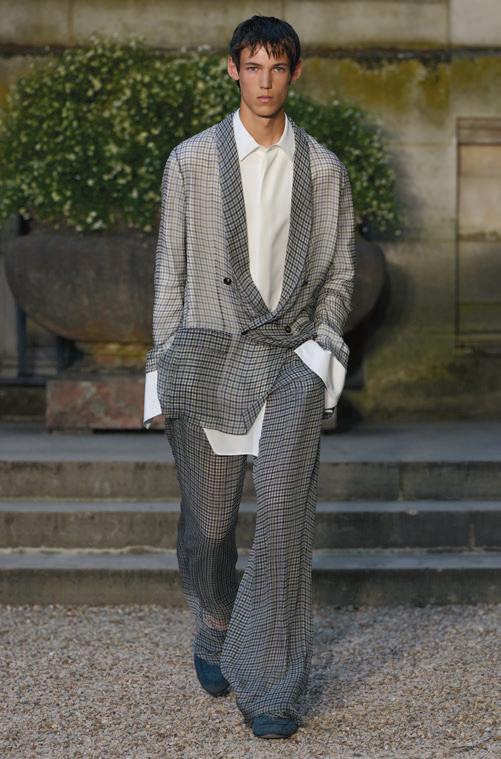
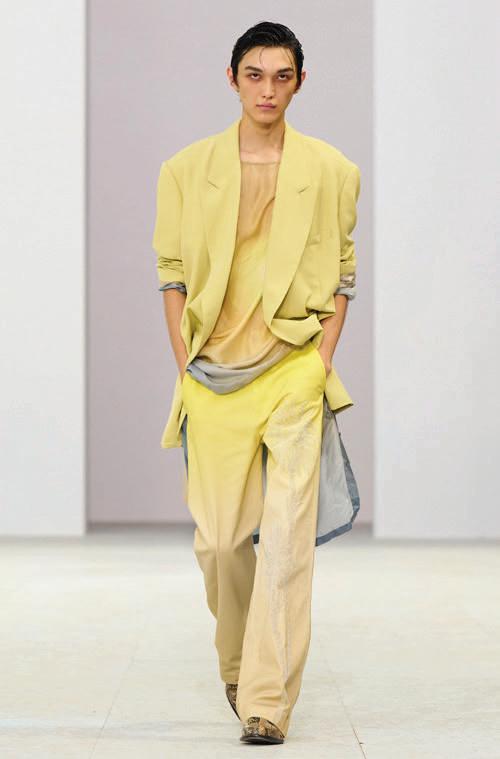
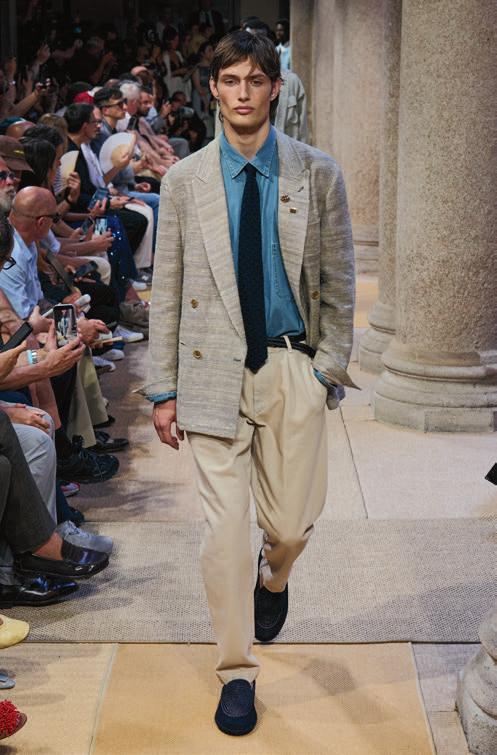
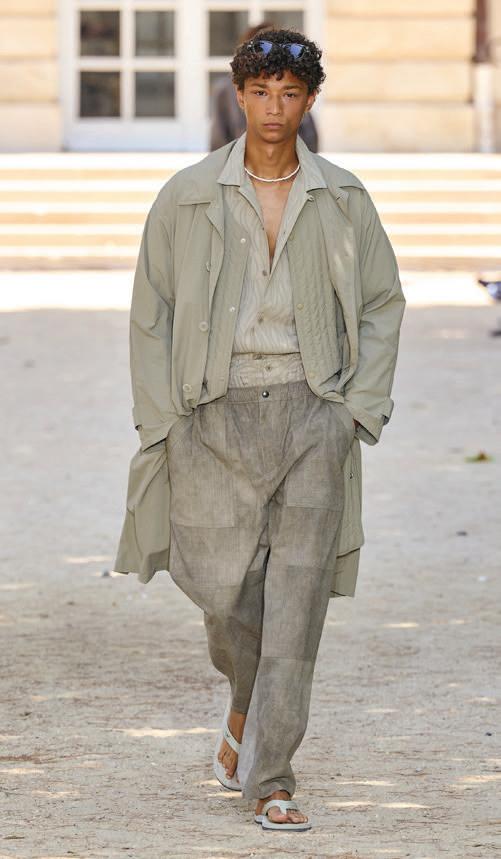
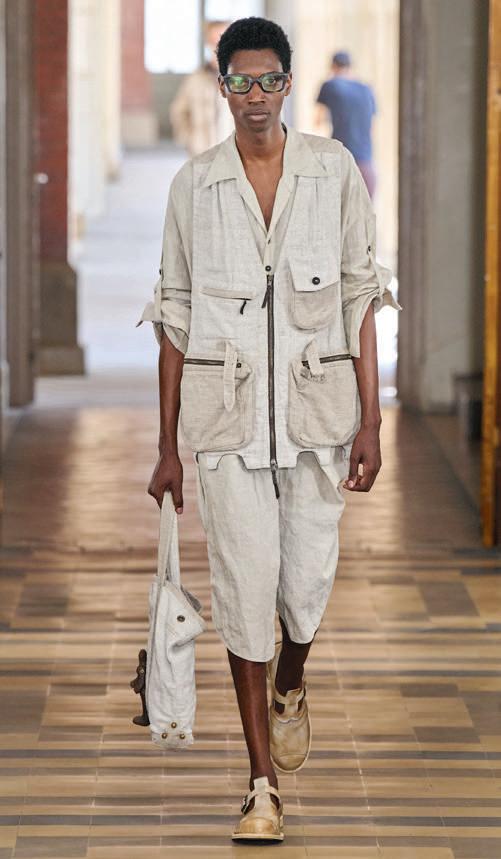
The S/S 27 runway season will be remembered as much for the heat as for the clothes. France recorded its hottest day since 1947 during Paris Fashion Week Men’s, prompting houses like Dior and Rick Owens to move their show times earlier in the day. Fans and frozen treats became the season’s coolest accessories. In Milan, designers met the heat with ultra-light tailoring and elongated silhouettes, giving a relaxed spin to buttoned-up categories, while linen, long menswear’s most divisive fabric, became impossible to ignore. Water became the season’s unofficial mascot, both literal and chromatic: Louis Vuitton built an inner-city beach with a cascading tidal wave, while Armani leaned into deep ocean blues and sandy neutrals for a resort-driven mood. The throughline across both cities was clothing built to move, translucent layers and lightweight construction for a wardrobe made for men who treat themselves as citizens of the world, not a single dominant silhouette.
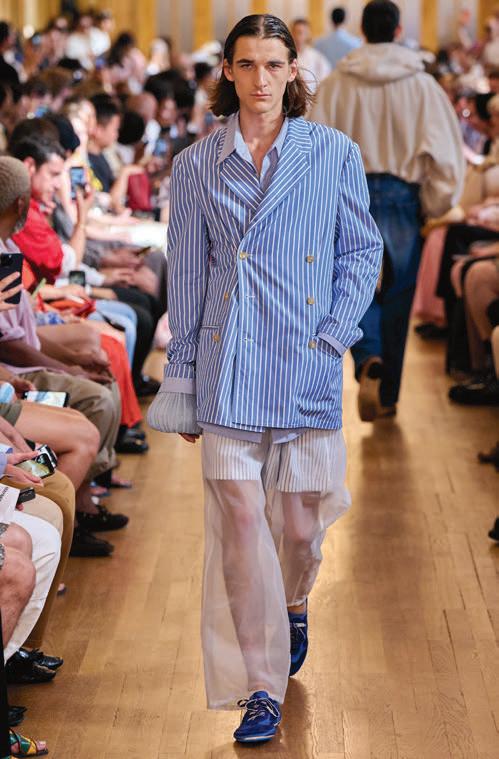
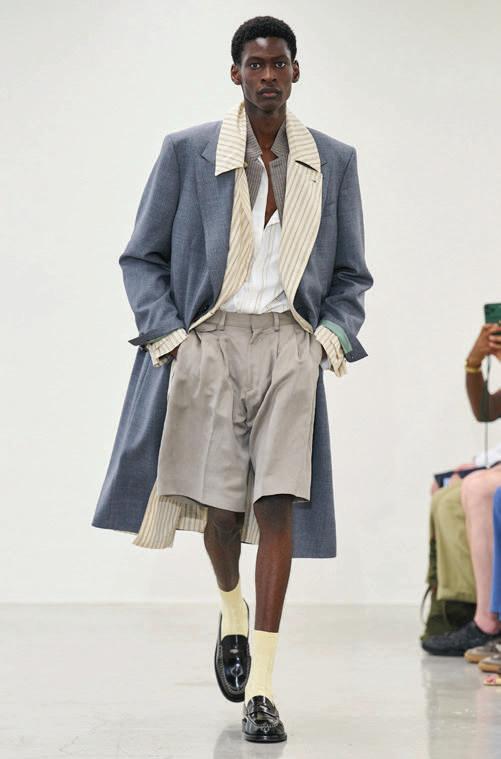
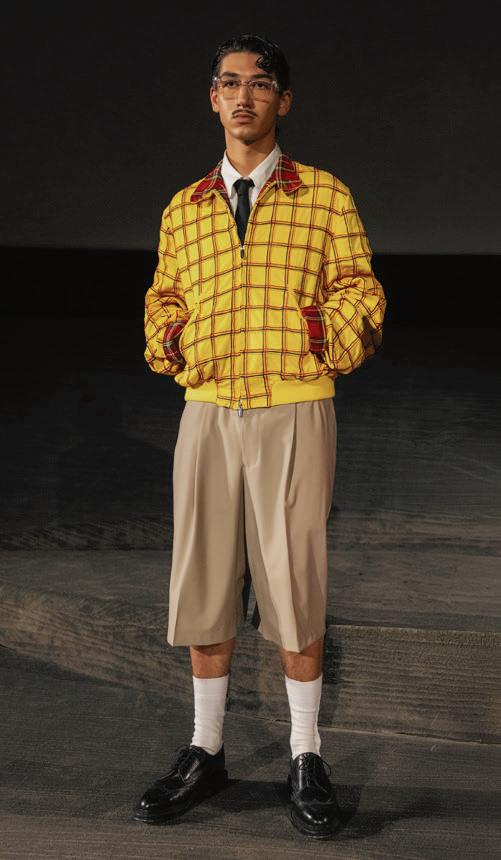
Formal wear is shedding its armor. From Dior’s sheer, unlined double-breasted suiting to Hed Mayner’s translucent wide-leg trousers, designers are rethinking tailoring’s basic construction, dropping interlinings, opening up weaves, and letting shirting fabrics do double duty as jackets. Paul Smith and Dries Van Noten pushed the idea further with soft, oversized proportions and pleated shorts standing in for trousers entirely, proof that a suit can still read as dressed up without a single ounce of heft.
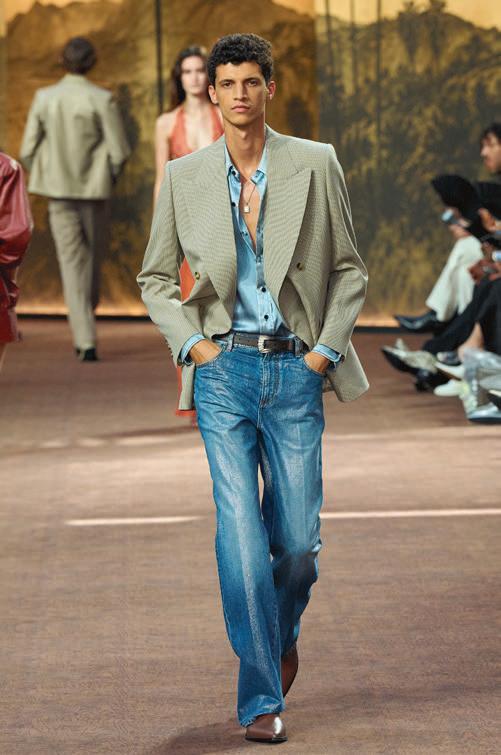
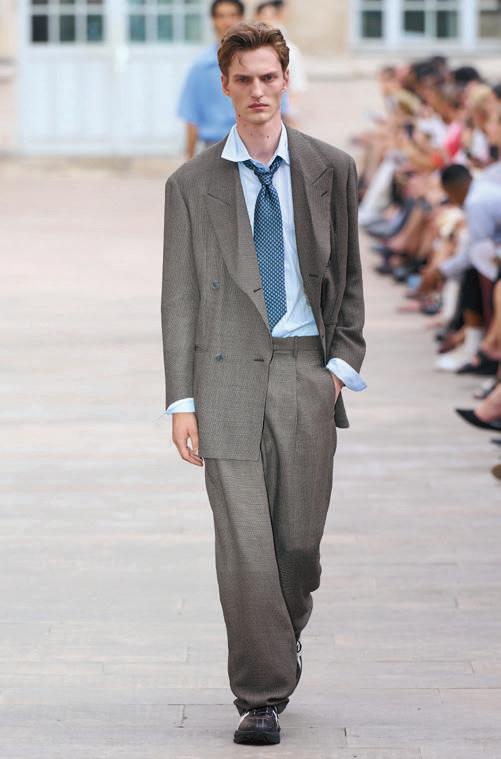
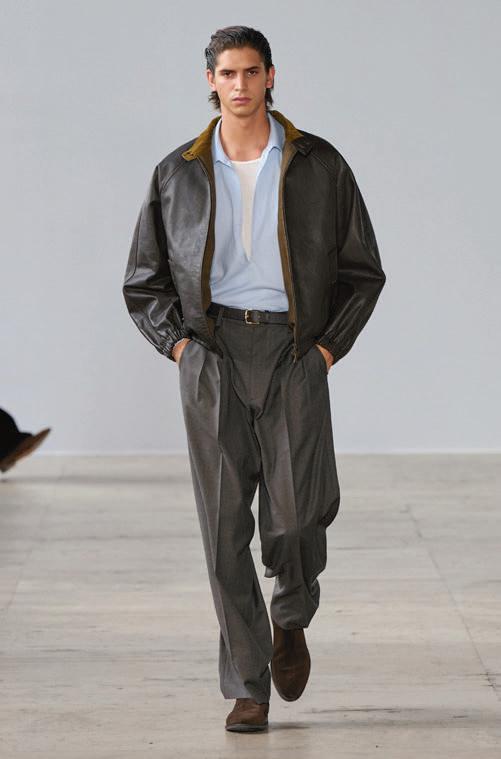
Old-school masculinity is having a moment, and it’s coming straight off the pages of a 1980s Avedon campaign. Armani’s loosened knit tie and unbuttoned collar, ssstein’s supple leather jacket over a deep-V placket, and Soshiotsuki’s oversized double-breasted suit all channel a swaggering, confident dressing that hasn’t been this prevalent in decades. Even Amiri’s rockstar take with open shirt, chunky jewelry, and glittered denim, plays into the same script: clothes that suggest a man who knows exactly who he is.
Retail Read: No, the average guy isn’t showing up to the office in see-through pants. But the construction lesson underneath is one every retailer should be stocking for: customers are actively asking for suits and sport coats that breathe. That means pushing unlined and half-canvas jackets, lighter interfacing, and fabrics like tropical wool, linen blends, and crepe over the heavier worsted wools that used to define a “proper” suit. Pair the tailored jacket with shorts on the floor too, even a simple pairing with a blazer signals the same ease this trend is chasing, minus the runway drama.
Retail Read: This is the trend with the most crossover appeal for the sales floor. Guys already respond to a loosened tie, an open collar, and a jacket that fits with a little swagger instead of corporate stiffness, it’s the look their fathers and grandfathers wore before “business casual” flattened everything out. Retailers should lean into the styling story here: sell the blazer with the tie undone, show a leather jacket over a knit instead of a jean jacket, and don’t be afraid to push a little chest. This trend doesn’t ask the customer to change his wardrobe, it asks him to wear it with more confidence.
01 — EASY, BREEZY
02 — LEADING MAN
Amiri
Giorgio Armani
Soshiotsuki ssstein
Dior Dries Van Noten
Hed Mayner
Paul Smith
03 — LUSH GREEN
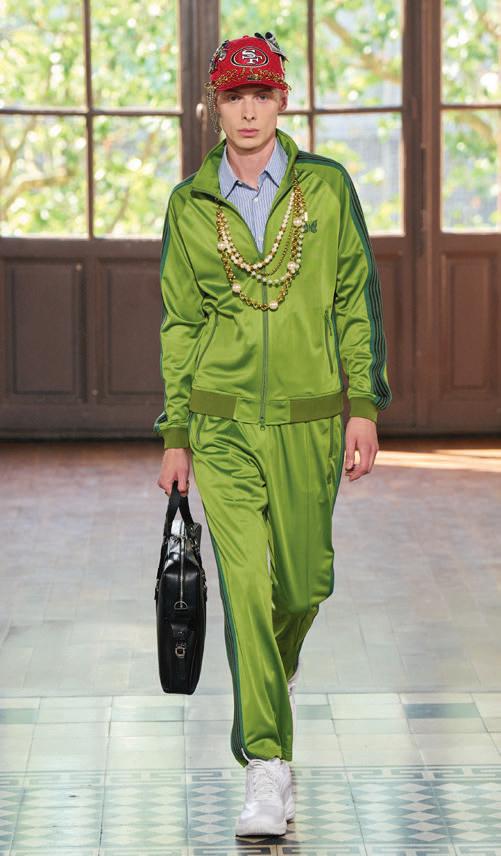
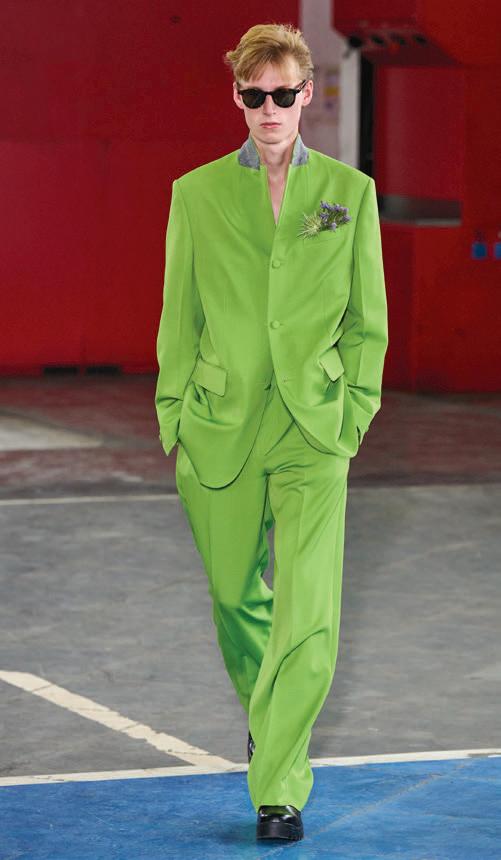
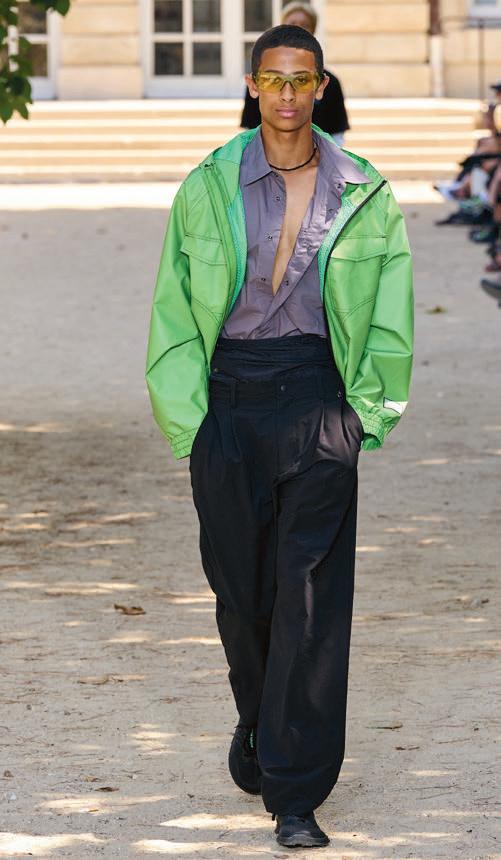
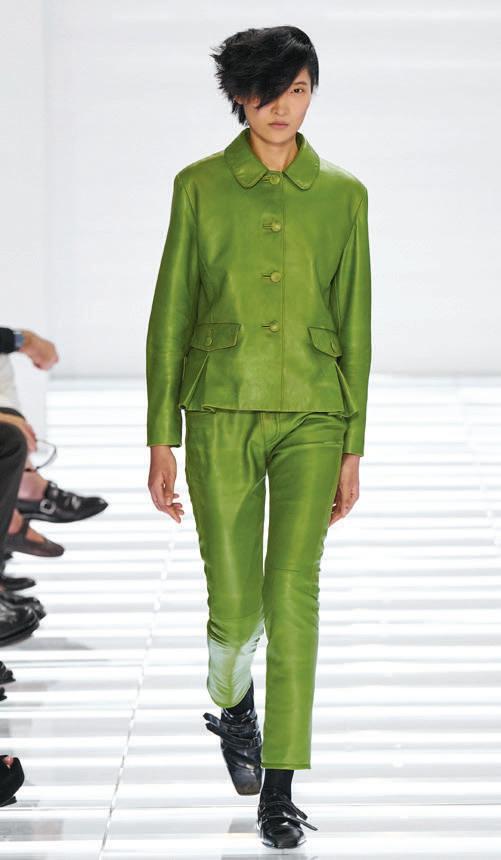
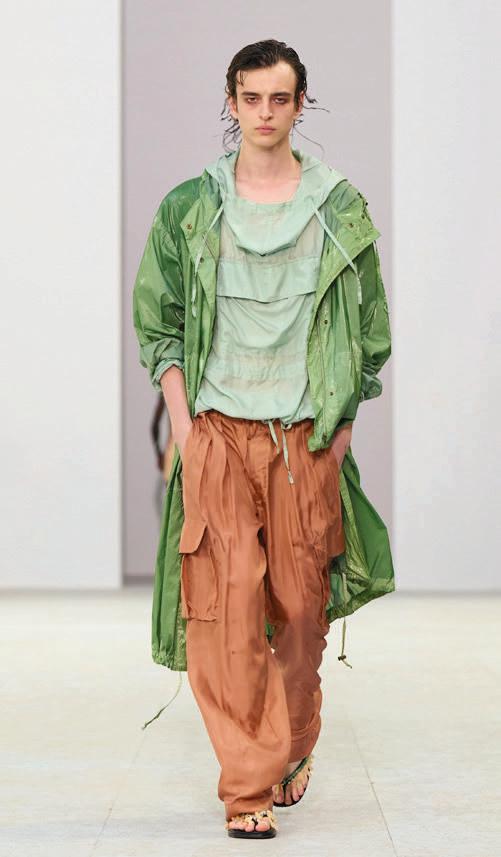
Green owned the runway this season, and it showed up in every possible category. Maison Kitsuné and Kolor pushed a technical, almost neon shade through performance-leaning outerwear and track sets, while Prada’s leather jacket and trouser set and Junya Watanabe’s tailored suit proved the color works just as well in a softer, more grounded register. It is telling that a color so tied to sustainability and climate conversation showed up as the season’s most versatile neutral, not a niche statement.
04 — SALTWATER BLUE
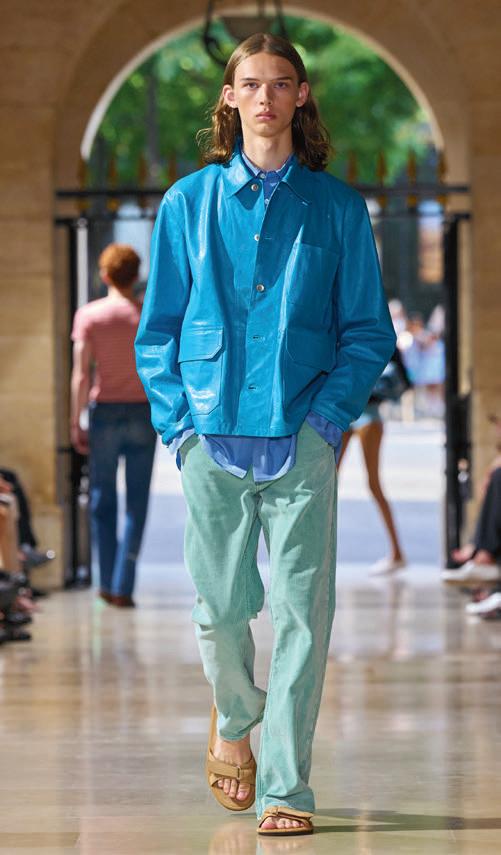
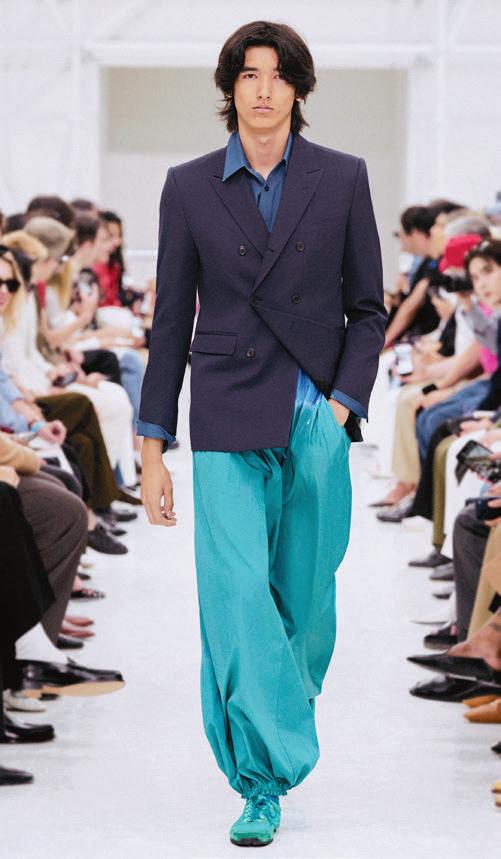
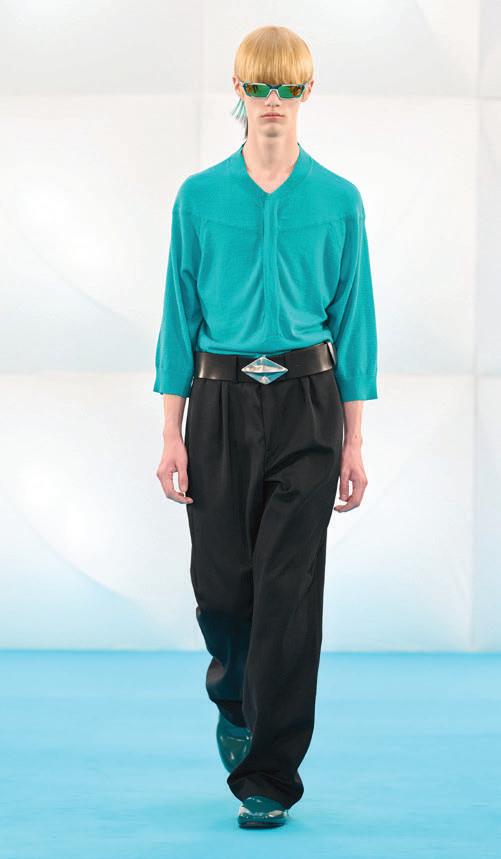
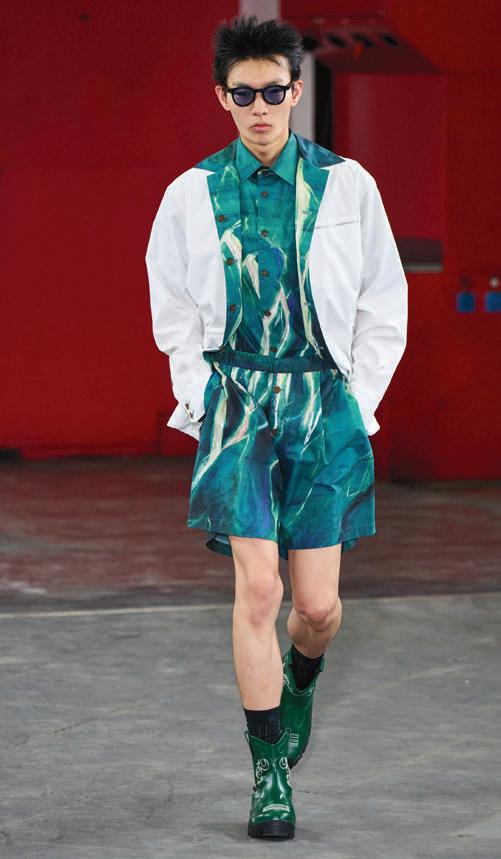
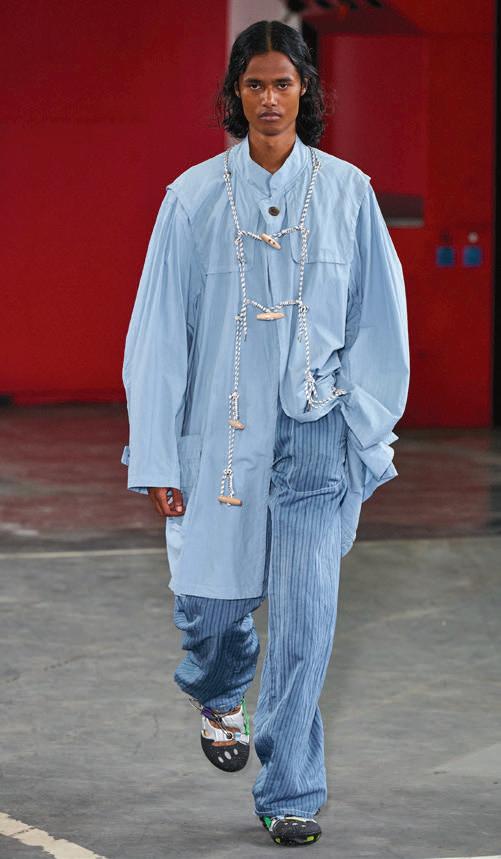
If green was the season’s grounded neutral, blue was its escape hatch. Kiko Kostadinov’s turquoise knit and Auralee’s glossy blue leather jacket over seaglass corduroy leaned tropical and sun-bleached, while Celine’s navy blazer paired with fluid teal trousers proved the color could still read tailored and refined. Kolor closed the loop with a painterly, watercolor-effect shirt and short set that looked pulled straight from a tide pool. Across the board, blue showed up as the season’s mood ring: as calming as it is refreshing.
Retail Read: Green is not a risk anymore, it is a staple. Retailers can bring this trend in at any register their customer is comfortable with: an olive or sage sport coat for the guy who wants to ease in, a true palm green polo or jacket for the guy ready to commit, or accessories (a belt or bag) for the guy who just wants a taste. The color’s link to sustainability also gives sales staff a built-in story to tell, especially with a customer who is already asking about natural fibers and responsibly made product. Stock it deep and across categories, this one has real legs beyond the runway.
Retail Read: Blue is the safest sell of the six trends—guys already own it, wear it, and trust it. The opportunity for retailers is in pushing the shade further than the usual navy or chambray. A turquoise polo, a seafoam pant, or a saturated cobalt jacket gives the customer who wants to dip a toe into color an easy, low-risk entry point, especially paired with neutrals like khaki or white he already owns. Merchandise it as an easy upgrade, not a bold statement, and it will move.
Junya Watanabe
Kolor
Maison Kitsune Prada
Auralee
Celine
Kiko Kostadinov
Kolor
Workwear’s hard edges keep dissolving. Dries Van Noten’s coated parka and Ziggy Chen’s zip-front vest still carry the pockets, zippers and drawstrings of true utility gear, but the fabrics have gone soft and the fits have gone loose—more lived-in than tactical. Maison Kitsuné and Kolor took the idea further with rope harnesses, patchwork trousers and oversized shirt-jackets that borrow utilitarian details as decoration rather than function. The result feels less like gear built for a job and more like clothing built for comfort that happens to look purposeful.
06 — TWISTED TRADITION
Prep is back, but it didn’t come back quietly. Dior mixed a red tartan halfzip with distressed denim and metallic mesh, while Ralph Lauren layered madras plaid over a bandana and a trucker cap for a look that reads more skate park than country club. Junya Watanabe went full deconstruction with a fringed houndstooth wrap draped asymmetrically over sport shorts and Kappa socks, and 3.Paradis paired a bold windowpane jacket in canary yellow with baggy shorts. The message across all four: heritage patterns are back, but they’ve been cut loose from their blue-blood origins.
Retail Read: This is a trend that has been building on the sales floor for a few seasons already, and retailers already know how to sell it. What is new here is the softening: guys who bought into utility for its rugged, technical appeal are now ready for the same silhouettes in a washed, brushed or garment-dyed hand. Push relaxed field jackets, patch-pocket shirts and drawstring pants in soft cotton or linen blends over anything stiff or overtly tactical. It is workwear DNA without the workwear attitude, and it fits the same easy, unstructured mood driving the rest of the season.
Retail Read: This trend gives retailers permission to bring plaid, tartan and houndstooth back into the mix without leaning into stuffy or costume-y prep. The move for the floor is proportion and pairing: a classic plaid shirt worn oversized, tied at the waist, or layered under something unexpected like a track jacket or a graphic tee. Younger customers especially will respond to prep patterns treated as texture rather than uniform, so encourage staff to break up a plaid piece with something sporty or a little irreverent instead of matching it top to bottom. It’s tradition, reinterpreted for a customer who wants heritage without the stiffness.
Dries Van Noten Kolor Maison Kitsune Ziggy Chen
3 Paradis
Dior
Junya Watanabe
Ralph Lauren
Chicago Collective PREVIEW
By Samantha Lande
Come August 1st through 4th, buyers will descend on THE MART for Chicago Collective, the country’s premier national menswear show, where more than 500 brands from around the world set up shop across two floors of the historic Merchandise Mart. It’s the rare trade show that doubles as a genuine industry gathering, with enough parties, tastings and activations to make the four days feel like more than an order-writing marathon.
First-timers should plan accordingly. The 7th floor alone spans two city blocks, and the 4th floor, added in 2024, has grown to 33,000 square feet. Both are packed with brands that have anchored the show for decades, alongside 48 newcomers debuting this season through showrooms or ITA, including fragrance house Museum Apotheker, Caccioppoli, Hidn-Ander and Jacob Cohën.
Ballin headlines this year as sponsor of the Opening Night Party on Sunday, August 2. The pantswear brand is marking its 80th anniversary with a blowout at THE MART River Front Drive, complete with skyline views, food and an open bar. Here’s what else is on deck.
The ITA Partnership Deepens
The Italian Trade Agency returns with its renowned lineup of exceptional brands, welcoming eight new exhibitors this August alongside longtime participants, all showcasing the unparalleled quality, craftsmanship, and diversity of Italian menswear manufacturing.
“We are really excited about what’s to come in our ongoing partnership,” says Monique Kielar, Vice President of Marketing, Apparel for the Merchandise Mart.
ITA will once again sponsor its popular Espresso & Aperitivo Bars in the Center Lounge, offering buyers a midday respite between appointments. ITA will also host its exclusive Monday evening celebration at a secret off-site location, revealed only during the show. Previous editions have included everything from private boat cruises and rooftop soirées to unforgettable nights at underground music clubs.
A New Kind of Activation: Wholesale Meets Retail
The most notable addition to this year’s show is a first for Chicago Collective: a wholesale-meets-retail concept from Huckberry, set up in THE MART’s first floor lobby. The adventure and lifestyle brand, which operates stores in Chicago and Washington, D.C. in addition to its e-commerce business, will sell direct from its in-house labels Flint and Tinder, Wills and Proof, mixing heritage and rugged pieces with elevated staples.
It’s a meaningful shift for a trade show to open its doors to retail transactions on-site, and it signals where Kielar sees the show heading. “Our primary goal has always been to discover innovative ways to evolve the show while remaining true to our foundation,” she says.
Accessories Take a Bigger Share of the Floor
Accessories have real presence at this year’s show. Rifugio brings ultrathin leather and suede jackets, and FPM Milano shows its high-end luggage, both categories with little direct competition elsewhere on the floor. Buyers will also find more than 80 footwear brands, along with Bretelle & Braces for suspenders and pocket squares, Mission Belt, and Bosca for leather goods.
“Retailers have been looking for more accessories, and buyers are starting to request them,” Kielar says. “We always take our buyer requests very seriously.”
Food, Drink and a Sunrise 5K
Between appointments, there’s plenty to eat and drink. Italian brand Ravazzolo pairs its tailored clothing with Prosecco, Pinot Grigio and Bordeaux blends from its family vineyards in the Veneto, while Ginofriddo samples “Tutti Amici” olive oil from its groves in Tuscany. Duckhead pours coffee in the morning and espresso martinis later in the day alongside its new Japanese Kaihara denim, and Rhone runs a juice bar for anyone looking to detox on Sunday. The 4th floor keeps
a steady rotation of pastries, burgers and charcuterie through the day, and servers circulate Chicago hot dogs on Sunday.
For buyers who want to move before they shop, UYN hosts a 5K run at 6:30 a.m. on Sunday, with trail running socks made from 100% plantbased fiber for participants, followed by coffee at the Westin River North.
Where the Show Goes From Here
Chicago Collective continues to operate a waitlist and prioritize new brands based on buyer feedback and retailer referrals. “We’re exploring strategic, creative ways to expand the show,” Kielar says. The 4th floor has an improved flow this year, and if the Huckberry activation performs well, expect more partnerships in that vein.
International growth is the next frontier. “We think the largest opportunities for growth are with international retailers,” Kielar says. “We have already tapped into Canada, Mexico, Italy, Japan and Puerto Rico, but we feel there is more opportunity for engagement with buyers outside of the U.S.”
THE AMERICANS
THE IDEA FOR this spread was born close to home. MR’s own Jahn Hall, a German kid who immigrated to the United States, spent his early years in this country desperately wanting to look American. To him, that meant sneakers, denim, and a baseball tee: a uniform his mother considered strictly for play. That tension between where you come from and where you land, between the culture you carry and the one you’re trying to crack, is at the heart of what American style has always been.
As the country marks its 250th year, we asked ten first and second-generation Americans, all creatives working across fashion, art, music, and design, a simple question: what does being an American mean to you, and how has it shaped the way you dress?
Their answers are anything but simple. What emerges is a portrait of American style that is global by nature. The brands and references woven into their wardrobes span continents, because that is precisely the point. American style has never belonged to America alone. It has always been a negotiation—between heritage and assimilation, between the clothes you were raised in and the ones you chose for yourself.
These are the New Americans. Their style is borrowed, inherited, reimagined, and entirely their own.
PHOTOGRAPHY BY MARKO KALFA STYLING BY JAHN HALL
ED AWUAH APPAREL DESIGNER GHANA
“BEING AMERICAN MEANS HAVING THE FREEDOM TO PURSUE YOUR GOALS AND EXPRESS WHO YOU ARE, AND ALSO EMBRACING DIFFERENT CULTURES AND PERSPECTIVES.”
Yahsu jacket, Merrell shoes, Articles of Style trousers
THOMAS TRAN ARTIST VIETNAM
“THERE’S
A LOT OF INHERITED RESPONSIBILITY BECAUSE OF THE SACRIFICES THAT HAVE ALREADY BEEN MADE FOR YOU... TO THEN BE UP AGAINST HAVING SO MUCH PERSONAL FREEDOM. YOU CAN’T TAKE THAT FOR GRANTED.”
Perry Ellis shirt and pants
CHRIS HABANA JEWELRY DESIGNER PHILIPPINES
“BEING AN AMERICAN HAS REALLY FELT LIKE, YES, I HAVE BEEN ABLE TO FULFILL A LOT OF MY DREAMS AND BE AS FREE AND BE VERY COMFORTABLE IN MY OWN SKIN.”
Aknvas shirt, Sons of Gemini shorts, CHRISHABANA jewelry
Photographer: Marko Kalfa; casting, styling and production: Jahn Hall; editorial director: Michael Fisher; photo assisstant: Georgi James; styling assistant: Solomon Marchand; production sssistant: Sean Deoraj
“
Never have I had a more difficult task than selecting 15 photos to go on my MR schmoozing page. ”
With apologies to the 99 percent I left out, here are just a few favorite memories. Check online for more!
01. Stanley Marcus
02. Mimmo Spano
03. Mark Streisand 04. Russ Mitchell & Stu 05. Murry Penner and Henry Grethel