healthy together FALL 2019
A Publication of
MONMOUTH MEDICAL CENTER SOUTHERN CAMPUS
TRANSFORMING CARDIAC CARE
BREAST CANCER SCREENING AFTER 65 CULTURALLY SENSITIVE HEALTHCARE
SEE THE DOCTOR ONLINE! PAGE 9
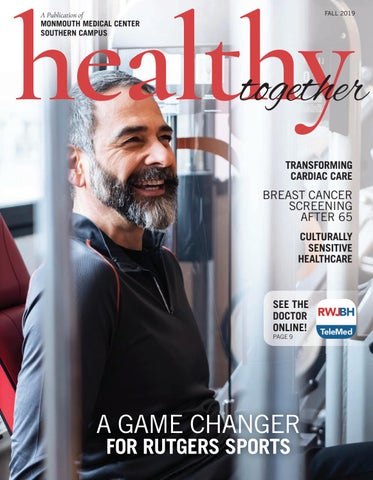
A GAME CHANGER FOR RUTGERS SPORTS
A MESSAGE FROM LEADERSHIP
CREATING WINDOWS OF
OPPORTUNITY
A
t RWJBarnabas Health, our mission—our passion—is to improve the health of residents in the communities we serve. But we’re equally committed to ensuring that New Jerseyans have opportunities to learn, develop and pursue their goals. You’ll see that commitment come to life in many ways: in free support groups and classes, in health services delivered to senior citizens at home, in housing and employment assistance provided to local residents, and more. In this issue, we spotlight two ways in which RWJBarnabas Health is making a difference. Children’s Specialized Hospital, an RWJBarnabas Health facility, has joined forces with Opportunity Project, an organization that helps adults living with the effects of traumatic brain injury. Together, the two organizations create a continuum of care and learning opportunities for patients with brain injuries, from childhood through adulthood. And in the state-of-the-art RWJBarnabas Health Athletic Performance Center, we’re partnering with Rutgers University to provide spaces designed to optimize health-sciences learning and to give athletes the resources they need to reach their full potential. At Monmouth Medical Center Southern Campus (MMCSC), our reach extends into the community in various ways. Our Community Health educators partner with civic organizations, such as Bikur Cholim, Safe Kids Monmouth/Ocean Counties and The Cancer Support Community, as well as many adult communities throughout Monmouth and Ocean counties. Physician lectures are arranged along with screenings and awareness opportunities of the vast healthcare services offered at MMCSC and throughout the RWJBarnabas Health system. Our skilled professionals and service line navigators are available, especially when you or a loved one has an unexpected illness or healthcare need. Education and awareness are the keys to staying well, and access to services like rehabilitation, when needed, is the key to living well. We’re honored by the trust people place in us to care for their health. In return, we’re continually working to increase opportunities for all New Jersey residents to live their best lives. Yours in good health,
BARRY H. OSTROWSKY
FRANK J. VOZOS, MD, FACS
PRESIDENT AND CHIEF EXECUTIVE OFFICER RWJBARNABAS HEALTH
CHIEF EXECUTIVE OFFICER, MONMOUTH MEDICAL CENTER SOUTHERN CAMPUS EXECUTIVE VICE PRESIDENT, RWJBARNABAS HEALTH
HEALTH NEWS SUPPORT FOR DIABETES PATIENTS November is Diabetes Awareness Month. If you have diabetes and need extra support, consider the Center for Diabetes Education and Nutrition Services at Monmouth Medical Center Southern Campus (MMCSC). The Center helps people with diabetes better manage their disease. The Diabetes Self-Management Series provides education and support through classes on topics such as meal planning, preventing complications and blood sugar monitoring. In the Weight Management Program, a registered dietitian provides nutrition counseling. The Gestational Diabetes Education Program offers one-on-one consultation with a nurse or dietitian who provides information about insulin pumps, therapeutic diets and more. The program, which is certified by the American Diabetes Association (ADA), has been awarded the ADA Education Recognition Certificate for a quality diabetes selfmanagement program. For more information, call 732.923.5025.
FREE COLON CANCER SCREENING A free colon cancer screening is available at MMCSC to the first 50 eligible participants through a grant-funded program. Colorectal cancer is the third most common cancer diagnosed in both men and women, and the risk increases with age. To participate in the screening, you must be between the ages of 45 and 75 and be at average risk for the disease. Participants cannot have a family history of the disease or a personal history of Crohn’s disease, ulcerative colitis, colorectal cancer or certain types of polyps. For more information, call 732.886.4510.
600 River Ave., Lakewood, NJ 08701 732.363.1900 | rwjbh.org/MonmouthSouth
CONNECT WITH US ON @MonmouthSouthernCampus @RWJBarnabas RWJBarnabas Health
Monmouth Medical Center Southern Campus complies with applicable federal civil rights laws and does not discriminate on the basis of race, color, national origin, age, disability or sex. For more information, see link on our home page at www.rwjbh.org/monmouthsouth. MMCSC cumple con las leyes federales de derechos civiles aplicables y no discrimina por motivos de raza, color, nacionalidad, edad, discapacidad o sexo. ATENCIÓN: Si usted habla español, servicios de asistencia lingüística, de forma gratuita, están disponibles para usted. Llame al 732.363.1900. MMCSC konfòm ak lwa sou dwa sivil federal ki aplikab yo e li pa fè diskriminasyon sou baz ras, koulè, peyi orijin, laj, enfimite oswa sèks. ATANSYON: Si w pale Kreyòl Ayisyen, gen sèvis èd pou lang ki disponib gratis pou ou. Rele 732.363.1900.
Healthy Together
| 2 |
Fall 2019
together healthy contents FA L L 2 0 1 9
2. WELCOME LETTER. A community update from our CEOs.
12. THE A-TEAMS FOR ADVANCED HEART FAILURE. Two RWJBarnabas Health heart transplant programs offer worldclass, close-to-home care for New Jersey residents.
4. TRANSFORMATIVE CARDIAC CARE. Patients with heart disease symptoms can now be evaluated with a revolutionary, noninvasive technology. 6. A MIRACULOUS RECOVERY. A healthcare team’s expertise and dedication saved a man’s life. 8. WHAT’S YOUR FLU IQ? Take our quiz and see how prepared you are for flu season.
9. 10 TIMES TO USE TELEMED. A virtual doctor visit can be the fastest way to feel better. 10. GAME CHANGER. The RWJBarnabas Health Athletic Performance Center at Rutgers University kicks off a new era for Rutgers sports.
14. CANCER: WHERE TO CALL FOR HELP. Now there’s a single phone number for clear and compassionate answers about treatment. 16. BEYOND BRAIN INJURY. A new partnership provides resources to people living with traumatic brain injury.
Monmouth Medical Center Southern Campus
17. DETECTING BREAST CANCER AFTER 65. Regular mammograms and selfexams save lives. 18. “WHY I GIVE.” Three community members reveal why they support MMCSC. 20. A COMMITMENT TO THE COMMUNITY. MMCSC is helping to improve access to healthcare for people of all backgrounds. 22. OUT AND ABOUT. At recent events, a cancer survivor and her care team were honored and bike safety was in the spotlight. 23. COMMUNITY EDUCATION. A roundup of health education and support programs.
|
RWJBH.ORG/MONMOUTHSOUTH
| 3
TRANSFORMATIVE
CAR IAC CARE PATIENTS WITH HEART DISEASE SYMPTOMS CAN NOW BE EVALUATED WITH A REVOLUTIONARY, NONINVASIVE TECHNOLOGY.
HeartFlow’s colorcoded map shows the location and severity of blockages in coronary arteries.
U
ntil recently, the only de initive way for cardiologists to know if a patient with chest pain had a signi icant blockage in the heart’s arteries was to perform an angiogram. uring this invasive procedure, a catheter is inserted into the arteries, a dye is injected, and -rays are taken while the dye travels through the arteries. Now, Monmouth Medical Center Southern Campus (MMCSC) has a revolutionary, noninvasive way to evaluate patients with chest pain and those who are suspected of having a blockage in the heart’s arteries: Heart low Analysis, which uses ractional low Reserve CT ( R CT) technology. This test allows us to determine with greater con idence and accuracy whether a patient has a signi icant blockage in the heart’s arteries without putting him or her through unnecessary, invasive testing, says Rajesh Mohan, M , MBA, ACC, SCAI, an interventional
Healthy Together
| 4 |
Fall 2019
Monmouth Medical Center Southern Campus (MMCSC) cardiologists, cardiology fellows and administrators at a Cardiac CT educational symposium hosted by MMCSC. Frank J. Vozos, MD, FACS, Chief Executive Officer at MMCSC and Executive Vice President at RWJBarnabas Health, is seventh from left and Jonathan Tango, FACHE, V.P. Operations, is third from right. Right: The program was led by Chunguang Chen, MD, a cardiologist at Newark Beth Israel Medical Center (second from left), and Rajesh Mohan, MD, an interventional cardiologist and Chief Medical Officer at MMCSC (third from left).
cardiologist and Chief Medical O icer at MMCSC. We will be the irst in our area and only the fourth in the state to offer this advanced technology. Says rank J. ozos, M , ACS, Chief Executive O icer at MMCSC and Executive ice President at RWJBarnabas Health: This is a win-win’ for Monmouth and Ocean County residents.
A THREE-DIMENSIONAL VIEW OF ARTERIES Heart low Analysis, which was developed by Heart low, a Redwood City, California-based company, works by measuring blood low in a patient’s coronary arteries. irst, a standard coronary CT scan is performed. If the scan reveals blockages that indicate signi icant coronary artery disease, the CT images are then analyzed using Heart low’s arti icial intelligence software to create a personalized, three-dimensional model of the patient’s arteries. The result is a color-coded map that shows the location and severity of blockages in the arteries. Cardiologists can then use this information to develop a treatment plan. This noninvasive scan tells us if a blockage in the heart arteries may need invasive treatment, like a stent or cardiac bypass, or if it can be treated with medications, says r. Mohan. Patients would know if they have a blockage and if it’s signi icant without having to go through tests, including invasive procedures. They may also avoid unnecessary admission to the hospital and the associated costs. MMCSC recently updated its new CT scanner with the new R CT-enabled technology. While an angiogram remains the gold standard, this transformative technology could potentially change the way coronary artery disease is diagnosed and treated, says r. Mohan. I’ve been following this technology for a few
years. It brings together human intelligence and arti icial intelligence, helping us to identify patients with dangerous blockages noninvasively while providing a better patient experience. This has recently been approved for use in the U.S., and I’m excited that the vast majority of our patients will be able to avoid unnecessary invasive testing and bene it from this new technology.
Your heart doesn’t beat just for you. Get it checked. To reach a Monmouth Medical Center Southern Campus cardiac specialist, call 888.724.7123 or visit www.rwjbh.org/heart.
Monmouth Medical Center Southern Campus
|
RWJBH.ORG/MONMOUTHSOUTH
| 5
A MIRACULOUS
RECOVERY A HEALTHCARE TEAM’S EXPERTISE AND DEDICATION SAVED A MAN’S LIFE.
W
hen Albert Allen arrived at the Monmouth Medical Center Southern Campus (MMCSC) Emergency Department on November , , he was suffering from severe abdominal pain. Tests showed that Albert, 55, of Howell, had a perforated appendix, in which the nger-shaped pouch on the right side of the colon (also known as the large intestine) ruptures and causes infection. Albert had developed sepsis, a complication of an infection that can lead Healthy Together
| 6 |
Fall 2019
to organ failure and death. “I was worried because I knew how delicate the situation was, and I didn’t think it would turn out well,” recalls Kimberly Wright, RN, a critical care nurse who cared for Albert. “I didn’t know if he would survive.” Albert, who also has Crohn’s disease, in which the gastrointestinal tract is chronically in lamed, needed immediate surgery to remove his appendix. Unfortunately, his belly couldn’t be closed immediately after the surgery due to
abdominal compartment syndrome, in which the pressure inside the abdomen climbs so high there’s no room for the internal organs. What’s more, Albert had a istula, an abnormal tunnel between two organs (in his case, the small intestine, or small bowel, and colon) and an abnormally narrow colon.
RO ND-THE- LO
ARE
John W. Gorechlad, MD, FACS, the critical care surgeon who cared for Albert,
SURGICAL EXPERTISE John W. Gorechlad, MD, a Fellow of the American College of Surgeons, is a trauma and critical care surgeon who routinely cares for the sickest patients. He graduated from UMDNJ-Robert Wood Johnson Medical School. Patient Albert Allen has made a complete recovery from a perforated appendix and sepsis, thanks to his surgeon, John W. Gorechlad, MD, FACS, and his healthcare team (above).
monitored Albert closely. He often drove back to the hospital—even in the middle of the night—to attend to Albert. Dr. Gorechlad removed the right portion of Albert’s colon, which had been damaged from Crohn’s disease. He also created a temporary ileostomy, a surgical opening in the abdominal wall, to allow for the removal of waste from Albert’s body. This gives his intestines time to heal from the other surgeries. Later, Dr. Gorechlad will reconnect the small bowel and colon. During Albert’s stay at MMCSC, he was connected to an array of tubes— multiple intravenous (IV) drips, which delivered medications like antibiotics, as well as a feeding tube and a ventilator (a machine that delivers oxygen to the lungs) to protect his lungs. He also had a complex dressing called a wound VAC, or vacuum-assisted closure—which promotes healing—to cover his open abdomen. “Once in a while, the wound VAC would open, and we’d have to ind creative ways to close it again,” says Wright. “We were in constant communication with Dr. Gorechlad.”
Albert’s care team was completely dedicated to him. “I was in his room my entire shift,” says Wright. “I didn’t feel comfortable leaving his bedside for ive minutes to go to lunch. He needed to be monitored closely, and I felt it was my responsibility to stay with him.” Dr. Gorechlad was also committed to Albert. “I care for my patients from beginning to end, with continued follow-up in the o ice, he says.
ROSSIN
EVER H RDLE
At irst, Albert was heavily sedated. “When he ‘woke up’ in the critical care unit, he didn’t understand how sick he was,” says Wright. “He had a lot of fear because he couldn’t understand why he was unable to eat or drink anything by mouth. We had to explain why he was on a ventilator and that it wasn’t safe to remove the breathing tube. We were afraid he might pull the tube out.” Despite the severity of Albert’s medical problems, he crossed every hurdle. “In late December, when Albert could communicate that he was okay, I
knew he was going to make it,” recalls Dr. orechlad. On January , he was nally discharged from MMCSC. “I’m happy for Albert, says r. orechlad. There were so many opportunities for him to die or not recover, and now he’s fully functional.” When Dr. Gorechlad showed Wright a photo of Albert with a big smile on his face at a follow-up visit, she couldn’t believe it. “I’m amazed,” says Wright, who has been a nurse for 23 years. “He was probably the sickest patient I ever cared for.” In May, on Albert’s birthday, Albert brought Dr. Gorechlad and the nurses plaques to thank them for saving his life. The one for the nurses read: “Thank you for your daily efforts, dedication, intensity and optimism.” “I’m so grateful to Dr. Gorechlad and the nurses,” says Albert, who was making jerk chicken and other Jamaican dishes at the time of the interview. “I’m bringing lunch for the nurses.” Albert has lost weight and is eating well and, at press time, planned to have surgery to remove the ileostomy. “I feel great,” he says. “There’s a new glow on my face.”
To learn more about Monmouth Medical Center Southern Campus’s robust surgical program and its recent expansion, visit www.rwjbh.org/monmouthsouth.
Monmouth Medical Center Southern Campus
|
RWJBH.ORG/MONMOUTHSOUTH
| 7
WHAT’S YOUR FLU IQ? TAKE OUR QUIZ AND SEE HOW PREPARED YOU REALLY ARE FOR THIS YEAR’S FLU SEASON. Maybe the u won’t strike you this year, with its fever, dry cough, sore throat, body aches and chills. But why take the chance The Centers for isease Control and Prevention (C C) estimates that tens of thousands of people die from the u and u-related complications each year. Prevention is key. Take our quiz, which is based on the latest C C information, and learn what to do to avoid the u. 1. Which of these symptoms is more specific to the flu than to a common cold? a. Cough b. Body ache c. Congestion d. Sneezing e. None of the above
3. When you’re exposed to the flu, how long does it typically take for you to become ill? a. One to four days b. One week to 10 days c. An hour or two d. A month e. Instantly
2. Which of these are good steps to take to avoid getting the flu? a. Avoid infected individuals b. et a u vaccine c. rink lots of uids and maintain a balanced diet d. Wash your hands o en e. All of the above
4. Who is not among those at highest risk for developing serious complications from the flu? a. Pregnant women b. People 65 years of age and older c. People who work more than 40 hours per week d. People with chronic illnesses like asthma and diabetes e. Young children
How many did you get right, and where do you rank? No matter your score, use the insights gained to reduce your future risk. 6–7: You’re flu-prevention smart 4–5: Your flu facts need a booster shot 2–3: The flu is likely in your future 0–1: You have no clue about the flu
5. Which of these are recommended to help prevent the spread of the flu? a. Cough or sneeze into the crook of your arm b. Wash hands frequently with warm water and soap c. Stay away from work if you have symptoms d. Avoid touching your eyes, mouth and nose e. All of the above
To nd a ph sician at MM , visit www.rwjbh.org/doctors.
b; 2. e; 3. a; 4. c; 5. e; 6: c; 7: a Health Together
| 8 |
Fall 2019
7. What is the No. 1 step recommended by the CDC to avoid getting the flu? a. A u vaccine at the start of u season (usually October/ November) b. Plenty of vegetables and fruits c. At least eight hours of sleep per night d. Staying away from populated areas e. Daily doses of aspirin
ANSWERS: 1.
YOUR FLU IQ:
6. Which of these is true about the flu? a. It is caused by being cold and wet b. It always comes with a fever c. It is caused by a virus d. It cannot be diagnosed through tests e. You can catch the u from the vaccine
10 TIMES TO USE TELEMED A VIRTUAL DOCTOR VISIT CAN BE THE FASTEST WAY TO FEEL BETTER.
W
ith the RWJBarnabas Health TeleMed service, patients can reach a U.S. boardcerti ied doctor at any time of day or night, including weekends and holidays. The how is simple: ownload an app for iOS or Android and connect via smartphone, tablet or computer. But why might you choose to use TeleMed rather than make an appointment with your doctor At right are some circumstances that might make a virtual visit a good choice. TeleMed is appropriate for common complaints such as colds, lu, fever, minor rashes, earache, sinusitis, migraine, abdominal pain, allergies, pink eye and joint pain.
You get sick while on vacation.
Your doctor’s office is closed.
You need care for a sick child, but can’t leave your other children home alone.
You can’t get a sameday appointment with your doctor.
You feel too sick to leave the house.
You’re out of town and realize you forgot a prescription.
You live in a rural area, making doctor visits and follow-up visits inconvenient.
CALL 911 IF… TeleMed is not for emergencies. Call 911 or go to the nearest emergency department if you are experiencing any of the following emergency medical problems: • Chest pain or pressure • Uncontrolled bleeding • Sudden or severe pain • Coughing or vomiting blood • Difficulty breathing or shortness of breath • Sudden dizziness, weakness, change in vision, slurred speech, numbness or other neurological changes • Severe or persistent vomiting or diarrhea
You don’t have time to wait in a waiting room.
It’s difficult to take time off from work to go to the doctor.
• Severe abdominal pain • Changes in mental status, such as confusion • Assault, physical or sexual abuse
To learn more or to sign up for the RWJBarnabas Health TeleMed service, visit www.rwjbh.org/telemed.
You don’t want to expose others to a contagious disease (or be exposed to theirs).
• Broken bone RWJBarnabas Health
|
RWJBH.ORG
| 9
GAME
CHANGER GYMNASTICS
HYDROTHERAPY
WEIGHT ROOM
Healthy Together
BASKETBALL
| 10 |
Fall 2019
MAIN LOBBY
WRESTLING
HAPPY BIRTHDAY, COLLEGE FOOTBALL! 150 YEARS OF ATHLETIC PROWESS AND PASSIONATE FANDOM BEGAN AT RUTGERS UNIVERSITY.
As a major milestone in Rutgers sports history is marked with the opening of the RWJBarnabas Health Athletic Performance Center, a national college sports milestone is also being celebrated: the 150th anniversary of the first game of intercollegiate football, which took place on Nov. 6, 1869, between Rutgers and Princeton. (Rutgers triumphed, 6-4.) The season-long festivities include themed home games and the unveiling of a new “Victory” statue. RWJBarnabas Health, the official healthcare provider of Rutgers Athletics, is a presenting sponsor. To learn more, visit www.rutgersgameday.com.
THE RWJBARNABAS HEALTH ATHLETIC PERFORMANCE CENTER AT RUTGERS UNIVERSITY KICKS OFF A NEW ERA FOR RUTGERS SPORTS.
F
or Rutgers student-athletes, the future is here. The state-ofthe-art RWJBarnabas Health Athletic Performance Center at Rutgers University, which opened in September, is home to new facilities for men’s and women’s basketball, wrestling and gymnastics, as well as a sports performance/sports medicine suite, nutrition lounge, seating area for professional scouts and more. The , -square-foot, four-story facility brings Rutgers athletic offerings to a new level. “It’s a game changer for our student-athletes in clinical care,” says Pat Hobbs, irector of Intercollegiate
Athletics at Rutgers University. “They are going to receive the very best in sports medicine.” The facility was made possible by an investment from RWJBarnabas Health, the o icial healthcare provider of Rutgers Athletics. “For far too long, we haven’t produced, as a state, those facilities and resources necessary to have world-class athletes—and frankly, in New Jersey, we have world-class athletes,” says Barry Ostrowsky, President and CEO of RWJBarnabas Health. At Rutgers, we have world-class students. For us, this is a wonderful opportunity to invest in a great University.”
To learn more about RWJBarnabas Health partnerships, visit www.rwjbh.org/corporatepartners.
X-RAY ROOM
RWJBarnabas Health
|
RWJBH.ORG
| 11
TWO RWJBARNABAS HEALTH HEART TRANSPLANT PROGRAMS COLLABORATE TO OFFER WORLDCLASS CARE, CLOSE TO HOME FOR NEW JERSEY RESIDENTS.
I
THE A-TEAMS FOR
ADVANCED HEART FAILURE Healthy Together
| 12 |
Fall 2019
n 1989, cardiologist Mark Jay Zucker, MD, relocated from Chicago to join nationally renowned cardiovascular surgeon Victor Parsonnet, MD, at Newark Beth Israel Medical Center (NBI). Both physicians saw an opportunity to build a world-class heart failure treatment and transplant program at NBI. Toward that end, Dr. Zucker and other members of the NBI team met with cardiologists around the state, gave talks and lectures, and sent out educational mailings to introduce the medical community to the new program. Over the course of 30 years, the goal of creating a nationally renowned heart failure and transplant center has been met, perhaps beyond the team’s wildest dreams—and certainly beyond those of many patients. By 2017, the Advanced Heart Failure Treatment and Transplant Program at NBI had performed more than 1,000 transplants, one of only a dozen programs in the U.S. to reach that milestone. Today the program performs about 50 to 55 transplants each year; has roughly 70 staff members, seven physicians, three surgeons and a full complement of nurses and nurse practitioners; and follows more than , patients at ive different o ices.
COVERING THE STATE The NBI program and the Advanced Heart Failure and Heart Transplant Program at Robert Wood Johnson University Hospital in New Brunswick (RWJUH) are the only two heart transplant programs in New Jersey, “We are one of the major referral centers for heart conditions in the state, particularly in central New Jersey,” says Aziz Ghaly, MD, Surgical Director, Advanced Heart Failure and Heart Transplant Program at RWJUH. We offer the most advanced options for treatment of heart failure available. That means we
Matt Millen
can do complete workups for patients under one roof.” As collegial members of the same health system, the two programs provide seamless treatment to any patient in need of complex cardiac care, not only from the hospitals of the RWJBarnabas Health system but from any hospital inside New Jersey or beyond. For New Jersey residents, that means advanced cardiac care is always available close to home. The connection between the two teams further enhances patient care. “Leadership of both programs meet regularly to discuss how to coordinate care, improve safety, streamline services and sometimes just to learn from one another as well,” says Dr. Ghaly.
MULTIDISCIPLINARY APPROACH At NBI, Dr. Zucker, Director of the Cardiothoracic Transplantation Program, and Margarita Camacho, MD, Surgical Director of Heart Transplantation, are two of the most senior physicians in the ield, with a combined experience of caring for more than 1,500 transplant patients. Both physicians are at the forefront of advanced heart failure treatments, and both have been at NBI for the majority of their careers. “That translates to consistency,” says Dr. Zucker. “We have danced together for a long time. The RWJUH transplant program has been in place for more than 20 years, with year after year of excellent outcomes, says Dr. Ghaly. Both programs rely on multidisciplinary teams to provide
AZIZ GHALY, MD
MARK JAY ZUCKER, MD
the highest quality of care. Advanced cardiac care requires a tightly integrated, well-functioning team of talented and knowledgeable clinicians, paramedical professionals, social workers, pharmacists and dietitians,” says Dr. Zucker. “Heart transplantation is not maintenance-free after surgery,” explains Dr. Ghaly. “Our heart failure cardiologists and nurse coordinators monitor patients very closely afterward, becoming like part of the patient’s family. The role is crucial to the patient’s survival post-transplant, and they are the heart and soul of our program.”
F T RE-FA IN Both programs are national leaders in treatment for advanced heart failure, including the use of ventricular assist devices (VADs). These surgically implanted mechanical pumps can keep patients alive as they wait for a heart transplant or when other medical conditions have rendered them ineligible for transplantation. The NBI and RWJUH programs also participate in multiple research trials that offer patients access to new investigational medications and devices prior to commercial availability. Most recently, the teams have been studying medications to treat advanced congestive heart failure, amyloid and lamin A/C cardiomyopathy. The transplant center at NBI is currently undergoing a $4.3 million renovation. “The transplant suite will soon integrate the mechanical support, heart and lung transplant programs all under one roof,” says Dr. Zucker. “The ability to interact on a moment-to-moment basis provides an ability to exchange ideas and ensure that all team members are up to date with new and emerging technologies.” This type of interaction is crucial when it comes to caring for such critically ill patients, says Dr. Zucker. “After all, the management of heart failure is a 24/7 operation that only works when you have a team of truly committed individuals.”
BACK IN THE GAME During Matt Millen’s storied career as a football player, observers often said he showed “a lot of heart.” That description resonated with many when they learned he was waiting for a life-saving heart transplant at Newark Beth Israel Medical Center (NBI). An All-American linebacker at Penn State, Millen had a 12-year NFL career, including four Super Bowl wins. He served as president and CEO of the Detroit Lions, followed by a successful career as a football commentator. As the years went on, he began to feel weaker and increasingly short of breath. It became hard to navigate the few stairs to his basement wood shop. Ultimately, Millen was diagnosed with the rare disease amyloidosis. Abnormal proteins called amyloids had been deposited in his heart muscle, rendering it stiff and unable to function properly. In the fall of 2018, Millen spent three months at NBI, under the care of Mark Jay Zucker, MD, Director of the Cardiothoracic Transplantation Program, and his team. On December 24, 2018, Millen underwent heart transplant surgery performed by Margarita Camacho, MD, Surgical Director of Heart Transplantation, and Mark Russo, MD. The surgery was a success. With a new heart and a new lease on life, Millen is back in the broadcasting booth for the 2019 football season.
our heart doesn t beat just for ou. et it chec ed. To reach an RWJBarnabas Health cardiac specialist near you, call 888.724.7123 or visit www.rwjbh.org/heart.
RWJBarnabas Health
|
RWJBH.ORG
| 13
CANCER:
WHERE TO CALL FOR HELP NOW THERE’S A SINGLE PHONE NUMBER FOR CLEAR AND COMPASSIONATE ANSWERS ABOUT CANCER TREATMENT.
W
hen a person is diagnosed with cancer, he or she has a lot to learn—and many decisions to make. What’s the best course of treatment? Where is the best place for treatment? Who is the best doctor to treat my cancer How can I get a second opinion That’s why RWJBarnabas Health (RWJBH), in partnership with Rutgers Cancer Institute of New Jersey, the state’s only National Cancer InstituteDesignated Comprehensive Cancer Center, has created an Oncology Access Center. This concierge-like service for cancer patients has an easy-to-remember number: -CANCERNJ. At that number, specialized oncology access representatives and oncology access nurse navigators stand ready to direct patients to the expert care they need. The Oncology Access Center creates one point of contact for all oncologists and hospitals in the RWJBH system and at Rutgers Cancer Institute. “We are well aware that people who are newly diagnosed or seeking a second opinion are dealing with an extremely stressful personal situation, says Steven K. ibutti, M , Senior ice President of Oncology Services, RWJBH and irector of Rutgers Cancer Institute of New Jersey. “We want to make the process of inding care as stress-free and e icient as possible. STEVEN K. LIBUTTI, MD
Healthy Together
| 14 |
System_Oncology_Fall19_REV1.indd 14
In the past, Dr. Libutti explains, patients and caregivers needed to do extensive research on their own to igure out what location and what physician would be most appropriate for their care. “Now they can more easily access NCI-designated cancer care across the state,” he says.
NAVI ATIN
THE O RNE
“We’re especially excited to have nurse navigators located right at the contact center if a person has a clinical question, says Bryan Soltes, System ice President, Network evelopment, Oncology Services for RWJBH. That aspect of our system makes it uniquely helpful to patients.” When a caller is referred to a speci ic hospital, he or she is immediately linked to the nurse navigator platform at the hospital, Soltes says. Nurse navigators guide patients through their entire journey of diagnosis, treatment and recovery, not only making appointments but connecting the patient with oncology support services,” he explains. “Our system is making a very big commitment to nurse navigation in general, Soltes says. Our goal is to be the largest nurse navigation system for oncology in the country.” Experts at RWJBH recognize that oncology healthcare calls are different from other kinds of calls. They are o en from people dealing with potentially serious situations, Soltes says. “With our Oncology Access Center and nurse navigator programs, we’re able to put our arms around the patient, so to speak, and say, ‘We’ll help you take it from here.’”
Fall 2019
9/16/19 10:06 AM
RAISE YOUR HANDS FOR SURVIVORS Opposite page and this page, clockwise: For the first time, a roller coaster was wrapped in support of cancer awareness for the Coasters for Cancer campaign. Survivors and their families joined a special survivors celebration at Six Flags Great Adventure, which partnered with RWJBarnabas Health and Rutgers Cancer Institute of New Jersey to bring greater awareness to the disease and efforts to fight it.
RWJBarnabas Health, in partnership with Rutgers Cancer Institute of New Jersey— the state’s only NCI-Designated Comprehensive Cancer Center— provides close-to-home access to the latest treatment, including clinical trials. Visit www.rwjbh.org/beatcancer.
Life can be a roller coaster, especially when a person is coping with cancer. That made it especially fitting for three iconic New Jersey brands—RWJBarnabas Health (RWJBH), Rutgers Cancer Institute of New Jersey and Six Flags Great Adventure—to create the Coasters for Cancer campaign. Brightly colored handprints were collected from cancer survivors and supporters. Those handprints were wrapped into a design to adorn the Runaway Mine Train roller coaster at Six Flags Great Adventure in Jackson Township. When park visitors take the ride, they’re reminded of how many people cancer touches in the state of New Jersey. The campaign was unveiled during a National Cancer Survivors Day Celebration at Six Flags Great Adventure on June 9. “More people need to know about the disease and about the research that’s being done right in our own backyard,” says John DeSimone, a patient at Rutgers Cancer Institute. “What I hope people get out of this display is that cancer doesn’t discriminate,” says cancer survivor Johnny Volpe, 17, who was diagnosed when he was just 7. “Cancer goes for anyone and everyone, and it’s great that people are aware.”
e ncolog ccess enter is open from a.m. to p.m., Monda through rida . all 844.CANCERNJ (844.226.2376).
“The Coasters for Cancer campaign is an incredible opportunity to shine the spotlight on cancer survivorship, education and prevention,” says Justin Edelman, Senior Vice President, Corporate Partnerships, RWJBH. “If this campaign helps just one person, it’s all worth it.”
RWJBarnabas Health
System_Oncology_Fall19_REV1.indd 15
|
RWJBH.ORG
| 15
9/16/19 10:06 AM
BEYON BRAIN INJURY A NEW PARTNERSHIP BRINGS ADDITIONAL RESOURCES TO THOSE LIVING WITH TRAUMATIC BRAIN INJURY.
A
bout every 13 seconds in the U.S., someone suffers traumatic brain injury (TBI)—a blow or penetrating injury to the head that’s severe enough to disrupt normal brain function. Children with TBI are o en treated at Children’s Specialized Hospital (CSH), the leading provider of inpatient and outpatient care for children and young adults facing special healthcare challenges. Until recently, however, CSH had no way to help these patients as they grappled with the lingering effects o TBI in adulthood. To remedy that situation, CSH has begun a new partnership with the nonpro t Opportunity Project, founded by parents whose sons were dealing with TBI. The
program offers a wide range of services to help adults with TBI reach their full potential. The organization’s mission and services make it a natural t for CSH. Opportunity Project has a long, rich history of serving the critical needs of adults with brain injury, says Warren E. Moore, ACHE, President and CEO, CSH, and Senior ice President, Pediatric Services, RWJBarnabas Health. We are thrilled to partner and learn from one another, ensuring a bright future for the communities we serve.
MOVING FORWARD Mild TBI, the most common kind, affects the brain only temporarily. However, symptoms of moderate to severe TBI may
Staff and members at Opportunity Project engage in a variety of work-related and social activities through the Clubhouse Program.
be long-term, even lifelong. These symptoms can include di culty thinking clearly, headaches, moodiness, sensitivity to light, physical impairment and sleep problems. Up to , people experience the onset of long-term disability from TBI each year. The only program of its kind in New Jersey, Opportunity Project has served more than individuals affected by TBI, along with their families, since its inception in . The organization is housed in a , -square-foot facility in Millburn that’s accessible to the center of town and to public transportation, and is open ve days a week. Here, members can meet to receive occupational therapy, to confer with social workers who can help them access community resources, or to practice skills in reading, writing, planning and more. Opportunity Project also trains members who wish to become part of its Speakers Bureau, enabling them to use their rsthand knowledge of living with a brain injury to deliver inspiring and educational presentations. or more information about Opportunity Project, visit www.opportunityproject.org. or more information about Children’s Specialized Hospital, call 888.244.5373 or visit www.childrens-specialized.org.
At Children’s Specialized Hospital, we provide world-class care for children and young adults who face special health challenges across the state of New Jersey and beyond. Our locations in Bayonne, Clifton, East Brunswick, Egg Harbor Township, Hamilton, Jersey City, Mountainside, New Brunswick, Newark, Toms River and Warren treat everything from chronic illnesses and complex physical disabilities like brain and spinal cord injuries to developmental and behavioral issues like autism and mental health.
Healthy Together
| 16 |
System_CSH_Fall19_Rev1.indd 16
Fall 2019
9/16/19 9:18 AM
A BETTER BREAST BIOPSY Monmouth Medical Center Southern Campus now offers three-dimensional mammograms, which produce many thinly sliced images of the breast, improving cancer detection. If a woman having this type of screening needs a biopsy, she can have one guided by three-dimensional mammography imaging.
DETECTING BREAST CANCER AFTER 65
With the new biopsy system, a woman lies face down on the exam table, enabling the physician to quickly identify and remove samples of tissue from breast lesions. Since the woman is in a prone position, the physician has full access to the breast, making the process quicker. In a survey of patients who had a biopsy using this system, more than 95 percent reported that it was faster and less painful than they had expected.
the disease should be screened annually starting at age 40, advises Dr. Schulman. A woman at high risk may need to be screened earlier—and she may bene it from an ultrasound or an MRI. It’s also important RWJBarnabas Health and Monmouth Medical Center Southern to perform monthly Campus, in partnership with Rutgers self-exams. Women Cancer Institute of New Jersey— REGULAR MAMMOGRAMS AND SELF-EXAMS SAVE LIVES. should watch for the state’s only NCI-Designated any skin or nipple Comprehensive Cancer Center— The risk of developing changes (if the here’s good news for older women provide close-to-home access to the invasive breast cancer nipple is inverted, when it comes to breast health: latest treatment and clinical trials. over a 10-year period crusting or scaling, Mammograms are clearer, and it’s For more information, call is 1 in 43 at age 50; 1 in for instance). Also, easier to perform self-exams. “For most 844.CANCERNJ or visit 29 at age 60; and 1 in 25 at drainage of bloody women, the breasts become less dense www.rwjbh.org/beatcancer. age 70. Men can also develop or clear luid from the as they age,” says William M. Schulman, breast cancer, although it’s rare nipple could be a sign of MD, a breast surgeon at Monmouth (it affects less than percent of men), cancer. Medical Center Southern Campus according to the ACS. The likelihood of If you’re diagnosed with cancer, early (MMCSC). “Dense tissue is replaced by developing it also increases with age. detection means you’ll likely have more fatty tissue, which is easier to interpret on treatment options, including breasta mammogram. Also, any abnormal areas conserving surgery. “Most women don’t stand out more during a self-exam.” THE BEST PROTECTION need to have their breast(s) removed,” says The not-so-good The best way to protect yourself is to Dr. Schulman. “Also, breast cancer is not news: The risk of continue having regular mammograms. a death sentence. Women can live long, developing breast The screening test reduces the risk of productive lives a er treatment. I see many cancer increases dying from breast cancer by about 20 patients who had breast cancer 25 years ago as a woman ages. percent, according to the ACS. Women and are now in their 80s.” Most tumors are who are at average risk of developing found in women ages 55 and older, To schedule a mammogram at Monmouth Medical Center Southern according to the American Cancer Campus, visit www.rwjbh.org/mammo and select MMCSC. WILLIAM M. SCHULMAN, MD Society (ACS).
T
Monmouth Medical Center Southern Campus
|
RWJBH.ORG/MONMOUTHSOUTH
| 17
“WHY I GIVE” THREE COMMUNITY MEMBERS REVEAL WHY THEY SUPPORT MMCSC.
Thanks to fund-raising efforts and generous donations, Monmouth Medical Center Southern Campus (MMCSC) is able to deliver the highest quality of care to a diverse and growing community. Here, three community members share why they dedicate countless hours of their time to MMCSC.
HARRIET SELINGER HOMETOWN: Lakewood NUMBER OF YEARS SHE’S RAISED FUNDS FOR MMCSC: 42
When Harriet Selinger was growing up, her parents owned a store. So when she was looking for a volunteer opportunity in , she decided to work at the hospital gi shop, whose pro ts went to MMCSC’s oundation. Initially, Harriet worked only two days a week, but at one point, she worked there daily. The hospital asked us to install a lottery machine
in the gi shop, and we had to teach to volunteers how to use it, she recalls. Harriet knew the gi shop so well that when the hospital built a new wing and the gi shop was relocated, she spoke with the architects about the ooring. They wanted to install a tile oor, and we advised them not to do that because items from the gi shop could break, she says. Over time, Harriet became the bookkeeper and chairperson of the gi shop. She also joined the akewood Auxiliary, which raised money for MMCSC. The akewood Auxiliary i Shop donated many thousands of dollars over the years. The hospital would tell us what medical equipment was needed, and we raised funds to help purchase it, says Harriet, who eventually became treasurer and president. Harriet also joined the Auxiliary Council, which is composed of the leadership of ve Auxiliaries and the hospital’s three thri shops. She became president of the Council as well. As president, she had a seat on the hospital’s Board o Trustees. She also became chairperson of the Board at Kimball Manchester Ambulatory Care Center. I’m proud of my involvement, says Harriet. When I started volunteering, MMCSC was a small hospital called Kimball Medical Center. It’s been nice to watch it grow over time. My irst granddaughter was born there years ago, and I’ve received excellent care in the Emergency epartment. Harriet is so grateful to MMCSC that she has given the hospital a personal gift, which will be used to fund a coronary computed tomography angiography, or CCTA, machine. This equipment uses computed tomography (CT) imaging and an intravenous contrast dye to quickly determine whether a patient with chest pain has narrowing or a blockage in the coronary arteries in the Emergency epartment. Over time, plaque (fat, cholesterol and calcium) can build up in the blood vessels that supply the heart, reducing or blocking blood low.
Save the date for the Flavors of the Jersey Shore Food & Wine Tasting on October 24 at the Pine Belt Chrysler Jeep Dodge Ram Showroom in Lakewood. Reserve tickets by calling the MMCSC Foundation at 732.886.4438.
Healthy Together
| 18 |
Fall 2019
ROB SICKEL
KATHY MCGILL
HOMETOWN: Brick NUMBER OF YEARS HE’S RAISED FUNDS FOR MMCSC: 5
HOMETOWN: Lakewood NUMBER OF YEARS SHE’S RAISED FUNDS FOR MMCSC: 20
Rob Sickel, the owner of Pine Belt Cars, is following in his father’s footsteps. My dad, who was a second-generation owner of Pine Belt Cars, was involved with MMCSC, he says. He felt that giving back to the local hospital was a way to give back to the community. Today, Pine Belt supports all of MMCSC’s oundation events—the annual golf fund-raiser, humanitarian gala and the lavors of the Jersey Shore ood Wine Tasting. We host the ood Wine Tasting event on a Thursday night every year in October, says Rob, who is chairman of the MMCSC oundation Board and a member of the Monmouth Medical Center (MMC) Operating Board, which oversees MMC and MMCSC. ocal restaurants, spirits distributors and cra breweries provide wonderful food and drink samplings. When we started doing this ve years ago, people showed up, says Rob. Now we have people. We love to bring people to our showroom to support a good cause. This year, in honor of Breast Cancer Awareness Month, funds raised from the event will go toward cancer services at MMCSC. Raising funds for the hospital helps to purchase new medical equipment, upgrade the operating rooms and keep new talent, says Rob. It’s instrumental for the future of the hospital. Rob also donates his time to MMCSC as chairman of the medical policy subcommittee, which focuses on patient satisfaction scores and the hospital’s ranking. I’m proud of my involvement in this committee, says Rob. Everyone works hard to ensure we are delivering the best patient experience possible.
Two decades ago, Kathy Mc ill moved to the airways adult community, which had just opened. A woman she knew was involved with the airways Auxiliary. I believed in the hospital, and I wanted to get involved in fund-raising, she says. Kathy organized many fund-raisers at the airways, including dances, bus trips to shopping centers, afternoon tea parties and fashion shows. Eventually, she became president of the airways Auxiliary. Over the past years, the group has raised approximately , for MMCSC. These funds have been used for improvements at the hospital, such as renovations to the Emergency epartment and new equipment for the radiology department, says Kathy. Today, the airways Auxiliary has members. They hold many fund-raising events, including a catered brunch in the summer, which had already sold tickets at press time. Kathy is currently treasurer of the airways Auxiliary, as well as the Auxiliary Council. The Council’s main fundraiser is the annual luncheon at The Clarion, which will be held on October this year. I feel strongly about helping the hospital and the community, says Kathy, who has also given MMCSC a personal gift to support upgrades to operating room technology and equipment.
Monmouth Medical Center Southern Campus
|
RWJBH.ORG/MONMOUTHSOUTH
| 19
A COMMITMENT TO THE C OVERCOMING LANGUAGE BARRIERS
FOR BETTER CARE
Patient navigator Punam Jain helps Ravinder Soni (center) communicate with Edward Hedaya, MD, an ophthalmologist in Lakewood.
R
avinder Soni, , of Monroe was stru ling with foot pain, gastrointestinal problems and arthritis in her knees, back and shoulders. She also had cataracts and needed to see an ophthalmologist. Finding medical care wasn’t easy, though. Ravinder, who is originally from India, speaks Punjabi and Hindi, and her English is limited. So when she discovered that Monmouth Medical Center Southern Campus (MMCSC) offers a program designed to assist Indian patients with access to medical care, it was welcome news. The Indian Medical Program was launched by MMCSC and Monmouth Medical Center in ong Branch in ebruary. We continually look for new and unique ways to deliver healthcare to those who need it, and the Indian Medical Program is an excellent example of this,” says rank J. ozos, M , ACS, Chief Executive O icer
To learn more, call the ndian Medical rogram hotline at 732.923.6361.
Health Together
| 20 |
Fall 2019
at MMCSC. “Our team of world-class doctors, exceptional nurses, highly skilled technologists, therapists, ancillary and support personnel work together to ensure that our patients receive the highest quality of care at every encounter—and always with compassion and respect.” The Indian Medical Program is modeled on two other RWJBarnabas Health programs that help patients overcome barriers to healthcare. We started the Chinese Medical Program 10 years ago to help the Chinese community ind medical care, and it was very successful, says Punam Jain, a patient navigator and coordinator of the Indian Medical Program. “After that, we launched the Russian Medical Program. This year, we decided to expand the program to the Indian community.” Census igures show that about , Indian people live in Monmouth and Ocean counties. “The Indian community is very large in New Jersey, and I’ve seen irsthand the barriers people face when seeking healthcare in our region,” says Jain. “In addition, as Asian Indians, we’re at increased risk of cardiovascular disease and diabetes, which require attention and care.
A SUPPORT SYSTEM Jain helps Ravinder ind physicians and accompanies her to appointments to translate and facilitate communication. Ravinder doesn’t drive, so Jain arranges transportation to appointments. She also schedules follow-up visits and assists with insurance issues and paperwork. Every aspect of my healthcare is being taken care of,” says Ravinder via translation. “I’m so thankful for Punam. This program is really a support system for me.” So far, Jain has helped about Indian patients obtain much-needed medical care. She says the new program is already having a signi cant impact. When I accompany patients to appointments, they feel so much more comfortable, she says. I’m proud of our efforts to help the community. Now that Ravinder doesn’t face language barriers to healthcare, she’s receiving the medical attention she needs, and her health is improving. I’m feeling much better, she says. I’ve been going to physical therapy, which has helped my back pain and shoulder pain tremendously. And I’m planning to have cataract surgery soon.”
E COMMUNITY
MMCSC IS HELPING TO IMPROVE ACCESS TO HEALTHCARE FOR PEOPLE OF ALL BACKGROUNDS.
MEETING THE NEEDS OF
OBSERVANT JEWISH PATIENTS
“W
hen you have a young Tov for medical emergencies only. Call “THE STAFF AND child who is having . . . THE PHYSICIANS di iculty breathing, it An eruv has been set up between AT MMCSC COULD can be very scary, says Hinda riedman MMCSC and the Bikur Cholim house. of akewood. She and her husband, Tzvi, The eruv is under the supervision of NOT HAVE BEEN called Hatzolah EMS, and their -yearRabbi avid Tzubelli. MORE ATTENTIVE TO old son was rushed to the Emergency • Kosher pantries: The main pantry, MY 96-YEAR-OLD Department at Monmouth Medical Center which is located on the irst loor of the Southern Campus (MMCSC). “The nurses hospital, is stocked with food and Judaic MOTHER AND HER engaged with my son to ease his fears, needs. On the Sabbath, the pantry offers NEEDS.” and the doctors were very thorough in hot Sabbath foods. resh, hot meals are Beth Fisher of their diagnosis,” says Tzvi. “The patient available Monday through Thursday upon Stitch N’ Sew Centre treatment areas were beautiful, and the request. A kosher pantry offers snacks in prompt attention made us feel very well the Emergency Department corridor next taken care of. It was great that Hatzolah brought us to to the ambulance entrance. MMCSC. We would de initely recommend Monmouth Seforim prayer books are available in the main Medical Center Southern Campus.” pantry on the irst loor of the hospital. ikewise, families of older patients are satis ied Kosher grocery stores are located nearby. with the care at MMCSC. “We had a pleasant Holidays: A shofar blowing for Rosh Hashanah and a experience when my mom, Pearl, was brought to Megillah reading can be arranged through Bikur Cholim. the MMCSC Emergency epartment last March by In addition, a Sukkah is available during Sukkot. ambulance, says Beth isher of Stitch N’ Sew Centre, • A residence called the Lichtenstein Friendship a fabric store in akewood. She was years old House is open to patients and their families who need and was having trouble breathing. The staff and the accommodations while receiving treatment or therapy at physicians could not have been more attentive to her MMCSC. or more information, call . . . and my needs. I would recommend MMCSC for their professionalism and compassion.” To learn more about Monmouth Medical MMCSC meets the needs of observant Jewish patients enter outhern ampus, visit in many ways: Bikur Cholim hotline: The hotline is available / www.rwjbh.org/Monmouth outh. for all urgent needs. It’s active on Shabbos and Yom
Monmouth Medical Center Southern Campus
|
RWJBH.ORG/MONMOUTHSOUTH
| 21
Patient Barbara Fiedler (center), who has successfully battled ovarian cancer, with her care team at a Lakewood BlueClaws game. Left: Barbara throws the first pitch.
OUT AND ABOUT
AT RECENT EVENTS, A CANCER SURVIVOR AND HER CARE TEAM WERE HONORED AND BIKE SAFETY WAS IN THE SPOTLIGHT. A TEAM EFFORT In July, patient Barbara iedler, , of orked River and family members joined her care team to throw the irst pitch at a akewood BlueClaws game. RWJBarnabas Health Southern Region hospitals and the BlueClaws honored Barbara and her care team. She was diagnosed with ovarian cancer three years ago and underwent a total hysterectomy in , followed by ive months of chemotherapy. In January , an imaging test revealed a small tumor near her bile duct, and she had additional chemotherapy. Today, Barbara is in remission. To prevent cancer from returning, she’s undergoing targeted therapy at Monmouth Medical Center Southern
Campus (MMCSC). She’s grateful for her family’s support—and that of her care team, especially the infusion nurses at MMCSC and Monmouth Medical Center. There aren’t any better human beings on this earth than the infusion nurses, she says. oing for infusion treatment there is like visiting your family. You get to know the nurses, ind out how their kids are doing, and you spend some time chatting. It’s a beautiful experience.
SPREADING THE WORD ABOUT HELMETS Aniela Adamski of New Egypt irl Scout Troop held a Health and Wellness air with assistance from MMCSC and
To learn more about Monmouth Medical Center Southern Campus community events, visit www.rwjbh.org/monmouthsouth.
Healthy Together
| 22 |
Fall 2019
Safe Kids, a nonpro it organization focused on preventing injuries among kids. uring the air, Aniela educated her peers about the importance of wearing a helmet while riding a bike or scooter. She also discussed the signs and symptoms of a concussion. MMCSC and Safe Kids helped Aniela research the project and provided helmets, ittings and handouts at the event.
Unless otherwise noted, all programs are free. They are held at Monmouth Medical Center Southern Campus (600 River Avenue, Lakewood) and require advance registration by calling 888.724.7123.
Community Education Drive Defensively Two-Day Class
Wednesdays: October 2 and 9 or Wednesday, November 20 and Thursday, November 21 6 to 9:30 p.m. Drive Defensively is a two-session workshop given by the Ocean County Department of Safety. This National Safety Council refresher course is perfect for drivers of all ages who need to sharpen their driving skills. Completing this workshop will eliminate two points from your driving record—or entitle you to a 5 percent insurance discount, as required by state law. Contact the Ocean County Engineering Department at 732.929.2130 for more information. Fee: $18. Payment for Ocean County residents is as follows: $8 (payable by check or money order to the County of Ocean) and $10 (payable by money order to the New Jersey State Safety Council). Please bring a valid driver’s license and a pen to class. Conference Rooms B and C.
Open Health Screenings
Wednesday, October 9 and Wednesday, November 6 9 to 10 a.m. Do you know your numbers? Come have your glucose, blood pressure, bone density and body mass index (BMI) tested. In addition, Sue Ellen Boyer, AuD, will provide hearing screenings, and Melanie Vernacchia, MSN, APN, OCN, Geriatrics and Palliative Care, will offer mini memory screenings. This event will take place in the 3rd floor conference room. Please arrive no later than 9:45 a.m. for the screenings.
Age-Related Hearing Loss
Tuesday, November 12 10 to 11 a.m. Sue Ellen Boyer, AuD, FAAA, of the Department of Audiology will discuss age-related hearing loss and facts about hearing aids. Dr. Boyer will explain the common signs of hearing loss and the steps that may be taken to prevent it. This program includes an optional, complimentary hearing health questionnaire. Manasquan Reservoir, 331 Georgia Tavern Road, Howell. To register, please call 732.842.4000, ext. 1.
Tai Chi for Beginners
Thursdays, November 14 to January 2 1 to 2 p.m. A hands-on, introductory class for Better Health members who are new to Tai Chi, which is sometimes called “moving meditation.” It focuses on slow movement, breathing and relaxation, and can be done sitting or standing. The gentle movements of Tai Chi, combined with deep breathing, will help you gain flexibility, build strength, improve balance and reduce stress. Led by expert instructor Kit Lau.
Vascular Disease Screening
Wednesday, November 20 8 a.m. to 5 p.m. For men and women at high risk for vascular disease. The tests are noninvasive, painless and simple to administer. They include ultrasound examination for aortic aneurysms and carotid artery disease and a noninvasive measure of blood flow in the legs. Registration for a 20-minute time slot is required. Fee: $49.
The Benefits of Tai Chi
Tuesday, November 26 11:30 a.m. to 12:30 p.m. In a recent study reported in JAMA Internal Medicine, a Tai Chi intervention reduced falls by 58 percent compared with stretching alone. It’s gentle, safe and evidencebased, and it can improve balance and coordination. Join instructor Kit Lau as she explores the many physical and mental benefits of Tai Chi. Jackson Library, 2 Jackson Drive, Jackson Township.
Creating Healthy Holiday Traditions
Monday, November 18 11 a.m. to 1 p.m. Holidays are a time of special gatherings with family, friends and food. Join Jennifer Klein, MS, RD, of ShopRite, as she discusses strategies for healthier holiday meal preparation and eating. We will also share hearthealthy holiday recipes and create a make-and-take holiday snack. To help reduce the stress associated with social and financial obligations during the holidays, we will discuss new traditions. Make this the most stressfree and memorable season you’ve had yet! Conference Room 3W.
Monmouth Medical Center Southern Campus
|
RWJBH.ORG/MONMOUTHSOUTH
| 23
NONPROFIT
U.S. POSTAGE PAID Lebanon Junction, KY
PERMIT #799
600 River Ave., Lakewood, NJ 08701
Your family has no history of breast cancer. You still need a mammogram. It’s curious how healthy habits can become go-to excuses. But don’t excuse yourself from getting a mammogram. At Monmouth Medical Center Southern Campus, we offer the latest in comprehensive breast health services including screening and diagnostic mammography, genetic testing, breast biopsy, breast surgery and more — like peace of mind. And with breast health centers conveniently located in Monmouth and Ocean Counties, finding us is simple, too. Making excuses is easy. Making an appointment is easier. Schedule your visit to the Jacqueline M. Wilentz Breast Center at rwjbh.org/mammo
Let’s beat breast cancer together.
22269344 MMCSC Mammo Ad Resize_Healty Together_m1.indd 1 MMCSC_BackCover_Fall19_final.indd 24
8/2/19 11:30 4:03 PM 9/16/19 AM