Better for animals, lower emissions, but will we accept it?
The best emergency kit? Your neighbours, says Jori Kalkman. ‘Invest in social cohesion’
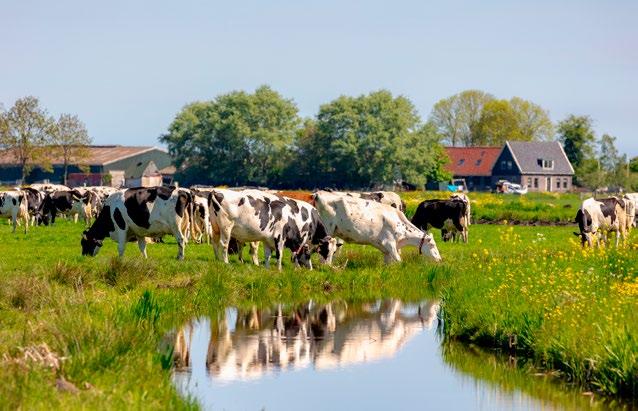
Bird flu in cows
Should we be worried? Is there a risk of a pandemic?
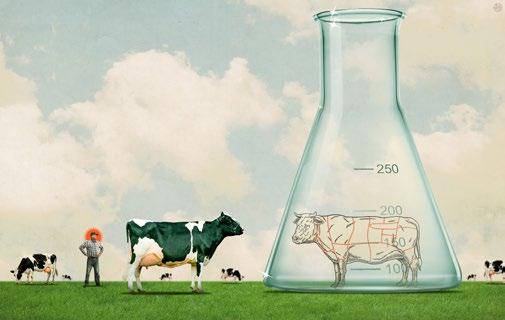
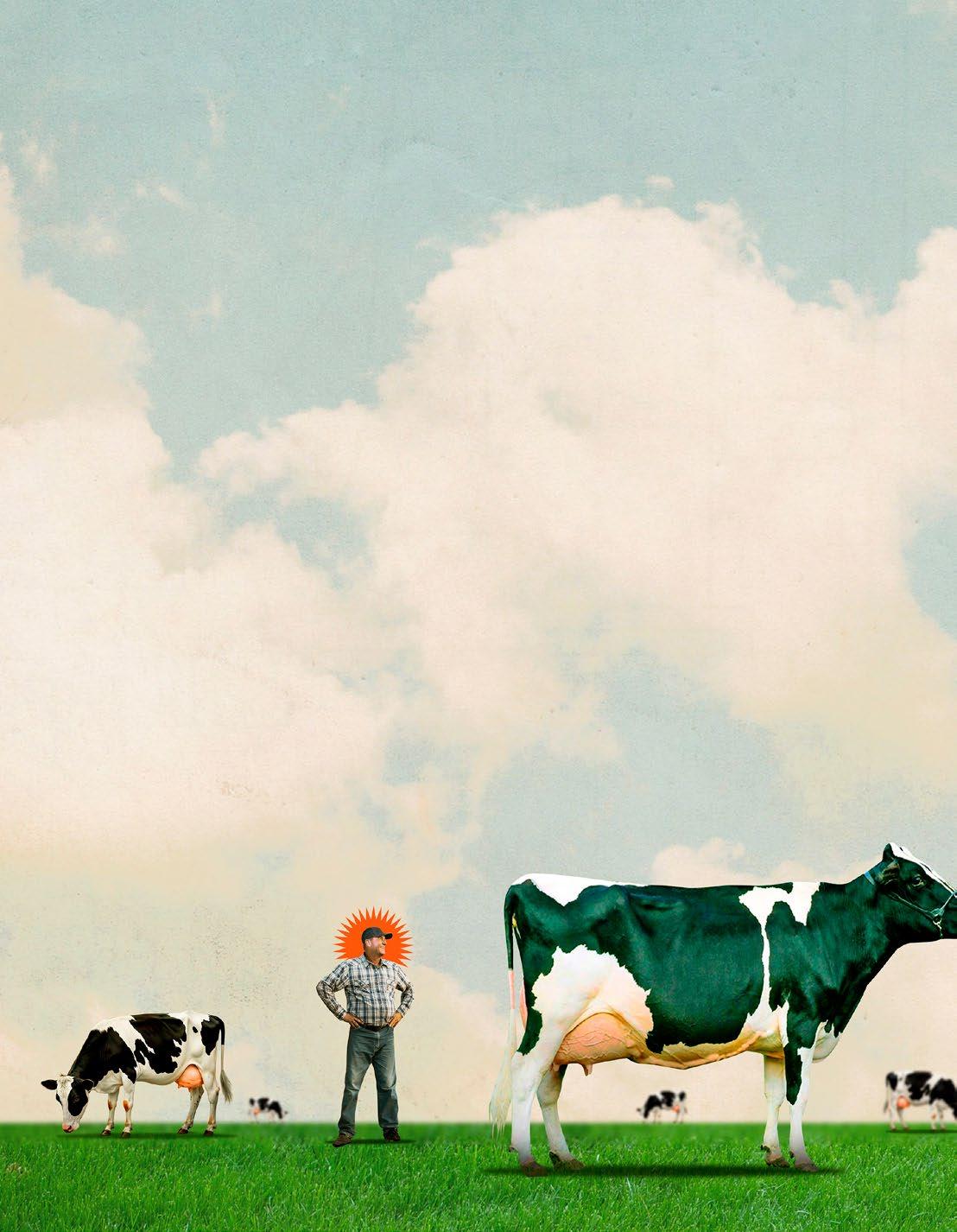
CULTURED MEAT IS THE FUTURE
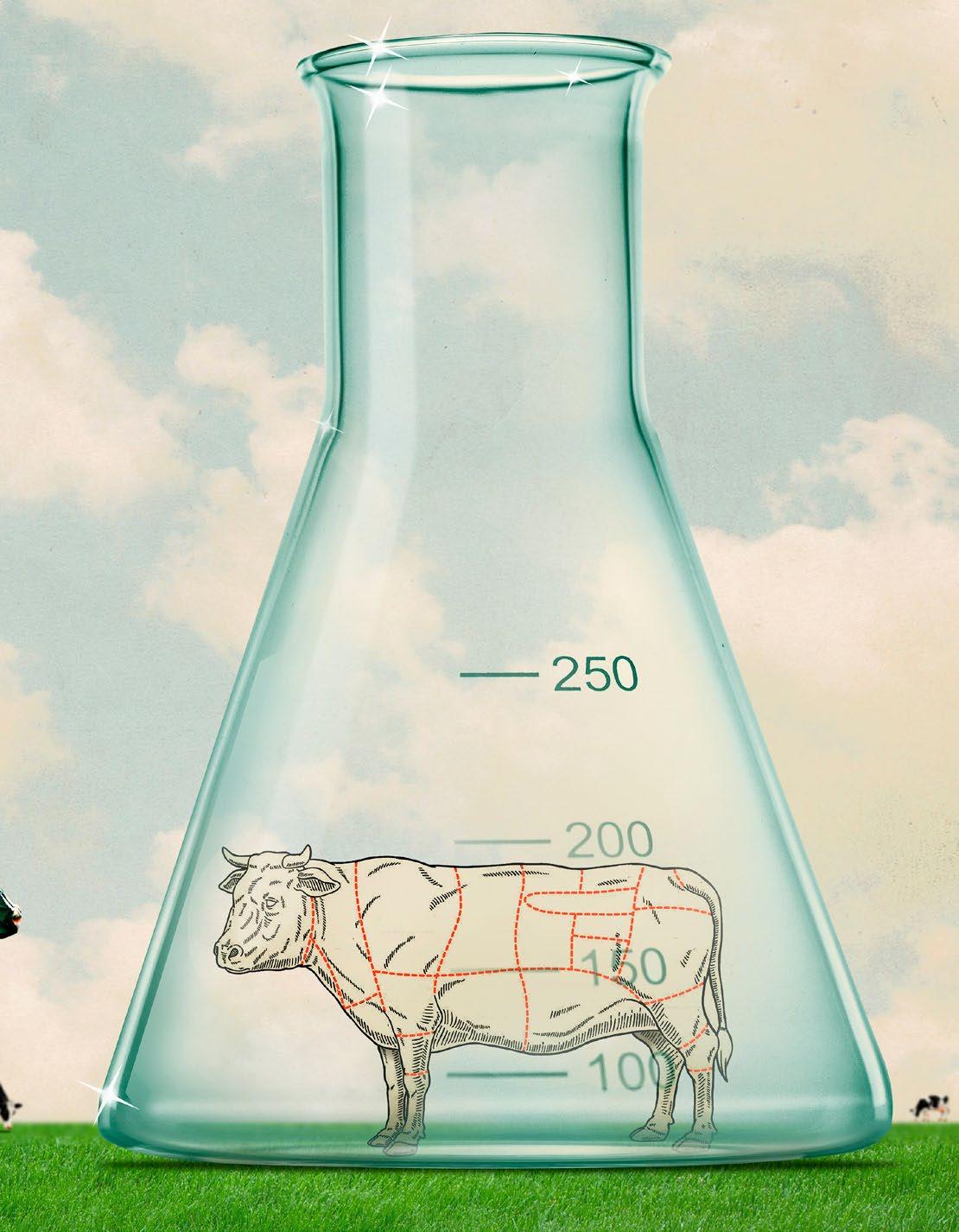
What starts out as muscle cells in a liquid should end up on our plates as meat. Cultured meat is a promising solution: less animal suffering, less land needed and less of a burden on society. But is it affordable? And will people accept it?
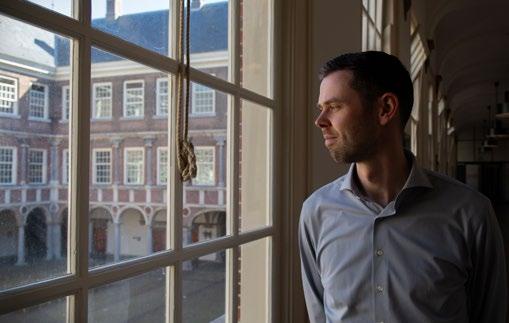
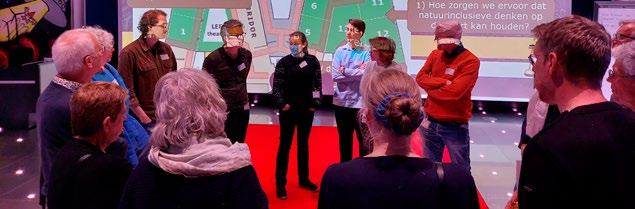
DISASTERS ARE SOCIAL IN NATURE
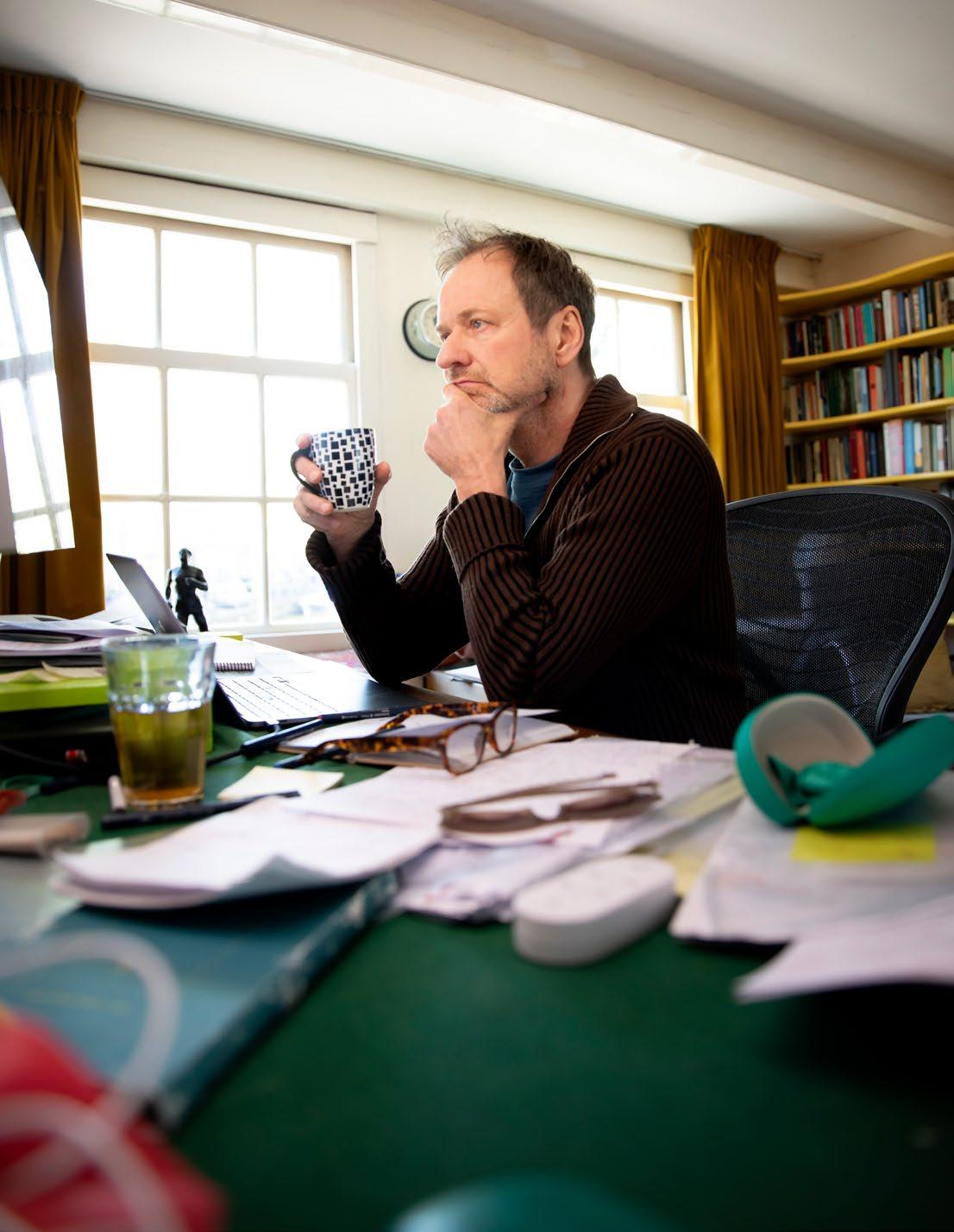
The Dutch are stocking up on bottled water and batteries in preparation for emergencies. But if you want to survive a disaster, it is better to invest in social contacts, says crisis management scientist Jori Kalkman.
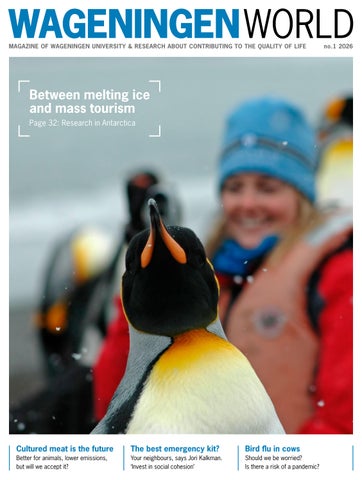
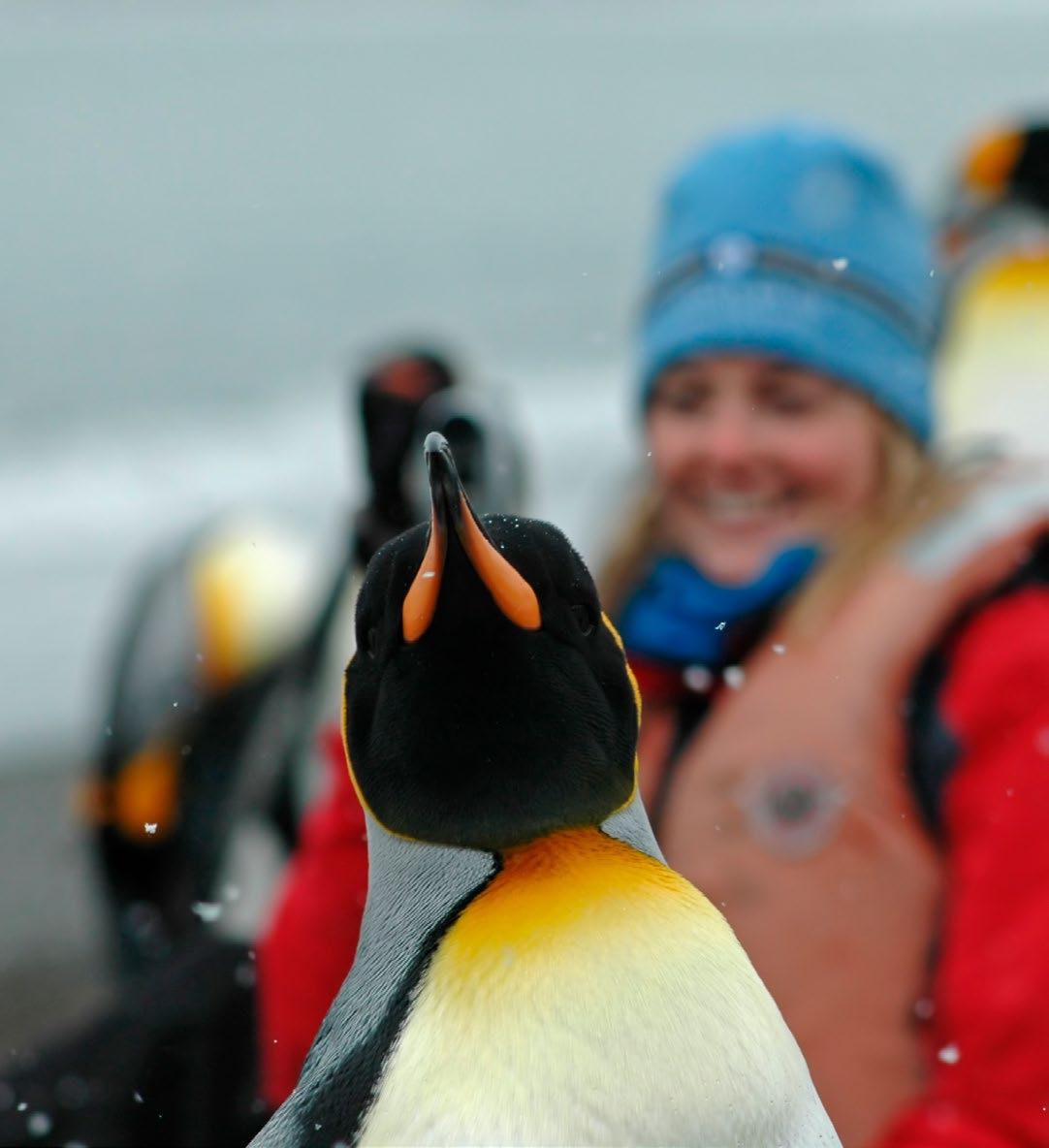
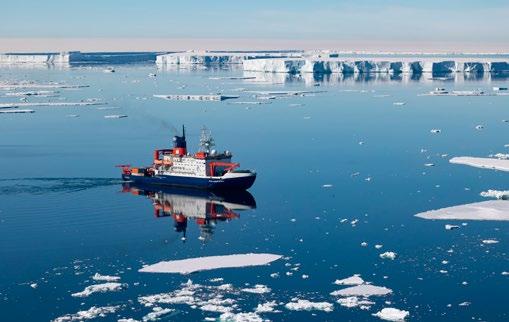
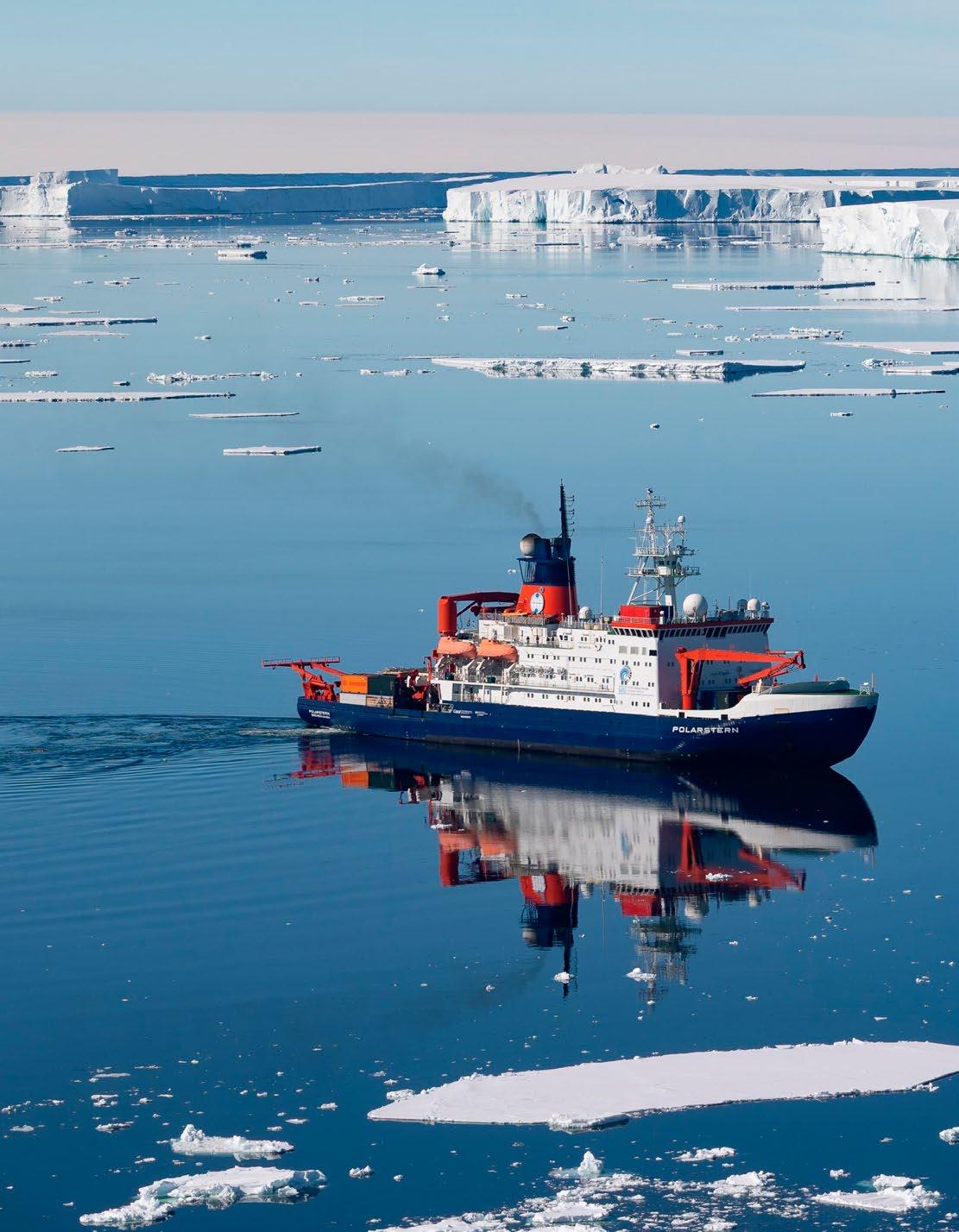
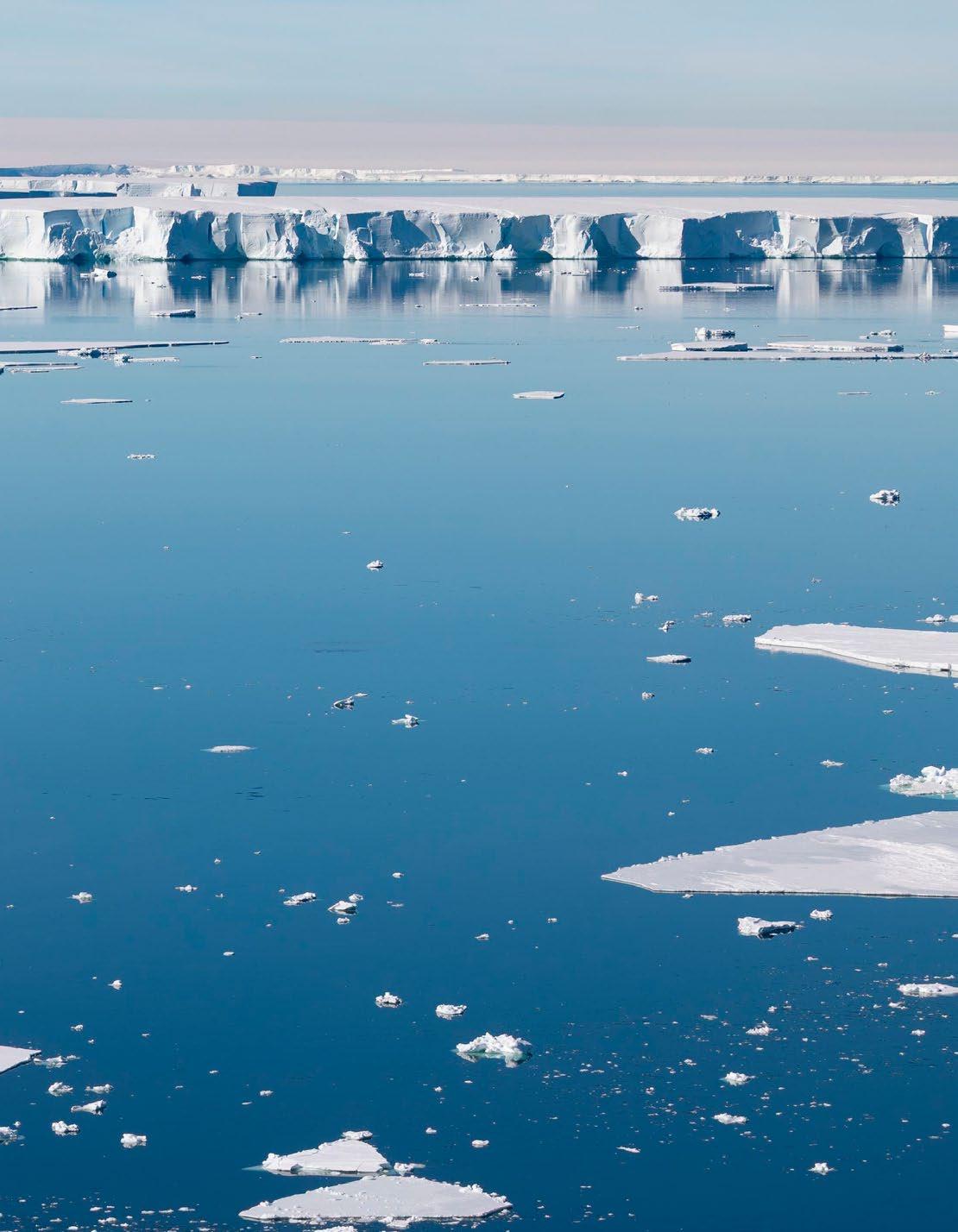
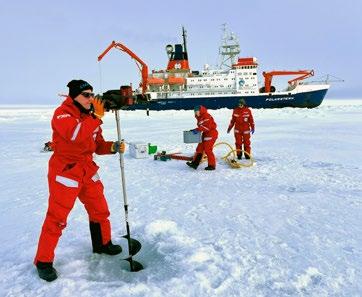
BETWEEN MELTING ICE AND MASS TOURISM
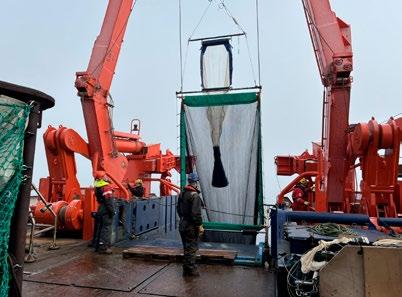
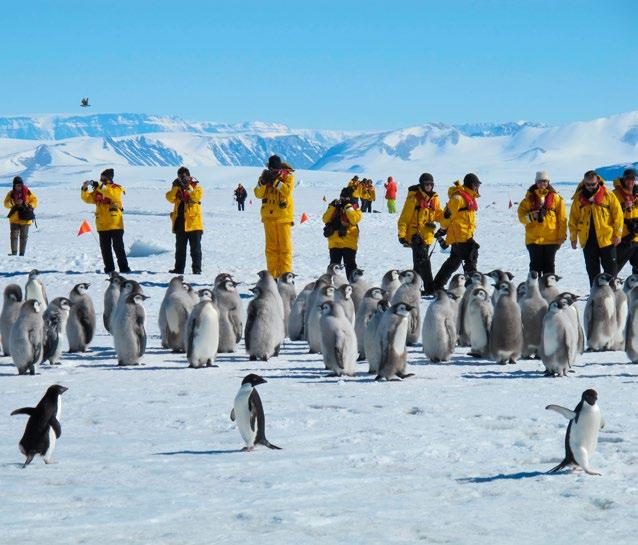
Antarctica is remote but not untouched. While Wageningen ecologists there study krill, birds and marine mammals in extreme conditions, it is rapidly becoming a tourist destination. That is having major ecological consequences.
COLOPHON Wageningen World is the biannual magazine for associates and alumni of Wageningen University & Research Publisher Wageningen University & Research Magazine editor Miranda Bettonville Copy editor Rik Nijland Translator Tessera Translations S.L Art direction & design Petra Siebelink Design Monique Chermin Cover picture iStock Printer Tuijtel, Werkendam ISSN 2212-9928 Address Wageningen Campus, Droevendaalsesteeg 4, 6708 PB Wageningen, telephone +31 317 48 40 20, wageningen.world@wur.nl Change of address alumni alumni@wur.nl Change of address associates wageningen.world@wur.nl, mentioning code on address label Change of career details alumni@wur.nl
The mission of Wageningen University & Research is “To explore the potential of nature to improve the quality of life”. Under the banner Wageningen University & Research, Wageningen University and the specialized research institutes of the Wageningen Research Foundation have joined forces in contributing to finding solutions to important questions in the domain of healthy food and the living environment. With its roughly 30 branches, 7,900 employees (7,100 fte), 2,500 PhD and EngD candidates, 12,700 students and over 80,000 participants in WUR’s Life Long Learning, Wageningen University & Research is one of the leading organizations in its domain. The unique Wageningen approach lies in its integrated approach to issues and the collaboration between different disciplines.
WAGENINGEN WORLD ONLINE Wageningen World is also available online. All the editions can be found in browsable PDF form at www.wur.eu/wageningen-world. Digital subscribers receive the magazine two times a year by email. Reading online is better for the environment and the climate. To switch from a paper to a digital subscription, go to: www.wur.eu/ww-subscription
UPDATE
News in brief about research and development at Wageningen University & Research.
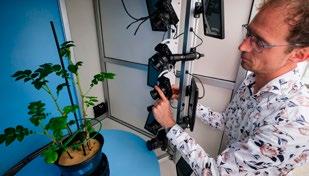
HOBBY GARDENERS HELP SCIENTISTS
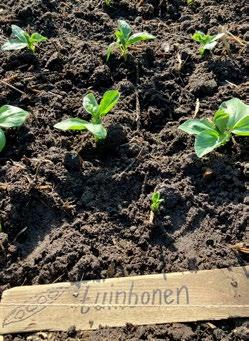
In the MoestuinMix project, gardeners collect data on how their vegetables grow. This helps researchers find optimum crop combinations.
BIRD FLU IN COWS
This year, a cow became infected with the bird flu virus for the first time in the Netherlands. This raises numerous questions. Could it be transmitted between people? Is there a risk of a pandemic?
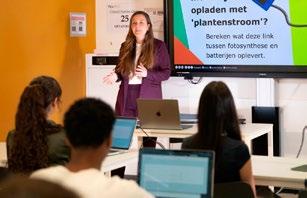
RESEARCH IN THE MARS SIMULATOR
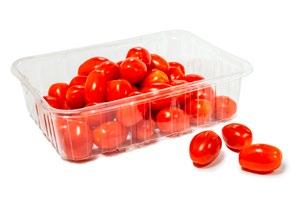
Astrobiologist Rebeca Gonçalves visited the Mars Desert Research Station in Utah (USA) to study how vegetables could be grown on Mars.
IMPENDING WATER FRAMEWORK DIRECTIVE
The EU deadline for clean water is approaching, but the Netherlands is not on course.
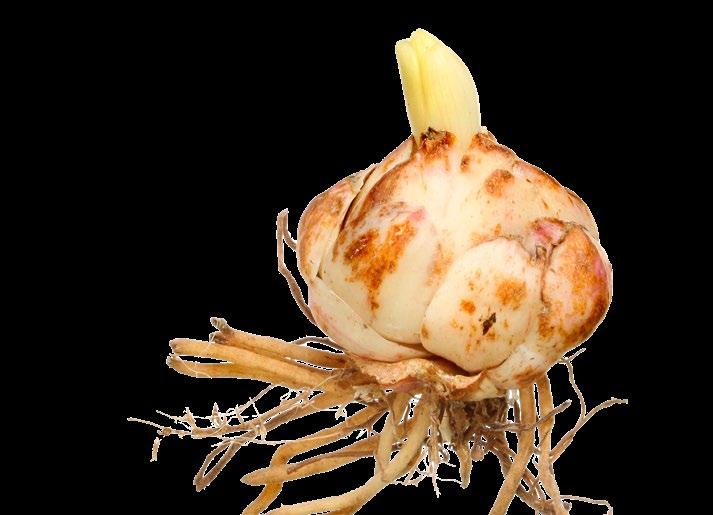
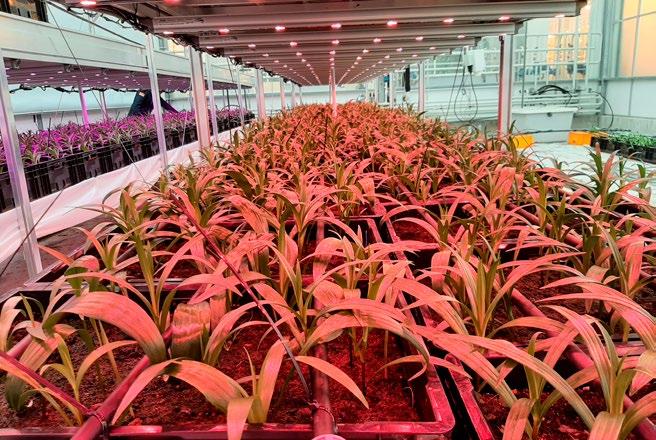
BULBS USING FEWER PESTICIDES
Researchers are looking at healthier ways to grow bulbs, with less use of pesticides.
ALUMNI
LIFE AFTER WAGENINGEN
Journalist and author Frank Westerman set off for the Caribbean as an idealistic tropical agriculture student, but he began to have doubts.
UNIVERSITY FUND WAGENINGEN
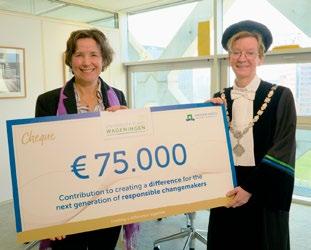
The Wageningen Student Challenges let students’ ideas grow into impactful solutions.
ALUMNI NEWS
News for and about Wageningen alumni.
PERSONALIA
Information about the lives and careers of Wageningen graduates.
After a career in geo-informatics, Lucas Janssen decided
Wageningen in the world
‘From Antarctica to Mars, and from cultured meat to bird flu in cows, this issue of Wageningen World showcases both the range and relevance of science at Wageningen. We read about crisis management and the Water Framework Directive; hopefully we will take sufficient measures for the latter to avoid the need for the former.
‘From the depths of the Weddell Sea to the red desert of Utah, Wageningen scientists are to be found asking questions and working on answers, as they are here in the Netherlands too. Wageningen researchers are helping to reduce pesticide and fungicide use by investigating smarter crop mixes – with assistance from amateur vegetable gardeners – and by developing cleaner methods for producing flower bulbs.
‘This issue has impressed me in another way too. The story of Frank Westerman – Wageningen graduate, journalist and author – shows an alumnus travelling the world as a foreign correspondent, only to end up back at Hotel De Wereld. I can relate to that: how formative your university days are, how idealism often ends up clashing with reality and how you progress – sadder but wiser – by reflecting on that.
‘Your education certainly doesn’t end when you get your university degree. Take our Student Challenges. In this issue, you can read about how students evolve into entrepreneurs, policymakers and responsible change-makers, with WUR as the starting point for something big – or at least for ambitious dreams. Read the interviews with students who took part in various Student Challenges and discover what they got out of it.
‘That is also why I would like to draw your attention to the Wageningen Pre-Seed and Seed Funds set up by Graduate Ventures in partnership with University Fund Wageningen. A growing group of alumni have already invested in the funds and we are close to the target of 10 million euros. This initiative not only provides capital for young entrepreneurs but also lets them benefit from the networks and experience of alumni who have taken that step themselves. With measures like these, and working together with StartHub and StartLife, we are making Wageningen’s knowledge work.’
Sjoukje Heimovaara, President of the Executive Board of Wageningen University & Research
Cuts of 80 million euros are needed
Wageningen University & Research faces the challenge of cutting expenditure by 80 million euros by 2028. This is a consequence of cutbacks in the ministries of Education and Agriculture, falling student numbers and rising staff costs. WUR’s partners are also under financial pressure, which is affecting the funding available for research.
Cuts of 45 million euros will need to be made in research and education, while staff departments have to cut expenditure by 35 million. Savings will be made in part through organizational changes and by concentrating or stopping various activities. So far, the cutbacks have resulted in the loss of about 55 permanent jobs. New positions in WUR or elsewhere will be found for the employees in question.
Info: janwillem.bol@wur.nl
IMPACT
Help with sustainable packaging
Researchers at Wageningen Food & Biobased Research presented their sustainable packaging guide in March. This digital reference work gives companies advice on how to package their products as sustainably as possible. There are no universal ‘right’ choices, say the authors; packaging is all about tailored solutions, carefully weighing up all aspects, such as greenhouse gas emissions, the risk of generating litter and prevention of food spoilage and wastage.
Info: ulphard.thodenvanvelzen@wur.nl Sustainable packaging PDF (in Dutch): www.wur.nl/duurzaam-verpakken
CRISPR-Cas to fight liver cancer
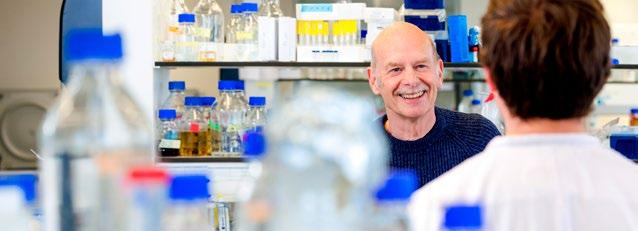
Emeritus professor and microbiologist John van der Oost is working on a new variant of the CRISPR-Cas technique. He received an ERC Proof of Concept grant to study its potential use in the treatment of liver cancer.
The new technique can be used to cut a gene in the DNA of cancer cells into pieces while leaving healthy cells intact.
The results of the research on this method were published in Nature in mid-April. The research shows that the system can make the cuts selectively but it has not yet been proved that this is enough to kill the tumour cells. Further research is needed to demonstrate this.
At the start of the year, Van der Oost received a Proof of Concept grant of 150,000 euros
from the European Research Council (ERC) to investigate the potential of this new technique in the treatment of liver cancer.
Van der Oost and his postdoc Christian Südfeld will be able to use the grant money to conduct experiments for 18 months. Van der Oost: ‘It’s a step towards increasing our knowledge. That will let us start collaborations with cancer specialists in other institutes, secure more funding and possibly even establish our own start-up.’
Info: christian.sudfeld@wur.nl
Swab detects use of antibiotics
Antibiotic use on livestock farms can be detected effectively by rubbing the farm animals with a moist cloth. This has been demonstrated by a trial at farms rearing veal calves, commissioned by the Ministry of Agriculture and the Netherlands Food and Consumer Product Safety Authority (NVWA).
The use of antibiotics on Dutch livestock farms is subject to strict rules to prevent resistance developing in bacteria – a growing health risk for humans and animals. But
there was no easy way of detecting antibiotic use in live animals, which is why the regulatory authority NVWA mainly carries out checks in abattoirs.
Researcher Milou van de Schans of Wageningen Food Safety Research discovered this simple method for detecting the use of antibiotics on the farm. The ‘wipe method’ was already being used to detect certain bacteria in barns. The wipes are analysed in the lab. The method also works on pigs, sheep, chickens and horses.
Info: milou.vandeschans@wur.nl
PHOTO ERIC SCHOLTEN
Many coasts have higher sea levels than thought
Many of the world’s coasts have higher sea levels than were assumed in most previous studies. The differences range mainly between 20 and 30 centimetres, with outliers of more than a metre in South-East Asia and the Pacific.
These findings come from a study by Philip Minderhoud, associate professor of Land Subsidence and Relative Sea-Level Rises in the Soil Geography & Landscape chair group, and also employed at Deltares. The study, which was published in Nature in March, was prompted by a visit years ago to the Mekong Delta in Vietnam. Minderhoud was struck by how the water level was much higher than stated in international studies. In the years that followed, he found that to be the case in many other locations too.
COURSES FOR PROFESSIONALS
To find out what was causing those differences, he and PhD candidate Katharina Seeger examined 385 studies on the impact of rising sea levels on coastal areas. More than 90 per cent did not use measured sea levels but instead used calculated levels based on global gravitational models. Those models fail to allow for the effects of currents, wind and temperatures, so the estimates often differ markedly from the actual coastal sea levels. The biggest differences were found in the Indo-Pacific region. That also implies
Deepen your expertise this summer
What happens when you take a break from your daily work to immerse yourself in new knowledge, international perspectives and practical insights?
For Juan Fernández-Mellado, who took part in WUR’s Greenhouse Horticulture summer school, it meant inspiration for his saffron business in Spain, useful contacts with experts and investors and discovering ways of taking his business to the next level. This coming summer, WUR will once again organize
millions of people are at greater risk than was previously thought.
To estimate the impact of a rise in sea levels, you also need to know the height of the land relative to the sea, say the Wageningen researchers. Sea levels and land elevations are measured by different satellites and are calibrated using different reference levels. That is not taken into account sufficiently when the datasets are linked together. The researchers have now linked four worldwide elevation models to the most recent sea-level measurements. ‘We hope this will make more realistic analyses possible,’ says Minderhoud. Info: philip.minderhoud@wur.nl
Video: vimeo.com/1162103411/bf1308bb65
summer schools where professionals and researchers learn about topics relating to agriculture, food systems, technology and sustainability. Participants attend lectures, work on realistic problems and get the chance to build an international network. If you want to deepen your expertise this summer and return to work reenergized, find out which summer school is right for you at wur.eu/summer-schools
Layer of clay makes sandy soil more fertile
Mixing clay into the top layer of sandy soil increases maize crop yields substantially. It also improves the soil structure and drought resilience.
This is the conclusion of research by the agricultural innovation centre De Marke in Hengelo, part of Wageningen University & Research, that was commissioned by the
Fruit fly gets two enemies
An Asian parasitic wasp that parasitizes the larvae of the spotted wing drosophila, a fruit fly, has become established among blackberry bushes and elderberry trees in various parts of the Netherlands, according to a field study by Wageningen Plant Research in summer 2025. The results were announced in March. This could help in the biological control of the fruit fly –an exotic species from Asia that causes damage to cherries and soft fruits. The appearance of this parasitic wasp is a surprise. In 2025, WUR introduced a different Asian parasitic wasp that parasitizes the fruit fly at five sites in the Netherlands. Further studies will be carried out to see whether the two parasitic wasp species can survive in the Netherlands and keep the spotted wing drosophila population under control. Info: herman.helsen@wur.nl
province of Gelderland. In 2019, fields with poor sandy soil were improved with a fivecentimetre layer of light or heavy clay left over from elsewhere. The crop yield was measured in this study for silage maize. The addition of heavy clay in particular gave dramatic improvements. The percentage of dry matter in the maize increased by 7 per cent to 19 per cent, while the starch content was 19 per cent higher on average between 2022 and 2025, with outliers of up to 35 per cent. The soil quality improved too. The moisture content rose by 1 to 2 percentage points and the organic matter content increased by 0.3 percentage points. The trial fields could also manage without irrigation for four more days than the ‘ordinary’ maize plots. Researcher Robin Walvoort expects these positive effects to be long-lasting: ‘The clay will still be there in a hundred years’ time.’
Info: robin.walvoort@wur.nl
Reasons for farmers’ protests differ per country
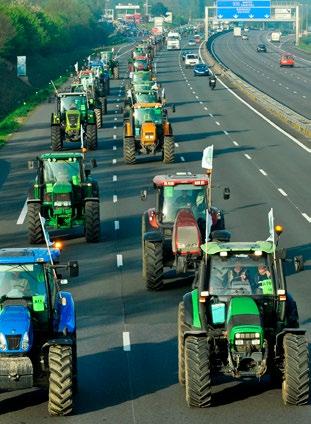
The reasons why farmers took part in protests in 2024 differed between countries, shows an analysis by a team of European researchers. It was based on questionnaires completed by farmers.
To obtain a picture of the concerns driving the dissatisfaction among farmers in Europe, 2,230 farmers – both protesters and non-protesters – from four countries were asked open questions by the researchers, who included Yann de Mey and Jaap Sok of the Business Economics chair group. German farmers mainly complained about bureaucratic rules, French farmers had a lot of financial grievances, Dutch farmers took to the streets because they were unhappy with politicians and Belgian farmers cited a range of reasons. Strikingly, the answers from the Dutch and German farmers were far grimmer in tone than the responses of the farmers in France and Belgium. The results were published in January in the academic journal Food Policy. Info: yann.demey@wur.nl
Dies Natalis: improve the
world,
learn from the past
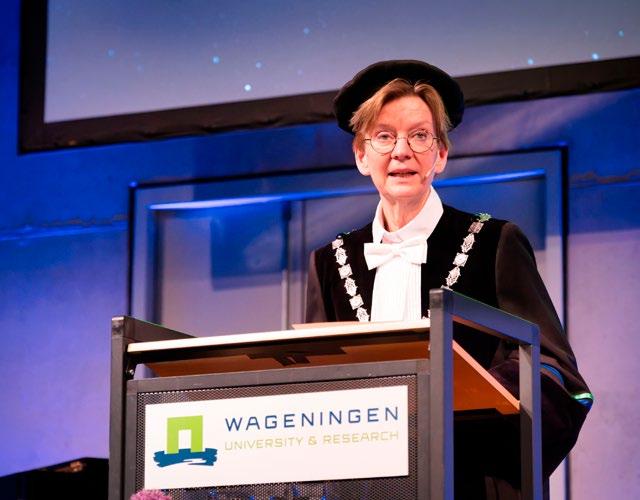
‘Sincere reflection on the past will help us build a more just world.’ With these words, the rector magnificus Carolien Kroeze opened the celebration of Wageningen’s 108th Dies Natalis on 6 March.
The theme for the university’s anniversary celebration this year was WUR in the World: Past, Present and Future. Kroeze stressed that there are many achievements we can be proud of. Wageningen has evolved into an international brand. ‘Wageningen University & Research is seen as a top university in the domains of agriculture, food and the environment. But our past also harbours uncomfortable truths that demand reflection and perhaps even shame.’
Historian Larissa Schulte Nordholt of the Economic & Environmental History chair group reflected on the university’s colonial past. At the start of the 20th century, the university trained students for positions in colonial governments, at research stations and on plantations. They served as a link between the Netherlands and the colonies, said the researcher. Scientific research was used to legitimize colonial agriculture and
enable the exploitation of natural resources in Indonesia and Suriname.
What is more, research and education fostered a worldview that prioritized European knowledge and expertise. The political systems changed after Indonesia and Suriname gained independence, but the underlying structures have remained intact to some extent, noted Schulte Nordholt. She pointed out that WUR’s strategic plan for 2025-2028 calls on staff and students to reflect and take responsibility. That starts by being honest about the foundations on which the university is built, according to the researcher. ‘As an institution, WUR bears the burden of its colonial past. The people working and studying here now are not responsible for that, but they can take responsibility for what they do about it.’
Info: vincent.koperdraat@wur.nl
Making furanone without toxic bromine
Chemists from Wageningen and Utrecht have found a safer way to make furanone from biomass. This compound is an important building block in plastics, medicines and aromas and flavourings. Liquid bromine, a hazardous material, is required to produce furanone from biomass. The new method involves using a current to release bromine from bromide salts in the reactor, which means liquid bromine no longer needs to be added. The results were published in March in ChemSusChem.
Info: harry.bitter@wur.nl
Using AI to check banana’s origins
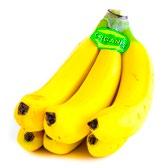
Researcher Yamine Bouzembrak has developed an AI model that can help food inspectors verify the origins of bananas. That could help to detect fraud. Bouzembrak, a specialist in artificial intelligence in the Information Technology chair group, trained a neural network to recognize patterns in the colour, shape and texture of bananas in photos.
After a successful test with photos taken by users of the iNaturalist app, his team is now training a prototype, with the aid of thousands of photographs of bananas, to recognize subtle regional differences. ‘Inspectors will then be able to see more quickly which batches of bananas need closer examination. Inspectors and laboratories will remain crucial in confirming any fraud.’ Bouzembrak thinks the method could also be used for expensive products with recognizable differences in appearance such as saffron, vanilla or nuts.
Info: yamine.bouzembrak@wur.nl
MICROBIOLOGY
Medicine from sponge
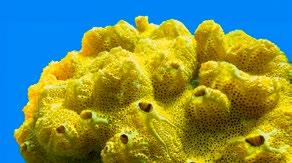
Microbiologist Detmer Sipkema has received over 400,000 euros from the Dutch Research Council to extract useful substances from the cells of sea sponges. These creatures protect themselves against attackers with bioactive substances, such as antibiotics and molecules that inhibit cell division. These could be useful in medicine, but previous research was unsuccessful because the sponge cells deteriorated in the lab. In 2023, Sipkema and colleagues at Wageningen and in Florida managed to keep sponge cells alive for a long time.
Info: detmer.sipkema@wur.nl
ARABLE FARMING
Farmers could get bigger wheat yields
Wheat yields in Northwest Europe could increase by between 67 and 114 kilograms per hectare if farmers made smarter choices in crop rotation, soil management and cultivation. This is shown by research by professor of Plant Production Systems Martin van Ittersum.
Up to the mid-1990s, wheat yields in Germany, France, the UK, the Netherlands, Belgium and Denmark increased by an average of 120 kilograms per hectare every year. Growth then tailed off. To find out why, Van Ittersum combined data from experiments and farming practice with crop models. He looked at the contributions of genetic advances, historical climate change and agronomic management on farms. There was potential for further growth in yields from both plant breeding and the climate. The reason why growth tailed off is because of the agronomic management on farms.
Info: martin.vanittersum@wur.nl
ANIMAL ECOLOGY
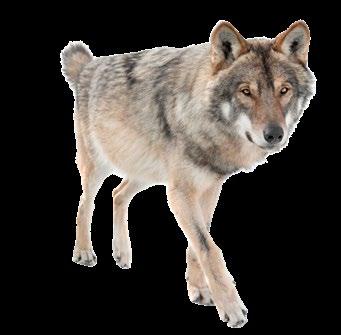
Transmitter shows wolf crisscrossing the Dutch countryside
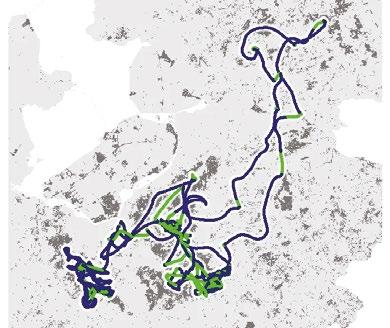
A wolf with a transmitter was able to cover 2,500 kilometres in three months, criss-crossing the Netherlands. He crossed motorways several times and swam across the IJssel twice.
These findings are from a study by Frank van Langevelde, professor of Wildlife Ecology & Conservation. In autumn 2025, the male wolf was fitted with a GPS tracker in De Hoge Veluwe National Park as part of a study looking at interactions between wolves, humans and prey in the park.
The wolf had other ideas. It set off on a long journey across Overijssel and Drenthe, returned to the Veluwe but then
continued on to the Veluwezoom and the Crown property of Het Loo. Then the wolf travelled on to the Utrechtse Heuvelrug.
‘This wolf with a tracker shows how well wolves can navigate the Dutch landscape,’ says Van Langevelde. The wolf was mainly active in the evening and at night. During the day, it hid in dense woods with young fir trees or smaller thickets, sometimes quite close to footpaths.
Info: vincent.koperdraat@wur.nl
BIOTECHNOLOGY
Movements during day Movements in evening and night
Enzymes from cannabis plant ancestor
Wageningen plant scientists have reconstructed enzymes that were found millions of years ago in ancestors of the cannabis plant but have since died out. The enzymes played a role in the formation of cannabinoids, the medicinal active ingredient. In modern cannabis plants, the compounds THC, CBD and CBC are produced by specialized enzymes. The Wageningen researchers show that the ancestors of these enzymes were able to make multiple cannabinoids at the same time.
The researchers used a reconstruction tech-
nique that let them calculate what enzymes would have looked like millions of years ago based on the DNA of modern plants. These ‘primeval enzymes’ were then replicated and tested in the lab.
‘The ancestral enzymes are more robust and flexible than their descendants and that makes them attractive as the starting point for new applications in biotechnology and pharmacy,’ says researcher Robin van Velzen. It turns out these enzymes are also easier to produce in microorganisms.
Info: robin.vanvelzen@wur.nl
‘Give farmers and other business people leeway to tackle the nitrogen crisis’
Expressing confidence in business people is an important step in efforts to end the nitrogen crisis. The permit procedure for companies needs reforming too. These conclusions come from Wageningen nitrogen researchers.
They set out their views on how to end the stalemate regarding the nitrogen rules in the report The Dutch Nitrogen Crisis: From Confusion To Connection, which was published in March.
Ambitious management plans are needed for all Natura 2000 areas to tackle the ecological problems caused by nitrogen, say the researchers. They should focus on active restoration measures such as improving hydrological conditions and soil quality. The management plans should also have a section on nitrogen, addressing the target reduction in total nitrogen emissions around each Natura 2000 area. The procedure for granting permits also needs to be reformed. The authors say the link with the inherently uncertain deposition calculations is no longer appropriate. Instead, the authorities should focus on demonstrable contributions to the statutory reduction in the overall nitrogen emissions for each area. ‘Allocate reduction targets to businesses,’ says professor of Integrated Nitrogen Analysis Wim de Vries. ‘Give farmers and other business people
PHYSICAL CHEMISTRY
the responsibility and freedom to come up with the most suitable measures given the emissions target. There is scope for business development within that range. That would encourage professionalism and innovation, helping create a less polluted living environment.’
Gerard Ros, a researcher in the Earth Systems & Global Change chair group, sees the restoration of trust as the most crucial change needed to end the crisis.
‘Give farmers, managers and builders sufficient leeway and trust to do their work and then ask them to report on it. That way, we can make the transition from a culture of suspicion to one of trust with safeguards.’
Info janwillem.bol@wur.nl
New plastic is both strong and malleable
Wageningen researchers have developed a new type of plastic, which they call a ‘compleximer’. It is both strong and easy to repair.
Conventional plastics have long molecule chains that are held together by chemical crosslinks. In this new plastic, half the chains have a positive charge and half have a negative charge. They are attracted to one another. ‘That keeps the chains together without them
PHOTO GUY ACKEMRNAS
having a chemical bond,’ explains Sophie van Lange of the Physical Chemistry & Soft Matter chair group and author of an article about the new material in Nature Communications. The plastic has some surprising properties that have a lot of potential: it is strong but still malleable. That raises the possibility of plastics that are easy to repair or that biodegrade rapidly.
Info: jasper.vandergucht@wur.nl
MEAT FROM THE BIOREACTOR
Cultured meat is the future, but needs promoting
What starts out as muscle cells replicating in a liquid should eventually end up on our plates as meat. Cultured meat is a promising solution: less animal suffering, less land needed and less of a burden on society. The question is no longer whether it is possible, but whether it is affordable and gets accepted.
TEXT RENÉ DIDDE ILLUSTRATIONS RHONALD BLOMMESTIJN
future,
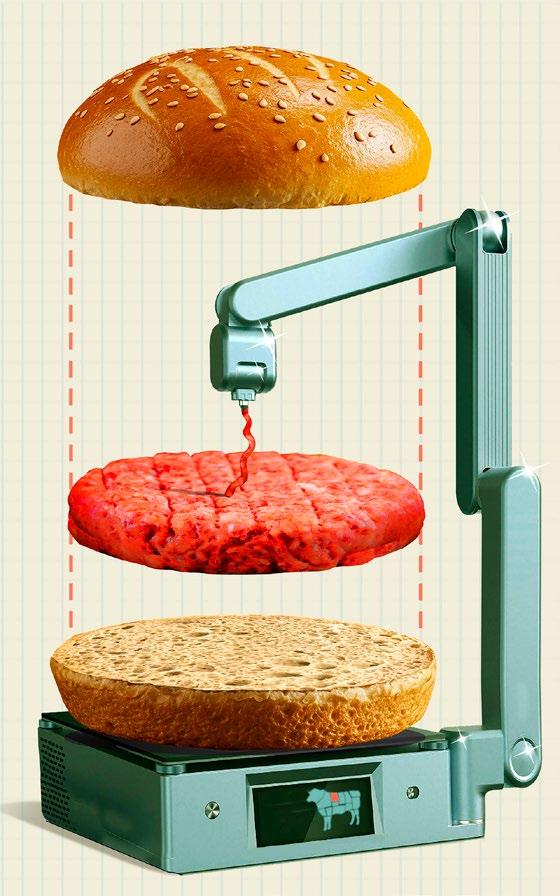
For the past few months, a bioreactor no bigger than a pizza oven has been bubbling away in a laboratory belonging to the Bioprocess Technology chair group in Wageningen. The researchers affectionately call the machine ‘Isabella’. ‘This is where we grow meat cells,’ says research manager Affif Grazette. ‘To do that, we take biopsies from the muscles of a cow, pig or fish. We separate out the tissue using enzymes and place the isolated muscle cells in a culture medium – a mix of amino acids, water, sugars and minerals. The cells then divide and within a week we have a small lump of meat cells weighing a hundred grams.’
The chair group is working on optimizing the process in the bioreactor. A bioreactor of the same type was also installed six months ago on the dairy farm of Corné van Leeuwen in Schipluiden, earning it the title in the media of ‘the world’s first cultured meat farm’. This project is run by the CRAFT consortium, which includes the initiator RespectFarms, Wageningen University & Research and companies such as Mosa Meat and Kipster. Grazette is involved in the project, as is the Food Quality & Design chair group. ‘Our aim with this four-year pilot on the dairy farm is to show that cultured meat can be produced on a small scale directly on a farm,’ explains Grazette. ‘The Food Quality & Design scientists are working on turning that meat into an appetizing burger, sausage or meatball. Together with
RespectFarms, we are investigating whether cultured meat can be part of a more diverse business model for individual farmers.’
GROWING DEMAND FOR PROTEIN
The idea with cultured meat is that it can be a sustainable, animal-friendly way of meeting the growing demand for protein worldwide. In the Netherlands, average meat consumption has declined only slightly, from 39 kg per person in 2019 to 37 kg in 2024, despite years of government campaigns urging people to eat less meat and the increasing availability of plant-based meat substitutes. Global meat consumption is actually growing at a rate of three per cent per year. The advantages of cultured meat over regular meat seem clear. There is no need for intensive livestock farming with soya imports from Brazil for feed, and it does not produce manure – a source of nitrogen and water pollution. Production is more efficient because no energy has to be expended growing bones or tendons – just muscle cell growth. Less land is needed and the environment benefits from the fact that the amino acids in the culture medium come not from soya but from locally grown biomass that is rich in protein, such as algae and grass. However, more energy is used directly when producing cultured meat. If that energy comes partly or entirely from fossil sources, the environmental
‘We are getting better at turning clumps of meat from the bioreactor into a meatball or sausage’
impact can be higher than for conventional meat. Grazette expects cultured meat to play a key role in the protein transition that is being advocated. ‘We’re getting better and better at turning the clumps of meat or fat from the bioreactor into a look-alike meatball or sausage,’ he says. ‘Pâté and hamburgers are also very doable.’ Cultured meat has been approved for sale in Singapore, Israel, the United States and the UK. Grazette has tried cultured quail meat in Singapore. ‘It tasted like chicken,’ he says. The EU has not reached that stage, although numerous start-ups have submitted applications for approval of their cultured meat products to the European Food Safety Authority (EFSA). But the European Parliament needs to give the go-ahead.
It is relatively easy to make a meatball, sausage or pâté, but producing a cultured steak is much more of a challenge. ‘Steaks require structured muscular tissue and veins of fat cells,’ explains Grazette. ‘To achieve that, we need a mould or matrix in which the different cells can grow. That matrix needs to be edible too, and preferably tasty.’ He expects steaks to be on the market in five to ten years’ time.
PRICE HAS TO FALL
The costs are more likely to form an obstacle in launching cultured meat on the market than the technology, says Wageningen professor of Bioprocess Engineering René Wijffels. ‘The first hamburger made from cultured meat, developed by tissue culture expert Mark Post of Maastricht University in 2013, cost 250 thousand euros. Now the price has come down to 50 euros per kilogram, but that needs to be much less. Post’s start-up Mosa Meat claims they can get close to the price of a regular hamburger.’
It doesn’t help that many of the approximately 120 start-ups aimed at producing cultured meat have already gone under. They include Meatable in Leiden, which raised a lot of money initially from venture capitalists attracted by the benefits of cultured meat. But there were no fast profits to be made because it takes time to develop the technology and – in Europe at any rate – to get through the lengthy approval procedures of the food safety authorities. Another issue in the case of Meatable was that it used genetically
modified stem cells, hardly a plus point in Europe. The other well-known Dutch cultured meat start-up, Mosa Meat, has more committed investors, including Nutreco. Grazette and Wijffels are also assured of funds for now. ‘In 2022, we received sixty million euros from the then National Growth Fund for the development of cellular agriculture, such as cultured meat and precision fermentation, to speed up the transition to sustainable food production,’ says Wijffels. Wageningen, Maastricht and Delft University of Technology are collaborating in the Growth Fund consortium Cellular Agriculture in the Netherlands (CAN), which is also investigating culturing cells from salmon, squid and cod.
BUTCHERS’ TRAINING SCHOOLS
Wijffels praises the developments in education. ‘Ninety students are taking courses in precision fermentation, cultured meat, consumer acceptance and regulations. They can also do graduation projects in these areas and come up with process designs. Wageningen alone has ten PhD candidates researching these aspects. There is also a lot of interest in applied universities and vocational colleges. The twenty Dutch training schools for butchers will be including cultured meat in their curricula. Butchers of the future will have to deal with more processed products in their assortment and also combinations of meat and plant-based products.’
Although Wijffels does not want to criticize research aimed at creating the perfect cultured-meat steak, he thinks the breakthrough will mainly come from using cultured meat to improve plant-based meat substitutes. Wijffels once tried a cultured meat burger. ‘It was a plant-based burger where about a fifth consisted of cultured fat cells. It tasted like a normal hamburger, and very different from a veggie burger.’ The fat cells give the plant-based burgers a creamier texture, he explains. ‘That will persuade more people to eat them. Hybrid products like these are the future. Research by the Good Food Institute shows that sixty to seventy per cent of Dutch consumers would accept hybrid products. Incidentally, acceptance is lower in countries like Italy and France, from a fear amongst both consumers and producers that the traditional meat sector would suffer as a result.’
>
‘If farmers combine livestock with cultured meat, you could see that as the comeback of the mixed farm’
Cultured meat outperforms the traditional meat industry in terms of costs to society as well, show studies by Wageningen Social and Economic Research in The Hague. ‘If we compare the expected social costs of cultured meat in 2030 against those of conventional meat, the costs per kilo of cultured meat could be two to four times lower by then,’ says sustainability researcher Jonna Snoek. Her calculations assume that all farms, both conventional and cultured meat farms, have solar panels on their roofs and use a more sustainable energy mix from the grid.
Snoek specializes in the analysis of social costs, known as true cost accounting (TCA). ‘That involves factoring in social costs in the price of meat that are not currently included, such as costs associated with land use, manure, nitrogen, energy, climate impacts, animal welfare and labour conditions,’ she explains. On paper, cultured meat performs better on nearly all fronts, except in the consumption of energy and water. ‘Piped water is used in producing cultured meat whereas the cultivation of animal feed mainly relies on rainwater,’ says Snoek. Arnout Fischer of the Marketing and Consumer
GROW MEAT, NOT ANIMALS
The international foundation RespectFarms is the driving force and initiator of the concept of cultured meat on the farm, with ‘Grow meat, not animals’ as its slogan.
The CRAFT (Cellular Revolution in Agriculture and Farming Technology) consortium, which consists of RespectFarms, Wageningen University & Research, Mosa Meat, Aleph Farms, Multus, Kipster and Royal Kuijpers, provides the necessary technology and expertise to produce cultured meat on the farm. Among other things, the consortium members design, build and optimize bioreactors. The cultured meat farm in Schipluiden is seen as the first attempt worldwide to combine the culture of meat cells with traditional farming. The idea is that the pilot project will deliver a business model that is both fundamentally new and founded on the centuries-old tradition of the mixed farm.
Behaviour group in Wageningen sees ‘mixed feelings’ among consumers in his own research. ‘Cultured meat is a tricky concept,’ he says. ‘People associate the word “meat” with killing animals, but that isn’t what happens here. But at the same time, cultured meat can’t be associated with plant-based meat substitutes because it does contain animal tissue.’
There is another contradiction to deal with if dairy farmers start producing cultured meat. ‘Dutch consumers have this image of a farmer wearing clogs with a bucket and a pitchfork, which doesn’t really gel with cultured meat coming from a bioreactor.’ If cultured meat is to be successful in the consumer market, it will need to satisfy three important criteria, explains Fischer, who specializes in people’s relationship with food. ‘Cultured meat needs to taste good, be easy to find and be sold at an attractive price.’
In this regard, he is critical of the plant-based meat substitutes. ‘The taste may be getting better, but there is room for improvement in terms of the creaminess. Consumers still see them as quite pricey, even if there are now own-brand meat substitutes that offer good value for money. They are also displayed more prominently in the supermarket and they get included in special offers such as “second one half price”.’
IN SUPERMARKETS
Cultured meat is not nearly that far. The researchers involved think it will take another five to ten years before the EU has given its approval and the meat is available in supermarket refrigerated sections. By then, the price will need to be much less than the 50 euros a kilo it currently costs to produce, agrees Fischer. That cost would mean consumers having to pay 200 euros for a kilogram of off-the-shelf cultured meat from the supermarket. ‘The cultured meat industry also needs to be able to make products with a similar fibrous structure to a nice cut of conventional meat.’
The Wageningen market researcher therefore advises cultured meat pioneers to focus on niches such as duck and goose foie gras. ‘It is relatively easy to create the soft fat with its creamy taste and texture. What is more, the conventional versions are expensive and controversial because of the animal-unfriendly production methods,
where the birds are force-fed to fatten them up.’ Like Wijffels, Fischer also sees opportunities in mixing cultured fat cells with plant-based products.
SMALL-SCALE PRODUCTION
While the production of cultured meat probably evokes images of an industrial setting in which bioreactors bubble away in ultra-hygienic conditions, the RespectFarms studies focus deliberately on small-scale applications such as dairy farmers who have a bioreactor alongside their herd of cows. That aligns with the aim of diversifying income sources in livestock farming. Professor Wijffels is unable to say which approach will win out: small-scale production or upscaling to large-scale production. ‘There could be room for both,’ he says. He draws a parallel with beer. ‘There is room for large multinational breweries as well as countless regional and local breweries. If farmers can combine livestock farming with cultured meat, you could see that as the comeback of the mixed farm, especially if they can turn the waste streams of arable farming into raw materials. The key is to have a viable business model for farmers.’
Dairy farmer Corné van Leeuwen is aiming for such a mixed farm model in with the world’s first cultured meat farm in Schipluiden. In a pilot project that will run for four years until 2030, he will be growing meat from the cells of his own cows.
‘We think that dairy farmers like Corné, as well as arable farmers, will be able to grow cultured meat, giving them a year-round source of revenue,’ says Ira van Eelen, one of the people behind RespectFarms. ‘They’ll be able to harvest meat from the bioreactor every week.’ Ira van Eelen is the daughter of Willem van Eelen, who was the first person to champion cultured meat back in 1948, when he was studying medicine. ‘In around 1975, we used to have discussions at home about how we would need four planets if China became a major economic power and ate as much meat as we do,’ says Van Eelen. Her father later acquired a patent on the process known back then as ‘in vitro meat’.
She thinks cultured meat is a perfectly feasible option for a farm. ‘Strict hygiene rules already apply on many
livestock farms, such as poultry and pig farms. It all depends on whether we can turn it into a profitable business model. If we can, farmers will want to do it,’ she thinks.
Corné van Leeuwen already sees a bright future, as he said when his cultured meat farm was officially launched. He has a tradition to keep up as well. ‘We had the world’s first milking robot. I can see myself here soon with Europe’s first cultured meat on sale in the local supermarkets. They already sell my cheese, so why not also my cultured meat? There’s bound to be a market for it with cities such as The Hague, Rotterdam, Delft and Leiden nearby.’ W
More information: www.wur.eu/cultivated-meat
Gardeners see which crop combinations work best
Which crops grow better when next to each other – and why?
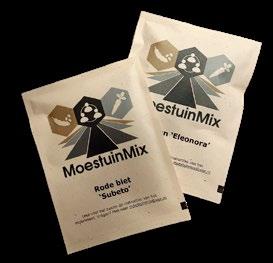
In the MoestuinMix project, thousands of amateur gardeners are collecting data on growth, yields and insects on their crops. Their observations help researchers find optimal crop combinations.
TEXT TEFKE VAN DIJK
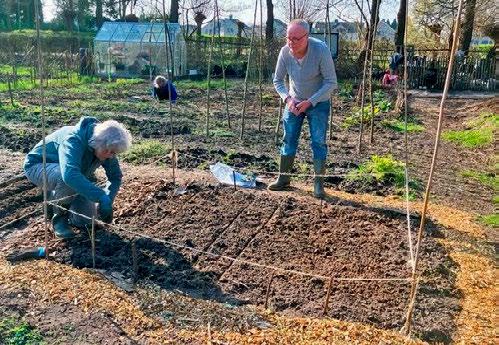
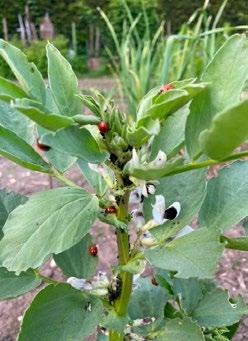
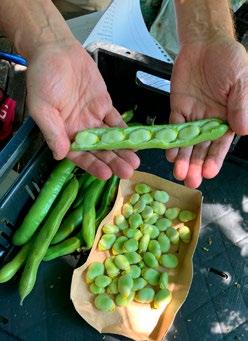
Thousands of gardeners across the Netherlands with vegetable patches have once again been busy this spring sowing, measuring and weighing crops such as broad beans and beetroot as part of the MoestuinMix project. They record data on seedling emergence, plant height, flowering period and yield. With over 2,300 gardeners taking part, this third edition has
broken the records. ‘We were surprised by our own success,’ says project leader Yvonne Florissen.
The project aims to find out what combinations of crops work best. ‘This year, everyone taking part will test the combination of broad beans and beetroot, as well as broad beans with a crop of their choice. These two pairs are then compared to see
how the beans do when grown alongside different plants.’ Keener gardeners can also list the insects they see – pollinators such as bees and hoverflies, as well as pests such as aphids. They also record diseases, fungal infections and growth issues in general. Taken together, all this data will show which combinations work well. Florissen and her colleague Zoë Delamore
PHOTO
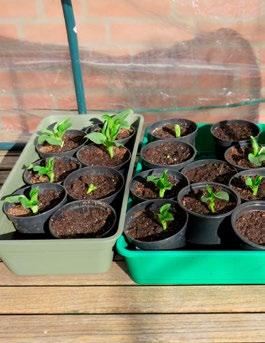
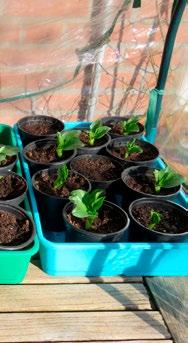
Gardeners taking part in the Moestuinmix project grow broad beans plus one other crop. They record data such as plant height, diseases and yields.
are running this citizen science project from the Laboratory of Entomology. Each vegetable gardener receives the seeds plus a comprehensive guide and instructions on how to record all the measurements. In return, they share their data. Ultimately, all these pieces of information come together to create a comprehensive picture that helps researchers understand how crops can enhance each other’s performance.
PEST CONTROL
MoestuinMix is part of the five-year CropMix research programme, which is studying how crop diversity can help make agriculture more sustainable. The programme focuses on ecological growing methods, biodiversity and natural pest control – all aspects that have largely disappeared from farming after years of monocultures. ‘CropMix has about 70 researchers, 35 consortium partners and a network of around 25 farmers, all practising some form of strip cropping,’ explains Florissen. ‘But we wanted to involve the general public too, and people with allotments or vegetable gardens are ideal participants.’ Unlike modern arable farmers, people with vegetable gardens naturally work with a diverse range of crops. They rotate and combine crops and keep an eye out for pests, often based on experience handed down over the generations. ‘Allotment holders have a lot of local lore,’ says Delamore. ‘For instance, people have been saying for years
that onions and carrots go well together. But is that really the case? And why?’
The first two years of the project have already yielded some striking insights. For example, broad beans grow better next to chard than beetroot, despite the close relationship between those two crops. ‘That raises questions. Why is one crop a better neighbour than another? We also see that crop combinations aren’t equally good in terms of all aspects. A particular combination may work well against pests, for instance, but attract fewer pollinators.’
Anyway, working with thousands of citizen scientists is bound to lead to variability. Not everyone will sow, measure or report exactly as per the guidelines. ‘We deliberately give the people taking part plenty of freedom so that the project fits their garden,’ explains Florissen, ‘but that also means there are lots of variables. Even so, it’s enormously valuable: we get data from all over the Netherlands, covering different soil types and a wide range of conditions.’
THE GARDEN AS A CLASSROOM
Jeroen Piël from Blaricum is one of the gardeners taking part. For him, combining science and education is what makes MoestuinMix so special. He volunteers at the Educational Vegetable Garden in Eemnes, which welcomes primary and secondary pupils — and even toddlers this year. The garden is taking part in MoestuinMix for the
‘Allotment holders have a lot of local lore’
third time this year. Piël shows visitors how he is playing his part in the research. ‘We measure how tall the plants get, when they flower and how many bean pods they have. The children love the idea that this data is being sent to Wageningen.’
The findings from MoestuinMix are also used as input for further research. The CropMix team wants to take the promising combinations and set up experiments under controlled, field-like conditions. ‘Then we can see which combinations can be scaled up for commercial cultivation,’ explains Florissen. Delamore also hopes that the large volume of new data from 2026 will yield more precise and detailed information. ‘Ultimately, we want to be able to give advice that growers can use in practice.’
For farmers, mixed cropping can be a way to spread the risk – a strategy that is becoming ever more important in a changing climate. ‘Monocultures are inherently vulnerable,’ says Florissen, ‘but combining crops lets you minimize the damage caused by pests or extreme weather.’
It is inspiring for participants to see how their small contributions become part of a bigger picture. ‘I think it’s brilliant that a mere vegetable gardener like me can help in research that could shape the future of agriculture,’ says Piël. ‘Even if it’s only on a small scale.’ W
More information: www.cropmix.nl
Bird flu in cows: should
This year for the first time, a cow became infected with the bird flu virus in the Netherlands. In the US, humans became infected during an outbreak of bird flu among cattle. Could that happen in Europe too? Can it be transmitted from one human to another? Is there a risk of a pandemic?
TEXT PAULINE VAN SCHAYCK PHOTOS SHUTTERSTOCK
should we be worried?
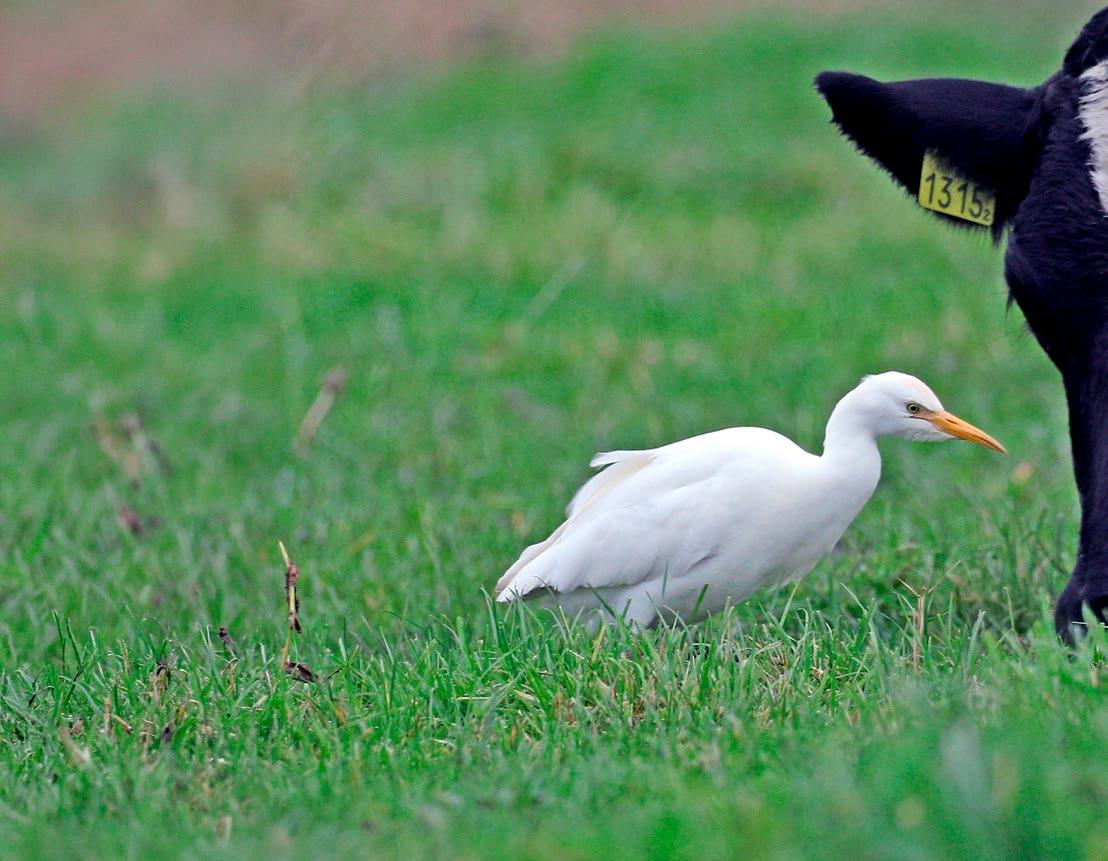
For a long time, the bird flu virus H5N1 circulated almost exclusively among wild birds and poultry, but about five years ago, new, highly contagious variants of the virus took over. Birds started dying in much larger numbers and mammals were observed getting sick too, such as foxes, badgers and seals that ate infected birds or came into contact with bird droppings. Infections and deaths were also seen in domestic cats. ‘Those were individual incidents and relatively rare,’ says Mónika Ballmann, a virologist at Wageningen Bioveterinary Research (WBVR). ‘Until recently, we hadn’t seen evidence of mammals infecting other mam-
mals.’ As head of the National Reference Laboratory for Avian Influenza, Ballmann is responsible for diagnostic testing for bird flu.
The situation changed in 2024, when there was an outbreak of infections among cattle in the US. ‘That was the first major outbreak in ruminants and it was caused by an American strain of avian influenza,’ says WBVR researcher Luca Bordes, who specializes in bird flu infections of mammals. He discovered that the European H5N1 strains can also reproduce in the respiratory-tract epithelial cells of cattle. It soon became clear that cows infected with the virus generally only experience mild
MÓNIKA BALLMANN Virologist at Wageningen Bioveterinary Research
‘So far, this is the only infection in cows outside the USA’
flu symptoms. The infection can result in inflammation of the udder, with the virus being secreted into the milk. The milk undergoes a standard heat treatment, which renders the virus harmless to consumers.
However, it was not only cows that became infected in the US; humans were too. To date, around seventy people have become infected. As with cows, most people only have mild symptoms; they often get inflammation of the eye. There are now increasing concerns worldwide that the bird flu virus is adapting to mammals. That means that more wild mammals, farm animals and humans could become infected. ‘If that happens, the virus is one step closer to causing a pandemic,’ says Bordes. In January 2026, the Netherlands was shocked by the news that bird flu antibodies had been found in a cow. Ballmann and Bordes answer some of the questions this new development raises.
How was the bird flu virus infection in this Dutch cow discovered?
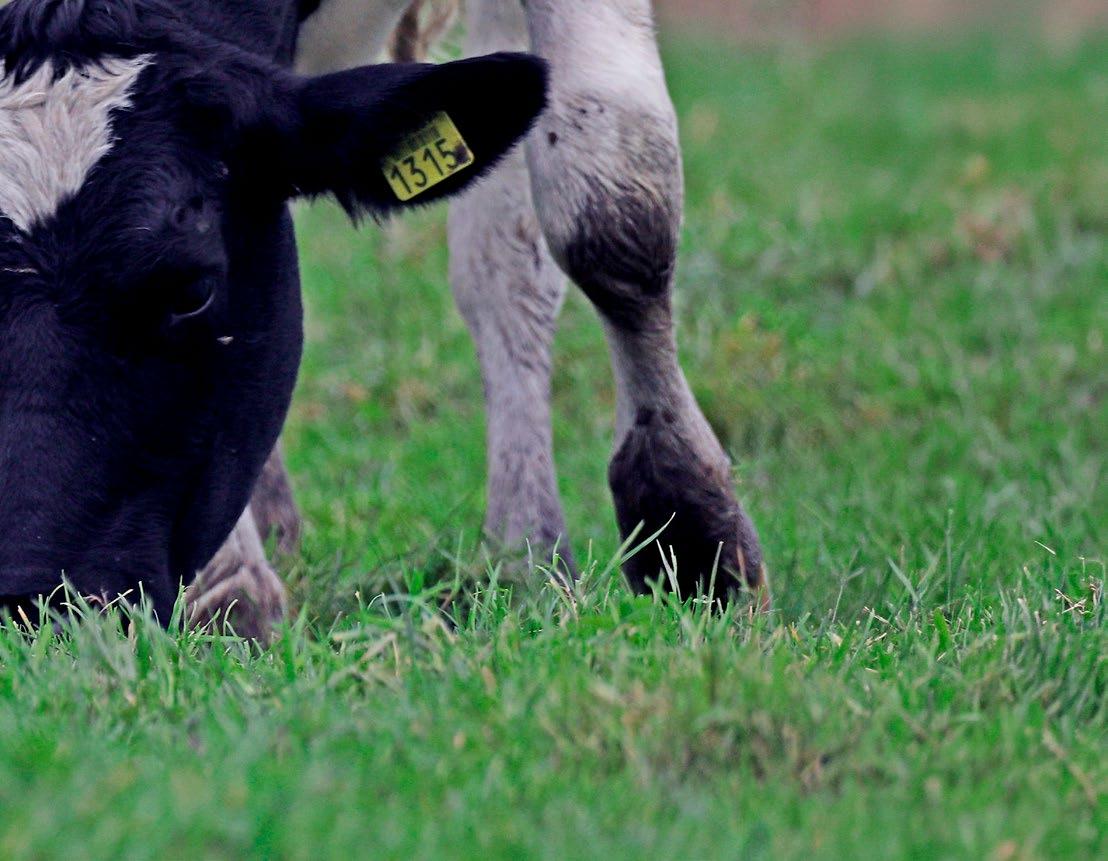
Ballmann: ‘It happened because of a sick cat that had access to both the field and barn used by the cows. When this cat died from flu-like symptoms in December 2025, bird flu was suspected. A PCR test confirmed the diagnosis. The cat may have got avian flu from eating a dead bird. This Frisian farm had one cow that had exhibited symptoms of udder inflammation shortly before. Its milk was also thicker than normal and somewhat yellowish. Neither the farmer nor the vet had found that particularly alarming as other diseases can cause inflamed udders. But whenever bird flu is confirmed to be present in poultry, we also test other vulnerable species such as dairy cows.
‘Initially, the milk samples were examined. They tested negative, which meant there was no active virus infection at that point. But one sample tested clearly positive for antibodies to the H5N1 virus, pointing to an infection in the past. There were a couple of borderline cases,
so we took a second series of samples. We took blood samples from all the cows and samples of the milk from all the milking cows. This showed that several cows had been infected.’
How can cows catch the virus?
Ballmann: ‘Around that time, the Netherlands saw a marked peak in bird flu cases among wild birds. The owner of the farm had indeed seen a lot of dead wild birds in the surrounding area. It was therefore highly likely that there were virus particles in the local environment. There are various ways that the virus could get into a barn. It could be carried in on shoes or in the fur of rats and mice. It could also be transmitted through the feed and the drinking water. But in this particular case, the most likely scenario is that the cows were infected through contact with bird droppings or dead birds in the field. The cows on this farm had been kept in the field until the end of November.’
Bordes: ‘We know from experiments that cows can also become infected through their udders. Therefore, milking could play a key role in transmission. The udders, milk and milking equipment are in constant contact with one another during milking. All these factors can facilitate the spread of the virus among cows. We are still investigating which route is most important in practice. We are doing that in the high-security labs of WBVR’s High Containment Unit in Lelystad.’
Is the bird flu virus now spreading among cows in the Netherlands?
Ballman: ‘We haven’t found any more active virus infections on the farm in question, nor are there any other farms where cows have tested positive for antibodies to the virus. If an infection is found in poultry, we also always test the dairy cattle in the locality. So far, this is the only case of infected cows outside the USA.’
The virus is spreading between cows in America. How does the situation there differ from the Netherlands?
Ballmann: ‘Like here, America has an H5N1 virus, but its genetic makeup is different to the European variant. A European strain ended up in America in 2021, spreading rapidly and exchanging genes with local American strains. Bird flu viruses often do this; it’s an accelerated form of evolution. This process resulted in virus variants that can spread easily among cows. We haven’t seen these variants in Europe yet.’
Bordes: ‘It has really taken off in America. To date, over a thousand dairy farms have become infected, in eighteen states. It should be noted that farming is different in America, where animals are frequently traded between farms. Here, animals are tracked throughout their lifetime and we try to avoid transporting the cows where possible for animal welfare reasons. Anyway, dairy farms are smaller in the Netherlands, with about one to two hundred cows.’
Humans became infected in the US as well as cows, and there have even been fatalities in Asia. Are humans as susceptible to bird flu as cattle?
Bordes: ‘The cases of the disease in the US were probably caused by intensive contact between cows and people, and in Asia between chickens and people. But the virus hasn’t adapted to function optimally in mammal cells. There are no indications that humans can infect one another. If that does happen, the people running the greatest risk of becoming seriously ill will be young children, the elderly and people with weakened immune systems – as with any form of influenza. Not everyone who becomes infected will get sick.’
Could a bird flu virus develop that is capable of being transmitted between humans?
Ballmann: ‘Now that bird flu is circulating among cows in America, there’s a greater risk of the virus adapting
to mammalian cells. The virus will then be able to infect mammals more efficiently and be transmitted more easily. That scenario is the main cause for concern in the light of current developments.’
Bordes: ‘The really tricky thing is that the virus is constantly adapting. The avian influenza virus is also very similar to the viruses that cause flu in humans and pigs. When bird flu, swine flu, and human flu end up infecting the same host, gene segments can be exchanged, creating an entirely new virus with potentially dangerous characteristics.That’s precisely how the major flu pandemics of the past started, such as the Spanish flu.’
All over the world, people are in close contact with animals. What can we do to prevent outbreaks in humans?
Ballmann: ‘It’s difficult to say how the virus will develop, which is why we continue to monitor the situation closely. In the Netherlands, wild birds that are found dead are tested so that we can detect any changes in the virus at any early stage. What is more, the Dutch Centre for Avian Migration & Demography and Erasmus Medical Center monitor live wild birds. These two monitoring systems give us a better picture of the virus variants circulating in nature. On top of that, we’re now screening cows in various parts of the Netherlands to see whether there have been other cases of infection. Apart from that, we are relying on our rapid diagnostic testing every time there is a suspicion of bird flu, whether in birds or in mammals.’ W
More information: www.wur.eu/bird-flu
LUCA BORDES Researcher at Wageningen Bioveterinary Research
‘The virus hasn’t adapted optimally to mammal cells’
‘The key thing in an emergency? Neighbours’
The Dutch are stocking up on bottled water and batteries in preparation for emergencies. Which is understandable, says crisis management scientist Jori Kalkman. But if you really want to survive a disaster, it is smarter to invest in social relationships. ‘Disasters are essentially social in nature.’
TEXT
TESSA LOUWERENS PHOTOGRAPHY DESIREE VAN DEN BOGAARD
‘What do we do if there’s no electricity for three days?’ Local residents come together to consider such issues during neighbourhood sessions organized by the Rotterdam-Rijnmond safety region. To start with, they talk about the basics for survival: non-perishable food, torches and batteries – the ingredients of a traditional survival kit. But the focus soon shifts elsewhere. Someone remembers an old lady next door with mobility problems who would not be able to use her stairlift if there’s no electricity. And what about medicines that have to be kept in the fridge? The focus shifts again. Who needs help? Who could do something to help someone else? According to Jori Kalkman, sessions like these may very well be the best form of disaster preparation. ‘We often think indi-
vidually. But even if you disagree totally with your neighbour’s politics, you need each other if anything goes wrong. The key thing in an emergency is your neighbours.’
WHO GETS FORGOTTEN?
Kalkman works for the Netherlands Defence Academy and was also appointed associate professor in the Sociology of Development and Change chair group at Wageningen in July 2025. He studies how society, the emergency services and the armed forces deal with disasters and crises. How do communities respond if everyday life suddenly grinds to a halt? Who helps whom, how do people organize themselves and who may get forgotten?
‘Government campaigns focus mostly on individual preparedness – making sure you
can manage for 72 hours,’ he says. ‘That may sound logical, but the scientific literature suggests otherwise. People usually get through crises not because they are well prepared, but because they get help from others. In neighbourhoods where people know and trust one another, they’re quicker to help each other. If you know the person living next door and what they might need, you’ll be in a much stronger position. Especially as friends or family often live further away. Your neighbours will generally be on the spot first. ‘What’s more, this emphasis on individual preparation can make inequality worse. For people on low incomes, putting together a 100 euro emergency kit is a significant expense. These are therefore precisely the people who are not well prepared – and they are often more vulnerable in the first place.’
The movies often show chaos and looting after disasters. That doesn’t look very helpful.
‘In about 95 per cent of cases, the opposite happens: people become more sociable and empathetic. After major disasters have passed, people sometimes even say they miss the sense of togetherness that emerged in the immediate aftermath.
After the earthquakes in Turkey, neighbours and local volunteers had rescued most of the victims before the international teams arrived. Miners dug tunnels to rescue people from beneath the rubble. During the coronavirus crisis too, all sorts of initiatives started in which people helped each other.
‘It shows just how resilient societies can be. It also means that the public authorities should follow suit, for instance by giving space to neighbourhood initiatives and volunteer networks, rather than just focusing on monitoring and enforcement.’
You argue that disasters can magnify the differences between people. Why is that?
‘Take Hurricane Dorian in the Bahamas in 2019. Many of the residents were able to evacuate or get help, but illegal migrants sometimes didn’t dare ask for assistance for fear of being deported. That left them more vulnerable and they also received less support.
‘That’s a pattern we keep seeing. People with lower socioeconomic status are more likely to live in high-risk areas, they have fewer resources for making preparations, and they take longer to recover. Groups with better networks and means of communication are frequently the first to get help. Communication systems are often down after a disaster and the districts where they come back up quickest are usually the more affluent ones. That’s where the emergency services arrive first, even though more vulnerable groups are often hit harder.
‘The same natural event can therefore have
very different consequences, depending on the social context. Policy choices, inequality and trust in institutions all play a part in determining who gets hit hardest. That’s how disasters can exacerbate pre-existing differences.’
How can disaster relief be made more inclusive and fairer?
‘Diversity is crucial in crisis teams. When the decisions are made by people who are from similar backgrounds, they unconsciously take themselves as the norm. You can also see that reflected in practical aspects. For example, crisis response often pays less attention to issues that primarily affect women, such as the rise in domestic violence following disasters. In some cases, emergency aid still goes via men, as they are seen as the head of the household. The result is that women – particularly single women – don’t always get the support they need. What’s more, emergency kits are often designed with the average man in mind. For a long time, they didn’t include sanitary products or powdered milk, for example.
‘It’s also important to involve the people affected by the disaster. Ask them what they need. In the aftermath of Hurricane Dorian, aid organizations delivered large amounts of food and water, but the greatest need was for fuel. Taking people seriously lets you provide help that is more effective, and you respect the victims’ dignity.’
What attracted you to this field?
‘I’ve always been fascinated by situations where everyday life suddenly gets disrupted. How do people respond? How do communities organize themselves? As a kid, I followed all the news about the tsunami in Asia. Later on, I discovered that it was a topic you could study.
‘In Wageningen, there’s a strong emphasis on local communities and how they come up
‘Even if you disagree with your neighbour’s politics, you need each other if anything goes wrong’
with their own solutions. I find that inspiring. After disasters, you sometimes see almost utopian moments of solidarity. People suddenly start thinking more in terms of the common good, as with the earthquakes in Turkey we mentioned earlier. I often wonder how you can keep hold of that feeling, even when there isn’t a crisis.’
You also work at the Netherlands Defence Academy. Not necessarily an obvious place to find a Wageningen social scientist.
‘Humanitarian aid may not be a core task for the military, but the armed forces do often play a key role in dealing with major disasters. The Netherlands Defence Academy is a kind of mini-university within the Ministry of Defence. They carry out scientific research, and academic independence is important too. That makes it an interesting place for studying these questions. It gives me opportunities to observe practical experiences and operations that I can analyse from a social science perspective. Military personnel have a wealth of experience in operating under pressure and in unpredictable circumstances, but a social science-based understanding of crises is lacking sometimes. It’s an area where research could really make a difference, for instance by telling us how
support can be tailored better to the needs of those affected.’
You wrote a book about how emergency services and the armed forces respond to crises. What dilemmas do they encounter?
‘You have to make decisions that might save lives, with very little information to base them on. Even so, emergency services are often organized in a way that prioritizes consultation and coordination. During Hurricane Katrina, for example, the American army first spent a lot of time coordinating with civilian organizations, so relief efforts got off to a slow start. The coastguard sprang straight into action and rescued lots of people from rooftops and flooded homes. It may have been less efficient, but it certainly worked. The key lesson is that organizations have to be adaptable. Plans are useful, but you also have to be ready to ditch them.’
Dutch people feel relatively safe. Are we indeed well prepared?
‘We’re lucky enough that someone turns up quickly when we call the emergency number. Perhaps that makes us feel less vulnerable. We haven’t experienced many big disasters, so our awareness of the risks is limited.
JORI KALKMAN (34)
‘But the risks are increasing. Extreme weather conditions are becoming more common due to climate change, resulting in more wildfires and floods. Events like these can also damage critical infrastructure and lead to prolonged power outages. Yet the Netherlands’ investments in readiness are primarily military. My worry is that we’ll soon be well prepared for war but not for climaterelated crises. Those could hit us hard too.’
If you could give the policymakers a single piece of advice, what would it be?
‘Invest in social cohesion. You’re giving the impression now that it’ll be everyone for themselves if something happens, and that’s not what you want. Some people will be properly prepared, while vulnerable groups are left out in the cold.
‘Make sure people get to know each other and feel connected to their neighbourhood. The worst thing that can happen to you in a disaster is the feeling that you’re on your own. Municipalities can help by making community centres and sports clubs accessible, and by encouraging neighbourhood initiatives. The bottom line is that it’s more helpful to have people who care about you than to have an emergency kit you can’t get to because your house has collapsed.’ W
2025: Associate professor, Sociology of Development and Change, Wageningen University & Research.
2023: Book Frontline Crisis Response: Operational Dilemmas in Emergency Services, Armed Forces, and Humanitarian Organizations. 2019 to date: Assistant/associate professor, Netherlands Defence Academy. 2019: PhD, VU University Amsterdam.
2015: MSc, International Development Studies, Wageningen University & Research. 2013: BSc, Political Science, VU University Amsterdam.
Living on Mars without leaving Earth
In the vast expanse of Utah’s red desert in the USA is the Mars Desert Research Station. Here, scientists seek to simulate life on another planet. The
Brazilian astrobiologist Rebeca Gonçalves spent two weeks at the remote station, studying how vegetables could be grown on Mars.
TEXT TESSA LOUWERENS
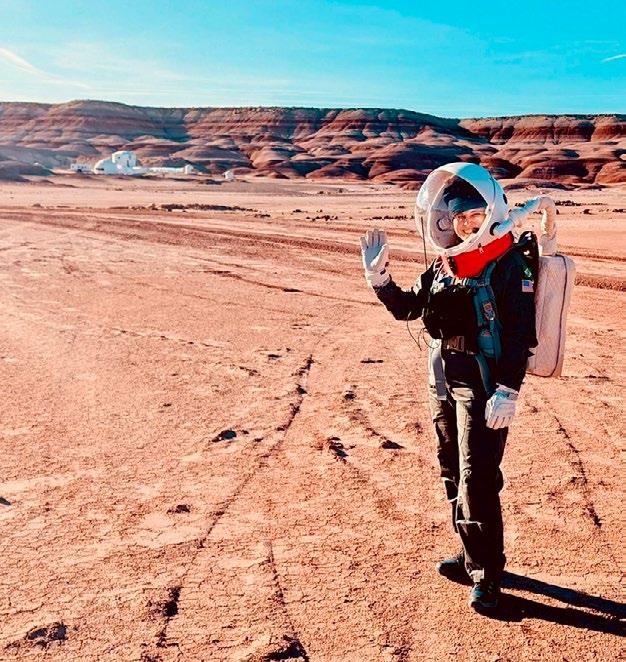
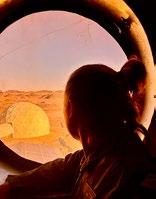
When she first saw the white domes rising up from the red sand of the Utah desert against a backdrop of barren hills, alumnus Rebeca Gonçalves felt as if she had entered another world. ‘It looks alien,’ she recalls, ‘but also very beautiful.’ This moment marked the start of two weeks living and working inside the Mars simulation station as chief scientist and ‘Mars gardener’.
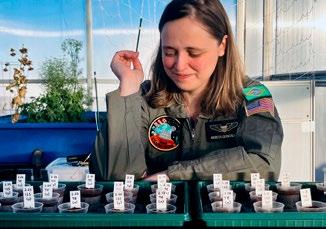
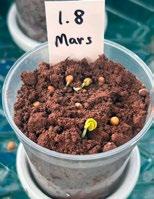
Gonçalves led two crop cultivation experiments she had developed in collaboration with Wageningen researcher Wieger Wamelink. The experiments were financed by Wamelink’s organization BASE (Bioregenerative Astrofood & Sustenance Engineering), which focuses on sustainable food production for future space missions. One project explored how sterile regolith, the loose mineral material covering the surface of Mars, could be turned into soil capable of supporting plant growth. She compared radish cultivation in different systems, including regolith simulants
‘On Mars, you have to be able to cope with the psychological pressure’
and hydroponics, in which plants grow in nutrient-rich water.
Another experiment involved tomato seeds that had spent 60 days aboard the International Space Station (ISS). ‘A journey from Earth to Mars takes about seven months,’ she explains. ‘During that time, the seeds are exposed to near-weightlessness and higher cosmic
radiation. We need to know if they will still germinate when they arrive. And they did.’ It’s important to do these tests in this isolated dome, she emphasizes. ‘On Mars, you won’t just be a scientist. You’ll also be maintaining and repairing equipment and dealing with the psychological stress. We need to know if this is feasible before we actually go into space.’
RATIONING
Conducting research was one thing; living in the simulation station was another. Once the crew of five had sealed the entrance, daily life revolved around strict rationing of water and energy. After all, on Mars every drop of water will need to be recycled or extracted from local ice deposits. ‘You become incredibly aware of how much water you normally waste,’ says Gonçalves. ‘Even throwing away two sips of coffee suddenly felt impossible, and we only showered once during those two weeks.’ Meals consisted mostly of freeze-dried
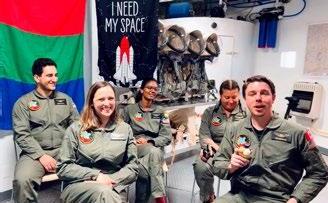
food, and fresh produce became a minor luxury. ‘When we harvested lettuce from the greenhouse, it felt amazing,’ she says. The psychological challenges proved the hardest. ‘I was warned, but it was much tougher than I expected.’ The international team consisted of researchers from different countries, each with their own experiments and habits. ‘Living at such close quarters inevitably creates tension –it’s like a pressure cooker,’ says Gonçalves. ‘You soon learn how important it is to understand each other’s personalities, resolve conflicts and manage expectations. At the same time, it created unexpected connections. We trauma-bonded for life,’ she laughs.
BECOMING AN ASTRONAUT
For Gonçalves, the intense experience in Utah was the culmination of a long journey that began when she was growing up in Brazil. As a child, she spent hours talking about astronomy with her uncle. Yet she
decided to study biology. ‘Like many people, I assumed that working in the space industry meant becoming an astronaut, and that seemed unrealistic.’
Years later, her fascination for space resurfaced and she looked around for courses. That search led her to Wageningen University & Research, where she discovered researcher Wieger Wamelink describing himself as a ‘space farmer’. ‘I thought: that’s it. So I contacted him.’
In 2020, she started a Master’s in biology at Wageningen and got involved in Wamelink’s research on growing vegetables in Mars soil simulants. Working with Wamelink proved decisive. It meant she could publish early research on growing Mars crops. ‘It was a catapult for my career,’ she says.
GIVING TALKS
Since 2023, Gonçalves has been part of the Space Farming Brazil Network, which focuses within NASA’s Artemis programme
on agricultural technologies for future lunar missions. She also travels across Brazil to give talks in schools, often in underprivileged areas, encouraging young people, especially girls, to pursue careers in science. ‘These kids rarely meet scientists. When they see someone like me, they realize it is possible after all.’
For Gonçalves, research on farming in space is closely linked to the challenges on our own planet. ‘The culture in the space sector is very much that every innovation should also benefit life on Earth,’ she says. ‘Technologies such as solar panels, GPS, advanced water filtration and even diapers all emerged from space research.’ Her work on transforming sterile regolith into fertile soil could help restore degraded farmland on Earth. ‘Exploring other worlds is not about escaping this planet,’ she says, ‘but about learning how to take better care of the only home we have.’ W
www.rebecagoncalves.org, https://wur-base.nl
Alumnus Rebeca Gonçalves and the crew at the Mars Desert Research Station in Utah, USA.
WATER FRAMEWORK DIRECTIVE:
Deadline approaching, but still no plan
The EU deadline for clean water is approaching, but the Netherlands is not on course. Nearly half of all surface water in the Netherlands has too much nitrogen or phosphorus. There are many measures that could be taken, but they are not being implemented nearly enough.
TEXT TANJA SPEEK PHOTO JELGER HERDER
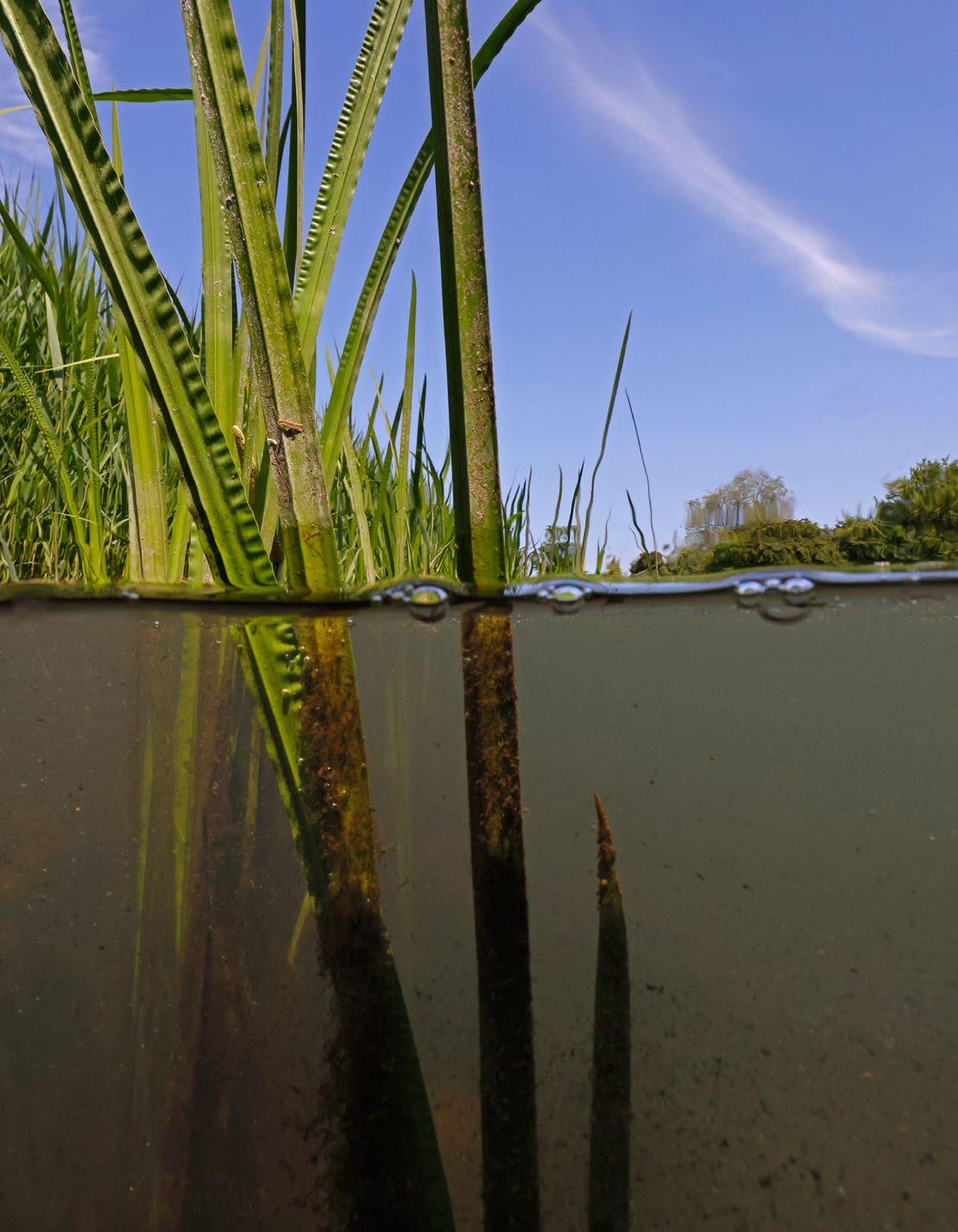
The deadline was set in 2000: by the end of 2027, all EU countries would have to fulfil the requirements of the Water Framework Directive (WFD). That means bodies of water need to be ecologically sound, with maximum values for contaminants such as fertilizers, pesticides, medicine residues and chemical compounds such as flame retardants and PFAS. Furthermore, the ‘one out, all out’ principle applies: a body of water – whether a river or stream – is only assessed as acceptable if it satisfies all the requirements. The Netherlands now satisfies over 80 per cent of the standards, but there is nowhere that ticks all the boxes. The Netherlands has been bringing up the rear in EU water quality rankings for years and experts predict it will not make the grade by the WFD deadline.
One of the biggest challenges for the Netherlands is eutrophication, an excess of nitrogen and phosphorus in the surface water. Nearly half of all surface waters have too much nitrogen and/or phosphorus, despite decades of measures. One of the main sources is fertilizers leaching from farmland into the surface water.
Human excrement is another factor. Sewage treatment plants are now capable of removing most of the nitrogen and phosphorus from sewage, at an efficiency of over eighty per cent, according to Wageningen Environmental Research scientist Peter Schipper. ‘But what remains can still be too much. In some bodies of water, it can make up fifty per cent of the total.’
Finally, there is the issue of water entering the Netherlands from other countries. Schipper: ‘The water that flows into the
Netherlands from Belgium and Germany via rivers and streams often has concentrations above the WFD limits.’
SOURCE ANALYSIS
Schipper and his colleagues in the Sustainable Soil Management team calculate the values for the nitrogen and phosphorus in the surface water. To this end, they have spent years developing a ‘source analysis model’. This model uses data from across the Netherlands, such as the nationwide emissions register of the National Institute for Public Health and the Environment (RIVM), and data on the supply and discharge of surface water from the water boards. That lets Schipper work out the contribution of agriculture and other sources, determine what still needs to be done to meet the WFD targets and calculate the >
‘The solution isn’t one single large master plan; you need lots of small steps’
effects of new manure policies. So far, the model shows that the current manure policy does not do enough to reduce phosphorus and nitrate levels in surface water; further measures are needed.
There can be big differences in the situation between drainage basins , though. One advantage of these models, says Schipper, is that they let policymakers operate on the basis that the polluter pays. ‘It means we can apportion the task of reducing nitrogen and phosphorus fairly, in proportion to the polluter’s contributions.’ The researchers have had to address questions, too. ‘For example about the effect of geese, which can sometimes cover a field with excrement, and whether we allow for nitrogen and phosphorus that are emitted naturally from peatland. But those sources are also included in the model with separate calculations.’
SEASONAL MEASUREMENTS
Researcher Janjo de Haan of Wageningen Plant Research conducted a wide-ranging assessment of what arable farmers could do to help achieve the water quality targets. One of the applied studies was the Arable Farming for Water Quality project, which started in 2023 with fourteen farms taking part in the
northeast and southeast of the Netherlands. One result of this project was a handout summarizing the key recommendations, such as sowing catch crops immediately after a harvest, basing fertilization on soil measurements, ploughing less, and using varieties that do not need much nitrogen. De Haan: ‘It isn’t necessarily particularly innovative, but it’s about doing the right things for the situation of your specific farm.’
The challenge now for De Haan and his colleagues is to provide their expertise in such a way that arable farmers can apply it easily. ‘Many farmers still think that if the harvest is good, they must be doing the right thing. They apply fertilizer generously to make sure they have enough everywhere.’
De Haan stresses in particular the advice to take more measurements of how much mineral nitrogen there is in the soil. ‘If you take measurements before and during the growing season, you can adjust the fertilization accordingly; then a measurement at the end will tell you whether there really was less leaching from that crop.’
Another problem, especially in the southeast of the Netherlands, is the excess manure on livestock farms. Arable farmers sometimes take up that excess manure if they have
room for it. ‘Even if it isn’t necessary for the crop and causes a lot of leaching. The arable farmer gets money for doing it and it helps the livestock farmer get rid of the excess manure. People aren’t yet sufficiently aware of how bad this is for the water quality.’
FERTILIZATION LICENCE
De Haan and his colleagues demonstrated that it is possible to keep to the limits for nitrate leaching at the experimental station of Vredepeel in north Limburg. ‘The researchers were eventually able to achieve the norm with an appropriate crop rotation plan, with break crops such as grass and cereals alongside potatoes, sugar beets, maize and vegetables and with maximum deployment of green manure plants. You also need to be very precise in applying fertilizer.’ He adds caveats to that success, though. ‘It would be challenging for a grower in that region to achieve a decent income with this approach. Even so, there are a lot of levers you can pull as a farmer. I hope arable farmers get a taste for trying things out.’
De Haan continues: ‘As a grower, you need a good understanding of what is going on and you need enough know-how to apply the fertilizer and cultivate the crop so that you
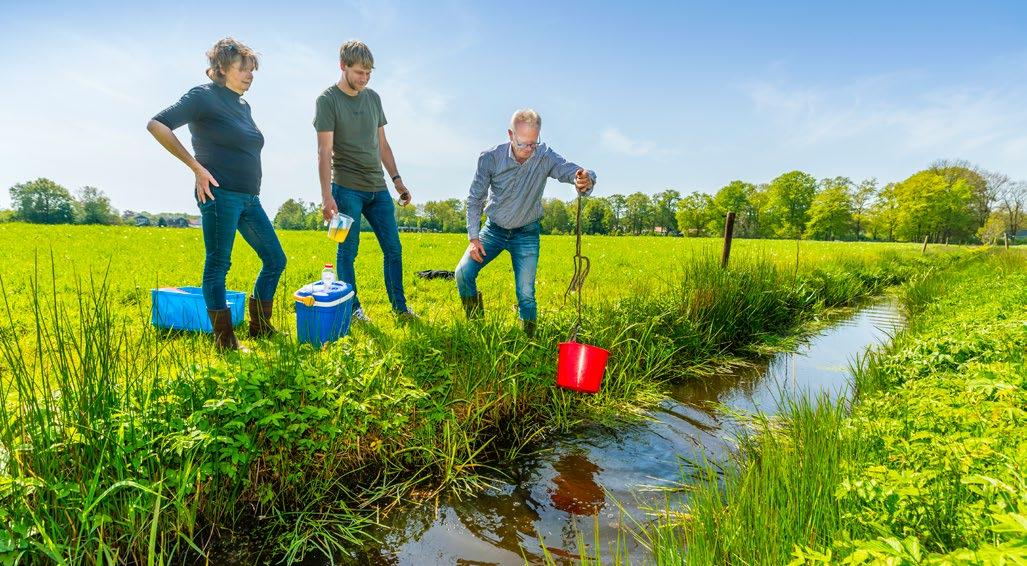
Measurements of the nitrogen in the soil and water can give an idea of the extent of leaching.
‘There are a lot of levers farmers can pull’
get good yields with little leaching. We have pondered the idea of establishing a fertilization licence, in addition to the spraying licence, which would force growers to attend annual training courses.’
In the Water Quality Knowledge Impulse project, Schipper investigated two more potential measures – but they got overtaken by policy changes. In two drainage basins, he analysed the effect of a bed of wood chips that the drainage water from the arable fields runs through before entering a ditch or stream. ‘That filters out as much as 40 to 60 per cent of the nitrate in the drainage water.’ The second measure he investigated was putting a small barrier in ditches that lets you raise water levels. The measures had an effect, but new developments rendered the project irrelevant. The end of the derogation – the EU exemption that allowed Dutch farmers to spread more manure – was approaching and additional rules were introduced such as mandatory buffer strips and lower limits on the application of manure. Those rules probably have a much bigger effect. ‘We are now building detailed models for the two drainage basins to obtain precise calculations of the effects of ending the derogation and other measures.’
SMALL STEPS
It is up to policymakers and government bodies in the Netherlands to turn all those options into results. But politicians have yet to address ‘the monster’ of the WFD targets seriously, says Governance professor Katrien Termeer. In November 2025, she published a book entitled Kleine stapjes, grote veranderingen (Small Steps, Big Changes) about her research on good governance. ‘Stakeholders often don’t deal well with complex problems where everything is interrelated. They try to ignore the problem, become polarized or paralysed, or simplify it. You see this happening with the WFD too, so that far too little gets done in the end. The solution isn’t one single large
master plan; you need lots of small steps. Small-scale initiatives that show how you can combine agriculture, industry and clean water could add up to a big improvement.’
Termeer gives the example of the collaboration between the Bavaria brewing company and local farmers. ‘Together, they came up with the idea of using Bavaria’s residual water to irrigate the farmers’ fields. That can be a solution during dry periods but is normally not allowed because that water is deemed wastewater. But they managed to arrange this after all by making agreements with local authorities such as the municipality and the water board, coupled with thorough quality monitoring.’ The idea is that the initiative will result in healthy soil and water. The farmers made additional agreements on reducing the application of manure and crop protection products.
‘Changes like this are complex processes that depend on persevering individuals and bold government officials. Of course, one or two small steps will never be enough. You need measures that enhance one another, ultimately leading to changes in the system.’
REALISTIC PROSPECTS
Even now that the WFD deadline is fast approaching, Termeer still advocates taking small steps, but then ensuring good initiatives spread rapidly and are linked together. ‘Formulating and introducing strict legislation takes a long time too. You can’t abolish all pesticides overnight, for example. Sri Lanka tried that in 2021 and it had disastrous consequences for food security, so they soon revoked the ban. Anyway, if growers don’t see any realistic prospects or alternative solutions, they will simply dig their heels in. If small steps grow into something bigger and there are a lot of alternative solutions, legislation can help persuade the die-hards who are still holding out.’W
www.wur.eu/sustainable-water-and-land-use
PETER SCHIPPER
Scientist
Wageningen Environmental Research
KATRIEN
Governance professor
Wageningen University & Research
JANJO DE HAAN
Researcher
Wageningen Plant Research
TERMEER
RESEARCH IN ANTARCTICA
Between melting ice and mass tourism
Antarctica is remote but not pristine. While ecologists living in extreme conditions study krill, birds and marine mammals, it is rapidly becoming a tourist destination with luxury cruises and helicopter flights.
TEXT KOEN JANSSEN PHOTO SUSANNE KÜHN
‘We try to determine how krill, zooplankton and fish spread under the ice’
It is not easy to contact Fokje Schaafsma and Susanne Kühn. The two Wageningen researchers are spending months on an icebreaker off Antarctica, hundreds of kilometres from civilization. The ship doesn’t always have a good internet connection. On top of that, they are on call 24 hours a day, ready to leap into action, for example fishing for krill as soon as there is sufficient space between the massive ice blocks. Their schedule is as unpredictable as the weather.
Schaafsma and Kühn, both marine ecologists at Wageningen Marine Research, are spending this spring in a team of six Wageningen scientists on board the German research vessel Polarstern They are working with international colleagues on this icebreaker to set up a long-term monitoring programme in the Weddell Sea, one of the seas surrounding Antarctica. The information gathered by the scientists will be used to justify setting up a protected nature area. They are also studying the spread of krill, zooplankton and other creatures in the northeast point where water flows out of the Weddell Sea. This is a point where sea ice and bergs that have broken
off nearby glaciers converge. The difficult conditions mean that not much research has been carried out there to date.
CHAOS AND STRUCTURE
‘Life on board is a combination of chaos and structure,’ says Schaafsma when she and Kühn finally get an opportunity to talk. ‘We have about fifty scientists on board from all over the world carrying out various tasks. Some researchers like having the ship stopped at an ice floe as it lets them get off, while other studies require the ship to be travelling at a specific speed.’
‘We have a daily work plan that says what we will be doing when. But the plan keeps having to be changed because of the unpredictable conditions. Sometimes we’re scheduled to do something according to the work plan but it isn’t possible after all, sometimes it’s the opposite – the Fahrtleiter suddenly calls to say we can get to work.’
Only the meals are at fixed times, with hot food prepared for the researchers three times a day.
Schaafsma and Kühn mainly spend their days counting seabirds and marine mammals, and catching and analysing krill,
zooplankton, fish and other underwater creatures. The weather conditions and the state of the ice determine whether they can carry out these tasks. For example, they can only count birds in fine weather. Schaafsma: ‘If we aren’t able to do counts or go fishing, there are plenty of other things we can do, such as repairing nets, filtering water and ice, selecting samples, entering data and taking the occasional break.’
‘We often work nights as well,’ adds Kühn. ‘You can fish in the dark too. We had midnight sun from December to February, so we could count birds and marine mammals at night as well then.’
The researchers are keen to seize every opportunity they get, which means they sometimes have to go 24 hours without sleep. ‘You get very good at making the most of your breaks. You sleep very deeply, so even a twenty-minute nap can help. But you do feel a bit like a zombie at times,’ laughs Kühn.
GLOBAL WARMING IS ACCELERATING Research on the world’s remotest continent is not only about Antarctica itself, it’s about the whole planet. Like the Arctic, the
Wageningen scientists on the German research vessel Polarstern in Antarctica count birds, catch zooplankton and analyse their catches in the lab on board the ship.
Antarctic has a big influence on the global climate. The sea ice expanding and melting causes ocean currents that in turn influence the climate around the world. Climate change means less sea ice builds up during the winter months and consequently less ice melts in the summer months. That is accelerating global warming.
Furthermore, Antarctica’s biodiversity is unique. This inhospitable terrain is not home to any terrestrial mammals, reptiles or amphibians, but it does have species that have been able to adapt to the extreme conditions, such as whales, penguins, fulmars and plankton. However, in recent years plants and animals from temperate regions have spread further and further towards the North and South Poles as temperatures rise.
During their expeditions, Schaafsma and Kühn study the importance of sea ice for animals’ lives. ‘We try to determine how small creatures such as krill, zooplankton and fish larvae spread in the water, depending on whether or not there is ice cover. They are the food source for most birds and marine mammals in the area. We want to be able to predict the effects
of changes in the sea ice on the spread of animals, both small and large, and on the food web make-up.’
On the ship’s top deck, Kühn and fellow researcher Bram Feij count birds and marine mammals. They occupy two wooden shelters the size of a telephone box. ‘The shelters have a bench, little table and heater to keep your feet warm,’ says Kühn. ‘We use a telescope and count all the animals and birds we see, paying attention to their behaviour. We do that in shifts of six hours, rotating so that we cover 24 hours a day.’
The researchers also carry out counts from a helicopter when the weather permits. That lets them cover a much wider area, including
ANTARTICA
parts the ship cannot reach because of the thick ice. The scientists will be able to use the data that they are collecting to determine the distribution of various species and link that to the environmental conditions and availability of food, for example.
The Wageningen researchers mainly use special fishing nets to count krill, fish and zooplankton, the Surface and Under Ice Trawl (SUIT) and the Rectangular Midwater Trawl (RMT). ‘We use the SUIT to obtain samples in open waters and in the top two metres under the ice,’ explains Schaafsma. ‘It consists of a steel frame that two nets are suspended from. We drag it under the ice to catch the species that live just below the
ice.’ The RMT is used for deeper waters, at depths of up to 1,000 metres. Both trawls have nets with meshes of varying sizes, allowing sea creatures in a range of sizes to be caught. The smallest mesh opening is only 0.3 millimetres.
Devices are attached to the SUIT frame that measure parameters such as the temperature, salinity and flow. Other sensors measure the thickness of the ice and the amount of light that penetrates it. These sensor measurements let researchers estimate how much algae there is in the ice. Algae are a potential food source for the creatures living beneath the ice. Trawling for samples at different depths lets the researchers find out which creatures live close to the ice and which prefer the deeper waters.
PFAS AND BIRD FLU
The catch is analysed in one of the laboratories on board. The same method has been used for years, which means researchers have gradually been able to get
a picture of life under the ice. This year, for the first time, the scientists are also measuring the PFAS levels in the creatures they catch. ‘And we are testing for bird flu,’ says Kühn. ‘That didn’t use to be an issue here, but it has taken off in recent years.’ Avian influenza was first detected in Antarctica in 2023. Since then, the virus has caused numerous deaths in sea birds including penguins, and in seals. In the Dutch Research Council project PolarFlu, scientists from WUR and other scientific institutes are trying to get a better understanding of how bird flu is spreading in the Antarctic.
This is another example of how vulnerable the remote continent of Antarctica is to what happens elsewhere on the planet. Schaafsma and Kühn hope their research will help provide scientific support for the protection of species, habitats and ecosystems. The Weddell Sea, for instance, could be designated a protected marine reserve. Knowledge about marine populations is also needed for fisheries management.
‘For example, it’s important to make sure young fish that haven’t yet had a chance to reproduce aren’t eliminated by overfishing,’ says Schaafsma.
While Schaafsma and Kühn sail round Antarctica studying birds and fish, back in Wageningen Machiel Lamers is focusing on a very different kind of animal: tourists. As professor of Tourism & Environmental Change, he is researching the development, impact and regulation of tourism in Antarctica. He has visited the area – which he describes as a ‘magical place’ – four times.
CRUISE SHIPS AND YACHTS
More and more people want to see that magic with their own eyes. The number of tourists visiting Antarctica has shot up in recent decades. In 1990, around 7,500 tourists travelled to the area, compared with nearly 125,000 in the 2023-2024 season.
‘Planes packed with tourists are flying there and back,’ says Lamers. ‘The bay of King George Island, an island in Antarctica with
Professor of Tourism & Environmental Change Machiel Lamers studies the development, impact and regulation of tourism in Antarctica.
‘Planes packed with tourists are flying there’
a landing strip, is full of cruise ships and yachts at times. More and more people in the world have the 15,000 euros you need for trips like that.’
In addition, the growing groups of tourists on Antarctica want more activities. ‘In the past, people were just happy to be there and admire the nature, whereas now they want to do things, such as kayaking, diving, camping, climbing, breaking a world record – you name it. They organize everything from marathons to helicopter flights. Tour operators are also keen to exploit this interest. They arrange themed cruises, such as trips for art lovers, photographers or LGBTQ people. There are even cruises for swingers.’
Lamers once ended up on a luxury cruise ship during one of his expeditions. ‘We arranged to be picked up by a cruise ship, as scientists often do. That’s handy from a logistical point of view because you then don’t need a separate ship sailing just to collect us. And it can give us new insights. I was amazed by what we saw on that ship: dancers, musicians, champagne, luxury buffets!’
Lamers is worried by these developments as the influx of all those tourists is having a major ecological impact. ‘Cruise ships emit massive amounts of greenhouse gases. We’ve calculated that a tourist on a twelveday cruise to Antarctica is responsible for the same amount of emissions as the average European in a whole year.’ The fuel combustion also releases elemental carbon, as small particles of smoke and soot. The particles precipitate onto the ice, where they absorb more sunlight than the white surroundings, making the snow melt faster. The tourists can also disturb bird colonies during the brooding season.
ENVIRONMENTAL REGULATIONS
WUR and other science institutes are trying to get a picture of the growing impact of
tourism in the area. Lamers heads the international ANTARC-SHIP project, funded by the Dutch Research Council. In this project, researchers are studying how various stakeholders, such as states, scientists and tour operators, can formulate and implement environmental regulations. ‘In the last two expeditions, we looked at how scientists and other staff working at research stations close to busy tourist hubs such as King George Island feel about the growth in tourism. Are they worried about it, or do they in fact see benefits? Also, how do tour operators prepare tourists for their visit to Antarctica in terms of the rules and environmental awareness?’
The conclusions from that study were rather striking, says Lamers. ‘Many scientists and staff were quite relaxed about the tourism; that’s because of their situation, as they are only live there for a short period, perhaps just a few weeks or months. They have a specific objective in mind and they’re just happy to be there. That’s why not everyone feels an urge to call out the growth in tourism.’
Now, Lamers wants to translate the scientific knowledge into policy. That is the aim of the TRANS-ACT project, which started at the beginning of 2026. ‘Our aim with this project is to give policymakers a scientific basis for decisions about regulating tourism. We are doing this by collating and merging recent research results. These policy summaries will then be submitted by the Netherlands in the annual international consultative meeting about Antarctica.’
ANTARCTIC TREATY
Antarctica is governed by a group of 29 countries, including the Netherlands, that have signed the Antarctic Treaty and the associated Environment Protocol. The 1959 treaty stipulates that Antarctica can be used for scientific research but not for military
activities or mining, for example. Tourism is not mentioned explicitly in the treaty.
‘Decision-making is a slow process because those 29 countries have very different views on some subjects. European countries feel nature conservation is very important, whereas the United States prefers not to have too many rules. Chile and Argentina are somewhere in between, but they also have vested interests in tourism, for example in the transport to and from Antarctica.’
The sluggish decision-making process means in practice that it is mainly up to the tourist industry itself to set limits on the tourism. ‘Self-regulation is really important, and the tour operators are genuinely taking action to reduce their impact. But they can’t halt the growth in the number of tourists and the range of activities. You really do need rules and regulations for that.’
The countries jointly governing Antarctica are currently working on a regulatory framework for setting limits on the number of tourists, ships or operators. ‘These are very difficult negotiations. There seems to be support for the principle that the user pays – where each tourist has to buy an admission ticket, for example. There are lessons we can learn from other protected areas such as Spitsbergen, the Galápagos Islands and the Great Barrier Reef. But those are governed by single sovereign states and that’s not the case here. That makes it all extra complicated.’
‘In my opinion, tourist activities should serve a higher purpose, for example activities that are educational rather than sporting activities and entertainment. Then the area will benefit too in the long term. If we continue to allow these crazy things and unchecked growth, it will destroy Antarctica’s unique character.’ W
More information: www.wur.eu/marine-nature
Growing bulbs with fewer chemicals
Behind every blooming lily or tulip, there is a cultivation process that takes years. Viruses and fungi can cause severe damage along the way.
Researchers are working on ways of growing healthier bulbs, with the aim of reducing the need for pesticides.
TEXT RENÉ DIDDE PHOTO ISTOCK
Most visitors to the world-famous display of flowers in the Dutch bulb-growing region are probably unaware that the flowers in the fields are merely one stage in the production of bulbs for export and sale – a process that takes years. Propagation involves various stages, from a tiny bulblet in the greenhouse through several cycles to larger bulbs, and then to the open fields, where tourists can see the flowers in bloom. That is where the
bulbs grow to a marketable size. All in all, the process takes five to seven years. This makes cultivation both expensive and vulnerable. It can be lucrative, but the risks are high. ‘If there’s an outbreak of disease at any stage in the process, growers will suffer consequences that last for years,’ says researcher Paul Ruigrok of Wageningen Plant Research at the experimental greenhouse complex in Bleiswijk. As well as fungi, viruses are a major threat. ‘Potyviruses in particular cause
considerable damage, such as a sharp decline in vitality, lower yields and deformed flowers, or no flowers at all. Many flower bulbs are exported and they are subject to strict requirements regarding maximum virus levels.’
UNDER FIRE
The Netherlands is the world leader in flower bulb cultivation, with 60 per cent of global production and 85 per cent of world trade. Tulips are the main focus, followed – at quite
‘If there’s an outbreak, it affects growers for years’
some distance – by lilies. The remainder include hyacinths, daffodils and gladioli. Relatively large quantities of crop protection products are used in their cultivation, partly to mitigate the risks. Bulb growing has been under fire for years because of this intensive usage of chemicals, with the media linking it to diseases such as parkinsonism. Utrecht University and Radboud University Medical Centre are currently investigating whether any such link actually exists.
Figures from Statistics Netherlands show the use of such pesticides has been falling in recent years, and fewer are now permitted. The figures on crop protection product use don’t tell the whole story though, says Ruigrok. ‘In lily cultivation, the spread of viruses by aphids is controlled using a mineral oil, at up to six litres per hectare per week. That sounds like a lot, but the environmental impact is minimal. Sunlight degrades the oil quickly and no persistent breakdown products are left behind.’ His colleague, tulip researcher Sjoerd van Vilsteren, adds: ‘If the current trend continues, there’ll be almost no permitted chemical pesticides in ten years’ time. Diseases will then have to be tackled using a comprehensive approach involving hardy varieties, clean crop stocks, biological control agents, green manure, extensive
crop rotation, smart and hygienic horticulture management, and robotics.’ Ruigrok and Van Vilsteren hope to have a role in that, partly by making a larger proportion of the propagation possible in the greenhouse, starting with tissue culture. This clean start means that the bulbs will be healthier, so that – in theory – fewer pesticides are needed.
VIRUS-FREE CLONES
They have already achieved good results with lilies. ‘Tissue culture is already being used,’ says Ruigrok. In this process, small pieces of tissue are cultivated in a lab into virus-free clones that grow into bulbs. ‘One innovation we’re currently working on is using LED lighting in a heated greenhouse to produce fair-sized bulbs in just ten months. That’s followed by months of multiple rounds of clean propagation. Only then are the bulbs moved to the open fields, at spots that are as sheltered as possible, where they grow into large bulbs within one to two years,’ explains Ruigrok. ‘That gives a larger, virusfree bulb much more quickly. This method now needs to be tested in practice.’ From that point on, the process is the same as conventional cultivation. The large lily bulb is ‘scaled’, meaning that up to thirty fleshy scales are removed from the bulb by hand; over a couple of years, these grow
into even larger, commercially viable bulbs. In the end, a single bulb can yield a maximum of 60 new bulbs.
A DIFFERENT WAY OF WORKING
The process of propagating tulip bulbs is rather different, explains Van Vilsteren. ‘But here too, the propagation process takes four to five years. And tulips are also susceptible to viruses.’ As with lilies, the research is focused on a longer greenhouse phase, with tailored lighting and nutrients to make sure that the bulbs are free of diseases and pests when transferred to the field.
This method means a different way of working for bulb growers. On top of that, it is a revenue model that has yet to be proved viable in practice. ‘Growers are interested,’ says Ruigrok. ‘If this concept is adopted, the costs of labour and greenhouses could come down, as well as expenditure on pesticides.’
Arnold Duijn, a lily grower in Heerhugowaard, is already seeing good results with this approach. ‘Above all, it’s the strictly controlled, ultra-hygienic working methods that keep viruses out. I also expect that fine-tuning the LED lighting, in terms of both timing and the wavelength spectrum, will let us shorten the overall process from five to four years.’ W
www.wur.eu/flower-bulb-cultivation
JOURNALIST AND AUTHOR FRANK WESTERMAN:
‘I
chose to side with the victims’
Frank Westerman set off for the Caribbean as an idealistic tropical agriculture student, but he started to have doubts. His experiences turned him into a journalist and author. ‘I no longer knew what was right.’
TEXT KOEN JANSSEN PHOTOGRAPHY JUDITH JOCKEL
After a try-out day at Wageningen, sometime in 1983, Frank Westerman knew he had found the ideal degree. He was good at sciences but felt they were too abstract. Westerman wanted to make the world a better place. ‘I decided on Tropical Land Development. That had some technical aspects, but enveloped in engagement and commitment,’ he recalls. Back home in Assen, he talked so enthusiastically about his degree choice that a whole group of school leavers followed suit. ‘I was a kind of scout,’ laughs Westerman.
The friends from Assen formed a tight-knit group in Wageningen. They lived close to one another, took the same courses and shared the same ideals. ‘Everyone doing tropical agriculture was left-wing. The
courses had originally been “colonial” topics and people reacted against that after decolonization. I was in the midst of that.
We wanted to fight poverty and hunger, and stand up for the oppressed, the landless and the smallholders in the Third World.’
‘I went to the University of Amsterdam to do one course, with the Assen lads all in one car. We were taught by André Gunder Frank, a vehemently left-wing professor. He said Latin America had two options: underdevelopment or revolution.’
Westerman’s youthful idealism took him to the Caribbean in 1985. ‘I was full of theories, but now I wanted to see what the world was really like – how it smelt. You can call it naive, but I wanted to compare communist Cuba with capitalist Jamaica.’
What came out of that comparison between communism and capitalism?
‘It was incredibly educational. I visited various agricultural projects: a coffee plantation in Cuba, a rice plantation in Jamaica. Everything you learn at that age really affects you.’
‘I felt very conflicted in Cuba, I didn’t know what to think. I wanted to write an article about poder popular, a kind of neighbourhood democracy. They held public meetings in the town square where Cubans could criticize local officials. That sounds great, but it wasn’t in practice. What happened in these meetings was that if you said you didn’t agree with Fidel Castro’s foreign policy, you immediately got thrown in prison. The meetings weren’t much more than a sop to the Cuban people.’ >
‘When does the dream turn into a nightmare? That fascinates me’
For his graduation thesis, Westerman studied the irrigation system used by the Aymara in a Peruvian village. The traditional water channels dug from the earth had to be cleared regularly, unlike the modern concrete channels. Despite this, Westerman advised against replacing them. ‘They had festivities organized around the job of clearing the channels. If you take that away from them, you undermine their entire social structure.’ This rather unconventional conclusion got Westerman his degree. ‘Whereas I had been trained to go out there and install concrete irrigation systems,’ he laughs.
How did you end up in journalism?
‘I wanted to do good, but after my experiences in Latin America, I no longer knew what was right. So I decided to take a step back and analyse and dissect my engagement. That brought me to writing,
something I had already enjoyed doing at secondary school. I actually tried to switch to journalism while at university but I failed to qualify twice in the lot-drawing system.’
In 1989, Westerman returned to Latin America. He paid for the trip by pitching articles to Dutch media outlets. ‘After a while, I got a phone call from the chief foreign editor at the Volkskrant newspaper. He’d read my articles about the Shining Path, a violent Maoist guerrilla movement in Peru. “Would you like to be our correspondent in Yugoslavia?” he asked. “It’s getting violent there too.”’
In the early 1990s, Yugoslavia was torn apart by war and ethnic violence. It was not the same as Latin America, though.
‘The Balkans have mountains too, but that’s where the similarity ends. I planned
to report on what I saw, smelt, read and heard, and that’s it. The unadulterated facts. But of course it wasn’t that easy.’
‘At one point, I came into contact with a deserter, a Bosnian Serb lad who didn’t want to fight for Mladic’s troops. He was in danger and he asked whether he could stay at my place in Belgrade for a while. He spent three months there. He got to know other journalists and even played football with our correspondents’ team. But it turned out that he'd been passing on information about me and my fellow reporters to the Serbs all that time. They found out he knew us and put pressure on him to spy on us. When he confessed, he burst into tears.’
‘As a reporter, you can’t remain impartial; you inevitably take sides. You’re only human too. But that did at least let me rediscover my zeal: I chose the side of the oppressed and the victims.’
You reported on the fall of Srebrenica. What was that like?
‘As a Volkskrant correspondent, I twice entered the enclave when it was cut off, starved and under attack. It was really traumatic. Soon afterwards, I went to work for the NRC newspaper, where I was given nearly two years to reconstruct the drama. The truth had to be uncovered. I wanted to know what had happened, what crimes had been committed there.’
His investigations resulted in the book Srebrenica, het zwartste scenario (Srebrenica, the worst scenario). Westerman wrote over 15 books after that, winning several literary awards in the process. His latest book, Hotel de Wereld, has a strong Wageningen connection. The book contains travel reports from his student days and addresses Wageningen topics such as agriculture and development cooperation.
‘I wanted to see what the world was really like’
Many of the stories in Hotel de Wereld are about ideals that go off the rails. Doesn’t that make you cynical?
‘No because I’m still interested in where it went wrong. What is the turning point, when does the dream turn into a nightmare? That fascinates me.’
‘The book’s title story is about Suriname. When it gained independence in 1975, the development economists said, “They need to make sure they don’t get robbed blind by the multinationals.” So what happened?
A sergeant seized power and murdered the opposition, a civil war broke out and the army started dealing in drugs. People had considered all kinds of reasonable scenarios, but what actually happened was that a despot took over who set the country back 50 years.’
‘We got it completely wrong in our leftwing Wageningen bubble. The framework we were taught was the class struggle, the people versus the capitalists. If only it were that simple. If only it were a Marxist struggle rather than a Shakespearian tragedy.’
In your book, you write about a visit to the Surinamese village of Wageningen. What did you find there?
‘Dilapidated buildings. The village was founded in the 1950s by Dutch agricultural engineers. It had a rice plantation, a rice husking mill and drying facility and a jetty for seafaring ships. After independence, the village was neglected. The hotel, swimming pool, sports hall and rice husking mill are all rusty junk. It’s a depressing sight. The place was abandoned.’
In his book, Westerman talks to various Surinamese who experienced that colonial project first-hand. He was surprised to find they were nostalgic for those long-gone days. ‘We never went short of anything,’ says one of the former villagers in the book.
University magazine Resource printed an interview with you about your book. Afterwards, a group of researchers expressed criticism as they felt you had given a one-sided picture that flattered the colonial past.
‘Complete nonsense. I quote people who experienced it first-hand; these are not my opinions. They called Wageningen the pearl of Suriname, the best place in the country to live. If those former villagers are unanimous in complaining about the deterioration, why shouldn’t you take that seriously? Don’t those people have a right to be heard?’
‘What I write in my book doesn’t fit neatly with the discourse in certain Wageningen circles. There were a lot of dogmas in my student days and my advice would be: don’t turn decolonization into a dogma. But that is what’s happening.’
Your best-known book, De Graanrepubliek (The grain republic), is also about a very Wageningen topic.
‘That’s right. It’s about the fierce struggles between gentlemen farmers and farm labourers in east Groningen. I interviewed Sicco Mansholt for that book, one of the founding fathers of the EU’s agricultural policy. After the Second World War, Mansholt had the noble goal of never again having a hunger winter. But the increase in agricultural production has had a huge impact on nature and the environment. In our interviews, he was very apologetic; he felt he had made a big mistake.’
De Graanrepubliek (1999) is now in its 38th reprint. It is being adapted for theatre, Westerman says proudly. ‘There will be 25 performances in August and September, in the middle of a corn field in east Groningen, with seating for 1,300 people and with 35 musicians. I’m really looking forward to it.’ W
FRANK WESTERMAN
Frank Westerman is a journalist and award-winning author of literary non-fiction who has published over 15 books.
1989: Graduated with distinction in Tropical Land Development, Wageningen University & Research
1992: Volkskrant correspondent in Belgrade
1994: Published his first book, De Brug over de Tara
1997: NRC correspondent in Moscow
2013: Debut as a TV presenter in NTR programme ‘Nederland in 7 Overstromingen’
2017: His book Een woord een woord won the Brusse award and Bob den Uyl award
2026: His book De Graanrepubliek was adapted for theatre
STUDENT CHALLENGES
Students’ ideas make an impact
From wetlands in Nepal to sustainable seedling pots in Suriname, the Wageningen Student Challenges let students’ ideas grow into solutions
participants
TEXT ILSE BOS-NAUS
Ithat have an impact. Three former
talk about what the challenge meant for them.
n the Wageningen Student Challenges, students work on solutions for issues relating to food, the climate and nature. They spend several months working intensively in international, multidisciplinary teams, putting their ideas into practice with experts as mentors. It is far from uncommon for this to result in innovative products and start-ups.
Anu Rai, from Nepal, took part in the Nature-based Solutions Challenge in 2022. In this competition, students had to find natural solutions for combating the loss of biodiversity and the consequences of climate change. Rai, who was studying Environmental Science at Kathmandu University in Nepal, worked in a team of five students on a plan to improve water quality in local wetlands.
LANDSCAPE RESTORATION
Their solution was to create retention basins that prevent contaminated sediment from flowing into the wetlands. After graduation, the team worked further on implementing the system. That has now led to almost 50 kilometres of restored landscape, with wetlands and regenerative agriculture, says Rai. ‘Everything we’ve learned in wetlands restoration has its origins in the student chal-
lenge. The mentorship we received with the help of Wageningen University really helped us resolve these local problems. Along with our mentor in Netherlands, they also found us a mentor in Nepal, who gave us advice on the problems we ran into. At first, for example, we were having difficulty finding suitable land to experiment with possible solutions because there was no public land available. Luckily, we found private land to rent. The issues we were running into were not that big, but we were really frustrated by them. The mentors offered solutions in thirty-minute chat sessions that made us feel calm again.’
According to Rai, the challenge opened avenues to international sources of funding. ‘At first, we didn’t have a track record when applying for grants. But now we have received more than 30,000 US dollars in several grants for regenerating landscapes and wetland restoration using co-creative approaches where we develop solutions jointly with local residents. I’m convinced this is all thanks to the student challenge.’
BIODEGRADABLE SEEDLING POTS
Wiraisha Gauri, a student at the Anton de Kom University in Paramaribo, Suriname, also points to the immense value of the
support from Wageningen University and its partners. Gauri took part in the Food Systems Innovation Challenge in 2025, which focused on sustainable solutions for improving the food system. She and her team developed biodegradable seedling pots that can be planted, as an alternative to plastic pots. The idea evolved into the start-up Waste2Wonders. The mentoring they got from the experts was indispensable, says Gauri. ‘At one point, we were stuck in the design process. Our pots kept collapsing. After advice from our mentors, we were able to strengthen our product by changing the size of the particles of our raw materials. It means we can now finally expand our production and experiment in collaboration with farmers in Suriname. I’m finishing my Bachelor’s study now while working on the biodegradable plantable seedling pots project.’
MORE CONFIDENT
Gauri found it a valuable and educational experience on a personal level too. ‘I used to be quite shy and introvert and wasn’t keen on participating in any competition at all. But after the student challenge, I really felt confident as I knew how to deal with teamwork and networking. It changed my
‘I can recommend participating in such a challenge to anyone’
EDGAR SUAREZ GARCIA
‘I had to learn how to sell my dream’
SUPPORT TALENT DEVELOPMENT
University Fund Wageningen supports the Wageningen Student Challenges, which combine education, innovation and entrepreneurship and aim to help achieve transitions in society. Students learn how to apply what they have learned at university to tackle a realistic problem. As for the partners, the competition lets them discover talented individuals and draw inspiration from the energy and ideas of the young thinkers.
More information on how to support University Fund Wageningen – and thereby assist the development of talented students –can be found at universityfundwageningen.eu/talent
ANU RAI
‘It really helped us resolve these local problems’
personality in a positive way: I can recommend participating in such a challenge to any other student.’
Edgar Suarez, from Colombia, can hardly imagine his company Revyve existing without his experience participating in the Rethink Protein Challenge in 2019, which was aimed at finding new sustainable sources of protein. Revyve uses microorganisms to produce proteins that can replace the chicken-egg protein used in the food industry. ‘The student challenge encouraged me to proceed to the next phase with my idea of using algae to produce functional proteins,’ says Suarez. ‘After we came second in the prototype category, I received valuable positive feedback from the jury. They saw great potential in the food market, something I didn’t see at that point. For me, the greatest lesson was the transition from being an academic to an entrepreneur. Suddenly, the market was more important than scientific data. I also had to learn how to sell my dream. This transition was really challenging for me to handle, but necessary to be a successful entrepreneur.’ Revyve opened a factory in Dinteloord in West Brabant last year. It has clients all over the world and recently raised 24 million euros in financing for further development. W
From top to bottom: Edgar Suarez Garcia (Rethink Protein Challenge 2019), Anu Rai (Nature Based Solutions Challenge 2022) and Wiraisha Gauri, second from left, (Food Systems Innovation Challenge 2025).
WIRAISHA GAURI
VALUE CREATION
Alumni support young entrepreneurs
A new Wageningen fund gives alumni the opportunity to support promising start-ups in the initial phase.
This Wageningen Pre-seed Fund grants loans to Wageningen start-ups or spinoffs, for example for developing an idea into a workable prototype. WUR is looking for alumni who are willing to make a donation. The target for the fund is 1.5 million euros.
Alumni can make financial contributions but they can also help by offering their expertise and networks. ‘We’re seeing a lot of enthusiasm,’ says Sebastiaan Berendse, director of Corporate Value Creation
25th and 50th year reunions
Each year, WUR organizes reunions for alumni who started their degrees 50 or 25 years ago. Because of the introduction of the Bachelor-Master system in 2002, this year is the first time that the invitations to the 25th anniversary reunion are going to both alumni who started their Bachelor’s 25 years ago and alumni who arrived at Wageningen to do a Master’s three years later – as they became classmates of that Bachelor’s cohort. This year, the invitations are for alumni who started their Bachelor’s in 2001 or who started a Master’s in 2004.
Both this reunion and the reunion for people who started their degree in 1976 will be on Saturday, 31 October 2026. www.wur.eu/reunion2001_2004 www.wur.eu/reunion1976
at WUR. ‘Various people have already promised support.’
WUR hopes that this fund will help increase the number of Wageningen start-ups and spin-offs. There is already a programme that assists students and researchers in setting up a start-up. But it is a big step from a promising idea to a business, says Berendse. ‘Venture capital funds often find that initial stage too risky. You don’t yet have a proven product, customers or revenue. But there are people with drive out there who have great ideas originating in great research.’
The Pre-seed Fund was set up by University Fund Wageningen in partnership with
Graduate Ventures, a platform established by alumni from Delft University of Technology and Erasmus University Rotterdam to support former students who are starting out as entrepreneurs. In addition, Graduate Ventures has an investment fund designed for the next stage in a start-up, for example when a product is launched. WUR is also involved in this Graduate Ventures Seed Fund. Wageningen alumni can help here too with investments – of 250,000 euros in principle. WUR is aiming for a total contribution of 8.5 million euros. For further information, send an e-mail to valuecreation@wur.nl.
Fund celebrates anniversary with gifts
University Fund Wageningen (UFW) celebrated its 75th anniversary by donating 75,000 euros to Wageningen causes on 6 March, the university’s Dies Natalis. This gift from UFW was raised through donations, mainly from alumni. In consultation with rector magnificus Carolien Kroeze, three organizations were
chosen to receive 25,000 euros each: Scientific Diving, a specialized training programme that teaches students how to do research at sea; the Storm-van der Chijs Fund for outstanding female PhD candidates; and Social Entrepreneurship, for non-profits with a social aim. In the course of its 75 years, UFW has spent more than 70 million euros on support for talented individuals, pioneering research and entrepreneurship. ‘Thanks to the commitment of alumni and other donors and partners, initiatives get opportunities that would not otherwise have been possible,’ says UFW director Lies Boelrijk. It is still possible to donate to these causes. Scan the QR code or go to www.universityfundwageningen.eu
PHOTO GUY ACKERMANS
PHOTO FRANCESCO RUCCI
PHOTO FRISO KEURIS
Getting schoolchildren interested in science
4TU, the partnership between the four Dutch technical universities – which includes WUR – is looking for alumni willing to give guest lessons at primary and secondary schools.
The idea is to get more children interested in degrees in science and technology. ‘In April, we sent questionnaires to former students asking whether they’d be interested in volunteering to give guest lessons about science and technology,’ says Denise Spiekerman, Alumni Relations coordinator at WUR, who is involved in the 4TU initiative. ‘4TU has already developed science lesson materials that schools can use free of charge. This ties in neatly with that initiative.’ The lesson materials can be found at www.4tuschools.nl.
4TU also wants to retain talented individuals from abroad for the Dutch technology sector. The 4TU Alumni NL Internationals
Network was set up in 2025 to bring international alumni from the four technical universities together. Info: denise.spiekerman@wur.nl, www.4tu.nl
Public Works directorate gets input from regional group
On 13 March, more than 80 alumni contributed their ideas about spatial development in the Netherlands at a meeting of the Central Netherlands alumni group with the Public Works directorate in Utrecht.
In ‘How can we?’ sessions, they discussed how the directorate could integrate future-proof infrastructure and a robust ecological network in the densely populated Netherlands.
This was a new approach for the regional group gatherings. These meet-ups are organized annually in five regions by the alumni themselves with support from the university’s alumni office. This time, alumni got the opportunity to discuss ideas in group sessions, in addition to the usual talks by the host organization (landscape architect Adam Hofland, Landscape
Architecture & Planning 2008) and the university (ecologist Edgar van der Grift, Biology 1992). The new approach attracted a high turnout with a relatively large number of young alumni. It was the first time 26-year-old alumnus Guy Vuurman (Sustainable Business & Innovation 2025) had attended a regional meeting. ‘The topic appealed to me. I took part in a session about rural areas and it was interesting to see how quickly things got really complex. I also enjoyed meeting various Wageningen alumni.’
Info: alumni@wur.nl
Wageningen alumni form a worldwide network of over 70,000 Bachelor’s, Master’s and PhD graduates. There are various ways to keep in touch:
LinkedIn
The LinkedIn group Alumni @Wageningen University & Research has more than 17,000 members. This group publishes job vacancies, events and so forth. It also highlights alumni with unusual stories. linkedin.com/groups/39958
WUR.nl
Alumni can check out the WUR website for information on the meetings of regional groups and other activities, such as the Summervibes festival on 18 June. wur.eu/alumni
Networks
The alumni community has 13 independent study circles and networks. For links and activities, go to www.wur.eu/alumnievents
Alumni newsletter
The alumni newsletter keeps graduates informed about interesting developments at Wageningen, plus activities and stories. To subscribe, go to www.www.wur.eu/ alumninewsletter
4TU.Alumni
4TU.Alumni is a worldwide network connecting almost 350,000 graduates of the four Dutch technical universities. 4TU.nl/Alumni.
Moved or new job?
Notify us of changes in your work or contact details at www.wur.eu/changecontactinfo
CONNECT!
Prof. Hans Brug, Human Nutrition 1989, has been appointed president of the executive board of Utrecht University. He was previously director-general of the National Institute for Public Health and the Environment (RIVM) and professor of Health Behaviour at the University of Amsterdam. 1 January 2026
Maite den Butter MSc, Economics of Sustainability 2025, won the REmagine Award, given by the Dutch Council of Deans in Economics and Business, for her thesis on the effects of nature conservation on daily life in Indonesian coastal communities. 2 December 2025
Prof. Roy van Grunsven, WUR PhD 2008, has been made professor by special appointment of Resilience of Insect Populations under Climate Change in the Plant Ecology & Nature Conservation chair group. 1 April 2026
Sjoukje Heimovaara PhD, Plant Breeding 1989, has been reappointed President of the Executive Board of Wageningen University & Research for a term of four years. She succeeded Louise Fresco in 2022. 1 July 2026
Prof. Renate Wesselink, WUR PhD 2010, has been appointed professor holding a personal chair in Responsible Learning Organizations in the Education & Learning Sciences chair group. 1 December 2025
Prof. Ellen Kampman, Nutrition & Health 1988, professor of Nutrition & Health, has been made an Officer in the Order of Orange-Nassau in recognition of her decades of work on cancer research and public outreach on the links between diet and cancer. 4 February 2026
‘Teachers are incredibly important in the AI age’
National Teacher of the Year
Anneke Valk MSc has been voted National Teacher of the Year. She gets a grant of 50,000 euros to spend on teaching innovations.
‘Absolutely amazing,’ said Valk after receiving the prize. ‘Not just because of the national recognition – which is fantastic in itself – but also because this opens doors. It will give me the opportunity to make the world a slightly better place and I’m so eager to do that!’
Last December, Valk won the prize for the best teacher at Wageningen University & Research. The student jury called the
Cathelijne Stoof Phd, Soil Science & Hydrology 1988, associate professor in the Soil Physics & Land Management chair group, received the Stairway to Impact Award from the Dutch Research Council (NWO) in recognition of the impact of her work on Dutch and European wildfire policy. The prize comes with 50,000 euros for the roll-out of her work. 26 November 2025
biology teacher ‘an outstanding teacher with a mission to reconnect people with life’s wonders’.
‘I too have had teachers who made a difference in my life,’ said Valk in the university magazine Resource. ‘Teachers are incredibly important. The human touch is so valuable, especially in the age of AI, which is changing everything around us and how our brains work.’
Alumni ask WUR to break links with Israel
Around 750 Wageningen alumni have petitioned WUR’s Executive Board in an open letter to break institutional links with Israeli institutes.
The letter was handed over in person to the Board at the end of February by Corrie Roeper MSc (Soil & Fertilization Sciences 1980), Prof. Jan Douwe van der Ploeg (Rural Sociology of the Non-Western Regions 1976) and Prof. Eric Smaling (Soil & Fertilization Sciences 1982). According to the letter, one of the biggest objections is to WUR’s links with the Hebrew University (with which it has an exchange
programme), as this university is located partly on occupied Palestinian territory and has links with the army and security services. Collaboration with institutions that violate fundamental human rights is not permitted according to WUR’s own principles of collaboration, write the alumni. ‘Despite this, the university continues to collaborate with the Hebrew University in various projects and a student
exchange programme, which helps normalize its conduct.’
‘It’s good that our alumni feel so involved with the WUR community,’ a WUR spokesperson told the university magazine Resource. ‘We share their concerns about the situation in Gaza. However, we disagree fundamentally about the role our university should play in geopolitical conflicts. We believe our task is to carry out research and share our knowledge, not take a stance. That is a matter for politicians.’
Alumni and current and former employees of Wageningen University & Research who have recently passed away.
Mr P. van Ast MSc, Zootechnics 1975. 22 October 2025.
Prof. H. Bakker, Zootechnics 1968. 18 May 2026.
Mr J.A. Beukeboom MSc, Zootechnics 1965. 20 March 2026.
Mr H.J. Blokhuis PhD, Zootechnics 1979. 7 February 2026.
Mr H. Bolluyt MSc, Domestic Science 1983. 31 December 2025.
Ms C.J.V. Boot-de Korte MSc, Domestic Science 1972. 13 October 2025.
Mr J.J.G.C. van den Borne PhD, Zootechnics 2001. 31 January 2026.
Ms T.W. Brascamp-van der Lee MSc, Food Technology 1973. 31 October 2025.
Ms A. Siebenga-Duin MSc, Human Nutrition 1978. 7 July 2025.
Mr H. Siebering MSc, Forestry 1974. 21 June 2025.
Mr C.H. van Silfhout PhD, Phytopathology 1974. 4 April 2026. Prof. L. Speelman, Farming Technology 1968. 8 December 2025.
Mr J.P.H. van der Veen MSc, Tropical Rural Economics 1954. 24 October 2025.
Mr P.W.M. Verhagen MSc, Dairy Production 1968. 30 December 2025.
Mr F.J. de Vet MSc, Land Development B 1982. 24 March 2026.
Mr J.W.J. Vissers MSc, Farming Technology 1976. 4 November 2025.
Mr A. van Westhreenen MSc, Dairy Production 1967. 20 February 2026.
Mr A. Wever MSc, Zootechnics 1975. 27 January 2026.
Mr P. de Willigen PhD, Tropical Plant Breeding 1970. 11 February 2026.
Prof. C.M.J. van Woerkum, WUR PhD 1982. 5 March 2026.
Ms R. van der Zijpp MSc, Domestic Science 1962. 28 September 2025.
If you would like to inform us of the death of a fellow former student or relative, you can email alumni@wur.nl or send a death announcement to the Alumni Department, Wageningen University & Research, Droevendaalsesteeg 4, 6708 PB Wageningen,The Netherlands.
IN MEMORIAM
Four Vici grants
Vera Ros PhD, Biology 2003, associate professor in the Laboratory of Virology, has received a Vici grant from the Dutch Research Council for her research on how viral infections affect insect life. The grant will let her expand her research group over the next five years. The Vici is one of the largest grants for individual researchers in the Netherlands.
Three other Vici grants were awarded to Wageningen scientists, namely Eveline Verhulst PhD for her research on the genes that determine whether insects develop into females, David Ludwig PhD for his research on the role of science in times of complex crises and Sanne Boesveldt PhD for research on how the sense of smell affects people’s health and diet.
BOOKS BY ALUMNI
Communal economy
In this book about economics, the 101-year-old author Jan Lindenbergh MSc, Agricultural Plant Breeding 1951, sets out an alternative macroeconomic model that rejects classic market mechanisms and prioritizes the redistribution of purchasing power, balanced growth and social welfare. It is aimed at policymakers, scientists and students looking for structural solutions to the increasing economic and social inequalities. MraCle, 16.95 euros
Going Viral
This book (in English) by the virologist Prof. Herman Scholthof, Phytopathology 1980, reveals the surprising and even beneficial aspects of viruses. He shows how research on plant virology has led to important breakthroughs in the biological sciences, from molecular biology to ecology and medicine.
Nature for city children to play in
Nature is not a nice extra for Sunday afternoons, it is a fundamental element in a healthy upbringing, argues Denise Enthoven MSc, Biology 2018, in her book. Playing with their feet in mud and their hands holding onto branches improves children’s motor control, makes them more confident and relaxes them mentally. The book answers practical questions about how to let children enjoy nature in back gardens and school playgrounds. KNNV, 26.95 euros
The spark of the damselfly
‘All in all, I hope people will learn to appreciate how “smart” viruses can be. Being small is no obstacle to greatness.’ Springer 39.99 euros
InnovateSmart / Partnerships
This book (in English) by the innovation and transformation strategist Mike Vermeer MBA provides a practical guide for anyone looking to enhance innovation through partnerships. It shows how start-ups, multinationals, science institutes and government bodies can jointly create pioneering solutions. The book includes examples from companies such as Heineken, Novo Nordisk, IKEA, Philips and Unilever. BoekenGilde, 24.75 euros
The poems of Marieke Leentvaar MSc, Landscape Architecture 1993, are inspired by her work on the Veluwe and in peatland areas. They address the world of water boards, provincial authorities, farmers and the general public ironically, and call for a rethink. The collection reflects her view of the world and her work experience dealing with water, agriculture and spatial and climate aspects. devuurjuffer.nl, 19.95 euros
The three Ekkens sisters from Warfhuizen
In this book, Berend Wierenga MSc, Economics 1968, and his cousin Ida Wierenga tell the tale of a Groningen farming family through the eyes of their grandmother and her two sisters from Warfhuizen. The Ekkens sisters worked hard to restore the family’s position within the Groningen farming community. The book paints a picture of rural life in Groningen between 1870 and 1970, addressing major themes such as agricultural crises, world wars, the economic crisis of the 1930s and the dramatic mechanization of farming after 1950. Profiel, 25 euros
‘I inherited my love of metalwork from my great-grandfather’
Lucas Janssen, blacksmith
Land Development A, 1987
‘I graduated in Land Development in 1987, at a time of high unemployment. I looked for jobs in remote sensing, but there were hardly any vacancies. I became a “volunteer with retention of benefits” in the Land Surveying & Remote Detection chair group, where I had the opportunity to study computer programming. After a couple of months, I got the chance to do a PhD. I then had some interesting jobs working for the Directorate-General for Public Works and Deltares research institute, with a focus on IT and modelling in nature and water.
When I was about 55, I started to think about the future and what I should do next. I wanted something creative and practical where I would have contact with customers and be my own boss. I eventually decided to become a smith. I inherited my love of metalwork from my great-grandfather, who was also a smith. I used to take photos of wrought metalwork on holiday, such as the wonderful screens in large churches in southern Europe.
At first, I did part-time courses alongside my job and I did an internship. In 2020, I started my own business. My workshop is in the former brick factory in Wageningen. It’s an ideal location with views of the Rhine and I’ve put the old chimney to use again.
The ingredients I work with are iron, fire and water. A smith doesn’t need any more than that to make the most beautiful objects. I specialize in door and window grilles, but I’ve done loads of different projects. I also give workshops now where I share my enthusiasm.’
African hyena droppings give insight into diet
‘Animal droppings contain a surprising amount of information,’ says Dora Schouten. She travelled to Kenya and Botswana for her Master’s project in the Wildlife Ecology & Conservation chair group. Her task was to study hyenas’ diets by examining the DNA in their excrement. There are four species of hyenas in Asia and sub-Saharan Africa. They are clever hunters and scavengers, with a key function as the ecosystem’s clean-up crew. Yet a lot is still unknown about their diet, says Schouten. ‘Do they only scavenge carrion or do they
also eat fruit and plants? How often do they eat cattle?’ That information can help in nature conservation and when dealing with hyena attacks on cattle, for example in determining compensation for farmers. Local rangers collected poo samples together with Schouten while on patrol. That was followed by lab analyses. ‘To analyse the DNA, the sequencer had to run non-stop for three days. Our camp was in the middle of nowhere, so I had the machine set up in my bedroom next to my toothbrush. I had electricity there
and I could shut the door to keep the baboons out. They’d previously ruined all my samples.’ The initial results show that you can’t always tell from the appearance of the droppings (recognizable from their chalky white colour) which hyena species they belong to. The DNA from the poo does give that information. That is relevant because of the big ecological differences between the species: the spotted hyena is a social hunter and top predator, whereas the brown and striped hyenas are solitary scavengers. francisca.virtuoso@wur.nl