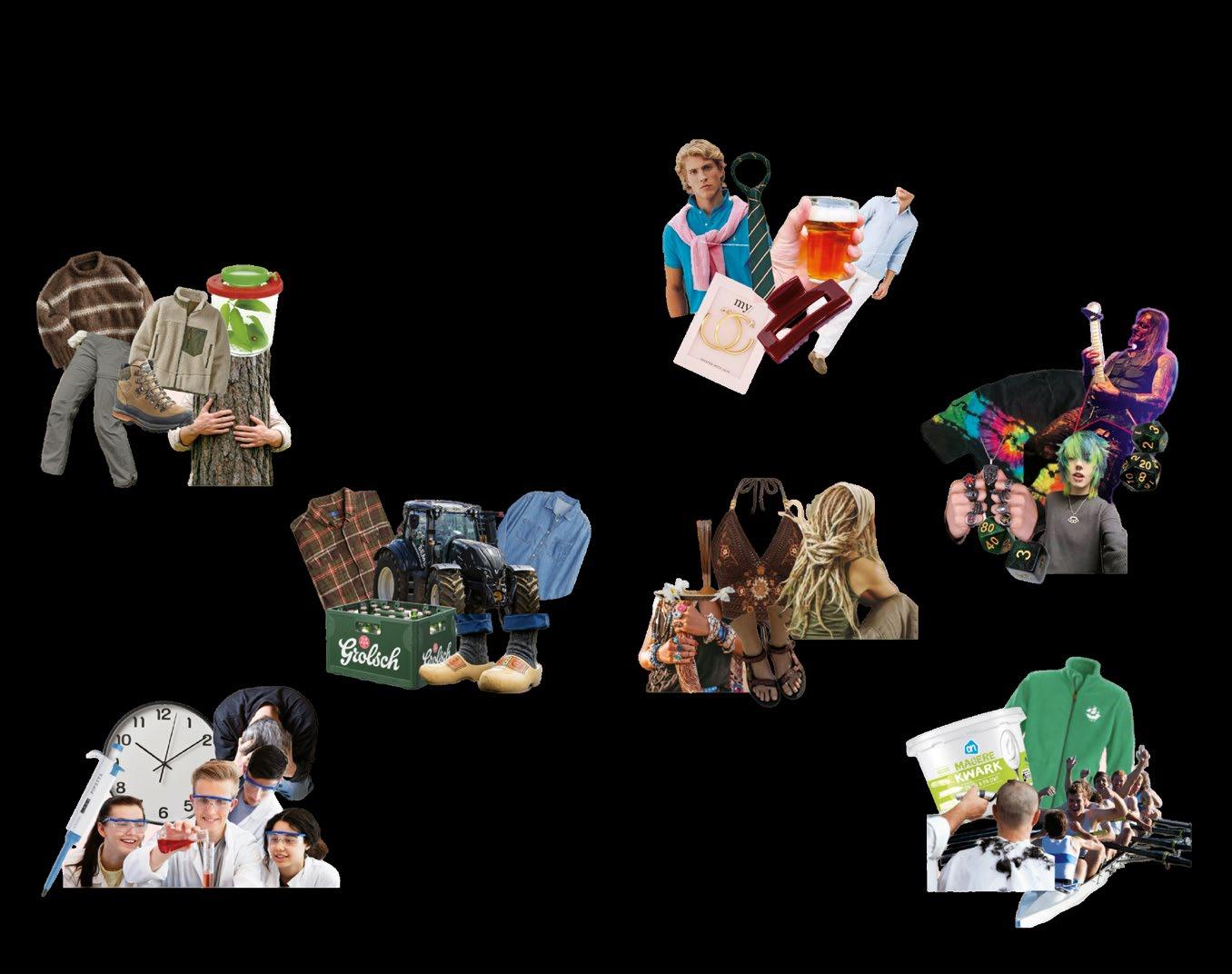
Student stereotype starter packs
Wageningen map from campus to pub
Study tips: ‘Skinny dipping before exam’
Typical Wageningen: Worm charming and soil drilling

Student stereotype starter packs
Wageningen map from campus to pub
Study tips: ‘Skinny dipping before exam’
Typical Wageningen: Worm charming and soil drilling
Introducing the student societies


Here is a special edition of Resource: the only issue of the academic year that isn’t packed with news and background stories about what’s going on at WUR.
This AID special issue was put together almost entirely by our student editors. It is intended as an introduction to student life, to Wageningen, to science and (of course) to Resource. For the rest of the year, Resource is WUR’s independent, journalistic publication that keeps everyone – students and staff alike – up to date with the latest news on student life, campus events, research and education.
We do that under our own responsibility, as journalists, and not as a mouthpiece for WUR’s bosses. That independent journalism helps keep WUR on its toes.
Input from students (and staff) is crucial to this role of journalist watchdog. So let us know if you see something worth mentioning or come across a potential news item. You can come to the editorial office (in Atlas, immediately on the left – you can’t miss it) or send us your tip or question by email or DM.
And if you’d like to get involved with Resource, we have a team of student editors (see the back page) in addition to the ‘permanent’ editorial team.
We all hope you have a great time during AID week!
On behalf of the editorial team, Willem Andrée, editor-in-chief

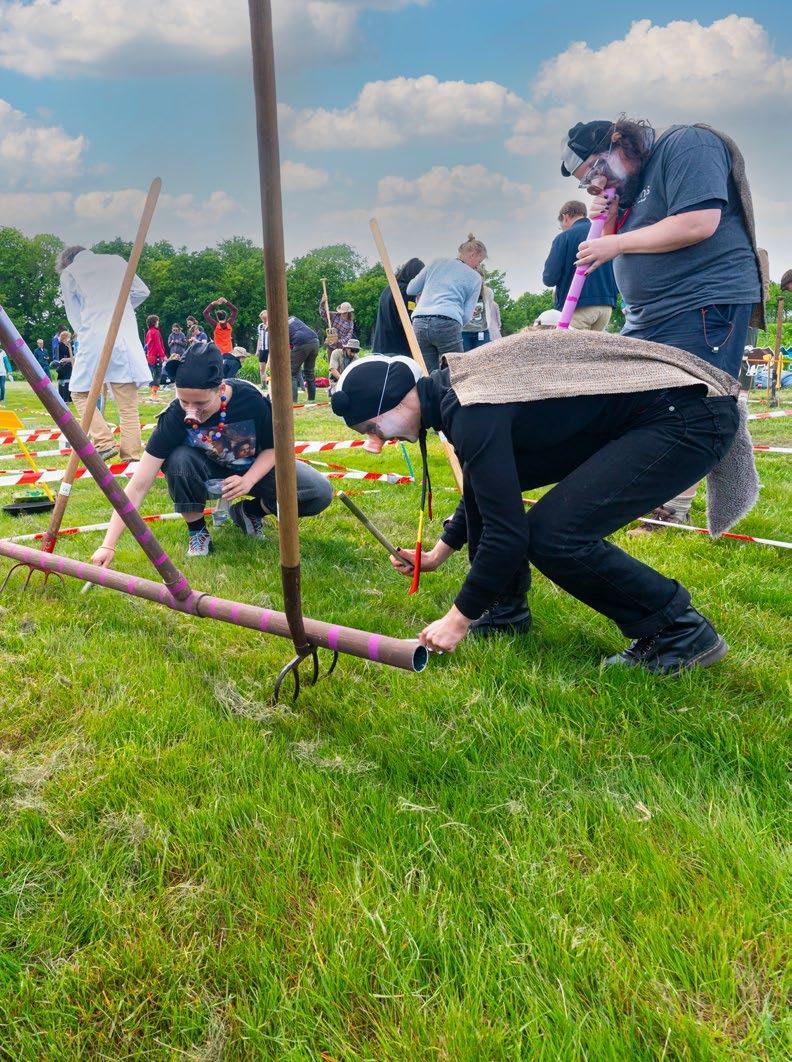
Wageningen is a unique university town. That’s not only because almost a third of the population are students (making it the Dutch city with the highest proportion of students), but also because of the unique customs and traditions you’ll come across here.
For example, there is the worm charming world championship, as shown in this photo, in which participants use creative and unusual methods in an effort to lure as many worms as possible out of the ground. Guaranteed chaos. As well as prizes for the most earthworms, there are also prizes for the most original method of charming and the best costume. It doesn’t get much more Wageningen than that. lz
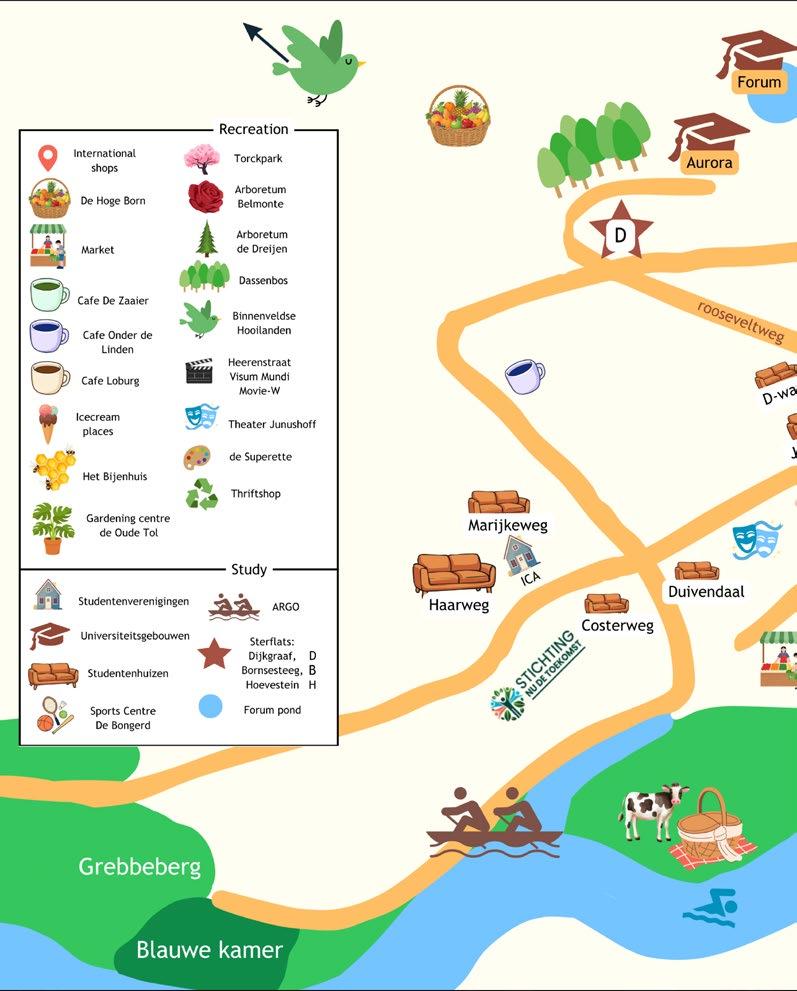
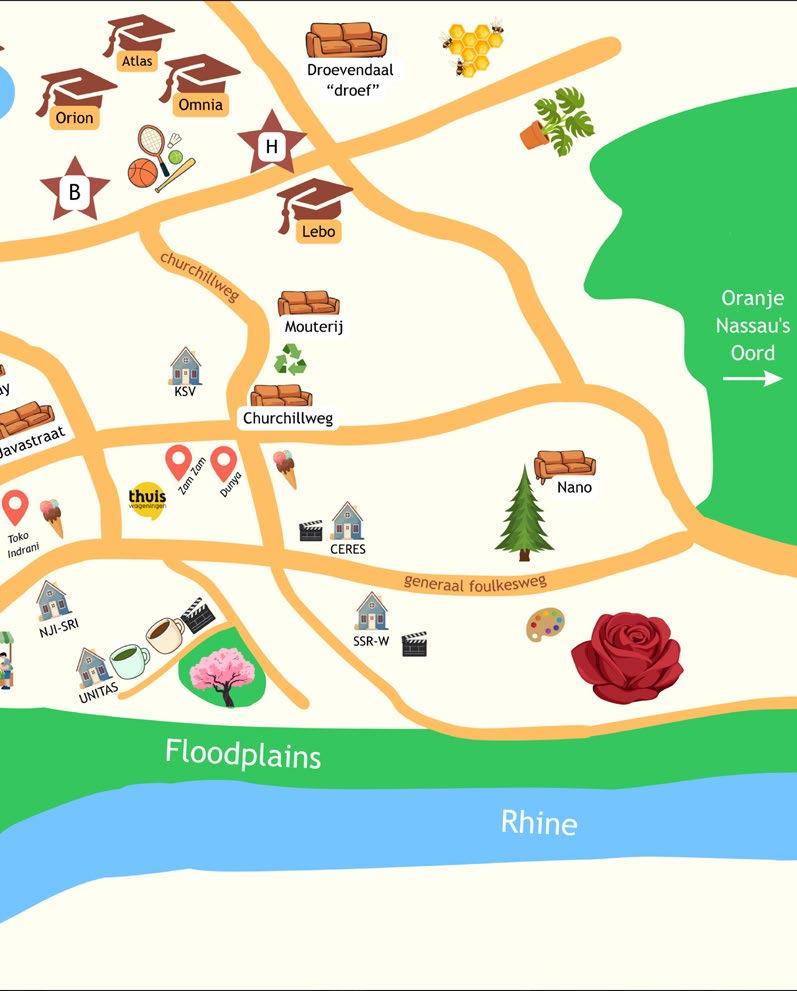
From bars and international shops to uni buildings and student houses, this map shows the key places Wageningen students need to know about. Nearly everything you see here is covered in the articles in this AID magazine. Map by Linda Hesseling
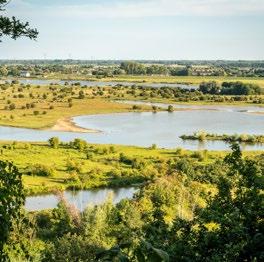
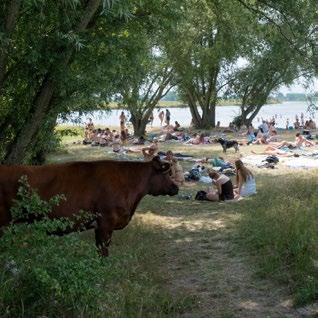
Wageningen is known for its colourful Arboretum at the top of the Wageningse Berg. But did you know there’s another hill to be climbed? Not the metaphorical mountain of completing your studies – this one is at the end of the Grebbedijk, out towards Rhenen: the Grebbeberg. If you park your bike near the Villa GrebbeOord brasserie, you can walk along a cycle path there. After a few steps, you’ll see a steel staircase going up to your right. Sometimes there’ll be a cow taking a nap in the shade of the trees, but you can just walk past. After the stairs, you turn left. The fern-lined footpath winds its way along the edge of the Grebbeberg. Along the way, you get superb views of the Blauwe Kamer nature reserve. Tucked away to the left of the footpath, you’ll find a smaller steel staircase with a gate leading to the ‘secret’ pond. From there, you come out into a spacious residential area. If you turn left again here, towards the water, you end up back on the same cycle path that the route started from. Follow the cycle path to its end and the trip is complete. Tip: there are some wonderful swimming spots right next to the cycle path!
Linda Hesseling
Of all the beautiful places in and around Wageningen, the student editors of Resource reckon these are the best spots for walking, swimming, relaxing or having a drink.
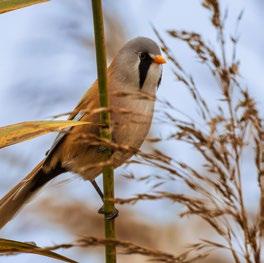
As you cycle along the cycle path between Forum and Omnia, you’ll find yourself in the Binnenveldse Hooilanden. This Natura 2000 site is just around the corner from campus, but students rarely go there. However, the Binnenveld is sensational for Wageningen’s birdwatchers. Because it’s a protected site, it is very biodiverse and is has some unique types of vegetation. For example, you have the extremely unusual and weird-sounding quaking bog here. Quaking bog is a thin and very loose layer of soil made up mainly of grass roots.
It isn’t just the area’s current natural landscape that makes it so special; there is also a particularly ancient stretch of countryside that is well worth seeing for yourself. That’s because hidden away in one of the field are some preserved trees. They are bog oak up to 7,000 years old, making these preserved logs probably the oldest oak remnants in the Netherlands. Quite aside from these bits of trivia, it is lovely and relaxing on sunny days to sit and enjoy the sunshine on the benches that can be found here and there in the Binnenveld. Philip Timmers

This lovely little park is right in the centre, just behind the Heerenstraat theatre. Torckpark is ideal for a picnic, for instance if you’ve got just a tad too much food to lug to the river floodplains. Just head down the street with your utensils and you’ll be in Torckpark in no time. You can sit out in the sun till late in the evening, and it’s only a short walk to the Cicuto ice-cream shop for a superb dessert. Or if you prefer to go during the day, grab coffee to go and enjoy it in Torckpark. There’s always space for a game of football or spikeball, too. Mette Bordes
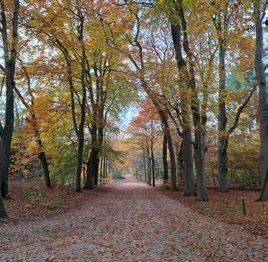
Had enough of your usual dyke? Why not go for a walk in Oranje Nassau’s Oord? If you follow Geertjesweg out of Wageningen, you’ll come to a lovely wood, perfect for a slightly longer walk, with endless paths to stroll along. If you take an hour’s walk from the edge of the woods towards Renkum, you’ll even come across a couple of woodland cafés, and towards Bennekom there’s a pancake house. Mette Bordes
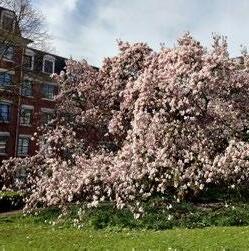
VERYWISE MOSTBEAUTIFULTREE GOSSIPYOLDHAGS
Torckpark has Wageningen’s most beautiful tree, the magnolia. Not only does it look beautiful when it’s in bloom in spring, but there’s also a story that it’s very wise. The magnolia is surrounded by the old university building. In this magnolia, knowledge and natural beauty are intertwined. When you’re standing in the middle next to the tree and you’re surrounded by the foliage, it makes a dome that is often reminiscent of a skull, with the winding branches forming the convoluted surface of the brain.
Some people see the magnolia as the purest and most authentic tree in Wageningen. You can always turn to it for advice or a cuddle. This unspoilt beauty is protected not only by Natuurmonumenten but also by the ginkgo tree standing next to it. The ginkgo protects the magnolia from all the treacherous trees in the Torckpark. After all, some trees are actually rather gossipy old hags. The advice is therefore to be very careful which tree you confide your problems and doubts to because, before you know it, the whole of Wageningen will have been told. Philip Timmers
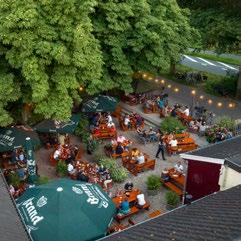
If you’re a bon vivant at heart but stifled by a student budget, there’s only one thing for it. drag yourself over to the beer garden at Onder de Linden. Here amongst the tall trees and in the bright sunshine, the finest craft beers are served, the hottest deepfried snacks are cooked, and hearty, flavoursome meals are laid out on the table. It’s perfect for a first date, a sultry summer evening with friends, or simply to soak up that authentic pub atmosphere. Linde Klop
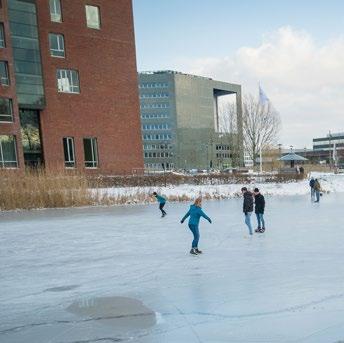
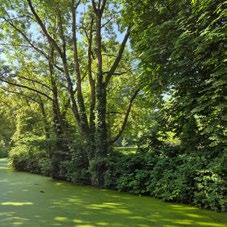
One of my favourite places in Wageningen is the pond next to Forum. Although there are probably nicer places in and around the city, this one is special because it’s always there when you want a break from studying. The wooden seats by the cool water on a sunny summer day always help me relax and relieve the exam week stress. At the end of summer in particular, it’s worth taking a closer look at just how lush and full of life the pond can be – reeds and bulrushes line the banks, dragonflies are hunting above the surface and tiny fish darting beneath. It’s great to see! The changing seasons are also surprisingly beautiful too. Walking across the bridge on a cold winter’s morning before lectures start is a great way to clear your head and shake off those winter blues. Mathijs Megens
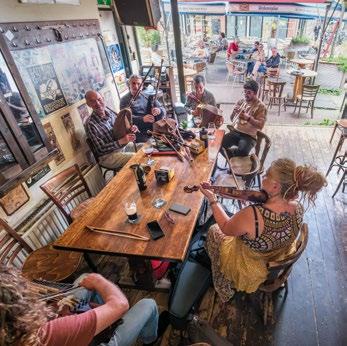
When I first moved to Wageningen, I wasn’t the kind of person who went to De Zaaier. In fact, it was a mys terious, hidden corner of the town that people hardly talked about. What was this ‘desire’? Who or what was being desired?
Anyway, when I finally visited this pub with my friends, my life became just slightly more alcoholic. De Zaaier is a lovely pub in the heart of the town centre. The front entrance of the pub is next to Unitas and H41, but most people prefer the back door, leading directly onto the outdoor seating in a cosy little square. With a great social atmosphere and chatty people at the bar, my student days spent at De Zaaier have been full of long hours chatting with friends and acquaintances while enjoying a large glass or two of Weihenstephan (even if they’re not as cheap as they used to be). Ananya Beura
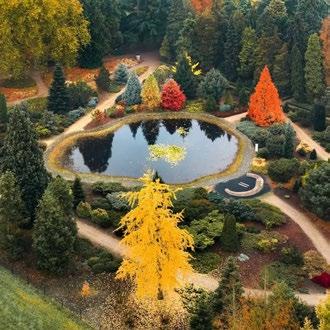
This arboretum is less well known, but that doesn’t make it any less beautiful! This used to be the agricultural college’s teaching garden, and it is now full of all sorts of plants that are interesting all year round. For instance, there is a large field of wild garlic that blooms in the spring, and the pinetum (a conifer garden) is particularly lovely in winter. There is also a giant sequoia (Sequoiadendron giganteum) that is already a hundred years old and still growing. The grass is always neatly trimmed, so it has more of the look of a garden than woodland. There are also lots of sculptures in this arboretum, and you can always pop in for a free look around the sculpture gallery, Het Depot, next door. You’re even allowed to touch most of the sculptures! Mario Martens
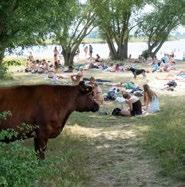
The Rhine beach is a quintessential part of Wageningen life. During winter, it is frequented occasionally by students braving a dip in the icy water – especially around New Year’s Eve. My student house even has a special tradition of taking a dip in the Rhine every morning of Study Week to wake ourselves up for a long day cramming. But when it starts to hit 20 degrees in the spring – or perhaps even only 15 – you will find loads of students basking in the sun on the beach. There’s a lively atmosphere throughout the summer, with groups of people scattered all over the beach playing music and games, with plenty of drinks flowing. And don’t be worried if a few cows come your way: it’s their moment to bask in the sun too! Ananya Beura
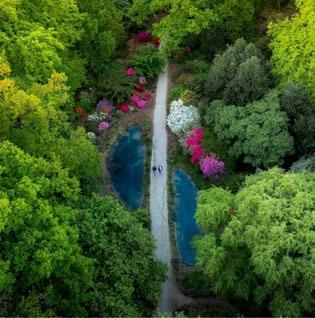
As far as I’m concerned, this arboretum offers the best view in Wageningen. From the Wageningse Berg, you can look out over the river floodplains and the Rhine itself, in a spot where there are plenty of benches to sit for a while and drink it all in. There are plenty of plants to see here too, of course. For example, there is a rose garden and an impressive collection of rhododendrons, and the arboretum also gives you the feeling that you’re walking through woodland, with winding paths and tall trees. This is always a good place to meet up for an invigorating walk, a picnic or perhaps even a first date. Mario Martens
CHECK OUT THE SOCIETIES FOR INTERNATIONALS LISTED IN THE BOX ON THE FACING PAGE.
CHECK OUT BOERENGROEP, RUW, OTHERWISE AND WAGENINGEN STUDENT FARM Y OUR CHOICE : CSFR, Ichthus, NSW, VGSW, Avicenna
Not sure which society you should join? Resource can help you. Just follow that arrow.
FÊST! OK, BUT I’D RATHER BE A MEMBER OF SOMETHING GUITARS!
TOO ROUGH FOR ME DO YOU LIKE SOCIABILITY? MUSICAL? SPORTY?
Got it figured? The next page tells you what each society stands for (roughly).
FRISIAN ARE YOU A FARMER? ARE YOU INTO THE LORD? DO YOU TALK POSH? WHICH DIALECT? JACKET & TIE? DON’T JOIN ANYTHING. ENJOY YOUR OWN COMPANY IN YOUR ROOM* WAGENINGEN CULTURE COLLECTIVE IS NOT A SOCIETY BUT IT DOES ORGANIZE PARTIES.
ARGO IS A SCARF ALLOWED? BUT ROWING IS DUMB MY HAIR’S MULTI-COLOURED ONLY IF IT’S SUSTAINABLE
AT CHRISTMAS NO, NOT THAT
MEAN
BUT I-M NOT INTO CLUBS. SEE PAGE 12
all that club and society spam during AID driving you crazy? Then take a look at page 12.
W.S.V. Ceres – The oldest student society in Wageningen and one of the largest with 48 society houses plus a detached villa clubhouse that is open to members four days a week, with cheap food and affordable beer. wsvceres.nl/home
D.L.V. Nji-Sri – Originally farmers, with a large and active network of alumni all over the world. Also has a clubhouse in the middle of Wageningen where all students are welcome to enjoy a beer on Thursdays. Member numbers are manageable so it’s a close-knit group where everyone knows one another. njisri.nl
IxESN – International student organization, part of the Erasmus Student Network (ESN). It offers a buddy programme, the ESNcard (discounts!) and weekly social, cultural and sporting activities and excursions. You are virtually guaranteed an international circle of friends. esn-wageningen.nl
ISOW – Internationally oriented, and culturally and socially inclusive. Offers a broad range of language and dance classes, activities and excursions to make members feel they belong to one big international family. The ideal place to meet people from all over the world. isow-wageningen.com
K.S.V. Sint Franciscus Xaverius –Wageningen’s largest student society with over 900 members actively involved in committees, sub-societies, year groups and debating groups. A society where everyone finds their niche and builds a network of friends for life. ksvfranciscus.nl
De Ontzetting – This student brass & woodwind band is the oldest of its kind in the Netherlands. Every Thursday, 60 students make music together and they give several concerts a year. The music ranges from classical to jazz. Any musician who is interested is welcome to come and watch the open rehearsals. ontzetting.com
SHOUT – LGBTIQ+ advocacy and social society in Wageningen. For all age groups (not just students). Organizes society evenings, open parties and discussion groups. Also gives talks on sexual and gender diversity at schools and helps LGBTIQ+ asylum seekers. shoutwageningen.nl
Unitas – Society with great premises in the middle of Wageningen. Offers a place where you will feel at home and be able to develop as a person. Beer and soft drinks. It is for all kinds of people and ideas, and always there for you – whether that’s for partying or playing board games. jvunitas.nl
SSR-W – One of Wageningen’s biggest student societies but it never feels too big because all the members know one another. Offers plenty of opportunity to have a great time at university with all the year clubs, committees, debating groups and clubs. aid.ssr-w.nl/
Yggdrasilstam – Sociable group of students who do scouting-related activities. Also welcomes members who don’t have a scouting background. They eat together on Wednesdays and go camping a couple of times a year, either alone or with other student scouting groups. yggdrasilstam.nl
W.S.R. Argo – Rowing is the quintessential student sport and easy for anyone to learn. You can row at any level, from touring to European championships, training on the Rhine and in the largest indoor rowing facility in the Netherlands. Also very much a social club, with weekly dinners, drinks dos and amazing parties. aidargo.nl
VSA – The Vegan Student Association makes veganism fun and easy. In addition to lunches, drinks dos and dinners, the society also organizes quizzes, cookery workshops, talks, film evenings and excursions — also open to non-vegans. See @vsawageningen on Instagram.
WSG Paragon – The prefect club for anyone who loves gaming, either competitively or just for fun, from board games to consoles and PCs. Take part in local, regional and national competitions, meet fellow students and discover new games. wsgparagon.com
WSKOV – The society has a student choir and student symphony orchestra and has been around since 1919. wskov.nl
There are several options for students whose faith is important to them. For instance, there are a number of Christian societies (CSFR, Ichthus, VGSW and NSW), and Muslim students can join Avicenna. Every society has its own way of balancing religion with student life, so have a look to see what suits you best.
If you are looking to get in touch with fellow students from Africa (UCAS), India (ISA), China (CassW), Indonesia (PPI) or South-East Asia (SEASAW), why not join one of the clubs for those countries and regions?
There are also Dutch regional associations for everyone from Brabant (BSG), the Achterhoek (‘t Noaberschop) and Friesland (WSSFS) ;-)
And more… Wageningen has lots more special-interest societies for sports, music, hobbies and green topics, and each degree programme has its own study association. A list (not complete) can be found at wur.nl/nl/show/verenigingen.htm
A student society honestly isn’t the only place to party and find your place in Wageningen. A few hotspots for socializing, cultural activities and lively parties are given below. Text Marte van der Veen
Although NuDe Toekomst was originally intended primarily for residents of the neighbourhood De Nude, it now acts – just like Thuis – as a community centre and creative hub for social initiatives. At Thuis, tea and coffee are always available in the Stadskamer, and you’re welcome to pop in to study, meet up for a coffee or try on some second-hand clothes. At NuDe Toekomst, you’re always welcome to visit the Circular Craft Centre to repair and make things together. Amateur chefs, start-ups or one-off initiatives can hire in the Professional Shared Kitchen to bring people together through healthy eating. Both venues host a wide range of social activities, such as art and craft sessions, language cafés, games evenings, communal meals and more.
This isn’t just one of the oldest and cosiest cafés in Wageningen: it’s also the most welcoming place to party for everyone in the town. The main room hosts a wide range of events such as band nights, jazz gigs, salsa dance evenings, football match screenings and small-scale festivals. You can also book the venue yourself too, for instance for a club gala or dinner. Every summer, Loburg organizes the ‘Woetstok’ festival, where local bands cover pop stars.
It is precisely the absence of any large, public entertainment venues in Wageningen that fuels creativity and initiative. Every weekend, at least one Wageningen student house is transformed into a party venue. Wageningen’s charity shops get raided for creative decorations or party outfits, and the walls of living rooms get repainted to match the party theme. You often just pay per drink or pay a small admission charge, and that might well be enough to get to parties that are even more fun than the ones at pricey clubs in the big cities. Some houses such as Casa Cranca and Psychotel are regularly transformed into party venues, but for fun with your favourite crowd, you really need to keep your eyes and ears open.
Radical, creative and welcoming, the Superette is a cultural collective run by volunteers. You can find all sorts of things here, from dance workshops, solidarity events for refugees, jam sessions, textile workshops, film nights, book clubs and soup dinners to children’s discos. There’s a good chance that you’ll feel right at home at one of the hundreds of activities held each year. They are currently based in the old Unitas building on the hill. Why not pop in?
A club? It certainly is! Opposite the Haarweg student accommodation complex, there is a somewhat secluded building that is regularly transformed into a dance club at the weekends. The name says it all: don’t expect standard Dutch dance music here. Instead, you’ll be dancing mainly to South American dance music such as reggaeton, Afrobeat and Afro-trap. The venue is for students only and the doors usually open at midnight.
As a student in Wageningen, you will end up speaking jargon: a combination of typical Wageningen concepts and classic student slang. Get the hang of this ABC and you will be off to a good start. Text Resource editors (well, mostly the student editors)
AAd fundum: Latin for ‘bottoms up’. Various bastardized versions also get used in Dutch. Means downing a beer or other alcoholic beverage in one go.
ABW: Anything But Work (study avoidance behaviour). Doing the washing up, mending a flat tyre — suddenly everything is a higher priority than studying. Mainly seen during revision week.
Agrotech: Typical Wageningen term. Technology focused on agriculture.
Asserpark: One of the four high-rise blocks of student flats in Wageningen.
B
Babes: also nutrition babes, Nutrition and Health students
Bike jam: Traffic jam involving bikes, a problem in Wageningen. Your greatest chance of seeing one is at 8:30 at the Bornsesteeg crossing.
Billie: Reusable coffee cup with a deposit. Can be used on campus and in cafés in the town centre.
Black giraffe: Electricity mast in the Rhine floodplains, with various beaches nearby.
Bongerd: Sports centre for WUR students and staff. With a large gym, playing fields and various sports courses.
Bornsesteeg: One of the four high-rise blocks of student flats in Wageningen. This block is closest to campus.
Bractical: Doing a practical when you can still feel the effects of the previous evening’s boozing.
Bunker: also Hunkerbunker: flat pub in Dijkgraaf.
C
Chunder: The technicolour yawn –vomiting after a drop too much
Cie: Short for ‘committee’ in Dutch. The student societies have committees for specific themes. PromoCie, VITcie, LustrumCie, you get the message.
Cobo: Drinks do to celebrate a new society board.
CSF: Christian Student Fraction. One of the three parties in the Student Council. Cum laude: Distinction. At WUR, cum laude means you averaged an 8 for your modules and got at least an 8 for your Bachelor’s thesis or at least a 9 for your Master’s thesis.
DDies Natalis: Anniversary date for the university or student societies.
Dijkgraaf: One of the four high-rise blocks of student flats in Wageningen.
Droevendaal/Droef: Student complex near the campus. Droef is a close community with its own culture. The students who live there are called droefies
Duif: Student complex Duivendaal, in what used to be the university’s administrative building.
EECTS: European Credit Transfer System. System that uses credits to allow comparison of courses and modules in different countries. In theory, 1 ECTS point is the equivalent of 28 hours of study.
Erasmus: Exchange programme and fund for students who want to go abroad for courses or an internship.
F
First aider: First aid official. You always need someone with first aid qualifications if you organize events at uni outside working hours or in the weekend. So students with a first aid certificate are very popular.
Flunkibal: Beer game in which you have to toss a bottle upright with your shoe to be allowed to drink it.
FOS: Dutch funding scheme for students. Students get financial compensation if they take time out to do committee work, take part in elite sports, have a baby, deal with certain family circumstances or because of illness.
Fragile: What you feel like after an evening’s serious drinking.
Fruit mafia: Market stall where you can buy really cheap fruit and veg, especially towards closing time. Make sure you eat it quickly, though, as it’s usually pretty ripe...
GHIJK
Ground pizza: The result of chundering Hoevestein: One of the four high-rise blocks of student flats in Wageningen.
Holoing: Strolling up and down Hoogstraat. A popular activity on Saturdays in Wageningen for lack of anything more exciting.
Home: Your student house.
Home-home: Your parents’ house.
Knotsball: Popular student sport involving a stick with foam rubber at one end. Also known as tampon hockey.
LMN
Lebo: Short for Leeuwenborch, the teaching building for the social sciences.
Lecture: You don’t have classes at university, you have lectures.
Liberation Festival: The Nazis surrendered control of the Netherlands on 5 May, 1945 in Hotel de Wereld in Wageningen. Which is why Liberation Day is celebrated on a grander scale here than anywhere else.
Limpet droefie: Student who has lived too long in Droevendaal.
Major: Your degree’s core element or specialization.
Minor: Part of your Bachelor’s degree where you choose a set of optional subjects. Can also be done at a different university.
MoLi: Short for Molecular Life Sciences.
OPQR
One for the road: Beer for your journey. Open parties: Parties organized by student societies that are also open to non-members. There is an open party every Thursday at one of the main societies.
Period: In Wageningen, the academic year is divided into six periods: four long ones for 12 credits and two short ones for 6 credits.
Quidditch: Sport based on the Harry Potter books. The Wageningen team is called the Werewolves.
Rela/prela: Relationship and the preceding period.
S
S&I: Sustainability and Integration. One of the three parties in the Student Council.
Soil-drilling championships: A muddy and uniquely Wageningen spectacle in which teams compete to get the soil drill into the clay as fast as they can. The championships have been organised for at least 20 years by Pyrus study association.
Star flats: Star-shaped blocks of flats that are landmarks in Wageningen.
There are currently six star flats, four of which are student only.
Student Council: Representative body chosen by students that looks after the interests of all students.
Student counsellor: Gives advice and information. You can go to them for all your questions about your degree, from getting an extension due to special circumstances to student grants.
Study association: Association linked to a particular degree subject. Organizes subject-related activities.
Student society: Social club that has nothing to do with the degree programmes. See also pages 12 and 14.
Stufi: Short for student financing.
TUVW
UB: University library
University Fund Wageningen: Manages various funds that pay grants to finance outstanding Wageningen research and education. Also provides scholarships for international students.
Veggie: Vegetarian or vegan.
VeSte: Verenigde Studenten (‘united students’). One of the three parties in the Student Council.
Waga: Short for Wageningen.
Wageningen quarter-hour: Flexible first 15 minutes of a lecture. But not every lecturer observes this tradition.
Wayo: Short for Wageningen youth, someone who grew up here.
Woeste: Short for Woeste Hoeve, the Hoevestein flat pub.
WUR: Short for Wageningen University & Research.
WURkForce: Publishes a weekly list of jobs at WUR for those wanting to earn some extra money.
XYZ
Zaaier: (a.k.a. Desire): Popular pub in the centre of Wageningen, and the name of a statue at the campus entrance.
If you’re moving into a green bubble like Wageningen, surely your student room has to be part of it? It can sometimes be quite tricky keeping the plant life in your room looking fresh, though. Here are five kinds of plants that need very little looking after but which will bring you a great deal of pleasure. Tip: open a window every now and then, or open your curtains fully.
Text and illustrations Linda Hesseling
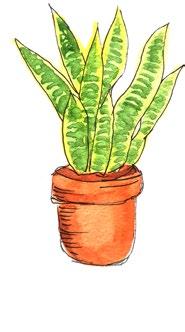
Mother-in-law’s tongue or snakeplant (Sansevieria)
This plant is genuinely almost inde structible. It’s the perfect plant for anyone who occasionally forgets to water them. You only have to water a Sansevieria once every two to three weeks – even less than that in the winter. How do you know when to water it? If you stick your finger a couple of inches into the soil and it feels dry, the plant needs water. Too much water can make the roots rot and the leaves turn yellow. Tip: pour the water around the base of the plant, not on the leaves. This plant does well in both shade and sunlight, making it ideal for student rooms where every centimetre counts.
Aloe vera is a very hardy plant that can do well in both partial shade and full sun. If the leaves go brown and soft, you’re giving it too much water. A red colour at the tips of the leaves mostly means that it’s getting too little water. An Aloe vera can go for weeks without water, though, particularly in the autumn and winter. Did you know that this plant is self-healing? If you slice of part of a leaf, a thin membrane appears over the cut in just a few seconds. The sap turns into a rubbery layer, preventing loss of liquid. Note! This plant is toxic to pets.

Spider plant (Chlorophytum comosum)
If you only have space for hanging plants, buy a spider plant. They like bright, indirect sunlight, so they’re ideal for windows on the side that doesn’t get much sun. I’ve got mine on a kitchen cupboard right next to a window. I water my spider plant once a week and it does just fine on that. This plant is native to South Africa and helps purify the air. This will help make your stuffy student flat feel a bit better. Spider plants grow well in the bathroom too. The plant will enjoy the higher humidity there.

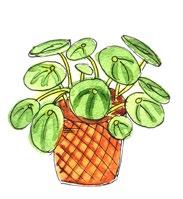
This plant is also known as the perfect choice for taking cuttings. When taking cuttings, you simply detach the newly grown parts of the plant so that they can continue to grow in their own pot. If you have one Chinese money plant in your room now, you’ll most likely have three in a year’s time. The plant prefers indirect sunlight and needs to be watered regularly. Tip: if you place a shallow dish under a plastic plant pot that has holes in the bottom and fill the dish with water, your Chinese money plant will stay slightly moist. Capillary action causes the water to be drawn upwards, towards the roots. But despite it being called a money plant, you can’t use it for paying off your student loan. More’s the pity…
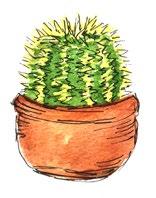
Did you know that cacti don’t only grow in the desert? There are also cacti that grow in tropical rainforests or colder mountainous regions. My personal favourite is the barrel cactus (Echinocactus) – which is also known as ‘mother-in-law’s cushion’. It is a succulent that belongs to the cactus family. And it does indeed look like a spiny cushion. This plant loves plenty of sun and so it’s perfect for a window frame on the sunny side. Tip: it’s better to give a cactus too little water than too much. Once every three weeks is mostly enough. It’s a good idea to give them rainwater, as that doesn’t contain much lime and minerals.
Looking for a place to buy plants in Wageningen? try Tuincentrum de Oude Tol on the road to Bennekom, or Urban Roots in the centre. Another really nice option is dropping in at the plant asylum in Thuis. You can donate, adopt and/or exchange plants there, every Saturday between 13:30 and 16:30.
Welcome, newbie – who are you? Still wet behind the ears, just finished secondary school, ready to focus on getting top marks and pursuing a career in science? Or just returned from years of travelling the world and ended up in Wageningen to get some know-how for the organic farm you want to set up in Australia? I get a sort of maternal urge to give you exactly the right tools to help you on your way. At the same time, I hope you stumble every once in a while. Where should I start?
I came to Wageningen at the age of 17. My parents dropped me off at my little student room with a purse full of money and a few indispensable pieces of furniture. Brimming with confidence. A week later, I was back at home (as in, back at my parents’ house), 33 flatmates and numerous friends richer, minus quite a few brain cells (not to mention my virginity)… I felt instantly transformed and my circle of friends just needed a bit of fine-tuning. I was finally who I wanted to be and where I wanted to be! Right? No, that was a bit premature; after seven years here, I can say that with certainty. I had no idea who I was at the time and it took years before I really felt completely at home and connected in Wageningen. But I don’t hold that
against 17-year-old Marte. A lecturer once told me that students often either settle into their social circle quickly or have their studies and health well under control. Managing to do both at the same time while you’re still very much in the process of finding yourself is apparently incredibly difficult.
‘It took years before I really felt completely at home and connected in Wageningen’
I wish somebody had told me sooner that this is a perfectly normal process. Finding the right people, discovering your own little havens of peace, eating healthily, exercising, studying efficiently... it’s quite a lot to handle. Striking a balance is (and remains) tricky. Even now, seven years later. Give yourself plenty of time for it! Go back to your parents’ home sometimes if that calms you down. Try new things – step outside your comfort zone occasionally. But never forget that you don’t have to settle in straight away. Everyone takes time to find their feet. And until then, the odd stumble is fine.
van der Veen
Climate Studies Master’s student


When you see this photo, you probably wonder what these students are up to, dressed up as Snow White. No, they haven’t gone mad, and no, this isn’t some absurd hazing ritual organized by a student society either. So what are you looking at?
The soil-drilling championships, a quintessential piece of Wageningen cultural heritage, organized annually by the study association Pyrus. Hundreds of wonderfully decked-out participants work as a team to drill a 1.20-metre hole in the ground as quickly as possible on a muddy patch of ground on Haarweg. The team members have different roles, such as doing the actual drilling, providing light and knocking the soil out of the auger. There is also music, a barbecue and a bar. In short: one big soil-drilling party in the mud. lz
Photo Guy Ackermans
Starting a degree can be pretty daunting. How can you successfully navigate all the lectures, practicals and self-study weeks, ideally in a fairly relaxed way? Of course, the best people to ask are the students themselves. The student editorial team at Resource offers some tips and warns about a few dips. Illustration Marly Hendricks
‘My tip: if you find you can’t take anything in anymore, stop. Don’t keep working for hours on end, hoping that your inspiration or motivation will return. Do your hobby and throw yourself into it. Studying will be fine again tomorrow!’
Linda Hesseling

‘Your diary looks like an empty framework that you can fill with blocks of activities – a bit like Tetris. Appearances can be deceptive, though, so literally block time in your diary for spontaneity and for processing your experiences.’
Marte van der Veen
‘Make sure you get enough exercise during study week. My flatmates and I always run down to the Rhine in the morning to go skinny dipping. This wakes you up straight away and gives you an adrenalin rush, which can help when you’re studying.’
Philip Timmers
‘WUR offers plenty of opportunities for gaining experience abroad. That’s fantastic, but don’t feel under any pressure to go. Building meaningful friendships, a relationship that’s going well, your mental health or perhaps caring for a family member – they’re are all valid reasons for staying here.’
Marte van der Veen
‘In my four years living here, I’ve had six different bikes! At first, I just looked for the cheapest options, but they broke down in all kinds of odd ways. I’d recommend investing in a good bike straight away so that you don’t have to deal with the hassle I had.’ Ananya Beura
‘I’d advise everyone against cycling from Wageningen to Utrecht at one in the morning. Firstly, you’re cycling through dark woods; secondly, there are some treacherous potholes that can cause some nasty falls – as I found out the hard way.’ Philip Timmers
No weekend breaks ‘Don’t plan in any fun weekend breaks during the exam week or the resit week. A fortnight’s Christmas holiday really is more than enough to unwind.’
Linda Hesseling
‘Follow all the various Instagram pages Wageningen has to offer: there’s everything from memes to dating or parties at various associations and clubs. This is one of the best ways of keeping up!’
Ananya Beura
‘If you’re not the greatest cook or don’t have the time, you can also make the most of all the free lunches you can get at university. Especially as a first-year student, there’ll be lots of free lunch activities at your study association and also at various organizations around the university.’
Ananya Beura

‘Drum up your flatmates to go for a walk along the dyke or take a morning dip in the Rhine before you head off to study at the University Library for the day. That lets you start the day enjoying the fresh air, and then you’ll be ready to get down to business.’
Mette Bordes
‘Use the “two-day rule” for assignments: never leave a task untouched for more than two days. Even working on it for 20 minutes keeps the material fresh in your mind, reduces last-minute stress and makes large projects feel much more manageable.’
Arohi Natu
ID TROUBLE
‘You get to your exam and realize you don’t have your student card, ID card or mobile phone with you to prove your identity. But luckily you do have a bikini and a towel for a quick dip in the Rhine afterwards.’
Mette Bordes
‘Go to all the scheduled contact sessions and lectures. I get that studying from home can sometimes seem very appealing, but in my experience it doesn’t end well. You then end up at some point during the self-study week watching all the lectures at double speed without any of it sinking in.’
Linda Hesseling
‘In the first year, you’ll also do general courses such as statistics and maths with students from other degree programmes. Try to make friends there, because when they do courses that you take in a different period, they can help you out with tips and tricks for those exams (especially helpful for Statistics 2).’
Ananya Beura
‘Looking for a quiet study spot on campus? If the library in Forum is too crowded and home feels a little too cosy for productivity, try the library in Leeuwenborch. Just head downstairs from the ground floor. It may feel as if you’re entering a dungeon, but you’ll find a peaceful atmosphere, a solid collection of literature, and plenty of space to focus without distractions.’
Oliver Kalengi
‘I bought a lot of textbooks in the first few months that I’ve hardly used at all. The lecturers often put the chapters you need online. Or, if it’s really necessary, you can still borrow books from friends. Half my bookcase is now full of books I don’t use and that I don’t sell on because of nostalgia – and laziness.’
Mario Martens
‘The library is always really full during study week and exam week. A tip for finding a good seat in the library is that Time Edit opens a day and a half before any specific day. So for instance, a seat on Wednesday is open for registering from Monday night around 22:00 to 23:00.’
Ananya Beura
‘Make sure you can find your bike again after a long day on campus. Maybe paint or spray it a bright colour, or try to park it in roughly the same spot every time. Otherwise, there’s a good chance you’ll end up wandering around aimlessly for a quarter of an hour in that sea of bikes.’
Mario Martens
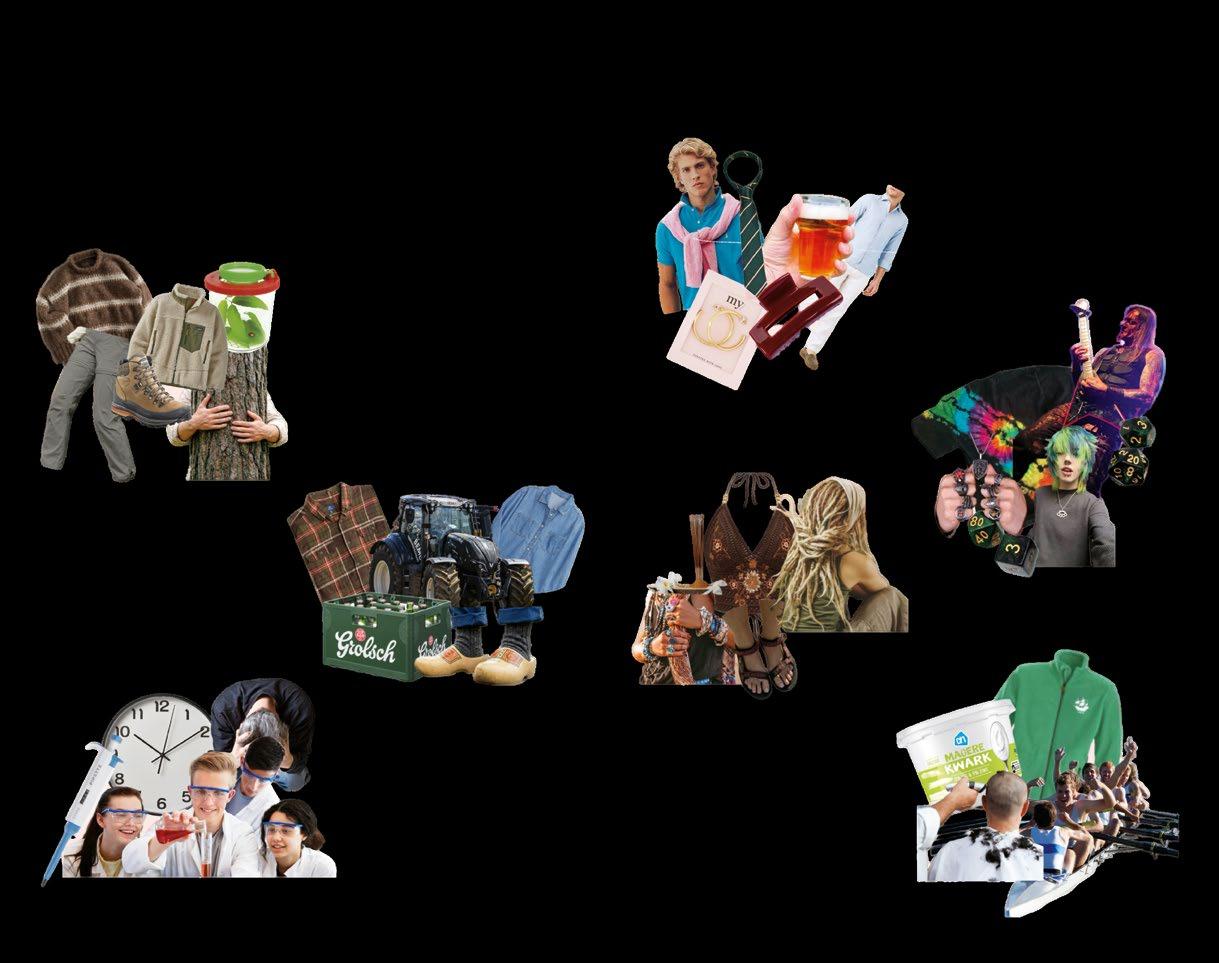
There are persistent stereotypes for Wageningen students: knit-your-own-yoghurt softies, boorish farmers and unkempt sustainability geeks. And though you might still come across them on campus from time to time, they’ve become a rare sight these days.
To give you an idea of Wageningen’s students nowadays, we’ve put together a list of the best-known 2026 stereotypes for you. This should help you start your studies well prepared and full of enthusiasm.
Of if you’re thinking it’s might be a good moment for a makeover after leaving school, feel free to think of this page as a catalogue of starter packs to help you choose a new you.
Text and illustrations Linde Klop and Ananya Beura






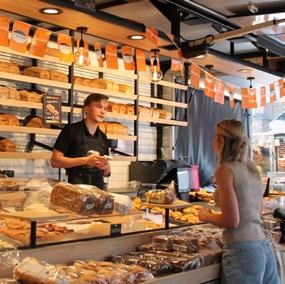
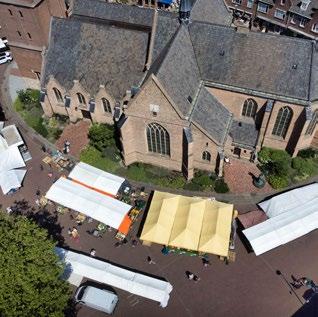
If there’s one thing that typifies Wageningen, it’s the market. On Wednesdays (from 8:30 to 13:00) and Saturdays (from 8:30 to 17:00), you can go to the market square next to the big church for all kinds of treats, useful gadgets or items of clothing. Have you tried the filled sweet pastry called a woepie, for instance? Or you can pop by for a nice cup of coffee and a fascinating story. It’s a lovely summer day, so let student editor Linda Hesseling introduce you to a few special market stalls and the people who work there. Photos Mette Bordes and Guy Ackermans
You can’t avoid ‘t Stoepje. The smell of freshly baked bread and biscuits wafts towards you from afar. Crates full of delicious treats are piled up at the stall, and there’s some bakkersverdriet waiting: literally baker’s sorrow, the baked goods that didn’t make it as far as the packaging. Although bread is the most widely sold product, the stall is known above all for its oatmeal cookies. They come in all sorts of flavours, including cranberry & raisin and apple & cinnamon. They’ve recently added a new, summery flavour to the range: lemon with white chocolate. As the owner puts it, this variant is ‘lovely and refreshing, and ideal for warm weather.’ The oatmeal cookies are his favourite too, it transpires. ‘Yes, that’s genuinely a great product.’ But there are also plenty of students who come to ‘t Stoepje just for a woepie. The filling comes in cinnamon, chocolate and speculaas flavours. There are ’t Stoepje stalls throughout the country. ‘Wageningen has a nice, popular market and lots of students come here,’ says the owner. ‘The patio café seating gives it a really friendly atmos phere too. Especially in this weather – it’s wonderful!’
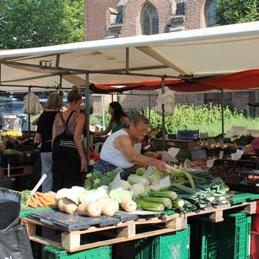
The fruit and veg stall, popularly nicknamed the fruit mafia, has had the same owner for over 65 years. He’s Wageningen born and bred. Just as we’re about to start the interview, the man – now aged 80 – goes off for a cup of coffee and so we talk to his son instead, who’s been manning the market stall for over twenty years too. It’s a proper family business, typical of Wageningen’s market. The crates are all so full of colourful fruit and veg that you almost feel like calling
out what’s on special offer yourself. There’s lots of local produce: cherries, apples and pears from Kesteren (on the other side of the Rhine), strawberries from Tiel, mushrooms from Kerkdriel, and courgettes and aubergines from the Westland area. As the son says with a smile, ‘It depends on how you want to define “local”, of course.’
Does he have another interesting vegetable-related fact to share? He laughs. ‘I believe kohlrabi, broccoli, kale and sprouts are all varieties of the same plant.’ A quick fact-check: he’s right. They’re all variants of the cabbage species Brassica oleracea
The fruit stall is not the only one at the Wageningen market that has a rich history. The cheese stall has also seen generations of customers come and go. It all began with delivering milk in a dog-drawn cart, becoming a cheesemonger’s business that was later passed on to his son. The said son has now been working at the cheese stall for forty years. And the new owner was also in the cheese business when he took over the stall. The vast majority of the cheeses are made using milk from the Beemster region. For instance, they sell Stompetoren cheese, which the owner says is ‘extra creamy, melts nicely and, in my opinion, is the best cheese.’ His favourite is the extra mature version. ‘New customers who try this cheese often come back to us.’ Stompetoren cheeses are all curdled using vegetarian rennet and do not contain lactose, which makes them particularly popular with people in Wageningen. We asked whether he might ever want to start selling vegan cheeses. His reply? ‘I’m certainly open to the idea, though it’s a bit of a hurdle for a cheesemonger to sell something that has nothing to do with cheese, of course. And there has to be enough demand to let us deliver the products fresh.’
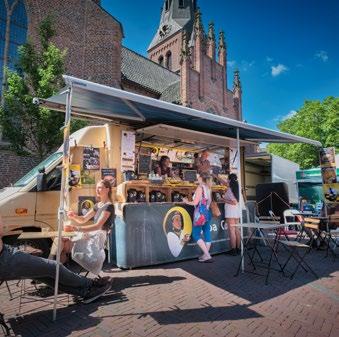
There is a yellow retro van behind the church where you can order a freshly brewed cup of coffee – and you’ll be treated to some interesting coffee-related facts straight away. The coffee comes from Ethiopia, as does the owner. Did you know that the Ethiopian woodlands are known as the African Alps? As much as 40 per cent of the water in the region comes from there, which is vital for areas experiencing severe drought. The coffee comes from farmers who grow it using traditional methods: no pesticides or artificial fertilizers, and plenty of space for the plants. The truck has been at the market since the pandemic, when the hospitality sector went into lockdown. The owner is passionate about working with regional coffee farmers. ‘That’s fantastic,’ she says. ‘The farmers know an awful lot about plant breeding and developing new flavours. The yields are a bit lower than when pesticides are used, but the output is steady. The impact of climate change is greater in conventional farming. In the long term, farmers stand to benefit from this natural system.’ In Wageningen, the truck gets plenty of customers, particularly among students. ‘People
here understand our holistic approach,’ says the owner, ‘with the coffee plant as part of an ecosystem that contains banana plants, mycorrhiza around the roots, honeybees and large predators roaming the area.’ According to the owner, the Arabica bean originated in Ethiopia. ‘People sometimes forget that Ethiopians invented the tradition of drinking coffee and the socializing that goes with it.’ People often ask why the coffee is so expensive. The answer? ‘Because other coffees are too cheap.’ Come and visit the yellow van yourself for more coffee-related trivia. Well, alright then, here’s one more: did you know that coffee can have different flavours, depending on the variety? Everything from raspberries to apples or cloves or mocha.
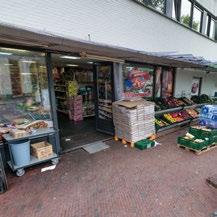
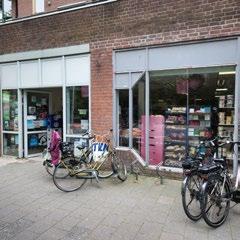
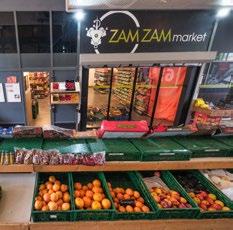
This page has three recipes that students make using ingredients from Dunya, ZamZam and Indrani, three great international supermarkets in Wageningen.
Preparation time: 30 minutes
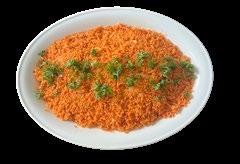
‘Kısır is a very traditional dish in Turkish cuisine. It’s usually made on special social occasions like “gün” (women’s day gatherings). It’s easy to make and it often reminds people of home, family and childhood memories, so it’s very meaningful to me.’ Recipe from Merve Uslu, a Chemistry student from Türkiye.
1 Put the bulgur in a deep bowl, pour hot water over it and mix. Cover the bowl and leave the bulgur to soak for 20–30 minutes.
2 Finely chop the parsley, onions and gherkins.
3 Heat the vegetable oil in a pan, add the tomato purée, paprika paste and onion and fry well.
4 Remove the mixture from the heat and add it to the soaked bulgur.
5 Add salt and black pepper and mix everything together thoroughly.
6 Then add the lemon juice.
7 Stir it all again, then add the gherkins and mix everything well.
8 Serve the kısır in a bowl and garnish with parsley.
Tip: Serve with vegetables such as courgette or aubergine and ayran (yoghurt sauce), some cumin, mint, pomegranate molasses and isot (dried chilli pepper).
Preparation time: 20 minutes
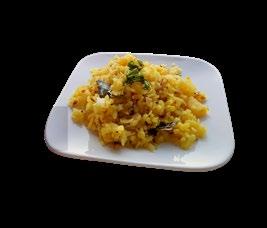
‘Kande Pohe is one of the Maharashtra region’s best-loved breakfast dishes. It is traditionally enjoyed as a morning meal with a hot cup of chai, as well as being a favourite evening snack. In Maharashtra’s households, Kande Pohe is often served during family gatherings.’ Recipe from Arohi Natu, a Master’s student in Food Technology from India.
1 Rinse the poha gently under running water and drain well. Rest for 5 minutes. Mix in salt and sugar.
2 Heat the oil in a pan with a handle over medium heat. Add peanuts and fry for 2–3 minutes until crisp. Remove from the pan and set aside.
3 In the same pan, add the mustard seeds and cumin seeds. Once they start to spatter, add the hing, curry leaves and green chili. Sauté for 30 seconds.
4 Add the onion and cook for 3–4 minutes until soft and translucent. Stir in the turmeric powder.
5 Add the soaked poha and roasted peanuts. Mix gently to coat evenly. Cover and cook on a low heat for 2 minutes.
6 Turn off the heat. Add coriander and lemon juice, and mix gently.
7 Garnish with fresh coconut and sev (if using). Serve hot with lemon wedges.
Ingredients (for 1 person):
• 75g fine bulgur
• 150 ml hot water
• a dash of vegetable oil
• 1 tbsp tomato puree
• 1 tbsp paprika paste
• 1 bunch parsley
• 1 onion
• 6 gherkins
• juice of 1 lemon
• 1 tsp salt and
• 1/2 tsp black pepper
Ingredients (for 2 persons):
• 150 g thick poha (rice flakes)
• 1 large onion, finely chopped
• 2 green chillies, chopped
• 3 tbsp peanuts
• 1 tsp mustard seeds
• 1/2 tsp cumin seeds
• 8–10 curry leaves (optional)
• 1/2 tsp turmeric powder
• a pinch of hing (dried asafoetida spice)
• 1 tsp sugar
• 1 tsp salt (or to taste)
• 2 tbsp oil
• 2 tbsp fresh coriander,
Preparation time: 20 minutes
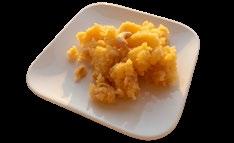
‘Sheera, also known as sooji ka halwa, is a classic Indian dessert made with semolina. It is prepared throughout India in many regional variations and is especially popular in Maharashtra, Karnataka and North India. Sheera is commonly served during festivals, religious ceremonies and in temples, but it is equally enjoyed as a quick homemade dessert or a comforting breakfast.’
Recipe from Arohi Natu, a Master’s student in Food Technology from India.
1 Heat the butter/ghee in a heavy-bottomed pan over medium heat. Add cashews and raisins, and sauté for 1 minute until the cashews turn lightly golden. Remove from the pan and set aside.
2 Put the semolina into the same pan and roast over low-medium heat for 6–8 minutes, stirring continuously, until fragrant and light gold.
3 Meanwhile, bring the water to the boil in a separate saucepan. Stir in the sugar until it dissolves.
4 Carefully pour the hot sugar-water mixture over the roasted semolina, stirring continuously to make sure it doesn’t go lumpy.
5 Cook over low heat for 3–4 minutes until the mixture thickens and the semolina absorbs all the liquid.
6 Add the cardamom powder and the fried cashews and raisins. Mix well and cook for 1 minute more.
7 Turn off the heat and let the sheera rest for 2 minutes before serving.
8 Serve hot as a comforting breakfast, festive treat or quick dessert. Tip: garnish with a few more nuts and a drizzle of ghee.
Ingredients (for 2 persons):
• 1/2 cup semolina (a.k.a. sooji/rava)
• small handful of raisins
• 1/4¼cup butter or ghee
• 1/3 cup sugar
• 1½cup water
• 1/4¼tsp cardamom powder
• 1 tbsp chopped cashews
For something called an ‘introduction period’, starting university involves a surprising amount of letting go. The first thing many students have to let go of is the idea that they know exactly what’s coming. Before arriving, university exists mostly in your imagination. Maybe you picture yourself becoming incredibly organized, attending every lecture, making lifelong friends, cooking healthy meals, and somehow having your life sorted. Then the first week arrives. You get lost on campus despite using Google Maps. You forget where you parked your bike. You introduce yourself to the same person twice. Suddenly, becoming a functioning adult seems like a much more ambitious goal than getting a degree.
Living away from home also requires letting go of certain luxuries you never knew were luxuries. Clean bathrooms that magically stay clean. A fridge that somehow restocks itself. The mysterious appearance of fresh laundry. At home these things simply happened. At university, you discover they were all part of a service package you never properly appreciated. And then there are expectations about making friends. Many people arrive thinking they need to find their future best friends imme-
diately. As if everyone receives a friendship assignment during AID and groups are permanently locked by Friday afternoon. Fortunately, that's not how it works. Some friendships begin during the introduction activities. Others start months later because two people happened to complain about the same assignment or missed the same bus.
Perhaps that's the real art of letting go as a student: letting go of the pressure to have everything
The good news is that nobody else has it figured out either
figured out immediately. The good news is that nobody else has it figured out either. The student who looks completely confident is probably also wondering where the lecture hall is. The person who seems perfectly settled may still be trying to remember which key opens which door.
So if your first weeks feel slightly chaotic, confusing, exciting, awkward and unpredictable all at once, congratulations. You're already fitting in remarkably well.
Arohi Natu
Food Technology Master’s student

Wageningen’s research is wide-ranging, colourful and among the very best. There is a lot more going on than you will come across during your degree programme. Resource has listed a few highlights below of recent WUR studies. Text Roelof Kleis, Marieke Enter and Dominique Vrouwenvelder

How can you detect antibiotic use in livestock farming quickly and easily? Samples are currently often taken later, when livestock is slaughtered. But it is also possible while the animals are still alive. Simply by swabbing the animal’s skin with a wet wipe. A children’s face wipe does the job very well, researchers at Wageningen Food Safety Research (WFSR) have discovered. The substances are then extracted and analysed in the lab.
Wood-burning stoves and fireplaces are ruining air quality. Meteorologist Bert Heusinkveld developed a sensor to measure fine particulates in the air. Seventy such sensors have been placed in the gardens of Wageningen residents – it’s a genuine citizen science project. Measurements are taken every 145 seconds. Levels of volatile organic compounds and nitrogen oxides are also measured, making it possible to determine whether the fine particulates originate from wood fires or traffic. The data is available for everyone on the Sensor Community website.
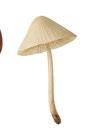
Edible mushrooms are a good source of plantbased protein. But there’s something even better: the mycelium from those mushrooms. These networks of fungal threads, which are normally under ground, score even better on protein quantity and quality. This was discovered by PhD candidate Jasper Zwinkels. There is a caveat, though: mycelia have not yet been approved by the EU as food.



THE PARASITIC WASP’S PERFUME
The gene called doublesex determines whether parasitic wasps find each other attractive. Doublesex controls the production of pheromones, which act like an attractant aftershave for the wasps. Entomologist Eveline Verhulst is trying to figure out the mechanism. Males in which the gene is switched off are no longer attractive to females. In fact, other males see them as females.
The negative side of generative artificial intelligence (AI) is blatantly obvious: students are getting computers to do their homework. However, AI can also help you improve your essays and other work, according to researchers in Education and Learning Sciences. As an assignment, they got students and ChatGPT to give feedback on the same assignment and then compared the quality of the output. ChatGPT was more critical about the structure, while fellow students focused more on the content. These two forms of feedback turn out to be complementary. SSG

Can you grow rice in the Netherlands? Possibly. PhD candidate Hugo Bosland is investigating this possibility on peatland near Leiden and Utrecht. Dozens of varieties were planted there in the spring. The first harvest of his polder rice is expected this autumn. If the swans, ducks and rats don’t get there first, that is.
The Netherlands is full of ancient settlement mounds. That is shown by a new survey carried out by archaeologist Roy van Beek. He counted no fewer than 9,000 – far more than had previously been known. One of his methods was careful study of relief maps. That brought a large number of new facts to light. These settlement mounds are found not only in Groningen and Friesland but also along rivers elsewhere. And these mounds aren’t all very old. Even in the late Middle Ages, they were still being built to keep the houses on dry land.
When influencers promote something for remuneration — either money or in kind, for example free products — then the Dutch advertising code says that this should be stated. How that’s done is down to them: even a tiny hashtag (#ad) is sufficient. However, researcher Sophie Boerman discovered that hardly anyone looks at such tags in online videos. A pictogram (like the parental advisory one) didn’t help recognize influencer marketing either. So should the rule be abolished? She doesn’t think so. Influencers are becoming increasingly professional and sophisticated, which is why transparency is so important.

exist in nature too. PhD candidate Martijn van Galen made the first artificial one, using two strands of DNA, one of which was partially folded like a hair clip. Under normal conditions, the two strands of DNA are loosely attached. Under tension, the hair grip opens like a zip, after which the inside part of the zip latches on to a piece of DNA on the other strand, which is a precise match.
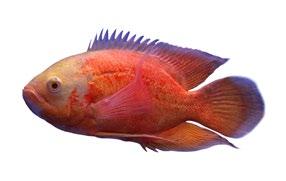
Young fish with lots of brothers and sisters are more sociable in later life. This has been shown by research carried out by PhD candidate Bruno Camargo dos Santos. He carried out his experiments using cichlids, a species of tropical freshwater fish. Fish that grow up in large families cope better when a larger, unfamiliar species is introduced among them. But that social skill doesn’t come naturally: the brothers and sisters have to spend a lot of time together. Practice makes perfect?
Agrotechnology & Food Sciences Group (AFSG)
Animal Sciences Group (ASG)
Plant Sciences Group (PSG)
Social Sciences Group (SSG)
Environmental Sciences Group (ESG)
Quantifying photosynthesis in the field is tricky. Researchers at the Jan Ingenhousz Institute on campus have developed a handy little meter (the ‘ambit’) that makes this possible cheaply and on a large scale. Simply clip this little device onto a leaf like a clothes peg and wait for the measurements to come in. A small solar panel provides power. The Big Data that this generates should help to select plants that photosynthesize better.
The enzyme ThermoCas-9 can cut DNA in specific cancer cells in a highly targeted way, shows research carried out by microbiologist (and emeritus professor) John van der Oost. The protein recognizes the defective DNA by a particular extra methyl group that is absent in healthy DNA. This has brought gene therapy for cancer treatment within reach. The next step is to damage the cancer cells enough to make them die off. It’s work in progress.
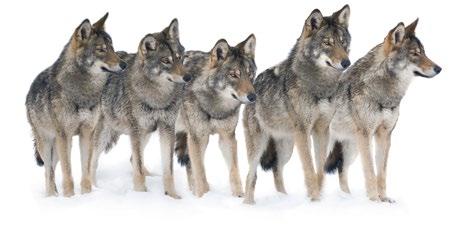
What impact are wolves having on other animals in the Hoge Veluwe National Park? To answer that question, wolves, red deer, wild boar and roe deer have been fitted with transmitters. The first wolf with a tracking device set off straight away, ending up on the Utrechtse Heuvelrug after a 2,500-kilometre journey. The animal has now vanished without a trace. The study, led by Wageningen professor Frank van Langevelde, is continuing.
In some cities, over 80 per cent of vocational college students have multicultural backgrounds. PhD candidate Kennedy Tielman discovered that almost three-quarters of the teachers are cautious about taking culturally diverse groups. And the better they rate their own multicultural skills, the more cautious they become. Tielman doesn’t think that’s a contradiction, though. As people become more skilled in multicultural matters, she says, they become more likely to recognize areas of tension. Also, skilled teachers like these are more likely to be given the ‘difficult’ classes.
Suppose you take a photo of the food on your plate and your smartphone immediately tells you how much protein, fat and carbohydrates that is. That’s possible, provided the camera has a sensor that measures non-visual spectra. This is shown in research by PhD candidate Esther Kok. The sensor measures in the infrared spectrum, letting it see deep inside the food. Fats, proteins and carbohydrates absorb infrared. The level of absorption shows how much of each nutrient is present. So the principle works, but there’s no iPhone app yet.
The internal clock of commercial lettuce differs significantly from the circadian rhythm of wild lettuces. Centuries of selective breeding have inadvertently slowed down the clocks of lettuces. If you eliminate that delay by extending the day-night cycle to 27 hours, plant growth improves by up to 30 per cent. That striking discovery was made by PhD candidate Anton Sales. But it only works if you make the nights longer, not the days. A lettuce likes a lie-in too.

Environmental pollution with PFAS is a serious issue. Organic chemists at WUR have developed a method for extracting PFAS from polluted water. They do this using molecules known as pillararenes, macrocyclic molecules in which benzene units are linked up in rings. Attaching specific side chains to these molecules results in a substance that specifically filters PFAS out of a solution and binds them. The PFAS filter is endlessly reusable. The chemists are currently searching for a way to break down the PFAS and render it harmless.
Nathusius’s pipistrelle bats follow the Dutch coastline during their autumnal migration. A study by Sander Lagerveld shows that some of the bats cross the North Sea from the west of North Holland. He used acoustic measuring equipment on offshore drilling rigs to listen to Nathusius’s pipistrelles passing by. The bats avoid the full moon during the crossing, probably because of the elevated risk of predation.

• Agrotechnology & Food Sciences: the food researchers are in Helix, the agrotechnology scientists in Axis.
• Animal Sciences: most are in Zodiac.
Environmental Sciences: most of their activities are in Lumen and Gaia.
Plant Sciences: mainly in Radix. The plant scientists use the Unifarm greenhouses round the back for experiments.
• Social Sciences: most of the social scientists are located in Leeuwenborch.
The world is warming rapidly. In cities in particular, that heat can become unbearable. Led by hydrologist and meteorologist Dragan Milošević, a study into how to make cities more heat-resistant is set to start this autumn. Under an initiative called EUROASIS, 24 innovations are being trialled in four European cities, including Amsterdam. They include extra greenery, water and shaded areas. The study is due to be completed in four years’ time.
In a field near Lelystad, the potato of the future may well be growing – one that is resistant to the dreaded potato blight Phytophthora. Researcher Ania Lukasiewicz is testing dozens of varieties modified using CRISPR-Cas for resistance to the disease. The research therefore fits in neatly with the new European policy that allows certain genetic engineering techniques to be used. The first crops will be harvested this autumn.
All 160,000 different species of flies (two-winged insects) fly in more or less the same way. That was the surprising conclusion from research carried out by Professor Florian Muijres. Size doesn’t come into it. The laws of aerodynamics allow very little variation if you want to move through the air as energy-efficiently as possible. Only mosquitoes break the rules, but with good cause: they use their extremely rapid wingbeats to attract fertile females.

Did you know that sand is a battery? Natural radioactivity can let sand accumulate energy underground. That energy is released as luminescence when the sand is exposed to light or heated. The longer the sand is left somewhere, the stronger the accumulated signal from the feldspar crystals in it becomes. PhD candidate Anna Maartje de Boer used that signal to help trace sand deposit movements in the Wadden Sea.
My first encounter with Wageningen University didn’t exactly go to plan. It was an open day for school pupils – an organized event, packed with experiments and information about studying biotechnology. In an old, brown laboratory at the Dreijen, 20 of us gathered for a practical session. In pairs, we were given vials containing solutions and a long glass tube with a tap at the bottom: a chromatography column. That column separates substances in the solution by size. The steps for the experiment were written out on paper. Everyone around me got down to work very enthusiastically, as if they’d done it many times before. They seemed so confident that it made me feel insecure. How did they manage to settle in so quickly? My classmate and I were struggling a bit to just keep up with everything. After half an hour, the first pairs had finished. They proudly showed off their results: the mixture had separated into clear, coloured bands. A sort of rainbow, ranging from red to green and blue.
I looked at our test rig, in which dark brown sludge was slowly seeping down the column. I exchanged glances nervously with my classmate
and said a quick prayer in the vain hope that the gunge would miraculously turn into a rainbow. Which it didn’t of course. We’d added a wrong ingredient somewhere – one that didn’t belong there at all. Surrounded by all those happy and excited prospective students, I felt like a complete loser. In my
‘I said a quick prayer in the vain hope that the gunge would turn into a rainbow’
mind’s eye, I saw a box labelled ‘unsuitable’ being ticked above my head. Despite that blunder, I decided later to enrol for the biotechnology degree after all... where I always prepared my experiments carefully, so that I knew exactly what I had to do and which substances to use. I still ended up botching practicals from time to time, but I’ve come to realize that it’s all part of the learning process.
Nicole van ’t Wout Hofland Freelancer at Resource

Resource is the independent medium for students and staff at Wageningen University & Research. Resource reports and interprets the news and gives the context. New articles are posted daily on resource-online.nl. The magazine is published once a month on a Thursday.
Contact Questions and comments for the editors: resource@wur.nl | resource-online.nl
Editorial staff
Willem Andrée (editor-in-chief)
Helene Seevinck (managing editor)
Roelof Kleis (editor) Luuk Zegers (editor), Marieke Enter (editor)
• Coretta Jongeling (online coordinator)
Dominique Vrouwenvelder (editor)
Translations
Tessera Translations S.L.
Design Alfred Heikamp, Larissa Mulder
Overall design Marinka Reuten
Cover illustration Valerie Geelen
Printing Damen Drukkers BV, Werkendam
Subscription A subscription to the magazine for one academic year costs 59 euros (135 euros if abroad). Cancellations before 1 August.
ISSN 1874-3625
Publisher Corporate
Communications & Marketing, Wageningen University & Research
Resource is always looking for students who like writing, illustrating, drawing, filming or photographing and who would enjoy reporting on student life in Wageningen.
As a student journalist, you keep a close eye on what is going on around campus, in the lecture rooms and labs and at the societies and student houses. You help decide which topics Resource covers and produce text or images for publication online, on our social networks or the magazine. The

AID week issue you have in your hands right now was thought up and written almost entirely by our student editorial team. You decide for yourself how much time to put into Resource, depending on your course work, diary and interests. Internationals are more than welcome.
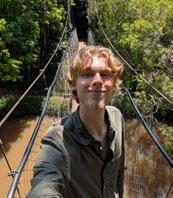
Send an email with some examples of your work to resource@wur.nl
If you would like to know more first, phone or text the editor-in-chief Willem Andrée (06-3868 6167) or the student & education editor Luuk Zegers (06-1853 4080).
Read more about Resource on page 2.
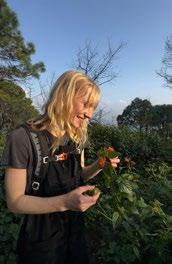
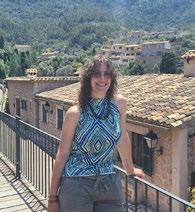
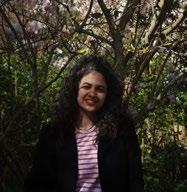
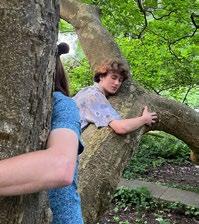
Resource can offer you a good allowance, professional mentoring from experienced journalists, an enthusiastic team of fellow student journalists — those nice people you can see here — and the best excuse you could ever want for being endlessly nosy and asking brazen questions.