‘Unfortunately, our political leaders are focused on other things.’ That’s a complaint you often hear in Wageningen. It’s what WUR Climate programme leader Tim van Hattum said when asked about the news that the IPCC has scrapped the most extreme climate scenarios and what scientists could do about this (page 9). The answer is ‘not a lot’ – not because they don’t have the knowledge but because not enough is done with that knowledge. In Wageningen and elsewhere, scientist have known for a long time what causes the biodiversity crisis, what technological solutions are available and what a fairer, healthier future could mean for humankind and the planet. Science has done its job and continues to do so every day.
So should we be making more noise? I certainly think so, but that isn’t really the Wageningen style. Here, people let the facts speak for themselves, and that’s what we do at Resource too. There is more than enough happening on campus and beyond to report on. Many students and researchers are modest, don’t speak out and don’t approach the Resource editors to share their stories, concerns or criticisms. We can understand that, but we would still love to hear from you at resource@wur.nl.
For now, read this issue. Find out what is happening on campus, in the field and among students (see our article on diversity in love). All that work, all those studies, all those views – all stories that deserve to be told.
Willem Andrée Editor-in-chief
BIRDWATCHING
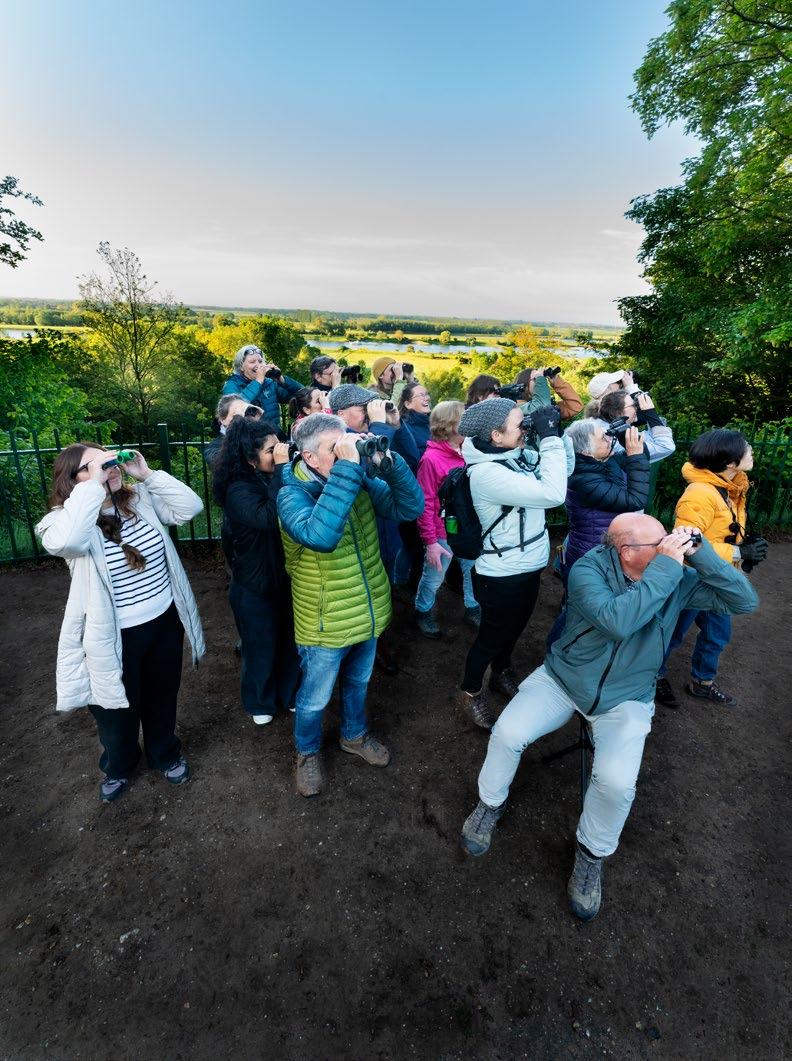
The birding excursion, organized in part by senior researcher Joop Spijker, is an annual tradition going back 35 years. This year, around 40 WUR folk went bird spotting in the arboretum and floodplains. The haul wasn’t that amazing, says Joop, but it doesn’t matter. ‘It’s about the experience. Also, the species we did see and hear are ones people don’t normally spot, such as the Cetti's warbler, lesser whitethroat and tree creeper. Plus the blackcap, which sings so beautifully.’ In the floodplains, they heard the pied avocet and the northern shoveler. Spijker wants to continue the tradition. ‘Even though I’ll be retiring soon.’ wa
Photo Ruben Eshuis
Vaccines reduce spread of bird flu
After earlier interim reports had concluded that the field trial had been a success, it was announced last week that the transmission trials, as they are known, of two vaccines for high pathogenic bird flu (H5N1) have also gone well.
In this test, two flocks of laying hens at different poultry farms were monitored from the moment they emerged from the egg. Groups of these birds were then transferred at different ages to Wageningen Bioveterinary Research where half were infected with the H5N1 bird flu virus.
The test shows that the vaccines substantially reduce both the risk of an outbreak and the extent of any outbreak. Without vaccination, the risk of an outbreak after infection was about 96 per cent; in the vaccinated flocks it was 10 to 30 per cent, depending on the vaccination strategy. The outbreaks were also much smaller after vaccination.
The virus transmission was much less in groups where all the birds had high levels of antibodies. In addition to vaccination as such, it is therefore also important to maintain a high, uniform level of antibodies across the whole flock, for example by administering boosters.
Safe
The vaccination was shown to be safe for the hens. The health of the flocks remained stable and mortality was within the usual range for commercial poultry systems. No negative effects on animal welfare or egg production were observed. Food safety was not an issue either. It is harder to spot bird flu when the disease symptoms and mortality have been reduced by the vaccine, so the researchers emphasize that vaccination should always be accompanied by active monitoring. More than 93 per cent of outbreaks can be detected in good time if an appropriate surveillance system is used. The currently available diagnostic tests turned out to be suitable for detecting field infections in vaccinated flocks.
The study, in which the birds were monitored for over 85 weeks, was commissioned by the Ministry of Agriculture. State Secretary of Agriculture Silvio Erkens has said he will produce a vaccination plan by the end of the year. me
Quiet rooms
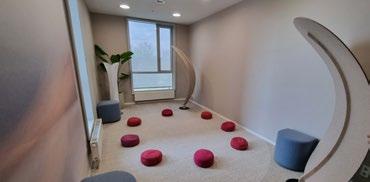
The campus has gained one meditation room and one contemplation room. These are places students can retreat to for a moment of calm, or to pray or meditate, either alone or with a guide.
The meditation room is in the Forum library and has cushions you can sit on (see photo). The contemplation room, on the ground floor of Orion, has a cupboard where students can store bibles, mats and so forth lz Photo Resource
Men’s Gathering
As of the next academic year, there will be a ‘men’s gathering’ each period, says Lisa Nguyen of the Student Life, Wellbeing & Inclusion team. ‘In sessions guided by a coach, male students will have a safe environment in which to discuss issues they are struggling with.’ Each period will focus on a different theme. ‘People tend to become more inward-looking in the winter, whereas in the summer they become more open and there is a lot going on. So I can imagine we’ll do something based on the seasons.’ The sessions will also address topics such as the manosphere and looksmaxxing. lz
to register see resource-online.nl
Booking trips to get (a bit) easier
People have not been happy with the travel agent DGI Travel for some time. Now WUR is making changes to the travel authorization procedure to make the service more workable.
Martijn van den Heuvel, head of Integrated Facility Management: ‘For travel to areas with green and yellow status, from the summer the line manager will no longer have to log into the travel app to give their approval. We will take a trust-based approach where the traveller ticks a box to indicate whether the manager has approved the trip and whether they realize extra recommendations apply for yellow areas. That eliminates one administrative step in the process. I hope the score of 4 out of 10 that the service currently gets will improve to at least a pass.’ dv
2,771
As of September 2027, students will have to pay tuition fees of 2,771 euros, based on the latest inflation figures from Statistics Netherlands. The statutory tuition fee is linked to inflation: the price of fuel, groceries and café visits is rising and therefore tuition fees will go up too. Students are paying 2,601 euros this academic year; that will increase to 2,694 euros next September and 2,771 euros the year after that. hop
New poetry collective De Struikrovers
As of this week, poets, spoken word artists and other creative wordsmiths can join poetry collective De Struikrovers (‘the highwaymen’).
‘People still often associate poetry with grey men sitting at typewriters,’ says co-founder Lars Verhoeff. The new collective, which also includes Poetry Slam winner Eva van Wissen and city poet Bob ter Haar, aims to change that image. The collective will meet once a month at different locations and will organize open mic nights. Verhoeff stresses that poets who are just starting out are also welcome. ‘It’s not just for people who have been doing this for years and want to become a city poet or perform at big venues. That too is OK, of course, but you can join even if you’ve never written anything before.’ To find out more, contact Lars Verhoeff via Instagram: @dj_mier. cj
Universities are reviewing their digital autonomy
Dutch universities want to be less dependent on US software giants. They have set up a joint committee to look at how to improve their digital autonomy.
When the chief prosecutor of the International Criminal Court (ICC) in The Hague was suddenly unable to access his email last year due to American sanctions, that was a wake-up call for the Dutch universities. ‘We need to develop a digital emergency plan,’ says Ruben Puylaert, the spokesperson for the association of Dutch universities UNL. ‘What if we too experienced what happened to the ICC? Which provider could we switch to?
The universities are highly reliant on US software. Microsoft in particular is dominant in Dutch higher education. And the Americans could easily just pull the plug, put up prices substantially or
secretly let unauthorized parties view our data.
‘This reliance poses a risk to the values of research and education,’ writes UNL in a statement. The association has now set up a committee that also includes government officials and the IT cooper-
‘This reliance poses a risk to the values of research and education’
ative SURF. The committee will assess the risks and come up with solutions for the immediate future and longer term.
Cloud storage
Academic and applied universities don’t just use Microsoft’s email and office applications, they also depend on the company for cloud storage and network
security. The universities’ rectors had already voiced concerns about this dependence back in 2019, but little has changed since then.
However, SURF did start a trial with the software of Nextcloud, a German company, at the end of last year as a possible alternative to Microsoft. The pilot has gone so well that SURF is now looking to expand it (see resource-online.nl). hop
Letter to the editor
Coming out of the menstrual closet
What if you had to ask for toilet paper at the Forum service desk every time you didn’t have your own with you? Sounds absurd, right? So why is that different for menstrual products? Why aren’t menstrual products free and easily accessible at WUR?
One (little-known) policy at WUR is that menstrual products are ‘available’ at reception desks, literally concealed in a hidden closet, where you have to ask for them. Why is that? According to WUR, there is no evidence of ‘period poverty’ and there is not enough budget. Seeing menstrual products as non-essential goes against a plenitude of human rights organizations that recognize them as a basic health necessity. At WUR, this has been recognized by several student-run projects and even a thesis by Niene Iping, which call on WUR to take action. Why does WUR need proof that this concerns a basic necessity, only to dismiss the proof once it is provided? It is time we put the stigma, secrecy and shame about menstru-
ating behind us. Menstruation was historically viewed as dirty and shameful, reflecting misogynistic views towards women’s bodies. As a result, menstruation is treated discretely; you can’t talk about it openly (unless complaining), you have to behave as if you are not actively menstruating and you should always have menstrual products with you. This practice of secrecy, also labelled ‘the Menstrual Closet’, reinforces menstrual stigma. It is time for WUR to recognize how stigmatization is ingrained in their policies and lack of resources. Providing menstrual products in all toilets across campus should be a basic first step. The ongoing menstruation advocacy and research, such as in the PERIODS and EUmetriosis projects and student-led events, bring hope that this can become a stronger focus at WUR, and I look forward to seeing and contributing to this change.
Erica Selznick is a PhD student in the Law group and a public health researcher focusing on lived experiences self-managing endometriosis.
Advert
Vacancy
Cover_subtite
The BoE is the legal board of all accredited study programmes at Wageningen University & Research (WUR) and consists of 4 senior staff members and 4 students.
The activities of the BoE take up about one day a week. This includes a meeting every two weeks on Wednesdays between 9:00 and 12:30.
Professor or Lecturer 1? Join the Board of Education (BoE)
Do you have a passion for education? From September 2026, a staff position on the Board is vacant
Your responsibilities / opportunities
• To represent staff from WUR in the board that decides upon the content and quality of accredited study programmes and advises the Executive Board on various educational issues.
• To deal with a variety of topics, such as new study programmes, quality of education, new education policies and education innovation.
Your qualities
You have a passion for education and ideas to develop and innovate WUR education. You are proactive and you have a critical attitude.
Interested?
You have extensive experience in research, developing education, and teaching in the domain of Environment & Landscape (BBN, BES, BIL, BLP, BSW, MCL, MEE, MES, MFN, MGI, MIL, MLP, MTO, MUE).
The appointment is for at least two years, with the possibility of re-appointments. Your department will be compensated with one day a week by Education and Student Affairs (ESA) for your contributions. A member of the BoE cannot be a member of the Management Board of a Department, a Programme Committee, an Examining Board, a central/decentral Works Council, or the Student Staff Council.
Send your CV and motivation letter, in English, before 10 June 2026 to boardofeducation.secretary@wur.nl
More information: wur.eu/boardofeducation
DAIRY COWS IN FIELDS NOT THAT SIMPLE
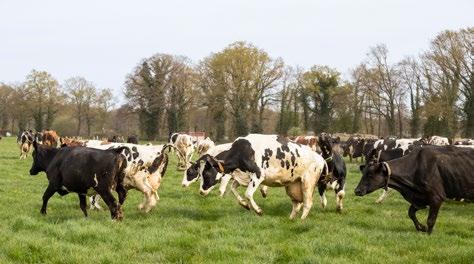
The general public firmly believes cows should be put out to pasture because that is better for them. But is that really the case? PhD candidate Iris de Munck analysed data from 78 dairy farms across the Netherlands and discovered far more factors play a role than previously assumed. Text
Marieke Enter
De Munck analysed the relationship between grazing intensity and duration and the production and health of dairy cows, using data from 78 commercial Dutch dairy farms during the grazing seasons of 2023 and 2024. Her article on the results was recently published. She looked at the number of days spent in the field, the average number of hours out to pasture per day and the number of cow-hours per hectare of field. She then compared this with indicators for production (kilograms of milk, milk fat and protein content and standardized milk production). She also considered indicators of cow health: the cell count in bulk milk (which indicates udder health) and antibodies to the bacterium Treponema, which causes hoof infections, and to parasites such as lungworm and gastrointestinal worms.
Her analysis showed slightly lower milk production during the grazing season. There was a slight negative association between grazing intensity and duration on the one hand and standardized milk production on the other, but the association with the fat and protein content was positive.
Antibodies
Udder health was also slightly worse during the grazing season. However, antibodies for the Treponema ‘hoof-disease’ bacteria were found on fewer farms during the grazing season. Unlimited access to pasture (meaning at least 17.5 hours a day for at least 30 consecutive days) was associated with a higher probability of antibodies against lungworm, while more cow-hours per hectare (a parameter for grazing intensity) was
associated with more antibodies against gastrointestinal worms.
‘The usual idea about putting cows out to pasture is too simplistic’
De Munck admits the associations she found are modest. ‘But it does show that the usual idea about putting cows out to pasture – that it should be at least 120 days a year, for six hours a day – is too simplistic. Lots more factors come into play, such as grazing intensity.’ These initial findings offer lots of pointers for follow-up research. ‘I want to look into the topic in more depth. It would be great if we knew enough to be able to recommend a certain grazing regime for specific health problems while also taking into account the type of barn, farm management and the intrinsic drive of the farmer in question. Commercial considerations also play a role, of course. I hope to publish a second article soon on the
animal health costs of a system where cows are put out to pasture versus one where they are kept in a barn. At a later stage, I want to look at bookkeeping data to see what grazing means for the efficiency of the farm. Do farms where cows are in the field for more hours make more efficient use of inputs such as labour and the number of hectares?’
De Munck is a PhD candidate in both the WUR Business Economics chair group and Aeres University of Applied Sciences in Dronten, which leads the Healthy Pastures project that her PhD research is part of. De Munck: ‘Putting cows out to pasture is a hot topic in the sector. Our task as researchers is to get a better understanding of the topic so that farmers can make evidence-based decisions about how to tackle the grazing issue.’
Photo Shutterstock
Live & Learn
A botched experiment, a rejected paper… such things are soon labelled failures in academia. As for talking about them — not done! But that is just what WUR scientists do in this column. Because failure has its uses. This time, we hear from Nicole van ’t Wout Hofland, a science editor at AFSG and editor of this column. Text Nicole van ’t Wout Hofland Illustration Mathijs Megens/ SeaBlueBird Studio
‘When I was doing my PhD, I thought I had discovered something new. I was so convinced of my hypothesis that I ignored the data for months.
‘It all started when I was studying a plant protein, looking for pointers to how it worked. One specific part looked suspiciously like a bonding mechanism in another protein family, in which two proteins lock together and work in concert. Bingo, I thought. That could mean cross-fertilization between two completely different biological systems.
My supervisor also believed it was possible. “We’re seeing that protein again and again in large datasets, so perhaps you really have discovered something,” he said. I was delighted.
‘I developed a test at the molecular level. If the two proteins really were working together, I would see small yellow fluorescent globules under the microscope.
The moment of truth had arrived: I placed the specimen slide under the microscope, my hand shaking, adjusted the focus, and turned on the laser... to see pitch black. Not a single yellow globule. I couldn’t believe it. Perhaps it
was because of how I’d set up the test, I thought, because there’s more than one way to do that. I tried them all out. I even learned new methods and applied them. Again and again. Each experiment gave a negative result. I
‘I was so convinced of
my hypothesis that I ignored the data for months’
spent months of precious time on it and never got a positive result.
‘In retrospect, I should have accepted the conclusion sooner. Then I could have spent my time more usefully. I was too fixated and too enthusiastic about my hypothesis to trust the data. However elegant the idea I had in my mind was, it was also wrong. Eventually, I had to accept that and I included the negative results in my doctoral thesis.
Despite this, I still have an alert set to send me an email every time those two proteins are mentioned together in the literature.’
FIELD FULL OF CRISPR POTATOES
At the end of April, a field near Lelystad was planted with genetically modified potatoes that are more resistant to the potato disease Phytophthora. Their genes have been edited using techniques that will soon be permitted for commercial crops by the EU.
In the EU, GM (genetically modified) crops have been subject to stringent rules since 2001. But that is set to change, now that the rules governing new genetic techniques such as CRISPR-Cas are going to be made more flexible. The flexibility applies to changes that could in theory occur naturally through cross-breeding or mutations. The use of genes not found naturally in the species will remain subject to strict regulations.
‘We want to see if these modifications make the potatoes more resistant to Phytophthora’
Researcher Ania Lukasiewicz is the project manager for the experiment with GM potatoes in Lelystad. Some of the potatoes have been given one or two extra genes with resistance against the fungus Phytophthora infestans. Another group of potatoes have had a particular gene switched off using the CRISPR technique. Lukasiewicz: ‘We want to test whether these modifications make the potatoes more resistant to Phytophthora. We’re applying three different treatments: not spraying, spraying regularly and spraying depending on the Phytophthora infection. Of course, the aim is to minimize the need to spray chemicals.’
Agrobacterium
All the GM plants were developed in Wageningen. The new genes are inserted with the aid of the bacterium Agrobacterium tumefans. Lukasiewicz: ‘That is a bacterium that can infect plants with its own DNA, a process that takes place in nature too. You can use that ability at the cellular level to incorporate any DNA you want to. Then you grow a plant from those infected cells.’
Lukasiewicz expects to harvest the potatoes in September or early October. ‘But we expect Phytophthora to appear from July onwards. Then you will see the differences in the field.’ rk
‘EVEN TWO DEGREES IS A DISASTER’
The IPCC has scrapped the most extreme climate scenarios as they are no longer realistic. That is not necessarily good news, says WUR Climate programme leader Tim van Hattum. Text
Roelof Kleis
‘
The fact that the extremely negative scenario for 2100 is no longer realistic thanks to climate measures is good news. However, they also scrapped the most positive scenario as it is no longer possible to restrict global warming to less than 1.5 degrees Celsius. And that is alarming.’
There is a narrower margin in the predictions. Does that mean we are heading for disaster with more certainty?
‘That’s right, although we don’t know yet how big a disaster it will be. Incidentally, the extreme scenario of global warming by more than 3.5 degrees is still possible after 2100. That is what annoys me about this message: it gives the impression that everything is OK, which is definitely not the case.’
What should the message have been?
‘The message should be that we are still heading for a worrying climate change. We are currently heading for three degrees, but global warming by even two degrees would still be a disastrous scenario for many parts of the world. That includes Europe, which is heating up twice as fast as the rest of the planet. A temperature increase of two degrees means we’ll reach tipping
shows that it is politically smart to do that. The knowledge is available to help the world get on the right track.’
points in the climate system. That’s already happened with the coral reefs, and the glaciers are melting irreversibly. That’s the message climate scientists should be conveying loud and clear.’
The world has other things on its mind at present.
‘That’s always the case. There is always something. First you had Covid, then the war in Ukraine and now the worldwide crisis due to the Iran situation. We’re continually being distracted by other priorities, even though we know what the solutions are. We need to phase out the use of fossil fuels. The current situation
What else can climate scientists do?
‘We need to show what an alternative future would look like if we made the right choices. That’s what we should put all our efforts into. Sacrifices will be needed, but there will be a lot of benefits for our health and the economy. Unfortunately, our politicians – at any rate the world leaders – are focused on other things. We are therefore reliant on bottom-up action. And a lot of good things are happening too. That’s why it was possible to scrap the most negative scenario.’
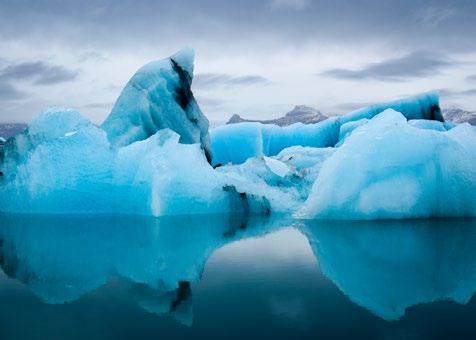
Icebergs in the Jökulsárlón lagoon in Iceland. Photo Shutterstock
PhD theses in a nutshell
Colour matters
Flavoured vapes are banned in the Netherlands. For good reason, shows research by Ina Hellmich (from Germany). One in five users stopped vaping after the ban. But it isn’t only the flavour that makes vapes appealing. The colour of the e-cigarette matters too. Red cigarettes are perceived as sweeter, even when the flavour is chemically the same. Red and green increase the perceived fruitiness, the appreciation and the urge for another puff. The fact that the colour matters is useful information for policymakers. But the tobacco industry also reads PhD theses! rk Toxic but tasty, the role of flavors in e-cigarette product appeal. Ina Hellmich
Supervisor Sanne Boesveldt
Ironclad results
The larvae of the black soldier fly (Hermetia illucens) make good proteinrich feed for chickens, pigs and farmed fish. You can make the larvae even more nutritional by putting them on an iron-rich diet. The larvae can cope fine with all that iron, shows a study by Tomer First (from Israel). The larvae can accumulate up to three times as much iron as normal in their guts without any noticeable effects. They manage that by making far more of the iron-bonding protein entoferritin. Those soldier flies love to feast on iron. rk The power of metalcore: iron biofortification of black soldier fly larvae as an enhanced micronutrient source. Tomer First Supervisor Vincenzo Fogliano
THE PROPOSITION
PhD candidates explain their most thought-provoking proposition. This time it’s Carlo de Bruin, who received his PhD on 4 December. He studied the potential of cyclic ion mobility mass spectrometry (cIMS-MS) for the characterization of isomeric phenolics and lipids in food. Text Ning Fan
Dried out
Dried fruit and vegetables last longer, but what is the best way to dry them? How can you minimize the loss of quality and flavour when adding water again (soaking them)? Lina Hu (from China) studied this for the case of shiitake mushrooms. She tried different drying techniques in various combinations and studied the effects at the molecular level. It turns out that the key is to keep the cell membrane intact. Porosity is fine but destroying it is not. She also developed an explanatory model for the underlying processes. rk Serial combined drying strategy of mushrooms for rehydration improvement. Lina Hu Supervisors Ruud van der Sman and Jinfeng Bi (CAAS)
‘No scientist remains truly objective’
‘At my first conference as a PhD candidate, I spoke to a salesperson from a company that develops a different ion mobility instrument to the one I used, called the trapped ion mobility mass spectrometer (TIMS-MS).
‘The salesperson spoke about the strengths of TIMS-MS and pointed out the weaknesses of cIMS-MS. In response, I found myself fiercely defending “my” instrument and attacking the weaknesses of the TIMS-MS. In hindsight, I lost my objectivity during that conversation. My role as a researcher is to study the instrument scientifically and explore both its strengths and limitations, not to defend it.
‘Looking back, I realize my reaction came from being emotionally invested
in my work. I had spent a lot of time and energy mastering the instrument and getting good results.
‘Scientists should always aim to remain objective, but we are still human. If a researcher’s work is disproven or shown to be incorrect, the first reaction is often emotional, with the risk of losing their objectivity.
‘In my opinion, it is unrealistic to expect scientists to be completely objective at all times. What matters is the ability to step back, reflect, and carefully evaluate the evidence. By recognizing emotional bias and taking time to reflect, researchers can regain their objectivity.’
New Wageningen centre of expertise for tourism and migration
WUR’s experts on migration and tourism have come together to create the Centre of Expertise for Transformative Mobilities (CENTMOB). The centre explores the interconnections between mobility and climate change, biodiversity, social justice and cultural heritage.
Tourism and migration are often treated as separate forms of human movement yet they often share similar social, environmental and spatial pressures, explains Meghann Ormond. She is associate professor of Cultural Geography and a member of the steering committee From Housing Shortages to Ecological Degradation. ‘Both in everyday practices and policy frameworks, the lines between tourism, migration, commuting, humanitarian mobility and lifestyle mobility are blurred’.
CENTMOB aims to capture these interconnections and address them more holistically. It examines in a broad sense how mobility reshapes ecosystems, livelihoods, power relations and belonging, and how it can be transformed to support equitable, resilient and environmentally responsible futures.
Shared platform
The new centre brings together WUR experts on tourism and migration from different science groups. It is open to all WUR colleagues, at any career stage, who are working on mobility-related questions or want to explore them more explicitly.
CENTMOB offers a shared platform for joint research and education, where researchers can easily get involved in projects. It also supports collaborative funding applications, external partnerships and societal engagement.
CENTMOB will also organize workshops, courses and talks. The first such activity took place at the end of April. This was WUR Tourism Day, which also served as the launch of CENTMOB. More information about the centre and how to join can be found on transformativemobilities.eu. me
The great outdoors
Like many WUR students and members of staff, I often go on walks around our lovely campus grounds. This columnist may have plenty of complaints about the university organization, but as someone who has visited numerous campuses around the world, and even stayed at some, it has to be admitted that we have few complaints in that regard. Open fields, flowers in bloom, ponds full of life and the possibility of spotting ducks, grebes and pheasants. Even our beloved swan has hung around, swapping the busy Forum for a more secluded spot near Aurora. Can you blame it? But our campus is also a microcosm of the spatial planning problems faced by the whole country – actually, by the entire world. Too many plans, not enough space. Trial field scientists clash with crows, badger activists with cyclists and cyclists with car park plans. Each new development on campus requires options to be weighed up: grass or glass, hedgehogs or road-hogs? Finding the right balance between the spatial claims of nature and humans could be the trickiest dilemma of our times – and the Dutch don’t seem to be performing very well at the moment. Take the crayfish, an invasive exotic that eats protected species, damages dykes and has been labelled a threat by Wageningen researchers for decades. And what is the government’s official advice if you
Guido Camps
catch one (by accident – you’re not allowed to fish for them!)? Put it back. With enemies like this, you don’t need friends.
If only the rest of the country was more like our campus: carefully designed nature with a few impressive buildings and some productive space between. It’s almost as if we studied the topic…
‘If only the rest of the Netherlands was more like our campus’
We even have plenty of room for housebuilding – as long as you come on a Wednesday or Friday afternoon.
So a word of advice to the new government and all the officials who are wrestling with spatial planning issues: take a look at Wageningen. And for all secondary schoolchildren wondering what degree to do: even if you’re not interested in spatial planning, this is a good place to come to. We’ll even soon have cygnets again.
To comment, go to resource-online.nl
Guido Camps (40) is a vet and researcher at Human Nutrition and OnePlanet. He enjoys baking, beekeeping and unusual animals.
Far more settlement mounds than thought
9 , 000 MOUNDS , 9 , 000 STORIES
The Netherlands has always been the land of water, a country reclaimed from the sea. The earliest settlers built their houses on mounds (called a terp in Dutch) to keep their feet dry. The northern Netherlands is full of them. But detailed new research shows they are elsewhere too, with loads of man-made mounds alongside rivers and in polders. Text Roelof Kleis
The survey was led by WUR archaeologist Roy van Beek. He previously made a name for himself with his overview of bog bodies across northern Europe. This time, he has catalogued man-made settlement mounds, known by different regional names such as terp and wierde ‘Yes, I’m definitely a collector,’ laughs Van Beek. ‘That is because I’m interested in the bigger picture. I want to discover the large-scale patterns.’
That quest delivered results, more even than he had expected. ‘Traditionally, such mounds in the Netherlands are in the north along the North Sea coast. I knew there were mounds in the rest of the Netherlands too, but they aren’t nearly so well documented and studied. I was expecting beforehand to end up with between three and four thousand, but we actually found 8,922.’ Van Beek’s team arrived at that number by going through datasets kept by local and provincial authorities and heritage organizations, and by closely examining relief maps of the Elevation Model of the Netherlands.
What distinguishes a settlement mound from a natural elevation in the landscape?
‘A settlement mound is a man-made elevation. You can tell by the shape. They are often round, no more than a couple of dozen metres across, and there is a farm on top. They look different to river banks, the elongated sand ridges next to a river. What’s more, the dwelling mounds are often found in unnatural linear patterns. The name on the map can also be a clue.’
You didn’t personally visit all 8,922 of them?
‘No. We relied on data that was already available and what we were able to add. Only a small proportion have been studied using archaeological methods, about 10 per cent at most, I’d say. Mainly in the northern Netherlands, where people have been researching the settlement mounds for over a century. So there’s still a lot to study.’
There is one clear conclusion from the survey: the history books need rewriting. The Netherlands not only has far more settlement mounds than previously
thought, but their origins are also more diverse and complex than was assumed. Van Beek says the standard account therefore needs revising. The origins of the settlement mounds go back about 2,500 years, when people started to settle in the northern Netherlands. They built dwelling mounds on the more elevated parts of the fertile marshes. That process largely stopped after about 1000 CE. The mounds were no longer necessary because dykes had been built. But according to Van Beek, that was when construction of dwelling mounds started elsewhere in the Netherlands.
Why was that?
‘People didn’t need to build mounds initially in the river areas because they settled on the more elevated river banks. Then river dykes started to be built around 1000 CE. That reduced the risk of flooding but if there was a flood, it was disastrous. The dykes create a kind of bathtub. So they built settlement mounds to protect themselves against the effects of dyke breaches. So the dykes
came first, then the mounds, which is the other way around to what happened in the northern Netherlands.’
The situation was different again in the polders and former peatland areas?
‘Yes. After draining the land, the settlers in polders such as Alblasserwaard soon had problems again with the water. So the plots of land at one end of the polder, where their houses were built, were raised. You get rows of settlement mounds, a very different pattern to the northern Netherlands. Subsidence then forced the inhabitants to raise their plots
even further. People came up with creative solutions such as raising the floors of the farm buildings. The construction of mounds is a nice example of how people respond to a changing landscape.’
This is the traditional story of the Dutch battling the water?
‘More like learning to live with the water, I’d say. Over half of the Netherlands is vulnerable to flooding and water damage. That is inherent to this country and something we’ve always embraced. I understand the story of our struggle against the water, the tale of the polders and the dykes. But if you take a broader view, you see it’s more a case of us living with water than fighting it. The story of the Netherlands is
‘The construction of mounds is a nice example of how people respond to a changing landscape’
far more nuanced, complex and diverse than the standard account. You could tell a very different story by looking at the country from a settlement mound perspective. Each region is different and each mound has its own story. There are really 9,000 stories.’
And we still need to discover those stories. So treat those mounds with care?
‘I see all those dwelling mounds as archaeological sites. That doesn’t mean they shouldn’t be touched, but we should think hard about the choices we make. The mounds have a long settlement history and contain a lot of information. They are archives of how people coped with the landscape changing around them. That data is inside those mounds. We should consider what it is we want to know and to get out of the mounds. There is so much to discover. It’s all out there waiting to be dug up.’ ■
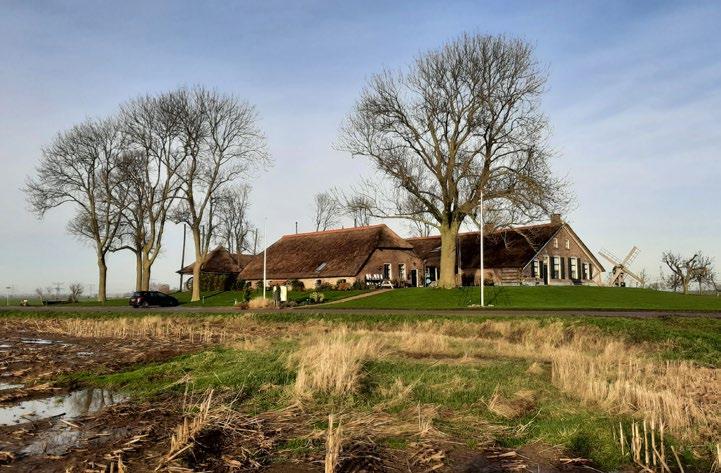
Settlement mound in Kampereiland Photo Roy van Beek
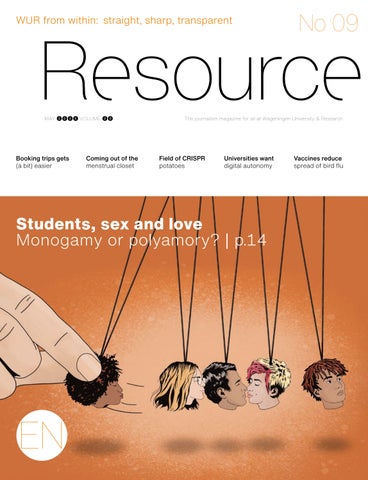
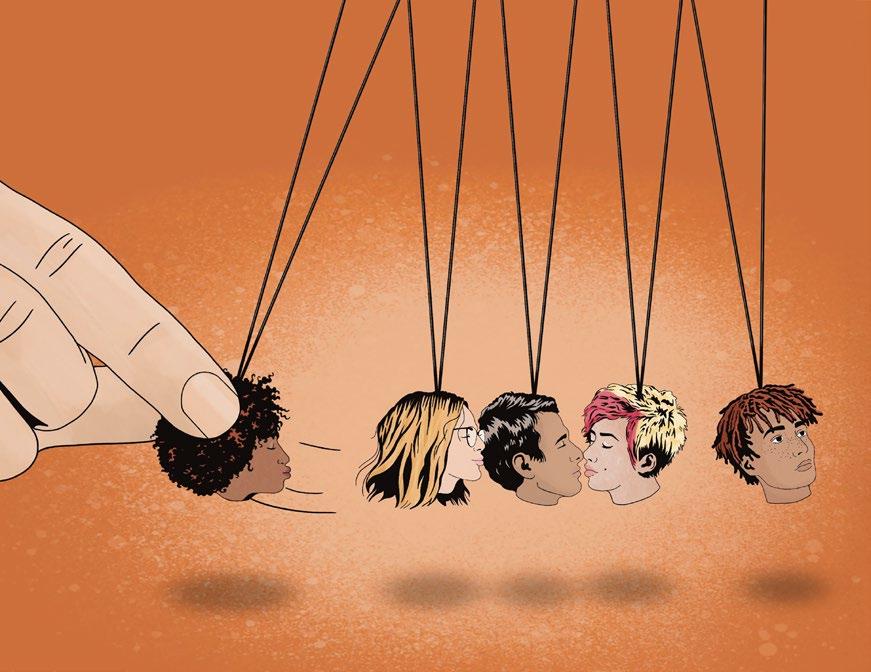
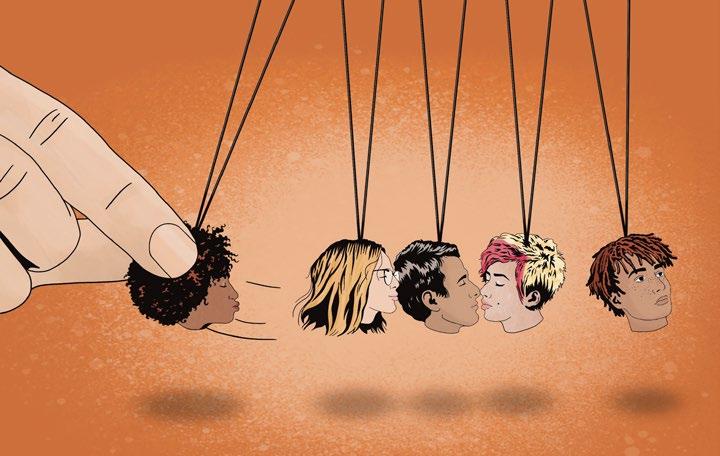
The diversity of love
From monogamy to polyamory
Monogamous, several relationships on the go or single? Student editor Oliver Slysko delves into the love lives of Wageningen students.
Sex (and love) is a topic that fascinates all of us.
Some more than others, but we humans have an eternal obsession with the birds and the bees. These days, we talk more openly about sex and we are exploring all kinds of relationships on the love spectrum from polyamory to monogamy or even celibacy. Wageningen students too are experimenting enthusiastically.
Louise* (24) is in an open relationship. She is unconvinced by the norm of a monogamous relationship and is finding out what is right for her. ‘Navigating non-monogamy is difficult, individual and fluid. A non-monogamous lifestyle isn’t a black-and-white thing: it’s not that you’re either monogamous or polyamorous. We were raised on Disney films and fairy tales, so it’s difficult to relearn what we were told at such a young age. We were taught to look for our one true love. But are humans really monogamous? Is it nature or nurture?’
Many people in a non-monogamous relationship – or interested in one – wrestle with that dilemma. You believe in non-monogamy as a concept, but you find it difficult to manage multiple relationships at the same time in practice, along with all the associated hassle. Margo* (23) is in an open relationship but isn’t making
‘Even managing just one relationship is a challenge for many people’
use of that freedom at the moment. ‘I sometimes feel like one of those shops where the sign on the door still says “open” even though it’s closed. Polyamory – being in an open relationship – doesn’t mean you can just go and sleep with anyone, but there is the option of being intimate with others as long as you make good agreements with one another. An open relationship can be hard because we’ve been raised in a predominantly monogamous society. You also have to take everyone’s feelings into account. Polyamory isn’t impossible, but it’s not a rose garden either. If the stars are aligned – meaning good communication and some luck – it can be very beautiful.’
Band-Aid
Not everyone likes the idea of polyamory. Jan* (22) describes himself as ‘very monogamous’. ‘I think open relationships are often a Band-Aid, a sticking plaster to fix what is already a failing relationship. I’m partly joking, and of course everyone experiences relationships differently – it’s a very individual thing – but even managing one relationship is a challenge for a lot people. If you’re working full-time, it’s hard to have space for more than that. Among the people I know, I’d say two-thirds are in monogamous relationships.’
What about all the singles who are not in a relationship, either monogamous or polyamorous? How do they feel about sex and relationships? Tarik* (22) goes on the occasional date. Is that a form of non-monogamy? ‘I wouldn’t say so. If I go on dates with two different people in the same week, that’s a coincidence, not deliberate. I don’t see that as a form of non-monogamy.’
An unusual phenomenon in the world of sex and students is what is known as the spiderweb. In Tarik’s student house, which has over 20 occupants, there is a big
sheet of paper in the living room with the names of all the housemates. These names are connected by different coloured lines: blue for a kiss, gold for a night together. Is this light-hearted web an expression of non-monogamy?
‘We started the web during Covid when you couldn’t go out to meet people. Some crazy things happened back then,’ laughs Tarik. ‘Fewer links are being added to the web these days, but it gets updated occasionally. Two housemates actually ended up in a steady relationship.’
Tarik wants to settle down with someone one day. ‘I reckon I’ll grow out of this dating phase. Sexual freedom isn’t necessarily that much fun. I can easily think of things that are better than sex without the intimacy –such as a week skiing. Sex without the intimacy doesn’t compare to a deep emotional connection.’
Celibacy
Louise and Margo say polyamory does not mean you lose out on having an emotional connection with the person you have sex with. Margo: ‘You can love and be loved by more than one person. Love is not a finite resource. But that kind of relationship costs time and energy, which you don’t always have.’ That is also how Axl* (23) sees things. He has decided to stop dating altogether – at least for now – and he considers himself to be celibate.
‘I felt there was a lack of emotional connection in sexual relationships without the intimacy. At the same time, a deeper romantic relationship would cost too much
‘We grew up with Disney films, so we look for our one true love’
‘Sexual freedom isn’t necessarily fun’
energy and headspace. But my choice isn’t necessarily easy. I think about relationships and intimacy almost every day. But right now I want to focus on other forms of love such as friendships.’
Wageningen students’ ideas about sex and love are as diverse and multifaceted as the students themselves. Fortunately, we have a say in what kind of relationships we end up in. Relationships and lifestyles aren’t ‘one size fits all’ – you wouldn’t pick a pair of shoes that’s too big or too small. And why put on hiking boots if you fancy going out in high heels tonight? ■
*Real,
full names known to the editors
Illustration Valerie Geelen
ENERGY AND INTERNATIONAL GEOPOLITICS
These are interesting times for Daniel Scholten, a lecturer in the Environmental Policy group who specializes in the geopolitics and governance of the energy transition. ‘The era of the open world order has ended, at least for now. Europe is rediscovering how dependent it is.’ Text Marieke Enter
For the second time in just a few years, European energy supplies are in turmoil because of geopolitical power plays. First there was the Russian invasion of Ukraine, which threatened gas supplies and drove up prices. Now there is the American attack on Iran and the resulting wrangling over the Strait of Hormuz that is blocking supplies of oil and LNG (see inset) and sending prices soaring again. Meanwhile, Cuba is struggling with the dramatic effects of an energy blockade imposed by the US to put political pressure on the country. The Americans have blocked almost all oil supplies. As a result, large parts of Cuba are without electricity for hours every day and transport has come to a virtual standstill.
Preventing shortages
You would expect these developments to spur efforts to speed up the energy transition. After all, no one would need to worry about sabotaged gas pipelines or blockades of LNG and oil tankers if the Netherlands and the rest of Europe could keep going with wind energy, solar power, hydroelectricity, geothermal energy and power generated from hydrogen or bio-
mass. If only 10 per cent of the energy mix came from oil and gas, say, then price rises in those fuels would have much less impact than is the case now.
But we have not reached that stage yet, says Scholten. ‘Often, the first response in an energy crisis is to look for alternative sources for the fossil fuel that has become scarcer. That’s only logical because governments want to prevent shortages and it takes too long to build up new sustainable production capacity. The solutions that are chosen depend mainly on what is already available in terms of infrastructure. For example, the Netherlands was able to build a new LNG terminal quite quickly to reduce its dependency on Russian gas. The terminal was ready in less than a year.’
The extent of the problem plays a role too. ‘Imagine what would happen if LNG was not a suitable alternative for Russian natural gas, and you needed electrification instead,’ explains Scholten. ‘Where on earth would you get that capacity? You could build a large offshore wind farm, but
Daniel Scholten joined the Environmental Policy group as a lecturer last year. He specializes in the geopolitics and governance of the energy transition. He is also a research associate at the Clingendael Institute. Scholten studied political science (Radboud University) and international relations (University of Amsterdam). He obtained his doctorate at Delft University of Technology for research on future energy systems. He has mainly worked in academia but also spent a period as a strategic consultant for the supervisory authority ACM, which oversees the energy market.
that would take five to ten years, which is far too long. There simply aren’t any other sustainable solutions. So it’s understandable that governments look at alternative fossil fuel sources as a solution.’
However, there is a risk of them opting for long-term contracts to create more certainty, which in turn undermines the sense of urgency to invest in sustainable solutions. It is also important to think
‘It’s understandable that governments look at alternative fossil fuels as a solution’
carefully about what countries you do business with; it is best not to import fuel from countries that are potential strategic rivals of the EU. Scholten: ‘Take Europe’s current dependency on American LNG. That seemed a good alternative to Russian gas when Biden was in charge, so no one worried about finding other solutions. But it has turned out to be an Achilles heel under Trump.’
Keeping prices low
Once the immediate danger of shortages has been dealt with, the next stage is frequently measures to keep prices low, continues Scholten. When faced with high, volatile prices, governments often respond with an intervention. But the costs of subsidies, price ceilings or deploying reserves have to be covered somehow – usually first by the government and later by taxpayers. Scholten says that regularly leads to problems. Attention only turns back to the long-term outlook once those problems have been tackled. ‘Politicians realize perfectly well that investments are needed in sustainable energy sources, and that this is the real solution, but they are too busy trying to deal with the crisis,’ he says. Scholten does see an increasing awareness of the risks of this focus on the short term. But Europe still doesn’t have a good long-term strategy. ‘Politicians are often swayed too much by the latest furore, an example being the Dutch decision to close the Groningen gas field. In my opinion, the government went too far. Rather than taking measures to make sure the people
LNG
Liquefied Natural Gas (LNG) is purified natural gas that is cooled to about -160oC, a temperature at which it becomes liquid, making it easier to transport by ship. At the destination, it is allowed to become gaseous again at an LNG terminal, after which it is distributed to users through the existing network of gas pipelines. The new LNG terminal in Eemshaven (2022) has an annual capacity of eight billion cubic metres of natural gas, over a quarter of the total Dutch consumption of gas.
in Groningen got decent compensation, the politicians decided to fill in the gas wells with cement. Our European allies are mystified by this decision and Putin is laughing all the way to the bank. From a geopolitical perspective, it would make far more sense to keep a pilot light on, so that the field is ready to resume operating.’
Social discontent
When energy prices go up, everyone notices. Fuel becomes more expensive, as do the grocery bills: high costs for transport, fertilizer and other petrochemical products have a knock-on effect on consumer prices. That can lead to widespread social discontent. Scholten says politicians are highly aware of this. A key question is how resilient people are in the face of energy scarcity and how much discomfort they are willing to accept. So
far, only Ireland has seen major protests this spring. ‘But Europe had the “yellow vests” movement before that was sparked off by high fuel prices; politicians haven’t forgotten that.’
Scholten predicts that the current energy situation will have consequences; the era of an open world order has ended, at least for now. ‘Europe is rediscovering how dependent it is, and the vulnerabilities of a global market geared to maximizing efficiency are being revealed once again. We saw this before during Covid, when supplies of many crucial products from Asia dried up. The energy crises are teaching Europe that redundancy, resilience and diversification are factors that need to be taken into account again in decisions about policy and investments. Alongside investments in sustainable energy, of course.’ ■
Photo Shutterstock
COLOURFUL GOLF BALLS
This golf ball coral (Favia fragum) was photographed under blue light in the Marine Animal Ecology aquarium. The colours are due to the fluorescence of certain proteins in the coral, turning it into an artwork. The coral was also scanned for the first time by BABETTE, the device recently developed by EngD candidate Johan Bücher (Plant Breeding) to record plant growth over time in 3D. If it works with plants, it will probably work with coral, thought coral scientist Ronald Osinga and tropical ecologist Matthijs van der Geest. That gave rise to a new collaboration between plant and marine researchers at WUR. rk
Photo Julia Koorn, Tim Wijgerde, Johan Bücher
TOWARDS FEWER DEGREES
The university board wants to reduce the number of Bachelor’s programmes from 21 to between 12 and 16 broader degrees. How do you approach that task? The organizers of six Bachelor’s programmes are already looking at how to merge them to form two or three degrees. ‘It’s not a done deal yet.’
These are tense times for the degree programmes of Management, Economics & Consumer Studies, Economics & Policy, International Development Studies, Communications & Life Sciences, Health & Society, and Tourism. These six Bachelor’s programmes will have to be compressed into two, or perhaps three, new degree programmes that are a good fit with the Wageningen domains and appeal to school leavers. The process of developing those new degrees started last December.
It’s a complex process, says policy officer Jetske ten Caat, who is in the working group reviewing this first subset of degree programmes. ‘We’ve organized workshops and meetings to get input from students, lecturers, study advisers, chair groups and other stakeholders. It’s not just about whether we should merge degree programmes or continue them as before: it’s also about looking at what they contribute. What appeals to school leavers? Is there expertise that isn’t getting the attention it deserves in the current portfolio?’
‘Once you’re over the initial resistance, you get a creative process’
Text Luuk Zegers
Two groups then took those ideas and worked them into proposals for potential new degree programmes, says Ten Caat. ‘One group is focusing on business studies and economics, the other on social sciences for transformations in society. Each group worked out three proposals and we’ve now hired an agency to show between 400 and 600 school leavers those proposals and ask them what they think. We’ll then be able to refine the proposals based on that input.’
The requirements of future employers are also important, says Dean of Education Dick de Ridder. ‘That’s why we are discussing the ideas not just with school leavers, students and advisers in secondary schools but also people in the work domains.’
Eighty students
‘The aim of the portfolio makeover is to have robust, future-proof programmes that are preferably able to attract intakes of at least 80 students,’ says De Ridder. ‘At the moment, there is a lot of overlap between the degrees. School leavers often find it hard to distinguish between some of the Bachelor’s programmes. We want the degrees to be less interdependent, which will help us make changes in each programme separately. It will then become easier to adjust the curricu -
lum to reflect changes in the work domain.’ At the same time, they want the degree programmes to become more like each other in terms of the structure, adds De Ridder. ‘For example, each programme should create a sound basis in the first year with more freedom of choice and the ability to specialize in the second year. If that is the setup for every degree, it becomes easier to switch to a different degree because you can use the second year to catch up on what you missed. A working group is currently looking into this.’ Wageningen has experience of starting up new programmes and redesigning existing degrees, but the current operation is much more complex, explains Ten Caat. ‘Normally, you start with an idea for a new or improved programme, so you already have a basis. Also, only a small group of people are involved. In this process, we don’t yet have a basis and an awful lot of people are involved. In one workshop where each chair group could send one person, we had 55 participants, each of whom was contributing their own ideas and wishes. Those are the large groups with which we have to figure out the essence of the new degrees we want to offer.’
‘Top-down isn’t the Wageningen style, but with too much of a bottomup approach, progress becomes impossible’
‘Degrees will need an intake of at least eighty students’
Because the whole process is so challenging and requires coordination, the decision was taken to tackle the portfolio review in six rounds with a different group of degrees each round. ‘The plans for this first group – Sustainable Transitions for Society and Business – will be ready by the summer and we’ll hand the Executive Board our recommendations with proposals
Photo Mette Bordes
for the new, broader degree programmes,’ says De Ridder. ‘Then we’ll start on the second group – Earth and Environmental Sciences – with seven degrees.’
Emphasizing the differences
The second group can’t simply copy the approach used for the first group, says Ten Caat. ‘The first subset had degrees that were facing dramatic declines in student numbers, whereas the second subset has degrees that are doing well, such as Marine Sciences and Forest & Nature Conservation. This second subset may also have degrees that overlap and could be stronger if they merged. But the main question is what makes each degree unique. We need to put more emphasis on the differences.’
The original plan was to start on a new group of degree programmes every three months, says De Ridder. ‘But that turned out to be too optimistic. We spent four months on workshops and meetings for the first group, and we really needed that time. We’ll only be able to start on the second subset after six months.’ The initial aim of introducing the first new-style Bachelor’s degrees in September 2027 was also too ambitious, says De Ridder. ‘When making its recommendations to the Executive Board, the steering committee will indicate which steps can already be taken and what requires more time.’ ■
HOW THE PROGRAMME DIRECTORS SEE IT
TOO SMALL
Arjaan Pellis, Tourism
‘Some degree programmes are too small, which leads to relatively high average costs per student. If you divide the number of students at WUR over fewer degrees with clearer individual profiles, the situation will become more viable in the long term. But getting to that situation is a nerve-racking and unpredictable process.
‘Tourism often looks like it’s in a worse state than other degrees in this subset because WUR decided last autumn to withdraw from the joint degree partnership with Breda. But seeing what the result of this process will be is stressful for all the degrees in our subset. It’s definitely not a done deal yet. We are also really curious to see how the school leavers respond to our ideas.’
TOP-DOWN, BOTTOM-UP
Management, Economics & Consumer Studies and Economics & Policy
‘Our writing group worked out three proposals for degree programmes in the field of economics and business studies. Eventually, that will need to result in a single Bachelor’s programme. Incidentally, that won’t necessarily be one of the three proposals. It could also be a programme with elements from all three. That depends on the feedback from the school leavers.
‘Wageningen’s teachers are very committed. They would ideally all like to have their say, but that’s difficult to organize. We had as many as 70 people attending some meetings. The working group has tried to find the right balance between a top-down approach and a bottom-up one. Top-down feels like you’re imposing something, which isn’t the Wageningen style. But if you take too much of a bottom-up approach, progress becomes impossible.’
CREATIVE
Marleen Maanen-Nooij, International Development Studies
‘The chair groups rely financially on the courses they teach. The changes can have major financial consequences for chair groups that are already struggling with the cutbacks. But once they’re over the initial resistance, people find themselves in a creative process. In all the workshops and writing sessions, you see people really are interested in innovations.
‘We now have three proposals for a Bachelor’s programme in the social sciences for transformations in society. We will eventually need to opt for one of those proposals. The final choice will have a big impact on how much scope there is for the content of the current degree programmes.
‘Once the final decision has been taken, there should be a transitional scheme for chair groups so they don’t end up in financial difficulties.’
Use this QR code to read their full-length comments.
Dividing up space in the countryside
Zoning or downsizing?
Back when she was appointed professor of Land Use Planning in 2019, Martha Bakker called for far-reaching reorganization of rural areas in the Netherlands. Her ideas are still relevant, and perhaps more urgent than ever, now that the Netherlands is once again considering what to do about farmland policy. ‘But it will get nowhere without the political will.’
Text Marieke Enter
Omnia was packed out for the recent symposium on a new approach to land use planning. Researchers, policymakers and professionals in the field considered the key issues in zoning – allocating land to nature or intensive farming as a way of tackling intransigent problems in rural areas such as excessive nitrogen emissions, poor water quality and the decline in biodiversity. But how do you decide which areas are assigned which functions? What criteria should you use? And how could you implement it? ‘A lot of decisions still have to be taken, so it was a very interesting discussion,’ concludes Bakker, who gave a talk at the symposium.
Zoning was out of favour for a while after the now notorious nitrogen map (commissioned by the minister at the time, Van der Wal) inadvertently became the symbol of failing government policy, sparking emotional protests among farmers. Government advisor Johan Remkes dumped it in an effort to calm things down, but he still noted that the Netherlands would ultimately need some form of zoning, in his report tellingly entitled You Can’t Do Everything Everywhere. Bakker agrees. ‘I find zoning for
rural areas a more attractive scenario than doubling or tripling the size of the Veluwe. Because that’s basically the only alternative if you’re ever going to satisfy the EU directives for nature and the environment. Then it’ll just be boring woods. I’d prefer an area twice as large that is also used for agriculture and remains a genuine cultivated landscape, similar to the landscape of the 1950s.’
Less is more
Bakker advocates dividing rural areas into two types of zones. The first would have farms that are less intensive, creating scope for nature and environmental objectives; the other would permit intensive agriculture. Not everyone agrees. Some people believe there should be more variants in recognition of the variations in soil type and landscapes in the Netherlands. Bakker is familiar with the debate: ‘There are people who say it with the best intentions, but the agricultural sector has also weaponized this argument as a way of discrediting the idea of zoning. They are well aware that it would then become administratively impossible to implement. You’d get a bureaucratic nightmare, a system you can no longer explain, with loads of discussions
Zoning
In this context, zoning means dividing the countryside into two (or more) kinds of agriculture. One zone is land designated for extensive, nature-inclusive farming with scope for nature and environmental objectives. That zone would mainly be near nature areas, in peatland and dry, sandy soil. The second zone would be for more intensive agriculture aimed at food production. Agriculture that does not require fields would be clustered together in ‘agriparks’. Bakker believes this strict division would be better than keeping a patchwork of all the different kinds of agriculture intermixed.
arising about who should get how much in grants in which zones.’
History proves her point. At the turn of this century, the Netherlands had what was known as the Reconstruction Act aimed at reassigning parts of the countryside. ‘In theory, there were agricultural development areas and areas for less intensive use, with a kind of mixed
‘Most political parties are now interested in zoning as a solution, but they’re getting seriously cold feet. That’s because zoning is a break with the usual bureaucratic principle of treating everyone equally.’ Photo Ruben Eshuis
zone in between. You can guess what happened: the mixed zone became the dominant model. From an administrative perspective, a much sharper distinction should have been made between development areas on the one hand and areas of less intensive use on the other hand. It’s a good example of how zoning can get bogged down if the political will is lacking.’
Cold feet
That political will was definitely lacking in the previous coalition government, with the farmers’ party BBB as one of the coalition partners. But now the political climate has changed. Bakker: ‘Most of the parties are now interested in zoning as a solution. At the same time, they’re getting seriously cold feet. That is because zoning is a break with the usual bureaucratic principle of treating everyone equally. The fear among Dutch government officials is that farmers will bring lawsuits complaining about the zone that they’ve been put in.’ Despite this, Bakker sees a willingness – certainly within provincial authorities – to work on zoning. She finds that quite courageous. ‘I would totally understand if the provincial authorities wanted to wait for a vision from central
Animal diseases and zoonoses
government. It’s not that each province has to have exactly half in zone A and half in zone B; the breakdown can differ per province. But the methodology and underlying logic need to be uniform nationwide. Everyone needs to be on the same page, otherwise you run the risk of a provincial initiative being overruled later by another government level. Then you risk losing what is most fragile at present: farmers’ trust.’
Don’t start small
Bakker would applaud the new government coming up with a national masterplan and implementing it without delay. ‘A gradual approach – starting small and then scaling up what turns out to be successful – might sound more appealing politically, but there’s a significant risk that the initiatives then remain small. What is more, that kind of approach leaves many farmers still unsure of their future.’
Zoning is not necessarily a bad thing for farmers, she stresses. ‘Doing nothing, letting everything run its course and saddling farmers with the consequences of compliance with the EU directives will simply lead to downsizing. It will be an extra element driving the sharp decline in the number of farmers, in a way that favours the large players over small farms – which in turn will have a big impact on the quality of life in the countryside. But it doesn’t have to be that way. You can also say you want half the land to be used for less intensive farming and help the farmers in those areas make that switch. For example,
Health risks for animals and humans are another argument in favour of zoning. Both intensive and extensive livestock farming involve a high risk of infectious diseases. However, the reasons are different. In intensive systems, there is a risk because of the high concentration of animals of the same species, and because the animals are transported to and from the farm a lot. The main risk in extensive systems comes from the interaction between farm animals and wild animals. ‘These different causes imply conflicting strategies for risk control,’ explains Bakker. ‘The key measures in the intensive model are protection, compartmentalization and proper monitoring. In the extensive system, the risks are minimized by keeping concentrations of animals low, investing in better natural resistance through greater biodiversity and by having a land layout that minimizes contact between wild and farmed animals. If you can’t separate those two strategies spatially, the risk becomes much greater.’
‘I find zoning a more attractive scenario than doubling or tripling the size of the Veluwe’
you could buy land from farmers who were planning to stop anyway, and offer it at low rents. Or you could reorganize farming subsidies, shifting from generic income support to extra money for nature and landscape management. There are quite a few policy options to help farmers make the switch. Those farmers will then be able to stay put and you won’t have those huge social repercussions in rural areas.’
While Bakker is finding more support for her call, there are still misunderstandings preventing her message from landing. Strikingly, the source of these misunderstandings is largely the group who espouse the idea of land sharing, where nature and agriculture go hand in hand, and who believe that all agriculture needs to become more sustainable. ‘They imply that areas designated for intensive agriculture will become ecological dead zones, but that isn’t the case. Those areas will be similar to the countryside now, with the current environmental legislation – only quite a bit smaller to make room for new, more nature-inclusive areas elsewhere. If the Netherlands can organize this sensibly, it could be a good solution for everyone, including farmers. A prerequisite is that they get long-term certainty. If they have to wait and see every four years who is in charge politically, with the possibility of previous promises being reversed, they obviously won’t be interested in cooperating.’ ■
Picturing winners and losers
The
outdoor exhibition next to Impulse has beautiful nature photos –Bachelor student Jan-Freerk Kloen’s leaving present to WUR.
Text Roelof Kleis
It is a leaving gift because he will not be continuing at WUR now that he has just completed his BSc in Forest & Nature Conservation. He has a new job at RAVON, an NGO for the conservation of reptiles, amphibians and fish. The exhibition of his work, entitled Ever Changing Biodoversity, also draws attention to the ongoing BioBlitz on campus.
Everything is in flux. That ancient Greek aphorism certainly applies to nature today. Species are relocating because of climate change. The exhibition makes
this drift crystal clear. Walk in one direction and you see photographs of the winners; walk the other way and you see the losers. It’s the newcomers versus the emigrants.
Jan-Freerk Kloen has been photographing and writing about nature ever since he was a boy. He began his own blog in 2014, aged 11: A Jumble of Flutterers and Crawlers. ‘My father had a blog where he wrote posts and shared photos. I thought that was cool. I reckoned I could do that too, and that’s how it began. Both the photos and the stories have gradually got better. Initially, it was more of a diary about where I’d been. Over time, it became more substantive.’
Dragonflies
The blog evolved into what is now the JFK Nature Blog. It lets him express his love for nature in a personal style. That love was instilled in him from an early age. ‘Both my parents studied biology here in Wageningen and stayed on afterwards. I grew up five minutes from the campus. My mother works in nature education and my father does nature policy. They share the same hobby: exploring the countryside and looking at plants. That’s not so much my thing.’
He is a big fan of dragonflies, as you can tell from the exhibition. Why dragonflies? ‘I think they are beautiful, but I’ve also read a lot about them and learned a lot. That makes a difference. The more you know about something, the more interesting it becomes. The ecological aspect plays a role too. Dragonflies are a good indicator of the quality of their habitat. Everything is
changing so quickly. Some species of dragonfly are progressing north by dozens of kilometres every year.’
New species are arriving and existing ones are leaving. Does that make the glass half full or half empty on balance? ‘Tricky,’ says Kloen. ‘I used to be on the half full side; I’m an optimistic person and I see opportunities for nature. Climate change means species from southern countries get a chance here. But in recent years, I’ve looked into the species that are doing badly – especially dragonflies. When you see how rapidly their populations are declining, that’s very worrying.’
Dupe
Specialized dragonflies in particular – the ones that need very specific environments – are the dupe. ‘The species that are thriving are robust, opportunistic generalists. They can survive anywhere. They are also so competitive that they drive out the species that were already there. Specialists can’t move any further because they are
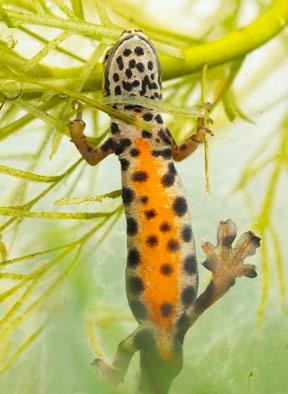
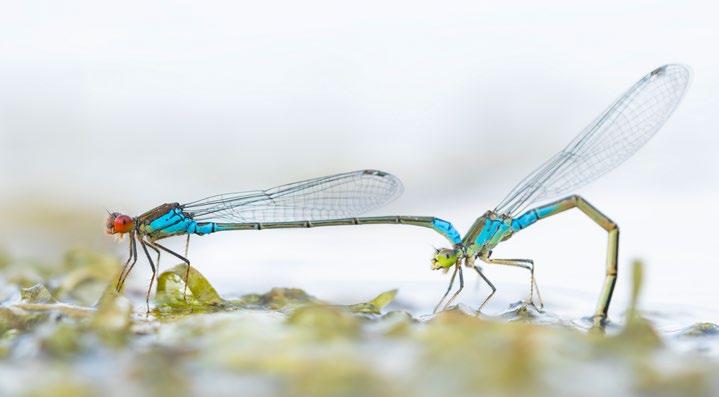
The exhibition Ever Changing Biodiversity consists of 18 photographs taken by Jan-Freerk Kloen of species that could be spotted within 15 kilometres of the campus in the past three years and that have experienced decline (the toad) or growth (the dainty damselfly) as a result of humans.
Location: Impulse outdoor exhibition space Date: on display until 30 September 2026
‘The species that are thriving are robust, opportunistic generalists. They can survive anywhere’
‘My father had a blog, I thought that was cool’
already at the northern edge of their habitat. They have nowhere to go and so they disappear. On balance, climate change is having a negative impact on the quality of nature. I’m convinced about that.’
Kloen won’t be able to make much of a contribution to this year’s BioBlitz, the campus species count that runs from 7 April to 26 June, because of his job at RAVON. He sees the exhibition as his leaving gift. He was heavily involved in previous BioBlitzes, though. Not that he needs the excuse of a BioBlitz to spot species. In the past 15 years, he has reported over 36,000 observations of 2,400 species on the platform Waarneming.nl, an average of more than 2,000 per year. One fifth of those observations were of dragonflies. ‘I’m fanatical about posting observations. I hope the campus will get new fanatics to keep track of the dragonflies in the coming years.’ ■
Small red-eyed damselflies. On the left, a smooth newt.
Virtual reality beats lab in food research
Teleported into a wheatfield
Consumer food research is often carried out in labs, a setting quite different to where people normally buy or eat food. That makes it difficult to determine the effect of the context on food choices. Now virtual reality can be used to immerse test subjects in realistic settings.
Imagine you are standing in a colourful field of wheat with nature-friendly strip cropping. As you look around, you hear birds and insects. The wheat you see is used to make bread. You try a piece. How does it taste?
That is basically how the study works that Wageningen Food & Biobased Research and Wageningen Social & Economic Research carried out in partnership with the WANDER XR Experience Lab, WUR’s virtual reality facility. Food Technology researcher Anke Janssen: ‘Food producers want to know whether their products will appeal to people. We did this study to find out what triggers consumers in their decision whether or not to buy more sustainable food products.’
In a previous joint study, the participants were shown 2D images on a computer screen and told to imagine they were standing in a field of wheat that was either a monoculture or strip cropping. Researcher Liam Dwyer of the
Consumer Research group: ‘We asked people what they thought of what they had just seen and of the piece of bread they had just tasted. At the same time, we measured their unconscious reactions – heart rate, skin conductance and facial expressions – as indicators of emotional excitement.’
That showed how the cultivation method could influence consumers’ perceptions of food. But the researchers wanted to go further. Dwyer: ‘We wanted to immerse the participants in the production method to bring the difference between strip cropping and monoculture to life.’ Janssen: ‘If you look at pictures of a wheatfield, that’s a different experience to actually standing in that field. But it’s difficult to have participants literally standing
‘That immersion is what I see as the added value of VR’
Text Dominique Vrouwenvelder
in a wheatfield. Anyway, the field only looks like that for two or three weeks in the year, which makes repeating the test in the same conditions impractical. That’s how we came up with the idea of virtual reality.’
Field of wheat
The WANDER XR Experience Lab built two virtual wheatfields for them, one with strip cropping and one as a monoculture. Janssen: ‘Participants stand in the middle of the field, and they can look around and hear birds.’ Thomas Ginn, the WANDER team leader: ‘Our assumption is that virtual reality makes it easier to immerse yourself in a setting. This research approach ties in with a broader shift in consumer food research, away from sterile labs and towards a context that’s relevant to how people make decisions. What’s more, it is easy to adjust or personalize a VR environment, even when the participant is already in the environment.’
‘The VR glasses can also be used as a measuring instrument,’ he adds. ‘The glasses can be fitted with sensors to measure parameters such as pupil size and viewing behaviour. That lets researchers measure the participant’s eye movements and what they are looking or staring at.’
The experiment starts in the bread section of a virtual supermarket. Participants are told how bread is produced in general and they have to answer an initial series of questions: how healthy and environmentally friendly do they think the bread is and would they buy it? As in the previous study, the participants’ heart rate and skin conductance are measured. Then the participants, who are still immersed in the virtual world, taste a piece of bread and say whether they find it tasty.
Teleported
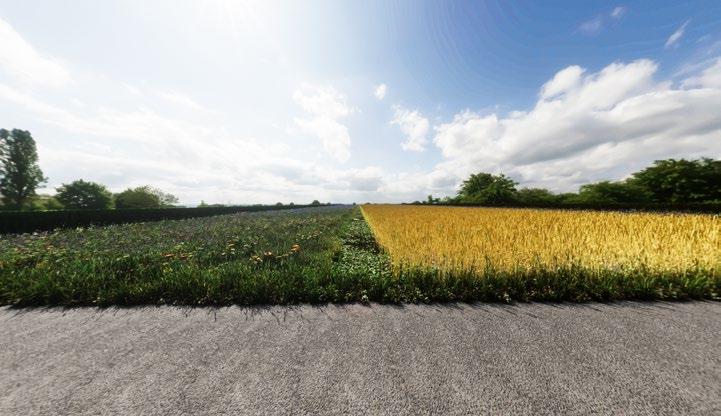
Still in the virtual supermarket, they then get told about the ecological advantages and disadvantages of monoculture and strip cropping. Next, they are teleported into a wheatfield – either a monoculture or strip cropping. The monocul-
ture field is almost silent, reflecting the lack of biodiversity, but buzzing insects and birdsong can be heard in the strip cropping field.
When they return to the supermarket, they taste bread that they are told was made using wheat grown according to the farming method they just experienced (monoculture or strip cropping) and they answer the same set of questions as before. This is followed by a second teleportation to the other farming method, followed by another piece of bread to taste, and they get the same questions again. Only then can the participant remove the VR headset. Dwyer: ‘This way, each participant experiences both cultivation methods and we can measure how that experience affects their opinion of the same bread.’
According to the researchers, the most important result is that the VR environment has a clear effect on the participants. Dwyer: ‘Compared with their pre-
vious physical reactions, participants had a higher heart rate and perspiration reflex when tasting the piece of bread after the VR experience. That immersion is what I see as the added value of VR.’ The effect was also clear from the questionnaires that the participants filled in afterwards. Janssen: ‘We asked them how immersed they felt in the virtual environment and to what extent they had heard surrounding noises from the lab. The scores were remarkably good.’
Ginn: ‘This experiment is confirmation for us that you don’t need to build the perfect virtual environment to get people convinced. We could have spent another hundred hours on perfecting the supermarket setting – but that really wasn’t necessary. Compared with a 2D image on a computer screen, VR is much better at getting participants to feel as if they’re in a different environment. That offers prospects for consumer research that gets much closer to the real-life situation than a lab setting could ever offer.’ ■
Shot from the virtual environment of a wheatfield with strip cropping Image WANDER XR Experience Lab
NEW QUAYSIDES FOR OLD CANALS
Amsterdam is world-renowned for its canals, the oldest of which date back four centuries. They have looked the same all that time, and will have to stay that way as they are official UNESCO world heritage. But something needs to be done, because 200 kilometres of quay walls need renovating or replacing. And Amsterdam is not alone. EngD candidates Bas Kramer and Rohan Daniel are turning ideas on how to do this into appealing designs that benefit the surroundings.
It is not as simple as just replacing some bricks. ‘The new quays and their surroundings will have to be multifunctional,’ explains Kramer. ‘The renovation has to take account of aspects relating to the energy transition, climate adaptation and social developments, such as the desire to restrict car access in the city. Climate adaptation involves having more trees to create more shade. As regards the energy transition, the quay walls will be used for thermal energy storage.’
One common system for thermal energy storage, also used on campus, exchanges heat with the groundwater deep below. Kramer says the aim in Amsterdam is to exchange heat with the canal water. ‘Using the quay wall as a heat exchanger. In the summer, you extract heat from the water, which cools it down, and store it.
In the winter, you use that stored energy to heat houses. We’re considering using a ground layer for the storage. Hot water is drawn from there and supplied to a district heating network. It’s a promising option if you want to end the reliance on gas. The first trials at Delft University of Technology look encouraging.’
‘GET PEOPLE TRAVELLING BY CANAL AS THEY DID IN THE PAST’
The EngD candidates aren’t carrying out those trials themselves. The two represent the Landscape Architecture & Spatial Planning chair group in a consortium that also includes the municipality, AMS institute, other universities, engineering firms and contractors. Kramer and Daniel are applying the Research Through Design approach, in which research and design go hand in hand. ‘All the designs are studied to test their effects and then adjusted accordingly. That iterative process of designing and testing results in an optimum design that satisfies as many requirements as possible.’
Invisible
There will be little sign above ground of all these technical innovations. ‘They’ll be hidden in the quay wall in modular boxes. There will be space for the geothermal storage, electricity substations or temporary storage of waste before it is collected.’ It has to be invisible, anyway. ‘We can’t just add new functions to the area. Amsterdam’s historic city centre is a protected World Heritage site. Every intervention has to be justified in terms of that history, or must fit in the city’s ongoing story and traditions. That’s the big challenge.’ But that does not mean nothing will change aboveground. Climate adaptation demands new approaches. Trees are needed to cope with the heat. In
Text Roelof Kleis
this case elms, Amsterdam’s tree of choice. ‘The elm is a nice metaphor for this project,’ says Kramer. ‘Elms are tricky because Dutch elm disease is so prevalent, so we need to look for an elm that is resistant to the disease. It so happens this is also something that WUR is working on. What seems at first to be an obstacle turns out to be a chance to combine expertise from different sectors.’
The designs by Kramer and Daniel have some striking green elements and recreational features. There are floating green islets along the edge of the canals. ‘These are islands of helophytes, plants that don’t just purify the water but also improve the ecological quality of the canals,’ explains Kramer. The green islands are interspersed with floating decking that people can sit on. ‘We’re using a lot of floating features in this project. They are a good fit in Dutch canals, which have a lot of houseboats. The water provides additional space that isn’t being used at the moment. Those low pontoons are one aspect of the adaptation to the changing climate. The closer to the water you are, the cooler it feels.’
Pontoons
Pontoons at street level could provide bicycle parking space, play areas or temporary transhipment storage when bringing supplies to supermarkets or collecting waste. Transport via the water is one way of helping the city achieve its aim of restricted car access, says Kramer. ‘Get people travelling again along the canals, as they did in the past. Using electric power where possible, which is less polluting. Using the canals also reduces the pres-
Prize
The quay walls project won WUR’s Transdisciplinary Research Award last month. Bas Kramer says the 2,500 euros in prize money will be used to promote their work. ‘We want to get our message across to policymakers involved in these kinds of issues and inform them of these innovations. We know other cities are already very interested in this project.’
sure on the quays. Amsterdam has had a couple of pilot projects for water transport but there isn’t yet a broad vision of what that should look like on a larger scale. Having transhipment points on the water will reduce the burden on local residents.’
The great thing about the study by Kramer and Daniel is that it isn’t just pretty pictures. ‘It’s nice that it is so applicable. It’ll be tested in practice next year at a specific location.’ Exactly where that will be is a secret for now. The EngD candidates will have finished their work by then. ‘We’ll be busy up to the summer completing the final design phase and testing the appreciation of our designs. To measure that, we’ve compiled a questionnaire in which people can give their opinions based on photo-realistic images.’ ■
Artist’s impression of the quayside project. Bas Kramer, EngD candidate in the Landscape Architecture & Spatial Planning chair group: ‘We’re using a lot of floating features in this project. They are a good fit in Dutch canals, which have a lot of houseboats. The water offers additional space that isn’t being used at the moment.’
Limelight
It will be full steam ahead on 30 May, with talented musicians performing at the Ede-Wageningen Ontspoort! festival. Eighteen acts, ranging from singer-songwriters to metal, country and tekno, will showcase their skills in short sessions. Wageningen drum ’n bass producer and DJ Rhizosphere, who usually performs with the Barbaboefjes, will share the stage with a plant.
Text Coretta Jongeling
On the right track
That’s no coincidence, as Rhizosphere (aka Ramon van Esch) graduated in Plant Sciences last year and now works as a plant specialist for a plant breeding company. Nature is a source of inspiration for his music, he says. I like using sounds from nature in my numbers. It’s also where my stage name comes from: the rhizosphere is the plant’s root zone. If that basis isn’t strong, the plant can’t flower. My basis consists of the people close to me, nature and the energy I get from music.’
When performing with the Barbaboefjes,
he plays music by other artists, but at Ede-Wageningen ontspoort! he will be playing his own numbers. ‘I do everything myself, from the drums and bass to the melodies. I often start with the part that inspires me most, such as the bass. I build up a bass line, then add the chords and finally the drum beats to fit that. But sometimes it’s the other way around.’ His performance will be a bit different from usual. ‘The sets I normally
Photo DJ Rhizosphere
SAT
30-05-2026
Astrant Ede 19:00
Free admission
play during Barbaboefje gigs are more focused on club sounds. This will be a calmer performance where I play my quieter tracks too.’
The eighteen acts will perform on three stages, with twenty minutes per act.
‘That’s short, but I can still show my stuff in that time. As a DJ, you can segue your numbers into one another.’ What about the plant? ‘What it will do exactly is something I’m keeping a secret for now, but I can reveal I will use it live during my act.’
The aim of Ede-Wageningen ontspoort! is to showcase new bands and musicians. It is organized by Popcultuur Wageningen, PopUPop and Astrant. The event is free of charge. See the Astrant website for the full programme.
TIPS
Friday 5 June
Metal Mayhem (band night) Unitas
Friday 29 May
Larbi by Introdans (dance) Junushoff
Saturday 13 June
0317 festival Argo grounds
Every year, about 3,500 students get their Bachelor’s or Master’s degree from Wageningen. In Thesis Life, they talk about this particular milestone — the content and the ups and downs. This time, it’s International Development Master’s student Machteld van Kempen. Text Eva Hamers
Your thesis in 40 words?
‘Refugee camps in Kenya are transitioning from camps to villages. I looked at how this affects the aid on offer and how various organizations feel about it, for example about the resources and administrative quality of the local government, which will now have more of a say.’
The local context?
‘People from conflict zones fled to Kenya and two “temporary” refugee camps were set up for them thirty years ago. But the conflicts still haven’t ended. Life there is now very hard, in part because of worldwide cuts to development aid. The refugees get assistance depending on how vulnerable they are, but now the least vulnerable aren’t getting any money or food even though some of them still need that assistance to survive.’
What made the biggest impression?
‘The refugee camp itself. The poverty is shocking, and the surrounding Kenyan villages didn’t look much better off. I also realized that there is a big difference between my academic knowledge and what humanitarian aid looks like in practice.’
Your favourite place to work on your thesis?
‘The campus. I can’t work at home. But my chair group doesn’t have dedicated workstations for thesis students, so I often sit in the library and sometimes I try to get a space alongside friends who do have specific thesis workplaces.’
Do you have any tips?
‘Investigate what the visa requirements are. I had a two-month delay because I needed to apply for a residence permit for researchers. The travel advice – code yellow for me – also has administrative consequences. Apart from that, try to make it an enjoyable experience. I spent most of the time in the city of Nairobi, as otherwise I would have felt too isolated. If you feel unhappy, it affects your work.’
You find all the flavours of the world in Wageningen. Bachelor’s student Dhanapath Chaiwiwat, also known as Bingo, is from Bangkok. He shares a recipe for Thai green curry.
Flavours of WUR
Thai green curry
‘I love to cook and to connect with people, learning more about their culture through food. Are you craving for something fragrant and full of character? In addition to the famous pad Thai and mango sticky rice, Thai green curry is a dish that will instantly wake up your appetite. This Thai classic is packed with flavour, aroma and a warm kick of spice in every bite. One taste, and you’ll be coming back for more.’
1 Cut the aubergine into bite-sized pieces.
2 Cut the chilli peppers diagonally, keeping some slices for decoration.
3 Squeeze the lime juice.
4 Cut the chicken into bite-sized pieces.
5 Put a pan on medium heat, add the oil and wait until the oil is hot.
6 Add 50ml of coconut milk and the curry paste and stir-fry until fragrant.
7 Add the chicken and stir-fry until coated with curry paste.
8 Add the rest of the coconut milk, the fish sauce, sugar and chilli. Simmer for 10 minutes.
9 Add the aubergine. Cook until it is soft and the chicken is done.
10 Turn off the heat and add lime juice.
11 (Add more fish sauce, chilli and lime juice to taste.)
Serve with a carb of your choice (usually cooked rice).
Hundreds of internationals work and study at WUR. In the Meanwhile in column, we ask one of them to comment on events in their home country. This time, Biotechnology Master’s student Gavin Nicholls (22) talks about the local elections in England.
Text Philip Timmers
‘The Prime Minister Keir Starmer is under a lot of pressure. In the local elections, the Labour Party didn’t get many votes, while their rivals, Reform UK, did very well. Recently, there was a big scandal about a Labour politician who had close links with the convicted paedophile Jeffrey Epstein. However, if you ask me, the Labour Party already started their decline before this.
‘UK politics has changed a lot compared to how it was in the early 2000s. Back then, you had politicians like Tony Blair and David Cameron who lasted for multiple elections. This has changed. Now we have had four prime ministers in five years.
‘I think the reason why Labour is doing so badly in the polls is that people have not seen the radical change they were hoping for. Since the early 2000s, the UK has made huge cuts in social spending, which has made the lower classes worse off. Labour promised to change this. Government spending has become a little more balanced, and the waiting times for
the National Health Service have got shorter, but the radical change people were hoping for hasn't materialized.
‘Most of my friends in the UK are coming out of uni now and are struggling to find jobs and housing. More places are identifying as further to the right. As most of my friends are more liberal, they don't want to live in those places, where they would be seen as “the other” and feel unwelcome.
‘I sometimes discuss whether the UK is failing with friends in Wageningen. Personally, I don’t think so. It's easy to believe that because the British media is often very reactionary and fearmongering. An article about the government doing OK is not going to sell; nowadays you need people to tweet about it online so they print these extreme headlines.
This cycle is one of the reasons for the polarization we see today.
‘Switching governments as quickly as we have seen in the past five years is bad for everyone. Change is slow, and without stability in the government, the UK will only become worse and worse off.’
Nine Harry shows
Animal Sciences student Mylène Poppe (photo, on the right) is going to eight of the ten concerts singer Harry Styles is giving this week and next in the Johan Cruijff Arena in Amsterdam. At least eight. ‘The ticket prices are dropping so I might go the other evenings too.’
‘There are probably other WUR students going as well, but no one I know: I don’t have that many social contacts at uni. I’ll be going to eight concerts in Amsterdam and one in London. It’s expensive but I’ve been saving up for it. I’ve worked at the Plus supermarket in Bennekom for about 18 months now and I was able to work long hours in the fourth year of my Bachelor’s, when you don’t have to study so much. I don’t mind spending my money on this as I don’t do many other things that are expensive. This is simply something I really want to do.
‘Some artists have a completely different set list for each concert. Harry mainly performs the same numbers but he talks a lot to his fans, so each evening still feels different. The concerts haven’t sold out and prices on Ticketswap are falling. If I can find good seats that aren’t that expensive, I might also go on the evenings I don’t yet have tickets for. If I’m doing this anyway...’
Wembley Stadium
‘I have been a fan of Harry’s for years. Unfortunately, I missed his first solo concert in AFAS Live but since then I’ve been to several concerts in every tour he has done. I’ve seen him five times in Amsterdam, once in Antwerp and once in Düsseldorf. I was determined to go to London as well for this tour. My friends thought that was too expensive but fortunately my mother was prepared to come
with me. It’s going to be amazing, with all those British Harry fans in massive Wembley Stadium.’ me
WEEKLY UPDATES ON STUDENT LIFE AND WORKING AT WUR?
Go to resource-online.nl
(Subscription page) and subscribe to our digital newsletter.
SIGN UP
WUR from within: straight, sharp, transparent
Colophon
Resource is the independent journalism medium for students and staff at Wageningen University & Research. Resource reports and interprets the news and gives the context. New articles are posted daily on resource-online.nl. The magazine is published once a month on a Thursday.
Contact Questions and comments for the editors: resource@wur.nl | resource-online.nl
Editorial staff Willem Andrée (editor-in-chief), Helene Seevinck (managing editor), Marieke Enter (editor), Roelof Kleis (editor), Dominique Vrouwenvelder (editor), Luuk Zegers (editor), Coretta Jongeling (online coordinator).
Translations Tessera Translations S.L.
Design Alfred Heikamp, Larissa Mulder
Overall design Marinka Reuten
Cover illustration Valerie Geelen
Printing Damen Drukkers BV, Werkendam
Subscription A subscription to the magazine for one academic year costs 59 euros (135 euros if abroad). Cancellations before 1 August.
ISSN 1874-3625
Publisher Corporate Communications & Marketing, Wageningen University & Research
Kooky news
PRE - GRADUATION NORMAL LIFE COURSE
From the 2026-27 academic year, WUR will be offering short Normal Life courses for students about to graduate. The course, a long-cherished aim of the SORL (Scared Of Real Life) campaign group, will prepare them for reintegration into society.
The campaign group, composed mainly of fifthyear to eighth-year students, has concerns about post-student life. Spokesperson Guy Young calls it a generational crisis. ‘We are hearing from more and more students in their final year who say the pressure is enormous. What are you supposed to do when you’re no longer a student? How are you expected to cope?’
The fears are grounded in fact, she emphasizes. ‘Friends who have just graduated confirm that normal life is really tough. Going to work every day, going to bed on time and making sure your knives and forks match is no joke.’
The course will be given in periods 5 and 6. There will be lectures and practicals. ‘It will cover topics such as “House-Hunting 101”, “Weekday Nights In” and “Do I really have to turn up to work every single day?”’ explains coordinator Norma L. Drone. ‘In the practicals, we explain how to have a conversation with an Ordinary Person. We also invite real live Ordinary People so the students can practise chatting with them about their kids, their garden plans and mortgage interest
‘We invite Ordinary People for you to practise chatting with them about their kids’
relief. We also invite a recent graduate to share their experience out in the real world. They will give handy tips on how to keep a house clean without a cleaning roster and how to cope with 40 hours of work a week without going mad.’
The list of topics can look intimidating, admits Drone. ‘But we allow plenty of time for them to absorb the material. There will also be a psychologist available to talk about the mental stress of preparing for normal life.’ If you still don’t feel ready to take this step, SORL spokesperson Young has some tips. ‘Taking forever on your thesis is the most straightforward way to put off real life. Failing your final exams is another option as it will be several months before you get a chance to resit them.’
The course will cover how to chat to work colleagues while waiting at the coffee machine Photo Shutterstock