
Inside:
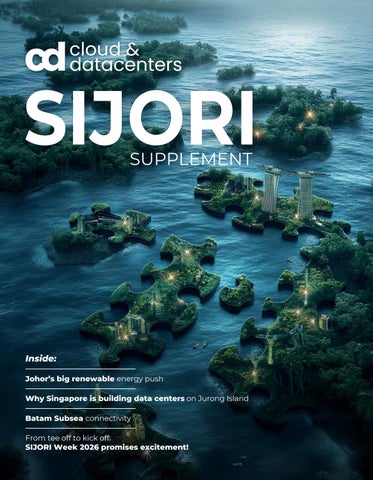
Johor’s big renewable energy push
Why Singapore is building data centers on Jurong Island
Batam Subsea connectivity
From tee off to kick off: SIJORI Week 2026 promises excitement!
Johor is building one of the world’s largest renewable energy zones, partly to meet the demand of insatiable data centers.
By Jan Yong
Johor is tipped to become Southeast Asia’s largest data center hub by 2030, and its power consumption will surge accordingly. To meet that demand, the state has contracted one of the world’s largest renewable energy zones.
The Southern Johor Renewable Energy Corridor (SJREC) is a US$6 billion hybrid solar and battery storage project spanning 2,000 square kilometers. It sits within the Johor-Singapore Special Economic Zone (JS-SEZ), a bilateral initiative that pairs Johor’s land and labor resources with Singapore’s capital and technology.
The initial phase of SJREC targets up to 4 gigawatts peak (GWp) of solar capacity and 5.12 gigawatt-hours of energy storage, which will be supplied to hyperscale data centers and large corporations in the state as well as transmitted across to Singapore. The SJREC will be co-developed by the World Bank Group, Permodalan Darul Ta’zim (PDT), the strategic investment arm of the Johor State, and Ditrolic Energy, an integrated energy company based in Malaysia.
With this, Johor will also scale up to become the primary renewable energy hub for the ASEAN Power Grid (APG) initiative, which aims to interconnect
It
is a tightrope between growth and decarbonization that Johor has, so far, managed to walk.
regional electricity networks by 2045 to enhance energy security and sustainability.
From 1 percent to leadership
Both the SJREC and the simultaneously launched Johor Renewable Energy Policy 2030 framework are anticipated to thrust Johor into a regional leadership position in clean energy. It is a tightrope between growth and decarbonization that Johor has, so far, managed to walk.
The framework is a comprehensive roadmap outlining 12 strategic pillars and 38 implementation initiatives to decarbonize the state’s energy system. As of 2024, only about 1 percent of Johor’s energy mix — about 199 megawatts — comes from renewable sources. JLL’s James Rix, Head of Data Centres Practice for Southeast Asia and Korea, however reckons it’s closer to 17.7 percent, citing figures from the Grid System Operator (GSO), an entity authorized under Section 22A of the Electricity Supply Act 1990.
“The power generation mix for renewables from GSO shows it generates 3,774MW of renewables against a total Grid demand of 18,761MW which comes up to 17.7 percent,” he explains.
The policy sets a target of at least 600 MW of renewable capacity by 2030, which could reduce annual carbon emissions by up to 2.1 million tons. With the many opportunities to explore clean energies in the state, the framework anticipates about US$2.5 billion (RM10 billion) in investment creating an additional 15,000 jobs.
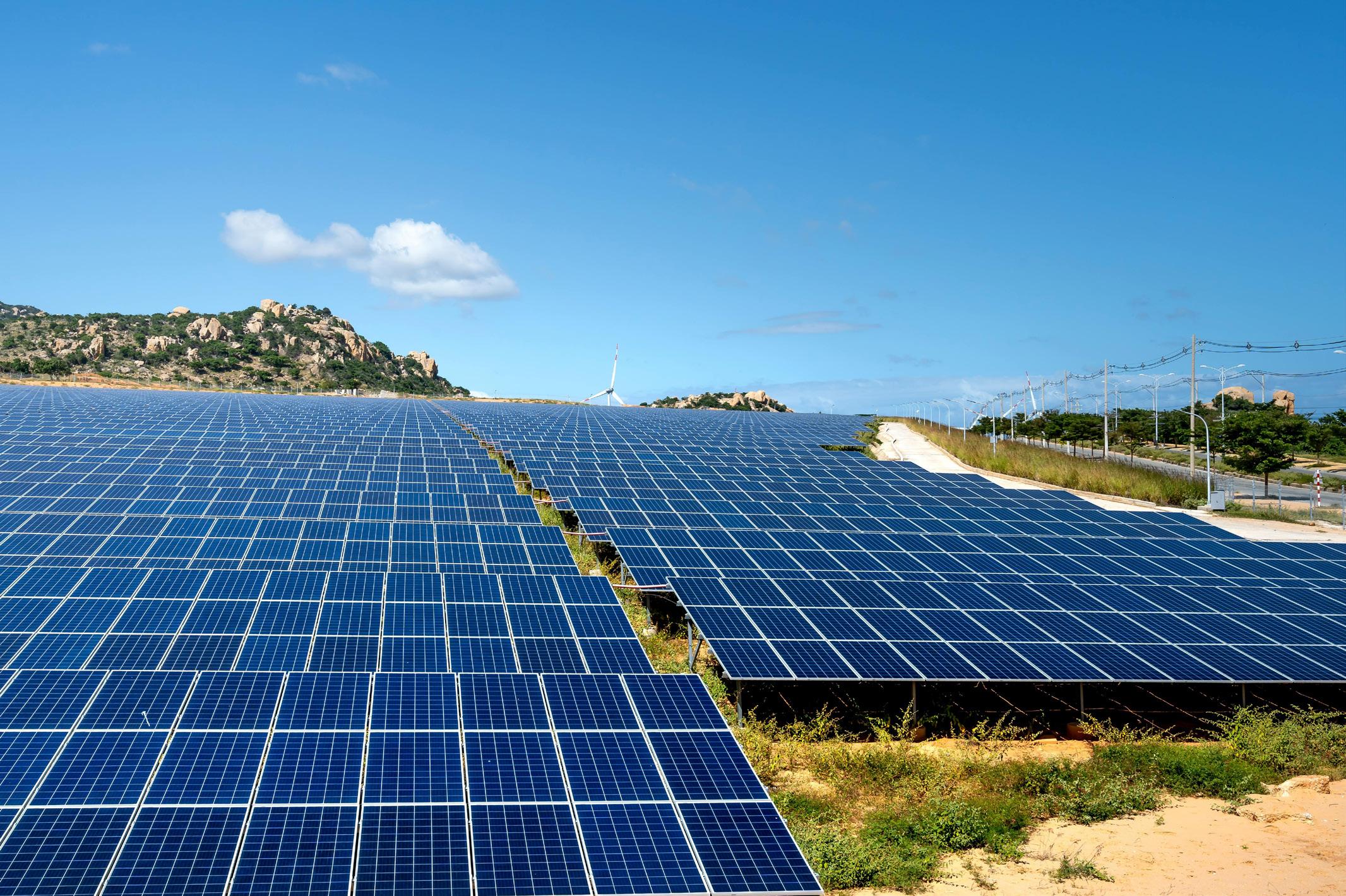
Among all the renewables, solar is being prioritized due to its availability, relative ease of conversion and affordable costs. As photovoltaic efficiency improves and panel costs decline, the case for using solar energy is further strengthened. Large-scale solar (LSS) deployment is expected to take place in Mersing and Kota Tinggi districts —particularly around Pengerang. Johor reportedly has 68.9 MW of LSS capacity currently. Apart from ground-mounted photovoltaic farms or rooftop installations, floating solar installations are also being

seriously considered in coastal areas and lakes.
JLL’s Rix thinks solar is the only viable renewable energy in the state now as “wind does not blow strong enough or long enough to make it viable.” But for renewables to be truly used in a facility, the building must be directly connected to the grid where the renewables are being injected into, he adds.
“Furthermore, a large Battery Energy Storage System (BESS) would need to be built to store this energy. The BESS needs to be able to support 100 percent of the load for an extended period - or as a bridge before either utility power or back up power generation is used,” he said.
“This intermittency means that BESS may only be suitable for noncritical loads such as lighting. Also, land and capital constraints mean the operator may have to resort to buying electricity through the CRESS system.” Corporate Renewable Energy Supply Scheme (CRESS) is
an open-grid, market-driven program allowing companies to directly procure green electricity (primarily solar) from developers.
Johor has the advantage of large land acreage, out of which about 670,862 hectares (as of 2023) are planted with oil palm, Malaysia’s fifth biggest export. Oil palm plantations produce over 16 million tons of biomass annually, which can produce an estimated 3.2 GW of potential energy from biomass and biogas. The policy envisions the establishment of a centralized biomass collection hub, and converting biogas to biomethane for injection into the natural gas grid.
Other potential renewables that Johor can explore include green hydrogen, mini-hydro systems, and solid waste-to-energy facilities. Modernizing the grid is crucial to enable renewables to reach end users. In this regard, the framework proposes
The policy envisions the establishment of a centralized biomass collection hub, and converting biogas to biomethane for injection into the natural gas grid.
privatizing a dedicated renewable energy grid within the SJREC to bypass national grid constraints. To manage the issue of solar intermittency, the policy recommends the deployment of BESS.
Johor’s transition to fully renewables usage is however not a smooth path. Challenges include high upfront costs for energy storage, inconsistent biomass quality, fragmented land ownership complicating LSS acquisitions, and the lack of recycling facilities for end-of-life solar panels.
The policy proposes some solutions
including creating a state land bank of agricultural reserves earmarked for renewable projects; offering tiered tax incentives based on solar irradiance and grid proximity; developing standardized biomass quality protocols, and incentivizing private investment in solar PV recycling infrastructure.
The Singapore connection
The green initiatives above align with Malaysia’s National Energy Transition Roadmap as well as Johor’s Sustainable Development Plan 2030, emphasizing sustainability while
aspiring to economic prosperity. It is also a vital link to Singapore’s longterm energy needs. Singapore has a projected energy demand of 83.5 TWh by 2050 with limited domestic renewable capacity. The nation-state has started importing hydropower from Laos through Malaysia (Johor) and Thailand, marking the first renewable energy import into Singapore.
Thanks to Johor’s strategic proximity to Singapore, and at times acting like the island state’s hinterland, their decades-long symbiotic relationship will further extend into supplying Singapore with solar-generated electricity and
renewable energy certificates (RECs) well into the next few decades. Under the APG’s Southern System, Johor is positioned as a critical node for regional green energy trade through exporting its surplus renewable energy.
The success of Johor’s renewable energy transition depends on coordinated action among government agencies, utilities, private investors, and communities. The potential economic benefits are significant, but they must be balanced with environmental safeguards to ensure long-term energy security.
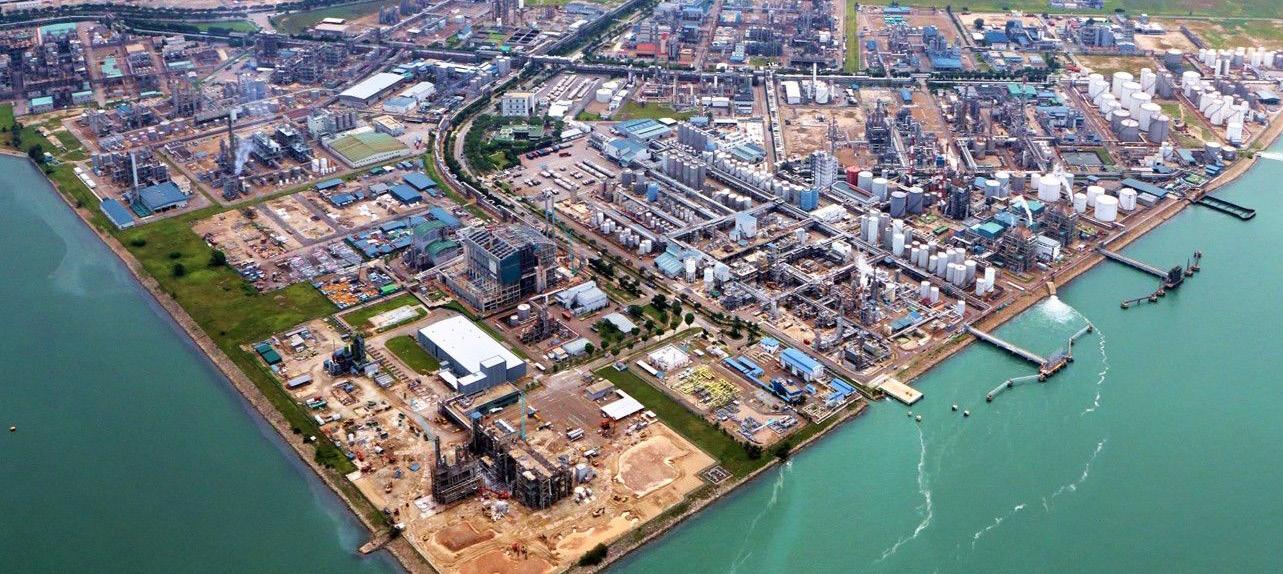
Singapore's plan for a 700MW data center park on Jurong Island is as much about kickstarting a renewables economy as it is about expanding capacity.
By Paul Mah
Jurong Island is one of the world's largest energy and chemicals hubs, housing over 100 companies with investments of more than S$50 billion. It is also the site of a massive land reclamation project, completed in 2009, that merged seven smaller southern islands into one.
Now, Jurong Island is set for another transformation. A multi-agency plan for a data center park of up to 700MW on the island was unveiled late last year, catching the attention of data center operators across the region. Why is this happening, and what is it about data centers that makes them perfectly suited for Jurong Island?
Renewables hub
To understand why Singapore is building data centers on Jurong Island, we must first start with its attempt to meet its climate commitments. Singapore takes these seriously, and has a plan to reduce its emissions to 60 MtCO₂e, or megatonnes of carbon dioxide equivalent, and to achieve netzero by 2050.
For a tiny, densely-populated island state, this is a herculean task. After all, even the ongoing initiative to pack much of its surface with solar panels, including reservoirs and the top of high-rise apartments, would yield less than 7% of its total energy requirements by 2030 by even the most optimistic estimate.
The only rational approach would be to import renewables. And while
The only rational approach would be to import renewables. And while doing that, why not transform Jurong Island into a renewables hub?
doing that, why not transform Jurong Island into a renewables hub? It is not as far-fetched as it might sound. After all, Jurong Island is an undisputed oil hub, complete with massive refining, storage, and trading operations, despite Singapore having no indigenous oil reserves.
But oil has the advantage of established global supply chains built over decades. Renewables such as hydrogen do not, and face a supply and
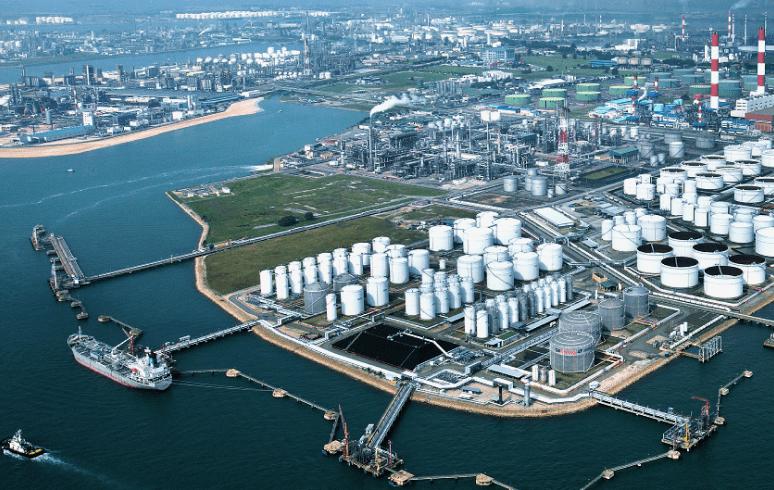
demand conundrum. Producers won't build the needed plants if there's no demand. Consumers can't move ahead if there's no supply. Shippers can't get the financing they need to build a new generation of specialized shipping vessels to transport low-carbon fuel without proven demand. It is precisely to address this gap that Singapore is building new hydrogen-ready power plants. There will be at least nine by 2030, and they are all located on Jurong Island.
While decarbonizing the power sector is essential to achieving these targets, data centers can play an important role in Singapore's energy transition journey, too. As a top data center hub, the aim is to leverage this demand to accelerate the process, by using data centers as a catalyst in two distinct areas: pioneering nascent low-carbon technologies, and importing low-carbon electricity in the form of carriers such as hydrogen and ammonia.
This is why the second Data Centre Call for Application (DC-CFA2), which has emerged as the main route to building new data centers in Singapore, was crafted the way it was. It stipulates a requirement for low-carbon fuel sources for at least 50% of energy needs. This is an incredibly high standard, and has no precedent as a national policy anywhere else without an abundance of renewables.
This is an incredibly high standard, and has no precedent as a national policy anywhere else without an abundance of renewables.
To help data center operators meet this bar, the DC-CFA2 has defined eligible green energy pathways for access to the "at least" 200MW of new data center capacity. These include biomethane, low-carbon ammonia, lowcarbon hydrogen, fuel cells with carbon capture, and photovoltaics in the form of vertical building-integrated or building-applied varieties. The Jurong Island data center park, with its planned capacity of up to 700MW, is expected
to be a key site for this new wave of capacity.
But the case for Jurong Island isn't just about renewables. The island was built with an integrated ecosystem and infrastructure in mind. Shared services and utilities, delivered by utility providers on Jurong Island, reduce capital outlay, lower operating costs, and allow companies to begin operations quickly.
Though data centers don't need a lot of the shared infrastructure created for the petroleum industry, some existing services make sense, such as demineralized water, water for firefighting, and seawater cooling circuits, along with wastewater treatment facilities. Others could be explored, including district cooling, pooled diesel fuel storage, and off-site Battery Energy Storage Systems (BESS). The idea is to leverage economies of scale for cost savings, or to tap into capabilities that would otherwise not be practical, such as off-site BESS.
Still, there is no shying away from the fact that this will increase data center costs at a location that is already one of the priciest in the world. Is the data center sector paying an unfair price? Perhaps. But the payoff isn't just greener data centers. Cracking the puzzle of importing renewable energy at scale and at competitive prices will open the floodgates to renewables. If Singapore succeeds, it won't just have redefined sustainable data centers. It will have removed the single biggest constraint to building them.

Batam is emerging as Southeast Asia’s next major subsea cable hub.
By Jan Yong
Subsea cables are undergoing a major transition globally. Gone are the days when only telecom operators built them and no one outside of the industry paid much attention.
New investors, new routes
Two shifts changed all that: the exponential growth of data centers worldwide, giving rise to a new class of subsea investors in the form of data center operators, and the alarming rise of cable sabotage in the Baltic Sea since 2022.
The new class of subsea investors are redefining the routes and technology – for example, Google
is investing in non-commercially viable routes that traditional telecom operators would never go such as the Australia–South Africa corridors. Meanwhile, Meta’s proposed “Waterworth” envisions cables spanning several continents. This means new hubs will be developed along the new routes.
The importance of subsea cables cannot be overstated. They go hand in hand with data centers and telecommunications infrastructure. They are the foundational connectivity underpinning cloud services, financial platforms, and AI infrastructure.
Subsea infrastructure has now become both a critical and strategic asset, sought after by tech giants which are incorporating it into their increasingly vertically integrated supply chain structure. And this is only the beginning, an industry veteran observed.
In Southeast Asia, Singapore stands
They are the foundational connectivity underpinning cloud services, financial platforms, and AI infrastructure.
out as the most connected nation with 44 landing points including 12 in the pipeline. But as the island nation runs out of suitable sites for landing points, the attention has spilled over to its neighbors, namely Johor and Batam island as alternative locations.
While Johor hosts the bulk of data centers, Batam island, located 20 kilometers south of Singapore and 25 km from Johor, is emerging as a feasible alternative for cable landings. Batam, almost the same size as Singapore, has gradually overtaken Malaysia in terms of landing stations per square kilometer. There are 20 landing stations (including five in the pipeline) on the tiny island compared to 25 (plus seven under construction)
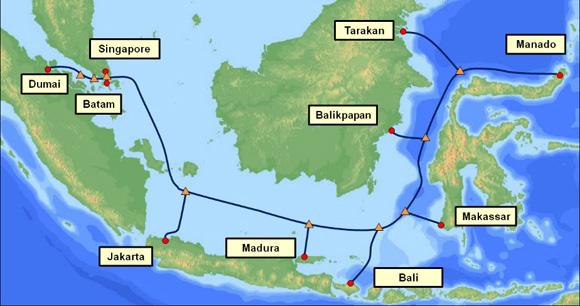

for the entire Peninsular Malaysia. That speaks a lot about Batam’s comparative advantages.
As the largest city in the Riau Islands Province in Indonesia, Batam is a free trade zone, and is Indonesia’s equivalent to China’s Special Economic Zones (SEZs) – a test hub for the country’s planners for new economic policies. Spread across 715 km² is an industrial hub comprising electronics factories, oil service sector, ship repair industry and Nongsa Digital Park which houses most of the island’s data centers.
Batam’s biggest advantage is its strategic location right next to Singapore, currently the largest data center hub in Southeast Asia. Abundant coastal land and lower power costs converge to create ideal conditions for cable landing stations. The Indonesian island already has several active cable landing points facilitating direct international connectivity. Nongsa in particular is connected to more than a dozen international subsea fiber-optic cable segments that land about 5 km away with direct links to other parts of Indonesia, Singapore, and the US West Coast. “The very close proximity of Nongsa to Singapore allows for planned new additional submarine fiber optic capability to reach directly Nongsa with repeaterless cables that drastically reduce latency, making the data center infrastructure in Nongsa “as if” it was in Singapore,” an industry expert reveals.
“Compared to Batam, Johor
currently does not have any direct international connectivity as everything backhauls into Singapore first,” says James Rix, Head of Data Centres PDS Southeast Asia & Korea at JLL. “This can result in bandwidth issues,” he adds.
“As the number of data centers grows, this will only drive more submarine cables and landing stations. Connectivity will be enhanced and latency will reduce. Also, the restriction on bandwidth will dissipate,” Rix reckons.
Adding to Batam’s appeal is its ‘safe
Batam’s biggest advantage is its strategic location right next to Singapore, currently the largest data center hub in Southeast Asia.
harbor’ status due to its low disaster risk profile. It is seismically stable unlike some of Indonesia’s bigger islands like Java and Sumatra. Investors also have the benefit of tax incentives in addition to a welcoming environment for them.
The island of over one million people can expect more subsea cable landings as demand for cable systems rises alongside the growth of data centers worldwide. The global subsea systems market is projected to grow by about US$4 billion over the next four years, driven by a surge in cloud adoption, hyperscale data center expansion, and the growing bandwidth appetite of AI workloads.
With Johor set to become the biggest data center hub in Southeast Asia by 2030, more undersea cables are expected to land in the SIJORI Growth Triangle (Singapore-Johor-Riau) of which Batam is a key player. With ready infrastructure and a growing concentration of cable landing stations, Batam is well positioned to capture that demand.
19,000

Get ready for SIJORI Week, w.media’s premier weeklong curated experience encompassing industry networking sessions, conventions, panel discussions, round-table discussions, and loads of fun activities.
By Conor McNevin
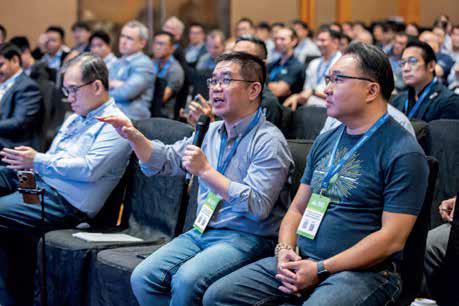
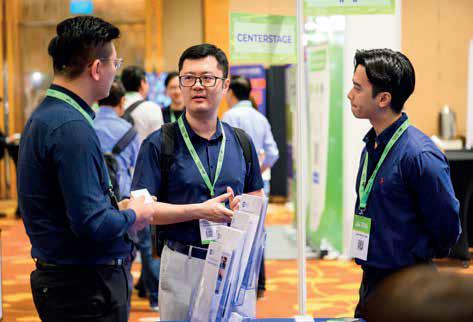
From June 21–27, 2026, you can join over 3,000 digital infrastructure leaders from more than 10 APAC countries including the digital infrastructure community across Singapore, Johor, and the Riau Islands (SI-JO-RI), and discuss the future of Asia’s digital infrastructure. Built for leaders in cloud, data centers, and connectivity, the week blends high-level strategy, cross-border engagement, and curated networking experiences. But, w.media understands that not all bonds are built inside convention centers, many friendships are built on the golf course!
Therefore, SIJORI Week tees off on June 21 with an exclusive Golf
Networking Session at Padang Golf Sukajadi in Batam. This invitation-only event convenes senior executives from across the cloud and data center ecosystem for meaningful conversations in a relaxed setting. Following last year’s strong turnout at the same venue, this year’s edition is set to raise the bar even higher.
James Loggie, Business Analyst, w.media, who is overseeing preparations for this year’s Golf Networking and oversaw preparations in 2025 said, “SIJORI’s Golf Tournament marks the start of SIJORI Week, bringing together over 100 golf players, more than 50 company representatives, and 27 sponsors and partners for an outstanding day in Batam, this is the biggest data center golf outing in the region. From the first tee-off to the final
From June 21–27, 2026, you can join over 3,000 digital infrastructure leaders from more than 10 APAC countries including the digital infrastructure community across Singapore, Johor, and the Riau Islands (SI-JO-RI), and discuss the future of Asia’s digital infrastructure.
putt, there is nothing but good vibes and a great start for the week ahead.” Throughout the week, SIJORI Week will host a series of conferences,
executive forums, and curated meetings across Singapore, Malaysia, and Indonesia. The agenda will focus on hyperscale growth, cross-border interconnection, digital infrastructure investment, and the region’s evolving connectivity landscape. Attendees gain direct access to decision-makers, operators, investors, and technology partners shaping Southeast Asia’s next wave of expansion.
The week concludes on June 27 with the world’s most popular sport in a high-energy soccer tournament at The Cage Dempsey in Singapore. Mixed teams representing cloud providers, data center operators, telecom companies, and technology firms will compete in a format designed to foster both friendly rivalry and industry collaboration. It’s a dynamic close to a week defined by partnership and progress.
James Loggie reminisces, “w.media’s football tournament in 2025 was absolutely terrific, with over 130 people coming down for a lovely game of football. It was nothing short of a great time with 11 teams competing for bragging rights. In last year’s game we saw Airtrunk secure first place followed by Digital Realty and STT. I can only imagine how much bigger 2026’s


tournament will be.”
SIJORI Week also spotlights purpose-driven impact. Engineering Good Ltd, a Singapore-registered charity, will be featured during the program. The organization mobilizes volunteers with engineering and technical expertise to deliver practical technology solutions that support underserved communities reinforcing the industry’s broader commitment to
SIJORI Week is more than a conference series.
social responsibility.
SIJORI Week is more than a conference series. It is where Southeast Asia’s digital infrastructure leaders connect, collaborate, and build the future of the digital economy.