

The data center outlook looks bright for the Land of the Rising Sun.
By Jan Yong
When the world’s largest alternative asset manager Blackstone announced its plan to invest US$ 30 billion in Japan's AI data centers over the next three to five years, it was record-breaking on many levels. First, it was the single biggest investment in the country for data centers, doubling the record US$ 15.2 billion pledged by AWS earlier. It also exceeded the US$ 27 billion in total investment by all western hyperscalers since 2024.
Just days earlier within the same month of June, Korean conglomerate SK Group had announced plans to build an AI factory in Japan and possibly a semiconductor business, adding to the buzz that charts increasing number of foreign investors beating a path to the country.
In recent years, Big Tech, which have long been a feature of the Japanese data center market, have expanded aggressively in Japan driven by surging demand for cloud expansion, AI workloads, 5G rollout, Internet of Things (IoT), and increasingly data sovereignty requirements.
Before Blackstone took over the
crown, Amazon Web Services (AWS) was the biggest spender followed by Microsoft which has allocated about US$ 12.9 billion to fund AI infrastructure between 2026 - 2029. Also in the game is Australia-based AirTrunk which plans to spend US$ 8 billion to expand its capacity to 530MW in the next few years. Meanwhile, Oracle and Google have each committed US$ 8 billion and US$ 1 billion respectively to meet growing cloud and AI demand.
Western firms are not the only ones who saw the potential in Japan - at least six Singaporean firms have flocked to Japan enticed by the high returns in the thriving market. One of them is CapitaLand Ascendas REIT, which has purchased a 40.5-MW data center in Osaka for ¥156 billion (US$1 billion), said to be Japan's largest single-asset data center transaction as of June 2026.
But one of the biggest changes to the data center landscape in Japan is the wave of Chinese hyperscalers descending onto Tokyo and Osaka since 2025. While their previous presence has been merely peripheral, as of 2025, an influx of Chinese companies has witnessed over 100MW of planned contracted capacity across just a few deals. This represented a huge jump from the typical contract sizes of between 1 and 3MW, according to DC Byte in its latest report.
The reasons are simple - America’s export controls on high-end chips and semiconductors targetted at China has forced Chinese firms to seek a third country to access them. Japan offers the perfect alternative having a stable economy and government complemented with high standards of labour, equipment, and data and physical security. The country also
The country also boasts unparalleled subsea cable connectivity.
boasts unparalleled subsea cable connectivity.
Domestic players are just as upbeat, if not more so, about Japan’s potential. Heavyweights such as NTT Global Data Centers, KDDI Corporation and SoftBank Corp continue to invest heavily focusing on hyperscale, colocation, and enterprise facilities. For example, in April 2026, NTT Data Group announced it will construct one of Japan’s largest data centers , a 200MW DC near Tokyo. SoftBank Group has also announced it will launch in October 2026 an AI Data Center GPU Cloud, allowing its customers to leverage advanced GPU-accelerated AI computing infrastructure. As the biggest funder of OpenAI’s US$ 500 billion Stargate AI project, SoftBank is said to be bringing elements of Stargate to Japan, with a vision to transforming regions like Sakai City and Toyama into potential hubs for massive AI data centers and superclusters.
Other leading local players include Fujitsu Limited, NEC Corporation, Hitachi Systems, SCSK Corporation, and Itochu Techno-Solutions.
The top five operators in the country, comprising both locals and foreigners, dominate about 60-65 per cent of installed megawatts.The fiveEquinix, NTT Data, KDDI Telehouse, Colt, and Digital Realty - leverage the latest practices that are not easy to replicate, for example, NTT utilises micro-modular builds inside its telecom exchanges to speed up service while Equinix uses
district-heating loops and has inked a long-term virtual power purchase agreement (vPPA) for solar power.
Another recent announcement is by new entrant Tokyo Exchange-listed Datasection, which had recently pivoted from data analytics into AI describing itself now as a neocloud operator. It claims to be the only Japanese company developing large-scale AI clusters whilst simultaneously securing huge GPU capacity (20,000 - 30,000 GPUs), power resources and customers on a global scale.
As the examples above show, Japan is firmly on investors’ radar, both foreign and domestic. Not only is the nation the second largest data center market in the developed world after the US, demand for compute is accelerating like never before.
The Japan data center market size as of early 2026 is valued at about US$ 14 billion and is projected to grow at a compound annual growth rate (CAGR) of about 14.5 per cent reaching about US$ 41.2 billion by 2034, according to Fortune Business Insights. JLL meanwhile estimates that about USD $3 trillion in investment will be needed by 2030 to support the digital transformation in Japan.
Tokyo and Osaka corner 90 per cent of the data center footprint in Japan. Tokyo metropolitan area alone commands 40.7 per cent of the market size. Various reasons contribute to its draw - central location, reliable power supply, direct links to trans-Pacific subsea cables, proximity to corporate headquarters, fintech trading nodes, and a dense population.
Hence, despite hefty rentals and land prices, scarcity of land as well as eye-popping power connection queues of up to 10 years, Japan’s capital city continues to be much sought-after.
Changes are afoot however, with the most significant being a decisive shift out of Tokyo into Osaka for expansions and new builds. The Kansai capital, which is about 500 kilometers from Tokyo, offers lower seismic risk, faster grid connection approvals, municipal incentives, and is connected by a vast network of routes. It offers geographical diversity without giving up on latency to Tokyo.
Tokyo’s power grid connection queue of between 8-10 years makes Osaka’s 3-5 years’ wait akin to the speed difference between an ordinary train and a bullet train. But even more staggering are land prices for large plots of land in Tokyo - these have shot up by 770 per cent above national averages, by some accounts. In contrast, Osaka offers abundant land at a fraction of the cost.
Not surprisingly, between 20242026, hyperscalers’ take-up rate in Osaka had doubled, led by Oracle, Microsoft and AirTrunk. Backed by Blackstone, AirTrunk plans to build a 100MW hyperscale data center in West Osaka, adding to its existing 20MW there.
Local operator, Mitsubishi Estate’s multi-billion-yen commitment to Kansai data centers is another example of growing confidence in this corridor. Osaka data center market is projected to grow at 13.28 per cent CAGR to 2031. Beyond that, operators are leasing former industrial properties in suburban regions like Inzai and Akishima, which are about 30 kilometers from central
Tokyo.
Data centers are clearly proliferating at an accelerated pace in Japan. The country has the advantage of a large domestic economy, low power outage rates, world class energy infrastructure, supportive digital demographics, and extensive fibre network. A number of subsea cables are being built, the latest being the 8,100-km subsea cable connecting Japan, Malaysia and Singapore. Significantly, Google’s USD 1 billion Proa and Taihei subsea cables help improve trans-Pacific connectivity.
The Japanese government has proven to be very supportive as well. In June, PM Sanae Takaichi ‘s government unveiled a US$ 2.3 trillion planned investment for the economy which includes a massive allocation for AI and semiconductors, among others.
The government’s target of migrating all central government’s workloads to the cloud by 2025, followed by similar moves in municipals and state-owned corporations, add to
The top five operators, Equinix, NTT Data, KDDI Telehouse, Colt, and Digital Realty dominate about 60-65 per cent of installed megawatts.
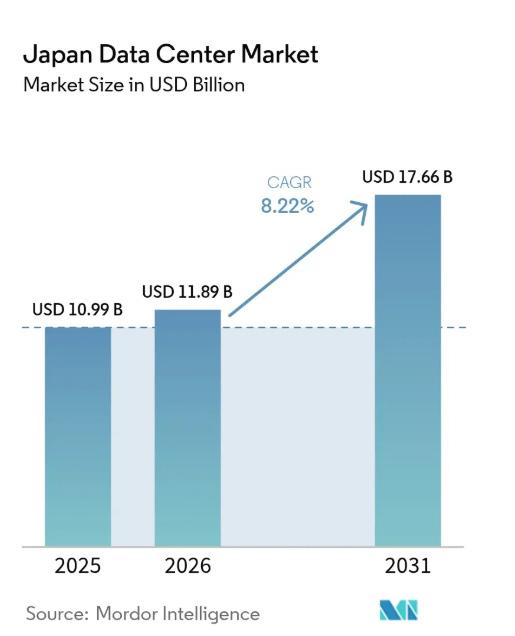
Source: Mordor Intelligence
the upward trajectory. Data sovereignty requirements have also accelerated joint ventures between global hyperscalers and domestic players due to the latter’s advantage in public tenders. This has resulted in a steady pipeline of government workloads over the next few years.
Another growth factor is the decommissioning of enterprise selfbuilt server rooms which average 15 years of age, and lack seismic and energy-efficiency features. This has pushed enterprises towards Tier 3 colocation facilities creating another source of strong demand.
Demand is so high that it surpasses the available digital infrastructure to the point that hyperscalers are either self-building high capacity campuses or pre-leasing entire blocks years in advance. This has created vast opportunities for foreign investors to tap into the booming market.
However, rapid expansion comes with a price. Issues like electricity and water consumption, and grid strain that plague data centers elsewhere in the world are starting to bite in Japan.
But the main constraint in the country is the high cost as reflected in its high capital investment. Hyperscale data center construction costs 40–50 per cent higher than conventional facilities. Also, large scale expansions are limited in some regions due to power supply constraints and/ or lack of suitable land. If suburban land is utilized, the wait time for grid connection takes up to three years, while substation upgrades would also be needed.
As a result, edge computing is gaining traction especially near manufacturing centers which require low latency. Energy-efficient data centers are becoming the standard as Tier 3 data centers become the norm. With the high heat emission from AI data centers, operators are adopting liquid cooling and integrating renewable energy to reduce power usage. This can bring down power by 20-25 per cent. Operators are also starting to adopt modular construction to reduce deployment timelines by up to 30 per cent, hence increasing investment returns.
High seismic engineering premiums
are also forcing developers to optimize space in their facilities and diversify away from Tokyo/Osaka regions. But seismic risk increases construction complexity - and with a shortage of skilled personnel, it is an operational challenge facing every data center in Japan.
A shortage of specialized labour has resulted in a serious construction bottleneck unique in Japan’s DC industry. According to DC Byte, only the ‘Big Five’ general contractors are capable of building large scale data centers. Imported labour is not a good option due to cultural and language obstacles. All these factors have naturally driven up development costs. “It’s still possible now to build but one has to expect extended timelines and exercise a lot of patience,” DC Byte cautions.
Within APAC, Japan’s data center market leads in scale, stability and sophistication. Key trends include a wave of Chinese hyperscalers entering the market since 2025, expansion of hyperscale campuses, shifting to regions beyond Tokyo and Osaka such as Kyushu, integrating renewable energy, adopting advanced technologies such as liquid cooling, and increasing deployment of AI-ready infrastructure and edge data centers.
Growth is driven by huge hyperscale spend from both western and Chinese Big Tech, government cloud mandates, data residency requirements and increased AI workloads.
As a result, there is strong investment potential - high returns from a stable environment that prioritizes quality on the back of long-term digital demand. There are attractive opportunities in AI infrastructure, renewables, edge facilities, green DCs, and subsea cables.
Kyushu, considered an up-andcoming third hub after Tokyo and Osaka, presents a vast opportunity for hyperscalers wanting to avoid the power and land bottlenecks in Tokyo. The island offers abundant and affordable renewable power, available land for large scale projects and proximity to East Asian hubs. A pipeline of self-builds suggests it will be increasingly used by hyperscalers as a good alternative.
Verdict: Japan is clearly at the beginning of an AI boom especially with the recent US$ 30 billion Blackstone investment and massive government allocation. High ROI is expected due to the many positive factors. There are vast opportunities for hyperscalers especially further away from Tokyo and Osaka regions.
List of Singapore firms in Japan
1. ST Telemedia Global Data Centres (STT GDC): STT GDC operates a 70MW campus in Inzai City (Greater Tokyo), comprising two data centres: STT Tokyo 1 and STT Tokyo 2.
2. Keppel Group (Keppel DC REIT & Keppel Ltd.): Keppel owns and manages several data centres in the Greater Tokyo area including Tokyo Data Centre 1 and the hyperscale Tokyo Data Centre 3 in Inzai City, which was bought for JPY 82.1 billion (US$ 553 million).
3. Digital Edge: Backed by Stonepeak, it operates multiple data centres in Japan, especially in Tokyo and Osaka.
4. CapitaLand Ascendas REIT (CLAR): The REIT acquired a major stake in a hyperscale data centre facility in Osaka, Japan.
5. Singtel (via Nxera & Digital InfraCo): Singtel partnered with Hitachi to jointly develop data centers and GPU cloud infrastructure in Japan.
6. SC Zeus Data Centers Pte. Ltd:. Zeus has broken ground on its first data center in Japan, a 70MW facility in Osaka to be powered by 100MW from Kansai Electric Power Company.
Most countries are letting the AI data center boom happen to them. Japan has decided to build one.
By Paul Mah
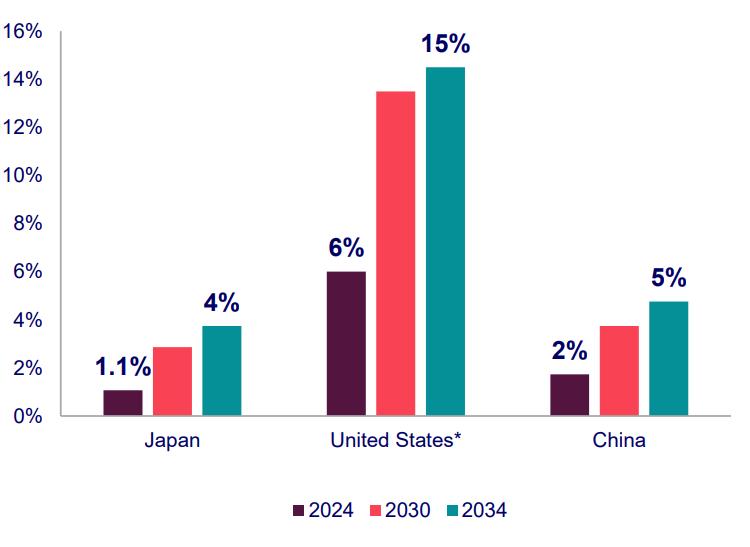
Japan’s data center market is already one of the largest among developed economies, valued by JLL at US$23.4 billion in 2024. Yet the electricity consumption of the data center market could nearly triple over the next decade due to generative AI adoption and hyperscale investment, says Wood Mackenzie.
According to its projections, power consumption by Japan’s data centers could jump from 19 TWh in 2024 to as much as 66 TWh in 2034. The reason for this surge? Hyperscalers have made massive investment commitments in Japan. The sharp growth means that by 2030, data centers are expected to account for 7% of the power load in areas such as the Tokyo and Kansai regions.
Behind those numbers sits a familiar cast of hyperscalers, and they have moved fast. Take Microsoft, for instance, which has made two pledges on this front. The first, announced in 2024, was $2.9 billion, described at the time as its largest investment in 46 years of operating in Japan, aimed at hyperscale cloud and AI infrastructure. The second was even larger: $10 billion through 2029, announced on 3 April 2026 to fund data center expansion across Tokyo and Osaka.
On its part, Google had previously announced a US$730 million investment in Japan in 2022, part of a broader infrastructure plan. But while it has not made any new infrastructure investments announcements for Japan, sources indicate that it is nonetheless building in Japan. Traditional cloud
players aside, demand is bolstered by the growing scale of neoclouds, which are specialist cloud providers built mainly for AI work, particularly GPUheavy tasks focused on training and running AI models.
Others are moving too. AWS has committed heavily to cloud infrastructure in Japan, while Oracle has also announced multi-year AI and cloud infrastructure investment, adding to the sense that Japan is becoming a core hyperscale battleground. As AI demand grows, neocloud players are also building furiously, leading to heightened data center demand. In an
The sharp growth means that by 2030, data centers are expected to account for 7% of the power load in areas such as the Tokyo and Kansai regions.
announcement in May 2026, Japan’s SoftBank announced that it will launch an “AI Data Center GPU Cloud” to offer GPU cloud and sovereign cloud services, starting from its Japan-based data centers.
A newer entrant, GMI Cloud launched a $12 billion sovereign AI infrastructure initiative in Japan in 2026 with the aim to establish 1 gigawatt
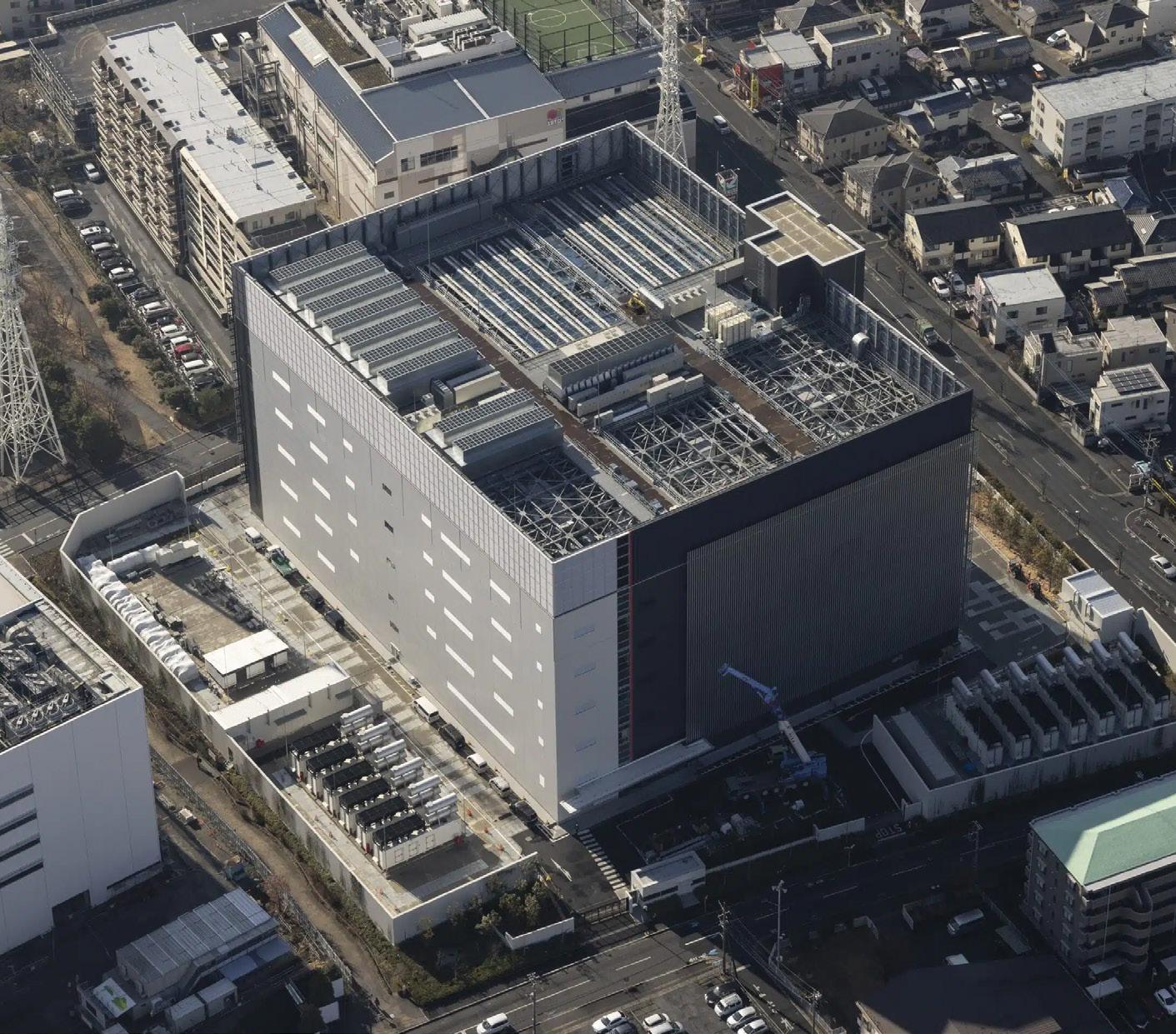
The second was even larger: $10 billion through 2029, announced on 3 April 2026 to fund data center expansion across Tokyo and Osaka.
of capacity. Speaking at the w.media SIJORI HPC Summit Southeast Asia 2026 held in Singapore in June, Andy Chen, the global VP of business and product development shared how the daily consumption of AI tokens has jumped from 1 to 2 million tokens per day, just six months earlier, to more than 200 billion tokens today. The point was not just the number itself, but what it signals: AI usage is scaling far faster than traditional cloud infrastructure cycles were designed for.
Tokyo clears the path
When it comes to AI, Tokyo has decided it cannot afford to fall behind on AI. Instead of riding it, the Japanese government has decided to grab it by its horns. The Artificial Intelligence Basic Plan, which the Cabinet approved in December 2025, reads less like a regulatory framework than an industrial strategy. It commits the country to
building data centers and clean energy projects side by side by the mid-2030s, and frames AI compute, infrastructure, and data as strategic national assets. The wider aims are to accelerate AI adoption across government and society, strengthen domestic development, lead on AI governance, and reshape industry, employment, and public systems. As the government treats AI compute, infrastructure, and data as strategic national assets, which means demand for GPU capacity, cloud regions, local data storage, and powerefficient facilities should only keep rising.
It is also removing the obstacles. The Financial Services Agency (FSA) recently clarified that data center equipment can sit inside REIT portfolios, settling a long-running question over whether facilities stuffed with expensive hardware still count as "real estate." This should help attract institutional investment and improve financing options for new data center builds. Japan is also pushing efficiency and regional diversification. A low-carbon data center program launched in May 2026 puts up to JPY 500 million behind individual projects through fiscal 2029, while policy quietly steers developers toward Hokkaido and Kyushu, where cheaper renewable power and spare land take the strain off a crowded Tokyo and Osaka.
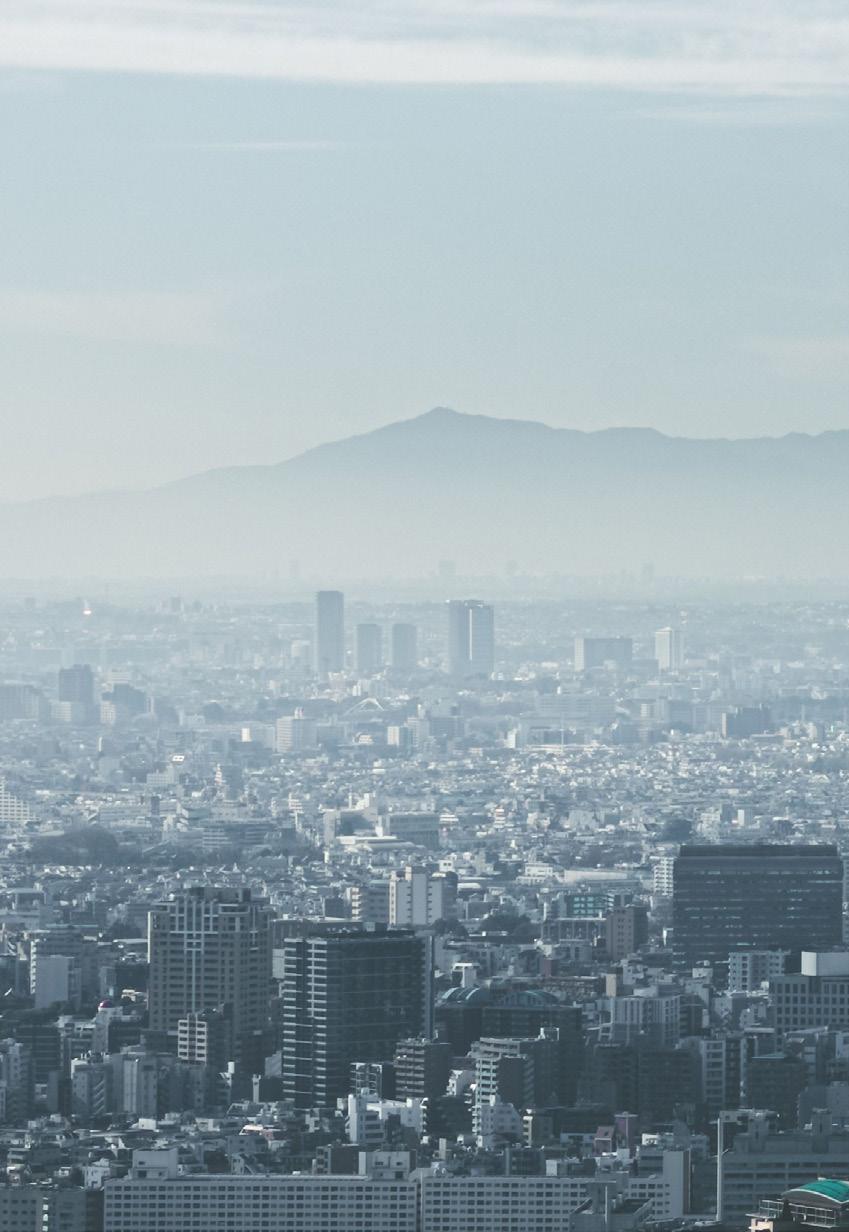
When it comes to AI, Tokyo has decided it cannot afford to fall behind on AI.
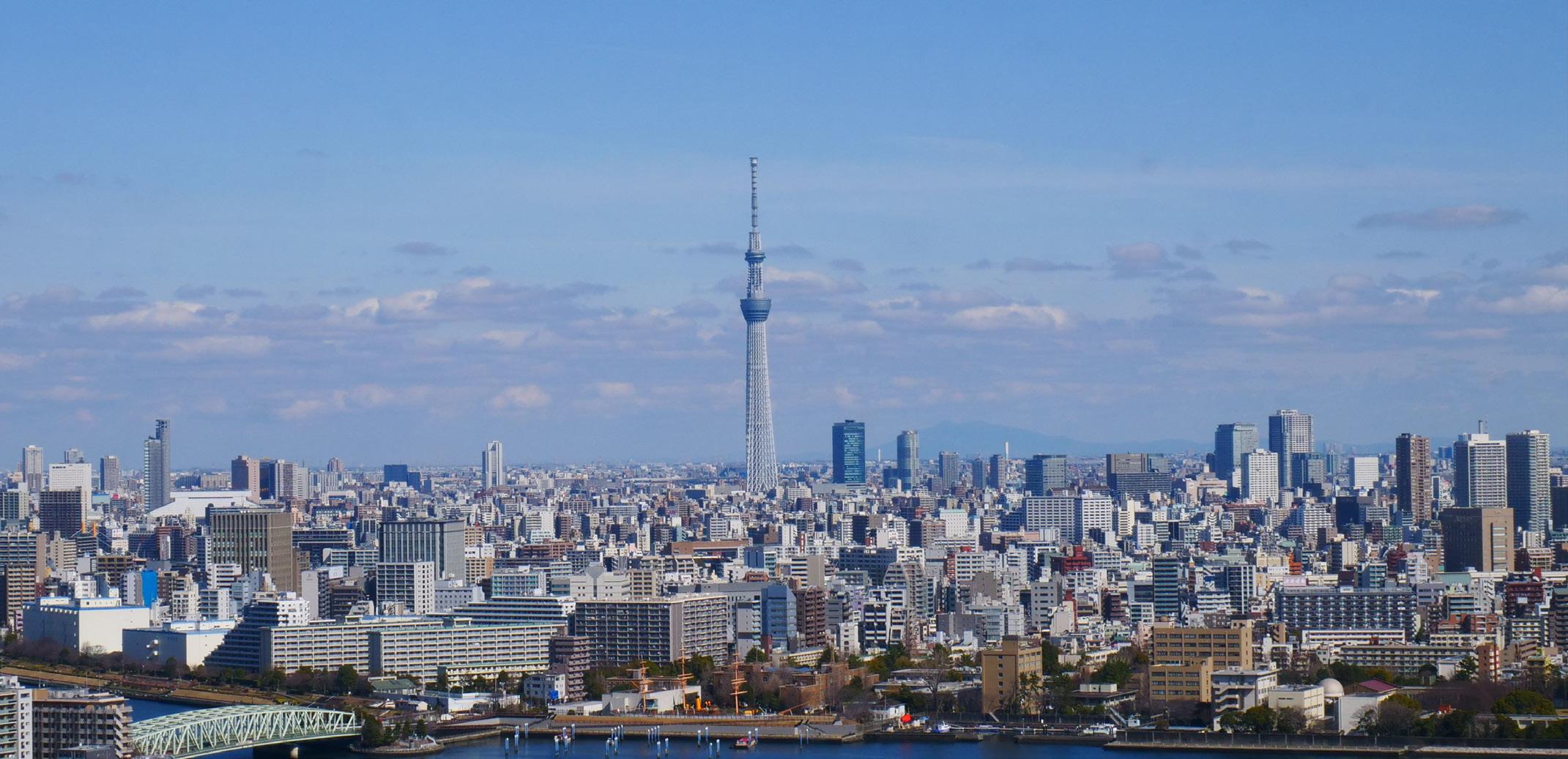
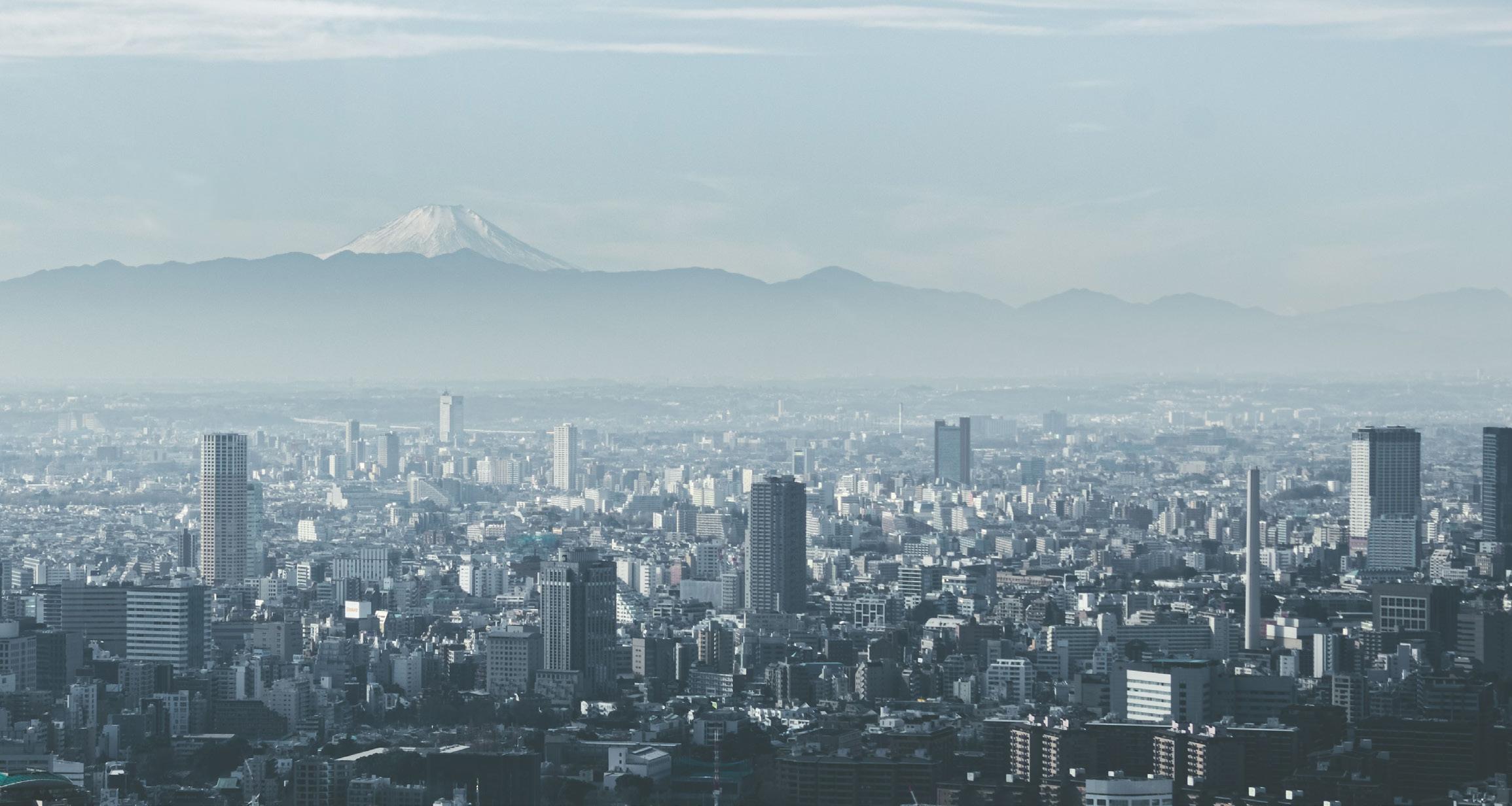
The FSA clarification opened the door to institutional money, and the low-carbon program put public funds behind cleaner builds. The intent is not in doubt. Power is.
It has plenty going for it. Policy, capital, and location are being moved in concert rather than left to the market. The FSA clarification opened the door to institutional money, and the low-carbon program put public funds behind cleaner builds. The intent is not in doubt. Power is.
The government has long acknowledged its "grid constraints," and is now pursuing both reinforcement and operational fixes: new interregional transmission lines, and reforms to move renewable power to where the demand actually sits.
But this is the one thing Tokyo cannot legislate into existence. The plan sets efficiency and decarbonization
targets. They don't generate electricity, though, or speed up a grid upgrade. Steering developers toward Hokkaido and Kyushu helps, where renewable supply and cooler air improve the economics, but only so far. So it really comes down to whether
Japan can build the power in time. The projects have to move from announcement to actual construction, and developers have to be willing to build outside the big two cities. If that happens, the boom is real. If it doesn't, the grid sets the limit, not the plan.
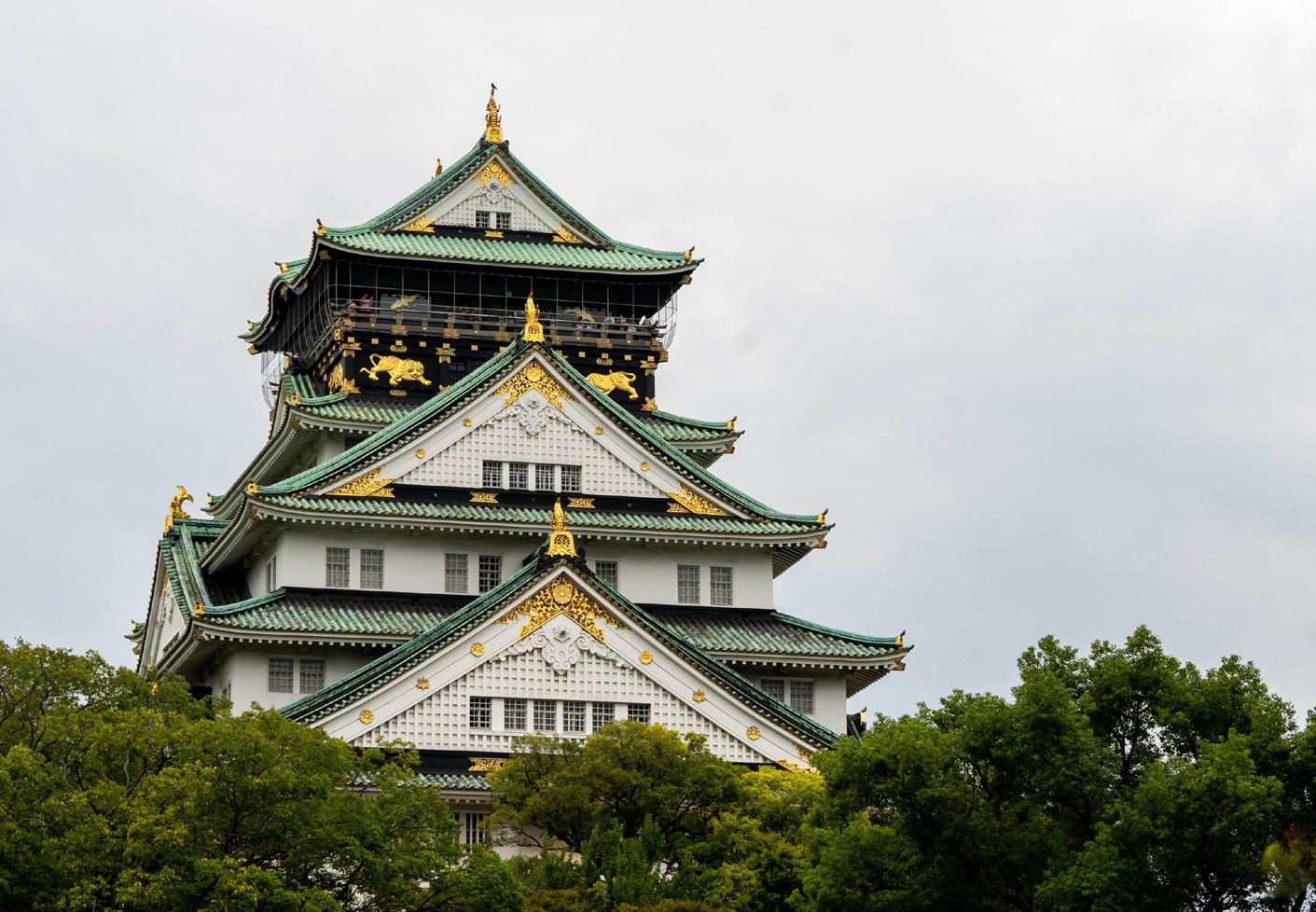
There are strong compelling reasons for developing data centers outside of the traditional hubs of Tokyo and Osaka regions.
By Jan Yong
The growth of data centers in Japan is highly concentrated in two regions - Greater Tokyo and Greater Osaka - together accounting for 90 per cent of data centre locations. Ironically, these two megaregions represent less than 10 per cent of the country’s land area, 40 per cent of the population, and half of the country’s total GDP of US$ 4.87 trillion.
Such hyper geographical concentration would have had catastrophic consequences if an earthquake happened. In seismicprone Japan, such large-scale natural disasters are foreseeable risks. Hence, a diversification strategy away from those megacities is a natural step towards protecting and providing redundancies for these critical infrastructure.
Earthquakes and consequently higher seismic engineering premiums especially in densely populated megacities are just two risks that immediately come to mind - there are other equally compelling reasons for the move towards suburban corridors. Key among them are high capital
investment required in Tokyo and Osaka compared to other regions in Japan. Land prices are much higher and availability is very limited especially in Tokyo. According to a Mordor Intelligence report, average land prices in central Tokyo rose by an astounding 69 per cent in 2024, significantly raising the cost of development.
Also in densely built areas within the megaregions, large scale expansions are not practical.
Moreover, some areas experience power supply constraints thus limiting buildouts.
The case for developing data centers in suburban areas gets even stronger when one takes into account community pushbacks. As with the rest of the world especially in the US and Europe, community resistance is becoming a real risk. For example, the local community in Koto ward (Eastern Tokyo) was up in arms against data centers, according to Mordor report. This has pushed operators to develop in suburban areas like Inzai City which has rolled out the red carpet to data centers granting them municipal incentives. Inzai also has the advantage of having larger plots of land available for data
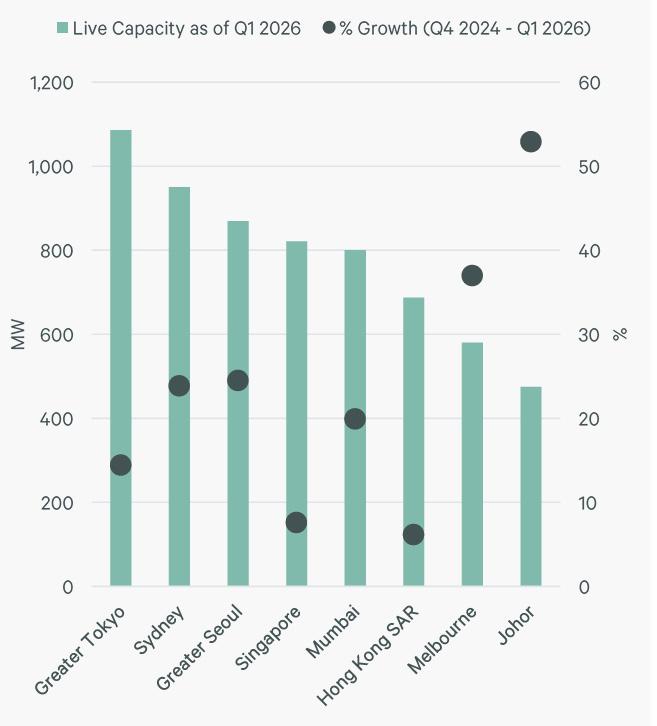
Traditional vs Strategic DC hubs in Japan.
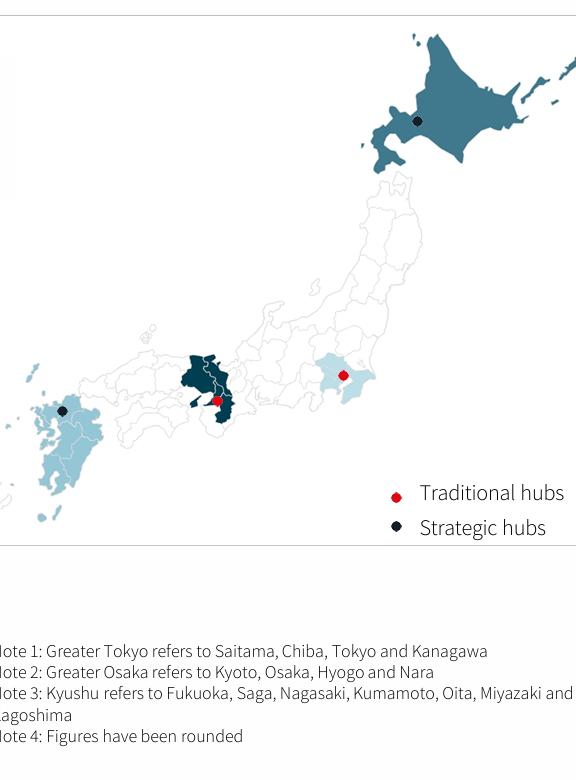
Source: JLL
centers. The number of data centers in the city now stands at 10, which is the largest after Tokyo and Osaka.
The other push factors towards a suburban setup is the extraordinary long wait time for grid connection approvals.
Some developers have tried to solve this problem by installing on-site gas turbines and lithium-ion storage while waiting for utility supply but this only adds a layer of complexity and risk to the project.
Acknowledging this, the government is actively promoting regional diversification of data centers.
Since 2021, the government has extended various types of assistance to companies developing data centers outside of the two mega regions and other metropolitan areas. The assistance includes resilience strengthening measures and communication efficiency. The government has also come up with initiatives such as "Regional Revitalization" and "Digital Infrastructure Development Plan 2030", to promote regional diversification while also encouraging the decarbonisation of data centers.
The government also hopes to create five or more data center hubs to
enhance GX-driven industrial growth while regional DX promotion including AI utilisation is also encouraged.
The other policy relies on advanced technology to achieve low latency inter-data center connections using All Photonic Network technology by 2030 and advanced computing resource power load control by 2035. Lower latency and better connection would encourage data center development outside of the densely populated megaregions.
One of the major players developing data centers outside of traditional hubs is SoftBank Group which is said to have identified Sakai City and Toyama as potential hubs for massive AI data centers and superclusters. Toyama (Nanto Campus) is emerging as a massive digital infrastructure hub due to its abundant power supplies (about 3.1GW) and its strategic location being part of an economic triangle with Tokyo and Osaka. One of the companies developing large-scale AI data centers there is Gigastream Toyama.
Hokkaido and Kyushu have also emerged as popular new data center clusters. Hokkaido (Sapporo and Ishikari) has the advantage of a cool climate supporting free air-cooling. Ishikari hosts major facilities, including Rakuten Ishikari data center and White Data Center (WDC) which makes use of winter snow for cooling.
Meanwhile, Kyushu, the most southerly island of Japan, stands out due to its many advantages such as abundant and affordable renewable energy, easy availability of land and power, direct submarine cable connections and its proximity to Shanghai and Seoul. The island has even been positioned as the data center gateway to East Asia.
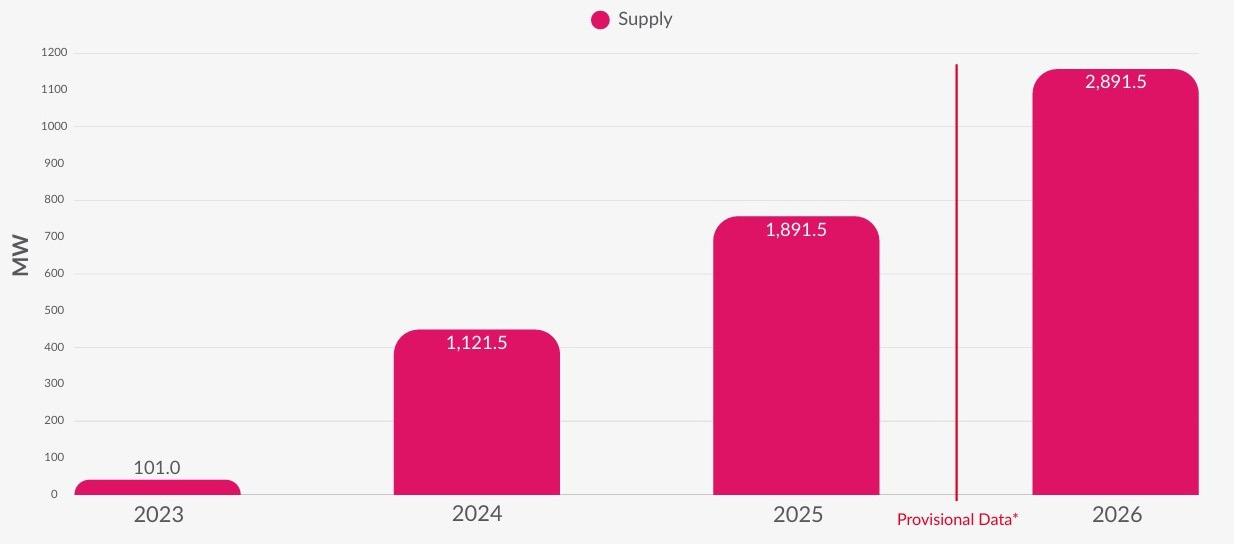
As a result, hyperscalers and AI operators are rushing in to build, contributing to 88 per cent of all planned projects being selfbuilt. Cumulative supply has risen exponentially from just 101 MW in 2023 to about 3 GW by Q2 2026, according to research firm DC Byte.
The island hosts some of the largest data centers in Japan, for example, IDC Frontier Asian Frontier and Telehouse Fukuoka, as well as Asia-Pacific Land’s upcoming Kitakyushu Data Center
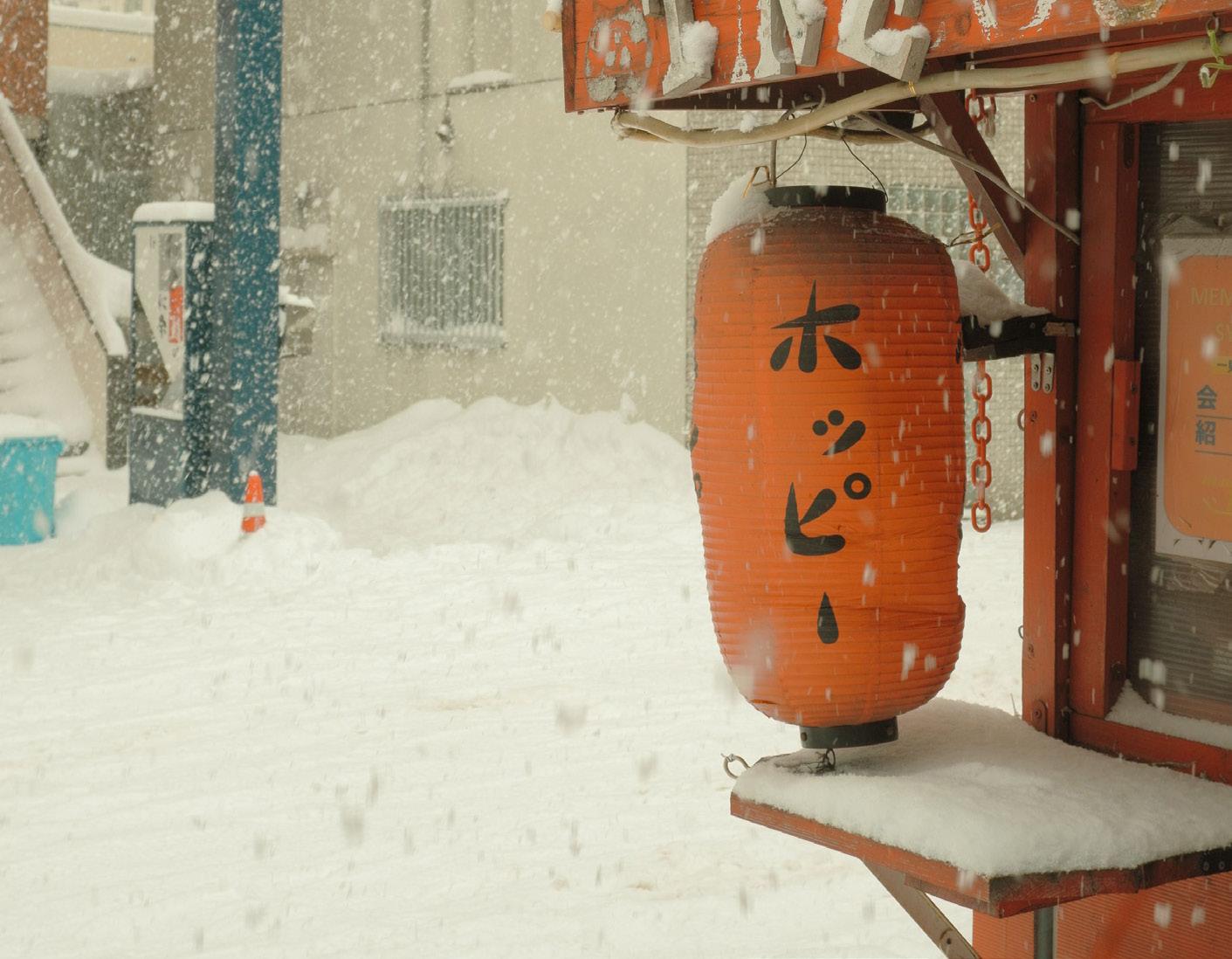
Hokkaido - using snow as free cooling for data centers.
Campus, sited on 15.5 acres of land; and the US$ 2 billion Itoshima Campus, which aims to expand up to 150MW capacity.
Okinawa is an important landing point for submarine cables connecting Japan to North America and mainland Asia. Nagoya, an important industrial and manufacturing hub, meanwhile attracts data centers like KDDI/ Telehouse and major network exchange hubs serving the Tokai and Kinki districts.
The subsidised 15MW AI data center in Fukushima is a clear example of the government’s commitment to distribute critical digital infrastructure nationwide.
According to Data Center Map Japan directory, as of early June, there are a total of 256 data centers in Japan run by 73 operators. Out of that, 105 are in Tokyo and 55 in Osaka. This is followed by 10 in Inzai City, 9 in Yokohama, 8 in Sapporo and 6 each in Nagoya, Fukuoka and Kanazawa, 5 in Kawasaki, 4 each in Tsukuba, Naha, and Takamatsu, and between 1 - 3 in a few other locations.
Clearly, there is still a lot of room for growth in regions outside of Tokyo and Osaka. With compelling pull factors
Okinawa is an important landing point for submarine cables connecting Japan to North America and mainland Asia.
such as abundant renewable energy, lower costs, proximity to Tokyo and Osaka, or to manufacturing hubs, direct submarine cable connections and even free snow cooling, on the back of strong government support, it is only a matter of time before DC developers realise the advantages and start beating a path there.
However, relocating to suburban areas is not all smooth sailing. While land prices might be cheaper, the developer would have to fork out extra to invest in dark fiber routes and redundant substations. This will extend project timelines and costs thus affecting the overall data center supply market in Japan.
Still, data centers in non-traditional locations are perfect for edge and disaster-recovery workloads. More importantly, they possess a host of advantages as outlined earlier that their counterparts in the megacities do not have.
Nuclear and geothermal are making a comeback on the back of strong data center demand.
By Jan Yong
Japan's data centers will consume as much electricity as 15 to 18 million households by 2034, driving 60 per cent of the country's total power demand growth. This will triple electricity consumption from 19 TWh (Terawatt hours) in 2024 to 57 TWh -66 TWh by 2034, according to Wood Mackenzie’s report ‘Japan's data centre gold rush: the battle to power a datadriven future’.
“Peak demand from data centres is expected to reach 6.6 GW (gigawatt) to 7.7 GW in 2034, hitting 4 per cent of Japan's total peak load and representing a threefold increase from 2024 levels,” the report states.
However, there is a critical mismatch between demand growth and supply development timelines. A typical combined-cycle gas turbine project typically takes seven to 10 years to complete compared to hyperscalers deployment schedules of under five years.
“This explains why infrastructure bottlenecks are pushing major data centre and chip foundry projects to 2029,” says Naomi Oshita, research associate, Asia Pacific power &
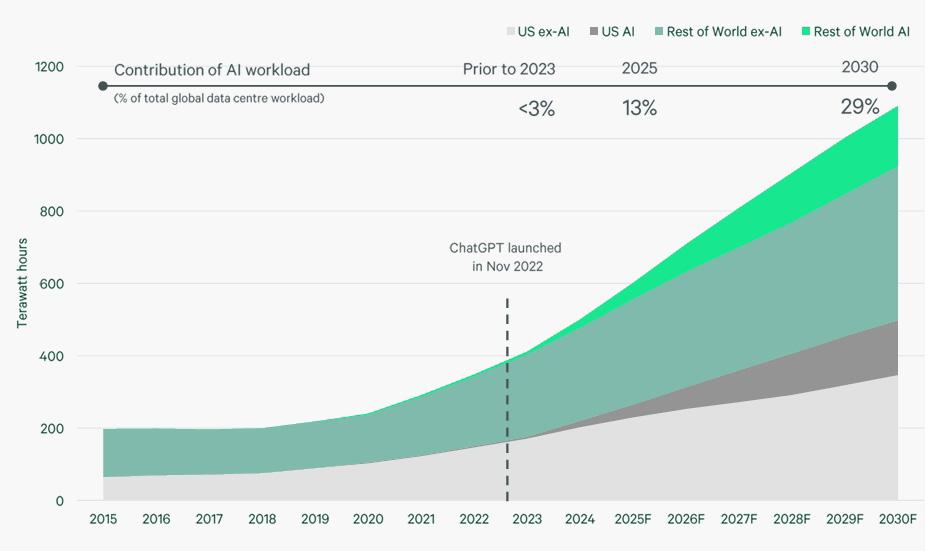
renewables at Wood Mackenzie. Data centers are expected to account for 7 per cent of the power load in the Tokyo and Kansai regions by 2030. Fortunately, the gradual rollout of these facilities suggests that immediate power shortages are unlikely, as reserve margins remain above 15 per cent.
According to Wood Mackenzie, coal and gas installations will dominate these regions, representing over 40
However, there is a critical mismatch between demand growth and supply development timelines.
per cent of capacity by 2034. This creates challenges for hyperscalers’ carbon neutral commitments. At the same time, Japan’s renewable energy
transition adds complexity to meeting data centre power requirements.
“The decarbonisation challenge is particularly acute given the scale of data centre demand growth,” says Oshita. “With renewables (solar and wind) reaching only 17 per cent by 2030, Japan will need to accelerate nuclear restarts and renewable deployment to meet both climate goals and hyperscaler sustainability requirements.”
Nuclear and geothermal are particularly attractive due to their ability to produce a stable power supply. The Japanese government also offers subsidies to build zero-carbon facilities near low-carbon hubs.
Japan plans to achieve carbon neutrality by 2050. By then, it is projected that offshore wind power will become the main renewable energy source in Japan supplying 33 per cent of total renewables. The rest are likely to come from nuclear and geothermal.
Japan closed down most of its nuclear plants after the Fukushima Daiichi disaster in 2011, resulting in a huge drop in nuclear output. The energy shortfall was replaced mostly by fossil fuel like coal and gas.
Four years after the disaster, the first nuclear reactors were restarted underpinned by stricter new regulations. As of early 2026, 15 out
of 54 pre-Fukushima reactors were operating supplying a third of its pre2011 electricity.
Moving forward, the government plans to rebuild and replace aging reactors by the 2040s. Companies are also exploring Small Modular Reactors (SMRs) which are smaller, safer, faster to deploy and can be built right next to energy-heavy sites.
Nuclear energy is imperative because traditional renewables like solar and wind are not sufficient. Foreign hyperscalers like Amazon, Google and Microsoft require stable, constant and large amounts of power to run their huge data centers. As a clean energy with little carbon footprint, nuclear aligns with the hyperscalers’ zero-carbon and net-zero ambitions.
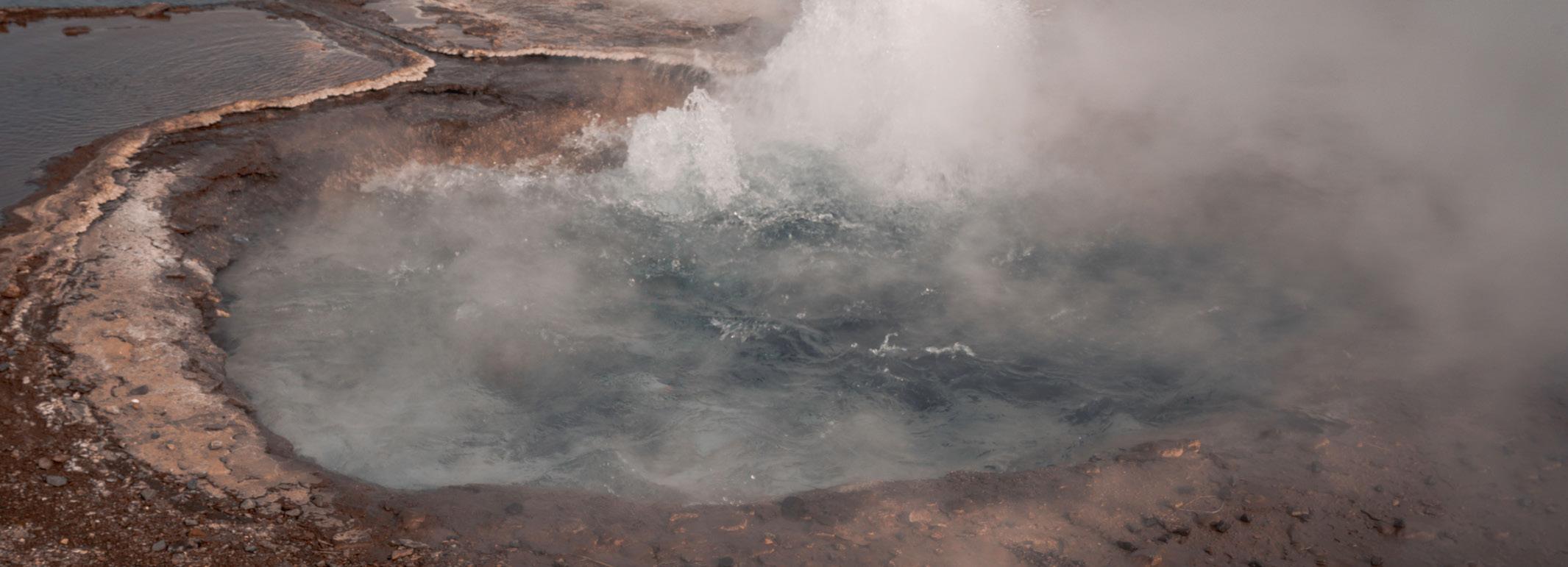
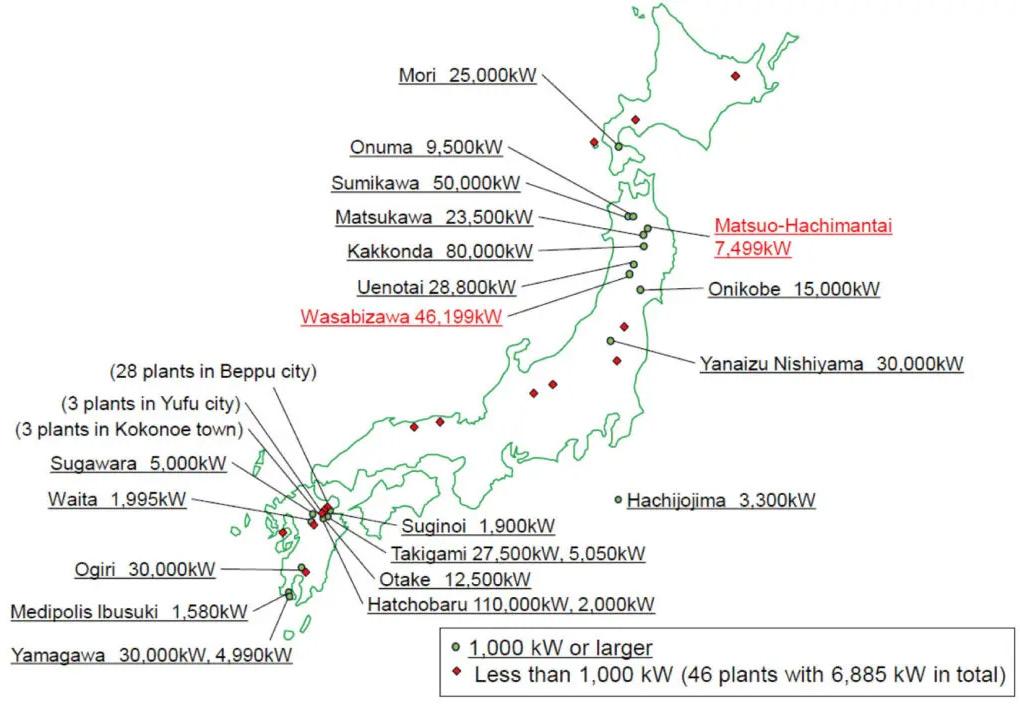
Japan is blessed with lots of geothermal energy thanks to its location within the volcanic and tectonic Pacific Ring of Fire. Geothermal is clean energy that can run around the clock.
As of March 2025, the country generated about 618 MW of electricity which the government plans to double to 1,500 MW by 2030.
After the Fukushima incident, in an effort to shift reliance to other renewables, the government amended several strict laws on natural parks that had previously restricted geothermal
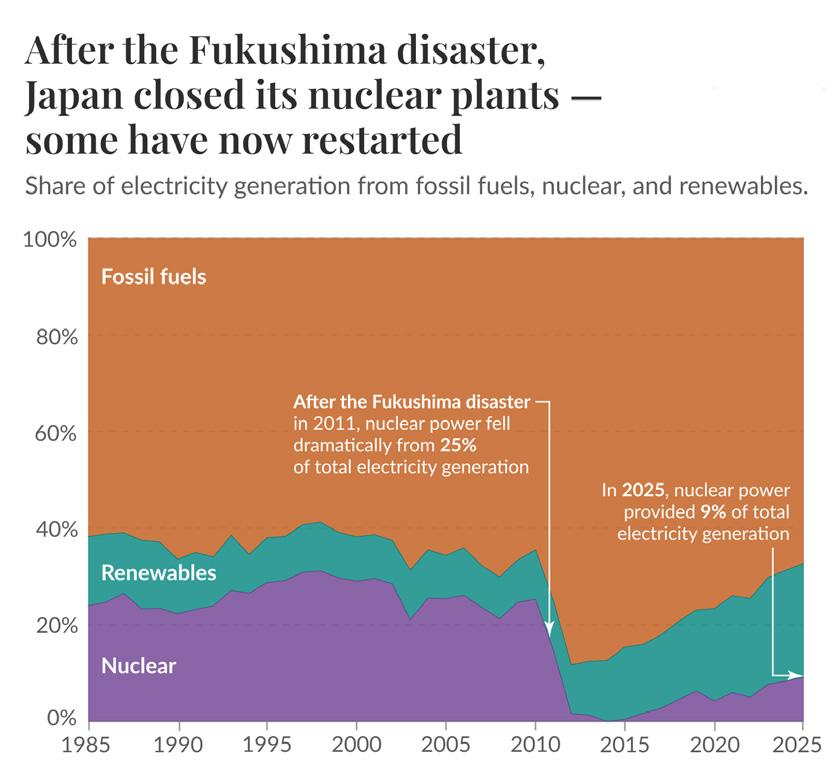
Share of electricity generation from fossil fuels, nuclear, and renewables. Source: Energy Institute - Statistical Review of World Energy (2025)
Japan is blessed with lots of geothermal energy thanks to its location within the volcanic and tectonic Pacific Ring of Fire.
development. It also provided economic incentives to promote geothermal energy utilization, as well as made efforts to raise social acceptance.
As a result, the private sector ramped up exploration of advanced technologies to unlock the nation’s deep geothermal potential sparking a wave of innovation in the sector.
Legacy geothermal plants use underground steam to spin turbines to create electricity, a slow and expensive process made worse by locals’ concerns over the effects of the equipment and drilling on the spring water.
Hence, some developers like Baseload Power Japan are utilizing next-generation drilling including deep underground imaging and millimeterwave drilling adapted from nuclear fusion research.
Other advanced geothermal systems include closed-loop systems and supercritical geothermal technology. Essentially, all these systems target heat sources far below conventional reservoirs to increase efficiency and output, thus expanding the nation’s geothermal potential.