Showing
Up for Each
Other, Through Every Season
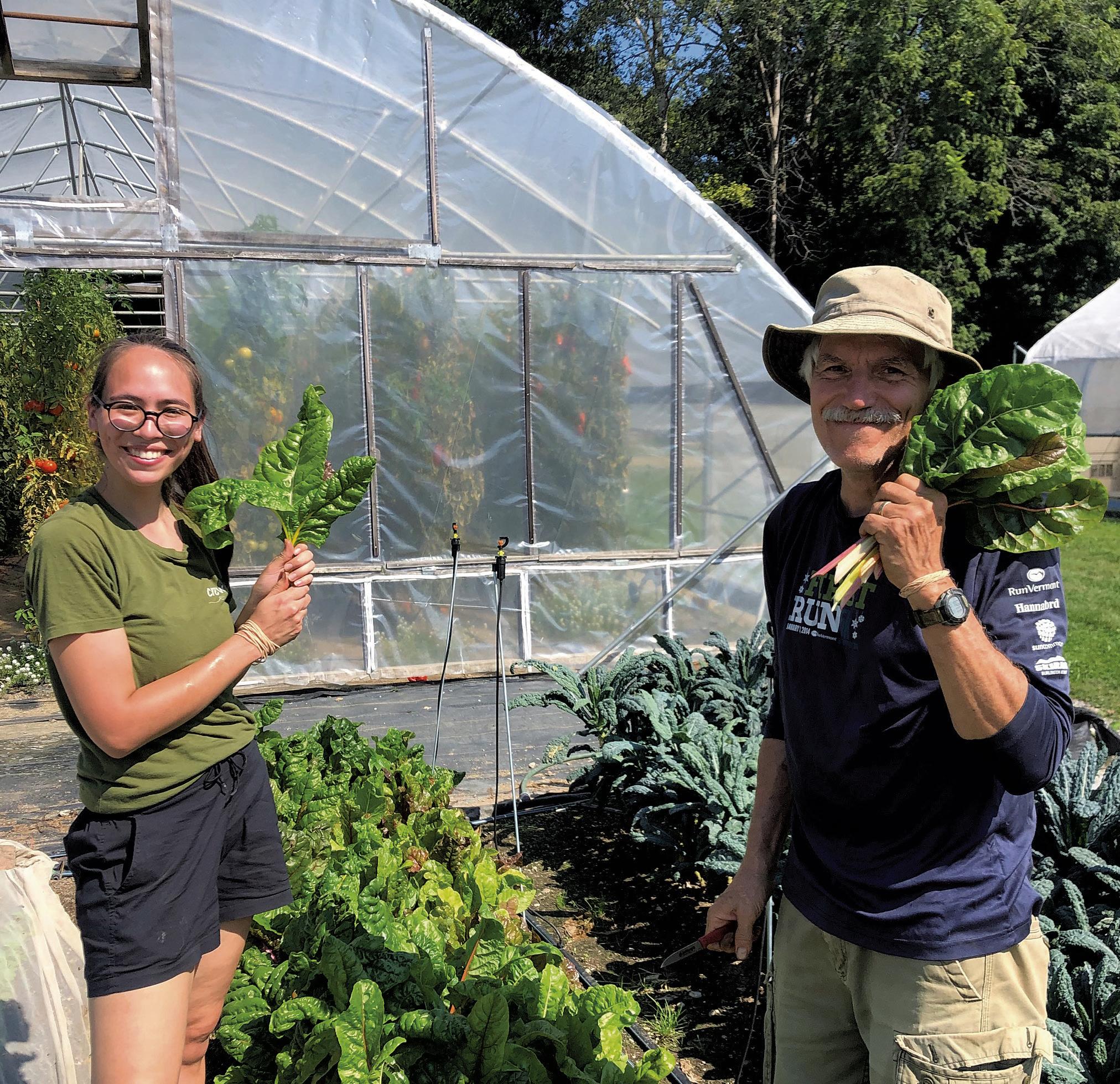
Spring in Vermont is a time of renewal. New life begins under the melting snow, and patches of green appear on south-facing hills. Gentler days are ahead. The winter thaw can also bring harsh challenges, like frost heaves and roads with muddy ruts up to your axle. Any of us can get stuck in that muddy rut. Thankfully, here in Vermont neighbors stop to lend a hand and pull each other out.
At Vermont Foodbank, we know that, like the cyclical nature of the seasons—the thaw after the freeze, the reseeding after the harvest—so too is the nature of giving and receiving.
In this issue of Kernels, we’re checking in with a cook at a community meal site, a local potato
farmer, and our state lawmakers. These stories highlight the ways our community is pushing through the thawing earth of uncertain times, sharing what we have to give when we have it, and asking for help when we need it.
Thank you for helping friends and neighbors who could use a hand or are experiencing a difficult season. And thank you for traveling the road to a food-secure Vermont with us. I firmly believe we’re headed in the right direction, and that together we can reach our destination.
John Sayles CEO
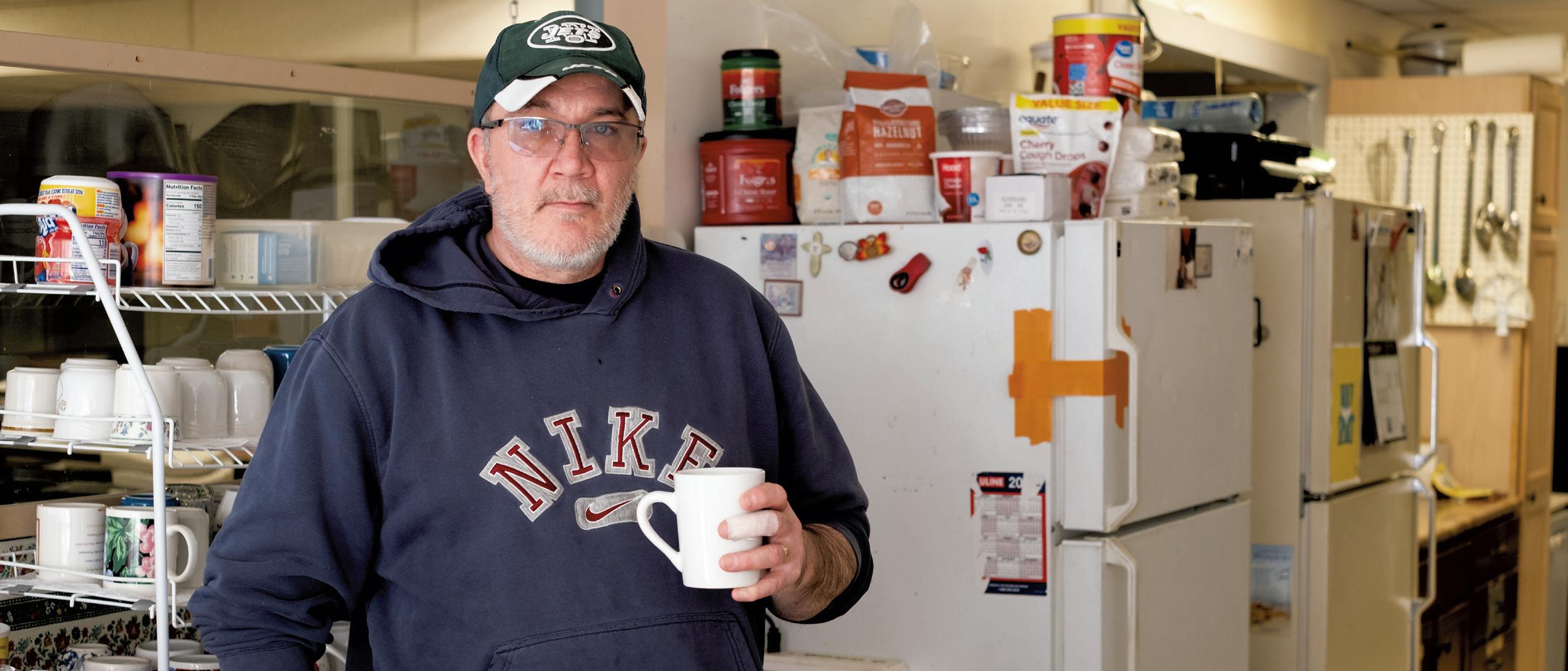
Thanks to friends like you and Michael, people across Vermont have the nourishment they need, no matter what they’re going through.
A Seed of Support in St. Johnsbury
For Michael, the cook at Mustard Seed Soup Kitchen in St. Johnsbury, cycles are a familiar thing. As a teen, he worked at a pizzeria in the same building that now houses Mustard Seed. His grandmother fed him “country cookin’” as a kid, and that’s a lot of what he serves at community meals. And, having been on the receiving end of help himself over the years, now he’s giving back by making sure his neighbors have a nourishing meal and a warm place to chat.
“I was given the opportunity [to manage Mustard Seed] for multiple reasons, but the biggest two are to help those that are in need and be able to identify with them, which I do,” Michael says after finishing a shift at the Soup Kitchen. “I had a pretty decent life, but I made a lot of poor choices in my thirties… March [marked] seven years that I’ve been sober and committed to Christ.”
“Many years ago, I used to come up [to Mustard Seed] and pray the meal in and take off. That was like ten, twelve years ago,” Michael says. Now, he’s employed by the organization that runs the meal site, which is a Foodbank partner. Michael says he’s grateful for the help he received from the people at Mustard Seed when he needed it, and he’s grateful for the opportunity to be helping neighbors in his community these days.
“I know what they’re going through. I know what the struggle is,” he says. “When I was down and out, I used to come here at least every other week.”
Now, he’s in the kitchen at least six days a week.
“I put a meal together twice a week. I do a meal on Tuesday and Thursday. On Friday, it’s just sandwiches and soup…I feed roughly 40–45 people on those two days, 20–25 on Friday.”
Those are the meal days, but Mustard Seed is open six days a week, and they always have sandwiches, snacks, and hot coffee available for folks who stop in to rest their legs, warm up, or just say hi. On meal days, Michael says he usually serves the country cookin’ he learned from his grandmother when he was a kid.
“Country food, I basically do casseroles. Chicken, veggies, gravy, put it all in one pan. Looks decent, tastes great. That’s country cookin’. Rib-sticking. I hear ‘it’s rib-sticking’ a lot.”
The goal, Michael says, is to be open seven days a week. That seventh day would fill a critical gap in the Northeast Kingdom city because, according to Michael, there are limited community meal offerings in St. J each week.
“If this closed, it would definitely hurt the people without a roof over their head and the ones who are down and out.”
Thanks to your help and that of other community members, Michael and Mustard Seed are putting hearty, nourishing meals on the plates of neighbors experiencing hunger in Caledonia County.
“Most of what I get here is donations; [there’s food from Vermont] Foodbank…there are a couple of farms that swing by like every other month, and just people’s generosity,” Michael says about the ingredients he uses to keep a steady stream of people in St. J fed. “It’s important to help your neighbor, even if you don’t agree with your neighbor. It’s important to donate, volunteer, and if you can’t be hands-on, there are other ways to support.”
As for Michael, the self-described “hands-on guy” at Mustard Seed, he’s got plenty more country cookin’ to share, and plenty of heart, faith, and goodwill to keep him going for a good long while.
“I can tell you this much, if I was to come into a lot of money, I’m not giving this up right away…. I do believe this is slowly making the difference.”
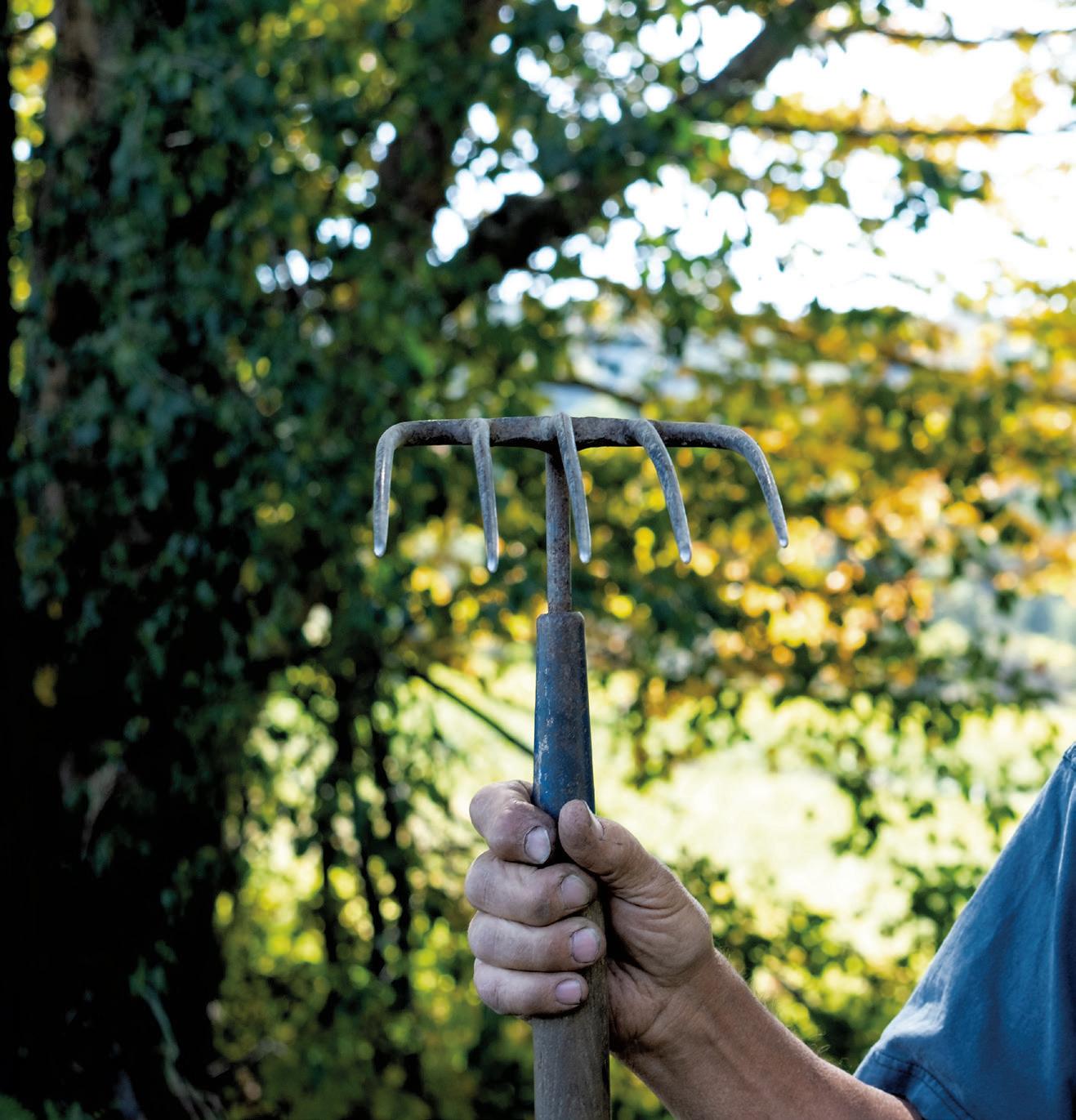
Sprouting a Love for Local Potatoes & Community Connection
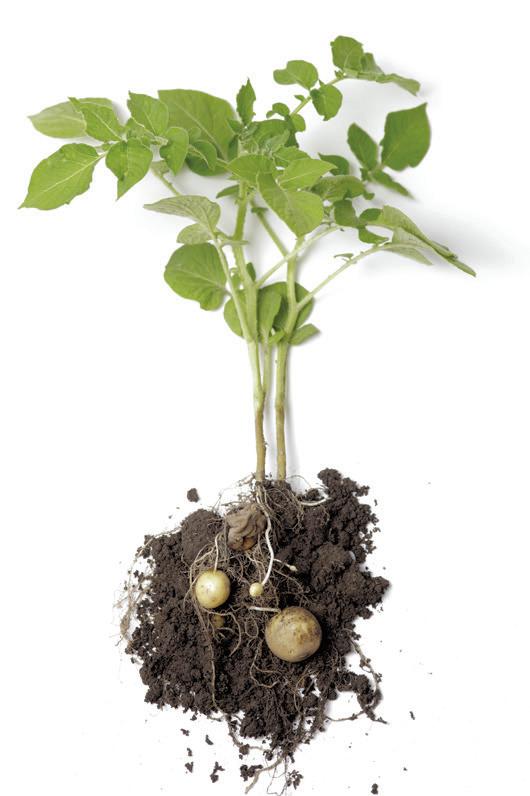
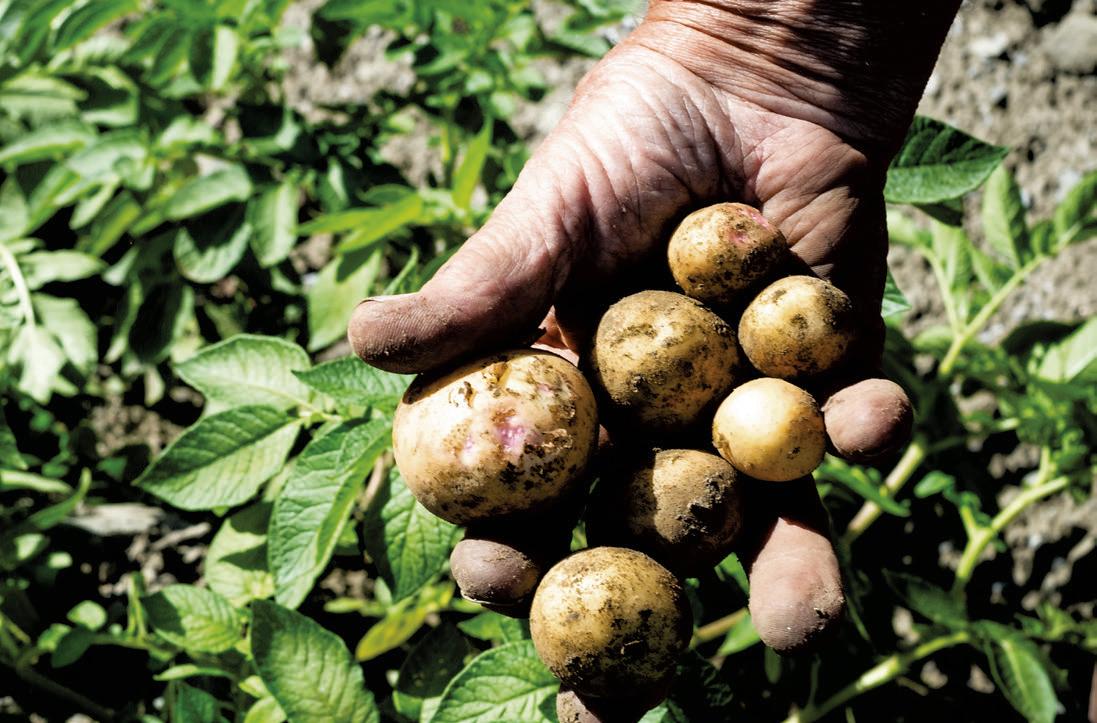
Bob and Barb are Vermont farmers with a passion for growing and sharing one staple, nutrient-dense crop with their community: potatoes. They also partner with Vermont Foodbank to make sure their potatoes are available to neighbors experiencing hunger—with support from donors like you.
Bob has been farming potatoes for more than 50 years—nearly as long as he’s been married. He and his wife, Barb, have been on the land they now own in Williamstown for around 40 of those years.
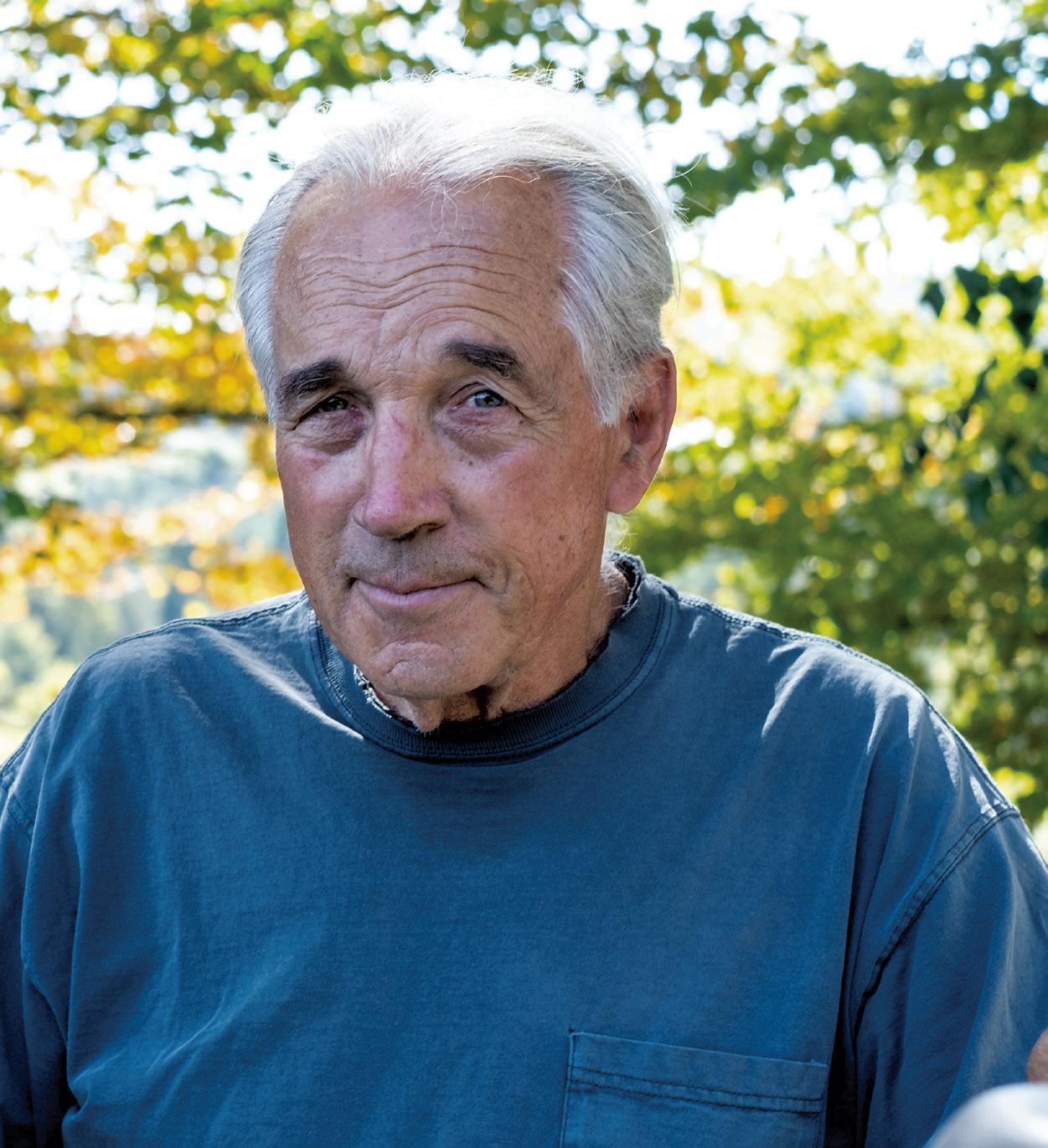
You’re helping make Vermont produce accessible to all neighbors, while supporting family farms.
Bob went to school for engineering, and later became a math teacher, but his love for potato farming was sparked when a neighbor approached him about growing a shared crop in the ‘70s. Before the next season came around, Bob had bought his first planter for $25.
“Everybody knows who I am around here,” says Bob, who loves being known for his role in his community—a value passed down by his grandfather. “‘They’re gonna know who you are, and what a good man you are. That’s important,’” he recalls his grandfather saying. Over the years, he and Barb have developed creative ways to connect their community to their farm, including a pick-your-own potatoes day, complete with French fries made on site by their daughter-inlaw, Ana. The farm’s employees have donated Chappelle’s Vermont Potatoes directly to the local food shelf in town.
Bob and Barb also participate in Vermonters Feeding Vermonters, a Foodbank program that purchases high-quality, local food directly from Vermont farmers to share with neighbors facing hunger. (Bob recently testified at the Vermont State House about his experience with the
program.) Sharing potatoes through Vermonters Feeding Vermonters—a partnership that you help support—has been meaningful in more ways than one.
“It comes down to, I’m reaching neighbors that can’t afford to buy my potatoes. Really, that’s important to me,” says Bob. “I just feel good about our potatoes getting into everybody’s hands.” He recalls the impact it had on him one time when a mother and child shared a letter of gratitude for Chappelle’s potatoes that they’d gotten from the Foodbank.
At the same time, the program has been an important support for their farm; the purchasing contract with Vermont Foodbank has helped create stability during some difficult seasons. Being able to count on large orders, at a fair price, provides financial security for farmers. “The Foodbank contract…it came at the right time,” Bob says.
From planting to harvest, farming potatoes is a long cycle with an uncertain payoff; some growing seasons bring abundance, and others scarcity. Spring, the season of renewal, is a time for careful planning and preparation. In a typical spring, Bob is busy deciding where different varieties will be planted on the farm’s 60 acres, which they keep in rotation, as well as ordering fertilizer and fixing machinery. The farm also sells seed potatoes; they prepare and distribute the orders in 50-lb bags throughout Vermont and into neighboring states.
Continued on page 7
Addressing Hunger at Its Root
Food insecurity is a solvable problem. While the bulk of the Foodbank’s work is distributing nourishing food every day, the team also advocates for policies that can ultimately end hunger. Together with partners, community members, and donors like you, this small but steady effort is making our collective future more food secure.
For a household, hunger is an emergency. Ready access to food is critical for families and individuals experiencing hunger.
For a state and nation, hunger is a policy issue. The root causes of food insecurity include social, economic, and structural factors—that can be changed.
Thanks to your support, Vermont Foodbank has a staff member who focuses on policy and public funding. Advocacy supports immediate food assistance for households facing hunger, as well as state- and nationallevel solutions that could help end hunger for good.
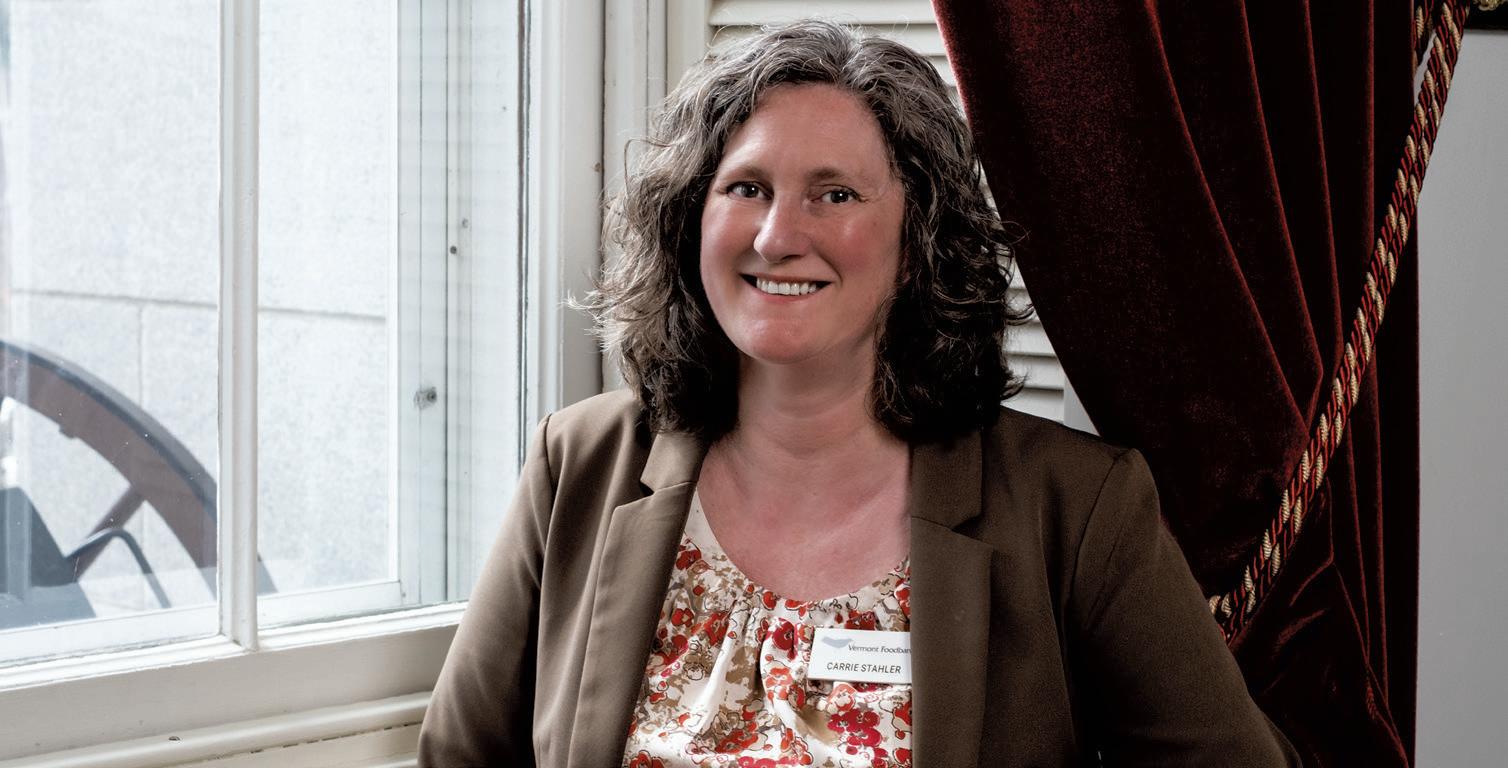
That staff member, Carrie, collaborates with organizations addressing hunger and poverty to put forward policy solutions. She works with the Foodbank’s network of food shelves, meal sites, schools, and hospitals to bring their expertise forward.
Carrie also facilitates trainings and logistics so constituents with lived experience of food insecurity can share their perspectives directly with their elected officials. “The State House belongs to all of us,” Carrie said at the start of a recent tour. “It might seem like an intimidating place, but today we’ll get familiar with the building and the legislative process.”
Denise has shared her personal experience with hunger and as a food shelf volunteer with Vermont legislators this year, and offered this reflection:
“Everything was well organized, executed, I was made to feel welcome, comfortable and supported by the Vermont Foodbank team and MANY other organizations...Knowledge is power and I learned A LOT today. I am proud to be an ADVOCATE for food security in the STATE of VERMONT.”
Denise, Carrie, and other community members are ensuring that when policy decisions about food security are on the table, lawmakers understand what they’re deciding on and who will be impacted.
In addition to speaking up for 3SquaresVT—and other effective anti-poverty programs—the Foodbank is seeking state funding to purchase from local farms, build capacity for disaster response, and bolster network partners’ efforts to feed neighbors statewide.
Together with donors like you, we’re making sure neighbors have enough nourishing food today, while working toward a food-secure Vermont. Thank you for helping grow a stronger community and a state where everyone has what they need to thrive.
Learn more about this year’s advocacy work, or sign up for advocacy alerts, by visiting vtfoodbank.org/advocacy.
Sprouting a Love for Local Potatoes & Community Connection
Continued from page 5
Bob and Barb are people who keep their community fed, and who also know personally what it’s like for money to be tight during the seasons of scarcity. As small farmers in Vermont who raised two kids, Bob says, “At several points, we would have qualified for SNAP [3SquaresVT] benefits, or for food assistance, or free health care.”
Despite the hard work, unpredictable seasons, and small margins associated with growing a commodity crop as a small farmer, it’s clear that many growing cycles later, the spark that ignited Bob’s passion—or his “dream” as he calls it—is still alive. “I do get excited [about digging the first potatoes],” he says. “I love it. I love
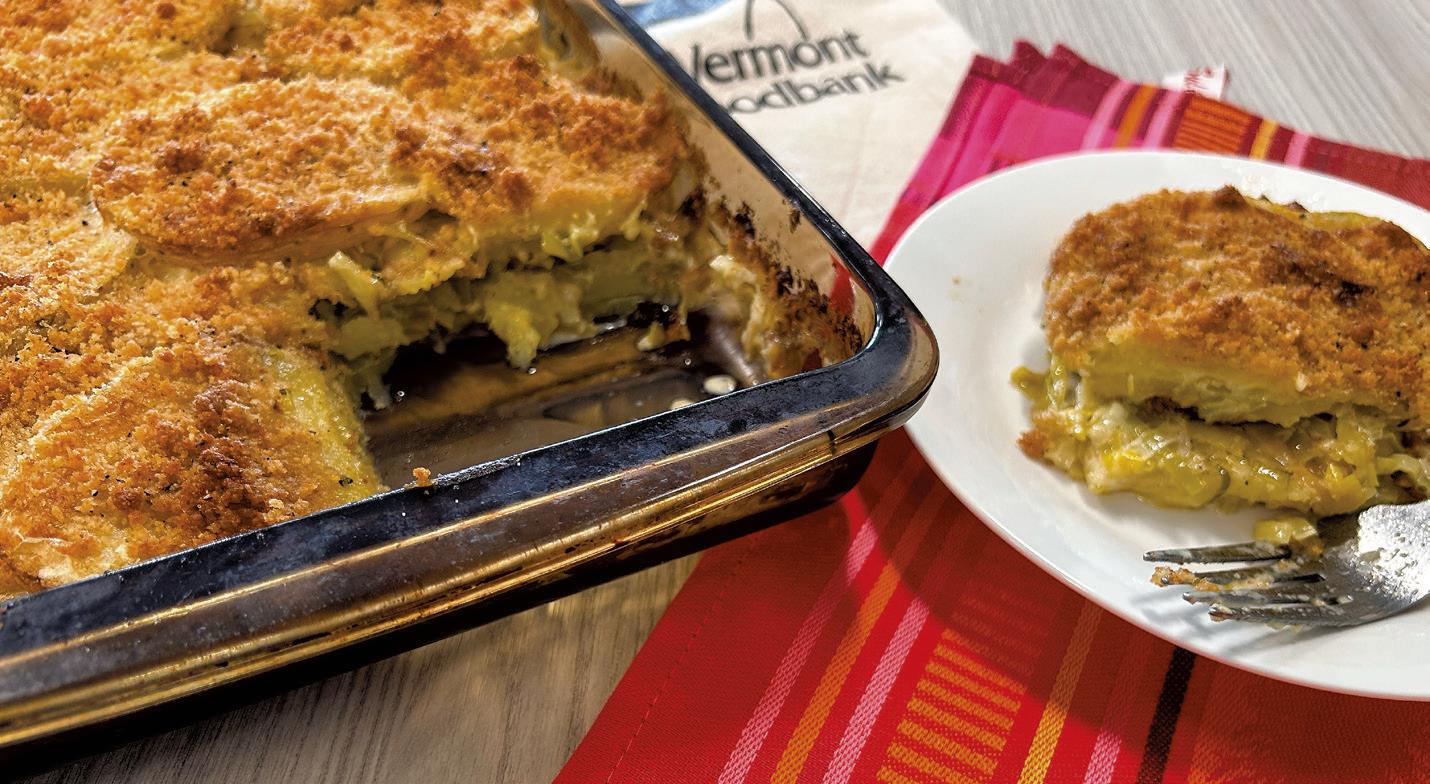
Chappelle’s Scalloped
Potatoes with Leeks
Serves 8
Bob’s favorite potato variety is Reba, and his favorite way to eat them is scalloped. Barb kindly shared her scalloped potatoes recipe to spread the joy. You can also find this recipe, and more, on our website at vtfoodbank.org/chappelles.
everything about it.” Throughout the years, Barb’s partnership has been essential in bringing this dream to life. “I couldn’t do it without her,” says Bob. In the end, Bob says, the goal has been to live simply, with an appreciation for Mother Nature, and to leave something behind for their children and those who are yet to come.
Thanks to donors like you, the Foodbank is able to purchase local food from Chappelle’s Vermont Potatoes, and other farms, to distribute to people facing hunger. Together, we’re making sure locally grown food is available to everyone in our communities, while supporting hardworking Vermont farmers.
Ingredients Directions
• 2–2½ pounds white or yellow potatoes, sliced thinly
• 3 medium leeks, trimmed (white and light green parts only) and thinly sliced
• 2½ cups heavy cream
• 5 oz. bacon, cooked and crumbled, reserve bacon fat
• ½ cup cheddar cheese, grated
• ½ cup breadcrumbs, tossed in 2 tablespoons melted butter
• 2–3 teaspoons chopped fresh thyme
• ¼ teaspoon ground nutmeg
1. Preheat oven to 400 degrees. Butter a 3-quart baking dish and set aside.
2. Sautee leeks in 1–2 tablespoons bacon fat until tender and lightly browned.
3. In a 12” skillet, simmer potato slices in the heavy cream until tender. Season with salt and pepper.
4. Using a slotted spoon, transfer half of the potatoes to the baking dish, spreading evenly. Layer the leeks, bacon, cheese, and spices evenly over the potatoes. Spread the remaining potatoes evenly over the leeks and pour cream over the potatoes. Top with crumb mixture.
5. Bake for 25–30 minutes, until potatoes are tender and top is browned. Let sit for 10 minutes or until liquid is absorbed.
Summer as It Should Be
School will be out for the summer soon. And a hard truth is that not every kid and family in Vermont is looking forward to it.
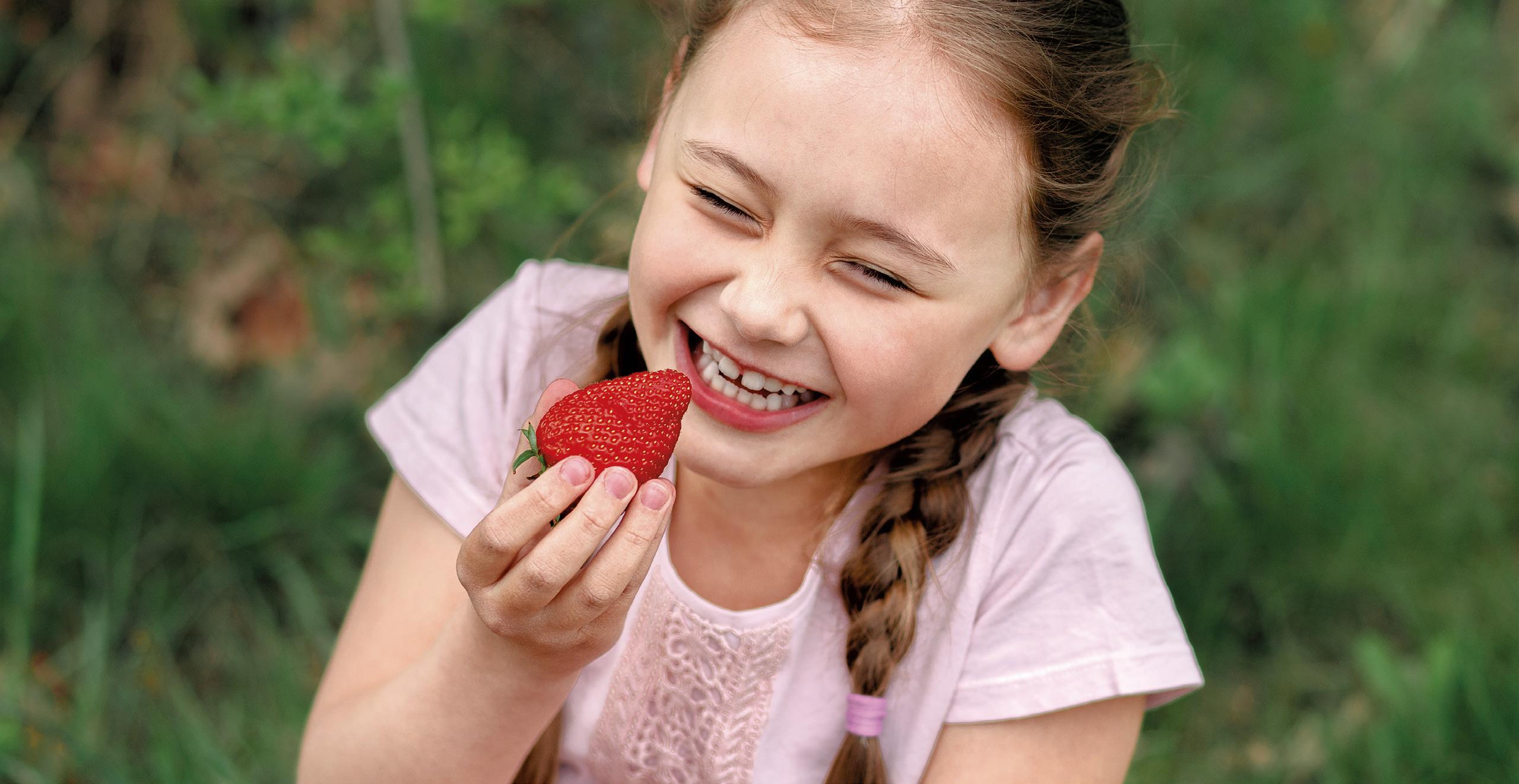
Summer should be a time when kids can just be kids. A time for learning to ride a bike; for swimming and catching fireflies in the tall grass; for sweet, juicy strawberries at a barbecue with friends.
But for many families in Vermont, summer means figuring out how to piece things together.
For the 10 weeks that schools close their doors, working parents need to budget for childcare— and figure out how to pay for summer camps or babysitters. Meanwhile, grocery bills increase to cover the free school breakfasts and lunches that are unavailable for kids over summer break.
Filling the gap can be tough for families, especially ones living on low or fixed incomes.
That’s why it’s so important that Vermont Foodbank and our network continue to be
well-stocked and ready to ensure kids and families have consistent access to food.
Together, we can make sure food shelves in every county have a steady supply of nourishing food and that free, fresh fruits and vegetables are available all summer long—so that everyone in Vermont can access the food they need, when they need it.
Will you make a gift today? Just $50 can help cover the cost of breakfast and lunch for a child for a month during the summer.
Kids should never have to worry about where their next meal is going to come from. You can help families bridge the gap and make sure kids have the food they need to grow and play—and just be kids—this summer.
If you or someone you know could use help accessing food, please be in touch. Our contact information is below, and our website is available in many languages spoken in Vermont.