














Stories matter. This was a big takeaway from an update on loon stewardship efforts during the Lake Iroquois Association’s annual meeting last Thursday.

Stories about loon rescues on a frozen Lake Champlain, 30-yearold loons in Minnesota and Lake Iroquois’s own teenage loon chicks were met with constant oohs and aahs from nearly 100 attendees.
Addressing a room full of resi-
dents of the lake, Eric Hanson, a biologist for the Vermont Loon Conservation Project within the Vermont Center for Ecostudies, said they can talk to anyone because they have at least one thing in common — loons.
“You know, you’re sharing
a loon story. All of a sudden, we have a community that has a common purpose,” he said.
Much of Hanson’s work is outreach, answering people’s
See LOONS on page 11
BRIANA BRADY STAFF WRITER
Hinesburg officials endorsed a roundabout as their preferred intersection upgrade at Route 116 and Riggs Road as large developments move through the permitting process and break ground on either side of the state roadway.
The endorsement concludes a scoping study of potential changes to the intersection to accommodate the anticipated increase in traffic.
A scoping study is an initial step in the planning process, and the selectboard’s endorsement is non-binding. However, it will push developers to further explore a roundabout as work progresses on the Haystack Crossing and Windy Ridge developments, which are slated to add 250 homes near the intersection.
“This is an example of a town and developers and agencies working together to try to plan ahead,” town planner Zachary Nersinger told the selectboard July 15.
See RIGGS ROAD on page 7


BRIANA BRADY STAFF WRITER
Ahead of the Aug. 11 primary election, five Democratic candidates for the Chittenden Southeast Senate district are vying for their party’s three spots on the Nov. 3 general election ballot.
The Citizen put a few questions to the field of five. The paper will similarly query the Republican candidates later, since they don’t have competition in the primary.
The Citizen: What is your top priority for the coming session if you’re elected? What specific policy or policies would you like to see to in order to achieve that goal?
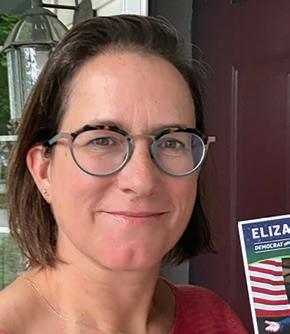
need to increase efficiency in state government, increase workforce opportunities, decrease the cost of health care and make housing more affordable.



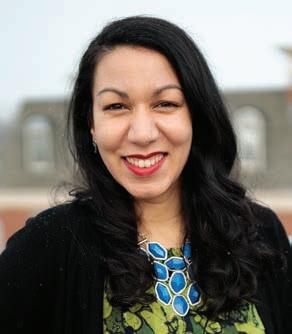
Joanna Grossman, Burlington: Vermont is our refuge, but it’s no good to our kids if they can’t afford to stay here. Priorities: attainable housing, accessible health care and economic resilience — prioritizing homes for Vermonters over out-of-state investors, building dense senior communities to free up inventory while protecting soil and fighting health care monopolies. I support health care subsidies funded by recapturing Trump tax cuts.
Elizabeth Hunt, Charlotte: Vermont is at a crossroads with health care cost and access connecting us all; I would start here with my physician expertise. After years working closely with families, schools and community systems, I’ve seen how deeply our economy and local budgets are being strained. To make this happen, we
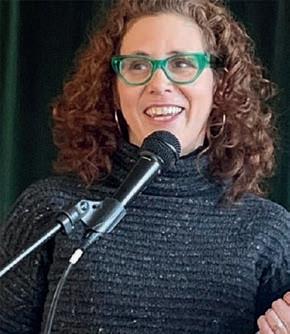
Thomas Chittenden, South Burlington (incumbent): My top priority is tackling housing affordability, permit reform and growing Vermont’s economy sustainably. As average household sizes shrink and localized demand grows in Chittenden County, we face a critical housing shortage. To fix this, I will advocate for modernizing land-use and zoning regulations to encourage sensible infill development, expanding municipal water/ sewer infrastructure strategically, and creating targeted financial incentives to keep starter homes affordable for young families and workers.
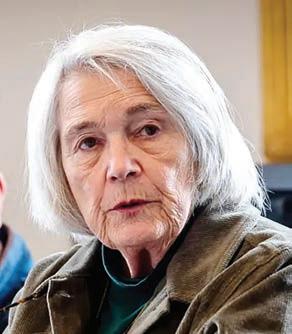
Virginia “Ginny” Lyons, Willison (incumbent): I will focus on prevention and primary care reform that includes reducing hospital and insurance premium costs, more access to primary care, community mental health, substance use disorder treatment, a balanced budget and prevention policies critical to improved personal and public health outcomes.
As chair of Health Reform Oversight and Health and Welfare and member of the Senate Commit-
tee on Appropriations, policies should enhance primary care workforce, payment systems, and access; fill needs for substance use recovery services; reduce outside unregulated investment in health care; improve youth prevention and mental health services; oversee the homeless continuum of care law; improve access to housing; ensure adequate appropriations for community-based services and reduce food insecurity; and balance the budget.
Kesha Ram Hinsdale, Shelburne (incumbent): Economic opportunity. Too many Vermonters are working hard but still struggling to get ahead. I want every student to have access to career and technical education, every family to have a fair shot at finding an affordable home and every parent to know they can count on quality child care. Universal child care has shown that when we make smart, broad-based investments, families, employers and our economy all benefit. We should build on that success with other universal affordability strategies.
The Citizen: Of the legislation that passed this last session, if you could pick one bill to edit, what edits would you make?
CHARLOTTE OLIVER VTDIGGER
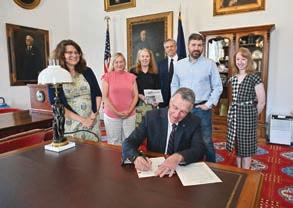
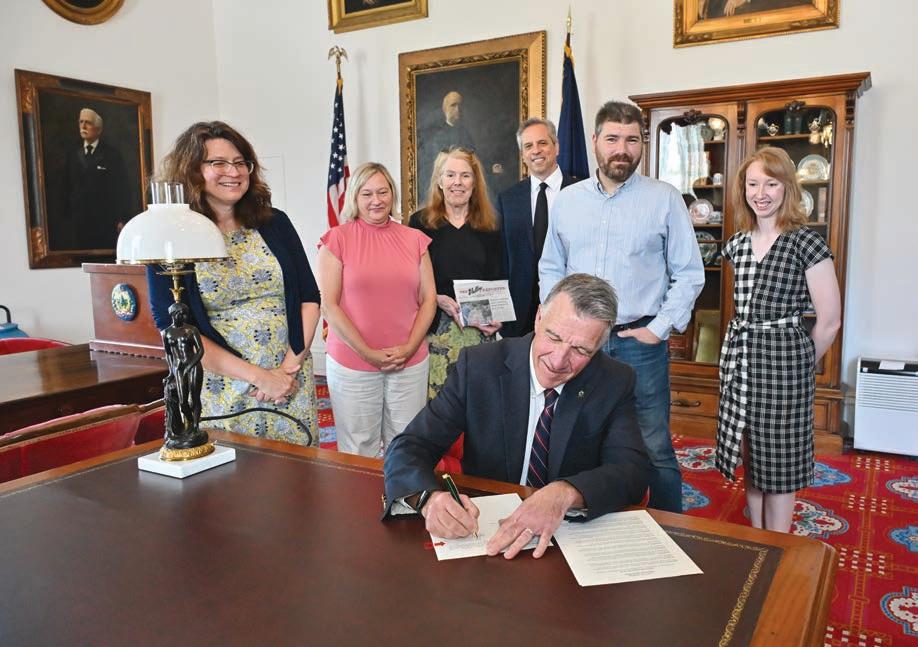
Gov. Phil Scott signed an executive order last week that directs the state to prioritize local news platforms when deciding where to run its ads.
“Vermonters breathe and trust their community news,” Scott said after signing the order, a statement rare for him to make to a room of reporters.
The intent of the policy is for the state to both reach a key audience and sustain its bevy of small-yet-scrappy news organizations. And it’s essential, he said, that a responsible and impartial press corps keeps all corners of the state informed on the happenings of state government.
“While I know this is a drop in the bucket, it’s an important gesture,” Scott said.
Scott’s decision to invest in local news organizations comes as the nation has seen a sharp decline in local journalists per capita. According to a 2025 report from industry software platform Muck Rack and the national advocacy organization Rebuild Local News, the country has seen about a 75% decline in local journalists per capita since 2002 on average.
Amid that national decline, Vermont has maintained the most local journalists per 100,000 people compared to other states. Yet certainly small news organizations across Vermont still struggle to stay afloat. Industry employment has plummeted from 1,446 in 2000 to only 358
SENATE continued from page 2
Grossman: I’d edit the anti-masking bill so protections apply to federal Immigration and Customs Enforcement agents, rather than passing symbolic laws lacking enforcement. We must protect Vermont from federal overreach. We need economic resilience: limiting credit card swipe fees would’ve kept millions in Vermont instead of feeding out-of-state corporate credit card duopolies. This protects our tax base to shore up state programs against federal cuts threatening 30% or more of our state budget.
Hunt: Act 173 (primary care reform) passed with many areas: planning for strengthening of primary care through state programs, data gathering and specific tasks for different groups. Knowing how critical access and high costs of health insurance has become, I would simplify this bill and include health insurance/payment innovation, such as a low premium, catastrophic-like coverage and/or bringing more Vermonters back onto Medicaid while the core processes of Act 173 move forward. In addition, I would clarify who is monitoring the action of this bill, accounting for results and communicating those actions with the public and the health care community.
Chittenden: I would refine Act 170 to ensure owner-occupied parcels with acces-
in 2023, according to the University of Vermont’s Center for Community News.
“Advertising with these folks is a smart way to reach Vermonters, but it also helps sustain these essential community resources. They are precious institutions,” said Kristen Fountain, interim coordinator for the Vermont Journalism Coalition.
When state employees are considering where to run advertisements, invest in marketing or sponsor events, “we now must look at options for local outlets and prioritize them whenever we can,” according to Rebecca Kelley, the state’s chief communications officer.
Scott’s executive order is similar to a provision in Colorado’s 2026 budget, which directs the state to prefer local media when investing in state ads. Maryland legislators passed a bill that would have directed half its state advertising dollars to local news, but Maryland Gov. Wes Moore later vetoed the bill.
Vermont usually spends about $4 million to $5 million annually on the types of advertising affected by the executive order, according to Kelley, although the state doesn’t keep track of how much it spends on local news or broadcast platforms. Under the new policy, the state is directed to create a system to keep track of its advertising dollars.
While the order directs the state to give
See ADVERTISING on page 4
Experienced, effective leadership fighting for affordable housing, strong schools, accessible heath care and Vermont values.

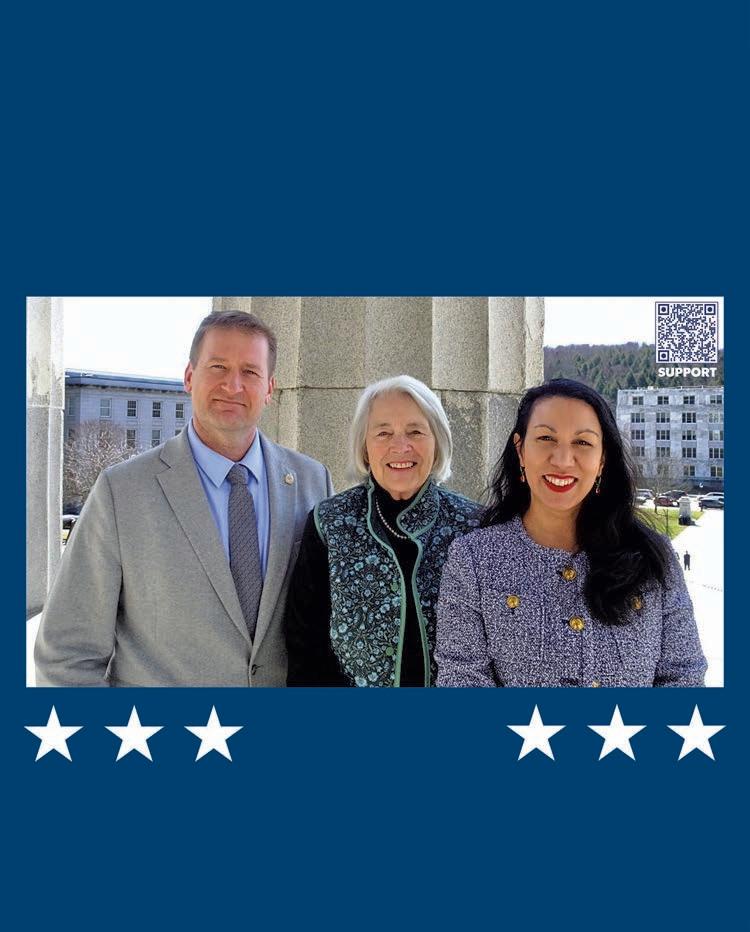
Primary: August 11 • General Election: November 3
Delivering results, working for families, making a difference.
sory dwelling units are explicitly excluded from the now being designated vacation/ second-home property tax category. ADUs housed on a primary homeowner’s property are vital long-term housing options for aging family members or local renters and essential to make ends meet in the current Vermont housing market. Applying higher secondary-residence tax rates to them disincentivizes sensible density. There is still time before implementation to correct this and protect local homeowners with ADUs.
Lyons: The Senate Committee on Health and Welfare passed a bill to eliminate red dye and other toxic chemicals from foods served in school. Two large school food services in Chittenden County school districts testified that the administration of eliminating foods with the chemicals was overly burdensome. As a result, we did not ask the full Senate to vote on the bill. Improving the bill to limit the toxic chemicals from products sold more generally than those served at schools might improve the bill.
Ram Hinsdale: The bills I most wish I could edit are the ones the governor vetoed. I was especially disappointed by the veto of
Total incidents: 59
Arrests/citations: 3
Traffic stops: 40
Special overtime: 4
VIN inspection: 2
Alarm: 2
Sex offender registry: 1
Motor-vehicle complaint: 1
Traffic hazard: 1
Fingerprinting: 1
Wanted person: 1
Theft: 1
Burglary alarm: 1
Citizen assist: 1
Citizen dispute: 1
Fall: 1
Property/home watch: 1
Selected incidents:
July 20 at 11:20 a.m., officers responded to a reported dispute on Route 116.
July 20 at 1:02 p.m., police investigated suspicious activity on Upper Pond Road.
July 20 at 5:15 p.m., officers assisted with a medical emergency on Old Pump Road.
July 21 at 2:04 p.m., an officer assisted a driver on Pond Road
with a damaged vehicle.
July 22 at 7:07 p.m., officers responded to a burglary alarm activation at a business on Commerce Street.
July 23 at 3:22 p.m., police assisted someone with fingerprinting for their job.
July 23 at 6:34 p.m., officers responded to a residential burglary alarm on Red Pine Road.
July 24 at 9:55 a.m., officers responded to a reported traffic hazard on Lewis Creek Road.
July 24 at 7:48 p.m., an officer attempted to stop a speeder on Route 116. The driver fled, but the officer terminated the pursuit out of concern for public safety.
July 24 at 8:24 p.m., officers responded to a burglary alarm at a business on Ballard’s Corner Road.
Note: Charges filed by police are subject to review by the Chittenden County State’s Attorney Office and can be amended or dropped.
Serving the community of Charlotte & Hinesburg
A publication of Vermont Community Newspaper Group LLC thecitizenvt.com
Advertising Wendy Ewing wendy@shelburnenews.com (802) 238-4980
Advertising Director Judy Kearns judy@otherpapersbvt.com (802) 734-2928
Editor Tommy Gardner tommy@stowereporter.com (802) 253-2101 x25
Editorial Assistant Sophia Balunek
Staff Writers
Liberty Darr, Patrick Bilow, Briana Brady
Production/Design
Stephanie Manning stephanie@shelburnenews.com
Kristen Braley kristen@stowereporter.com
General Manager Katerina Werth katerina@stowereporter.com
Billing inquiries Leslie Lafountain leslie@stowereporter.com (802) 253-2101
Advertising submission deadline: Friday at 5 p.m. advertising@thecitizenvt.com classi eds@thecitizenvt.com
Editorial submission deadline: Friday at 12 p.m. news@thecitizenvt.com
Calendar submission deadline: Friday at 12 p.m. news@thecitizenvt.com
Contact: PO Box 489 Stowe, VT 05672 (802) 253-2101
continued from page 3
preference to news organizations, it also gives the state some discretion. State government is directed to use its advertising dollars on local news “whenever feasible and consistent with the best interests of the State,” the order says. And while the order highlights news platforms, it also gives preference to “resident bidders of the state” as well
as products that were “raised” or “manufactured in the state”.
Scott, who is seeking reelection, said the policy’s mission tracks with his broader ideology that it’s important to buy local and support businesses in-state.
“Local media face the same challenges as every other sector in Vermont: a shrinking workforce and an increasingly unaf -
fordable cost of doing business in the state,” he said.
Disclosure: The Citizen is a member of the Vermont Journalism Coalition, as is VTDigger. The Citizen editor Tommy Gardner serves on the coalition’s public policy committee, and VTDigger CEO Brendan Kinney serves on the coalition’s board.


Guest Perspective
Bill Schubart
As an opinion writer, I don’t endorse political candidates. I explore and endorse ideas and policies.
Vermonters have a primary vote coming on Aug. 11 and a midterm election on Nov. 3. Our most immediate concern is gubernatorial. Who will lead Vermont for the next two years?
There are three candidates, two women and the male incumbent, who is running again.
Phil Scott served three terms as lieutenant governor from 2011-2017 under then Gov. Peter Shumlin. He has served as governor since 2016, winning five additional terms. He is running for an unprecedented sixth term. Confidants have suggested he was ready to retire from leadership and resume his passion for stock-car racing and running his construction company but purportedly is running again at the urging of his party.
Over my 79 years in Vermont, I’ve had many friends in the political landscape: legislators, governors and agency heads. I’ve agreed with some, disagreed with others, advised some, written negatively about others, but, in the Vermont tradition, have tried to do so in a civil manner, decrying the behavior not the individual.
I’ve thought extensively about the current contenders, have spoken with them personally from time to time and have my own thoughts about their potential for leadership.
Frankly, I agree with our current governor, his time is up. I give him full credit for his leadership during the pandemic, and, to a slightly lesser degree, during the flooding. He showed skill as a crisis manager.
But as to the accelerating pain-points affecting Vermonters — health care access and cost; public education funding; affordable housing; providing shelter and hunger to those in need; reforming criminal justice; regulating environmental degradation; and taxation and regulation that supports the common good — our current governor hasn’t shown Vermonters a clear strategic path to address these issues, choosing instead to take
a compromise position between the business interests propelled by lobbyists and the good of the commons.
Another candidate, Aly Richards, who grew up in Newbury, has a significant political history and is using it effectively to propel her ultimate goal of leadership.
Working with the current governor, she went on a listening tour to learn what Vermonters cared most about. She rightfully heard that affordability and access to livable-wage jobs were key issues and came to feel that affordable child care was an underlying cause of many of these concerns.
Rallying philanthropic, legislative and public interests, she effectively led a statewide child care initiative as affordability became more elusive and both family partners had to enter the workforce. She learned the system and worked it effectively.
Her one liability may be whether the Vermont budget — suffering its own “affordability crisis” — can sustain her successful initiative. I wrote about this in 2023, suggesting that another incremental fix will only add cost and complexity to a challenge that requires a strategic fix rather than an incremental one. I have respect for this candidate and her goal of statewide leadership.
Another candidate, Amanda Janoo, new to many Vermonters, is running at a different altitude of leadership: strategic. She grew up in South Strafford and spent her first professional decade doing work internationally in leadership roles working directly with governments, international development institutions and global networks to design and implement economic policy.
As economics and policy lead for the global Wellbeing Economy Alliance, she helped lead an international organization connecting hundreds of partner organizations, policymakers, academics and civic leaders across more than 60 countries, overseeing the development of policy frameworks, advising government leaders, managing complex multi-stakeholder initiatives, and coordinating international efforts to advance economic reforms focused on long-term prosperity and community

wellbeing.
She also led the creation of WEAll’s Wellbeing Economy Policy Design Guide, a framework used by governments and communities to redesign public policy around measurable outcomes such as health, housing, environmental sustainability and economic security. Her hands-on experience includes directing wellbeing-economy pilot projects with local governments in California, Canada, New Zealand and Scotland, bringing together public officials, community organizations and residents to develop and execute new policy approaches. Before that, she worked as an industrial policy and structural transformation expert with the United Nations and the African Development Bank, advising governments on economic development strategies, job creation and longterm economic planning, navigating complex bureaucracies, managing relationships among public and private stakeholders and translating ambitious goals into practical policy.
In Vermont in 2024, she co-founded the Wellbeing Economy Alliance of Vermont, helping build and lead a statewide coalition dedicated to creating a more resilient and inclusive economy. She also served on the ACLU-VT Board’s steering committee, Fund Vermont’s Future.
For us all to vote effectively for leadership in the upcoming elections, we must listen carefully to all the candidates, assess their ideas and qualifications for leadership and vote in both elections, regardless of White House efforts to sow doubts about our elections. Elections ensure our constitutional right to have a say in who will lead us and how, and where.
We must also ask, do we treat the symptom, or do we address the underlying causes of our problems? Is your choice of candidate experienced in designing strategic solutions and making them a reality? Do they understand process, procedure and power structure or simply have a desire to lead? Do they talk with and listen to us, then distill and deploy effective















Setting the record straight on candidate’s advocacy
To the Editor:
My Jewish education taught me that “never again” applies to everyone — including Palestinians in Gaza. That belief is why I raised Joanna Grossman’s political record at the July 9 Senate candidate forum. I summarized her conduct, not her identity.
The facts I relied for my statement and my question came from Grossman’s own social media posts. She deleted them, but screenshots of those posts saved by members of Jewish Voice for Peace survive.
Grossman organized and led a pressure campaign against Congresswoman Becca Balint for voting “no” on a bill providing aid to Israel’s military. Balint explained that “no” vote clearly: She would not “condone the utter destruction of Gaza” or send more offensive weapons to fuel a regional war.
Grossman also promoted opposition to a ceasefire resolution in Hartford, and she rallied supporters behind a new federal definition of antisemitism that would chill free speech and penalize universities if they allow protests sharply critical of the Israeli government, such as by pointing to its discriminatory basic law or the lack of equal rights under law.
I published this record on July 14. The article, on cancelF35. substack.com, has since drawn more than 2,400 views. Neither Grossman nor her allies have disputed a single fact or screenshot in it. Instead, they’ve called me antisemitic — a charge that misrepresents what I actually said and sidesteps her record entirely.
Vermont’s Senate has real levers here: a say over state purchasing and investment decisions that can be used to push back on federal policy many Vermonters oppose, including continued U.S. military support
for Israel’s ongoing lethal assault on Gaza.
Voters deserve to weigh this record for themselves: Should a candidate who deleted posts documenting her organizing efforts for continued U.S. military aid — advocacy that came as Israel’s bombing of Gaza’s civilians and their homes, schools, universities, hospitals, farms, water and sanitation was at its height, along with a siege that cut off entry of food and medicine — now attack the person who brought that record to light? I just don’t think Vermont should send her to the State House without disclosure and consideration of her record.
James Marc Leas South Burlington
Senate needs new ideas and independent voices
To the Editor:
From my position on the Charlotte Selectboard, I watched communities in our county navigate the everyday challenges that define life in Vermont: raising families, affording a home and keeping our kids healthy and educated. We need help and frankly, we need a fresh change. This Aug. 11 Democratic primary, voters in the Chittenden Southeast Senate District have a chance to bring fresh, pragmatic leadership to Montpelier. Dr. Elizabeth Hunt, a dedicated pediatrician, mother and Charlotte neighbor, is the voice we need in the senate.
Dr. Hunt knows firsthand the strains on our health care system, the pressures on working parents and the real costs of kicking solutions down the road. Unlike some of the career politicians who represent us now, she brings the perspective of a frontline clinician who sees patients every day. She is speaking from experience when she talks about children with
See LETTERS on page 7
Please visit our advertisers and tell them: “I saw your ad in The Citizen !”




continued from page 6
mental health needs, families struggling with insurance costs and communities wrestling with an aging population and workforce shortages. She is not just shouting the popular slogans of the day. Instead, she advocates for responsible housing growth, stronger support for child care and education, lower health care costs through better primary care investment and practical solutions that can keep people here in the state.
Like many of you, I’m exhausted with top-down mandates that drive up property taxes without delivering results. Dr. Hunt understands that effective policy starts with listening. This seat will not be a steppingstone for her on the way to a larger office. If elected, she will be the only physician in the State House and she will bring essential medical expertise to debates. As a former selectboard member who had to wrestle with insurance premiums set by the state, this will be invaluable.
One striking feature of this race is the coordinated campaign by the three incumbents: Sen. Kesha Ram Hinsdale, D-Shelburne, Thomas Chittenden, D-South Burlington, and Ginny Lyons, D-Williston. If you have seen their ads or lawn signs you would think they were running on a single joint ticket. While experience has value, I must ask, why this unified front that
continued from page 1
As part of its permitting application, Haystack Crossing initially planned and permitted a right-in/right-out intersection across from Riggs Road.
However, a bridge designed to connect the development to Hinesburg Center II — which has another 73 homes in the works behind Kinney Drugs just south of the Riggs Road intersection — was nixed in the environmental review process after officials determined it would raise the floodplain above state standards. Without the bridge to divert traffic, the town and developers needed to take another look at how to manage traffic at Riggs Road.
Along with the roundabout and the right-in/ right-out, the scoping study included a fourway traffic light. According to Nersinger, existing congestion and improving bike and pedestrian infrastructure also played a role in the study.
entrenches the status quo at a time when we desperately need new ideas, experience and accountability? We deserve independent voices like Dr. Hunt’s, those who will challenge assumptions and prioritize practical fixes over political continuity. Don’t let the coordinated campaign of the incumbents fool you into thinking it’s a package deal.
Lewis Mudge Charlotte
SCHUBART continued from page 5
strategies to address and alleviate our pain-points?
We must all decide who will best listen to us, focus on the common good and put forth and execute strategic solutions that don’t mire the landscape with incremental “fixes.”
Please engage with the three candidates, ask tough questions and vote. And urge young people to do so as well.
Bill Schubart grew up in Lamoille County and now lives in Hinesburg. He writes about Vermont in fiction, humor and opinion pieces.


light was a focus for the selectboard.
Southbound traffic through the village is heavy in the afternoons during rush hour, and with a signalized intersection, the lights from CVU Road through Charlotte Road would have to be coordinated to keep traffic moving, according to Chris Clow from Vermont Agency of Transportation. He told the selectboard that, while the lights at Commerce Street and Charlotte Road are already synced, CVU Road works on its own timing system.
“This is an example of a town and developers and agencies working together to try to plan ahead,”
— Zachary Nersinger
The planning commission, which reviewed the study in June, recommended the roundabout to the board.
“It offered the benefits of having the lowest long-term cost for operations and maintenance, utilizing a design that could naturally slow and control the speed of vehicles traveling through the intersection without creating another stopping point in the travel corridor,” Nersigner wrote in a memo.
The stopping point created by a traffic
The roundabout is estimated to cost more than $3 million while the traffic signal would cost $2.5 to install. Signals, however, are more expensive to replace, Nersinger said.
Although the town can suggest what developers build to manage traffic, Hinesburg will not be on the hook for the construction or maintenance bills. The developers are responsible for funding the initial construction.



Over the long term, the state will be responsible for upkeep — Route 116 is a state highway. Additionally, Nersinger said there has been more interest from the state, in general, for roundabouts.
As things move forward, the developers and the town will negotiate and explore more details — how wide the roundabout will be, whether there will be landscaping or if, ultimately, a different design might be required.






Age Well and St. Catherine of Siena will host a community luncheon for adults 60 and older on Tuesday, Aug. 11, at St. Catherine of Siena Parish Hall, 72 Church St., Shelburne. Check-in begins at 11:30 a.m., with lunch served at noon. The menu includes riblet, confetti rice, mixed vegetables, whole-wheat bread, a craisin-date cookie and milk. A suggested donation is $7. Reservations are due by Aug. 6. Call 802-662-5283 or email pniarchos@agewellvt.org for information or to register.
J. Kenneth Fine Art and Atelier Frame & Design are presenting “Swingville: Works from the Malcolm Myers Estate” throughout August at J. Kenneth Fine Art, 145 Pine Haven Shores Road, Suite 1160, Shelburne. The exhibition features prints from the celebrated American intaglio artist's Jazz Series, created between the 1950s and 1980s. Gallery hours are 11 a.m.-4 p.m. Thursdays through Saturdays or by appointment.
Reggae Night comes to Middlebury plaza
Town Hall Theater and Flora Cannabis will present Reggae Night from 6 to 9 p.m. Saturday,
Aug. 8, at Maloney Plaza, 72 Merchants Row, Middlebury. The free outdoor concert features a live DJ and dub set by Selecta D-Ro of Apple Balm Sound alongside singer and multi-instrumentalist NauNau Beloha performing original songs and covers. Food from Taste of Abyssinia, a bar and a lemonade stand will be available. Donations are appreciated. In case of rain, the concert moves to the Anderson Studio inside Town Hall Theater. Information: townhalltheater.org.
Town Hall Theater’s Free Fridays concert series continues at Maloney Plaza in downtown Middlebury with Atom & the Orbits performing from 5:30 to 7 p.m. Friday, Aug. 7. The Vermont band blends modern rock, Americana and roots rhythms. The series concludes Sept. 4 with a block party featuring Billy Wylder, DJ Serena Kim and other performers from 3 to 8 p.m. Food vendors and a bar will be available at both events. The concerts are free and coincide with Middlebury’s First Friday celebration. Information: townhalltheater.org.
The Spin Doctors will perform at 6 p.m. Sunday, Aug. 2, at the

WhistlePig Pavilion and Village Green at Spruce Peak in Stowe. The band, known for hits including “Two Princes,” continues its 35-year run with a new album and summer tour. The rain-or-shine event offers general admission lawn seating. Blankets and cushions are permitted; chairs are not allowed.

A free screening of the HBO documentary “The Alabama Solution” will be held at 6:30 p.m. Monday, Aug. 3, at Main Street Landing Film House, 60 Lake St., Burlington. Doors open at 6 p.m. The Academy Award-nominated documentary examines conditions inside Alabama’s prison


system and is intended to encourage community discussion about incarceration in America. The event is open to the public.
Memoir honors mother’s resilience
Onion River Press has released “A Mother’s Prayer,” a memoir by Steve Rand exploring family, grief and resilience during his mother’s










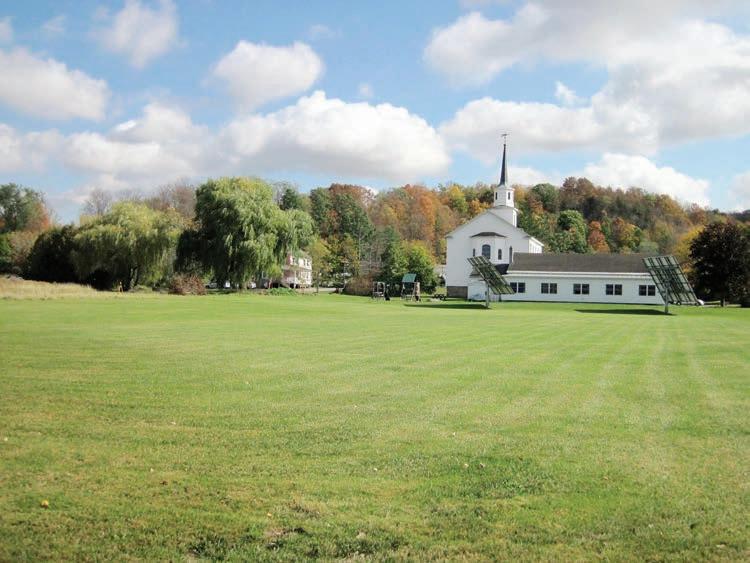
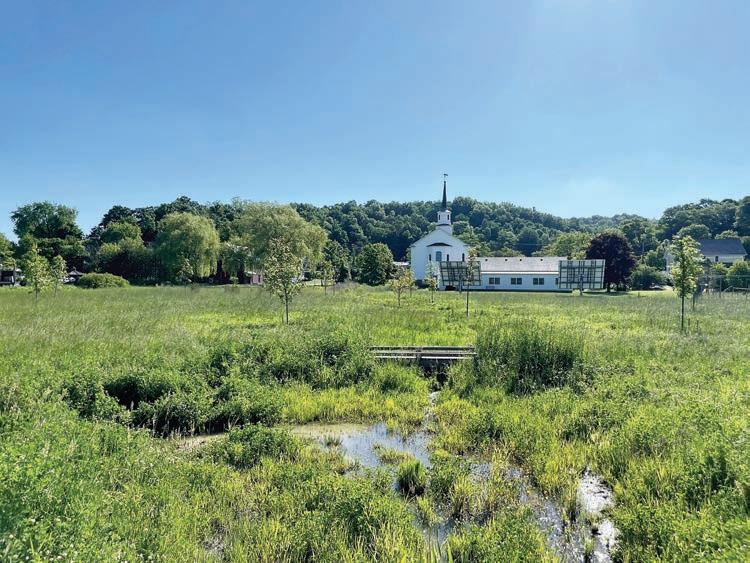
A former playing field behind the United Church of Hinesburg has now been successfully converted back into a functioning wetland, according to a Lewis Creek Association press release. The restored area features native shrubs, trees and wetland plants that support pollinators and wildlife while naturally improving water quality.
Water in this part of Hinesburg flows east to west, historically draining into a ditch north of UCH that made two sharp 90 degree turns before entering the LaPlatte River, collecting stormwater along the way.
Two previous studies identified this area as a high priority location for water quality improvements. The land behind UCH was once part of a larger wetland complex before being converted to agricultural use and later to playing fields.
Restoration began in the fall of 2024 by reshaping the land to allow a natural flow of water through the wetland as well as planting trees and shrubs as habitat.
By fall 2025 and spring 2026, after vegetation had taken hold, the berm that previously forced water into the ditch was removed. Water can now spread into the restored wetland, where plants and soils help filter pollutants. This work will also reduce phosphorus entering the LaPlatte River, and ultimately, Lake Champlain.
Located next to the town playing fields and town hall, the restored wetland will serve as one of Lewis Creek Association’s Ahead of the Storm demonstration sites, helping residents learn about water quality challenges and the benefits of ecological restoration.











Near my home in Vermont, at the bottom of a hillside, there is a shelf just above a roadcut where the soil is moist from the groundwater seeping out of the hill. Back in April the first coiled cinnamon fern (Osmundastrum cinnamomeum) fiddleheads pushed up through the ground. Huddled with heads bowed in a tight group, clad in shaggy off-white wool as if anticipating the chill, their forms glinted in the morning light as they caught the dew. During the first days of May, the fiddleheads began to unfurl, opening into what looked like leaflets at first, but which then thickened into bright green, bead-like sporangia, the cases for the spores.
These fertile fronds grew stiff and erect in the center of the clump, surrounded by the leafy sterile fronds, which are photosynthetic. Through May and into early June, the spores, which are filled with active chloroplasts, were dispersed, leaving the sporangia behind, which turn from lime-green to a darker forest-green, then tan, and finally the cinnamon color, which gives the species its name. By July, the plant has released its spores, and now spent, the spikes have darkened and withered at the center of each clump of arching green, waist-high foliage.
In the Northeast, cinnamon fern is one of the easiest ferns to recognize when its cinnamon-colored spikes are still present. It looks like its close cousin, the interrupted fern (Osmunda claytoniana), which often occupies the same moist woodlands, but the sporangia of interrupted fern grow on a band of modified leaflets in the middle of a leafy frond instead of a separate leafless stalk in the center of the clump.
By late summer the spike of cinnamon fern has crumbled away, and the fertile leaflets of interrupted fern have dropped off, leaving similar-looking vaseshaped ferns. This time of year, turn a frond over to look at where the base of the leaflet meets the stalk: cinnamon fern has a persistent tuft of tan hairs, while interrupted fern is smooth. (Even as fiddleheads, cinnamon fern’s wool is denser and slower to shed than interrupted fern’s.) A second clue is in the leaflet tips; whereas

cinnamon fern’s leaflets taper to a point, those of interrupted fern are blunter and more rounded. A final tell is that cinnamon fern prefers wet soils, while interrupted fern is a generalist that will also grow in well-drained uplands.
Remarkably, the cinnamon fern has changed very little over time, appearing in the fossil record in late-Cretaceous rocks, and its lineage has remained stable
even longer. In 2014, researchers described a 180-million-year-old fossil rhizome of a close relative from a volcanic mudflow in Sweden, where mineralization was so rapid that nuclei and even
chromosomes were preserved. These matched those of the modern cinnamon fern almost exactly in size and number. Why have cinnamon ferns changed so little from the times that the last dinosaurs were walking among them? The answers are not definitive, but possibly because the wet, acidic, low-nutrient ground that suits cinnamon fern has existed continuously on the planet since the Mesozoic, and because traits like tough rhizomes and quick-germinating green spores work so well in those wetlands that there has been little pressure to change.
Closer to home, cinnamon fern thrives in the low-disturbance margins of bogs and in swamps, where the fronds can grow as large as five feet. In these locations, the soil has been wet and acidic for centuries and many trees and shrubs struggle to take hold. Ruffed grouse nibble the fiddleheads; yellow warblers and hummingbirds line their nests with the silver-tan wool covering the unfurling fronds.
Weston Testo, a fern biologist at University of Vermont, told me that each clump of ferns grows from a slowly branching underground stem that can keep producing new fronds for centuries. In West Virginia, interrupted fern has been documented in colonies estimated to be over 400 years old, making it among the longest-lived organisms in the Appalachians. Cinnamon fern’s rhizomes spread the same way, and where conditions are right, a single clump can broaden into a circular patch of genetically identical plants, all stems of the same individual.
Contemplating the cinnamon fern in our woods, I see in one glance the spores ripening over spring and summer, the creep of a rhizome over centuries, and the hundreds of millions of years of a lineage that has watched the dinosaurs come and go.
Naya Banerjee is a naturalist based in Vermont. Illustration by Adelaide Murphy Tyrol. The Outside Story is assigned and edited by Northern Woodlands magazine and sponsored by the Wellborn Ecology Fund of New Hampshire Charitable Foundation: nhcf.org.
from page 1
questions about loons and calls for stranded birds — loons can barely walk on land and need about a quarter mile of water to take off into flight.
“Vermont now has probably (some) of the most well-educated, aware people about loons and what they need, and so it’s just made a huge difference in bringing them back,” he said.
Hanson said the efforts of the Loon Conservation Project and passionate loon observers over decades have resulted in a now stable population in Vermont, but emphasized that loons should be admired from a distance.
In the 1980s, the population crashed, leaving only seven nesting pairs of common loons in the entire state. Now, there are over 150 pairs and 400 individuals, according to the 2025 annual count.
Those numbers are still tiny compared to states with thousands of lake clusters, like Minnesota. But with the Vermont loon population stabilized, competition has been reintroduced, Hanson said.
One part of the conservation project incorporates wooden nest rafts, which prevent low shoreline nests from flooding in reservoirs, he said. But now that the population has risen, the conservation project is removing some rafts to encourage natural nesting.
A system of factors determines which loons have territories and where they are. Lake health, shoreline landscape, water depth and competition all influence where loons decide to nest, and if they will be successful. And they don’t even nest until at least age five, Hanson said — they spend their juvenile years hanging out on the ocean or Lake Champlain until it is time to return to their natal lake.
Some lakes, like Lake Champlain, have loons but not nests, and migratory loons can bump a lake’s population into the dozens. Hanson said size differences help biologists determine where a stray loon is from. Loons weigh less in inland states because they must fly farther to the ocean for the winter.

gain an already established mate, territory and, possibly, a successful nesting site.
Hanson said sometimes younger and fitter loons fight it out, which has been happening at Lake Iroquois the past few years. While the pair fends off the intruder, they must stash their chicks alone, which can make them vulnerable to predators.
“All of a sudden, we have a community that has a common purpose.
— Eric Hanson
The first documented nesting on Lake Iroquois was in 2019, but floods, raccoons and, more recently, seagulls, kept the chicks from hatching or reaching maturity. This year, however, the adult pair has put up a successful defense against the intruder, enabling the two chicks to make it to their teenage years.
A pair of loons might hold a territory in a lake for decades — a territory in the Green River Reservoir in Hyde Park has existed for over 50 years — but the individuals swap in and out as they get old, Hanson said.
Once mature, an individual loon flies back and forth between lake clusters getting to know the existing territories’ pairs so it can replace a loon once it dies, then
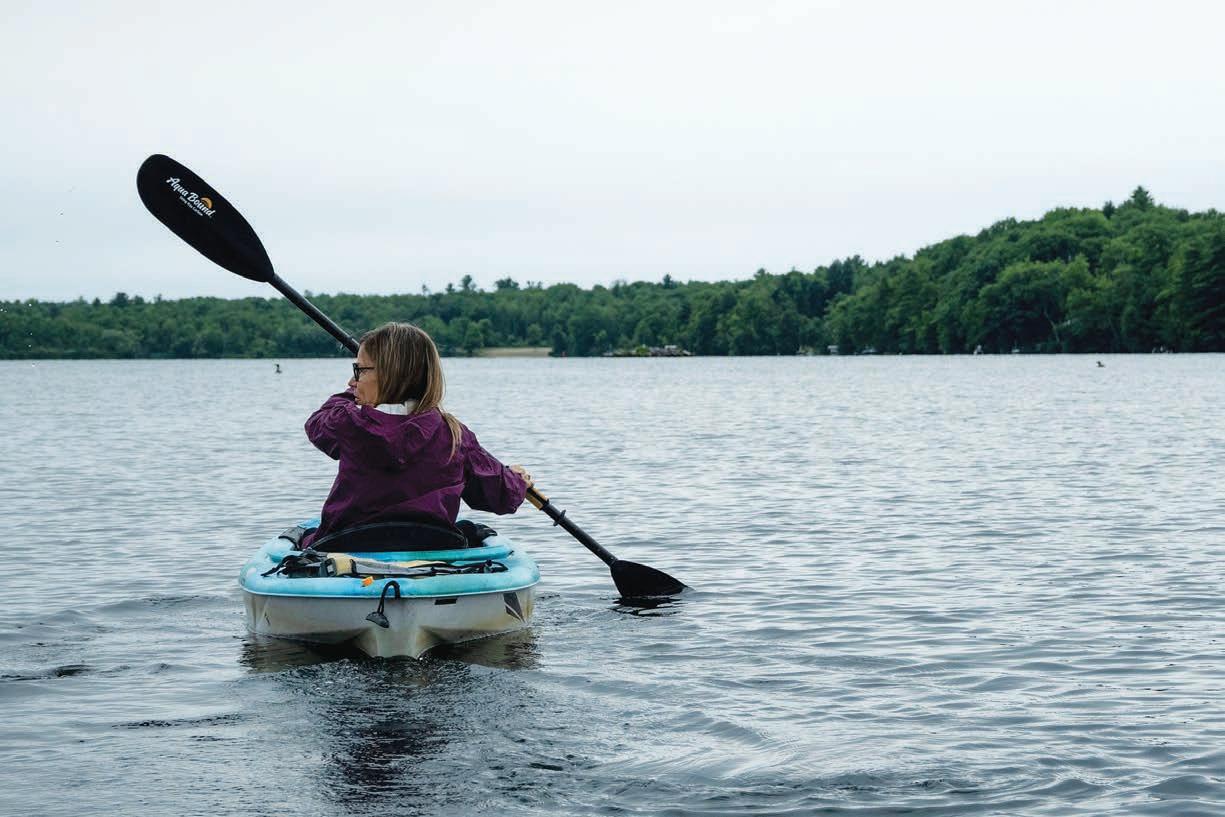
This third adult on Lake Iroquois was seen on June 18, while volunteer and lakeside resident Lisa Angstman was in her kayak for the annual loon count. In the mornings, she said, the third loon approaches the lake and the pair does a defense ritual — diving and circling with it, and sometimes fighting it.
That morning, the third adult eventually left, and the pair reconnected with their stashed chicks and fed them while Angstman observed. They are not quite

big enough to dive for their own food.
Angstman has been kayaking the lake every morning this summer and very frequently enough in summers past that the loons know her kayak. She’s observed all manner of behavior in this pair, building her own fount of knowledge about loons and sending it to Hanson and the
Loon Conservation Project.
The annual loon count organizes volunteers like Angstman around the state, and nearly every loon-friendly lake was paddled at the same time in the morning on June 18, the data submitted to the newly launched LoonWeb, an online database.
Angstman is not the only passionate loon lover on Lake
Iroquois — the room last week was full of people who consider the loon pair “theirs.”
“Loons are so easy to relate to because we can watch them every daylight hour. We can see the nesting. We can see the chicks,” he said. “And I have to use my father’s psychiatry skills for counseling on the other side if there’s grief.”
continued from page 3
our health care affordability bill, under Sen. Ginny Lyons’ leadership, to bring systemic health care costs down, and our data center bill to ensure any massive new energy users pay their fair share. What was missing wasn’t compromise — it was a clear roadmap from the governor about what it would take to earn his support. Those vetoes delayed important reforms that Vermonters can’t afford to wait another two years for.
The Citizen: What resolution would you suggest for the way Vermont has continued to use general funds to buy down the education tax rate? Do you think the education funding bill passed this year will help resolve this?
Grossman: Our taxes should be fair and consistent. General Fund buy-downs are erratic and irresponsible, making long-term district planning impossible. I fiercely oppose the Foundation Formula’s $60M cut from Chittenden County schools — which incumbents supported — forcing our districts into an impossible choice between crushing tax penalties or educator layoffs. Instead of overriding voter-passed budgets, we should permanently move vital social services off school budgets back to the General Fund and enact a second-homeowner tax conforming to Department of Taxes models.
Hunt: Paying down bad policy year after year with taxpayer dollars is an urgent and significant problem. Set a goal for pre-pandemic education spending targets and continue to build a pool of funds for education with property tax for homesteads and non-homesteads but with a higher rate of consumption tax funds. The education funding legislation will start to increase administrative efficiency through Cooperative Educational Service Areas but likely won’t lead to lower costs to property owners for this coming school year.
Chittenden: Using General Fund dollars to buy down property tax rates is financially unsustainable and masks underlying structural drivers. While recent legislation provides temporary relief, true fiscal stability requires structural spending restraint. Lowering the excess spending threshold in the Yield Bill is a step toward applying centralized, clear budgetary guidance to local school districts to help constrict high-growth spending decisions. Paired with state-level cost accountability, this threshold helps align local school budgets with what taxpayers can afford.
Lyons:
education health care costs and education property taxes. The veto eliminated reduced premium costs for individuals and small businesses insured on Vermont Health Connect. A minimum of $40 million could have been eliminated from the buy down in 2027 and $800 million over five years. There is also work by Cooperative Educational Service Areas to identify cost savings and efficiencies in school districts. Cooperative purchasing, educational opportunities, improved access to career and technical education and other programs result from this work. Property tax payment reform will help.
Ram Hinsdale: I think the education funding bill gives us a real chance to bend the cost curve, but we’ll have to stay disciplined. Buying down property taxes with the General Fund isn’t a long-term solution. The real answer is growing Vermont’s tax base by building more housing, welcoming more working families and making sure our funding system is fair, predictable and focused on student success. That’s where I’ve spent much of my time in the Senate, and it’s where I’ll keep pushing.
The Citizen: In what ways do you think you are either similar to or different from other Democrats?
Grossman: The status quo isn’t cutting it for working Vermonters. I’ve organized across Chittenden County for years and knocked on more than 3,100 doors in our district this year. Our party has lost touch with Vermonters’ basic needs. House reps, city councilors, selectboard members, and school board members have been clear with me that they need a partner in the Senate to expedite progress on attainable housing, health care access, fair taxes and public education.
I will fight for our 68,000 constituents first and foremost. We need leaders looking inward, not upward — because our hardwon protections mean nothing if the next generation can’t afford to stay here.
Hunt: I come to the race as a newcomer, not a political insider. I am a physician, specifically a primary care pediatrician, which allows me to work as a team with my patients (and their families and advocates like social workers, counselors, Department for Children and Families workers, educators) to clarify and define shared goals and work towards them together. To accomplish this, I put

Two players from Champlain Valley’s American Legion baseball team, which remained in contention for a state tournament bid until the last day of the regular season, received honors for their accomplishments during the 2026 regular season.
Riley McDade, CVU Class of 2026, of Shelburne, received the top honor for all players from the League’s seven-team Northern Division.
Vermont American Legion Baseball named McDade as Player of the Year for the Northern Division, recognizing him as the top player of any of the Northern Division teams. McDade hit .585, with 3 doubles, 2 triples, 2 home runs and 20 RBIs (60 plate appearances). In the fall, McDade will continue playing baseball at Husson University in Maine.
“What really separates Riley isn’t just the numbers. We talk all the time about moving on to the next pitch, whether the last one ended in a home run or a strikeout, and Riley embodies that better than anyone I’ve coached. Every pitch is a new opportunity, and he’s always competing, always thinking and always looking for a way to gain an edge,” Casey Martinez, head coach for the last two years, said.
Harrison Whitman, CVU Class of 2027, of Shelburne,

who plays first base for Champlain Valley, was named as first top first basemen in the Northern Division. Whitman hit .333, with 6 doubles, and 21 RBIs (63 plate appearances).
“What impressed me most was how much he improved this spring. Harrison became a more
complete hitter, driving the ball to all fields, and it seemed like, every time we needed a big hit, Harrison came through. He was one of the most consistent offensive players in our lineup all season,” Martinez said.
— Dan McLean





RABIES BAIT





continued from page 2
The week-long bait drop is a cooperative effort between Vermont and the
Rabies is a deadly viral
of the brain that infects mammals. It is most often seen in

RABIES BAIT
continued from page 2
saliva. If left untreated, rabies is almost always fatal in humans and animals. However, treatment with the rabies vaccine is nearly 100 percent effective when given soon after a person is bitten by a rabid animal.

The week-long bait drop is a cooperative effort between Vermont and the U.S. Department of Agriculture Wildlife Services to stop the spread of the potentially fatal disease.
Rabies is a deadly viral disease of the brain that infects mammals. It is most often seen in raccoons, skunks, foxes, and bats, but unvaccinated pets and livestock can also get rabies.The virus is spread through the bite of an infected animal or contact with its


foxes, and bats, but unvaccinated pets and
can also get rabies.The virus is spread through the bite of an infected animal or contact with its

saliva. If left untreated, rabies is almost al ways fatal in humans and animals. However, treatment with the rabies vaccine is nearly 100 percent effective when given soon after a person is bitten by a rabid animal.
So far this year, 23 animals in Vermont have tested positive for rabies, and 14 of those have been raccoons.
According to wildlife officials, rabid animals often show a change in their normal behavior, but you cannot tell whether an animal has rabies simply by looking at it. People should not touch or pick up wild animals or strays – even baby animals.



So far this year, 23 animals in Vermont have tested positive for rabies, and 14 of those have been raccoons.
According to wildlife officials, rabid animals often show a change in their normal behavior, but you cannot tell whether an animal has rabies simply by looking at it. People should not touch or pick up wild animals or strays – even baby animals.

SHELBURNE DAY continued from page 4 face

Shelburne Historical Society will have a display and president Dorothea Penar will lead a cemetery tour at 1 p.m. Food vendors round out the event with everything from coffee and lemonade to burgers and creemees. Kids will enjoy meeting animals from Shelburne Farms, craft projects, and


head the Golf depending land.
SENATE
continued from page 12
my own needs, desires and prejudices on the back burner to focus on my patient. Caring for people requires knowing your limits, speaking the truth and learning from your mistakes.
continued from page 8
13-year battle with cancer. The book recounts Anne Rand’s determination to raise her three children after her husband left the family and highlights the friendships that sustained her during her illness. Rand, a former director of civic engagement at Norwich University, reconstructed the story through family memories and interviews. He lives in Vermont with his wife. Information: steverand.org.
Union Bank marks 135th anniversary
Union Bank will celebrate its 135th anniversary with customer appreciation events from 11 a.m. to 2 p.m. Friday, July 31, at all 18 of its Vermont and New Hampshire branches. The celebration will include
Chittenden: I share my fellow Democrats’ commitment to protecting public education, strengthening climate resilience and supporting working families. What sets me apart is my empirical, data-driven
complimentary lunches from local businesses, anniversary giveaways and an opportunity to thank customers and communities for their longtime support.
The Friends of the Stowe Free Library and the Stowe Historical Society will present a screening of “The Farm Boy” at 7 p.m. Thursday, Aug. 13, at the Stowe Free Library, 90 Pond St. Written and directed by George Woodard, the black-and-white feature is set in 1944 and tells a story of love, trust and integrity inspired by the lives of the filmmaker’s parents. Much of the film was shot on Woodard’s farm in Waterbury.
approach to budgeting. Drawing on my background as a former South Burlington city councilor, local parent and my work at the University of Vermont, I consistently scrutinize state spending to ensure policies deliver measurable outcomes, demand fiscal discipline and prioritize cost-of-living affordability.
Lyons: My work as a scientist and legislator is unique. I understand environmental issues, our chaotic system of health care and other areas. I consistently use data-informed decision making. I bring a scientific approach to improving the human condition and environmental protection. My students are now physicians, social and child care workers, naturalists or educators. I have experience on school and selectboards — as do other Democrats
and those with other party affiliations. The mix of differences and similarities stimulates productive discussions and outcomes for our constituents.
Ram Hinsdale: My Indian immigrant father and Jewish American mother ran an Irish pub in Los Angeles, and today, I am a mom of two toddlers, I teach environmental and economic justice, and I serve as the Senate majority leader. Those experiences taught me that people are more complicated than political labels. I believe in progressive values, but I’m also deeply pragmatic. I care about whether an idea works — whether it lowers costs, expands opportunity and improves people’s lives. I spend a lot of time bringing people together who don’t always agree, because that’s how lasting progress gets made.
The Town of Charlotte, located in Chittenden County, seeks sealed proposals from qualified engineering firms for design engineering services for the Ferry Road Trail Segment: approximately 1,800 linear feet of new aggregate path along the eastbound—or south—side of Ferry Road connecting the Charlotte Village Loop Trail “Boardwalk Segment” to the Cowboy Lewis Trail. For complete details visit: charlottevt.org/jobs. Sealed proposals are due by August 14th.
COTTAGE FOR RENT: 3 miles north of basin harbor. 5 bedroom, private, end of road. Cement dock and mooring. Air conditioning and new mattresses. No pets. $3,800 per week. Avalalbe Aug. 15 and beyond. Contact Brian. 802-373-9861. Inquires for next year accepted.
Hinesburg Development Review Board
Tuesday, August 18, 2026
Nancy Anis eld (applicant/ owner): Final Subdivision Plat review for a 2-lot subdivision pursuant to Section 3.2 and Section 4.2 of the Hinesburg Subdivision Regulations on a ±292.6-acre property located at 1067 Silver Street in the Agricultural Zoning District.
The meeting will be both in person and remote. See meeting agenda on town website with details on how to participate.

Know a landlord who’s overwhelmed?
Need help starting or running an Airbnb or a mid- or long-term
Prefer a local team to a national chain?



Wednesday, August 5 - Sunday, August 9
4T2D: Score 50–90% off everything under the tent.
Bertha Church Intimates: Save 20–50% on select sale styles.
Bickford USA: Save up to 40% on Made in USA favorites, shop exclusive samples & seconds, plus 10% off the entire store.
Catamount Store: Save 50% to 70% on select apparel styles, as well as 10% off all regularly priced apparel items.
ECCO Clothes: Save up to 70% on select styles.
Fear and Cloathing: 20% off entire order.
Gaku Ramen: Free mochi with the purchase of meal.
Golden Hour Gift Co.: Follow @goldenhourgiftco for daily specials revealed on Insta Stories.
Harbour Thread: Up to 80% off.
Homeport: Save 10% on purchases up to $25, 15% on $25–$99.99, and 20% on $100+. Plus, shop sidewalk specials at 40% off or more.
Kiss The Cook: 20% off storewide (exc. electronics & already discounted items) plus up to 60% off under the tent.
Lake Champlain Chocolates: Sweet deals on truffles, Five Star Bars, Spring Coin Bag, and more.
Little Istanbul: 20% off storewide.
MK Clothing: Save 50% or more on select finds.
Outdoor Gear Exchange: Consignment Yard Sale is back 8/7–8/9! Come score amazing deals on gently used outdoor gear, then browse the clearance selection to gear up for your next adventure.
Phoenix Books: Visit the tent for amazing deals on books, gifts, and more.
Public Vintage: 50% off select vintage jewelry, clothing (adults and kids) + homewares.
Saratoga Olive Oil: Enjoy a free tasting and mention "Sidewalk Sale" for 10% off your purchase.
The Optical Center: 15% off.
The Prik: Spin the prize wheel for your chance to win.
The Vermont Flannel Company: Barn Sale 20% off select styles.
Tradewinds Imports: Free gift with purchase, while supplies last.
Whim : Deals up to 75% off.
Zinnia: Everything under our tent is just $5.