In keeping with MRA’s tradition of presenting Primers that feature articles on topics of current interest to educators, we are pleased to offer this issue on Disciplinary Literacy. It is our hope that as you take some time to rejuvenate this summer, you’ll find within these pages some suggestions to incorporate into your own practice come September. These articles present a range of ideas spanning K–12 and truly include something for every grade level. In addition, take a look at the Book Review columns for some great selections to add to your own summer reading list.
The Primer provides a forum for sharing. Effective teachers are always enhancing their skills and improving their practice because they both share and collaborate with other professionals. Please considering sharing your expertise by submitting your own contribution to our next edition, the 2018 Primer Calendar, Literacy Strong: Reaching All Readers.
Thank you to the Publications Committee, especially Publications Chair, Nancy Verdolino. Once again your support has been invaluable. Thank you also to Mela Ottaiano and Melinda Belter. It is a pleasure to work with you to bring the Primer to fruition.
Warm wishes for a wonderful summer!
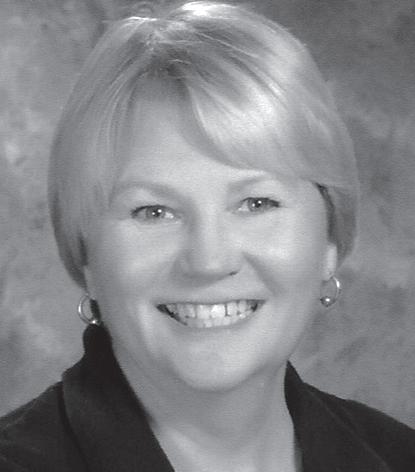
Jo Ann Thompson
Call for Manuscripts—Deadline for Submissions is September 1, 2017
Please consider submitting an article for publication in the Primer. The next issue, our Primer Calendar, will be on the theme Literacy Strong: Reaching All Readers. The manuscript submission deadline is September 1, 2017. Submit a manuscript to jothompson25@comcast.net.
MANUSCRIPT SUBMISSION GUIDELINES
The Primer Calendar welcomes original contributions on all facets of reading, language arts, and literacy education. Guidelines are as follows:
● Manuscripts are limited to no more than 650–750 words including references and other material (tables, charts, etc.).
● Manuscripts must be double-spaced in 12-point font and should be saved as Microsoft Word documents.
● Manuscripts must be prepared according to the style specified by the most recent edition of the Publication Manual of the American Psychological Association (APA).
● Each manuscript must include a cover sheet containing (a) the manuscript title, (b) the author ’s name, affiliation, position, preferred mailing address, email address, telephone number(s), and fax number. No identifying information should appear elsewhere in the manuscript.
Jo Ann Thompson
A Message From the MRA President 2016–2017
Dear MRA Members and Friends,
We welcome you to enjoy our summer issue of the MRA Primer. This issue covers a range of topics related to disciplinary literacy and provides articles from local professionals and national literacy leaders, plus reviews of recommended books for children, young adults, and teachers. One outstanding article, “Planting Seeds: To Grow Science Disciplinary Literacy Skills We Must Layer Basic and Intermediate Literacy Skills Across K–12” is by Sylvia Brown Scholarship recipients, Jacy Ippolito and Cami Condie, who worked with Megin Charner-Laird and Jaclyn Blanchette (all from Salem State University), and Boston University’s Christina L. Dobbs. Local Stoughton Public School teachers Laurie Higgins and Kathleen Monahan, co-chairs of the MRA Studies and Research Committee, provide an engaging and well-researched article on “Disciplinary Literacy in the Elementary Classroom.” Former teacher Jan Mounsey offers insight into “Support for the Below-Basic Reader in the Content Classroom.” Nationallyknown researchers Timothy Shanahan and Cynthia Shanahan offer “Answers to Questions About Disciplinary Literacy” and another nationally-known literacy consultant ReLeah Lent describes “Disciplinary Literacy: A Shift in the Right Direction.” In “The Name Game,” nationally-known author Greg Tang offers tips for combining literacy and math.
Finally, you can look forward to summer reading with suggestions in the three book review columns. Boston University professor Laura Jimenez shares some humorous suggestions in “Laughter Between the Covers.” In “New England People and Places,” Bridgewater University professor Mary Shorey and her students review books with a New England connection. You won’t want to miss “Selected Professional Books for Today’s Educators” described by Dartmouth teacher Lisa Maucione, who serves as coordinator of MRA’s Wild Book Club and the nationally popular Literacy Teacher Book Club on Facebook.
The mission of the Massachusetts Reading Association is “to promote literacy for all learners through professional development, research, publications, and advocacy.” We hope you will agree that has been accomplished with this wonderful journal. Each year, MRA publishes two issues of our Primer journal, and we are grateful to the team that undertakes this task to produce valuable resources for our community. I would like to offer a very special thank you to the contributors for sharing their insights and ideas and to Primer Editor Jo Ann Thompson and Publications Chair Nancy Verdolino for organizing this project so beautifully. We encourage all readers to join us!
Warm wishes and happy reading
Laura Broach
Call for 2017–2018 Committee Members!
Do you have a special interest in the area of literacy? Do you long to work with like-minded professionals on special subjects? Are you brimming with ideas and enthusiasm for special projects? If so, consider joining one of the many MRA committees. Log on to www.massreading.org and search for Committees to find choices and information. If you’d like to join as an active participant, or initially as an observer, contact Marlene Correia at mcorreiamra@gmail.com.
LAurA BroAch
Primer 2017 Editorial Review Board
The Primer is a peer-reviewed journal published by the Massachusetts Reading Association, an affiliate of the International Literacy Association. The purpose of this publication is to disseminate research, share innovative teaching ideas, and reflect on literacy teaching and learning. Its content does not necessarily reflect or imply endorsement by the Association or its officers or members.
Editor: Jo Ann Thompson Hopkinton Public Schools
Editorial Review Board
Martha Adams Colwell Framingham State University
Katharine Covino Fitchburg State University
Mary Fischer Education Consultant
Pattie Kelley Milford Public Schools
Terrie Marr Westfield State University
Cynthia Rizzo Retired, Massachusetts Department of Education
Joan L. Tuttle Education Consultant
Nancy Kelly Verdolino Hopedale Public Schools
Don’t miss out! Visit the MRA website to stay informed of MRA events, find out about local council programs, and more. We also encourage you to participate in our social media sites!
Website: www.massreading.org
Facebook: www.facebook.com/MAreads
Twitter: @mraread
Pinterest: www.pinterest.com/mrareading
Board of Directors 2016–2017
MRA Executive Committee
President: Laura Broach
President-elect/Conference Chair: Marlene Correia
Vice President: Holly Banusiewicz
Vice President-elect: Valerie Shinas
Executive Secretary/Webmaster: Joan L. Tuttle*
Executive Treasurer: Bernard A. Tuttle
Directors of Membership: Linda Cornell, Peggy Coyne
ILA State Co-coordinator/Administrative Assistant: Nancy Meagher*
Immediate Past President/Publications Chair: Nancy Verdolino*
ILA State Co-coordinator: Sherry Sausville*
MRA Committee Chairs
Adolescent Literacy: Katherine Frankel, Jennifer Rabold
Bylaws: Jo Ann Thompson*
Celebrate Literacy: Linda Lindsey
Diversity: Oneida Fox Roye
ELL: Pamela Shufro
Exemplary Reading: Cami Condie, Pattie Kelley
Families and Early Childhood Literacy: Valerie Hytholt, Liz O’Donnell, Elizabeth Verdolino
Government Relations: Karen Diaz, Evelyn Wall*
Historian: Elaine Bukowiecki*
International Projects: Leandra Elion
Liaison–EDCO: Dana Mullaley
Liaison–ESE: Lauren McBride
Liaison–MSLA: Kim Cochrane
Liaison–Reading Recovery: Laurel Dickey
Literacy Coaches: Evelyn Ford-Connors, Kelly Reinhart
Minigrants: Sharon Ryan
New Literacies: Leslie Burnap
Nominating: Mary Fischer*
Parliamentarian: Nancy Witherell*
PD Attendance Certificates: Ruth Berg
Primer Content Editor: Jo Ann Thompson*
Publicity: Sheelah Sweeny*
RTI/MTSS: Barbara Steckel*, Kelly True
Sylvia D. Brown Scholarship: Terrie Marr*
Student Membership: Jenn Manak
Studies and Research: Laurie Higgins, Kathleen Monahan
Local and Special Interest Councils
Berkshire Council: Cathy Salvini
Cape Cod Reading Council: Mary Wall
Central Mass Reading Council: Lisa Rice
Greater Boston Reading Council: Jean Helstrom
MACURE: Martha Colwell*
Merrimack Valley Regional Reading Council: Katharine Covino
Nobscot Reading Council: Connie Ward
Phyllis Allen Smith North Shore Reading Council: Cecilia Phelan
Disciplinary Literacy: A Shift in the Right Direction
by ReLeah Cossett Lent
ReLeah Cossett Lent is an international literacy consultant and author of many books, including This Is Disciplinary Literacy: Reading, Writing, Thinking, and Doing . . . Content Area by Content Area (2016, Corwin), Common Core CPR: What About Adolescents Who Struggle . . . Or Just Don’t Care? (2013, Corwin) and Overcoming Textbook Fatigue: 21st Century Tools to Revitalize Teaching and Learning (2012, ASCD).
While working with a high school faculty on disciplinary literacy, I noticed one particular teacher who didn’t seem to be as involved as the others. I encouraged her to speak up during a discussion and she finally admitted that she was unsure about this “new” initiative. “I took all of the necessary courses a few years ago to add a reading endorsement to my certificate and, while I’m happy to have the extra credential, it was a lot of work and I really didn’t gain much from it. I still don’t know how to help my students access the challenging text in their economics books.”
She’s not the only one who has expressed frustration with “the reading movement,” as I’ve often heard it called. Many content-area teachers have felt they were being asked to supplement their content with a separate reading curriculum, one independent of their discipline. A math teacher, for example, told me recently, “I’m not a reading teacher. Actually, I was never much of a reader myself, but I always loved math—and I’m good at getting my students to love math, too.” She went on to explain that taking time out of her curriculum to “teach reading and writing” seemed counterproductive to her goals and, in fact, sometimes made her feel less than competent.
She described an experience where she had been told to use the strategy of the week, a gist activity where all students in the school had to read and then write a brief summary, or gist, of the piece they were reading. Students were given a graphic organizer with “before,” “during,” and “after” circles for recording thoughts in
each of those areas related to the gist of the text. “That strategy is probably a good one for helping kids read better,” she admitted, “but for word problems it’s simply overkill and takes time away from my helping kids find the most important words, numbers, and patterns in the problem. I guess what I’m saying is that I need that time to teach kids math, not reading.” She sat back as if she had finally put her finger on what had been bothering her about reading strategies. I could hardly disagree.
Shifting Beyond Reading Strategies
One of the unintentional consequences of the reading strategy movement was that we put the proverbial cart before the horse. Of course we want all students to read deeply, write with clarity and purpose, and use critical thinking to solve problems, but mandating programs or generalized solutions without asking teachers what makes sense in their content rarely gets us moving in the right direction. In too many cases, reading strategies were used as isolated activities with students not understanding how or when to use the strategy. “Research has documented reading strategies that good readers use, and these can look similar across disciplines; however, they tend to neglect specific information necessary for discipline-specific comprehension,” says a group of researchers focused on disciplinary literacy (Johnston, DiBella, & Martelli, 2016). And, as my math teacher friend pointed out, strategies may actually get in the way of effective teaching.
Shifting Toward Disciplinary Reading
The widespread implementation of content-area literacy, an across-the-disciplines approach that focuses on generic strategies readers use to comprehend contentarea texts, gave a nod to content-area learning, but the emphasis on generic once again became problematic.
The vast differences among disciplines, their texts, and how they were taught rejected the one-size-fitsall model of literacy common to all content areas. Disciplinary literacy moves us away from general reading and writing strategies and asks teachers what they can do to help their students learn in the unique ways that experts in their fields learn. It respects the varied ways that students read, reason, write, think, speak, inquire, and, most important, participate in specific disciplines. Researcher Elizabeth Moje (2010) deepens the definition by arguing that disciplinary learning doesn’t just build knowledge but actually produces or constructs it.
Let’s consider why a generic approach won’t help the math teacher I referred to earlier who wants to use literacy (defined here as reading, writing, speaking, and listening) to help students read, understand, and solve a word problem. If we asked her what technique she would use to guide students in deconstructing a word problem, she might offer the following.
1 Have students read the word problem silently and jot down what the problem is asking in their notebooks.
2 Ask students to talk with their learning partners to determine if both of them identified the same key information in the problem. If not, they should read the problem again (or ask the teacher) for clarification.
3 Ask students to take action to solve the problem.
• Jot down the information the problem has provided and ascertain what information is needed to solve the problem.
• Identify how the problem can be solved.
• Attempt to solve the problem.
4 Reflect on the solution, perhaps in writing. Does it make sense? Can the results be checked?
Compare the math teacher’s answer to one an English teacher might give who is asked how she would use literacy as a tool to help students read a complex poem.
1 Ask students to number the lines of the poem.
2 Read the poem out loud with students following along silently.
3 Have students read the poem again silently, circling any word, phrase, or line that is unclear, confusing, or in any way incomprehensible.
4 Place students in groups correlating to a particular stanza and have students discuss confusing parts.
5 Lead a whole-class discussion of the poem with various groups offering responses based on their small-group discussions.
6 Ask students to reflect in writing their understanding of the theme of the poem.
Notice how the previously mentioned gist activity would not have been effective in teaching the lesson in either of these disciplines. It’s not to say that reading strategies aren’t sometimes useful ways to help students comprehend, but content-area teachers must be encouraged to help students find strategies that are applicable to their own subject and lessons.
To extend the understanding of disciplinary literacy and how strategies should be discipline-specific, consider a common activity which has its foundation in solid learning theory, the K-W-L, which asks students to
• reflect on what they already know (What I know).
• set a purpose for reading (What I want to know).
• review what they have learned (What I have learned).
With a disciplinary literacy approach, the strategy would shift from a general reading strategy to one that is customized to each specific content areas such as the following:
• observe-infer-conclude in science (Alvermann, Gillis, & Phelps, 2009).
• deconstruct-solve-apply in math.
• analyze-compare/evaluate-infer in history.
• summarize-evaluate/analyze-write in English.
• listen-comprehend-speak in foreign language.
• observe-analyze-express in art.
Shifting Toward Disciplinary Thinking and
Writing
Content-area writing should also be specific to each discipline. While students may write rather disjointed notes when observing a phenomenon in a science lab, such sentence fragments in an essay might set an English teacher’s teeth on edge. Likewise, the analytical writing required in many social studies classes as students corroborate sources, for example, has little use in creative writing or in composing poetry. Teaching students to think about content (which is, after all, an important goal of writing) also requires targeted disciplinary skills. Thinking like a historian means learning to intuitively source materials, read closely for underlying bias, and engage in an analysis of the text or a comparison of one text to another. Such thinking will also be beneficial in preparing to write an argumentative essay or participate in a debate, perhaps in an English class. Disciplinary thinking, then, isn’t simply assigned to one content-area like science or history but can be utilized in other areas when appropriate. Its advantage is in helping students learn how to specifically but flexibly engage in whatever content they are studying by utilizing the literacy skills they have been taught in each of their other classes.
Diving Into Disciplinary Literacy
In short, a disciplinary literacy approach allows teachers to move more fully into their role as content experts as they guide students by using literacy skills and strategies appropriate to their discipline. Such skills often go beyond traditional literacies as they engage students in active practices such as inquiry, collaboration, creativity, and risk-taking. Disciplinary literacy is about doing the work of the disciplines in place of merely reading about it.
The real issue, then, is not how to find the perfect strategy for locating textual evidence or evaluating generic arguments but how to empower and support teachers as they find ways to help students use the literacy skills necessary to read or engage with a variety of texts, wrestle with new learning through writing and speaking, and apply what they are learning in relevant
and meaningful ways respective to each discipline. Disciplinary literacy becomes an integral part of the content (Moje, 2008), a tool for unlocking meaning in every content area.
But how are busy teachers to make this shift—especially after so many have experienced strategy fatigue? Like most effective professional learning, the embedded approach works best. Content area teachers in their teams or departments—or in interdisciplinary groups such as in grade levels—should first identify what students need to learn and do to become successful in their content areas. And who better to identify such skills than the teachers who use them daily?
When I first began researching and writing about disciplinary literacy, I asked teachers across the country to identify what experts in their fields did when they read, wrote, thought about, and discussed topics in their content. It was fascinating to watch these teachers interact with each other in true think-tank style as they identified the skills students need to learn to become successful in their classes. I found that many teachers had never really considered the question, probably because those skills had always come so easily to them. After all, most disciplinary teachers are really good at their content and may not recognize what students should do when they just don’t get it.
Questions such as the following may remind teachers how to go back to their early years as learners and reflect on exactly what they did to access content knowledge.
• How did you first approach text that was challenging?
• How did you build the background knowledge necessary to make sense of complex text?
• How did you learn to write about content topics, research, or reflections?
• How did you talk to others who were studying similar topics?
• What did you do when a concept didn’t make sense?
• How did you learn new vocabulary?
• How did you develop skills necessary to do the work of the discipline?
• What skills does one need to become a successful learner in your content area?
It is only when such skills and behaviors have been identified that teachers can begin choosing appropriate strategies—or developing their own—to help students access their content. Such tools then can be incorporated into the curriculum, not taught as a sidebar to the content. Utilizing literacy skills within each discipline allows students to learn how literacy functions for different purposes and, as an added advantage, creates a much richer schoolwide culture of literacy that situates reading, writing, speaking, reasoning, and doing within a relevant context.
Identifying Literacies Within the Disciplines
The following bullet points for each of the major content areas, although not comprehensive, can act as starting points as teachers reflect on the role literacy plays in their own content area (Lent & Voigt, in press). As they go through the lists (or brainstorm their own), keep in mind that disciplinary literacy is by definition active—the doing of the discipline, not simply the reading about it. Inherent in these lists is the understanding that speaking, questioning, and collaborating are threads that hold disciplinary literacy—and learning—together.
Science
When scientists read, they
• assume an objective stance.
• ask why.
• rely on data, sketches, and charts.
• make connections from known concepts to new concepts.
• determine validity of sources and quality of evidence.
• pay attention to patterns.
• make predictions.
• review and reflect.
• pay attention to vocabulary.
When scientists write, they
• use precise wording.
• compose in phrases, bullets, graphs or sketches.
• may favor passive voice.
• seek exactness over craft.
• communicate in a systematic format.
• distinguish facts from opinions. When scientists think, they
• allow curiosity to drive learning.
• look for connections.
• understand when they need more data.
• rely on prior knowledge or research.
• consider new hypotheses or evidence.
• propose explanations.
• create solutions.
History or Social Science
When historians read, they
• identify bias.
• untangle conflicting perspectives and claims.
• corroborate information and sources.
• contextualize sources.
• examine text structure.
• compare and contrast events, accounts, documents, and visuals.
• infer what is not explicit.
• analyze and interpret.
When historians write, they
• create timelines with accompanying narratives.
• utilize information/evidence from multiple sources.
• organize conflicting ideas or perspectives into a whole.
• grapple with large quantities of information.
• use the past as a mirror to the present.
• summarize social or political consequences of an event.
When historians think, they
• sift through fragments of information.
• compare and contrast what they have been presented.
• connect causes with effects.
• synthesize events or ideas across long periods of time.
• recognize bias.
• think critically.
Math
When mathematicians read, they
• isolate information they have been given and look for information they need.
• identify patterns and relationships.
• decipher symbols and abstract ideas.
• apply mathematical reasoning.
• seek accuracy.
• analyze, formulate, and interpret.
• evaluate data.
When mathematicians write, they
• explain, justify, describe, estimate, or analyze.
• use representations.
• seek precision.
• utilize real-word situations.
• communicate ideas clearly.
• draw conclusions.
When mathematicians think, they
• use all available information to solve problems.
• consider generalizations and exceptions.
• bring forth previous understandings.
• know when to estimate and generalize.
• employ mathematical principles.
• engage in conceptual understandings.
ELA or English
When students of English read, they
• find meaning through literary techniques.
• identify underlying messages that evolve as theme.
• recognize bias.
• use context to learn new vocabulary or words used in new ways.
• summarize, synthesize, and analyze.
• comprehend how devices such as tone, foreshadowing, or irony affect the text.
• question the author.
• make connections.
• pay attention to the craft of writing.
When students of English write, they
• utilize a process: drafting, revising, and editing.
• understand how to flexibly utilize organization, details, elaboration, and voice to enhance meaning.
• ask for feedback.
• avoid formulaic writing.
• employ literacy techniques and devices appropriately.
• use evidence.
• avoid bias.
When students of English think, they
• use reflection as a tool for understanding.
• ask questions of the text.
• compare texts or themes.
• clarify through discussion.
• utilize their thinking in speaking or written form.
• make connections among texts, themes, or the real world.
Shifting Forward
Through disciplinary literacy, we can tap into the potential of every teacher to guide students in unlocking the mysteries of their content. No longer will teachers feel that someone has imposed literacy upon them, but they will discover the best literacy practices for
their content, creating readers, writers, and thinkers who rely on their teachers’ expertise to gain access to content-area knowledge. Working together, we can harness the differentiated power of literacy to make our teaching lives as well as the learning lives of our students infinitely better.
References
Alvermann, D. E., Phelps, S. F., & Gillis, V. R. (2009).
Content-area reading and literacy: Succeeding in today’s diverse classrooms. New York, NY: Pearson. Johnston, V., DiBella, K. S., & Martelli, C. D. (2016, October 13). Disciplinary Literacy and the Value of Making Connections. Retrieved from https://www. literacyworldwide.org/blog%2fliteracy-daily% 2f2016%2f10%2f13%2fdisciplinary-literacy-andthe-value-of-making-connections
Lent, R. C. (2016). This is disciplinary literacy: Reading, writing, thinking, and doing . . . content area by content area. Thousand Oaks, CA: Corwin.
Lent, R. C., & Voigt, M. M. (in press).
Moje, E. B. (2008). Foregrounding the disciplines in secondary literacy teaching and learning. A call for change. Journal of Adolescent and Adult Literacy, 52(2), 96–107. Moje, E. B. (2010, April 6). Disciplinary literacy: Why it matters and what you should do about it. Retrieved from https://www.youtube.com/ watch?v=Id4gK-wGzU
Bridgewater State University
CAGS AND MEd IN READING
PROGRAM OVERVIEW
Our Certificate of Advanced Graduate Study (CAGS) and Master of Education (MEd) in Reading programs are built on a 50-year legacy of providing professional development and intellectual growth to practicing educators. These programs will prepare you for new roles in education through challenging curricula (33 and 30 credits, respectively) that bridge theory and practice while fostering diversity, and advancing professionalism and ethical behavior. Literacy development, assessment, and expanding programmatic uses of resources and technologies in the instruction of students with diverse learning and literacy needs are featured.
PROGRAM HIGHLIGHTS
Our graduate reading programs offer: 175 years of teacher preparation
· Diverse faculty with extensive teaching experience and ongoing scholarly research
Compliance with all recommended professional and ethical standards
Cohort model of learning with fellow professionals
Personalized instruction in small classroom settings
Affordable tuition for in-state and out-of-state students
FOR MORE INFORMATION
Visit: www.bridgew.edu/graduate
Email: gradadmissions@bridgew.edu
Phone: 508.531.1300
OFFICE OF GRADUATE ADMISSIONS
Bridgewater State University Maxwell Library, Room 019 10 Shaw Road Bridgewater, MA 02325
Answers to Questions About Disciplinary Literacy
by Timothy Shanahan and Cynthia Shanahan
Tim Shanahan, PhD, is a professor in the Department of Curriculum and Instruction at the College of Education, University of Illinois, Chicago, and the director for the university’s Center for Literacy. He has also served as the Director of Reading for Chicago Public Schools and is a past president of ILA.
In this article1 in Educational Leadership, Timothy Shanahan and Cynthia Shanahan (University of Illinois/Chicago) answer some common questions about disciplinary literacy.
Why do we need disciplinary literacy standards?
Literacy differs by discipline, say the Shanahans— vocabulary, sentence structure, use of graphic information, etc. Historians read different kinds of texts than scientists. A history text uses maps, perhaps a painting depicting the signing of the Declaration of Independence, while a science text is quite different. “Understanding how to move among prose, equations, diagrams, tables, plots, and photos is an essential science reading skill,” say the authors. “Disciplinary literacy instruction aims at fostering an awareness of such specialized text features as well as an ability to negotiate them successfully.”
Should English teachers teach science and history skills?
No, say the Shanahans; math literacy should be taught in math classes, science literacy in science classes, and so on, “not as some kind of decontextualized adjunct.”
Cynthia Shanahan, EdD, is a professor in the Department of Curriculum and Instruction at the College of Education, University of Illinois, Chicago, and the executive director of the college’s Council on Teacher Education. Her primary research focus is adolescent literacy.
Don’t disciplinary subjects already have their own standards?
Yes, but they usually address knowledge, not the field’s unique approach to reading, writing, speaking, listening, and language use.
Why aren’t there elementary disciplinary literacy standards?
Elementary texts most often present material in general ways, with disciplinary literacy emerging in the middle grades. Elementary students can apply generic skills across all disciplines.
What disciplinary skills pertain to English?
English teachers are responsible for general literacy skills, vocabulary, grammar, spelling, and mechanics, which students use across the curriculum. There are ELA-specific terms like metaphor, symbolism, and allusion, and specific skills when students read poems, novels, and short stories.
Are disciplinary literacy skills the same as content-area reading skills?
No, say the Shanahans. Generic content skills like locating and memorizing information are important
1“Answering Questions About Disciplinary Literacy” was previously published in the Marshall Memo 671: A Weekly Round-up of Important Ideas and Research in K–12 Education (January 30, 2017). Reprinted by permission of the authors and Kim Marshall. Excerpts in the article were originally from “Disciplinary Literacy: Just the FAQs,” previously published in Educational Leadership, Vol. 74, No. 5, pp. 18–22 (February 2017).
and can be used across disciplines, but disciplinespecific skills like comparing multiple accounts of a historical event and evaluating different perspectives are in another league.
What’s the right balance between content-area and disciplinary literacy?
The latter is appropriate when a teacher wants to go beyond simple knowledge acquisition—for example, teaching students to compare and contrast treatments of the same topic in several primary and secondary historical sources and evaluating the reliability of a source.
What about cross-disciplinary applications? Should an English teacher working on The Hunger Games have math students study the probability of Katniss’s and Prim’s names being drawn during the reaping?
The Shanahans are skeptical about this kind of application and say “it’s definitely not what disciplinary literacy is all about . . . Transforming the beauty and power of literature into an alternative source of content information is not appropriately respectful of the intellectual work of those other fields, nor does it promote the true value of literary thought.”
Who is responsible for ensuring that disciplinary literacy is taught?
Curriculum directors, principals, and department heads need to clarify who is responsible for what and provide the necessary PD, materials, and support.
For additional resources, see the following.
Model curriculum units on disciplinary literacy—The Southern Regional Education Board has produced a number of history, literacy, and science units for secondary schools: www.sreb.org/ node/1628/done.
Reading Like a Historian—Stanford University has developed five videos on this curriculum: www.teachingchannel.org/ videos/reading-like-a-historian-curriculum.
Curated materials on disciplinary literacy—Reading in the disciplines can be accessed at https://sites.google.com/ site/readinginthedisciplines/home, and the Wisconsin Department of Public Instruction’s Literacy in All Subjects is available at http://dpi.wi.gov/standards/ literacy-all-subjects.
Kim Marshall draws on 45 years’ experience as a teacher, principal, central office administrator, and writer to lighten the load of busy educators by serving as their “designated reader.” The weekly Marshall Memo is designed to keep principals, teachers, superintendents, and others very well-informed on current research and effective practices in K–12 education. To produce the Marshall Memo, Kim subscribes to 60 carefully-chosen publications, sifts through more than 100 articles each week, and selects 5–10 that have the greatest potential to improve teaching, leadership, and learning. He then writes a brief summary of each article, pulls out several striking quotes, provides e-links to full articles when available, and e-mails the Memo to subscribers every Monday evening (with occasional breaks; there are 50 issues a year). For more information, visit www. marshallmemo.com.
Planting Seeds: To Grow Science Disciplinary Literacy Skills We Must Layer Basic and Intermediate Literacy Skills Across K–12
by Jacy Ippolito, Cami Condie, Christina Dobbs, Megin Charner-Laird, and Jaclyn Blanchette
Jacy Ippolito, EdD, is an associate professor at Salem State University. He is the coordinator of district-based teacher leadership courses for cohorts of Salem State.
Cami Condie, EdD, is an assistant professor at Salem State University. She is the co-chair of the Exemplary Reading Committee for the Massachusetts Reading Association.
Christina Dobbs, EdD, is an assistant professor in the English Education program at Boston University School of Education. Christina’s research focuses on disciplinary literacy and academic language and the development of adolescent writing skills.
Layering Basic, Intermediate, and Disciplinary Literacy Skills Across K–12
The intersection of content and literacy instruction has always been significant, but it has received renewed attention with the emergence of disciplinary literacy, a prominent new subfield of literacy research and instruction. As teachers and teacher educators, we collectively focus on helping K–12 students develop the literacy skills and habits of mind needed to effectively learn, read, write, and communicate in the content areas. Literacy researchers have long argued that reading in the content areas, including science, requires a core set of cognitive strategies to navigate texts (e.g., summarizing, predicting) (Brozo, Moorman, Meyer, & Stewart, 2013; Buehl, 2011; Conley, 2008). However, after nearly a century of focusing on how general
Megin Charner-Laird, EdD, is an assistant professor in the School of Education at Salem State University where she also serves as the Lead Faculty for Assessment. Her research focuses on teachers’ school-based professional learning experiences, teacher leadership, and teachers’ on-the-ground experiences of policy reforms.
Jaclyn Blanchette has recently completed her Masters in Education from Salem State University. She participated in the Graduate Assistantship Program, where she worked alongside her professors to research Disciplinary Literacy.
literacy strategies might support content learning, with less-than-stellar teacher and student results (Jacobs, 2008), researchers in the 21st century have begun to make a slightly different argument.
Historians, mathematicians, and scientists are “disciplinary insiders who are able to approach literacy tasks with some sense of agency and with a set of responses and moves that are appropriate to the specialized purposes, demands, and mores of the disciplines” (Shanahan & Shanahan, 2012, p. 11). To acquire these high-level reading, writing, and communication skills needed to meet university and workplace demands, students may require more than general cognitive strategies alone. Students need instruction in discipline-specific habits of mind, routines, and practices that mirror the work of professional historians, mathematicians, and scientists (Moje, 2008; Shanahan & Shanahan, 2008). In order for our youth to excel in content-area
classes, university, and workplace settings, students must be intentionally invited and apprenticed into the various disciplinary communities (Moje, 2015). With this notion at its heart, the subfield of disciplinary literacy has emerged as the study of specialized literacy practices, those used by professionals in each of their unique disciplines (Shanahan, 2012), as well as those taught to students across grade levels as a way to induct students into disciplinary communities (Jetton & Shanahan, 2012).
At this point in time, nearly ten years after the emergence of disciplinary literacy as a clearly defined area of research and instruction, many educators hope that the rise of disciplinary literacy will solve our woes about lackluster student achievement. These hopes are encouraged by both the Common Core State Standards (CCSS) and the Next Generation Science Standards (NGSS), each of which takes a disciplinary literacy stance toward instruction. However, realistically, a shift toward disciplinary literacy instruction alone is unlikely to save the day. Researchers have already begun to question whether we might be throwing the baby out with the bathwater as schools tilt toward disciplinary literacy instruction and perhaps overlook the need for continued basic and intermediate strategy instruction (Dobbs, Ippolito, & Charner-Laird, 2016a; Brozo et al., 2013; Faggella-Luby, Graner, Deshler, & Drew, 2012). Moreover, while most research and practice publications have thus far focused on adolescent learners as the recipients of disciplinary literacy instruction, a small but growing group of educators are asking whether and when developmentally-appropriate disciplinary literacy instruction might make sense for much younger students (Brock et al., 2014; Cervetti & Pearson, 2012; Condie & Ippolito, 2016; Shanahan & Shanahan, 2012).
Given these reasonable questions and reservations about current disciplinary literacy instruction, we have looked to two of our own multi-year research projects about disciplinary literacy teaching and learning for answers. Our initiatives are set in two different urban, northeast United States districts, each focusing on the collaborative professional learning of elementary and high school teachers respectively (to read more about the details of these projects, please see Charner-Laird, Ippolito, & Dobbs, 2014, 2016; Condie & Ippolito,
2016; Dobbs, Ippolito, & Charner-Laird, 2016a, 2016b; Ippolito, Dobbs, & Charner-Laird, 2014). These projects have provided us with much food for thought in the debate about the timing, scope, and nature of effective disciplinary literacy professional learning and instruction.
As a result of looking specifically at the work of science teachers within both studies, we have come to two important realizations that we explore in this article. First, we argue that disciplinary literacy instruction can (and likely should) have a place in elementary, middle, and high school settings, promoting early habits of mind and norms of practice that blossom into more specialized disciplinary skills in later grades. Second, we argue that it is in the layering and intermingling of basic, intermediate, and disciplinary literacy skills across K–12 grade levels that students build solid, sophisticated, and ultimately discipline-specific literacy skills.
Below, we explain our two-pronged addition to current notions of disciplinary literacy instruction through the specific lens of science disciplinary literacy work. We adopt the lens of science disciplinary literacy in part because both of our research projects included teachers working on science-specific literacy skills with students. We also believe that science disciplinary literacy is a rich starting point for educators considering a K–12 progression of disciplinary literacy skills because of the strength and specificity of the Next Generation Science Standards. After explaining our two-pronged argument, we then illustrate our thinking with two short cases of science instruction at opposite ends of the K–12 continuum, highlighting kindergarten and high school work. Finally, we conclude with several brief recommendations for how school districts and researchers might continue to expand their thinking about the power of disciplinary literacy instruction. Districts must begin thinking of disciplinary literacy as a K–12 initiative.
As originally articulated, a disciplinary literacy approach to instruction would seem to best serve adolescents who have already acquired basic and intermediate literacy skills (Moje, 2008; Shanahan & Shanahan, 2008). As Shanahan and Shanahan (2008) famously noted, “basic” literacy skills are those foundational skills often tackled by our youngest learners
(e.g., decoding skills, acquiring sight words, etc.), while “intermediate” literacy skills are more prominently emphasized in later elementary and middle grades (e.g., general comprehension strategies such as questioning, visualizing, making predictions, etc.). The Shanahans helped introduce and popularize the notion of “disciplinary literacy” skills as those “specialized to history, science, mathematics, literature, or other subject matter” (2008, p. 44). As the title of their seminal article indicates, “Teaching Disciplinary Literacy to Adolescents,” the presumed focus of disciplinary literacy work would be on strengthening adolescents’ skills. Accordingly, since 2008, much of the emerging disciplinary literacy research has justifiably targeted adolescents as the recipients of disciplinary literacy instruction, all in service of building their literacy and content knowledge (Jetton & Shanahan, 2012; Moje, 2015; Pearson, Moje, & Greenleaf, 2010; Shanahan, 2004).
However, researchers have recently begun to consider the specific benefits of disciplinary literacy instruction for younger students, with particular attention to building students’ scientific literacies (Brock et al., 2014; Cervetti & Pearson, 2012; Condie & Ippolito, 2016; Shanahan & Shanahan, 2012). If we conceptualize disciplinary literacy instruction as the merging of content knowledge acquisition with the adoption of discipline-specific ways of thinking, learning, and communicating, then it makes great sense to introduce this combined framework quite early in schools.
Ultimately, there is a purpose to content knowledge greater than simply knowing facts, figures, and definitions—a purpose that involves developing the skills to create and communicate knowledge and disciplinary processes. If students are supported in developmentally appropriate ways, in merging content learning with discipline-specific ways of communicating, then we might expect higher eventual levels of literacy (and content) achievement over time. This seems particularly true if students are introduced to a disciplinary literacy approach early in their educational careers, forming a strong foundation upon which later instruction can build.
One of the strongest methods for laying this early foundation is the introduction and reinforcement of discipline-specific habits of mind and conceptual routines early in elementary school. For example, a
science disciplinary literacy stance focuses students on developing the habits of mind (including the specific language) that scientists use to inquire, to observe, to explore, to investigate, and to confirm. Thus literacy “plays an irreplaceable role in the development, critique, and refinement of scientific thought” (Norris & Phillips, 2003, p. 233).
The Next Generation Science Standards (NGSS) provide a rich source for educators to begin considering the scientific habits of mind that should be emphasized early and often as a way of planting seeds to grow later discipline-specific, sophisticated disciplinary literacy skills. At the heart of the NGSS are core practices that merge literacy and science habits of mind in deliberate and specific ways. From kindergarten through high school, the NGSS encourage scientific and engineering practices that include literacy-rich habits such as “asking questions and defining problems,” “analyzing and interpreting data,” “constructing explanations and designing solutions,” “engaging in argument from evidence,” and “obtaining, evaluating, and communicating information” (National Research Council, 2012, p. 42). These practices are rooted in both foundational and disciplinary literacy skills, and they reciprocally depend on and culminate in students’ ability to read, write, think, and communicate as scientists (Norris & Phillips, 2003). As Anderson (1999) stated: “reading and writing are the mechanisms through which scientists accomplish [their] task. Scientists create, share, and negotiate the meanings of inscriptions—notes, reports, tables, graphs, drawings, diagrams” (p. 973).
We couldn’t agree more.
While some have argued that the development of these habits of mind and associated discipline-specific practices is essential for middle and high school students (Greenleaf et al., 2003), we go further in this paper by arguing that such disciplinary specific reading, writing, and communication mechanisms must be introduced early in students’ school lives and then enriched and reinforced across elementary, middle, and high school experiences.
Ultimately, however, thinking of disciplinary literacy work as a K–12 venture may not be enough to completely prepare students for college and workplace demands. It may also be necessary to intentionally
layer basic, intermediate, and disciplinary literacy skills throughout students’ K–12 careers, as opposed to assuming that the three types of skills simply form a linear progression.
Districts must seek to layer basic, intermediate, and disciplinary literacy instruction.
As we (Ippolito, Dobbs, and Charner-Laird) have learned from our four-year study of high school content-area teachers collaboratively inquiring into disciplinary literacy instruction across content areas, it is not always desirable to focus single-mindedly on disciplinary literacy instruction to the exclusion of teaching and reinforcing basic and intermediate skills (Dobbs et al., 2016a). There are at least two ways that educators might potentially misread the disciplinary literacy movement: 1) thinking that the progression from basic, to intermediate, to disciplinary literacy skill instruction is lockstep and linear; and 2) thinking that each of these skillsets should be relegated to specific grade levels without intentional overlap and reinforcement over time. In fact, some of our work at both the elementary (Condie & Ippolito, 2016) and high school grade levels (Dobbs et al., 2016a) suggest quite the opposite. There can be great power in the “layering” of skills at every grade level, introducing discipline-specific habits of mind and ways of working in the earliest grade levels when students are still mastering basic literacy skills such as decoding, as well as reinforcing basic and intermediate skill work at the high school level where disciplinary literacy instruction is increasingly featured.
Brozo et al. (2013) call for a compromise, a “radical center,” between disciplinary literacy approaches and more “generic” (p. 354) or intermediate strategy instruction, particularly for struggling readers. This call makes great sense. We have recently reframed this notion not as compromise, or a center point between disciplinary literacy and general strategy instruction, but instead as a “layering” (Dobbs et al., 2016a) of skills in order to be responsive to students’ needs in each and every classroom. For example, in a high school science classroom, if students are struggling to decode sophisticated Latin and Greek words in a biology class, then the teacher might be wise to introduce and reinforce
basic and intermediate word attack skills, use of morphological knowledge to break apart words, and use of context clues to determine broader meaning. This kind of fine-grained intermediate vocabulary work could be easily coupled with broader, more sophisticated disciplinary literacy skill instruction such as the modeling and mentoring of short writing assignments in the style of science feature articles in popular periodicals such as Scientific American. Yet, without that vocabulary work, such writing would not be possible.
If we are not careful to promote the layering of skill work across all K–12 grade levels, it might be all too easy for educators to assume that disciplinary literacy instruction is the icing on the cake that is only appropriate for our oldest, most sophisticated learners. This risks leaving students behind who require basic or intermediate literacy instruction in the later grades and it fails to instill disciplinary mindsets in our youngest learners. Instead, we have found great power in the layering of basic, intermediate, and disciplinary skills across all levels.
To illustrate this argument, we present two short case examples from our respective studies of elementary and high school disciplinary literacy instruction. The first case1 demonstrates how a kindergarten teacher who is working on basic decoding, invented spelling, and sight word skills also interweaves broader habits of mind related to science disciplinary literacy (e.g., adopting an inquiry stance, refining questions to answer self-generated questions, analyzing and critiquing source material, etc.). The second case2 demonstrates how a high school biology teacher interweaves intermediate skills related to word learning into her broader disciplinary literacy units on cell biology. Together, these cases present a powerful picture of how our youngest learners might be ready for more sophisticated discipline-specific literacy work, and how our oldest learners might still need bolstering in foundational skills.
CASE 1: Planting the seeds for disciplinary literacy as early as kindergarten
We recently visited Janie’s 3 kindergarten classroom to observe and record the literacy practices used
1 This case is drawn from research conducted by Dobbs et al. (2016a, 2016b).
2 This case is drawn from research conducted by authors Condie & Ippolito (2016).
3 Pseudonyms have been used throughout to protect teachers’ privacy.
to develop young students’ scientific habits of mind. After each lesson, we interviewed Janie to determine her thinking related to her instruction and her students’ developing scientific literacy. Throughout each week, students wrote observational questions on sticky notes, recording their wonderings about the world and how it works. Example wonderings included: “How are dolls made? How deep do octopi swim? How was the earth made? What are tornadoes made of?”
Each week Janie’s class participated in Wonder Wall Wednesday. She selected two wonderings generated by students to explore together as a class. Many explorations began by asking the young scientist who posed the question to clarify the exact meaning of their question, followed by Janie typing the question on a projected screen. Janie explained,
I’ll just Google search something, and then they have to help me read the titles of the websites and help me figure out which one is going to answer our question. If we want to know, “How big is a baby shark?” do we go to the one that says “Ten Interesting Shark Facts,” or do we go to the one that says “Baby Sharks,” or do we go to the one that has the word size in it? Which one do we go to? Which one do we think is going to answer our question about sharks?
Together with her students, Janie would read aloud the first several lines, or sometimes paragraphs, of the chosen link and ask students to evaluate whether or not the information answered the classmate’s question. Students would turn to partners and identify important information that was read and what other information might be needed to answer a specific question. After the young scientist determined that their question was answered, the class would record what they learned in inquiry journals.
Connecting to the NGSS and larger discipline-specific habits of mind, Janie taught her students that “scientists have to write because they have to record the information that they find so they can share it with others.” For instance, after a conversation about baby sharks, students would need to record what they learned so that they could share it with friends and family. Later Janie commented, “I think if you can hold kids accountable orally at this age for answering specific questions exactly, hopefully they’ll become more
autonomous. It’s more automatic for them as they get older.” Including opportunities to record their thinking further solidifies the learning that students do in situations such as these. Together, talking and writing about sharks, in this instance, allows students to engage as scientists, in developmentally-appropriate ways, as they go about “obtaining, evaluating, and communicating information” (National Research Council, 2012, p. 42). This core practice of scientists and engineers is described this way in the standards:
Being a critical consumer of science and the products of engineering, whether as a lay citizen or a practicing scientist or an engineer, also requires the ability to read or view reports about science in the press or on the Internet and to recognize the salient science, identify sources of error and methodological flaws, and distinguish observations from inferences, arguments from explanations, and claims from evidence. All of these are constructs learned from engaging in a critical discourse around texts (p. 75).
Through Wonder Wall Wednesdays, these kindergarten children were asked to read across sources to learn information and dispel naive ideas, evaluate information relative to their specific wonderings, and record the information through visual information and written text to communicate their learning to a specific audience (fellow students, teachers, and parents). Students were required to listen to complex texts read aloud. Notably, for early elementary teachers who are responsible for meeting English language arts district and state standards, these seemingly simple weekly routines have many explicit connections to the Common Core State Standards (CCSS) (K-ESS2-2, K-ESS3-1, K-ESS2-2, K-ESS3-3, K-LS1-1).
Ultimately, early discipline-specific habits of mind and scientific learning emerged from honest, authentic inquiry (Condie & Ippolito, 2016). Students asked questions about the world, based on their own observations and classroom inquiry. Students researched the answers and synthesized across sources. Students recorded what they understood. Students engaged in science as budding scientists.
Janie described one Wonder Wall Wednesday that perfectly highlighted the nascent intermediate and disciplinary science literacy habits of mind her
kindergartners were developing. After researching a student’s question, Janie relayed that a classmate commented, “The more we research things, the more questions we have.” Janie added,
The kids said that—“We answered our question. So, how can we have more questions?”. . .
“You’re right. Scientists learn by asking questions. The more you learn, the more questions you have.”
One of them added another wondering to our wall, it says, “Why do scientists keep asking questions?”
In Janie’s classroom, students are doing more than simply asking good questions and writing what they know. Instead, they are engaging in scientific inquiry and developing the literacy skills connected to such inquiry. At the elementary level, many ask how the learning described here represents disciplinary literacy, as opposed to merely effective reading and writing instruction. We argue that, in Janie’s case, she is deliberately interweaving foundational skill instruction (e.g., decoding, sight words, invented spelling) with more intermediate skills (e.g., crafting good questions, understanding the main idea of a source text) with even more discipline-specific skills (e.g., evaluating the reliability of a source, refining a question as a biologist or environmental scientist might). By layering these different skills together, Janie is moving beyond the aforementioned compromise between generic strategy instruction and disciplinary literacy instruction. She is also subverting the tacit assumption of linearity in the basic, intermediate, disciplinary literacy skill progression. Janie’s work is suggestive of a new, broader conceptualization of disciplinary literacy instruction.
CASE 2: Reinforcing intermediate skills in high school disciplinary literacy instruction
For the last two years of our four-year high school disciplinary literacy professional learning project (see Charner-Laird et al., 2014, 2016; Dobbs et al., 2016a, 2016b; Ippolito et al., 2014), Kayla participated as part of a six-member science disciplinary literacy team. The six team members represented all domains of science instruction (chemistry, biology, physics) and all instructional levels (college preparatory, honors, advanced placement). Kayla piloted many of her new disciplinary literacy instructional strategies in her Biology I classes, as she identified those general classes as most in need
of discipline-specific reading, writing, and communication support.
After her team collaboratively investigated the core literacy domains of vocabulary and academic language instruction, and explored what intermediate and disciplinary literacy instruction might look like in each domain, Kayla decided to pilot a few new routines in her classes. In partnership with her special education co-teachers, she decided to expand her science-specific vocabulary instruction to better support students’ acquisition of both scientific and general academic words. Kayla noted students’ lack of familiarity with biology terms, and their general lack of strategies for tackling unfamiliar and dense scientific language. As a result, she experimented with a wide array of new strategies to see how students might become more comfortable and conversant.
First, Kayla adapted the classic “word wall” strategy, asking students to define and illustrate ecology terminology to be posted on a classroom wall. While this practice has long been a staple of content-area classrooms, Kayla took it a step further by considering how she could use the word wall activity to reinforce scientific habits of mind. For instance, asking herself how she could reinforce the hierarchical thinking and classification systems that underlie most scientific fields, Kayla asked small groups of students to, as she put it,
Organize a subset of the vocabulary words. For example, they placed words in a hierarchical order to convey meaning: population, community, ecosystem, biome, biosphere. As a whole class, we reviewed each group’s work, then arranged the resulting posters on the door, keeping the word wall on display for the rest of the ecology unit.
In this way, Kayla took a classic content-area literacy strategy and elevated it by asking students to collaboratively play with the words, arranging them into meaningful arrays based on an understanding of scientific classification systems. While quite simple in some ways, this strategy proved powerful in helping students learn the vocabulary words (and concepts) in a much deeper and semantically meaningful way. In this manner, Kayla attempted to layer intermediate word-learning strategies with broader disciplinary habits of mind and ways of conceptualizing and categorizing terms.
In a similar instructional move, Kayla adapted a classic vocabulary booklet task (in which students would write words and definitions in small, foldable books) in order to help students make deeper connections between cell structures and functions. During a cell biology unit, Kayla moved away from her traditional whole-class PowerPoint presentation on cell organelles and instead arranged students in groups of 3 to 5. Students were then given foldable books with ordered sections corresponding to cell structures and functions. Student groups took snippets of teacher-prepared text and images and collaboratively determined how to order the dense technical information in the foldable books. Their goal was to combine pictures and descriptions to completely illustrate a cell’s structural and functional components. Kayla reported that, at the end of the unit, unlike when lecturing on this topic, nearly all students were engaged the majority of the
Seven steps with one word: Monosaccharide
time and were interacting with students in their group as well as across groups. Students prepared for a unit test by reviewing diagrams in their cell organelles textbook chapter and completing a cells webquest in class. The finished vocabulary booklets were graded and served as a study guide for the unit test. Kayla reported, “I knew that the cell vocabulary booklet was a success when a student who had performed poorly on previous unit tests, earned an ‘A’ on the cell structure/function exam and cited the vocabulary booklet as helpful when studying.”
Finally, Kayla decided that she needed a routine to help students better learn tier 3, low-frequency, highly discipline-specific words (e.g., monosaccharide) (Beck, McKeown, & Kucan, 2013). To support her students, and to reveal her own internal process for learning technical science words, Kayla created a 7-step process for learning tough words (see Figure 1).
Monosaccharide is a tier 3 term and is the simplest type of carbohydrate. Knowing this word will help students understand the words disaccharide and polysaccharide. This is the brief routine that Kayla would use with such a word.
1. Repeat the new vocabulary term monosaccharide after me. I’ll say it once, then you say it three times.
2. The context of this word as found in your textbook is: “Besides glucose, monosaccharides include galactose, which is a component of milk, and fructose, which is found in many fruits.” This statement is from the PowerPoint slides: “Types of carbohydrates: monosaccharide equals one sugar unit.”
3. The dictionary definition (Merriam-Webster) is “a sugar that is not decomposable into simpler sugars by hydrolysis, is classed as either an aldose or ketose, and contains one or more hydroxyl groups per molecule.” The definition found in your Parrot textbook glossary is “simple sugar molecule.”
4. The student-friendly definition is “simple sugar.”
5. Something to know about the word monosaccharide is that the prefix mono means “one” and the suffix saccharide means “sugar” (Greek origin).
6. Practice using this term with a partner. Use this sentence frame: “______ tastes sweet —it must have a monosaccharide in it.”
7. Now we’ll take notes on carbohydrates. In an exit slip, I will ask you to give an example of a monosaccharide.
FIGURE 1.
While Kayla’s seven-step tier 3 word routine might take a few extra minutes of class time, she found that students were leaving her Biology classes with richer understandings of key terms as well as some internalized processes for studying tricky words.
These three strategies—word walls, vocabulary booklets, and word-learning routines—each represent intermediate-level literacy instructional practices that then supported discipline-specific reading, writing, and communication strategies. Each of these routines supported students as they progressed to complete more complex procedures such as analyzing recent journal articles and writing summaries, opinions, and arguments.
While Kayla and her high school colleagues endeavored to build on students’ earlier developed habits of mind in scientific domains (e.g., habits related to inquiry, classification, evidence, and argument), they also reintroduced and reinforced more intermediate skills and strategies. This team recognized that while many high school students are ready to complete technical, discipline-specific reading, writing, and communication tasks, most (if not all) students also often need reinforcement of intermediate skills such as summarizing, visualizing, inferring, and asking self-monitoring questions (e.g., Did I understand the author’s point here?) (Dobbs et al., 2016a).
Making the Layering of Basic, Intermediate, and Disciplinary Literacy Skills Across K–12 a Reality
In exhibiting the science literacy work of kindergartners and high school students across two related research studies, we hope to illustrate how the layering of basic, intermediate, and disciplinary literacy instruction K–12 can meaningfully introduce students to both the habits of mind and detailed practices of scientists. This leaves us with several broad implications:
• If we are going to build a robust STEM research and workforce in the 21st century, we need to prepare our students for STEM-specific work across their K–12 careers (not simply in secondary school).
• Early habits of mind (e.g., the importance of inquiry, how to evaluate technical information) can lead to later refinement of specific reading, writing, and speaking skills most powerfully if there are clear connections made among teachers across levels. Communication and collaboration within and across grade levels, over time, is key. This means that districts must invest in more robust professional learning structures than ever before, asking grade-level and cross-grade teams of teachers to: inquire into both NGSS and CCSS standards simultaneously; develop aligned scopes and sequences for content and literacy skills; exhibit and analyze student work across grade levels to determine how best to scaffold science disciplinary literacy work over time; and partner with university academics and professional scientists to continue learning which university and real-world skills are essential for students to acquire.
• Despite shifts in political tides in the United States, educators should continue to consult the Common Core and Next Generation Science Standards, as these documents speak a shared language about a seamless progression of scientific literacy skills over time.
• Powerful professional learning mechanisms must be at the heart of district-based science disciplinary literacy efforts. In both of the research projects featured in this article, ongoing collaborative professional learning was key (Condie & Ippolito, 2016; Dobbs et al., 2016b; Ippolito, Dobbs, Charner-Laird, & Lawrence, 2016). Both projects leveraged summer professional learning (e.g., summer professional learning institutes, or teachers piloting new instructional practices during a summer school program). Both projects depended on small groups of teachers collaboratively inquiring into new practices, sharing early successes and misfires, and collectively solving instructional dilemmas. Finally, both projects depended on learning over time (as opposed to one-time professional development sessions). To replicate the deep professional learning and instructional shifts seen in these projects, districts
might invest in: cross-grade professional learning communities, disciplinary literacy preparation and support across K–12 (not just for secondary teachers), and perhaps better connections between local STEM professionals and K–12 schools (Gilman & Fout, 2017).
• Finally, we see several clear implications for ongoing research about science disciplinary literacy instruction. We need longitudinal studies of students advancing through the grades and experiencing different forms of science literacy instruction over time. We need a better understanding of which science disciplinary literacy habits of mind and instructional practices are best-suited for early introduction and later refinement. How do teachers at different grades levels tailor and differentiate instruction to ensure that the work is both nuanced and developmentally appropriate?
Finally, research needs to continue to shed light on excellent disciplinary literacy teacher preparation experiences, as well as ongoing professional learning for practicing K–12 teachers.
As we have examined science disciplinary literacy professional learning and instruction in two different districts, across a wide range of grade levels, we have witnessed the power of carefully intertwining science and literacy instruction. But this work is still in its infancy. We are excited to watch and support the future development of science disciplinary literacy practices and habits of mind as they are introduced in early grades and built on throughout students’ academic careers. To encourage the scientific advancements our world desperately needs, we must begin with an intentional focus on layering basic, intermediate, and disciplinary literacy instruction early and often in K–12 classrooms.
References
Anderson, C. W. (1999). Preface: Inscriptions and science learning. Journal of Research in Science Teaching, 36(9), 973–974.
Beck, I. L., McKeown, M. G., & Kucan, L. (2013). Bringing words to life: Robust vocabulary instruction. New York, NY: Guilford Press.
Brock, C. H., Goatley, V. J., Raphael, T. E., TrostShahata, E., & Weber, C. M. (2014). Engaging students in disciplinary literacy, K–6: Reading, writing, and teaching tools for the classroom. New York, NY: Teachers College Press.
Brozo, W. G., Moorman, G., Meyer, C., & Stewart, T. (2013). Content area reading and disciplinary literacy: A case for the radical center. Journal of Adolescent & Adult Literacy, 56(5), 353–357.
Buehl, D. (2011). Developing readers in the academic disciplines. Newark, DE: International Reading Association.
Cervetti, G., & Pearson, P. D. (2012). Reading, writing, and thinking like a scientist. Journal of Adolescent and Adult Literacy, 55(7), 580–586.
Charner-Laird, M., Ippolito, J., & Dobbs, C. L. (2014). Teacher-led professional learning. Harvard Education Letter, 30(5), 8, 6–7.
Condie, C., & Ippolito, J. (2016). Encouraging our youngest students to think like scientists: Exploring elementary teachers’ experiences of teaching disciplinary literacy. Massachusetts Reading Association Primer, 44(2), 6–14.
Conley, M. (2008). Cognitive strategy instruction for adolescents: What we know about the promise, what we don’t know about the potential. Harvard Educational Review, 78(1), 84–106.
Dobbs, C. L., Ippolito, J., & Charner-Laird, M. (2016a). Layering intermediate and disciplinary literacy work: Lessons learned from a secondary social studies teacher team. Journal of Adolescent & Adult Literacy, 60(2), 131–139.
Dobbs, C. L., Ippolito, J., & Charner-Laird, M. (2016b). Scaling up professional learning: Technical expectations and adaptive challenges. Professional Development in Education https://doi.org/10.1080/ 19415257.2016.1238834
Faggella-Luby, M. N., Graner, P. S., Deshler, D. D., & Drew, S. V. (2012). Building a house on sand: Why disciplinary literacy is not sufficient to replace general strategies for adolescent learners who struggle. Topics in Language Disorders, 32(1), 69–84.
Gilman, S. L., & Fout, M. C. (2017). A bold experiment: Teachers team with scientists to learn next generation science standards. The Learning Professional, 38(1), 24–29.
Greenleaf, C., Brown, W., Goldman, S. R., & Ko, M. L. (2013, December). READi for science: Promoting scientific literacy practices through text-based investigations for middle and high school science teachers and students. Paper presented at the Workshop on Literacy for Science, Washington, DC.
Ippolito, J., Dobbs, C. L., & Charner-Laird, M. (2014). Bridge builders: Teacher leaders forge connections and bring coherence to literacy initiative. JSD, 35(3), 22–26.
Ippolito, J., Dobbs, C. L., Charner-Laird, M., & Lawrence, J. (2016). Delicate layers of learning: Achieving disciplinary literacy requires continuous, collaborative adjustment. JSD, 37(2), 34–38.
Jacobs, V. A. (2008). Adolescent literacy: Putting the crisis in context. Harvard Educational Review, 78(1), 7–39.
Jetton, T. L., & Shanahan, C. (Eds.). (2012). Adolescent literacy in the academic disciplines: General principles and practical strategies. New York, NY: Guilford.
Moje, E. B. (2008). Foregrounding the disciplines in secondary literacy teaching and learning: A call for change. Journal of Adolescent & Adult Literacy, 52(2), 96–107.
Moje, E. B. (2015). Doing and teaching disciplinary literacy with adolescent learners: A social and cultural enterprise. Harvard Educational Review, 85(2), 254–278.
National Research Council. (2012). A Framework for K–12 Science Education: Practices, Crosscutting Concepts, and Core Ideas. Committee on a Conceptual Framework for New K–12 Science Education Standards. Board on Science Education, Division of Behavioral and Social Sciences and Education. Washington, D.C.: The National Academies Press.
Norris, S. P., & Phillips, L. M. (2003). How literacy in its fundamental sense is central to scientific literacy. Science Education, 87(2), 224–240.
Pearson, P. D., Moje, E., & Greenleaf, C. (2010). Literacy and science: Each in the service of the other. Science, 328(5977), 459–463.
Shanahan, C. (2012). How disciplinary experts read. In T. L. Jetton & C. Shanahan (Eds.), Adolescent literacy in the academic disciplines: General principles and practical strategies (pp. 69–90). New York, NY: Guilford.
Shanahan, C. (2004). Teaching science through literacy. In T. L. Jetton & J. A. Dole (Eds.), Adolescent literacy research and practice (pp. 75–93). New York, NY: Guilford Press.
Shanahan, C., & Shanahan, T. (2014). Does disciplinary literacy have a place in elementary school? The Reading Teacher, 67(8), 636–639.
Shanahan, T., & Shanahan, C. (2008). Teaching disciplinary literacy to adolescents: Rethinking content-area literacy. Harvard Educational Review, 78(1), 40–59.
Shanahan, T., & Shanahan, C. (2012). What is disciplinary literacy and why does it matter? Topics in Language Disorders, 32(1), 7–18.
Consider Framingham State University’s
Master of Education with a concentration in
Literacy and Language
The Master of Education with a concentration in Literacy and Language, plus a supervised practicum, enables candidates to meet the requirements for Initial Licensure in Massachusetts as a Specialist Teacher: Reading. Licensure qualifies the recipient to work in the area of reading and language arts with students at all age and grade levels.
The Master of Education with a concentration in Literacy and Language also enables candidates holding an Initial License in Elementary, Early Childhood Education, English, or Teacher of Students with Moderate Disabilities to meet the requirements for Professional Licensure in Elementary, Early Childhood Education, English, or Teacher of Students with Moderate Disabilities. The additional supervised practicum is not required for candidates seeking Professional License in these four fields.
Diane L. Lowe Coordinator and Advisor, Literacy and Language Program
Disciplinary Literacy in the Elementary Classroom
by Laurie Higgins and Kathleen Monahan
Overview
Laurie Higgins is a member of the Studies & Research Committee for the Massachusetts Reading Association. She is a reading specialist with the Stoughton, MA, Public Schools.
Kathleen Monahan is a member of the Studies & Research Committee for the Massachusetts Reading Association. She is a third-grade teacher with the Stoughton, MA, Public Schools.
School is hard work. Long gone are the days where students learn subjects in isolation, slowly moving through the hours of the day in between different subjects. Now, students are expected to develop along multiple dimensions. This journey towards becoming literate encompasses so much more now than being able to decode print and understand its meaning. With an eye towards the future, and a pressure to prepare students for college and career readiness in the 21st century, educators are tasked with ensuring their students develop growth in knowledge of core concepts, big ideas, and driving questions in a discipline. Simultaneously, students must also develop growth in their own personal desire to attain knowledge and understanding in a discipline. Students must develop ways of investigating, reasoning, reading, writing, talking, and problem-solving within each academic discipline. Disciplinary literacy, by definition, is the simultaneous growth that takes place during this process.
Classroom Spotlight: Third Grade
It’s not quite as complicated as one might initially think. Let’s take a look into a third grade classroom for a concrete example of disciplinary literacy at work. In social studies, students have just concluded their unit on the Puritans, culminating in an in-depth study of the Salem Witch Trials. After reading several different nonfiction texts about the subject, the teacher has tasked her students with journaling from the perspective of a person living during this time period. Students have the
freedom to choose their perspective, but their accounts must be based in fact. An additional challenge for the students is to include sensory details in their writing, so as to hook the reader and provide a feeling of authenticity. These activities teach content and literacy at the same time. Meanwhile, in the same classroom, students are also learning about the life cycle of the frog. The classroom has acquired several live frog specimens and students have been watching the specimens grow and change from egg, to tadpole, and eventually to live frogs. Students make observations and record these in their science journals. They must write specific details of what they see happening in the frog tank and include an illustration to accompany their writing. Students must study current observation data and past data and make appropriate comparisons. They must also include predictions of future growth and verify or change these predictions every few days. These skills directly relate to very familiar reading comprehension lessons happening in classrooms all over the country. The requirement of making students connect these skills across disciplines requires basic literacy skills and also depends on content knowledge and understanding.
Instruction Now vs Then
In the last several years the term disciplinary literacy has become quite popular in research articles and educational publications. Many educators infer that disciplinary literacy is just another way to say content literacy. However, there is a fundamental difference between the two. As described in the vignette above,
disciplinary literacy practice is designed to engage students in the thinking needed to interact with texts in the disciplines of history, science, math, and literature.
For example, when reading a literary text, there is a range of interpretations a reader can make based on background knowledge and experiences. When reading a history text or document, interpretations are made based on a consideration of the source and context for the information as well as a corroboration with other sources. Science and math texts present information with one “truth” or interpretation based on accepted methods for using evidence. In essence, the focus is on teaching students ways of thinking about texts by developing reader identities for each discipline—to become, for example, expert readers by reading like a historian, a scientist, a mathematician (learner.org).
Teachers are asked to consider their practice of teaching reading using content area literature and texts. The Common Core State Standards have taken this a step further, requiring students to challenge, argue, and synthesize text from the different disciplines. Rather than solely focusing on the skills required to read a text about a specific content area, teachers are now tasked with helping their students understand how a piece of content literature might be extrapolated to further uses. This is a departure from the days of content area instruction where teachers from the different disciplines used a broad set of strategies to teach their subject area. Teachers may have used strategies specific to science, math, and social studies, and lessons were designed to expose students to the concepts and knowledge of specific content areas. Students were then asked to show their understanding in prescribed ways. Now, educators have come to learn that each academic discipline possesses its own language, purpose, and way of using texts (Shanahan, 2012). Additionally, there are special skills and strategies required in order for students to make complete sense of texts from each discipline. Finally, as students begin to be exposed to different kinds of texts, teachers must alter their instruction in order to better help students understand what it means to read disciplinary texts.
Classroom Spotlight: Fifth Grade
As educators, we have known that in order to develop as effective readers and writers, students need to be able to engage with a text critically. Developing this skill, students need to be able to interact with text so that they can formulate arguments, use evidence to support claims and write about their beliefs. Let’s visit a fifth grade class to see how teachers and students use accountable talk to deepen their understanding and strengthen skills required to navigate through real world discourse. Today’s class discussions are rooted in the theme of the unit on people’s human rights, answering the question: How do we accept differences in ourselves and others? The students have spent time exploring discrimination over the course of history. The novel Number the Stars by Lois Lowry is read as a window into the world of the Jewish persecution during World War II. The students are also learning about this time period through articles, poetry, and information from historical documents and photos. It is important that students are able to use different strategies to critically read and think about the texts they are presented with. They will use the information to develop talking points that will then be shared and argued with their class. Students are taught how to identify the meaning of key content vocabulary using context clues. They are also taught how to consider the point of view and perspective of the author, any information that is missing, who is being represented in the information, whether the text challenges what students already know, and if the information changes what students believe. There is also a set of questions that students must consider when reading fiction text. These questions are designed to prompt continual questioning, visualizing, and inferring while they read. Students use a reader’s notebook as a way to keep track of their thinking and as a vehicle for developing claims, points, and challenges that they want to make during dynamic discussion. It is through the use of disciplinary literacy that these students are able to successfully engage in higher level discussions with each other and to think more deeply about history and ultimately the world they live in now.
For Consideration
Disciplinary literacy incorporates the following strategies and outcomes:
• building background knowledge specific to the discipline,
• learning specialized vocabulary,
• deconstructing complex discipline-specific text structures,
• mapping graphic and mathematical representations against explanations in the text,
• posing discipline-specific questions, and
• providing evidence to support and evaluate claims.
Disciplinary literacy encourages the following educational tenets:
• providing opportunities for students to use inquiry, habits of practice, and academic language;
• committing to a conceptual framework of learning by doing;
• designing authentic, real-world experiences, and assessments; and
• fostering critical thinking, communication, collaboration, and creativity.
A Final Thought
It would be nice to believe that lessons such as the ones described above are happening in most classrooms. The shift that needs to occur, however, is the conscious decision to incorporate lessons such as the ones detailed above with purpose and clarity; not just by happenstance. With this intention, we can be more deliberate when we plan lessons, activities, strategies, and assessments. “Clearly, we need to improve literacy practices within the disciplines; making sure students have opportunities to engage in the challenging reading and writing of the disciplines in ways that are appropriate to the disciplines” (Shanahan & Shanahan, 2008). As educators, we need to provide numerous opportunities that allow our students to both develop growth in content knowledge, as well as develop growth in the habits of mind within each academic discipline.
References
Reading and writing in the disciplines. (2016). Retrieved from https://www.learner.org/courses/readwrite/disciplinary-literacy/what-is-disciplinary-literacy/4. html
Lee, C. D., & Spratley, A. (2010). Reading in the disciplines: The challenges of adolescent literacy. New York, NY: Carnegie Corporation of New York. Lowry, L. (1989). Number the stars. New York, NY: HMH Books for Young Readers.
Shanahan, T. (2012). Disciplinary literacy is NOT the new name for content area reading. [Blog post]. Retrieved from http://www.shanahanonliteracy. com/2012/01/disciplinary-literacy-is-not-new-name .html
CALL FOR PROPOSALS
Shanahan, T., & Shanahan, C. (2008). Teaching disciplinary literacy to adolescents: Rethinking content-area literacy. Harvard Educational Review, 78(1), 40–59.
2018 Session Types
Panel Discussion: Put together a panel to discuss a current issue in education. Presentation: Share information on a topic, project or research study.
Workshop: A “hands-on” approach to the study of a specific topic.
Department of Communication Sciences and Disorders
Certificate in Literacy and Language
The Literacy and Language program is one of 25 programs nationally accredited by the International Dyslexia Association for meeting their Knowledge and Practice Standards for Teachers of Reading. The program complements the credentials of classroom teachers, special educators, speech-language pathologists, administrators, psychologists, and private tutors.
Visit www.mghihp.edu/literacy for more information or email specific questions to mfeller@mghihp.edu
This comprehensive 20-credit reading program:
• Starts three times a year – September, January, and May
• Allows for part-time study with flexible course schedules
• Includes both clinical and school-based practica
• Provides an accelerated route to reading specialist teacher license in Massachusetts
Support for the Below-Basic Reader in the Content Classroom
by Jan Mounsey
Jan Mounsey, EdD, is a recent graduate of American International College earning a doctoral degree in teaching and learning. Recently retired form teaching, Jan taught for over twenty years as both a general and special educator.
Focus on the below-basic reader predominantly began with the committee reporting of A Nation at Risk. According to the 1983 document, 13% of seventeen-year-olds, 40% of minorities, and 23 million adults were considered “functionally illiterate” (“Risk,” 1983, p. 2). The National Assessment of Educational Progress (NAEP) reported, based on 2015 data, 15% of whites (3/15/17), 42% of blacks (3/15/17), and 34% of Hispanics (3/15/17) in eighth grade U.S. public schools read below the basic level. These students will have difficulty locating, recalling, interpreting, critiquing, and evaluating informational and literary texts (“NAEP Statistics,” 2015, p. 16). These skills are needed to be ready for employment or college at the end of their high school years. Content teachers must facilitate their subject matter information by teaching the idiosyncrasies of their discipline as well as accommodating or modifying information for the below-basic reader (Zygouris-Coe, 2015).
At the request of Congress in 1997, the National Reading Panel (NRP) was assembled with representatives from colleges, the research community, reading teachers, parents, and educational administrators. These 14 academics reviewed more than one million scientific-based research studies and conducted five public hearings to reach the conclusion there are five tenets associated with reading instruction: phonemic awareness, phonics, fluency, vocabulary, and comprehension (“NRP,” 2000). Definition of the tenets include phonemic awareness, or the ability to identify individual sounds within words; phonics, or the attachment of symbols to sounds; fluency, or the rate, accuracy, and
prosody of the reading act; vocabulary, or the definition of a word in context; and comprehension, or the ability to understand an author’s message and apply what has been read.
Highly Qualified Teachers
Prior to 2002, states controlled the certification requirements of teachers. With the passing of No Child Left Behind (NCLB), school districts seeking government funding were required to guarantee their teachers were highly-qualified (Ludlow, 2011). This statute, according to D’Agostino and Powers (2009), defines “highly-qualified” (p. 150) as passing a test to prove subject competency (D’Agostino & Powers, 2009). Studies have found reading content contained on teacher certification exams varies. Stotsky (2009), in her study of teacher licensure tests, combed web sites to ascertain levels of reading pedagogy contained within the special education subject matter test structure. Results indicated special education teachers could incorrectly answer all reading-related items and still gain a teaching license (Stotsky, 2009). Lovette, in 2013, completed a study assessing state educational requirements in the U.S. for English and Language Arts (ELA) certification. Reviewing websites, university class syllabi, and testing requirements for ELA pre-service teacher testing, Lovette (2013) concluded that most state educational organizations did not require an understanding of reading development (Lovette, 2013). Clary, Styslinger, and Oglan (2012) completed a literacy project in which secondary content teachers worked in concert with university personnel to improve reading-related instruction at high schools in the South. Results indicated all seven content teachers in the study possessed no substantial understanding of the reading process and that they also had limited expertise in reading strategies (Clary, Styslinger, & Oglan, 2012).
This writer conducted a qualitative study of 13 content teachers at a mid-size suburban high school
in the North East. Teachers ranged in age from 20 to 60, had two to 36 years of teaching experience, and represented a variety of subject disciplines. When reviewing the conversations of the interviews, none of the 13 participants named or gave a strategy for all five of the reading tenets identified by the NRP. None spoke of the tenet phonemic awareness or the ability to segment sounds within a word. A deficit in this area can impact a student’s ability to spell words correctly (Moats & Tolman, 2009). Three out of 13 could name a strategy for instruction for the phonetic tenet. A deficit in phonics can lead to difficulty in sounding out new multisyllabic words in content areas. Two out of the 13 identified a fluency strategy to improve the student’s ability to read accurately with correct prosody. Comprehension suffers when fluency impacts the ability to quickly decode words by consuming valuable memory. Six out of 13 participants were able to name a strategy to build a vocabulary base within their students. A misunderstanding of word meaning can impact the grasp of information that has been read. Eleven out of 13 cited a comprehension strategy to assist students in understanding what they had read.
Five Reading Components
Research shows us the importance of understanding all aspects of the five tenets of reading. According to Clemens’ et al. (2016) study of 180 students, 57% exhibited issues with fluency and 16% presented with below average vocabulary scores (Clemens, Simmons, Simmons, Wang, & Kwok, 2016). Studies by Paige and Magpuri-Lavell in 2014 found reading fluency was a key ingredient in understanding comprehension scores (Paige & Magpuri-Lavell, 2014). According to Moats and Tolman (2009), 70% to 80% of developmental reading disabilities fall into the phonological deficit category. Ten to 15% of the reading disabled population can exhibit word identification issues, which results in lower rates of reading speed and comprehension issues (Moats & Tolman, 2009).
The Common Core State Standards have caused a shift in educational expectations for all students to be exposed to complex expository text, understand subject/content driven vocabulary, and be instructed in literacy development, according to Herman, Epstein,
and Leon (2016). This placed literacy instructional demands on the content teacher (Herman, Epstein, & Leon, 2016). Although not expected to provide specific reading intervention at the component level, subject matter teachers could include supportive measures during class instruction to improve the below-basic reader’s access to content.
Phonemic Awareness and Phonics
Understanding syllable breaks within words and the identification of vowel sounds can be facilitated by classroom teachers by identifying this type of information when presenting new vocabulary instruction. According to Moats (2005), the older, below-basic reader lacks this type of proficiency (Moats, 2005).
Verbalizing phonemes, while presenting a visualization, gives the student a tool to refer back to later in classwork to properly pronounce and read difficult words.
Morpheme analysis not only assists in word meaning understanding, but promotes word dissection. According to Manzo and Manzo (as cited by Farstrup & Samuels, 2008), 80% of words noted in dictionaries contain either Latin or Greek affixes. After the teacher writes the word on the board, while underlining word parts, students can predict meaning based on morpheme similarities. Calderon (2007) also advocates for word analysis in which words are broken apart and reassembled based upon morpheme meaning.
Vocabulary
Farstrup and Samuels (2008), Calderon (2007), and Samuels and Farstrup (2011), speak to the importance of vocabulary instruction. According to Samuels and Farstrup (2011), previewing information, including vocabulary, before reading improves comprehension
and student ability to answer inferential questions. Graves (as cited by Farstrup & Samuels, 2008) states vocabulary deficiency leads to disconnection and failure at school. Vocabulary can be built by giving a “student-friendly definition” (p. 68), along with displaying the use of each word in subject content. Differing examples created by students within the classroom increases learner exposure to relevant word terminology (Samuels & Farstrup, 2011). Another strategy is the vocabulary overview guides. New unit/topic terminology is divided. The content topic is subdivided into categories with teacher-supplied word hints. Actual meanings, generated by students, allows for word connection. For example, Harmon, Wood, and Hedrick (as cited by Samuels & Farstrup, 2011) broke the topic of American Geography into categories of landforms, people, resources, and economy. The landform vocabulary word “tundra” (p. 175) was given a clue of “no trees” to assist understanding (Farstrup & Samuels, 2008).
Calderon (2007) states there is a seven step process for teaching vocabulary. First, the teacher states the word and then uses it in content utilized in class. A dictionary definition is provided before a “student friendly” (p. 110) version (Calderon, 2007). The word is repeated three times to be followed by student interaction with the word. This can be accomplished by drawings or telling of personal experience.
Fluency
Fluency can be built by small-group readings among students, teacher modeling with correct rate, accuracy, and prosody or by “negative example” (p. 266) as noted by Rasinski and Samuels (as cited by Samuels & Farstrup, 2011), and repeated content readings with a more fluent reading partner. Automated-assisted reading can also provide modeling of fluency and improve comprehension, as memory is not tasked by word decoding. Rasinski studied phrasing instruction in the 1990s. According to Rasinski (as cited by Samuels & Farstrup,
2011), advanced formatting of text for phrases and sentence punctuation positively improved student reading fluency.
Comprehension
Paraphrasing the text and Questioning the Author reading strategies have been found to positively impact both explicit and implicit comprehension. According to Duke, Pearson, Strachan, and Billman (as cited by Samuels & Farstrup, 2011), Questioning the Author entails the identification of what the author is attempting to say via the text; how does it connect with previous information given to the reader; what’s next requiring prediction making; and then reviewing previous predictions for accuracy. The teacher begins by modeling the procedure and then gradually releases responsibility to the student. According to Calderon (2007), paraphrasing of text content by the teacher ensures students gain access to important main ideas and details. Paraphrasing at the student’s current level of reading performance avails him or her to text at which independent reading practice can occur. Partner reading can also increase comprehension. The stronger readers, according to Calderon (2007), tend to pay closer attention to how and what they read to support the group as a whole (Calderon, 2007).
In Conclusion
Supporting the National Reading Panel’s five reading tenets is important when implementing the Common Core State Standards. According to research, many content area teachers have had limited exposure to this type of curriculum support yet statistically one out of four students in their classes potentially read below the basic level according to NAEP 2015 assessment results. This article has attempted to present just a few reading strategies that can be brought into the content area classroom with limited time expenditure away from content.
References
2015 Reading grades 4 and 8 assessment report cards: Summary data. (2015). Retrieved from https:// www.nationsreportcard.gov/reading_math_2015/ files/2015_Results_Appendix_Reading.pdf
A Nation at Risk. (1983). Retrieved from https://www2. ed.gov/pubs/NatAtRisk/risk.html
Calderon, M. E. (2007). Teaching reading to English language learners: Grades 6–12. Thousand Oaks, CA: Corwin Press.
Clary, D. M., Styslinger, M. E., & Oglan, V. A. (2012). Literacy learning communities in partnership. School-University Partnerships, 5(1), 28–39. Retrieved from http://www.napds.org/school_ university_partnerships.html
Clemens, N. H., Simmons, D., Simmons, L. E., Wang, H., & Kwok, O. (2016). The prevalence of reading fluency and vocabulary difficulties among adolescents struggling with reading comprehension. Journal of Psychoeducational Assessment, 1–14. http://dx.doi.org/10.1177/0734282916662120
D’Agostino, J. V., & Powers, S. J. (2009). Predicting teacher performance with test scores and grade-point average: A meta-analysis. American Educational Research Journal, 46(1), 146–182. http://dx.doi. org/10.3102/0002831208323280
Farstrup, A. E., & Samuels, S. J. (Eds.). (2008). What research has to say about vocabulary instruction. Newark, DE: International Reading Association. Herman, J., Epstein, S., & Leon, S. (2016). Supporting common core instruction with literacy design collaborative: A tale of two studies. AERA Open, 2(3), 1–15. http://dx.doi.org/10.1177/2332858416655782
Lovette, G. E. (2013). Reading preparation of secondary ELA teachers: A survey of state licensure requirements. Journal of Adolescent & Adult Literacy, 57(3), 193–203. http://dx.doi.org/10.1002/ JAAL.222
Ludlow, C. (2011). Alternative certification pathways: Filling a gap? Education and Urban Society, 440–458. http://dx.doi.org/10.1177/0013124511413916
Moats, L. C. (2005). Reading big words: Syllabication and advanced decoding. Boston, MA: Sopris West. Moats, L. C., & Tolman, C. (2009). The challenge of learning to read (2nd ed.). Boston, MA: Sopris West. Paige, D. D., & Magpuri-Lavell, T. (2014). Reading fluency in the middle and secondary grades. International Electronic Journal of Elementary Education, 7(1), 83–96. http://dx.doi.org/ISSN:1307-9298
Report of the national reading panel. (2000). Retrieved from https://www.nichd.nih.gov/publications /pubs/nrp/Pages/intro.aspx
Samuels, S. J., & Farstrup, A. E. (2011). What research has to say about reading instruction (4th ed.). Newark, DE: International Reading Association. Stotsky, S. (2009). Licensure tests for special education teachers: How well they assess knowledge of reading instruction and mathematics. Journal of Learning Disabilities, 42(5), 464–474. http://dx.doi. org/10.1177/0022219409338740
Zygouris-Coe, V. I. (2015). Discipline-specific literacies in grade 6–12: Preparing students for college, career, and workforce demands. New York, NY: Routledge.
The Name Game
by Greg Tang
Greg Tang is the New York Times best-selling author of The Grapes of Math and creator of the free math website GregTangMath.com. His games are available at store.gregtangmath. com.
Every child’s journey in math begins with counting and learning the names of numbers. For Englishspeaking children, this task is made more difficult due to the non-systematic way our numbers are named. Some names are easy to learn because they follow a pattern and make sense, but others do not and are more difficult to learn.
Take the numbers 16, 17, 18, and 19. Their names are easier to learn because they follow a pattern. Once kids learn the names sixteen and seventeen, learning eighteen and nineteen follows naturally. Now take 11, 12, and 13. They are typically harder to learn because they don’t follow a pattern. If they did, they would be “oneteen,” “twoteen,” and “threeteen!”
The names for multiples of ten are similarly problematic. The names for 60, 70, 80, and 90 are easy for children to learn because they again follow a pattern: sixty, seventy, eighty, ninety. Not so, however, for 20, 30, and 50. If they followed the same pattern, their names would be “twoty,” “threety,” and “fivety!”
Our names can be confusing, but of greater concern
is they do not help our children understand place value or our Base 10 number system. Let’s consider an alternative approach that makes learning faster and easier and teaches place value at the same time.
In the Chinese language, numbers are given names based on their place values. Once children learn the names of the numbers from 1 to 10, they can combine these names and quickly learn the names of all the numbers up to 99.
Below are the Chinese names for the numbers 1 thru 10. Using our understanding of place value, we can figure out the rest. The number 11 is a ten and one, so its name is shi yi, or “ten one.” Similarly, 12 is a ten and two, so its name is shi er, or “ten two.” What do you think the name is for 15? If you are thinking shi wu, you are correct! What are the names for 17 and 19?
Now let’s try larger numbers. What is the Chinese name for 20? It is er shi, or “two ten”? The number 30 is called san shi, or “three ten,” and the number 46 is called si shi liu, or “four ten six.” What are the names for 64 and 98?
Number Nicknames
Can we apply this simple idea and help our own children better understand numbers and place value? Yes, by simply teaching them both formal names of numbers and nicknames based on place value.
The number 10, for example, would have two names: the formal name ten and the nickname “ten zero.” We would call 11 both eleven and “ten one.” We would call 12 both twelve and “ten two.” It is amazing how quickly kindergartners pick this up. In just a few days, most can learn the nicknames for numbers up to 99.
To deepen their understanding, I then ask students to generalize this concept and tell me the nickname for three-digit numbers like 165. Before long, most can tell me the formal name, one hundred sixty-five, and its nickname, “one hundred six ten five.” Soon they are
excitedly asking me for four-digit numbers and they are only in kindergarten!
A great extension for older students is to ask for more than one nickname for each number. For example, 74 can be “seven ten four,” but it can also be “six ten fourteen.” With this flexibility, problems like 74 –28 are easy. “Six ten fourteen” minus “two ten eight” is “four ten six” or 46. Teaching the standard algorithm takes no time at all.
When I work with students, we call numbers like “four ten sixteen” or “forty sixteen” funny numbers We use funny numbers to make addition and subtraction problems easy, then apply them to make elapsed time, money, length, weight, and liquid measurement problems a breeze. So what’s in a name? Maybe the secret to understanding numbers!
New England’s People and Places
by Mary E. Shorey
Mary E. Shorey, PhD, is a professor of elementary and early childhood education at Bridgewater State University. A former classroom teacher, educational consultant, and director of library media, she teaches courses in language arts and reading. She has had a long time interest in children’s literature.
I’malways on the lookout for books with a New England connection to purchase and introduce in my University classes. As my collection expands, I incorporate the new releases into the course focusing on the subject. In this issue’s column, a group of my students weigh in on those books they chose to exemplify the many aspects of our region—the people, the history, the place.
The Fish House Door by Robert F. Baldwin
This Moonbeam Award–winning book is about a boy named Shawn, who comes from a family with a long history of lobster fishing off an island in Maine. Shawn spends the summers lobstering with his dad, just like his dad did with his grandfather, and his grandfather with his dad. After their days of hard work, they sit on the wharf in front of the bait shed that his greatgrandfather built and paint their trap buoys. Over the years, all his family members had painted their buoys in the same spot Shawn and his dad do. When they were done, family members would clean their brushes by wiping the paint from them onto the bait shed door. All the different colored paints created a work of art that represented their family. Shawn and his dad didn’t give it much thought. One day after coming in from a long day’s haul, there was a summer tourist waiting for them on the dock to buy lobsters. When they arrived at the dock they noticed the man admiring all the paint marks on the door. He was an art dealer. He continued to come back, over and over again, throughout the summer to buy more lobsters. In August, when he was about to go home, he came back to the wharf and offered Shawn’s dad $500 for the door. The longer he and his son stood and examined the door the more
difficult it was for them to think of parting with it. The dealer continued to elevate his price to $2000. Though their family needed the money, they were too attached to the fact that all those paint marks were marks from their family. This story is a great way to introduce family traditions, value, and sentiment to young students.
Reviewed by Lindsay Shepard, Bridgewater-Raynham Regional School District, Bridgewater, MA.
Papa Is a Poet: A Story About Robert Frost
by
Natalie S. Bober
Through the eyes of Robert Frost’s oldest daughter, Lesley, this picture book describes the way life was for the Frost family living on their farm in Derry, New Hampshire. This is a story of the family memories of children playing on the farm and the struggles that their father experienced while trying to support his family. Readers are taken on a journey through the life of the Frost family, whose adventures epitomize the message: No matter how challenging your path may be, it is important to follow your dreams. The captivating illustrations transport readers back in time and place to the family farm in New Hampshire. Scattered throughout the story are verses from some of Frost’s most famous poems used as lessons he taught to his family.
Reviewed by Emily Messina, Rose L. MacDonald Elementary, West Bridgewater, MA.
If You Spent a Day With Thoreau at Walden Pond
by Robert Burleigh
The book opens with a little boy knocking on the door of Henry David Thoreau’s cabin at Walden Pond. As an imaginary Thoreau appears, he and the boy begin a day of shared adventures typical to Thoreau’s life in 1845. Burleigh tells of time spent rowing and wading in the pond, walking through the woods and collecting berries, and watching animals such as fish, hawks, ants, and mice. The glittering illustrations lend an almost dream-like quality to the imagined day with the author. Page by page, it reveals Thoreau’s message to slow down, live simply, and appreciate the nature that surrounds us. The end pages give young readers an
insight into Thoreau’s life and some of his writings; end papers display a scaled map of Walden Pond. Overall this is an excellent introduction for a young reader to this literary treasure.
Reviewed by Jenna Brink, South Shore Charter School, Norwell, MA.
W Is for Webster: Noah Webster and His American Dictionary by
Tracy Fern
Using quotes from letters Noah Webster wrote, the author tells us how Noah lived a tough life with a strong love for knowledge. His journey to attain knowledge began when he was young, not receiving the education he wanted. As a teenager, his father sent him to Yale College where he was able to read lots of books. Noah eventually came home and taught at the local school house, but he found that the old British textbooks did not incorporate enough American language. Noah set out to create a speller book and dictionary using the new language that separated England from America. He was met with resistance for many years. Eventually, however, Americans did come to accept the Webster dictionary, which we still use today. This biography is a good example of a lesser-known figure having a great influence on the American culture.
Reviewed by Ashly Johnstone, Attleboro High School, Attleboro, MA.
The Brothers Kennedy: John, Robert, Edward by
Kathleen Krull
The Kennedy brothers were well-known politicians with whom America fell in love. The reader gets to know Joseph, John, Robert, and Edward in this well-written children’s biography. The story starts out with the brothers as school-aged boys, follows them through their entry into politics, and ends with their deaths. After completing the story, readers can obtain further specific information about the actual events of the brothers’ lives. A timeline and sources are also included. This is a great read-aloud for younger students while learning about presidents and American history. This would also be a great resource for students to use while learning about biographies.
Reviewed by Laura A. Lawton, Chandler School, Duxbury, MA.
Daniel Brown at the Battle of Lexington by
Ellen Lerose
This picture book tells the story of a fictional 10-yearold boy, Daniel Brown, who wants to help the militia but is too young. Due to unforeseen events, Daniel gets captured by the Red Coats, meets Paul Revere, an influential member of the American Revolution, and proves that even young children can help in their own way. Daniel Brown is the fictional brother of Solomon Brown, an 18-year-old boy who lived in Lexington in 1775. The story, along with Sarah Hinkley’s beautiful illustrations, is a wonderful way to introduce the Revolutionary War to young children and it would be a great addition to your classroom library.
Reviewed by Julie Reilly, Saint Agatha Elementary School, Milton, MA.
Phillis Sings Out Freedom: The
Story of George Washington and Phillis Wheatley by
Ann Malaspina
Two stories entwine together to give the reader a glimpse into the life of Phillis Wheatley and George Washington, both striving in their own different ways for freedom. General George Washington leads his army in the fight against the British army while the story of Phillis, a young slave girl, is told. Phillis starts writing poetry, gets a book published, and is set free. Meanwhile, General George Washington is losing faith in defeating the British. Wheatley writes a poem of encouragement for George Washington, and calls him a great leader. Washington and his army meet success with winning their first victory. Freedom is gained for all. A wonderful story about different forms of freedom accompanied by beautiful illustrations that would be enjoyed by many. An Author’s Note with recommendations for further reading is included.
Reviewed by Megan Flynn, Highland Elementary, Braintree, MA.
Earmuffs for Everyone! by
Meghan McCarthy
Have you ever wondered who invented earmuffs and saved our ears from the wind and cold? Look no further! Earmuffs for Everyone!: How Chester Greenwood Became Known as the Inventor of Earmuffs catalogs the events leading up to and after Chester’s creation of
modern day earmuffs. The story takes the reader through the timeline of earmuffs, starting when a young Chester Greenwood of Farmington, Maine, decided to improve upon the already invented earmuffs. McCarthy makes mention of other earmuff designs that came before, but stresses the importance of Greenwood’s patent that forever etched his name as the inventor of earmuffs. With cartoonish illustrations and a lighthearted account of a modern-day cold weather necessity, children from cold climates or lovers of inventions will appreciate the story of this beloved winter accessory.
Reviewed by Stephanie Sherlock, Woodsdale School, Abington, MA.
The Hole Story of the Doughnut
by Pat Miller
The doughnut is a treat beloved by all, but few know how it came to be. This picture book tells the tale of Hanson Crockett Gregory, an honored mariner best remembered for putting the hole in the doughnut. In 1847, Gregory remedied “sinkers,” a sailor’s dreaded breakfast treat that always had an undercooked center, by putting a hole in the middle of the dough. The story continues, depicting the treat’s rise in popularity and the tall tales that followed its creation. This enticing picture book features cartoon-like illustrations. The creative graphic design of this book features text and illustrations displayed in circles representing the doughnut hole. In addition to the story, the book features a comprehensive Author’s Note, selected bibliography, a timeline of Gregory’s life, and his photograph. This book would be a delicious addition to a unit on everyday inventions or a classroom biography collection.
Reviewed by Laurel Monast, Atlantis Charter School, Fall River, MA.
Many Hands: A Penobscot Indian Story by
Angeli Perrow
While peacefully sitting and enjoying the calming effects of nature, Lily reminisces about her grandmother who has passed away. Before her grandmother passed away, she taught Lily how to weave baskets out of grass. Lily appreciates the simple beauty in everyday life and decides to weave a basket representative of that beauty. She is determined to have her baskets be the most beautiful in her village. In the meantime, she is consulted
and enlightened by many about the importance of unity within the community. While listening to the tranquil sounds of nature, Lily falls asleep and dreams of her grandmother. In the dream, Lily’s grandmother shares a kind and valuable message with her, the message she has heard from others in her village. That simple message helps her understand that the beauty in the baskets comes from the love and “many hands” making them. This contemporary depiction of the Penobscot tribe incorporates a few words of the Penobscot language throughout the text. The use of water colors and infusion of nature throughout the story provide a soft, authentic experience for young readers primarily in grades K–3. Reviewed by Christina Luongo, Jordan Jackson Elementary, Mansfield, MA.
Jubilee!:
One Man’s Big, Bold, and Very, Very Loud Celebration of Peace by
Alicia Potter
This inspiring picture book biography tells the story of composer and music enthusiast Patrick Sarsfield Gilmore. When the Civil War ends, Patrick comes up with an original idea to honor the brave soldiers and celebrate peace—a peace jubilee! His vision to create the world’s largest and loudest concert is questioned by many. Committed with determination, Patrick is able to create a magnificently successful show that even uses cannons and church bells as instruments! People from all over the country travel to Boston to watch and hear the National Peace Jubilee. Throughout the story, young readers are able to see how Patrick S. Gilmore overcomes obstacles and doubt by believing in himself and his vision to create something unique. Illustrations throughout the book depict Patrick’s entire journey from start to end. The book includes a detailed Author’s Note and bibliography. Jubilee! would be an excellent resource for students to use during biography studies. Reviewed by Rebeccah Hadfield, Bridgewater State University, Bridgewater, MA.
Blizzard by John Rocco
Ever wonder what really happened in the Blizzard of 1978? John Rocco describes his own experience surviving the powerful snowstorm that covered New England. Rocco takes us through his adventures with
his family and dog in the snow. From attempting to shovel 15-foot snow drifts to trying to sled over snow mounds as tall as windows, Rocco, as a 10-year-old, depicts his experiences in a child-friendly way. As food began to run low, John came up with his own plans to help save his family and community. As a 10-year-old boy, his bravery and willingness to help his community is astounding. The vivid illustrations take the reader on an adventure trudging through the snow on a journey to the nearest store. Child readers will enjoy listening to and watching the heroic nature of the author. This book is perfect for an engaging read aloud for early learners and would be an effective addition to a unit on weather.
Reviewed by Katelyn Furtado, Atlantis Charter School, Fall River, MA.
There Goes Ted Williams: The Greatest Hitter Who Ever Lived by Matt Tavares
Ted Williams is a name that any baseball fan would
Children’s Books
immediately recognize as one of the greatest hitters of all time. What many might not know, however, is that he twice put his love of baseball aside to serve the country he loved even more. This biography begins with a young Ted Williams already practicing relentlessly and dreaming of his future in the big leagues. It follows him into high school as his hitting gets him noticed by scouts looking to find the next great player. He is eventually picked up by the Boston Red Sox and quickly becomes an all-star sensation. Williams’ career is twice interrupted so he may serve his country in both World War II and the Korean War. Each time he returns, it is as if he never left at all. As Ted Williams continues his career, he solidifies his name as the greatest hitter of all time until he retires after the 1960 season. This book is recommended for both baseball and non-baseball fans alike, as it tells a story about dedication, selflessness, and perseverance that anyone will enjoy.
Reviewed by Erica Prien, Kingston Intermediate School, Kingston, MA.
References
Baldwin, R. F. (2010). The Fish House Door. Illustrated by Astrid Sheckels. Yarmouth, ME: Islandport Press. 36 pp. Ages 6–10.
Bober, N. S. (2013). Papa Is a Poet: A Story About Robert Frost. Illustrated by Rebecca Gibbon. New York, NY: Henry Holt Company. 40 pp. Ages 8–12.
Burleigh, R. (2012). If You Spent a Day With Thoreau at Walden Pond. Illustrated by Wendell Minor. New York, NY: Henry Holt and Company. 30 pp. Ages 5–9.
Fern, T. (2015). W Is for Webster: Noah Webster and His American Dictionary. Illustrated by Boris Kulikov. New York, NY: Farrar, Straus and Giroux (BYR). 40 pp. Ages 5–10.
Krull, K. (2010). The Brothers Kennedy: John, Robert, Edward. Illustrated by Amy June Bates. New York, NY: Simon & Schuster Children’s Publishing Division. 40 pp. Ages 8–Up.
Lerose, E. (2012). Daniel Brown at the Battle of Lexington. Illustrated by Sally Hinkley. Rockport, MA: Twin Light Publishers, Inc. 32 pp. Ages 5–8.
Malaspina, A. (2010). Phillis Sings Out Freedom: The Story of George Washington and Phillis Wheatley. Illustrated by Susan Keeter. Chicago, IL: Albert Whitman & Company, 2010. 32 pp. Ages 6–9.
McCarthy, M. (2015). Earmuffs for Everyone! New York, NY: Simon & Schuster Books for Young Readers. 48 pp. Ages 4–8.
Miller, P. (2016). The Hole Story of the Doughnut Illustrated by Vincent X. Kirsch. Boston, MA: Houghton Mifflin Harcourt. 40 pp. Ages 6-9.
Perrow, A. (2010). Many Hands: A Penobscot Indian Story. Illustrated by Heather Austin. Camden, ME: Down East Books. 32 pp. Ages 6–9.
Potter, A. (2014) Jubilee!: One Man’s Big, Bold, and Very, Very Loud Celebration of Peace. Illustrated by Matt Tavares. Somerville, MA: Candlewick Press. 40 pp. Ages 8–12.
Rocco, J. (2014). Blizzard. New York, NY: Disney Hyperion. 40 pp. Ages 5–10.
Tavares, M. (2012). There Goes Ted Williams: The Greatest Hitter Who Ever Lived. Somerville, MA: Candlewick Press. 48 pp. Ages 6–9.
MRA values what you do, and we welcome your involvement!
A great way to begin is to present at our annual conference. Share the work you do and the success you experience with students in schools and in the community.
MRA values what you do, and we welcome your involvement!
A great way to begin is to present at our annual conference. Share the work you do and the success you experience with students in schools and in the community.
Who Can Present?
2018 Session Types
2018 Session Types
Presentation: Share information on a topic, project or research study.
Presentation: Share information on a topic, project or research study.
Panel Discussion: Put together a panel to discuss a current issue in education.
Panel Discussion: Put together a panel to discuss a current issue in education.
Workshop: A “hands-on” approach to the study of a specific topic.
Workshop: A “hands-on” approach to the study of a specific topic.
MRA 49th Annual Conference April 9-10, 2018
MRA 49th Annual Conference April 9-10, 2018
• Teachers (PreK-12)
Who Can Present?
• Reading/Literacy Specialists
• Teachers (PreK-12)
• Administrators
• Reading/Literacy Specialists
• Consultants
• Administrators
Go to www.massreading.org for the online proposal form beginning May 1, 2017
• Media Specialists
• Consultants
Go to www.massreading.org for the online proposal form beginning May 1, 2017
• Researchers, Academics
• Media Specialists
• Researchers, Academics
2018 Conference Theme: Literacy Ignited
The goal of this conference is to celebrate the joy of reading and writing! Many of us became literacy educators because we found magic in a book. It’s important that in an era of test prep and highstakes accountability, we remember the importance of igniting a love of literacy in all students. We invite you to share your best practices, research, and ideas for developing strategic and passionate readers and writers. Your expertise is welcome!
In addition to presentations focused on the conference theme, the MRA membership wants to learn about and discuss many issues, including:
In addition to presentations focused on the conference theme, the MRA membership wants to learn about and discuss many issues, including:
• Early childhood and adolescent literacy
• English Language Learners
• Early childhood and adolescent literacy
• Literacy coaching
• English Language Learners
• Curriculum planning
• Literacy coaching
• Technology in and outside of the classroom
• Curriculum planning
• Struggling readers and writers
• Technology in and outside of the classroom
• Struggling readers and writers
Laughter Between the Covers
by Laura M. Jiménez
Laura M. Jiménez, PhD, is a lecturer at Boston University School of Education, Literacy program. She teaches children’s literature courses that focus on both the reader and the text by using a social justice lens. Her work spans both literature and literacy, with a special interest in graphic novels and issues of representation in young adult literature. Her scholarship appears in the Journal of Lesbian Studies, Teaching and Teacher Education, and the Journal of Literacy Research.
Manytimes adults act as gatekeepers for literature. Teachers, librarians, and parents may all say the words, “As long as they are reading, I’m happy.” Unfortunately, we say that until some kid comes around the corner to challenge us. Adults try very hard to be patient, but kids find that button to push just to see if we really mean what we say we mean.
I’ll give you some experiences I’ve had with kids and what I have learned from them.
There was that kid who reads the Harry Potter series from the first to the last every-single-year and that comprises his entire literary menu. Oh, or that other kid who is only interested in reading sparkly-pony invested books that smell like pink frosted cupcakes (how the heck does a book smell like pink frosting?). Only. Ever. Nothing more, nothing less. There is no weening, no alternative, no “if you liked this, you might try that” approach that is going to dissuade these kids. They know what they like and if we mean it, we will support their reading.
Or, how about that kid who refused to read fiction? News, magazines, websites? Cool. Novel? Never. Short stories? Nope. When he’s handed a novel, he says, “Is this real? Did it really happen?” and if not, he’s totally going to phone it in.
Or, humor. If there is one area that challenges the “as long as they are reading” notion that we gatekeepers espouse it has historically been humor. Humor is so subjective that it is hard to understand what some people find funny and others find boring and pedantic. This is sometimes addressed as an in-school/
out-of-school reading divide but I think it has more to do with a child-centered view of reading vs. an adultcentered view of education. Very often, the reading that children enjoy, are motivated by, and find value in are the very same books that adults find suspect. Don’t believe me? Well, what do you think when I write fart, barf, toilet, and butt? If you aren’t laughing at the mere mention of almost any body part, chances are you are not a kid.
Books that make kids snort milk out their noses are often treated with nothing but derision, suspicion, and contempt by the gatekeepers of literature. The books that some kids gravitate towards are not looked upon or valued as literature by adults because they are not written for adults. We don’t necessarily see the humor in butts detaching and attempting to take over the world, or superhero principals wearing tighty-whitey underpants. We, the gatekeepers, are all in favor of kids reading whatever it is they want to read, as long as we see the value in it. Is it possible that the emotional, visceral, aesthetic reaction to reading about a paranoid cat or a hypochondriac squirrel or a teen laughing about being death is actually more important to the reader? What if their living and exploring with all kinds of literature is worthy of our respect?
I’m going to provide examples of books that adults might not get, think about, be amused by, laugh at, or find anything endearing about but books that kids— some kids—find themselves lost within the pages.
For Younger Readers
Junie B. Jones and the Stupid Smelly Bus
by Barbara Park
This book is the first in a semi-sequential narrative series. The series follows Junie B. from kindergarten through elementary school—but you don’t have to read the books in order. Junie B. is not overly concerned with what other people think about her, as long as she is happy and getting what she sees as her fair share. In kindergarten, Junie B. quickly makes friends with Lucille, and even more
quickly enemies with “that Jim I hate” (Park, 1992, p. 21). Junie B. wants to be heard in this world where children are often talked about, talked over, and shushed. At one point, when Junie B. feels her mother and her new teacher are not listening to her questions about the bus she is supposed to ride to get to school, she yells, “YEAH, ONLY WHERE’S THE STUPID SMELLY BUS GOING TO?” (Park, 1992, p. 6).
Junie B. is a child. She is an imperfect child who yells, makes snap decisions, and is learning the English language and the rules of civil society. She has not mastered English grammar; while hiding to avoid getting back on the bus she states, “Most of me was comfortable. Except my head was very sort of tight. And my knees were all bended” (Park, 1992, p. 37). Park captures the nuance of children’s thinking, and the difficulty they can have making what adults consider the logical choices. Junie B. Jones is often read by both boys and girls with a feeling of relief that someone understands how hard it can be to speak, and think, and follow all the rules.
And, because Junie B. has such trouble following rules, being nice, and has the temerity to act like a real child, the series has been banned and challenged by adults around the country. In fact, the series appeared on the American Library Association list of 100 most banned and challenged books from 2000–2008 at number 71 (ALA, 2009). At the height of the series popularity, Barbara Park was among the ten most challenged and banned authors of 2004.
Binky: The Space Cat
by Ashley Spires
Binky is a house cat who is in charge of protecting his space station (the house) from aliens (all manner of flying and stinging bugs). Binky takes his job very seriously and expects the reader to do the same. These books appeal to my sense of the absurdity and of the perilousness of taking oneself far too seriously.
The books have an ongoing, complicated dual narrative that the reader has to interpret and separate into Binky’s storyline and reality. Binky’s storyline puts him on a space station, in which he is a highly trained member of F.U.R.S.T. (Felines of the Universe Ready for Space Travel). This storyline stands in sharp contrast with reality wherein Binky is a housecat.
Spires’ illustrations help the reader separate and understand both narratives, allowing the reader to understand the cues Binky uses to interpret his world view and come to the completely wrong conclusion. Also, did I mention the fart jokes? Where diminutive clouds say “poof”? The books in this series are a sort of picture book-comics-graphic novel hybrid that uses panels, text boxes, thought bubbles and illustrates sounds brilliantly. In addition, Spires uses muted colors with dashes of vibrant reds and oranges to get our attention.
Monster on the Hill by Rob Harrell
Set in what looks like a typical 1860s English countryside this is a world where the cities and towns are happily terrorized by monsters of all sorts. This wonderfully silly graphic novel is a fantasy/alternate reality story that sort of appeals to a Steam Punk aesthetic with loads of wacky items and gadgets strewn on the walls and streets. Most of the action takes place in the bucolic country-side town of Stoker-on-Avon, an unlucky town with a sad-sack of a monster, Rayburn.
Rayburn is a depressed, despondent, and lack-luster monster that can’t be bothered to pillage any longer. The townsfolk, in a last ditch effort to save face, hire a disgraced Dr. Wilkie (whose experiments have raised more havoc than Rayburn) to help their monster pep-up a bit. With the help of the local news boy, Timmy, the three set off on a road trip to visit Rayburn’s old monster school chums in hopes of regaining some of his ferocity. Odd wordplay is a keystone of this book and should not be taken lightly. The interplay between word, image, and story is where the humor lies.
The illustrations are bright and bold with plenty of action, such as running, falling, and real pillaging by Rayburn’s arch nemesis, Murk. Harrell’s illustrations are not just visually loud but they are also so finely detailed and rich that the novel provides fodder for close, careful, and repeated readings. A variety of page layouts, including full pages with loads of small, intricate details, inset panels, and oddly formal Britishsounding dialogue move the story forward.
I must admit to a bias on my part as a reader: I am a total font snob! I hate fancy fonts that make reading more difficult; fonts with loads of swirly serifs or thick
lines with small counters (the space within the letters). Harrell escapes the cheesy font-a-palooza of bad book designs by using font changes to express emotions, actions, and sounds in the best possible way.
Middle Grade Laugh Out Louds
You might be expecting more popular books such as Dav Pilkey’s Captain Underpants or Jeff Kinney’s Wimpy Kid series but no, I want to highlight a few books that don’t get enough book love, in my opinion.
Dear Dumb Diary: Let’s Pretend This Never Happened by Jim
Benton
Jamie Kelly is your typical middle-school girl, living her typical middle-school life. She has a smelly dog, parents that don’t understand, and friends who may or may not be trying to ruin her life. Oh, and an arch nemesis, Angeline, with perfect hair, skin, and wardrobe. The books in the Dear Dumb Diary series are often compared to Wimpy Kid but they are shorter, almost like novellas, and much more mortifying.
Jamie is a paranoid and delusional first-person narrator who refuses to take responsibility. One of her most outrageous ideas is “zone shampooing”—she believes Angeline uses different scents on different sections of her hair so that when she swings her hair, different smells combine to drive boys mad with desire. It turns out Jamie is right, which only fuels the rest of her awkward teenage angst-ridden-conspiracy theories.
Timmy Failure: Mistakes Were Made by
Stephan Pastis
The Timmy Failure books are a terrific combination of goofy and serious, with a ridiculous vocabulary to boot. The basic premise is simple—Timmy is an odd kid who lives with his mom and his polar bear named Total with whom he runs the greatest, but as-yet-unknown, detective agency. The agency is called Total Failure Inc.
What makes this series memorable is Timmy’s absolute and unwavering confidence in his own abilities, even though he has never come close to solving an actual case. He is one of the most unreliable and completely self-deluded narrators I have seen in literature. And it is this strong and completely ridiculously
wrong-headedness that makes Timmy so lovable.
One reader I know characterized Timmy as “sort of sad but going on anyway, the best he can.” The supporting characters include Timmy’s best friend Rollo Tookus who cares about grades, Molly Moskins who cares deeply about Timmy, and Corrina Corrina (AKA The Beast, The Wedgie, and Worldwide Enemy of Da Goodness) who is Timmy’s arch nemesis. She is unaware of her status. The sketches used throughout the books add a sense of innocence to Timmy and highlight the weird, self-deluded nature of the narrative. Some of the illustrations align with the text but give the text more heft and nuance. For example, there is a threeimage sequence of Señor Burrito, Molly’s girl-cat, as she sits at the table and slowly puts her paws, one at a time, in Timmy’s tea while he interrogates Molly. The whole time Timmy is ignoring the cat, and the cat is staring out of the page, right at the reader, drawing us into the action.
Pastis doesn’t overuse these visuals. Instead, he drops them in sporadically—but often enough so we learn to expect and relish the craziness that is the world of Timmy Failure. I have asked readers what they’d say to the author and to a child they respond, “Thank you for writing such an awesome series. I love how Timmy tries and fails so hard.” And that is it. There is a sweetness to Timmy’s earnest belief in himself.
YA Novels
Grasshopper Jungle: A History by Andrew Smith
I’m not a big Andrew Smith fan but this book got me. I happily re-read it each year I teach children’s literature. It is at once completely banal—full of everyday adolescent angst about love, sex, and identity. But, at its core, this book is about the end-of-the-world as narrated by a 16-year-old boy who loves his dog.
Austin (first-person narrator) thinks of himself as a historian and as such is committed to be totally truthful. As a reader, I found that he alternates between overly and underly dramatic tones, which never seem to be quite appropriate and capture the weird puppy-dog-over-excitement and I’m-bored-with-the-world space that teens exist within.
And yet, the voice is always right.
Some of the issues Austin is dealing with: he may or may not be bisexual, or completely gay, or something else entirely. He loves his best friend Robbie—who is totally gay and in love with Austin. Austin might be in love with Robbie but he’s really not sure. Austin is sure that he is in love with his girlfriend Shann—who is not gay.
The book is filled with intertwining and complex relationships. For instance, Austin’s boss is Shann’s step-father. He also happens to be the brother of the megalomaniacal, out-of-control, dead, mad scientist, who makes a rather important appearance via VHS tapes. Oh, and there is a bloody takeover by giant bugs. I realize it doesn’t sound funny, but readers will find themselves alternating between disgust and laughter and horror and silly mirth.
Croak
by Gina Damico
The set up hooks many readers. I mean, who doesn’t dream of being taken out of her random and boring life, being shipped off to live with an uncle you barely know, and learning a good trade? That’s what happens
to Lex. The only problem is, her uncle, Mort is Death.
The trilogy, Croak, Scorch, and finally Rogue, follow Lex, her uncle and a small band of teen Deaths (yes, teams of teens escort the dead to the here after). Lex is not a typical protagonist. She’s aggressive, has a mouth that gets her into trouble and she doesn’t want to stop getting into fights. Her twin sister, Cordy, has no such tendencies. Their parents don’t understand where the violence, snark, and general destructiveness comes from. But Mort understands all too well. Mort is an agent of Death, a grim reaper with scythe and cloak, and he is now in charge of Lex’s summer vacation.
The beauty of the series is that it isn’t all nice and peppy. People die, Lex makes mistakes, people forgive her. Mort never gives anyone all the information they need to make sense of it all. There are heroes and villains and lots of running around and barely getting out of danger in time. But, there are also encounters with long-dead pharaohs and poets, presidents and thieves. There are smart puns and ironic turns of dialogue along the way. Oh, and it turns out Edgar Allan Poe isn’t very much fun after all.
References
American Library Association. (2009). Top 100 banned/ challenged books in 2000–2009 [Webpage/list]. Retrieved March 10, 2010, from www.ala.org/bbooks/ top-100-banned challenged-books-2000-2009
Munde, G. (1997). What are you laughing at? Differences in children’s and adults’ humorous book selections for children. Children’s Literature in Education, 28, 219–233.
Worthy, J., Moorman, M., & Turner, M. (1999). What Johnny likes to read is hard to find in school. Reading Research Quarterly, 34, 12–27.
Zipes, J. (2001). Sticks and stones: The troublesome success of children’s literature from Slovenly Peter to Harry Potter. New York, NY: Routledge.
Children’s books
Benton, J., & Benton, J. (2004). Dear dumb diary: Let’s pretend this never happened. New York, NY: Scholastic Inc.
Damico, G. (2012). Croak. Boston, MA: Houghton Mifflin Harcourt.
Harrell, R. (2013). Monster on the hill. Portland, OR: Top Shelf Productions.
Park, B. (1992). Junie B. Jones and the stupid smelly bus. New York, NY: Random House Books for Young Readers.
Pastis, S. (2015). Timmy Failure: Mistakes were made. Somerville, MA: Candlewick Press.
Smith, A. (2014). Grasshopper jungle: A history. New York, NY: Dutton Books.
Spires, A. (2009). Binky the space cat. Toronto, Canada: Kids Can Press.
Selected Professional Books for Today’s Educators
by Lisa Maucione
Lisa Maucione, EdD, is a literacy specialist in Dartmouth, MA. She is a member of the Massachusetts Reading Association’s Publicity Committee.
Oneway educators enhance their professional knowledge is through the reading of professional books. In literacy classrooms today, there is an expectation that students not only read fiction, but also a variety of nonfiction genres. The three professional books reviewed in this column all focus on literacy instruction that will support students as they read nonfiction texts. All of these professional books have been published in 2016 or 2017. These books should enhance educators’ understanding of effective strategies for engaging students with nonfiction text. The authors not only provide educators with lessons they can use in their own classrooms, but also direction for how they can begin to plan instruction that will help students learn how nonfiction works and deepen their understanding of the nonfiction texts they read.
What Do I Teach Readers Tomorrow? Nonfiction, Grades 3–8: Your Moment-to-Moment Decision -Making Guide (Goldberg & Houser, 2017) focuses on the instruction of nonfiction reading. The authors’ purpose is to provide teachers with an understanding of how to make decisions about their instruction to support students’ comprehension of nonfiction text. Goldberg and Houser (2017) begin the book by discussing a teacher’s role as intentional decision-maker. They discuss the concept of “thin-slicing,” based on Malcolm Gladwell’s (2005) insight into the concept in his book Blink: The Power of Thinking Without Thinking, and explain how it can be employed in teacher decision-making. This concept is represented
through a four-step decision making process that can be of use to teachers as they decide on next steps for their instruction.
In Chapter 2, Goldberg and Houser (2017) focus on the selection of nonfiction text. They’ve compiled a list of engaging, high-quality nonfiction books that includes narrative, persuasive, and expository text types. In their write-up for each book, Goldberg and Houser (2017) describe the reason they chose the book in order to provide teachers an understanding of what to look for when selecting nonfiction text for their own instructional purposes.
In each of the following two chapters—one dedicated to reading notebooks and the other to reading conversations—Goldberg and Houser (2017) discuss the importance of writing and talk in students’ understanding of nonfiction and show how teachers can analyze student thinking and make instructional decisions. Each chapter includes over ten lessons to support students’ writing and talk about nonfiction text. Within each lesson, Goldberg and Houser (2017) identify student behavior and needs that indicate the lesson would be beneficial to teach.
Chapters 5 and 6 highlight the importance of two skills—synthesizing and understanding perspective— that students engage in when reading nonfiction text. Goldberg and Houser (2017) discuss the importance of each skill, identify the types of thinking each skill involves, and provide an understanding of how to analyze students’ writing and talk related to the skill in order to decide what to teach next. They provide student work samples in the book and walk readers through the decision-making process, sharing their analysis and decisions about instruction. Each of these chapters also includes a handful of lessons to use in teaching students to synthesize and understand perspective.
The brief final chapter offers encouragement for educators to be confident in their decision-making. Goldberg and Houser (2017) have included a chart that teachers can use to determine next steps they can take
to support students in their reading of nonfiction text.
This book provides useful advice for educators as they make decisions to build on students’ strengths with nonfiction in order to move them forward in their learning. The authors’ examples from their own teaching and videos—which can be accessed through QR codes within the book—serve to make the invisible process of decision-making visible.
Reading Nonfiction: Notice and Note Stances, Signposts, and Strategies (Beers & Probst, 2016) is another professional book that focuses on teaching students to read nonfiction. In this book, Beers and Probst (2016) provide useful ideas about how to support students in reading nonfiction closely and with a critical lens.
In Part I of Reading Nonfiction, Beers and Probst (2016) discuss ten issues that relate to nonfiction reading and instruction. They provide a definition of nonfiction, enhancing upon that which is typically shared with students, that takes into account the demands placed on the reader and the role of the reader. Within this section, Beers and Probst (2016) also discuss aspects of nonfiction reading for educators to consider including text complexity, rigorous instruction, disciplinary literacy, and the role of conversation.
Part II of the book focuses on the necessity of teaching students to assume a questioning stance when reading nonfiction. Beers and Probst (2016) propose three questions that students should learn to ask themselves in order to be more attentive and reflective readers. For each of the three questions, Beers and Probst (2016) give an explanation of the question, describe a lesson to teach the question, share examples of students’ conversation, and address potential concerns that educators may have.
Beers and Probst (2016) discuss the use of signposts, defined as markers in a text that alert readers to significant moments that can be analyzed to understand the author’s claims, in reading nonfiction in Part III of the book. For each signpost, Beers and Probst (2016) have provided an anchor question which students should ask themselves about the signpost to begin to analyze the author’s intentions and message. Beers and Probst (2016) define each signpost, describe how to
teach students to notice the signpost, provide examples of student conversation related to the signposts, and address educator concerns.
The final part of the book focuses on strategies teachers can use to support students with nonfiction text reading. Beers and Probst (2016) include seven strategies, each of which involve students in rereading the text and talking with their peers about their reading. As with the questions and signposts introduced in earlier parts of the book, Beers and Probst (2016) explain each strategy and discuss a step-by-step procedure for teaching the strategy.
The ideas, lessons, and strategies Beers and Probst (2016) present in this book are based on their experiences working with students and teachers, giving them credibility as professional authors who are suggesting instructional practices to support students’ nonfiction reading. Throughout the book, there are QR codes that link to videos showing students engaged in conversation as they learn to question, analyze, and reflect on their nonfiction reading through lessons and strategies discussed in the book.
Similar to the previous book reviewed, Diving Deep Into Nonfiction: Transferable Tools for Reading Any Nonfiction Text Grades 6–12 (Wilhelm & Smith, 2017) focuses on nonfiction reading instruction that helps students to be careful and critical readers. Wilhelm and Smith (2017) present an approach to nonfiction reading in which students are taught to notice and analyze certain author signals that will support them in constructing meaning from the text. In Chapter 1, the authors present these aspects of text and explain how each is important to nonfiction reading. According to Wilhelm and Smith (2017) the four author signals of nonfiction text, each of which is the subject of a chapter of the book, that readers of nonfiction should notice are: the textual conversation and background information related to the topic, key details, genre, and text structure.
Each of the next four chapters is devoted to one of the author signals students should notice when reading nonfiction. Each chapter consists of seven lessons to support students as they learn to notice parts of the text. The lessons build upon each other, providing a scaffold for student learning. In each chapter, the first lesson
involves the use of a visual text, the second focuses on a teacher think aloud, the third provides students with the opportunity to practice, the fourth presents students with a questioning strategy, the fifth involves students in writing a response to reading, the sixth asks students to make real-world applications, and the seventh requires students to use learned strategies independently.
In Diving Deep Into Nonfiction, the authors state that, “Each lesson is ready to teach but is also a model for other lessons you’ll create for your own students based on the same principles” (Wilhelm & Smith, 2017, p. 8).
To support teaching of the lessons, Wilhelm and Smith (2017) have included detailed steps within the lessons along with the text that can be used for the lesson, samples of teacher think alouds and student conversations, and ideas to extend the lesson. Many lessons also include reproducible handouts. There is also a link in the book to a companion website where there are additional lessons.
Wilhelm and Smith (2017) end the book with a brief chapter in which they discuss the benefits of their
approach to teaching students to read nonfiction. A majority of the chapter is intended to give educators an understanding of how teaching students to notice aspects of nonfiction in order to analyze the meaning of the text support cultural, critical, and identity literacies. Like the other professional books mentioned in this review, this one also includes links to videos to enhance understanding of the approach discussed in the book. Wilhelm and Smith (2017) provide strategies to support students’ understanding of how nonfiction text works and help students see the necessity of analyzing the motives of the author. The book offers detailed, stepby-step procedures for implementing these strategies.
The three professional books reviewed in this column provide educators with practical strategies and lessons for supporting students’ reading of nonfiction text. Reading any of these professional books should inspire educators to engage their students with nonfiction reading and enhance their knowledge of effective literacy practices.
References
Gladwell, M. (2005). Blink: The power of thinking without thinking. New York, NY: Little Brown.
Professional Books
Beers, K., & Probst, R. E. (2016). Reading nonfiction: Notice and note stances, signposts, and strategies Portsmouth, NH: Heinemann.
Goldberg, G., & Houser, R. (2017). What do I teach readers tomorrow? Nonfiction, grades 3–8: Your moment-to-moment decision making guide. Thousand Oaks, CA: Corwin Literacy. Wilhelm, J. D., & Smith, M. W. (2017). Diving deep into nonfiction: Transferable tools for reading any nonfiction text grades 6–12. Thousand Oaks, CA: Corwin Literacy.