12


12
A RIFF ON ADVOCACY PAGE 5 INMATES’ NEW INK PAGE 24 ON THE (HIGH)BALL PAGE 31
FELINE FEVER AT BERTHA’S PAGE 33




Over the past few years, I’ve constantly heard the same narrative about Columbia being just another college town. With 65% of the Missouri School of Journalism consisting of out-of-state students — me being one of them — it’s easy to feed that narrative, to stay in one corner of campus and only emerge from an apartment building to go to class or get food.
This was something I had to unlearn when I started reporting with Vox three years ago. Our magazine focuses less on the university and more on the city’s lively downtown area and the vibrant hubs surrounding it. Understanding this opened the door to all the opportunities that existed here for me. As I write my penultimate letter as editor-in-chief of Vox, I think not only of the time I’ve spent becoming a journalist, but also the six years I’ve spent living in Columbia.
I find those two experiences to be deeply intertwined: There have been countless times I’ve visited a new business that I learned about through coverage in the Missourian. I’ve learned so much about Missouri’s General Assembly and the bills affecting Missourians through my reporting internships and work with KOMU 8 News. And, as editor-in-chief, I’ve made con-
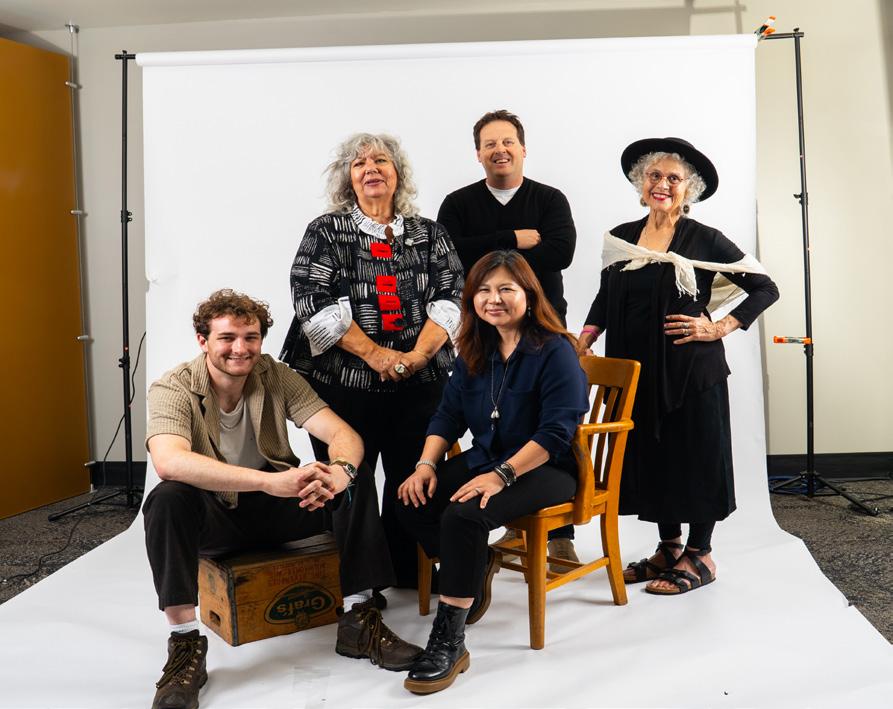
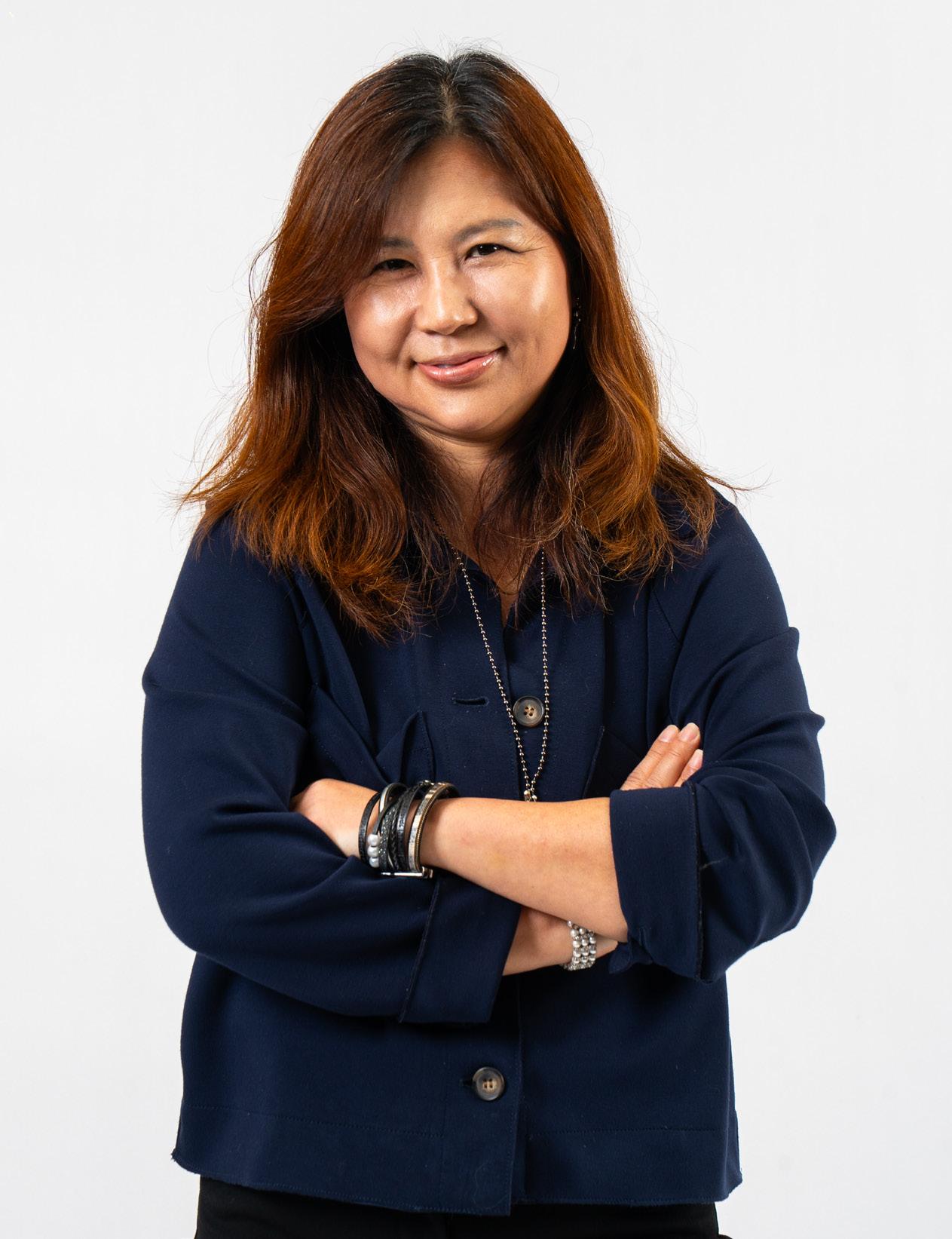
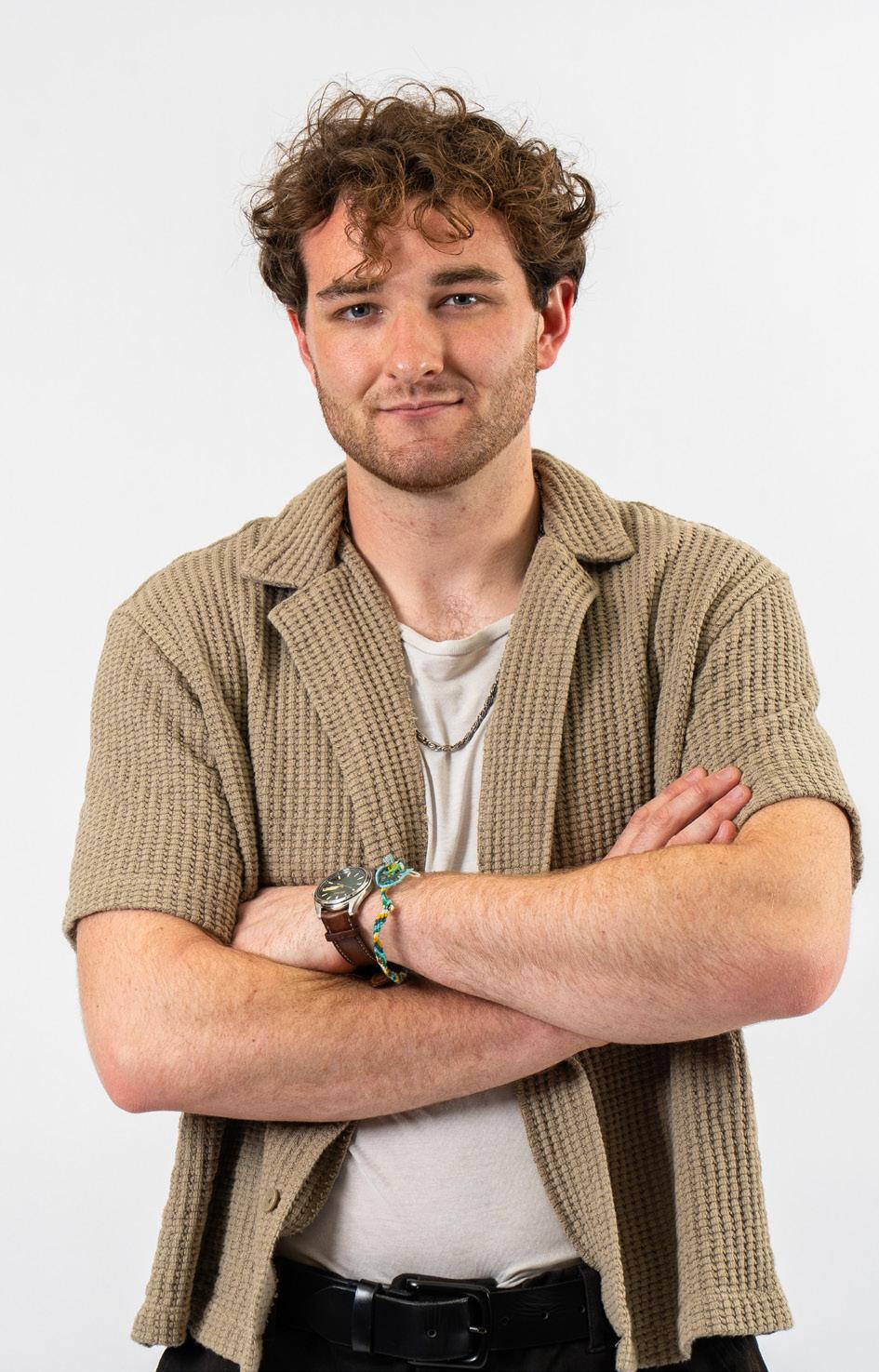
We set up a makeshift studio in the Missouri News Network newsroom to take photos for this issue’s Dissenters feature.
nections with many people I wouldn’t have met otherwise — ones I will carry with me.
Practicing journalism in this city helped me learn about the place I live. At Vox, that’s looked like understanding the city’s voice and its call to action, such as the way the community has come together to support shared causes (p. 5) and advocate for a brighter future (p. 12). It’s looked like the blooming of downtown classics, such as art store Bluestem Missouri Fine Crafts (p. 7) and cat cafe Bertha’s Beans (p. 33), which have reshaped Columbia’s business landscape with familiar faces. It’s also included in the unique ways Mizzou has woven itself into the rich fabric of the city, whether that be through combining science with brews (p. 36) or teaching upcoming communicators how to report accurately and fairly on communities through the J-School.
What I’ve learned over time is that no two places are the same. Through its people, businesses and quirks, the places we go — no matter how long — provide us with a sense of place. Columbia was never meant to be a permanent landing spot for me, but it’s become more than just a stop along the way. I’m so grateful to keep learning about Columbia as I near the end of my time in this city.
Cayli Yanagida Editor-in-Chief
Part of my job is figuring out how to tell stories in different ways. When Vox decided to do a feature package about local dissenters (pg. 12), I was instantly captivated by the passion they conveyed as they spoke. The most captivating part of The Dissenters stories are, well, the dissenters themselves — all of them do vital work to improve Missourians’ lives. And no one can speak about this work better than the people showing up to do it every day.
So, we allowed them to do the talking. Each person is featured in our Behind the Issue podcast, a collaboration with KBIA that gives listeners a closer look at the stories and people in Vox. You can hear excerpts of these conversations on KBIA May 1 and 2 in addition to the podcast. We also filmed videos that you’ll find on Instagram @voxmagazine to engage with the dissenters and build stronger connections with the issues they care about.
—Aminah Jenkins, multimedia editor
Corrections: In the April issue, a caption in the story about house shows misidentified Matthew Lewis. In the story about OneMic, Devin Goins’ name was misspelled and he was misidentified in a caption on page 8.
EDITOR-IN-CHIEF CAYLI YANAGIDA
MANAGING EDITOR AVERI NORRIS, ALLY SCHNIEPP
DEPUTY EDITOR AUSTIN GARZA
DIGITAL MANAGING EDITOR BRIANNA DAVIS
SENIOR DIGITAL PRODUCER ALLISON BEALMER
AUDIENCE ENGAGEMENT EDITOR CLAIRE WILLIAMS
ART DIRECTOR VALERIE TISCARENO
ASSISTANT ART DIRECTOR LAUREN JOHNSON
PHOTO DIRECTOR AVA KITZI
MULTIMEDIA EDITOR AMINAH JENKINS
ASSOCIATE EDITORS ALLISON BEALMER, FAITH BOYD, EVAN CROWELL, ALEX GOLDSTEIN, WEI HE, LAURYN RHODES, NEALY SIMMS, RAPHAEL STERNADORI
STAFF WRITERS CORY BEXTEN, MORGAN CHU, MACY CRAIG, ANDREW DAVIS, GRACE DEEN, ELIZABETH DORMAN, EMILY EARLY, ACIYA EL TAJOURY, MADISON FARLEY, ADDISON GERTZ, C.J. HANAUER, LAUREN JOHNSON, SOPHIE LINDBERG, EMILIA MCCANN, CLAIRE MCLAUGHLIN, MIKALAH OWENS, ADELA RAKOSKI, GRACE ROMINE, LILLIANA SEWELL, LORELEI SKURZEWSKI, ALLIE TRIBE, JACKSON WEST, JESSICA WOOTEN
DESIGNERS ABIGAIL DURKIN, ISABELLE PALEY, BROOKE RILEY
SOCIAL & AUDIENCE CAM HART, JAZMYNE MARTINEZ, AVERI NORRIS
DIGITAL PRODUCERS PARKER BRANDT, EMILIA HANSEN, ELIJAH JAMES, ISABELLE PALEY, KATE SCHREIBER, BRIANNE TREMPER
CONTRIBUTING WRITERS MAYA DAWSON, JAKE LOURAINE
EDITORIAL DIRECTOR HEATHER ISHERWOOD
DIGITAL DIRECTOR LAURA HECK
WRITING COACHES CARY LITTLEJOHN, JENNIFER ROWE, SARA SHIPLEY HILES
FOLLOW US

WANT TO BE IN-THE-KNOW? Sign up to receive Vox ’s weekly newsletter, the “Vox Insider.” We’ll tell you how to fill up your weekend social calendar and keep ahead of the trends. Sign up at voxmagazine.com.

CALENDAR send to vox@missouri.edu or submit via online form at voxmagazine.com
ADVERTISING 882-5714 | CIRCULATION 882-5700 | EDITORIAL 884-6432
MAY 2026
VOLUME 28, ISSUE 4
PUBLISHED BY THE COLUMBIA MISSOURIAN LEE HILLS HALL, COLUMBIA MO 65211
Cover design: Abigail Durkin
Cover photography: Ava Kitzi
How local bands support Columbians facing injustice, by the numbers.
Meaning in fine crafts
Under new ownership, Bluestem Missouri Fine Crafts sculpts its next chapter.
Pop into Pierpont General Store or the new community welcome center.
It’s not so scary
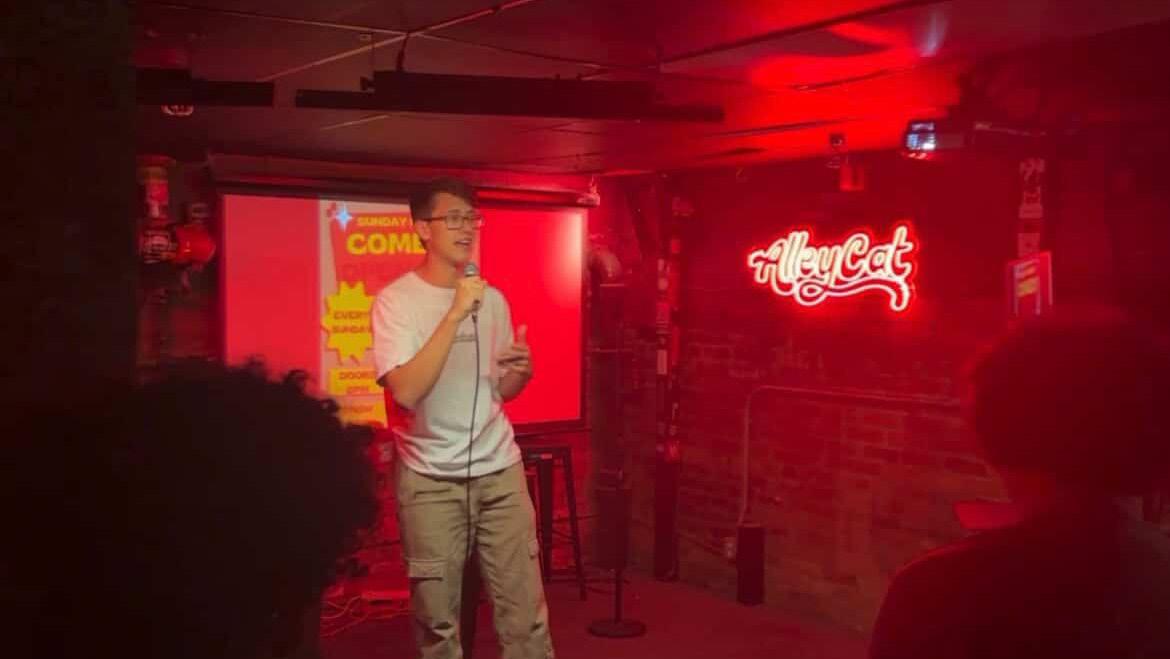
Eastside Tavern’s comics share tricks of the trade with aspiring stand-up artists.
end (credits) in sight
Explore the past and present of Columbia’s historic film houses.
Meet the everyday Columbians who create platforms to spark change.
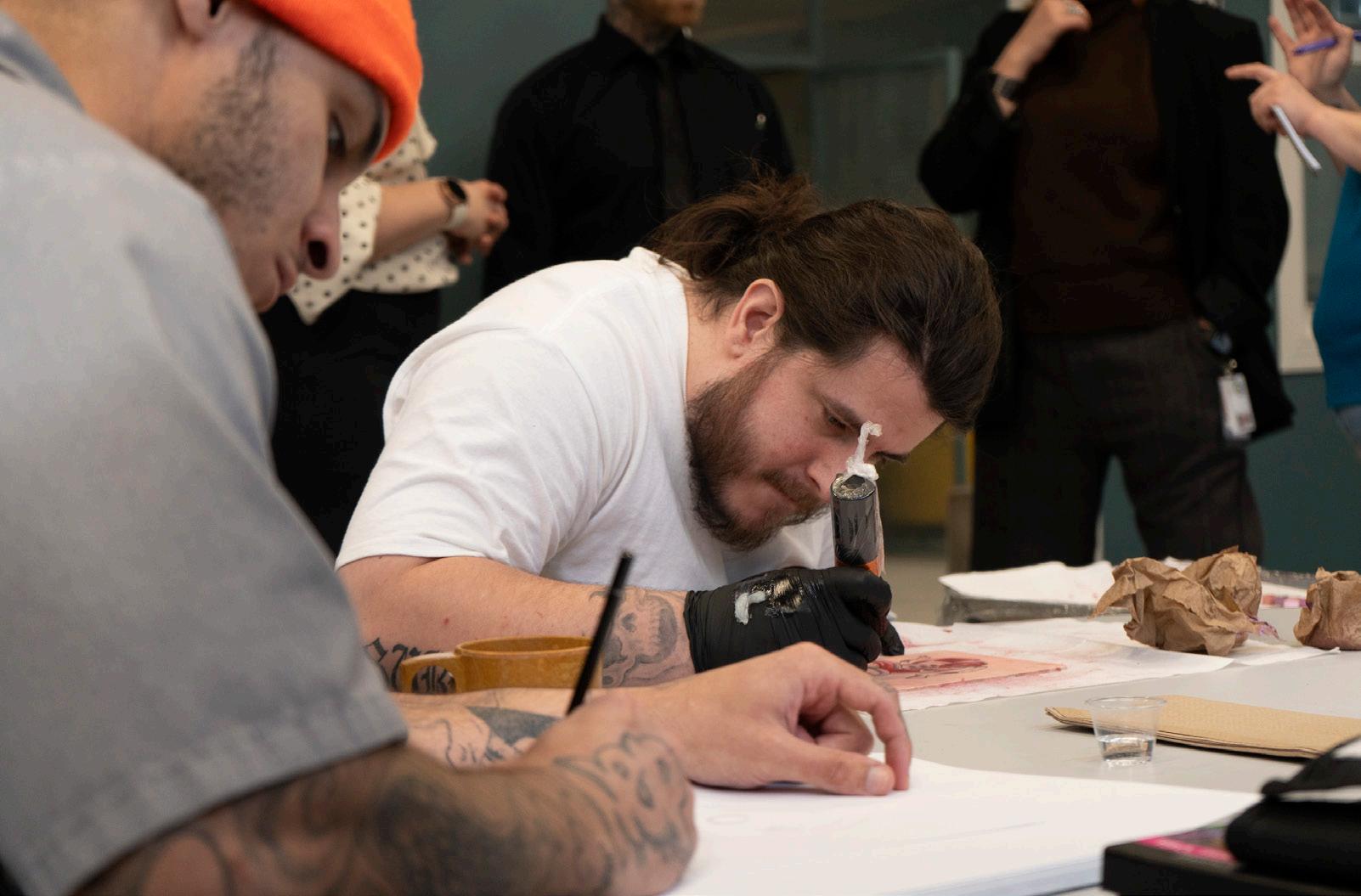
A tattoo apprenticeship program in Missouri’s prisons reshapes inmates’ lives.
bakes with
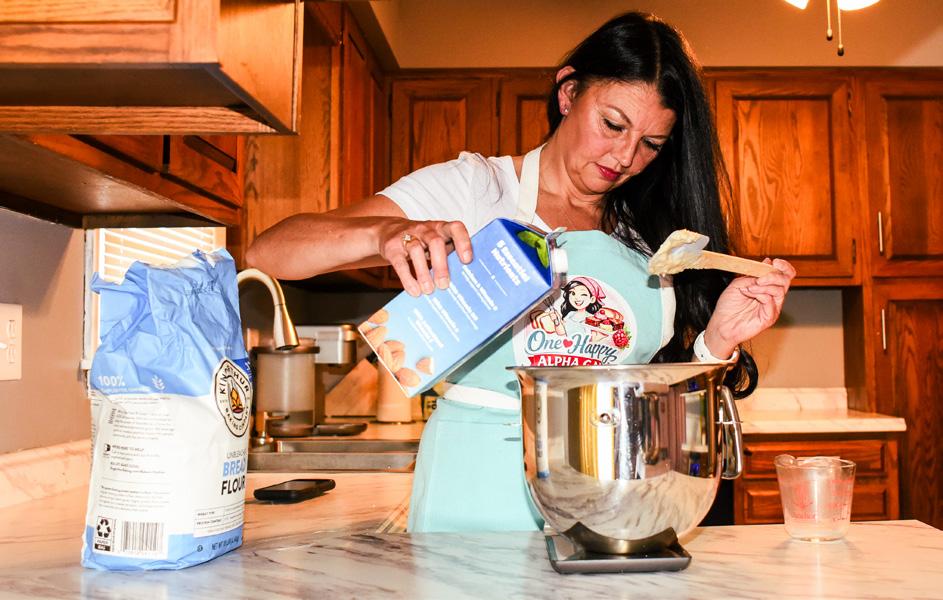
Chrissy Palmer uses her lived experience to run a bakery for alpha-gal customers.
Highball revives a historic nightlife spot with big-city energy.
Our local cat cafe’s permanent residents reflect a range of personalities.
Here’s a local take on golf’s nationwide expansion beyond traditional courses.
Mizzou researchers facilitate scientific discussion amid broader cultural distrust.



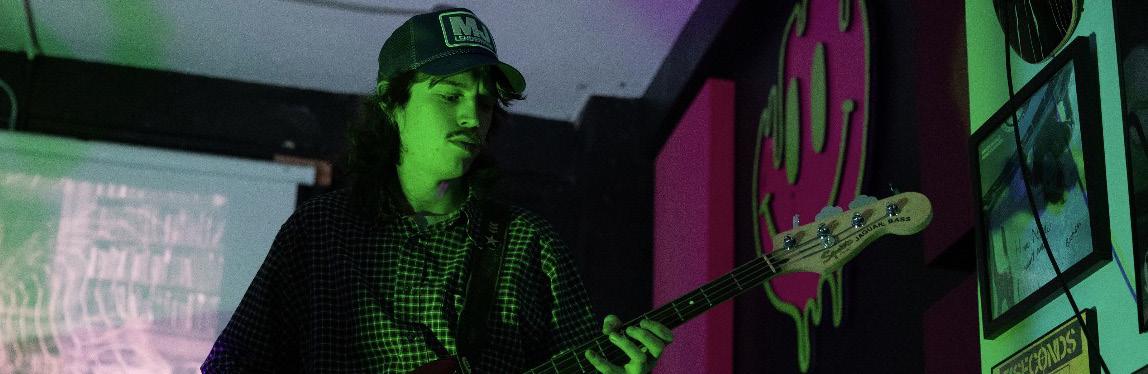
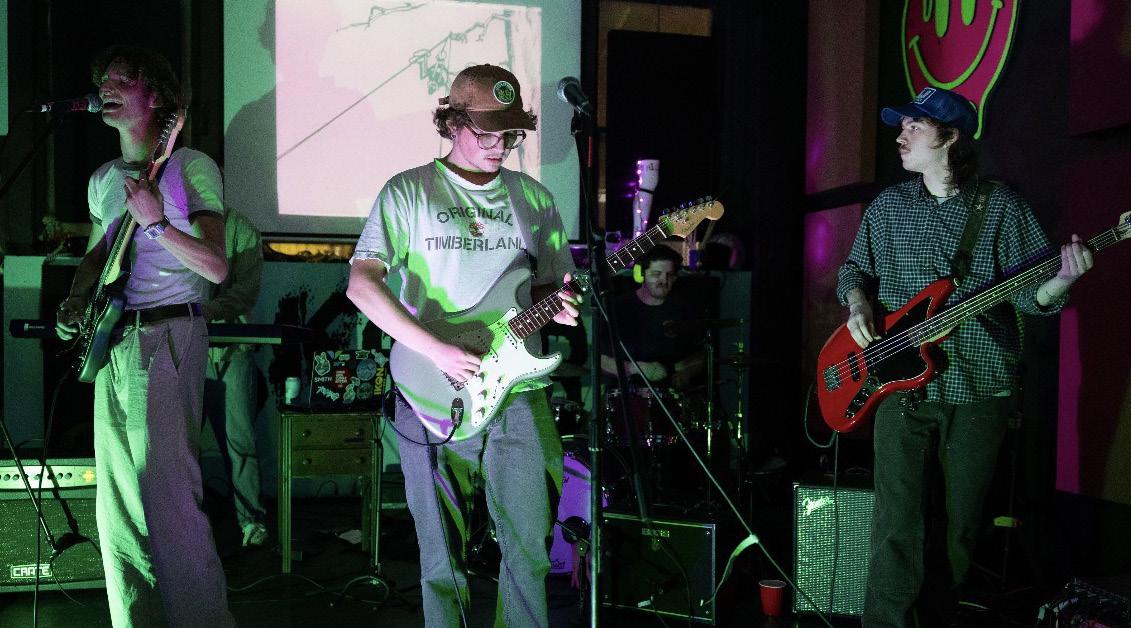
At a time when many feel like screaming into the void, local artists and organizers put music to work.
Columbia’s live music scene has long been a cornerstone of our creative atmosphere. The city has hosted legendary bands and artists, such as the Replacements, Hole, Pixies, Ray Charles and Johnny Cash, which have solidified Columbia as a hot spot for live music. The city is also known for its social justice activism — from anti-
BY MIKALAH OWENS
Apartheid demonstrations in the 1980s to No Kings protests today.
Music and activism are often intertwined. We see it in song lyrics, as the soundtrack for marches or at benefit concerts that call attention to causes.
Last October, soon after Columbia resident Owen Ramsingh was detained by Immigration and Customs
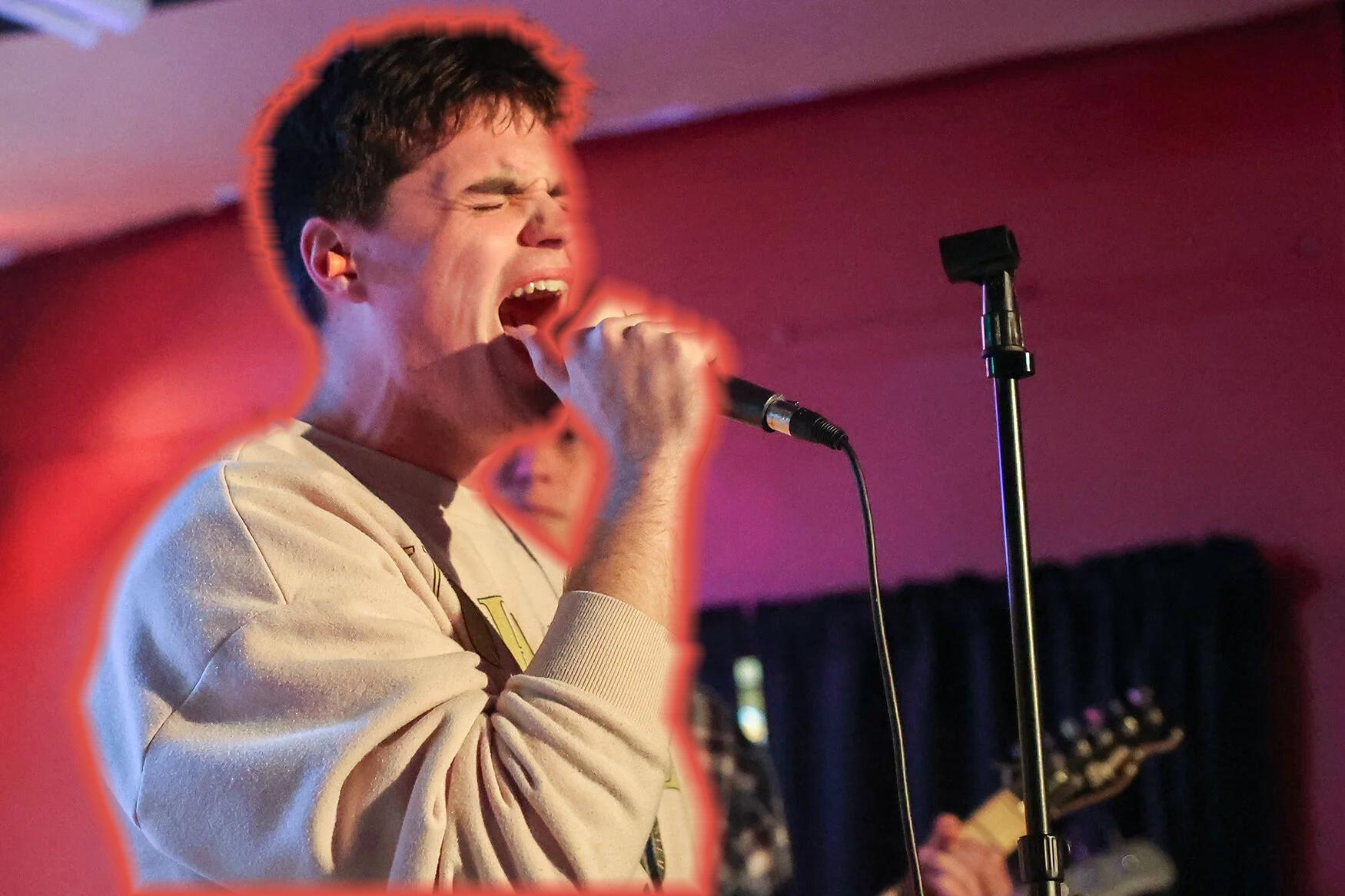
Columbia bands perform charity concerts as a way to raise money for Owen Ramsingh, CoMo Mobile Aid Collective and the Gabriella Rosé Justice Support System Scholarship.
Enforcement officials, more than 60 local musicians gathered in protest outside the Daniel Boone City Building and played Neil Young’s “Rockin’ in the Free World” on repeat.
At a time when many people feel powerless amid an onslaught of attacks on human rights, music provides a voice. Over the past six months, that has
translated into benefit concerts featuring local bands — in support of Ramsingh, unhoused individuals and transgender students. Here’s a look at the impact of some of those concerts, by the numbers.
In October and January, two concerts supported the Bring Owen Home movement, a community-driven campaign for Ramsingh, who worked security at The Blue Note. He maintained a green card for decades and had lived in the United States since he was a child. He was detained by ICE on Sept. 23, 2025, coming back from an international trip and deported to the Netherlands in February.
The other two charity concerts were organized in part by the University of Missouri’s Young Democratic Socialists of America chapter. One in December raised money for the Gabriella Rosé Justice Support System Scholarship, which financially supports transgender students at Mizzou. In November, another concert was collaborated with CoMo Mobile Aid Collective to collect winter clothing and financial donations for Columbia’s unhoused population.
Part of what’s striking about the wave of charity concerts is that these concerts have been for different causes, hosted by different musicians, venues and organizers and all share a sense that music can mobilize.
“Community is so insanely important, especially right now,” says Zach Hinds, a rapper for The Crab. “Art, and especially local art, is a good way of bringing people together and creating a welcoming space for people to support each other and lift each other up.”
Twelve artists and bands have taken the stage in the name of one charity or another. “It’s good to know that not only are you having fun, but you are doing something good (for) the benefit of another person,” says Noah Schmitz, guitarist of the band Nightstand.
Two local activists have been the people behind the scenes for these charity concerts. Grace Konrad, organizer for the January concert in support of Bring
Owen Home and the CoMo Mobile Aid concert, says taking matters into their own hands was the best course of action. “I am not an organizer by anything but choice,” Konrad says. “I am only here because if this is something I can do — I can send a couple emails, I can DM a couple bands, I can secure a couple venues — everybody can do something.”
Reese Holcomb, organizer for the Gabriella Rosé scholarship concert, works to make sure the organization’s work extends beyond one-off events and into direct student support. “We also support costs for groceries and rent and other emergency needs,” Holcomb says. “Because you can’t do well in school if you don’t have a place to live. You can’t do well in school if you’re hungry.”
During the 137 days Ramsingh spent in ICE detention, violence and intimidation were part of daily life. “The treatment that we got — from each ICE member to security guards that worked for Akima security — (included) threatening detainees. They beat detainees. They were making bets on our lives, on who was going to commit suicide,” Ramsingh says.
Now living in the Netherlands, Ramsingh is focused on using his experience and voice to make sure people are aware of how traumatizing detainment and deportation can be. He is also committed to making sure his Columbia community knows how appreciative he is of their support. “Hopefully something changes and I am welcome back into the state so I can visit my daughter’s grave and see my community, give them hugs for everything that they did for me,” Ramsingh says.
$2,550 + $2,9 57 raised
The January concert in support of Bring Owen Home on Jan. 31 brought in $2,550. The Ramsingh family used the money to help pay for Ramsingh’s legal fees and relocation.
For Robert Olson, Ramsingh’s best friend, the charity concerts were proof that Columbia had not forgotten about Ramsingh. “What I want was for Owen to see how much the community supports him and has love for him,” Olson says.
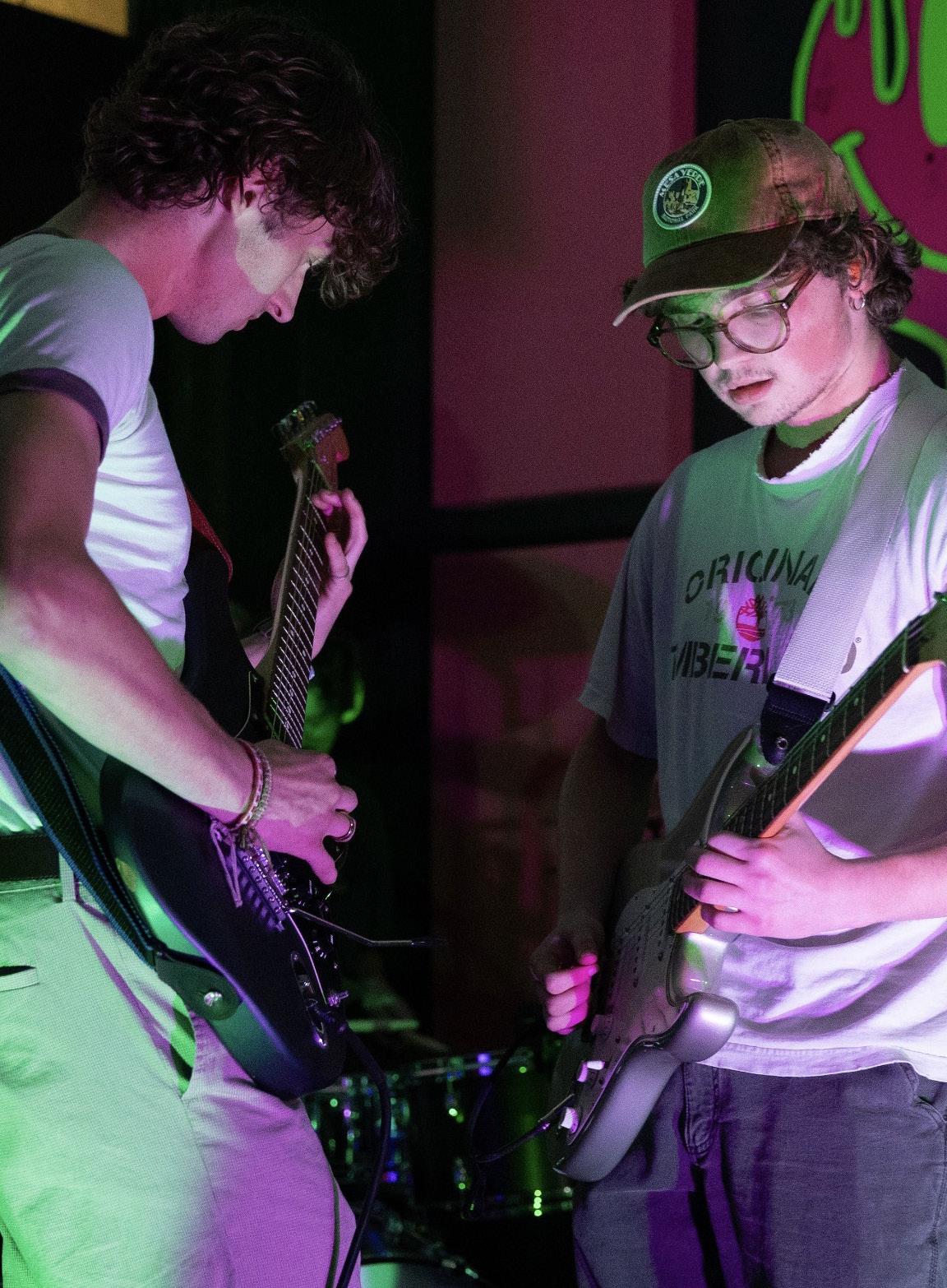
Bands like Nightstand take part in charity concerts to support a cause.
Owen Ramsingh
Join the group “Bring Owen Home” on Facebook and check out upcoming events.
CoMo Mobilize Aid Collective Donate or buy from its wish list found at comomobileaid. org.
Missouri’s Young Democratic Socialists of America
See events from @mizzouydsa on Instagram.
In 2025, Young Democratic Socialists of America raised a total of $2,957 through charity concerts, MidMo PrideFest and individual donations.
Local artists and organizers have turned stages into spaces where community concerns, grief and solidarity meet, proving the city’s spirit extends beyond the music. That spirit continues to expand — local musicians are collaborating on a tribute album in honor of Ramsingh. It stands as another sign of how deeply the community continues to support him, and the merging of music and social activism.
Luke Sabath, the guitarist for the band Find Fiona, has performed at multiple charity concerts and pointed to music’s ability to channel emotion into action. “We need to be angry, we need to feel sad about this, because that’s the only way that you can realize the severity of what’s going on is when you bring emotion into it,” Sabath says. “I think that’s what music is really good for.”
Artistry thrives at Bluestem Missouri Fine Crafts. Meet the McBees — the business’s new owners — who are preserving its 43-year legacy.
BY JESSICA WOOTEN
Stephen and Julia McBee never could’ve known what seeds they were planting when they first wandered into Bluestem Missouri Crafts. While strolling down Ninth Street soon after moving to Columbia in 2004, the couple were entranced by art displayed in the windows. Of course, they had to go in and see it for themselves. The seemingly innocuous pop-in would bear flowers more than 20 years later.
In April 2025, after news broke that Bluestem’s owners were retiring and the store was up for sale, the McBees saw a rare opportunity to check off a goal from their bucket list — owning a business. In January 2026, the McBees officially became the new owners of what’s now called Bluestem Missouri Fine Crafts.
Vox spoke with Stephen and Julia. Here’s what they had to say:
How do you see your vision for the store aligning with its legacy?
Julia: We plan to carry on the legacy. The biggest physical change that we’ve made is that instead of being Bluestem Missouri Crafts, it’s now Bluestem Missouri Fine Crafts. Another change that you might not be able to physically see would be to get the word out more with marketing and social media. It’s such a wonderful gem here in midMissouri, and I know there’ll be more people who would love to know about it, so we’re gonna try to make that possible.
When people walk into the store, what do you want them to feel?
Stephen : The creativity and integrity of the art. Everybody that has something in the store is very passionate about what they do. They want it to be the best. We’ve got all walks of life represented in the
store. We’ve got hippie wood makers and down-to-earth business, ceramics people and everything in between. Just the creativity and the integrity of the art — I want them to feel that because that’s what our experience (was).
How would you describe the store’s role in the community?
Stephen : We are the go-to place for unique gifts, high-quality crafts and arts. I would say 35% to 40% of the people that I get to talk to, they’re from out of town. This is a stop when they come to town for business or for the university. They’re like, “No, we have to go to Bluestem.”
Check out the creativity Bluestem has curated for yourself.
Location:13 S. Ninth St. Hours: 10 a.m. to 6 p.m. Monday through Saturday; noon to 5 p.m. Sunday.
Bluestem Missouri Crafts opened its doors in 1983, when a group of five artists set out to create a space for their work. Since then, it’s grown into a hub for art in Columbia, showcasing work from more than 200 regional artists. The McBees plan to keep things regionally focused.
What has contributed to Bluestem’s lasting presence in Columbia?
Stephen : The integrity and passion of the owners. They, and the people that work here, are all here for the bigger picture and understand what contribution art brings to a society and a culture. We need the plumbers, but art is something that helps us transcend everyday mundaneness and gives us hope for something outside of ourselves.
Do you have any memorable moments where Bluestem played a meaningful role?
Stephen : We had a father come in right after we bought the business. (He
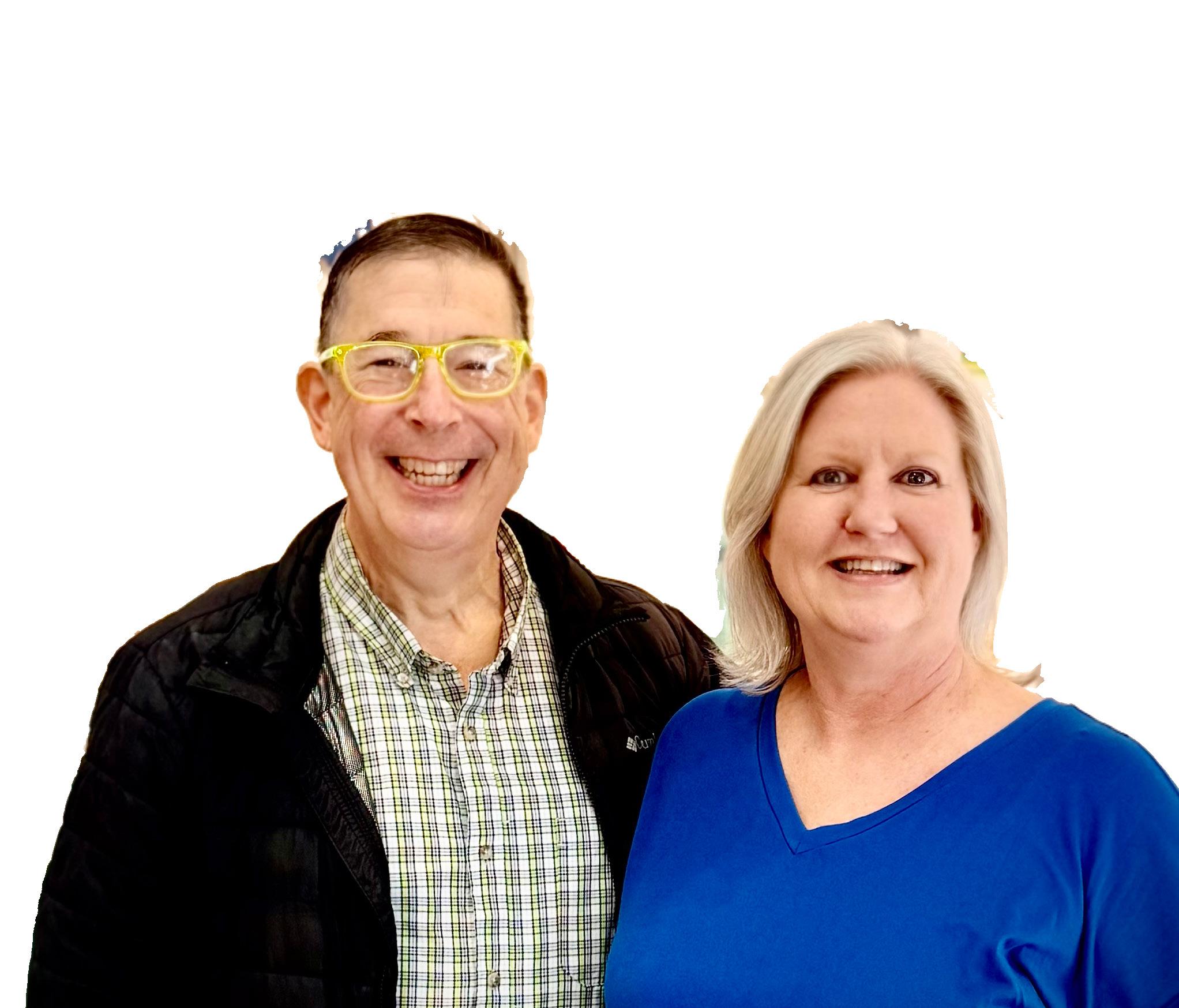



Laugh with family-friendly comedian Henry Cho on his Empty Nest Tour. Cho’s humor centers around the idiosyncrasies of American culture, fitting in as an Asian American from the South and any other tidbit of human quirkiness he can point his finger at. He is sometimes labeled as a “clean” comedian, priding himself on never swearing on stage. 8 p.m. May 30, Missouri Theatre, tickets starting at $50, mizzouarts.missouri.edu/missouri-theatre

Visit the new owners of Pierpont General Store — a shop, live music venue, restaurant and event space all rolled into one. Lee and Jen Miller and Curt and Heather Carleton bought the Boone County staple back in February. Heather says she wants to keep the store going as-is, but anticipates making small tweaks to general operations and adding more options to the menus. Throughout May, the store will have live music in the afternoons and evenings. Additionally, there are several weekly events including Mahjong every Tuesday night from 6:30 to 8 p.m. There will also be a special Mother’s Day event on May 10 and a Cars and Coffee event on May 16, where you can peruse a selection of sweet rides while sipping a cup of joe. 6:30 a.m. to 6 p.m. Mon.-Sat. and 6:30 a.m. to 5 p.m. Sunday, 7650 S. Missouri Highway 163, pierpontstore.com
to appreciate the wriggly, slimy friends we call worms during the city of Columbia’s free vermicomposting workshop. “Vermi” means relating to worms, and composting is a practice of using food scraps to improve soil nutrients. When you picture worms, you might think of them beached on a sidewalk after a downpour, but to gar deners and farmers, they are a critical piece of the food production puzzle. Register through the link under the Recycling and Waste Reduction section on the como. 6-7 p.m. May 7, Capen


the fragrances coming from K&K Co., a health and beauty shop that recently opened in the Columbia Mall. The business, owned by Krystal Martin, sells a range of self-care and home products. You can sign up for classes to create your own signature scent — whether it be in the form of a candle, body scrub or perfume. 11 a.m. to 7 p.m. Wed.-Sat.; 11 a.m. to 6 p.m. Sunday, $35-$95, facebook.com/kkcollc
May opening of the Community Welcome Center located adjacent to the Columbia Farmers Market. The multipurpose space will provide handson learning from seed to plate with its community kitchen. There will also be a resource library and tool check-out to assist with your next project and an activity room for hosting fun events and programs. Clary-Shy Community Park, 1701 W. Ash St., buildthistown.org




It’s
Local comedians provide their been-there-joked-that advice from experiences performing at Eastside.
BY ELIZABETH DORMAN
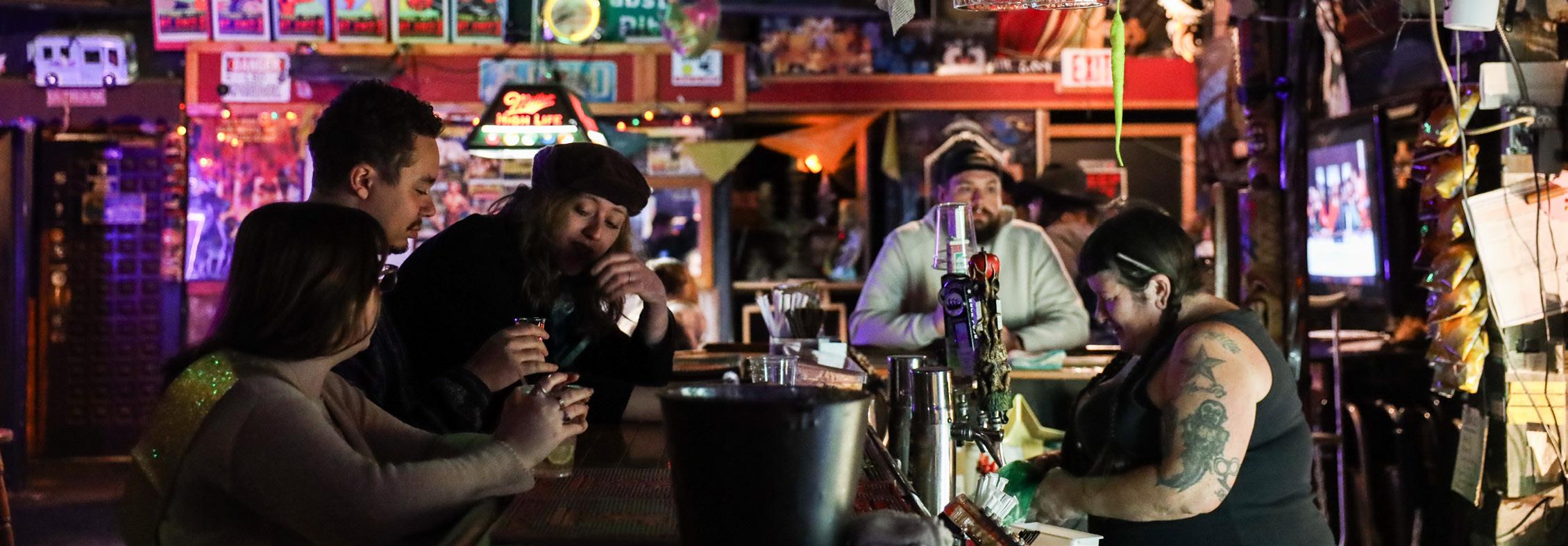
If you stumble into Eastside Tavern on a Tuesday night, you might first notice the horror memorabilia, sci-fi collectibles and action dolls postured like gargoyles. After soaking in the borderline-overwhelming ambiance, you might grab a beer, a Frito pie and play a couple games of pool.
But if you stick around a little longer, you’ll discover the real entertainment — a stage, a microphone and a room full of comics chasing their next punchline.
Sal Nuccio opened Eastside in 1997, something he says he had dreamed about doing since he was a kid. He then
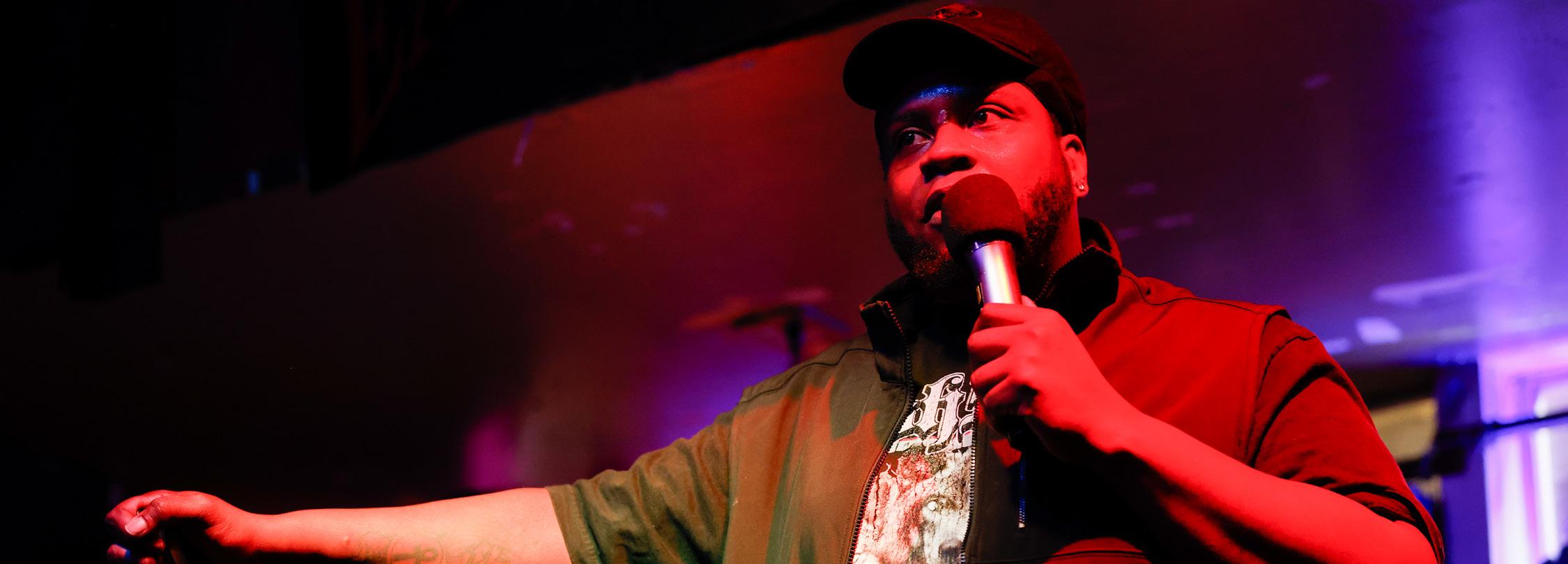
Sereous Black (above) performs his comedy routine. Eastside Tavern, 1016 Broadway, hosts comedy nights every Tuesday starting at 9 p.m. with no cover charge.
created The As Yet Unnamed Comedy Show a decade later. Nuccio says he wanted to create something no other bar in Columbia had at the time — a place for local comedians to perform weekly. Heed the advice of three aspiring comics who bring the laughs to Eastside stand-up comedy week after week.
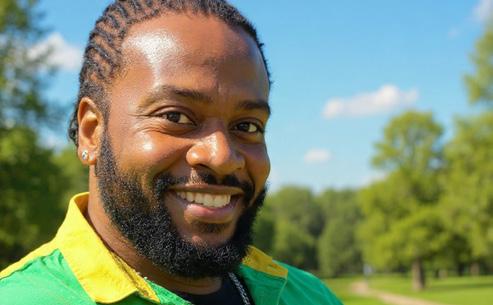
Dominick Wilkerson, aka Sereous Black
One day, during Wilkerson’s senior year of high school, his football coach pulled him out of practice for a sereous talk. “He’s like, ‘I see you, you’re goofy. You’re a clown. Everybody talks about it. Why do you pretend to be serious when everybody knows you’re a jokester?’ ” Wilkerson says. The next morning, Wilkerson showed up to the coach’s study hall to find the chalkboard adorned with SEREOUS BLACK. The name stuck. While his stage name might be Sereous, Wilkerson doesn’t take his routine too seriously. He freestyles, rhymes and makes up characters as he goes along.
Day job: Mechanic and lube technician at Plaza Tire
Why comedy matters: “It always felt like, when a person laughed, it helped them show their soul a little bit — shine a little brighter.”
Advice for future stand-ups: “Accept the harsh reality. Sometimes you’re gonna fail. That’s the only way that you are ever going to be able to win.”
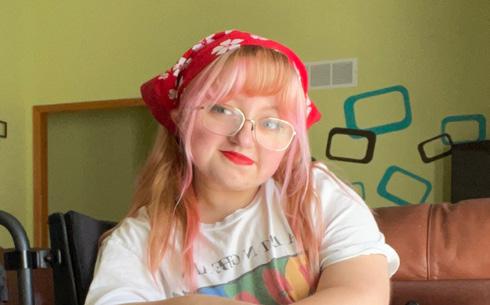
Sami Binning
Binning calls her start in comedy a “complete fluke.” She was attending a stand-up night at Eastside when a comedian pulled her into the middle of a set. Since then, the unlikely friends and good vibes have been enticing her back onto the stage.
Binning likes tackling serious matters in ways that are easy to digest, without losing their significance. She says jokingly, but speaking from the heart — that dive bars like Eastside Tavern give her hope for humanity.
Day job: Linguistics student at Mizzou College of Arts and Sciences
Why comedy matters: “We’re all kind of finding the humor in things that maybe didn’t feel so funny at the time. And I think that can be really personally healing.”
Advice for future stand-ups: “Just try it. Think of a funny story or something you want to talk about, and just go. People usually are drunk enough to laugh. It really is not as scary as people think it is.”
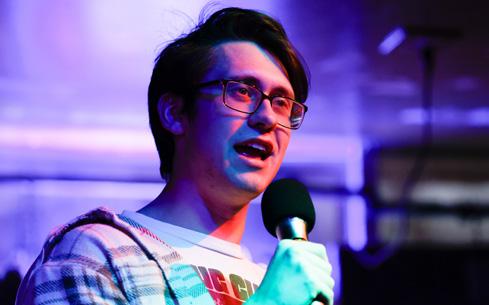
Bret Barschak
Barschak grew up watching comedians on YouTube. It wasn’t until his final semester of college that he stepped onto the stage himself when taking a comedy class. After graduating, he moved to Columbia for his day job and started performing at Eastside whenever he could. Barschak recently landed his first paid gig at The Tokyo Club and left the stage completely euphoric. “Driving home, I was like, ‘holy shit, you could be a comedian,’ ” he says. Day job: Geospatial information systems specialist at the Missouri Department of Transportation
Why comedy matters: “There’s a good quote from Jim Valvano. He says, ‘If you can live a full life, you need to think, laugh and cry every day.’ I try to live by those three. And laugh is at the top of it.”
Advice for future stand-ups: “Be as truthful as possible to who you are. You write jokes, and there’s always embellishments in there to make it funnier, but there’s always a basis of truth.”
Grab a drink and your favorite snack; over a century later, theaters in Columbia are still a smash hit.
BY ADDISON GERTZ
True/False Film Fest remains the most definitive film culture experience in Columbia, but the city’s theaters continue to bring people together far beyond the annual fest in March. By the numbers, Vox explores the rich past and present of local movie theaters.
The first film screened in Columbia was in 1897 at the Haden Opera House. According to CoMo Preservation, “it was the center of social life in Columbia.” The space hosted musicians, classes and traveling actors for the University of Missouri after the Academic Hall burned down in 1892. Currently, the building is home to Commerce Bank on Broadway.
The first film to screen with sound was The Jazz Singer at the Hall Theatre in 1928. It opened in 1916 and served as a vaudeville house, a decorated theater that hosts various types of acts, along with showing movies. The Hall used a Vitaphone projector — the only sound projector in the state outside of St. Louis and Kansas City. The theater building was utilized by multiple tenants, including Panera Bread, before closing up in 2013.

769 MILLION TICKETS
Since the end of COVID-19 lockdowns, movie theaters across North America have been making a slow comeback. In the U.S. and Canada, moviegoers bought over 769 million tickets in 2025 — three times as many compared to 2020. A similar trend is occurring in Columbia. Tim Pilcher, cinema director at Ragtag Cinema, says the theater’s ticket sales are up around 15% from 2024 to 2025. At GQT Forum 8, General Manager Matt Eaton noted a similar increase from 2024 to 2025. He says that he’s also observed an increase in the audience’s desire for a shared cultural experience — to cry and laugh together. The increase in ticket sales is good news for the movie community




1 8 9 7


1, 2 0 0 S E A T S

The Missouri Theatre is an iconic Columbia landmark. With 1,200 seats, much of its original detailing and a slot on the National Register of Historic Places, it is an important site for cinema history in Columbia. The theater opened in 1928 with Buster Keaton’s Steamboat Bill Jr. and a full orchestra. Movies are no longer screened regularly since Mizzou purchased the theater in 2014, but it is still used for the True/False. The Missouri Theatre primarily hosts arts and community events, such as performances by the Missouri Symphony.
3 THEATERS
Dianna O’Brien is a journalist with a strong passion for Columbia history. In her book Historic Movie Theaters of Columbia, Missouri, she covers all 28 historic movie theaters that have come and gone. She says that theaters were an integral part of social life. Many of the buildings once occupied by film houses are unrecognizable now. For example, The Blue Note hosts live music, but the venue was once Star Theater, later rebuilt as the Varsity Theater — two different film theaters that came and went during the 20th century.
There are three movie theaters local to Columbia. GQT Forum 8 has eight auditoriums, and shows both blockbuster releases and classics. Classic movies showings are on Wednesdays, Sundays and some Saturdays. Some previously shown films include The Wizard of Oz and Grease
Regal Columbia is the city’s largest theater, with 14 screens. Regal Columbia also hosts anniversary screenings for movies, with two on this summer’s schedule — Willy Wonka & the Chocolate Factory’s 55th anniversary and Citizen Kane’s 85th anniversary screenings.
Last, but certainly not least, Ragtag Cinema is a nonprofit, independent theater on Hitt Street in downtown Columbia. The theater has two screens, with a mix of theater seats and couches to choose from for the audience members’ viewing experience.
Ragtag is home to many arthouse, independent and foreign films screened in Columbia. The theater holds the only 35mm film projector system used in town, but screenings are rare. Ragtag also hosts Q&A panels, themed screening series and other events with Mizzou film experts.
STORIES: GRACE DEEN, SOPHIA LINDBERG, GRACE ROMINE, ALLIE TRIBE, BRIAN SMOOT AND LAIBA ZAI
DESIGN: ABIGAIL DURKIN
PHOTOGRAPHY: AVA KITZI
NThe United States is the result of dissent. We exist as a country because of one of the highest levels of dissent — a revolution against an empire 250 years ago. That ethos shaped the young nation and lives on in a myriad of ways today. That might mean a sign taped to a storefront window in solidarity or a sea of voices chanting in unison on a capitol’s lawn.
In 2026, we have seen dissent take a variety of forms as people push back against Trump administration policies. Across the country, millions have taken to the streets to say “No Kings” or stand up for their neighbors in the face of Immigration and Customs Enforcement. At the heart of these protests are in-
dividuals who feel compelled to dissent — everyday people deciding to act.
For this package, Vox identified individuals who push back in different ways, both public and behind the scenes. These dissenters call Columbia home — Lisa Bartlett, Jack Dobbs, Brittany Hughes, Monica Lee, James Owen, Alyce Turner and Traci Wilson-Kleekamp — and are a testament to how individual action can spark broader change. From addressing housing disparities to protecting the environment to organizing protests, the work of these seven people make one thing especially clear: Dissent can take on any form and be carried out by anyone passionate enough to start.
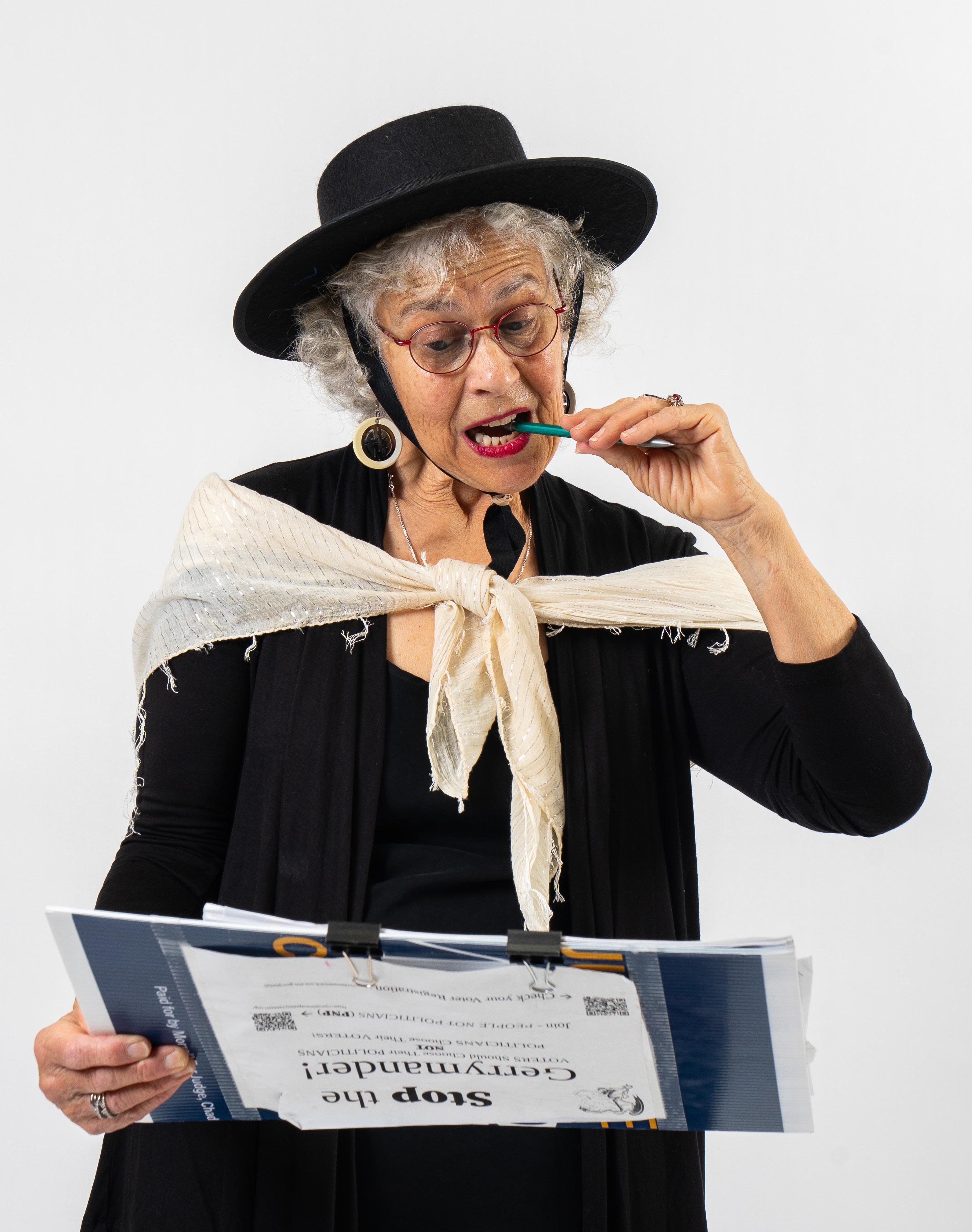
“PROTESTING IS JUST AN PART OF WHAT IT MEANS TO BE A . BREATHING LIVING, DEMOCRACY.” ESSENTIAL
Turner
Decades of advocacy experience led Alyce Turner to Columbia 45 years ago, where she uses her knowledge to mobilize voices and voters toward participatory democracy.
BY SOPHIE LINDBERG
The year is 1970; dozens of women are gathered in a circle on the University of Maryland’s lawn. Dressed in witch cloaks and hats, they chant, “Double, bubble, war and rubble, when you mess with women, you’ll be in trouble” over Bob Dylan’s “Masters of War.” Alyce Turner, now a Columbia resident, was there that day and used her voice as part of a national movement to end the military draft, which happened a few years later in 1973.
These days, she spends Saturdays as an organizer for Boone County Democrats’ Patriots Against Kings in America demonstrations at the corner of Broadway and Stadium Boulevard. Turner chants over Bruce Springsteen’s “Streets of Minneapolis,” protesting Trump administration policies and Immigration and Customs Enforcement.
“What’s new, and that’s what these protests are about, is ignoring law, ignoring the Constitution, ICE going out and arresting people willy-nilly and not serving a warrant,” Turner says.
In Columbia, she uses her decades of experience to mobilize a new generation
of voters toward participatory democracy — the emphasis of her advocacy.
Turner keeps busy. She serves on the organizing board for No Kings and PAKA demonstrations in Columbia. Other times, she rallies voters in the Fourth Ward, where she lives, for the Boone County Democratic Central Committee and recommends candidates for the mid-Missouri group of Osage Sierra Club. In addition, Turner also organizes speaker presentations as vice president of programming for the Boone County Muleskinners and volunteers for Moms Demand Action. She approaches demonstrations the same way she does door-to-door canvassing — Turner says she’s a neighbor and explains the issues she believes in.
University of Missouri professor Matt Friedrich says examples of successful protesting are abundant throughout history. Demonstrations that raise awareness can change public opinion and perception, while more disruptive demonstrations can change policy.
“Protesting is just an essential part of what it means to be a living, breathing democracy,” Friedrich says. Institutions create consistency and stability. But
Turner helped organize Columbia’s most recent No Kings demonstration on March 28 — one of dozens in Missouri, and one of thousands nationwide.
Around 2,500 gathered in front of the Boone County Courthouse in opposition to the Trump administration. To learn how to get involved in local demonstrations, see @boonecounty dems on Instagram.
sometimes things become so entrenched that one group benefits over and over from a longstanding, unreformed set of policies. “Protest is a corrective to that.”
Turner hasn’t feared speaking up since she first testified at Columbia City Council in her 30s, and she uses every chance to speak to willing listeners.
“At the grocery store, I talk to all the checkers about what’s going on,” Turner says. “I know a lot of them are concerned working-class people. I talk to a lot of people about being (politically) active.”
Turner did canvassing with Peace Nook owner Mark Haim in 1978 through Missouri Action, a group formed to activate communities into participatory democracy, and the two worked on No Kings together.
Looking at the advocacy work she does now as a retiree, Haim sees her working practically a full-time job, something that requires attention, diligence, and care.
“If she’s working on a campaign, she’s out there putting up the yard signs,” Haim says. “If there’s fundraisers to be held, she’s pulling the pieces together to make the event happen. She’s a trooper — a nonviolent trooper.”
As executive director of Renew Missouri, James Owen works to create a clean and energy-efficient future for generations to come.
BY BRIAN SMOOT
Looking down at his clothing, James Owen says, “I’m not really dressed like a political dissenter today, am I?”
And he’s right. Owen doesn’t necessarily fit the stereotypical perception of an activist. He wears business suits and matching ties. In fact, he wouldn’t look out of place in a corporate boardroom or after-hours office mixer.
Owen does what he calls “institutional dissent” — working with the legislature to affect change. Owen’s mission is to make Missouri a leading state in clean and efficient energy.
Renew Missouri is a nonprofit dedicated to efficient and green energy. It’s been at the forefront of the fight for green solutions in the state since 2007. Since 2017, Owen has been its executive director.
Owen has been many things in his life — a circuit judge, a lawyer and the acting director of Missouri’s Office of Public Counsel. “I’m not a revolutionary,” he says. “I’m a manager.”
When Owen learned about Renew Missouri’s mission, he knew he had to become involved. He wanted to be part of something bigger than himself.
It isn’t always exciting work, but Owen says there are visible results
whether it be Supreme Court rulings or legislation supporting its mission.
Under Owen, Renew Missouri has taken multiple cases to the Missouri Supreme Court and won, affecting statewide policy in areas such as solar panel investments, defending affordability of energy and supporting energy companies through the COVID-19 pandemic.
“James is one of the more intelligent people that I know,” says Dan Chiles, board president of Renew Missouri.
“He’s a changemaker.”
In January, the group took on homeowners associations on behalf of residents. They sued the Granite Springs Homeowner’s Association in southwestern Missouri in order to prevent further regulations on solar panels, which Renew Missouri perceived as an attack on citizens’ access to efficient and clean energy.
Although the Missouri legislature passed a 2022 bill to protect residents from HOAs banning solar panels outright, Granite Springs HOA denied Colleen Eikmeier the right to have solar panels installed in the front of her house, asserting that panels must be at the back of the residence. After she filed a lawsuit, the HOA argued that the law didn’t apply to existing associations before the

Renew Missouri was founded in 2006 as a means to advance renewable energy and efficiency in Missouri. It represents its interests before the Public Service Commission through public hearings, presenting discoveries and arguing before the appeals courts. To learn more or find ways you can help, visit renewmo.org.
law was passed. The trial judge agreed with the HOA, and the lawsuit eventually went to the Missouri Supreme Court. Throughout the case, Owen served as trial counsel. With his aid, they won. He says it was a “decisive win for property rights,” ensuring that HOA residents have the freedom to choose alternative forms of energy for themselves.
Owen’s reason for working at Renew Missouri is far more selfless than he admits: He wants a better world for the future generation, one where energy is clean or — at the very least — far more efficient.
“There’s a million times I could have left this job,” Owen says, “but I didn’t, because I have two kids at home.”
Those two kids are a part of the future generation that Owen hopes to provide cleaner, more efficient energy for.
Owen’s tools of dissent might be different from those of the standard political dissenter — instead of picket signs and chants, he employs the law and long meetings. But he’s making change all the same.
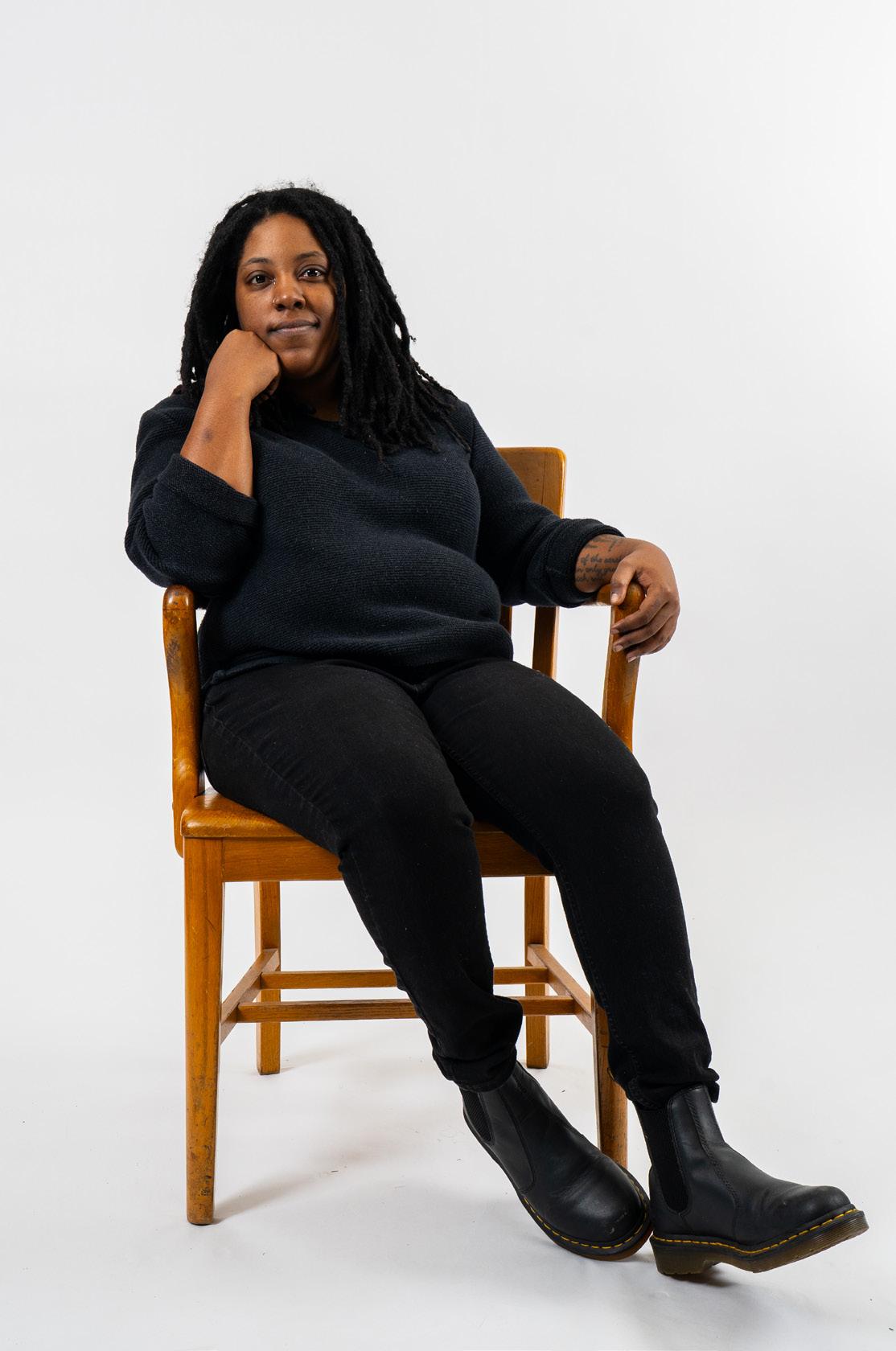
Brittany Hughes starts most days with a conversation. Coffee shops, living rooms and community centers across Missouri have become the ground where Hughes practices her craft: listening.
As the statewide community organizer for the American Civil Liberties Union, Hughes spends much of her time meeting with residents — sometimes 10 or more each week — asking how they arrived at the fight for civil liberties. Her goal is to recruit people who see the movement as home.
“We want leaders,” Hughes says. “We want folks whose presence is missed when they’re not in the room.”
Hughes has spent nearly a decade organizing — though her journey began long before she knew it could be a career. As a child, she watched her grandfather serve as a county commissioner in rural Alabama, witnessing firsthand how representation could shape a community. Later, tragedies such as the deaths of Trayvon Martin and Michael Brown made it clear that age offered no protection for young Black people.
Grassroots organizing derives its strength from the roots of community. Local engagement is a key feature. Methods such as canvassing, petitioning, protesting and fundraising are typically used to spark action and change. To get involved, sign up to volunteer or join the ACLU at its website, aclu. org.
Those unfairly persecuted by the legal system have an advocate in Brittany Hughes through her work with grassroots organizations and the ACLU.
BY LAIBA ZAI
In the following years, she started with grassroots organizing in Missouri’s multi-faith communities and eventually moved to the ACLU in March 2025.
Tori Schafer, director for policy and campaigns at the ACLU of Missouri, says Hughes is an intentional organizer who focuses on community building.
“She wants to make sure that every volunteer she’s bringing into the organization really feels like they are having a tangible impact,” Schafer says.
Part of the ACLU’s role, Schafer says, is providing expertise on constitutional law so Missourians can understand what a bill and its language mean. “A big point of community organizing in the state is to make sure people are voting and to make sure people understand what they’re voting for,” she says.
Schafer saw Hughes in action during the 2024 election cycle. Hughes was working with the statewide coalition to run the field program for the Right to Reproductive Freedom Initiative, which legalizes abortion in the state — a campaign that Hughes was particularly proud of.
“To see families come out together,
to see men show up on their own, to see the intersection of so many communities in Missouri — it was really beautiful to me,” Hughes says.
Today in Columbia, Hughes keeps her attention on issues such as redistricting, surveillance and policies that affect unhoused residents. The most meaningful victories are often personal.
In 2020, a young undocumented mid-Missouri man was on the edge of losing everything — falsely accused of a crime and facing deportation. Hughes and other community leaders made sure his story reached their neighbors.
In the end, he stayed. Six years later, he has a boy of his own, a family to care for and his freedom.
For Hughes, these outcomes are reminders that her work is long term and understands the consistent effort and attention needed. “The realities of organizing and liberatory work is that we’re not going to get free overnight,” she says. “But seeing folks who wouldn’t even talk to me in a coffee shop get in front of a city council and tell a powerful story — I know I’m moving the needle right.”
Protesting is more than a sign on a stick. Lisa Bartlett uses art as a way to speak out against injustice.
BY GRACE DEEN
What do you think of when you hear the words “nasty women?”
What Lisa Bartlett hears is strength, resilience and, as she puts it, “underlying pissed-offness.”
As a gallery-exhibited artist and owner of Artlandish Gallery, Bartlett uses paintbrushes as her weapon of choice for demonstrating her political dissent. “It’s great to get things down tangibly and work out the nuances of a piece of art and laugh while you’re doing it,” she says.
Bartlett’s protests take the form of sculpture, painting and assemblage art, often exploring themes of racial injustice, Indigenous erasure, the Russia-Ukraine war and, most frequently, gender inequality. Even if these themes aren’t explicit, Bartlett says they’re always on her mind.
“It riles me so bad that, no matter how hard women try, no matter how hard we work, we can be better and still not get that recognition,” Bartlett says. “It’s hard to live in.”
Former Artlandish employee and vendor Ava McCluer says Bartlett’s impact goes beyond the gallery. Even
after its relocation to Ninth Street in November, McCluer still sees Bartlett’s influence throughout Orr Street Studios.
“To create in the face of fascism is one of the best ways to show resistance,” McCluer says. “I feel like her aura and energy is still there from everything she’s done for Columbia in that area.”
A notable example of Bartlett’s work is her “Nasty Women” series, a title inspired by President Trump’s comment toward fellow candidate Hillary Clinton during a 2016 presidential debate.
The series features historical portraits of unnamed pissed-off women — about misogyny, mistreatment or society itself — layered to create a collage that encourages deeper reflection.
“My mom was the biggest liberal feminist, and she instilled that in me,” Bartlett says. Born and raised just outside of the nation’s capital, she was exposed to the political environment early on. She recalls her older sister wanting a pair of white go-go boots and to rally against racial inequity in the 1970s.
Art has long been a tool for protest. James van Dyke, a University of Missouri School of Visual Studies professor, points to the use of textile banners during the women’s suffrage movement
You can seek out local protest art. Nightjar Arts Collective, 810 E. Walnut St.: This space is dedicated to local artists, writers and activists. Nightjar holds events and exhibitions that are open to the public.
Martin Luther King, Jr. Memorial at Battle Garden, 800 W. Stadium Blvd: Created by Barbara Grygutis, it includes a display of King’s writings fanning into a spiral — a global symbol for infinity.
as an early example.
“Art and visual culture are important for the production of dissent because they convey a clear, vivid message that appeals to the eye, that impacts a person in a different way than text,” van Dyke says. “The images might need to be explained, but they can be seen and communicated to a broader group of people.”
He says protest art can also take the form of altering existing symbols, such as a 2015 incident at Mizzou, when the Thomas Jefferson statue was covered in sticky notes with messages such as “slave seller” and “racist.”
Some of Bartlett’s favorite works of her own include an Indigenous women series that highlights cultural spirit and resilience, as well as her artwork honoring Harlem Renaissance women writers such as Marion Vera Cuthbert. Bartlett emphasizes the importance of handling the testimonies of other cultures with care, always making an effort to never claim someone else’s story.
For Bartlett, art is personal, political and a way to amplify voices that might otherwise go unheard.
“It’s an outlet, it’s therapeutic and it can change the world,” she says.
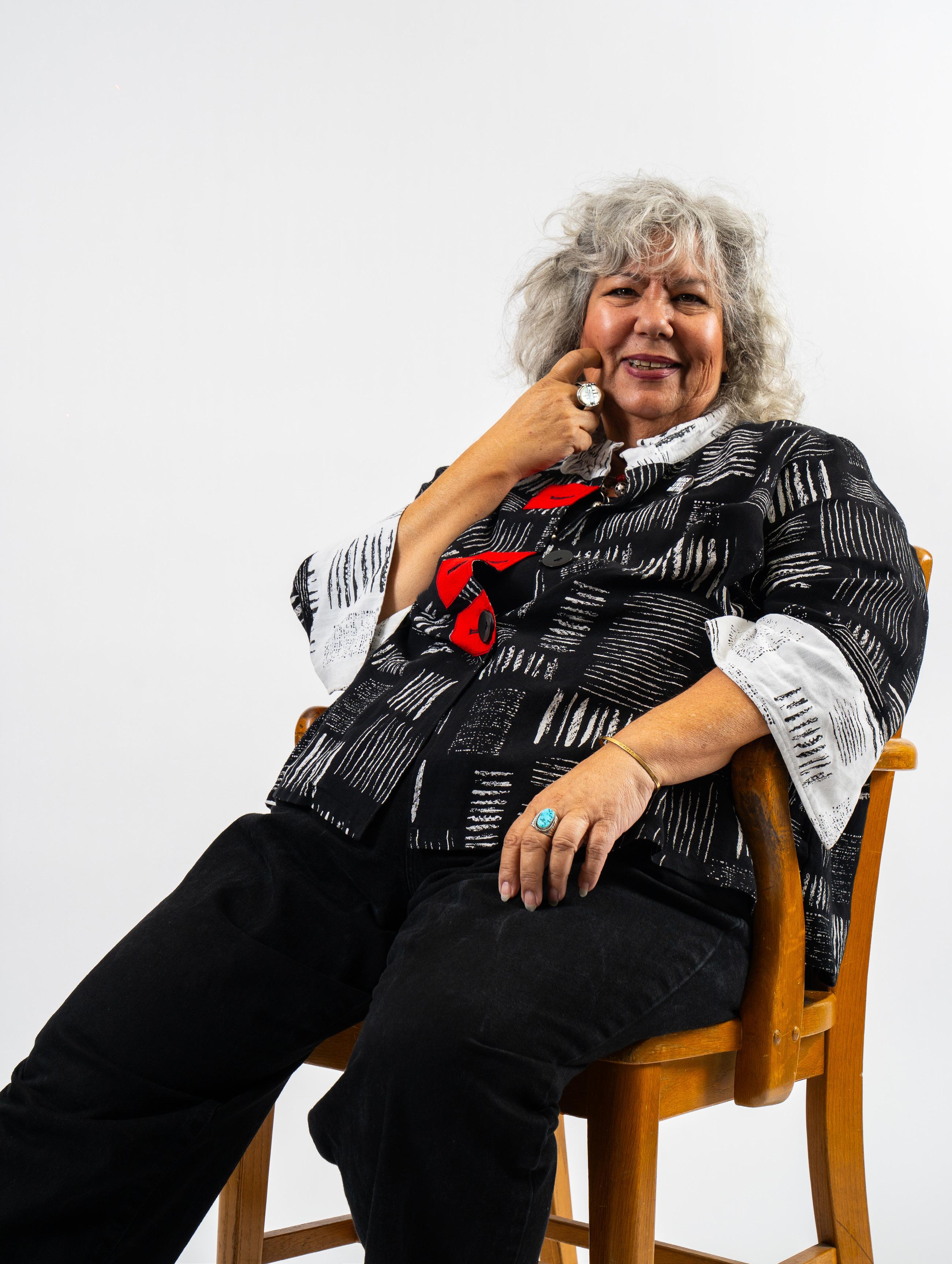
“NO MATTER HOW HARD TRY, NO MATTER HOW HARD WE WE CAN BE BETTER AND STILL NOT GET THAT
Lisa Bartlett WOMEN WORK, RECOGNITION.”
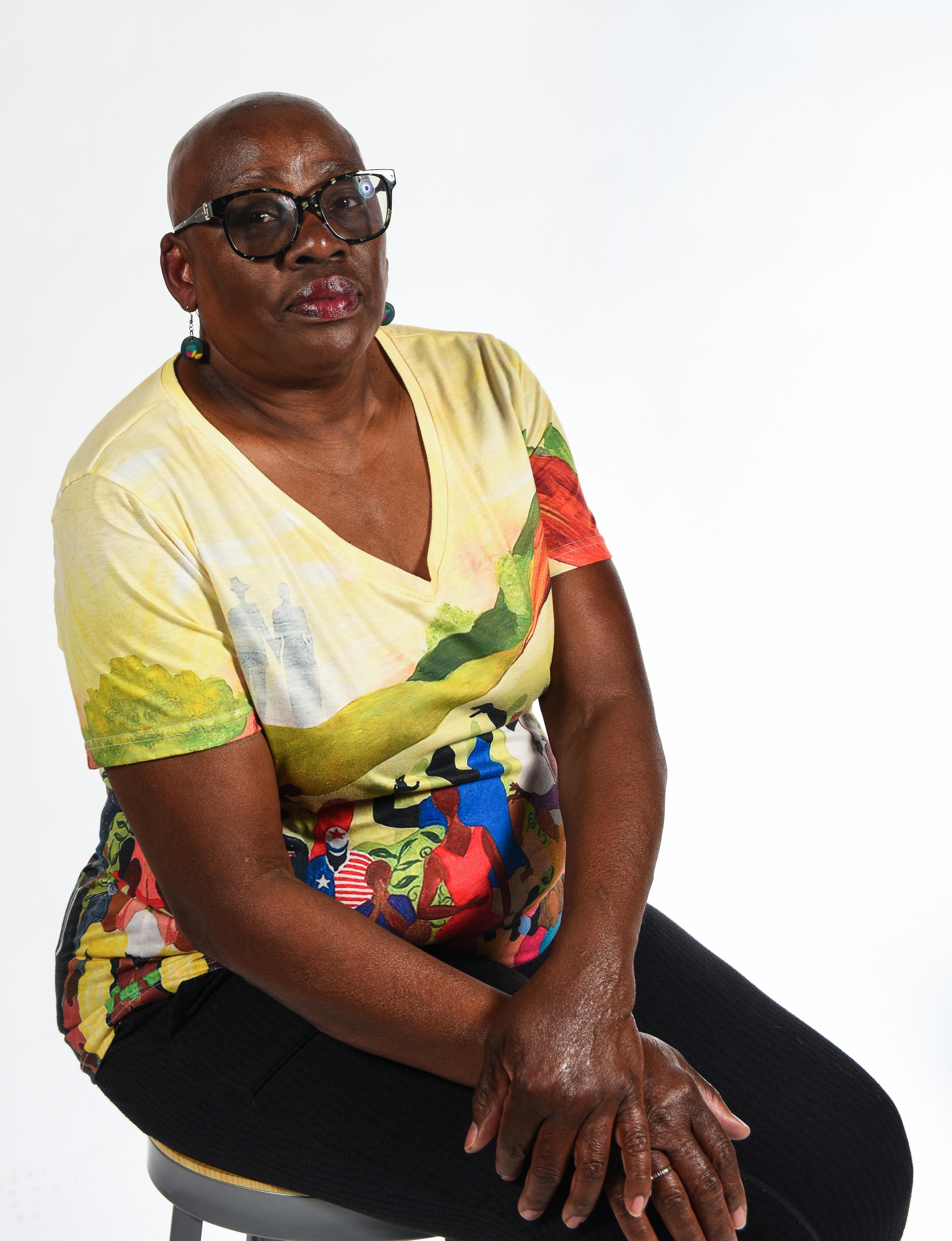
“PEOPLE DON’T REALLY UNDERSTAND AND AND WHY IT’S IMPORTANT BECAUSE THEY DON’T HAVE A HISTORICAL FRAMEWORK FOR UNDERSTANDING.” INCLUSION DIVERSITY,
Traci Wilson-Kleekamp EQUITY
For Traci Wilson-Kleekamp, activism started with her parents. She continues that legacy as a vocal participant in city issues.
BY GRACE ROMINE
Traci Wilson-Kleekamp remembers her father pounding a campaign sign into their lawn for Shirley Chisholm when she was 7 years old. Chisholm was the first Black woman elected to Congress in 1968 and the first African American woman to run for president in 1972. “That’s when I knew my dad was an activist,” she says.
Wilson-Kleekamp remembers the Malcolm X portrait in the den of her childhood home, too. She remembers the efforts her stepmother, who is white, made to ensure she was treated equitably in school — from the opportunity to play football in gym class to admittance into the gifted program. “My stepmom used her privilege to push for equity, not just for me,” Wilson-Kleekamp says. “Those (memories) are very foundational to my understanding of standing up for other people.”
It makes her emotional now. She says she’s been speaking up, probably by habit, for forever.
Wilson-Kleekamp shows up to public meetings from school board to city council. She combs through municipal reports, including those on traffic stops or school suspensions, to identify dispar-
ities. She speaks with government officials about how they can act more equitably and hosts a Facebook live when the school board stopped recording public comment during its meetings. “If they’re not going to record what the public has to say, then you are completely eliminating the public from having any spoken voice,” Wilson-Kleekamp says.
At any given time, you’ll find her with a stack of books in tow. Disillusioned by Benjamin Harold, Talking to Strangers by Malcolm Gladwell and Decentering Epistemologies and Challenging Privilege are a few of her recommendations. Wilson-Kleekamp gives books away, too. She gave a copy of Richard Rothstein’s The Color of Law to the previous city manager John Glascock.
“People don’t really understand diversity, equity and inclusion and why it’s important because they don’t have a historical framework for understanding,” Wilson-Kleekamp says. The dominant culture only knows the dominant culture’s history.
Mary Beth Brown earned her doctorate from the University of Missouri, where she worked in the Black Studies department, researched the history of urban renewal in Columbia and Black
activism on campus. “Traci knows the background,” Brown says. “She uses that to show you: ‘this has happened here before. This is what we need to do to fight it.’ ”
Education is a large part of Wilson-Kleekamp’s methodology and work she does with Race Matters, Friends. The nonprofit group was established in 2014 in response to the acquittal of St. Louis police officer who shot and killed Michael Brown in Ferguson. The members of Race Matters, Friends wanted policing to be different. WilsonKleekamp is a co-founder and previously served as the organization’s president; now she’s the vice president.
“Don’t you want to have a better relationship with the community, especially the Black community,” Wilson-Kleekamp says. “We want you to have a different philosophy about how you treat people.”
Race Matters, Friends holds discussions, readings, events, and more for racial inclusion in Columbia, Missouri. For those who want to get involved, visit racematters friendsmissouri. org.
She says Chief of Police Jill Schlude has embraced the framework of The Curve — a philosophy introduced in a 2009 TED Talk — which is dedicated to changing law enforcement’s culture with a mission to preserve life, preserve the peace and protect property, in that order. Wilson-Kleekamp thinks this model is better than community policing, which is where Race Matters, Friends started in its advocacy.
“Policing should be focused on making sure that we do right by the least among us, the most vulnerable,” Wilson-Kleekamp says. “That takes a much more focused effort at understanding your practices and what the data says your practices are doing to the community, right?”
A community discussion on the city of Columbia Charter will take place from 6:30 to 8 p.m. May 27 at Molly Bowden Policing Center.
Susan Renee Carter has served as Race Matters, Friends president since 2023. Carter has been with the organization and has known Wilson-Kleekamp since 2018.
“She is fabulous at making connections with people, keeping them involved, bringing up subjects with them that will help make our community a better place for people,” Carter says.
Wilson-Kleekamp recalls her dad telling her she shouldn’t be doing the work that’s already been done. “He’s right, but we’re redoing it,” Wilson-Kleekamp says. “I’m that activist that’s like, ‘Yeah, the people who have power need to do a hell of a lot more.’ ”
As
BY ALLIE TRIBE
the group has been a grassroots, volunteer-led campaign working to preserve the citizen-led initiative petition process that is currently under fire. The Respect Missouri Voters amendment would uphold Missourians’ freedom to petition, require unbiased and clear ballot language and make it more difficult for politicians to overturn ballot measures approved by voters.
When Lee heard what was at stake, she knew how critical it was to act. Over 25 years ago, Lee immigrated to the United States from South Korea for graduate school at Missouri State University in Springfield. She became a citizen 13 years ago. “You make a conscious decision to join this country,” Lee says. “A lot of immigrants feel that way, too. We take those oaths, and then I try to keep that oath and take it seriously to protect this country and people’s freedom.”
The belief that she can make a difference led Lee to political advocacy and the role of regional field director for the mid-Missouri volunteers of Respect Missouri Voters. Since 2025,
lowers left outside the Islamic Center of Central Missouri during a 2025 protest against President Trump’s ban on refugees was the catalyst for Monica Lee’s activism. It fueled her realization that it’s not somebody else’s responsibility to contribute to change — it’s hers.
The Respect Missouri Voters campaign aims to collect 300,000 signatures across the state before it turns them in May 3. The secretary of state then verifies the signatures and assures there are the required number.
(In this case, a number that’s at least 5% of votes from each congressional district in the 2024 governor’s race.) If the number of signatures is reached, the Respect Missouri Voters amendment will appear on either the August or November 2026 ballot. To learn more, visit respect movoters.org.
As regional field director for mid-Missouri, Lee manages the process from collecting signatures to organizing events. “Monica just picked up, said: ‘We gotta get this done. This is important for the citizens of the state,’ ” says Les Hahn, a Respect Missouri Voters volunteer.
The group’s goal is to make it more difficult for legislators to change what citizens have already voted on. Boone County Clerk Brianna Lennon says this happened with the 2010 puppy mill initiative. Meant to enact puppy mill regulations, voters approved the measure. Within a month, legislators were working to repeal it.
“That was such a striking moment because it was a petition meant to change a statute, and the legislature immediately came in and changed the statute again,” Lennon says. This has continued in recent years, with the Missouri Paid Sick Leave statute repealed three months after it was passed and the ongoing attempt to repeal Amendment 3, the abortion-rights amendment approved in November 2024.
Lee hopes the Respect Missouri Voters Amendment will end Missourians’ cynicism about the effectiveness of voting, and she points to the support for the campaign in the state. “A super majority of donors and volunteers and all those people are from the state of Missouri,” Lee says. “It started from this state, and it’s going to end in this state.”
Through his work with the Columbia Tenants Union, Jack Dobbs fights for better treatment of this city’s extensive renter population.
BY LAIBA ZAI
Jack Dobbs knows housing instability firsthand.
Growing up in Kirkwood, a suburb of St. Louis, he moved often — though his family remained in the same school district. Only later did he understand the strain his mother felt trying to keep five children anchored in one place.
“I didn’t really realize how much pressure my mom was under, being mostly a single parent,” Dobbs says.
When Dobbs came to Columbia in 2019 to attend Mizzou, he encountered a different kind of housing precarity — a warped reality of leases, rent prices and below-average accommodations that comprised student renting.
After moving off campus in February 2023, housing choices felt bleak. “It was either get somewhere small, cramped and really substandard, or pay for something really expensive that really isn’t all that nice,” he says.
Studying political science and economics, Dobbs spent his final semester lobbying for student cost-of-living issues through the Associated Students of the University of Missouri. Working with state Rep. Kathy Steinhoff on a proposed Student Renters’ Bill of Rights, he heard the same complaints — rising rents, confusing leases and a sense of
powerlessness among tenants.
The result, House Bill 1564, was the first proposed legislation of its kind in Missouri to address purpose-built student housing — housing that is designed, built and managed specifically for college students. But after it was filed in 2025, it stalled.
At the same time, Dobbs was struggling to find housing himself. So, when Empower Missouri, a nonpartisan nonprofit that has addressed poverty and inequality in Missouri for more than 120 years, posted a request for organizers to start a tenant union, the decision felt almost inevitable. “It was perfect,” Dobbs says.
In his early months as a community organizer, Dobbs and fellow organizer Riley Guy spent their days knocking on doors and listening. They canvassed hundreds of tenants across Columbia, hearing stories of rent hikes, unresponsive landlords and the peculiar cruelty of the “student lease gap” — a temporary, short-term housing shortage that occurs when a student’s current lease ends before their next one begins.
Those conversations became the foundation of the Columbia Tenants Union.
Vee Sanchez, affordable housing policy manager at Empower Missouri,
remembers meeting Dobbs when he was still dealing with his own housing struggles. “Once we started working together, he really expressed an interest in wanting to build durable tenant power,” she says.
Sanchez says the work requires heart and spirit, especially when tenants get scared and the stakes become painfully real. “Jack has done a really great job of being present in the moment, really listening and also reminding people that they have agency,” Sanchez says. “Their community and their family are worth fighting for.”
Over the past two years, tenant unions like Columbia’s have grown from scattered local campaigns into a more coordinated movement. Tenant groups in Kansas City, Connecticut, Louisville and North Carolina have built city and statewide structures. Learn more on the Columbia Tenants Union Facebook page.
Dobbs now fights alongside tenants in Columbia’s 16 mobile home parks, where residents say rent hikes accelerated after corporate owner Regal Communities acquired several properties in 2024. The struggle reflects a broader crisis — corporate ownership of mobile home parks and a system that prioritizes profit by raising rents, says Mizzou professor of law Andrea Boyack. “If you own a lot of the market, it is easier for you to raise the rents to maximize your return,” she says.
For Dobbs, the fight is simple — everybody deserves a home.
“(A society where) people don’t have to go through that much stress and pain when they need a place to live would be great,” Dobbs says. Housing should be “affordable, safe and accessible.”
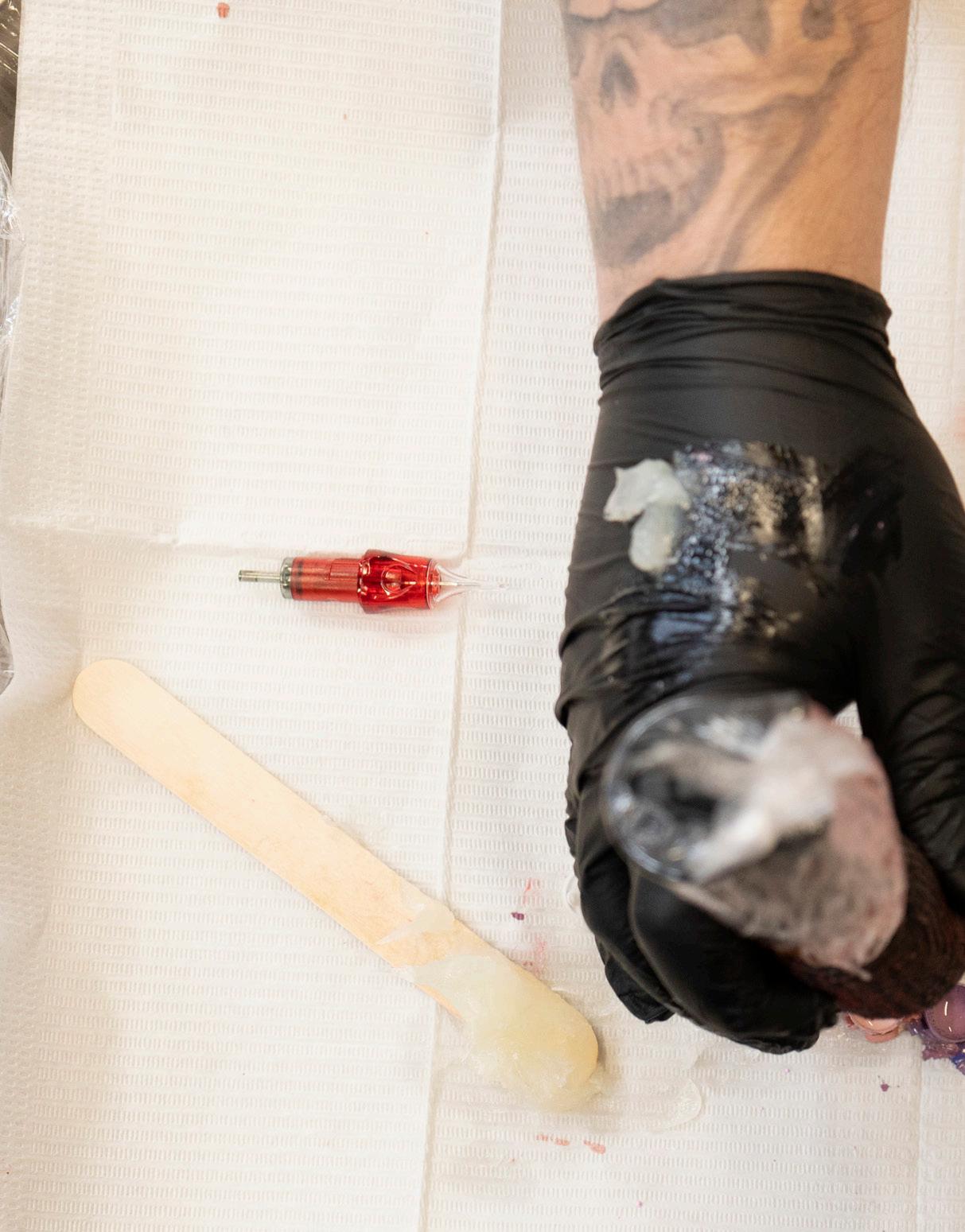
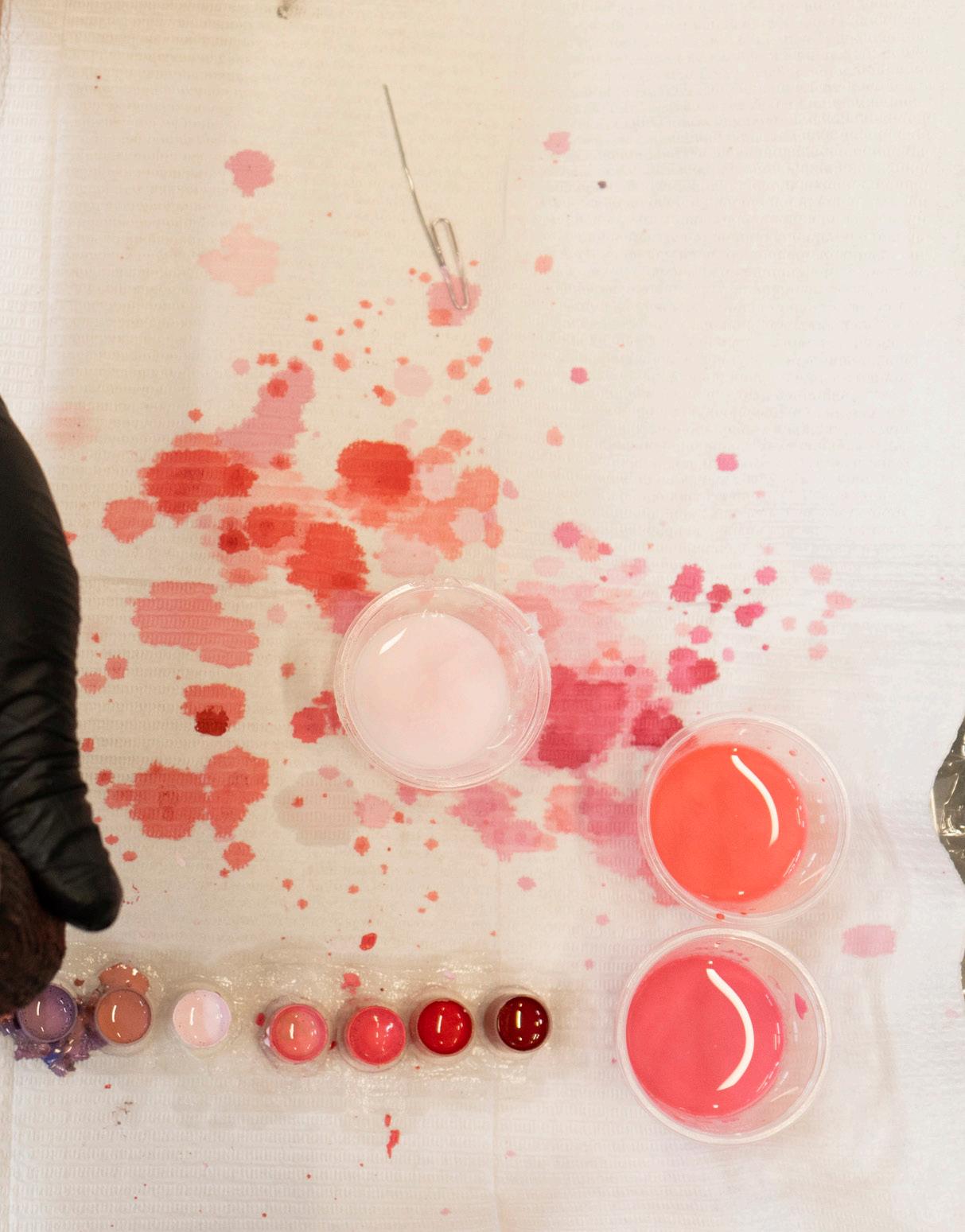
After the Missouri Department of Corrections introduced the first tattoo apprenticeship program in the country, inmates were given the chance to stencil, stick and ink their way toward receiving their licenses and finding careers postincarceration. For many, the opportunity has revealed much more than latent talent.
WWhen Chavez Aldridge first heard about Missouri’s prison tattoo apprenticeship program, he wasn’t sure he belonged. Serving a 12-year sentence at the Algoa Correctional Center, he began teaching himself portrait drawing from a library book. Tattooing felt like a different world. “I didn’t necessarily have the confidence to become a tattoo artist,” he says. But he knew he loved seeing someone’s face after he drew a portrait of their family member. That love and curiosity motivated him to complete the 45-minute drawing test required for entry. Acceptance into the program changed his outlook on his future post-incarceration.
In 2022, the Missouri Department of Corrections introduced the first prison-based tattoo apprenticeship program in the country at the Western Reception, Diagnostic and Correctional Center in St. Joseph. By 2024, the studio was ready for instructors and apprentices.
Karen Pojmann, communications director with the Missouri DOC, says the idea spawned after current Director of Corrections Travis Terry learned about a similar program in Canada. “It reduced the spread of blood-borne diseases at the time, so he brought it to the executive team,” Pojamann says. The program also protects inmates against contracting diseases such as hepatitis C, HIV and AIDS by providing disposable needles.
The DOC selected the program’s first class of students in November 2025 at Algoa to give inmates an opportunity to participate once instruction began in January.
Other states in the U.S. began adopting similar prison tattoo programs, often citing public health as a primary motivation. The Delaware and Minnesota DOCs have launched tattoo apprentice programs in order to reduce infections tied to unsanitary tattooing practices.
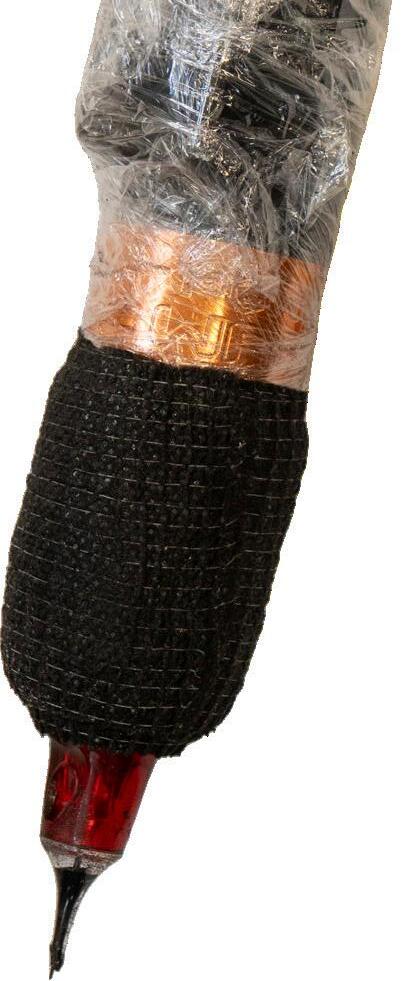
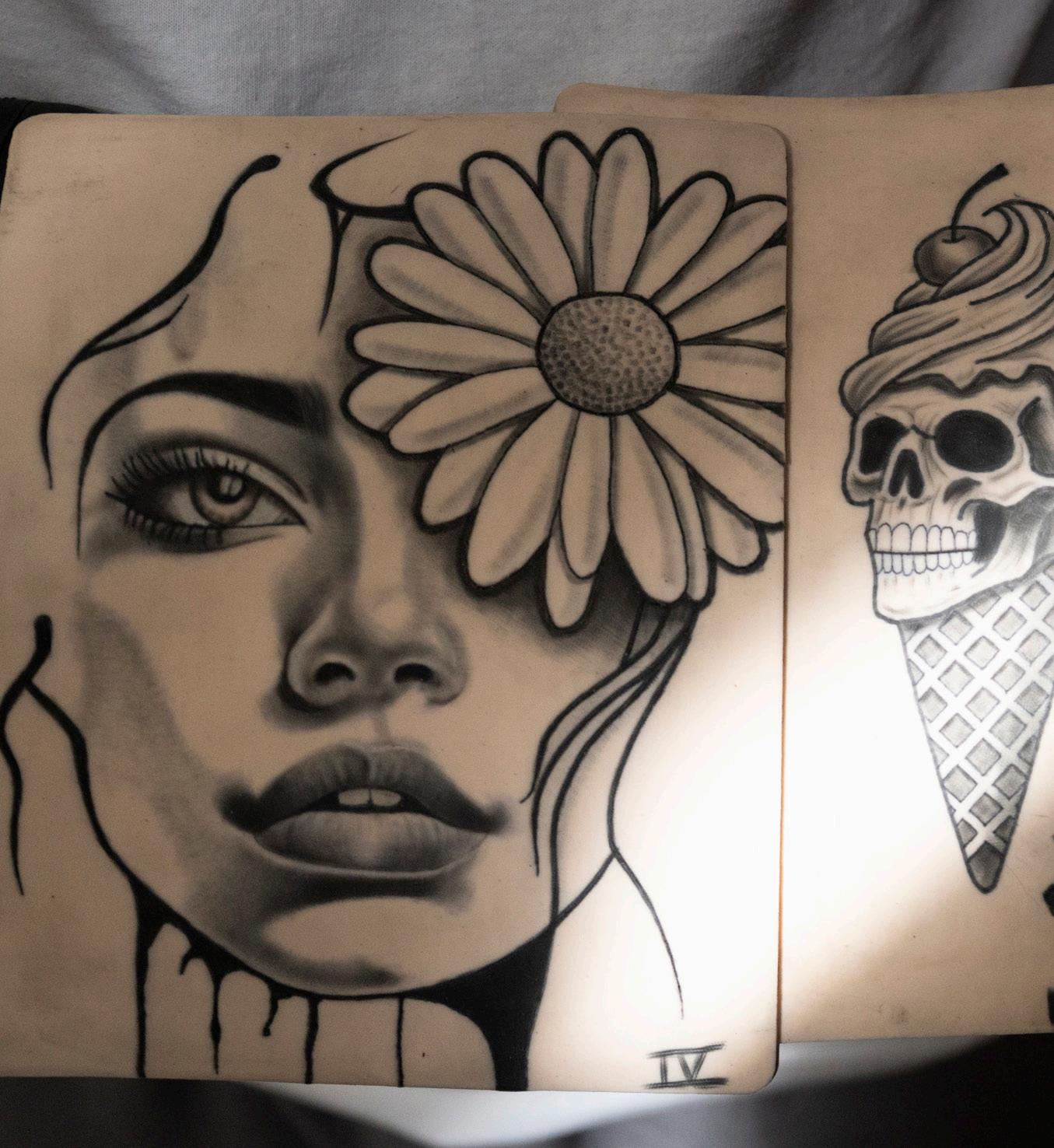
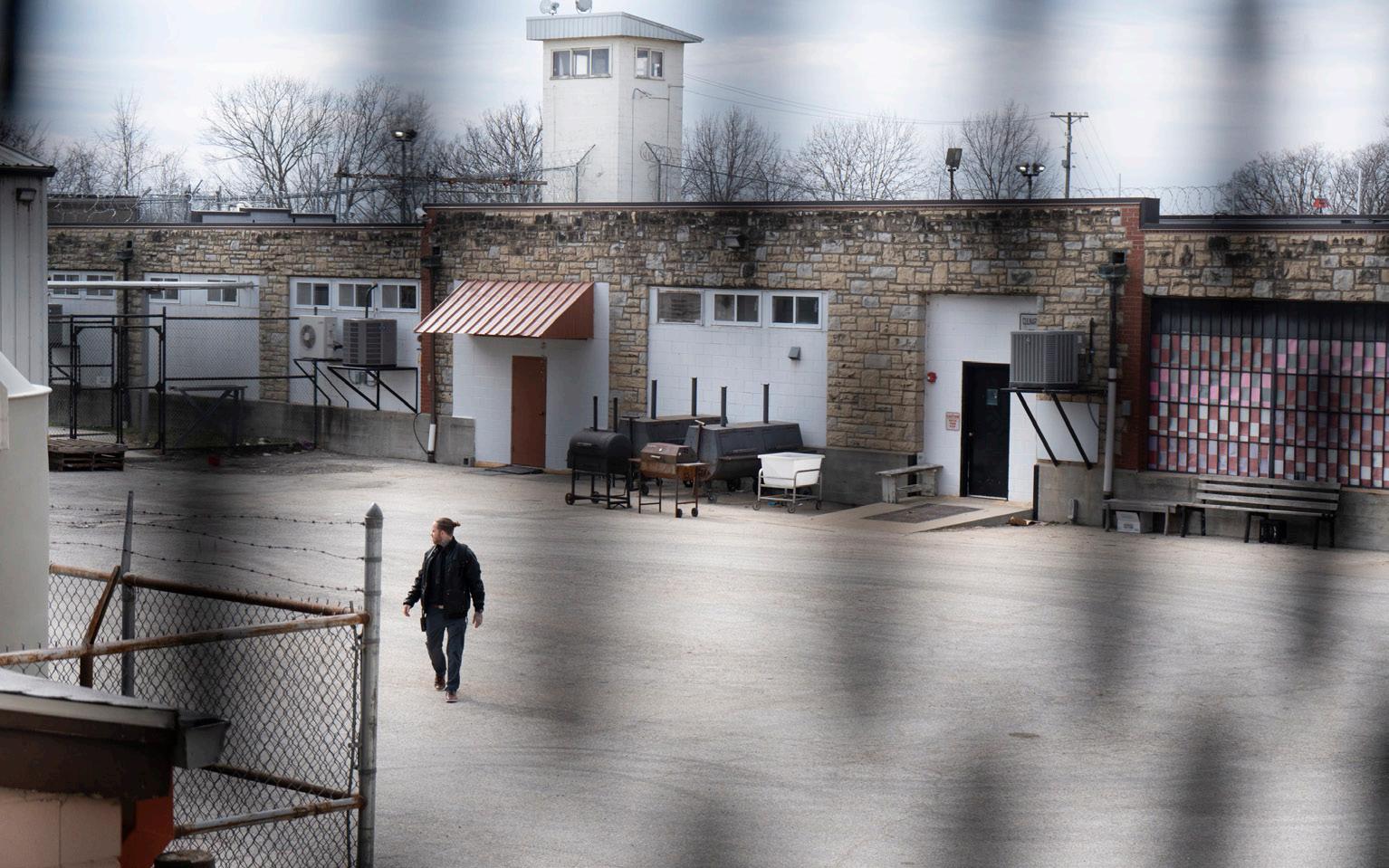
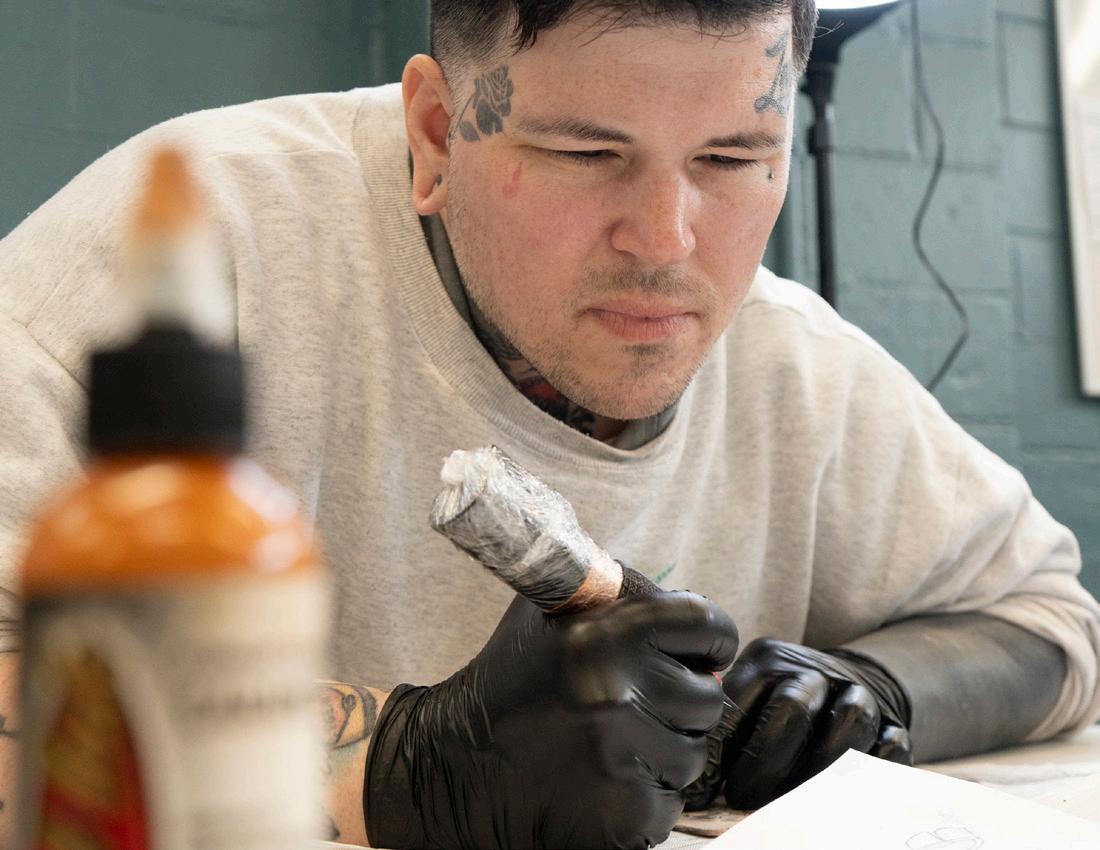
Every day, Deakin O’Connor, the tattoo instructor for the Algoa program, makes an hour-long drive to work inside the prison. Once inside, the workspace looks like any other tattoo parlor — state-certified equipment and materials line the room as residents stretch out fake skin for practice. Every detail is designed to mirror a traditional training experience as much as possible.
Before becoming a tattoo artist, O’Connor spent a decade incarcerated at another prison in Missouri, often doing contraband tattoos just like some of the current program participants did. When he was released in 2018, O’Connor had to unlearn many of the bad tattooing habits he had picked up. He says having a program like this would have helped him excel in his career. “This is a career for the rest of their life,” O’Connor says. “This program gives these guys (a chance to) express their artistic creative freedom in a way that doesn’t make them feel like criminals anymore.”
Before anyone picks up a needle and works on real skin, every apprenticeship starts the same way. In order to master the basics, residents study tattoo history, build art portfolios, attend one-on-one sessions with O’Conner and log hours of practice on fake skins. From there, apprentices must go through first-aid, CPR and blood-borne pathogen training before becoming fully licensed tattoo artists, able to take clients for $10 an hour.
Harlan Shaver spent years tattooing contraband tattoos at Algoa. Now,
the program offers him a way to learn best practices and have a future career. “I don’t even have to worry about getting in trouble doing it, and I can actually do something I love,” he says. Shaver says the program provides an escape. “We come down here and do this and don’t even feel like I’m in prison,” he says.
For Eric Higgins, the program offers him an opportunity to pick up where he left off. Prior to his incarceration, he apprenticed at a shop where his former mentor never logged Higgins’ hours or sent his paperwork to Jefferson City. He never got his license. “It’s different with Deakin, because of the simple fact that he’s been on this side of the fence before,” he says.
The apprenticeship is also pushing Higgins beyond his comfort zone. A self-described “art-nerd” with a deep love for Japanese traditional tattooing, Higgin’s has to resist the pull of specializing too soon. “It’s broadening that spectrum and going a little further, adding nuances and new things to the stuff that I didn’t know could be done,” he says.
Luke Scammell, a graduate of the apprenticeship program in St. Joseph, says finding an artist willing to take a formerly incarcerated apprentice is difficult. “You learn so many bad hab-
The Missouri DOC has added culinary arts programs, commercial driver’s license programs, a barber program and cosmetology programs at the women’s facility — each providing opportunities to earn licenses and certifications.
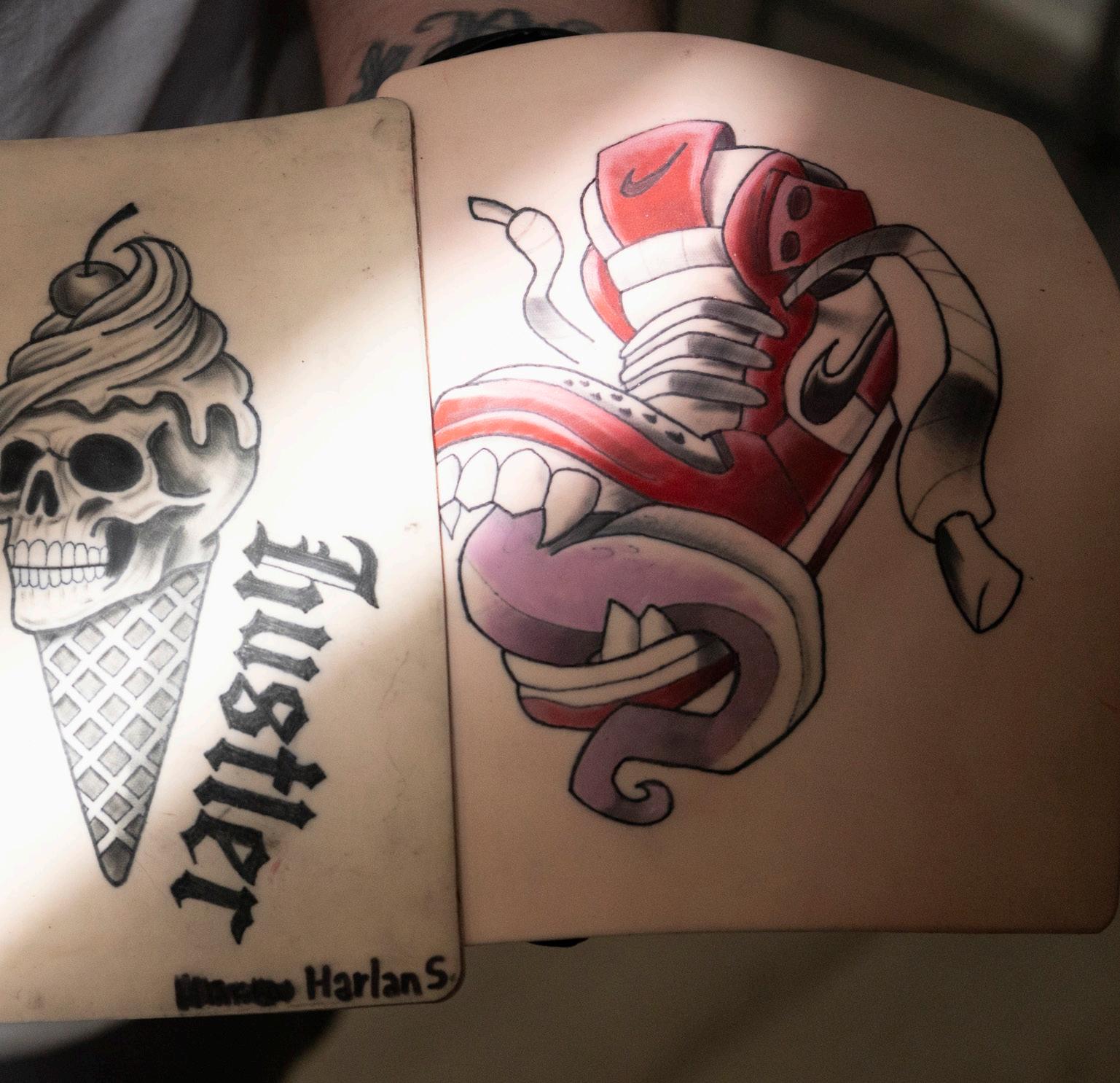
While Harlan Shaver used to give contraband tattoos, he now perfects his craft on fake skin (left) as part of the apprenticeship program.
Deakin O’Connor (above) works at the Algoa Correctional Center leading the apprenticeship program. He teaches tattooing and the beauty of creative expression.
“The very first day that we had come down here, Mr. O’Connor took an approach where he focused on art perspective,” says Harlan Shaver (right). Eric Higgins, who dedicated his calf tattoo to his daughter (far right), says the program has been a meaningful outlet.
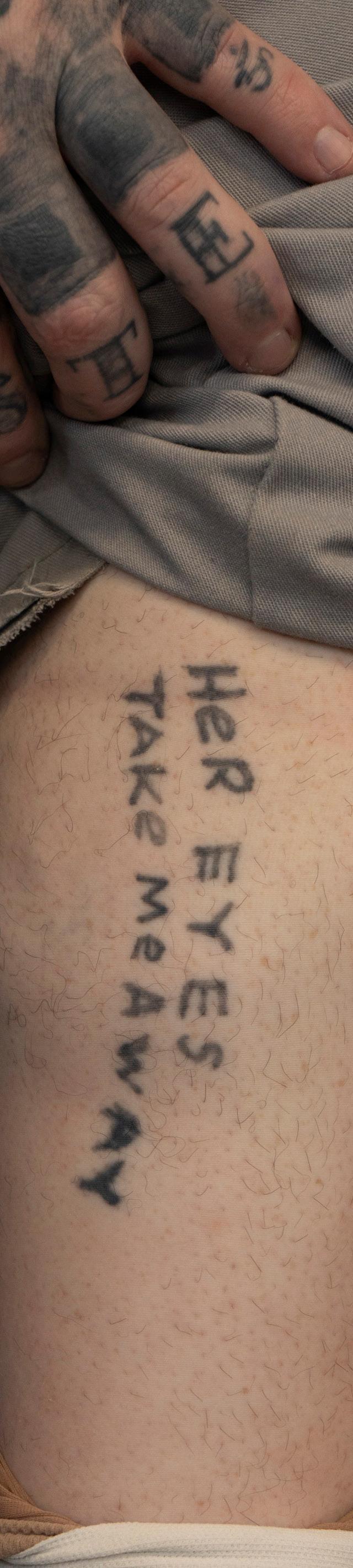

its from contraband tattoos,” he says.
Tucked away on the bottom shelf of Scammell’s work station is a binder with his work from the St. Joseph program. Fake skins with various tattoo styles, art sketches and even the approval form he received when he was admitted into the program.
Scammell was released from the St. Joseph prison over nine months ago. He now works at a shop in Springfield where he has gained repeat clients and has even won awards at tattoo conventions. Scammell says the program changed his outlook on life post incarceration. “I would have been lost,” he says. “I needed that to get out and have that purpose and know what I’m doing.”
Tattooing in correctional facilities has a long history internationally. Matt Lodder, a tattoo historian who has written several books on the subject, says the relationship between tattooing and incarceration stretches back thousands of years. In ancient China, there were 500 crimes for which a person could be tattooed as punishment.
“Contraband tattoos” refers to tattoos created with materials inmates have on hand. The materials are often unsanitary and increase the risk of transmitting bloodborne pathogens.
Tattoo motor: a motor, usually taken from a pencil sharpener or CD player, and a needle attached to a pen Tattoo needle: a skinny piece of metal, usually a pen or lighter spring, threaded through the body of a pen Ink: pencil graphite or soot mixed with a liquid like Vaseline or alcohol
In ancient Greece and Rome, tattoos were imposed on prisoners as a form of stigma. Lodder says the resilience of tattoo culture inside prison walls to something fundamental about the practice itself. “When tattooing is suppressed, when tattooing is banned, when tattooing is difficult, people will find a way to do it,” he says.
Josh Gaines is the deputy program director at the Council of State Governments Justice Center. He says Missouri’s apprentice program isn’t something you’d typically associate with correctional programming, but it has a significant impact. “It allows people to learn skills that are in demand, and it creates real opportunities to support themselves once they leave prison,” he says.
The tattoo apprenticeship program goes beyond teaching the trade — it reshapes how inmates see themselves and how the system sees them. “It’s really about giving people an outlet and showing that there is potential
for stability on the outside,” says Erica Williams, education manager at Algoa Correctional Center.
For participants, the program has changed how they view their time. “Being enrolled in the apprenticeship has changed my day-to-day processes a lot,” Aldridge says. “Now that I’ve been in the program, they see me more as an artist and less of a troublemaker. It’s nice to finally get seen as something more than a criminal.”
Higgins framed the program as a rare opportunity for expression. “It’s not even about the freedom as much as it is being able to create your own expressionism and do things that have a voice,” he says. “You feel less like a number and more like a person again.”
What begins as a chance to learn tattooing becomes a pathway to confidence, purpose and a future beyond prison walls. “It’s about second chances, about letting someone start over and see themselves differently,” O’Connor says.
Rebecca Smith from KBIA contributed to this story.
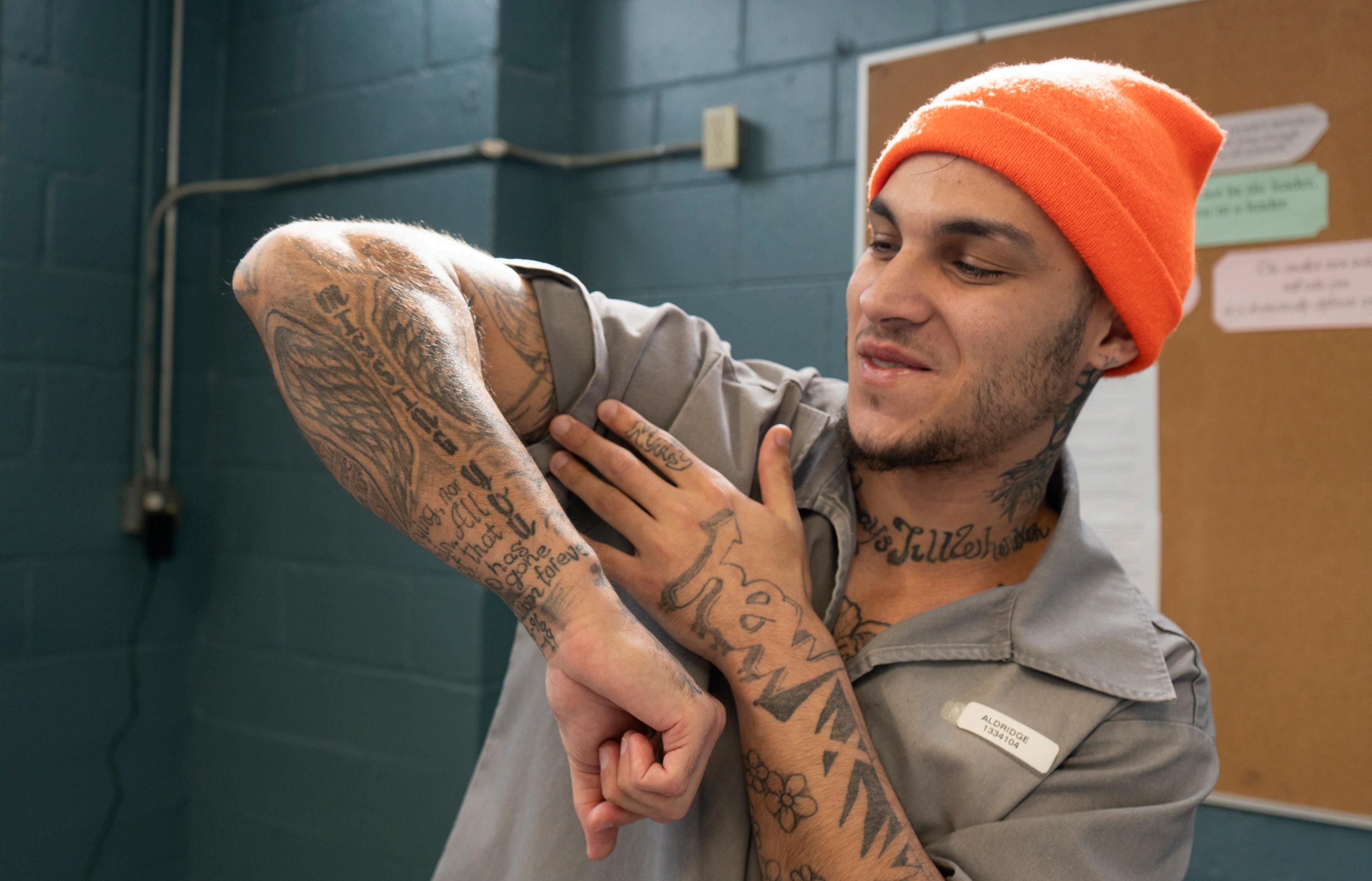
“I feel like this program has definitely made it to where they have to acknowledge that we’re more than just criminals,” Aldridge says. “We have these artistic abilities and we actually have some substance to us as people.”





Chrissy Palmer blends her love of baking with a passion for serving others with alpha-gal syndrome.
BY SOPHIE LINDBERG
Kelly Champ was in purgatory. It was July 2025, four months after her diagnosis of alpha-gal syndrome. Four months of being in the emergency room twice a week for anaphylaxis caused by hidden mammalian products in sugar, tap water and toothpaste. She had developed mast-cell activation syndrome and an oral food allergy in response to alpha-gal exposure and couldn’t go outside without a mask at her outdoor education job.
Champ felt isolated as everyone in her life moved on from her diagnosis.
She saw the anxiety it brought her kids. They had to grieve traditions such as hosting Friday-night barbecues and holidays.
Alpha-gal syndrome is an allergy to the molecule galactose-a-1, 3-galactose, which exists in most mammals but not humans. It can be introduced to humans through a lone star tick bite — one of the most common ticks in Missouri. It triggers an allergic reaction when a person consumes red meat and other mammal-based products.
The Missouri General Assembly has
Chrissy Palmer runs a bakery from her home, offering alpha-gal safe food since December. Janet Cake is one of her best sellers. It is named after her mother Janet Palmer, and is inspired by Janet’s decadent chocolate frosting recipe.
been considering a bill to track AGS cases in the state to better understand the syndrome’s impact. It was approved by the House April 2 had a public hearing in the senate April 22.
Efforts to track the syndrome would help people like Champ.
On that July day, she reached for her phone to text Chrissy Palmer, who has helped many people with AGS via food guides following Palmer’s own diagnosis in December 2023.
Now Palmer is using her lived experience with the condition to launch One
Happy Alpha Gal Bakery. It is guided by principles she learned from her mother, Janet Palmer: a love of baking, how to build a business and a dedication to serving everyone.
All that matters is people Palmer’s last straw after months of strange symptoms was waking up on the floor of her garage in July 2023. For months, the previously capable Palmer struggled to string together sentences, stuck in a brain fog.
After being diagnosed, Palmer learned that her sensitivities are extreme. Like Champ, she’s fume-reactive. Every time she leaves her home, she gambles facing days of brain fog if she breathes in fat particles or scent molecules from cooking meat, dairy and tallow.
In January 2024, she joined the Facebook group, The AlphaGal Kitchen, where she started to share tips — calling food manufacturers, analyzing labels and her own experience with different products. Eventually, she compiled it into a beginner’s alpha-gal guide, shopping
list and product list. Clovers Natural Market even reached out to her to create an alpha-gal friendly product list, found on its website.
Palmer learned her love for people from her mom. She grew up watching Janet take in teens from unstable households and make them Italian dinners and cakes with chocolate frosting. Janet had a way of making people feel welcome.
Each bakery good has been touched by Janet — even though she died 17 years ago of breast cancer.
Palmer recalls the blueberry muffins her mom made. “I don’t even like real blueberries, but I loved her muffins,” Palmer says. “I think it’s because she made them with love.”
She means business Palmer will sell shelf-stable items when she outgrows her home bakery and eventually moves to CoMo Cooks Shared Kitchen, selling Janet Cake there. Inspired by her mother’s decadent choc
Send One Happy Alpha Gal Bakery a direct message on Facebook, using the provided menu as a starting point for flavors and prices, or order a custom baked good.
olate frosting recipe, it features chocolate cake with Nutella filling, homemade raspberry jam filling, raspberry buttercream and chocolate ganache.
Mike Burwell, Palmer’s first customer, was diagnosed with AGS in September after eating a burger at a golf tournament. He woke up in the night with swelling, angry hives. He was tagged in Palmer’s bakery announcement post by fellow “AGS-ers” on Facebook, and he placed an order. “She’s so humble and appreciative,” Burwell says. “You’d have thought I’d written her a $10,000 check when she told me I was her first customer.”

As Palmer gains followers on Facebook, she is usually found in her kitchen, wearing a pink polka-dot scrub cap and dancing around her kitchen into the late hours. She uses her mother’s measuring spoons for all the desserts, and swears they make everything taste better.


by Kris Sand
Highball brings a big-city vibe to one of Columbia’s historic nightlife spots.
BY MORGAN CHU
In a vacant space at the corner of Ninth and Locust streets, soft lights are back on.
Inside Highball Kitchen & Cocktails, Ninth Street fades amid the ambient warmth. Exposed brick frames a dimly lit dining area. Rows of green planters and tan leather booths welcome guests to sit and sip cocktails along the floor-to-ceiling corner windows.
Highball occupies a space that is soaked in Columbia nightlife history. For owner Charlie Smith, it’s where his story began. He worked the door 13 years ago when the location housed Quinton’s Bar & Deli, which closed in 2016, and Tonic Night Club, which closed in 2017. Back then, he was learning the rhythm of a bar from the outside in. Now, he’s setting the tempo.
“You know, I try to pick anyone’s brain,” Smith says. “I have a lot of other friends in the industry that were running their own bars in bigger
cities of Chicago, Kansas City, New York — so I’d always be picking their brains.”
Over the next decade, Smith worked his way up through restaurants, saving money and gaining experience with the long-term goal of opening his own. He had a vision of something that was missing in Columbia’s restaurant scene — a high-end dining experience paired with an elevated late-night cocktail bar.
Inspired by his Chicago roots, he wants Highball to bring a big-city vibe to downtown Columbia, basing Highball’s design on the culinary and creative heartbeat of Chicago’s West Loop.
Preparing for the opening on Feb. 6, however, was less glamorous. “It was basically just me and two buddies working 20 hours a day to get it done,” Smith says.
Despite building the concept from
Highball Kitchen & Cocktails is open from 4 p.m. to 1:30 a.m. at 132 S. Ninth St. Check out events and deals @highballcomo on Instagram.
the ground up, Smith doesn’t take all the credit for Highball’s success. He says one of the most important factors is its team, and that philosophy shaped his most pivotal hire.
Making the drinks special
Riain O’Ceallachain, a longtime bartender, walked through the door, resume in hand. “I was already fully (staffed),” Smith says. “But obviously, with someone with his experience, I immediately wanted to bring him on the team.”
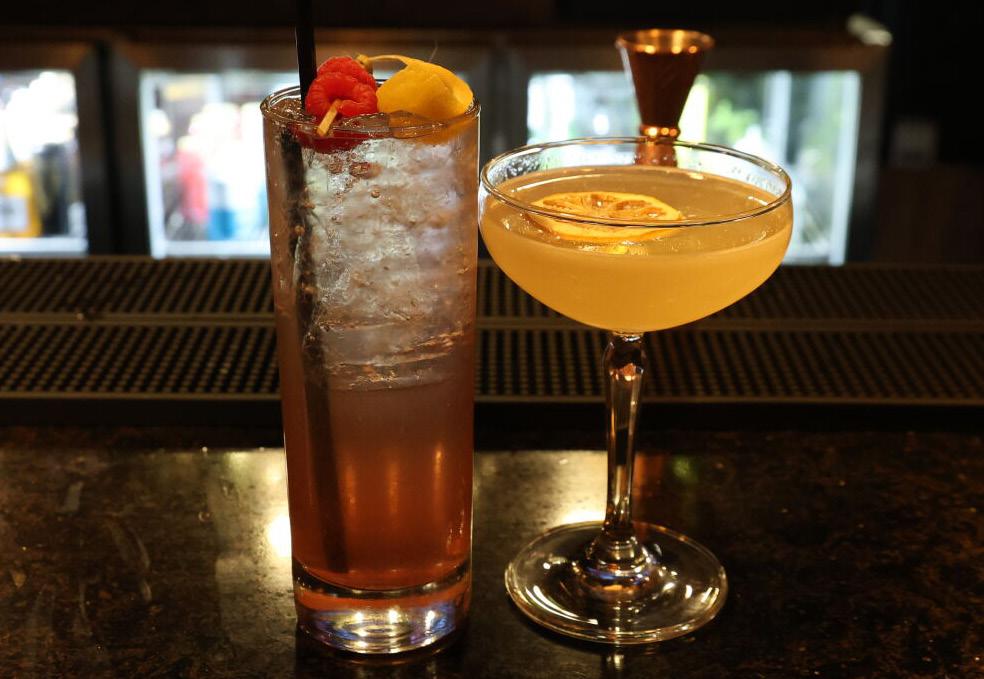
Beverage director Riain O’Ceallachain has worked to craft specialty drinks for Highball’s menu, including Major Tom (below left), a riff on a classic Tom Collins, and Sweet Nothings, which O’Ceallachain describes as an approachable drink for everyone.
O’Ceallachain, who is now Highball’s beverage director, also got his start in Columbia. “My very first bartending job was here,” he says. “It was Gumby’s, right between my junior and senior year. I just turned 21.”
After graduating from the University of Missouri in 2014, he hit the ground running. He worked as a bartender in Chicago’s Boystown (now Northalsted) for seven years, then spent three years bartending in St. Louis before returning to Columbia.
O’Ceallachain brought Sweet Nothings, which he calls his favorite mixed cocktail, to Highball as one of its two signature cocktails. It’s a mixture of vodka, genepi, pamplemousse liqueur and fresh lemon. “This is one that I have kept with me for going on seven years now since Chicago,”
O’Ceallachain says.
However, drinks aren’t the only options on the menu. From unique shareables like half-shell oysters and charcuterie boards to sandwiches such as a duck fat smash burger, Highball aims to create that high-end dining experience to match the carefully curated cocktails.
Highball might be inspired by Chicago, but it is unmistakably Columbia. And on a corner that has worn many identities, Highball is creating its own.
A sizzling new spot with a name that literally describes its menu.
BY ACIYA EL TAJOURY
It might be hard to imagine what a “sushi fajita” would look or taste like — and that’s exactly the point. The concept of Sushi Fajita is not a menu that features sushi or fajitas, or even a fusion of Mexican and Japanese cuisine, but rather a reinvention of how sushi is presented. In this case, it’s fajita-style — a variety of fresh, readyto-eat ingredients and sheets of nori to serve as a foundation for building whatever hand roll you desire.
Turn up the heat
As interest in hand roll bars and interactive dining concepts grows, Kory Yoo, owner of Sushi Fajita, felt inspired to reinvent the traditional sushi experience, saying he wanted to create something that felt different from a traditional sushi setup.
OpenTable’s 2026 Dining Trends Report reported a 78% increase in the term “hand rolls.” Interactive dining concepts are similarly on the rise, with 37% of Americans saying they would like to see more experiential dining in 2026.
Yoo has been in the restaurant in-
dustry for around 23 years, and he is the name behind I Am Sushi Burrito, I Am Sushi Grill and Geisha Sushi Bar.
His love for the restaurant scene began when Yoo was in college, and a friend recommended a part-time kitchen job to him, as he was known to be a good cook. Yoo soon fell in love with the fast-paced kitchen environment, eventually working his way up to becoming a head chef.
After 18 years spent operating the traditional sushi restaurant Geisha, Yoo decided to close Geisha’s doors to make way for an entirely fresh take on the sushi experience in a dramatic rebrand that ended in the launch of Sushi Fajita.
Sushi Fajita is a unique dining experience that is both customizable and interactive — which was exactly what Yoo was looking to do.
“You can choose and design your own hand rolls so you can enjoy it,” says Jinghan Chen, a patron of Sushi Fajita. “Sometimes, eating at other restaurants, I will look at my phone while I’m eating, but if you make your own hand rolls, you
Location: 804 E. Broadway Hours: 5 p.m. to 9 p.m. Monday, 11 a.m. to 9 p.m. Tues.–Sat. More info: Follow @sushifajita on Instagram to stay up-to-date on new menu items and weekly specials.

don’t have a hand to look at your phone.”
Yoo emphasizes the appeal of the dining experience, saying that rather than ordering one specialty roll and waiting, guests can enjoy a variety of options in one sitting and engage with the food in a way that is more personal.
Unlike other sushi restaurants, Sushi Fajita gives customers the chance to customize their dining experience with every bite.
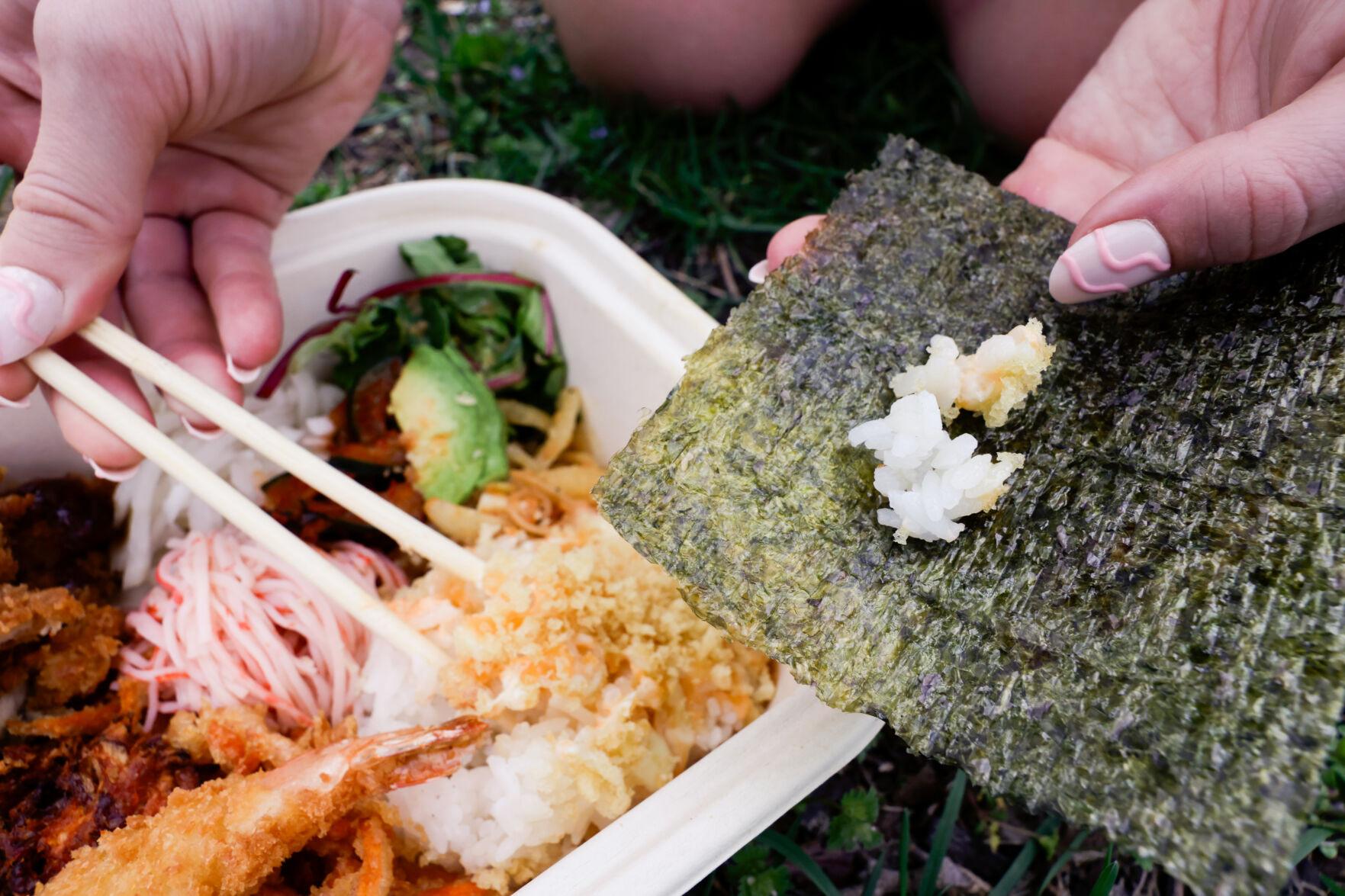
“It’s the uniqueness in putting it together, because you take your little seaweed wrapper and each little piece can be different,” says Jenny Fine, a Columbia digital content creator and Sushi Fajita patron. “If you order one roll, it’s just one roll and you’re just eating the same thing for seven or eight bites, but this one, you get about two or three bites of each little ‘taco,’ and you can just keep making your own. It’s so fun to experiment.”
Ordering is simple — you start by selecting your style of sushi fajita — meat, vegetable or seafood. You also can order your choice of protein from the menu, which features beef, chicken, pork, tofu and sushi fish options. Each fajita is served with vegetables, sushi rice, fried gyoza, seaweed, Japanese veggie pancake, crispy seaweed noodle roll, shrimp tempura, imitation crab and a variety of sauces.
The final step, of course, is assembling your ingredients on a sheet of nori and enjoying it. How you experience the meal is up to you.
Photography by Shruti Ajay





The permanent residents of our local cat cafe represent the spectrum of feline personalities.

BY ANDREW DAVIS

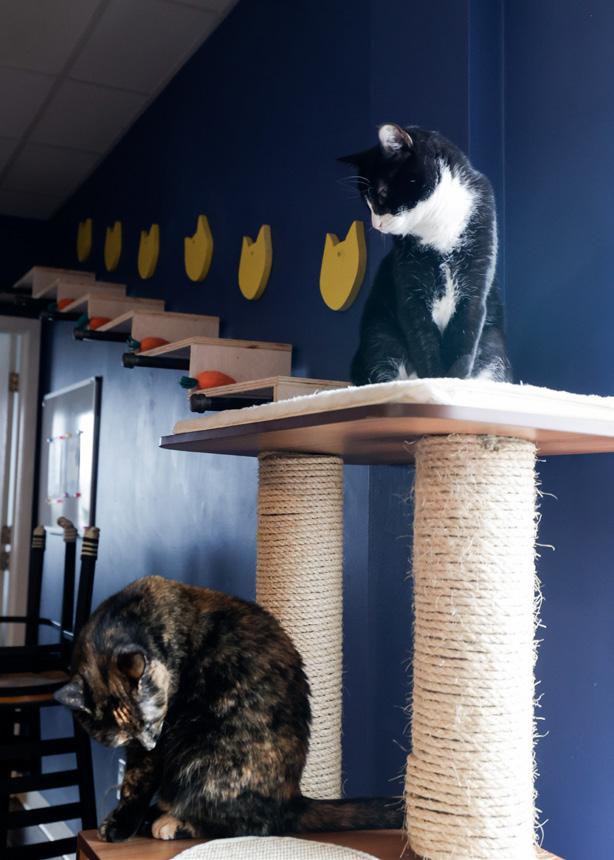
Most people think Jessica Schlosser is the owner of Bertha’s Beans Cat Cafe. But those people clearly have not met Freddy, Beans and Chai — the three full-time resident cats who lay down the law of the feline-filled land.
Schlosser took over Papa’s Cat Cafe in 2023 and remodeled it into Bertha’s Beans. Schlosser and her team gradually decided on three kitty-leaders who have
Bertha’s Beans, 14 S. Second St., is open 10 a.m. to 5 p.m. Sunday and 10 a.m. to 7 p.m. Thursday through Saturday.
Learn more at berthasbeans.com.
clawed their marks on the cafe (in a good way) over the last two years.
“If they’re not laying on the very center cat tree for all to see, they are walking around, making sure the customers and the cats know that they run this joint,” Bertha’s Beans manager Zoe Robinson says.
On March 8, Bertha’s Beans adopted out its 500th cat, and more adoptions
means more new cats brought to the cafe by the rescue organization Columbia Second Chance.
Each of the ever-changing cast of cats must befriend, or at least tolerate, The Big Three. For some new cats, fitting in can be a breeze, but for the occasional troublemaker, not so much. Here’s what you need to know to stay on The Big Three’s good side.
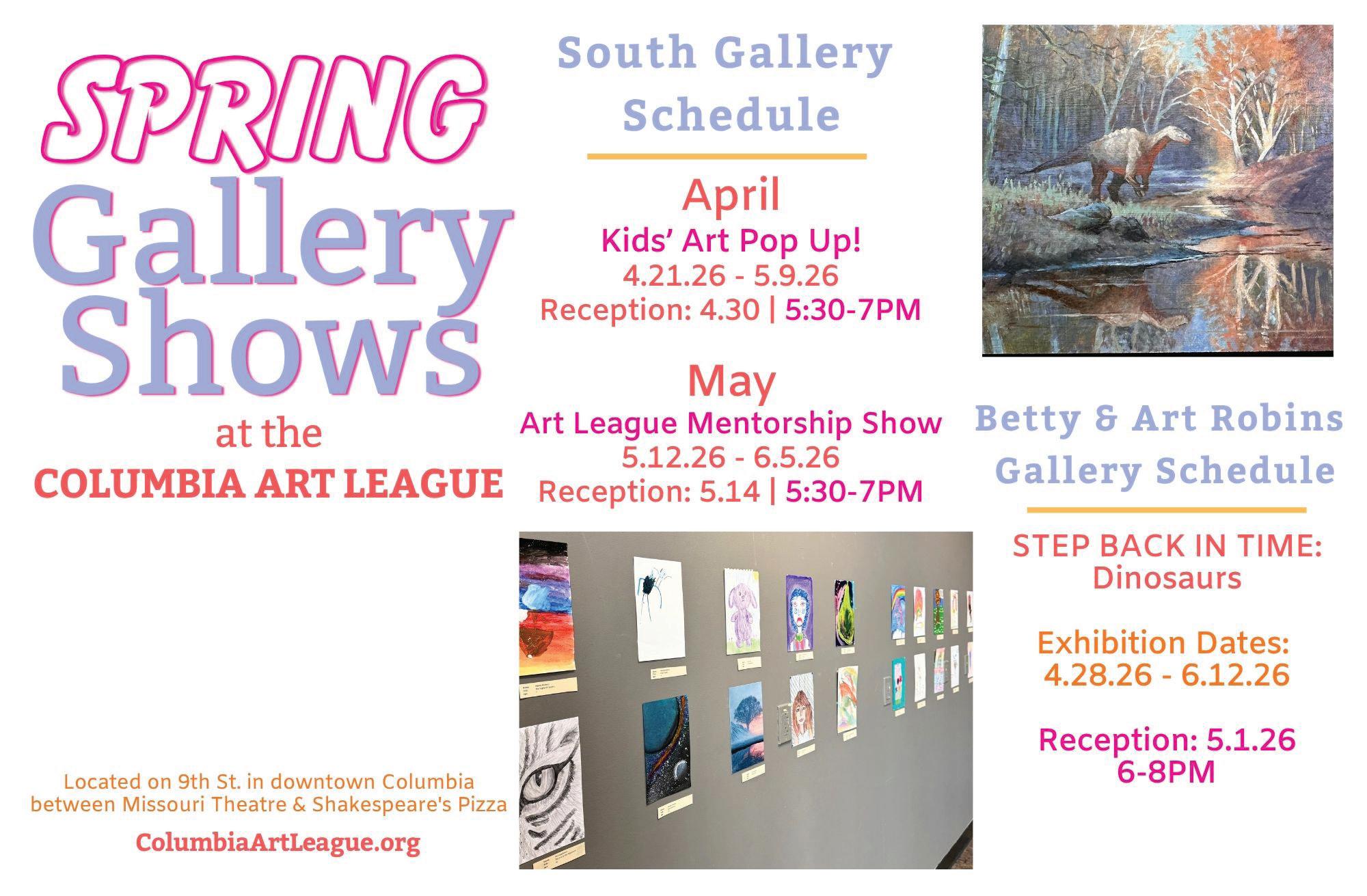

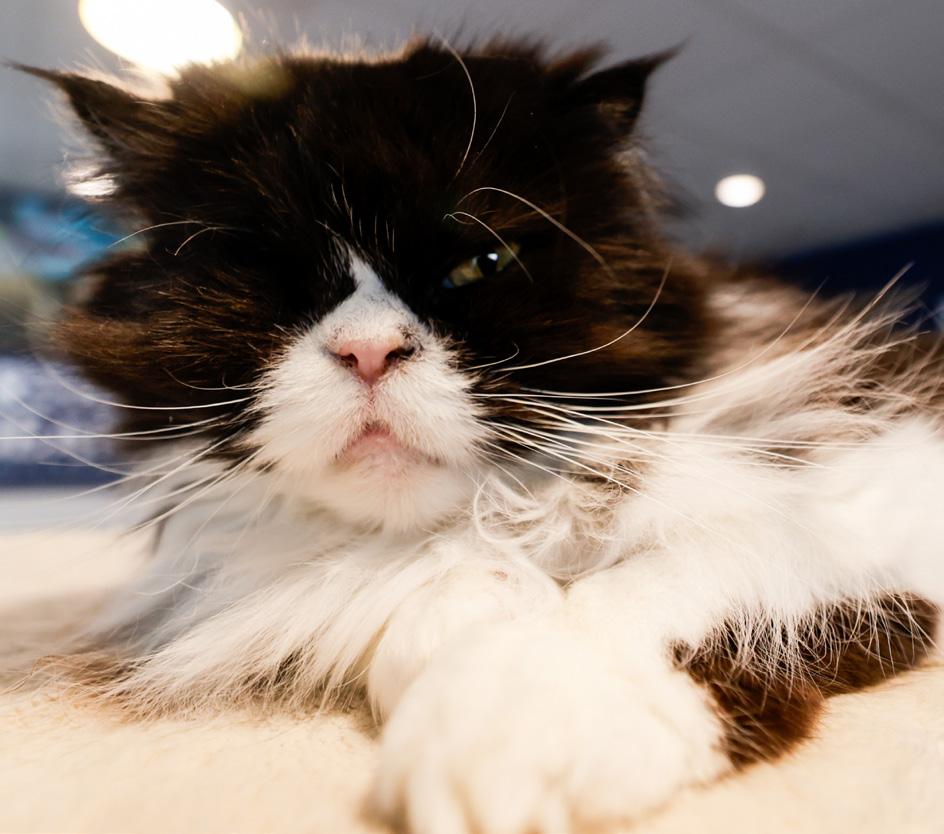
Most friendly
Sex: Female, very rare
Age: About 4 years old
Coat: Orange tabby
Eyes: Left is blue, right is amber or green depending on lighting
Spiciness level 1-10: 1
Beans is a true rarity. Only one in 3,150 cats share all of her physical traits, and probably only one in 3,150 cats are as welcoming as she is to other cats. She’s known for her passive behavior, tolerating anything from aggressive cats to young children.
In 2025, Schlosser’s team deemed
rise if you provoke him)
As the “nonchalant king” of Bertha’s Beans, Freddy is known for his excessive laziness around the cafe — even for a cat. Freddy’s favorite spot changes every few months. Recently, he swapped from sleeping on the cat wheel to the cat tower.
Freddy likes attention, but what he
Beans the role model for the adoptable cats because of her friendly behavior. However, about twice daily, Beans will become “possessed by demons,” Schlosser says. As her pupils dilate, she stares into “the invisible evil” and zooms around the room for a while.
Columbia Second Chance rescued Beans from a feral cat colony in 2023, and Schlosser fell in love the second she saw a picture of Beans. Around that time, though, Schlosser got the opportunity to take over Papa’s Cat Cafe, and decided that Beans would complement Freddy’s relaxed nature as the second resident cat.
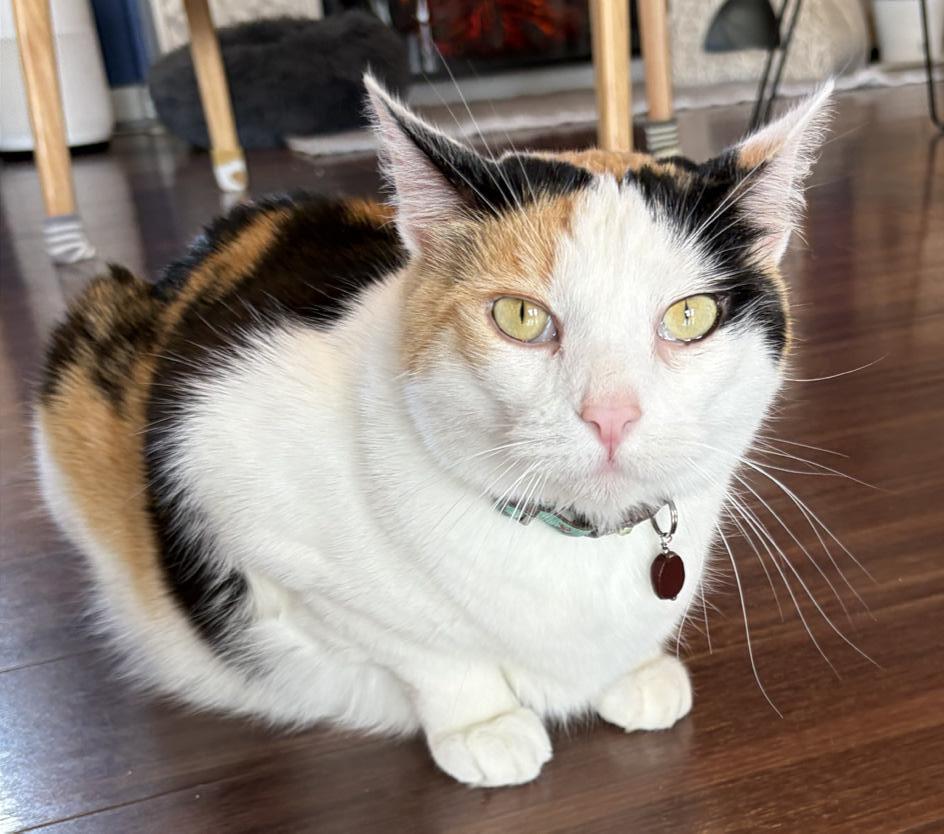
Freddy spent about four years as the resident cat at Lizzi & Rocco’s Natural Pet Market, Schlosser and her husband’s pet store. There, he surprisingly ran out into the busy parking lot — but no one would believe that now. Freddy joined Bertha’s Beans in 2023 as its first resident cat. He had an eye removed in January after a ruptured corneal ulcer, but quickly returned to the cafe.
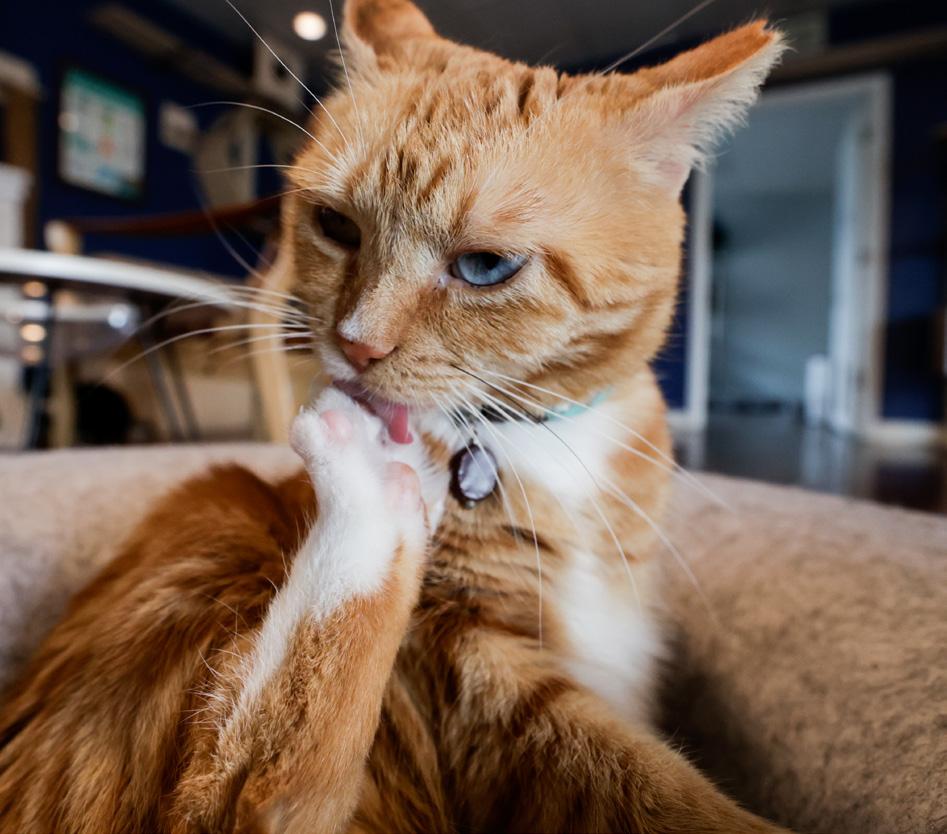
Most likely to be on reality TV
Sex: Female
Age: About 8 years old
Coat: Calico
Eyes: Bright green
Spiciness level 1-10: 10
It doesn’t matter if she’s your favorite, because “Queen” Chai is her own favorite. She doesn’t tolerate the roughness of incoming cats or visiting children — and will let it be known. She is the staff favorite with the “largest personality,” Robinson says.
As much as she loves to run the cafe, her personality can become too much.
“If she starts getting too spicy, we put her in prison,” Robinson says. (Don’t worry — she just goes to another room.)
Chai might believe she was cast upon Bertha’s Beans by divine intervention, but she was actually brought in with the first batch of cats from Columbia Second Chance. The staff expected her to be the first one adopted, but no one ever asked about her. After waiting nearly two months, on New Year’s Eve in 2023, Schlosser adopted Chai since the staff loved her so much, making Chai the cafe’s third and final resident cat — for now.
Looking for a summer golf experience that’s up to par? Vox drives for some of the top options.
BY LORELEI SKURZEWSKI
No longer limited to vast and verdant courses, golf has expanded into entertainment venues, simulation bays and social spaces that blend sports with nightlife.
The global golf simulator market is projected to grow from about $2.4 billion in 2024 to more than $6 billion by 2034, according to Market US. The National Golf Foundation says simulator golf is attracting younger and more diverse players, many of whom do not regularly
step onto traditional courses.
In Columbia, that shift is visible. While outdoor entertainment staples like Midway Golf and Games and the area’s multiple traditional courses remain central to local golf culture, teeing off outdoors is still subject to weather conditions and daylight. This spring, COMO Golf Club entered the scene with indoor golf simulators. “It really provides a comfortable space for people who may not feel comfortable
What’s the vibe?
Modern, tech-driven
Groups who have their own clubs

Is it raining?
Depends on who I’m going with!
golfing outside — whether it’s 100 degrees, freezing cold or they just don’t want to chase a ball around,” says Joshua Ignagni, owner of COMO Golf Club.
Traditional golf remains the standard for many players, but Columbia has a little bit of everything. Whether you’re in it for the full 18 or need a few mulligans, there’s something for you. Want to find the best option? Use this flowchart to find your perfect hole-in-one.
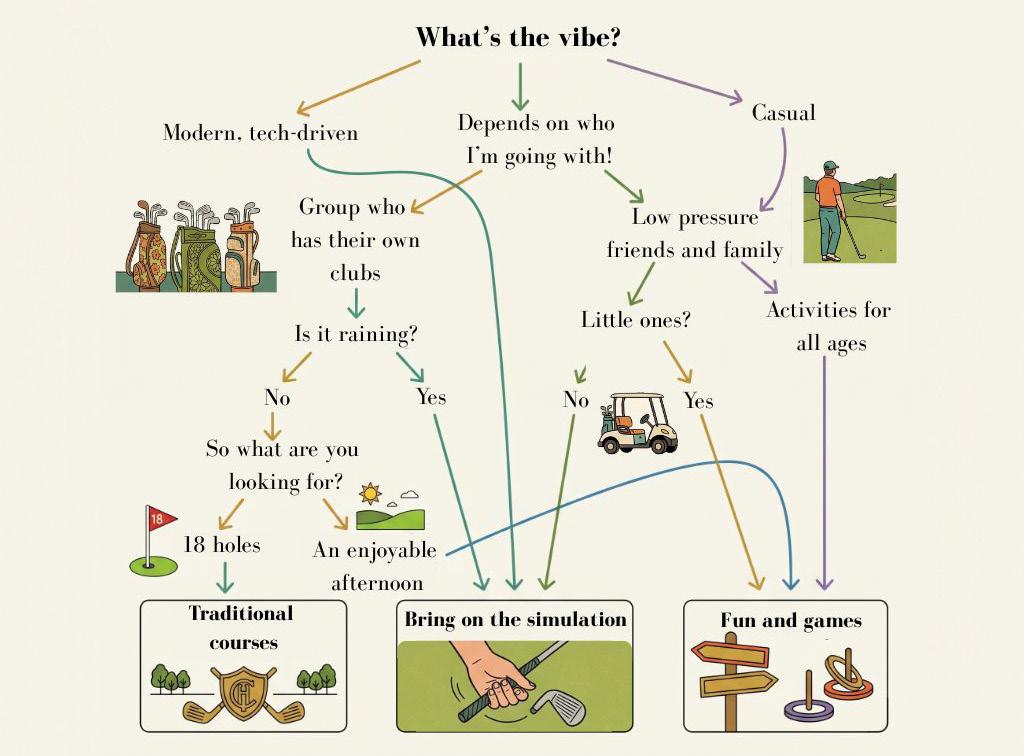
Casual
Low pressure friends and family
Little ones?

So, what are you looking for?
18 holes An enjoyable afternoon
Activities for all ages
Traditional courses Bring on the simulation Fun and games
Learn more online.
Looking for more tech and less mud? Try the indoor golf and multisport simulator experience at COMO Golf Club Bookings start at $36 per hour and memberships are available. Find out more at comogolfclub.com.
Midway Golf and Games offers a range of recreational activities. Visitors can play the par-3 course, hit the driving range or try mini golf, go-karts, and the batting cages. Learn more at midwaygolfgames.com.
As distrust in science seeps into legislation, this monthly event allows Mizzou researchers to teach science in a nontraditional environment.
BY CORY BEXTEN
It can be hard to know what’s true anymore — especially at a time when scientific data on climate change and public health has been brought into serious question, if not outright dismissed, by some politicians. Despite attempts to undermine scientists’ credibility, the Columbia community is engaging with scientific research over a pint. Monthly Science on Tap events give researchers a chance to showcase their findings on topics ranging from geothermal energy to different types of bees. On the third Thursday of every month at the International Tap House downtown, three scientists share 15-minute presentations with patrons interested in their research — with the opportunity for questions after.
Science on Tap aims to engage with the public by blending ITAP’s friendly bar atmosphere with scientific research. While science and booze might seem like a strange pairing, it facilitates learning in a setting more casual than a laboratory or classroom. “Science is more fun when you have a beer in hand,” says Science on Tap
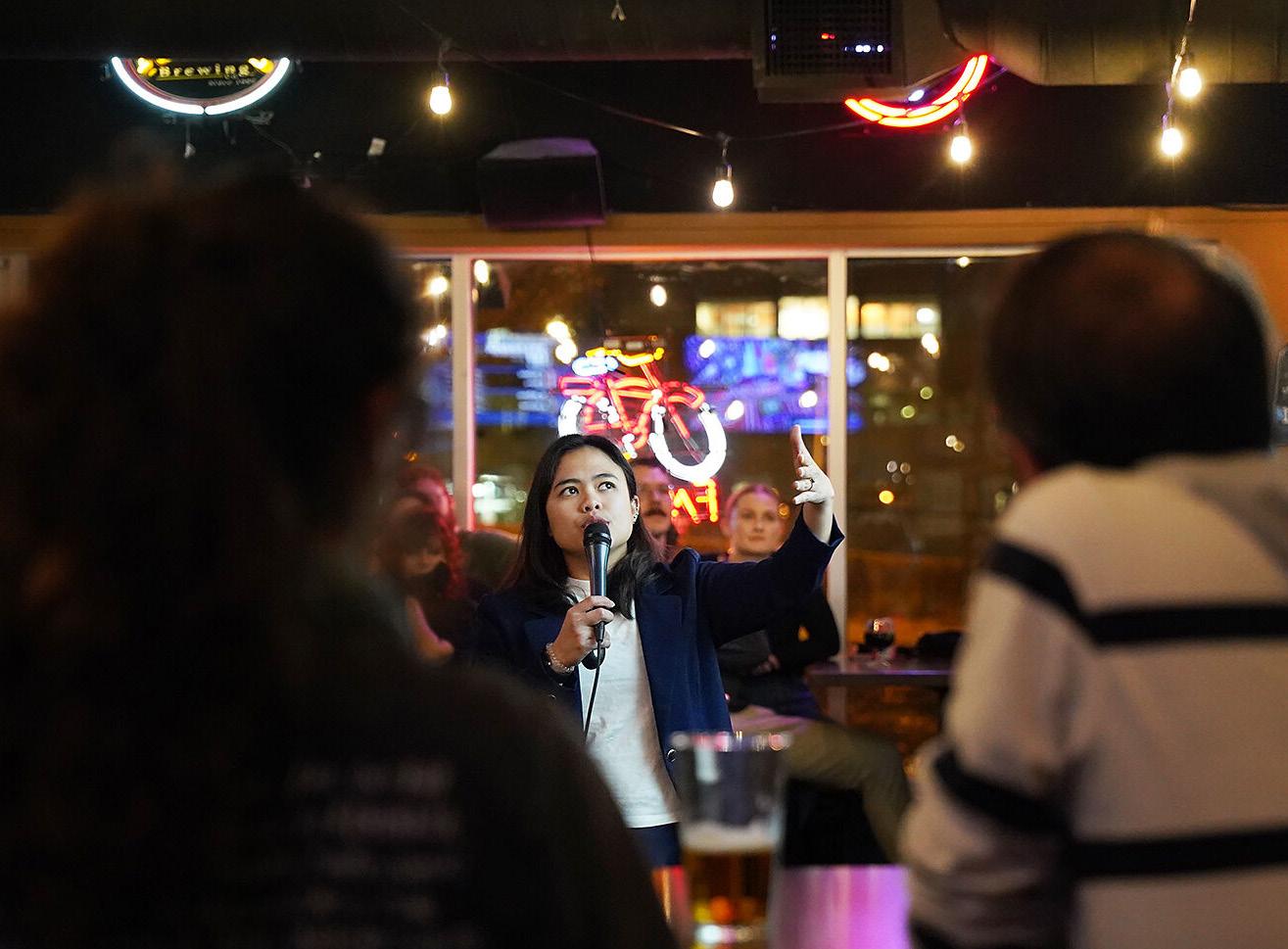
organizer Sarah Fitzsimmons.
Science on Tap first formed in 2016, but took a break during the COVID-19 pandemic. Fitzsimmons took over in 2024. Science on Tap events are part of a graduate-run Mizzou program called Science on Wheels. Its broader goal is connecting Missourians with science and technology. Science on Tap is one of the program’s initiatives for showing Columbia the latest in experiments and research.
Public engagement in science is increasingly important as U.S. leadership misrepresents scientific research and puts forth legislation stripping public health protections. President Donald Trump recently called climate change research a “con job,” while Health and Human Services Secretary Robert F. Kennedy Jr. continues to advocate against vaccines. An AP News report says legislation is being introduced that would strip protections related to vaccines, milk safety and fluoride.

Amidst efforts to discredit science-backed health and sustainability measures, Science on Tap attempts to uplift research and promote relationships between scientists and the public.
“I think humanizing scientists is a really good way to battle that distrust of science,” Fitzsimmons says. She says putting eager young researchers in front of people who are excited to learn can make science accessible and create a space for scientists to answer any questions people have regarding their research.
Nathanael Light, an Educational,
Researcher
Dita Sahdarani presented a talk about geothermal energy at a Science on Tap event in January 2025. Science on Tap organizer Sarah Fitzsimmons says presentations have been expanding to cover new departments, such as anthropology, archaeology, physics, astronomy and raptor rehabilitation.
School and Counseling Psychology researcher who spoke at Science on Tap last November, appreciates when people bring diverse opinions, perspectives and questions about his research to the discussion. He has heard some misinformation over the course of his career, but if it’s related to anything he’s not entirely sure about, he doesn’t interject his own opinion. “For pointed questions, which are clearly based on a misunderstanding of the topic (i.e., built on misinformation or disinformation), I try to counter these narratives with additional questions aimed at exposing the logical fallacies at the root of the issue,” Light wrote in an email to Vox
While Science on Tap audience members are less likely to hold anti-science views, Light says the events promote community engagement with a diverse group of researchers, teachers and attendees discussing new ideas. These open, scientific discussions are valuable when positive attitudes toward science are discouraged.
Next event: May 21 at 6 p.m.
Where:
International Tap House, 308 S. Ninth St., Suite 111.
More info: For future events, visit Science on Wheels’ website scienceonwheels. missouri.edu.
“Now more than ever, it is important to make science accessible to our communities,” Fitzsimmons wrote in an email to Vox
Seth Callahan, a doctoral research assistant who has presented at Science on Tap, believes that this event is a good way to remove some of the barriers that prevent the public from learning about science.
“A lot of good science hides behind paywalls, unfortunately, so it’s not always the most accessible thing in the world,” Callahan says. “I think that’s one reason why something like Science on Tap is actually a great opportunity to help bridge that gap.”
Your curated guide of what to do in Columbia this month.
BY EMILY EARLY, MADISON FARLEY, C.J. HANAUER AND LORELEI SKURZEWSKI
Defying Gravity: The Best of Broadway
The Missouri Symphony’s 2025-26 season finale brings Broadway to Columbia with an evening of iconic musical theater hits. Featuring Broadway veterans alongside a full symphony orchestra, the concert recreates original arrangements from classics like Wicked, The Phantom of the Opera and Cats. 7–9 p.m. May 2, Missouri Theatre, $39, 573-882-3781
Spamilton: An American Parody
This fast-paced musical parody delivers sharp satire of Broadway’s biggest hits and pop culture moments. With a versatile cast of eight, the show blends comedy, song and hip-hop-infused piano for an irreverent take on the theater world. 7 p.m. May 2, Jesse Hall, $53–$72, 573-882-3061
Monty Python and the Holy Grail
“None shall pass” in this classic hysterical film’s return to the silver screen at GQT Forum 8. Grab your favorite snack and join King Arthur and his Knights of the Round Table on an adventure filled with laughter. 1 and 7 p.m. May 3 and May 6, GQT Forum 8, $11.75-$13.25, 573-446-3223
In Conversation
Join an afternoon of open conversation exploring Rashid Johnson’s book Good Love. Learn about its connections to the 1857 Dred Scott v. Sandford Supreme Court case, and hear from students researching and writing about similar topics. 1-3 p.m. May 9, Museum of Art and Archeology, 573-882-3591
Author Talk with Mia Birk
Hear about Mia Birk’s 20-year journey to integrate biking into the daily lives of Americans at Columbia Public Library. Birk discusses her book Joyride: Pedaling
Toward a Healthier Planet, which details her efforts to make Portland, Oregon one of the top biking cities in the country. Noon1 p.m. May 7, Columbia Public Library, free, 573-443-3161
Shop local and find unique, handmade goods. Mid-Missouri artists’ works will be on full display at this vibrant market. Find a wide array of clothing, 2D and 3D art and more. 10 a.m. to 3 p.m. May 3, Columbia Mall, free, 573-875-1231
Tons of Trucks
Honk the horn and climb aboard at this event for kids at the Columbia Mall. There will be plenty of opportunities for little ones to climb, sit and play. 4-7 p.m. May 27, Columbia Mall, free, 573-874-2489
Grab your binoculars and join the Columbia Audubon Society for a beginner-friendly bird walk at the 3M Wetland Trail. Explore 1.75 miles of lush Missouri wetlands, spot local birds and finish with coffee and doughnuts back at Songbird Station. Waterproof shoes are recommended but not required. (Above) The Audubon Society looks for birds in areas like the Columbia Audubon Nature Sanctuary that they walked in 2019. 8 a.m. May 1, meet at Songbird Station parking lot, free, lottie. bushmann@gmail. com
Morels & Microbrews
Mushroom lovers and craft beer fans can get lost in this downtown Fulton favorite. The Brick District’s annual Morels & Microbrews festival brings together breweries, vendors, fresh and fried morels, food trucks and live music for a full day of small-town charm. 10:30 a.m. to 4 p.m. May 2, The Brick District, Fulton, free, fultonbrickdistrict@gmail.com
The Creek Rocks Show
Banjoist Cindy Woolf and guitarist Mark Bilyeu form folk duo The Creek Rocks. The couple is performing a show cosponsored by the State Historical Society of Missouri, Missouri Folk Arts Program and the Budds Center for American Music Studies. Noon, May 1, State Historical Society of Missouri, free, 573-882-7083


Join Missouri-based quintet The Juicy Beets for a drink and some live jazz. Cafe Berlin’s “Berlin Nights” features artists, musicians and local acts throughout the week. 6-8 p.m. May 1, Cafe Berlin, free, 573-441-0400
Emerging artist Dylan Marlowe is bringing his country tunes to Rose Music Hall. Originally from Georgia, Marlowe combines his small-town sound with a punk-rock influence. 8 p.m. May 9, Rose Park, $31.60, 573-874-1944
Enjoy art, history and live music while exploring the galleries of the Museum of Art and Archeology. See unique artifacts and hear the soothing sound of music that echoes through the halls as you examine each artistic piece. Noon to 1 p.m. May 14, Museum of Art and Archeology, free, 573-882-3591
Singer-songwriter Laura Jane Grace is bringing her punk-acoustic rock style to The Blue Note. Joined by artists Lung, Black Guy Fawkes and Western Grip, this concert is open to audiences of all ages. 7:30 p.m. May 17, The Blue Note, $37.65, 573-874-1944
This rolling music festival combines biking and live music during Memorial Day weekend. The various rides will span over 50 miles alongside performances at Katy Roundhouse and Kemper Park by Post Sex Nachos, The Band Feel, Rambler Kane, Kris Lager Band and more. 11:30 a.m. May 23-24, starting at Flat Branch Park, $35-$95, info@ pedalersjamboree.com
Hit the trails and celebrate mom with an afternoon at Twin Lakes Recreation Area. Hosted by Local Motion, family-friendly rides are offered with guided biking and walking routes for all skill levels. Afterward, refuel with hot dogs from Broadway Diner for a savory end to a scenic adventure. 2-4 p.m. May 10, Twin Lakes Shelter, free, 573-999-9894
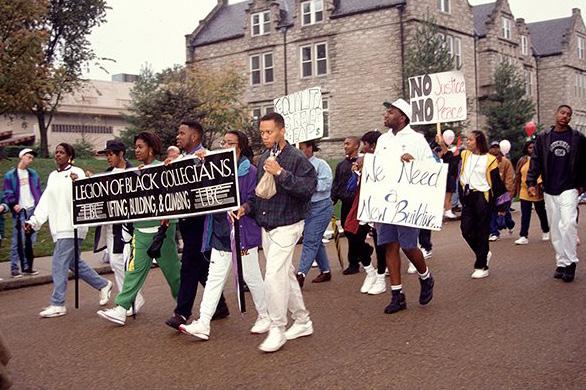
Established in 1969, the Legion of Black Collegians is the first and only Black student government in the nation. The social and political organization uplifts the voices of Black students at Mizzou, which includes organizing protests such as the 1990s demonstration pictured above. On April 3, Mizzou informed LBC that starting July, it will not be recognized as a student government body. The organization — along with the Association of Latin American Students, Asian American Association, Queer Liberation Front and Four Front — will no longer receive designated funding. LBC responded in an Instagram post, writing, “Attacks such as this diminish not only our legacy, but our continued ability to serve and uplift the students that the university neglects.”

werckmeister harmonies - june 1 at 6pm

saint omer - june 2 at 6:30pm

grave of the fireflies - june 3 at 6:45pm the virgin suicides - june 4 at 6:45pm
donnie darko - june 5 & 6 at 7pm
taxi driver - june 7 at 1pm
Presented in partnership with the American Cinematheque, 'Bleak Week: Cinema of Despair' is an annual film festival showcasing some of the greatest works of cinema from across the globe that venture into the darkest sides of humanity and the bleakest points in human history. The fifth annual edition in June 2026 expands to nearly 100 theaters, with each venue presenting its own original curated lineup of uncompromising films defined by unpleasant truths and raw empathy.