HAIR OF CONFIDENCE
Women toss aside chemicals and European beauty standards and opt for braids
PAGE 4
BOOK SMART
Nick Francis Potter uses dark humor in his collection of short stories and comics PAGE 14

HAIR OF CONFIDENCE
Women toss aside chemicals and European beauty standards and opt for braids
PAGE 4
BOOK SMART
Nick Francis Potter uses dark humor in his collection of short stories and comics PAGE 14
Columbia residents such as Randall Durk hope to use science education as a launchpad for space enthusiasm PAGE 6
Infinity and beyond isn’t just a place frequented by Buzz Lightyear. In the 1960s, President John F. Kennedy declared a plan to send a man to the moon, and the nation quickly fell in love with space exploration. Today, the spark that once inspired school kids and kids at heart to study science has diminished. Randall Durk, who volunteers at MU’s Laws Observatory, is just one of the people trying to make a change. PAGE 6
More and more black women in Columbia have chosen to wear their hair naturally over the past three years. Braiding is one way to embrace natural hair without sacrificing individuality. PAGE 4
This week, head out to performances by an underground rapper or a group of friends making music, or help a local band celebrate its new single. If staying in is your thing, then the first album from the Red Hot Chili Peppers in five years will help you find get your groove on. PAGE 5
Nick Francis Potter’s love for art and the written word led him to Columbia, where he’s pursuing a doctorate in creative writing. With his first published book behind him, Potter talks about his process and hopes for the future. PAGE 14
COVER DESIGN: MADALYNE BIRD
COVER PHOTO: TIM TAI

Heuer’s Country Store & Cafe had us feeling like we were right at home with their daily specials and large portions. This Sturgeon classic will fill your belly and your heart.
Reserve June 19 as the day to finally take Dad to all of your favorite Columbia hot spots. Vox rounded up three ways to spend some quality time with your favorite guy. Dad jokes not included.
Pickles with a kick? Count us in. We’ll be at the dinner table awaiting this Cajun take on a deep-fried favorite from Jazz, A Louisiana Kitchen.
The official start of summer is next week, so you’re running out of time to have the best garden in the neighborhood. Use these step-by-step instructions to create the perfect arbor to beautify your outdoor space — even if your grass is still brown.
EDITOR’S LETTER
CHRISTINE JACKSON EDITOR-IN-CHIEF

JUNE 16, 2016
VOLUME 18 ISSUE 21 | PUBLISHED BY THE COLUMBIA MISSOURIAN

I had a plan Sunday. I woke up that morning to start writing a letter about the importance of staying curious and passionate to pair with this week’s feature (Page 6) about Laws Observatory volunteer Randy Durk and the state of science education post-Space Race.
But then I opened up my computer; Twitter and Facebook were inundated with news of the shooting at Pulse, a nightclub in Orlando. The updates came in bursts of 140 characters or less.
The worst mass shooting in U.S. history left 49 people dead and 53 people injured. Dateline NBC tweeted, “He saw two men kissing each other in front of his wife and kid and he got very angry.” The Washington Post wrote that the gun used was the “mass shooters’ weapon of choice.”
And, suddenly, nothing I had planned to say seemed right.
The people who were at Pulse on Saturday night went to a safe space. They went to a place where they were comfortable to enjoy a night out. They did the same thing thousands do each weekend in Columbia. And one man decided that it was his right to take an assault rifle into that club, open fire and shatter the lives of more than 100 people in Pulse, as well as their friends and families.
The shooter targeted and caused terror among the LGBT community in Orlando and elsewhere.
But do not allow the heinous act and hatred of one man to fuel hatred toward others. There are many plagues in our country — homophobia, Islamophobia and gun violence among them. Those topics and more have sparked debates online, on TV and among people across the country. But more conflict is not what we need right now.
In the wake of this tragedy, we mourn. We mourn for lost life, lost safety and continued hatred. Support one another. Love one another. We can heal and move forward together. We must not allow one man’s actions to cause any more damage than it already has.
VOX STAFF
Edic, Max Havey, Madison Kelley, Brooke Kottmann, Madeline McClain, Maya McDowell, Jared
Rowe Office Manager: Kim Townlain
What happened in Orlando: Around 2 a.m. on June 12, a shooter at Pulse, a gay nightlcub in Orlando, left 49 people dead and 53 injured. Six are still in critical condition as of June 15.
Twitter accounts you can rely on for credible and vital information:
Rukmini Callimachi, @rcallimachi
Callimachi reports on the Islamic State for The New York Times
Orlando Sentinel, @orlandosentinel
Go to the Sentinel for information on how the community is faring.
Buddy Dyer, @orlandomayor
The Orlando mayor’s Twitter shows you how best to help those affected.
Matt Pearce, @mattdpearce
Pearce, an MU alum, is a national L.A. Times reporter who offers commentary and retweets other national sources.
GLAAD, @glaad
Follow GLAAD for resources and responses from eminent LGBT leaders.
Resources and events in Columbia
More than 800 people participated in a vigil at the Boone County Courthouse Plaza on Monday night. Here are some other resources Columbia has to offer:
MU LGBTQ Resource Center: The center educates, supports and advocates for sexual and gender minorities.
The Center Project: This is a safe, friendly space intended for the LGBT community and its allies.
Yin Yang Nightclub: Starting at 10 p.m. Saturday, Yin Yang will host a drag show to raise money for the Orlando victims and their families.
In the wake of this tragedy, we should join Orlando as it grieves. Recovery will be slow for some, but we must still strive to look forward and help where we can.
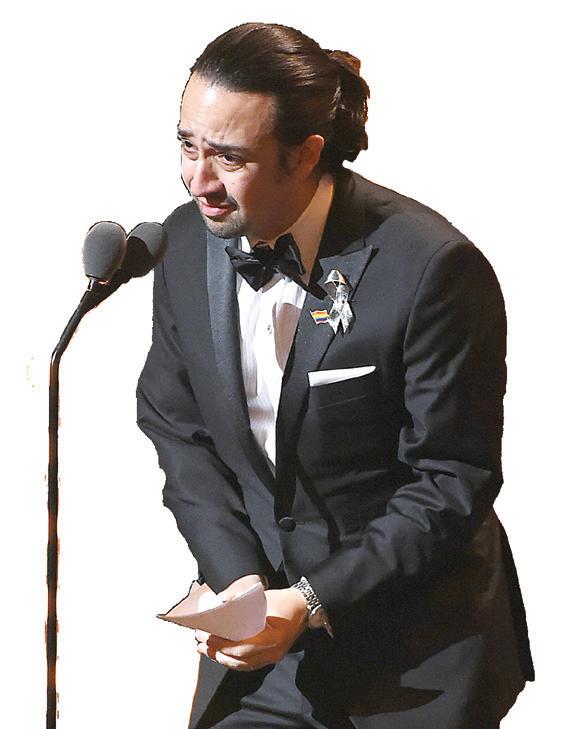
On June 12, the 70th annual Tony Awards honored victims of the shooting in Orlando throughout the ceremony with speeches from this year’s most prominent icons.
A line from Hamilton star Lin-Manuel Miranda’s speech posted by the Hamilton Twitter account was retweeted more than 13,000 times and garnered more than 26,000 likes. An excerpt from the sonnet reads:
When senseless acts of tragedy remind us
That nothing here is promised, not one day. This show is proof that history remembers We lived through times when hate and fear seemed stronger; We rise and fall and light from dying embers, remembrances that hope and love last longer
And love is love is love is love is love is love is love is love cannot be killed or swept aside.
I sing Vanessa’s symphony, Eliza tells her story
Now fill the world with music, love and pride.
Written




Black women embrace the natural beauty of their hair BY
JoMerra Watson’s mom twisted her daughter’s naturally curly hair into braids and ponytails tied with colorful beads and barrettes when she was a child. After outgrowing that style, the MU junior got a perm to straighten her hair. She is an experimenter with style.
Recently, Watson sported faux locs, a type of braid that acts as a protectant for her hair texture, and she regularly alternates between braids and her natural texture. She did the locs herself by splitting up the session between four hours one day and two hours the next. Watson learned how to do the braids from YouTube videos, just like MU graduate Azeezat Odu, who sometimes wears a wig over her French braids.
The two women are part of a trend within the black community to braid hair in different styles including faux locs, Senegalese Twists and box braids.
Bridget Hollis, the owner and a stylist at Peace of Mind Salon, says the natural movement has boomed in the past three years.
Odu says everyone seems to be into the Afrocentric look right now. Born in Nigeria, Odu moved to America in 2000. Before she left, her uncle cut her hair into a short Afro. She says she was often bullied and called names in elementary school because of her hair. She says other children would make fun of her by saying, ‘you’re nappy’ or ‘you’re African.’
When she was younger, Odu felt her hair needed to look a certain way. She knows that now some people feel that same pressure, partially due to the media. “Beauty was always a Caucasian girl with long, straight hair, and everyone was like ‘OK, I want my hair to be
KATIE JOHNS
just like hers,’” Odu says. “‘If I don’t have my hair like hers, no one is going to think I’m pretty.’”
Watson says the texture of black women’s hair is different from the norm, and black women are often told they can’t wear their hair naturally because others view it as unprofessional.
She says black women feel they must change in order to fit in with the European standard of beauty. A certain amount of expectation comes with this type of hair because some cultures are more aware of braiding, Hollis says.
“In the natural movement, when people transition from relaxed hair to natural, it’s more culturally acceptable to wear braids than an Afro,” Hollis says. “We don’t feel the business or professional world is ready to see women walk in with an Afro. (Braids) are an option that seem more acceptable in society.”
Haby Boukari Naya taught herself how to braid using her baby doll, and now she’s a braider at Peace of Mind Salon and Spa and a stylist at Haby Hair Brading. She came to America from Chad in 2004. She says this trend has a lot do with protection of the hair.
Hollis says health concerns are linked to chemical relaxers, and women are sick of it. By embracing their real hair, women avoid chemical relaxers and save time.
The decision to go natural is about more than hair for some women. “It’s more of a spiritual thing,” Hollis says. “You’re getting back what God gave you. It’s accepting what you were given and who you are and what you have and not feeling that anything is wrong with that.”
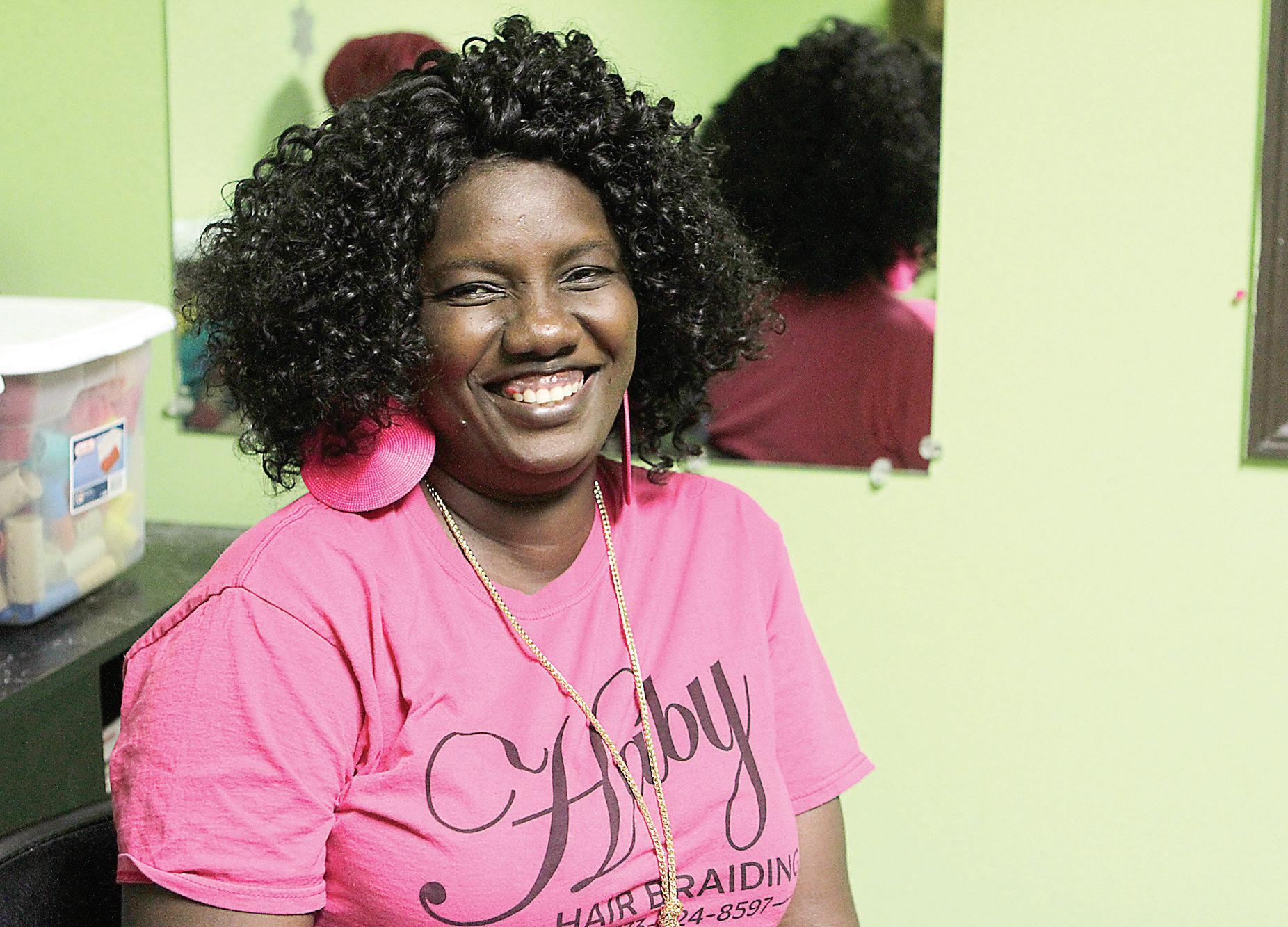
The twisted hairstyles are about more than just looks. Learn the differences and histories among three popular variations.
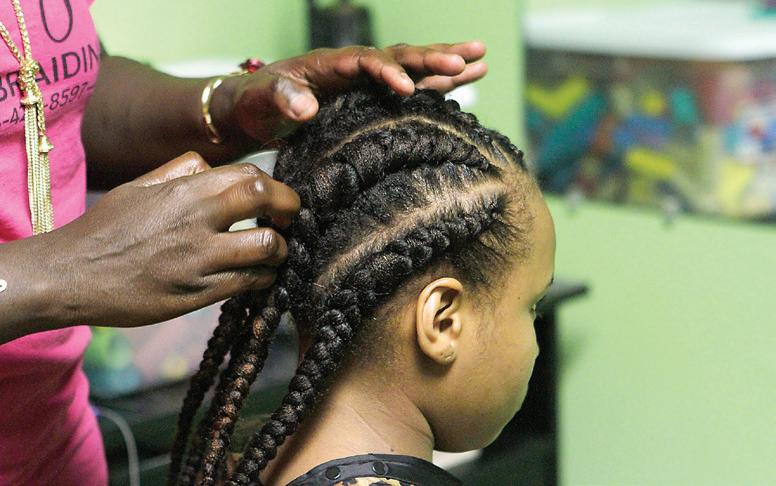
Medium box braids
Haby Boukari Naya, a braider at Peace of Mind Salon and Spa and a stylist at Haby Hair Braiding, says medium box braids are a popular trend for children. Kids don’t like to sit still for very long, so parents style their hair in box braids, which don’t take as long as micro braids. They get their name from the box-shaped section the hair is divided into. Stylists combine synthetic hair with natural hair, separate it into three pieces and braid. This can take hours depending on the size of the braid. Box braids date back to Ancient Egypt. In some African cultures, braided hairstyles identify class, age group and tribe affiliation.
Senegalese twists
When people in Africa had long hair and no extensions, they couldn’t do much with it besides twist it, Boukari Naya says. These braids are done by twisting two strands of hair over each other with the thumbs and index fingers. The Senegalese Twist hairstyle is particularly popular among Afro-Caribbean women. The versatile style is suitable for both formal and informal occasions.
Faux locs
Boukari Naya says faux locs are a trend that both men and women follow. Men wear this style more frequently, but recently women have embraced it. Hollis says people use faux locs to avoid having actual dreadlocks. They have the same feel and look, but instead of dreading the natural hair, synthetic hair or yarn is wrapped around the natural hair. Locs took off in the 1970s, largely due to Bob Marley, but the style has been around for centuries. They are a symbol of Rastafarianism, an Abrahamic religion that developed in Jamaica. They honor Samson, who never cut his hair.
FLORIST WITH HALF MOON AND DUBB NUBB
Florist’s Columbia debut will feature songs from its newest album, The Birds Outside Sang. In addition to Florist’s mellow sound, Midwest folk songs from St. Louis twin sisters Dubb Nubb and beats by CoMo artist Half Moon complete the night’s musical lineup.
Café Berlin
Tonight, 8 p.m., $7
RED HOT CHILI PEPPERS’ ALBUM, THE GETAWAY
It’s been five years since the “Californication” band released an LP. Luckily for Red Hot Chili Peppers fans, the band released a single in May. “Dark Necessities”previewed the band’s new, delicate take, which contrasts its typical rock anthem vibes. Only 5,000 copies of The Getaway will be released on vinyl.
Spotify, Amazon, Apple Music
Available Friday
Tunes to bring in the summer BY MARY KALETA
THE ROYAL FURS SINGLE RELEASE PARTY + MOLLY HEALEY + JENNY TEATOR & THE FEVERS
The Royal Furs, a dance-rock group, will hit you with psychedelic vibes. Catch Jefferson City violinist, cellist and singer-songwriter Molly Healey and Jenny Teator & The Fevers. Come celebrate the release of The Royal Furs’ newest single, “Cant Catch Me.”
Rose Music Hall Saturday, 9 p.m., $5
KUTT CALHOUN + WHITNEY PEYTON
Kansas City rapper Kutt Calhoun started his career in 1998 in the underground rap scene and worked with artists such as Tech N9ne and BG Bulletwound. The self-proclaimed hardcore rapper has his own record label and has performed all over the world. Calhoun pairs up with Grammy award-winning hip-hop artist Whitney Peyton for a concert that’s sure to make you keep your “handz up.”
Rose Music Hall
Wednesday, 9 p.m., $10 in advance, $15 day of show
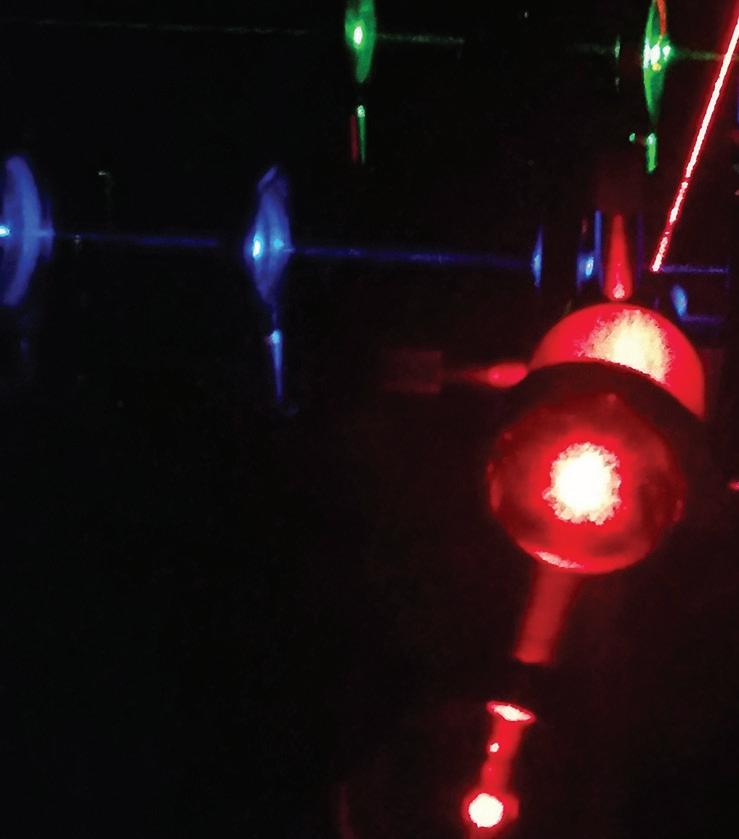



This program prepares individuals with the knowledge and skills needed to be successful laser technicians in the field. CACC offers a three-level program, at 200 hours each. Hands-on labs and unique equipment are a must in this industry, and we have it all. For more information, call 573-214-3803.
APPLICATION DEADLINE –Thurs., June 30, 2016
This program is brought to you by Columbia Area Career Center and the collaborative efforts of:





River

Central Missouri Astronomical Association
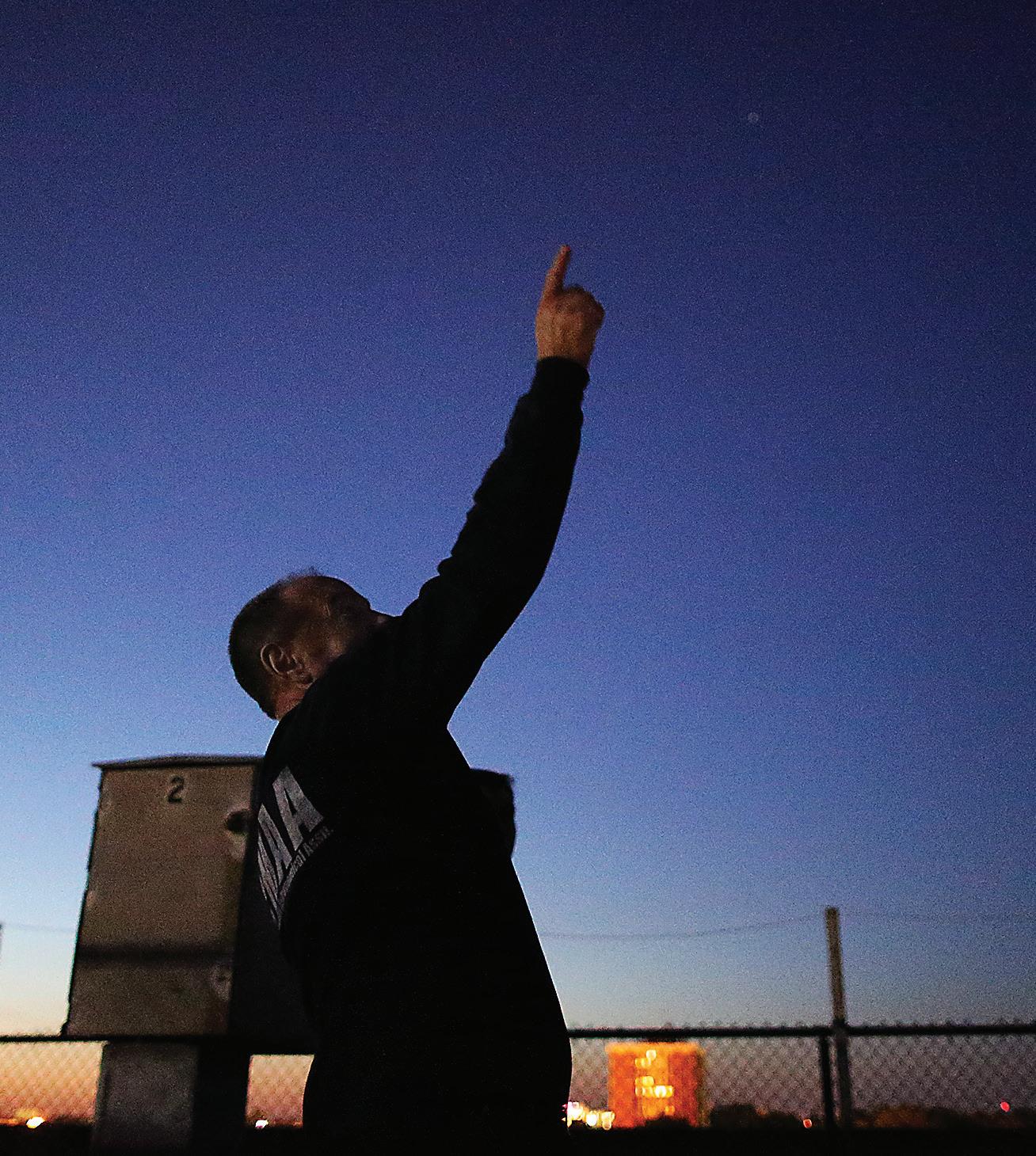
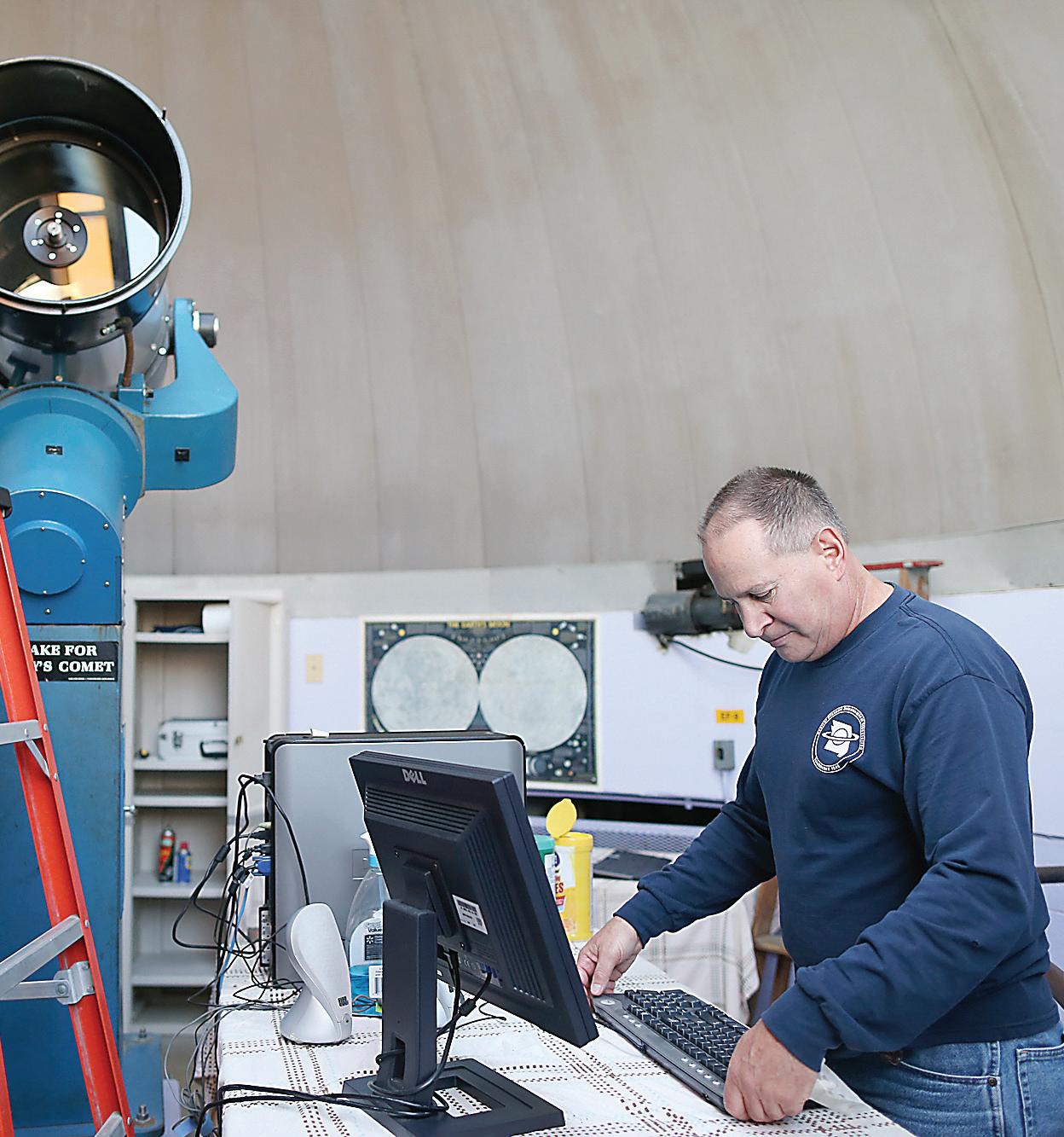
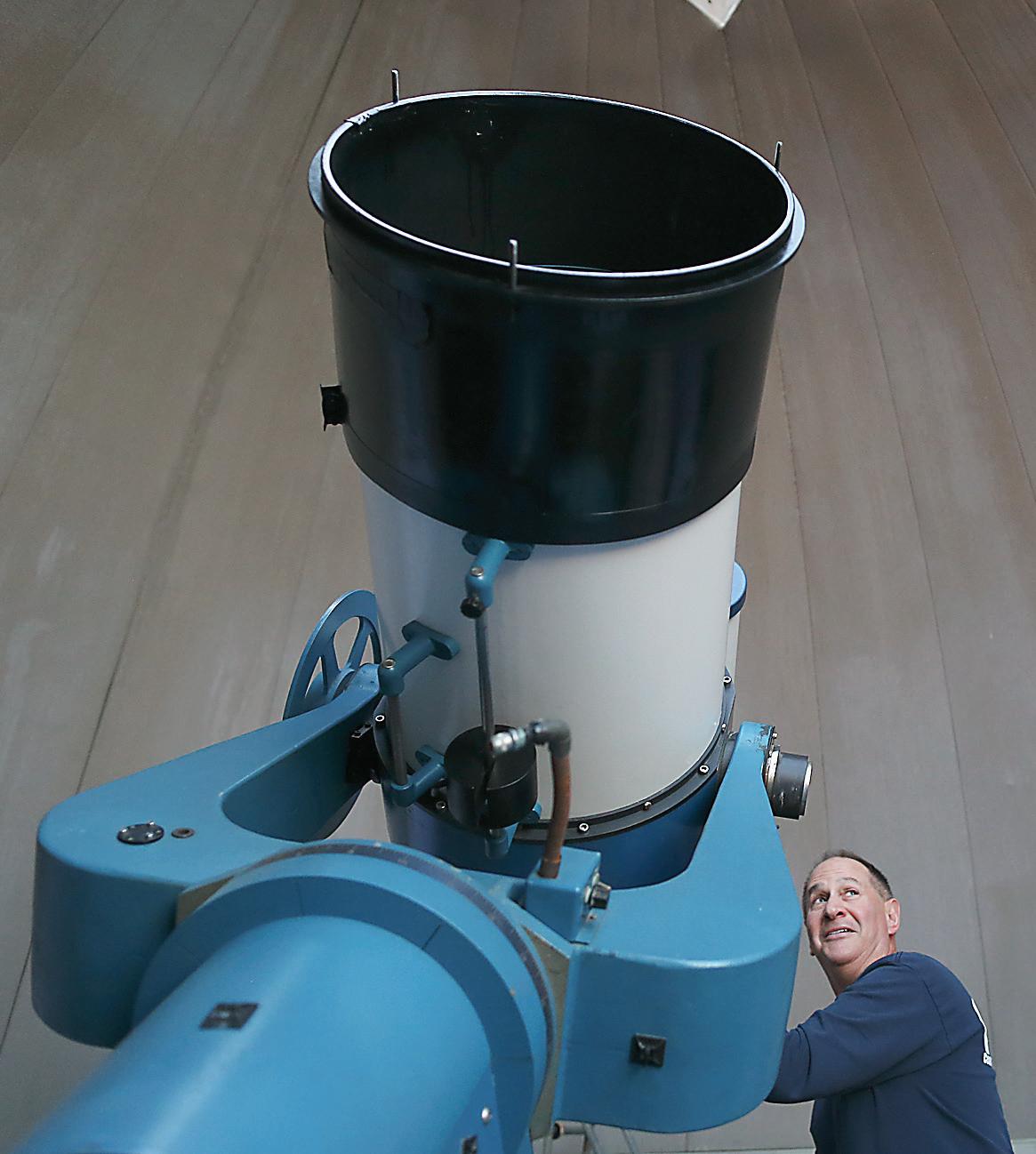
volunteer Randall Durk prepares Laws Observatory’s Celestron 16 telescope for a weekly viewing of the stars and planets. Durk says popular sights to see are Mars and Jupiter, as well as other parts of the Milky Way this summer.
Although the Space Race is finished, space lovers keep their eyes to the sky
BY CASSA NIEDRINGHAUS | PHOTOS BY TIM TAI
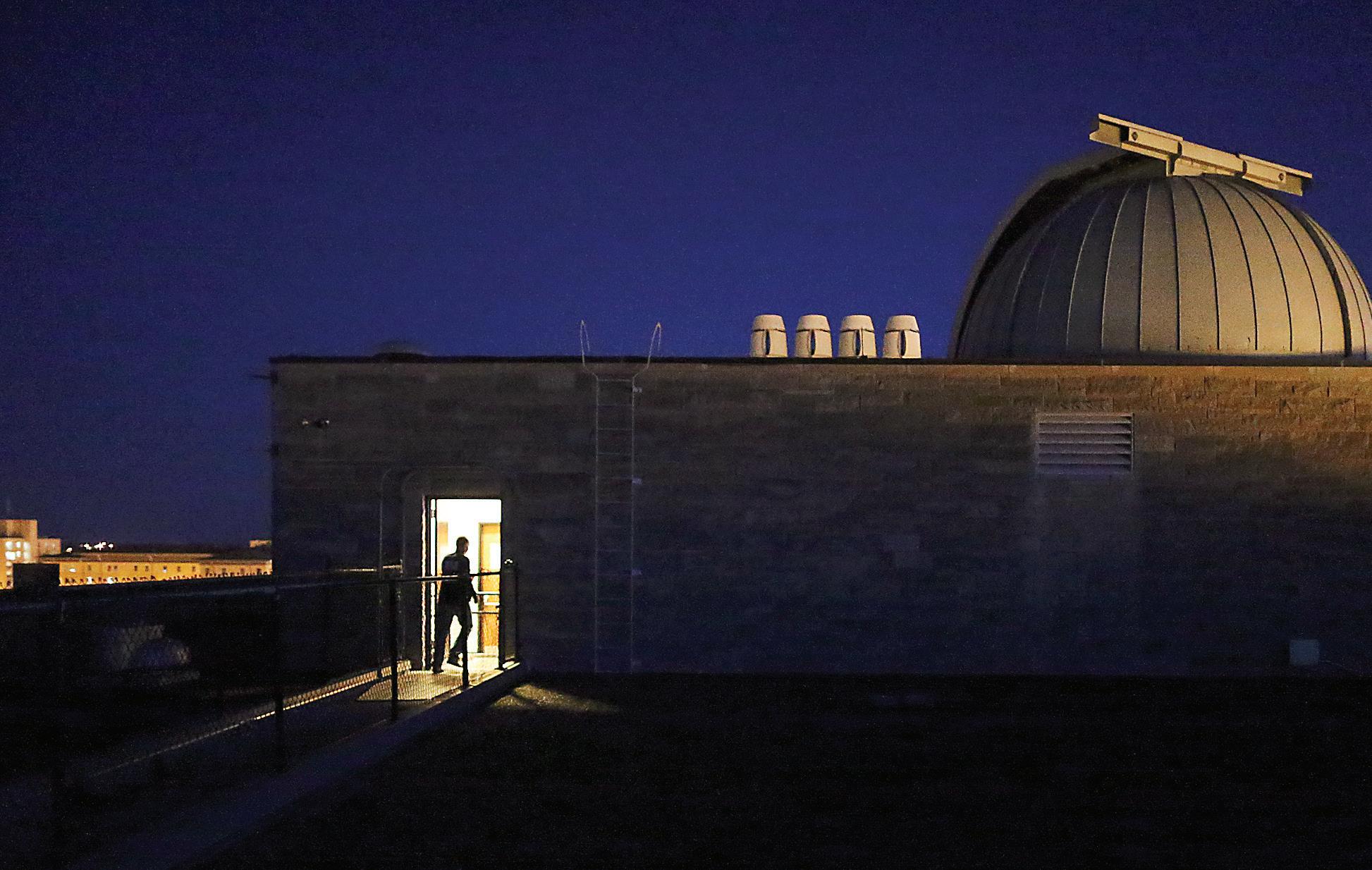
On a blustery Wednesday night this spring, Randall Durk opened MU’s Laws Observatory to the public. This wasn’t uncommon. Durk, 54, has faithfully manned the observatory most Wednesday evenings for the past decade. He’s spent hundreds of nights tucked inside the observatory’s dome on the fifth floor of the Physics Building where he shows off the wonders of the night sky. Despite this night’s low of 21 degrees and gusts of wind from the southeast, he was there again.
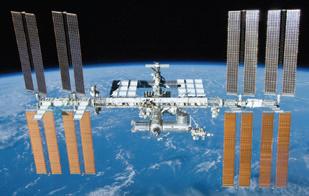
He donned gloves, a stocking cap and a NASA jacket emblazoned with the Apollo 11 insignia and assumed his familiar position next to the telescope. His trusty companion, a brown Australian Shepard named Charles Astro Dog Messier (for the French astronomer Charles Messier), lay at his feet as he expertly controlled and rotated the dome, positioned the telescope and pointed out Jupiter and Orion’s Belt to curious students. He’ll be there throughout the summer, too, helping families explore the skies. Last week, he expected a visible flyover by the International Space Station and iridium flares, brilliant reflections from a group of satellites that have flat, door-sized antennae.
During the day, Durk works shipping and receiving for French Gerleman, a company that sells lights. By night, he operates the observatory and spends time with the Central Missouri Astronomical Association, an organization he says is struggling with its membership. He feels a sense of sadness because, as he grows older, he can’t handle as many of the club’s responsibilities as he could in the past. “I can look at old pictures of our club,” he says. “You had people in our club in their 20s and 30s. Now, the average age is probably 40 to 50, and it’s that way nationwide in a lot of clubs.”
He credits the decline to several factors. One, families can no longer easily support themselves on a single income, which leaves less time for them to join clubs such as the CMAA. Another reason is that people are still intrigued by space, but there is no national urgency spurring them to get involved.
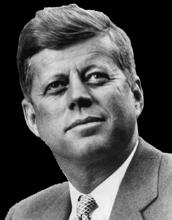
Durk was born in Columbia in 1961 and raised in the small farm town of Hatton. The same year Durk was born, President John F. Kennedy boldly declared a 10-year plan to put a man on the moon and launched the nation into a rapid wave of discovery.
Kennedy’s announcement was preceded by a half-decade of escalating
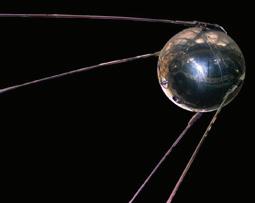
conflict. The Space Race began in the mid-1950s during the Cold War. It came to embody the conflict between the U.S. and the Soviet Union, rather than being one facet of it. Getting a man to space and onto the moon signaled victory. And so began a momentous battle between two countries fought through math, science and innovation. The USSR launched Sputnik in October 1957 and struck fear in the hearts of U.S. politicians. The 23-inch spherical satellite signaled that if the Soviet Union had rockets strong enough to place technology into orbit, it must have the ability to shoot intercontinental ballistic missiles at the United States.
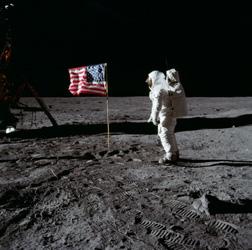
Durk was 8 years old in 1969 when Neil Armstrong and Buzz Aldrin left their footprints on the face of the moon. His memory of the moon landing is dusty. He was young, after all. But what he does distinctly remember is begging his mother for the Apollo coloring books that populated the shelves of the local grocery store. Each week, he’d drag her back, and she’d ask if this week he wanted to try a different coloring book. He’d confidently choose his favorite Apollo book again, though, and fill its familiar pages anew.
“I actually found one on eBay, and I’ve got it now,” he says. He paid about $10 for this reminder of his childhood.
2, 1955
The Space Race begins when the USSR announces it will send a satellite into space.
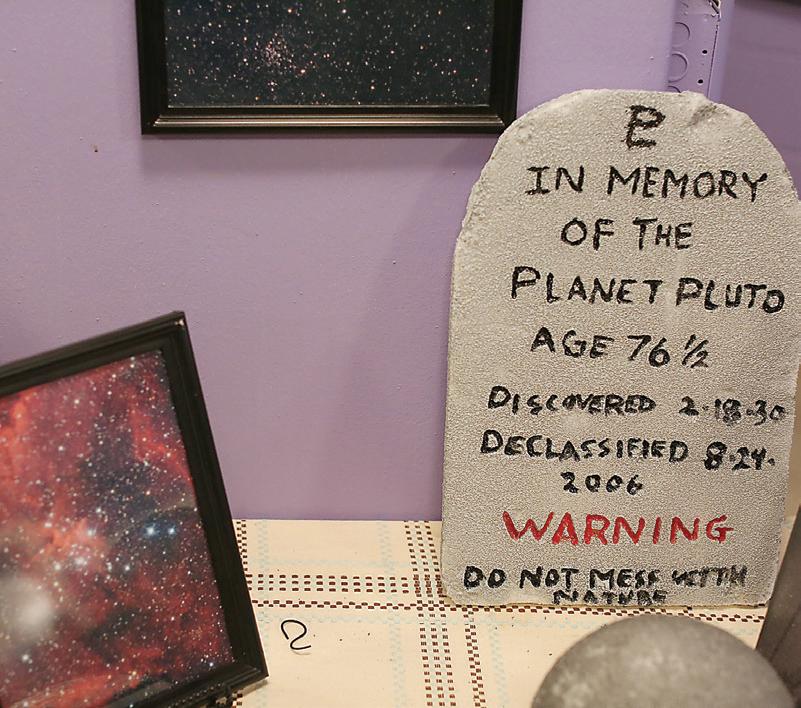
ABOVE: A tombstone memorializes Pluto, the ninth planet in the solar system. The planet was reclassified as a dwarf by the International Astronomical Union in August 2006.
As Durk continued in school, science was the only subject that came easily. He’d struggle in other classes and on other tests, but when it came to astronomy, he could ace every test because he knew the material before the teacher taught it. He’d pore over his family’s encyclopedias, which he still has today, read the local newspapers and watch the space news on TV.
Durk was also one of the beneficiaries of a nationwide obsession with space exploration and a push for improved science education. Sputnik motivated U.S. politicians to reform the education system. They worked to produce scientists and engineers who would aid
4,
USSR sends Sputnik into orbit.
In the past 60 years, we’ve sent people to the moon and demoted Pluto APRIL 12, 1981
DEC. 17, 1990
President George H.W. Bush charters the Advisory Committee on the Future of the U.S. Space Program in reaction to NASA’s problems. MAY 2,
APRIL 24, 1990
The Hubble Space Telescope goes into orbit.
AUG. 15, 1986
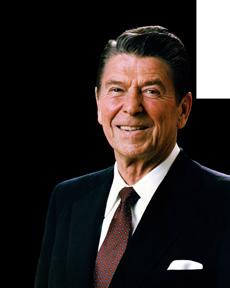
President Ronald Reagan announces the end of launches of commercial satellites by NASA.
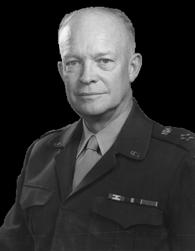
is established by President Dwight D. Eisenhower.
JAN. 28, 1986
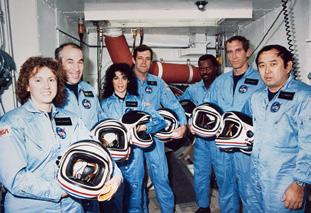
Shuttle Challenger explodes and kills all seven crew members.
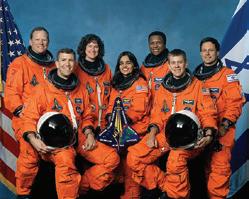
Columbia becomes the first spacecraft in Space Shuttle program

the country in catching up with and surpassing the Soviet Union, and they involved scientists in the creation of new curriculum. Some changes they made remain in place today, such as the use of firsthand laboratory experience in the classroom. In 1958, Congress enacted the National Defense Education Act to better fund all levels of education. Specifically, it allocated more than $1 billion to improve science education.
Durk was among a generation of children who grew up with their eyes turned skyward as the country set a bold goal, reached it and bested the Soviets. But then the Apollo program concluded in 1975, the Challenger exploded on live
MAY 28, 1959
NASA launches monkeys Miss Able and Miss Baker into space. Both are recovered.
TV in 1986, and the Cold War ended in the early 1990s — all leading to waning public support for funding space exploration.
As for Durk, he started high school, where chasing girls became more interesting than mapping the planets. After high school, he spent about a decade working in various rock quarries that his brother-in-law owned, including the Millersburg Quarry. He regrets this period of lost interest in space. He calls it his hibernation.
Durk drifted away from a career in science, but he gained a steadfast
MAY 5, 1961
Alan Shepard Jr. successfully controls the first piloted Mercury spacecraft.
FEB. 18, 1977
First Space Shuttle orbiter, Enterprise tested (named for Trekkies)
FEB. 1, 2010
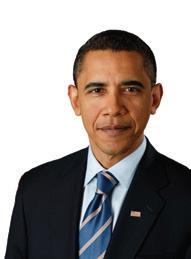
President Barack Obama cancels the Constellation Program.

DEC. 3, 1973
Pioneer 10 flies by Jupiter.
JULY 21, 2011
Space Shuttle Atlantis lands; Space Shuttle program ends.
commitment to ensuring that today’s children don’t do the same. His efforts volunteering at the observatory play an important role in encouraging children to pursue science, especially now that there is no pressing national interest like there was during the Space Race.
MU’s Observatory Director and Professor of Astronomy Angela Speck says a byproduct of the Space Race was a pipeline of people into STEM-related fields: science, technology, engineering and mathematics. It created a generation of people who wanted to become astronauts but never did. In the end, they were highly qualified for technical positions. “It really gave people that
MAY 25, 1961
President John F. Kennedy urges the nation to go full throttle with the space program, Project Apollo.
NOV. 13, 1973
The Mariner 9 is the first mission to orbit Mars.
AUGUST 2011
The U.S. relies on private companies to supplement the International Space Station.
MAY 14, 1973 Launch of Skylab 1

MAY 2012
Mars One founded by a Netherlands team with mission to populate Mars by 2027.
FEB. 20, 1962
In the Friendship 7 Mercury spacecraft, John Glenn becomes the first American to circle the Earth.
APRIL 11, 1970 Apollo 13 launches.
DEC. 4, 2012 NASA announces the rover Mars 2020
drive,” she says. “You always need to have a pipeline of more people than you need because otherwise you won’t get the best. In a country that values competition, without that, you’re not getting what competition offers you, which is the person who’s best equipped to do it.”
When Durk points out the constellations to excited children, and when he tells them what binoculars and books they should get to become amateur stargazers, he helps make what could be a daunting field of study seem fun and accessible.
Mike Szydlowski, Columbia Public Schools’ science curriculum coordinator, says that making science enjoyable for
APRIL 6, 1965
U.S. launches Intelsat I, the first commercial communications satellite, into geostationary orbit.
JULY 16, 1969
Apollo 11 is the first spacecraft to land on the moon.
APRIL 3, 1966
The Soviet Union achieves lunar orbit for the first time with Luna 10
JAN. 20, 2016
Researchers announces Planet 9, the newest planet in our solar system. 2013
NASA funding falls to its lowest level in four years, and Congress proposes flat budget through 2017.
Become an amateur stargazer, and peer into the depths of the universe with tips from CMAA’s Randall Durk and Val Germann
• Start with binoculaurs and a tripod to mount them on.
• If you want a telescope, opt for an 8-inch Newtonian or Dobsonian telescope with an 8-inch aperture.
• Search for inspiration via the web or at your local bookstore. Look through star charts or astronomy magazines.
• The best views are at least 25 minutes away from a city’s light pollution.
• Bring a good camera.
young children is crucial if they’re going on to study science later. If the first time they study science is in late elementary school or junior high, when the content is more challenging, they’ll be less likely to continue studying the material. According to the National Math and Science Initiative, in 2013 only 36 percent of U.S. high school students were ready for college-level science. Not only that, but in 2007 about one-third of public middleschool science teachers either had not majored in the subject in college or were not certified to teach it because of the lack of teachers and teacher layoffs.
According to a 2010 Scientific American article, kindergartners were already forming negative ideas about science being difficult, dangerous, boring and restricted to people older than them. Less than one-third of the students had any concrete knowledge about science. This is despite findings by organizations, such as the Scientific Literacy Project, that young children can engage in and ask meaningful questions, observe and record evidence and develop confidence in their ability to learn science.
The matter is complicated further by Missouri’s Show-Me Standards that are measured by the Missouri Assessment Program. English language arts and mathematic standardized tests are administered each year to all students in third through eighth grades, but science standardized tests are only for fifth- and eighth-graders. This unbalanced testing creates an emphasis on English and math for teachers of elementary and junior high students — children who likely won’t enjoy science if the first time they really delve into it is in high school.
Szydlowski is trying to combat this by putting together kits for teachers with ready-made lessons, including the questions they should be asking their kids. These lessons also have an emphasis on the tangible. Kids get to build streams, play in dirt and send objects flying down ramps.
• Join the Central Missouri Astronomical Association, or visit the MU Laws Observatory on Wednesday evenings to take a look through its telescope.
• The Sea of Crisium: The moon’s largest crater is 250 miles wide and can fit the state of Missouri inside it.
• Admire the beauty of Mars, Jupiter and the moon’s reflective Earth shine.
They get to see that science is fun.
Astronomy is a little harder, he says, because you can’t touch space.
This idea of experiencing space becomes slightly more tangible within the dome of the Laws Observatory, though. For example, back in summer 2003, converging orbits swung the Earth and Mars toward each other. The two planets were closer than they had been for more than 60,000 years. Durk says all it took to garner people’s attention was to tell the local newspapers that the sighting was once-in-a-lifetime. “We had people there down all five flights of stairs,” Durk says.
These clamoring crowds filled the observatory, as well as pages upon pages of its guest ledger, for weeks. At the height of the hype, the lines were so long that people were asked to come back later. Durk remembers one night that he wanted to look through the telescope one last time himself before they shut it off at the end of the night. He didn’t get his glimpse of Mars until nearly 1 a.m.
Space continues to be a teaching tool at two of Columbia’s public high schools: in the Columbia Aeronautics and Space Association program at Hickman High School and the planetarium at Rock Bridge High School.
Hickman offers CASA, a program designed to give students the opportunity to re-enact a week aboard the International Space Station. Students spend the school year building robots, writing computer programs and producing television broadcasts. The culmination of their work is a week living within a plywood ISS responding to emergencies.
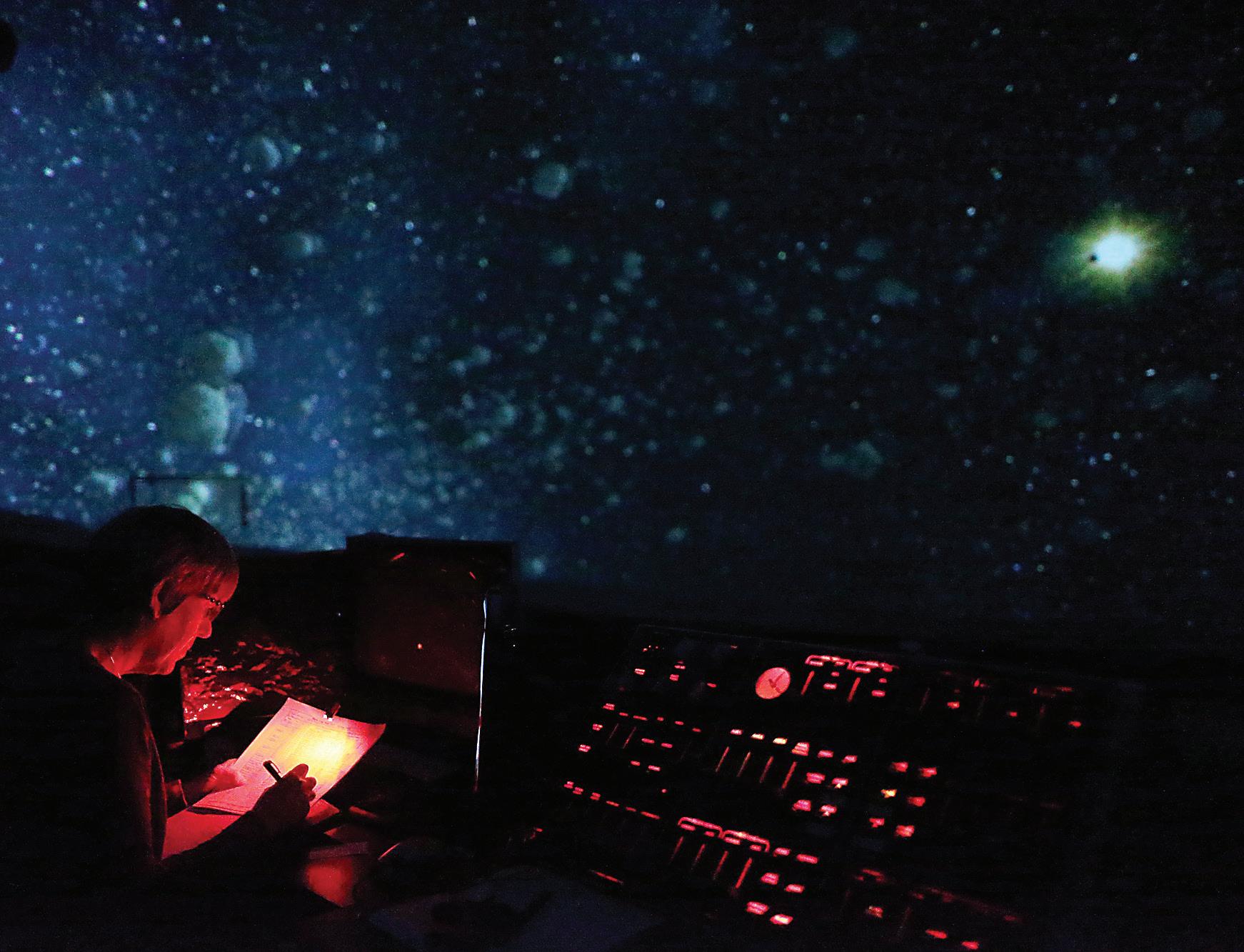
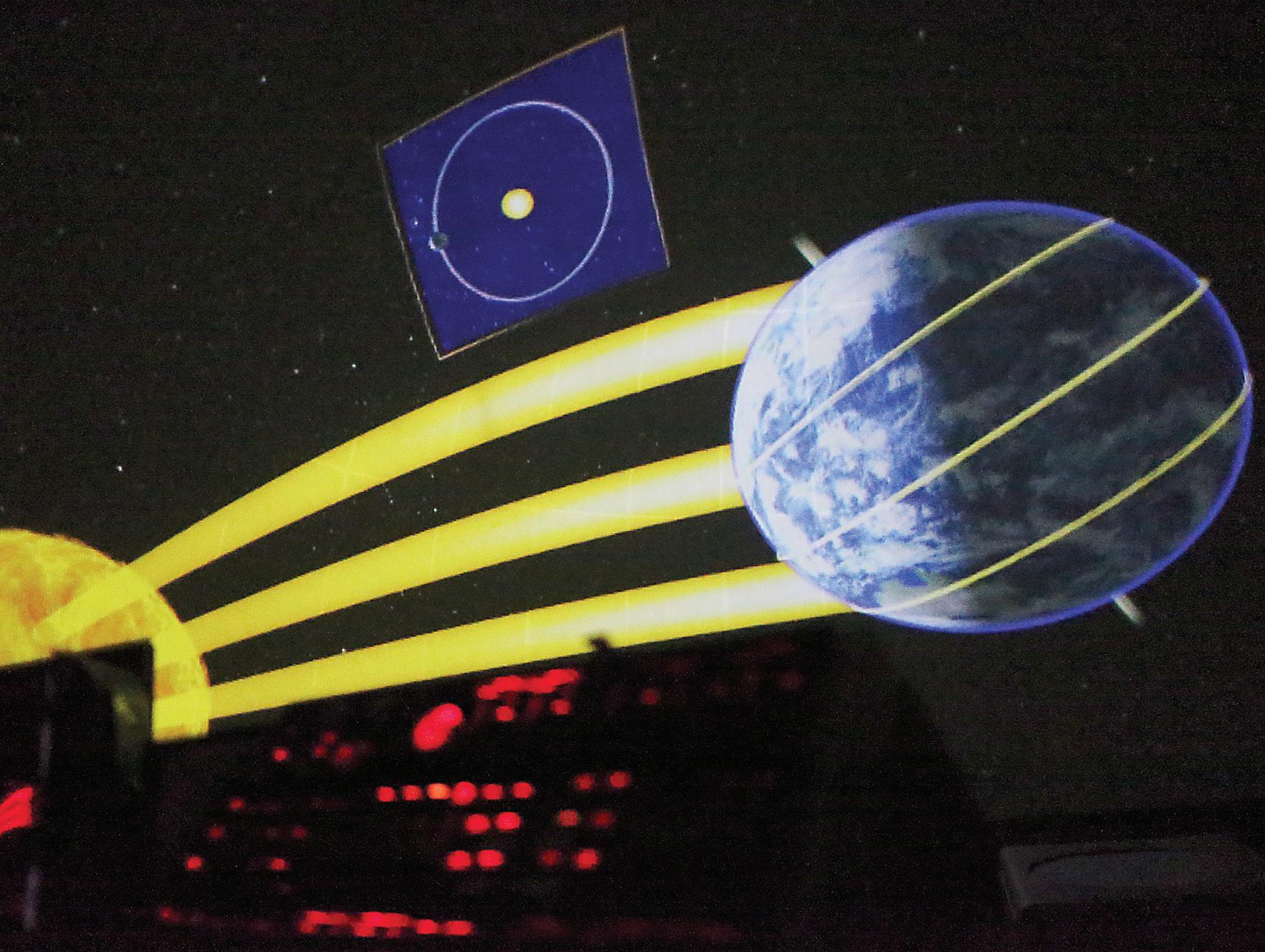
Rock Bridge has housed a planetarium since 1974. The large, darkened dome has a star ball that projects the night sky 360 degrees around the dome. Columbia Public School students visit the dome with school trips every year until they reach sixth grade, and the planetarium sees more than 13,500 students annually.
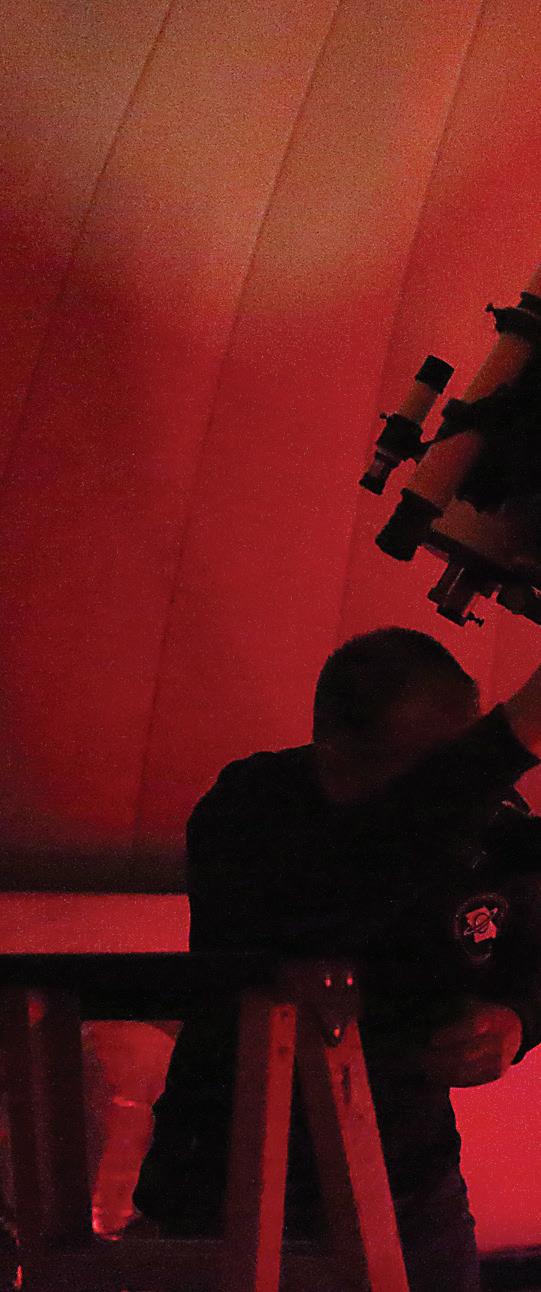
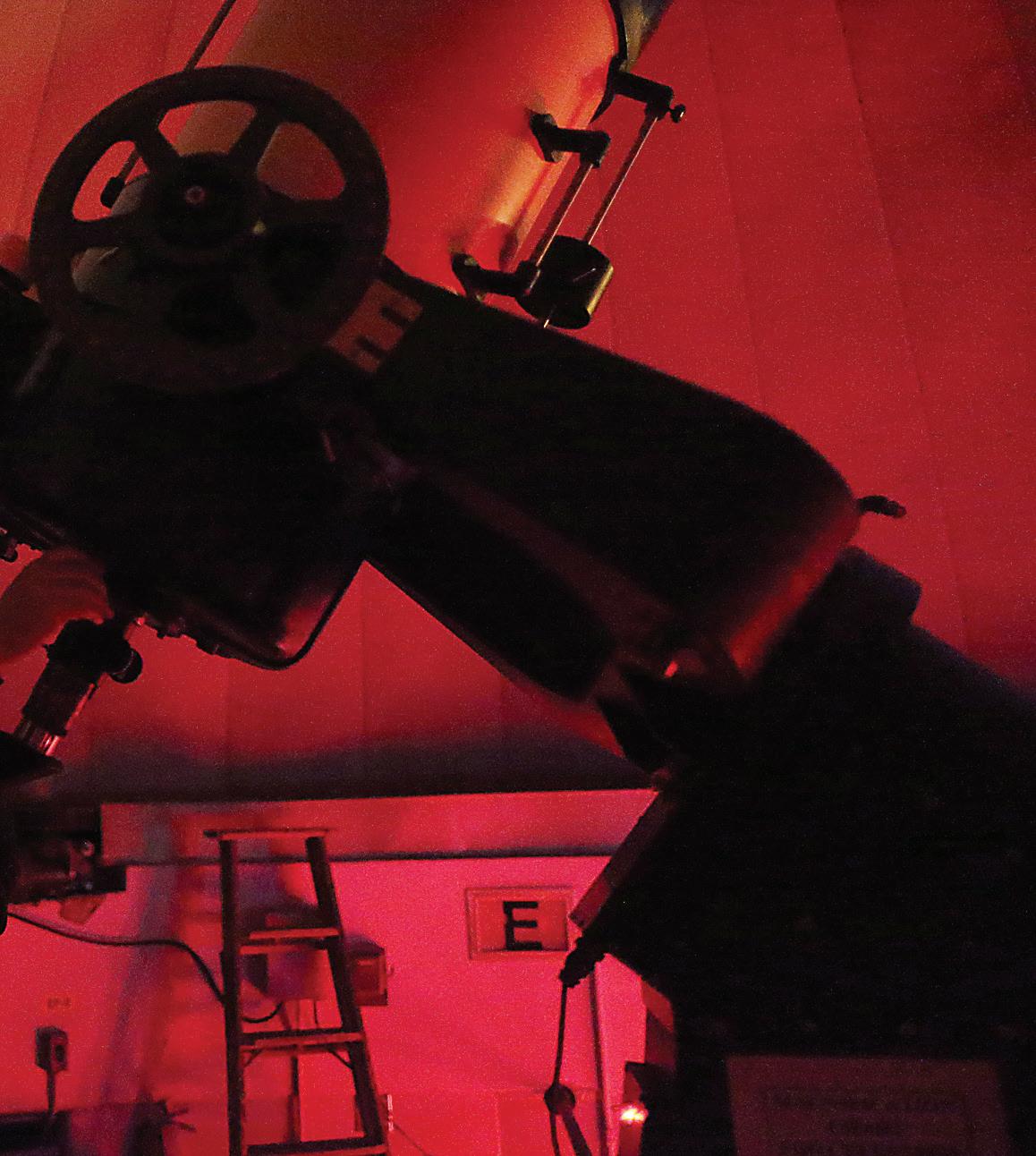
Randall Durk refocuses the Celestron 16 telescope during a weekly Wednesday night viewing at MU’s Laws Observatory. The telescope was built and added to the observatory in 1967; it can magnify views anywhere from 125 to 600 times.
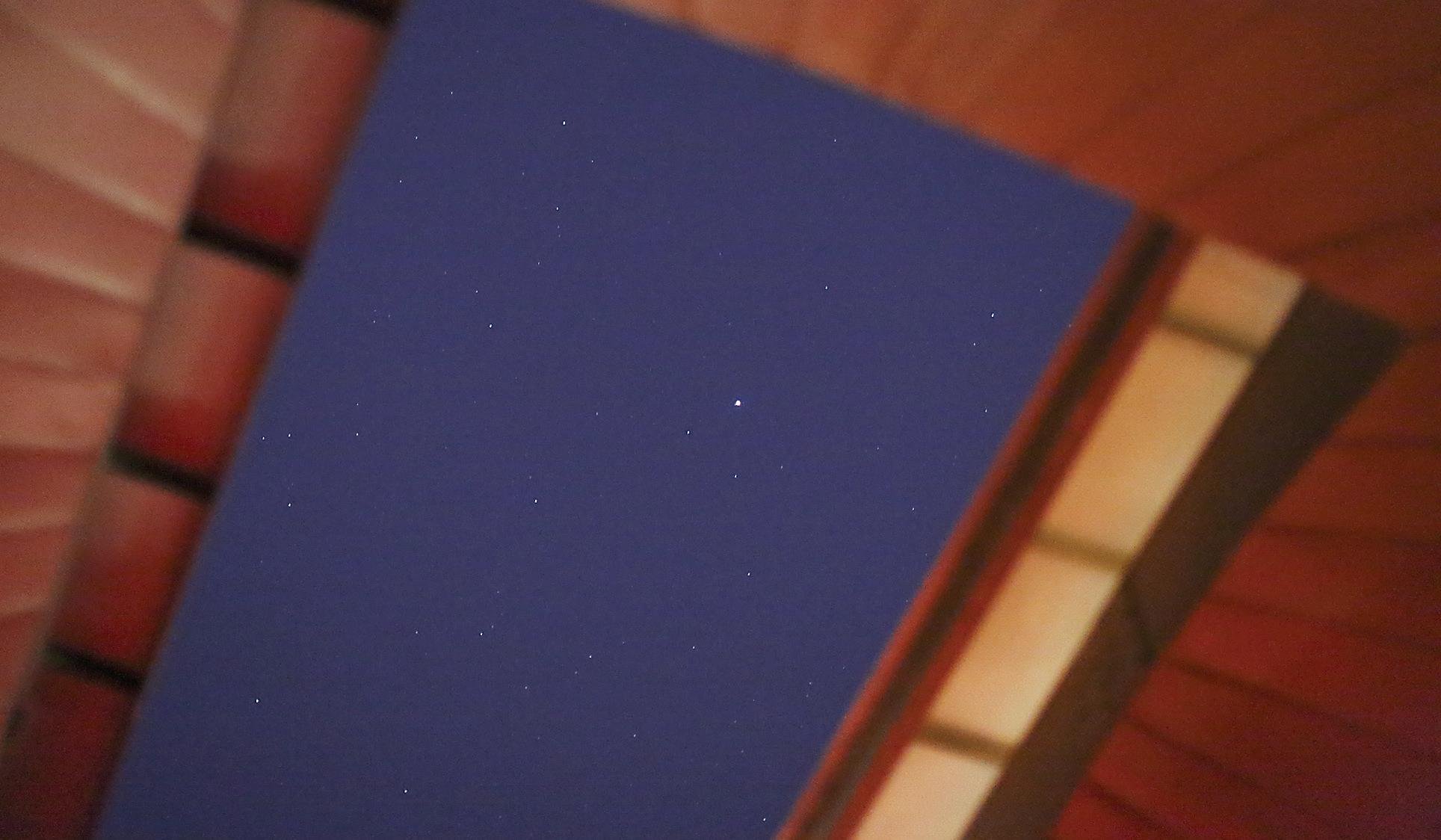
Melanie Knocke, director of the planetarium, says she never could’ve gotten it running again without the help of Durk and the CMAA. The planetarium had shut down for a year after the previous director died in 2009.
Especially in her early days with the planetarium in 2010, she says Durk and fellow member Val Germann were incredibly helpful. They’d help set up shows, bring display materials to post outside the planetarium entrance and even assist in crowd control for busy events. For the grand opening in spring 2012, she concluded a busy showing inside the planetarium and came out to find Durk flattened against its double doors and holding back an eager crowd waiting for the second showing.
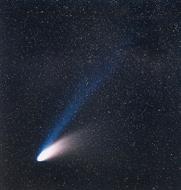
A comet brought Durk out of his hibernation. In April 1997, the Comet Hale-Bopp blazed across the sky and re-invigorated Durk’s interest in space. Incidentally, it won’t be visible again for a couple thousand years.
He tried to find the comet after reading about it in the newspaper but couldn’t find it on his own. A co-worker brought binoculars for him and pointed out the comet in the sky. With the
sighting, he says his interest in space came surging back. He bought a 35mm camera and a telescope and began searching the night skies on his own.
He also joined the CMAA and began volunteering at Laws Observatory in 2005 to give what he calls a small bit of time to the community. Durk works a full-time job but enjoys his hobbies. “I like to jog,” he says. “But I always say everybody should do a little something for the community. Just a little bit. That’s two hours a week. That’s nothing. I jog more than I volunteer.”
Durk worries about the shrinking and aging membership of the CMAA, which he wouldn’t have joined were it not for a chance encounter with a once-in-a-lifetime comet.
It’s not so much that people aren’t interested in space, he says. They are, but they just don’t have the time to join organizations like they used to. Everybody is busy. He says it without anger or accusation, even though people’s busyness means that his organization is aging and without a clear pipeline for new members. The occasional MU student will join but usually leaves when the school year ends or he or she graduates.
The decline is mirrored by the
student makeup of Hickman’s CASA program. Although it has had a steady stream of students since its inception 28 years ago, enrollment in recent years has been waning. Students are expected to have more credits to be accepted into college, so the aerospace elective, which doesn’t meet their math or science credits, falls to the wayside.
Space exploration is no longer an imperative. For most people, the topic has lost urgency and novelty. It is no longer spurred by competition or fear. Students studying science and engineering can’t aspire to be the first person in space, the first person on the moon, the first person to orbit the Earth — possibly short of a Mars landing — the first anything in space. And they won’t help the nation beat the Soviets.
However, having science-literate students is important beyond raising children who will go on to choose a STEM-related major in college (or become astronauts), says Columbia School Board Vice President Jonathan Sessions. It’s important so people can confidently identify pseudoscience and unsourced videos on the internet.
“We need individuals who can sit and say, ‘Well, 99 percent of the consensus is here, and 1 percent of the consensus
is over here among experts in their field; maybe this is real,’” Sessions says. “‘Maybe the politicians don’t know what they’re talking about, and I should have faith in science.’”
It also matters so that people understand the importance of continued funding of NASA, he says. In the 1960s, NASA’s budget peaked at 4.5 percent of the federal budget during the Space Race but has fallen to around 0.5 percent in 2014. Funding for NASA resulted in a number of useful innovations, not just footprints of the moon. It led to discoveries such as microchip processors, cordless power tools, memory foam, anti-corrosion coating, cochlear implants and insulin pumps. These everyday tools were not limited through private patents, he says, the way they would be if these discoveries were made by privatized companies.
“We’re on the cusp of something new,” Sessions says. “I think space exploration is going to be privatized because many individuals view the private sector as a solution to all things government. I don’t know if that’s right. I won’t say that it’s wrong for private interests to be interested in space and achieving something.”
Knocke opened the planetarium at Rock Bridge one afternoon in March, the day before American astronaut Scott Kelly was set to return to Earth after his year spent living aboard the International Space Station. She broadcast live coverage via NASA of the preparations for his return. The planetarium remained empty except for her. The next day, she broadcast NASA’s stream as Kelly and two cosmonauts exited the International Space Station, tucked themselves into their return capsule and sealed the hatch behind them. Of the 85 seats in the darkened planetarium, only 13 were full.
Knocke and staff member Dalene Delong present yearly shows to Columbia Public School children in kindergarten through fifth grades. This means that, at a minimum, students in the district will visit the planetarium six times during their elementary years. Each grade level has an individualized show correlated with the science standards for their age group. The planetarium also hosts geology, biology and now environmental science shows.
Knocke says at the end of each presentation, she always shows the stars. First, she shows the night sky with a level of light pollution similar to the kind
THEY’RE SITTING IN THE DARK, AND ALL THEY’RE DOING IS LOOKING AT THE STARS AND LISTENING TO MY VOICE.
MELANIE KNOCKE, CPS PLANETARIUM DIRECTOR
students would experience in the middle of Columbia.
“The stars will be on, and I will have a little bit of extra light,” she says. “I use it as light pollution to show that we live in a city. What I say is: ‘OK, this is how it’s going to look from down in Columbia. Look, just look up. You’ll see something. You’re not going to see a lot if there are a lot of streetlights, but you’ll see something. So look up.’”
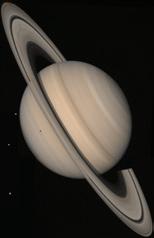
But then, she tells the students that they’re about to see the sky as they would deep in the countryside, away from the city lights. She turns the light pollution off, and invariably the dark planetarium fills with the “oohs” and “ahhs” of the excited students. She also takes the kindergartners on a journey through the solar system and shows them close-up photos of each of the planets in order. They travel to the edges of the solar system together. Then they would reach
Pluto but not see a close-up of it.
Before the New Horizons spacecraft captured the first close-up photos of Pluto in July 2015, Knocke would end the show by telling children that NASA was working on getting those photos. It was a work in progress, she told them, and they could look forward to the day when NASA finally got the shots.
She was shocked the next year, and the year after that, when former kindergartners returned for their annual visits and inquired about the status of Pluto’s photos. She couldn’t believe that 5-year-olds could sit in near-complete darkness and listen to a woman talk about the edges of the solar system and listen well enough to remember it a year later.
“They’re sitting in the dark, and all they’re doing is looking at the stars and listening to my voice,” she says. “It’s fascinating to me that they listened while they’re sitting in the dark with nothing
else going on. No computer animations, no loud music, nothing. Five-year-olds. They can still learn things like that.”
That scientists now have photos of Pluto is bittersweet for Knocke because she has to find a new way to end her presentation and keep kids eagerly coming back the next year. It begs the eternal question: What now?
For Durk, the answer is much of the same. He’ll continue to show off the heavens on Wednesday nights, volunteer for the CMAA and sell lights for his company.
He considers the irony that he, of all people, is contributing to the evergrowing light pollution from Columbia.
“What’s really weird is I work for a lighting company that sells poles with lights on them and wall packs,” he says. “They put them on the side of buildings, and they blare light out. I just look at them, shaking my head. But it gives me a paycheck. Progress moves on.”
However, he smiles when he thinks about the future and the hope that he’ll see an astronaut make it to Mars. And if, during an interview, the astronaut mentions a guy in the MU observatory who showed him Jupiter as a little kid that sparked his interest in space — well, that would be pretty cool, too.
Multimedia artist NICK FRANCIS POTTER discusses publishing his first book, future aspirations and teaching students
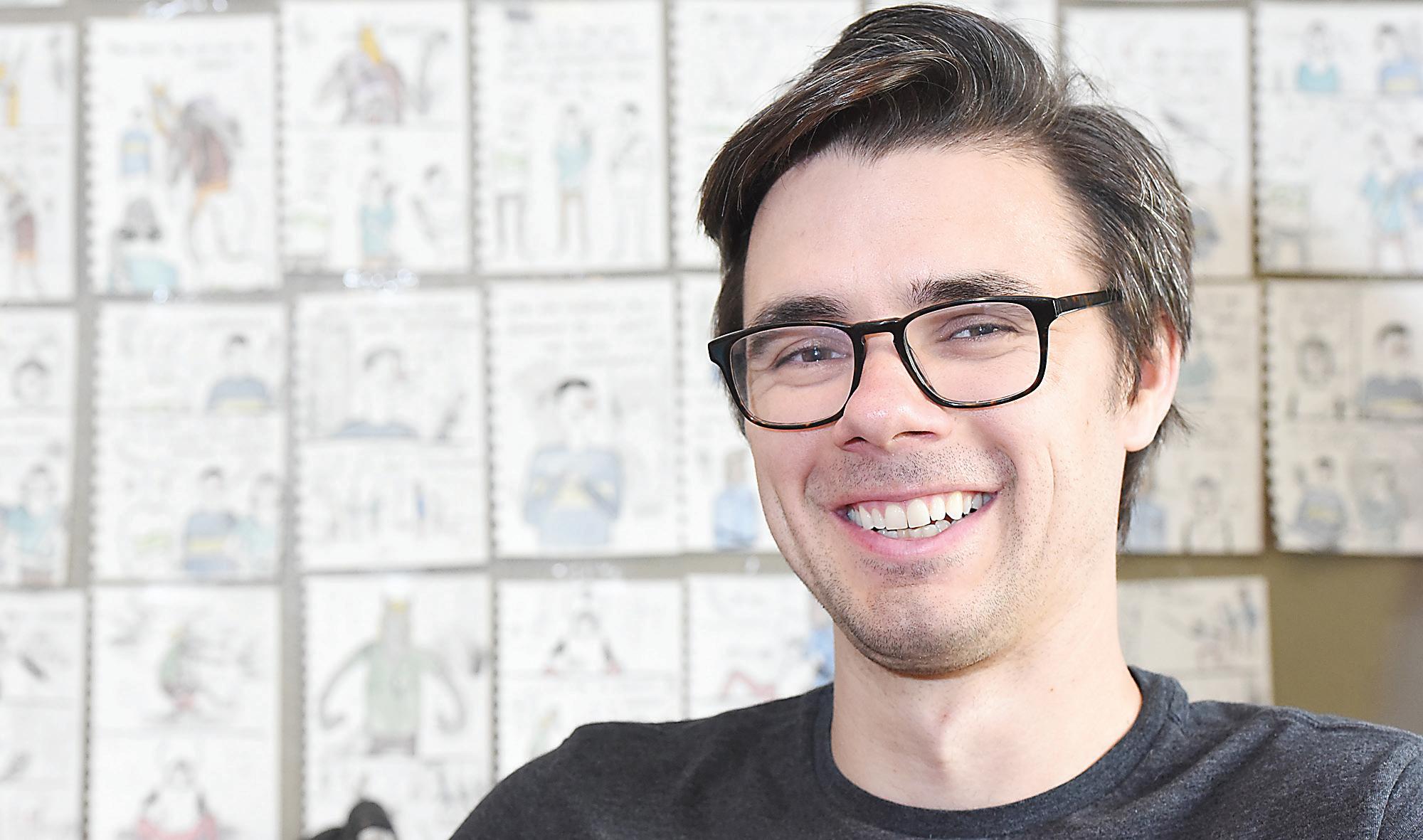
Growing up, Nick Francis Potter loved two things: comics and drawing. He enrolled at the University of Utah in 2007 as an English major, mostly because he didn’t know what else to do. In classes such as Contemporary Fiction and Creative Writing, his professors’ enthusiasm for words rubbed off on him, and he realized he wanted to seriously pursue writing. But he also wanted to teach and draw. He wanted to do it all. After graduating from Utah in 2010, Potter completed his Master of Fine Arts at Brown University. Now, Potter and his family — his wife, Erin, and their two children — live in Columbia while he’s finishing his doctorate in creative writing at MU. He also teaches undergraduate courses at the university and writes. “His writing is funny, yet dark and macabre,” says Daniel Miller, a friend and fellow creative writing graduate student at MU. “I don’t see him as a broody, angsty teenager. He’s a very kind person. He’s funny. Strange, but in a good way.” Potter’s first book, New Animals, published April 1. It includes 13 short stories, 12 of which were published in literary journals in print or online in the past decade.
When were you first inspired to write?
I think that would have been during my undergrad years as I read more literature and contemporary fiction and took some writing classes at the University of Utah. I had some great teachers who
turned me on to some great work. I became a big fan of authors Ben Marcus, Carole Maso and others who were writing in ways I didn’t really know were possible, so that really inspired me.
Describe the process of getting published. The avenue I took is through a small publisher (Subito Press), which I think is more open to the kind of writing I do. My book is a little bit more experimental, or at least nonmainstream, in the way it’s structured and its characters and plot. Small publishers have open reading periods or contests, and I submitted New Animals to a contest. It won the Subito Press Innovative Fiction Prize in 2014.
What do you hope people take away from reading New Animals?
I don’t feel like I have a very specific agenda in what readers take away, but if they do read it, I hope that it is in some way affecting and memorable. I hope it’s enjoyable enough that they’d even want to finish the book. I guess that’s my largest hope — that it’s good enough to be finished.
What do you like most about teaching? I really like working with students and other people. There’s something about the unpredictability of the classroom that I enjoy. I think there’s an aspect of
performance in teaching. I like engaging with people who are interested in the stuff I’m interested in.
Which do you prefer: art or writing?
I don’t prefer one over the other. I often like to use them to work against each other. When I’m having trouble writing, I’ll just scribble stuff and vice versa. When I’m not drawing the way I want to, I’ll try writing. I really try to mix all the arts that I feel capable of. I don’t think I’ll pick one over the other at any point.
Who is your greatest influence?
My wife, both in how I think about the world and the way I interact with it. Before I met her, I drew a lot, but then I kind of stopped making visual art for a while. I didn’t restart until I met her, and she encouraged me to do stuff, and we’d work on it together. She’s turned me on to feminism and many other ideals.
What are your goals for the future?
I’d love to write and finish a full-length graphic novel and to write a full-length prose novel. I have a children’s novel I’m working on, too. I kind of want to try it all.
— NATALIA ALAMDARI
Missouri Contemporary Ballet with the Missouri Symphony Orchestra
This two-night special event will feature the debut of two new works performed together by the Missouri Symphony Orchestra and the Missouri Contemporary Ballet. The whirlwind experience will include music by Ginastera, Ibert, Tool and Vivaldi. Fri.–Sat., 7:30 p.m., Missouri Theatre, $27–$33, 875-0600
Meet the Author:
Carolyn Mulford
Spend your Saturday morning snacking on Harold’s Doughnuts and listening to Carolyn Mulford discuss Show Me the Ashes, her latest thriller. The novel features ex-CIA agent Phoenix Smith as she works to prove the innocence of a young girl convicted of murder. Saturday, 10:30 a.m., Boone County Historical Society, Free, 443-8936
Oliver!
This classic tale features Spencer Rainwater as the mischievous Oliver Twist. A young orphan, Oliver, becomes a pickpocket in London. Audiences can tag along on Oliver’s adventures as he searches for a family and for love. Saturday, 8 p.m.; Sun. and Wed., 2 p.m. and 8 p.m.; also June 23–25 8 p.m.; June 26, 2 p.m., Arrow Rock Lyceum Theatre, $15–$36, 837-3311
Lullaby of Broadway
This season’s closer is a Stephens College Summer Theatre Institute tradition. The performance will include numbers from Broadway’s best-known musicals with choreography from guest artist Tamara Walker. Monday, 7:30 p.m., Macklanburg Playhouse, Free, 808-4753
Celebrate the summer solstice with Good Nature. Stop by for discounted rates on tarot cards, runes, palm readings and more at their psychic fair. Saturday, 11 a.m. to 7 p.m., Good Nature, Free, 442-4242
You Can Paddle Demo Day
It’s always comforting to know you bought a solid product because you tested it out. Alpine Shop’s You Can Paddle event is sure to help rid you of any buyer’s remorse. You’ll get the chance to try out kayaks, canoes or stand-up paddle boards. Saturday, 11 a.m. to 4 p.m., Stephens Lake Park, Free, 817-2955
Mid-Missouri Pride Fest BBQ
The Mid-Missouri LGBT Coalition invites you to celebrate summer with the Pride Fest BBQ in Cosmo Park. Please bring a side dish or dessert to accompany
the burgers and hot dogs, if possible. Saturday, Noon, Cosmo Park, Free, 673-2032
Craft Beer Cellar Father’s Day Beer Brunch
Brunch is served. Take Dad out to Craft Beer Cellar on Father’s Day. Enjoy pancakes and thick-sliced bacon (or choose The Candy Factory’s chocolate-covered bacon), as well as a full beer and cocktail menu.
Sunday, 10 a.m. to 2 p.m., Craft Beer Cellar, Free to attend, 449-0242
‘Blind’ Boone Piano Concert
Fill your Sunday afternoon with music from ragtime pianist Bob Milne and a unique instrument from Missouri’s history: a 9-foot grand piano. The piano is played only a few times a year, so grab a front-row seat.
Sunday, 2 p.m., Boone County Historical Society, $10–$20, 443-8936 SCREEN
Central Intelligence (PG-13)
High school friendships are meant to survive the test of time. At least that’s what CIA agent Bob Stone (Dwayne Johnson) hopes is true when he recruits an old friend (Kevin Hart) to help him with a mission.
R, F RUNTIME = 1:57
Finding Dory (PG)
Dory, Nemo and Marlin are back to “just keep swimming” in their new adventure. This time, Dory sets off to find her family after the loveable fish suddenly remembers her childhood memories.
R, F RUNTIME = 2:13
The Meddler (PG-13)
After the death of her husband, Marnie (Susan Sarandon) leaves New Jersey and moves across the country to Los Angeles where her daughter, Lori (Rose Byrne), lives. What results is far from the blissful mother-daughter bond that Marnie was hoping to restore. RT RUNTIME = 1:40
Still playing
Alice Through the Looking Glass (PG) R
The Angry Birds Movie (PG) R
Captain America: Civil War (PG-13), R
The Conjuring 2 (R) F, R
The Jungle Book (PG) R
The Lobster (R) RT
Love and Friendship (PG) RT
Me Before You (PG-13) F, R
Neighbors 2: Sorority Rising (R) R
The Nice Guys (R) RT
Now You See Me 2 (PG-13) F, R
Teenage Mutant Ninja Turtles: Out of the Shadows (PG-13) R
WarCraft (PG-13) F, R
X-Men: Apocalypse (PG-13) F, R
Theaters
F = Forum RT = Ragtag
R = Regal = Available in 3-D