




Jennifer Daniel Aflac

Jack Holder EBIS

Paul Hummel

Rachel McCarter Alliant


Editors
Heather Garbers | Trevor Garbers
For Media and Marketing Requests Contact:
Heather@voluntary-advantage com
Trevor@voluntary-advantage com
Mailing Address
10940 S Parker Rd #257 Parker, Colorado 80134

Steve Clabaugh CLU, ChFC
Mark Rosenthal PwC


Seif Saghri Founder
Tim Schnoor BusinessSolver
Sydney Consulting Group A d v i s o r y B o a r d


Hunter Sexton, JD, MHA

We’ve come a long way - and yet, in many respects, we are just getting started
The voluntary benefits industry has spent the past decade laying the digital groundwork: modern enrollment platforms, improved data exchanges, and the early adoption of APIs that have begun to replace static, batch-based processes What once required manual intervention, spreadsheets, and fragmented communication is steadily evolving into something more connected, more responsive, and more scalable
Now, with the accelerating influence of AI layered on top of API-driven infrastructure, we are entering a new phase - one defined not just by digitization, but by true interoperability.
Imagine a near future where a benefits platform connects seamlessly via API or SSO into every carrier system Filing a claim is no longer a separate, opaque process, but an integrated experience - status updates are real-time - data flows bi-directionally Employers, brokers, and employees operate from a single system of record, with AI quietly orchestrating workflows, cataloging data, and reducing friction at every step

This is no longer theoretical - the building blocks exist today, but progress has been uneven Carrier systems remain fragmented, API standards vary widely and “integration” still too often requires manual intervention rather than plug-and-play simplicity And while AI promises efficiency and intelligence, its full value depends on clean, connected, and accessible data - something our industry is still working toward at scale
That’s the gap between where we are and where we’re going. The opportunity ahead is not just about adopting new technologies, but about aligning around shared standards, investing in open ecosystems, and rethinking how data moves across the benefits lifecycle. It’s about shifting from point solutions to platforms, from isolated transactions to continuous experiences.
If we get this right, the impact is profound: faster claims resolution, reduced administrative burden, better decision-making, and ultimately, a more human-centered benefits experience. We’ve made meaningful progress, but realizing the full promise of APIs and AI will require collective momentumfrom carriers, technology partners, brokers, and employers alike
The next chapter of voluntary benefits won’t be defined by what’s possible in theory, but by what we choose to connect in practice


JULY 14-15, 2026

The voluntary benefits industry is no longer limited by traditional distribution models, legacy enrollment methods, or static products. With new technology, data insights, and partnerships, the future of voluntary benefits is limited only by imagination.
PLATINUM SPONSORS








By Eastbridge Consulting Group, Inc.
Technology powers nearly every aspect of the voluntary benefits industry, enabling everything from speedier claims payment to 24/7 customer service. Offering bigger, better and faster capabilities can create market differentiation for voluntary carriers, but it comes with a price often a hefty investment in new technology.
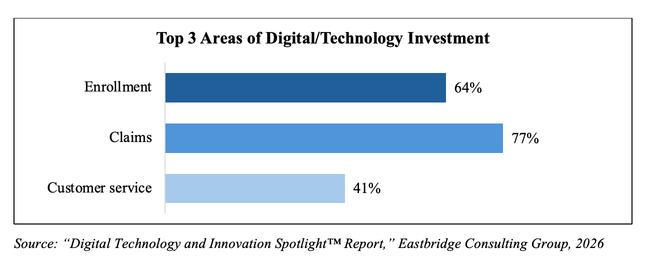
Our recent research shows that’s especially true for enrollment: It’s one of the top three areas where carriers are making technology investments, second only to claims, according to the 2026 Digital Technology and Innovation Spotlight™ Report Almost all (91%) of carriers surveyed say they use technology to support enrollment, most often through Application Programming Interfaces(68%)
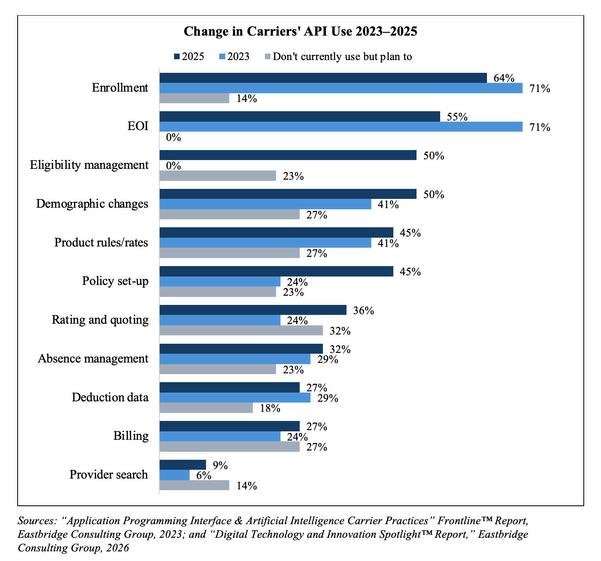
A strong majority of carriers already use API exchanges of some type, or plan to in the near future. Enrollment leads the list of the most frequent use of API exchanges, followed by evidence of insurability, demographic changes and eligibility management. What’s next? Carriers most often mention rating and quoting, billing, product rules and rates, and demographic changes as areas where they plan to use APIs in the future
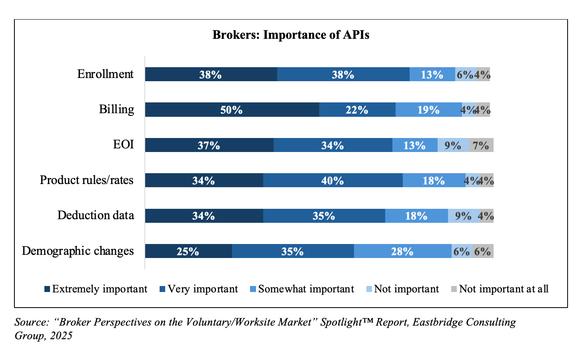
A strong majority (89%) of brokers in the voluntary industry agree using APIs for enrollment is important including three out of four who say it’s extremely or very important, according to our most recent broker survey. Other essential uses of APIs brokers cite include billing, evidence of insurability, product rules and rates, deduction data and demographic changes.
Implementing API integrations isn’t a DIY task. Carriers surveyed have active API integrations with an average of seven benefit technology partners, and some report as many as 30 different partners And that number is growing: Carriers responding to the survey plan to add up to 12 new partners in the next year, with an average of five With carriers’ emphasis on enrollment, it’s not surprising that enrollment technology / benefit administration companies are the most common type of partner they use

Danielle Lehman Senior Consultant
The price tag for APIs to support enrollment and other essential functions isn’t just monetary: Carriers report several other obstacles with implementing this technology Alignment think partner priorities and shared definitions of data and processes is one of the biggest challenges they face in using or planning to use APIs Partners that implement APIs differently, even with shared specifications, can create significant technical inconsistency for carriers Internal and vendor resource limitations also can slow progress, as can internal legacy system constraints Even something as simplesounding as getting internal teams to buy in to APIs and change processes can be a major block to seamless API adoption.
Despite these challenges, don’t expect API use to slow down any time soon. The need to stand apart from the competition or at least keep up with it while meeting broker and customer expectations is almost certain to continue to drive investment in and expansion of this technology for enrollment and nearly every other aspect of the voluntary business
Eastbridge is the source for research, experience, and advice for companies competing in the voluntary space and for those wishing to enter For over 25 years, they have built the industry’s leading data warehouse and industryspecific consulting practice Today, 20 of the 25 largest voluntary/worksite carriers are both consulting and research clients of Eastbridge
Helpemployeesrefreshtheir digitallivesandreduceeveryday cyberrisks.


Acleanerdigitallifecanalsobeasaferone.Byupdatingpasswords,removingunusedaccounts, andkeepingdevicescurrent,employeescanreduceexposuretocyberthreatsandfeelmore confidentnavigatingtheironlineworld
Startwiththesedigitalspringcleaningbasics
Updateoldpasswordsandenable multi-factorauthentication.
Reviewprivacysettingsandlimit whatʼspubliclyvisible.
Installthelatestupdatestoclose securitygaps.
Deleteoldaccountsandapps thatarenolongerneeded.
PartnerwithNortonLifeLockBenefitSolutionstohelpprotectyouremployeesʼidentities,devices andfinancialwell-beingyear-round
By PES Benefits
Benefits technology has evolved rapidly over the past decade, yet many employers still manage benefit strategy using delayed or fragmented data Enrollment files, utilization reports, and claims summaries often arrive months after the activity they measure For employers facing rising healthcare costs and growing scrutiny from finance teams, that delay is becoming increasingly difficult to justify
As benefits platforms become more connected through application programming interfaces (APIs), the flow of benefits data is beginning to change Instead of static reporting cycles, employers are gaining access to more continuous insight into how employees engage with benefits, how care is accessed, and where costs are trending. For brokers advising employer clients, this shift represents more than a technology upgrade.
It is changing the way benefit strategy is discussed with HR leaders, finance teams, and executive decision makers.
Healthcare costs remain one of the largest operating expenses for many organizations. Employers are increasingly focused on understanding where costs originate, and which benefit programs deliver measurable value.
Research from the Kaiser Family Foundation shows that employersponsored health coverage continues to represent a substantial financial commitment for organizations, with both premiums and employee cost-sharing increasing in recent years When healthcare spending grows faster than other business expenses, finance leaders begin asking more detailed questions about how benefit programs influence total cost
At the same time, many employers still lack clear visibility into how employees actually use the benefits they offer. Claims reports may reveal spending categories, but they often do not provide timely insight into engagement patterns or care decisions
For example, employers may not know whether employees are using telehealth options before seeking in-person care, whether mental health services are being accessed early enough to prevent more severe conditions, or whether preventive services are being utilized as intended
Without timely data, it becomes difficult to evaluate the true impact of benefit investments
Application programming interfaces allow different digital systems to communicate with each other in real time In the benefits ecosystem, APIs can connect human resource information systems, benefits administration platforms, care navigation tools, and digital health services
Historically, benefits platforms exchanged information through batch files transmitted weekly or monthly. That model created reporting delays and made it difficult to monitor utilization trends as they occurred.
API integrations allow certain data points to update much more quickly. Eligibility changes, benefit activations, and service utilization may appear in dashboards sooner, giving employers a clearer picture of how employees interact with their benefits
Research published by Deloitte notes that healthcare organizations are increasingly investing in digital integration and advanced analytics capabilities to improve operational visibility and decision making Similar trends are now appearing in employer benefits environments, where organizations are seeking better insight into how benefits programs influence workforce health and cost management
This level of integration becomes especially important as employers adopt more digital health tools. Virtual care services, mental health platforms, wellness applications, and benefits navigation programs generate large volumes of engagement data. Without modern integration infrastructure, much of that information remains isolated within separate vendor systems
For brokers advising employer clients, understanding how these systems connect is becoming part of the strategic conversation
Benefits strategy discussions historically focused on coverage design, employee satisfaction, and annual renewal negotiations While those topics remain important, rising healthcare costs are bringing finance leaders into benefits conversations earlier and more frequently
CFO.com highlights how healthcare spending continues to be a major concern for corporate finance leaders, pushing benefit planning into broader financial strategy discussions.
CFOs increasingly want to understand how benefits influence productivity, retention, and long-term medical claims costs They are also interested in measurable return on investment
This shift means brokers are being asked a different set of questions than they might have been asked five or ten years ago Instead of focusing solely on premium trends, finance leaders may ask:
Are employees using lower-cost care settings such as virtual visits? Are behavioral health services being accessed early enough to prevent higher downstream costs? Which benefits programs demonstrate measurable utilization and engagement? How can benefits investments help control cost volatility over time?
Real-time data supported by modern benefits technology infrastructure can help answer those questions earlier in the plan year rather than after the fact
Another reason employers are paying closer attention to benefits data is the connection between access to care and long-term healthcare spending
Research from the Agency for Healthcare Research and Quality shows that timely access to care, preventive services, and coordinated health management can improve health outcomes and reduce avoidable medical utilization When individuals delay care or struggle to navigate healthcare systems, conditions often become more complex and costly to treat.
Employers that provide benefits programs designed to support earlier access to care may help employees address health concerns before they escalate into more serious medical events.
Employerswantpartnerswhocanhelp theminterpretbenefitsdata,evaluate digitalhealthvendors,andtranslate analyticsintostrategic recommendations.
However, measuring the impact of these programs requires better insight into utilization patterns Employers need to understand whether employees are actually accessing the resources available to them.
Technology integration and real-time data visibility make that evaluation more feasible.
For brokers focused on growing their book of business, benefits technology infrastructure is becoming an increasingly important differentiator. Employers want partners who can help them interpret benefits data, evaluate digital health vendors, and translate analytics into strategic recommendations.
This does not require brokers to become technology developers or data scientists However, it does require a working understanding of how systems connect and how data flows between vendors
When brokers can explain how benefits technology enables better decision making, they move beyond product placement and renewal negotiations They become advisors who help employers understand how benefits investments influence workforce health and financial performance.
In a marketplace where healthcare costs continue to rise, and employers demand more accountability from benefits programs, the ability to connect technology infrastructure with business outcomes is becoming a powerful advantage
For brokers who learn to translate benefits data into meaningful strategy conversations, the discussion with employers shifts from annual renewals to long-term value
And in a competitive advisory environment, that shift can make a meaningful difference in both client retention and business growth
PES Benefits is dedicated to revolutionizing the employee benefits landscape with cutting-edge technology, administration, education, and virtual care solutions Since its inception, PES Benefits has focused on simplifying the benefits experience, making it more accessible and meaningful for all involved
Sources:
Kaiser Family Foundation 2024 Employer Health Benefits Survey https://wwwkfforg/health-costs/report/2024employer-health-benefits-survey/
Deloitte Global Health Care Outlook and Digital Transformation Insights https://www2deloittecom/us/en/insights/industry/health-care/global-health-care-sector-outlookhtml CFOcom Rising Costs Re-emerge as Companies’ Top Benefits Issue https://wwwcfocom/news/rising-costs-re-emerge-as-companies-top-benefits-issue-willis-towers-watson-2025trends-cfo-survey-/751035/
Agency for Healthcare Research and Quality Care Coordination and Healthcare Quality Research https://wwwahrqgov/ncepcr/care/coordinationhtml

By Meg Collins
Ask any carrier, ben admin platform, or broker whether they support APIs, and the answer is almost always yes. But as I have seen in recent conversations with major carriers and benefits administration leaders, that answer tells you almost nothing The real question is not whether an API exists It is whether it is actually working, and for whom
That distinction matters more now than ever As I have spent time researching and discussing the state of carrier and ben admin partnerships, one theme keeps surfacing: the industry has been using the word "API" as a marketing term for years, and the gap between what is being promised and what is being delivered is significant
The data is striking. A 2023 Ideon-LIMRA study found that while 76% of carriers have some degree of API-enabled external connectivity, only 8% use APIs for most or all of their external connections [1].
A Unum report reinforces this: 61% of carriers say they support an API data exchange, but over 70% of those use them for less than half of their transactions [2] In other words, having an API and actually operating through one are two very different things
This gap is not a technology problem It is a business model problem As one senior carrier partnership executive told me, speaking on background, "API became a marketing term" The investment in the operational transformation required to truly leverage the technology has not kept pace with the marketing. Many platforms that claim to have APIs still rely on significant backend manual work to process data. Another carrier leader described it as "mice in the wheels in the background." The automation is a facade, and the inefficiencies are hidden.
Despite the gap, there is real progress happening, and it is worth paying attention to The carriers and platforms that are getting this right are not just building better technology They are building better partnerships, structured around three pillars
OperationalExcellence
DirectAPI/EDIconnectionswithnomiddleware,definedSLAs,and automatederrorresolution
Transparent,flat-feemodelstiedtoperformanceratherthan shelfspace
Sharedproductroadmaps,auto-claimsadjudication,andAIenabledoperationalworkflows
The carriers I have spoken with are actively shifting their strategy away from broad panel expansion and toward "doubling down" on platforms that are growing their business and investing in their technology They are walking away from platforms that are coasting. This is not a small shift. It is a fundamental change in how partnerships are being evaluated. A 2025 Eastbridge Consulting Group report confirms this direction, noting that "nearly all carriers surveyed state API/data integration is very or extremely important when working in the large case market" [3].
The persistence of frictional models is the biggest obstacle to progress Three patterns keep showing up in my conversations
First, financial arrangements between carriers and ben admin platforms remain largely opaque. Brokers and employers often have no visibility into what is being paid, to whom, and in exchange for what That lack of transparency creates real conflicts of interest, where platforms may be incentivized to favor carriers who pay them the most rather than those who deliver the most value.
Second, the "pay-to-play" model is still alive in many corners of the market, even as carriers are actively questioning it.
As one major group carrier leader told me, speaking candidly, "Gone are the days of a ben admin having a panel and all 15 of your carrier friends are also on that panel and there's no real advantage to that other than we're just paying." That sentiment is becoming more common, but the behavior has not fully caught up.
First,financialarrangements betweencarriersandbenadmin platformsremainlargelyopaque. Brokersandemployersoftenhave novisibilityintowhatisbeingpaid, towhom,andinexchangeforwhat. Thatlackoftransparencycreates realconflictsofinterest,where platformsmaybeincentivizedto favorcarrierswhopaythemthe mostratherthanthosewhodeliver themostvalue.
Third, underinvestment in core technology continues to be masked by marketing. Platforms that have not built the infrastructure for true integration are still winning business based on brand recognition and relationship, not performance.
This is where the voluntary benefits market has a real opportunity to lead. As WTW noted in a 2023 article, making coverage and eligibility data available via API not only improves the employee experience but also creates a more streamlined and costeffective solution for employers [4] The technology exists
The question is whether the people advising employers are asking the right questions to ensure it is being used
Brokers and consultants in the voluntary space are uniquely positioned to demand better They see the full picture: the carrier, the platform, and the employer They know when the integration is working and when it is not The brokers who are asking hard questions about integration quality, data accuracy, and operational SLAs are the ones who will build the most durable client relationships.
For employers, the ask is simpler: understand what you are paying for. The financial arrangements behind your benefits technology are not always visible, but they are not invisible either Ask your broker Ask your platform Ask your carrier The answers will tell you a lot about who is actually working in your interest.
The era of the API as a marketing checkbox is over. The carriers and platforms that will win in this market are the ones building partnerships grounded in transparency, operational accountability, and a genuine commitment to co-innovation The data is clear, the direction is clear, and the brokers and employers who start asking harder questions now will be the ones best positioned for what comes next.
This article is based on market research and direct conversations with senior leaders at major carriers and benefits administration platforms Quotes are used with permission and sources have been kept anonymous at their request
Meg Collins, Founder of RevGem - With more than 25 years of experience in employee benefits, finance, and technology, Meg Collins is a recognized market strategist known for her ability to connect people, processes, and technology to drive better outcomes. Meg founded RevGem to help investors, carriers, technology platforms, benefits providers, and poin solutions sharpen their market strategies and navigate a rapidly evolving industry

Sources:
1 Ideon & LIMRA | Only 8% of Benefits Carriers Use APIs for Most External Connectivity(September 2023) BusinessWire:https://wwwbusinesswirecom/news/home/20230915868237/en/Ideon-LIMRA-Report-Only-8-of-Benefits-Carriers-UseAPIs-for-Most-External-Connectivity
2 Unum | Benefits Data Integration Comparison Guide https://formsunumcom/StreamPDFaspx?strURL=/78103441pdf&strAudience=StreamByNumber
3 Eastbridge Consulting Group | Voluntary Carriers Offer Special Services and Underwriting for Large Employers (August 2025) https://eastbridgecom/latest-eastbridge-study-shows-voluntary-carriers-offer-special-services-and-underwriting-for-large-employers/ 4 4WTW (Willis Towers Watson) | How APIs Are Changing the Game for Benefit Administrators, Employers and Employees (January 2023) https://wwwwtwcocom/en-us/insights/2023/01/how-apis-are-changing-the-game-for-benefit-administrators-employers-andemployees

By Heather & Trevor Garbers
Artificial intelligence is rapidly reshaping the voluntary benefits landscape, moving the industry beyond static enrollment experiences toward dynamic, always-on engagement To better understand how this transformation is unfolding, we spoke with leaders from Healthee and Opyn Health about how AI is being deployed to simplify complexity, improve utilization, and create more meaningful member experiences.
Q: Please provide a short overview of your solution.
Kyle Williams, Vice President, Sales & Distribution, Opyn Health: Our solution is an AI-driven ecosystem designed to transform voluntary benefits from passive payroll deductions into active, accessible health assets By integrating advanced AI agents with a unified member interface, the platform serves as a “digital concierge” that guides members through the complexities of supplemental coverage
Instead of navigating fragmented portals, members interact with a single point of intelligence that understands their specific plan designs and helps them maximize the value of their benefits in real time
Guy Benjamin, CEO & Co-founder, Healthee: At Healthee, we’ve built an AIpowered platform that helps employees understand, navigate, and make the most of their health benefits. The U.S. healthcare system is complex by design, and when employees have questions, their only options are to ask HR, call a support center, or search online for answers that may not be accurate
Our platform brings everything into one place Employees can ask questions about their benefits, compare plans during open enrollment, find in-network providers, book appointments, and understand real costs before receiving care At the same time, HR and finance teams gain visibility into utilization and cost trends while reducing administrative burden
Q: How is AI solving a problem in the marketplace?
Guy (Healthee): Health benefits are a sea of confusion for everyone involved. Our team uses AI technology to simplify benefits, organizing and interpreting large volumes of unstructured healthcare data - including plan documents, claims data, and provider information - and translating it into clear, personalized answers in real time
Our AI assistant, Zoe, acts as a 24/7 interface between employees and their benefits Instead of calling HR or a carrier, employees can ask questions like “How much will this cost?” or “Where should I go for care?” and get a quick, plain-language response
Williams (Opyn Health): In the voluntary benefits space, the primary challenge is not a lack of coverage, but a lack of utilization and understanding. Many members forget they have supplemental policies or find the claims process too daunting during a medical crisis.
AI addresses this by providing empathy and intelligence at scale. It performs human-like tasks - explaining coverage or identifying a potential claim opportunity - simultaneously for millions of members, bridging the information gap and shifting the industry away from a “file and forget” model toward a more proactive experience
When implemented correctly, AI actually increases safety by reducing the human errors inherent in manual data entry and complex plan interpretation
To ensure security, platforms must operate within a governed context infrastructure That means AI has access only to specific data for specific purposes, supported by strict Business Associate Agreements and security protocols that prevent sensitive data from being exposed or used to train public models
Guy (Healthee): The short answer is yes, if it’s built responsibly. Healthcare requires a high bar for privacy, accuracy, and trust. We design our systems with strict data protection standards, including HIPAA compliance and SOC 2 Type II certification, and ensure that sensitive information is encrypted and handled appropriately.
AI cannot operate as a black box in the benefits space It must be grounded in validated data sources and continuously evaluated The real risk comes from using open-access tools without proper safeguards
Q: What type of engagement are you seeing at the member level?
Guy (Healthee): We consistently see strong adoption and ongoing usage Instead of logging in once a year during open enrollment, employees interact with the platform year-round, particularly when making real healthcare decisions
Q: Is using AI in the benefits industry “safe”?
Ben Callaghan, Chief Product Officer, Opyn Health: Safety in the benefits industry is defined by accuracy and data governance
At one company, 65% of employees logged in within the first few months, with 86% user satisfaction and a 76% increase in benefits utilization. What’s encouraging is how that engagement translates into better habits, including increased use of preventive care and more informed plan selection.
AIcannotoperateasablackboxin thebenefitsspace.Itmustbe groundedinvalidateddatasources andcontinuouslyevaluated.Thereal riskcomesfromusingopen-access toolswithoutpropersafeguards.
Williams (Opyn Health): We are seeing a fundamental shift in how members want to interact with their benefits. Historically, voluntary products have struggled with adoption because they feel disconnected from everyday life.
With AI assistants enabling natural language interaction, 50-70% of benefit navigation and claims-related activity can now be handled through self-service Members are far more likely to engage when they can get immediate answers rather than waiting on hold with a call center
Q: What type of ROI can a client expect?
Callaghan (Opyn Health): ROI is measured through both operational efficiency and value realization AI enables administrative scalability, allowing organizations to support more members without increasing staff It accelerates claims resolution by prompting timely actions and improves utilization by reducing friction and increasing understanding.
Ultimately, these outcomes ensure that benefits perform their intended functionprotecting the member’s financial health
Guy (Healthee): ROI will vary depending on factors like size and plan design, but we’ve seen meaningful results For example, a company with over 4,000 employees saved more than $476,000 in just two weeks during open enrollment, including reductions in both claims and premium costs, while also reducing HR administrative hours by over 1,200
Q: Without AI, would you be able to provide this solution?
Callaghan (Opyn Health): The industry has long struggled with scalability and data complexity Without AI, we would be limited to a reactive service model
AI automates the “busy work” of benefits administration and allows the industry to move toward a future where every member effectively has a personal expert available to them at all times.
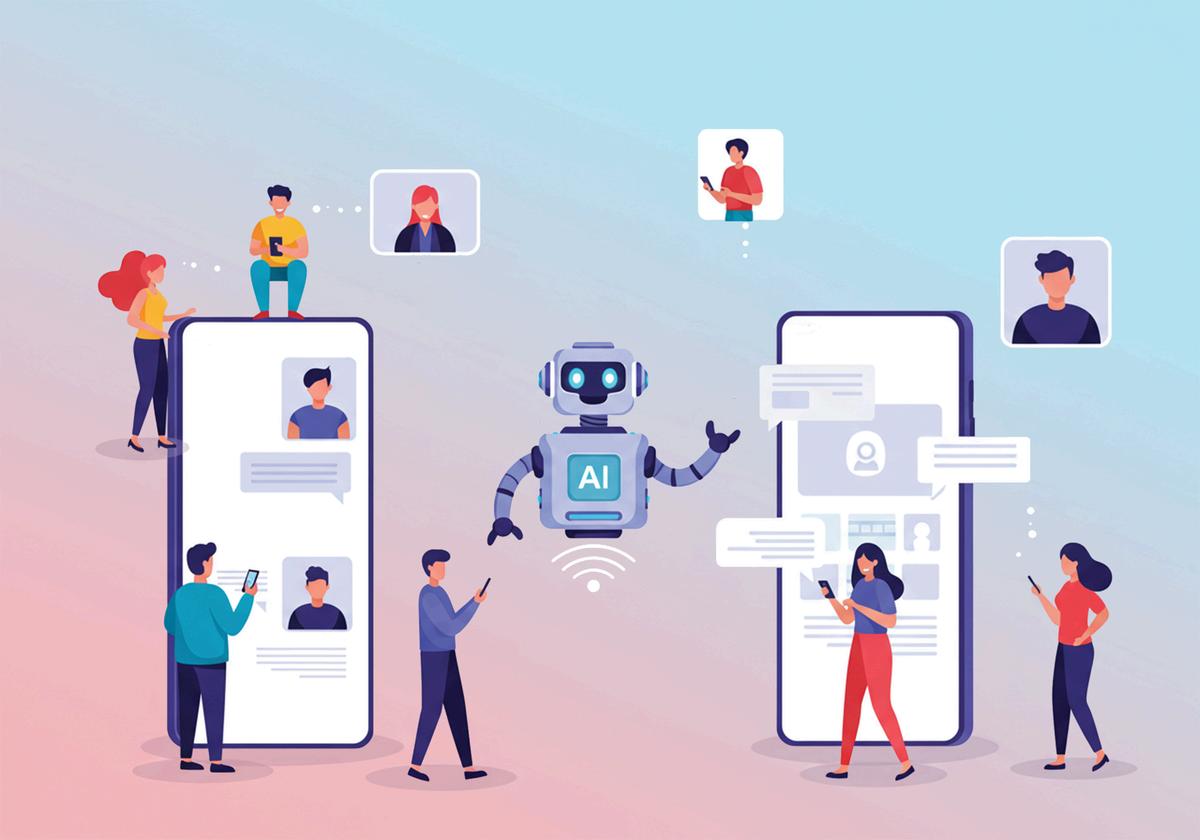
Guy (Healthee): AI can feel intimidating, even for experienced benefits leaders However, companies are already investing heavily in AI across their businesses, and benefits navigation must evolve alongside those efforts
Employees expect personalized, real-time digital experiences, and benefits are one of the last areas still lagging. The question is whether current strategies can keep pace with rising healthcare costs and those expectations, or whether it’s time to rethink how benefits are delivered.
Across both perspectives, a consistent theme emerges: AI is not simply improving efficiency - it is redefining how members engage with their benefits. By combining intelligence with connectivity, leading platforms are shifting the experience from reactive to proactive, from transactional to guided, and from underutilized to fully realized.
For brokers, carriers, and technology providers, the implications are clear The next phase of voluntary benefits will be defined not just by what is offered, but by how effectively it is understood, accessed, and used at the moment it matters most
Guy Benjamin, CEO and Co-founder at Healthee - He is an accomplished entrepreneur and speaker with a background that blends military service, technology, and business leadership, including 12 years as an F-16 fighter pilot in the Israeli Air Force He attended the Yale School of Management and was an Associate Partner at McKinsey & Co before co-founding Healthee to improve how people navigate and use their healthcare benefits

Ben Callaghan, Chief Product Officer, Opyn Health - Spearhead product strategy and innovation at Opyn, reducing healthcare complexity through transparency and human-centered design from research and prototyping through hands-on execution translating AI advancements into business value and seamless stakeholder experiences

Kyle Williams, Vice President, Sales & Distribution, Opyn HealthSince 1995, Kyle has had various sales and management leadership roles for companies such as Allstate, Walmart, AON, Lockton, Unum, creating distribution strategy and product development of voluntary insurance products Kyle earned a business-finance degree from the University of Arizona and is married with three daughters


By Patrick Sullivan and Mark Tithof
Small businesses are the backbone of the economy They drive innovation, create jobs, and strengthen local communities Yet despite their outsized impact, many small employers face an equally outsized administrative burden especially when it comes to managing employee benefits With lean teams and limited resources, time is always in short supply That’s where modern connectivity is changing the game By streamlining processes, reducing complexity, and improving accuracy, today’s InsurTech integrations are enabling small businesses to manage benefits with the speed and sophistication once reserved for large enterprises with dedicated HR and IT teams.
The move toward digital-first benefits administration has accelerated rapidly in recent years.
Today, many modern business functions from payments and logistics to communication and payroll can be reimagined through system-to-system connectivity that enables real-time data exchange For small businesses in particular, this shift can deliver measurable impact
Offering competitive benefits remains one of the most important factors in attracting and retaining talent, especially as employees increasingly expect simplicity, transparency, and digital experiences. Strong benefits can also increase loyalty an essential advantage for small employers, whose employees may be more likely to leave for better opportunities. In fact, nearly 9 in 10 small business employees who are satisfied with their retirement, non-medical insurance, or financial wellness benefits say they feel more loyal to their employer[1]
However, traditional benefits administration often presents several challenges, particularly for small businesses: Manual processes: Many small employers still rely on spreadsheets, PDFs, and email-based workflows to manage enrollment, eligibility changes, and life events, which can lead to errors, delays, and employee frustration
Limited HR capacity: Benefits administration is often handled by a single person, sometimes without formal HR training, who may also be responsible for recruiting, payroll, and compliance.
Carrier complexity: Each insurance carrier has its own systems, data formats, and submission rules, requiring additional time and increasing the risk of mistakes.
Modern digital connectivity addresses these challenges head-on.
At its core, InsurTech technology allows systems to communicate instantly and securely. Within the benefits ecosystem, this means information moves automatically between HR platforms, carriers, payroll systems, and enrollment tools dramatically reducing manual work
One of the most impactful advantages is real-time enrollment and eligibility updates Instead of waiting days or weeks for batch file processing, APIs (application programming interfaces) transmit changes instantly Coverage updates are reflected immediately, enrollment errors drop significantly, and employees gain faster confirmation that their benefits are active
The result: fewer manual follow-ups, less paperwork, and greater confidence for both employers and employees.
InsurTech solutions also help simplify one of the most complex aspects of benefits administration: carrier connectivity Historically, integrating with multiple carriers required custom work for each provider Modern InsurTech APIs standardize these integrations, allowing HR platforms to connect with many carriers through a single, consistent framework This speeds up onboarding, ensures a uniform experience across insurers, and gives small employers greater flexibility to choose benefits that best meet their workforce’s needs.
The shift toward integrated benefits administration reflects a broader change in workforce expectations. Today’s workforce no longer views benefits as a static offering handled behind the scenes; instead, benefits are seen as a core part of the overall employee experience one that should be intuitive, responsive, and digitally accessible
For small business owners, this evolution comes at a critical moment Attracting and retaining quality employees remain among their top challenges, with nearly half of employers surveyed citing at least one as a primary business concern [2] These challenges are especially pronounced when it comes to younger generations, who are increasingly shaping the labor force and redefining workplace expectations
Economic uncertainty has only accelerated these shifts. Research from Lincoln Financial shows that 83% of workers have reevaluated some aspect of their finances, work, or retirement, with that number climbing to more than 90% among Gen Z and millennials. [3]
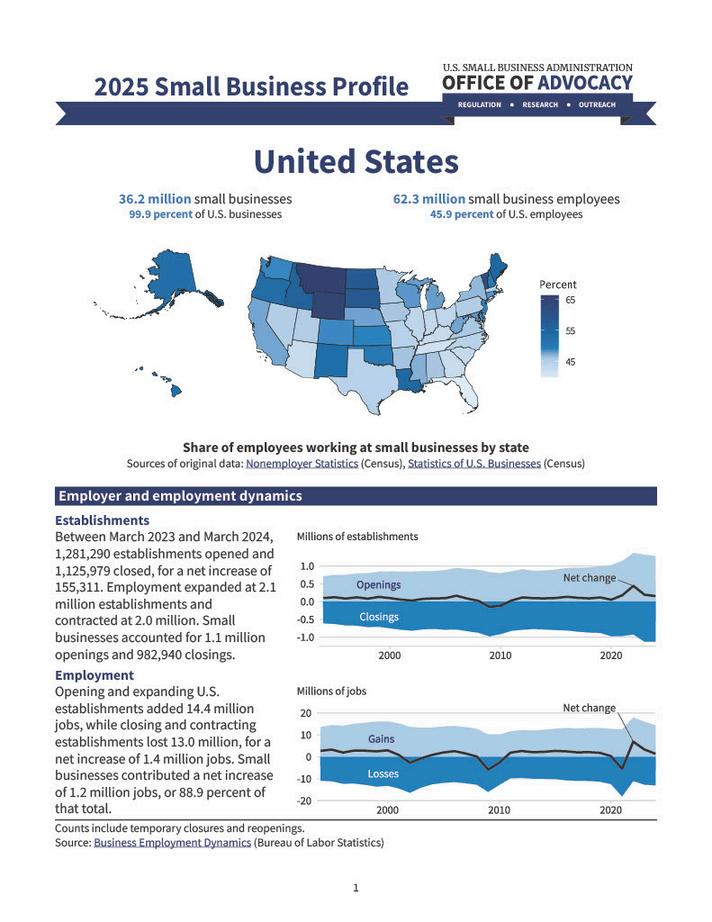
FromMarch2023toMarch2024,US small businessescreatedapproximately9outof every10netnewjobs
SmallbusinessesintheUS opened1.1million newestablishmentsandcreatedanet increaseof1.2millionnewjobs.
Source:OfficeofAdvocacy“2025SmallBusiness ProfilesfortheStates”
As millennials make up 35% of the U.S. labor force, reaching them with relevant benefits and financial wellness tools is critical.
This generation expects information at their fingertips, fast responses to life-event changes, and confidence that their coverage is accurate from day one. Meeting these expectations can be challenging for small employers competing against organizations with far greater resources That’s where modern connectivity becomes a powerful differentiator
Workplace benefits including retirement plans and insurance beyond medical coverage, such as life, disability, accident, and critical illness insurance don’t just attract employees; they help keep them.
In fact, 88% of small business employees surveyed say having employee benefits done well increases their job loyalty. [1]
Thisgenerationexpectsinformation attheirfingertips,fastresponsesto life-eventchanges,andconfidence thattheircoverageisaccuratefrom dayone.Meetingtheseexpectations canbechallengingforsmall employerscompetingagainst organizationswithfargreater resource.
However, benefits only deliver their full value when employees can easily understand, access, and confidently use them InsurTech integrations power modern digital enrollment experiences, including side-by-side plan comparisons, personalized recommendations, and intuitive self-service tools By reducing administrative friction and simplifying enrollment, these integrated experiences help employees make informed decisions, driving stronger engagement and better returns on total rewards investments
APIs also help support smarter benefits decision-making for employers and administrators. With real-time data visibility, small businesses can more clearly track enrollment trends, participation rates, and coverage gaps These insights help HR teams optimize offerings, allocate resources more effectively, and ensure benefit programs continue to evolve in line with employee and workforce needs
TheseinsightshelpHRteams optimizeofferings,allocateresources moreeffectively,andensurebenefit programscontinuetoevolveinline withemployeeandworkforceneeds.
But technology alone isn’t enough. Employee education and ongoing support are essential companions to digital integration. Even the most well‐designed enrollment experience falls short if employees don’t understand their options or the value of what’s being offered That’s why communication, guidance, and education delivered at the right moments are critical In fact, 55% of surveyed employees say they would enroll in more benefits if they better understood their coverage [1] And 56% who are very familiar with their benefits say they get a lot of value from them [1] Education and communication may be the key to helping employees realize what’s available and take advantage of what’s being offered.
When InsurTech‐powered experiences are paired with clear education and accessible support, employees are more likely to engage with their benefits, recognize their value, and use them confidently
The result is a stronger return on benefits investments creating better experiences for employees and better outcomes for employers alike
While InsurTech connectivity may sound technical, the experience for small businesses is intentionally simple Carriers build these solutions to integrate easily and securely with current systems, provide guided implementation, and minimize disruption
That means employers get the benefits of modern technology without needing in-house technical resources to manage it
From a technology standpoint, APIs work quietly in the background. They securely connect systems so information flows automatically, reducing manual entry, errors, and ongoing maintenance. Updates and improvements are handled by the carrier, not the employer, and support is built in if questions come up For small businesses, that means dependable performance, strong security, and a smoother experience without having to manage or even think about the technology day to day
Over time, these connections also help small businesses stay flexible as needs change As teams grow, benefits expand, or systems evolve, digital connections make it easier to adapt without starting over Employers gain cleaner data, better visibility, and more consistent experiences for employees, setting the foundation for benefits that scale smoothly and continue delivering value year after year.
The digital transformation of benefits administration is more than a technical upgrade it’s a strategic advantage. InsurTech APIs are leveling the playing field, giving small employers access to enterprisegrade connectivity without enterprise-level overhead
By reducing administrative burden, minimizing errors, and eliminating manual reconciliation, digital connectivity frees small business teams to focus on what matters most: culture, growth, and customer impact
Cost savings can be reinvested into the business and its people, creating a virtuous cycle of improvement
As InsurTech continues to advance, these capabilities will only grow stronger bringing deeper integration across payroll, compliance, and time-tracking; broader standardization; and enhanced real-time visibility For small businesses, embracing modern connectivity means simplifying operations, strengthening benefits delivery, and building resilient organizations equipped for the future
Patrick Sullivan, Vice President of Engagement, Strategy & InsurTech at Lincoln Financial - Patrick Sullivan leads the company’s enterprisewide InsurTech engagement and strategic partner strategy With more than 25 years of industry experience, Patrick brings deep expertise in innovation, market expansion, and digital transformation Since joining Lincoln in 2023, he has conceived and launched the LincSmart brand, significantly strengthening Lincoln’s digital presence in the group and retirement space, and driven innovative solutions that support transformational growth for the organization.

Mark Tithof, Vice President and General Manager of Local Markets Sales, Strategy, and Deployment at Lincoln - With more than 30 years of experience in the benefits industry, Mark is a proven sales leader with a deep understanding of the unique needs of businesses of all sizes He leads the design, implementation, and execution of Lincoln’s Local Markets strategy, overseeing sales targets and the go-to-market plan. Through disciplined execution and strategic alignment, Mark drives sustainable growth while ensuring Lincoln’s solutions are wellpositioned to meet evolving market and customer needs
Sources:
[1] Lincoln, Wellness@Work survey, 2025
[2] Small Business Owners Survey, prepared by Greenwald Research, October 2024
[3] 2023 Wellness@Work: Retirement Study

Lincoln Financial is the marketing name for Lincoln National Corporation and affiliates, including The Lincoln National Life Insurance Company, Fort Wayne, IN, and Lincoln Life & Annuity Company of New York, Syracuse, NY The Lincoln National Life Insurance Company does not solicit business in the state of New York, nor is it authorized to do so Affiliates are separately responsible for their own legal and contractual obligations
LCN-8822053-031326

By Janice Minn
For years, benefits technology has promised a better member experience through personalization Smarter recommendations More relevant content Messages tailored to individual needs
But for employees navigating benefits today, personalization on its own is no longer enough The real opportunity now is anticipation - understanding what a member is likely to need next and guiding them before confusion, frustration, or costly mistakes happen
That shift from reacting to problems to preventing them is being driven by two things working together: artificial intelligence and modern, API‐based platforms. When they are used well, they are quietly changing what digital innovation in benefits actually looks like.
Even with better tools, the employee benefits experience often follows the same pattern
The employee realizes later that their benefits may be affected
They log into a system they use once or twice a year
They are met with too many choices and too little clarity
They call support to confirm what they should have done
This happens even on well‐designed platforms. The issue is not just the interface. It is timing. Most systems still depend on employees knowing when to engage and what questions to ask. That is a big assumption, especially when benefits are complex and unfamiliar.
AI in benefits is often discussed in terms of efficiency: automating tasks, reducing calls, answering questions faster
Those things matter, but they are not the real breakthrough. The more meaningful role of AI is helping people make better decisions. Not replacing human support but supporting it by making guidance more timely and more relevant.
Used thoughtfully, AI can recognize patterns in behavior, enrollment activity, and service interactions It can spot moments where people tend to get stuck or make mistakes It can surface guidance before a member feels lost That is where anticipation starts to show up
Modern,API‑drivenplatformsmake itpossibleforinformationtomovein realtime.Theymakeiteasierto connectpartners,bringinnew solutions,andkeepdataconsistent acrosstheexperience.Without strongAPIs,AIworkswith incompletesignals.Withthem, guidancebecomesmoreaccurate andmoreuseful.
AI alone cannot anticipate needs if it only sees part of the story To guide someone well, a platform needs context That means data flowing across systems that have traditionally been disconnected: HR systems, payroll, carriers, voluntary benefits, service interactions, and more
This is where APIs matter - modern, API‐driven platforms make it possible for information to move in real time They make it easier to connect partners, bring in new solutions, and keep data consistent across the experience.
Without strong APIs, AI works with incomplete signals. With them, guidance becomes more accurate and more useful.
Anticipation only works when intelligence and connection are both in place.
For years, benefits platforms have relied on rules Example: If this happens, show that message
Rules work in simple cases, and we know that real life is not simple AI allows platforms to move beyond fixed logic and look at broader context Instead of responding to a single trigger, systems can consider past behavior, timing, and patterns from similar situations The result is guidance that feels more natural, less like a pop‐up and more like a nudge that makes sense
This is the difference between telling someone how to enroll, and helping them understand what to do next and why it matters.
When anticipation is done well, the impact on members is noticeable, even if the technology behind it stays invisible. They experience fewer surprises during enrollment They need less help confirming decisions They feel more confident about their choices They spend less time figuring out what the system wants from them
The goal is not to send more messages In many cases, it is to send fewer, better ones Anticipation is about stepping in at the right moment, not constantly asking for attention
ThisiswhereAPIsmatter-modern, API‑drivenplatformsmakeit possibleforinformationtomovein realtime.
Voluntary and supplemental benefits make the case for anticipation especially clearthese offerings are optional, often misunderstood, and easy to ignore Their value depends heavily on timing and personal relevance.
A traditional approach relies on broad promotion during enrollment. An anticipatory approach looks for signals that a benefit may actually matter to someone and introduces it in context. That could be based on a life change, a coverage gap, or behavior seen across similar situations This is where digital innovation has a direct effect on participation and perceived value, without resorting to hard selling
As platforms use AI more deeply, trust becomes critical - anticipation should never feel intrusive Members should understand why they are seeing certain guidance and feel confident that their data is being used responsibly The best experiences are transparent and respectful - they help people without making them feel watched or pushed. AI can predict patterns, but trust determines whether guidance is accepted or ignored.
The future of benefits technology will not be defined by flashy features It will be defined by platforms that can connect data across an ecosystem, apply intelligence responsibly, and deliver guidance that feels timely and human.
AI and APIs are not separate strategies; they depend on each other. Together, they allow platforms to move from being systems of record to systems that actively help people navigate decisions. That shift, from personalization to anticipation, is what will shape the next phase of the member experience
In benefits, the best experience often prevents a problem before it happens As digital innovation continues, platforms that can anticipate needs instead of reacting to them will raise expectations for what good looks like
The question is no longer whether AI belongs in benefits technology It is whether we are using it to genuinely help people make better decisions.
Janice Minn, Senior Director of Product Management at BusinessolverJanice brings over 20 years of experience in benefits and technology Janice leads the development and growth of machine learning applications, including Sofia (Businessolver’s proprietary AI) and member services technology


By Steve Clabaugh, CLU, ChFC
Relationalleadersdemonstratethattheycarefortheirteammembersasmuchasthe organization.Asaresult,theycreate,buildandleadhigh-performanceteamsthat consistentlyachieveexcellence.
“Step-by-step.Ican’tthinkofanyotherwayofaccomplishinganything.”
-MichaelJordan
As we consider the step-by-step process of building and leading a highperformance team based on the practice of relational leadership, we have already considered the first two principles of Championship Team Behavior
#1 We Work Together as Colleagues
#2 We Don’t Practice Case Building When Planning or Executing Business Plans
This month we deal with one of the most difficult principles to understand, accept and practice
We Don’t Tolerate Blaming!
In any human endeavor there will, undoubtedly, be mistakes, accidents or unexpected challenges that upset the plans of even the best high-performance teams
In any human endeavor there will, undoubtedly, be mistakes, accidents or unexpected challenges that upset the plans of even the best high-performance teams It is not unusual for a leader to approach the situation by trying to determine who is at fault for the failure of the plan This is often supported by team members who are anxious to find out who to blame and thereby proving that it wasn’t their fault.
Relational leaders make it a point to avoid this approach and, in fact, do not tolerate blaming They believe there is a better way to define, understand and address such issues that strengthens the effectiveness of the high-performance team Instead of blaming, they follow Championship Team Behavior principles 4-6 that address the relational leadership approach to defining and addressing problems and breakdowns
This principle is based on the idea that determining and finding fault with one individual or group of individuals is counterproductive and, in fact, may be damaging to the effectiveness of the team as it works to accomplish its goals.
Here’s an example of why blaming is a bad idea.
Baseball is a sport where a mistake by any of the players is painfully obvious. Everyone watching the game can see who dropped a fly ball, missed a throw, struck out or any of the other dozens of things that can go wrong Baseball coaches instruct and push their players to make plays correctly during practice, but they generally don’t criticize a player publicly or especially during a game
Sinceourcurrentcultureisso heavilyfocusedondetermining who’stoblameforalmost everything,leadershavea responsibilitytoprotecttheirteam whensomethinggoeswrong.
During a recent game I watched a rival coach explode in anger at one of his players who made an error that gave up a run. Every player on both teams and the fans watching the game could hear the harsh and condescending criticism As it turned out, this coach made it a practice to scream at and publicly berate his players throughout the game
Thelong-termimpactofablameorientedcultureseverelylimitsor stopsongoingcollaborationand creativity.Ifleftuncheckeditcan reversetheresultsofaformerly high-performanceteam.
This public recognition of blame, not only, didn’t help his players improve, instead it resulted in the entire team falling apart, which enabled their opponents to win by mercy rule after playing the minimum number of innings It wasn’t surprising to learn that his team seldom won a game and consistently finished in last place year in and year out
Sometimes leaders believe that determining who is at fault is a necessary step in resolving the issue. Instead of leading to a solution, determining and assigning blame is more likely to make both the current and future situations worse. Here’s how that works:
Constantly seeking to place blame undercuts the trust among team members.
This creates a culture of self-protection by motivating members to find ways to blame others thus deflecting criticism away from themselves It also encourages individuals to hide problems rather than addressing them This not only prevents the team from getting to the root of the problem but ruins morale in general
The long-term impact of a blame-oriented culture severely limits or stops ongoing collaboration and creativity If left unchecked it can reverse the results of a formerly high-performance team
Since our current culture is so heavily focused on determining who’s to blame for almost everything, leaders have a responsibility to protect their team when something goes wrong It’s not always easy to do Establishing the cultural practice of not accepting blaming because of errors is a great way to free team members up to develop and share their ideas without hesitation or fear
Next month we will consider how to respond to both breakdowns and problems And how to tell the difference In the meantime, think about experiences in your career that might have been handled differently than assigning blame and punishing the individual who was blamed As always, feel free to call, text or email with thoughts, questions and comments
Steve Clabaugh, CLU, ChFC - started his career in insurance as a Field Agent, moving on to Sales Manager, General Manager, Regional Manager, Vice President, Senior Vice President, and President/CEO A long time student of professional leadership, Steve created the Relational Leadership program that has been used to train home office, field sales associates, mid-level managers, and senior vice presidents