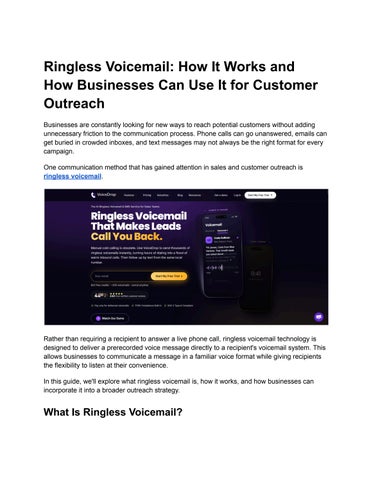
Ringless Voicemail: How It Works and How Businesses Can Use It for Customer Outreach Businesses are constantly looking for new ways to reach potential customers without adding unnecessary friction to the communication process. Phone calls can go unanswered, emails can get buried in crowded inboxes, and text messages may not always be the right format for every campaign. One communication method that has gained attention in sales and customer outreach is ringless voicemail.
Rather than requiring a recipient to answer a live phone call, ringless voicemail technology is designed to deliver a prerecorded voice message directly to a recipient's voicemail system. This allows businesses to communicate a message in a familiar voice format while giving recipients the flexibility to listen at their convenience. In this guide, we'll explore what ringless voicemail is, how it works, and how businesses can incorporate it into a broader outreach strategy.
What Is Ringless Voicemail?
Ringless voicemail is a communication method that delivers a prerecorded voice message to a recipient's voicemail inbox without the recipient needing to answer a conventional live call. For businesses, this can provide another channel for communicating with prospects and customers. A message might introduce a company, follow up after a previous interaction, remind an existing customer about an appointment, or share information about a relevant product or service. Unlike a traditional cold call, the recipient is generally not required to interrupt what they are doing to answer the phone. They can listen to the voicemail when it is convenient for them. This makes ringless voicemail particularly interesting for outreach campaigns where timing, personalization, and message delivery are important considerations.
How Does Ringless Voicemail Work? The basic process is relatively straightforward. First, a business creates or records an audio message. This message can be a general campaign message or, depending on the technology being used, can be personalized for different recipients. The business then uses a ringless voicemail platform to distribute the message to the intended audience. A typical workflow may look like this: 1. Create a voice message. 2. Select the intended audience. 3. Configure the campaign. 4. Schedule or launch message delivery. 5. Monitor campaign activity and engagement. 6. Follow up with recipients through appropriate channels. The exact features and workflow can vary between platforms. Some businesses may use a simple prerecorded message, while others may want more advanced features for personalization, automation, or campaign management.
Why Businesses Are Exploring Ringless Voicemail Modern outreach is rarely limited to a single channel. Sales and marketing teams often combine email, phone outreach, social media, and other communication methods to reach potential customers. Voice messaging can add another dimension to this process.
A More Personal Communication Format A voice message can sometimes feel more personal than a standard text-based message. Tone, emphasis, and personality can all be communicated through audio. For example, instead of sending another generic follow-up email, a business may choose to send a short and relevant voice message explaining why it is reaching out.
Recipients Can Listen at Their Convenience One challenge with live phone calls is that the recipient may be busy at the time of the call. A voicemail-based approach allows the recipient to listen later, rather than requiring an immediate conversation.
Useful for Follow-Up Campaigns Businesses often need multiple touchpoints before receiving a response from a prospect. A voice message can potentially serve as an additional follow-up channel alongside email or other forms of outreach. For example, a campaign could include: ● ● ● ●
An initial email. A follow-up message. A relevant voice message. Additional follow-up based on engagement.
The goal should not simply be to increase the number of messages sent. Instead, each touchpoint should provide a clear and relevant reason for the recipient to pay attention.
Common Use Cases for Ringless Voicemail Different organizations may use ringless voicemail in different ways depending on their audience and communication goals.
Sales Follow-Ups Sales teams may use voice messages to follow up after an initial email or previous conversation. A short message can remind the prospect about the earlier interaction and provide a simple next step.
Lead Re-Engagement
Not every prospect responds immediately. A voice message can potentially be used as part of a lead re-engagement campaign, particularly when previous communication attempts have not received a response.
Appointment and Event Reminders Businesses may use voice messaging to remind customers about appointments, events, or other scheduled activities. Messages should be clear, concise, and relevant to the recipient.
Customer Communication Existing customers may benefit from voice-based updates or reminders when the message is genuinely useful. However, businesses should always consider whether voice communication is appropriate for the specific audience and situation.
Creating an Effective Ringless Voicemail Message The quality of the message is just as important as the technology used to deliver it. A poorly written or overly promotional voicemail is unlikely to create a positive impression. Short, clear, and relevant messages are generally more useful.
Start With a Clear Introduction The recipient should quickly understand who is contacting them and why. Avoid vague openings that make the message difficult to understand.
Keep the Message Concise Long messages can lose the listener's attention. Focus on one primary point and avoid trying to explain every detail about a product or service.
Provide a Relevant Reason for Contacting the Recipient The message should answer an important question: Why should this person care about this message?
Whenever possible, the outreach should be relevant to the recipient rather than being a generic mass communication.
Include a Clear Next Step A voicemail should give the recipient an understandable next action. Depending on the campaign, this could involve visiting a website, replying to an email, booking a meeting, or learning more about a particular topic.
The Importance of Personalization Personalization can make outreach more relevant when used appropriately. Instead of sending exactly the same generic message to everyone, businesses may segment their audience based on factors such as industry, customer relationship, or previous interactions. For example, a message for an existing customer may be very different from a message intended for a new prospect. However, personalization should improve relevance rather than simply inserting a person's name into an otherwise generic script. The most effective outreach usually focuses on whether the message itself provides useful context to the recipient.
Using Technology to Manage Voice Outreach As voice outreach campaigns become larger, manually recording and organizing messages can become difficult. Platforms designed for voice outreach can help businesses manage campaign creation, message delivery, and related workflows from a central location. For businesses looking specifically for a platform focused on this type of outreach, tools such as ringless voicemail can be considered as part of evaluating available voice outreach technology. When choosing a platform, businesses may want to consider factors such as: ● ● ● ● ●
Campaign management capabilities. Message creation options. Personalization features. Automation workflows. Analytics and reporting.
● Integration requirements. ● Compliance considerations. The right choice will depend on the business's audience, outreach strategy, and operational requirements.
Ringless Voicemail as Part of a Multi-Channel Strategy Ringless voicemail does not necessarily need to replace other communication channels. In many cases, it can be considered as one part of a broader outreach strategy. For example, a business might use: Email for detailed information. Voice messaging for a more personal follow-up. Phone conversations for prospects who are interested in speaking directly. Social media for building awareness and engaging with an audience over time. Using multiple channels does not mean sending as many messages as possible. The goal should be to create relevant communication at appropriate points in the customer journey. A coordinated approach can also help avoid repetitive messaging.
Best Practices for Responsible Voice Outreach Businesses should approach any form of customer communication responsibly. Before launching a campaign, organizations should consider applicable laws, regulations, consent requirements, platform policies, and the expectations of the people they are contacting. Some important considerations include:
Make Messages Relevant Avoid sending messages to people who have no reasonable connection to the topic.
Respect Communication Preferences Businesses should honor applicable opt-out requests and communication preferences.
Avoid Misleading Information
Messages should accurately represent the business and the reason for contacting the recipient.
Keep Contact Information Clear Recipients should be able to understand who is communicating with them.
Review Compliance Requirements Rules surrounding voice communication can vary depending on location, audience, and the nature of the campaign. Businesses should review the requirements applicable to their specific use case before launching outreach campaigns.
Measuring Campaign Performance Like other marketing and outreach activities, voice campaigns should be evaluated over time. Businesses may want to examine metrics and outcomes such as: ● ● ● ● ● ●
Response activity. Follow-up engagement. Website visits from campaign-related traffic. Meetings or conversations generated. Conversion outcomes. Overall audience feedback.
The purpose of measurement is not simply to send more messages. It is to understand whether a communication strategy is producing useful results and whether it is providing value to the intended audience.
The Future of Voice-Based Outreach As businesses continue to look for ways to make outreach more personal and efficient, voice technology may play an increasingly important role in communication strategies. Automation and AI-powered tools are also making it easier to create, manage, and scale different types of communication workflows. However, technology alone does not make an outreach campaign effective. The quality of the message, relevance to the audience, timing, and responsible communication practices remain essential.
Businesses that treat voice outreach as another opportunity to provide useful and relevant communication are more likely to create a positive experience than those that focus only on message volume.
Final Thoughts Ringless voicemail offers businesses another way to communicate with prospects and customers through voice-based messaging. When used thoughtfully, it can complement existing channels such as email and phone outreach and provide recipients with the flexibility to listen when it is convenient for them. The most important factors remain relevance, message quality, transparency, and responsible communication. Businesses considering this approach should evaluate their audience, outreach goals, available technology, and applicable requirements before launching a campaign. By incorporating ringless voicemail into a well-planned communication strategy, organizations can explore a more personal voice-based channel while keeping the recipient experience at the center of their outreach efforts.