




Dear Friends,
Each April, the rst full moon—often called the Pink Moon, named from a humble perennial native to Northern Virginia and surrounding states—arrives just as spring begins to take hold here in Virginia. Around the same time, moss phlox spreads across our hillsides and gardens, bringing color back after a long winter. is year, after an especially cold season, those signs of renewal felt particularly meaningful. ey’re a reminder that even after the hardest stretches, change comes, and with it, new energy and possibility. at sense of perspective stayed with me as I followed the Artemis II mission. Watching that crew travel farther from Earth than any humans in history—and seeing images like Earthset from the far side of the moon—was remarkable. It brought back memories of the Apollo missions and the sense of wonder they inspired. At the time, I didn’t fully understand the science or the many people behind those achievements, including pioneers like Mary Jackson, Dorothy Vaughan and Katherine
Johnson. But I understood what it meant to see boundaries pushed and possibilities expanded.
In many ways, that same spirit is what has driven the Ron Brown Scholar Program for thirty years. We may not be launching rockets, but we are helping young people expand their horizons—encouraging them to aim higher, think bigger and support one another along the way. What continues to stand out, is how our community shows up for each other. Scholars, Captains, Alumni and now our younger Navigators are all connected—sharing guidance, opening doors and lifting one another up.
at kind of support makes a real di erence. Whether a student is leaving home for the rst time or stepping into a new opportunity, they are not doing it alone. is community is part of their foundation, and if you’re reading this, you are part of that as well. ank you for being in it with us.
I hope you enjoy this newsletter. You’ll nd stories of Scholars and Captains doing meaningful work across many elds—medicine,
law, education, technology, the arts, and more. I hope you feel inspired by all they’ve accomplished and the exciting paths ahead of them.
At the end of the day, whether we’re looking up at the stars or focused on the work right in front of us, the lesson is the same: progress happens when people come together, support one another and keep moving forward.
With appreciation,
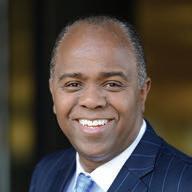
Michael A. Mallory President & CEO, Ron Brown Scholar Fund
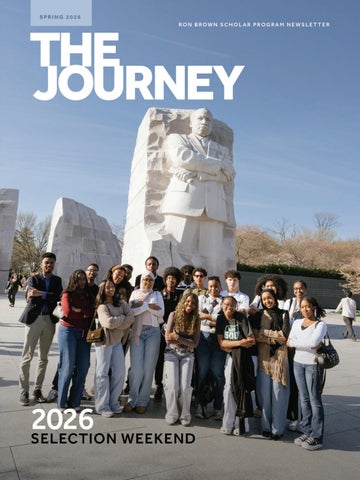
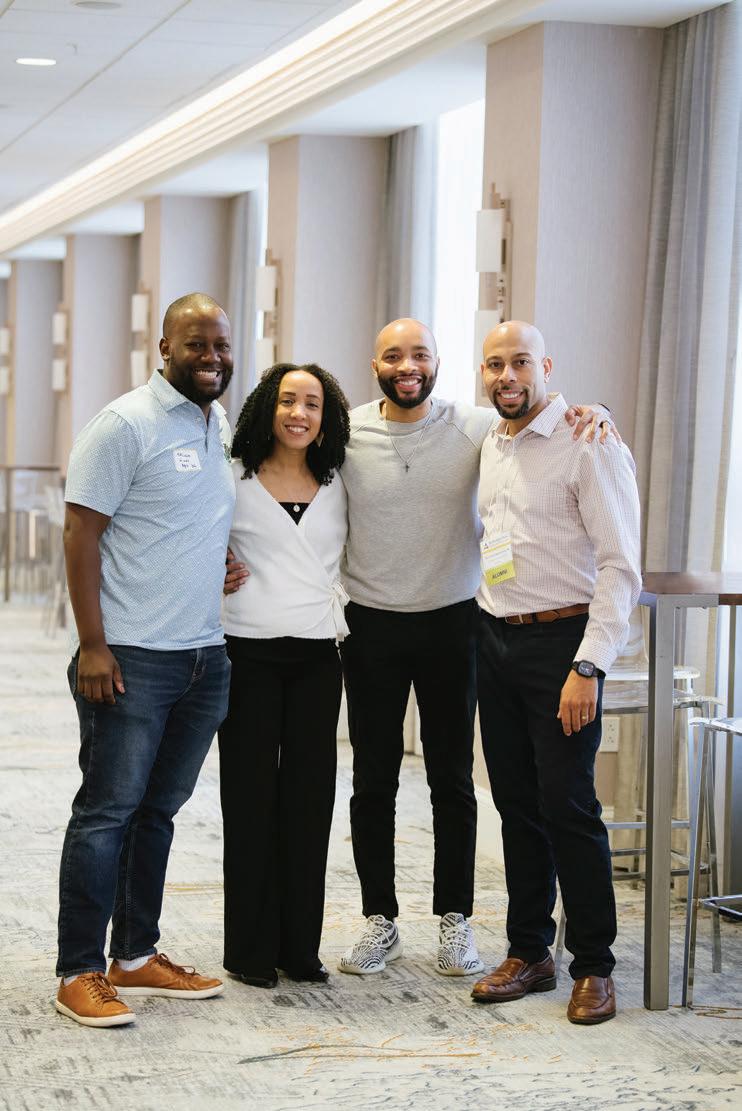
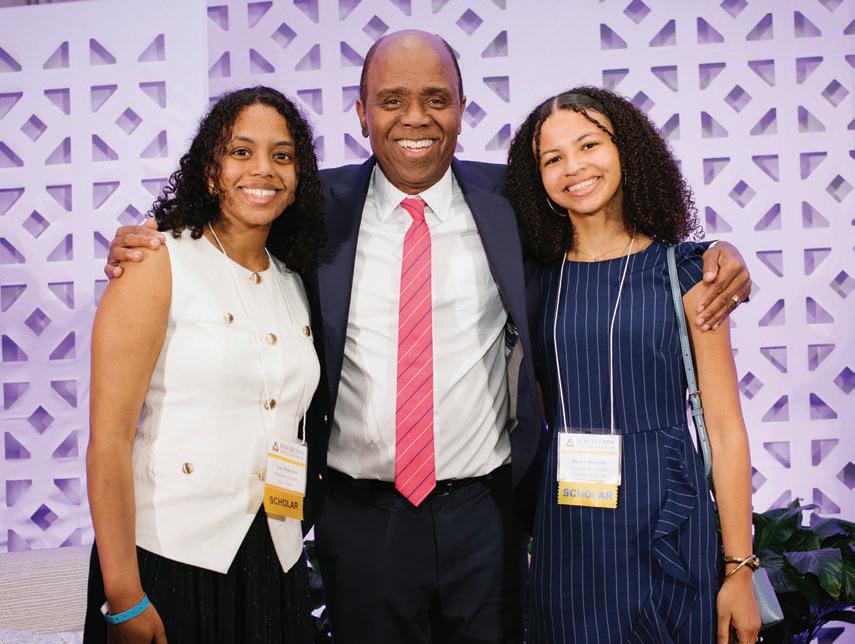
Ron Brown Scholar Homecoming and Selection Weekend 2026 was another amazing opportunity for Scholars and Alumni to reconnect, revisit and reenergize. Following an inspiring Celebration of Excellence on Friday night, Scholars and Alumni reconvened on Saturday for a homecoming experience designed to engage in meaningful discussions, deepen relationships and create space for connection and fun. e weekend re ected the strength and purpose that dene this community.
e day began with an engaging discussion centered on the current state of the Ron Brown Scholar Program, led by President & CEO Mike Mallory. Alumni shared insights, feedback and ideas, creating space for honest
dialogue about where we are and where we’re headed. It was a powerful reminder that our community continues to grow stronger when we listen, learn and lead together.
e day continued with Scholars having the opportunity to explore Washington, D.C.; many visited the National Museum of African American History and Culture, while others enjoyed some well-earned downtime before the rest of the day’s programming.
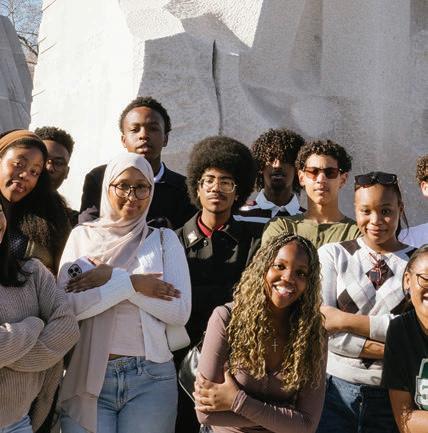
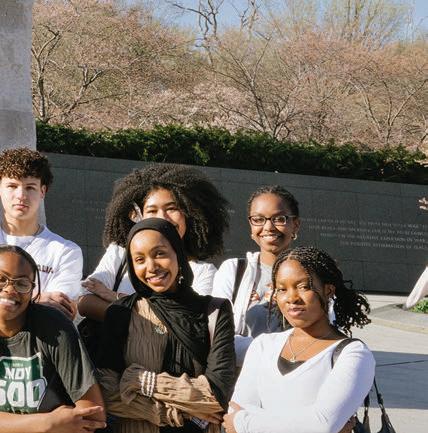
While the Scholars and Alumni were engaged, our Finalists were busy completing their interviews with the National Selection Committee. ey later had the opportunity for a brief tour around and along the National Mall. For a number of Finalists, Selection
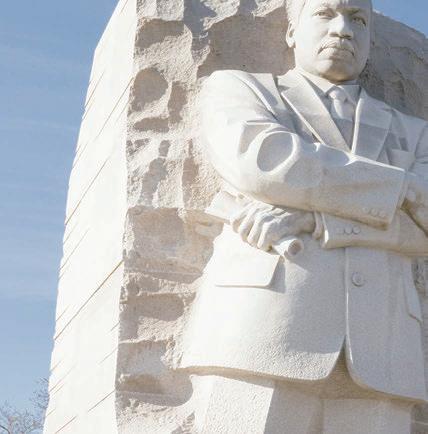
Weekend marked their rst time visiting the nation’s capital. Seeing the Martin Luther King, Jr. Memorial and the Lincoln Memorial in person brought textbook images to life. And of course, they made a stop at Ron Brown Way, the street outside of the Department of Commerce named in honor of the late Secretary.
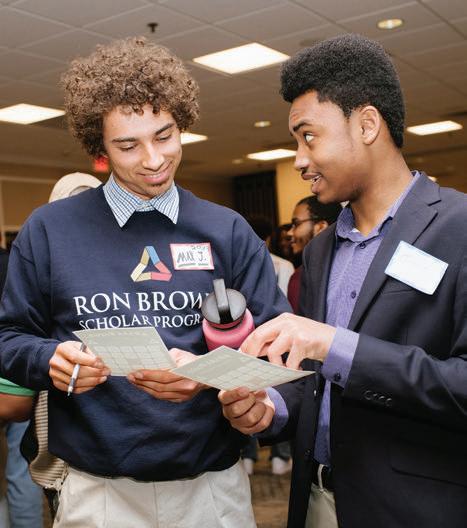
Later that evening, Scholars, Alumni and Finalists came together to get to know the newest members of the community. Organic conversations and a spirited game of bingo with prizes gave them an opportunity to build relationships, o er guidance and extend the sense of belonging that has long been a cornerstone of this network. e energy in the room made it clear that the future
of this community is in good hands.
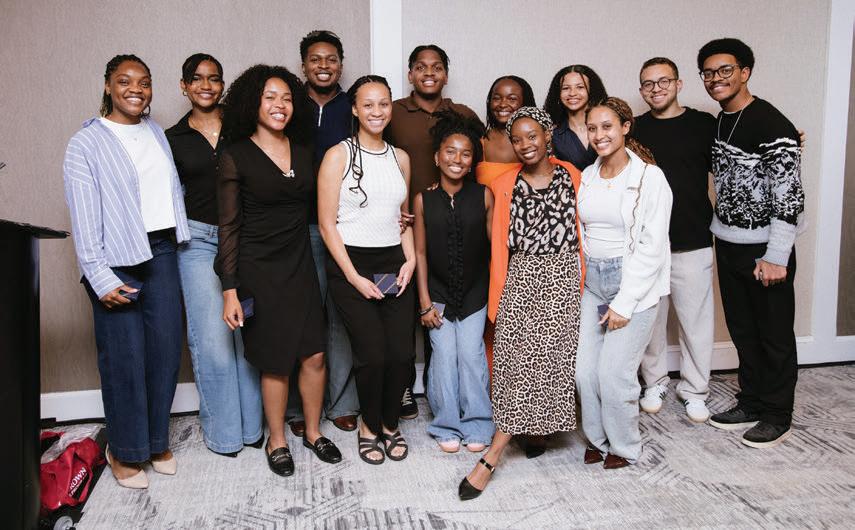
Following dinner, we celebrated the RBS Class of 2022 in advance of their graduation, presenting them with medals to wear during commencement exercises. In addition, we recognized Alumni who were celebrating milestone reunion years with a small gift to remind them of the legacy of service passed on to them and their responsibility to pass along all that they have achieved and learned to the next generation of Scholars.
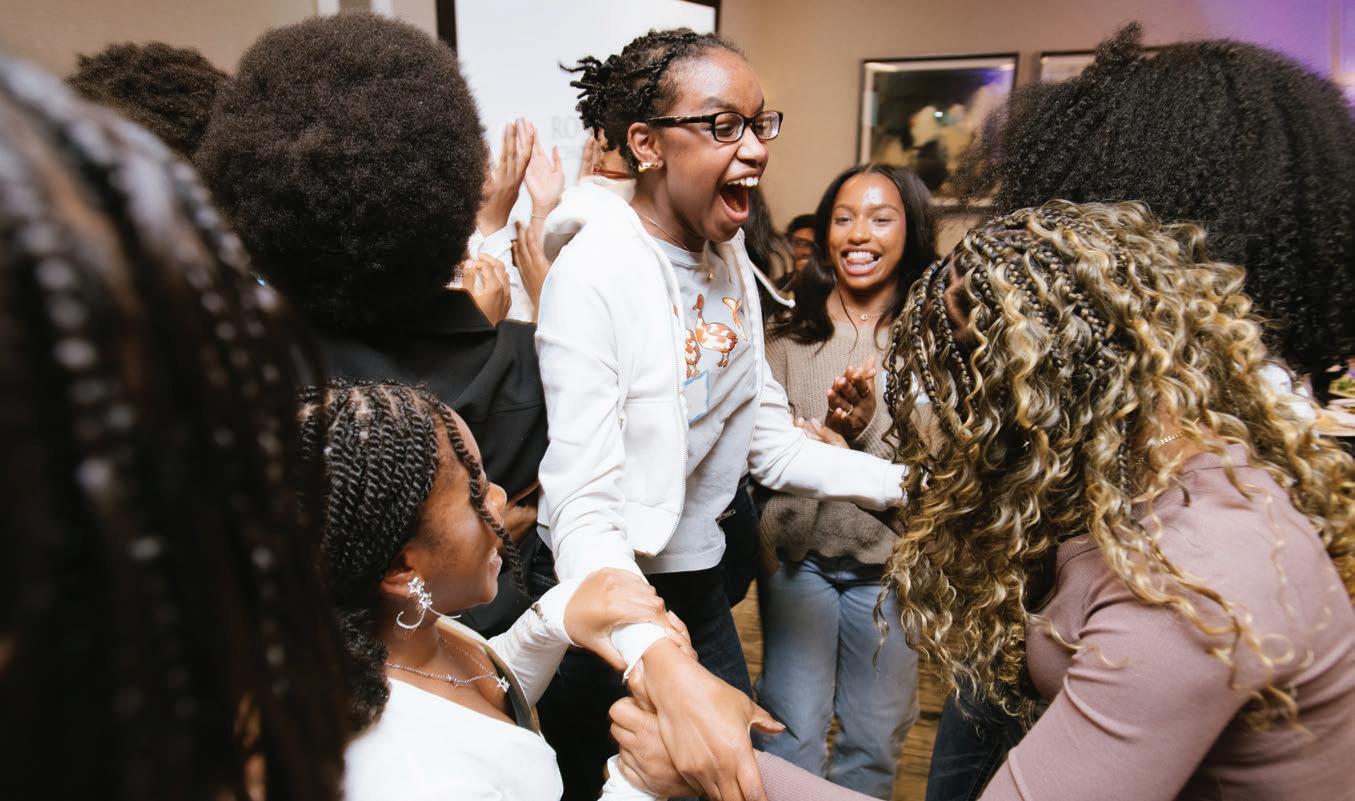
e nal celebration would be an unforgettable moment for the Finalists, as Ron Brown Scholar and Board of Trustees member, Jon Piper, class of 1998 shared the exciting news that they had all been awarded the scholarship. Tears and cheers of joy lled the room as the Finalists—now the newest class of Scholars—took in the news and realizing how profoundly their lives had just changed in a single moment.
To close out the weekend, we enjoyed a fun, hands-on service activity, assembling toys to be donated to the local Ronal McDonald House, reinforcing the community’s ongoing commitment to service and impact beyond the weekend itself.
Selection Weekend and Homecoming was more than just a gathering—it was a testament to the enduring power of community, shared purpose and collective impact.
ank you to everyone who attended, participated and made the weekend so memorable. We look forward to building on this energy and momentum as we celebrate thirty years of RBS Impact. •
ANNUAL RONALD H. BROWN
WHERE: THE RITZ-CARLTON, WASHINGTON, DC
1150 22nd St NW Washington, DC 20037
WHEN: FRIDAY, MARCH 19, 2027
6:30 PM – 9:30 PM
STAY TUNED FURTHER DETAILS TO FOLLOW
There are moments each year that remind us exactly why the Ron Brown Scholar Program (RBSP) exists. For many in our community, the annual Selection Weekend—and the gathering that surrounds it— is that moment.
is year carried special signi cance as we kicked o a year of celebrations honoring the Program’s 30th anniversary. e room was lled with familiar faces—Scholars past and present, mentors, readers, advisors and long-time champions—alongside an extraordinary group of Finalists preparing for the next step in their journeys. It was, as always, a reunion and a renewal all at once.
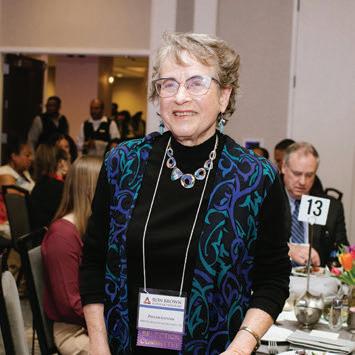
RBSP President & CEO Michael Mallory opened the evening with gratitude and re ection, honoring those who have helped shape the Program from the very beginning. From Phyllis Le er, who has read applications for all 30 classes, to early sta mem-
bers and volunteers who built the Program’s foundation, the message was clear: this community has always been powered by deep commitment and shared belief.
at belief traces back to founding benefactor Tony Pilaro, whose vision was both simple and profound—to keep Scholars connected for a lifetime. Not just to support individual success, but to build a network of leaders who would lift one another and carry forward the values embodied by Secretary Ronald H. Brown. ree decades later, that vision is not only intact—it has ourished.
Today, more than 700 Ron Brown Scholars span the country and the globe, and the Program has touched the lives of over 10,000 students through its broader outreach. What began as an investment in potential has become a thriving community—one de ned not only by achievement, but by generosity, mentorship and service.
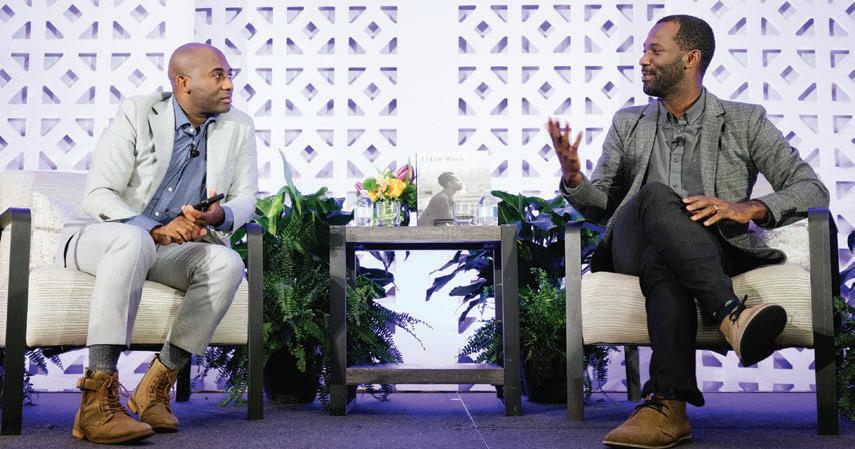
e evening’s emcee Miles Johnson, Ron Brown Scholar, 2004 and Alumni Association President, brought both humor and heart to the stage. With candid honesty, he spoke about the nerves of standing among a Rhodes Scholar, a global leader and a MacArthur Fellow—but quickly reframed the moment into something deeper: belonging.
Speaking directly to the Finalists, Miles addressed a quiet question many may have been carrying: Do I really belong here? His answer re ected the spirit of the Program itself. is community isn’t about showing how high the bar is—it’s about showing how far each person can go with the right support behind them.
at message came to life as each of the twenty Finalists took the stage, sharing their name and hometown—from Yazoo City, Mississippi to Paauilo, Hawaii. e introductions were simple, but the moment was powerful: a room full of people ready to welcome them into something much larger than themselves.
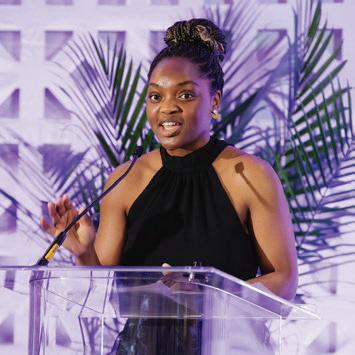
e evening’s keynote remarks from Florence Onyiuke, Ron Brown Scholar 2022, the Program’s rst Ron Brown/Rhodes Scholar, o ered a deeply thoughtful re ection on what the Program truly provides.
Introducing the concept of “life chances,” Florence described how the structured possibilities available to us, shape what we believe is attainable. She shared her own journey— from a clear but limited vision of her future growing up in Central Florida to a dramatically expanded horizon made possible through the Ron Brown Scholar community: “ is Program didn’t just a rm my ambition,” she said. “It expanded the horizon of it.”
Her words resonated across generations in the room. e Ron Brown Scholar Program does more than open doors—it transforms how those doors are imagined in the rst place. It widens what feels possible.
Following dinner, the Program turned toward impact with a dynamic reside chat led by Dr. Ku McMahan, Ron Brown Scholar 1999 and featuring Dr. William Tarpeh, Ron Brown Scholar 2008, MacArthur Fellow and Stanford professor.
Together, they explored what it means to translate talent into real-world change.
Dr. Tarpeh’s work reimagines wastewater—not as pollution, but as a resource.
rough innovative engineering, his research converts pollutants into clean water, fertilizer and energy, with applications spanning communities from Kenya to California.
Yet beyond the science, it was his perspective that resonated most deeply.
roughout the conversation, themes familiar to the Ron Brown community surfaced again and again: curiosity, persistence, mentorship and purpose. Dr. Tarpeh spoke candidly about early struggles, moments of doubt, and the importance of mentors who “remind you who you are”—a sentiment that resonated strongly with Scholars in the room.
He also emphasized the importance of designing solutions with communities, not just for them—recognizing lived experience as a form of expertise equal to technical knowledge.
Perhaps most powerful was his re ection on impact: not just solving problems but unlocking human potential.
“What if,” he asked, “the people we lose to inequities today could have been the ones to solve tomorrow’s greatest challenges?”
It was a question—and a call—that aligned deeply with the Program’s mission.
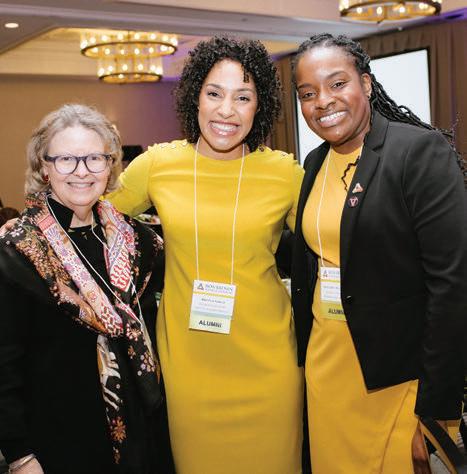
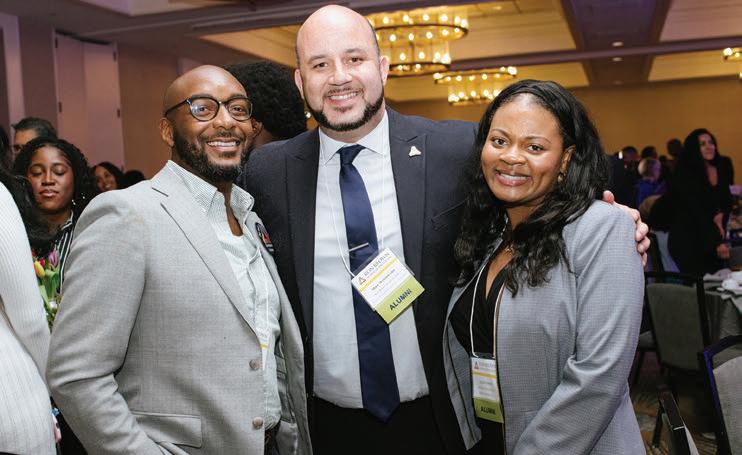
As the conversation opened to questions, Finalists and Scholars alike engaged with insight and curiosity, reinforcing what makes this community so special: a shared commitment to growth, inquiry and lifting one another up.
From navigating self-doubt to nding mentors, from balancing humility with condence to advocating for oneself, the discussion o ered both practical wisdom and powerful a rmation.
And woven throughout it all was a consistent truth: no one succeeds alone.
As the evening drew to a close, Miles returned to re ect on what had unfolded. e stories shared—of growth, discovery, challenge and triumph—were not isolated experiences. ey were the result of something sustained over three decades: belief.
“We’re all here tonight because 30 years ago, a promise was made,” he reminded the audience. “ at this Program would be a family of leaders who connect and lift each other up.”
at promise, he noted, requires continued commitment.
He o ered a clear call to action—one that will feel familiar to many in this community:
• Give your time by mentoring Scholars or reviewing applications
• Share your expertise by opening doors and o ering guidance
• Invest your resources to ensure future
Scholars have the same opportunities Because this Program doesn’t run on good intentions alone—it runs on the continued engagement of those who believe in it.
e evening concluded with heartfelt thanks from Michael Mallory, who recognized the dedicated sta whose work makes the Program possible year after year. Many have served for decades—a testament to the deep commitment behind the scenes.
Looking ahead, the celebration continues. In honor of the 30th anniversary, the Program will host 30 events across the country in the coming year, creating even more opportunities for connection and engagement.
e next American Journey Awards will take place on March 19, 2027—another milestone on the horizon.
As guests gathered their belongings, there was a shared sense of something enduring. Not just pride in what has been accomplished, but con dence in what lies ahead. Because if this evening made anything clear, it’s this:
e Ron Brown Scholar Program is not just a scholarship.
It is a lifelong community.
A catalyst for possibility.
And a promise—still being kept. •
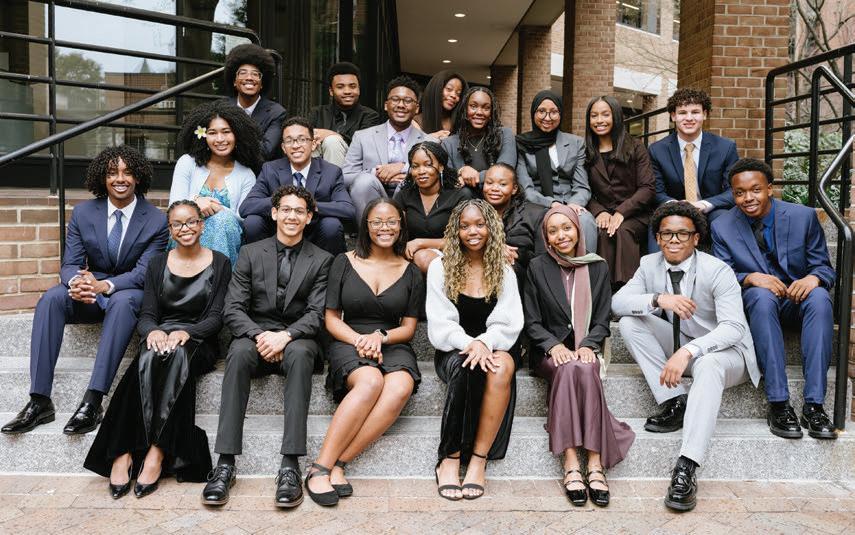
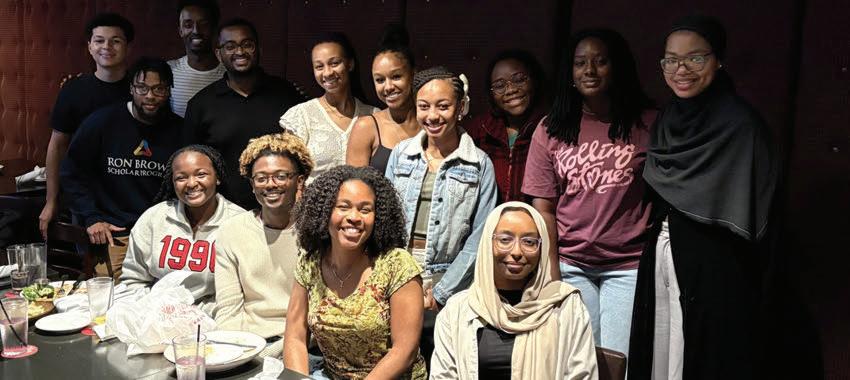
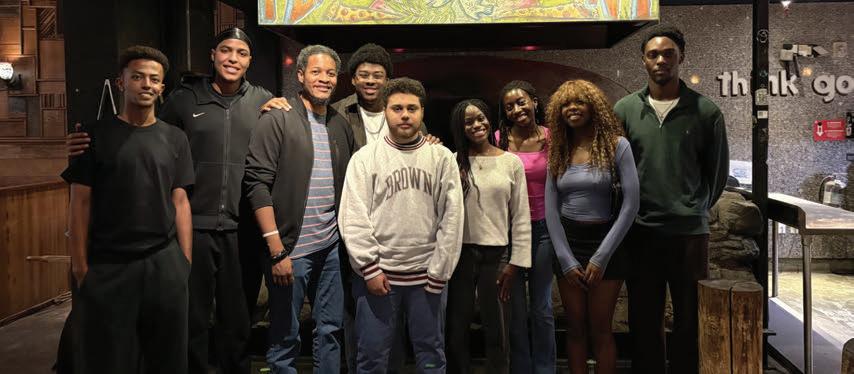
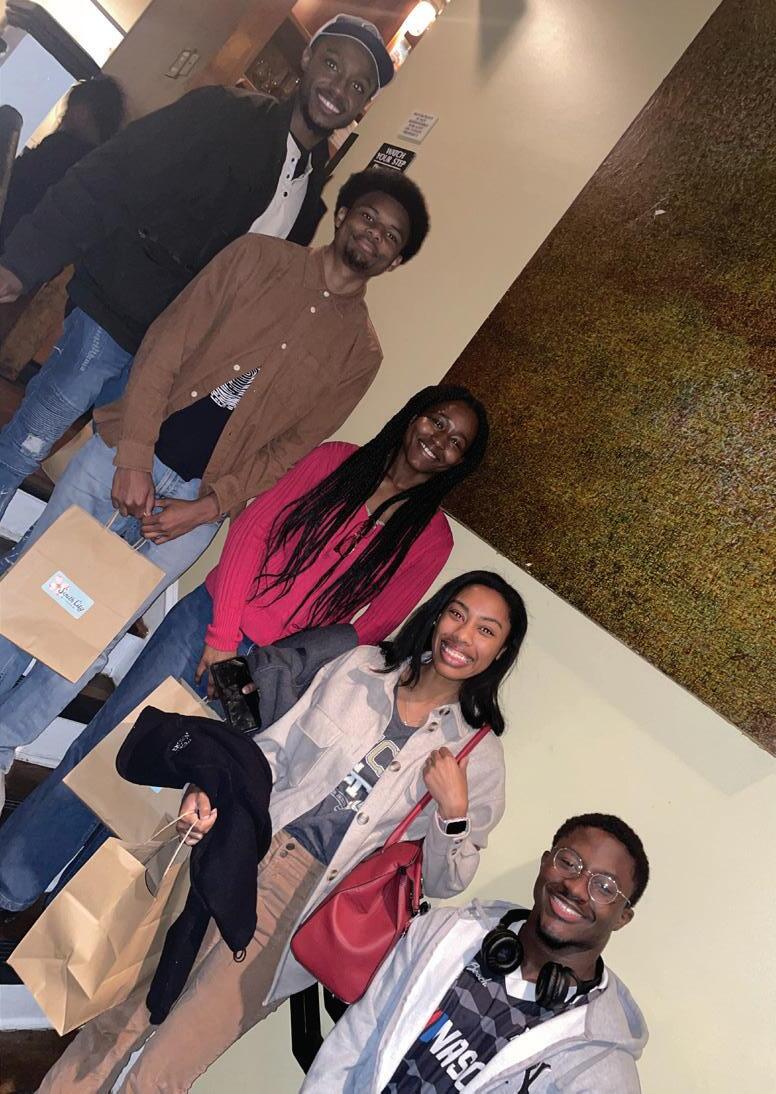
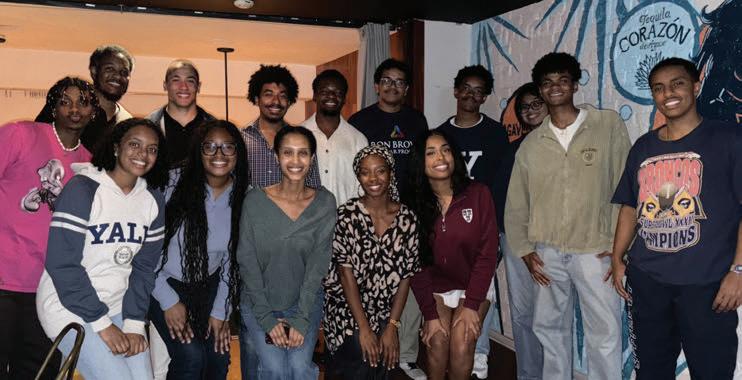
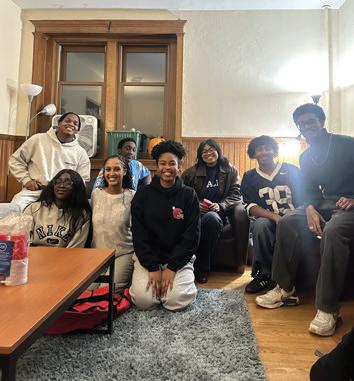
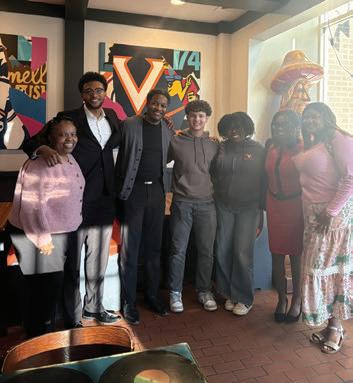
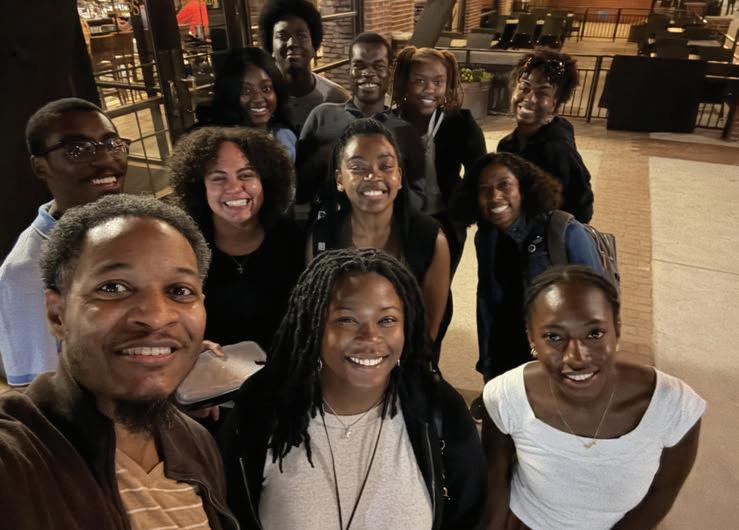
One of the most exciting parts of the year is seeing our Scholars connect with one another outside of our signature events. roughout this academic year, the RBS family gathered in cities across the country to connect, reconnect, and strengthen the lifelong bonds that make our community so special. From ice cream socials and group dinners to cake decorating nights and football games, each gathering created space for meaningful
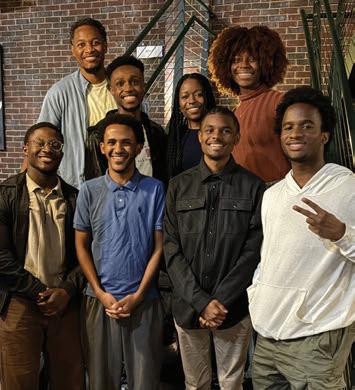
relationships and lasting memories.
ese moments remind us that the Ron Brown Scholar Program is more than a scholarship—it is a lifelong community. We are deeply grateful to the Scholars and Alumni who continue to organize and lead these meet-ups, helping keep our network strong across generations and regions. As we prepare to celebrate our 30th Anniversary, we look forward to seeing even more moments
of connection and fellowship within the RBS family.
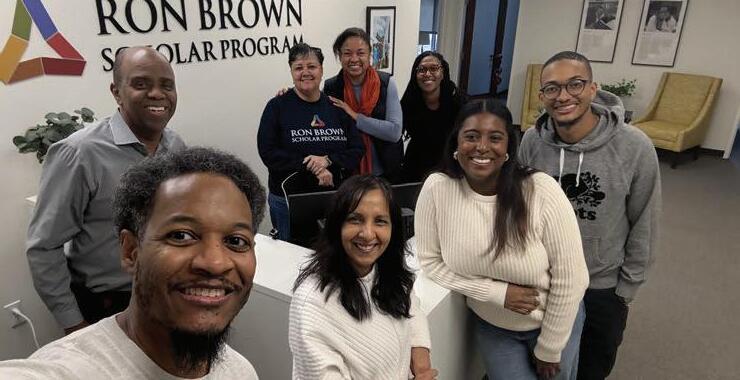
Even more exciting is we’ve welcomed several Ron Brown Scholars and Alumni to our home o ce in Charlottesville this year. ere is nothing like seeing members of our community stop by to reconnect with sta , and spend time catching up. If you are ever in town or nearby, we would love for you to stop by and take a sel e with the sta . •
The Run/Walk/Move for Ron Brown is a celebration of the life and legacy of the late Secretary of Commerce Ronald H. Brown who would have turned 85 on August 1, 2026. Walk, or run for 5 kilometers or move for 60 minutes and be part of this movement to change lives. What makes this great is that you can do it anywhere!
Whether you join from the treadmill, your yoga class, your favorite trail, your church or your local school track…when you and thousands of others around the world walk, run, or move- we will collectively make a difference on August 1, 2026 and support the next generation of leaders.
Now more than ever, we need to ensure everyone has an equal opportunity at an education. Visit https://ronbrown.org/ run-walk-move-for-ron/ to learn more or register.

SCHOLAR SPOTLIGHT
RBS 2010
• MASSACHUSETTS INSTITUTE OF TECHNOLOGY, BS, CHEMICALBIOLOGICAL ENGINEERING, 2014
• UNIVERSITY OF CALIFORNIA, BERKELEY, MPH, MULTI-/INTERDISCIPLINARY STUDIES, 2018
• UNIVERSITY OF CALIFORNIA, SAN FRANCISCO, MD, 2019
• UNIVERSITY OF CALIFORNIA, SAN FRANCISCO, RESIDENT DOCTOR, 2022
• ASSISTANT PROFESSOR OF NEPHROLOGY AT THE UNIVERSITY OF WASHINGTON - SCHOOL OF MEDICINE, MEDICAL EDUCATION RESEARCHER, CO-DIRECTOR, DOCS WITH DISABILITIES INITIATIVE
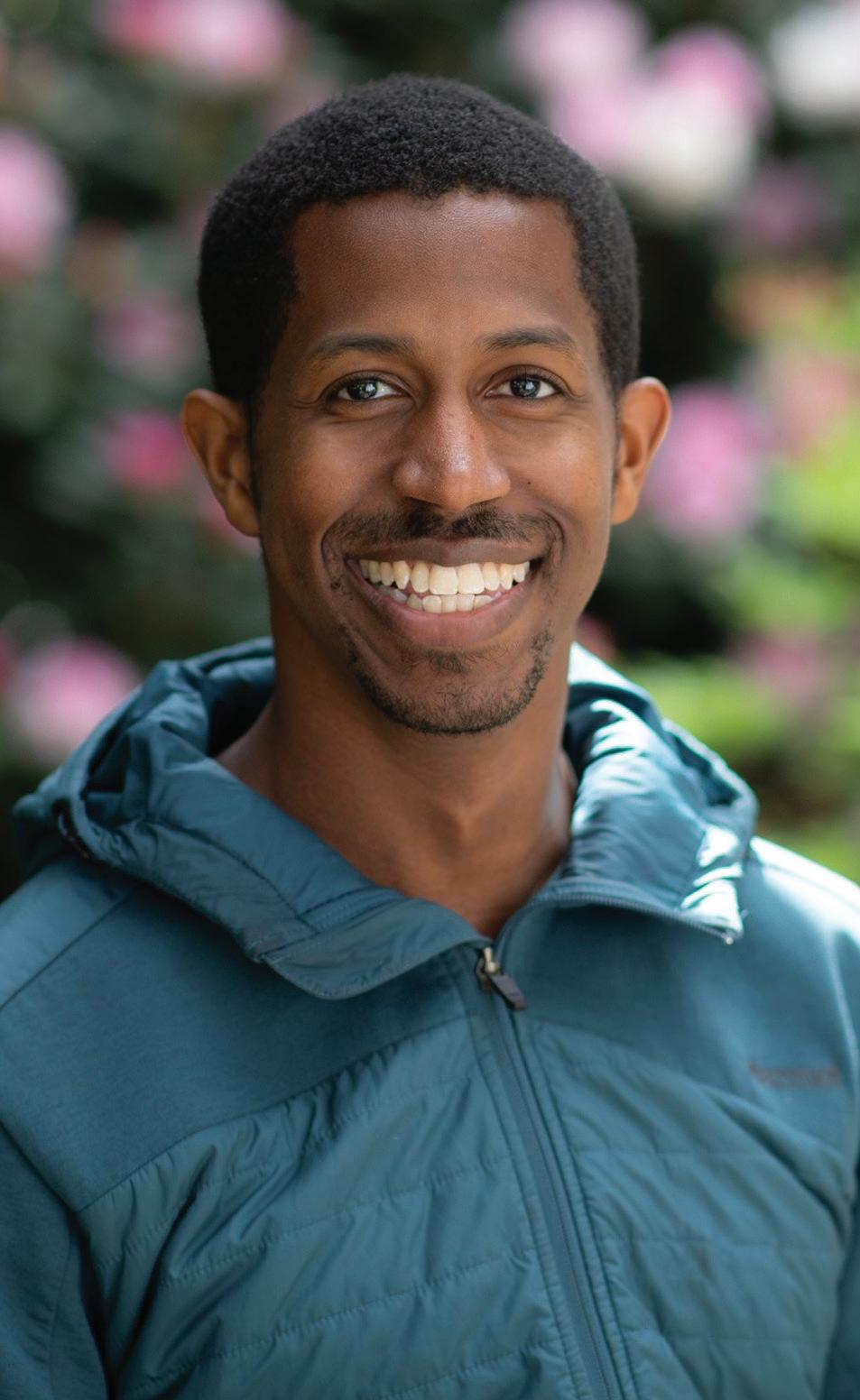
Justin Bullock, MD, MPH is an Assistant Professor in Nephrology and the Co-director of the Docs with Disabilities Initiative at the University of Washington School of Medicine. He also serves as the Associate Director for Educational Scholarship at the Center for Learning and Innovation in Medical Education (CLIME). He is passionate about creating safe environments in medicine where everyone is able to bring their authentic selves to work in the spirit of healing.
Justin is a passionate medical educator: a teacher, researcher and lifelong learner. His primary research focus centers on how educators can foster identity safety in the learning environment. In addition to his education scholarship, Justin is outspoken about his lived experience as a gay Black bipolar physician. Drawing on his dual identities as a patient and provider with serious illness, Justin believes deeply that medicine is a lifelong journey of healing as much for providers as it is for patients. He is currently completing a PhD in Health Professions Education.
In his latest project, Justin has partnered with fellow professionals to launch e Back Story Podcast, a series that spotlights the untold narratives behind the cutting-edge Health Professions Education (HPE) Scholarship. Every scholar and piece of scholarship has a backstory: all the decisions, moments and emotions that are critical but often silent and invisible. In a conversational, co-creative format, e Back Story Podcast, scholars become active collaborators, listening to hosts’ initial analysis and then directly responding, correcting and expanding the narrative with their own unique backstories. •

We’re excited to share recent developments and achievements from our Leaders Network, highlighting the incredible work our members are doing to foster leadership, drive innovation and strengthen our community
One of the de ning strengths of the Ron Brown Scholar community is a deep commitment to lifting as we climb. at spirit was on full display this year as Ron Brown alumni who have earned some of the world’s most competitive scholarships stepped forward to coach fellow Scholars through the same demanding process—and their guidance made a di erence.
Nationally competitive scholarships such as the Rhodes and Schwarzman require far more than strong academic records. Candidates must articulate a compelling vision, demonstrate leadership and navigate rigorous interview processes. For many Ron Brown Scholars, the most valuable preparation comes from those who have walked the path before them. at tradition of mentorship paid o in remarkable ways during the 2026 scholarship cycle.
Ron Brown Captain, 2017 and Rhodes Scholar, Ty Gamble-Eddington served as an advisor to Ron Brown Scholar 2022, Florence Onyiuke as she prepared her application for the Rhodes Scholarship. Florence’s dedication, combined with this peer mentorship, culminated in an extraordinary achievement: she was named a 2026 Rhodes Scholar, joining one of the most prestigious academic communities in the world.
A similar story unfolded across the globe. Ron Brown Scholar, 2016 and Schwarzman Scholar Hope Jackson, currently pursuing
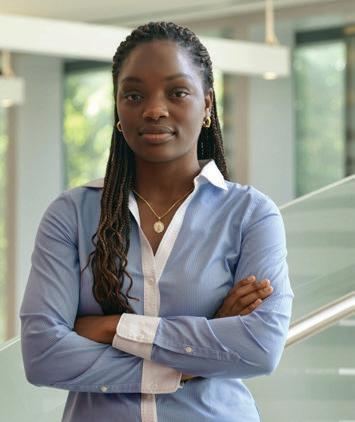
her graduate studies at Tsinghua University in Beijing, carved time out of her demanding academic schedule to coach Ron Brown Captain 2017, Richard Wilson as he prepared to compete for the Schwarzman Scholarship. rough virtual meetings spanning time zones, Hope o ered candid feedback, strategic advice and encouragement during the most challenging stages of the process. Her investment helped Richard navigate the highly selective competition with con dence—and he was ultimately se-
lected as a 2026 Schwarzman Scholar. ese successes are more than individual milestones. ey re ect a powerful culture within the Ron Brown Scholar Program: a community where achievement carries with it a responsibility to support the next generation.
As the Ron Brown Scholar network continues to grow, so too does this cycle of mentorship. Each alum who reaches these global stages strengthens the bench of mentors ready to guide those who follow. •
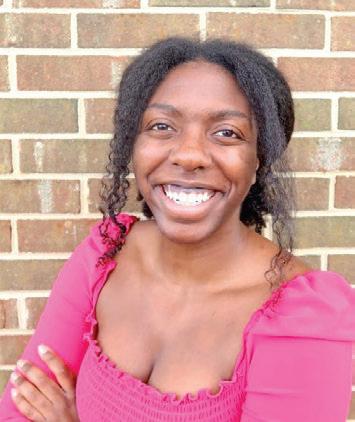
After a highly successful inaugural trip to New York City in 2025, the Ron Brown Scholar Program is once again partnering with the Jack Kent Cooke Foundation to support the next generation of aspiring legal leaders.
is summer, the two high-achieving scholarship communities will reunite for Legal Launch 2026, a dynamic two-day professional development experience in Washington, D.C., taking place June 24–25.
Last year Legal Launch 2025 brought Ron Brown Scholars and Captains together with Cooke Scholars for an immersive introduction to the legal profession. Participants visited some of New York City’s leading law rms, engaged in candid and insightful
conversations with practicing attorneys, and built relationships that continue to shape their academic and professional journeys. e experience underscored the power of exposure, mentorship and community in helping talented students envision themselves in those spaces.
Building on that momentum, Legal Launch 2026 will bring Scholars to the nation’s capital—an ideal setting for exploring careers in law, policy and public service. Students will once again hit the road to visit prestigious law rms in Washington, D.C., including Dentons, Paul Hastings and Wilson Sonsini, where they will gain rsthand insight into legal practice while expanding their professional networks.
Legal Launch is designed to champion and empower promising pre-law students as they prepare for law school and future careers in the legal profession. rough rm visits, mentorship and meaningful dialogue with attorneys, participants develop both the condence and the connections needed to navigate the path ahead.
As the program continues to grow, Legal Launch remains a powerful example of what’s possible when communities come together to invest in future leaders—opening doors, building networks and helping Scholars take the next steps toward impactful careers in law. •
This year marks the 30th Anniversary of the Ron Brown Scholar Program—and we’re celebrating in a special way.
To honor this milestone, we’re planning 30 gatherings across the country—bringing our community together in cities near you. These small, meaningful events will create space to reconnect, celebrate our shared impact and look ahead to the future.
More details, including dates and locations, will be shared soon.
In the meantime, if you’re interested in hosting or helping organize a gathering in one of the planned cities—or in your own community—we’d love to hear from you.
Please reach out to Anita Karadia at akaradia@ronbrown.org to learn more and get involved.
LOS ANGELES, CA
SAN FRANCISCO/BAY AREA, CA
WASHINGTON, DC
ATLANTA, GA
CHICAGO, IL
NEW ORLEANS, LA
BOSTON, MA
NEW YORK, NY
PHILADELPHIA, PA
AUSTIN, TX
DALLAS, TX
CHARLOTTESVILLE, VA
SEATTLE, WA
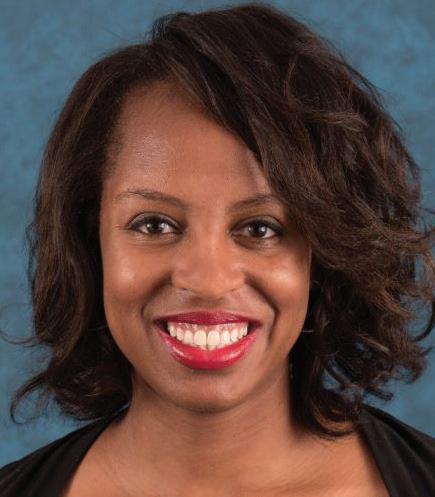
Congratulations to Miya Cain, RBS 2004, on receiving the Boston Congress for Public Health’s 40 Under 40 Public Health Catalyst Award. is recognition celebrates the next generation of leaders, entrepreneurs, researchers, scientists, activists, intellectual provocateurs, authors and directors who are inspiring meaningful change and advancing a more just and equitable world.
Miya works to build healthier, more equitable communities where people shape the decisions a ecting their lives. She designs multi-sector initiatives, develops foundation strategies and prepares leaders to drive change.
As an Associate Director at FSG, a nonpro t consulting rm focused on advancing equitable systems change, she leads the development of cross-sector wellbeing initiatives around the country. Miya helped develop and launch HEY! Greater Cincinnati, a collective impact initiative engaging 200+ leaders from over 115 youth-serving organi-
•
zations, 25 youth fellows and 13 funders to address youth mental health across 12 counties. She also partnered with UCSF and the San Francisco Department of Public Health to help develop the Expecting Justice Initiative, supporting Black and Paci c Islander mothers as leaders in eliminating racial disparities in birth outcomes. In addition, she develops foundation strategies focused on holistic approaches to health and wellbeing, working with clients including the Hogg Foundation for Mental Health and the Headwaters Foundation.
Beyond FSG, she trains hundreds of community leaders nationwide—from youth to educators to elected o cials—on leadership development and community organizing
through the Leading Change Network, and she serves on the board of HEAL Tra cking, a national organization combating human tra cking through a public health lens. Previously, Miya served as a political appointee in the Obama Administration at the Department of Health and Human Services and as a White House Associate in the O ce of the Vice President. As a Global Health Corps fellow, she worked with Partners in Health in rural Rwanda, improving medication distribution and HIV care for youth. Miya earned her BA in Psychology-Behavioral Neuroscience from Yale University and MPP from Harvard Kennedy School, where she taught Public Narrative with Professor Marshall Ganz. •
We are proud to welcome the following new members to the Board of Trustees and Advisory Board. eir experience, insight and dedication to our mission will be instrumental as we continue to grow the Program, expand its impact, ensure its long-term sustainability and support the next generation of leaders.
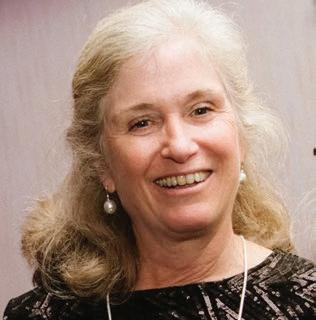
Ann Horner is a retired business executive who spent much of her career in the United Kingdom, serving as a Director with Bourne Leisure. Prior to that, she was a Managing Director for DuPont in the U.K., where she assisted the company’s merger with Merck.
A dedicated advocate for access to education, Ann believes that investing in young people is the best investment for individuals and our shared future. She has been deeply engaged with the Ron Brown Scholar Program community for many years, serving on the Advisory Board since 2021, reading applications and interviewing scholarshipnalists since 2015 and dedicating signi cant time to mentoring Scholars and Captains at the University of Virginia. Her commitment is deeply personal; as one of seven children raised in a family where education was a priority, but nancial resources were limited, her education was made possible through the support of others. Ann understands rsthand the transformative power of opportunity and is honored to give back.
Ann is equally passionate about environ-
mental stewardship and believes that while the solutions to many environmental challenges already exist, the collective will to act is essential. She currently serves on the board of the Chesapeake Bay Foundation and is Chair of the Center for the Environment and Society at Washington College.
Ann graduated from Washington College (1980) with a degree in Biology and received her MBA from Wilmington University (1986). She has two children, Richard and Ellie, who remind her every day why what she does matters!
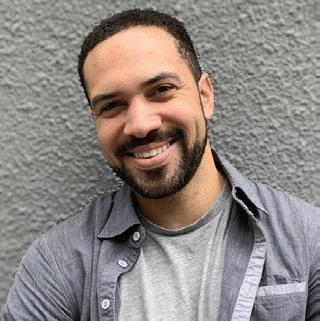
(RBS 2004)
Miles Johnson is a 2004 RBS Scholar and 2008 graduate of Harvard College. He hails from Oakland, CA and lives in New York City with his husband, Tim. Miles is Director of Googler Engagement Architecture at Google, where he leads a team designing novel ways to motivate employees to do their best work. Miles currently serves as the President of the RBS Alumni Association Board, and he’s excited to be able to contribute to
the powerful RBS community in a new way. In his free time, Miles loves the performing arts - especially theater and dance, travel and creative writing, and is slowly, tfully, working on what may someday become a novel.
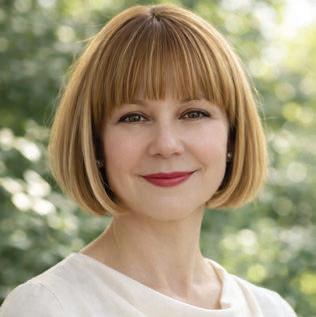
Dr. Mary Lefaiver is a strategist, coach and mentor whose work centers on helping emerging leaders cultivate authentic professional presence, build trust and foster meaningful relationships across cultures and contexts. At PwC, she works in Global Human Capital, where she focuses on understanding global workforce trends and advancing inclusion, coaching, mentoring and professional growth for PwC professionals across 135+ countries and territories. Her perspective is shaped by doctoral research into how leadership is mediated by technology, with particular attention to voice, empowerment, community and the ways diverse lived experience can challenge traditional hierarchical models of leadership. rough her coaching practice, including Birdsong Business English, she helps individuals strengthen con dence, deepen self-awareness, and lead in ways that are grounded, relational and authentic. Her work is grounded in human ourishing and explores how emerging technologies, including AI, can be used thoughtfully to strengthen learning, leadership and human connection. Outside of work, Mary is a curious world traveler and enthusiastic sports spectator. No vacation is complete without a sporting event. She has visited all 30 MLB ballparks, enjoyed baseball in Japan and South Korea, attended all four tennis Grand Slams, and cheers loudest for the Tampa Bay Lightning. If you really want to get to know Mary, ask what junior high soccer taught her about gender, power and who gets invited to belong. •
SCHOLAR SPOTLIGHT
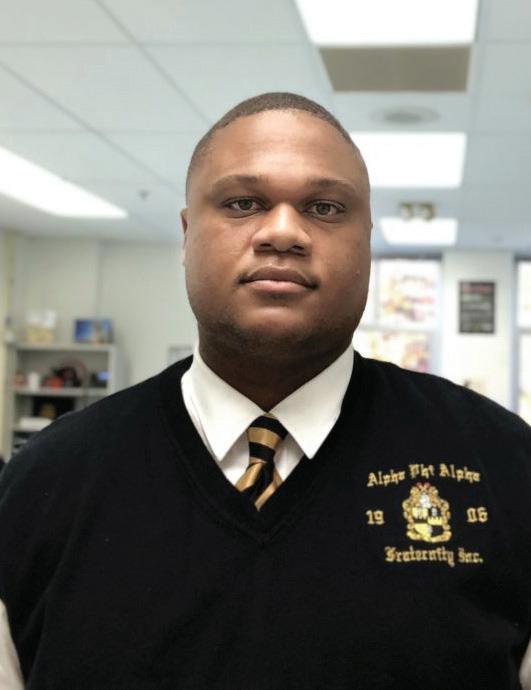
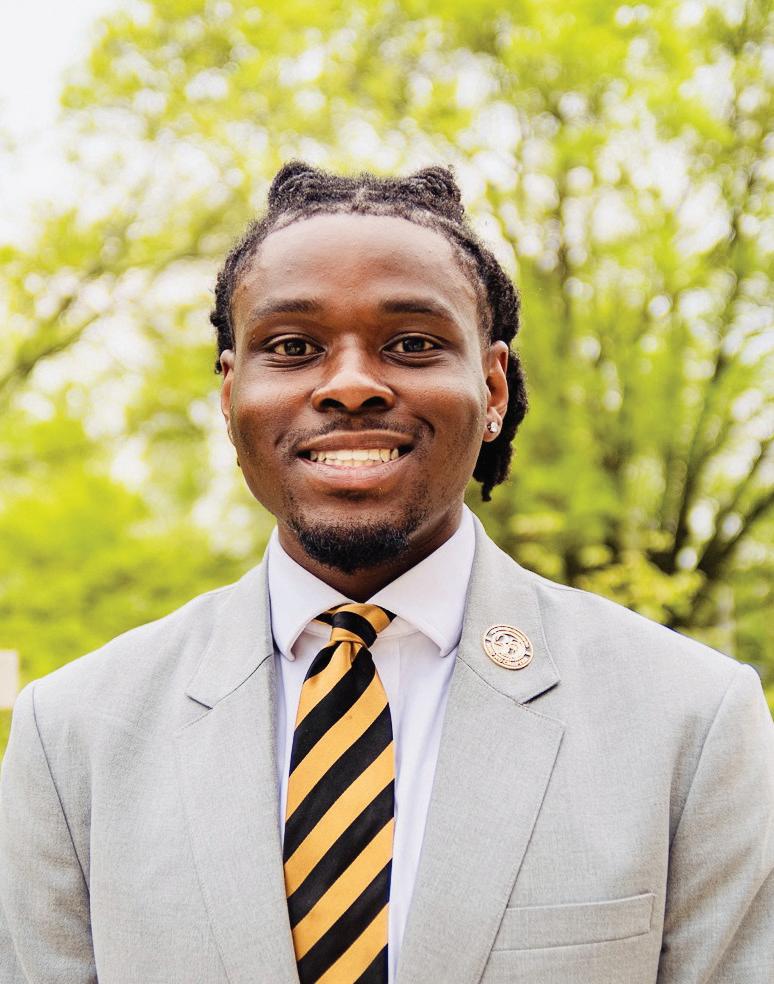
• UNIVERSITY OF PENNSYLVANIA, B.A. IN CRIMINOLOGY, 2019
• UNIVERSITY OF PENNSYLVANIA, M.S.ED IN URBAN EDUCATION, 2021
• UNIVERSITY OF VIRGINIA, M.ED IN EDUCATIONAL ADMINISTRATION AND SUPERVISION, 2023
• UNIVERSITY OF PENNSYLVANIA, PH.D. CANDIDATE IN EDUCATIONAL LEADERSHIP
• ASSISTANT PRINCIPAL AT CENTREVILLE HIGH SCHOOL IN FAIRFAX COUNTY, VA
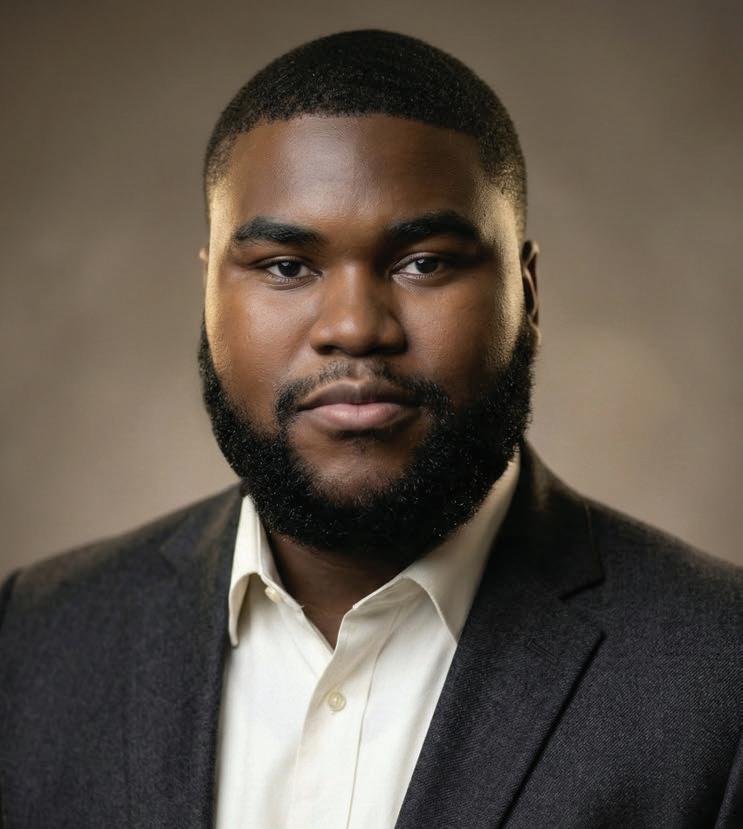
Montell’s greatest impact lies in his unwavering commitment to dismantling systemic barriers in education and ensuring equitable outcomes for historically underserved students. Across roles ranging from classroom teacher to assistant principal and summer principal, Montell has consistently designed and led initiatives that advance academic success, inclusion and student voice. In his most recent roles, he has driven transformational improvements within the Multilingual Learners and Career & Technical Education departments—raising WIDA performance scores, improving industry credential attainment and reducing discipline disproportionality. His leadership in re ning Multi-Tiered Systems of Support structures and embedding restorative practices has fostered safer,
more responsive school environments that a rm the dignity and potential of every learner. Whether through data-driven interventions, culturally responsive professional learning or family engagement strategies, Montell has tirelessly advocated for creating conditions where all students can thrive.
Equally impactful is Montell’s role as the Founder and President of the Raymond Pace Alexander Scholarship Foundation, a nonpro t he launched to provide nancial support, mentorship and recognition to high-achieving Black male seniors in Philadelphia. Under his leadership, the Foundation has awarded scholarships and cultivated a pipeline of young Black scholars committed to excellence and service. is work exemplies Montell’s philosophy that educational equity extends beyond the classroom—it
demands strategic investment in future generations. His in uence resonates through the systems he leads, the students he champions and the educators he inspires. As he continues his doctoral studies in Educational Leadership, Montell’s impact is poised to grow from school-based reform to transformative policy leadership that reshapes education at the district, state and national levels.
Montell is an accomplished educational leader devoted to advancing equity and excellence in public education. With over a decade of experience in urban and suburban school systems, Montell brings a multifaceted understanding of instructional leadership, student advocacy and systemic reform. He serves as Assistant Principal at Centreville High School in Fairfax County, Virginia, leading key initiatives in multilingual learner support, career and technical education, equity and family engagement. He is also a member of the Virginia Board of Juvenile Justice.
Montell is a two-time graduate of the University of Pennsylvania, earning a B.A. in Criminology and an M.S.Ed in Urban Education. He later earned an M.Ed in Educational Administration and Supervision from the University of Virginia and is pursuing a Ph.D. in Educational Leadership from the University of Pennsylvania. He holds advanced licensure in Virginia and Pennsylvania and is certi ed in administration, social sciences and general science.
Over the years, Montell has held various instructional and administrative roles, including Summer Principal, Dean of Students, Athletic Director, Equity Lead and classroom teacher in Philadelphia and Fairfax County. He is recognized for his ability to build strong school cultures, drive student-centered improvement and lead with cultural responsiveness and data-driven decision-making.
A recipient of numerous honors—including the Outstanding New Secondary Teacher Award, the Dr. Martin Luther King Jr. Award for Leadership and Service and the Dr. W.E.B. Du Bois Legacy Award. Montell is also an active member of Alpha Phi Alpha Fraternity, Inc. and several national education networks.
Montell’s long-term vision is to serve in system-level leadership roles, such as Superintendent or Chief State Schools O cer, where he can in uence policy, dismantle educational inequities and ensure that all students—regardless of background—have the opportunity to thrive. •
Adam Abdullahi
GRAYSON, GA GRAYSON HIGH SCHOOL
VANDERBILT UNIVERSITY BIOLOGY / GLOBAL HEALTH
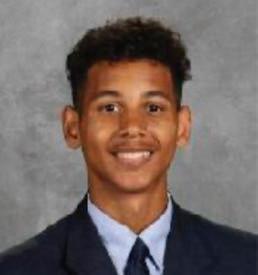
ZaHir Covington LOUISVILLE, KY
W.E.B. DUBOIS ACADEMY
WASHINGTON & LEE UNIVERSITY
BIOCHEMISTRY AND EDUCATION
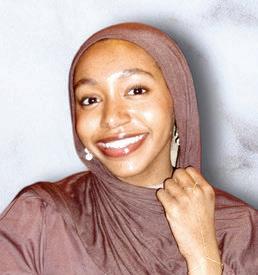
Aya Ahmed COLUMBUS, OH
WORTHINGTON KILBOURNE HIGH SCHOOL
NORTHWESTERN UNIVERSITY NEUROSCIENCE / PUBLIC HEALTH
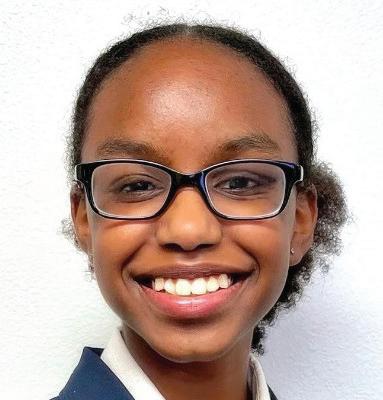
Amal Eltayib
IOWA CITY, IA IOWA CITY HIGH SCHOOL
HARVARD COLLEGE BIOMEDICAL ENGINEERING
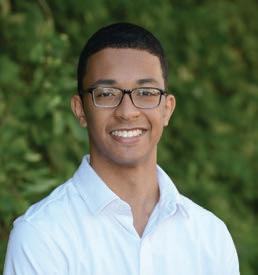
Marco Barbosa BOSTON, MA NEEDHAM HIGH SCHOOL
UNIVERSITY OF VIRGINIA MECHANICAL ENGINEERING
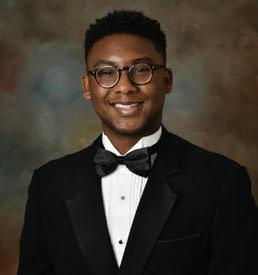
Rodney Jones Jr. MONTGOMERY, AL ALABAMA SCHOOL OF CYBER TECHNOLOGY & ENGINEERING
CORNELL UNIVERSITY COMPUTER SCIENCE
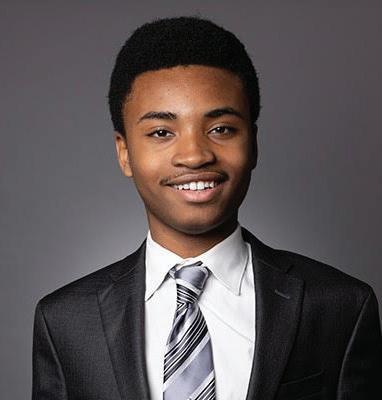
O’Marie Barnes TEMPLE HILLS, MD CROSSLAND HIGH SCHOOL
HARVARD COLLEGE POLITICAL SCIENCE
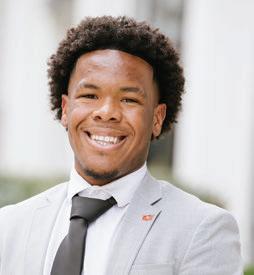
Juelz Jordan YAZOO CITY, MS YAZOO CITY HIGH SCHOOL
VANDERBILT UNIVERSITY BIOLOGY / PRE-MED
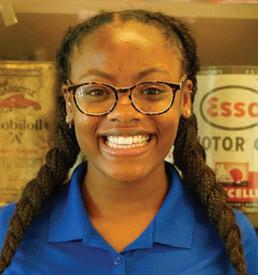
Sydney Limbrick BEAUMONT, TX
WEST BROOK SENIOR HIGH SCHOOL
MIT CHEMICAL ENGINEERING

Marley McIntyre
PAAUILO, HI HONOKA’A HIGH AND INTERMEDIATE SCHOOL
HARVARD COLLEGE ENGLISH / ECONOMICS
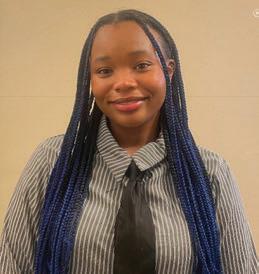
Destiny Singleton CHICAGO, IL OGDEN INTERNATIONAL HIGH SCHOOL
STANFORD UNIVERSITY PSYCHOLOGY
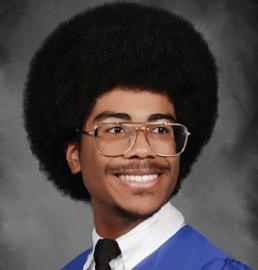
Jacey Long DICKINSON, TX DICKINSON HIGH SCHOOL
YALE UNIVERSITY PHYSICS AND MATH
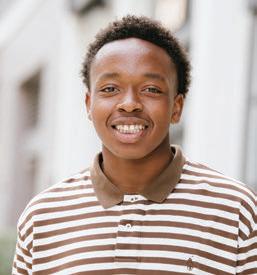
Jaiden Nwabuzor
HAWTHORNE, CA CALIFORNIA ACADEMY OF MATHEMATICS AND SCIENCE
YALE UNIVERSITY COMPUTER SCIENCE / DATA SCIENCE
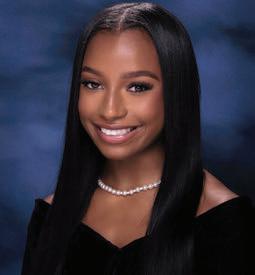
Zemirah Skinner COLLEGE PARK, GA KIPP ATLANTA COLLEGIATE
VANDERBILT UNIVERSITY BIOLOGY / CHEMISTRY / PRE-MED
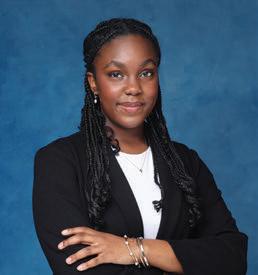
Callan Maxwell LANSING, MI WAVERLY HIGH SCHOOL
BROWN UNIVERSITY COMPUTER SCIENCE / POLITICAL SCIENCE
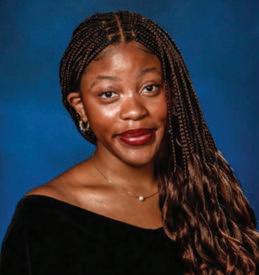
Jada Okoye MANASSAS, VA OSBOURN PARK HIGH SCHOOL
UNIVERSITY OF VIRGINIA GLOBAL HEALTH / BIOLOGY
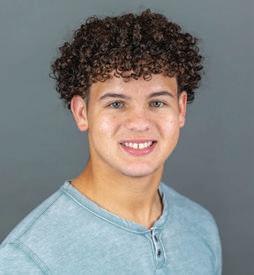
Kamryn Wolkenhauer DANVILLE, IA DANVILLE COMMUNITY SCHOOL
UNIVERSITY OF VIRGINIA CIVIL ENGINEERING
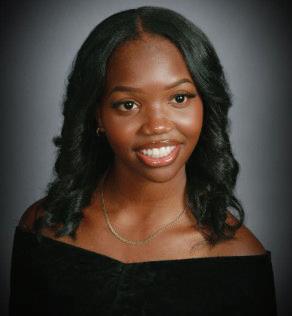
Kyla McFarlin VICTORVILLE, CA
UNIVERSITY PREPARATORY HIGH SCHOOL
YALE UNIVERSITY
AFRICAN AMERICAN STUDIES / PRE-LAW
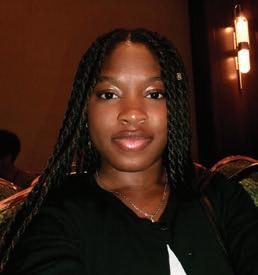
Rachel Onile HAMPTON, GA MORROW HIGH SCHOOL
WASHINGTON UNIVERSITY IN ST. LOUIS ARCHITECTURE
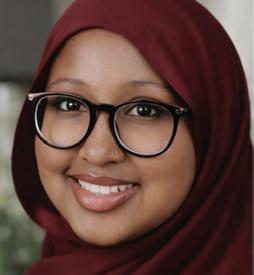
Muna Yassin CONYERS, GA
ROCKDALE MAGNET SCHOOL FOR SCIENCE AND TECHNOLOGY
GEORGIA STATE UNIVERSITY NEUROSCIENCE
RBS 2021
The” Why I Give” series will appear in the development section of the newsletter to introduce our donors whose philanthropic support makes our work possible. In our first edition, we highlight recent graduate, Jaylen Cocklin, Ron Brown Scholar 2021, who is making a difference through monthly giving.
1. WHEN DID YOU GRADUATE AND WHAT ARE YOU UP TO NOW?
I graduated from Harvard University in 2025 with a joint degree in History & Literature and African American Studies. Currently, I’m working as a fellow in the Strategy & Innovation Department at the Harlem Chil-
dren’s Zone, where I get to contribute to the kind of community-centered work that has always been close to my heart. is August, I’ll be matriculating into the UCLA School of Law, where I plan to continue building the skills and knowledge I need to serve my community on an even greater scale.
2. WHAT INSPIRED YOU TO MAKE YOUR FIRST GIFT TO THE RON BROWN SCHOLAR PROGRAM AND WHAT MO‑ TIVATES YOU TO CONTINUE GIVING?
I made my rst gift to the Ron Brown Scholar Program shortly after graduating, during a period of deep re ection on the journey that brought me to where I am today. When I traced the arc of my story, the Ron Brown Scholar Program was woven into every chapter.
I still remember being a high school senior in the midst of the pandemic. It was a chaotic time. My school was operating on a hybrid schedule and applying to colleges and universities I couldn’t visit felt overwhelming. Applying for scholarships was even harder. Coming from a low-income background, I knew that I would need every bit of nancial support I could nd to make college possible, so I threw myself into researching every scholarship I could.
at’s how I found the Ron Brown Scholar Program. What immediately stood out to me was that it wasn’t just about the money. e Program took a holistic approach, one that emphasized personal development, professional growth and building a community of Scholars who would go on to lead and serve. at philosophy resonated with me on a level that no other scholarship did. When I applied, I had no idea whether I’d be selected, but I felt a quiet con dence that this was the right t. I remember how nervous I was during the interviews, trying to put my best self forward while battling every anxious thought in my head. And then came the day the selected Scholars were announced. Seeing my name was a moment of immense, overwhelming joy. I’ll never forget logging onto that Zoom call and seeing the faces of the other Scholars, young people I immediately recognized myself in. It felt like coming home to a family I didn’t know I had. roughout my time in college, the Ron Brown Scholar Program was a constant presence in my life, providing support in every form imaginable: nancial assistance, mentorship, opportunities to connect and network with accomplished professionals, and career-focused events that exposed me to industries and possibilities I never would have encountered on my own. e Program
gave me more than I could ever fully describe with words. It fundamentally changed the way I see myself, my potential and my responsibility to others.
I give because I recognize all that goes into making the Ron Brown Scholar Program possible. Behind every scholarship, every event, every mentorship connection, there are people who choose to invest in the next generation. I want to be one of those people. I want more young people to experience the same joy, the same transformation and the same sense of belonging that I was given.
3. HOW DO YOU HOPE YOUR SUPPORT IMPACTS CURRENT AND FUTURE GEN ERATIONS OF SCHOLARS AND THE PROGRAM?
I hope my support, however large or small, sends a message to current and future Ron Brown Scholars that they are worth investing in. I want every Scholar to feel the same sense of belonging and possibility that I felt. Beyond the nancial impact, I hope my giving contributes to the sustainability of the Program so that it can continue to identify, nurture and empower young leaders for generations to come. If my gift helps even one student feel a little less alone, a little more supported, or a little more con dent in chasing their dreams, then it will have been more than worth it.
4. WHAT DOES “TO KEEP THE LADDER DOWN” MEAN TO YOU?
To me, “keeping the ladder down” is a call to always remember to bring others with you as you climb. It’s a recognition that none of us arrive where we are on our own. So many people and so many experiences have poured into me: teachers who believed in me, mentors who guided me, and a Program that invested in my future when I was just a nervous kid applying from his bedroom during a pandemic. Because that was given to me, I believe it is my duty to pour into someone else, to reach back and help someone else reach their dreams and goals, however big small. Keeping the ladder down means that success is never just personal. It’s communal. And the moment you pull the ladder up behind you, you’ve forgotten the very thing that made your climb possible. •
WAYS TO GIVE ONLINE
Supporting the Ron Brown Scholar Program has never been easier. We offer several secure and convenient ways to make an online gift—so you can choose the option that works best for you.
CREDIT OR DEBIT CARD
Make a one-time or recurring gift through our secure online donation page.
DONOR‑ADVISED FUNDS (DAFs)
You can recommend a grant to the Ron Brown Scholar Program directly from your donor-advised fund.
STOCK OR SECURITIES
Donating appreciated securities may provide tax advantages while maximizing your impact.
CRYPTOCURRENCY GIFTS
We now accept cryptocurrency through our secure online platform, offering donors an additional flexible giving option.




Have questions or need assistance? We’re happy to help you find the best way to give. Please contact Michelle Packer, 434.964.1588, or give@ronbrown.org to set up a call.

THANK YOU FOR INVESTING IN THE NEXT GENERATION OF RON BROWN SCHOLARS.
In March 2026, the Ron Brown Venture Lab (RBVL) o cially kicked o its national LIVE tour with a gathering in Austin, TX. Set against the vibrant backdrop of SXSW 2026, the event, “Our Path Forward: Insights from Austin’s Tech Leaders,” brought together our community of founders, investors and operators to explore the future of technology and wealth creation.
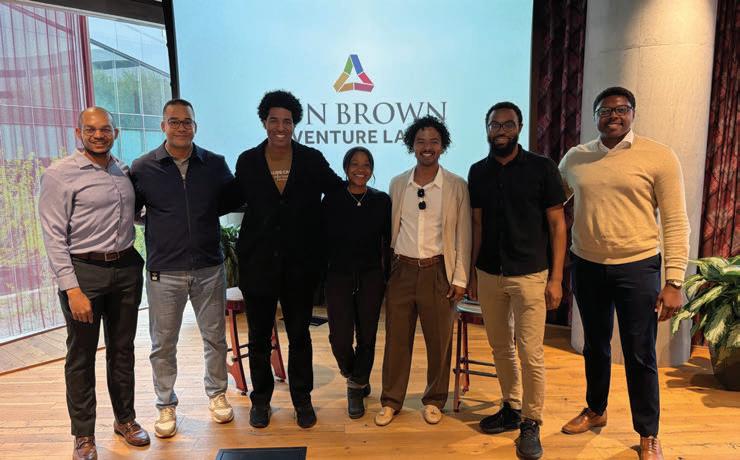
e success of this inaugural stop was a direct result of the leadership within our own ranks. Noah Faison, Ron Brown Captain 2016, served as the architect of the afternoon. Noah’s commitment exempli es the “web of care” that de nes the Ron Brown Scholar Program legacy: a dedication to creating spaces where brilliance can connect and thrive.
e afternoon featured four reside chats
with Scholars and Captains who are currently shaping the Austin tech ecosystem. Each session o ered a deep dive into the specialized elds of venture capital, entrepreneurship, private equity and go-to-market strategy.
Ethan Monreal-Jackson, Ron Brown Scholar 2008, Founder & General Partner at Newtype Ventures, shared candid insights on navigating the current political and macro tailwinds while remaining steadfast in backing underrepresented minority founders.
Vernon Johnson, Ron Brown Scholar 2016,
Co-Founder and CTO of Yup, detailed his journey of building and exiting a Web3 startup, highlighting why the Texas ecosystem remains a critical hub for innovation.
Devon Cash, Ron Brown Scholar 2014, drawing on his experience at Vista Equity Partners and Goldman Sachs, provided a forward-looking analysis of where AI opportunities lie—not just for new ventures, but for enhancing existing portfolio companies.
Sebastian Flores, Ron Brown Scholar 2009, Growth Team Lead at TikTok, explored how the shifting media landscape is rede ning how founders must approach brand distribution and GTM strategies in a crowded market.
In addition to these sessions, the event featured two Leaders Network spotlights— founder Brittany Coleman, Ron Brown Scholar 2009, and investor Roman Scott, Ron Brown Captain 2020—further showcasing the breadth of expertise within our network.
Austin was only the beginning. e energy and insights shared underscored the importance of convening our community in person to discuss the intersection of innovation and social responsibility.
As we look ahead, the RBVL LIVE tour will continue its journey with upcoming stops in Boston, New York City and San Francisco later this year. Each stop will continue to highlight the Scholars and Captains who are leading the way in their respective industries, ensuring that the “Path Forward” is one we build together.
ank you to our hosts, our speakers and most importantly, our community for making the rst stop of the tour a resounding success. •
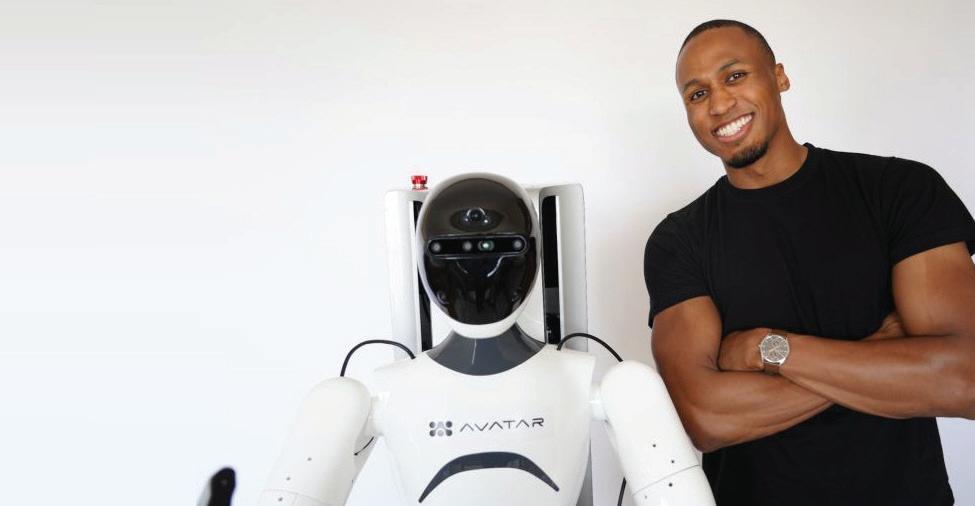
The Ron Brown Venture Lab (RBVL) was founded on a singular premise: that when you provide the world’s most talented leaders with the right social and nancial capital, they will build “something big” that transforms entire industries. In a recent installment of our podcast, e Value of One, e Power of All, we sat down with Colin Webb, Ron Brown Scholar 2014, to discuss a journey that perfectly illustrates this trajectory—moving from a successful company acquisition to the frontier of American industrial revitalization.
Many in our community followed the rise of Colin’s previous venture, Sauce, which utilized AI-driven dynamic pricing to empower independent restaurants. After years of building, Colin shared the exciting news that Sauce was acquired in the summer of 2024 by Virtual Dining Concepts (VDC), the world’s largest virtual brand company. While the exit marked a signi cant milestone, for Colin and his longtime business partner Nenye Anagbogu, Ron Brown Captain 2014, it was also a return to a lifelong passion.
Colin’s obsession with robotics began in 2010, leading robotics clubs in high school before honing his expertise at MIT and on the autonomous sensing team at General Motors and Cruise. Now, alongside Nenye— an essential founding member and dedicated Captain alum and donor—Colin is leveraging that deep technical “sauce” to launch Avatar Robotics.
Avatar Robotics arrives at a critical macroeconomic turning point. Currently, there are 600,000 un lled manufacturing jobs across the United States. “We would hire them right now if we had them,” Colin noted, explaining that this labor shortage forces American industry to operate below capacity. Avatar’s solution is a “ exible industrial workforce”— turnkey robot eets that can be deployed into warehouses to perform 24/7 material handling.
What sets Avatar apart is its “human-inthe-loop” model. While AI has advanced, it still struggles with the “small-scale” manipulation required to handle 10% of the world’s
physical tasks—like sorting individual fruits or assembling custom kits. Avatar bridges this gap by connecting a remote workforce of “pilots” who can oversee and troubleshoot these robots from anywhere in the world, ensuring American factories stay competitive and efcient.
is level of innovation is exactly what the Ron Brown Venture Lab was designed to champion. By highlighting founders like Colin and Nenye, the Venture Lab provides a platform for “values-driven leadership” that doesn’t just seek pro t but seeks to drive down the cost of essential goods and infrastructure for everyone.
As we look toward the future, Avatar Robotics represents more than just a tech startup; it represents a resurgence of American industry fueled by the same “web of care” and brilliance that de nes our Program. Whether it’s through meaningful mentoring and support or a spotlight on our national podcast, Venture Lab remains committed to backing the Scholars and Captains who are bold enough to build the future. •
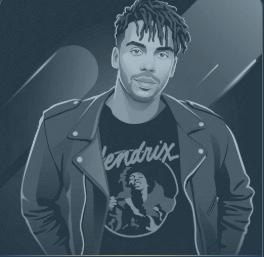
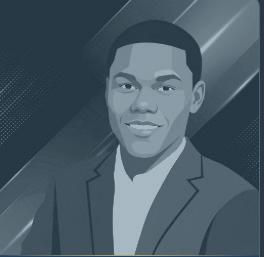
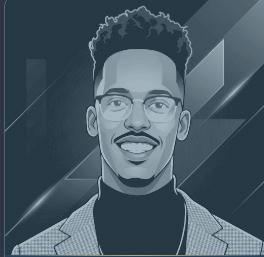
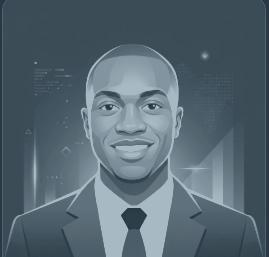
To date, over half a billion dollars has been deployed into startups and VC rms founded and led by Ron Brown Scholars and Captains from investors like Andreessen Horowitz (a16z), Kleiner Perkins, rive Capital, Greylock Partners, GV (Google Ventures), Village Global, Seven Seven Six Ventures, Kapor Capital, Harlem Capital, Y-Combinator, Antler, ODF, 500 Global and more.
In 2022, we started to analyze the backgrounds and stories of founders of institutionally backed technology startups, and the patterns that emerged anchored our thesis that Ron Brown Founders are primed to build the next generational companies, organizations and funds. In this abridged version of e State of Ron Brown Founders report, we’ll outline the who, what, when, as well as our theories on the how and why certain Ron
Brown Founders have and will succeed, along with some words of encouragement and caution for those who often face fundraising challenges.
We took a census of all known founders in our network by pulling in quantitative and qualitative data from Crunchbase, TechCrunch, LinkedIn, self-reported data, and the RBSP website, as well as interviews on our podcast, e Value of One, e Power of All, which can be found on Spotify, Apple Podcasts and YouTube.
On the surface, the backgrounds of Ron Brown Founders (who successfully raised from institutional investors) often look like the typical Ron Brown Scholar (including many aspiring VC-backed founders), as well
as the larger U.S. startup ecosystem. However, going a level deeper into how they became founders revealed 3 key insights for future Ron Brown Founders to consider as they chart their own paths to building and leading their own startups.
1. MOST OF THEM CHECKED THE TYPICAL TECH STARTUP FOUNDER BOXES
• Top 3 alma maters: MIT, Harvard and Stanford
• Top 3 majors: Computer Science, Engineering and Economics
• Top 2 metros: SF and NYC
• Top areas: AI, robotics, hardware, and web3 across B2B verticals, horizontal platforms, marketplaces and consumer products
• Women founders are still very underrepresented
2. THEY BUILD FROM A POSITION OF FINANCIAL STABILITY
Investment banking, management consulting and working at a FAANG company are common paths for Ivy League and Ivy+ graduates, and many Ron Brown Scholars take this path, including some Ron Brown Founders who wanted to enable the nancial exibility that startups require.
However, one major di erence stands out in the resumes of successful Ron Brown Founders compared to their fellow alumni.
3. MOST OF THEM HAD EARLY EXPOSURE TO STARTUPS AND VC
For some founders, it was a school project or club on campus. For others, it was an internship, junior, part-time or even volunteer role. Instead of doing another internship at top-tier corporations, they joined some little-known company that no one would recognize until years later. Rather than spending spring break on the beach, they visited a friend working in Silicon Valley.
One way or another, they found a way to work with high-caliber startups and VCs early in their career and used those experiences and connections to accelerate their timelines of nding co-founders and early teammates, raising early-stage capital and securing demos and pilots with their target customers. When almost anyone can build almost anything with AI, the competitive advantage that these relationships provide has only gotten stronger.
Some of the founders did take a stab at entrepreneurship on a smaller scale before
their current companies, an experience to which they attribute a lot of their growth as a leader and interest in startups. However, starting a business at a young age, functions more like alma mater, major, and employer as a characteristic that both successful and unsuccessful founders have alike. e choice to join an institutionally backed startup, or VC fund, early on is the primary di erentiator for those that go on to successfully fundraise, not whether they were already bold enough to test one of their own ideas.
In his podcast episode, Javaughn Lawrence (RBS 2010, Co-Founder/CEO of Drip) recalls how impactful it was for Dorian Dargan (RBS 2007, Co-Founder/CEO of Doji) to give him his rst tour of startup o ces, and years later, Javaughn returned the favor by becoming one of the rst early angel investors in Dorian’s company. at’s the ywheel we want to see within the RBS network.
Ron Brown Founders have already shown
The Ron Brown Venture Lab Summit Series was created to showcase, connect and inspire leaders across key industry disciplines within the Ron Brown alumni network—particularly in areas where there is a strong alumni presence, shared interest, and a critical need for collaboration.
Designed as a platform for dialogue and discovery, the Summit Series brings together alumni innovators, researchers, founders and practitioners to explore how Ron Brown leaders are shaping the future across sectors. e inaugural summit, held in October, convened alumni founders, engineers and PhDs working at the frontiers of Arti cial Intelligence. Presentations spanned a wide range of applications, from professors and
PhD candidates researching the intersection of AI, culture and practice, to AI builders delivering fast-paced demos designed to teach and learn from one another.
Building on that momentum, the second gathering—the Healthcare Summit—highlighted the work of alumni MDs and PhDs who are actively reshaping how medicine is practiced, taught, advanced and scaled. Conversations explored innovation in clinical practice, medical education and system-wide healthcare delivery.
In April, the series continued with the Life Sciences Summit, featuring leaders spanning fundamental scienti c research to applied strategies that protect, test and fund breakthrough innovations. Presentations from
what happens when they seize the opportunity to create and innovate.
• ey build immensely impactful and durable organizations
• ey build diverse teams, starting with their co-founders and early employees who will go on to start and invest in their own businesses and give philanthropically
• ey re-invest that wealth back into the communities they come from, including the programs that helped give them their academic and professional start
e goal from the very beginning has always been for Ron Brown alumni to fund this organization themselves, and one founder at a time, we’re getting closer and closer to that becoming a reality.
To learn more about and connect with the Ron Brown Scholars and Captains in the tech and startup ecosystems, visit https://venturelab.ronbrown.org, or nd the Venture Lab group on RBS Connect. •
alumni and partner networks underscored the strength of the Ron Brown community in advancing biotechnology and laid a strong foundation for the next generation of innovators in the eld.
Looking ahead, the Venture Lab will continue its series later this year with two upcoming convenings.
e rst will focus on Education, bringing together educators, policymakers, founders, investors, philanthropists and researchers from across the Ron Brown alumni network to share insights and help shape the future of K–12 education. Topics will include perspectives from a former Secretary of Education for the State of New Mexico, EdTech startup founders, the role of AI in education, equitable approaches to assessment and education philanthropy.
is will be followed by Research: Leading R1 Labs, where principal investigators from the Ron Brown alumni network will come together to share their experiences leading labs at R1 institutions, along with insights and guidance for the next generation of research leaders.
We are deeply grateful to all of our Summit presenters for their wisdom, insight and encouragement throughout the series.
Recordings from the sessions are available on RBSP YouTube channel. •

Ten years ago, the Guided Pathway Support (GPS) Program set out with a bold belief: that the leadership and service of the Ron Brown Scholar community could be a transformative force for African American students navigating the path to college. Today, that belief has grown into something far greater—a national, virtual movement expanding access, unlocking opportunity and reshaping futures.
GPS was built to close a persistent and inequitable college access gap. Across the country, too many high-achieving African American students attend high schools where college counseling resources are stretched thin, advanced coursework is limited, and access to critical information is uneven. ese systemic barriers have long contributed to disparities in college access and outcomes. At a time when the very principles of equity and
inclusion in higher education face mounting challenges, our commitment to this work has only deepened.
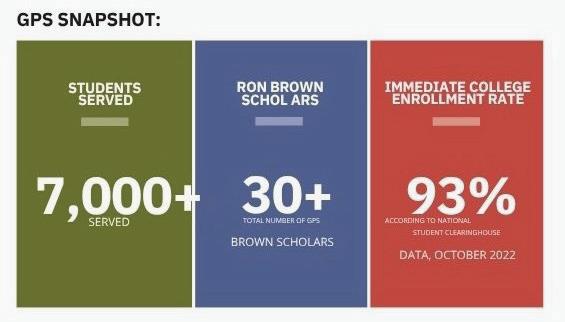
Over the past decade, the GPS Program has served 7,668 students nationwide, including nearly 2,000 rst-generation college students and more than 4,100 students from low-income households. Together, they have earned an estimated $94.6 million in scholarships, transforming what once felt nancially out of reach into real, tangible opportunity. Behind those numbers are more than 5,200 hours of one-on-one advising, thousands of college counseling sessions and a growing network of mentors and near-peers guiding students every step of the way.
“My senior year was transformed by becoming a GPS Navigator,” Ron Brown Scholar and GPS alumna Gaelle Valmir said.
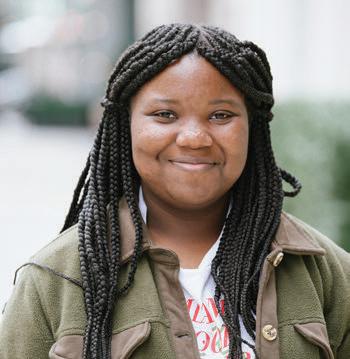
“ e Program went far beyond being a resource for college applications. It became a supportive community where I could ask any question and receive personal guidance from people genuinely invested in my success. is sense of community extended beyond applications. GPS opened doors to scholarships I wouldn’t have found otherwise, such as the Ron Brown Scholar Program.
rough a dynamic, virtual model, students receive year-round college and scholarship advising, free test preparation through e Princeton Review®, and direct support in building competitive applications—from essays and resumes to nancial aid forms and interviews. Just as important, they gain entry into a vibrant, a rming community where they are seen, supported and inspired by those who have walked the path before them.
e impact is not only measurable, it is
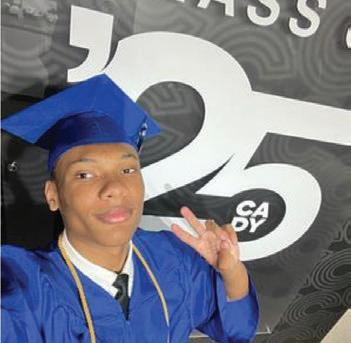
visible in outcomes. e top college matriculations for seniors in the Class of 2025 were Columbia, Rice, Penn, Chicago, Spelman, and Yale. More than 30 participants have gone on to become Ron Brown Scholars, and over 100 have emerged as Ron Brown Captains—leaders committed to lifting others as they climb.
But beyond the accolades and admissions letters lies something even more powerful: a shift in what students believe is possible for their lives.
“I’m beyond grateful for the support and guidance I have received throughout this journey,” GPS alumnus Jaden Sanders posted. “ anks to the encouragement of my mentors, counselors and this incredible community, I was blessed to be accepted into 13 wonderful institutions, including Duke, Northwestern, USC, Georgia Tech, University of Miami and the University of Virginia (where I was named a Rodman Scholar and invited to interview for a full tuition scholarship.)”
At its core, the Guided Pathway Support Program is driven by a simple but urgent mission—to empower high-achieving students from low-income backgrounds to access and thrive at our nation’s top colleges. Our vision is equally clear: a future where every student, regardless of background, has the opportunity to pursue higher education and change the trajectory of their life, their family and their community.
As we celebrate this 10-year milestone, we also look ahead. e need has not diminished—if anything, it has intensi ed. And so has our resolve.
is work is made possible by a community of supporters who believe in the power of access, mentorship and opportunity. Because of you, thousands of students have not only reached college—but have arrived prepared to lead, excel and give back.
e next decade begins now. •
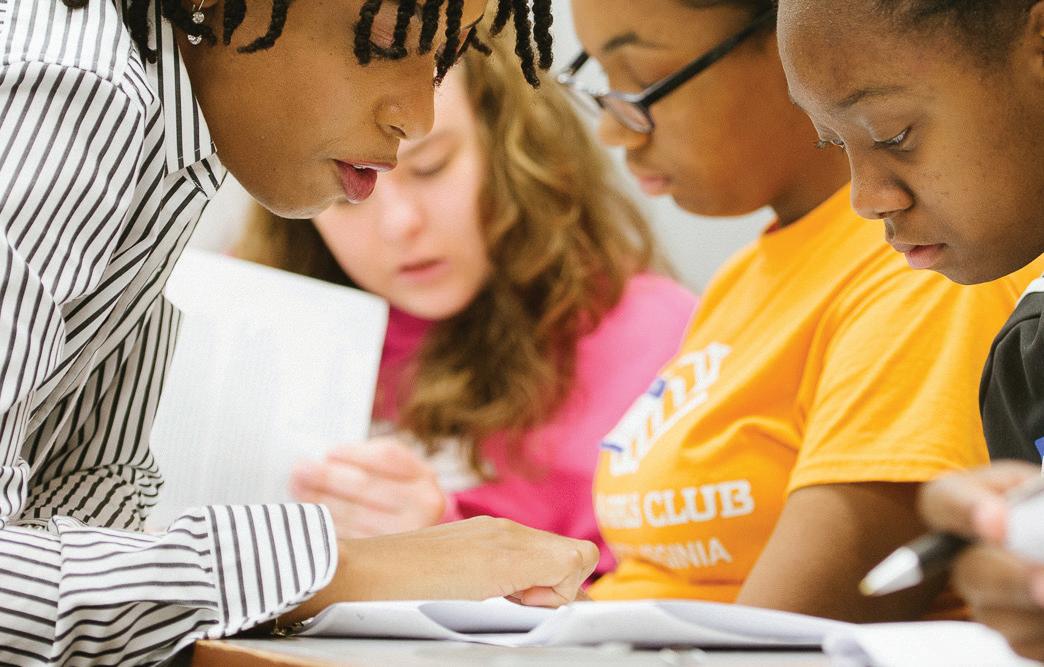
The GPS Program delivers year-round programming designed to ensure students are not only college-bound—but highly competitive in the admissions process. rough a new collaboration, select GPS high school juniors have earned placement in the highly competitive Summer Science Program, where they will conduct advanced research in genomics, astrophysics and cell biology on college campuses across the United States and Canada—supported by stipends that remove nancial barriers to participation.
In partnership with Cornell University, GPS Navigators will receive full-tuition scholarships to enroll in credit-bearing summer courses, earning an o cial college transcript from an Ivy League institution before
submitting their applications this fall—an early academic signal that strengthens their candidacy at the nation’s most selective colleges.
e GPS Program is also pleased to continue its six-year partnership with General Catalyst, providing students with paid externships that o er direct exposure to venture capital, investor relations and the fundamentals of launching high-growth startups.
Together, these high-impact experiences position GPS students to stand out in an increasingly competitive admissions landscape—while building the con dence, credentials and networks that drive long-term academic and career success. •
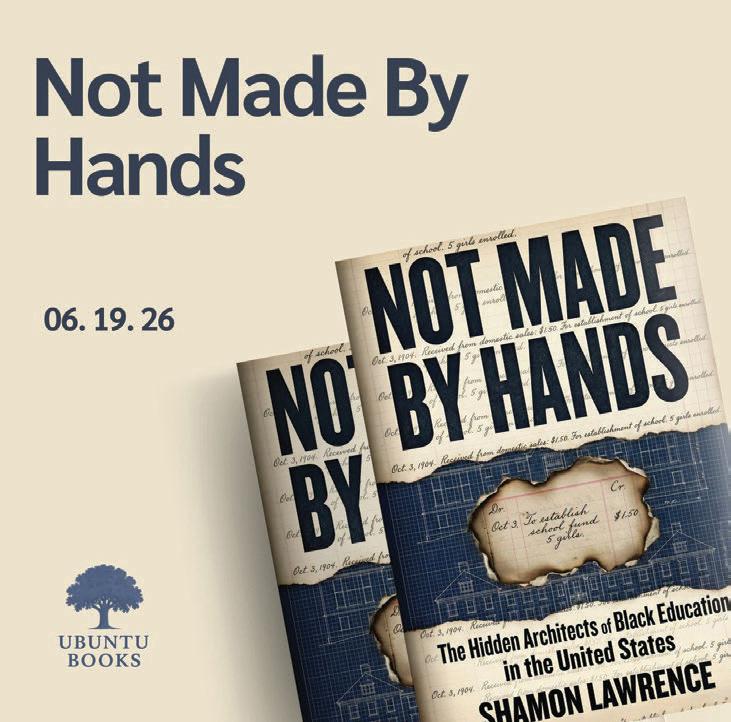
As the Guided Pathway Support (GPS) Program celebrates its 10-year anniversary, its impact is best understood through the students it has helped shape—young people who not only accessed college, but who are now reshaping the systems that once constrained them. One such alumnus is GPS Class of 2019 student Shamon Lawrence, now a secondary English teacher and founder of Ubuntu Books, a publishing company dedicated to educational texts centered on heritage, lineage and legacy.
His forthcoming book, Not Made By Hands: e Hidden Architects of African Amer-
ican Education, examines a long-standing tradition in Black education: the quiet, subversive work of navigating and overcoming structural barriers to learning. It’s a theme that mirrors his own journey.
Raised in Nassau County on Long Island—one of the most segregated regions in the country—Shamon attended the Roosevelt Union Free School District, a system marked by instability and state intervention. Frequent leadership turnover and shifting policies created an environment where consistency was rare and long-term academic vision often felt out of reach. Yet, rather than
disengage, he sharpened his focus.
“I witnessed this instability rsthand, and it motivated me to enter the education eld as a scholar-practitioner,” Shamon re ects. “I saw myself as a future superintendent—but rst, I wanted to master the classroom.” at clarity of purpose emerged despite signi cant challenges. In high school, Shamon encountered a culture where academic engagement was uneven and opportunities to demonstrate learning were limited. He recalls a 10th-grade English class where instruction often gave way to disorder—not because students lacked ability, but because systems failed to cultivate it. Still, he saw brilliance in his peers and sought ways to push himself beyond the classroom, requesting additional readings and turning to online resources to deepen his learning.
At the same time, Shamon found a powerful counterexample within his own school: the band program. Under the leadership of a veteran director, it became a space de ned by discipline, pride and excellence—proof that structure and high expectations could transform student outcomes. at contrast left a lasting impression.
It was during this formative period that GPS entered the picture—and shifted his trajectory.
“GPS restored my audacity,” Shamon says. rough GPS, he gained access to a national network of high-achieving African American students and a structured ecosystem of support: application workshops, nancial aid sessions, essay coaching and scholarship guidance. Just as importantly, he found a community invested in his success— peers and mentors who reviewed essays, shared opportunities and reinforced a culture of excellence.
Where he had once begun to “settle” in his college aspirations, GPS expanded his eld of vision. With renewed con dence and support, he applied broadly and ultimately en-
rolled at New York University’s Steinhardt School of Culture, Education, and Human Development, where he studied English Education.
His college experience, like that of many in his cohort, was shaped by disruption. After a traditional rst semester, the COVID-19 pandemic forced a sudden shift to remote learning. Yet, he leveraged that moment to expand his leadership.
At NYU, Shamon served as a student leader representing Black students in the University Senate, contributing to institutional policy discussions, drafting resolutions and helping build community initiatives such as the Black Violets engagement network. As Chairperson of the Community Standards Committee, he oversaw student conduct policy—work that was both impactful and, at times, emotionally demanding.
“Supporting students while navigating my own experiences with microaggressions required a di erent level of resilience,” Shamon notes.
Still, he remained deeply engaged. From serving as a residence hall council president to studying abroad at NYU Abu Dhabi— where he explored the Middle East and deepened his engagement with Arabic literature—his college journey was de ned by both intellectual and personal growth.
After graduating, Shamon continued his studies at Teachers College, Columbia University, and returned to NYU Steinhardt, further re ning his craft as an educator. Today, he teaches middle and high school students in Manhattan and the Bronx, bringing both academic rigor and a deeply human approach to the classroom.
Central to that approach is a lesson he traces directly back to GPS: the power of “positive framing.”
Shamon recalls submitting what he believed was a strong college essay, only to receive feedback that it was missing the most important element—himself. at moment reshaped how he understands teaching and mentorship.
“I now start with a student’s strongest line and build from there,” he explains. “You establish trust before o ering critique.”
It’s a philosophy that extends beyond writing. GPS, he says, taught him how to ask for help, seek multiple perspectives and engage in continuous growth—skills that remain foundational in his professional life.
As today’s students navigate an increasingly complex admissions landscape—including the recent Supreme Court ruling
on race-conscious admissions—his advice is grounded in both history and conviction.
Quoting Frederick Douglass, he reminds students: “ e honor, I assure you, was Harvard’s.”
“Your presence adds more to an institution than the institution adds to you,” Shamon says. “Do not lose your sense of self in the application process.”
He encourages students to write with speci city and authenticity—to capture the textures of their lived experiences while being thoughtful about audience and risk. Above all, he emphasizes the importance of voice.
For current GPS Navigators, his guidance is both practical and philosophical: use resources early and often, seek diverse feedback, and apply with intention—not fear. Reecting on his own experience of applying to more than 35 colleges, he now recognizes the value of a more focused approach.
And Shamon invokes the principle of Sankofa: reach back, go back and bring someone
else along.
at ethos speaks directly to the broader mission of GPS—and to the signi cance of its 10-year milestone.
“GPS is doing essential work in securing futures for African American students across the country,” Shamon says. “Especially in a moment when that work is increasingly contested.”
As college enrollment declines—particularly among Black men—programs like GPS remain critical pipelines to opportunity, condence and long-term success.
A decade in, the impact is clear: GPS doesn’t just help students get into college. It equips them to lead, to question, to build— and, as Shamon Lawrence has done, to return to the classroom and create the very environments they once needed.
In doing so, they ensure that the next generation won’t have to search as hard for structure, for support or for the audacity to dream bigger. •
SCHOLAR UPDATES
e Class Notes section provides an opportunity for Ron Brown Scholars to share professional and personal updates—whether it’s a new job, a big move, a family celebration or a personal accomplishment, these updates highlight the many ways our Scholars continue to make an impact.
MIYA ALSON RUTHERFORD: Right now with the Dept of War, I lead the team that created the streaming App that our troops and their families use (also govt civilians) on bases, consulates, embassies, etc. I still run the content and strategy team and DoW is moving toward an all-streaming model, killing o linear television.
KU MCMAHAN: I’ve left US DFC and started my own rm, LKM Strategic Consulting. I’m also moving to Durham, NC at the end of the April.
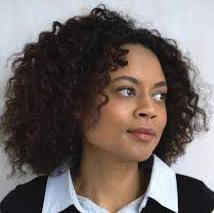
SARAH LABRIE: I won a 2026 PEN/O. Henry Prize for my story, Tender, published in Electric Literature. e story will appear in e Best Short Stories 2026: e O. Henry Prize Winners (Vintage) in September.
CRYSTAL PAUL: I am celebrating my son’s sixth birthday this May, my daughter’s rst
year of preschool, and marking half a year in my role as Investigative Editor with Chicago news outlet Block Club Chicago. Both my old team of reporters at Illinois Answers Project and new team at Block Club will be celebrating several nominations at an upcoming local journalism awards ceremony in May.
JONTE CRAIGHEAD: I am engaged and will be getting married this September in a destination wedding in Singapore.
MICHAEL MEKONNEN: I was previously married in a small ceremony and will be celebrating again later this year with a larger destination wedding with family in my home country of Ethiopia.
ALEXANDRA SAILSMAN: I welcomed my third child—a beautiful baby girl! I send my love. Baby and I are doing well.
MILES MALBROUGH: is summer I will be moving to Illinois - working in DeKalb, likely living in the Aurora area - and I’d love to connect with the RBS community in the Chicagoland area. e move is due to a tenure-track appointment at Northern Illinois University College of Law. Starting in August, I’ll be teaching Property and Trusts & Estate, and my title will be Assistant Professor of Law.
SOJURNER AHEBEE: is year, I launched my communications and web design studio, Water & Sword. rough this work, I partner with artists, creative entrepreneurs, mis-
sion-driven organizations and individuals to help them translate their ideas and work into clear, compelling websites and branding systems. Recently, I’ve been expanding my work into brand identity and storytelling strategy—supporting clients as they shape how they show up and share their work with the world. Alongside this, I was recently awarded a 2025 Leeway Foundation Transformation Award, which provides unrestricted annual awards of $15,000 to women, trans and gender nonconforming artists and cultural producers in Philadelphia who have created art for social change for at least 5 years, and have demonstrated a long-term commitment to social change work.
NANCY COLEMAN: I was promoted to Library Associate II at my workplace in February (Prince George’s County Memorial Library System). I’m really enjoying the work, but I’m considering a Master’s in Library and Information Science as a next step to working at an academic institution. I also sold my house and moved to Silver Spring. Joey and I love not being so car dependent and being so central and close to DC and work.
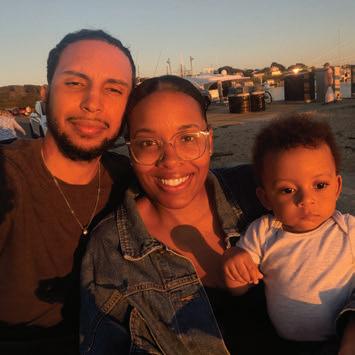
KAI TINSLEY: Kai and Dominique just moved from NYC back to their hometown of Philadelphia along with their 18-monthold boy, Nikao. ey’re looking forward to spending more time with family, reconnecting with old friends and getting to know their new neighbors. After working in various nance and sustainability roles at PepsiCo, Kai also started a new role on Vanguard’s Investment Stewardship team.
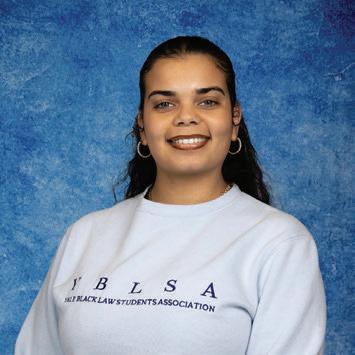
DREW JONES: I’m nishing up my second year at Yale Law School and getting ready to start my third (and last)! Being part of the Yale Black Law Students Association and the Yale Law Journal has been among the best parts of my experience here. I’m also a coach for the school’s Access to Law School program, where I get to work with aspiring law students from underserved backgrounds as they go through the law school application process. And, to my surprise (being from LA), I’ve fallen in love with the East Coast.
IMAN DANCY: I was recently promoted to the Consultant position at Deloitte.
CHRISTINE OHENZUWA: I’ve started my MS in Mechanical Engineering at Carnegie Mellon University.
CHASE SWINTON: I’ve moved to Chicago. I’m working at Feinberg as a Research Technologist II in a chronic kidney disease lab.
MORGAN EMOKPAE: Last August, I started medical school at Brown and by the end of May, I will be done with my rst year. It’s been an exciting time learning the art and science of medicine as I explore what I want my career to look like. is summer I’ll be in the Bay doing ENT research and more clinical observation!
JAYLEN COCKLIN: After wrapping up my fellowship at the Harlem Children’s Zone, I will be matriculating into UCLA School of Law in August.
MOSES MATANDA: I am currently nishing up my rst year of medical school at the Geisel School of Medicine at Dartmouth.
AHMED MUHAMMAD: I’m wrapping up my master’s at Stanford and preparing for a PhD and job applications! My nonpro t Kits Cubed got a big grant from the Warriors, so we will be piloting programs this summer. Above all, my family and I are happy and healthy.
NICK JOYNER: I will be starting medical school in the Fall at the Mayo Clinic Alix School of Medicine. I also presented my gap year research at a few conferences; I have put the poster information below:
• Baseline Medical Marijuana Expectancies as Predictors of Perceived Overall Improvement in a Prospective Cohort of Older Adults with Chronic Pain. Poster presented at: UF Center for Addiction Research and Education Symposium; April 13, 2026; Gainesville, FL. 2nd author • Medical Marijuana E ects in Older Adults with Chronic Pain Using Fitbit: Feasibility and Participant Compliance. Poster presented at: Digital Health Symposium; February 2026; Gainesville, FL 1st
FATIMAH COPPIN: I am currently nishing up my rst year of medical school at CUNY School of Medicine and I will be spending the summer conducting research at NYU Langone Department of Neurosurgery.
KENNEDY ODIBOH: I’m graduating from the Yale School of Public Health with my MPH in Health Policy and Management in May. After graduation, I’ll be starting medical school in New York City at the Icahn School of Medicine at Mount Sinai.
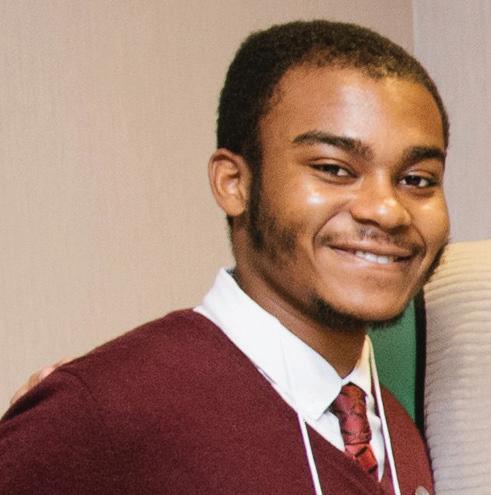
ERIC JARON JONES: I moved to Atlanta to start a job as a Project Engineer.
VLADIMIR COLAS: I went on a medical mission trip to a rural, Catholic community in Jamaica recently and I’m going to medical school at Florida State University next month.
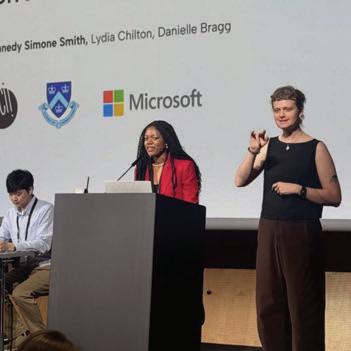
KYNNEDY SMITH: I won the NSF GRFP Fellowship! is is one of the most competitive and selective graduate fellowships in the country for emerging scientists. I also recently got my rst, 1st author research paper published at CHI ( e ACM (Association for Computing Machinery) CHI conference on Human Factors in Computing Systems). CHI is the largest and most prestigious conference in my discipline, so it’s pretty big to present there as a rst year PhD! I just got back from presenting my work at CHI in Barcelona, Spain! Here is the paper: https://dl.acm. org/doi/full/10.1145/3772318.3790533. e rst year of my PhD is going really well so far, and I even got over 100 citations! I’m actually 1 away from 150 which is crazy to me.
is year, three Ron Brown Scholars from the class of 2023—Kishanti Barmoh, Faith Buggs, and Aisha Makama—were selected as recipients of the Obama-Chesky Voyager Scholarship for Public Service, a prestigious national award recognizing students committed to creating positive change. Read more on page 31. •
RBSP BOARD MEMBERS
PATRICK BAKER Manager/Producer
DOUGLAS C. BOGGS Partner, DLA Piper LLP (US)
PETER A. BOYCE, II (RBS 2008) Founder & Managing Partner, Stellation Capital
TERRI DEAN Retired Corporate Executive
AMBASSADOR DIANA DOUGAN Chairman, Cyber Century Forum
DANE E. HOLMES Chief Administrative O cer, KKR
ANN D. HORNER
Retired Corporate Executive
MICHAEL A. MALLORY
President & CEO, Ron Brown Scholar Fund
Executive Director, Ron Brown Scholar Program
GAVIN MCFARLAND Philanthropist
ANDREW C. PILARO Chairman, CAP Properties Ltd
ANTHONY M. PILARO
Chairman Emeritus RBSF Board of Trustees
JONATHAN PIPER (RBS 1998) Chief Scienti c O cer, GE Healthcare
AARON S. WILLIAMS
Senior Advisor—Emeritus, International Development & Government Relations, RTI International
MICHAEL WINGER President, Monumental Basketball
JACK LESLIE Chairman Emeritus, Weber Shandwick
THADERINE D. MACFARLANE Philanthropist
JONATHAN MARINER Former Corporate Executive
MARVA A. SMALLS
Senior Strategic Advisor to the O ce of the CEO, Paramount EVP, Global Head of Inclusion & EVP, Public A airs, Kids & Family Entertainment Brands, Paramount
KATHY THORNTON‑BIAS
Senior Business Consultant, Sagency
MICHAEL TREISMAN
Managing Director, General Counsel & Chief Compliance O cer, Charlesbank Capital Partners
TOM WERNER Chairman, Boston Red Sox Partner and Co-Founder, Carsey-Werner LLC
MAX ARONIN
Sr. Director, Product Management, ServiceNow
MARCUS BANKS
Basketball Strategy and Team Counsel, LA Clippers
MICHAEL BILLINGS (RBS 1997) Global Investor
MATTHEW D. CUTTS
Head of US Policy & Government Relations, Dentons US LLP
ELIZABETH BOGGS DAVIDSEN Chief Executive O cer, GSG Impact
CHRIS FOLEY, PHD Principal Consultant, Plus Delta Partners
DANA GOLDSMITH
Entrepreneur VP, Business Development & Strategy, CvilleBioHub
ANTHONIE GOUDEMOND
Executive Coach, Business Leader, Advisory and Mentor
JONICE GRAY Partner, Paul Hastings LLP
LYNNE HALE
VP, Publicity and Communications, Lucaslm Ltd. (Retired)
AZADEH HARDIMAN
GM, Acquisition Experience Strategy, Progressive Insurance
MORGAN HARPER (RBS 2001) Director of Policy & Advocacy, American Economic Liberties Project
RITZA Y. HENDRICKS
Founder and Chief Content Producer, R.Y.Ink! LLC
TRACEY BROWN JAMES Managing Partner, e Cochran Firm
MILES A. JOHNSON (RBS 2004) Director, Googler Engagement Architecture, Google President, Ron Brown Scholar Alumni Association Board
MARY L. M. LEFAIVER, PHD
Global Human Capital Senior Manager: Leadership Development, PwC
GREG LORJUSTE
Executive Director of Operations & Protocol, State of Maryland, O ce of the Governor
JERMAINE LOWERY
VP, Financial Advisor, Wealth Management, Morgan Stanley
SHARON BRICKHOUSE MARTIN
VP, Health Services Integration, VHC Health
ETHAN MONREAL‑JACKSON (RBS 2008)
Founder, General Partner, Newtype Ventures
LESIA BATES MOSS
Founder & CEO, Bates Consulting Partners
CYNTHIA R. MURRAY
President, Cynthia Murray Enterprises, LLC
Principal, e Law O ce of Cynthia Murray (Admitted VA/GA)
RIA NICKENS
VP, Dodge & Cox
CARMELLE NORICE, MD‑PHD, (RBS 1997)
Clinical Director, Infectious Diseases, Merck Research Laboratories
DANIELLE PURFEY
Managing Director, Global Talent Brand, Accenture
EILEEN CASSIDY RIVERA
Chief Marketing & Communications Ocer, Longitude Health
GEORGINA SANGER
SVP Strategic Partnerships, EverFi, Inc.
ELSIE WILSON THOMPSON Attorney, W. M. ompson, Jr. PC
MICHAEL A. WILLIAMS, MD
Chief Medical Information O cer, University of Virginia Health System
TYRONE “WOODY” WOODYARD
Strategic Communications Executive VP, Corporate Communications, Lockheed Martin (Retired)
When leadership, vision, and service align, remarkable things happen. This year, three Ron Brown Scholars from the class of 2023—Kishanti Barmoh, Faith Buggs and Aisha Makama—were selected as recipients of the Obama-Chesky Voyager Scholarship for Public Service, a prestigious national award recognizing students committed to creating positive change.
The Voyager Scholarship, created by President Barack Obama, Mrs. Michelle Obama, and Airbnb CEO, Brian Chesky, supports rising college juniors who demonstrate a dedication to public service and global engagement. Each recipient receives up to $50,000 in financial aid, a $10,000 travel stipend, and access to a community of leaders shaping the future through service.
For Kishanti, Faith and Aisha, this honor represents more than recognition—it’s an opportunity to expand their impact, explore the world and further the values at the heart of the Ron Brown Scholar Program: leadership, service and excellence.
We look forward to seeing where their journeys take them next and how they continue to carry the Ron Brown legacy forward. •