





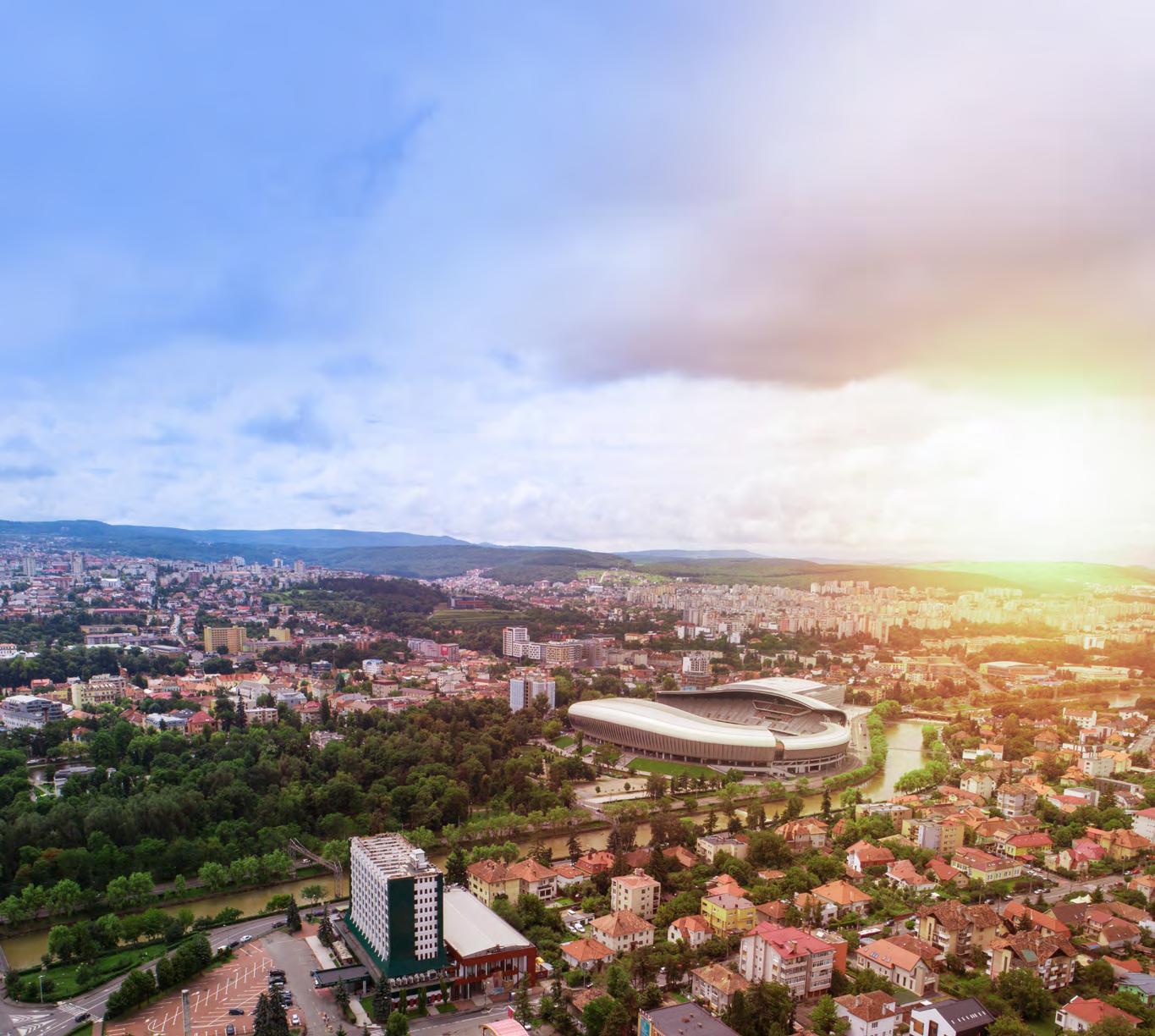


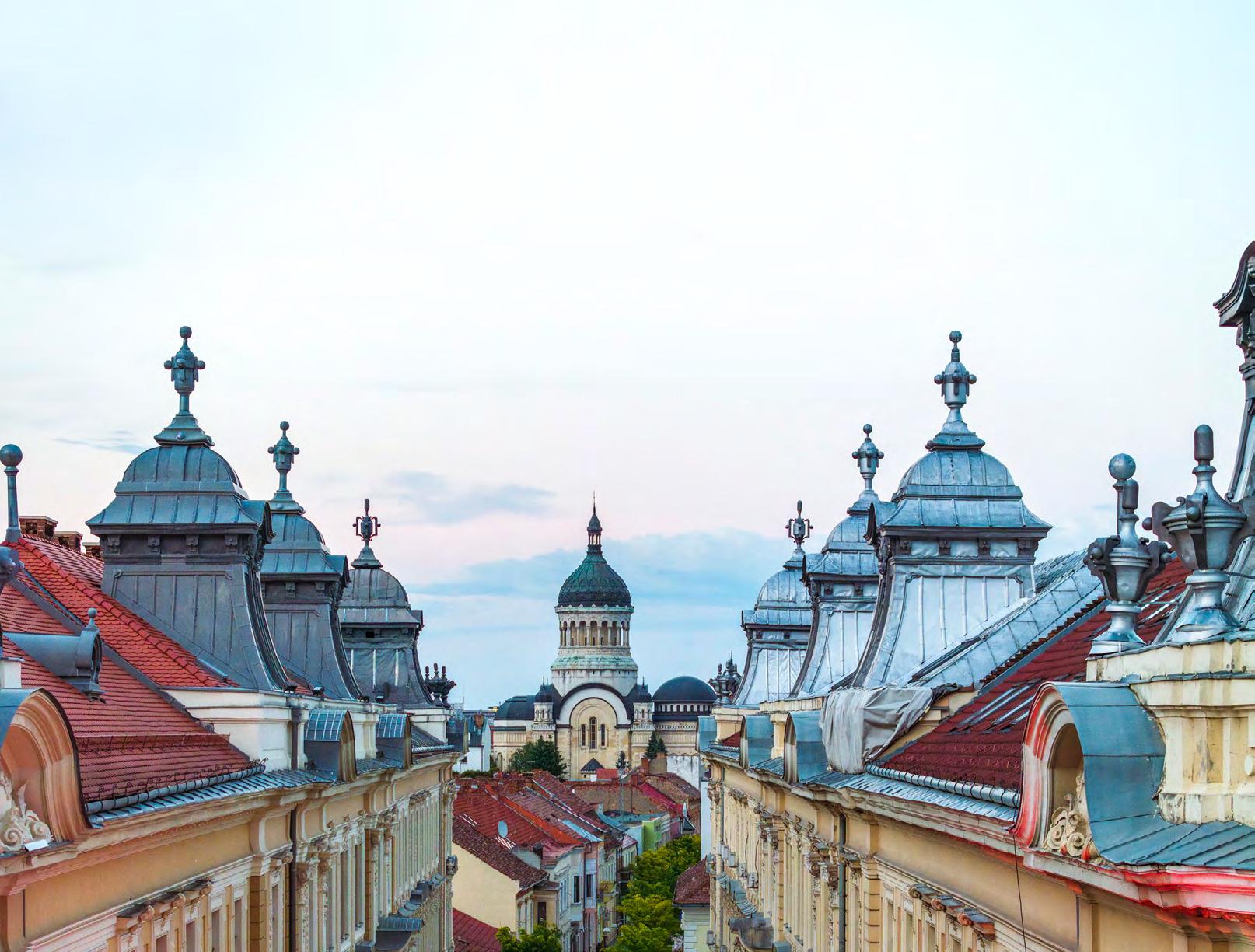
Cluj-Napoca is a city where vision meets possibility.
Rooted in over two millennia of history, it has always been a place where people shaped their future with courage and imagination. Today, that spirit continues — Cluj is more than a city, it is a community of ideas, talent, and innovation.
Here, every individual can discover their own value and uniqueness, at any stage of life. The city’s ecosystem and culture nurture not only talent, but also the belief that innovation is within all of us, waiting to be shared with society.
What sets Cluj apart is the belief that progress is built together. Universities, entrepreneurs, researchers, and citizens join forces with public institutions and partners to create solutions that matter, locally and globally. The “Cluj model” is not just about growth, but about purpose: transforming knowledge and collaboration into a city that inspires Europe and the world.
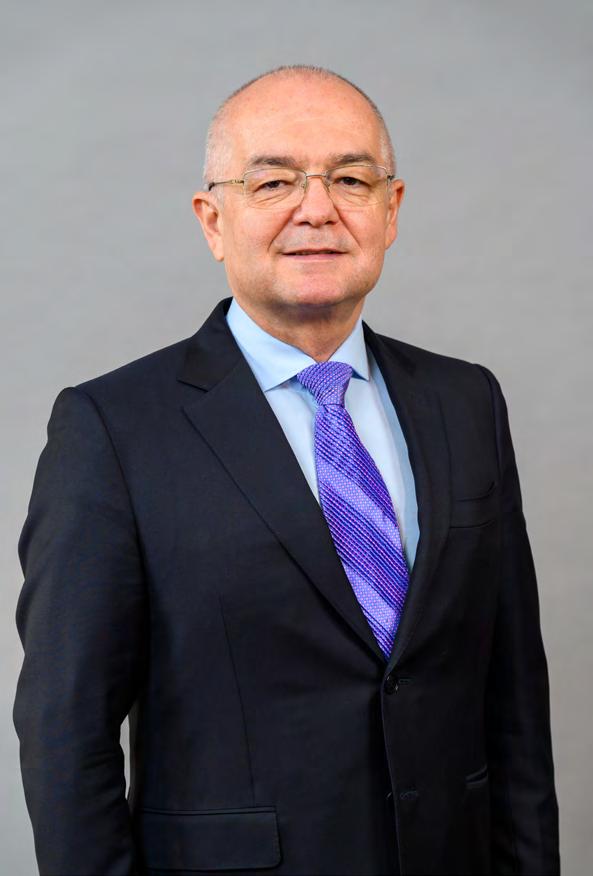
Emil Boc, Mayor of Cluj-Napoca
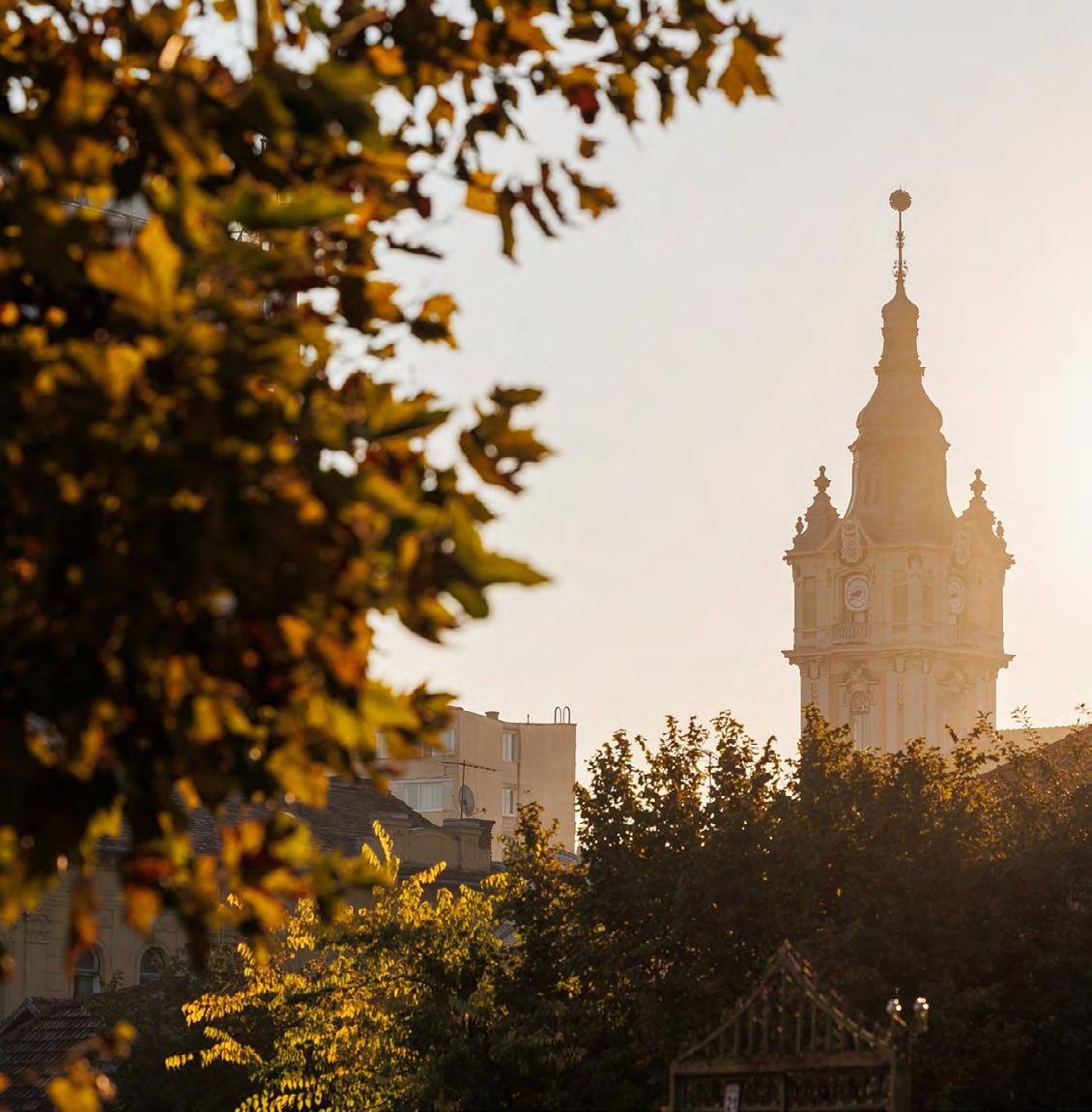
This magazine is a digital glimpse into the vibrant ecosystem of Cluj, where innovation and human value come together to shape the future.
More than a collection of stories, it is an invitation to explore how universities, entrepreneurs, researchers, public institutions, and communities collaborate to create solutions with impact far beyond the city.
Each page reflects the uniqueness of Cluj’s culture: a place where individuals discover their potential, ideas turn into projects, and partnerships grow into global success stories.
Our aim is to promote the actors who define this dynamic landscape, to celebrate their achievements, and to open doors for dialogue, exchange, and collaboration.
We warmly invite you to visit us, connect with our ecosystem, and initiate partnerships that can grow from Cluj to the world. Through these perspectives, readers are invited not just to observe, but to become part of Cluj’s ongoing story of value-driven innovation.

Cluj Cluster of Education C-EDU is the local ecosystem response to the need of addressing cross-sectoral learning and education needs of a city.
Today, the Cluster of Education C-EDU is a trustworthy partner for all the local ecosystem change processes and a committed supporter of making Innovation the drive for sustainable development and inclusivity in Cluj, Transylvania, Romania.
We are proudly supporting the achievement of strategic flagships of the New European Innovation Agenda, contributors to the European Regional Innovation Valley Transylvania, and the 1 million European deep tech innovation talents by 2030.
Created in 2020, the Cluj Cluster of Education C-EDU is a non-governmental association founded by:

Other members have joined the cluster in a pragmatic approach of tackling the needs of future education in the city. We are grateful for the contribution of:








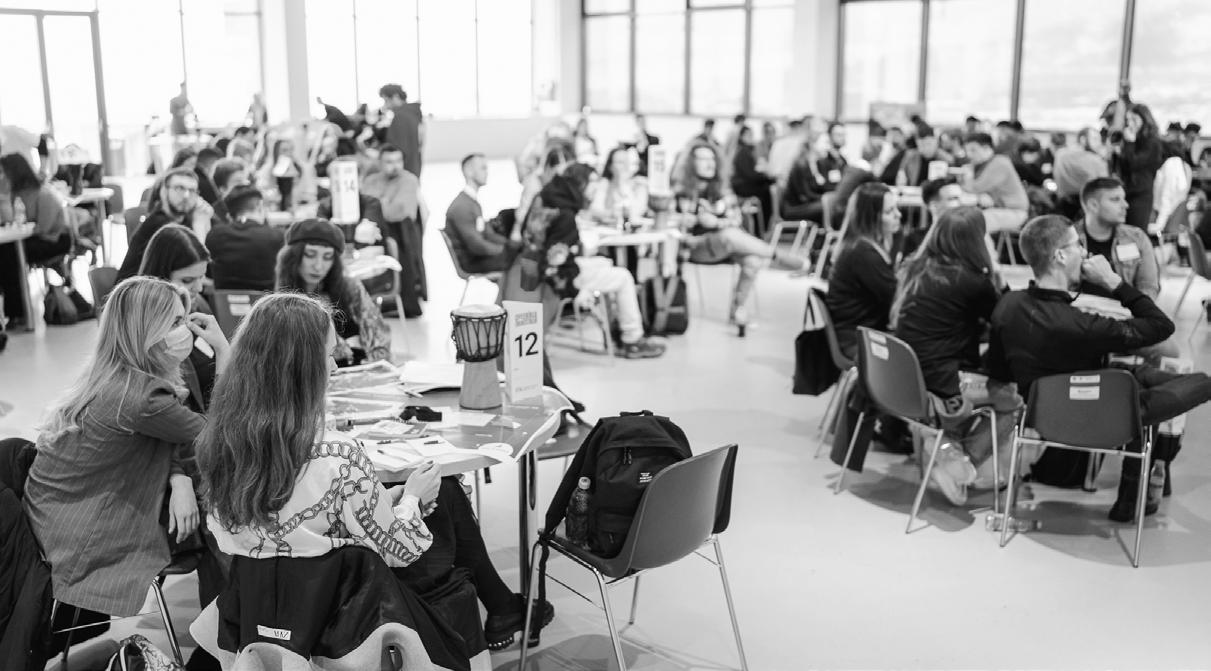
C-EDU invites the community of Cluj-Napoca to a conversation on the Future of learning in the city where values, collaboration, transfer of expertise and testing of new ways to deliver education are at the core of the discussion.
for Education
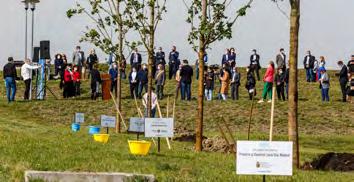
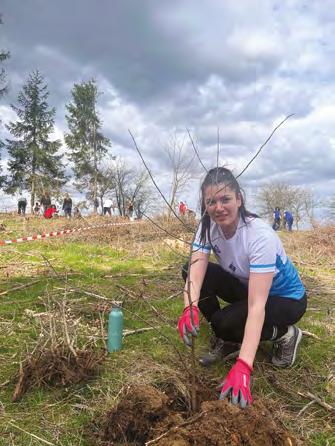
As a sustainable contribution to the city, the C-EDU cluster members took upon them the responsibility to plant a beautiful new park in one of the newest areas in the city, within Cluj Innovation Parc, each year increasing the number of trees and nurturing the future of a Green Cluj.
in the parc
The Cluster C-EDU brings poetry to the daily life of young people, families and seniors that enjoy spending time in the Central park.

de păpuși
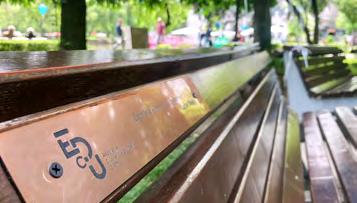
“Benches are speaking poetry” is a project that promotes the heritage of local poets by displaying quotes of poetry on the benches in the park, as a gentle gift for our souls and minds.
FIX Cluj is a community-driven incubation program designed to equip aspiring entrepreneurs with the knowledge, skills, resources, and networks necessary to navigate the start-up journey. This incubator helps young innovators tackle some of the most pressing social challenges and create digital solutions with a positive impact on their communities.
The FIX experience has a dual mission of boosting the entrepreneurial skills of every participant and growing sustainable start-ups youth founded and viable inthe new economy. The program consists of a free online e-learning hub created for aspiring entrepreneurs who want to join the start-up ecosystem, and the Incubator - a personalized journey created for young founders and teams looking to build and grow their start-up ideas. FIX provides grants of up to € 50.000 for transforming big ideas into reality.
Our program is also the contribution of Cluj to the New European Innovation Agenda incubating the deep tech talents and innovators of tomorrow.
FIX Cluj is part of the Cluj Innovation and Experiment Fund, implemented by the C-EDU Education Cluster, in partnership with the Municipality of Cluj-Napoca and Fondation Botnar, under OurCluj umbrella, and the support of AROBS Transilvania Software, BCR, Bosch Romania, Cluj Hub, .msg, Numa Film, NTT DATA Romania, Vitrina Advertising, Wolfpack Digital.
www.fixcluj.eu fixcluj@c-edu.ro


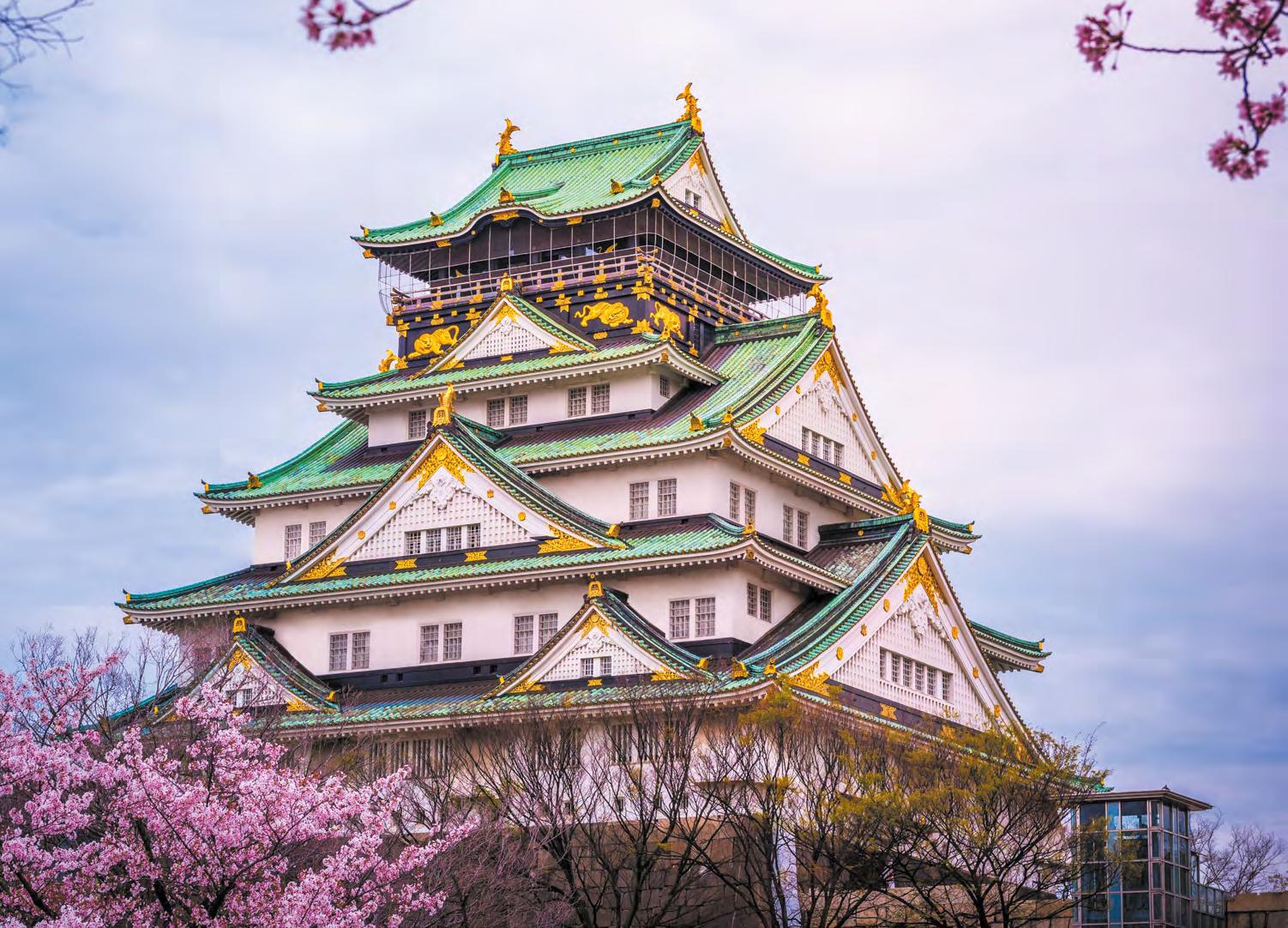
Cluj’Days at Expo Osaka: Showcasing Transylvania’s Innovation Heart
In 2025, Cluj-Napoca will bring the heart of Transylvania to the world stage with Cluj’Days, a two-day program inside the Romanian Pavilion at Expo Osaka. Conceived as a vibrant showcase, the event blends art, culture, innovation, and opportunity, offering visitors a taste of the city while inviting them to imagine its future.
The program is coordinated by the Municipality of Cluj-Napoca, in partnership with leading
local institutions. It highlights the city’s valuable assets across four pillars: investment potential, academic excellence, cultural energy, and tourism appeal. Through art exhibitions, live performances, interactive installations, and immersive video experiences, visitors will discover a place where creativity and technology converge.
Cluj’Days will spotlight the city’s thriving IT sector, start-ups, and creative industries, along-
大阪万博「Cluj’Days」:トランシルヴァニアのイノベーションの中心地を紹介 トランシルヴァニアを体験し、 未来と繋がろう!
side its rich academic landscape. Represented by the Cluster of Education (C-EDU), all major universities and research partners will be present, reflecting the strong link between knowledge, innovation, and international collaboration.
Tourism will also take center stage. With heritage, cultural festivals, natural beauty, and contemporary lifestyle as focal points, Cluj will be presented as both a modern European hub and a gateway to Transylvania. A special contest will make the invitation even more tangible: the most engaged visitors will win a trip to Cluj in 2026, complete with tickets to the world-renowned UNTOLD Festival or other flagship events.
By aligning with Expo Osaka’s theme, “Designing Future Society for Our Lives,” Cluj underlines its role as a city of value-driven innovation. The aim is clear: to attract investments, build academic and research partnerships, boost tourism, and strengthen international ties.
Cluj’Days is more than an event — it is an open invitation. An invitation to experience Transylvania, to connect with the ideas and opportunities of tomorrow, and to discover why Cluj has become a European city of inspiration for the world. Come and meet us home, in the heart of Transylvania, a cradle of kindness, welcoming each and every one of you.
2025年、クルージュ=ナポカは、大阪万博ル ーマニア館で開催される2日間のイベント「ク ルージュ・デイズ」を通じて、トランシルヴ ァニアの中心地を世界の舞台へと誘います。
活気に満ちたショーケースとして構想さ れたこのイベントは、芸術、文化、イノベー ション、そして様々な可能性を融合させ、来 場者の皆様に街の雰囲気を味わって頂くと同 時に、その未来への想像を掻き立てます。
このプログラムは、クルージュ=ナポカ 市が地元の主要機関と連携して企画・運営し ています。投資の可能性、学術的卓越性、文 化的な活力、そして観光の魅力という4つの柱 を通して、この都市の貴重な資産を際立たせ ています。美術展、ライブパフォーマンス、 インタラクティブなインスタレーション、そ して没入型ビデオ体験を通して、来場者の皆 様は創造性とテクノロジーが融合する場所を 体験することができます。
Cluj’Daysでは、活気あるITセクター、ス タートアップ企業、クリエイティブ産業、そ して豊かな学術環境に焦点を当てます。Cluster of Education(C-EDU)を代表として、主 要な大学や研究パートナーが一堂に会し、知 識、イノベーション、そして国際協力の強い 結びつきを体現します。
観光も中心的な位置を占めます。歴史遺 産、文化祭、自然の美しさ、そして現代的な
ライフスタイルを軸に、クルージュは近代的 なヨーロッパの中心地であると同時に、トラ ンシルヴァニアへの玄関口として位置づけら れます。特別なコンテストによって、この招 待はさらに具体的なものとなります。最も多 くの関心を集めた訪問者には、2026年に”クル ージュへの旅”が贈られ、更に、世界的に有名 なUNTOLDフェスティバルやその他の主要イ ベントのチケット贈られます。
クルージュ市は、大阪万博のテーマ「い のち輝く未来社会のデザイン」に沿うことに より、価値主導型イノベーション都市として の役割を強調しています。その目的は明確で
す。投資誘致、学術・研究パートナーシップ の構築、観光の活性化、そして国際連携の強 化です。
Cluj’Daysは単なるイベントではありませ ん。それは、あらゆる可能性を秘めた招待状 です。トランシルヴァニアを体験し、明日の アイデアや機会に触れ、そしてクルージュが なぜ世界にインスピレーションを与えるヨー ロッパの都市となったのかを発見するための 招待状です。
トランシルヴァニアの中心、優しさのゆ りかご、そして皆様一人ひとりを温かくお迎 えする私たちの故郷に、ぜひお越しください!
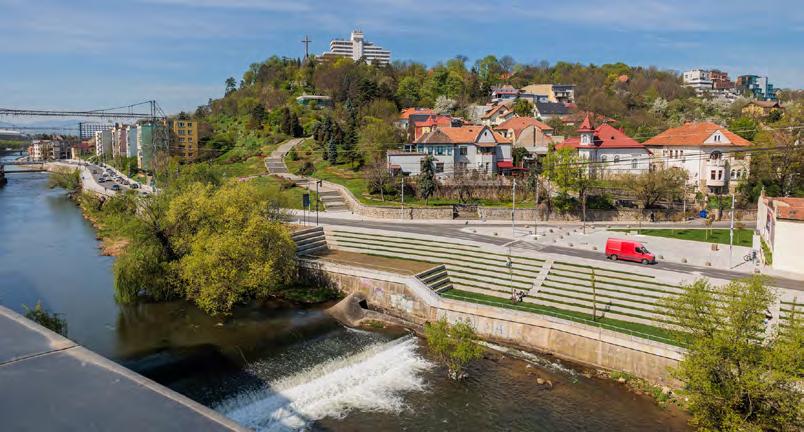
Cluj-Napoca is not only Romania’s leading innovation city — it is also a European pioneer in rethinking the relationship between cities and their surrounding villages. Through the Startup Village Landscape and the Rural Urban Hub Cluj the region is testing a new collaborative model that bridges urban advantages with rural potential, and has already gained recognition at European level as a flagship bottom-up experiment.
Launched in 2021 with the communes of Ciurila and Petreștii de Jos and coordinated by the Cluster of Education (C-EDU) and the Municipality of Cluj-Napoca, Startup Village is part of the European Commission’s long-term vision for rural areas.
The Rural Urban Hub expands this effort by acting as a living laboratory where communities, universities, companies, and public authorities
co-design solutions. This approach — highlighted by the Partnership for Regional Innovation as a best-practice for place-based transformation — shows how digital tools, green transition policies, and innovative governance can reduce disparities and generate growth.
From improving broadband connectivity to enabling e-learning, e-health, agri-business, and tourism, these initiatives demonstrate how innovation can flourish across territories. The European Commission’s Startup Village further positions Cluj as a key contributor to the EU’s agenda for resilient, sustainable rural areas.
What makes Cluj’s approach unique is its focus on people: empowering communities with knowledge, infrastructure, and partnerships that ensure no territory is left behind. By embedding local experiments into the European innovation agenda, Startup Village and Rural Urban Hub Cluj
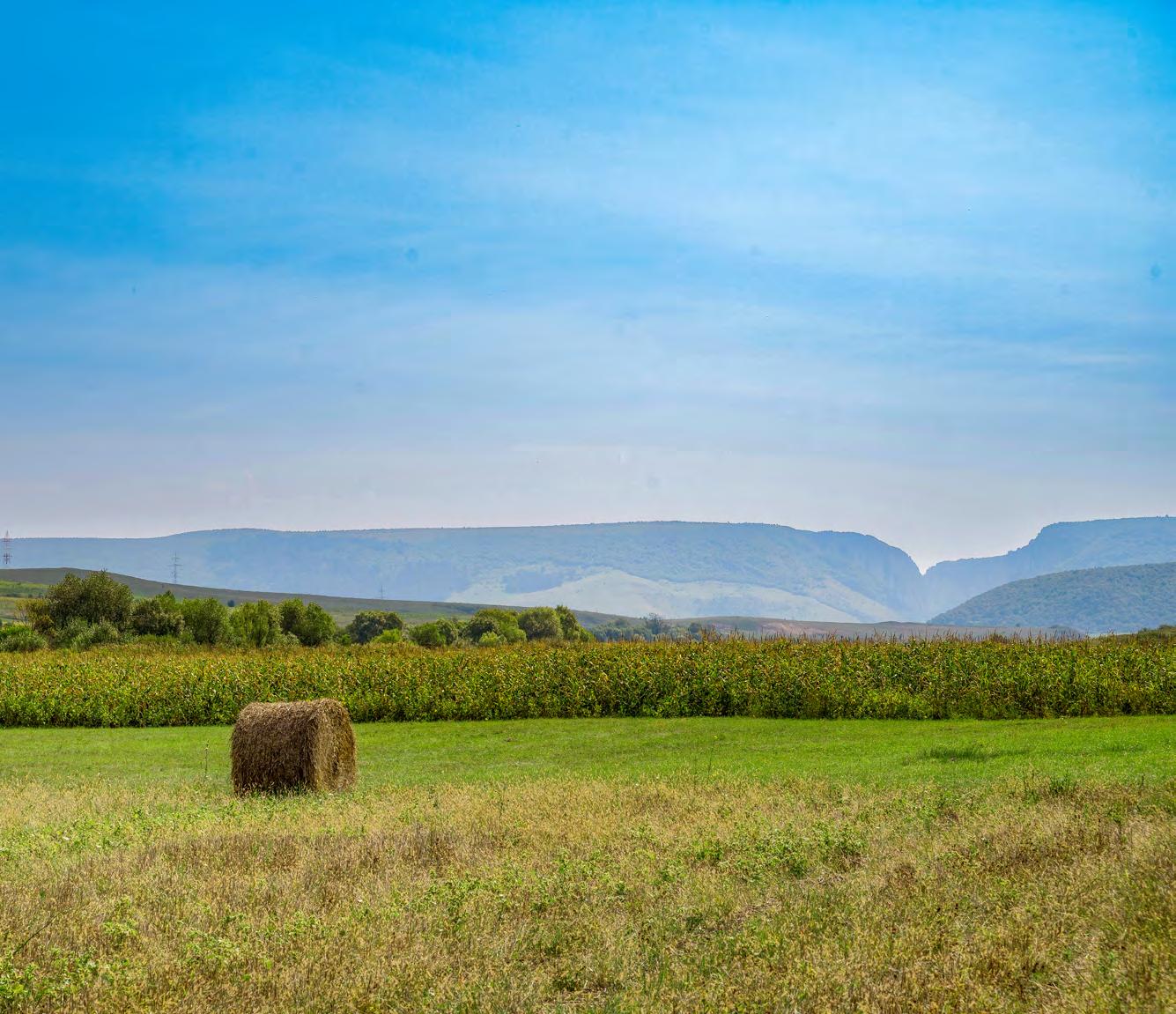
proves that the future of Europe can be shaped from the bottom up — one community at a time.
Today, it is part of the European Commission’s Territories in Action journey a program that supports nearly 200 regions across Europe in testing new forms of place-based innovation. The model is simple but powerful: connect the advantages of Cluj’s universities, start-up ecosystem, and business clusters with the needs and potential of surrounding rural areas. This has meant deploying high-speed broadband, opening collaborative spaces, supporting agri-business and eco-tourism, and piloting e-learning and e-health tools. The Joint Research Centre (JRC) has cited Cluj’s Startup Village as a contribution to the European collection of practices for innovation in rural areas.
Recognition also comes from Eurocities, which has praised Cluj for showing how urban-rural partnerships can drive the green and digital transitions. By co-creating solutions with communities, Cluj demonstrates that local governance, when combined with innovation, can become a powerful European story.
The ambition goes beyond local impact. Startup Village and Rural Urban Hub Cluj are not only about rural development — they are about Europe’s future. They show that when territories act together, pooling knowledge and resources, they can design resilient, inclusive societies where no community is left behind.
To be a territory for European innovation today means more than hosting start-ups or laboratories. It means addressing deep societal challenges with the courage to experiment, the capacity to collaborate, and the vision to transform technology into a tool for people. In this sense, Cluj-Napoca and Transylvania stand out as a region where the New European Innovation Agenda (NEIA) becomes tangible.
Here, innovation begins with people and their needs. The region’s universities, with over 100,000 students, generate talent and research that connect directly to priorities such as health, mobility, sustainability, and education. Through partners such as the Cluster of education C-EDU, Cluj IT, Transilvania IT, AgroTransilvania, Transylvanian Furniture, and the Creative Industries Cluster, knowledge flows into solutions that strengthens communities, retain talent, and builds resilience.
The Startup Village Landscape and the Rural Urban Hub embody this philosophy. By linking the resources of Cluj’s urban ecosystem with the potential of rural communities, they tackle disparities in connectivity, opportunity, and inclusion. Recognized by the European Commission’s Joint Research Centre and highlighted within Territories in Action, these initiatives show that deeptech is not just about advanced science — it is about solving deep social problems like digital exclusion, lack of mobility, or limited access to services.
Being a territory for European innovation also means being outward-looking. Cluj’s participation in Eurocities, recognition by the Committee of the Regions, and involvement in EU pilot projects demonstrate its commitment to co-creating Europe’s future. The city aligns with the NEIA not as a follower, but as a contributor to the Union’s goals of sustainable technologies, resilient value chains, and an inclusive innovation culture.
Transylvania’s message is clear: innovation here is rooted in community, guided by values, and enabled by technology. To be a territory for European innovation means placing people at the center, seeing technology as the medium, and transforming creativity into solutions that inspire not only a region, but all of Europe.
Transylvanian by heart.
European by birth.
International by culture.
Rooted in the local community, we dared to dream and reach global horizons from earth to space. With drive, technology and innovation. arobs.com | arobsgrup.ro
contact.rjcc@c-edu.ro
www.welcometocluj.ro
Cluj-Napoca has long embraced its role as a multicultural city. The city understands that newcomers are not only residents to be supported, but potential resources for the community’s growth and resilience. Integration here is not about one-directional assistance, but about creating conditions where everyone can contribute and find their place.
In this spirit, Cluj is developing the OneStop-Shop as a practical and symbolic gateway for newcomers. More than a service, it is a com munication tool designed to make the first steps into local life clear, accessible, and welcoming. Available both online and offline, the One-StopShop gathers essential information—from legal advice, housing, and labor opportunities to cul tural activities and leisure—and makes it availa ble in multiple languages.
The initiative reflects a holistic vision of inte gration: to ensure that migrants feel at home, understand their rights and opportunities, and are encouraged to participate fully in the city’s social, cultural, and economic life. By centralizing resources and guidance, the One-Stop-Shop
smooths the transition for newcomers while reinforcing the city’s commitment to inclusion.
Supported with European resources, the project is also pioneering: it is the first Romanian welcome point designed as an entry into local citizenship—a concept that emphasizes belonging,
International Affairs and Foreign Investment Department
For more information: International Affairs and Foreign Investment Department contact@clujbusiness.ro +40 264 591 273



Japan Desk, KPMG in Romania kpmg.ro
The Honorary Consulate of the Republic of Burundi
Address: 38-38, Gh. Marinescu Street, Cluj-Napoca
Tel.: 0040 722 285 354
E-mail: consul@burundi.ro
Web: www.burundi.ro
Honorary Consul: Mr. Ștefan Berciu
Honorary Consulate of the Republic of Bulgaria
Address: str. Profesor Gheorghe Marinescu
nr. 36 – 38, Office nr. 2, Cluj-Napoca
Tel:+ 0040 751 284 535
Email: cluj@consulatb.ro
Honorary Consul: Mrs. Ștefania Berciu Martac
The Honorary Consulate of the Kingdom of Denmark
Address: 7/2 Sovata street, 400241 Cluj-Napoca
Tel: +40 722 300 792
E-mail: carvel@umgate.dk
Honorary Consul of the Kingdom of Denmark: Carmen Rodica Vele
The Honorary Consulate of the Republic of Estonia
Address: ABC Incubator, 57-59, C-tin Brâncuși
Street, Cluj-Napoca
Tel.: +40742225405
E-mail: bianca.muntean@transilvaniait.ro
Honorary Consul: Mrs. Bianca Muntean
Honorary Consulate of Ethiopia to Cluj-Napoca
Address: Str Călăraşilor 1 – Pavilion C, Parter
Tel.: +40 744 705 519
Email: consul@ethiopia.ro
Honorary Consul: Mr. Viorel Zaharia
The Honorary Consulate of Finland
Address: 16/1, Traian Grozavescu Street, Cluj-Napoca
Tel: +40 741 258 260
Email: honorary.consulate@rofinn.com
Honorary Consul: Dr. Mircea Hotoleanu
The Honorary Consulate of the Republic of France
Address: 22 I.C. Bratianu Street, Cluj-Napoca
Tel: (+40) 744 787 717
E-mail: agenceconsulaire.cluj@gmail.com
Honorary Consul: Mr. Pascal Fesneau
The Consulate of the Republic of Hungary
Address: 23 Unirii Square, Cluj-Napoca
Tel.: +4.0264.59.63.00
E-mail: mission.kol@mfa.gov.hu
General Consul: Mr. Mile Lajos
The Honorary Consulate of the Republic of Italy
Address: 16, Emil Racovita Street, Apt. 8,
Cluj-Napoca
Tel.: +40 744 773 862
E-mail: onorario.cluj@esteri.it
Honorary Consul: Mr. Massimo Novali
The Honorary Consulate of Ireland
Address: 115, Septimiu Albini Street, Cluj-Napoca
Email: sp.omahony@honoraryconsul.ie
Honorary Consul: S-P O'Mahony

The Honorary Consulate of the Republic of Kazakhstan
Address: 41, Card. Iuliu Hossu Street, Cluj-Napoca
Tel.: +40 364 881 640
E-mail: kazah.consulatcluj@neocrest.ro
Honorary Consul: dr. ing. Ștefan Gadola
The Honorary Consulate of the Republic of Lithuania
Address: Cluj Business Campus (CBC Bistro)
Str. Henri Barbusse 44-46, Corp A, Cluj-Napoca
Tel: +40724567363
E-mail: consulate.lt@sab-company.ro
Honorary Consul: Mrs. Anca Rarău
The Honorary Consulate of Mexico
Address: Sigma Business Center, 109, Republicii Street, Cluj-Napoca
E-mail: consulmexhcluj@gmail.com
Honorary Consul: Mr. Dorin Zăgrean
The Honorary Consulate of Republic of Moldova
Address: 95-97, Bdul. 21 Decembrie 1989, ap. 4, Mezanin, Cluj-Napoca
Tel: +40 757 777 906
E-mail: consulat.moldova.cluj@gmail.com
Honorary Consul: dna. Laurentia-Niculina Moldovan
The Honorary Consulate of the Kingdom of the Netherlands
Address: 11, Moților Street, Cluj-Napoca
Tel.: +40774020383
E-mail: info@dutchconsulatecluj.nl; w.reijers@dutchconsulatecluj.nl
Honorary Consul: Mr. Wouter Reijers
Honorary Consulate of the Republic of North Macedonia to Cluj-Napoca
Address: Calea Moților, nr. 11
Tel.: (004) 0746-198.445
E-mail: luminita.silaghi@googlemail.com
Honorary Consul: Mrs. Luminița Silaghi Dumitrescu
The Honorary Consulate of the Republic of Poland
Address: 10, Republicii Street, Cluj-Napoca
Tel: +40 722 466 433
E-mail: konsulat.clujnapoca@gmail.com
Honorary Consul: Mrs. Mihaela-Monica Călușer
The Honorary Consulate of Sierra Leone
Address: 5, Paul Chinezu Street, Cluj-Napoca
E-mail: consul@sierraleone.ro
Honorary Consul: Mr. Viorel Zaharia
The Honorary Consulate of the Republic of Slovenia
Address: 16, Nichita Stănescu Street, Cluj-Napoca
Tel.: 0364-803.803
E-mail: lucia.morariu@eximtur.ro
Honorary Consul: Mrs. Lucia Nora Morariu
The Honorary Consulate of Spain
Address: 15, C-tin Brancoveanu Street, Cluj-Napoca
Tel.: +40 264 462 664
E-mail: josearnau@me.com
Honorary Consul: Mr. José Arnau
The Honorary Consulate of Sweden
Address: 69, Juc-Herghelie, Jucu
Tel.: +40 720 660 620;
E-mail: info@consulateofswedencluj.org
Honorary Consul: Mr. Carl Widell
The Honorary Consulate of the Republic of Tunisia
Address: 42, Octavian Goga Street
Tel.: 0264 700 766
E-mail: office@consulattunisiacluj.ro
Honorary Consul: Mr. Decebal Victor Cotoc
The Honorary Consulate of the Republic of Turkey
Address: Buna Ziua Street, Cluj-Napoca
Tel.: +4.0264.43.84.02
E-mail: fahri.konsoloslugu_turkiye.cumhuriyeti @vitacom.ro
Honorary Consul: Mr. Vasile Andrei Vita
The Honorary British Consulate for Cluj-Napoca
Tel.: +40744873340
E-mail: shajjad.rizvi@brcconline.eu
Honorary Consul: Mr. Shajjad Rizvi
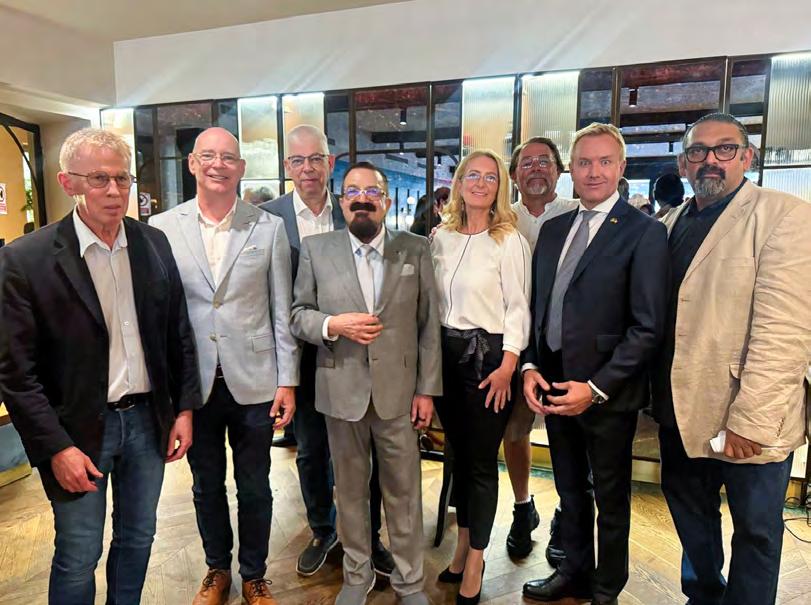
Cluj International Committee (CIC) was created to bring together the increasing international business community (companies, organisations, as well as individuals) who chose to work and live in Cluj-Napoca.
Founded by international business chamber leaders and consulates based in Cluj, the CIC has been creating for years various opportunities to network, interact and share experiences, all
The Cluj International Committee currently has a board formed of eight directors: Wouter Reijers, Carl Widell, Ludger Thol, Georgeta Moldovan, Antonio Patane, Emmett King, Alain Schodts and Shajjad Rizvi. They are constantly assisted by partners, collaborators and representatives of all the foreign business clubs active in Cluj Napoca. For more information on this association:
www.clujinternational.com / contact@clujinternational.com
be one of the leading cities in Europe. Cities can outshine and outperform whole nations, attract investments, become efficient tech hubs, and attract the greatest minds to live, work and play. To ensure Cluj follows this path, it needs to engage, forge dialogue and create community between its foreign citizens and local government.
critical for a soft landing in Cluj and for an easier adjustment to life in Romania. The CIC respects all nationalities and promotes cohesion and international partnerships in Cluj and Transylvania alike.
The thrilling world of international business attracts the most brilliant minds and sharpest people to excel in relationships, leadership, and financial acumen and helps create a better future for all, especially in a city like Cluj which aims to
“We are bound by a commitment to understand the needs of the citizens of Cluj (from local to global) and facilitate the development of the city in a collaborative, knowledge-based environment that promotes excellence to improve business service models and outcomes” says the current CIC President, Shajjad Rizvi, Honorary Consul for Cluj - United Kingdom, The CIC’s main annual event, “Meet the Mayor”, manages to gather the international community for a live face-to-face debate with the Mayor of Cluj, Mr. Emil Boc.
This open dialogue brings forward topics like city planning, education, international relations, geopolitics, traffic developments and environmental challenges, all of these being openly discussed for the success and well-being of all the citizens of Cluj Napoca.
1.500
24.000
80.000

Babeș-Bolyai University is the top Romanian university in the University Metaranking 2018 of the Romanian Ministry of Education and Research.
UBB has become an emblem of success for Cluj and for the entire country. It is a dynamic and constructive institution well integrated into society and oriented towards the future, a future which it can design, prepare, and build. BabeșBolyai University offers programs of study in Romanian, Hungarian, German, English and French. It is classified as an advanced research and education university by the Ministry of Education.
(source: ubbcluj.ro)
The Technical University of Cluj-Napoca, an “Advanced Research and Education University” as awarded with the Order of the Ministry of National Education is defined by dynamism and a proactive spirit. Fully integrated into the international academic life, the domains of study range widely from engineering to architecture, from fundamental sciences to social sciences, humanities, and arts.
(source: utcluj.ro)
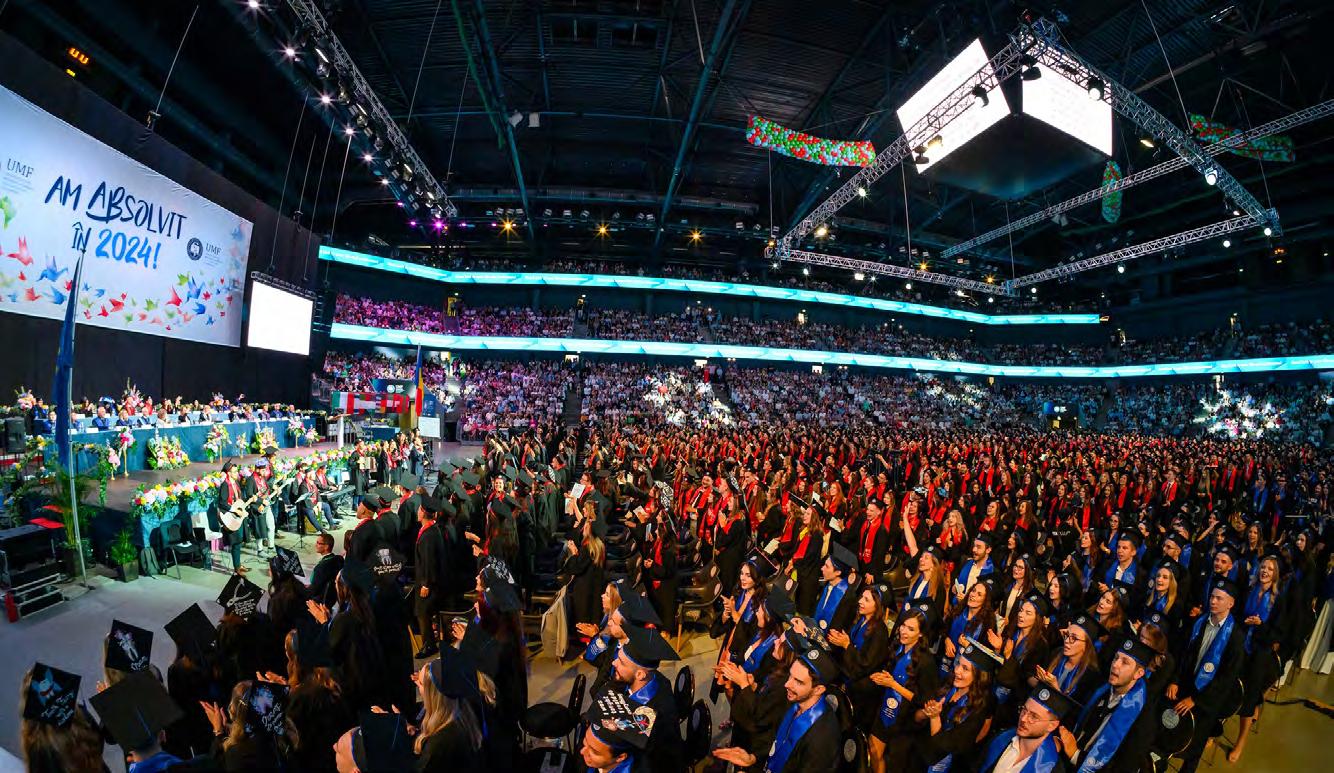
Iuliu Hațieganu University of Medicine and Pharmacy is a place where the present honors the past and builds the future. Throughout its existence, the medical school of Cluj-Napoca has constantly received national and international recognition. The study programs have been improved and adapted to the modern requirements of international students. The mission of the university is to provide high quality education, training and research while contributing to the overall development of the Romanian society and its European integration.
(source: umfcluj.ro)
of Agricultural Sciences and Veterinary Medicine Cluj-Napoca
The University of Agricultural Sciences and Veterinary Medicine Cluj-Napoca is the successor of the prestigious Higher School of Agriculture of Cluj, founded more than 150 years ago, in October 1869, under the name of Institute of Agronomic Studies, Cluj Mănăștur.
(source: www.usamvcluj.ro)
With an existence of almost 100 years, the Art and Design University of Cluj-Napoca was, at the time of its foundation, the first such academic institution in Transylvania, created to cover the need for specialization in the field of fine arts and to modernize the Transylvanian Romanian artistic movement of the interwar period. At the moment, UAD has a reinforced teaching staff with many young artists and a good national and international prestige.
(source: uad.ro)
Gheorghe Dima Music Academy came into being in 1919, part of a lively modernizing process involving the whole Romanian education system that was triggered by the exceptionally dynamic post-war reconstruction climate. The Academy’s first rector, Gheorghe Dima, has set high quality standards, acquired during his studies in Germany, to the recently established institution. The Academy currently has 40 partner universities, all throughout Europe.
(source: amgd.ro)
The Sapientia Hungarian University of Transylvania was established in 2001 as an independent higher education institution in Romania, with the aim of providing tertiary education in Hungarian language. Efficient partnership with domestic and International higher education and research institutions created the conditions for joining the European Higher Education Area and represent further opportunities for the development of research and teaching, through student and teacher exchange programs. (source: sapientia.ro)
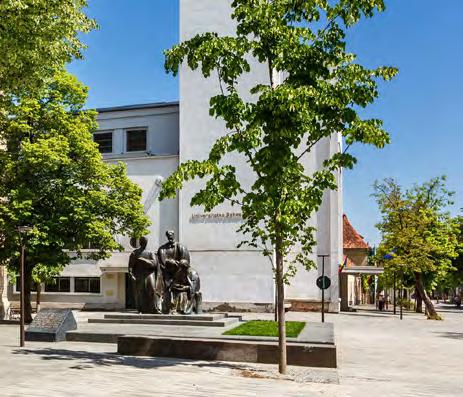
Protestant Theological Institute of Cluj-Napoca
The Protestant Theological Institute of Cluj-Napoca (PTI) is a university training Reformed, Lutheran and Unitarian ministers for those three churches in Romania. The Institute is an independent entity, accredited by the Romanian Ministry of Education.
(source: proteo.cj.edu.ro/ro)
Cantemir Christian
Dimitrie Cantemir Christian University is a free and open private higher education and scientific research institution. The University operates under the auspices of Dimitrie Cantemir Cultural Association and undertakes other activities which are related or complementary to the education and research activities.
(source: ucdc.ro)

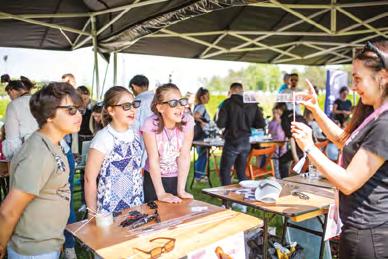
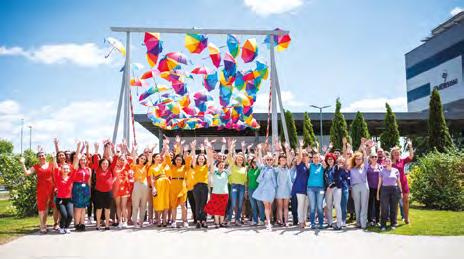


In 2019, a quiet yet powerful movement began in Romania’s classrooms. It started with a simple belief: if teachers feel well, supported, and valued, the ripple effects will reach entire generations of students. This idea became the seed from which the InIm Institute grew, guiding its efforts to create concrete programs that could make this vision a reality.
The very first program—Teachers’ Well-being training— marked the beginning of a national movement to support educators’ well-being. Today, this initiative has reached 4,915 teachers from every county in Romania, directly impacting the well-being of 122,875 students. Accredited by the Ministry of Education, this program became part of national initiatives such as the Romania Secondary Education Project (2024) and the National Recovery and Resilience Plan (2025) through projects like “School of Well-being – Learning to Belong” (Cluj) and “School of Well-being – Promoting a Psychosocial Well-being Culture in Schools” (Iași).


In 2021, InIm Institute asked a question that had never been formally explored in Romania: What is the emotional health of our teachers?
Between March and May that year, the Institute conducted the first national study on the topic. Its results didn’t remain on paper—they laid the foundation for a framework that could guide future accreditation standards, supporting domains, and courses for teacher well-being.
But InIm Institute’s vision reached further. Through Being Romania, part of the global Being Initiatives, InIm Institute helped build a national agenda for youth mental health. Fifteen national events, 168 organizations, and 207 individuals contributed to this effort, highlighting both the key drivers and the biggest challenges affecting young people aged 10 to 24.
Along the way, InIm Institute has become a hub for ideas and action, launching programs to support well-being in schools. Since 2019, it has organized six national and international conferences on mental health, gathering over 650 participants on site and more than 20,000 online, while also establishing two annual traditions: February – the Month of Well-being for Teachers and the Emotional Health Week. These initiatives equip teachers, students, and preschoolers with skills to understand, regulate, and value their emotions. By now, over 5,000 teachers have participated, directly impacting the well-being of 125,000 students
The Institute’s work has never been limited to schools alone. Rooted in the belief that well-being is a community concern, InIm has become actively involved in the local ecosystem. One recent example is Safe Journeys to School. Supported by the FIA Foundation and developed through a multisector partnership including Crucea Albă Foundation, Babeș-Bolyai University, the County School
Inspectorate and the Police Inspectorate, the project combined infrastructure assessment with students’ lived experiences, ensuring sustainable impact for the entire community.
With increasingly crowded urban traffic, the safety of children on their way to school became a shared concern for parents, teachers, and the community. Ten schools took part, while InIm used participatory methods such as the Mosaic Approach to give students a voice. They reported dangerous areas, co-created solutions, and revealed how a sense of safety—or lack of it— shapes their daily well-being.
The same philosophy now extends to the workplace. Employees, like students, need to feel connected, supported, and safe. In 2024, building on this experience, InIm Institute launched the W2B program in partnership with EUCOM, tailored to the business environment. Already delivered to three companies, the program blends InIm Institute’s expertise in well-being and education with EUCOM’s organizational know-how. Participants engage in interactive experiences that focus on emotional adaptability, clear communication, stress management, and practical problem-solving. Leaders learn strategies to support their teams’ mental health, helping organizations build cultures based on genuine support, collaboration, and sustainable performance.
From classrooms to boardrooms, from research to community action, the story of InIm Institute is one of vision and persistence. It is a community of pioneers who believe that when we prioritize well-being, resilience, and emotional intelligence, we transform futures. For more information on the activity of InIm Institute, please access https://iniminstitute.com/
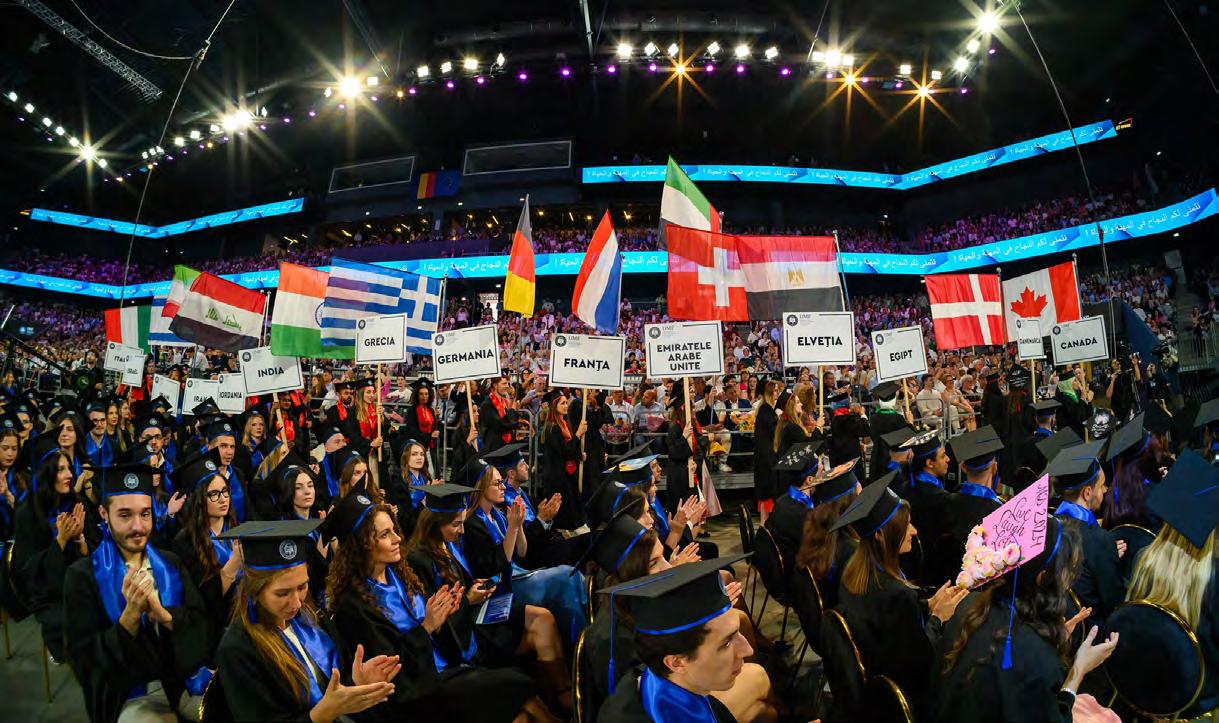
Cluj is clearly the second largest university centre in Romania and the one that enjoys the most important international recognition.
Cluj has 9 universities, of which 6 are public and 3 are private.
Cluj-Napoca is a great option for students to consider for their study abroad experience, with qualifications being recognised around the whole of Europe thanks to the fact that most Romanian universities align their programs with the Bologna System.
Almost 10% of the total number of students in the municipality passed the Baccalaureate exam in another country. The universities you can find here are offering courses in Romanian, German, Hungarian, French and English, being extremely accessible for those choosing to study abroad in Romania.
The universities from Cluj-Napoca host over 3.000 foreign students, around 600 Erasmus students annually and hundreds of academic cultural exchanges.
Invented for life
Let’s shape a new era of mobility. Together.


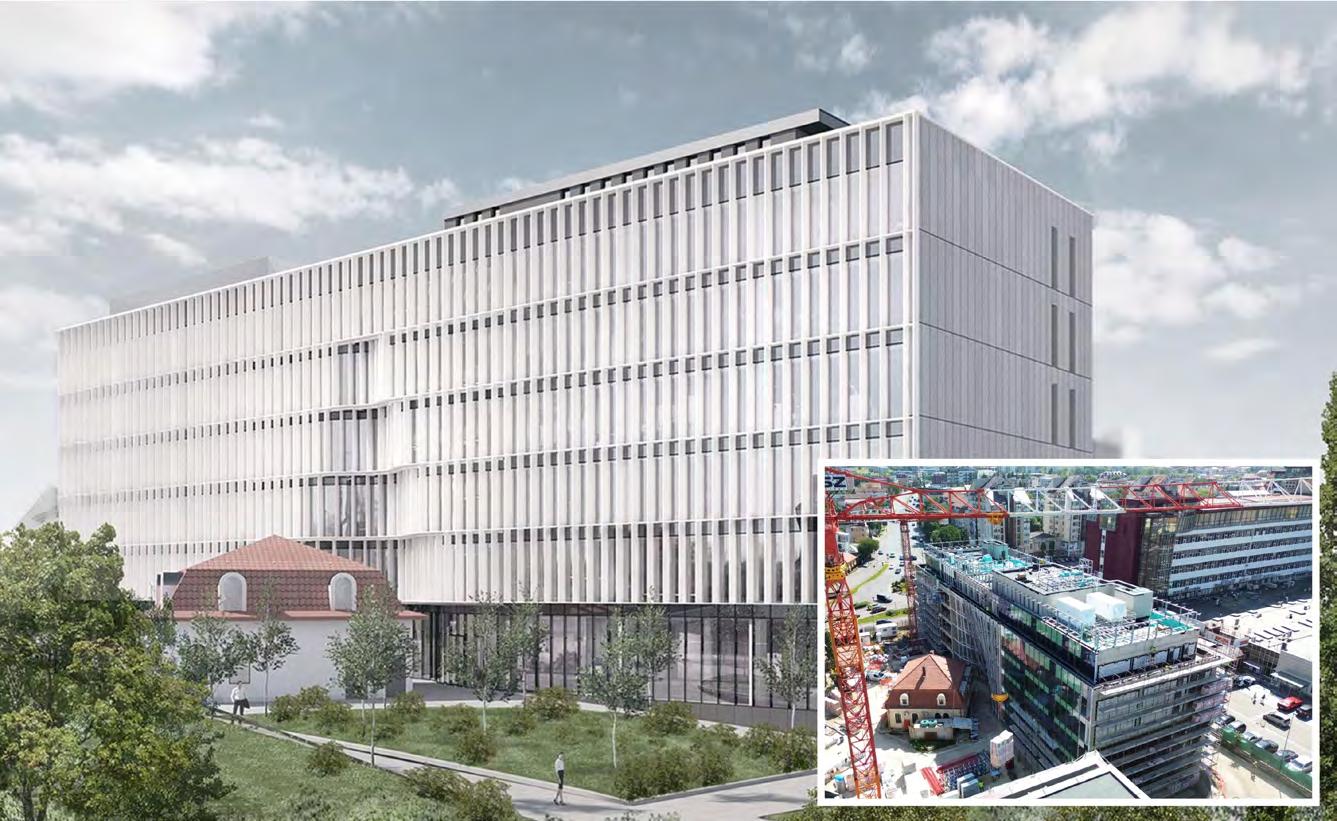
The Technical University of Cluj-Napoca (TUCN) is establishing the Artificial Intelligence Research Institute (AIRI), an initiative that marks a decisive step in advancing research and innovation in Romania. Located in Cluj-Napoca – one of Eastern Europe’s most dynamic innovation hubs – the institute will strengthen the city’s role as an important player in Europe’s digital future. Once completed, the project will enable Romania to integrate into the European network of excellence centers in artificial intelligence.
AIRi@TUCN will contribute to two major developments. On the one hand, it will focus on fundamental AI research, in fields such as innovative mathematical models, advanced deep learning algorithms, computer vision and understanding, as well as the analysis of large-scale datasets. On the other hand, it will maintain a strong orientation towards practical applications to transform research outcomes into concrete solutions for both the private and public sectors.
This way, AIRi@TUCN will become an interdisciplinary innovation hub, where academia, industry and public authorities will collaborate
The center, a true hub of artificial intelligence, will cover 14,000 square meters and include 33 laboratories, where master’s students, PhD candidates, and researchers will work together to become a pole of excellence in the field.
closely. The institute will support companies in their digital transformation journey, provide AI system conformity assessment services in line with the EU AI Act, and foster the creation of university-based spin-offs.
Through its modern laboratory infrastructure – from high-performance computing and cybersecurity to prototyping and validation centers for AI-based systems – AIRi@TUCN will ensure both scientific excellence and direct economic impact. Regional SMEs will benefit from expertise and consultancy for adopting new technologies, while students and researchers will gain access to cutting-edge resources, strengthening their international competitiveness.
The institute’s mission is to act as a catalyst for digital transformation, bringing together researchers, innovators, and industry partners.
Guided by excellence, ethics, and durability as core values, AIRi@TUCN aims to deliver solutions that not only boost productivity and economic competitiveness but also contribute to improving quality of life and building a more inclusive and sustainable future.
Beyond academia, the establishment of AIRi@ TUCN is a strategic opportunity for Cluj-Napoca and Romania to leverage its potential in applied mathematics, software and emerging technologies, positioning itself as an important player in the European artificial intelligence landscape.
Connecting more countries than any other.

TRADITION AND EXCELLENCE THROUGH CULTURE, SCIENCE AND INNOVATION SINCE 1581
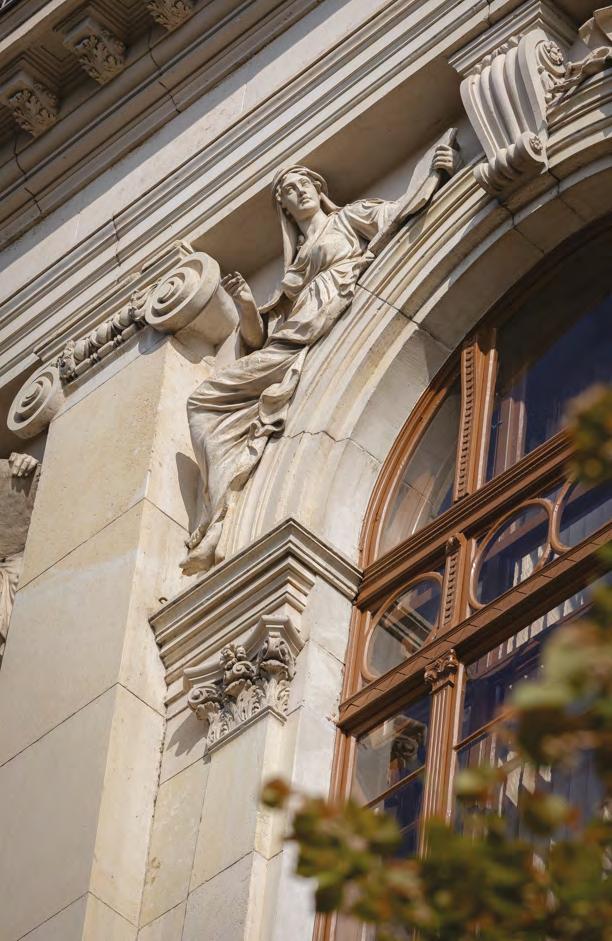

Babeș-Bolyai University in Cluj-Napoca (UBB) is the university with the most complex academic pro le in the country (by its number of programs and multicultural pro le featuring three o cial academic languages: Romanian, Hungarian, and German), and with the oldest academic tradition in Romania (established 444 years ago – 1581), accounting for the largest academic community in the country (with a sta of more than 55,000 people, from 15 cities and 12 counties). Since its foundation, UBB has counted among the top universities in Romania, and for the past seven years it has been ranked rst in the country in the University Metaranking, which indexes all major international university rankings. For several years now, UBB has consistently ranked among the top 5% of the world’s universities (out of approximately 30,000), with an advanced academic infrastructure (e.g. RDI units integrated into European networks, up-to-date teaching laboratories integrating virtual/augmented/mixed reality through the UBB-EON-XR Centre, etc.). In2021, following the international QS STAR audit, UBB was o cially ranked as the rst world-class university (QS*****) in Romania. In 2020 UBB was included in the GUILD, the organization of the most prestigious European world-class/research-intensive universities, it was awarded the European HR Award for Excellence, and as of 2021/2022 it is a member of the EUTOPIA alliance of European universities.
Accepted in 2019 as a member of the United Nations Sustainable Development Network, Babeș-Bolyai University has adopted (in 2016) and implements, the "UBB for Sustainable Development" program (UBB Goes Green), which integrates the University into the broader international movement related to sustainable development and policies that reduce the impact on the environment.
UBB Goes Green has developed a general framework for carrying out academic and administrative activities, such as:
• Research activities related to sustainable development
• A sustainable policy for the economic use of resources to reduce the ecological footprint of UBB and its academic community, as well as the impact on the environment.
• Ecological education of the academic community and protection of nature by: introducing activities related to sustainable development and environmental protection and/or cross-cutting activities in the eld, organizing and supporting environmental education events within the university by UBB or in partnership with other organizations, joint activities with students and teaching/research sta of UBB, which involve the community in order to raise awareness about sustainability issues.
UBB's aspiration to become a world-class university, well integrated into the international area of education and research, and the commitment to reduce the ecological footprint of Babeș-Bolyai University are the basis for the UBB Goes Green strategic program.
In 1776, the Empress Maria Tereza issued the foundation Diploma for the Faculty of Medicine in the University of Cluj (Universitas Claudiopolitana). The Faculty evolved in the Hungarian and then Romanian organisations of the University, but it was separated by it in 1948 by a communist law. It was restarted in 2022 as UBBMed in the UBB School of Health.
As a top comprehensive university, UBB is in the best position in Romania to develop a modern medicine of this comprehensive pro le. Indeed, UBBMed is immersed in the comprehensive structure of UBB, therefore bene ting from UBB programs and advanced expertise in Science-Technology-Engineering-Mathematics (STEM), Social Science, and Arts&Humanities, using a complex bio-psycho-social/cultural model, based on personalized and
evidence-based frameworks, in the context of advanced medical technology, to guide research, training (graduate / postgraduate / continuous education), and applications in human health/medicine.
Launched in 2022 to better structure the biomedical research already existing in the university, but not systematically integrated and uncoordinated, and to develop new major projects in the biomedical area on this platform, UBBMed has already acquired strategic importance. It has been included in major European consortia, coordinates the EUTOPIA Health program, launched the most recent faculty of UBB, the Faculty of Medical Sciences and developed the INSPIRE Platform, probably the most advanced research platform in InfoBioNano4Health & Biomedical Imaging between Western Europe and China and one of the most advanced academic structures in the eld of health.
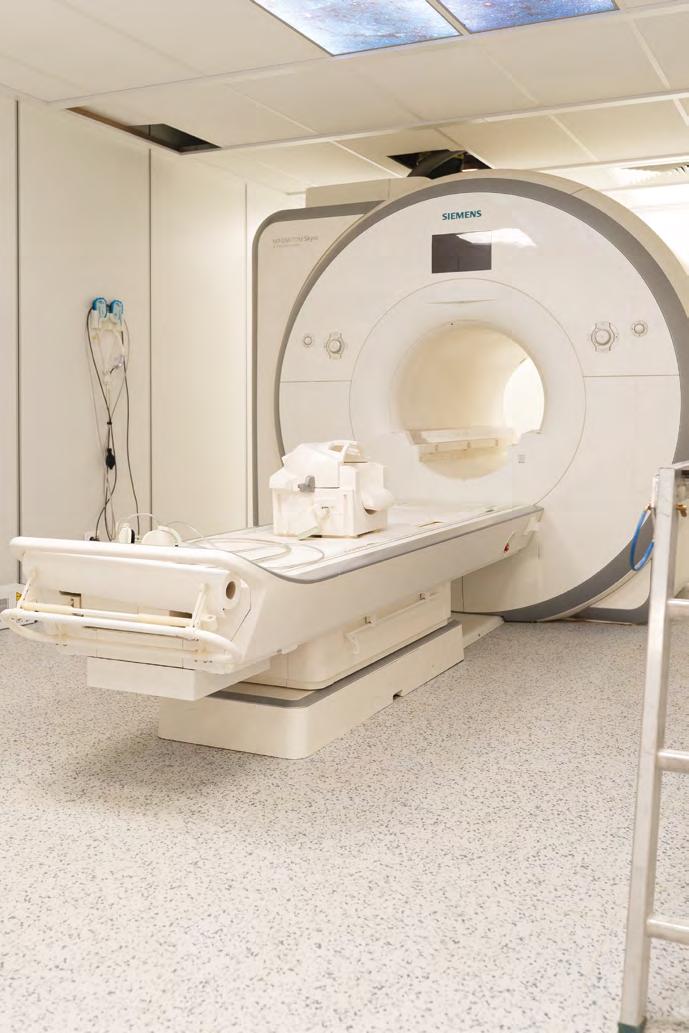
Through the INSPIRE project, a research infrastructure has been developed, with clinical endowments (Magnetic Resonance Imaging/MRI 7 Tesla) and preclinical endowments (MRI 11.6 Tesla), of international scope, thus strengthening the Academic/ Health Science School of UBB.
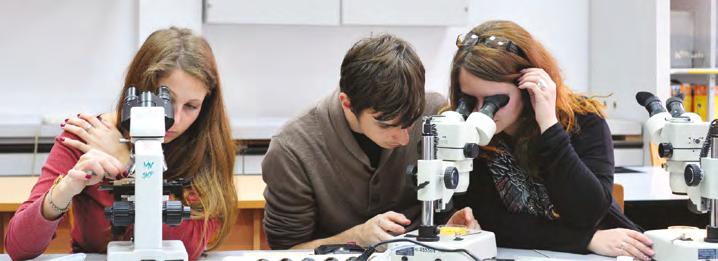
In a world de ned by digital transformations and the transition to sustainability, UBB aims to become a pole of excellence in research, education and innovation, capable of generating signi cant impact at regional, national and international level, basing its development strategy on an essential pillar: the technologies of the future.
Through cutting-edge academic programs – from arti cial intelligence and data science, to bioinformatics, cybersecurity, green technologies and renewable energy – the university o ers access to interdisciplinary training, adapted to the demands of society and the knowledge-based economy.
Interdisciplinary research is at the heart of this vision. Through STAR-UBB, the Institute for Arti cial Intelligence, the Center for Data Science or the platforms for sustainable technologies, the university is a place where ideas come to life and turn into projects with real impact: from smart cities to digital solutions, from clean energy sources to advanced biomedical applications.
This strategic openness is ampli ed by prestigious international partnerships – EUTOPIA European University Alliance, The GUILD of European Research-Intensive Universities, EIT Digital (European Institute of Innovation and Technology) – and by the collaboration with the research institutes, companies in the IT&C industry, innovative start-ups and public administrations, re ecting both UBB's commitment to excellence and innovation, as well as its leading role in Romanian education and research. UBB thus becomes a hub of knowledge and innovation, connected to the major global ows of ideas and technologies.
More than a university, UBB is a laboratory of the future, where education, research and community meet to educate new generations capable of providing sustainable answers to global challenges and creating a sustainable future.
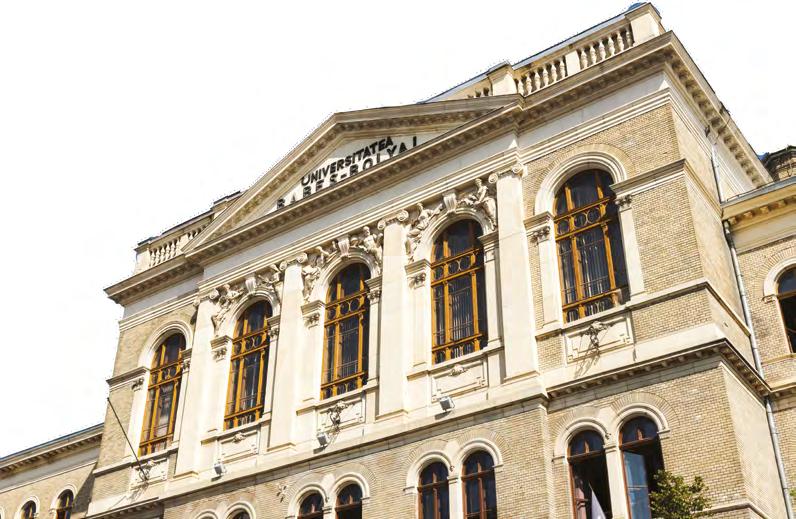

In August 2023, more than 240,000 people were employed in Romania’s IT&C sector, according to Eurostat data. This places Romania 2nd in Europe by the number of specialists working in the field.
In Transylvania, the strongest hub is Cluj-Napoca, a city that has recorded the highest economic growth in Europe over the last 20 years—driven in large part by the IT&C industry. Today, Cluj is home to over 1,500 dynamic IT companies, constantly seeking tech talent and innovation.
The sector thrives thanks to both university graduates and young professionals who have retrained in IT, attracted by the high demand for jobs and projects, as well as by salaries that significantly exceed those in many other industries.
According to the 2022 Software Development Market Snapshot, Cluj is at the forefront of Romania’s digital economy. In 2022, the Information and Communications macro-sector, as classified in the Romanian economic nomenclature, contributed around 7% to the country’s GDP, according to the National Institute of Statistics. By 2023–2024, the sector’s share grew further, reaching about 8% of Romania’s GDP
The growth in Cluj has been remarkable: the number of IT&C employees rose from just 5,400 in 2008 to more than 24,000 in 2020. A study by Transilvania IT & ARIES Transilvania shows that in Cluj, 1 in 11 people works in IT, while nearly 25% of all employees in Romania’s software sector come from Cluj county.
Research from Babeș-Bolyai University further highlights this trend: during the pandemic, the IT sector in Cluj-Napoca grew by 2%, consolidating its position as the city’s leading economic sector.
Looking ahead, Romania’s IT service exports are projected to nearly double—from €24.9 billion in 2023 to around €44.8 billion by 2028. This growth potential reinforces the country’s—and Cluj’s—position as one of Europe’s most dynamic digital ecosystems.
and foster a culture of resilience that protects businesses and communities alike.
What makes DIH4Society unique is its comprehensive, hands-on support. From application and selection, to digital maturity assessment, solution design, and the integration of cutting-edge technologies, organizations are guided every step of the way—ensuring digital investments deliver real, measurable impact.
Building on the strong foundation of previous projects, DIH4Society is driving forward the digital transformation of the NorthWest Region of Romania. Through the eDIH4Society initiative launched in 2023 and fully integrated into the European network of Digital Innovation Hubs, the hub has significantly expanded its services—reinforcing its mission to make society smarter, safer, and more sustainable.
Strategic Focus on Two Key Areas
1. Accelerating AI Adoption through European Collaboration
DIH4Society helps organizations embrace artificial intelligence by connecting them with leading AI factories across Europe. This ensures businesses gain access to the latest AI-driven solutions, tailored to their industry needs and operational challenges, turning innovation into a real competitive advantage.
2. Strengthening Cybersecurity for Long-Term Resilience
In cybersecurity, DIH4Society goes beyond raising awareness. Its experts work with organiza-
tions that have already taken first steps in digital security, while also guiding newcomers. The aim: to embed best practices, strengthen defenses,
By combining the lessons of past initiatives with future-ready services, DIH4Society stands as a catalyst for innovation and sustainability— empowering the region’s organizations to thrive in the digital era.
For more details visit www.dih4society.ro or contact us contact@dih4society.ro
Cluj-Napoca is the European Capital of Clusters and home to 10 clusters from 9 different industries. Clusters group companies, institutions, catalyser organisations from the same domain with the purpose of conducting research and education activities, technological and innovation transfers, as well as validating themselves through economic activities. Over 600 members from relevant fields are reunited in the cluster ecosystem. Overall, these clusters boost the innovation in the region, contribute to the high quality of life in Cluj-Napoca, and ensure that the main challenges of the community are solved in a collaborative cross-sectoral manner, by creating a sustainable and innovative ecosystem.
Transilvania IT Cluster
transilvaniait.ro
Transylvania Furniture Cluster
transilvaniafurniture.com
Education Cluster C-EDU c-edu.ro

Transilvania Taste Cluster
gusturi-transilvania.ro
Cluj IT
clujit.ro


Transylvania Lifestyle Cluster
transilvanialifestyle.ro
AgroTransilvania Cluster
agrocluster.ro
Transilvania Creative Industries Cluster
creativetransilvania.ro

transylvaniaenergycluster-trec.ro
rnmc.ro
Cluj-Napoca industrial legacy has transformed into modern industrial parks, which continuously attract new investors. The coworking spaces attract people focused on changing the future of the entrepreneurial ecosystem. Most of the startups, freelancers, digital nomads etc. prefer this type of working environment.
Cluj Innovation Park
In Cluj-Napoca, 180.000 sq. m.
Over 50 clients, among which Babes Bolyai University, The National Romanian Opera, Antares Romania, Worwag Pharma Romania, Transylvania Creative Industries Cluster
Total investments: 26 million euros
New jobs: 720
Tetarom I
In Cluj-Napoca, 320.000 sq. m.
Over 100 clients
Total investments: over 60 million euros
New jobs: over 3000
Tetarom II
In Cluj-Napoca, 120.000 sq. m.
Fully occupied by Emerson
Total investments: over 130 million euros
New jobs: over 2900
Tetarom III
In Jucu Village, Cluj county, 1.540.000 sq. m.
Over 25 clients, among which: Bosch, De’Longhi, Karl Heinz Dietrich, ES Elektro Romania
Total investments: over 300 million euros
New jobs: over 5800
Cluj Hub
22-26 Regele Ferdinand Street, Central Commercial Center, 3rd Floor contact@clujhub.ro
Stables
20A Onisifor Ghibu, Record Park hello@stablesoffice.com
Xponential Transilvania
Bulevardul 21 Decembrie 1989, no. 16 hello@xponential.ro
ABC Incubator office@abcincubator.ro
There are many reasons why Cluj-Napoca is one of the most beloved cities in Romania.
The friendly people, the best music&art festivals, many educational opportunities or because of the high number of IT jobs.
The local IT industry, renowned for its dynamism and innovation offers professionals the opportunity to reinvent themselves and develop new skills to keep pace with the rapid changes in the market and technology. Adaptability and a thirst for learning become key qualities for professionals in this field. Those with solid technical skills can explore new career opportunities and make significant contributions to other sectors undergoing digital transformation. Cluj-Napoca remains a key center in this evolution.
There is a trend for people from Transylvania to come in Cluj-Napoca as they want to find
a job based on their interests. They come here either as employees or as freelancers and bring original ideas for development. There were over 13.000 work opportunities in Cluj-Napoca available at the beginning of 2024. Most candidates sought employment in retail, call center/BPO, and services. IT/telecom, banking, and construction were the next three preferred domains, followed by domains like real estate, arts & entertainment, and education/training.
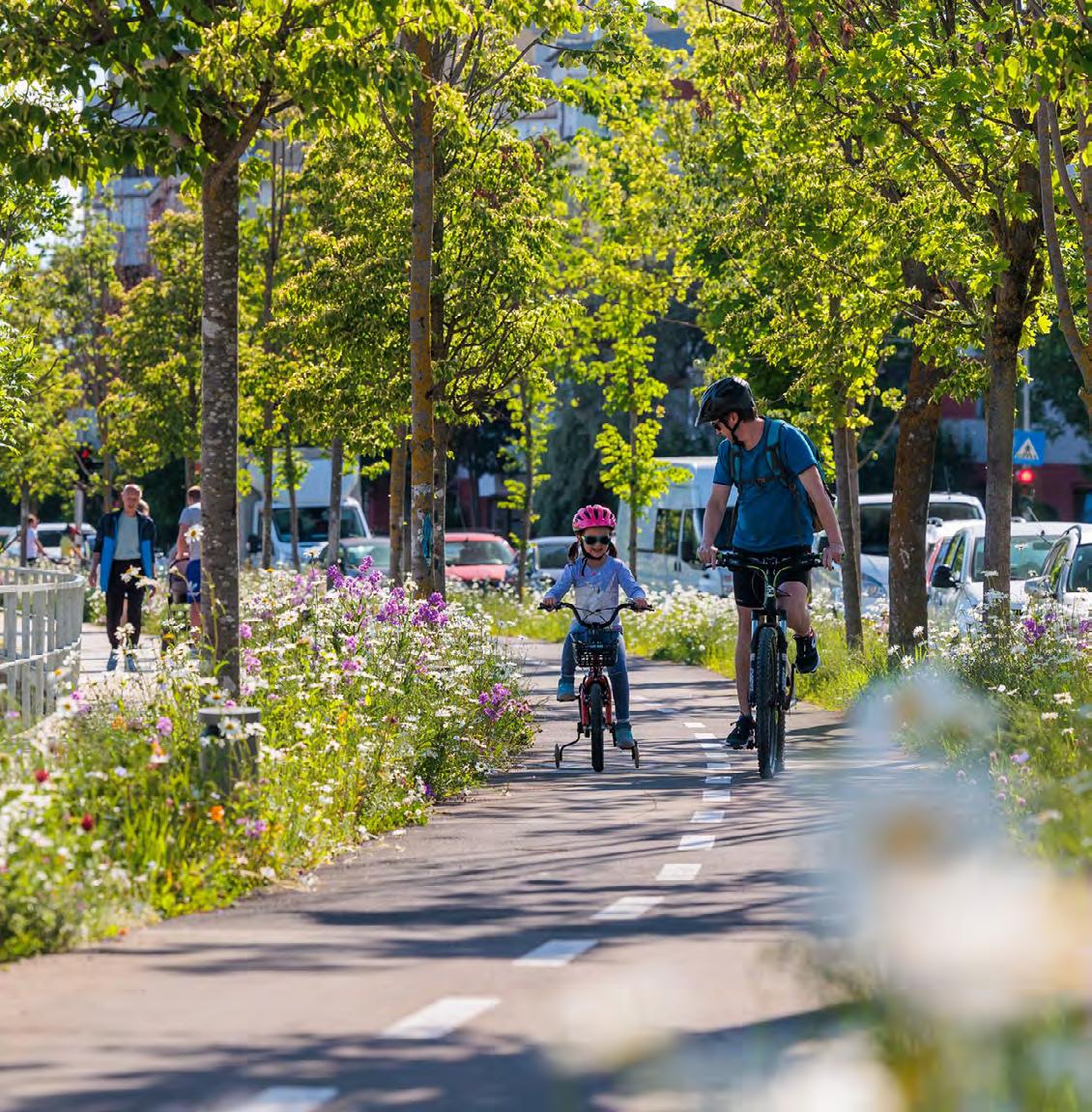
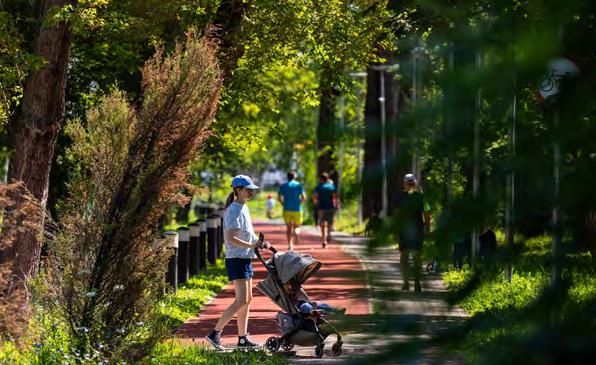
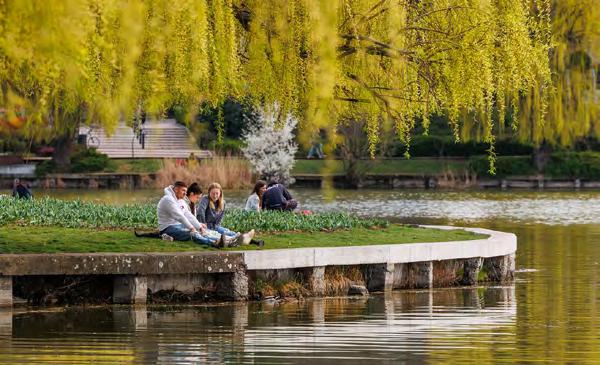
However, what makes this city so attractive? A lower pollution rate, fewer traffic jams, and dynamism were the primary reasons cited by residents who relocated from other cities. The quality of life is heading in a good direction, as the number of recreational areas has significantly increased. Cluj-Napoca is a great choice, if not the best city to live in.
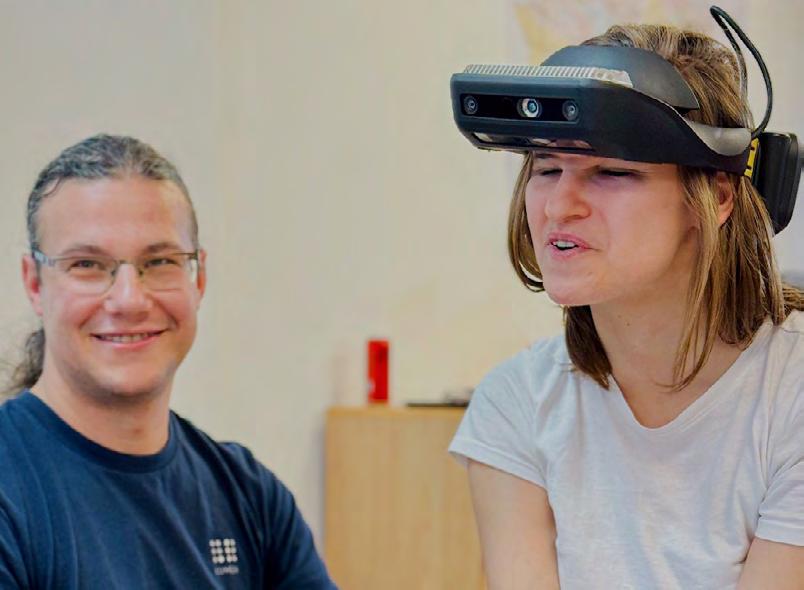
Cluj has become a fertile ground for deeptech ventures, and one of the most inspiring stories is that of .lumen, the company founded by Cornel Amariei. The start-up develops the world’s first AI-powered “Glasses for the Blind,” an innovation that addresses one of the most pressing global challenges: mobility and independence for the visually impaired. With more than 40 million blind people worldwide and only about 28,000 trained guide dogs available, the gap is immense. .lumen’s device, created in Cluj, Romania aims to bridge it by combining advanced technology with human-centered design.
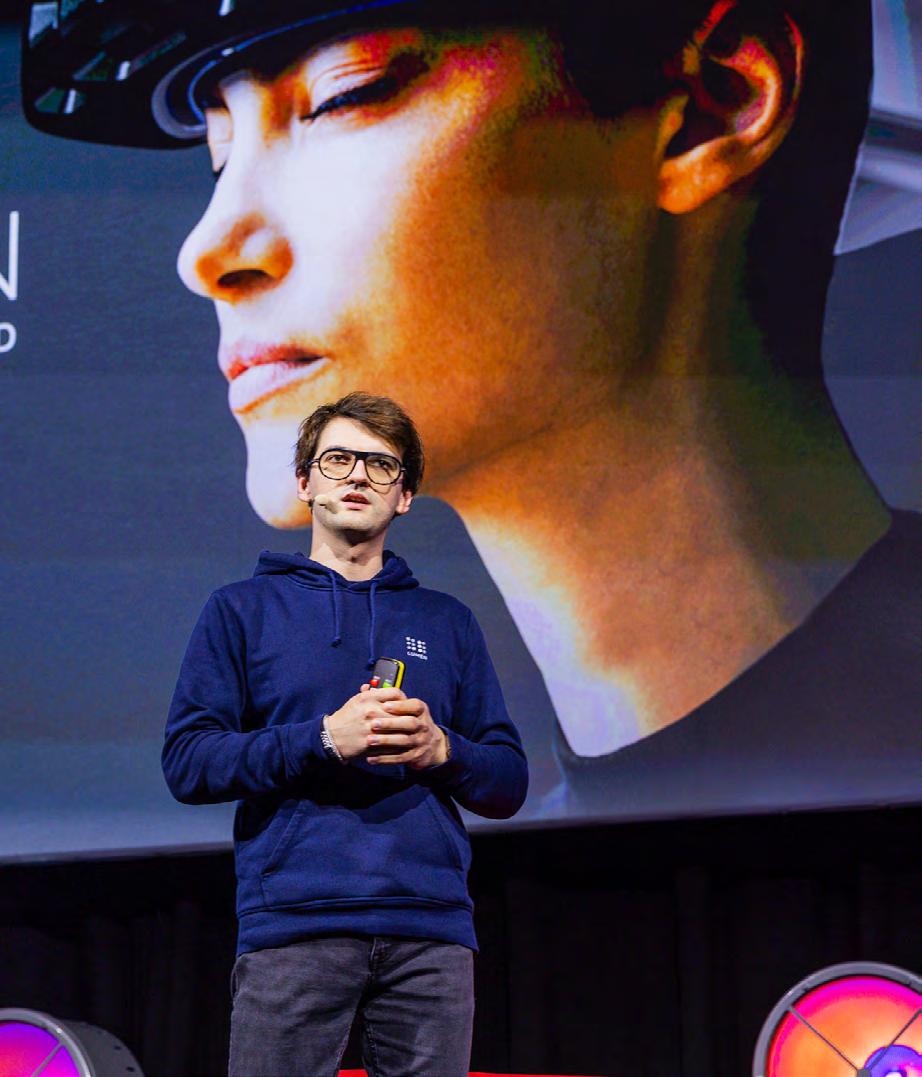
Reporter: Cornel, what makes .lumen’s product revolutionary?
Cornel Amariei, co-founder .lumen: We are building glasses that replicate the guidance of a trained dog, but in a scalable, wearable form. They use five cameras, advanced sensors, and our proprietary AI system, PAD, Pedestrian Autonomous Driving, to understand the environment. Obstacles, crossings, or stairs are translated into audio and haptic cues, so the user can navigate safely and independently. Unlike a guide dog, which is limited in number and costly to train, these glasses can be produced at scale and reach millions of people.
Why Cluj? Why was this city the right place to develop such a breakthrough?
Cluj offers something unique in Europe. We have universities producing strong engineering and research talent, a start-up ecosystem that encour-
ages experimentation, and partners that believe in innovation. Just as important, the municipality itself has been supportive, offering opportunities to test our technology in real urban environments. For .lumen, being here meant access to brilliant minds, mentors, institutional backing, and a culture of collaboration. It proved to us that global-impact technology can be designed, prototyped, and launched from Cluj.
What societal impact do you expect from this product?
The numbers speak for themselves: tens of millions of people without access to mobility solutions. Independence is fundamental to dignity. By offering a device that restores autonomy, we are not just building a business, but reshaping what it means to live fully as a blind person. We’ve already seen incredible feedback from our testing sessions — users describing the glasses as life-changing. That is the real reward.
How do you see the balance between business growth and social mission?
For us, they go hand in hand. A sustainable business model ensures that the glasses can reach global markets. At the same time, our core motivation is impact. Investors and partners are increasingly drawn to deeptech ventures that don’t just create profit, but solve fundamental human problems. That alignment of purpose and business is what drives .lumen forward.
What milestones has .lumen achieved so far?
We are proud to have secured CE certification in Europe, which proves our glasses meet strict safety and performance standards. This is a critical step for any medical-grade device. We are preparing for FDA approval in the United States, which will open another major market. Beyond certifications, we’ve attracted international recognition, from technology awards to partnerships with research institutions. All of this strengthens our credibility and accelerates our path to market.
Where do you see .lumen five years from now?
Our goal is to make the glasses widely available, at a price that is accessible while reflecting the complexity of the technology. In five years, I hope to see thousands of users across Europe, North America, and beyond. But more importantly, I want .lumen to inspire other innovators — to show that deeptech created in Cluj can compete with the best in the world.
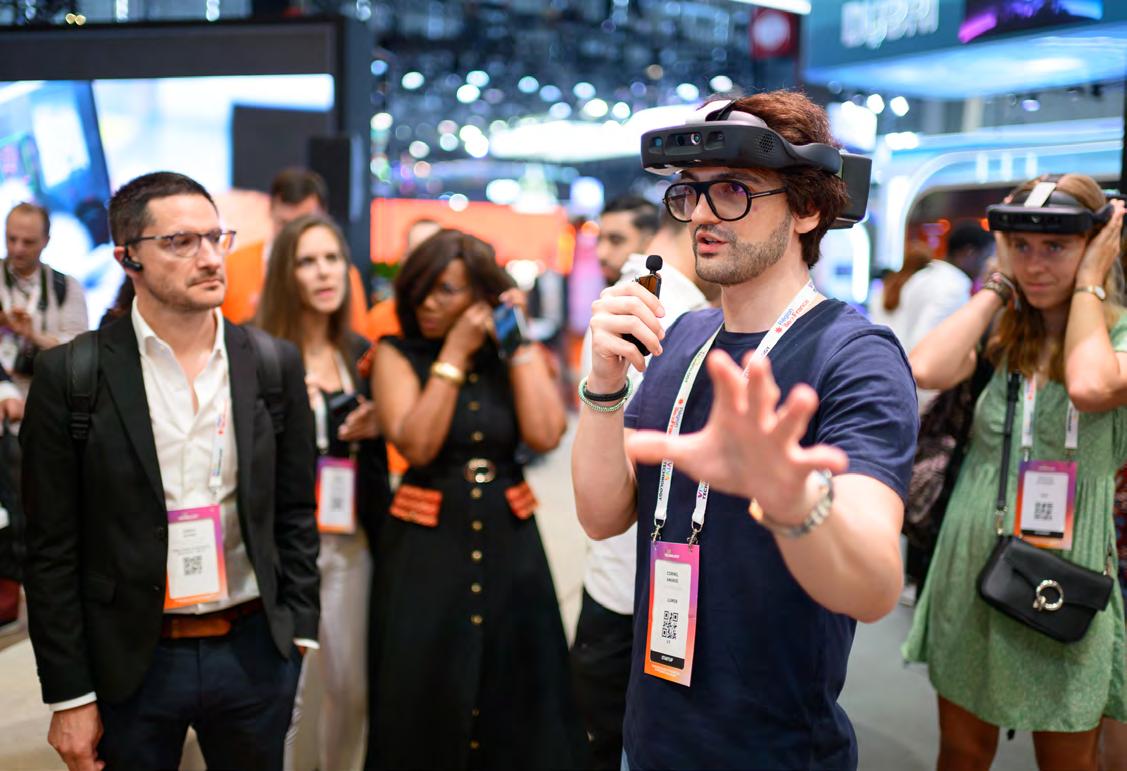

What does this journey say about Cluj’s role in the global innovation landscape?
It shows that Cluj is not just a consumer of technology, but a producer of global solutions. The combination of academic excellence, entrepreneurial drive, and institutional support creates an ecosystem where deeptech can thrive. .lumen is one example, but there are many others emerging. Together, they position Cluj as a hub where science, business, and social impact intersect.
Finally, what message would you send to the young innovators of Cluj?
Believe that you can build something of global relevance here. You don’t need to leave in order to make a difference. The resources, talent, and opportunities exist in Cluj — and the world is ready to embrace solutions that start here. Innovation is not just about technology; it is about courage, vision, and persistence. My hope is that .lumen will inspire the next generation to dream even bigger.
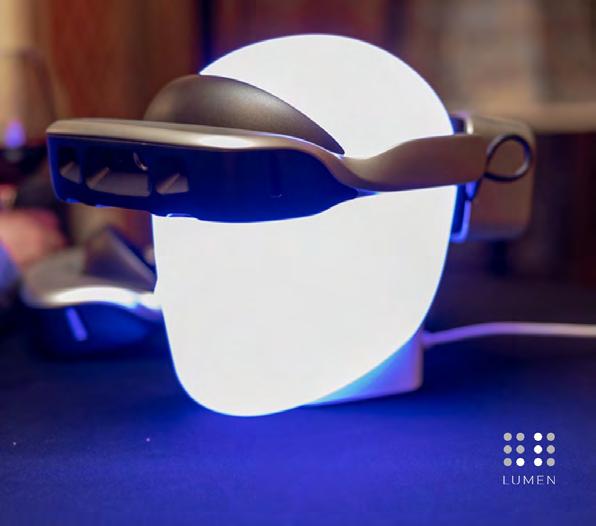
Through the voice of its founder, .lumen exemplifies how deeptech born in Cluj can change the world. From pioneering AI-driven mobility solutions for the blind to inspiring new generations of entrepreneurs, the company is proof that when deeptech meets humanity, innovation becomes more than a product — it becomes a movement.
More details here:
TEDIHT – Driving Digital Transformation in Transylvania
The European Digital Innovation Hub in Transilvania (TEDIHT) is one of the most important resources available to companies in the NorthWest region of Romania.
Through innovative services and strong European connections, TEDIHT helps businesses take real steps into the future and offers unique opportunities to grow in a fast-changing digital world.
What TEDIHT offers:
• testing and experimenting with advanced digital technologies;
• skills development and tailored training programs;
• support in accessing investments;
• access to an innovation ecosystem and networking opportunities.
All these services are delivered by a strong consortium of partners – clusters, universities, research institutes, and companies – who provide SMEs and public institutions with the expertise and solutions needed to begin their digital transformation journey.
As part of the European Network of Digital Innovation Hubs, TEDIHT plays a key role in connecting Romania with international trends. It coordinates the national network of DIHs through the DIHNET.EU platform and was the initiator of RODIH, the association representing Romanian DIHs. Since 2019, TEDIHT has been the first hub in Romania recognized by the European Commission’s JRC as a “Fully Operational DIH,” and today it is part of more than 12 international networks.
Over 1,000 SMEs learned about TEDIHT, with nearly 100 of them receiving full-scale digital transformation services free of charge.
TEDIHT’s integrated approach provides significant advantages: sharing resources and knowledge, collaborating on projects, accessing funding, and creating new opportunities for learning and growth. Its ultimate mission is to build sustainable models for the digital economy and society, helping businesses and institutions become more efficient, competitive, and future-ready.
TEDIHT is here to make digital transformation a reality for companies and public organizations alike.
Discover more at transilvaniadih.ro.
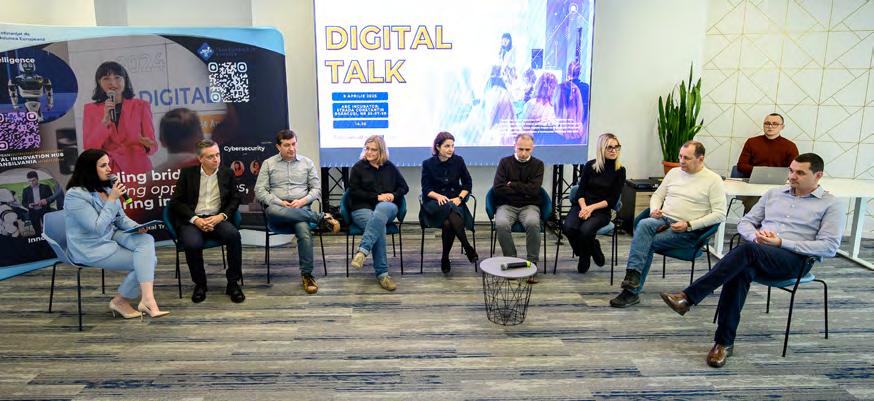

Cluj-Napoca is entering a new chapter of urban transformation through RIVUS, a landmark regeneration project that reimagines a 14-hectare former industrial site as a vibrant part of the city. Backed by an investment of over €550 million by IULIUS and Atterbury Europe, RIVUS is designed by the internationally acclaimed Dutch UNStudio and reflects the aspirations of the local community.
More than a development, RIVUS is a bold vision for the future of Cluj:
• Green living in the city – a new urban park and 52,000 sqm of landscaped areas with 700 mature trees and over 100,000 plants, complemented by rooftop gardens and a Japanese garden designed for relaxation and balance.
• Culture at the core – two former industrial buildings transformed into cultural venues and office premises.
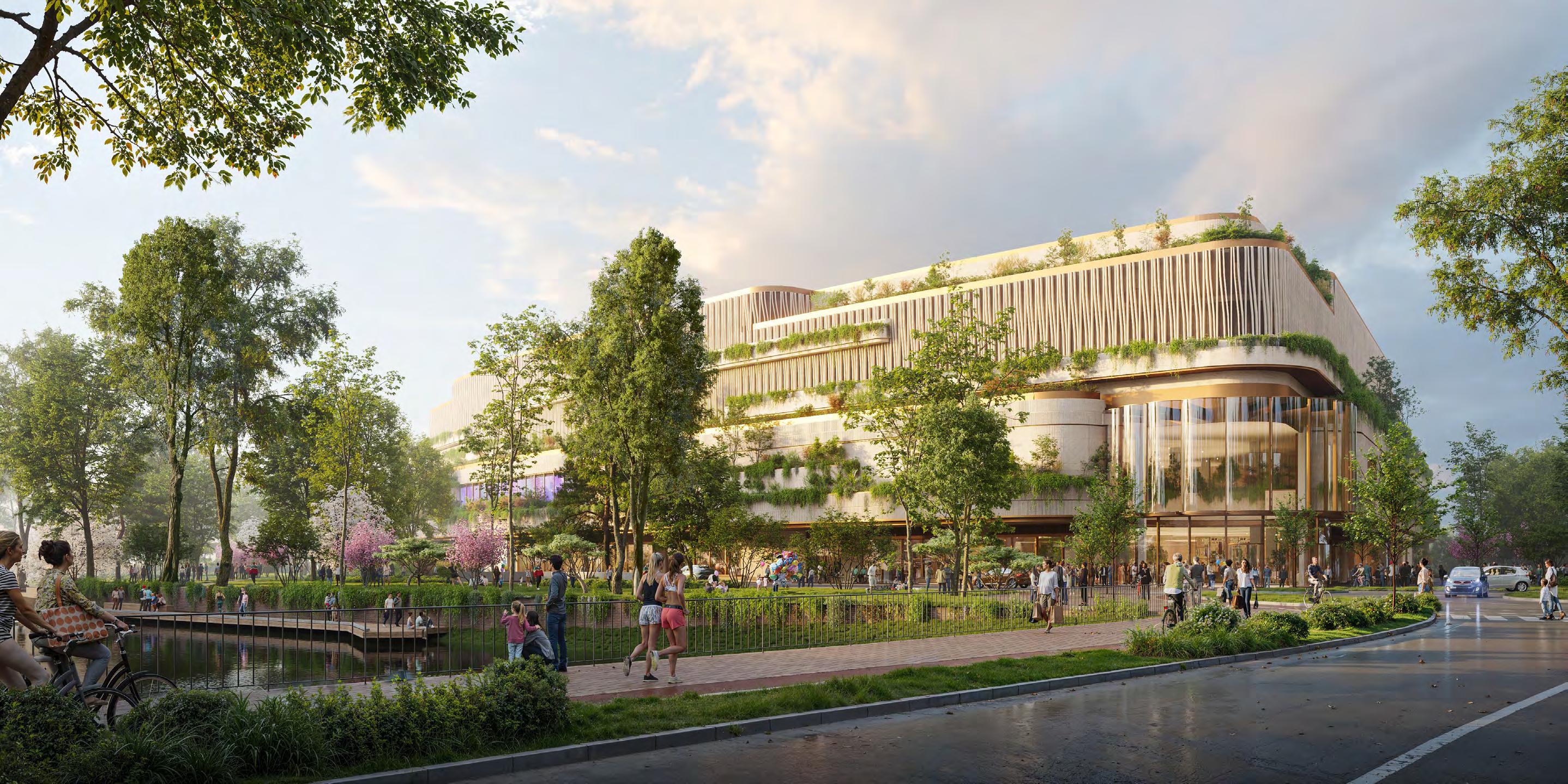
• A hub for retail and gastronomy – 142,000 sqm of retail space, over 400 stores, and more than 30 concept restaurants and cafés overlooking Someș River, creating new experiences for residents and visitors alike.
• Innovation and connectivity – premium green office spaces, new bridges and pedestrian pathways across the river, cycling infrastructure, and modernized streets that seamlessly connect the area with the rest of the city.
• Entertainment for all generations – from open-air cinema and state-of-the-art technologies introduced for the first time in Transylvania to play areas, sports, and leisure facilities for all ages.
With its blend of nature, culture, mobility, and innovation, RIVUS is set to become one of the city’s defining landmarks – a place that enhances quality of life, stimulates investment, and strengthens Cluj-Napoca’s reputation as one of Europe’s most dynamic urban destinations. Discover the project at www.rivus.ro fb.com/rivuscluj instagram.com/rivuscluj
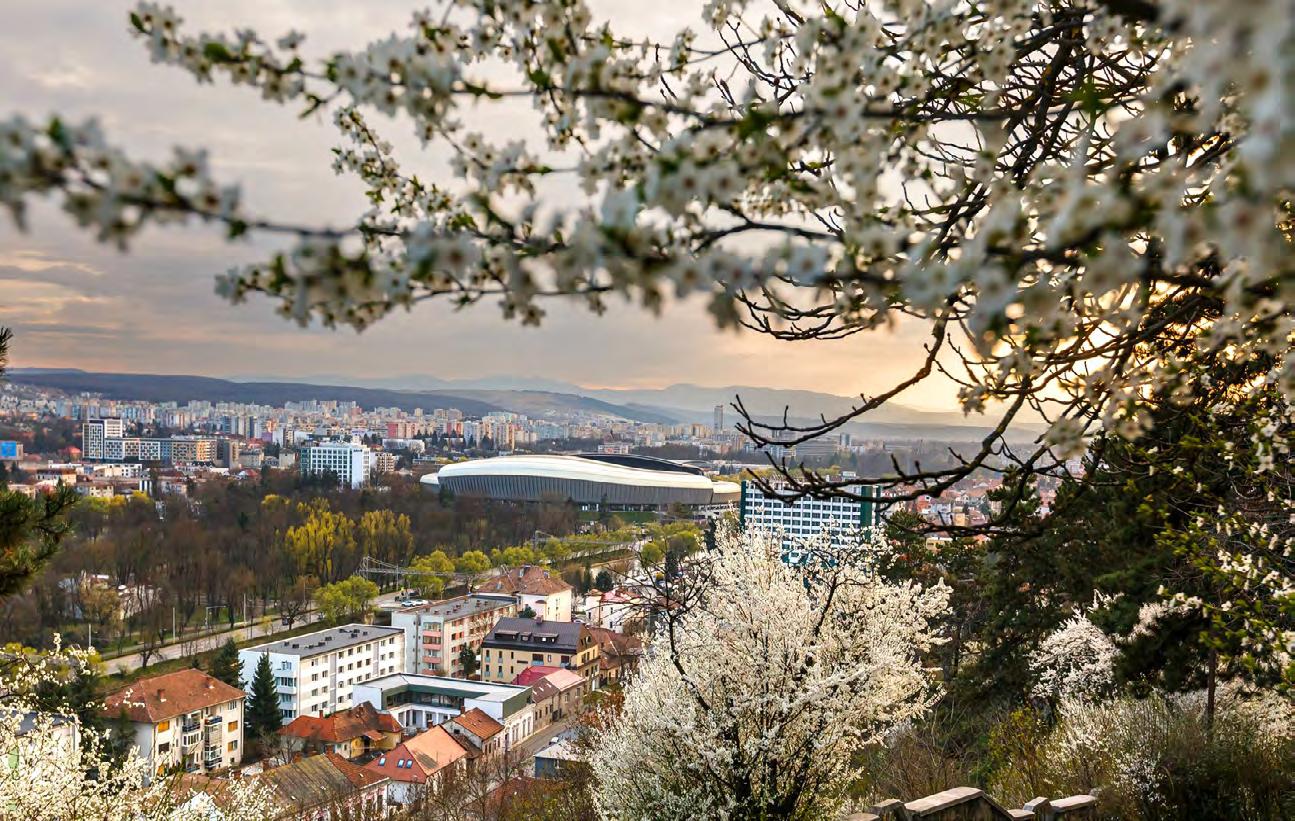
Cluj represents one of the most dynamic regions in the country, leading the Central-West area.
With Cluj fast becoming one of the most popular cities in Romania, real estate and land prices are becoming more and more valuable. World-class economic development is supported by modern working infrastructure. According to Romania Property Club, the total stock of Class A office buildings in Cluj is 340.00 sqm, with estimated development projects at 75.000 sqm.
Cluj is the largest regional hub for office spaces, with a total area of 340.400 sqm and also the largest volume of hotel development in Romania. In the last 10 years, the hotel market in Cluj-Napoca recorded the highest growth in Romania in the “5*” category. In these conditions, Cluj-Napoca and Cluj County remain some of the strongest business hubs nationally.
The average price of apartments for sale in Cluj-Napoca in March 2024 was 2.566 euros/ sqm, an increase of 34 euros/sqm compared
to February 2024 (2.532 euros/sqm) and is 309 euros higher than the same period last year (2.257 euros/sqm), according to statistics. Among the preferred areas for those seeking a new home are the neighborhoods of Florești, Mănăștur, and Gheorgheni.
In total, during the period of January to December 2023, over the course of 12 months, there were 29.329 real estate transactions in Cluj, a number that ranks the county fifth nationally.

We understand the business of our clients and know what it takes to transform it into the future. At NTT DATA, we drive innovation - from advisory andimplementation to managed services and beyond. With SAP at our core and a powerful ecosystem of partners, we continuously improve solutions and technology to make them work for companies - and for their people. With operations in more than 30 countries, we have enabled thousands of companies become more efficient and effective during the last 25 years. Our more than 16,000 experts around the world will also accompany you on your journey toward a truly intelligent enterprise – wherever you want to start!
tomorrow today.
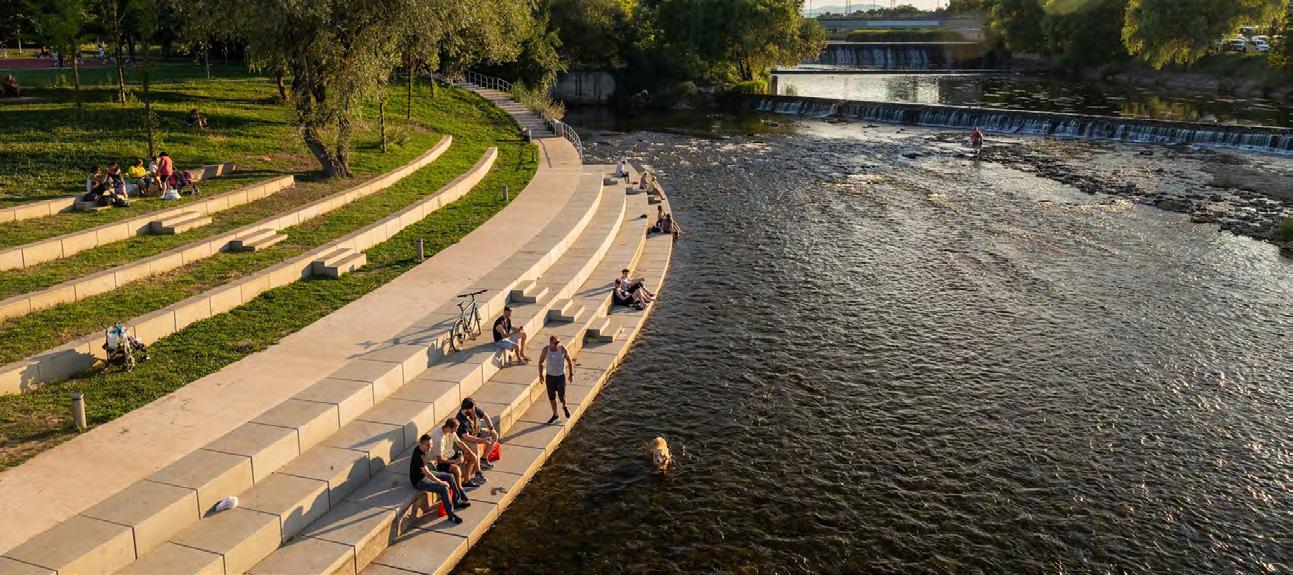
In the most recent European Quality of Life Survey conducted by the European Commission, the city of Cluj-Napoca has secured an impressive position, highlighting the city’s commitment to providing a high quality of life for its residents.
The survey, which assessed various aspects crucial to urban well-being, including healthcare, infrastructure, and environmental sustainability, recognized Cluj-Napoca for its outstanding performance across multiple criteria.
With its robust infrastructure and efficient public services, Cluj-Napoca has positioned itself as a hub of opportunity and growth, attracting both talent and investment to the region.
Additionally, the city’s vibrant cultural scene and social amenities contribute to its appeal, offering residents a diverse range of recreational activities and entertainment options.
Moreover, Cluj-Napoca’s dedication to sustainability has been underscored by its efforts to promote eco-friendly practices and reduce carbon emissions, demonstrating a proactive approach to environmental stewardship.
This achievement not only reflects Cluj-Napoca’s present success but also underscores its potential for continued growth and development in the years to come. As the city celebrates this milestone, it reaffirms its commitment to enhancing the quality of life for all its residents and solidifying its position as a leading European city.
Healthcare Accessibility: This aspect assesses factors such as the availability of healthcare facilities, quality of healthcare services, and accessibility to healthcare for residents.
Infrastructure
Infrastructure includes transportation systems, utilities (such as water and electricity), housing availability, and overall urban planning.
Employment Opportunities
This aspect evaluates the job market, unemployment rates, income levels, and opportunities for professional growth and development.
Education
Education-related factors include the quality of schools and universities, literacy rates, and access to educational resources.
Environmental Sustainability
This aspect focuses on initiatives and policies aimed at promoting environmental conservation, reducing pollution, and enhancing overall sustainability practices within the city.
Social and Cultural Amenities
This includes aspects such as the availability of cultural institutions, recreational facilities, entertainment options, and overall social cohesion within the community.
Safety and Security
Safety measures, crime rates, and overall public safety are essential components of evaluating the quality of life in a city.
Affordability
The cost of living, housing affordability, and overall affordability of goods and services are crucial factors that impact residents’ quality of life.
Travel opens our minds and hearts and on so many levels it leaves you speechless. It turns you into a storyteller and gives you reasons to appreciate life. Transylvania is home to so many charming places which can’t wait to be discovered. Whether your journey takes you to beautifully preserved medieval towns like Sibiu, Brasov or Sighisoara, or you plan to look for adventure in the wilderness of the Carpathian Mountains, one place will surprise you in the most beautiful way: Transylvania’s vibrant capital, the city of Cluj-Napoca with all its surroundings. The Turda Salt Mine, the Botanical Garden, the beautiful Bánffy Palace, Cetățuia Hill, the National Ethnographic Park “Romulus Vuia” and so many others.
Either you’re on a business travel, a music festival lover, an art enthusiast, a sports fan, or you just fancy a weekend away and you want to
discover new cultures and people, Cluj can be that place you were looking for. We know how long business meetings can get, how energy consuming a big event is, or how tempting it is to wander for hours on the streets of the Old Town. But what would you say if you could enjoy all of these and at the end of the day have the well-deserved peace and quiet in a cozy room next to the city center?
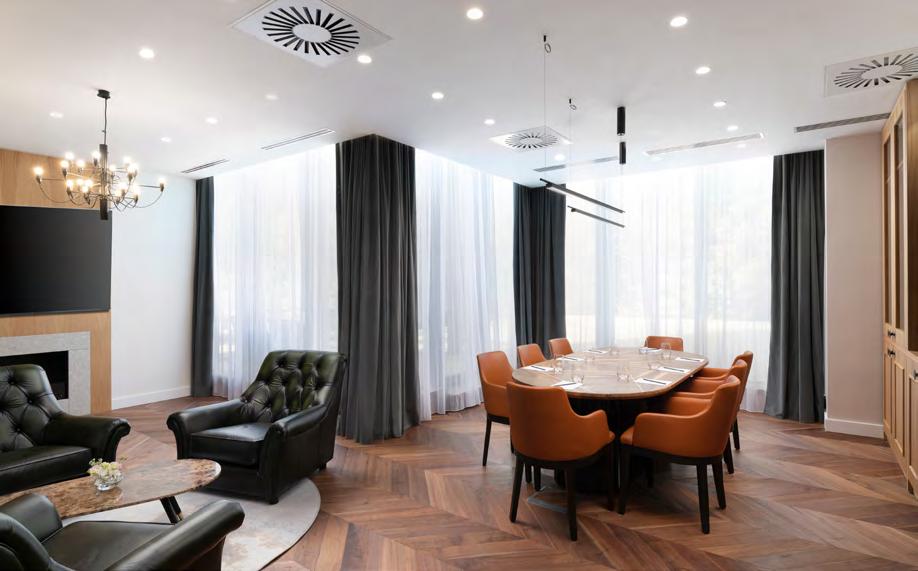
Radisson Blu Hotel, Cluj offers you an exceptional stay in the city’s most stylish neighborhoods. And what better neighbors can you think of than Cluj Arena and BT Arena Polyvalent Sports Hall, two multi-purpose arenas and home of the Untold Music Festival and Sports Festival and many other international events. Be amazed by the elegance and contemporary design of our hotel and discover stunning views of the city and the green surroundings from our 169 rooms and
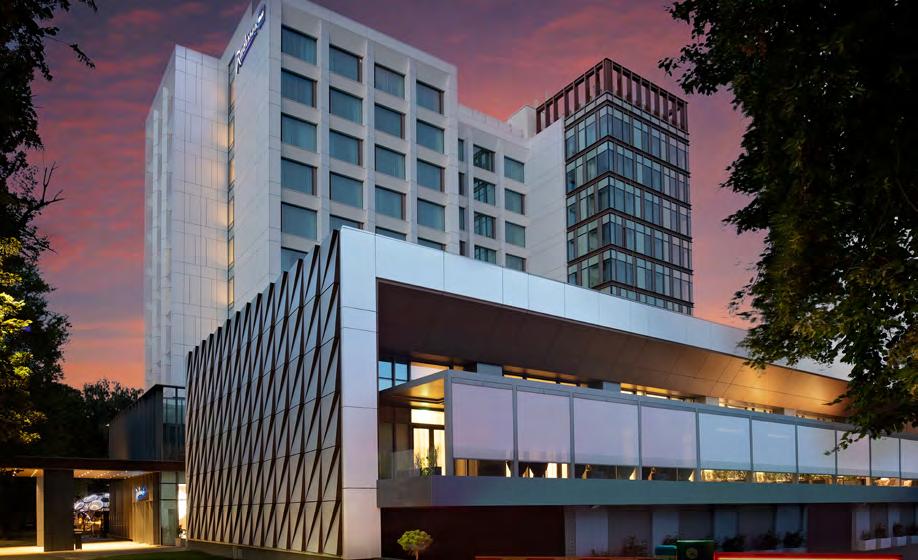
suites, including our panoramic Presidential Suite.
And don’t forget to experience the amazing bird'seye view from the rooftop. The Central Park is an oasis of green tranquility.
The beautiful hotel that can be seen today has been brought to life by an amazing team, that managed to deliver exceptional memorable experiences over the past years. Collaboration has given each of us the sense of purpose in delivering the best outcomes, providing excellent service on time, and exceeding our guests’ expectations.
This outstanding teamwork has also been recognized internationally, as Radisson Blu Hotel Cluj was named Franchise Hotel of the Year across Europe, the Middle East, and Africa.
And speaking of expectations, we would like nothing more than our guest experience to be flawless and memorable. That’s why we’ve built the hotel with our guests’ needs in mind. With a mix of standard, premium, suites and Presidential apartment room types we can meet different expectations and appeal to a large range of visitors.
If you are looking for a state-of-the-art conference room, a private ballroom, or a space for networking in the center of Cluj, our hotel's modern and stylish event space is suitable for all types of gatherings. The extended ballroom will offer the possibility to extend its capacity to 450 guests in theatre setup, while our eight breakout rooms will perfectly complement your business or social event.
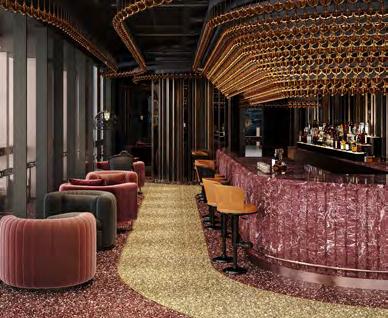
And after a busy day, relaxation is within easy reach. Our new spa facilities include a steam room, sauna, massage rooms, and jacuzzi – all designed to bring comfort and rejuvenation. For an event in good taste, dining options are available at our all-day restaurant and specialty Japanese restaurant, as well as refreshing drinks and cocktails at our cosmopolitan bar to round off a successful meeting.
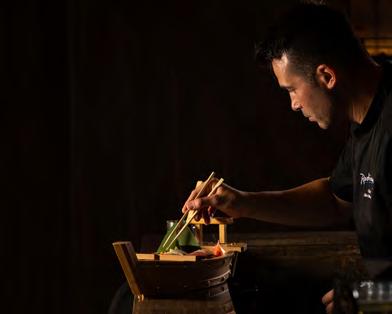
Our aim is to welcome guests to savor flavorful cuisine and have a unique experience. That’s why we have variety in the menu and delicious food served in a visually delightful way. Find the best sushi in the county at Hikari, which is expanding with new dishes and authentic experiences brought by our two black belt sushi chefs. Enjoy an exceptional range of cocktails at our Onyx Bar – no one takes the business of blending unique cocktails and crafting quirky drinks more seriously than our bartenders. And from the ninth floor, Calypso Sky Bar will soon offer breathtaking views over Central Park and the skyline of Cluj. And one more thing. You don’t have to worry about reaching us. The hotel is easily accessible by foot, bike, bus, taxi, or car. Park your car in one of our over 100 underground parking spaces. Or put your backpack on and simply use an electric scooter to get to us. And with Avram Iancu Cluj International Airport so close, we are seamlessly connected to the world.
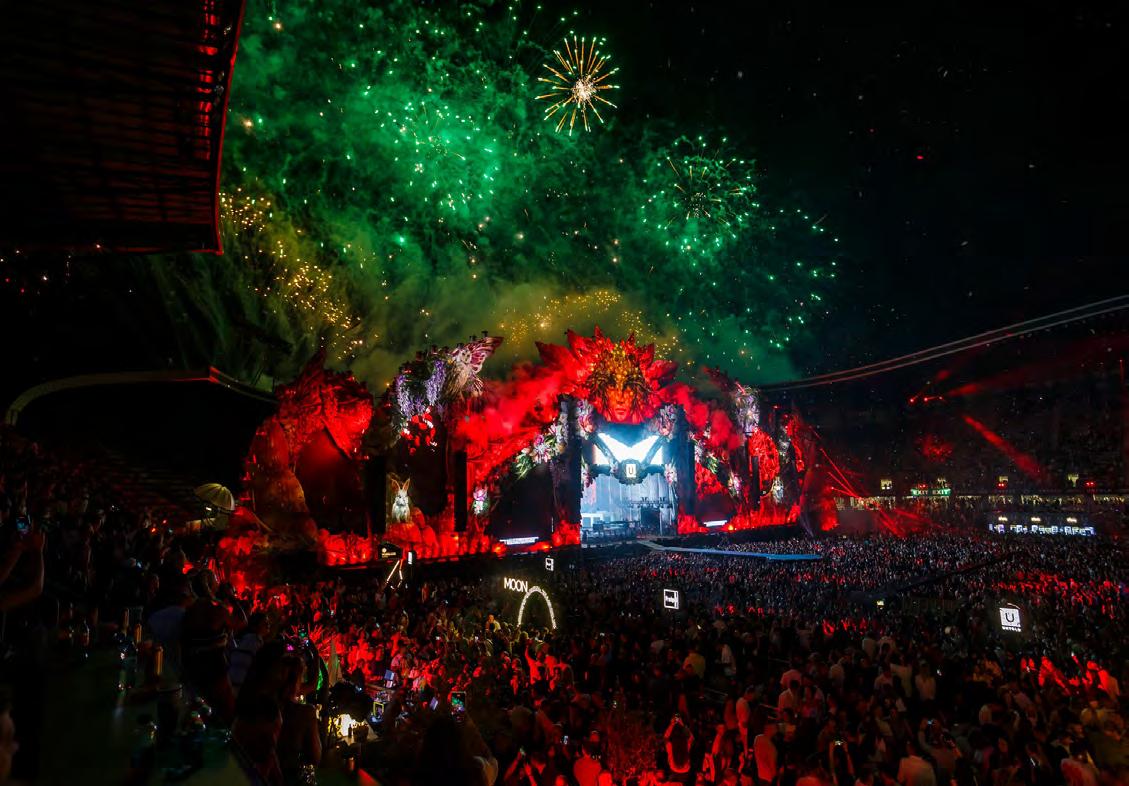
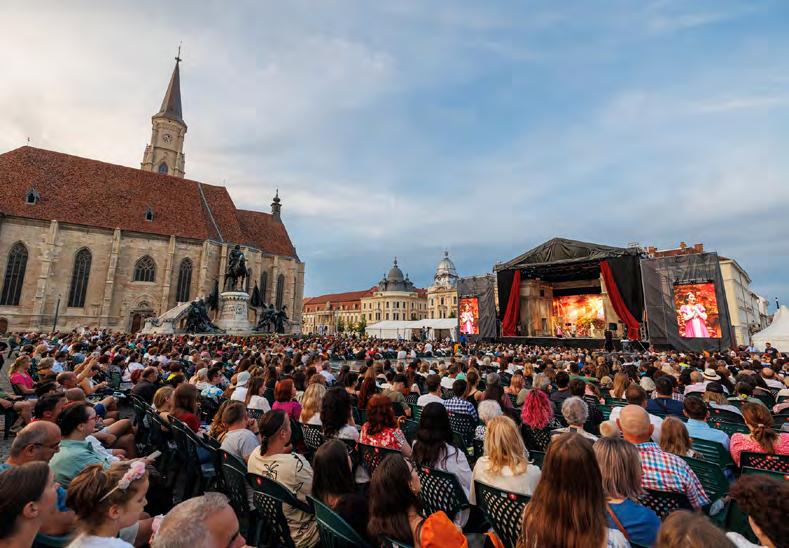
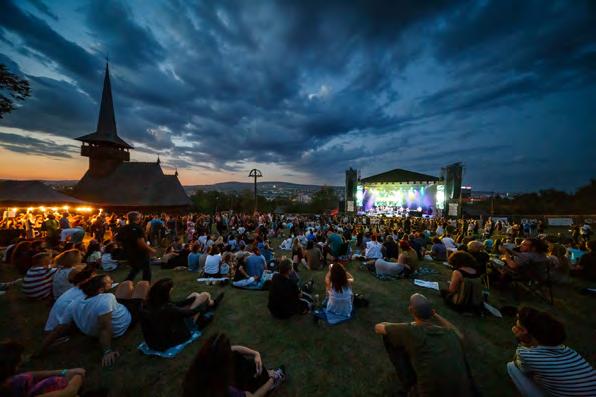
Being the most prominent university center in Transylvania, Cluj-Napoca has a great variety of events to offer. Here, one can choose from many unique events to entertain: from music festivals and international film festivals to the multitude of tech and national and international cultural happenings. Many of them grew into real landmarks to Cluj's cultural identity.
Untold Festival is the largest electronic music festival held in Romania, taking place in Cluj-Napoca at the Cluj Arena. A serial award winner, Untold took home the award for Best Major Festival three times in a row at the European Festival Awards, further cementing its status as a European heavyweight, despite only being on the scene since 2015. Since its debut, it has become the perfect gathering place for dance fans from across the world, drawn in by its thrilling line-ups and ground-breaking visual production.
Electric Castle is another one-of-a-kind electronic music festival, held on the spectacular domain of the Banffy Castle, on the outskirts of Cluj-Napoca. The festival is known for mixing arts and technology with an eclectic musical line-up, redefining the way people interact with a music festival. Its past editions confirmed names such as Skrillex, alt-J, Franz Ferdinand, Bring Me The Horizon, Fatboy Slim, Rudimental, Die Antwoord, Florence and The Machines, Bastille, and many other international artists that performed on one of its stages.
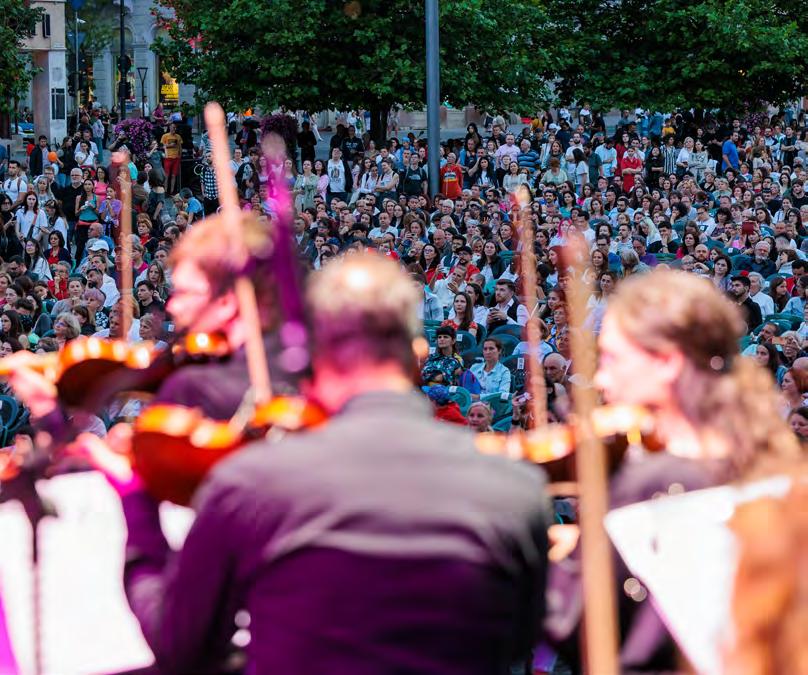
Opera Aperta represents an innovative cultural project initiated bythe Romanian National Opera in Cluj-Napoca, supported by the City Hall and Local Council of Cluj-Napoca, and the Ministry of Culture and National Identity. Launched in 2015, Opera Aperta has undoubtedly become one of the most beloved open-air performances in the city, revealing itself to all the spectators, small or big, and inviting them to experience the magic of art and the charm of the lyric.
Winner of Europe's Best Small Festival in 2019, Jazz in the Park has grown up to be the most important Romanian festival of the genre, bringing both renowned and emerging jazz artists to perform in Cluj-Napoca. From its very beginning in 2013, the purpose of the festival was to create a special connection with the local community, starting with reshaping the image of Central Park and continuing with other several projects meant to support this friendly dynamic.
Techsylvania the leading Eastern European tech conference, unites global tech enthusiasts and business figures. Its core lies in presenting groundbreaking ideas and addressing key challenges at the tech-business nexus. With a focus on high-profile speakers, top investors, and promising startups, Techsylvania offers unparalleled networking opportunities. Join us to connect, innovate, and shape the future of technology in a dynamic environment.
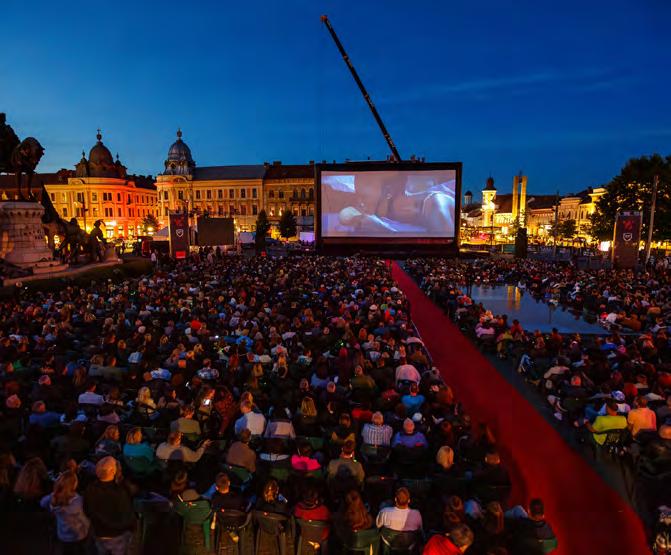
Transilvania International Film Festival (TIFF) is the first and largest international feature film festival in Romania, founded in 2002. It has grown rapidly to become the most important film-related event in Romania and one of the most spectacular annual events in the region, gathering annually over 100,000 participants and film spectators.
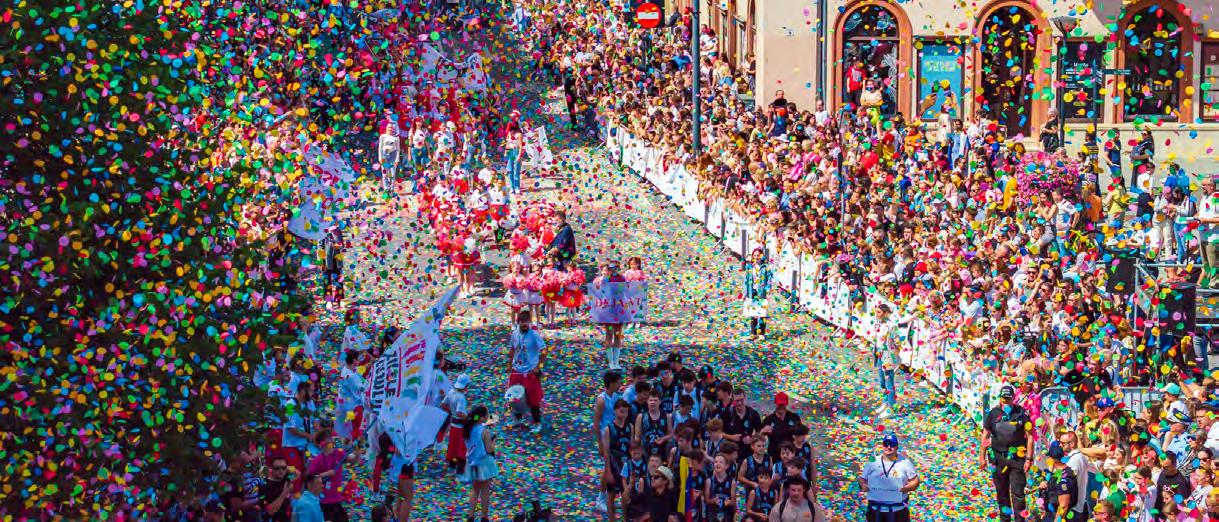
Every May, Cluj-Napoca transforms into a citywide celebration! Cluj Days has already become a tradition in the Heart of Transylvania. It represents a spectacular 4-day festival organized by the City Hall and the local community. Outdoor scenes throughout the city, over 100 events, a parade, a Treasure hunt, and many other activities give participants from every background the
chance to get involved in the community while celebrating Cluj-Napoca!
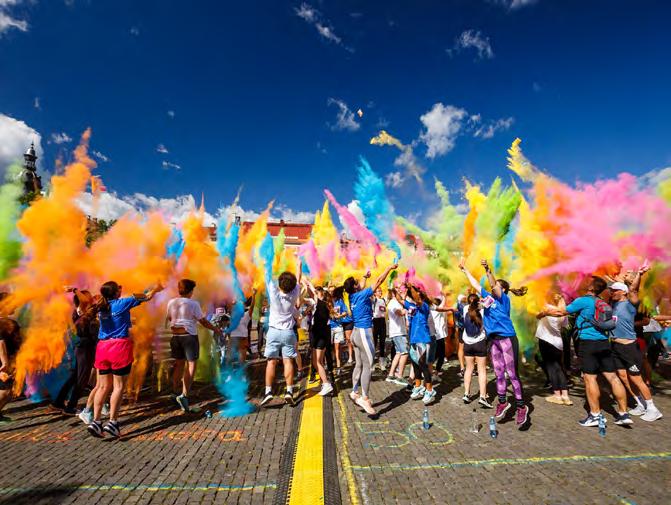
The Color Run - also known as "Happiest 5k on the Planet" – is a colorful, euphoric race that celebrates health, joy, and originality. Its participants, who started all in white clothes, end up plastered in colored powder from head to toes, in a light-hearted way of celebrating life. Millions of runners from 50 countries worldwide finish the race every year, and Cluj-Napoca is part of the story!
ClujShorts is about love for the short films. Therefore, as of 2013, every spring, ClujShorts brings together at Cluj-Napoca film enthusiasts, film festivals, talented directors and
actors, bold producers, and a large number of good films. ClujShorts encourages uprising directors and is also promoting already established ones. During the ClujShorts International Film Festival, we also organize workshops, master classes, exhibitions, meetings between the public and our guests.
Cluj Never Sleeps is an event supported by the Cluj-Napoca City Hall. It promotes culture in a unique and attractive way by creating a vivid program of activities and events throughout the year's shortest night. Local artists, a community picnic, a silent party in Piața Unirii, digital interactive arts, and many more activities take place in the city's heart.
Each spring, Cluj-Napoca transforms into a stage where the city celebrates itself.
Cluj Days has grown into one of the most beloved traditions of the community — four days when streets, squares, and parks become alive with culture, creativity, and collective joy.
Far more than a festival, Cluj Days is a citizen celebration. It is created with and for the people of Cluj, bringing together institutions, artists, volunteers, schools, universities, and local businesses in a collective effort that showcases the city’s unique spirit. The program blends concerts, theatre, exhibitions, workshops, gastronomy, and performances across more than 40 venues. Entry
is always free, making the event a true expression of inclusion and accessibility.
Every edition opens the festival season in Cluj with a spirit of optimism. Families stroll through the city center discovering food fairs and art installations, young people gather for open-air concerts, while children find their place in dedicated spaces of play and creativity. From classical music in Piața Unirii to contemporary performances on side streets, the program is designed to appeal to all ages and tastes.
Beyond entertainment, Cluj Days strengthens the sense of belonging. It is a moment when residents and visitors alike discover how diver-
sity enriches the city: a multicultural atmosphere where heritage meets innovation, and where the joy of being together matters as much as the events themselves.
Year after year, the festival has drawn hundreds of thousands of participants, becoming a signature celebration of Cluj’s identity. For the city, it is also a way of saying welcome: to its citizens, to newcomers, and to the many visitors who choose to experience the heart of Transylvania. Cluj Days is more than a date in the calendar — it is an invitation. An invitation to join in joy, to discover culture, and to start the season together in a city that celebrates its people.
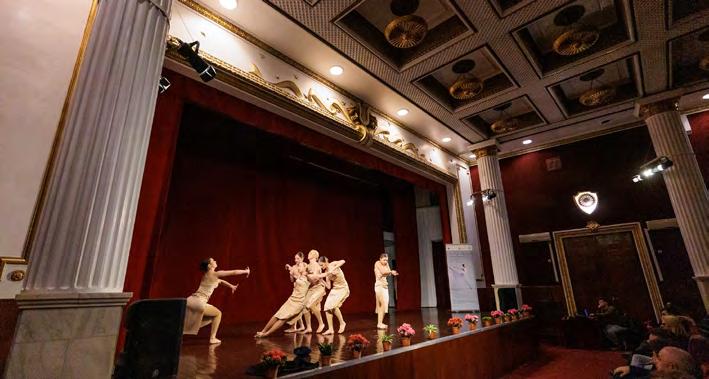
Those who love culture can indulge in the many theatre or opera performances in Romanian, Hungarian and even English when in Cluj-Napoca. The city’s cultural life flourishes as a result of the mix of tradition and modernity. The city’s most important cultural institutions benefit from an infusion of youth and innovation.
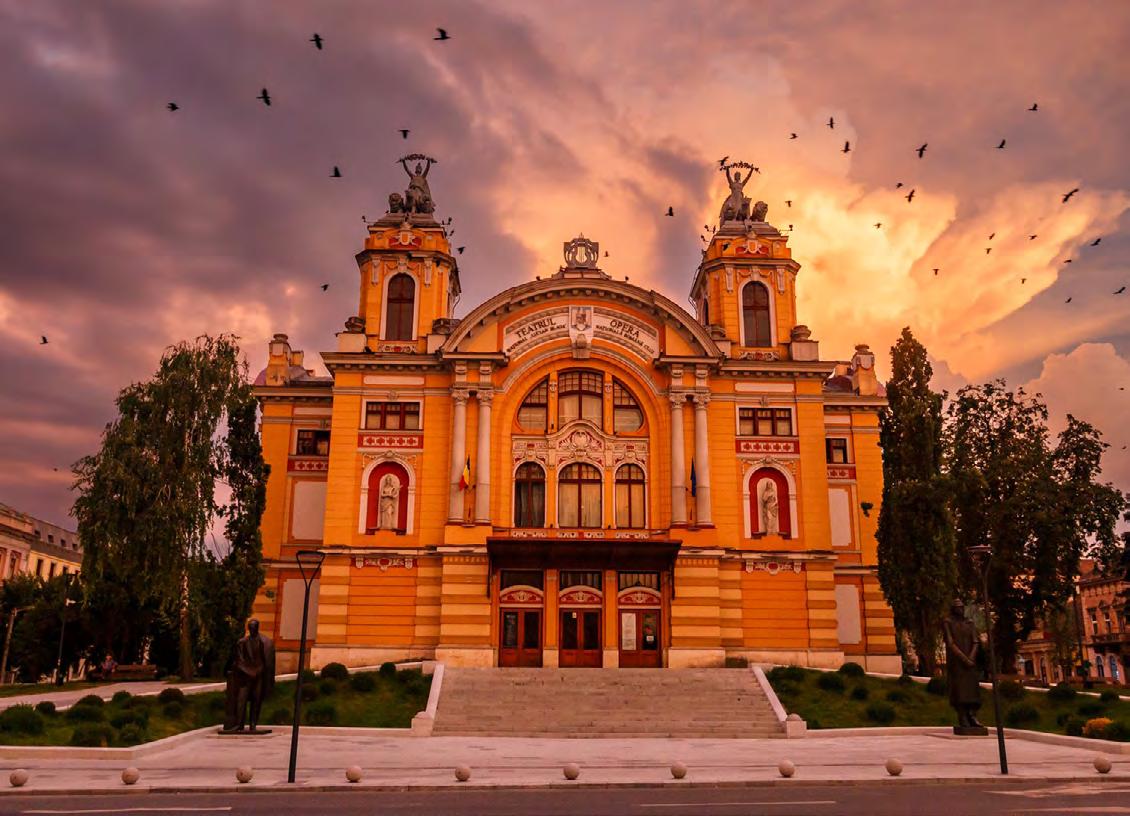
The National Opera in Cluj-Napoca, the first lyrical institution in Romania, was founded in 1919, on the 18th of September, along with The National Theatre, the most important theatrical institution in Transylvania. The building is the work of the renowned Austrian architects Helmer and Fellner, specialized in project and built of opera theatres in secessionist architectural style.
The hall has a capacity of 928 seats and was designed in Neo-Baroque style with a twist of Secessionism. The Opera scene has presented
since 1919 over 200 operas, operettas and ballet shows of international repertoire. The National Theatre organizes annually the International Meetings of the National Theatre in Cluj. This is one of the most important events of the institution, outside its international repertoire, when it becomes the meeting point between theatre specialists from all over the world, as well as between them and the Cluj spectators. The audience is invited to participate in exhibitions, recitals, film screenings and workshops, to conferences, debates and book launches.
The Open Doors Day activities take place on World Theatre Day (27th March) every year, when “they break barriers between stage and hall” and when “the civil and the artistic world intertwine and come into fusion”. The Hungarian State Theatre and Hungarian Opera House in Cluj-Napoca
offer performances in the current building since 1910. The Hungarian Theatre of Cluj was founded in 1792 and was the first Hungarian theatre company in Transylvania. Now, it functions as a repertory theatre, entirely subsidized by the Romanian Ministry of Culture and National Heritage. Performances are presented in Hungarian, with subtitles in Romanian or English usually available.
First launched in 2007, the Interferences International Theatre Festival of Cluj is a twoweek biennial festival produced by the Hungarian Theatre of Cluj, Romania. With its program of international productions, the festival presents a kaleidoscope of some of the most interesting trends of contemporary theatre, offering the Cluj audience the chance to discover the works of internationally acclaimed theatre makers.
Source: union-theatres-europe.eu
The “Gheorghe Dima” National Music Academy (ANMGD) in Cluj-Napoca officially took possession of its new headquarters on Friday, September 19, 2025. The institution is opening a unique university campus in Romania, designed for artistic excellence and the training of future generations of musicians.
“Officially, the National Music Academy has taken possession of its new headquarters. We will move our two faculties and all other departments, and we will start the academic year here. The space brings together in one place all the resources needed for training musicians and artists; students can stay here 24 hours a day, without losing time between classes and rehearsals,” said Prof. Vasile Jucan, Rector of the “Gheorghe Dima” National Music Academy,
during the press conference inaugurating the new headquarters.
With an area of 27,000 m² dedicated exclusively to music education, the new campus is the largest and most modern in the country, bringing together all aspects of artistic and academic life: classrooms and individual study rooms, acoustic studios, a choreography hall, a control room, warm-up rooms for orchestra and choir, a library with a reading room, lecture halls, a sports hall, locker rooms, workshops, storage for stage sets, as well as a dormitory with 182 beds and social areas for students. The building includes two lecture halls with 239 seats each, one of them dedicated to organ concerts and chamber music, while the other incorporates a 363 m² civil protection shelter, now converted into an archive.
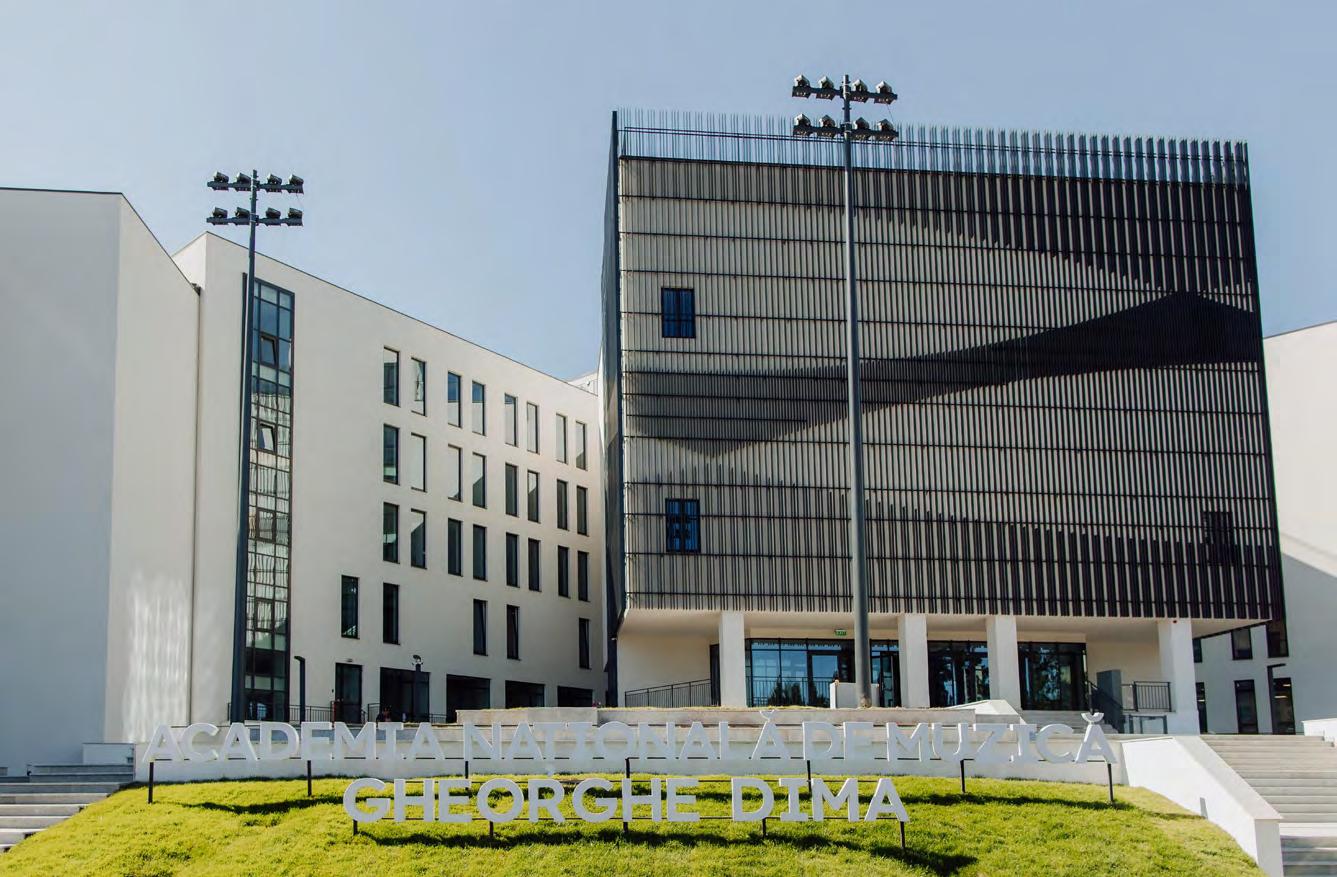
The heart of the campus is Héritage Hall, with 1,031 seats, the largest concert hall built in Romania since 1989. Designed by architect Cristian Mihăescu, Héritage Hall is a versatile space for symphonic concerts, opera, ballet, choir, and chamber music, with acoustics calibrated to the most demanding international standards and a reverberation time of 1.55 seconds. The side walls feature innovative diffusing elements, created for the first time in Romania, inspired by the designs
of the Stockholm Music Academy, while the suspended ceiling with 10 curved waves produces a balanced and clear sound. The Gustafs wood finishes, crafted from noble timber, complete the experience, providing not only exceptional sound performance but also visual refinement.
The project, fully funded by the government, has a total value of 127.8 million lei and represents the largest investment by the Romanian state in cultural and educational infrastructure since 1989.
The realization of this investment was made possible through the “State Higher Education Institutions” subprogram, part of the National Public or Social Interest Construction Program, managed by the Ministry of Public Works, Development and Administration through the National Investment Company. The construction works were carried out over 24 months by the consortium of Construcții Erbașu, Concelex Engineering, and Terra Gaz Construct, five of which were dedicated to design.
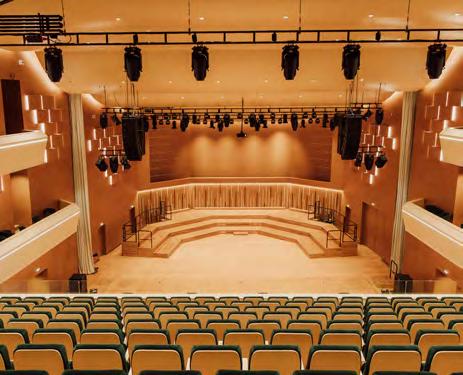
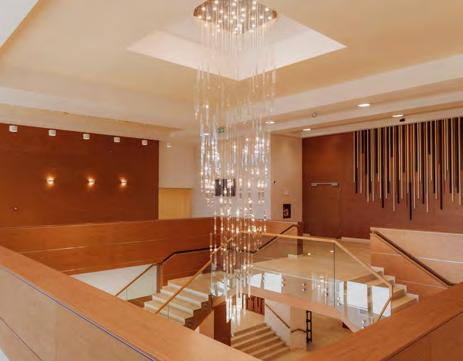
« I am confident that the Humans festival will contribute not only to enriching the cultural life of our city, but also to consolidating Cluj’s image as a modern, vibrant European city, open to creativity. »
David Grimal, Artistic director and creator of the Humans festival –Visionary Violinist and Cultural Leader – “In times that challenge our humanity, I created Humans around what defines us most: the soul, which no artificial or real intelligence can quantify or surpass. Music is its expression—an infinite language that transcends words and the wounds of civilizations. In Cluj-Napoca, we believe in humanity, and I wish to forge links between the city’s Universities. The festival is built in partnership with the Cluj Transilvania Philharmonic Orchestra, the “Gheorghe Dima” National Academy of Music, and with the support of the City of Cluj. It is the cornerstone of a broader project: creating a European hub of musical excellence within the new world-class campus now established in Cluj.”
Today, David Grimal stands as both a virtuoso violinist and a cultural entrepreneur, building bridges between nations, disciplines, and generations through music. “Internationally acclaimed as one of the most original violinists of his generation”, Le Monde, hails him as “a violinist who constantly renews the art of interpretation”. Invited to perform on the world’s most prestigious stages, as soloist or conductor of leading orchestras, he is also the chamber music partner of choice for the greatest artists at renowned festivals. In 2004, he founded Les Dissonances, the only orchestra worldwide performing the symphonic repertoire without a conductor, with filmed concerts broadcast in over 80 countries. From 2003 to 2024, he led L’Autre Saison in Paris, a pioneering series for the homeless that helped over 400 people escape extreme poverty. In 2022, he created Lumières d’Europe, an
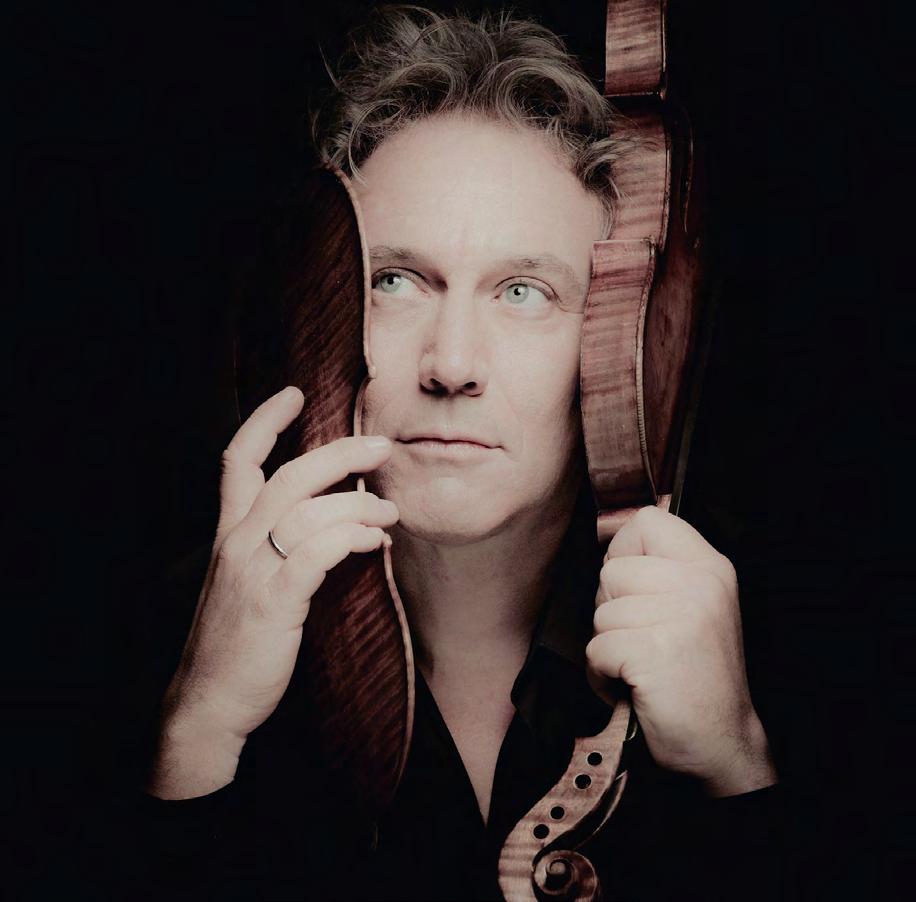
Academy-festival under Nobel laureate Serge Haroche’s honorary presidency, combining music with philosophy, literature, science, and history, while supporting young European musicians. His recordings, awarded distinctions such as BBC Music Choice, Diapason d’Or, Télérama ffff, and Arte Sélection, appear on EMI, Harmonia Mundi, Naïve, Aeon, Transart, and La Dolce Volta.
A dedicated teacher, he has taught at the Conservatoire de Paris, now at the Hochschule für Musik Saarbrücken, and is regularly invited to leading institutions worldwide. David Grimal was made a Chevalier dans l’Ordre des Arts et Lettres in 2008 by the French Ministry of Culture.
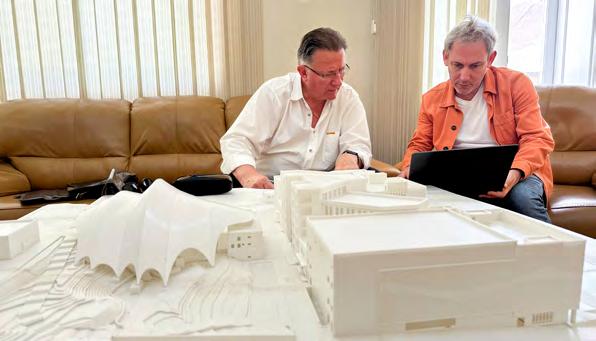
The Humans Festival is an international classical music event, held in Cluj-Napoca from June 5 to 11, 2026. The opening and closing concerts will take place in the 2,000-seat Amphitheater of the “Gheorghe Dima” National Academy of Music, featuring the Transylvania State Philharmonic Orchestra and Choir, conducted by Brazilian pianist and conductor Ricardo Castro. Beethoven will be in the spotlight. As a tribute to Beethoven’s bicentenary, the first edition will celebrate the life force and the dream of emancipation embodied in his music. Throughout the week, chamber music concerts will be presented in the Academie’s new concert hall, Héritage, with international artists such as Israeli pianist Itamar Golan, French pianist Philippe Cassard, French cellist Anne Gastinel, and Canadian violist Juan Miguel Hernandez, alongside young Romanian musicians Valentin Șerban, Ștefan Cazacu, and Sabina Silaghi, performing masterpieces by Schubert, Brahms, Fauré, Enescu, Bartók, Chausson, Ravel, and Schumann. Each day, a surprise concert will be given by the most talented students of the “Gheorghe Dima” National Academy of Music in emblematic venues of the city as part of the “Festival Off”. In addition, the guest artists—who are all distinguished professors at leading Universities worldwide (Geneva, Firenze, Lyon, Montreal, Manchester, Paris)—will offer masterclasses to the Academy’s students.


Traditional art has always been linked to the everyday life of the countryman who, due to his inner sensitivity, sough to beautify his work-related objects, those related to domestic activities, and the clothes he wore, especially those used for celebrations.
Thus, the elegance of the line and the richness of the ornaments on the pieces that make up the traditional costume, the shape and simplicity of the clay pots, the fineness of the notches on the wooden objects, the piousness with which the icons are painted, the scrupulousness with which the ornamental motifs on the painted eggs are being made, the beauty of the beads, the craftsmanship with witch the hazel or red twigs are woven, the artistic bone processing, as well as the metal processing are all part of the activities of the members of the Association of Popular Craftsmen Cluj.
From the establishment of the association up until now, over 200 members contribute to shaping the identity of the regional and national traditional culture, to the revival of crafts and also to promoting the handicraft products that are specific to Cluj county, both on the Romanian market and on the foreign ones. They are open to collaborations as they want these craftsmen who are so passionate about traditional art to be known by as many people as possible, and for the products they make with a lot of toil and using old techniques to be appreciated. If you are a popular craftsman and you want to be part of the Cluj Association of Popular Craftsmen, you can find out more details by following the association's Facebook page: https:// www.facebook.com/AsociatiaMesterilorPopulariClujeni/
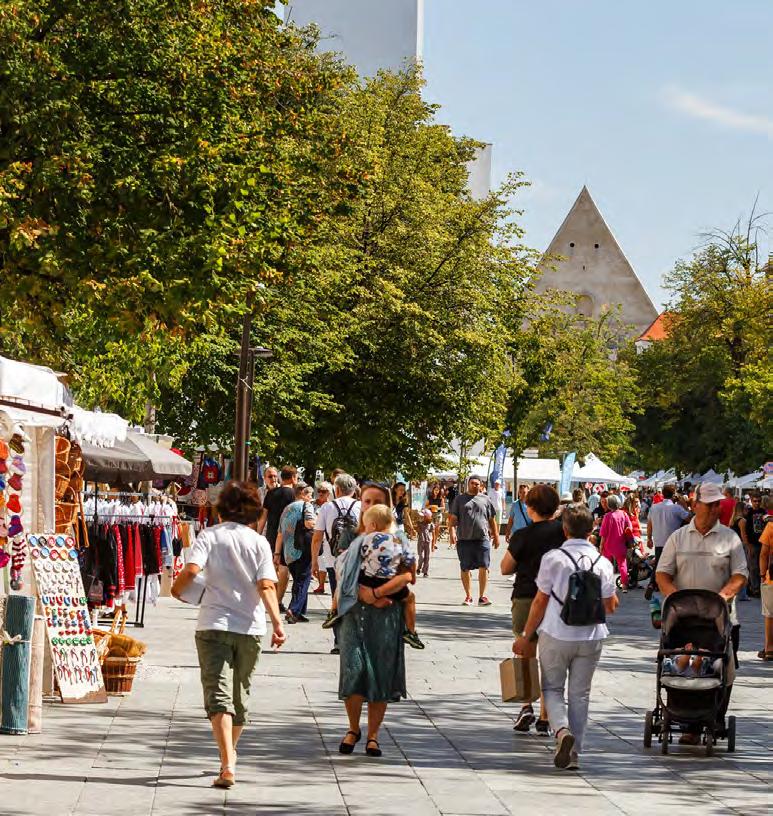

Every city likes to call itself young. Few actually let young people decide what that means. Cluj-Napoca, however, has decided to go a step further: to experiment with governance itself. Enter OurCluj.Beta— the city’s bold attempt to let youth co-write the rules of the game, not just play along.
Think of it as a civic laboratory, but instead of white coats and test tubes, you’ll find students, activists, entrepreneurs, and city officials all at the same table. The idea is simple, almost obvious: if the future belongs to young people, why shouldn’t they also have a real say in the present?
OurCluj is testing exactly that. It’s not just another youth project — it’s an experiment in power-sharing. From participatory grant-making to youth assemblies and co-designed strategies, the initiative asks tough questions: how do you bring teenagers and city hall into the same conversation? How do you turn diversity into inclusion, ideas into policies, and enthusiasm into actual budgets? The answers don’t come from manuals. They come from trial, error, and plenty of crea-

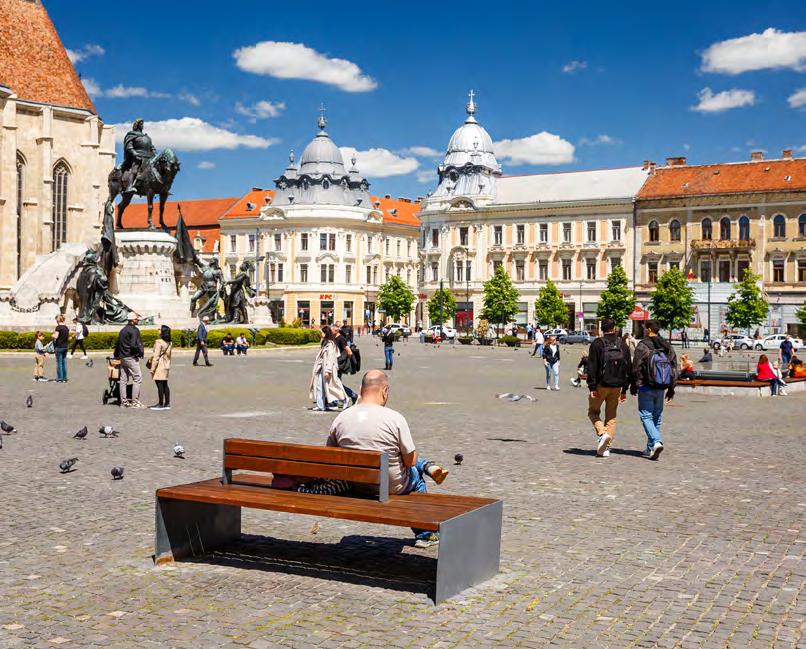
tive improvisation. And that’s the point: governance here is not treated as something carved in stone, but as something alive, adaptable, and open to iteration. In OurCluj, mistakes are allowed — ignoring young people is not.
Behind the playfulness lies a serious ambition. The Municipality of Cluj-Napoca and its partners know that cities thrive when they harness the energy of their youngest citizens. By treating young people not as “beneficiaries” but as co-creators of policy, OurCluj is nudging Cluj toward a new culture of democracy: one that is transparent, collaborative, and maybe just a little braver than the old ways.
Will this experiment become a model for other European cities? Possibly. But for now, OurCluj is proving something even more important: when you give youth a seat at the table, governance stops sounding like paperwork — and starts sounding like the future. This experiment is made possible with the support and funding of Fondation Botnar, whose commitment to youth well-being and urban innovation helps Cluj turn bold ideas into real change.




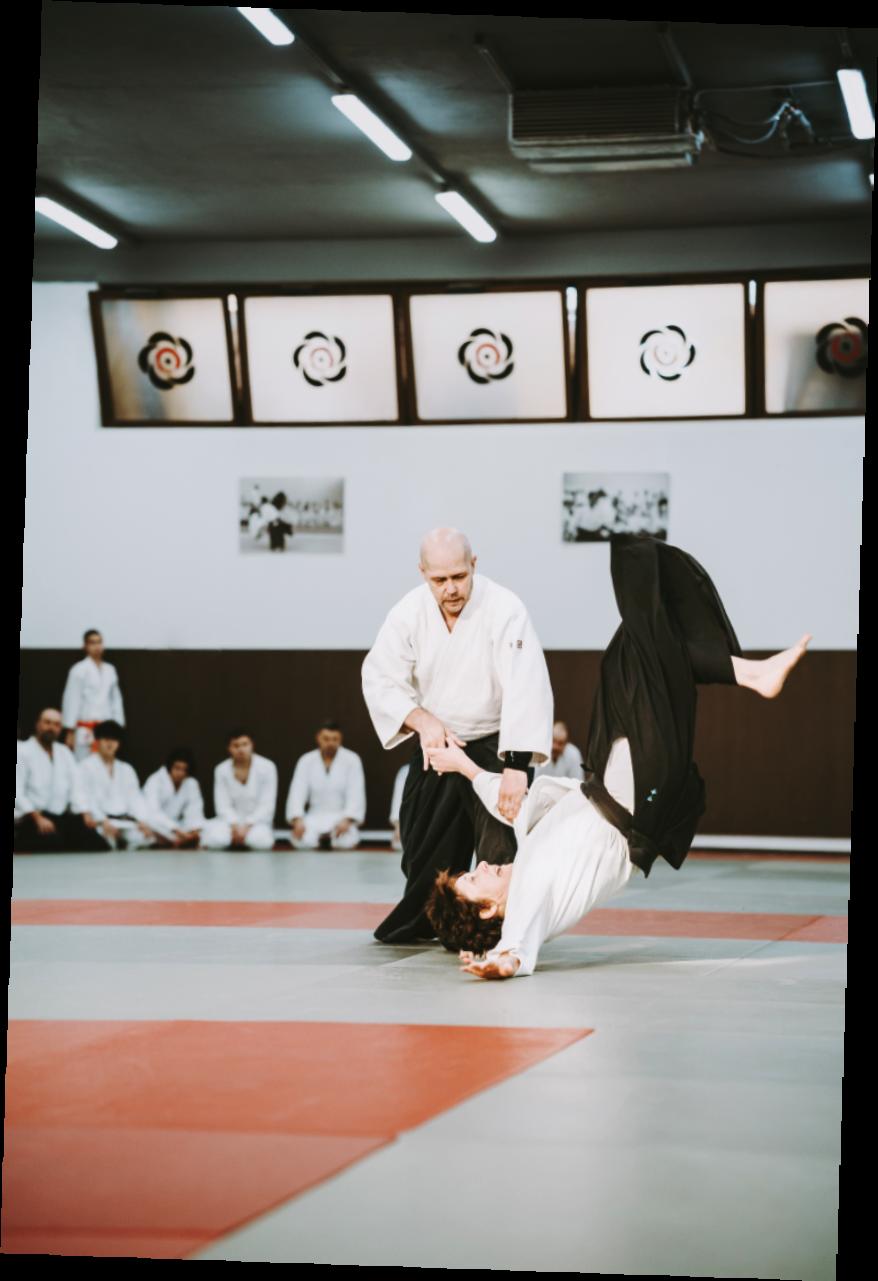



It goes without saying that the title “Heart of Transylvania”doesn't only refer to the city's geographic position. It also refers to the fact that Cluj-Napoca is a vibrant, animated city, capable of creating a melange of old and new! Like culture and art, leisure and sports activities play a significant role in communities and the city's growth.
In recent years, Cluj-Napoca has become the city with the best-developed infrastructure for sports in Romania, opening itself for both performance sports and sports for the larger public. In 2018, it was one of the 22 cities awarded the European City of Sport 2018 title by ACES Europe, a non-profit association recognized in the European Commission's White Paper, which aims to internationally acknowledge communities that value sport and create contexts favorable to its development.
Some of the Cluj-Napoca assets are: 25 sports facilities, over 100 active sports associations, five important sports clubs, teams in national leagues, a paralympic association (Lamont Center), over 40 professional or semi-professional sports played in the city. The sports facilities include Gheorgheni Sports Complex, Polyvalent Hall, Cluj Arena, “Simion Bărnuțiu” Central Park, “Iuliu Hațieganu” Sports Park and CFR Cluj Stadium.
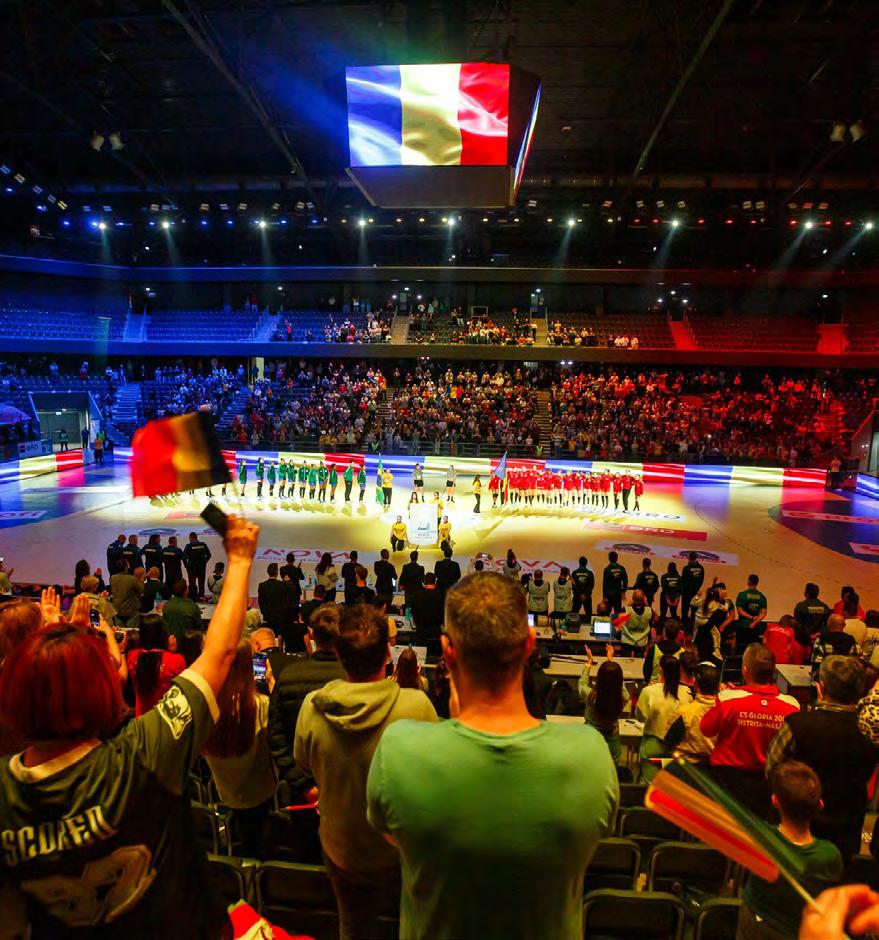
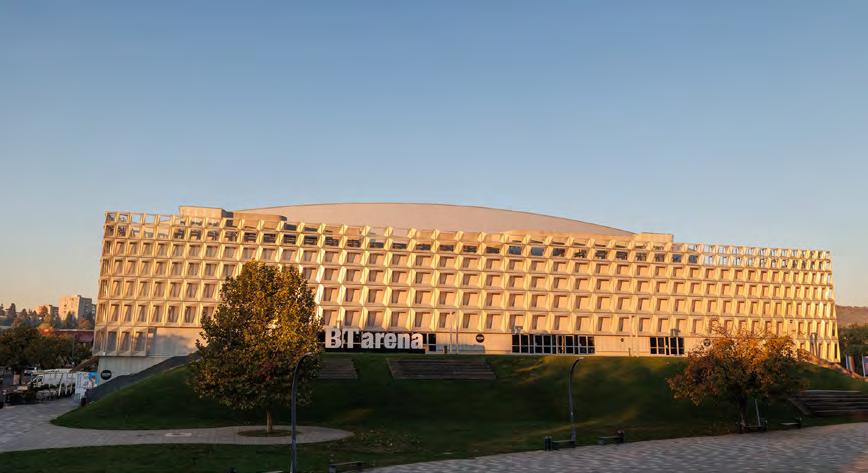
The Polyvalent Hall, commonly known as BTarena, is the largest multipurpose hall in Romania, with a capacity of 10.000 seats. Simona Halep, the world's No. 1 in professional women's tennis, made over 8.000 spectators proud in Cluj-Napoca at the Fed Cup matches Romania – Switzerland (3-1), in April 2018, at the BTarena. The hall has hosted many sports and artistic events such as Eurobasket 2017, the European Artistic Gymnastics Championships 2017, FED CUP, Women's European Volleyball Championship 2021, and concerts of Sting, Julio Iglesias, James Blunt, Eros Ramazzotti, André Rieu, and many others. Also, it is the host of several shows of the well-known Untold Festival.
Cluj Arena stadium is one of the most modern in Romania. It was built in 2011, in the same place as the old Ion Moina Stadium. Nowadays, it hosts football matches, athletic competitions, concerts, graduation ceremonies, and other cultural events. Both venues, the BTarena and Cluj Arena, play an essential role in delivering large-scale events and have quickly become some of the most famous landmarks of Cluj.
SPORTS FESTIVAL is the largest multi-sport event in Romania. Founded in 2018, it is the place where legends and great national and international sports glories stand next to tomorrow's champions and today's supporters.
The event brings back sports among the entertainment activities, offering people a community to be part of, along with a dose of fun and exciting rewards. Here, over 25 sports can be learned for free, with the possibility for future post-festival
long term training subscriptions. In addition, thematic conferences, nutrition programs, and amazing demonstration events are held by great athletes in the two stadiums of the city, Cluj Arena and BTarena.
U-BT Cluj-Napoca, the pride of Romanian basketball, is the top basketball team in the country.
U-BT holds 5 titles of Romanian champion, 6 Romanian Cups and 4 Supercups, showcasing their dominance in the national league.
Their prowess extends beyond domestic glory. U-BT Cluj-Napoca boasts the highest attendance in the BKT Eurocup, with a full house of 10.000 fans, captivating audiences with electrifying performances on the court.
But it's not just about winning for U-BT Cluj-Napoca. It's about the journey, the family spirit and the unwavering support of their fans. Whether it's a heated rivalry or a decisive championship game, every moment is a pursuit of excellence.
Step into the arena and you'll witness more than just basketball. Each game is a spectacle, a fusion of sport and entertainment. From the spectacular slam dunks to the three-pointers, the dance and music shows, every moment is thrilling the spectators. U-BT Cluj-Napoca isn't just a basketball club, it's a cultural phenomenon, a source of pride for Cluj-Napoca and Romania as a whole. So, come join the spectacle, because with U-BT Cluj-Napoca every game is a show you don't want to miss.
Sports Festival is the largest mass-participation multi-sport event in South-Eastern Europe. For four days each year, Cluj-Napoca turns sport into an accessible, everyday experience—on streets, in parks and arenas— guided by a simple idea: the most demanding contest is with yourself.
Why it’s different
Sports Festival is rooted in a city layout that can’t be replicated elsewhere in Romania Within the same pedestrian-friendly area, Cluj concentrates a multipurpose arena, a football stadium, a major park, a car-free promenade and a cluster of sports-friendly hotels This compact architecture lets visitors move on foot between venues, classes and competitions, creating a continuous, city-scale playground.
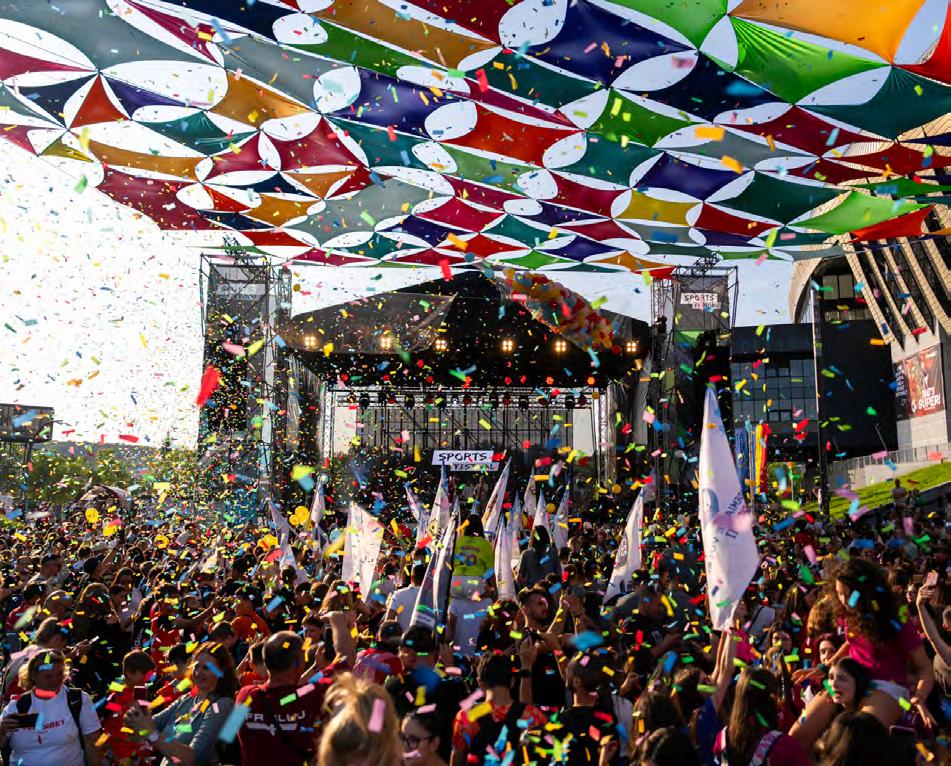

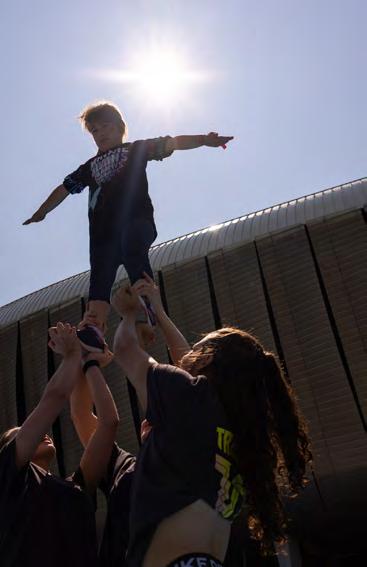
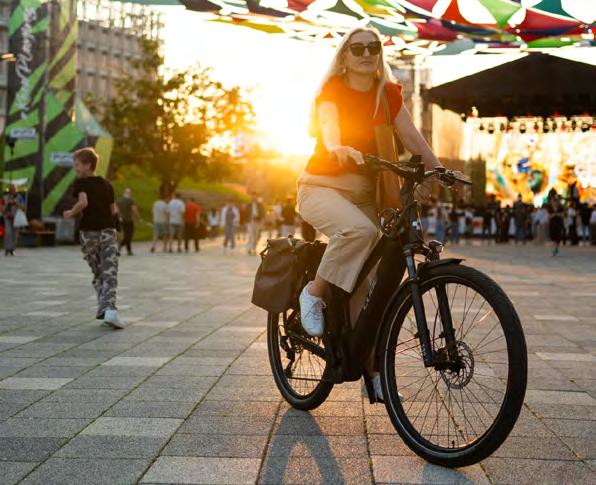
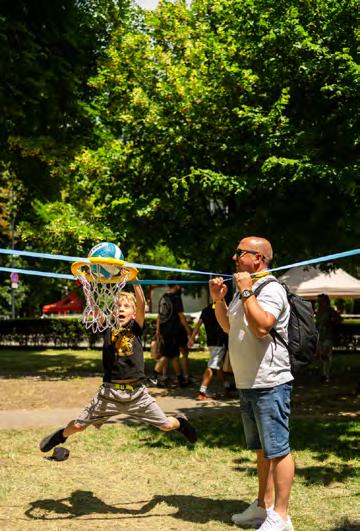
What visitors find
• Initiation Zone: 25+ sports free to try, for all ages.
• Sports Festival Stage: open classes led by coaches (method first, spectacle second).
• Competitions: kids’ football, rugby, basketball and chess; urban 3×3 basketball; CrossFit challenges.
• Education: Sports Talks and masterclasses turn elite practice into practical guidance.
• Festival amenities: evening entertainment, music, a curated food area and games zone.
• Pet-friendly: canicross welcomes runners with their dogs.
• Community run: the Superheroes Run each edition tied to a social cause (no costumes required).
Over the years, appearances by Ronaldinho, Andre Agassi, Steffi Graf, Barcelona Legends and leading Romanian athletes have reinforced the event’s core purpose: inspire participation and anchor sport in daily city life.
The Transylvania Open is a WTA 250 tournament held in Cluj-Napoca, Romania, on indoor hard courts at BT Arena. It was voted by the players “Tournament of the Year” in the WTA 250 category for two consecutive seasons (2022 & 2023) reflecting consistent quality on and off the court.
Tennis-friendly by design
Cluj offers a compact set-up: venue, training courts and hotel are within immediate reach, minimizing transfers and protecting recovery time. The result is predictable scheduling, calm preparation and an event week that feels efficient for athletes and accessible for fans.
What defines the experience
• Controlled environment: indoor play and reliable timetables.
• Player-centred operations: modern facilities, short walks, smooth logistics.
• Fan access: clear seating, straightforward ticketing, and family-oriented entry policies.
• Community programmes: clinics and school activities introducing the sport’s values— discipline, respect, fair play.
City impact
International broadcasts spotlight Cluj-Napoca in winter, supporting local hospitality and reinforcing a clear brand: a European city that hosts elite women’s tennis with precision and care.
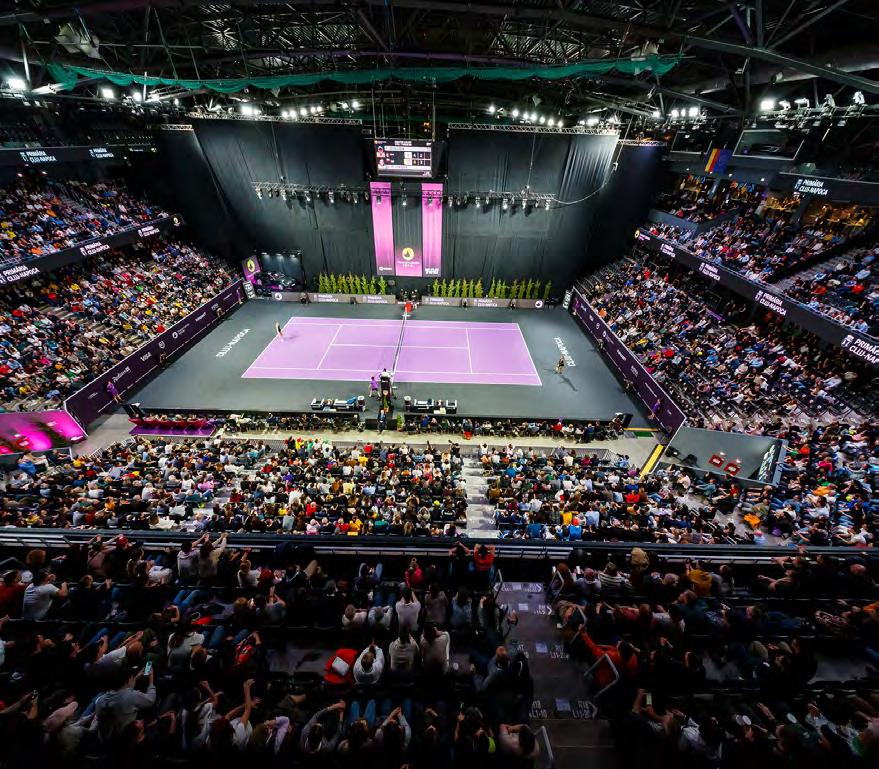

In Cluj-Napoca, public health, sustainable mobility, and community engagement come together in a unique initiative: the Health Ticket. Developed in partnership with Sports Festival and supported by the municipality, the project invites citizens to perform short bursts of exercise at specially designed smart stations in exchange for a free public transport ticket.
It is a simple idea with transformative impact. By turning bus stops and public spaces into micro-fitness hubs, the Health Ticket encourages people to move, while simultaneously nudging them toward greener mobility choices. Since its launch in 2020, more than 150,000 tickets have been issued at the first station, amounting to over 3 million squats performed by Cluj citizens. The project has since expanded to include a cycling station, with another 14,000 tickets issued and 5,600 kilometers traveled in just three months.
Behind these numbers is a clear philosophy: innovation in cities should start with people. The Health Ticket shows how technology and creativity can be used not as ends in themselves, but as mediums for behavior change—encouraging healthier lifestyles, improving air quality, and making public transport more attractive.
The initiative has also proven inclusive. Children, students, commuters, and seniors alike take part, turning everyday routines into playful
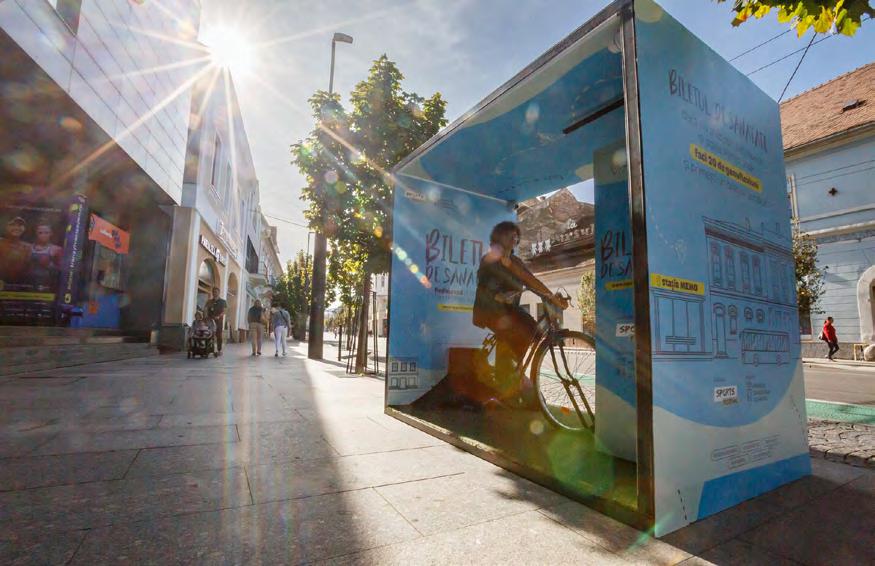
moments of exercise. Its visibility during Romania’s largest multi-sport gathering, the Sports Festival has amplified its message, linking community celebration with everyday health.
At a time when European cities seek new ways to promote sustainability and well-being, Cluj’s Health Ticket stands as a best practice in
urban nudging. By rewarding physical activity with immediate, tangible benefits, it creates a virtuous circle: healthier citizens, reduced emissions, and a more active urban culture.
Cluj is showing that the road to a sustainable city can start with something as simple as a squat, a smile, and a ticket.
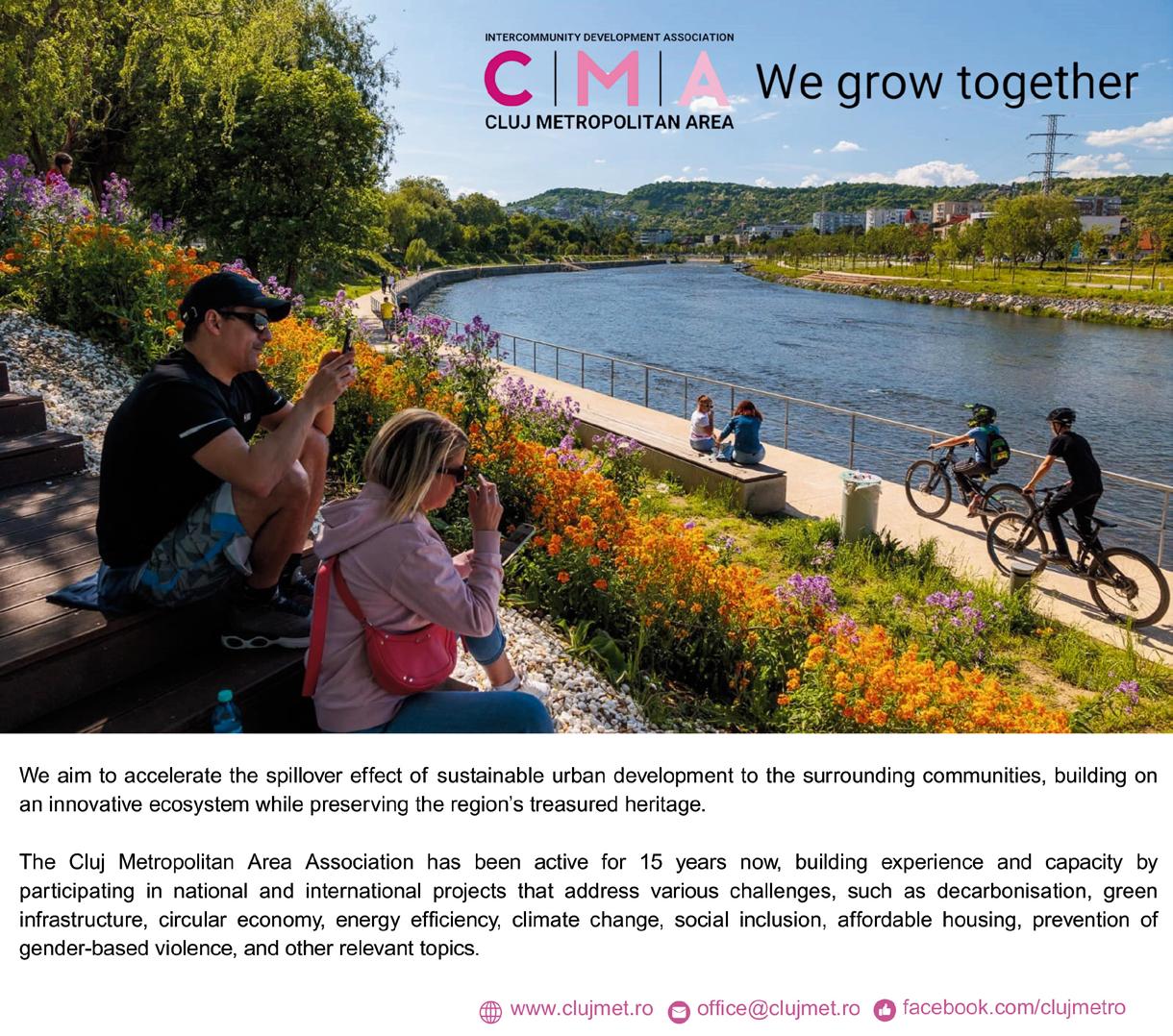
The best way to do some sightseeing and enjoy what the city has to offer is on foot because the main landmarks and sights are located close to one another in the city centre.
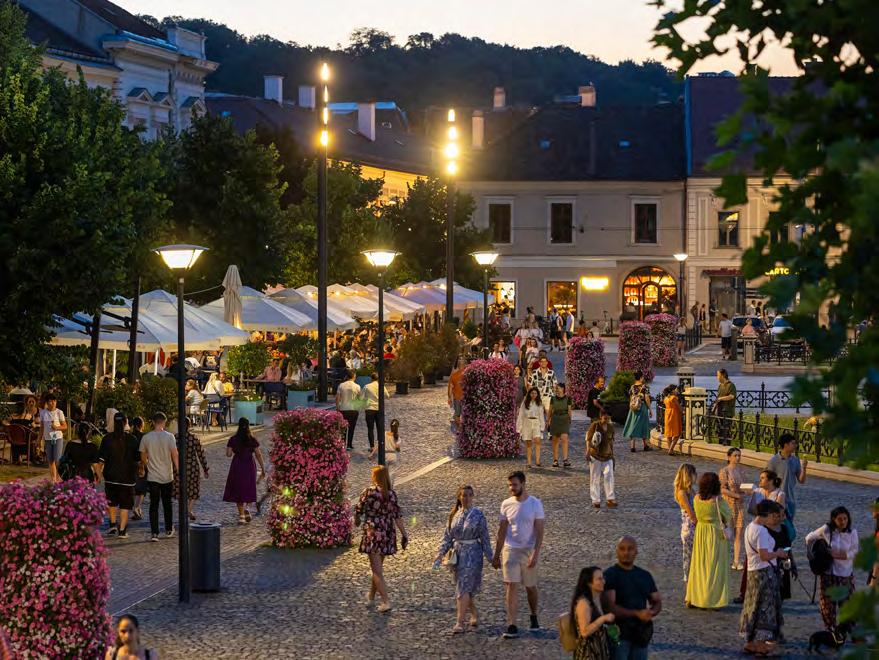
Get the best view over the city from an old fortification point known as Cetățuia that dates from the time of the Austrian domination. If in the past it was meant to be a strategic point of defense and observation, nowadays is the chosen place for romantic walks and awesome panoramic photos.
Discover the traditional Romanian way of living in various regions in Transylvania by visiting the National Ethnographic Park Romulus Vuia
Located at the outskirts of Cluj, the park is a great location to switch off your mobile and enjoy a day in nature.
Walk around the historical part of the city and enjoy getting lost in the dense network of small streets in the Museums Square area and Unirii Square. At night, you can engage in an original pubbing experience in the same squares since there are plenty of options to choose from.
There’s an array of places to explore and experiences to have around Cluj-Napoca also. Here are some locations for you to add to your list.
The Turda Salt Mine might be the coolest underground place you have ever seen! Locate at 120 metres (400 feet) underground, it used to be a pearl of salt mining in Transylvania!
If you’re visiting Cluj during winter, make sure you plan a ski day at Baisoara Resort Rent your equipment and enjoy the 1200 meters slope!
Once known as the Versailles of Transylvania, the Banffy Castle in Bonțida used to be the most spectacular in the region centuries ago! Now, it comes to life every summer thanks to its hosting of a major music festival - Electric Castle!
The Bride’s Veil Waterfall is a two-level cascade, with almost 1,000 meters altitude which is located approximately 75 kilometres away from Cluj-Napoca. Its fall is over 30 meters and the water spreads out in a fan, giving the unique impression of a wedding veil.

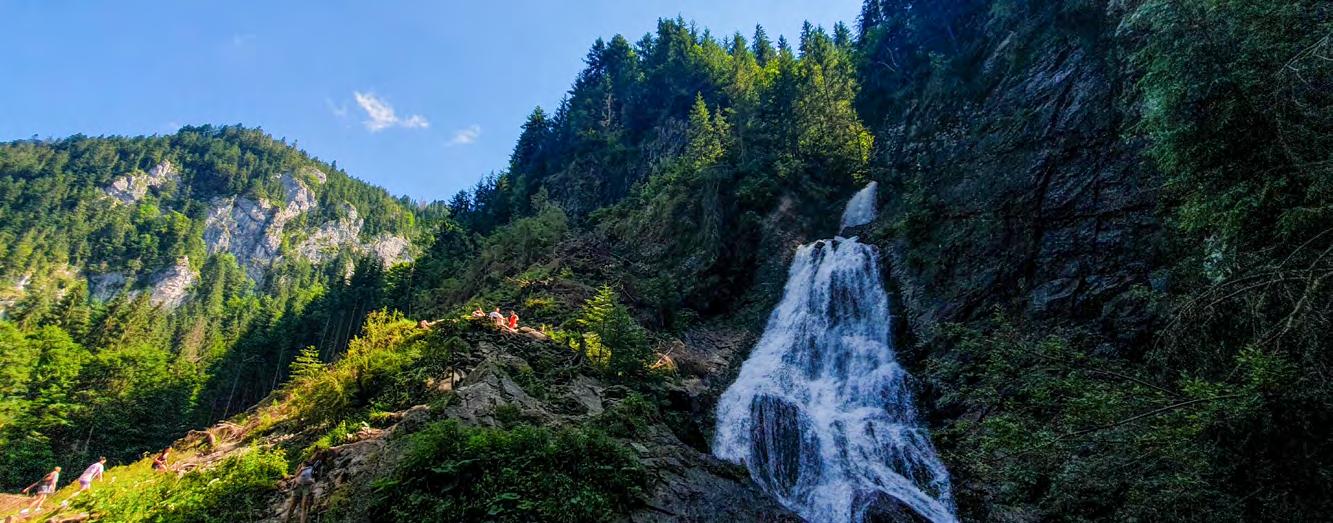
No visit to Transylvania is complete without getting a taste of the local cuisine! The first thing you must try is a dish called Varza à la Cluj (cabbage à la Cluj), which is carefully prepared with rice and meat and can be flavoured with cumin, thyme or paprika. Another very popular dish in Transylvania, gulaș (actually a Hungarian dish) represents the multicultural cuisine scene of Cluj-Napoca. The dish is usually cooked in a large cauldron with vegetables, meat and spices, especially paprika.
Have you ever had soup served in a bowl made of bread? Well, you’ll get the chance do to so when visiting Cluj. Ciorba de fasole cu ciolan which translates as bean soup with smoked pork meat, comes in a wheat bread bowl and is usually served with a side of onion salad.


Key data of the first regional airport in Romania
Air traffic evolution 2022 - 2025 (estimated)
55–68 Destinations

David Ciceo, CEO, Cluj International Airport
Cluj Internat ona Airport proud y ce ebrates the progress and ach evements of recent years made possible by the ded cat on and hard work of the C u Airport team, w th the support of its stakeholders among wh ch we ment on C uj County Counc l, airlines, partners and other relevant and the wider community. Together we have strengthened Clu Airport s ro e as the gateway to Transylvania and the ma n regiona a rport in Roman a.
We rema n comm tted to innovation sustainable growth and del ver ng high-qual ty services to our passengers, confident that even greater opportun ties ie ahead.
Achievements and Investments (2019-2025)
Major modernization and infrastructure expansion projects worth over €130 mi lion, nclud ng ~€48 million in EU fund ng.
2024 inauguration of the Departures Terminal expansion (+7,200 sqm, bringing an overal capacity of 4 5 mi lion passengers/year).
First airport to allow liquids and electronics in hand luggage
Innovative acquisitions: the first e ectric bus in the Romanian airport network, electric de-icing vehic es, and eco-friend y modular furniture in terminals
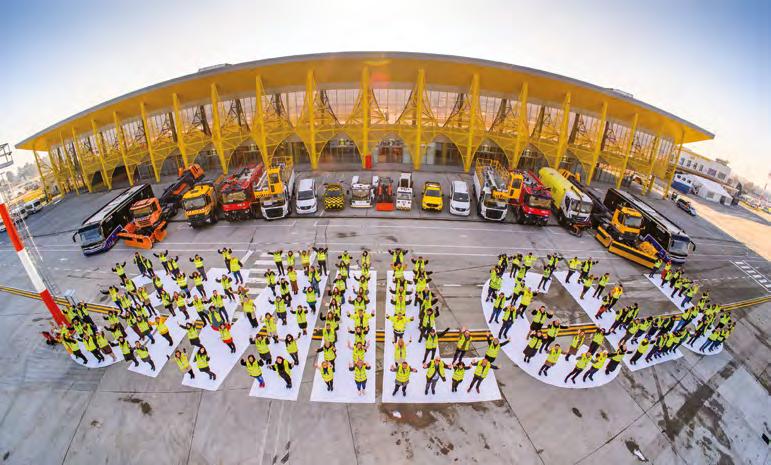

Development plan for 10 million passengers per year by 2045
New Passenger Terminal – 71,700 sqm, completion by 2031
Runway Extension – 3 400 m for long-haul flights (2030)
Cargo Terminal & Maintenance Hangar – boosting logistics and a rline services (2028–2029)
Apron Expansions – new aircraft parking stands (2026–2028)
Green Investments – photovo taic park (2027) & eco-friendly infrastructure, granting energet c independence to CLJ Airport and reduc ng emis ons by 52%.

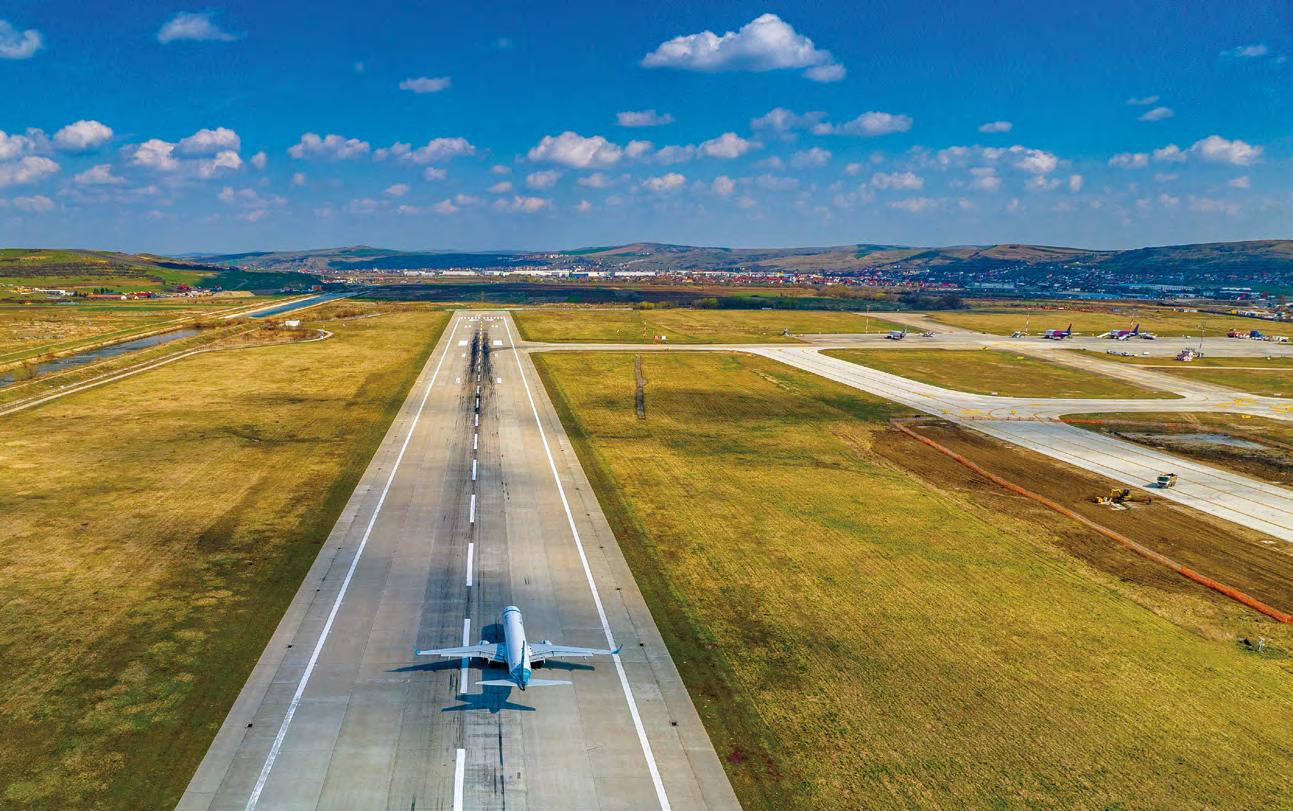
Getting to Cluj-Napoca is really easy due to its position and its status as a major Transylvanian city. There are three ways in which you can get to the Heart of Transylvania.

By plane
Cluj International Airport is the most important gateway to the north-western region of Romania, and the second busiest airport in Romania, with national flights to Bucharest and international flights to over 20 countries.
More than 50 scheduled destinations are operated by different passenger airlines: Tarom, Lufthansa, LOT Polish Airlines, Wizz Air, Turkish Airlines, HiSky, Ryanair etc.
You can easily get to the heart of the vibrant Cluj-Napoca city by bus or by taxi in only 20 minutes and for less than 5 euros, the airport is located only 2.5 miles from the city centre. Find more information about flights to and from Cluj-Napoca on the Airport’s official website www. airportcluj.ro or on the official social media platforms.
By TRAIN
The Cluj-Napoca Train Station is the main train station serving Cluj-Napoca. The city offers connections with the majority of Romanian cities, as well as service to Budapest, Hungary and Vienna, Austria. The direct train from Cluj-Napoca to Vienna is provided by the Austrian state railway carrier OBB that has launched the new train called Transilvania on the 9th of December 2019.
To check the latest train schedules for domestic routes please visit the website of the Romanian Railways: www.cfrcalatori.ro
By CAR/BUS
Situated at the junction of four European roads and crossed by the Transylvania Highway, Cluj-Napoca is accessible by both car and by bus.
Even though this choice of traveling might take you some more time, it is definitely worth it. Find inspiration in nature’s many wonders crossing the Transfăgărășan road which the Top Gear crew named the best road in the world. With stunning mountain scenery, breathtaking lakes, fortresses, historical churches and countless waterfalls, the road descends right through Moldoveanu and Negoiu – the highest peaks in Făgăraș Mountains and in Romania. When you get to Cluj, gain more time for sightseeing by leaving your car in one of the city’s four parking spaces.

put your products in the spotlight


We are the first and largest flexographic typography producing self-adhesive labels and printed foil in Romania. Our solutions include:
Self-adhesive printed labels
Shrink sleeve labels
Lids ALU/ PET/ COEX
Lidding Film for Trays
Ice cream paper cones
Printed foils












Tăietura Turcului nr. 47 C1, 400221 Cluj-Napoca, România, T: +40 264 592468
www.impress.ro, facebook.com/impress.cluj, o ce@impress.ro
Wet wipes packaging www.rottaprint.com sales@rottaprint.com