SA5
Quantifying Real-World Corticosteroid Burden in Myasthenia Gravis Treated with Novel Biological Therapies Petitjean C & Clift AK Vitaccess, London, UK
Background & Objectives Corticosteroid burden in myasthenia gravis (MG) is substantial.1 Long-term corticosteroid use is associated with multi-system complications, such as bone, cardiometabolic and immune side effects.2
Novel biological therapies including complement, FcRn and B-cell targeting agents offer the potential to reduce steroid dependence.
Research aim: To characterise real-world corticosteroid prescribing patterns and longitudinal steroid exposure in individuals with MG treated with novel therapies.
Methods Vitaccess Real Myasthenia Gravis (VRMG) Registry MG registry with a direct-to-patient recruitment pathway where participants contribute clinical data through electronic medical records (EMRs) aggregation.
Characterising Real-World Corticosteroid Burden A pattern recognition algorithm was developed to extract dosage information and enable detailed reconstruction of longitudinal treatment trajectories.
EMRs contains detailed prescribing records, including dosage instructions entered by clinicians.
Corticosteroid dosages were standardised to prednisolone equivalent units (1 mg of methylprednisolone = 1.25mg prednisolone) to estimate cumulative steroid exposure.
Prescription records for prednisolone, prednisone, methylprednisolone and novel MG therapies were extracted using clinical codes.
Results Real-World Corticosteroid Burden As of September 2026, 31/246 (12.6%) VRMG participants were concurrently receiving innovative therapy and steroids. • 31.7% Female • Mean (SD) age at VRMG entry: 66.4 (11.6) years
Estimating Participant-Level Cumulative Steroid Exposure Prescribing records were integrated to generate participant-level steroid exposure trajectories over time.
Among these, 685 steroid prescriptions were recorded, with median 16 and mean 22.1 steroid prescriptions per participant. Dosing regimens were extracted for 665 records* including: • 53 titration regimens with dose tapering prescriptions • 220 single course prescriptions • 144 “as-needed” prescriptions Steroids prescribing is highly heterogenous, complex and includes many episodic use. *20 records could not be converted to dose equivalent due to missing or unparseable
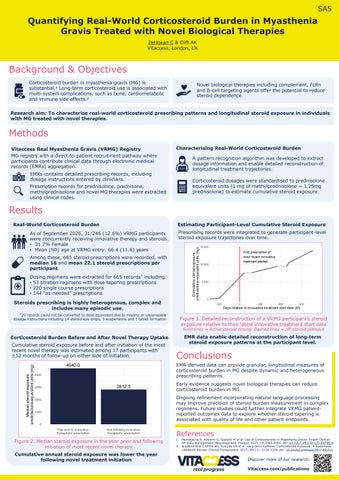
Figure 1. Detailed reconstruction of a VRMG participant’s steroid exposure relative to their latest innovative treatment start date
dosage instructions including 14 steroid eye drops, 5 suspensions and 1 tablet formation
Solid lines = Active steroid dosing. Dashed lines = off-steroid plateaus
EMR data enable detailed reconstruction of long-term steroid exposure patterns at the participant level.
Corticosteroid Burden Before and After Novel Therapy Uptake Cumulative steroid exposure before and after initiation of the most recent novel therapy was estimated among 17 participants with ≥12 months of follow-up on either side of initiation.
Conclusions EMR-derived data can provide granular, longitudinal measures of corticosteroid burden in MG despite dynamic and heterogeneous prescribing patterns. Early evidence suggests novel biological therapies can reduce corticosteroid burden in MG. Ongoing refinement incorporating natural language processing may improve precision of steroid burden measurement in complex regimens. Future studies could further integrate VRMG patientreported outcomes data to explore whether steroid tapering is associated with quality of life and other patient endpoints. `
References Figure 2. Median steroid exposure in the year prior and following initiation of most recent novel therapy Cumulative annual steroid exposure was lower the year following novel treatment initiation
1. 2.
Mantegazza R, Antonini G, Gastaldi M et al. Use of Corticosteroids in Myasthenia Gravis: Expert Opinion for Daily Management. Neurology and Therapy. 2025; 14:2063-2081. doi: 10.1007/s40120-025-00796-w Bradford Rice J, White AG, Scarpati LM et al. Long-term Systemic Corticosteroid Exposure: A Systematic Literature Review. Clinical Therapeutics. 2017; 39(11): 2216-2229. doi: 10.1016/j.clinthera.2017.09.011
Discover more of our research: Vitaccess.com/publications