The Visual Artists’ News Sheet


November – December 2024
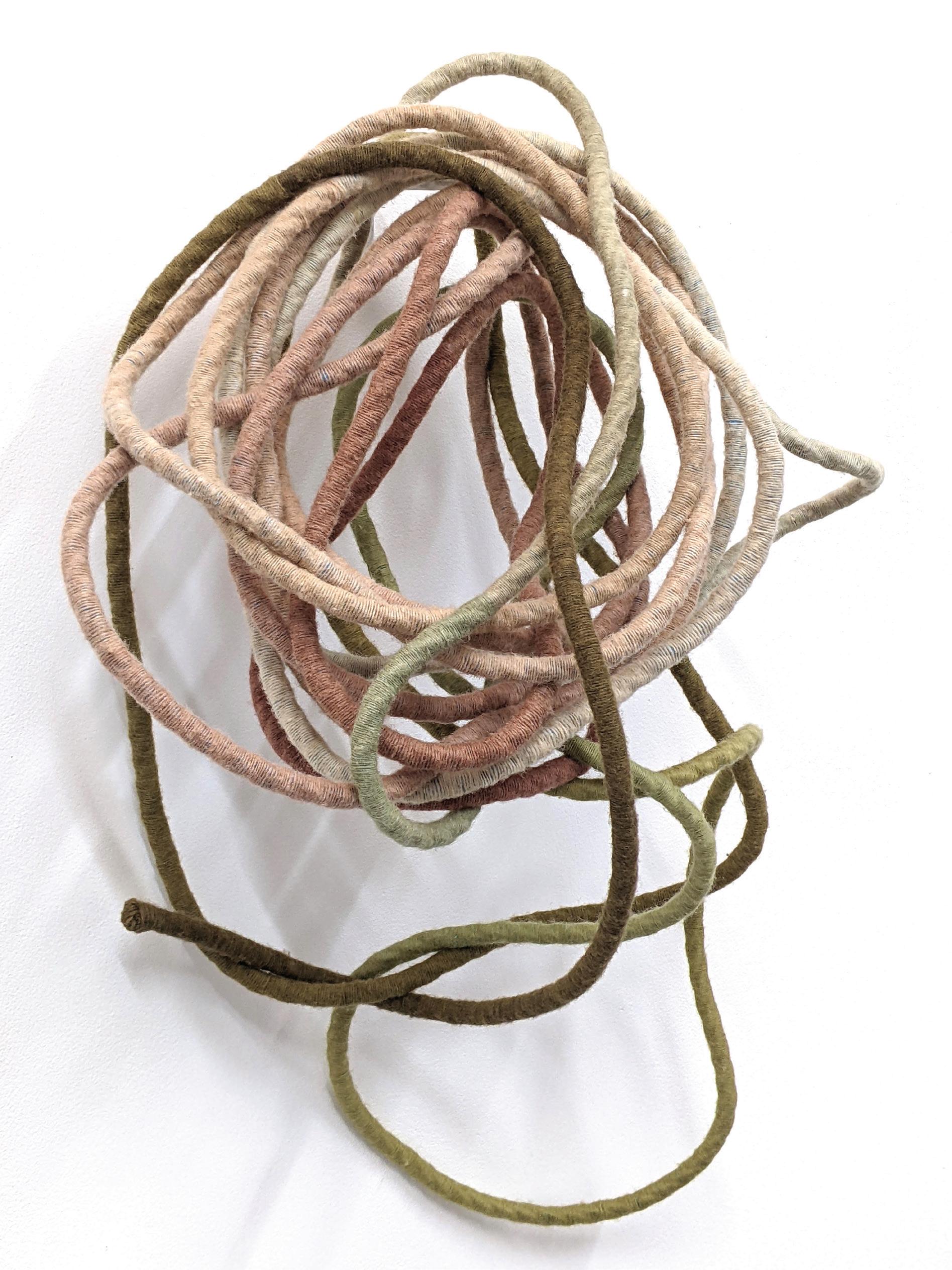
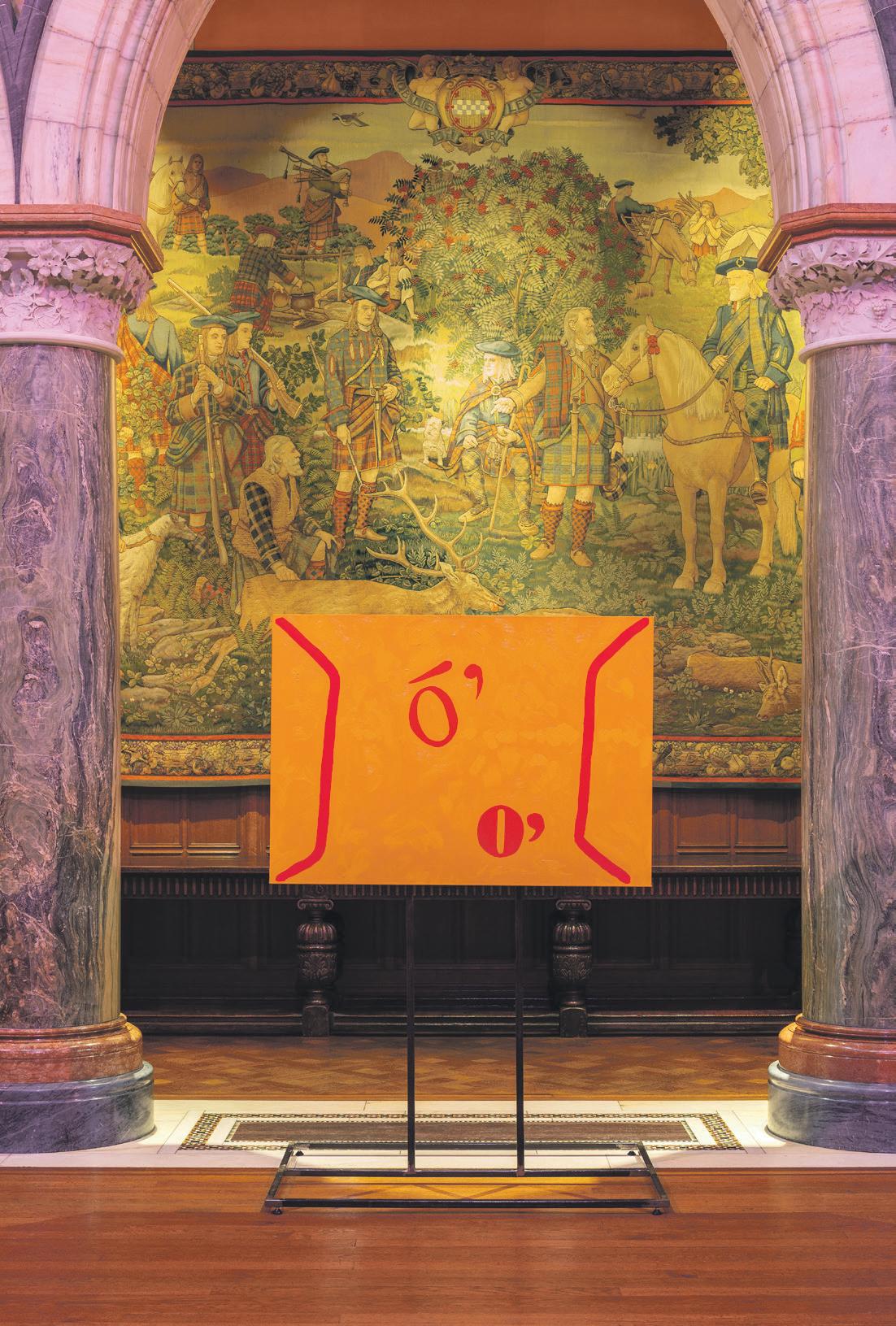
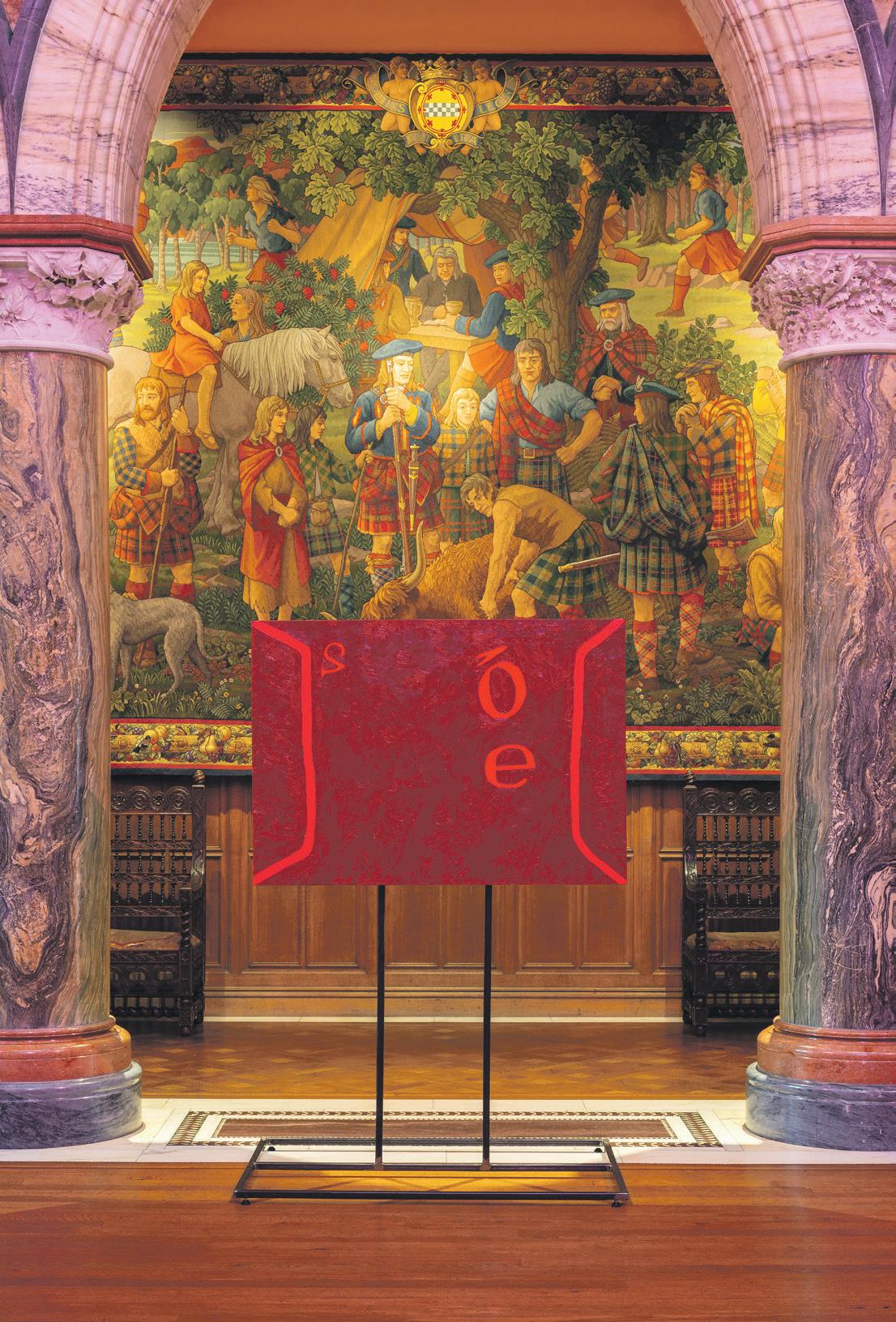
Oisín Byrne, ‘smell the book’, installation view, Mount Stuart, Isle of Bute, Scotland, August 2024; photograph by Keith Hunter, courtesy of the artist.
Infrastructure
6. Residency Roundup: Where Can I Find a Residency in Ireland?
8. Can You Advise on Establishing Communal Studios?
9. How Can Buildings Be Secured for Arts Organisations in Northern Ireland?
Art Work 10. How Can I Prevent Burn-out as an Artist? Access 11. How Can Irish Artists Pursue Opportunities Abroad? 12. How Can the Irish Diaspora Participate in Ireland’s Visual Art Scene?
In Focus: Funding Case Studies
What Kind of Funding Exists for Artist-led Projects?
13. Fiona Whelan and John Conway, Arts Council and 221+ Patient Support
14. LennonTaylor, Local Authority
15. Anthony Haughey, Decade of Centenaries
16. Vivienne Griffin, Culture Ireland
17. Frank Sweeney, Arts Council of Ireland: Project Award 18. Sharon Kelly, ACNI SIAP: Major Individual Award Critique
19. Emily Waszak, Bodies, Jomon time, 2021-23, installation view 20. Debbie Godsell at The Source Arts Centre 21. Alice Maher & Rachel Fallon at Irish Arts Center
22. Dermot Seymour at Kevin Kavanagh
23. ‘Thresholds to the Unseen’ at Solstice Arts Centre
24. Liane Lang at Butler Gallery
Exhibitions
26. How Can I Get An Exhibition? Top Tips from the Sector Ecologies
35. What Are My Options for Greener Art Materials? Sally O’Dowd, Making Charcoal from Ash Dieback Materials Matter, Recipes for Sustainable Art Materials
38. Where Can I Find Art and Ecology Resources? Deirdre O’Mahony, Feeder Bibliography VAI Resources to Support a Greener Approach
VAI News
41. Are Organisations Offering Artists Fair and Competitive Rates for Their Work?
Update on Payment Guidelines for Artists Call to Action: Artist’s Resale Rights
42. Where Can I Find Professional Development Resources? VAI Webinar Recordings Archive
43. Where Can I Find Professional Development Supports? Explained: VAI How To Manual Belfast Peer Support Programme
Last Pages
45. VAI Lifelong Learning. Upcoming VAI helpdesks, cafés, and webinars.
46. VAI Get Together 2024. Programme Details and Booking Information.
The Nov/Dec 2024 special issue of The Visual Artists’ News Sheet has been directly informed by an open call for members’ questions we ran during the summer. VAI members were invited to submit their questions for curators, gallerists, directors, critics, policymakers, funders, or fellow artists, which we subsequently posed to relevant arts professionals across the sector, whose responses are published in this issue as a series of specialist columns, interviews, policy updates, and case studies.
During our VAN Nov/Dec editorial meeting, a colleague described this issue as “taking the pulse of the sector”, given its timely reflection of artists’ concerns across a broad range of subjects, loosely categorised across themes of access, infrastructure, funding, exhibitions, and ecological concerns.
Such was the demand from artists for information on securing exhibitions, that we have devoted a whole section to this inquiry. This is also one of the most common queries received through the VAI Helpdesk. We consulted with curators and directors across a range of different institutions and have assembled their top tips in an extended feature article: How Can I Get an Exhibition?
Another recurrent question from members relates to funding strands available for artists wishing to develop projects in Ireland, Northern Ireland, and internationally. In response, In Focus: Funding Case Studies offers examples of projects variously funded by the Arts Council of Ireland, Local Authorities, Culture Ireland, Arts Council Northern Ireland, and the Department of Tourism, Culture, Arts, Gaeltacht, Sport and Media’s Decade of Centenaries programme.
The Visual Artists’ News Sheet:
Editor: Joanne Laws
Production/Design: Thomas Pool
News/Opportunities: Thomas Pool, Mary McGrath
Proofreading: Aifric Kyne
Visual Artists Ireland: Republic of Ireland Office
CEO/Director: Noel Kelly
Office Manager: Grazyna Rzanek
Advocacy & Advice: Oona Hyland
Advocacy & Advice NI: Brian Kielt
Membership & Projects: Mary McGrath
Services Design & Delivery: Emer Ferran
News Provision: Thomas Pool
Publications: Joanne Laws
Accounts: Grazyna Rzanek
Special Projects: Robert O’Neill
Board of Directors:
Michael Fitzpatrick (Chair), Lorelei Harris, Maeve Jennings, Gina O’Kelly, Deirdre O’Mahony (Secretary), Samir Mahmood, Ben Readman.


Visual Artists Ireland First Floor
2 Curved Street
Temple Bar, Dublin 2
T: +353 (0)1 672 9488
E: info@visualartists.ie W: visualartists.ie
Northern Ireland Office
Visual Artists Ireland
109 Royal Avenue
Belfast
BT1 1FF
T: +44 (0)28 958 70361
E: info@visualartists-ni.org W: visualartists-ni.org
Ava
Fionn
Heather
Keara
Kyle
Sorcha Browning
Stella De Burca




featuring work by Aaron Dees
Eileen Fair
Matthew Gammon
Joanna Hopkins
Shelia Hough
Sarah Ellen Lundy
Kathryn Maguire
Susan Mannion
Margo McNulty
Ursula Meehan
Kathy Raftery



Gary Robinson
Curated by Eamonn Maxwell
Roscommon Arts Centre
1st November – 20th December, 2024
Opening 6pm Friday 1st November
All welcome
www.roscommonartscentre.ie
T: 090 662 5824 / 090 663 7320
Roscommon Arts Centre are delighted to present the HIVERNAL exhibition featuring work by Aaron Dees, Eileen Fair, Matthew Gammon, Joanna Hopkins, Shelia Hough, Sarah Ellen Lundy, Kathryn Maguire, Susan Mannion, Margo McNulty, Ursula Meehan, Kathy Raftery and Gary Robinson. The exhibition is curated by Eamonn Maxwell. The exhibition is result of an open call for artists living in Roscommon and its bordering counties – Galway, Leitrim, Longford, Mayo, Offaly, Sligo and Westmeath. The 12 artists in the exhibition were chosen after a rigorous selection process.
Hivernal is derived from hiver, the French word for Winter. Artists were invited to respond to the theme of the changing seasons – in particular the transition from Autumn (Lúnasa) into Winter (Samhain), the celebration of Halloween and the fading light at this time of year. Works in the show include audio, installation painting, performance, photography, sculpture and video. The artists responded to the theme in wonderfully evocative ways. Themes and approaches include soundscapes inspired by changing seasons, a portal to transport us to Winter, the crow as representation of Samhain, The Cailleach Béara as a symbol for the duration of Winter, the turning of life as bog painting, the natural world, changing seasons as alchemy, the shortening days, Edgar Allen Poe’s poem “The Raven”, the cycle of life, retirements as akin to the fading light of autumn and Oweynagat as the birthplace of the Samhain
Whilst we can see the change of seasons, and the fading of daylight, as something sombre this exhibition is uplifting, colourful and playful. In the darkest of times we can find joy to uplift our heart, helping us to be at one with the darkness.
Roscommon Arts Centre is open: Tuesday - Friday 10am - 5pm. Saturdays from 11am - 4pm. The gallery is also open on performance evenings.
Áras Éanna
Áras Éanna Ionad Ealaíne is the most westerly arts centre in Europe. Located on the small Gaeltacht island of Inis Oírr in County Galway, the centre offers artists the opportunity to develop their practice in a unique environment rich in culture and natural beauty. Situated in a former weaving factory, Áras Éanna is a multi-functioning arts centre that includes an artist’s studio space, theatre, galleries, and various spaces for workshops and classes. Open calls for artists in residence are normally advertised each August for residencies the following year, which generally last from two weeks to one month. Successful applicants usually receive return ferry transport, accommodation, studio space, and a stipend, determined during the selection process. Artists at all career stages are encouraged to apply.
aras-eanna.ie
The Burren College of Art Artist Residency programme generally invites applications from artists at all career stages, offering dedicated studio space and access to campus facilities. BCA offers two specialised residency options: Residency + offers studio time over a four-week period during the academic year (September – April); while the Burren Immersion 12-week residency offers independent studio time, advisory sessions, and the option to take undergraduate courses (without credit) during the semester. All residents can participate in public discussions, artist lectures, seminars, and exhibitions throughout the year, fostering engagement with the college community. Residency applications are accepted on a rolling basis throughout the year, and places are offered based on the availability of space.
burrencollege.ie
Formed in 1992, Artlink is based at the historical and picturesque location of Fort Dunree Military Museum, Buncrana, County Donegal, where it looks for imaginative ways to link artists to the local community. Artlink offers several funded residencies each year for artists based in Ireland or internationally. Artlink is currently participating in The International Atlantic Art Exchange, hosted by O’Brien Farm in Newfoundland, for Irish visual artists from the northwest of Ireland to undertake a four-week paid residency between June and September. In addition, the Harry Kerr Bursary offers annual bursaries of €5,000, providing support to deserving artists while fostering creativity, technical skill and artistic excellence in photography.
artlink.ie
Building on the successful pilot programme, Cow House Studios, in collaboration with The Mothership Project and Wexford County Council, is offering an annual Parenting Artist Residency. This two-week residency, scheduled for April 2025, supports parenting artists with dependants aged two to 12, providing the opportunity to focus on their creative work. Selected artists will receive a stipend of €500, accommodation, meals, and childcare from 10am to 5pm on weekdays. The residency aims to address the cultural gap experienced by artists who often curtail their practice while raising children, fostering community and collaboration. Applications are open until 15 December 2024, with successful candidates notified by 13 January 2025.

cowhousestudios.com
The Ballinglen Arts Foundation, a registered Irish charity, offers a unique Fellowship Programme, inviting both Irish and international artists to work in rural Ireland. Since 1992, Ballinglen has hosted artists from the US, Europe, and Asia in the coastal village of Ballycastle, County Mayo. Situated along the Wild Atlantic Way, Ballycastle offers artists a scenic landscape with rich history and wildlife. Unlike many typical retreats, Ballinglen allows artists to bring family or companions and live in cottages with dedicated studios. The foundation encourages interaction with the local community, believing it enhances creativity and human connection. After delays due to COVID-19, the foundation is now accepting applications for its residency programme.
ballinglenartsfoundation.org
Cill Rialaig village, founded around 1790 in Ballinskelligs, County Kerry, Ireland, was revitalised as part of a plan to support the Gaeltacht area. Dr Noelle Campbell Sharp established the Cill Rialaig Project, which offers a retreat for national and international artists, writers, and filmmakers. Since 1991, over 4,900 artists have visited the retreat, which includes seven studios and a communal house. The project provides free accommodation in self-catering studios, fostering creativity in an isolated, inspirational setting. Numerous artworks, inspired by the region, have been exhibited worldwide. The project is partially funded by government grants, but relies heavily on patrons and fundraising. It operates year-round, and regularly welcomes applications from artists interested in residencies.
cillrialaigartscentre.com
Situated in the Shandon area of Cork City, the Guesthouse Project is an artist-led initiative offering one to three-month residencies for international and Irish artists, including collaborative groups. Open to various disciplines – including visual arts, experimental film, sound, performance, and more – the residency programme promotes cross-disciplinary, experimental practices. Artists are provided with free accommodation in a private loft apartment and access to shared facilities, including workspaces, a kitchen, and dining areas. Project-based residencies (without accommodation) are also allocated on an ongoing basis. The programme encourages artists to engage with Cork’s creative community and explore innovative uses of the Guesthouse space. Applicants are usually responsible for travel, materials, and living expenses, with optional workspace available for an additional fee. theguesthouse.ie
Leitrim Sculpture Centre (est. 1997) hosts an extensive residency programme across a range of disciplines. LSC’s facilities include equipment for working with stone, glass, metal, ceramics and digital media. Exhibition Residencies (eight weeks) offer a €4,000 artist fee, accommodation, and access to facilities to support the development of new work for an exhibition at LSC. Technical Development Residencies (four to six weeks) include a €2,000 stipend and allow artists to experiment with new materials without exhibition requirements. Professional Development Residencies provide a base for artists, curators, or writers to explore ideas and receive technical training. PDR residencies are funded directly by the artist or another funding body, such as Local Authorities or the Arts Council (Professional Development, Agility, Bursary, or other award).
leitrimsculpturecentre.ie
The Irish Museum of Modern Art (IMMA) in Dublin has been supporting contemporary visual art practices through onsite residencies since 1994. Open to both emerging and established artists, from across Ireland and internationally, the programme fosters artistic development, research, and dialogue in a variety of formats. Residency participants benefit from IMMA’s collection, exhibitions, and educational programmes, as well as the historical setting of The Royal Hospital Kilmainham. The residency offers opportunities for collaboration with fellow residents and access to Dublin’s vibrant cultural scene. Residents stay in the large, shared Flanker house, or in one of three self-catering coach houses, which include workspaces. There are regular open-calls, so it is advisable to sign up to IMMA’s residency mailing list. imma.ie
Tony O’Malley Residency
Situated in Callan, County Kilkenny, the Tony O’Malley Residency is an annual opportunity for an artist focused on painting, which is administered by the RHA School. Established by Jane O’Malley in memory of her late husband, Irish artist Tony O’Malley, the residency aims to provide support to contemporary artists and a nurturing environment for artistic creation. During his lifetime, Tony O’Malley was the recipient of subsidised studios and accommodation in St. Ives, Cornwall, and the couple never forgot the privilege of those decades. Offered annually for one year from late September, the residency grants the selected artist exclusive use of a house and studio for a nominal fee of €300 per month, plus utilities. This full-time residency is specifically designed for painters, as the studio is unsuitable for sculptors.
rhagallery.ie
Founded by Alannah Robbins, Interface is a studio and residency programme located in an old salmon hatchery in the Inagh Valley in Connemara. Interface offers opportunities for artists to explore intersections between scientific research and art in an area of outstanding natural beauty. The programme prioritises proposals that explore the intersection of art and science or respond to the unique environment. Residencies generally last two to four weeks. Artists receive studio space and accommodation but are responsible for their travel to and from Connemara, materials, and transportation of artworks. A car is necessary for travel between the studio and accommodation. Interface helps artists connect with the local community through meetings and talks. This residency is not suitable for children.
interfaceinagh.com
Located at Annaghmakerrig, Newbliss, County Monaghan, the Tyrone Guthrie Centre (est. 1981) is a residential workplace for artists of all disciplines. The centre fosters excellence and innovation in the arts by providing workspaces for accomplished professionals, including writers, musicians, choreographers, and visual artists. The centre invites applications year-round, and practitioners of all artforms are welcome to apply. Applicants should be recognised by peers and have a proven track record, such as publication for authors, exhibition histories for visual artists, and significant professional experience for musicians, composers, and designers. This ensures a high standard of artistic engagement and collaboration within the centre. Many local authorities offer Tyrone Guthrie residency awards to individual artists.
tyroneguthrie.ie
DR MARIANNE O’KANE BOAL CONSULTS THE SECTOR AND OFFERS ADVICE TO ARTISTS ABOUT SETTING UP COMMUNAL WORKSPACES.
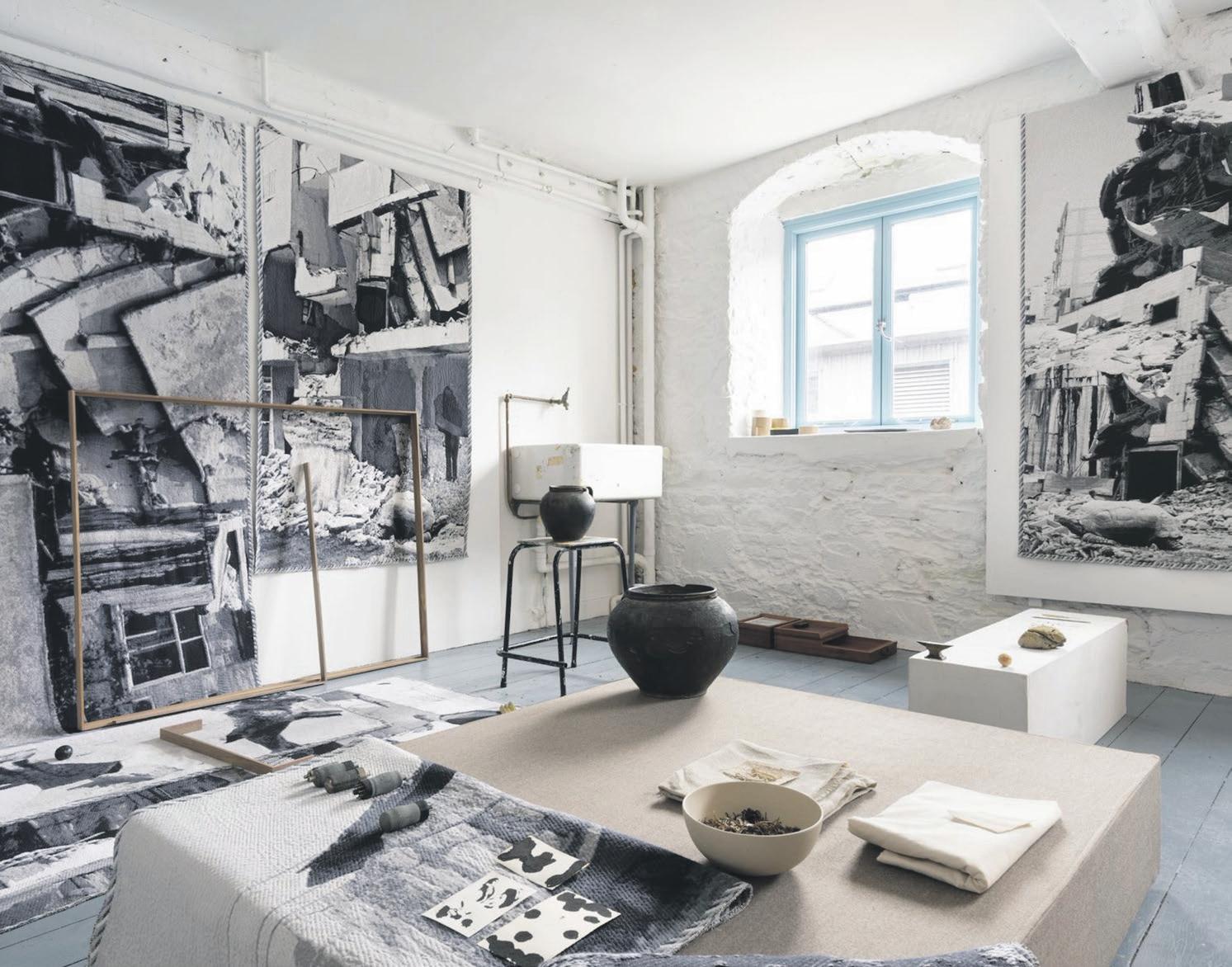
ADVICE ON ESTABLISHING a communal workspace should be centred on the experience of the sector. For this article, I’ve combined research conducted in 2017 in Belfast, with interviews that I have since undertaken with communal workspaces and studio groups. These include Sample Studios, Cork (established in 2011), Backwater Artists Group, Cork (established in 1990), BKB Visual Arts Studio, Dublin (established in 2019), and spacecraft, Limerick (established in 2017). While each of these studios have developed their own ways of working, their common experience is centred on creating a supportive environment for practicing artists, through a spirit of collaboration.
In 2017, I worked with Northern Visions Television (NVTV), Belfast’s local TV service, to curate a film project with artist studios in Belfast. I conducted an artists’ panel with collectives that was filmed and broadcast.1 Our starting point was the Footfall report, produced by Joanne Laws with 126 Artist-Run Gallery in Galway in 2015, which describes the artist-led scene as a “pragmatic, ambitious and agile sector, which is based on the social capital of cooperative networks and motivated by an unwavering fidelity to artistic practice.”2 My own research further reinforces the capacity of artists to nimbly find solutions to a range of urgent issues – from insufficient funding and eviction at short notice, to the deterioration or maintenance of premises, and other organisational challenges. In these cases, collectives are motivated by a shared sense of responsibility to
respond swiftly and effectively.
From speaking to Belfast artists running studios, the two primary issues that emerged are centred on precarity of space and availability of funding. These issues inform much of what occurs in communal workspaces and their trajectories.3 Jennifer Trouton has been a member of Queen Street Studios for 27 years. The studio group was established in 1984 and has recently celebrated its 40th anniversary. Jennifer observes that “the fundamental needs for a studio group are affordability and security of tenure, and they are like hen’s teeth.” Over the years, with funding and tenancy agreements, it was necessary for QSS to become more business-like. Most studio groups I have spoken to have emphasised the importance of their constitution or company status, but each workspace finds its own approach.
The macro-context is important when establishing a communal workspace, and Aoibhie McCarthy of Sample Studios in Cork has emphasised that this should be done in partnership with local and governmental organisations. Equally, the micro-context of the workspace itself is fundamental to its operational success. As Emily Brennan of BKB Visual Arts Studio points out, everyone must have realistic expectations and a clear understanding of the amount of work required in setting up a space. Their primary challenge has been securing a lease on a building in Glasnevin in Dublin, but she sees that challenge as universal for artist groups: “Anything truly suitable is too expensive for an arts organisation. You need to be prepared to take up
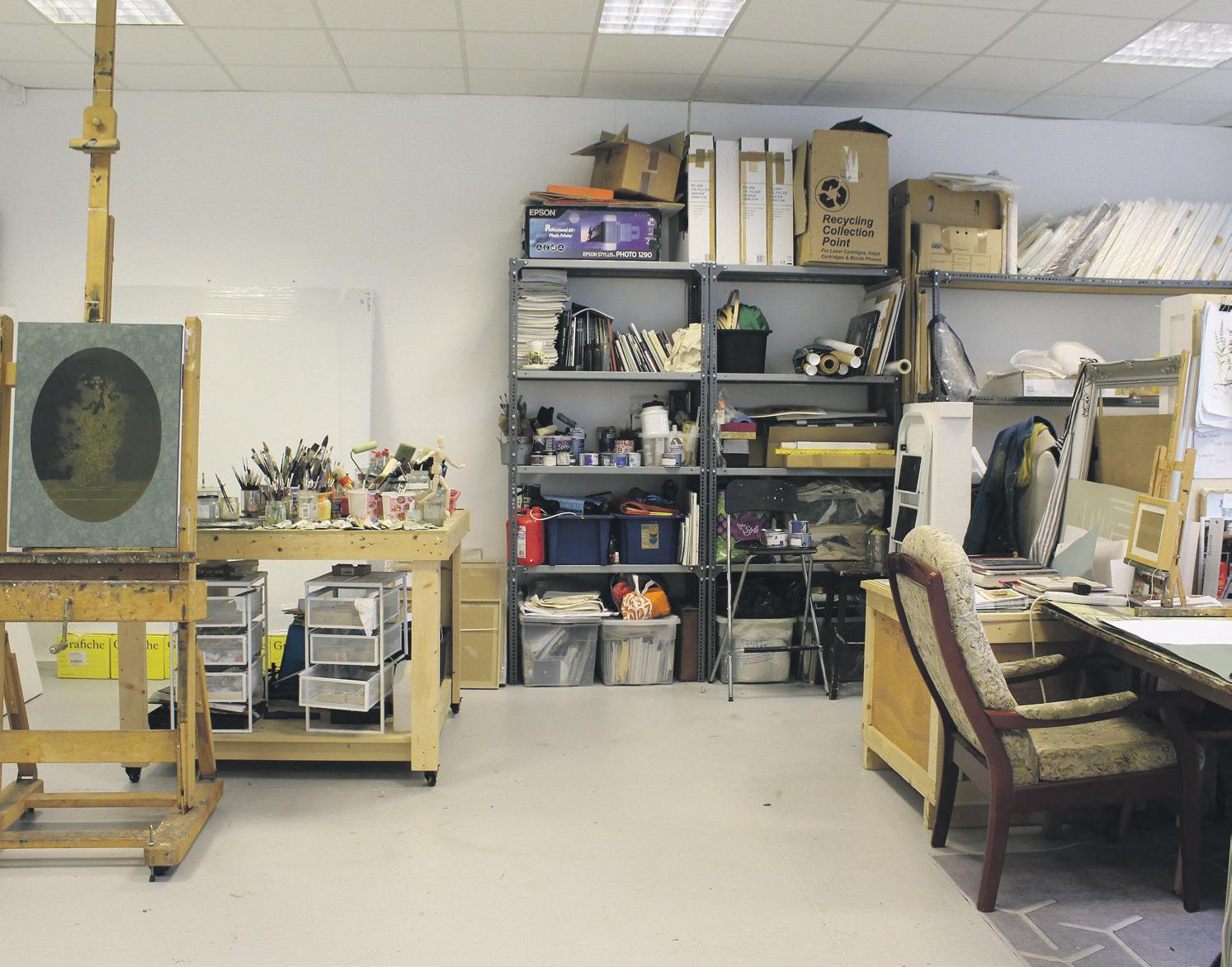
a space that needs a lot of work.” According to Carey Long of spacecraft in Limerick, practicalities are important, particularly documentation of working processes to enable consistency, should any of the core artists running the space leave in the future.
Considering the challenges involved in establishing a communal workspace, it is interesting to observe the continuing motivation of artists to work in this way. Democratic ways of working are evident among the advantages outlined by Emily: “Decisions are always finalised by majority rules and that works for us. The pros of working as a collective far outweigh the cons.” As noted by Carey, “the main advantage for all studio members is having artists to talk through their work and this leads to a cross pollination of skills between members.”
Aoibhie reinforces the importance of conversation at Sample Studios: “The heart of the space is actually the kitchen, where the magic of collaboration can occur while the kettle boils.” Similarly, Elaine Coakley from Backwater Artists Group in Cork notes that: “Collectively, we have a broad range of skills, knowledge and expertise, a stronger voice, an existing peer learning environment and our endeavours are amplified as a collective.” According to Helen Carey, Director of Fire Station Artists’ Studios in Dublin, collectivity offers “broader support to address challenges, greater imagination to find solutions, and wide enjoyment of communal effort. There is also scope to work creatively together.”
Some studios emphasised the need for advocacy and welcomed interest and fur-
ther research in this area. If artists’ workspaces are advocated for and their voices heard, particularly in terms of the challenges they face, this helps build a case for support. Jennifer explains that “artist-led activity happens in Belfast out of necessity, as there isn’t sufficient funding. There is an element of burnout among members, and we should recognise the wider community of collectives, with old guard and new guard, as the younger generation is essential to inject fresh energy into the sector.”
Within studio groups, the integration of past and present members in long-standing and emerging collectives has a wider importance for the building and retention of knowledge, skills and experience. If this understanding is shared, it can ensure the establishment and endurance of successful workspaces into the future.
Dr Marianne O’Kane Boal is an art critic and curator based in Donegal. She has a PhD in Social Research from ATU Sligo.
1 Artist Studios in Belfast (2017) [Film with curator Marianne O’Kane Boal and Lombard Studios, Queen Street Studios and B Beyond] Northern Visions Television (nvtv.co.uk)
2 Joanne Laws, FOOTFALL: Articulating the Value of Artist Led Organisations in Ireland (Galway: 126 Artist-Run Gallery, 2015) (archive.org)
3 Artist Studios in Belfast (nvtv.co.uk)
MORROW
I CURRENTLY SIT on a studio research and policy group, convened by Belfast City Council in response to the buildings crisis in our sub-sector. The Community Asset Transfer (CAT) process, and schemes such as Section 76 are often mentioned, but somewhat obliquely, since nobody really knows what they are or how to access them.1 To help demystify the process, I consulted Margaret Craig, Senior Programme Coordinator at Development Trusts Northern Ireland (DTNI), the organisation that supports the CAT process; and Alison Gordon, Co-founder of Open House Bangor and Development Director of The Court House, the first arts organisation to complete a CAT in Northern Ireland in 2022.
What is CAT?
Community Asset Transfer (CAT) is the process of transferring publicly-owned land and buildings from public authorities to community organisations. This process is managed by DTNI, who work with “local communities, government, and the voluntary sector to promote policy reform and innovative programmes that advance community ownership, participation, rights, and local economic development”(dtni.org.uk).
DTNI offers annual membership for £75, but joining their mailing list – which lists D1s (buildings and land available for disposal) – is open to everyone. Their website features an asset register, and membership facilitates networking among groups with similar goals.
CAT was established in 2014 but is still relatively untested across the arts sector in Northern Ireland. There are huge variances in the size, scale, remit, finances and location of arts organisations; so much of what made The Court House’s success isn’t applicable across artforms.2 DTNI is explicit about the challenges of CAT, including the fact that organisations need adequate financial resources, and that social finance, skills development, and legislative support would certainly help.
Once a public sector asset is added to the D1 list, third sector organisations can submit an Expression of Interest (EoI) to DTNI, thereby entering the internal public sector market. The D1 list is circulated to government departments, local authorities, and third sector entities, including NGOs, non-profit organisations, charities, voluntary groups, and cooperatives.
Each asset is assessed by Land and Property Services (LPS), which advises the disposing body on the appropriate capital receipt (the cost of the asset) to seek for the public purse. Interested parties must find ways to raise the necessary funds. If a group or consortium cannot secure the required amount and all options to retain the asset within the public estate have been explored, the disposing body may then market the asset to raise the capital receipt. As soon as a capital receipt has been set, those who can’t afford that price quickly fall out of the process. Any third sector organisation still in the mix now must get a sponsoring body on board with Compulsory Purchase Powers (CPP).3 By DTNI’s own admission, this is where things get a little complex for everyone and the process of acquisition slows down, or if a sponsoring body cannot be secured, the transfer cannot take place, and the asset now can go to the market.
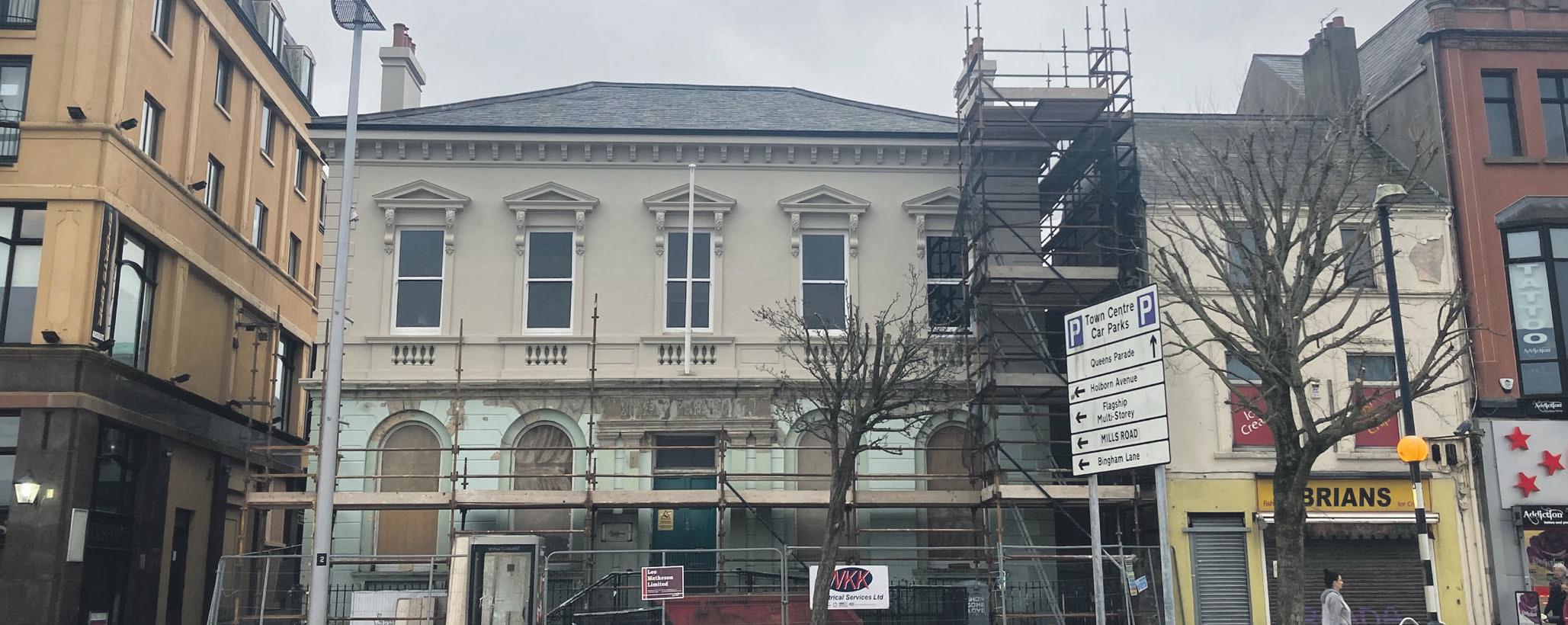
DTNI have all sorts of networking capabilities. For example, if we identify an asset that looks promising, but we have no idea who owns it or how to reach them, they can try to find the owners, whether public or private. If public (such as a government department or a local authority), DTNI can open the conversation with the asset owner. The Department for Communities provides DTNI with a small budget to support community organisations who have expressed an interest in a D1 or who have a desire for ownership of an asset. The funding can be used to bring in, for example, quantity surveyors to do condition reports, for architect drawings, or to get the property independently valued. They can also advise on other funders who might be able to support capital costs or pre-capital feasibility investigations, such as the Architectural Heritage Fund (ahfund.org.uk).
CATs are not zero-cost. Assets are valued by LPS, and location and state of repair are factored into the valuation. However, to be called an asset at the time of transfer is arguable, as many are derelict or heritage buildings that require substantial investment and renovation. Margaret tells me that the nine-month CAT process outlined on the DTNI website is the exception, not the rule. Yet some organisations, with persistence, can find themselves in the right place at the right time.
Bring everyone you know together, especially, as Alison says, if you think they might be able to answer questions that you cannot. This includes, from an operational standpoint, board members, especially those with legal, financial, or property expertise. You should draw on your artistic community, from individual artists and peer organisations, to (in the case of Court House) a roster of artist booking agents and representatives, who can validate your ongoing programming plans. Also vital are local businesspeople who understand the value of the arts, not just in terms of tourism but who recognise the increased vibrancy of an area; the local community, who are personally engaged, who live or work in the area, and want greater cultural and/ or entertainment offerings in their localities; funders, who know and can speak to your track record; and civil servants and politicians, whose backing is crucial. It also helps if you can tie into a local authority strategy
around regeneration. All of this support is necessary to demonstrate that the community benefit of your plan outweighs the value of the asset.
Building on DTNI’s network support, Margaret tells me that collectives, umbrella organisations, or those with cooperative structures (and the robust partnership agreements that usually accompany them) can do better in the CAT process than those who go it alone, as the risk is spread. Gather all relevant data – audience figures, funder reports, box office statistics (if applicable), social media numbers, employment stats, programmes, memberships, risk assessments and health and safety experience. Alison advises not to start something new while finding a premises; only pursue a CAT if you are not changing your business model.
Within the aforementioned studio research and policy group, we are exploring a couple of avenues. Our first plan is to liaise between Belfast City Council’s Culture team and another council department – most likely within planning – who can help us navigate these policies and procedures. Whilst achievable, this process will undoubtedly be time-consuming, and more Belfast organisations stand to lose their current buildings in the meantime.
With thanks to Margaret Craig (Development Trusts Northern Ireland), Alison Gordon (Open House and Court House, Bangor), Irene Fitzgerald (QSS), Gail Prentice (Flax Art Studios), Brona Whittaker (Arts & Business NI), Shauna McGowan (Belfast City Council), and Joanne Laws (Visual Artists’ News Sheet) for their (directly and indirectly referenced) contributions to this article.
Jane Morrow is a curator, writer, researcher, advocate, and Co-Director of PS2. pssquared.org
1 Section 76 is a planning agreement which ringfences a proportion within new developments for model clauses, such as affordable housing and green travel measures (belfastcity.gov.uk)
2 Organisations like Derry’s Nerve Centre and In Your Space Circus have successfully secured permanent buildings, through either grant aid or Community Ownership. There are other examples in the Strategic Investment Board’s 2024 report, Adaptive Reuse of Existing Assets (dtni.org.uk)
3 Department of Finance’s description of how Land and Property Services provide valuation services (finance-ni.gov.uk)
AOIBHEANN GREENAN OUTLINES KEY PRINCIPLES TO HELP CULTIVATE A MORE JOYFUL AND SUSTAINABLE PRACTICE.
THROUGH MY CONVERSATIONS with artists and creative freelancers, I’ve observed that burnout is becoming an increasingly common experience. We face unique challenges, such as relentless pressure to innovate, meet client demands, and stay financially afloat in an unpredictable, competitive market. These factors often make burnout harder to recognise when we’re caught up in the daily grind. However, identifying the symptoms early is vital for safeguarding both your wellbeing and your creative spark.
One of the most telling signs of burnout is persistent exhaustion – the kind that no amount of sleep seems to cure. You wake up feeling physically and emotionally drained, and fatigue follows you throughout the day. Another key indicator is emotional numbness or detachment from your work. What once was a source of enjoyment now feels burdensome. For artists, whose work thrives on emotional engagement, this disconnect can be especially debilitating. Preventing burnout requires a holistic approach that addresses both the external pressures of freelance life and the internal forces pushing you toward exhaustion. I’d like to offer four simple principles that can help you cultivate a more joyful and sustainable creative practice.
1. Prioritise Rest: It may seem annoyingly obvious, but prioritising rest is often one of the most difficult and counterintuitive commitments to uphold – especially when deadlines are looming! However, intentionally incorporating downtime into your schedule is essential for maintaining longterm creativity and mental health. Deep rest extends beyond simply getting enough sleep; it involves giving yourself the space to completely unplug. Regularly scheduling 15-minute breaks for activities like aimless walking, daydreaming, or meditation, enables your nervous system to shift from the overstimulated ‘fight-or-flight’ mode (sympathetic) into the parasympathetic state, where true recovery can take place. By nurturing a relaxed, receptive state, you create the ideal conditions for inspiration and creativity to naturally reemerge. We’ve all experienced how stepping away for brief intervals allows us to return to our work with fresh perspectives and discover new connections. In this way, rest becomes the foundation for every aspect of your creative practice.
2. Examine Your Motivations: Creative burnout often stems from deep-rooted psychological patterns, particularly the need for external validation. Unfortunately, this dynamic can lead to an unconscious cycle of perfectionism and overwork. It’s essential to routinely examine your underlying motivations. Practices like journaling, coaching, or therapy can guide you in asking important questions: Why am I pushing myself so hard? What am I trying to prove, and to whom? This self-awareness enables you to
shift your practice from one driven by external validation to one fuelled by authentic curiosity and personal fulfilment. As you detach your self-worth from achievement and validation, new creative avenues will often emerge – ones that a narrow focus may have previously obscured.
3. Embrace Play: Freelancers often face an intense focus on outcomes, which can stifle the joy and creativity that originally drew you to your craft. A powerful way to prevent burnout is to reconnect with playfulness in your process. Set aside time for unstructured experimentation, free from deadlines and the expectations of others. Ask yourself: What materials, colours, motifs, sounds, or phrases naturally excite me? What activities did I love as a child? Start collecting items and ideas that spark your interest, using a simple filter: Does this make me feel contracted or expansive? Follow the path of expansion and pay attention to how seemingly unrelated elements begin to connect in unexpected ways. As you let go of rigid expectations, you may experience surprising breakthroughs. Neuroscience supports this idea; dopamine, the brain’s ‘reward’ neurotransmitter, is triggered by curiosity and play, helping you enter more relaxed, open states conducive to problem-solving and creative flow.
4. Set Boundaries: Freelancing often blurs the lines between work and personal life that can lead to overwork and emotional exhaustion. Therefore, setting clear boundaries is essential for protecting your mental and physical wellbeing. This requires being intentional about the projects you take on and ensuring they align with your energy levels and personal values. One effective tool I use with my coaching clients is a scoring system based on non-negotiable criteria that each project must meet. This approach helps to ensure that you’re only taking on work that resonates with you, thereby avoiding misaligned projects that could lead to burnout. Additionally, it’s crucial to establish firm work hours – easier said than done – and make time for activities and relationships that nurture you outside of work.
If you’re feeling burned out, view it as a signal that your creative practice needs to evolve. The phrase “work smarter, not harder” is especially relevant here. The key is to cultivate a practice that nurtures both your creativity and wellbeing. Remember, if you’re in this for the long haul, there’s no need to rush to the top. The quality of your work will always reflect the energy and intention behind it. By honouring your physical and emotional health, you set the stage for a more fulfilling and sustainable career.
Aoibheann Greenan is an Irish artist founder of Rodeo Oracle, a coaching and mentoring service for artists. rodeooracle.com
FOR HER FIFTH COLUMN IN THE SERIES, LIAN BELL SHOWS HOW TAKING A GAP DAY CAN CHANGE THE WORLD.
FOR THE PAST year, I have used this VAN column to unpick aspects of my interest in the labour of artmaking – from positioning walking as creative practice, or questioning the pace of how we work, to how coaching can strengthen artists’ agency, and the implications of travelling for work without flying. Pinpointing where this interest in artistic labour coalesced, it is probably with my experience of creating Gap Day.
Ten years ago, Mermaid Arts Centre in Bray asked me to invent an artist support programme. At the time, a relevant funding scheme was offered through the Arts Council’s Theatre silo, so our focus was freelance theatre artists. I began thinking of what I needed myself as an overworked freelancer whose ‘day jobs’ were leeching energy from my artistic practice. Not much, I thought. Just a day in a room on my own to go through old notebooks, pick up half-forgotten threads of thought, and remember why I wanted to make art to begin with.
My proposal was simple: pay artists for a day or two to do whatever it is they need to do and give them a room to do it in. With the input of Niamh O’Donnell (Mermaid’s then director, and a truly generous champion of artists) a plan formed. Remove the guilt of taking time ‘off’ to be creative by paying people properly. Find a room in an arts centre, local to wherever they live, so that rural artists are as supported as urban ones. Ask the centre’s director to meet them for a cup of tea, facilitating local informal connections. Provide a packed lunch for nourishment and hospitality. A pilot project ran in 2015 and was an instant success.
The application responses to that pilot shook me. Having previously been a reader for various open calls, I was habituated to the jazz-hands aspect of application-speak. I had written it many times myself. Look! I can do this! It’ll be great! I’ve done great stuff before! I can do it again! Gap Day applications were not that. The intentionally simple form asked why the artist needed a Gap Day, and the responses were painfully honest: Because I’m a full-time carer; I work multiple jobs; I’m a single parent; I have to wait until my housemates have gone to bed before I can use the kitchen table. It has become more common in recent years to hear about the working conditions of artists, but that was the first time I had seen it written so starkly. This was a narrative of people struggling against self-doubt, loneliness, overwork, and poverty.
As the world changed, and as my own interests in artistic labour evolved, we added more resources for participants. Funding to cover additional needs, including childcare, so people can get the full benefit of their Gap Days. Online group gatherings. One to one coaching sessions. Trips to national conferences and networking events. A little money for each participant to pay an ‘Artist Friend’ for a few hours of inspiring conver-
sation. Most recently we added facilitated walks that take place around the country to meet, think, and talk together. But all of these are optional; the anchor point of Gap Day continues to be paid time (currently €240 a day) in a room to do whatever the artist needs to do. Even just one Gap Day can mean a lot: a sense of validation; a foot in the door of an arts organisation; respite from creative loneliness; or simply a bit of money. Each artist themselves chooses where they want to take their Gap Days and we arrange it for them. Organisations have also grown to value the programme as hosts; it can be an introduction to people they may not know, or a progression of an existing relationship. And for those organisations without much direct contact with the artmaking process, having an artist working in the building can be a buzz.
However, Gap Day’s success is bittersweet. Its disproportionately positive impact is only due to the fact that artists are so under-served and under-appreciated. After ten years and having supported over 300 artists across the island, Gap Day has become a valued sticking plaster in what is a barely functioning system of subsidised theatre-making in Ireland. Though it offers a moment for artists to catch their breath and keep going, I sometimes fear we are giving false hope when the greater system may not prove able to support them. I can only trust that these small moments of respite may give artists the energy to confront these broken systems they have to work within.
I value the work that looks like nothing. The walking, the staring into space, the conversations that meander. The imperative to take time in my own practice, to rest, and turn away from digital devices is something I am still learning to do. By creating structures for others to do so, through interventions such as Gap Day, I offer the permission for all of us to approach our work differently. Through Gap Day, hundreds of moments of respite and collegiality are woven together with the aim of forming a new way of working, and a new template for our collective artistic labour.
Lian Bell is an artist and arts manager based in Dublin. lianbell.com
BASED BETWEEN BERLIN and Ireland for the last four years, curator and researcher Nóra Ó Murchú’s practice examines digital culture as well as the effects of technological developments on social systems. During her time as artistic director of transmediale festival in Berlin, Ó Murchú commissioned work from a number of international as well as Irish artists, including Bassam Issa Al-Sabah, Jennifer Mehigan, Jennifer Walshe, and Alan Butler, among many others. As the first female director in the festival’s 37-year history, Ó Murchú’s programming aimed to centre previously absent voices, specifically in relation to decoloniality. We spoke about building a career abroad, her curatorial practice, and her experience of engaging with the Irish art scene from Berlin.
Aoife Donnellan: Having worked extensively internationally, both as a curator and a researcher, what has your experience been in building your career abroad?
Nóra Ó Murchú: With the topics that I work on in my own research, it’s been primarily bigger countries that had a larger portion of people interested in tech, but I do think that’s really changed. I was based in Ireland until 2020, so had a few different things that I was doing. For example, when I was working on my PhD, I started a digital art festival in Ireland and was building up my network through inviting people and attending events. Then, as I began to have a larger network and meet different people, I started getting invited to curate different things. Simultaneously, I was also working as an academic at the University of Limerick. I was writing about digital art and technology, and I was publishing at the same time as attending conferences and art events. I have tried to grow my practice through those approaches.
AD: Your work examines how people engage with and build socio-technical systems. Does it benefit particularly from international collaboration?
NoM: Yes, of course, but that wasn’t the main priority. When I first started out, technology wasn’t something that a lot of artists in Ireland, or artists generally, were exploring. Over time, what we have seen is that more and more artists have started to occupy and work with the medium and format. I never studied art – I come from a technical engineering background. However, when I was in University of Limerick doing my Masters, I got very into research on digital art, and then realised it was something I wanted to investigate. I was always interested in curation, and my PhD looked at curatorial methods in the context of digital art.
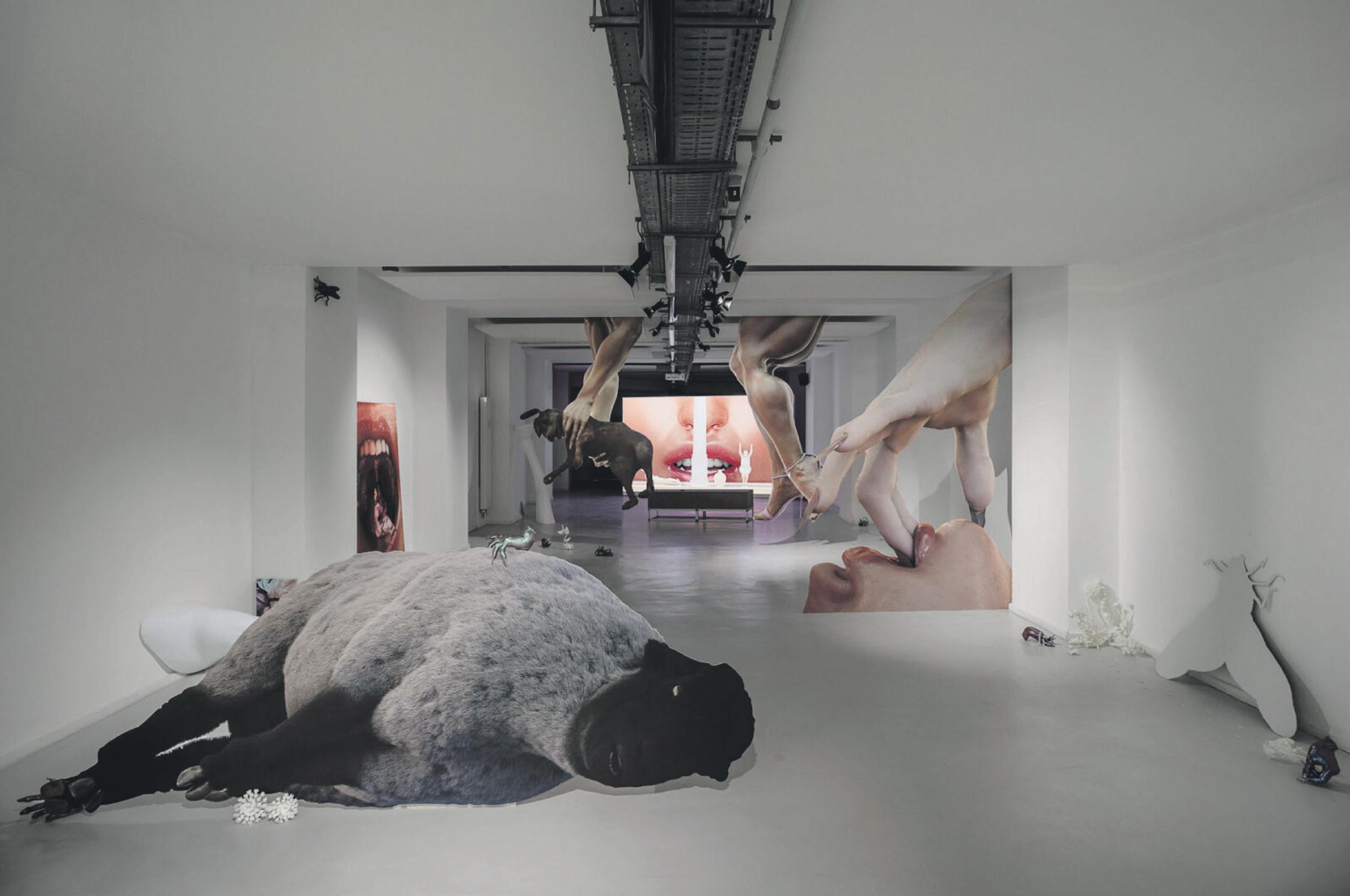
AD: While you were artistic director at transmediale, you commissioned a number of Irish artists. How did you find the process of collaborating with Irish artists from abroad?
NoM: One of the main things I wanted to do, while I was there, was to highlight Irish artists who are working in this space. The previous directors were all male, and they were all either German or Swedish. The last director, for example, presented a lot of American and British artists and researchers at the festival. Going into transmediale, I knew I was really interested in decolonial practices; that was one of the things I was determined to show and exhibit, by inviting people from those contexts and with those types of practices into the festival. I also wanted to push away from the very screen-heavy, tech-heavy emphasis on what technical practices or digital art can and should be. I was very interested in the poetics of software, sculpture and materiality. It was really important that the artists I selected were also thinking through some of these lenses as well. Coming from an Irish context, I wanted to highlight that – it’s the place where a lot of my thinking originates, about what decolonial technology is and how it has been formulated. I’m a
by-product of a geographical space, of history, of memory and of lived experiences, and so I wanted to ensure that Irish artists were part of that discourse.
AD: What was your curatorial approach to these collaborations?
NoM: I had this unspoken agenda to include Irish artists while I was there, and then I also shared my research with them as I was progressing. For example, the work I was developing that resulted in a commission with Alan Butler in 2023 – I would share that research with him, and we would have many conversations back and forth about the same themes, ideas and topics. This dialogue would inform my writing or thinking and likewise his. I generally try to develop very reciprocal relationships with artists. When it comes to commissioning work, I have different relationships with different artists. My objective is to support artists in what they’re making, and then I would have as many conversations as they would like, in order to talk about the commission or the work.
AD: Finally, what are you working on at the minute?
NoM: Right now, I’m focused on a few dif-
ferent projects. I’m working with Aksioma Institute for Contemporary Art (aksioma. org) which is a project space in Lithuania, to look at my concept of unusable politics. I will be doing a piece of writing, defining what this is, and we’re going to build a small discursive and exhibition programme that will stem from this research. A lot of it is raising questions about what software is, how it has evolved, and the impedances to new collective forms of action at various levels in society. How do you reorganise or rethink what collective action is online, as increasingly, technology encroaches on your day-to-day? It’s thinking about those things.
Aoife Donnellan is a researcher, art writer, and curator from Limerick, based between London and Berlin. @aoife_donnellan_
Nóra Ó Murchú is a curator and researcher who examines the intersections between fields of art, design, software studies, and politics. noraomurchu.com
THE DAY AFTER I completed my MFA exhibition at NCAD in Dublin in 2012, I left Ireland – and I haven’t lived there full-time since. It wasn’t a decision I made lightly. Dublin is in my bones, as I was born and raised in the Liberties. The laughter of my friends, the warmth of family, the mingling scents of fresh fish on Meath Street with the earthy tang of hops from the Guinness factory – all of it fills me with a nostalgia and affection unlike anything else I know.
But at that time, the Irish art scene was a very different landscape to today. Studio spaces were nearly impossible to find, my work wasn’t being embraced, there was limited funding opportunities, and almost everyone I knew was flat broke. I was barely scraping by myself. The idea of sustaining an artistic practice in Dublin, while juggling non-existent exhibition opportunities, felt like an impossibility. Many of my fellow artists and friends decided to tough it out and stay, but for me, leaving became not just an option – it felt absolutely necessary.
Every day, without fail, the artist Joseph Noonan-Ganley would call me, brimming with enthusiasm, eager to concoct a plan to lure me to London. He and another other good friend, Sam Keogh, both immersed in their MFAs at Goldsmiths (alongside Elaine Reynolds and Eoghan Ryan at the time), were relentless in their efforts to convince me to join them. Eventually, fate intervened: on the very same day, I landed work with the artist Tino Sehgal and secured a residency in the Tate learning department. Yet, despite juggling these two opportunities, which soon grew to eight different jobs, I could barely scrape by in London. It was only through the camaraderie of my Irish friends, living together in a cramped flat, that we managed to ‘make it work.’ This became my Irish arts scene.
In response to the question of how the Irish diaspora can participate in the Irish visual arts scene – a provocation implying that the Irish diaspora bears a certain responsibility to engage with the Irish art scene, without fully considering the reasons why an artist might find themselves part of that diaspora in the first place – Joseph sheds some light on the complexities of that time, offering a glimpse into the dynamic challenges we faced: “The Irish visual arts scene is wherever Irish artists are working. You do not lose your Irishness when stepping over a national boundary. When I moved to England, I became more Irish. I had to rely on friends more, who were mostly Irish, for support: making bunkbeds, sharing rooms in flats, cooking together, making shows and publications. This intensified our bonds, which to others was seen as an intensification of Irishness. We’d get English people calling us the ‘Irish Mafia’,
which is a symptom of colonialism, the conflation of being Irish with something to be scared of; something criminal and underhand – a threat to English control.”
Participation isn’t always something that can be seen or outwardly performed. Much of the support we, as artists, receive exists in the unseen – the quiet, unspoken gestures that often go unnoticed, yet are vital all the same. This kind of support operates beneath the surface, and it’s rarely recognised for what it truly is, though its impact is no less profound. Oisín Byrne, who also lives in London, told me: ‘I’m cautious of defining participation in any universal or goal-based way, or even in terms of visible outputs. It’s more intimate and developmental than that. We participate through late-night phone conversations, through copyediting each other’s texts, through travelling, when possible, to see each other’s shows – through friendship, support and interest in each other’s work. Participation is broad, fluid and indefinite, and sometimes less visible or public.”
Avril Coroon moved to London in 2017, also to attend the Goldsmiths MFA. Having just recently moved to Amsterdam to
attend the Rijksacademie programme she told me: “My inclusion, when it comes around, is possible by access to facilities and structures, jobs and housing abroad. I participate in an Irish art scene partly because I am away. Moreover, I think if an art scene refers to a community and collective environment, we create it by facilitating each other wherever. Attending friends’ exhibitions is one thing, but what feels more ‘Irish’ in terms of chance encounters in a widening and quality scene has been participating in Hmn – a quarterly, London-based performance event that facilitates live testing of ideas, co-organised since 2015 by Irish artist Anne Tallentire and art writer Chris Fite-Wassilak. Frequently, and thankfully not exclusively, Irish artists contribute, forming a significant part of the audience that shares feedback and experience post events. Similarly, this year on a residency at the Centre Culturel Irlandais in Paris, I engaged in a swell of exchanges with Irish artists of all disciplines. The Irish art scene doesn’t exist exclusively on physical land, struggling to make both work and rent, or within its galleries, but where there’s tables with good cheap wine and fresh bread.”
Leaving Ireland sharpened my awareness of the subtle class dynamics and broad assumptions about community within the Irish arts scene – forces that continue to unfold even now. At times, it seemed my practice was defined solely by the fact that I was in London, as if my geographic location mediated how I was perceived as an artist. Paradoxically, it was in London that I felt more connected to the Irish arts community than I ever did while living in Ireland. Yet, that sense of belonging didn’t stem from any shallow or sentimental nationalism. Instead, it emerged from relationships forged on much deeper, more resilient grounds – bonds built on shared values and experiences, far stronger than the flimsy foundations of national identity.
Dr Frank Wasser is an artist and writer based in Vienna and London. He teaches on the BA in Fine Art in Studio Practice and Critical Studies at Goldsmiths, University of London. Wasser completed his DPhil at the University of Oxford in June 2024. frankwasser.info
DR FIONA WHELAN AND JOHN CONWAY OUTLINE THEIR ONGOING COLLABORATION AND PUBLIC ARTWORK FUNDED BY THE ARTS COUNCIL AND 221+ PATIENT SUPPORT GROUP.
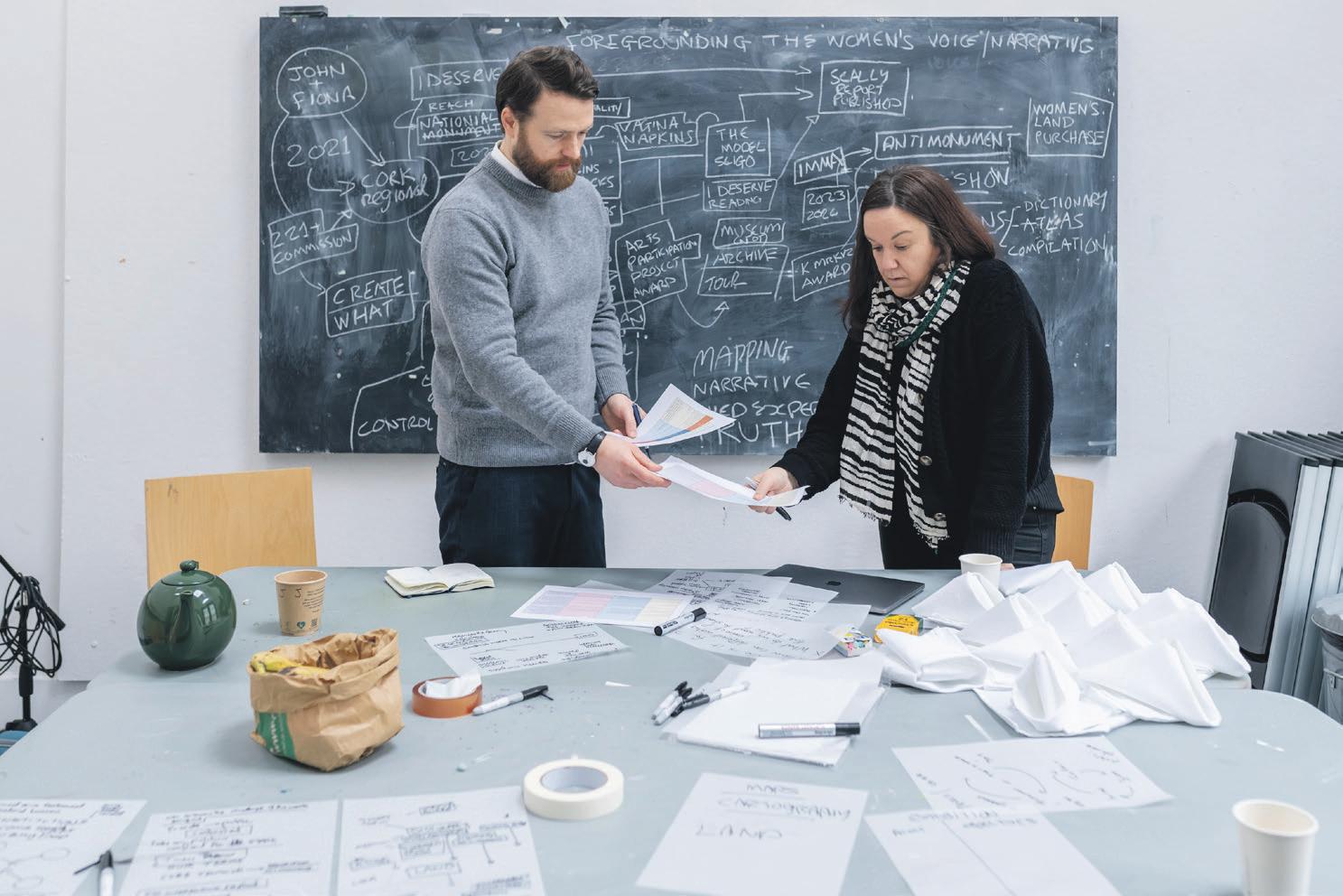
THE FOREST THAT won’t forget is a national public artwork, dedicated to women and families across Ireland affected by the failures of the CervicalCheck Screening Programme. A 16-acre site in County Clare, this artwork is presented as a living, breathing anti-monument that publicly acknowledges a major historic injustice in women’s healthcare. It emerges from our ongoing collaboration with 221+ Patient Support Group,1 and a further partnership with Hometree.2 To date, the project has been funded by 221+ and the Arts Council (via an Arts Participation Project Award) and supported by the National Museum of Ireland (NMI) and the Irish Museum of Modern Art (IMMA), where it was launched in September 2024.
In 2021, we were approached separately by 221+ Manager, Ceara Martyn, regarding a commission to memorialise the various losses, experienced as a result of the CervicalCheck failure. While we hadn’t worked together before, we found a shared commitment to investing in relationships and processes that recognised the knowledge and lived experiences of 221+ members and positioned us as active listeners. As such, we both advocated for a process that valued ‘not knowing’ what would be created, nurturing a collective process of engagement and idea development.
From late 2021 to 2024, we developed a series of engagements with 221+ members at regional gatherings in the NMI at Collins Barracks in Dublin, The Model in Sligo, and conference venues in Cork, Athlone and Limerick. Our ambition was to nurture connectivity and solidarity between members, to explore and test appropriate art forms, and to create the conditions for listening to the complexity of lived experiences. As artists, we were listening out for, and co-developing ideas towards, the potential of suitable creative cultural responses.
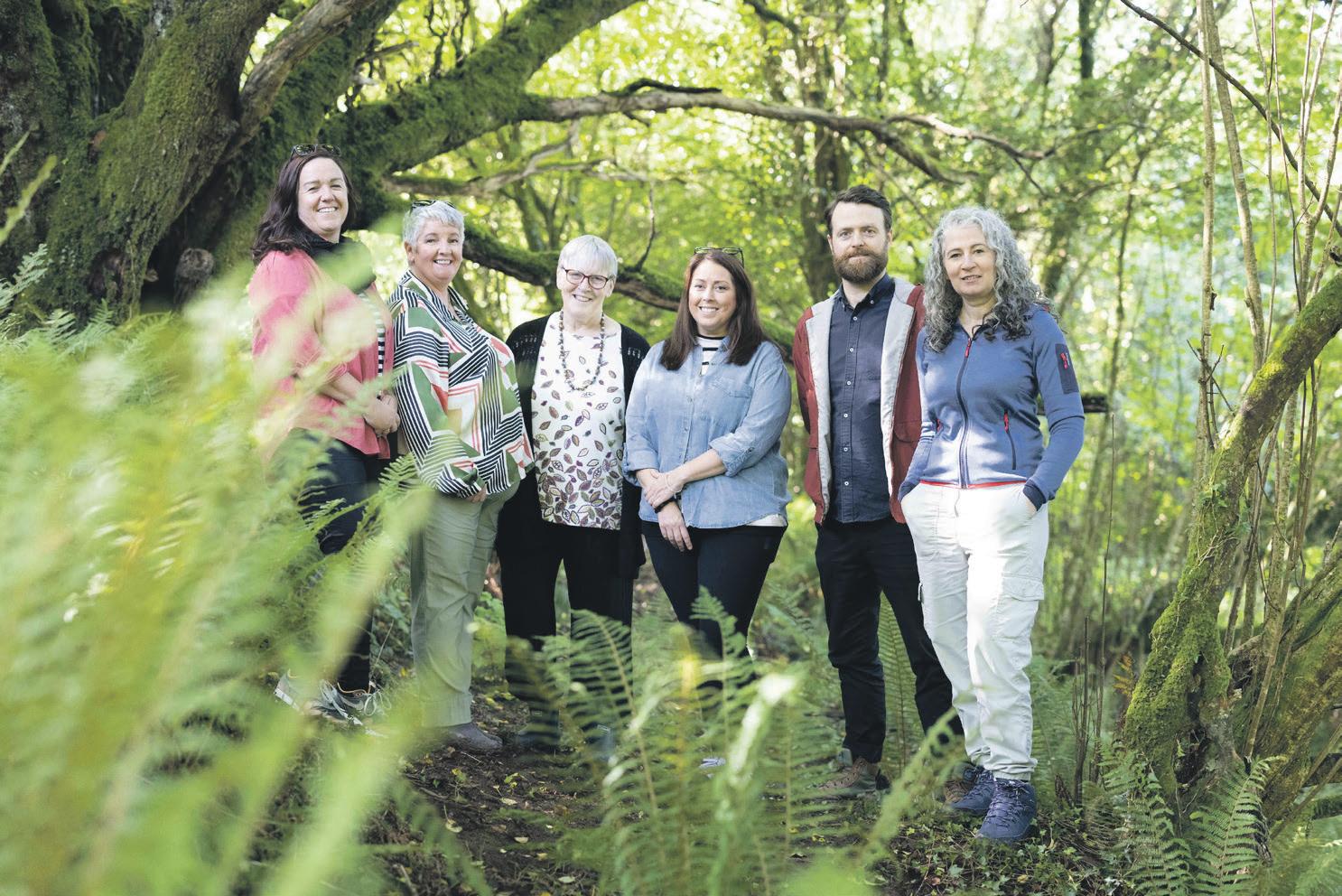
Simultaneously, we worked with a core group of five 221+ members – Lyn Fenton, Elizabeth Byrne, Wendy Stringer, Nicola O’Sullivan, and Carla Duggan. We would meet regularly via Zoom to test and devise ideas, which were expanded and scaled to engage the wider membership at the in-person regional gatherings. This process was further supported by our busy WhatsApp group which became a repository for ideas and photographs. Keen not to be extractive in our approach, we regularly demonstrated our acts of listening by collating and presenting back to members the textual and visual material we were gathering. Emerging from this nationwide collaborative process, a range of artworks, artifacts, and artistic research emerged, intended to publicly mark and communicate this major injustice of our time.
Acutely conscious of the significance of this commission, from the outset we created a structure to invite numerous advisors to support us, including Create, the national development agency for collaborative arts. To coincide with 221+ regional gatherings, we also built connections to key cultural venues nationally to create diverse and memorable experiences. The immense contemporary and historical importance of the context of this project led us to approach IMMA and NMI, who agreed to be national supporters of the project. And most significantly, Hometree (and their Development Lead, Ray Ó Foghlú) became a vital partner as the project developed. The forest that won’t forget is intended to function as a physical and metaphorical place of unity, care and resistance – a place that recognises the truth and experiences of those affected and commits to never forgetting. We are now in the process of securing the land and working to source further financial support to develop infrastructure on the land to make it accessible to 221+ members, guests and publics into the future. Beyond that, we envision programming further artistic projects on the land at the intersection of arts, women’s healthcare, ecology and education. Our ambition is that The forest that won’t forget can be held in perpetuity as a place for remembering the past, a place for imagining the future, a place for current and future generations, and a place with an eternal legacy that will outlive us all.
John Conway is a visual artist working extensively in complex health and community contexts. Dr Fiona Whelan is an artist, writer and Programme Leader of the MA Art and Social Action at NCAD. The forest that won’t forget was launched on 11 September 2024 at IMMA. theforestthatwontforget.ie
1 The 221+ Patient Support Group was established in July 2018 to provide information, advice, and support to the women and families directly affected by failures in the CervicalCheck Screening Programme that came to light following Vicky Phelan’s court case in April 2018. (221plus.ie)
2 Hometree is a nature restoration charity, based in the west of Ireland, working to establish and restore resilient habitats, focusing on native temperate rainforests. (hometree.ie)
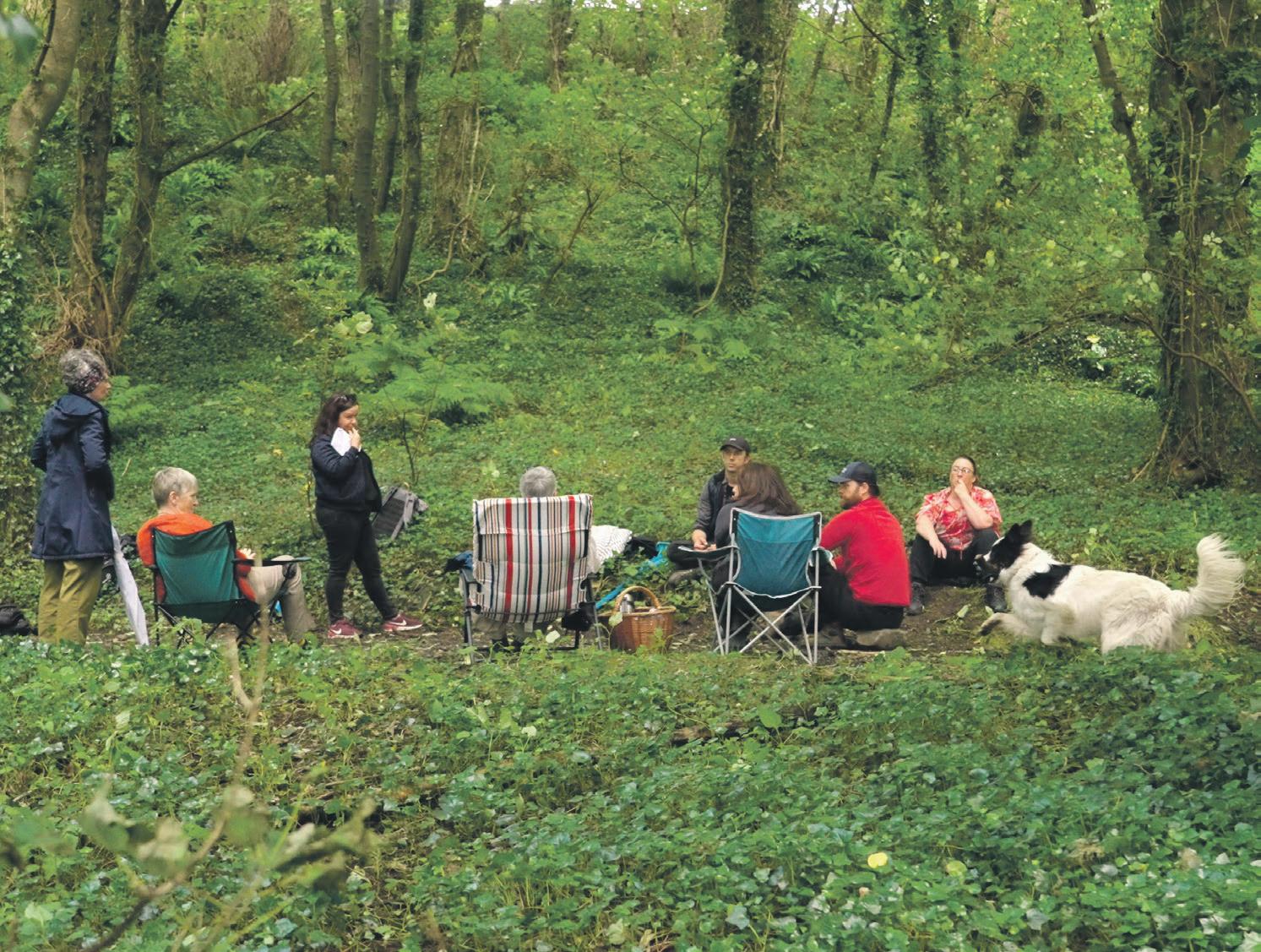
THE KINSHIP PROJECT, like the concept it honours, attempts to expand the bounds of social art practice beyond human relationships to include the wider community of life in reciprocal, ethical connections. This durational artwork is situated in Tramore Valley Park – a 170-acre plot of land that, from 1964 to 2009, was used as a municipal landfill for Cork city. The area first opened up as a city park in 2015 before fully opening to the public in 2019. It’s a rich and complex public site that, in its own way, archives the excess of human intervention and consumption. Older Cork residents, who used to send their waste to ‘de dump’, walk over their own refuse histories on a stroll through the park. Either subconsciously or consciously, being in the park, with its ghostly reminders of the past, prompts us to confront our own actions, biases, and role in damaging habitats.
As a public space, Tramore Valley Park is managed by Cork City Council, who are engineering the substructure to support a new biodiverse habitat on top of three million tonnes of historical city waste. In her survey of ecological approaches to climate change and conservation, Emma Marris argues that many ecosystems are heavily altered by human activities and our approach to conservation should adapt to include concrete cities, brownfield, or toxic wastelands.1 For some, the involvement of artists commissioned to undertake a public art project which focuses on climate change in a remediated landfill site, may appear as greenwashing or ‘art washing’ damaged ecosystems. However, this view oversimplifies a highly complex situation that intersects a diverse array of interests, from local authorities to community leaders, multiple
life forms, scientists, and engineers, and from people who occupy the park on a daily basis to national policymakers.
At play in the heart of KinShip are processes of creative and dialogical enquiry, and a broad interdisciplinary and collaborative effort to reshape thinking and decolonise our relationship with nature. One of the calls to action Donna Haraway makes in her writing is “staying with the trouble.” She encourages us to resist the temptation to retreat or disengage in the face of environmental crises. Instead, she calls for active participation and collective efforts to mitigate the damage, restore ecological balance, and build sustainable futures.2 This means acknowledging the complexity of the issues at hand and working within that complexity.
In late 2021, in partnership with Cork City Council, we won funding to initiate the project through Creative Ireland’s first Creative Climate Action Fund open call. The project has since engaged with a combination of artists, community groups, engineers, scientists, ecologists, architects, and educational institutes amongst others to confront the legacy of this municipal landfill through overlapping strands of creative enquiry (creativeireland.gov.ie). At the outset, under the funding call, the preferred participation in the work was with the public, but this has proved to be an unhelpful silo.
Leading the process has meant holding continuous dialogue, working consistently with a core working group of representatives in the city, as well as others who enter for shorter periods, to create an emergent and generative public artwork that includes multiple voices, tests, and provocations.
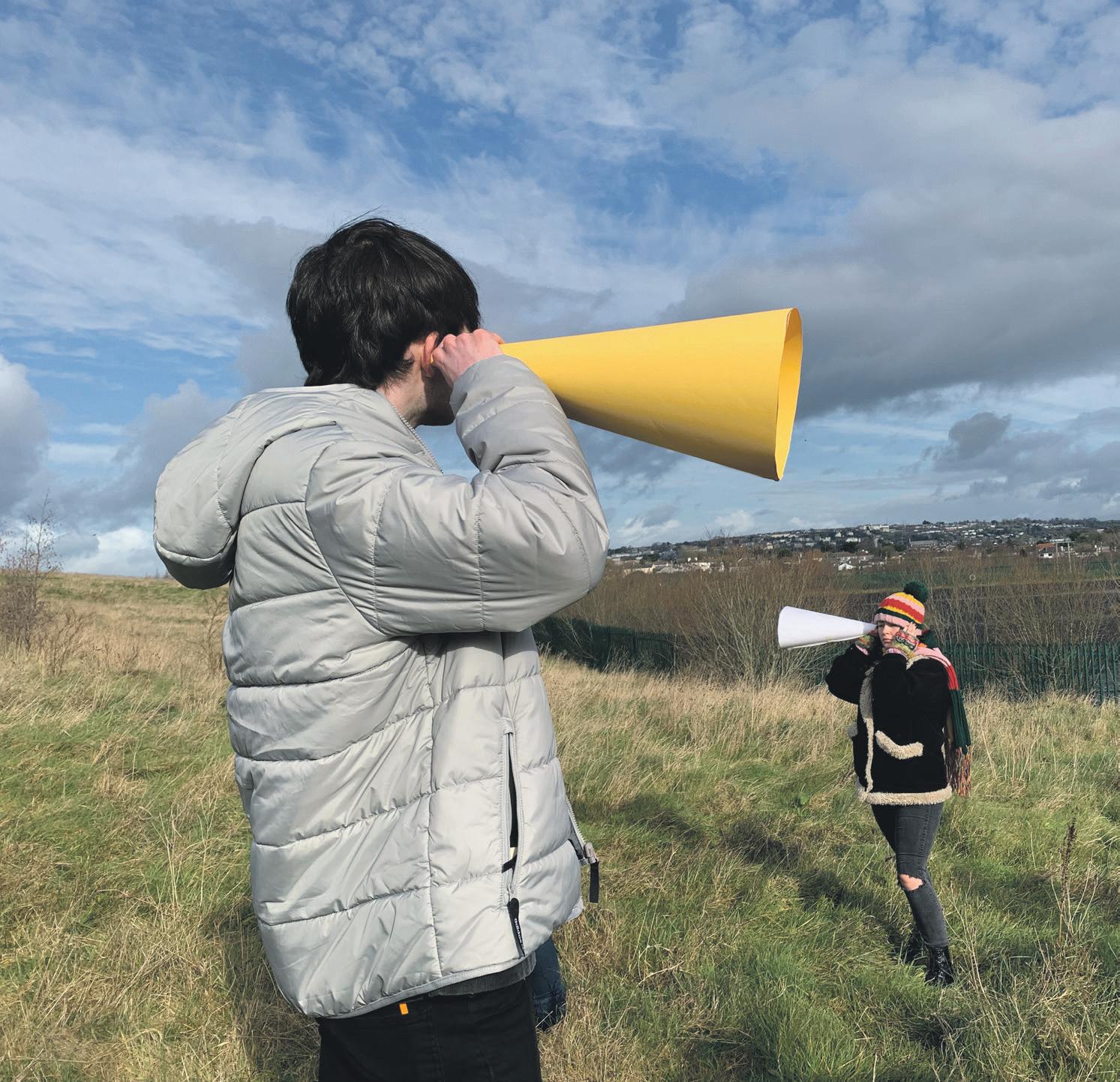
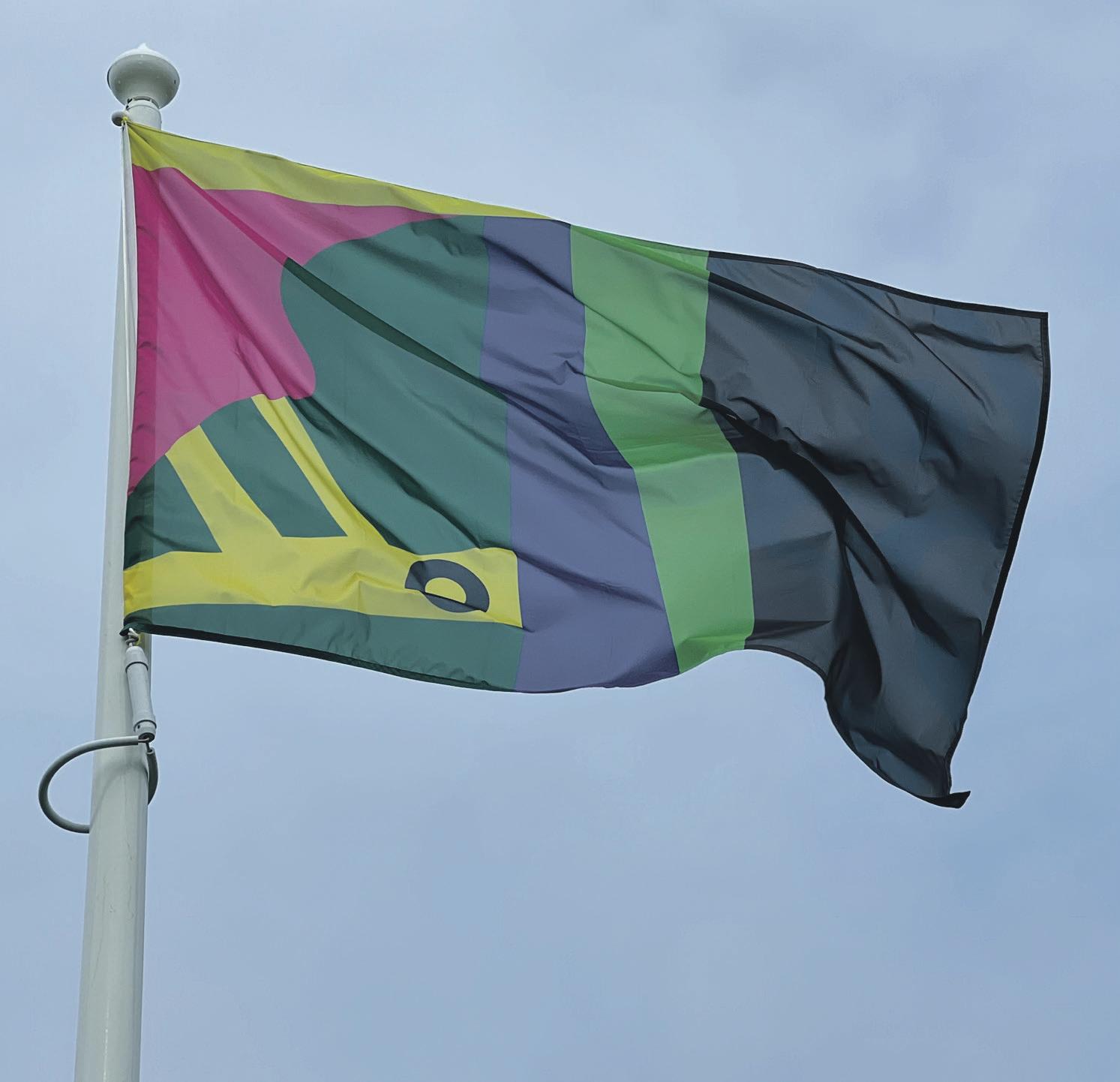
To date, a diverse range of activities and events have taken place as part of the KinShip public programme, including: A talk by Cork Beekeepers Association about the importance of pollinators and their work as beekeepers; The (Waste) Fibre Flows Laboratory, an interdisciplinary space examining our complex relationships with waste material, led by artist Collette Lewis; ‘Laboratory of Land Flags’, an exhibition of co-created flags made by local communities during workshops with artist Chelsea Canavan; Eco-Kite Festival and kitemaking workshop, led by artists Amna Walayat and Kim-Ling Morris; and Staying With the Trouble – a one-day symposium to showcase the importance of interdisciplinary collaboration and the input of diverse forms of knowledge in addressing rights of nature and climate action.
We undertook to archive and map all aspects of the KinShip project as this facet is often invisible to those who are outside of a social art process. This documentation, titled ‘The Midden Chronicles’, archives all meetings, conversations, agreements, contestations, small decisions, and larger initiatives. In 2023, drawing on this archive, we created an artefact, The Midden Chronicles Map – a five by eight-metre map highlighting a few short months of the archive. It acts as both an artwork and a momentary reflective snapshot of the multifaceted and complex inter-relational nature of social art practice. The map is an illustration and visual record of the collective and contributory nature of all aspects of the project, and the effort given by all contributors, collaborators, and partners (lennontaylor.ie).
While ‘The Midden Chronicles’ archive contains material and ephemera that doc-
ument the project, it also subtly reveals sets of values or assumptions, whether about the role of art, community involvement, or even practical discussions – for example, how much an artist or other should be paid. We may become aware through ongoing interactions that collaborators have brought different sets of values to the collaboration that weren’t initially obvious but could subsequently be addressed within the mechanisms of the project. These hidden economic, cultural, or ethical dynamics are revealed through the dialogical process, making the duration of the project not just about a specific context, but also about navigating the complexities of differing values, power relations, and goals within a collaborative framework.
The KinShip Art Project was initiated by LennonTaylor – a collaboration of Marilyn Lennon and Sean Taylor. The artists have worked together for over 15 years and were joint programme leaders of Ireland’s first MA programme in Social Practice and the Creative Environment (MA SPACE), which ran for ten years at Limerick School of Art and Design. In 2023 LennonTaylor received the Public Sector Award from Cork Environmental Forum for their work on the KinShip Project. lennontaylor.ie
1 Emma Marris, Rambunctious Garden: Saving Nature in a Post-Wild World (New York: Bloomsbury, 2011).
2 Donna Haraway, Staying with the Trouble: Making Kin In The Chthulucene (Durham and London: Duke University Press, 2016).
ANTHONY HAUGHEY OUTLINES HIS THREE-YEAR RESIDENCY AT THE NATIONAL MUSEUM OF IRELAND AS PART OF THE GOVERNMENT’S DECADE OF CENTENARIES PROGRAMME.
I ARRIVED AT the National Museum of Ireland Collins Barracks in the summer of 2021, following a successful application to an open call for a socially engaged artist to engage with the museum collections and communities of interest. In the weeks before moving in, I was consulted on how a former military training building, designated as an artist studio, should be modified to suit my needs. I had conceived the studio as a learning lab where conversations, workshops, and durational art processes would lead to the co-creation of artworks with communities across Ireland, reflecting Joseph Beuys’ notion of ‘social sculpture’. A central proposition for my residency was to consider the National Museum of Ireland as a potential site of social transformation. The residency was an exciting opportunity to generate culturally diverse conversations resulting in artworks positioned within a historical-contemporary nexus, an intersection of colonial and postcolonial histories.
The museum contains seven million artefacts across four sites and repositories in Dublin, County Mayo, and elsewhere. This was an overwhelming and exciting prospect – but where to begin? One of the most important events in the early days of my residency was a filmed conversation with museum Director Lynn Scarff for Culture Night 2021, which set the tone for what would follow. Minutes into our conversation, it became clear that the museum was open to what artist and writer Gregory Sholette would later describe as ‘Troubling the Museum’ in his exhibition catalogue essay: “Who has access to the museum, who gets to control the narrative, all this must also be troubled.”1
The Museum’s collections reveal Ireland’s history, a colonised country entangled within the British Empire and its revolutionary struggle for independence, reflecting cultural identities and nationhood. Many museums are engaged in a slow process of mental decolonisation – the difficult task of evaluating collections, where many artefacts were inherited from colonial subjugation. During the residency, I attempted to work as closely as possible with the museums’ Keepers and Curators – though not always successfully, as there were many competing demands for museum staff. One of my most successful collaborations inside the museum was with the education department staff who became central in enabling me to navigate a complex web of museum departments and personalities. As an artist and non-staff member, I could mediate sensitive subjects difficult for a national museum, including tackling thorny issues such as the decolonisation of the collections.
My experience of working on earlier artist commissions reflecting the ‘Decade of Centenaries’ included a year-long residency at Limerick City Gallery in 2013, for a series of exhibitions commemorating the 1913 Lockout, as well as curating ‘Beyond the Pale: The Art of Revolution’, a major exhibition commemorating the 1916 Rising for Highlanes Gallery. These earlier projects revealed that acts of commemoration “tell us more about the society ‘remem-
bering’ than what is actually being remembered.”2 Excavating histories is a recurring motif in my practice. According to philosopher Walter Benjamin: “Articulating the past historically does not mean to recognize it ‘the way it was’ (Ranke). It means to seize hold of a memory as it flashes up in a moment of danger.”3 Our moment of danger in Ireland and elsewhere is populism and the rise of the far right.
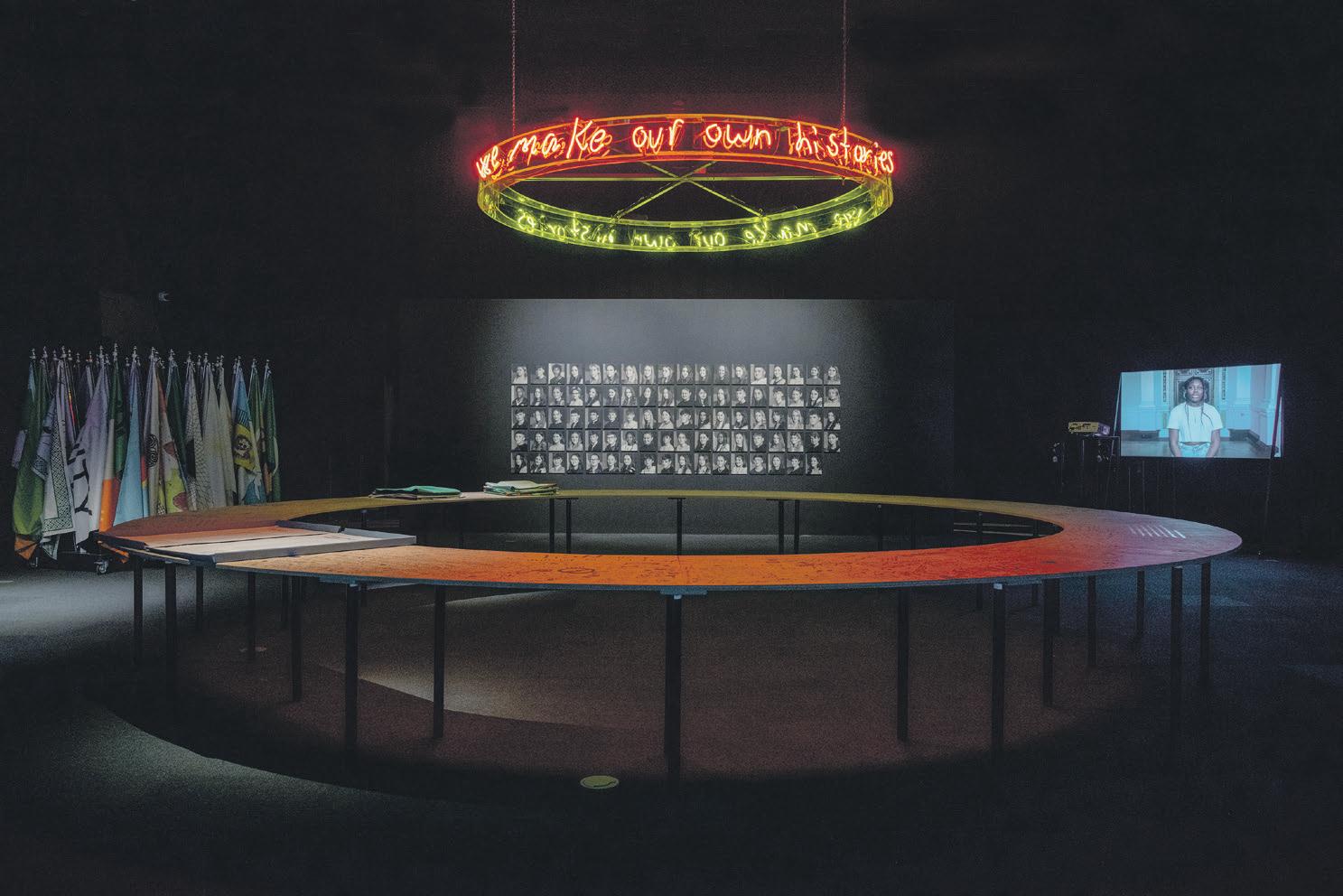
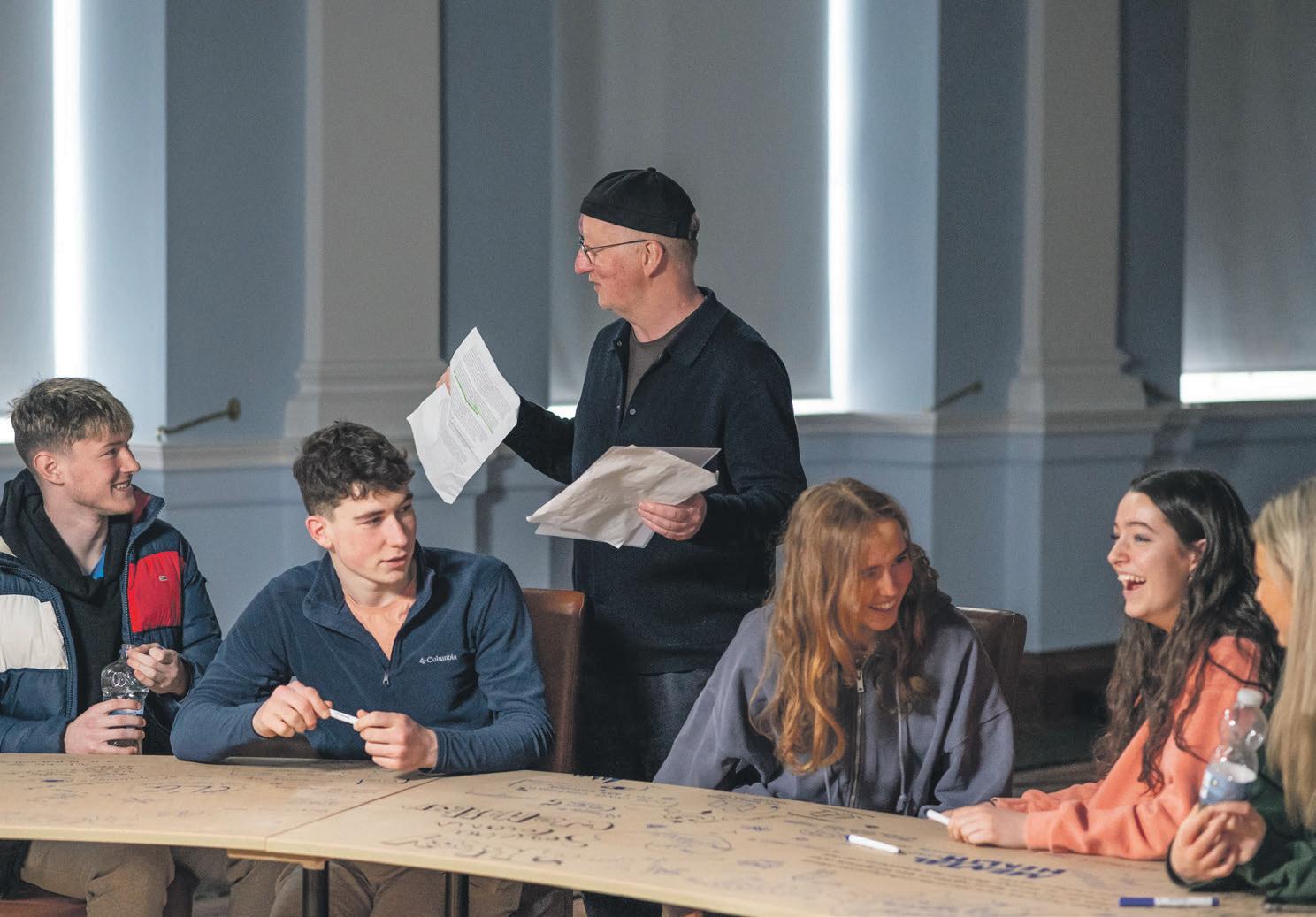
Near the end of my residency, I was invited by Lynn Scarff and the museum team to produce an exhibition in the NMI Riding School, Collins Barracks, which was curated by Maolíosa Boyle and Jonathan Cummins. The outcome, ‘we make our own histories’, was a series of installations presenting artworks produced through durational, socially engaged art processes with more than five hundred collaborators and participants. Although we had significant resources for the exhibition, it was a huge challenge to produce a contemporary art installation in a historical heritage space. The exhibition invited visitors to speculate on a future egalitarian republic through: a young people’s assembly and manifesto; a dress designed to generate transcultural dialogical encounters between the museum collection and audiences; and a short film asserting postcolonial narratives entangled in the museum ethnographic collections. The culmination of my residency will be the accession of several co-produced artworks and archival material into the museum’s permanent collection. Having established an artist studio in the heart of the museum, it is my hope that the National Museum of Ireland will host further artist residencies.
Anthony Haughey is an artist and lecturer in TU Dublin, where he supervises practice-based PhDs. anthonyhaughey.com
Anthony Haughey’s residency was funded by the Department of Tourism, Culture, Arts, Sport, and Media to mark the latter years of the Decade of Centenaries, in the context of a changing Ireland, 100 years after the formation of the state. ‘We make our own histories’ was presented from 28 February to 5 August 2024 at the National Museum of Ireland, Collins Barracks. museum.ie
1 Gregory Sholette interview with Anthony Haughey (12 December 2023) cited in Gregory Sholette, ‘Troubling the Museum: Anthony Haughey’s Archival Obstinacy,’ we make our own histories, (Dublin: National Museum of Ireland, 2024) p27.
2 Dominic Bryan, Mike Cronin, Tina O’Toole, and Catriona Pennell, ‘Ireland’s Decade of Commemorations: A Roundtable,’ New Hibernian Review / Iris Éireannach Nua, Vol. 17, No. 3, Autumn 2013, pp.6386.
3 Walter Benjamin, ‘Thesis on the Philosophy of History VI,’ in Walter Benjamin and Peter Demetz (Ed.), Reflections: Essays, Aphorisms, Autobiographical Writings (New York: Schocken, 1999; originally published by Harcourt Brace Jovanovich, 1978).
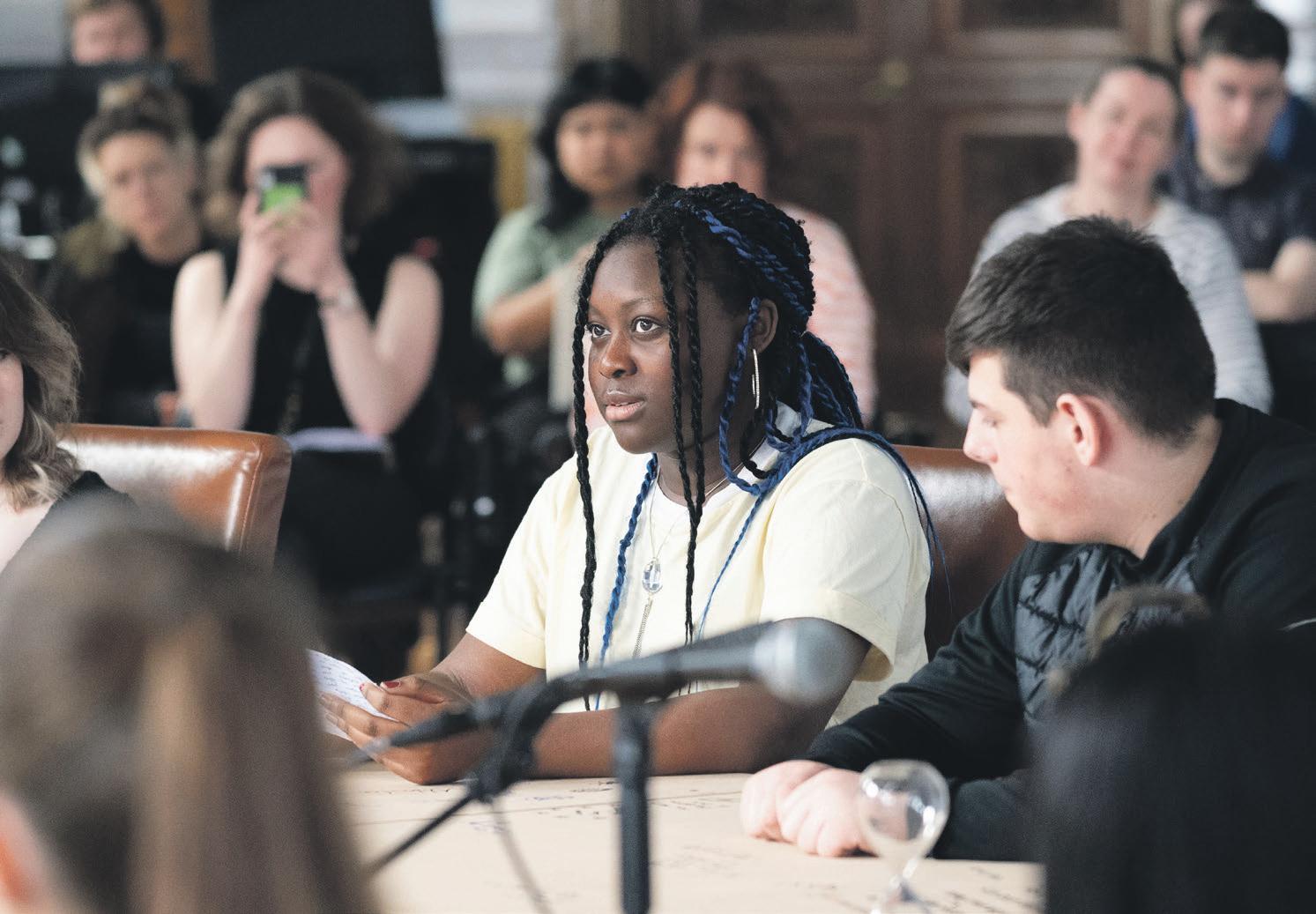
ROISIN AGNEW INTERVIEWS VIVIENNE GRIFFIN ABOUT THEIR RECENT EXHIBITION AT BUREAU GALLERY NEW YORK SUPPORTED BY CULTURE IRELAND.
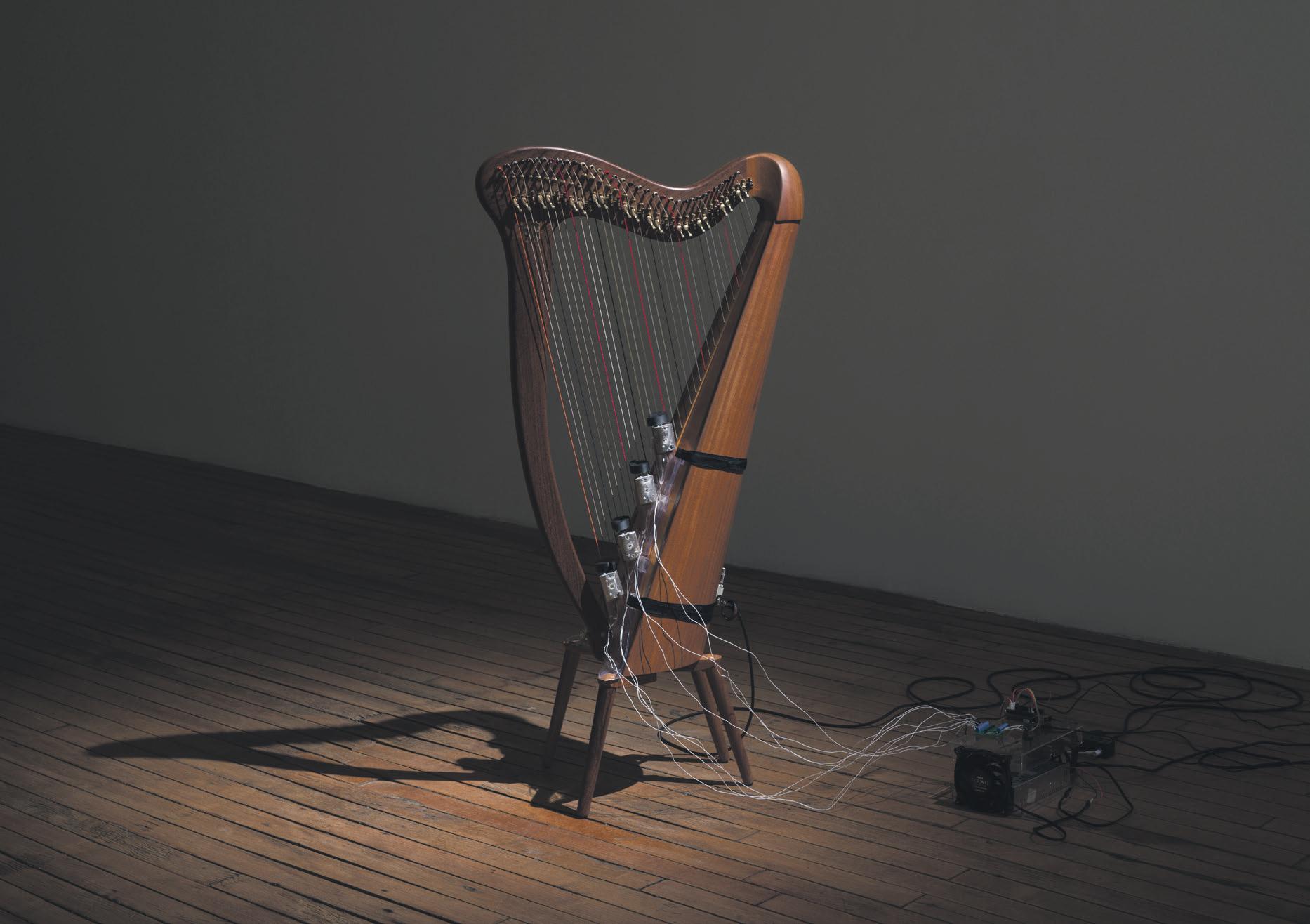
FOR VIVIENNE GRIFFIN, Ireland’s susceptibility to extractivist uses of technology can be traced back to its Catholic roots. “I realise I’m sitting here wearing this giant fucking cross,” they laugh, “but I do believe that. Technology is entering the last frontier – our psyche, a colonisation of the mind, your spirit or your soul. I think in Ireland we’re vulnerable to these things.” The act of ‘profanation’ is one way to think through Griffin’s sprawling ‘anti-disciplinary’ practice, one that in recent years has gravitated towards sonic works that pair AI and coding with motorised harps and national-religious iconography. Central to it, is a movement between registers, a “passage from the sacred to the profane by means of an entirely inappropriate use (or, rather, reuse) of the sacred: namely play,” as Giorgio Agamben defines it. But when this passage from the sacred to the profane arguably involves the tools of your own self-dispossession, what then?
Play and its derivatives are conceived of by Griffin as part of the importance of the artist-as-beginner, pointing to Zen Mind, Beginner’s Mind (a 1970 book of teachings by Sōtō Zen monk, Shunryu Suzuki) as a recurring influence. “The minute you start becoming an expert, you start narrowing and reducing the possibilities, whilst the beginner is always open,” Griffin says. It’s unsurprising, then, that when Griffin was offered the opportunity to collaborate with a researcher at the Turing Institute as part of their current residency at Somerset House Studios, they saw another opportunity to begin from the beginning. “I was learning about algorithmic processes, but I was really interested in them with regard interpersonal and social issues,” Griffin says. Collaborating with researcher Cari Hyde-Vaamonde, a former lawyer and current researcher in algorithmic governance
and the carceral system, Griffin began to “build a visual world and visual metaphors that [Hyde-Vaamonde] uses in judicial/ judge decision-making contexts.” The visualisation came out of Hyde-Vaamonde’s perceived need to make her research legible and counter a type of jadedness around algorithmic bias in relation to recidivism (the predicted likelihood of re-offending) and the main algorithm used for this calculation in the American carceral system, Compass. “I got stuck at one point; it’s not like my other work,” Griffin admits. “Direct political work – there’s no kind of other ‘read’ you can have on it.”
Understandably suspicious of politically frontal art-making, Griffin is nevertheless wrestling with some of the bigger dilemmas at the heart of contemporary art practice, as their recent show, ‘The Song of Lies’ at New York’s Bureau Gallery, makes clear. In the same video work that encompasses their collaboration with Hyde-Vaamonde, (aptly named MERCY) Griffin employs a techno-textual cut-up technique, suggestive of what they term ‘the collective unconscious nervous breakdown’. “I was writing from the perspective of lots of different voices and they all did merge into one, into this character – racing thoughts, fragmented sentences, spewing poetry, thoughts about the apocalypse,” they say.
But what are the origins of this nervous breakdown? This seems to be answered by Griffin’s other recent work that has seen them employ AI model Runway ML on datasets of their own drawings to create large-scale pieces. “I draw all the time, but I was experiencing burnout. I thought it would take [the AI] a long time, but it only took ten minutes” they say. “I felt defeated as an image-maker. I just thought, we’re done for. But then I went back to these images – they are so vacuous. A lot of my
drawings have text and political content, and the machine learning ones had done this thing, where they interpreted words as shapes.” The result is disorienting – a meditation on the post-post-post instability of contemporary (dis)reality and the role of language as a placeholder, a meaningless shape, emblematic of the disinformation age. “I was trying to mash together the man and the machine; it felt like a self-annihilating technology.”
But Griffin is no techno-pessimist. Their faith in art’s ability to adopt and adapt technology, and their determination to put themselves in the novice seat, has brought them to work increasingly with sound and coding in their capacity as an ‘antidisciplinary artist’. “I found the term in a job advertisement that went out from MIT. They were looking for people that could bring together disciplines that aren’t usually put together,” they say. “Others understand it as ‘anti-formal disciplines.’” Subsequently, during their PhD in Queen’s University Belfast’s Sonic Arts Research Centre (SARC), Griffin learned simultaneously to code and to gain more formal understanding of music that let them hear new sounds, learning to use Max MSP, with support from Pedro Rebelo. “I’ve tried to do a linear course with coding, but what you end up doing is being on YouTube a lot of the time, copying things other people have made and putting them together in lots of ways that you want.”
A bricolage-like methodology seems to steer Griffin towards materials and assembly, techniques of demystification where everything is ‘technology.’ “A lot of my work is around technology but a lot of it is also around old traditional ways of working with materials,” Griffin explains. This pull between the technics of the new with technology of tradition means they could be said
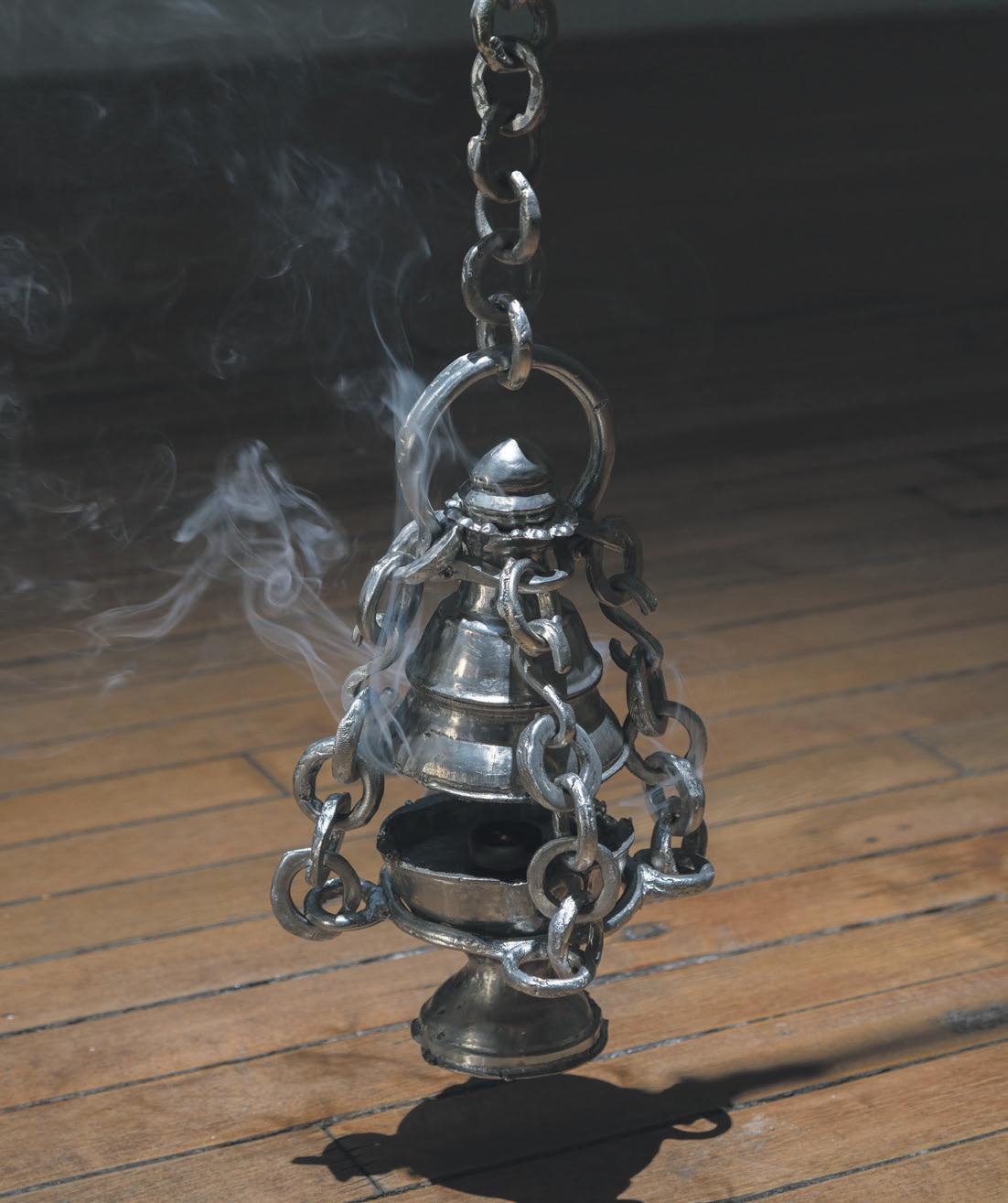
to be involved in a form of technological interpellation. In a recent collaboration at Somerset House with Belfast harpist Úna Monaghan, a motorised robot was placed on one harp, with the performance turning into a duet between robot and harpist. In another piece, A Heavy Metal Incense Burner (2024), a hand sandcast incense burner connected to a chain, whose every link was made by Griffin, is discovered to have been originally a product of a 3D file they bought online.
If profanation is play as method, then Griffin employs it as an act of enquiry and demystification – an encounter with breakdown and self-dispossession that is not without hope. One can always begin again from the beginning. They admit owing to the Arts Council of Ireland their ability to keep training and learning new skills. “The funding models provided by the Irish state are incredible and fantastic. It’s a model that other countries should be looking into.” What is next? A work on sixteenth-century ‘harp burnings’ that Queen Elizabeth carried out on Irish harpists, Griffin says. “I’m calling it ‘postcolonial psychosis’.” A perfect metaphor for one’s drive to self-destruct and start over.
Vivienne Griffin is a Dublin-born visual artist currently based between London and New York. Their solo exhibition, ‘The Song of Lies’, ran at New York’s Bureau Gallery from 11 July to 16 August 2024 and was supported in part by Culture Ireland. viviennegriffin.com
Roisin Agnew is an Italian-Irish filmmaker and researcher based in London. @roisin_agnew_
I AM AN artist and filmmaker, and I would like to share my experience of receiving an Arts Council Project Award. I have only applied for a Project Award under the category of Film, although artists working in moving image may also apply for a Project Award under Visual Arts. The Film Project Award generally requires artists to work within a single channel (screen); artists who want to work with multiple screens would be better suited to apply under the Visual Arts category. Projects funded under Film are also required to be exhibited in a cinema setting, as opposed to films funded under Visual Arts, which are generally made to be shown in a gallery. If you apply under Film, you are free to show your work in galleries after you premiere the film in a cinema setting.
‘Strand 1: Research and Development’ funding exists to develop projects with up to €7000. ‘Strand 2: Production’ funding allows artists to apply for up to €80,000 to make the film. I started out applying for smaller amounts and slowly increased budgets over the years. I found this helpful, as managing larger budgets and more collaborators requires ever increasing amounts of time and admin. Successful applicants can receive 80% of the funding upfront and will receive the remaining 20% after submitting a report and final budget, signed off by an accountant.
The bulk of the production funding for my most recent film work, Few Can See (2023), came from a Film Project Award. Few Can See examines the legacy of broadcast censorship of the conflict in the north of Ireland and political movements during this era. Using contemporary oral history interviews, the film attempts to recreate material absent from state archives due to censorship. The project itself was developed, on and off, over about two years after initially receiving a Next Generation Award from the Arts Council, followed by funding from an EVA Platform Commission, in addition to ongoing support from Temple Bar Gallery + Studios.
Film projects of this kind require a lot of time, planning and collaboration, and thus can be more expensive to produce than some other artforms. For this reason, I think it is helpful to try and plan ahead as far as possible, checking Project Award deadlines and trying to meet with potential partners (such as galleries or festivals), collaborators and mentors early on. It also helps to develop a ‘treatment’ for the proposed film project, so you can circulate this for feedback. The treatment might outline your research to date, your general approach, concept and confirmed collaborators. This treatment can also form the basis of your Project Award application or be included as supporting material.
Works funded under this award will generally be screened initially at film festivals and the submission fees for festivals can be expensive. With this in mind, one of the best things about the Film Project Award is that after you have finished the project and drawn down all of your funding, you can apply to the Arts Council for Exhibition Support Funding, in order to
pay for promotion and screening costs, such as the creation of a Digital Cinema Package (DCP), festival submission fees, travel, accommodation, posters, and so on.
Many film festivals also require what’s called ‘Premiere Status’ for the various world, international, regional and country premieres. This involves creating a kind of artificial scarcity around the distribution of the film, which benefits established festivals, who can attract films that won’t be screened elsewhere in advance.
I have been supported by aemi over a number of years, and their newsletter and artist support meetings are an invaluable resource in strategising the distribution of a film work. For Few Can See, I created a list of target festivals in a spreadsheet and tried to guess where the film might have a chance at premiering, with backup festivals for each of the various potential premieres. Strategising requires you to gamble on getting into certain festivals and although you can try and develop a backup plan for each, it is inevitable you will have to adapt this plan on an ongoing basis.
With the recent success of aemi’s ‘DISSOLUTIONS’ festival, and with regular film nights like ‘fanvid’ in Dublin and ‘Shankhill Screen’ in Belfast, and events like ‘Out of Focus’ in Kilkenny and ‘Cine Salon’ in Cork, it feels like a vibrant experimental film community is starting to come together from across the island. With this in mind, it would be great to see more people applying and being funded under the Film Project Award, and more spaces (such as micro-cinemas) being established around Ireland to show this kind of work.
franksweeney.art

OVER THE PAST ten months, I have been developing a new body of work, supported by a Major Individual Award (SIAP) from the Arts Council of Northern Ireland (ACNI). This award, given in recognition of contribution to creative life in Northern Ireland, is the highest value awarded to artists in Northern Ireland: £15,000. The award supported the purchase of materials, equipment, services, the buying of time for research, concentrated development, and the production of a body of work.
‘Disposal of Fullness’ was the phrase around which my ideas have evolved. The term references a process in dressmaking of easing or gathering in fabric as a way of adjusting or reducing garments. I have been interested in garment construction, patterns and sewing processes since a teenager in the 1970s, when dressmaking was still on the school curriculum. Over the last five years, it has reemerged both in imagery and construction processes, as I developed sculptural pieces exploring fragility and resilience of mind and body. Ideas embedded within ‘Disposal of Fullness’ relate to female experience, control and constraint, the older woman, and life experience – and of course, themes of fragility, perseverance and resilience are still paramount.
This was an opportunity to undertake research in London’s Victoria and Albert Museum, where I explored historical costumes, past dress codes and behaviours – for example, how to handle and control the fullness of a skirt. During the development period, back in the studio, the work expanded organically and instinctively in various directions, connecting the drawing aspect of my practice with three-dimensional work. I tested drawing surfaces and processes, utilising drafting film and, crucially, began to use sewing pattern tissue paper. This old, yellowed and extremely fragile tissue paper became a significant medium with which I created an over-sized imaginary skirt shape by collaging pattern shapes, securing and bolstering them by overlapping and stitching.
I then ‘traced’ the outline of this large shape onto drafting film – a semi-transparent, but robust material. I used hand drawing and rulers to create lines and markings based on sewing pattern construction lines across this outline and, over a period of weeks, I added many more connecting lines, which populated the entire shape. The 2D work really benefitted from this crisscrossing of drawing and sewing processes; of tracing, cutting and altering shapes.
Related to these ideas, I created a set of female heads, based on drawings of women striking demure poses, painted in bold, flat, red gouache. With assistance from Seacourt Print workshop in Bangor, I developed screenprints of four of these for printing onto paper and textile. The textile prints were used in a sort of patchwork process to create an ‘upside down’ skirt, fixed with an embroidery hoop at one end and suspended from a fishing net.
The 3D work sprang from the research and development period and was based on plans of historical dress forms and written notes relating to the postures and bodily
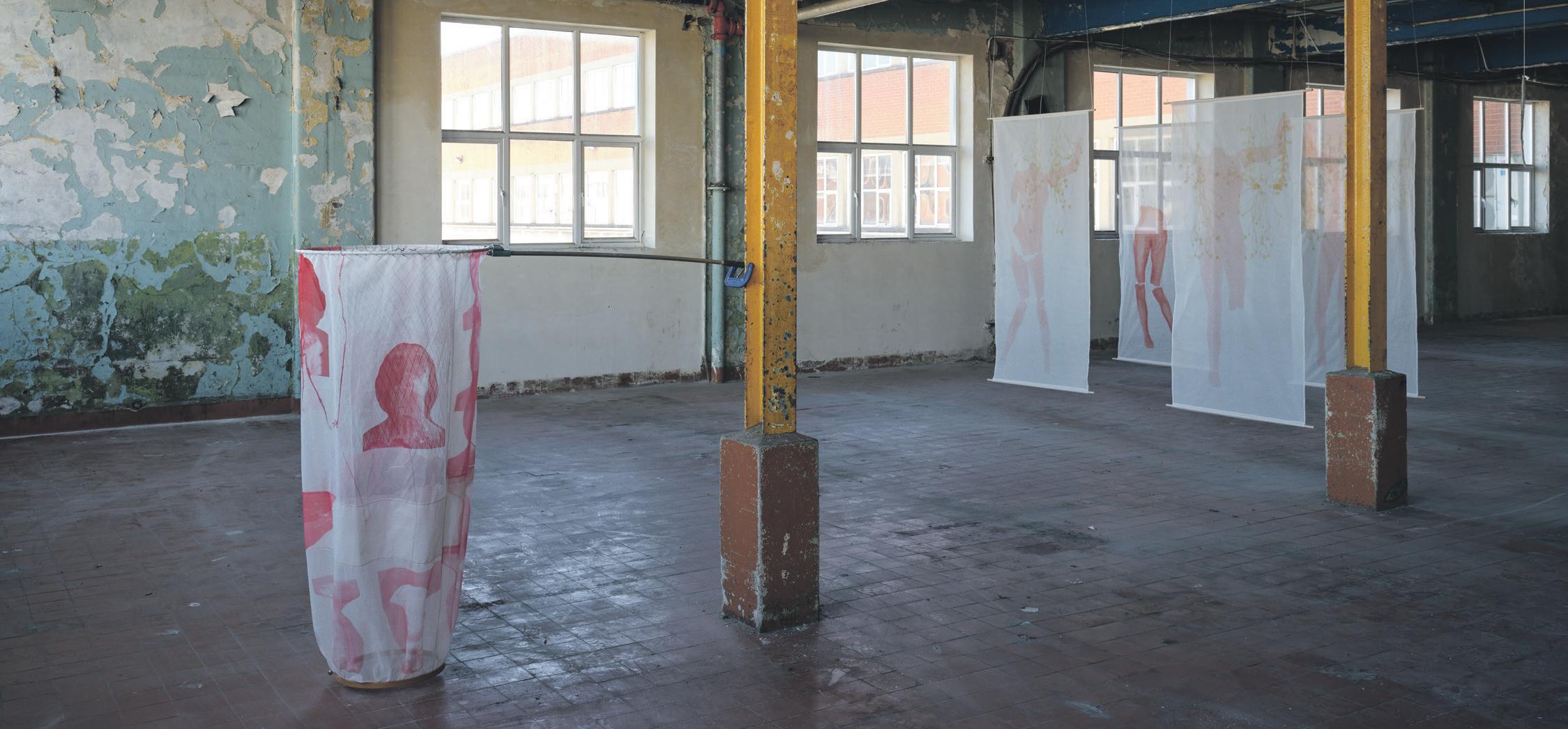
stances recommended for women in past eras. Several large skirt-like forms, around two metres in height, were fabricated from uncoated raw steel and ‘dressed’ with a veil of collage, using sewing pattern pieces or stiffened organdie, and stained using a Japanese tataki-zomé or ‘flower pounding’ technique, in which plant colour is transferred onto paper or fabric by hammering. I worked in the County Armagh countryside to collect wildflowers to stain lengths of organdie. I used my own body shape as a template to paint female shapes in sepia and red-toned ink onto the fabric used to dress the metal structures.
Torso forms have been created from wire, Fosshape, a heat mouldable fabric, and wax – entirely new techniques for me. A set of used walking frames that have been drastically elongated, so as to render them useless, offer a myriad of possibilities for further development, display and presentation at some future point.
This body of work was led very much by instinct and feeling, tapping into ideas relating to women’s lives that are so often ‘put on hold’ or embedded in someone else’s story. The work also speaks to circumstances where life has taken its own path; where traces of experience stain or remain; where plans may have been imagined but never realised, or remain unfinished, unfulfilled.
The beauty of the sewing process is very much tied up with imagined potential, and a possible coming into being – a flat shape becoming a real object. I wanted the work to speak through the language of sewing and making. Threads are left hanging, imagined shapes are outlined, points of reference or landmarks are offered. Already marked, fragile, used paper has been mended and restored yet remains precarious, and all material choices are resonant.
Sharon Kelly is an Irish artist whose work encompasses drawing, painting, print, installation, sculpture and moving image. She is based at QSS Studios, Belfast, and County Armagh. sharonkellyartist.com
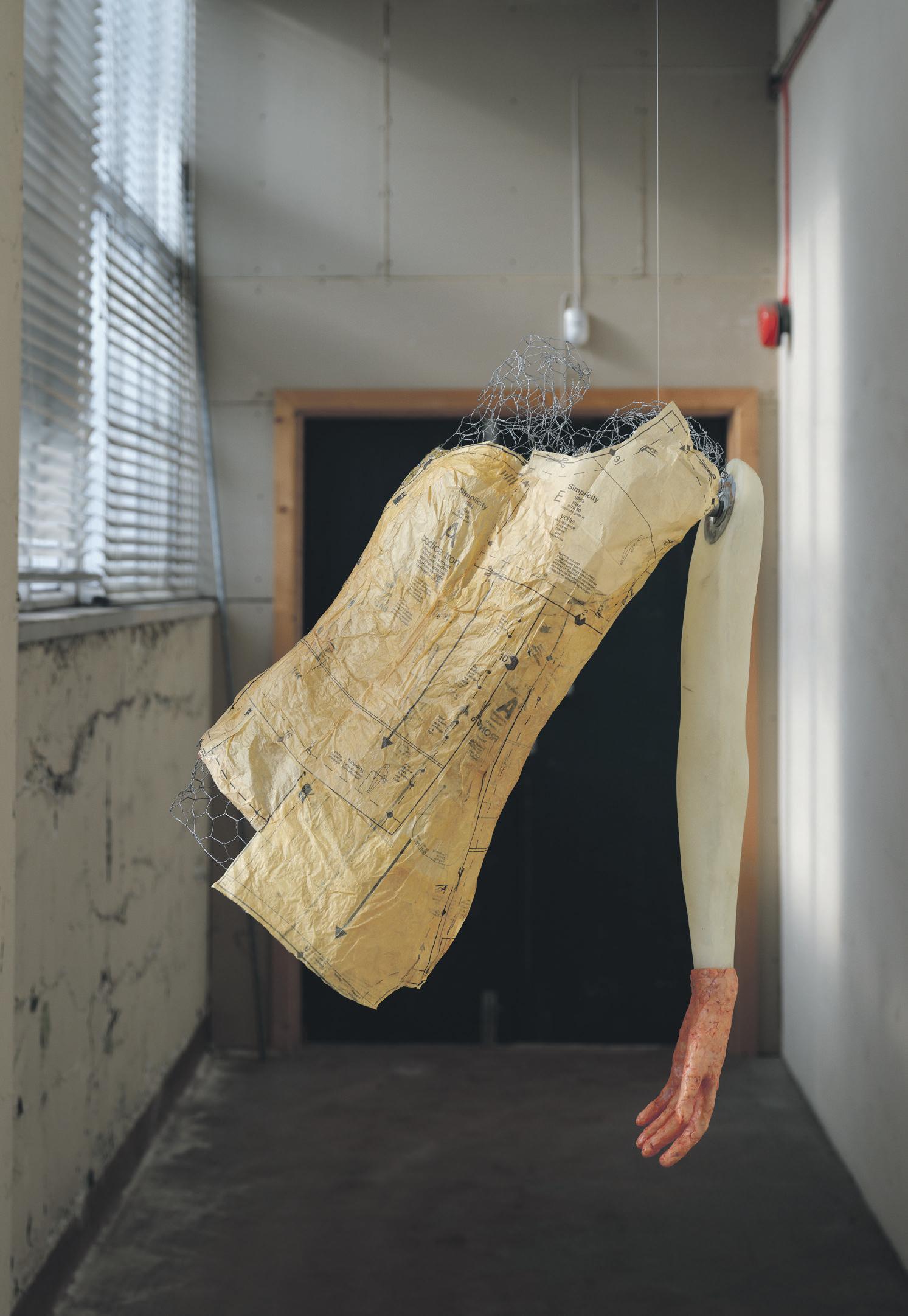
Edition 76: November – December 2024
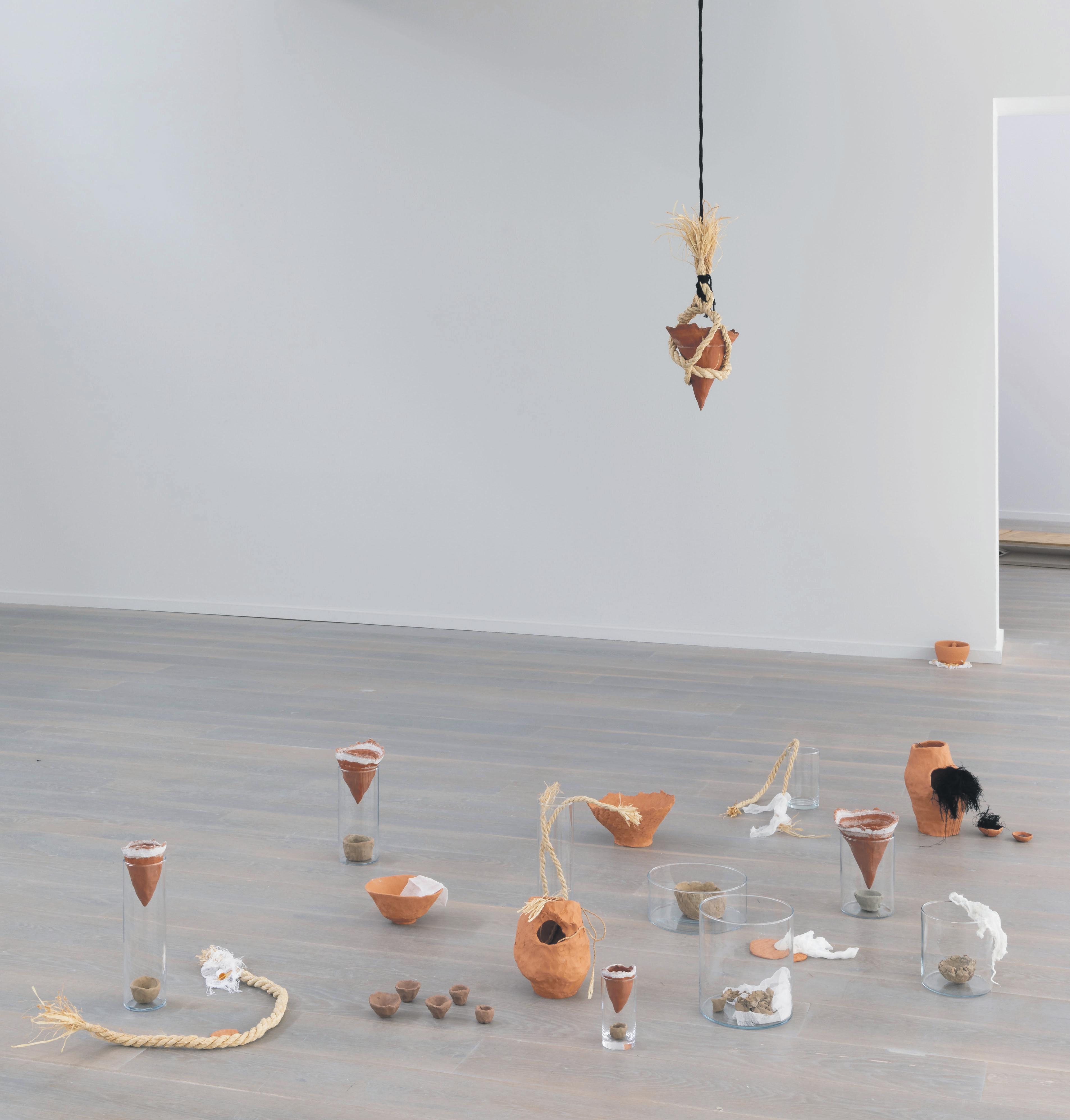
Debbie Godsell ‘Flail’
The Source Arts Centre
14 September – 19 October 2024
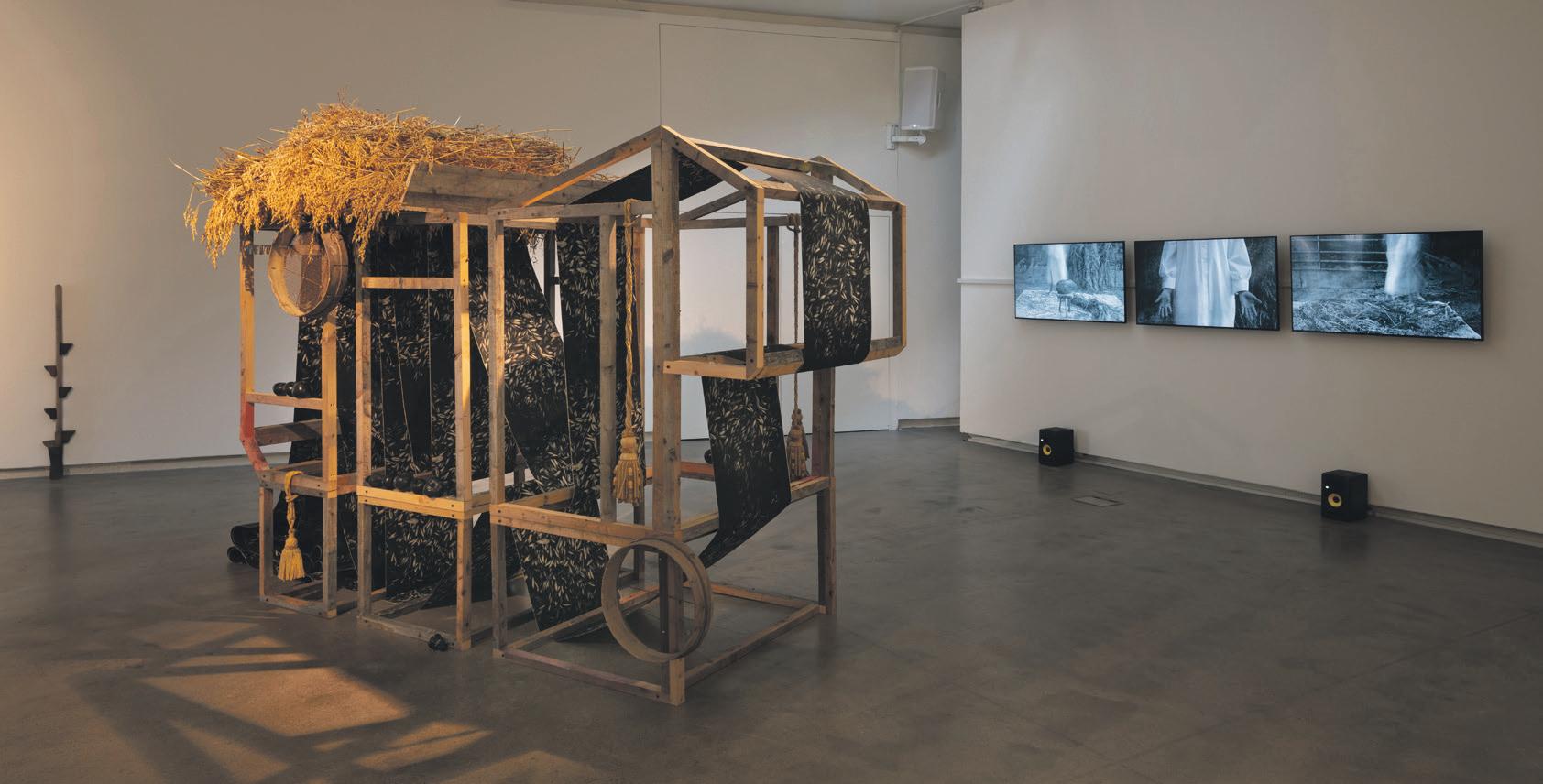
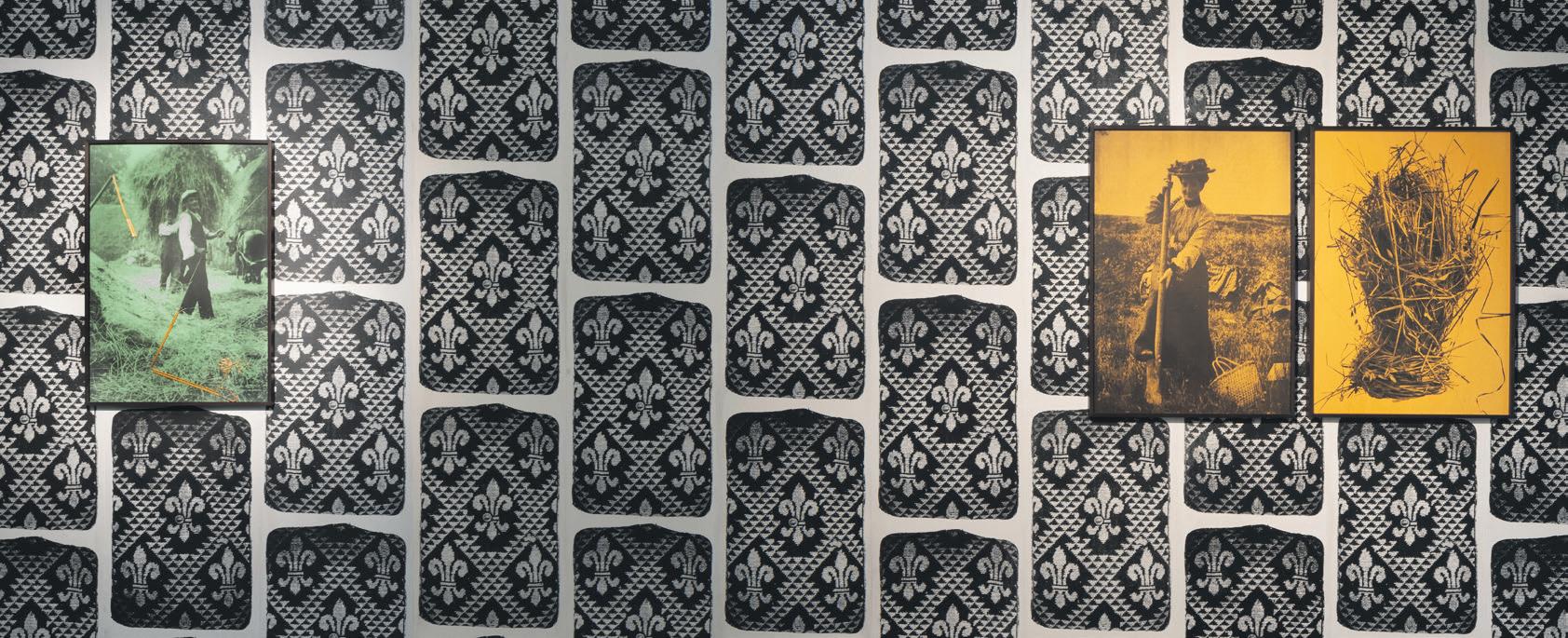
A FRIEND RECOMMENDED Debbie Godsell’s exhibition, ‘Flail’, at Source Arts Centre. “It’s about Protestantism and growing up in Ireland and lots of other things related to that,” she said. I’ve known this friend since we were five; her name was inscribed in books passed down to me from the class above in a small, threeroom primary school in County Kilkenny that served the local Church of Ireland and other minority religion communities.
In 1980s and 1990s Ireland, Catholicism seemed an exotic religion of Gothic rituals and icons, compared to what I’ve often described as the gilt-less ‘tea and biscuits’ tradition of the Church of Ireland. However, Protestantism’s simpler, more restrained, low-church inclinations come with a complex, layered inheritance.
Godsell’s exploration of her religious heritage began with the National Folklore Collection’s Protestant Folk Memory Project, co-led by Dr Deirdre Nuttall, who also contributed an essay to the exhibition catalogue, alongside art critic Cristín Leach. In 2022, Godsell recorded 14 Harvest Thanksgiving ceremonies in West Cork, contributing over 140 photographs to the Collection at UCD. Godsell returns to harvest rites in ‘Flail’, using them to investigate her relationship with Irish Anglican ethnicity and identity.
The installation at The Source Arts Centre conveys a resonant restraint. Each of the nine works has space to sit within its own weight, within sight of each other, in the arts centre’s square, windowless gallery. More works from this series were featured in an earlier iteration at Cork Printmakers Studio Gallery in 2023 and are reproduced in the accompanying catalogue.
History Lesson (2024) is a round tower made of kneelers – some borrowed from a local church, others appliquéd or patchworked with tapestry, tartan, and blanket fabrics, hand-printed or embroidered. Those printed feature archival photographs: bales of hay,
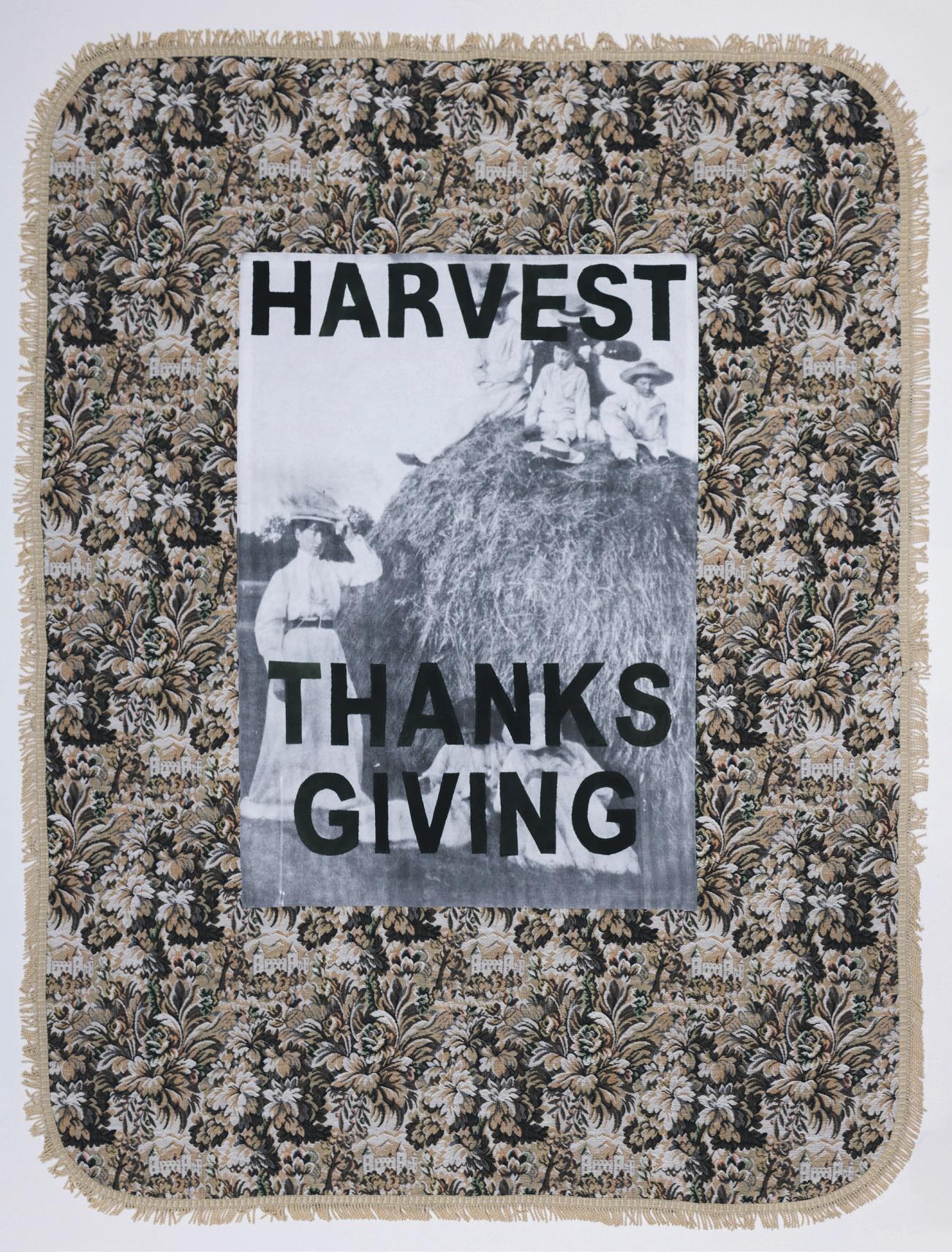
manual harvesting, snakes and Saint Patrick, a woman on a horse, a grand house, a bounty of fruits, vegetables, and milk, corn dollies, a coastal smallholding, a tank, a map of West Cork, and a hand holding a grain. The embroidered words “Don’t make a fuss” appear throughout. The structure is adorned with eye-embellished military-style epaulettes, history books, and a roof of oat stems and hydrangea.
Having grown up as part of this minority denomination in Southern Ireland, I used to joke that I had Catholic guilt combined with a Protestant work ethic. Godsell’s work makes me realise I should revise that to Protestant guilt – carrying the weight of prevailing assumptions and misconceptions, being seen as English, wealthy, and unionist – traits that, in my family’s case, we do not possess. This othering sentiment resonates deeply in Godsell’s work, which speaks to the need for quieting oneself. The Church of Ireland’s ‘plainness’ and quietude can also be understood in the context of the historical and social dynamics that have influenced its understated or subdued expression, as the cultural modesty of an isolated minority experience on the margins of Irish society. Namely, downplaying cultural and religious differences to maintain peaceful coexistence, avoid conflict with neighbours in a predominantly Catholic country, and instead focus on community gathering for cultural survival – keep your head down, avoid drawing attention, and don’t make a fuss.
In Protestors (2024), Godsell conjures the spectre of who our ancestors were, or might have been. Large screenprints depict roughly collaged heads made of straw, sheepskin, hessian, and fabric, with names and titles: Edward, Land Steward; Suzannah, Farmer; John, Skinner; Daniel, Settler; Amos, Farmer; James, Gentleman; Elizabeth, Queen; James, Carpenter; Ann, Servant; and centrally, a hand holding grain – God’s Almighty
Hand
Prayer cushions appear again in Kneelers (2024), a hand-pulled screenprint on recycled wallpaper backing, overlaid by three framed images, titled Inheritance and Legacy (both 2024). In one of the images from Legacy, a woman digs turf. Notably, her right foot is on the tool – a detail connected to Digging with the left, right, left, right, left, a piece leaning against the entrance wall. This repurposed sleán (a traditional turf-cutting spade) features extra footrests, referring to the belief that Protestants dug with their left foot – further reinforcing their sinister association, a word rooted in the Latin for “on the left side.”
Another piece, Thresh (2024), features a timber framework adorned with sheaves of oats, tassels, wallpaper screen-printed with grain, Jesmonite casts of apples (some shrivelling), wrinkled-eyed potatoes, and the loaded binary of a hurling sliotar and badminton shuttle cock. In the central screen of the eponymous three-part video, Flail, which depicts both manual and mechanical threshing processes, we see the artist in a long white shirt, her palms upraised as overlayed imagery of grain fills her body.
After viewing the exhibition, I messaged another friend – his choirmaster is married to my parents’ clergyman, a connection that shortcuts our understanding of how we were brought up. “I’m in Thurles at an exhibition that’s making me think about how growing up Church of Ireland shaped who we are. A chat over a glass of wine, perhaps?” Their reply: “A glass of warm sherry, surely.”
Neva Elliott is an artist and writer based in Dublin. nevaelliott.com
Alice Maher and Rachel Fallon ‘Untying the Knots’ Irish Art Center, New York
6 September 2024 – 15 January 2025
RACHEL FALLON AND Alice Maher’s magisterial textile work The Map (2021) was installed at the Irish Art Center in New York during a febrile period ahead of the US election. Part of an occasional visual arts programme at IAC, it was suspended in the black box studio, approached verso so that the territories stitched and painted on its front were visible as floating shadows denuded of detail as you entered the theatre – ghosts of a terra incognita
On its worked side, The Map offers a fantastical cartography of Mary Magdalene, her iconography, associations, and the ‘muddle of Marys’ and unnamed women in the Bible whose stories became bundled in with hers. Symbols associated with the Magdalene become sites. Spikenard Lighthouse beams across Ointment Bay. The seven devils driven out of her appear as a range of active volcanoes. Other geographical features pay tribute to her penitence, her lamentation at the base of the cross, her presence at the resurrection, and her 30 years of hermitage in the south of France.
The greatest territory of the map charts the world of female transgression that has become associated with the Magdalene, whose name (in Ireland) is synonymous with sin. The hot tubs of the City of Lovers sit on the Swamp of Transgressions, close to Country Girl Cove. Lest we forget what is being defended in the moral policing of women, the isle of Heterotopia is flanked by Utopia and Myopia. Above them float Hysteria and the Isle of Shits.
An island named The System carries the floorplans of laundries at High Park, Donnybrook, and Séan McDermott Street in Dublin and Sunday’s Well in Cork. Here, unwed mothers and other wayward and unruly women were incarcerated and forced into labour, their babies taken for adoption. At the bottom of The Map, The Nappery is stitched from scraps of old stained tablecloths above which drying racks whirl, named for the Ryan and McAleese Reports.
Three years in the making, The Map was first shown at Rua Red Gallery. The work takes on fresh associations in New York. Following the overturning of the constitutional right to abortion in 2022, women’s reproductive rights have become a key electoral issue. As Saidiya Hartman’s book Wayward Lives, Beautiful Experiments (2019) reminds us, the control structure of the laundries was exported. In Hartman’s stories of young black women born after emancipation, the threat of the Magdalene House haunts those who dare pursue sexual relations outside of wedlock or across colour lines, to those who stay out too late, or draw attention to themselves.
The Map’s exhibition period was brief – a little under a month. It is outlasted by ‘Untying the Knots’, a small exhibition in the building’s public spaces that elaborates and extends the world of The Map. Suspended within the atrium, and visible from multiple levels, The Mantle is a new collaborative work, rich with roots and veins and a vocabulary of symbols rendered in embroidery, lace, and knotwork. In title, it refers to the Irish mantle, a loose woollen garment subject to prohibition under various sumptuary laws from the 15th century on. Across
its surface in Gaelic script is a repeating call – Scaoilimis Gach Snaidhm – ‘Let us untie all the knots’. Fallon and Maher’s collaboration began on the Artists’ Campaign to Repeal the Eighth Amendment (2015-18), and like the protest banners they designed, The Mantle is rendered in lush silks in shades of pink and yellow – an object of beauty as well as a testament to centuries of cultural suppression.
Each artist has taken a wall on the ground floor for an individual work. Drawn onto a white wall in charcoal, Maher’s Untying is a long braid, licking across the surface like a whip – women’s hair, so often subject to regulation, here becomes an emblem of freedom and power. Opposite, the fine white crochet of Fallon’s Measure by Knots stretches across a dark metallic surface like a network of nerves. It’s a medium Fallon deploys for its socio-historic associations, thinking of the women who made lace to support families during Ireland’s famine years, and the vast migration through New York that coincided with it.
Against the backdrop of a fractious and divided city, The Map and ‘Untying the Knots’ evoke women’s resistance across time and geographies. Acknowledging repression – historically, as well as in our own time – in these works, humour and beauty become an invitation to rally, to share stories, skills and knowledge.
Hettie Judah is a writer and curator based in London. Her latest book, Acts of Creation: On Art and Motherhood, was recently published by Thames & Hudson, while a touring exhibition of the same name, commissioned by Hayward Gallery and curated by Judah, is currently showing at Millennium Gallery in Sheffield. Both Maher and Fallon feature in the book, while Fallon’s Aprons of Power (2018) are presented in the exhibition. hettiejudah.co.uk
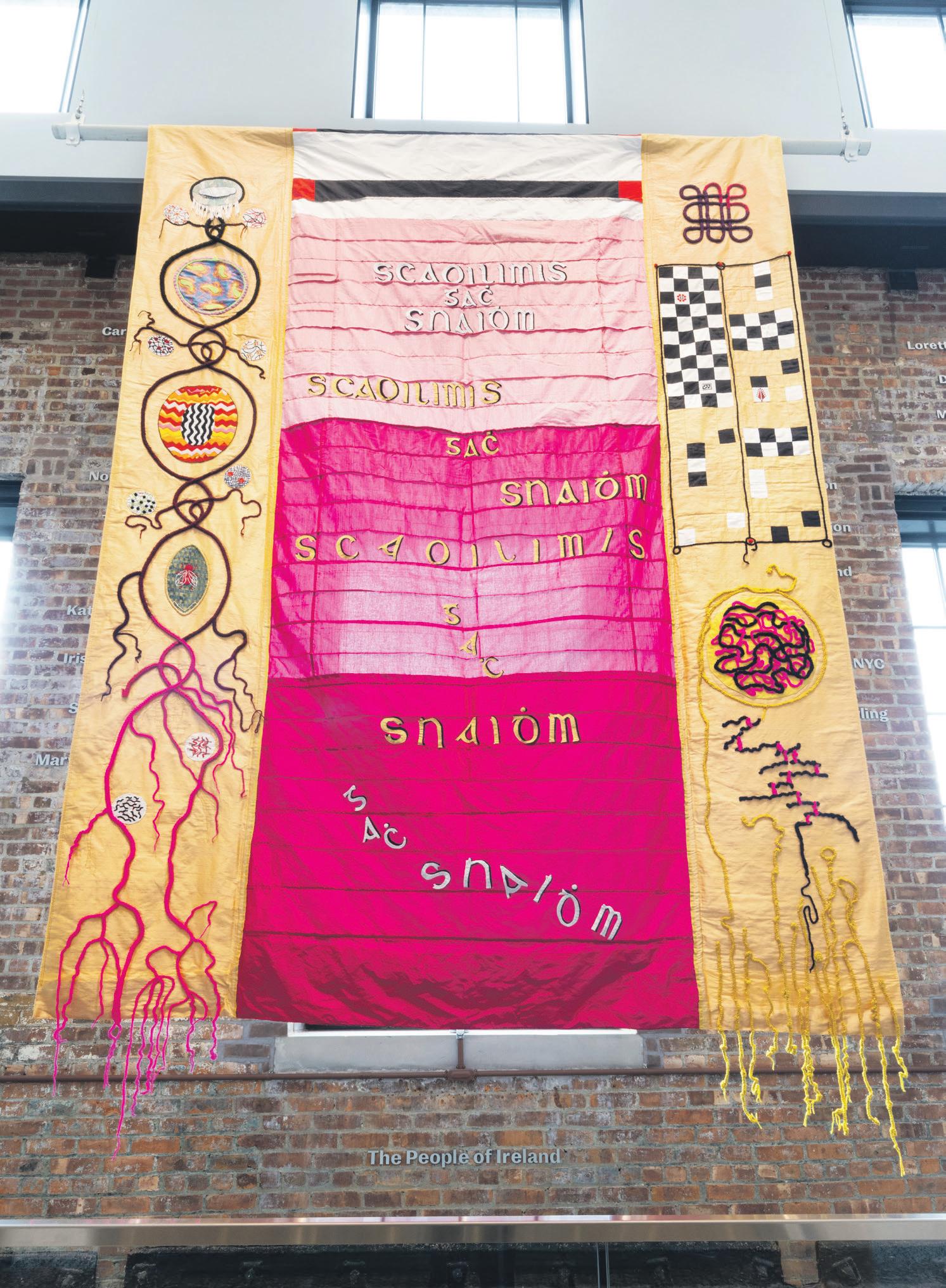
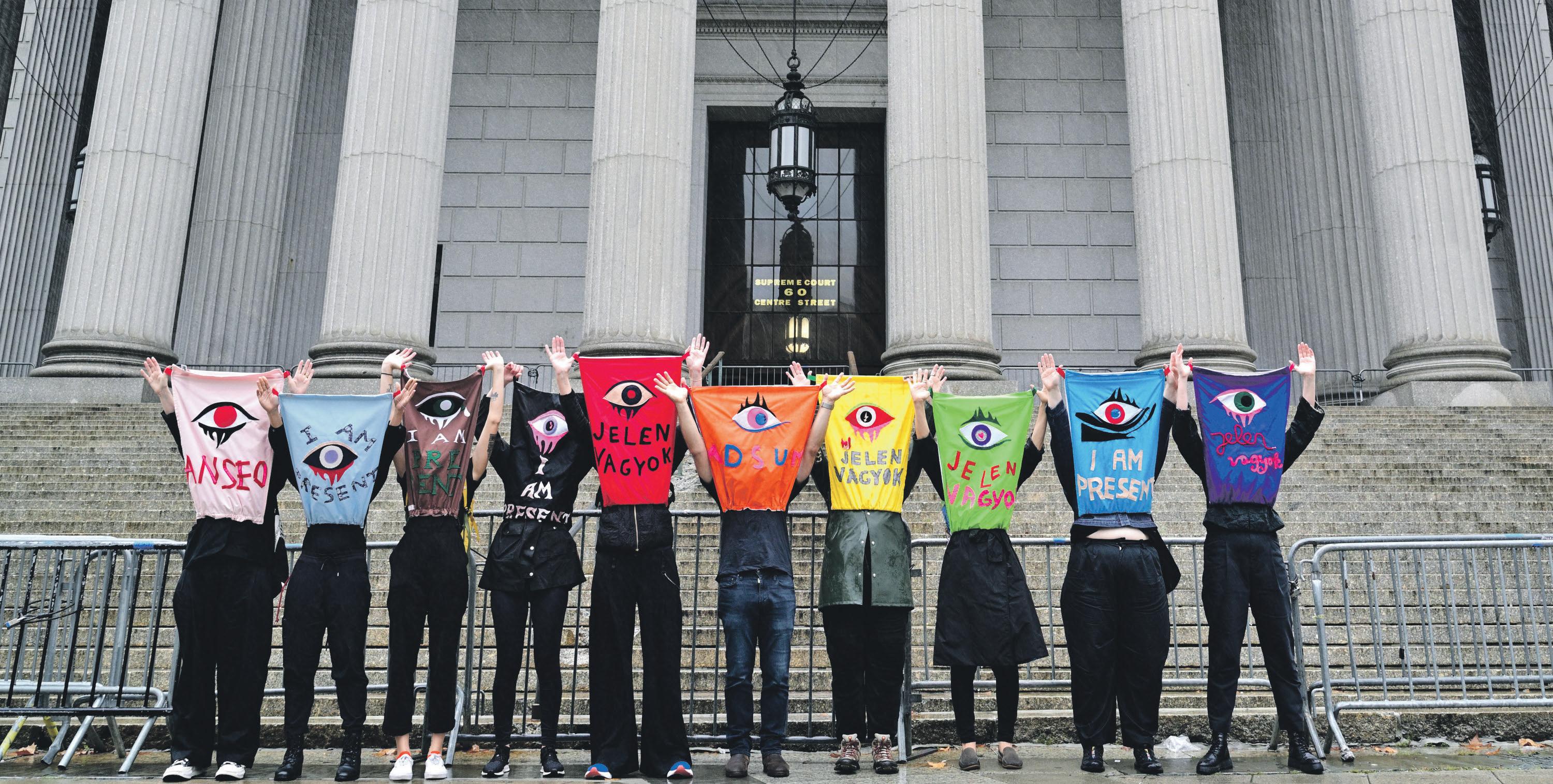
Dermot Seymour ‘The Nine Primates of Ulster’ Kevin Kavanagh Gallery
12 September – 12 October 2024
USING WORDPLAY TO title his work, Dermot Seymour’s new exhibition, ‘The Nine Primates of Ulster’ at the Kevin Kavanagh Gallery exchanges bishops with monkeys in a series of plaintive portraits of various simian types, named individually as the Primate of each county of Ulster. Seymour’s practice has consistently featured the physical and psychological landscapes that shape the North of Ireland and border counties, using wit and a sympathetic, bewildered eye for its contradictions and absurdities.
Reflecting on his career in an interview with Martin Mackin at the Kevin Kavanagh Gallery last month, Seymour described the ‘north’ as a place where ordinariness provides cover for ‘hidden uncertainties’. He spoke affectionately about Monaghan where he lived for some years and which, like Cavan and Donegal, are part of Ulster but not part of ‘Northern Ireland’. For Monaghan people, who Seymour says, “talked like me,” the territory is blurred, sharing services, shopping, farms and employment in a continuous landscape. In a sequence of follies, the fictional ‘Nine Primates of Ulster’ bare no relation to extant diocesan boundaries which, in turn, pay no heed to county boundaries or the border. He dryly recounted how the first painting completed in the series, The Primate of Antrim (2023), which, when finished, reminded him of Ian Paisley, gave him the impetus to continue, initially to complete the 32 counties, but in the end, stopping at the nine of Ulster.
In his introduction, Mackin describes a fundamental quality in Seymour’s work as its soulfulness. More than any other animal, even cows or dogs, monkeys have an uncanny human-like expressive range that Seymour captures well. This suits his painting technique that hovers in a narrow gap between realism and a tightly controlled painterliness. In ‘The Nine Primates of Ulster’ the likeness and details are exact, camouflaging intensely orchestrated brushwork. Except for the Primate of All Ireland (2024), each primate is presented in front of a filtered background that provides no sense of gravity or depth of field. This vacant airbrushed texture intensifies the focus on the primate and its remarkable human-like pose and expression.
The absurd cross-identification between monkeys and bishops begins a slippery slope into a bizarre unconscious musing of possible underlying narratives in each portrait, which admittedly, is an agreeable fiction. One can’t help feeling sympathy with the melancholic eyes and hunched shoulders of the Primates of Derry and Down, or to admire the rugged, heroic, Guevara-like portraits of the Primates of Cavan, Donegal and Monaghan. The Primate of Tyrone (2023) seems perplexed but earnest as he attempts a pained grin, while the Primate of Fermanagh (2023) stares out through an exhausted expression of sadness. The much larger canvas for the Primate of All Ireland has the unlikely looking oligarch prowling over a border landscape of tidy bright green upland fields, with a single peak at its centre. It changes the dynamic in the exhibition and is a reminder of the unyielding hierarchy of the Church.
The premise of some correlation between monkeys and bishops remains unclear. Despite their ‘soulful’ expressions, the exhibition chills any anthropomorphic altruism and speaks more of the narcissistic human tendency to view the world and everything in it through the prism of human experience. It’s hard to tell if Seymour is challenging or reinforcing accepted notions of monkeys as devoid of autonomy and bishops as holders of authority. In the end, it doesn’t matter and is not important. In response to Mackin’s question about whether he is a political artist, he said: “I’m just presenting what I am walking through.” This ambiguous narrative has been articulated for many years in Seymour’s ‘bucolic’ landscapes with cows, sheep, helicopters, missiles and flags that camouflaged what he describes as decades of “hidden uncertainties, hidden contradictions and the hidden histories… underneath the paint…” In ‘The Nine Primates of Ulster’, he continues to leave everything open and unanswered with an abundance of humour and pictorial finesse.
Carissa Farrell is a writer and curator based in Dublin.
‘Thresholds to the Unseen’ Solstice Arts Centre
7 September – 1 November 2024
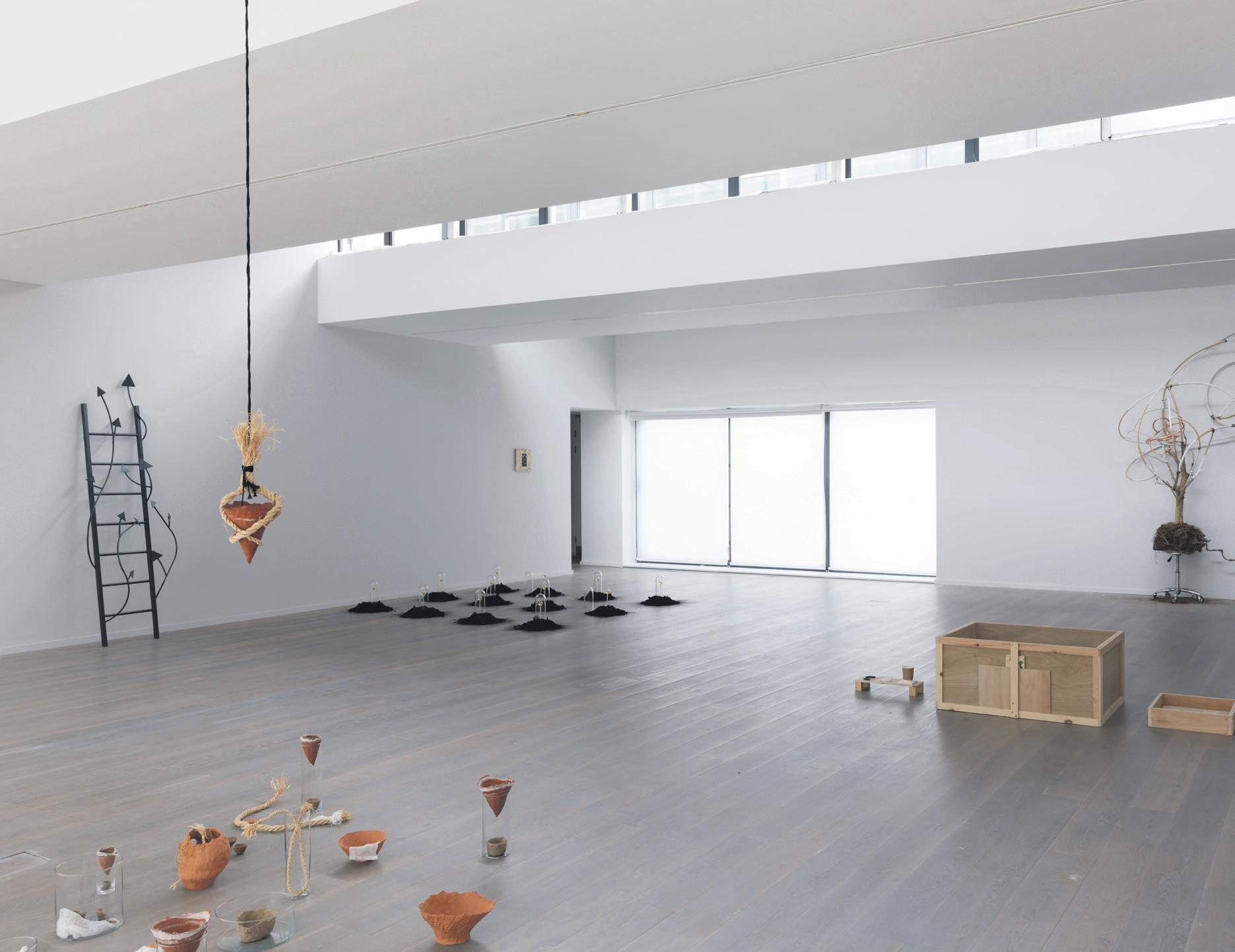
TRAVELLING TO NAVAN to visit Solstice Arts Centre, I am struck by the appropriate nature of the journey I am taking – venturing from the city to the countryside, crossing a divide of sorts. ‘Thresholds to the Unseen’ is a group exhibition featuring sculptural assemblage and installation works by Fiona Kerbey, Christopher McMullan, Joanne Reid, Katherine Sankey, and Emily Waszak, that contain reflections of the immediate landscape.
Upon entering the first of three interconnecting exhibition spaces, we are presented with Christopher McMullan’s Perfumer’s Organ (2023) – a walkway that stretches the length of the room. This is the only interactive piece of the exhibition and comprises a series of bellows under a wooden parapet that the visitor is encouraged to walk across. Each square releases scents particular to different parts of Ireland – ranging from wine gums from a newsagent to slurry from County Meath. This sensory walkway immediately engages the visitor, its library of aromas providing an entry point into the resonant themes of McMullan’s practice and the wider exhibition – in this instance, those of distillation, materiality, and sensory familiarity.
These themes continue in Gallery 2, with McMullan’s Muc Chaor (Pig Berry) (2023), which examines rewilding and cultivation via mounds of biochar (made from expired beehive frames) and aromatised compounds (including algae and rose) encased under glass bell-jars, which speculate on what Ireland may have smelled like prior to peat bogs. Katherine Sankey’s Hydrozomia (eden) (2024) combines raw, organic materials (namely tree branches and roots), connected via piping and electrical elements in a hybrid sculpture which explores natural environments and human intervention. Use is also made of the space beyond the windows, with Joanne Reid’s So Entangled (grey section) on display in the gallery courtyard, bringing the exhibition out into the elements and continuing the theme of thresholds.
Gallery 3 feels like a suitable climax in bringing together the different elements of the show. There are video and audio – elements absent from the oth-
er rooms – with Katherine Sankey’s dual pieces, Craters and Hand Mine. Emily Waszak’s We Speak Through Worlds is a large textile work made from waste fabric, hung from a wooden frame. This arrangement includes a bowl made from Irish clay and a reflective brass plate, while the accompanying soundscape, titled Grief Weaving Sound Piece, creates a reverential, almost spiritual atmosphere of contemplation.
As someone originally from the Irish countryside, I found it fascinating to engage with objects that create feelings of familiarity; many of the scents released in the first room brought an element of comfort too. I also enjoyed seeing the functionality of these familiar objects being transformed and elevated, as observed in Joanne Reid’s Ladder (for idle hours), in which a ladder’s vertical linearity is interrupted by meandering arrows. Fiona Kerbey’s Spoon is a salvaged shovel covered with antique lace, echoing the surface pattern of water erosion, and harking back to Lough Corrib, from where the shovel was retrieved.
As discussed, the works displayed in ‘Thresholds to the Unseen’ are connected through an emphasis on materials, and through thematic inquiries linked to the environment, rural life, loss, ritual, memory, and a sense of place. The juxtaposition of found and salvaged objects with natural materials (such as clay, seaweed, or branches) and manmade or industrial materials (like copper piping, glass, or steel) felt jarring but also indicative of themes of rurality and the agricultural environment, where nature is controlled by machinery, in order to yield produce. At first glance, the artists seem to deal with quite different subject matter and in varying ways; however, through careful curation, their commonalities are highlighted to bring the visitor on a sensory journey, both personal and universal.
Laura Harvey-Graham is an editor, writer, current Co-Director of Basic Space, and Marketing and Communications Manager for Museum of Literature Ireland (MoLI). @lorzhg
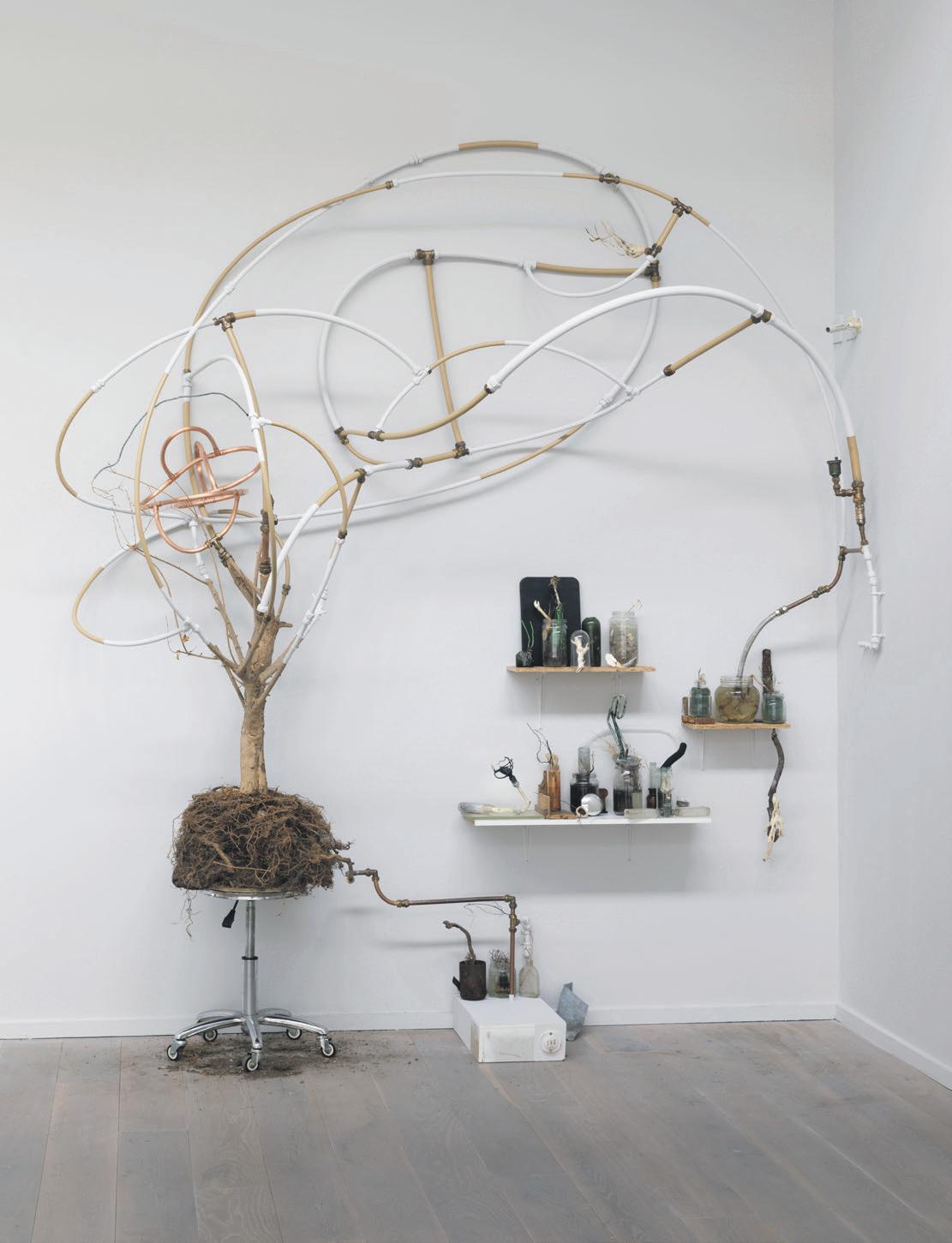
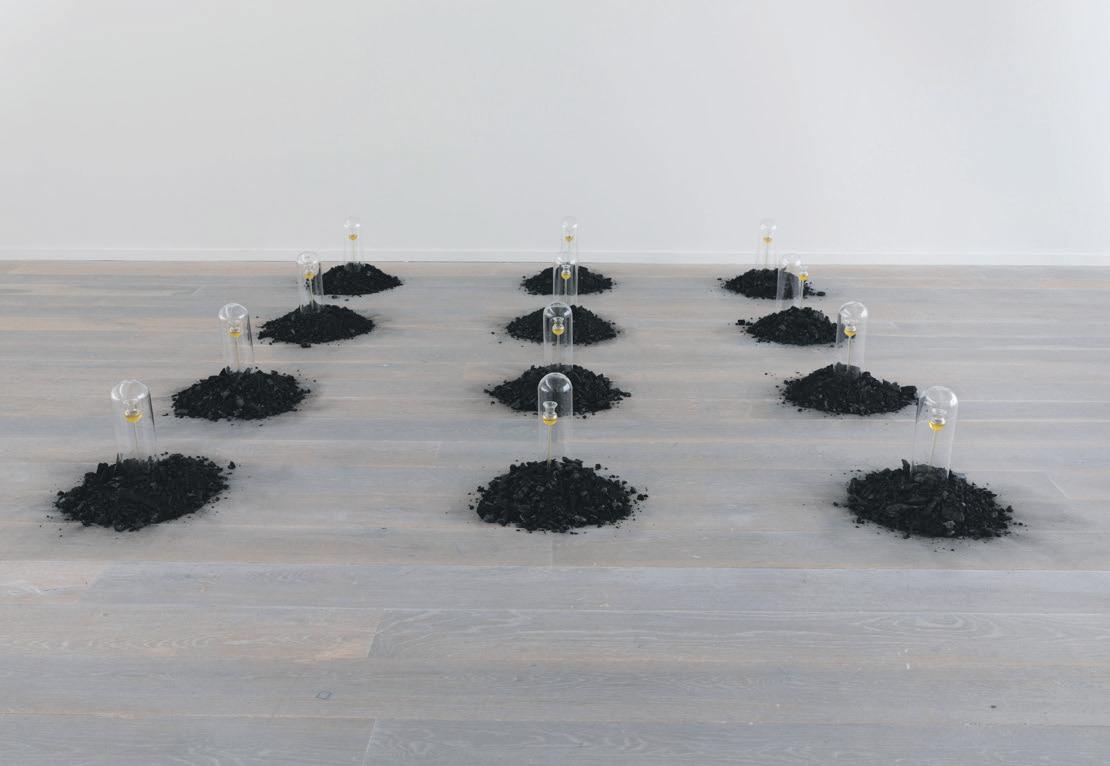
Liane Lang ‘Deep Time Dip’
Butler Gallery
10 August – 29 September 2024
‘DEEP TIME DIP’ by Liane Lang at Butler Gallery in Kilkenny sees the artist present several bodies of previous work, giving the viewer an impression of the impetus behind her practice. Lang’s work is situated between sculpture and photography, using a variety of media to play with viewer subjectivity and contemporary society’s obsession with the image. Lang’s sculptures tell the story of their ‘objectness’, whether industrial or natural, and expand on relations with the body.
The majority of the gallery is occupied by Lang’s recent series, Touch Stone. Numerous found objects are displayed, each carrying an image superimposed on its form. Through these sculptures, Lang plays with representation and narrative to reference origin, identification, expression and a network of (human) associations, conjured by notions of the mimetic.
Lang’s focus on the biography of objects highlights the narratives given to objects by humans, from utility to decoration, functionality to worship. Lang selects imagery loosely connected to each object, creating a story that involves humans in some way – something brought full circle by Lang’s merging of photography and objects. Images are perfectly blended into three-dimensional forms, so we cannot always ascertain where the photograph ends, and the object begins.
Australian anthropologist, Michael Taussig, once described the act of seeing a sunrise as actually touching the sunrise, because the ray of light travels into your eye, stimulating your retinal rods. “Contact and copy merge to become virtually identical, different moments of the one process of sensing; seeing something or hearing something is to be in contact with that something.”1
In Spitewinter Road (2024), a piece of tarmac road is imprinted with the image of a tarmac road. This duality means that the object is simultaneously both a piece of the road and a representation of it. This intelligent subversion reminds me of conceptual artist Joseph Kosuth’s seminal piece, One and Three Chairs (1965), in which a wooden chair is displayed alongside a photograph of the chair, and the dictionary definition of the word ‘chair’.
A similar kind of phenomenology is summoned by Digging Deep I (2024) – a found shovel that holds an image of a hole on its blade. Is this a hole that the shovel once dug? This idea that an object might display
moments of its past leads me to wonder what would happen if I openly wore images of all the holes I have previously dug myself into.
Another hole appears in Shaft (2024), a circular piece of found steel with a borehole descending into blackness. A rope falls over and down into the hole with a hand reaching to grab it from above. This hole references the mine that the metal came from, pulled out by the same hand that later forged it into a circular piece of steel.
Crawlspace Can (2022) is a found aerosol can – flattened, rusty, and aged. Upon its surface are printed two bare feet, sticking out of a cave. In the Road (2024) holds an image that expertly turns a stone into a miniature grotto. Dark shading alludes to a cavity, inside which there are human legs and a hand, resting or hiding. This image projects a tenderness onto the stone, almost taking the form of a religious icon, or monument to shelter.
Lang also displays photographs from an older body of work, Monumental Misconceptions, set in Memento Sculpture Park in Budapest, Hungary – a site that houses Soviet-era statues, toppled during the country’s transition to democracy. These tangible remnants of Hungary’s communist past include stone dioramas and large bronze figures of dictators, soldiers, and workers. Lang made a series of feminine interjections involving a life-size rubber model and body parts, which are strategically placed to interact with the solid and stern masculine statues. She subverts the celebration of size and strength in these monuments by showing them as brutal and ridiculous.
This witty and poetic questioning of political ideology, as represented by strong, virile men, continues to be relevant today. While ‘Deep Time Dip’ calls to attention the common theme of objectification and the female body, it’s also a provocation on how a female artist can embody and subvert objects directly.
Ella de Búrca is an Irish visual artist and Assistant Lecturer at NCAD. elladeburca.com
1 Michael Taussig, Mimesis and Alterity: A Particular History of the Senses (New York and London: Routledge, 1993) p21.
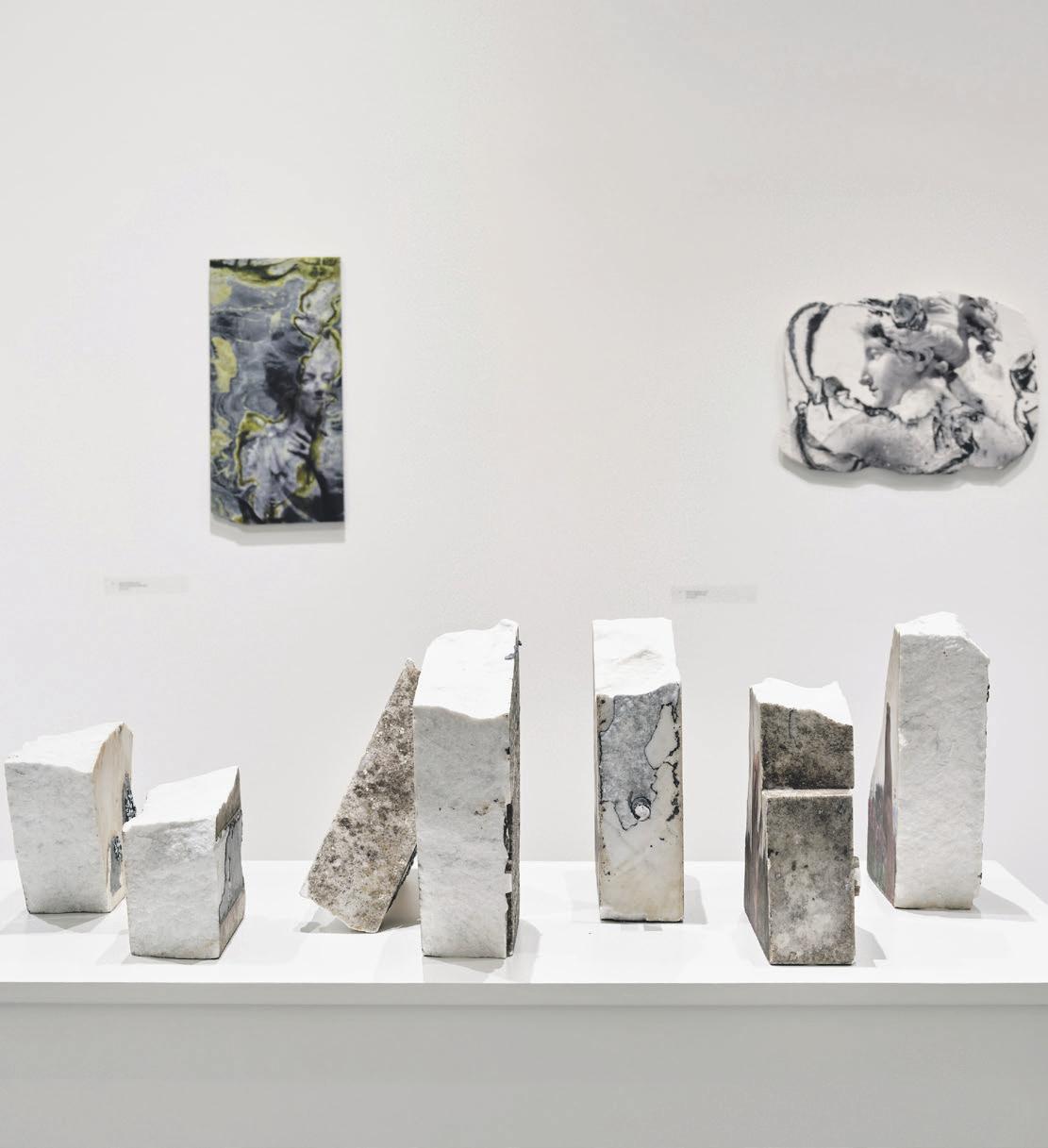
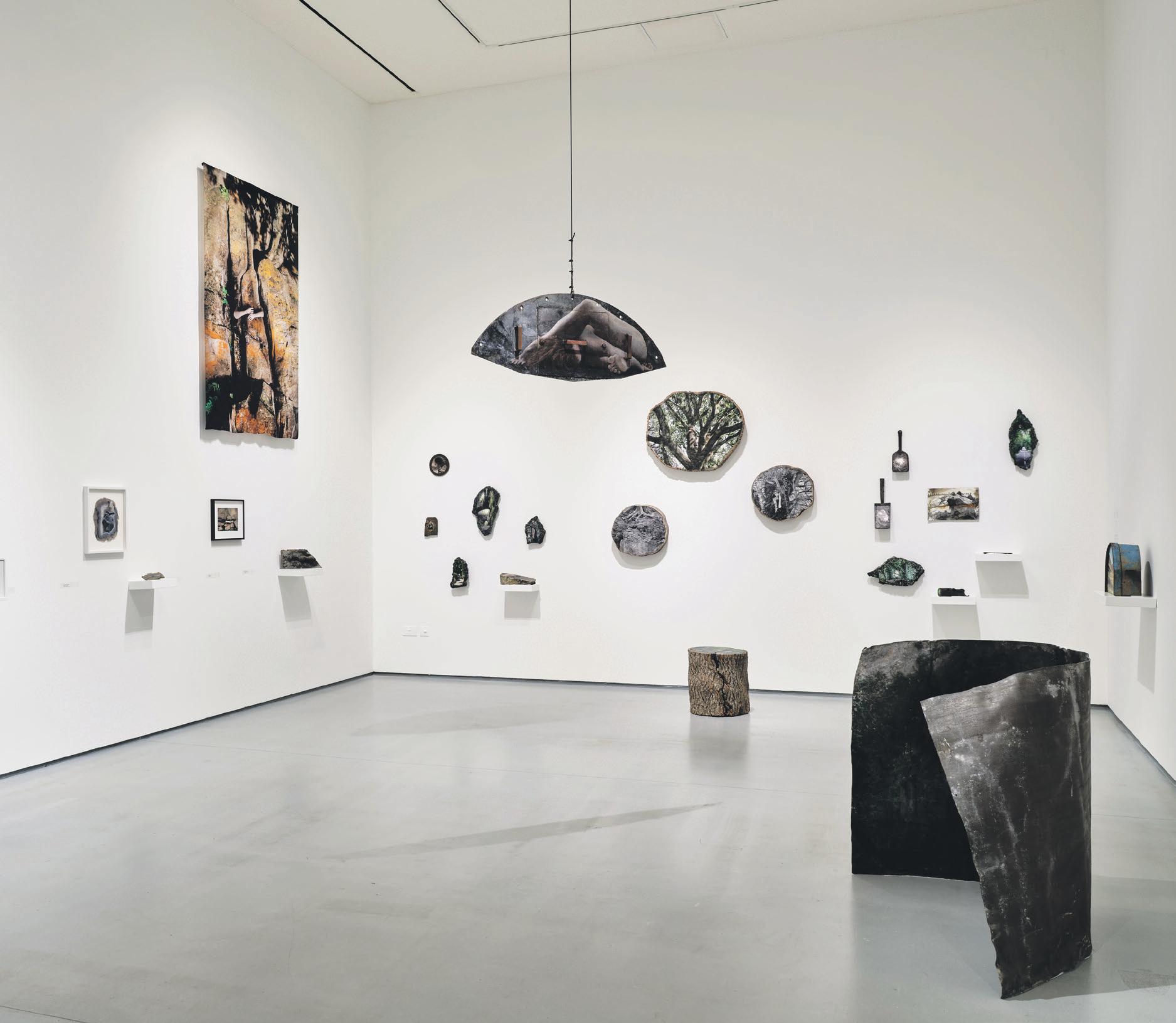
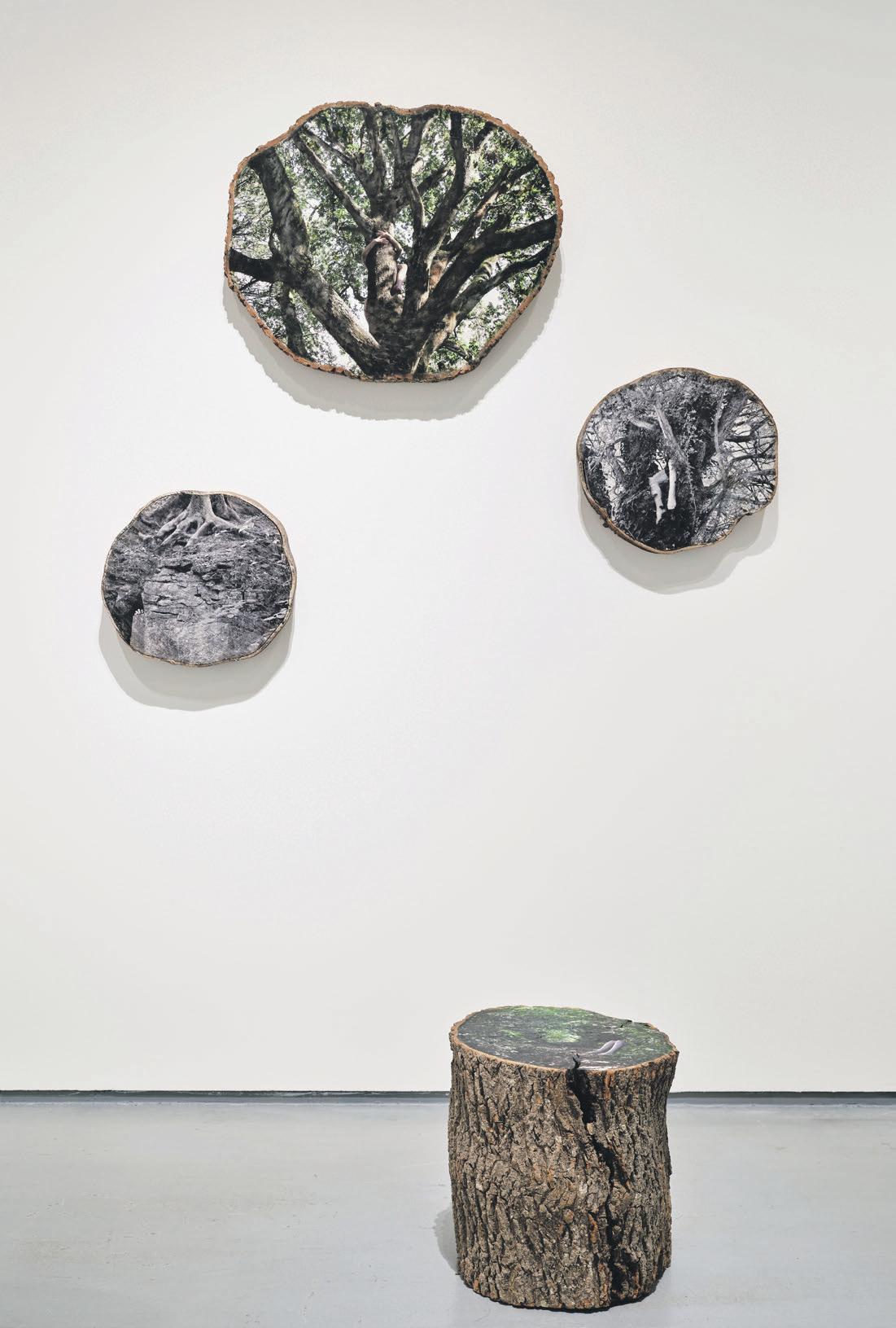
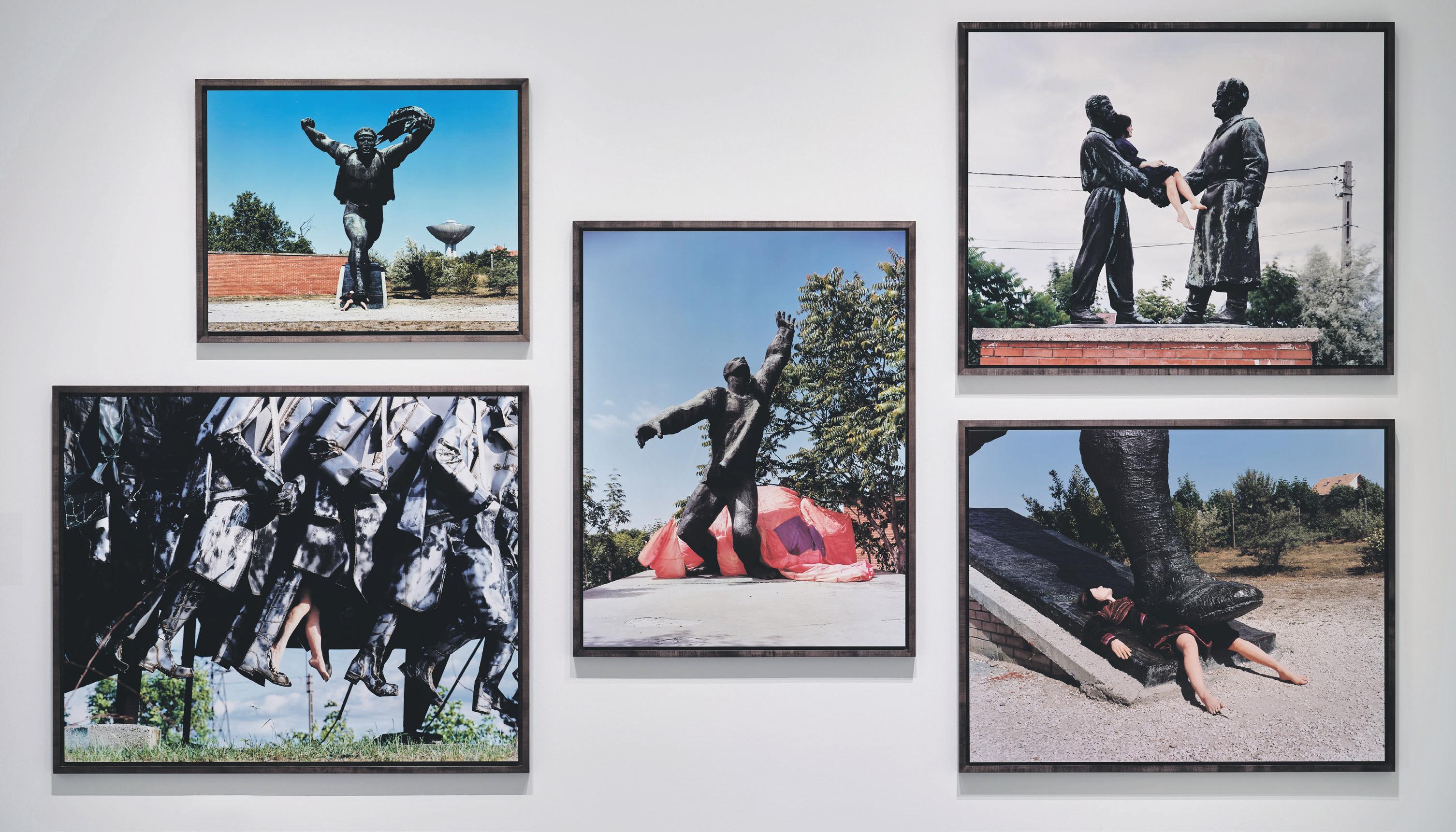
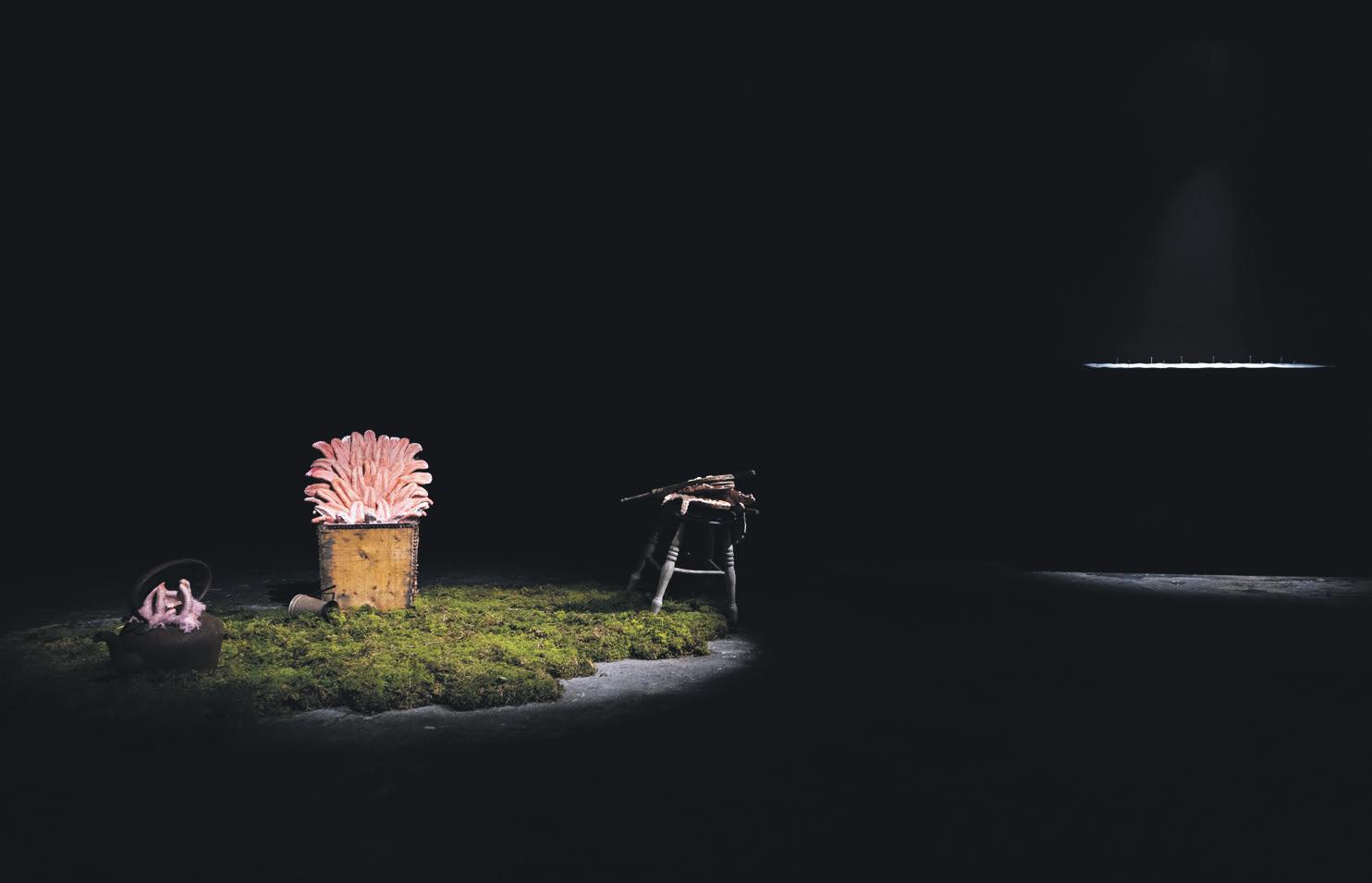
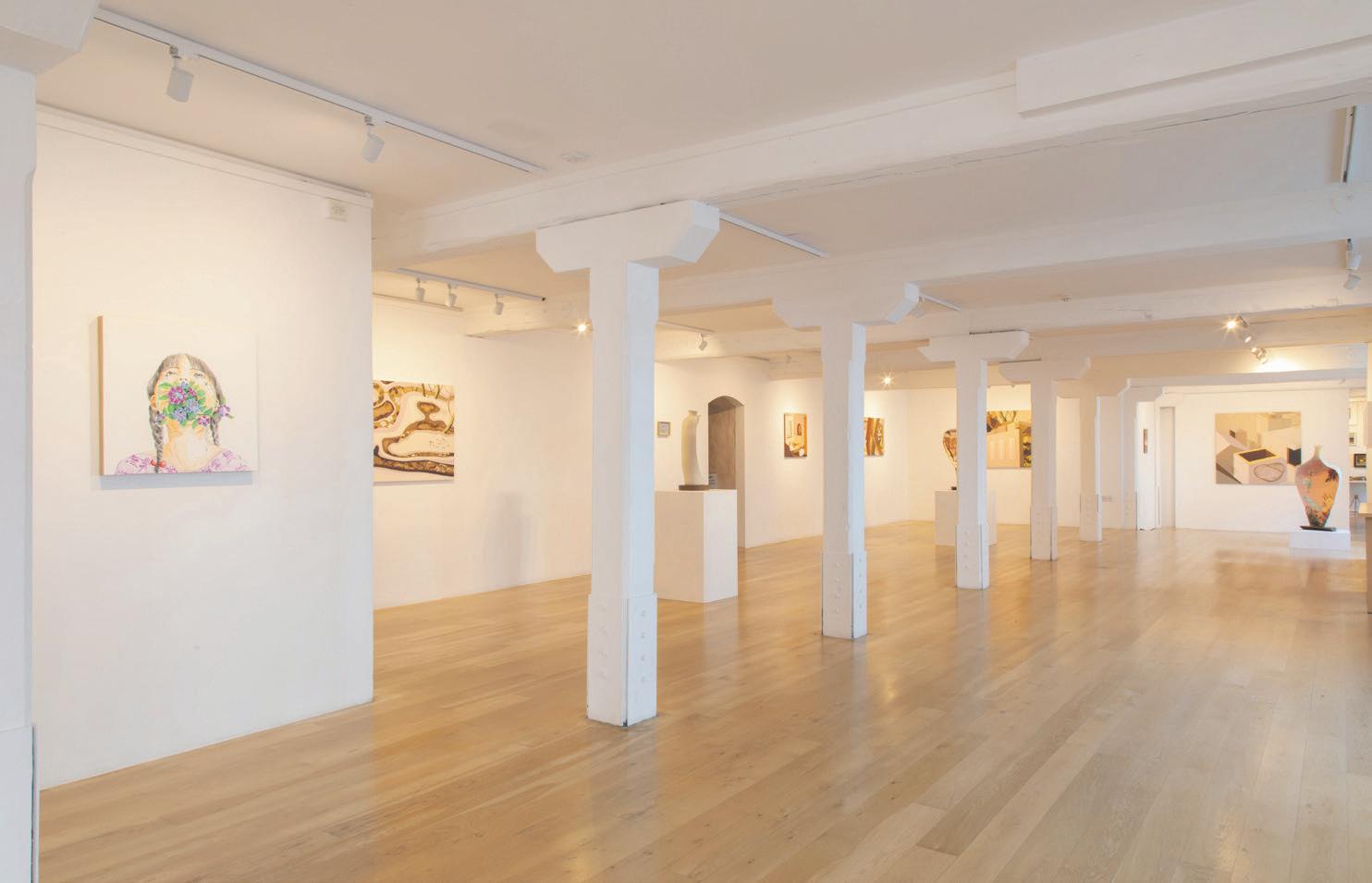
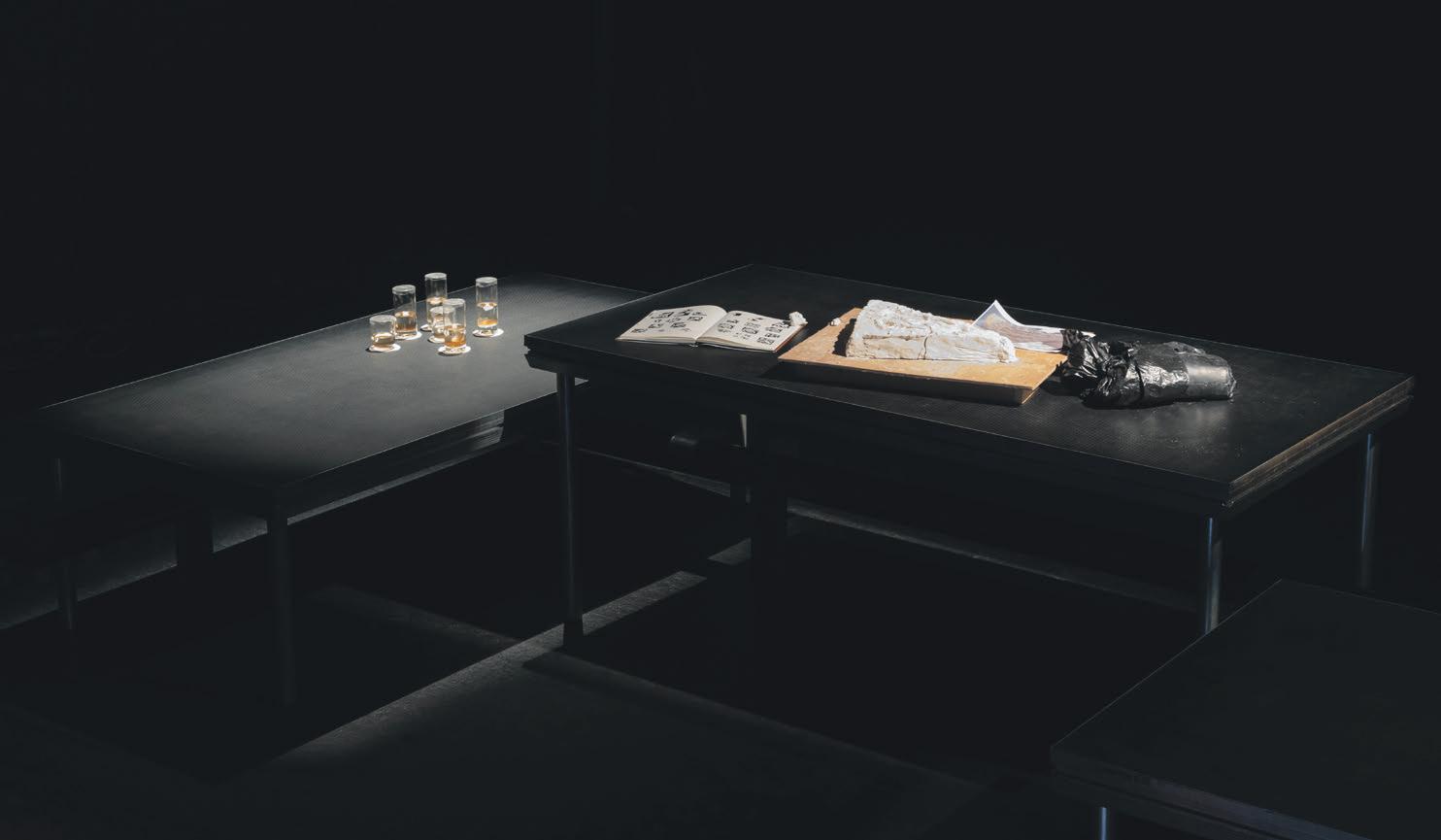
BECOMING A MEMBER of an artist-run gallery will open avenues for submitting exhibition proposals, applying for open calls, or participating in member’s exhibitions. When applying through an open call, provide the requested information on time and in the correct format, with good quality images – this makes it far easier for the person processing multiple applications! Whether or not your work is selected at that time, one of the curators or artists on the selection panel may follow your practice, keeping you in mind for future opportunities.
It’s important to understand how an organisation works if you are submitting an exhibition proposal. Is there a single curator, artistic director, or a board of co-directors? Check out the website and research the practices of those involved in running an artist-run space. Identify any connections with your practice and theirs. You may wish to invite curators for a studio visit or speak to them at exhibition openings –professional relationships can often develop from there. Finding natural alignments can lead to working on future projects together, when the opportunity arises.
For many galleries, programming is often decided upon at least a year, if not two years, in advance. Having an awareness of this timeframe when submitting proposals is useful in setting expectations. A proposed budget breakdown will demonstrate its feasibility for inclusion in our organisation’s funding application. Our voluntary co-directors have varied interests and visions for the gallery, so being open to collaboration, or inclusion in curated group exhibitions, is a stronger and more engaging approach, rather than looking to essentially hire the space for use.
We are always on the lookout for artists to work with and while there’s no guaranteed method to securing an exhibition, we will help where we can, and encourage your engagement with us through open calls, proposals, and gallery visits.
Kate McSharry, 126 Artist-Run Gallery & Studios 126gallery.com
CORK ARTS SOCIETY (est. 1963), trading as Lavit Gallery, is unusual in the Irish visual arts landscape, in that it is a not-for-profit, sales-based gallery. Operating in a limited local market and being almost entirely dependent on commissions from sales, we do not have the resources to offer full representation to artists, with associated perks, like art fairs, exhibition catalogues, repeat solo shows, or guaranteed inclusion in seasonal group shows. However, one advantage of not having a fixed stable of artists is that we can be more inclusive and offer more opportunities for artists than privately-run commercial galleries.
Lavit Gallery schedules ten exhibitions per year in its main gallery space. Inclusion in the majority of our shows is by invite only, based on our own research and exist-
ing relationships. The only open call is for the Annual Members Exhibition. Membership fees and submission fees support the gallery. We are always open to receiving emails from artists wishing to introduce themselves and their work. Our standard response to most queries is to recommend membership as a starting point. We programme one to two years in advance, so it may take a while before an opportunity comes to fruition. Exhibitions with little or no commercial potential cannot be considered at present.
A personalised email demonstrating some familiarity with our organisation will be well received and given attention. We want to know if you are interested in being stocked, exhibited in group shows, or have ambitions to have a solo exhibition. It’s essential that this email includes attachments or links that provide easy access to an artist statement, biography and/or CV, and clearly labeled examples of work. A link to a well-resourced and navigable website is completely acceptable. Alternatively, you can send a PDF with captioned images (title, year, medium, dimensions, price, including gallery commission of 50%).
As a not-for-profit arts organisation and registered charity, our primary objective is to promote and an appreciation of visual art in Cork, with a particular emphasis on providing a sales-based platform for artists and a venue in which the public can browse and purchase art. My final recommendation is that artists familiarise themselves with the type of work that we typically show and stock. Browse our website, follow us on social media, sign up to our newsletter, and attend our shows and events.
Brian Mac Domhnaill, Director of Lavit Gallery lavitgallery.com
ONE OF THE most compelling aspects of working in or collaborating with an artist-run space is the autonomy and flexibility it offers in shaping a programme that is both intentional and responsive to its local context. This means it’s crucial for artists to understand a gallery’s programming and curatorial vision, in order to find spaces that resonate with their practice and aspirations. At The Complex, we accept exhibition proposals on a rolling basis. I encourage artists to reach out directly via email to introduce their work and begin a conversation. While these discussions rarely lead to immediate outcomes, they often serve as the foundation for building trust between artist and curator. The Complex visual art programme produces exhibitions that focus on grouping particular artists, rather than predetermined concepts. My core curatorial interest lies in bringing together artists who may not know each other personally, are geographically distant, but share overlapping concerns in their work. The process of getting to know each other is integral to exhibition-making at The Complex.
Mark O’Gorman, The Complex, Dublin thecomplex.ie
DO IT. JUST do it. Do it yourself. Now. With whatever you have. Why wait? If it’s so important, have it immediately. In your bedroom, on your phone, out of a bag… no one will stop you. Whatever happens will probably inform your next move. This is progress through practice. Perfect!
But wait, why do you want an exhibition? What is it for, and what do you imagine it will do? What is it about having an exhibition that will strengthen/ support/ build/ evolve your practice or move you closer to where you wish to be? And whatever the answer, can that be achieved (better) another way? Can you think more imaginatively than within the format of a conventional exhibition? If you could have anything, would you still only want that?
In my opinion the best exhibitions are like drafts of bigger things coming, or extracts of a broader ongoing process, and to me the most compelling reason for having an exhibition is to share your work with multiple people/ publics simultaneously. But there are many ways to share work, often more meaningfully than via exhibitions. Application writing, workshops, studio visits, conversations, collaborations, research exchange, readings, recitals, online presentations, documentation, chance encounters, informal chats, late night arguments, correspondence, shared interests, material convergences, developing new methodologies, looking, making, acting, thinking, imagining, doing – all the tools that ostensibly pave the way towards securing an exhibition can also be considered meaningful moments of exhibition in and of themselves. If you treat them like that, you won’t be asking how to get an exhibition for very long.
Kate Strain, Kunstverein Aughrim, Wicklow. kunstverein.ie
ARTIST-RUN SPACES HAVE different approaches to programming exhibitions, from curated programmes to charging a fee for rental, and often depend on their funding situation. Pallas Projects/Studios invites artists to apply annually to our Artist-Initiated Projects, an Arts Council-funded, open-submission gallery programme that is tailored to be highly accessible and dedicated to the development of artists in a peerled, supportive environment. Our focus is on early/ mid-career, emerging artists and recent graduates, who demonstrate the potential and ambition to challenge and test their practice in the public realm. A relatively short turnaround time allows the programme to be responsive, reflect what artists are currently making, and encourages experimentation and risk-taking. We advise against sending in generic applications that could go to any space – address the specifics of the call-out! We would also advise artists to show a range of work produced over a few years, as opposed to work from just one show. This gives the selector/ curator a better idea of your practice progression (though for artists who are only starting off, this may not be possible, and we take this into account). The importance of good quality images cannot
be overstated – they need to describe your practice well, and should be clearly labelled (with medium, date, location). If part of a group show, the artist’s work should be identifiable. We advise reading the guidelines carefully for any opportunity and answering each question with the appropriate level of consideration to demonstrate suitability and feasibility in line with the programme, space, and budget.
Gavin Murphy, Pallas Projects/ Studios, Dublin pallasprojects.org
Member’s shows: Various artist-led galleries across Ireland, including Catalyst and 126 Artist-Run Gallery in Galway, organise Member’s shows, often on an annual basis. These shows can be fantastic opportunities for new and upcoming artists who have not yet exhibited their work. This can also be a great learning opportunity, offering artists insights into application writing, installation and collaboration with galleries and other artists, which will inevitably help them to organise their own independent exhibitions! Becoming a member of artist-led spaces is therefore a proactive investment in your emerging practice.
Collectivise: Reaching out to others whom you trust to discuss your exhibition ideas, concepts, proposals and applications can be a major help in creating meaningful and full-fledged works. As well as that, it offers access to a sometimes hard-to-find community who understand the difficulties and problems that arise when pursuing a career as an artist. Keeping a group chat or meeting online can make this process even more accessible, to enhance long-distance connections and foster wider communities of understanding.
Linger: Spend time in the spaces that you want to exhibit in. Get to know the space and consider how it could be reimagined to support your concepts. Proposals for site-specific work that navigates architectural or ecological quirks can be really interesting in interrogating not only your own ideas, but how the people that run the gallery see their space.
Connect: Reach out to collectives and different artist-led spaces who are organising exhibitions that you admire. ‘Dublin Modular’ are an artist-led collective based in Dublin who regularly organise events, workshops and open-call exhibitions. This can be a great entry-level exhibition opportunity. ‘Daylight’ in Glasnevin is another exciting member-funded social centre, which regularly hosts exhibitions and events with other artists. Members can submit proposals to organise their own events and/or exhibitions in the space.
Órlaith Mac Eoin Manus, Catalyst Arts, Belfast catalystarts.org.uk
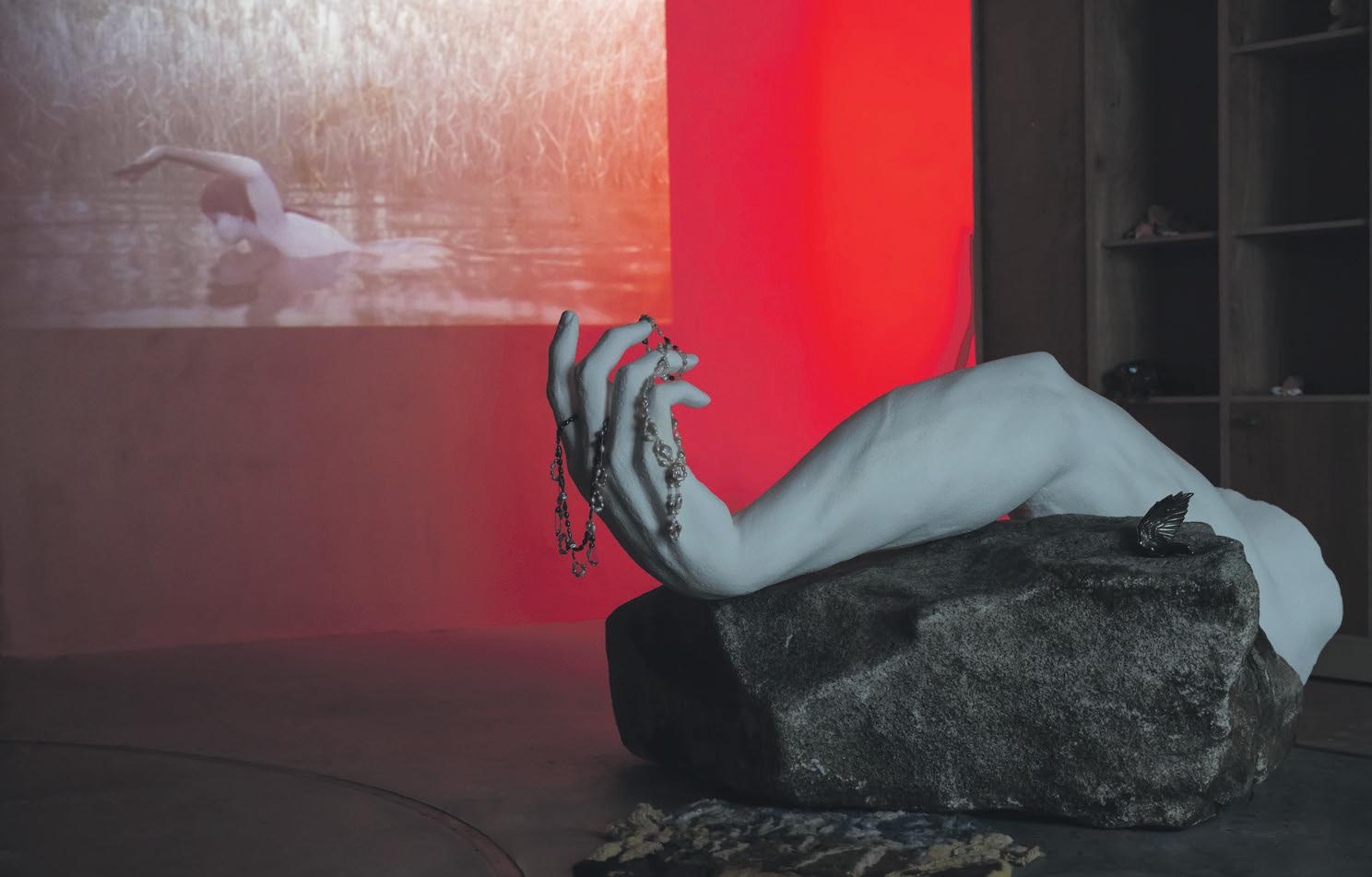
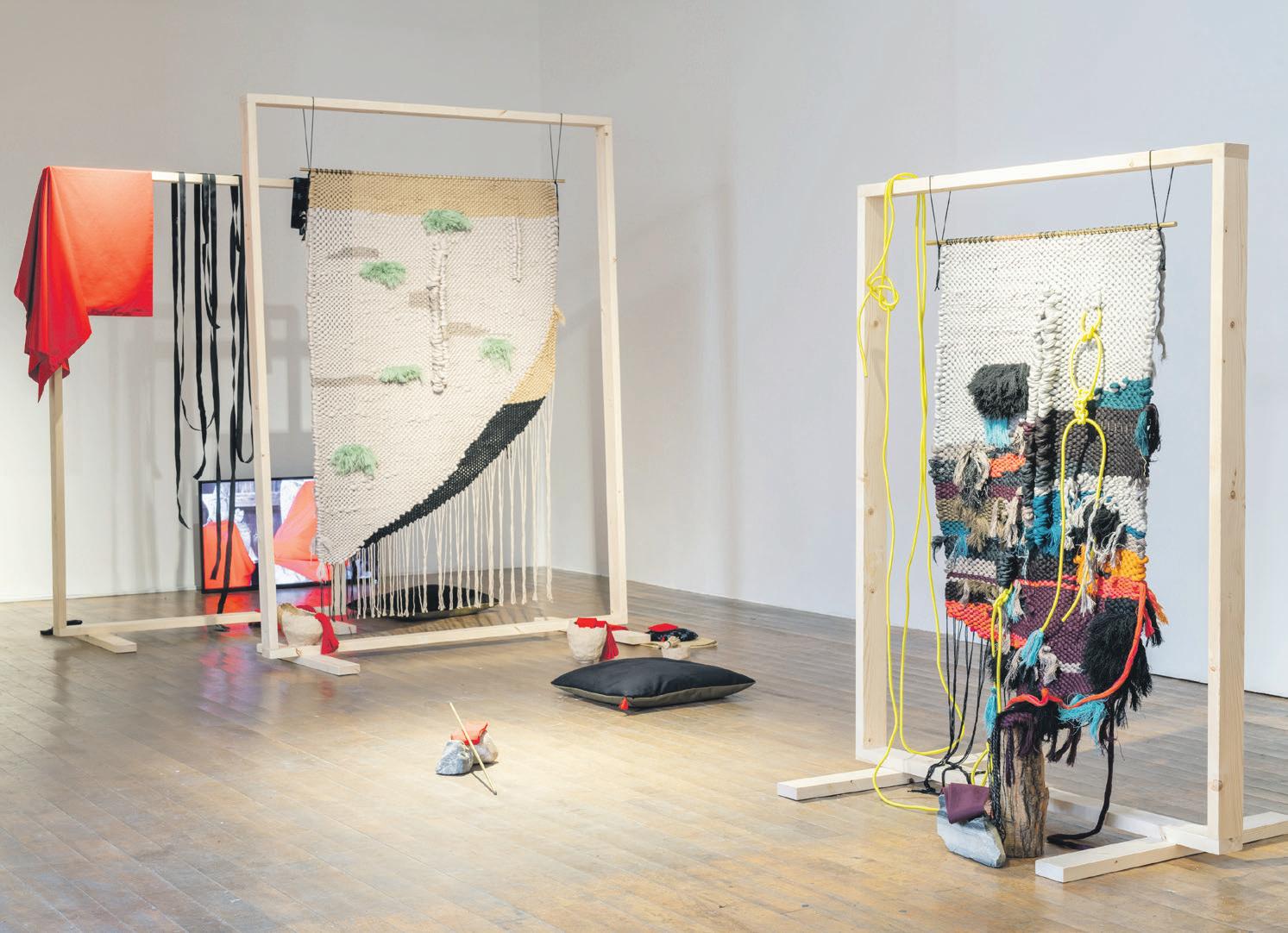
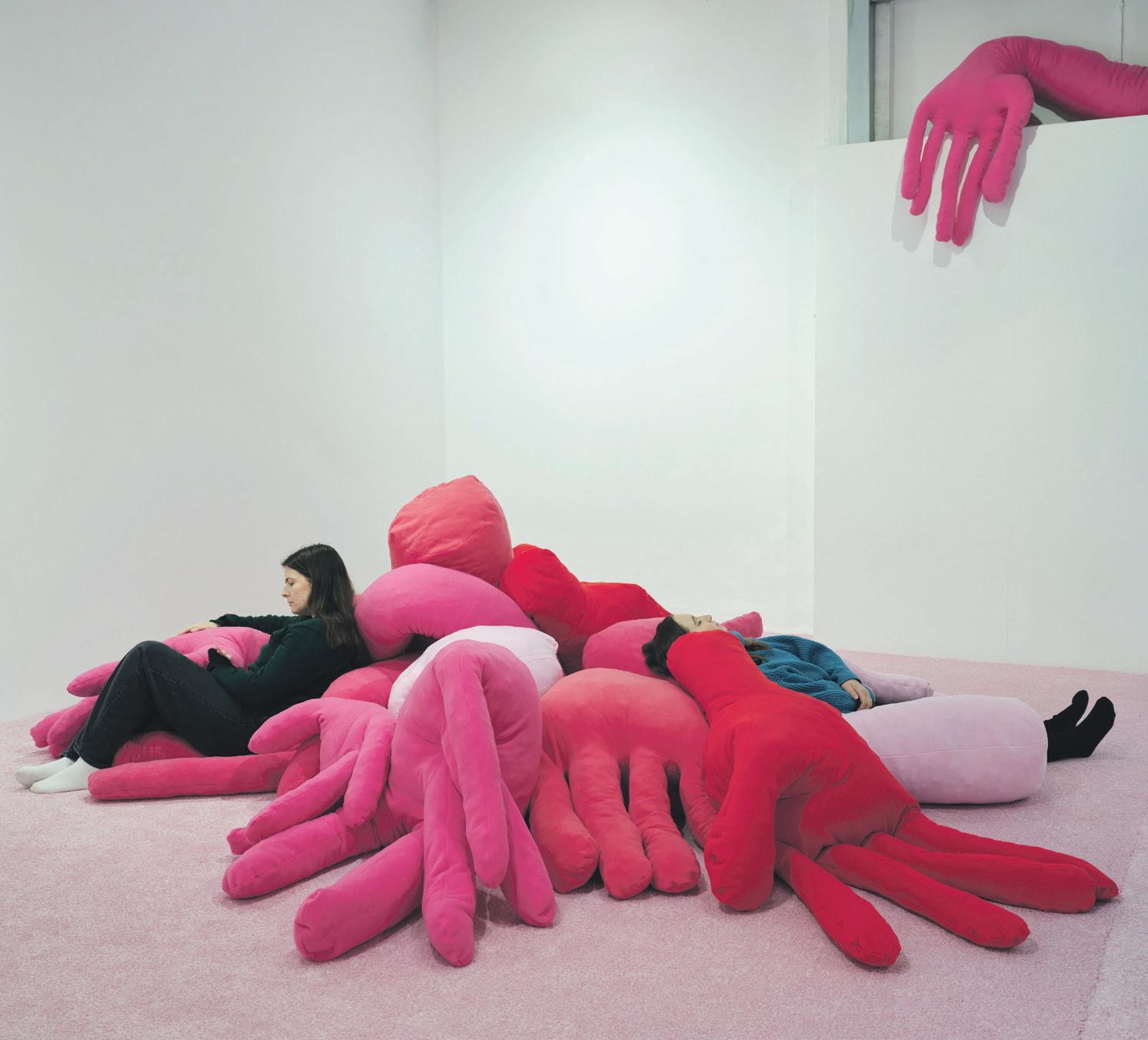
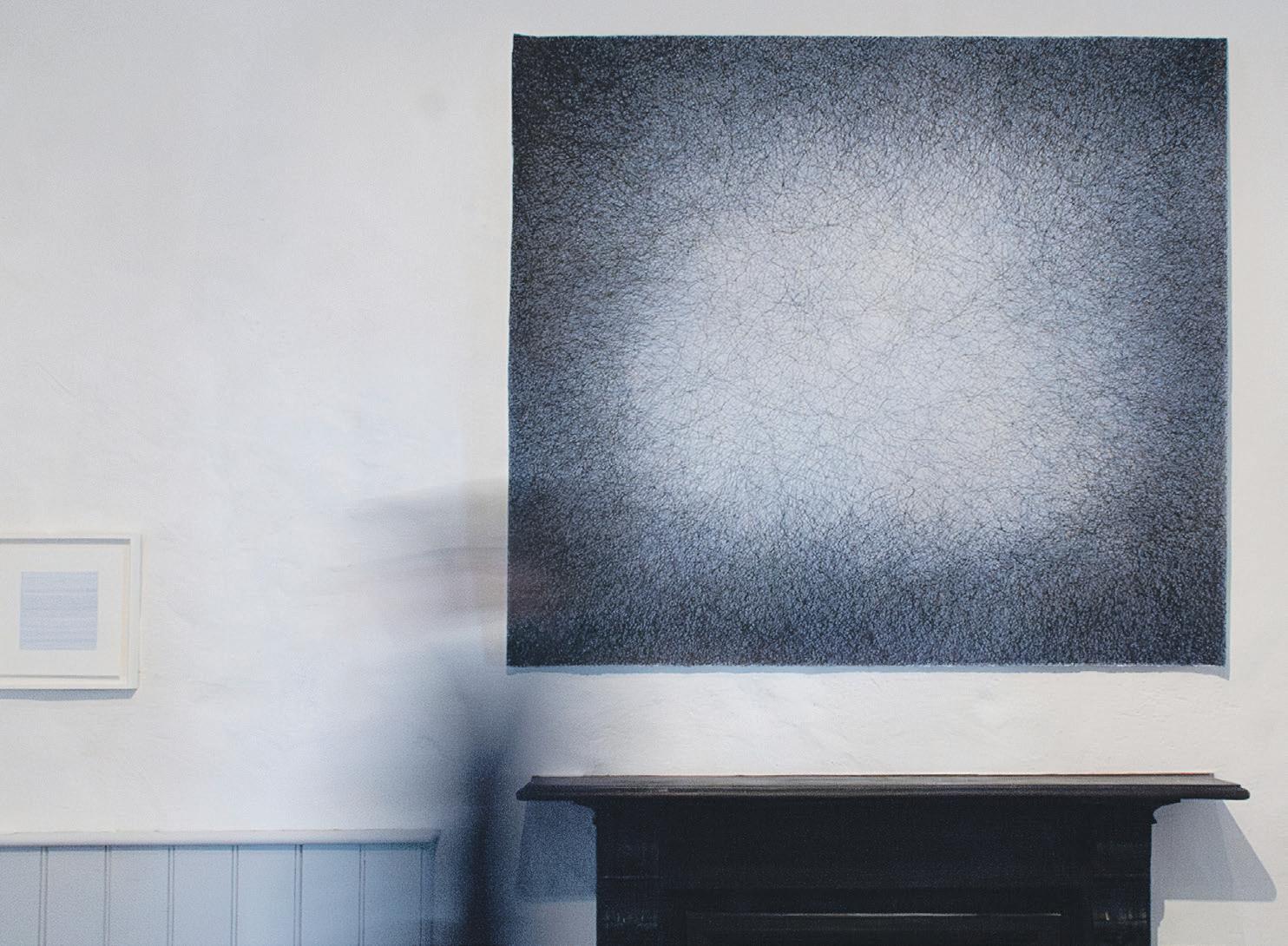
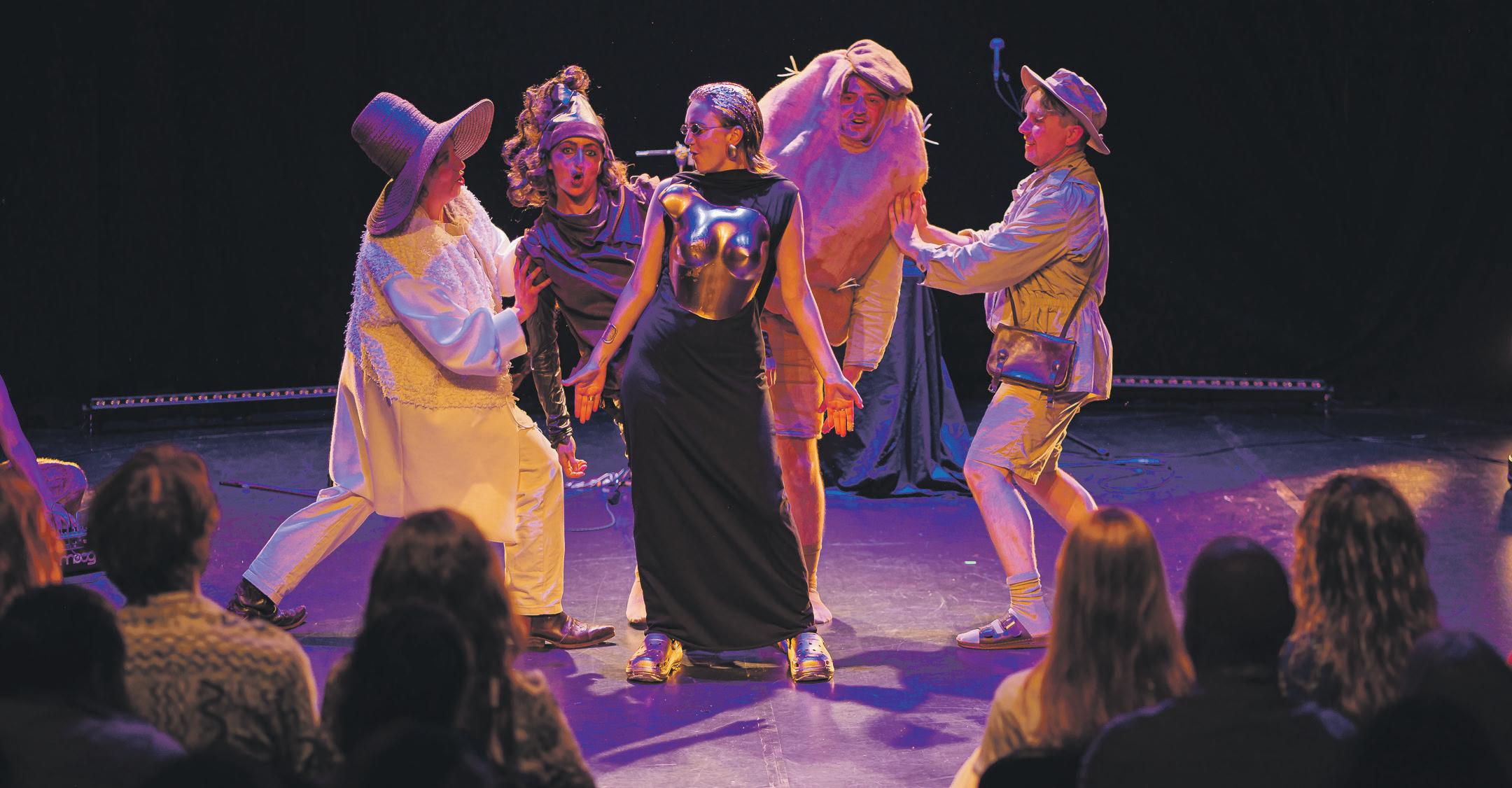
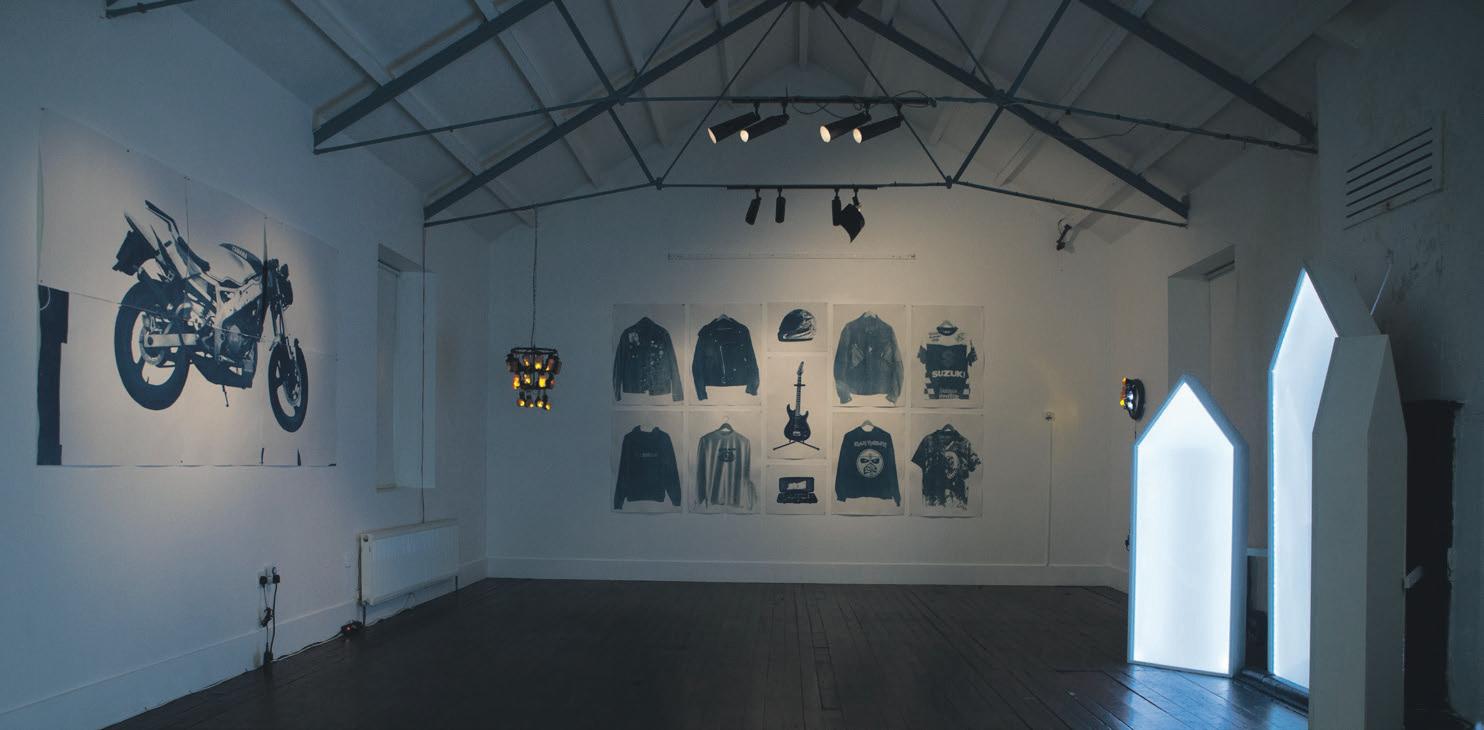
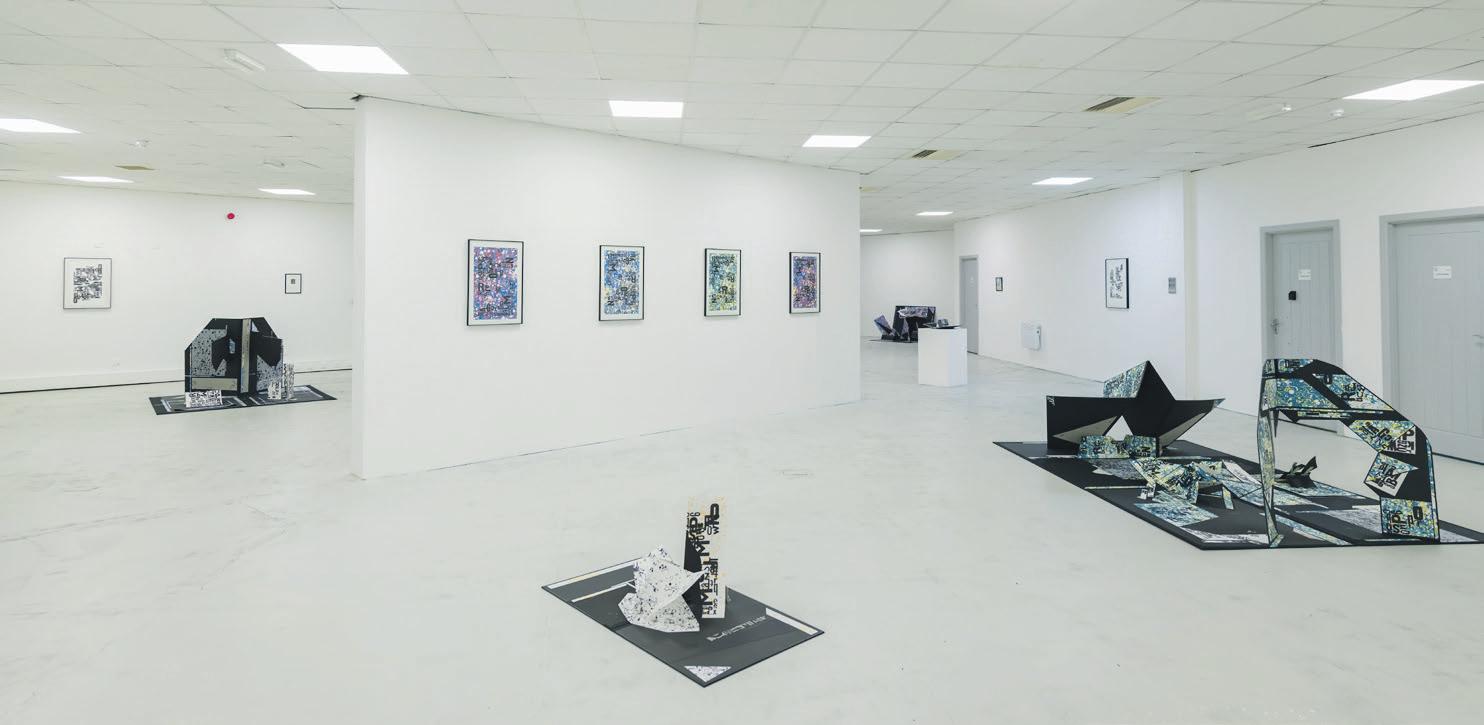
ESTABLISHING A RAPPORT and common ground with the curators is most important, as is having a good understanding of the gallery’s programme and ambitions: Is the gallery artist-led, publicly funded, or commercial? Is your art compatible with their vision? How far into the future has their programme already been determined? It’s a good idea to make an appointment to visit the gallery and meet the curator(s), if possible, bringing a representative sample of your work. A more extensive selection is perhaps best conveyed by a dedicated website or Instagram page, or indeed, a physical portfolio. If the meeting goes well, invite the curators to visit your studio, to identify and discuss the scope of your exhibition and to propose a timeframe.
Robert Carter, Grilse Gallery, Killorglin grilse.ie
WORK WITH AND watch your peers closely. Get off-line and go outside. Show up to things and talk to people. Don’t wait to be invited to show your work; self-organise your own exhibitions. Listen to your elders but don’t be afraid to ignore their advice. Don’t take rejection personally. Be disciplined but be kind. Create your own context.
Pádraic E. Moore, Ormston House, Limerick ormstonhouse.com
QSS OPERATES TWO gallery spaces at our East Belfast location, primarily showcasing the work of early and mid-career artists. Each year, we host 12 to 14 exhibitions, including shows by QSS artists, partner organisations, and external artists, selected through an open call process (25% of our 2023-24 exhibitions came through opencall submissions). We welcome proposals for both solo and group shows. Proposals are reviewed by a rotating panel of QSS artists, working across a variety of media. Here are some tips for applicants, based on previous open calls:
1. Visit the Gallery: If you’re based in Belfast, we recommend visiting our galleries before preparing your proposal. For those outside the city, we can provide floorplans and photographs to help you understand the space.
2. Discuss Technical Requirements: If your proposal includes installation-based work that requires suspension, specialised lighting, sound, or equipment, please contact us ahead of your submission to see what is possible. As we rent, rather than own our premises, it’s crucial that we remain compliant with lease requirements. Additionally, our gallery spaces are surrounded by artist studios, so we need to ensure access and working conditions are respected.
3. Follow Submission Guidelines: Be sure to read the open call requirements thoroughly and submit your proposal in the
requested format (and by the deadline!). We prefer receiving proposals as a single PDF document, including (i) a 250-word exhibition proposal, (ii) an artist CV (for group shows, include CVs for all participating artists), (iii) six to eight images of work, and (iv) details on any technical needs.
4. Review AI-generated Content: While we have no issue with applicants using AI tools to assist with writing, we strongly encourage you to carefully review the content before submitting. Ensure that the text is accurate and, most importantly, that it reflects your voice.
Irene Fitzgerald, QSS Studios & Gallery, Belfast queenstreetstudios.net
THE FIRST QUESTION to ask yourself is why you want to have an exhibition. What do you want to get out of it? Why is it important right now? These answers will determine what kind of spaces will work for you. Galleries like Artlink are funded by the Arts Council of Ireland to support artists and to provide excellent art experiences for the public.
We host two main types of exhibitions. Firstly, we show work that has been produced by established artists during residencies at Artlink, which is usually specific to the site and region. Secondly, we support artists for whom a solo show would have a significant impact on their practice. They too must have some relation to Artlink’s rural, coastal setting. We usually have funding to put on about four solo shows per year; however, we receive hundreds of brilliant proposals from artists, any one of which could work very well. That is why we assemble selection panels to get input from external people with different opinions, ideas and interests.
Persistence and commitment are important; sometimes we work with artists for several years on realising their shows. Our role is to support artists, so if they are specific about their professional development needs, we can find a way to help them. Sometimes the subject, timing, or technical requirements won’t work for the space, or it might not be a good fit for our programme. Before you send in a proposal, research previous exhibitions to get to know the space and the organisation. If you can, attend an event to get a feel for the place and people. And be clear about what you plan to show.
Rebecca Strain, Artlink, Fort Dunree artlink.ie
RUNNING A COMMERCIAL contemporary gallery in a small country like Ireland is a precarious act. For most, it is about trying to survive rather than making large profits, so keep this in mind when approaching them with your ideas. Your proposal (in many cases) may need to be different to that designed for a publicly funded space. In other words, there must be at least some works that can be sold to the gallery’s patrons!
As a gallery owner for more than 25 years, I have discovered artists in a number of ways. Often, they are introduced by artists already exhibiting at the gallery, curators, and lecturers at the various colleges, who sometimes mention a student or recent graduate who has impressed them. I also try to see as many exhibitions as possible, from museum shows to artist-run spaces and degree shows. In more recent years, I have found the VAI Speed Curating event to be a good way of seeing work that I may otherwise miss, and now represent two artists I originally met at the VAI Get Together.
• Don’t send your proposal to every gallery in the country. Visit as many galleries as you can in person, and for those you can’t get to, make sure to at least be familiar with their websites and social media. Only contact those galleries that might realistically be a good fit for the work you make.
• Don’t start (as many artists do) with lines such as: “I would like to have an exhibition at your gallery in the next few months...” OR “I have a lot of work, figurative, abstract, and also some sculpture and photography”!
• Most established galleries have solo exhibition slots scheduled at least two years ahead. Many galleries have been working with some of their artists for years and the gallery’s first loyalty will be to those artists.
• Take care with the presentation of your work. It is far better to have a few quality images, a concise well-written short piece and a link to where further information can be found. A very long document with too much text and images most likely won’t be viewed all the way through.
• Never approach a gallerist with your pitch at another artist’s opening! Similarly, don’t do it at an art fair.
John Daly, Hillsboro Fine Art, Dublin hillsborofineart.com
Contemporary Art Gallery Association (CAGA) caga.ie
BECAUSE I’M A visual person, it is always going to be an image that first engages me to an exhibition proposal. For me, the images are the most important, followed by a statement. Email with at least four images of current work. The images should be clear, well cropped and lit. Send a brief proposal, up-to-date CV, and link to a website and an Instagram account, if available.
There are numerous reasons why I would select an artist or group of artists for an exhibition. The first is the immediate visual response; after that, the story of the work. If I really like the images, the work doesn’t need much background information. Because I’m running a gallery solo without funding, the decision is completely subjective. For example, the current exhibition, ‘Blue of Distance’, was proposed by a group of artists who had been on a residency together on a ship in the Arctic Circle. The story is very interesting, the subject is topical and educational about climate change, and the work is very diverse and visually stunning.
Sarah Walker, Sarah Walker Gallery, County Cork sarahwalkergallery.com
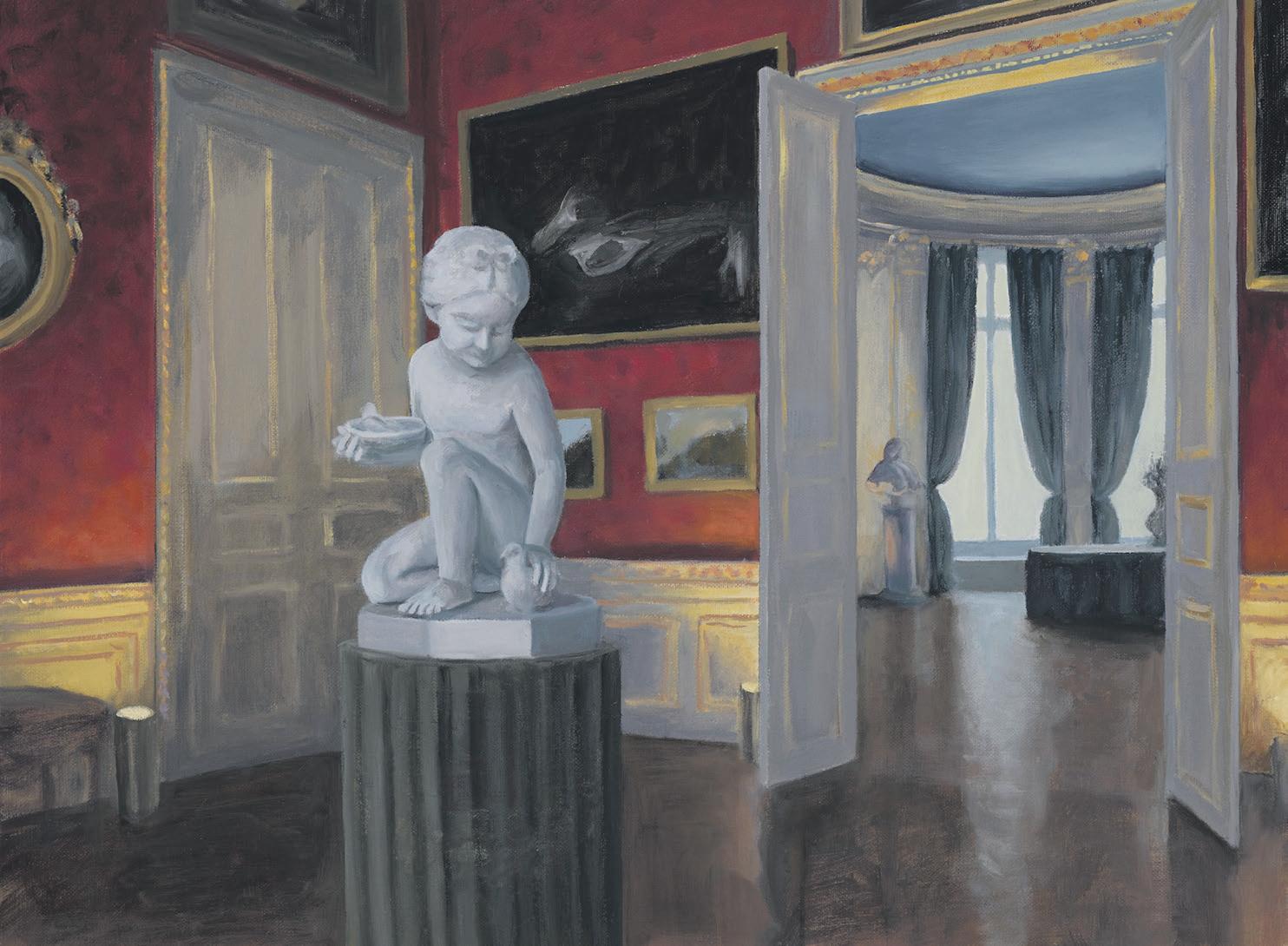

WE GET HUNDREDS of submissions a year, of varying quality, and respond to each one. However, we always appreciate it when an artist has taken the time to visit the gallery in advance or, at the very least, looked closely at our website and social media channels, to make sure we’re a suitable fit. Timing a submission to coincide with a degree or an MFA show or, better still, a solo or a group show in a public space, is a good idea too. It’s the perfect way to showcase your work to a gallerist, and also introduces an element of urgency, as studio visits can so easily get deferred. Finally, never show up in person without an appointment and ask a gallerist to look at your work. We will respond to your submission, given the time and space to do so.
Ronan Lyons, Molesworth Gallery, Dublin molesworthgallery.com
GET THE BASICS in place: Make sure you’re visible online (Instagram and/or a website). Get high quality images of your work and keep your archive updated. Have a simple biography, CV, and artist’s statement ready to go. Then decide where you would like to show and ask yourself why there, in particular? Do you like the artists already represented by the gallery? Would your own work fit in the mix? Do you like the physical space and the way the work is presented and promoted? Do you respect the organisation, and the people involved? If the answer to any of these questions is no, then don’t waste your time. It is good to make personal connections. Go to openings or visit the gallery and introduce yourself. If you’ve a friend who can make an introduction, that would also be helpful.
In Ireland the commercial gallery sector is very small, so reach out to galleries abroad. Going to art fairs helps you get a feel for the lay of the land. Artsy.com is a helpful resource, where you can do a filtered search for galleries by speciality or location. Make a shortlist, research each one, and personalise your approach via email. Start with smaller, well-run spaces showing work that you admire, and don’t waste your time trying to get into top-tier galleries. Work with people you like and trust. The important thing to remember is that showing in a commercial gallery is just one way of reaching audiences as an artist. So, don’t lose heart. Keep making the work and when it is ready, get it out there!
Rosemarie Noone, Claremorris Gallery, County Mayo claremorrisgallery.ie
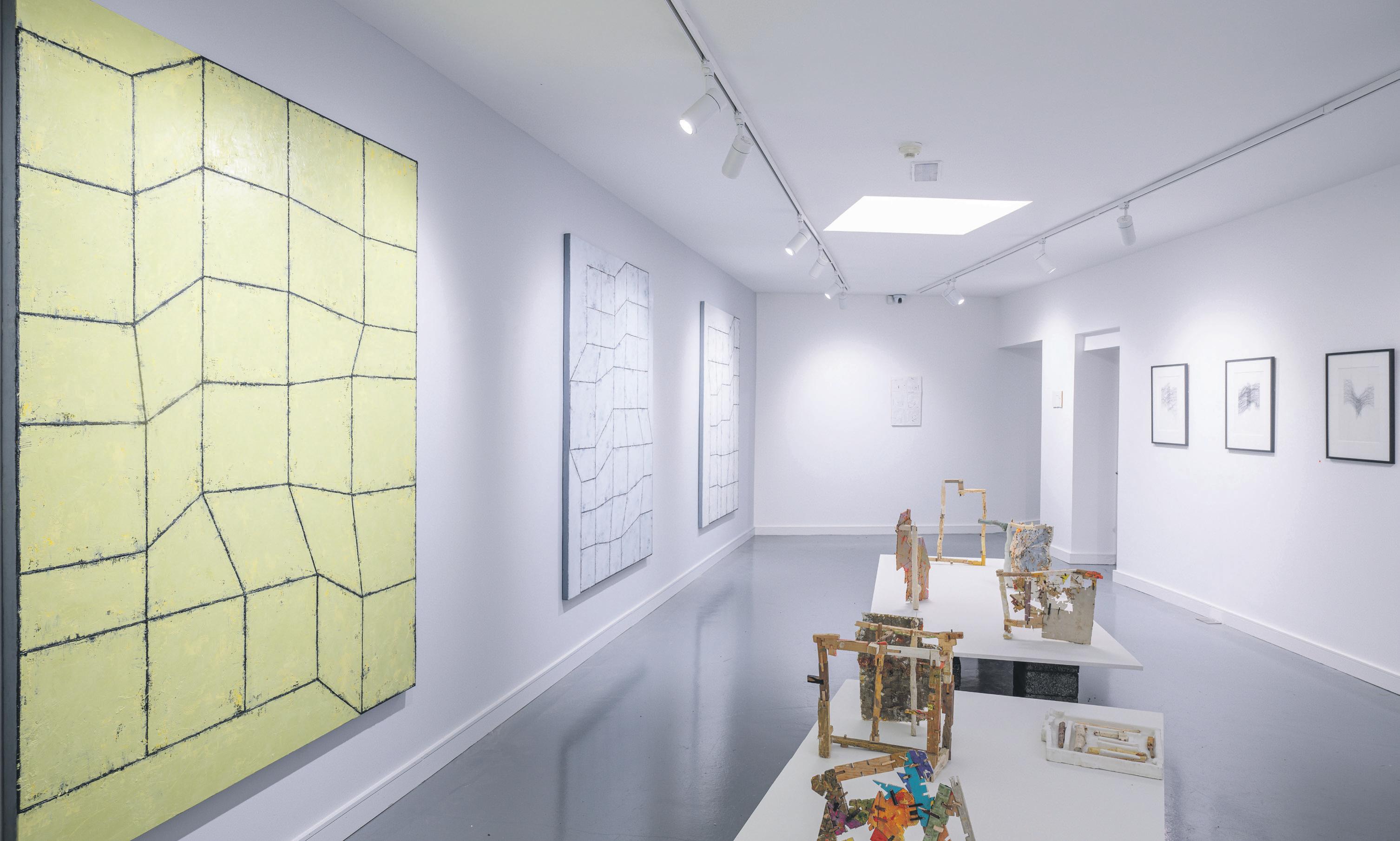
SOMETIMES THINGS ARE meant to be. An exhibition idea can come from an artist out of the blue, and it’s exactly something you had been wanting to do – you just hadn’t found the right artist yet. I love it when a project seems to appear all by itself, fait accompli. This can come from a casual conversation, a proposal, or from a recommendation. Artists may be surprised to hear that most curators don’t receive as many proposals each week as they think. I always welcome hearing from artists, as it builds my knowledge of what’s happening in studios around the country. Galleries have so little programming opportunities per year, sometimes it can take a year or two, or more, to finally get around to picking up on an idea and progressing a project with an artist. So, staying in touch, with updates or news, is always welcome. And saying hello in person – particularly making the trip to visit a difficult-to-reach rural venue – is always appreciated.
Paul McAree, Lismore Castle Arts, Waterford lismorecastlearts.ie
Research The Organisation: Look at current and past exhibitions to identify whether the programme focus aligns with your research interests. Ask yourself: Why this particular organisation? Why this geographical context? And why now? Outside of the exhibition programme, are there other ways to get involved with the organisation? Can you become a member, attend workshops, masterclasses, artists talks, or apply for residency programmes?
Build Your Connection: If the programming aligns with your interests, then that is the basis for building connections with curators, programmers, and other artists involved in the organisation. Opportunities develop from connections and conversations. Consider developing a proposal with like-minded peers for a group exhibition (3 to 5 artists) around a relevant theme. Look for opportunities to develop or participate in pop-up exhibitions during festivals and national cultural events, such as Bealtaine or National Drawing Day. If you have a studio, invite curators to visit or arrange open studio days.
Make Applications: Apply to the Arts Council or your local authority for artist bursaries and other supports. As submissions are generally reviewed by panels of peers, including curators and programmers, even if not successful, your work is being seen.
Ann Davoren, Uillinn: West Cork Arts Centre westcorkartscentre.com
PROJECT ARTS CENTRE’S programming policy is posted on our website, in an effort to make this question of ‘how to get an exhibition’ less opaque. We’re aware it can seem quite mysterious and are keen to be transparent about how it all works. Here is a summary:
Project’s programme is curated, which means we invite artists to participate in our various programme strands. We sometimes offer open calls for particular opportunities, and these will always be advertised on our website and social media channels. All open calls will clearly articulate the process for application, the criteria for the opportunity, and all financial details.
The gallery and other strands of activity are programmed with reference to the local and national arts ecosystem, engagement with current ideas and discourse internationally, institutional partnerships, and Project’s capacity to support and produce proposed exhibitions. There is usually a loose annual thematic trajectory, planned up to three years in advance. If you’re interested in showing in Project, have a look at our recent programme and see if your work fits, or joins in some of the conversations we are engaged in.
We do research throughout the year; we attend shows, events, exhibitions, and visit studios and rehearsals to see new work and connect with artists. The programme is informed by this research, and we seldom invest in a project on the strength of a proposal alone. While we rarely programme from unsolicited proposals, we are interested in seeing what you’re up to and learning about your practice. Please let us know about your work or if you have upcoming exhibitions or events that we can come along to.
Sara Greavu, Project Arts Centre projectartscentre.ie
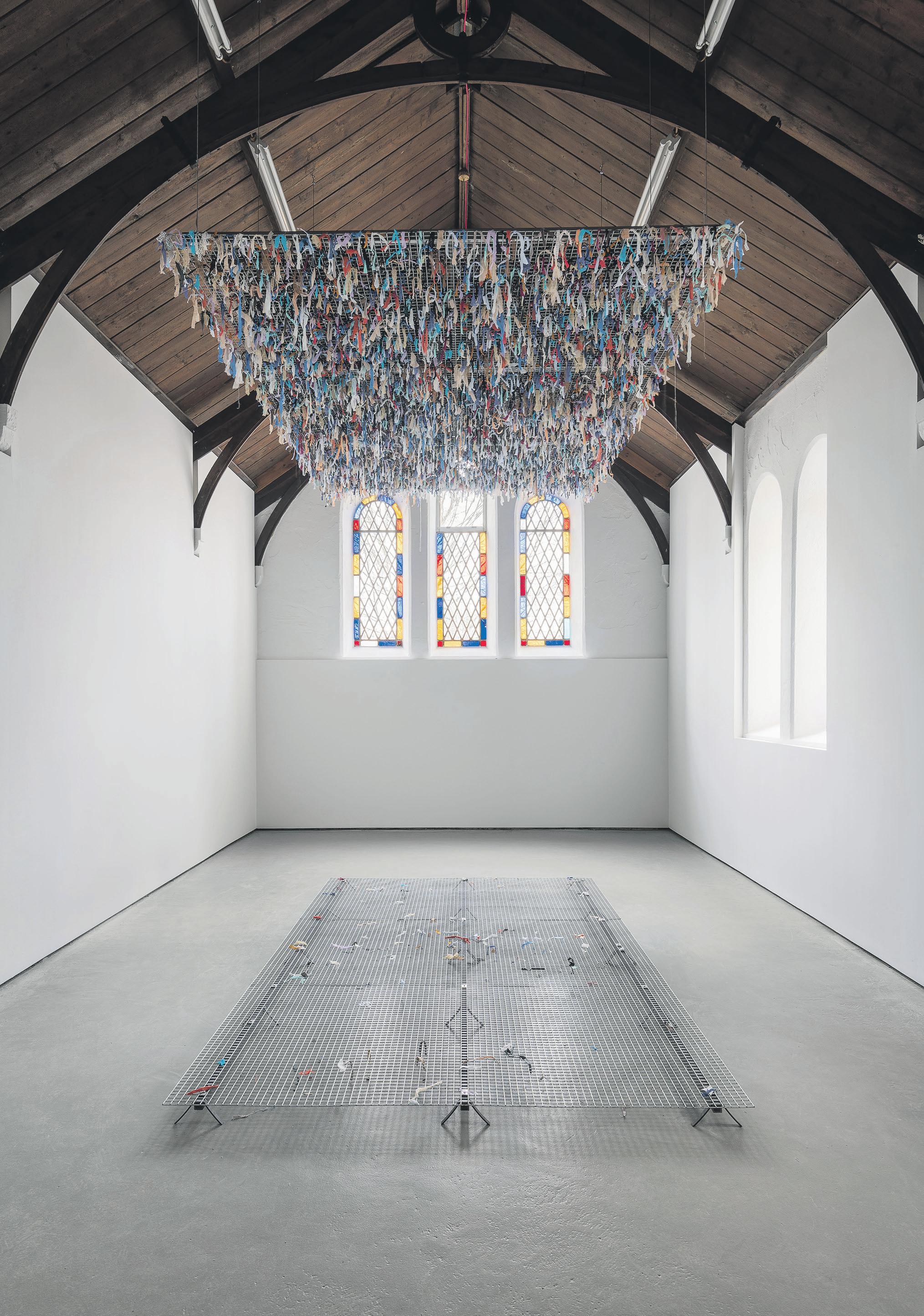
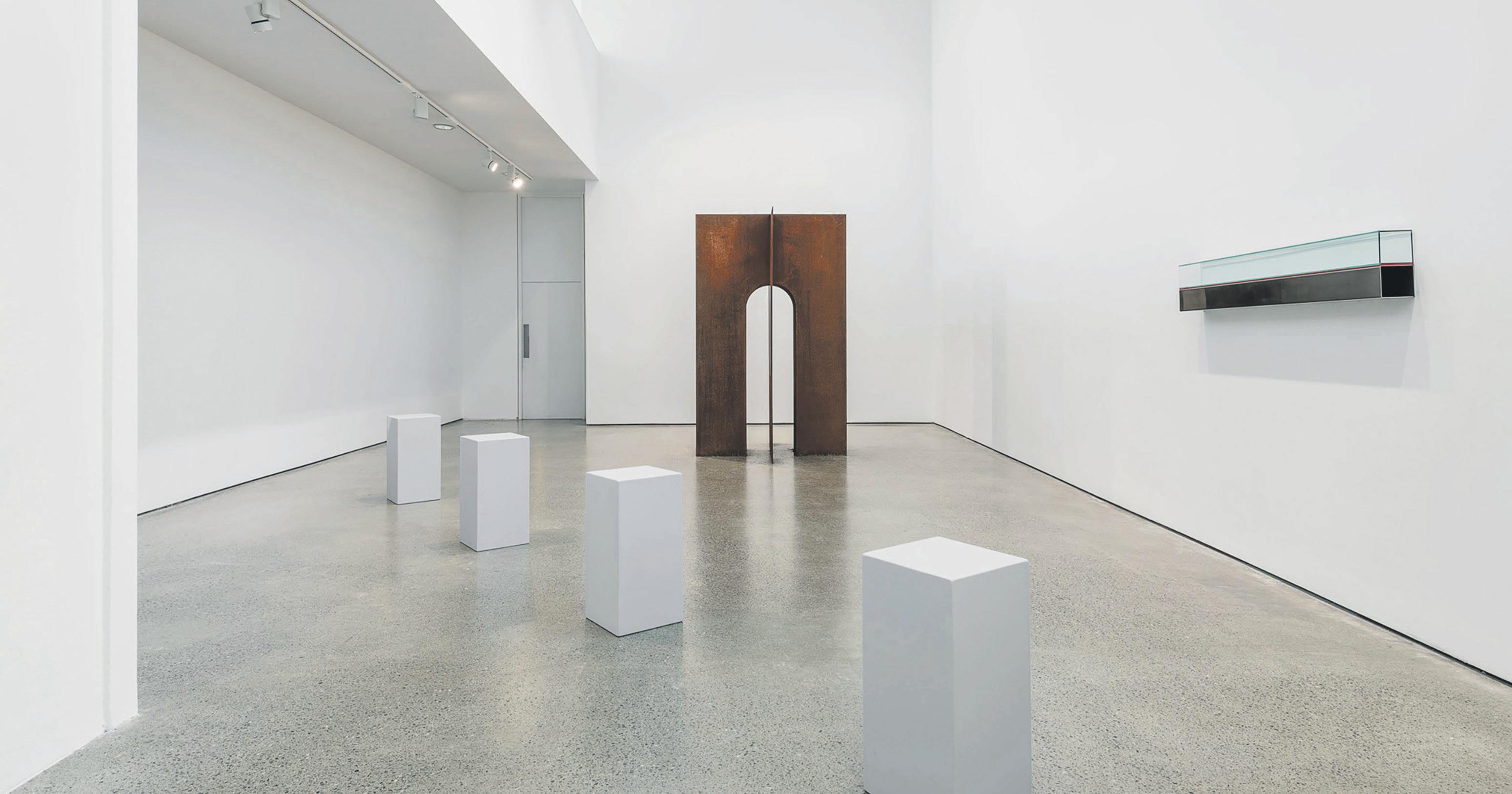
THERE ARE AS many ways to get an exhibition as there are exhibition spaces, with galleries operating different models, depending on their organisational structure or funding. Even regional arts centres operate in different ways: some have open submissions for their annual programme; some do not take submissions; and some have a blended model. This is often down to how the arts centre is funded and what kind of exhibition space the building has, if any. In the case of STAC, our exhibition programme is funded through the Arts Council under Arts Grant Funding. This means that I have to prepare a detailed, cohesive and curated programme every March for the following year, meaning I am planning our programme 18-24 months in advance. While we don’t take submissions for our exhibition programme, we are always interested to see new work and have various open calls each year, which can include exhibitions, residencies or other professional opportunities. Artists are welcome to email information on their work outside of these opportunities, but as a very small team, we cannot guarantee a response. My advice to artists:
1. Do Your Research – if you are interested in a specific public exhibition space, make sure to find out what their exhibition policy is. Most public spaces have this information published somewhere on their websites. If not, feel free to email and ask. Follow them on social media and keep an eye out for any opportunities.
2. Be Prepared for Opportunities – no matter what career stage you are at, always have an updated image portfolio, artists statement and CV ready to go. This reduces the time you need to spend getting all this information together for each application. Have documents preferably in PDF format that are small/easy to view and
DON’T send large images individually attached to an email (these can clog up computers and slow down an assessment process).
3. Read The Guidelines! – I’ve lost track of how many times we have gotten applications that are ineligible or are missing required information. Read guidelines carefully and double check your documents before submitting. Ideally ask someone to look over to make sure you haven’t missed anything.
4. Attend Networking Events – I know these can be difficult for many, but even doing one or two of these can reap benefits. Events such as Speed Curating at the annual VAI Get Together is a great way to meet people and share your work, and the bitesize nature of the time-limit means it’s not too daunting!
Helena Tobin, South Tipperary Arts Centre southtippartscentre.ie
1. Know the Context – It’s important to be familiar with the gallery, museum, and artistic programme before making a proposal.
2. Build Relationships – Develop links and nurture connections, whether through attending events, submitting to open calls, or sending invitations to your exhibitions.
3. Be Persistent – If you don’t receive a response the first time, keep trying. A gallery’s interest might be sparked by your first contact, but they might not follow up until your third or fourth contact. Persistence definitely works.
Woodrow Kernohan, John Hansard Gallery, Southampton jhg.art
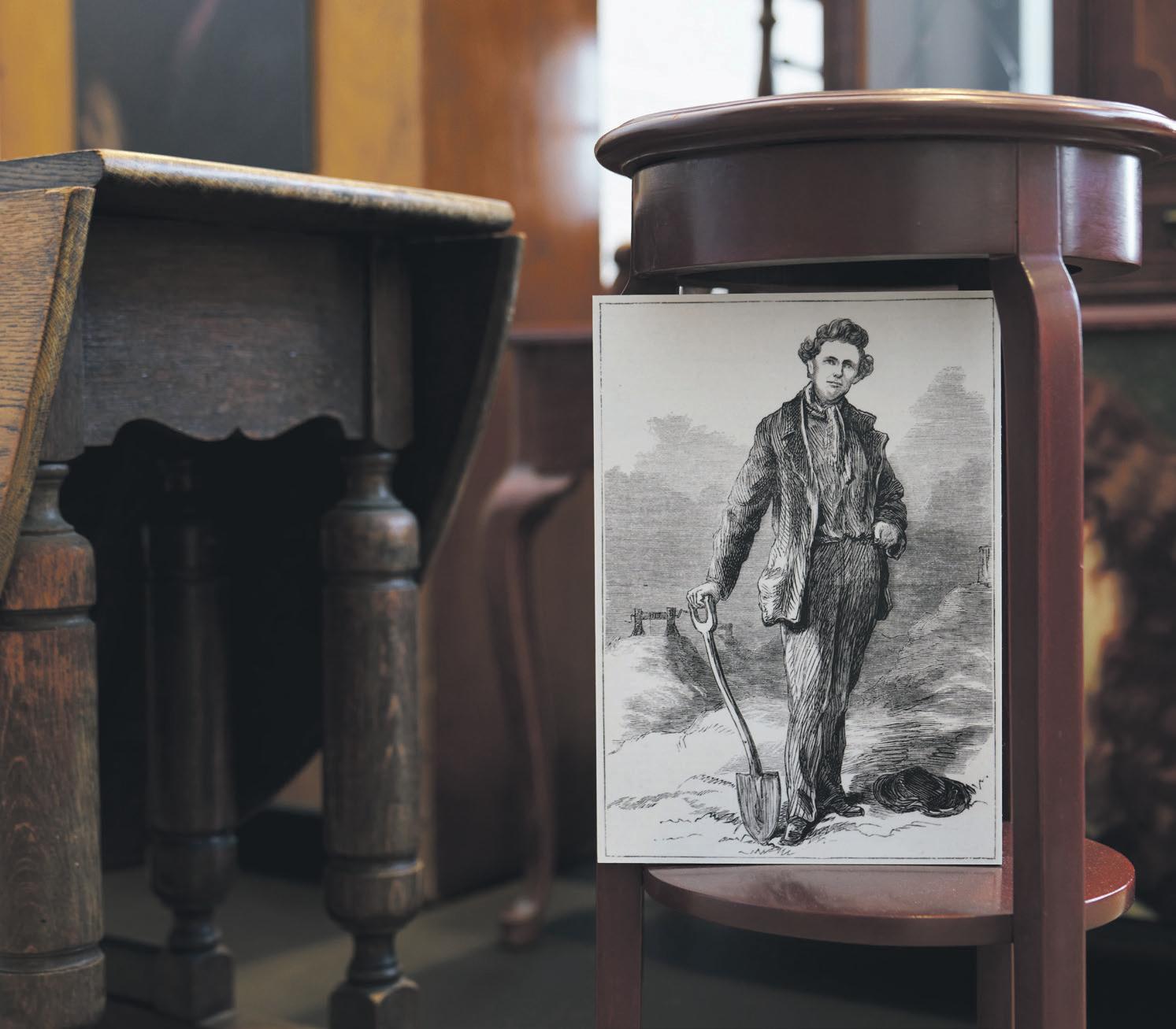
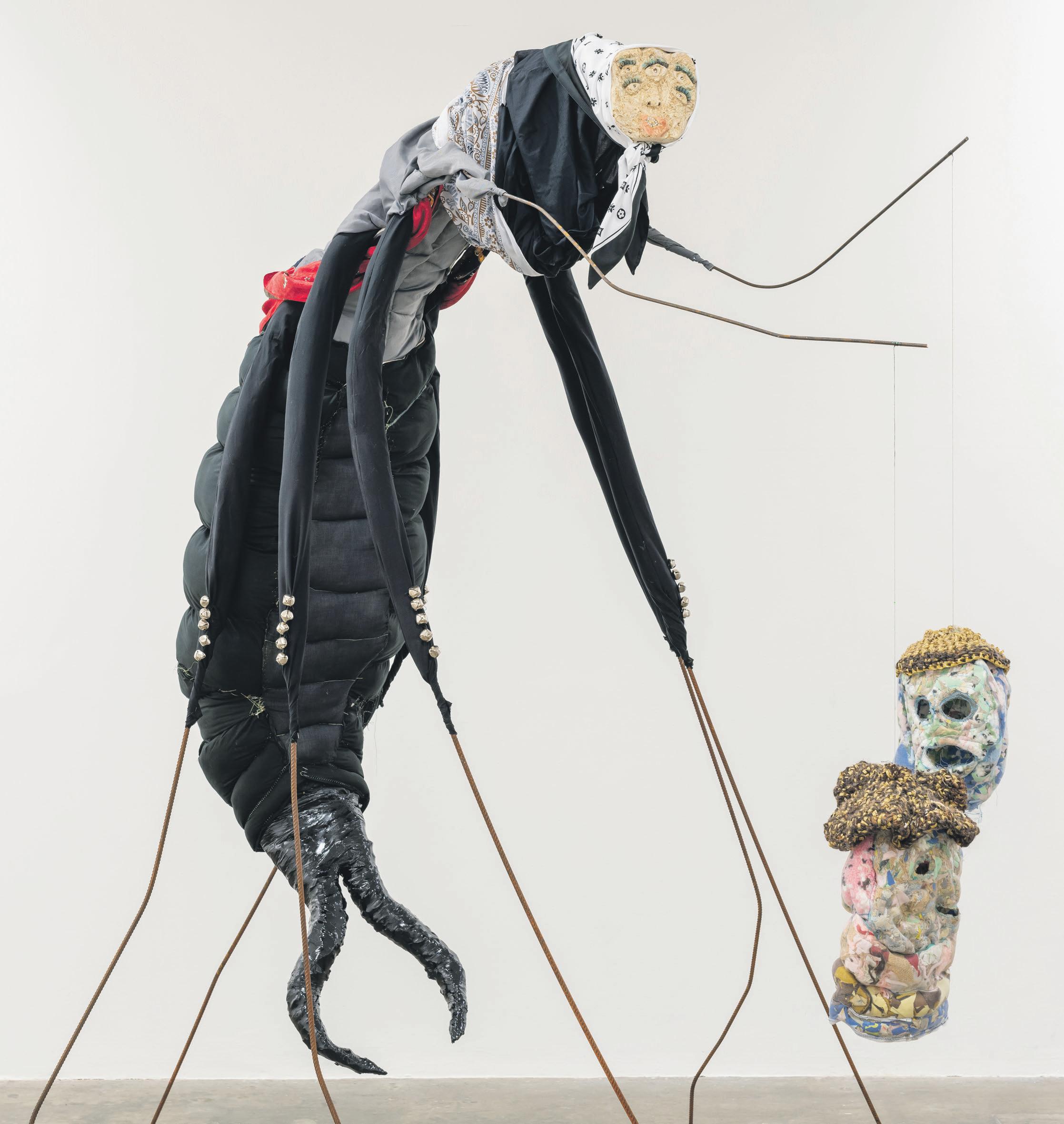
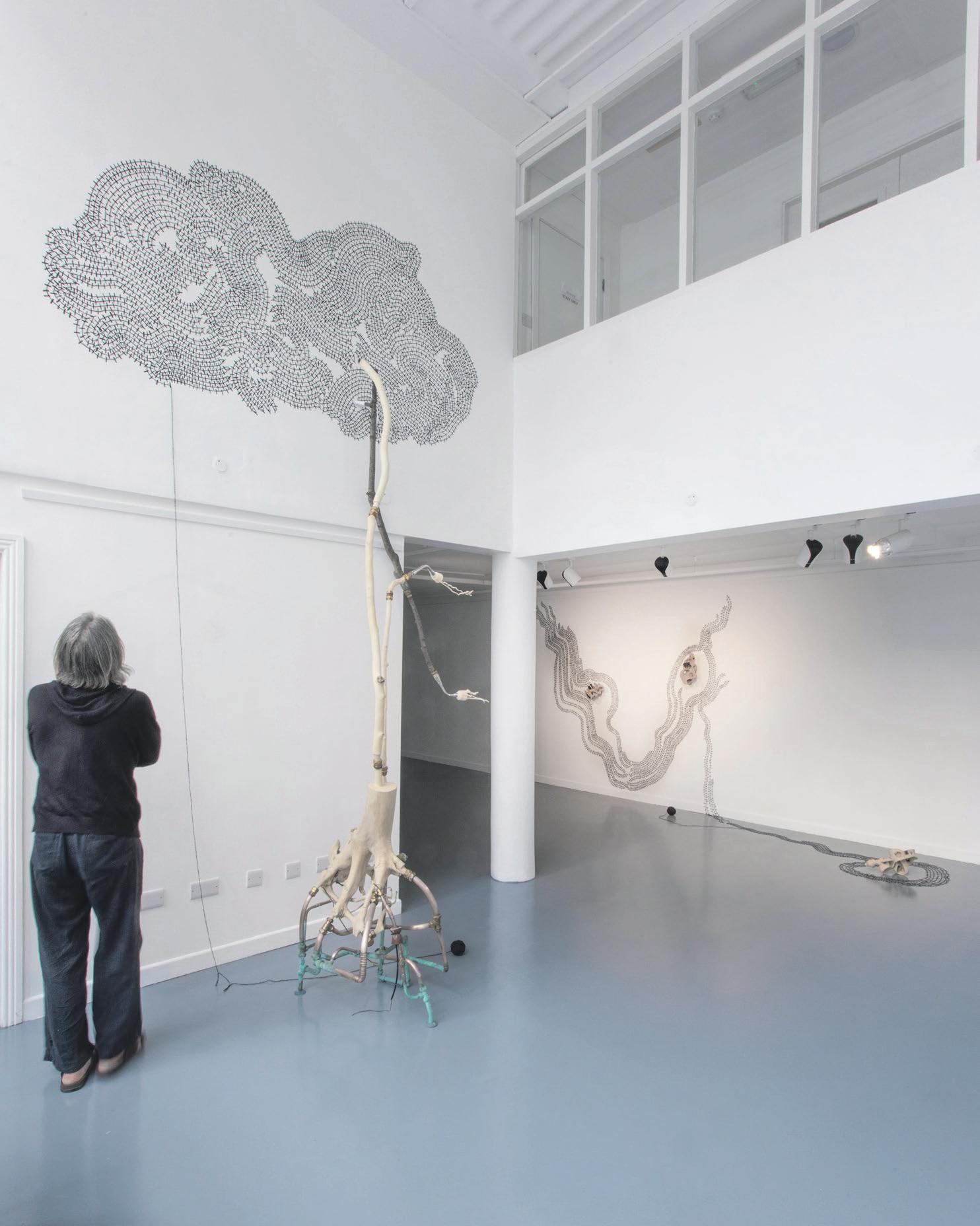
SECURING AN EXHIBITION will depend on several factors – from where you are in your career, to the kind of venue or organisation you’re approaching. The most important thing is to research the kinds of galleries and organisations you would like to work with. Ask yourself if their approach and the kind of artists they show align with your own work. For example, if your work is very traditional, then a gallery that focuses on conceptual work is unlikely to be a good fit.
As a rule, publicly funded arts organisations will have a set of guidelines around their programming, which will be outlined in their mission statement or strategic plan. Some may accept open submissions and others may not. Keep an eye out for opportunities by subscribing to gallery mailing lists.
At Mermaid Arts Centre, our visual arts and exhibition programme is planned up to three years ahead, and we work with artists over time to support the commissioning of new work. We don’t accept unsolicited submissions but run occasional open calls every two to three years. In responding quickly to open-call deadlines, it’s important to keep your online portfolio or website, biography, and artist statement updated and ready to go.
Anne Mullee, Mermaid Arts Centre, County Wicklow mermaidartscentre.ie
HAVING AN EXHIBITION isn’t the be all and end all. Sometimes it is more exciting and valuable for an artist and a curator to grow an open-ended project together from the ground up, which can start by just sharing ideas. I would suggest that artists think about the type of opportunity that would nourish their practice when pitching a project or requesting a studio visit, being receptive to the possibilities of a range of outcomes. Rather than asking ‘How can I get an exhibition?’, consider thinking instead about, ‘How do I grow a network and community?’. This can help to sustain a practice over a long duration and may present a range of varying scenarios – exhibitions or otherwise – over time. Thinking only about the end result of an exhibition reiterates the idea that art is something to be consumed – part of an inherently hierarchical set of quantifiable values. It dismisses the less tangible values of labour and energy that go before, in terms of learning, making, conversation, collaboration, and lived experience.
Michael Hill, Temple Bar Gallery + Studios, Dublin templebargallery.com
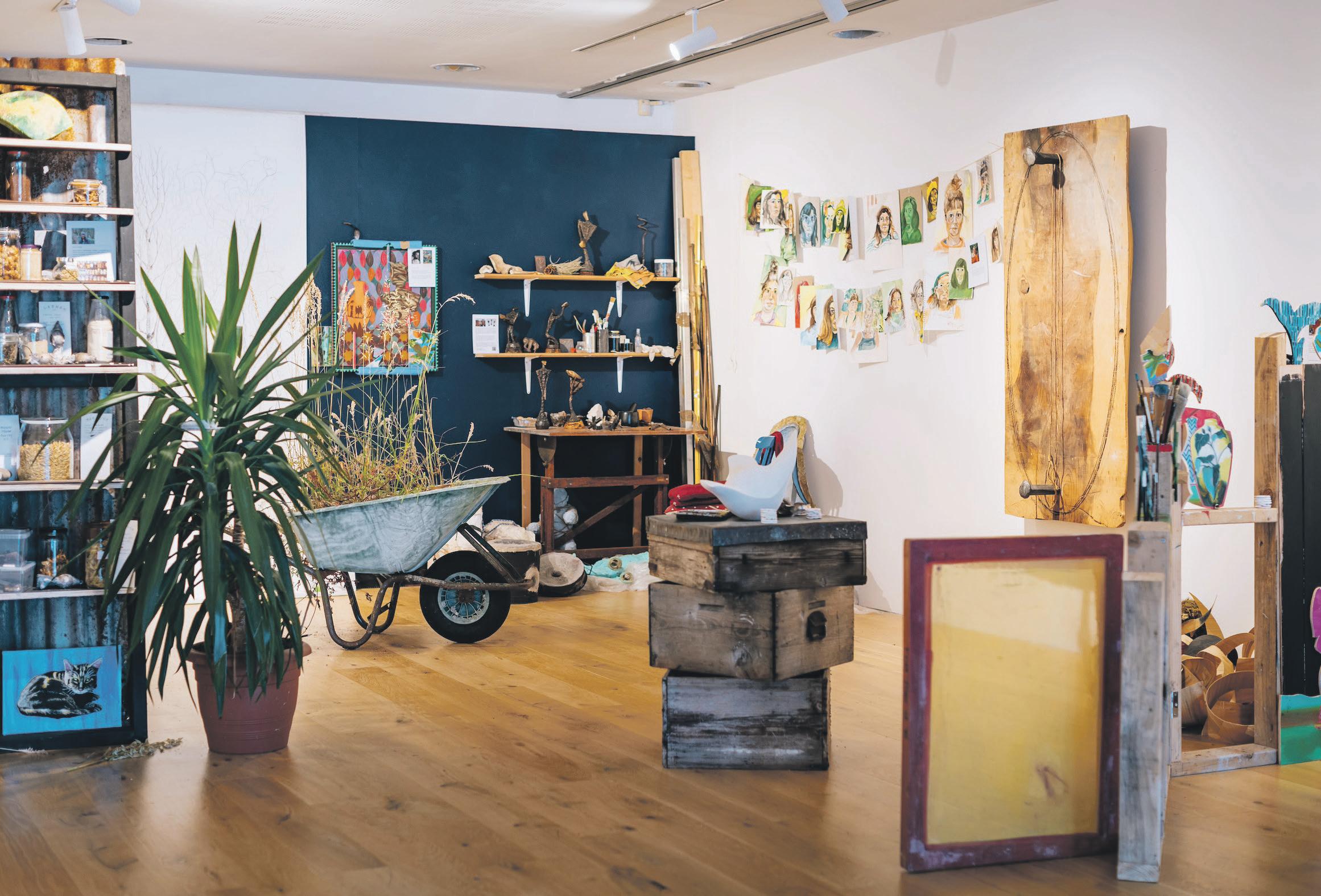
GETTING AN EXHIBITION is a process that’s best approached with patience and curiosity. As a curator, discovering new artists and their creative practices is one of the highlights of my work. I love attending exhibitions and arranging studio visits to see fresh perspectives. It can sometimes be challenging, however, when the expectation is immediately centred around a solo exhibition. Building meaningful connections and allowing ideas to develop over time tends to result in more authentic and impactful projects.
At the Naughton Gallery, we often introduce new artists through group exhibitions, which gives us the chance to explore their work in a broader context before working towards a solo show. This process allows ideas and relationships to grow organically, making for a richer creative collaboration.
When approaching galleries, museums, or other arts spaces, I believe it’s essential for artists to do thorough research and be thoughtful in their approach. Tailoring emails to show a genuine understanding of a gallery’s individual style and programming makes a strong impression. I always appreciate when an artist reaches out with a clear passion for the Naughton Gallery’s vision and expresses how their work connects to our overall mission. It demonstrates a level of investment in the relationship, which is key to fostering meaningful opportunities.
Ben Crothers, Naughton Gallery, Belfast. naughtongallery.org
AS SENIOR CURATOR at the Glucksman, I realise how hard it can be for artists to show their work in the gallery. Generally speaking, the Glucksman doesn’t focus on solo exhibitions, and, in most cases, the programme has featured Irish and international artists, shown together in thematic group exhibitions. Furthermore, selected works are usually extant – we don’t often commission new works for group shows – and have probably been exhibited elsewhere before. It’s a Catch-22: to get an exhibition, you need to have already exhibited! This doesn’t allow a lot of space to manoeuvre. However, there are certainly ways to get your work out there, and I would recommend a straightforward email introduction. It need not be a direct pitch for an exhibition but rather an outline of who you are, what your practice is about, and a PDF with ten good photographic images of your work. In the case of video, a link to a password-protected streaming copy is always useful and appreciated. Similarly, have a look at the gallery’s programme beforehand and see if your work is a fit for them. It might not seem like it, but curators do read and look at these messages – and on numerous occasions, I’ve returned to them when researching artists for forthcoming exhibitions. It might be the case that the nature of your work isn’t a fit for a particular exhibition right now, but that it could be perfect for one a few years down the road. This also means that you should check in every now and then, update curators on what projects and exhibitions you’re currently developing, and where your practice
is heading. This allows curators to get a better sense of your evolution as an artist and the breadth of work that has led there.
Chris Clarke, The Glucksman, Cork glucksman.org
INVITE CURATORS TO your studio: It should be demonstrable that each might have an interest in your work – it’s not their job to like everything. Do not be discouraged if people decline, or nothing comes of it. VAI has annual Speed Curating events, which are also worth doing.
Document everything you make (preferably before it goes out of the studio): Invest in a tripod and as good a camera as you can afford. VAI occasionally run photo documentation classes, which will always be money well spent. Make sure you take installation shots and videos too. If you produce a good deal of modestly sized works on paper, consider investing in a scanner.
Pursue alternative venues: Keep your ear to the ground for galleries that do rentals. Keep in mind though, that publicity for these can be minimal, on the side of the gallery. Alternatively, take matters more into your own hands and hire out a generic venue. Or perhaps you know someone with a central business premises that might let you use a meeting room for a short takeover, perhaps in exchange for an artwork? Host an exhibition where you live. This is not for everyone, naturally, but has obvious advantages, if feasible. Your studio may also be a suitable venue for a show.
Apply for open-call exhibitions: Poetic evocations are excellent in proposals, but bolster this by being explicit about what you will do, to help selectors practically imagine how the show will operate.
Attend events and openings: Conversations at these events can often bear fruit. Be respectful to your hosts, don’t get drunk, and look at the art. This might sound obvious but needs to be explained to some.
Davey Moore, Irish State Art Collection at the OPW gov.ie/en/organisation/office-of-public-works
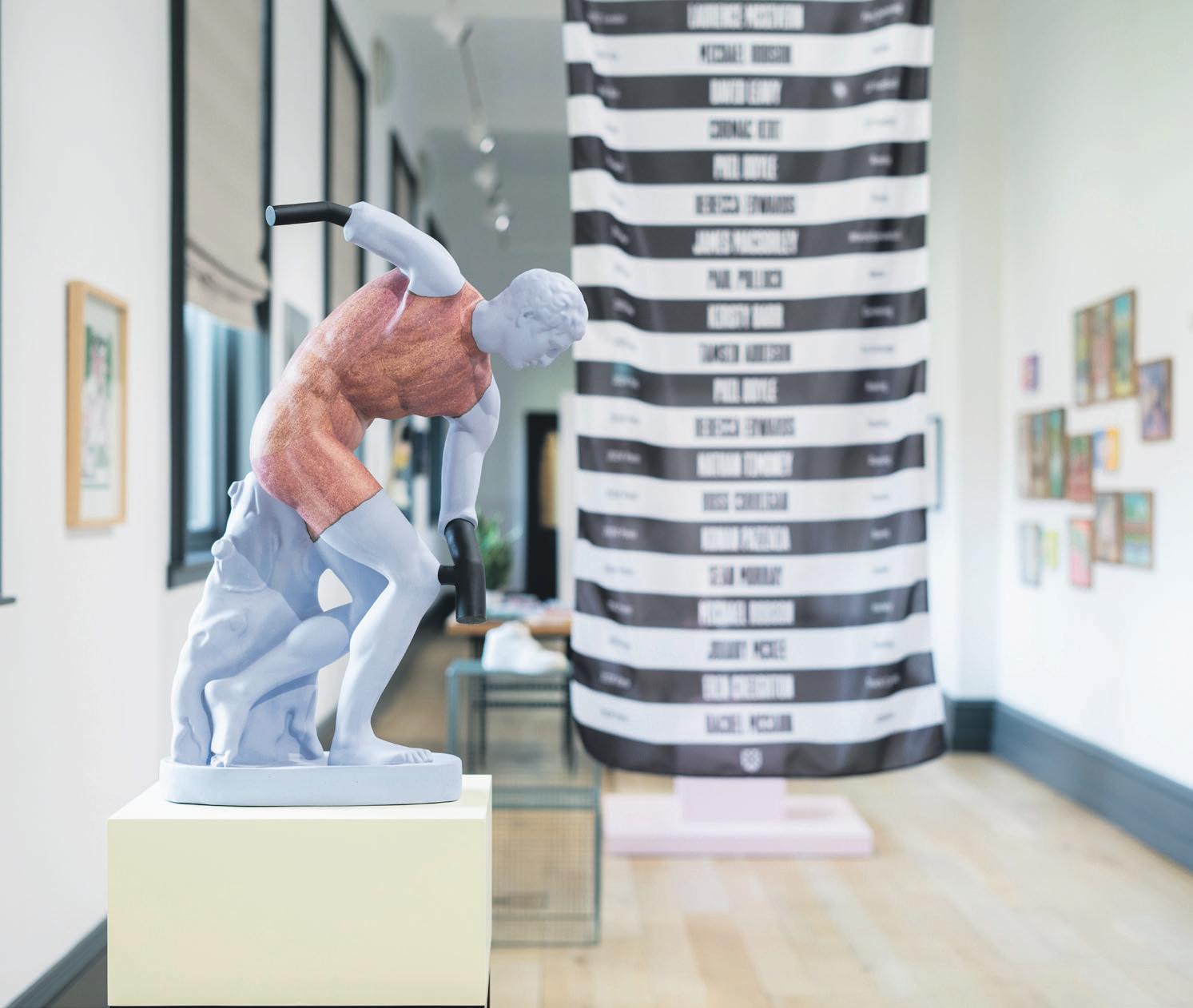
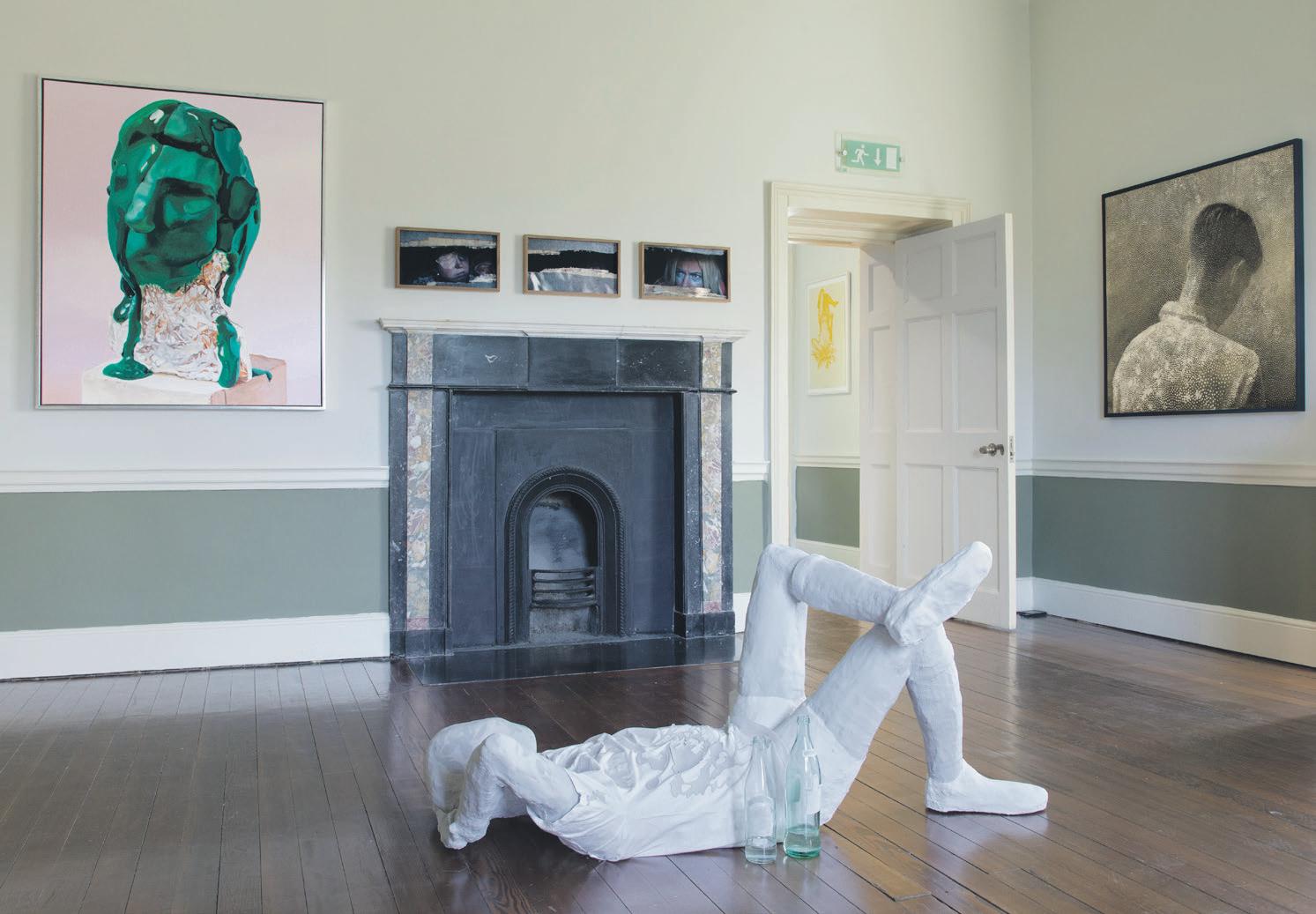
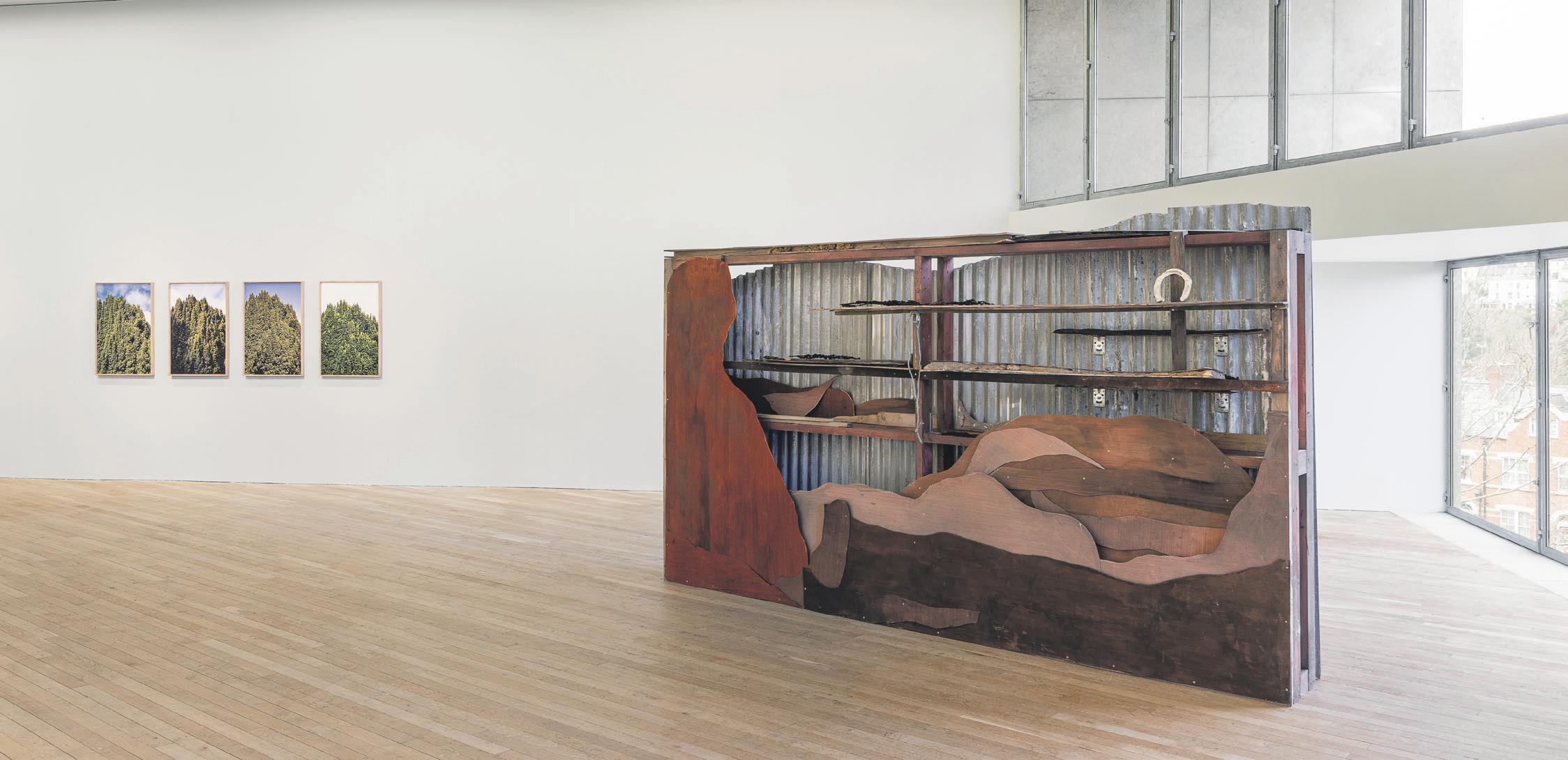
MY PARENTS DECIDED to plant a broadleaf Celtic forest on their farm in Cavan in the mid-90s. It is a commercial native forest, with areas of biodiversity, and is key to supporting natural ecology. I love that they did this, and that as kids, we helped plant some of the trees too. One of the major native trees to Ireland is the ash, and so they planted a lot of that.
Unfortunately, ash trees across Ireland and Europe have been decimated by a fungal disease called dieback. It was first found in Ireland in 2012 and is now widespread throughout the island. Reports suggest it came in with imported saplings from Europe, but it is also spread on the wind. As a result, individual trees and whole ash forests are being cleared across the land. As one of our most important native broadleaf species on the island, this could have a very significant cultural, ecological and economic impact.
I have witnessed the ash dieback take over the trees and have seen young trees dying, so I understand why, commercially, they are being cleared and will be replanted with a hardier variety or different native species. But naively, I have also seen the big old ash tree at the head of the lane and other big mature ash trees along the roadsides still thriving. I hope that it doesn’t mean the disease will fully take over, but that instead they show resilience to the disease. And if this is so, there is hope for the elders. And this is where I take off from.
I gathered leftover branches from the cleared forest floor to make my own art materials – charcoal to start, then ink and something similar to conte crayon. For the ink, I mix finely ground charcoal dust with distilled water and Gum Arabic, filter and bottle. And for the crayon, I will experiment with charcoal (pigment) and binders, predominantly beeswax made by Cypriot bees and blue clay from Cavan drumlins. But back to the charcoal making.
The target tree for this specific burn was the mighty ash, but I made willow and oak charcoal too. I had previously made willow charcoal with my dad in 2010, which I still use in my drawing practice today. So, I know that it’s simple enough to make, and even if all of the wood doesn’t turn into charcoal, there will be plenty that is usable.
We went out as a family, collecting lengths of wood approximately an inch in diameter. We then peeled the willow lengths using a potato peeler and our fingers. The ash was too dry to peel, so we left it with the bark on. Next, we cut the sticks and packed them neatly and tight into metal biscuit tins – perhaps a little too tight. I hammered approximately five holes in the tin lids to allow gases and vapour to escape during the burn. I then tied them tightly with metal wire to limit the oxygen entering and to prevent the heat from popping the lids off.
The fire pit in this case was an old industrial steel oil tank from my grandad’s bakery with a door cut in the front of it; however, charcoal can also be made on a simple barbecue. I prepared the burning hot fire with lots of wood before placing the tins in the middle of the flames. Using an extra-long poker, I pushed the burning firewood against the tins. I knew peak heat was met when steam came out of the holes in the lids. When the steam ceased and the flame changed to green-blue, the process was complete. I moved the larger burning logs away to reduce the temperature and left the tins
among the embers overnight. I waited until they had fully cooled the next day before opening.
It took around four hours to transform the wood into charcoal. I found that the dried wood made the best charcoal – the ash offcuts that had laid on the forest floor for several months, and the willow that had been cut and tinned two days before the others. Also, about half of the tightly packed willow did not carbonise. This may mean it needed longer or more intense heat, or not to have been packed so tightly. However, there are plenty of usable pieces. The mid-section of willow not carbonised will make a good handle, and any other bits could become props in performance. In all, we spent a fun day and night making the charcoal, and it was a pretty special, ecologically sustainable activity for us all.
This year Cavan County Council Arts Office generously awarded me a Professional Artist Award for this charcoal making, as well as to support me to attend Array Collective’s ‘Myths Awakened’ week-long workshop last August at CAMP.FR in the French Pyrenees – I would highly recommend this! In these incredible surroundings, we each devised a performance over the course of five days. I had brought the charcoal, which opened a conversation about its elemental healing qualities. In my performance, An Peiste Agus An Fuinseog Sans Frontiers (2024), I embodied a ritualistic, charcoal-eating worm, drawing on my research into the monstrous feminine, psychogeography and the contemporary landscape.
Sally O’Dowd is Belfast-based artist and curator with a socially engaged practice. sallyodowdstudio.com
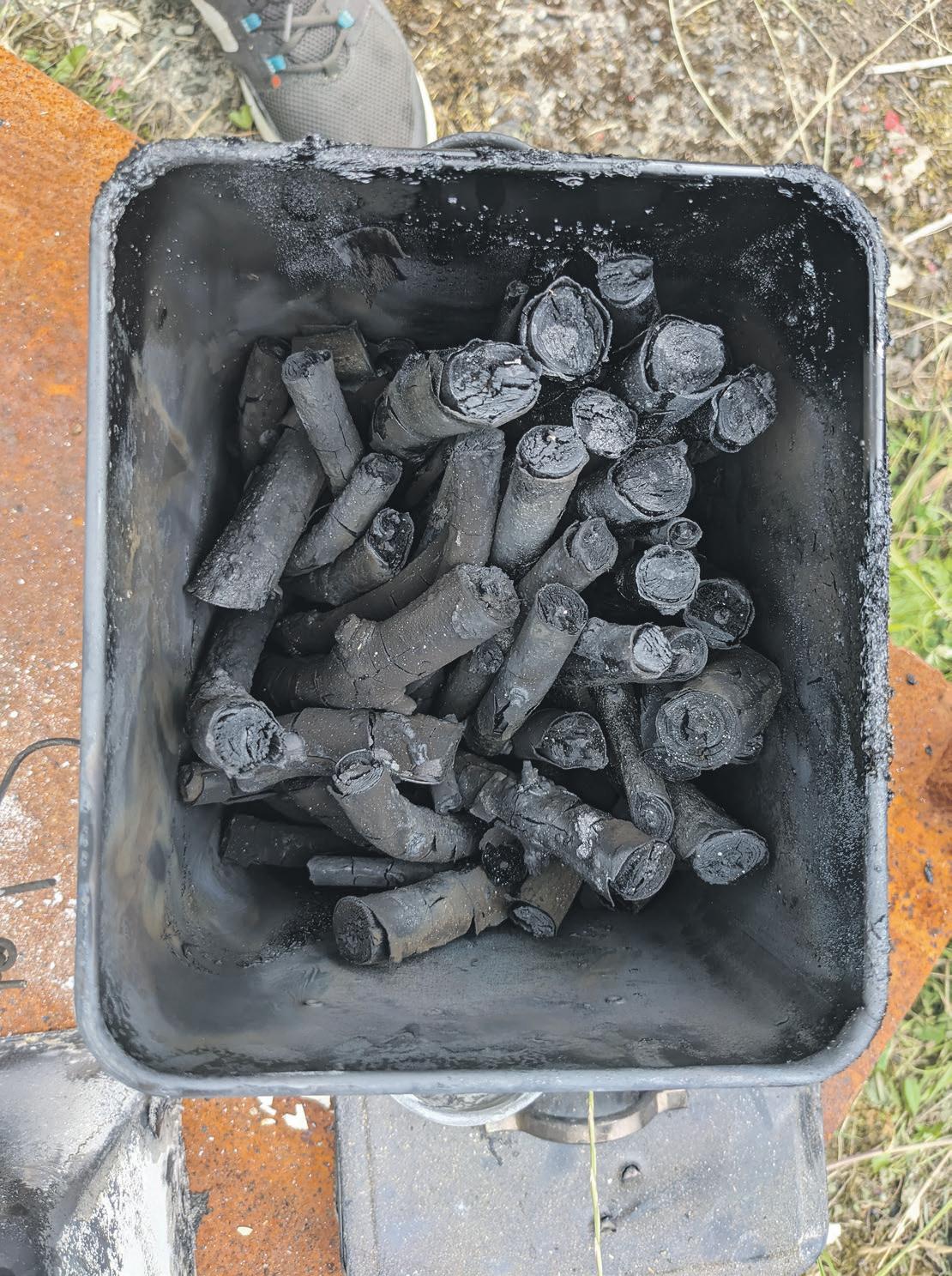
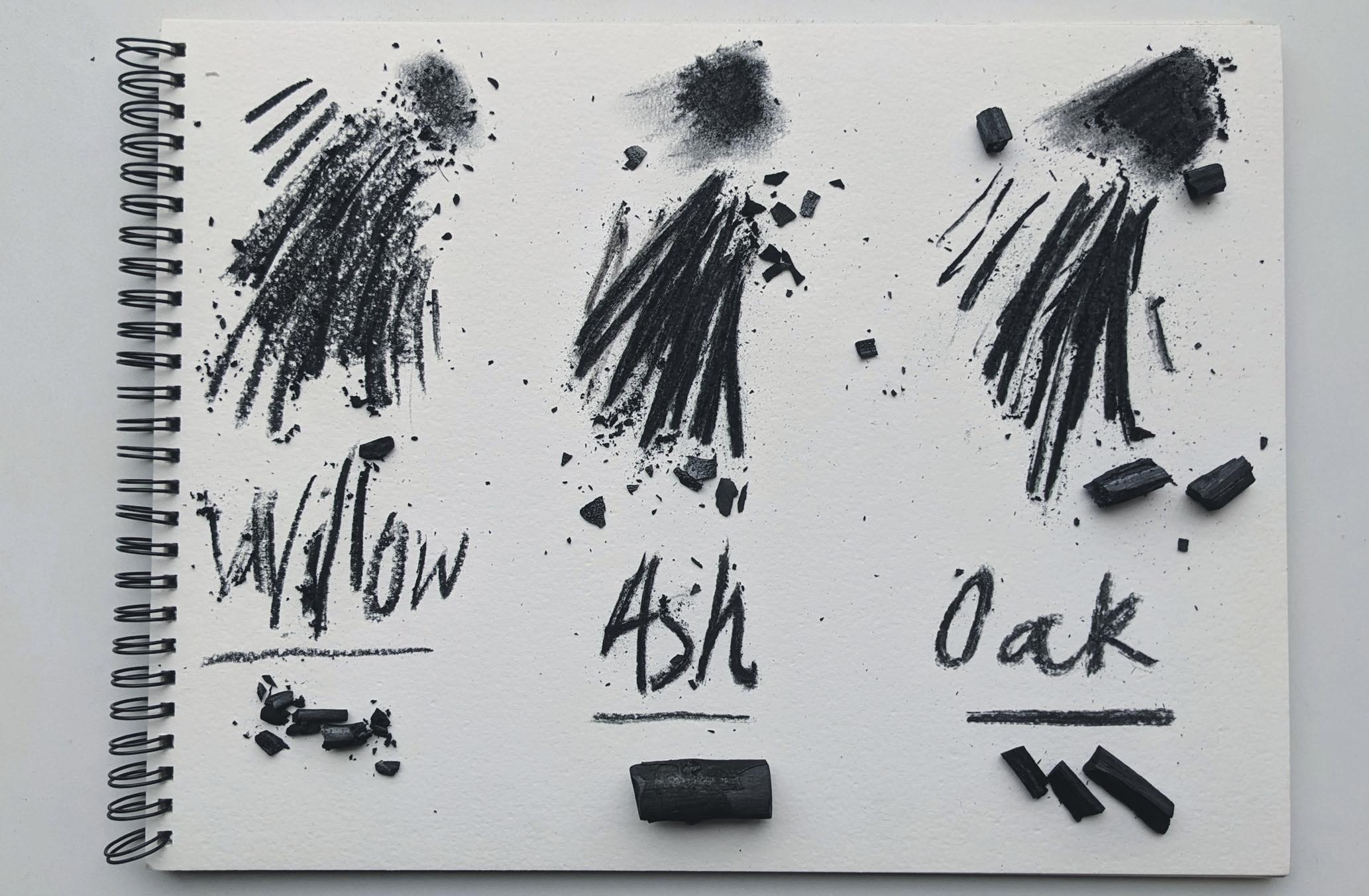
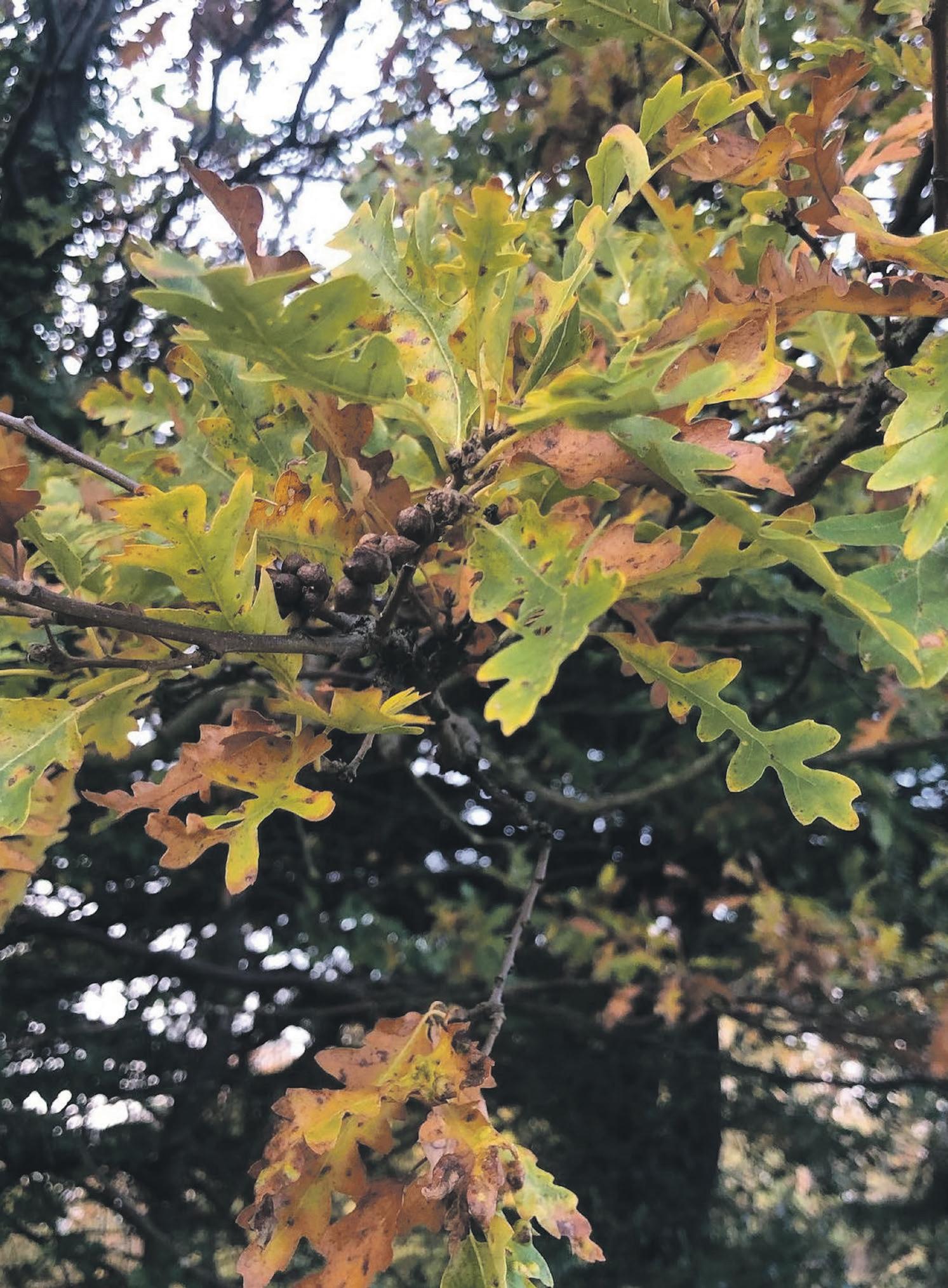
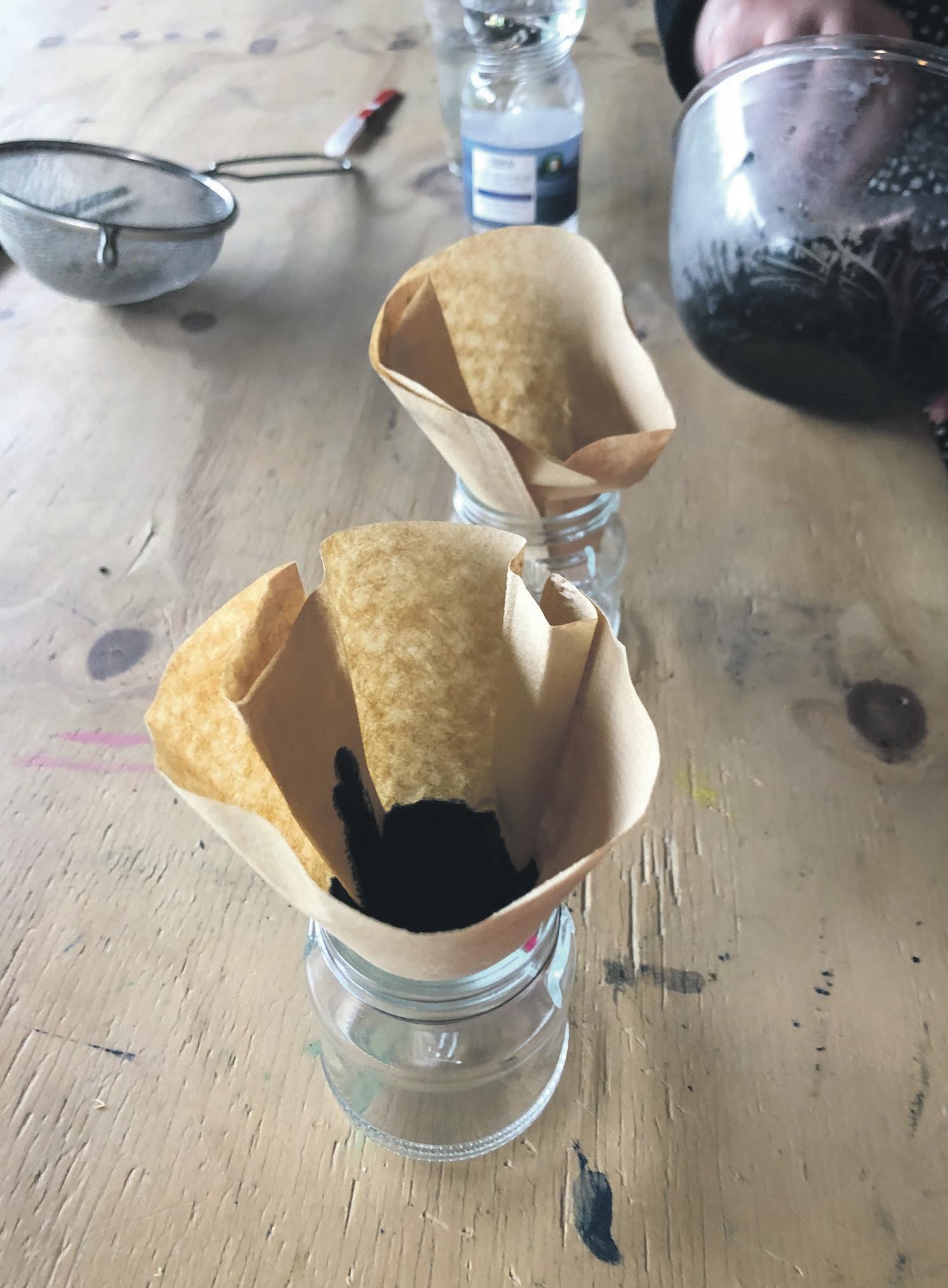
MATERIALS MATTER / ÁBHAR Ábhar is a collaborative project devised in 2020 by three artists and educators: Clare Breen, Mary Conroy and Laura Ní Fhlaibhín. Our individual practices have a shared focus on sustainability and environmental awareness within the process of art production. As the project has developed, we have welcomed Colm O’Neill and Kasia Kaminska as collaborators.
MATERIALS MATTER / ÁBHAR ÁBHAR OUTLINE SOME OF THEIR RECIPES FOR SUSTAINABLE ART MATERIALS.
Materials Matter/ Ábhar Ábhar is a container, a holder, a way of thinking and a movement that explores the production of sustainable art materials. The aim is to bring together practices and forgotten ways of working that are passed along, embellished, reworked, indigenous or partially remembered. Materials Matter has hosted workshops and summer schools in a multitude of settings, such as VISUAL Carlow, Drop Everything Festival on Inis Oírr, and Wilderland Project at Wild Nephin National Park in County Mayo.
The Materials Matter website documents research, testing, developing and collating a series of methods and recipes for the production of natural and DIY art materials and tools. This resource aims to revive craft knowledge and the use of natural materials while working with low cost, locally sourced, raw ingredients. The following recipes are from the Material Matters website – please take a look at the site to see the current collection (materialsmatter.ie). Materials Matter is intended as a resource to be used and shared. If you have any recipes or methods that you would like to share, that fit into the ethos of locally and sustainably sourced materials for art and craft making, we would love to hear from you, so that your recipe can be added to the ever-growing repository.
Introduction
If you eat avocados, it is nice to keep the stones because new avocado plants can be grown from them. Another interesting way you can extend the life of an avocado is to make ink from the stones and skins. This ink can range in colour from pink, to red to deep brown, depending on your water and the stones and skin themselves. This activity requires a sharp knife and so must be done by an adult. The ink produced has a beautiful, granular quality and you can play around with creating textures and tones, building up layers, and experimenting with the tools you use.
Materials
• Three avocado stones (large)
• Skins of three avocados (optional: the skins give a brown colour; the stone gives a pinker colour)
• Sparkling water (1L)
Equipment
• Saucepan
• Sharp knife
• Cutting board
• Sieve
• Clean jar
Method
1. Remove the flesh of the avocados and eat.
2. Chop the avocado stones into small pieces; add chopped avocado skins if you wish (this gives more of a brown colour; if the stones are cooked with no skins they become a more reddish brown.)
3. Add sparkling water to the stones and cook over a low heat for 40 mins; as water evaporates, add more.
4. Reduce the water until there is very little left in the pot and the ink has darkened and thickened.
5. Allow the ink to cool a little and strain through a sieve; discard the stones/ skins.
6. When it has fully cooled, the ink is ready to be used.
Notes
You will find different results with this ink depending on the water you use, and the stones and skins combination.
RECIPE 2 – PAPERMAKING
Introduction
Papermaking is an easy, enjoyable activity that produces such varied results. Paper slurry can be used to make standard sheets of paper, but it can also be formed into unusual shapes and used as a sculptural material. It is a very practical way to think about office and school waste, as the paper produced is often a more beautiful, valuable art material than the wastepaper it is made from. Papermaking takes up quite a bit of space. You will need an area to dry the paper and access to water and a drain is very helpful.
Materials
• Collection of ‘used’ pages/ wastepaper/ cardboard/ old drawings/ paper or card packaging
• Water (access to a sink is useful for this process)
Equipment
• Papermaking screen and deckle (these can be purchased or improvised)
• Large shallow containers for paper slurry (these should be larger than your deckles)
• Sieve
• Bowl
• Paper shredder (optional)
• Blender (handheld or standing)
• Old rags and towel
• Fabric sheets, for example an old bedsheet cut into pieces slightly larger than the deckle
• Sponges or rags
• Heavy pieces of board, for example MDF/ plywood, slightly larger than fabric sheets (optional)
Method
1. Choose the paper waste you would like to use. If you’re using coloured paper, or something that is already printed, such as magazine pages, flecks of these colours will show up in your paper. Tear your paper finely or use a shredder, transfer this paper into a bowl and cover with water. Allow the paper pieces to soak until they have softened (could be overnight) and can easily be broken up with your hands. Use quite a few sheets; the more wastepaper you use, the more paper you can make.
2. Blend the softened paper in batches (take care not to damage your blender). This is called paper slurry. You can blend this very finely or leave flecks and lumps of larger paper – it’s up to you. Add the blended slurry to your large, shallow container. Add extra water to the vat; the more pulp to water, the thicker your paper will be. Mix up the water and slurry so it is evenly distributed. Run your sieve through the water and see if a thin layer of paper slurry catches in the sieve. This means there is enough paper slurry distributed to make some sheets.
3. You’re now ready to ‘pull’ a sheet of paper. Stir up the container so the slurry is distributed evenly. Hold the screen mesh-side up and place the deckle (frame) on top. Hold them tightly together and at a 45-degree angle, lower them into the water and scoop up the slurry; bring the mould and deckle up through the water, levelling the mould out horizontally as you bring it to the surface. As you lift the mould and deckle above the container, give it a quick shake back and forth to even out the surface of the slurry and let the excess water drip out.
Drying Method
1. You can press the pulp straight out against a window to dry, or press it out on an MDF board. When most of the water has dripped off the mould and deckle, remove the deckle then flip the screen over quickly onto the MDF board. The paper slurry will be in direct contact with the MDF. This motion should be like closing the cover of a book. Squeeze off the excess water with a cloth.
2. When the paper is completely dry, it should be easy to remove from the boards and stack and flatten them with a board and something heavy on top.
Notes
When you have learned this basic technique, you can experiment with various materials, adding seeds, petals, unprocessed pieces of paper, multiple colours and making freeform shapes. The paper becomes a sculptural material when manipulated in these ways.
Introduction
This is a really lovely winter hibernation project. This recipe will guide you through the steps involved in making a rich black oak gall ink, medieval style! We foraged for our galls at a majestic oak in the neighbourhood. We were very thankful to the gall wasp for choosing this oak as home for her babies. She laid her eggs in the branches, and the tree built a hard lump, a gall, around the newcomer. Once the wee wasps are ready for the world, they leave from the little holes in the galls. We found so many abandoned galls dripping from the low branches in clusters, ripe for picking.
Materials
• 50g dry oak galls
• 25ml Iron Sulphate powder
• Gum Arabic
• Water Equipment
• Mortar and pestle
• Old pot
• Coffee filter
• Glass jar
Method
1. Pound the galls to a fine grain, using a pestle and mortar. Or if you have a coffee grinder, this will help the process along even faster!
2. Transfer the powdered oak gall grain to the pot and add two cups of water and leave to soak for 24 hours.
3. Strain the mixture through a coffee filter into a clean glass jar.
4. Add the Iron Sulphate to the jar of strained liquid and mix well. With the addition of Iron Sulphate, the ink changes magically from brown to a deep black. The wonders of alchemy!
5. Add a few drops of Gum Arabic to the ink and seal the jar.
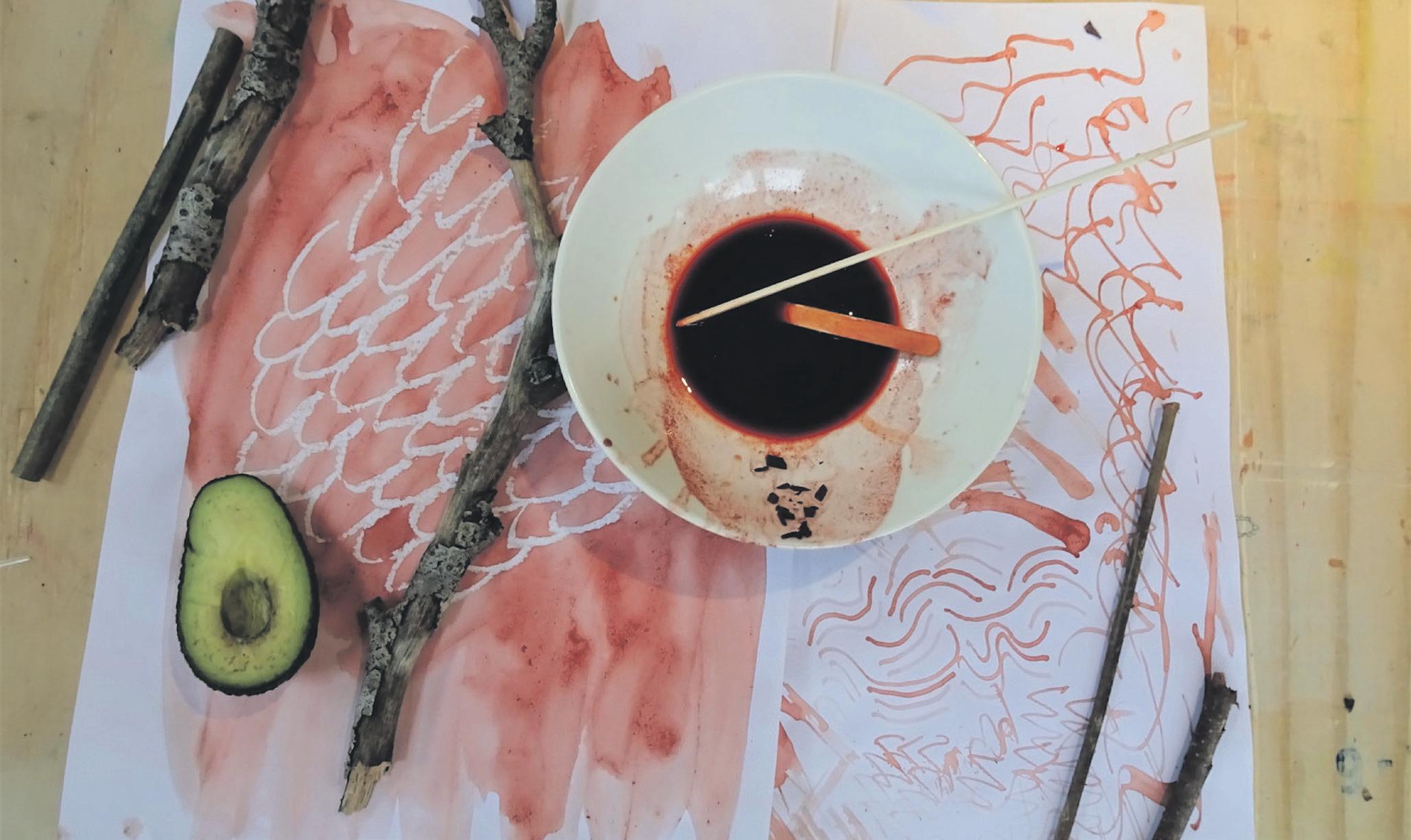
DEIRDRE O’MAHONEY OUTLINES A SELECTION OF BOOKS FROM HER FEEDER COLLECTION THAT HAVE NOURISHED HER THINKING AND PRACTICE.
• Berry, Wendell, Bring It To The Table (Counterpoint, 2009)
• Barbar, Dan, The Third Plate: Field Notes on the Future of Food (Abacus, 2014)
• Burrows, D and Cezar A., Politics of Food (Delfina Foundation/Sternberg Press, 2019)
• Butler, Hubert, The Appleman and the Poet (Lilliput Press, 2014)
• Chu, Down, Mabaso, Martínez and Oprea (Eds.), Climate Our Right to Breathe (L’Internationale and K. Verlag, 2022)
• Coulthard, Glen Sean, Red Skin, White Masks (Minnesota University Press, 2014)
• Cooking Sections, The Empire Remains Shop (Columbia University Press, 2018)
• Crowley, Ethel, Land Matters Power Struggles in Rural Ireland (Lilliput Press, 2016)
• Curtis, Tom and Whelan, Paul, The Wild Food Plants of Ireland (Dept. Agriculture, 2019)
• Dela Bellacasa, Maria Puig, Matters of Care (Minnesota University Press, 2017)
• Demos, T.J., Against the Anthropocene: Visual Culture and Environment Today (Sternberg Press, 2017)
• Dorrian, Mark and Gillian, Rose, Deterritorialisations...Revisioning Landscapes and Politics (Black Dog Publishing, 2003)
• Dowding Charles, No Dig Gardening Course 1 (Chelsea Green Pub Co., 2020)
• Doyle, Partrick, Civilising Rural Ireland (Manchester University Press, 2020)
• Earle, Rebecca, Feeding the People: The Politics of the Potato (Cambridge University Press, 2020)
• Federici, Silvia, Caliban and the Witch (Autonomedia, 2004/2014)
• Fisher, M.F.K., How to Cook a Wolf (Daunt Books, 1942/2020)
• Franceschini A and Tucker D., Farm Together Now (Chronicle Books, 2010)
• Fukuoka, M., One-Straw Revolution: Introduction to Natural Farming (Other India Press, 1992)
• Guattari, Felix, The Three Ecologies (Athlone Press, 2000)
• Handwerker, Margo, and Saxton, Richard (Eds.), A Decade of Country Hits (Jap Sam Books)
• Handelsman, Jo, A World Without Soil (Yale University Press, 2021)
• Haraway, Donna, When Species Meet (Minnesota University Press, 2008)
• Henderson, George, The Farming Ladder (Faber, 1944/1978)
• hooks, bell, Belonging: A Culture of Place (Taylor and Francis, 2008)
• Jackson J. B., Discovering the Vernacular Landscape (Yale University Press, 1986)
• Jackson, Wes and Berry, Wendell, New Roots for Agriculture (Bison, 1985)
• Johnson, Rebecca Mae, Small Fires: An Epic in the Kitchen (Pushkin Press, 2022)
• Joyce, Patrick, Remembering Peasants (Allen Lane, 2024)
• Kimmerer, Robin Wall, Braiding Sweetgrass (Penguin, 2020)
• Keogh, Raymond, Cattleman (Somerville Press, 2012)
• Klein and Watson (Eds.), The Handbook of Food and Anthropology (Bloomsbury, 2016)
• Lang, James, Notes of a Potato Watcher (Texas A&M, 2001)
• Larson and Johnson, Being Together in Place: Indig-
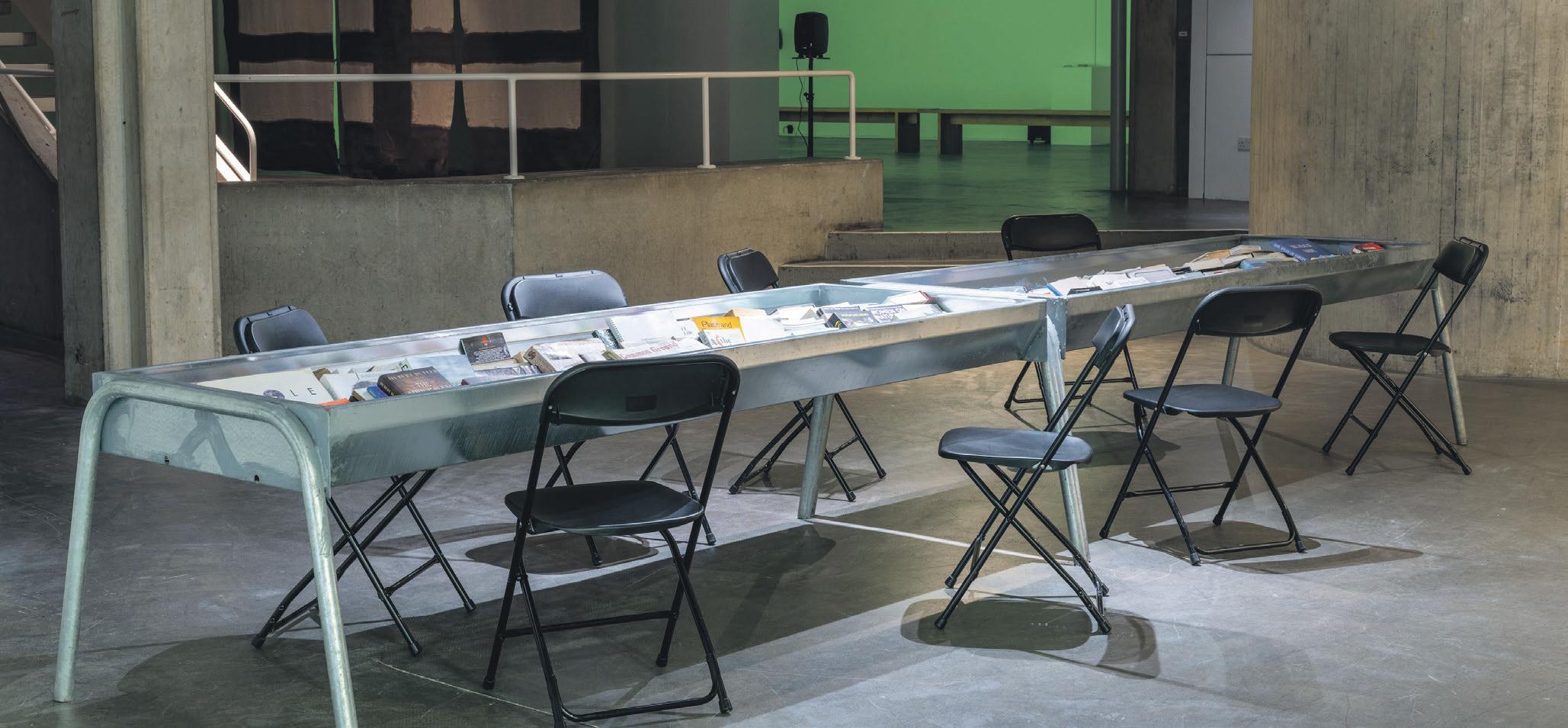
enous Coexistence in a More Than Human World (Minnesota University Press, 2017)
• Latour, Bruno, Down to Earth Politics in the New Climatic Regime (Polity Press, 2018)
• Laitenberger, Klaus, Vegetables for The Irish Garden (Milkwood Farm Pub., 2018)
• LeGuin Ursula, The Carrier Bag Theory of Fiction (Ignota Books, 2019)
• Lippard, Lucy R., Undermining: A Wild Ride through Land Use, Politics and Art in the Changing West (The New Press, 2014)
• Lippard, Lucy R., Lure of the Local: Senses of Place in a Multicentered Society (The New Press, 1997)
• Logan, William B., Dirt: The Elastic Skin of the Earth (WW Norton, 2007)
• Lovelock and Obrist, Ever Gaia (Isolarii, 2022)
• Lowenfels, J. and W. Lewis, Teaming with Microbes: The Organic Gardener’s Guide to the Soil Food Web (Timber Press Portland, 2010)
• Mac an Iomaire, Máirtín, Irish Food History (RIA, 2024)
• Maleney, Ian, Minor Monuments: Essays (Tramp Press, 2019)
• Marder, Michael, Plant Thinking: A Philosophy of Vegetal Life (Columbia University Press, 2013)
• McCaman, Jay L., When Weeds Talk (Acres USA, 2013)
• McDonagh, Varley, Shortall, A Living Countryside? The Politics of Sustainability in Rural Ireland (Ashgate Press, 2009)
• Masters, N., For the Love of Soil (Printable Reality, 2019)
• Mabey, Richard, Plants with a Purpose (Collins, 1977)
• Mitchell, William J.T., Landscape and Power (University of Chicago Press, 2002)
• Nally, David, Human Encumbrances Political Violence and the Great Irish Famine (Cambridge University Press, 2011)
• Nixon, Rob, Slow Violence and the Environmentalism of the Poor (Harvard University Press, 2013)
• O’Ceirin, Cyril and Kit, Wild and Free (O’Brien Press/Wolf Hill Pubn. 1978/2013)
• Pascoe, Bruce, Dark Emu (Magabala Books, 2018)
• Paper Visual Art, Issue 13: FARMING (PVA, 2021)
• Perry, Colin (Ed.), Art and the Rural Imagination
(More Than Ponies, 2020)
• Pinker, Steven, Enlightenment Now (Penguin Books, 2018)
• Salaman, R., The History and Social Influence of the Potato (Cambridge University Press, 1949/2000)
• Scott, James C., Seeing Like A State (Yale University Press, 1999/2020)
• Scott, James C., Against the Grain (Yale University Press, 2017)
• Scott and Swenson, Critical Landscapes: Art, Space Politics (California University Press, 2015)
• Seymour, John, The New Complete Guide to Self Sufficiency (Dorling Kindersley, 2003/2009)
• Sloterdijk, Peter, You Must Change Your Life (Polity, 2012)
• Smillie and Gershuny, The Soul of Soil, 4th Edition (Chelsea Green Pub., 1999)
• Soper, Kate, Post Growth Living For An Alternative Hedonism (Verso, 2020)
• Stringer, Ben (Ed.) Rurality Reimagined (ORO Editions, 2018)
• Tsing, et al. (Eds.), Arts of Living on a Damaged Planet (Minnesota University Press, 2017)
• Van Tulleken, C., Ultra Processed People (Cornerstone Press, 2023)
• Fuller, Weizman, Investigative Aesthetics (Verso, 2021)
• Williams Raymond, The Country and the City (Chatto, 1975/83)
• Wiskerke and Verhoevan, Flourishing Foodscapes (Valiz, 2018)
• Woods, Michael, Rural (Routledge, 2011)
Feeder (2022-ongoing) is a research resource and installation focusing on landscape, farming, food production, and the sustainable use of natural resources, that includes a library of books, texts and pamphlets on food, land, art, landscape, nature, philosophy and ecology. The complete Feeder list is published on the artist’s website.
deirdre-omahony.ie
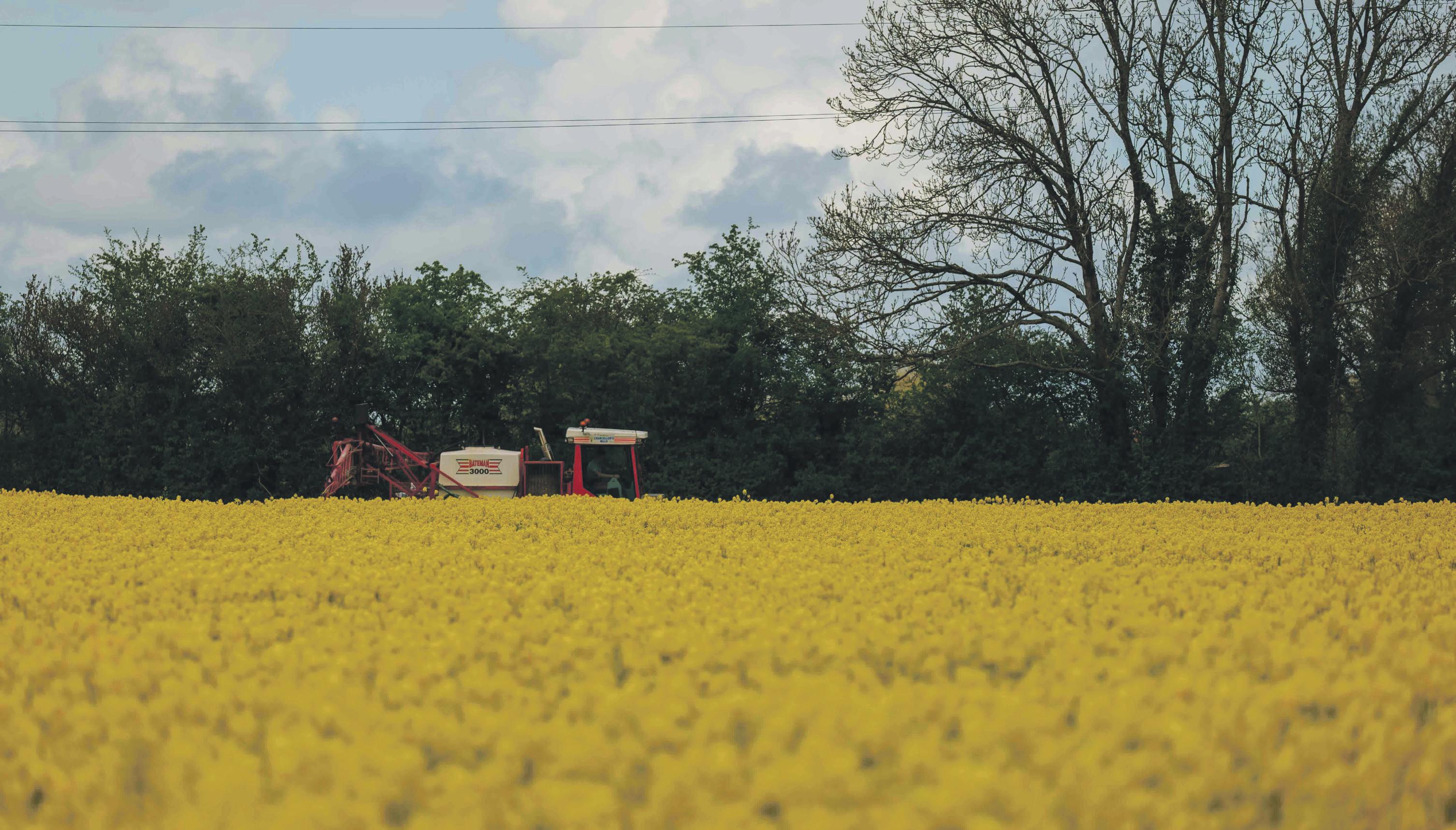
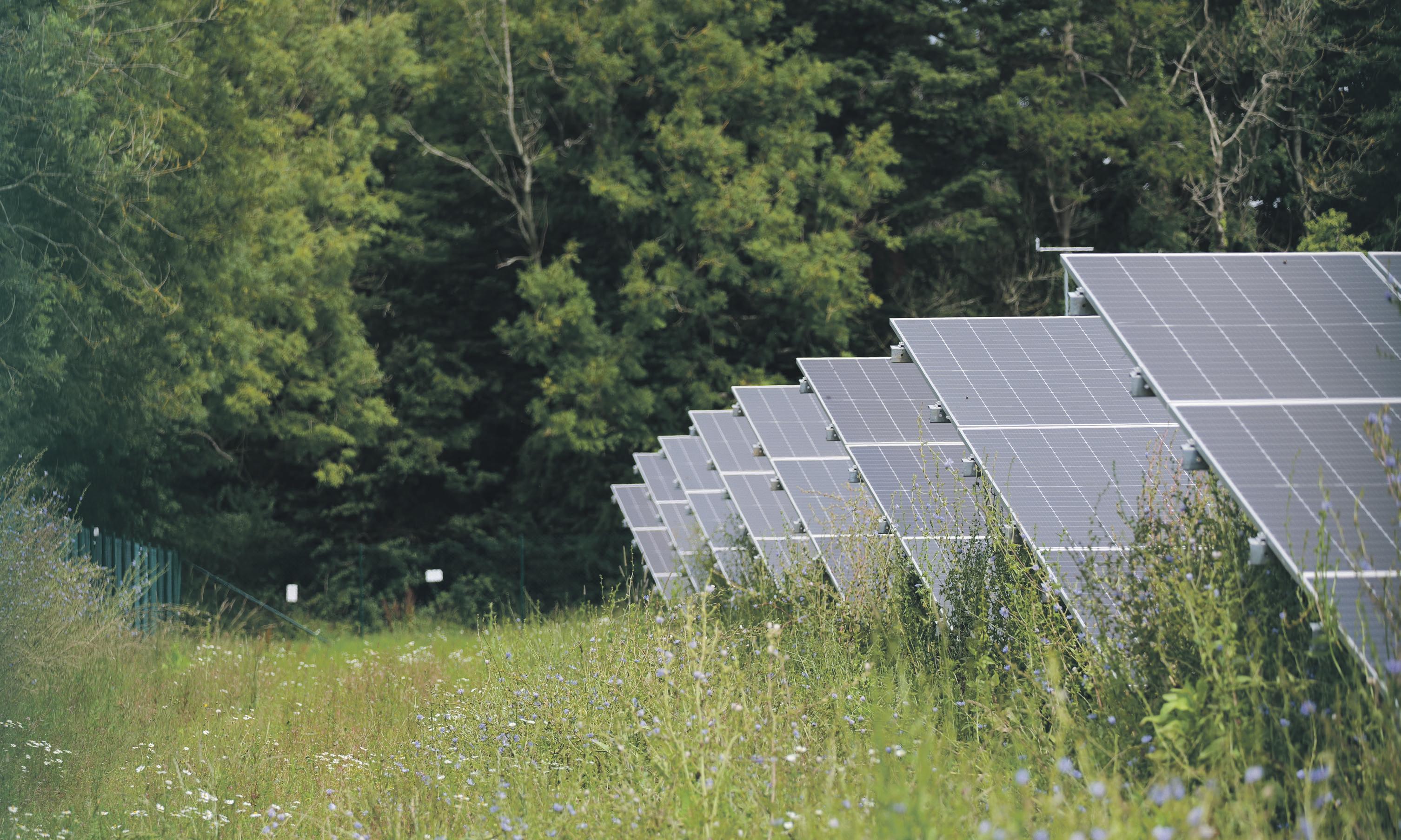
MARY MCGRATH COMPILES A RANGE OF RESOURCES FOR ARTISTS WISHING TO PURSUE GREENER AND MORE SUSTAINABLE ART PRACTICES.
VAI IS CURRENTLY compiling a range of resources to support artists who wish to pursue greener approaches within their art practices. This collection includes books on sustainable materials; articles featuring recent examples of ecological art; and videos highlighting best practice for artists seeking to reduce their environmental impact.
VAN ARTICLES
The Visual Artists’ News Sheet periodically publishes articles on landscape-based and ecological art practices with sustainability as a central concern – some of which are listed below. All VAN back issues are archived at: issuu.com/visualartistsireland
• Bernadette Kiely, ‘That’s the Spirit’, The Visual Artists’ News Sheet, November/December 2018, p11.
• John Thorne, ‘What Role for Artists in a Time of Climate Change?’, The Visual Artists’ News Sheet, July/August 2022, p 10.
• Clodagh Emoe, ‘Reflections on a Radical Plot’, The Visual Artists’ News Sheet, November/December 2022, p 9.
• Connolly Cleary, ‘Eco Showboat’, The Visual Artists’ News Sheet, November/December 2022, p 16.
• Padraig Cunningham, ‘Land-made’, The Visual Artists’ News Sheet, November/December 2022, p 16.
• Christine Mackey, ‘Mesocosm’, The Visual Artists’ News Sheet, November/December 2022, p 17.
• Nessa Cronin, ‘The Bogs Are Breathing’, interview with Siobhán McDonald, The Visual Artists’ News Sheet, May/June 2023, pp 26-7.
• Lisa Fingleton, ‘Drawn With Nature’, The Visual Artists’ News Sheet, July/August 2023, p 12.
• Marie Farrington, ‘Glossaries for Forwardness’, The Visual Artists’ News Sheet, July/August 2023, p 12.
• Belinda Quirke, ‘Holdings’, The Visual Artists’ News Sheet, July/August 2023, p 13.
• Sandra Murphy, ‘The Green Cube’, The Visual Artists’ News Sheet, July/August 2023, p 14.
• James Kelly, ‘Tracing a Lightning Path’, The Visual Artists’ News Sheet, July/August 2023, p 14.
• Katerina Gribkoff, ‘Living Sculptures’, The Visual Artists’ News Sheet, July/August 2023, p 15.
• Gareth Kennedy, ‘NCAD Field’, ‘Living Sculptures’, The Visual Artists’ News Sheet, July/August 2023, p 16.
• Deirdre O’Mahony, ‘Sustainment Feasts’, ‘Living Sculptures’, The Visual Artists’ News Sheet, July/ August 2023, p 16.
• Cathy Fitzgerald, ‘The Ecological Imperative for Creatives’, The Visual Artists’ News Sheet, September/October 2024, p10.
DEDICATED READING MATERIAL
Publications on ecology, sustainability, and materials are now available for in-house research in the VAI Reference Library at VAI’s Dublin Office. These include:
• Alastair Fuad-Luke, Design Activism: Beautiful Strangeness for a Sustainable World (London: Routledge, 2009)
• Sacha Peters, Material Revolution: Sustainable and Multi-Purpose Materials for Design and Architecture (Basel: Birkhäuser, 2011)
• Lina Weintraub, To Life! Eco Art in Pursuit of a Sustainable Planet (Berkley: University of California Press, 2012)
• Daniel Kula and Élodie Ternaux in collaboration with Quentin Hirsinger, Materialogy: The Cre-
ative Industry’s Guide to Materials and Technologies, Revised Edition (Basel and Amsterdam: Birkhäuser and Frame Publishers, 2013)
• Sacha Peters, Material Revolution II: Sustainable and Multi-Purpose Materials for Design and Architecture (Basel: Birkhäuser, 2014)
• Liliana Becerra, The Fundamental Principles of Colour, Material and Finish Design (Frame Publishers, 2016)
• Dirk E. Hebel and Felix Heisel, Cultivated Building Materials: Industrialised Natural Resources for Architecture and Construction (Basel: Birkhäuser, 2017)
• Michael Ashby, Hugh Shercliff, David Cebon, Materials: Engineering, Science, Processing and Design, Fourth Edition (Cambridge, Butterworth-Heinemann, 2019)
• Scott Denholm, The Artist Guide to Eco Friendly Art (Self-published, 2020)
• Pablo van der Lugt and Atto Harsta, Tomorrow’s Timber: Towards the Next Building Revolution (Utrecht: MaterialDistrict, 2020)
• Ulrich Knaack, Rebecca Bach, and Samuel Schabel (Eds.), Building with Paper: Architecture and Construction (Birkhäuser, 2023)
• Ruth Morrow, Ben Bridgens, and Louise Mackenzie (Eds.) Bio Protopia: Designing the Built Environment with Living Organisms (Basel: Birkhäuser, 2023)
• John Tebbs (Ed.), The Avant Gardens: Visionaries and Gardens Beyond Wild Expectations (Gestalten, 2023)
• Pablo van der Lugt, Booming Bamboo: The Rediscovery of A Sustainable Material With Endless Possibilities, Revised Edition (Utrecht: Material District, 2024)
VIDEO RESOURCES
VAI Members can view a number of videos relating to Carbon Footprint in the Webinar Recordings section of the Member’s Area online. The latest videos include:
• Reducing Our Carbon Footprint: Paddy Johnson, 2020.
• Visual Artists Café – Focus on Climate Change: Brenda McParland, Rachel Doolin, Martina O’Brien & Meadhbh O’Connor, 2020.
• Practice & The Anthropocene Series – The Work of SUPERFLEX: Jakob Fenger & Chris Clarke from Get Together 2021.
• The Eco Showboat: Anne Cleary & Denis Connolly, 2022.
• The Ethical Artist: John Thorne, 2022.
• Visual Artists Café – Climate Action: John Thorne, Tania Benotti, Reenie Charrière & Helena Wadsley, 2023.
VAI MEMBER RECOMMENDATIONS
Suggested Reading:
• Donna J. Haraway, Staying with the Trouble: Making Kin in the Chthulucene (Durham and London: Duke University Press, 2016)
• David R. Boyd, The Rights of Nature: A Legal Revolution That Could Save The World (Toronto: ECW Press, 2017)
• Lucy Jones, Losing Eden: Why Our Minds Need the Wild (London: Allen Lane, 2020)
• Mathew Lawrence and Laurie Laybourn-Langton, Planet on Fire: A Manifesto For The Age Of Environmental Breakdown (New York: Verso, 2021)
• Vanessa Machado de Oliveira, Hospicing Modernity: Facing Humanities Wrongs and the Implications for Social Activism (Berkley CA, North Atlantic Books, 2021)
• Dougald Hine, At Work in the Ruins: Finding Our Place In The Time of Science Climate Change Pandemics & All The Other Emergencies (Vermont: Chelsea Green Publishing, 2023)
• Lucy Neal, Playing for Time: Making Art As If The World Mattered (Axminster: Triarchy Press, 2023)
Suggested Resources:
• Blackbird Cultur-Lab is a creative cultural laboratory based within a working farm that is transitioning towards regenerative agriculture practices. Run by Oisín O’Connell and Karla Sánchez, Blackbird Cultur-Lab aims to provide an environment for farmers, artists, academics, and practitioners from various disciplines to experiment and work beyond traditional boundaries. blackbirdcultur-lab.com
• Haumea Ecoversity is an online resource, outlining learning opportunities, courses and mentoring on ecoliteracy for the creative sector. Ecological artist, educator, researcher, and Haumea founder, Dr Cathy Fitzgerald, believes that sustainable cultural renewal must operate holistically and inclusively to benefit present and future generations. HaumeaEcoversity.ie
• The Sustainable Darkroom is an artist-led, research community that develops low-toxicity chemistries and practices in photography. sustainabledarkroom.com
Mary McGrath is Membership Coordinator of Visual Artists Ireland. visualartists.ie
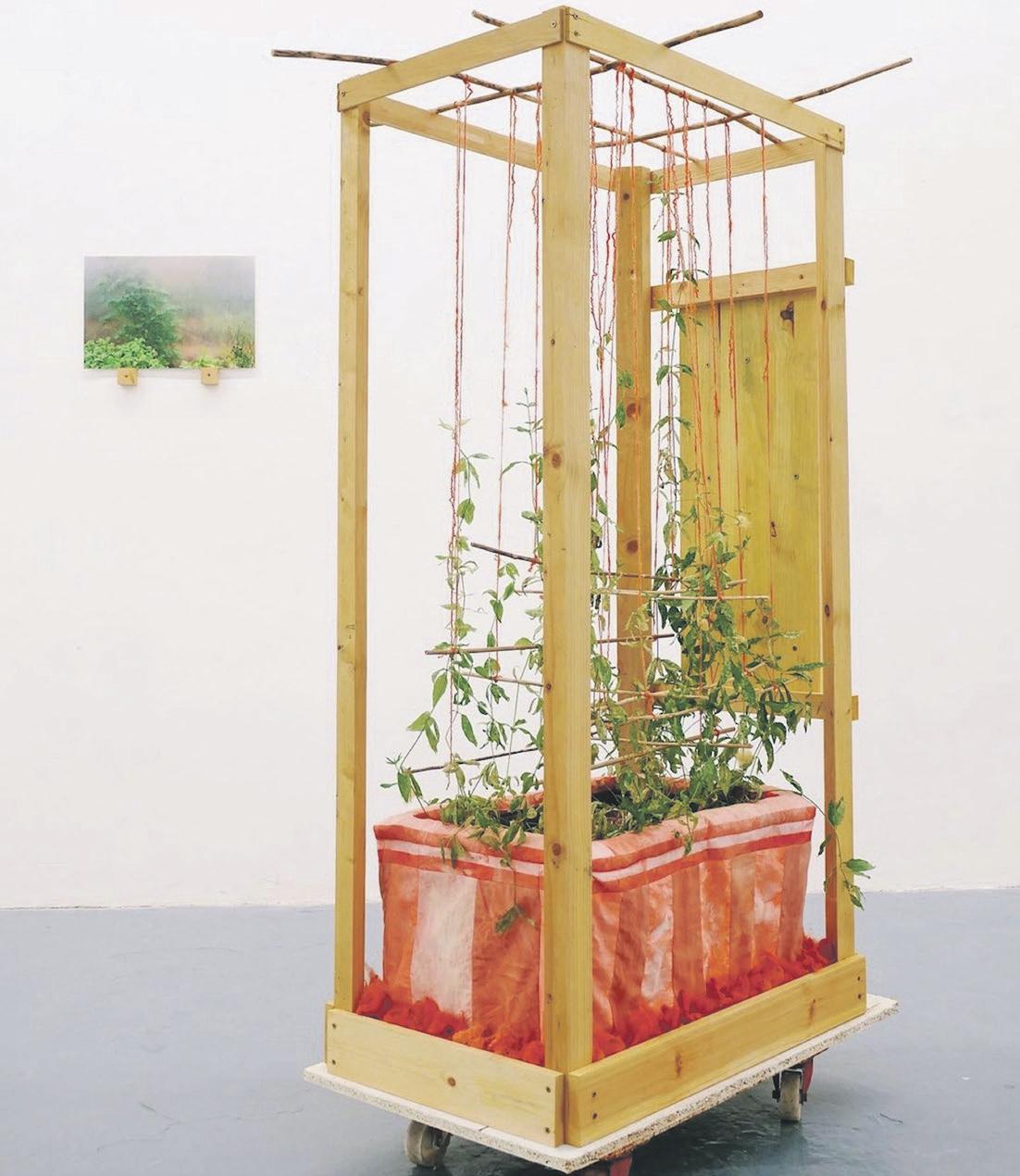
NOEL KELLY REITERATES VAI’S GUIDELINES ON PAYMENT FOR ARTISTS PARTICIPATING IN OPEN CALLS, FESTIVALS AND EVENTS.
THERE IS GROWING concern amongst VAI members about organisations using open calls as a means to avoid paying artists fairly. While open calls are often presented as opportunities for exposure and professional growth, some organisers use them to acquire content, ideas, or labour without providing appropriate compensation. This practice undermines the value of artists’ work, disrespects the traditional role that open calls have had and which people have benefited from, and can contribute to the broader devaluation of art as a profession.
One of the primary ways organisers avoid paying artists is by framing open calls as competitions or opportunities where the primary reward is visibility and potential sales rather than financial remuneration. While exposure can be beneficial, it does not pay bills or support the artist’s livelihood. These open calls often require artists to pay submission fees, which further shifts the financial burden onto the artists, making them effectively pay for the chance to work. This model exploits the aspirations of artists, who may feel pressured to participate in the hope of future recognition or opportunities.
Is there an opportunity?
When assessing whether a visual arts open call is worth pursuing, several critical factors should be considered to ensure the opportunity aligns with your artistic and professional goals. These factors include the age of the institution hosting the open call, the likelihood of making sales, the transparency of financial reporting, the reputation of the curator or selection panel (including their proven commitment to the payment of artists), and whether the selection of work is genuinely based on quality.
The age of the institution is a key indicator of its reputation and stability. Older institutions often have a long-established history, which can lend credibility to their open calls. Their longevity suggests that they have successfully managed exhibitions and artists over time, which can be reassuring for an artist looking to submit their work. An established institution is likely to have a well-developed network of collectors, critics, and patrons, thereby increasing the exposure and potential success of participating artists.
Likelihood of Sales
Open calls that promise high and proven likelihood of sales opportunities are often more attractive to artists looking to monetise their work. To evaluate this, consider the institution’s previous exhibitions and their success in terms of sales. Institutions that regularly sell works during exhibitions or have connections with active collectors can significantly boost your chances of
making sales. Additionally, understanding the demographics of the audience that the institution attracts can give insight into whether your work is likely to resonate with potential buyers. In contrast, if the institution is primarily focused on conceptual or experimental art, the likelihood of immediate sales may be lower, although the opportunity for critical recognition might be higher. Do not take their word for it; check their previous results by looking at the proportion of works sold in past exhibitions.
Transparency in financial reporting is vital in determining whether an open call is trustworthy and worthwhile. Institutions that provide clear and detailed information about how submission fees are used, how profits from sales are distributed, and the overall financial health of the organisation are more likely to be operating with integrity. Transparent reporting also suggests that the institution values its relationship with artists and is committed to fair practices. An institution that openly shares its financial results, including the breakdown of costs and revenues from previous open calls, demonstrates a level of professionalism and accountability that should not be overlooked.
Lastly, the selection of work based on quality rather than other factors, such as the artist’s notoriety or commercial appeal, is crucial for artists seeking to establish or enhance their reputations. A credible open call should have a clear selection process that prioritises the artistic quality and originality of the work. Investigate whether the institution has a jury or panel of experts involved in the selection process. The background and expertise of these jurors can provide insights into how seriously the institution takes the quality of submissions. If possible, review the portfolios of previously selected artists to gauge whether the institution genuinely values high-quality work or if it tends to favour more commercial or trendy pieces.
In deciding if VAI will advertise a Paid Open Call, we take the above into consideration. Many organisations and charities that approach us to advertise their “call for artists” are very unhappy that we choose to not advertise their “opportunity” but, we make it very clear that we place the artist first, and the very few exceptions that we make are based on the above assessment.
1 All public galleries and events, funded by the Arts Council, Local Authorities, or central government are obliged to pay artists equitably for any work that they ask them to do. It is not optional. This has been in place for many years now and comes from a long campaign that VAI started in 2011 with the campaign, Ask! Has the Artist Been Paid?
I WISH TO highlight some important aspects of managing your rights as an artist and the benefits of joining the Irish Visual Artists Rights Organisation (IVARO). The information is important, and your actions will help unstick what has become a significant problem implementing the Artists Resale Right in Ireland to the benefit of artists.
Challenges in Collecting Artists Resale Right (ARR)1
Whenever artworks are resold by an Art Market Professional (AMP) such as a gallery, auction house or dealer, for more than €3,000, the artist or their heir are entitled to receive a percentage of the sale price. This is known as a resale royalty and is payable by the vendor of the artwork. Collecting the ARR can be a complex and time-consuming process. Tracking and ensuring resale royalties, especially for international sales, is often challenging without dedicated support. Artists frequently miss out on the royalties they are entitled to due to these difficulties, and the added complication of resistance to pay what is owed is an ever-present reality for many.
Why Join IVARO?
We strongly recommend becoming a member of IVARO. Membership with IVARO is free and provides comprehensive support in managing and collecting resale royalties on your behalf. Their expertise and extensive network of sister organisations worldwide ensure that you receive the royalties you deserve.
Key Benefits of IVARO Membership:
• Resale Royalties: IVARO will act as your agent, managing the collection of ARR for you. When your work is sold at auction for over €3,000, notify the auction house that IVARO represents you. This ensures proper collection and disbursement of ARR.
• International Sales: IVARO’s mandate covers international sales through collaborations with sister organisations globally. By signing up with IVARO, your resale rights are protected and enforced worldwide.
• Protection Beyond Resale: Even if your work is not currently in the resale market, IVARO’s free membership offers additional benefits. They manage rights and royalties when your work is copied for publications or licensed for reproduction. This ensures you receive due compensation for the use of your work in various formats.2
Action Steps for Artists:
• Sign and Update Mandates: Respond to IVARO’s request for signed and up-to-date mandates. This authorises them to act on your behalf in collecting ARR and managing other rights.
• Notify Auction Houses: If your work comes up regularly for resale over €3,000, we recommend that you notify auction houses that IVARO acts as your agent in all sales and that your expectation is that they will provide details and payments (if collected by them) in a timely manner.
• Utilise IVARO’s Services: Take advantage of IVARO’s services for managing rights and royalties for reproductions and publications of your work. Each year, artists who have their work reproduced in publications are eligible for a payment as part of their registration and reporting to IVARO. Becoming a member of IVARO not only simplifies the process of collecting resale royalties but also ensures you are compensated for the reproduction and publication of your work. Your proactive engagement with IVARO will secure your financial interests and allow you to focus on your creative endeavours. For more information or assistance, contact IVARO directly or visit their website: ivaro.ie
Noel Kelly is CEO of Visual Artists Ireland.
visualartists.ie
1 The Artists Resale Right:
France was the first country to enact a law providing for the artist’s resale right. In 1920, concerned about the welfare of artists and their families, lawmakers introduced the artist’s resale right (or droit de suite) to ensure artists and their heirs received a share of the increasing commercial value of their artworks. The right was incorporated into the Berne Convention in 1948, but on an optional basis, and in 2001, was enshrined in European Union law with the Resale Rights Directive (2001/84/EC). EU-wide harmonisation was achieved in January 2006. Both VAI and IVARO are actively advocating that the threshold in Ireland (€3000) is reduced to make it available to more artists.
2 Reproduction Payment:
The law allows paper copies of books (only extracts may be copied), articles, drawings, or photographs, with the exception of sheet music. Such copies can be made without the authorisation of the authors or publishers, provided they are made for private or professional use, or for education and research. If one wants to copy for other purposes, or if one wants to copy a whole book, the authorisation of the authors and publishers must be obtained. However, since their authorisation is not necessary, artists are entitled to a compensation. For photocopies made for a purely professional purpose, the artists receive ‘reprographic remuneration’, while publishers receive a separate remuneration for photocopies of their publications on paper. The copies made for private use or for teaching and scientific research fall under an exception other than the exception for reprography. The remuneration for reprography of artists is a proportional remuneration, which is in principle paid by natural and legal persons who make photocopies of works. This is distributed annually by IVARO.
Moving Artwork Post Brexit
With Graeme Stevenson, Deirdre Robb, Peter Richards, Mary Cremin, Liam Davis & Noel Kelly • 2022
Visual Artists Café – Adapting to Changing Landscapes
With Seán Kissane, Sarah Perks & Chris Clarke • 2020
Visual Artists Café – Artist Led Initiative With Bernhard Gaul, Sinéad O’NeillNicholl & Simon Fennessy Corcoran • 2021
Visual Artists Café – Artists Speaks With Kiera O’Toole & Miguel Martin • 2020
Visual Artists Café – Introducing... Belfast
With Peter Mutschler, Laura O’Connor & Peter Richards • 2021
Visual Artists Café – Introducing… Centre Culturel Irlandais, Paris With Cecilia Danell, Tinka Bechert, Nora Hickey M’Sichili & Noel Kelly • 2021
Visual Artists Café – Introducing... Westmeath
With Lesley Wingfield, Lelia Henry, Tina Hayes, Mel French & Noel Kelly • 2022
Allan de Souza • 2020
Amanda Coogan • 2022
Joy Gerrard • 2021
Katie Holten • 2021
Liza Lou • 2022
Miriam O’Connor • 2021
Ciarraí MacCormac • 2024
Sculpture Dublin • O’Connell Plinth
With Karen Downey, Alan Phelan, Brian Crowley, Dr Helen Pheby & Prof. Paula Murphy • 2021
Sculpture Dublin • St. Anne’s Park With Karen Downey, Iván Argote, Deirdre Nichol, Clare O’Sullivan & Dr Barbara Dawson • 2022
Art Practice & the Mature Artist: Challenges Facing an Older Artist
With Colin Martin, Jessica BurtonRestrick, Dr Joe Atkinson, Leah Hilliard & Anishta Chooramun • 2023
Reducing our Carbon Footprint With Paddy Johnson • 2020
The Eco Showboat With Anne Cleary and Denis Connolly • 2022
The Ethical Artist With John Thorne • 2022
Visual Artists Café – Climate Action
With John Thorne, Tania Benotti, Reenie Charriere & Helena Wadsley • 2023
Demystifying the Role of a Curator With Kate Strain • 2023
Landscape of Opportunities
With Catherine Hemelryk • 2020
Working With Curators With Brendan Fox • 2021
Working With Curators
With Catherine Hemelryk, Aoife Ruane & Ruth Carroll • 2022
Collaborative Art Practice
With Kate O’Shea, Helen Blake, Orlaith Treacy & Orla Whelan • 2022
How to Present Your Work in New Ways With Aideen Barry, Ciarán O’Keefe & Jennifer Mehigan • 2021
Planning Festivals & Adapting to Changing Landscapes
With Jo Mangan & Sean Lawlor • 2020
Socially Engaged Practice With Áine Phillips • 2023
Photographic Records & Documenting Your Work
With Simon Mills • 2020
Social Welfare for Visual Artists With Grainne Ward • 2022
Social Welfare in Northern Ireland With Aisling Doran • 2023
Dignity at Work With Niamh O’Donnell • 2023
Equality, Diversity & Inclusion in the Arts
With Yamam Al-Zubaidi & Olwen Dawe • 2023
Generating Sales
With Claudia Kennaugh • 2023
How To Shape Your Artist Career With Therry Rudin • 2022
Pricing Your Work
With Claudia Kennaugh • 2022
Starting & Restarting Your Artist Career
With Catherine Hemelryk • 2022
An Artist’s Guide to Accessing Funding
With Marianne O’Kane Boal • 2024
How to Apply for Funding With Neva Elliot • 2020
Landscape of Opportunities With Maeve Mulrennan • 2020
Landscape of Opportunities With Catherine Hemelryk • 2020
Writing Creative Proposals In Depth With Marianne O’Kane Boal • 2024
Structured Project Management With Noel Kelly • 2020
Per Cent for Art With Maeve Mulrennan • 2020
Writing About Your Work With Joanne Laws • 2020
VAI Members can access a wide range of videos from VAI’s Lifelong Learning programme in the Webinar Recordings section of the Member’s Area online. Simply log in with your email address and password (visualartists.ie).
Studio Visits
With Anushiya Sundaralingam & Richard Forrest • 2021
The Dos & Don’ts of Studio Visits With Marco Antonini • 2020
Finance & Tax
With Louise Gorman • 2020
Exploring Budgets
With Annette Moloney • 2022
Communicating Your Practice Online With Conall Cary • 2021
Digital Marketing & Communications With Emma Dwyer • 2020
Navigating the Art World as an Artist With Loney Abrams • 2021
What Makes a Good Website With Emma Dwyer • 2021
& Photography
Creating Video Content to Tell Your Artist Story With Simon Mills • 2022
Preparing Photos for the Web With Tim Durham • 2020
“Being Part of Something” With Christian Jankowski • 2021
For usability and ease of navigation, these recordings have been categorised by VAI Special Projects coordinator, Robert O’Neill, across a range of practical topics relevant to the professional practice of visual artists.
OONA HYLAND PROVIDES AN OVERVIEW OF VAI’S HELP DESK SERVICE AND HOW TO MANUAL FOR VISUAL ARTISTS.
VISUAL ARTISTS IRELAND currently deals with over 200 requests for information and advice per week. The queries and issues we deal with are incredibly diverse and include everything from advice on public art commissioning, copyright, and costing proposals, to artist rights, insurance, and help with funding applications.
The VAI membership is made up of individual visual artists (professional and associate members) who live and work on the island of Ireland, as well as arts organisations including galleries, studio groups, colleges, and resource organisations. We also work with visual artists who live abroad as well as new arrivals to Ireland from all over the world. VAI provides services without discrimination – in other words, we do not discriminate based on gender identity, civil status, family status, sexual orientation, religion, age, disability, race, or being a member of the travelling community.
Help Desk
My job is to help artists, first and foremost, by listening. I aim to give them the information and resources to gain equitable access and the support they need to thrive both creatively and professionally. Artists can book a help desk with me under the Events section of the VAI website. Artists do not need to be members in order to access this free service.
The help desks usually take place on Thursdays, either online, in person, or over the phone if they prefer. My colleague, Brian Kielt, manages Northern Ireland Advocacy & Advice services, and runs help desks for Northern Ireland-based artists on Tuesday afternoons.
In advance of each meeting, I ask artists to send any provisional information in relation to their help desk, so that I can do a bit of research to help them more accurately. The help desks normally last around 20 minutes and I follow up with a written response afterwards, reiterating any helpful resources or additional sharing information with the artists.
Generally, the queries I get are focused on developing strategies to access funding and exhibition opportunities, though it can vary considerably. I also cover many other topics, such as legacy planning, copyright, insurance for artists, tax and self-employment, and dealing with social welfare.
How to Manual
VAI has an extensive website containing a range of practical resources for artists. Under the Quick Links tab can be found the ‘How to Manual & FAQs’ – a constantly expanding, searchable resource and survival guide for visual artists in Ireland and Northern Ireland that provides the bulk of information required for professional careers.
Making art and making an art career are
two different things. A professional artist is responsible for the day-to-day business of their career, such as financial management, applying for grants and funding, documenting work, marketing, promotion, researching opportunities, and a host of other tasks. These areas are not always covered within the college education system, so, while highly educated and skilled, many visual artists are not prepared for the reality of life after art school.
As an artist-focused organisation, VAI is keenly aware that artists are pressed for time, trying to fit their art making into their daily lives that juggle family, work and other commitments. The ‘How to Manual’ is intended to provide some of the tools to make the most of opportunities, whether pursuing a postgraduate course, getting a studio, entering juried exhibitions, initiating DIY projects, or getting representation through a gallery. The ‘How to Manual’ is divided into eight sections, encompassing a range of subjects, some of which are outlined below.
Career
• Advice for Starting Out
• Awards, Bursaries and Grants
• Getting a Studio
• Promoting Your Work Online
• The Artist as Curator
• Undertaking Commissions
Finance
• Tax and Self Employment (Ireland)
• Tax and Self Employment (NI)
• VAT and Artists
Legal
• Artist Resale Rights
• Brexit Information for Artists
• Copyright & Legacy Planning
Payment Guidelines
• Artists Payment Guidelines Calculator
Practical Guides
• Handling Disputes
• Health and Safety in the Studio
• Importing and Exporting Your Work
• Insurance For Artists
• Pricing Your Work
Social Protection
• BIA Pilot Scheme
• Pensions for Artists
• Social Welfare Jobseekers Allowance
Green & Ethical Artist
• Longevity Qualities of Eco Materials
• Some Thoughts for Visual Artists
• Tips on Sourcing Materials
Oona Hyland manages VAI’s Advice and Help Desk services. visualartists.ie
BRIAN KIELT REPORTS ON VAI’S RECENT PILOT PROGRAMME FOR ARTISTS WORKING IN ISOLATION IN NORTHERN IRELAND.
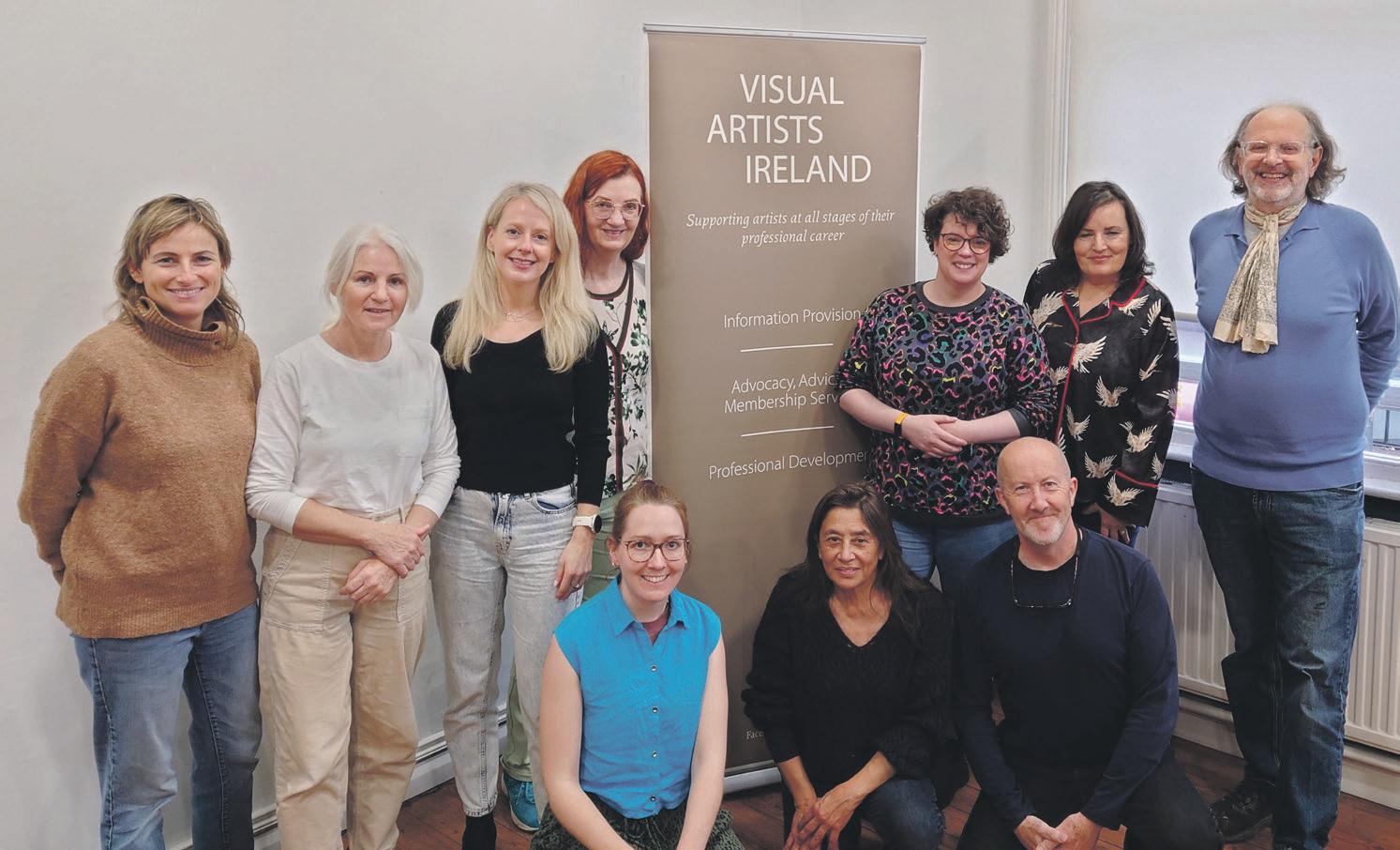
IN FEBRUARY, WE hosted a pilot event in VAI’s Belfast office for artists not based in an organised studio group. Orla Whelan from At Home Studios in Dublin gave a presentation on her practice and her learning from the At Home initiative. This was followed by a tour of some art spaces around the city centre.
Following on from this, with support from Belfast City Council, VAI developed a short programme spanning four months for artists who work in isolation. The programme brought together creatives from different parts of Northern Ireland; some even came from as far as Donegal! This highlighted the need for artists to have these kinds of outlets, even when working in a solo capacity. This pilot programme created a safe space for the group to get to know each other, bond over coffee and biscuits, share knowledge, and discuss their experiences of navigating challenges.
The group was split into two smaller groups, who each attended three sessions in total. The first event was an artist talk from Belfast-based artist, Sharon Kelly, who spoke openly about her art practice and career. This was followed by Show & Tell presentations by some of the participating artists, giving insights into the many differing and sometimes overlapping concerns among attendees. Sheena Devitt, a visual artist working primarily with stone sculpture, was amongst the first cohort. “It’s all about building relationships!” she said. “Seeing your work from someone else’s perspective and the joy of sparking ideas that may evolve into future creative outputs.”
Discussions after the Show & Tell events really highlighted the importance of giving artists opportunities to share their work in a supportive environment. Afterwards, a casual walk around the city centre included visits to art spaces such as Arcade Studios on Donegal Street, Catalyst Arts, and PS2 .
In August, the second session gave artists a chance to hear from emerging curator, Cecilia Graham, who spoke about her curatorial practice and then facilitated oneto-one clinics. This was a great opportunity for attendees to get feedback on their work from Cecilia. They were then taken on a guided tour of the Golden Thread Gallery’s new building on Queen Street. A word of thanks must be given to the staff for making both groups welcome during their visits.
After a short break for the return of schools, the final sessions in October had a slightly different premise: peer critique. After getting to know each other over the past few months, members of each group used the session to speak freely and ask for input in a safe and inclusive environment. Some artists talked about work in progress, unsure of paths to take and the challenge of overcoming artist’s block. Others shared ideas that were yet to take shape, eager to gain insights on how to make plans come to fruition. Some listened with intent and gave their honest opinions in a manner in keeping with the friendly and supportive atmosphere that the artists have created together.
There are now active WhatsApp groups amongst the artists, who are forging new connections between one another, and meeting regularly to attend events like Late Night Art, which is great to see. I hope that Peer Support sessions like these can continue to take root wherever they are needed most. Artists who work in isolation or in more rural areas can, at times, feel a little out of the loop. Supporting and bringing artists together is a way of showing that we’re not in this alone.
Brian Kielt works for VAI in the role of Advocacy & Advice for Northern Ireland. visualartists.ie


KILDARE
VISUAL ARTISTS CAFÉ: AN ARTIST’S GUIDE TO FUNDING APPLICATIONS
Venue: Celbridge Library, County Kildare
Date: Thursday 7 November
Time: 10am – 1pm
Places: 24
Cost: Free (Kildare-based Artists Only)
MAYO
VISUAL ARTISTS CAFÉ: CURATOR AND ARTIST
NETWORKING EVENT
Venue: Linenhall Arts Centre, Castlebar
Date: Tuesday 12 November
Time: 11am – 4pm
Places: 28
Cost: €5 (Mayo-based artists); €10 (General Admission)
DUBLIN
VAI GET TOGETHER 2024
Venue: Irish Museum of Modern Art
Date: Tuesday 19 November
Time: 9am – 6pm
Cost: €30 (VAI Members); €35 (Student / OAP / Unemployed / Registered Refugee Status, Permission to Remain, Subsidiary Protection); €60 (Standard Ticket)
BEING AN ETHICAL ARTIST IN A CHALLENGING WORLD
Date: Wednesday 6 November
Time: 2pm – 3pm
Places: Unlimited
Cost: Free (Clare, Limerick and Tipperary-based Artists); €5 (VAI Members); €10 (General Admission)
DEVELOPING YOUR OWN EXHIBITIONS WITH ED REYNOLDS AND HINA KHAN
Date: Wednesday 27 November
Time: 11am – 12:30pm
Places: Unlimited
Cost: €5 (VAI Members); €10 (General Admission)
VISUAL ARTISTS’ CAFÉ: SHOW AND TELL NORTHERN IRELAND
Date: Tuesday 10 December
Time: 2:30pm – 4pm
Places: Unlimited
Cost: Free (VAI Members); €5 (General Admission)
HELPDESK WITH OONA HYLAND
Date: Thursday 7 November
Time: 2pm – 4:30pm
Places: 5
Cost: Free
HELPDESK WITH OONA HYLAND
Date: Thursday 14 November
Time: 2pm – 4:30pm
Places: 5
Cost: Free
HELPDESK WITH OONA HYLAND
Date: Thursday 21 November
Time: 2pm – 4:30pm
Places: 5
Cost: Free
HELPDESK WITH OONA HYLAND
Date: Thursday 28 November
Time: 2pm – 4:30pm
Places: 5
Cost: Free
HELPDESK WITH OONA HYLAND
Date: Thursday 5 December
Time: 2pm – 4:30pm
Places: 5
Cost: Free
HELPDESK WITH OONA HYLAND
Date: Thursday 12 December
Time: 2pm – 4:30pm
Places: 5
Cost: Free
HELPDESK WITH OONA HYLAND
Date: Thursday 19 December
Time: 2pm – 4:30pm
Places: 5
Cost: Free
ROI Information and Bookings
To register a place or to find information on any of our upcoming Professional Development events in the Republic of Ireland, visit: visualartists.ie/ professional-development
Fees
VAI members receive preferential discount of 50% on fees for all VAI training and professional development events.
NI HELPDESK WITH BRIAN KIELT
Date: Wednesday 6 November
Time: 2pm – 4:30pm
Places: 5
Cost: Free
NI HELPDESK WITH BRIAN KIELT
Date: Wednesday 13 November Time: 2pm – 4:30pm Places: 5
Cost: Free
NI HELPDESK WITH BRIAN KIELT
Date: Thursday 21 November Time: 10am – 12:30pm Places: 5
Cost: Free
NI HELPDESK WITH BRIAN KIELT
Date: Tuesday 26 November
Time: 2pm – 4:30pm
Places: 5
Cost: Free
NI HELPDESK WITH BRIAN KIELT
Date: Tuesday 3 December
Time: 2pm – 4:30pm Places: 5
Cost: Free
NI HELPDESK WITH BRIAN KIELT
Date: Wednesday 11 December Time: 2pm – 4:30pm
Places: 5
Cost: Free
NI HELPDESK WITH BRIAN KIELT
Date: Wednesday 18 December Time: 2pm – 4:30pm
Places: 5
Cost: Free
NI Information and Bookings
To contact the NI Helpdesk or to inquire about upcoming Professional Development events in Northern Ireland, visit: visualartists.ie/ni-portal/helpdesk-advice
19November2024
10am - 6pm
Bridging Perspectives:
Navigating the Interplay of Visual Artists, Curators, and Art Institutions
The Irish Museum of Modern Art, Military Road, Kilmainham, Dublin 8
Keynote: Joan Jonas Panel Discussions
Specialist Clinics
Speed Curating Café – Info Desks
Tickets Still Available!
Programme Details and Booking: visualartists.ie