Cariboo Regional District Candidate Information Guide
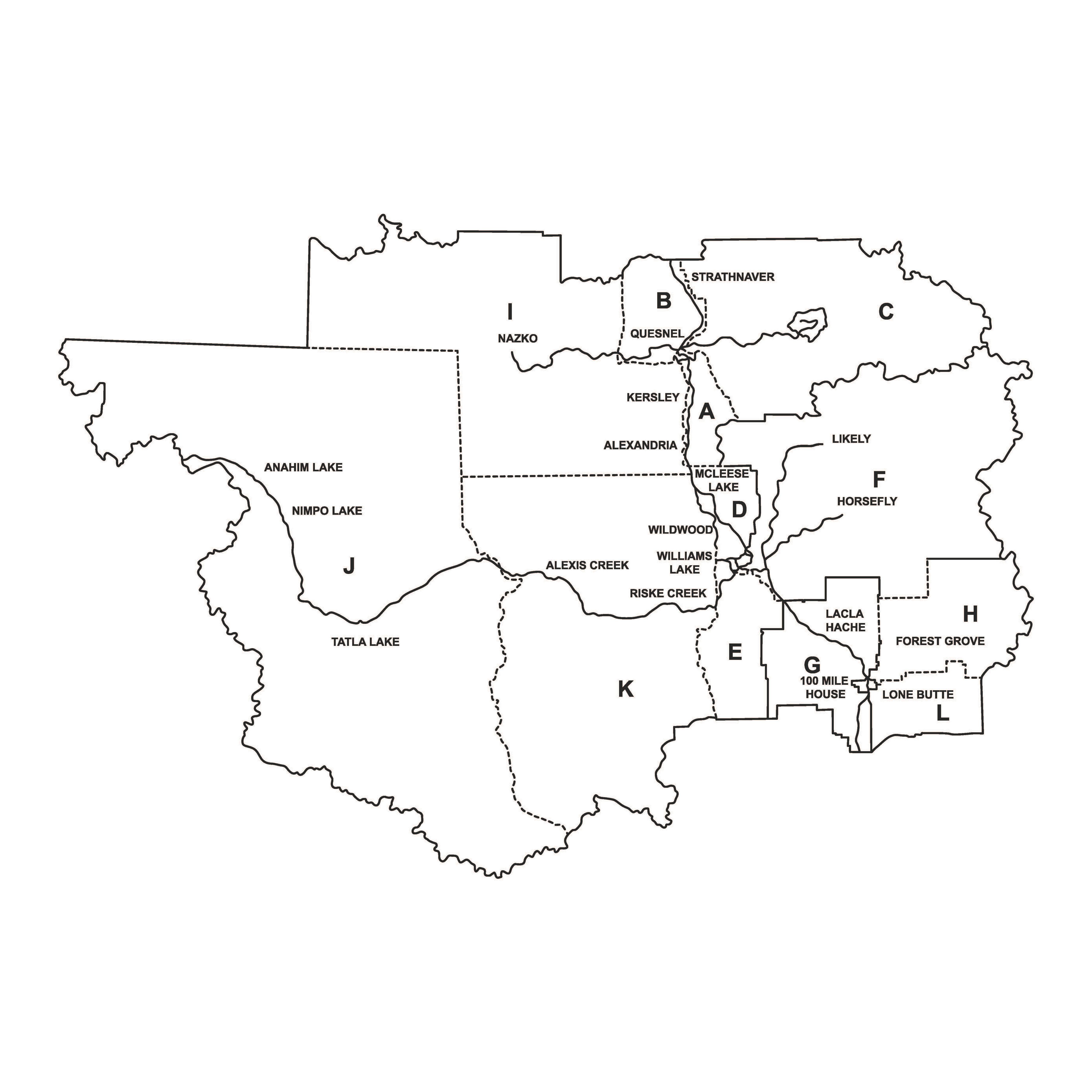
The Cariboo Regional District (CRD) serves residents across a vast and diverse region of central British Columbia Covering approximately 80,000 square kilometres, the CRD includes 12 electoral areas and four member municipalities: the City of Williams Lake, the City of Quesnel, the District of 100 Mile House, and the District of Wells.
The CRD is governed by a Board of Directors made up of 16 elected representatives, including 12 Electoral Area Directors and four municipal representatives Together, the Board is responsible for making decisions about regional services, budgets, bylaws, and long-term planning that affect communities throughout the Cariboo
Understanding what the CRD does and what it does not do is an important part of understanding the role of local government. This guide provides an overview of the CRD's services and responsibilities, explains the distinct roles of Directors and staff, and highlights some common misconceptions about the organization's authority.
If you're considering running for local office, it's important to understand the scope of the Cariboo Regional District's responsibilities. This guide highlights the services the CRD provides, areas of authority, and common issues that fall outside its jurisdiction to help prospective candidates better understand the role of an Electoral Area Director.
CRD Responsibilities at a Glance
Fire protection and emergency services
Recreation facilities and parks
Libraries
Solid waste management and recycling
Hospitals and hospital operations
Doctors, nurses, and other health-care services
Ambulance services
Public schools and school districts
Community water systems in serviced areas
Septic systems, lagoons and wells
Community sewer systems in serviced areas
Regional emergency management
Land use planning
Development applications
Building inspection services
Provincial highways
Roads including maintenance, snow clearing, and ditches
Driver licensing and vehicle registration
Policing budgets and staffing levels
Bylaw enforcement in designated service areas
Invasive species management programs
Provincial parks
Crown land management
What Does an Electoral Area Director Do?
Electoral Area Directors are elected to represent residents living outside municipal boundaries Directors serve as the voice of their communities at the regional level while also participating in decisions that affect the Cariboo Regional District as a whole.
Key responsibilities include:
Attending Board and committee meetings
Reviewing reports, bylaws, policies, and budgets
Making decisions on regional services and programs
Participating in long-term planning and strategic initiatives
Representing the interests of residents in their electoral area
Responding to constituent questions and concerns
Attending community meetings, events, and functions
Serving on committees, boards, and working groups as appointed
Advocating for local priorities and regional interests
Directors must balance the needs of their own electoral area with the needs of the region as a whole While residents often bring a wide range of concerns to their Director, Directors do not manage day-to-day operations or direct staff. Instead, they work through the Board to establish policies, budgets, and priorities for the organization. No previous political experience is required. Successful Directors come from a variety of backgrounds and bring a broad range of skills, experiences, and perspectives to the role.
Directors and Staff: Who Does What?
The Cariboo Regional District operates under a governance model where elected officials and professional staff have distinct but complementary roles.
Directors
Represent residents and communities
Consider and approve policies and bylaws
Approve budgets and service levels
Set strategic priorities
Participate in regional decision-making
Advocate for community interests
Attend Board and committee meetings
Make decisions collectively as part of the Board
and programs
Board decisions Manage day-to-day operations
Provide professional advice and recommendations
Administer CRD facilities and services
Prepare reports, budgets, and policy recommendations
Support the Board in its decision-making
Carry out Board-approved policies and bylaws
Cariboo Regional District Electoral Area Director Time Commitments
Serving as an Electoral Area Director requires a significant commitment of time and participation in regional governance.
Directors are expected to attend:
Regular CRD Board meetings (approximately 11 per year)
Cariboo Chilcotin Regional Hospital District meetings (approximately 11 per year)
Committee of the Whole meetings (approximately 4 per year)
Finance/Budget Committee meetings (approximately 3 per year)
Rural Directors' Caucus and Joint Committee meetings (approximately 10 per year)
Advisory Planning Commission meetings, public hearings, and other meetings as required
In addition to formal meetings, Directors may be appointed to represent the CRD on committees, boards, and working groups, and are often called upon to attend community events, meetings, and functions within their electoral area.
Directors are also encouraged to participate in local government conferences and training opportunities throughout the year, including:
Union of BC Municipalities (UBCM)
North Central Local Government Association (NCLGA)
Electoral Area Directors' Forum (EADF)
Local Government Leadership Academy (LGLA)
The exact time commitment varies by electoral area and level of involvement, but candidates should be prepared for a regular and ongoing commitment throughout their term
Beyond the Meeting Schedule
The meetings and commitments listed above represent only part of a Director's role.
Before each Board and committee meeting, Directors spend time reviewing agenda packages, reports, bylaws, policies, budgets, and other supporting materials. Staff research issues, gather information, consult with stakeholders where appropriate, and prepare reports outlining options, impacts, and recommendations for the Board's consideration.
Directors use this time to ask questions, seek clarification, and consider how decisions may affect residents, services, and the region as a whole. At meetings, Directors discuss these matters with their colleagues and make decisions collectively as members of the Board
Many decisions require balancing local priorities with regional needs, considering both short- and long-term impacts, and evaluating the financial and service implications of various options.
Serving as a Director involves more than attending meetings. It requires ongoing learning, preparation, thoughtful discussion, and informed decision-making throughout the term.
Meeting Date
January 15, 2026
January 16, 2026
February 6, 2026
February 26, 2026
February 27, 2026
March 19, 2026
March 20, 2026
April 10, 2026
May 1, 2026
May 29, 2026
June 18, 2026
June 19, 2026
July 10, 2026
August 14, 2026
September 10, 2026
September 11, 2026
October 2, 2026
November 13, 2026
December 3, 2026
December 4, 2026
Cariboo Regional District
2026 Meeting Schedule
Meeting Type Time Location
FIN
CCRHD/BOARD
CCRHD/BOARD FIN
CCRHD/BOARD COW
CCRHD/BOARD
CCRHD/BOARD
CCRHD/BOARD
CCRHD/BOARD COW
CCRHD/BOARD
CCRHD/BOARD
CCRHD/BOARD COW
CCRHD/BOARD
CCRHD/BOARD
CCRHD/BOARD COW/FIN
CCRHD/BOARD
9:30/9:45 am 9:30/9:45 am TBA 9:30/9:45 am TBA
9:30/9:45 am 9:30/9:45 am 9:30/9:45 am 9:30/9:45 am TBA
9:30/9:45am 9:30/9:45 am 9:30/9:45 am TBA
9:30/9:45 am 9:30/9:45 am 9:30/9:45 am TBA 9:30/9:45 am

Meeting Types:
BOARD – CRD Board of Directors
CCRHD – Cariboo Chilcotin Regional Hospital District
FIN – Finance/Budget Committee
COW – Committee of the Whole
Abbreviations:
CRD – Cariboo Regional District
TBA – To be announced
WL – CRD Boardroom – CRD office, 180D North Third Ave., Williams Lake, BC
Other Conference Dates to Note:
EA Directors Forum: March 10-11, 2026
Local Government Leadership Academy Conference: March 11-13, 2026
North Central Local Government Association Conference: May 20-22, 2026 Federation of Canadian Municipalities Conference: June 4-7, 2026
Union of British Columbia Municipalities Conference: September 14-18 2026
Frequently Asked Questions
Do I need previous political experience to run?
No. Electoral Area Directors come from a wide variety of backgrounds. An interest in your community, a willingness to learn, and a commitment to public service are often more important than previous political experience
Do I need to live in the electoral area I want to represent?
No, candidates must meet the eligibility requirements set out in provincial legislation. For details on eligibility requirements, please contact the Chief Election Officer or visit the Province of British Columbia's local elections website.
How much time does the role require?
The time commitment varies by electoral area and level of involvement. Directors attend Board and committee meetings, review meeting materials, respond to constituent inquiries, participate in community events, and may serve on additional committees or working groups.
Do Directors receive remuneration?
Directors receive remuneration and are reimbursed for eligible expenses in accordance with CRD bylaws and policies.
Can I keep my current job if I become a Director?
Many Directors continue to work while serving in office However, candidates should carefully consider the time commitment associated with the role.
Board meetings are typically full-day meetings, and committee meetings may be scheduled during the morning, afternoon, or evening depending on the committee and its members. Directors are also expected to spend time reviewing meeting materials, responding to constituent inquiries, attending community events, and participating in training and conferences.
A flexible work schedule and a supportive employer can be valuable assets for those considering the role
Do Directors receive training?
Yes. Newly elected Directors participate in orientation and training sessions and have access to ongoing professional development opportunities throughout their term.
Do Directors make decisions on their own?
No Decisions are made collectively by the Board of Directors Individual Directors represent their communities and contribute to discussions, but Board decisions are made through resolutions voted on by the Board as a whole.
What is the difference between a Director and a Mayor or Councillor?
Electoral Area Directors represent residents living outside municipal boundaries and make decisions on regional services through the Cariboo Regional District Board. Mayors and Councillors represent residents within municipalities and are responsible for municipal services and governance within their communities
Can I attend Board meetings before deciding whether to run?
Yes. Board meetings are open to the public, and agendas and minutes are available on the CRD website.
What if residents bring me concerns about roads, health care, or other issues outside the CRD's authority?
Residents often contact their Director about a wide range of issues. While Directors may advocate on behalf of residents and help connect them with the appropriate agency, many services such as health care, schools, highways, and most roads are the responsibility of other levels of government.
Where can I learn more?
For information about nominations, eligibility, election procedures, and the role of an Electoral Area Director, please contact the Chief Election Officer or visit the Cariboo Regional District website.
2026 General Local Election Timeline
September 1‒11, 2026
Candidate nomination period Individuals wishing to run for local office must submit nomination papers during this period. Declaration of Candidates at 4 p.m. on the 11 of September. th
September 18, 2026
Deadline to withdrawal as a candidate 4 p.m.
September 19, 2026
Official campaign period begins.
September 21, 2026
CEO declares election by voting or by acclimation 4 p m
October 7, 2026
Advance voting opportunity.
October 13, 2026
Advance voting opportunity
October 17, 2026
General Voting Day
Vote for your local elected officials, including Regional District Directors, Mayors, Councillors, and School Trustees, depending on where you live.