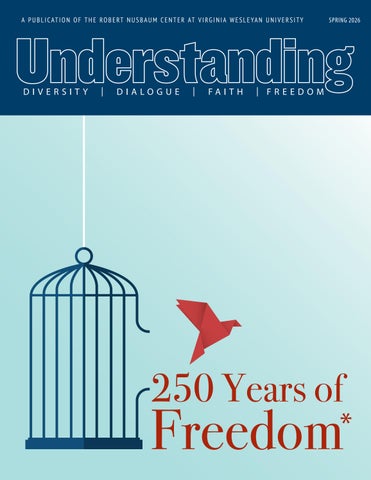
DIVERSITY | DIALOGUE | FAITH | FREEDOM

Much of the work of the Robert Nusbaum Center focuses on competing values and visions of what the public square should be. For years we’ve used a values-clarification exercise with students and community members. Participants receive nine cards — each naming a value like justice, security, diversity, community, progress, and freedom — and are asked to rank them. What matters most is not the ranking itself, but the conversation that follows. Participants quickly discover how people can agree on shared values and still profoundly disagree on which ones matter most, and why. However, in the past five years, one pattern has become unmistakable: almost everyone puts freedom first.
That consensus blows up the moment we ask what people mean by the word. What one person claims as freedom often restricts someone else’s. Freedom to marry. Freedom to own a gun. Freedom to ignore laws or school curricula one dislikes. Freedom from people one does not want nearby. For others, freedom simply means the ability to sleep at night without fear. The same word carries radically different hopes, fears, and assumptions.
These tensions run through popular culture as well. We love songs titled, “Freedom,” yet they rarely mean the same thing. George Michael’s Freedom! ’90 celebrates artistic and personal autonomy. Pharrell’s Freedom expresses joy for diversity and personal freedom. Jon Batiste’s Freedom, a tribute to New Orleans, honors shared cultural roots and collective resilience. Beyoncé’s Freedom demands justice. Rage Against the Machine’s Freedom confronts systems of domination and manipulative authorities. Alicia Keys’ Freedom focuses on personal growth and self-acceptance. Freedom is never abstract. It is always shaped by who is speaking — and what they are struggling to break free from.
For me (Craig), this played out years ago in a first-year seminar at Virginia Wesleyan. When asked what they were excited about as they began college, students offered predictable answers: freedom from parents, freedom from church, freedom from rules, freedom to sleep in and not take early morning classes, freedom to eat Frosted Flakes for every meal.
My colleague, Virginia Diggs, listened with a smile. Then she said, “Freedom is good.” She paused and said, “And now, each of you have something that you’ve probably never had before — a different kind of freedom. Now that you’re on your own, some of you, for the first time, have the freedom to fail.”
The room fell silent, so quiet you could almost hear a single Frosted Flake hit the floor.
Freedom can liberate. It can also destroy.
Amy Winehouse’s Rehab was an anthem of defiance. The song glamorized resistance, in effect saying “I don’t have to” — to her father and others who urged her to confront her addiction. We know how that story ended. Freedom without wisdom or accountability can be lethal.
Even Franklin Roosevelt’s Four Freedoms raise hard questions. In the United States today “freedom of speech” and “freedom of worship” are passionately defended, until someone else uses them differently than we would. Freedom from want is dismissed by some as entitlement. Freedom from fear is criticized by others as a threat to gun rights. Often, the deeper conflict is not simply about policy. It’s about whether freedom means being left alone or being held together.
As we mark the 250th anniversary of the Declaration of Independence, the Nusbaum Center is wrestling with freedom in all its promise, contradiction, and consequence. We invite you to join us, not because freedom is easy to celebrate, but because it is too important not to examine.
With appreciation,
*Terms and conditions apply.
Craig and Kelly

JUSTINE L. NUSBAUM LECTURE
Thursday, February 12
NOON – 12:50 PM | BROCK COMMONS
America guarantees freedom of religion, but what happens when people push the boundaries of that promise?
Drawing on real cases — churches built around ayahuasca ceremonies, mushroom sacraments, and strategic appeals to religious-freedom laws — scholar Brad Stoddard explores uncomfortable questions about sincerity, belief, and authority. Who gets to decide what counts as “real religion?” Do these churches reflect spiritual innovation, legal loophole-hunting, or something more honest than what traditional religion sometimes allows?
This talk examines how belief, law, and power collide in contemporary America and why those collisions matter far beyond psychedelics.
This annual endowed lectureship honors the life of Justine Nusbaum (1900-1991), a local humanitarian whose compassion and generosity reached people across religious, racial, and national lines.
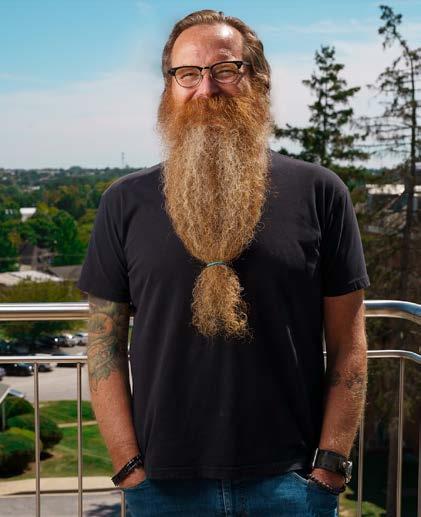
Brad Stoddard, Ph.D., is an Associate Professor of Religious Studies at McDaniel College in Westminster, MD. His research focuses on religion and American prisons, entheogens, religion and the economy, religion and public policy, and theory and method. His most recent book The Production of Entheogenic Communities in the United States (Cambridge University Press, 2024), examines religious communities centered on psychoactive substances.
Tuesday, February 24
NOON – 12:50 PM | BROCK COMMONS
You may never have heard of evangelical purity culture or assume it has nothing to do with you. Yet this movement among White conservative evangelicals has profoundly shaped how sexuality has been taught, regulated, or avoided in American education.
Emerging from the Religious Right, purity culture relied on myths about adolescent sexuality, same-sex love, and federal welfare programs to promote a singular sexual ethic tied to national strength and growth. As White evangelical Christians entered debates over sex education, they formed powerful political alliances that continue to shape educational policy today. Examining purity culture helps us understand how what we now call White Christian nationalism mobilized fears about sexuality and racial difference to gain enduring political and cultural power.
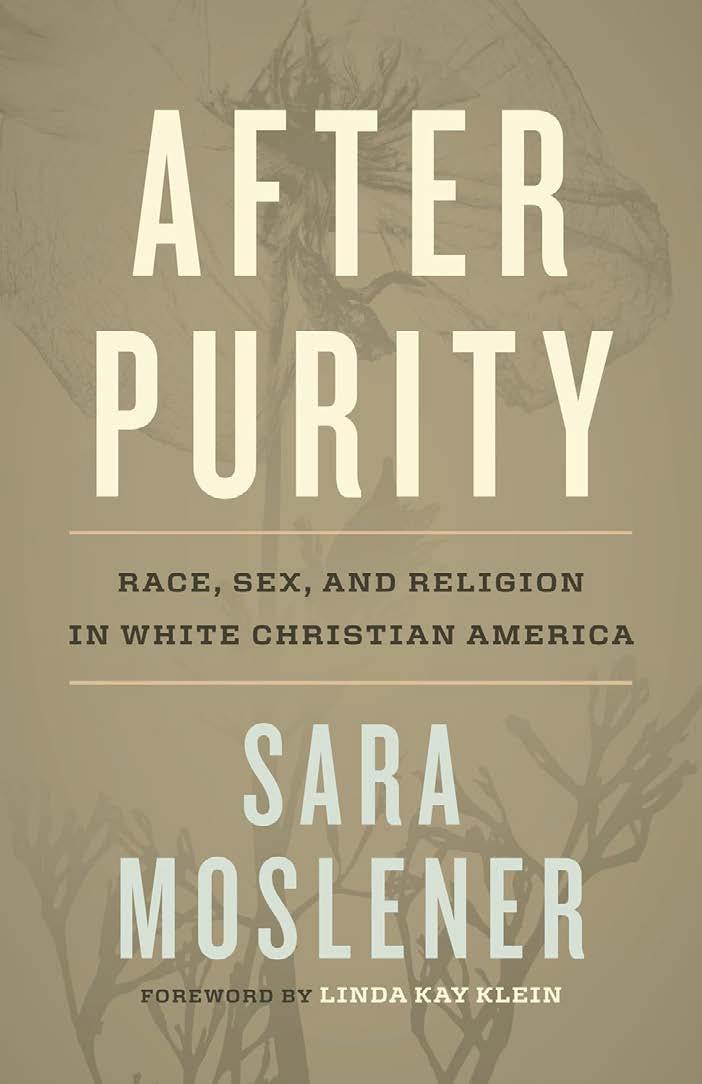
Sara Moslener, Ph.D., is a lecturer in the Department of Philosophy, Anthropology, and Religion at Central Michigan University, where she teaches courses on religious and racial discrimination in the United States. She is the author of Virgin Nation: Sexual Purity and American Adolescence (Oxford University Press, 2015) and After Purity: Race, Sex, and Religion in White Christian America (Beacon Press, 2025), and co-creator of the podcast Pure White: Sexual Purity and White Supremacy
Thursday, March 5
NOON – 12:50 PM | BROCK COMMONS
In partnership with the VWU Departments of History and Gender, Women’s, and Sexuality Studies
In her new book, The Things She Carried, historian Kathleen B. Casey uncovers how something as ordinary as a purse became an extraordinary vessel of freedom across nearly two centuries. In this lecture, Casey focuses on how purses served as portable private spaces that carried tools of resistance throughout the long Civil Rights and gay liberation movements.
Through vivid stories, Casey reveals how these small containers became powerful symbols of autonomy, survival, and the enduring struggle for equality.
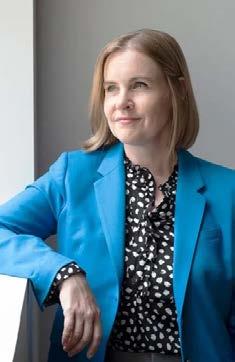
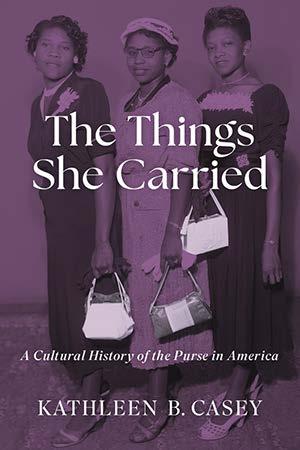
Kathleen B. Casey, Ph.D., is a writer, historian, and expert on women, gender, and sexuality. Her research focuses on how gender, sexuality, and race are embedded in everyday culture. Her latest book, The Things She Carried: A Cultural History of the Purse in America (Oxford University Press, 2025), explores how the seemingly ordinary object of a purse reveals rich, textured stories about gender, sexuality, race, identity, privacy, and power in America. Casey is a Professor of History, and serves as the Director of Women’s, Gender, and Sexuality Studies Program at Furman University.
Thursday, April 2
NOON –12:50 PM | BROCK COMMONS
GARRETT WOOD
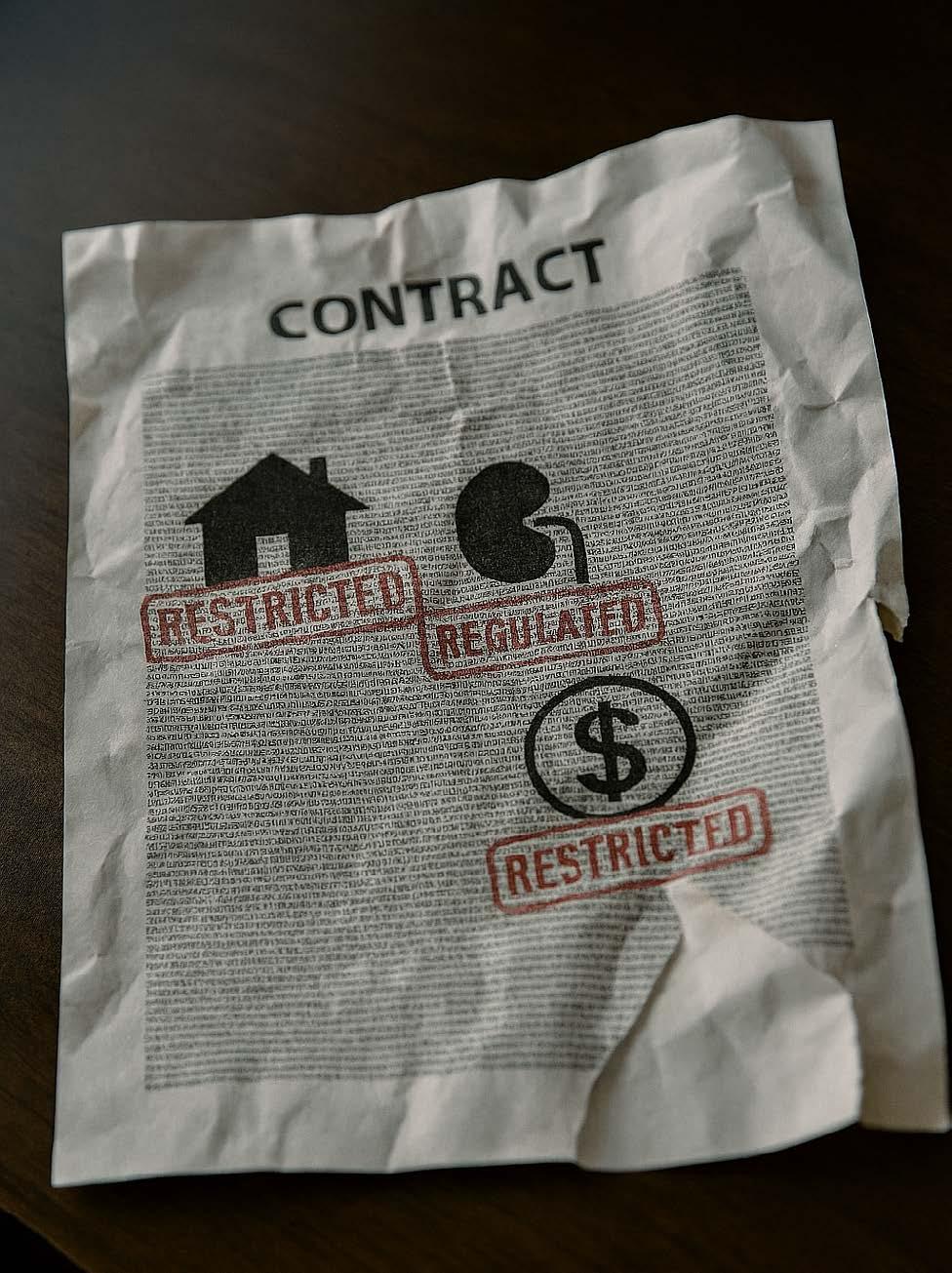
Are You Free to Trade?
F Can you sell your kidney?
F Choose your own investments?
F Buy the house you want?
In many cases, the answer is no.
These are not simply economic questions; they’re questions about the boundaries of personal freedom in a complex society. Markets promise choice and opportunity, but laws, ethical constraints, and unequal access shape who can actually participate. This talk examines the limits placed on economic freedom and asks what those limits reveal about power, justice, and collective responsibility. How free are we to trade and who decides?
Garrett Wood, Ph.D., is an economist and Assistant Professor of Management, Business, and Economics at Virginia Wesleyan University, where he teaches courses in economics and public policy, and the economics of everyday life. A former Surface Warfare Officer in the U.S. Navy, his research focuses on conflict economics, the political economy of war gaming, and foreign intervention.
Tuesday, April 14
NOON –12:50 PM | BLOCKER AUDITORIUM
In partnership with the VWU Departments of History and Gender, Women’s, and Sexuality Studies
What does it mean to tell the history of a place when entire communities were largely written out of it?
Drawing from Queer Virginia: New Stories in the Old Dominion (University of Virginia Press, 2025, co-edited with Jeffrey L. Littlejohn), historian Charles Ford brings to light overlooked stories of LGBTQ+ life across the Commonwealth — from a Black transgender woman navigating Jim Crow-era Virginia, to a legendary lesbian bar in Norfolk, to the creation of queer archives in the former capital of the Confederacy.
Ford explores how queer Virginians carved out spaces of belonging under hostile laws and social norms, demonstrating resilience, creativity, and courage in their pursuit of freedom, visibility, and equality.
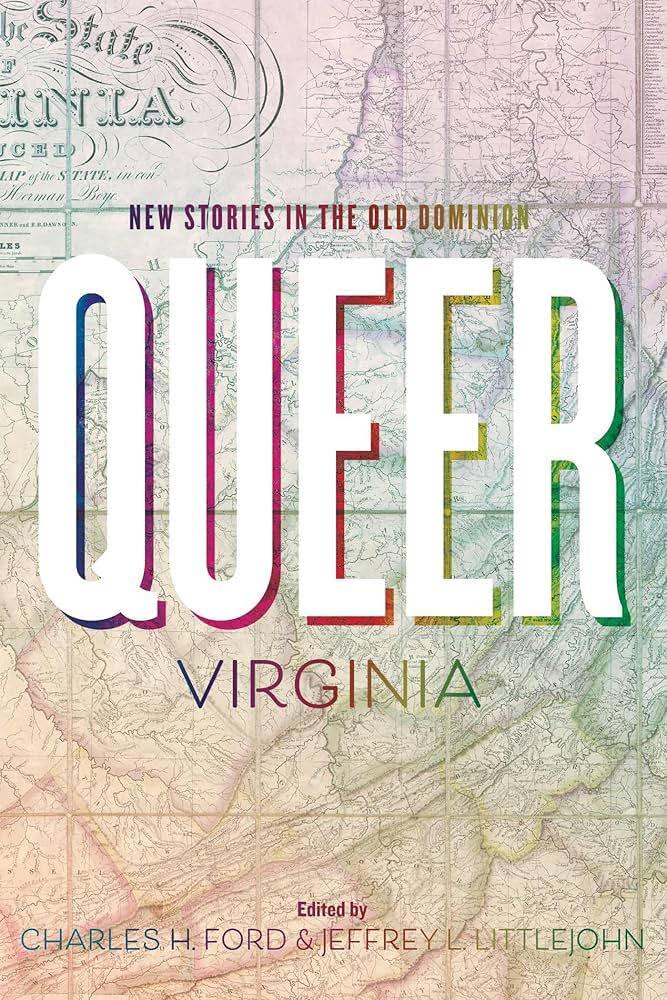
Charles H. Ford, Ph.D., is Professor of History at Norfolk State University. His published work explores school desegregation, the African American civil rights movement in Norfolk, and queer history in Virginia and the Hampton Roads region. Ford has served on several nonprofit and civic boards, most notably as a trustee for the Norfolk Public Library System and as a director for Hampton Roads Pride.
Joe Jackson
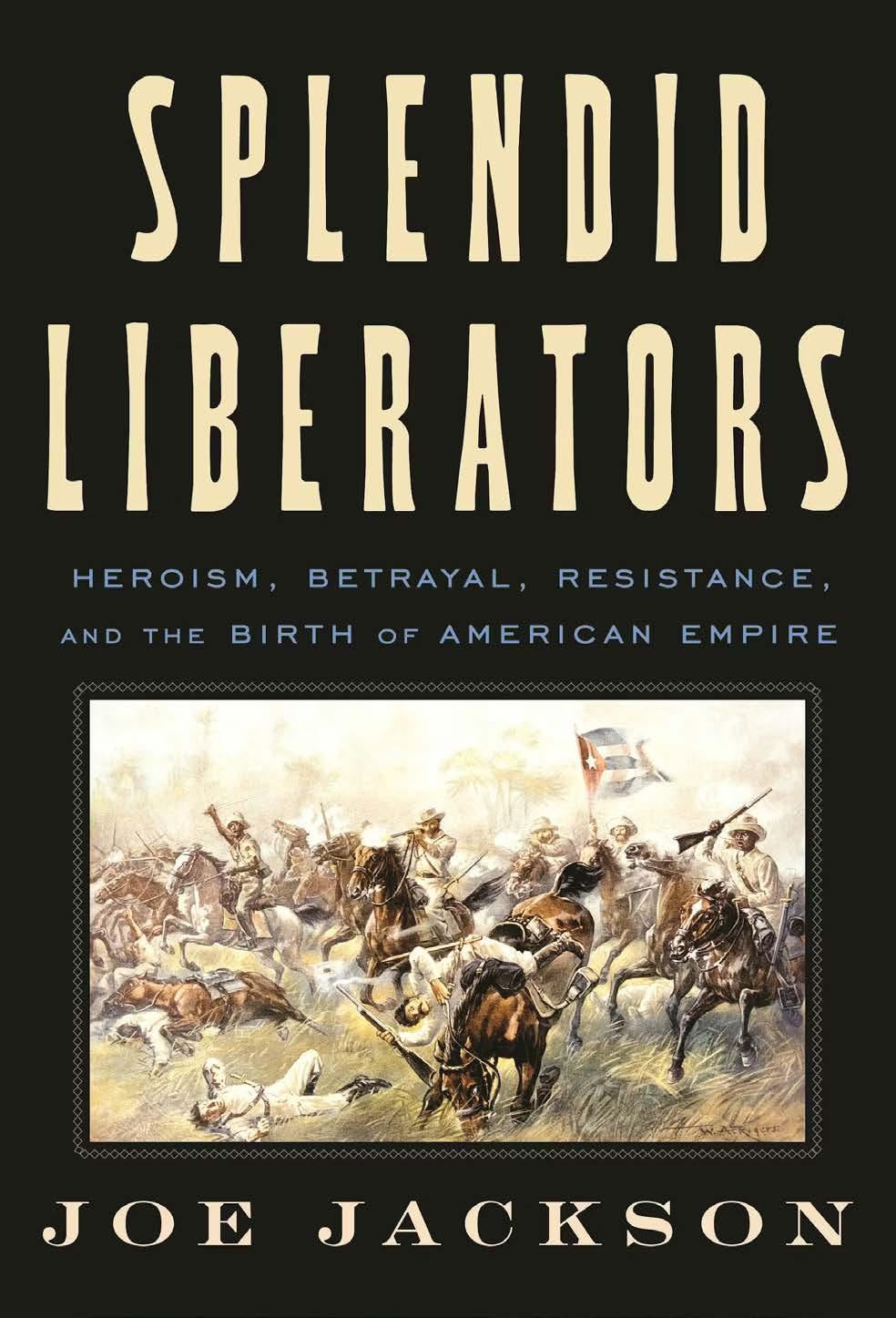
At the turn of the twentieth century, America’s understanding of itself was undergoing a profound shift. In Splendid Liberators: Heroism, Betrayal, Resistance, and the Birth of American Empire (Farrar, Straus and Giroux, 2025), Joe Jackson examines the Spanish-American War as a formative moment when America’s identity shifted from republic to empire. Focusing on the Philippines, Cuba, and Puerto Rico — as well as the United States itself — Jackson traces how the language of liberation was used to justify expansion, blurring the line between freedom and authority, independence and occupation.
As the United States claimed to liberate others, it also redefined — and often restricted — the freedoms of those who were being newly governed. This talk invites us to reconsider a war long framed as righteous and to ask what freedom meant then, and for whom.
Joe Jackson is the author of numerous books, including The Thief at the End of the World: Rubber, Power, and the Seeds of Empire, one of Time’s Top Ten Books of 2008, and Atlantic Fever: Lindbergh, His Competitors, and the Race to Cross the Atlantic. His book Black Elk: The Life of an American Visionary received many national awards, including the PEN/Jacqueline Bograd Weld Award for Biography and the Society of American Historians’ Francis Parkman Prize. A former investigative journalist, he holds an MFA from the University of Arkansas and lives in Virginia Beach, Virginia.
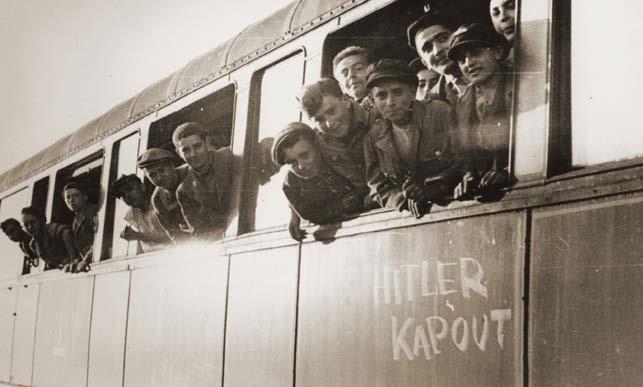
In 1944 and 1945, Allied forces liberated hundreds of thousands of Jews from Nazi tyranny. For many, liberation initially brought overwhelming joy as the fear that they had palpably felt for years began to loosen its grip. Yet that joy quickly gave way to grief as survivors of the Holocaust confronted the loss of families, communities, and entire worlds.
This lecture explores how Jews experienced liberation through sound and sensation — how freedom was heard, felt, and processed in its earliest moments. Using sensory analysis, Sewell reveals liberation not as a single triumphant moment, but as a complex emotional passage shaped by trauma and memory.
Sara Ann Sewell, Ph.D., is a professor of modern European cultural and gender history at Virginia Wesleyan University. Her current research investigates Holocaust victims’ experiences, focusing on their audial, sensorial, and emotional lives. Her forthcoming book with Purdue University Press is entitled Sounding, Hearing, Silencing: Experiencing the Holocaust through the Sonic
Thursday, March 26 | NOON – 12:50 PM | BROCK
Panelists: Elizabeth Malcolm, James Moskowitz, Andrew Reese, Levi Tenen | Moderator: Laila Jones ’26
In partnership with the VWU student chapter of Thirst Project
Access to clean water is more than a public health necessity, it is a question of freedom, power, and justice. This interdisciplinary panel examines water as both a source of liberation and a tool of control around the world.
From communities transformed by the digging of a single well, to regions destabilized when water becomes weaponized, to the racial and social inequities exposed by crises like Flint, Michigan, this conversation asks: How can water be a pathway to freedom rather than a barrier to it?
Thirst Project is the world’s largest youth water nonprofit organization that works to end the global water crisis by building freshwater wells in developing communities that need safe, clean drinking water.
Elizabeth Malcolm, Ph.D., serves as the Batten Professor of Ocean and Atmospheric Sciences and Director of Sustainability at Virginia Wesleyan. James Moskowitz is the Batten Lecturer in Political Science at VWU and Coordinator of the University’s NATO Partnership. Andrew Reese is the Director of School Programs at the Thirst Project. Levi Tenen, Ph.D., serves as VWU Assistant Professor of Philosophy and Coordinator of the VWU Ethics Bowl Team. Laila Jones ’26 is president of the VWU student chapter of Thirst Project. In January, Jones was recognized as the 2026 recipient of the VWU Mavis McKenley Award ’11 which honors a current student who practices ideals set forth by Dr. Martin Luther King, Jr.


Thursday, April 23 | NOON – 12:50 PM | BROCK COMMONS
In partnership with ForKids and The Norfolk Street Choir Project
As the nation marks 250 years since the Declaration of Independence, we are reminded that freedom — like the American Dream — is both a promise and a pursuit.
This program features poetry written and performed by individuals — from ForKids and The Norfolk Street Choir Project — who have experienced housing insecurity. Their words — sometimes tender, sometimes fierce — offer insight into what freedom feels like when home, stability, and voice are uncertain.
The poetry is followed by a conversation with Thaler McCormick, CEO of ForKids, and Robert Shoup, Founding Artistic Director of The Norfolk Street Choir Project, as they explore how art and music, community, and advocacy can help build a future where freedom includes dignity, belonging, and economic security.
ForKids is a nonprofit that helps families and children in Norfolk, Chesapeake, and the surrounding region break the cycle of homelessness and poverty by providing housing, education, and support services.
The Norfolk Street Choir Project engages the community to support and encourage people affected by homelessness through music, arts, meals, and essential services in a joyful and affirming environment.
Thursday, February 19 | 7 – 8:30 PM | GOODE FINE AND PERFORMING ARTS CENTER
Support provided by the Virginia African American Cultural Center (VAACC)
For generations, the American Dream has promised freedom and opportunity, yet for many Black Americans, that promise has been delayed, denied, and deferred.
This program explores Black excellence not as applause or achievement alone, but as sustained moral pressure on a nation reluctant to confront its contradictions. Through spoken word, a Frederick Douglas historical reenactment, music, visual art and student scholarship, the evening asks: What happens when freedom is promised but postponed? And who bears the cost when America fails to keep its word?
Participants:
Frederick Douglass reenactor and author: Nathan Richardson
Co-host: Rebecca Hooker, Ph.D., VWU Associate Professor of English and Africana Studies
Co-Host: Alicia “Sunny” Peoples, Associate Director of Civic Engagement at Tidewater Community College and Vice Chair of the Virginia Beach Arts & Humanities Commission
Speaker: Jeff Toussaint, Ph.D., VWU Associate Professor of Sociology and Criminal Justice
Participants: VWU Africana Studies 111 (Introduction to Africana Studies) Student Poster Presentation
Assistance provided by the VWU Black Student Union | Art Exhibition by VWU students and alumni
Thursday, April 30 | NOON - 1:00 PM | ROBERT NUSBAUM CENTER, CLARKE HALL #108
In partnership with VWU Assistant Professor of Digital Art Derek Eley and students in his ART 208 Photography and ART 204 Digital Art courses
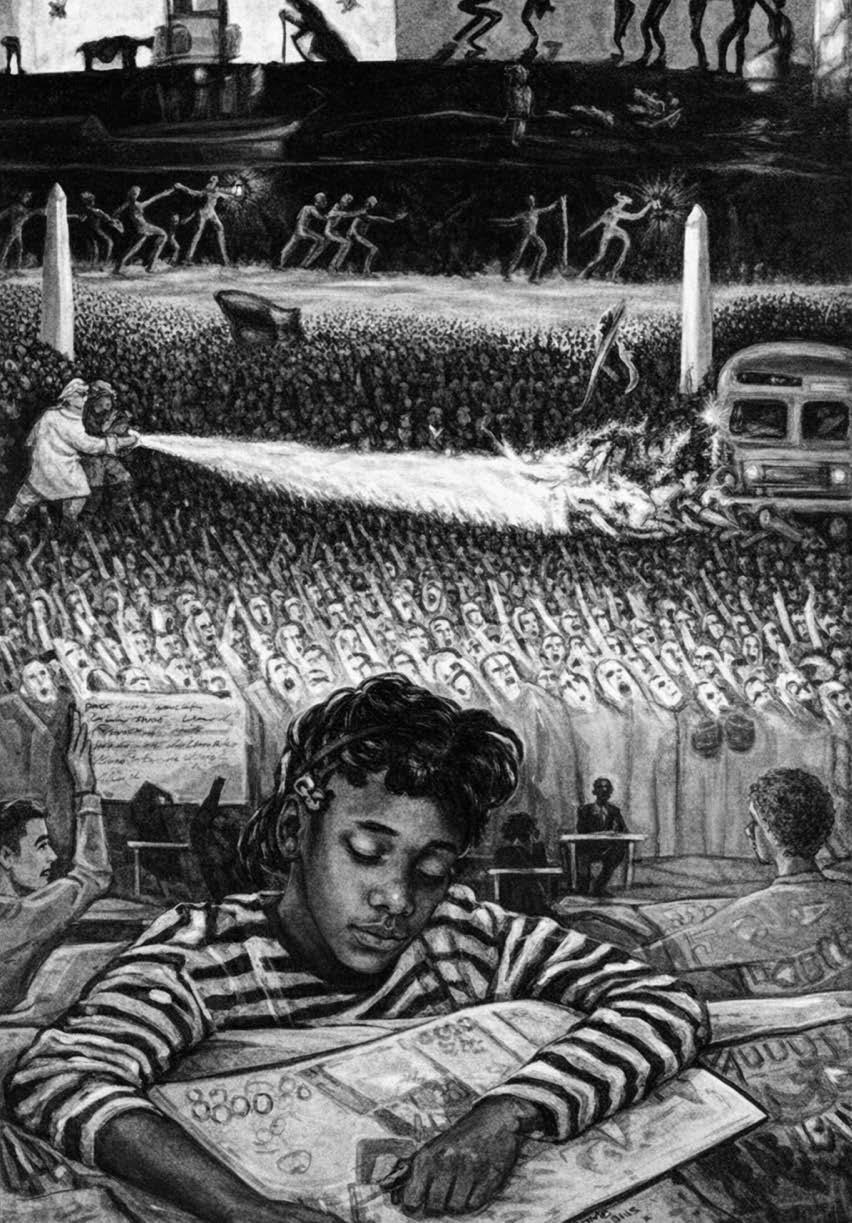
How to photograph freedom? How do you visually represent liberty or civil rights? Students in art courses at Virginia Wesleyan grappled with these questions throughout the semester.
Join us in the Robert Nusbaum Center Office Suite for a reception as we showcase the students’ art and recognize award winners, enjoy conversation and refreshments, and consider the many ways freedom can be imagined, challenged, and re-designed.
Registration required by February 25, or until tour is full. Register with kjackson@vwu.edu or 757.455.3129.
Friday, February 27 | NOON – 1PM
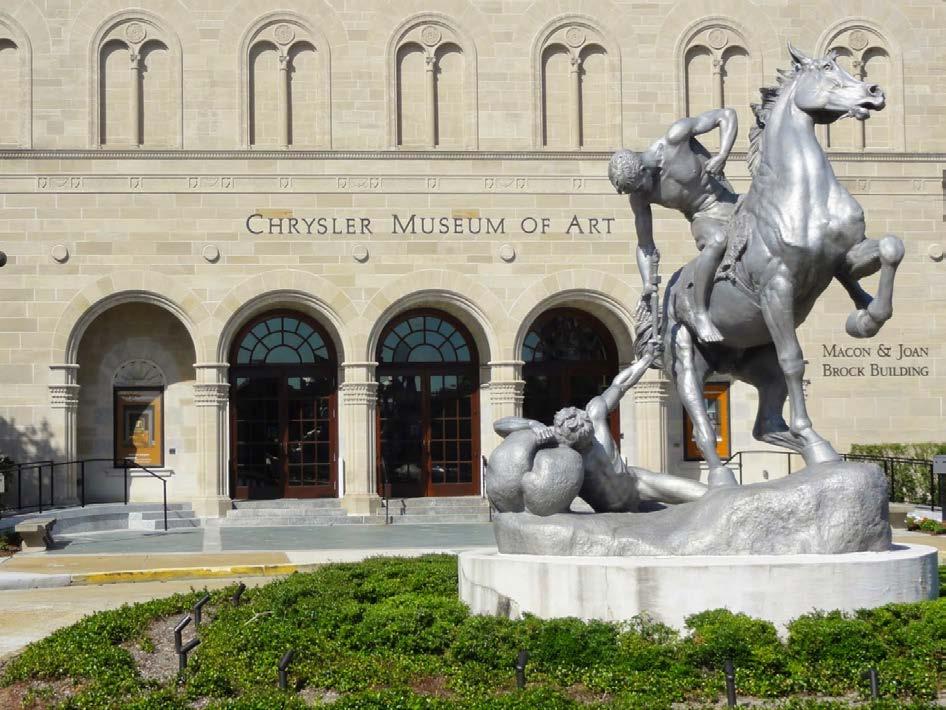
CHRYSLER MUSEUM OF ART, NORFOLK
REPEATED Saturday, February 28 l NOON – 1 PM (Meet in the Chrysler lobby)
Levi Tenen, Craig Wansink
“Freedom” is one of America’s most cherished — and contested — ideas. People define it in ways that sometimes overlap and sometimes completely contradict each other. This guided tour uses works from the Chrysler Museum’s collection to explore three enduring questions that shape both our civic life and our personal lives:
1. What are we free from?
2. What are we free to become?
3. What are we responsible for?
These questions aren’t theoretical. They appear vividly in the Chrysler’s galleries — in Francis William Edmonds’ Facing the Enemy, Edward Hicks’ Washington Crossing the Delaware, Whitfield Lovell’s striking work Freedom, and many more works of art that we explore together.
Levi Tenen, Ph.D., is Assistant Professor of Philosophy at Virginia Wesleyan and Coordinator of the University’s Student Ethics Bowl Team. He researches at the intersection of ethics, political philosophy, and environmental law.
Craig Wansink, Ph.D., serves at Virginia Wesleyan as the Joan P. and Macon F. Brock, Jr. Director of the Robert Nusbaum Center, Batten Professor of Religious Studies and Leadership, and Chair of the Department of Religious Studies.
Sometimes an awards host risks getting punched. Sometimes a late-night comedian hides behind a persona to say the unsayable. And sometimes an actor onstage — especially with a puppet in hand — voices things they’d never say in their own name.
This panel explores humor at the edge-where comedy challenges power, exposes truth, and sometimes causes harm. A theatre director, a scholar of religion, law, and popular culture, and a performance historian reflect on:
^ Who gets to joke about what — and why does that keep shifting?
^ When does humor tell the truth, and when does it punch up or down?
^ Why does comedy feel safer behind a puppet, a character, or a fictional mask?
If democracy depends on free expression, where does satire fit, and what freedoms does humor test, challenge, or stretch? Join us in thinking seriously about humor.
Travis Malone, Ph.D., is the Batten Professor of Theatre and the Anne B. Shumadine Dean of the Batten Honors College at VWU. Eric M. Mazur, Ph.D., is the Gloria and David Furman Professor of Judaic Studies at Virginia Wesleyan University and serves as the Fellow for Religion, Law, and Politics for the Robert Nusbaum Center. Sally Shedd, Ph.D., is Batten Professor of Theatre, Gender, Women and Sexuality Studies and Dean of the Susan S. Goode School of Arts and Humanities at VWU.
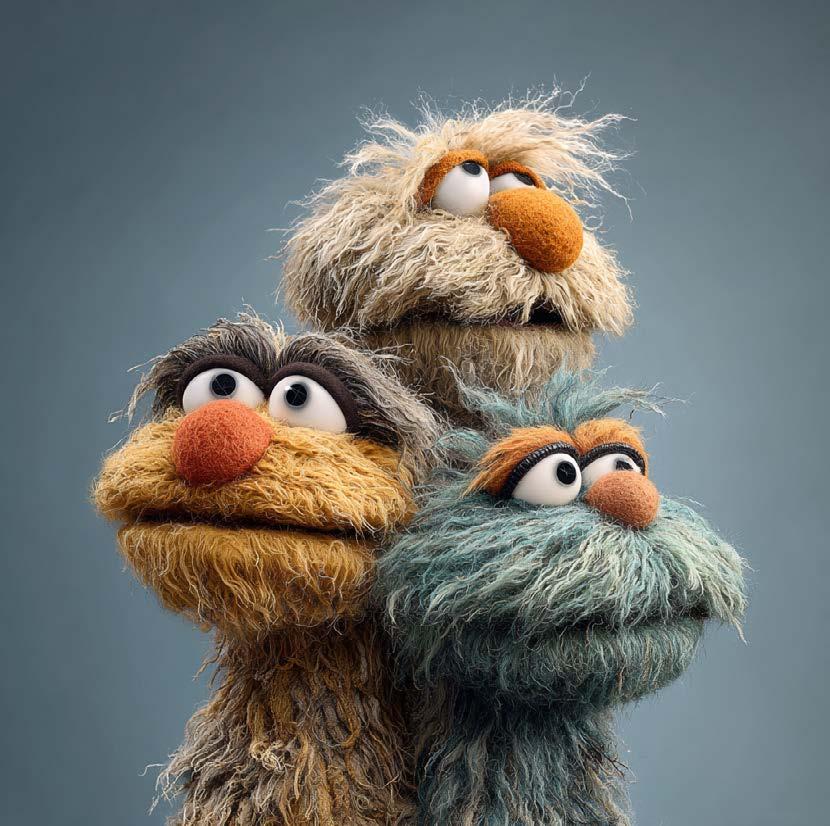
Come to Avenue Q April 9-12 (Thursday-Sunday)
Avenue Q is a sharp, irreverent, comedy musical that blends Sesame Street–style puppet characters with very adult themes, tackling topics like racism, sexuality, mental health, and economic anxiety. For more information and tickets, go to The Arts at VWU online.
February 9 | 7 – 7:40 PM | ZOOM America’s Quirkiest Civic
Freedom in America has never been fixed, it has always been argued, sung, pledged, and reimagined. Join Craig Wansink on these Monday evenings at 7 PM over Zoom for 30-40 minutes as he explores how national symbols we take for granted emerged from conflict, controversy, and competing visions of liberty. Please register for each program to receive an email confirmation and Zoom link. Registration is required by noon on the day of the program. Register with kjackson@vwu.edu or 757.455.3129.
It was written as a marketing campaign to sell flags, for the 400-year Columbus Day Anniversary, for a children’s magazine, by a Christian Socialist, rewritten four times, and originally said with a hand gesture that looked identical to a Nazi salute. And then, despite the fact that a pledge to a flag — not to a constitution — is extremely unusual, children made the pledge normal, wars made it urgent, Congress made it official, and America made it sacred. Join us for a look at a most unusual text and practice.
March 9 | 7 – 7:40 PM | ZOOM
Joseph Pulitzer used the statue to support everyday Americans, embarrass the wealthy elite, and watch newspaper sales soar. Congressmen saw it as a French publicity stunt. Boats saw her as a terrible lighthouse. Black Americans saw her as a powerful symbol of American hypocrisy. Suffragists protested. And Emma Lazarus used words that shaped the meaning of the statue in ways maybe more powerful than the sculptor himself. Join us for new insights and discussion about one of America’s favorite and greenest women.
April 13 | 7 – 7:40 PM | ZOOM
Julia Ward Howe wrote The Battle Hymn of the Republic after hearing Union soldiers sing a crude song about John Brown’s hanging body. Her rewrite — packed with violent apocalyptic imagery from the book of Revelation — became the Union Army’s anthem, the rallying cry of abolitionists, and the song that moved Lincoln to tears. Then the hymn took on a strange second life: a tool of militarism and expansion, a wartime anthem, and eventually the soundtrack of the civil rights movement, quoted by Dr. King the night before he was killed. Join us to explore how one song became sacred scripture, political propaganda, and a prayer for justice.
Craig Wansink, Ph.D., serves at Virginia Wesleyan as the Joan P. and Macon F. Brock, Jr. Director of the Robert Nusbaum Center, Batten Professor of Religious Studies and Leadership, and Chair of the Department of Religious Studies.
ETHICS BOWL DEMONSTRATION
Ethics in Business
Thursday, 7- 8 PM
The Truist Lighthouse, Clarke Hall
NUSBAUM AT NIGHT
America’s Quirkiest Civic Liturgy:
The Very Odd Pledge of Allegiance
Craig Wansink, Ph.D.
Monday, 7 - 7:40 PM l ZOOM
Registration required. Register by noon with kjackson@vwu.edu or 757-455-3129
NUSBAUM LECTURE
High for a Higher Power?: God, Drugs, and Religious Freedom
Brad Stoddard, Ph.D.
Thursday, 12 - 12:50 PM | Brock Commons
A Dream Deferred: Black Excellence, Voice, and Resistance
Thursday, 7 - 8:30 PM
Goode Fine & Performing Arts Center
Support provided by the Virginia African American Cultural Center
What You Learned About Sex and What That Tells Us About Race & Religion in the US
Sara Moslener, Ph.D.
Thursday, 12 - 12:50 PM | Brock Commons
CHRYSLER GALLERY TOUR
Freedom “From,” “To,” and “For” Levi Tenen, Ph.D., Craig Wansink, Ph.D. Friday, 12 PM - 1 PM Chrysler Museum of Art, Norfolk (Meet in Chrysler Lobby)
Registration required by Feb 25. Register with kjackson@vwu.edu or 757-455-3129
CHRYSLER GALLERY TOUR
Freedom “From,” “To,” and “For” Levi Tenen, Ph.D., Craig Wansink, Ph.D. Saturday, 12 PM - 1 PM Chrysler Museum of Art, Norfolk (Meet in Chrysler Lobby)
Registration required by Feb 25. Register with kjackson@vwu.edu or 757-455-3129
Carrying Freedom: The Hidden History of the Purse in America
Kathleen Casey, Ph.D.
Thursday, 12 - 12:50 PM | Brock Commons
In partnership with the VWU Departments of History and Gender, Women’s, and Sexuality Studies
NUSBAUM AT NIGHT
Liberty, Lies, and Lazarus: The Statue We Think We Know
Craig Wansink, Ph.D.
Monday, 7 - 7:40 PM | Zoom
Registration required. Register by noon with kjackson@ vwu.edu or 757-455-3129
Liberators or Occupiers?: Rethinking America’s First ‘Good War’ Joe Jackson
Thursday, 12 - 12:50 PM | Brock Commons
Unchained Waters: Freedom and Control in a Thirsty World
Elizabeth Malcolm, Ph.D., James Moskowitz, Andrew Reese, Levi Tenen, Ph.D. Moderated by Laila Jones’26 Thursday, 12 - 12:50 PM l Brock Commons In partnership with the VWU student chapter of Thirst Project
2 Are You Free to Trade?
Garrett Wood, Ph.D.
Thursday, 12 - 12:50 PM l Brock Commons
9
Freedom to Laugh: Comedy, Taboo, and the Line Between Humor and Harm in the Theatre
Travis Malone, Ph.D., Eric M. Mazur, Ph.D., Sally Shedd, Ph.D.
Thursday, 12 - 12:50 PM | Blocker Auditorium
NUSBAUM AT NIGHT
Glory, Glory, Ambiguity: The Strange Journey of The Battle Hymn of the Republic
Craig Wansink, Ph.D.
Monday, 7 - 7:40 PM l ZOOM
Registration required. Register by noon with kjackson@vwu.edu or 757-455-3129
14 16 23 30
Queer Virginia:
New Stories in the Old Dominion
Charles H. Ford, Ph.D.
Tuesday, 12 - 12:50 PM l Blocker Auditorium
In partnership with the VWU Departments of History and Gender, Women’s, and Sexuality Studies
Freedom from Fear: Jews and the Sounds of Liberation, 1944-1945
Sara Ann Sewell, Ph.D.
Thursday, 12 - 12:50 PM | Blocker Auditorium
Home Is a Poem: Poetry, the American Dream, and Unhoused Voices
Thursday, 12 - 12:50 PM l Brock Commons
In partnership with ForKids and The Norfolk Street Choir
Designing Freedom: A Reception and Student Art Contest
Thursday, 12 - 1 PM l Nusbaum Center, Clarke Hall #108
In partnership with VWU Photography and Digital Art courses
VIR GINIA WESLE YAN UNIVERSIT Y YA N
DIVERSIT Y | DIAL OGUE | F AITH | FREEDOM
Craig Wansink, Ph.D.
Joan P. and Macon F. Brock, Jr. Director of the Robert Nusbaum Center, Batten Professor of Religious Studies and Leadership, and Chair of Religious Studies
Kelly Jackson
Associate Director of the Robert Nusbaum Center
Eric M. Mazur, Ph.D.
Fellow for Religion, Law, and Politics for the Robert Nusbaum Center, and the Gloria and David Furman Professor of Judaic Studies
757.455.3129 vwu.edu/nusbaumcenter NusbaumCenter@vwu.edu
Understanding
DIVERSITY | DIALOGUE | FAITH | FREEDOM is published twice a year by the ROBERT NUSBAUM CENTER at Virginia Wesleyan University
EDITOR Craig Wansink, Ph.D.
MANAGING EDITOR Kelly Jackson
ART DIRECTOR Kayla Monroe
5817 Wesleyan Drive Virginia Beach, VA 23455
Thursday, February 5 | 7 - 8PM | THE TRUIST LIGHTHOUSE, CLARKE HALL
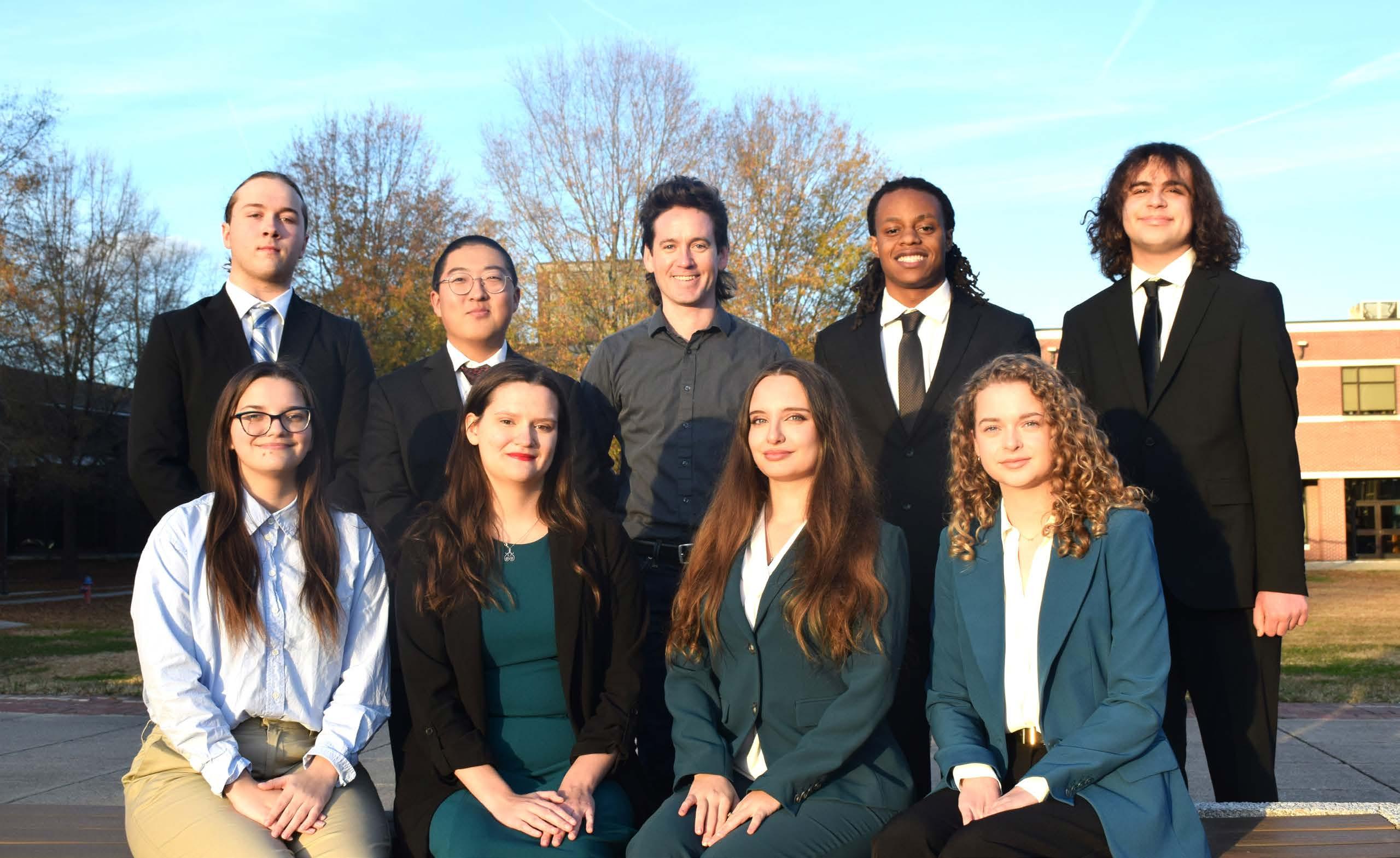
Virginia Wesleyan University’s 2026 Ethics Bowl Team competes in the annual statewide collegiate Applied Ethics Bowl sponsored by the Virginia Foundation for Independent Colleges (VFIC). The teams debate real-world dilemmas related to this year’s theme, “Ethics in Business” and explore tensions between corporate goals, community responsibility, and employee obligations. In advance of the VFIC 2026 Ethics Bowl, the Nusbaum Center hosts a public debate demonstration.
Pictured from left, top row: Raymond Slattery, Andrew Steiner, Levi Tenen, Ph.D., Jahki Emmons-Mayo, Daren Abramaitys. From left, bottom row: Abigail Wigginton, Elena Lichtenwalner, Avery Belisle, Eleanor VanDuyne.
Join us in supporting the team as they prepare for the February 13, 2026 competition at the University of Richmond.