Virginia Farm Bureau News (USPS 017-763) (ISSN 1525-528X) is published four times a year. January, April, September, November. It is published by Virginia Farm Bureau Federation, 12580 West Creek Parkway, Richmond, VA 23238. Periodicals postage rate is paid at Richmond, VA and additional mailing offices. The annual Subscription Rate is $1.13 (included in membership dues).
Postmaster: Please send changes of address to, Virginia Farm Bureau Federation, Farm Bureau News, P.O. Box 27552, Richmond, VA 23261-7552; fax 804-290-1096. Editorial and business offices are located at 12580 West Creek Parkway, Richmond, VA 23238. Telephone 804-290-1000, fax 804-290-1096. Email virginiafarmbureaunews@vafb.com. Office hours are 8 a.m. to 4:30 p.m., Monday through Friday.
Virginia Farm Bureau receives one of the highest
The grassroots organization celebrates its centennial this year. View a timeline of historic events that helped shaped
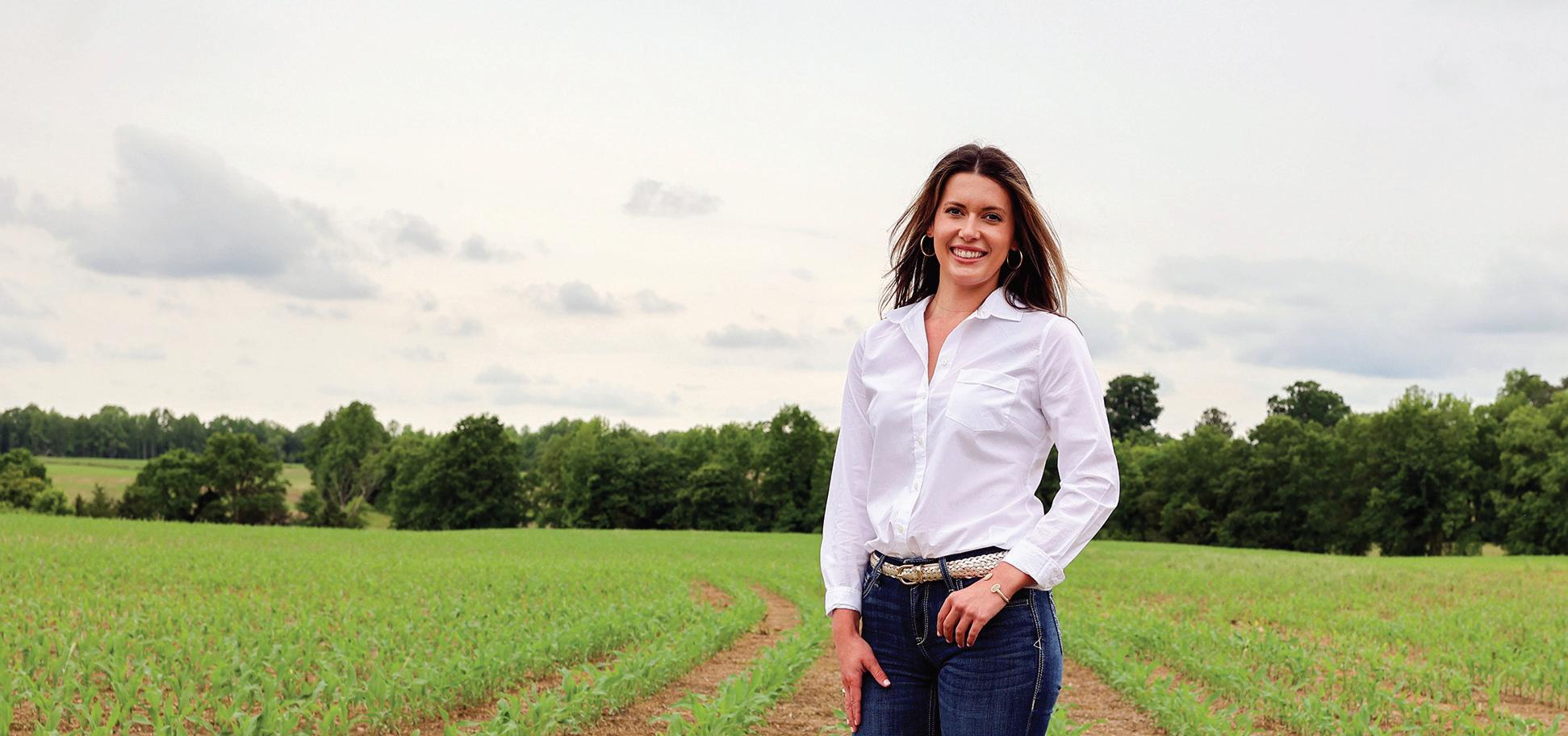
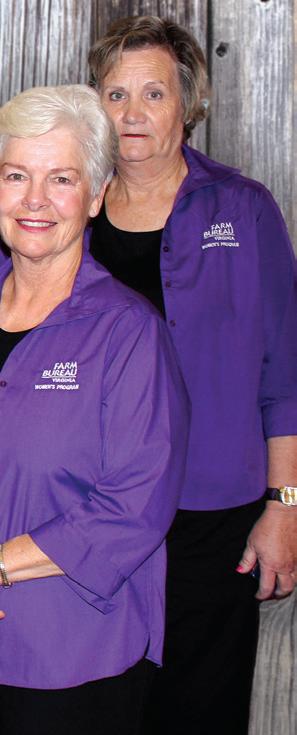
This year marks the International Year of the Woman Farmer, and our series continues with highlights of
“If you’re active in Farm Bureau, it doesn’t take long to see its importance.”
— BOB MOSS JR. Tazewell County farmer
PUBLICATION SCHEDULE
Members — Address change? If your address or phone number has changed, or is about to change, contact your county Farm Bureau. They will update your membership and subscription information. All advertising is accepted subject to the publisher’s approval. Advertisers must assume liability for the content of their advertising. The publisher assumes no liability for products or services advertised. The publisher maintains the right to cancel advertising for nonpayment or reader complaints about services or products.
Member: Virginia Press Association
EDITORIAL TEAM
Kathy Dixon Assistant Director, Communications
Nicole Zema Sr. Staff Writer/Photographer
Christina Amano Dolan Staff Writer/ Photographer
Kenny Kane Graphic Design Manager
Eleanor Stickley Sr. Graphic Designer
Alice Kemp Sr. Staff Writer/Advertising Coordinator
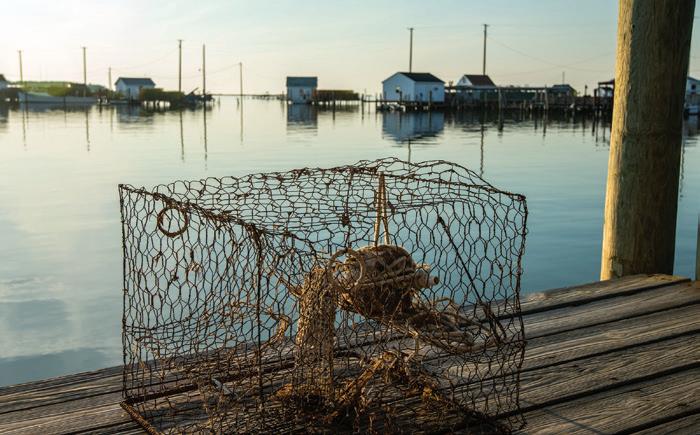
The state’s strawberry growers are fighting a
is threatening this
Producer members will receive their next issue of Virginia Farm Bureau News in September. The magazine is published quarterly, and back issues can be viewed at issuu.com/ virginiafarmbureau
WE’RE SOCIAL!
VIRGINIA FARM BUREAU FEDERATION Officers
Scott E. Sink, President
Robert J. Mills Jr., Vice President
Board of Directors
DIRECTOR DISTRICT COUNTY
Emily F. Edmondson 1 Tazewell
Richard L. Sutherland 2 Grayson
Bruce N. Stanger 3 Montgomery
Jeannie L. Dudding 4 Craig
Russell L. Williams II 5 Rockbridge
Justin Pence 6 Shenandoah
Thomas E. Graves 7 Orange
Leigh H. Pemberton 8 Hanover
Patrick Murphy 9 Prince Edward A. Bruce Slagle 10 Halifax
Matt T. Fimon 11 Brunswick
J. Barry Bates 12 Essex
Gary D. Cross 13 Southampton
David L. Hickman 14 Accomack
A. Faye Hundley * Essex
Thomas N. Henley ** Goochland
*Women's Leadership Committee Chair
**Young Farmers Committee Chair
A century of roots, a future of growth: Living our four pillars
As we celebrate Virginia Farm Bureau’s centennial anniversary, we find ourselves at the unique intersection of history and horizon. We look back with pride on 100 years of advocacy, and we look forward with a strong vision for what comes next. Last April, I wrote in this column a pledge to lead this organization based on four pillars: Connection, Proactivity, Purpose and Transparency.
Over this past eventful year, we haven't just spoken about these principles; we have lived them, honoring our century-long legacy while adapting for the farms and farmers of the future.
Connection: Bridging the Gap
For 100 years, we have united farmers. Today, our challenge is connecting that agricultural heritage with a modern consumer base. We have worked tirelessly to bridge the gap between producer and consumer, as well as between farmers and legislators, both urban and rural.
Our efforts to educate urban legislators through farmer roundtables and other events ensure that those who write our laws and regulations understand how Virginia’s farmers produce the food and fiber our economy relies on. Similarly, our magazines and other communications efforts continue to be a vital tool for our non-farming members, offering them a window into the diversity and abundance of Virginia agriculture.
We also are planting seeds for the future through Virginia Agriculture in the Classroom. Now in its 18th year, Agriculture Literacy Week saw volunteers read to over 70,000 children across the commonwealth, bolstered by financial grants to 45 localities, providing 26,000 youth with hands-on experiences in everything from STEM integration to animal agriculture and forestry.
Proactivity: The Power of Grassroots
A century of success proves that we are strongest when we act rather than react. Our grassroots process remains focused on proactivity, but we need all our members to engage and share their vision for Virginia agriculture if we are to continue our success in the next century. Every policy victory we secure begins with our members identifying issues at the county level, raising those issues during our policy development process, and voting them into final policy at our annual meeting.
This proactive spirit was undeniable during the recent General Assembly session.
In early February, over 100 farmers showed up for our annual Legislative Day, meeting with lawmakers to discuss the direct impact legislation will have on their livelihoods and in their communities.
In late February, for the first time ever, we hosted a Farm Woman Lobby Day. In honor of 2026 being designated the Year of the Woman Farmer, Farm Bureau women met with
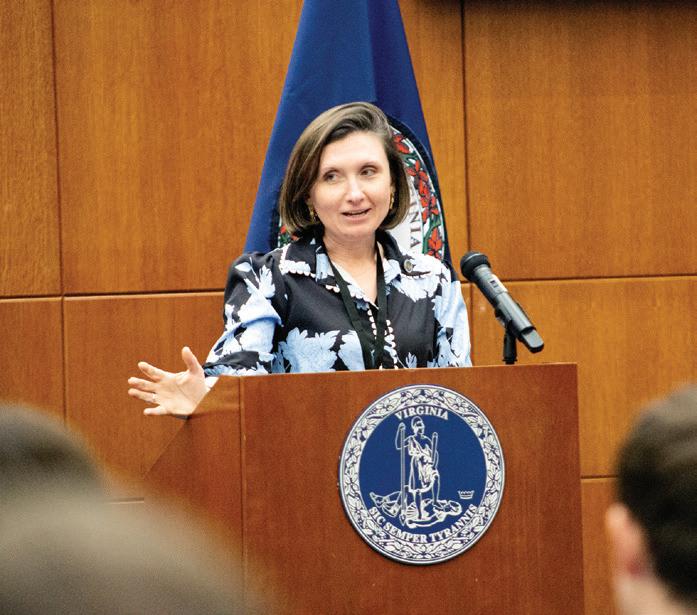
Gov. Abigail Spanberger and Secretary of Agriculture and Forestry Katie Frazier to discuss the important role women play in agriculture.
For nearly 80 years, the Women’s Leadership Program has supported, mentored and championed the leadership development of women within our agricultural communities, providing guidance, advocacy, and opportunities to participate in policy discussions, public speaking and leadership roles through Farm Bureau activities.
Purpose: Empowering the Next Generation
Our young farmers may not have experienced most of our first century, but they will help build our second century. Our purpose is to leverage the wisdom of our past while igniting the passion of the younger generation. Our goal is to empower the next generation of leaders by equipping them with the skills and connections they need to be successful. Farmers have an independent spirit, but we all know community is how we stand strong and accomplish common goals.
In celebration of our ongoing commitment to developing agricultural leaders, we relaunched the Growing Leaders Program, which will empower participants to lead with confidence, influence policy and strengthen their communities. This aligns with our mission to foster leadership, collaboration and a supportive network where both seasoned experts and the next generation—of any age and any background—work together to grow a more resilient agricultural industry.
Transparency: Building Trust for the Next 100 Years
Finally, I promised you transparency. This means being open about the challenges facing our industry, clearly celebrating our victories, and ensuring every member understands the value of their investment in this organization. I encourage you to reach out to me and VAFB’s leadership with questions, concerns or suggestions. Whether you have thoughts related to our organization’s mission, the rationale behind our policy decisions, or how we can better serve our members, our door is open.
We are not just preserving an organization; we are stewarding a movement. Thank you for standing with us as we close the chapter on our first 100 years and begin writing the next one—connected, proactive, purposeful and transparent in service to our members.
Share with us how Farm Bureau is relevant to you by scanning this QR code.
Scott Sink, an agritourism operator and beef cattle and hay farmer in Franklin, Montgomery and Pulaski counties, is president of Virginia Farm Bureau Federation.
For more information, call Ken Newman at 540-297-3299 or by email at royaloakfarmllc@gmail.com
year ends Oct. 31, 2026.
Agriculture touches your life every day! Meet the Virginia farmers who raise products for your table and your community. Learn how to prepare delicious Virginia foods and cultivate a lush landscape and edible garden.
Real Virginia airs nationwide at 8:30 a.m. on the first and third Thursdays of each month in the Voices of Agriculture program on RFD-TV on Dish Network and DirecTV, and on selected cable outlets around the state. Watch anytime at vafb.com
State Fair countdown
As of April 1, there are 177 days until the 2026 State Fair of Virginia opens on Sept. 25 and runs through Oct. 4. This year’s theme, “Virginia's Best of Show,” celebrates the champions, craftsmanship, flavors, moments and Virginia traditions that make the fair timeless.
Fair fact:
The 2025 fair hosted over 5,600 exhibitors and drew more than 11,000 entries in competitions for livestock; vocational and technical education; visual and culinary arts; and horticulture. The fair’s Educational Expo had a record 16,000 participants, representing 82 counties and 30 cities throughout Virginia. Additionally, since 2013, the State Fair of Virginia has awarded over $1 million in scholarships to support youth education.
The State Fair is a prime opportunity to demonstrate Virginians’ skills and talents, and earn a coveted blue ribbon! And now is the time to brainstorm and practice what you’d like to enter in the competitions. With countless youth and adult baking, cooking, arts and crafts, horticulture and livestock competition categories, there’s something for everyone.
The fair’s 2026 competition guidelines will be available this summer at StateFairVa.org. Stay tuned for fair news and updates by following the fair on Facebook at Facebook.com/StateFairVa and Instagram @statefairva.
Farm Bureau celebrates Centennial at the Homestead
Virginia Farm Bureau will mark a major milestone when it gathers for the 2026 Virginia Farm Bureau® Federation Annual Convention at The Omni Homestead Resort in Hot Springs Dec. 1-3. As the organization celebrates its centennial, the convention will feature special programming honoring 100 years of advocacy, agricultural leadership and community.
Plans for the event include guest speakers, policy discussion, competitive events, award recognitions and educational sessions, along with a dedicated commemoration showcasing the Federation’s legacy and role in shaping the future of agriculture.
Registration is expected to open by Labor Day. The convention is open to county Farm Bureau members, staff and any member of the public interested in learning more about Virginia agriculture.
YF deadline extended
The Young Farmers County Activity Award contest deadline has been extended to June 1. Winners will be announced at the Summer Expo July 24-26 in Tappahannock.
The award highlights impactful activities young farmers are sponsoring in their counties. Categories include: Educational Events, Networking and Community Outreach. Young farmers can apply here: bit.ly/4tNfgT8.
Young Farmers competition applications now being accepted
The application deadline for young farmers interested in competing for the 2026 Virginia Farm Bureau Federation Young Farmers Achievement and Excellence in Agriculture awards is April 30.
The Achievement Award recognizes outstanding young farmers for their business success and volunteer involvement, while helping them evaluate their business plans and set goals to strengthen their farming operations.
The state winner will receive a 250-hour lease on a piece of Kubota or similar utility vehicle courtesy of Southern Farm Bureau Life Insurance Co.; $2,000 in cash prizes from Farm Credit; and a travel package to the 2027 American Farm Bureau Annual Convention in Charlotte, North Carolina, to compete for national honors. The runner-up also receives a travel package to the AFBF convention and $750. Finalists are each awarded $500.
The Excellence in Agriculture Award recognizes individuals and couples for involvement in supporting agriculture, leadership ability, and
involvement and participation in Farm Bureau and other organizations.
The state winner will receive a utility vehicle courtesy of Virginia Farm Bureau Mutual Insurance Co., $500 courtesy of Montgomery County Farm Bureau, and a travel package to the AFBF convention. The runner-up also receives a travel package to the AFBF convention, and finalists are each awarded $500.
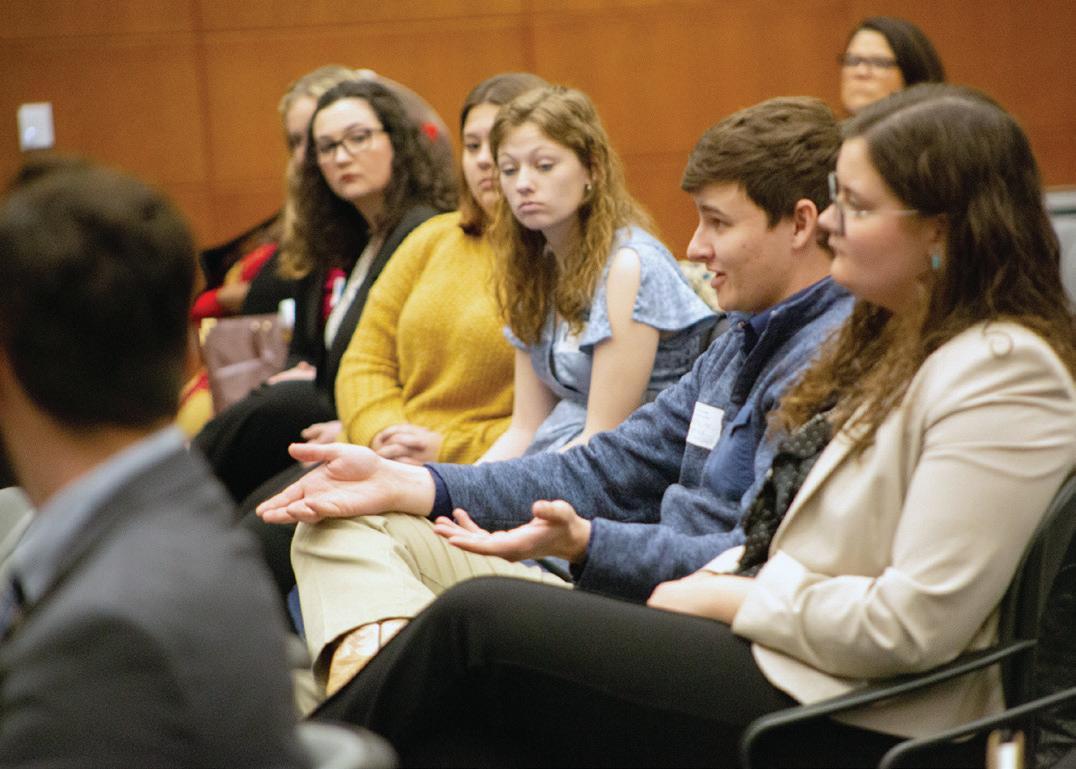
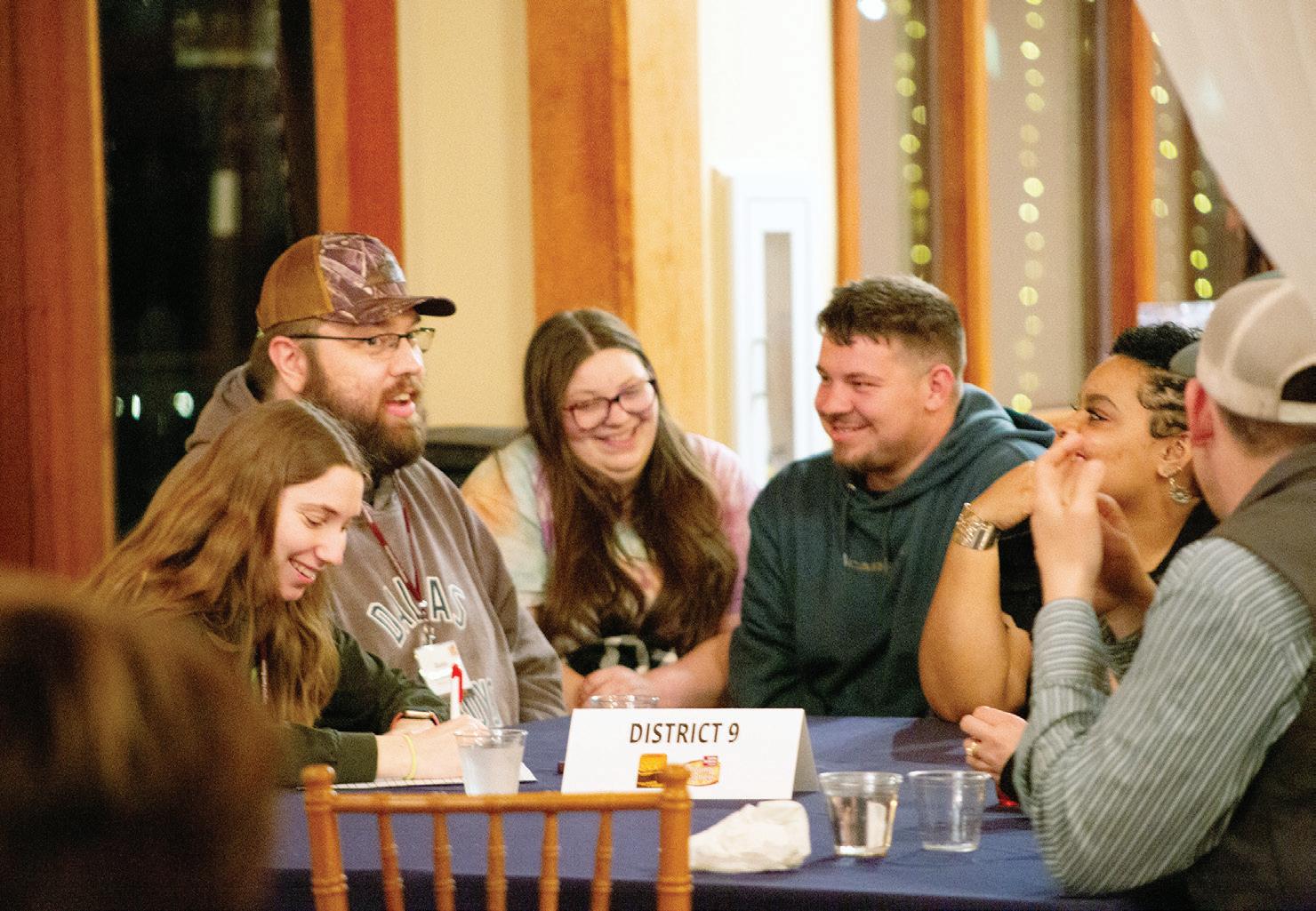
Young farmers interested in competing in the VFBF Discussion Meet competition at the YF Summer Expo July 24-26 in Tappahannock can sign up anytime between now and the competition. The Discussion Meet is designed to simulate a committee meeting in which participants build basic discussion skills, develop an understanding of important agricultural issues and explore how groups can pool knowledge to solve problems.
For complete rules and registration forms, visit vafb.com/SupportingFarmers/Farmers-in-Action/Young-Farmers or email kelly.roberts@vafb.com
Clean Water Starts at Home.
Your family’s water safety begins right beneath your feet.
Clean groundwater beneath your property is important — especially if it’s the water you drink every day. Furthermore, today’s groundwater becomes tomorrow’s surface water in creeks, rivers, or lakes. Old underground oil tanks that go unchecked can develop holes and release contaminants that move through the soil, impacting the groundwater that sustains us.
Pollard Environmental provides professional underground tank inspections and remediation services across the Commonwealth. We secure financial assistance from state funding—ensuring environmental protection without f inancial strain. Since 1998, we’ve protected Virginia families, homes, and water—one property at a time.
Protect what’s unseen underground — schedule your tank inspection today.
Central Virginia: Tidewater: Northern Virginia: Lynchburg: 804-749-3339
Promotions, new employees will strengthen membership service
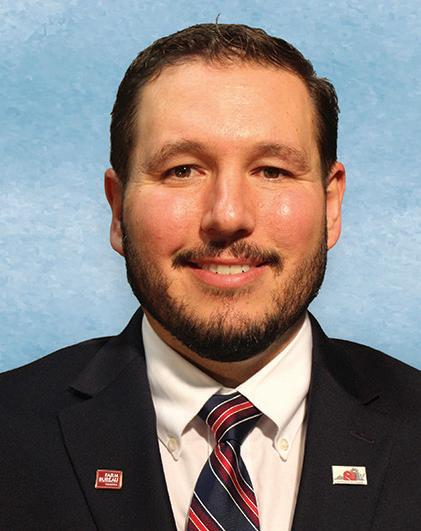
Matt Nuckols has been promoted to Director of Membership Engagement in the Membership & Field Services Department. Nuckols will lead and support a team that will focus on strengthening county level membership engagement, expanding membership reach, and ensuring valuable service across the organization.
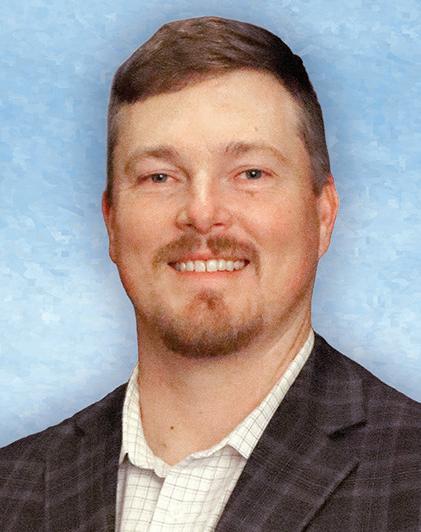
Nicholas “Nick” Moody has been hired as the District 13 field services director. In that role, Moody will serve the county offices in Charles City-James City-New Kent-York, Dinwiddie, Greensville, Prince George, Southampton, Surry and Sussex.
Nuckols previously served as senior district field services director and also coordinator for the Virginia Farm Bureau Federation Safety Program. In that role, he led collaborative initiatives that increased county participation, strengthened coordination across teams, and supported statewide engagement efforts.
With more than six years of service to Farm Bureau members, he has built strong partnerships with county boards across the state, and developed a deep understanding of the challenges and opportunities facing local leaders.
A graduate of Virginia Tech, Nuckols grew up on a dairy farm and currently co-owns and lives with his wife, son and daughter on Eastview Farm Inc. When he was farming fulltime, he visited schools, agriculture clubs, fairs and other events with his cow, Cinderella—all part of his efforts to educate consumers about farming.
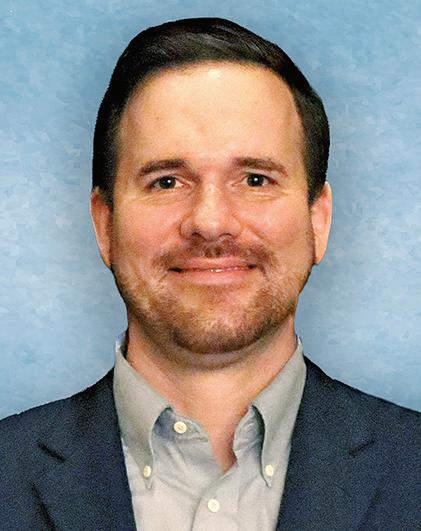
Within the M&FS Department, Chris Atkins has been hired as the District 14 field services director. In that role, Atkins will serve the county offices in Accomack, Chesapeake, Isle of Wight, Nansemond, Northampton and Virginia Beach.
Moody lives in Dinwiddie County. He and his wife, Katina, are involved in a multigenerational row crop farming operating in Dinwiddie and Nottoway counties.
He is a certified crop adviser and certified nutrient management planner and spent 10 years serving as a nutrient management coordinator for the Virginia Department of Conservation and Recreation. Moody holds an associate’s degree in agricultural technology and a bachelor’s degree in crop, soil and environmental sciences from Virginia Tech, where he served as a Noble Ruler for Alpha Gamma Rho fraternity.
A lifelong member of Virginia Farm Bureau, Moody is a past president of the Dinwiddie County Farm Bureau and also has served as president of the Virginia Soybean Association, advocating for growers and advancing Virginia’s soybean industry.
In the Agriculture, Development & Innovation Department, Whitney Perkins, MPA, CAE, has been promoted to director of the Virginia Foundation for Agriculture, Innovation and Rural Sustainability.
Chris Atkins is an experienced public policy and association management professional with a strong background in governmental affairs, legislative analysis and organizational leadership.
He resides in Virginia Beach and has a career spanning roles as executive director for multiple statewide agricultural trade associations, a political consultant, and a campaign manager. He has coordinated complex policy initiatives, managed multimillion dollar budgets, and built coalitions across state and federal agencies, Fortune 500 companies and community organizations.
A graduate of Virginia Tech with a degree in agricultural sciences and a minor in leadership and social change, Atkins also is an alumnus of the Sorensen Institute for Political Leadership and remains actively involved in professional and civic organizations statewide.
With over a decade of rural and value-added agriculture experience, she leads business and cooperative development efforts and oversees the foundation’s educational initiatives. In the last five years, the program has supported more than 250 clients in receiving $20 million in grant and loan funding, generating an estimated $84 million economic impact for Virginia’s rural communities.
She serves on the Virginia Society of Association Executives board of directors and is president of the Louisa County Fair. A graduate of Virginia Tech, Perkins now resides with her husband on her family’s sixth generation farm in Louisa County.
MOODY
NUCKOLS
PERKINS
Look ahead to summer with special member savings!
Get discounts on the Alamo-EnterpriseNational family of brands
Enterprise, National and Alamo are all part of the same family of brands.
And now Virginia Farm Bureau members get exclusive savings on all three car rentals! Members will receive a discount of 5% to 20% on these brands.
Each of these three rental car companies share the same mission of getting you where you want to go, with excellent customer service along the way.
No matter which brand you choose, you’ll enjoy a large selection of clean, reliable rental vehicles and the convenience of more than 7,600 neighborhood and airport locations.
Choose from great rates on a large selection of standard, exotic and luxury vehicles. To activate your discount, log in to vafb.com or call 844-661-7135.
Relax at discounted Choice hotels
Your Farm Bureau membership entitles you to significant savings at thousands of hotel properties. Reservations are required, and blackout dates may apply.
The Choice Hotels International program offers a 20% discount off “best available rates” for Farm Bureau members at more than 7,000 locations. To access this discount rate, visit choicehotels.com or go to vafb.com/benefits and log in with your membership number.
Take a family trip to top-rated Dollywood theme park
Located in Pigeon Forge, Tennessee, Dollywood is recognized as one of the world’s best theme parks. Spanning 150 acres and located near Great Smoky Mountains National Park, Dollywood offers more than 40 rides and attractions, including Lightning Rod, the world’s fastest wooden coaster. Dollywood has won more awards than any other theme park for its live shows featuring country, bluegrass, Southern gospel and classic rock. Master craftsmen demonstrate the area’s rich artistry, from hand-blown glass to blacksmithing.
Members may purchase discount tickets to the Dollywood Theme Park by visiting vafb.com/benefits or Dollywood.com.
Save on Avis car rentals
Save up to 30% off Avis base rates with Virginia Farm Bureau’s Avis Worldwide Discount number. In addition, enjoy additional offers like dollars off, a complimentary upgrade or a free weekend day.
Call 800-331-1212 or visit avis.com/vafb to make a reservation.
Save up to 35% off Budget base rates with Virginia Farm Bureau’s Budget Customer Discount number. Plus get other great offers like dollars off, a free upgrade or a free weekend day.
Call 800-527-0700 or visit budget.com/vafb to make a reservation.
Your Virginia Farm Bureau Avis Worldwide Discount number and Budget Customer Discount numbers are available from your county Farm Bureau and in the “Membership at Work” section of vafb.com (Register as a member on the site, and log in first).
If
you have summer help, reduce administrative work with FieldClock
Time is money, and efficient labor tracking reduces administrative work and costly errors.
The process of manually tracking labor, piece rate production and ever-changing wage rates exposes farmers to a wide range of costly errors and litigation. With FieldClock®, you have the power to manage your farm labor in real time and access that data from anywhere!
In addition to saving time and money with FieldClock®, current Virginia Farm Bureau members save an additional $10 off their monthly bill!
And with a mobile device, you can manage your farm in real time and access that data from anywhere!
Visit FieldClock.com/Virginia-Farm-Bureau today to get started!
*Details and Restrictions
Must be a valid member of Farm Bureau. A valid member email address is required for eligibility.
BY KATHY DIXON
Va. farmers celebrate national successes at AFBF convention
BY KATHY DIXON
This year’s 107th American Farm Bureau Annual Convention lived up to its theme of “Imagine. Grow. Lead.”
During the convention in Anaheim in January, AFBF President Zippy Duvall encouraged attendees to strive for servant leadership, even when there are costs and sacrifices associated with serving.
“Leadership will take all you can give, and then some,” Duvall said. “It isn’t something you take on for yourself—leaders are driven to help and serve others. They believe in their hearts that giving their all can and will make a difference. Maybe not today, and maybe not even next week or next year, but how you lead right now matters.”
He said the national organization has remained strong thanks to the imagination and innovation of all of its members.
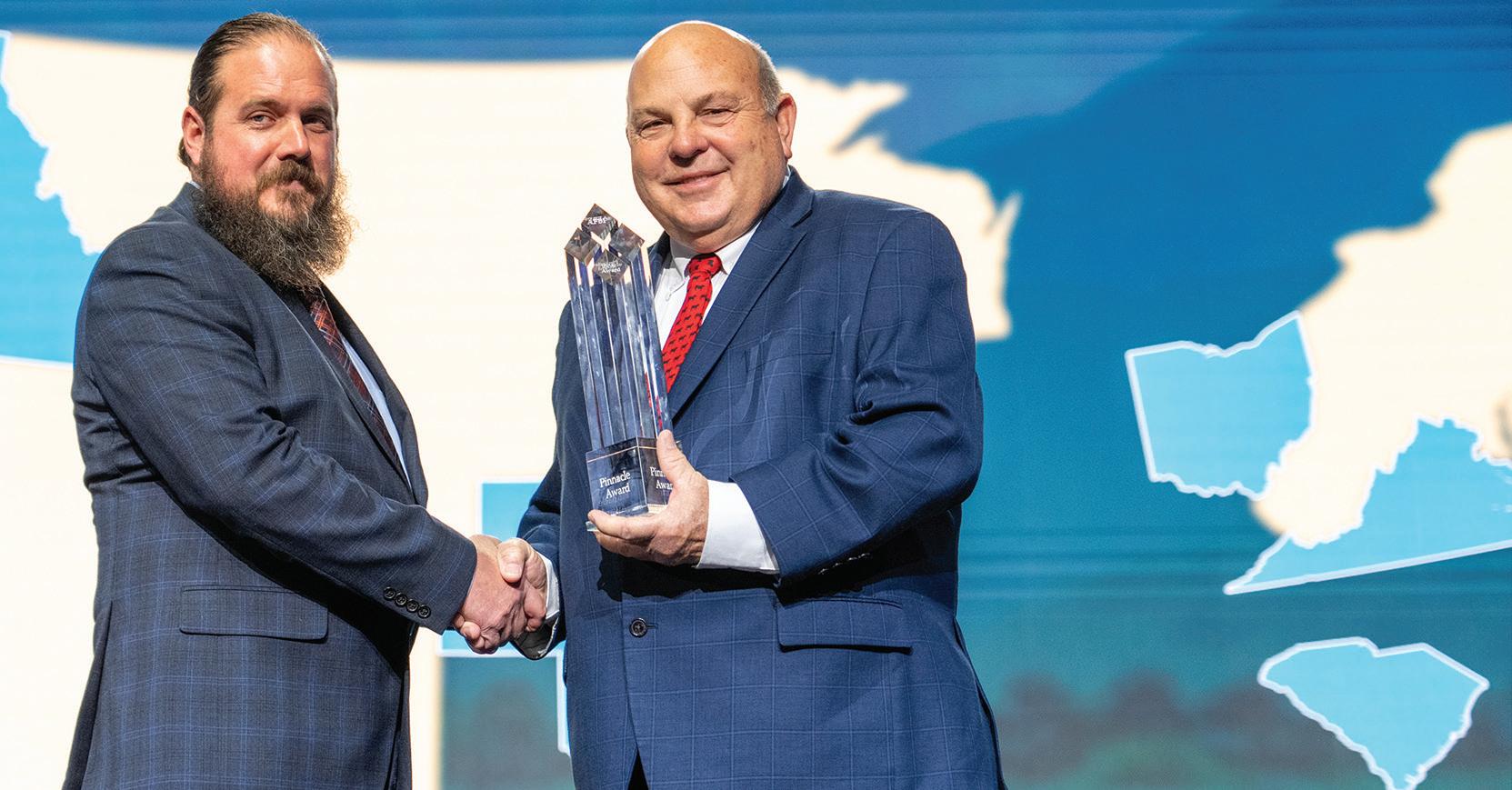
Farm Bureau recognized Virginia Farm Bureau Federation was rewarded for its imagination and innovation. VFBF received one of six Pinnacle Awards—the highest honor for overall excellence in Farm Bureaus’ respective membership groups.
Virginia Farm Bureau also earned an Award of Excellence for outstanding achievements in four program areas: Advocacy; Coalitions & Partnerships; Engagement & Outreach; and Leadership & Business Development.
Additionally, former VFBF President Wayne Pryor was recognized with the prestigious Farm Bureau Founders Award. First presented in January 2017, AFBF’s Founders Award for exemplary leadership, service or contributions to Farm Bureau is presented in recognition of outstanding achievements and work in the interest of Farm Bureau.
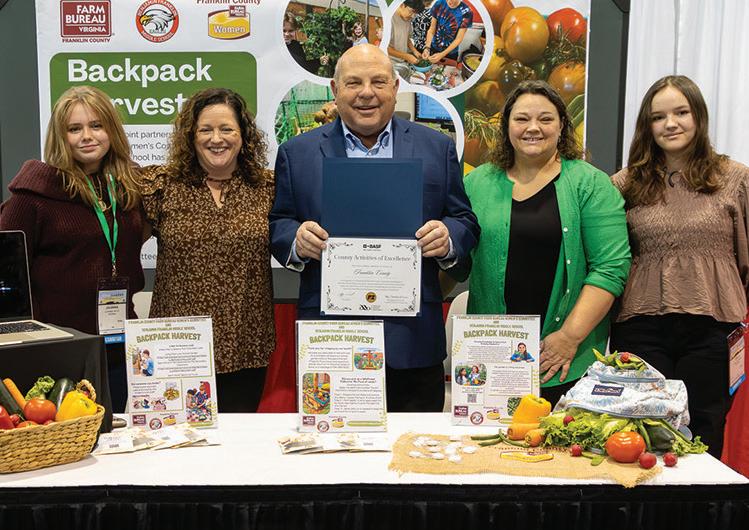
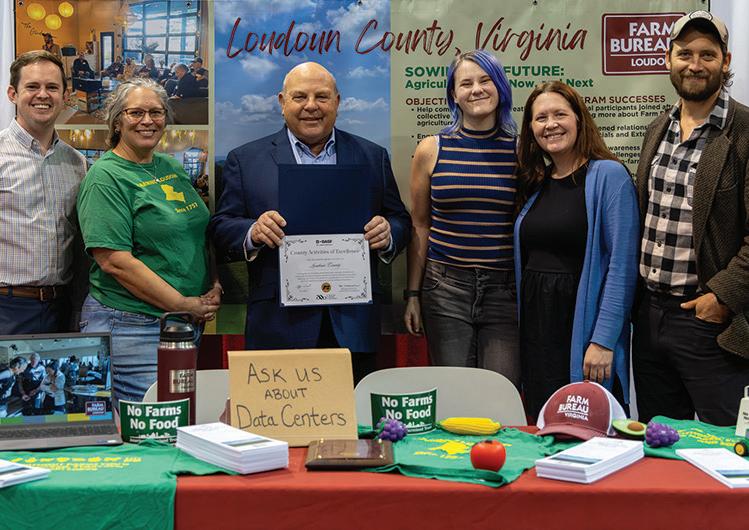
County Award of Excellence winners— Franklin and Loudoun County Farm Bureaus—showcased their winning projects in the exhibit hall.
VFBF President Scott Sink, left, accepts the Pinnacle Award from AFBF Presdient Zippy Duvall. Only six states nationwide received a Pinnacle Award.
MICHAEL LOBIONDO
Women give back
Representatives of the VFBF Women’s Leadership Committee helped the City of Hope Cancer Center pack sun safety and skin cancer prevention kits for farmworkers.
They also attended the AFBF Annual Meeting of Women, the AFBF Women’s Leadership Southern Region meeting and all the general sessions.
Young farmer accomplishments
Virginia’s young farmers shined on the national stage.
Cheyenne Rhodes of Shenandoah County powered into the Discussion Meet Sweet 16.
Dustin Francis of Halifax County moved into the Excellence in Agriculture Top 10.
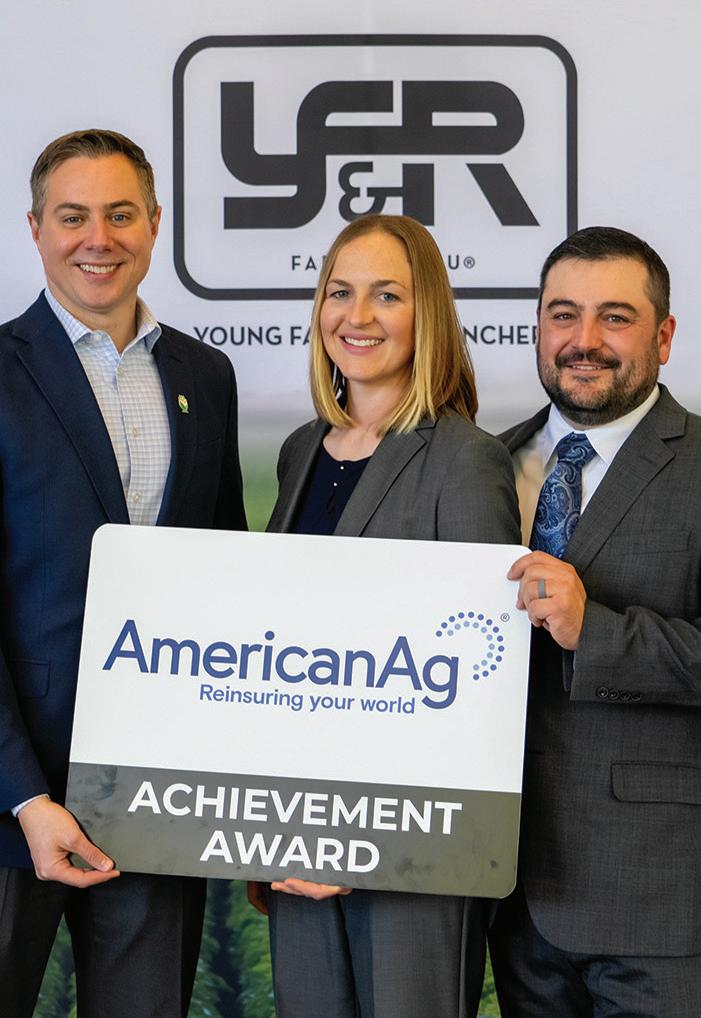
Clay and Paula Greene of Augusta County reached the Achievement Award Top 10, ultimately earning an impressive third-place finish.
The Achievement Award recognizes outstanding young farmers for their business success and volunteer involvement, while helping them evaluate their business plans and set goals to strengthen their farming operations.
The couple farms full-time on their multi-generational family farms. Paula works on her family’s dairy and beef operation while Clay assists with his family’s beef cattle farm, where they raise cow-calf pairs and background feeder cattle. He also operates a custom work enterprise and retails hay and forage supplies.
They also serve on the VFBF Young Farmers Committee; Clay serves on the Augusta County Farm Bureau board; and Paula is a member of the VFBF Dairy Advisory Committee, in addition to other Farm Bureau leadership roles.
During their presentation to judges, the Greenes shared how they have helped operate, expand and improve the efficiency of their families’ operations while growing their own farm operation and custom operating enterprise.
Clay returned to the family farm in 2011 and has played a key role in the cattle operation and growing the farm’s custom services. Since joining the operation full time in 2018, Paula has made efforts to modernize the dairy through strategic investments and management improvements, resulting in increased production and efficiency. When they’re not farming, they serve as agriculture advocates by frequently participating in county and state Farm Bureau initiatives, staying active in other organizations and advocacy groups, and regularly hosting educational tours at the dairy farm. They also are graduates of the Virginia Agriculture Leaders Obtaining Results program.
The couple will receive a $2,500 Investing in Your Future cash prize from AmericanAg, a Case IH-branded safe, courtesy of Case IH, as well as $2,500 worth of Stanley Black & Decker merchandise, courtesy of Stanley Black & Decker.
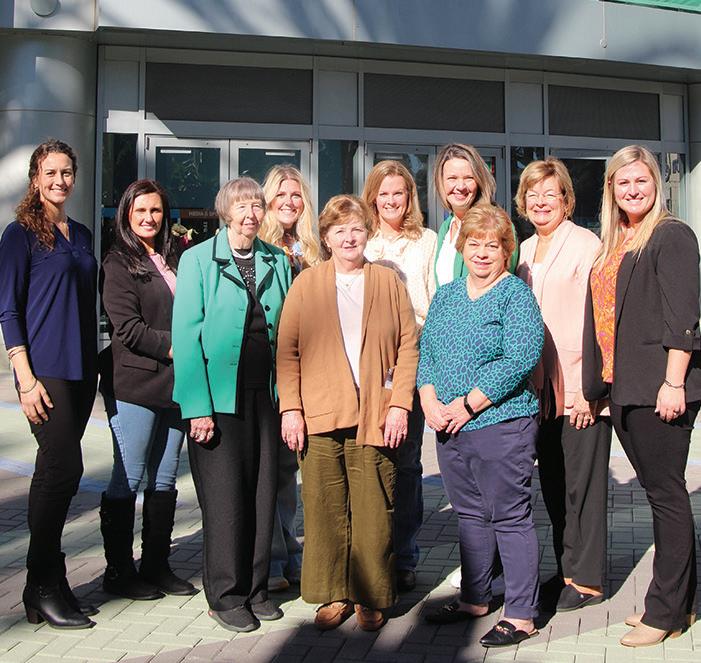
Women's Leadership Committee members pose in front of the convention center; young farmer award winners advanced to the top rounds of competitions; and County Farm Bureau Award of Excellence winners shared their projects with AFBF President Zippy Duvall during the convention.
WOMEN'S LEADERSHIP COMMITTEE
RHODES
AMERICAN AG REPRESENTATIVE MICHAEL CONLON WITH PAULA AND CLAY GREENE
FRANCIS
FRANKLIN COUNTY
LOUDOUN COUNTY
Election and policies
VFBF President Scott Sink was reelected to serve a two-year term on the AFBF Board of Directors.
Sink and seven other voting delegates were among those adopting policy to improve labor programs to meet the needs of America’s farmers and ranchers, including formalizing support for the new Adverse Effect Wage Rate methodology, and further revisions to avoid unpredictable rate swings in the future.
The delegates also voted to support federal funding for research and biosecurity facilities to better identify and combat illnesses and pests that threaten the health of crops and animals. New policy also includes committing more resources specifically to eradicate the New World screwworm, and keeping the U.S.Mexico border closed to cattle trade until the screwworm is controlled.
Delegates revised national farm policy to provide more protection for dairy farmers who may suffer losses due to
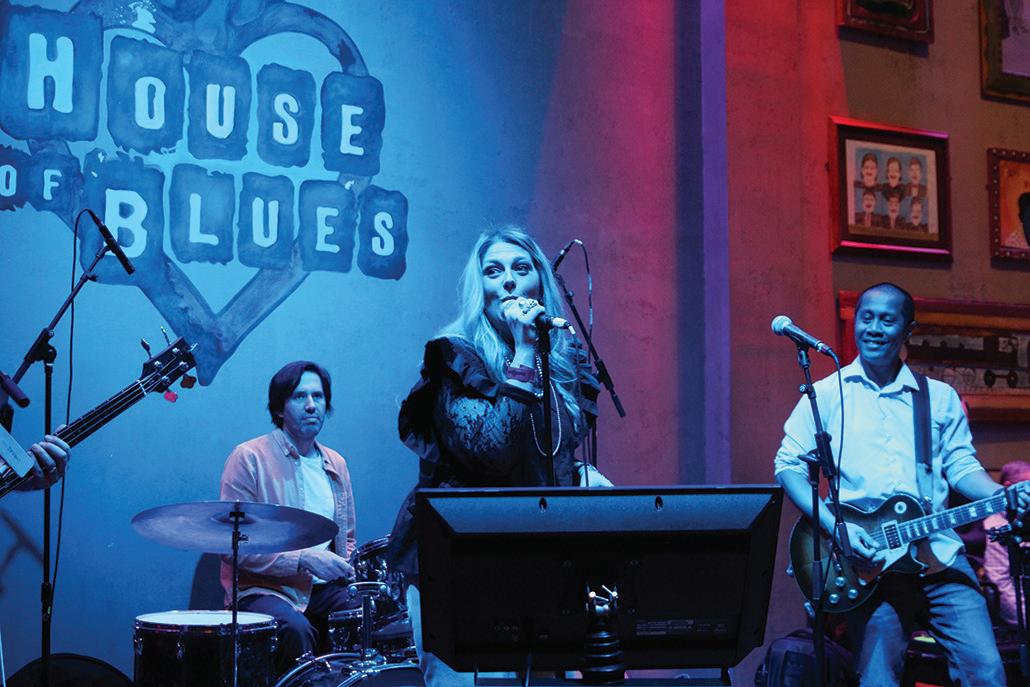
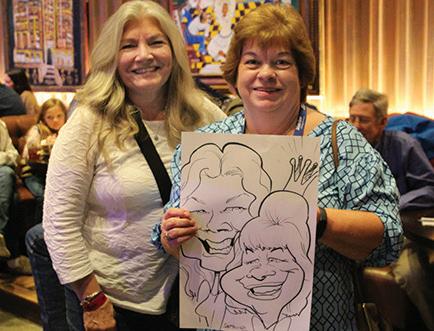
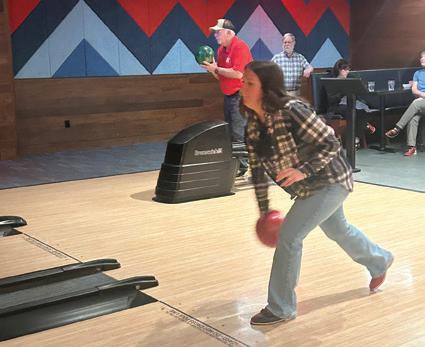
Clockwise: VFBF Young Farmers Committee member Kelsey Trainor participated in karaoke during a Virginia-North Carolina Farm Bureau joint dinner; District Field Services Director Angela Buchanan and VFBF Women's Leadership Committee Chair Faye Hundley got caricature drawings made; staff enoyed bowling one night; congressional agriculture leaders addressed the convention; and former NFL player and philanthropist Tim Tebow told attendees to support one another.
market challenges. They also formalized support for prioritizing locally grown fruits, vegetables, bread, and proteins in institutional purchases such as schools and government facilities.
Speakers voice support, offer encouragement
U.S. Secretary of Agriculture
Brooke Rollins said when American agriculture is under threat, “all of America is under threat.” She added that’s why one of the current administration’s top goals is investing in farmers.
Rollins shared that the U.S. Department of Agriculture will spend $80 million to buy U.S.grown commodities for its nutrition assistance program. She also touted the bill that Trump signed into law that would allow school lunch programs to offer whole milk.
Former NFL player, speaker and philanthropist, Tim Tebow, told attendees that the greatest leaders have remarkable visions that others
can see and want to buy into.
“All of you are working together and there’s power when you come together.” He encouraged Farm Bureau members to believe and support one another.
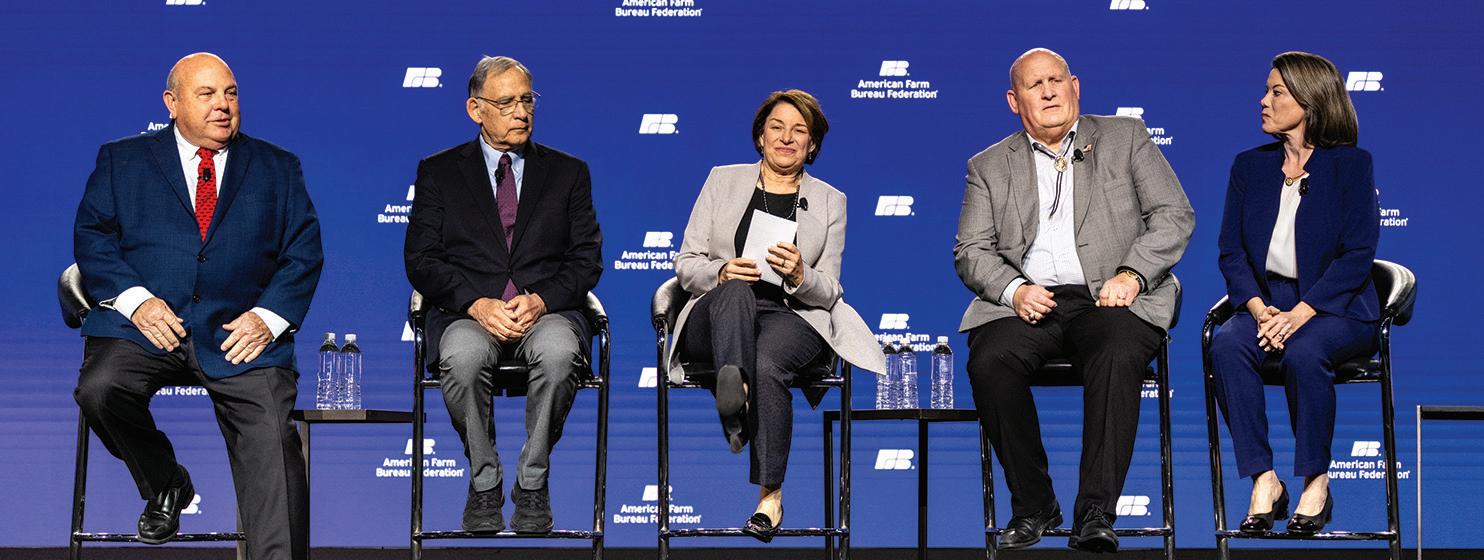
In a rare joint appearance, all four leaders of the congressional agriculture committees came together to discuss issues important to rural America during the mid general session. The chair of the U.S. Senate Committee on Agriculture, Nutrition, and Forestry, Sen. John Boozman (R-Ark.), and Ranking Member Sen. Amy Klobuchar (D-Minn.) as well as the chair of the U.S. House Committee on Agriculture, Rep. Glenn “GT” Thompson (R-Pa.), and Ranking Member Rep. Angie Craig (D-Minn.) covered priority issues including passing a new five-year farm bill, developing domestic and international markets for agricultural products, providing access to a stable workforce for farmers and ranchers, and the importance of grassroots involvement in advocacy.
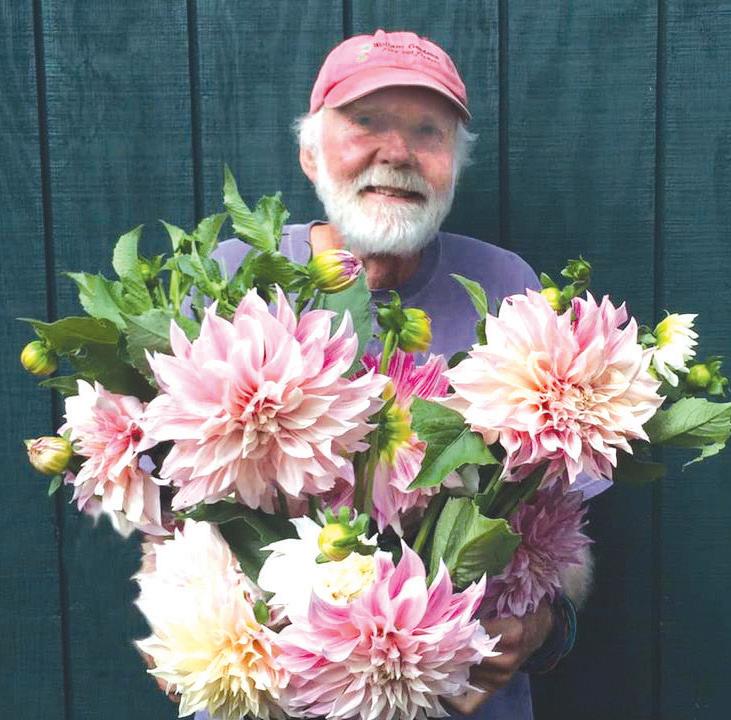
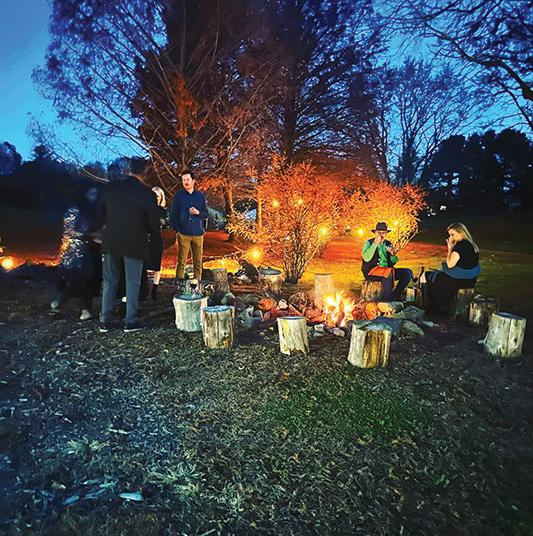
Perhaps you visited Wollam Gardens in Culpeper County for morning yoga in the pavilion. You stayed for the pressed flower class and decided to cut the showiest peony stems for a take-home bouquet. Then you found mementos in the historic home and gift shop, followed by a lunch break at the picnic tables. You decided to take a serenity walk in the arboretum and visit the firepit at dusk. So why not stay for a farm-to-table meal and a night in the charming Airbnb?
As Bob Wollam and Anne Montgomery are focused on cultivating memorable rural experiences for guests, Culpeper County Farm Bureau’s insurance agents are considering all possible liabilities, while tracking the latest trends and risk exposures in agritourism.
Flowering, woody varieties dominate Wollam Garden’s 11-acre flower bed. Guests can choose and cut stems of hundreds of hydrangea varieties, viburnum and almost 2,000 peonies. Custom floral design services are offered for Wollam Garden’s weddings and events.
“We have a product to sell all year-round,” Wollam said. A greenhouse protects tender tulip blooms, and they host classes teaching “forced indoor flowering” of shrubs like quince.
“Even with snow all over the ground, I have three different kinds of pussywillow,” he said. “It's very diversified.”
A farm and flower stand also offers grab-and-go items on the property they’ve nurtured for 35 years. Virginia Farm Bureau Mutual Insurance Co. has insured Wollam Gardens since the beginning.
“They've been terrific,” Wollam said. “Always cooperative and helpful.”
At age 86, Wollam is in the process of farm succession to new owners by 2027. The incoming operators are maintaining the Farm Bureau insurance tradition.
“Inviting patrons onto your property carries the highest duty of care,” said Kim Price, VFBMIC farm and field underwriting manager.
Agribusinesses are constantly developing unique ways to connect the public with agriculture. VBFMIC offers 71 agribusiness classifications—a broad and flexible framework that supports both traditional operations and innovative agritourism ventures.
“With each new idea comes potential new exposures,” Price said. “At VFBMIC, we frequently have opportunities to review and assess emerging agritourism activities. This continual exposure helps us stay informed and responsive to the changing landscape.”
Agritourism operators should expect their insurance needs to evolve as their business develops, she continued. “At startup, most operations require specialized coverages that address core exposures such as property, liability and any activities involving visitors,” Price said. “As the business grows, they may add new events, experiences, or revenuegenerating activities—each of which can introduce additional risks and trigger the need for expanded or specialized insurance.”
Coverages paced with business growth
Maintaining proper coverage requires ongoing communication with an agent to ensure emerging exposures are identified early, so the client remains adequately protected as agritourism enterprises expand.
When meeting with agents, agritourism operators should note:
• operational changes
• new attractions
• seasonal activities
“And a farm umbrella policy is essential for protecting the farmer’s assets from catastrophic loss,” Price added. “It provides an additional layer of liability coverage above the underlying policies.”
Visit vafb.com/insurance/agritourism to learn more about special coverages, or call your county Farm Bureau for more information.
Clockwise from top left: Bob Wollam's Wollam Gardens offers more than just fresh bouquets. The agritourism operation offers visitors yoga classes, fire pits and U-pick flowers too.
IMAGES COURTESY OF WOLLAM GARDENS
Farm Bureau makes a difference in agricultural legislation
For almost 100 years, Virginia Farm Bureau has spoken on behalf of the state’s farmers. Our farmer members shape every policy position we take, and their relationships with lawmakers—both rural and urban— are key to moving agricultural issues forward.
KEY POLICY POSITIONS ADOPTED
Protected the viability of Virginia farming operations by maintaining the farmworker exemption to overtime.
Maintained exemptions for H-2A and H-2B workers from minimum wage.
Strengthened truth in labeling rules by requiring that any product made from manufactured proteins cannot be labeled or marketed as an animal based food.
Established a producer-first definition of agrivoltaics.
Granted local governments the authority to require the installation of solar canopies over parking lots to alleviate pressures imposed by solar development on farm and forest lands.
Gave localities the authority to consider how data centers (high energy use facilities) impact water, agriculture, parks, historic sites and forestland.
Protected the ability for farmers to utilize biosolids on their operations, while also creating testing protocols and protections from dangerous levels of PFAS.
Prevented efforts to ban farmers from using paraquat.
Streamlined the kill permit process for farmers addressing damage caused by deer on farmland.
Directed the Secretary of Agriculture and Forestry to develop an economic development plan for agriculture and forestry at the start of
These key policy positions include some of the legislative issues considered by the General Assembly that relate to Virginia Farm Bureau policy. While many of our priorities had positive outcomes, several issues remain unresolved because the legislature adjourned without passing the state budget.
The following outcomes could still change as the governor reviews the bills. Legislators will return on April 22 for final action on legislation. A special session to address the budget is scheduled for April 23.
KEY POLICY
Failed
to maintain the
Removed and limited the decision-making ability of local governments when siting utility-scale solar facilities in the creation of state standards for ordinances.
Increased the number of mandates placed on employers with the establishment of an increased minimum wage, paid family medical leave and paid sick leave programs.
Failed to create a tax incentive program to attract a sustainable aviation fuel manufacturer to increase market opportunities for biomass from wood residuals or grain.
VFBF members encouraged to vote against redistricting
Virginia Farm Bureau members are encouraged to vote against the special redistricting constitutional amendment on the ballot April 21.
The constitutional amendment would allow the General Assembly to redraw congressional districts mid-decade, outside the usual 10-year cycle. The proposal will go before voters in April despite ongoing legal challenges.
Redistricting affects representation of rural and agricultural communities in Congress and could affect policy priorities affecting Virginia agriculture.
For nonpartisan maps and analysis of proposed district changes, visit vpap.org. You can review the official ballot question on elections.virginia.gov
VIRGINIA FARM BUREAU NEWS
Farmers educate lawmakers on key priorities during Legislative Day
BY ALICE KEMP
Real voices and real stories took center stage as Virginia farmers and producers traveled from across the commonwealth to meet with legislators at the Virginia Capitol.
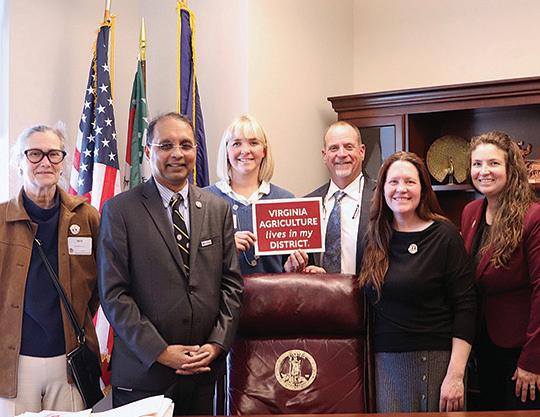
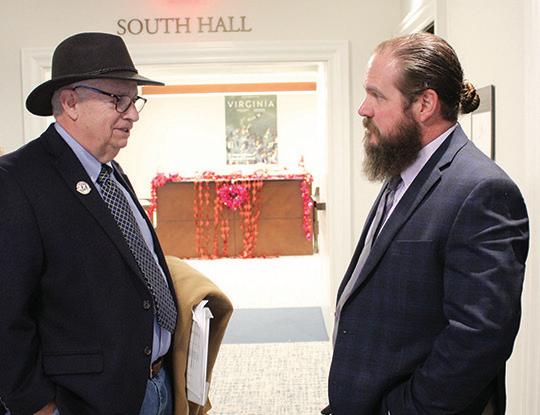
The event was part of Virginia Farm Bureau Federation’s annual Legislative Day where over 100 farmers informed lawmakers on the direct impact legislation will have on their livelihoods and in their communities.
Conversations covered a range of agricultural topics, including funding the state’s cost-share program; maintaining the farmworker exemption from minimum wage and overtime; utility-scale solar facility siting; meat misbranding; crop protectants; and the large animal veterinary shortage.
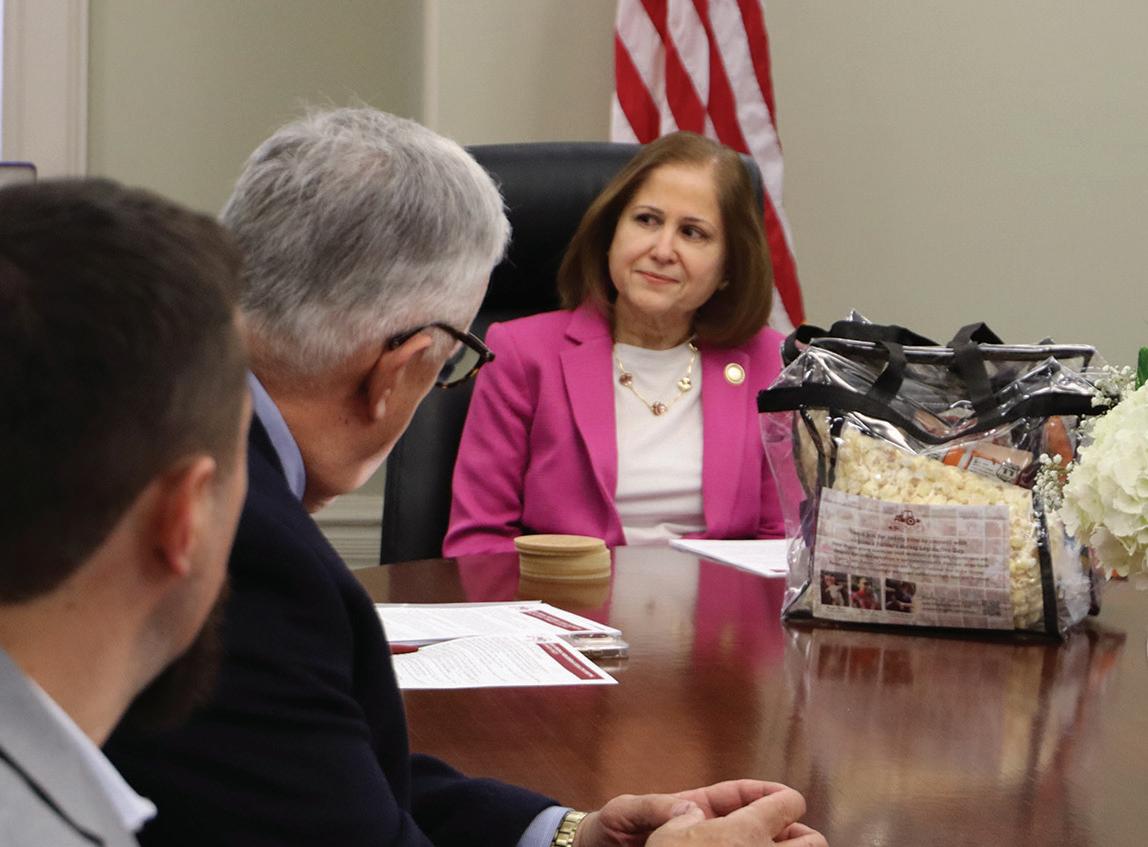
During a meeting with Lt. Gov. Hashmi, farmers voiced their support for HB 508 and SB 340, which define agrivoltaics in a way that prioritizes agricultural production, with solar arrays as a supplemental component to a farming operation.
The definition ensures agrivoltaics systems, “work in conjunction with an operating farm that benefits both the farm and other users on the power grid,” said Coty Goodwin, an Orange County beef cattle producer.
Farmers also stressed the importance of preserving local authority in solar siting decisions and cautioned against establishing statewide ordinances.
“The best decisions are made at the local county board of supervisors where we can sit down and look at each unique situation,” Goodwin said. “We don’t want our localities to lose the power of making their own siting decisions.”
Farm Bureau supports HB 322 and SB 186 to require proper labeling for alternative protein food products that indicate the origin and contents of the ingredients. The Senate bill passed unanimously.
Misbranding “causes so much confusion at the grocery store,” said Amelia County dairy farmer Cecilia Moyer. “It’s very important to have clear labels so consumers know what they’re buying.”
Farmers from southern Virginia met with Aaron Yohai, legislative aide for Del. Vivian Watts, D-Fairfax, about labor and crop protectants. They voiced opposition to HB 1375, which would ban the manufacturing and sale of paraquat, a critical pesticide used by corn, cotton, soybean and peanut growers.
Pittsylvania County farmer Donny Moore noted that applicators are already required to complete training to use pesticides. An outright ban would add further hardship to crop producers as, “right now there’s nothing else in our tool bag to take its place.”
VFBF board member Robert J. Mills Jr. and Loudoun County farmers met with Sen. Kannan Srinivasan, D- Loudoun, and Syreeta Martin-Glenn, legislative assistant for Sen. Jennifer Carroll Foy, D-Fairfax and Prince William. They discussed HB 20 and SB 121, which would eliminate minimum wage exemptions for farmworkers, and underscored the added strain this would have on agricultural operations.
Farm Bureau advocates for eliminating the H-2A and H-2B programs from the legislation. Mills noted that farmers cover housing and transportation costs under the programs, which effectively push wages above the minimum.
“Virginia is the only state in our region that’s taking out the minimum wage exemption,” Mills said. “Our margins are already so thin and this would put us at a competitive disadvantage to surrounding states that do have these exemptions.”
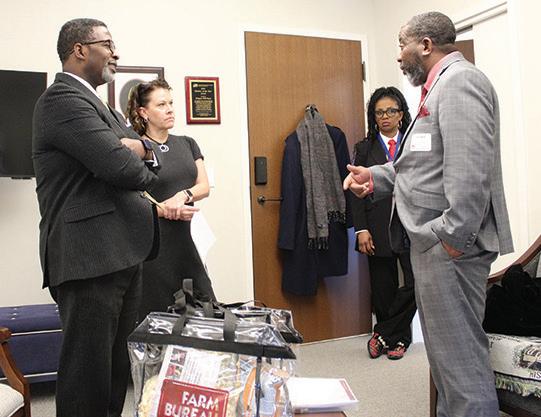
Additionally, complimentary snack bags with Virginia-grown, value-added agricultural products were distributed to each lawmaker throughout the morning.
Keep track of agriculture-related legislation at plowsandpolitics.com/2026, the VFBF Plows and Politics blog.
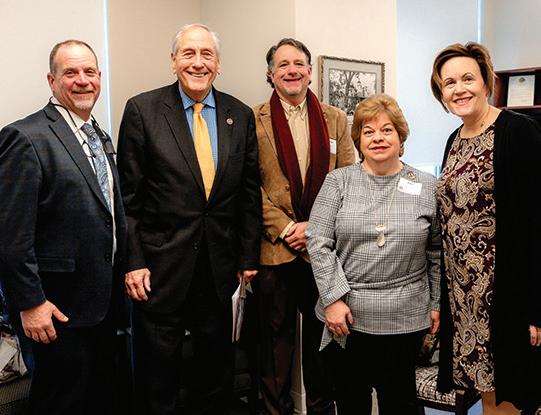
Left: Lt. Gov. Ghazala Hashmi discusses issues with Farm Bureau leaders. Clockwise from top left: Antonio Tayor from Chesapeake, right, talks to Del. C.E. Cliff Hayes and his aides. Farm Bureau leaders shared an “I Farm. I Vote.” sign with Sen. Kannan Srinivasan, D-Loudoun. President Scott Sink, right, discusses strategy with Pittsylvania County farmer Tommy Motley. Vice President Robert Mills Jr., left, Sen. David Marsden, D-Fairfax, Women's Committee Chair Faye Hundley and VFBF Sr. Vice President of Governmental Relations Martha Moore met to discuss farming issues. ALICE
KATHY DIXON
MORGAN ROCKOVICH
KATHY DIXON
Bedford science educator named Virginia AITC Teacher of the Year
ARTICLE AND PHOTOS BY ALICE KEMP
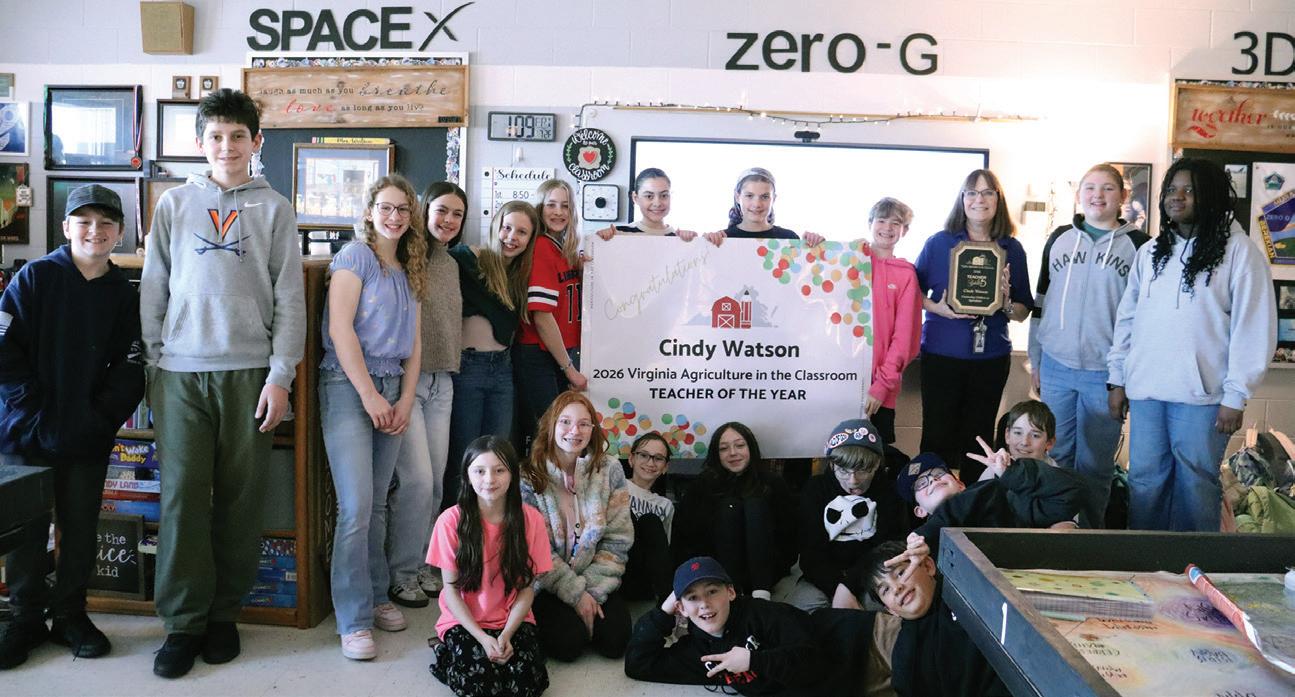
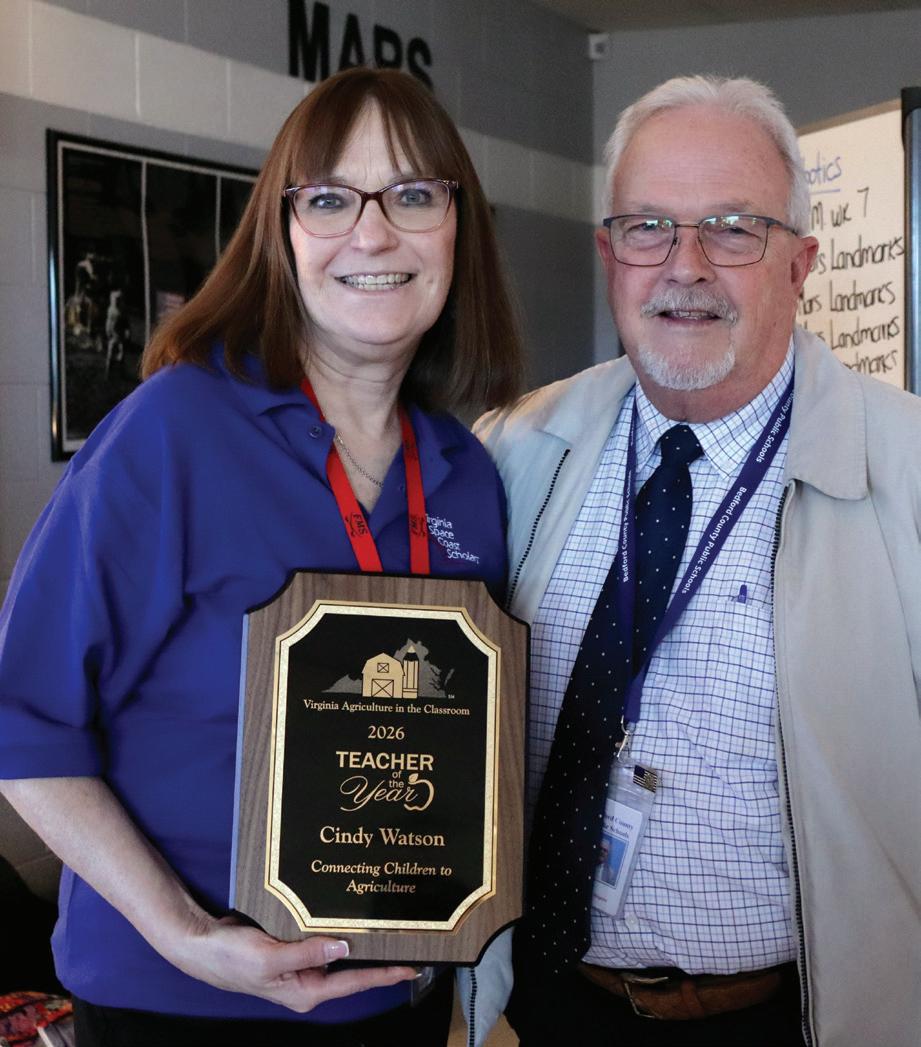
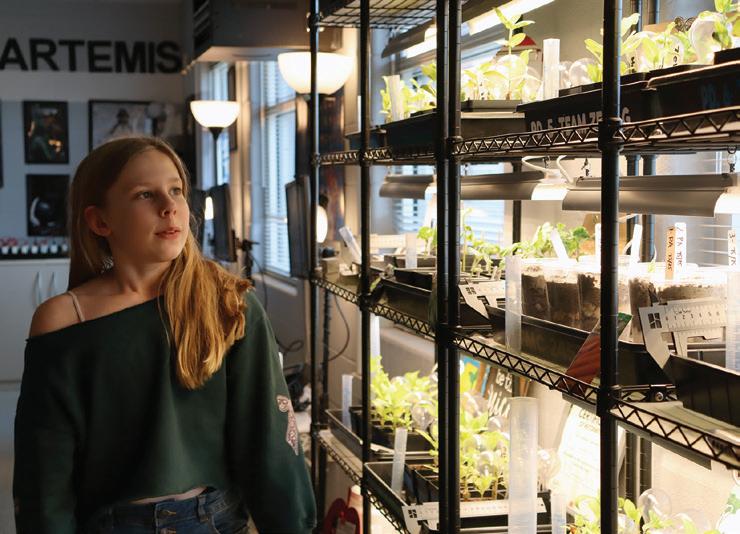
Cindy Watson, a middle school teacher at Forest Middle School in Bedford County, has been named the Virginia Agriculture in the Classroom 2026 Teacher of the Year.
The award recognizes a Virginia educator for incorporating agriculture into their core curriculum.
Watson uses agriculture as a foundation for hands-on STEM learning in her exploratory science and robotics design classes. Through science, robotics and technologybased lessons, she helps students understand how agriculture impacts their daily lives while challenging common misconceptions about modern farming.
“Cindy’s application of agriculture in her curriculum enhances her students’ agricultural literacy and sparks curiosity,” said Lynn Black, Virginia AITC director of education. “By connecting farming with STEM concepts, she’s helping students become more informed and responsible adults who understand where their food comes from, and the vital role agriculture plays in our world.”
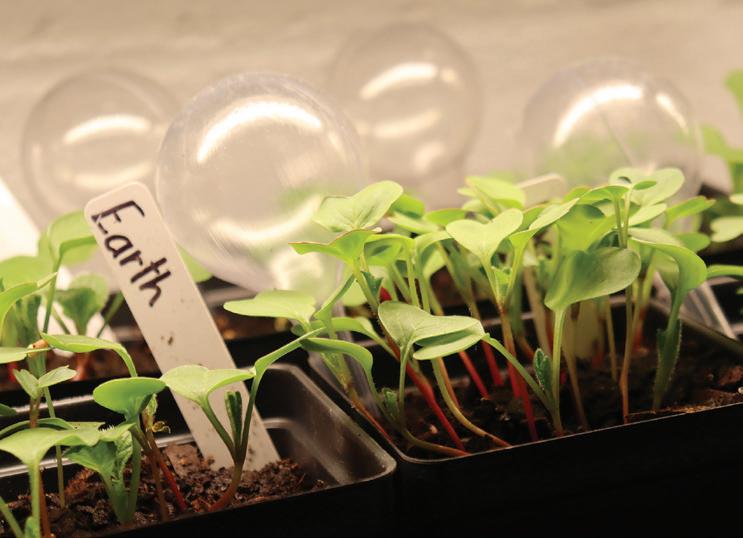
In her classroom, students have participated in science challenges like NASA’s Plant the Moon, Growing Beyond Earth, and Space Chile Grow a Pepper Plant projects. Through these
lessons, students explored agricultural principles like plant genetics, soil science, hydroponics and nutrient cycling while collecting and analyzing data on plant growth and health.
Watson also integrates robotics, drone navigation and modeling to examine pollination and ecosystems that are critical to food production; the effect of natural disasters; and complex agricultural supply chains. Her robotics coursework introduces students to precision agriculture and demonstrates how farmers use drones and GPS to manage their crops and improve efficiency.
Additionally, her lessons showcase how agriculture and STEM concepts overlap in career fields, such as coding for autonomous harvesters, using biotechnology to develop drought-resistant crops, or operating vertical farms. Overall, her approach underscores the critical role science and technology play in modern
agriculture, and how innovation helps feed a growing global population in a complex modern food system.
Through these experiences, “students can figure out at a younger age whether this is something they’d want to pursue as a career,” said Watson, who grew up on a farm outside of Chicago. “I like to give my students opportunities they might not get somewhere else. This is my passion, and I’m fortunate to have a community that supports these programs.”
As Virginia AITC Teacher of the Year, Watson will receive a scholarship to the 2026 National AITC Conference in June in Providence, Rhode Island, and a $500 cash award.
For more information on the Teacher of the Year recognition, visit virginia.agclassroom.org.
Cindy Watson's classroom work exploring agricultural concepts led to her winning the Virginia Agriculture in the Classroom 2026 Teacher of the Year Award. She is congratulated by William Dupere, superintendent of Bedford County Public Schools.
Lessons about growing produce helps students connect with the sources of their food.
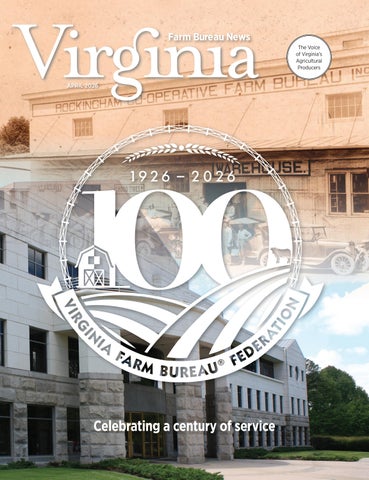
Virginia Farm Bureau® celebrates a century of service
BY KATHY DIXON
It was the year the first liquidfueled rocket was launched. It also was the year the National Broadcasting Co. was founded, and the year Queen Elizabeth II was born.
But more importantly, 1926 was the year Virginia Farm Bureau Federation® was incorporated.
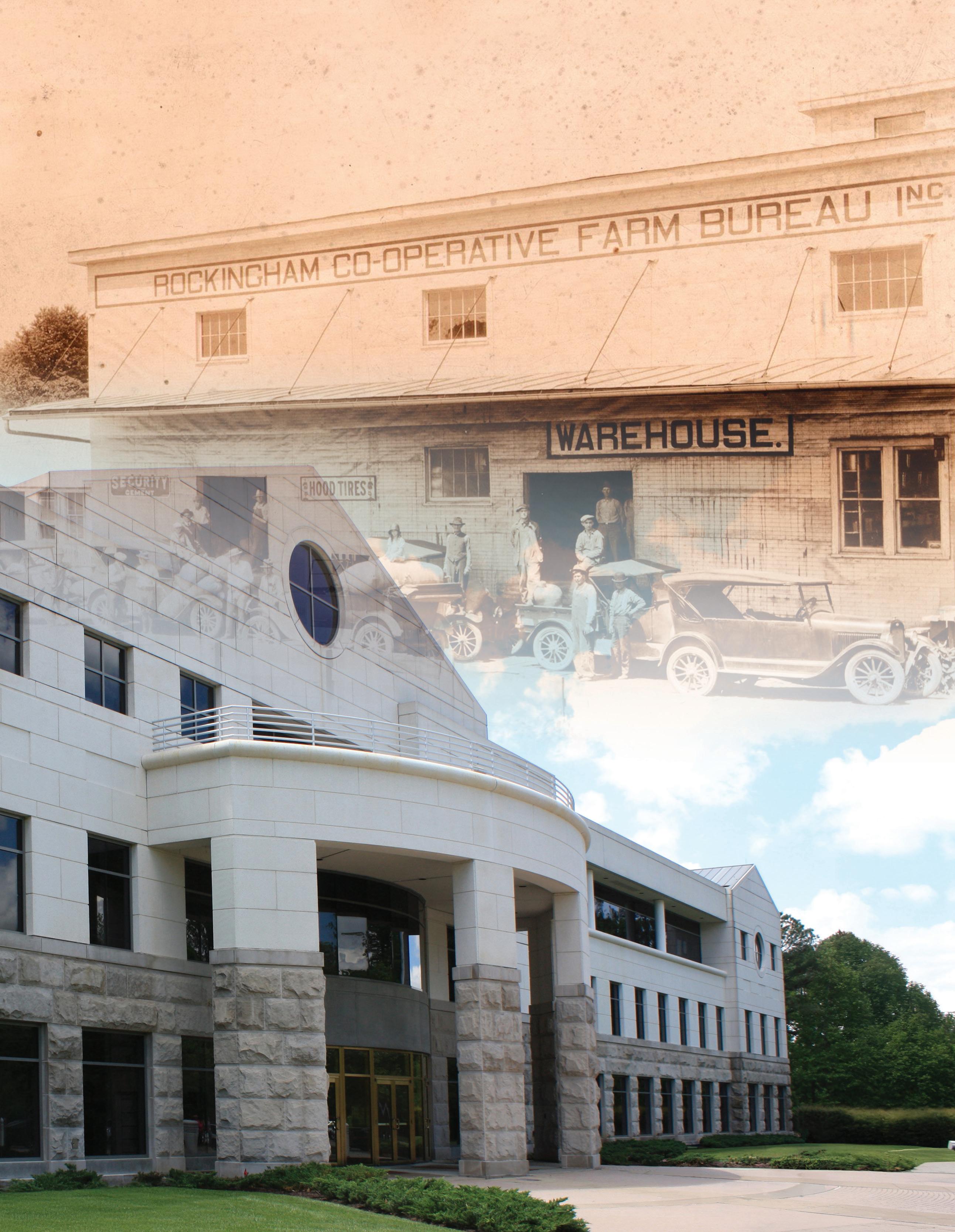
Virginia Farm Bureau was officially formed Feb. 26, 1926, to represent farmers at the local, state and national levels. Today, Farm Bureau continues to support agriculture and policies that will strengthen the state’s No. 1 industry.
The organization has almost 137,000 members statewide, and the $40 annual membership dues enable it to help families, farmers and communities thrive.
"As we celebrate this milestone, we want to remember the past, honor the present and most importantly, consider the future and all the ways we can continue to serve the commonwealth’s farmers and rural communities,” said VFBF President Scott Sink.
Promise and beyond
Nearly a century ago, Virginia Farm Bureau made the state’s farmers a promise—to protect and preserve what farmers had labored so hard to create and to ensure a bright future for generations of farmers.
Today that promise extends beyond farmers. The Virginia Farm Bureau family of companies includes:
» Virginia Farm Bureau Federation
» Virginia Farm Bureau Mutual Insurance Co.
» Benefit Design Group Inc.
» Employee Benefits Corporation of America
» Countryway Insurance Co.
» The Meadow Event Park, home of the State Fair of Virginia Advocacy and support
Virginia Farm Bureau has been successful on many advocacy
campaigns throughout its history that have helped farmers and its nonfarming members. The company has fought to protect property rights, repeal the Virginia estate tax, ensure funding for voluntary, cost-share conservation practices, provide resources for large animal veterinarians, protect prime farmland and more.
Farm Bureau also supports Virginia Agriculture in the Classroom, which was established in 1987 to educate teachers and students about the importance of agriculture. AITC is a part of a nationwide effort to help teachers and students understand and appreciate agriculture—Virginia and the nation’s largest industry.
The 501(c)(3) organization hosts an annual Agricultural Literacy Week during which volunteers read an agricultural themed book to elementary students in schools across the state. Through that outreach effort, and providing handson resources, workshops and grants to teachers, AITC reached more than 700,000 students in the 2024-25 school year. Currently, over 2,100 teachers are integrating agriculture education into core subjects like science, math and reading.
Also to increase agricultural literacy, Farm Bureau purchased The Meadow Event Park property, where the State Fair of Virginia is held. The organization has successfully kept the fair focused on agriculture and providing an opportunity to showcase the best of Virginia agriculture to those who may not have a farming background.
Benefits for everyone
With 104 offices in 88 counties, Virginia Farm Bureau is able to reach every part of the state. Virginia Farm Bureau is based in Richmond, Va., with over 1,000 employees throughout the state and on the Eastern Seaboard.
Through county Farm Bureau staff
and volunteers, the company supports local and statewide organizations, donating more than $200,000 in youth scholarships ech year.
Farm Bureau members also can access a robust member benefits program, which includes tangible savings on hotels, rental cars, retail establishments and more. Members also are eligible for discounts on auto and truck tires through the Products Division, which celebrated its 60th anniversary last year.
Additionally, the Virginia Farm Bureau Mutual Insurance Co. has provided members with a comprehensive line of insurance products, and the company has been ranked the No. 1 homeowners insurance company in the country by Forbes for the second year in a row.
Celebrations planned
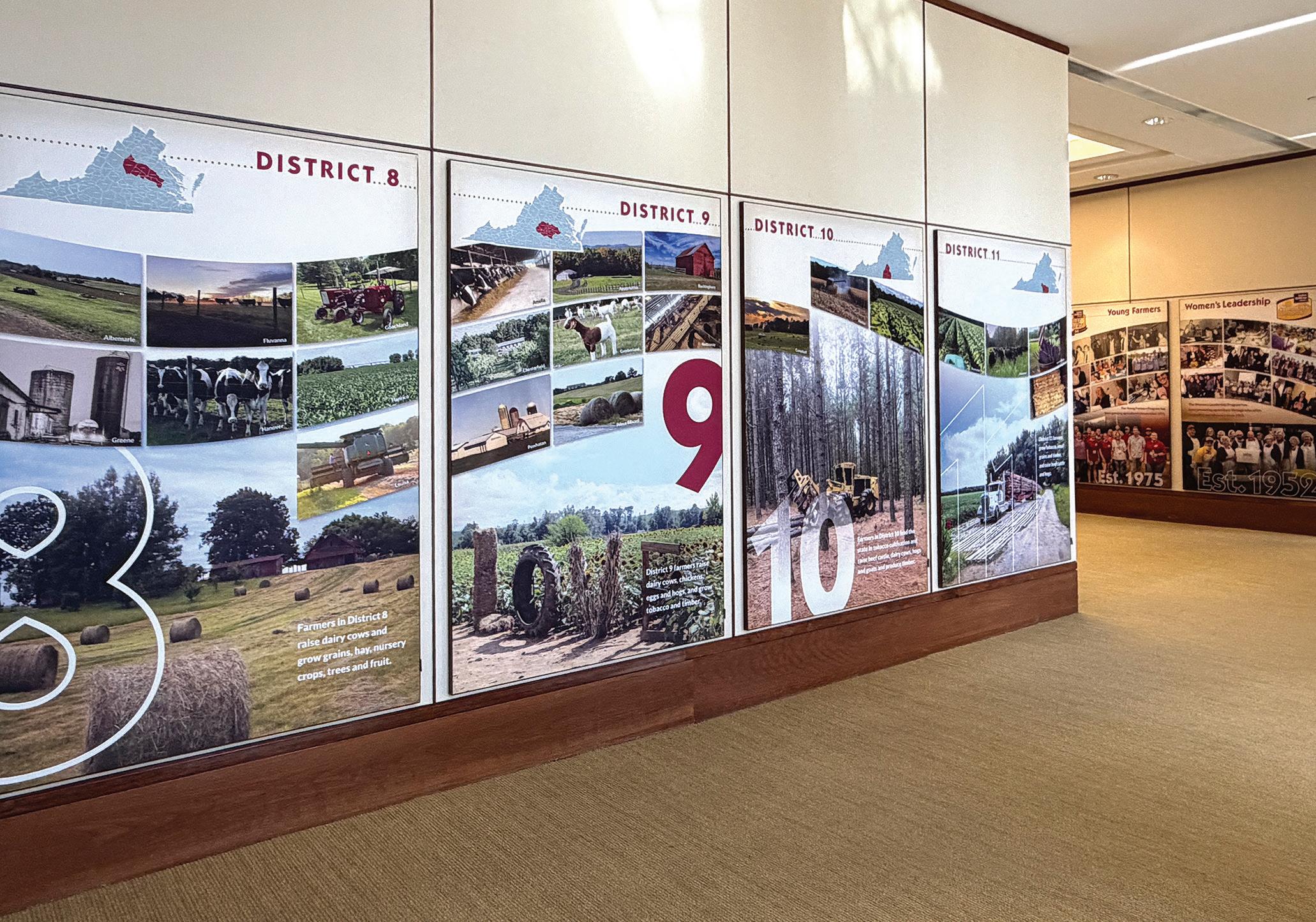
Farm Bureau is planning to grow. All year at the headquarters office in Richmond, historical artifacts that include the history of all VFBF companies over the last 100 years will be on display. Additionally, a commemorative photo gallery is on display. Photo panels depicting agriculture in all 14 board districts and the Young Farmers and Women’s Leadership programs also are included.
The West Creek office also houses a map of Virginia counties made with native Virginia woods from Farm Bureau members’ property.
This summer, employees, county Farm Bureau leadership and members will be asked to find areas in need and give back to their communities in a spirit of service.
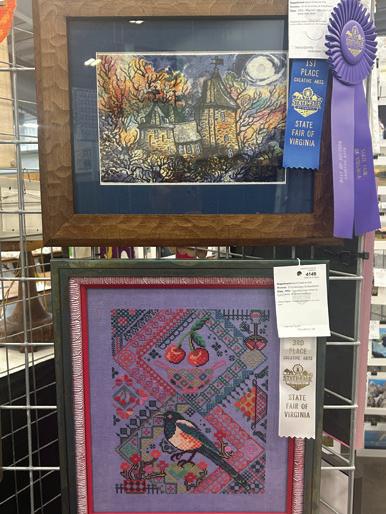
During the State Fair of Virginia, Sept. 25-Oct. 4, a new creative arts competition revolving around Farm Bureau memorabilia will be included.
This December, a special centennial celebration will be a focus of the VFBF Annual Convention in Hot Springs.
Multi-generational member families are Farm Bureau® icons
BY NICOLE ZEMA
This centennial year, Virginia Farm Bureau Federation® celebrates the multigenerational farm families whose influence continues to shape policies, communities and the land. From the mountainous pastureland of the “Great Southwest” to Virginia’s fertile coastal plain, Farm Bureau’s icons of agricultural leadership span a century of service and stewardship.
Farm Bureau legend Dick Campbell is pictured in childhood with a calf on his family's King William County farm.
Moss family, Tazewell County
The late Robert Lincoln Moss always said that Americans would wake up to the plight of the farmer when their belly button scratched their backbone.
“He was an extremely intelligent man,” said his son, Bob Moss Jr., age 67.
The family’s Tazewell County Farm Bureau membership likely originated with his maternal grandparents John Crockett Gillespie and Katherine Kiser Gillespie. Moss said Tazewell’s first Farm Bureau insurance office was housed in his grandfather’s dealership, which was called Bluegrass Machinery.
The Gillespies were cattle exporters. They pivoted to a cow-calf operation during World War II when the cattle industry experienced instability from high demand, price controls and feed shortages.
“When I was a boy, we had feedlots in Burke’s Garden and we were doing what my dad called ‘conception to consumption,’” Moss recalled.
His mother Katherine Gillespie Moss, known as “Teeny,” was secretary for the Tazewell County Farm Bureau and served as a Women’s Leadership Committee chair.
Moss’ folks went to battle as advocates fighting for good agricultural policy on the local, state and national levels.
“Dad lobbied heavily to get a bigger cattle slaughter plant in Virginia and was never able to get that done,” Moss recalled. “We still don’t have enough local processing.”
Teeny lobbied for the repeal of the federal estate tax that was detrimental to Virginia farmers because it targeted cash-poor businesses, often forcing the sale of land or farm assets to pay tax liabilities when land values exceed exemption limits.
“The government was trying to make us pay inheritance tax for the fourth time in 10 years,” Moss said. “Mom participated in some hearings.”
In 2007, Farm Bureau advocates celebrated the permanent elimination of federal estate taxes.
The Mosses got involved in other agricultural policy issues including predator control, sales tax exemptions and local fencing ordinances.
“If you’re active in Farm Bureau, it doesn’t take long to see its importance,” he said.
The family now raises beef cattle and sheep at Silver Springs Farm. Moss got calls from local officials during the 2020 pandemic when supply-chain disruptions impacted regional grocery inventory.
“Yeah,” Moss told them. “Your belly button is starting to scratch your backbone!”
The family also is insured by Farm Bureau with policies that covered a few calamities, including a stolen truck and a tractor that slipped into a sinkhole.
“And I’ve used member benefits like discounts for Grainger,” Moss said. “The savings are worth the membership dues.”
He still serves on his county board, where he had four terms as president in the ‘80s. Moss also represented Tazewell County as a state voting delegate at VFBF’s annual conventions.
He remembers heated debates over crucial policy issues. Discussions were sometimes intense but never hostile.
“At the end of the day, you know there was a better outcome because of that,” he said. “Farm Bureau also got on board with making sure we got state and federal money to help with conservation initiatives on farms, protecting our water and soil. Now one of our top issues is making sure we maintain those funding sources.”
The organization’s grassroots structure gives everyone a voice. Concerns voiced locally are heard “up the ladder,” Moss said.
“You don’t find that anywhere else.”
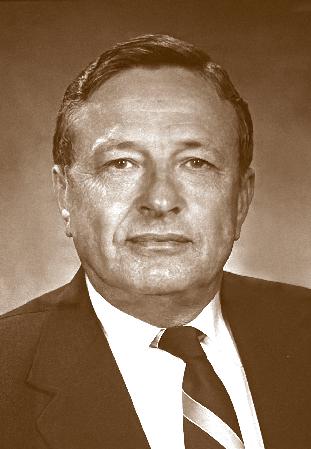
Bob Moss
Katherine "Teeny" Gillespie Moss was heavily involved with the Tazewell County Farm Bureau Women's Program in the 1980s.
The late Robert Lincoln Moss advocated for more slaughter capacity in the state.
Historical Timeline
1926 Daniel H. Barger elected first VFBF president
Feb. 26, 1926 Virginia Farm Bureau Federation is officially incorporated farmers.
1947 Howard S. Zigler elected third president
1948 H. Guy Blalock elected fourth president
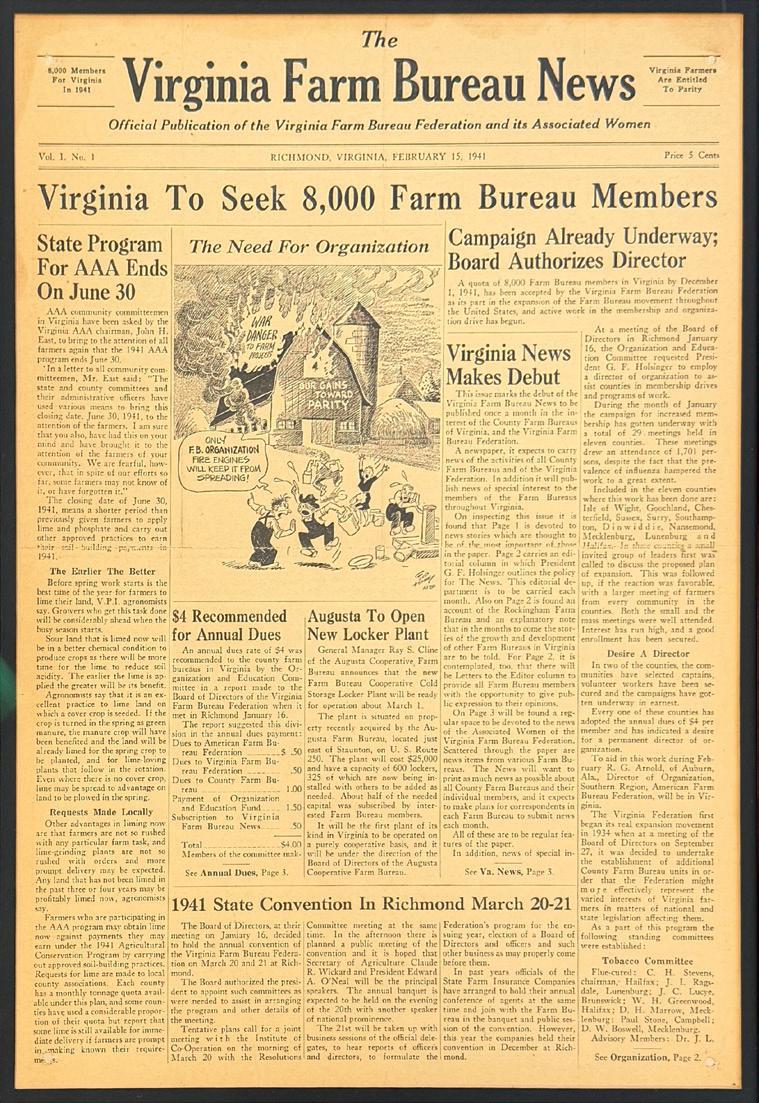
1941 First issue of Virginia Farm Bureau News is published
1956 Roy B. Davis Jr. elected fifth president
1958 T.T. Curtis elected sixth president
1962 Robert B. Delano elected seventh president
1950 Virginia Farm Bureau Mutual Insurance Co. founded to provide insurance to members
1980 S.T. Moore Jr. elected VFBF’s eighth president 1984 VFBF helped secure at least $2.5 million to establish a state agricultural best management practices cost-share program for 1975 VFBF Young Farmers Committee formed 1980 Former VFBF President Robert B. Delano elected president of the American Farm Bureau Federation
1985 Young farmers Andrew and Deborah Barker of Henry County were named one of three AFBF Young Farmers of the Year, Virginia YF’s first national honor.
1986 Robert B. Delano elected ninth president
1988 First Legislative Day at the Capitol was held during the General Assembly.
1995 Creation of the first VFBF commodity advisory committees
1999 Virginia Farm Bureau Federation AgPAC, a nonpartisan political action committee that works to build relationships with elected officials and enhance their understanding of agricultural issues, was approved by VFBF voting delegates. It began operating in 2000.
2004 Virginia names its firstever Secretary of Agriculture and Forestry, Robert S. Bloxom. Virginia Farm Bureau had lobbied for the position for years.
2012 A constitutional amendment to protect landowners from eminent domain abuse was approved by 75% of the state’s voters.
2024 Scott Sink elected VFBF’s 13th president
2006 Wayne F. Pryor elected 12th VFBF president
1988 C. Wayne Ashworth elected 10th president
1998 Bruce L. Hiatt elected 11th president
2013 Virginia Farm Bureau purchases The Meadow Event Park and the State Fair of Virginia
2004 The Virginia Foundation for Agriculture, Innovation and Rural Sustainability is established as a nonprofit to support rural economic development.
2011 Established the Plows and Politics blog to provide timely updates on issues to producer members.
2026 Forbes names Virginia Farm Bureau Insurance as the #1 Home Insurer in the entire U.S.
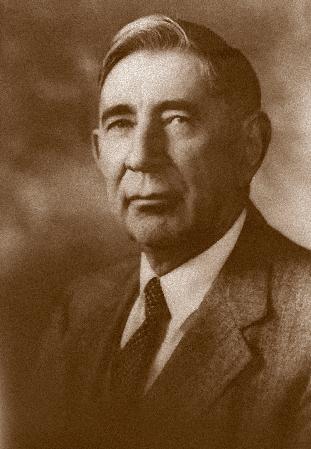
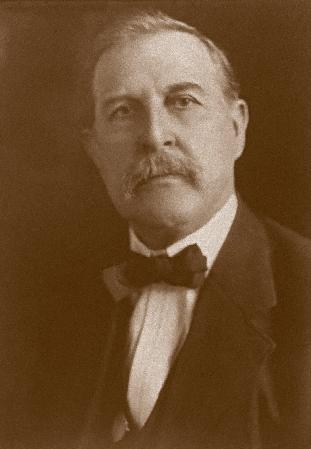
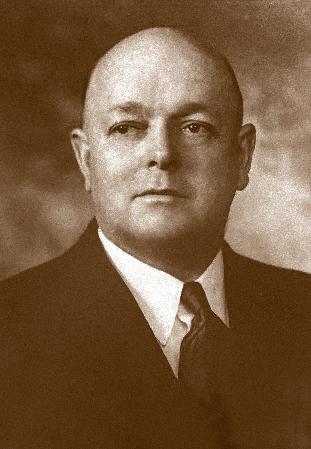
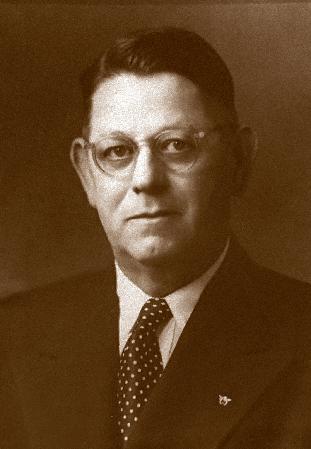
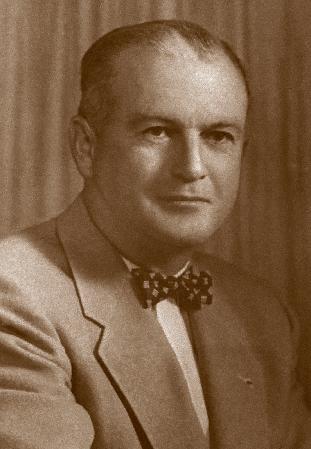
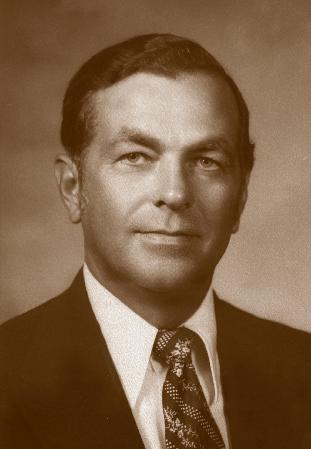
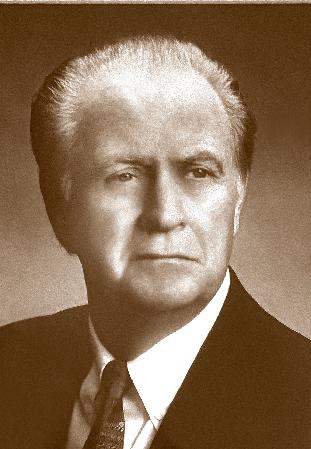
ASHWORTH HIATT
PRYOR
SINK
Campbell family, King William County
While important agricultural initiatives are written into governmental policy, Eugene Campbell’s personal experiences with Farm Bureau are forever etched in his heart.
“For me, Farm Bureau’s value is not just about influence,” Campbell said, age 76. “It’s about the memories.”
He remembers King William County Farm Bureau gatherings at Sandy Point Park on the Mattaponi River for annual meetings complete with picnics, softball games, greased pig contests, and the Miss King William Farm Bureau contest.
“I have fond memories of trying to catch the greased pig,” Campbell recalled.
His parents, the late Dick Campbell and Charlotte Commins Campbell, opened their Mattaponi River cottage to the county Farm Bureau for annual meetings and many other community activities.
His parents never charged a facility fee for use of their park’s amenities. The Campbells were loved and respected, and Dick never forgot a name.
“They were very communityoriented people,” Campbell noted. “Even their insurance agents over the years became personal friends, like Jim Woolford. He would tell stories about Daddy stopping by and just having a cup of coffee and talking about what was going on at that time. Jim said he always looked forward to those chats. It wasn’t just business. It was personal.”
Campbell is a lifetime King William Farm Bureau member and co-owner, along with sisters Lisa and Ellen
Kay, of two farms called The Grove and Greenville, where tenants grow soybeans and corn.
Campbell estimates his family joined Farm Bureau around 1952. Dick had an outstanding reputation as a former dairyman, county Farm Bureau board member, local official and state agribusiness leader. He also advocated for VFBF’s priorities at the General Assembly.
“I’d like to think that his leadership positions in the Farm Bureau gave him the confidence and a foundation for his other leadership endeavors,” Campbell said. “He stood up for the farmers. He was our voice, and people would listen!”
The J.R. Watkins Co. took a group of King William County farmers on a tour of their headquarters, manufacturing plant and research facilities in Winona, Minnesota. The direct-sales retailer sent "wagon men" to provide essential goods to remote farms. Dick Campbell is pictured second from right, among other farmers and county Farm Bureau members.
Eugene Campbell and his family often attended King William County Farm Bureau events.
‘Grit is key’ for women in commercial agriculture sector
JAMIE HODNETT
Key Account Manager, Nutrien Ag Solutions
BY NICOLE ZEMA
Young Jamie Hodnett had never heard the term “agronomist” when Jodie Clarke showed up at her family's Pittsylvania County tobacco farm for a meeting with her dad and grandfather.
“They talked about our farm and our practices, and she was so relatable,” Hodnett recalled. “She just sat down at the kitchen table. She let my dog rub all over her. She talked to me. She walked down to meet our horses. I told my dad, ‘I want to do what she does,’ though I didn’t really know what that meant at the time.”
But she figured it out, graduating from Virginia Tech in 2017 with a degree in crop and soil sciences. Hodnett found a career path in crop protection sales, eventually landing her current role as key account manager for Nutrien Ag Solutions.
Nutrien Ag Solutions is the largest provider of agricultural inputs in the U.S. through wholesale distribution and direct-to-farm sales.
In a two-step channel, manufacturers sell to distribution partners, and then Nutrien Ag Solutions delivers to the retail market.
Working within the Colonial Division, Hodnett supports 18 Nutrien locations from Virginia to New Jersey. She is primarily responsible for managing wholesale customers and marketing. She also manages her division’s sales development programs emerging talent, including recruiting and internships.
“I love that throughout my career, I feel like I can help people.”
Values of patience and personal initiative were seeded in Hodnett’s small farming community. Her dad and grandfather took time to explain land management principles.
“Why we were using a specific fertilizer, what we were looking for when we checked fields—all of those things made me love agriculture and drove my curiosity to learn more,” she said.
As the first in her family to earn a bachelor’s degree, Hodnett’s folks encouraged her “to chase every moment.
“They worked hard to give me the world,” Hodnett said.
That generational fortitude has prepared her for the challenges of agribusiness.
“We are tasked with feeding a growing population on declining acres each year with fluid market dynamics,” Hodnett said. “Our customer’s biggest
need is to increase yields, and they are looking for partners to bring valuable services and insights to help them achieve that.”
She personally knows what is at stake for growers. Farming is not a business; it’s a lifestyle.
“Until you’ve lived it—prayed for rain, watched a crop from seed to harvest—you don’t understand how personal that is,” Hodnett said. “That background has helped me better advocate for my customers.”
Her sector of the industry was traditionally male dominated. But women are increasingly represented in commercial agriculture leadership.
“As a female in commercial ag specifically, it takes a lot of grit,” she said. “You have to understand what you’re walking into, and be very frank and upfront. I’m grateful to have mentors across the state who took me under their wings. And I intend to do the same for my team.”
Jamie Hodnett’s advice to young women in commercial ag:
“Take every opportunity you’re offered to understand the business. Doing the hard work will take you all the way. Admit what you don’t know, do your best to learn, and ask questions. Your only competition is you. Just choose to be better than you were yesterday!”
Jamie Hodnett
SARA BETH PHOTOGRAPHY
Women in agribusiness
Meadow Event Park Vice President of Operations, State Fair of Virginia Executive Director and Vice President
BY ALICE KEMP
Spending summers writing competition entry tags and selling tickets at the State Fair of West Virginia sparked Marlene Jolliffe’s lifelong journey through the world of fair operations.
“It was kind of happenstance,” she mused about getting her first state fair job. “I like to say it was divine intervention.”
That early opportunity funded her bachelor’s and master’s degrees in tourism management, eventually leading to SFWV CEO. In 2015, she was recruited to oversee the historic Meadow Event Park and a beloved Virginia tradition.
For many, the State Fair of Virginia is 10 days of entertainment, competitions, animals and making family memories. For Jolliffe, it’s 12 months of meticulous planning and logistics.
“I enjoy touching the business aspects, from insurance, infrastructure and risk management to marketing, public relations
and politics,” she said. “I love all components of the fair—the people, the ever-changing environment and the chance to create.”
Through her leadership, the fair delivers a “magical combination of agriculture, entertainment, food and rides that people want,” while connecting visitors to Virginia’s agricultural heritage. It’s a platform for supporting agricultural youth, sharing producers’ stories, and highlighting realities like farmer mental health and farm equipment safety.
“While on the surface it may seem fun, it’s a very serious mission and one we remain committed to,” she commented.
When Jolliffe attended her first
International Association of Fairs & Expositions convention in 1989, she was “one of the lone females in the business.” Though she didn’t encounter gender-driven hurdles, “there were perceptions about what I was made of because of my stature!
“But I never let that bother me and focused on the work,” she quipped. Her focus earned her 2018 induction into the IAFE Hall of Fame and built The Meadow into a year-round agricultural venue contributing over $41 million in economic impact in 2023. Still, advancing her career while juggling a busy family life with two children has been a balancing act.
“It’s very tough to raise children and keep a seat at the table,” she said, noting that childcare and related costs can be barriers for advancing into leadership roles. “It’s a critical issue— anything that can be done to alleviate challenges of childcare will help open doors for more opportunities.”
Over the years, she’s seen the fair industry become “more robust” with a “balanced input of ideas” among men and women in leadership. Reflecting on her career, Jolliffe credits her success to staying grounded and true to herself, not shying away from hard decisions, and focusing on positive impact rather than personal gain.
MARLENE JOLLIFFE
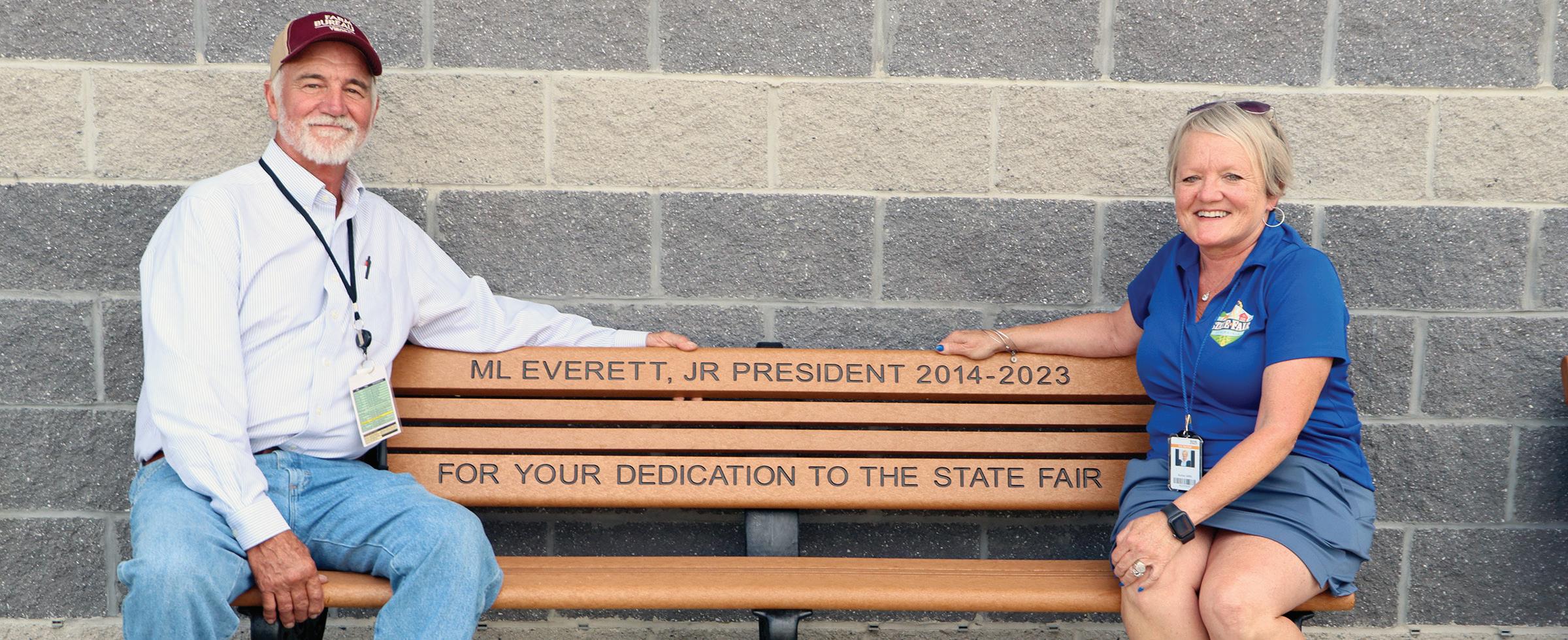
Marlene Jolliffe shows off one of the benches around The Meadow Event Park property that honor Farm Bureau counties or people, like former Virginia Farm Bureau board member M.L. Everett Jr.
LINDSAY REAMES
Executive Vice President of Membership and Brand, Maola Local Dairies
BY CHRISTINA AMANO DOLAN
Whether encountering roadblocks or diverging trails, agriculture advocate Lindsay Reames doesn’t just forge ahead—she paves new paths.
While growing up on her family’s Loudoun County dairy farm, the budding visionary sought to channel her profound appreciation for agriculture into something beyond her immediate world.
Stoneman, inspires her advocacy efforts today.
“From traveling to each of the counties and interacting with members, I was exposed to all the different pressures facing farmers across the commonwealth,” Reames reflected.
She went on to serve under former Gov. Terry McAuliffe as the assistant secretary of agriculture and forestry— amplifying the voices of Virginia farmers to help advance impactful policy directives.
Then, she returned to her roots— homing in on advocacy work for the dairy sector.
“I knew early on that I didn’t want to be involved in the production side day-to-day, but I really wanted to serve as an advocate for the industry,” Reames recalled.
In high school, a pivotal encounter with Virginia Tech professor Dixie Dalton inspired Reames’ educational pursuits. She received a bachelor’s degree in agriculture and applied economics in 2004 and a master’s degree in public administration in 2006 from that university.
An internship with Virginia Farm Bureau Federation in 2003 led to a full-time position on the Governmental Relations team by 2006, with Reames serving as that department’s assistant director from 2008-2016. Her lobbying work with Farm Bureau, guided by mentors Martha Moore and Wilmer
Since joining Maola Local Dairies in 2017, Reames has forged transformative partnerships and opportunities across the dairy cooperative and supply chain. She established the co-op’s groundbreaking sustainability programs—leveraging over $100 million in investments from customers and nonprofit organizations to help dairy farmers develop conservation plans, implement best management practices, and improve farm profitability.
While lobbying with Farm Bureau, Reames saw the potential of uniting farmers and conservation groups to achieve common goals.
“There were a lot of groups advocating for water quality, for example, by pressing for laws and regulation,” she explained. “If they used those same resources to come together, join hands with farmers and actually invest in practices that are going to improve environmental outcomes, then we can be much more successful.”
As executive vice president of membership and brand, Reames promotes “trusted farmer relationships” while leading Maola’s marketing efforts; internal and external communications with
customers, stakeholders and legislators; and the membership team, which directly assists member farms with sustainability, animal care, regulation and milk quality.
“My goal is to continue to advocate for our farmers and really make sure what we’re doing—whether it be from a business or policy perspective—provides real value to our farmers,” Reames noted. “That’s something I challenge my team with on a daily basis.”
As a leader, she strives to create new opportunities for her team members— listening to their challenges, offering solutions and learning from their unique strengths.
As a mother of two, Reames keeps busy with parental responsibilities while uplifting her community and industry in other roles, including serving on the Amelia Educational Foundation Board, the Virginia Agribusiness Council and the Virginia Tech College of Agriculture and Life Sciences Dean’s Advisory Council.
Reflecting on her early career, Reames encourages fellow women in agriculture to create new avenues from dead ends.
“A lot of the jobs I’ve had didn’t exist when I started,” she reflected. “Don’t limit yourself to what you think is possible, because a lot of times you’re seeing something that someone else might not see. Don’t be afraid to come up with that new idea, share it and advocate for yourself.”
Reames lobbied for farmers in her work with Virginia Farm Bureau and continues it today in her role with a dairy cooperative.
Lindsay Reames promotes farming through her role with Maola Local Dairies.
BY CHRISTINA AMANO
Navigating ‘Neo-P’
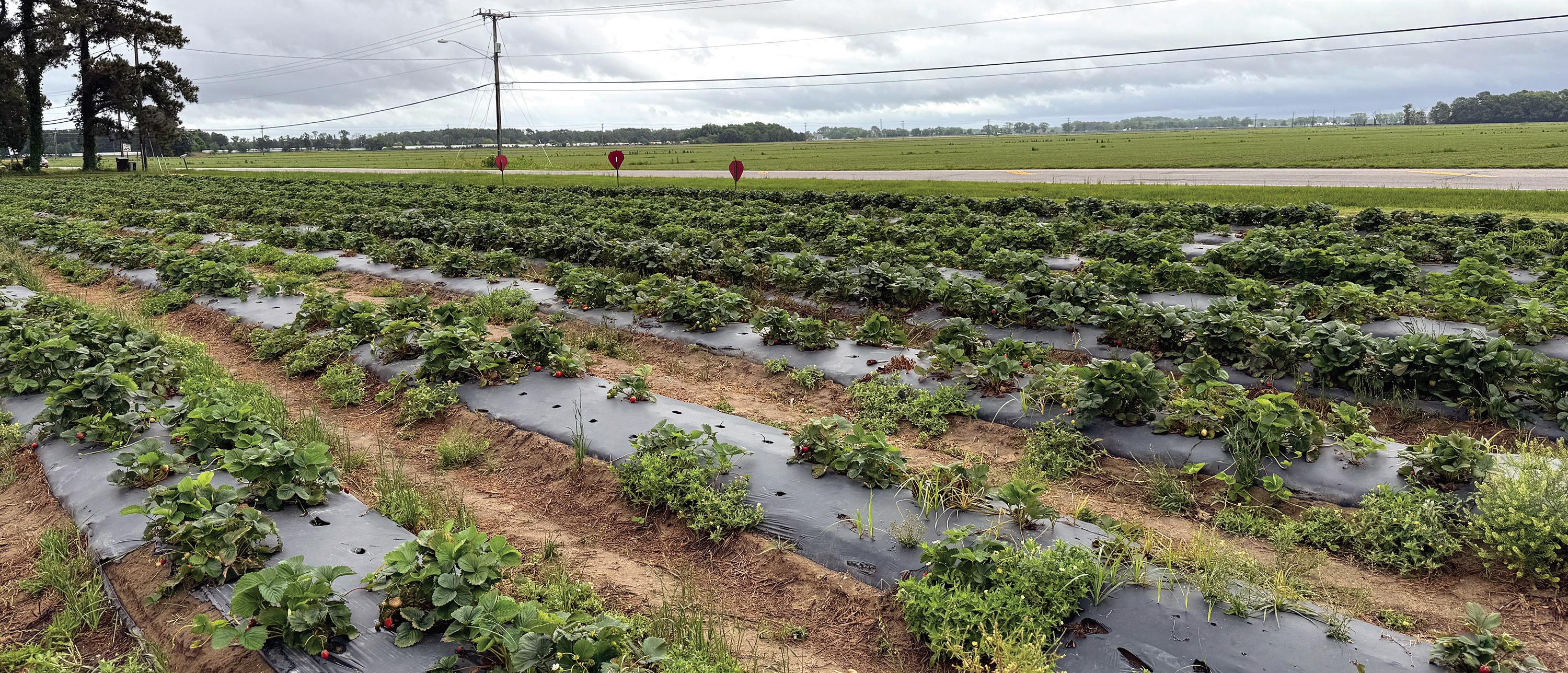
Jimmy Messick braced for a brutal 2024-25 strawberry season as soon as it began.
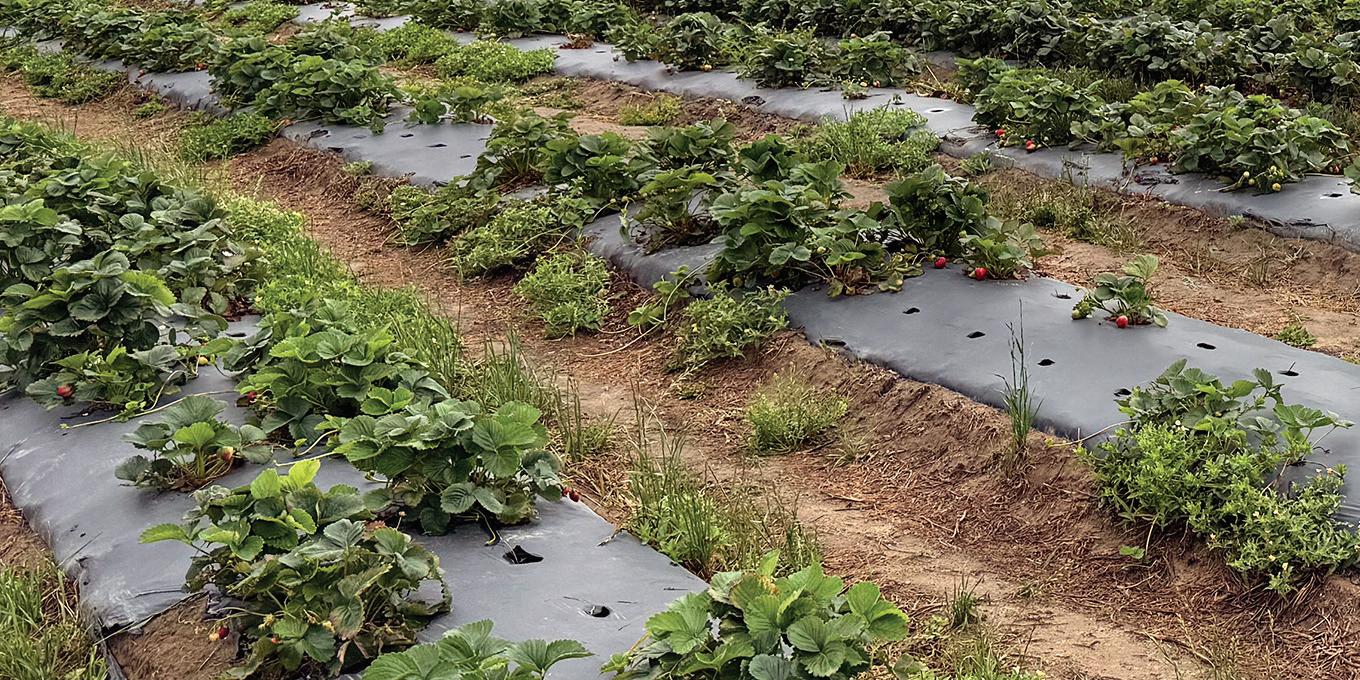
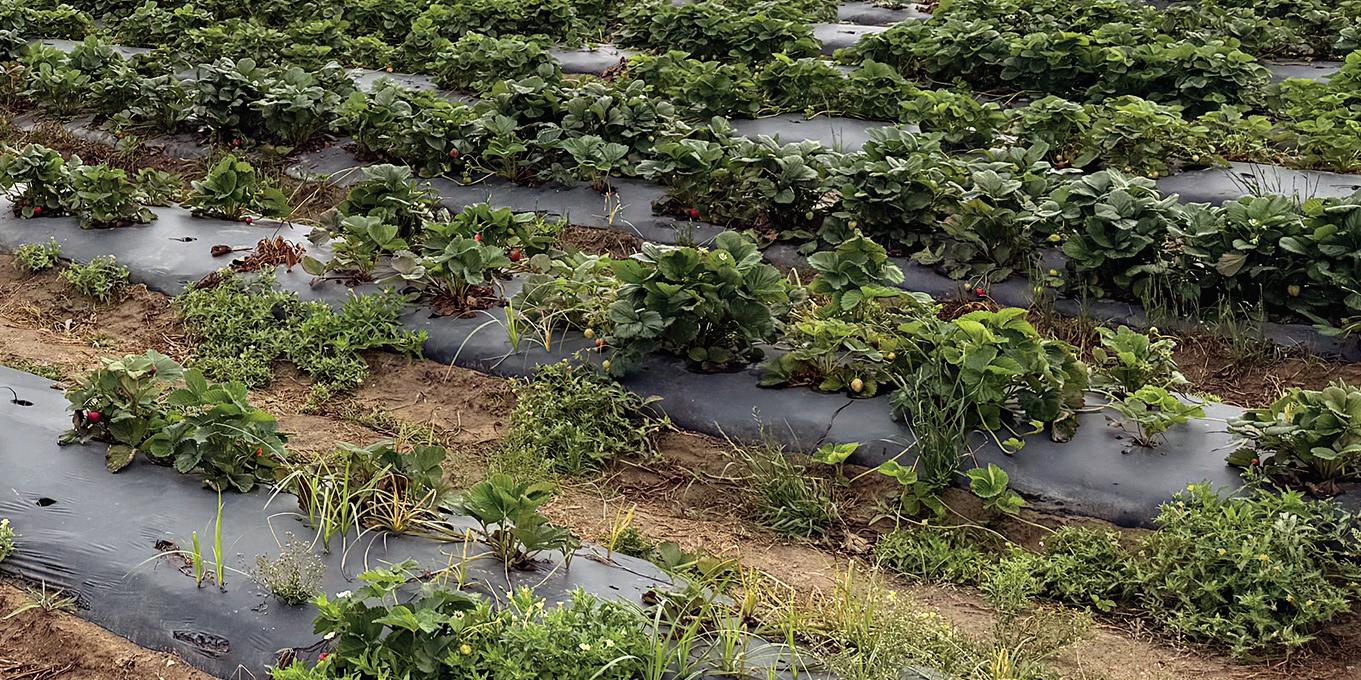
The Fauquier County grower planted his premier spring crop in October 2024. By December, rows of discolored, dying plants foreshadowed a devastating crop loss ahead.
“We had never experienced that before,” he reflected. “And it seemed like there wasn’t really anything you could do to reverse it.”
Messick battled the inevitable as the season persisted— navigating unfamiliar symptoms, rapid spread and no known solutions. Despite his best efforts, around 75% of his strawberries perished.
“It was a big loss to us—not only in fruit sales, but also in customer visits to the farm,” he lamented. “We gave people a heads up that there would be no strawberry picking at our strawberry festival. There was just nothing out there.”
While some strawberry seasons are hit with mysterious perfect storms, one thing is certain: A new fungal disease reached Messick’s fields, and he isn’t alone.
The rapid rise of Neo-P
Researchers are racing to understand the emerging Neopestalotiopsis, known as “Neo-P,” as it spreads, evolves and persists—threatening livelihoods across the state, country and globe.
The first Neo-P outbreak was reported in a single commercial field in Florida in 2017. Two years later, a new, aggressive Neo-P species began decimating Florida’s strawberry fields.
By the 2024-2025 growing season, strawberry plant suppliers and nurseries across the Southeast began warning growers of Neo-P outbreaks in tip production fields.
“In the fall, we got letters from some of our plant suppliers
that there was a problem brewing, and supplies were going to be tight because of the disease,” Messick recalled.
By the end of the season, strawberry growers across Virginia lost between 10% to 80% of their revenue from Neo-P outbreaks, according to Jayesh Samtani, Virginia Tech small fruit Extension specialist and associate professor of horticulture.
“We really took a hit last year with this particular disease,” he remarked. “And it’s not just spanning Virginia—it’s prevalent in a big part of the country, in Canada, and has spread across continents.”
With initial outbreaks traced back to propagated materials from Canada, the inconspicuous pathogen eventually slipped into U.S. fruit-producing fields undetected—where warmer temperatures and wet conditions fueled its rapid spread.
“And once it enters the fruit-producing field, the pathogen can survive on plant debris, within soil, and essentially can carry over from one season to the other,” Samtani explained. “It also can spread through footwear, human clothing and potentially floating row covers.”
He added that Neo-P species can survive on other hosts, including rhododendrons, roses and pomegranates.
Detecting and dealing with Neo-P
Thanks to aggressive response from plant propagators and suppliers, far fewer plant materials were showing Neo-P-like symptoms at the start of this season, Samtani noted.
“We’re much more fortunate to begin with than last year, but we have to be really cautious on a year-to-year basis to make sure we get clean plant material,” he cautioned. “And that’s really going to be of concern, because the fungal pathogens evolve, and we are not sure if more aggressive strains will come in the future.”
DOLAN
A Virginia Beach strawberry farm is infected by Neo-P.
YUAN ZENG
He urges growers to coordinate with their nursery propagators to ensure Neo-P-like symptoms are not present at their sites; and learn to recognize potential symptoms.
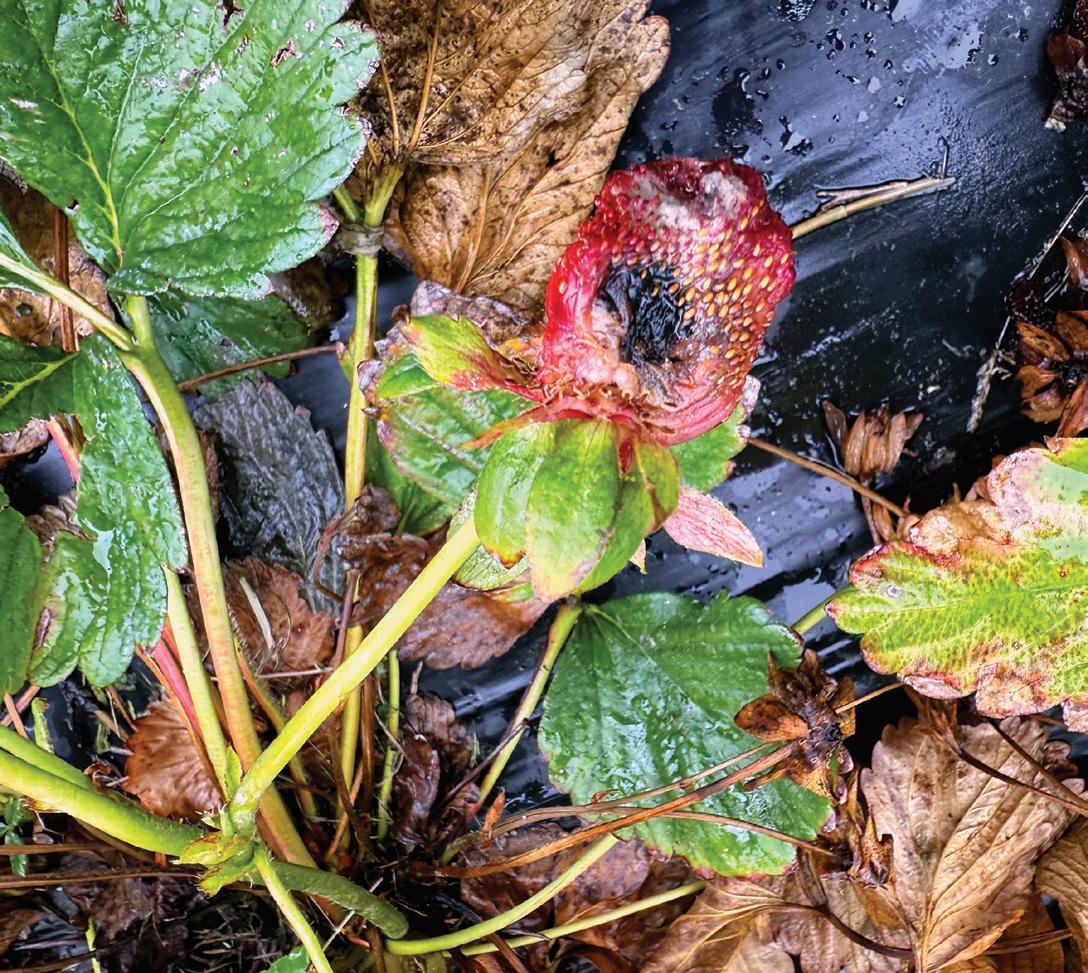
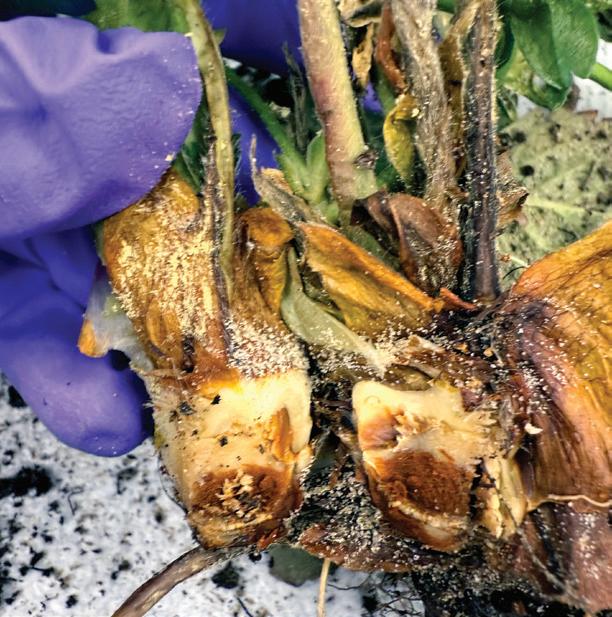
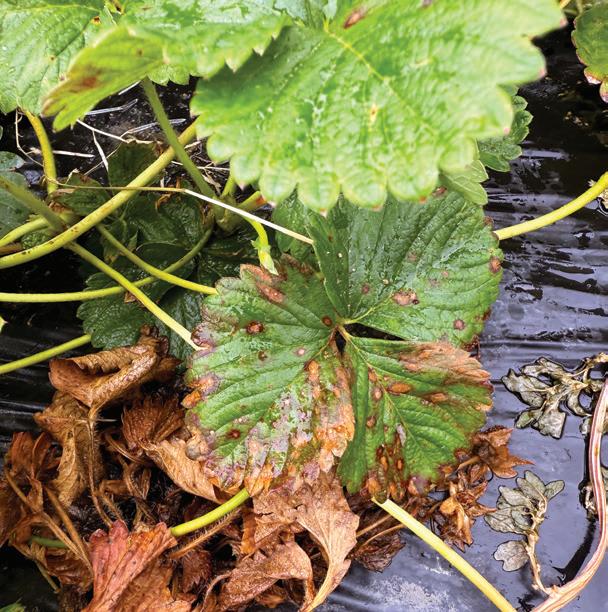
Infected plants often appear healthy at planting, with initial leaf symptoms occurring days or weeks later. How fast the disease progresses depends on environmental conditions, such as rain events or during periods of extended leaf wetness, according to Virginia Cooperative Extension. Symptoms can include:
• Irregularly-shaped, light-to-dark brown lesions on leaves
• Dry, sunken and irregularly-shaped dark brown-to-black lesions on fruit
• Irregularly-shaped, dark brown lesions on the crown
Growers can submit samples to the Virginia Tech Plant Disease Clinic to verify if Neo-P is present in their fields, and reach out to their local Extension office for additional guidance.
“And when you do see it, take some precautionary measures,” Samtani advised. “Keep up with fungicide application and recommendations, and make sure you’re not moving plants or people from infected sites to noninfected sites.”
Thiram and Switch 6.25 WG are reported to reduce Neo-P fruit rot by approximately 50%. However, manufacturing of Thiram will soon cease—concerning strawberry growers with already-limited treatment options.
While there are no known resistant cultivars, varieties like Sweet Charlie, Chandler, Camino Real and Ruby June are susceptible to Neo-P infection.
Samtani recommends the Rocco variety for Virginia growers, which has shown “some resistance” in initial observations.
Messick is experimenting with new cultivars this year to replace his Sweet Charlies, including the 025 variety for its potentially “high resistance” to Neo-P.
While he’s “very optimistic” about this year’s crop, he plans on staying vigilant.
“Strawberries require a lot of attention and maintenance… or you’re setting yourself up for failure,” Messick noted. “There are many diseases you have to be aware of and plan for, and I’m not convinced that all of our failures last year were due to Neo-P.”
Piecing together the puzzle
“I think by now, most strawberry growers are kind of familiar with the disease, and getting into the finer details is going to be achieved through research,” Samtani remarked.
Samtani and his Ph.D. student Thomas Gentry recently launched a field experiment at the Hampton Roads Agricultural Research and Extension Center, funded by the Virginia Department of Agriculture and Consumer Services Specialty Crop Block Grant. The team is exploring how various row cover fabrics may influence crop yield and Neo-P carry-over potential. Data from the study’s first season will be collected in late spring and early summer.
Meanwhile, Samtani’s team continues to monitor Neo-P presence and treatment techniques at the center.
Thanks to rigorous industry-wide collaboration, researchers are gradually piecing together the Neo-P puzzle—monitoring new strains while exploring cultivar susceptibility and resistance, breeding for resistance, and how cultural practices can help slow disease spread.
Growers can find more information, resources and updates on Neo-P by visiting the Virginia Cooperative Extension, North Carolina State Extension, and University of Georgia Cooperative Extension websites.
Visit the Southern Region Small Fruit Consortium website at smallfruits.org for a comprehensive suite of resources on small fruits.
Neo-P has caused up to 80% in losses for Virginia strawberry growers.
YUAN
Streamlined pathway needed for agriculture educators
ARTICLE AND PHOTOS BY NICOLE ZEMA
Folks always said Carroll County native Sarah Jo Jones would be a fabulous ag instructor, though she had no intentions to teach when completing her agricultural sciences degree at Virginia Tech in 2009.
“I was bound and determined not to be a teacher!” she recalled.
While serving as a Virginia Cooperative Extension 4-H agent, work-life challenges of new parenthood closed some doors and opened others. So, Jones took a position as a provisional ag instructor in Smyth County, transferred to a new ag program in Pulaski County, and then came home to Carroll County as a horticulture instructor in 2020.
It turns out, “I really loved it,” Jones said.
Only a bachelor’s degree is needed for provisional licensure eligibility, allowing new instructors three years to complete teaching licensure requirements—on their own dime and time. Jones was required to take six additional interdisciplinary classes, like shop safety, first aid and other Virginia Department of Education requirements.
“Unfortunately, those classes are not cheap,” she said.
Virginia public schools have 12 vacant agricultural instructor positions, yet plenty of animal or plant sciences graduates are willing to fill them. Currently, 335 agricultural teachers are serving 40,000 students in Virginia, with 150 of them provisionally licensed.
Without teaching certifications, provisional licensure is a premature pathway to the classroom. But with barriers in navigating the complex, disjointed certification requirements, retaining capable instructors like Jones is uncertain.
Teachers need 39 credit hours to satisfy certification requirements in
the Code of Virginia. Jones almost completed a master’s degree in agriculture and life sciences—another path to teacher endorsement.
“You can access land-grant university certifications online,” Jones noted. “But that’s not practical and affordable for working teachers. What ends up happening—you piecemeal it to satisfy requirements.”
Her story isn’t unique—it’s systemic.
Jones is happy in a new role as an associate Extension specialist for Virginia FFA, and recently earned her master’s in educational leadership from Radford University.
The next generation of young agriculturalists deserve the mentorship of dedicated instructors, she said.
“If we can make it a little easier to get quality people educated and certified to be in the classroom from Day 1, then that benefits everybody.”
Educator supply and demand
Virginia Farm Bureau Federation Vice President Robert J. Mills Jr. knows of several graduates who served as ag instructors in Pittsylvania County. Their impact was truncated, as many lapsed out of their provisional teaching licenses before they could
meet all the administrative code requirements for endorsement in agriculture education.
“Maybe being an ag teacher was an opportunistic-type career at first,” Mills said. “But there is not a coordinated path to making it a longterm career.”
VFBF leaders asked education experts at Virginia Tech’s College of Agriculture and Life Sciences how to develop a streamlined solution.
“The shortage of highly qualified school-based agricultural educators is a long-standing issue,” said professor Tracy Rutherford, head of the college’s Department of Agricultural, Leadership, and Community Education. “It has become easier to hire a provisional to hold a spot, so you don’t lose the position. Unfortunately, we’re hiring provisionals who are
Robert Mills Jr.
not prepared. ”
Agricultural instructors may teach up to seven daily classes on a range of subjects, pivot to FFA advisor duties after school, and manage all components of their ag programs. Having time or energy to fulfill teaching licensure demands while building an impactful agricultural education program is hardly feasible for these unendorsed instructors.
With increasing teacher demand and continued ag program expansion statewide, Virginia Tech’s AgEd Advisory Committee is developing programs, partnerships and legislative suggestions to help school districts and universities in Virginia with streamlined solutions.
Higher-education programs have changed significantly over the decade to include broad education measures, Rutherford said.
“That paired with licensure and technical skill requirements in 120 credits makes programs look very different,” she explained. “It is very much a ‘Jenga problem.’ We’ve got to put all the pieces together.”
Ag teacher to classroom pipeline
The AgEd Committee found greater retention if teachers are successfully
certified within the first five years of college and career, with local and professional support.
Though Virginia Tech’s Agricultural and Extension Education bachelor’s degree is actively recruiting prospective teachers, the AgEd Committee is leaning into modern solutions to address the shortage.
“We’ve worked hard on making that internal pathway easier for students to get their minimum teaching requirements while still in school, instead of after graduation when it’s much more difficult,” Rutherford said. “Now we will be seeking more information from stakeholders, including teachers, Farm Bureau members and school districts to really understand the demand in Virginia, the barriers to hiring and retaining teachers, and goals of administrators for the future of their programs.”
Shared responsibility, multidimensional solutions
Getting ag degree graduates into vacant teacher positions is a nuanced issue with myriad control points, Rutherford said.
“So that can make it very confusing, very frustrating, and very disjointed for stakeholders,” she said. “A pathway to licensure with the fewest additional requirements is the goal.”
Integration of that goal starts in high school.
On the recruitment level, teachers and guidance counselors can encourage students to pursue teaching and advise them about all certification options.
University and college programs
Two Virginia Tech degree programs are an internal pathway for students to attain licensure while still in college. Agriculture and Extension Education, and Career and Technical-Agriculture Education degree programs prepare them for the demands among many school districts, from ag mechanics, safety or livestock handling, to lesson planning and classroom management.
From top left: An agriculture student works with small ruminants; students help trim hooves; ag students water sedums in preparation for a plant sale; and other students hand-blend potting mix. These are just a few examples of hands-on learning that agriculture teachers provide.
Virginia Tech is working closely with its School of Education to align those two academic programs, while marketing the undergrad major and the teaching and learning minor.
The committee also is focused on the alignment between community colleges and Virginia Tech to make attaining certification easier, including the creation of a model at Blue Ridge Community College.
Legislative solutions
Tweaks to endorsement requirements in the Code of Virginia might address persistent statewide teacher shortages in agriculture and career and technical education. Rutherford said needs include: Greater clarity regarding courses that meet code and degree requirements.
Streamlining code to realign with current education practices and provide non-credit alternatives that
don’t cost teachers $30,000 to meet certification expectations
A failed 2025 house bill to establish the Virginia Commission for Agricultural Education Excellence was intended to address instructor shortages among other issues.
Farm Bureau resources
VFBF voting delegates supported that bill to coordinate efforts between state agencies in developing curriculum guidelines to align with educational and workforce needs.
But for rural ag instructors, community connection also matters.
Stakeholders like Farm Bureau are obligated to build partnerships with educators and support their ag programs, Mills concluded.
“We will continue to foster connections between educators, farmers and other stakeholders in the agricultural sector, while working to shape policies that benefit ag teachers
and programs on the state level,” he said. “Meanwhile, we also advocate for a strong federal farm bill that benefits agricultural education nationwide.”
Watch a Real Virginia® segment on Virginia's agricultural education programs teacher shortage.
Young
farmers ‘plow the past to cultivate the future’ at
Young farmers celebrated and championed a legacy of innovation during the 2026 Virginia Farm Bureau FederationYoung Farmer’s Winter Expo.
The Feb. 26-28 expo, themed “Plowing the Past to Cultivate the Future,” brought over 120 young farmers from across the state to the Richmond metropolitan area for lobbying, networking, workshops and more.
The expo kicked off with grassroots advocacy at the General Assembly. Young farmers forged partnerships with Secretary of Agriculture and Forestry Katie Frazier, Virginia Secretary of Commerce and Trade Carrie Chenery, Virginia Department of Agriculture and Consumer Services Commissioner Charles Green, State Forester Terry Lasher, Virginia Secretary of Natural and Historic Resources David Bulova, and Deputy Secretary of Natural and Historic Resources Adrienne Kotula.
Winter Expo
Opening day culminated with Virginia Farm Bureau’s 100th anniversary celebration at the organization’s headquarters in West Creek, where attendees heard special remarks from VFBF President Scott Sink and Virginia House Speaker Don Scott, D-Portsmouth.
After celebrating the centennial, young farmers ventured to Virginia State University to learn about groundbreaking research, emerging technologies and innovative strategies for achieving long-term success.
Friday’s activities included tours of VSU’s 416-acre research farm, and interactive workshops exploring topics like beekeeping; urban tree management using data, artificial intelligence and technology; modern tools that are revolutionizing livestock production; DIY hydroponic systems; and everyday uses for edible flowers.
Chesterfield County Young Farmers Committee co-chair Alan Thibault welcomed attendees to his family’s
operation, Ashton Creek Vineyards, for Friday’s dinner and spirited trivia battle between the districts.
Saturday’s hands-on workshops at VSU explored leadership and development opportunities for college students, young farmers and business owners, including VFBF internship opportunities, tips for growing a successful YF program, business plan development, and strengthening operations with assistance from the Virginia Foundation for Agriculture, Innovation and Rural Sustainability.
The expo’s keynote speaker and international award-winning journalist, Cowgirl Candace, emphasized the power of “superlative storytelling.” She encouraged young farmers to develop brand narratives, engage in strategic partnerships and leverage digital platforms effectively.
“What’s the impact you’re making in your community?” she asked. “One reason I was able to break through the digital noise is because my work comes
ARTICLE AND PHOTOS BY CHRISTINA AMANO DOLAN
from an asset framework…we want to give readers, followers and audiences something to aspire to.”
Tours of area farming operations, including Richlands Dairy Farm and Creamery, Turner Family Farm and Wakefield Peanut Company, showcased the area’s robust agricultural landscape.
Page County young farmer and college student Sebastian Bush said the YF program has given him needed leadership and networking
opportunities post-FFA. He hopes to pay it forward by launching a young farmers committee in his county.
“I find the connections most valuable at these expos,” he reflected. “You do learn a lot, but I’ve connected with a lot of people that I know, at the drop of a hat, would write me a reference letter. It’s really an amazing program.”
The 2026 Young Farmers Summer Expo will be held July 24-26 in Tappahannock.
Young farmers enjoyed networking, workshops and farm tours during their 2026 Winter Expo at Virginia State University and in surrounding counties.
KATHY
Janice Amanda Royster Burton, a former state chair of the Virginia Farm Bureau Federation’s Women’s Leadership Committee, died March 1.
Mrs. Burton, who was 90, served as Women’s Leadership Committee chair from 2002-2016. She also was a former member of the VFBF National Affairs Committee, served as Women’s Committee Southside District representative from 1996-2001 and chaired the Halifax County Farm Bureau’s Women’s Committee from 1989-1995.
A dedicated Farm Bureau member, Mrs. Burton believed strongly in community service and building connections among youth and agriculture. Under her leadership, the Women’s Program became a powerhouse fundraiser for the Virginia Foundation for Agriculture in the Classroom, and county Farm Bureau women’s committees made great strides in organizing educational and promotional initiatives in their communities. She also served on the foundation’s board.
Mrs. Burton helped broaden opportunities for youth participation in Farm Bureau. Faye Hundley, Women’s Leadership Program state chair, said she played a key role in expanding the VFBF Ambassador program by opening it to both young men and women involved in
agriculture and Farm Bureau.
Additionally, “she encouraged women’s committees to reach out to legislators and become involved in the legislative process.
“She helped create a Capitol Coffee Hour, where counties invited legislators to discuss agricultural issues during informal gatherings,” she said.
Her commitment to Farm Bureau was recognized in 2017 when she received the Distinguished Service to Farm Bureau Award, honoring her years of leadership and service to the organization’s mission.
Hundley added that Mrs. Burton was “a great mentor.”
“I wouldn’t have gone on my own Farm Bureau journey if she hadn’t nudged and encouraged me,” Hundley said. “She saw things in me that I didn’t see in myself.”
Outside of Farm Bureau, Mrs. Burton raised tobacco, dairy, corn and small grains in Scottsburg alongside her husband, Thomas, until retiring from full-time production. They continued to raise hay and lease farm acreage for vegetable production.
Mrs. Burton worked for Virginia Cooperative Extension for 30 years and was a member of Bethel Baptist Church where she served as a past deacon and choir director. She is survived by her husband, Thomas, and a niece.
Virginia farmers promote agricultural literacy and connect with state leaders at first-ever Farm Woman Lobby Day
BY NICOLE ZEMA
When women show up, amazing things happen.
Over 50 leaders representing agricultural operations across Virginia met at the state capitol to connect, learn and make their voices heard on Feb. 26 as part of the first-ever Farm Woman Lobby Day. Members of Virginia Farm Bureau Federation Women’s Leadership Program visited legislative offices to promote agricultural literacy during the 2026 General Assembly session.
Women distributed the Agriculture in the Classroom Book of the Year, Farm Boots, to legislators, and encouraged them to read to their district students in celebration of Agricultural Literacy Week March 23-27.
Farm women also heard from Gov. Abigail Spanberger and Lt. Gov. Ghazala Hashmi, administration leaders and rural advocates.
“Thank you for the work you do in communities across Virginia,” Spanberger said. “In the legislation that’s moving forward, or the work our administration is doing, it’s important we have an agricultural perspective at the table.”
Sen. Russet W. Perry, D-Leesburg, said Farm Bureau’s advocates make a lasting impression on lawmakers. “We know that women of the Farm Bureau are so strong, so tough and so smart!” Perry said.
With National Egg Month arriving in May, there’s no better time to spotlight a dish that’s equally comforting and refined: Quiche.
Enjoyed during breakfast, lunch or dinner, quiche is a polished, practical dish that looks impressive and delivers big flavors while being flexible and simple to assemble. Its custard-like filling and flaky crust are a base for endless variations, from the traditional quiche Lorraine to creative variations featuring smoky chorizo and fresh spring vegetables. It’s also a quick, no-fuss way to use what’s on hand. Leftover steamed broccoli, asparagus, ham and cheese all can find new life when baked into this delicious dish.
Quiche showcases one of the most versatile proteins raised by Virginia farmers. Chicken eggs rank 10th among the commonwealth’s top commodities, with Rockingham, Augusta and Accomack among the top producing counties. Generating more than $146 million in cash receipts annually, Virginia is 28th in egg production nationwide.
So welcome spring, honor the affordable and healthy protein, and enjoy a slice of quiche.
Quiche Lorraine
INGREDIENTS
1 cup shredded Gruyere cheese
8 slices of bacon, cooked crisp and crumbled
9" ready-to-use pie crust
6 large eggs
1¼ cups half and half
¼ teaspoon salt
¼ teaspoon pepper
1/8 teaspoon nutmeg
DIRECTIONS
Heat oven to 375°.
Sprinkle cheese and bacon evenly in bottom of pie crust.
In a medium bowl, beat eggs, half-and-half, salt, pepper and nutmeg until blended. Pour over the filling in the pie crust.
Bake in the center of the oven until the quiche center is almost set but jiggles slightly when dish is gently shaken and a knife inserted near center comes out clean, about 35-40 minutes. Remove and let stand for 5 minutes.
—Recipe courtesy of the American Egg Board.
Celebrate National Egg Month with an egg’cellent quiche
Garlic Mushroom
Quiche
INGREDIENTS
1 sheet thawed puff pastry
2 tablespoons unsalted butter
1 pound white button mushrooms, cleaned and sliced
kosher salt and freshly ground black pepper, to taste
1 cup chopped fresh Swiss chard
3 cloves garlic, minced
1 teaspoon chopped fresh thyme, plus more for garnish
5 large eggs
3/4 cup whole milk
3/4 cup shredded mozzarella cheese
DIRECTIONS
Heat oven to 350°.
Unfold the puff pastry on a lightly floured surface. Roll the dough to 14" round. Transfer the dough to a 9" pie dish, and fold any excess dough under to form a crust. Crimp the dough edges and use a fork to poke holes in the bottom. Place onto a rimmed baking sheet and set aside.
In a large skillet, melt 2 tablespoons of butter over medium-high heat. Add the mushrooms, salt and pepper and cook, stirring occasionally, until tender, about 5-7 minutes. Stir in the Swiss chard, garlic and thyme, and cook until the chard is wilted and garlic is fragrant, about 1 minute. Remove from heat and set aside.
Using a large bowl, whisk eggs and milk together. Add the mushroom mixture and cheese and whisk to combine. Pour the egg mixture evenly into the prepared pie crust. Bake until the center is set, and crust is golden-brown, about 45 to 50 minutes. Cool for 15 minutes. Garnish with additional thyme and serve.
—Recipe adapted from The Mushroom Council.
Spring Veggie Quiche
INGREDIENTS
3 eggs
1¼ cups milk
2 tablespoons flour
¼ teaspoon salt
1/8 teaspoon black pepper
½ teaspoon dried basil
9" deep-dish pie crust, unbaked
1½-2 cups miscellaneous filling
FILLING
grated cheese
sautéed bell peppers
broccoli, cooked and chopped
asparagus, cooked and chopped
sautéed onions and garlic
fresh spinach, wilted
zucchini, yellow squash or carrots, grated sautéed mushrooms
shrimp or chicken, cooked and chopped
Feel free to mix and match the fillings to equal 2 cups.
DIRECTIONS
Heat oven to 375°.
In a large mixing bowl, whisk the eggs with milk, flour, salt, pepper and basil. Place the miscellaneous filling into the crust and pour the egg mixture over the filling. Bake for 45 minutes or until the pie has set.
—Recipe adapted from Cooking Virginia Style with Farm Bureau Women.
Seafood Quiche
INGREDIENTS
1 unbaked deep dish pastry shell
8 ounces diced Swiss cheese
2 tablespoons flour
1 cup milk
3 beaten eggs
½ teaspoon salt
⅛ teaspoon pepper
dash of nutmeg
¼ pound crab meat
¼ pound scallops
DIRECTIONS
Heat oven to 425°.
Prick the pastry with a fork and bake for about 6 minutes. Remove from the oven and set aside.
Lower the oven temperature to 350°.
In a mixing bowl, combine the cheese and flour and set aside. In a separate large bowl, combine the milk, eggs, salt, pepper and nutmeg. Stir in the crab meat, scallops and cheese mixture. Pour into the pastry shell and bake for 50-60 minutes.
—Recipe adapted from Country Treasures from Virginia Farm Bureau Kitchens
Renters insurance:
BY CHRISTINA AMANO DOLAN
Imagine returning home to discover an electrical fire had erupted in your apartment. Your smoky home is now uninhabitable; your belongings are burned; and your landlord’s insurance policy doesn’t cover tenants’ temporary living expenses or personal property losses.
Without renters insurance, this unforeseen disaster could have devastating financial consequences.
“One of the biggest mistakes a renter can make is thinking they don’t need a renters policy,” cautioned Laurie Gannon, vice president of claims for Virginia Farm Bureau Mutual Insurance Co. “Your contents add up, and I think most folks may not realize how costly it would be to replace those items following a devastating loss.”
Losses from fire and theft are the most common claims from VFBMIC renters policyholders.
“Renters insurance is undeniably an essential protection for tenants,” Gannon emphasized. “It covers personal property both on and off the premises against theft or damage due to events such as fire or water damage, and covers temporary living expenses if the rental becomes uninhabitable due to a covered event.”
While only costing a few dollars a month, a standard renters policy provides coverage for 16 different perils, including fire, lightning, wind or hail, theft, smoke damage, accidental discharge or overflow of water from a heating or plumbing system, and power surge.
A renters policy also provides critical liability coverage— protecting renters from significant financial loss when causing injury to someone else or someone else’s property.
Gannon offered an example scenario of a renter named
Protect your belongings and budget from unforeseen disasters
“Mary,” who walks her dog and encounters a child playing with a ball. Mary’s dog escapes its collar and excitedly jumps on the child—causing the child to fall and break their wrist.
“In this case, the liability coverage provided by Mary’s policy would step in to help the child’s parents with medical bills and other expenses,” she explained. “Without that coverage, Mary would be personally responsible for the medical bills and injuries to the child.”
In most situations, a renters policy will not provide coverage for the policyholder’s roommates. It’s important for roommates to obtain their own individual policies to ensure they’re properly covered.
Renters should take extra precautions to protect their personal property from damage or theft, such as reporting maintenance issues as soon as they arise, never leaving appliances running unattended, keeping doors and windows locked, and storing high-value items in secure and hidden spaces.
“Always act cautiously and responsibly,” Gannon advised. “Good decisions often keep bad things from happening, but when an accident happens, it’s peace of mind to know that you are covered.”
There are myriad optional coverages for high-dollar items and unique situations. For example, a standard policy provides up to $2,500 in coverage for stolen jewelry. A policyholder who owns a piece of jewelry that’s worth more than $2,500 may consider adding it to a Scheduled Personal Property endorsement for a specific policy limit.
Contact your VFB insurance agent for more information and to find the right plan for you.