








Virginia Farm Bureau

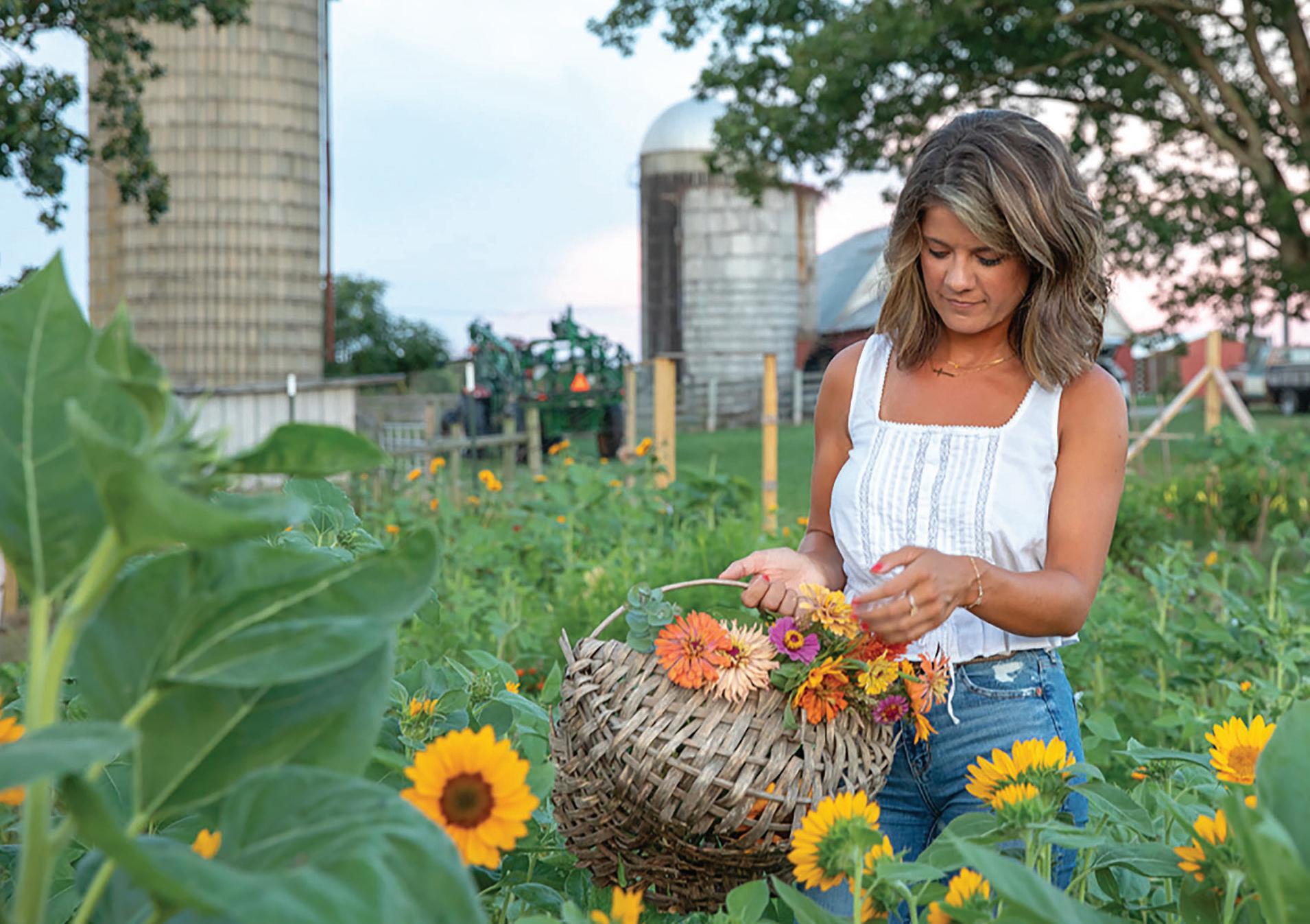

“Growing flowers is art and science in harmony.”
— ERIN SMALL, Prince Edward County agriculture and natural resources Extension agent
The
The
Some
Associate
Volume 19, Number 2 Spring 2026
Cultivate (USPS 025051) (ISSN 1946-8121) is published four times a year. February, May, August, October. It is published by Virginia Farm Bureau Federation, 12580 West Creek Parkway, Richmond, VA 23238. Periodicals postage rate is paid at Richmond, VA and additional mailing offices. The annual Subscription Rate is $1.13 (included in membership dues).
Postmaster: Please send changes of address to, Cultivate, Virginia Farm Bureau Federation, P.O. Box 27552, Richmond, VA 23261; fax 804-290-1096. Editorial and business offices are located at 12580 West Creek Parkway, Richmond, VA 23238. Telephone 804-290-1000, fax 804-290-1096. Email address is Cultivate@vafb.com. Office hours are 8 a.m. to 4:30 p.m., Monday through Friday.
All advertising is accepted subject to the publisher’s approval. Advertisers must assume liability for the content of their advertising. The publisher assumes no liability for products or services advertised. The publisher maintains the right to cancel advertising for nonpayment or reader complaints about services or products.
Member: Virginia Press Association
EDITORIAL TEAM
Kathy Dixon Assistant Director, Communications
Nicole Zema Sr. Staff Writer/Photographer
Christina Amano Dolan Sr. Staff Writer/ Photographer
Kenny Kane Graphic Design Manager
Eleanor Stickley Sr. Graphic Designer Alice Kemp Sr. Staff Writer/Photographer/ Advertising Coordinator
vafb.com
MEMBERS — Address change? If your address or phone number has changed, or is about to change, contact your county Farm Bureau. They will update your membership and subscription information.
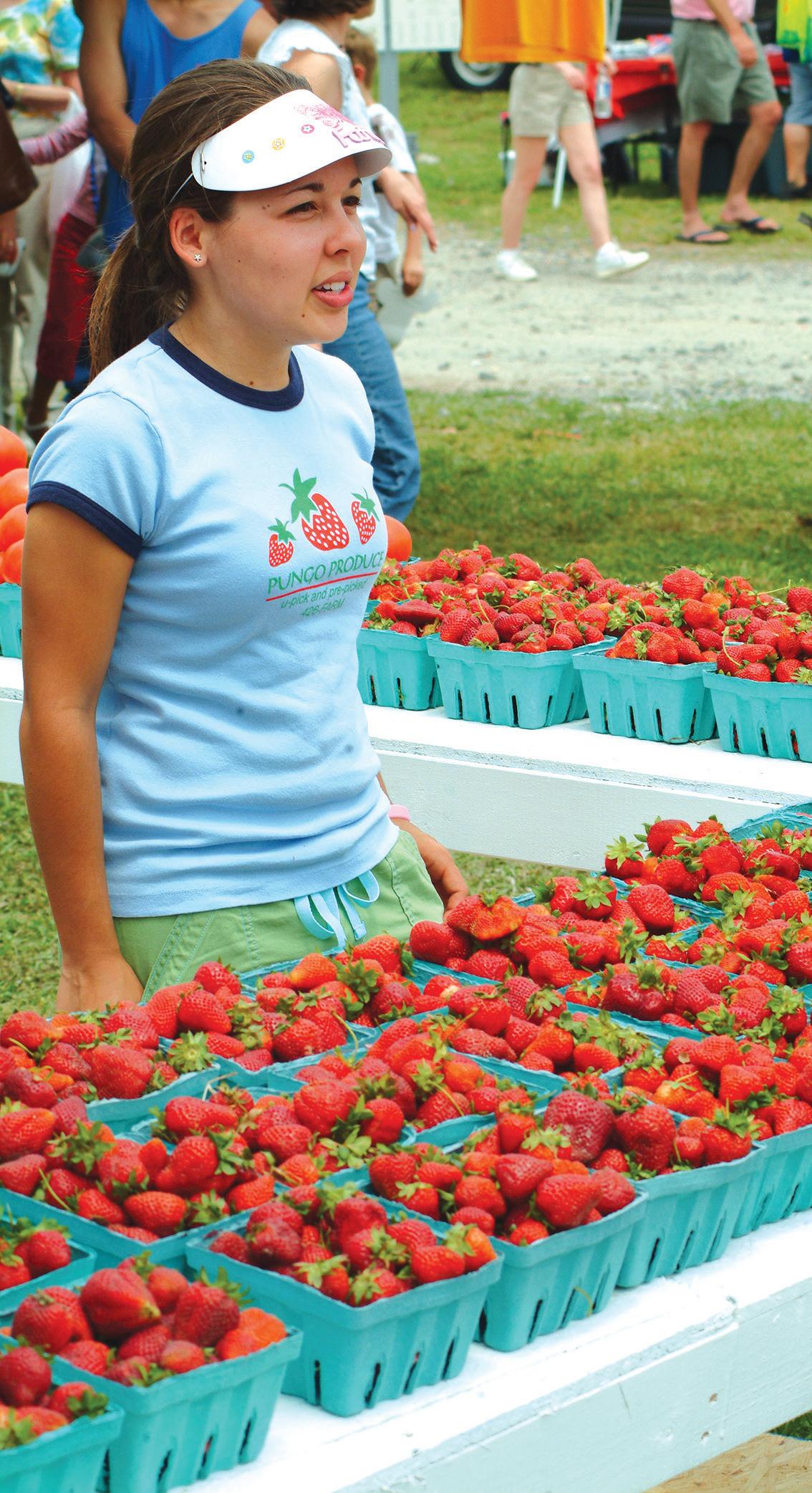
Spring strawberries provide sweet benefits
Succulent strawberries are the first fruit to ripen in the spring, with many Virginia varieties ready for picking by early May.
According to the U.S. Department of Agriculture, 94% of American households eat the berries. The




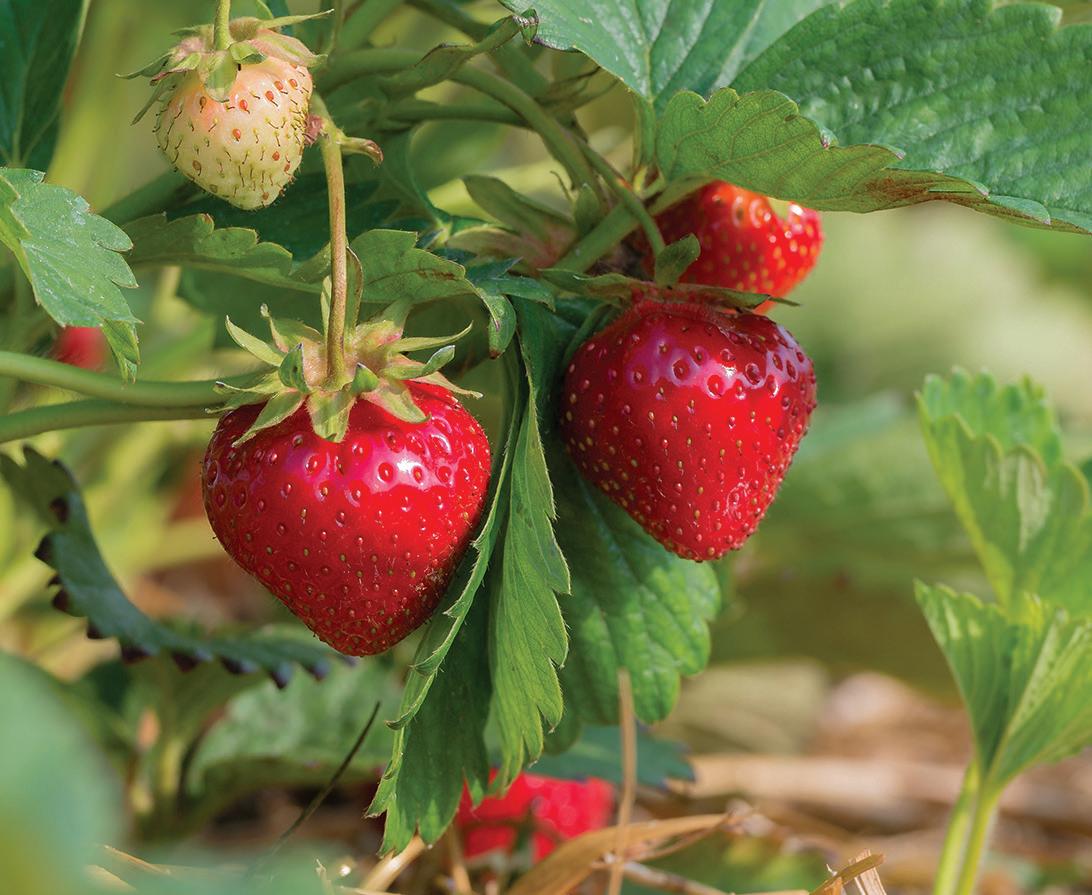
average American eats 3.4 pounds of fresh strawberries each year, and they eat another 1.8 pounds of frozen strawberries annually.
Eight strawberries provide more Vitamin C than an orange—around 140% of the recommended daily amount!
Besides red, strawberries can be white, yellow, pink or golden. Unlike some fruits, they don’t ripen after they’ve been picked.
Fun fact: Strawberries are the only fruit with seeds on the outside, averaging 200 seeds per berry.
The vibrant berries are grown in
every single U.S. state. In Virginia, 227 acres of strawberries were cultivated on 231 farms, according to the 2022 Census of Agriculture.
One acre of land can grow about 50,000 pounds of strawberries. In Virginia, farmers produce between 14,000 and 18,000 pounds per acre, with the majority grown in Loudoun, Spotsylvania, Fauquier and Frederick counties.
Discover some succulent strawberry recipes on page 28 in our Heart of the Home section.
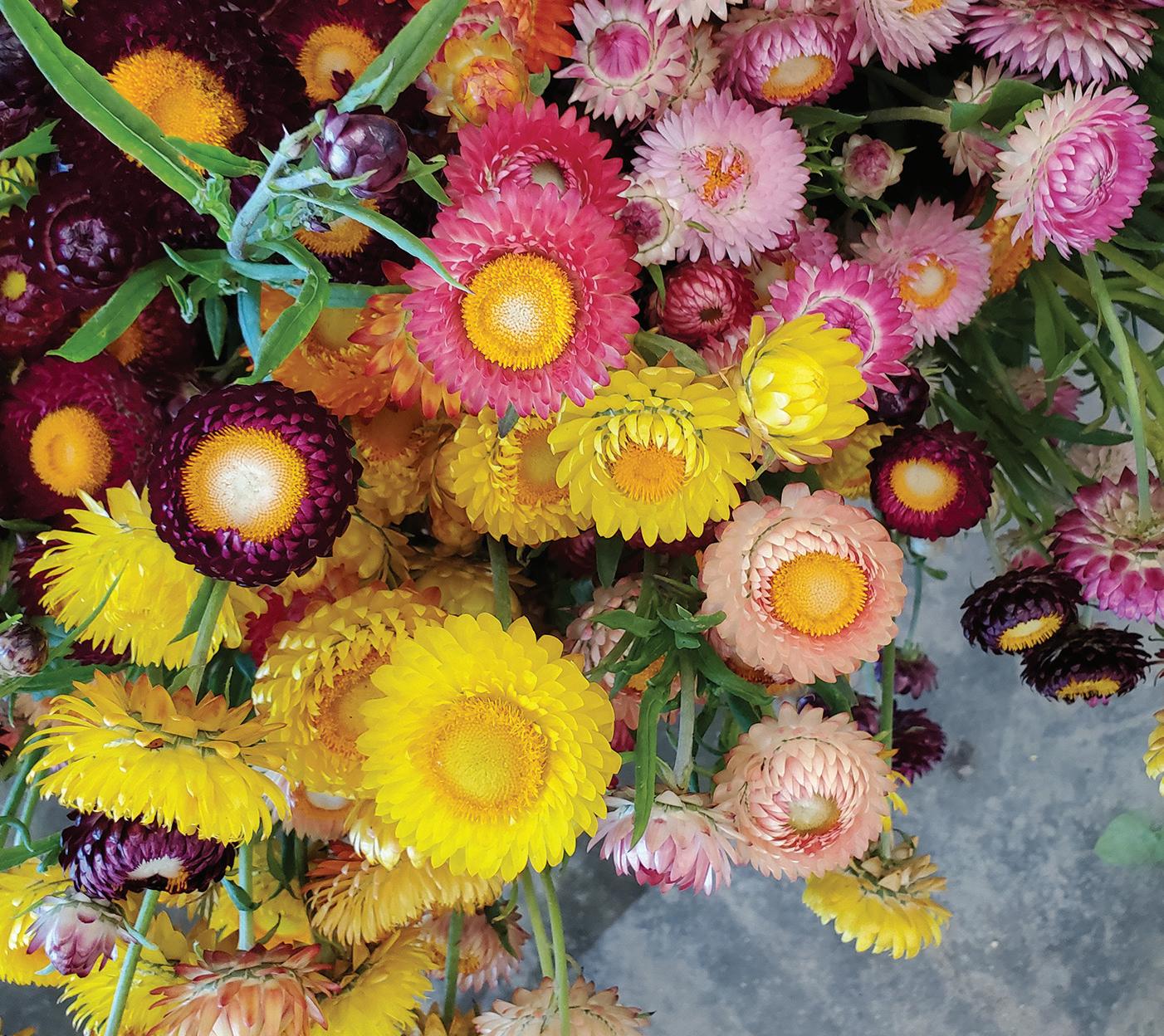
That’s the number of Virginia farms growing cut flowers and florist greens—a 73% increase from 184 farms in 2017. See related article on page 16.



Butter’s journey from farm to store is udderly fascinating, on Real Virginia
Featured this month on Real Virginia, Virginia Farm Bureau’s weekly television program:
• Discover the udderly fascinating journey of butter–from the farm to the store!
• Explore how CSAs connect consumers with farmers and the delicious food they provide.
• Visit two of Virginia’s tulip festivals, where farms are graced with acres of vibrant red, dazzling yellow and pretty pink blooms.
Real Virginia airs nationwide at 8:30 a.m. on the first and third Thursdays of each month in the Voices of Agriculture program on RFD-TV on Dish Network and DirecTV, and on selected cable outlets around the state. Watch anytime at vafb.com. It airs weekly on WVVA Bluefield and WTKR Norfolk. It also airs on the first and third Sundays of each month at 7 a.m. on WHSV Harrisonburg and at 10 a.m. on WVIR Charlottesville; and on the first and third Saturdays at 5:30 a.m. on WSLS Roanoke and at 8 a.m. on WRLH Richmond.

As of May 1, there are 147 days until the 2026 State Fair of Virginia opens on Sept. 25 and runs through Oct. 4.
Fair fact:
The 2025 fair hosted over 5,600 exhibitors and drew more than 11,000 entries in competitions for livestock; vocational and technical education; visual and culinary arts; and horticulture. The fair’s Educational Expo had a record 16,000 participants, representing 82 Virginia counties and 30 cities. Additionally, since 2013, the State Fair of Virginia has awarded over $1 million in scholarships to support youth education.
This year’s theme, “Virginia’s Best of Show,” celebrates the champions, craftsmanship, flavors, moments and Virginia traditions that make the fair timeless.
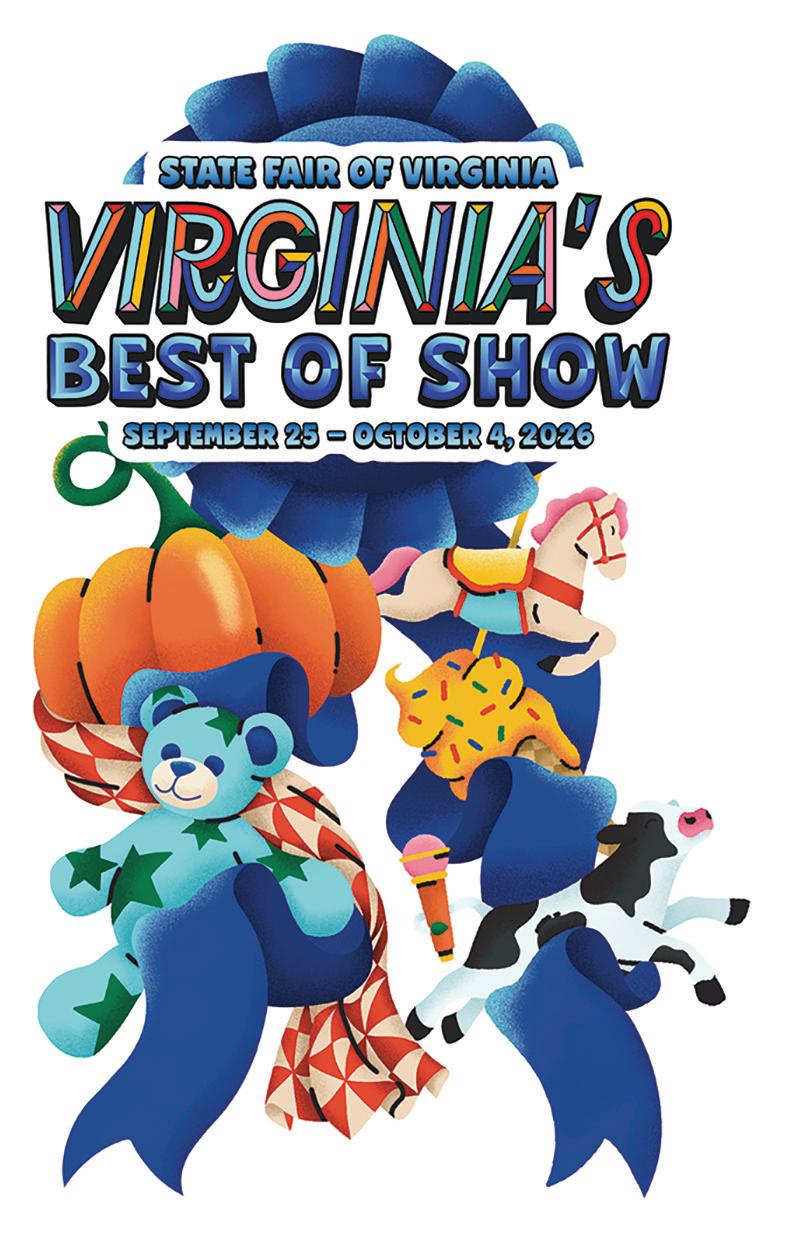
Whether it’s the thrilling midway, mouth-watering fair food, shopping, agricultural attractions or live music, the best of Virginia takes center stage for 10 fun-filled days.






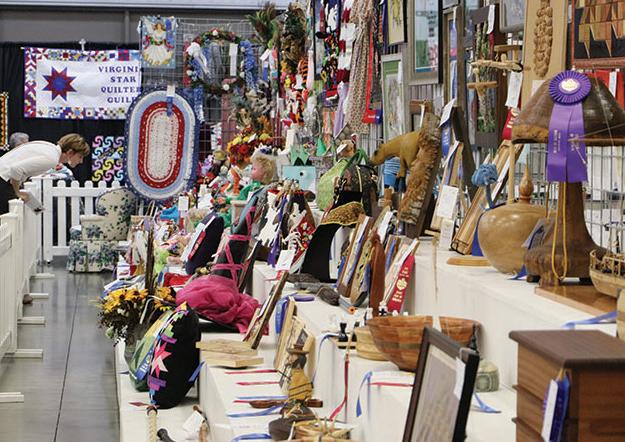











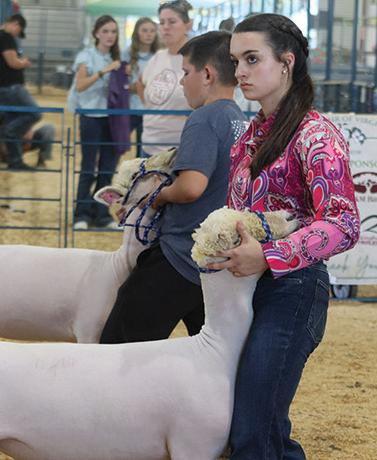

This year brings extra reasons to celebrate. The fair will feature special contests, promotions, events and exhibits honoring the nation’s historic 250th anniversary, alongside programs celebrating Virginia Farm Bureau’s Centennial— making the 2026 event truly memorable.




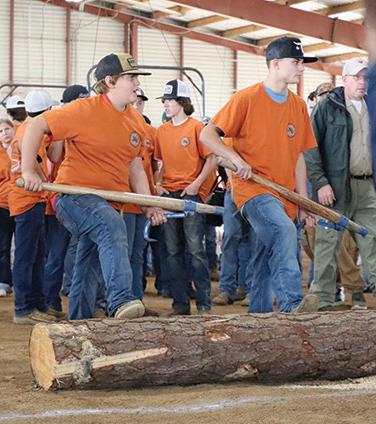



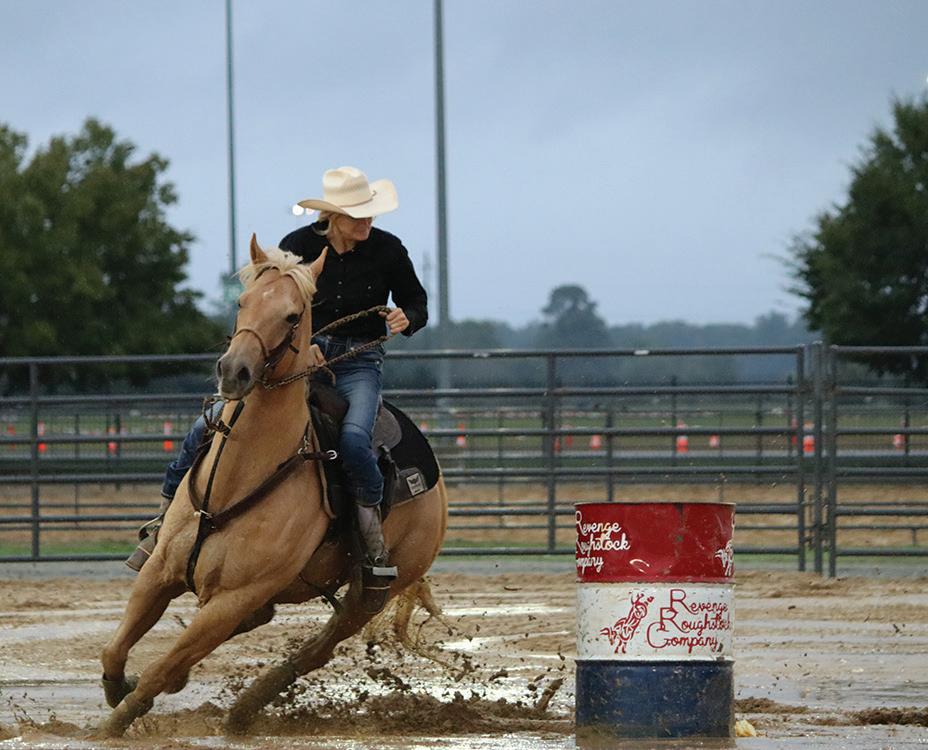

Fairgoers can count on returning fan favorites like exciting performances by Triple Crown Circus, the World Championship Blacksmiths competition, two nights of Revenge Roughstock Rodeo, chainsaw carvings and the speedy swine of Rosaire’s Royal Racers. Additionally, the fair’s Main Stage Concert Series will feature 10 nights of captivating shows from artists spanning a variety of musical genres.
Fair organizers also are hard at work planning new attractions and entertainment sure to delight guests of all ages.
Agricultural displays remain at the heart of the fair experience, with attractions like Young MacDonald’s Farm, milking demonstrations, livestock and equine exhibitions and other ag-related competitions running throughout the fair.
Carefully cultivated giant pumpkins, squashes and watermelons and other commodities will be on display alongside award-winning crafts and creations from across the commonwealth. And don’t miss the Natural Resources Area, where visitors can explore exhibits highlighting Virginia’s lands, waters and wildlife.
The State Fair also is a prime opportunity to showcase homegrown skills and talents, and earn a coveted blue ribbon! With countless youth and adult baking, cooking, arts and crafts, horticulture and livestock competition categories, there’s something for everyone. Now is the time to brainstorm and practice what you’d like to enter in the competitions. The fair’s 2026 competition guidelines will be available this summer at StateFairVa.org
Stay tuned for fair news and updates by following the fair on Facebook at Facebook.com/StateFairVa and Instagram @statefairva









Your Farm Bureau membership entitles you to significant savings at thousands of hotel properties. Reservations are required, and blackout dates may apply.
The Choice Hotels International program offers a 20% discount off “best available rates” for Farm Bureau members at more than 7,000 locations. To access this discount rate, visit choicehotels.com or go to vafb.com/benefits and log in with your membership number.
Virginia Farm Bureau members can save $10 on regular or children’s tickets by logging into their vafb.com account.
Located in Pigeon Forge, Tennessee, Dollywood is recognized as one of the world’s best theme parks. Spanning 150 acres and located near Great Smoky Mountains National Park, Dollywood offers more than 40 rides and attractions, including Lightning Rod, the world’s fastest wooden coaster. Dollywood has won more awards than any other theme park for its live shows featuring country, bluegrass, Southern gospel and classic rock. Master craftsmen demonstrate the area’s rich artistry, from hand-blown glass to blacksmithing.
Members may purchase discount tickets to the Dollywood Theme Park by visiting vafb.com/benefits or Dollywood.com
Time is money, and efficient labor tracking reduces administrative work and costly errors.
The process of manually tracking labor, piece rate production and ever-changing wage rates exposes farmers to a wide range of costly errors and litigation. With FieldClock®, you have the power to manage your farm labor in real time and access that data from anywhere!
In addition to saving time and money with FieldClock®, current Virginia Farm Bureau members save an additional $10 off their monthly bill!
And with a mobile device, you can manage your farm in real time and access that data from anywhere!
Visit FieldClock.com/Virginia-Farm-Bureau today to get started!
*Details and Restrictions
Must
Save up to 30% off Avis base rates with Virginia Farm Bureau’s Avis Worldwide Discount number. In addition, enjoy additional offers like dollars off, a complimentary upgrade or a free weekend day.
Call 800-331-1212 or visit avis.com/vafb to make a reservation.
Save up to 35% off Budget base rates with Virginia Farm Bureau’s Budget Customer Discount number. Plus get other great offers like dollars off, a free upgrade or a free weekend day.
Call 800-527-0700 or visit budget.com/vafb to make a reservation.
Your Virginia Farm Bureau Avis Worldwide Discount number and Budget Customer Discount numbers are available from your county Farm Bureau and in the “Membership at Work” section of vafb.com (Register as a member on the site, and log in first).
Members also are eligible for Enterprise, Alamo and National car rentals, which are all part of the same family of brands. Each of these three rental car companies share the same mission of getting you where you want to go, with excellent customer service along the way.
Members will receive a discount of 5% to 20% on these brands.
No matter which brand you choose, you’ll enjoy a large selection of clean, reliable rental vehicles and the convenience of more than 7,600 neighborhood and airport locations.
Choose from great rates on a large selection of standard, exotic and luxury vehicles.
To activate your discount, log in to vafb.com or call 844-661-7135.








‘It’s



Growers









DDr. Frankenstein and Bedford County farmer Jay Faucher share a similar obsession—the reanimation of life.
In February, Faucher unsealed and stirred his four 60-gallon drums filled with decomposing organic matter. The watery mixtures slowly ferment into a pungent “tea” called JADAM. One cup of the concentrated compost juice is mixed with 50 gallons of water and sprayed on the vegetables and pasture across his 38-acre farm.
JADAM, or Jayonul Damun Saramdul, is a Korean term meaning "people that resemble nature." Founded by Youngsang Cho, Ph.D., in 1991, JADAM is a natural farming method that concentrates organic materials from compost, forest mycelium, weeds, straw and crop cuttings into a powerful fertilizing potion and crop protectant. Cho never pursued a patent, intending to share this "ultra low-cost" agriculture system with farmers worldwide.
JADAM can support an ultimate no-till garden with an emphasis on soil health, biodiversity and harmony with nature.
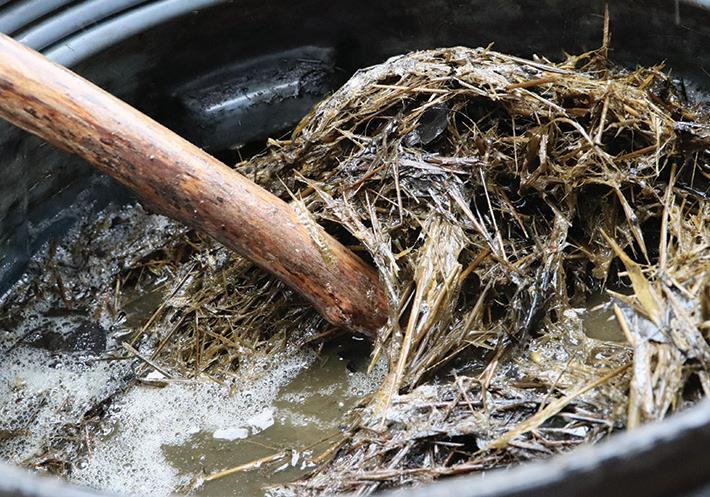
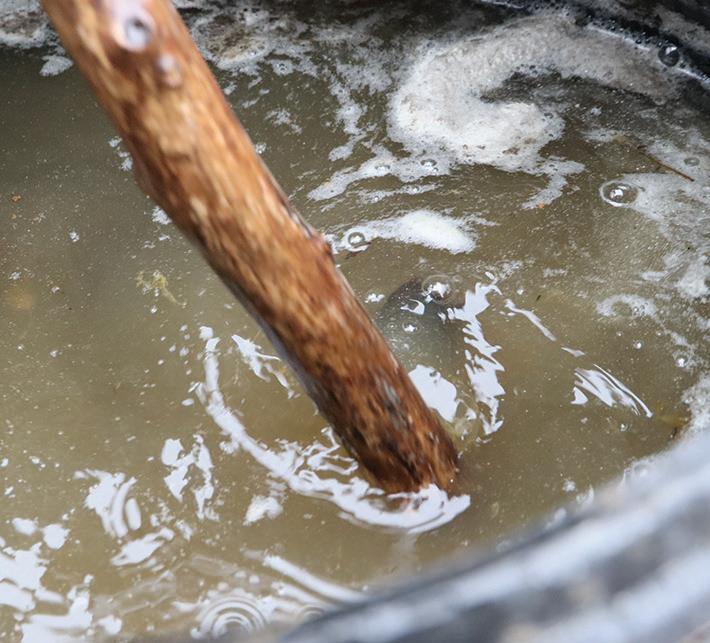
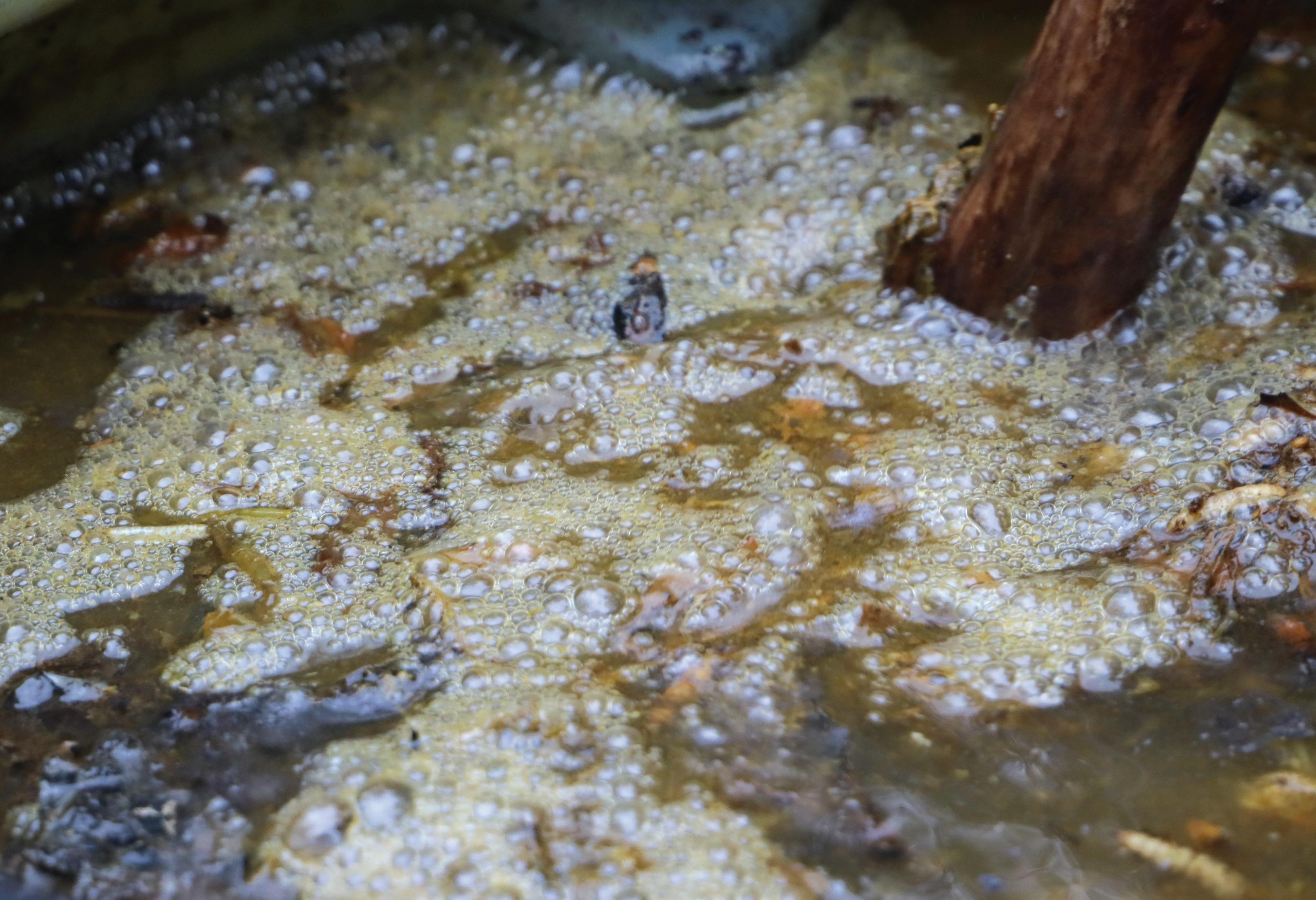
In its liquified form, JADAM has a balanced and pungent-yet-healthy odor of beer, wet hay and wild fungus.
“That smell means it’s ready,” Faucher said. “See the bubbles? That is alive, baby! This tub was a real thick goo last fall. Now it's full of liquid.”
His nephew, Robert Faucher Jr., learned about the JADAM system while serving abroad in the military.
“He kept doing the research and taught me all the JADAM systems,” Faucher said. “He came out here to unwind and wanted to do something for Uncle Jay.”
In sealed containers, anaerobic fermentation relies on microbes that thrive without oxygen. When JADAM is exposed to air, anaerobes quickly die off, allowing beneficial soil microbes to thrive.
Faucher formulates two types of his nutrient-rich tea.
JADAM Liquid Fertilizer is an aged "stanky" mixture of plant materials
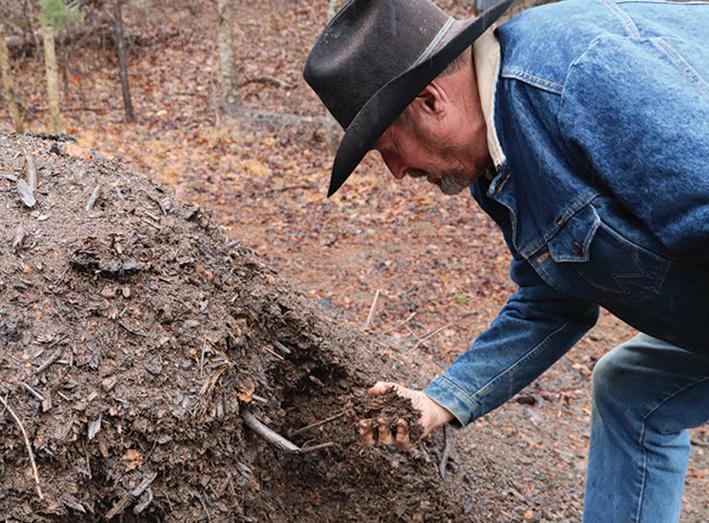
Compost is primarily used as a starter source of indigenous microorganisms for creating JADAM Microbial Solution and as a base for fermented liquid fertilizers.
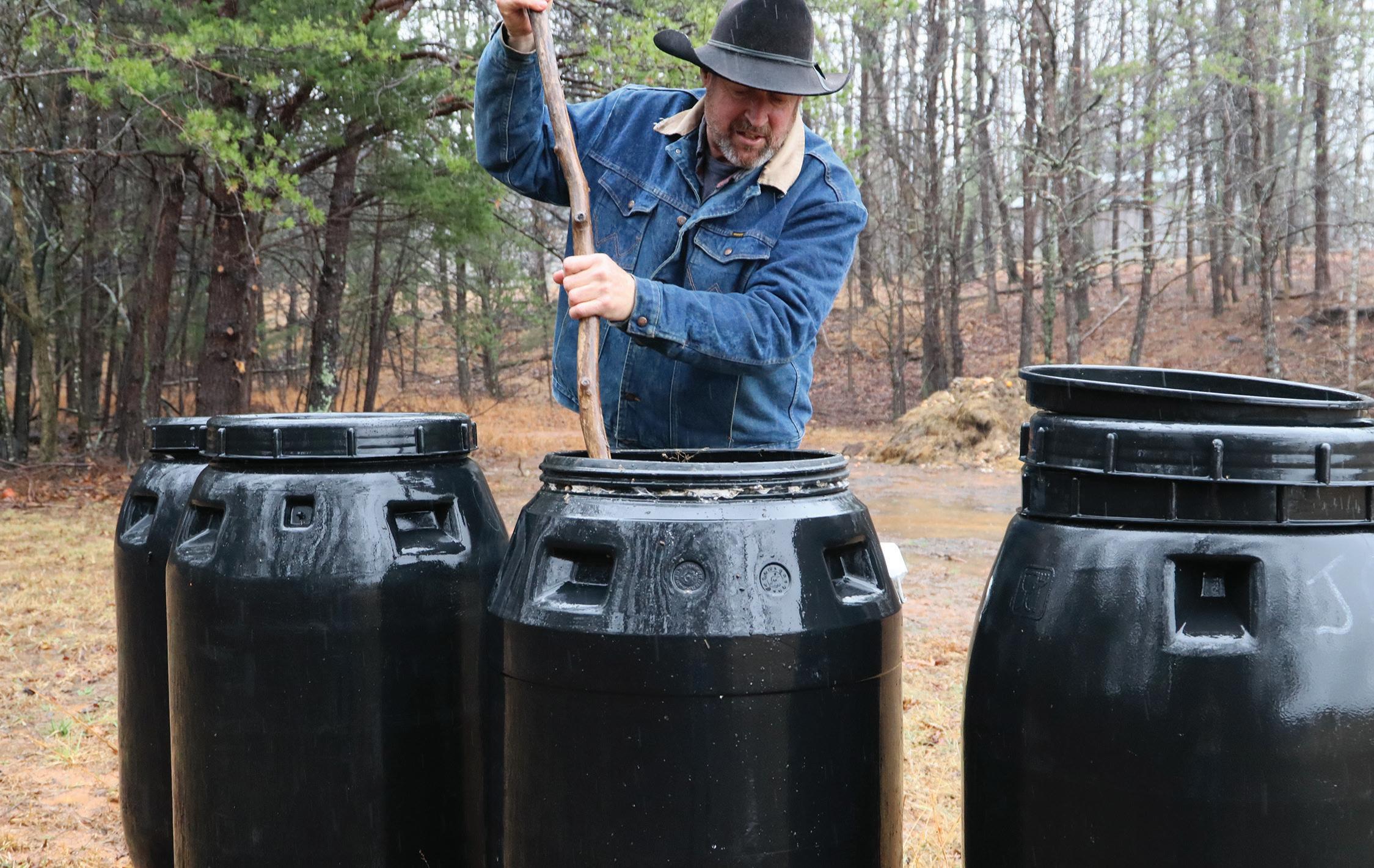
After his JADAM tubs rested for months, Bedford County farmer Jay Faucher gives them a stir. Occasionally stirring JADAM breaks up solid clumps, allows oxygen to reach all parts for microbial activity, and helps balance nutrient concentrations throughout the barrel.
fermented in water, used to supply nutrients to the soil and plants, acting as a "biomimicer" to build soil fertility.
“It's like you're creating a soil biome,” Faucher explained. “Look at the grubs floating in it!”
JADAM Microbial Solution is brewed with boiled potatoes, sea salt and forest leaf mold soil to create a potent mix of native microorganisms. It boosts soil health and acts as a gentle pesticide and fungicide.
Expenses are increasing for fuel, energy, chemicals and labor for farms of all sizes, Cho said in a 2017 lecture. He foresees JADAM reducing chemical inputs to "pennies an acre."
A dab’ll do
“I don't care what you plant in the ground,” Faucher continued. “With JADAM, it'll pop up. But I wish I would have known how to control it better last season.”
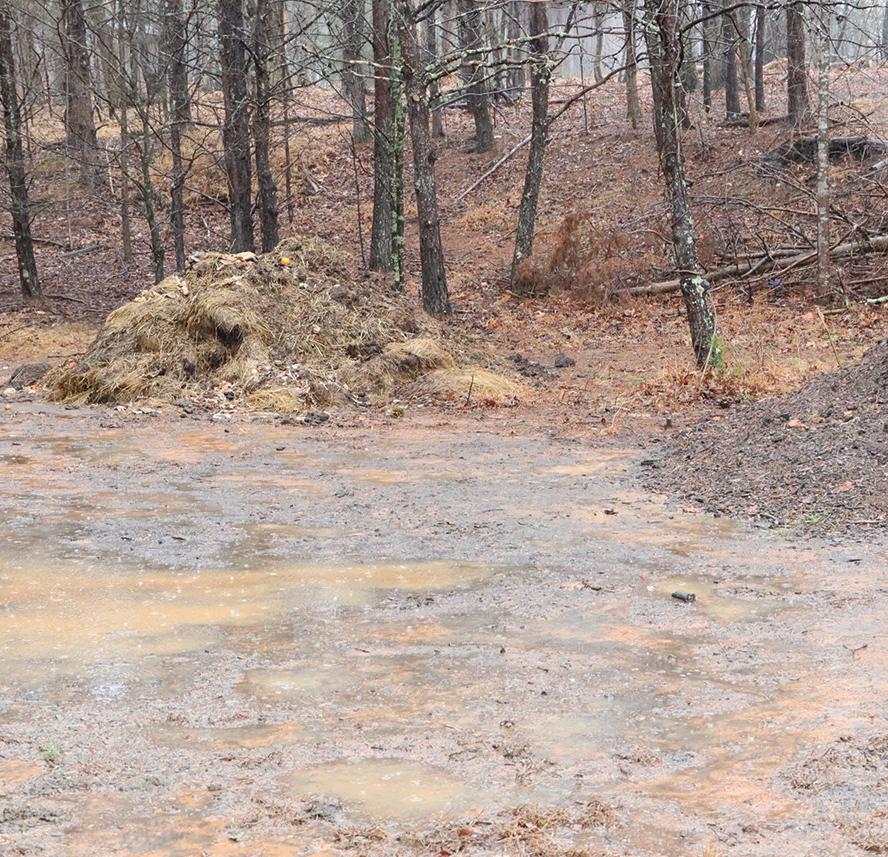
Faucher applied diluted JADAM to the entire property, including his rows of beans, chiles, corn, peppers, pumpkins and tomatoes.
“I could not believe the size of my golden russet potatoes!” he said.
However, he learned the broad application of JADAM was too much of a good thing.
“The vegetation took over everything,” he said. “I was killing myself with the weed eater! So, this season I’m just going to spray each individual row.”


JADAM newcomers, experts and enthusiasts share tips, advice and challenges in multiple social media discussion groups.
• Visit facebook.com/JADAMorganic
• Or search @JADAMORGANIC on YouTube
Virginia State University has hosted annual workshops introducing growers to JADAM farming techniques.
• Visit ext.vsu.edu/events for upcoming sessions on many topics.
BY CHRISTINA AMANO DOLAN
Even remarkably rugged and versatile machines have life-threatening limits. Whether for trail riding, hunting, hauling or camping, utility terrain vehicles can unlock myriad outdoor adventures with ease—all while offering the operational familiarity and enhanced protection of an automobile.
But comfort can be a catalyst for carelessness.
“UTVs can be dangerous machines,” cautioned Curt Porterfield, assistant director of facilities and safety for the Virginia Tech College of Agriculture and Life Sciences. “Many folks don’t respect the machine enough to know its
dangerous capabilities.”
Off-highway vehicle-related deaths in the U.S. increased by 32% from 2018 to 2020, with 37 reported deaths from OHV-related incidents in Virginia.
Nationally, around 100,900 emergency department-treated injuries associated with OHVs occurred annually from 20182022, according to a 2024 U.S. Consumer Product Safety Commission report.
Hazards related to speed, slope, “too much weight in the wrong place at the wrong time,” and machine conditions are the top causes of UTV-related crashes and injuries, according to Porterfield.
The affordability and availability of
used UTVs is helping drive increased incidents.
“These private sale machines are often repaired to operate mechanically but may not be brought up to the necessary safety standards,” he noted.
“Not addressing essential safety repairs in a used machine and accepting the risk is a common mistake.”
Other common mistakes include operating a UTV while under the age of 16, or while under the influence of drugs or alcohol.
“Being able to react to unpredictable terrain conditions in a timely manner is key to safety,” Porterfield emphasized.
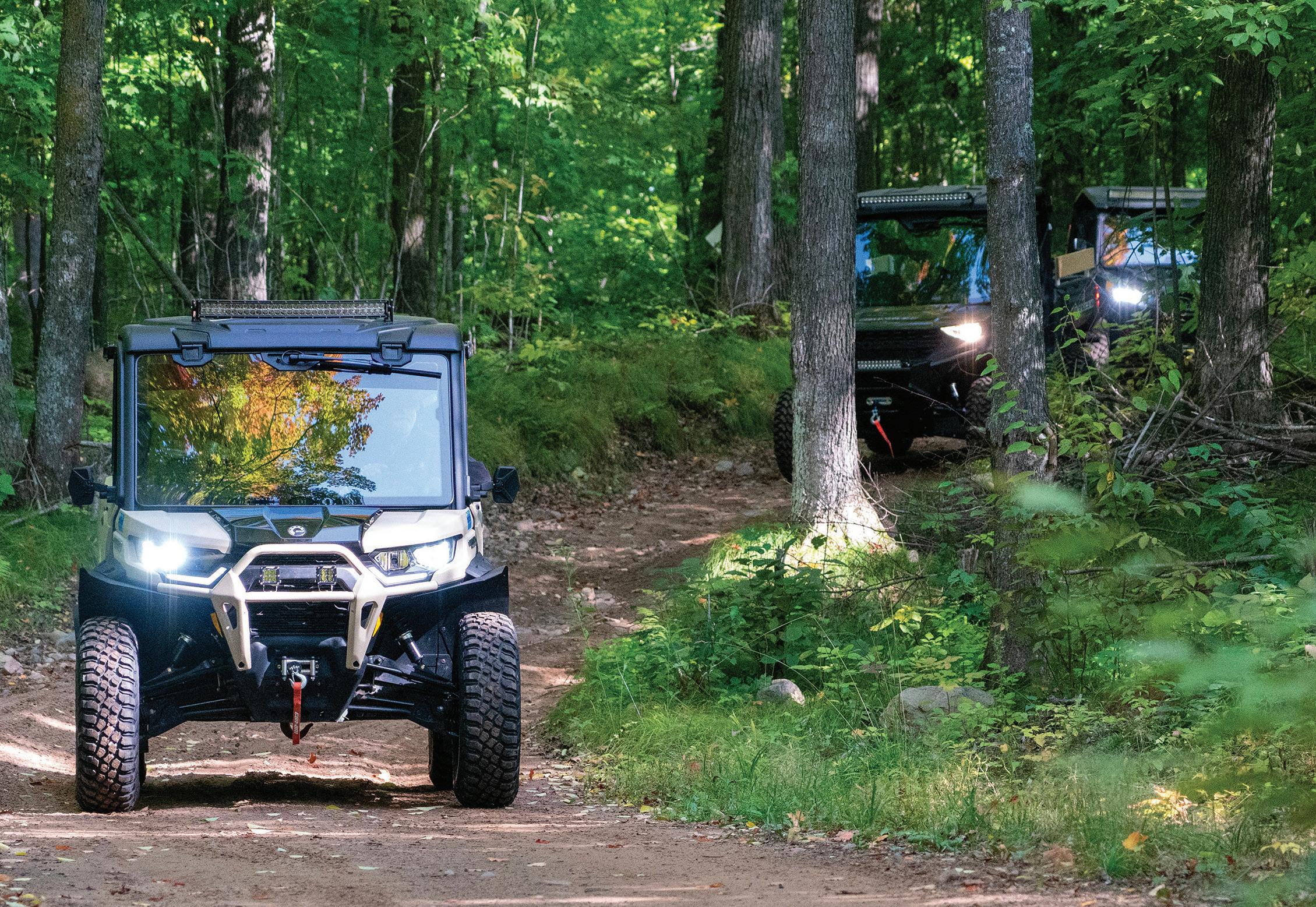
Before purchasing a UTV, consider the machine’s limitations and projected use, riders and terrain.
Most models are equipped with rollover protective structures. Unless by design, avoid removing the ROPS and other safety features.
“Read the operator’s manual in its entirety, establish a relationship with your dealer and ask questions about your machine,” Porterfield encouraged.
• Perform an equipment inspection. Frequent cleaning and maintenance are essential to identifying faulty features.
• Check the Consumer Product Safety Commission website at cpsc.gov to verify if any recalls have been addressed.
• If carrying cargo, consult the operator’s manual for cargo weight limitations to avoid a rollover incident.
• Ensure all riders are wearing proper clothing and personal protective equipment, including helmets, closed-toe footwear, long pants, and hearing and eye protection.
• Consider keeping first aid and enhanced trauma kits, warning flares or signs, extra communication devices, and load and recovery straps on hand.
• Minimize the amount of loose items in the cab.
• Check state or county requirements for land and road use. Some trails require permits, speed limits and limited hours of use.


While operating a UTV:
• Buckle up, and only carry the number of passengers you have seatbelts for. There should never be passengers in the cargo bed.
• Evaluate your riding area at slow speeds to help determine which areas to avoid.
• Have access to pre-established roads and trails, and avoid driving on paved roads.
• If riding alone, check in with someone frequently.
• Consider soil conditions, cargo weight, the number of passengers and speed to help determine slope hazards. In general, target slopes under 15 degrees. Installing slope indicators can help users recognize unsafe terrain conditions.
• If operating a UTV without a ROPS, avoid wearing seatbelts to allow for a quick escape in the event of an impending rollover.
It’s also important to avoid carrying infants to prevent tragedy or long-term health impacts from noise and dust exposure. Limit the frequency of young children as passengers whenever possible, and employ booster seats or other necessary precautions for effective seatbelt use.
Limit towing and the use of hitch attachments, and know the weight limitations of any attachment. Only place tow items in the front with an approved winch or at the rear with a hitch. Hook tow items low, and pull them slowly using tow or recovery straps instead of chains. Avoid towing items downhill.
“Take time to think about the choices that you make,” Porterfield urged. “Take time to stop the machine and assess the environment prior to traveling over it. Conditions can change, and familiarity doesn’t guarantee that it remains the same every time.”
He encourages all UTV owners to get appropriate training, and leverage Recreational Off-Highway Vehicle Association resources at rohva.org/ learn-to-drive/

‘I can make it’ ‘I can make it’
BY NICOLE ZEMA
Farm Bureau’s 24/7 Roadside Assistance helps Scott County member weather a winter crisis
WWhen leaving home during January’s ice storm in her reliable 2007 Pontiac Vibe, Linda Cantrell’s husband Howard insisted she take his heavy coat.
“Thank goodness I did,” she said.
Cantrell had important plans. That layer of snow and ice wouldn’t stop her from attending a dear friend’s graveside service.
Besides, her Pontiac had recently hit 295,000 miles and was still going strong with regular maintenance. Cantrell had driven it across Scott County’s rural roads in all sorts of conditions.
“She got me through some stuff,” she recalled. “And I have front-wheel drive. I can make it!”
About 2 miles from home, Cantrell’s Pontiac reached a hill with too much incline on a packed-down sheet of ice.
“I couldn’t get up the hill,” she said. “I had to back up and get out to look. There was a cliff on the other side, and I was slipping and sliding.”
She found a tight spot to turn around.
“And I almost got out of there,” Cantrell said. “But I got stuck on that big incline of solid ice and snow.”
Scott County Farm Bureau insurance agent David Wettack recently reviewed her coverages, and Cantrell opted to add a 24/7 Roadside Assistance feature.
“When recommending roadside assistance coverage, I really don't look at the age of the vehicle,” he said. “Breakdowns can happen to anybody. Lockouts probably don’t happen much with newer cars, but you can still get a flat tire or run out of gas.”
Plus, towing rates can vary from one area to another, incurring hundreds of dollars.
With no cell service, Cantrell’s only option was to walk back and call for help. Once home, Howard offered to rescue her Pontiac with his Ford Ranger.
“This is what our insurance is for,” she said, and called the 24/7 Roadside Assistance number.
A local towing service was dispatched to her doorstep. They rode to the stranded Pontiac and winched it up the slippery hill.
“The towing service operator kept in contact from the time he was assigned the job to the time he got to my house, even with the poor cell signal,” Cantrell said. “He was very courteous and professional, and I would definitely be comfortable with him being our hero again!”
The 24/7 Roadside Assistance feature is there as she pushes her beloved Pontiac toward 300,000 miles.
“She won’t give up on me,” Cantrell said. “And I won’t give up on her.”
Farm Bureau’s 24/7 Roadside Assistance covers:
• Towing services
• Emergency supplies like fuel
• Jump starts
• Lockout service
• Tire changes
• Winching services
Stranded? Those with 24/7 Roadside Assistance coverage can call 1-800-452-7714, and VFBMIC will cover all costs up to the coverage limit.
Add a 24/7 Roadside Assistance feature
Visit vafb.com/roadside to learn more about 24/7 Roadside Assistance policy options.
Wettack advised meeting with an insurance agent to review policies at least once every three years, or after major life events. Find an agent near you at vafb.com/locations.



BY CHRISTINA AMANO DOLAN
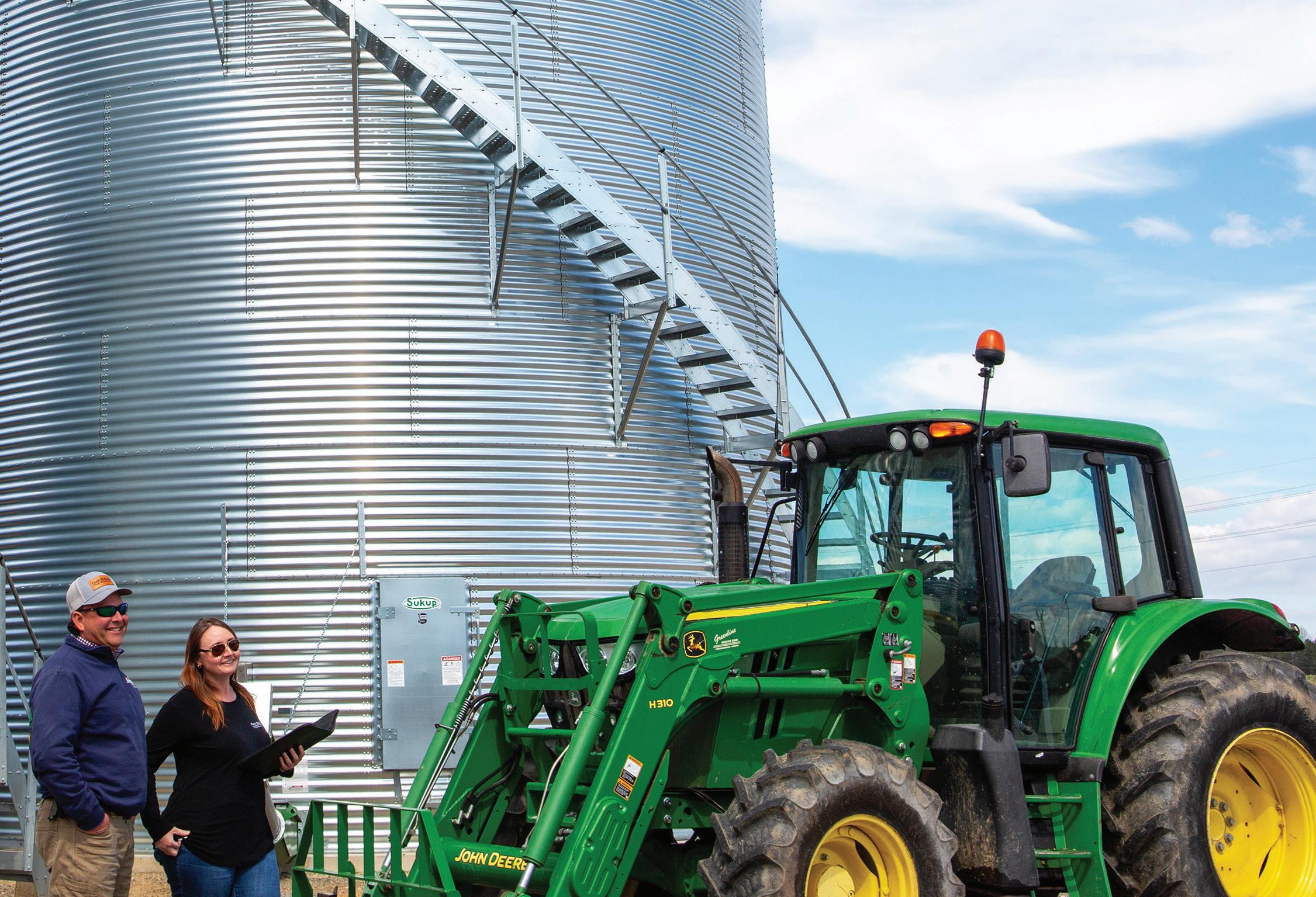
As farmers face endless variables, uncertainties and worries, Sharon Ambrose is the can-do friend with a plan.
“It’s showing up when they don’t need me, just to make sure they’re okay,” she remarked.
Before she was building readiness, resilience and relationships on regional farms, Ambrose was exposed to the agriculture industry upon meeting her now-husband of 23 years in 1999. Fascinated by his job on a grain farm, she sought to decipher the intricacies of farming.
As fate would have it, a local job opening at an insurance agency satisfied that interest.
Ambrose spent 19 years at the agency supporting, shadowing and learning from agents—eventually entering the complex world of crop insurance. She leaned on the guidance and industry expertise of her former boss, often accompanying her on farm visits.
“The people that surrounded me had the biggest influence on my work today, because everyone was willing to help lead me in the right direction,” she reflected.
In 2020, Ambrose accepted a position as regional crop

agent with Virginia Farm Bureau Mutual Insurance Co., and her hands-on work began.
While expanding her service area to cover Virginia, West Virginia, Maryland and Pennsylvania, the biggest learning curve was getting her foot in the door. With crop insurance, Ambrose is selling relationships—not rates.
“Crop insurance is unique because the rates are the same in each county, so you’re really ‘selling yourself,’” she explained. “It’s very hard to get more business if people are happy with their agent or coverage.”
Ambrose primarily focuses on spurring relationships with farmers, and obtaining and maintaining new policies throughout their entire life cycle—all while navigating ever-evolving federal regulations, farming challenges and coverage needs.
“Crop insurance is an essential tool because the markets change so often these days, the prices of inputs are increasing, and it’s so hard to put all that money into a crop and not get anything back if we have another dry year like 2024,” she noted. “It keeps them afloat so they can be around next year.”
Ambrose finds the greatest fulfillment in “helping the farmer”—learning their operations, tailoring coverages to their needs, and checking in with a friendly phone call or farm visit.
“I love being able to go out, visit farmers and support them,” she reflected. “I would be perfectly happy doing this until I retire.”

Farm & field underwriting manager, Virginia Farm Bureau Mutual Insurance Co.
BY NICOLE ZEMA
Pulaski County native Kim Price never envisioned a career in insurance when she graduated with a business management degree from Radford University in 1983 and entered the bleakest job market in decades.
The New York Times reported that one-third of ’83 graduates left campus either without jobs or entered careers unrelated to their degrees. An estimated 3 million college graduates were either unemployed or underemployed.
But a Farm Bureau connection opened doors Price didn’t realize were hers to walk through.
Price’s father, the late Claude Yelton, was a college buddy of the late Milton Cheatham, VFBMIC director of sales.
“He made contact to see if there were openings because the job market was pretty tough back in ’83,” Price recalled. “They gave me an opportunity to interview, and I was hired as an underwriting assistant at Farm Bureau.”
For 42 years, Price served primarily in underwriting, with the exception of a brief period in product development. Her teams evaluate and assess accounts—commercial businesses, farm and agribusiness operations—by analyzing those operations to determine overall risk acceptability and pricing adequacy.
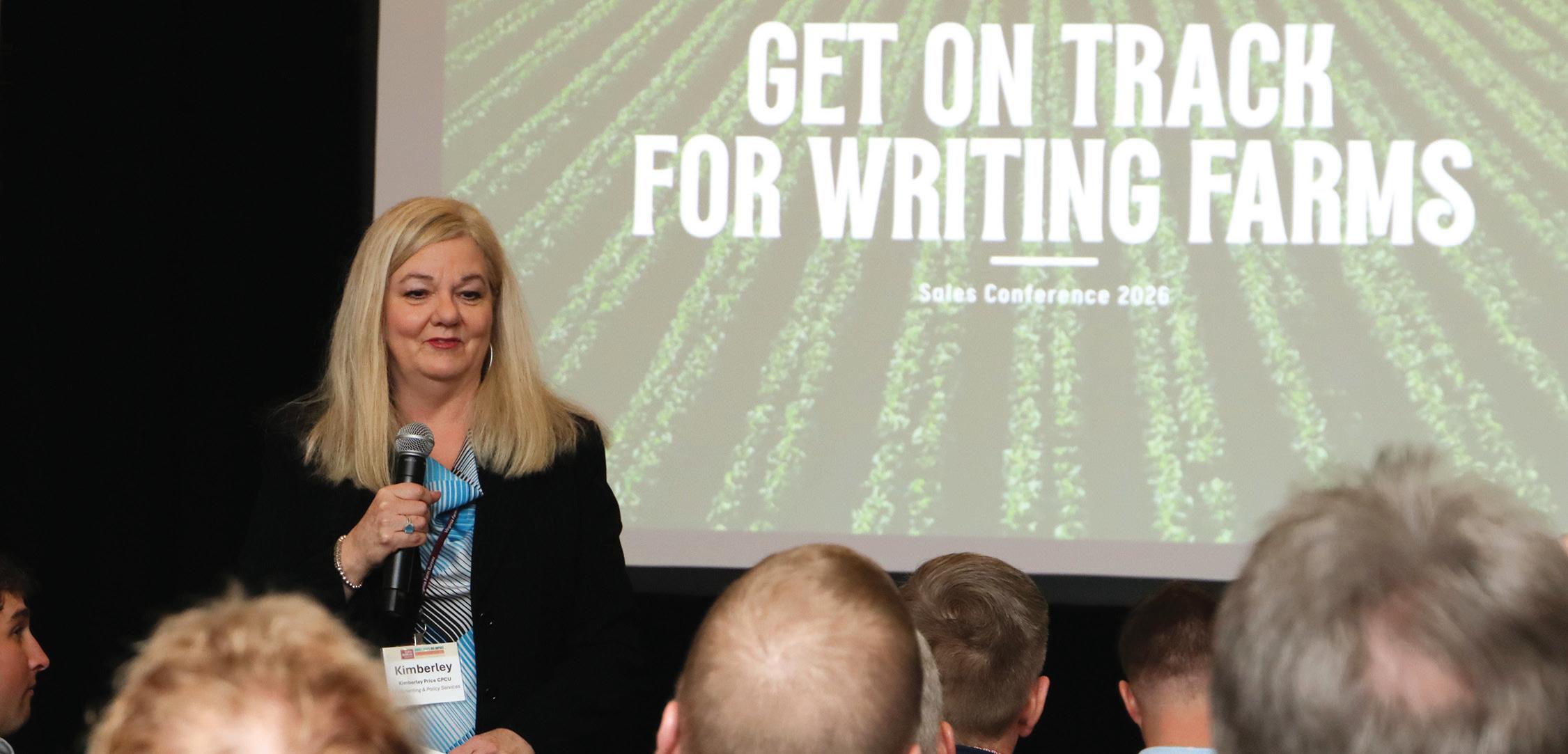
Price was promoted to farm & field underwriting manager a little over two years ago. In 2025, Farm New Business Written Premium reached $3.7 million.
“This is the highest we've seen in years,” she said at the
VFBMIC Sales Conference in March. “It’s a joint effort among the sales force, field underwriting, and the farm underwriting team to bring these numbers in.”
Farm retention figures, quotes and loss ratios also were strong in 2025.
Price asked sales agents, “Can you imagine any other farm insurance carrier posting results comparable to ours in 2025? I think not!”
She recalled the days when the farm division primarily underwrote more traditional operations such as cattle and crop farms.
“But it's very different than when we first got started years ago,” she said “Our farm operations are becoming very diverse and we’ve adjusted to that. We want to keep the momentum going!”
Forty-year Farm Bureau veteran Tina Hamilton, commercial underwriting manager, said Price has led the division with dedication.
“Kim's been my mentor and my work sister,” Hamilton said. For Price, underwriting is more than a profession. It’s a purpose. She was reflective of her journey as she approached retirement March 31, with gratitude to past and current underwriting and policy services leaders for giving her valuable opportunities throughout her career.
“Virginia Farm Bureau has been incredibly good to me, and I believe in what the organization stands for—the federation and the insurance company,” Price said. “I stayed for 42 years because I believe in the mission and the steadfast support they provide for our farm community.”

BY ALICE KEMP
Leah Roller didn’t have a farming background when she joined Virginia Farm Bureau Mutual Insurance Co. as an insurance agent 30 years ago. But she knew that understanding her clients’ worlds firsthand was essential to serving them well.
So she set out to learn the ropes.
“I picked the largest farm in my book of business that had the most equipment on the policy, and I called them, introduced myself, and went out to do an account review,” Roller recalled.
She asked to see the farm machinery they owned, picking up terminology and learning the different rakes, combines and spreaders. Trading her “high heels for muck boots,” she walked alongside farmers in cow pastures, conducting coverage reviews while gaining real insight into their operations.
That initiative laid the foundation for a career built on trust and relationships— earning her multiple state and national awards and propelling her to becoming VFBMIC’s first female regional sales manager. Today, Roller leads roughly 135 agents, agency managers, member service specialists and associate agents across the northern third of Virginia, mentoring award-winning teams who help Farm Bureau members safeguard their families, farms and businesses.
“It’s more than just providing insurance,” she said. “It’s about protecting and improving the livelihoods of the members we serve.”
Cultivating “a culture where people feel supported, valued and challenged,” Roller ensures teams have the products, partnerships and resources to meet members’ evolving needs, from insuring assets to navigating setbacks and future planning.
“Farming isn’t just an occupation, it’s a way of life,” she explained. “Our members are creating a legacy to pass down through generations and we’re helping protect what they’ve built. It’s a rewarding challenge.”
Over three decades, Roller also has watched the industry itself evolve. More women are leading conversations about
insurance, risk management and long-term strategies—a shift that carries significance, Roller said. Being the first woman in her role has made the journey “even more meaningful.
“I’ve seen it as an opportunity to pave the way for future women leaders.”
And the drive that launched her career hasn’t faded.
“You would think after 30 years I would slow down,” she reflected. “But I’m excited; I’m ready to go.”
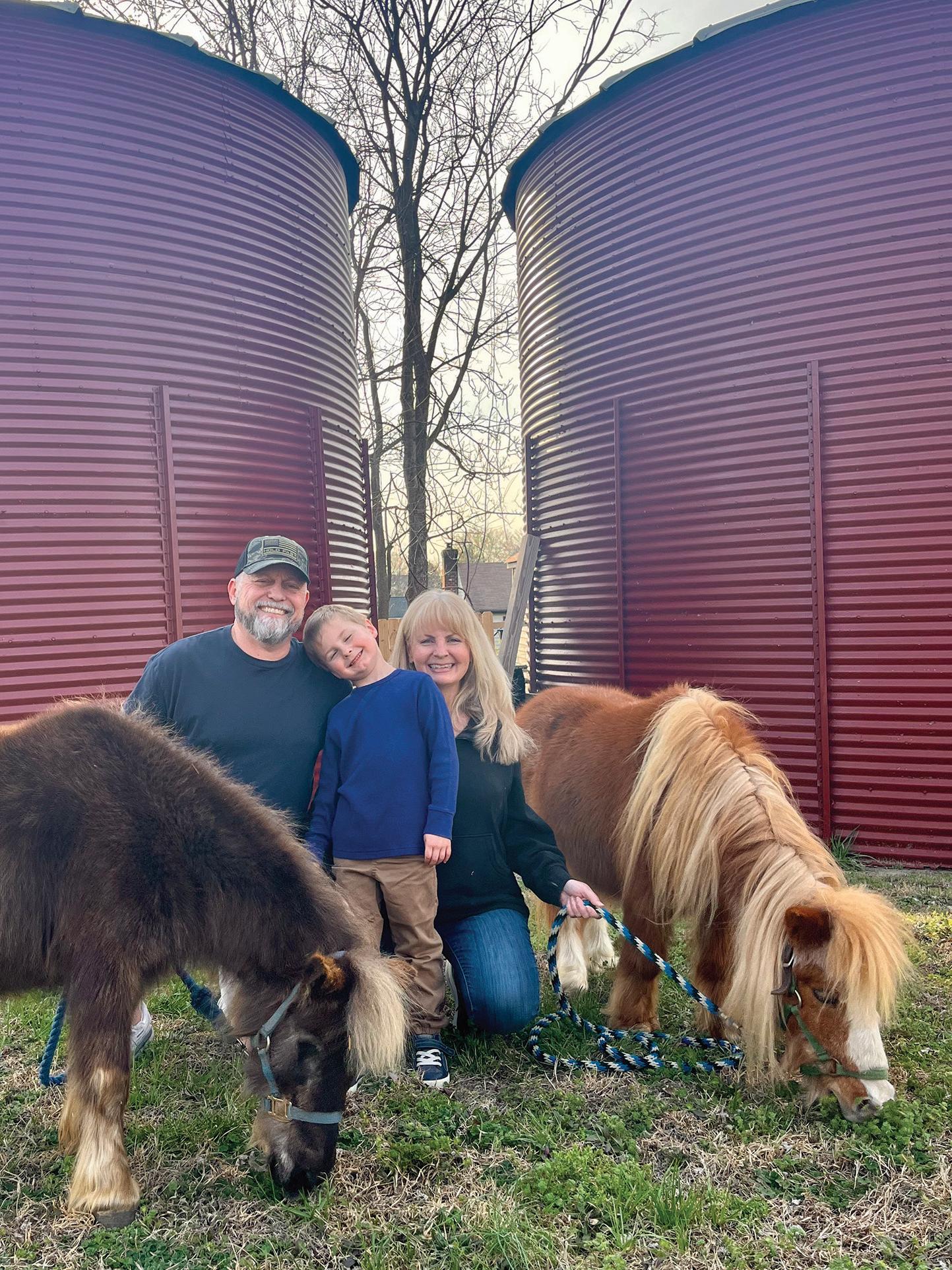
Still, she knows when it’s time to “hit the pause button,” like when her grandson Graham walks through the door of the Hanover County home where she lives with her husband Bryan.
“He’s the one thing that’ll make me stop running 90 miles a minute,” Roller said. “Whether we’re building Legos or feeding our miniature horses, he knows I’m giving him my 100%.”
joy& creativity
BY CHRISTINA AMANO DOLAN
Flowers are life in its most glorious stage—short-lived and exquisite because of it.
Harnessing nature’s magnificence for others’ fulfillment requires a delicate touch, boundless creativity and unwavering love for the journey.
The craft of cultivating beauty is blossoming across the commonwealth— radiating joy, inspiration, meaning and healing from seed to centerpiece. A blooming industry
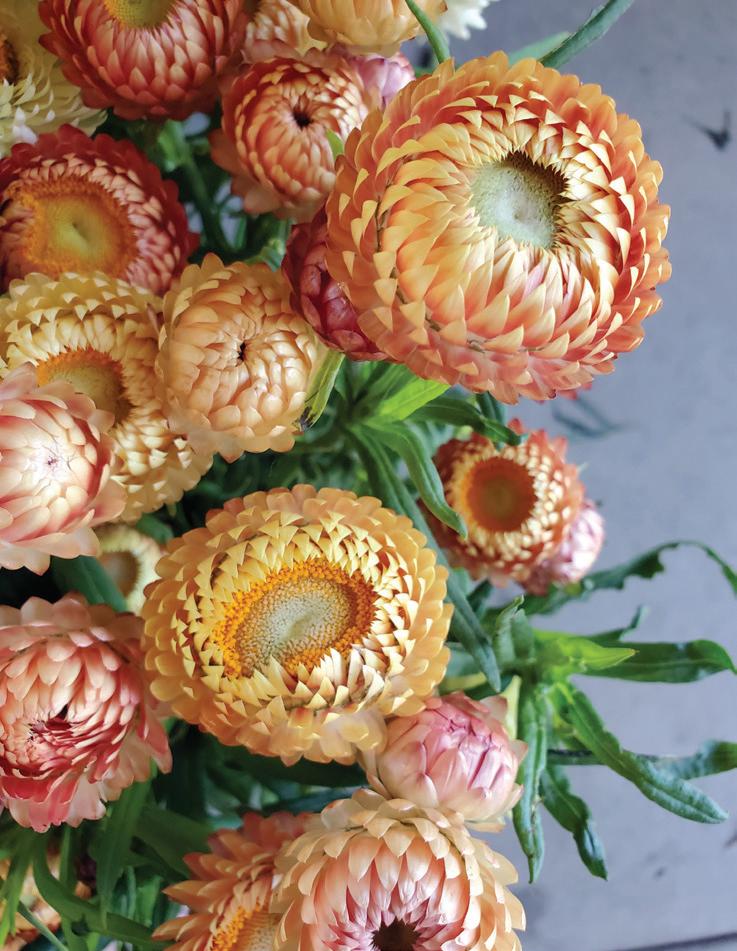
For Prince Edward County agriculture and natural resources Virginia Cooperative Extension agent Erin Small, “growing flowers is art and science in harmony.”
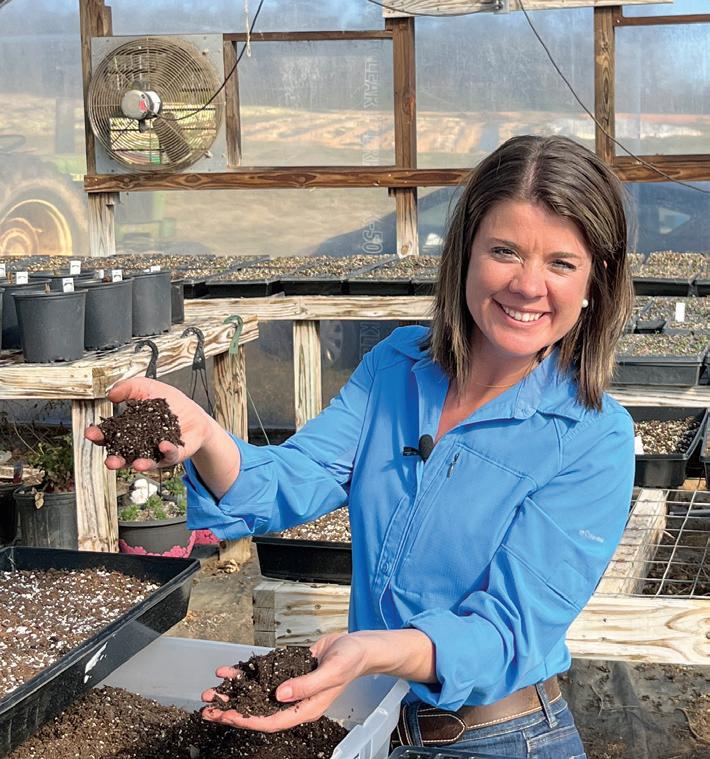
While hosting floral design workshops for home gardeners, Small unearthed a growing interest in cultivating cut flowers.
“I think people are looking for a connection,” she mused. “They’re looking for avenues to be creative—especially since COVID when people were at home, looking for things to do, and trying to get in touch with their land and food system.”
There are around 320 Virginia farms growing cut flowers and florist greens today—a 73% increase from 184 farms in 2017. Floriculture ranked 11th among Virginia’s top farm commodities, generating over $132 million in cash receipts in 2024, according to the U.S. Department of Agriculture.
Hoping to offer needed connectivity and support, Small launched the Cut Flower Discussion Group in 2024, which now includes around 260 growers—a majority of which are beginning farmers.
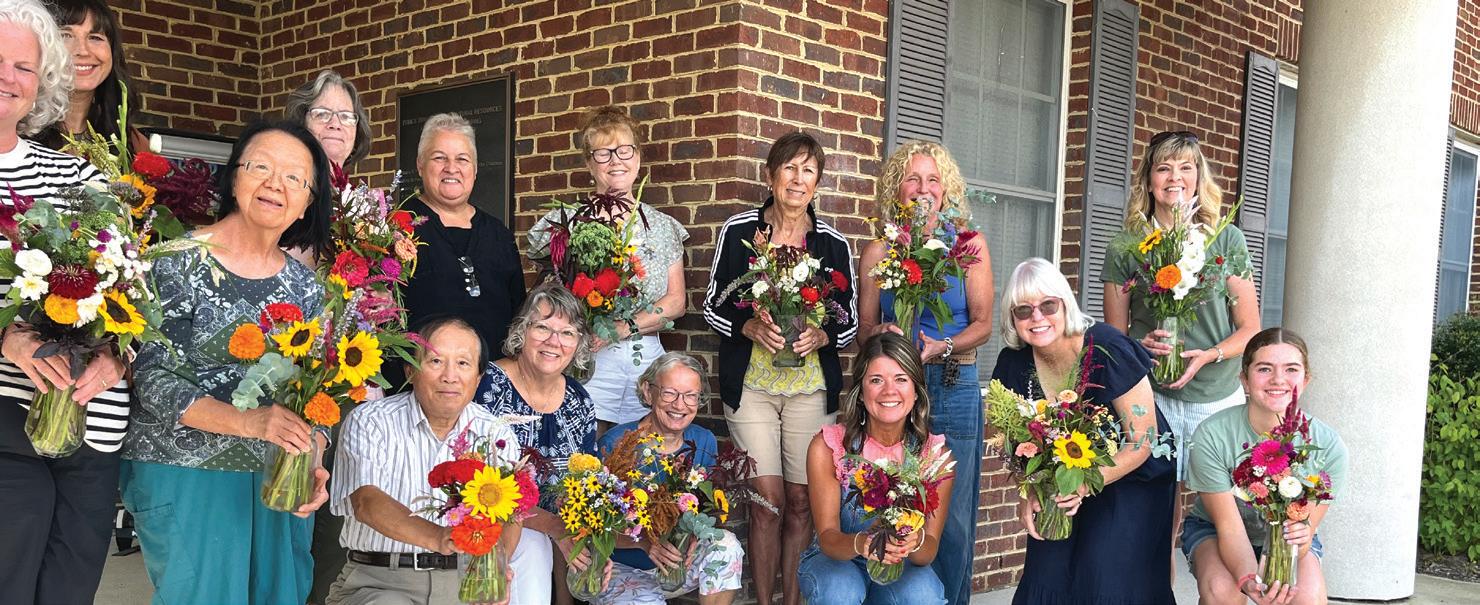
The group offers field tours, vendor fairs, educational sessions and informal gatherings connecting participants with Extension resources, growers and industry representatives. Small also hosts online floral design contests, and is launching a grower-led podcast called “The Flower Hour” to expand accessibility.
For her work, Small was named the 2025 individual winner for “Innovation and Creativity” by the National Association of Community Development Extension Professionals.
“The comradery is wonderful in the flower grower network,” she reflected. “If you’re putting your time, money and heart into something, it only benefits you to find other people who are making mistakes and shining like you are.”
Anyone interested in joining the discussion group can contact Small at erins96@vt.edu.
Beginning farmer Claudia Vasquez cherishes childhood memories of visiting Los Angeles rose gardens and flower fields with her father. In adulthood, that instilled passion blossomed into a new beginning.
While struggling with her mental health and newfound rural life in Culpeper County, Vasquez gravitated toward flower gardening in 2022. When she stumbled upon a TikTok of a flower farmer getting ready for the farmers market, a bold idea took root.
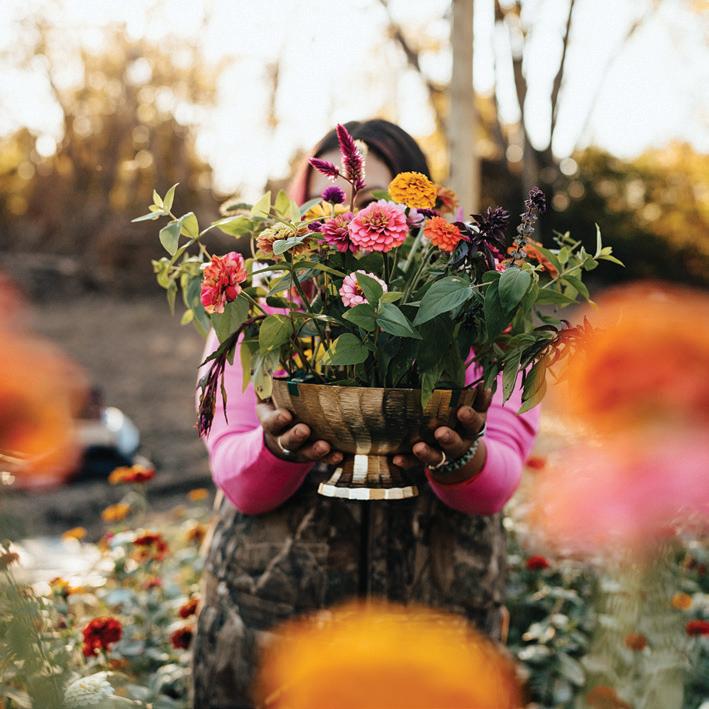
After tirelessly prepping the land with her husband throughout 2024, Azalea Field Flowers was officially born at the start of the new year.
“God planted a seed in my heart, and it all worked out,” she reflected fondly.
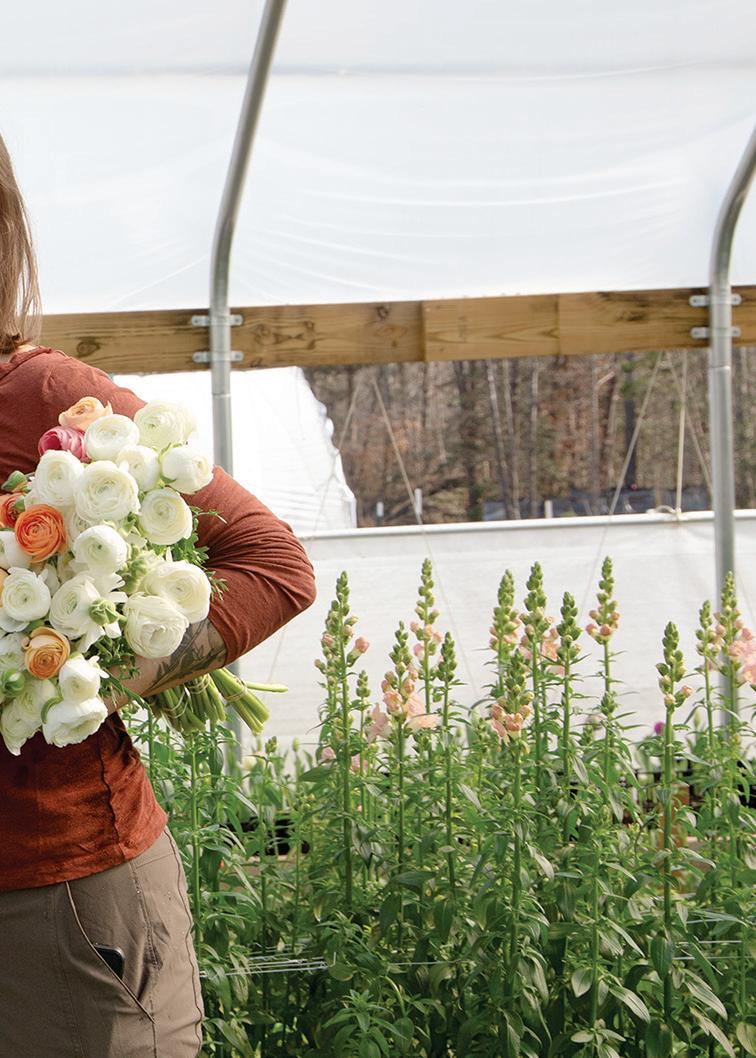
Vasquez now grows spring, summer and fall flowers for weddings, events and Culpeper Downtown Farmers Market customers. She’s excited to “triple” her offerings in her second year— experimenting with new flowers like larkspur, campanula, delphinium and foxglove.
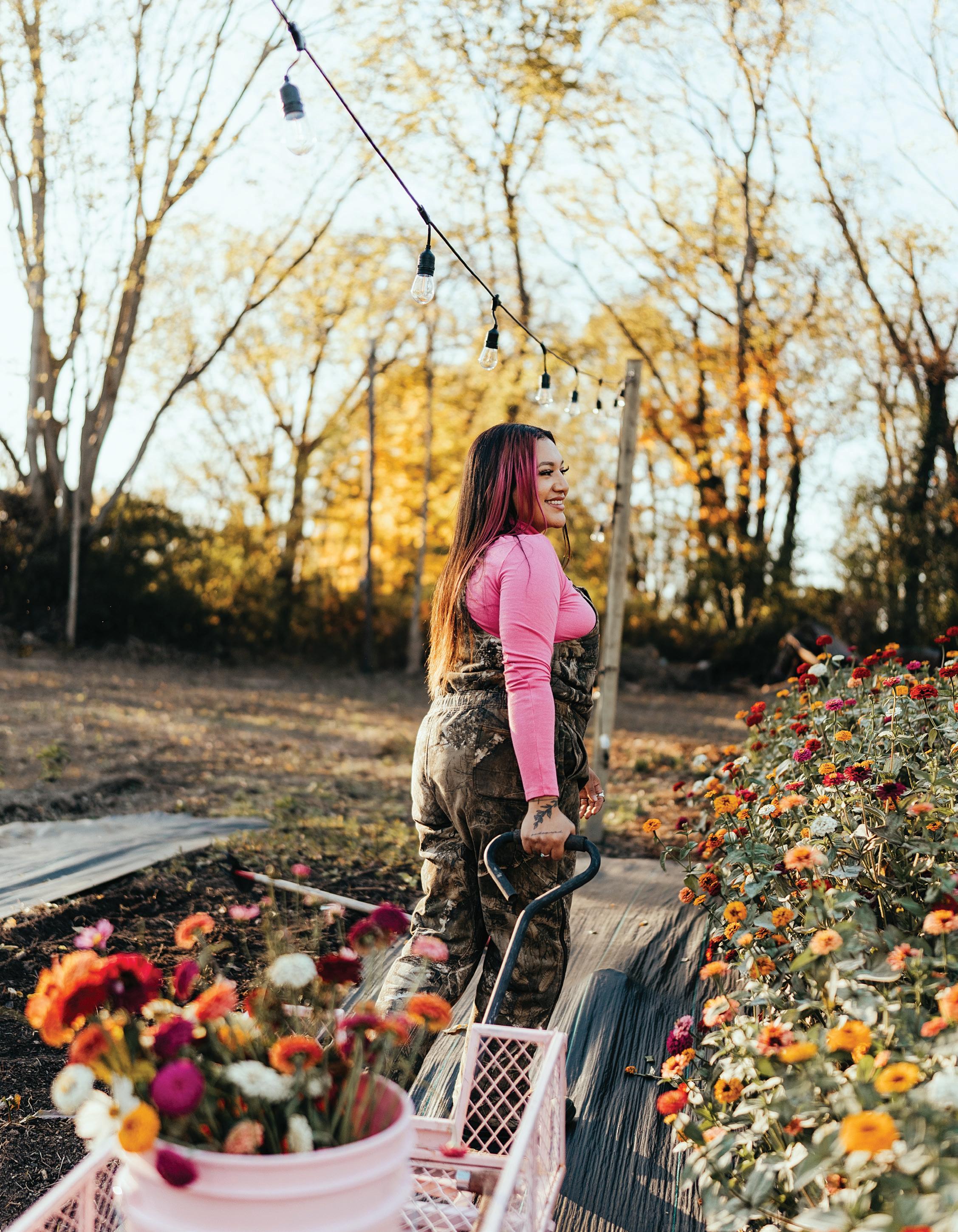
Her signature pink “Bloom Cart” and bouquets set her apart from fellow flower vendors.
“Whether it’s a pink zinnia or pink celosia—there’s always going to be a pop of pink in my bouquets,” she laughed.
Despite her instant success, Vasquez navigated steep learning curves—like “hard, excruciating labor,” juggling

motherhood and an off-farm job, and overwintering cold-hardy annuals with social media guidance from Norfolk flower guru Lisa Mason Zeigler.
Vasquez enjoys sharing her own growing journey on her business’ TikTok and Instagram accounts, and discussing the environmental and economic benefits of buying local with market customers.
“I most enjoy getting to share what I’ve grown, what I’ve started from seed, with my community,” she remarked. “I’m forever grateful that I got into flower
farming, because it has healed me in ways that I can’t even explain.”
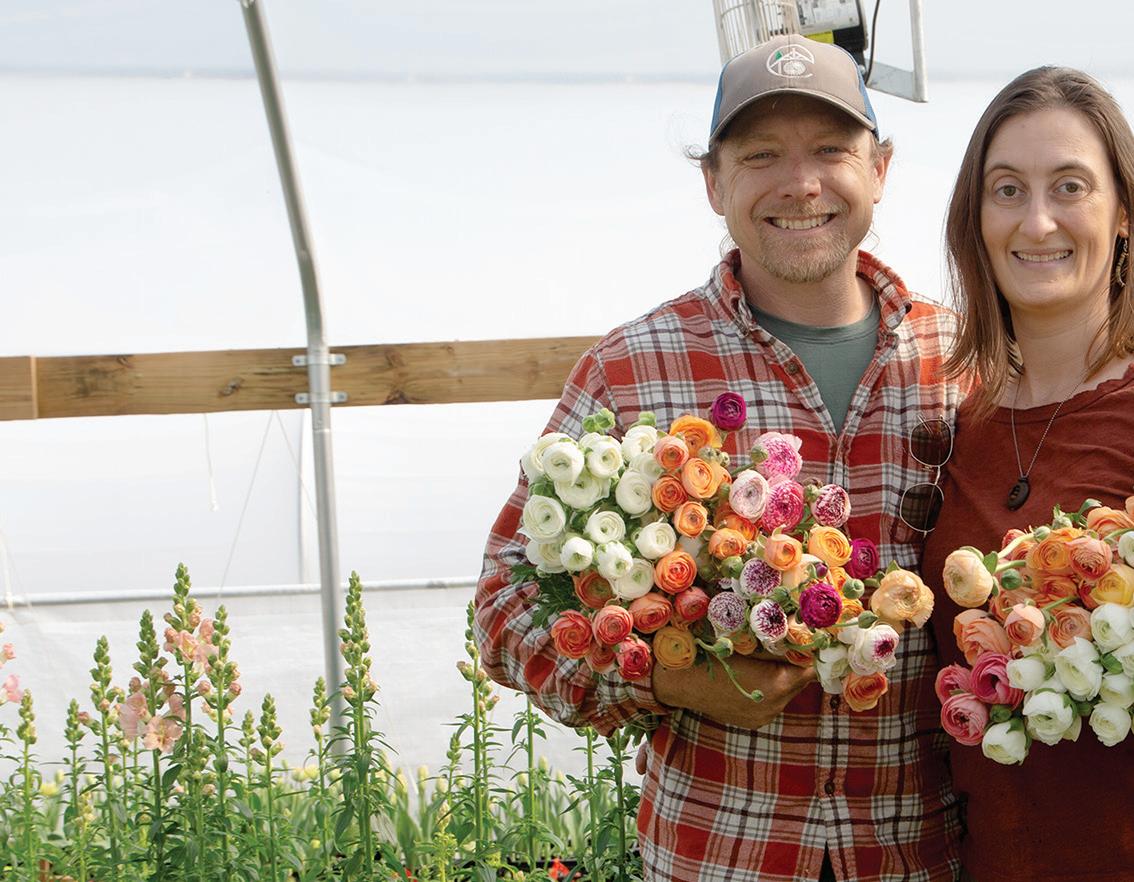
When Jenny and Paul Maloney of Wind Haven Farm entered the floral world in 2013, cut flowers grown for wholesale were a rarity in their area. The King William County growers consider widespread growth in the number of cut flower farms a blessing to the agriculture industry.
“We need more small farms. They’re so important to our sustainability,”
Paul emphasized.
After growing up on his family’s vegetable farm, Paul briefly considered a life away from farming.
“There’s a whole different level to it when you return to something after leaving it—especially something that you didn’t realize was feeding your soul,” he reflected.
The couple’s journey to their thriving 7-acre flower farm started with a simple idea: growing flowers in their front yard. That quickly snowballed into tilling up every sunny patch they could find, coldcalling florists and driving around town looking for buyers.
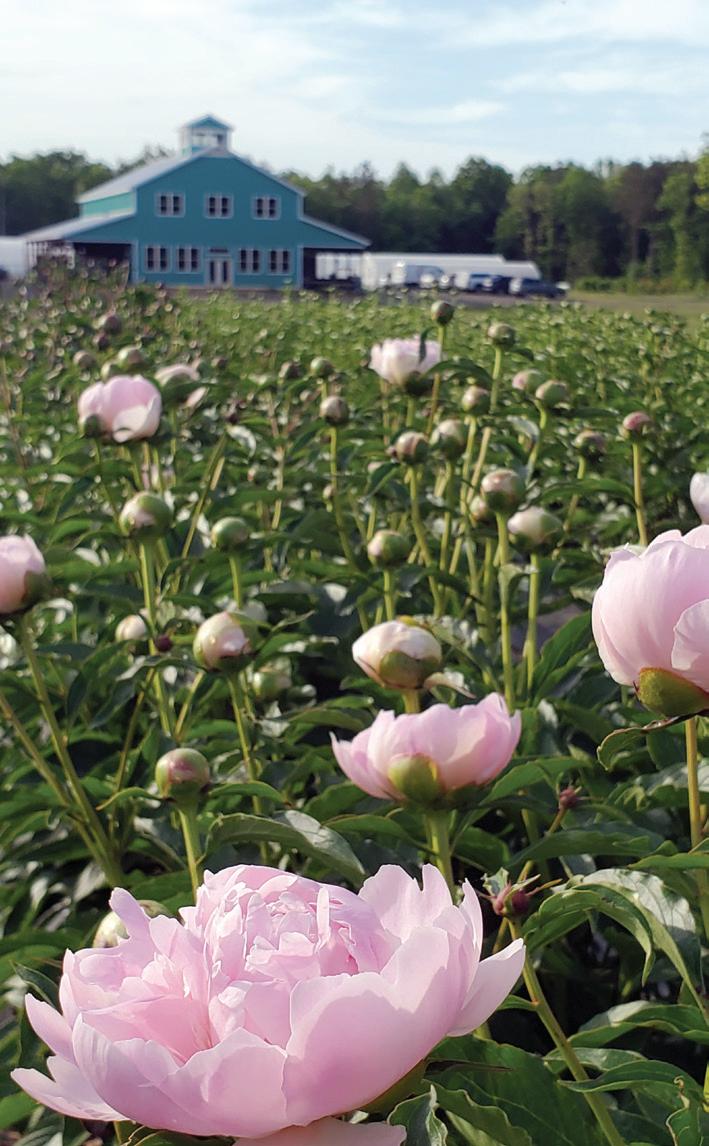
With nine high tunnels and two greenhouses, the Maloneys are now able to grow over 160 types of flowers and foliage from January through Thanksgiving for Richmond florists, businesses and grocery stores—a tricky market that requires the right infrastructure, experience and reputation.
In the wholesale world, competing with the prices and availability of imported flowers is a constant challenge. Flowers are “fussy babies,” expensive to grow in the winter and shoulder seasons, and have miniscule harvesting windows for timely blooms.
“Every flower has its own needs,” Jenny noted. “We tell our employees, ‘You’re just going to learn by doing, and you’re gradually going to learn it all.’”
When coupled with inevitable weather challenges and costly inputs, hitting key floral holidays can be chaotic and risky for both farmers and florists—from not enough peonies by Mother’s Day to postholiday “crickets” for flower sales.
In constant pursuit of perfection and reigning in risk, the duo prioritizes purposeful communication and unique offerings—working from florists’ “mood boards” and color palettes to bring their clients’ visions to life.
“They’re artists, and we’re providing them with the materials,” Jenny remarked. “It’s a learning curve for them to know how to sell seasonally, but they get all that special little stuff that they can’t get shipped in. It puts the magic in it for them as creators and elevates their designs.”
The Smith family: Seven generations of farming. Eight decades with Farm Bureau.
BY NICOLE ZEMA
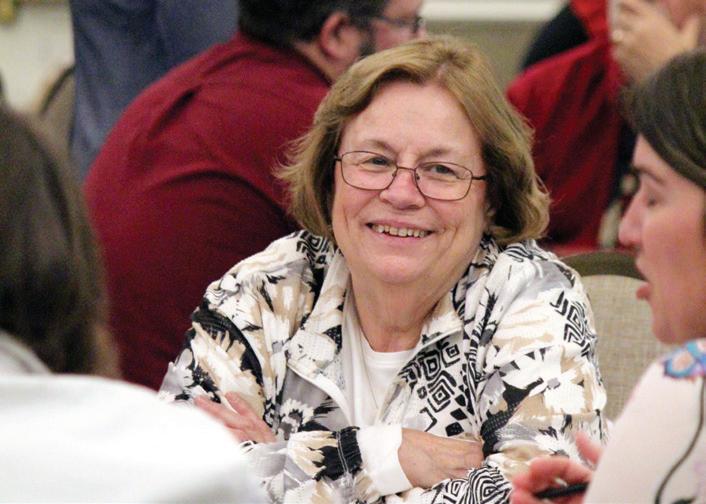
Mack Smith, president of Rockbridge County Farm Bureau, joined Virginia Farm Bureau Federation in 1972. He’s an original VFBF Young Farmer, attending its first convention in 1975.
“I was in my 20s or 30s looking around Farm Bureau at all these old guys who were the leaders,” recalled Smith, age 75. “Now I’m the old guy!”
He got a call from a county board member after college graduation.
“He wanted me to join the Farm Bureau,” Smith said. “I was a member for two years, and they got me as president for six years. Then I got married, had kids, and all that.”
Taking on leadership roles challenged Smith to grow in unexpected ways and took him far from home.


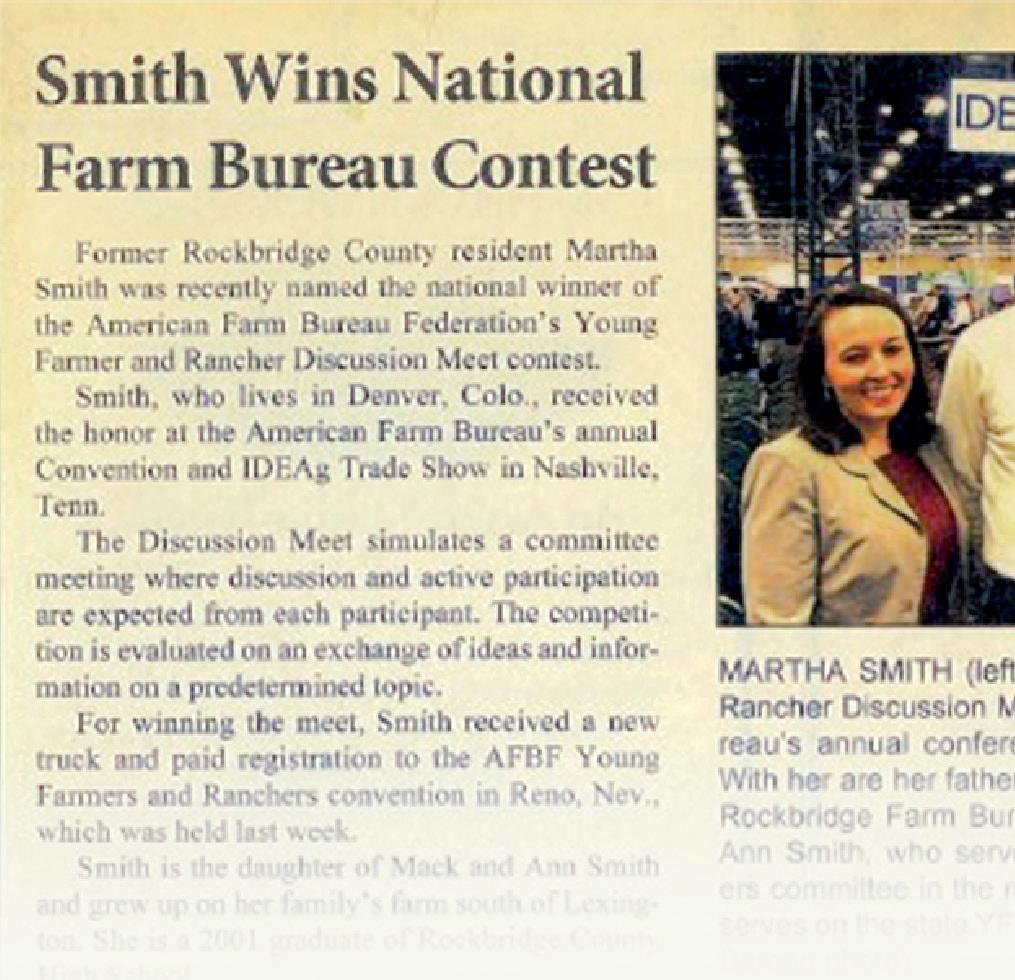

He attended his first American Farm Bureau Federation Convention in St. Louis, Missouri, as a voting delegate in 1975. Smith’s seatmate was Clarence Tardy, the late company leader from Rockbridge County and deputy administrator of the U.S. Department of Agriculture.
“That was the first time I ever flew on a plane,” Smith said. “President Gerald
Ford gave the talk at that meeting. I guess I’ve been to probably a dozen of them since then. Farm Bureau pushed me to do things that I probably would not have normally done.”
With 150 years in agriculture, Smith Family Farms is now a large-scale beef cattle operation, where Smith and his kids also grow corn, alfalfa and hay. Their membership is rooted in both farm advocacy and longstanding business relationships with Virginia Farm Bureau Mutual Insurance Co. The company has provided coverage for the family’s farm operations, land and equipment for over 60 years.
Smith estimates his grandfather, John B. Smith, joined Rockbridge County Farm Bureau in the late 1950s. And his dad, the late O. Maurice Smith, was recruited to membership by Tardy.
“I remember Clarence stopping by on a Saturday morning and telling dad, ‘You know, you need to join Farm Bureau—for the member benefits at the very least!’”
Smith sold hay to a family newly arrived from Vermont with their horses. They had a daughter named Ann O’Neill.
“And this bold Yankee girl asked me out,” he said. “Here we are 50 years later!”
Ann accompanied Smith to Farm Bureau functions and eventually accepted leadership opportunities as well. She serves on the county board and leads the Rockbridge County Farm Bureau Women’s Leadership Committee.
“That program really grew,” Smith said. “And now they have a large crowd of women who are very active with Farm Bureau.”






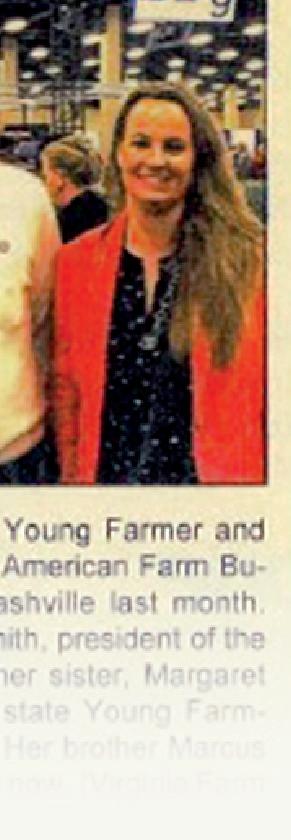

Their three children grew up in Farm Bureau—Margaret Ann, Martha and Marcus.
“God knows the leadership roles Margaret Ann had with Farm Bureau,” Smith said. “And Martha won the Ford pickup truck with Colorado Farm Bureau at the national Discussion Meet in 2018. She’s traveled that whole Farm Bureau nationwide circuit.”
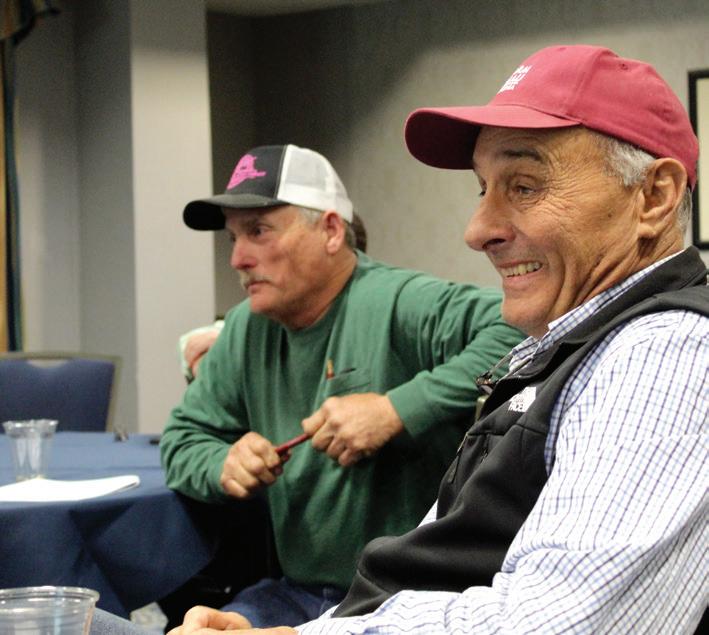
Marcus was involved in VFBF Young Farmers and served on the county board. At that time, Smith vacated his seat so there “weren’t too many Smiths” in leadership.
The Smiths’ grandsons are now being raised in the family’s agricultural tradition, he said.
“I’m sure they’re going to be involved in Farm Bureau too.”
On the local level, Smith played a role in purchasing the land for a Rockbridge County Farm Bureau office building in 1977.
“But our county had no money,” he remembered. “There were months that
certain members of the board would pay the secretary for the utility bills. So, we went out to members, asked for donations, and raised $27,000 to buy the land and build it.”
Smith’s parents advocated for matters of national policy. Federal estate taxes were detrimental to Virginia farmers, often forcing the sale of land or farm assets to pay tax liabilities upon the owner’s death.
“You had to worry about losing the farm,” he said.

The tax was permanently eliminated in 2007.
“Who else is out there supporting farmers like Farm Bureau?” Smith asked. “And we’ve developed so much friendship.
At the 100th anniversary celebration, Ann said, ‘All you did was talk, Mack.’”
But in 54 years of showing up, you get to know people.
“Farming and Farm Bureau,” Smith said. “They become a way of life.”

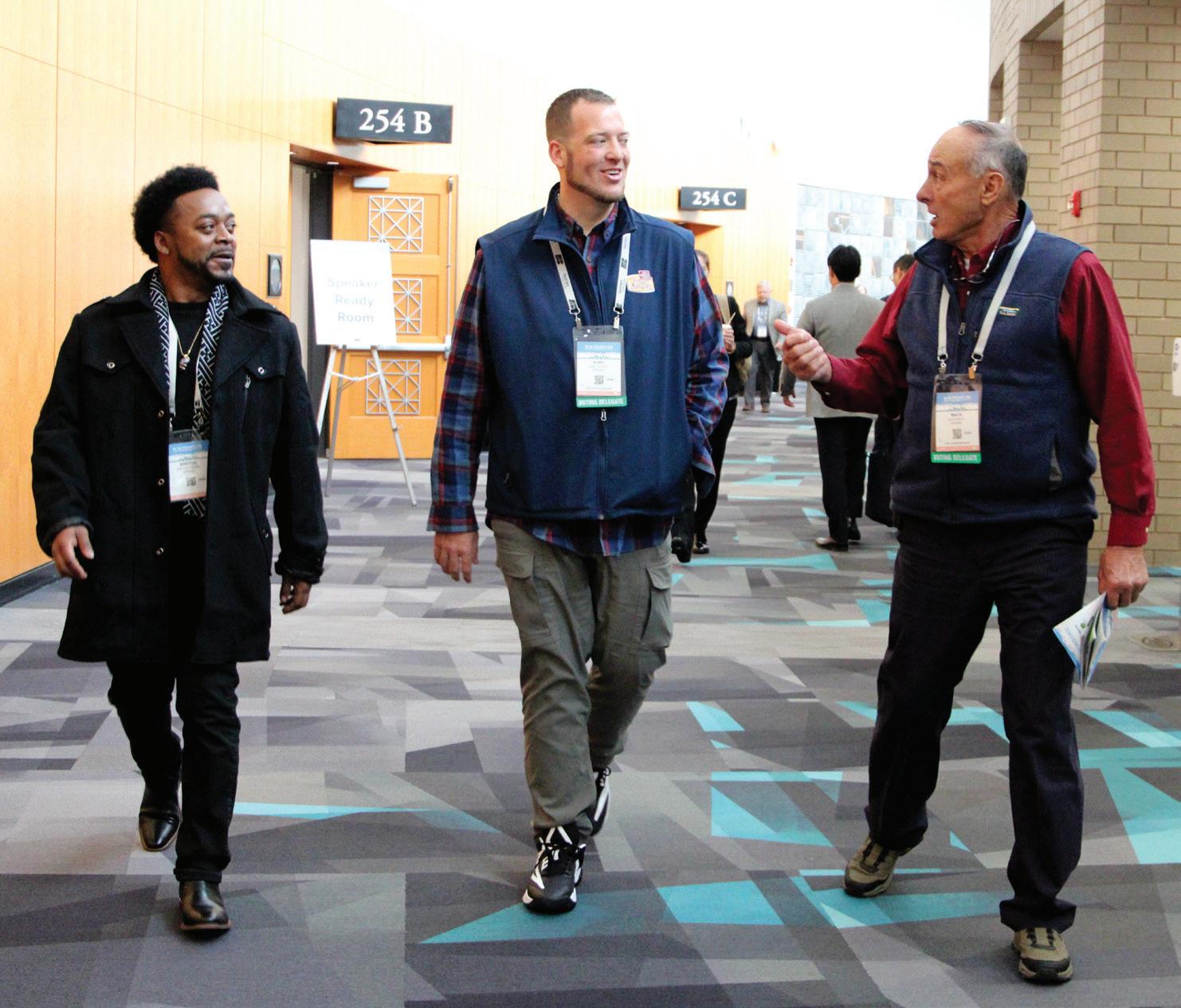
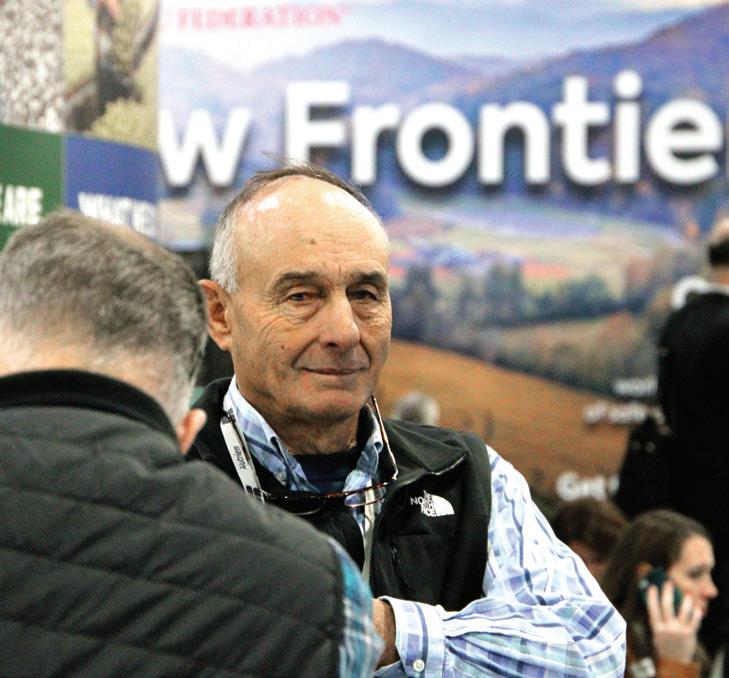
A member and mentor: Diana Stowe is a legendary figure at Isle of Wight County Farm Bureau
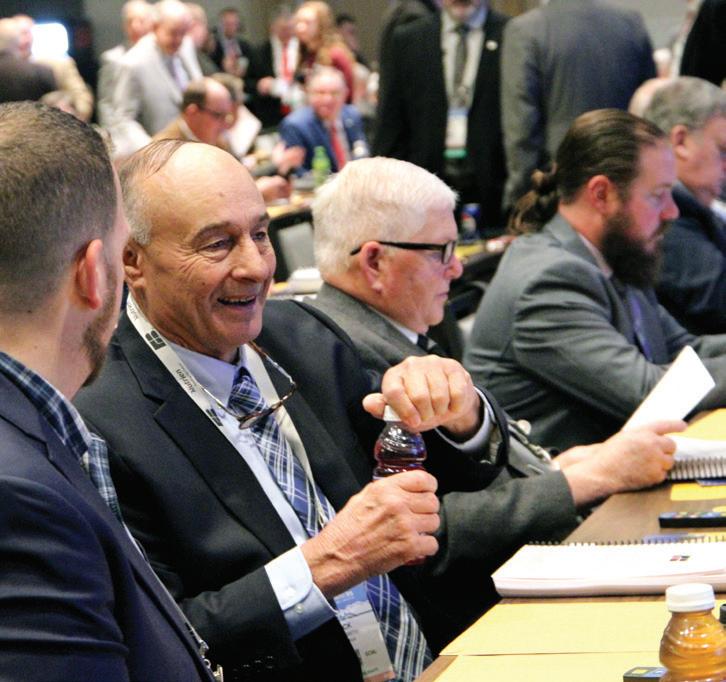
Diana Stowe joined Isle of Wight County Farm Bureau when she moved there in 1975, which means she’s been around for over half of Virginia Farm Bureau’s century-long existence.
She is a familiar face, both as a member, and an employee serving her county office for 35 years.
Stowe took the job in 1979, becoming part of Farm Bureau’s legacy of service.
“I started as a secretary, went to office


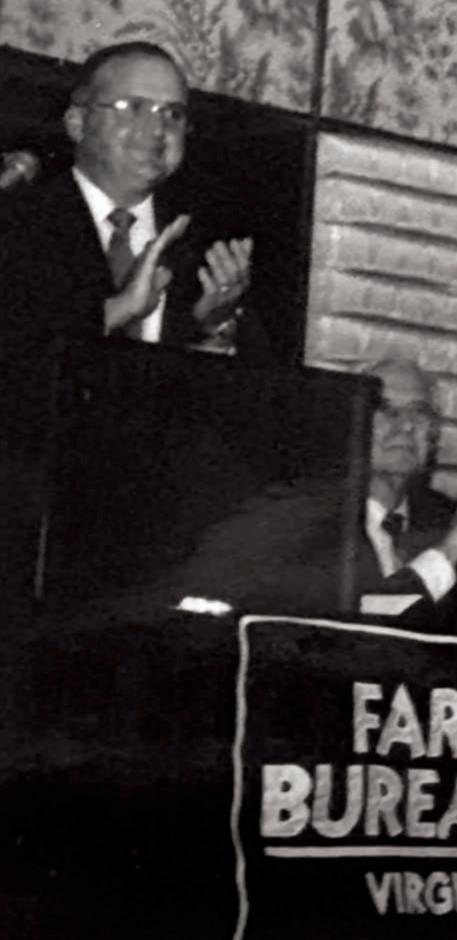

adviser, and then member service specialist,” she said. “We lived out in the country surrounded by farmland, and I liked interacting with the farmers and knowing that they were members of Farm Bureau.”
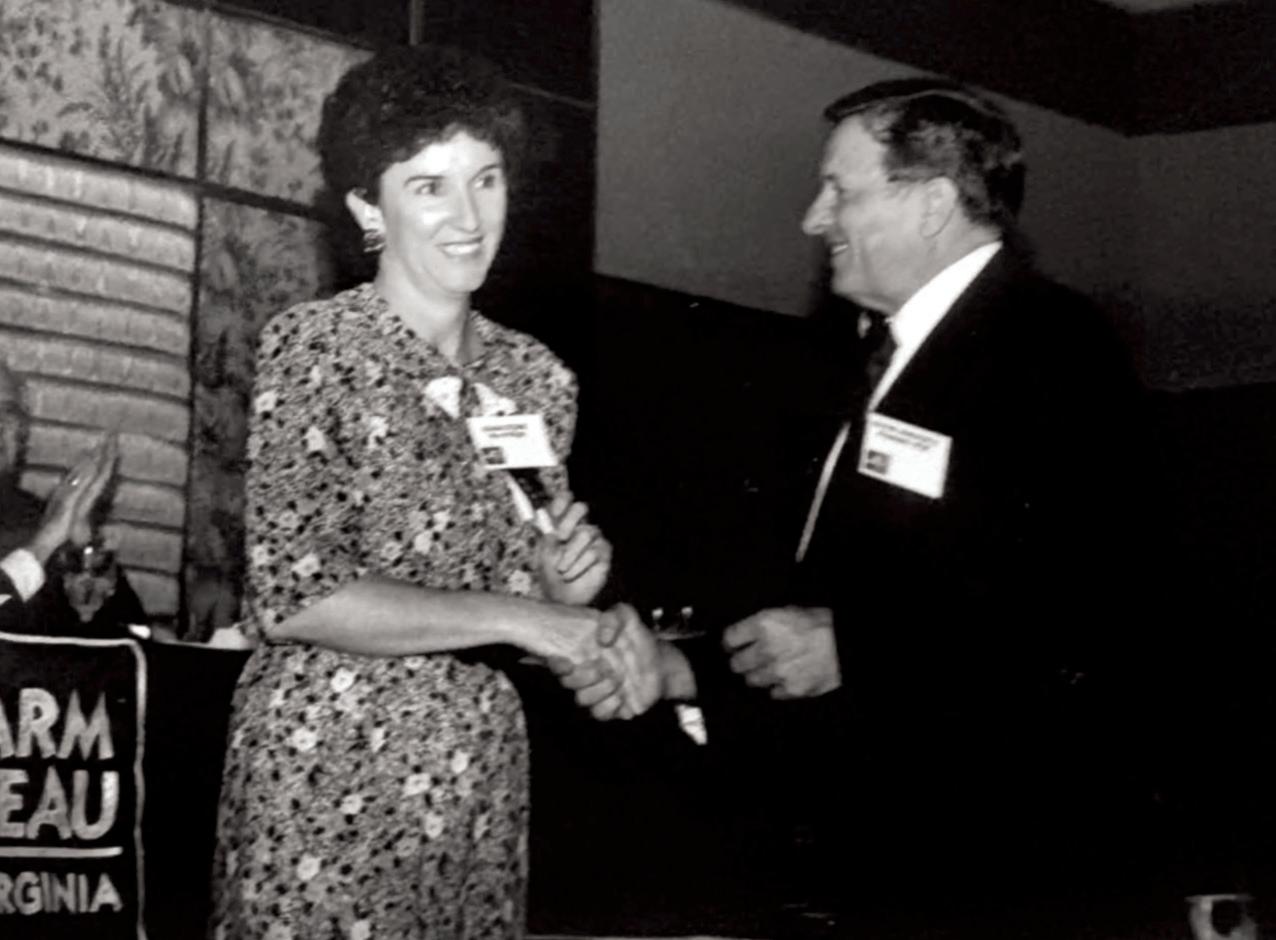
Stowe also formed friendships with Farm Bureau’s founding families—senior members with multiple insurance policies and institutional knowledge of the organization’s history.
“That was a good time in my life, working for Farm Bureau,” she said. “They were always wonderful to me. It’s still a very family-oriented organization.”
Three generations of Farm Bureau membership started with Stowe. Her son and granddaughter are associate members. They all hold a range of home,
auto, life insurance and annuity policies.
Family connections branched into VFB’s workforce too. Stowe’s nephew is married to Lynn Arnett, MSS at Isle of Wight County’s Windsor office.
“I think of her as my niece,” Stowe said. “I really enjoyed times we worked together there.”
When she describes Farm Bureau, she thinks of member services first.
“I don’t necessarily concentrate on the lobbying part, though I used to pay more attention to it,” Stowe said. “I mostly focused on talking to people and explaining the benefits of membership.”
Learning to fluently speak insurance language took practice. Early in her Farm Bureau career, Stowe was assisting a
member with questions about his policy.
“I think if we make a few changes here or there, you can save on your premium,” she explained to him. “And he said, ‘Oh, I don’t use premium. I use regular.’ It just struck me as funny!”
Stowe has perspective on company culture and values as a VFB retiree and now a policy holder. Her agent Curtis Parker has been there to file auto claims for some bumps in the road.
“One time I went in the ditch,” Stowe recalled. “And the other time I hit a stump that was sticking out around a son’s driveway that I had complained about for years! And Farm Bureau was wonderful again. It’s an organization that does care about its members and how they’re treated.”


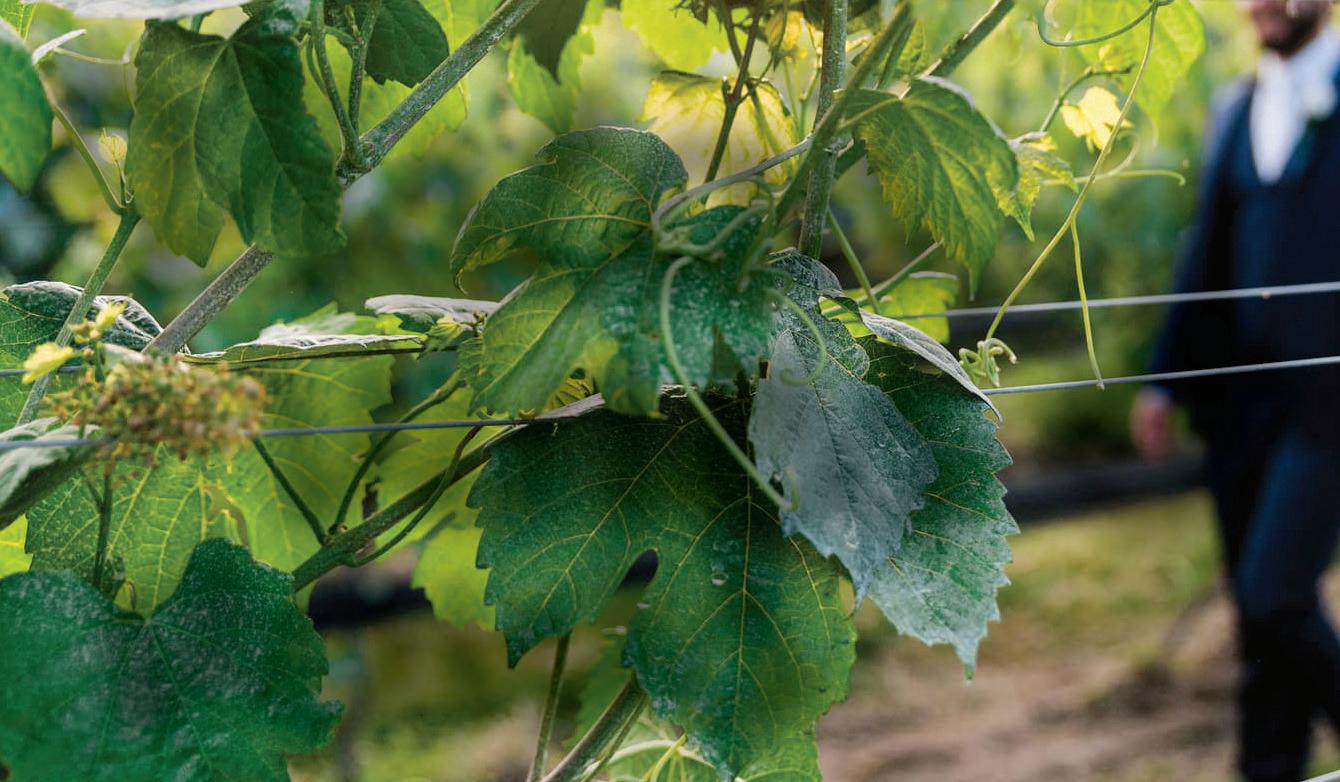
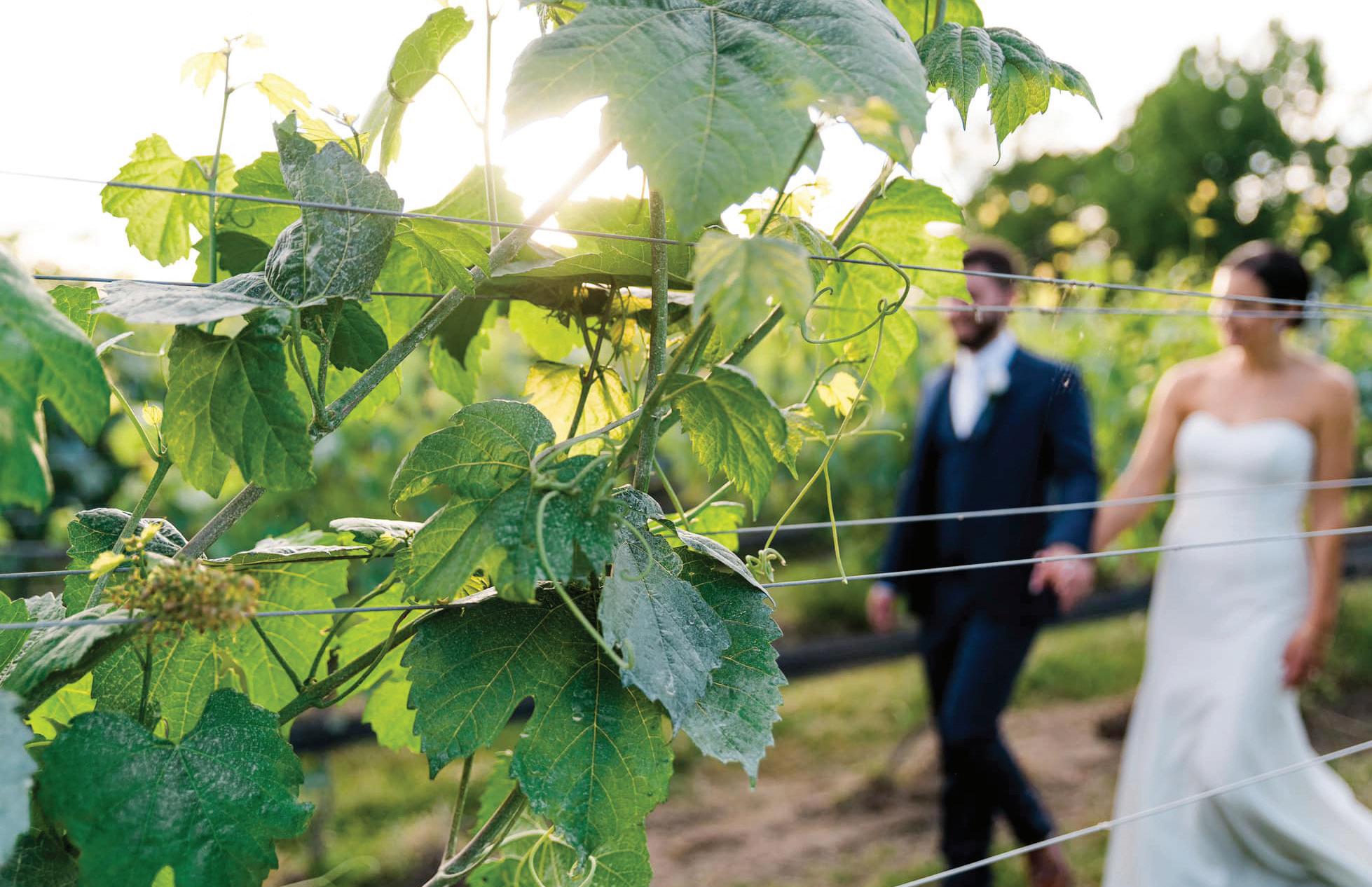
Farm weddings have become popular for many Virginia couples, and some farmers are using their entrepreneurial spirits to diversify operations.
BY ALICE KEMP
Rows of wine grapes and sweeping vineyard vistas create a romantic backdrop for newlyweds beginning their lives together.
At Ashton Creek Vineyard, sharing that beauty and blending winemaking with hospitality was the Thibault family’s vision when they planted the first vines on their Chesterfield County property in 2006. Over the years, they’ve cultivated a gathering space for guests to “unwind and celebrate life’s milestones” while enjoying Virginia vintages.
“Vineyards and wineries take so long to mature and build recognition, and we knew having weddings and events could speed up that process,” explained Alan Thibault, who operates the vineyard with his wife, Maria. “Many of our tasting room customers the first several years discovered us by attending an event and returned to try our full menu.”
The vineyard produces 15 wines—from merlots and viogniers to rosés and sparkling wines—using grapes like albarino, cabernet sauvignon, golden muscat, petit manseng and tempranillo.
“Bailey’s Bold is one of the most popular wines served at weddings,” Maria said about the red blend. “It’s smooth but bold,
making it an enjoyable wine for a range of guests.”
As newlyweds stroll among the vines and snap photos on the tasting room veranda, hosting weddings on a working vineyard takes careful choreography. Maria coordinates with couples, planners and chefs, while Alan tends the vines and wine production. Most fieldwork happens during the week, with weekends reserved for events.
“It takes a lot of communication between our whole team,” Maria said. They stay flexible, shifting timelines to accommodate customers, guests and production schedules, especially during busy growing and harvesting seasons.
“We may pick grapes early or a few days later if the wedding for that week requires more setup,” Alan explained. “Or if we see rain in the forecast that requires us to pick on a weekend, we know there’s a hard stop or to avoid certain hours.”
Although balancing production alongside guest flow, vendor access and protecting the farm’s vines can be challenging, being a working vineyard comes with advantages.
“The vines are always well maintained,” he said. “The grapes grow in full, the leaves are lush, so even though it’s production, it’s appealing.”
It’s a labor of love they’ve refined and replicated. In addition to their Chester location, their sister site, Riverside Vines in Dinwiddie County, offers couples lasting memories with vineyard views overlooking Lake Chesdin.
“It’s rewarding to host such an important moment in people’s lives,” Alan said.
Visit ashtoncreekvineyard.com for more information.

BY NICOLE ZEMA

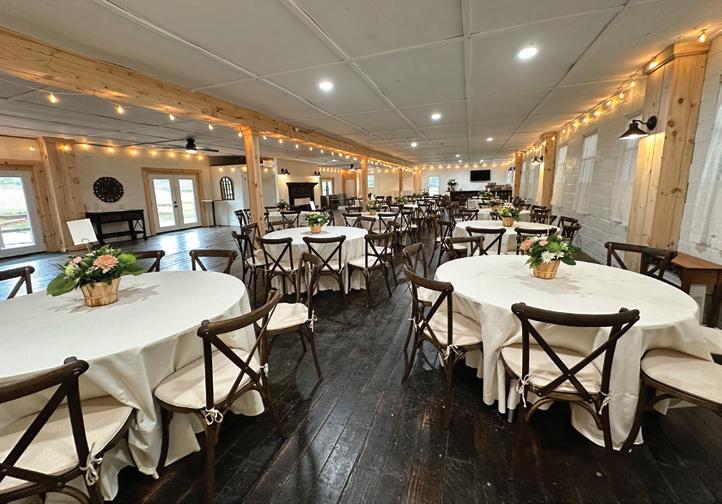
They constructed a barn venue to accommodate 150 guests, with a large, built-in bar and restrooms.
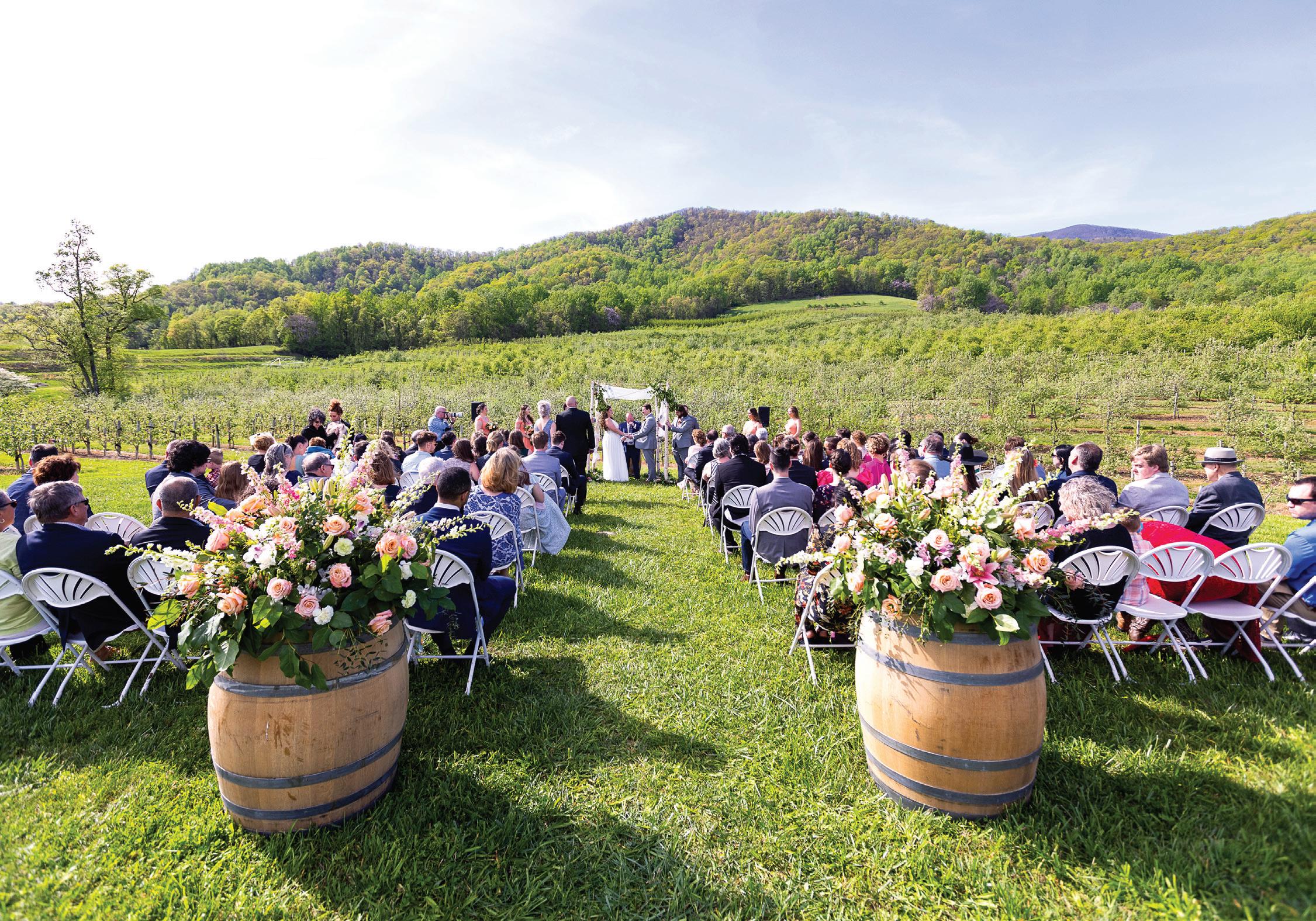
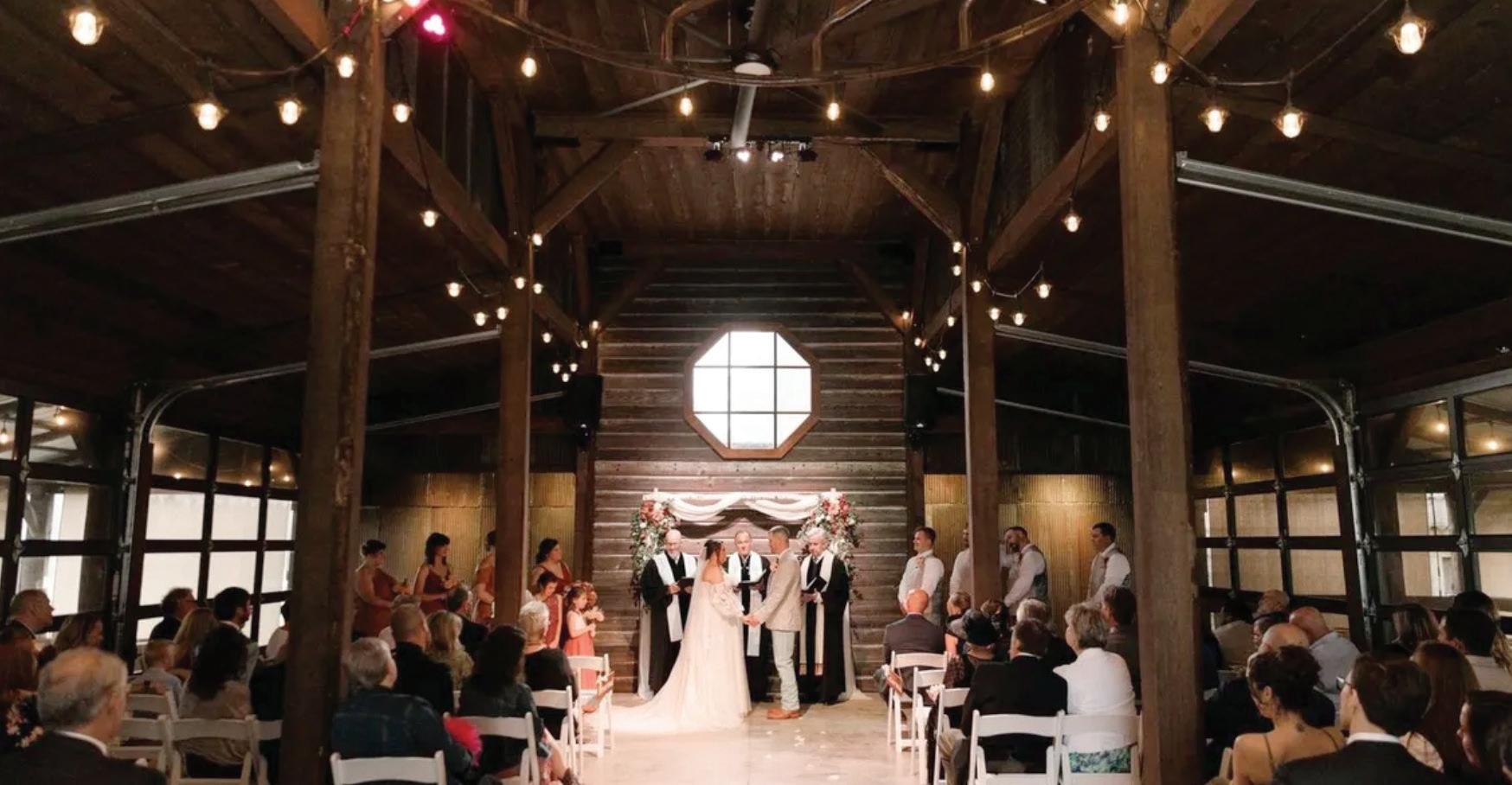
Couples getting married at Dickie Bros. Orchard in Nelson County pledge their love while overlooking a landscape shaped by centuries of family farming. In the picturesque valley where land has been maintained since 1752, sweethearts exchange vows surrounded by mountains, history and awe-inspiring vistas.
John and Shelby Bruguiere’s family has owned and operated the 500-acre farm for nine generations. They grow pears, plums, nectarines, peaches and apples on 40 acres of orchard.
Nuptials are exchanged on a valley hilltop overlooking the fruit trees and pastureland, with splendid views of the DuPriest and Little DuPriest mountains.
In October 2024, a couple from Long Island toured the site as they scouted wedding venues, John said.
“When they got here and saw the view, the bride started crying.” Where love meets livelihood
Overhead can be high on farm operations, so entrepreneurs must adapt.
“As growers, we’re diversifying,” John said.
In 2024, the Bruguieres opened Castle Hall Weddings at Dickie Bros. Orchard.
“Castle Hall was the name of the original home here at the orchard,” John said. “We have re-introduced Castle Hall as part of our future. With this diversification, we could reduce some of the higher costs and keep the land, keep it in land use, and keep it as an option for the next generation.”
“We may not have the amenities that some of the high-end wineries and venues do, but we have a view unlike any other,” John said. “And that’s what we’re selling—the view!”
Scale and beauty
The family eased into the wedding business.
“We offered one wedding per weekend during spring and summer,” Shelby said. “We wanted to start small and grow.”
With experience, the Bruguieres have a better understanding of the types of events couples want.
“We’ll be able to grow this part of the farm’s agritourism future by making more dates available, adding an event planner, and offering package options for couples who want a more turnkey event,” Shelby said.
Every wedding brings its own personality to the hilltop. Some couples include their dogs in ceremonies, others decorate with lavish florals and host grand receptions, while a few prefer a laidback celebration with food trucks.
“One bride wore the most beautiful wedding dress, and the day was perfect—not a cloud in the sky,” Shelby said. “She was radiant, and the birds were singing in the background. It was one of those amazing days when everything felt perfect.”
The peace and grandeur of the farm imprints itself softly on visitors
“Everyone loves the farm—from the cows to the rows of apple and peach trees,” she said. “Even when people arrive having seen photos, they’re surprised by the scale and beauty of the landscape.”
Visitors say pictures don’t do the view justice.
Visit castlehallweddings.com for more information.

BY CHRISTINA AMANO DOLAN
Behind a charming rural haven in Lunenburg County is a devoted family spanning four generations—working the land, welcoming visitors and bringing cherished traditions to life.
“We all play vital roles in the success of this operation,” emphasized Liz Parrish, who helps run Parrish View Farms alongside daughter Vayda, sons Eli and Cary and husband Jeff, with added guidance from Jeff’s father Wayne.
Home to the Parrish family since 1950, the former dairy farm has evolved into a thriving row crop farm and celebrated agritourism, special event and wedding destination.
From quinceañeras and high school proms to birthdays and retirement parties, there’s “no limitations on what kind or size of party we’re hosting,” Cary noted.
Hoping to fill a need in their community, the Parrishes first opened up their paradise to the public in 2009 with the area’s only pumpkin patch and corn maze.
The Parrish Pumpkin Patch & Corn Maze now draws thousands of visitors and school groups every October—complete with hayrides, sunflower fields and unforgettable experiences.
“Some people grew up coming to the pumpkin patch as kids, and now they want to get married here,” Cary beamed.
Vayda’s big day—the farm’s first wedding—inspired the creation of an enchanting oasis rooted in the family’s legacy.
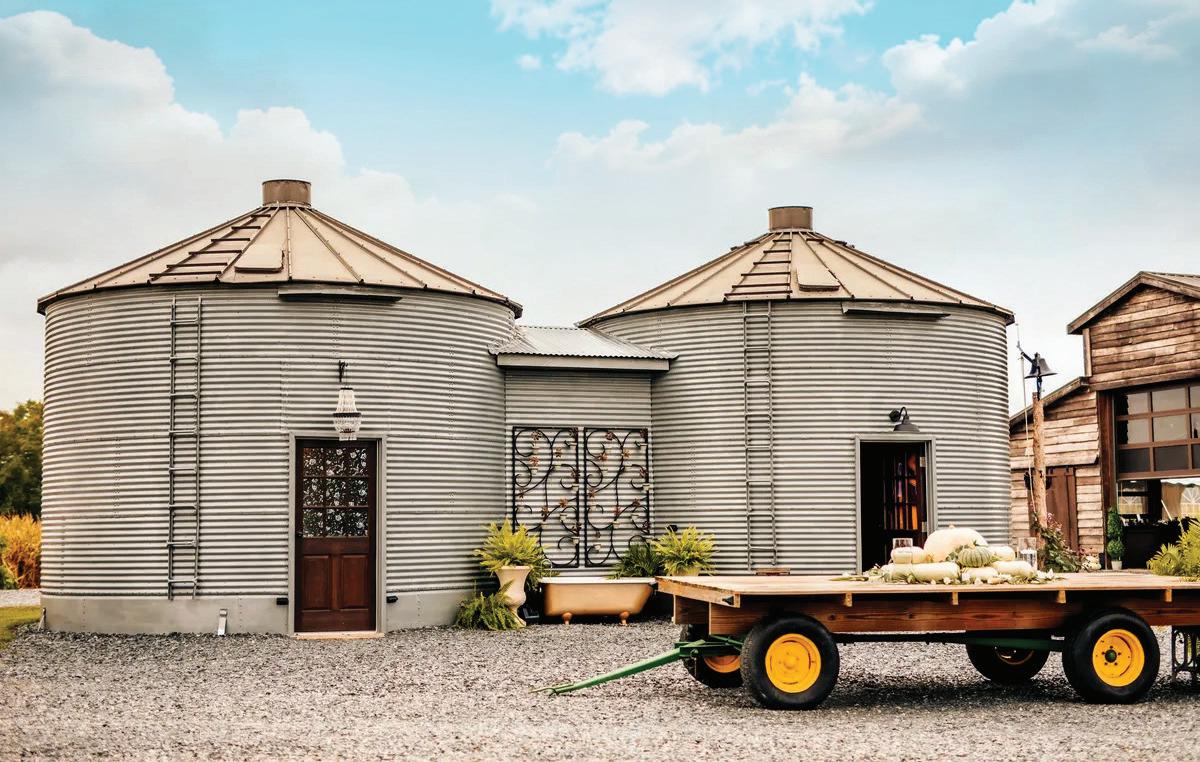
They built an elegant barn for receptions, elevated their tobacco barn into a cozy lounge area with a signature LOVE sign, and reimagined their 1970s grain bins into a charming bridal suite, theater and full-functioning bar.
Nestled among verdant fields of seasonal flowers and crops,
the ceremony site immerses visitors in the family’s cultivated wonders.
“The beauty that we have all around us every season is a big draw for folks—especially in the fall, when everything looks best,” Cary said.
“The spring, summer and fall can be quite the juggling act for the Parrish men,” Liz added.
Balancing event planning and agritourism duties with planting, maintaining and harvesting their corn, wheat, soybean, tobacco and fall crops is a constant challenge.
“It’s a lot to juggle,” Cary added. “Thankfully, we’re all in this together!”
“Jeff likes to joke, ‘We’re a family-owned and argued-over business,” Liz laughed.
While at least four opinions for every business decision is bound to “hit snags every now and then,” their bond is their greatest asset.
“It’s a lot of fun to do it as a family. It definitely brings a special aspect to it,” Cary mused. “And I think it makes a big difference to people when the tour and pitch are coming from us—who live here, run it and work here every day.”
The Parrishes look forward to hosting many more celebrations of love and community.
“We know what makes us so special is the labor of our family’s love for one another, and our land that we’re constantly curating and opening up for others experience too,” Cary reflected.
Visit parrishviewfarms.com for more information.
See the Parrish family in the Aug. 1, 2024, episode of Real Virginia, Virginia Farm Bureau’s weekly television program at bit.ly/ParrishViewFarms






BY ALICE KEMP
Creeping across fields, crawling up branches and marching into new territory, invasive species are reshaping Virginia’s landscapes.
Non-native organisms are considered invasive when they cause or are likely to cause ecological and economic harm. From destructive insects and tenacious plants to harmful fungi and diseases, these unwelcome intruders displace native species, reduce biodiversity and disrupt ecosystems while harming gardens, farms, forests and waterways. According to the Virginia Invasive Species Working Group, they cost Virginians over $1 billion annually in crop losses, forest damage, control efforts and impacts to recreation and infrastructure.
But state organizations, task forces and local groups are fighting back! Residents can join the cause by reporting sightings that help limit their spread.
When spotting a potential invader, Kevin Heffernan, the Virginia Department of Conservation and Recreation Natural Heritage invasive species coordinator, said to look for organisms that “don’t play nice with others.
“When you see one species taking over an area and pushing everything else out, that’s a strong sign it’s invasive,” he noted.
Invasive insects threaten crops, forests and lawns
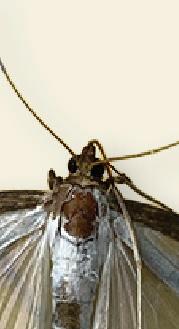
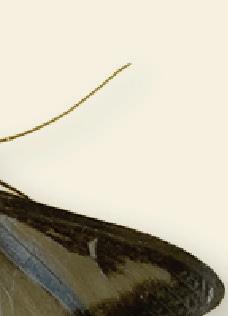
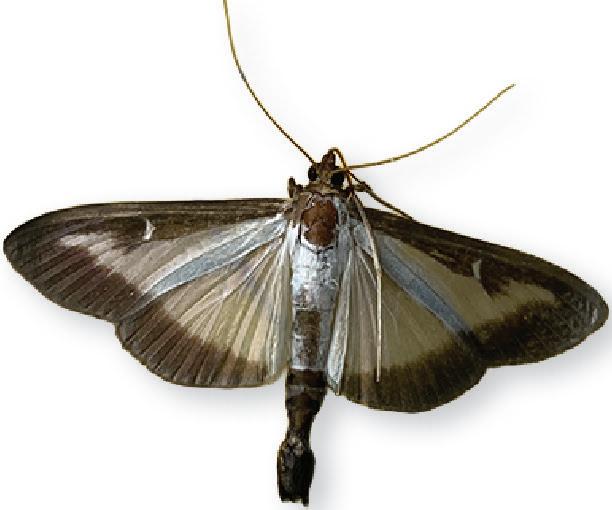
If you enjoy sipping a glass of vintage Virginia wine, mowing your lawn in peace or cooling off under shade trees, you’ll want to help eradicate invasive pests like spotted lanternflies, box tree moths, imported fire ants and spongy moths.
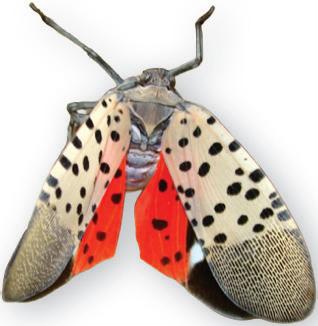
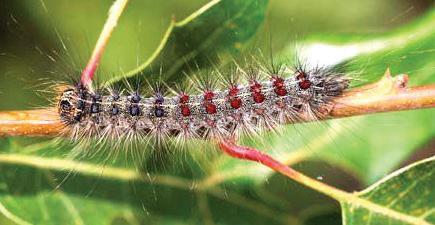
A terror to Virginia’s wine sector, spotted lanternflies feed on grape vines, stone fruits, rose bushes and hardwoods. Their heavy infestations weaken plants, reduce fruit quality and lead to plant death. Spongy moth caterpillars defoliate
oaks and hardwoods, while box tree moth caterpillars can decimate popular boxwood shrubs.
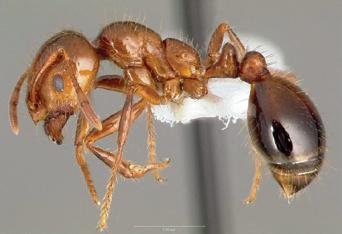
Bedford County cattle farmer Reggie Owens has spent years battling red imported fire ants in his fields. The aggressive, venomous ants build mounds up to a foot tall and attack when disturbed, delivering painful bites and stings.
“They’re nasty things,” Owens said. “If you put your hay on flat ground, they’ll make a nest right in the hay, and when cows go eat, the ants can attack them.”
Beyond posing a threat to residents and animals, fire ants can destroy crops and produce, chew irrigation lines, damage equipment and swarm newborn livestock.
Help stop invasive insects:
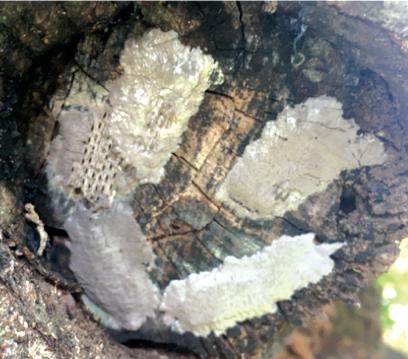
» Many insects spread by hitchhiking, so before traveling, inspect vehicles, equipment and outdoor items like furniture, potted plants, hay and mulch. Insects also lay eggs on these items, so familiarize yourself with what the egg masses look like.
» Don’t move firewood over long distances.
» Report sightings of box tree moths and imported fire ants.
» Report spotted lanternflies found outside current infestation areas.
» Kill spongy moths and spotted lanternflies at any life stage.
» Follow Virginia Department of Agriculture and Consumer Services quarantines on imported fire ants and spongy moths.
» Use caution around imported fire ants. Some have had success using labeled bait products. Consult local Extension agents for specific control options.












Invasive plants overwhelm native landscapes
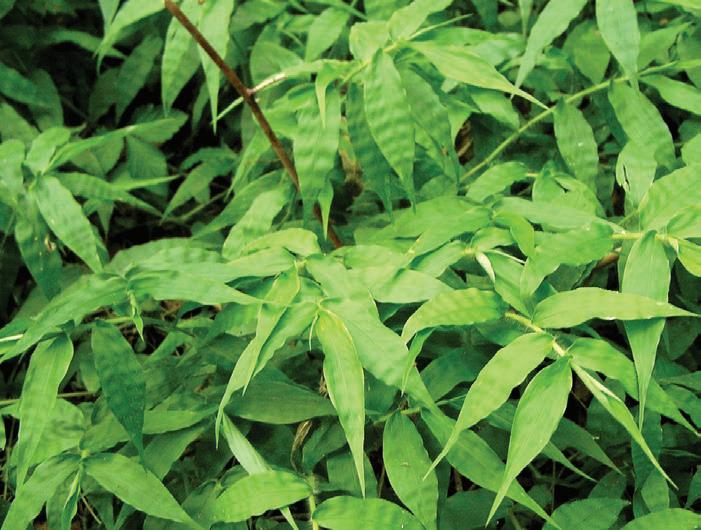
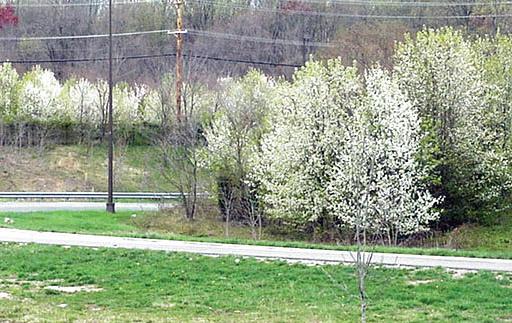
Do you like birdwatching, enjoying Virginia’s waterways, and having diverse flora for pollinators and wildlife? Heffernan explained that invasive plants like wavyleaf grass, Japanese stiltgrass, fountain grass and Callery pear are expanding rapidly and overwhelming landscapes.
“Invasive plants are creating monocultures with little value and nutrition for pollinators and birds,” he explained.
Japanese stiltgrass thrives in disturbed soils and forest understories, forming dense mats that suppress native plants and wildlife habitat while wavyleaf grass spreads along roadsides and forest edges, displacing grasses and seedlings. Callery, or Bradford, pear and fountain grass were originally introduced as ornamentals and escaped cultivation to dominate roadsides and landscapes.
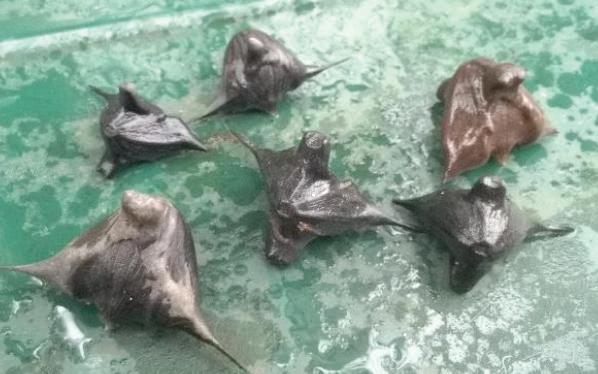
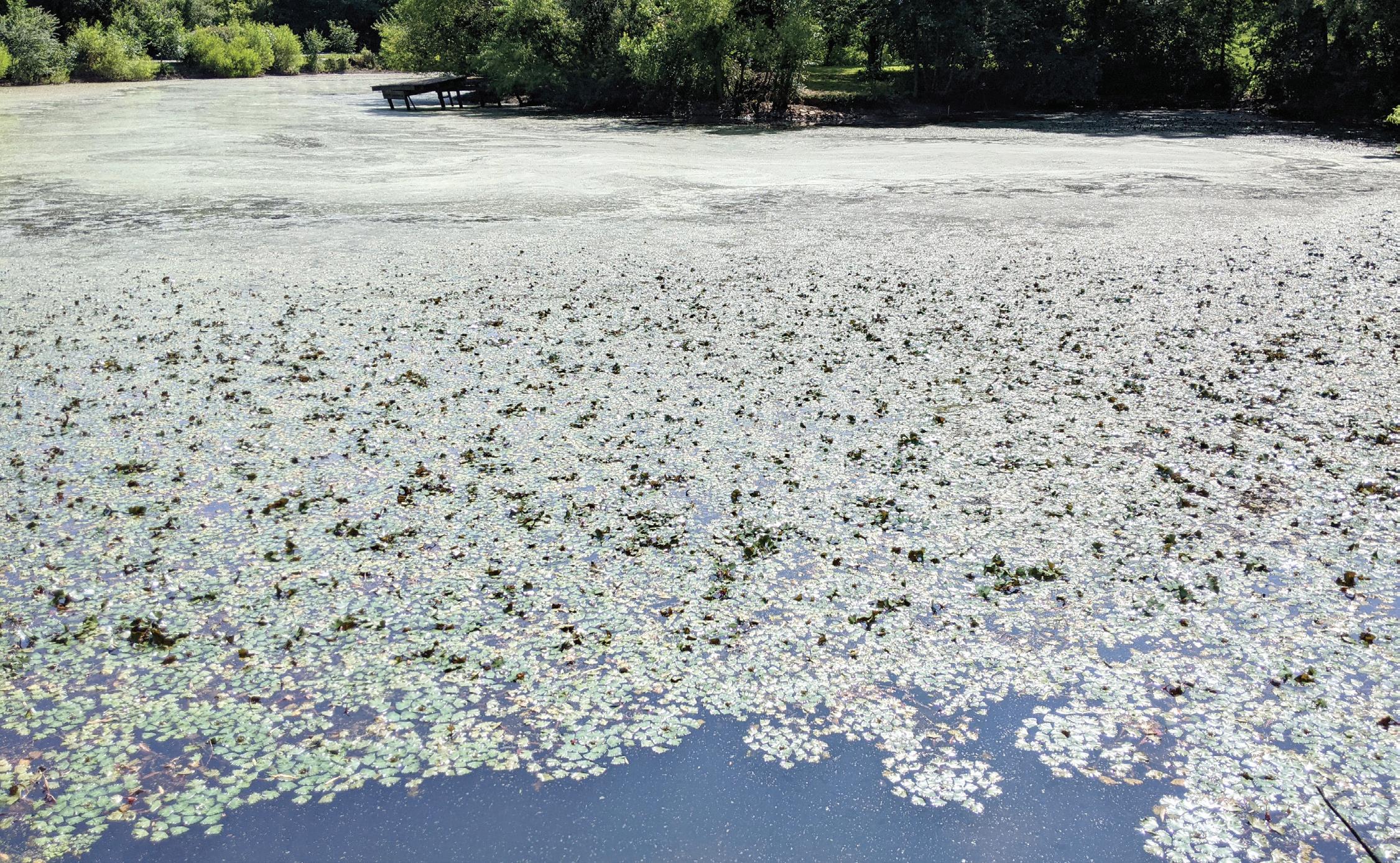
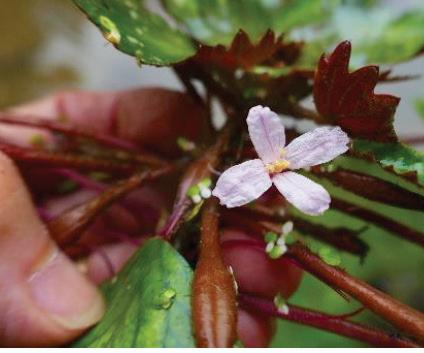
Aquatic invasive plants also are spreading, Heffernan added. Steadily proliferating in ponds, lakes and streams, two-horned trapa disrupts aquatic ecosystems and inhibits boating, fishing and other recreation.
“The first ingredient to managing invasive species is commitment,” he commented. “We like to say, ‘Pull invasive weeds, plant native seeds.’”
Help control invasive plants:
» Regularly mow or pull invasive plants before they produce seed.
» For large infestations, apply herbicides carefully according to label instructions.
» Report sightings of two-horned trapa.
» Wear gloves when handling two-horned trapa due to barbs.
» Choose native plants and grasses when landscaping and gardening.
» Explore tree exchange programs. The Virginia Department of Forestry facilitates replacing Bradford pears with native varieties.
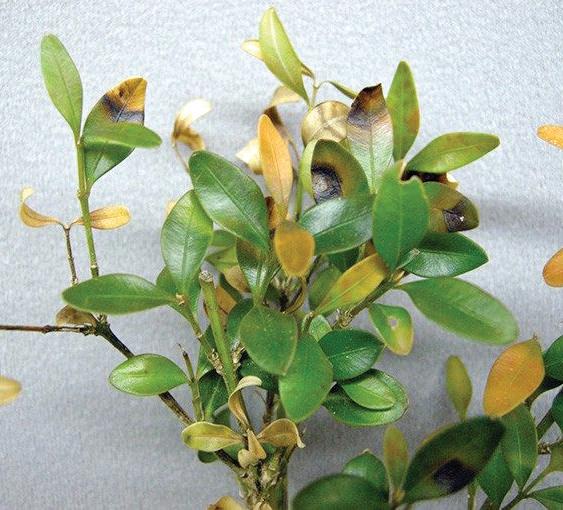
Leafy trees and lush landscapes offer beauty, wildlife habitat and peaceful places to unwind outdoors. But invasive plant diseases and fungi like boxwood blight, laurel wilt and beech leaf disease are compromising these spaces.
Thriving in cool, moist conditions, boxwood blight causes defoliation and dieback in boxwoods, while laurel wilt harms the vascular system of sassafras,
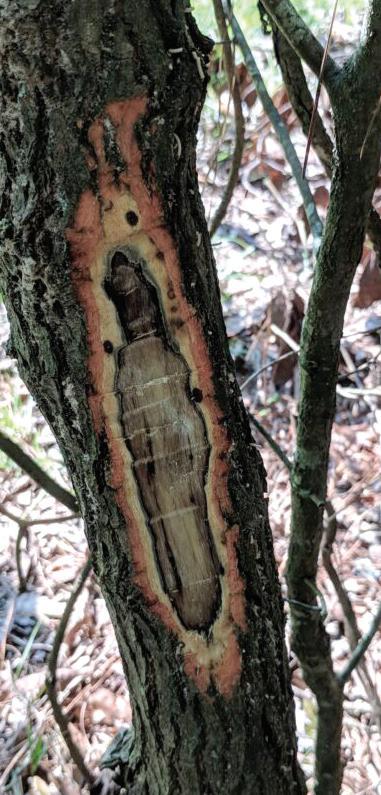







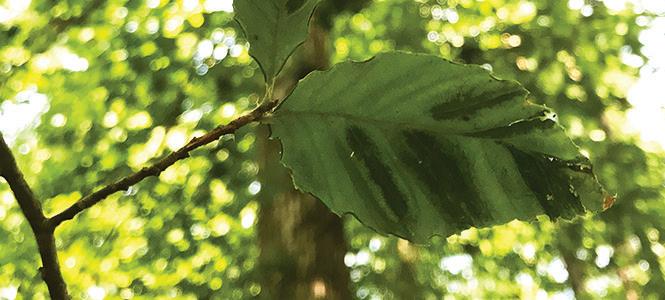
spicebush and redbay trees, killing them quickly after infection. And the lethal beech leaf disease causes dark stripes on beech tree leaves that reduces photosynthesis, weakens trees and thins canopies—altering forest ecosystems.
“They’re beautiful trees and a big component of our forests,” Heffernan said. “They support a whole range of life that can be threatened if we lose another tree species.”









Citizen scientists, task forces and state agencies are answering the call to combat invasive species in Virginia. Visit these resources to learn more about how you can help:
» Virginia invasive species: invasivespeciesva.org
» VDACS Plant Industry Services: vdacs.virginia.gov/plant-industry-services.shtml
» Virginia Department of Forestry: dof.virginia.gov/forest-management-health/forest-health
» Department of Wildlife Resources: dwr.virginia.gov/wildlife/invasive-species
» Imported Fire Ant: bit.ly/3Nc4w00
» Spotted lanternfly: bit.ly/4r9Sn9R

Prevent invasive fungi and diseases:
» Report suspected plant diseases and fungi to your local Extension office.
» Watch for unusual leaf spotting, discoloration, curling, wilting and dieback.
» Inspect nursery plants carefully before purchasing and planting.
» Clean and disinfect pruning tools between plants to prevent spread.
» Properly dispose of diseased plant material—do not compost.
» James River Park System Invasive Plant Task Force: jrpsinvasiveplants.org
» Boxwood Blight Task Force: bit.ly/4b6dDaA
» Virginia Cooperative Extension fact sheets: pubs.ext.vt.edu
» Virginia Invasive Plant Coalition: virginiainvasives.org
» Virginia Native Plant Society: vnps.org
» Virginia Tech Insect Identification Lab: ento.vt.edu/idlab.html
» Virginia Tech Invasive Species Collaborative: invasivespeciesvt.org
» VDACS Invasive Species: bit.ly/4l2YUBA
» Invasive Species Working Group: invasivespeciesva.org/report-sightings
» Early Detection and Distribution Mapping System: eddmaps.org




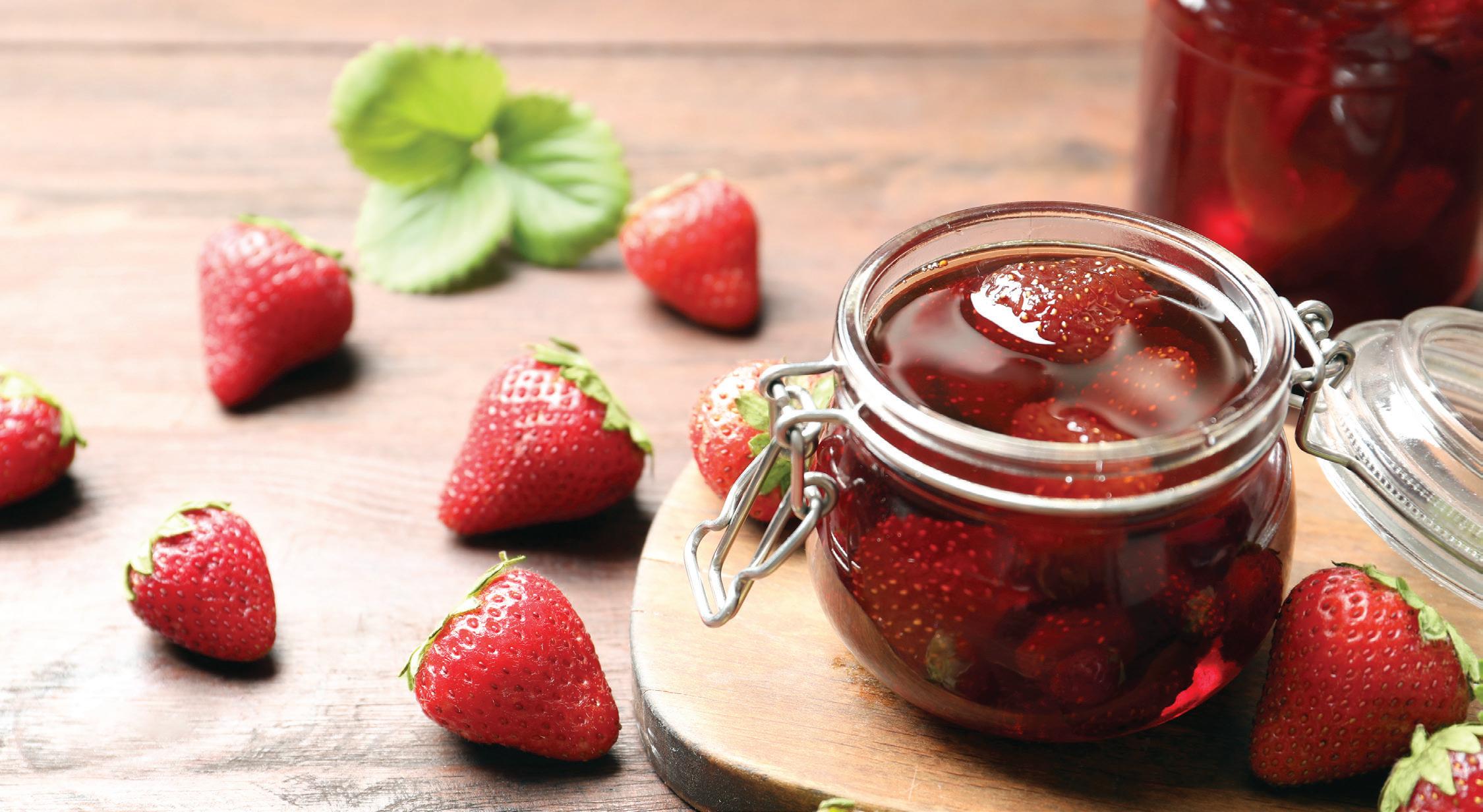
Bright, juicy and among the first fruits to ripen each spring, fresh strawberries signal the arrival of sunshine and warm afternoons.
Although they’re dubbed ‘America’s favorite berry’ with consumers eating around 8 pounds each year, strawberries aren’t berries at all. Botanically, they’re in a class of their own as the only fruit with seeds on the outside, roughly 200 per berry.
Delicious raw, dried, pickled or as ingredients in both sweet and savory dishes, they’re as nutritious as they are versatile. Low in calories and high in fiber, the bright red fruits are a great source of antioxidants, calcium, iron, potassium, folate, magnesium and more.
Virginia is home to a thriving strawberry sector. According to the 2022 USDA Census of Agriculture, 231 farms across the commonwealth grew strawberries on 227 acres, with Loudoun, Spotsylvania, Fauquier and Frederick counties boasting the most farms.
To find fresh, local strawberries near you, visit vagrown.vdacs.virginia.gov

1 medium tomato, coarsely chopped
½ English cucumber, peeled and coarsely chopped
½ medium red bell pepper, seeded and coarsely chopped
1 pound ripe strawberries, hulled and halved PLUS 6 sliced strawberries for garnish
½ teaspoon minced garlic
½ teaspoon chopped thyme
3 tablespoons extra-virgin olive oil
1 tablespoon balsamic vinegar
¼ teaspoon kosher salt
¼ teaspoon freshly ground black pepper
In a food processor, pulse tomato, cucumber and red pepper until finely chopped. Transfer to a bowl.
Use food processor to pulse halved strawberries until finely chopped. Add to tomato mixture, stirring to thoroughly combine. Reserve one cup.
Return remaining mixture to food processor along with garlic and thyme, and process until pureed. Return mixture to a bowl, and add olive oil, vinegar, salt, pepper and reserved cup of strawberry mixture. Cover and chill 4-8 hours. Garnish with sliced strawberries when serving.
– Recipe courtesy of Chef Tammy Brawley on Real Virginia

Watch Chef Tammy Brawley make this recipe on Real Virginia’s Heart of the Home at bit.ly/4rEeZQX or scan the QR code.


INGREDIENTS
1¼ cup apple cider vinegar
½ cup filtered water
1 tablespoon honey
1 teaspoon kosher salt
2 pounds fresh strawberries
DIRECTIONS
In a saucepan over medium heat, combine the vinegar, water, honey and salt and stir until salt and honey have dissolved.
Wash the strawberries, remove stems, and slice them in quarters.
Fill a jar with sliced strawberries. Pour vinegar mixture on top and allow to come to room temperature. Strawberries will shrink as they cool so add a few more as necessary.
Seal the jar and refrigerate. Let the strawberries pickle for at least a day. Use in a salad, on tacos, with cheese and crackers, or simply eat by themselves!
– Recipe adapted from the California Strawberry Commission

INGREDIENTS
⅓ cup sugar
1 tablespoon cornstarch
¼ teaspoon salt
2 large eggs
2 cups 1% milk
1 teaspoon vanilla extract
6, 1-inch-thick slices of angel food cake
¼ cup dry sherry
1½ cups sliced fresh strawberries or 16-ounce container frozen, sliced strawberries, thawed
toasted sliced almonds and whipped cream for garnish
Directions
For the custard:




In a bowl, whisk together the sugar, cornstarch, salt and eggs until smooth. Slowly whisk in the milk and transfer the mixture to a heavy-bottomed saucepan. Place the pan over medium heat and cook, whisking constantly, about 5 minutes or until the mixture comes to a boil and thickens. Reduce heat to low and whisk 1 minute more.
Remove from heat and whisk in vanilla. Transfer to a bowl and place a sheet of plastic wrap directly onto the surface of the custard. Refrigerate until cold.
To assemble the trifle:
Place one slice of angel food cake in the bottom of a 1-cup individual glass dish and sprinkle with 2 teaspoons of sherry.
Spread 2 tablespoons of strawberries evenly over the cake. Spread 1/3 cup custard over the strawberries. Top with 2 tablespoons strawberries and garnish with whipped cream and almonds. Repeat with remaining ingredients to make 6 individual servings.
– Recipe adapted from the California Strawberry Commission

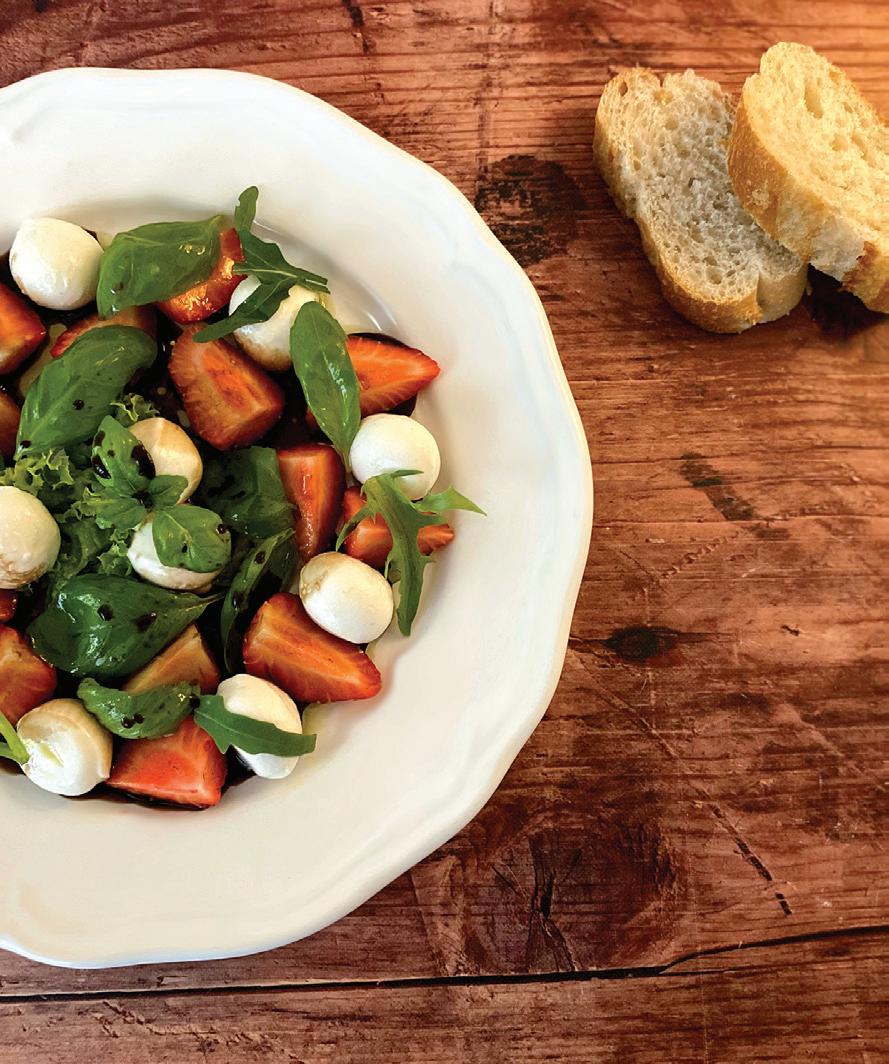
INGREDIENTS
12 ounces orecchiette pasta
1 pound fresh strawberries, washed, hulled and halved
4 ounces mozzarella pearls
½ cup fresh basil, chopped chiffonade balsamic glaze
kosher salt & pepper to taste
Cook pasta as directed on package. Drain, reserving a little of the pasta liquid. Rinse the pasta under cold water and chill in the freezer for about 10 minutes.
Remove the pasta from the freezer and place in a serving dish. Toss with a little of the pasta water.
Top the pasta with fresh strawberries, 4 ounces of mozzarella pearls, and ½ cup fresh basil. Drizzle with the balsamic glaze, taste, and add salt and pepper as needed. Serve with extra balsamic glaze.
– Recipe adapted from Florida Strawberry Growers Association and Marion Myers, Life Tastes Good
BY KATHY DIXON
AH ealth Savings Account offers triple tax advantages, and financial advisers say it’s more powerful than a 401(k) or Roth IRA.
“An HSA offers tax-free contributions, growth and withdrawals, which makes it a super account,” explained Tracy Cornatzer, Virginia Farm Bureau Health Insurance Solutions director of sales. “We recommend that people invest in an HSA because it’s a tax-advantaged way to save and pay for qualified medical expenses, but it’s also a great supplement for retirement savings.”
Money put into HSAs goes in pre-tax, which reduces taxable income. Any investment gains or interest earned on HSAs are not taxed. And money taken out for qualified medical expenses is not taxed either.
“The money in an HSA is yours to keep,” noted Cornatzer. The unspent HSA money rolls over to the next year, and you keep control of the account.
New for 2026, Bronze and Catastrophic individual health plans are compatible with HSAs, expanding HSA eligibility to those who were previously ineligible.
Michelle Stinnett, VAFB Health Solutions account executive, said she learned about HSAs from her financial adviser. “He told me that as saving for retirement becomes more and more difficult, an HSA is a valuable retirement tool.” She immediately began contributing the maximum amount and said she now has “a nice little nest egg for retirement.”
According to Fidelity, which invests money for many Virginia Farm Bureau employees, one customer said they built an HSA balance of $276,000 over 15 years by maxing out their contributions and never withdrawing funds.
That may be the exception rather than the rule, but “I tell young people that if they sign up for an HSA right after college, if eligible, and continue investing in it throughout their working career, they could easily amass up to a quarter million dollars,” Stinnett shared.
She said the first year contributing the maximum amount to an HSA “is sort of painful,” but if you are diligent about making contributions, it will accumulate enough to offset the deductible.
For 2026, the IRS contribution limits for HSAs are $4,400 for individual coverage and $8,750 for family coverage. Any employer contributions will count toward these limits.
According to a 2025 Fidelity Retirement Health Care Cost Estimate, a 65-year-old may need $172,500 in after-tax savings to cover health care expenses in retirement. An HSA can help with that.
HSAs work in tandem with qualified high-deductible health insurance plans, Stinnett said. And in addition to retirement savings, they have other advantages:
If you retire before 65 and have health insurance through an employer-sponsored plan under COBRA, you can use HSAs to pay healthcare premiums.
HSAs may be used to pay certain Medicare expenses. An HSA can help cover the cost of a long-term care insurance policy.
After 65, you can use your HSA to pay for non-medical expenses like buying a boat, for example, but you will be required to pay taxes on those funds.
HSAs aren’t for everyone. Stinnett said those who aren’t diligent about funding the account or those with lots of health issues leading to high medical expenses wouldn’t benefit from an HSA.
Account features
Account belongs to YOU, not your employer
Unused funds carryover to the next year and into retirement
Payroll contributions are pre-tax, lowering your taxable income
Non-payroll contributions are tax-deductible
HSA (Health Savings Account)
FSA (Flexible Savings Account)
Possibility for investment growth 4 4 4 4 4 4
If you work past 65 and have an HSA-qualified HighDeductible Health Plan, you can continue contributing to it. This includes catch-up contributions of $1,000 annually, provided you don’t enroll in any part of Medicare Part A or Part B. Enrolling in Medicare makes you ineligible to contribute to an HSA.
Key rules for working post-65 with an HSA:
Stop Medicare/Social Security: To keep contributing, you must delay enrolling in Medicare and Social Security, as signing up for social security automatically enrolls you in Medicare Part A.
The 6-Month Rule: When you finally apply for Medicare, coverage is often backdated up to six months. You must stop HSA contributions six months before your Medicare application date to avoid penalties.
Using Funds: You can continue to use your HSA funds tax-free for qualified medical expenses. After 65, you can also use HSA funds for non-medical expenses without a 20% penalty, though those withdrawals will be taxed as income.
Employer Coverage: If your employer has 20 or more employees, you can typically delay Medicare without penalties, as your employer plan is primary.